The Corne¬ Daily Sun
Student Testers
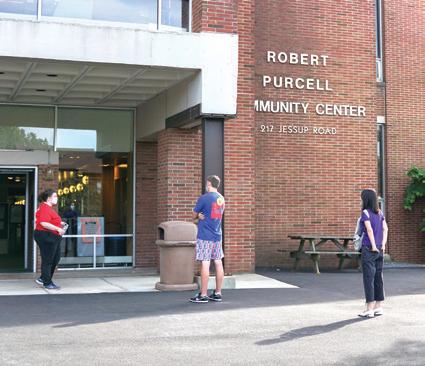
Lindsey Williams ’22 shares her experiences on the front lines of Cornell’s COVID-19 testing program.
The Un-Banning of Tiktok Columnist Cecilia Lu ’22 writes that our Tiktok addiction is no longer at risk.


Student Testers
Lindsey Williams ’22 shares her experiences on the front lines of Cornell’s COVID-19 testing program.
The Un-Banning of Tiktok Columnist Cecilia Lu ’22 writes that our Tiktok addiction is no longer at risk.
By MADELINE ROSENBERG Sun Assistant News Editor
The pop music was still playing downstairs in Willard Straight Hall Monday evening, but few students were dining inside Okenshields to sing along.
At Cornell’s only central campus dining hall, known for its early 2000s hits playlist and smiling staff, the crowds of students that once swiped in have been reduced to a trickle. The eatery went from serving about 2,000 students a day to about 350, according to Troy Buchanan, the Okenshields dining manager.
By OLIVIA CIPPERMAN and SEAN O’CONNELL Sun Staff Writer and Sun News Editor
The Judicial Administrator pushed for a shift to “a preponderance of the evidence,” which means that the evidence presented convinces the judicial hearing panel that there is a greater than 50 percent chance that their charges are true.
The current standard of proof required of the J.A. is
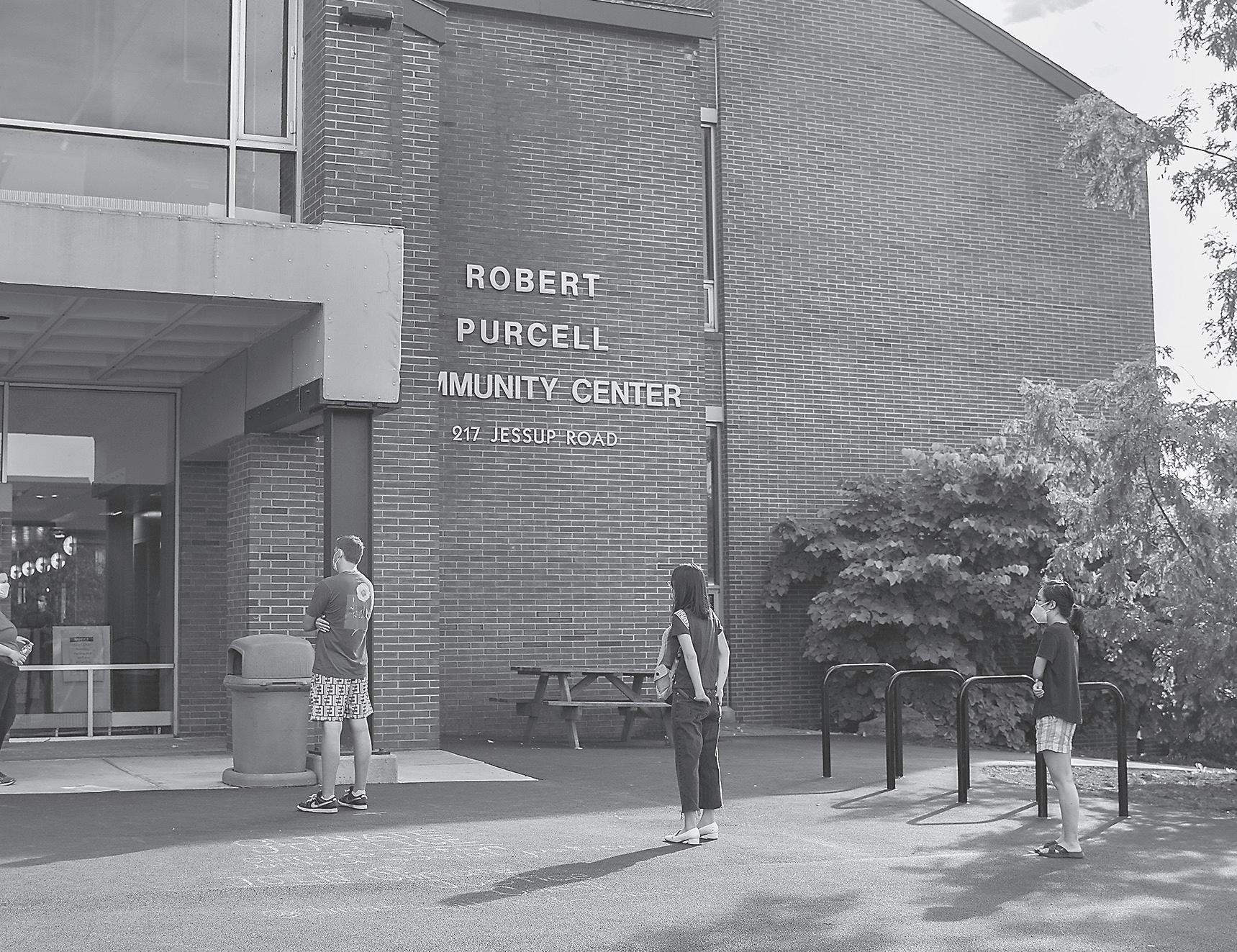
Straight from the Market is closed. The living room area remains busy, filled with plexiglass and masked testing site workers and students.
“You have to go out of your way to see people now. It’s hard to put in the effort to see people.”
Lexie Handlin ’23
Now, after a few slow weeks, Okenshields temporarily closed Wednesday. Cornell did not respond to a request for comment on Okenshields’ sudden shuttering by the time of publication.
“There was a lot more comradery between staff and students, like a ‘Hey how’s it going!’” Buchanan said Monday. “I miss the students singing and dancing in line. It’s a lot different from what it used to be. It’s just odd.” With few in-person classes and a fraction of open study spaces, campus is quieter than usual — and students and staff are feeling it. Along with many of the once-bustling campus common spaces, Willard Straight Hall remains empty — there’s no popcorn popping at the Resource Center. The Ivy Room is closed.
Buchanan said he it misses the popcorn, along with the students that used to fundraise upstairs, selling Krispy Kreme donuts and promoting clubs. Now, the Resource Center remains gated off. Sitting outside the Physical Sciences Building Tuesday afternoon, Kyle Chrystal ’21 said he only comes to campus when it feels convenient — either for his in-person chemistry lab or to spend some Big Red Bucks at Trillium. But the campus experience feels emptier and quieter, he said, and he misses running into his friends during the rush between classes.
“I miss casual interactions,” said Lexie Handlin ’23, waiting with Chrystal before their lab. “You have to
After nearly two years of deliberation, Cornell’s code of conduct revision process remains incomplete. Neither a code draft nor a fall revision timeline have appeared, despite assertions by University lawyers in May.
“One of the big criticisms [in the spring] was that the process was rushed.”
University Counsel aims to have a draft of the code — which governs Cornell’s internal judicial proceedings and every student, staff or faculty member involved in them — done by the end of September, according to John Carberry, a University spokesperson.
The Codes and Judicial Committee of the University Assembly began a process to revise the code in January 2019 — internal disagreements hindered the process. Over a year later, a draft was then submitted to the University Assembly in April 2020.
Concerns about the code revolved around the standard of proof needed to find the accused guilty in judicial proceedings:
Marissa O’Gara
“clear and convincing evidence,” which means that evidence makes the charges “highly and substantially more likely to be true than untrue.”
A compromise was ultimately reached within the CJC: “Preponderance” would be used during “administrative boards,” which would determine less-grave sanctions like decision making classes, while “clear and convincing” would be used for hearings, which decide on severe code violation cases that can lead to suspension or expulsion. The draft
See CODE page 2
CODE Continued from page 1
was then sent to the U.A. for approval in early May.
The flashpoint occurred when President Martha E. Pollack rebuffed the CJC draft in a May 8 email to the U.A., calling the revisions of the Cornell code of conduct “not congruent” with federal Title IX regulations and suggesting that the modification be placed in the hands of the University Counsel — Cornell’s lawyers.
According to Pollack, the new federal regulations would require that “all student conduct proceedings are handled in a fundamentally congruent fashion and utilizing the same burden of proof.”
Kenney, a third-year law student and a member of the CJC.
The counsel planned to release its proposal for public comment by the end of August, but since Cornell spent the summer preparing to reopen campus in the fall, the revision process faced delays once again. .
The code is not anticipated to have any major changes from the original CJC version; a further review of the federal regulations
“One of the big criticisms [in the Spring] was that the process was rushed, and it wasn’t communicated broadly enough, and folks weren’t given enough time to actually weigh in,” said Marissa O’Gara, who is a third-year law student, CJC member and Judicial Codes Counselor.
“Cornell will be recommending that the standard of proof for code violations be determined by the community.”
John Carberry
However, under the new Title IX guidelines, universities can choose between “preponderance” and “clear and convincing” for the standard of proof for judicial proceedings in Title IX cases.
By the end of May, the counsel had taken control of all code revisions, pushing the CJC and U.A. to the background. Members of the CJC were upset with this decision.
“Delegating away authority of a document which is within the purview of the University Assembly to the campus administrators was a complete deviation from shared governance and all shared governance stands for,” said Logan
confirmed that Title IX and other judicial proceedings could be held to different standards of proof.
“Counsel will be recommending that the standard of proof for code violations be determined by the community, not Counsel,” Carberry wrote.
Prof. Robert Howarth, ecology and environmental biology, chair of the U.A., said that the counsel would open their composite code to public comment, likely through an open meeting and a post on its website.
Some CJC members were optimistic about their work, despite all of the delays the code had already suffered.
A last-minute amendment to the U.A. code revision resolution on May 12 ensured that the counsel had to show its final revisions to the assembly before sending them to the Board of Trustees. However, both the U.A. and CJC are currently operating in a limited fashion.
This means that any draft of the code created by the counsel must go through the U.A. before the University accepts it As a result, the final code will not be approved until Oct. 10, the date given by Howarth for the assembly’s next meeting.
“It’s very important for the governance process to get underway and to put measures into place that genuinely call for full campus public comment periods that will enable us to have a real democratic participation,” wrote Prof. Risa Lieberwitz, labor and employment law, a CJC member.
Olivia Cipperman can be reached at ocipperman@cornellsun.com. Sean O’Connell can be reached at soconnell@cornellsun.com.

Thursday, September 24, 2020
Let’s Meditate With Cornell Wellness 9 - 9:30 a.m., Virtual Event
Oil Discoveries, Civil War and Preventive State Repression 11:30 a.m. - 12:45 p.m., Virtual Event
Faculty and Staff Town Hall: Fall Semester Updates 12 - 1 p.m., Virtual Event
Paul Vanouse: Making Difference 1:15 - 2:15 p.m., Virtual Event
Cornell Department Of Astronomy And Space Sciences Colloquium
4 - 5 p.m., Virtual Event
Introduction to Zotero 4 - 5:30 p.m., Virtual Event
Musicology Colloquium: Fumi Okiji 5 -
Reading by Michael Prior 7 - 8 p.m., Virtual Event Reaganland: A Conversation With Rick Perlstein 7 - 8 p.m., Virtual Event


By FAITH FISHER Sun Staff Writer
Every week, Cornell collects over 30,000 nasal swabs from Cornell students, faculty and staff as part of its COVID-19 surveillance program. Critical to this effort are the student employees that make up a large number of testers.
Lindsey Williams ’22, a student “collection staffer” — the workers behind the clear screen — shared her experiences on the front lines of Cornell’s COVID-19 response.
Initially, Williams was concerned that the role might jeopardize her health, though the University reassured her that safety was its top concern. On the job, collection staff were provided with an abundance of personal protective equipment, including masks, face shields and hand sanitizer.
“When I was interviewing, the management I talked to compared it to working at a restaurant,” Williams said. “If you were a waiter, you would have people in front of you eating and talking, all while not wearing masks. So honestly, this feels safer than that.”
As collection staffers, Williams and her colleagues have a number of responsibilities. In addition to guiding the swab process and collecting samples, student workers greet the thousands of students, verify their information and direct them to a testing station.
Student collection staffers serve a crucial role as part of a much broader, intricate testing system. Behind the tens of thousands of tests administered each week are workers who transport the tubes from testing sites to the laboratory and workers in the laboratory who generate the results.
As the semester has progressed, the testing process has become more efficient: Waiting times for tests have diminished, alleviating the frantic stress that once plagued many collection staffers.
“Especially in the beginning, it was overwhelming when the lines would get really long,” Williams said. “I felt a lot of pressure to go really fast to get through the line, but now I feel like we have it under control.”
Once she was hired in early August, Williams had to complete a training session before she could start work as a collection staffer. The training session touched upon PPE use, medical ethics and the proper way to guide and collect nasal swabs.
But a challenge that lingers for collection workers is adapting to the constant changes made to the testing and collection procedures.
“One thing that I have found from being on the back end of it is that things are constantly changing — the way we do registration, the way we have people hand us the swab,” Williams said. “It’s not
By GABRIELLE GONZALEZ Sun Staff Writer
For students in the School of Hotel Administration, taking HADM 3350: Restaurant Management is a rite of passage. Students spend hours in the kitchen crafting a multiple-course meal, taking orders and mixing drinks in order to bring their ideas to life.
However, the pandemic has completely uprooted the way the class is run this semester. Not only has the kitchen shifted to takeout-only, but Statler chefs and course instructors are the only ones allowed inside The Establishment restaurant.
Students now have to create their menu at home and supervise their night through surveillance cameras in the kitchen. However, they must still take into account the conditions in the kitchen.
“You have to think about the operations of the kitchen,” said Lana Wolf ’21. “You can’t plan a menu of all fried food because the fryer will be full and you won’t be able to keep up with orders.”
This year, however, students also have to choose takeout containers and think
about how to plate food in a takeout format.
“You really have to sell the experience because it is to-go,” Wolf said. “The dishes are going to be the same quality but they’re gonna be the same price too, and you’re not going to be sitting at a table with friends getting the Establishment experience, so that’s going to be a challenge.”
While there is a standing menu for the semester, each team of three designs an appetizer and an entree as the specials menu on their given night. Usually, students also create a specialty cocktail to go with their theme, but are unable to do so this semester due to the contactless takeout format.
ly comes up for your big Establishment week and you get to see all of your friends eating your food and it’s such a fun experience, so it’s kind of a bummer I don’t get that,” Wolf said. “I had been planning this for a year and a half. I’m looking on the bright side right now, I still
“Our students are being asked to adapt exactly like every other restaurant operator out there.”
Prof. Alex Susskind
get to do something and see my meals come to life.”
The Establishment is usually open Monday through Thursday nights, but is also open for Friday lunch this semester for the first time.
The virtual setup of the class brings conflicting emotions to seniors like Wolf, considering that it has been a tradition for SHA upperclassmen for the past eight years.
“Usually your fami-
However, in an email to The Sun, Prof. Alex Susskind, operations, technology and information management, remained convinced that the virtual format is just as valuable for the students.
“Our students are being asked to adapt exactly like every other restaurant operator out there,” Susskind wrote. “This is as real world as it gets for them.”
Gabrielle Gonzalez can be reached at ggonzalez@cornellsun.com.
only confusing on our end, but confusing for the people who come in and get tested. But that is something that is bound to happen as you try to make [testing] better and faster.”
Williams has been pleased with the Cornell community’s commitment to the surveillance testing protocol, and she felt fortunate to play an active
role in this massive undertaking to keep campus open.
“I like knowing that I am doing something active and important to keep Cornell and the Ithaca community safe.” WIlliams said.
Tamara Kamis ‘22 contributed to reporting.
Faith Fisher can be reached at fsher@cornellsun.com.
CAMPUS Continued from page 1
go out of your way to see people now. It’s hard to put in the effort to see people.”
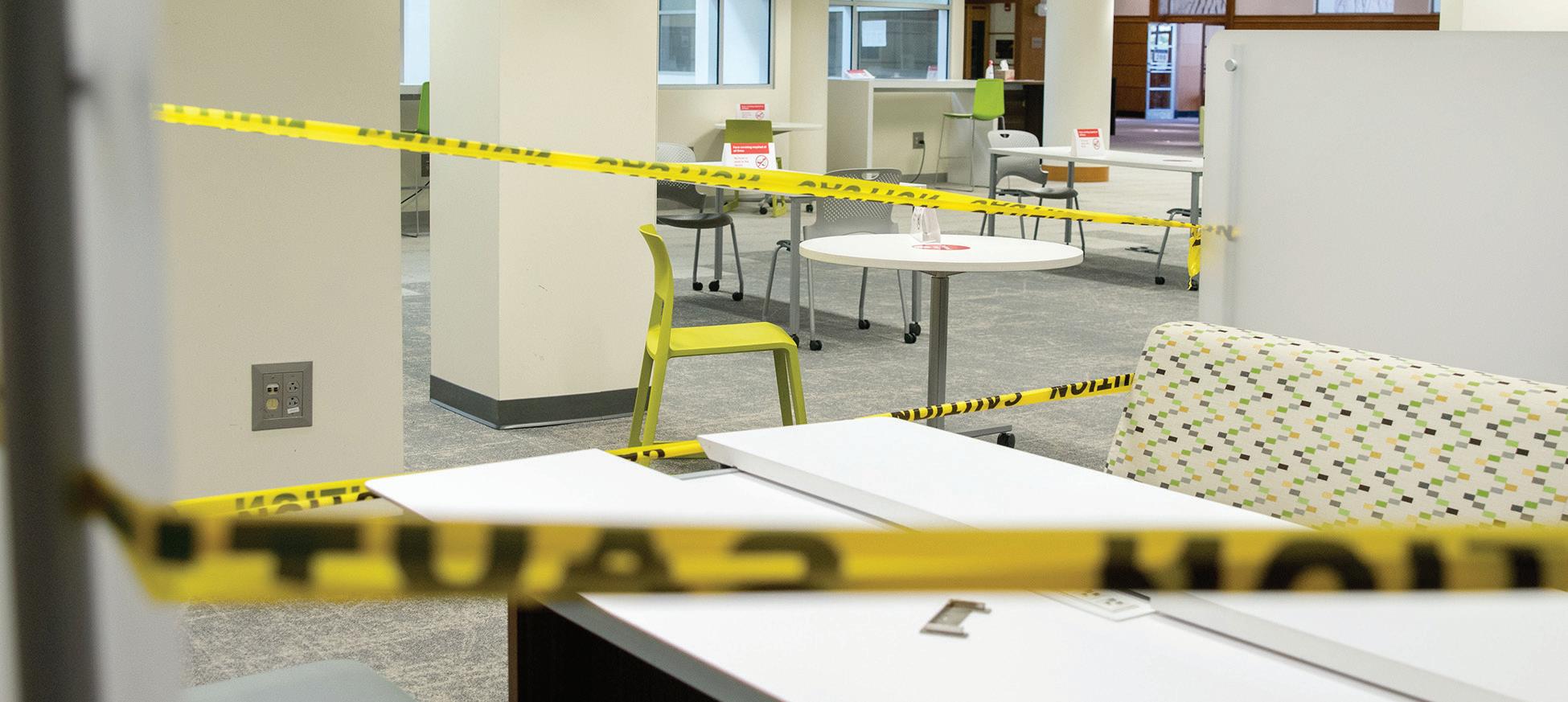
Studying and eating isn’t spontaneous anymore, either. Want to enter the Cornell Store? Swipe in and enter through the back entrance. Want dining hall food? Make a reservation. Want to enter a library? Show the library attendant your reservation number. Signs reminding students to make these reservations and mask up remain pasted and planted across campus, from the doors of empty academic buildings to TCAT bus stops. Posters remind students who enter designated study rooms: always physical distance. Sanitize shared equipment. Cover your mouth. No eating. In Gates Hall, a lobby television screen posts Cornell public health reminders: “Fact,” the screen reads for a moment before flipping to another
message, “Cloth masks can prevent you from inhaling the virus and can prevent you from exhaling the virus to others.”
Gimme Coffee remains gated off and closed. The chairs and tables are gone. The pastry case sits empty. The fridge is partially stocked with Ginger Beer and Saratoga water.
Even common campus spaces that allow students to wander around campus feel slower and quieter. Masked students Zoom from Temple of Zeus, but there’s no chatter, no espresso machines whirring, no ceramic mugs clinking or metal trays laying around. Instead of lunches and office hours, students sit in pairs or alone. Now, bottles of disinfectant and boxes of paper towels sit on the trash bins that used to hold used mugs and trays. Instead of indistinct chatter, students study and Zoom into class listening to clanging computer keys, footsteps, turning notebook pages,
zippering backpacks and squeaky sneakers. Sophia Jeon ’21 said she used to spend a lot of her days in Klarman Hall. But now, between her four in-person classes, she said she’s spending less time there and more time outside.
“Zeus is just so quiet,” Jeon said. “It’s too quiet.” And Olin Library? It’s open, but Jeon said she prefers not to go: “It’s not the same with Libe being closed.”
But with limited on-campus study spaces and online classes, Jeon said she finds students operating at a slower pace, lounging under trees and relaxing on the slope.
“I see more people zoning out, being more present, more introspective, as opposed to being on the go and going to the next class and meeting,” Jeon said.
Madeline Rosenberg can be reached at mrosenberg@cornellsun. com.
By GABE SCHIFFER Sun Contributor
Every Cornell applicant is guided around our campus and force-fed endless stories about the institution that is Collegetown Bagels. CTB has a pervasive presence throughout the entire Ithaca area and is undoubtedly a part of Cornell’s culture. I can’t blame students for loving the restaurant where they have fond memories of late nights and early mornings, but
the worship of this shop’s bagels has gotten out of hand. Students will often rave about their food, so I’ve written this article to analyze CTB separate from our collective nostalgia and bring us back to reality.
You may think I’m just a grumpy New Jersyian that is just looking to be a contrarian, while I sulk and dream of a grease-laden taylor ham egg and cheese, and you may be right. Despite the fact I possess a bagel bias endemic to people from the New York



Metro area, that does not take away from the fact that CTB’s main business relies on pedaling a product that relies on sentimentality, and not pure quality. In short, people don’t buy these bagels for their outstanding taste or texture, but to relieve the experiences that they’ve had at CTB. This opinion was only backed up during my interviews with many customers universally rebuking the texture, flavor and overall quality of their bagels. One student described them most eloquently as “Bread formed into the shape of a bagel,” and another as “a small, sad, overpriced lump.”
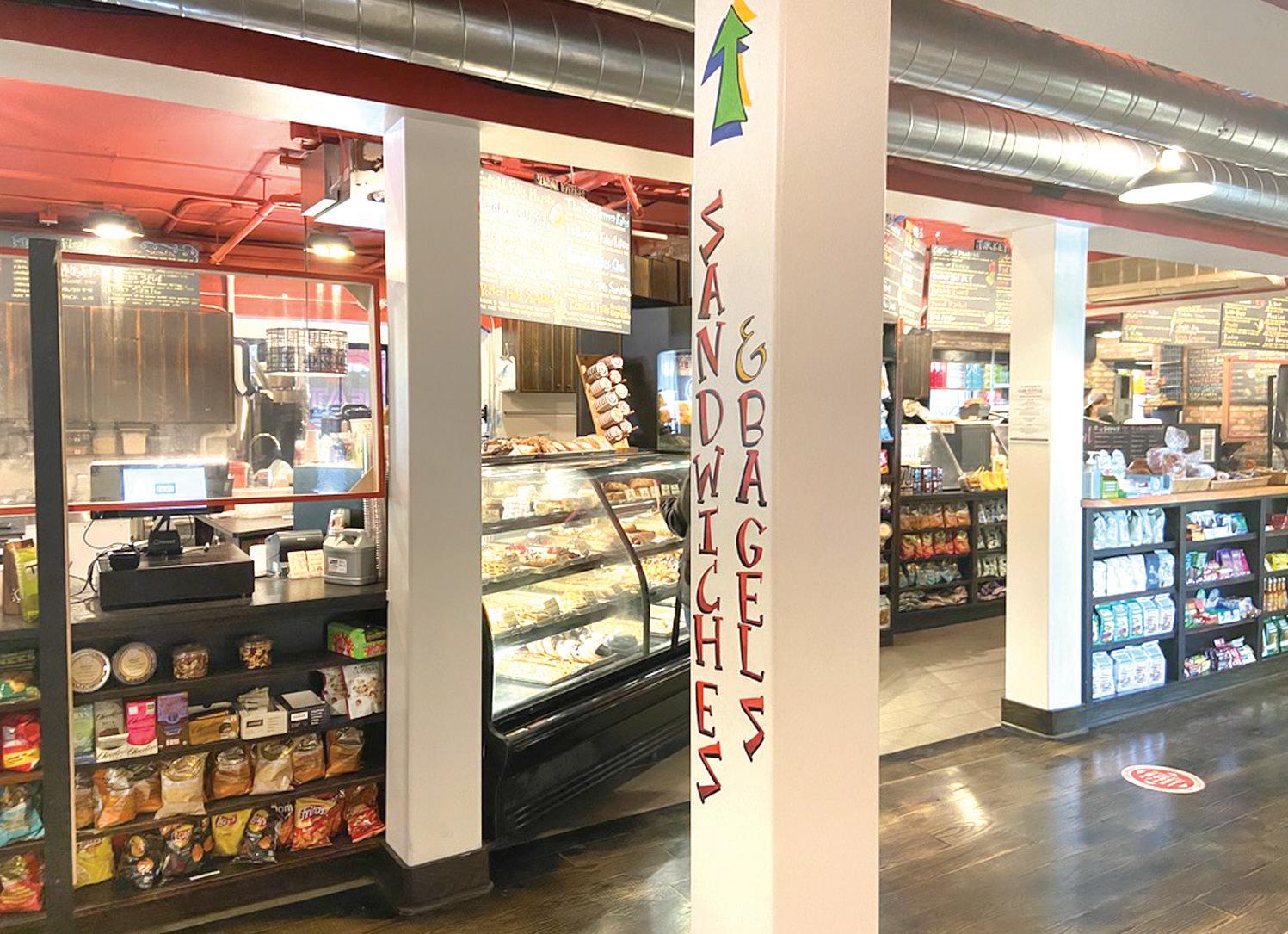
CTB’s subpar quality really shows in its namesake bagels that consistently fail to impress and pale in comparison to any local bagel shop in New Jersey or New York City. For example, on my last trip to their new Collegetown location, I tried their Pizza Bagel. The dish was covered in a metallic sauce with a slice of cheese that rolled over a gummy, soggy bagel like a muddy, windburnt mound of snow that sat decaying in the grey Ithaca sun. The bagels at
CTB are gaunt and lose their structure once you start eating them. On the other hand, a quality local shop has a bagel that’s puffy, golden-brown and is complete with a shiny lustre
and a full-bodied chew. To see this disparity in quality, just rip open a CTB bagel and compare the desert-dry innards of it to the steamy inside of a quality bagel.
CTB offers a pedestrian, indus-
trially produced bagel that lost its final dregs of character when the original establishment was demolished. The lackluster bagel itself is enough of a disappointment, but CTB’s breakfast options are laughable. I distinctly remember my excitement as I walked into CTB for the first time as a newly minted freshman and ordered the Brooklyn sandwich — CTB’s take on a bacon, egg and cheese. You can only imagine my disappointment when I found that the Brooklyn breakfast sandwich is a disrespect to the namesake borough. The flaccid bacon, rubbery cheddar and a square steamed egg makes airplane food look like it just left a Michelin star kitchen. The robotic egg that looked like it was poured out of a carton was a repulsive excuse for a breakfast food and still ruins CTB’s wraps and sandwiches to this day- I am consistently baffled that CTB manages to have a ravingly loyal fanbase while any local bagel shop in my hometown could blow it out of the water. The bad breakfast offerings are inexcusable for such an iconic Ithaca brand like CTB and really points to how its declining quality and loss of character have only accelerated since its old location has shut down.

CTB does certain things well, their coffee is fine, their sandwiches and lunch offerings are perfectly edible and few places are as good a meet-up spot for friends across our campus than CTB. I just wanted to set the record straight. Many people I’ve spoken to feel that the worship of this institution has covered up critical flaws. Taking off our rose tinted glasses, we see that there are a plethora of problems ranging from low quality offerings to its loss of identity that its Collegetown comeback failed to fix.
After a sine wave of decisions, changes and modifications etc ... Tiktok remains a part of our shaky future. In August, Trump signed an executive order that would have effectively forced TikTok to end business in the U.S.
As with most Trumpian agenda, however, there were alterations that immediately followed: He extended the executive order deadline by 45 days; he stated that an acquisition prerequisite was being a “very American” company; TikTok filed a lawsuit; most recently, a deal was made with Oracle — to which Trump gave “[his] blessing;” Tik Tok is foreseeably here to stay.
About a year ago, I downloaded TikTok on a whim

and semi-ironically made an account; two months later, I was grappling with the withdrawal of having deleted the app — a necessary “cleanse” to prepare myself for the upcoming semester.
I hesitate at my inclination to qualify my time on TikTok as “short,” because, when I had the app — mostly over winter break — I was fully invested. I grew up against a backdrop of Vine compilations and weird strains of Internet humor — it didn’t take long for TikTok to latch on to the type of content that would keep me scrolling. Each “like” crystallized an algorithmic understanding of my taste, while my “For


uted to just by watching, laughing and liking.
The months following my “quitting,” the success of this self-curation loop seemed to have created affinity groups en masse. My crafty friends sent me bead necklace tutorials from DIYTok. Other friends were a part of ChristmasTok, while the more nostalgic ones launched into PercyJacksonTok and GleeTok. Despite no longer having direct access to the app, I found myself watching Avatar TikTok compilations on Youtube to relive my obsession with the show. I was struck by the simultaneous flourishing of all these TikTok communities — they seemed even more robust than the existence of Subreddits (but I also question my ability to make this comparison, having used Reddit so infrequently that I forgot my password long ago).
Very recently, I found out that these niche communities were categorized as a part of Alt TikTok, which members take pride in being a part of — and distinguishing themselves from Straight TikTok, which is dominated by brand-name influencers and dance crazes — in other words, mainstream.
In my digital media class, we were assigned with creating a visual identity for a word. One student chose “praxis.” During crit, they explained, following a mildly apologetic smile, that they’d wound up on a side of TikTok inhabited by political-theory reading, vaguely Communist high schoolers who parodied the word so much that it stuck. This, I learned, was a prime example of one of the facets of Alt TikTok.
I think I partially earmarked this example because I forgot how versatile people’s intention and purpose for being on TikTok could be. While a lot of content is manufactured as entertainment, other videos aim to be lite-advocacy, teaching skills, spreading ideas or organizing causes. As a user, my FYP was filled with Aaron Hull before he dated Emma Chamberlain and other nonsensical laugh trap stunts — in other words, I was on TikTok to access a humor so absurd that I could dissociate from my present. Thinking back to my time on TikTok, I wonder if these sub-communities were yet to grow rampant or if I was so deeply embedded in one that I just couldn’t see beyond.
I think that was part of my urgency with trying to remove myself from the app. Good things have certainly sprung from TikTok — whether you see it as the embarrassment of Trump’s Tulsa rally or the inspiration of watching someone sew a dress from scratch — but so have the sinister parts of its nature. Many point to the app’s addictive design, but for me, it’s the high potential of losing myself in a TikTok reality.
Ironically enough, TikTok teens seem to be reading
(and promoting) Baudrillard — if he were alive, I’m sure that the overflow of content and things to dissect would send him reeling. But sadly, Baudrillard is no longer here to process TikTok’s cultural implications; we are both stuck and graced with the burden, whether on his behalf or for our own sanity.

JOYBEER DATTA GUPTA ’21
Business Manager
PETER BUONANNO ’21
Associate Editor
MEGHNA MAHARISHI ’22
Assistant Managing Editor
CHRISTINA BULKELEY ’21
Sports Editor
BORIS TSANG ’21
Photography Editor
CAROLINE JOHNSON ’22
ALEX HALE ’21
ARI DUBOW ’21
EMMA ROSENBAUM ’22
BENJAMIN VELANI ’22
JOHN MONKOVIC ’22 Multimedia Editor
MIKE FANG ’21
OLIVIA WEINBERG ’22
MADELINE ROSENBERG ’23
Assistant
LUKE PICHINI ’22
Assistant
HANNAH ROSENBERG ’23
BRIAN LU ’23
ANNABEL LI ’21
LEI ANNE RABEJE ’22
COLIE ’23
MONKOVIC ’22
MARYAM ZAFAR ’21
Editor in Chief
JOHNATHAN STIMPSON ’21
Managing Editor
KRYSTAL YANG ’21
Advertising Manager
JASON HUANG ’21
Web Editor
NIKO NGUYEN ’22
Design Editor
PALLAVI KENKARE ’21
SEAN O’CONNELL ’21
KATHRYN STAMM ’22
OZA ’22
PLOWE ’23 Arts & Entertainment Editor
LEE ’21 Money & Business Editor
’21
’22
MEGHANA SRIVASTAVA ’23
DAWSON ’21
PARKER ’22
’21
’21

’21
Working on Today’s Sun
Ad Layout Dana Chan ’21
Production Desker Ben Mayer ’21
Mei Ou ’22
News Deskers Sean O’Connell ’21 Meghana Srivastava ’23
Opinion Desker Peter Buonanno ’21
Design Desker Niko Nguyen ’22
Photo Desker Ben Parker ’22
Dining Desker Benjamin Velani ’22
Arts Desker Emma Plowe ’23
Sports Desker Luke Pichini ’22
Helpless Lover Girl is a student at Cornell University. Comments can be sent to hlg@cornellsun.com. Dopamine Overdose runs every other Tursday this summer.
Everything is sex to me. My best friend who sleeps over at my place every other weekend definitely wants to fuck me … I think. Or is the way we look at each other and touch each other purely platonic? I’m pretty sure all besties grind on each other and cuddle up at night. And maybe I’m reading too deeply into the sexy snaps we send back and forth.
We spent the night drinking, spinning, and frolicking around Ithaca. We watched clips of The Office, and we chased each other around for no reason. The night lasted forever, and when we finally fell I was in the middle, my two friends on each side of me, my best friend’s leg locked tightly around mine and my arm draped around my other friend’s body. In that moment, and even in the morning after, I understood that not every situation has to be sexual — you can straight up just sleep with your friends with no insinuations, no benefits. I recommend that, in fact. Everybody should sleep with their friends! Train yourself to hug, kiss and sleep with people without binding each action to eroticism. Send nudes. Live a little. It helps to see things through a non-sexual lens. You no longer believe that the compliment that you have “nice hair” means that he’s still into you, and you don’t think that a smile is an invitation to sleep with her. It’s worth changing your perspective, it may not only help the healing process of being in contact with your former lovers, but also your future love interests. The embarrassment that comes in tandem with wrongly assuming someone wants to make out with you subsides, because all of sudden everything means nothing. The “signs” aren’t signs at all. And you can go to sleep in peace as you develop the superpower to separate friends from your possible lovers as easily as you can tell the 138th
I mean … I wouldn’t be surprised. When it comes to thinking people want to sleep with me, my track record isn’t the best. I’ve been wrong before. But to me, everything is sex. My brain can’t help but to create a blanket of sexual tension in nearly every relationship that I have, it’s a default setting. Maybe it’s a way of keeping my life interesting, or maybe it’s just my internal desire of wanting to be sexually sought-after that makes me think this way. Either way it tends to get me into trouble. The feelings that ensue always seem to disrupt my emotional stability. Those feelings that you thought you healed from slyly come back time and time again. I’ve written about putting those feelings aside in the past … hell sometimes, when I’m in my bag, I take a glance at the articles I’ve written to help me move the fuck on. But nothing really prepared me for what happened last weekend. The boy that can do no wrong in my eyes slept over. He was in my bed for the whole night. Him and my best friend. But the strangest thing about it? … I didn’t feel anything.
Although one can argue that my romantic feelings for him have yet to subside, I will say that the night was dreamlike — sleeping on our sides with him as the little spoon, him holding my arm tightly to his tummy as if it were his first child that he would protect with his life. I almost wanted to cry. Even as the big spoon I felt as if I were the little one being watched over and safeguarded. But this night, no matter how intimate it seems, doesn’t change the fact that we are friends. Only friends. In fact, he has a whole girlfriend who quite literally gave him her blessing to sleep over with me and my bestie.
Anyways … the point is that all three of us slept together and that was it. No sex. No involuntary tingling sensations from my body. I didn’t even sense any sexual tension; it was just two women and one man in a bed sleeping together soundly, and I liked it.







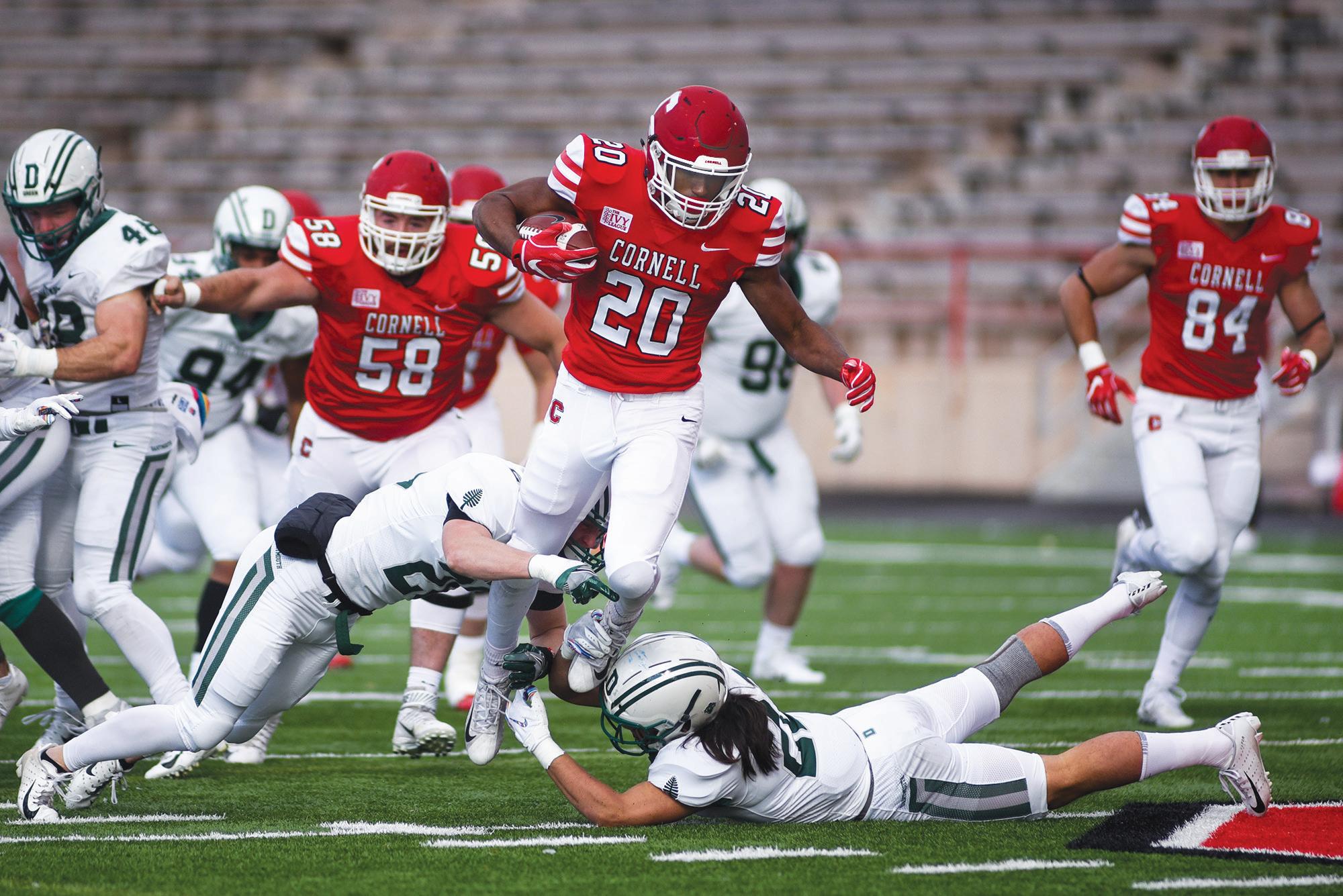
Te Green holds lead in overall series, 61-41-1, and has shown recent edge
By LUKE PICHINI
Sun Assistant Sports Editor
As a member of the Ivy League, Cornell football has natural rivalries with its fellow conference foes, but Dartmouth has proven itself as one of the Red’s toughest competitors, especially in recent years.
The all-time series, which kicked off in 1900, has Dartmouth leading, 61-41-1. In addition, the rivalry currently stands as the second-longest uninterrupted series, as the
decade when Dartmouth rattled off 10 straight victories over the Red from 2009 to 2018. This dominance has come under longtime head coach Buddy Teevens, who also guided the team to two Ivy League titles, including a shared championship with Yale in 2019.
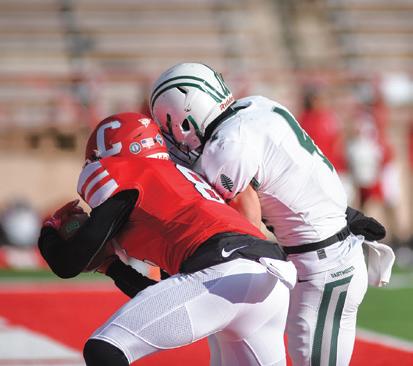
Last year, though, the Red snapped the Green’s winning streak in a shocking fashion. Dartmouth, which entered the contest with a perfect 8-0 record and a No. 11 national ranking, fell to Cornell at home,
Dartmouth offense that was averaging over 35 points per game.
“I’m really proud of our team and our staff — we’ve had an adversity-filled year,” said head coach David Archer ’05 after the game. “We played in some really close games where we felt we should have won. I told them, ‘It takes a really special group of people to not let that affect you going forward.’”

That streak came to an end in a wild manner. In a low-scoring contest, the Green held a 3-0 lead in the fourth quarter, and a last-minute drive by Cornell wound up deciding the game.
“We could be the most dangerous team because we didn’t have anything to lose.”
While the Green was aiming to clinch an Ivy League title that day, Cornell’s dream of a conference title had already ended weeks ago. At that point, the Red was looking to play spoiler and perhaps move up the conference standings, which it accomplished with a fourth-place tie at the end of the season.
David Archer ’05
After navigating the ball to the Green’s sixyard line, the Red moved further toward the end zone by reaching the one-yard line on three downs. On fourth down, Cornell was penalized for delay of game, moving the ball back to the six-yard line. Afterward, reserve halfback Walt “Pop” Scholl attempted a pass that fell incomplete in the end zone.
“We talked about how they had literally everything to lose — they had just played two enormous, emotional games,” Archer said. “I don’t think Dartmouth circled the Cornell game on their calendar … We could be the most dangerous team because we didn’t have anything to lose.”
From 1980 to 2008, the Red and the Green largely alternated in the series. Before then, Dartmouth enjoyed a dominant stretch winning 22 of 24 matchups between 1955 and 1978. During the first 38 matchups, Cornell claimed victory in 21 games.
The most notable iteration of the rivalry came in 1940, a contest that went down in infamy as the “Fifth Down Game.” Cornell, which clinched its fifth national championship the year before, came into the game having won 18 straight tilts.
At that point, Cornell should have turned the ball over on downs, but referee Red Friesell spotted the ball back on the sixyard line, mistakenly believing that it was now fourth down. With this “fifth down,” Scholl found wide receiver William Murphy to score the game-winning touchdown.
The error was uncovered after officials reviewed the game film. Guided by players, coaches, the athletic director, and even the University president, the Red sent a telegram in which it voluntarily forfeited the game. Dartmouth accepted the forfeit, and the contest was credited as a 3-0 victory for the Green.
While no subsequent games between Cornell and Dartmouth have achieved that level of notoriety, the rivalry remains fierce, and the Red may have new life in the series after its massive upset last year.