The Corne¬ Daily Sun
Cause Continues
Te Ithaca Common Council voted 8-0 on Sept to advance the process for ‘just cause’ legislation. | Page 4

Cause Continues
Te Ithaca Common Council voted 8-0 on Sept to advance the process for ‘just cause’ legislation. | Page 4
By ZEINAB FARAJ Sun Features Editor
Sept. 19 — Joselyn Guadalupe Garcia ’29 was found dead in her campus residence hall on Friday morning, according to a Friday afternoon email from Dean of Students Marla Love and Peter Loewen, dean of the College of Arts and Sciences.
Guadalupe Garcia was a student enrolled in arts and sciences who intended to study biological sciences, according to Loewen and Love’s email.
Originally from Brooklyn, New York, Guadalupe Garcia was a first-generation student and participated in the Pre-Collegiate Summer Scholars Program and First at Cornell: First Generation Student PreOrientation. She was an aspiring dentist and “a leader” in numerous community service, athletics and student government groups in high school,
according to the email.
“Our deepest sympathy goes to Joselyn’s family, friends, instructors, and classmates,” Loewen and Love wrote in the email.
Guadalupe Garcia is survived by her parents and three younger siblings.
The news comes amid the passing of Michael Lenetsky, senior department manager for the Department of Chemistry and Chemical Biology, which was also announced on Friday.
The University plans to hold a support meeting at 5 p.m. on Monday, Sept. 22, in G28 Lewis Auditorium, Goldwin Smith Hall for the arts and sciences community.
A full Cornell community support meeting is scheduled at 7 p.m. on Monday, Sept. 22, in 404 Willard Straight Hall, the Browsing Library.
Loewen and Love urged the campus community to
take advantage of available resources in their statement, acknowledging the emotional difficulty surrounding the two losses.
“As our community struggles with these losses, we encourage everyone to care for one another and seek support when you need it,” Loewen and Love wrote. “We extend our deepest condolences to the family and friends of Joselyn and Michael and ask that you keep them in your thoughts as they grieve these losses.”
Students in need of professional support can email Student Support and Advocacy Services at studentsupport@cornell.edu or call Counseling and Psychological Services at 607-255-5155. Employees can call the Faculty and Staff Assistance Program at 607-255-2673.

By ZEINAB FARAJ Sun Features Editor
Sept. 19 — Michael Lenetsky, chemistry, died Friday morning in Baker Laboratory “during a medical emergency,” according to an email sent to the College of Arts and Sciences faculty and staff members from Peter Loewen, dean of arts and sciences.
Lenetsky served as a senior department manager for the Department of Chemistry and Chemical Biology for over 14 years and has spent 25 total years at Cornell. He was a key part of organizing research initiatives and served as a strategic advisor to the Abruña Energy Initiative. Lenetsky also played a crucial role in the department’s administrative responsibilities, including budget planning and research funding. Additionally, Lenetsky was the academic advisor for Sigma Alpha Mu, also known as “Sammy”.
“A natural problem-solver and a stalwart in the college, he was beloved by his colleagues,” Loewen wrote in the Friday email. “He was also an avid fly fisherman and loved the Grateful Dead.”
Lenetsky is survived by his partner, Rebekah Puhlman, and his three children.
The news comes amid the death of Joselyn Guadalupe Garcia ’29, a student enrolled in arts and sciences, which was also announced on Friday.
The University plans to hold a support meeting at 5 p.m. on Monday, Sept. 22, in G28 Lewis Auditorium, Goldwin Smith Hall for the arts and sciences community. A full Cornell community support meeting is scheduled at 7 p.m. on Monday, Sept. 22, in 404 Willard Straight Hall, the Browsing Library.
“Everyone grieves differently and we urge all members of our community to care for yourselves and each other,” Loewen wrote in an email statement.
Individuals can have a diverse range of feelings, needs and reactions when facing loss. This information about Grief and Loss may be helpful to you or a friend. The Ithacabased crisisline can be reached at 607-2721616, and the 988 Suicide & Crisis Lifeline is available throughout the U.S. Additional support resources are listed at mentalhealth. cornell.edu
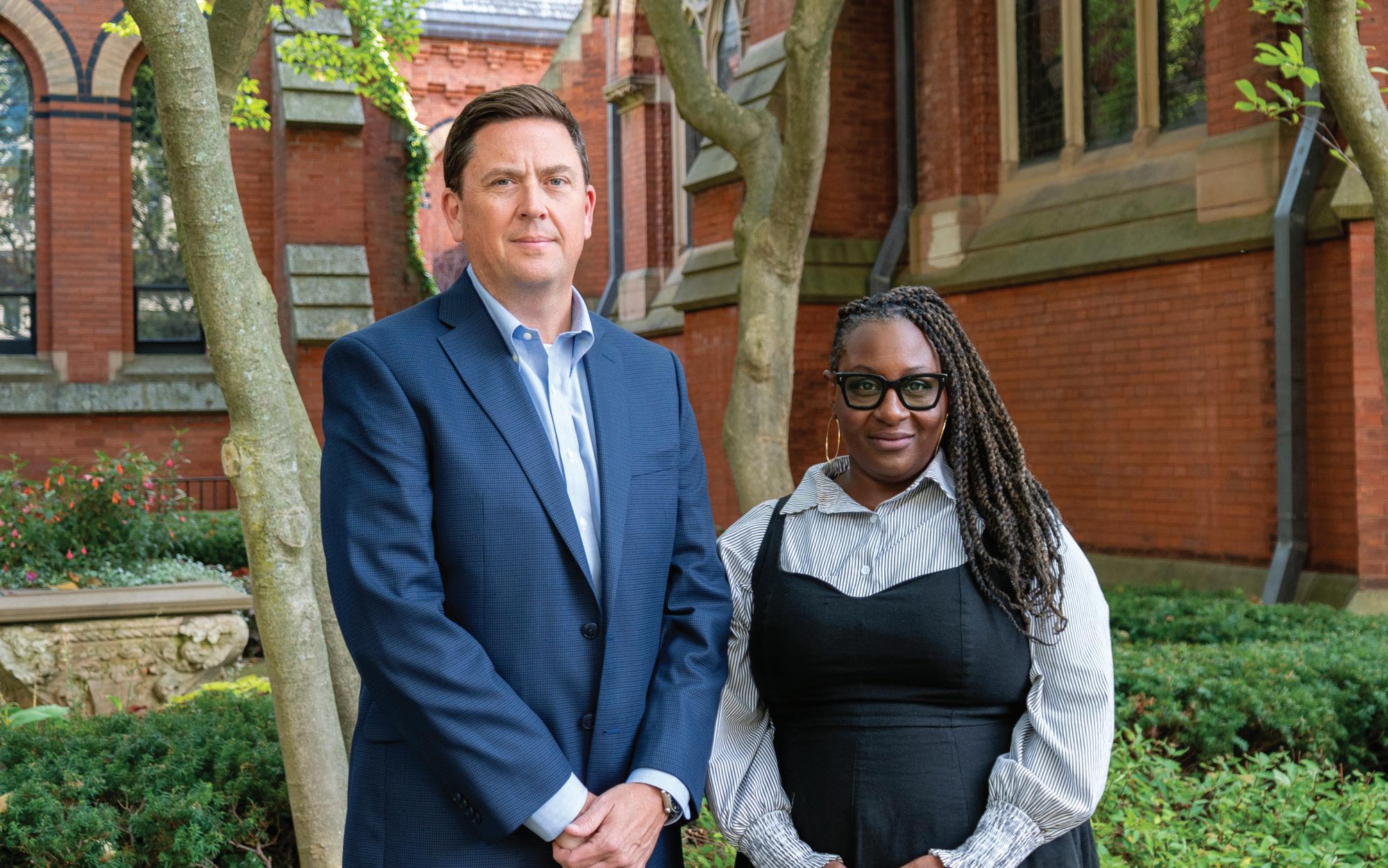
By DOROTHY FRANCE-MILLER and MATTHEW KIVIAT Sun Managing and Assistant Managing Editors
Sept. 23 — The Sun sat down with Vice President for Student and Campus Life Ryan Lombardi and Dean of Students Mara Love in a 35-minute exclusive interview to discuss the upcoming housing selection process with the Class of 2029 being the largest in University history. The Sun also questioned the administrators on the controversial Student Code of Conduct revision process.
Lombardi is back at Cornell following a one semester sabbatical. He is hoping to continue to “enrich” the student experience throughout Cornellians’ time in Ithaca.
Below is the transcript of The Sun’s wide-ranging, exclusive interview with Lombardi and Love. The transcript has been lightly edited and condensed for clarity
Lombardi: Before I get started, I do want to just say Friday was a really tough day for our campus, and obviously, we know you all are aware of that. Appreciate your coverage, your thoughtful coverage on that, but [it was a] really tough day, and a lot of kudos to Marla and her team for trying to support our community. … That impacted students, families, all those types
of things. So I just wanted to acknowledge that before we got started, Marla, I don’t know if you want to say anything, you’ve been very close to this.
Love: Yeah, I would just say, like … Friday [was] hard for everyone, and we recognize that challenge for students, and while also doing our best to absolutely be in the space to support families who are getting the worst news of their lives. [We] appreciate how you covered both deaths, recognizing that the staff member that passed also had a relationship and worked closely with a student population and the student community as well. So they’re reeling from that experience as well. And so yeah, I’m just wanting to acknowledge that and to put that out into the space, just recognizing that it’s a hard place. It’s been a hard weekend for some students.
Housing Selection
The Sun: Thank you. So starting off with housing. You already mentioned it, but yes, it’s a concern for a lot of students, especially rising juniors and seniors who do not have off-campus offerings so far. So what can students expect for the [2025-2026] implementation of [the] housing lottery system? What does that entail for students?
Lombardi: So I don’t know that this system is fundamentally changing. What we’re trying to do is a couple years ago, we started offering
the continuing occupancy in the fall semester. That was really intentional, because in the past it had happened in the spring, and if we waited till then, and a student waited until then to go and then they weren’t able to get housing, they were way behind the game in terms of trying to get an off campus apartment. in terms of trying to get an off campus
apartment. So we moved it [from] the spring so that sophomores, who would be rising juniors a year later, if we don’t have enough housing, they aren’t able to get a spot that then they still have the whole academic year to go try to find an off campus living.


Modern Greek Conversation Hour 11 a.m. - Noon, G25 Stimson Hall
Development Economics Workshop: Jing Cai 1:25 - 2:40 p.m., 224 Weill Hall
LEPP Theory Seminar With Kevin Langhoff 2 - 3 p.m., 401 Physical Sciences Building
Collage Scholar Program Info Session 4:30 - 5:30 p.m., KG42 Klarman Hall
Oxford/Cambridge Study Abroad Session 4:45 - 5:45 p.m., 100 Caldwell Hall
Japanese Conversation Hour 11 a.m. - Noon, G25 Stimson Hall
The New Arms Race and How to Stop It With David Cortright Noon, G08 Uris Hall
Midday Music in Lincoln: Roger Moseley and Travis Johns (CU Music) 12:30p.m., B20 Lincoln Hall
Why Women Won - Claudia Goldin (’67) - George Staller Lecture 4:30 - 6 p.m., 201 Rockefeller Hall
French Conversation Hour 5 - 6 p.m., Noyes G25 Stimson Hall
Friday
Mindful Botany Walk
Noon - 1 p.m., Brian C. Nevin Welcome Center
Use Zotero Effectively Noon - 1:30 p.m., 108 Olin Lib
The Many Lives of the Soviet Dissident Movement: Benjamin Nathans 12:30 p.m., A.D. White House
Herbs for Emotional Health: Walk, Learn, and Sip 1:30 - 3 p.m., 114 Anabel Taylor Hall
Bernd Lambert Memorial Lecture with Aisha Beliso-De Jesús 3 - 4:30 p.m., A.D. White House, The Guerlac Room
Catalan Conversation Hour
3 - 4 p.m., G25 Stimson Hall
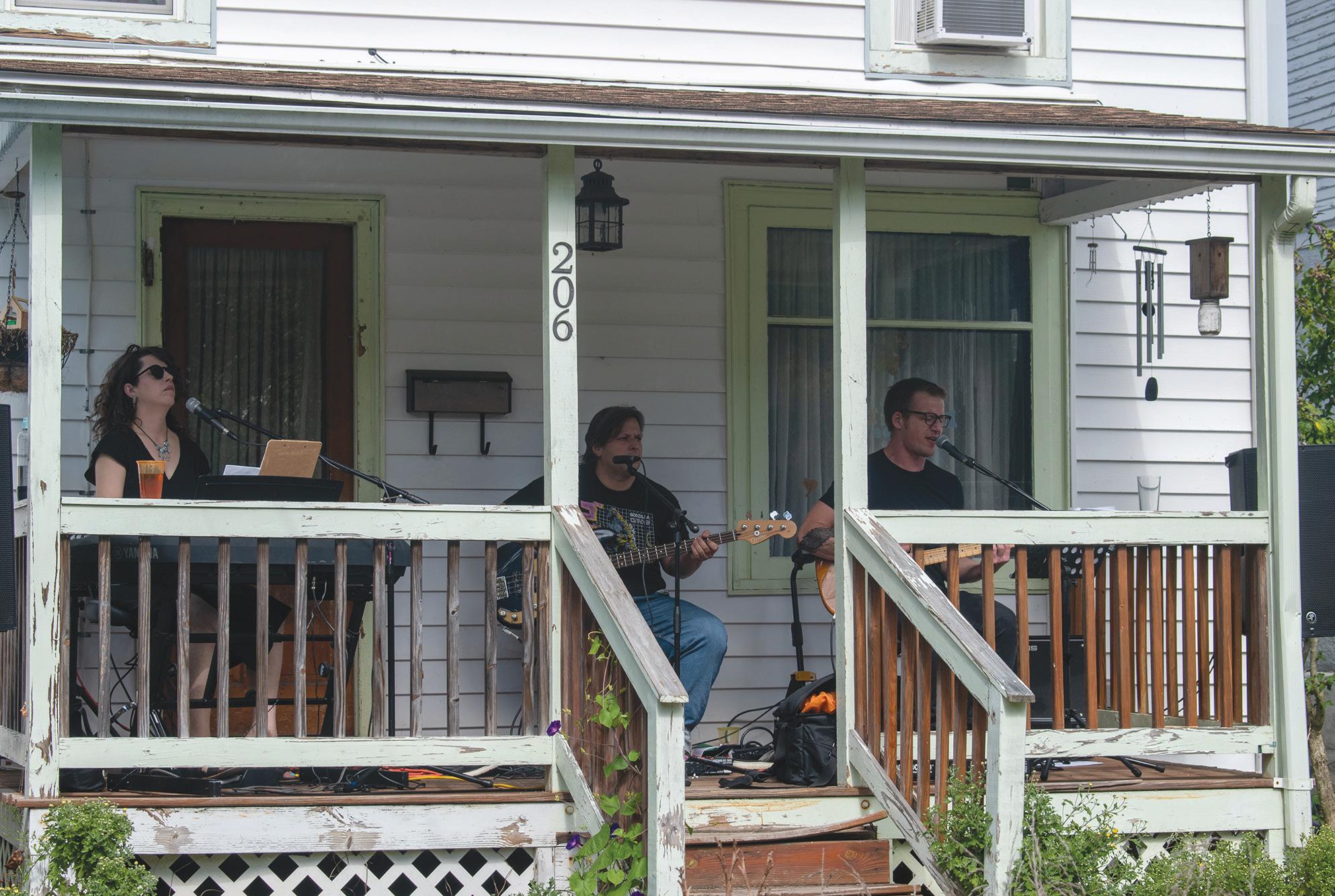
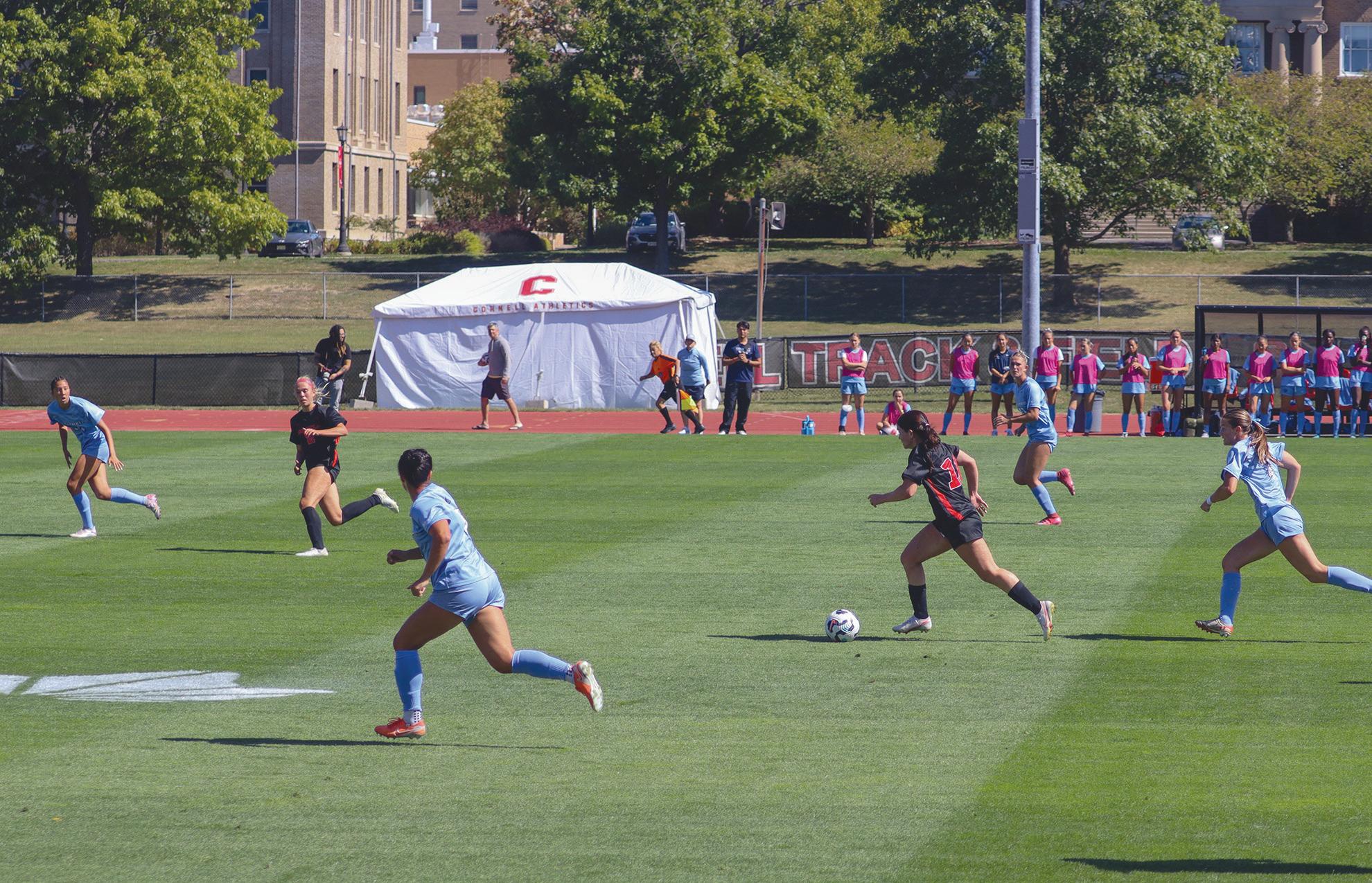
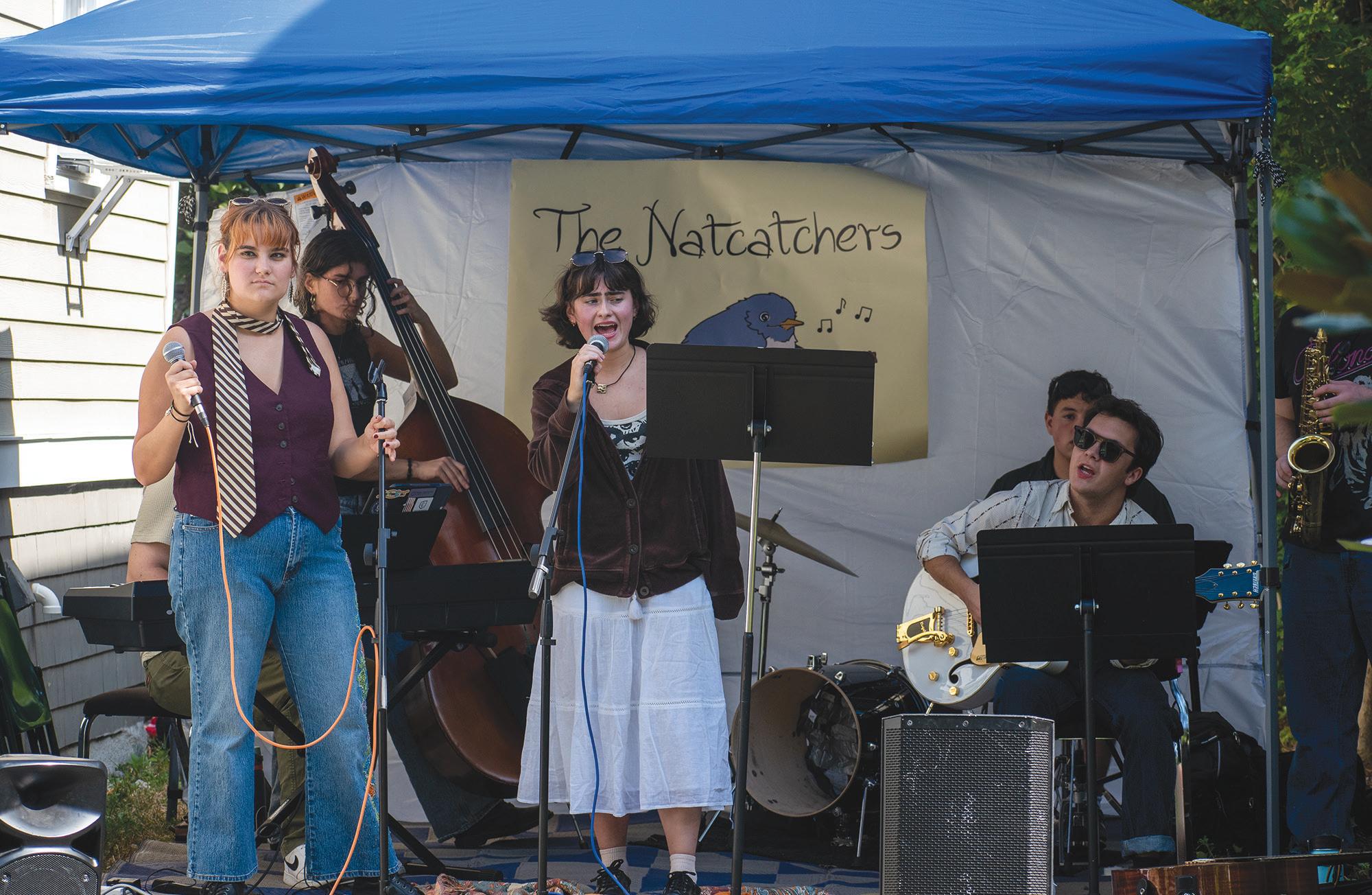
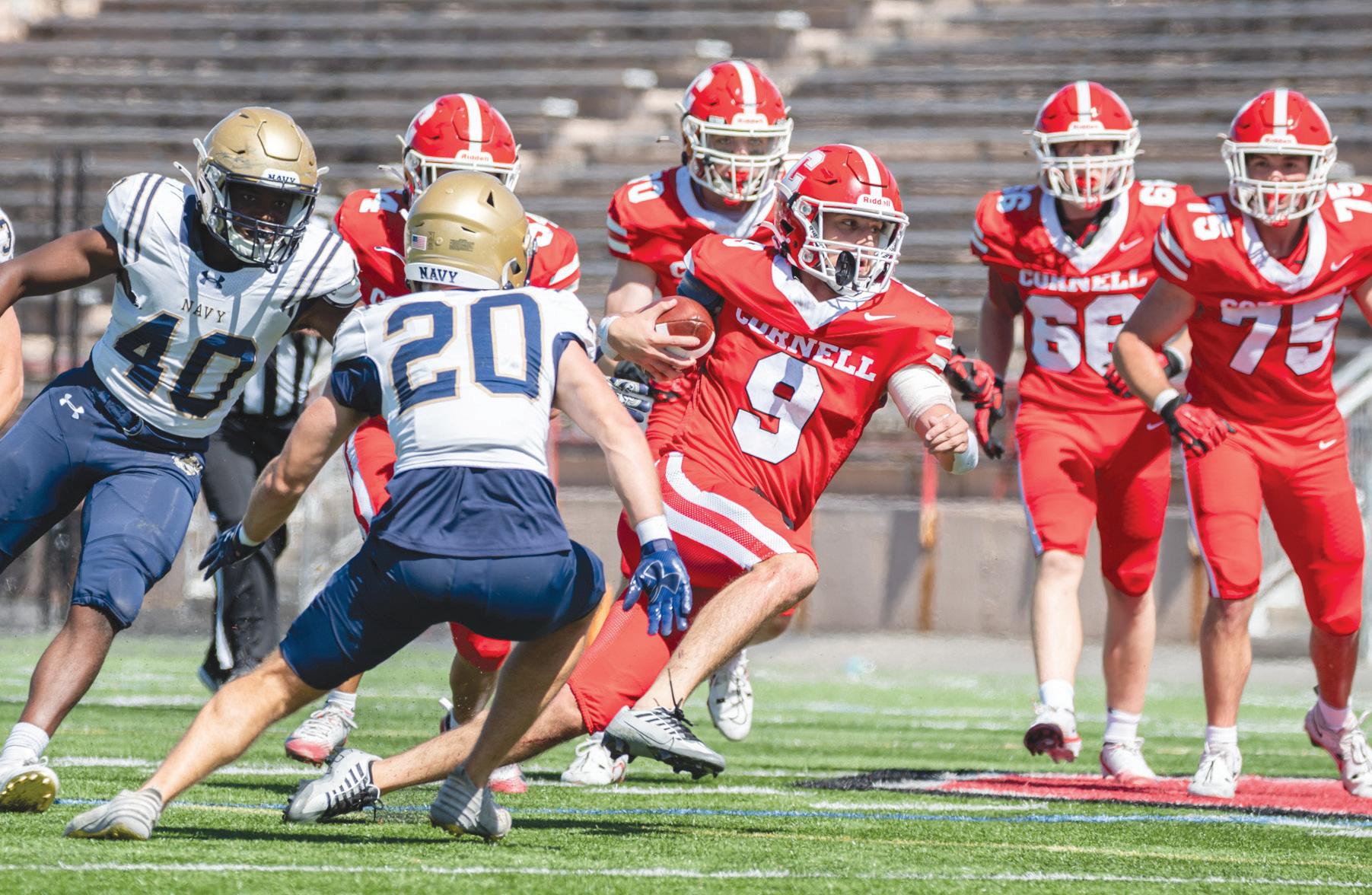
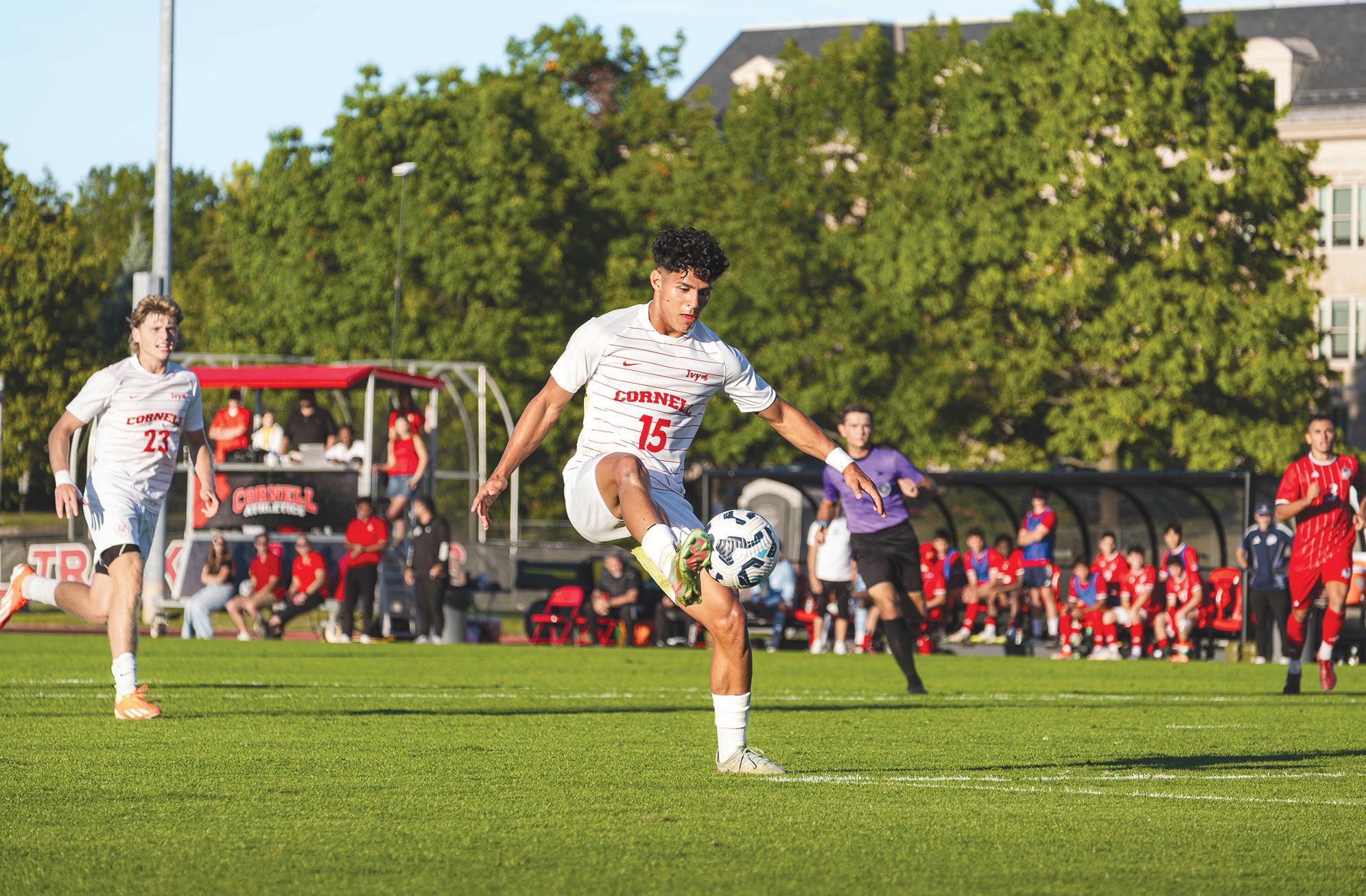
By SUN PHOTOGRAPHY DEPARTMENT
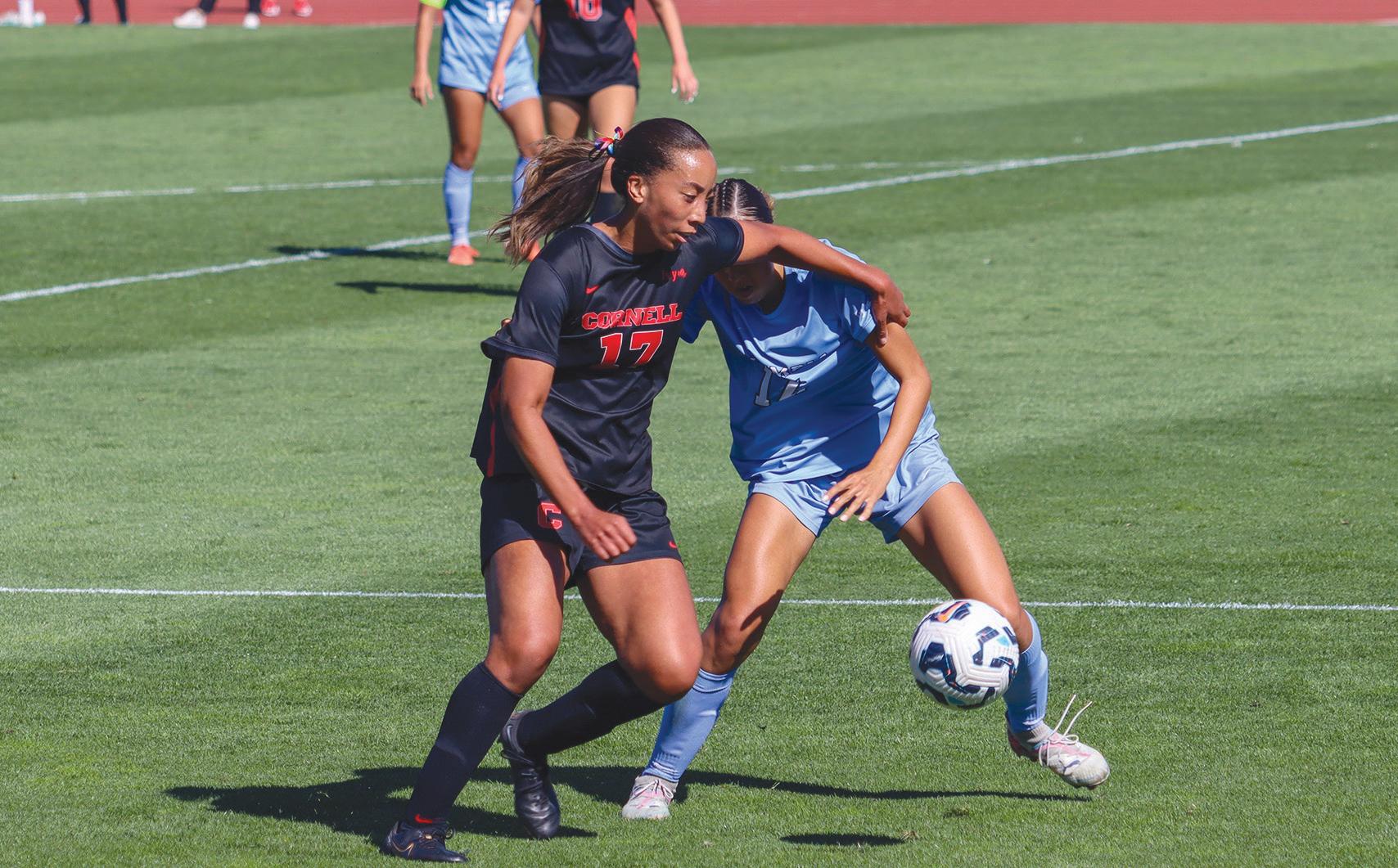
Over the weekend, Sun photographers captured sports and festivals on and of campus


By ATTICUS JOHNSON Sun Staff Writer
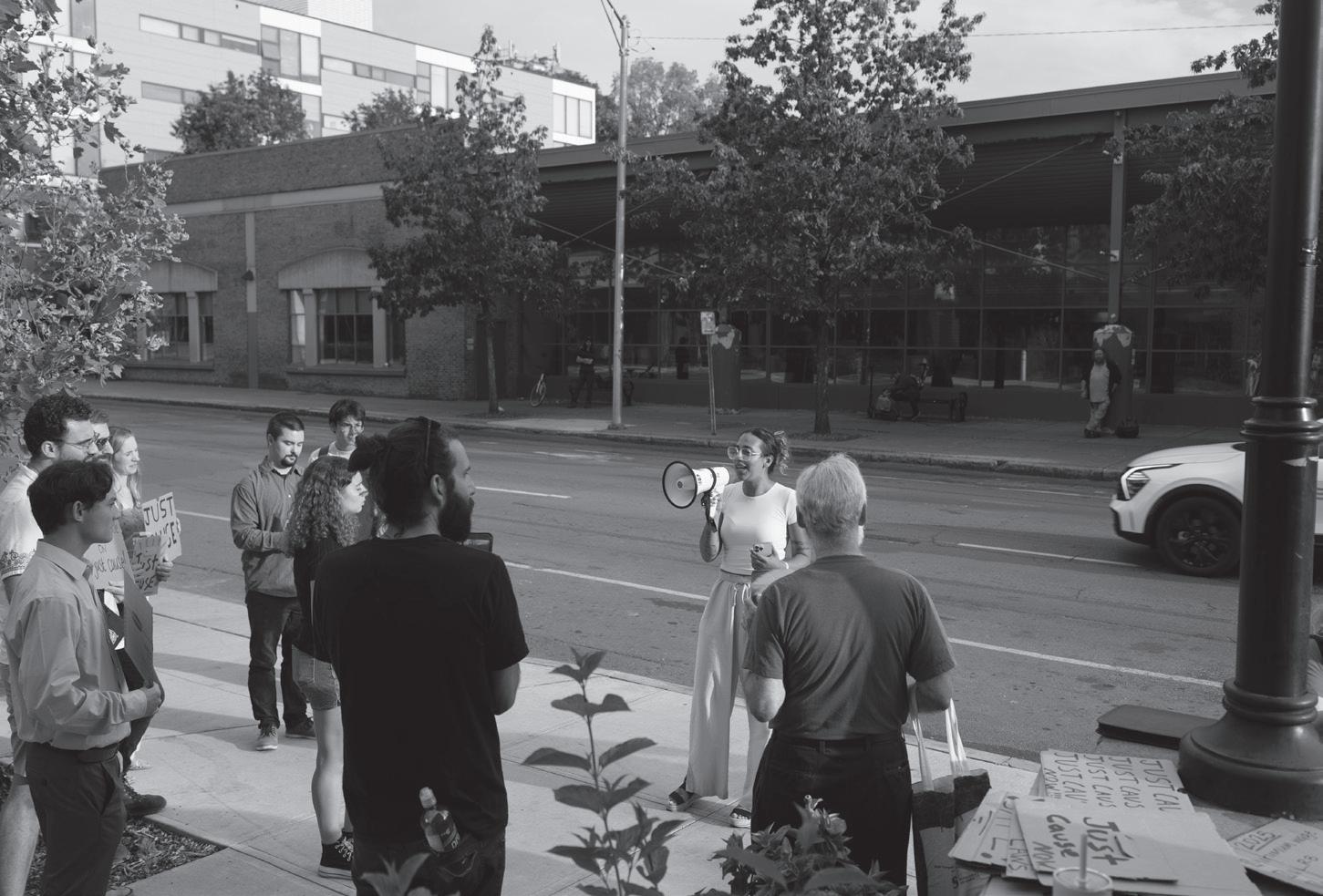
Sept. 18 — In front of a packed gallery, the Ithaca Common Council voted 8-0 on Wednesday to advance the process for just cause legislation that would require employers to provide reasoning before firing employees.
While Ithaca currently operates under at-will employment law, just cause law would stipulate that employers cannot terminate employees without at least a 30-day notice that outlines the employee’s performance issue and specific steps they can take to address concerns. Some unions in Ithaca, like Cornell Dining workers and Sciencenter employees, already include just cause clauses in their contracts.
Before the vote, Cornell students, legislators and members of the community rallied outside City Hall to support just cause. Some people held cardboard signs reading messages like, “sanctuary cities need just cause,” and “council seats have just cause.”
One supporter, Jeff Cole, was fired by GreenStar for taking time off to bury his father in 2022. Since Cole’s firing, he has been homeless.
“There’s no real buffer for people anymore,” Cole said. “People deserve more respect than that.”
Jorge Defendini ’22, a former Alderperson and current Common Council candidate for the first ward, has pushed for just cause since 2022.
“We already have just cause in Ithaca [with] union contracts,” Defendini said. “The local government needs to step up and meet the moment.”
The passed resolution includes a plan to move forward with a Common Council working group, which will examine possible proposals and open up public comment on just cause legislation. While the resolution earned unanimous support, fractures formed during the meeting over a discussion over a possible exemption to just cause for small businesses.
Alderpersons Patrick Kuehl ’24 (D-Fourth Ward) and Margaret Fabrizio (D-Fifth Ward) made it clear during the hour-long debate over the resolution that they would not support just cause without a small business carveout, while Alderpersons Tiffany Kumar ’25 (D-Fourth Ward) and Clyde Lederman ’26 (D-Fifth Ward) expressed openness to such a carveout.
Defendini and other supporters of just cause opposed a carveout, chanting “just cause needs jaws, no small business clause,” and Defendini explained opposition by saying that “there’s no small business carveout [for health regulations], because we understand it is a matter of safety. Just cause is a matter of safety.”
An Ithacans for Just Cause press release called a carveout “nonsense” and a “poison pill,” claiming that a majority of Ithacans are employed by small businesses. Their petition for just cause has almost 900 signatures.
It remains to be seen exactly what shape Ithaca’s possible just cause legislation will take, and whether it will include a small business exception or not. However, most just cause legislation requires employers provide notice of firing, inform employees before fir-
ing to allow them the chance to fix possible issues and provide some severance pay.
Montana is the only state with just cause legislation on the books, while New York City passed a fast food worker just cause law earlier in 2024.
Although the Common Council voted to advance the process for just cause, the legislation still has a long way to go before it becomes law. The Wednesday vote only moved just cause to public comment.
After public hearings and open forums where the Ithaca community will be able to voice their opinions on the bill, just cause will finally move to a
final vote in the council. According to the passed resolution, public hearings must be held before the end of the year, before a likely vote at the beginning of 2026.
Hannah Shvets ’27, a supporter of just cause and candidate for the Common Council’s fifth ward, was hopeful just cause would eventually pass. “If we continue to apply pressure, and show that this is what the community believes in, I believe they will vote in favor,” Shvets said.
Atticus Johnson can be reached at ajohnson@cornellsun.com.
By SHUBHA GAUTAM Sun Senior Writer
Sept. 22 — Around 20 local officials, educators, students and activists shared their thoughts on what reparations for those of African descent should look like in New York at Thursday’s New York State Community Commission on Reparations Remedies public hearing.
As part of its statewide public hearing series, the NYSCCRR invited community members to give public comments on reparations at the Thursday evening Ithaca Downtown Conference Center. The hearing highlighted Black New Yorkers in education, featuring a presentation by Ithaca College professor of education, Sean Bradwell Ph.D. ’09, on the history of racial discrimination in Tompkins County. Executive Chair Dr. Seanelle Hawkins and Commissioners Timothy Hogues and Linda BrownRobinson hosted the hearing.
The group denies accusations of racism and antisemitism, citing its embrace of several Jewish customs and inclusion of Black and Jewish members. The Twelve Tribes publicly disapproves of the LGBTQ+ community and “homosexual behavior.”
Senate Bill S1163A established the NYSCCRR in 2023 with the goal of making recommendations for reparations after examining the legacy of slavery and subsequent racial and economic discrimination against Black Americans. The reparations movement calls for monetary, systemic and structural amends to be made to address the history of chattel slavery in the U.S. Bradwell said that Tompkins County has a “long history of oppression,” including the enslavement of Black Americans until 1827 and “genocide of indigenous folks.” Marginalized communities do not carry the responsibility of solving the oppression they face, Bradwell said, suggesting that instead, community members must cooperate to make reparations for historical injustices.
To continue reading this article, please visit www.cornellsun.com.
Shubha Gautam can be reached at sgautam@cornellsun.com.
ADMIN Continued from page 1
So we moved it [from] the spring so that sophomores, who would be rising juniors a year later, if we don’t have enough housing, they aren’t able to get a spot that then they still have the whole academic year to go try to find an off campus living. So that was the motivation behind shifting that to the fall from the spring, to try to help students have the information to make a decision. Now, our commitment is really on first and second year students. So we try to have, we want to, we want to say yes to as many juniors and seniors as possible, but we have to account for how many first years will be rising sophomores who we know. And then we have to work with admissions to try to understand how many folks they plan to admit for the next year. So it’s, it’s a bit of a science, but it’s also a bit of an art, and trying to figure out that right calculation.
The Sun: This relates to the last question. So the Class of 2029, [is] the biggest class in history at this university. How does the administration intend to ensure that there’s space for these rising sophomores … as well as for upperclassmen who might want to get housing?
Lombardi: So that is absolutely part of our calculation. We had a really big class that just graduated in spring of 25 and so the [Class of] 29 is even bigger, but accommodates a little bit for that. Although that class was [comprised of] senior[s], so it had kind of made its way through the housing piece. But that is something we factor. So when we open this process here very soon, the math they do is to say, “okay, we know the 2029s, they’re gonna be rising sophomores. We need to account for all those folks to have housing. We get projections from admissions on what they’re expecting for the Class of 2030 … and then whatever is left is then what we would accom modate for juniors and seniors the best we can.
have acquired 301 College Ave as a part of the University housing system. Does the University have a plan to inte grate this into the South Campus community?
our housing portfolio for this coming year. So because of when the University engaged in that relationship, it was already, I think, leased, and people already had their spots and all that stuff. So we will be working over the course of this fall to integrate 301 into our housing portfolio. So making that option. Not exactly sure how that sign up for that particular facility is going to look yet, but that, starting next academic year, will be a part of the housing portfolio.
ing question. At this point in the semester, how many students are in forced triples or forced rooms, and how many students are living in converted lounge spaces, and is it expected that at some point in this semester or in the year, these people are going to be moved into more permanent residences?
whether we can get students moved around in spaces [which] depends on what kind of capacity we have. I know in the spring — I wasn’t here in the spring, you may remember that — I know it was announced that we thought we were going to be very full. We were full, but we didn’t have to have any quintuples, or sextuples or anything along those lines. We did have some quads as we started off, and we did have to flex some residential spaces. And I think that was a total of about 30 students who were impacted by that in total. I think many of those students are still in those spaces. We haven’t been able to move a lot yet, but it’s certainly as soon as we can, if they want to. We do find that a number of students who land in those spaces end up liking it and being comfortable in there and not wanting to move mid semester or mid year and so but we’d certainly make that available to them. …We know there’s always a change at the semester break, because some students go away in the spring. You’re probably familiar with this, and so there’s always that, whether it happens before then, we’re not sure yet.
ing responsibility for the Code of Conduct from the University Assembly to more administration-led committees. By 2021 the transition was complete, and the University Assembly was no longer head of the Student Code of Conduct. Now, for the first time since that change, the code is being revised again, and the University Assembly is not directly involved in the revision of that code. So given its previous and long standing role in shaping the code, why was this decision made to shift it into University-led assemblies, and not have the University Assembly involved?
Love: Prior to 2021 … it was the Judicial Administrator’s Office and it actually was a code and procedures for faculty, staff and students. The change in 2021 was for this to be a student-only code of conduct. Because it’s student only, that’s one of the reasons for the shift from the University Assembly. There still is a University Assembly’s code committee. I can’t remember the actual name right now at the top of my head, but that group, part of their charge is that their process is that any code revision that the University Assembly brings forward must go to them first before it goes to a vote, and then they look at that information before taking it to the University Assembly for a vote. That is sort of separate from the code revision, in that it’s not the code revision committee, but they can then take what they submitted to the University Assembly
there are two members that are required to be a part of this code and procedures review committee, a member from the Student Assembly and a member from the Graduate and Professional Student Assembly. Those two members reflected on our committee are the presidents for this year [and] they both sit on the University Assembly, and also can represent the University Assembly, and the processes can bring that back to the assemblies to have conversations about how the process is going. The last agenda for the [Student Assembly] had a resolution about the code, and so I think that there is conversation out.
What we’re asking the community, and part of our strategy. … [is saying] “Hey, we’re standing up this committee. Here are the members. Here’s the link to the code, and here’s the link to the procedures, so that individuals can, one explore those documents and then understand the ways in which they get to participate.” Also in our communication, we talked about the public opportunity to comment and to give feedback on proposed revisions and so what we hope is that communities will be a part of that. As the person that advises both the Student Assembly and the Graduate and Professional Student Assembly, I’ve had conversations with both executive groups about their opportunity to have resolutions and the process by which those resolutions get to us, particularly for the undergraduate Student Assembly, 90 plus percent of our cases come to the Office of Student Conduct are undergraduate focused issues, and we really hope that both assemblies will be involved

Anything that passes resolution through our shared governance systems, will come to this review committee. We’ll discuss, look at this information, and then advise VP Lombardi about what’s submitted.
So we really look at this as an opportunity for a fuller group of the campus to be involved in the code process and the code and procedures review process — the code and the procedures sit differently. The code is sort of all of the potential sort of sanctions or violations [while] procedures is how you then move forward through investigation, alternative resolution, alternative dispute resolution, or hearing, and all the pieces that come along with moving something from a complaint to a final resolution, and both of those documents are being reviewed.
The Sun: I’m going to ask a little bit more about the Student Code of Conduct, as you previously started off speaking about. Our goal here is to ensure that the students in the broader Cornell community have clarity on the current revision process since the Student Code of Conduct — this is the first revision since the 2021 change in the revision policy. So naturally, students have questions on these revisions and how and why they’re taking place and how it may affect transparency.
So starting off with the shared governance you mentioned this before, but back in 2018 conversations began about shift-
Lombardi: I would just maybe underscore one thing that Marla said, which is really inviting folks to become familiar with those two documents, the code and the procedures, and to make suggestions, if they have them. She talked about the process by which folks can do that and we would certainly welcome those perspectives.
The Sun: Are those revisions through the assemblies? Is that being publicized during the engagement of the other assemblies, through their revisions? Is that being communicated with the assemblies or is it more the kind of classic situation where any [student governance] body can come forward to the administration through resolutions?
Love: So the procedures, for the procedures, there’s a process by which revisions are brought to this committee. And it’s in the code, which is outlined for what this revision process should be. And so the other thing that I would articulate is
The presidents of the GPSA and the Student Assembly are involved in this committee. From my understanding, there are four total students on the committee, so two other undergraduates. We were wondering, aside from, obviously, you reached out to the presidents of these two stored student bodies, how were the other two students chosen? And also, if this is a code about students, and primarily for students, why are the students the minority in this committee? [Of the] two students that were chosen, one student is a part of Residential Congress, and a big portion of our conduct process happens in residential life. And so we wanted that to be reflected, not only from the perspective of where our students live and where policies are enforced, but also their house rules. And so wanting to make sure that the understanding and the connection between those had representation. The second student represents a wide swath of leadership roles and opportunities across campus, athletics, part of the Undergraduate Student Leadership Council. … But wanting to make sure that we also had someone sitting outside of residential life, an off-campus student, but also attached to other parts
This committee is focused on students, and there are currently four students on it. Was there a factor in that decision that led to the students being the minority in I don’t think that there was a design to have the students be the minority. I have to chair it as [VP Lombardi’s] designee for this first year. VP Lombardi is participating actively so that he can hear and see this process through. We also looked at faculty members that represent the Faculty Assembly, and so we have a representative from that group. So now we have almost all, we have all of the governance structures covered. The other faculty member has served as a hearing panel chair, and that’s a really important part of the code, and also something that we think is important for us to look into and have that representation. We have staff member from Student Services from the colleges. So reflecting the ways in which the code not only sits in the student experience outside of the classroom, but has impact on inside the classroom and folks that work with students in those spaces.
So I think that there was a desire to make sure that for any committee there’s always going to be that moment where someone says, “Hey, this person should be on the committee and that person should be on the committee.” We’re trying to be thoughtful about size and it’s hard to do something. I imagine you’re trying to have meetings as The Cornell Daily Sun and you’re trying to get everyone to show up at the same time, but also recognizing that we will have various phases of this process in which we’ll be engaging with the campus community. Knowing that this is not where the conversation stops, we actually will have the opportunity both VP Lombardi and I personally going out and having conversations and hearing from folks and having them give recommendations and give suggestions.
To continue reading this story, please check out www.cornellsun
Dorothy France-Miller and Matthew Kiviat can be reached at dfrancemiller@cornellsun.com and mkiviat@cornellsun.com.
143rd Editorial Board
JULIA SENZON ’26
Editor in Chief
ERIC HAN ’26
Associate Editor
SOPHIA DASSER ’28
Opinion Editor
ILANA LIVSHITS ’27
Assistant Opinion Editor
SOPHIA TORRES ’26
Advertising Manager
SYDNEY LEVINTON ’27
Arts & Culture Editor
JAMES PALM ’27
Assistant Arts & Culture Editor
JENNA LEDLEY ’27
Assistant Arts & Culture Editor
MELISSA MOON ’28
Assistant Arts & Culture Editor
SOPHIA ROMANOV IMBER ’28
Assistant Arts & Culture Editor
KAITLYN BELL ’28
Lifestyle Editor
MAIA MEHRING ’27
Lifestyle Editor
KARLIE MCGANN ’27
Photography Editor
MATTHEW KORNICZKY ’28
Assistant Photography Editor
STEPHAN MENASCHE ’28
Assistant Photography Editor
MIRELLA BERKOWITZ ’27
Video Editor
JADE DUBUCHE ’27
Multimedia Editor
HANNIA AREVALO ’27
Graphics Editor
HUNTER PETMECKY ’28
Layout Editor
RENA GEULA ’28
Layout Editor
ALLISON HECHT ’26
Newsletter Editor
DOROTHY FRANCE-MILLER ’27
Managing Editor
MATTHEW KIVIAT ’27
Assistant Managing Editor
VERA SUN ’27
Business Manager
ALEX LIEW ’27
Human Resources Manager
BENJAMIN LEYNSE ’27
News Editor
VARSHA BHARGAVA ’27
News Editor
ISABELLA HANSON ’27
News Editor
CEREESE QUSBA ’27
News Editor
REEM NASRALLAH ’28
Assistant News Editor
ANGELINA TANG ’28
Assistant News Editor
KATE TURK ’27
Assistant News Editor
GABRIEL MUÑOZ ’26
City Editor
JANE HAVILAND ’28
Features Editor
ZEINAB FARAJ ’28
Features Editor
JEREMIAH JUNG ’28
Assistant News Editor
KAITLIN CHUNG ’26
Science Editor
MARISSA GAUT ’27
Science Editor
ALEXIS ROGERS ’28
Sports Editor
SIMRAN LABORE ’27
Weather Editor
EMILY LEE ’27
Marketing Manager
Jan Burzlaf is an Opinion Columnist and a Postdoctoral Associate in the Program for Jewish Studies. Ofce Hours (Open Door Edition) is his weekly dispatch to the Cornell community — a professor’s refections on teaching, learning and the small moments that make a campus feel human. Readers can submit thoughts and questions anonymously through the Tip Sheet found on https://www.cornellsun.com/staf/jan-burzlaf. He can also be reached at profburzlaf@cornellsun.com.
When I began teaching at Cornell last year, one of the first things I learned surprised me: Many of my students initially found office hours intimidating. Some admitted they thought office hours were only for those struggling in class; others believed this weekly time was reserved for “exceptional” students aiming to impress. If you’re managing just fine (or fine enough), the assumption commonly goes, there’s no reason to show up.
That’s why, in this first piece of a series I’m calling “the basics” of learning on campus, I want to begin here. Office hours are not just for those struggling. For me, they’re often the best moments of my week. During and just after class — whether in office hours or on a quick walk back to the Arts Quad — those conversations are when the classroom feels most alive.
Three years ago, Sun columnist Julia Poggi wrote that she wished she’d had more chances to get to know her professors, to meet them as people rather than as distant figures at the front of the room. The size of Cornell’s classes, particularly in the sciences, often makes that harder than at smaller liberal arts colleges, she rightly argued. I often feel the same in reverse. Office hours offer that chance. They’re not simply about clarifying an assignment or asking what will be on the exam. They are about connection — about discovering who is really in the room together. This matters even more in courses where the topics are heavy. In my spring seminar on war and genocide, we wrestled with difficult histories. During office
Karim-Aly Kassam is an Opinion Columnist and professor in the Department of Natural Resources and the Environment as well as the American Indian and Indigenous Studies Program. His column Diference Matters recenters critical refection and environmental justice in campus life at a time when people turn away from the painful truth. He can be reached at karim-aly.kassam@cornell.edu.
The Tree of Peace embodies the resolution of conflict and the symbol of the Great Law of Peace, which ushered in an Age of Pluralism, uniting five warring nations into what became the Haudenosaunee Confederacy. Each leaf of the Eastern White Pine has five needles representing the Kanien’kehá:ka (Mohawk), Onyota’a:ka (Oneida), Onoñda’gega’ (Onondaga), Gayogohó:no’ (Cayuga), and Onödowa’ga:’ (Seneca) Nations. Subsequently, the Tuscarora were also welcomed into this federation. This event is a historical manifestation of sophisticated diplomacy that precedes the United States or the European Union. The Great Law of Peace is not a dogmatic blueprint but instead an evolving and dynamic set of principles that inform trade relations, stewardship of forests and waters, mutual respect among diverse peoples, and guidance for individual behavior. It is an achievement that rivals what the Europeans have tried but often failed to achieve. This pluralistic peace agreement has sustained itself to the present day, despite a tragic history of cultural genocide and dispossession, because of its ethical and environmental imperative. Arguably, it is the inspiration for the pluralist declaration on the Great Seal of the United States, E Pluribus Unum , from the many one. It is not my place to explain the sacred significance of The Tree of Peace . Rather, students and faculty can respectfully approach and learn from the Gayogohó:no’ (Cayuga) upon whose lands Cornell is located.
are 110 armed conflicts on our planet at present. Children are being ruthlessly killed, willfully starved to death or both simultaneously; while most powerful nations watch with indifference, uttering meaningless declarations and raking in billions in profits from the sale of weapons.
Why was this experience so heart-rending to me? Our intuition is a powerful, non-linear way of perceiving our interconnected world. Albert Einstein argued: “The most beautiful experience we can have is the mysterious. It is the fundamental emotion that stands at the cradle of true art and true science. Whoever does not know it and can no longer wonder, no longer marvel, is as good as dead, and his eyes are dimmed.” Young life always generates a sense of awe as it grows from a fledgling needing care to maturity, where it gives unto new life. The grief of the untimely demise of a seedling of The Tree of Peace was not only symbolic of our current historic predicament but an intuitive recognition of our role as silent witnesses to the loss of a generation of youth among communities not unlike the Indigenous peoples of the Americas.
hours, I watched the weight of that material ease slightly as students shared not only their questions but their personal reactions. We spoke about family stories, about fears for the future, about what it means to live ethically in the present. Those conversations built the trust that carried the class through the semester.
Office hours matter because they are profoundly human. They work through trust, listening, and the kind of community that grows only face-to-face. In this sense, AI can help all of us in the classroom — drafting an essay outline, suggesting further readings, even simulating dialogue (more on this in future columns). But here’s the point: AI cannot build trust. It cannot look you in the eye when you hesitate, or hear the catch in your voice when the reading hits too close to home. It cannot create the community that grows when people risk honesty with one another. That part of learning — fragile, human, relational — belongs, and will continue to belong, to the people who meet in a classroom.
The value of office hours also cuts both ways. Students often imagine that knowledge flows in a single direction — from professor to class, from facts to exams, from notes to comprehension. Yet some of my most important insights last year came in the other direction. This past spring, a student’s offhand question about AI tools and Holocaust memory led me down a path that eventually became a peer-reviewed journal article, now circulating internationally.
To continue reading, visit www.cornellsun.com.
However, I can relate a poignant event at the Cornell Botanic Gardens that made me reflect on our current historical moment. Last week, with a quivering voice that reflected deep pain, the Horticulture Coordinator explained how a seedling of The Tree of Peace had died despite scrupulous care.This seedling was to be part of the first phase of a threeyear exhibit entitled “Cultivating Hope: Plants and Indigenous Knowledge.” This living exhibit is a collaboration between Indigenous communities, students from those diverse communities, faculty, and the staff of the Cornell Botanic Gardens. Her demeanor was as if a parent was describing the loss of a beloved offspring. Colleagues quickly intervened, seeking to provide relief to their fellow gardener by pointing out that the immediate horizon was covered by the Eastern White Pine. But this was no consolation to her; the sorrow was both real and palpable to all present. For her, this seedling, like other plants, represented personal relations in a web of life that encompassed not only the plants but the people that made up the Botanic Gardens.
The death of a seedling of The Peace Tree unleashed the silent horror all of us present had carefully suppressed, but could mask no more. Like the dedicated gardener, we could no longer tolerate the loss of yet another living being within our midst before it reached its prime. At a time when there are barbaric wars on nearly every continent except Antarctica, “Cultivating Hope” is a tangible expression of the love of life or biophilia on our campus. There
Keep Ithaca beautiful. Please recycle this paper.
What we do to the land and seas, we also do to each other. It is no accident that the industrialized powers are among the largest contributors to biodiversity loss and climate change. When we retreat from protecting young life from genocide or extinction — be it humans, plants, or other creatures — we engage in “the death of birth.” We erase future possibilities. The victim loses their life never realizing their potential, and the perpetrator jettisons their humanity for the remainder of their life span; thus, eking out a hollowed existence. No one truly benefits and the devastation is irreversible. There are some actions that cannot be corrected and the harm remains for generations.
Are we so frightened of our Board of Trustees, whose task is to guide with wisdom, not control our scholarly freedom; wealthy alumni whom we once taught and have benefited from the privilege of education; and government funders who depend on our intellectual commitment, that we stop speaking the truth? Have our powers of observation dimmed so much that we can no longer perceive injustice? Have professors regressed into the invertebrates that we study in our labs? Again, Einstein, who lived in a time of fear and war, offers insight: “Science is international but its success is based on institutions, which are owned by nations. If therefore, we wish to promote culture we have to combine and to organize institutions with our own power and means.” Driven by the energy of our students and the ethics of the insights we have amassed, surely solidarity is within reach for a community of scholars at Cornell. The Age of Pluralism, ushered in by the Haudenosaunee so long ago on the lands on which Cornell is located, calls out to us today. Our campus is literally populated with The Tree of Peace, reminding us that a culture of hope is practically achievable precisely because of our differences.

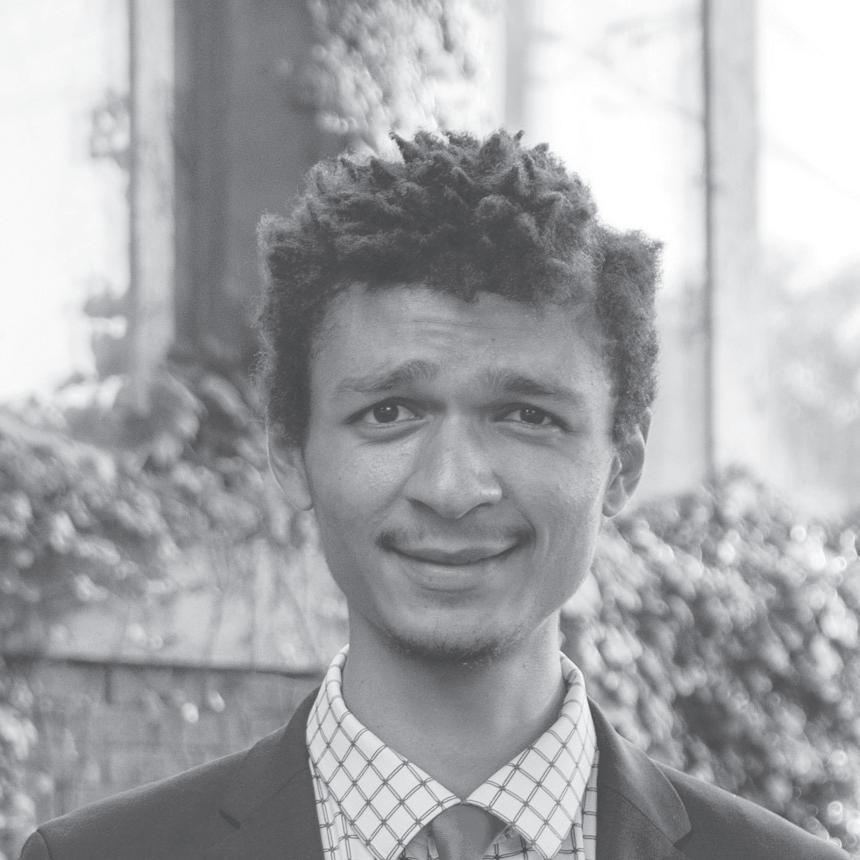
Leo Glasgow '26 is an Opinion Columnist and Government and China & Asia-Pacifc Studies student in the College of Arts & Sciences. In his fortnightly column Can We Talk, he writes his truth about domestic and international policy as well as problems within the soul of our nation and the world. He can be reached at lglasgow@cornellsun.com.
My name is Leo Glasgow. I was raised by a single immigrant mom in a one bedroom apartment in Queens, New York. I’m my father’s tenth child. I have the unique opportunity to speak about Black issues without people getting needlessly ofended.
I live right on the border between Rego Park and Forest Hills Queens. I can say without lying that I grew up less than a block away from my middle school, my police precinct and a synagogue. Queens is the most diverse place in the world, and I’m from a special pocket of it.
My part of Queens is home to Bukharian Jewish Soviet expats and their children, who I grew up with;

we all lived in the same brick apartment buildings so I never developed racist and conspiratorial prejudice against Jewish people. Bhukarian kids never questioned why a Black kid could speak Russian, they were just confused as to why I was Christian and not Jewish. Bukharians could speak my mothers language with me, and unknowingly guided me towards the light in a city where the wrong crowd can easily drag young Black men towards hell. I’m grateful that my neighborhood upbringing led to me condemning Hamas, valuing joy and love over envy, and having a growth mindset — among many other things.
In the entire country, it’s just me and my mom — a two person family. I have no connections to anyone from my father’s side, although I remember, years ago, spending a Christmas at my half-sisters’ place in the Jamaica Queens projects. On my mother’s side, everyone is in Eastern Europe. To give you a taste of the nuance: my great grandfather, a Soviet lieutenant Ivan Scherbina, is a Ukrainian from close to Poltava who met a Russian nurse during World War II but ended up settling in Belarus where his daughter mar- ried a Belerussian.
At my public elementary school P.S. 139Q, my music teacher found a clarinet in the basement from years before when the school could aford a band. I used the present to join the eighth grade band as a sixth grader. Flash forward four years and I’m senior class president of Fiorello H. LaGuardia High School of Music & Art and Performing Arts. My frst year there was also the frst time they ever ofered Chinese classes — which I had to fght to join into. Just before COVID, I competed in the New York Chinese Speech Competition and lost only to someone with a Chinese family. It was then I knew
I couldn’t achieve worldly ambitions if I ignored China, the second largest economy in the world. Te United States and China have the most important bilateral relationship in the world.
So when it came time to choose a college, Cornell’s China and Asia-Pacifc Studies program felt like the next natural step. I wanted to study China seriously and prevent a repetition of history that felt inevitable — a lesson instilled in me from the Cold War stories I grew up hearing from my family in Eastern Europe. Tat commitment has taken me far beyond Ithaca: I spent last fall semester in Washington, D.C., interning for Rep. Byron Donalds (R-Fla) nurturing the Government major side of me, and the following spring I found myself studying in Beijing, 1 of 4 Cornell students there — the only man and the only student without a connection to China.
Tese experiences have convinced me that dialogue across diferences is not only possible but necessary. Tough there’s much more to discuss, that’s the reason I’m writing for the Daily Sun. So if you disagree with something I write, I hope you’ll reach out — we can email it out, have a phone call or meet in person. Disagreement is a positive thing, because true unity means unity through diference. Tat’s what America means to me. To love America means to love the world. It’s all the truth.

ty, but placed under the guise of ‘renovations.’ It seems Cornell students are being hunted, surveilled and having their conduct placed under further scrutiny.
The President has lost the trust of his students, as many see his top priority in rounding them up rather than protecting them in this dark time. It would only be reasonable for students to feel that they can’t rely on the President or his office.
The impact of trust on the situation is quite precarious. In situations where leaders aren’t trusted, their constituents or colleagues are more likely to engage in behaviors that those in conflict studies call ‘defection,’ i.e. they’ll act in ways you may not like.
It takes a bit of bravery, but the stakes are too high: tell people how you feel. Do it as often as it feels genuine to do so. You don’t have to bare it all, but when we’re discussing the future of this University, honesty matters more than sunshine and roses.
Tell people the reality, and be honest with them. Then tell them how that reality makes you feel. If you feel uncertain, that’s fine. If you feel determined, that’s fine. Cornell may just unite behind your fear and your quiet resolve and come out of this storm better off.
Paul Caruso is an Opinion Columnist and a second year MPA student in the Brooks School of Public Policy and the Founder of the Cornell Negotiation Student Society. His column, Caruso's Compass, focuses on politics, international afairs, and campus life. Te column seeks to identify issues with the status quo and provide solutions to them. He can be reached at pcaruso@cornellsun.com.
It has been just under a month since classes began, yet the trust between Cornell’s students and its president has already frayed. Each week has brought another revelation from surveillance controversies to procedural maneuvers that weaken shared governance. I am not calling for Kotlikoff’s resignation. What I offer instead is advice on how he might begin to repair the damage.
On Sept. 2, The Cornell Daily Sun reported that Chief Administrator to the Office of the Provost Kristin Hopkins was captured on police bodycam footage asking if officers had gathered “a decent amount” of student IDs belonging to Cornell students protesting the March 2025 panel “Pathways to Peace.”
In that same video, Hopkins referenced how “Mike … was just hoping the number would be more.” It is clear that “Mike” is President Michael Kotlikoff. The immediate response to this news tore into the administration. The notion that they are here to protect students has been shredded.
Three days later, it was reported that the administration established a Code and Procedures Review Committee to revise the Student Code of Conduct. That Committee would also be responsible for reviewing any suggestions for the Student Code of Conduct by the University Assembly — and then sending it to Vice President of Student and Campus Life Ryan Lombardi.
Extra review by the committee and Lombardi are opportunities to kill UA input — a tactic often used by authoritarian regimes, globally. These steps boost executive power, decrease legislative power and create new opportunities for UA resolutions to get lost in the process. Not to mention, the UA is supposed to provide a check on the executive branch — that is now gone. The committee also lacks any professional student representation and adequate graduate and undergraduate student representation.
In May, the central administration drastically increased its control over campus surveillance systems for purposes unknown to students and facul -
Mike, I am not writing here to call for your resignation. Instead, I offer some genuine and free advice on what you must do to rebuild trust with the Cornell student body, who should be your top priority.
1. Power-sharing
In moments of high distrust, it is best for a leader to demonstrate a commitment to real power sharing, not just the symbolic kind. It shows a willingness to adopt and abide by the proposed rules of others. Given Cornell’s existing shared governance, it’s pertinent to start taking assembly concerns more seriously instead of simply letting their resolutions die on your desk.
The assemblies of the University are not in competition with you for power — rather, they exist to split the workload of administering services to the student body. They have always been your ally; they will seldom push you away first.
2. Demonstrate Predictability and Dependability
Be kind and be consistent. If you are truly sincere in protecting students and their rights, be absolute in that — don’t hope that more of them are rounded up after a protest. Remember: bad news is always ten times as loud as good news, and the students won’t forget.
Make your kindness and your heart a policy of your administration. ‘Cornell is kind’ should be your vision, and you should live it through actions. Shared governance can help you achieve this vision of institutionalized kindness . Take Resolution 37, a policy introduced to the assembly in Feb. 2025 and rejected promptly by your office in Apr. 2025 that called for the protection of at-risk members of the Cornell community through tangible programs and training.
If you believe that this resolution was already addressed by University policy, then work with the Student Assembly to create something that applies more directly. Don’t just dismiss it out of hand. Lead without asking others to follow you. Carry the banner of kindness yourself, and only after will the people follow you. They will come to believe in you if you first believe in them.
I hope you take these words to heart, because many Cornell students hang onto every one. They are universal and favor no side or viewpoint. They are well-informed by my study of building trust in violent conflict scenarios. Since you are not at war with the student body, this should be easy.


By LEAH CHANG Sun Staff Writer
With cutting-edge innovation at the forefront of their work, members of the Cornell TurfgrassProgram will be performing on-site research at the upcoming Bethpage Black State Park Golf Course — where top golfers will be competing in the Ryder Cup.
Building on their robust relationship with Bethpage established in 1999, Cornell and the New York State Parks are collaborating as leaders of the turfgrass industry on this momentous occasion to transform the way surfaces are sustainably managed to promote water conservation, chemical reduction and safety for this prestigious playing experience.
Under the Surface
From caddy camp to working on the grounds crew, Chase Skrubis’ fascination with turfgrass stemmed from summers spent in Nantucket since he was 14 years old. He began studying landscape architecture at Pennsylvania State University but earned his degree in turfgrass science after recognizing that was where his deeper interests lay.
After managing golf courses over the years, he realized that he wanted to be involved in research and development. When an opportunity to join the Cornell Turfgrass Program opened up, it seemed to be the perfect fit. As an Extension Support Specialist and State Park Agronomist, Skrubis now spends his summertime traveling with the team to meet with golf superintendents and collect data for putting greens.
In the winter off-season, information is gathered for number crunching, trend analysis and providing superintendents with presentations and training. The Environmental Impact Quotient measures any chemicals sprayed onto the course, like pesticides, herbicides and insecticides. Beyond using soil compaction as a traditional benchmark, toxicology profiles are assessed to examine how chemical sprays are applied in relation to water quality.
EIQ is a primary metric used to determine the extent to which courses are using Best Management Practices aiming for successful functionality and resource conservation.
As a former student-athlete on the Cornell Men’s Golf team, Ithaca

native Carl Schimenti ’14 has been a strong asset to the turfgrass research team, bringing forth playing experience and environmental engineering knowledge. Returning to Ithaca after two years in professional golf, he connected with award-winning researcher and professor, Frank Rossi, who was interested in applying Schimenti’s “engineering mindset” to turf concepts.
“If you can ask good questions, then you can find good answers. With that being the backbone of research.”
Chase
Skrubis
According to Skrubis, the Cornell Turfgrass Program is uniquely positioned to study many things in the turf realm that individual golf superintendents would not have the opportunity to. Tools like electromagnetic induction devices to look at numerous soil types, hooking up remote sensors to mowers and monitoring plant health through Normalized Difference Vegetation Index on other golf courses, are

examples of the technology being utilized to make detailed improvements on the field for the modern-day climate.
“We have this resource of time in our favor where we can step back and work on trial plots or we can do research funded grant projects and we can look at specific aspects of turf,” Skrubis said.
Ryder Cup Research
Setting a new precedent, Bethpage State Park, located on Long Island, is the first public host for the Ryder Cup. As the most regulated and managed golf course in the state park system, this presents a unique platform for the Cornell Turfgrass Program to conduct cumulative research at a highly-recognized international stage.
“The Ryder Cup being at Bethpage is a really good example for Cornell’s research and work on the back end of turfgrass to shine through,” Skrubis said.
Since partnering with Bethpage over 25 years ago, Cornell has been collecting input data by recording everything applied to the course as well as cultural and management practices performed. For the Ryder Cup, researchers are sharing expertise on putting greens to unify all 18 greens to perform at a consistent level for all players.
Shifting from clay-based soil in Ithaca to sand-based soil on Long Island means that the team faces stronger regulations with spray limitations. These different growing conditions create a higher susceptibility to chemicals entering groundwater and to water bodies typically not present upstate.
“Certainly makes me think differently about the pun intended ‘downstream effects’ of how we manage grass and what gets into the water,” Schimenti said. “We are connected to water in a variety of different ways.”
The recent formation of the New York State Golf Coalition has brought superintendents, lobbyists, lawmakers and other experts together to build a comprehensive bridge of communication through multi-
disciplinary conversations. While these individuals are each professionals in their own respective fields, creating this alliance facilitates the management of different facets to various groups.
“New York is on the right track with that,” Skrubis said. “The fact that it’s coming to fruition is a good thing.” Turfgrass and Beyond
For aspiring engineers and researchers, Skrubis and Schimenti emphasize the importance of asking questions and embracing curiosity in a wide range of topics.
“If you can ask good questions, then you can find good answers,” Skrubis said. “With that being the backbone of research.”
Whether it is youth sports or professional athletes, the team is also exploring ways to promote a safe surface for injury prevention. It is crucial to consider factors such as unevenness for weedy natural grass, as well as hardness and heat for synthetic turf. Despite challenges faced with the gap between limited education budgets and costs of implementation and maintenance, researchers are working on a project concentrating on governance and stewardship decisions for K-12 schools in New York.
“The Ryder Cup being at Bethpage is a really good example for Cornell’s research and work on the back end of turfgrass to shine through.”
Chase Skrubis
Combining innovative practices, environmental sustainability and interdisciplinary engagement, the Cornell Turfgrass Program is paving the path for courses and fields in New York and beyond to sow seeds for the next generation of golfers and researchers.


By Ruhi Datar
Ruhi Datar is a sophomore in the College of Arts and Sciences. She can be reached at rrd56@cornell.edu.
Inever leave my dorm without being equipped with bandaids –– a lesson I quickly learned after my feet bore the brunt of my poor shoe choices. Some of my most beloved pairs of shoes have left me with blisters in every spot imaginable. Yet, this has never stopped me from moseying around campus in even the most uncomfortable pair. Shoes really are my achilles heel.
So, for anyone who (like me) has an affinity for shoes, is on the hunt for a new pair, or is just curious to take a peek at the collection I’ve lugged to Cornell, here is an honest review of how each pair holds up against Cornell’s campus.
My Brown Havaianas
These are the perfect flip-flops to slip on for walking around the dorms or grabbing a quick bite at the dining hall. But, most surprisingly, they are also comfortable walking around campus. They don’t leave any blisters, and I haven’t even had any issues walking up the Slope in these. I think these are one of my favorite shoes I brought with me to Cornell (as long as the weather is nice). Plus, I have been loving the look of flip-flops paired with jeans recently; it feels very chic.
Birkenstock Boston Clogs
I absolutely love these shoes. They add a fun touch to many outfits, but unlike my Havaianas, I haven’t had the best experience walking up hills or across central campus in them. I feel that they slow me down, so they are better for days which does not entail a trek across campus.
Ugg “Fluff Yeah” Slides (Army Green)
These may have an unconventional look to them, but they are fun and comfortable — and stolen from my mom. I’m sad they were discontinued because I would buy my own pair in a heartbeat. They are perfect with cozy outfits and, thanks to the back strap, secure on your feet; they surprisingly work well for walking around campus.
Adidas Spezials in Black
Probably my most-worn pair. Since they are black and white, they match with just about any outfit. Plus, they are incredibly easy to walk in. The only drawback, I would say, is that they’re very flat, so long days with them tend to leave my feet a bit sore; still, a mild discomfort compared to blisters or shoe-bites.
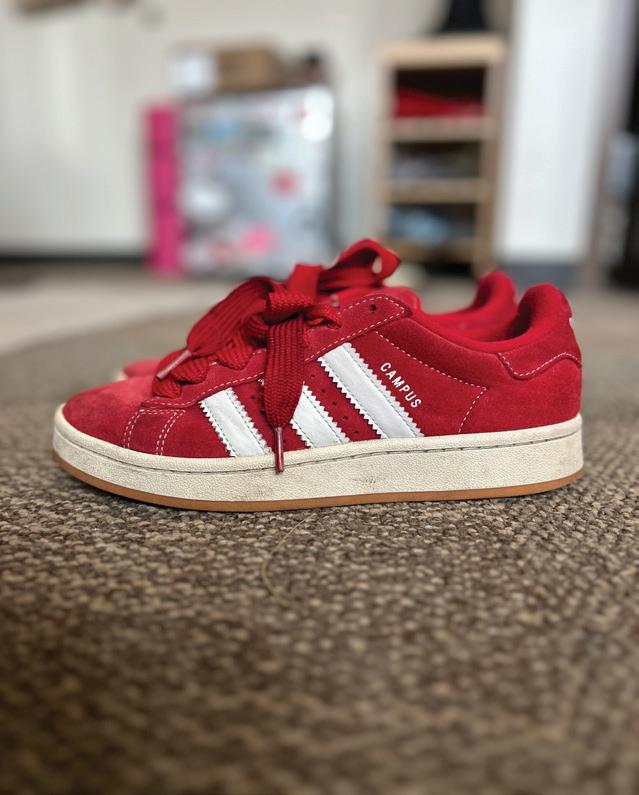
Adidas Campus 00s in Red
I love these for the pop of red they add to my outfits. Not only are they comfortable, but they offer more foot support than the Spezials, though the bold color
means they don’t match as many outfits.
Adidas Gazelles in Pink
Another one of my favorites. They are comfortable, but again, like the Spezials, flat. The downside, however, is that the pink suede shows dirt and stains easily. I have not found a damage-free method to clean them, so I avoid wearing these shoes when the weather calls for rain or snow.
Red Arizona Birkenstocks
If you couldn’t already tell, red is one of my favorite colors. These shoes are cute, but painful. They give me blisters on the inner sides of my feet, which can be unbearable. With bandaids and some determination, I can sometimes push through, but I really cannot walk in them for long periods of time, especially up the Slope.
Ugg Ultra Mini Boots
As Ithaca’s winter starts to inch closer, I know I will be able to count on my Uggs. The sheepskin lining makes them warm, and they pair perfectly with thick socks or leg warmers. That being said, don’t wear them in the snow ––I have stained mine because of it ––and the grip isn’t ideal on slippery days.
Brown Doc Marten Platform Oxfords
I absolutely adore these shoes, and I think they can instantly elevate an outfit — even if they are on the bulkier side. Breaking them in, however, was rough, and my heels still bear the battle scars. Once the leather is softened, they are not too bad, but I wouldn’t choose them for a long walking day.
Black Doc Marten Platform Mary Janes
These, just like the Oxfords, are bulky. They are also looser, making it difficult to walk at a steady pace. Still, I love the look and keep them in my shoe rotation.
Zebra Print Converse
Their bold pattern has the power to make an otherwise boring outfit, much more interesting to look at. But, they’re narrow and a bit cramped for long walks, even though the foot support is decent.
Clarks Mary Jane Heels
Not my favorite to walk in… anywhere. They are great for professional wear, not so much for walking up the slope.
Pointed Flats
I have no clue where I got these from or what they are really called, but they are probably my worst pair for walking. They hurt almost immediately and do not offer any support. Still, on days that I am feeling brave, you can catch me sporting these if an outfit calls for it.
Blue Hokas
I usually only wear these when I go for a run. These are the most comfortable pair of shoes I own, but they do not pair well with a single outfit. If I could wear these all the time, I would.
Some pairs make the trek across Cornell’s hilly campus feel effortless, while others leave me limping back to my dorm; still, I will always keep them all in rotation because I can’t help but love each pair, even if they lack practicality.
By Giuliana Keeth
Giuliana Keeth is a senior in the College of Arts and Sciences. She can be reached at gmk74@cornell.edu.
Meal prepping. If you would have said that phrase to me two years ago, my mind would have started racing with preemptive stress over how much time and work that would take. A pile of questions would emerge one after the other: What is meal prepping? How often should I be doing it? Would it be better to make my food on a daily basis? What if I end up hating what I prepare? How will I manage grocery shopping without a car?
Despite these overwhelming concerns, as a rising senior, I decided that it was about time to live off-campus. Three years on North Campus had left me feeling like I was missing out on way too many fun activities, despite the fact that my friends and I would try to make a couple of plans to go and get boba or eat dinner together. Most of the time, we couldn’t really spare an hour to walk or take the bus there.
Yet, even after signing a lease on an apartment for the school year, I still couldn’t face the fact that I wasn’t going to be eating on campus every day. Taking a pre-made lunch with me felt like a massive burden, especially since it didn’t give me any flexibility to eat with friends who had decided to stay on meal plans. At the same time, I knew that I really didn’t want to continue with a meal plan. When I ate at a dining hall, it was for pure necessity, a simple refuel before going to another class. I wanted to feel as though mealtime was a moment to pause and enjoy a delicious dish instead of a daily chore.
Luckily, I started living in my apartment over the summer, and I decided that it was the best time to experiment with meal prepping. I wasn’t completely set on the idea; but, I wanted to try my hand at cooking every day to see whether or not it would be plausible to do with a full class schedule in addition to other activities and responsi-
bilities. The first week food prepping left me completely overwhelmed. During the Covid-19 pandemic, baking became my favorite hobby, so a small part of me had unconsciously assumed meal prepping would be a light activity, similar to what I was used to.
But something about having to prepare a set grocery list for the week—buying enough fruits, vegetables and proteins for each day while also trying to minimize food waste— seemed impossible. Preparing my own meals wasn’t really the problem; it was all the logistics supporting it.
After two weeks of confusion and frustration, I called my mother to ask her for some help. I saw some of the sheets that she made at home to plan groceries and meals, so I knew that she would offer me really thoughtful advice. She understood my pain in regards to wasting products. As a mindful person herself, she tries to avoid buying too many groceries and potentially letting them expire. However, she has a wealth of knowledge up her sleeve about recipes and ingredient combinations that I have just begun to develop and explore.
In our call, she began to list a couple of recipes that complement each other. For example, breakfast for one day could be shakshuka while dinner for the next could be vodka sauce pasta with grilled chicken. Each of these recipes has a completely different flavor profile, but they both use tomatoes. In this way, my mother and I began developing a meal plan for me, one that focused on minimizing my grocery list while maximizing variety and flavor in each meal.
If you feel particularly stressed about meal planning, I encourage you to approach it in the way you would a problem set in math or a complex reading. Take the time to deconstruct the process and create a spreadsheet of potential meals, always paying atten-
tion to the ingredients they require. You might be surprised to find that many recipes have nearly identical ingredients, but a simple change in preparation or seasoning gives them a unique taste and sets them apart from each other. Now that the semester has started, I like to alternate two main dishes with different sides throughout the week for dinner. For example, I might combine a Peruvian beef stew and chicken Florentine with mashed potatoes and brown rice, making sure that there’s not a single day which feels like a repetition of the last. In a similar vein, you don’t have to immediately shift from an unlimited meal plan and take complete responsibility over cooking. Since you’re already on campus for classes, you could grab lunch at a café with a couple of friends and avoid carrying a lunch bag all day. I’m a huge fan of coffee, so I often like to combine my lunches with an iced latte. The key to meal prepping is planning. This doesn’t have to involve significant amounts of effort each week nor significant expenditure. Your sole goal should be making sure that you have a set time to plan meals, buy groceries and prepare foods in advance. For me, this proved to be extraordinarily helpful. I like to shop on a day with less classes, so that I can cook over the weekend. If you have a car, it might take less time to shop, so you can combine both activities into one day. You will find that after a couple of weeks, this process becomes less a source of stress and more an opportunity to be creative through cooking, exploring a dish that you might have always wanted to try or spending time with your friends baking together. It might not seem like a priority now, but knowing how to cook will be a lifesaver after graduation. Eventually, there won’t be many dining halls nearby and you’ll have to handle meal prepping yourself.

By EMMA SPINDLER
Sun Contributor
Sept. 23 — In a majority vote, The Student Assembly voted to rework proposed Resolution 10, which attempts to give the undergraduate body a voice in revisions of the Student Code of Conduct, during its Thursday meeting.
Resolution 10, titled “Addressing the Administration’s Undemocratic Review of the Student Code of Conduct and Affirming Cornell’s System of Shared Governance,” was introduced by Aiden Vallecillo ’26, the Assembly’s student workers representative, amid the University’s review of the Student Code of Conduct launched in August.
The resolution “condemns the exclusion of the elected Assemblies in [the University’s] revision of the Student Code of Conduct.”
Currently, none of the Assemblies have a dedicated member that has been invited to participate in the Code’s revision.
Student Assembly members Ezra Galperin ’27, representative at-large, and Assembly President Zora deRham ’27 were among those who voiced
their concerns over the resolution at the Thursday meeting.
“What happens if students [who are members of Greek life] advocate for their own interests?” Galperin said.
deRham raised concerns over word choice, stating the resolution read “like a list of demands.”
The Student Assembly subsequently voted to pause debate and rework the resolution rather than move it to the next reading calendar. This gives the Student Assembly an additional week to draft the resolution without reentering debate.
The resolution calls for the Code to be reviewed by a committee composed of three freely elected members from the University Assembly, the Student Assembly, the Faculty Senate and the Graduate and Professional Student Assembly, and that “the revision be approved by each of these bodies.”
Currently, authority over the Code is held by Vice President for Student & Campus Life Ryan Lombardi and delegated to the Office of Student Conduct and Community Standards. According to OSCCS, the revision of the Code will receive “advisory input” from a closed Code and Procedures Review
Committee, though the extent of that input was not specified
The Review Committee currently has eleven members, including six administrators, one faculty member, and four students — including Nicholas Brennan, Ph.D. student and Graduate and Professional Student Assembly President and deRham.
The resolution also requests “all information regarding the process by which Lombardi identified, evaluated and appointed the voting members of the Code and Procedures Review Committee” from the University administration.
The Student Assembly additionally passed Resolution 7, which will establish a Student Employment Policy Committee within the Assembly to address the needs of Student Workers. Resolution 9: Ending Career Services Collaboration with ICE aims to disallow the University from promoting and advertising jobs by the U.S. Immigration and Customs Enforcement Agency, was voted to move to the Third Reading Calendar next week, and is scheduled to go to a final vote on Sept. 25.
Emma Spindler can be reached at es2272@cornell.edu.
By RAFAELA GANDOLFO BUSTAMANTE Sun Senior Writer
Sept. 22 — As Autumn breezes begin to cool the air, Ithaca’s 43rd annual fall celebration, Apple Harvest Festival, is set to return to the Commons from Sept. 26 to 28. The downtown festival unites music, baked goods, local vendors and the community in a celebration of the fall harvest.
Most commonly known as “Apple Fest,” the multi-day event takes over the Commons once a year, with events and booths spanning from State Street to Albany Street, and filling the stretch between Seneca Street and Green Street. The festival will feature live entertainment, artisan vendors, farm-fresh produce, cider, treats and, of course, many apples.
Organized by the Downtown Ithaca Alliance, the major event comes with year-round planning according to Corrie Root, chief operating officer of the alliance.
This year, DIA has implemented an Apple Oversight Committee, consisting of DIA staff, recurring vendors and business representatives according to Root. Constantly trying to make improvements, the committee aims to get a “good sam-
pling of the people that this [event] impacts.”
Apple Fest’s newest addition to come is a Family Fun Zone, which will be located by the Press Bay parking lot. This zone will consist of affordable family-friendly activities such as a 65-foot inflatable bounce house, pumpkin painting, petting zoos and family-focused vendors.
Though the festival draws many families, it also attracts a large crowd of students. Ally Schwartz ’26 looks forward to attending, describing it as the perfect annual marker of fall’s arrival.
“It’s been super fun to go down with friends every year and interact with and support some local vendors and artists,” Schwartz said.
The festival aims to bring in students from across Ithaca, holding a student welcome event that will take place on Friday from 4-6 p.m. The first 75 students from Cornell, Ithaca College or Tompkins Cortland Community College to check in to the event will receive gift cards and experience live student performances.
To continue reading this article, please visit www.cornellsun.com.
Rafaela Gandolfo Bustamante can be reached at rgandolfobustamante@cornellsun.com.
By VARSHA BHARGAVA Sun News Editor
Sept. 22 — McFaddin Hall will not be included in the Fall Housing Selection Process for the 2026-2027 academic year due to upcoming construction on the building, according to a statement sent to The Sun from Cornell Housing and Residential Life.
The West Campus Gothic building will undergo “significant external construction” expected to begin in this upcoming summer and extend “well into” the Fall 2026 semester, wrote Perdita Das, assistant dean of Hans Bethe House, in a Sept. 18 email to current Hans Bethe House and McFaddin Hall residents.
Main building Hans Bethe House and its paired Gothic building, McFaddin Hall, comprise an established residential community on West Campus that traditionally houses over 350 transfer and upper-level students. McFaddin Hall typically accommodates approximately 60 of the community’s residents.
The University’s class of 2029 is the largest class in Cornell’s history with 5,824 admitted students and 3,861 enrolling. In a prior statement to The Sun, HRL wrote that it has moved student housing around and
renovated new locations for student housing amid rising class sizes.
In previous years, there have been complaints from students placed into forced triples — rooms meant to house two students that instead house three.
Beginning last spring, “[HRL] relocated students to South and West campus locations, creating additional space for incoming firstyear students on North Campus,” HRL had written.
When The Sun asked about the impact of McFaddin’s closing on housing crowding in the next academic year, HRL did not provide a response in their statement to The Sun.
The Fall Housing Selection Process for the 2026-2027 academic year will span Oct. 2 to Oct. 8 for rising juniors and seniors, while selection for rising sophomores will take place this upcoming spring.
During the Same Area selection process, where students on West Campus can select a room in the same building they currently live in, current McFaddin Hall residents will be able to select a room in main building Hans Bethe House, according to Das.
To continue reading this article, please visit www.cornellsun.com.


By JANE HAVILAND
Sun Features Editor
Sept. 18 — Today, the McGraw name evokes the image of Cornell’s iconic clock tower, newly renovated as of July 30. But the family name holds the history of more — a Supreme Court lawsuit, a great pumpkin mystery, a feminist philanthropist and a day one Cornell tradition, the Cornell Chimes.
To honor McGraw Tower’s recent restoration, The Sun took a trip down memory lane and uncovered a chronicle of quintessentially Cornell moments in time that are marked by the clock tower’s presence.
Constructing McGraw Tower
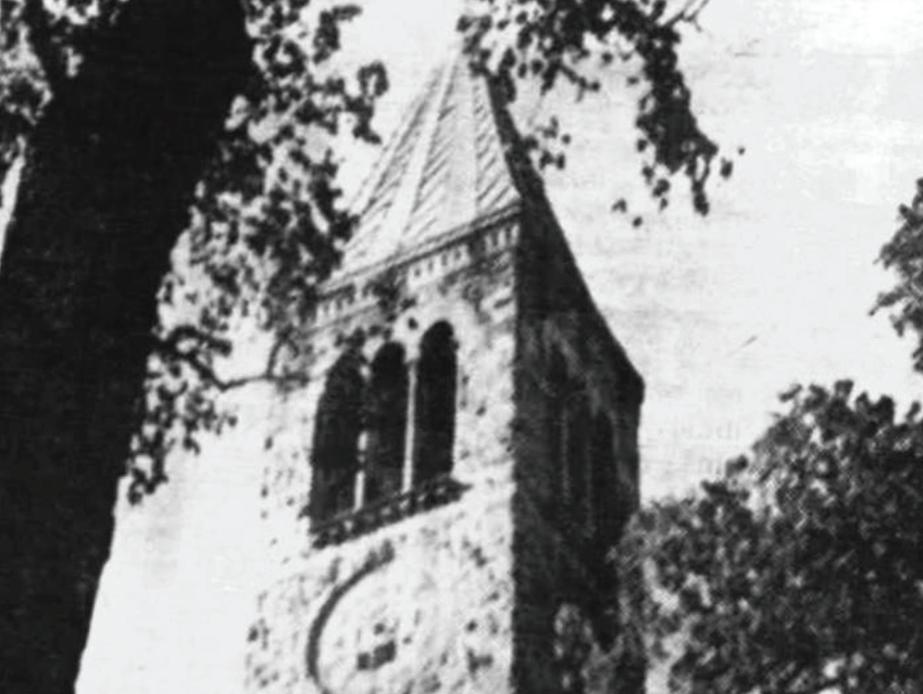
Today’s McGraw Tower and Uris Library were once a unified establishment known as The University Library, which opened in October 1891. The library project was funded by Trustee Henry Sage and the building was designed by William Henry Miller, Class of 1872, who also designed Barnes Hall, according to both University Architect Margaret McFadden Carney ’81 BArch ’81 and Cory Earle ’07, an American studies lecturer.
The official library took 23 years after the University’s 1868 opening to be constructed, since classrooms and student housing were being built. Massive debates took place between the involved trustees, benefactors and University administrators on the final location of the library. The discussion lingered throughout Cornell’s first president, Andrew Dickson White’s, presidency and into President Charles Kendall Adams’ term, the University’s second president.
Carney shared an anecdote that illustrated how the current home of McGraw Tower and Uris Library was chosen.
“While walking one evening [Adams] found himself standing at the crest of Libe slope, looking towards the lake and the lights of houses on West Hill and was moved by the powerful beauty of the site,” Carney wrote in a statement to The Sun. “‘Here the Great Library will stand’, he said with great emphasis to the faculty member with whom he was walking.”
Before the official library was constructed, McGraw Hall, which was built in 1872, served as the campus library. McGraw Hall’s tower was the Chimes’ first home.
“[McGraw Hall] initiated a tradition of inseparable partnership between the books and the chimes, the most important central resource that defined the purpose of the institution — The symbolic core of the university and the beginning of
an icon,” Carney wrote.
Earle highlighted the connection between the ringing chimes and the books.
“It was White who first suggested a tower be incorporated into the building plan,” Earle wrote in a statement to The Sun. “White felt that books were the heart of a modern nonsectarian university, and so the most iconic and prominent building should be the library, not the chapel.”
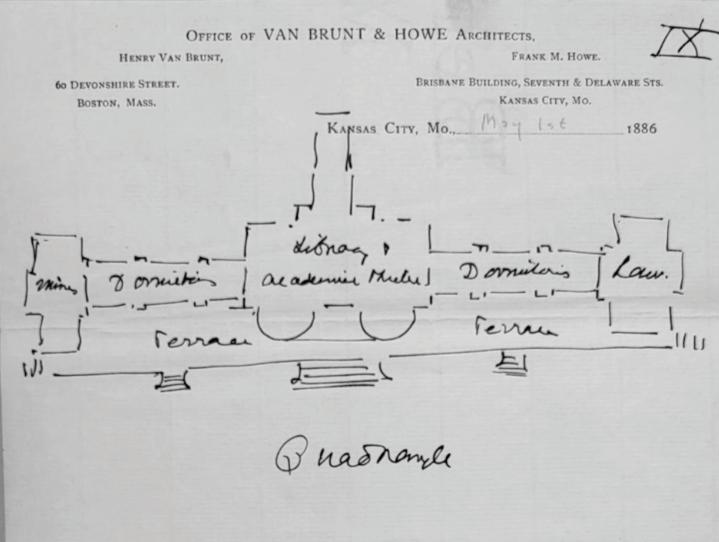
After several years of project development and delay, a competition between architects Henry Van Brunt and Miller began in 1888. The judgement of Trustees and the Library Committee that oversaw the building plans would determine the final architectural designs and lead architect.
Van Brunt’s concept featured the building in more of a “Cathedral configuration,” as described by Carney. President Adams and AD White rejected this design due to its “cruciform plan” and “overly complex ornamentation,” according to Carney. .
“In great contrast, the Miller design featured a simple and elegant tower, appealing aesthetically and more functional than Van Brunt’s, incorporating an innovative plan,” Carney continued, “The tower’s delicate connection to the rest of the library was a key factor, as it allowed the tower to stand apart, graciously, from the mass of the building, maintaining a high level of visibility from all sides of the campus and from the town at the base of the hill.”
Miller won over the committee with the sketch of the tower sitting adjacent to the rest of the library, allowing for complete visibility of the tower from any location on campus, according to Carney.
Construction began immediately following the award and was completed in October 1891.
About 157 years ago, Cornell’s opening ceremony took place near McGraw Tower’s base on Oct. 7, 1868. A wooden stand was placed on the ground, and the first chimes were played. In attendance was Jennie McGraw Fiske, gifter of the chimes and prominent female philanthropist, surrounded by the University’s predominantly male early leaders and donors.
McGraw Fiske was born in 1840 as the daughter of John McGraw, early trustee of the University, in Dryden, NY. She grew up in a wealthy family that was dedicated to funding Cornell’s beginnings. She continued this legacy into her adult life, and endowed the first chimes to the University.
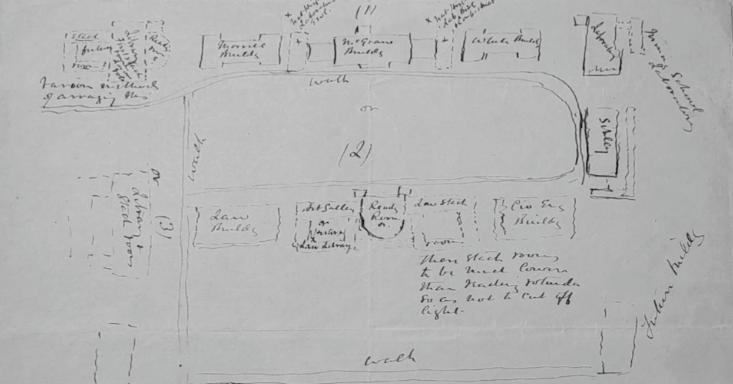
McGraw Fiske did not stop at the chimes. Her will stated that a portion of her estate be left to fund a library building upon her death, according to Earle. This sum totaled about $200,000 in today’s currency. However, her will violated a New York State law, in which women were not allowed to allocate more than half of their estate to a charity cause if she was married prior to death.
Her husband, Willard Fiske, launched a lawsuit, known as The Great Will case, that was contested in the U.S. Supreme Court in 1890. The court ruled in favor of Fiske, concluding that the University could not receive the donation.
With The University Library money held up in federal court, Sage, known for funding the construction of Sage Hall as the first women’s dormitories on campus, gifted the funds to build the combined library and tower. He dedicates the building to McGraw Fiske in a gold plaque outside of modern Uris Library.
“Jennie McGraw was passionate about the need for this building and committed in her will a large sum of money for that purpose,” Carney wrote. “She believed deeply in the mission of Cornell and Ezra Cornell’s vision of an institution where any person could find instruction in any study.”
McGraw Fiske donated the original nine chimes, which were first played on the wooden scaffold, then moved to its first tower in McGraw Hall in 1872. The chimes moved into their final home in McGraw Tower in 1891. Growing over the years, the chimes now include 21 bells, played throughout the day and night each day of the week.
Architectural historian and Cornell dean Kermit C. Parsons wrote in his book, The Cornell Campus, “The tower marked a meeting place of the useful and the beautiful; of the dual ideals of the intellectual and practical men who had done most to build Cornell.”
In covering the building’s opening in 1891, The Sun described it as “the pride of every Cornellian’s heart.” The Pumpkin Heard ‘Round the World McGraw Tower became an iconic symbol of Cornell following its opening. Earle described it as a “prominent and striking building,” one which united Cornellians together, especially with the addition of the chimes.
To continue reading, please visit www.cornellsun.com.
Jane Haviland can be reached at jhaviland@cornellsun.com.
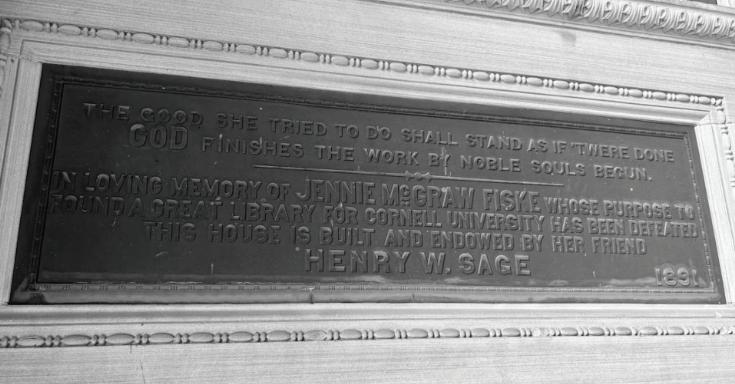
By ALLISON HECHT Sun Newsletter Editor
Sept. 22 — From May 30 to June 1, five members of the Cornell Hyperloop project team represented the university at the 2025 Hyperloop Global Conference, hosted at Queen’s University in Ontario, Canada. Competing alongside top international teams, Cornell’s team earned distinction for their mathematical modeling of stable magnetic levitation, or mag-lev, control. Building on this recognition, the team is preparing to push the boundaries of hyperloop technology even further in the 2025-2026 academic year.
Founded in 2017, the Cornell Hyperloop project team is one of 36 project teams sponsored by Cornell’s College of Engineering. The team seeks to advance the future of hyperloop technology by designing pods and researching the physics that makes these systems possible. The idea for hyperloop technology was first popularized by Elon Musk in 2013. The concept behind the technology is to place a magnetically levitating train, known as a pod, inside a vacuum tube, reducing air drag.
“The idea is to reduce air drag to make it more optimal and efficient.”
Lalo Esparza ’26
“The idea is to reduce air drag to make it more optimal and efficient,” said Lalo Esparza ‘26, Cornell Hyperloop’s power systems lead.
The vacuum technology would theoretically allow for pods to transport passengers between cities at speeds over 600 miles per hour. While the technology is still in development, team members see the potential to revolutionize transportation through their research.
“I think the potential for growth is one of the defining traits of our team,” said Claire Choi ‘28, the team’s business development lead. “These types of technologies in our time could grow into something that could make people’s lives much better in the future. That’s one of the promises that I joined Cornell Hyperloop for.”
“Our goal is not to actually build a fully functioning pod that could get us from Ithaca to Syracuse, but more to develop the technoloy on a scale to show proof of concept.”
Lalo Esparza ’26
Esparza agreed. “The technology is really interesting and has applications outside of just Hyperloop,” he said. “Our goal is not to actually build a fully functioning pod that could get us from Ithaca to Syracuse, but more to develop the technology on a smaller scale to show proof of concept.”
Cornell Hyperloop is divided into three subteams—the electrical subteam, the mechanical subteam and the business subteam. As the team prepared for the Hyperloop Global Conference, members of all three
subteams joined together to work on building the physical pod they would bring to the competition.
Attending the three-day conference was an opportunity for team members to network with other teams and share ideas, as well as present their own work. Choi and Esparza described the conference as both fun and informative.
“You get to transfer ideas and talk about different ways of doing things, which is something that we’re incorporating into our design moving forward. You also get to have fun with like-minded people,” said Esparza.
According to Esparza, the team was thrilled when they found out that they won an award for their modeling of mag-lev technology.
“A lot of that research was done by our graduating seniors, and so they were just ecstatic to hear that their work had contributed to us winning that award,” said Esparza.
The team hopes to build on their momentum from this summer’s accomplishments this academic year as they continue to improve upon their hyperloop pod design. Inspired by their trip to the Hyperloop Global Conference, one of the team’s priorities for this year is building their own motor and levitation systems for the pod.
“Previously we had been using a motor that we bought from a company, but at the competition, we saw how other teams were building their own motors. So we’re trying to do that now, coming up with our own ways to make this design,” said Esparza.
“I highly suggest project teams if you’re interested, you get to know the people you’re working with, and you get to collectively problem solve.”
Lalo Esparza ’26
The team is currently conducting physics research to understand how to build their own motor. They then hope to move on to manufacturing, building and testing the systems they design. The team plans to attend the Hyperloop Global Conference again this spring, as well as Maker Faires held in Syracuse and Rochester.
Recruitment of new members is also currently in full swing for the team. Both Choi and Esparza agreed that joining Hyperloop has been a valuable part of their Cornell experience and encouraged freshmen to apply for project teams.
Choi described Cornell Hyperloop as having a “culture of care” and noted that she believes the team is “very helpful in developing your skills.”
“I highly suggest project teams if you’re interested,” said Esparza. “You get to know the people you’re working with, and you get to collectively problem solve.”
Cornell Hyperloop will be holding a final information session on Sept. 30. Applications for first-year and transfer students to join project teams are due Oct. 16.
Allison

By MARY CAITLIN CRONIN Sun Staff Writer
Sept. 21 — From snorkeling off the coast of New Zealand to sharing tapas in Seville to biking through Bologna, Cornell students are finding that studying abroad offers more than just credits — it offers perspective.
“You’re gonna miss it once you leave, so really try to get everything out of it.”
Alex Judd ’26
At Cornell, students across any major and college may pursue the opportunity to study abroad. The Office of Global Learning offers over 75 programs across five continents — even at sea — with short-term, semester and year-long options.
There are many reasons why students may choose to study abroad.
Rowan Lopez ’26, who studied at the University of Auckland in New Zealand, says he decided to study abroad to “get more of a global perspective.”
Studying in New Zealand gave Lopez “hands-on experience in marine [biology].” Lopez explained that there were separate professors for each niche topic. “Every new topic, a new professor would come in and teach you … one professor for specifically sponges, and then one professor for anemones,” Lopez said. The program also let Lopez explore M ori — the indigenous people of New Zealand — studies, taught by members of the community themselves.
Alex Judd ’26, studying food science, studied with the Consortium for Advanced Studies Abroad Sevilla in Spain. In addition to language immersion, Judd was also motivated to study abroad by family tradition. Both his sister and father studied abroad in Madrid.
“My dad still has friends from when he was a student in Madrid back in the 80s, and that he still keeps in contact with,” he said. “Since I started learning Spanish in middle school, I’ve just really loved learning the language, and so I thought it’s the best way to learn the language.”
Judd chose a program with a host family so he “would be able to immerse myself in the culture.” Living with a host family in Seville, Judd said his Spanish “improved exponentially.” He ate daily meals with them, celebrated local festivals, and even joined them at Feria, the city’s flamenco fair.
“I never would have been able to do that as a tourist. That was really special,” Judd said. “You’re gonna miss it once you leave, so really try to get everything out of it.”
Miles Huh ’26, a government and economics major who studied at Yonsei University in Seoul, South Korea, told The Sun that his decision to study in Korea was a combination of family heritage and Cornell opportunity.
“I chose Korea because I’m half Korean,” Huh said. “Also because with the way Arts and Sciences is structured with the language requirement, it made it feel like it was worth taking two years of [Korean] if I was able to go abroad.”
While learning the language was a critical part of his experience, study abroad really gives you the opportunity to “understand how to live there,” Huh explained.
Huh recalled experiencing South Korea’s unique drinking culture, sharing “We did a lot of happy hours in my classes led by the professor.”
“...with the way Arts and Sciences is structured with the language requirement, it makes it feel like it was worth taking two years of [Korean] if I was able to go abroad.”
Miles Huh ’26
As an East Asian studies minor, Huh also found unique academic opportunities, including a graduate seminar on the North Korean diaspora. He even attended a program at the Demilitarized Zone where he met North Korean defectors.
“That was not an insight I would have ever had, had I not gone,” Huh said.
Tasos Stefanou ’26 works for the Lab of Ornithology as a researcher and studies Biological Sciences. They decided to study abroad in South Africa under the Organisation For Tropical Studies since they felt that the program was related to their career interests.
While day-to-day life while abroad varies greatly depending on the program, Stefanou was a part of a moving program in order to conduct field work across various locations in South Africa, so their accommodations changed frequently.
To continue reading this article, please visit www.cornellsun.com.
Mary Caitlin Cronin can be reached at mjc496@cornell.edu.
JANE LOCKE ARTS & CULTURE WRITER
Emily Brontë published her masterpiece, Wuthering Heights, in 1847. Her novel is a haunting piece of literature, a psychological exploration of passionate and, for the time, unusual characters. It was gothic, it was complex and it was classic. Today, Wuthering Heights is read in high schools, universities and in the comfort of homes, regarded as one of the best books in history. It was Emily Brontë’s first and last novel. One year after its publication, she died from tuberculosis. And, in a way, I am glad she never lived to see the trailer for Warner Bros. Pictures’ adaptation of her beloved work.
Two weeks ago, the studio released a teaser trailer for a film titled Wuthering Heights, set to be dumped into theaters Valentine’s Day of 2026. In it, the audience catches glimpses of Jacob Elordi as Heathcliffe and Margot Robbie as Catherine Earnshaw. In the novel, Heathcliffe is an orphan brought into the Earnshaw family by Catherine’s father and treated as a favorite son. However, upon Mr. Earnshaw’s death, his true son Hindley casts Heathcliffe aside, treating him as a servant. Eventually, Heathcliffe returns for revenge, acting as a bitter and violent antagonist. Catherine Earnshaw develops a close relationship with Heathcliffe, and later in life, the two are in love. However, Catherine’s desire for social advancement leads her to marry Edgar Linton, which sours her relationship with Heathcliffe. Ultimately, the story is a nuanced look at love, social class, morality and the capacity for human cruelty.
The trailer’s one minute and thirty seconds capture none of that. If anything, the
trailer gives the sense of a steamy romance and nothing more. Though Emily Brontë strove to subvert Victorian expectations and shock her audience, she herself would have been appalled by this gross twisting of her beautiful novel. Catherine and Heathcliffe, in the trailer, seem to engage in sexual activities. In the book, this never happened, nor was it ever implied. Rather, Brontë depicted the deep spiritual attachment of these two characters, to the point where it brought pain to both if they were separated. Furthermore, in the book, Heathcliff disappears when he is sixteen, Catherine fifteen. When he returns, Catherine is married to Edgar Linton. Emily Brontë could never have expected readers to assume sexual encounters, as the two characters were either too young or married.
The decision of the creators of Wuthering Heights to fabricate plot points that never existed in the original material (and were furthermore contrary to the very nature of the book) shows its complete lack of respect for Brontë’s literature. The quotes in the film’s title on multiple promotional materials are necessary to distance itself from the book, because the writers took the word “adaptation” to the extreme. I expect the movie to steal Brontë’s characters, disregard any troublesome complexities of the novel, and invent scenes they think will increase marketability. Ultimately, that is what the film adaptation is about: money. Romance, as a genre, has been exploding in sales since BookTok took off in 2023. If studios can tap into that market and target audience, their movie’s revenue could skyrocket. Warner Bros. Pictures, however, have taken this strategy too far. In an attempt to cash in on both the literature and spicy
romance businesses, they slammed the two together, and Wuthering Heights was born. Warner Bros. Pictures chose Charli XCX to create original pop songs to accompany the movie, audio that blasts audiences into the 21st century instead of preserving a Victorian atmosphere. The studio brought in director Emerald Fennell, who was the visionary for the film Saltburn. Her style, provocative and sexually charged, pollutes the story of Wuthering Heights, adding quotes that make all readers want to rage against a system that would capitalize on a beloved classic.
Unfortunately, the issues presented in the trailer do not stop with the plot. Pollution spreads to the very casting of the film. The novel’s version of Heathcliff, as many scholars point out, is not white. Emily Brontë describes the character as “dark-skinned,” and Mr. Earnshaw travels to one of the biggest slave ports in Europe, Liverpool, to get Heathcliff. The character’s race exacerbates the issue of social class, as Catherine does not wish to lower her status by marrying him, ultimately leading her to choose Edgar Linton, a more respected choice in that time period. Heathcliff’s race plays into Brontë’s themes about morality in England, as Heathcliff is eventually ostracized and treated as inferior to those around him. All of this is erased by Jacob Elordi. The movie has been criticized for whitewashing the novel, simplifying it into only a love story. The actor is a minor Hollywood heartthrob, often cast in cheesy romance films like Netflix’s The Kissing Booth. In other words, Elordi fits perfectly into the image Wuthering Heights is attempting to curate: the spicy romance movie you can go see with the girls. It is this image that erodes Brontë’s masterpiece into a diminished version of

itself, leaving the story vapid. What we see happening with Wuthering Heights is just one drop in the ever-expanding pool of warped classic literature. It happened in 2022, with the release of Netflix’s version of Persuasion, loudly proclaimed as one of the worst Austen adaptations in history. That movie, as with the Wuthering Heights trailer, reduced a wonderful novel into drivel and meaningless romance. If we want to end this frightening trend toward nihilistic reimaginings of thoughtful books we all should cherish, we must deny Wuthering Heights the one thing it seeks: our money. Come Valentine’s Day of 2026, find a more sincere way to spend your time, and leave the Wuthering Heights film to become dust in the wind.
Jane Locke is a sophomore in the College of Arts and Sciences. She can be reached at jal562@cornell.edu.
YAELIN HOUGH ARTS & CULTURE WRITER
The tumultuous, romantic and, ultimately, shortlived relationship between Stevie Nicks and Lindsey Buckingham has been a subject of fascination since Fleetwood Mac’s rise to stardom in the 1970s. From meeting at a youth club in the late ’60s to dropping out of college together to eventually fronting one of the most influential rock bands of the ’70s, Nicks and Buckingham’s story could have been pulled straight out of a teen movie. When the pair moved to Los Angeles in late 1972, they seemed almost fated for success. “They were Mr. and Mrs. Intense,” wrote Stephen Davis in his biography of Stevie Nicks, “he in his curly locks and icy blue eyes and she in her long straight hair and her piercing gaze when you talked to her.”
In September of 1973, Buckingham and Nicks would release what would be the first of many albums together as a folk-rock duo. Titled Buckingham Nicks, the album featured 10 folksy tracks and a topless duo portrait of Buckingham and Nicks as its cover. Yet, despite its ambition, the album flopped, and the duo was dropped by their label.
This would have been the end of their career if not for British drummer Mick Fleetwood, who, upon scouting for potential at Sound City Studios, invited Buckingham to join his English band, Fleetwood Mac.
Now, more than fifty years later, Buckingham Nicks has finally been made available in full on CD and streaming platforms. For listeners in 2025, hearing Buckingham Nicks is a strange experience — it’s impossible not to filter it through the knowledge of what came after. The duo’s sound is familiar, but the album itself feels rugged and unfinished. Stylistically, Buckingham Nicks isn’t too far a cry from Fleetwood Mac’s later releases, mainly due to Buckingham’s signature guitar work. Although the album is more folksy and less polished, Buckingham’s
fingerpicked guitar lines maintain their intricacy and precision.
The opening track, “Crying in the Night,” is a strong start to the album, carried by Nicks’s mystical vocals. With a strangely Rumors-esque sound, “Crying in the Night” is almost cinematic in its minor progression and steady, dedicated beat.
Where “Crying in the Night” highlights Nicks’s musicality, the following track, “Stephanie,” is completely Buckingham’s. Buckingham possesses a unique ability to make one guitar sound like many more while still maintaining the clarity in his picking; it’s not hard to see why Mick Fleetwood took particular interest in him.
Though Buckingham’s talent is apparent, it’s surprising how muted Stevie remains throughout the album when compared with the stardom she would eventually bring as the face of Fleetwood Mac: “Originally … it was less apparent what Stevie had to offer,” Buckingham would go on to say. That is not to say that Nicks does not shine in the album. Her signature smoky voice — while slightly more country-ish than usual — gives a unique edge to Buckingham’s harmonies and invokes something almost haunting in the listening experience.
This chemistry is apparent in “Crystal,” a song that would later be rerecorded by Nicks alone. Here, Buckingham takes the vocal lead; as the song progresses into the chorus, Nicks’s vocals add something enchanting to the harmonies. The song itself stands out as something fully realized in a way much of the album is not, with evocative lyrics (“The crystalline knowledge of you / Drove me through the mountains”) and stripped back instrumentals.
The final song, “Frozen Love,” was the track that originally drew the attention of Mick Fleetwood, and it’s easy to see why. While slightly unpolished, the track serves as the centerpiece and finale of the album. Over 8 minutes in length, it features a combination of everything that made Buckingham and Nicks such a striking pair:
dramatic guitar lines, sizzling vocals and resounding instrumental layering. The track concludes the album with a flourish.
Buckingham Nicks did not have the commercial success that would’ve launched Lindsey Buckingham and Stevie Nicks into the spotlight straight from their LA studio; while the album has its great moments, it’s uneven, unrealized and unpolished, none of which set it up well for commercial success. However, when listening to it in 2025, I realize that everything that makes Fleetwood Mac great is there. There’s something magnetic about the chemistry between Lindsey Buckingham and Stevie Nicks. There’s something there that works. So even though it may have been an unfortunate love story, there’s no doubt that what Buckingham and Nicks had together was something lasting and untouchable.
By EMMA ROBINSON Arts & Culture Writer
Although not all the trees have dropped their leaves, the first whiffs of fall are in the air. For me, this signals it is time to cozy up with a good book and escape into the adventures of the literary world.
The days are getting shorter and the breeze is starting to bite, so I find myself turning to a good thriller to get my blood pumping and embrace the spooky spirit. One of my favorite thriller authors who has proven herself time and time again is Freida McFadden. While her books may not be the next great American novel, each book is full of twists and turns that are sure to keep you captivated. The first book I read from her, The Housemaid, follows a young girl as she attempts to work for a wealthy family that is not as perfect as it may seem on the surface. Full of plot twists as well as multiple points of view, this book kept me on the edge of my cozy cushioned seat. Similar to this book is her recent release The Tenant, which I just listened to on a long car ride over the summer. This book follows Blake as he welcomes a new tenant named Whitney into his house. However, things start going very wrong for Blake and he does not know who to blame. McFadden does an excellent job at creating complex characters who are not necessarily likeable in both
of these books, painting a believable picture of how artful attempts at revenge can unfold.
I also have a recommendation from a more controversial author Colleen Hoover. Many people have deemed her romances as surface level and lacking strong female characters. This is somewhat true, but I do find them to be good for readers just getting into the book community as they are straightforward and easy to digest. One of my most shocking favorite reads from her is Verity, which I found to be quite different from her other books. This novel follows author Lowen as she attempts to take over another writer’s work when she is injured. Lowen ends up moving in with the writer’s husband and child and an expected romance soon ensues. However, this book also offered many twists and turns with an ending that had me second-guessing how well I knew the characters. This is an excellent book for those who are used to reading romance but would like to get more into thrillers or horror.
For those unafraid of strange love stories, I cannot recommend The Ruinous Love Trilogy enough. This series is definitely not everyone’s cup of tea, but it is certainly unique and unlike anything I have ever read before. Each novel follows a different serial killer couple. I never thought I could find myself rooting for a murderer, but Weaver’s characters are well-de-
veloped and their actions are not without explanation. However, if you do not have a strong stomach and descriptions of gore really gross you out, these books are probably not for you. But if you are down for a little unconventional romance that will leave you questioning what right and wrong really mean, please pick up this trilogy. Weaver also has a new release Tourist Season part of her The Seasons of Carnage Trilogy that just came out Sept. 23. If this is anything like her first, then I am sure we are in for another enthralling series.
Another unorthodox book that gained a lot of attention from the book community is Bride by Ali Hazelwood. This book differs from Hazelwood’s usual STEM romances such as The Love Hypothesis and Love Theoretically as it follows a vampire and a werewolf forging an unlikely connection with one another. I enjoyed the side plots in this book and the discussion of vampire and werewolf politics. While I did find the spice to be a bit graphic at times (which is the main issue many find with this book), if you can get past that it is a fun read, especially with the spooky season approaching. The second book in this series, Mate, follows another vampire and werewolf couple. It is set to release Oct. 7, so be sure to read Bride before the next book comes out.
My recommendations have to end with a fantasy as this is my all
time favorite genre. Offered on kindle unlimited and full of vampirish thrills is the Crowns of Nyaxia series by Carrisa Broadbent, which now features four novels and one novella. The series is to be split into three duologies, the first two which I have read. I am planning on reading the third and fourth books soon and am sure I will love them if they are anything like the first two. In the first book The Serpent and the Wings of Night, a human named Oraya raised in a world of vampires is forced into a series of trials in which she is likely to be slain. However, she soon gains the attention of vampire Raihn and the two forge an unlikely bond. With widespread political turmoil that continues into the second book, the world-building in this book is excellent but not too in-depth that it grows boring. Anyone who is a fan of a girlboss who beats the odds and a lethally charming love interest will love this series.
If you find yourself with any spare time during the rigors of the fall semester, please pick up any of these reads to get yourself in the autumnal spirit. Even if they strike you as a bit out of your comfort zone, I am sure they will not disappoint.
Emma Robinson is a junior in the College of Arts and Sciences. She can be reached at elg229@cornell.edu.
By Nicholas York Arts & Culture Writer
Just before World War I, two music students meet in a bar. Both lovers of folk music, though studying at a classical conservatory, they fall in love almost immediately. After the war, the two men travel to Maine together on a trip to capture and record the folk songs of the area, ensuring that the music and stories often forgotten are given a place in history. Years later, one of the men travels the world, attempting to recreate the happiness he only felt on that trip. The plot of The History of Sound , written by the author of the original short story collection, Ben Shattuck, and directed by Oliver Hermanus, is relatively simple. It’s slow-paced and deliberate, using much of its runtime to portray small moments in the life of Lionel Worthing (Paul Mescal), the protagonist and memories of his time with David White (Josh O’Connor). Despite this, The History of Sound is never boring, and in fact tells a story that has left me reflecting on the connection between music and memory days after.
Where The History of Sound might seem to fall out of step is in pacing. The film spends very little time fleshing out the relationship between Lionel and David. While this speaks to the tragically short time the two men spend together, it also makes it difficult for the audience to feel connected to the relationship that makes up the film’s emotional core. It also might make it feel like Hermanus and Shattuck are more concerned with making
sure viewers come away heartbroken than with telling a compelling story.
Despite this, The History of Sound still manages to work. The central relationship still managed to connect with me, in large part to Paul Mescal and Josh O’Connor’s performances. Both actors expertly portray the nuances of their characters and are able to clearly show how they view the other without dialogue. Mescal’s Lionel is an inexperienced farmboy who, refreshingly, feels no shame over his feelings for David. He is fully committed to the other man, which Mescal shows in the loving way he gazes at O’Connor’s David. David, meanwhile, has seen more of the world, but struggles to commit to a relationship. His guilt is evident in his more restrained love for Lionel, and especially in the way Josh O’Connor only looks back at Lionel when he isn’t looking. His acts of love are only executed in private, requiring a level of acting prowess, for a fairly limited amount of screentime, that O’Connor is able to execute.
While it was the relationship that drew me to The History of Sound , I ended up being most interested in the role of music to the film. For Lionel, music is an essential part of life. He has a kind of synesthesia that allows him to see music and grew up seeing the folk songs of his hometown in Kentucky. David’s unconventional upbringing led him to travel Europe, where he and his uncle fell in love with “song-collecting” and recording local folk songs. The men connect over their love for the songs that are so often forgotten among their fellow conservatory students. As Lionel grows
up, he finds himself unfulfilled pursuing a prestigious music career, and realizes that the only time he felt true happiness was on that trip to Maine in 1919. Was it because of the time he spent with David, walking through forests, isolated from the world around them and spending each night together? Was it because of the people he met, who shared songs that told their histories and family stories with him? The film never answers this question. In some ways, the relationship between Lionel and David is music. The two elements cannot be untangled. On first watch, I was disappointed with the pacing of the film. I wanted to spend more time with Lionel and David, and less time with the grief of a missed connection. However, The History of Sound has not left my mind. Compared to Lionel, who is so ready to commit to David for life, David is frustratingly private. He refuses to share more than necessary about his childhood, or even his brief time in the war, with Lionel, or with us. The time Lionel spent with him is, in the grand scheme of life, so fleeting, and despite their connection, he never knew much about the man he loved. It’s only music that allows Lionel to find a deeper connection with David, and so music becomes more integral to the plot than anything else. The History of Sound isn’t a perfect film, but it’s a beautiful one, with an important story to tell, and that alone makes it worth watching.
Nicholas York is a junior in the College of Arts and Sciences. He can be reached at nay22@cornell.edu. His column Projections is focused on reviewing recent film releases. It runs every other Monday.

By ALEXIS ROGERS Sun Sports Editor
During preseason, head coach Dan Swanstrom offered no clear answer on whether junior Devin Page or junior Garrett Bass-Sulpizio would be taking the helm as the team’s main quarterback. In the season opener against University at Albany, it was clear that there would be no resolving this dilemma anytime soon.
Despite a last-minute touchdown that brought the team just a field goal away from breaking even, Cornell fell 13-10 while testing both candidates for quarterback.
Page took the field first for the Red in his debut start at the central position. His drive brought the Red 33 yards, including an 18-yard pass to senior wide receiver Doryn Smith.
At the end of an otherwise quiet first
quarter, the Great Danes were first on the board with a 32-yard field goal from James Bozek.
Bass-Sulpizio took over from Page during the second quarter, logging two complete and two complete passes over the course of 50 yards, the Red’s longest drive yet. However, Cornell’s efforts were unsuccessful, and lost possession on a fourth down.
The second quarter passed as uneventfully as the first; neither team got within 30 yards of the endzone, and Albany settled for a second field goal with under two minutes remaining in the half.
Cornell hit a stride in the third quarter, when the Red held Albany to a four-yard drive thanks to two tackles by fifth-year safety Damon Barnes and an incomplete pass by Colinright Parachek. After receiving possession at Albany’s 41-yard line, Bass-Sulpizio completed three consecutive passes for 12, 11 and
six yards apiece.
The Great Danes’ defense put the endzone out of reach, but junior kicker Alan Zhao threaded a 25-yard attempt to get Cornell their first score of the year.
It wasn’t until the final quarter that either team would see a drive to completion.
With six minutes on the game clock, Albany running back Jojo Uga broke free to run the ball from Cornell’s 43-yard line into the endzone, scoring the first touchdown of the game. The Red was down 13-3, but not for long.
A 24-yard pass from Page launched Cornell within field goal range on the first play of the next possession. Page logged a series of small gains, ending with a six-yard pass to junior tight end Ryder Kurtz, that secured a touchdown and put the Red down by just three points with 3:38 on the clock.
After denying the Great Danes the chance to respond, Cornell made it to Albany’s 42-yard line before Jayden Estes intercepted a pass. From there, Albany wasted the remaining 1:33 to take the victory, 13-10.
Both Page and Bass-Sulpizio completed eight passes, while Page attempted 12 and Bass-Sulpizio attempted 14. Page logged 27 more yards than his teammate and took responsibility for Cornell’s lone touchdown.
Kurtz received the most passes for the Red, carrying the ball 68 yards over the course of the night.
Football has one more weekend away before the Red returns to Ithaca for homecoming. Cornell will take on Yale at 12 p.m. Sept. 27, and the game will be streamed live on ESPN+.
Alexis Rogers can be reached at arogers@ cornellsun.com.
By WILLIAM D. CAWLEY Sun Staff Writer
After starting the season with three away games in 10 days, the Red stayed at home for the second leg of a three-game homestand.
No. 24 men’s soccer (4-1) cruised to a 3-0 win over the New Jersey Institute of Technology (2-4-2). This moved the Red to 4-1 going into Ivy League play.
It took Cornell a while to get going, with its first shot coming over 10 minutes into the game. Despite taking 12 shots to NJIT’s three, the scoreline was level at half.
In the 49th minute, senior midfielder Westin Carnevale played a ball through for junior midfielder Connor Miller, who put away a shot to the far post. Miller has been dynamic for the Red this season, and the Cornell captain is very likely to be one of the top picks in this year’s MLS SuperDraft. Cornell continued pouring shots on the NJIT net, but the Red did not convert again until the 82nd minute. Sophomore forward Kasper
Wollstein dribbled past his defender and tucked home the shot.
Wollstein, a junior college transfer from Iowa Lakes Community College, has two goals in the past two games and has likely worked himself into contention for a starting spot next week. The rest of the Cornell forward group has scored just one goal on the season, which was a poke home by senior midfielder Sam Latona against Le Moyne.
Cornell added to the lead again in the 89th minute. Wollstein and freshman forward Sergio Zapata found themselves with a two-on-one on the counterattack. Wollstein played Zapata alone in front of the goal, but Zapata sent the shot straight at NJIT goalkeeper Devin Armstrong. He collected his own rebound and played Carnevale, who scored from close range.
The game would end as a 3-0 win for Cornell. The shutout for senior goalkeeper Ryan Friedberg ties him with Jon Ross ’74 for most career shutouts, at 18.
Although the game was not close, the final score didn’t reflect the Red’s dominance. Cornell took
32 shots, with 15 on goal. While Armstrong had some fantastic saves, there were plenty of poor finishes by Cornell.
Cornell will now turn its attention to the Yale Bulldogs, whom the Red will face on Saturday, Sept. 27, at Berman Field. Yale has had an underwhelming start to the season, going winless in six games. However, the Bulldogs upset the Red in the Ivy League opener last year, so Cornell will be looking for revenge.
Despite its 4-1 record, Cornell currently sits at 75th in the RPI (the primary criteria used for NCAA tournament selection) due to the weak strength of the Red’s schedule. But, with more than half of non-conference play completed, the Ivy League currently ranks seventh out of 22 conferences in the RPI. If the League can keep up this rating, it will likely earn at least two at-large bids to the NCAA tournament, plus the league autobid. Cornell’s clash with Yale will be available to stream on ESPN+.
William D. Cawley can be reached at wcawley@cornell.edu.