The Corne¬ Daily Sun

By MEGHANA SRIVASTAVA Sun Assistant News Editor
Out of three Cornellians nominated in the 72nd Emmy Awards, Keith Raywood ’78 took home the title of Outstanding Production Design for a Variety, Reality Or Competition Series for his production design work on Saturday Night Live. This is Raywood’s fifth time winning the title for his work on SNL, and it is his sixth Emmy award overall.
Raywood graduated from Cornell with an architecture degree. “I love creating new worlds,” Raywood said in an interview with the Television Academy Foundation from 2017. “I love being able to take, whether it’s a script or a concept for something, and being able to see how far I can expand either the story about it or build a fantasy of some kind that would otherwise not exist.”

This year, the show was run differently compared to previous years due to pandemic precautions. Actors stayed home and accepted awards virtually, the red carpet was canceled and Jimmy Kimmel hosted from a nearly-empty arena. 6.1 million people watched the broadcast from home, a decline from last year’s 6.9 million. Two other Cornellians, Michael Kantor ‘83 and Geoff Haggerty ‘02, were also nominated for Emmys.
“I love creating new worlds ... build a fantasy of some kind that would otherwise not exist.”
Keith Raywood ’78
Raywood has worked on SNL for the past 32 years, but has also worked on several other notable shows, including Lip Sync Battle, The Tonight Show and 30 Rock. His role as a production designer entails coordinating the artistic and visual style of a show to match the director’s vision and create a cohesive work.
Kantor was nominated for the Outstanding Documentary Or Nonfiction Series award as the executive producer of American Masters, a PBS documentary series profiling American artists. He has previously won the Emmy for Outstanding Nonfiction Series in 2005 as the executive producer of Broadway: The American Musical Haggerty was nominated for the Outstanding Writer for a Variety Show award for his work on The Daily Show with Trevor Noah. He has previously won the category in 2016, 2017 and 2018 for his work on Last Week Tonight with John Oliver.
Meghana Srivastava can be reached at msrivastava@cornellsun.com.
By ALEC GIUFURTA Sun Senior Editor
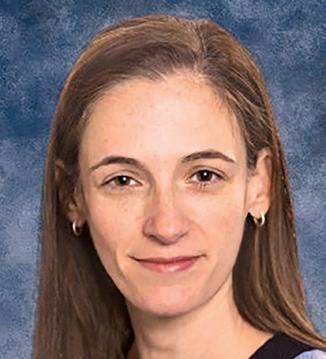
The Supreme Court may possibly have its next Cornellian justice: White House Counsel Kate Comerford Todd ‘96 is on the shortlist to receive President Donald Trump’s nomination to replace the late Justice Ruth Bader Ginsburg ’54.
Ginsburg was the only Cornellian to ever serve on the Supreme Court. And like Ginsburg, Todd was a government major at Cornell. Todd also studied history and international relations.
After her time on The Hill, Todd went on to Harvard Law School, graduating magna cum laude.
Todd also was an adjunct assistant pro-
fessor of constitutional law at the Cornell in Washington program. Cornell did not respond to a request for comment by publication time.
Prior to joining the White House as Deputy Counsel to the President in 2019, Todd was Chief Counsel at the United States Chamber Litigation Center, the legal apparatus of the Department of Commerce. Todd clerked for Justice Clarence Thomas in the Supreme Court, and on the U.S. Court of Appeals for the Fourth Circuit.

By CAROLINE JOHNSON and KATHRYN STAMM Sun News Editors
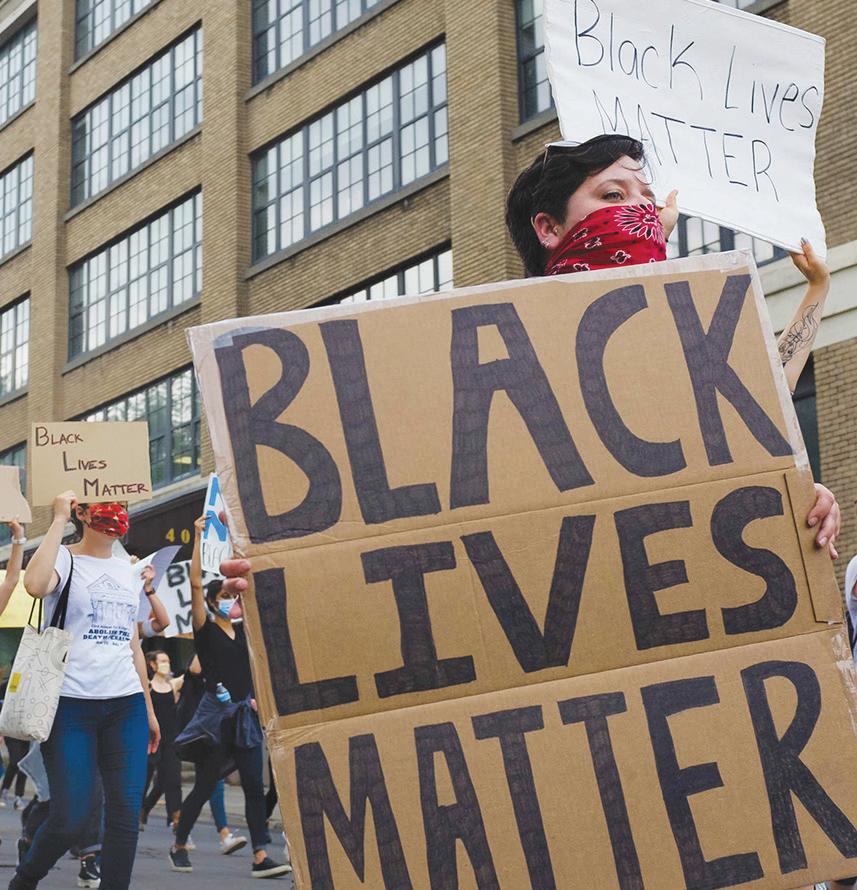
Spurred to action by this summer’s historic racial activism and inspired by the work of student activists with Do Better Cornell, a group of faculty, graduate students and staff have penned a list of demands to the University.
The demands tackle the existing racial disparities, discrimination and heteronormativity present within the University and offer solutions for Cornell’s policies, structure and practice, to push beyond symbolism of “any person, any study” toward real change.
“It is easy to recite the motto ‘any person … any study,’” the letter reads in its opening, “but easier to forget that the price of that vision of equal educational opportunity was the legacy of forcible Indigenous dispossession and African enslavement, compounded by increasing imperialist expansion and interventionism in the Americas and beyond.”
Shortly after the revolutionary spark of sustained protests following George Floyd’s murder, Prof. Russell Rickford, history, pulled together
a committee, during the summertime which included professors and graduate students in the Africana department to create a list of demands towards an anti-racist Cornell. Prof. Tao Goffe, Africana and feminist, gender and sexuality studies, was also a part of the committee process. The 29 demands include both immediate and long-term solutions, such as the creation of benchmarks for departments to ensure they are embedding anti-racism in all Cornell activities and improving recruitment, retention and promotion of BIPOC faculty. Reaching out to allied, anti-racist programs — including Asian
any of Trump’s nominees, but in the Senate the party holds little power to achieve this.
Ginsburg’s death has supercharged an already climatic election cycle. Democrats have promised to wage a confirmation battle against
In the Senate, Democrat’s hope of blocking a Trump nominee rests on turning four Republican senators. Sens. Lisa Murkowski (R-Alaska) and Susan Collins (R-Maine) have stated that they do not support confirming a justice prior to the Nov. 3 election. Senate Majority Leader Mitch McConnell (R-Ky.) has pledged to put a Trump nominee through confirmation hearings.
Trump has said that he will nominate a woman to serve on the high court. At a Saturday night rally in North Carolina, he pledged that “it will be a woman, a very tal-
ented, very brilliant woman.”
On Monday, Trump told reporters at the White House that he is down to five names. In addition to Todd, The Wall Street Journal reported that Judge Amy Coney Barrett of the United States Circuit Court of Appeals for the Seventh Circuit in Chicago, Barbara Lagoa of the 11th Circuit, Allison Jones Rushing Fourth Circuit and Joan Larsen of the Sixth Circuit are all contenders. Todd is the only Cornellian on the list, and the only candidate who has never served as a judge. Trump said his nomination will “probably” be announced on Saturday, The New York Times reported.
DEMANDS
Continued from page 1
American studies, Latina/o studies, American Indian and Indigenous studies and feminist, gender and sexuality studies — the committee started to mold their demands and garner support, according to Prof. Saida Hodžic, feminist, gender and sexuality studies, a member of the committee.
Over 600 graduate students, staff and faculty have signed on in support, but the list gains more signatories each day, according to committee member Prof. Carole BoyceDavies, Africana studies and English.
Recognizing that the University has failed to create changes that truly dismantle institutional racism, Hodžic explained that this historical moment made it possible “to really stop and to refuse the answer that diversifying will solve the problem.”
The demands’ authors explained that the push for demographic diversity isn’t enough — the underrepresentation compounded with experiences of racism disempower people across the University.
If diversification was a successful sole mechanism for addressing institutional change, “multicultural diversity centers would have all just been successful in liberating us from having these conversations in the first place,” said Radwa Saad grad, a second-year Ph.D. candidate who studies AfroArab relations.
Instead, Saad called for more comprehensive and radical change to be enacted immediately and sustained — including the “redistribution and reallocation of resources” to address the institutional racism and disparities that prevail within the University and their effects on the surrounding community.
Some of the immediate demands include the strengthened support of anti-racist research, incorporating “decolonized readings” into the curriculum across the board, reviewing hiring, recruitment and retention campus-wide and implementing anti-sexist and anti-racist policies to address the demographics of department chair positions.
Saad was drawn to the committee due to a culmination of her experiences at the University that she wants to change for future generations, including the lack of scholars of color present in her curriculum –– an issue raised in the demands.
Although professors in Africana studies have an interdis-
ciplinary background of research and knowledge, Saad was puzzled by the lack of cross-departmental exchanges.
“Rarely is their work ever featured in syllabuses outside of the department, even when it’s relevant to whatever topic is being discussed,” she said.
Further, professors in departments where they are one of few or the only person of color also do not “necessarily have the intellectual support for the work that they’re doing within anti-racist scholarship,” Hodžic said. Their demands hope to create a more sustainable framework for anti-racist work.
the Ithaca community dedicated to racial justice, upgrading cultural housing on campus, creating a multipurpose center to physically link Africana studies to central campus and endowing a hall with alumna Toni Morrison M.A. ’55 as the namesake.
“These demands are a vision that we can aspire to, that the institution should take seriously and uphold.”
Within the longer term demands, the letter calls for the involvement of anti-racist faculty and students in the Center for Anti-Racism, improving hiring and retention for BIPOC faculty, advisors and counselors.
“There should be something already, clearly identified, so that we all feel the pride of her contributions,” BoyceDavies said about Morrison. “The University administration itself has not decided that we need to do this — that should come from them, they should be proud to do this.”
Prof. Saida Hod ž ic
The committee additionally called for an increased number of people of color faculty, staff and graduate students to address the lack of community, as it can negatively impact retention, along with increased retention offers.
For Boyce-Davies, investing in these communities is key, because Cornell has lost many faculty members due to the lack of belonging many BIPOC faculty members feel in Ithaca.
Although diversity may increase, Hodžic stressed the ways in which a predominantly white institution perpetuates racial violence in even the most “subtle, mundane quotidian” ways that does not leave room for comfort for people of color on campus.
The long-term demands also include physical displays of the University’s commitment to anti-racism that would entail confronting the University’s role in displacing Indigenous peoples and contributing to gentrification in the surrounding community.
“Like many wealthy institutions, Cornell is complicit, in countless ways, in the reproduction of white supremacy,” the letter reads. “To name just one example, the university is the major driver of the soaring housing prices and other forms of gentrification that have disproportionately affected local communities of color.”
The demands include a “major construction project” for
With all the demands, including these buildings, Boyce-Davies explained that the committee is trying to help them name opportunities and fill in “missing pieces that need to be put in to make us have the kind of campus we love and desire.”
Currently, the committee is expanding awareness and garnering support for its demands to reach University administration. But they hope that the demands will help Cornell to build anti-racism into every aspect of the University explicitly and lead to meaningful change.
“I really, really want to stress that all this is irrelevant if it’s not centered in an abolitionist framework,” Saad said, reiterating the demands’ framework to promote racial abolition, decolonization and marginalized perspectives.
Ultimately, the committee hopes that the University’s action could set a precedent to adopt similar frameworks more broadly because Cornell often plays an integral role in shaping university policy nationwide, Saad said.
Saad also hopes that the demands create change for the future generations, improving conditions for marginalized populations on campus and giving a voice to those who currently are silenced.
“It’s not that we want to bludgeon them with these demands,” Hodžic said. “These demands are a vision that we can aspire to, that the institution should take seriously and uphold.”
Caroline Johnson can be reached at cjohnson@cornellsun.com. Kathryn Stamm can be reached at kstamm@cornellsun.com.
Today
Innovating For a Post-Pandemic Future: Challenges and Opportunities in the Hospitality Industry Noon - 1 p.m., Virtual Event
Implementation Via Information Design in Binary-Action Supermodular Games 4:15 p.m., Virtual Event
By CAIT WYMAN
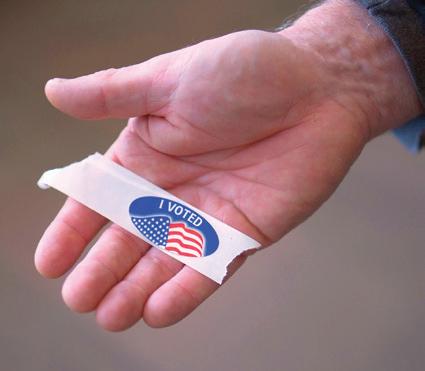
For Cornellians on the Hill, voting this November may require a bit more planning than anormal election year, and Cornell Votes hopes to ease the process.
The conditions of this election year are unprecedented. The COVID-19 pandemic, hyper-polarization and on Friday the passing of an indelible voice on the Supreme Court, Justice Ruth Bader Ginsburg ’54 –– have all made the stakes on Nov. 3 increasingly high for both Republicans and Democrats.
The student organization Cornell Votes is working to help students conquer the oftentimes complicated task of registering to vote, as well as providing resources on how and where to cast votes.
For younger generations, the impact of this election may last a lifetime. The next president and Congress likely will get to decide the U.S.’s response to the coming phases of the pandemic, seat future Supreme Court Justices and combat the climate crisis. Given these high stakes, presidential, congressional and local office campaigns are looking to this demographic to tip the scales and turnout this November.
Cornell Votes is a University-wide organization that aims to educate and advocate for voting-age students. Their goal is to have every Cornell student registered to vote and participate every November. The organization is non-partisan and works to provide unbiased and objective resources, helping students make informed voting choices.
In 2018, National Study of Learning, Voting, and Engagement Campus Reports surveyed voters residing within the borders of Cornell’s Ithaca campus and found that only 33.7 percent of eligible voters voted in the midterm election. This includes both voters registered in New York in other states. Though there is an upward trend of voter registration and voter turnout on campus, Cornell Votes hopes to aid in the increase by making the process
more transparent for students.
Voting accessibility also appears to be a priority among Cornell faculty. Within the next few months, many events on the 2020 presidential election, such as webinars and discussion panels, have been scheduled.
The executive board of Cornell Votes spent quarantine transition ing from a fellowship to a student organization, giving each member more independence to cre ate their own work shops and media.
Initially, Cornell Votes was part of the Andrew Goodman Foundation’s Vote Everywhere move ment, a national organi zation dedicated to turn ing out college students at the polls, according to Cornell website. Now, Cornell Votes is an independently gov erned organization at Cornell, receiving funding from the University and the Andrew Goodman Foundation. President Patrick Mehler ’23 said the group focuses on fostering community engagement, building relationships with other organizations across campus and communicating to the student body.
This semester, the bulk of the organization’s engagement will occur through online workshops focused on topics like how to register to vote, how to request an absentee ballot and how to navigate a candidate’s political rhetoric.
“There are just so many challenges to voting that I didn’t even realize until I got to a college campus,” said Tori Healey ’22, the vice president of finances for Cornell Votes.
“Helping them overcome those barriers
Cornell Votes is encouraging students to vote via absentee ballot this year, due to the publiczation suggests that anyone voting through an absentee ballot fill out the form and mail it immediately, as postal
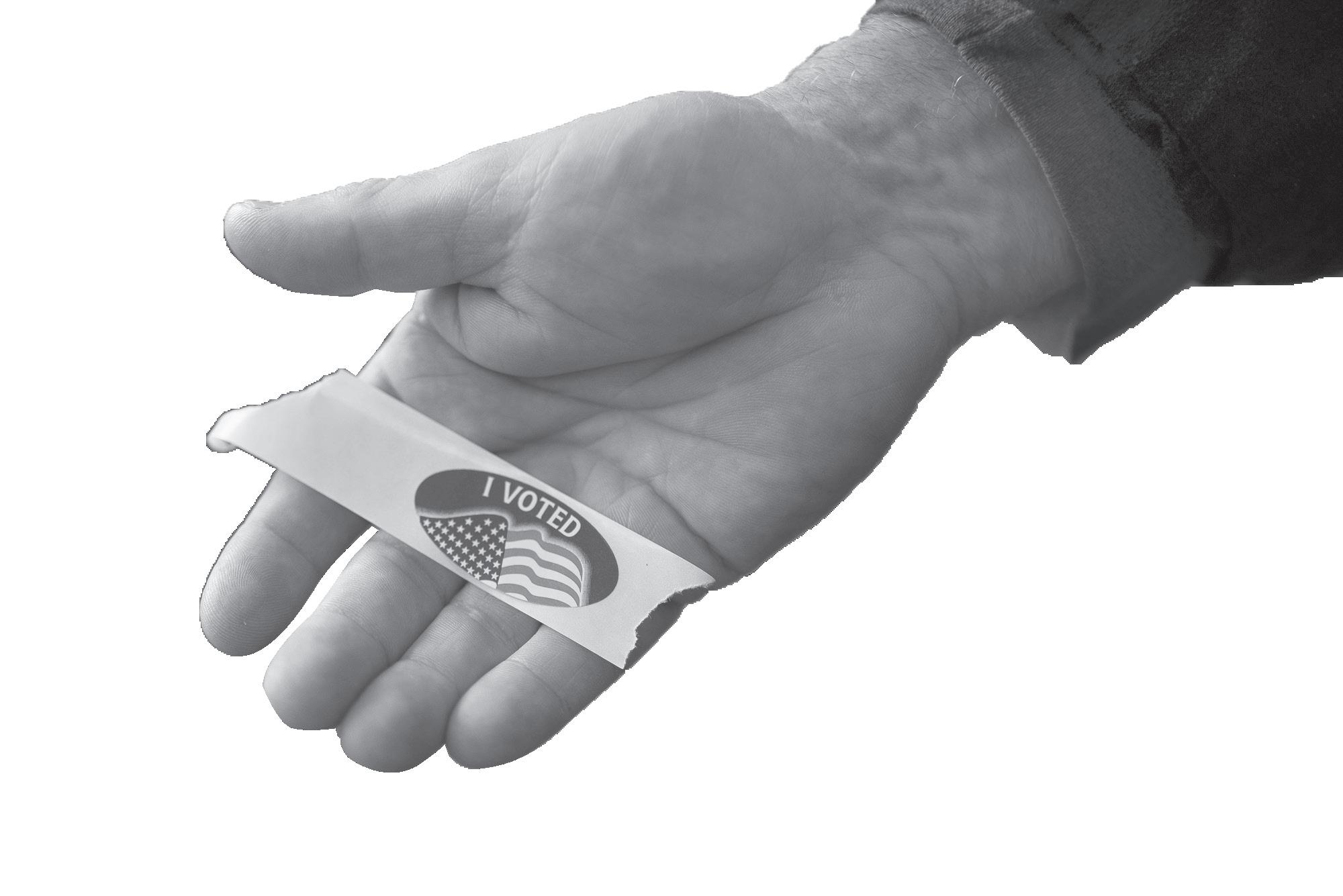
Even now, Cornell students from New York State can do this process online: The state launched an online portal where voters can request an absentee ballot, eliminating the need to print, stamp and mail an application to a local county Board of Elections office.
With Election Day only weeks away, Cornell Votes hopes to increase the University’s voter turnout rate and motivate as many students as possible to use their voice.
“Having a forum and a space to empower people and engage them so that they know their rights and they know their civic responsibility … is critical,” said Shruti Kanna ’22, one of the department chairs for Cornell Votes. “I think Cornell Votes is a great space for that.”
While applying to several business and finance organizations on campus his freshman year, Cheick Camara ’22 observed that not one member in these organizations was Black.
Camara failed to make the final cut for all of these organizations, prompting him to wonder, “Did I get cut because of factors that I couldn’t control or was it just because of my skill?” But during his sophomore year, Camara saw different results: he made it into a finance club where he connected with the one Black student in the entire organization.
For years, underrepresentation has deterred students of color from applying to Cornell’s selective business and finance organizations.
“At Cornell, it seems as if Black students and people of color aren’t as interested in finance because they don’t apply,” Camara said. “Yet, they aren’t applying because they don’t feel safe in these spaces.”
But underrepresentation is not the only problem that business and finance organizations on campus face.
Moriah Adeghe ’21 experienced discrimination when participating in the first round of interviews for a business club on campus. The group case study went smoothly for Adege, until she made it to her individual interview, where she said that the organization’s current members openly laughed at her, while looking at their computers and typing. Adeghe felt as if the members were talking about her in a group chat.
“The whole experience was humiliating ... I was embarrassed and felt incredibly disrespected by the members of the
group,” she said. “I feel that if I were a white man, I wouldn’t have been treated that way. Black women are often not met with the respect that they deserve and this interview was a prime example of that.”
Nepotism within an organization is one possible culprit for the self-perpetuating lack of diversity within business organizations. Camara said that the system is fundamentally flawed because “the people in charge of the decision-making process are likely to just bring on their friends from their same social fraternities or groups.”
“So off the bat, these friends have the same mentality as them and come from similar backgrounds,” he said.
Yasmin Watt ’22 also attributed the persisting issue to a lack of access. “A lot of underrepresented minorities don’t have access to the resources and the network necessary to give themselves a leg up in terms of the recruiting process within the various business organizations,” she said.
Dustin Liu ’19, who wrote an opinion piece for The Sun on the issues surrounding exclusive organizations in February 2019, said that the power imbalance between current members and recruiting members also perpetuates a lack of diversity.
“Whenever folks are in power, they reaffirm structures to maintain that sense of power,” he said. “No one is going to speak against the system unless they’re self-assured that it’s going to be okay without that label [of being a member].”
This glaring issue is all too apparent to some leadership members of business and finance student organizations that have started to implement diversity and inclusion initiatives in recent years. Phi Gamma Nu is one such organization.
This fall semester, PGN created additional diversity initiatives, including removing the professional business attire requirement for recruitment and publishing resources, career guidance and diversity and inclusion goals on its website.
Fifteen Cornell business clubs also hold the Gold Tier Certification Program, which requires the organization’s leaders to submit their own diversity and inclusion goals and initiatives that meet the criteria set by the D&I Business Advisory Council.
Organizations often stick two words together when discussing these initiatives: diversity and inclusion. But to students like Camara, these efforts have often failed to make a real difference.
“A reason why some of these initiatives aren’t working is because the system is fundamentally flawed,” he said. “These initiatives sound amazing, but [the system] needs work internally first before [organizations] can actually start to claim these diversity initiatives.”
Camara said that “inclusion is the step further that many organizations — specifically at Cornell and in finance, more broadly — are not fully understanding.”
He said that there are major differences between diversity and inclusion: “Diversity is more about the physical appearance, whereas inclusion is more about the actual intangible experience that members have … Diversity is about having a seat at the table, while inclusion is about being invited and celebrated at the table.”
Olivia Natale ’20, who wrote her senior thesis on diversity within business fraternities at Cornell, found several concrete solutions to ameliorate the lack of diversity within these organizations on campus. She first suggested that organi-
zations refine recruitment processes by developing ongoing relationships with minority student organizations or residence halls on campus.
Natale also advised fraternities to cultivate a sense of belonging by developing special mentorship programs, affinity networks or employee resource groups — identity-based community networks that can “help people from underrepresented backgrounds develop meaningful connections within business fraternities,” she said.
Adeghe suggested that business organizations implement organization-wide bias training and open discussions about race.
“I think selective organizations should have detailed plans on diversity and inclusion,” she said. “Not just recruiting people from diverse backgrounds but also implementing implicit bias training, having discussions on overt and covert racism and how to interact positively and productively with people of color.”
To mitigate the negative effects of nepotism on diversity, Camara suggested using a system of checks and balances, an approach he used to recruit new members of his organization, BlackGen Capital.
“When one of our friends’ names came up and we started to show bias, then other members of the executive board would check us” and point out that another, unconnected candidate was stronger,” he said.
Camara urged current leaders in business and finance organizations on campus to be less passive and “make sure that people actually speak up about these injustices and biases that go on.”
Maia Lee can be reached at mlee@cornellsun.com.
By CHASE WEBB Sun Contributor
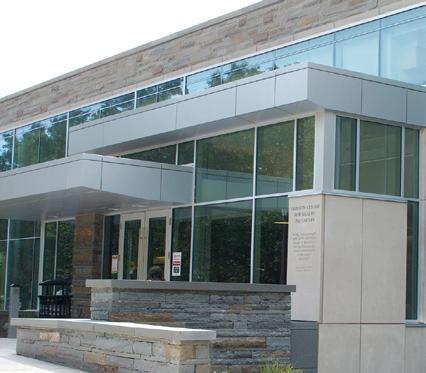
While most of Ithaca and the world are focused on COVID-19, Cornell Health is trying to keep another virus from spreading on campus.
In an effort to prevent a flu outbreak, Cornell Health is partnering with Wegmans Pharmacy to host flu vaccine clinics on campus. However, this year’s flu clinics will differ from previous years.
Wegmans Pharmacy is taking precautions for this year’s flu vaccine clinics, asking students and other members of the community to sign up in advance for a timeslot to reduce wait times and density in the line, according to Anne Jones, medical director at Cornell Health.
This year, Cornell Health is mandating all students to get the flu vaccine as part of the University’s behavioral compact — different from previous years’ policies of recommending, rather than requiring, the flu vaccine.
“The requirement is part of a comprehensive public health strategy to fight COVID-19,” Sharon McMullen, Assistant Vice President of Student and Campus Life for Health and Wellbeing, wrote in an email to The Sun.
Fears over the effects of a large flu outbreak on campus have at least partially motivated this mandate. While influenza and SARSCoV-2 are different viruses, they do share some traits that would make dealing with both at the same time more complicated.
Both viruses infect the lungs and cause symptoms such as a fever, cough and body aches, making it difficult to differentiate the two without a test.
“Some of the similarity is because they have the same mechanism to infect a human,” said Dr. Cynthia Leifer, associate professor of immunology. “They are both
inhaled and they both infect the lung, so they both can induce pathology in the lung and cause overlapping types of symptoms.”
The similarities in symptoms means that Cornell Health must take every case of a respiratory illness as seriously as if the patient had COVID-19, until they know otherwise.
“High rates of influenza among our campus population could seriously tax resources at Cornell Health and in the community,”
Jones said. “A large flu — or COVID — outbreak requires Cornell Health to shift into pandemic operational modes, which focus on urgent and emergent levels of care.”
Jones also said that many of the resources that would be needed for a flu outbreak would be diverted from COVID-19 testing, treatment and medical support for quarantine students.
“I think one of the biggest challenges we have is that the symptoms are the same,” said Frank Kruppa, Public Health Director of Tompkins County. He is hopeful that this year will be a better flu season because more people will be encouraged to get a flu vaccine.
“One of our best defenses here will be to try to limit flu in our community,” Kruppa said. “Getting vaccinated, wearing face coverings, washing your hands and social distancing should all help us to that end.”
There are also individual dangers of getting the flu during COVID-19. Every respiratory infection an individual has can cause inflammation and damage in the lungs, weakening and breaking the barriers that separate the microbe-laden outside air and the more susceptible interior part of the lung, according to Prof. Cynthia Leifer, microbiology and immunology. The easier it is for these microbes to cross those barriers, the more likely it is for a new infection to arise.
Damage to the lungs also reduces overall lung function, making it harder to physically

deal with a decrease in respiratory capacity during future infections. Together, this means that getting the flu can increase one’s chances of contracting COVID-19 as well as the severity of the infection.
“The more times you get infected, the worse your lungs will be over time. So it’s always a good idea to not get infected,” Leifer said.
It is also possible to get two infections in the lung at the same time. However, information on how SARS-CoV-2 interacts with influenza is scarce.
“If you have two respiratory pathogens that are both going to go into your lung, and both inducing pathology and the immune system is trying to combat both at the same time, [the immune system] is going to have a harder time than one by itself,” Leifer said.
While there are hopes that this year’s flu season may not be as severe due to measures like social distancing and mask wearing, Cornell Health doesn’t want to take any chances.
“It’s hard to predict this early how intense this year’s flu season will be,” Jones said.
“However, public health officials and healthcare professionals around the world — and here at Cornell — are preparing for influenza and COVID-19 to be in circulation at the same time, which could cause additional and more serious illnesses, and put a significant strain on health care systems.”
To ensure this year’s flu season does not interfere with Cornell’s ability to deal with COVID-19 or any other healthcare issues, Jones urged Cornellians to take steps to prevent getting and spreading the flu.
“The more the community can focus on self-preventive efforts — mask-wearing, physical distancing, and vaccination — the better our chances of keeping infection rates low in the community, retaining our normal operations, and continuing to offer a full spectrum of services,” she said.
Cornell Health has opened vaccine clinics at a variety of locations on campus from now until the end of October. The vaccine is free to all students, faculty and staff.
Chase Webb can be reached at chw72@cornell.edu

In the middle of a global pandemic, people now, more than ever, are invested in understanding how their immune system works.
Although many questions remain in the field of immunology research, The Sun interviewed three Cornell researchers to understand how the immune system functions when faced with an illness, and what experts recommend doing to assist the immune system in fighting off illness.
Pathogens can enter the body in multiple ways, according to
Prof. Cynthia Leifer, microbiology and immunology. These include the mouth and nose through either breathing in the pathogen or by touching your mouth, nose or eyes. Pathogens can also spread through eating something that contains pathogens or getting bit by a disease-carrying insect. Whichever way pathogens enter the body, they will try to begin multiplying. According to Leifer, some bacteria can divide on their own, while viruses must hijack cells from the organism in order to reproduce.
“Your body has basically a little army of cells that are constantly looking around for pathogens, and they have these little molecules on their surface called
proteins that recognize the infectious agent,” Leifer said.
Once a pathogen is detected, the first response is non-specific, focusing on limiting pathogen spread in ways that would impact any infectious agent rather than a specific bacteria, virus or other infectious agent.
“There are events that happen very early on, and we call those innate mechanisms,” Leifer wrote in a follow-up email. “Those are just very rapid responses against an invading pathogen coming in, and these responses are relatively nonspecific.”
According to lecturer Beth Rhoades, microbiology and immunology, the immune system includes T cells, which identify and kill infected cells, and macrophages, which dispose of the debris. There is also an adaptive response, which is largely driven by T cells and B cells — cells that produce antibodies.
“Antibodies are molecules that will tag a pathogen and say, eliminate this pathogen whatever is tagged with an antibody is in trouble,” Rhoades said. “The rest of the immune system will pick it up and destroy it one way or the other.”
If the immune system has seen a pathogen before, it is better prepared to respond, according to Rhoades. Once B and T
cells recognize a pathogen, they duplicate themselves, making what Leifer called a “clonal army in order to fight that infection.”
This memory response can be developed either by having the illness before, or through vaccination, which, unlike getting infected, is a safe way of developing a memory immune response.
“It is often better to get a vaccine than to have a natural infection with a pathogen since vaccines are very safe and very effective,” Leifer wrote.
A commonly misunderstood part of the immune system is fevers, a substantial rise in body temperature, which the immune system creates to fight off an illness.
“The problem is that when you’re talking about viruses, you’re talking about millions and millions of them,” said Prof. Hector Aguilar-Carreno, microbiology and immunology. “When you raise the temperature, you’re going to kill some of them, but not all of them.”
According to AguilarCarreno, if a small number of viruses survive dehydration at high temperatures, these viruses can continue to reproduce. For this reason, while the fever response can help promote recovery, high temperatures alone do not guarantee that illnesses won’t
spread in or outside the body.
Fevers can not only dehydrate the pathogens infecting someone, but also the person. For this reason, medical professionals often work to alleviate the fever component of the immune response.
While too little of an immune response risks letting an infection progress, damaging tissues and endangering someone’s life, too strong of an immune response can also have repercussions. An overactive immune response can cause inflammation and tissue damage, according to Leifer.
“You want the Goldilocks zone, where you have just the right immune response to kill the pathogen and not damage your own tissues,” Leifer said.
COVID-19 exemplifies the need for staying within this zone as both the virus itself and the immune system response to it pose a risk.
To continue reading this article, please visit cornellsun.com.
Tamara Kamis can be reached at tkamis@cornellsun.com.
Louis Chuang can be reached at lchuang@cornellsun.com
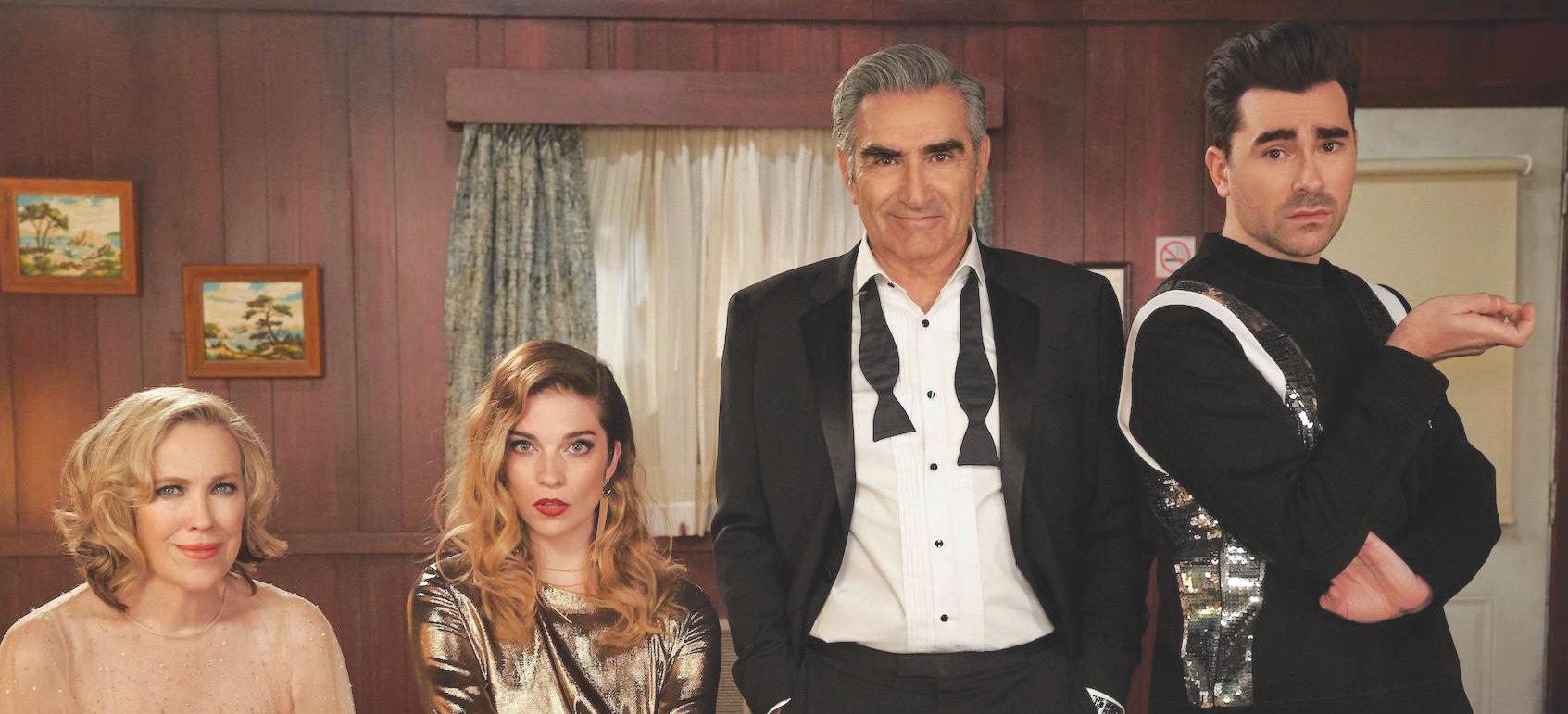
Setting a record, Schitt’s Creek, spelled with a dollar sign “Schitt’$” in the Netflix title art, won not one, two, three or four, but five Emmys on Sunday night. The show won every category for which it and its actors were nominated: Outstanding comedy series, outstanding lead actor, lead actress, outstanding supporting actor and supporting actress in a comedy series.
Schitt’s Creek follows the economic downfall of the uber-wealthy Rose family. Similarly to Arrested Development, many of the main jokes of the show capitalize on the pomp and ridiculous culture of the elite.
The Roses must learn how to rebuild their lives in a much lower socio-economic environment, in which they are initially extremely uncomfortable. As the six seasons progress, the family learns more about what life is like for most people in the world. Catherine O’Hara, who won Outstanding Lead Actress in a Comedy Series, told the New York Times: “It’s like we’re aliens learning how to be humans.”
Other Emmy nominated comedy series this round included Black-ish, Insecure, Dead to Me, The Marvelous Mrs. Maisel, Saturday Night Live, The Good Place, Ramy, The Kominsky Method” and Brooklyn Nine-Nine
Many Black actors and actresses in these shows were nominated for Emmys, including Mahershala Ali, Issa Rae, Anthony Anderson, Kenan Thompson, Tracee Ellis Ross, William Jackson Harper, Sterling K. Brown, Yvonne Orji and my favorite, Andre Baugher. This is a list of brilliant actors and writers.
When so many were nominated, why did no comedic Black actor or actress win an Emmy?
Since ancient times, comedies have upheld
Isocial structure. Society, and the Academy, is run by rich white folks, so of course the comedy which highlights the ruling class is most recognized. Schitt’s Creek follows the social descent of the Rose family, and one could argue that society enjoys seeing the rich fall — but the show ultimately sees the family successful again, with characters thriving, maintaining a version of their hierarchy. “Schitt’s Creek” is about how the ruling class should be. And
Movie for Mrs. America, Regina King won Outstanding Lead Actress in a Limited Series or Movie for Watchmen, Yahya Abdul-Mateen II won Outstanding Supporting Actor in a Limited Series or Movie for Watchmen
The wins of Watchmen and Mrs. America do indicate a recognition of Black talent and history, but the recognition of only Black drama reflects a one-dimensional view of the Black experience in America. King is the detective
regardless of its allegorical significance, Schitt’s Creek is extremely white.
Black actors in Black-ish, Insecure, The Good Place, and Brooklyn Nine-Nine were snubbed of Emmys because they are not relatable enough to the Academy. Issa Rae has been nominated once before. The Academy seems willing to nominate Black comedians, but fails to truly recognize their excellence.
One might say that the Emmys this year recognized Black talent plenty: Zendaya won Outstanding Lead Actress in a Drama Series for Euphoria, Uzo Aduba won Outstanding Supporting Actress in a Limited Series or
protagonist of Watchmen who hunts down murderers and organizers of horrible hate crimes. In Mrs. America, Aduba plays Shirley Chisholm, the first Black woman in Congress who ran for president in 1972. This is much better than a no-dimensional view, but recognition of Black comedy would mean that the Academy is working to further understand Black America.
This year’s Emmys suggested that the elite are more comfortable watching Black people struggle or take revenge than they are with seeing Black people just being people. Baugher in Brooklyn Nine-Nine portrays a stern yet sweet gay police captain. Jackson Harper portrays a nerdy ethicist
in The Good Place. In Insecure, Rae portrays a creative woman working for a non-profit, finding herself. These shows unearth the normalcy of Black personhood and excellence.
Additionally, Succession, yet another uber-wealthy white-dominated show, won Outstanding Drama Series. This year’s wins reflect the comfort of the Academy, who see themselves in the mostly wealthy white people represented in Schitt’s Creek and Succession. This mostly explains why the Emmys deem “Schitt’s Creek” most hilarious; this is why the Emmys deem Succession most compelling.
Cyndey Henderson, a Black writer with USAToday, wrote, “With a platform this large, the Emmys could have and should have done more. This was a time to be firm in their support instead of briefly mentioning it.”
The brief support of Black Lives Matter was that King and Aduba wore “Say Her Name” shirts, referencing the injustice of Breonna Taylor’s murder, and Anderson and Jimmy Kimmel lead a BLM chant.
Henderson continues: “The broadcast could have taken time to highlight what steps the academy is taking toward equality or the show could have allotted time for stars to speak about the Black Lives Matter movement...”
The intricacies of racism in the ruling class and in mass media matter. The media has control of the world’s perception and valuation of art. One must consciously ask oneself: Why are certain kinds of Black art celebrated over others? What do white people choose to feature, and why?
Emma Plowe is a sophomore in the College of Arts and Sciences. She can be reached at eplowe@ cornellsun.com. She currently serves as arts editor on The Sun.
t was the dog days of the summer of 1981, and hedonists from the Hamptons to the Hills were slowly settling into the hushed monotony of the unyielding heat. While the high temperatures may not have broken by the first of August, something else was on the verge of doing so — something that was practically brimming with the allure of a new age for media.

On August 1, MTV surreptitiously emerged from some shadowy corner of the multimedia universe and invaded the television scene. For 24 hours each day, the channel offered a mechanism for the mass production of a dimension of music that had previously been available only in concert. Quite appropriately, the tune selected to christen the channel was “Video Killed the Radio Star” by the Buggles, an ode to the dynamism of technology that somehow manages to sound more rosy than reaping. Before MTV’s energetic arrival, video had bridged the rift between music as mere soundtrack and music as the ultimate multi-sensory experience. Historians have traced the dawn of the music video all the way back to 1895 with William Dickson’s so-called Experimental Sound Film, which paired visuals and a phonograph in a singular device. As film and audio technology boomed in the first half of the twentieth century alongside the development of a burgeoning mass commercial society, similar iterations of this concept took hold in theaters and social halls across the country. Perhaps the most familiar of these installments were soundies, the three minute standalone productions screened in lively venues throughout the 1940s. Throughout the 1960s, the Beatles helped test the waters of video on a larger scale with projects ranging from short-form marketing material to entire movies. In the decade that followed, films like Grease and A Star Is Born (long before Lady Gaga and Bradley Cooper would step into the spotlight) succeeded in
bringing this hybrid audio-visual creature into the public eye. On the whole, though, moments like these were the exception to the rule. The one-dimensionality of conduits like radio and cassette tapes continued to command the market. Although forums like Video Concert Hall, which debuted in 1978 and functioned much like a precursor to MTV, had made music videos available, they loomed far from ubiquitous — that is, until MTV’s advent a few years down the road.
The popularization of the video format did nothing short of restructure the music industry. Artists hoping to make it mainstream could no longer afford to lurk behind clunky boomboxes or eight-track tapes as they crooned in pursuit of stardom. Each musician was instead pushed to concoct an image that would come across as seamlessly through a visual medium as through a purely audible one. Over-the-top, showstopping productions transitioned from the sidelines to the limelight, steadfastly asserting themselves as the new norm. Audiences quickly became accustomed to seeing their beloved idols and icons on screen, and those who could not measure up to the major players in the pack were doomed to fall off the radar. Boasting a particularly gritty or soulful voice would no longer suffice — the bar had been indisputably and indelibly elevated.
Even a cursory glimpse into some of the most dominant powerhouses of the 1970s and 1980s reveals the pervasiveness of this changing tide. In the former decade, the success of artists like Stevie Wonder, Fleetwood Mac and James Taylor demonstrated the power of creating intimate, genuine connections between musicians and their constituents. These creators were committed to honest, no-frills deliveries of their craft, and any existing technology to tempt them in the opposite direction was not yet widespread enough to sway. The 1980s, however, fostered a complete reversal from these values as artists like Madonna, Michael Jackson, Prince and David Bowie worked tirelessly to elicit an allure from their music that simply could not be communicated through audio alone. Widely well-received videos such as a-ha’s “Take on Me” or Janet Jackson’s “Rhythm Nation” did not take long to clinch legend status, serving as popular cultural templates for modern media.
Even in the context of these extensive reverberations, the development still seems quite simple. Music lovers were granted more ways to consume the products they were already devouring in droves,
and music makers were presented with opportunities to broaden their listener bases by opening more channels to reach potential devotees. What was occurring on a more obscure plane, however, was an increasingly unignorable move not merely towards the commodification of art, but of those responsible for its creation.

By the dawn of the 1980s, the products of the creative process had long been treated as items fit for purchase and sale. The commercialization of their creators, though, was largely unfamiliar — until music videos invited audiences to witness a palpable, concrete linkage between the music they loved and those responsible for its delivery. This connection between art and artist was coming to fruition on an unprecedented scale, scrapping any sense of anonymity that had previously subsisted in the music industry. At this point, the process of equating artists with their art became all too swift, leading to a market that upheld megastars not as people capable of producing lucrative products, but as the lucrative products themselves.
While today’s generation clearly appreciates the accessibility and quick pace of streaming services and 15-second clips as means of acquiring music, videos remain indulgences to be splendidly savored by creative junkies around the globe. Music videos simultaneously construct and unravel the tracks they accompany, implanting foreign narratives in our minds and subsequently stranding us in worlds that are oftentimes chillingly yet excitingly absent context. The medium demands multiple senses, our full attention, tearing us away at least for a few minutes from the relentless multi-tasking that has become our society’s default mode. Video may have killed the radio star, but declining attention spans haven’t killed video just yet.
Megan Pontin is a sophomore in the School of Industrial Labor Relations. She can be reached at mpontin@cornellsun.com. Rewind runs alternate Tuesdays this semester.
Independent Since 1880
138th Editorial Board
MARYAM ZAFAR ’21 Editor in Chief
JOYBEER DATTA GUPTA ’21
Business Manager
PETER BUONANNO ’21
Associate Editor
MEGHNA MAHARISHI ’22
Assistant Managing Editor
CHRISTINA BULKELEY ’21
Sports Editor
BORIS TSANG ’21
Photography Editor
CAROLINE JOHNSON ’22
News Editor
ALEX HALE ’21
News Editor
ARI DUBOW ’21 City Editor
EMMA ROSENBAUM ’22
Science Editor
BENJAMIN VELANI ’22
Dining Editor
JOHN MONKOVIC ’22
Multimedia Editor
MIKE FANG ’21 App Editor
OLIVIA WEINBERG ’22
Assistant News Editor
MADELINE ROSENBERG ’23
Assistant News Editor
LUKE PICHINI ’22
Assistant Sports Editor
HANNAH ROSENBERG ’23
Assistant Photography Editor
BRIAN LU ’23
Assistant Arts & Entertainment Editor
ANNABEL LI ’21
Assistant Money & Business Editor
LEI ANNE RABEJE ’22
Layout Editor
JOHN COLIE ’23
Blogs Editor
JOHN MONKOVIC ’22
Multimedia Editor
JOHNATHAN STIMPSON ’21
Managing Editor
KRYSTAL YANG ’21
Advertising Manager
JASON HUANG ’21
Web Editor
NIKO NGUYEN ’22 Design Editor
PALLAVI KENKARE ’21 Opinion Editor
SEAN O’CONNELL ’21 News Editor
KATHRYN STAMM ’22 News Editor
ANIL OZA ’22
PLOWE ’23
LEE ’21
CHENG ’21
’22
MEGHANA SRIVASTAVA ’23
DAWSON ’21
’22
’21
’21
’22
WANG ’21
’22
’21
Working on Today’s Sun
Ad Layout Mei Ou ’22
Production Desker Dana Chan ’21
Sabrina Xie ’21
News Deskers Caroline Johnson ’22
Madeline Rosenberg ’23
Opinion Desker Pallavi Kenkare ’21
Design Desker Niko Nguyen ’22
Science Desker Emma Rosenbaum ’22
Photo Desker Hannah Rosenberg ’23
Arts Desker Emma Plowe ’23
Sports Desker Emily Dawson ’21
Lucy Contreras is a junior in the College of Arts and Sciences. She can be reached at lcontreras@cornellsun.com. Her column, Lucy Dreams, runs every other Tuesday this semester.
Two nights ago, we lost a trailblazing feminist and a hero. In her black cloak, she towered — not in height but in power — and meticulously paved the way for women’s liberation. And just like other revolutionaries before her, Ruth Bader Ginsberg ’54 died without seeing the world she envisioned come to life. She spent her last moments in a country that is crumbling. In a place where innocent Black and brown individuals are shot in the streets — and they’re falling. In a place where immigrants, escaping violence and poverty, are crammed into cages — and they’re starving. In a place where thousands of Americans are falling sick — and they’re dying. But I ask that we don’t become numb; that we don’t succumb to the anger and disappointment that we’re feeling. I ask that we honor her legacy by uplifting those that are following her footsteps and those that are making up for what she lacked: A fully intersectional view of justice that takes race and gender into consideration.
Justice Ginsberg was the first in her family to go to college. Not only that, she was a student at Cornell in a time when there were only 9 women in a class of 500. Being the only, or one of few, can be intimidating. In the movie RBG, she recalls feeling like she represented her entire sex every time she spoke in class. “The Notorious RBG” was not always so renowned. She’s been called a witch, an evil-doer and even a disgrace by our very own President.
When she first started championing for women’s legal rights, she was deemed a “radical” that “had no respect for our constitution.” There seems to be a pattern in American society wherein those that are labeled the most radical end up amongst the most cherished after they have succeeded in their endeavors. But we shouldn’t wait until someone is a supreme court justice or until the legislation they’ve been championing has been passed to give such trailblazers support and validation. There are trailblazers all around us — microcosmic heroes. From Cornell’s Class of 2024, 15.5 percent of students self-identified as first-generation. Out of those, many are first-generation, low-income and students of color. They are the first in their families, and often their communities, to step foot in an institution like Cornell. They’re often the only black student or latinx student in their class. Many also feel like they represent their identities when they speak up in a class made up of predominantly white, upper-class students. And, especially during these times,
they are suffering. Because, on top of the constant microagressions and instances of outright prejudice that they experience at Cornell, they’re watching their black and brown brothers and sisters die for no reason and without repercussions. Because they have to fear the deportation of their parents, their family members and their friends. And, of course, because COVID is disproportionately impacting their communities.
I’ve talked with several first-generation students and recent graduates at Cornell to see the ways in which they’ve been impacted these last few months. Homelessness, illness, food insecurity, financial insecurity and exposure to violence are only a few of the things that were mentioned in these conversations. Is this how we treat our trailblazers? We displace them from their homes on campus and let them fend for themselves. As Cornell boasts about RBG’s alumni status, they should be working to ensure that our own trail blazers are supported during these difficult times.
On a similar note, it is important to recognize that activists around the world are still being called “radical” today for fighting against other injustices. Take, for instance, the Black Lives Matter movement whose members are being thrown into prison and tear gassed in the streets.
As we mourn her death, let’s focus on empowering our trailblazers and activists who hold the key to a better future.
Even RBG criticized BLM when in 2016 she reacted to Colin Kapernick’s kneeling for black lives, calling his actions “dumb” and “disrespectful.” We must admit that RBG was not perfect; she supported fast-tracking deportations for asylum seekers, expanding fracking infrastructure and tougher crime legislation. Due to her frequent failure to champion causes that affect women of color and other marginalized groups, many critics have argued that RBG epitomized white feminism.
That doesn’t mean she wasn’t revolutionary; she undoubtedly was. But, just as we idolize a once “radical,” we should be uplifting modern “radicals” and trailblazers that are following in her footsteps and making up for what she lacked. We can’t wait for someone to become Supreme Court justice to care about them and what they have to say. As we mourn her death, let’s focus on empowering our trailblazers and activists who hold the key to a better future.
Let us be the first, not the last. Let us be the only, not alone.
As RBG once said, “we are a nation made of strong people like you.” Strong people need to be uplifted too.

Fill in the empty cells, one number in each, so that each column, row, and region contains the numbers 1-9 exactly once. Each number in the solution therefore occurs only once in each of the three “directions,” hence the “single numbers” implied by the puzzle’s name. (Rules from wikipedia.org/wiki/ Sudoku)

Art by Alicia Wang ’21

“I’ve never seen a snorkeling mask like that!” - Grace Gu ’22




Tis season, the Red will not take to Schoellkopf due to COVID-19. Featured below are highlights from 2019.