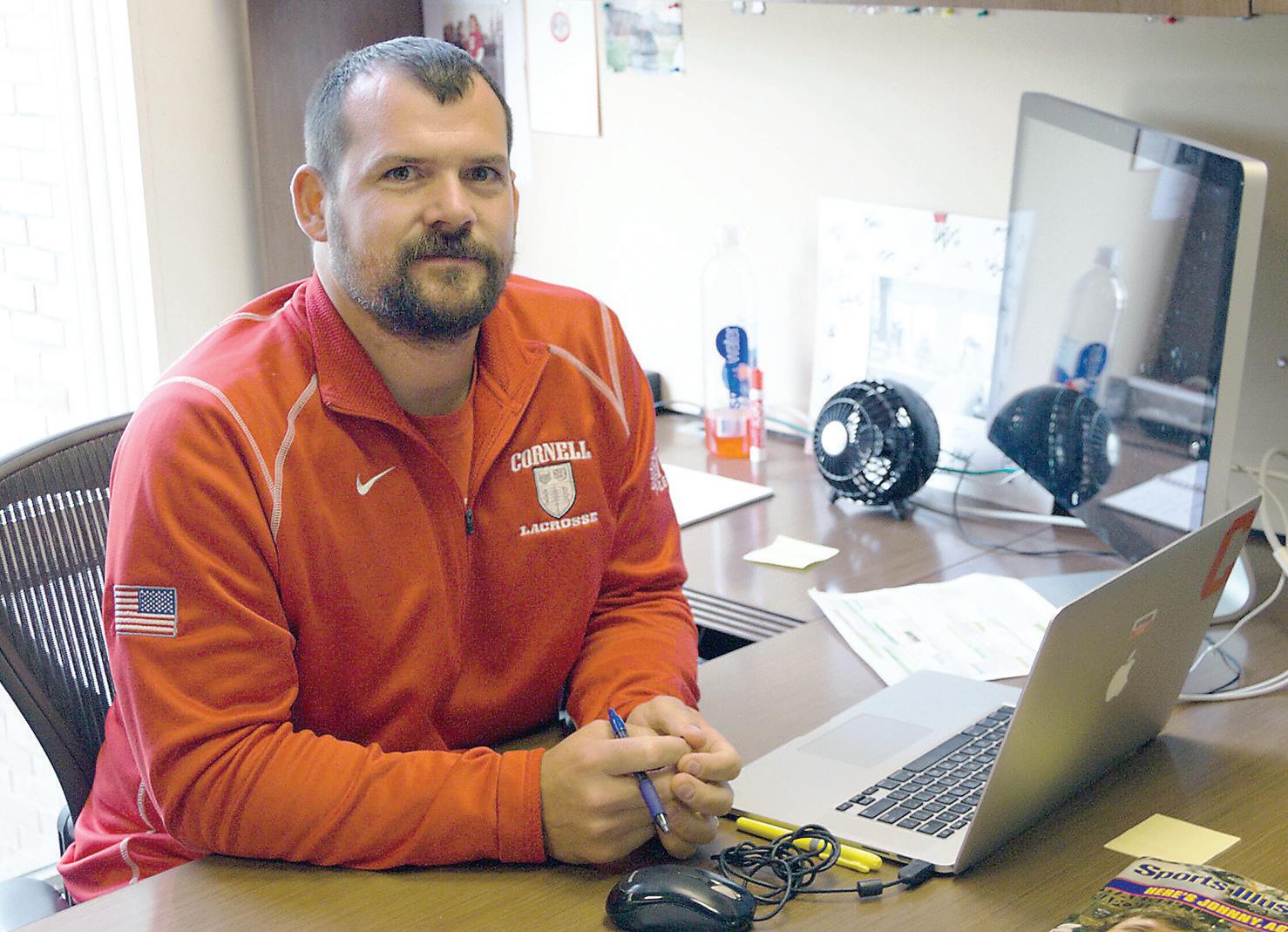
Lax Coach Leaves Men’s lacrosse lost its head coach Peter Milliman to Johns Hopkins.
By JOHNATHAN STIMPSON Sun Managing Editor
Cornell has been named the 18th best university in the country, according to the U.S. News and World Report’s 2021 rankings released Monday morning, falling one spot below the University’s ranking last year.
The college handicapper’s verdict marked the third consecutive year of bad news for Cornell, which has largely stagnated or declined on the annual rankings. Last year, the University fell from the 16th to 17th spot, and in the prior year it dropped from 14th to 16th.
Each year, U.S. News ranks hundreds of higher education institutions across the United States, judging universities on a wide array of metrics, including grad-
Cornell Falls One Spot in Annual U.S. News Ranking
uation rate, class size, student-faculty ratio, selectivity and resources for faculty. More recently, the list has placed greater emphasis on “social mobility,” measured
The college handicapper’s verdict marked the third consecutive year of bad news for Cornell, which has largely stagnated or declined.
through the graduation rate of Pell Grant recipients, and the amount of debt that students graduate with. Historically, acceptance rate has also been a relative-
ly significant factor in the rankings; however, due to COVID-19, the statistic was not weighted in the 2021 edition.
This decision likely slightly hurts Cornell, which announced in late August that its most recent acceptance rate fell from 10.9 to 10.7 percent — bucking the trend of other Ivies, many of which reported slightly higher acceptance rates for their incoming classes.
According to the most recent report, Cornell recorded a student-faculty ratio of 9-to-1, a median starting salary of over $66,900, an 87 percent of four-year graduation rate and a 75th-percentile ACT score of 35 — scores that placed the school within the top tier of the
Dean Vijay Pendakur to Leave C.U. for Tech Firm
Created many initiatives providing resources for low-income students
By MEGHNA MAHARISHI Sun Assistant Managing Editor
industry, he said, hoping to affect change in a completely different sector.
On LinkedIn, Pendakur received a message from a former student worker of his, telling him that Zynga was adding a new chief diversity, equity and inclusion position and that he would be a good fit for the job. For Pendakur, it was the perfect opportunity.
“Like many people, I think I felt a renewed sense of urgency and anguish about the need for change, and the need for structural change and systems of systematic change,” Pendakur said.
and inclusion, particularly in providing more resources for low-income, first-generation, undocumented and DACA students through Cornell’s student empowerment team. The University’s student empowerment team aims
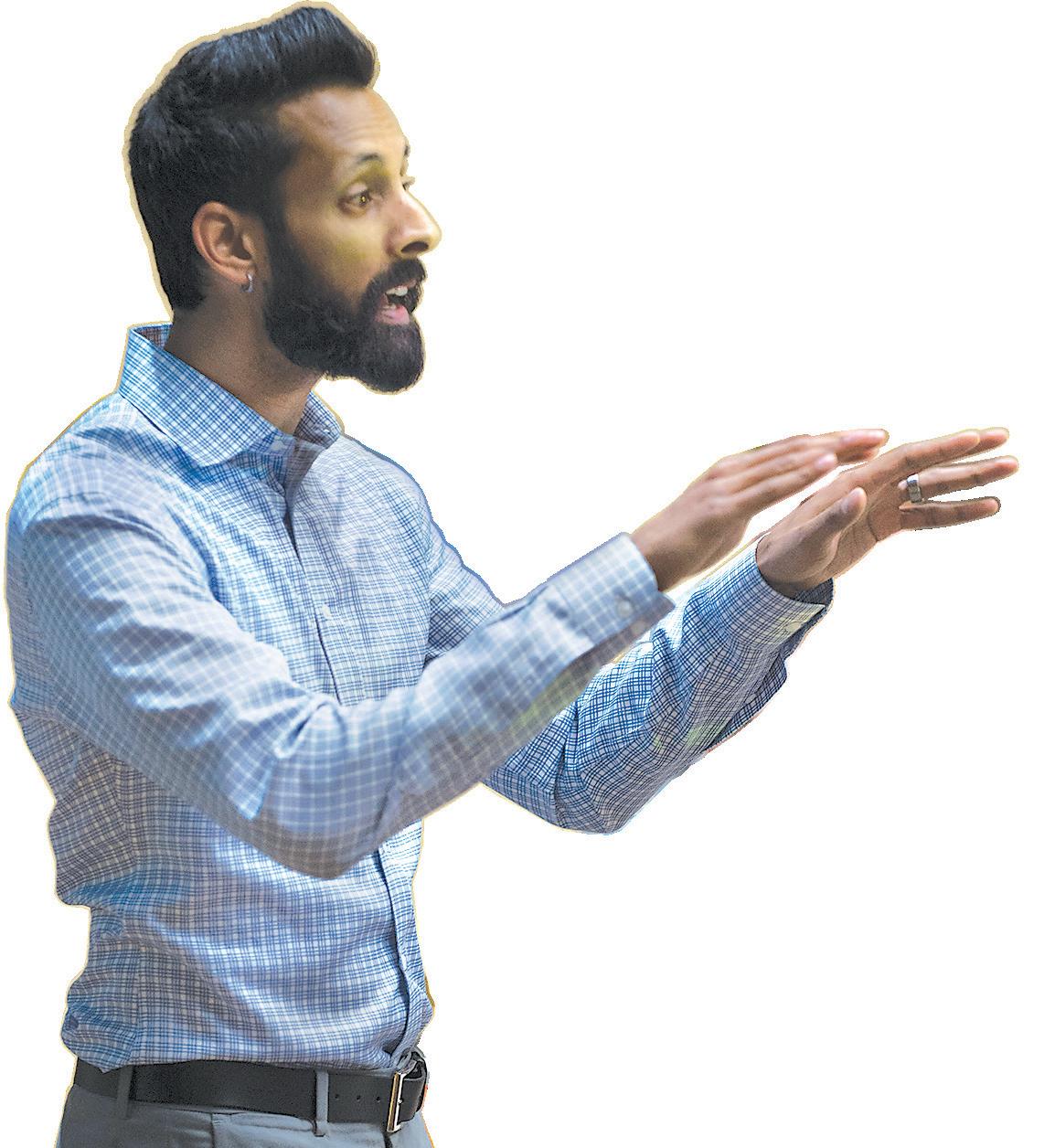
“Like many people, I think I felt a renewed sense of urgency and anguish about the need for change.”
Dean Vijay Pendakur
Pendakur was first appointed dean of students in September 2016, edging out two other finalists for the position. During a series of candidate forums at the time, Pendakur promised to be a dean for “all students,” hoping to foster a more inclusive and collaborative environment for students.
The Office of the Dean of Students is supposed to “[inspire] transformation and enriches the lives of students by providing opportunities for students to grow and learn as individuals and to develop as leaders and contributing members of a larger community,” according to the office’s website.
One of the hallmarks of Pendakur’s shortlived tenure was promoting more diversity
to encourage student learning through co-curricular activities to create a more inclusive campus environment.
Currently, the team supports over 150 student organizations such as Black Students United and ALANA Intercultural Board and runs peer mentorship programs like Building Ourselves through Sisterhood and Service and Scholars Working Ambitiously to Graduate. According to Pendakur, in only three-and-ahalf-years, the Office of the Dean of Students revamped the program, changing the staffing and modeling.
“It’s one of those areas where I feel like
Falling frequently | This year marks the third consecutive year that Cornell fell in the ranking of best colleges.
Tuesday, September 15,
A LISTING OF FREE CAMPUS EVENTS
Cornell Wellness Virtual Walk to Run Class
11:30 a.m. - 12:30 p.m., Virtual Event
Recovery By the Numbers: What to Expect in the Lodging Industry 11:30 a.m., Virtual Event
Language Resource Center Happy Hour Noon - 1 p.m., Virtual Event
Making Distance Learning Work with Care at Work Noon - 1 p.m., Virtual Event
Perspectives on Prediction in Plant Breeding 12:40 p.m., Virtual Event
Key Considerations for Agricultural and Food Systems Research in the Pandemic Era
4 - 5 p.m., Virtual Event
American Sign Language Conversation Hour
4 - 6:30 p.m., Virtual Event
Exploring the Small Farm Dream: Is Farming Right for You?
4:30 - 5:30 p.m., Virtual Event
The Learning Strategy Center Presents: Motivation Stations
7 - 10 p.m., Virtual Event
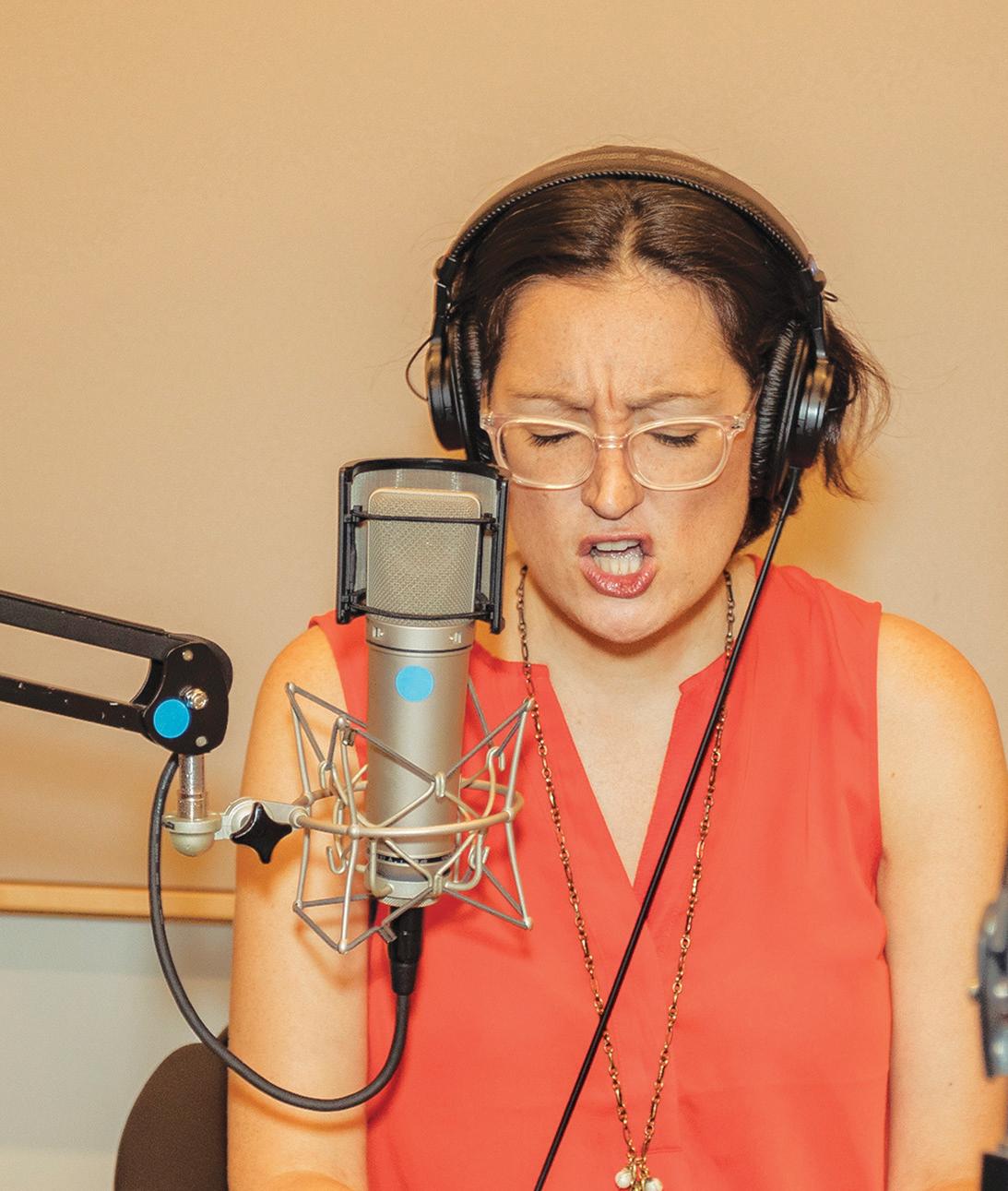
Fitness from home | Every week, Ruth Merle-Doyle will host a Zoom class for people looking to improve their
over the semester. Running will be done individually, but Merle-Doyle will provide tips and suggestions for people’s routines.
Tomorrow
Engaged Cornell Community-Engaged Leadership Update to Staff and Faculty 10 - 11 a.m., Virtual Event
Taking Control of Public Dollars Noon - 1:30 p.m., Virtual Event
Climate-Smart Agriculture: Why Is It Needed in Developing Countries? 12:40 - 1:30 p.m., Virtual Event
nation’s colleges, but were not enough to avoid being overtaken by Rice University and Washington University at St. Louis.
Cornell’s 18th ranking marks its worst performance on the list in at least the past 12 years. Over that time period, the highest position the University reached was 12th, when it edged out Brown University in 2008. Cornell has ranked at the bottom of the Ivy League since 2015.
The University did not comment by time of publication. While the report’s methodology has been repeatedly criticized as failing to accurately capture the true quality of higher education institutions, its cultural cachet and notoriety still give its annual judgement outsized influence. Applicants routinely look to the list as a marker of prestige, while college administrators and alumni donors often use it as a benchmark for college progress.
Johnathan Stimpson can be reached at jstimpson@cornellsun.com
The Lessons and Limits of Predicting Shooting Victimization 1:15 - 2:30 p.m., Virtual Event
Wellness Wednesday at the Virtual Tatkon Center 8 - 9 p.m., Virtual Event
Students Take to Outdoors Amid Pandemic
By FAITH FISHER Sun Staff Writer
Ithaca is always “gorges,” but this cliche seems to ring especially true for Cornell students during the pandemic.
Amid social distancing rules, social gathering restrictions and other behavioral expectations outlined in Cornell’s behavioral compact, Cornell students have been exploring social activities outside of campus to enjoy socially-distant activities. The warm weather and sunny days have allowed students to channel their social needs safely in the outdoors.
Already-popular Ithaca destinations have seen a dramatic increase in visitors compared to prior years. With many students seizing the pandemic as an opportunity to explore the beauty that Ithaca has to offer, Buttermilk Falls is just one of these attractions that experienced this influx in popularity.
Ithaca’s vineyards have been another popular destination that students are exploring during the pandemic. Like Buttermilk Falls, Six Mile Creek Vineyard has reached maximum capacity three times this season, forcing it to turn visitors away.
“We are getting flooded with people,” said Mark Renodin, the owner of Six Mile
Creek Vineyard. “We have definitely seen a lot of Cornell students coming in. It’s been quite a drastic increase.”
Before reopening, the vineyard implemented a reservation system, limited indoor capacity and restricted group sizes to safeguard public health. The vineyard has modified its group maximum to 10 people in order to align with the Ithaca campus’ transition to COVID Code Yellow guidelines. They have also increased their policing presence on the grounds to enforce behavioral expectations.
Although many of these attractions and venues welcome the enthusiasm and interest of the Cornell community, some venues have been completely overwhelmed by the spike in crowds. In response to the arrival of the “college community,” The Ithaca Farmers Market posted a Facebook message Sept. 4 urging patrons to “leave the squad at home.” Following guidance from the Tompkins County Health Department, the market asked visitors to leave groups to a four-person maximum in order to keep the market moving “quickly and safely.”
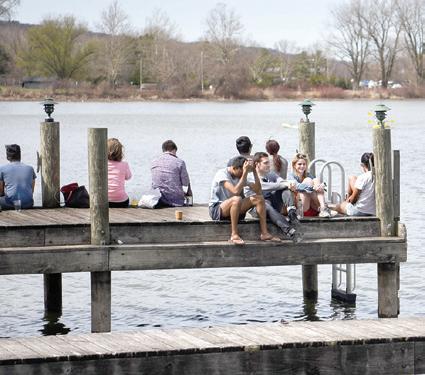
Cayuga Lake is another destination that has surged in popularity this fall among Cornell students and Ithaca residents alike. Since the arrival of Cornell students, Ithaca
Dean Pendakur to Depart University
we were able to build a really strong partnership with student leaders at Cornell,” Pendakur said.
In 2018, Pendakur was also a part of the establishment of the Kessler Presidential Scholars program, a peer mentorship for low-income, first-generation students. The program supports approximately 20 students in each class, offering academic support and substantial financial aid to students throughout their four years at Cornell.
More recently, Pendakur had been at the helm of the dean of students office during the coronavirus pandemic, working to provide more resources to students during such a turbulent time. When campus abruptly shuttered in March, Pendakur was instrumental in helping to set up the Access Fund — $400,000 in emergency aid for pandemic-related expenses for low-income students — in an incredibly short period of time.
Even now, as Cornell tries to successfully remain open for the fall semester, the departing dean of students played a major role in the University’s COVID-19 public health campaign and creation of the Cornell Compact Compliance Team. The C3T enforces the behavioral compact — a contract that details the list of rules students must adhere to during the fall semester — through multiple levels of intervention and disciplinary action, depending on the severity of the violation.
The dean of students noted that he was proud of Cornell’s approach to enforcement, as it was tailored to be more educational than punitive.
“I really think our model as an institution has tried to avoid that pitfall of shame-based approaches and focus rather on a public health campaign that says we’re all in this
together, and we know that you can make the right choices because you are brilliant young adults,” Pendakur said. “And I think that’s a much more noble way to pursue a path through this difficult time.”
At a campus that has seen its fair share of controversial speakers, Pendakur was actively involved in reimagining how the University grapples with free speech and protests.
According to Pendakur, Cornell sought to reconcile free speech and protests with the right to dissent, allowing controversial speakers and protests to take place on campus as long as they followed a series of rules and regulations.
The dean of students said he’s noticed that students engage more in “structured dissent,” hosting teach-ins and sit-ins rather than forcefully shutting down invited speakers.
“That doesn’t happen everywhere across the country — I think that that’s something pretty special about Cornell,” Pendakur said.
Looking back at his time at Cornell, Pendakur said it was difficult to leave, but he expressed enthusiasm over his new endeavors.
“I am excited about the opportunity to move the needle in very measurable ways on the representation of women, people of color, people with disabilities and veterans and a number of other historically excluded groups in the tech sector … there’s a lot of work to do in the [diversity and inclusion] space in tech,” Pendakur said. “My excitement is not only that there’s good work to do but also that if we can do it, and I can succeed and make change that I actually think — much like higher education — that making change in tech has the chance to cause a ripple effect and affect our broader society.”
Boating Center has seen an increase in demand for boat rentals, as compared to previous years.
“It’s been a big year for everything … We have been pretty much full on weekends,” said Sebastian Acosta, a staff member of the Finger Lakes Boating Center. “There have been a lot of Cornell students coming. There have been some big groups and also a lot of families.”
Regardless of the year, crowds at these destinations ebb and flow according to the weather. Many outdoor destinations will
see this summer’s surge in demand plateau and drop as the weather cools.
“With the cold, rainy weather, outside seating is going to be gone and our inside seating capacity outside of our tasting stations is severely limited,” Renodin of Six Mile Creek Vineyard said. “People won’t be looking to go outside and do as much. I think people will find things to do indoors. We got used to it in lockdown.”
ClubFest Goes Virtual for Fall 2020
Zoom calls, virtual booths replace quarter-cards
By AINAV RABINOWITZ Sun Staff Writer
Each year, the chaos of ClubFest fills up Barton Hall, with hundreds of stickers and quarter-cards from student organizations flung at potential new members. Students engage in eager conversations, hoping to find a new hobby, activity or community.
But this semester, the ordinary procedures have been replaced by Zoom calls and virtual booths.
Student organizations were forced onto an online platform called Campus Groups, where leaders from attending organizations were available in virtual booths for students to visit.
The virtual booths allowed clubs to upload photos, handouts and videos to mimic a tri-fold or banner. Each group could also set up a messaging feature to chat with members or upload a Zoom link to talk with them face-to-face.
Despite the technical difficulties that came with the first-ever virtual version of the career fair, the Campus Groups platform appeared to be successful and clubs were able to meet with interested students.
Thomas Lu ’22, co-president of Cornell Creatives, had mixed feelings on the virtual rendition — one of his concerns was the website’s format.
“I think it’s not really designed well for students. It’s a very confusing interface to navigate,” Lu said. “For that kind of platform, you’d expect some sort of feed of events or information, and there’s really nothing like that. I think it’s a better design for the administration side.”
Lu added that the club had to figure out the best way to manage its Zoom room, with considerations such as whether they should have breakout rooms, whether they should go through
a PowerPoint or if they should have people speak to whoever comes in.
But Lu said that there are some positives to everything being online, too.
“It’s very targeted,” Lu said. “Whoever joins your call will most likely stay and pay attention, instead of just people passing by and trying to get them to come to your booth.”
For Cornell Tamasha, a Bollywood fusion dance club that started during the summer, some of their members had never even met in-person.
President Anusha Choudhury ’22 and co-creative head Riya Jaggi ’22 said that the virtual dance atmosphere allows for a more inclusive environment, connecting people of all levels to dance in the comfort of their own home.
use all these online tools to our advantage.”
For first-years, who have never experienced an in-person ClubFest, the experience might not have been as challenging.
Eric Zhang ’24, a computer science student, was not all disappointed.
“Although not all clubs put their Zoom links or information pages in the same place, it still wasn’t too hard to find out where to find them or just ask for the link,” Zhang said. “I was able to engage with almost every club I wanted to check out virtually.”
Zhang found it easy to navigate around Campus Groups,
“It’s very targeted. Whoever joins your call will most likely stay and pay attention ...”
Thomas Lu ’22
especially since the clubs were organized based on topic.
Choudhury and Jaggi said that ClubFest felt different, citing how first-years came in with very specific goals in mind, often eager to learn about their dance group.
“It felt low-key more like a career fair than a club fest,” Choudhury explained.
However, Choudhury explained that virtual club fest might actually reduce some of the anxiety first-years might feel when having to approach new people.
Jaggi and Choudhury also said that Campus Groups was sometimes confusing to navigate.
“We didn’t have a lot of information of how this was going to go. It was something we had to figure out ourselves,” Jaggi said. “All of this was so new to us. Not only are we trying to create a new club, but we’re also trying to figure out how we can
Catherine Huang ’21, Student Assembly executive vice president, said that her team was a bit worried about technical difficulties at ClubFest, especially because of the pitfalls the career fair experienced, but she was pleasantly surprised.
“We managed to attract a lot of people who came and saw our virtual booth, and we also had people dropping into our live Zoom call all of yesterday,” Huang said.
Huang also suggested that the easiest thing freshman can do, other than just going to an organization’s website or hopping on a Zoom call, is to directly reach out to an organization via email. Choudhury and Lu also encouraged first-years to directly reach out to upperclassmen about their organizations.
Ainav Rabinowitz can be reached at arabinowitz@cornellsun.com.
Faith Fisher can be reached at fsher@cornellsun.com.
The great outdoors | People enjoy a waterfront pier next to the Ithaca Farmers Market.
TSANG / SUN PHOTOGRAPHY EDITOR
SC I ENCE
Following Divestment Success in Ithaca, Cornellians Look Statewide
and retirees, from the growing risk of rapid devaluation these companies present, while also sending a powerful message that it is no longer acceptable to invest in a business model that is driving the climate crisis.”
The New York Common Retirement Fund is the state’s pension plan — a pool of funds invested by the state to supply its employees with income upon retirement. New York State has the third largest pension fund in the country, totaling at over $194 billion as of March 31.
While Howarth and other student activists have advocated for divestment on moral and ethical grounds, they also pointed out the financial downturn of the fossil fuel industry in recent years. A report in 2018 estimated that the fund would have been $22 billion richer if it would have been divested in 2008. This would have translated to approximately $19,820 for each of the fund’s members and retirees.
play a significant role in moving colleges and universities toward divestment.
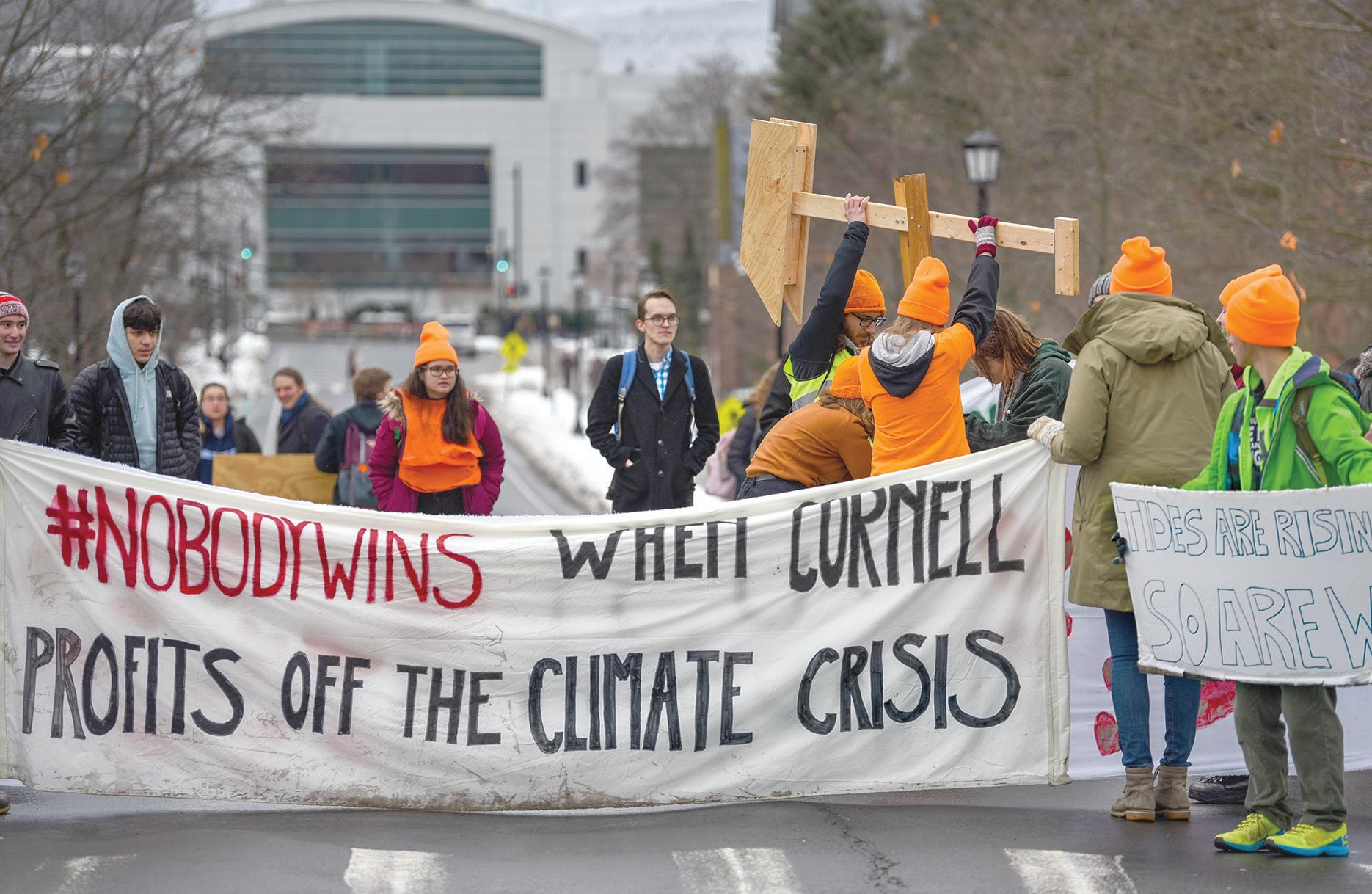
Following McKibben’s speech on campus, climate advocacy groups like Climate Justice Cornell ramped up calls for divestment, staging many protests including a sit-in at Day Hall, blocking streets on multiple occasions and even hosting a mock wedding between Cornell and the fossil fuel industry.
“Institutions that exist to provide a safe and secure future shouldn’t be complicit in continuing fossil fuel extraction,” Sims, a former member of CJC, said at the webinar. “The pension fund, which was designed to do just that —provide security for New Yorkers over a very long term — needs to make sure that the future is livable as well.”
While the pandemic has lowered emissions, it has done little to stave off climate change and the United States has seen an unprecedented flurry of wildfires, wind storms and hurricanes.
Now, as climate change accelerates, 72 scientists from Cornell are joining over 1,000 academics in calling for New York State to divest its pension fund from fossil fuels.
Following success in pushing Cornell University to divest from fossil fuels in May, Prof. Robert Howarth, ecology and evolutionary biology, and Climate Justice Cornell activist Katie Sims ’20 joined other climate experts from across the state on a virtual panel hosted by 350.org to push for New York’s Common Retirement Fund to divest from fossil fuels.
“[New York has] the most aggressive and progressive climate legislation of any state, the Climate Leadership and Community Protection Act,” Howarth said. “Yet, our state pension fund is still investing in fossil fuels — totally inconsistent with what the assembly, the senate, the governor and the people of New York want us to be doing.”
Howarth and Sims joined other experts from across the state to release a letter signed by over 1,100 scientists urging New York legislators — particularly Gov. Andrew Cuomo (D-N.Y.) and Comptroller Tom DiNapoli — to divest the state’s retirement funds from the fossil fuel industry.
The letter pushes for the passing of the Fossil Fuel Divestment Act, which would require the comptroller to divest the funds from major fossil fuel companies in order to “protect the fund, as well as its members
“[We] were pushing them on the ethical and moral grounds but what really swung our trustees were the financial grounds, they recognized that it’s not in our interests as a university to continue those investments,” Howarth said.
Cornell placed a moratorium on investments in the fossil fuel industry in May, following a semester of climate-based protests and assembly votes. Cornell has debated the idea of fossil fuel divestment for years, most notably in 2015 and 2016, when the Board of Trustees rejected the proposal — setting a precedent that the University would only divest if a company’s actions were “morally reprehensible.”
In March 2019, the conversation around divestment resurged on campus following a lecture by Bill McKibben, the host of Thursday’s event and founder of the climate organization 350.org. McKibben spoke to campus about his experiences in advocating for fossil fuel divestment at Middlebury College — which divested in February 2019 — and implored Cornell to
New Seminar Course Tackles Racism, Bias, Exclusion in STEM
By SRISHTI
When thinking of the leading figures in science, technology and mathematics, many students undoubtedly have one image pop into their minds: old, white men.
Bias and exclusion have festered within STEM fields for centuries, perpetuating a system that deprives others of a chance to experience the same levels of success as white males.
Prof. Corrie Moreau, ecology and evolutionary biology, wants to change that.
Motivated by the racial justice reckoning spurred by police violence against Black Americans, Moreau took advantage of heightened conversations around anti-racism to fashion a course confronting inequity in STEM.
“I’ve been thinking about creating a course like this for a while,” Moreau said. “With the uprising of all the violence by the police against people of color, and the heightened conversations around diversity, equity … inclusion and anti-racism, I just sort of felt like now was the time to … get myself together and offer this course.”
The result was a course offering that filled up within the first half-day of enrollment — Entomology 4040: Diversity, Equity, & Inclusion in STEM: The Science Behind Bias Seminar.
Grounded in scientific literature, Moreau centers her course on student-led discussions on the causes of exclusion and bias in STEM, as well as their patterns and solutions. The assigned readings — primarily discussing patterns and consequences of bias in STEM — quantify and critically examine the implications of the inequality that persist in science academia.
Each week, students read primary literature about a different type of bias, propose key questions and examine these questions during meaningful conversations in breakout sessions and larger group discussions.
Moreau, in her course, explains to students that women,
people of color, people with disabilities, and LGBTQ+ people have long been marginalized by the scientific community.
“Especially in STEM … we live in a white male-dominated culture,” Moreau said. “There’s this idea of exclusion because you weren’t invited to the table in the first place. But it’s also devaluing contributions that may not come from the same perspective [that] has been the norm in STEM fields.”
Moreau said that these disparities continue to persist in STEM partially due to implicit bias from the white males who tend to hold positions of power.
“We’ve only [now], as a culture, begun talking about the fact that we can have these biases that heavily influence our decision-making,” Moreau said.
Another source of exclusion is that people interested in joining a STEM field may face discouragement and barriers to
entry, according to Moreau.
Even if individuals overcome these initial hurdles, Moreau said that they can experience bias in the form of microaggressions as well as lowered chances of receiving prestigious awards.
The consequences of such bias can be witnessed in the attrition of underrepresented communities as they rise toward higher levels of academia in STEM fields.
“As we watch that progression from … undergraduates, to graduate students to postdocs to...full [professors], we’re seeing leaks in that pipeline,” Moreau said. “We’re having large numbers of women and people of color, and other … marginalized communities dropping off at every step.”
However, exclusion comes at the detriment of meaningful progress in STEM, Moreau said. Some of the course material demonstrates that incorporating diversity into academia can lead to higher-impact publications and more effective problem solving.
Moreau is grateful for the enthusiastic reception of her course, which was capped at 35 students. By the end of the semester, Moreau hopes to impart students with actionable solutions to erase the bias entrenched within STEM fields.
At the institutional level, one such solution is that individuals must acknowledge their privilege and actively work against their implicit biases when making decisions to allow for substantive progress toward diversity and inclusion, according to Moreau.
But Moreau said that at the individual level, the most effective way to promote change is through education.
“You really have to work hard to be anti-racist … and anti-biased of any kind,” Moreau said. “You need to become knowledgeable of the issues, and you have to do that work yourself. Don’t rely on the marginalized communities to educate you.”
Climate crisis | Students block East Ave. in February to protest Cornell’s investments in the fossil fuel industry.
BORIS TSANG / SUN PHOTOGRAPHY EDITOR
Anil Oza can be reached at aoza@cornellsun.com.
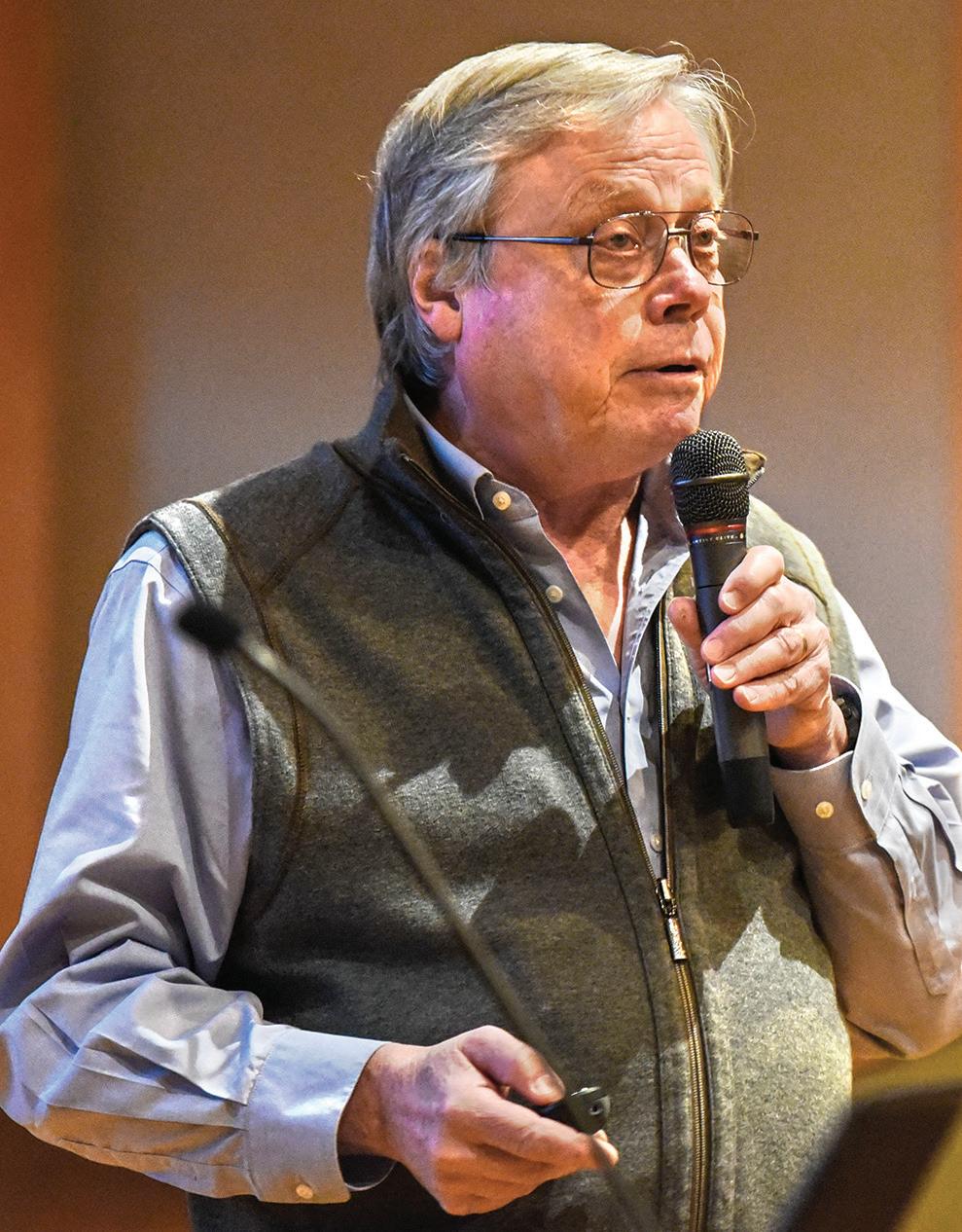
BORIS TSANG / SUN PHOTOGRAPHY EDITOR
COURTESTY OF THE COLLEGE OF AGRICULTURE AND LIFE SCIENCES
equity and inclusion| Prof. Corrie Moreau hopes that education will serve as a tool to reduce bias and exclusion in STEM.
Morally reprehensible | Prof. Robert Howarth introduces the proposal for fossil fuel divestment in February.
By ANIL OZA Sun Science Editor
TYAGI Sun Senior Staff Writer
ARTS & ENTERTAINMENT
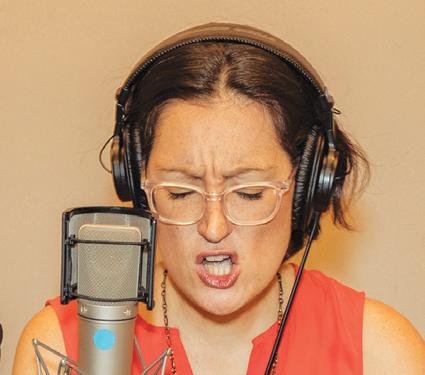
Don’t Sleep on Podcasts
And the author of this book has his own podcast, too. He just interviewed [researcher], the author of the book we read last month.”
“I was just listening to his show the other day. I think their conversation really echoes our points for discussion today.”
“Yeah, I think I’ve listened to that episode too. I really like it when people further elaborate on what they wrote on podcasts.”
The conversation took place during my book club meeting over Zoom. COVID has stopped us from gathering, but it hasn’t stopped us from moving forward with new ideas.
As the newest member of the study group (Digital Due Process Clinic), I’m acutely aware that everyone else is a lot more wellread than I am. Yet my naive mind thought I could at least keep up with the conversation if I have read what the big-name academics have written in the past few years.
point. Compared to social media, podcasts provide a platform for people to elaborate on free-flowing ideas in a less-fragmented fashion. For many mediums, this often poses additional obstacles to its accessibility, as in the case of the overflow of jargon in journal articles, and also in the case of the astronomical production cost of film and television.
By contrast, podcasts afford a low barrier of entry. One only needs the simplest recording equipment to start having a voice. It resembles a digital reinvention of the emancipatory potential of the grassroots activism on FM radios, bridging the gap between low tech and high tech and the divide between the haves and have-nots.
I was so wrong. I only did my readings, but I didn’t do my listening. I had no idea what these people have said since their books were published and what the most up-to-date conversations are about. I do get a glimpse into the casual talks by following these academics on Twitter. Yet the 280-character limit (yes, I know it has already been doubled) condenses too much into too little.
Meanwhile, podcast as a medium serves a crucial niche in the contemporary new media landscape. These days, the names of certain shows become the signifiers for particular trains of thought, and even a popular episode can become a cultural reference
Don’t overlook the chitchats happening on podcasts. It is precisely the casual nature of the conversation that keeps the discussion going and invites more people to get involved. From the standpoint of knowledge production, it is the assemblage of these dialogues new ideas for our collective consciousness. Podcast is the new frontier of cultural discourse.
And it need not always be something as grandiose a metatheoretical debate happening on the agora among ancient Greek philosophers. (Though I have to admit such free-flowing abstract discussions can be fun at times.) The very design of podcasts makes the experience fundamentally entertaining. It echoes how contemporary culture evolves in the digital age –– entertaining, quietly, steadily, and swiftly. Cultural discourse is quietly progressing with the circulation of the memes, tweets and TikTok videos.
Podcast particularly strikes a newfound balance between gamified and enriching experience.
When it comes to following cutting-edge ideas, our choice of medium changes throughout history. Back then, participation in public discourses was rather exclusive. Not only were the majority of the people rendered voice less, but they were even ostracized from stay ing in the loop.
Only the privi leged few had the luxury to read books to get a taste of the “serious” conversations.
Nowadays, people still read books when they want to challenge themselves with rigorous reasoning. But the difference lies in the abundance of options we currently have that were previously unavailable to most. Perhaps the most exciting thing about the new media age is how different mediums can serve our different needs for the exchange of thoughts.
entered a new era of the flood of ideas. This is the best we have ever gotten, yet the fragmentation of ideas across many dialogues makes it challenging to keep track of anything. Nowadays, it requires technical literacies to navigate the plethora of information available.
Advancement in information technology constantly reframes how people exchange their ideas. After Gutenberg reinvented printing, after telegraphs hit the cities, after telephones hit the suburbs and the countryside, after the Internet brought us outside of our social circles, and after our smartphones render us mobile and connected, we have
I just made the future sound rather bleak — apologies for that. The fortunate thing about our society is that we always find ways to adapt to a new era. Humanity operates like a seamless web made of humans, artifacts, institutions, environments and ideas. When the non-human elements are reconstructing themselves, we always endeavor to reinvent the meanings and uses of technologies to remain in a dynamic state of symmetry. More than 50 years later, media theorist Marshall McLuhan’s saying “The medium is the message” still aptly pinpoints our relationship with media technologies. How we leverage different mediums sheds light on the new constraints and possibilities of our society. The rapid emergence of podcasts is neither magic nor an accident. It is our reaction to the changes.
Stephen Yang is a junior in the College of Agriculture and Life Sciences. He can be reached at syang@cornellsun.com. Rewiring Technoculture runs alternate Tuesdays this semester.
Stephen Yang
The Corne¬ Daily Sun
Since 1880
138th Editorial Board
MARYAM ZAFAR ’21
Editor in Chief
JOYBEER DATTA GUPTA ’21
Business Manager
PETER BUONANNO ’21
Associate Editor
MEGHNA MAHARISHI ’22
Assistant Managing Editor
CHRISTINA BULKELEY ’21
Sports Editor
BORIS TSANG ’21
Photography Editor
CAROLINE JOHNSON ’22
News Editor
ALEX HALE ’21
News Editor
ARI DUBOW ’21
City Editor
EMMA ROSENBAUM ’22
Science Editor
BENJAMIN VELANI ’22
Dining Editor
JOHN MONKOVIC ’22
Multimedia Editor
MIKE FANG ’21 App Editor
OLIVIA WEINBERG ’22
Assistant News Editor
MADELINE ROSENBERG ’23
Assistant News Editor
LUKE PICHINI ’22
Assistant Sports Editor
HANNAH ROSENBERG ’23
Assistant Photography Editor
BRIAN LU ’23
Assistant Arts & Entertainment Editor
ANNABEL LI ’21
Assistant Money & Business Editor
LEI ANNE RABEJE ’22
Layout Editor
JOHN COLIE ’23
Blogs Editor
JOHN MONKOVIC ’22
Multimedia Editor
JOHNATHAN STIMPSON ’21
Managing Editor
KRYSTAL YANG ’21
Advertising Manager
JASON HUANG ’21 Web Editor
NIKO NGUYEN ’22
PALLAVI KENKARE ’21
SEAN O’CONNELL ’21
KATHRYN STAMM ’22 News Editor
ANIL OZA ’22
Editor
’23
LEE ’21
CHENG ’21
PEÑEÑORY ’22
MEGHANA SRIVASTAVA ’23
’21
’22
’21
’21
’22
WANG ’21
OU ’22
’21
Working on Today’s Sun
Ad Layout Mei Ou ’22
Production Desker Dana Chan ’21
Sabrina Xie ’21
News Deskers Meghana Srivastava ’23 Alex Hale ’21
Opinion Desker Peter Buonanno ’21
Design Desker Niko Nguyen ’22
Photo Desker Hannah Rosenberg ’23
Science Desker Anil Oza ’22
Arts Desker Emma Plowe ’23
Sports Desker Emily Dawson ’21
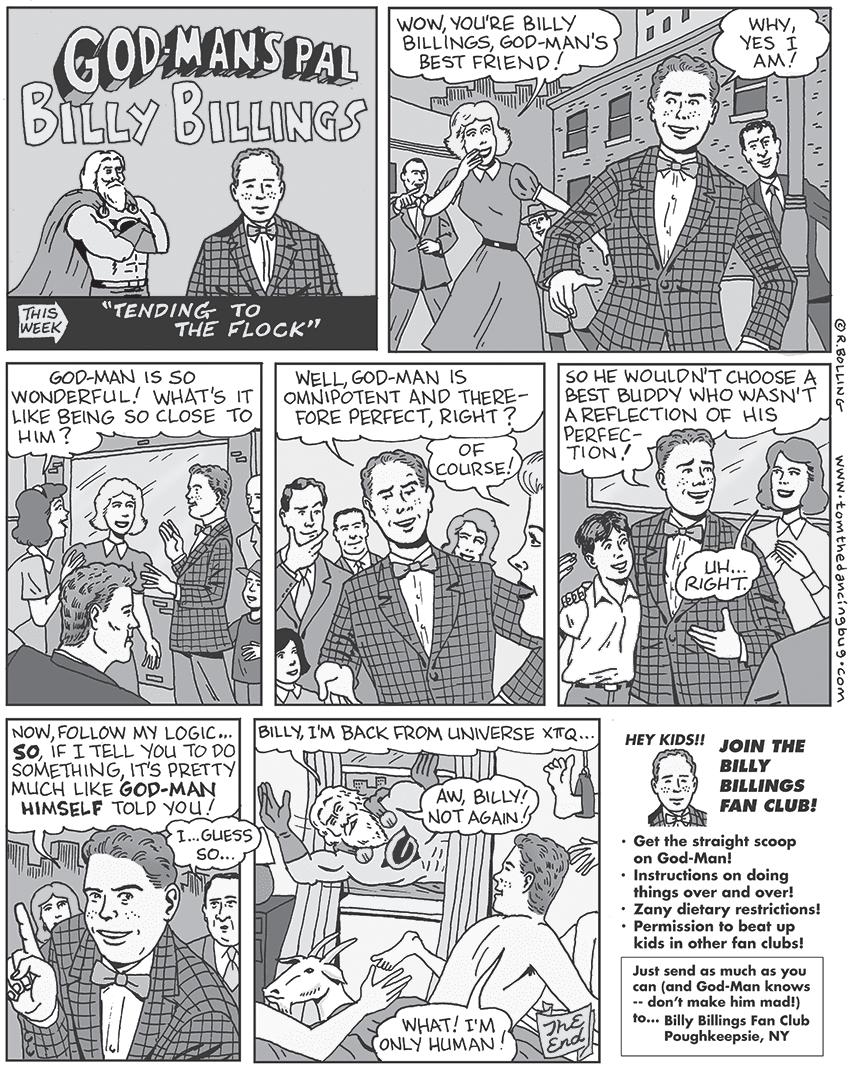
Tom the Dancing Bug by Reuben Bolling
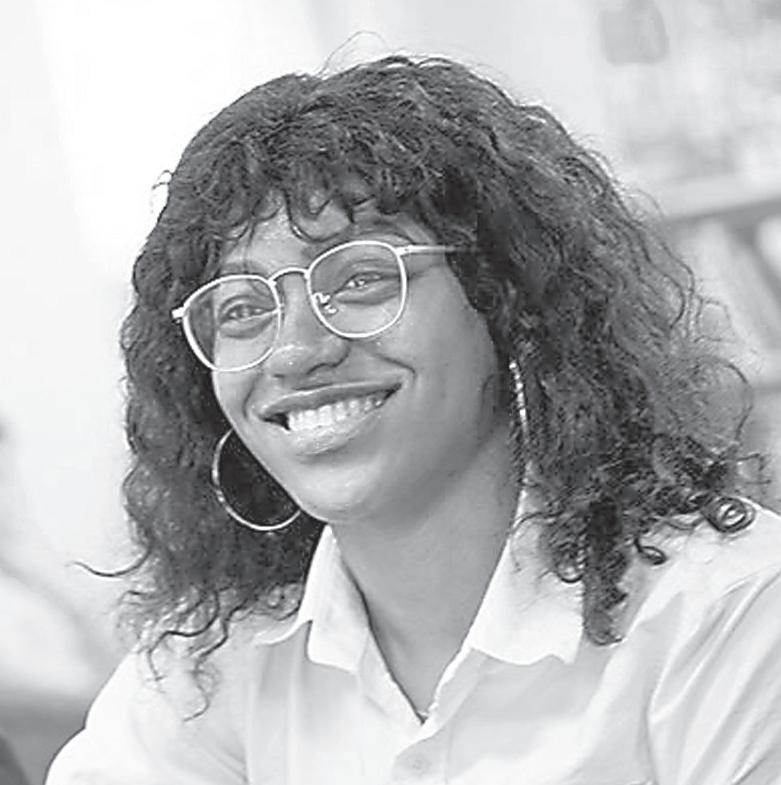
Aminah Taariq-Sidibe I Spy
Aminah Taariq-Sidibe is a senior in the College of Agriculture and Life Sciences. She can be reached at ataariq@cornellsun.com. I Spy runs every other Tuesday this semester.
A Message From Black Students United
Editor’s Note: Aminah Taariq-Sidibe is the Political Action Chair for Black Students United at Cornell University.
Given the progression of 2020, it is certain that we have all had some experience with the difficulty and weight of these unprecedented times. We also recognize that in an effort to express empathy, students have been sent messages reiterating displays of solidarity from countless institutions, industries and communities. However, these stands of solidarity have yet to change the systems in which we live. Demoralized by a lack of change, and desensitized by the incessant deaths of unarmed Black people, especially at the hands of law enforcement, we ask the administration for this: Say their names. Jacob Blake, Breonna Taylor, Elijah McClain, George Floyd, Atatiana Jefferson, Oluwatoyin Salau and countless others. Acknowledge the reality of racial oppression in America, and its ramifications on BIPOC students at Cornell University.
This “Quarantine Period” has exposed the systemic racism prevalent in a multitude of social, economic and political systems within the United States. Systemic racism has perpetuated the oppression of minority populations in education, job opportunities, resources allocation, legal/ criminal justice, etc. This reality is not up for debate.
Black people are tired. But the degree to which Black people and people of color have surmounted oppression and excelled in America shows our strength.
ing freshmen to learn about multicultural organizations on campus. This is just the first of many virtual events for multicultural orgs to create a safe space for students while social distancing. Nwankpa added, “life is about intersectionality. As BIPOC, it is important to explore all of the identities that make us who we are.” Our plan as BSU is also to continue collaborating with ALANA umbrella organizations and other non-multicultural student organizations on campus. Social injustice isn’t limited to just one group. It will take a collective effort to address the problems in our society.
We are asking for more empathy in action. Educate yourselves. Have uncomfortable conversations. Provide support in any way you can to racial and social justice. We ask that the administration actually reach out to the Black student community, and solicit public comment on their diversity and inclusion initiatives, instead of limiting student contributions with committee applications. We ask faculty and staff to make space for conversations about topics like mental health and race with students. And we ask students to take advantage of opportunities to learn more and contribute. Bagayoko says, “it makes it immensely more difficult for students of color to prioritize their academics when there are so many other issues that the University is not addressing. Some students still have not received their financial aid, bringing concerns about food and rent on top of lectures and homework.”
The degree to which Black people have surmounted oppression shows our strength. The Black students at Cornell are a testament to this triumph.
The Black students and alumni at Cornell are a testament to this triumph. What we need from the Cornell community is not performative allyship, but to actively be a part of the change and to acknowledge the reality of racism in America.
This school year, I am serving as Political Action Chair for Black Students United. I sat down with 2020-2021 BSU co-chairs Nnaemeka Nwankpa ’22 and Lassan Bagayoko ’22 to discuss our vision for the school year. Nwankpa shared, “as people of color in this country, our existence is threatened. This year has shown us the power of unity and the change that can happen when we approach issues as a united front. It is imperative that we maximize our privilege as students at Cornell to address the problems we face, and change the culture for generations to come.”
When it comes to our vision for the semester, our goal is to reinstill hope and motivation in fighting social injustice. This past Thursday, BSU hosted its annual Black Life on the Hill event for incom-
So much good has come from decades of social activism, and the fight for civil rights by BIPOC and non-BIPOC. But the fight is not over. When you are a person of color in America, everything has to do with race. We can’t get over something that we are still experiencing. It is a privilege to be able to ignore the pain of seeing people disadvantaged and murdered because they look like you. Black students may make up a small percentage of the student body, but we are important to Cornell’s community. We are in your lectures, student government, labs, athletic teams, housing and more. We want Cornell and its students to be leaders in creating a more equitable society, and for the administration to continue their efforts in diversity and inclusion. As an elite institution, we want to ensure that Cornell fosters unity and anti-racism, which students can learn from and carry on after their studies.
In the words of Angela Davis: “You have to act as if it were possible to radically transform the world. And you have to do it all the time.”
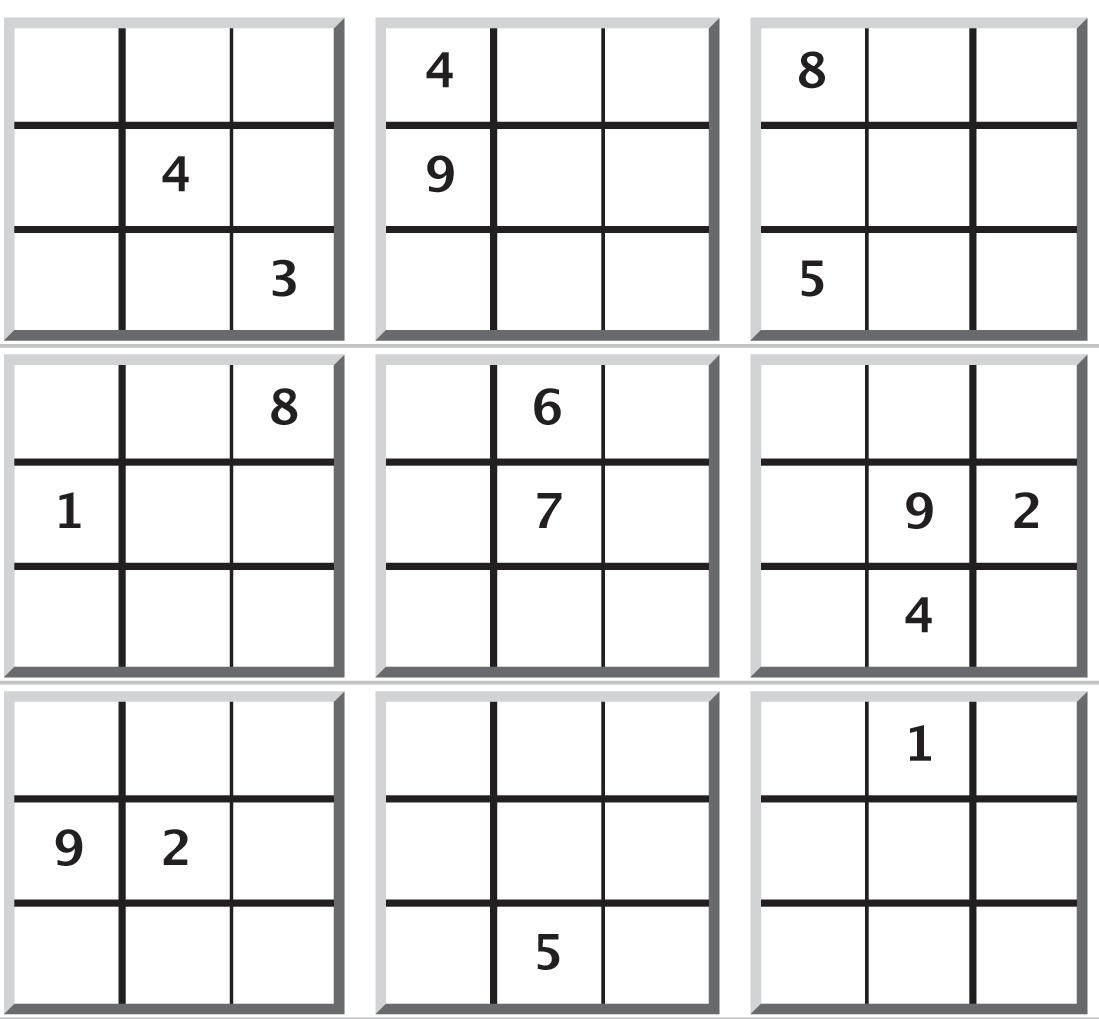
Fill in the empty cells, one number in each, so that each column, row, and region contains the numbers 1-9 exactly once. Each number in the solution therefore occurs only once in each of the three “directions,” hence the “single numbers” implied by the puzzle’s name. (Rules from wikipedia.org/wiki/ Sudoku)
Priya Malla ’21
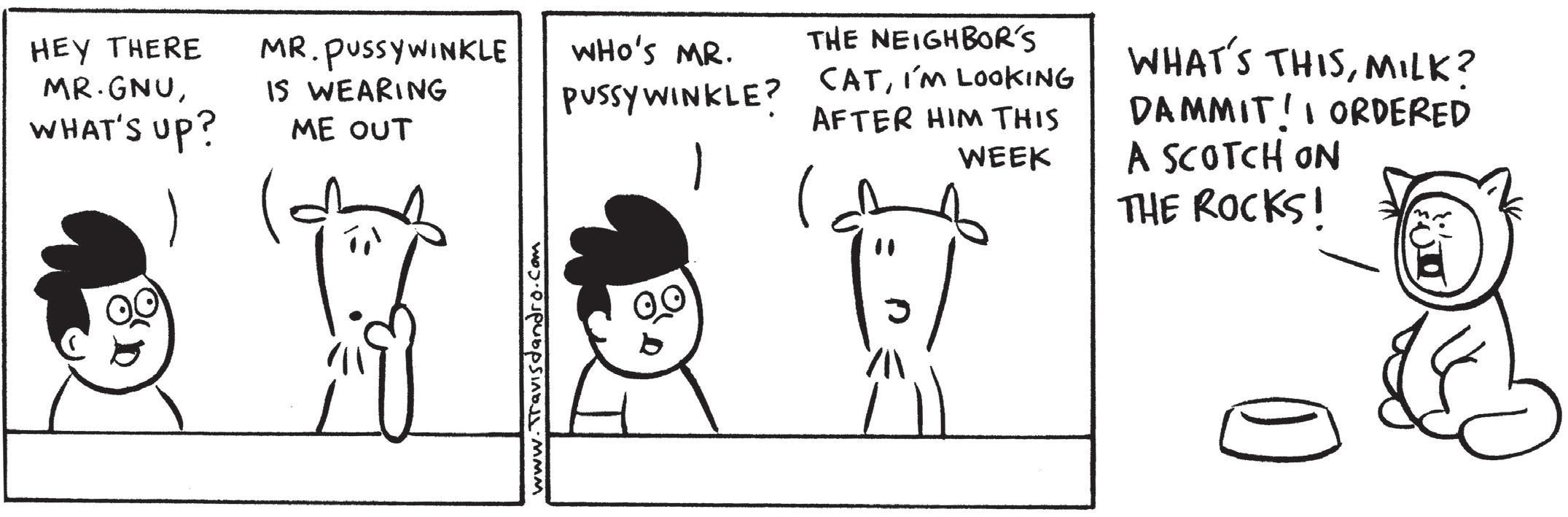
Mr. Gnu by Travis Dandro
Mr. Gnu by Travis Dandro
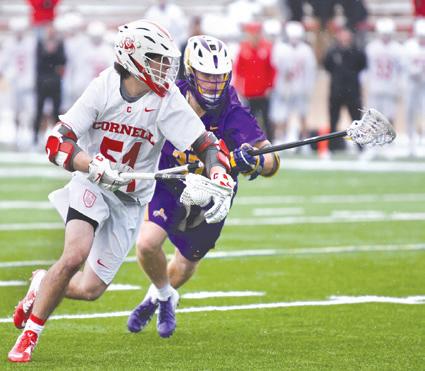
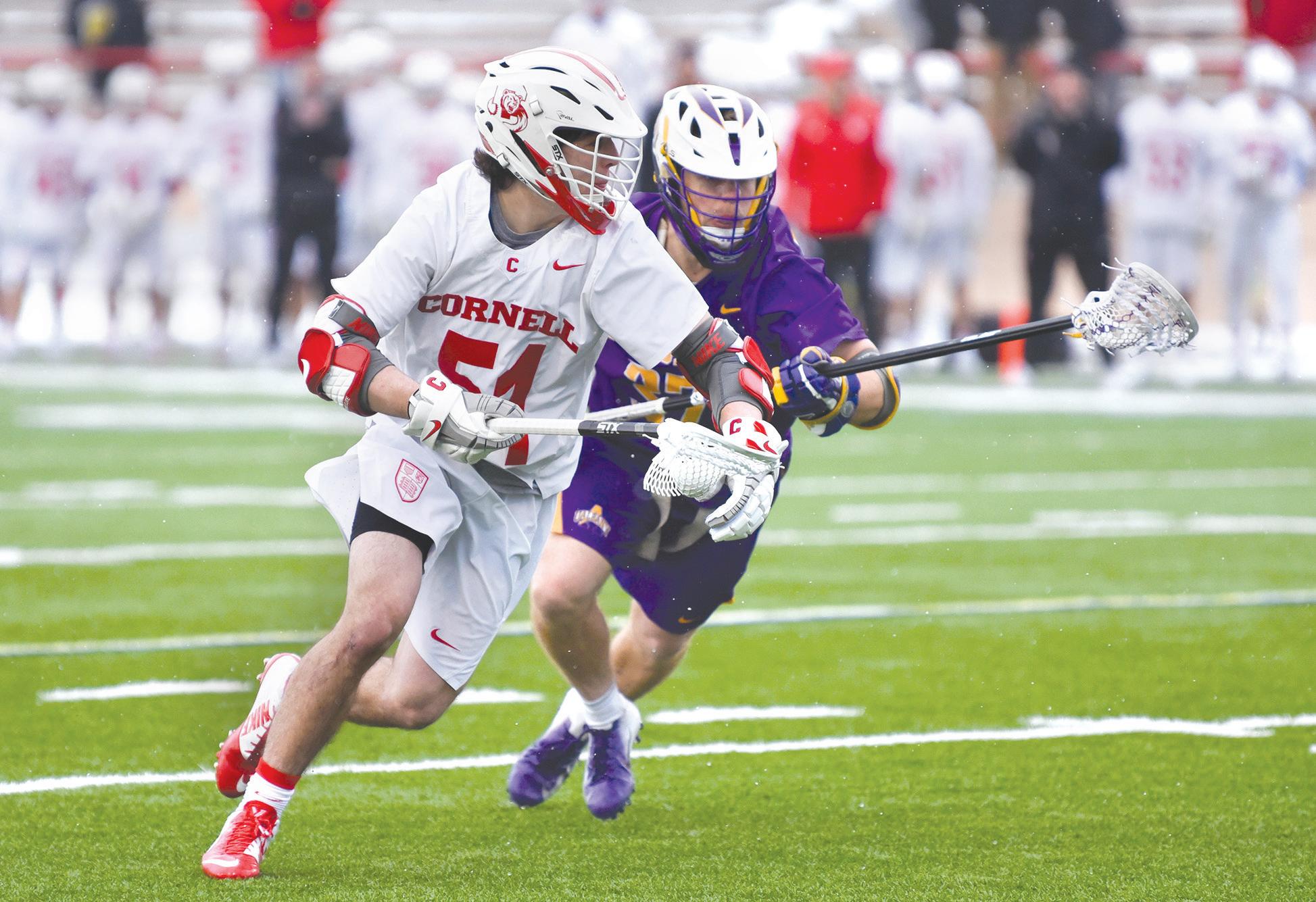
2021 vision | For the coming season, the Red hopes to see similar success that it experienced at the start of its 2020 season.
Head Coach Milliman Leaves Men’s Lacrosse
Red responds to vacancy, promoting Assistant Coach Connor Buczek
By MIKE SEITZ Sun Staff Writer
A head coach vacancy for a historic program on April 14 prompted a chain reaction throughout college lacrosse — leading to Cornell’s head coach Peter Milliman’s leaving the Red for Johns Hopkins.
Longtime coach Dave “Petro” Pietramala and the Johns Hopkins men’s lacrosse program mutually agreed to part ways, opening up the Blue Jays’ head coaching spot.
After leading Cornell to an undefeated start and a No. 2 national ranking through five games in 2020, Milliman is leaving Ithaca. Milliman had helped lead the Red since starting as an associate head coach in 2014. The successes of the team during an interim head coaching term in 2017 prompted Cornell to remove the
Johns Hopkins athletics department — Johns Hopkins’ athletic director is Jennifer S. Baker, a former Cornell Athletics Associate Director of Athletics for Facilities.
Milliman specifically thanked Baker in a press release Monday.
“I want to thank Jennifer Baker and the search committee for the opportunity to serve as the men’s lacrosse coach at Johns Hopkins,” he said.
“I want to thank Jennifer Baker and the search committee for the opportunity to serve as the men’s lacrosse coach ...”
Peter Milliman
“interim” from Milliman’s title for the 2018 season, when the Red would go on to win the Ivy League Championship.
Now, just two years later, Milliman is packing his bags — a surprise, given his family ties in the area: Milliman’s wife coaches women’s lacrosse at nearby Wells College in Aurora, New York.
But Cornell ties are present in the
During her time at Cornell, Baker developed and grew the Big Red Leadership Institute — a curriculum which prioritizes athletes’ engagement and character on and off the field. A longtime lacrosse player herself, Baker served as a volunteer assistant coach for Cornell’s women’s lacrosse program in addition to her office duties. In doing so, connections were forged up and down Campus Road — which perhaps catalyzed this hire years later. What’s more in the way of Cornell connections — the newly-departed Johns Hopkins coach Pietramala used to coach the Red, starting his three-year tenure in 1997. But a return to East Hill isn’t in the cards for Pietramala. Instead, Cornell has chosen to promote from within, with now-former assistant coach Connor Buczek ’15, MBA ’17 stepping in as interim head coach.
Buczek, a Premier Lacrosse League professional, has served as a full-time assistant since completing his MBA from Cornell’s Johnson Graduate School of Management in 2017. The now interim head coach was a three-time All-American
during his Schoellkopf playing days, with 155 points making him the top-scoring midfielder in program history.
It remains to be seen how Buczek balances coaching with his own professional play. In the league’s inaugural season, he was named to the All-Star team. More recently, his team — the Atlas Lacrosse Club — picked fellow Cornell alum Rob Pannell ’13 with the third pick in the league’s 2020 draft.
Hailed as one of the best midfielders in professional lacrosse, Buczek is known for his sharpshooting.
Buczek will have a strong cohort of players to rely on in his first year leading the team. For the offensively-minded coach, an attack force led by rising senior weapons Jonathan Donville and John Piatelli with the addition of rising sophomore standout Mikey Long looks promising.
With a new head coach and strong core largely intact, the Red will look to pick up right where it left off in 2021.
Mike Seitz can be reached at mseitz@cornellsun.com.
BORIS TSANG / SUN PHOTOGRAPHY EDITOR
ZACHARY SILVER / SUN FILE PHOTO
Farewell | Milliman now coaches lacrosse at Johns Hopkins University.