The Corne¬ Daily Sun

By MEREDITH LIU Sun Assistant News Editor
In the fall of 2017, the dean of the Cornell School of Hotel Administration highlighted that for the first time, half of the presenters at the Dean’s Distinguished Lectures Series were women.
“We didn’t plan it that way,” Dean Kate Walsh MPS ’90 said. “But when we looked for the leaders making the most profound impact, that’s who we found.”
white group is indicative of what some say is the hotel school’s prioritization of gender diversity over racial diversity in a field whose upper ranks remain filled largely by white men.
“The fact that they said they’ve picked the best people is, in general, demonstrably incorrect.”
But of the 50 speakers who lectured to students in the last three years or are scheduled to speak this fall, 46 are white. Three of the speakers are Asian and one is black. All speakers from the fall 2017 series are white.
Matthew Clayton
Cornell officials said the school takes racial diversity seriously, but according to interviews with four current and former hotel school professors, several students and documents obtained by The Sun, Walsh’s focus on the gender ratio of the nearly all-
“The best people are not all white,” Prof. Matthew Clayton, a professor who left the hotel school in 2014, said of Walsh’s comments regarding the distinguished speakers. “The fact that they said they’ve picked the best people is, in general, demonstrably incorrect. There are no doubt very good minority executives in the industry … I know a lot of them would love to come in and talk to Cornell.”
“You said you look for the best of the best, but you are telling me that the best doesn’t include any minority? It’s just ridiculous,” a current faculty member said, speaking on condition of anonymity for fear of retaliation from the administration.
In an interview in her Statler Hall office in May, Walsh told The Sun that it is “very
are underrepresented minorities.
important to us that we find top leaders that represent our populations.” She said the school did invite more minority speakers to the lecture series, which features prominent members of the hospitality industry, but
By SHRUTI JUNEJA Sun News Editor
Iris Zhu ’21 died last weekend near her home in Maryland “while receiving treatment for a severe illness,” according to a statement issued by Vice President Ryan Lombardi.
Zhu was a student in the School of Hotel Administration.
According to her LinkedIn page, she was born in Shanghai, China and raised in Potomac, Maryland.
investments made all the miracles happen, I am innately intrigued by the business world.”

“My rich cultural background not only made me an interesting person to talk to but also a thoughtful partner to work with,” she wrote on LinkedIn. “Grown in an adventurous family in which the stock market
“She left a lasting impression on those she met through her classes and participation in student groups here at Cornell,” Lombardi wrote in his statement.
“On behalf of the Cornell community, my deepest condolences go out to Iris’ family and friends.”
Zhu’s friend Stella Shi ’21 told The Sun that Zhu originally thought she just had back problems, but was diagnosed with lymphoma, a type of cancer, when she went home for spring break last semester. Shi said that Zhu did not return to Cornell after spring break but was hopeful that she
By ANU SUBRAMANIAM Sun News Editor
Cornell admitted that it “mischaracterized” its findings after the Zeta Beta Tau fraternity challenged the University’s claim that the fraternity’s chapter at Cornell held a “pig roast” contest in which “new members could
accumulate ‘points’ by engaging in sexual intercourse with women.”
Zeta Beta Tau, which says it is the largest Jewish fraternity in the country, conducted an internal investigation and found that Cornell made its claims based on “incomplete information” and that there was no evidence the contest
occurred, ZBT spokesperson Risa Morris said in a statement. The fraternity hired a third-party investigator to look into Cornell’s claims and, during the investigation, “it became evident that the University’s decision was
See ZBT page 3
one lecturer had to cancel at the last minute. “Some of the leaders … are really busy people,” she said.
Nazaire’s Mother Sues Cornell, Omega Psi Phi for $20 Million
By MATTHEW McGOWEN Sun Senior Editor
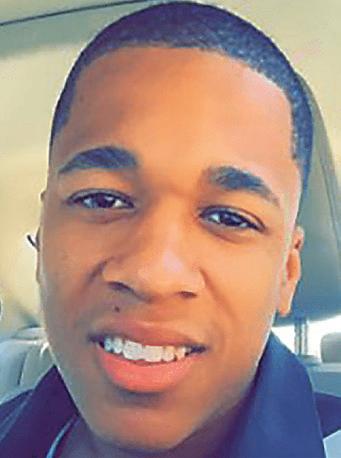
The mother of Anthony Nazaire, an Ithaca College student fatally stabbed on Ho Plaza in August 2016, has filed a $20 million lawsuit against Cornell University and the Omega Psi Phi Fraternity Delta Mu chapter, claiming that her son’s death resulted from improper planning and event supervision, along with the University violating its own security policies.
Katia Toussaint, Nazaire’s mother, wrote in the lawsuit that “as a result of the negligence on behalf of defendants, Anthony was caused to suffer physical injuries as a result of an improperly supervised, understaffed Event hosted by defendants.”
friend, Ithaca College student Rahiem Williams, was stabbed and survived. The claim in the lawsuit is based on the low security at the event, with only one CUPD officer being present.
Nagee Green, 25, of Ithaca, was found guilty of murder and sentenced to 20 years in prison. He is currently being held at Attica Correctional Facility, a maximum security state prison.
Toussaint, who is represented by lawyer John Polinsky, alleges that the Cornell University Police Department’s decision to send only one officer to the event was a “violation of its policies, procedures, and standards,” and that “CUPD has assigned more than one officer to the event in years past.”
Nazaire, a 19-year-old sophomore, attended the Omega Psi Phi fraternity’s annual orientation week celebration at Willard Straight Hall on the night of Aug. 27. Shortly after the party let out in the early morning hours of Aug. 28, Nazaire was fatally stabbed and his
As previously reported by The Sun, the event broke up by about 1:45 a.m. on Sunday, according to the Ithaca Police Department. Authorities arrived at the scene to find Nazaire and
Monday, September 10,

Apples to Cider: An Old Industry Takes New Reboot 8:00 a.m. - 5:00 p.m., Mann Library Lobby
Labor Economics Workshop: Eleanora Patacchini 11:40 a.m. - 1:10 p.m., 115 Ives Hall
Effects of Minimum Wage Increase on Restaurants: Chelsea Crain, Ph.D Candidate Noon - 1:00 p.m., T01 Human Ecology Building
The Mass “Re-education” Camps in China’s Xinjiang Noon - 1:00 p.m., Goldwin Smith Hall G64
SAP Seminar Series: When Policymaking Is Ruled by Politics 12:15 - 1:30 p.m., G08 Uris Hall
William Kresuer: Data Driven Management on the Urban Grassland 12:20 p.m., 404 Plant Science Building
Ontogenetic Switches in Defensive Strategies Shaped by Natural Selection 12:20 - 1:20 p.m., A106 Mudd Hall
Department of Physics Colloquium
4:00 - 5:00 p.m., Schwartz Auditorium, Rockefeller Hall
Marina Halac: Joint Microeconomics and Public Economics Workshop 4:15 - 5:45 p.m., 498 Uris Hall
Open Architecture: Migration, Citizenship, And the Urban Renewal of Berlin-Kreuzberg 5:00 p.m., Milstein dome, Milstein Hall
Travelling Abroad: Preparations and Advice 11:00 a.m - 12:30 p.m., G08 Uris Hall
How Much Does Your Boss Make? The Effects of Salary Compensation 11:40 a.m. - 1:10 p.m., 141 Sage Hall

The Roles of Engagement: Network Analysis in Physics Education Research 12:20 - 1:45 p.m., 700 Clark Hall
Hands On: Fitness Equiptment Orientation 4:00 p.m., Helen Newman Hall, Fitness Center
A&S Networking: How to Work a Room 4:35 - 6:00 p.m., 206 Stimson Hall
Cornell Aikido Club Demo and Beginners Class 7:45 - 8:15 p.m., Teagle Hall, Gymnastics Room

By WINNY SUN Sun Staff Writer
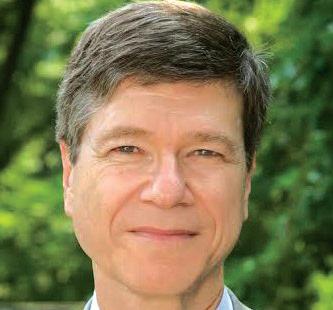
Prof. Jeffrey Sachs, economics, Columbia University will launch his new book on foreign policy and chat about American democracy at the Statler Auditorium at 7 p.m. on Wednesday.
The current senior United Nations advisor to the Secretary-General will talk about “Reclaiming America’s Democracy.” His talk will focus on “the threats posed to American democracy by Donald Trump, big money in politics and America’s unending foreign wars,” Sachs told The Sun in an email.
Sachs is a renowned economist who has been on Time magazine’s 100 most influential world leaders list twice. He is a University Professor at Columbia University, holding the institution’s highest academic rank, and is the director of Columbia’s Center for Sustainable Development.
He also advises United Nations Secretary-General António Guterres on sustainability goals, according to a press release from Cornell University.
“There is a better way forward based on the idea of Sustainable Development,” Sachs said. “We can build an American society that is prosperous, fair, environmentally sustainable and at peace with the rest of the world.”
“Yet to do so requires a deep change in our politics and institutions,” he continued. “Most importantly, it requires
young people getting involved in politics, starting with voting this fall.”
Sachs believes that the problems of today “require a new generation of leadership from young people with the training and commitment” to solve global problems.
Though he plans to speak to college students around the world, Sachs has made visiting campuses in the New York State a priority because he believes “New York has a great tradition of leading such problem-solving.”
According to Sachs, his upcoming discussion on America, democracy and the current world will be based in part on his new book, A New Foreign Policy: Beyond American Exceptionalism. He said he’s “excited” to present the book at a college campus for the very first time.
motivated to take action.
“An active citizenship is important for increasing the standard of living, promoting wellbeing and ensuring that people have the freedom they need to pursue a good life,” he said.
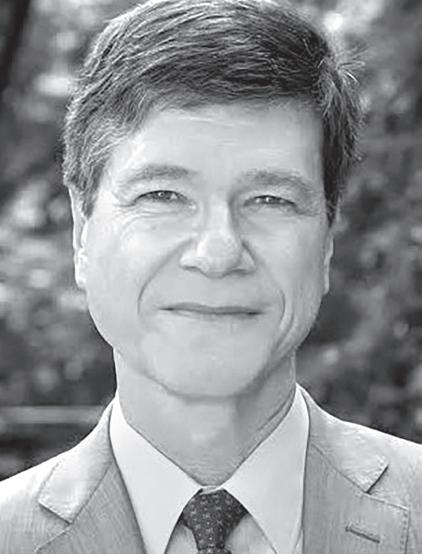
Christian Elliott, the program and communications associate in the department of development sociology, told The Sun that he hopes the Sachs lecture will help increase civic engagement on campus.
“Cornell as an institution has a lot of responsibility for ensuring that its students become the most well-informed citizens and leaders that we can facilitate,” Elliott said.
He also hopes that people who attend this talk will feel
Continued from page 1
based upon incomplete information,” Morris said.
Cornell updated a statement on its hazing website, but maintains that the Fraternity and Sorority Chapter Review Board found that it was “‘more likely than not’ that the allegation occurred.” The allegation referenced is that someone associated with the chapter encouraged new members to participate in the contest.
The Review Board however did not find that any individual associated with the chapter “had in fact acted on such encouragement” or that the contest had “actually occurred,” the hazing website now reads.
Cornell said the review board considered evidence that included two non-anonymous reports.
The statement now includes an acknowledgement that “an earlier version of this statement, posted in February 2018, mischaracterized the findings of the Review Board, including the role of the chapter, and lacked context for the sanctions imposed by the University.”
Cornell has not changed the sanctions it imposed on the chapter, as it remains on probation.
The University earlier this year placed ZBT on probationary recognition for two years and required members to undergo a review by the national organization. Members also had to participate in sexual assault awareness and bystander intervention programs.
Morris said that after the national fraternity discussed its findings with
Cornell, the University and the fraternity agreed that the University’s original statement “misrepresented” the findings.
“The University did not find any evidence that the alleged ‘contest’ had occurred and issued a revised statement on its website,” Morris said in the statement.
Cornell’s Office of Fraternity and Sorority Life did not respond to a request for comment by Sunday evening.
ZBT declined to provide a copy of its report to The Sun or release any information other than its statement summarizing its report. The president of the Cornell chapter of Zeta Beta Tau, Adam Fuhrman ’20, said the email from the national organization “speaks for itself.”
Paul Russell ’19, president of the Interfraternity Council and a columnist for The Sun, said that “regardless of the findings about these allegations, the IFC will continue to explore new ways to do our part in addressing the widespread objectification of women in various communities on campus.”
Morris said ZBT’s national office was “pleased” that Cornell did not find evidence that the alleged contest took place, and said it “takes all allegations of misconduct very seriously and has a number of programs designed to educate our members on this important topic.”
“We will continue to enhance our efforts in helping our men understand the essentials of a healthy relationship while never tolerating the mistreatment of any brother or guest within our chapters,” she said.
Anu Subramaniam can be reached at asubramaniam@cornellsun.com.
Continued from page 1
was hopeful that she would recover and come back.
“I miss just spending time with her, just normal things like going to eat lunch together, waiting for each other after school, going to get bubble tea and stuff like that,” she said.
Kate Wang ’21, another one of Zhu’s friends, told The Sun that Zhu was a talented violinist who “always tried to take care of everyone.”
“There’s not a single thing I don’t miss about her,” Wang said. “I think Iris is
like the most gracious, generous … and kindest person.”
Cornell Student Assembly also extended its condolences in a statement on its Facebook page.
“Iris was known for her confidence, warmth, and cheerful attitude, and positively impacted all those around her,” the statement reads.
A community support meeting will be held on Tuesday in Room 391, Statler Hall at 4:30 p.m.
Shruti Juneja can be reached at sjuneja@cornellsun.com.
People can register to vote at the entrance of the Statler for an hour both before and after the speech, according to Keelin Kelly ’20 and Jenna Oliver ’20, Andrew Goldman Foundation ambassadors.
The Andrew Goodman Foundation “supports youth leadership development, voting accessibility, and social justice initiatives on campuses across the country,” according to the foundation’s website. Students only need to know their driver’s license number or the last four digits of their social security numbers in order to register to vote, Kelly and Oliver said.
Oliver clarified that even though the Sachs lecture is preceded and followed by voter registration, it is not meant to be a partisan event.
“This lecture is not about exhorting the student body to vote one way or another,” she said. “It’s ensuring your votes and voices are heard.”
Winny Sun can be reached at wsun@cornellsun.com.
Continued from page 1
David Bell, assistant director of Willard Straight Hall and community center programs at the time of the stabbing, who has since left Cornell, said in a 2016 interview with The Sun that it was typical to have two event managers and two CUPD officers present at late-night events.
It is unclear at this time what CUPD’s official policy regarding officer staffing of events was in August 2016. The new policies for event registration that were released in May also don’t clarify how many police officers are required.
In an email to The Sun on August 31, Smith relayed a statement from Joel Malina, vice president for university relations, that said, “Anthony Nazaire and his family remain very much in the thoughts of the Cornell University community” but declined to comment on the lawsuit.
Toussaint alleges in the lawsuit that the event was approved “without proper verification of the attendance” and “put the event goers in risk of physical harm/ injury.”
Toussaint said the actions of Omega Psi Phi and Cornell resulted in physical injury, medical expenses, loss of income and loss of companionship, which each should result in $5 million in damages, adding up to the total of $20 million.
John Carberry, a Cornell spokesman, said the University’s lawyers will be representing Cornell Police, the University Events Management Planning Team, Cornell Police Chief Kathy Zoner and Investigator Justin Baum, the officer assigned to the event. All are named as defendants in the suit.
Other defendants include Omega Psi Phi Fraternity Inc. and Omega Psi Phi Delta Mu chapter, the house that hosted the event. The fraternity is “the first international fraternal organization founded on the campus of a historically black college,” and its cardinal principles are manhood, scholarship, perseverance and uplift, according to its website. Officials for the Cornell and national organizations did not respond to requests for comment.
The Sun previously reported in 2016 that the event was registered and approved by Willard Straight Hall and Cornell Police through a standard event application process and was monitored by two paid student managers — both Omega Phi Psi members — and one Cornell Police officer.
Polinsky declined to comment further on the lawsuit, but said a judge has not been assigned to the case and a date for a preliminary conference has not been set.
Matthew McGowen can be reached at mmcgowen@cornellsun.com.
HOTEL
Continued from page 1
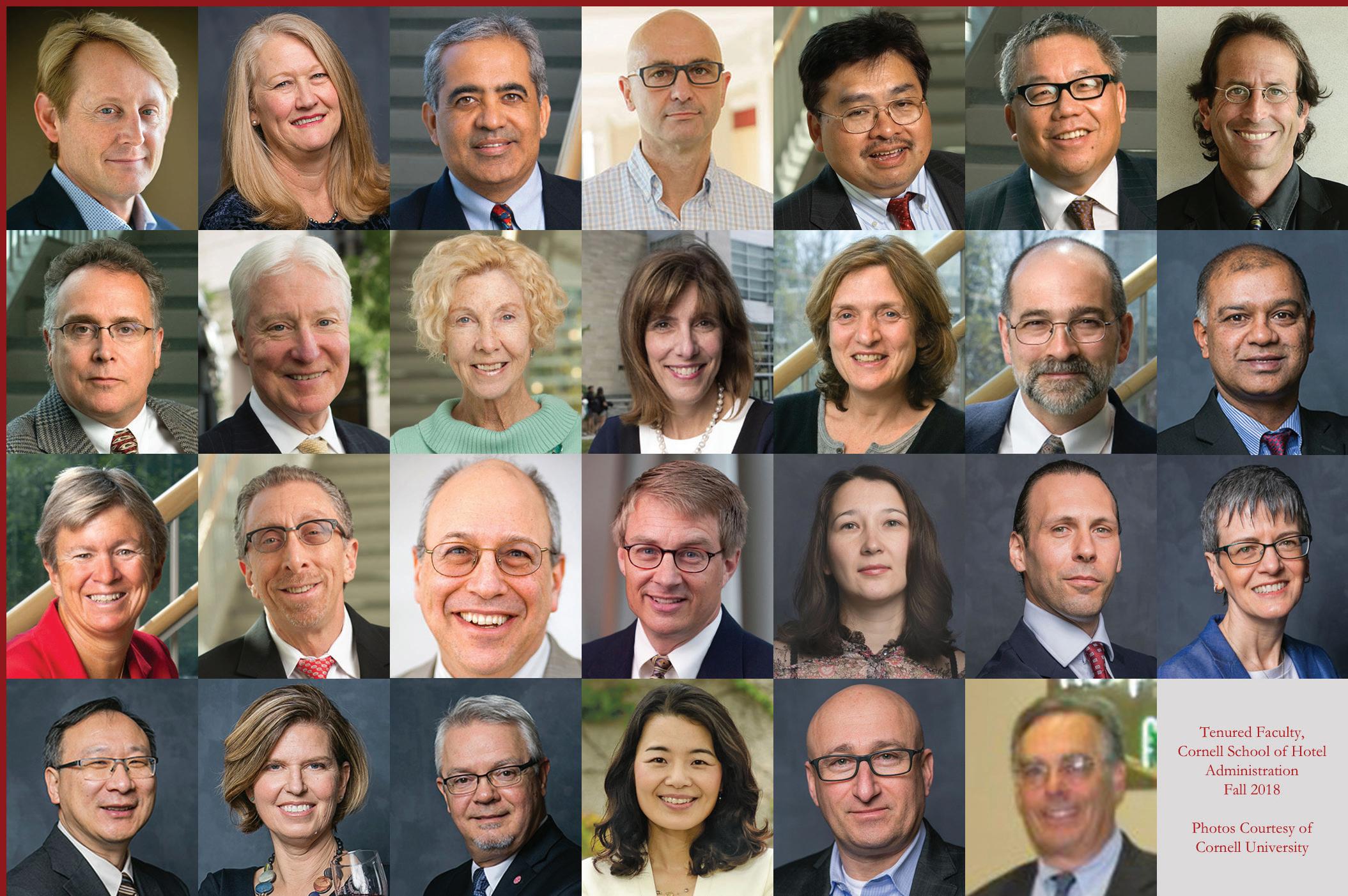
As of this semester, about six percent of full hotel school faculty members — excluding visiting and adjunct faculty — are underrepresented minorities, a term that includes black, Latino, multiracial, Hawaiian / Pacific Islander and Native American people.
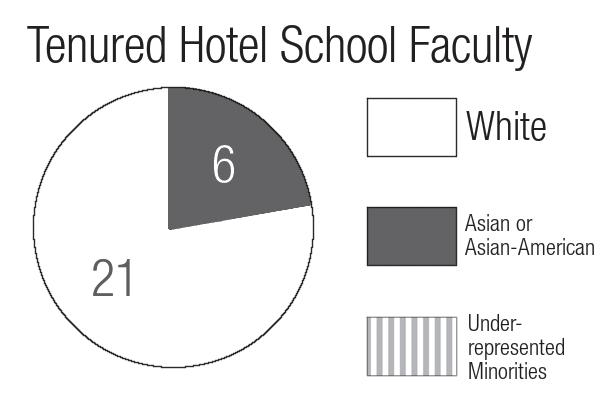
Among the 27 full and associate professors who have tenure in the school, six are Asian or AsianAmerican and the other 21 are white.
Walsh said that because most colleges have historically hired white men, it is “incredibly typical in aca-
demia” that the majority of current tenured faculty are also white men.
Thirty years ago, Walsh said research institutions were “populated by white men,” and “as they move into more senior ranks of faculty, that’s going to be your predominant population.”
HIRING
Walsh began serving as interim dean in July 2016 and was selected as the school’s dean the next summer. She has vigorously advocated for women to serve in senior leadership roles in the hospitality industry and has urged hotels to take efforts to reduce sexual harassment of
employees and guests. In an interview with Hotels magazine earlier this year, Walsh said “having more women in senior roles changes the culture from the top down.” “Our industry can and should do a lot more to develop the career paths of all professionals, but especially its female talent,” she said.
Prof. Michael Sturman ’92 M.S. ’95 Ph.D. ’97, human resources, said in an interview in April that the administration should be applauded for its continuous focus on gender diversity, but that the school has not made a similar commitment to racial diversity.
DIVERSITY
Continued from page 3
“Gender diversity is critically important,” said Sturman, who is white. “But you shouldn’t focus on only one type of diversity and ignore all other dimensions.”
Sturman, who left Cornell for Rutgers University earlier this month, said increasing the number of non-white faculty in the hotel school “used to be a clear priority,” but now, “it seems little to nothing is being done to help foster racial diversity.”
“And in fact, we seem to be moving backwards,” he said.
A 2012 report by the National Association for the Advancement of Colored People found that, within the hospitality industry, 7.6 percent of governing body members and 3.8 percent of top management level employees are black or African-American. For all people of color, the numbers are 12.8 and 19.4 percent.
Another former faculty member, Prof. Sean Rogers, management, University of Rhode Island, told The Sun in March that when it comes to taking action, the administration is “really committed to a sliver of diversity, to the exclusion” of other kinds of representation.
Rogers, who is black, said administrators “are solely focusing on one type of diversity” that “aligns with who they are,” which he said was human nature. Of the four members of the dean’s executive team, three are women and none are black or Latino.
“But when [a person] rises … to a position of organizational leadership, they are expected to transcend a sole or primary concern for their own group’s interests and … be able and willing to advocate for access and representation for all groups equally,” Rogers said.
The previous hotel school dean, Michael D. Johnson, instituted a policy in fall 2013 requiring that the pool of candidates for each faculty position be “sufficient on all dimensions,” which included “quality, quantity and diversity,” according to a list of steps for the faculty search process which was obtained by The Sun.
Sturman, who served as associate dean of faculty development until the position was eliminated following the creation of the College of Business, said Johnson’s policy led to a series of high-quality and diverse hires. Four out of nine faculty members hired between fall 2013 and spring 2016 — following the new guideline’s implementation — were underrepresented minorities, Sturman said.
obtained by The Sun.
Walsh, the dean, said in May that she did not know what percentage of this year’s candidates are underrepresented minorities, but said her administration is continuing Johnson’s faculty search directive, which also required that if a search committee cannot find a qualified underrepresented minority candidate, it has to show that the result followed a substantial effort, according to Sturman.
While it can be difficult to get professors to come to Ithaca, Walsh said, the school has specifically worked to recruit underrepresented minority faculty and Ph.D. students. “It’s an important practice that we’d like to continue,” she said. “It’s not very easy to do, and it’s not always successful, but it’s really important to us to make every effort.”
The Presidential Task Force on Campus Climate said in a preliminary report released this month that the turnover rate among faculty of color across the University has been increasing and that, “historically, people have attributed retention challenges to the fact that Cornell is situated in rural Ithaca.”
Clayton, who left Cornell in 2014 and retired from the Wisconsin School of Business in 2017, said Cornell fails to retain qualified minority candidates because, “when there’s one sitting there, [Cornell doesn’t] do anything to get them to stay.”
“They are saying that minority representation is an important thing, but they don’t do what would be required to keep minority faculty when there are minority faculty,” said Clayton.
“When you talk about academia, it all goes down to tenure,” said Clayton, who is black. “If you look at my publication record, it was certainly as good as people that have tenure at Cornell, yet they wouldn’t hire me with that.”
Prof. Todd Schmit M.S. ’94, Ph.D. ’03, applied economics and management and the business college’s chief diversity officer, wrote in an email to The Sun in July that he wants faculty to “feel valued and stay.”
Schmit took over the diversity position after Prof. David Wooten, marketing, resigned and left Cornell in July after one year at the business college, The Sun previously reported.
“Gender diversity is critically important ... But you shouldn’t focus on only one type of diversity.”
Prof. Michael Sturman
Only half of those four faculty members remain at the hotel school.
In addition to Rogers, who left Cornell at the end of June, Prof. Stephanie Creary, management, who did not respond to a request for comment, left for University of Pennsylvania in June 2017.
Of the 20 professorial and lecturer positions filled during the 2017-2018 academic year in all three schools under the Cornell SC Johnson College of Business, 16 new hires are white and four are Asian, according to a faculty hires report obtained by The Sun. About one third of the new professors are women.
In April, The Sun contacted the leaders of the hotel school’s four search committees in hopes of learning the demographic makeup of this year’s candidate pool. About 55 minutes after a reporter sent the emails, an assistant in the hotel school instructed 19 faculty members who participated in the search to not respond to any of the questions.
“Good morning, If the Cornell Daily Sun contacts any of you about the status of our faculty searches, please refer them to the Dean’s office,” Justina Reynolds, assistant to the associate dean of academic affairs, wrote in the email, which was
speaking at Cornell. But Suero, who is Latina, also added that as she talked with other non-white students, “I began to realize how disrespectful it is to us that we don’t have someone who looks like us come in and speak.”
“Hospitality isn’t just white people,” she said. “In order to educate yourself and be successful in the industry, you should really understand everything. But how are you going to do that when you are only surrounded by people who are white and men?”
Victor said that while the lack of racial diversity among the speakers was a problem, it was most frustrating that they spoke from “a platform of privilege.”
Some speakers, she said, “are like ‘use this, use that,’ but I don’t have all that. I can’t internalize their advice because they are not meant for someone who’s like me.”
“How did you come from a place where you have so little, and how did you make yourself into something more? No one’s gonna teach me that if everybody that came in is a white guy who grew up in a rich family,” said Victor, who is black.
Baker said all of the speakers have told “inspiring stories” and pointed out that Walsh has been making efforts to bring more underrepresented minority speakers to the school.
“That’s one thing that came up in the student advisory board meetings and we are working on it,” Baker said. He added that he had secured funding from Walsh and invited a speaker who spoke “exclusively to minority students” in early April.
Baker, who is black, said he “felt like the hotel school is one of the most inclusive and supportive communities within Cornell, and I definitely know that there are schools that … do not match this standard.”
Walsh said that the hotel school is a close-knit community where the administration and faculty members care deeply about their students.
“It’s very typical for [Younger] to call up a faculty member and say, ‘wow, this person is struggling in this class, what kind of support can we provide?’” she said.
This fall, freshmen also went through a “Cultural Intelligence” exercise during orientation, Walsh said in a follow-up interview in September, which aimed to expose students to culture and perspectives with which they might not be familiar.
Clayton said his biggest concern is that because of the small number of underrepresented minority faculty in business schools, fewer underrepresented minority students will imagine themselves as professors in the future, creating a cycle of underrepresentation.
“Yes, it’s mostly white and male,” Clayton said of the hospitality industry, “but that’s not because it’s the way it should be, it’s just because historically how it was.”
Students said they sometimes feel isolated in the hotel school, and some hotel students who attended the distinguished lectures series at Cornell said the large number of women was a big improvement, but that more racial and economic diversity should also be a priority.
“I don’t think that the only place in the hotel school that I should feel ... comfortable is when I get together in a little room with other people like me,” said Shavonnie Victor ’20. “It is the case right now, but it shouldn’t be the case. I should be able to walk around and know that you all are my peers.”
Tatiana Suero ’19 said it is exciting that there are more women industry leaders
Both Suero and Victor said they sometimes find it difficult to have only a small group of peers in the school who share their racial and socioeconomic backgrounds and with whom they can relate.
While Cornell does not release racial diversity statistics by school for the College of Business, about 5 percent of undergraduate students enrolled in fall 2017 in the business college are black and about 11 percent are identified by the Cornell Factbook as Hispanic. The percentage of underrepresented minority undergraduate students in the college has been increasing consistently, from 12.7 percent in 2007 to 19.1 percent in 2017, the most recent year for which data is available.
Hotel school officials say they are actively working to foster diverse, welcoming communities.
Victor Younger, the director of diversity and inclusion for the hotel school, regularly hosts gatherings for minority students to discuss shared experiences or similar difficulties. He said these meetings are one tool that the school uses to help students find a sense of community, and that students often find a peer who has dealt with similar experiences and has tools to overcome various obstacles.
Younger said that in addition to the online trainings on diversity and inclusion, which all faculty and staff in the University are required to undergo, the hotel school also hosts workshops of varying formats, including formal sessions, panel discussions and small focus group conversations.
“We are using all these mechanisms,” he said. “Do we hit everyone? Absolutely not, but we are making the effort.”
And to be sure, many students said they enjoyed the lecture series. JT Baker ’21, who serves on the student advisory board to Walsh, said the series “has been my favorite thing since I come to Cornell.”
Erin Rodriguez, assistant director of admissions at the hotel school, said that the lecture series is only one of many ways that students can meet and engage with successful individuals from diverse backgrounds.
Younger said speakers that faculty members bring into their own classrooms are “complementary pieces that make sure we meet the students’ needs as well.”
Walsh said the school “absolutely [tries] to find speakers that all of our students can relate to on some level,” and she said stories from some speakers who “came came from nothing … and had really successful careers” can resonate with audience members from a variety of backgrounds.
Rodriguez said last week that the hotel school admissions office has been looking for students in “under-resourced areas” who may not see themselves applying to a hotel school. She said college counselors from high schools in these areas have also been invited to visit Cornell and the hotel school this fall in hopes of improving the diversity of the student body.
“We are trying to get people to apply to college,” Rodriguez said, “To learn that you can come from far away and be successful.”
At the end of the May interview, the administration told The Sun that it is important to recognize the different layers of diversity and the importance of not excluding other identity groups when discussing racial diversity.
“This is very important, thinking about the [underrepresented minorities], being one myself,” Younger said, but he cautioned that diversity is a large subject with many important factors. “I think we are somewhat programmed in our own country to focus on race and gender, but again, it’s our challenge to think of a broader context.”
Independent Since 1880
JACOB S. KARASIK RUBASHKIN ’19 Editor in Chief
JOHN McKIM MILLER ’20
Business Manager
KATIE SIMS ’20
Associate Editor
VARUN IYENGAR ’21
Web Editor
MEGAN ROCHE ’19
Projects Editor
EMMA WILLIAMS ’19
Design Editor
JEREMIAH KIM ’19
Blogs Editor
AMOL RAJESH ’20
Science Editor
BREANNE FLEER ’20
News Editor
YUICHIRO KAKUTANI ’19
News Editor
NICHOLAS BOGEL-BURROUGHS ’19
City Editor
LEV AKABAS ’19
Arts & Entertainment Editor
SARAH SKINNER ’21
Assistant News Editor
ANNE SNABES ’19
Assistant News Editor
JOHNATHAN STIMPSON ’21
Assistant Sports Editor
EDEM DZODZOMENYO ’20
Assistant Photography Editor
PETER BUONANNO ’21
Assistant Arts & Entertainment Editor
CHENAB KHAKH ’20
Assistant Science Editor
JULIAN ROBISON ’20
Layout Editor
HELEN HU ’21
Graphics Editor
Editorial
GIRISHA ARORA ’20 Managing Editor
HEIDI MYUNG ’19
Advertising Manager
ALISHA GUPTA ’20
Assistant Managing Editor
DYLAN McDEVITT ’19 Sports Editor
MICHAEL LI ’20 Photography Editor
GRIFFIN SMITH-NICHOLS ’19 Blogs Editor
JACQUELINE QUACH ’19 Dining Editor
SHRUTI JUNEJA ’20 News Editor
ANU SUBRAMANIAM ’20 News Editor
JUSTIN J. PARK ’19
Multimedia Editor
PARIS GHAZI ’21
Assistant News Editor
MEREDITH LIU ’20
Assistant News Editor
JACK KANTOR ’19
Assistant Sports Editor
RAPHY GENDLER ’21
Assistant Sports Editor
BORIS TSANG ’21
Assistant Photography Editor
Assistant
Darren Chang | Swamp Snorkeling
The whole shebang of politically aberrant events happened this week from the protests at a Supreme Court confirmation hearing to a former President speaking out against the current commander in chief. In all this drama, the theme of secrecy tied together the New York Times Op-Ed written by an anonymous administration official and Sen. Cory Booker’s (D-N.J.) grandstanding “Spartacus” moment during the Kavanaugh hearing.
What we learned highlighted the
staffer for President George W. Bush during Kavanaugh’s confirmation hearing for his Supreme Court nomination. Although Booker explained the “Spartacus” moment as a moment of civil disobedience, the emails had already been signed off for release. I’m more inclined to think of the threat as political grandstanding designed to excite the Democratic base. If we don’t see Sen. Booker’s ultimatum in a political light, the memos hopefully do aid the Judiciary Committee in deciding Kavanaugh’s suitability as a justice.
As I was reading through the Times piece, I wasn’t entirely sure what the point was.
way we — students, journalists and politically-invested citizens — can bring to attention what governing institutions hide behind closed doors.
VIRI GARCIA ’20
& Entertainment Editor
CATHERINE HORNG ’21
Assistant Dining Editor
LIZ CANTLEBARY ’21
Snapchat Editor
ALICIA WANG ’21 Sketch Editor
Ad Layout Emma Williams ’19
Design Deskers Greta Reis ’21
Julian Robison ’20
News Deskers Shruti Juneja ’20 Anne Snabes ’19
Sports Desker Dylan McDevitt ’19 Arts Desker Viri Garcia ’20 Photography Desker Boris Tsang ’20 Production Deskers Emma Williams ’19 Megan Roche ’19 Working on Today’s Sun
Night Desker Katherine Heaney ’21
THE SUN’S THOROUGHLY RESEARCHED REPORT on diversity in the School of Hotel Administration underscores the need to look beyond topline statistics when cultivating a diverse and supportive educational environment. While the hotel school has made strides in increasing the number of enrolled students who are underrepresented minorities, The Sun’s interviews with both students and professors indicate Cornell has not yet created a learning space in which all faculty and students feel represented and attended to equally.
The University must continue to prioritize follow-through as well as the more visible outreach. The goal is not just to hire a more diverse pool of professors; it is to retain those professors for longer than a few years, whether with tenure and other means. The goal is not just to increase minority enrollment; it is to provide those students with the resources to be successful. Cornell must make more than just surface-level commitments to diversity if it truly wants to live up to its ethos of “Any person...any study.” We hope the hotel school administration is taking steps to address the concerns raised by the students and professors in the article, and that it is always looking for ways to receive the unvarnished and honest opinions of its community.
Furthermore, we hope the University will reconsider its hostile stance toward transparency on these issues. The Cornell Factbook, which houses publicly available information on Cornell’s demographics, does not make distinction between the undergraduate programs within the so-called “College of Business” the University assures us is a real thing. Cornell should publicly release the separate demographic data for the Dyson School, the graduate college and the hotel school, instead of lumping all three into one amorphous clump of statistics.
Also troubling is the clear trepidation the University feels at the thought of professors speaking openly to reporters. We strenuously object to the email sent by Justina Reynolds, assistant to the associate dean of academic affairs, which directed faculty to stonewall any reporters (specifically from The Sun) who asked about faculty searches. We hope that moving forward, Cornell will recognize that sunlight is the best medicine for many of its ills, and that restricting the speech of faculty, staff and administrators can only have deleterious effects. Rest assured, The Sun will continue to report on the most pressing issues of the day, even when faced with pushback of any nature.
A senior official in the administration, vetted by the Times, scathingingly critiqued President Trump’s anti-establishment politics while assuring cooler heads were prevailing in the White House. The anonymous identity of the writer has set off a witch hunt in the White House (unfortunately, speculating the identity of the official is beyond the scope of our connections here at The Sun). The writer has also set off debate on whether Congress and Vice President Pence should pursue impeachment of President Trump through 25th Amendment procedures, which deal with a president’s fitness to serve.
As I was reading through the Times piece, I wasn’t entirely sure what the point was. The official’s references to the administrative bureaucracy that restrains presidents describes a long-standing status quo. I’m not normalizing the Trump presidency, since he’s certainly broken presidential precedent. But the control of the executive branch by thousands of public servants in the White House and in each executive agency isn’t exactly new. The president hardly has the time or capability to oversee every policy or logistical decision and correctly delegates these powers to his staff.
Yet the value of expository journalism like this op-ed strike me as a necessary check on governing institutions when divorced from its political fallout. The polarization of the Times Op-Ed has so far engendered a debate more about the legality of such an article than the actual content about the functioning of the current administration. When the hullabaloo dies down, the public probably better understands the “two-track” presidency and the development of the “deep state” — not the far-right deep state, but the deep state of educated politicos that produce policy on a daily basis. It’s certainly not the first time journalism has been used as such a check. Muckraking dates back to the early 20th century, and has become even more important in an era of “alternative facts.”
In another case of “transparency,” Senator Booker threatened on Thursday to release secret emails from Judge Brett Kavanaugh’s days as a
In the coming days, we’ll see if the documents Sen. Booker released actually matter in the Kavanaugh hearing. In the coming years, we’ll see if the electorate will pressure Congress to structurally decrease the executive’s power, just as we saw a national outcry about domestic surveillance after Edward Snowden’s disclosure of NSA metadata collection procedures. In any case, increasing transparency through releasing what was previously confidential information has the effect of increasing the knowledge of the governed. The benefits of accountability aren’t limited to national governments or transnational institutions. Just over a year ago, Mitch McBride ’17 handed over working group documents about newly-instituted financial aid practices to The Sun. Although he faced serious investigation and blowback from the judicial administrator’s office, McBride thought Cornellians should know about controversial decisions by the administration that could increase the debt burden for students and admit “more international students who do not need financial aid.” McBride wasn’t a dean or an employee of the university, but his
There’s plenty of information that should be public but too often slides below the radar.
actions illustrated the importance of involving civically-invested students in different task forces.
There’s plenty of information that should be public but too often slides below the radar, because students fear backlash or serious academic and social consequences. We may not be able to overcome these barriers, but we should work to open spaces for dialogue about sketchy underground practices. This isn’t a call to release every confidential document or to constantly write anonymous op-ed articles criticizing “from the inside.” There are practical reasons why security clearances matter and why we can’t comb through every piece of paper produced in an organization’s back office.
We need to be conscientious of non-disclosure agreements and contracts before speaking out. But after evaluating, we ultimately have a responsibility to thoughtfully contribute to our institutional spaces.
Darren Chang is a sophomore in the College of Arts and Sciences. Swamp Snorkeling runs every other Monday this semester. He can be reached at dchang@cornellsun.com.
William Wang | Willpower
Afew months ago in the spring, I had a sit-down with a charming professor about a homework problem I was stuck on, and while the chat was productive, it soon devolved into tiptoeing around a racial issue that, frankly, has worn a bit thin on me.
When I told her I was Chinese, she inevitably started talked about her experience traveling abroad in mainland China, and while her eyes glowed when she talked about the sights she saw, her mouth began to twitch uncomfortably when she descended from the sights to the people. And word for word, before she began, I knew what she was going to say.
was the principle they lived by, even if that particular principle reeked of a superiority complex.
In Chinese American culture, there’s value in being unnoticed.
It isn’t a secret in the Chinese American community that there is a certain disdain for their peers from abroad. Whether it’s true or not, nationals are regarded as louder, less behaved, and generally less suited for assimilation in America. In Chinese American culture, there’s value in being unnoticed, in being respectful and silent. There’s safety in being quiet.
And so when my professor began her mini-monologue on the loudness of the people she ran into, I could only do what I usually did. I nodded politely. I smiled. I listened to her complaints. I wasn’t surprised when she made the comparison between the two cultures, noting approvingly, how, in her experience, Asian American kids were more reserved than those abroad. When it was all said and done, I got up and gave my fake, brave smile, and thanked her for her help. Then I left.
I didn’t think about it for the longest of time. She only said what I expected, and what my peers in America harped on. Our Asian American parents scorned the loudness, brashness, and the uncouthness. To them, that
But in the meantime, from the moment of my conversation with my professor during the spring to the current late summer, a long contested lawsuit has gained significant momentum. The anti-affirmative action Students for Fair Admissions, a group that has accused Harvard of discriminating against Asian Americans, won a rather stunning victory in August when the Department of Justice determined that the school had, in fact, discriminated against Asians. But while countless think pieces have discussed the legal ramifications of such a decision, the underlying evidence for the DOJ’s conclusion was troubling and brought me back to my conversation with my professor. While her story had put down a certain section of the Asian community, it also highlighted a gap in the Asian American community that may be more damaging than loud behavior — the complete absence of it.
applicant was determined to be a “hard worker” but was questioned “would she relax and have fun?”
It’s a depressingly regressive view of Asian people. It’s a played out stereotype, a double edged sword that has them lauded as technically proficient, but as studies have repeatedly shown, excluded them from management and leadership roles due to a perceived lack in “distinguished excellence” and “exceptionality.”
Truthfully, in my own opinion, it’s also a symptom of a failing of the early vestiges of Asian American culture. Being quiet and passive is something that is inherent in many past Asian American households, and it’s entrenched in the minds of many. The quiet, reserved Asian student sitting in the back, taking notes, is an outdated cliche that is still stuck in head of many — and my conversation with my professor only reinforced the perception that has taken a hold of many people (and many college admission officers!).
It’s a depressingly regressive view of Asian people.
The outpouring of documents and intel from the lawsuit reveal Harvard rates Asian American applicants lower than any other group. Common descriptions are “industrious” and “bright” but “unexceptional” and “indistinguishable.” More likely, Asian Americans were seen more as introverts and followers, rather than extroverts and leaders. In one particularly jarring case, a female Asian American
Jacqueline
This September, students in my old school district in Virginia returned to a newly named Justice High School — previously J.E.B. Stuart High. Same walls and infrastructure; new decorations, sports uni forms and absence of Confederate memo rialization. Stuart, the dethroned-hon oree-in-question, was a Confederate general who fought to maintain slavery. The name change, which neutralizes the school’s explicit nod to Confederate history, was the subject of a long, arduous debate that is still ongoing, according to the nearly 200 comments on the Washington Post’s most recent coverage.

On one end, this name adjustment is read as an attempt to rewrite history, a pandering to political correctness. But I think this particular change and many others actively work to preserve our understanding of history in a way that’s more compatible with the progress we’ve made in the interim.
The context in this case is especially illuminating. Stuart High School opened and was named in 1959, almost 100 years after the end of the Civil War, but only five years after Brown v. Board of Education — a Supreme Court decision that Virginia met with particularly massive resistance. At best, the timing could
So it’s not surprising elite colleges, looking for a well ranging and diverse student body, often fall back on their implicit biases to cut out students in an increasingly cutthroat world. It’s wrong, but in any case, it’s no good to simply sit behind a lawsuit and cry over spilt milk. A more important task is for Asian American students to take action themselves, embrace their outgoing nature and break their biases. After all, stereotypes aren’t unwrapped and litigated — they’re smashed.
be read as a coincidence and, at worst, it could be interpreted as a deliberate effort to intimidate newly integrated African-American students. Given the fact that this example fits into a larger trend, there’s a case that can be made for the latter. Data shows that the
Keeping many of these names only serves to honor the ugliest parts of our present.
construction of conservative monuments in the U.S. increased substantially during two significant civil rights moments: the institution of Jim Crow laws in the early 1900s and the Civil Rights advances made in the 1960s.
This change calls who and what we honor into question.
The legacies of how these monuments come into being are often as political as the question of whether or not they should continue to exist. While these monuments honor figures from the Civil War, their construction fits into the fabric of a more recent history. Proponents of their preservation say that to change a name is to erase an accurate portrayal of the past; but I would argue that keeping many of these names only serves to honor the ugliest parts of our present.
Seemingly trivial choices, like the names of the public schools we attend and dorms we live in, reflect deep truths about our values as a society
and are inherently political. Last year, Yale made national news when the university moved to change the title of a residential college named after John Calhoun, a white supremacist. In response, in line with fairly mainstream logic, opponents to the change said it prevented students from having conversations about history. I think there’s merit to the argument that we shouldn’t shield ourselves from facts and concepts that make us uncomfortable. When monuments are discussed as if history books and academic departments don’t exist, other methods of historic preservation that don’t involve glorification are conveniently tabled. Honoring someone with a statue or a holiday isn’t an objective, academic means of approaching history. If you want to remember J.E.B. Stuart, a quick search in the Cornell Library database will give you 1,484 results, with or without a high school named in his honor.
Last year, Cornell moved to recognize Indigenous Peoples’ Day in replacement of Columbus Day; a change also adopted by Harvard, Yale, Brown, UCLA and the nearby Ithaca Common Council. According to students who lobbied for the change, it was a process that took more than a decade. While the decision sparked some controversy, I think it’s an example of an alteration that actively works to preserve history — albeit a reframed version. Against a backdrop in which the federal government and a majority of our peer academic institu-
tions continue to celebrate Columbus Day, Indigenous Peoples’ Day offers a different interpretation of the same moment in time, from the perspective of those who were victims of violence as opposed to a man who contributed to it. Rather than neutralizing the significance of the holiday, this change calls who and what we honor into question — a question I think we need to start asking more rigorously.
One thing I’m wary of is over-inflating our sense of what these kinds of cosmetic changes can achieve. What we choose to honor, as a society, is consequential and speaks to our values, but revision isn’t a panacea. Justice High School may have been rid of its strategically granted Confederate title, but it’s still only about 100 miles from a spot where, a year ago, unabashed white supremacists in Confederate par-
Honoring someone with a statue or a holiday isn’t an objective, academic means of approaching history.
aphernalia marched violently through the streets of Charlottesville. These names, their legacies and how they came into being are symptomatic of issues that name changes alone can’t tackle. That being said, they are a start.
Jacqueline Groskaufmanis is a senior in the College of Arts and Sciences. The Dissent runs every other Monday this semester. She can be reached at jgroskaufmanis@cornellsun.com

BY OLIVIA BONO Sun Contributor
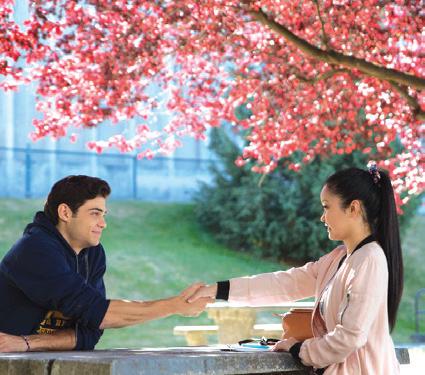
From the moment this Netflix Original begins, with Lara Jean Covey (Lana Condor) imagining herself wandering through an idyllic field with the boy of her dreams, To All the Boys I’ve Loved Before screams “self-indulgent romance fantasy.” It’s the quintessential teen rom-com: there’s the shy main character, two pouty Hot Boys (Noah Centineo and Israel Broussard) and the crucial misunderstanding that forces her to pick between them. Every character is addressed by their full name and speaks in Tumblr-ready quotes (“Josh Sanderson, I liked you first. By all rights, you were mine.”) Add a fake dating plot, a hair-flipping jealous mean girl and a supportive rebel best friend, and you’ve got a full-blown cliché. To All the Boys I’ve Loved Before is tropey and cheesy and gooey, but in a good way. It revels in its purest rom-com moments because it knows exactly what it is. It doesn’t have to be subversive or edgy to succeed; it promises to be a cute teen romance and delivers on that promise with flair.
First off, the cinematography in this movie is gorgeous. Every scene is full of vibrant, popping colors, from Lara Jean’s bright blue bedroom to the bold orange knee socks she wears in the final scene. The characters and props are almost always framed with lots of negative space, and you could pull enough gorgeous stills to rival Wes Anderson’s work. Every outfit is impeccably styled, and the film uses Lara Jean’s hair to not-sosubtly illustrate her growth from a shy kid (pigtails) to a shy teenager (high ponytail) to a confident woman (long hair).
At its heart, To All the Boys
I’ve Loved Before is a story about growing up and trading the safety of imagination for real life.
The film makes a point of telling the audience that Lara Jean loves losing herself in romanticized worlds where true love comes easily. She’s rarely seen without her stash of “bodice-ripper” romance novels, makes references to John Hughes movies and loses herself in the exploits of the Golden Girls And yet instead of condemning the cutesy romance genre, urging viewers to live in the real world, the movie enjoys its brand of self-indulgence.
Everything about the world of To All the Boys I’ve Loved Before is idealized. Lara Jean has the perfect boyfriend, a cute “king of the cafeteria crowd” who’s even nice to waiters (#TeamPeterKavinsky). She herself has perfect hair and no shortage of perfect outfits. A classmate’s party takes place in a perfect house with a swanky bathroom and a fish tank the size of a refrigerator. Her perfect, supportive friends only exist to push her towards her happy ending. Every hat box, bicycle and scrunchie exists to help the viewer escape into this candy-coated world. The most obvious example of escapism, however, lies in the fact that Lara Jean’s problems are easily solved by a few confrontations and a cleaning montage. It’s the type of movie you watch on a particularly tough, rainy afternoon with a cup of tea if you want to lose your own problems in someone else’s easily solvable ones.
The amount that the movie idealizes Lara Jean’s world is impressive considering the film’s protagonist—a young Asian-American girl. Most high school romances feature a white lead, with Asian characters, if they exist at all, being relegated to sidekicks and comic
relief. To All the Boys I’ve Loved Before, aware of the history of its own genre, acknowledges this in a scene where Lara Jean and Peter
are watching the “extremely racist” Long Duk Dong from Sixteen Candles. Learning from Sixteen Candles and similar movies’ mis-
takes, To All the Boys I’ve Loved Before seamlessly integrates Lara Jean’s identity with the familiar rom-com template, providing a role model for an underrepresented demographic. Despite its excellence in cinematography, heart and representation, there are some parts of the movie that don’t quite work. The casting of 29-year-old Janel Parrish as Lara Jean’s 18-yearold sister feels especially awkward and makes the almost love triangle between the sisters and Josh Sanderson less believable. On top of this, a few side characters feel one-dimensional and a couple of side plots don’t wrap up as completely as they should, but all of this can be easily overlooked since the rest of the film is just so enjoyable. In the words of Lara Jean: “Being with Peter was so good that sometimes I let myself forget it was fake.”
Olivia Bono is a junior in the College of Arts and Sciences. She can be reached at ojb26@cornell.edu.
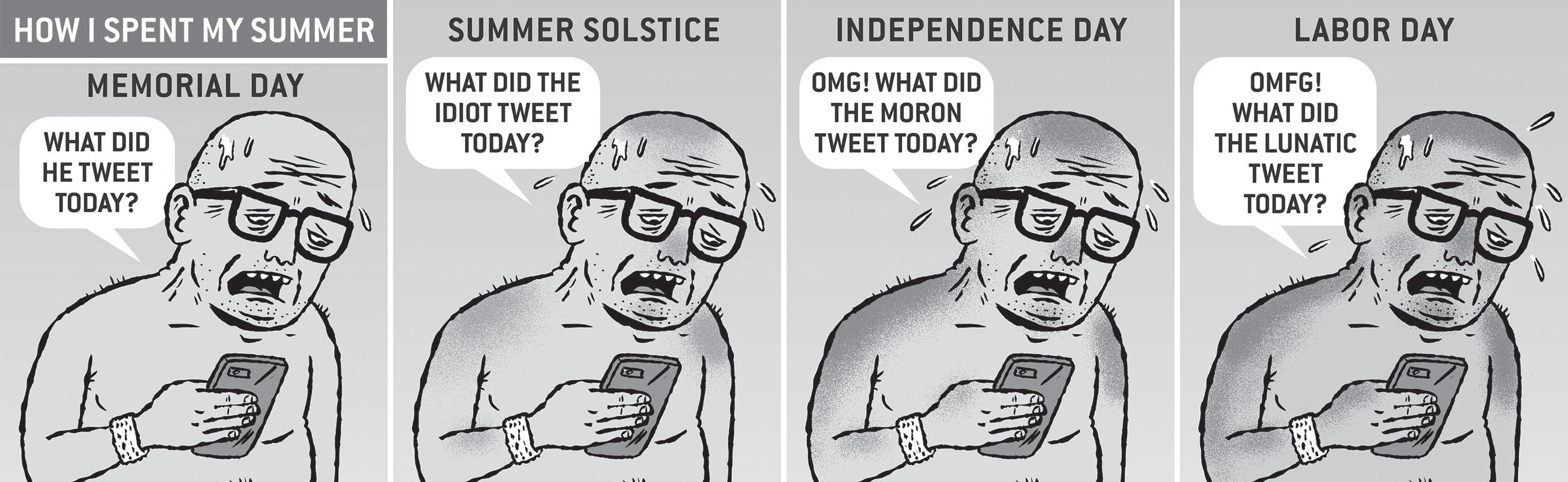
Iworkedin a research lab at a univer-
sity in my hometown this past summer and, for the first time in my life, experienced what it’s like to have a long commute — an hour and a half each way standing in a hot, humid, insanely crowded subway car. Most of my fellow commuters spent these long and miserable daily trips on their phones, either scrolling through Weibo (think Twitter) feeds, watching viral videos, playing online games, binging the newest hit TV series or reading trending articles on Wechat (a Chinese amalgamation of Facebook and Instagram). Hundreds of commuters with headphones on staring down at their smartphone screens was quite a sight be behold but also incredibly frustrating,

especially when I had to transfer lines at one of the busiest stations downtown, and had to follow a massive crowd of people up flights of stairs to another platform, a process slowed down significantly by those who were too absorbed in their phones to even walk properly.
Despite my frustration, and because social learning is a natural thing that we all
do, a few days into this commuter life, I also started killing time by spending it solely on my phone, going through my Weibo feed more times than necessary, replying to comments, reading Wechat articles that I normally wouldn’t care for and, when all that was still not enough, busted out my VPN to go through Instagram and Twitter.
Yet, as you may have guessed by now, aggressively working my way through every social media platform every morning and evening did not make me feel “more connected” to friends and family, all the articles I read did not make me significantly more knowledgeable in certain areas or enlighten me on social or political issues, nor did the viral funny videos make me happier. In fact, I was always cranky and snappy by the end of the day, feeling like my day not only exhausted me physically, but mentally as well.
My fellow Arts columnist Ramya Yandava ’21, in her first column two weeks ago, pointed out the inherent contradiction in “Instapoetry,” and the problems with turning art into a commodity, into shareable, retweetable pieces that are neither memorable or valuable to its readers in the long run. While I don’t quite agree with Ramya’s stance on what poetry should or should not look like, what she pointed out here was a rather crucial issue facing not just art, but information and creativity in general in our fast-paced,
digital world.
In this world where time is fragmented and sources of information are always within our grasps, we’ve become increasingly like sponges that want to soak up as much as information in as short a time as possible, but can’t seem to filter and retain what’s truly valuable. Our judgement is clouded by the plethora of information and creative content available to us, much of which as short-lived and insignificant as a Snapchat message, seeking to draw time and attention from its audience but provides nothing substantial in return. As a result, we become faster at spitting out information as well — we feel the need to decide our stance on an issue the minute we read a news headline, we fight people who don’t agree with us not to engage in thoughtful debate but simply to voice what we believe to be right, and we can’t seem to pause our fingers on the keyboard and think twice about what we’re about to say.
But let’s go back for a second, to me on my commute back home on a humid August evening, in a packed subway car that smelled like sweat and exhaustion. At the time I had not realized that this reckless intake of information was making me mentally sick, the same way eating excessive amounts of junk food every day would physically. I had forgotten to charge my phone in the afternoon and, upon remembering that I had a book in my backpack from a recent trip to my favorite bookstore, pulled out F. Scott Fitzgerald’s The Crack Up and started reading. I had to repeatedly
remind myself that I wasn’t reading a web article, and had to stop myself from skimming and jumping around — a habit I’ve fallen into after weeks of reading pretty much only on my phone. People standing around me in the subway car glanced curiously at me and my stack of paper with words printed on them, as if they’d never seen a real book, or someone actually reading one. I wish I’m making this up, but I really am not.
I got home that day more relieved and clear-headed than I’d ever been in the past month. My brain wasn’t clogged with pieces of information I had no idea what to do with, and it felt as if I had actually spent that hour and a half doing something. That isn’t to say all books are better than stuff on the internet, or that there isn’t valuable, worthy content on the internet — there’s plenty of it, in fact. I am saying, however, that I had pulled myself back and focused my mind on one valuable thing instead of a ton of fragmented combinations of ASCII code that weren’t going to leave a dent in my memory. In the end, life deserves to be experienced in full, and knowledge and information require effort to create and time to process and absorb, so in that respect, perhaps less is really more. We are not machines, after all.
Andrea Yang is a junior in the College of Arts & Sciences. She can be reached at ayang@ cornellsun.com. Five Minutes Till Places runs alternate Mondays this semester.

Fill in the empty cells, one number in each, so that each column, row, and region contains the numbers 1-9 exactly once. Each number in the solution therefore occurs only once in each of the three “directions,” hence the “single numbers” implied by the puzzle’s name. (Rules from wikipedia.org/wiki/ Sudoku)


“I warned him about his crack problem, but he just let it get too far.” —Larry Baughman, Athens, GA






Sun staff writer Tim Morales recently sat down with senior two-time first team All-Ivy singles star David Volfson from Cornell men’s tennis to talk about the upcoming fall season, his trip back home for a tournament in Canada and the greatest of all time, Roger Federer.
1) What’s your favorite thing about tennis?
I love the variety and the unpredictability in the sport. I remember my father always told me tennis is like a chess game and how you can implement many different strategies against different opponents. I think that’s why tennis is so amusing to
play and watch. Also today, I think the game is getting more unpredictable as you don’t have one or two guys dominating the pro circuit anymore.
2) Why did you decide on Cornell?
I believe that Cornell has the best of both worlds — a top academic school along with the coaches and resources to make one of the best tennis programs in the country. I trusted [head coach Silviu Tanasoiu’s] approach to the game and the way he wanted to develop the tennis program. He is developing a program where players can train for a few years after high school to
transition to the pro circuit. I think we will see more and more players playing professional tennis with a Cornell degree.
3) What was your biggest weakness last year?
The biggest weakness we had last year as a team was not having 6 guys show up with their top game. We lacked a bit of consistency and communication which we have been working on already.
4.) What did you do over the summer? I competed around North America and Europe in future and challenger events in preparation for my senior year. It was a great learning experience playing against some top level players on the hard courts in Canada and red clay in Europe.
5) Do you have any personal goals for the fall?
I don’t like to set specific performance goals, because as I said earlier, tennis is very unpredictable. I have some things I am working on court with my coaches and as long as I continue to improve my game, I am confident that my results will follow. I will be playing a couple future events, qualifying in challengers and one or two college tournaments.
6) What’s one thing you wish you knew freshman year that you know now?
I think the best piece of advice I could give my freshman-year self is to focus on quality over quantity. I dealt a lot with injuries and overall fatigue. I have definitely learned how

to make a better schedule and take care of my body over the past couple years.
7) What fall event are you most looking forward to?
I always enjoy playing the future tournaments back home in Toronto. Also, the college tournaments are always fun because we are travelling as a team which is not common in tennis.
8.) What’s your biggest improvement since freshman year?
I mentioned this a bit earlier, but the biggest improvements I made is better organizational skills which has helped me improve my technical skills on court at a faster rate.
9) What do you hope to teach the freshman this year?
I hope I can inspire my teammates through my work ethic and positive attitude. It’s a long season and we need everybody to stay on the right path in order to be successful. The only way we’ll achieve that is if we hold each other accountable and look out for one another. Tennis may be an individual sport, but to achieve success here we need to be a team.
10. If you could play one person in tennis, who would it be?
I would play the G.O.A.T: Roger Federer. There is so much you can learn from just watching him and I bet [you could learn] even more if you actually had the chance to play against him.
By JONATHAN HARRIS Sun Assistant Sports Editor
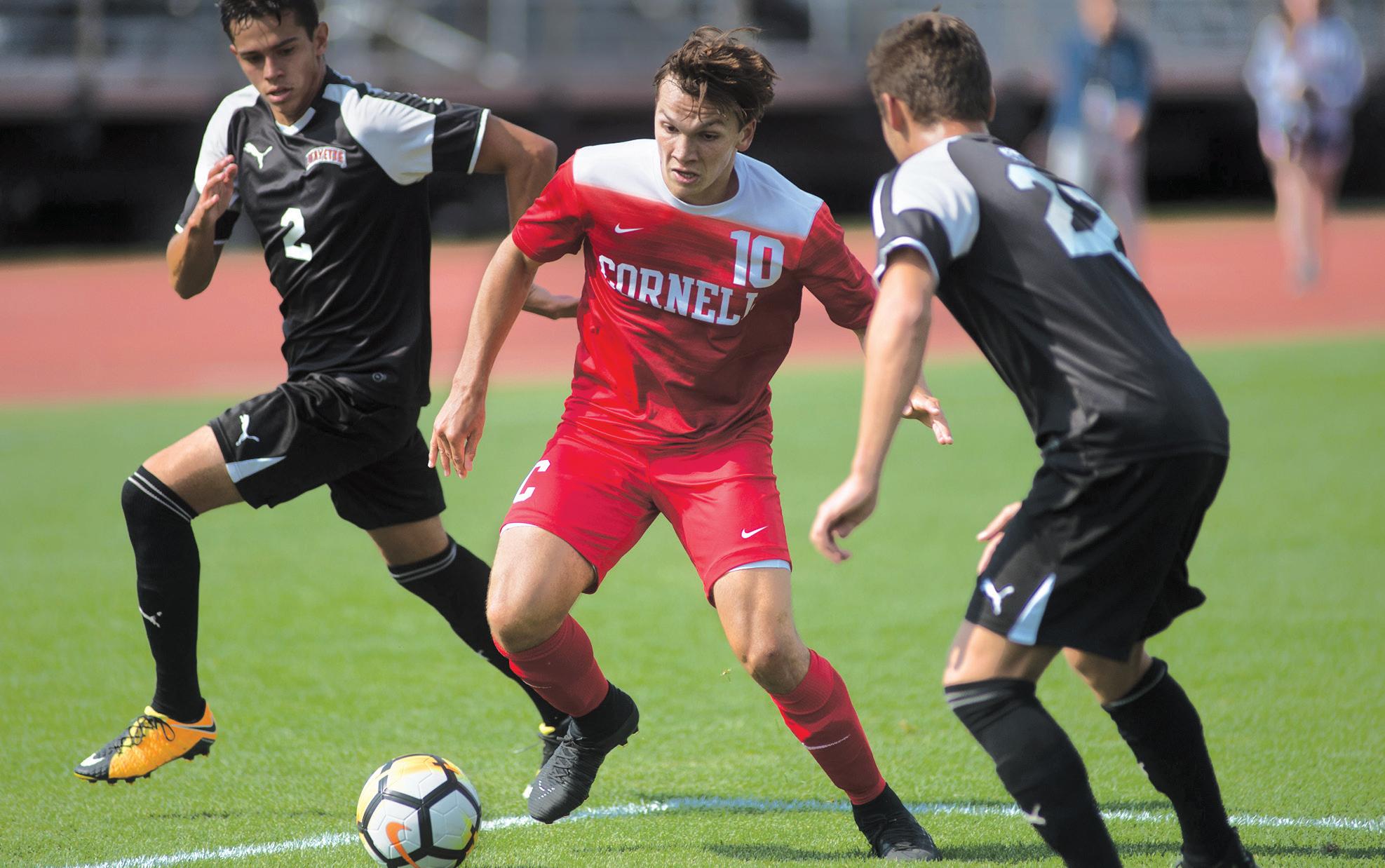
It did not look promising for Cornell men’s soccer heading into the 80th minute of Friday’s game at Lafayette. The Red was down 1-0 to the Leopards and the team’s prospects of victory were dwindling. But at just the right moment, sophomore forward Charles Touche turned and put an equalizer in the back of the net.
Touche’s goal energized the Red, who seized the momentum and dominated the rest of the game. Regular time ended in a 1-1 draw sending Cornell and Lafayette into overtime. The Red missed an early opportunity that would have ended the game, but junior midfielder John Scearce scored shortly thereafter, ending the game and giving the Red a 2-1 victory.
“It took us until the midway point of the second half to really play our game.”
The victory marks just the 11th time since 1946 that the Red has achieved three straight wins to start its season. With young, budding talent on the roster, the prospects for Cornell look bright in the near future.
Despite the victory, the relatively inexperienced Red certainly found themselves not at the top of its game on Friday.
“We didn’t play particularly well for the first portion of the game leading up to the goal,” said head coach John Smith. “It took us until the midway point in the second half to really play our game. I thought Charles’ goal was spectacular. Wonderful turn and finish. We had the momentum going into overtime.”
The Red showed signs of struggle throughout, but Smith had a feeling that his young team had what it would take to grind out a victory.
“I thought it was a gutsy performance,” Smith said. “We knew before we went down there that this was going to be a big challenge. They’re an aggressive team. They’re quite fit and athletic and they don’t stop. They don’t give up on plays.”
The Red has shown a tremendous amount of improvement in the early days of this season especially with its abrupt influx of youth. The Ivy League has a shorter preseason than the rest of Division I, not to mention the Red began their season with three straight games away from home. Heading into Friday’s game, Cornell had won two games on the road against Binghamton and St. Francis.
“This is such a young group to start the season with three awkward games on the road,” Smith said. “To do as well as we’ve done I think has been great. We’re showing that we have it in us.”
The next challenge for the Red will be Monday’s bout against upstate rival and perennial powerhouse Syracuse.
The Red will face the Orange in its first home game of the season.
“Syracuse is a great team,” Smith said. “In my opinion if you can’t get yourself up and get excited for a game like that then you shouldn’t be playing. The guys are looking forward to it. All of these games are great test. This is going to be a great test against a great team.”
The Red’s home opener against Syracuse will kick off at Berman Field at 7 p.m.
Jonathan Harris can be reached at jharris@cornellsun.com.

By MARY BARGER Sun Staff Writer
Cornell women’s cross country began its season this past Friday with a strong performance at Penn State’s Spiked Shoe Invitational. The Red finished fourth in a field of 10, coming up just behind three of the top ranked teams in the country. Penn State, ranked 12th nationally, won
the meet, followed by No. 22 Syracuse and No. 25 Georgetown. Cornell finished a mere 14 points behind the Hoyas, proving the Red’s ability to challenge those near the top of current Division I rankings.
“I was very happy with our competitiveness and overall effort,” said head coach Artie Smith ’96. “We want to keep working on our capability in the final half of the race, but this was one of the better
first meets for us in that regard. We’re certainly not satisfied, and I think the team realizes that we have a lot of work in front of us. But I think they are excited by that too.”
The Red’s senior class had a very strong race, stepping up to fill the gaps left by last year’s seniors.
“There were five of us seniors in the top eight, which is incredible because our class has dealt with so many injuries and obstacles over the years,” said senior captain Briar Brumley. “We’re so happy to have overcome all that and come out on the other side together.”
rookies were likewise successful in their collegiate debuts.
“We were so excited to have our first race with our newest team members,” said Brumley. “They all approached their first 6K with a great attitude and we’re all really proud of how well they did.”
The senior class is a dominant force at the head of the team, but the freshmen add a depth of new talent to the roster. They could be a key component in the team’s development this season as they continue to accrue experience.
“There were five of us seniors in the top eight, which is incredible because our class dealt with so many injuries.”
Senior Briar Brumley
Brumley finished in 14th, close behind her fellow senior Annie Taylor, who led the team with a 12th place finish.
Sophomore Isabella Dobson followed Brumley in 15th place, shredding an incredible 45 seconds off her former best.
Senior Olivia Young also set a new personal record, finishing in 24th place, and sophomore Melissa Zammitti rounded out the scoring five with a 26th place finish.
Senior captain Gracie Todd, a Sun staff writer, and freshman Isabel Morzano were the team’s sixth and seventh runners, finishing in 27th and 28th, respectively. Morzano was the only freshman representative in the top seven, but her fellow
“We want to continue to take steps to get better,” said Smith. “Each runner has a lot more information on what they need to do to take those steps forward. I’m excited we can get right back after it so soon.”
While the focus remains on consistency and steady improvement, this weekend’s season opener proved that the Red has rebounded from its losses and is poised for a competitive fall semester — with some of the best teams in Division I already within reach.
The Red will return to action next Friday at the Stampede Invite at the University of Buffalo.
Mary Barger can be reached at mbarger@cornellsun.com.