The Corne¬ Daily Sun
residence hall on Saturday. | Page 4
residence hall on Saturday. | Page 4
An email sent to several Sun departments on Thursday included graphic death threats
By MATTHEW KIVIAT Sun Assistant Managing Editor
Sept. 5 — An email sent to several Sun departments under an account purporting to be President Michael Kotlikoff on Thursday afternoon included graphic death threats towards Jewish and LGBTQ+ Cornell students.
The message’s subject line read “all jews and LGBTQIA+ are dead this year” and was sent using an email name and address mimicking official communication from Kotlikoff. A University spokesperson confirmed that the message was not written or sent by Kotlikoff.
The Sun could not confirm if the same email was sent to other organizations or students.
The sender directly targeted Jewish students on campus and Cornell Hillel — a hub for Jewish student life on campus — describing the threats as “the consequences of investing in war instruments of genocide/death in Palestine” and “extorting the local population out of so-called ‘income taxes’ and ‘property taxes.’”
The email continued to make direct
graphic death threats towards Jewish and LGBTQ+ students, repeatedly using a homophobic slur. The sender also wrote that Kotlikoff, Cornell students, staff, faculty, alumni, Cornell University Police Department and all police, are “targets.”
Associate Vice President for Public Safety David Honan, Chief Information Officer Ben Maddox and Chief Information Security Officer Bobby Edamala addressed the email sent to The Sun, and later published as a University statement.
“This afternoon, some members of our community received a violent and threatening email from a ‘spoof,’ or fake, address purporting to be the University President,” the statement read. “This false email, which emanated from an overseas account, targets Jewish and LGBTQIA+ communities with vile antisemitic and homophobic language. University leaders immediately reached out to offer support and resources.”
The administrators explained that the CUPD and Cornell’s Information Technology Security are investigating this “ugly and threatening email” and that the Federal Bureau of Investigation was imme-
diately contacted.
Maya Weisberg ’26, president of Cornell Hillel, explained the actions the organization took in response to the threat in a statement to The Sun.
“When Hillel learned of the threatening and vile message we contacted CUPD to report the incident and make sure that all students on campus remained safe,” Weisberg wrote. “While we are deeply disturbed by this hateful message, we are thankful to both CUPD and the university administration for working with us over these past few hours to ensure the safety of our campus.
Cornell Hillel released a statement on Instagram on Thursday evening, describing that the organization “condemns this hateful language and attempt to sow fear within our community.”
“Hillel is here for you: please be in touch if you would like to talk or need support,” the statement reads. “And, we look forward to continuing our great semester of events with Shabbat dinner this week.”
On Friday afternoon, Haven, Cornell’s LGBTQ+ student union, released a statement on Instagram, explaining that they
“stand in solidarity” with all of those impacted by the email.
“No matter your political views, race, gender identity, sexual orientation, or beliefs, you deserve safety and belonging in your place of learning,” the statement reads. “Haven stands with you in that commitment and will continue to affirm this principle with pride and solidarity.
CUPD referred The Sun back to Cornell Media Relations in response to a request for additional information about the investigation.
“We know our community is stronger than any hate we may receive and that Cornell is [a] place where all are welcome,” Weisberg wrote.
Members of the Cornell community can share information related to this incident or report other threats to personal or community safety by contacting (607) 255-1111. 911 may be contacted for emergency assistance. Instances of non-emergency bias can be reported through the bias incident form.
Matthew Kiviat can be reached at mkiviat@cornellsun.com.
By EMMA GALGANO Sun Staff Writer
Sept. 8 — Cornell’s rising tuition and fees have pushed the estimated total cost of attendance past $100,000 when including the student health insurance plan for some undergraduates in the 2025-2026 academic year.
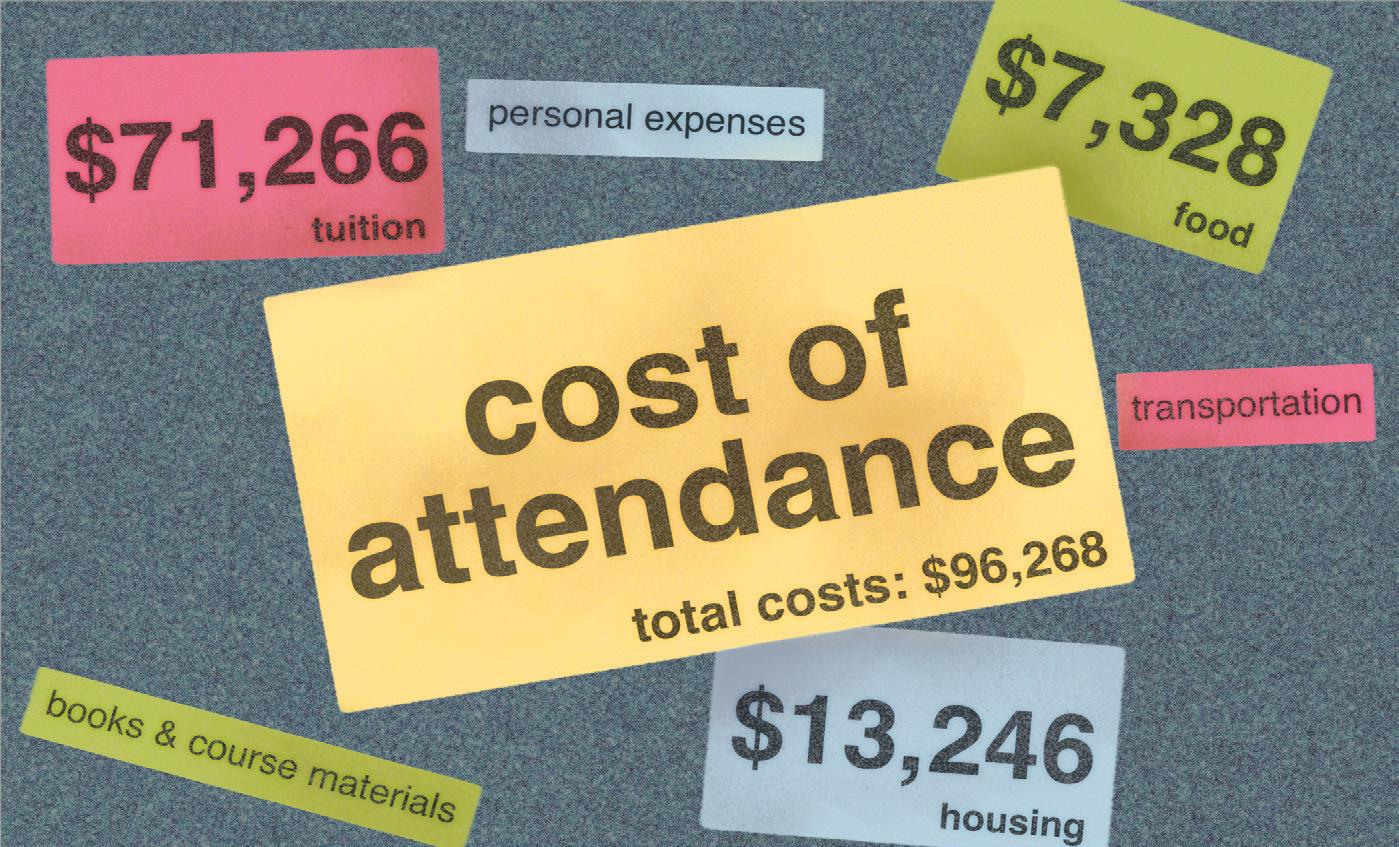
The billed costs for “typical fulltime” undergraduate students in endowed colleges total $92,844, according to Cornell’s Office of Financial Aid and Student Employment. This includes $71,266 for tuition, $13,246 for housing, $7,328 for food, $424 for the student activity fee and $580 for the Cornell Health fee.
In addition, Cornell estimates non-
billed costs such as books, course materials and personal expenses at $3,434, bringing the combined total of billed and non-billed costs to $96,268.
The 2025–2026 cost estimate does not include the Cornell Student Health Insurance Plan, which all students are automatically enrolled in. For new students this year, the plan charges a collective $3,685 for the fall and spring semesters, an increase of $176 from the 2024–2025 academic year. Returning students face a charge of $4,020, raised $192 from the previous year.
The total cost of attendance, including the Student Health Insurance Plan, equates to $100,288 for returning students and $99,953 for new students in the 2025-2026 academic year.
A student can opt out of Cornell’s Student Health Insurance Plan by submitting a waiver stating that their current insurance meets all University coverage requirements, including year-round, U.S.-based and Affordable Care Actcompliant care. Incoming and returning students had to submit a waiver by July 31 to opt out of the Student Health Insurance Plan for the upcoming year.
Other expenses not factored into the official estimate include transportation, such as resident parking permits priced at $752.86 per year and OMNI Ride TCAT passes at $200. Additionally, optional gym memberships are not included, ranging from $150 to $168 depending on purchase date.
The cost of attendance has been steadily increasing, with Cornell’s estimated cost of attendance (excluding the Cornell Student Health Insurance Plan) being $88,150 in 2023-2024 and $92,150 in 2024-2025.
According to a University spokesperson, the increases in cost of attendance reflect Cornell’s efforts to sustain academic quality while expanding financial aid.
“Tuition increases, when paired with investments in financial aid, allow the university to continue to operate and help keep Cornell affordable for middleand lower-income students,” the spokesperson wrote in an email to The Sun. The spokesperson added that Cornell has committed a record $459 million to institutional financial aid, calling the University “more accessible and affordable than ever.”
Some students, however, say the ris-
ing costs still weigh heavily on families. Hayden Watkins ’28, vice president for finance on the Student Assembly, said the increases add pressure on families to make Cornell affordable.
“My family had to do some financial gymnastics, even with aid, to make it possible for me to be here for four years,” he said. “It makes me feel like I need to show that their investment in my education is worthwhile.”
That strain can be especially challenging for first-generation and limited-income students, according to Michelle Van-Ess Grant, senior associate dean of students in the Centers for Student Equity, Empowerment, and Belonging.
“Beyond tuition, the expenses of books, travel, professional clothing, and even basic needs can weigh heavily,” she wrote.
Grant said first-generation and limited-income students are increasingly open about discussing affordability and access, and the First Generation and Limited-income Student Support Office “continues to provide resources to fill in the gaps when needed.”
President Michael Kotlikoff cited “inflationary pressure” as a key driver of rising cost of attendance during a March 2024 budget discussion, saying that they “recognize the impact of inflation on our students and their families” and are “committed to controlling costs while maintaining the excellence of a Cornell education.”
Emma Galgano can be reached at egalgano@cornellsun.com.

By SUN PHOTOGRAPHY DEPARTMENT
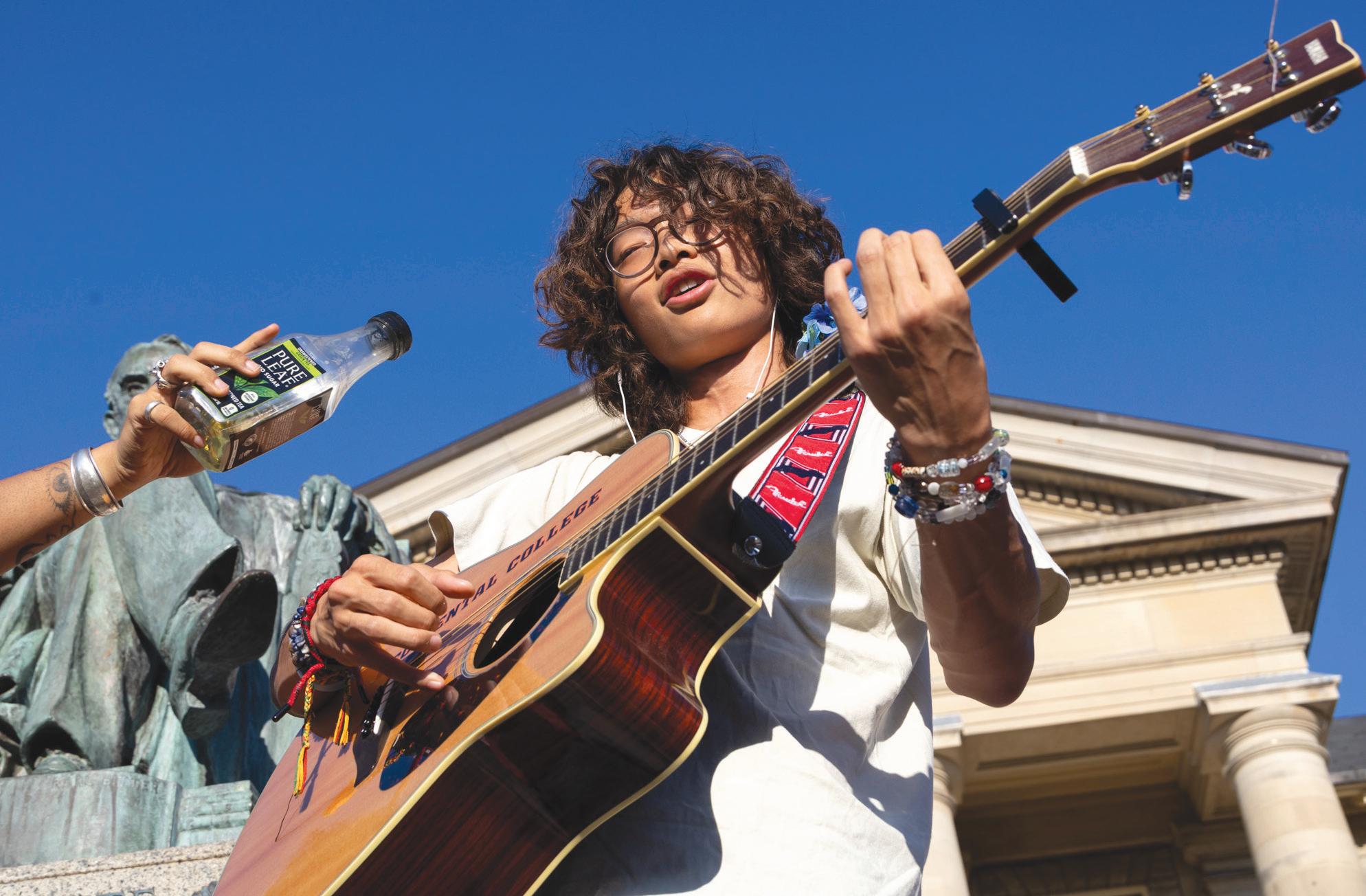
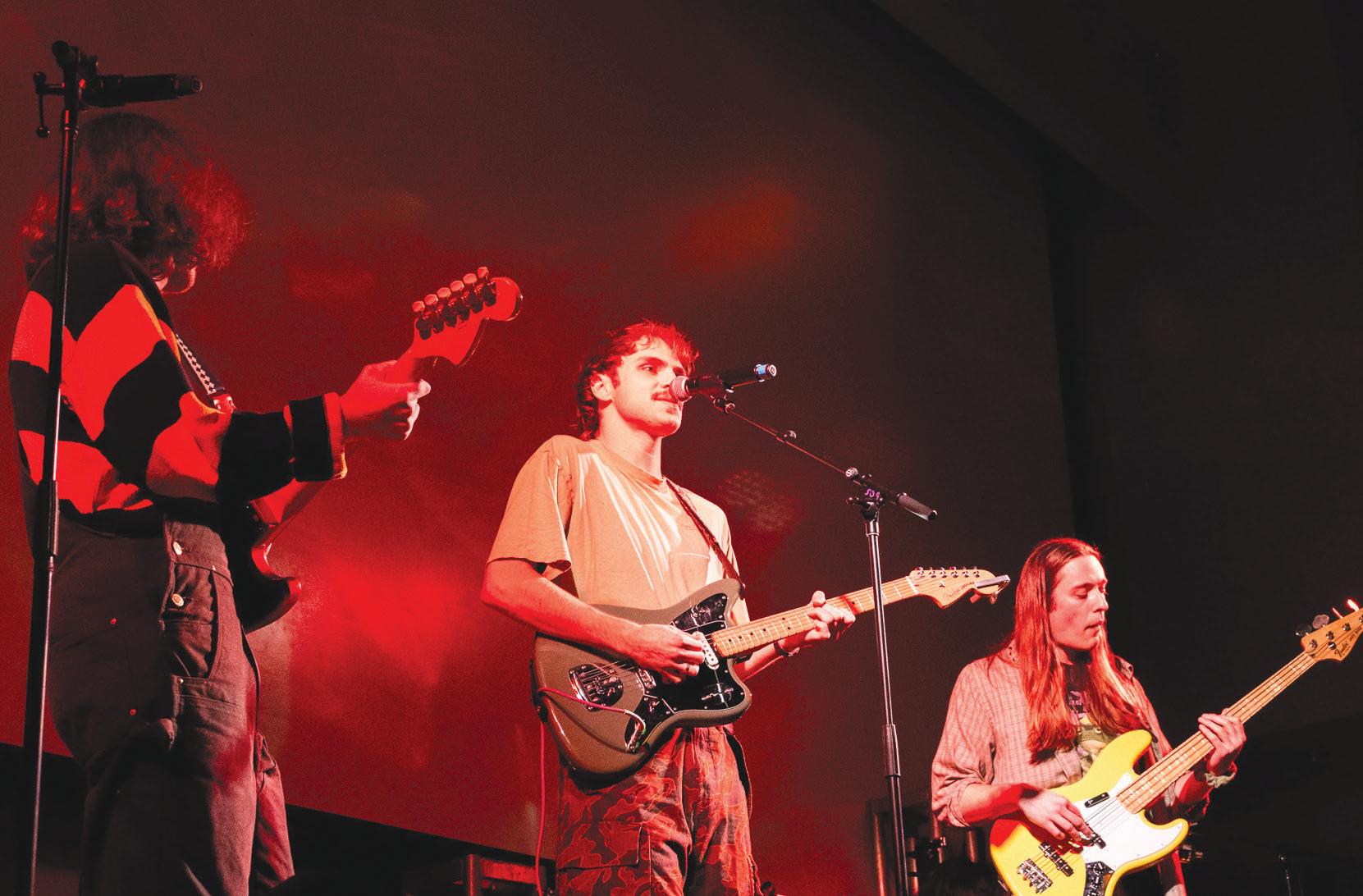
With concerts, sports and other events, here’s a recap of the week through a camera lens
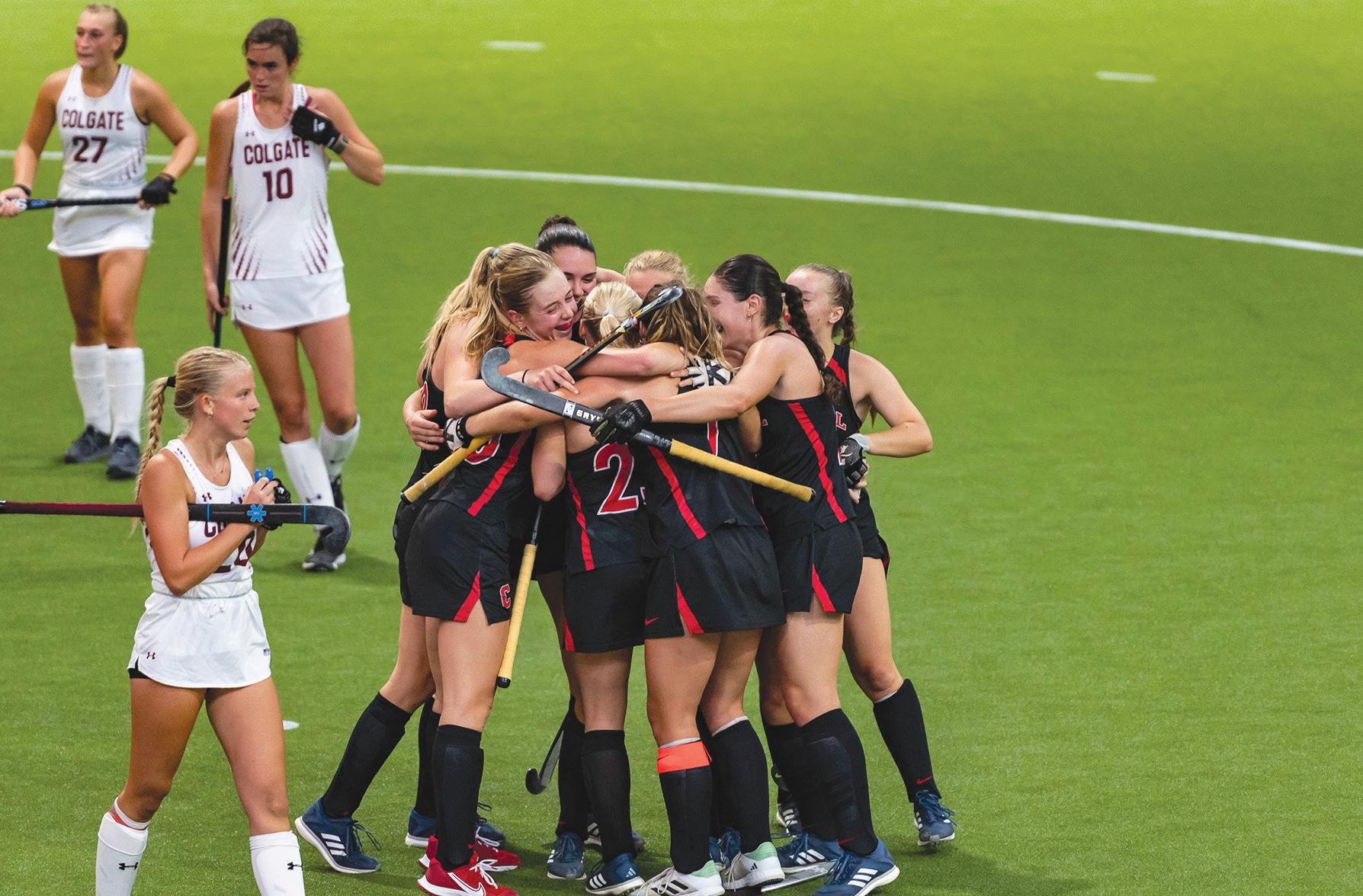
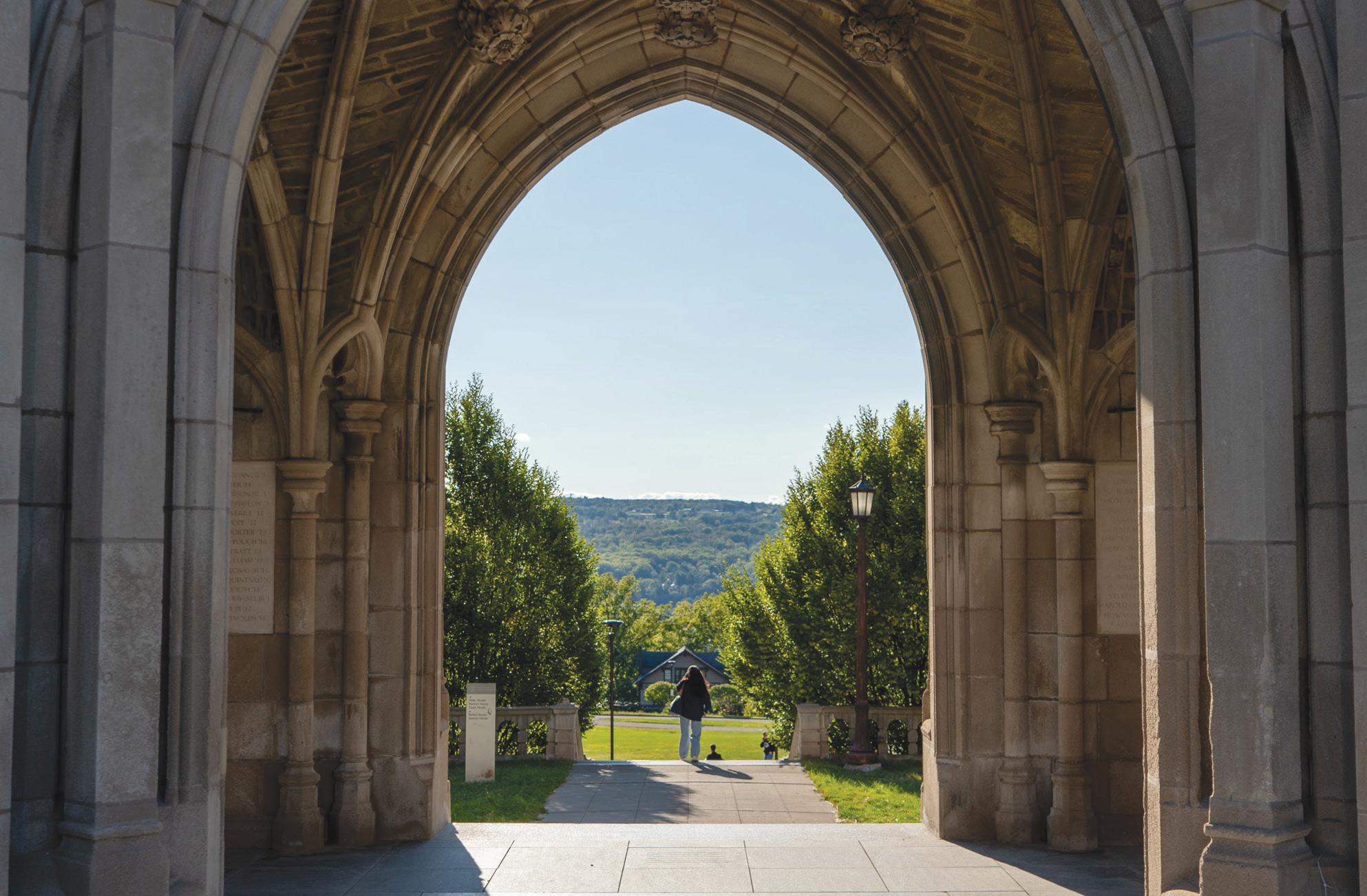
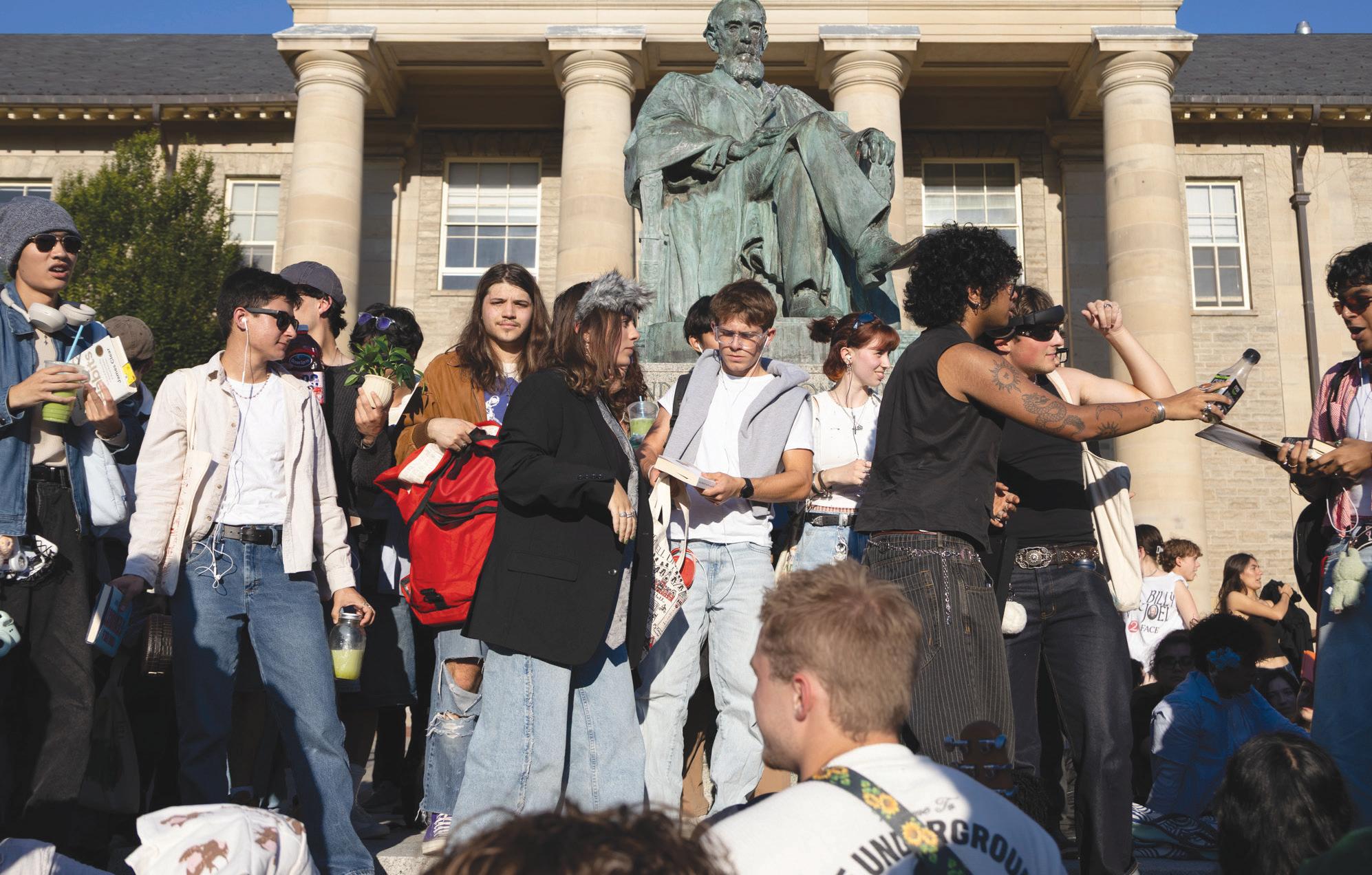
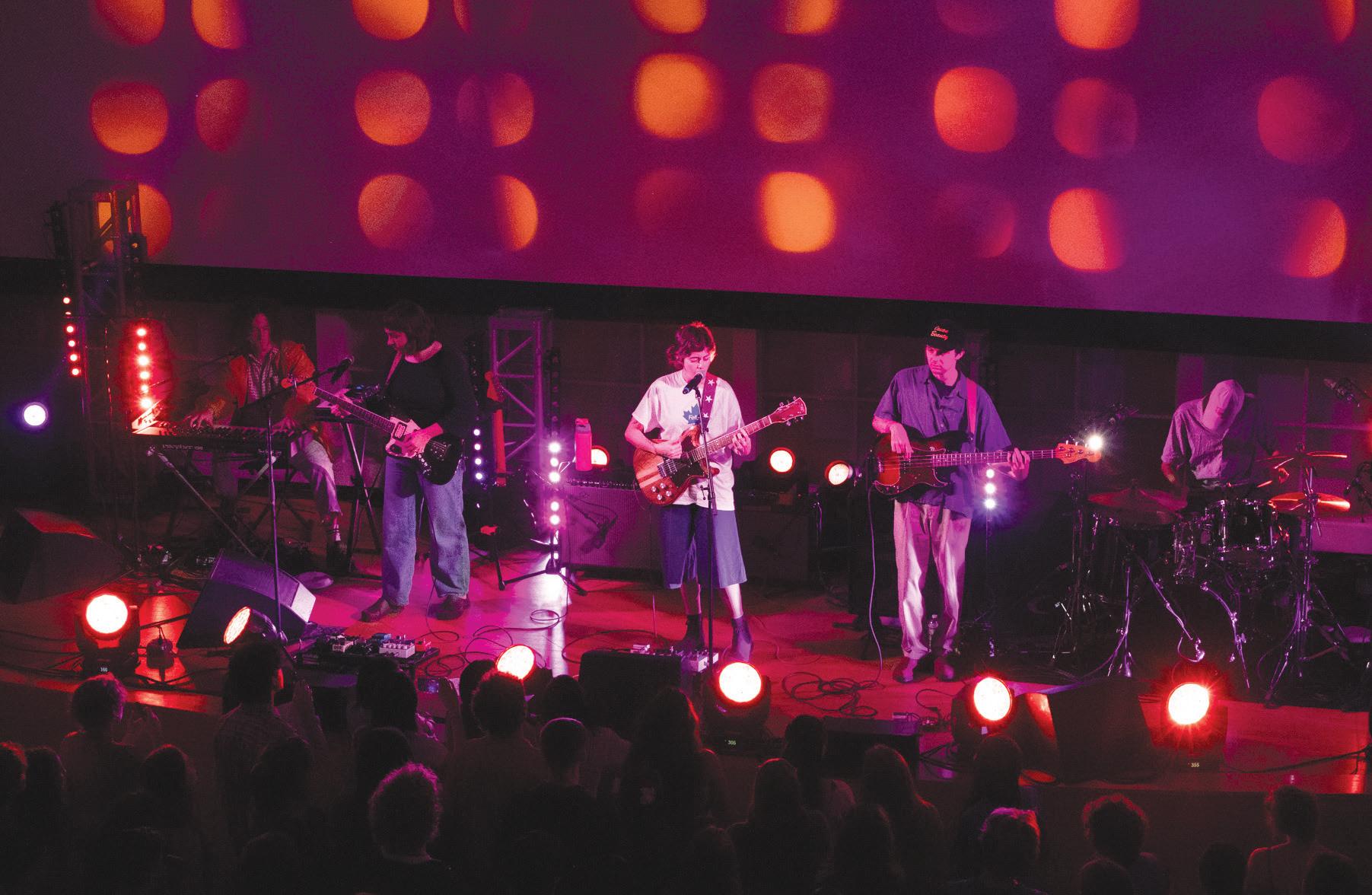
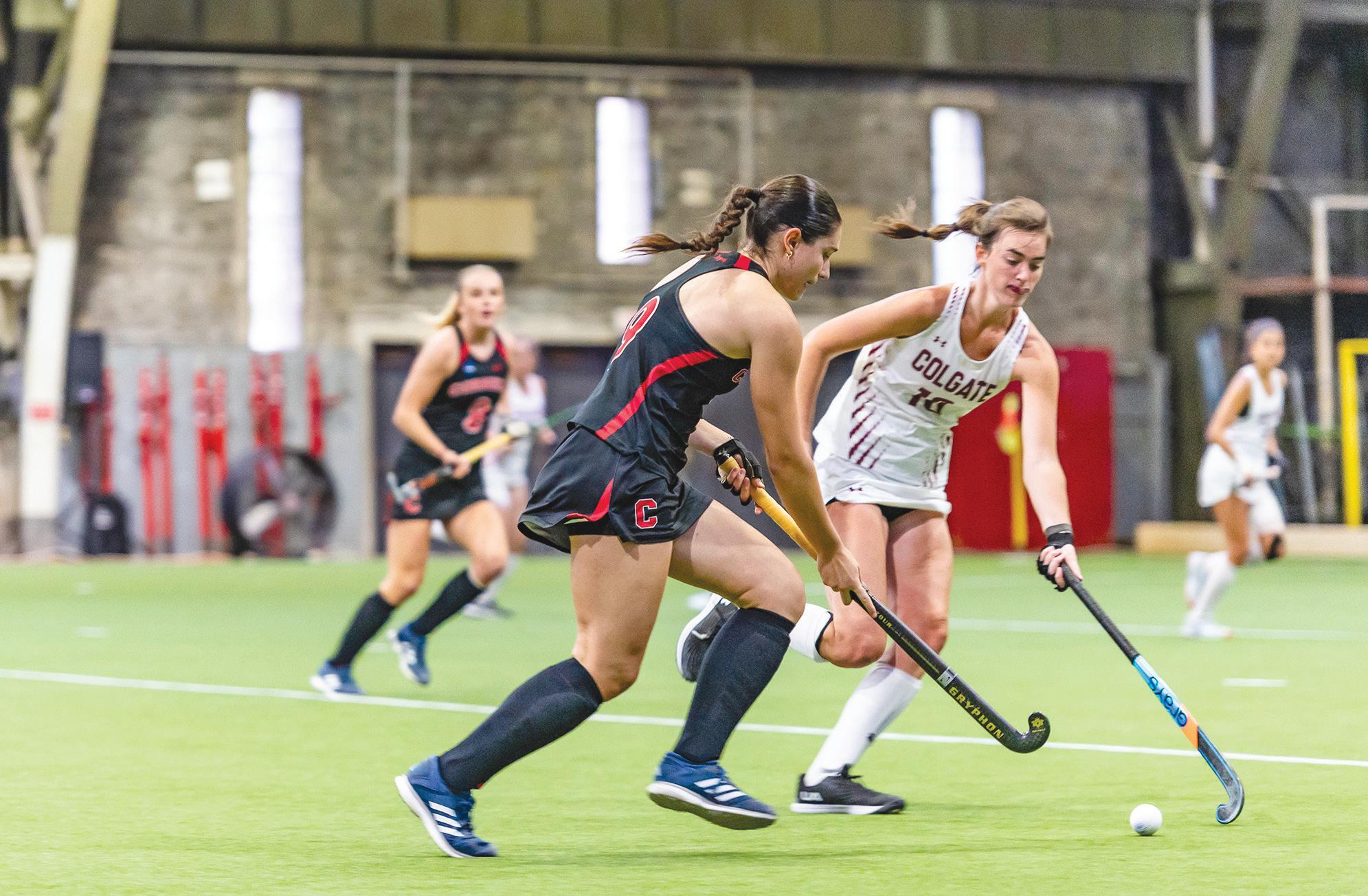
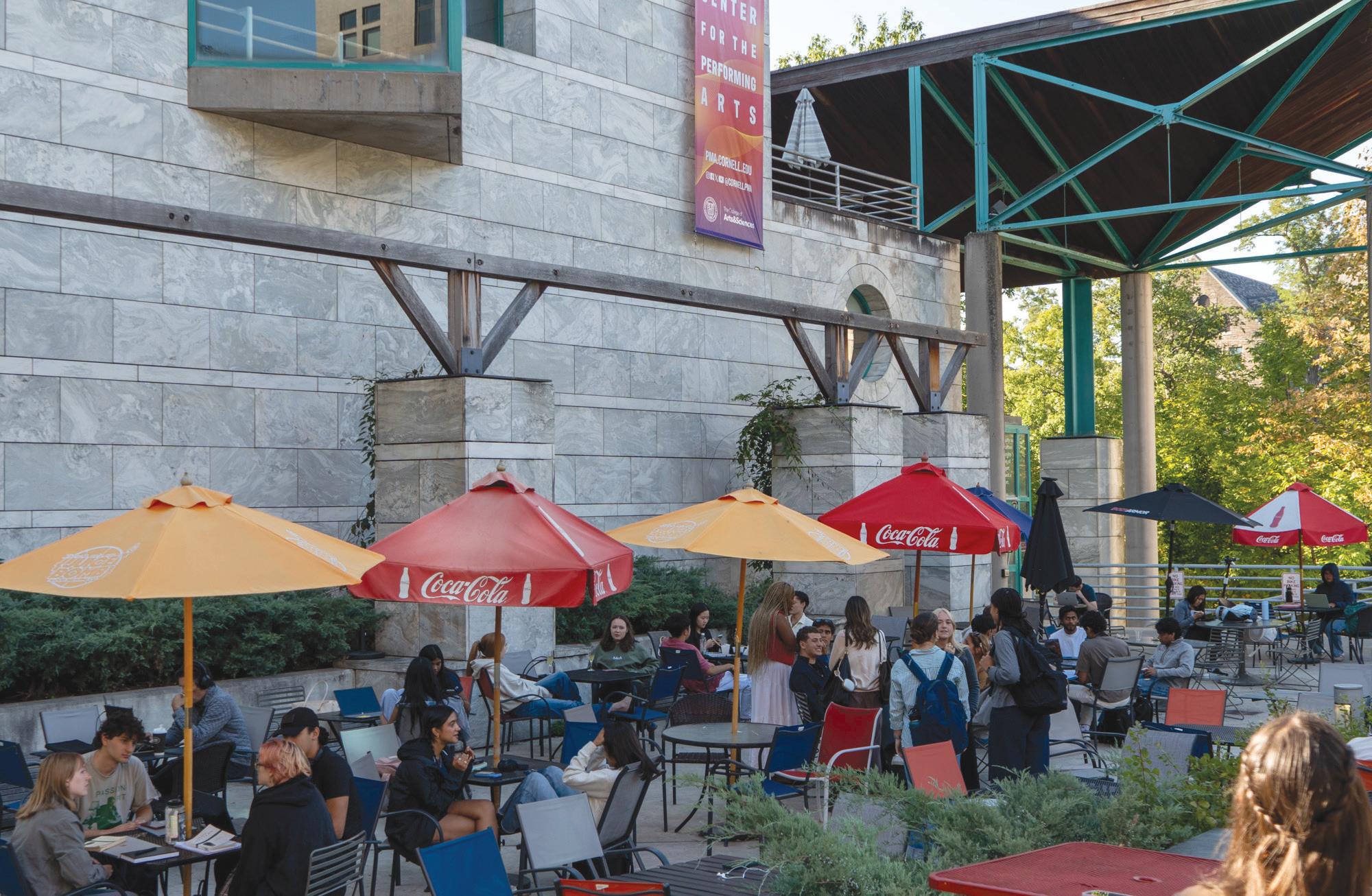
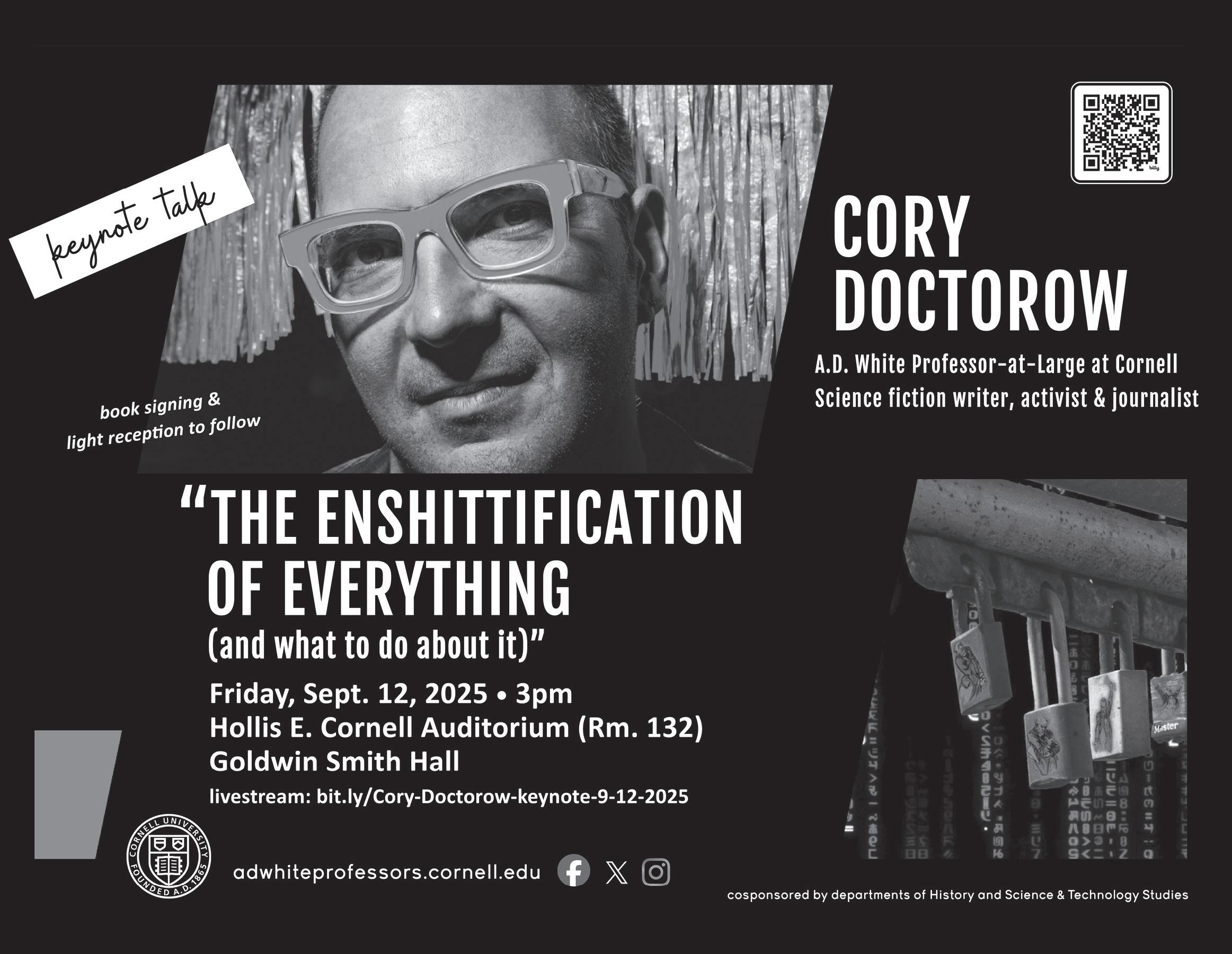
Apply by September 19, 11:59 p.m.
By ANJELINA GONZALEZ Sun Staff Writer
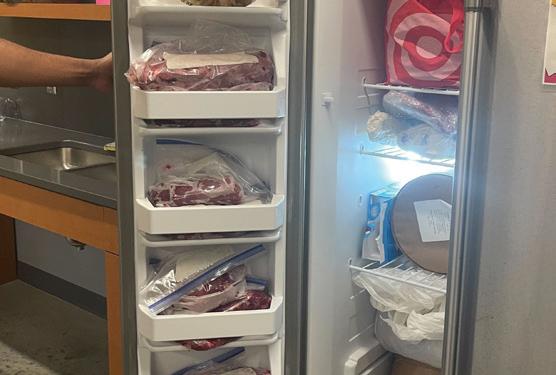
Sept. 8 — Two Cornell students legally hunted a bear and processed the animal in a Ganedago Hall kitchen on Saturday, according to a University spokesperson.
The University spokesperson wrote in an email to The Sun that the students had valid New York State hunting licenses used to hunt and bring a bear into Ganedago Hall over the weekend.
“A police report was made when a complaint was filed late Sunday night, but no charges have been filed,” the spokesperson wrote.
A report of Cornell students skinning a bear in a Ganedago Hall kitchen area prompted a response from the Cornell University Police Department on Sunday evening, according to a post on the Tompkins County Scanner Beat Facebook group.
Comments within the thread varied between degrees of backlash and humor in response to the report. Some expressed discomfort with the situation, others applauded the students for their “skill” and one user questioned the legality of their actions.
Black bear hunting season begins as early as Sept. 6 in the southern zone of the state for early firearms, according to the N.Y. State Department of Environmental Conservation. For Ithaca and Tompkins County, early bowhunting of black bears does not begin until Oct. 1. The Sun could not confirm where the bear was hunted.
The first-floor kitchen is currently closed until further notice, according to a sign in the area.
Since Sunday evening, images of the bear carcass on top of a kitchen counter began circulating on Reddit and Sidechat as students expressed concerns. One Reddit user stated, “I am a fan of hunting. But this kid needs to see someone and if protesting is a suspendable offense, this should be also……. This is not okay.”
Several Reddit users commented on the size of the bear in the image, speculating that the bear was a cub. It is illegal to shoot a bear cub while hunting in the southern zone.
Others commented on the potential health hazard of skinning the bear in a communal space.
“Really shouldn’t butcher bear meat in a shared space. They’re one of the few remaining trichinosis vectors - and that concrete floor doesn’t look sealed…,” one Redditor wrote.
By IRIS LIANG Sun Staff Writer
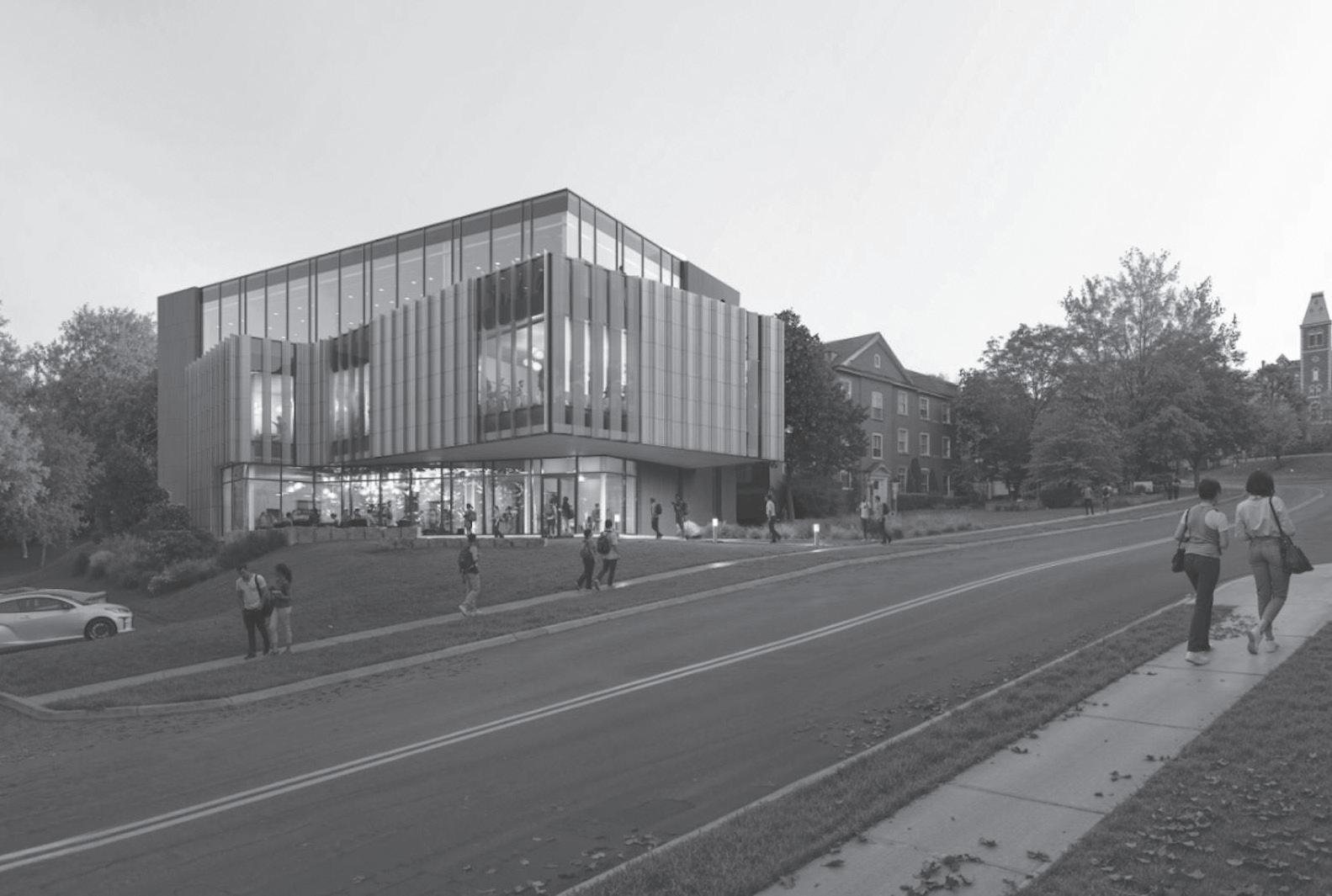
Sept. 4 — Cornell is slated to begin construction for a Hillel center on West Campus this Spring 2026 semester. With the new building, to be called the Steven K. and Winifred A. Grinspoon Hillel Center for Jewish Community at Cornell, the University will join the ranks of Ivy League and peer institutions that have a dedicated Hillel center, serving as a hub for both faith and broader student life.
The building, expected to open on University Avenue by the Fall 2027 semester, will include community lounges and study spaces, a kosher “Herb’s Cafe,” ritual spaces, a communal kitchen and a multipurpose event room — according to Rabbi Ari Weiss, executive director of Grinspoon Hillel. The center will be used to host classes, holiday programming, recreational activities and events, such as Shabbat. It expands on the existing Hillel House on North Campus, providing more formal capacity for community events and programming, according to Weiss.
A dedicated building has been a “long dream” for Cornell’s Jewish community, according to Weiss.
Cornell Hillel currently operates out of offices in Anabel Taylor Hall, whereas Hillel branches at peer institutions, such as Syracuse and the rest of the Ivy League, have stand-alone buildings, he said.
“Something I’m often asked by prospective students is, ‘Does this Hillel have a building?’ And many people are shocked to find out that Cornell Hillel does not,” Weiss said.
In 2021, after 30 years of seeking space for a community center, Cornell Hillel submitted a building proposal to develop land at 722 University Avenue following the demolition of a former fraternity house at the site. The proposal was written by Yifei Yan, senior designer at the Ithaca-based Whitman Planning and Design.
The University approved the proposal in 2024, and Hillel has since received financial support from over 1,200 parents, students and alumni donors, including Dr. Steven Grinspoon ’83 and his wife, Winifred Grinspoon ’83, who made a significant gift in support of the center and Hillel.
Hillel launched a campaign to raise $54 million by June 2026, with $25 million allocated to construction costs, $7 million to building maintenance
and $22 million for programming.
Maya Weisberg ’26, student president of Hillel, hopes the building will become a home away from home for Jewish students at Cornell.
“As we hit 100 years of Jewish life on campus, this building feels like it’s setting us up for the next century,” She wrote in an email to The Sun “It’ll be a home base for Jewish students, but also a place where our non-Jewish friends feel welcome.”
Students have been closely involved in the fundraising and design process of the new building. As the design reaches its final stages, Hillel students have the opportunity to participate in focus groups “picking [the] types of rooms, layout and design features” the new building will have, Weisberg said.
In addition to building connection within the Jewish community at Cornell, Hillel leaders hope the center will foster collaboration and dialogue with students from all identities and faiths.
Nearly a third of Hillel event participants –around 1,000 students annually – are not Jewish,
said Susanna Cohen ’12, Hillel’s chief development officer. The building will be open to all students for “recreational and study purposes [and] to attend events with their friends who are Jewish, or if they’re just curious,” Cohen said.
Hillel student member Harris Cohen ’27 envisions the space as a hub to intentionally foster interfaith dialogue.
“It can serve as a forum for meaningful conversations that help us, if not move past, at least better accept our differences while also exploring the common ground we share in a thoughtful and impactful way,” he said.
With its variety of religious and recreational spaces, the new building marks a new chapter for Hillel’s presence and community on campus.
“People are really excited. It feels like a sign that Jewish life at Cornell matters and that it’s here to stay,” Weisberg said.
Iris Liang can be reached at iliang@cornellsun.com.
A proposed rule limits the fexibility and duration of international students’ legal stay in the U.S.
By EMMA GALGANO Sun Senior Writer
Sept. 9 — The Department of Homeland Security proposed a rule on Aug. 28 that would end the long-standing “duration of status” policy for F-1 and J-1 international students and scholars, potentially reshaping how Cornell’s international community maintains their legal stay in the United States.
Duration of status is the admission period granted to most F-1 students and J-1 exchange visitors, allowing them to remain in the United States as long as they maintain their program requirements and follow visa rules.
F-1 visas generally cover international students pursuing degrees, while J-1 visas apply to exchange visitors, including researchers, visiting scholars and short-term students. Under the current system, students do not need to repeatedly file with U.S. Citizenship and Immigration Services to stay in status, as long as they remain enrolled or otherwise authorized.
However, the proposed rule would replace the current duration of status policy with a defined period of stay of exclusively four years or less.
Cornell International Services wrote in a campuswide Monday alert that “anyone who wishes to remain in the U.S. beyond that time will be required to apply to U.S. Citizenship and Immigration Services (USCIS) for an extension of status.”
The proposed policy would also shorten the F-1 post-completion grace period from 60 days to 30 days and limit the ability of students to transfer between U.S. institutions or change their academic program or degree level.
“Be aware that this is currently a proposed rule only, with a mandatory public comment period ending September 29,” the statement reads. “DHS may revise the rule, and it will only take effect if published as a final rule in the Federal Register.”
DHS estimates the proposed rule will impose $93.3 million in first-year compliance costs on colleges and universities, along with new training demands and advising challenges. Institutions may also see enrollment decline if international students perceive U.S. study as more burdensome and less flexible.
This is not the first time DHS has attempted to end “duration of status.” A similar 2020 proposal was withdrawn after significant pushback from high
-er education and advocacy groups.
Cornell International Services explained that it will continue to monitor the situation and provide updates, noting that national higher education organizations are expected to submit comments.
“Depending on the content of the final rule, there could be impacts on current students, as well as new students. We’ll know more after the comment period.”
Cornell International Services Alert
“It’s possible some aspects of the proposed rule may be revised during the review process based on public feedback,” the alert reads. “Depending on the content of the final rule, there could be impacts on current students, as well as new students. We’ll know more after the comment period.”
143rd Editorial Board
JULIA SENZON ’26
Editor in Chief
ERIC HAN ’26
Associate Editor
SOPHIA DASSER ’28
Opinion Editor
ILANA LIVSHITS ’27
Assistant Opinion Editor
SOPHIA TORRES ’26
Marketing Manager
SYDNEY LEVINTON ’27
Arts & Culture Editor
JAMES PALM ’27
Assistant Arts & Culture Editor
JENNA LEDLEY ’27
Assistant Arts & Culture Editor
MELISSA MOON ’28
Assistant Arts & Culture Editor
SOPHIA ROMANOV IMBER ’28
Assistant Arts & Culture Editor
KAITLYN BELL ’28
Lifestyle Editor
MAIA MEHRING ’27
Lifestyle Editor
ZEINAB FARAJ ’28
Features Editor
KARLIE MCGANN ’27
Photography Editor
MATTHEW KORNICZKY ’28
Assistant Photography Editor
STEPHAN MENASCHE ’28
Assistant Photography Editor
MIRELLA BERKOWITZ ’27
Multimedia Editor
HANNIA AREVALO ’27
Graphics Editor
JADE DUBUCHE ’27
Social Media Editor
HUNTER PETMECKY ’28
Layout Editor
DOROTHY FRANCE-MILLER ’27
Managing Editor
MATTHEW KIVIAT ’27
Assistant Managing Editor
VERA SUN ’27
Business Manager
ALEX LIEW ’27
Human Resources Manager
BENJAMIN LEYNSE ’27
News Editor
VARSHA BHARGAVA ’27
News Editor
ISABELLA HANSON ’27
News Editor
CEREESE QUSBA ’27
News Editor
REEM NASRALLAH ’28
Assistant News Editor
ANGELINA TANG ’28
Assistant News Editor
KATE TURK ’27
Assistant News Editor
GABRIEL MUÑOZ ’26
City Editor
JANE HAVILAND ’28
Features Editor
JEREMIAH JUNG ’28
Assistant News Editor
KAITLIN CHUNG ’26
Science Editor
MARISSA GAUT ’27
Science Editor
ALEXIS ROGERS ’28
Sports Editor
SIMRAN LABORE ’27
Weather Editor
RENA GEULA ’28
Layout Editor
ALLISON HECHT ’26 Newsletter Editor
Karim-Aly Kassam is a professor in the Department of Natural Resources and the Environment & American Indian and Indigenous Studies. He can be reached at karim-aly.kassam@cornell.edu.
When the brain perceives danger, the autonomic nervous system responds with the impulse of flight or fight. As a new academic year begins, this is not a time for tenured professors to cut and run. The media has provided a steady supply of stories of academics leaving the country because the work environment and domestic politics have become unbearable for them. Ironically, when compared to workers in the private and public sectors, tenured faculty enjoy the privilege of job security.
Professors depend on U.S. taxpayers to fund their research and teaching. At land-grant universities, this includes a commitment to provide extension services to benefit society writ large from farmers and youth to local industry to address distinct but related issues such as health, food systems and innovation. As such, professors who have studied and earned their research reputations and salary in a U.S. institution have both an ethical and a fiduciary responsibility to the individual citizen who paid their taxes and this individual’s children who are students.
Tenure is a social contract. Based on expertise, a professor is expected to speak up for the “common good.” Academic freedom does not begin with the liberty to express one’s ideas. Instead, it starts with the autonomy to search for facts, knowledge and — dare I say — “truth.” Then, freedom of expression becomes the necessary second step, but not as an end in itself. Rather, it is a part of the process of fulfilling the “public trust” in a democratic society, even if the ideas expressed may be unpopular to the establishment. Tenure is hard-earned because
Jan Burzlaf is an Opinion Columnist and a Postdoctoral Associate in the Program for Jewish Studies. Ofce Hours (Open Door Edition) is his weekly dispatch to the Cornell community — a professor’s refections on teaching, learning and the small moments that make a campus feel human. Readers can submit thoughts and questions anonymously through an online form, the Tip Sheet. He can also be reached at profburzlaf@cornellsun.com.
By the third week of the semester, things start to shift. The sparkle of move-in has faded. Syllabi that looked crisp and exciting now feel heavy in your backpack. Maybe a first quiz has been returned, or the class you thought you’d love isn’t clicking the way you hoped. Maybe the reading piles faster than you can keep up with. In my experience, week three is when doubts start creeping in.
Two myths feed those doubts. The first is the idea that everyone else already has it figured out — the right major, the right classes, even the right career path. The second is that if you stumble early, you’ve already ruined the semester, maybe even your time here. Both are powerful illusions. And both, I promise, are untrue.
Let’s take the first myth. Very few people actually have it all mapped out. The ones who look the most certain are often just better at performing certainty than feeling it. The student who proudly announces on day one that they’re premed may still change direction three times. The friend with a ten-year plan may discover a class that unravels everything they thought they knew. Not knowing isn’t a weakness. It’s the permission to explore what Cornell has to offer. It means trying things and following threads you didn’t even know were there.
Then there’s the myth of the perfect start. The idea that if you trip early on, the whole journey is lost. That thought is tempting, but deeply misleading. Beginnings are messy by nature. A low grade on the first quiz, an awkward silence in discussion, realizing a course just doesn’t fit — none of that is failure, but part of the rhythm of learning. What matters isn’t how you begin, but how you adapt and keep going.
cities, manuscripts, the long arc of centuries. It was a world I hadn’t planned on entering, but there I was.
Years later, at Harvard, I wrote a dissertation on World War II and the Holocaust. Part of that choice came from an interest I had carried since childhood; part of it came from the questions that had followed me through every field I tried — about power, about ideas, about how ordinary people behave in extraordinary times. Those questions came together most urgently in this subject. If you had shown that path to my 18-year-old self — the one convinced he was headed for political science, public service, maybe law — he wouldn’t have believed you. The road was winding, filled with detours, and nothing about it was linear or predictable. Yet those detours weren’t distractions from the path. I realized they were the path.
And that’s the point: All of us are living “in-between” in some way. In-between majors, in-between friendships, in-between the selves we brought to campus last spring and the ones we’re still trying to grow into now. The illusion that everyone else is already whole and polished is just that — an illusion.
So if you find yourself anxious this week, know this: you’re not the only one. Nearly everyone around you, whether they admit it or not, is carrying the same questions. Am I in the right place? Am I enough? Will I make it through? Those doubts aren’t proof that you’re failing. They’re proof that you’re beginning.
the individual must be self-critical and honest about their biases and the weaknesses of their work. Therefore, when a tenured professor chooses to share their cumulative insights with students or the public, it is because they have something valuable to say.
Our youth, as individuals and as a collective, dwell simultaneously within the past, present and future. This positionality enables them to right past injustices and mistakes, thereby transforming the society in which they live while envisioning new possibilities for the future. To achieve this grounding, they require an education that not only values critical reasoning but also the capacities for creative imagination and the empathetic ability to place oneself in the place of the other. This trinity of capacities — critical reasoning, imagination and empathy — is not only imparted in classroom learning but inculcated through the actions of their professors.
A telling moment of the failure of professors to guide students with practical wisdom is conveyed in the voices of young men in the acclaimed novel All Quiet on the Western Front (1929) by the German author Erich Maria Remarque. Set during World War I, a group of young idealists who enlisted to defend the fatherland are having a poignant conversation in a communal latrine. In an intimate biological moment, they talk about how their teachers persuaded them to enlist but had not prepared them for the stark brutality of war. If professors have the right to academic freedom, then we have the responsibility to demon
To continue reading this column, please visit www. cornellsun.com.
I know this because I once believed both myths myself. When I started college in northern France, I chose political science. It seemed like the “serious” choice — the kind of major that signaled stability and purpose, maybe even law school down the road. But curiosity tugged at me. I shifted toward philosophy, chasing questions about meaning and truth. From there, I wandered into history, first tentatively, then with growing fascination. Later, with the help of inspiring professors, I found myself deep in medieval history — kings,
As I wrote in my first column, beginnings are rarely neat. By week three, we feel their messiness more than their shine. What I’ve learned — through my own detours and through years of teaching — is that openness matters more than certainty. Letting go of a plan, following curiosity, stumbling and then taking the next step — that’s what turns a series of shaky beginnings into a meaningful journey.
As the semester begins in earnest, give yourself permission to be imperfect. You don’t need to have it all figured out. You don’t need to start flawlessly. You just need to keep moving.
It’s okay not to know yet. In fact, that’s where the real learning begins.
Cornell Contingent Academic Workers is an organization of employees across Cornell who work in solidarity with one another to improve their wages and working conditions and to build the collective power of the people who make Cornell run. Tey can be reached at cornellcaw@gmail.com.
On June 18, Cornell staff and faculty received an email from Cornell leadership announcing the beginning of a period of austerity. Among a slew of planned actions, the administration threateningly notes that it “anticipate[s] involuntary reductions in headcount across the university.” While the cuts in federal grants undoubtedly have serious financial impacts across the university, the email presents a skewed view of Cornell’s financial reality and gives no concrete information about projected losses and cuts. Instead the university leadership is seizing a moment of financial uncertainty to enact unilateral austerity measures.
A new wave of austerity will negatively impact all of Cornell, resulting in even more over-burdened workers, intimidated to speak out over working conditions for fear of seeming “inefficient.” Yet we need a robust workforce to advance the university’s land grant mission. Among other reasons, Cornell’s student body has grown over the past five years (alongside a 17% increase in tuition), and labs facing increased competition for federal funding need staff to successfully compete for grants. Cornell holds out the hope that when the financial picture improves, staffing levels
will quickly be brought back to “normal.” But even existing cycles of layoffs and rehiring disrupt university operations, impeding critical research, student success, and throwing into disarray the lives of Cornell community members who are “involuntarily reduced.”
[This paragraph was removed for printing purposes. Visit cornellsun.com to continue reading.]
In light of these considerations, the Cornell Contingent Academic Workers call on Cornell to stop hiding the University’s financial situation behind the Trump administration’s threats. If Cornell leadership truly wants “to do the greatest good for many years to come” as they state in their email’s closing sentence, they should start being transparent about the university’s finances. We also call on the university to create an emergency fund and to at least temporarily raise the endowment payout as specified in the “Protect our Jobs and Academic Mission” letter sent to the Board of Trustees by the Cornell Postdoc Association. Finally, we request that Cornell alumni and community members join us in advocating for the jobs of Cornell faculty and staff, so that we may continue to facilitate world-class research, promote student success and “do the greatest good.”
Hannia Arevalo ’27 is an Opinion Columnist and a Government and Near Eastern Studies student in the College of Arts & Science. Tey also serve as the Graphics Editor on the Cornell Sun’s 143rd Editorial Board. Teir fortnightly column, Ni de Aqui, Ni de Alla, focuses on exploring the intersection between Latino politics, political visibility at Cornell and the implications of religion in politics. Tey can be reached at harevalo@cornellsun.com.
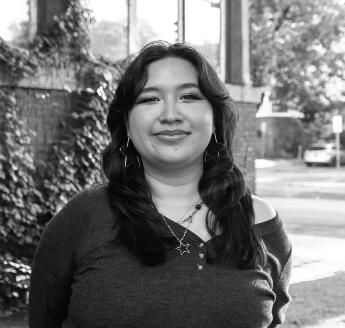
Iam not one for formal introductions. My sparse readership is often greeted with analysis and well-structured arguments with no indication of who I am beyond this column. It’s difficult to think of myself as a columnist given my track record of obnoxiously low self-esteem, yet I find myself itching for new conversations, tense disagreements and stifling existential dread. The human soul is molded by sociocultural unpleasantries, but we still choose to exist between the rough crevices. Thus, an opportunity to live beyond political structures appears in unexpected places.
One of these liminal spaces happens to be Cornell.
Cornell is a place of transition. Transcendence graces the path of each student, leaving its historical mark on them through “higher” learning and professional opportunities. Beyond that, however, lies an untouched political tension that is dismissed by the administration. Conversation on religion, identity politics, abortion and everyday perspectives is limited to the Government department and associated curriculums. No one dares to speak but the brave, and unfortunately, that’s what I am here for.
As we transition to adulthood in Cornell, discomfort and politics become unwanted acquaintances. Navigating hard conversations now, in a place of suspension, is essential to our growth as students of all different kinds of disciplines. From STEM to the humanities, this column serves as a palate cleanser from reactionary news coverage and red-pilled rhetoric permeating social media. I come to you, dear reader, with open arms — I offer you an opportunity to amuse yourself with the political banter, analytical musings, and silly spirals of a MexicanAmerican student far from home.
Beyond politics and academics, I am an illustrator and an amateur author. You have probably seen my work floating around social media and the physical newspaper, all of which are touched by my love for taboo conversation and satire. Most of my work consists of criticism toward the lack of conversation in certain subjects. In fact, this column embarked on its unsteady journey as a result of the border crisis in my hometown, one of the few subjects that have yet to find root at Cornell beyond affected groups.
As for the miscellaneous facts, I am from McAllen, Texas, a little city gently cradled by the Rio Grande river. I am a fan of niche multimedia and internet horror, all of which are carefully thought about during my (very) mandatory classes. I was born a forced physical laborer, as my mother is an avid floraphile. My desk is covered with political and religious literature, sketchbooks, and commonplace journals I never finish. I often think about how memories are finite, and I am strangely afraid of the “multiverse” theory.
This column, as stated, is a space where uncomfortable conversations are expected and welcomed. Whether you disagree with me or not, I invite you to engage in healthy discourse in my future columns via email or otherwise. To quote Jorge Luis Borges: “If an eternal traveler should journey in any direction, he would find after untold centuries that the same volumes are repeated in the same disorder - which, repeated, becomes order: the Order.” The chaos of our current lives has not been untold, we have suffered the same old circumstances for millennia — political turmoil, famine, plague, etc. — and each time the discom
To continue reading this column, please visit www. cornellsun.com.
Zara Cheek ’28 is an Opinion Columnist and a student in the School of Industrial and Labor Relations. Her fortnightly column, Big Red, White and You, focuses on the intersection of campus issues, diversity and American politics. She can be reached at zcheek@cornellsun.com.
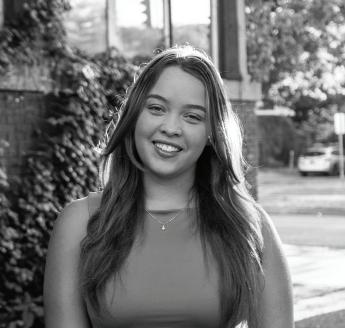
No matter how hard you try or how many issues you ignore, there is no such thing as an apolitical campus.
Every space within a university — whether it’s a classroom, a research organization, a sports team, an a cappella group, or even a bird-watching club — operates within broader political and social contexts. Tese spaces engage, either directly or indirectly, with issues that refect larger societal structures. Academic activities like course selection, research funding and curricular design are shaped by political priorities and cultural values, whether acknowledged or not. In an isolated space such as Cornell (both physically and fguratively as reside high in our ivory tower), it is easy to believe that certain issues are external, irrelevant, or avoidable. Not only does political neutrality outcast and invalidate the opinions and experiences of students and community members, but it also puts everyone at a social disadvantage once outside of campus.
Te ongoing settlement negotiations between President Trump and the Cornell administration regarding frozen federal funds, hiring freeze, dramatic budget cuts and even the renaming of the now Ofce of Academic Discovery and Impact, are stark reminders that even if we, as an institution, try to stay above or outside of the political landscape, we are still participants, whether voluntary or involuntary, in political struggles. Recent moves by the Trump administration, aimed at punishing universities for perceived political bias and student activism, proves that politics will fnd its way into campus life whether we acknowledge it or not. Silence is not safety, and neutrality is not protection. Nobody is unafected by politics, and to present otherwise is naive and leaves students unprepared for the real world we will inevitably enter. Te idea that a univer-
sity can, or should, separate academics from politics ignores the fundamental truth that knowledge does not exist in a vacuum. It is shaped by and shapes the world around it. Rather than resisting this reality, Cornell should embrace it as an opportunity to foster meaningful discourse and prepare students for civic life beyond college. As it stands, Cornell seems to attempt to stay out of a majority of social and political issues, but avoiding politics does not create neutrality, it simply upholds the status quo. Encouraging students to critically engage with the social and political elements of their interests leads to a more intellectually vibrant campus and a generation better equipped to navigate the complexities of contemporary life. If Cornell wants to live up to its mission as a university that promotes “any person, any study,” it must also commit to protecting the voices of those who challenge power, speak truth and engage deeply with the world they are inheriting. Academic freedom, student activism and institutional responsibility are not political liabilities, they are democratic imperatives.
But who am I to be making these huge claims? My name is Zara Cheek and I’m a student in the School of Industrial and Labor Relations, minoring in Law & Society and Crime, Prisons, Education, and Justice. Troughout most of my life I’ve felt like I’ve constantly been in the middle, torn between perspectives on issues from petty disagreements between friends to hot political topics during classroom debates. Tis tendency likely came from my background as a mixed race student in diferent racial and ethnic demographics, particularly going to a school built on progressive education ideals, reli
To continue reading this column, please visit www. cornellsun.com.
Cathy L. Pantano is a North Carolina-based former eCornell/Cornell University employee who was laid of in June 2025. Prior to that, she worked for Cornell since 1997, including nearly ten years as an ILR faculty member. Her work with
began in February 2002, when she co-authored the frst online HR certifcate program. Cathy can be reached at cathyleepantano@gmail.com.
Fear.
Justice does not begin with policies. It begins with voices, especially those long silent or deliberately silenced.
And justice cannot be made manifest unless someone is willing to hear those truths — however uncomfortable they may be.
Enter Gabriel Levin and his August 26 article, pulling back the curtain that has shielded eCornell for so long. A curtain that many would have preferred remained closed. While the events and circumstances chronicled in Mr. Levin’s article may seem implausible or hyperbolic, they constitute only the tip of the proverbial iceberg.
As someone who has spent 28 years at Cornell and 39 in the HR profession, I’ve seen a lot. But nothing quite like the culture that was cultivated at eCornell. People — even leaders — are human and thus imperfect. Tis is understandable and almost always rectifable. But when leaders intentionally make decisions or issue directives that are wholly unreasonable, allegedly discriminatory, or harassing, they transform the workplace into a seemingly inescapable quagmire of toxicity that thrives on, and is fueled by, a culture that values projects over people, obedience over collaboration and revenues over respect. Such is the culture at eCornell/Cornell.
A place where recognition only comes after personal sacrifce. A place where working yourself to the brink is a badge of honor, rather than a rightfully held red fag.
An evident example of this comes in the form of monthly “all hands” Zoom meetings held by Vice Provost Paul Krause. Tere, employees are publicly celebrated for outstanding performance. An ideal employee engagement and recognition technique, right? Wrong. I can only recall an instance in which an employee was praised for a work product and was not also praised for the personal sacrifces it took to achieve that product within the same breath.
Tis sends a clear message to all of us: value is measured not by what you do, but how much of yourself you’re willing to sacrifce to do it.
Tese Sisyphean demands, however normalized, to Cornell’s public commitment to employee well-being, its adoption of the Okanagan Charter, and its branding as a “health-promoting campus.” Words that are meaningless as Cornell workplaces continue to punish boundaries and reward burnout.
Tose who did muster the courage to escalate alleged discrimination or harassment through eCornell/Cornell’s designated reporting protocols did not extricate themselves from this seemingly enmeshed morass, as these eforts generally yielded few (if any) tangible results or changes.
Instead, the agents of Cornell/eCornell who knew or should have known about credible allegations of inappropriate, unprofessional and allegedly discriminatory behavior chose to delay, ignore, obscure or tolerate the chorus of those calls for full and fair investigations.
But what about those who sufered in silence? Why wouldn’t they escalate their concerns through one of Cornell’s well-documented and well-established channels?
All too frequently, these questions are also posed in other scenarios in which coercive control and abuse are present.
One portion of the answer is the same:
Te ever-present specter of retaliation from eCornell/Cornell loomed — and continues to loom — large at eCornell/Cornell. As Levin documents in his article: “After (Jackie Schwabe) reported McNally to eCornell’s HR department, he retaliated against her, she said, by writing her up that March for insubordination and warning her that she could be terminated in part because she protested the frings.”
For those of us who have been laid of, (allegedly) constructively discharged, or involuntarily terminated based on the pretext of poor — yet poorly documented — performance, that very fear, pervasive and paralyzing, didn’t just linger in the background; it played a role in shaping the outcomes we are experiencing. And, in the way the organization’s response to our claims attempts to invalidate, rather than investigate, the facts we have reported — even going so far as to subtly impugn the “independent, student-run newspaper” that dared to take our concerns seriously, when no one else would.
Years of alleged missteps and transgressions from dishonest performance reviews to inappropriate managerial conduct have culminated in the cataclysmic debacle that has unfolded over the last several months: a textbook case study in how not to respond to allegations of unlawful discrimination or harassment and how not to plan, implement and execute reductions in force. Professionally, ethically and possibly legally, the chasm between what should have been done and what was done is cavernous.
Before ofering courses and bestowing credentials in Leadership and HR, eCornell/Cornell must demonstrate sound leadership and HR practices.
Before ofering courses and bestowing credentials in Employee Relations and Investigations, eCornell/Cornell must follow its own Internal Investigation Framework, which — ironically — is what frst brought me to Cornell in 1994.
Finally, before ofering courses and bestowing credentials in Diversity, Equity & Inclusion, eCornell/Cornell must frst ensure full legal compliance with employment laws dating back more than half a century, including but not necessarily limited to: Te Civil Rights Act of 1964, Te Age Discrimination in Employment Act of 1967, Te Americans with Disabilities Act of 1990, Te Family and Medical Leave Act of 1993 and Te Pregnant Workers Fairness Act of 2022.
Tis University’s legacy — especially one that houses the School of Industrial Labor Relations, an institution that boasts sharing “knowledge that improves the lives of workers and transforms the future of work” — depends on its willingness to listen, investigate and take responsibility for what has been allowed to transpire at eCornell.
Now is the time to unearth silenced reports and conduct real investigations.
Now is the time to stop isolating those who dared to speak.
Now is the time for Cornell to align what it teaches with how it leads.
Otherwise, eCornell may best serve as its own cautionary tale, a case study in contradiction. One is left to wonder whether Cornell will join the ranks of Wells Fargo, not as a model of leadership, but as a textbook example of its failure.
By SARDAR JAMAN Sun Contributor
Two years ago, the Cornell Quantum Computing Association did not exist. Flash forward to today, QCA is at the forefront of cutting-edge work in quantum hardware, standing out as one of the few undergraduate groups in the nation building and publishing their own findings.
Founded in the fall of 2023, QCA has since obtained over 30 active members, split across 3 separate teams — algorithms, theory and hardware. Each team shares the same goal of educating students to build projects in the field of quantum technology. Quantum computing is an emerging field that utilizes certain principles within quantum mechanics, such as processing information using qubits. Qubits are unique and different from classical bits as they can exist in multiple states simultaneously, enabling certain problems to be solved much faster than with classical or traditional computers.
“We’re trying to build something that doesn’t exist anywhere else,” said Haadi Khan ’27, president of QCA. “Quantum computing is a mix of computer science, physics and math — and we’re creating a space for students to actually explore that, hands-on.”
Haadi joined the club in the spring of 2024, drawn by his interest in computer science and physics. Austin Wu ’27, the co-founder and vice president & hardware lead of QCA, started the group early in his freshman year.
QCA is divided into two separate components — an education side and a research project-focused side. The educational side of QCA plays a vital role in the club, offering lectures and problem sets similar to those found in an introductory quantum mechanics course. Since most students join with limited prior knowledge, this lecture
series ensures that the QCA members are equipped with the base knowledge required to contribute to advanced research projects. Between the two, the club seeks to comprehensively cover quantum computing.
The education side offers a series of lectures and practice problems introducing students to quantum mechanics, the branch of physics that specializes in how energy and matter behave at the atomic and subatomic scale. In the spring, the club has a deeper emphasis on the technical aspect and hosts a series of workshops. Compared to the fall, which has an emphasis on fundamental theory, spring workshops place a greater emphasis on the technical aspect of implementation - coding up quantum algorithms, designing hardware such as circuits, and understanding academic research papers. All new members have to participate in these courses, which are taught by Haadi.
The club’s research project-focused side is focusing on cutting-edge research, particularly in the design of
a novel quantum memory device— a system that has the potential to significantly improve how long quantum information is stored at room temperature. Currently, this is QCA’s biggest project, and this involves building an entirely student-led experimental setup using custom-fabricated optics and circuits.
“Most systems store quantum information for around 100 milliseconds,” Wu said. “We’re aiming for an hour. We’re hoping to break a few records.” The team believes that this is feasible by enhancing and experimenting with optics and circuit design to store quantum information more stably than previous systems.
Beyond this hardware team, the club’s theory team is working on topological quantum error correction —- a way to preserve information in fragile quantum systems by layering in protections onto fault-tolerant codes.
“You’d normally only study this in a graduate math class,” Wu said. “But we’re doing it as undergrads.”
On the other end, the algorithms team is focused on quantum approximation algorithms, specifically working on problems related to QAAa framework designed for near-term quantum computers. “They’re doing stuff in QAA, which is like quantum approximation algorithms for near-term computers,” Khan said. Since these algorithms are fitting for the current limitations of quantum hardware, this enables the team to engage in ongoing research practically.
QCA works on these projects in the basement of the Physical Sciences Building, in collaboration with Prof. Katz’s lab. QCA aims to be able to eventually publish its products in a high-impact journal.
Members of QCA handle everything from behind the circuit design and fabrication to understanding past literature and simulation.
“We read (academic) papers every week and talk about how to implement the ideas ourselves,” Austin said.
But this ambitious work is not without its challenges, as Haadi noted,“It’s a major time commitment. I probably spend 10 to 12 hours a week on QCA, and the funding is tight — physics hardware is really expensive.”
In light of these challenges, Haadi highlights the unique drive within the club.
“When someone hits a wall, the instinct here is to work harder,” Haadi said. “That’s what makes this club different.”
In the future, QCA aims to be able to publish their research, increase funding and inspire undergraduates to exceed their limits.
“If you’re curious and want to teach yourself something challenging,” Haadi said, “This place is for you.”
Sardar Jaman can be reached at sj842@cornell.edu
By LEAH BADAWI Sun Opinion Columnist
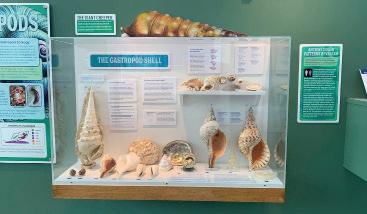
A new exhibit has hatched at the Paleontological Research Institution’s Museum of the Earth. “Marvelous Mollusks: The Secret World of Shells” opened on June 6, made possible due to support from the National Science Foundation and the Tompkins County Tourism Program.
Mollusks, earmarked by the PRI as a vastly underappreciated phylum, are one of the most diverse and ubiquitous groups of animals on the planet, ranging from freshwater clams to deep-sea octopuses. They have an extensive history in the Finger Lakes, and populate a range of habitats — including oceans, forests and mountaintops.
“They are in our daily lives, from the garden to the dinner table to jewelry to design.”
Warren Allmon
According to Warren Allmon, director of the PRI and professor of paleontology at Cornell University, mollusks are the second most species-rich group of animals after insects. The exhibit aims to illustrate the ways
mollusks shape our ecosystems, history and even our palate.
“They are in our daily lives, from the garden to the dinner table to jewelry to design,” Allmon wrote in an email to The Sun.
Using videos, interactive displays and presenting 500 rare specimens from the institute’s collection of over one million fossils and modern shells, the exhibit tells the story of mollusks. From their origins to the present day, the Museum connects mollusks’ environmental presence to art, medicine and conservation.
Some features of the exhibit include a life-sized giant squid and models of other cephalopods, which are the largest invertebrates to have ever roamed the Earth. Live land snails from central New York are also present in the exhibit, including the Chittenango Ovate Amber Snail, which is one of the most endangered mollusks in the world today.
Allmon explained that habitat loss and climate change pose serious threats to mollusks, and the institution hopes to educate society and encourage wise stewardship of the Earth.
“Many species of mollusks are endangered due to human activities,” Allmon wrote.
Formerly affiliated with Cornell University, the PRI and its other public venue for education, the Cayuga
Nature Center, collaborate closely with numerous University departments in research, teaching and public outreach.
“Many species of mollusks are endangered due to human activites.”
Warren Allmon
As an independent nonprofit organization, the PRI has been struggling financially since 2023, when a $30 million donor pledge collapsed, nearly
splitting the museum’s annual budget in half and forcing them to downsize operations. Federal funding uncertainties exacerbated the issue this year as funding cuts lost the museum nearly $100,000 in grant money.
While a recent donation of $1 million has breathed new life into the PRI’s efforts to enrich the greater Ithaca community, the future of the Museum of the Earth still remains uneasy.
Leah Badawi can be reached at lbadawi@cornellsun.com.
By Ruhi Datar
Ruhi Datar is a sophomore in the College of Arts and Sciences. She can be reached at rrd56@cornell.edu.
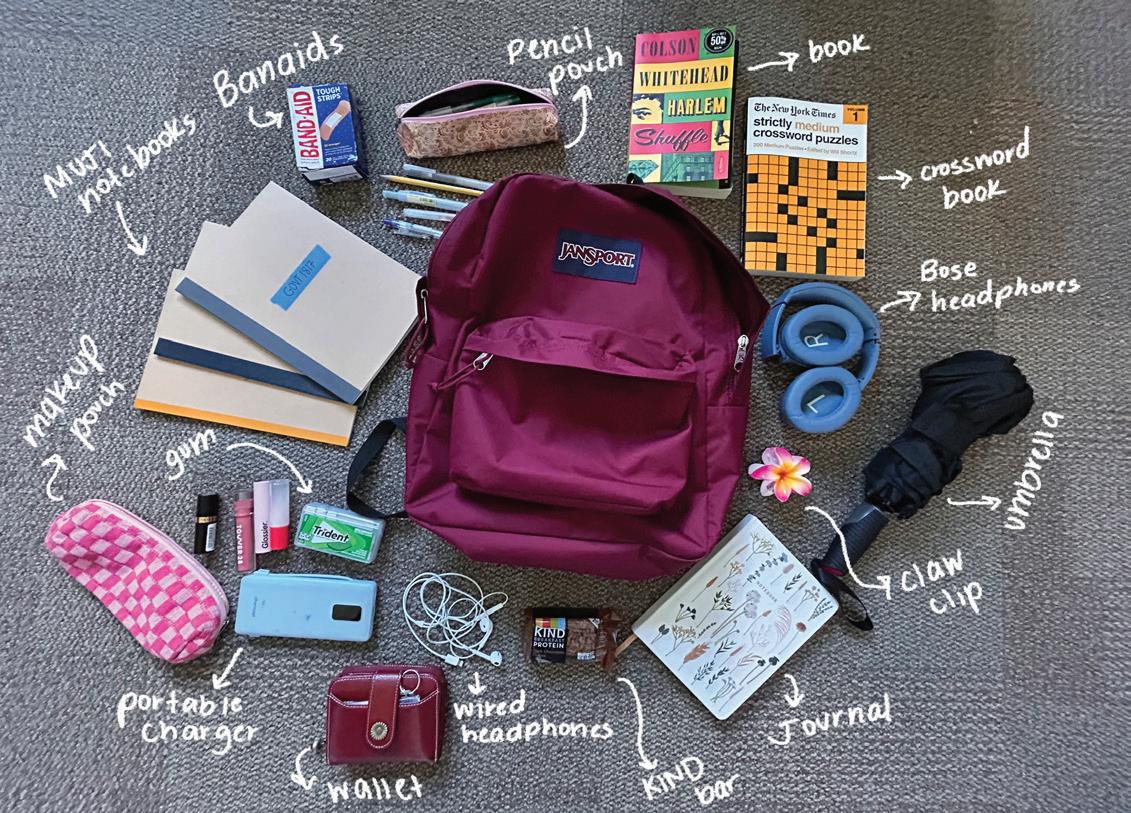
Iam a firm believer that you can gather a lot about a person based on the contents of their everyday bag. Not every item has to be profound, but each one holds a story that says something about its owner.
That’s the reason that I’ve always religiously watched Vogue’s What’s in My Bag videos. Whether it be a tote, a backpack or a purse –– or in the case of Bella Hadid, a YSL purse –– there’s something oddly intimate about seeing the mix of essentials and keepsakes someone hauls around.
It’s not just about what they carry, but why they carry it –– who gave it to them, what it reminds them of or why it feels essential. After years of watching other people unpack their bags, I figured it was only fair to open mine up and share the 20 things currently residing in mine.
Wallet; the perfect essential for housing my keys and an Apple AirTag — especially because I am prone to losing my belongings. I have spent years searching for the perfect wallet, and this summer, I stumbled upon a compact, but still spacious wallet in my favorite color: red.
A tiny pink embroidered pencil pouch; for storing my favorite writing implements. My dad used to always travel to China on business trips, and every time, he would bring back some sort of souvenir, including this pencil pouch. It’s the perfect size for a couple pencils, pens and highlighters for class.
A portable phone charger; an absolute necessity for days when you’re on-the-go. For years, I somehow survived without one, until one of my friends accidentally left hers at my house. I started using it, not realizing it was hers, and soon started taking it with me everywhere I went, making my life infinitely easier. I am no longer worried about strategically rationing my phone or laptop battery. Even though the charger is (technically) stolen, it is one of my favorite things I carry with me.
Trident gum; the number one must-have for those who love eating food that contains garlic and onion (like me!); so naturally, I have to have gum on hand at all times.
My journal; for writing about my minor conveniences, making miscellaneous lists, drawing random doodles and occasionally, for jotting down actual thoughts worth keeping.
My laptop ; the non-negotiable. School work isn’t happening without it.
A book; every semester, I vow to myself that I will read more, so I always keep a book on me –– partly a desperate attempt to look more well-read and sophisticated. My current read is Harlem Shuffle by Colson Whitehead, which I highly recommend.
Mini Glossier perfume; this was my favorite perfume in high school (basic, I know), and even though I no longer wear it, I still keep the mini version with me. It’s a nice backup and a small reminder of my high school self.
Glossier hand cream; another Glossier purchase I fell victim to. My hands get painfully dry during the Ithaca winters, so this cream lives permanently in my bag.
A tiny makeup pouch; inside: a Revlon lipstick in Rum Raisin, a Tower28 jelly lip gloss and a Maybelline brown eyeliner. Perfect for any touch-ups during a long day on campus.
My Bose headphones; as someone who struggles to focus or sit down and actually get work done, I have found these headphones to be a lifesaver. They are comfortable enough to wear for hours, have incredible noise cancellation and come in various colors.
Wired earphones; I only really wear these around campus for the purpose of having a less-bulky alternative to my headphones. I can’t stand walking anywhere without having either music or a podcast playing, and wired headphones feel less stressful than airpods (which I would, without a doubt, lose at some point).
MUJI notebooks; a solid lightweight notebook option, this is for the student who likes taking notes by hand. Last year, my backpack was ridiculously heavy, mostly because I was lugging around too many big notebooks. One of my friends suggested the MUJI notebooks, and honestly, they have made an enormous difference. They are light, and I never end up wasting extra pages I don’t need anyway.
My water bottle; a 36 oz bright pink Yeti water bottle that has not left my side since the first time I bought it four years ago. Sunglasses; for the (very few) days that the sun decides to show up in Ithaca. Umbrella ; I have been caught in too many torrential downpours to ever risk leaving this behind again.
Embroidery kit; this isn’t a permanent item, but I am currently working on an embroidery assignment for one of my classes. I like to pull it out and work on it during small breaks throughout my day.
Granola bars ; I like to carry the Kind Breakfast Protein Bars on days I get hungry between meals.
A flower claw clip; one of my friend’s from home brought it back for me from a trip to Hawaii. At some point, another one of my friend’s dogs got a hold of it and left tiny bite marks. It’s a little beat up now, but that’s what makes it special.
A crossword book; last year, I got into crosswords and ended up buying a puzzle book to keep in my bag. I like pulling it out when I have random downtime or I want a break from my phone.
Looking at it all together, my bag feels like a mix of practicality and personality. Some things I carry because I have to, others because I want to and a few simply because they remind me of a person or a moment I don’t want to forget. It’s a little messy, a little sentimental, but it’s mine
By Sanika Saraf
Sanika Saraf is a sophomore in the School of Industrial and Labor Relations. She can be reached at ss4353@cornell.edu.
Anew Cornell semester means the return to the beautiful Ithaca fall weather, hanging out on the slope with friends, the existential dread of classes and, most importantly, spending all of the $500 allocated to my Big Red Bucks (BRBs) on fun little drinks.
My usual routine last year consisted of going to Olin Library to “lock-in” and instead spending seven BRBs on a brown sugar shaken espresso (along with yapping in Libe Cafe, of course). So on the first day of school, I was incredibly shocked to see that my usual Starbucks favorite was replaced by a whole host of new drinks by an unfamiliar coffee provider: La Colombe Coffee.
Cornell began looking for a new coffee vendor in 2024, after Starbucks punished union activity in Ithaca, and announced La Colombe’s new contract with Cornell in February of this year.
However, a new semester means new beginnings, so I decided to embark on a new quest of trying to discern if La Colombe coffee is worth my BRBs. Thus, here is a comprehensive review of popular coffee orders to decide if La Colombe is truly worth your coin.
Iced Oat Milk Latte at Libe and Rusty’s
Oat milk lattes are my go-to at any coffee establishment, and in my opinion, are an indicator of the quality of the café. When done right, a latte should combine the creaminess of milk with the slight bitterness and boldness of the espresso grounds into a tasty drink.
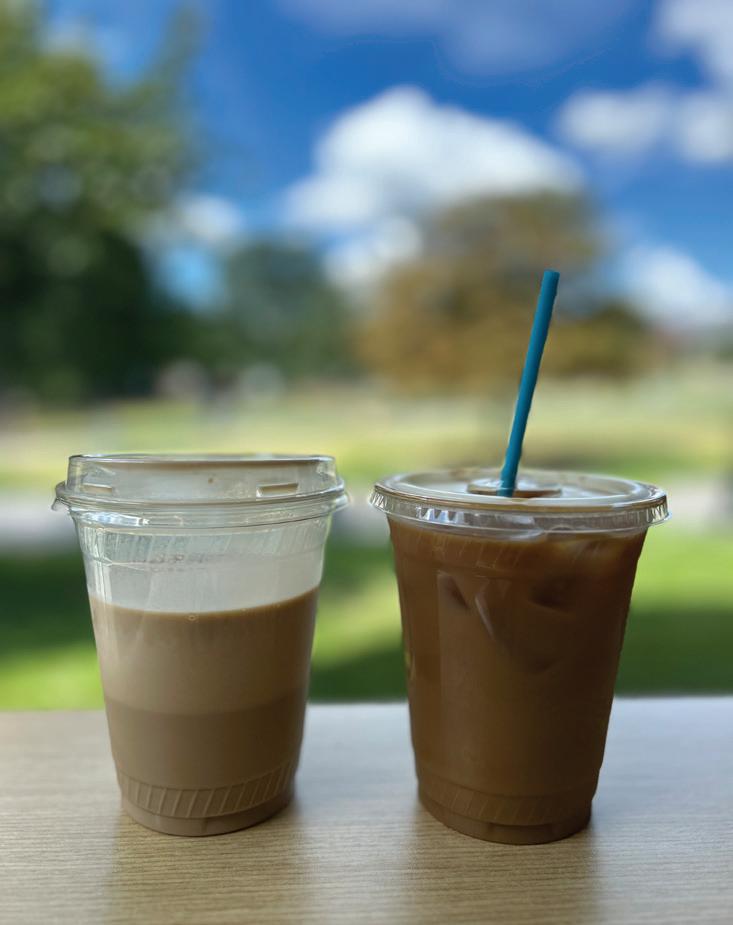
I first had this drink at Libe on the first day of school, and I left the café feeling incredibly disappointed. I found that the drink was too milky. The La Colombe espresso grounds were too mild for the nuttiness of the drink, to the point where I thought I was drinking straight oatmilk. Never a promising sign of a good coffee provider.
However, I had to hold out hope that flavorless coffee wasn’t going to define the future of drinks at Cornell. I had to give this drink another chance at Rusty’s.
To my surprise, this latte tasted totally different from the one I had at Libe. In fact, it had the opposite effect. This drink lacked the overwhelming creaminess characteristic of my original experience at Libe. This was a coffee worthy of its prestigious title, one reminiscent of a classic iced coffee lightly touched with a splash of oat milk.
When I’m in a pinch and sleepy, and in need of caffeine, my go-to is always a cold brew. A bolder drink, I purchased it to stay awake in my 8 a.m. economics class (but ended up still sleeping right through it anyway). This cold brew was just simply too mild – it lacked the “wow” factor needed to fight my exhaustion.
To be fair, I did add a dash of oat milk, so
maybe that diluted the flavor but I digress. Regardless, though, this drink still left a bad taste in my mouth. After one sip, my mouth felt gritty — an effect of the cold brew not being mixed properly, causing the grains to clump up at the bottom of my drink. I still drank this cold brew for caffeine purposes, but it wasn’t an enjoyable experience.
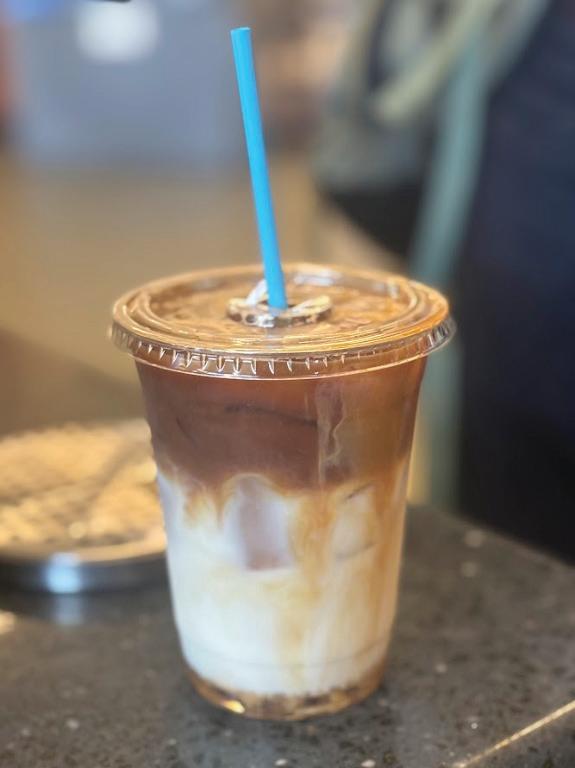
Caramel Macchiato from Libe
I’m normally not a fan of flavored, sweet coffee drinks, but I bought and tried this drink for research purposes. And honestly, I was pleasantly surprised.
This drink was extremely creamy, even with the oat milk, and it balanced a perfectly slight coffee flavor. I will say, this drink was a little too sweet for my personal preferences. But even though I couldn’t get through the whole drink, if you’re not a coffee lover (or if you go crazy for a sweet specialty drink moment), the Caramel Macchiato is definitely worth your BRBs — and might be one of the best drinks on La Colombe’s menu.
And if you’re like me, someone who prefers unflavored, unsweetened coffee, this is still a pleasant sip.
The Draft Latte
La Colombe offers a unique batched latte on tap called the “Draft Latte.” This latte is supposed to have a frothy and foamy mouth-feel due to the added nitro and is the same thing as the La Colombe bottled Draft Latte.
In my experience, though, batched drinks can be a red flag. They usually fall flat in terms of quality and flavor, and I would much rather pay for a latte made in real time (which is also a dollar cheaper). Additionally, because the Draft Latte is premade, the milk used contains dairy, a huge deal breaker for alternative milk drinkers.
I appreciate La Colombe delivering something unique; however, I found that this drink was, again, way too milky. La Colombe’s espresso is definitely not bold enough for whole milk, and this drink honestly tasted like drinking a glass of cold milk with a hint of coffee. The only redeeming quality of this drink is its above-average caffeine content: 160 mg.
While I personally won’t miss Starbucks on campus, La Colombe isn’t much of a satisfying replacement for me. Most of the drinks fell short of my expectations. Rather, they drained my BRB balance.
If you’re going to spend your BRBs on any drink, you can’t go wrong with the Caramel Macchiato. But I’d steer clear of the lattes and instead order a Peet’s coffee at Café Jennie or Novick’s. Although, if you’re feeling nostalgic for the signature Starbucks taste, Mac’s Cafe will still provide Starbucks-based drinks till the end of the semester.
By YUHAN HUANG Sun Staff Writer
Sept. 5 — In the first University Assembly meeting of the academic year on Aug. 26, members discussed requesting its representation on the 2025-26 Code and Procedures Review Committee following news that the Student Code of Conduct will be revised.
The 11-member committee — which includes representatives from the Student Assembly, and Graduate and Professional Student Assembly — will review current policies, solicit input from stakeholders and propose amendments to the Code, according to a University-wide email sent by Ryan Lombardi, the vice president for student and campus life, on the same day. The committee will not include other members that exclusively represent the U.A.
Prof. David Bateman, government, a ranking member of the U.A. and voting member on the Campus Codes Committee, said “there is no obvious reason why we shouldn’t have representation” on the review committee.
During the meeting, U.A. members voiced concerns about the formation of the review committee.
The review committee includes Student Assembly President Zora deRham ’27 and GPSA President and graduate student Nicholas Brennan, who are voting members of the U.A. and are required Student Assembly and GPSA constituents of the review committee per the Code.
According to a University spokesperson, “The SA and GPSA Presidents not only serve their respective Assemblies, per the Code but also are members of the University Assembly and can represent the concerns of both assemblies.”
U.A. members were unclear on how the members of the review committee were selected.
Eeshaan Chaudhuri, U.A. vice chair for operations, proposed writing a resolution to ask the administration “where they’re pulling people from” for the review committee, and how the ratio of administrators to students and faculty on the committee was decided.
There are currently four undergraduate and graduate students on the 11 person committee including Quinn Rinkus ’26 and Jennica Yoo ’27, a resident advisor representative. The remaining seven faculty and administrators involve Lombardi and Christina Liang, senior associate dean of students and director of the Office of Student
“[It looks like] the University is deciding who to have as representation on their committee, not only without consulting those under-committees, [but] not us,” said Prof. Jonathan Butcher, engineering, and 2025-26 U.A. Campus Codes Committee chair.
Conduct and Community Standards.
U.A. members also discussed representation of the wider University community on the review committee.
“Although right now it’s called the Student Codes, it was previously Campus Codes, because everyone is affected, right?,” U.A. Chair and graduate student Irene Gatimi said, referring to the 2021 implementation of the Student Code of Conduct that replaced the Campus Codes of Conduct.
The replacement controversially switched the authority over, and administration of, the Code from the U.A. Campus Codes Committee, formerly known as The University Assembly Codes and Judiciary Committee, to Lombardi.
Unlike the former Codes, which also applied to faculty and staff, the Student Code of Conduct applies exclusively to students, and is an attempt to make students “active participants” in the judicial process, according to a 2021 statement by Lombardi.
The University spokesperson also wrote that Lombardi will “consult with the Assemblies” during the code revision process, and that “further details regarding the collaborative consultation process will be announced in the coming months.”
According to the University spokesperson, the Student Code of Conduct revision “does not conflict with
University Assembly business and that of the University Assembly Campus Code[s] Committee’s charge” as established in Section 4.1 of the U.A. bylaws.
The U.A. “will have the opportunity to review any motion put forth to the UA, as well as propose resolutions, or review and amend any resolution submitted to the UA related to the Student Code of Conduct,” the University spokesperson wrote. “Any proposed amendments that pass the UA will be reviewed by the Code and Procedure Review Committee, which will advise the Vice President of Student and Campus Life.”
The U.A. will write a resolution under the Campus Codes Committee that will encourage or enforce the addition of the U.A. position, according to Gatimi.
“There’s a lack of transparency as it stands right now,” Gatimi said. “And even [a] lack of transparency is not democratic.”
The U.A. Campus Codes Committee plans to present a resolution at the next U.A. meeting on Sept.16 to inquire about and request U.A. representation on the review committee. If passed by the U.A., the resolution will be submitted to President Michael Kotlikoff.
By ROWAN WALLIN Sun Senior Writer
Sept. 8 — The Cornell Lab of Ornithology welcomes the Ithaca community on Saturday, Sept. 13 for its annual Migration Celebration. The free, family-friendly event commemorates the fall bird migration.
From 10 a.m. to 3 p.m., visitors can explore the interactive exhibits, spectate performances and mingle with scientists, artists and conservationists who work in the world of cutting-edge avian research in the Cornell Lab of Ornithology.
“This is a one-day, annual event that’s been happening for more than a decade,” said Lisa Kopp, visitor experience manager at the Lab.
“We throw open the doors of the Lab and invite the public to learn straight from our researchers and staff about all the cool things happening here.”
The celebration spans the Lab’s visitor center, trails and outdoor spaces in Sapsucker Woods. Attendees will find nature walks, science demonstrations and interactive workshops woven throughout the event. For early risers, the Cayuga Bird Club will lead a birdwatching walk at 8:30 a.m. before the main festivities begin at 10 a.m.
One of the event’s biggest draws each year is seeing live birds on display. The Cornell Raptor Program showcases live eagles, hawks, falcons and owls under a tent near the visitor center entrance. For some visitors, the intimate encounters with these birds are unforgettable.
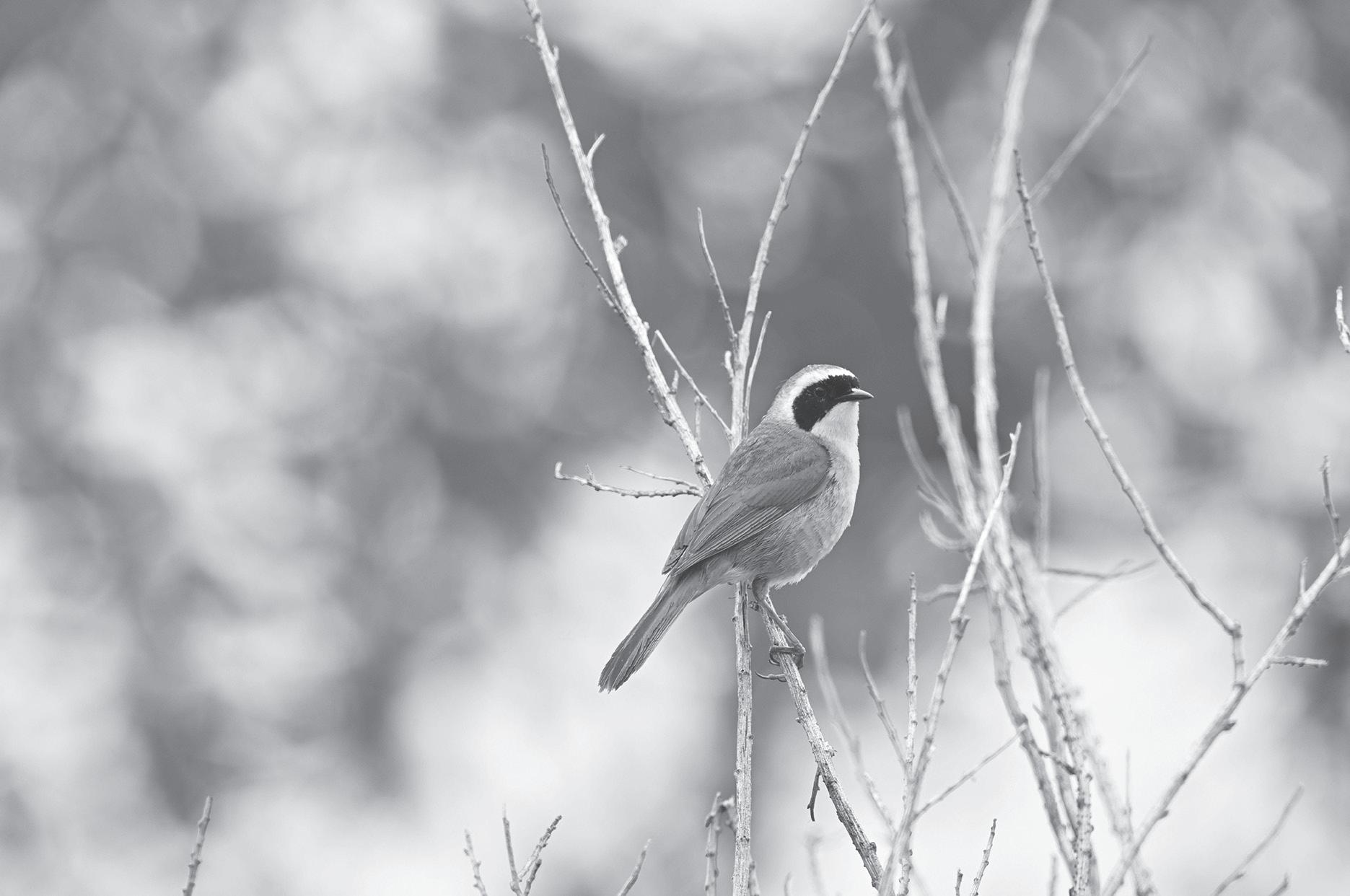
“I saw these huge raptors … they were so cool,” wrote Claire Chiu ’28, who attended last year’s event, to The Sun.
“The staff were really enthusiastic and told us a lot about how they took care of the birds.”
The presentations inside of the visitor center offer perspectives on birds and nature. At 10:15 a.m., Haudenosaunee storyteller Perry Ground ’91 will share traditional legends in Stories from the People of the Longhouse. Later, local artist Jane Kim — known for her Wall of Birds mural — will lead a sketching workshop in the woods and guide a collaborative mural painting in the afternoon.
Migration Celebration places a strong emphasis on interactive learning. Visitors can try out the popular Merlin Bird ID app, a bird identification app which was developed at the Lab. They can also test binoculars with Wild Birds Unlimited and explore wildlife sound analysis with the K. Lisa Yang Center for Conservation Bioacoustics. Some exhibits will also cover new topics this year, such as how to make windows safer for birds and how to create bird-friendly habitats at home.
“Migration Celebration will be very exciting,” said Tara Pollock ’27, who will be tabling at the event alongside other Cornell representatives of the Bird Collision Prevention Alliance — who seek to spread awareness about bird-window collisions — and BirdCast — who use weather radar data to monitor and predict bird migration patterns in North America. “We will discuss
bird friendly initiatives, especially with regard to glass as it is one of the top killers of birds.”
Bird banding demonstrations will also offer attendees closer insights into how scientists track and study bird migration patterns by placing identification rings on their legs, while the tours of the Cornell University Museum of Vertebrates will showcase varied taxidermied specimens such as birds, reptiles, amphibians, fish and mammals.
“It’s a really special day,” Kopp noted. “Everybody who comes shares a love for nature. You leave feeling inspired and hopeful, knowing you’re part of something bigger.”
Beyond attending, visitors can support the Lab’s mission by joining citizen-friendly, bird-watching science projects like eBird, Project FeederWatch or the Great Backyard Bird Count.
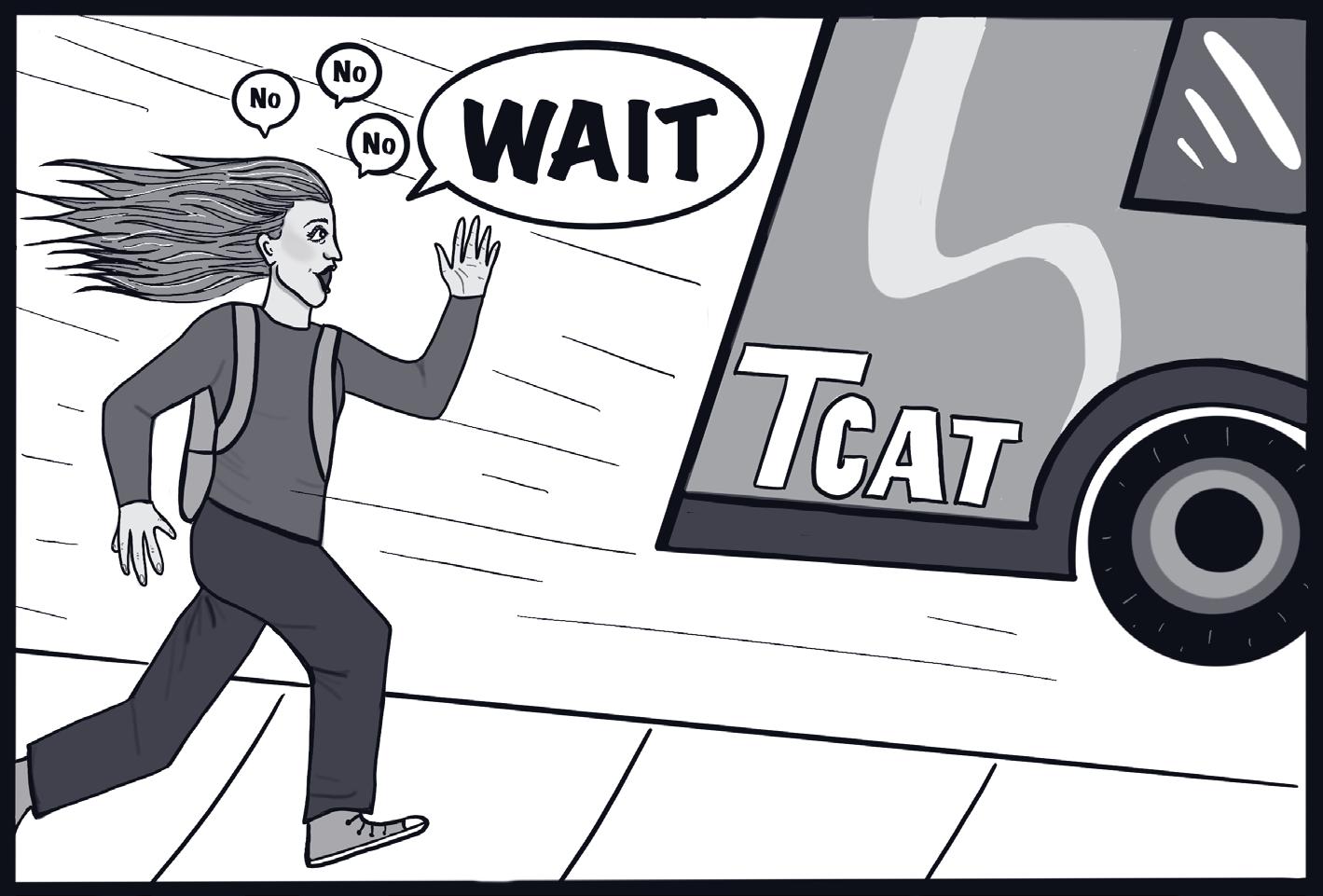
For students looking for transportation to the event, TCAT Route 77 provides flag-zone weekend bus service to the Lab.
For Hannah Rams ’27, an active member of the Cornell Raptor Program who volunteered to present live birds last year and also enjoyed the event’s activities, Migration Celebration serves as an inviting event for students interested in the world of birding, no matter their prior knowledge of birds.
“It’s super beginner-friendly,” Rams said. “[The activities, live birds and interactive exhibits] put on by the Lab make it a really enjoyable experience.”


“Welcome to Philly, we are excited to get you,” general manager of the Philadelphia Eagles Howie Roseman said over the phone.
Surrounded by friends, family and his supporters, Jalyx Hunt ’23 put on an Eagles cap and smiled — he had secured a spot in the National Football League.
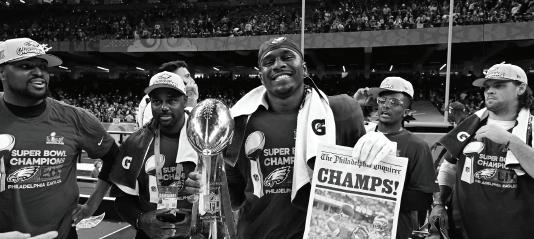
289 days later, Hunt celebrated as he took down NFL quarterback Patrick Mahomes in the Super Bowl — and later got to hoist the Lombardi trophy with his teammates.
Meet now linebacker Jalyx Hunt, a former member of the Cornell football team now turned Super Bowl Champion.
Cornell College Career and The Decision to Transfer
Hunt’s collegiate football career started for him at Cornell following his time at University High School in Florida. He originally played wide receiver and led the county in yards per catch as a senior. While he was successful on his high school team, Hunt said that he was not “heavily recruited” and committed to Cornell because they offered him “an opportunity to play Division I football and to be exposed to a high level of academics” one that he believed would help him with his success in the long-run.
“It was the perfect blend of athletic and academic opportunity for me at that stage of my life.”
Jalyx Hunt ’23
“My mom is a teacher, so I grew up in a family that really valued academic success and I was excited to be a part of the Dyson School of Applied Economics and Management,” Hunt said.
When Hunt started practicing for Cornell, position changed from offensive to defensive — his freshman year, he primarily played for special teams and recorded two tackles in his first seven games as a member of the squad. In August
2020, Hunt met Rachel Booth ’22, a former member of the Big Red Sports Network who he promised would “be a part of his team” one day when he made a professional career for himself. Booth now works for Hunt as his marketing agent.
While his sophomore season was cancelled due to the COVID-19 pandemic, his junior year saw him transition to defensive position completely as he played 10 games as a safety and recorded 26 total tackles. Hunt pointed out how “instrumental” the two full seasons of football were at Cornell to his development as a player.
“Coach [Jared] Backus and Coach [Will] Blanden taught me a lot about showing up and being a leader,” Hunt said. “The Ivy League’s emphasis on academics and athletics taught me really important lessons in discipline and time management.”
Following the end of his junior season, Hunt decided to transfer to Houston Christian University as he said he was looking for “a new environment” that would prepare him for a career in the NFL.
Hunt was in for one more position change at HCU as he went from playing safety to lining up closer to the line of scrimmage as a defensive end and linebacker. He said that the coaching staff at HCU were “crucial in recognizing” his potential as an edge rusher and facilitated his position transition.
“Their guidance was pivotal in my growth and eventual path to the NFL,” Hunt said. “Transferring from Cornell to Houston Christian was a really big decision for me … the transition was challenging and to a lot of people looked like a gamble, but it was ultimately really rewarding to take the skills I learned at Cornell to a new environment.”
Hunt would start in all 11 games in his first season for the Huskies and recorded 46 total tackles and 6.5 sacks for 43 yards lost between them. He led the Southland Conference with his 11.5 tackles for loss and three forced fumbles.
Pro Start in Philadelphia
At the end of his third full collegiate season, Hunt made the deci-
sion to declare for the NFL draft.
On April 29, 2024, Hunt got a call from Roseman that changed his life — the Eagles had decided to give him a chance to make his NFL dream come true.
“[Getting drafted was] just surreal,” Hunt said. “A dream come true. When you think of all the hard work, the sacrifices, and perseverance not just from me but my family as well, to see it pay off in that moment is wild. I had always believed in my ability to make it to the next level, but to live out a childhood dream is such a blessing.”
But making it to the league was just the beginning, Hunt trained hard during the rookie camps in the fall to secure his spot on the 53-man active roster — and in his rookie campaign for the Eagles, Hunt excelled as he played in 16 out of 17 NFL regular season games, recording 21 total tackles, 12 of which were solo. In the postseason, he put up 10 total tackles.
“Even though I was still raw when it came to skill and experience at a new position, I had the discipline, adaptability, and work ethic that I developed in college that ultimately helped me adjust to the professional level.”
“The NFL is a different game. The speed, complexity, and physicality are on another level. However, my experiences at both Cornell and Houston Christian definitely prepared me well.”
Jalyx Hunt ’23
But, the crowning jewel of football experience happened on Sunday, February 9 where Hunt took on the biggest stage in football and faced off against the Kansas City Chiefs.
“Playing in the Super Bowl was an incredible experience,” Hunt said. The environment and atmosphere is definitely unique and something I’ll never forget.”
During this game, the Eagles defense shut down the Chiefs
offense and its quarterback Patrick Mahomes, allowing them to score no points to the Eagles 24 in the first half. The Eagles defense recorded six sacks against Mahomes — the most he has ever been handed in a single game in his eight-year career in the National Football League — and forced three turnovers.
During the second quarter, Hunt made a play where he brought down Mahomes and forced a third and long situation for the Chiefs offense. With this play, Hunt became the first ever Cornell alumnus to record a sack in Super Bowl history. Hunt is also the first Cornell defensive player to win the NFL Championship.
“That sack really begins weeks in advance with hours of film and practice to prepare for exactly that play, and others like it,” Hunt said. I’ve been really fortunate to learn from some great players and staff with the Eagles and they played a big role in setting me up to succeed so in a moment like that, all that’s left is to execute.”
Now, his focus is on training for the 2025-2026 NFL season and working on his community initiatives which he is “very passionate about” with his media agent Booth. These initiatives include supporting Philadelphia schools like the Little Flower Catholic High School for Girls women’s basketball team and visiting the University High School in Orlando, which he is an alumnus of.
“I plan to continue to give back and have a positive impact both on and off the field.” I just want to continue to build at my position, one step at a time. I also have really enjoyed getting to know the Philly community.”
Jalyx Hunt ’23
July 8 — A lot goes into transferring to an Ivy League school — applications, essays, Zoom calls and everything in between.
Between video chats and phone calls with the Cornell men’s hockey coaching staff, incoming sophomore defenseman Luke Ashton undoubtedly had many questions about Cornell, and everything it would take to get there.
Still, though, he had a nagging thought that he needed to ask the coaches.
Do the Cornell fans really throw fish at Harvard?
“It was one of the things I had to question the coaches about because I saw videos online,” Ashton said with a laugh.
With his transfer announced on April 24, Ashton is one of two sophomore transfers set to debut in Ithaca this fall, and part of a sizable 14-player incoming class that stands as one of the largest in recent memory. After spending his freshman year at Minnesota State University, Ashton knew “right away” that Cornell was the place he wanted to be.
“I’m super grateful for my time at Minnesota State. I had a great time, but I felt like I needed a change in Cornell,” Ashton said. “When I was looking at other schools, Cornell had a lot of things that I felt like I missed that were offered, and I was super excited to head in their direction.”
The current landscape of college hockey is a murky one. On top of the transfer portal, a Nov. 7, 2024 rule change now allows Canadian Hockey League players to play in the NCAA — a feat that was previously banned due to the NCAA Division I Council considering the CHL a “semi-professional” league. That’s all while the House v. NCAA settlement was approved this summer,
allowing schools to pay their athletes and essentially ending amateurism in college sports. Along with the rest of the Ivy League, Cornell will not opt into the settlement, continuing the longstanding tradition of the Ivy League’s attitude towards athletics — still, no Ivy League athlete can receive an athletic scholarship.
Big 10 hockey schools have begun offering near millions of dollars to prospective recruits. Penn State reportedly offered an NIL package of over $250,000 to Porter Martone, a CHL player who went sixth overall in the 2025 NHL Draft on June 27. Michigan State and Penn State engaged in a bidding war for Gavin McKenna, another CHL recruit that is the prospective No. 1 overall pick in the 2026 NHL Draft.
It was reported by multiple sources on Monday that McKenna will also attend Penn State. The Nittany Lions offered nearly $700,000 to land the bluechip recruit, who — much like many other CHL-toNCAA bound players — will likely only play one year of college hockey before making the jump to the NHL.
Despite all of that, Ashton chose Cornell.
And when asked about what he’s most excited about, Ashton — grinning widely — said he couldn’t put a finger on one thing.
“I’ve found an exciting part for me about college hockey is the people,” Ashton said. “You get to go to school with your friends and play in front of the crowd. From everything that I hear, Cornell is quite an exciting [and] special place to be. So being able to cherish those memories and make those memories with not only my teammates but students around campus, I’m really looking forward to.”
Ashton was lured by the culture that Cornell hockey
By ZEINAB FARAJ Sun Features Editor
July 14 — For the past 18 months, Olin Library has been under construction for renovations to its basement and the first floor. While the project was completed this summer, a group of Cornell engineering students came together to give Olin’s iconic and forgotten tech — a nearly 1,000 pound call board from its original opening in 1961 — a new life as a digital clock for the library.
The reimagined relic now hangs near Amit Bhatia Libe Café at the heart of the library, serving as both a functional timepiece and a tribute to Olin’s past. The Sun spoke with members of the project team to understand the process behind the redesign and the importance of the relic.
Olin’s Call Board: Books In, Undergrads Out of the Library
cultivates, the prestige of an Ivy League school and the program’s longstanding commitment to success both on the ice and off.
“The history is something to just be in awe of,” Ashton said. “[In] both school and hockey, the team has a winning reputation. I know that Cornell is quite a prestigious school with a lot of rich history, which I love.”
Ashton didn’t go into the process blindly — he was originally recruited by head coach Casey Jones ’90 when Jones was the head coach at Clarkson. When Ashton entered the transfer portal on April 16 — nearly a month after the portal opened — Jones was quick to reach out to Ashton a second time.
The easy part, for Ashton, was deciding to transfer to Cornell.
The hard part? Doing the actual transferring.
“I mean, the timing of it was tough, because I won the portal late, and then applications were due a week later,” Ashton said.
After a three-day road trip from Minnesota State in Mankato, Minnesota back home to North Vancouver, British Columbia, Ashton had to hastily write his essay and cross off boxes on forms. It was “definitely worth it,” he says.
The numbers Ashton put up at Minnesota State were solid — five goals and eight assists for 13 points as a depth defenseman — but not necessarily what he’s known for. Standing at 6’6”, 239 lbs, Ashton’s uniquely massive stature separates him from the rest of the pack. Others have taken notice, too — Ashton was drafted in sixth round of the 2024 NHL Draft by the Columbus Blue Jackets.
To continue reading, please visit www.cornellsun. com.
Jane McNally can be reached at jmcnally@cornellsun.com.
Since it was initially opened in 1961 and well into the 1990s, Olin was a graduate student and faculty only library. However, many undergraduate students and other patrons utilized the library’s resources — namely its books, daily. To request an item, patrons filled out a slip at the circulation desk and received a number. The request was processed and when ready, the call board would then light up the patron’s number.
Prof. Joe Skovira Ph.D. ’90, electrical and computer engineering, who is the faculty leader of the project team, described the process as similar to going to the deli and ordering a sandwich.
When the library opened to undergrads in the 1990s, the use of the call board was phased out. Now, a group of Cornell engineering students, under the guidance of Skovira, have redesigned the call board and given it new life.
“Working with these students was an exceptional experience,” Skovira said. “Their creativity and perseverance really shines on this clock and I am very proud of all of them.”
Akansha Shrestha M.Eng. ’25, an engineering student who worked on the project, explained that many library staff, students and alumni had expressed interest in making the call board “functional” and more visibly “displayed” at the library.
“When the project first started roughly four years ago, it was undergrads that brought it up and worked on it,” Shrestha said. “So we all came together and came up with the idea of using it as a timing indicator to display the hour, minute and second.”
Rebuilding Without Replacing Shrestha, along with Anushka Mathew M.Eng. ’25, Harsh Panara M.Eng. ’25 and Yikai Guan M.Eng. ’25 worked together on reinventing the old call board.
According to the group, they started working on the project this past year and their roles include adding new pixels to the display, designing circuits and a website for library staff to pick the colors and other display features of the digital clock. While trying to do all this, the group preserved as much of the original 1960s wiring as possible.
“While they were working on the sign I gave them the requirement that they could not make any mechanical changes to it.
Prof. Joe Skovira Ph.D. ’90
“That essentially means they have to work around and preserve as much of the
sign as possible,” Skovira said.
The students had to collaborate together and with faculty members to work around preserving the old relic’s parts. In addition, the call board weighs 1,000 pounds which made transporting it a difficult task.
“The whole project was a big team effort of everyone working together and getting feedback from multiple people through the journey,” Mathew said. “When we started it we definitely did not think this was the plan but watching everyone add their own features was a special success.”
“When we started it we definitely did not think this was the plan but watching everyone add their own features was a special success.”
Anushka Mathew M.Eng. ’25
Panara, who spearheaded the website development, said he worked with library staff to make the website “simple and user friendly.” At the same time, Panara worked on ensuring the website connected well with the computers and data processors located on the call board. He utilized a Raspberry Pi Integrator Programme, which is designed to process information to and from the call board onto a web interface for the libraries to control remotely.
One of the most vibrant changes the team made to the call board was adding colors to the display. Originally, the numbers only flashed in a white color. Now, the digital clock has a variety of colors and patterns to choose from. To do this, the team replaced the original 110 volt bulbs with red, green and blue capable neopixels — which are capable of displaying many different colors.
In addition, the digital clock contained “over a hundred custom printed circuit boards in the design,” according to Mathew.
The students also reduced the wiring of the digital clock “from 120 volts to five volts,” according to Shrestha, which is important because it makes the system more energetically efficient and decreases the risks of electrical shock. In addition, each number, one through 100, had to be individually addressed in each of the project’s phases — whether that be cleaning, debugging or creating custom parts.
After a year of working on the project, the new digital clock is displayed near the entrance of the library and Amit Bhatia Libe Cafe — where many students, alumni and visitors have stopped, admired and even questioned Skovira and the group about the project.
“It is amazing to see many students from the past and now interested in the clock together.”
Akansha Shrestha M.Eng. ’25
“It is very rewarding to see the project be such a success and to watch people at the library when they pass by the clock there is a certain amount of joy and sentimental value attached to the clock,” Shrestha said. “It is amazing to see many students from the past and now interested in the clock together.”
Zeinab Faraj can be reached at zfaraj@ cornellsun.com.
There’s no doubt that college years are some of the most formative in young people’s lives. On the brink of freedom and adulthood, many of us find ourselves wondering if we’re doing the right things or whether we’ve chosen the right path. Will Malnati ’07 is living proof that Cornell sets you up for success in life, even if the endpoint isn’t exactly what you envisioned. Entrepreneur extraordinaire, Malnati took his education from the School of Hotel Administration and turned it into a thriving content creation studio.
On Aug. 25, I had the pleasure of sitting down for an interview with Malnati to talk about his slightly-unconventional journey to the world of entertainment. Like so many of us, he came onto campus with a preconceived idea of what he wanted to pursue. “I went to Cornell to study hospitality. My family was in hospitality. I just … figured that was the path I was going to take, the path that made sense to me when I was coming in as a freshman,” Malnati shared. Despite enjoying what he was learning, Malnati always felt a pull toward the entertainment and production sectors, something he identified as “an indication that maybe what I was studying wasn’t exactly what I was going to end up doing.”
Despite that feeling, Malnati went into his family’s business post-graduation. Even so, he didn’t feel like restaurants or his family’s business were completely the right path. He moved to New York, dabbled in both the creative and business side of music, and ended
up managing a nightclub. Although not directly what he was taught in the hotel school, Malnati found the skills he’d learned at Cornell were translatable directly to this new endeavor. “What the hotel school did for me was it really allowed me to learn how to be entrepreneurial and taught me … how to be a great manager.” The nightclub scene dipped further into the realm that had called to him for so long. “There were lots of entertainment pieces involved in [nightclub management],” Malnati said, which made him feel closer to what he had really always wanted to pursue. The world of entertainment was actually extremely close-by, given that Malnati even got to host Lady Gaga before she blew up.
Not content to be stagnant, Malnati decided to pivot again, drawing on the entrepreneurial skills he’d honed at Cornell to start his own restaurants.
“The next five years were incredible — me having something of my own and feeling like I had really created something from scratch.” But, again, passion could not be denied for long. “I loved it until I started getting that tapping on the shoulder again,” Malnati shared, remembering how he’d asked himself, “‘Is this what you want for your life? Is this going to bring you the most happiness?’” and “‘How many times can I feel that I don’t really care?’” It didn’t all happen at once; there was no blinding moment of realization that he needed to change his life. Instead, Malnati coined his change “a slow pivot” spurred on by the fact that he was “tired of seeing everyone else care so much about these things that [he had] to force [himself] to care about.”
Feeling behind the ball, having spent so many years in another industry entirely, Malnati knew that he had to be innovative to break into the entertainment industry at the level he wanted to be performing at. Looking around the landscape, he asked, “‘What are the areas that are not really happening yet? Are not very popular yet but could have a chance to be?’” The answer? Podcasts. Inspired by the fact that podcasts are such a versatile medium, Malnati planted his stake in the ground and started working on his own company, At Will Media. “I started building At Will Media in 2016, when podcasts were relatively unheard of and really over the past nine years have been able to grow … into something I’m really proud of.”
That long pivot really paid off in terms of personal satisfaction and absolutely incredible output. “Now that I’m in entertainment, I truly love [all factors of entertainment]. I love doing them, I love learning more about them, I love feeling challenged by them,” Malnati said. And, even so seemingly far from restaurants, his skills carried over. “What I think I’m good at is picking a piece of art that I think will be able to go the distance … and being able to manage the people surrounding that art and being able to execute at a high level. Those are my biggest qualities, and it all comes back to hospitality and the things I learned at school … how to execute, honestly.”
As a testament to the success that follows passion, one of At Will Media’s podcasts is being adapted into an Apple TV+ series. Wild Things follows Siegfried and Roy, two famous magicians, one

of whom was attacked onstage by a tiger. The series will star Jude Law and Andrew Garfield, with Malnati as the executive producer. Another of their podcasts, Alien Earth, was ranked number one on Apple Podcasts.
I wish I could include everything Malnati shared with me in the interview, including his encounter with the editor-in-chief of Cosmopolitan Magazine, who provided Malnati with his first big project and encouraged him to take the leap into entertainment full-send.
As a parting message, and one that will surely provide me much comfort during my mid-semester crisis about the future, Malnati said this: “It’s important to know that just because you’re studying the thing that you’re studying right now doesn’t mean that’s where you’re going to end up. But, a lot of the skills you learn right now … will have an impact in whatever you decide to do. That’s important.”
On a slow, brisk Sunday afternoon, my girlfriend and I had the pleasure of being the youngest attendees to the new play Bad Books, running at the Kitchen Theater Company until Sept. 21. The play, written by Sharyn Rothstein, follows a concerned mother meeting with the town librarian over a book recommended to her son that she deemed to be obscene. The play continues over a series of consequences from the original interaction, following the impact that the craze over censorship has on their lives and communities. The Kitchen, a small blackbox theater that could feel limiting, sets a meaningful and deliberate intimate tone for the production. It’s a two actor production, with a simple set and costuming, that creates an unassuming aesthetic that places the story anywhere in the country.
The mother played by Catherine Dubord and the librarian played by Spinks, allow their ideological conflict to go past typical lines of liberalism and conservatism. The conflict at the core of this story is what it means to be a caregiver in a child’s life; where and when a parent or an educator can step into a child’s life, and where they must step back. The play largely follows the role of the mother, weighting the consequences of her pushback against the library more than that of the librarian. Dubord does an excellent job displaying her struggle to hold down her values whilst her community disentangles before her, yet the unbalance of the two stories feels like a deviation from the original idea of the show. There are multiple, heavily serious topics that delve from the mother’s arc, such as her past life as an author and the uncertain future of her son, that feel like unrealistic progressions from the main conflict, incredibly serious situations build up
too large of an exacerbation from the beginning of the play. The two actors speak in a manner that is almost Shakespearean, an incredibly presentory way of speaking that requires the entire development of the show to justify. At the beginning of the show, it feels almost too theatrical, making the audience hyper-aware of the play. It reads almost like a speech and debate tournament at first, a reciting of argument points rather than a seamless conversation. This style of speaking is unraveled as the library grows into a public spectacle and the two women’s lives start to unravel. This represents a development away from the women reciting their belief systems, into an expression of their direct experience.
Director Emily Jackson is intent with the direction of this show directly outlining the argument of both women, allowing for their opinions to be realistically implied to the real world. Whilst the argument of censoring books certainly works against the mother’s original motivation, the play would serve more with both women feeling the burn of pushback against their ideals. What uplifts this play the most is the moments when the lines are blurred.To establish a clear winner and loser of the conflict is to disregard a balance of value that feels key to the show’s main idea. Nevertheless, Dubord and Spinks bring a quickness and energy that keeps the audience hanging on every word. Spinks, who plays three characters throughout the show, establishes a clear and unique personality and physicality for each one, highlighting the difference of opinion that any person could have on this conflict. Dubord’s portrayal of the mother has the perfect amount of heart and misguided care that she has on her family, she displays a dedication to be believed and taken seriously that she does not back down from. Bad Books serves as a worthy and meaningful introduction to the conflict of book censorship,
and hits it where it matters.
By HAZEL TJADEN Arts & Culture Contributor
“I went to the woods because I wished to live deliberately, to front only the essential facts of life, and see if I could not learn what it had to teach, and not, when I came to die, discover that I had not lived.”Henry David Thoreau, Walden
One hundred and eighty years ago, transcendentalist philosopher Henry David Thoreau uprooted his civilized life in Concord, Massachusetts and relocated to the woods along the shore of a nearby pond, hoping to take control of his life and “live deliberately.” Every August, Cornell’s class of incoming freshmen do the same, making their own treks to quiet Ithaca to live and study on a green campus among woodlands, gorges and lakes, unintentionally embodying the transcendentalist spirit. Coming to Ithaca from a larger town, let alone a city, it can really feel like you’ve entered the same woods as Thoreau, a place “a mile from any neighbor.”
Between the years of 1845 and 1847, Thoreau supported himself with his own physical labor in the woods, living in blissful solitude in a house he built while practicing the principles of self-sufficiency, simplicity and transcendentalism — a philosophical movement characterized by followers’ strong reverence for the natural world. These two years of isolation are manifested in his Walden (or, Life in the Woods), a first-hand account published in August 1854 of his philosophical findings and day-to-
day happenings living beside Walden pond. The book was written as an address to students, sharing his firm convictions regarding how a student should practice their life in matters of shelter, education and the natural world, among other themes. At times, Thoreau’s passionate indignation about the various subjects he explores is so strong that readers may be taken aback by his views — they take on a rant-like quality that can be excitingly strange to hear from the voice of a renowned scholar.
Thoreau’s Walden, though over a century old, retains its relevance for students today, specifically those in their university years, preaching that people should “earnestly live [life] from beginning to end.” The piece acts as a guide, one which he clearly states readers should only take that which applies to them. In his own artistic words, Thoreau considers readers digesting his material: “I trust that none will stretch the seams in putting on the coat, for it may do good service to him whom it fits.”
When taking his words as life advice where it fits, Cornellians can learn a lot about taking charge of their four years in their own conveniently Walden-esque landscape, following Thoreau’s philosophies on the home, consumerism, practical wisdom and ecological appreciation.
The moment you step foot on campus your first year, you are tasked with the enormous responsibility of curating your own living space — move-in day! For many, freshman
year is the first time they have ever lived without parental supervision, with complete freedom to decorate their space as they please. This could translate into a massive shopping spree complete with finding the perfect posters, lamps and pillows for your dorm — a thrilling moment of self-expression through consumerism. While this is, admittedly, a blast, let’s turn to the 171-year-old college handbook, Walden, for some philosophical move-in advice. Thoreau’s cries for “Simplicity, simplicity, simplicity!” strongly disapprove of backto-school shopaholics, echoing his experience being almost completely possessionless except for that which he created himself. Throughout the book, he preaches living with less — that the more you own, the more you must tend to. In his words, “men have become the tools of their tools.”
This burden of possessions is one many college students end up facing when they realize their closet is the size of a shoebox, there is one cupboard for them and their roommate to share or that there is no reason to bring their summer wardrobe to frigid Ithaca. Maybe, in a situation like this, it is best to listen to Thoreau, the expert of minimalism, and accept that less is more.
After the excitement of move-in and O-week, Cornellians quickly snap into work-mode, attending daily lectures on theoretical topics spanning all forms of academia. While the theoretical is what we proudly attend university to study, Thoreau argues
that practical knowledge is too often neglected by students. He explains that students should participate in life, not just watch, that “they should not play life or study it merely… but earnestly live it from beginning to end.” Here, Thoreau is urging us to get our hands dirty, to apply our studies to our daily lives. This could manifest itself in artistic creation, technical construction or just simply getting our noses out of the textbooks. In a more general sense, Thoreau is telling Cornell students to get outside and do something, something that requires practical action alongside thought.
Much of what Walden covers is an unequivocal appreciation for the outdoors and its simple wonders that make solitude comfortable — a thinking that is easily replicated as a student at Cornell. Walking from North to Central Campus, we get our own special glimpse of Walden Pond in Beebe Lake. An afternoon alone basking in the sun on the Slope is never lonely. As Thoreau puts it, “A taste for the beautiful is most cultivated out of doors, where there is no house and no housekeeper.” And though he was a Harvard man, Thoreau’s life in the wilderness seems to fittingly speak to the Cornell experience — one ripe with natural beauty anywhere you look.
Sometimes, it seems the best advice was written centuries ago.
By LUSINE BOYADZHYAN Arts & Culture Writer
Of all the movies that came out this summer, by far the most anticipated one by much of the literary and rom-com communities was My Oxford Year. It was also by far the most disappointing release of the summer. With flat acting, poor scripting and an ending that sent shockwaves through those who read the original book, the film was an all around let-down. What started out as an excited fling between a new student attending Oxford (after finishing at Cornell of all places) and her “tutor” slowly turned into a poorly written story of love and loss; one which seemed to try and be the next Me Before You and greatly failed.
The central message of the film centers around the question asked of our main character, Anna de La Vega (Sofia Carson), “Do you think things are only meaningful if they last forever?” by her main love interest, Jamie Davenport (Corey Mylchreest). As a whole, this could have been the basis for a beautiful film had it not been for poor script writing and line delivery. The film seemed to constantly need to remind us of the lesson being taught — not showing but telling. This is a very flat story-telling method that doesn’t hit as hard to home as with movies in Me Before You where we merely see the unfolding of the story and understand that the temporary events and meetings of our lives can in fact impact us forever. The fact that (spoiler!) Jamie dies in the end instead of surviving his disease, like he did in the book, makes it seem as though the writers wanted to create the next tear-jerking tragedy mimicking Me Before You. They failed in that we were never attached to Jamie, we never found him
relatable as his own person. He was just half of a very poorly-written fling that the writers tried to pose as a true romantic love story. The line writing and character development also fell way short of expectations.
As for the characters, the comedic sidekicks of Maggie and Charlie made up the most entertaining part of the movie. They gave not just comedic relief but they seemed to have much more realistic and fun stories to follow. The romance of the two main characters just fell short. It felt like two attractive and smart people who just happened to end up in the same place and… “oh wow, one is dying and doesn’t want to tell the other.” Where do we get an understanding as to why they fell in love other than they just found each other attractive? It felt like a fun fling that the writers failed to turn into something more. As an audience we never got very attached to these characters because they did not give us much to see in terms of them falling in love or who they were as individuals. So what Jamie died? We never even got attached to him in the first place.
On the part of the screenwriters, they fail to make it feel as though the characters are even at Oxford. What was the point of shooting a film on such an iconic campus and barely showing anything of it? The movie may as well have been filmed in Ithaca, with shoots between old dorms and Cornell archives. It did not feel like Oxford, nor did it capture the legacy of the school. That cost the movie the impact of its location and just made it into any other college romance film.
Sofia Carson, who plays our main heroine, delivered a terribly flat performance. Given lines that on their own were eye-roll worthy, her delivery of them made it even worse. In general, it seemed as though she didn’t quite fit the role. Sophia Carson, who
has long been known for her roles in other romantic movies such as Purple Hearts and The Life List, underdelivered in her role of Anna de La Vega. Her character came off very one-sided, unrelatable and unalive — a puppet of the role it could have been. Carson’s way of speaking and of carrying herself barely changed throughout the movie. She seemed to be the same person at the end as at the beginning. But the lines had changed. She went from saying how she wants to work at Goldman Sachs and then she falls in love with Jamie. Then, suddenly, with no other character development she wants to teach at Oxford (and is somehow allowed to?). Not only was her line delivery at the end fully unbelievable and carried very little weight, there was no character growth that led up to her wanting to give up on her dreams of working in the US. It was almost like a jump-scare of sorts to see her throw away the life she wanted and take on a new role out of nowhere. Her love interest Jamie, played by Corey Mylchreest of Bridgerton fame, was the superior of the two in terms of his acting. Yet, he too gave a very dry delivery of his lines. He was more believable, but he also just felt like he was playing a teenage rom-com character and lacked the tangential maturity in his character, considering he should be in his mid-twenties. He made the best of a poorly written script, but even then underdelivered.
In the end though, there was no saving the film. The trailer created great expectations for many and the complete version simply did not live up to them. It was the biggest disappointment in the whole of Oxford’s nearly 1,000 year history.
Lusine Boyadzhyan is a sophomore in the College of Arts and Sciences. She can be reached at lboyadzhyan@cornellsun.com.
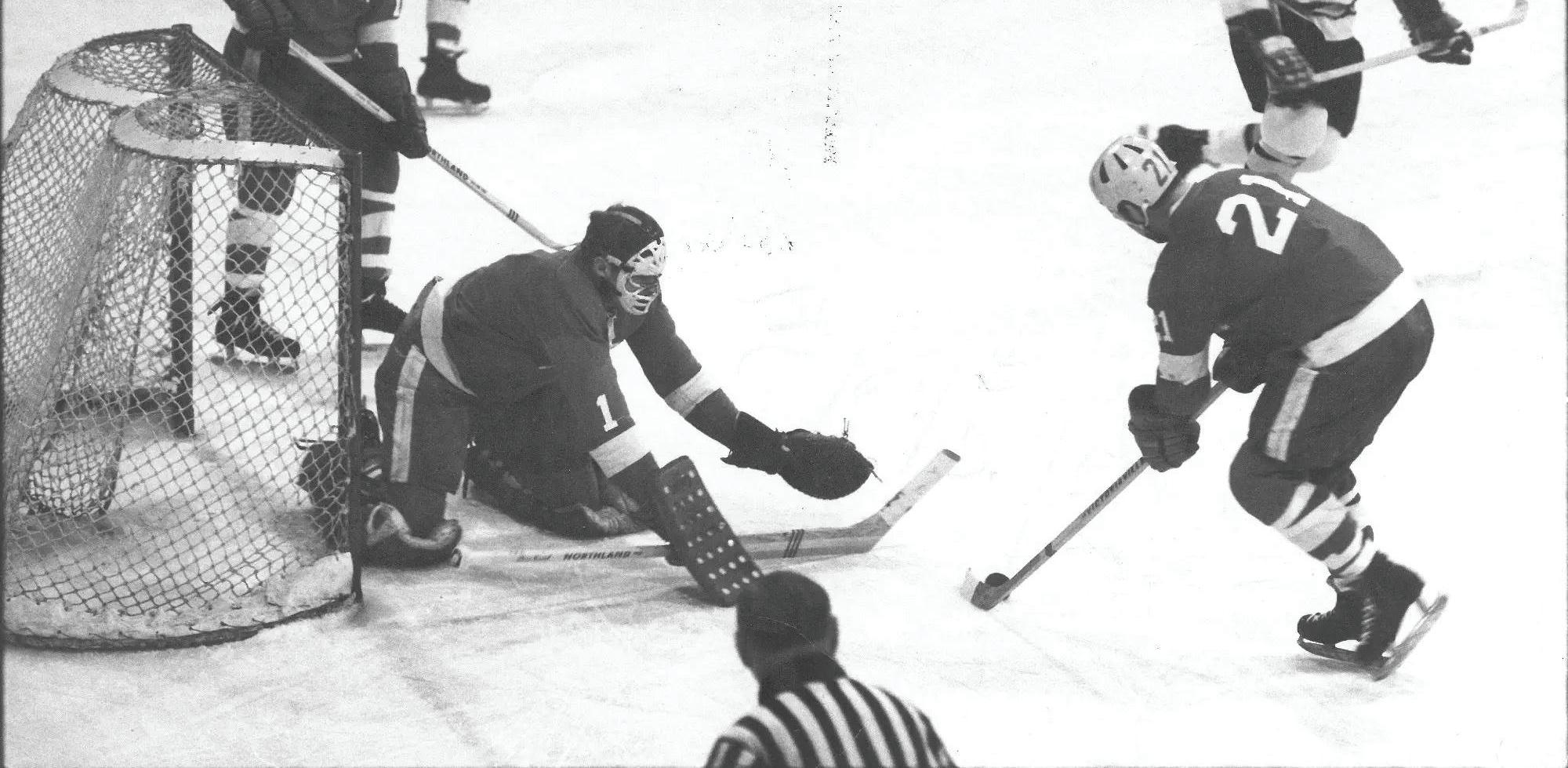
By JANE MCNALLY Sun Senior Editor
Ken Dryden ’69, regarded as one of the greatest goaltenders in NHL history and a Cornell alum, died at age 78, the Montreal Canadiens announced in the early hours of Saturday morning. Dryden was battling cancer.
“We mourn today not only the loss of the cornerstone of one of hockey’s greatest dynasties, but also a family man, a thoughtful citizen, and a gentleman who deeply impacted our lives and communities across generations. He was one of the true legends that helped shape this Club into what it is today”, said Geoff Molson, owner and president of the Montreal Canadiens. “Ken embodied the best of everything the Montreal Canadiens
are about, and his legacy within our society transcends our sport.”
Dryden’s NHL career was nothing short of extraordinary despite playing just seven full seasons and retiring at the pinnacle of his prime. Bolstering the defense of one of the NHL’s most prolific dynasties, Dryden won six Stanley Cup championships with the Montreal Canadiens, tying him for the most among all goaltenders in NHL history.
Dryden is a five-time recipient of the Vezina Trophy — awarded to the top goaltender in the NHL — and collected 258 wins in his career, losing just 77 games in that span. He won the Conn Smythe Trophy (given to the most valuable player in the Stanley Cup playoffs) in 1971, and the Calder Trophy (the NHL’s top rookie) in 1972.
Inducted into the Hockey Hall of Fame in 1983 and tabbed as one of the 100 Greatest NHL Players, Dryden is widely known for his character off the ice. Retiring at age 31, Dryden opted to pursue a career in law and politics following his professional hockey career. He served as the Minister of Social Development in the Cabinet of Canada from 2004-2006 and also holds a LLB from McGill University.
“Ken Dryden was an exceptional athlete, but he was also an exceptional man. Behind the mask he was larger than life,” Molson said.
After being drafted by the Boston Bruins — and promptly traded to the Canadiens — in 1964, Dryden first decided to attend Cornell and represent the Red. Dryden played an integral role in Cornell’s 1967 national championship, and his 77 wins place
him atop all Cornellian goaltenders. Dryden’s ‘1’ sweater hangs in the rafters at Lynah Rink. Photo courtesy of the Ithaca Journal.
Dryden backstopped the Red to three ECAC championships and lost just four games in his four seasons at Cornell. He is one of two players to have his number retired by Cornell — his ‘1’ sweater hangs in the rafters at Lynah Rink, as does his ‘29’ jersey in Montreal.
Dryden obtained a B.A. in History and was a member of the Quill & Dagger senior honor society. He is a native of Hamilton, Ontario, born to Margaret and Murray in 1947. Dryden is survived by his wife, Lynda, as well as their two children.
Jane McNally can be reached at jmcnally@ cornellsun.com.
By WILLIAM D. CAWLEY Sun Staff Writer
Men’s soccer opened the 2025 season with a dominant 3-0 win over Le Moyne followed by a 1-0 thriller against the University of California, Santa Barbara.
This year, the Red is anchored by a talented and experienced defense and central midfield, but after losing elite players like Alex Harris ’25, Danny Lokko ’25 and Alioune Ka ’25, there are massive holes for the Red to fill on offense.
The first starting lineup of the year for the Red had senior captain Andrew Johnson and freshman Caden Bredeman at center back, with sophomore standouts Justin Melly and Aidan Martin at outside back. Center midfielders were senior Westin Carnevale and junior captain Connor Miller, with senior Giorgos Diakos and freshman Calvin Momanyi on the wings. Forwards were senior captain Sam Latona and freshman Blake Donahue, and, for the fourth year in a row, the Red were backed by senior Ryan Friedberg in goal.
The Red jumped on the Dolphins from the start, ringing the crossbar in the eighth minute and sending the rebound just high. However, it took Cornell until just before halftime to net its first goal of the game.
In the 43rd minute, Martin launched an inswinging ball into the box off of a corner kick, which Johnson put into the back of the net with a header.
The second half was also dominated by the Red. In the 63rd minute, a ball from a Cornell free kick bounced around and found the feet of Martin. Martin wove through three defenders, nutmegging one, and finished the ball off of the far post from a tough angle, earning him an early contender for the goal of the year.
In the 80th minute, the Red made it 3-0. Martin passed to Diakos off of a corner, who lofted a ball into the box. In a scrum in front of the goal, Latona buried the ball in the back of the net.
The game ended 3-0, with all three Cornell goals coming shortly after set pieces.
Following an explosive season opener, the Red flew out to the West Coast to face the University of California, Santa Barbara on Friday. The Red trotted out a similar lineup, but with Melly sliding to center back and sophomore Colin Johnson slotting into the lineup at right back.
The game started slow, with just three shots on goal between both teams in the first half. The same trend continued through the second half until the 81st minute.
Carnevale headed a ball through for sophomore forward Kasper Wollstein, who beat the goalie but
hit the post with his shot. The rebound came back to his left foot, but Wollstein was not able to convert.
Then, in the 83rd minute, Wollstein played a ball through for Carnevale, who tucked a shot around the keeper to the far post, but the goal was ruled offside.
With Cornell feeling the momentum in the final minutes of the game, freshman forward Sergio Zapata laid the ball off for junior midfielder Liam May, who rocketed home a shot from outside the box. The goal came with just a minute and 13 seconds to go, and the Red were able to hang on for the win.
The Red’s final goal was thanks to two substitutes in May and Zapata. Cornell tapped into its deep bench all week, with 22 players seeing action across the first two games.
Friedberg made three saves to lock down his 16th career clean sheet. With two more, he would tie the all-time record for clean sheets at Cornell.
The Red remains on the West Coast for its next game against the University of California, Irvine at 7 p.m. on Monday, Sept. 8. The Anteaters are undefeated on the season and have only conceded one goal through the first four games.
William D. Cawley can be reached at wcawley@cornellsun.