The Corne¬ Daily Sun
It’s not too late to join Te Cornell Daily Sun for news, sports, opinion, web, arts, dining and other departments. Contact editor@cornellsun.com.


It’s not too late to join Te Cornell Daily Sun for news, sports, opinion, web, arts, dining and other departments. Contact editor@cornellsun.com.
By SOFIA RUBINSON Sun News Editor
The United Auto Workers, the union that represents University employees in non-management positions such as dining and building care, held a vote on Monday on a tentative agreement for wage increases and benefits.
Many employees expressed complaints about the agreement, which is the second tentative agreement proposed in this round of negotiations after an initial tentative agreement failed to pass a union vote in May 2022.
Now, the results of the vote are in: 28 percent voted no on the agreement, 15 percent voted yes and 57 percent abstained from voting.
On Monday, students held a rally at the meeting where the vote occurred to support University employees in their fight for a fair contract.
Among the complaints raised by workers to union negotiators included the high cost of living in Tompkins County, staffing shortages that are causing some employees to pick up work normally given to two or three workers and improper training of new employees.
Union negotiators must now reach a new agreement with the University.
Sofa Rubinson can be reached at srubinson@cornellsun.com.


By GWEN SCHWAY Sun Staff Writer
In April 2021, Cornell announced a change in University’s housing policy from requiring students to live on campus for one year to a two-year on campus living requirement. With some exceptions, sophomores found a new series of North Campus developments to call home.
According to Cornell Student and Campus Life, the policy change is heavily attributed to the University’s ability to provide residential space for more students upon completion of the North Campus Residential Expansion project.
“Upon completion, the NCRE will give Cornell the ability to house 100 percent of its first-year students in developmentally appropriate campus housing and 100 percent of its sophomore students in campus residence halls, co-ops and affiliated housing,” according to the NCRE website.
The expansion includes the recently constructed and opened Hu Shih Hall, Ruth Bader Ginsberg Hall and Barbara McClintock Hall. Ganedago Hall and Toni Morrison Hall, which have been occupied since Fall 2021, were also part of this project.
As recently as Spring 2022, Sophomores
were given the option to live off-campus, including living in Collegetown. While some students are eager to enjoy the amenities of on-campus living, others are discontent and feel deprived of the opportunity to live off campus with their junior and senior peers.
“I wish they let us live off-campus,” said Erin Xu ’25, who lives in Ganedago Hall and said that she thinks the desire to live off-campus is more significant for other students in older dorms.
“I feel like for other people [who live] in dorms not as good as Ganedago, it might be better if they could choose their apartments with air conditioning,” Xu said.
The required meal plan that comes with on-campus living is another concern of students. Xu, who is enrolled in the Bear Traditional meal plan, is annoyed by the fact that the plan is required.
The Unlimited meal plan, priced at $3,306 per semester and $6,612 a year, allows access to all 10 residential dining rooms along with $400 in Big Red Bucks and eight guest swipes.
To continue reading this article, please visit cornellsun.com.
Gwen Schway can be reached at gschway@cornellsun.com.
By MARY SOTIRYADIS Sun Staff Writer
In the weeks before the fall 2022 semester, social media was abuzz with rumors of a new online service called Pollinate that allows students to pay their peers to drop out of certain classes to obtain an open seat themselves — now Pollinate has landed at Cornell. Students took to Sidechat and Reddit with complaints of classism and elitism.
Despite Pollinate’s increasing presence on campus, it was actually founded at the University of Chicago by two seniors, Jon Merril and Jack Ogle, studying economics.
“We focused on Cornell because we had friends who go to Cornell, and we heard that [enrollment in specific courses] was a problem there as well,” Merril said.
Merril and Ogle describe their service as “academic advoca-
cy” for students who need extra help obtaining seats in particular classes that they could not obtain during their university’s scheduled enrollment period.
The duo is passionate about fixing problems students face on their college campuses. This passion has led them to pursue a few different business ideas.
Their first idea involved organizing Zoom meetings to facilitate student interactions and foster new friendships on their campus during the height of the COVID-19 pandemic, when many students were not able to socialize as they normally would.
“We started to build software to connect students on Zoom meetings and help them study,” Merril said. “We really fell in love with the whole process of trying to make something that helps fix a problem, a pretty big problem, and the idea of a startup and trying to build software was really enticing.”
Soon after, the pair developed a system to motivate students to complete assignments by betting money on them. Merril and Ogle would bet against students and if the students completed their work before the date that they bet on, they would earn money. If the students did not complete their work before this deadline, they would owe Merril and Ogle money. Their current software was originally designed to buy and sell seats in coveted classes.
“We thought intuitively, students who really want the class bad will offer some kind of money or some demand for students who are maybe considering already dropping, or this might maybe put them over the edge to say, ‘I’ll take that another time and give my spot to someone who really wants it,’” Merril said.

Movie night | Students sit on the arts quad lawn waiting for a movie to begin. Movies on the arts quad is continuing this fall, with Disney animated film Luca showing Friday. During the warmer months of the year, the event provides a place for students to gather and share a relaxing pop culture experience.
Measures and Meaning
8 a.m., Architecture, Art and Planning Galleries
“Shared Space: Seasonal Color Shift of Species Succession” by Jenifer Wightman
8 a.m., Mann Library
Grounded: Life is Soil, Soil is Life
8 a.m., Mann Library
Jessica Tanzer’s San Francisco, 1987-1996
9 a.m., Kroch Library
Gatty Lecture: Toward an Archipelagic Southeast Asian Studies 12:30 p.m., Kahin Center
Ecology and Evolutionary Biology Seminar Series: Rachel Wilkins
2 p.m., Corson/Mudd Hall, A106 Morison Room
Cornell Department of Astronomy & Space Sciences Fall 2022 Colloquium Series 3:30 p.m., 105 Space Sciences Building
Feminist, Gender and Sexuality Studies and Lesbian, Gay, Bisexual and Transgender Studies Fall Welcome Back Reception 4:35 p.m., A.D. White House
Nanofiber-based Electrochemical Transducers for Point-of-Care Devices
10:30 a.m., T49 Human Ecology Building
Ezra’s Round Table / Systems Seminar: Barry Smith 12:25 p.m., 253 Frank H. T. Rhodes Hall
Cornell Center for Historical Keyboards Salon: C.U. Music 5 p.m., A.D. White House
Bienvenidos BBQ 6 p.m., Anna Comstock Hall
Movie on the Arts Quad: Luca 8 p.m., Arts Quad
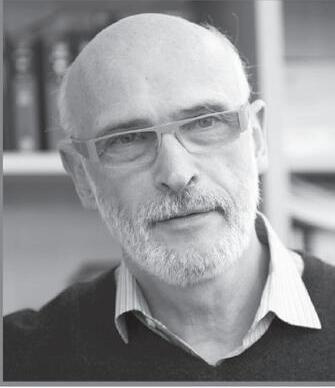
Alexander Rudensky, Ph.D Chair, Immunology Program, Sloan Kettering Institute; Director of The Ludwig Center for Cancer Immunotherapy, Memorial Sloan-Kettering Cancer Center
Tuesday, September 6, 2022 4:00-5:00 PM CVM Lecture Hall 4
Reception to Follow The Public is Invited

about how it affects her own ability to get into the classes she needs to graduate.
After some time, however, the two decided that a monetary incentive should not be the only way students can convince others to give up their seats in classes.
“We realized that a lot of students really needed the classes, but also were not super excited about the idea of having to pay for the spots,” Merril said. “So, we’ve switched to being more like advocates for the students who really tell us that they need the class, and we have been going to a nearby school, University of Illinois Chicago, and saying, ‘Hey, we’re advocating for someone who really wants this and we would like to offer you the chance to give them this class.’”
This service is designed to remove the discomfort or fear students face trying to convince professors to let them into a class by outsourcing the meeting to Merril and Ogle.
“We don’t care if people make fun of us. We don’t care if professors get upset because they think that we’re trying to get people to drop their class,” Merril said, “We are willing to… put ourselves out there and do this for people, because we want to solve this problem.”
One problem Pollinate faces is the difficulty of finding out which students are thinking about dropping a class. Ogle said that Pollinate has tried everything from advertising on social media to cold calling students on the phone to standing on the UIC quad with a sign.
Pollinate has been met with resistance. While Ogle said that Pollinate does not break any laws or University rules that they are aware of, and has not received any faculty or administrative complaints, some students have been vocal about their opposition to the service.
Some students raise a concern that the software is perpetuating elitism by allowing financially privileged students to buy seats from disadvantaged students.
Muna Mohamed ’24 said that she would never use Pollinate because the prices are too high and she is worried
The process of being nominated to a faculty leadership position is not an easy one, as recommendations by other faculty members and an appointment by the Dean of the College are required. Some larger programs also have an interview process and a final presentation to decide who will take on the role.
The new department chairs and program directors were informed of their acceptance by the end of the Spring semester to give them time to transition. Faculty started their term on July 1, and will serve for at least three years.
Prof. Linda Nicholson, molecular biology and genetics, the new Hays and James M. Clark Director of the Office of Undergraduate Biology in the Colleges of Arts and Sciences and Agriculture and Life Sciences, knew immediately that
“No student is going to drop a class without some monetary incentive, so the advocacy thing is basically null,” Mohamed said. “This just encourages students to take up spaces in classes and keep them until they can get paid for it, even if they don’t need it. This does nothing but make class registration harder than it already is.”
Benson Wiedemer ’24 said that he thinks offering seats for money is a slippery slope, and that some may take advantage of the site to earn money.
“Core classes seem to be some of the highest valued classes on the site,” Wiedemer said. “This also opens up the opportunity for seniors and others with earlier enrollment periods to enroll in unneeded classes, just to sell them back to people with later enrollment periods.
Wiedemer also questioned the motives of Pollinate’s founders in creating a service that allows people to buy classes.
“This was not the intention of the founders, supposedly. The offering of money skews my belief [in] the reason behind the service. Any person, Any study, but for a price.”
Mary Sotiryadis can be reached at msotiryadis@cornellsun.com.


she wanted to take on this position.
“The Office of Undergraduate Biology aligns beautifully with so many of my passions around teaching and supporting students, mentoring students and helping to make their experience at Cornell a positive one, so that was the main draw for me,” Nicholson said.
Nicholson’s predecessor, Prof. Cole Gilbert, entomology, left a document that outlined all of the responsibilities she would be taking over. She also feels supported by all of her colleagues in the department.
“It’s been a learning curve for me, but it’s been a joy,” Nicholson said. “Even when we are faced with challenges, it’s such a synergistic team and everybody helps each other out. They’ve been very generous in helping me come up to speed on things.”
Nicholson said she wants to bring new ideas to the position and give students more support.
“We are doing some specific things that align with this vision of shifting the culture from competitive to collaborative in terms of students’ learning and I’m really excited about that,” Nicholson said.
Prof. Deborah Starr, near eastern studies, is the new department chair of her department and said she aspires to create a more interactive environment, coming out of the recent virtual landscape due to COVID-19. The department plans to have a team-building event for graduate students this semester, as well as bring in alumni speakers to talk to undergraduates about possible careers in the field.
“One of the biggest challenges right now is that the last two years have been very isolating for students and faculty alike,” Starr said. “Planning in-person events where everyone is comfortable and rebuilding that sense of community is a really important starting point for my term as chair.”
H. Stanley Krusen Professor of World Religions Chiara Formichi, religious studies, is the new director of religious studies at Cornell. She is starting a new speaker series this September, and is interested in creating more programs for undergraduate engagement.
“It’s exciting to be in a place where you decide what happens,” said Formichi. “There is a sense of duty combined with the desire to see if you can try to make something happen.”


By ALLY MARK Sun Staff Writer
The daunting yet exciting independence of moving off-campus has its fair share of ups and downs. This new space comes with what feels like no rules, a spacious living room to host pre-games and an upgrade from the decade old — dare I call them — mattresses on North. What shocked me the most about my new living situation was just how difficult it was to cook for myself. Don’t get me wrong, it’s not the cooking that I have trouble with. I pretty much learned in middle school that with a few ingredients and a little creativity, it’s not too hard to whip up a meal or snack to satisfy my hunger. It’s everything else that comes with cooking that throws me for a loop.
It started with my first trip to get groceries. At home, I’m rarely a solo grocery shopper. I love the weekend trips with my mom to Costco, which I call mother-daughter bonding.
We load up our cart with enough food to feed a small army, or a five person family with two very hungry college-aged boys. I found myself far out of my comfort zone standing in the middle of Wegmans with carts zooming around me. I knew I had to get some of the basics so that I could start to put a few meals together: eggs, milk,
mom beyond words for being able to keep a stocked fridge and pantry for me and my brothers.
I believe that with practice throughout this semester, I’ll get better at buying foods that I can use for multiple meals and shopping in quantities that are more suitable for one person.
The third lesson learned is: communication is key and sharing is caring.
I came home to unload my groceries, and to my surprise, my roommates and I bought doubles or even triples of common items that we could share. We have three bottles of olive oil in my apartment now (who the heck needs three bottles of olive oil?). We also had about 12 bananas which all turned brown right before our eyes and enough lettuce to feed the world’s population of bunnies. We easily could have avoided buying doubles of items and saved on our precious pantry space.
My fourth lesson learned is that your freezer is your best friend.
When I saw our bananas turning brown, I chopped them up and stuck them in the freezer. The same went for my blueberries and spinach. Stick it in the freezer and use it in a smoothie. Meat and poultry can also be frozen, if
you have enough room in the freezer.
The only problem now is remembering to defrost the meat ahead of time. It’s very easy to forget to pull a chicken breast out of the freezer in the morning when dinner feels so far away, but over time I hope I’ll be able to get my life together enough to do so.
I started writingalist of the produce Iwasbuying and tried to come up with recipes.
My final lesson is that fresh produce spoils quickly if you don’t consume them within a count number of days. I started writing a list of the produce I was buying and tried to come up with recipes that cross-utilizes various produce.
One that I’ve really been enjoying is garlic, olive oil pasta with a protein and sau-
teed veggies — in my case it’s most often spinach, broccoli and onions. I’ve made this dish three times in the past week and, not to pat myself on the back, it’s pretty good.
I still have so much left to learn about cooking for myself and it sure is a learning curve.
By the end of this semester I’ll be able to write an article called 1,000 things I’ve learned from living alone. Wish me luck!
Ally Mark is a junior in the School of Human Ecology. She can be contacted at alm348@cornell.edu.

pasta, fruits and veggies.
When I got home, I realized pretty quickly that I had a pretty random assortment of foods that I didn’t know how to make a meal of. My first lesson learned would be to go grocery shopping with a list, or at least a plan. I found myself grabbing random snacks and foods off of the shelves, thinking that I would eat them and be able to make something out of them, but after the first week of living off campus, I have an array of open bags of snacks, half eaten containers of fruits and spoiling veggies.
My second lesson learned — grocery shopping is confusing, and I appreciate my

SERENA HUANG ’24
EMMA LEYNSE ’23
SURITA BASU ’23 Assistant Managing Editor
NAOMI KOH ’23 Assistant Web Editor
ELI PALLRAND ’24 News Editor
ESTEE YI ’24 News Editor
KAYLA RIGGS ’24
JULA NAGEL ’24 Photography Editor
MEHER BHATIA ’24
KATRIEN DE WAARD ’24
PAREESAY AFZAL ’24 Assistant
JIWOOK JUNG ’25 Assistant
ADITI HUKERIKAR ’23
Assistant Arts & Culture Editor
DANIELA WISE-ROJAS ’25
Dining Editor
JASON WU ’24
GRAYSON RUHL ’24 Assistant
KEVIN CHENG ’25
HANNAH ROSENBERG ’23
JYOTHSNA BOLLEDDULA ’24
VEE CIPPERMAN ’23
Editor in Chief
ANGELA BUNAY ’24
’24
’24
’23
’23

ED Plowe is a senior in the College of Arts and Sciences. She can be reached at eplowe@cornellsun. com. With Gratitude runs alternate Tuesdays.
T’24
’24
’24
’23
ROSENBERG ’23
he dreadfully delightful first day of class in a seminar room is sticky and stuffy, and you have a lump in your throat because you regret wearing jorts. The professor strides in and everyone silently shifts in their seats, iPad pens in hand. Once the professor is settled with their folder and tablet in front of them, they say welcome, share their pronouns and ask that each student goes around and gives their name and pronouns.
Uh oh.
Layout Desker Jacqueline Woo ’24
Managing Desker Angela Bunay ’24 Opinion Desker Katherine Yao ’23
Dining Desker Daniela Wise-Rojas ’25 News Deskers Jiwook Jung ‘25 Eli Pallrand ’24
Science Desker Meher Bhatia ‘24 Photography Desker Julia Nagel ’24 Production Desker Katrien de Waard ’24
Have an issue with our news coverage?
Want to give your take on a campus issue?
The Sun thrives on your feedback. Continue the conversation by sending a letter to the editor to opinion@cornellsun.com.
Letters should be no longer than 250 words in length.
Please include graduating year if applicable.
For the past two years, when I’ve been etched in this inevitable GoldwinSmith tableau, I scan the room: Are there any other queer students? How many? This may seem shallow, or identity-essentialist, but it’s not. In order to share my pronouns with people in a shared space, I need to feel supported. In a new space where fellow students’ attitudes on the existence of multiple genders is unknown, sharing my preferred pronouns does not come easy.
If only one person in the room chuckles at their introduction with disdain — “I guess I’m a he ” or worse: “I don’t have pronouns” — I won’t soil my jorts in offense, but merely worry if this person will respect me. The disdainful student’s response makes me, the gender queer stu-
In a new space where fellow students’ attitudes on the existence of multiple genders is unknown, sharing my preferred pronouns does not come easy.
dent, an “Other” by making light of the act of sharing pronouns. Of course, not all people whom I will encounter in life will respect me, but in a small humanities classroom, establishing mutual respect is key for generating a collaborative and generative environment.
Gender queer students’ — and especially gender questioning students’ — discomfort in this pronoun-sharing circle might be spared with the instructor’s simple addition of the following words: “if you feel comfortable sharing.” This way, cisgender students who are unversed or uninterested in gender terminology do not have to make a show of having the same pronouns as what they were assigned at birth, and gender queer stu-
dents will not feel pressure to present their non-conforming pronouns to a room full of strangers.
The addition of “if you feel comfortable sharing” also gives time for students to get to know each other before sharing more information about their identities and building mutual respect across differences if there was initial discomfort (which is not the end of the world). I personally feel more comfortable sharing my pronouns on an individual level, which is informal and more intimate. If the instructor worries about misgendering a student, they may simply use they/them pronouns, as I have been using in my reference to the instructor of a non-specified gender.
It might seem counterintuitive that emphasizing pronouns may actually fail to make gender queer students feel more comfortable — some instructors even have students repeat their pronouns at the beginning of every class, perhaps to make space for students’ gender fluidity.
I love this idea. At the same time, gender queer students might feel painful pressure to continuously present themselves to the classroom as being non-conforming. Every gender queer person is different and might hold a different opinion; this is why it’s so important to add “if you feel comfortable sharing.”
I write this article because it’s important to keep the conversation alive about making LGBTQ+ students feel comfortable. It’s easy to forget that the queer community is under threat because, as I am often reminded by older generations, many queer people are fortunately living beautiful lives in this country. However, from the Don’t Say Gay law taking effect in Florida and K-12 schools becoming a battleground over supporting queer youth, to three-fourths of House Republicans voting against the right to same-sex marriage, 40% of homeless youth being LGBTQ+ and 2021 being the deadliest year on record for trans and non-binary individuals, it’s clear that queer people need to feel safe, protected and respected by allies in their communities.
This clarity comes with a perspective shift; that your gay best friend can thrive as her fullest self is not enough evidence to say that LGBTQ+ people are being treated equally on the national level.
When asking others to share their identity or story, the best thing you can do for LGBTQ+ students, and perhaps other students of marginalized identities, is to give students maximum opportunity to choose whether they participate. As instructors or as leaders looking to be more inclusive, the most kind thing to generate in your space is the freedom for students to say “no, I don’t owe you that information.”
Fill in the empty cells, one number in each, so that each column, row, and region contains the numbers 1-9 exactly once. Each number in the solution therefore occurs only once in each of the three “directions,” hence the “single numbers” implied by the puzzle’s name. (Rules from wikipedia.org/wiki/ Sudoku)


By MEGAN KELLER Sun Staff Writer
On June 20, the Cornell Borehole Observatory began drilling into the Earth. Their goal is to reach a deep depth where there is natural heat sufficient to heat all of campus.
While this new technology has a ways to go before providing electricity for every home across the country, Cornell has taken a huge leap towards a sustainable future.
With a limited supply of fossil fuels, the University has explored alternative energy options. In 2009, the University set its sights on using Earth Source Heat, a sustainable type of geothermal heat that rests deep underground, to heat the campus.
This is part of the University’s Climate Action Plan to reach carbon neutrality — the amount of carbon used and emitted equaling the amount of carbon that gets absorbed from the atmosphere — by 2035.
“Due to the planet’s core radiating out from deep within the Earth and other secondary mechanisms like radioactive decay of elements in rock materials, local heat fluxes occur in certain areas of Earth’s crust,” Adam Hawkins, a chemical and biomolecular engineering postdoc, said.
The University plans on harnessing and distributing ESH across campus as an alternative to traditional energy sources, such as oil or coal, because other sustainable energy sources, such as water, require electricity to be maintained.
“All we have to do is drill a few holes and we can produce essentially unbounded energy for millennia,” Hawkins said.
The University will utilize the natural heat from the ground to heat water that is then carried and distributed around campus through pipes and wells.
Three things are needed for this to take place: Optimal heat, permeability and water. Water will heat up by exchanging thermal heat with the Earth and this heat gets circulated in a sustainable fashion.


bonds with oxygen atoms of another water molecule, creating hydrogen bonds.
Hawkins stated that the reason why New York State hasn’t switched to ESH is because of factors such as differences in geology and subsurface conditions that make it harder to use commercially. However, places with high volcanic activity are actively using this technology
To overcome this local hurdle, the University created the Cornell University Borehole Observatory.
Prof. Larry Brown, earth and atmospheric sciences, used his skills in seismic methodologies for exploring the subsurface, to ensure CUBO drill site would reside in an optimal location and subsurface conditions. This is very similar to how oil companies plan a drill site.
Brown explained that by vibrating the earth surface, soundwaves are produced and these echo off differing rock layers, creating a three dimensional rendering of the unique geology.
“Seismic reflection surveys are used to image the rock layers and to look for possible problems such as pre-existing fault zones and pockets of natural gas,” Brown said.
These procedures are usually contracted out, but Cornell had the opportunity to make it into a learning opportunity for students, with many getting to witness and assist in these seismic surveys.
The site was chosen due to its proximity to campus and minimal disruption to campus life. The next step was to determine what properties lay nearly two miles below Earth’s surface. Every week, it drills about 200 feet deeper and is then cemented and measured.
“The reason for this pilot study was to test the feasibility of this type of project, it being the first of its kind for the region, to determine what we have before we take the next steps,” Prof. Brown said.
By WILLIAM COX Sun Staff Writer
Rising temperatures have created great repercussions for the agriculture industry as plants and animals become harder to maintain as demand remains the same. For the dairy industry, the trouble has been especially notable.
A new Cornell study has demonstrated the connection between heat stress and gut permeability, which describes the porosity of the gut.
According to co-author Prof. Joe McFadden, dairy cattle biology, the study is the first to directly investigate the connection as well as propose a solution through dietary shifts.
His lab’s research is focused on how nutrition affects milk production in cows, and furthermore the effects of heat stress, which can reduce cattle food intake by over 50 percent.
In 2010, the dairy industry lost an estimated 1.2 billion dollars due to heat stress events. The trend continues.
“Over 1.5 billion [dollars are]
lost every year in the United States from dairy cattle due to heat stress,” McFadden said.
“That’s more than all other animal food production systems in the country.”
Any mammal that experiences a heat stress can become permeable to bacteria. The bacteria triggers an immune response in the animal’s body, requiring energy often sourced from non-essential functions like milk production.
The study concluded that heat stress increases total track gut permeability.
As of right now, the only combative tactics against heat stress in dairy cattle focus on cooling the animals through fans and sprinklers. However, the sustainability of the practice is questioned.
“[Sprinklers and fans] have a carbon footprint attached to their use,” McFadden said. “So, more nutritional approaches that enhance resilience could be beneficial.”
Cornell has long led nutritional work in the dairy industry, notably through the Cornell
Net Carbohydrate Protein System, which has been responsible for developing diets for around 70 percent of the cows in North America.
McFadden works with a company named Vetegro that produces organic amino acids.
This relationship allows for quick turnaround on research, McFadden said, since the potential solutions can be rapidly applied in the field.

ful long-term.
Amino acids have been shown to have beneficial effects on the microbiome, even demonstrating restoration of heat-related milk production drops McFadden said. However, McFadden said, it is by no means a final answer. According to McFadden, other approaches might be more help -
“[Heat stress is] going to continue to be a problem,” McFadden said. “The severity is going to continue if we don’t have new solutions.”
This could mean considering a genetic approach for dairy cows, which has the potential to make significant improvements in regards to resiliency if milk production levels can be maintained.
McFadden will continue his research with a focus on gas exchange using respiration chambers funded by New York State.
The construction of the chambers will begin in December with installation within the year.