The Corne¬ Daily Sun

By ANIL OZA and TAMARA KAMIS Sun Science Editor and Sun Staff Writer
On Friday, Tompkins County Health Department identified a first cluster of nine COVID-19 cases at Cornell, following several small social gatherings where people did not social distance or wear masks. A COVID-19 cluster is five or more connected cases. The county now has 18 active cases.
Vice President for Student and Campus Life Ryan Lombardi confirmed that those exposed were Cornell students in an email on Saturday. The last time Tompkins County saw over 18 active cases was Aug. 7, with 19 cases. All of the students in this cluster are in isolation and are receiving check-ins, Lombardi wrote. The students’ names were not disclosed, but Tompkins County Health Department contact tracers will reach out to anyone who may have been exposed during their infectious period. Lombardi reminded students to abide by the
behavioral compact, which includes rules limiting the size of social gatherings, and requires mask wearing and physical distancing. According to Lombardi’s email, multiple students have already been temporarily suspended for reported violations of the behavioral compact.
“This is not our desired outcome, but as I stated yesterday, we will not hesitate to do so if the safety of our community is jeopardized,” Lombardi wrote about the temporary suspensions.
Students can report those breaking the behavioral health compact to Cornell, and can report non-COVID-19 safety rule compliant workplaces to the New York State Department of Labor. Information regarding COVID-19 prevention and care as well as information about the spread of COVID-19 on campus can be found on Cornell’s COVID-19 dashboard.
Anil Oza and Tamara Kamis can be reached at aoza@cornellsun.com and tkamis@cornellsun.com.

By ALEX HALE and MADELINE ROSENBERG Sun News Editor and Sun Assistant News Editor
Thousands of Cornell students have endured the nasal swab test and, for a portion of them, a two-week quarantine. When classes start Wednesday, students will tune into their courses from around the world.
But it took months of planning and policy-making to get here. Cornell administrators recently spoke with The Sun about the University’s reopening plan, tiatives in light of the Do Better Cornell ment and
other pressing campus issues.
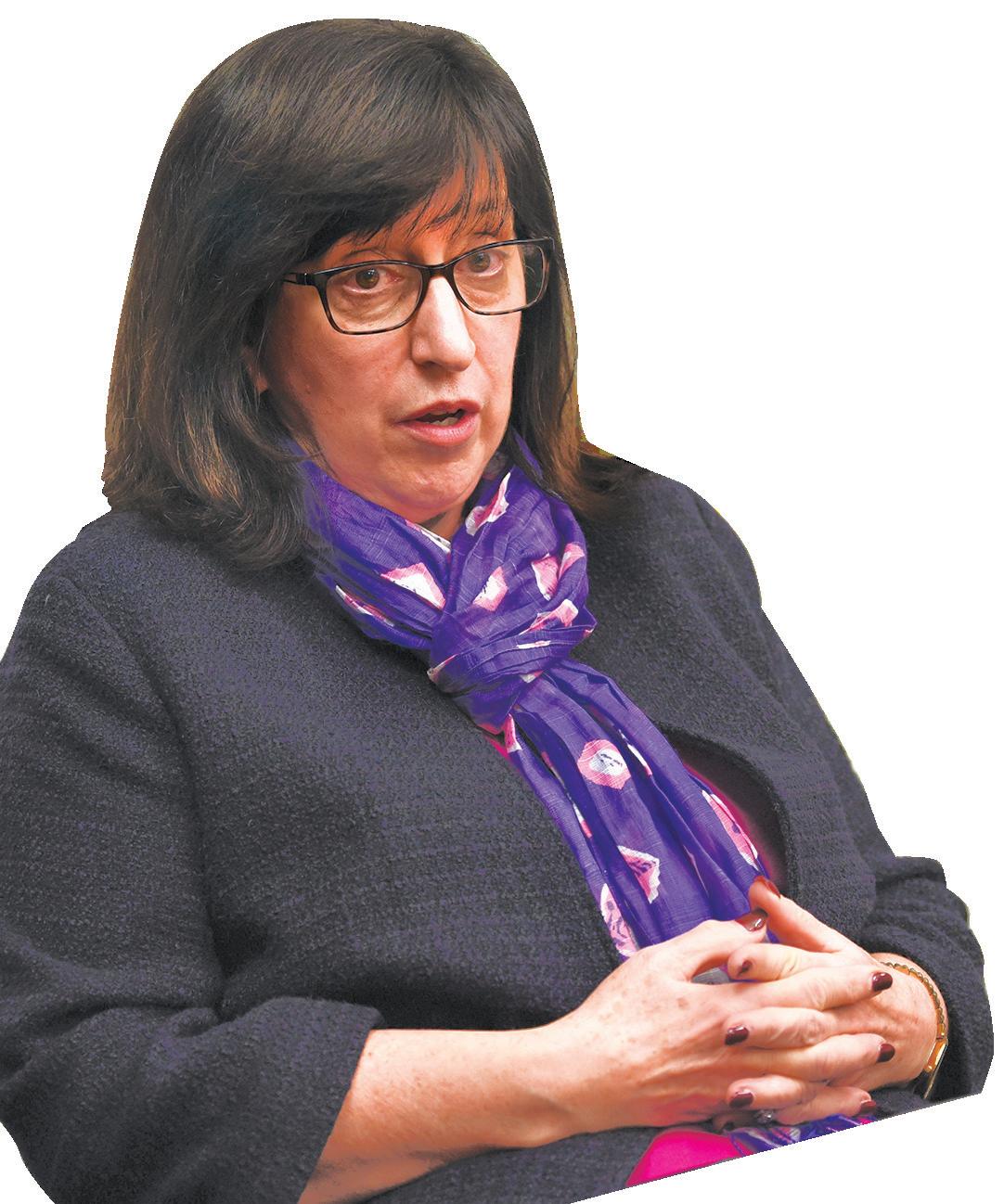
In attendance for the interview was President Martha E. Pollack, Provost Michael Kotlikoff, Vice President of Student and Campus Life Ryan Lombardi, Vice President of Facilities and Campus Services Rick Burgess, Vice Provost for Academic Affairs and Presidential Advisor for Diversity and Equity Avery August and Vice President for University Relations Joel Malina.
Here are the highlights of that conversation.
COVID-19 and Reopening Campus
Cornell has almost finished the arrival testing phase of its plan to reopen campus, and it will shift to surveillance testing when classes start Sept. 2. The University has independently built up its testing capacity to about 50,000 people a week, allowing it to not burden the Tompkins County’s testing capacity.
“We’re not using up capacity from the county,” Pollack said. “We’ve created our own testing capacity and that’s what we’re monitoring. ... Do we have the supplies we need to continue to do the rest of testing that is at the core of our whole approach?”
One recent development came from a University Assembly meeting Aug. 21, when
By MADELINE ROSENBERG and RAPHY GENDLER
Students from states on New York’s travel advisory list are in the middle of 14-day quarantines. Resident advisers, scrambling to welcome students into dorms, have returned to work after striking for hazard pay and better protection. Ithaca
College has backtracked on an in-person fall. Classes are set to begin in less than two weeks, and many Cornellians will register for classes the same week they move in.
It’s a bumpy beginning to an on-campus fall semester. Students from restricted states have started quarantining on campus, many have already settled into
Collegetown apartments and thousands more will flock to Ithaca this week — moving into their dorms with two suitcases, a backpack and no parents to help them. For first-year students, it’s not the start to college they imagined, especially those spending their first two weeks in Ithaca quarantining in a North Campus dorm.
Tuesday, September 1, 2020
Bird Migration Webinar Noon - 1 p.m., Virtual Event
Sustainable Cornell: An Inside Look Into Campus Operations Noon, Virtual Event
Verdant Views: Flavorful Herbs of Central and South America 1 - 2 p.m., Virtual Event
Let’s Talk Church 4:30 - 5:30 p.m., Virtual Event
Tomorrow
Engaged Cornell Learning Coffee Hour
1 - 3 p.m., Virtual Event
Latinx Student Success Office Drop-In Hours 1:30 - 2:30 p.m., Virtual Event
Getting Started With Poll Everywhere
3 - 4 p.m., Virtual Event
Reclaiming the Ancestors: Indigenous and Black Perspectives On Repatriation, Human Rights and Justice 4 - 6 p.m., Virtual Event
ADMINISTRATION
Continued from page 1
Kotlikoff announced 250 cases within one week could prompt a campus shutdown. This number is high compared to other regulations in New York State. Syracuse University said it will begin a shelter-in-place if cases exceed 100, and Gov. Andrew Cuomo (D-N.Y.) announced that New York colleges that reach 100 cases must shift to remote learning for two weeks.
When The Sun asked about the reasoning behind the number of 250, Kotlikoff said it comes down to the model made by Prof. Peter Frazier, operations research and information engineering.
“We asked Prof. Frazier to identify the number of cases over a seven day course that would indicate we’re moving out of the best case scenario into the nominative scenario is modeling,” Kotlikoff told The Sun, “and that was 250 cases.”
Pollack added that the administration’s four factors of monitoring campus safety and policies are the capacity of isolation and quarantine, hospitals, the health system and testing. She said that Cornell has a higher case threshold than other colleges because of its surveillance testing protocols.
“When we talk about numbers of 250 in a week, that sounds enormously large, but remember we’re going to be testing every single student multiple times a week,” Pollack said. “It’s a little bit apples and oranges, to compare our numbers to the numbers you often see in the press and I don’t think people have quite understood that.”
compact violations in his message about the first COVID19 cluster on campus.
Cornell hasn’t developed its reopening plan alone. The University has coordinated with the state government, local elected officials and businesses. They’ve partnered with the Tompkins County Health Department and the Cayuga Health System. And they’re watching other colleges, too.
As cases have spiked at colleges across the country, Pollack said Cornell’s surveillance testing plan and local virus prevalence makes the difference.
“We’re watching them very closely. We’re looking to see what numbers are coming out of different universities, but of course, every university is in a different context, has its own plan,” Pollack said. “The very aggressive surveillance testing program that we’ve put into place — I don’t want to say it’s unique; there are schools that have surveillance testing programs in — but many of the schools that you’ve seen have had to close, have not had that.”
RAs
“We’re in the middle of a fiscal year that we projected with lots of uncertainty.”
Lombardi responded to questions regarding recent tensions between the University and its resident advisers. RAs went on strike during the first week of on-campus quarantine to protest poor working conditions — the strike ended a day later because the University agreed to have more open lines of communication.
Michael Kotlikoff
When RAs went on strike, they raised concerns about understaffing, which burdened current RAs with extra responsibilities. Lombardi attributed this to some staff members not returning to campus, which Cornell allowed due to health concerns.
icant work in this area to create the institute, August said.
“A number of the centers and program area studies already exist here on the campus do fantastic work, their scholarly deep expertise,” August said. “The leadership of the Faculty Senate will be working with the leaders of those particular units to start to think about the framework of what the Center for Anti-Racism looks like.”
Pollack said the Faculty Senate did not make much progress over the summer, as faculty spent it preparing for the hybrid semester, but that they are now moving forward, as the Faculty Senate met with Do Better Cornell last Wednesday.
Additionally, Do Better Cornell demanded that the University adjust its RA policy for reporting marijuana in the dorms, and Lombardi said Cornell will not roll out this change in the fall as it focuses on carrying out the reopening plan. Current policy requires RAs to call Cornell University Police Department if they smell or see marijuana.
Pollack reiterated that a tuition decrease isn’t feasible for Cornell, as the University plans to cover projected increased financial aid and fund its testing program. Cornell will raise tuition by the same percent increase as last year.
“Our pandemic costs have really escalated,” Pollack said. “We are still absolutely committed to being need-blind and to meeting the full needs of all of our students. There’s no way for us to reduce tuition and have the extra funds to cover that, as well as to cover the costs associated with things like the aggressive testing program and the modifications to buildings.”
Cornell will test undergraduates twice a week and graduate students about once a week. Faculty and staff will be tested once every week, twice a week or every other week, depending on often they plan to be on campus.
Beyond testing and contact tracing, the University has already rolled out plans to enforce the behavioral compact, Lombardi said. Behavioral compact monitors have been roaming campus and Collegetown since Aug. 20, and a public reporting form will go live on the first day of classes.
For an infraction that’s relatively low level, the Cornell Compact Compliance Team will handle it without involving the Office of the Judicial Administrator, but “when concerns escalate to a level that we worry about impact on the community and or it’s pervasive and consistent and repeated,” Lombardi said, the J.A. office will process these reports.
Although he wasn’t willing to discuss if the University has used drastic measures — such as suspension or removing access to campus resources — in the interview, Lombardi said students have been suspended for behavioral
“We do want to go back to replenishing some of those positions for students who didn’t feel comfortable returning,” Lombardi said.
He added that the University and RAs are in the middle of negotiating a new contract, a process that started January. Once students are settled into dorms, Lombardi said, Cornell may provide options for them to move to a more socially-distanced dorm if spots remain available.
The University promised several anti-racist initiatives over the summer, following two petitions demanding anti-racist change at Cornell. Of those initiatives, the two that led the discussion was the creation of an anti-racism institute on campus and changes to RA protocol regarding marijuana.
Pollack said the anti-racism institute “will be a center for teaching and research about various policies on racism and on fighting racism.” Cornell has handed the reins to the Faculty Senate who will work with colleagues that do signif-
Because of these costs, Cornell previously projected a pandemic-related $210 million loss for the Ithaca and Cornell Tech campuses during the current fiscal year. The University is on-track with these predictions, according to Kotlikoff, but University finances depend on how this semester unfolds.
“We’re in the middle of the fiscal year that we projected with lots of uncertainty — uncertainty in terms of whether we’re successful for this semester. We certainly hope so,” Kotlikoff said. “And we’ve predicted on that, but we don’t know that.”
Lombardi noted that Cornell has lowered housing and dining costs to account for the shortened on-campus semester. He also mentioned several cost cuts that the University is considering: a Student Assembly recommendation to cut the student activity fee by approximately 20 to 25 percent and using money from the CARES Act for a one-time reduction in the summer savings expectation — which is part of the calculation of the student contribution. Neither of these proposals have been approved yet.
Alex Hale can be reached at ahale@cornellsun.com. Madeline Rosenberg can be reached at mrosenberg@cornellsun.com.
MOVE-IN
Continued from page 1
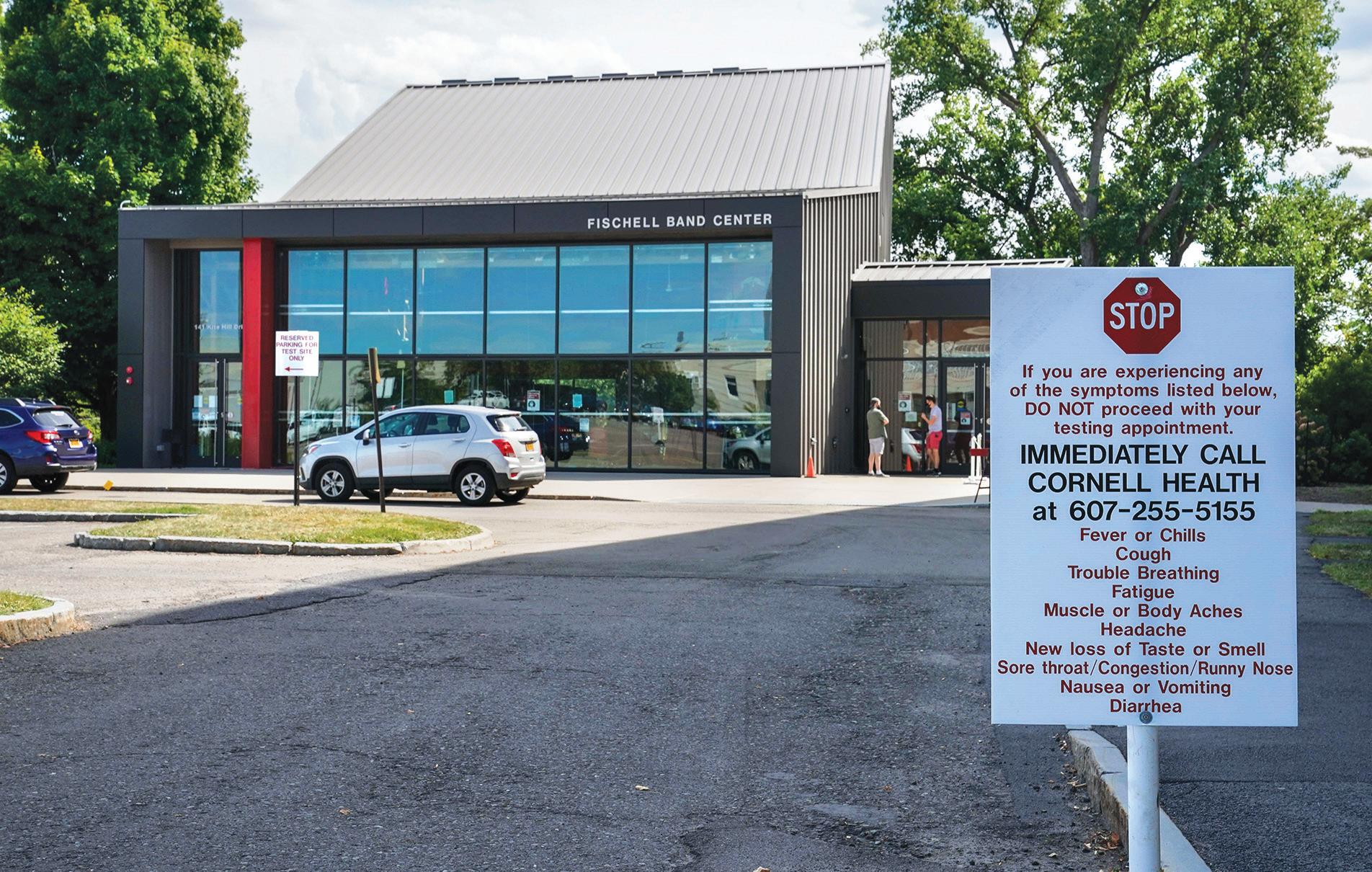
Jessica Sylvester ’24 of Jamaica said she spent her first night of on-campus quarantine sleeping on her travel pillow in a Clara Dickson Hall single. Her first morning, she wandered around campus trying to find the Fischell Band Center testing site.
As students began moving in, some who arrived in the evening moved into their dorms before getting tested. At a Tuesday town hall, Vice President for Student and Campus Life Ryan Lombardi said these students were tested first thing the next morning.
Sylvester arrived late Monday night and was tested Tuesday morning, but said a series of communication breakdowns complicated her arrival.
Cornell housing is providing quarantine bedding, but Sylvester said she didn’t receive details on where to get it, only stumbling on packs of linens when she picked up her student ID at Robert Purcell Community Center. She shipped most of her belongings to her assigned Low Rise 6 dorm, only to find out the day before arriving she would quarantine elsewhere.
Now, Sylvester said she only leaves her dorm to pick up her meals, often sandwiches
and wraps. She plans to spend the rest of quarantine watching Netflix and picking her fall classes.
But so far, the experience doesn’t really feel like quarantine, Sylvester said. No one is enforcing the rules, she said, and communal fridges and bathrooms leave points of contact with other residents.
“I don’t feel like I’m quarantined. If I really want to leave my room or leave my building, I could. No one is stopping me. You’re allowed to do whatever,” Sylvester said. “It’s just up to you. Even though Cornell has the behavioral compact, I don’t see anybody there to enforce and threaten consequences.”
While Cornell told students quarantining on campus to remain in their rooms, Sylvester said she saw other residents doing their laundry when she left the dorm to get tested. Since she shares a bathroom during quarantine and leaves her dorm daily to pick up food, Sylvester said she doesn’t feel so isolated.
“We’re in quarantine, but not really,” Sylvester said. “I see people all the time in the hallway walking to the bathroom. I see people going to get food, in the shower, in the restrooms beside me. I’m constantly seeing other people.”
But John Wang ’24 of Clemson, South Carolina, said on Tuesday he has only run
into one person in his residence hall during so far.
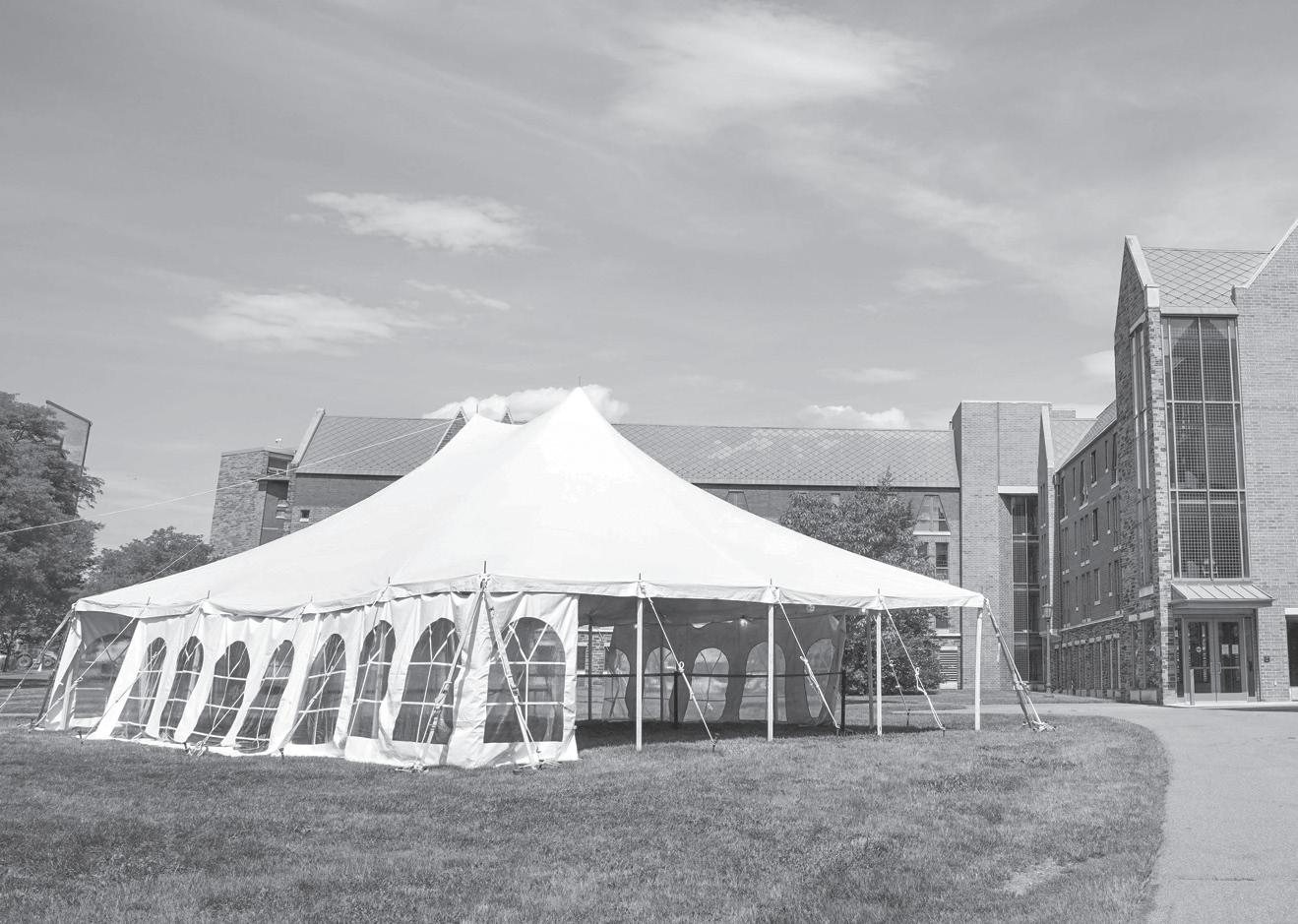
He spent his first full day of on-campus quarantine playing the video game League of Legends, taking a break to pick up food from a tent on the Court-Kay-Bauer quad (lunch on Tuesday was a Caesar salad). The first-year eats his meals in his dorm, and said he isn’t allowed to use the microwave, so the food is all cold.
Wang said his parents encouraged him to come to campus, even as some friends back home stayed in South Carolina instead of traveling to their universities. But he said he wonders what kind of college experience he will have this fall.
“[My parents] think that the freshman experience is kind of unreplaceable,” Wang said. “I agree with that, but on the other hand, what kind of experience am I getting in my dorm room playing League of Legends 12 hours a day? I can do that at home.”
Still, for Karen Winslow ’24, leaving her Idaho hometown and settling into campus isn’t something she can do at home. After canceled preview days scratched her first chance to visit Ithaca, Winslow said she’s thrilled to see campus beyond virtual tours when she moves in next Saturday.
“I’ve lived in the same town in Idaho basically my whole life, been around the
same group of people,” Winslow said. “I definitely want to go out to the other side of the country. Even if my classes are online and I’m in my dorm for most of it, I’d be fine with that. It would be a new experience, a new environment.”
Winslow is spending her two-week quarantine at her roommate’s house on Long Island, where they’ve virtually met with their academic advisers, shopped for dorm additions and watched movies as they await move-in.
First-years who have already moved into North Campus are settling into a fall semester that is set to take place in-person. But Wang said starting the semester alone in his room, talking on the phone to friends from home isn’t how he hoped to start college.
“It’s not that bad. I can still talk to my friends from home,” Wang said. “But it definitely doesn’t feel like college. You live in a dorm, you expect the community, you expect to meet new people. This is not an exaggeration: I’ve seen one person in this entire residence hall and we didn’t even talk, we just walked right past each other.”
Madeline Rosenberg can be reached at mrosenberg@cornellsun.com. Raphy Gendler can be reached at rgendler@cornellsun.com.
By FAITH FISHER Sun Staff Writer
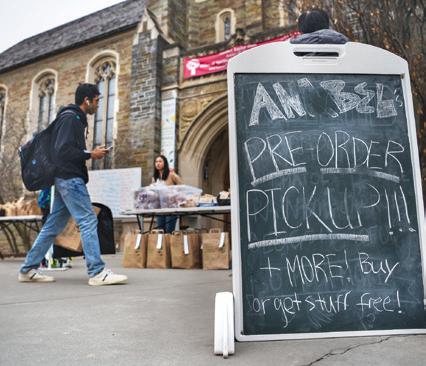
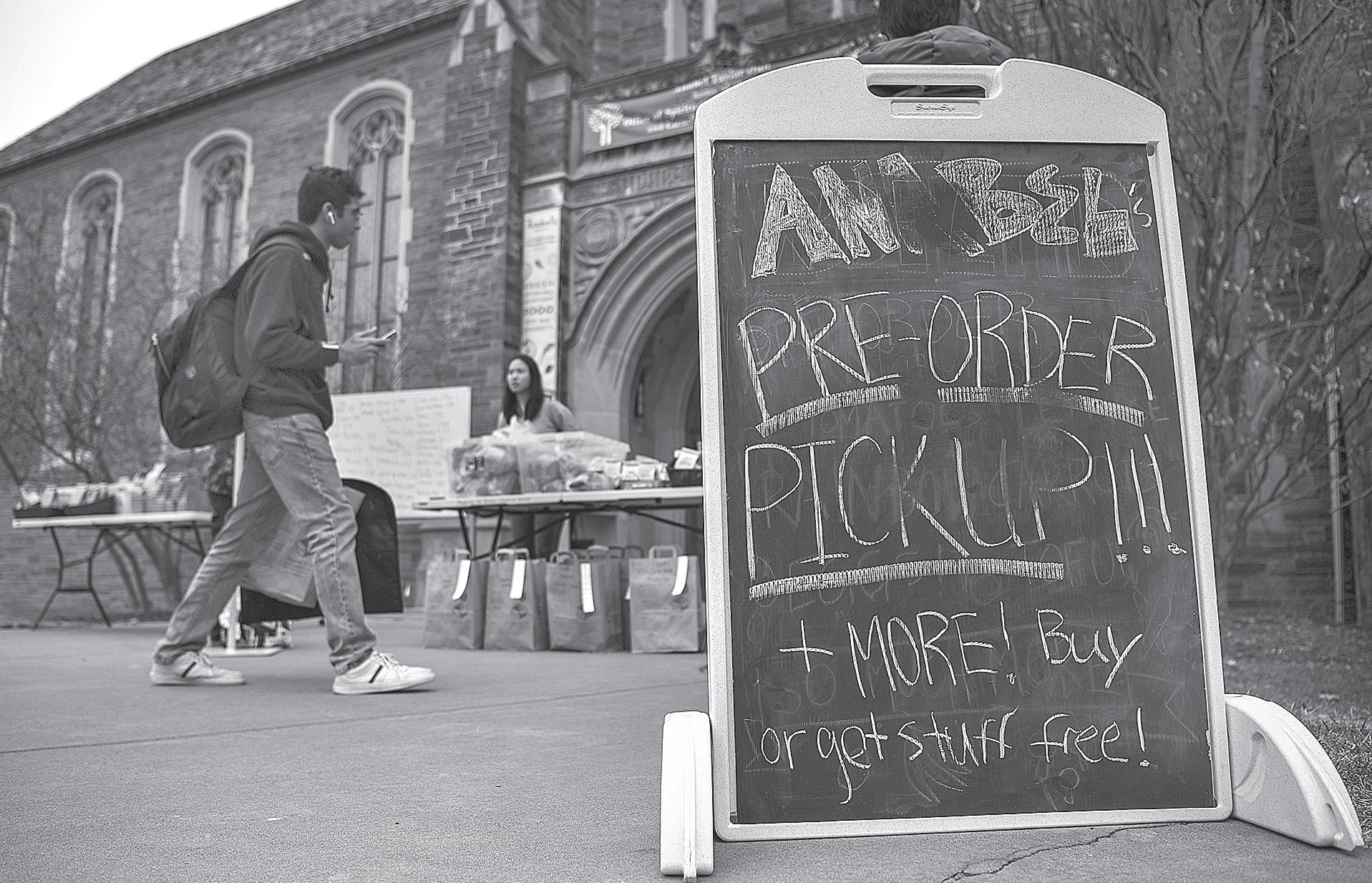
This semester, Anabel’s Grocery will continue supporting Cornell students, even if it can’t be through groceries.
Cornell’s student-run store will be closed for the upcoming semester, but the student-led social enterprise is trying to turn the disruption of the virus into an opportunity. Although the Anabel’s team will not be able to operate the store, the organization is looking forward to enhancing its educational and outreach efforts.
The Office of Student and Campus Life halted Anabel’s normal operations this semester, as student organizations on campus cannot host in-person events this semester, according to the office’s website.
Although Anabel’s team members said that they appreciate the administration’s commitment to public health and student safety, the news that they wouldn’t be able to distribute groceries was disappointing, especially as food insecurity has spiked during the pandemic.
“The argument that the administration gave us is that there are food pantries for people in need,” said team member Emily Desmond ’21. “But Anabel’s can provide more than that to students. We provide a lot of educational resources and empower people to feed themselves healthy meals.”
Through these resources, the grocery store is trying to make the most out of the semester, hoping to collaborate with other groups that work toward social, economic and environmental justice.
Anabel’s is looking to partner with organizations and support existing projects in the Ithaca area such as the Ithaca Farmers Market and Tompkins County Food Task Force. The organization also plans to add educational resources to its website that explain the connection between food, health, justice and sustainability.
“Our organization’s previous mission must be uprooted to build space for active, constant racial justice programming,” said team member Ryan Stasolla ’21 in a press release. “Anabel’s is eager to evolve and adapt in this coming semester.”
“The argument that the administration gave us is there are food pantries for people in need.”
Additionally, the student organization intends to review its structure, policies, programming and operations from an anti-racist perspective. The team welcomes collaboration with other organizations engaged in anti-racist work, and members have already met with on-campus groups such as Cornell Students for Black Lives.
Emily Desmond ’21
Anabel’s team encourages students passionate about racial, ecological and economic justice to get involved by taking AEM 3385: Social Entrepreneurship Practicum: Anabel's Grocery, taught by Dyson School visiting lecturer Anke Wessels. The class is the main entry point for new members of the social enterprise.
Anabel’s opened its doors in May 2017, following more

than two years of planning, with the goal of providing healthy and affordable meals to address food insecurity at Cornell and in Ithaca. The non-profit, student-run grocery store also took a semester hiatus in spring 2019 to reassess its business operations.
In previous semesters, students taking the course ran the grocery store’s operations. Despite the operational pause this semester, Anabel’s still wants to give students the chance to actively address food insecurity at Cornell and help the grocery store fulfill its justice-driven mission.
“We have the opportunity, this semester, to lay the groundwork that connects political education with fierce alliances to transform the food system with the hope that, soon, we can also return to the practical, everyday work of running Anabel’s Grocery,” Wessels said.
Faith Fisher can be reached at fsher@cornellsun.com.


By TAMARA KAMIS Sun Staff Writer
After nearly a day, Cornell RAs will suspend their strike 2 p.m. Thursday. Many RAs went on strike because they felt underpaid, unprotected from COVID-19 risks and unheard by the administration.
The strike that started with just over 50 signatures from current RAs rapidly garnered support from hundreds of students, faculty and alumni. The petition gained over 800 signatures on Wednesday, giving the R.A.s more leverage. On Wednesday afternoon, in response to the strike and public outrage, Vice President for Student and Campus Life Ryan Lombardi said he would meet with the organizers “as soon as possible.” On-campus move-in for thousands of students starts in just a few days.
Diego Galvan ’23 spent Wednesday on strike, along with many of his colleagues.
“I bought groceries, played piano and sat back and watched it all unfold,” Galvan said. “It is really nice to see we had 800 people in just one day already standing on our side.”
Galvan said that he was disappointed in the working conditions that led him to strike, but he felt that the issue was a still low priority for the administration.
“It has felt like the administration has the sole interest of their own financial benefit.”
Diego Galvan ’23
“During my experience as a Cornell student as a whole, it has felt like the administration has the sole interest of their own financial benefit,” Galvan said. “They don’t take into consideration the interests of students, from my experience.”
According to Jason Chang grad, the administration told RAs that they are not responsible for enforcing the campus behavioral health compact, but he, Galvan and other RAs felt that they are often left with no other choice. If they don’t enforce the rules, then they live with the risk of sharing spaces with undergraduate students behaving unsafely, some of whom have not yet been tested for COVID-19.
The strikers’ list of demands included a mix of safety measures, representation in decision-making processes and hazard pay. The live-in student advisers also wanted
more protective equipment, and cost-of-living raises that take additional workload into account.
Since RAs are expected to shoulder more responsibilities this semester, they wanted administrators to notify them first before they address the larger campus community.
To ensure their interests are represented in the future, they also asked for an RA representative present at Housing and Residential Life meetings and a professional staff liaison. The organizers specifically named the Housing and Residential Life department — and not residence hall directors and area coordinators, who they thanked their RA advocacy.
“It seems like the most effective approach is either through volume [of people advocating] or critical action.”
Jeff Pea grad
“R.A.s are integral to this reopening plan,” the strike organizers posted on social media. “We need PPE, we need sanitation, we need our concerns to be heard, we need not be overburdened, we need consistency, we need communication. We need empathy, then you can ask for grace.”
The RA strike organizers shared their demands in a series of graphics on Twitter and Instagram The RA demand slide deck had 500 retweets, and their Instagram page gained 880 followers in just over a day.
Jeff Pea grad was one of the organizers behind recent graduate student advocacy for more autonomy in deciding to teach in-person or not. Pea thought that the RAs strike strategy was effective, although risky.
“When we saw how the administration responded to feedback from the community, it seems like the most effective approach is either through volume [of people advocating] or critical action,” Pea said. “I think it was really smart [to strike], and will get them leverage to get those minimum protections that should be there but aren’t. I was surprised by it, but I support them.”
Raphy Gendler ’21 and Meghna Maharishi ’22 contributed reporting.
Tamara Kamis can be reached at tkamis@cornellsun.com.
By ANIL OZA Sun Science Editor
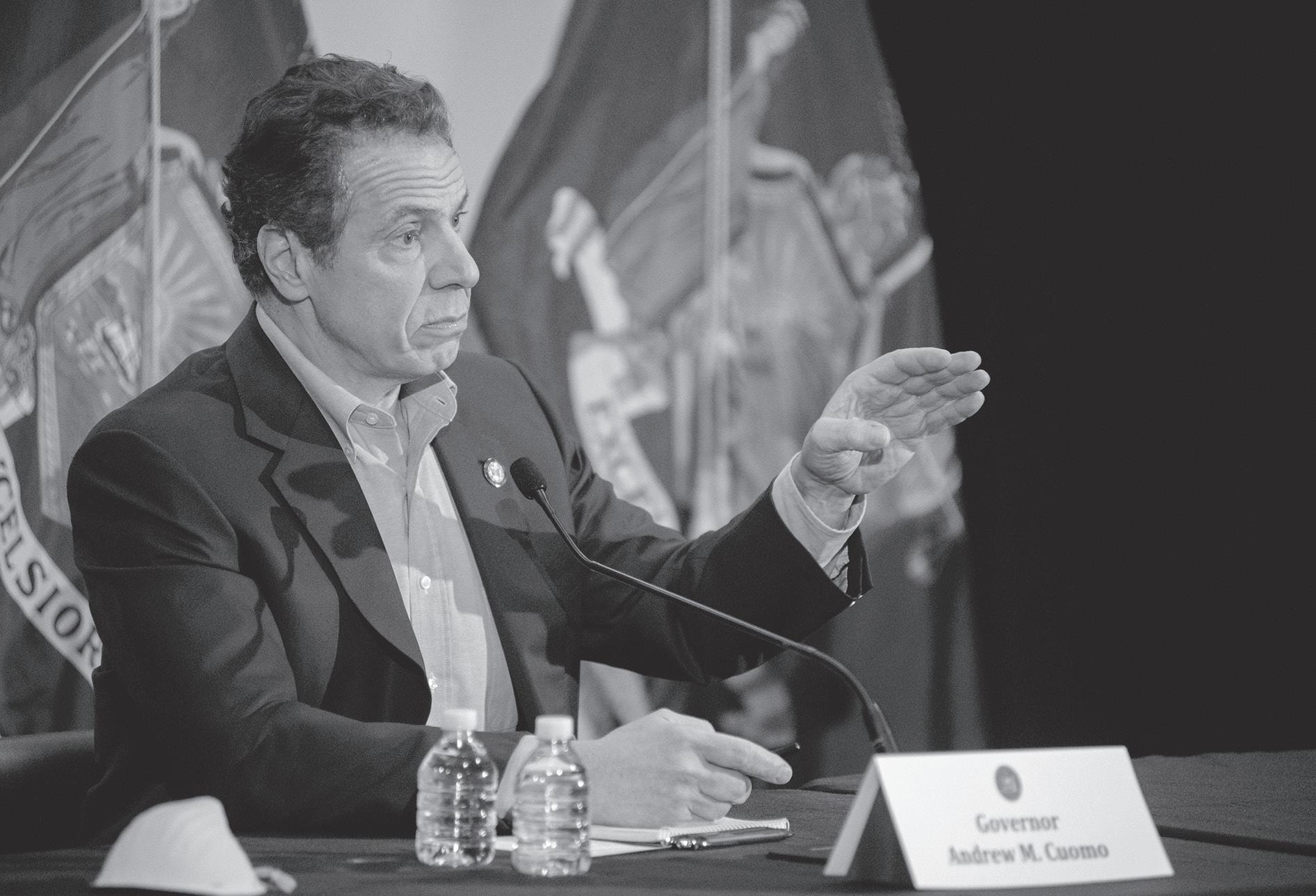
Cornell recently committed to considering a shutdown if campus reached 250 cases in a week, but a recent decision by Gov. Andrew Cuomo (D-N.Y.) may not make that feasible.
On Thursday, Cuomo announced that colleges in New York State would have to move to remote learning for two weeks if there are 100 cases or a number of cases equal to 5 percent of the population.
“We’re seeing around the country, situations where colleges reopened and then have an outbreak of cases,” Cuomo said. “We are going to set a threshold that says if a college has 100 cases, or a number of cases equal
to 5 percent of their population or more, whichever is less, they must go to remote learning for two weeks.”
Several schools, including University of North Carolina at Chapel Hill and University of Notre Dame, that have attempted reopening for the fall semester have already seen COVID-19 outbreaks, forcing them to alter their plans. UNC reverted to an entirely virtual semester while Notre Dame transitioned to remote learning for two weeks.
Cuomo’s plan mirrors that of Notre Dame — should there be an outbreak, schools will transition to remote learning for two weeks before reassessing the situation.
Given Cornell’s campus population of 34,310 as of 2019 — 5 percent would be 1,715 — so Cornell’s
threshold for closure would be 100 cases of COVID-19 under Cuomo’s guidelines.
Cornell had committed to considering a shutdown if there were 250 confirmed cases on campus within a seven day period. This figure would signal a transition from a best case scenario to a nominal scenario.
Some have claimed the figure is too high, but Provost Michael Kotlikoff drew a distinction between case numbers in asymptomatic screening versus testing for a cause — which is the predominant method of testing.
“When we talk about numbers of 250 in a week, that sounds enormously large, but remember we’re going to be testing every single student multiple times a week,” said Kotlikoff in an interview with the Sun. “We hope to catch almost every case, all these cases that would otherwise have been missed. It’s a little bit apples and oranges, to compare our numbers to the numbers you often see in the press and I don’t think people have quite understood that so I wanted to stress that.
Syracuse University also committed to a higher threshold for a campus closure in late July, stating that 200 active COVID-19 cases would lead to a campus shutdown.
Since Aug. 18, Cornell has only reported three cases of COVID19, detected through its gateway testing for students.
“We hope to catch almost every case, all these cases that would otherwise have been missed.”
Michael Kotlikoff
“Cornell is committed to the healthy and safe reactivation of our campus, and our robust testing program has the ability to process up to 50,000 samples each week,” John Carberry, a University spokesperson, said in a statement to The Sun. “As we carefully track our ongoing monitoring of students, faculty and staff, we will continue to work in close consultation with Tompkins County Health Department and in strict accordance with all New York state guidelines.”
Independent Since 1880
138th Editorial Board
MARYAM ZAFAR ’21
Rochester, N.Y. Editor in Chief
JOYBEER DATTA GUPTA ’21
Kolkata, West Bengal, India
Business Manager
PETER BUONANNO ’21
Charlotte, N.C.
Associate Editor
MEGHNA MAHARISHI ’22
Montclair, N.J. Assistant Managing Editor
CHRISTINA BULKELEY ’21
Boston, Mass. Sports Editor
BORIS TSANG ’21
Plano, Texas Photography Editor
EMMA ROSENBAUM ’22
Toronto, Ontario, Canada Science Editor
ARI DUBOW ’21
Brooklyn, N.Y. City Editor
CAROLINE JOHNSON ’22
Huntington, N.Y. News Editor
KATHRYN STAMM ’22
Evansville, Ind. News Editor
PALLAVI KENKARE ’21
Atlanta, Ga. Opinion Editor
MIKE FANG ’21
San Jose, Calif. App Editor
CATALINA PEÑEÑORY ’22
Jakarta, Indonesia
Assistant News Editor
MADELINE ROSENBERG ’23
Chappaqua, N.Y. Assistant News Editor
LUKE PICHINI ’22
Dresher, Pa.
Assistant Sports Editor
HANNAH ROSENBERG ’23
Chappaqua, N.Y.
Assistant Photography Editor
DANIEL MORAN ’21
Matthews, N.C.
Assistant Arts & Entertainment Editor
ANNABEL LI ’21
Cupertino, Calif.
Assistant Money & Business Editor
LEI ANNE RABEJE ’22
Ossining, N.Y. Layout Editor
JOHN MONKOVIC ’22
Ardsley, N.Y. Multimedia Editor
WINNY SUN ’20
Vancouver, B.C., Canada Newsletter Editor
AMANDA H. CRONIN ’21
Chappaqua, N.Y. Senior Editor
RAPHY GENDLER ’21
Minneapolis, Minn. Senior Editor
ALEC GIUFURTA ’21
Southampton, N.Y. Senior Editor
AMBER KRISCH ’21
Brewster, N.Y. Blogs Editor
JOHNATHAN STIMPSON ’21
Darien, Conn. Managing Editor
KRYSTAL YANG ’21
Shanghai, China Advertising Manager
JASON HUANG ’21
College Point, N.Y. Web Editor
NIKO NGUYEN ’22
Fremont, Calif. Design Editor
ANIL OZA ’22
Queens, N.Y. Science Editor
BENJAMIN VELANI ’22
Minneapolis, Minn. Dining Editor
ALEX HALE ’21
Cumberland, R.I. News Editor
SEAN O’CONNELL ’21
Brooklyn, N.Y. News Editor
EMMA PLOWE ’23
West Nyack, N.Y.
Arts & Entertainment Editor
MAIA LEE ’21
Yorba Linda, Calif.
Money & Business Editor
OLIVIA WEINBERG ’22
Briarclif Manor, N.Y.
Assistant News Editor
MEGHANA SRIVASTAVA ’23
Plainsboro, N.J.
Assistant News Editor
EMILY DAWSON ’21
Ithaca, N.Y.
Assistant Sports Editor
BEN PARKER ’22
New York, N.Y.
Assistant Photography Editor
DOMINIC LAW ’22
Hong Kong
Assistant Dining Editor
BRIAN LU ’23
Taipei, Taiwan Assistant Arts & Entertainment Editor
ALICIA WANG ’23
Fayetteville, N.C.
Graphics & Sketch Editor
MEI OU ’22
Brooklyn, N.Y.
Production Editor
ANYI CHENG ’21
Palo Alto, Calif. Compet Manager
SARAH SKINNER ’21
Outer Banks, N.C. Senior Editor
PARIS GHAZI ’21
Cambridge, Mass. Senior Editor
NICOLE ZHU ’21
Princeton, N.J. Senior Editor
JEREMY MARKUS ’21
Rochester, N.Y. Senior Editor
JOHN COLIE ’23
West Paterson, N.J. Blogs Editor
IN NEARLY EVERY back-to-school plea for new students to join this little rag we call a newspaper, past editors have urged and beckoned prospective members with inviting pledges: “Write the first draft of history,” “be the change in this paper” and “there’s never been a more exciting time to be a journalist” spill over the last decade of welcome-back notes.
Well, friends — all of those things are finally, irrevocably and indisputably, true.
It’s not necessary, but allow a moment of scene-setting: There’s a dual pandemic of COVID-19 and racism infecting the United States. Institutions that once felt infallible — from the federal government to the election system to this University — appear to be floundering at best, patching their way through 2020. In this richest country in the world, it seems that everyone — our governments, our Universities and ourselves — are living paycheck to paycheck.
Your voice and your story matters, now.
From wherever you might be calling Cornell this year, whether you’re a firstyear or a senior, whether you’re undecided, an Africana studies or a physics major — do your peers and yourselves a favor, and join The Sun. If you’re a photographer, a doodler, a writer, a web designer or none of the above, join The Sun. If you’re pre-med, pre-law or pre-nothing, join The Sun. Find your niche here, and participate in this public service we call journalism.
Editorial
— M.Z.
LAST MARCH, WHEN CORNELL SHUT ITS DOORS , students and faculty alike were scared and confused as to what the next few months would bring. Our future at Cornell was uncertain. Students fled from their dorms and houses, final goodbyes were rushed and every student body and faculty member gained a uniquely traumatic experience that will stay with them. No one knew quite how serious the coronavirus pandemic would get.
Nearly six months later, the U.S. exceeds 6 million COVID-19 cases. As recent events show, life as normal leads to sickness — and, perhaps, even death. Colleges that tried to reopen without the proper precautions in place have failed miserably, endangering thousands of students, staff, faculty and community members in the process.
Act as if the lives of you, your friends and your community depend on it, because they do.
While Cornell’s positive COVID-19 entry test count is lower than expected and well below the New York State college shutdown point mandated by Gov. Andrew Cuomo (D-NY), the hardest part is yet to come. Recent parties and social gatherings contributed to multiple positive coronavirus tests on campus in the past week. If this type of irresponsible behavior continues, Cornell too will fail.
The last week has proven that there is no room for error. Classes have yet to begin, but the community has already seen one confirmed coronavirus cluster on campus. Now is not the time to test the waters. Those attending Collegetown gatherings without masks are putting everyone, on and off this campus, at risk. While disciplinary action may be taken against those who break the behavioral compact, Cornell is still not safe if new mistakes continue to emerge. The only way that campus may remain open this semester is if every member of the community abides by the same guidelines. Act as if the lives of you, your friends and your community depend on it, because they do.
Fellow students, all of us are about to experience a novel chapter in our university’s history. Nothing will be as you remember it, and that is a sacrifice everyone must make peace with if we are to succeed. The endeavor we are embarking upon has been deemed impossible. The world is watching, the spotlight is on and the expectations are low. There is a chance to prove those who doubt Cornell wrong; behave for your own sake, for the sake of your peers, and for the sake of the community that ensures that you have a place to call home.
If we follow the rules and fail, at least we know we did everything we could to ensure the health and safety of our community. The burden is on us to give it the old college try. Mask up, keep six feet apart and make the most of the time you have left on The Hill.
Te above editorial refects the opinions of Te Cornell Daily Sun. Editorials are penned collaboratively between the Editor in Chief, Associate Editor and Opinion Editor, in consultation with additional Sun editors and stafers. Te Sun’s editorials are independent of its news coverage, other columnists and advertisers.
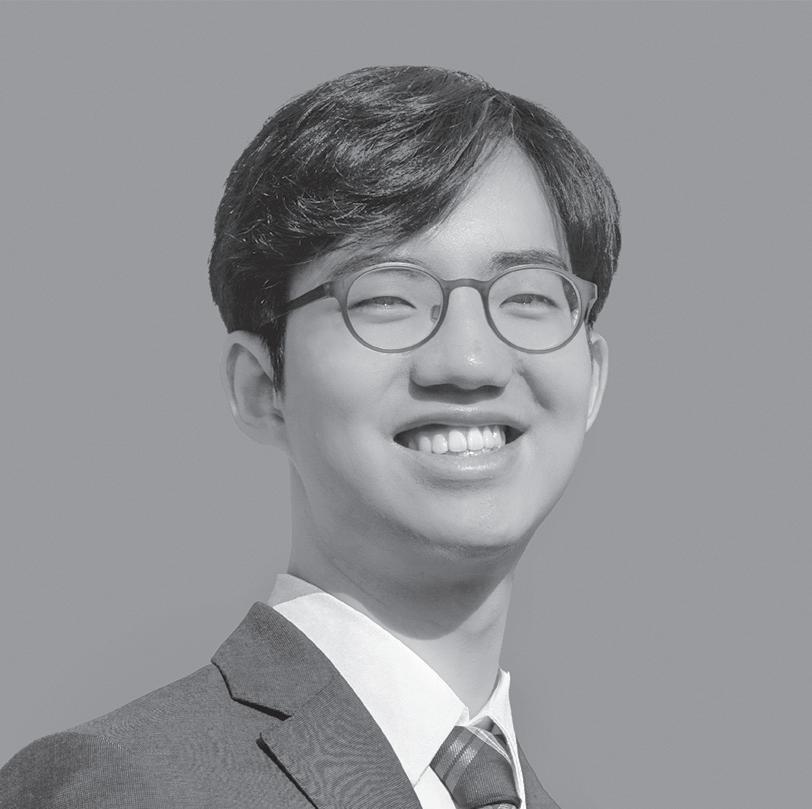
Jaewon Sim is an undergraduate student-elected member of the Board of Trustees and a junior in the College of Arts and Scienecs. Trustee Viewpoint runs alternate Tursdays this semester.
In a few days, Cornell will reopen for in-person classes after a six-month hiatus. It is quite strange to think that a century-old tradition now comes with a sense of caution.
I know that many of us feel nervous – and I empathize with these worries. With a highly contagious and consequential pandemic, it often feels like the margin of error is too small. I also know that some of us have lingering doubts about students’ ability to refrain from partaking in risky behavior.
While some healthy skepticism keeps us from being complacent, there are many reasons to put our trust in Cornell students, who can and will rise to the occasion. Since Cornell’s March closure, we have learned an extraordinary amount of information about how this disease affects us. From living in Collegetown over the summer, I know that the vast majority of us are modifying our behaviors accordingly – practicing social
distancing and wearing masks. It gives me a renewed sense of hope to see evidence that months of responsible action is paying off: Our initial test results of 7,000 students indicate that positive cases are in the single digits. But most importantly, as we move forward with the reopening, students are well aware that this semester entirely depends on our community’s ability to control the spread of COVID.
In these challenging times, baseless pessimism weakens our community, and the erosion of trust works against our collective goal of keeping Cornell safe. Having inaccurate expectations in our students, friends and colleagues can quickly become a self-fulfilling prophecy; low expectations of one another can lead everyone to lower their personal standards. Now is the time to expect more, not less. In the face of crisis, let’s stand unified. Instead of fear, let’s build and lead with mutual trust.
At times of frustration, I find it helpful to remember that this pandemic has put every subset of the community to a truly unfair test. Many Cornellians – including international students who could not return to Ithaca for the fall – are learning to succeed academically without being physically present on campus. First-year students face the additional challenge of learning to thrive in an unfamiliar and socially-distanced environment. Cornell staff, including the campus life team on the front lines of protecting our residential community, bear new responsibilities of keeping the ship steady during everyone’s first once-in-a-lifetime crisis. At every level of Cornell, the pandemic demands that leaders make unprecedented and consequential decisions given limited time and information.
As everyone tries their best to meet our challenges head-on, let’s remember to apply empathy. To the freshman in their f rst week at Cornell, feeling homesick and lonely because their home and only support network is so far away, let’s be compassionate. To the sta f who are overwhelmed with unpredictability as they try to keep their families safe and healthy,
let’s be compassionate. To the professors working their best to provide a Cornell-class education for students now dispersed around the globe, let’s be compassionate.
Thanks to these Cornellians’ hard work and resilience, our campus will continue to serve as an equalizer for the most vulnerable, including students who face practical and financial barriers. Cornell will continue to be a sanctuary for students whose homes are not an adequate learning environment and do not have a reliable computer or internet access. For many more, I am hopeful that our return to campus will restore some much-needed normalcy to their lives.
But make no mistake – being compassionate neither means being complacent or silent. Every Cornell student shares a part of our collective responsibility to safeguard the community. It falls on every one of us to intervene when we see unsafe behavior in the community or speak up when we see university policies that can use improvement. We will come out as a stronger community for your feedback and advocacy.
Many structural factors, including Cornell’s physical location and the new Cornell COVID Testing Lab at the veterinary college, put us in a unique position to reopen safely. But even with a state-of-the-art testing facility and the most extensive and carefully thoughtout reopening plans, we could not safely resume instruction without a team effort.
We are a resilient people, and together, we will get through this. The pandemic will end, and life will return to the pre-pandemic normal. Meanwhile, in the face of uncertainty, let’s act together, support each other and make the most of what we have. This fall is not a semester we had expected, but I am excited to see everyone take advantage of what the Cornell campus has to offer.
Welcome back to the Hill.
Comments may be sent to opinion@cornellsun.com.
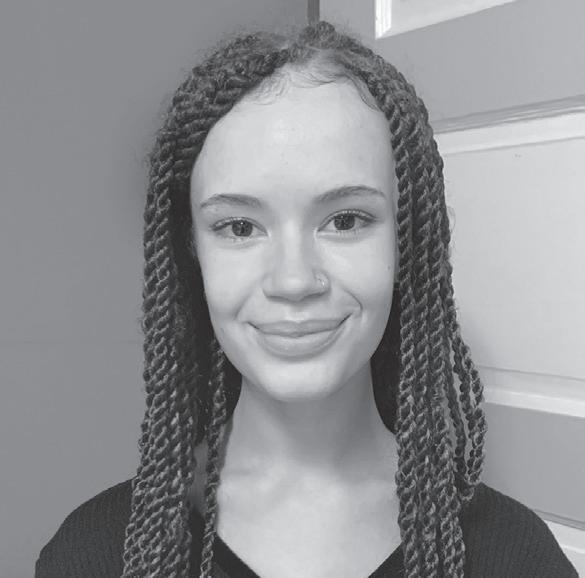
Alecia Wilk is a junior in the College of Arts and Sciences. She can be reached at awilk@cornellsun.com. Girl, Uninterrupted runs every other Friday this semester.
Before the whir of life-changing events and the unprecedented-ness that has characterized the past six months, I was bent over my notebook for Black Radical Tradition in the U.S., taught by Prof. Russell Rickford, Africana and American Studies, rushing to sloppily jot down his last sentence: “Americanism is ahistorical.”
More recently, sitting on my couch instead of a desk and staring not at slides but the rolling credits for Spike Lee’s most recent war drama, Da 5 Bloods, starring the recently deceased Chadwick Boseman, I heard an echo of Prof. Rickford in the back of my head. And since then, I’ve been reminded of those three words so often that I now hear them in my own voice, as I read people’s denialism about the United States’ militant capacity to conquer civilians. Specifically its own citizens.
Over videos of federal agents deployed on the streets of New York, Portland and Chicago, Homeland Security Investigations officers brutalizing protestors and plainclothes cops snatching people into unmarked vans, outrage and shock have been weirdly focused on where this is happening, and whose citizens it’s happening to, rather than the simple fact that it’s happening. These reactions reveal a need to create distance between America and the evidence before us, and to pretend that distance is as geographical as it is ethical: “A little graffiti and some toppled statues and we turn into freaking [Al]Fallujah. This is madness!”
“Trumpistan.” “We are the new Middle East.”
“This isn’t Cuba, this is America.”
But, of course, it is.
I thought that epiphany became mainstream when Childish Gambino rapped about it two years ago, along with the fact that none of this violence and complete disregard for human rights has ever been un-American. Hoards of mindless comparisons to countries in the Middle East and South America are supposed to communicate some unthinkable descent into chaos, but when we condemn our nation’s own attacks on its citizens like this we ignore the fact that American fascism is better likened to American imperialism, just within its own borders. The “This is not us, but someone else” rhetoric ignores history, which is also maybe acknowledging history in the most American way.
Such a contradiction exists because history is not just a transcription of what’s happened, “history is also a memory — a matter of whose voices are heard, whose personal experiences are recorded, which communities’ experiences are officially chosen to represent a neighborhood, a city, a state, the country,” as Richard Brody put it in his review of Da 5 Bloods The film and the history of the people it involves were painful, powerful and educational. Its script and characters were fictional, but its truth lies in a collage of oppression, as Spike Lee overlays military violence in Vietnam with police and state violence in America against Black people. The film depicted the Vietnam war, in certain parts, and Blackness in America in others and the wicked treatment of oppressed people all over the world by the powerful elite, and the lies they spread about it, in full.
In war and civil unrest, white nationalism causes turmoil and then names itself the sole alleviator of the mess it has created, the effects of which are felt for generations after America says each battle is over. Struggles of the oppressed stay felt like aftershocks because even when troops are said to be withdrawn, or civil rights conceded, the repercussions of being an enemy to America, both inside and outside its borders, is endless.
The ongoing problem of police violence here isn’t unlike our military violence elsewhere; it never has been, and framing the footage of this chapter of American life as a descent into chaos or a fall from grace is only proof of how we’ve perverted our memories. The idea of historical unbiasedness has been so poisoned with the acid of Americanism that it now entails the immense manipulation of histories and current events until both
sides of a story appear to be in equal standing. For the American government’s perspective of our nation’s history to slip into news cycles and textbooks and everyday conversations as anything less than atrocious, nauseating, crimes against humanity, our memory must lack historicity; so collectively, we repress the evils of our nation and leave them out of headlines, typical war dramas and the average classroom. Western propaganda is so good that it doesn’t exist.
Hiding our past is what conjures up denial about what we’re seeing now, so it’s not enough to just open our eyes. We have to confront Americanism wherever it writes over the voices of the oppressed.
Hiding our past is what conjures up denial about what we’re seeing now, so it’s not enough to just open our eyes. We have to confront Americanism wherever it writes over the voices of the oppressed, which is why those three words from my notes continue to ring in my ears while I’m lapping up the last few weeks of a dreadfully long summer full of sickness, uproar and an evolving online political consciousness. I’m also preparing for the fall semester as a Government major at an institution where the syllabi of many courses do not mirror the contents of my sacred notebook from Black Radicalism in the U.S. And though I hope that the thirst for justice that has taken over city streets and Cornell students’ Instagram stories will help us tackle the American-centric, heroizing, ahistorical perspectives in our very political classrooms, there’s an equal worry that amnesiac habits will kick in and create a campus without an understanding of this summer’s history, or the blank space of histories have been erased from our memory.
Comments may be sent to awilk@cornellsun.com.
Chabad is dedicated to bringing the warmth and richness of Jewish life and tradition to students of all backgrounds. We are your home away from home… the heart of Jewish campus life.
Come for our free home-cooked Shabbat dinner, or for a Torah class. Call for information about Judaism, or just to talk
For more information regarding Chabad’s programs and activities, please e mail: Rabbi Eli and Chana at: es79@cornell.edu or call: (607) 257-7379 Eli & Chana Silberstein www.chabadcornell.com

is the home for Jewish Student Life on campus
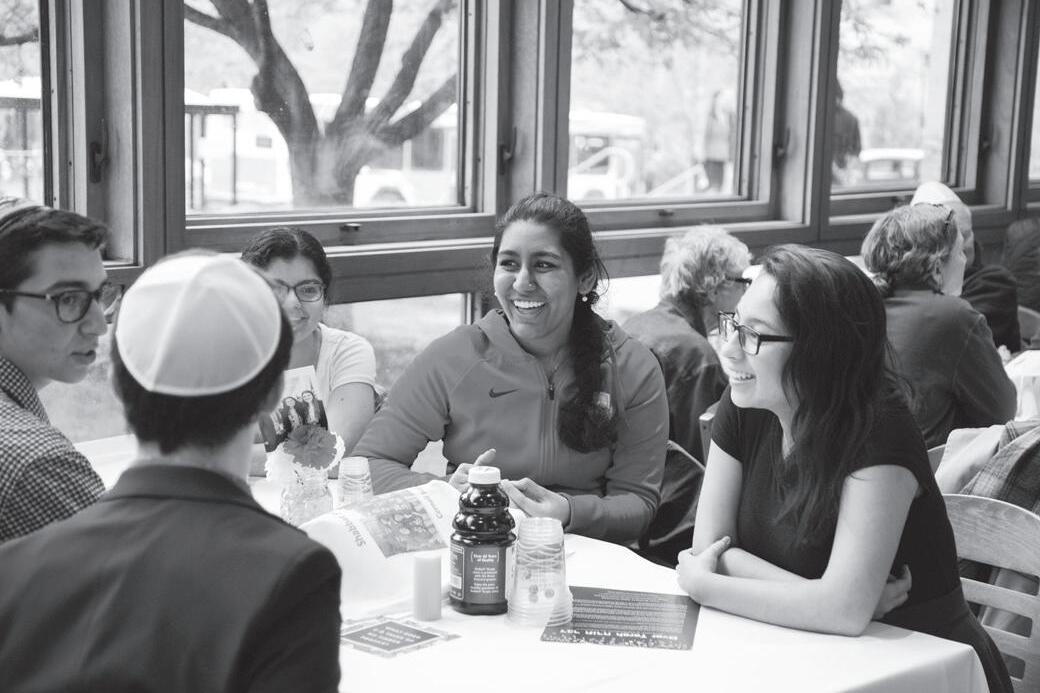
Whether you join us to celebrate Shabbat and holiday dinners, study Jewish texts, travel to Israel, whether you’re looking for leadership opportunities, interested in planning a program, or simply grabbing a cup of coffee with one of our staff members, CORNELL HILLEL is here to support Jews of all backgrounds. This year, we’re here to help you navigate life on campus with programs that are safe and accessible to all students. We’re located in Anabel Taylor Hall, or visit us at cornellhillel.org or connect with us on Facebook and Instagram.
CORNELL RELIGIOUS AFFILIA















JOHN COLIE SUN ARTS STAFF & BLOGS EDITOR
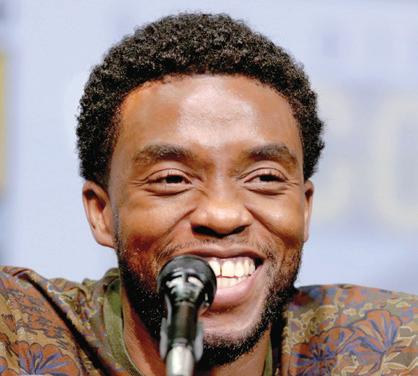
Chadwick Boseman’s death initially stopped me, as it probably did many others. His passing, although not sudden to those around him as he had been battling Stage III (later Stage IV) colon cancer since 2016, was still nothing short of shocking, as his illness had not been made public whatsoever.
Chadwick Boseman’s illness was something he refused to reveal to anyone else other than those closest to him, a secret arduous to bear, especially as more people began to notice his weight loss and weariness in recent photographs; indeed, it claimed him after only four years. But what an incredible four years those were.
He embodied the ultimate selflessness: Brushing aside an unspeakably horrible diagnosis to bring happiness and representation to millions, never allowing anyone to feel pity for him. He showed the world the power behind being Black, contributing to the growth of Afrofuturism.
When Black Panther was released, many people saw for the first time a superhero who did not match the same attributes as those so often depicted on-screen previously; not only did Boseman embody this beauty hitherto unseen through his acting and poise, he provided enough atmosphere and authenticity to bring to life an amazing person as well as a superhero.
That inimitable acting presence compounds the shock of his death even more, as during this time he effortlessly portrayed Thurgood Marshall in the eponymous film, King T’Challa in the groundbreaking Black Panther and the gifted Vietnam War soldier Stormin’ Norman in Da 5 Bloods,released only this past June.
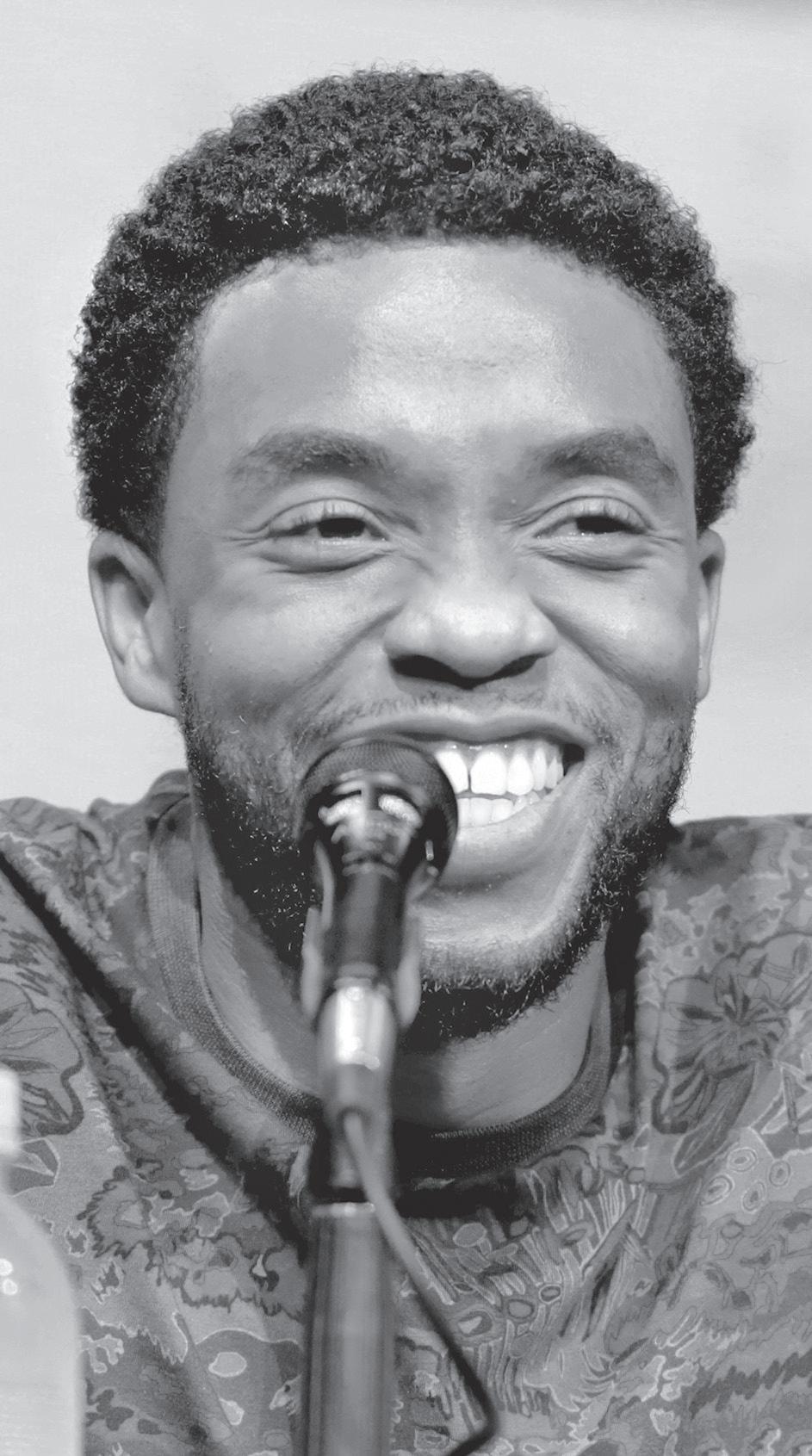
All three of those films, as well as others, were made after he had been diagnosed with cancer, but throughout each performance, he carried with him such a grounding presence that transcended any sort of possible frailty or ailment, enduring and inspiring in its steadiness no matter how different each character may have been from the others.
After Norman and the others find out from a radio broadcast that Martin Luther King, Jr. has been assassinated early on during Da 5 Bloods , Norman talks down the rest of the furious members of his five-person company even as he himself is devastated at the news; he proclaims at the end of the scene: “Won’t let nobody control our rage. We control our rage.” Boseman channeled this earnest, unflagging strength every time he appeared on screen, and it honestly hits even harder to find out he did so while facing such a grim prognosis — but such is the way of the best among us.
Soon after the news of his passing surfaced, Black P anther director Ryan Coogler honored Boseman in the most profound manner: “In African cultures we often refer to loved ones that have passed on as ancestors... I think it was because from the time that I met him, the ancestors spoke through him. It’s no secret to me now how he was able to skillfully portray some of our most notable ones. I had no doubt that he would live on and continue to bless us with more. But it is with a heavy heart and a sense of deep gratitude to have ever been in his presence, that I have to reckon with the fact that Chad is an ancestor now. And I know that he will watch over us, until we meet again.”
John Colie is a sophomore in the College of Arts and Sciences. He can be reached at jcolie@cornellsun.com.
ergy that is at the heart of Juvenilia , with Tichko thoughtfully composing synth layers and Jonathan spearheading the vocals and guitar.
While the phrase “Marsupial Lion” may conjure up images of a futuristic cross-breeding experiment gone wrong, Ithaca-based musician Travis Jonathan is quickly shaping the notion into something significantly less concerning yet equally cutting-edge. His debut album, Juvenilia , dropped this July. The vibe is easygoing yet exhilarating, carefully calculated but not complacent. For listeners craving something jammable and contemplative with psychedelic undercurrents, the nine track collection hits all three for the price of one.
While Ithaca is his current habit, Jonathan originally hails from a small town just outside of Concord, New Hampshire. It was there that his affinity for music began to reveal itself, first through the drums and later, the guitar. From jazz ensembles to musicals to garage bands, Jonathan’s adolescence was a time of critical gestation for what would quickly develop into a wholehearted and unapologetic quest to make sense of the world through music. Even at a young age, music acted as “the gravitational force in [his] social life,” providing a different type of language with which he could make connections.
He forged one such tie around the age of 10 with a neighborhood playmate named Parker Tichko. Jonathan was a self-described “indie rock kid” in his university years, yet Tichko incited an indelible shift in his musical conception by introducing him to synthesizers. The two quickly unearthed a special type of syn-
Jonathan has coined the term “riffwave” to describe the genre into which this music falls. It spans “the bite of huge guitar riffs with the swirling softness of synthesizers,” constituting something that isn’t quite synthpop, yet isn’t exactly indietronica either. Marsupial Lion fills the gap between overly chill bedroom pop and new age alternative, harnessing a sound that feels as genuine as it is unique.
Marsupial Lion, the project’s undoubtedly peculiar name, arises from none other than Australian folklore. The “drop bear” is a mythic creature used to frighten tourists Down Under, a sort of terrifyingly aggressive koala that surprises innocent pedestrians by plummeting from the trees. Jonathan, understandably intrigued, did some digging into the legend’s history and stumbled across the legend’s precursor. The “drop bear” was supposedly born out of the history of a real animal even more harrowing — the marsupial lion.
Jonathan points out that the name encapsulates an essential sense of duality. While koalas and kangaroos are our textbook marsupials, “neither of these creatures are exactly threatening.” On the other hand, though, “The lion is this symbol of power. To me that combination is perfectly symbolic of everything I love about music … It’s the aggressiveness of the electric guitar juxtaposed against the tenderness of a really sensitive vocal melody,” he said, pointing to artists like Tame Impala and Cocteau Twins. “I love dualities in music.”
Jonathan’s musical inspirations know
no bounds, ranging from the lulling reggae waves of John Brown’s Body to the unmistakable guitar shreds of Swedish rock group Dungen. Take a look at the “Making Juvenilia” playlist and you’ll find artists like Chaka Khan, The Smashing
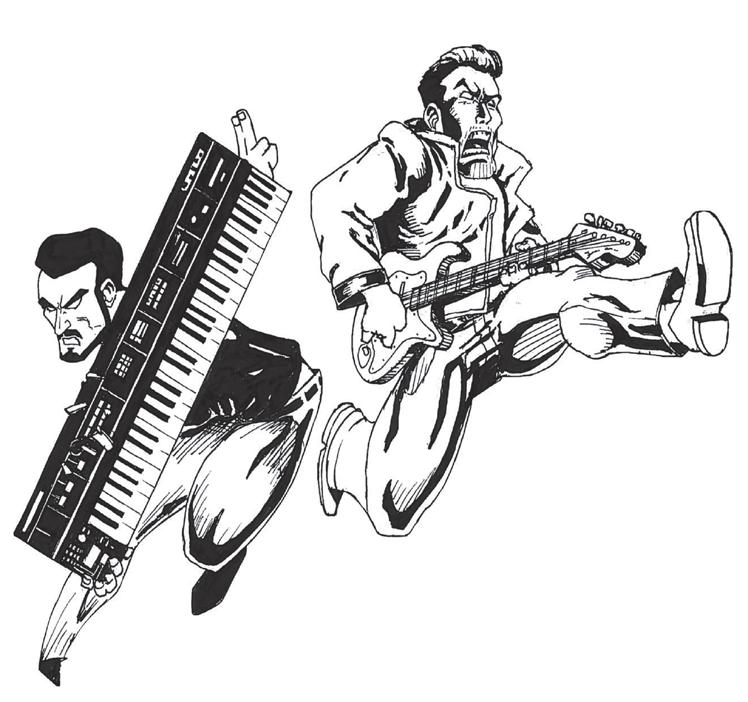
Pumpkins and Miguel all in the same breath. Jonathan notes the 1980s, however, as a period of particularly notable glory. “There’s something … really beautiful about the exploration of synthesizers with rock music that was going on,” he said. “A lot of this music wouldn’t even be construed as rock music; when you combined drum machines, synthesizers and guitars … you got something new and exciting.”
Juvenilia lies at the intersection between reflection about the past and a passionate meditation on how technology is brazenly carving out the future. Jonathan noted that deriving inspiration from the past is a “very natural and reflexive impulse for most creators … From there, it’s just a matter of how far back you reach, and how personal you want to get.”
Technology, however, is certainly a less popular topic to zero in on, and this individuality is much of what makes the album so poignant. Countless advancements have stranded us in a place of “constant negotiation between leaning on [them] when [they] make doing the things we love easier, while staying vigilant against the ubiquitous platforms wired to usurp and belittle human agency.” Juvenilia serves to remind us that “we are in the infancy of reckoning with these forces ... I’m thinking especially about the monetization of the intangible … and the staggeringly uneven economic spoils of big tech.”
Jonathan is reluctant to pick a favorite track, yet his enthusiasm for the project is undoubtedly clear. “My favorite thing about [ Juvenilia ] is how many moments still give me the chills I was chasing when it came together,” he said.
While Marsupial Lion is currently celebrating this major milestone, the future is far from out of mind. “There’s more music on the horizon,” Jonathan said, with a couple dozen tracks still in the works. “There are types of sounds I’m eager to explore and combine with other sounds.”
In the current moment where concerts are largely on hold, he’s excited by the challenge of “performing the music in a capacity that fits within pandemic constraints.”
At its core, Juvenilia is a record of musing. It’s electric and eclectic. The album tracks themes of speculation, amalgamation and epiphany through technology’s critical lens, inviting the listener into a parallel world of their own rumination.
Megan Pontin is a sophomore in the School of Industrial and Labor Relations. She can be reached at mpontin@cornellsun.com.
By
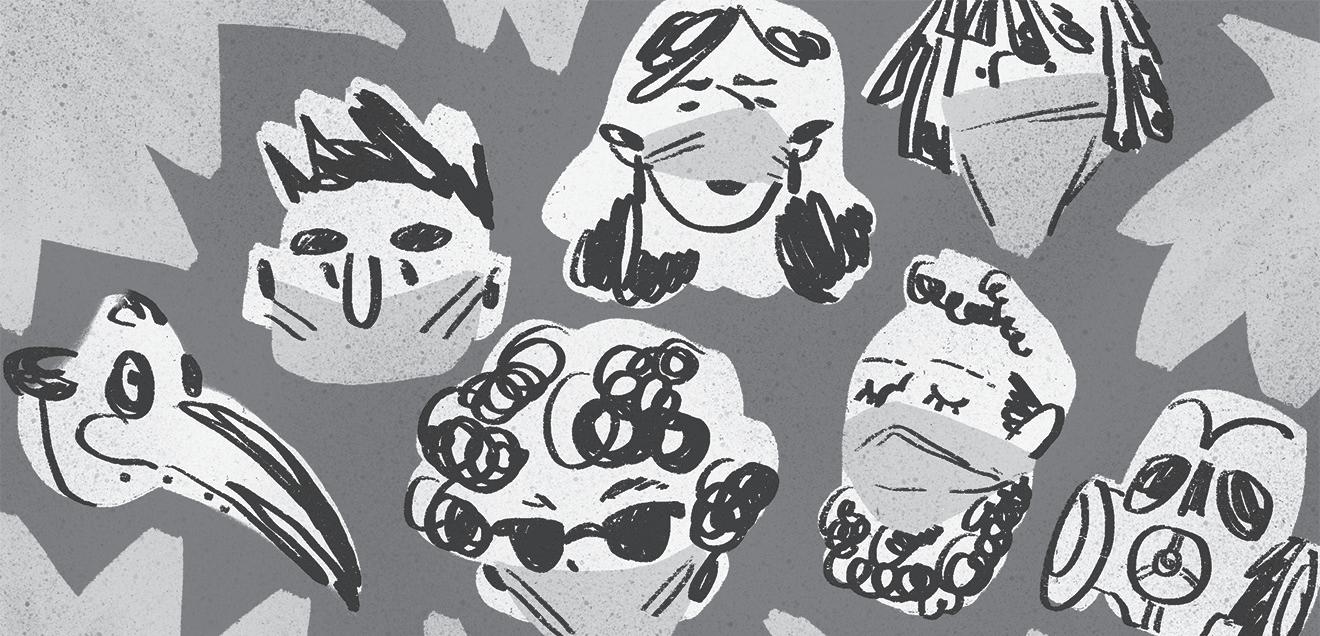
In March, everyone had to make a sudden addition to their daily wardrobe: masks. As students and professors prepare to enter the lecture hall, masks and physical distancing will be the norm, so what masks should students wear?
According to Prof. Juan Hinestroza, fiber science and apparel design, the mask that is best for you is the one you will wear.
“Any mask is better than no mask, that is the reality,” Hinestroza said “The mask should be comfortable, because if it’s not comfortable you will take it off.”
Long before the pandemic, mask wearing was common in some countries — particularly in east Asia. Mask wearing became common practice following the SARS outbreak in 2002, and the trend continued as a way for sick people to protect others. In some countries, masks also serve as a way to protect people from air pollution.
However, the goal of these masks, like the bright blue surgical masks or white KN-95s, is to protect the wearer from outside particulates. During the age of a coronavirus outbreak, the purpose of a mask is the exact opposite.
“Now, the problem that we have with the virus is the opposite. It will not protect you from outside to the inside,” Hinestroza said. “The main objective is to protect what is going from the inside [of the mask] to the outside. In that case, any mask may help.”
For those not in a medical setting, reusable masks made of cotton or other woven materials will suffice in reducing the spread of droplets and liquids from the user,
according to Hinestroza.
Reusable masks are made with various numbers of layers. With each added layer comes added protection, but it will also hinder the user’s ability to breathe.
“It’s a balance. You can be totally protected, but you cannot breathe, that’s not a very good situation,” Hinestroza said. “The other situation is you can be unprotected and you can breathe. That is also not a very good situation, so you have to have a careful balance between those two points.”
According to Hinestroza, masks need to be comfortable and convenient for people because then they’re more likely to consistently wear the mask.
“No matter how effective a mask is in a lab, if it is not comfortable it will have to deal with human factors — people would not like to wear that for longer periods of time,” Hinestroza said.
What a comfortable mask looks like isn’t a one-size-fits-all. Everyone has different facial dimensions, so masks will fit differently on everyone. The material of the mask and where the loop of the mask sits can also impact an individual’s comfort.
Most masks hang from one’s ears, but the pressure of a mask pulling on the ears can be less tolerable for some. In this case, Hinestroza recommended cutting the strap and using extra string or shoelaces to tie the mask behind the head.
“I think the best mask is the one that you make yourself, because nobody knows you better than yourself,” Hinestroza said.
The Centers for Disease Control and Prevention and U.S. Surgeon General have resources on making masks quickly and effectively. Hinestroza also pointed out
that masks will likely be part of the status quo for the near future, so having a good, comfortable mask that one can wear for an entire day is important.
A KN95 or surgical mask are also viable options if those are the most comfortable for an individual, but it is important to consider what happens to these masks after they are used.
Disposable masks are ideally not intended to be used multiple times, and once they are thrown out they present two dangers. One, if an individual is sick and they throw out a used mask, it could become a potential vector for infection. There is also an environmental cost of using disposable masks, especially because they are not biodegradable and will end up in landfills.
One method of testing the efficacy of masks that circulated the internet was
attempting to blow out a candle while wearing a mask. While this can indicate how much a mask can slow down air passing through the mask, it doesn’t accurately represent the breathing pattern one has throughout most of the day.
Overall, Hinestroza said such tests may help show the flow of air through a mask, one should use them cautiously.
“I think it’s good because it brings awareness of what happens when you breathe, but at the same time the test needs to reflect the reality of the situation,” Hinestroza said. “So if you are running 100 meters then maybe that’s the case, but if you are just watching Netflix, maybe not.”
Anil Oza can be reached at aoza@cornellsun.com.
promising that it can work until Thanksgiving break.
In June, Cornell modeled for a potential campus reopening, when cases nation wide seemed to have plateaued nationally. But since then, the U.S. has seen almost 3 million more COVID19 cases and 60,000 deaths.
During the past month, many schools, including several of Cornell’s peers in the Ivy League, decided to reverse plans for hybrid semesters and opt for entirely virtual learning. Many schools that suddenly changed their plans cited complications from rising COVID19 cases nationwide, but Cornell has doubled-down on its plan,
With classes set to begin in two days, how does Cornell’s model hold up to reality?
According to Prof. Peter Frazier, operations research and information engineering, and the scientist behind Cornell’s model, the recent trend in school closures reinforces the University’s focus on noncompliance to social distancing and asymptomatic screening.
“I would say that [monitoring social gatherings and high density housing] was and continues to be a focus. The data that we’re getting now kind of allows us to understand that phenomena more,” Frazier said. “That par-
ticular aspect hasn’t hasn’t really changed any part of our plan. It just kind of highlights that that part of our plan is pretty important.”
Currently, it’s too early to make sweeping generalizations about how the model has played out in reality, Frazier said.
According to Frazier, the recent events at other schools offer insight into which reopening strategies work and which ones don’t.
One of the schools that was forced to make an impromptu change of plans was the University of North Carolina at Chapel Hill. Within a week of in-person instruction, UNC saw two clusters — five or more cases in close proximity — of COVID-19 cases, and soon after, identified two more.
Frazier attributed this outcome to the lack of gateway screening and asymptomatic screening — UNC only tested students when they exhibited COVID-19 symptoms.
Duke University, just 10 miles away from UNC, also opened Aug. 10 but so far hasn’t reported nearly as many cases as UNC. As of Aug. 28, Duke had 15 active cases on campus; UNC has had 834 total positive cases since Aug. 12. Like Cornell, Duke is employing a strategy of gateway testing and asymptomatic screening.
Across the board, universities
have seen lower prevalence of COVID-19 in incoming students than Frazier anticipated in his early models.
The recent developments in other colleges and universities haven’t spurred sweeping changes to the reopening plans, but it has reinforced the focus on monitoring undergraduates — both in the context of high density housing and social gatherings.
Since colleges nationwide reversed their fall plans, Cornell is now trying to ensure it has sufficient quarantine capacity. Testing frequency has also changed since the initial model was published in June. Three months ago, Frazier anticipated that Cornell would need to test students every five days to effectively control community spread. Now, undergraduates will be tested twice a week.
“The goal of the June 15 analysis was to inform a decision about starting the wheels in motion for residential campus and to try to evaluate whether we should start those wheels in motion or start different wheels in motion about virtual instruction and keeping people out of Ithaca,” Frazier said.
When creating the model in June, Frazier said that he and his colleagues understood that they would likely need to alter and refine the testing strategy as they approached the fall semester.
Even now, Frazier is moni-
toring the spread of the virus in Ithaca to inform decisions going forward. In particular, Frazier is paying attention to two key metrics: the trends with case counts and the local quarantine and isolation capacity.
Capacity to isolate and quarantine individuals became a focus following Gov. Andrew Cuomo’s (D-N.Y.) mandate that students from high risk states must quarantine for two weeks upon entering New York. However, not all hotel or dorm rooms meet the state’s mandate for quarantine — so careful attention must be given to these spaces to understand Cornell’s limitations on quarantining and isolating students.
While it is very unlikely that Ithaca will reach the capacity of its local healthcare system, Frazier is monitoring those limits.
Frazier noted that his models assumed there would be some noncompliance to social distancing, but everyone needs to do their part to ensure a safe reopening.
“We’re all just holding our breath and just urge people to continue to comply with wearing masks and social distancing,” Frazier said. “We have to realize that things are different now and actions have consequences and just try to do our best. You know, we’re all in this together.”
Anil Oza can be reached at aoza@cornellsun.com.
in the empty cells, one number in each, so that each column, row, and region contains the numbers 1-9 exactly once. Each number in the solution therefore occurs only once in each of the three “directions,” hence the “single numbers” implied by the puzzle’s name. (Rules from wikipedia.org/wiki/ Sudoku)









Reaching over 15,000 people in over Eighty locations on campus and in the Ithaca area
Fall student-athletes will not use a year of Ivy League or NCAA eligibility this fall, but if they want to pursue a fifth year, they “will need to work with their institutions in accordance with campus policy to determine their options beyond their current anticipated graduation date,” the release stated.
The Ivy League does not permit athletes, regardless of NCAA eligibility, to participate in varsity athletics as graduate students.
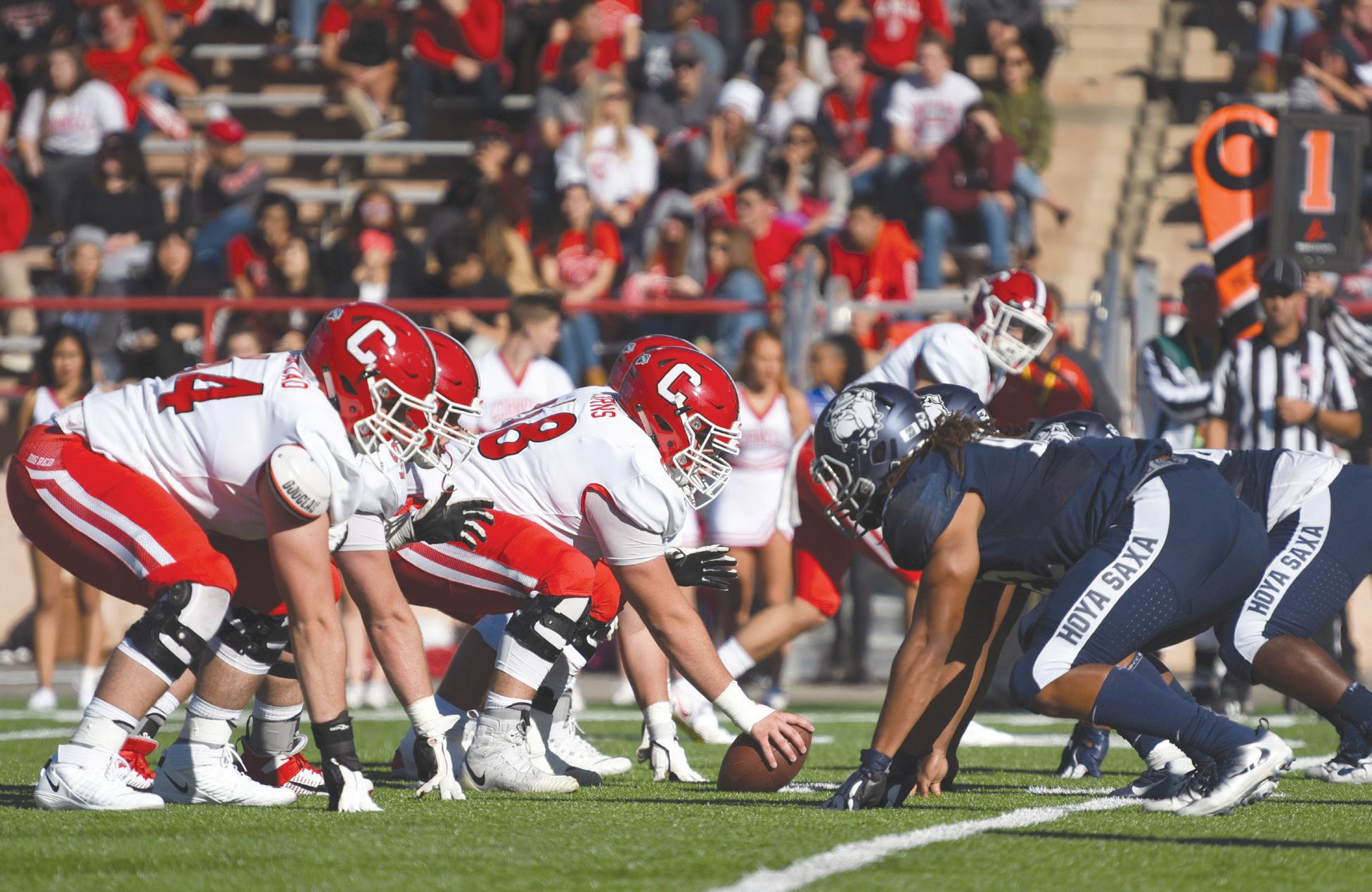
A number of logistical questions arise from the decision. If fall sports take place in the spring, there could be issues with occupancy of athletic facilities. For example, the football team would be using Schoellkopf Field in the spring, which could create conflicts with the men’s and women’s lacrosse teams in the scheduling of practices and games. The later start for winter sports could compound the issue as well.
— are a part of the Patriot League, a conference more on par with the funding and size of the Ivy League. The Patriot League, like the Ivy League, does not award athletic scholarships.
“Whatever the Ivy League does, I wouldn’t be surprised if the Patriot League gives it very serious consideration,” Gladchuk told ESPN. “It’d be typical of the way we’ve operated in the past.”
Whatever path other schools take in the wake of the Ivy League’s announcement, one thing remains clear — athletic activity will not be taking place on East Hill anytime soon. Andy Noel, the athletic director at Cornell, issued the following statement.
“I am assured this decision was deliberated by the Ivy presidents with much care and thoughtful discussion.”
Andy Noel
Another important factor is whether other conferences make the same move. If the Ivy League is the only conference to shift its fall sports to the spring, then competition will only consist of intra-conference opponents. Cornell teams could see revised schedules that only list the seven other Ivy League schools on the docket while omitting their traditional non-conference foes.
The Ivy League set a precedent in March, becoming the first conference to cancel its postseason tournaments and spring play in the early onset of the COVID-19 pandemic, and its decision regarding the fall could serve as a springboard for conferences once again.
While non-Power Five conferences are more likely to follow the decision with less to lose in revenue, Power-Five schools could instead view the Ivy League’s decision as an outlier and opt to forge their own path. The PAC-12 and Big 10 both canceled fall sports on August 11. Shane Lyons, the athletic director at West Virginia and chair of the NCAA Division I Football Oversight Committee, told ESPN that the Ivy League’s decision isn’t likely to impact the upcoming football season at PowerFive schools.
“We all pay attention to it, just to see what’s out there, but I think their model is a little different than our model when it comes to football,” Lyons said in a statement to ESPN. “Is it definitely going to impact what we do? As a whole, not necessarily. We have to look at what we’re doing with testing and protocols and the safety and well-being of our student-athletes, making sure we’re doing the right thing from that aspect of it, to see if we can fill any type of season.”
Meanwhile, Chet Gladchuk, the athletic director at the U.S. Naval Academy, lent more credence to the Ivy League’s decision. All of Navy’s athletic teams — aside from football, which participates in the American Athletic Conference
“While extremely disappointing that our student-athletes will not have the opportunity to compete for the Big Red this semester, I am assured this decision was deliberated by the Ivy presidents with much care and thoughtful discussion,” the statement read. “The health and safety of our student-athletes, coaches, staff, families and the entire Cornell community will always be the paramount consideration.”
“Losing the opportunity to compete in the short term is a heartbreak to everyone closely connected to the programs, from the student-athletes and coaches to families and staff,” the statement continued. “However, given the magnitude of the global pandemic, health and safety must be our focus.”
By RAPHY GENDLER Sun Senior Editor


Barron, who was a finalist for the Hobey Baker Award last season, scored 32 points in 29 games as a junior. Barron was a first team AllAmerican at Cornell, where he tallied 84 points in 98 games over three seasons. The 21 year-old, 6-foot-4 forward led the Red in both goals and points in his final two seasons in Ithaca.
“Morgan is one of most well-rounded players I have had the pleasure to coach,” Cornell coach Mike Schafer ’86 said in a Cornell Athletics release. “He is a skilled, physical, competitive and consistent leader. He really has no weakness in his game or approach. Our staff, players [and] fans wish him all the best.”
Barron helped lead his team to a No. 1 national ranking and top overall seed in the ECAC playoffs at the end of the 2019-20 season, before COVID-19 quickly brought down the team’s hopes for a championship. In April, Schafer said Barron hadn’t yet reached a decision, and Barron repeatedly said that the chance to win a national title weighed heavily on his decision.
The Ivy League announced July 8 that no athletic competition would take place during the fall semester. The American Hockey League, the NHL’s primary developmental league, is targeting a Dec. 4 start date for the 2020-21 season. Bill Daly, the NHL’s deputy commissioner, told The Athletic’s Pierre LeBrun Friday that the league is looking at a Dec. 1 start date.
If the 2020-21 college hockey season can happen in some form, Cornell will return many key pieces from a team that was among the favorites to win the national championship last season. Goaltender Matt Galajda, first-line forwards Cam Donaldson and Brenden Locke and NHL prospect defenseman Alex Green are all entering their senior years. According to the Ivy League’s fall semester plans, Cornell could take the ice for games in late December at the earliest — there won’t be any competition during the fall semester.
By LUKE PICHINI Sun Assistant Sports Editor
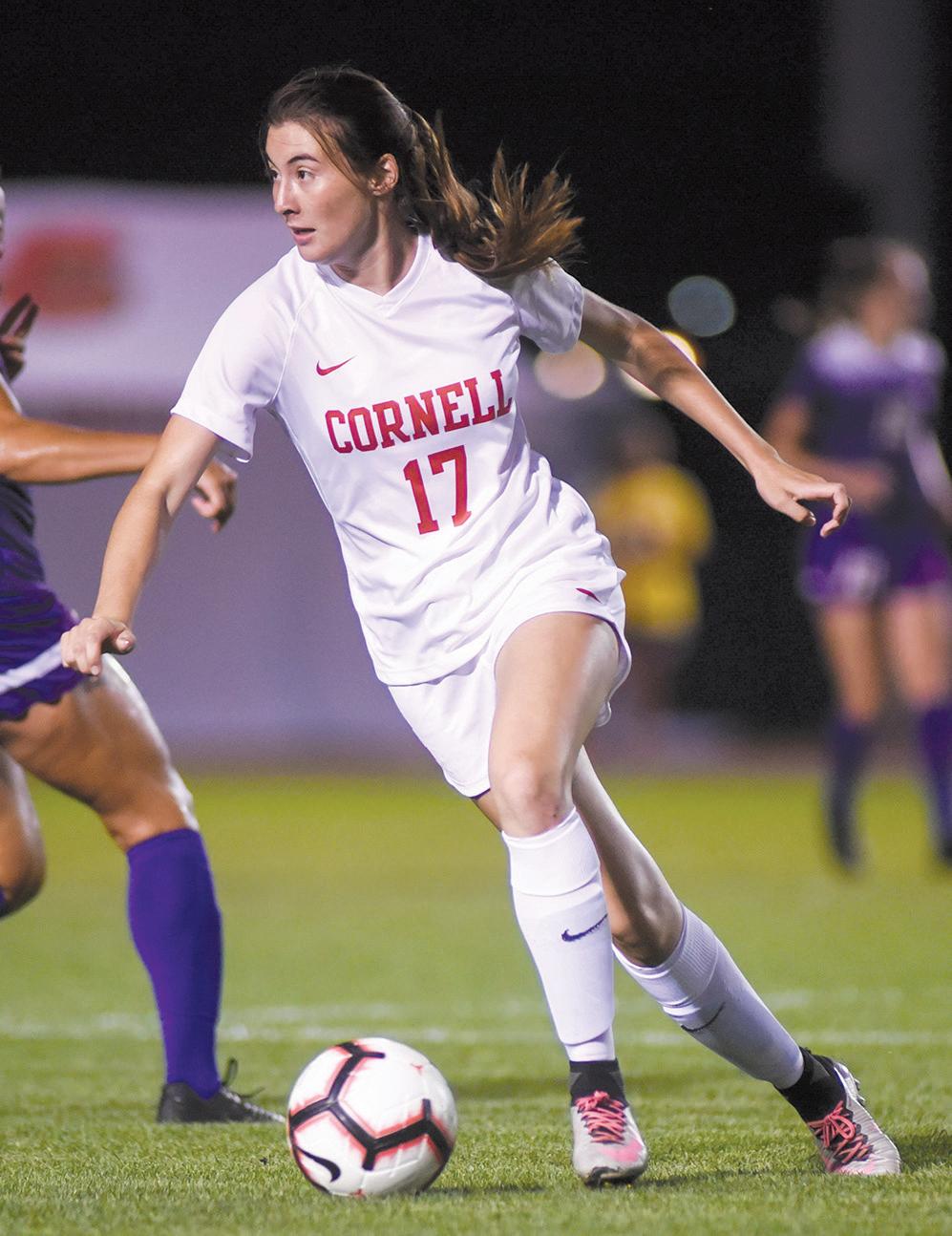
After months of speculation regarding the status of fall athletics due to the COVID-19 pandemic, Cornell athletes finally have their answer — athletic competition will not take place during the fall semester.
The news was first reported by Jon Rothstein of CBS Sports, and the Ivy League later confirmed that there would be no fall competition in a press release.
The announcement comes a week after the Ivy League was reportedly considering a shift to spring for football in lieu of the traditional fall season. On July 1, the Ivy League tweeted its intent to announce a decision regarding fall athletic activity on July 8, and in the days leading up to the announcement, Ivy League coaches began speculating that the conference was pushing fall sports back to the spring.
That speculation did not come to fruition on July 8. Instead, the conference merely canceled fall athletics and did not confirm a postponement to the spring, though it remains a possibility. The release stated that a decision on the winter and spring calendar, as well as the feasibility of fall sports in the spring, “will be determined at a later date.”
With the Ancient Eight ruling out athletic competition during the fall semester, winter athletics’ schedules — which would start in November — will also need to be reconfigured. That being said, winter sports teams could resume competition after the conclusion of the fall semester in December. The fall semester officially ends after the final exam period.
In a joint statement, the Ivy League Council of Presidents explained the rationale behind their decision.
“With the information available to us today regarding the continued spread of the virus, we simply do not believe we can create and maintain an environment for intercollegiate athletic competition that meets our requirements
for safety and acceptable levels of risk, consistent with the policies that each of our schools is adopting as part of its reopening plans this fall,” the statement read.
“We are entrusted to create and maintain an educational environment that is guided by health and safety considerations. There can be no greater responsibility — and that is the basis for this difficult decision,” the statement concluded.
Student-athletes may practice if they comply with institutional and state regulations, according to the release. The conference will issue guidelines on a phased approach to practice and conditioning activities in which student-athletes can ultimately build to small group practice sessions.