New and returning Cornellians back in Ithaca for Fall semester
By JIWON ESTEE YI AND JIWOOK JUNG Sun News Editor and Sun Assistant News Editor
New members of the Class of 2026 are now on campus and have participated in a mask-optional Orientation Week, also known as “O-Week.” Returning students moved into their new dorms and apartments from North Campus to Collegetown. Now, with changing COVID19 masking policies, the first week of classes are underway for a somewhat “normal” semester.
This Fall, three new North Campus residential halls opened following the North Campus Expansion project. Barbara McClintock Hall, Hu Shih Hall and Ruth Bader Ginsburg Hall, welcomed the newest members of the Class of 2026. The brand new facilities on North Campus with the completion of North Campus Residential Expansion program such as the new tennis courts and turf pitch.
“Overall, I am greatly happy that I am living in Hu Shih Hall,” said Jason Mun ’26. “I am able to control the air conditioning in my room.
The shower and the kitchens are very nice as well.”
Mun moved in after his participation on Outdoor Odyssey, Cornell’s 50-year-tradition pre-orientation trip, and expressed that his move-in process was smooth thanks to the help from the residential advisors and staff of the University.
“[I had] great experiences with all my RA’s and other adult members of Cornell,” Mun said. They have all been very helpful with my movein and gave me great advice. Most importantly, they have been very kind and make it smooth, quick and easy for all of us. Overall, I had a great time moving into Cornell.”
According to Residential Advisor Yemisi Mustapha ’25, all undergraduate residential advisors arrived on Aug. 7 to get prepared and equipped to properly welcome incoming Cornellians.
See FIRST-DAY on page 3
Monkeypox in Tompkins County, Ithaca
By CARLIN REYEN Sun Staff Writer
As students return to Cornell’s campus for the Fall 2022 semester, campus officials and healthcare providers have to adapt to yet another national disease outbreak. This year, the monkeypox virus has been the newest challenge in a series of recent semesters affected by contagion.
Rebecca Valli, Director of Media Relations for Cornell University, told National Public Radio that Cornell University is creating testing, treatment, and isolation plans for individuals affected by the disease in addition to the university publishing an online resource with information on monkeypox.
“We are also considering the potential academic impacts and accommodations which may arise,” Valli said.
As of August 19, there were three confirmed cases of Monkeypox in Tompkins County. The same day, Dr. Jada Hamilton, Medical Director at Cornell Health, sent out an email that revealed new monkeypox information resources and urged students to contact Cornell Health if they developed the virus’ symptoms.
Dr. Heidi Torres, Assistant Hospital Epidemiologist at Weill Cornell Medical Center, noted that since the rise in cases in the summer, healthcare professionals in New York City have seen a peak in monkeypox cases followed by a slight drop and plateau in cases, which Torres attributed to increased awareness and behavior change.
To continue reading this article, please visit cornellsun.com.
Carlin Reyen can be reached at creyen@cornellsun.com.
Anabel’s Returns for Fall
Anabel’s Grocery, the student-run grocery store housed in Anabel Taylor Hall, first opened in 2016 with the mission to provide fresh, affordable and nutritious food and produce to the Cornell community. This year the nonprofit will return on Sept. 14 with new programming in collaboration with campus organizations and agricultural partners.
Since its inception, Anabel’s has held community dinners, cook-alongs and pickling events for students and professors. This year, the Anabel’s coordinators plan to continue holding these events.
“It’s hard in the spring because everything’s dead in the winter, so all of our agricultural partners don’t have anything fresh coming in during that time,” said Dylan Rodgers ’23, the collaboration and education coordinator at Anabel’s Grocery. “So, it’s harder to run those events, but we want to get that back going in these next few weeks.”
The nonprofit’s primary goal is to combat food insecurity on campus. Since 2019, the organization has pushed for the inclusion of survey questions relating to food insecurity.
In 2019, the Cornell Undergraduate Experience Survey, which asks students about their campus involvements and general perceptions of their undergraduate experience, concluded that about 30 percent of undergraduate students reported a lack of food security.
In 2021, the survey asked questions about how often stu-
dents eat less than they feel they need due to different circumstances. Lack of money, transportation and time to prepare food were all barriers. The survey also showed trends in racial inequalities with these barriers affecting BIPOC students at close to twice the rate of white students.
Recently, the Basic Needs Initiative at Cornell conducted a survey that highlighted the continued prevalence of food insecurity on campus, particularly among first-generation, low-income students.
“It’s gonna take a lot of effort to change those racial inequities on campus,” Rodgers said. “At Anabel’s, we’re trying to do it through food, but it’s gonna it’s really going to take everyone here, all hands on deck.”
With a potential basic needs center in the works, the Anabel’s coordinators hope to work with the center in their food security efforts.
“The baseline is that there still is this food insecurity on campus,” Rodgers said. “Cornell has made some really good efforts with a food pantry and the Swipe Out Hunger program, and other ways to subsidize meal plans, but there’s still a lot of room to grow.”
In Spring 2022, Anabel’s began accepting Supplemental Nutrition Assistance Program and Electronic Benefit Transfers funds for eligible students.
To continue reading this article, please visit cornellsun.com.
Angela Bunay can be reached at abunay@cornellsun.com.
First-day frenzy | On Aug. 22, students bustle through Central Campus en route to their first classes of the day.
CAMERON POLLACK / SUN FILE PHOTO
Food Insecurity | Anabel’s Grocery plans to reopen on Sept. 14 for the Fall.
By ANGELA BUNAY Sun Managing Editor
Students Excited for Classes to Pick Up
FIRST-DAY
“We did a lot of prep trying to welcome freshmen aside from just basic training,” Mustapha said. “‘In our training, we made sure to emphasize how to guide the residents’ transition into Cornell and make myself a very present resource for our residents. As RA’s, we try to create a community and creating a culture of care so that the first-year residents know that they are not alone on campus because Cornell can be isolating at times.”
Lauren Mckechni ’26 voiced that unique merchandises and small gifts provided by the residential staff members and the Cornell community made the first-year students feel welcomed.
“I’d say the move-in was very smooth. We got a lot of fun merch and stickers,” McKechni said. “I was told that my residential hall Donlon Hall was the only residential hall that provided stickers, so we felt pretty cool.”
First-year and transfer students also experienced their first O-Week, which was mask-optional for the first time since January 2021.
“We were able to host much larger events where more students could be involved at one time, and overall made each event much more engaging and fun,” said Orientation Steering Committee Co-Chair Janna Zilkha ’23 in a statement to The Sun. “It was so nice to see the excitement on the new students’ faces while they were enjoying the events that the OSC had planned for them.”
This year’s O-Week Events included the First-Year Festival Barton Hall, which celebrated the first day of O-Week with bounce houses and other inflatables, paint nights and Zilkha’s favorite event: A S’mores and Movie Night on the Arts Quad in collaboration with Campus Activities and Cornell Cinema.
“The turnout was greater than I could have ever imagined,” Zilkha said. “We were giving away hundreds of bucket hats and water bottles, and they were gone within the first hour!”
O-Week events were not the only places where masks were optional.
Following the University’s new COVID-19 protocols, masks were “strongly encouraged, but not required, in classrooms” for the first day of classes.
In accordance with the new policy, some professors chose to wear masks, but none mandated them.
“I think I feel pretty good about it. I understand the importance of masks as a safety precaution, but I also think it’s a period of moving on from the COVID-19 pandemic,” said Salma Hazimeh
’24 of the policy. “Every semester that I come back, I feel like things get more and more normal, especially in terms of COVID-19 restrictions. Since this semester is starting off normally, I have high hopes for this semester and the rest of the year.”
Similarly, for Gigi Ike ’23, her last first-day felt like a return to pre-pandemic normalcy.
“[During my first year], I took Psychology 1101: Introduction to Psychology in Bailey Hall. This semester, my first class of the day was oceanography,” Ike said. “I haven’t been to Bailey since freshman year, so it made me feel like a freshman in a way. It felt like a fresh start.”
Jiwon Estee Yi can be reached at jyi@cornellsun.com.
Jiwook Jung can be reached at jjung@cornellsun.com.
Several Cornellians Running in Upcoming Congressional Elections
By ROMAN LAHAYE Sun News Editor
With election day approaching on Nov. 8, here is a brief guide to the Cornellians running for congressional office this year.
Dan Meuser ’88Pennsylvania’s Ninth District
First elected in 2018, Dan Meuser ’88 is running for a third term representing the 9th congressional district of Pennsylvania.
Meuser is a former president of Pride Mobility Products, a company producing motorized wheelchairs and other mobility aids. He is now facing off against Democrat Amanda Waldman.
Katherine Clark, JD ’89Massachusetts’ Fifth District
An alumna of Cornell Law School, Clark has been in office since 2013, winning a special election to replace Sen. Ed Markey to represent the fifth congressional district of Massachusetts.
Clark is on the Appropriations committee and serves as the assis-
tant speaker of the House for the 117th Congress. Jaime McCleod-Skinner, M.Eng. ’95 - Oregon’s Fifth District
In a surprising upset, McCleodSkinner defeated 7-time incumbent and fellow Cornellian Kurt Schrader ’73 in May for the democratic primary of Oregon’s 5th Congressional district.
McCleod-Skinner is expected to win the heavily-democratic district, and would be the first openly LGBTQ+ person to represent the district.
Beth Van Duyne ’95 - Texas’ 24th District
A B.A. in Urban and Regional Studies, Van Duyne is running for a second term now against democratic challenger Jan McDowell.
Previously serving as the mayor of Irving, Texas, Van Duyne was appointed by former president Trump to a regional administrator position for the Department of Housing and Urban Development in 2017.
Elissa Slotkin ’98 - Michigan’s Eighth District
An undergraduate B.A. in sociology, Slotkin then served as a Central Intelligence Agency intelligence officer, and later at the National Security Council during the Bush administration. her Republican rival and then incumbent, Mike Bishop, with 50.6 percent of the vote. Now, she’s running to keep her seat against Republican challenger Tom Barrett.
Tara Sweeney ’98 - Alaska at Large
Tara Sweeney, a republican, is currently running to replace the late Representative Don Young in both a special and regular election in a crowded election featuring Sarah Palin, among others.
To continue reading this article, please visit cornellsun.com.
Roman LaHaye can be reached at rlahaye@cornellsun.com.
ADITI HUKERIKAR ASSISTANT ARTS EDITOR
As the new school year approaches, it’s once again time for me to settle back into my study routine, which means re-acquainting myself with someone I haven’t seen all summer: the Lo-fi Girl. Although she was taken down for a few days over an alleged copyright claim, she has returned to once again accompany the popular lo-fi YouTube stream she appears in just in time for the beginning of the semester.
Lo-fi, or low fidelity music, is characterized by its contrast to high-fidelity music. In other words, most lo-fi music has clearly not been through a high-quality production process, and tends to have background noise or other noticeable “flaws” throughout. The genre’s popularity has grown throughout the last few years, with listeners turning toward different streams or playlists for some relaxing beats.
I tend to prefer studying with some kind of background noise playing, but finding something that wasn’t too distracting (like music with lyrics tends to be for me) but also engaging enough to fill the silence was a constant struggle of mine. So after discovering lo-fi
A Tribute to Lo-Fi
music, it quickly became an integral part of my study routine. I’d even try out a few different lo-fi playlists on Spotify while I was walking to class. But after all this time, I never thought to question why lo-fi music is actually so appealing. What qualities have made it so soothing, so popular that at the time of writing this article, the Lo-Fi girl YouTube channel has 11.3 million subscribers?
Listening to lo-fi can also help you better focus, as its repetitive beats create a sense of predictability, especially when the music is played on a loop. This is what helps lo-fi avoid becoming too dull or overly distracting — rather it maintains an ideal balance. The “flaws” that characterize the genre can also heighten the listener’s sense of focus. This effect can be described as “cocooning,” which essentially means that the sound helps create a cocoon of focus around you.
can foster feelings of relaxation, while a lack of lyrics reduces distractions. In other words, lo-fi may be able to help with feelings of stress that tend to emerge when preparing for a prelim, or at least put you in a more positive mood.
comes an increasing number of tracks to discover and listen to. So in the coming weeks as we all settle back into the chaos of the school year, maybe some soothing lo-fi beats will be just what you need for a productive study day.
Similarly, since music can influence the listener’s mood, lo-fi’s slower tempo
As such, it seems lo-fi’s appeal is not without reason, and it might even enhance your next study session. Its unique elements can help create an environment that boosts both your focus and mood. And with its growing popularity
Aditi Hukerikar is a senior in the College of Arts and Sciences. She currently serves as an Assistant Arts and Culture Editor on the 140th Editorial Board. She can be reached at ahukerikar@cornellsun.com.
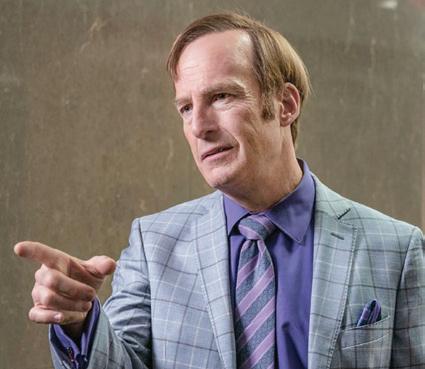
Better Call Saul: Te End of an Era
First premiering 14 years ago, the Breaking Bad universe is one of evolution and change. In both Vince Gilligan and Peter Gould’s original show and its prequel, Better Call Saul, the characters in each nascent season have left audiences enamored, rooting for their triumph, their redemption, their vindication. However, those in the writing room pull no punches — you’ll watch, horrified, as the hapless high school chemistry teacher, good-hearted junkie, charming attorney and more plunge deeper into an inextricable criminal underworld until the story crescendos to a seamlessly-executed tragedy. The sixth and final season of Better Call Saul, which premiered on April 18 and culminated in a monumental finale on Aug. 15, demonstrates the consistency of this heartrending realism pervading the sister series.
Despite many Breaking Bad fans being hooked by the exhilarating and morbid drug lord and cartel showdowns, both shows center on complex and compelling characterization. After the success of the original series that yielded 16 Emmys and 76 other awards, many were dubious about a prequel revolving around the sleazy comic-relief lawyer, Saul. Would it be a vacuous cash-grab? An inferior replica? Breaking Bad fans awaited gun-slinging cartel action and Saul Goodman’s ethics-bending
shenanigans as the first season arrived. What they instead were given was a brilliant and nuanced lawyer drama about Saul’s humble origins as an eccentric public defender named Jimmy McGill, hustling to earn the approval of his superiors and the affections of his sweetheart Kim Wexler.
grapples with his involvement in the cartel and the disappointment of his father who deplores his son’s criminal ventures. Without revealing any spoilers, Nacho’s independence, disdain for the cartel and moral fortitude come to a logical yet fitting conclusion, demonstrating the
Furthermore, while it does require knowledge of Breaking Bad to fully grasp essential plotlines, Better Call Saul does not revolve around Walter White and Jesse Pinkman at all; it has its own identity and merit distinct from the beloved and highly acclaimed original. It is not only
Particularly within its first few seasons, Better Call Saul is considerably different than its predecessor and yet so faithful to it. It is a deliberate, evocative exploration of Saul Goodman’s backstory and relationships that has a satisfying payoff. One such instance of a fulfilling arc occurs with secondary protagonist Nacho Varga, the son of a Mexican immigrant who
respect and caution the writers display towards their characters. Moreover, the execution of such payoffs is even more impressive when considering that Better Call Saul infuses scenes with gripping tension that prompts speculation about who will live or die, despite the audience being aware that many characters survive into the Breaking Bad timeline.
on par with Breaking Bad, but superior to it, methodically laying the foundation for storylines and character transformations with granular detail that necessitates patience and attentiveness. It poses a number of complex moral quandaries to the audience that blur black-and-white morality into shades of gray: Can people truly change? Can one ever
atone for their unconscionable deeds? Is redemption deserved, and what does being redeemed look like? Regardless of one’s interpretations, at the end of the show, those who once clamored to see the nefarious, crowd-pleasing Saul Goodman will be somberly awaiting the return of his authentic and charismatic identity: Jimmy McGill. After seven and a half years of this “criminally underrated” show gracing our television screens with virtuosic cinematography, writing and character development, a viscerally bittersweet finale affirms that Better Call Saul sticks the landing.
So, for those on the fence about watching, I hope my gushing praise convinces you. The show is a slow-burn love letter to the intricately crafted characters of the universe and earns a lofty spot on the tier list of the best television shows of all time. In fact, a recent installation of Walter White and Jesse Pinkman statues in the iconic Albuquerque, New Mexico immortalizes the Breaking Bad franchise as a quintessential element of pop-culture. 14 years and 433 cumulative award nominations later, the Breaking Bad storyline has come to a memorable close, imbuing the audience with nostalgia for characters we’ll never forget.
Isabella DiLizia is a sophomore in the College of Arts and Sciences. She can be reached at ird22@cornell.edu.
ISABELLA DILIZIA ARTS STAFF
JULIA NAGEL / SUN PHOTOGRAPHY EDITOR
COURTESY OF AMC
Don’t Worry Kyoko (In Memory of Alan White)
JOHN COLIE ARTS EDITOR
This June marks the 50th anniversary of the release of John Lennon and Yoko Ono’s album Some Time in New York City , both a testament to the city to which they had recently moved and a statement on various political issues and causes they championed as they continued their musical and artistic collaboration with a vast accompanying group, the Plastic Ono Band. The double album contains these songs on its first two sides; meanwhile, the final two sides feature recordings of two concerts that the Plastic Ono Band played before the album’s sessions had started, including an appearance at London’s Lyceum Ballroom on Dec. 15, 1969 in support of UNICEF. For that performance, Lennon and Ono managed to assemble a large group of rock luminaries, including Lennon’s Beatle bandmate George Harrison, guitarist Eric Clapton, bassist Klaus Voorman, drummer Alan White, keyboardist Billy Preston and (later on during the concert) Who drummer Keith Moon to play what Lennon would later refer to as “the most fantastic music I’ve ever heard.”
The set only includes two songs, both released as a Plastic Ono Band single two months before the concert: “Cold Turkey,” excerpted in full at around eight minutes, and “Don’t Worry Kyoko (Mummy’s Only Looking for a Hand in the Snow),” which lasts approximately 16 minutes. These 16 minutes already exude the energy and improvisation of a protracted jam, but they have been edited down from their original form: the full version of “Don’t Worry Kyoko” actually lasted over 40 minutes. Even with most of the rendition missing, though, this truncated version still spirals into a discordant yet oddly hypnotic combination of vocals, guitars and horns barreling towards nothing short of utter catharsis. Yet even with all of these elements, what stands out more and more as one listens to the song again is the drumming of Alan White, who passed away on May 26 at the age of 72.
Only 20 years old in December 1969, the Lyceum Ballroom concert marked White’s second performance with the Plastic Ono Band. Before that, he and the rest of the group had performed three months before at the Toronto Rock ‘n’ Roll Revival Festival and played the same songs they would play at the Lyceum, albeit with shorter runtimes; intriguingly, his participation almost did not occur when, sure that a call from John Lennon asking him to perform with a new group must be a prank, he immediately hung up. He finally acquiesced once Lennon called again, going to Canada and contributing to the first live solo performance by a member of The Beatles.
Named for Ono’s young daughter, “Don’t Worry Kyoko” combines a heavy rock sound and experimentalism that many audiences reacted to with incredulity and ridicule, especially at the Lyceum. Through the raucous chaos of endlessly repeating blues-tinged guitar riffs devolving into wailing, distorted notes and Ono’s vocalizations and screams weaving around a robust saxophone part, White’s drumming continues doggedly along, joining in the unpredictable soundscape but not surrendering itself to it in the same way some of the other parts do, anchoring the instrumentation while nevertheless providing variations to underscore the rest of the musicians more overtly descending into glorious hysterics.
By all accounts, it was great — but it also kept going for over half an hour. At that point, though, White and fellow drummer Jim Gordon thought of an elegantly simple solution: “We began to speed up to bring it to an end,” he would later recall.
“But we just got faster and faster and nobody wanted to stop. It was so fast that our muscles were aching. I was just about thinking, ‘For Christ’s sake, stop it,’ when it just sort of finished.” In those final moments, any and all restraint within the performance vanishes, until the rest of the group finally fails to keep up with White before all collectively deciding to end then and there. With that, he made his mark indelibly on a performance that remains one of the least known pivotal moments in Beatles and rock history.
From there, White’s career continued to unfold meteorically; his time with the Plastic Ono Band led to appearances on George Harrison’s All Things Must Pass and John Lennon’s Imagine, and soon after that, he was asked to join the band
Yes, where he remained until his death and played on songs such as “Owner of a Lonely Heart.”
While never becoming as wellknown as some of the musicians he played with, his drumming graced some of the most famous songs of the 20th century; that
persistence and humility shape his legacy, which, if anything else, contains a strange yet unforgettable concert at the intersection of experimentation and improvisation in rock. His contributions to the popular soundscape of rock and beyond remain for all of us
to remember and enjoy, timeless and unlikely to be matched.
John Colie is a senior in the College of Arts and Sciences. He currently serves as the Arts and Culture Editor on the 140th Editorial Board. He can be reached at jcolie@cornellsun.com.
The Corne¬ Daily Sun Independent Since 1880
140th Editorial Board
VEE CIPPERMAN ’23
Malvern, Pa. Editor in Chief
SERENA HUANG ’24
East Brunswick, N.J. Business Manager
EMMA LEYNSE ’23
Leonia, N.J. Associate Editor
DEVAN FLORES ’24
St. Augustine, Fl. Web Editor
KATHERINE YAO ’24
Dublin, Ohio Opinion Editor
ROMAN LAHAYE ’23
San Antonio, Texas News Editor
SOFIA RUBINSON ’24
Islip, N.Y. News Editor
JOHN COLIE ’23
West Paterson, N.J.
Arts & Culture Editor
JULIA NAGEL ’24
Wilmette, Ill. Photography Editor
MEHER BHATIA ’24
Edison, N.J. Science Editor
KATRIEN DE WAARD ’24
Naperville, Ill. Production Editor
ANDIE KIM ’24
Seoul, South Korea Multimedia Editor
AIMEE EICHER ’24
Manhattan, N.Y.
Assistant News Editor
SARAH YOUNG ’24
Warren, N.J.
Assistant News Editor
NIHAR HEGDE ’24
San Jose, Calif.
Assistant Arts & Culture Editor
CLAIRE LI ’24
Palo Alto, Calif.
Assistant Photography Editor
GABRIELLA PACITTO ’24
Bronxville, N.Y.
Assistant Sports Editor
GRAYSON RUHL ’24
Manhattan, N.Y.
Assistant Sports Editor
DANIEL BERNSTEIN ’23
New Rochelle, N.Y. Senior Editor
MADELINE ROSENBERG ’23
Chappaqua, N.Y. Senior Editor
ANGELA BUNAY ’24
Staten Island, N.Y.
Managing Editor
TRACY ZENG ’24
New York City, N.Y.
Advertising Manager
SURITA BASU ’23
Lexington, Mass.
Assistant Managing Editor
NAOMI KOH ’23
Mamaroneck, N.Y.
Assistant Web Editor
ELI PALLRAND ’24
Los Angeles, Calif. News Editor
ESTEE YI ’24
Manhattan, N.Y. News Editor
KAYLA RIGGS ’24
San Jose, Calif. City Editor
GRACE KIM ’24
San Diego, Calif. Dining Editor
AARON SNYDER ’23
Manhattan, N.Y. Sports Editor
TENZIN KUNSANG ’25
Chicago, Ill. Science Editor
PAREESAY AFZAL ’24
Rawalpindi, Pakistan
Assistant News Editor
JIWOOK JUNG ’25
Seoul, South Korea
Assistant News Editor
ADITI HUKERIKAR ’23
Canton, Mich.
Assistant Arts & Culture Editor
DANIELA WISE-ROJAS ’25
San Ramon, Calif.
Assistant Dining Editor
JASON WU ’24
Albany, N.Y.
Assistant Photography Editor
KEVIN CHENG ’24
Newtown, Mass.
Newsletter Editor
RUTH ABRAHAM ’24
Syosset, N.Y.
Assistant Sports Editor
JYOTHSNA BOLLEDDULA ’24
Lexington, Mass. Senior Editor
HANNAH ROSENBERG ’23
Chappaqua, N.Y. Senior Editor
Working on today’s sun
production editor Katrien de Waard ’24
managing editor Angela Bunay ’23
Associate editor Emma Leynse ’23
opinion editor Katherine Yao ’23
news editors Estee Yi ’24
Pareesay Afzal ’23
arts editor John Colie ’23
sports editor Ruth Abraham ’24
photo editor Julia Nagel ’24
Growing Season
WELCOME TO A FRESH YEAR at Cornell, and at The Sun. As the summer draws to a close, students flood back into Ithaca to take new classes, meet new friends and make new college memories. We enter a season of falling leaves and shifting weather, and we invite the opportunities for change and growth that come with every fall at Cornell. YetBut some things stay the same each year — like The Sun’s daily mission to inform, educate and enlighten the communities we serve.
We now resume our primary work as editors, writers and designers. We will provide pertinent news and keen insights to our broader Cornell and Ithaca readership. We’ll proudly deliver two issues per week to Cornell’s campus, and we’ll share daily online content to continue current conversations. We’ll uphold our 142-year-old mission to advance student journalism and honor the many perspectives present on Cornell’s campus.
As we embark on this bustling semester, we look forward to documenting writing Cornell’s ever-evolving history. We continue to record our lives and times as students while we learn, play and change alongside our peers. As members of the country’s oldest independent, continuously running student publication, we appreciate our unique capability to share truths and make community voices heard. We do it all for you, our valued readers and peers. Thank you for reading our paper; we couldn’t make it without your support. Try new things this semester, stretch your wings and let yourself grow —– but remember that The Sun will appear every day, and you always have a home within our pages.
Te Mehl-Man Delivers
Mehl-Man Delivers runs intermittently this summer.
More Space for Space
And Seeing the Seas
As we prepare for the start of the semester, my sophomore brother is going to take BIOEE 1540: Introductory Oceanography taught by Professor Bruce Monger, earth and atmospheric science. I took the course my sophomore year as well. Ask any Cornellian who has taken the course and hundreds if not thousands of them, including myself, will tell you how amazing the content, professor and impact of the course is. Over a thousand students each semester take oceanography for a reason, and the course remains as spectacular now as it did when it started years ago.
Similarly, hundreds of students take ASTRO 1101: From New Worlds to Black Holes every semester; Bill Nye ‘73 even comes back every year to check in on the class. Similar to oceanography, this introductory astronomy course inspires students to do more than look up at the stars but understand what lies amongst them as well.
The saying that humans have explored more of space than the oceans remains fascinating, as anyone who has taken intro oceanography can tell you that we have explored very little of our seas. Yes, we know how deep certain parts are and what the ground shapes up to due to sonar, but fewer humans have traversed the deepest parts of the Mariana Trench than humans who have been to space. So why have we spent so little time exploring the deep blues compared to the deep beyond?
The short answer is money. While getting to space certainly remains difficult, the funding that NASA receives outpaces NOAA by billions of dollars every year. In addition, the ocean’s immense pressure and complete darkness make capturing photos that excite the public much more difficult to encourage Congress to spend more money. Pictures from the new Webb telescope certainly inspire further exploration of the cosmos. We should be finding ways to see the secrets right across the shore and glimpse
into the beauties and horrors of the ocean.
We have searched for life in space but the uniqueness and mind-bending life in the oceans ought to be equally as exciting to learn of. Creatures like the glass octopus and phantom jellyfish are only the beginning of a collective of terrifying sea dwellers. The quest for extraterrestrial life might appear to be the best path toward funky organisms, but century-old beings live in our oceans, waiting to be discovered.
I believe space’s images to be captivating; I believe the oceans’ creatures to be fascinating. I want to see more of space and more of the seas. The federal government pours trillions of dollars into bureaucratic agencies that oversee everything from Medicare to infrastructure to transportation and more. While not necessarily life-saving or drastically economically productive agencies, NOAA receives $5.4 billion in funding; NASA receives $22,3 billion. I can only imagine what increases in both of their budgets could produce not just for the United States but the whole world. What advocacy power do we as Cornell students hold in convincing the federal government to increase both space and sea exploration? Realistically, not very much. But learning about how amazing the oceans are is not as easily accessible as seeing the spectacular images of space that we have from the Hubble and now the Webb. The most recognizable phrase from Cornell astronomer Carl Sagan was how in the picture of Earth taken from Voyager 1, we are “a pale blue dot” among the vastness of the universe. Who knows what dots we could find in the ocean depths and what dots we will continue to find in space as we explore beyond our lands. But until then, all Americans can enjoy the images released by the Webb Telescope each week and all Cornellians can learn about our enchanting universe in BIOEE 1540 and ASTRO 1101.
Patrick J. Mehler
Patrick J. Mehler ‘23 (he/him) is a rising senior in the School of Industrial and Labor Relations. He can be reached at pmehler@cornellsun.com. Te
Cornell’s Broken Housing Market: An Essay
Niko Nguyen Fault Line
Niko Nguyen ’22 is a recent graduate of the College of Agriculture and Life Sciences.
Tis is the final installment of his column Fault Line. Comments can be sent to opinion@cornellsun.com.
Long before I came face-to-face with the plagues of Collegetown — its cutthroat market competition, sky-high rental rates, substandard living conditions, unyielding housing inequality — I had already begun to hear whispers of its housing fiasco. I was still just a fresh face on campus, barely minutes into my first day at Cornell, when the Collegetown crisis crept onto my radar.
An Ithaca summer was in full swing. Some mixture of August humidity and firstday jitters had glazed a layer of sweat over my skin, and I remember feeling both sticky and bored in the early moments of a lecture. My attention only snapped into focus when, already minutes deep into class, the auditorium doors swung open. A girl with jet-black hair whizzed down the aisle and through the rows, then plopped down a few seats away from me. She had hardly collected her breath before exhaling:“Oh my god. I just signed my lease for next year.”
Moments into my first class and still lightyears away from a life in Collegetown, I was already taking mental note of a lesson that would prove valuable to me in the years to come: When August and September arrive, so too does open season for apartment hunting. Te school year hardly begins before students start racing to sign leases — sometimes over a year before their leases actually start.
It was just my first glimpse at a housing market gone sideways.
At that point in college, my head was still stuck in the bubble of North Campus, where all first-years are required to dorm. It wasn’t until after my freshman year — after I moved away from the mecca of first-years, after I
the ultra-wealthy. My dorm assignment in Jameson dropped me onto the same floor as the son of a former NBA team CEO and the daughter of a celebrity restaurateur. I learned quickly that wealth and elitism lie at the bedrock of this school’s student population, and that the Cornell experience is one of imbalance. Alongside students who might’ve seen an Ivy League education as part of their birthright, there are other Cornellians living opposite college realities — students at Cornell on need-based scholarship, first-generation students, students who pick up a campus job (or two, or three) to gather some pocket change.
Yet, this imbalance is also what makes the first-year experience so unique: Te North Campus dorm requirement corrals all of us, indiscriminately, into a closed community. Unexpected roommate match-ups are packed into doubles and forced triples. Living spaces and common rooms become mosaics of geographic, social and economic backgrounds. When I was a freshman, North Campus ushered all of us under the same Balch arches every morning. We all agonized over the same lagging stoplight on Turston Avenue. We all trudged up the four flights of RPCC for hungover Sunday brunches.
Te first-year experience at Cornell is bound by a sense of shared community.
How did a humble college town in upstate New York become one of the least affordable zip codes in the United States?
Living on North Campus feels like the beginnings of a reality where higher education might actually deliver on its promise as a Great Equalizer.
And then, we become sophomores.
Tat feeling of unity fractures once the end of freshman year arrives. Sophomore year scatters us all along the peripheries of campus: the grand residence halls of West Campus, the less impressive dorms south of Cascadilla Gorge, Greek housing and co-ops peppered beyond North and West. Te
ended my daily walks across Turston Bridge and the spiderwebs that lined it — that I fully understood the magic of the first-year community. To dorm on North Campus was to experience a rare shred of Cornell’s equalizing power.
An unexpected sense of unity saturates North Campus. Unexpected, of course, because Cornell — similar to most private universities in the United States — is infamous for its overrepresentation of
In the fall of my sophomore year, I signed my first lease in October — 10 months before I actually moved into my junior-year apartment. By then, I was already late to the housing rush. Each September, we hear stories of students who sleep on sidewalks overnight, waiting for rental offices to open up the next morning: “It’s like Black Friday,” one student told Te Sun in 2019.
frustrated and unsatisfied. “It often feels incredibly exploitative,” said Alexandra Lilly ’24. “Te [housing] options we do have are often poorly managed and falling apart.” How exactly did we get here, paying sky-high rents in exchange for substandard housing? How did a humble college town in upstate New York become one of the least affordable zip codes in the United States?
Even the local government has taken notice of this Collegetown anomaly. In 2013, the City of Ithaca started requiring landlords to give tenants at least 60 days’ notice before conducting new lease agreements — effectively trying to stall the annual housing rush. And still, the following year witnessed over 150 students camping out on Dryden Road to snag leases. Scrambling to book apartment tours, negotiating with friends over unaffordable rent prices and hastily signing leases are the hallmarks of an upperclassman’s early weeks of class.
But the lease-signing crunch, as pesky as it can get, is still only one piece of the Collegetown housing trainwreck.
My first Collegetown apartment search turned up consistent price tags of over $1,000 per month. I remember the disbelief on my two roommates’ faces when they realized that these rent prices listed the monthly charge per person — not per unit. Here in Ithaca, a relatively minor city in upstate isolation, the housing market does not match its landscape. In 2014, Te New York Times listed Ithaca as the 11th U.S. city with the least affordable rent. New York City had clinched 10th place by a narrow margin. In 2016, the Economy Policy Institute ranked Ithaca as the 8th most expensive city in the United States to raise a family. Tat same year, the average Ithacan spent 39 percent of their income on rental payments; a maximum of 30 percent is the rule-of-thumb standard used to measure housing affordability.
And, adding insult to injury, off-campus student rentals aren’t just expensive — they also underwhelm when it comes to quality.
Te first Collegetown apartment I lived in, on North Quarry Street, housed a bevy of frustrations: a maze of a floorplan, countless spiders, broken laundry machines, a perpetually-clogged bathtub and a sink that showered the kitchen floor in water.
To piece together some answers, I turned to a number of local historical and academic sources. What I unearthed was a loose narrative of a small town warping under the weight of student demand. It is the story of tensions and unravelings — how town-and-gown forces shape a neighborhood, how concentrated supply and widespread demand erode a market and how our physical and social landscapes inform and affirm one another.
Collegetown was never baked into the original blueprint of the Cornell vision. Instead, it developed organically as a neighborhood shaped by student necessity. Te school’s first president, A.D. White, famously advocated against on-campus housing, fearing the “carelessness, uproar and destruction” that student dorms would invite to the new university. So, when Cornell officially opened its doors in 1868, there were limited housing
Collegetown was never baked into the original blueprint of the Cornell vision. Instead, it developed organically as a neighborhood shaped by student necessity.
new North Campus Residential Expansion project will disrupt this trend slightly by the 2022-2023 school year, with all sophomores soon being required to live on campus. But still, by the time most Cornell undergraduates become juniors and seniors, we scrawl our names down on a Collegetown lease and enter the unmoored wild of Ithaca’s rental market.
As I had learned on my first day of classes, signing a lease in Ithaca is no simple matter.
Tese inconveniences pale in comparison to other horror stories of off-campus living. Last school year, a friend of mine paid close to a four-digit monthly rent. Over their lease term, she and her roommates rode out a series of slippery misfortunes — from bathroom mold that triggered allergic reactions to worrying about housing displacement after discovering that their landlord had illegally signed too many tenants onto the lease. “Basically, if you’re not rich, if you can’t afford top-notch housing in Collegetown, you’re screwed,” explained my friend. An infamous Sun story in 2018 revealed that one student opted to spend nights in Uris Library after experiencing untenable living conditions through the Ithaca winter.
Tese conditions leave student tenants
options for the 412 first Cornellians. A quarter of these students roomed in Cascadilla Hall, the school’s sole residence building; in a letter, A.D. White described Cascadilla Hall as “an ill-ventilated, ill-smelling, uncomfortable, ill-looking alms house.”
Housing demand only grew more pressing as the school’s student enrollment increased in the years that followed. In response, new developments slowly populated the streets south of Cascadilla Gorge. Rooming houses cropped up along Heustis Street (now, College Avenue) and Eddy Street, laying out the groundwork for what would eventually become Collegetown. It was along these roads where the seedlings of a town-and-gown relationship were planted: Student demand was beginning to shape the local Ithaca landscape.
To continue reading this article, please visit cornellsun.com.
KATELYNN LEE / SUN CONTIBUTOR
HANNAH ROSENBERG / SENIOR EDITOR
Fill in the empty cells, one number in each, so that each column, row, and region contains the numbers 1-9 exactly once. Each number in the solution therefore occurs only once in each of the three “directions,” hence the “single numbers” implied by the puzzle’s name. (Rules from wikipedia.org/wiki/ Sudoku)
I Am Going to Be Small
Late Push Not Enough
Cornell falls in National Championship Game
By AARON SNYDER Sun Sports Editor
A valiant 4th quarter comeback effort was not enough to end Cornell’s 45-year wait for another national championship, as Cornell fell 9-7 to Maryland in the title game on Monday, May 30.
Cornell fell behind early but found its groove in the fourth quarter when it outscored the Terrapins 4-0.
“That was probably one of our best quarters of the year, in that fourth quarter,” said head coach Connor Buczek ‘15.
It was all Maryland in the first half. The Terrapins held the Red to a season low two goals in the first 30 minutes.
Both Cornell tallies came off the stick of sophomore attackman and Ivy League Rookie of the Year CJ Kirst, who found the back of the net halfway through the first quarter and early in the second quarter.
Aside from Kirst’s two goals, the Red could not find answers to the Terrapins defense and Maryland goaltender Logan McNaney, who made 10 saves in the first half. McNaney finished with 17 saves and was named the most outstanding player of the tournament.
“That defense, tip our cap to them,” Buczek said. “Holding us to two goals in the first half … was our lowest output of the year, so they certainly did some things that challenged us.”
On the other end of the field, four first half goals by Anthony DeMaio, including a natural hat-trick in the first quarter, fueled the Maryland offense to a seven goal half and a 7-2 lead at halftime.
Maryland added two more in the first five minutes of the third quarter to take a 9-2 lead. The Terrapins did not score again.
22 minutes after Cornell’s second goal, junior midfielder Aiden Blake scored Cornell’s third goal of the game to cut Maryland’s lead to 9-3 with five minutes left in the third quarter.
Down six goals with fifteen minutes to play, the Red
put up a strong comeback effort in the fourth quarter.
“Nothing was said, we just knew that this is who we are,” said senior defenseman Gavin Adler. “There wasn’t a pump up speech or anything. We just looked each other in the eyes and knew that we were gonna claw back in this thing.”
Less than a minute in, junior attacker Michael Long brought Cornell within five.
A goal by sophomore midfielder Hugh Kelleher with eight minutes left in the game brought the Red sideline and the Cornell student section to life and cut Maryland’s lead to 9-5.
Adler and fifth-year defenseman Dom Doria converged on Maryland’s Logan Wisnauskas to force a turnover. Junior attacker Spencer Wirtheim capitalized and brought Cornell within three with seven and a half minutes to play.
The Cornell onslaught slowed for a few minutes before a shot with two and a half minutes left by fifth-year captain John Piatelli’s went in, but was waved off by the officials because Piatelli stepped in the crease.
Maryland cleared the ball and kept possession for an entire 80 second shot clock. Cornell got the ball back with 53 seconds and a three goal deficit. The Red took a timeout, and Piatelli scored with 36 seconds left.
Piatelli’s goal was his 66th of the season, breaking Mike French’s 46-year-old Cornell record for most goals
in a single season.
It was too little too late though, and Maryland held on
“Nothing’s too small to care about, nothing is too small to try to win. That nature brings you to opportunities like today.”
Connor Buczek
’15
to complete an undefeated season and claim the national championship.
Maryland coach John Tillman ’91 acknowledged in his postgame press conference that the Terrapins were fortunate that the game didn’t last a few minutes longer.
The Red will have to reconcile having its best season since 2009 in Buczek’s first year with the disappointment of coming one game short.
“[This group] had that mentality, they had that laser focus. Even when we were 10-1, no one was content,” Buczek said. “Nothing’s too small to care about, nothing is too small to try to win. That nature brings you to opportunities like today.”
Buczek said that the program will be able to build off this trip to the title game.
“We built the foundation,” Buczek said. “I think we’re back to where we need to be in terms of culture.”
The players, who stayed on the field to watch Maryland receive the trophy and celebrate, echoed that sentiment and said that the experience will motivate them.
“We know what it takes to get here, and seeing that moment pushes us more,” Kirst said. “We’re super grateful for the position that we’re in and we’re just super excited to get back to work.”
Aaron Snyder can be reached at asnyder@cornellsun.com
Gaining Momentum | Sophomore attacker CJ Kirst fires a shot in the national championship game against Maryland. Kirst scored both of Cornell’s first half goals.