The Corne¬ Daily Sun

Eric Han '26 analyzes director Christopher Nolan's decisions within the recently-released "Oppenheimer."
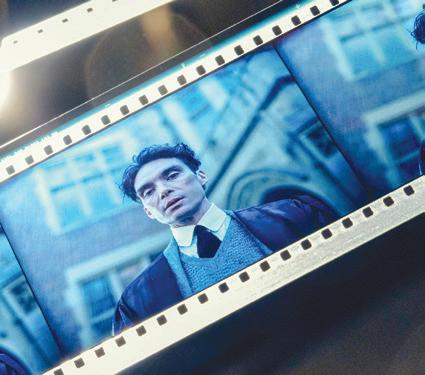

Eric Han '26 analyzes director Christopher Nolan's decisions within the recently-released "Oppenheimer."
By JULIA SENZON Sun News Editor
Yohanes Kidane ’23 has been missing since Monday, Aug. 14 at 7:15 p.m., in San Jose, California within the Bay Area. His last known location was entering a black Toyota Camry with an Uber sticker on 28 N 4th St., San Jose.
Yohanes is a 22-year-old Black man described as weighing around 150 pounds and standing at 5 feet 8 inches. He was last seen wearing gray sweatpants, a black hoodie and black shoes.
Yohanes’ phone, wallet and backpack were found south of the Golden Gate Bridge near the Welcome Center. His phone location was at the bridge through Monday night.
Yohanes recently moved to California in late July to start his career as a software engineer for Netflix. He began the position on Monday, Aug. 7, a week before his disappearance.
He graduated with a degree in computer science from the College of Engineering in May and is originally from Rochester.
Anybody with information that could be used to help find Yohanes is instructed to contact the San Jose Police Department at 408-277-8900 and can reference case number 23-277-0531. His brother Yosief Kidane ’22 can be reached at 585-4894880 and his mother Hana Beyene can be reached at 585-500-5220.
Yohanes’ friends are collecting donations through a GoFundMe page to cover
travel expenses for his family members as they continue the search.
According to Yosief, Sara Kidane — the younger sister of Yohanes and Yosief — noticed that Yohanes’ phone location was at the Golden Gate Bridge on Monday night, about an hour away from where he lived in San Jose. When Sara noticed that the location did not change overnight, she called Yosief at approximately 4 or 5 a.m. Tuesday morning to see if he had spoken recently to Yohanes.
Yosief had not, so for four or five hours throughout the morning, the family called Yohanes’ friends in the area, but they did not have information on his whereabouts. At around 8:30 a.m., the phone location moved, and a passerby who found Yohanes’ phone and wallet beside the Golden Gate Welcome Center answered a family member’s call. The citizen noticed the Yohanes’ belongings on his commute and was attempting to return them.
Yohanes did not show up to work on Tuesday, and police did not find him in his home. By Tuesday evening, the family flew to San Francisco, and by Wednesday morning, Yosief and his parents were spreading posters in the area, exploring the bridge and contacting media, friends and officers.
Lucas Achkarian ’23, who called Yohanes one of his closest friends and who has been actively involved in the efforts to locate Yohanes, said that there is still a lot of cloudiness surrounding what occurred.
By SOFIA RUBINSON Sun Managing Editor
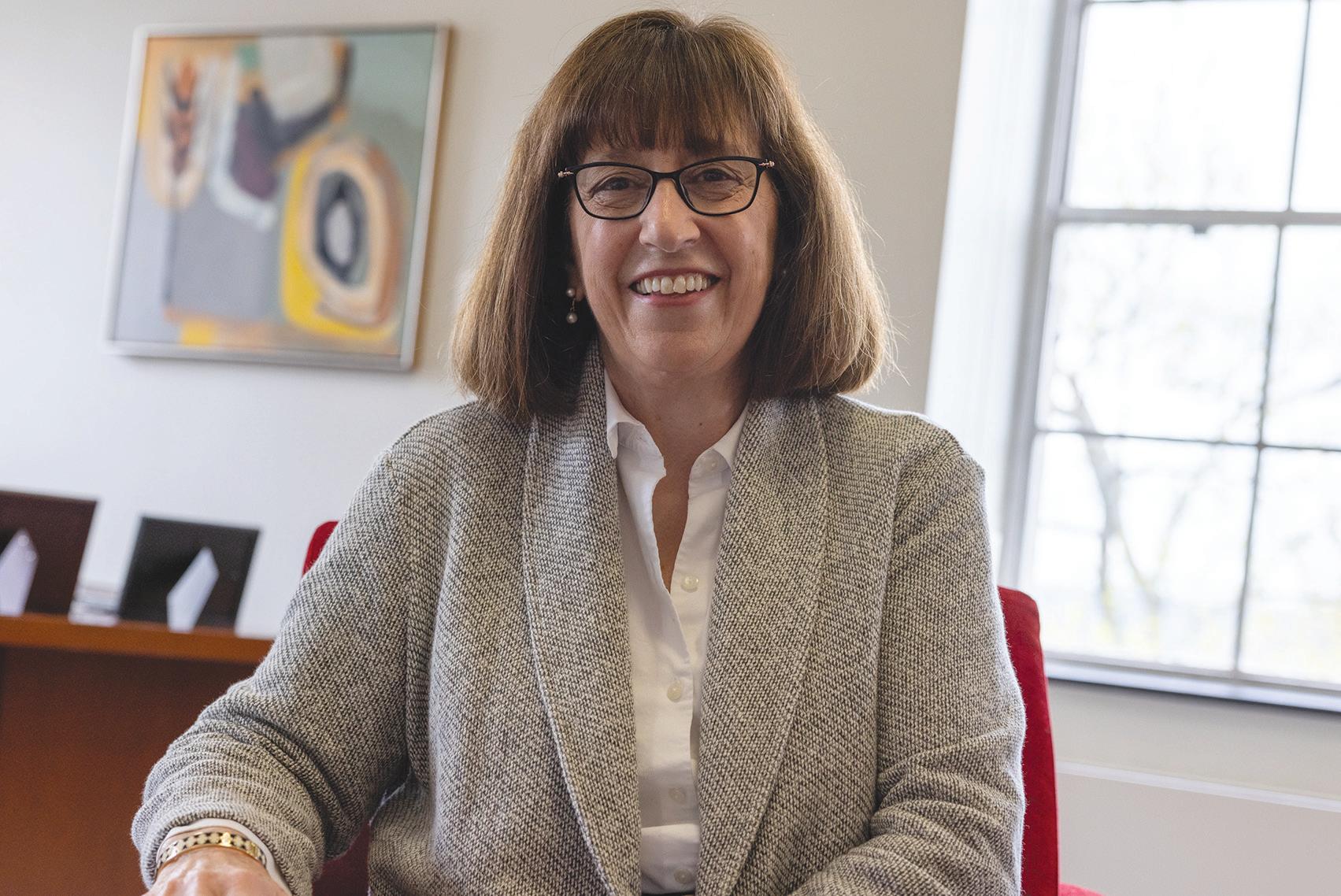
This year, the University is following through on its commitment to host freedom of expression events on campus. As of Monday, Aug. 21, Cornell lists five events under the academic year theme of “The Indispensable Condition: Freedom of Expression at Cornell.”
“The free exchange of ideas underpins everything we do as a university — educating new generations of global citizens, pursuing novel research and scholar-

ship and advancing the public good,” the University’s event website states. “We encourage Cornellians everywhere to challenge personal beliefs, to consider new ideas and unfamiliar perspectives and to foster discussion around core freedoms for democracy and higher education.”
These events uphold the commitment by President Martha Pollack to host free expression-themed events this academic year. On Aug. 15, Pollack joined the Campus Call for Free Expression, a joint effort by 13 universities to model critical inquiry
and civil discourse on their campuses.
“Throughout the academic year, Cornell University students, faculty and staff will come together and engage with topics of free expression and academic freedom through scholarly and creative events and activities, including debates among invited speakers who model civil discourse and exhibitions and performances,” the Campus Call website states.
To continue reading this article, please visit www.cornellsun.com.
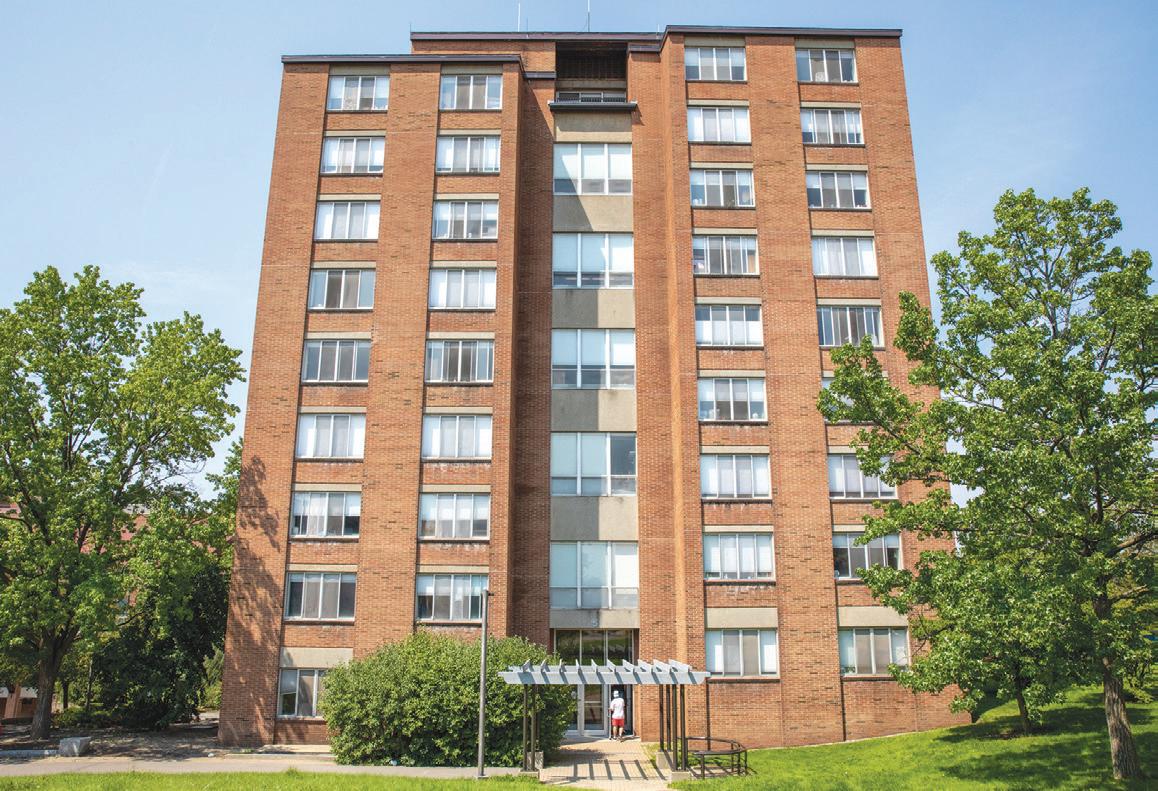
Approximately 130 students are assigned to rooms with more beds than the intended layout
By JULIA SENZON Sun News Editor
When Gabriela Goncalves Vieira ’27 was told on July 13 that she would be placed in a double room converted to hold three students, rather than the traditional two-person double she had requested, she felt discouraged about her first year of college, knowing that she would have to adapt to an issue that she viewed as preventable.
“I cannot grasp the fact that [Cornell administration] did not organize themselves properly or well enough to fit and accommodate everybody in their housing system,”
Goncalves Vieira said in an interview with The Sun that occurred prior to Cornell move-in.
Goncalves Vieira said that she and the roommate she had originally chosen were worried about having enough space in their dorm room and about having a roommate that they had not previously met.
Goncalves Vieira is not the only one impacted by on-campus housing adjustments. Approximately 130 students, mostly first-years, have been assigned rooms with more students than the intended layout — including student lounges converted into rooms, Karen Brown, senior director of campus life marketing and communications, said in an Aug. 4 email statement to The Sun. At the time of the email, Brown said that the number of impacted students
would decrease over the following few weeks as housing adjustments were made.
“If, during the course of the academic year, space becomes available, we will ask the third student assigned to the room to relocate into a new assignment,” stated Kristen Loparco, director of Housing and Dining Contracts in a July 13 email obtained by The Sun from affected students. “We will be doing everything possible to reassign your third roommate to an available space prior to move-in.”
An adjustment occurred early on for Rishi Shah ’27, who had also been placed in a forced triple, or a room meant for two students converted to a triple. On July 27, Shah was notified that he was switched from the temporary space back to a single, which was his original request.
Shah told The Sun that when he was placed in a forced triple, it added “fuel to the fire” after receiving a lower financial aid package than he
expected and waiting over 60 days for a response to his appeal. He also said that the class registration website crashed throughout his pre-enroll process, which meant that many of the courses he planned to register for were full once he had the ability to complete class enrollment.
“Obviously Cornell has a pretty bad reputation in terms of mental health, [and] people always attribute a lot of problems to the administration,” Shah said. “And I guess I got to see that firsthand before I even officially became a student or stepped foot on campus.
William Rosenthal ’27, who was interviewed by The Sun after movein, said his friend was placed in a lounge space converted into a dorm room, shared with four other individuals. The day after his friend moved in, though, two members of the space were already switched out.
To continue reading this article, please visit www.cornellsun.com.



By ANUSHKA SHOREWALA Sun Contributor
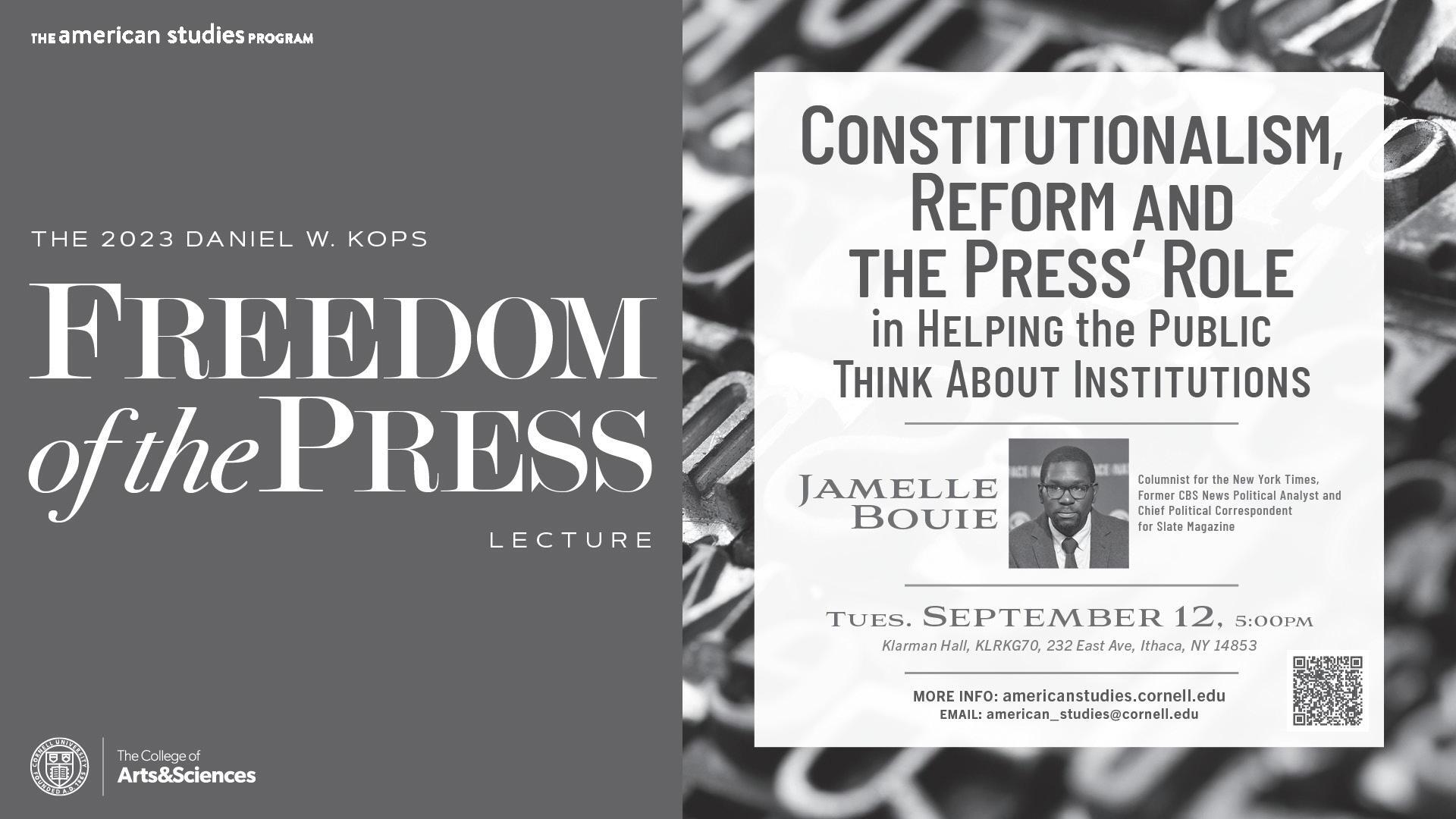
Cornellians, like most college students, have many requirements to graduate, including reaching a certain number of credit hours, completing different distribution subjects and — if they are Arts and Sciences students — taking a foreign language. However, unlike students at most universities, Cornellians must also pass a swim test to earn their degree.
This semester, some students completed the swim test on Wednesday, Aug. 16 to Friday, Aug. 18. The test will also be offered on Monday, Aug. 21 to Thursday, Aug. 24. Women-only swim tests will be held on Thursday, Aug. 24 and Friday, Aug. 25.
To pass the swim test, students must jump feet first into the deep end of the pool and swim 75 yards — which is three lengths of a standard pool in the United States. There is no time or stroke requirement to pass the test. Students who cannot pass the test must enroll in Physical Education 1100: Beginning Swimming.
The requirement dates back to 1905, when the University Faculty Committee on Physical Education set a swimming proficiency test that all incoming first-year undergraduate students must meet to ensure students’ safety in drowning situations. Although all matriculating first-years must participate in the swim test, transfer students and students who
graduated between the years of 2020 to 2022 due to the COVID-19 pandemic are exempt.
The swim test’s history differs for men and women. Colonel Frank Barton 1891 — who served as an early leader of Cornell’s student cadet corps — made the swim test a requirement for students to receive a passing grade in the standard military drill. This made completing the swim test a graduation requirement since the military drill was required for all male students completing a four-year degree.
“In view of the fact that recent wars have conclusively demonstrated that a soldier who cannot swim is so much dead timber in the command, and the United States now refuses to graduate from West Point or Annapolis cadets who are unable to swim, no student will be credited with a passing mark for spring term’s drill who has not previously passed an examination in swimming satisfactory to the Professor of Physical Culture,” Barton stated upon the swim test’s initiation.
In 1920, Dorothy Bateman, the first Cornell director of sports and physical education, decided to extend the requirement to women because she believed that women should also have a well-rounded physical education.
To continue reading this article, please visit www.cornellsun.com.
Anushka Shorewala can be reached at aas374@cornell.edu.
By JULIA SENZON Sun News Editor
As a part of the “Ithaca is Books” festival, publishing company PM Press hosted “Unionizing the Ivory Tower book talk with Al Davidoff and Ellen David Friedman” at Autumn Leaves Books on Aug. 10.
Al Davidoff ’80 was a Cornell student leader who became a full-time custodian for the University during his undergraduate years. Davidoff helped organize campus workers and create United Auto Workers Local 2300 — a union that represents over a thousand service and maintenance workers at the University — which he also became the president of.
“Unionizing the Ivory Tower: Cornell Workers’ Fifteen-Year Fight for Justice and a Living Wage” is Davidoff’s memoir in which he recounts 15 years of building the union at Cornell and fighting for livable wages and equality. The memoir was officially released on Tuesday, Aug. 15, with Autumn Leaves exclusively selling copies in-store before the release date.
“It’s a story of [how] in a very hierarchical institution, how the people — often who are invisible or considered at the bottom of that hierarchy — really took on the University’s practices and changed
the way they were treated by organizing successfully,” Davidoff said in a pre-event interview with The Sun. “And so it’s a real David and Goliath struggle.”
Davidoff currently serves as the director of organizational and leadership development at the Solidarity Center — a non-governmental organization that focuses on improving worker rights globally. Throughout the fall semester, Davidoff will also teach Labor Relations, Law and History 4885: In The Shadow of the Tower: Building A Dynamic Local Union At Cornell.
The event was co-sponsored by the Cornell Society for the Humanities and the Ithaca Democratic Socialists of America.
Held in Angry Mom Records, directly above the bookstore, the book talk included a read-aloud of a portion of the memoir and a question-and-answer session. The event became standing room only, even after more chairs were brought in. Ithaca DSA collected money from attendees to provide copies of the memoir to UAW Local 2300 members.
To continue reading this article, please visit www.cornellsun.com.
Julia Senzon can be reached at jsenzon@cornellsun.com.
KIDANE
Continued from page 1
Achkarian described that Yohanes supposedly told co-workers in the lobby that he was going to see a friend, but that nobody knows who that friend may be.
Achkarian also noted uncertainty regarding if another Uber trip Yohanes took on Saturday is connected to the disappearance. Achkarian said that according to text messages between Yohanes and a different friend, the driver refused to take Yohanes back to his apartment and took him to Oakland — a city
approximately an hour from San Jose — instead, which Achkarian sees as potentially concerning.
Achkarian last talked to Yohanes on Saturday afternoon over FaceTime along with one of their other friends. At the time, Yohanes appeared to be in a good mental state, Achkarian said.
“He was normal as always, [he’s] always been a really positive guy,” Achkarian said. “We don’t think there’s any self-harm or anything implicated from that. Because his family situation, I think, was perfectly fine, friends are fine, workplace is fine. He was super
motivated, honestly. He was going to the gym and was just pretty excited about life.” Yosief last talked to Yohanes on Sunday night for about an hour, talking about his first week at work, personal growth aims and how they want to continue to cherish their family. Yosief described Yohanes as a very intelligent, high-achieving individual with lofty expectations for himself.
To continue reading this article, please visit www.cornellsun.com.
Julia Senzon can be reached at jsenzon@cornellsun.com.

There is one triumphant moment in Christopher Nolan’s Oppenheimer : an imaginative flash of apocalyptic anxiety for a post-nuclear world. In the film’s final exchange, Nolan leaves us to consider a man’s regret for his development of the atomic bomb that brutalized the civilian families of Hiroshima and Nagasaki. It is a moment that neither Oppenheimer the film nor the man deserves.
Nolan cites Andrei Tarkovsky’s Mirror as a reference for Oppenheimer — a revelation that exposes the superficiality behind its tangled narrative. In Mirror , Tarkovsky weaves disparate narrative strands to plot the scattered thoughts of a dying man. It ditches the comfort of linearity for conceptual cohesion. The result is inventive, transcendent. It compels a new ontology of film.
Nolan perverts Mirror ’s legacy. His structural subversions are confused. What is Oppenheimer even about? What are we meant to make of its protagonist? The film meanders — Nolan treats its chronologies like wind-up toys. They are left upon release to determine their own divergent trajectories: the humiliation of Lewis Strauss, the loss of Jean Tatlock, Kitty Oppenheimer’s depression. Those that attempt to assign meaning to this film will often say that it is about Oppenheimer’s regret. This is what Nolan would have you believe, if the film’s final scene, that one triumphant moment, is any indication. Then what do you make of its preceding three hours? Its preoccupation with the physicist’s reputation and romantic life leaves little room to contemplate his culpability. One redemptive sequence of the film is a harsh cross-examination in which Oppenheimer admits that he recommended Hiroshima and Nagasaki for decimation. But Nolan’s reproach is insincere — the film answers his sin with Rami Malek’s moment of glory, in which his character defends the physicist’s honor. This is the incoherency of a noncommittal Nolan who juggles ideas with little concern for where they land. He abuses Göransson’s score to foster some mirage of thematic cohesion.
One can only imagine what Stanley Kubrick could do with Nolan’s footage. He might allow us to at least sit with an image long enough to contemplate it. Nolan commands
the edit like a schizophrenic autocrat, dictating the placement of film with misguided conviction. He would rather have us glimpse at Jack Quaid’s astonishment than spend a few seconds with an atomic bomb. Nolan champions this film as a historic development for practical effects in cinema — so let us look at the effects, Christopher!
An unsuspecting casualty of Oppenheimer’ s disorientation is the American Left. Do not be fooled by Nolan’s sympathetic treatment of the film’s Communist Party; he grants no real credence to Leftist ideas. He condescends them. In the
same breath that Nolan condemns McCarthyism, he justifies its characteristic paranoia through his sensationalization of the Chevalier incident. He scorns the thought that the Manhattan Project could have been a nationalist strategy of empire-building. His neglect of the Japanese and Indigenous American victims of the Project is a whole other discussion. Oppenheimer carries this cosmopolitan attitude: “Let us play nice with the communists, everyone deserves a right to express their beliefs,” and so on. It understands communism as some respectable but still misguided alternative
lifestyle — the way that an agnostic might tolerate a religious moderate. This is a fundamental misinterpretation of Marxist doctrine, which places socialism as the exclusive order of social organization that must, as the historical dialectic demands, wholly replace capitalism. Nolan’s communists are lethargic, innocuous. The Nolanite brand of technocratic, liberal idealism infantilizes the American Left at the same time that it upheaves Nolan’s very own industry. It is a shame that Oppenheimer is an impressive film. Its performances are tremendous. Its score is tremendous. Every
Nolan release carries a certain smugness — this grand, attention-seeking self-importance. It is a pretentious attitude that will have cynical critics often root against him. And yet, as with Interstellar , Dunkirk and the like, Oppenheimer succeeds by embedding its problems into a popular vehicle for technical flourish. So long as Nolan can claim critical success, popular filmmaking will continue to sedate its audiences and justify ideological perfidy. The Left is not safe with Nolan.
Eric Han is a sophomore in the College of Arts and Sciences. He can be reached at ehan@cornellsun.com.
Staten Island, N.Y. Editor in Chief 141st Editorial B
ANGELA BUNAY ’24
KATIE CHEN ’25
San Jose, Calif.
Business Manager
NOAH DO ’24
Virginia Beach, Va.
Associate Editor
HUGO AMADOR ’24
Tegucigalpa, Honduras
Opinion Editor
EMILY VO ‘25
Margate, Fla.
Multimedia Editor
JONATHAN MONG ’25
Manhattan, N.Y. News Editor
JULIA SENZON ’26
Bridgewater, N.J. News Editor
JIWOOK JUNG ’25
Seoul, South Korea City Editor
JULIA NAGEL ’24
Bethesda, Md.
Photography Editor
GRAYSON RUHL ’24
Manhattan, N.Y. Sports Editor
TENZIN KUNSANG ’25
Chicago, Ill. Science Editor
JOANNE HU ’24
Nanjing, China
Assistant News Editor
MARISA CEFOLA ’26
Fort Lauderdale, Fla.
Assistant News Editor
MAX FATTAL ’25
Los Angeles, Calif.
Assistant Arts & Culture Editor
KYLE ROTH ’25
Santa Clarita, Calif.
Assistant Dining Editor
MING DEMERS ’25
Rochester, N.Y.
Assistant Photography Editor
KATE KIM ’24
Demarest, N.J. Layout Editor
VEE CIPPERMAN ’23
Malvern, Pa. Senior Editor
ESTEE YI ’24
Manhattan, N.Y. Semior Editor
SOFIA RUBINSON ’24
Islip, N.Y.
Managing Editor
ELISE SONG ’24
Portland, Ore.
Web Editor
AIMÉE EICHER ’24
Manhattan, N.Y.
Assistant Managing Editor
ERIC REILLY ’25
Dedham, Mass.
News Editor
NIHAR HEGDE ’24
San Jose, Calif.
Arts & Culture Editor
DANIELA ROJAS ’25
San Ramon, Calif.
Dining Editor
RUTH ABRAHAM ’24
Syosset, N.Y.
Sports Editor
MEHER BHATIA ’24
Edison, N.J.
Science Editor
STELLA WANG ’24
Shanghai, China Production Editor
MARIAN CABALLO ’26
Queens, N.Y.
Assistant News Editor
GABRIEL MUÑOZ ’26
Miami, Fla.
Assistant News Editor
KIKI PLOWE ’25
Nyack, N.Y.
Assistant Arts & Culture Editor
CLAIRE LI ’24
Palo Alto, Calif.
Assistant Photography Editor
DAVID SUGARMANN ’24
Woodbridge, Conn.
Assistant Sports Editor
KASSANDRA ROBLEDO ’25
Bar Harbor, Maine
Newsletter Editor
ELI PALLRAND ’24
Los Angeles, Calif.
Senior Editor
JASON WU ’24
Albany, N.Y. Senior Editor
PAREESAY AFZAL ’24
Rawalpindi, Pakistan Senior Editor

FIRSTLY, A HEARTY WELCOME AND CONGRATULATIONS TO YOU ALL, class of 2027. The campus that eagerly awaits your arrival is full of a rich history, great triumphs and also great flaws. From enduring a variety of changes and expansions to weathering a global pandemic to restoring campus life to what it once was, Cornell is ever changing. Yet one thing remains constant: The Big Red passion, energy and perseverance. You were all chosen because of your grand accomplishments and your embodiment of those values. Let that same spirit guide all that you do here.
As you prepare to embark on a new journey for the next four years, it is easy to believe that you have it all figured out. You may know what organizations you will join, what classes you will take, what professors you want to get to know and all the places you wish to visit. Excitement is important and encouraged at a place like Cornell. But no experience is whole without exploration. Keep your mind open, and look to places that you hadn’t considered before. You all have a unique opportunity on this campus to start fresh and decide what you will leave behind after your time here is over.
With excitement, the vastness of opportunity can also conjure great apprehension, but know that at this moment, you are all right where you are meant to be. It’s amazing to have all the answers, but it is always best to admit when you don’t. Lean on your peers, your professors and the great network that you will build here, and learn as much as you can.
Take Cornell by the reins and soak up every moment of your next four years. In the blink of an eye you might be sitting at the top of the slope, gazing at your millionth purple sky, wondering where all the time went and wishing you could do it all again. Take chances and make the most of it. There’s no place like “far above Cayuga’s waters.”
Editorial
Afrmative Action is Gone. President Pollack: We Need You Now More Tan Ever
Hugo Amador is the Opinion Editor for Te Cornell Daily Sun’s Editorial Board. Editorials are penned collaboratively between the Editor-in-Chief, Associate Editor and Opinion Editor, in consultation with additional Te Cornell Daily Sun editors and stafers. Te Cornell Daily Sun’s editorials are independent of its news coverage, other columnists and advertisers and represents only a majority view of the Editorial Board.
The battle against the use of afrmative action in education dates back to Regents of the University of California v. Bakke in 1978. It’s been a silent battle, as higher education institutions have successfully defended themselves on their use of afrmative action in the lower courts for years. But when Students for Fair Admissions, a nonproft member group founded by conservative activist Edward Blum, fled lawsuits against Harvard and the University of North Carolina, the supreme court granted a writ of certiorari to the cases. Ten, Te Supreme Court banned afrmative action after four decades of precedents.
In what seems like a distant past—but is rather a reality closer to me than I’d like to believe—I was writing my college essay. Mom thought I was applying to jobs and dad was growing frustrated with the price tag on each application. College just wasn’t in my radar. I grew up in San Pedro Sula, Honduras, which at the time was considered the most dangerous city in the world. I went on to excel in high school, but the burdening costs of higher education and the competitive upper hand my more well-resourced peers had made considering even applying to college a daunting feat.
Now, I live in the Upper East Side of Manhattan. Tere have been times where I’d stand at a light on Park Avenue, and I’d see a man dressed in a beautifully woven wool suit; a runner who revels in the red light for a chance to rest; my neighbor who collects corals from Australia, California, Honduras, you name it. And for a moment, even if brief, I’m stunned with the privilege and creative freedom that I’ve endowed by being here as I write for Te Cornell Daily
Sun. And I can only truly thank Cornell for that privilege. Whether my admittance was a byproduct of afrmative action or not, it’s undeniable that afrmative action policies at elite institutions have allotted those who have be less fortunate a chance to be present, beneft and produce among the rest.
Worried that the court would likely overturn the policy, shortly after attending oral arguments for the case, Harvard’s former president, Drew Gilpin Faust, in The Atlantic claimed that the decision would exacerbate “the blindness of ‘color-blindness.’” Yet, The Court decreed that policies at institutions like Harvard and North Carolina — Cornell, included — were racially discriminatory against Asian Americans.
It was perhaps deliberate that Faust hadn’t once mentioned the word “Asian” in her article, if not understandable. Some of the evidence brought up against Harvard was concerning; data suggested at least some form of implicit bias against Asian applicants in admissions. After all, the cases were brought up after SFFA claimed a bias against Asian Americans in the process. Harvard promptly rejected this claim (In the years following, admissions of Asian American applicants rose by 27 percent). The idea that Asian Americans had been discriminated against in both high school and college admissions is an inconvenient and uncomfortable truth for supporters of affirmative action, myself included.
But admissions outcomes for Asian Americans at Cornell, Harvard and the like were never truly tied to affirmative action for Black and Latino applicants. These institutions could have theoretically used race considerations in admissions to increase enrollment of underrepresented minorities without creating a cap for Asian Americans. But doing so meant Asian applicants would have had to take a share of seats from white applicants in incoming classes. This, of course, could not happen. Admissions has been, and will continue to be, a zero-sum game.

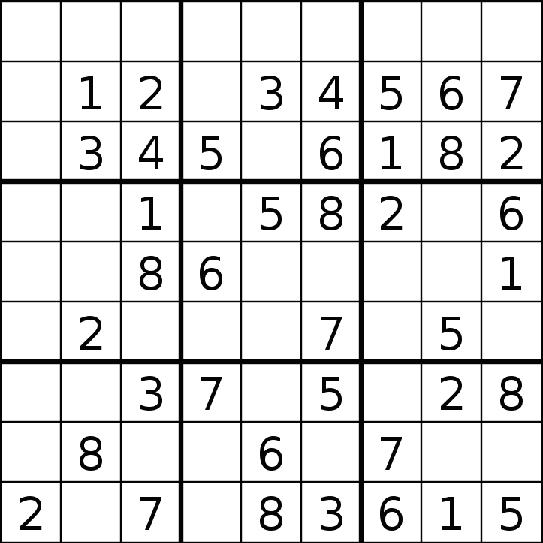
Fill in the empty cells, one number in each, so that each column, row, and region contains the numbers 1-9 exactly once. Each number in the solution therefore occurs only once in each of the three “directions,” hence the “single numbers” implied by the puzzle’s name. (Rules from wikipedia.org/wiki/ Sudoku)


W W
C O R N E L L S U N . C O M
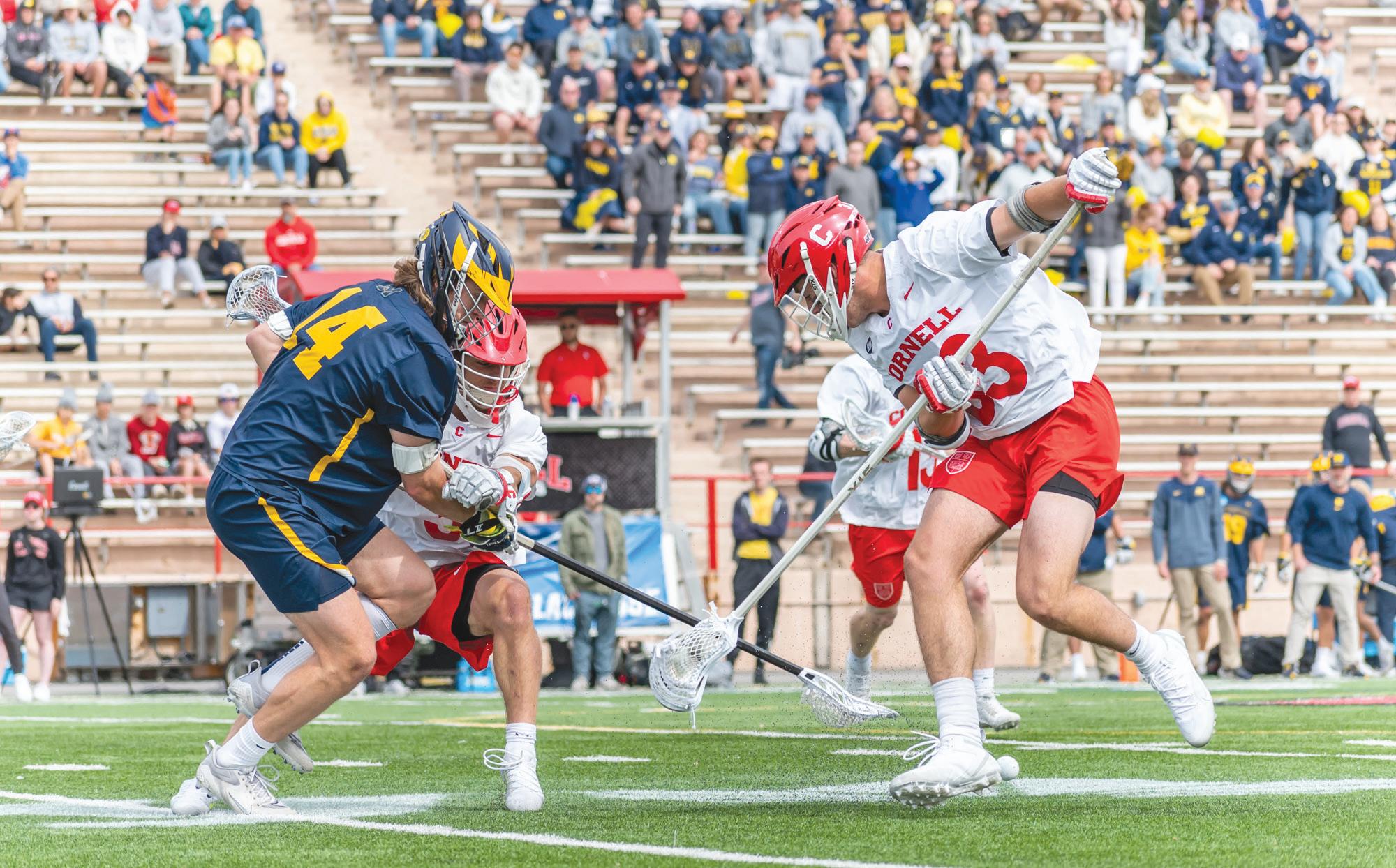
Heartbreaker at home | The Red battled until the end, but ultimately lost at Schoellkopf in the opening round of the NCAA tournament.
By GRAYSON RUHL Sun Sports Editor
ITHACA, N.Y. — The postseason brings a different level of intensity than the regular season, and nowhere was that more evident than in No. 8 men’s lacrosse’s opening round matchup against Michigan. Both teams went back and forth for four quarters before the game was sent to overtime.
The Red (11-4, 5-2 Ivy) won the overtime face-off and had a chance to score, but freshman face-off specialist Jack Cascadden had his shot saved by Hunter Taylor. The Wolverines took over possession, called timeout and Peter Thompson scored the winning goal, advancing, 15-14.
“I thought the guys fought, I thought the guys did everything in their power to get a win today,” said head coach Connor Buczek ’15. “[Michigan’s] a great team, well coached team. Obviously a disappointing outcome but a heck of a lacrosse game.”
The game started with saves on both ends of the field before the Wolverines (10-6, 5-3 Big Ten) struck first. Michael Boehm, Michigan’s top attacker, beat senior goalkeeper Chayse Ierlan, putting immediate pressure on the Red.
Cornell did not let the game slip away early, going on a three-goal run to take the lead back. Junior midfielder Andrew Dalton went top shelf to get the Red on the board, before junior midfielder Hugh Kelleher and senior attacker Billy Coyle added goals to put Cornell up by two.
The Red’s momentum was short-
lived, as just five seconds after Coyle’s goal, Michigan responded. The Wolverines won the ensuing face-off, and Justin Wietfeldt dished it to Josh Zawada, who got a low liner to go.
Five minutes later, Michigan tied it up. With a defender draped on him, Aidan Mulholland got a shot in the near corner past Ierlan.
The teams traded goals to end the first quarter. First senior attacker Michael Long took a feed from senior attacker Spencer Wirtheim and got a high bounce shot into the back of the net.
The Wolverines knotted it back up 30 seconds later, executing off a timeout. The game was tied at four after the opening 15.
Cornell and Michigan matched up evenly throughout the first half, winning the same number of face-offs and taking the same number of shots. The second quarter was highlighted by a number of possessions deep into the shot clock, including the Red’s first goal of the period. After moving the ball around the box, Coyle was able to beat his defender downhill and get a one-hopper past Taylor to put the Red back up by one.
As it did in the first quarter, Michigan came back with a quick response. Wietfeldt won the following face-off, and took it down the field himself, finishing past Ierlan in a six second set.
Defensive grit was on display throughout the quarter, with just three goals being scored in the last 11 minutes. The Red reclaimed the lead off a goal from Wirtheim, but the Wolverines answered with two late goals, including one with 11 seconds left in the half. Cornell
went to the locker room trailing, 7-6.
The Red struggled to find open looks throughout the third quarter, as a stout Michigan defense allowed just one goal in the period. Cornell’s goal came from Kelleher, who once again was able to get downhill and score in the lower right corner.
After more than nine minutes of scoreless play, the Wolverines scored twice in less than a minute. First Boehm found Issac Aronson from behind the net for a top shelf goal. On the following possession it was Jake Bonomi driving down the box, faking a pass and scoring from five yards out. Cornell trailed, 9-7, going to the final 15.
As both teams fought to advance, the offenses came to life in the fourth quarter. After tallying just one assist in the first three quarters, junior attacker CJ Kirst opened up the fourth with a goal to bring the Red within one.
The Wolverines answered with a goal to go back up by two, but two quick scores from senior midfielder Aiden Blake tied the game up at 10.
Both teams continued to trade goals, with the game remaining within two goals throughout the fourth. Boehm scored his second to give Michigan the lead, before Kirst recovered a shot attempt by Long and converted on the put-back.
Thompson continued to beat the Red’s defense, scoring two goals in under a minute to put the Wolverines up. With four-and-a-half minutes left, Cornell was down two.
The Red responded with two quick goals of its own. First Kelleher locked up a hat trick, cutting into the mid-
dle of the box and finishing the open look. Cascadden won the following face-off and took it himself to the house to knot the game up once again. With under two minutes remaining, Boehm put the Wolverines back up, wrapping around the net and finishing in the top left corner. Nevertheless, Cornell responded with a wraparound goal of its own, as Coyle tied it up at 14 with 59 seconds on the clock.
“[Coyle’s] a fifth year senior guy that we trust inherently to make plays,” Buczek said. “We set a great pick for him, he got his hands free and he turned and finished in a huge moment.”
Neither team scored again in regulation, and the game went to overtime. The Red failed to convert its opportunity, and after moving the ball around the box, Aronson found Thompson in the hole for his fourth goal, clinching the win, 15-14.
With the loss, the Red’s season comes to a disappointing end in front of the home faithful. After finishing the regular season 11-2, Cornell fell to Yale in the Ivy tournament before losing to Michigan today. The Red will have to wait another year for a chance to make a postseason run.
“I think overall, we came a long way,” Blake said. “A lot of the young guys stepped up big and they’ve had huge roles all year… Today we worked our asses off but it didn’t work out in the end which sucks, but [I] couldn’t be more proud of these guys.”
Grayson Ruhl can be reached at gruhl@cornellsun.com.