

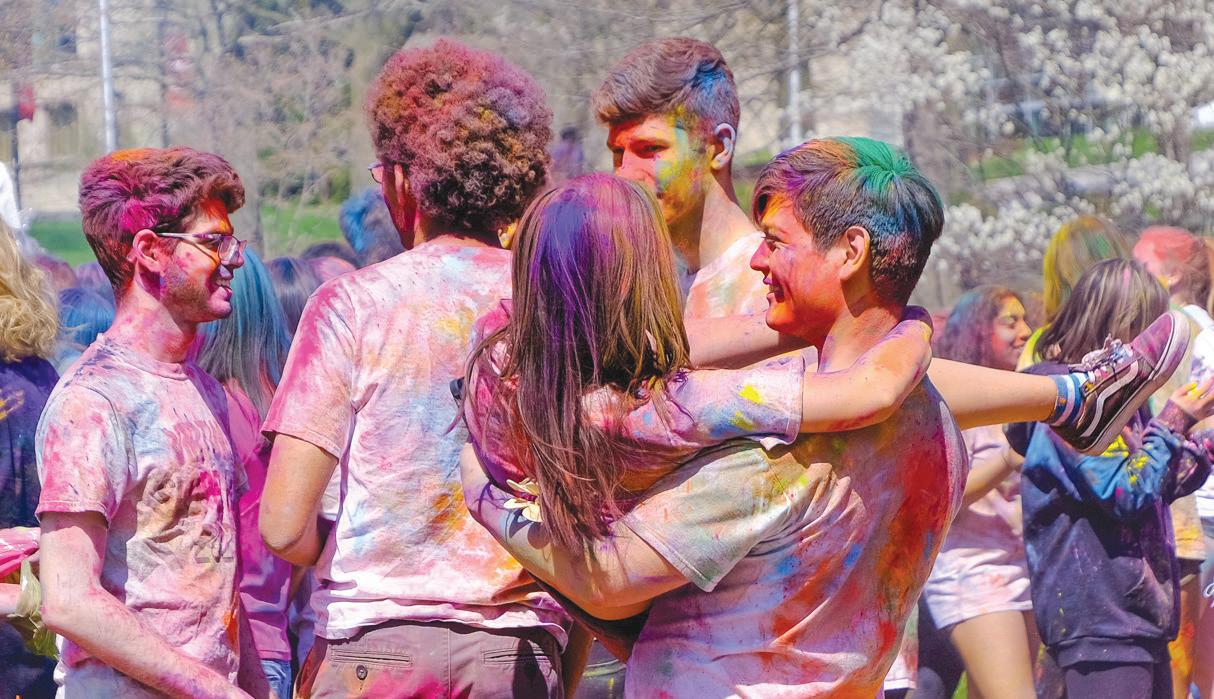
celebration | Students laugh and hug after pelting each other with multi-hued powders in celebration of Holi,
festival of colors
By JYOTHSNA BOLLEDDULA Sun Senior Editor
Typically home to problem sets and study sessions, the Engineering Quad got a splash of color on Saturday, as members of the Cornell community gathered to celebrate Holi, the Hindu festival of colors. With over 500 participants in attendance, not a white shirt was in sight as students threw “rang,” a colored powder typically used for the festival, at one another as Bollywood music played in the background Holi, a Hindu festival that marks the beginning of spring, is usually celebrated in March. Cornell’s celebration has typically been held later to allow for warmer weather.
The event was organized by Cornell’s Hindu Student Council. The celebration, which was canceled in both 2020 and 2021 due to the pandemic, marks the first in-person Holi at Cornell for many
By DYLAN JACKAWAY Sun Contributor
A light, repeating flute tune is heard as the string sections slowly build to a crescendo in the background. Two people walk onto the stage from both sides and hit a switch, turning on fans that blow onto a set of wind chimes. After a brief burst from the flutes, the
ensemble quickly fades out and gives way to the chimes. This was how the world premiere of Heights, a composition by Daniel R. Sabzghabaei grad, began on Sunday as the opener of the Cornell Symphony Orchestra’s performance on April 24 in Bailey Hall.
It was the CSO’s final performance of its first year perform-
Hide and
ing in-person concerts since the pandemic began, and the Cornell Chamber Orchestra, CSO’s smaller counterpart, has their final concert this Sunday.
The CSO and CCO, together comprising the Cornell Orchestras program, are two of the University’s numerous organizations for musicians to practice and perform throughout the academic
By JIWOOK JUNG Sun Assistant News Editor
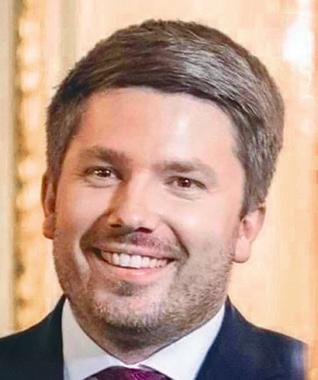
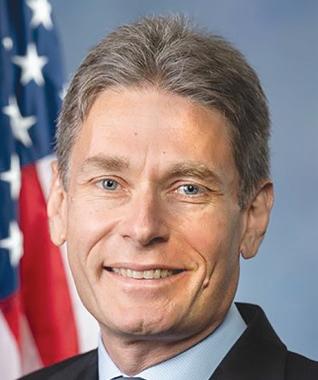
Consul General of Poland Adrian Kubicki and Rep. Tom Malinowski will discuss the issue of the Ukrainian refugee crisis at 11 a.m. on Wednesday, May 11. This event takes place in the midst of an unprecedented number of Ukrainians seeking refuge in Poland.
Titled “Ukrainian Refugee Crisis in Poland,” the event will be hosted by Cornell’s Institute See
page 3
year. Whereas the CCO focuses on stringed instruments, the CSO also includes the rest of the traditional ensemble, such as piano, flute and brass instruments.
Before the show began, Sabzghabaei spoke briefly about the inspiration and thought process behind his piece.
“The work is called Ertefa-at, which is an Arabic word that we
use in Farsi, or Persian, and it means ‘heights,’ and it’s a work that’s influenced by the Zagros mountains in Iran,” Sabzghabaei said. “These mountains have a salt mound area, where there’s… all kinds of colors that are sculpted by wind and rain and time.”
Gillis Lowry ’24, a violist for
See CONCERT page 3
Tuesday, May 3, 2022
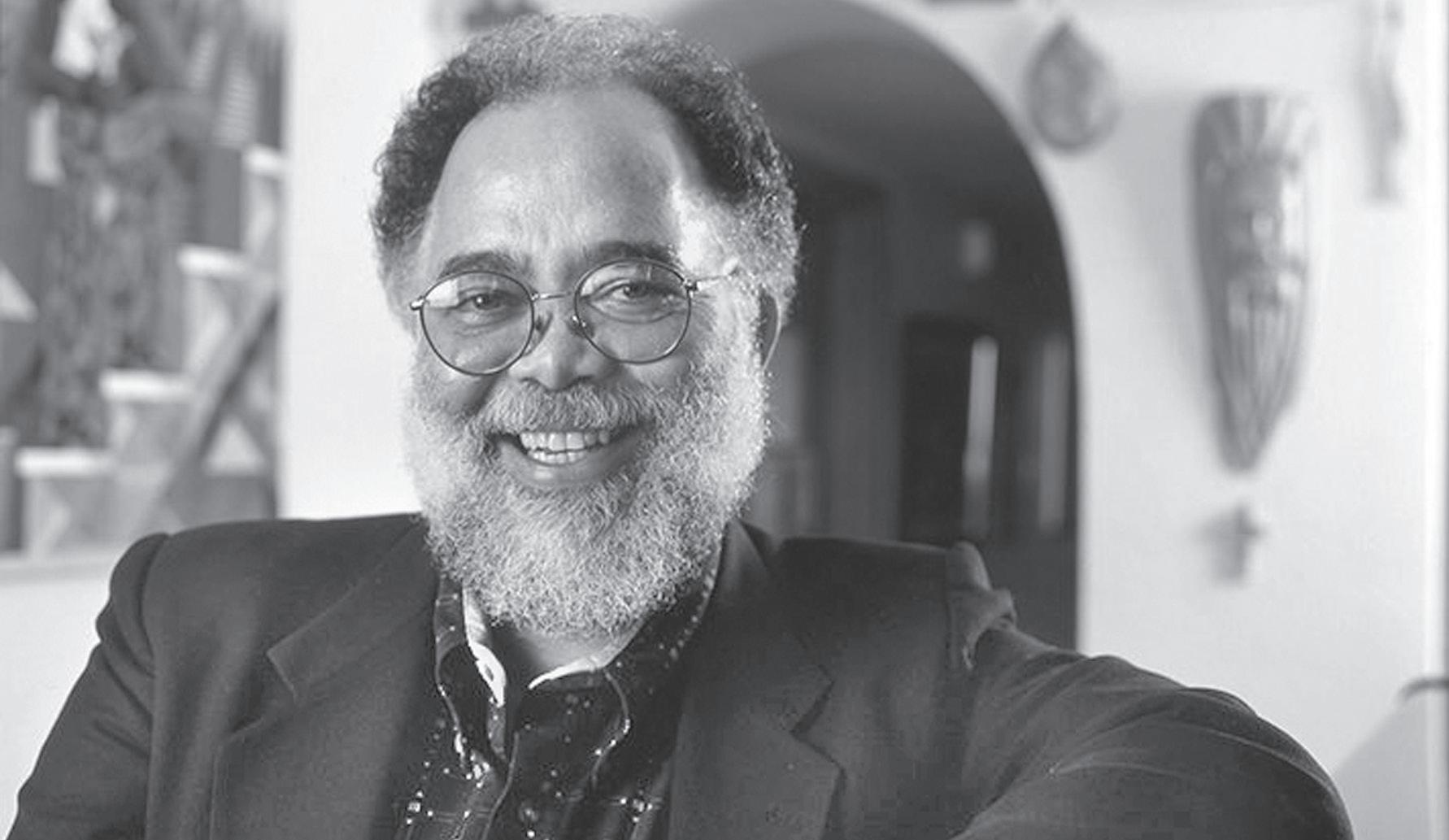
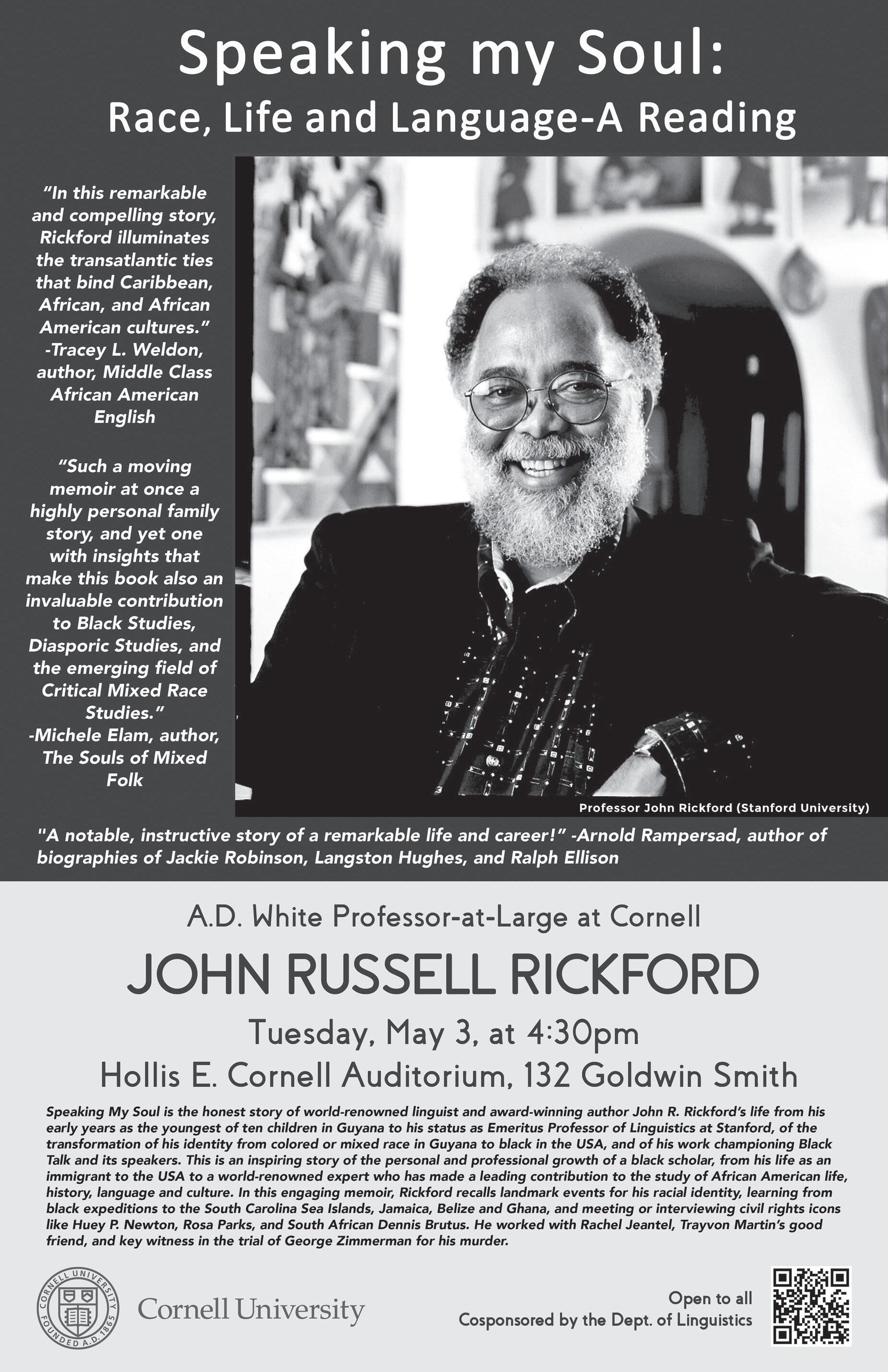
Linguistic legend | On Tuesday, listen to world-renowned linguist and award-winning author John Russell Rickford discuss his recent autobiography, Speaking my Soul: Race, Life and Language. Rickford will share his personal and professional growth as a Black scholar, from his life as an immigrant to an expert of African American life, history, language and culture.
Adaptation of Beneficial Bacteria to Field Soil Environments, With Laura Kaminsky 11:20 a.m., Barton Hall A134
Behavioral Economics and Decision Research Center Workshop With Michael Inzlicht 11:25 a.m. - 12:55 p.m., Sage Hall 141
Speaking my Soul: Race, Life and Language — A Reading With A.D. White Professor-at-large John Rickford 4:30 p.m., Goldwin Smith Hall 132
Can Russia Be Prosecuted for War Crimes? With Jens David Ohlin and Neta Crawford 4 p.m. - 5 p.m., Virtual Event
The Future of Law Enforcement: A Moderated Discussion With Cedric Alexander 10:30 a.m. - 11:45 a.m., Statler Conference Center, Statler Ballroom
Joint Econometrics and Indusrial Organization Workshop With Bob Miller - Carnegie Mellon University 11:15 a.m. - 12:45 p.m., Sage Hall B10
Asian American Studies Program Wednesday Lunch Series With Rick Lee Noon - 1 p.m., Rockerfeller Hall 429
Midday Music for Organ 5/4: Cornell University Music 12:30 p.m. - 1:10 p.m., Sage Chapel
A Conversation With Chilean Writer Marjorie Agosín 2 p.m., Virtual Event
Cornell Energy Systems Institute Distinguished Lecture Series Seminar With Peter F. Green 4 p.m., Olin Hall 255
Kieval Lecture Series, Department of Mathematics 4:30 p.m. - 6 p.m., Malott Hall 253
Mothers and Rituals of Child-Naming in Ancient Israel With Susan Ackerman 5 p.m. - 6 p.m., White Hall 110
Nathan Mondry, Keyboards: Cornell University Music 8 p.m., A.D. White House

Continued from page 1
in the South Asian community.
“There are so many people who haven't experienced Cornell Holi yet in their time at college,” said Aashna Brahmbhatt ’22, a senior council member and previous president of HSC. “So, it was really important to us that we got to share this with the community again.”
Members of Cornell’s HSC relied on a few seniors’ fading memories of spring 2019 to put the event together. With much of the board being underclassmen and juniors, the organization had little previous experience to draw from.
“I had to try and remember, what were we doing? How did we plan it? What was the setup?” Brahmbhatt said. “But it's so rewarding to go through all that work, and then see people enjoying our event that we worked so hard to put together.”
The event ran from 1:30 to 4:30 pm. Within minutes, colors were flying in the air as attendees lined up to get their bags of rang, also the Hindi word for “color.” Effat Rahman ’24 was one such student, coming to experience her first Holi.
“Before I started college I saw all the older college students that I know go to Holi and it's like a big cultural thing and everybody partakes of it,” Rahman said. “I had never done it so I thought it would be really fun to try it out.”
Flavia Scott ’24 similarly came to celebrate Holi after
hearing about it from her friends, and not having been able to experience it last year.
“Last year people would mention these big activities, but we couldn't really imagine because we weren't even in class,” Scott said. “So to actually go out and experience these things is really cool.”
Both Rahman and Scott noted that this year’s Holi exceeded their expectations, and are excited to keep attending during their next two years of college.
Though impressed with the turnout, Neel Mehta ’23, vice president of HSC, noted that in past years, Holi saw an attendance of upwards of 1100 to 1200 students. He hopes that this year’s Holi will remind people of just how fun the beloved Cornell tradition is.
“It's kind of like reestablishing a tradition,” Mehta said. “But I think we're in a good place and hopefully it'll keep growing in the next couple of years.”
As the celebration wound down, many sat in groups on the surrounding lawn with samosas and mango lassi in hand, marking the end to a colorful day.
“[Holi] is one of the few festivals that we have where you can openly show emotion and openly celebrate with literally anyone and everyone and I think that’s really beautiful,” Mehta said. “It’s not just Indian people here, it’s people of all different races and religions coming together and I think that’s a really beautiful thing.”
Jyothsna Bolleddula can be reached at jbolleddula@cornellsun.com.
CONCERT
Continued from page 1
CCO, was in attendance at the concert.
“I thought especially the first piece was really cool, and it was cool to have the composer there to tell us about it, talking about how he used a lot of ‘high’ and ‘thin’ melodies to evoke the sense of the heights,” Lowry said.
Lowry especially appreciated the creative use of fans to set off the wind chimes and give the piece an atmospheric and ambient feel.
Lowry also commented on the significant difference from the 202021 school year — when he was part of the CSO instead — when the ensemble had to abide by the campus’s COVID-19 protocols.
“I remember the woodwinds had to sit all the way in the chairs of Bailey, in order to prevent their air from coming towards us,” Lowry said.
Sarah Gates ’25, also a violist for the CCO, shared this sentiment.
“I think it was just really cool to
Continued from page 1
of Politics and Global Affairs and will be moderated by former U.S. Rep. Steve Israel, director of the institute.
From Feb. 24 to March 13, nearly three million Ukrainians fled the country according to The New York Times.
Kubicki started his career as a journalist, reporting on major Polish news pertaining to humanitarian and development aid.
In 2017, Kubicki initiated a campaign educating Polish passport holders on the U.S. visa application process, contributing to Poland’s inclusion in the 2019 visa waiver program.
After joining the Polish foreign service in 2019, Kubicki received his nomination to Consul General of Poland in New York.
Malinowski grew up in Communist Poland and fled from the nation to the United States with his mother when he was six.
Malinowski previously served as Senior Director on President Clinton’s National Security Council, chief advocate for Human Rights Watch and Assistant Secretary of State for Democracy, Human Rights and Labor during the Obama administration.
During his time at Humans Rights Watch, Malinowski led a bipartisan effort to end the use of torture under the Bush
administration. Malinowski currently serves as a Congressman representing the seventh district of New Jersey.
Israel, who will be moderating the conversation, served as a U.S. Representative for New York from 2001 to 2017.
Israel has previously taught at Tufts University as a Tisch College Visiting Fellow and University of Chicago as an Institute of Politics Pritzker Fellow.
Israel currently serves as the Director of Institute of Politics and Global Affairs at Cornell University.
Jiwook Jung can be reached at jjung@cornellsun.com.
finally be back to doing in-person music again, because even just coming from high school, everything was on Zoom, and so nothing really felt like a real performance.”
According to Gates, Director Michelle di Russo tries to bring in different types of music from around the world to add a wide range of composers to the orchestra’s repertoire.
Kay McIlhenny ’25, a violinist for the CCO, agreed, saying, “I think we’ve had a really nice mix of repertoire throughout the year, and it just made out to be a really diverse musical experience.”
McIlhenny said her favorite part of Sunday’s concert was a solo concerto by violinist Nanor Seraydarian ’24 in Chausson’s Poème, since it is uncommon to hear a violin concerto at school.
At the end of March, the CCO put on an opera show comprised of three 18th-century pieces woven together by Cornell music Prof. Rebecca Harris-Warwick, produced in collaboration with the New York State Baroque Dance Company.
“That was really fun to be able to work with other artists and musicians outside of just orchestra, and for a pretty crowded stadium audience, that felt special,” Gates said.
As a physics major, Gates described how being part of the orchestra facilitates connections in a number of ways.
“It’s really cliche but I do like the community, because there’s oddly enough a lot of STEM students in the orchestra, so it’s really cool to be able to have a sort of support system for academic stressors as well as be around a bunch of people who really like music,” Gates said.
As a biology major, McIlhenny echoed this remark.
“I think what I enjoy the most, is I just like being part of the music-making, especially when academics gets rigorous and difficult, I have something that I like to fall back on which is really nice, and though it is a time commitment,” McIlhenny said.
McIlhenny also serves as the CCO’s assistant concertmaster alongside Seraydarian, the primary concertmaster. They help in coordinating the different sections of the ensemble so that everyone blends together nicely, according to Seraydarian.
For Seraydarian, the opportunities to perform with Cornell Orchestras have represented the continuation of her noteworthy musical career.
“I basically started playing violin at the age of four, both my parents are musicians, as well as my siblings but they’re much younger… so my parents thought it would be a good idea to get me started as well, so that’s how I started,” Seraydarian said.
To continue reading this article, please visit cornellsun.com.
Dylan Jackaway can be reached at dkj27@cornell.edu.
On April 26, I rushed out of my last afternoon class and dashed in the direction of Triphammer Footbridge. In order to make it in time, I’d chosen to take my online class at the Martin Y. Tang Welcome Center, a building I had only ever briefly scouted to check if it had wi-fi. Virtually empty, I was saved by its abundance of comfortable seats, a charging port and personnel who were willing to suffer the disturbances of someone taking a class.
But I’d gotten something wrong! It must have been past 4:00 already, but aside from the usual passersby, nowhere was the crowd or orating professor I had expected. Again, I was saved — this time by a chance overhearing. Someone was directing two similarly-confused people towards the actual Triphammer bridge — the one I went over nearly every day! Shamefaced, I rushed back in the other direction.
Until I heard of tripartite campus event “Ammons & The Falls,” starting with a walking tour to unveil new displays for two of his poems, I had been ignorant of Ammons’ status as a major poet. The only reference to him I had seen was on a poster in Goldwin Smith reading “Ammonites.” After a brief search for his name, it’d merely struck me as an endearing pun. Only when preparing to report on the first part of the event did I research more deeply into Ammons.
A. R. Ammons was born in North Carolina on Feb. 18,
1926 and taught at Cornell from 1964 to 1998. For his poetry, he won numerous awards, including the National Book Award. He passed away on Feb. 25, 2001, almost exactly a year before I was born. Eager to remedy my ignorance, I looked into more of his poems. My favorite so far is “Catalyst,” a panegyric to the humble maggot that employs internal rhymes, rollicking enjambment and richly visceral language of decay.
Back to April 26: when I arrived at the first unveiling on Triphammer Bridge, I found literatures in English Prof. Roger Gilbert already there along with a small crowd of onlookers. After introducing myself, I watched as Gilbert made some introductory remarks, thanked people for their contributions — and unveiled the display, previously obscured by a black plastic covering.
Located in an unobtrusive part of the bridge, near the end towards North Campus, the display featured a brief biography of Ammons himself framed by a photo of the falls in winter, while one of them in a warmer season provided a backdrop for the poem, “Triphammer Bridge,” which Gilbert read aloud.
Afterwards, I followed the group across campus towards Cascadilla. Along the way, I struck up a conversation with a local event-goer who went by Norm, who opined that more attention should be paid to poetry’s phonetic elements — the sounds of the words rather than only how people feel about them.
Meanwhile, the tour took us through Goldwin Smith

Hall, where Gilbert showed us where Ammons’ former office had been located — and told us of a time when students decorated his office door with garbage after Ammons won the National Book Award for his collection of the same name. Once again, I was genuinely surprised — I must have walked down that hall hundreds of times, yet it never occurred to me that such a figure once had an office there.
Exiting Goldwin Smith, we passed by the small creek that ran near Sage Chapel and the Cornell Store. Apparently, Ammons had written about it as well — until this point, I’d had no idea it had a name, let alone that an award-winning poet had written about a creek named “Wee Stinky.” But so he’d written, and Gilbert read the poem humorously.
Not until the walk along Cascadilla Gorge Trail did I catch up to the professor once more. When asked if he’d known Ammons personally, Gilbert said yes, he’d known him from 1987 through 2001, when Ammons passed away. “Although, I was reading and admiring his work
before that,” continued Gilbert. “In fact, I was writing about him in my dissertation before I came to Cornell. When I hadn’t yet decided to attempt the job, he called me up at home and I was just flabbergasted.”
Soon we had reached the second unveiling, close to the Schwartz Performing Arts Center. Here, there was a little mishap — apparently the display had become uncovered and Gilbert had to rush over to re-cover it. Someone also noticed a small typo “[i]” after a line in “Cascadilla Falls,” but otherwise, things proceeded smoothly.
My final question to Gilbert was on which of Ammons’ poems was his favorite. To this, he said, “If I could only choose one poem, I think I would choose one of the long poems … I might choose his long poem, Garbage.” He stressed how hard it was to choose, before naming the poem “Mechanism,” about the inner workings of a goldfinch, as another of his favorites. “This is what [Ammons is] really known for,” he concluded: “Mixing science and natural wonder together, allowing us to
see how knowing the science behind things does not in any way diminish their beauty.”
As I left the unveiling, I felt humbled by this rendering of poetry from the scenery that had now become quotidian to me. When one settles into a pattern, it becomes easy to think of these places as mundane. I certainly don’t think constantly of all the people who have passed through Cornell through a century and a half, ordinary students or award-winning poets. I think even less of the names of creeks, or of the precise trajectories by which water crashes onto rock in every gorge.
But Ithaca, like other places, has its own history, stretching back not only through the twentieth century but billions of years into geological time. Perhaps we are all as Ammons’ goldfinch, “unconscious of the billion operations that stay its form,” the layers of our skin like mineral strata stretching far underground.
Amy Wang is a sophomore in the College of Arts and Sciences. She can be reached at amwang@cornellsun.com.

140th Editorial Board
VEE CIPPERMAN ’23
SERENA HUANG ’24
EMMA LEYNSE ’23
SURITA BASU ’23
Assistant Managing Editor
NAOMI KOH ’23
Assistant Web Editor
ELI PALLRAND ’24 News Editor
ESTEE YI ’24
KAYLA RIGGS ’24
JULA NAGEL ’24
Editor
MEHER BHATIA ’24
KATRIEN DE WAARD ’24 Production Editor
PAREESAY AFZAL ’24 Assistant News Editor
JIWOOK JUNG ’25 Assistant News Editor
ADITI HUKERIKAR ’23
Assistant Arts & Culture Editor
DANIELA WISE-ROJAS ’25
JASON WU ’24
GRAYSON RUHL ’24
KEVIN CHENG ’25
HANNAH ROSENBERG ’23
JYOTHSNA
BOLLEDDULA ’23 Senior Editor
BUNAY ’24
FLORES ’24
YAO ’23
LAHAYE ’23
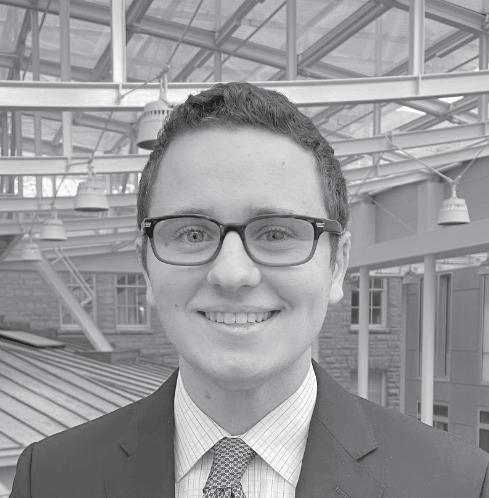
Isaac Chasen is the Director of Elections for the Student Assembly and a junior in the Dyson School. Isaac is this week’s author of Student Assembly Viewpoint, a rotating column written by members of the SA. Comments may be sent to opinion@cornellsun.com. Student Assembly Viewpoint runs every other Tursday this semester.
Every day, Cornellians face a host of challenges, including a return to in-person learning, enormous course workloads and pressure to navigate increasingly complicated job and
But
we, the student
body,
have the power
to
Bunay ’24
’24
’23
’25
Desker Jason Wu ’24
Deskers Dennis Quizhpi ‘24
graduate school application processes. At times, it can make even the strongest of us feel hopeless and powerless. So, today I encourage you to reclaim that power. Use your voices to demand better. Vote in this spring’s Student Assembly elections from May 2 to May 4.
Cornell’s system of student governance, at its best, is truly unique. It provides an unparalleled opportunity, especially at a world-renowned Ivy League institution, for students to be heard and for undergraduates to be the voice of change. It provides ways for undergraduates to engage with graduate and professional students, employees, faculty and the administration and enact meaningful policies to improve the Cornell experience.
Yet, it’s no secret around campus that in years past, there has been general student apathy and distrust towards these systems of shared governance — the S.A. in particular. Among top universities, Cornell still has extraordinarily low rates of voter turnout and engagement with our system of shared governance, even despite Cornell Votes’ work to increase turnout in the Spring and Fall semesters of 2021.
power to change this. We have the power to create accountability in the S.A. Let’s do it. Let’s vote.
Do you believe that mental health resources on campus are inadequate? Vote, and create a groundswell of support that your representatives and the administration cannot possibly ignore. Do you believe recreational and exercise facilities must be made available to all students? Vote, and bring it into existence. Do you believe that there should be parameters for how the University spends its money? Vote, and create that system of accountability. Do you believe laundry should be free in dorms?
Vote, and make the S.A. hear us. These are just a few of the things that we can demand from next year’s SA with our votes.
This semester, voting in S.A. elections will be incredibly easy. On May 2 at noon, you will receive an email with a link to vote in S.A. elections. We at Cornell Votes, the S.A. and the Office
change this. We have the power to create accountability in the S.A. Let’s do it. Let’s vote. Do you believe that mental health resources on campus are inadequate? Vote, and create a groundswell of support that your representatives and the administration cannot possibly ignore.
This has manifested in a number of ways this academic year, from a lower number of candidates seeking S.A. office, to limited attendance at S.A. meetings. Many people feel that the S.A. does not represent them or adequately cater to the needs of the student body. I would go so far as to argue that in many cases, those feelings are justified.
But we, the student body, have the
of the Assemblies will do our very best to remind you as many times as possible, on social media and via email, before voting closes on Wednesday, May 4 at 2 p.m.
Voting will take less than two minutes, and I highly encourage everyone on campus to do so once they receive the email. Let’s prove to the Cornell community that we, the undergraduate student body, are invested in how this University is governed.
Let’s create accountability in the Student Assembly.
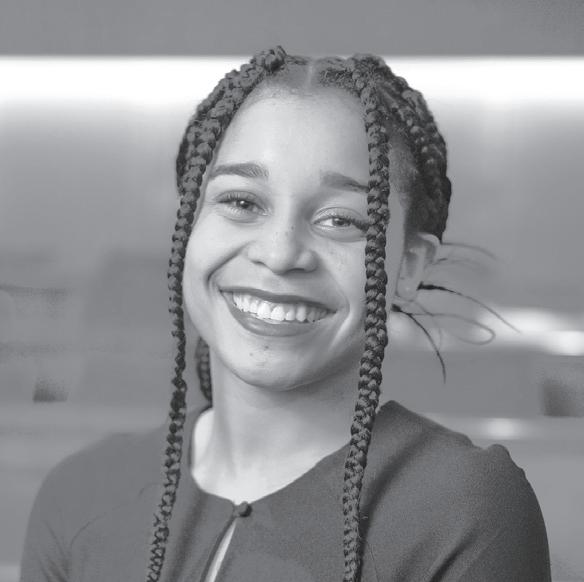
Anuli Ononye (she/her) is a senior in the College of Arts and Sciences. She can be reached at aononye@cornellsun.com. Tis is the fnal installment of her column Womansplaining
My column “Womansplaining” has been the best part of my Cornell career.
Apologies to my friends, professors, extracurriculars and courses that couldn’t live up to this column: you are all honorable mentions. Which makes writing this last “Womansplaining” column so overwhelmingly heartbreaking, horrible, exciting and fnal. I hope every single Cornellian fnds their own Womansplaining. I also hope that every Cornellian has a brutally honest womansplainer in their life, because what will you do without me? I can trace most of the right decisions that I made on this campus to my time at Te Sun. Most Cornellians have an idea of who a “Sunnie” is. I usually don’t make that list — I joined Te Sun late in my Cornell career, I’ve never actually been to a “Sun party” and I would pick Libe over Zeus any day. But if you ask me what Cornell gave me, it gave me my column and my column gave me my voice.
I wrote to a professor — Prof J. Lennon, Literatures in English — a few weeks ago to tell him how much he had impacted me as I approached fnal interviews for journalism fellowships that I applied to this year. While reading a draft of one of my short stories in his English 3830: Narrative Writing course at the end of my sophomore year (the dread-
ed Spring 2020), Prof. Lennon told me that I could be a real writer if I wanted to. At that point in my Cornell career I was fercely pre-law, and while I still plan to go to law school, his words showed me that I didn’t have to ft into the cookie-cutter life that my parents had mapped out for me for so long. It was a compliment that I didn’t know would change my life and be the incentive that I needed to apply to be a columnist for the upcoming semester. Tis upcoming fall, about two years after that original conversation, I will begin my frst full-time position as a journalist at CNN.
My frst column — “It’s 2020: Stop Calling Martha Martha” — was by far the most popular (and my favorite!) piece that I ever wrote, which left me with two years of trying to live up to my writing and passion in that piece. I never did. But I tried. In my column I have explored my thoughts about on-campus activism, popular culture, mental health, feminist holidays and my relationships with my friends. It is a privilege — as I’ve learned in my frst few professional writing opportunities — to write about what you care about. “Womansplaining” is exclusively what I care about. And the beauty of it is that people read it!
When that frst column was published I was overwhelmed. Within minutes, I was getting texts and emails from friends, getting hate messages on Twitter and having my intelligence questioned on Facebook, and was told that my article was discussed in important meetings at Cornell and beyond. My words mattered to more people than just my parents and close friends. Even the people vehemently against my “complaining,” “political correctness” and “nonsense” (all adjectives from lovely hate-messages and comments by the way!) gave me some validation, because if they hated my pieces so much that they felt the need to email me about them, at least they read them. Or they read the title, but we won’t go into that today. It was also the frst time I had fans on campus. It was fun to get emails and get stopped in the dining hall by people who resonated with my words.
So, this leads me to the sappy heart-felt goodbye that you’ve been waiting for: “I hope every Cornellian has their own Womansplaining.” I hope you fnd something at Cornell that provides you with a life-altering existential crisis, something that reminds you amidst the overwhelming pressure of this campus that you are talented, and something that isn’t just a chore on your list of 30-something things to get done by the end of the week. You deserve something on this campus that’s just for you, something that you can leave Cornell deeply passionate about and proud of.
I joke to my friends that my column is the only thing about Cornell that’s never felt like a chore — I’ve never cried about my column, never fought over my column (except with my mom who is fond of censoring my writing before I send it to my editors) and never questioned if it was the right decision for me. Rather, my column has encouraged me to open my eyes to new career opportunities, encouraged me to refect on the best and worst parts of my Cornell experience and was fun when life wasn’t fun. It’s never been stressful — and since this is my last piece, I can admit that I write every piece (including this one!) the day that they’re due, despite having two weeks to write. Your Womansplaining is most likely not a column. Maybe it’s your acapella group, your line in the Cornell Fashion Collective show, your research team, your favorite course, your gym class, your best friends, your on-campus job or reading your favorite author. Many ruminate on the best ways to be successful at Cornell: have multiple minors, take the most competitive internship, work on your public speaking, become the president of that club, save up your money and (the dreaded!) network. While all of those are great, Cornell is meaningless if you don’t get anything out of it for yourself. If you haven’t found your own Womansplaining yet, go fnd it — I didn’t fnd mine until junior year.
And you don’t have to do it alone! Since my column is uniquely me, the pieces wouldn’t be what they are without the people in my Cornell community that have pushed me to be the person — and writer — that I am. I am tactically choosing not to mention any friends or classmates here with the inevitable fear that I would miss someone — I love you all and will spend these last few weeks showing you that. Tat being said, I want to use this printed space to thank some of the most infuential mentors of my Cornell career: Jay Branegan, Naminata Diabate, Brooke Dufy, Corey Earle, Amadou Fofana, Shura Gat, Durba Ghosh, Gina Giambattista, Jef Godowski, Steve Israel, Jane Jufer, J. Lennon, Ryan Lombardi, Marla Love, Darin Self and Wendy Treat. My time at Cornell (and this column) wouldn’t have been possible without your leadership and guidance over the past four years. Also a special thanks to my mom for reading all of my columns and stopping me from publishing ones that were a little too risqué — I still have those drafts, so stay tuned. Tanks to my dad for not minding (too much!) how much I love this column and my slight life-detour into journalism. Finally, thank you to my incredible little brother Ezugo Ononye ‘24 who has taken this campus by stride, despite starting of in the middle of a pandemic — Cornell’s yours now.
Javed Jokhai is a sophomore in the College of Arts and Sciences and the incoming President of the Cornell Democrats. Comments can be sent to opinion@cornellsun.com. Guest Room runs periodically throughout the semester.
In my two years of being a student at Cornell, I’ve fallen in love with the people of Ithaca, in part because of the city’s dedication to inclusivity and general progressivism. When asked to describe Ithaca, I often say that Ithaca is a place where every trinket store and cofee shop will have a sign that says “all are welcome,” and everyone will actually be welcome. I fnd the crux of Ithaca’s charm to be in its honesty and genuine commitment to its values; Ithacans’ history of supporting the little guy goes to show that Ithaca means what it says when it purports to be a progressive city, and, at the risk of sounding cheesy, I fnd that to be gorgeous. As the newly-elected President of the Cornell Democrats, it’s something I’m proud to say about the place I now call home, and a characteristic I try to embody in all of my work. And yet, the politicians that claim to represent us don’t seem to have
mastered this skill. Te actions I’ve seen from Ithacan government ofcials don’t back up the progressive values they tote. Tis toothless political posturing is most exemplifed in the indefnite tabling of the Right to Renew Leases bill by Ithacan Common Council members.
Te Right to Renew Leases bill, also known as a Good Cause Eviction bill, is exactly what it sounds like: a law that would ensure that any tenant who has fulflled their duties of tenancy, like paying rent, could renew their lease and continue living in their home. As of right now, at the end of your lease, your landlord is able to kick you out of your home for no reason at all, aptly known as a no-cause eviction. Te lack of this common sense protection presents a multitude of problems for Ithacans of all stripes. In addition to making the process of fnding housing unnecessarily competitive and limiting, no-cause evictions has — and continues to — be a method for landlords to discriminate against, and ultimately displace, our most vulnerable.
Ithaca’s Anti-Displacement Learning Network noted that, as of 2018, 54 percent of evictions were fled against Black Ithacans. Tese discriminatory eviction pracitices have thoroughly squashed the once propersous Black community in Ithaca, pushing 49 percent and 51 percent of the Black population of Southside Ithaca and Titus Falls, respectively, out to lower-opportunity neighborhoods since 1990, according to Ithaca’s 2017 Assessment of Fair Housing. Of course, the vulnerability of tenants and their rights is a problem not only for Ithacans of color, but of most of Ithaca; Ithaca is unquestionably a tenant town, with 74 percent of Ithacans renting their housing. As the incoming President of the Cornell Democrats, I fnd the idea
of landlords, representing a tiny minority of city residents, deciding without justifcation whether or not most of Ithaca will be homeless, is in a word, undemocratic.
And yet, some of Ithaca’s Common Council aligning with the Democratic party, such as now acting Mayor Laura Lewis, Alderwoman Donna Fleming (D-3rd ward) and Alderman Patrick Mehler ’23 (D-4th ward), have not taken direct action to right this large power imbalance, at least for a little while longer. Upon the hearing of the bill on Nov. 3, 2021, Alderman Mehler, having the fnal decision as an inadvertent tie-breaker, failed to read about the bill enough to feel comfortable voting on the matter. Mehler cited the very stressful mitigating circumstances on campus (the week of the bomb threat and active shooter alert) as the reason he failed to do his alderperson duties to know about forthcoming law. Tis inability to do work in crisis is by all means understandable to me. However, this active inaction to not vote still ultimately placed the most vulnerable Ithacans at a risk more real than any threat.
Tis is, sadly, not the only example of tenants’ rights being a topic in which political posturing appears to be a higher priority than helping everyday people in their daily lives. Even recently, Alderman Mehler used his platform in Te Sun to bring home the good news regarding the Amendment to Ithaca City Code Chapter 258-10(A), whose main goal is to provide renters with 120 days before they can be asked to renew their lease, or before their landlord signs with new tenants. On the surface, I would support this amendment, as it attempts to equalize imbalanced power dynamics between tenants and landlords, albeit timidly.
Te amendment becomes lackluster in
my eyes, however, upon analyzing the bill and discovering that the amendment has no written enforcement mechanism if this minimum number of days allotted is not respected. To clarify, if your landlord does not respect the 120 days before you are allowed to be asked to renew your lease, there is no systemized channel or precedent you can use to penalize your landlord. Tis, coupled with the police’s frequent aversion to holding landlords accountable, as the police often accept the role of arbiters of landlords’ gentrifying instincts, the Amendment to Ithaca City Code Chapter 258-10(A) becomes efectively mute. Tis does not even touch on the rampant and well-documented epidemic of landlords lying about tenants’ rights, as well as tenants’ ignorance of their rights, that already make amendments like this difcult to practice in the real world. Context, in turn, transforms the amendment into a hollow suggestion to the landlords who were likely never going to stop abusing tenants’ rights in the frst place.
Te actions of Ithacan politicians do not appear to me as inconsistent with the process in which they achieved their positions, for it seems that gesturing toward making political change is enough if the people the change is for aren’t the people holding you accountable. Acting Mayor Lewis was not elected to the position of mayor but was appointed to the position by former Mayor Myrick. Alderman Mehler was not chosen by the 7,594 Ithacans of the Ward 4 district he represents, but by a committee of six people. I am by no means the frst to say this, but please allow me to use my position to say that Ithaca needs politicians that will not only talk like champions of Democratic constituencies, but have the courage to follow through with it.

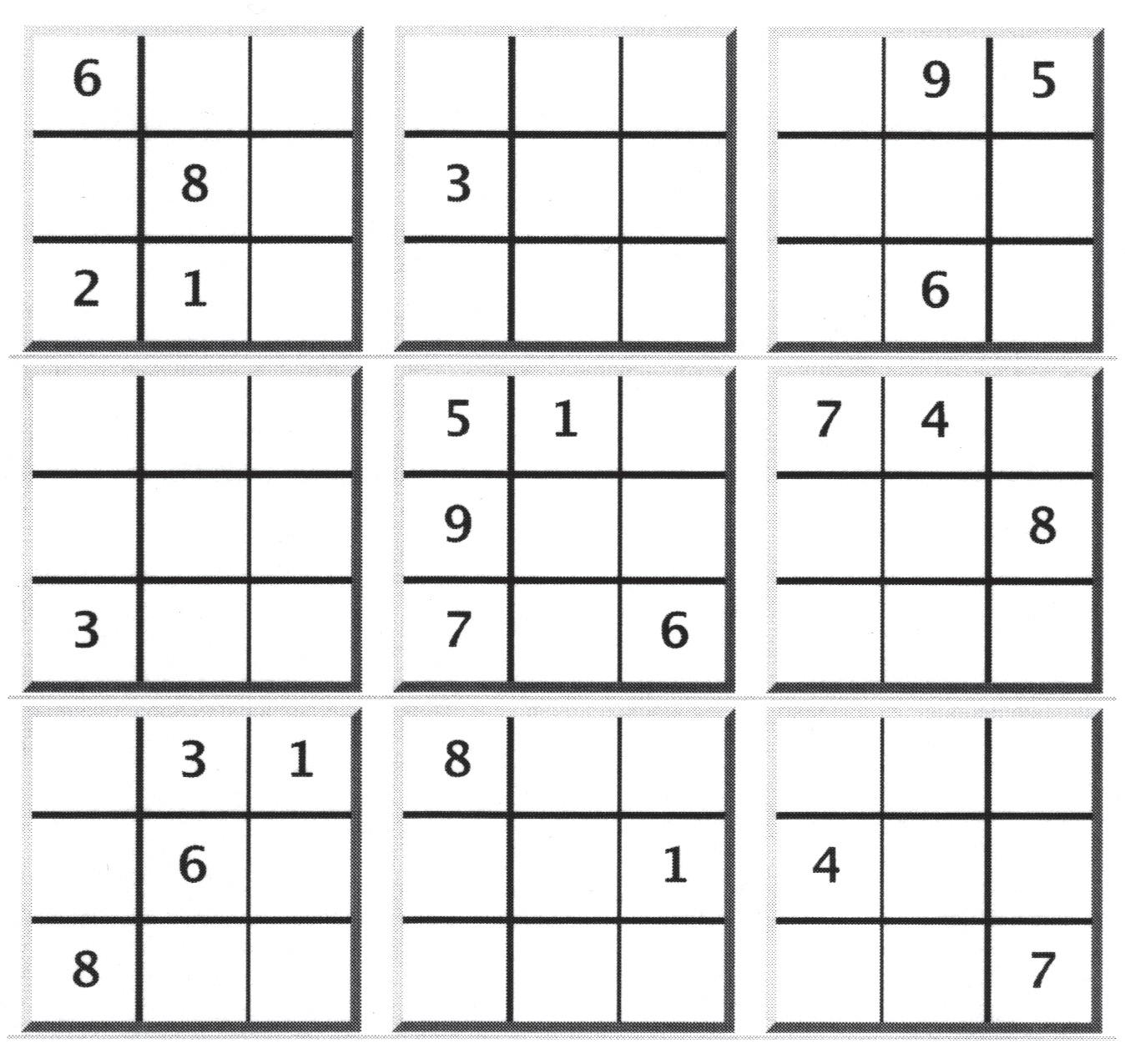
Fill in the empty cells, one number in each, so that each column, row, and region contains the numbers 1-9 exactly once. Each number in the solution therefore occurs only once in each of the three “directions,” hence the “single numbers” implied by the puzzle’s name. (Rules from wikipedia.org/wiki/ Sudoku)

By GRAYSON RUHL
Sun Assistant Sports Editor
After 13 hardfought games, including five within the Ivy League, men’s lacrosse playoff hopes came down to one contest: Last Saturday against Princeton (9-4, 3-3 Ivy). With a victory, the team could take a share of the Ivy League title, but with a loss, its postseason plans become more complicated.
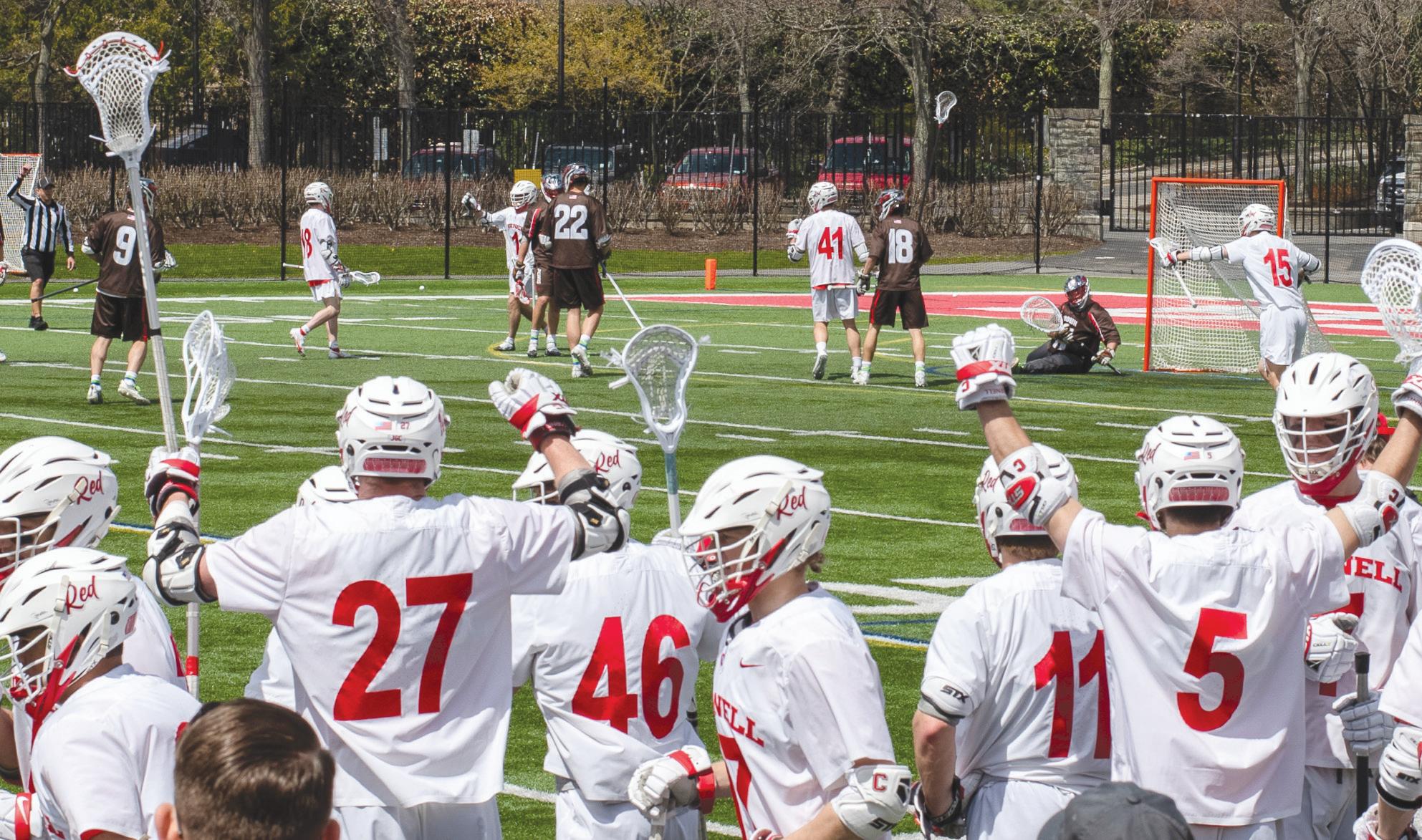
In a high pressure environment in New Jersey, Cornell showed up, topping Princeton 18-15 to claim its 30th Ivy League title.
The Red (11-3, 4-2 Ivy) entered this past week on a two game skid. Early deficits against both Army and Brown had put Cornell’s season ending in uncertainty. The Red was also dealing with the death of legendary coach Richie Moran, who coached the team for 29 seasons from 1969 to 1997, winning three championships and 15 Ivy League Championships. With all these events swirling together, Cornell took the field against the Tigers.
In recent games, the Red has been struggling with building an early lead. This was not the case against Princeton. While Cornell did initially fall behind 1-0, this was its only deficit of the day. The Tigers’ lead was shortlived, however, as sophomore midfielder Hugh Kelleher got the equalizer just over two minutes into the game.
In recent games, the Red has been struggling with building an early lead. This was not the case against Princeton.
Kelleher started his possession just in front of the x, located behind the goal cage, beating his defender and firing to the top left corner.
Kelleher’s goal got the offense going, as it was the first of three consecutive scores for the Red. Sophomore attacker C.J. Kirst and junior attacker Michael Long each notched their first, and Cornell was up 3-1 five minutes in.
The Tigers refused to be put away early, responding with two of its own. Nevertheless, the Cornell offense came to play on Saturday, as it ended the first quarter
scoring five of the last six goals. Kirst and Long continued to contribute, while fifth year attacker John Piatelli and senior attacker Billy Coyle each got on the board for the first time. The Red ended the first quarter leading, 8-4.
Cornell started the second quarter strong, as Piatelli bullied his way past the Princeton defense to score from point-blank range, his second of the day. After the Tigers responded with one of its own, the Red went on another run, scoring three unanswered goals to close out the half.
Coyle, Long and fifth year midfielder Matt Licciardi all found the back of the net, and Cornell went into the locker room leading, 12-5.
A mere 14 seconds into the second half, the Red found itself a man up after a Princeton pushing penalty. This was all it needed to extend its lead to eight, with Coyle notching a hat-trick on the day. But once again, the Tigers refused to be put away, roaring back to score eight of the next nine goals in the quarter.
The sole Cornell goal came when Long, playing behind the net, found Kirst in front, who beat the Princeton
keeper to his left. The Red got another big goal with 21 seconds left in the quarter from junior attacker Spencer Wirtheim, but headed into the final period with its lead cut to two, 15-13.
Just over two and a half minutes into the fourth quarter, Cornell’s lead was cut to one. Nevertheless, the Red refused to relinquish its lead. With just under nine minutes remaining, Piatelli put Cornell up by two, using the same move he had earlier in the game to swim past the Princeton defender and finish right in front of the goal.


56 seconds later, the Red was leading by three, as Long was able to make a play from behind the net, sprinting around the corner and finishing the bar down on the top left corner. This is all Cornell needed for the remainder of the quarter, as a goal from the Tigers with 5:22 remaining in the game was not enough. Piatelli nailed the dagger on an open net with 39 seconds left, and the Red took the match, 18-15.
Piatelli, Long and Kirst led the scoring with four apiece, and Piatelli finished the regular season with a teamhigh 51 goals. On defense, senior defender Gavin Adler forced five turnovers continuing his shutdown season on the back end. With this win, the Red secured a spot in the Ivy League Tournament.
Cornell will travel to Providence, Rhode Island, as the No. 2 seed in the Ivy League Tournament. It will take on No. 3 Yale (10-3, 4-2 Ivy) at 6 p.m. on Friday, May 6. The second game, held at 8:30 p.m. on Friday, pits No. 1 Brown (10-4, 4-2 Ivy) against No. 4 Penn (8-4, 3-3 Ivy). The winners of the two matches will face off for the tournament title on Sunday, May 8 at noon.