The Corne¬ Daily Sun


By
On December 20, farmers and entrepreneurs struck gold when Congress passed the The Agriculture Improvement Act of 2018, or the “Farm Bill.” The law uprooted hemp from the controlled substances list, approving it for industrial growth in all 50 states.
Four months later, hundreds of licenses to grow and process
the newly-legalized plant — otherwise known as Cannabis sativa L — have been distributed to eager growers throughout New York State. Prior to the greenlight for industrial growth, growing hemp was restricted to academ-
“CBD has people saying adjectives like ‘miraculous’ and family farms flying the coop from other crops.”

ic research institutions, of which Cornell was among the first to receive a license in 2017.
Now, economic analysts are calling hemp the most lucrative cash crop farmers have seen in decades, with the industry projected to grow 18.3 percent each year over the next decade. Business is already booming. And Cornell will lend a hand in helping the crop succeed. CBD, or cannabidiol, is a natural compound found in cannabis plants. It can be extracted as an oil and infused into food, used topically to treat pain and injected as medication. It is different than THC, which is a psychoactive compound, found in trace amounts in hemp and high volumes in marijuana. CBD has people saying adjectives like “miraculous” and decades-old family farms flying the coop from other crops into hemp.
Amanda H. Cronin can be reached at acronin@cornellsun.com.
By VALE LEWIS Sun Staff Writer
Though Gov. Andrew Cuomo’s (D-N.Y.) proposal to legalize recreational marijuana in New York was dropped from the state budget last month, discussions about the drug continue in Tompkins County.
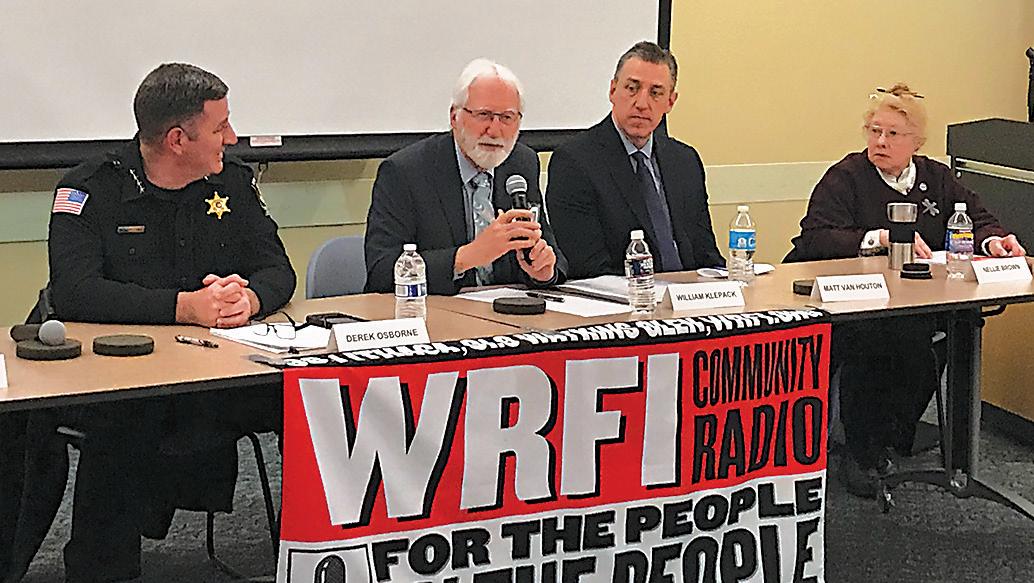
On Monday, the League of Women Voters of Tompkins County hosted a panel of local leaders to present the implications of legalizing marijuana and answer audience questions.
Jim Sharp, director emeritus of the Van Dyke Addiction Treatment Center, began with a speech
illustrating that “in regards to marijuana, there’s a lot we don’t know” — including how many people are addicted to the drug and how many people die each year by overdose on marijuana. He said that one of the most important factors in the legalization of recreational marijuana will be the accompanying regulations. Sharp pointed to similar regulations regarding increased taxation on

By ROCHELLE LI Sun Staff Writer
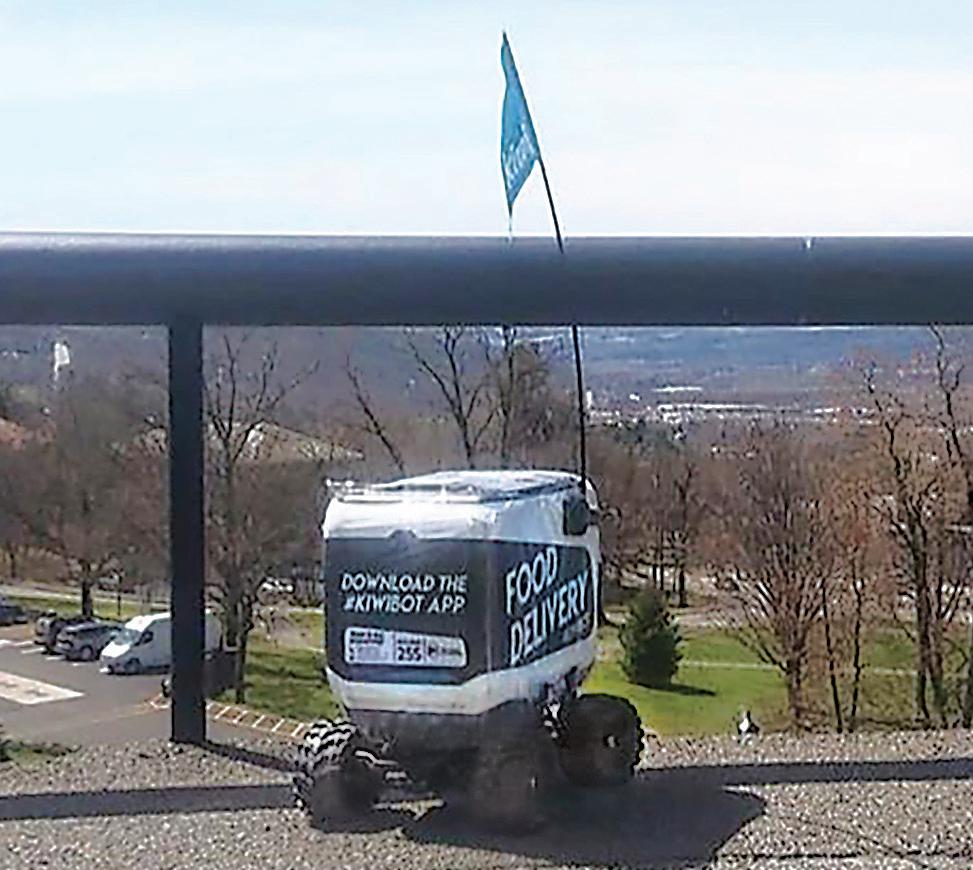
As spring approached, a small, rectangular robot began making its way up and down Cornell’s hills. This robot is a Kiwibot, which delivers food to college students on campus. First implemented at the University of California, Berkeley, Kiwibot is hoping to expand its services across the country to Cornell.
Barbosa grad, who is managing the Cornell operations, told The Sun in a phone interview. “We want people to have a warm feeling about what’s happening.”
But while the robot hasn’t faced issues moving around on campus yet, Rodriguez realized that the weather in Ithaca isn’t
“We want to transition to be something that all people approve of. We think it’s a really clever way of delivering food on campus.”
The robot that students saw roaming campus these past few weeks hasn’t actually been delivering food, according to David Rodriguez, Head of Business Development at Kiwi. Instead, it has roved the campus grounds to see student reactions and to explore the campus.
This test was designed to see if the student body would react positively and for the robot to try and move in different spaces, making sure that it could feasibly travel from one end of campus to another. Based on the tests so far, Rodriguez believes that Cornellians have responded enthusiastically.
“One of the things that is important for us is that we want to transition to be something that all people approves of. We think it’s a really clever way of delivering food on campus,” Natalia Lopez-
Natalia Lopez-Barbosa
grad
always April’s blue skies and mild temperatures. Having only been implemented in California, the robots have not been tested in extreme cold or snow. Rodriguez anticipates upgrading and developing the robots to be able to survive in different conditions. The company will have to wait until next fall to see how the robot withstands the weather, according to Lopez-Barbosa. Lopez-Barbosa reached out to Rodriguez after he posted in Columbia Facebook group, which they both attended for their undergraduate degrees. Rodriguez was looking to test out expansion of the Kiwibot to Ivy League schools and was looking for help; LopezBarbosa thought Cornell could be a valuable market, especially con-
See ROBOTS page 4
Tuesday, April 30, 2019
The Environmental Humanities: Designing a Future We Want 3 - 4 p.m., B25 Warren Hall
Displacements in Poetics: Art, Anti-Racism, Feminism 4:30 p.m., K164 Klarman Hall
Overrepresented Minorities? Asians and Jews in the Modern U.S. 4:30 - 6 p.m., 132 Goldwin Smith Hall
Book Discussion: “The Resistance: The Dawn of the Anti-Trump Opposition Movement” 4:30 - 5:30 p.m., 107 Olin Library
An Evening of Lyrical Testimony With Ladan Osman 5 - 7 p.m., A.D. White House, Guerlac Room
Tomorrow
Fruteros: Street Vending, Illegality and Transforming Ethnic Communities in Los Angeles 12:15 p.m., 381 Ives Faculty Wing
Can Fashion End Toxic Masculinity? 12:20 - 1:10 p.m., T01 Human Ecology Building
Caribbean Migrations and Imperial Projects 4:30 p.m., Klarman Hall, Rhodes-Rawlings Auditorium
By MARYAM ZAFAR Sun City Editor
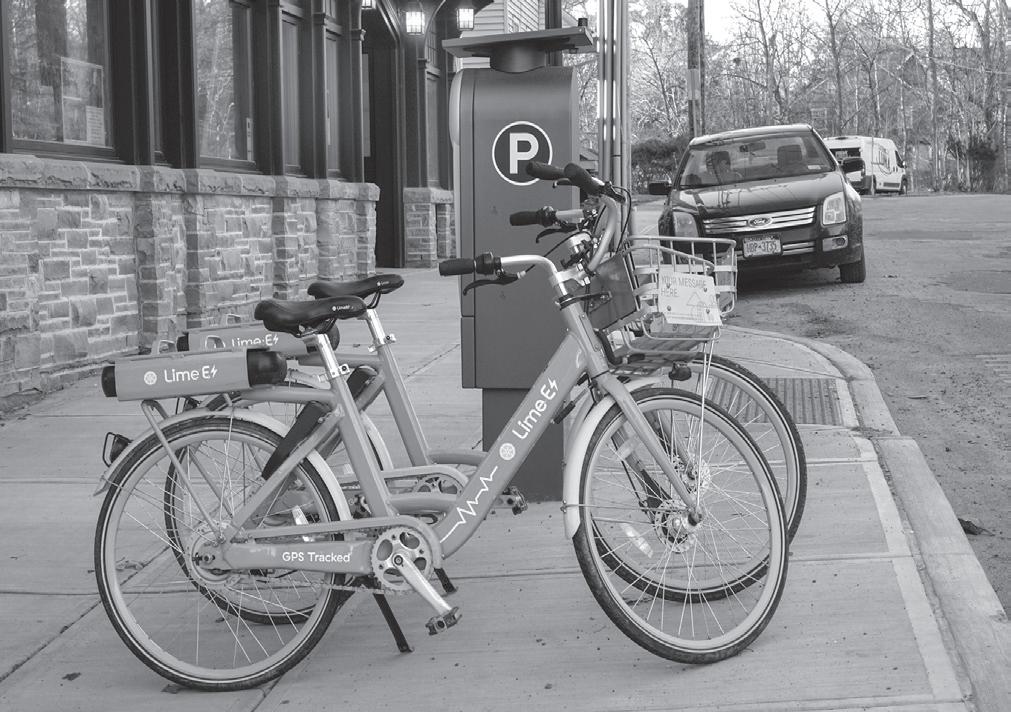
As the weather warms, a familiar flock emerges: LimeBike riders. The neongreen bicycles, among other bike-sharing options in Ithaca, were critiqued in a University press release Thursday.
“Unregulated e-bikes, e-scooters could turn opportunity into nightmare,” the statement title read.
Prof. Karan Girotra, operations, technology and innovation, said that shared scooters tend to garner riders who lack experience. Company strategies to promote e-scooters could “saturate cities,” he warned in the press release.
Last week, Lime, the company behind LimeBike, cleared
another hurdle in its path to bring e-scooters to Ithaca, following a proposal that raised concerns for rider safety.
Ithaca’s Mobility, Accessibility and Transportation committee voted to recommend a pilot program following a nearly 20-page report submitted by commissioners Sarah Barden and Megan Powers.
The commissioners recommended regulations, including a curfew ending at 9 p.m., a ban on use in pedestrian-only areas and a maximum speed capability of 15 miles per hour. Lime requires scooter users to be 18 years old.
The report suggested that scooter use could improve accessibility for employees,
As appropriations chair, Adeghe will preside over the next byline
By NICOLE ZHU Sun Assistant News Editor
Student Assembly minority students liaison Moriah Adeghe ’21 has been elected the next vice president of finance, the Assembly announced in an email Monday.
As V.P. of finance, Adeghe will chair the appropriations committee during a particularly important year.
Next semester, the committee will make decisions on the 2020-2022 byline funding cycle, including setting the Undergraduate Student Activity Fee, the mandatory fee that every undergraduate Cornell student pays. The committee also determines what proportion of the funds will be distributed to campus-wide organizations including the Student Activities Funding Commission, the Convocation Committee and ALANA Intercultural Board for the next two academic years.
Also elected were other members of the S.A. executive board, including current minority students liaison Colin Benedict ’21 as vice president of diversity and inclusion and current freshman representatives Valentina Xu ’22 and Indigo Pavlov ’22 as vice president of internal operations and vice president of external operations, respectively.
When Adeghe assumes her new position along with the rest of the new executive board on June 1, her main priority is to be “knowledgeable,” Adeghe told The Sun in a message.
First elected to the position of minority students liaison in a special election in February, Adeghe previously served on the Diversity and Inclusion and the Academic Policy Committees, and has centered her platform on helping financially disadvantaged students.
“My goal is to be as knowledgeable about all the orgs, their histories, their financial history, the SA bylaws, etc. because when a question is asked of me, I don’t want to not have an answer,” Adeghe said.
In the 2018-2019 academic year, the student activity fee for every undergraduate student was $234.00. Combined with Cornell’s current undergraduate enrollment of 15,182 students, the total income from student activity fee was a whopping $3,552,588.
Of that amount, nearly half goes to SAFC — the largest funder of non-byline student organizations on
By CATHERINE CHMIEL Sun Staff Writer
Her junior year, Tina He ’19 was tired of checking the gym schedule everyday. The process of searching through class times and availability felt tedious.
“I thought there has to be a better way to do this,” He said.
And so He, part of project team Cornell AppDev, became the project lead for student-made fitness app Uplift. Alongside her team members, He developed Uplift, designed to help Cornell students make staying healthy on campus enjoyable.
The new version to be launched includes a new habit-tracking feature — starting with something as simple as walking up the slope. Users can develop “streaks” when they maintain a habit, which can include physical fitness habits, such as cardio and strength, or mindfulness.
A launch event will be held on May 1 as part of The Straight Edge Pop-Up Series at Willard Straight Hall from 3 - 6 p.m. The event will feature outdoor yoga sessions, a demonstration of the app’s latest features and conversations between students interested in fitness.
“I thought there has to be a better way to do this.”
The team behind Uplift is working on the latest version of the app, which focuses exclusively on Cornell and includes new features that allow students build easy-to-achieve routines and to learn from top student fitness influencers on campus to manage their school-health balance.
The current version of the app allows students to look at the exercise class schedule and add classes to their favorites list. However, the app is currently limited to those with Cornell gym memberships.
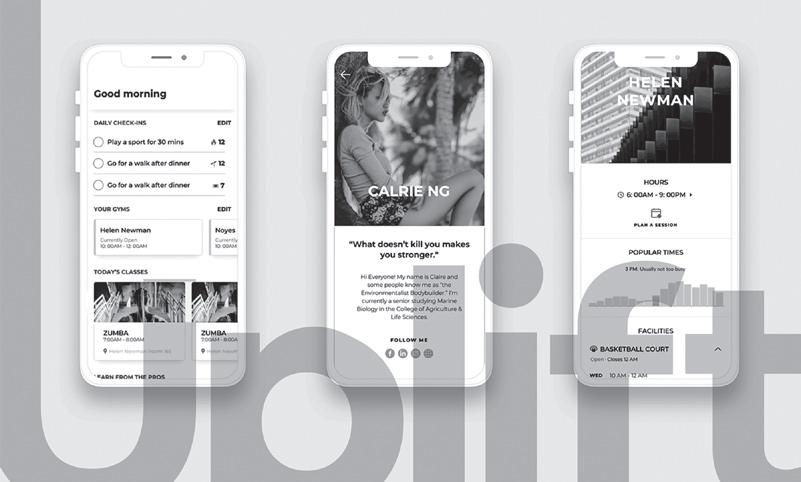
Uplift takes off | The new and improved fitness app is AppDev’s student developers’ second iteration.
Tina He ’19
It was a team effort that lead to the development of the app, and He attributed the design to Cornell AppDev. The group is an undergraduate project team which is dedicated to creating open-source applications that are available on the App Store and Google Play Store, according to their website.
The Uplift team is also creating an influencer community, whose members are referred to as Uplift Pros. These Pros are Cornell students that already have a large social media following and will share tips and “life hacks” about how they stay healthy on campus, He said.
Overall, the Uplift team wants to make staying healthy on campus easier for students — physically and mentally. By focusing on using small steps to get started, He believes that it is simple for any student to create new habits and become more active.
Although she is graduating this year, she hopes the project team will continue expanding the app’s features and possibly work to adapt its features for other college campuses.
Catherine Chmiel can be reached at cchmiel@cornellsun.com.
campus — which receives $98, or nearly 42 percent of every student’s activity fee, for a total of around $1,492,086.96. The second and third largest byline organizations, the Slope Day Programming Board and the Convocation Committee, receive $19.00 and $16.50 per student fee, for total budgets of $288,458 and $250,503, respectively.
“When a question is asked of me, I don’t want to not have an answer.”
Moriah Adeghe ’21
According to Adeghe, the appropriations committee consists of eight internally elected S.A. members and six community members, who can apply to be on the committee in the fall semester.
As chair of the appropriations committee, Adeghe will only vote in the case of a tie. Still, she hopes to influence the committee by promoting “diversity and inclusion as much possible.”
“When thinking about byline funding, I personally am thinking about how these orgs can benefit as many students as possible in order to promote equity,” Adeghe said.
The last funding cycle, which occurred in fall 2017 and was led by former S.A. V.P. of finance Gabe Kaufman ’18 , found itself the subject of multiple controversies after the committee voted to completely defund the Cornell Cinema, as The Sun previously reported.
The Cornell Cinema has not applied for funding during this year’s cycle, according to Adeghe.
As for a change in fee, Adeghe said an increase could be wise if used efficiently.
“Truly, since I am not voting most of these decisions lie in the hands of committee members,” said Adeghe. “But my personal philosophy is that if orgs are using the money that they have wisely and effectively and have plans to effectively use more money, then I don’t see an issue with an increase. But also keeping in mind that students are directly affected by the [Student Activities Fee] and that the fee maybe shouldn’t increase past a certain point.”
Nicole Zhu can be reached at nzhu@cornellsun.com.
By SOPHIE ARZUMANOV Sun Staff Writer
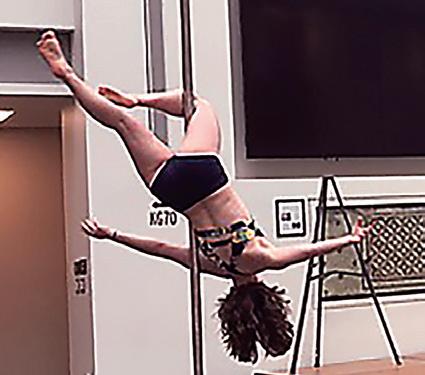
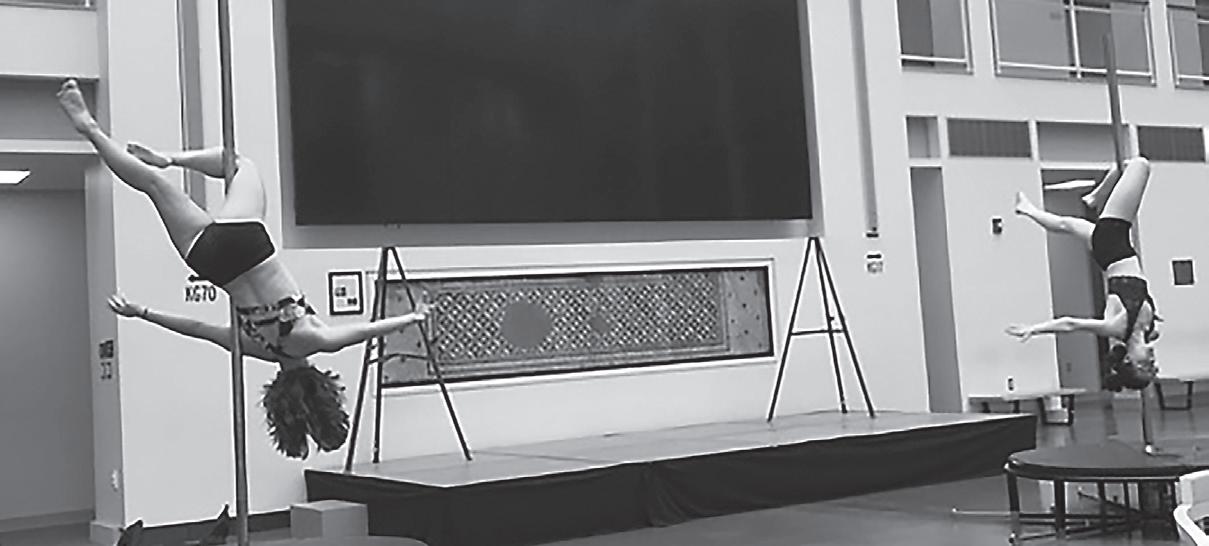
“I came for the pole and stayed for the posse.” These are the words of Veronica Wertz ’21, one of the fourteen students performing in Cornell Pole Posse’s first annual showcase this Friday.
This performance, proceeds from which will benefit Planned Parenthood, is the first of its kind on Cornell’s campus. In fact, Cornell Pole Posse, founded in 2005, is the first pole dancing club in the Ivy League, according to officer Zara Schreiber ’21.
“Pole Posse has always been a bit of an elusive club and I’m excited to get to share it with the larger Cornell community,” Schreiber told The Sun.
Wertz also spoke about her expe-
rience in the community. “The support all of the members give each other is incredible and is what makes my own personal experience in Pole Posse so great. I am not sure I would have continued without such great people surrounding me,” she said. According to Wertz, Pole Posse has had a deep personal impact on her, giving her more confidence and helping her become more body positive.
Anthony Ricketts ’19, spoke about his decision to join Pole Posse. “I originally was nervous about clambering about on a pole in minimal clothing while in front of strangers,” he admitted.
To read the rest of this story, visit cornellsun.com.
Sophie Arzumanov can be reached at sarzumanov@cornellsun.com.
By CAROLINE JOHNSON Sun Contributor
Award-winning author, poet, teacher and essayist Ladan Osman will share an evening of lyrical testimony on campus in A.D. White House at 5 p.m. on April 30.
Author of poetry collections Ordinary Heaven, Sillerman First Book Prize-winning The Kitchen-Dweller’s Testimony and a new work by the name of Exiles of Eden to be released May 7, Osman has a repertoire of work that is honest and powerful, said event coordinator Prof. Cristina Correa, English.
“A voice like Ladan’s, I think, tends to be a bit hidden by … other voices,” said Correa in a phone interview with The Sun. “I think what she’s doing on the page is very powerful, especially coming from a black woman in this country right now, an African immigrant voice, a Muslim voice, and also her attention to include visuals in her work.”
powerful on the page, but hearing it is a special kind of intensity rare in American poetry,” said Hutchinson in an email to The Sun.
The night will begin with an introduction by Prof. Ishion Ira Hutchinson, English. When Hutchinson first encountered Ladan’s work, it “took the top of [his] head off,” Hutchinson said.
While he said he was astounded while just reading her work, Hutchinson is looking forward to listening to Ladan read.
“A wonderful poet is here, that we are extremely fortunate to have her presence at this shifting moment,” Hutchinson said.

“The experience of hearing Ladan is singular and if it can be helped, should not be missed.”
WEED
Continued from page 1
alcohol and education about tobacco use, which have resulted in decreased consumption rates of these substances.
“Regulations can strongly impact how a drug is used and how it is abused,” Sharp said. “Should we go to legalization, regulations are very important. The devil will be in the details.”
safety programs in the School of Industrial and Labor Relations, outlined the problems that legalization of marijuana could pose to private employers who must decide when marijuana use would be considered an impediment to work.
“Should we go to legalization, regulations are very important. The devil will be in the details.”
Tompkins County Sheriff Derek Osborne expressed some concerns about the legalization of marijuana in regards to public safety and law enforcement capabilities — especially the potential for more impaired drivers on local roads, and the difficulties it could create for law enforcement.
“I see this as a really big mess for the workplace,” she said. “The science is not there enough to be able to do the kinds of measurements that we would like to see. How do we measure impairment? It’s a huge area we don’t know much about.”
Jim Sharp
However, William Klepack, medical director of the Tompkins County Health Department, pointed to several positives the legalization of marijuana could bring to the state.
Correa first met Osman in Chicago, after which they became close friends.
“I became a huge fan of her style and just her willingness to be honest as an artist,” Correa said. “I still find great inspiration in it.”
A hyper-visual and linguistically talented writer, according to Correra, Osman will come to campus to read her work and contemplate the question of testimony, while highlighting the problems of “race, gender, displacement, and colonialism,” according to the event description.
“The voice is immediate and
The event is intended to join a range of individuals together to contemplate questions of “whose testimony is valid?” and “whose testimony should be recorded?” as made possible by Correa and a range of sponsors who supported the coordination of this event, the description reads.
“I am most looking forward to looking out at the audience and seeing a lot of different kinds of people from the Cornell and Ithaca community gathering to support the elevation of her voice but also to learn from her,” Correa said. “It is really beneficial to all of us to keep inviting who are doing this kind of work into our spaces.”
The event begins at 5 p.m. on April 30 at the A.D. White House.
Caroline Johnson can be reached at cj374@cornellsun.com.

Unlike a breathalyzer test — which can immediately tell officers if a driver is under the influence of alcohol — no such test exists for marijuana intoxication, which requires a blood test, he said.
“The concern with that also is the blood test will show the person has THC in their system, but there’s no way to prove per se that the person is actually impaired at that time because THC is always going to be in their system if they’re a frequent user,” Osborne said.
Tompkins County District Attorney Matthew Van Houten also raised similar concerns regarding the ability of law enforcement to use marijuana as probable cause to further investigate a suspect.
“Usually if there’s a smell of marijuana, that is traditionally the basis to inquire whether the person is doing anything else illegal, and if marijuana use is legal … that will affect some ability to find other violations of the law,” he said.
Nellie Brown, director of workplace health and
The doctor expressed that legalization would make it harder for young people to access the drug, dosing could become more regulated and incarceration rates could decrease, for example.
“[Legalization] would set a regulatory framework for the growing wholesale and retail sales of THC. It would set up a process, most importantly, of citizen input to all important creations of rules and regulations,” he said.
While the question of the legalization of recreational marijuana seems to be off the table for the time being, several panelists expressed a belief that the legislation is inevitable.
“I don’t think this is a debate about whether or not this should happen. I think it’s coming regardless of what side of the issue we fall on, so as sheriff, what’s important to me is how we work with this to make sure that people aren’t impacted negatively,” Osborne said.
Vale Lewis can be reached at vlewis@cornellsun.com.
BIKES
Continued from page 3
which Prof. Nicholas Klein, city and regional planning, appeared to agree with.
“E-bikes and e-scooters are not going to solve every transportation problem for everyone, but they can be an additional item on the menu of transportation options in cities,” he said, according to the release.
The commission recommended an educational campaign to promote safe riding and data collection efforts to gauge use and accessibility. They also suggested that the city take advantage of GPS data from Lime to inform their long-term decisions.
Girotra warned against the danger of overwhelming the city with scooters.
“The strategy of many companies to simply saturate cities with a large number of scooters can lead to poor parking — a lack of regulation here can turn this opportunity into a nightmare,” his statement read.
The University has partnered with bikeshare companies before, including Zagster as part of the Big Red Bikes initiative that was launched in 2017.
Presently, the University warns against “tricky” state laws that prohibit operating e-bikes on public streets.
“Although buying, selling or renting an e-bike is legal, operating an e-bike on streets open for public use is NOT currently legal in New York State,” the Campus Sustainability Office website reads. “Until the New York State legislature passes a bill to legalize e-bikes for road use, a conflict with another vehicle or a pedestrian could subject you to significant penalties, whether or not you are at fault.”
“If you consistently ride lawfully, safely and respectfully, you may be able to ride an e-bike without inviting restrictive attention.”
Maryam Zafar can be reached at mzafar@cornellsun.com.
Thursday, May 2, 2019

ROBOTS
Continued from page 1
sidering the hilly landscape that would make robot delivery convenient.
Rodriguez is also planning on recruiting help from the same people that he hopes will use these services — students.
“Every single university that we go to will lead us to meet people that will want to work with us and the new robots will become better and better because we will be bringing in the best talent in the U.S. to bring the company together,” Rodriguez told The Sun.
The robots are semi-autonomous, with remote human mon-
itoring in place to keep track of the robots as they deliver food. Rodriguez is looking for students to help maintain and improve the robots on campus.
Barbosa and Kiwi are hoping to work with Cornell Dining, so that after students order food on the Kiwi app, a Kiwibot would pick up and deliver the food from a Cornell eatery.
Lopez-Barbosa also mentioned including local eateries in Collegetown.
These talks have yet to happen, but they plan to work with the university to implement and approve Kiwibots on campus.
Lopez-Barbosa imagines that discussions with the university will take some time, making the full
launch of Kiwibots unlikely until after fall 2019.
“When working with universities, there’s a lot of paperwork and they have to make sure that everything is safe,” Lopez-Barbosa told The Sun. “I think that the process might take longer … because of all the paperwork that has to happen.” Nonetheless, the company plans on moving forward with integrating the robots into Cornell. In a year, Kiwibots may be roaming Ho Plaza and delivering food up and down the slope.
Rochelle Li can be reached at rli@cornellsun.com.
ANU SUBRAMANIAM ’20 Editor in Chief
DAHLIA WILSON ’19
Business Manager
PARIS GHAZI ’21
Associate Editor
NATALIE FUNG ’20
Web Editor
SABRINA XIE ’21
Design Editor
NOAH HARRELSON ’21
Blogs
SHRIYA PERATI ’21
AMANDA H. CRONIN ’21
JOHNATHAN STIMPSON ’21
PETER BUONANNO ’21
ANYI CHENG ’21
SHIVANI SANGHANI ’20
CHRISTINA BULKELEY ’21
BEN PARKER ’22 Assistant Photography Editor
DANIEL MORAN ’21
ALICIA WANG ’21
DANA CHAN ’21
RYAN RICHARDSON ’21
ALISHA GUPTA ’20
SHRUTI JUNEJA ’20
AMOL RAJESH ’20
SARAH SKINNER ’21 Managing Editor
MEREDITH LIU ’20
Assistant Managing Editor
RAPHY GENDLER ’21
BORIS TSANG ’21
Editor
KRISCH ’21
ZHANG ’21
Editor SOPHIE REYNOLDS ’20
Editor
AMINA KILPATRICK ’21
Editor MARYAM ZAFAR ’21
WU ’21
SEITZ ’20
ZHU ’21
HENSHAW ’20
JIANG ’21 Assistant
JEREMY MARKUS ’22
WU ’21
WANG ’20
McDOWALL ’21
GIRISHA ARORA ’20
BREANNE FLEER ’20
Working on Today’s Sun
Ad Layout Dana Chan ’21
Production Deskers Krystal Yang ’21 Mei Ou ’22
News Deskers Nicole Zhu ’21 Maryam Zafar ’21
Design Deskers Megan Roche ’19 Krystal Yang ’21
Photography Desker Ben Parker ’22
Sports Desker Christina Bulkeley ’21
Night Desker Alex Hale ’21
by Reuben Bolling
It goes without saying that mental health is a major conversation on campus. Currently, some of the mental health services offered at Cornell include Let’s Talk and CAPS, which are offered at Cornell Health, and EARS, a student-run organization. While all are extremely important services, all are arguably “downstream” mental health services. Since they are “downstream,” they can only be utilized by individuals who are currently having to address their mental health issues. There are very few specific services in place that
knock down barriers for individuals on campus who otherwise wouldn’t be able to access or afford proper medical care.
Recently, the Student Health Benefits Advisory Committee has brought up two plans on how to increase accessibility of healthcare on campus. The first plan is to provide free transportation services to Cornell Health. With shuttle stops staggered around student-populated areas of Ithaca, the shuttle would provide a direct line to Cornell Health.
In healthcare, the “upstream” approach means considering the social, economic and environmental origins of mental health, not just the actual conditions.
attempt to dispel systems that can lead to mental health issues.
In moving forward, Cornell Health must improve its “downstream” services, but also start implementing programs that incorporate an “upstream” approach in mental health services. In healthcare, the “upstream” approach means considering the social, economic and environmental origins of mental health, not just the actual conditions. At Cornell, we must increase our upstream efforts, working to increase health and wellness programs. We should start with an informative program to properly equip everyone with the basic vocabulary and dialogue necessary to be proper mental health advocates for themselves. I suggest the implementation of a “Mental Health 101” program that will allow students to understand what mental health is, how can it be improved in stressful and unhealthy spaces, and how one could receive ample and necessary medical help. Mental Health 101 would be a pre-freshman summer online program, similar to AlcoholEdu. In addition, it could be modeled after a program found at one of our peer Ivy League schools. Harvard University recently implemented “Sleep 101,” an interactive module designed to increase student awareness of the health and performance implications of sleep and provide strategies on how to maintain a healthy sleep schedule.
A second idea is to build a Cornell Health satellite on North Campus. This plan is ineffective for two reasons. First, creating a proper space that has all the necessary medical equipment would cost an exorbitant amount. Just the renovations recently done to Cornell Health cost more than $55 million. The cost of building and furnishing a new satellite campus would place an unnecessary financial burden on students. Staffing is another major concern. Considering Cornell’s location, attracting top talent is a difficult task already for Cornell Health, and maintaining a full staff even more so. Properly staffing Cornell Health and a North Campus satellite makes the initiative unfeasible. It would only hurt the quality of care provided. The North Campus satellite would actually decentralize the medical system in place. Any additional resources should be allocated to a more upstream approach. This is why the shuttle system
Increasing accessibility is vital, for with greater access comes greater utilization of health services. With greater utilization, individuals are more proactive in getting to Cornell Health.
would work best. This would centralize and build on the existing structure in place. Increasing accessibility is vital, for with greater access comes greater utilization of health services. With greater utilization, individuals are more proactive in getting to Cornell Health and getting the medical services that they need.
We need to work with the system we have in place. Major issues currently include long wait times, the lack of diversity in the medical staff, and ensuring that people are able to receive medical attention within a reasonable window of time. These are issues that are receiving top priority from student organizations, task forces and health committees across campus. It is increasingly more important that as we start to address the downstream issues of Cornell Health, we also start heading upstream when creating solutions. If we take a holistic approach and focus on the full spectrum from “upstream” to “downstream,” we can reach a wider audience and ensure that people are receiving the care that they need from the beginning. 137th
Another semi-upstream approach would be increasing the accessibility of Cornell Health. As demonstrated, the recent renovation of Cornell Health increased the amount of health services provided. The centralization of these different health services drove a significant increase in student usage of these services. Likewise, while it imposes a financial burden, the newly-implemented Student Health Fee reduces outof-pocket charges to just a $10 copay for most health services. By increasing accessibility and reducing out-of-pocket charges, Cornell Health has started to
Nick
is a sophomore in the College of Agriculture and Life Sciences. Comments may be sent to opinion@cornellsun.com.
Moving from country to country while growing up, I learned to quickly adapt to new environments. I grasped how to approach people from different cultures and backgrounds and especially how to find common ground. Along the way, I strived to make myself polite and agreeable so that I would be able to fit in. Yet, this need to adjust and conform compromised my sense of self. I was molding who I was to correspond with others’ expectations of who I am meant to be rather than letting myself just be me.
There were times in my last three years at Cornell when I was content being surrounded by genuinely good company and moments when I wished I could redo everything. Two words particularly resonated from my recent contemplation: people and criticism. I would consider myself a “people person,” as I enjoy getting to know people and try to see the good in everyone even if I do not necessarily agree with them. I also tend to be critical of myself to the point where others’ disapproval has directly affected me. One of the hardest things I’ve been grappling
This need to adjust and conform compromised my sense of self. I was molding who I was to correspond with others’ expectations of who I am meant to be rather than letting myself just be me.
with this semester is situations where these two key features — people and criticism — clash. My responsiveness to both people and criticism has forced me to be in a place of discomfort, of confronting how to be disliked.
In a cutthroat environment like Cornell where some students are ready to sabotage others for grades and
internships, even the smallest mistakes don’t go unnoticed. I have learned that it is just impossible to not be disliked because even the smallest mistakes could override all other favors and good that I had done. It took me a while to realize that no matter what I do, certain people would disapprove of me regardless. It could be my non-confrontational personality, the way I talk, or even my hair that caused this disapproval. I just couldn’t seem to face the uneasy sensation of being disliked. Discovering that people who I perceived to be pleasant were talking behind my back was one of the most nerve-wracking experiences I had.
For the most part, my non-confrontational personality has worked in my favor as I strive to make peace with those I don’t particularly agree with. But the more involved I became in my community, the more I have had to deal with situations where my aversion to being disliked has come to my disadvantage. Out of a constant desire for approval, there were times when I was unable to say no to those persistently asking for class notes, and moments where I felt uncomfortable truly expressing myself out of a fear of being shunned. I didn’t express discontent at those who, knowing that I would do favors, constantly asked for them and never reciprocated.

principles. Most importantly, those undue critics happened to be mere acquaintances who barely knew who I was. And in the course of struggling to be accepted by everyone, I was actually becoming more isolated.
I realized that in the process of striving not to be
In a cutthroat environment like Cornell where some sabotage others for grades and internships, even the smallest mistakes don’t go unnoticed.
I would be unduly receptive to others’ criticism and reflect on what I had done wrong even when I knew deep down that other people did not put much thought into their judgments. When a person with whom I never had a longer than 30-minute conversation with labelled me as fake, I ruminated on all the possible factors that may have caused offense to them. Was my demeanor excessively polite? Did I smile too much? I continued to let others’ disapproval occupy my mind instead of standing up for myself and believing in my
disliked, I sacrificed my own happiness and some degree of my true sense of self, when really I should be living my life for myself and not for others. Three years since I wrote about how I would defy boundaries and question state of affairs in my Common Application, I inordinately questioned myself more than the matters around me. I disregarded the importance of self-determination, letting this huge campus community overwhelm me. With one year left until the end of my time at Cornell as an undergrad, I am learning to let go and trivialize these people in my life who bring negative energy to whatever I do. I simply cannot please everyone and let minor acquaintances impact me so much. My worth is much greater than others’ perception of me, and I should never let others make me feel otherwise.
DongYeon (Margaret) Lee is a junior in the School of Industrial and Labor Relations. She can be reached at margaretlee@cornellsun.com. Here, There and Everywhere appears alternate Tuesdays this semester.
My senior year of college has been a whole lot of “lasts” that happened without me even realizing them. I slammed down my pencil and released a big sigh as I submitted my last prelim without noting it was my last. My last Ithaca snow — dread fully late into spring — fell onto my unsuspecting head without
Week after week, I was an advice column directed at myself.
any consideration for how this would never happen again. When would be my last time crying in office hours? My last all-nighter, making ramen and a softboiled egg at 3:00 a.m.? I didn’t realize the finality of any of these things until it was too late. They filed away in my brain as the tiny, patterned moments that made up these big four years.
But I know this is my last column. It’s happening right before my eyes, and it’s so hard to know what to say.
deadlines that I used to deal with the world around me. Week after week, I was an advice column directed at myself. I wrote exactly what I needed to hear. I am most grateful for those people that reached out to me to thank me — to tell me that my words were what they needed to hear, too. These tender points of contact made me feel connected to this column and to this campus in a very real and rare way. They reminded me of the humanness of writing, the way it can create and foster gratitude or shine a light on commonalities that we all thought were our own peculiarities.
orders a cappuccino from me at Temple of Zeus. Sometimes it is when the rain stops just as my class gets out on a day when I forgot my umbrella. Once it was a stranger who touched my shoulder as they passed me on the slope as I took one of the worst phone calls of my life. So many days I felt so alone here, like I was in the wrong body, in the wrong place, doing the wrong thing. But that’s what makes those moments of shared experience, perfect timing or welcome space feel so special — they come when and where we least expect them.
I believe that to truly love a place, you really only need a few tender points of contact: memories, places or people that make you feel like you belong.
Over these past couple of years, my opinion columns have been biweekly
Receiving an email to my Sun email address with the words “Thank You” in the subject line took me by the shoulders and shook me every time. I sometimes have convinced myself that no one reads this column, or that the only people who do just want to argue or that these words don’t mean anything to anyone except for me. Thank you to every person who took a minute to tell me, even if just this once, that I was wrong. Going through to reread these emails got me thinking about every moment I’ve had like this in the past four years, when unexpected intimacy sprung like a hand growing straight out of the ground. Sometimes intimacy is a place, like that grassy spot by Beebe lake that always welcomes me back. Sometimes it is a nod from that professor who always
I believe that to truly love a place, you really only need a few tender points of contact: memories, places or people that make you feel like you belong. In Ithaca, I have kept my eyes and ears open for the moments that tell me “I’m so happy that you’re here.” I will always remember quiet nights on the Stewart Ave. bridge, walking home alone and hearing rushing water underneath my wobbly, high-heeled feet. I will always remember early hours in my Donlon dorm room, laughing and crying with my roommate, eating takeout Pad Thai while trying to concentrate on my flashcards. I will always remember sharing a good cry during Orientation Week with someone I haven’t seen since. These are the times when my feet have felt fully on the ground — where I felt like I was in exactly the right place, in the right body,
doing the right thing. Having this space in The Sun to share my fears and ideas and life has given me so much tender contact with the student body. These columns allowed me to cultivate a sense of community during these four years so far from home. Through private notes or emails or a quick conversation about what I wrote, these little intimacies made my life on this campus built on a secluded hill feel less treacherous, even if just until the scene passed. I’ve realized that when you reach out with a soft, hopeful hand to the world asking for reassurance, the world
Through private notes or emails or a quick conversation about what I wrote, these little intimacies made my life on this campus built on a secluded hill feel less treacherous, even if just until the scene passed.
will offer all that it can. And for every moment that I felt connected to Cornell, I am so grateful. Ithaca has been such forgiving ground to fall back on, and I will miss it always.
Sarah Lieberman is a senior in the College of Arts and Sciences. She can be reached at slieberman@cornellsun.com. Blueberries for Sal runs every other Tuesday this semester.
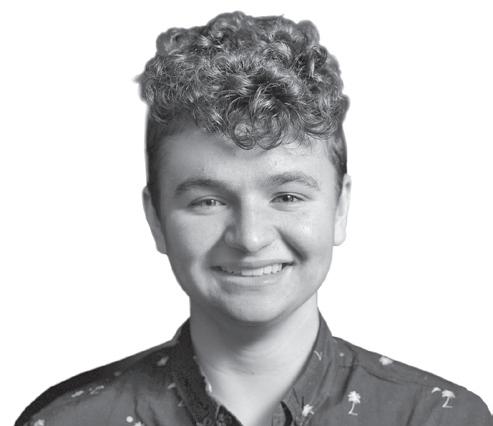
As if I needed another reason to complain about Earth Day, Lil Dicky came to the rescue with the track “Earth” just in time to virtue signal our appreciation for the foundation of our continued existence.
It’s pretty cynical, and arguably hypocritical, for me to gripe about Earth Day when the other 364 days of the year I’m griping about how complacent we are as a society about environmental and climate justice issues. Maybe I should accept Earth Day and people’s celebration of it as a good faith effort to be conscious of the human-environment relationship, but I can’t help feeling like it’s not enough.
Like the whole plastic straw hullaballoo over the past year, a lot of the Earth Day activities feel legitimately well-intentioned but lack the reflection, nuance and scale apt to address current environmental and climate concerns. And while I realize the “easy fixes” are successful, the (maybe hopelessly) optimistic part of me thinks there has to be more effective and wide-reaching things to be spending all this time on.
Earth,” I don’t think a “I’m an elephant, I got junk in my trunk” is what’s going to motivate real change.
A few almost elicited a chuckle from me, but I was more stunned by the weirdness than endeared by the humor. I assume some watchers find the nonsense and crudeness of the comments by the different animals funny, but I’m unimpressed.
What did warm up a bit to the song was taking a look around the informational website published in association with it, WeLoveTheEarth. org. Lil Dicky explains climate change, plastic waste, and other environmental concerns using simple language and an engaging tone. It’s imprecise and some of the discussion is framed in ways that I’d like to critique, but I recognize that it’s strategically flippant and topical. Its intended audience is not someone whose major, job and extracurriculars revolve around climate change, and that’s unequivocally a good thing.
Lil Dicky decided his contribution was going to be a hit song about it all. With tons of featured artists, a slick CGI fantasy video and a catchy hook, and he set off to make “Earth.”
Before I get into this, I have to say that I could have lived my entire life without traveling in animation through the computer generated anus of a baboon. But now, that’s something I’ve experienced through … uh … art … I guess.
There’s an interesting juxtaposition between the vibrant, high quality video and the outlandish storytelling. Line-by-line, the song moves from organism to organism without any of them really saying anything about why the Earth or our place in it might actually matter. Similar to other Earth Day disappointments, it’s diminutive to the concerns and responses to climate and environmental issues while propping up charismatic animals, just this time with an extra heap of irreverence. Of all of the actual reasons to say “We love the
Resident Bad Media Critic
But, while “Earth” has over 68 million views on YouTube, the videos where Lil Dicky gives a crash course on climate change have done pitifully badly. The first video has almost 30,000 views, which doesn’t suck, but all of the others hover around 5,000 views. While “Earth” was so wide-reaching, the momentum didn’t flop over to a website that also took quite a bit of time and effort.
I’m grateful that someone put all of the time and effort into an entertaining, social and culturally relevant work that leads people to information about environmental and climate problems. But with the fumbled handoff from song to information, I’m skeptical it had a positive impact. I think it’s worth another shot, and hopefully next time there’ll be fewer ludicrous talking animals.
Katie Sims is a junior in the College of Agriculture and Life Sciences. She can be reached at ksims@cornellsun.com. Resident Bad Media Critic runs alternate Tuesdays this semester.


PETER BUONANNO SUN ARTS EDITOR
Officials from Dentsu Aegis Network, one of the festival’s main investors, announced Monday that Woodstock 50, which was set to take place in August, has been cancelled. The festival was slated to be hosted in Watkins Glen, N.Y.
In an interview with The New York Times, Woodstock founder Michael Lang said that Dentsu does “not have the right to unilaterally cancel the festival.”
Further, a Woodstock 50 representative told Vulture Monday afternoon that “Woodstock 50 is currently on a call with Dentsu and Woodstock 50 vehemently denies the cancellation of the festival and will be seeking legal remedy to the comments.”
However, according to a Billboard article published Monday, “reps for the festival say concerns about the capacity of the festival, site readiness and permitting issues led to the cancellation of the commemorative event.”
Woodstock 50 was originally announced in January as a 50th anniversary festival to honor Woodstock ’69. Woodstock 50 was set to be held at the Watkins Glen Speedway from August 16 through August 18. The original festival had 400,000 attendees.
Miley Cyrus, Jay-Z, Chance the Rapper and The Killers were among the artists set to perform at the commemorative festival. Santana, who performed at Woodstock ’69, was also booked on the festival ticket.
Prior to the cancellation, The Black Keys, one of the festival headliners, had backed out due to scheduling conflicts. Ticket sales had also already been postponed on April 19 from the original launch date of April 22.
In a press conference Monday, Schuyler County Administrator Tim O’Hearn discussed how the cancellation took everyone by surprise: “at this point, unless we hear otherwise, our assumption is the event has been cancelled … we certainly share in their disappointment.” O’Hearn also commented on how the loss of the festival will prove to be an large missed economic opportunity.
According to the Poughkeepsie Journal, “on April 21, O’Hearn said the state Department of Health was reviewing Woodstock 50’s permit application, which he said was submitted April 15 … that permit application was still pending on Friday, April 26.”
Dentsu and Woodstock 50 have not returned The Sun’s request for comment on the festival’s cancellation.
Peter Buonanno is a sophomore in the College of Arts and Sciences. He currently serves as the arts and entertainment editor on Te Sun’s editorial board. He can be reached at arts@cornellsun.com.
By GAYATRI SITARAMAN Sun Contributor
Global Big Day is birding’s biggest day of the year. Every year on a Saturday in May, the Cornell Lab of Ornithology organizes the 24-hour birding event, in which anyone in the world can log bird sightings into global database eBird. This year’s event will take place on May 4.
“Last year, more than 30,000 people actually contributed sightings on the day itself, from over 170 countriess,”
Ian Davies, eBird project coordinator, said.
Davies explained that Global Big Day was created to have “an event that would allow bird lovers around the world to come together and note down what they see in a way that’s fun for them, and also benefits research and conservation.”
“Global Big Day began in 2015 … and for the past four years has progressively set the new world record for the most number of species of birds seen in a single day in the world,” Davies continued.
This year for Big Day, the Lab of Ornithology is sending their competitive birding team “Team Sapsucker” to the Gulf of Mexico “specifically to highlight the critical importance of that region to migratory birds,” Davies said.
“Using eBird and weather data, we’ve been able to understand that a very large percentage of the birds that migrate through North America are using the gulf, and are really reliant on a lot of the coastal habitats that are at risk from development as well as storms that are happening with increasing frequency due to climate change,” Davies said.
Davies described bird migration as “one of the most amazing spectacles of the natural world.”
“It’s just amazing to watch these birds … hundreds, thousands, tens of thousands of individuals that have just crossed the Gulf of Mexico that might weigh as much as a nickel … unbelievably small and seemingly delicate birds that are doing these journeys that we can’t even conceive of,” he said.
According to Davies, bird conservation is of utmost importance. Davies stressed that “birds are an incredi-
ble way to understand the world around us — pretty much everyone’s heard the phrase ‘canary in the coal mine’ and it’s really just a testament to the fact that not just in mines but around the world birds … can be an early warning system for things that might affect us as humans.”
Davies believes that Big Day, and eBird are key tools in bird conservation and research.
“Global Big Day is kind of a one day event that is what eBird is the entire year,” Davies said.
“What we see that as is democratization of conservation … anybody in the world can log their sightings on big day or any other day and then that information can be used by researchers around the world to better spend conservation dollars, more effectively preserve land, understand where species might be declining in specific parts of their range,” Davies said.
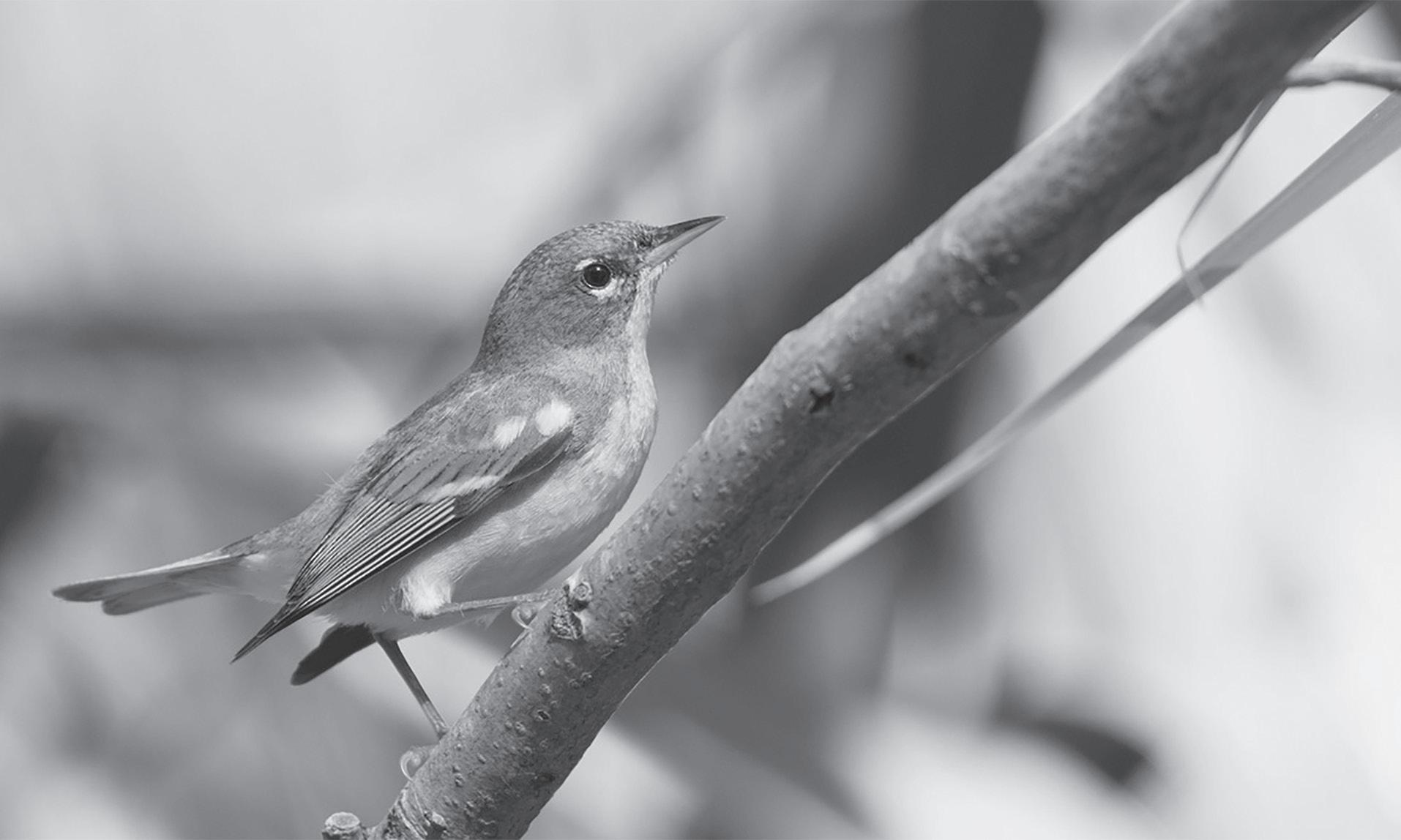
happens, and when it happens … we’re then able to better mitigate real conservation threats like lighted building in cities which can actually contribute to killing … potentially billions of birds every year,” Davies said.
The day also helps to encourage interest in birding itself, which Davies described as “magical.”
Part of the day includes raising money, which goes to fund the Lab of Ornithology as well as other projects, Davies said. These include “everything from eBird, and projects like Merlin Bird ID, that provide resources to folks who are learning about birds for the first time, to on the ground conservation efforts in Central and South America or in our backyard; land trusts and parks around the US,” Davies said.
Other prominent research being done in the field of bird conservation by the Cornell Lab of Ornithology includes research on bird deaths caused by skyscrapers.
“By understanding the volume of birds that are migrating through the U.S. every spring and fall, and where that
“I love the exploration of the unknown … there’s always this element of chance … where you could see something truly special, something that has never been seen at that place or that region before,” Davies said.
He encourages others too, to start birding and appreciating the natural world. “You can really make discoveries in your own backyard, your own local park, in a way that is both fun personally, and can also have an impact beyond just yourself,” Davies said.
Global Big Day will take place May 4.
Gayatri Sitaraman can be reached at gs573@cornell.edu.
By TAMARA KAMIS and TUCKER HWANG Sun Staff Writers
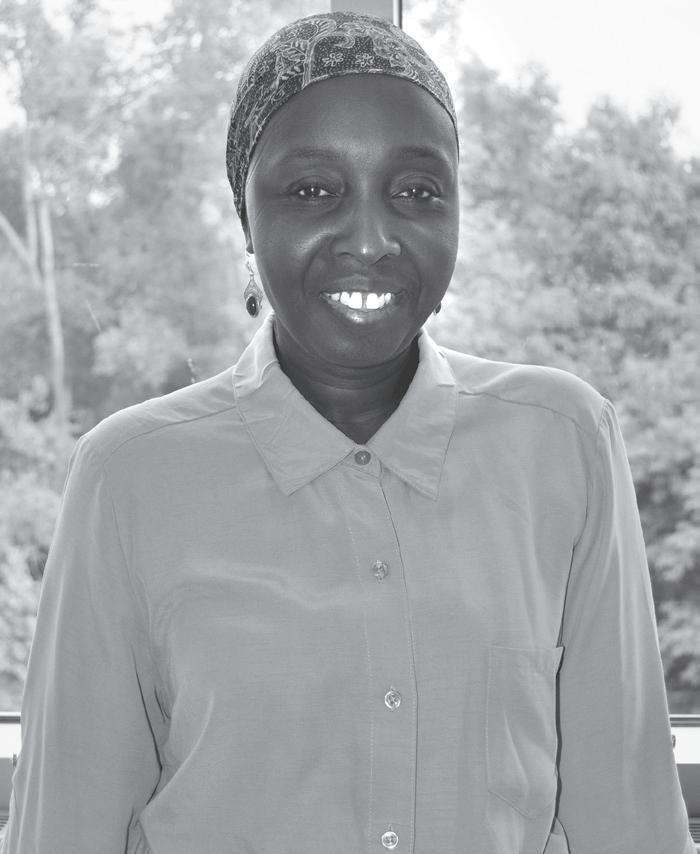
What do you think when you hear the word “veterinarian”? While fighting epidemics may not be what immediately comes to mind, veterinarians are a key part of global health. Their expertise is needed to curb the tide of zoonotic pathogens, diseases which can be transmitted from animals to humans. The work of Dr. Jarra Jagne, a veterinarian and senior extension associate at the Cornell Veterinary School, illustrates the contribution veterinarians
make to public health.
Bird flu, or H5N1, is a potentially deadly zoonotic disease spread to people by birds. During the resurgence of the H5N1 avian influenza, Jagne was a member of the avian influenza response unit of the Food and Agricultural Organization, part of the United Nations.
“We would go to a country and work with the government, work with the veterinarians, do some training and train their veterinarians in how to approach disease control,” Jagne told The Sun.
In addition to training veterinarians, Jagne assisted in affected countries that lacked basic diagnostic infrastructure.
“We helped organize testing [of samples], especially because many of these countries did not have the tests needed to confirm the type of avian influenza they were dealing with,” she said.
As a consultant for the response unit, she helped mitigate this issue by working with local veterinarians and governments to develop standard operating procedures for safely sending samples to labs at the World Health Organization, where they could be analyzed.
Later, Jagne took her international veterinary experience to the United States Agency for International Development.
As a part of a USAID-funded team called the STOP Avian Influenza Project, she and her colleagues helped countries
develop emergency response plans to prevent and contain future outbreaks.
Jagne said that she and her colleagues at the U.N. and at USAID had to be sensitive to the cultures and governments of the countries they worked in, describing the balance between diplomacy and science as “like trying to cross on a very narrow bridge, swaying on either side.”
According to Jagne, sometimes countries bought vaccines but due to organizational and often bureaucratic challenges, did not utilize them correctly. Some countries used too little of the vaccine; in Egypt, where a multiple dose vaccine would have increased efficacy, poultry were often only given the first dose.
Even if recommended disease control strategies approved by international organizations like the U.N. and USAID were being implemented, these strategies often clashed with local cultures.
“In Thailand, in the Buddhist tradition, just going and killing an animal without any reason is not done,” said Jagne referring to the FAO’s recommendation to fully depopulate farms with infected birds.
Jagne also expressed economic concerns about depopulation. If you remove all of the chickens from a farm, “what are you doing to people’s livelihoods?” Jagne said.
Despite the controversies, the Thai government tried to balance the need for
epidemic control and economic stability by compensating farmers for poultry they were required to destroy.
And the ever-present question: If another avian influenza epidemic outbreak occurs, how prepared are organizations to handle the burden? The answer, according to Jagne, is complicated.
In the face of epidemics, protecting the health of the public relies not only on scientific research, also on international healthcare structures that investigate and respond to epidemics. A framework for these structures that emerged during the avian influenza epidemic was “One Health” — defined by the CDC as the concept that “the health of people is connected to the health of animals and the environment.”
But the “One Health” initiative doesn’t just apply to a link between doctors and veterinarians. It reflects the need for a global effort to combat epidemics that are as far-reaching as zoonotic diseases. Dr. Jagne firmly believes it is this force, a system of collaboration spanning not just countries but continents that will better prepare the world for the next epidemic.
Tamara Kamis can be reached at tkamis@ cornellsun.com.
Tucker Hwang can be reached at thwang@ cornellsun.com.

Fill in the empty cells, one number in each, so that each column, row, and region contains the numbers 1-9 exactly once. Each number in the solution therefore occurs only once in each of the three “directions,” hence the “single numbers” implied by the puzzle’s name. (Rules from wikipedia.org/wiki/ Sudoku)

by

2
Ithaca
5
NORTH CAMPUS Studio and 3 bedrooms Available 2019/2020 Novarr-Mackesey Property Management office@ithacastudentapartments.com ithacastudentapartments.com 607-277-1234
COLLEGE AVENUE 1 BEDROOMS 607-272-3389 avramisrentals@aol.com
3 BEDROOM SOUTH HILL Large apt, washer/dryer furnished. $550 pp 607-272-3389
1-Bedroom Apt
Downtown
Available June 1 (or earlier)
Ideal for Grads or Staff. Lovely one bedroom second floor apartment. Downtown on Cascadilla St. near N. Albany St. Carpeted bedroom and living room (with rustic real wood paneled walls), full bath, kitchen. Bus line in front of house that goes to Commons, then on to Tower Rd. on Cornell Campus. Private porch. $890 plus utilities, available June 1. (anytime after 4/15) NO undergrads, no dogs, no smokers, references. For info and appointments email gm27@cornell.edu or text 607-280-4024.
1 Bedroom Apartments
Bright nice and clean, Great location Linden Ave $895 to $950 plus electricity Call 607-237-2541 or 607-227-2535
2019-2020
Modern 3, & 4 Bdrm Apts. Furnished, non coin laundry, parking, internet. 607-273-8576.
COOK ST. Furnished House for 5-7 persons, 10mo. Lease for 2019-2020 Text or call Tracy at TLC Property Mgmt Corp 607-379-2776
==One Month FREE Rent!== Furnished 3 Bedroom Collegetown Apartments PARKING, LAUNDRY, UTILITIES! (607)273-7368 www.WestShoreApts.com
Now Renting for 2019-2020 3-7 Bedroom Apartments All locations. Contact us today or visit our website: certifiedpropertiesinc.com Certified Properties of TC Inc 273-1669
Downtown / Fall Creek
Renovated 3 Bedroom Grad student apartment Walk to everything $1950 plus utilities 607-592-0475
Dolph Schluter Professor and Canada Research Chair in Evolution, University
of British Columbia
Divergence
Monday,
Apartments INSPIRED LIVING TAILORED TO YOUR SUCCESS
24-Hour Fitness Center
Shuttle Bus Service to Campus Study Rooms w/ Expansive Views
Apartments Available NOW, Spring 2019 & 2019/2020 Novarr- Mackesey Property Management collegetownterraceithaca.com office@ithacastudentapartments.com 607-277-1234
ENT
2019-2020 Upper Eddy St. House for 5 to 7 People Furnished. Internet. Laundry. Semester or 10 month lease. 607-273-8576
Linden Ave. 5 Bedroom House
Available June 2019. $900 per bedroom. Parking included. 607-327-2927
29 S UMMER S UBLET
1 BEDROOM
JUNE 1, 2019AUGUST 14, 2019 114 Summit Ave. Ithaca, NY “The Lux” 949-395-7034
By SMITA NALLURI Sun Staff Writer
After dropping its first game 10-5 on Saturday, the Red rallied back to take games two and three 4-0 and 4-3 to claim the series against Princeton.
Cornell (10-32, 5-13 Ivy League) made some crucial adjustments after its first game of the weekend to defeat Princeton (14-24, 10-8 Ivy League).
“The biggest adjustment was preventing the big innings that we gave up in game one,” said assistant coach Janet Maguire. “Our pitchers were able to work their way out a few times with runners in scoring position to give our offense a chance.”
Junior pitcher Katie Lew threw in games two and three to lead the Red to victory.
“Katie Lew really stepped up for us in the circle and earned both wins,” Maguire said. “She went the distance in game two on Saturday, giving up only two earned runs and throwing six scoreless innings. She then came back to close game three on Sunday and put up three more scoreless innings. It was definitely her best back-to-back performances.”
Junior Bridgette Rooney also came in clutch for the Red in game three, hitting a walk-off home run in the seventh inning to give Cornell the win.
“[Rooney’s] discipline at the plate makes her a tough out and she is always a threat with the long ball,” Maguire said. “Bridgette has really matured as a hitter this year and that maturity came through in this at bat. She was 0-9 in the series up to this point. But she looked stronger with each at-bat and remained confident in her approach. After the game, she said ‘the ball just looked bigger and bigger with each at-bat.’ What an exciting moment for her and the team.”
Sunday’s match also marked the last time senior Olivia Lam would play at Nieman-Robison Field.
“We are appreciative of Olivia’s commitment to the program,” Maguire said. “She had to overcome several injuries throughout her career. She put together a very strong sophomore season highlighted by her Second-Team All-Ivy selection. Despite her injuries and limited innings, she always found a way to contribute. She was invaluable catching in the bullpen and encouraging and supporting our pitching staff.”
The Red will close out its season with a four-game road stretch starting with a midweek match-up against Syracuse (20-28, 8-13 ACC) on Wednesday at 4 pm. Before heading to Cambridge to take on the Harvard Crimson (20-17, 13-5 Ivy League) on Saturday and Sunday.
“We have played some of our best softball over the past week,” Maguire said. “We want to keep learning as we head down the stretch and finish the season strong.”
Smita Nalluri can be reached at snalluri@cornellsun.com.
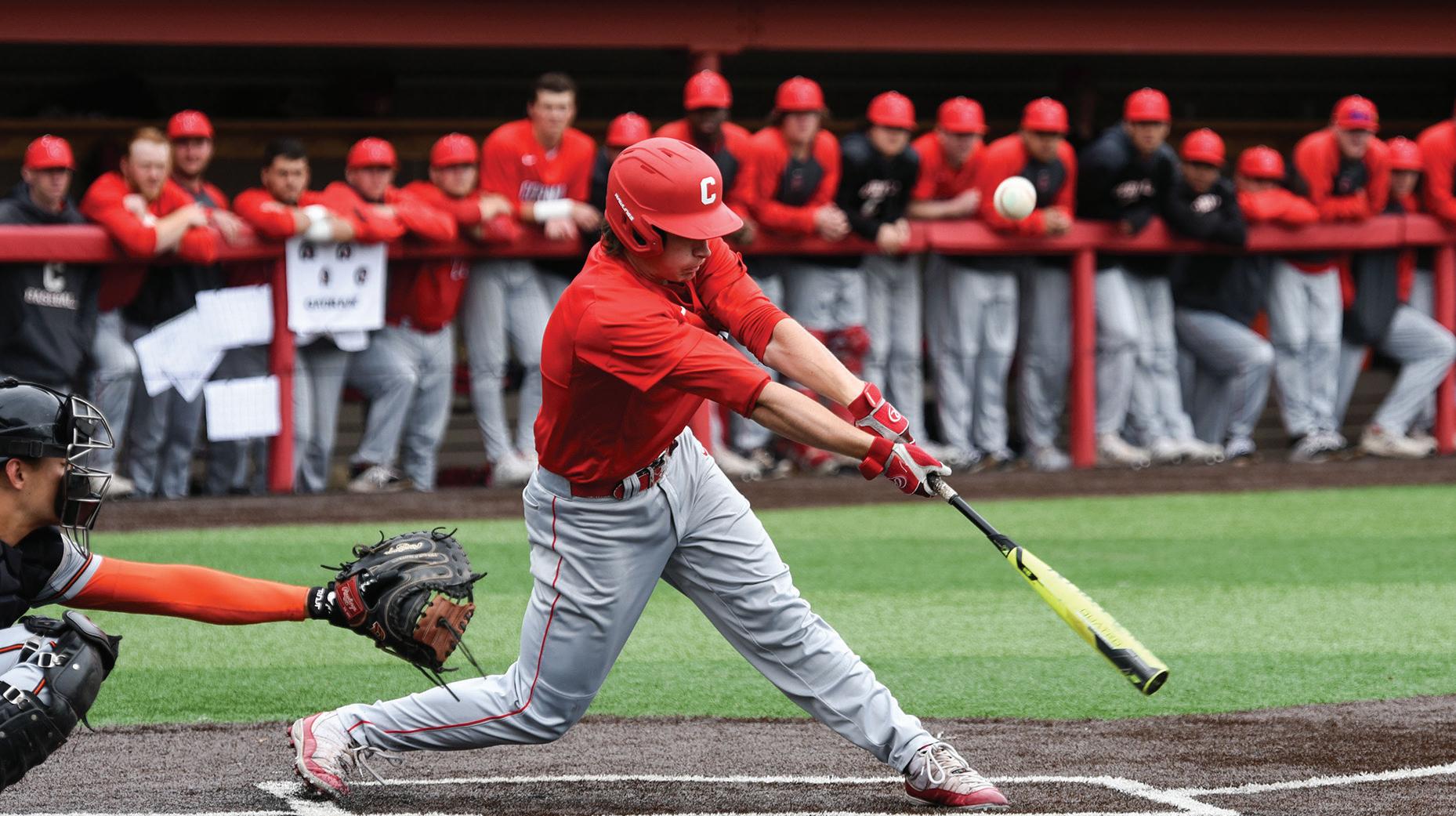
Simoneit homered — for the first time in the weekend — to left-center in the bottom of the first inning.
On the mound for the Red, freshman Jon Zacharias got the nod for his third start of the season. Zacharias threw for four innings with three strikeouts and limited Penn to three runs. Lights-out contributions from juniors Andrew Ellison and John Natoli prevented the Quakers from tacking on any more runs.
Up until the ninth inning, the Red trailed Penn by one. With one out, Carnegie ripped a hit down the left side and Flematti followed suit with a single to left field. After Penn’s
The three seniors in the lineup on senior day batted in the leadoff, two and three spots, combining for six hits, two walks and five runs for the Red.
pitching change with the intention of preventing the tying and go-ahead runs on base from scoring, freshman Niko Lillios pinch-ran for Flematti. Now with two outs, Saks came in clutch with his second hit of the game and third hit of the day in the form of a triple that brought in the two victory-earning runs for the Red.
April 28 marked the rubber game of the series and the last home game of the 2019 season.
Down to its last out and facing a two-run deficit in the bottom of the ninth inning on its senior day, Cornell baseball’s final home game looked lost. Then, with a full count, senior catcher Will Simoneit stepped back in the batter’s box and sent the baseball over Hoy Field’s left-field wall.
With men on first and second, the home run was a walkoff — Cornell took the game over Penn, 8-7.
Earlier in the weekend, the doubleheader on Saturday started in Penn’s favor thanks to the Quakers’ six runs over Cornell’s two in game one, but the Red turned things around quickly after to earn the split with a narrow 4-3 victory.
That 8-7 walk-off win over Penn the next day earned the Red its first series win of the season.
The Red got the ball rolling early in game one as
Cornell put up another run in the next inning when junior infielder Matt Collins, who had taken an extra base off of a Penn throwing error, was knocked in by a sacrifice fly hit by classmate Alex Carnegie.
After Penn starting pitcher Christian Scafidi got off to a shaky start, allowing two runs early in the game, he shut out the Red for the remaining seven innings. Scafidi pitched a complete game, striking out eight batters and allowing just three more hits after the two that created scoring plays.
More Cornell batters provided solid hits in game two, notably freshman catcher Austin Flematti who homered in the bottom of the second inning to get the Red on the scoreboard first. The Red’s bats quieted for a bit until the one-two combination of seniors Adam Saks and Josh Ardnt secured another run for the Red.
By FAITH FISHER Sun Staff Writer
A loss this weekend against Ivy foe Columbia marked the end of men’s tennis’ season. The 4-2 loss against the L ions not only deprived the Red of an Ivy League title but also ultimately precluded the team from earning a spot in the NCAA tournament.
“I think both teams knew what was at stake,” head coach Silviu Tanasoiu said. “Every person on the court knew what we were playing for and, despite the outcome, the quality of tennis was extremely high.”
The Lions entered the match on Saturday with a 7-match winning streak and an undefeated Ivy record — something that Cornell lost last weekend at Harvard. With five nationally-ranked singles players and three nationally-ranked doubles pairings, Columbia is ranked 16th in the nation by the Intercollegiate Tennis Association.
The Red has historically struggled against the team — its last win against the 6-consecutive Ivy League title winner was in 2013.
Although junior Joseph McAllister and sophomore Eero Vasa initially secured the advantage for Cornell with a 6-3 doubles win, the pairings of sophomore Alafia Ayeni and junior Lev Kazakov along with junior Daniel Soyfer and senior David Volfson could not maintain such a lead. Following 6-2 and 6-3 losses, respectively, the Tigers monopolized the doubles point.
“The doubles point is certainly a difference maker, but even without the doubles point, I thought we reacted incredibly well to losing the doubles point,” Tanasoiu said. “We started to come back in singles,
and put ourselves in a position to win, winning five out of six of the first sets.”
The singles round further tilted the advantage in the Lions’ favor — at the first position, Ayeni dropped a three-set loss against his 33rd-ranked opponent. The Red began to neutralize Columbia’s lead, though, with a win from sophomore Evan Bynoe at the 6th position. Vasa closed out a tight 3-set match to equalize the score.
The Lions reclaimed their lead with a 6-4 win at the second spot, which meant that the Red’s fate hinged upon winning the last two matches. The final matchups, which would decide the results of the entire match and determine who took home the Ivy title, were brutally fought. Soyfer was up 5-3 in the third set of his match, but Kazakov’s devastating loss, a marathon 3-6, 6-2, 7-6(6) match, finalized the results of the day.
“I think the outcome was heartbreaking — we were a few points away from winning the title and beating a team ranked 16th in the country at their place,” Tanasoiu said. “We came about as close as you can come to winning. We are not happy with the outcome, but I am personally proud with how we fought and how the guys competed.”
As announced Monday at 6 p.m., Cornell men’s tennis will not take part in the NCAA Tournament. The two Ivy League participants in the tournament will be Columbia and Dartmouth, taking on Bryant and Michigan, respectively.
Faith Fisher can be reached at fsher@cornellsun.com.
The three seniors in the lineup, batting in the leadoff, two and three spots — Saks, Ardnt, Simoneit — starred in several scoring plays and combined for six hits, two walks and five runs for the Red.
After entering the ninth and final inning trailing Penn by two runs, the seniors made the most of their last home game. With two outs and Lillios in scoring position, Ardnt drew a walk to put the tying run on base. Simoneit, the winning run, approached the plate at Hoy Field for the last time. Simoneit smashed his a walk-off home run to left field, bringing Cornell to a sweet senior day victory.
With one league series left in the season, Cornell’s record stands at 11-22 overall (6-12 Ivy League). Next weekend, Cornell looks to round out Ivy play at Dartmouth College.
Katherine Faiola can be reached at kfaiola@cornellsun.com.

to lose the Ivy title.