
Police monitoring and cameras introduced after arson cases
By CAMDEN WEHRLE Sun Staff Writer
In the short time that it has been open to students, Ganedago Hall has had a turbulent history. From frequent late night fire alarms, to a mice infes tation and several arson incidents, residents have faced many unexpected challenges during the 2021-2022 academic year.
As a response to the damaging arson incidents, security cameras have been installed in the hallways of Ganedago and Cornell University Police have begun patrolling the residence hall. These measures have elicited mixed reactions from residents. While some feel a sense of security, others expressed concern over armed police patrolling the dorm.

“These careless and selfish actions must stop,” Vice President Ryan Lombardi and Executive Vice President and Chief Financial Officer Joanne DeStefano wrote in an email sent to Ganedago residents on March 25. “Our campus public safety experts have come together to put a number of supplemental security protocols and new measures in place, including a regular presence in the building by uniformed Cornell University Police Department (CUPD) officers.”
The email was a response to a serious fire in a third floor trash room on March 19. According to Calista Bordador ’25, the security cameras, which greeted residents after they returned from spring break, are generally located next to the building’s exit signs, which have been frequently stolen. However, the security cameras themselves are also not safe from theft. Carol Newman-Rivera ’25 said that at least
U.A. Discusses Rejection of Resolution 6
By JIWON ESTEE YI News Editor
During Tuesday’s University Assembly meeting, members discussed the recent rejection of Resolution 6, which called for a renaming and readjustment of responsibilities of the Cornell Judiciary Committee. Members also heard updates from the Faculty Assembly regarding changes to university honors and distinctions, as well as from the Carbon Neutral Campus Meeting.
At the start of the meeting, U.A.
Chair Brandon Fortenberry announced that he would be stepping down and that on May 10, after a brief assembly meeting, internal elections will take place to usher in new members from various executive committees, as well as consider candidates for his own position.
Representatives then discussed President Martha Pollack’s rejection of Resolution 6, a proposal to rename the Codes and Judicial Committee and clarify its roles as a non-judicial body order to reflect the recently amended structure of the disciplinary hearing process and
Review Panel appointment procedure.
Fortenberry acknowledged the resolution’s rejection but noted that the assembly could respond to Pollack after reworking the resolution.
“This resolution has lived its life, there’s not like a resurrection that can happen,” Fortenberry said. “But that doesn’t preclude us from providing our written response.”
Prof. Richard Bensel, government, vice chair of internal operations of the
See ASSEMBLY page 3



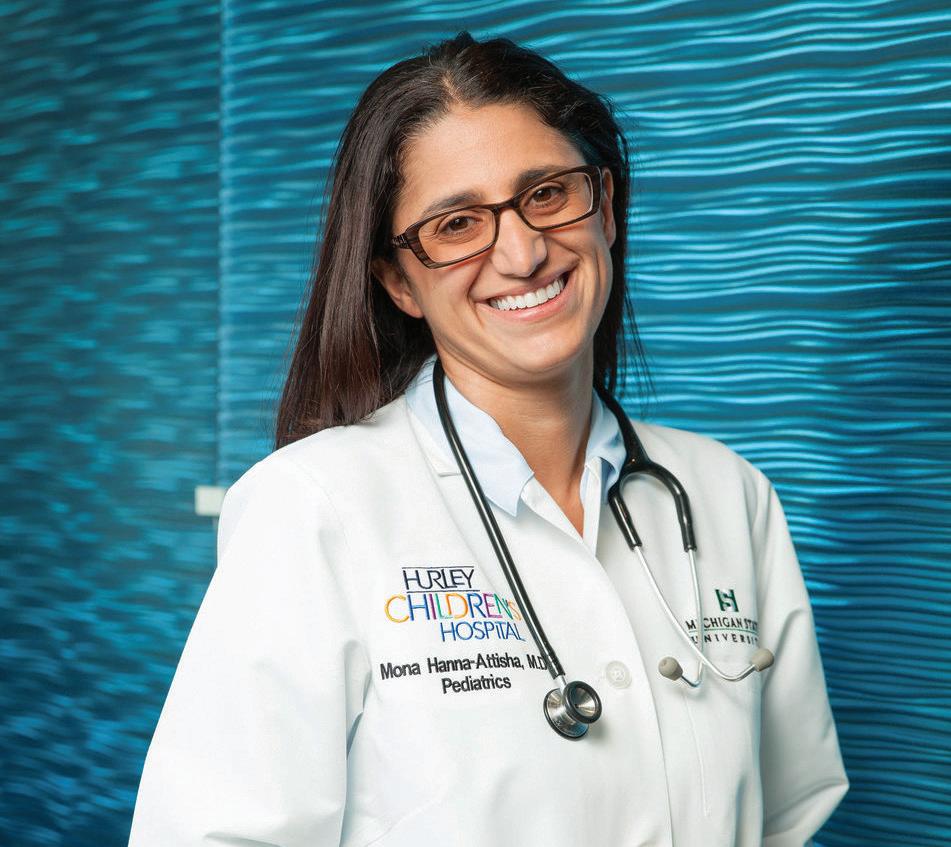
By SAMMIE LAMBOURNE Sun Staff Writer
Dr. Mona Hanna-Attisha, a pediatric doctor from Flint, Michigan came to Cornell to speak on behalf of her book, What the Eyes Don’t See, which considers her research on the Flint Water Crisis. She addressed students both in the Nutritional Sciences 2600: Introduction to Global Health class on Tuesday morning and to a wider audience at the Wolitzer Seminar in Kennedy Hall on Tuesday evening.
The Global Health program and Division of Nutritional Sciences have been planning this event since before the onset of the pandemic, as the book has been used in Prof. Jeanne Moseley’s, nutritional sciences, Introduction to Global Health course since 2018.
Dr. Hanna-Attisha’s memoir details her discovery of how the children of Flint were being exposed to lead in their tap water after a water source switch. Throughout the book, she discusses her fight against government officials and the backlash she experienced while exposing the crisis. Hanna-Attisha is a firm believer in the intersection of advocacy and public health.
“Those in the medical field need to be trained in communication and advocacy. It is so needed especially when there is misinformation or a lack of information,” Hanna-Attisha said during the seminar.
The auditorium was packed; the long awaited event had made itself known across the Cornell community through department listservs and flyers posted around campus. The discussion was moderated by three outstanding student leaders in the Global Health program, Efe Airewele ’20, Talia Bailes ’20 and Sravya Varanasi ’22 and was organized by current teaching assistants and members of the Global Health Student Advisory Board.
Rebecca Gordon ’23, a current teaching assistant for Prof. Moseley’s course, touched on Dr. Mona’s resilience throughout her journey of exposing the dangerous levels of lead in the Flint water.
“She’s a true inspiration to everyone in the class. There are so many points in the book where

Students buy plants from Hortus Forum during the Art of Agriculture celebration which took place on Earth
DR. MONA HANNA-ATTISHA
Eyes on you | Inset: A camera is seen inside Ganedago Hall.
JULIA NAGEL / SUN PHOTOGRAPHY EDITOR
Greening the Arts Quad


University Urges Students to Mask Up As Cases Rise in Tompkins County
By ANGELA BUNAY Sun Managing Editor
On Wednesday, the Tompkins County Health Department issued a health advisory recommending all residents, regardless of vaccination status, to wear a mask indoors and around others in public settings as COVID-19 cases rise in Tompkins County.
As of April 23, Tompkins County had the third highest rate of newly reported cases among New York State counties. Cases rose by 12 percent last week after an 18 percent increase the week prior.
According to the TCHD announcement, the department calculated that Tompkins County will likely be a high transmission area as defined by the CDC, following the 14 hospitalizations reported today, as well as the number of new positive cases that has continued to grow over the past several weeks.
“We’re seeing a higher number of positive cases locally as well as an increase in hospitalizations,” Frank Kruppa, the Tompkins County public health director, said in the TCHD announcement. “This advisory is alerting the community to our strong recommendation that you wear a mask while indoors and around others in public settings, as this will limit spread, help bring down our positive case and hospitalization numbers, and help protect vulnerable community members.”
While cases continue to rise across the county, Cornell has been in alert level green since April 1.
On Wednesday evening, Provost Mike Kotlikoff, Vice President for Student and Campus Life Ryan Lombardi and Vice President and Chief Human Resources Officer Mary Opperman, released an announcement to the Cornell community urging everyone on campus to wear masks indoors in light of the health advisory from
TCHD.
“While the choice to continue masking, even when not required, is a personal one, we hope that everyone will consider masking to help curb the spread as we head into the final weeks of the semester,” read the University announcement.
Currently the University requires faculty, staff, students and visitors to wear high-quality masks in classrooms, laboratories, similar teaching settings, healthcare and testing facilities and buses and Cornell-owned vehicles being utilized for multi-occupancy travel.
The University ended testing requirements for fully vaccinated individuals in mid-February due to the low infection rates and high vaccination rates on campus, meaning those on campus are not currently being tested on a regular basis. The University also moved to ease masking requirements in campus spaces in early March.
As of Tuesday, April 26, there are 132 active cases among students, and 87 active cases among employees.
While new positives have remained around the thirties and forties during April, last week saw two spikes of 86 new positives on April 19 and 69 new positives on April 21. This week there were 73 new cases on Monday and 61 new cases on Tuesday, according to the Cornell COVID-19 dashboard.
Kruppa said the TCHD will continue to track the prevalence of cases and hospitalization and make recommendations based on the data.
“We are monitoring the data on cases and hospitalizations daily, and will continue to do so in order to make the best advisements to the Tompkins County community,” Kruppa said. “At this time you should wear a mask while indoors and around others.”
Angela Bunay can be reached at abunay@cornellsun.com.
Classics Department Puts on Terence’s Adelphoe for First Play Since 2020
By ANANTHI JAYASUNDERA Sun Staff Contributer
2,182 years after it was first performed, Terence’s classic Adelphoe came to Cornell’s campus through the Classics Department’s production of the play in its original Latin.
On April 22, the department put on a unique production of Terence’s The Brothers, or Adelphoe in Latin, a story of love, masculinity and childhood.
“Adelphoe showcases a continuation of a long tradition at Cornell of ancient theater, mostly thanks to Professor Frederick Ahl, who is one of my colleagues and routinely does productions, usually in translation,” said Prof. Dan Gallagher, classics, the director of Adelphoe Prior to Adelphoe, the last play the Classics Department produced was Seneca’s The Trojan Women or Troades in April 2019, before the pandemic.
The idea of a comedy was brought to Gallagher’s attention by the play’s assistant director and actor Chris Chandra ’22 as well as other members of the Cornell Classics Society.
“The Classics Department’s last production was during my freshman year,” Chandra said. “Given that this is my last semester at Cornell, I felt like another play would commemorate how far we have all come in the last few years.”
Unlike The Trojan Women, which is a tragedy, Adelphoe is a comedy that revolves around a love story. The play features two families with contrasting parenting styles: one that is authoritarian, and another that is permissive. The audience is presented with two contrasting lifestyles when the adolescent sons of each family fall in love and engage in a series of events that include misunderstanding, trickery, and foolishness.
Adelphoe provided the Cornell and Ithaca communities with an experience that can hardly be seen elsewhere, the director expressed.
“Only a few colleges scattered throughout the world produce plays in the original Latin language, and almost all ancient plays are performed in translation on bigname stages,” said Gallagher.
For Ruby LaRocca, a 10th grade high school student who is taking Latin at Ithaca High School, Adelphoe exceeded expectations.
“I wasn’t expecting it to be so funny,” said LaRocca. “What I read about the Terence play made me expect moralizing statements about parenthood and the right
way to raise children. But the play itself was wonderfully fresh and didn’t require any modern embellishments to make it seem relevant; it’s just an insightful play written thousands of years ago.”
The play also featured elaborate costumes and makeup as well as creative staging and props.
“There were some ingenious bits of staging. Some cast members entered from the top of the auditorium and some were waggling fish right in front of audience members,” said LaRocca. “I believe there was even a live eel at some point! Overall, the entire cast really looked like they were having a blast, which is just exciting to witness.”
The production was entirely in Latin and had English super-titles — dialogues projected above the stage —that were translated by the students. Despite the language barrier some audience members experienced, the production was still understood and appreciated.
“This is still a play about humans and human expression, so the message is universal,” said Meredith Hu ’23, the videographer of the production. “At the same time, the unfamiliar aspects of the play, such as the language, the staging, and the costumes, will make the audience question what they already know”.
Performing the play in the original Latin text was paramount to the goals of the Classics Department.
“We want to primarily keep these works alive in the original language, but we do put on a contemporary modern twist to keep it interesting,” said Gallagher.
Aiden Ackerman ’23, an actor in the play, emphasized the significance of producing a play in Latin.
“When you have a play in the original language, for both the audience and the actors, everyone receives a far more intimate experience than one would get otherwise,” said Ackerman. “Through theater, you are able to transcend boundaries in a way that might not be possible with just literature that is written on a page.”
At its core, the production of Adelphoe continues a legacy of spoken Latin and ancient Roman play production.
“Even though the world has obviously changed dramatically and continues to change, there is still something in these ancient Roman plays in the original Latin that touches the eternal, human nature aspect of our lives that never goes away,” Gallagher said.“This is why we keep these plays alive.”
University Assembly Discusses Elections,
Honors, Carbon Neutrality
ASSEMBLY
Continued from page 1
U.A., agreed and suggested that the response be referred to the CJC for adjustments in the fall.
“After reading the response and giving how late in the year we are, I don’t see that it’s possible for us to resolve in a deliberative way to adjust the differences or even understand some of the differences,” Bensel said.
Similarly, James Richards grad, chair of the Codes and Judicial Committee, felt that it was too late in the year for a substantive response, but felt that the President’s response seemed “heavy-handed” and “a little non-specific”, as it referenced the UA’s claim to review authority as a primary reason for the rejection.
“[Pollack] uses the word ‘review’ and she says that it’s not appropriate for our committee to have a review function. We specifically never used the word ‘review’ because that has judicial implications which we obviously are not giving ourselves,” Richards said.
Bensel moved to send the resolution back to the Codes and Judicial Committee for adjustments, and the motion was granted with a 14 vote majority.
Later, representatives heard reports from the Student Assembly, the Graduate and Professional Student Assembly, the Employee Assembly and the Faculty Assembly.
Faculty Senate Chair Prof. Eve de Rosa, human development, provided updates on the senate’s discussions on the honors system, Dean’s List and graduate honors. de Rosa noted that Vice Provost for Undergraduate Education Lisa Nishii returned to the Senate for a discussion on the proposed revision of honors and distinc-
Dr. Mona
tions across the university.
According to de Rosa, the matter remains in discussion, but Nishii is more amenable to adjustments to scholarship-based honors, but less so for GPAbased honors. Faculty members also have strong opinions about the status of scholarship dependent honors which include honors theses and literature reviews.
“There’s concern that [scholarship-based honors] have been diminished with them trying to come up with GPA-honors,” De Rosa said. “Faculty are considering that making it GPA based might provoke more anxiety and grade anxiety and mental health issues for undergraduates.”
De Rosa also noted that there was less concern among the senate about the removal of the Dean’s List, as the majority of the University's peer institutions no longer use it.
The meeting ended with a liaison report from Campus Committee on Infrastructure, Technology and the Environment chair Ian Timur Akisoglu, grad, who provided updates from the University’s Carbon Neutral Campus Meeting. Akisoglu said that New York State’s Climate Leadership and Community Protection Act, which calls for scoping about how to gradually transition the New York electric grid to a green electric grid, would prevent Cornell from using its existing infrastructure as it transitions to its own carbon neutral status by 2035.
“There’s gonna be an emerging challenge in the next couple of years, whether Cornell complies with the scoping requirements of the New York [State] law, or complies with its own carbon neutral goals,” Akisoglu said.
Jiwon Estee Yi can be reached at jyi@cornellsun.com.
Hanna-Attisha Speaks on Medical Activism
FLINT
Continued from page 1
she goes against big names in Michigan and American politics and she still held her ground,” Gordon said.
For Gordon, who aspires to go into medicine,opportunities to hear from leading global health experts like Dr. Mona have widened her perspective.
“Dr. Mona further solidified my interest in working in the healthcare field. Hearing about her persistence when faced with adversity during the Flint water crisis showed me that the healthcare field is a demanding but
rewarding line of work,” Gordon said.
For many students, the class is a favorite at Cornell and has changed their perspectives on future academics and career aspirations.
“One of the greatest things I've taken from the class is all the different perspectives you need to consider when addressing a public health issue,” said Luke Martini ’25. “I definitely recommend the course to anyone interested in the healthcare field.”
Martini proceeded to elaborate on the importance of this class as a foundation for all types of students, whether
on the medical track or not.
“Dr. Mona's story showed me that people in a position of authority need to use their power to advocate for those in the community,” Martini said.“We are given a great privilege to all attend Cornell University, and we should use this amazing opportunity to advocate for others no matter what field of work we go into.”
Many students left the seminar invigorated, with signed copies of What the Eyes Don’t See in their hands.
Sammie Lambourne can be reached at slambourne@cornellsun.com.
Ganedago Arson Cases Bring Increased Security
Increased police presence, new cameras draw resident relief and concern
one camera had somehow been stolen, despite being protected behind a plastic bubble.
“I don’t know how someone would have stolen that [without revealing their identity] because you would have had to come in front of the camera to take it,” NewmanRivera said.
Gabriella Prantl ’25 said she appreciated that the cameras
are angled away from lounges, watching trash rooms and kitchen entrances instead, providing some privacy to residents.
“I think the cameras should stay up because they’re not invading people’s privacy at all,” Prantl said.
Bordador also noted that the microwaves in hall kitchens have been taken away by the residential hall’s administration multiple times due to fire alarms being purposefully set
off. This inconvenienced her suitemates, so she allowed them
“I love Ganedago. I wish this didn’t happen because it’s a nice building.”
Calista Bordador ’25
to use her personal microwave in the meantime.
Prantl believes that the microwaves and stove tops were barred from use for too long, being unavailable for most of the spring semester.
“I understand that they had to prevent the fire alarm from going off at 4 a.m., but it’s punishing the whole building when there’s only a few people doing it,” Prantl said.
Some residents feel uneasy about the presence of police officers in the building.
Newman-Rivera said she feels


safer knowing the risk of arson has dropped but acknowledged that other students may be unnerved due to the police.
“The policemen are clearly armed and it does make me uncomfortable, and I know it makes a lot of other people uncomfortable,” NewmanRivera said. “I don’t think they need to have guns.”
This sentiment was shared by Prantl, who said she often sees the police walk by when she studies in the lounges during the evening and agreed that they make some residents feel uncomfortable.
“I don’t think the police should be walking around a college dorm. Especially since all of them are carrying guns, I don’t think guns should be in a college dorm at all,” Prantl said.
Some Ganedago residents felt that more preventative action should have been taken against arson incidents. While the late night fires have frustrated students for months, cameras were only installed a few weeks ago.
“I feel like the cameras, the reason it took so long for them to be put up, is because Cornell is really cheap,” NewmanRivera said. “I think they should be doing stuff earlier, when [the arson incidents] start, rather than allowing it to get to the point it did.”
Bordador also wished the cameras were installed earlier. She said it was unfortunate that Ganedago has become infamous for arson, but expressed appreciation for the opportunity to live there.
“I love Ganedago. I wish this didn’t happen because it’s a nice building,” Bordador said. “I’m very lucky to be one of the first residents.”
Camden Wehrle can be reached at cwehrle@cornellsun.com.
Please Recycle this Paper in one of the recycling bins located on the Cornell Campus.
Dining Guide
Your source for good food

Moosewood: Aged to Perfection
By SADIE GROBERG
Sun Staff Writer
In the early 1970s, Americans were experiencing their first strong wave of vegetarianism, as hippies and environmentalists alike were embracing the meatless movement. The people were speaking up, and they were speaking loudly, calling for vegetarian meals to become normalized and incorporated into everyday dining. At the same time, in wintery upstate Ithaca, a group of young adults banded together, not knowing yet the legacy they were soon to create. Some were Cornell students, while others had traveled to Ithaca to join the Lavender Hill commune, a coterie of LGBT+ idealists. Together, they formed the Moosewood Collective, serving as founders, owners and operators of Moosewood — what is widely recognized as one of the longest-running vegetarian restaurants in the United States. Since its genesis in 1973, Moosewood has expanded, renovated multiple times and has become the name behind one of the most popular vegetarian cookbook series of all time. The restaurant has served thousands of college students, Ithaca locals and tourists, survived a pandemic, participated in the environmentalist movement and stood firm against the test of time. Next year, the restaurant will celebrate its 50th anniversary. Now, for the first time, Moosewood is being passed over to new (but still familiar) hands.
the restaurant. Since leaving Ithaca, she’s lived in New York City, London and Spain. When the collective (all in their 70s and ready to retire) decided to sell the restaurant, she was determined to help them find the perfect new leadership. Then the pandemic hit — a time where one would have needed to be a little crazy to purchase a restaurant.
Thus, two options remained for Moosewood: Danica and Nicholas could take over the restaurant, or they could let the business close for good. Despite the strained climate for business owners due to the pandemic, they knew what they had to do. They officially took over ownership on Jan. 1 and have since renovated the dining area, revamped the menu to highlight local produce and reinvigorated the space with fresh concepts, including an elevated new bar to accompany a new array of beverage offerings. Only one year older than Moosewood, Danica speaks of the restaurant fondly, like a childhood friend she grew up alongside. “We felt like she deserved a more grown-up aesthetic,” Danica told me with a smile, waving an arm at the freshly redesigned dining room. “You know, she’s 50. She needs to be regal now, because she’s a lady.”
Next year, the restaurant will celebrate its 50th anniversary. Now, for the first time, Moosewood is being passed over to new hands.
Danica Wilcox, the restaurant’s new owner, is no stranger to Moosewood. I got the chance to sit down with her and her husband Nicholas to learn all about the enthralling history of the business. Danica’s mother, Kip, was one of the 19 original collective members, so Danica grew up working in
In order to achieve this, Danica, Nicholas and their team have made deliberate decisions about every aspect of the business. One of their main priorities is to have a concentrated seasonal menu sourced from local purveyors. Additionally, their extensive bar serves exclusively Finger Lakes wine and beer. Although a focus on local products has been a part of the Moosewood framework since the very beginning, it’s fallen away over the years.
To continue reading this article, please visit cornellsun.com.
Groberg is a sophomore in the College of Agriculture and Life Sciences. She can be reached at sgroberg@cornellsun.com.





Sadie
From Ithaca to Beirut: Re-Defning Home

Anna Hayek Guest Room
Aug. 8, 2021. 369 days after the third biggest explosion in history that rocked Lebanon. I was boarding the plane departing from Beirut, a suitcase in one hand, half of my broken heart in the other. On that day, a feeling of fright was born inside of me. Not any regular kind of fear, but a special one. One that persists and develops every day. One that keeps me up all night, worrying me that I will never coming back to the“home” I know.
Since my early childhood, a stereotypical image of “home” has been formed in my head. One that would develop and mature throughout the years, until I realized that home is much more than a simple idea.
When I was 6 years old, I believed that home was just like the ones I would see on Disney: a small house with a dog, surrounded by a big garden flled with fowers. When I turned 12, I believed that home was wherever my family was. A place where its walls would vibrate with love, afection and tenderness. A place that is constantly
feeding my soul with resilience, comfort and ambition. At the age of 16, a more powerful concept was born. I regarded home as a shoulder on which I cry, a place that holds my tears, a place that hears my loudest celebrations and, most importantly, a place that always has my back.
However, this idea did not last long. As I was turning 17, my country entered its darkest phase in history: a drastic economic crisis, the devastating Aug. 4, 2020 blast, a throbbing fnancial capital control and the lethal COVID-19 pandemic.
For the very frst time, I felt betrayed. Betrayed by my own country, by my own home. I realized that all of the images of home that I had in mind were fading away. Te place I always looked up to was transformed into a heartbreaking reality, a gloomy feeling and a painful nightmare. Beirut’s magical charms were transforming into maniacal repulses. Beirut’s sparkles of love were transforming into spells of trouble and misery. Beirut’s glorious history was transforming into a image of grief. For the very frst time, I didn’t recognize home. Beirut was down on her knees. Was she giving up or was she just praying?
As I made the decision to start a new chapter of my life abroad at Cornell, the idea of leaving home terrifed me. It was impossible for me to imagine that life had a meaning anywhere else. Beirut’s serenity was constantly feeding my spirit with peace, satisfaction and joy. Beirut’s resilience was constantly nourishing my heart with strength, determination and dedication. But, what could I do when Beirut was 5,631 miles away?
Aug. 8, 2021. I was still trying to convince myself that leaving the country was the only solution. As I was boarding the plane, I felt, this time, that I was the one committing a betrayal. To me, leaving Lebanon meant giving up on my country. It meant throwing away the souvenirs, the people, the family and most importantly my life. At this point, I knew that there was no turning back. I knew that the only thing I could do was pray and wish to see Beirut still breathing.
As I was trying to fnd a new meaning for home while
at Cornell, I realized that home is not found, but made. Home is not an image in your head, but a dream constantly turning into reality. Home is not a feeling, but an album of memories, a rollercoaster of emotions and a gem of adventures.
At Cornell, I feel at home. 5631 miles away from Beirut, I felt sheer happiness and everlasting serenity. I hear voices of home through Cornell’s magical chimes. I sense the beauty of home through Ithaca’s charming gorges. I reminisce on the feeling of home through this big community’s warmth and hospitality.
As I was trying to find a new meaning for home while at Cornell, I realized that home is not found, but made. Home is not an image in your head, but a dream constantly turning into reality.
While I was collecting the pieces of home into a big puzzle, I realized that Cornell gave home a special meaning to me. At the intersection of inspiration, challenge and charm, I discovered that home is mostly what I make with the people around me; it is what makes me grow and glow.
Feeling at home in one of the most prestigious universities in America is probably the greatest feeling of pride for me. While returning to Beirut remains my ultimate dream, the moments and memories at Cornell never fail to make me feel at home.
I Hate Always Knowing Where to Run
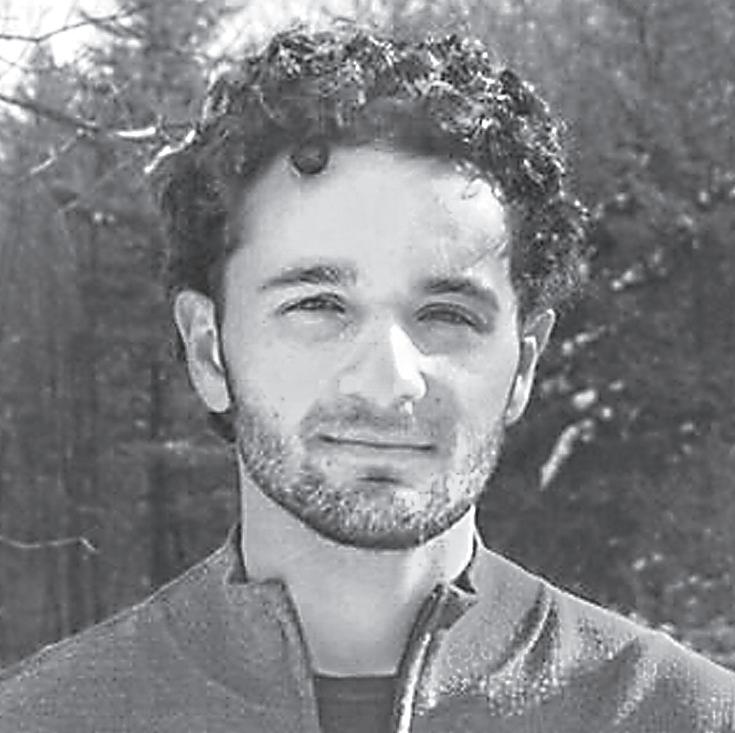
Andrew V. Lorenzen When We’re Sixty Four
Andrew V. Lorenzen (he/him) is a senior in the College of Arts and Sciences. He can be reached at alorenzen@cornellsun.com. When We’re Sixty Four runs every other Wednesday this semester.
The line was at least 50 cars long. It moved forward at fve miles an hour, at most, as one bumper followed another forward towards the terminal. Tere was no honking, no drivers rolling down their windows and yelling at other cars. Normally, you’d expect people to have less patience. But, as we slowly approached Boston Logan Airport, there was a sense that everyone had realized that this was something beyond normal trafc. Something was wrong.
Tere was a swarm of Massachusetts State Police along the curb of Terminal A. Dozens of cars and ofcers blocked of large portions of the street. As I wheeled my suitcase inside, I saw why — the entire terminal was fooded with travelers.
I wasn’t even sure how to fully step inside. Tere was no room. I ended up squeezing by a couple of potted plants, nearly knocking one over, and squirming my way to the back of the TSA line. I
couldn’t see the TSA checkpoint. I didn’t even know if I was in a line. Everyone was just sort of crammed together and vaguely trying to move forward.
Apparently, they’d cleared the area minutes before I arrived. Te bomb squad had been called in to examine a suspicious item. Tey’d evacuated the entire terminal. And now that they’d established that the package held no threat, everyone had to tumble back through security and onto their planes. But just from seeing the sheer extent of people, you held no illusions — odds were that you weren’t making your fight.
Tere were varied reactions to the situation. Some hustled past one another, discreetly attempting to skip ahead of people
Even when things return to normality — when bomb squads clear areas and people return to go about their lives — there’s always that lingering anxiety.
in line to have a better chance to make their fight. Others bickered with airline workers, somehow under the impression that they had any control over this. A few just milled around, unbothered, vibing to the music on their airpods. Yet many
were on edge — their eyes continuously glancing around them to fnd the nearest exit, wary of the massive crowd of people and the potential for some other suspicious item or threat to emerge.
Tey’d been trained by years of tragic mass shootings and violence splashed across CNN. T ey knew that it was imperative to always know exactly where to run. An act of horror could seemingly happen anywhere. Tere was no rhyme or reason to it. As you look for an exit, perhaps while sitting down in the movie theater or waiting in line at an overrun airport, you never fully know if you have paranoia or a premonition.
You have to assume the worst because you keep seeing the worst on the news. So, even when the airport is all-clear, everything is perfectly alright, you have to keep an eye on the nearest exit as you snake through the line. You have to be vigilant.
I didn’t have anything to do while I waited. Normally, I’d listen to music, but I didn’t want to miss any important announcements about my fight over the terminal loudspeaker. It gave me time to think. And that led me to remember another fraught return to Cornell six months prior.
Tat day, those many months ago, I’d just landed in Charlotte, where I was supposed to catch my connecting fight to Ithaca. And it was as I exited the plane that I saw the news of the bomb threat and campus evacuation at Cornell. I fell into a seat in the terminal and anxiously texted friends. I felt that same feeling — a mix of terror and uncertainty over whether my terror was well-founded. I refreshed news websites, Reddit threads and Twitter every ten seconds, desperate to get more information. Rumors abounded. Everybody had heard something and then told that something to someone else. Nobody
knew what was going on. Tere was just the fear that one of those terrible events that you’ve spent your childhood seeing on television could happen here. It could happen to you.
Tis brand of fear afects all people, but there is something fundamentally different to being raised with it as a normalized part of your life. Tere’s something diferent to being the frst generation to do mass shooter drills in elementary school. It stays with you.
Even when things return to normality — when bomb squads clear areas and people return to go about their lives — there’s always that lingering anxiety. You’re always looking over your shoulder because you’ve been, tragically and rightfully, trained to do just that. As you return to campus, you still feel that uneasiness for months to follow. As you make your way through the airport, you still look for the exits.
I hate that. I hate that I’m always looking for where to run if something happens. I hate that I’m not alone in that experience, that my anxiety is never entirely unfounded. I don’t have a solution for you. Tere’s no call to action here. I just think it’s a bad way to live. And I feel somehow as though we’ve been wronged as a generation for having had to live like that for so long.
I eventually made it through TSA. I missed my fight, as expected. After booking a fight for the next morning, I walked back through the terminal, exhaustedly wheeling my suitcase behind me. Te TSA checkpoint now actually looked like a regular line, just a long one. Only a few state troopers remained.
As I settled into a seat, waiting for my ride, I checked my phone and saw that the suspicious package that had led to the evacuation of the airport had been a Sony Playstation in disrepair. Nothing had been wrong.
Anna Hayek is a freshman in the College of Arts and Sciences. Comments can be sent to opinion@cornellsun.com. Guest Room runs periodically throughout the semester.

Fill in the empty cells, one number in each, so that each column, row, and region contains the numbers 1-9 exactly once. Each number in the solution therefore occurs only once in each of the three “directions,” hence the “single numbers” implied by the puzzle’s name. (Rules from wikipedia.org/wiki/ Sudoku)

I Am Going to Be Small


Travis Dandro
SC I ENCE
Researchers to Develop COVID Nose Spray Treatment
By KAITLYN LEE Sun Staff Writer
Researchers from Cornell University have discovered a new molecule called N-0385 that could be used to develop the first COVID19 nose spray, a medication taken intranasally.
In collaboration with researchers from Université de Sherbrooke and University of British Columbia in Canada, the team published their study in Nature journal on Mar. 28, claiming N-0385 could potentially be utilized both for prevention and early treatment against COVID-19.
Prof. Hector Aguilar-Carreno, microbiology and immunology, a senior author of the paper, said the study began in his lab in 2020. “We moved to working with coronaviruses, specifically SARS-Cov 2, because we felt that we needed to do something about the pandemic,” Aguilar-Carreno said.
The Aguilar-Carreno lab started preparing biosafety and animal training for its researchers, and after a few months, it became the first lab at Cornell to conduct mouse and hamster experiments with SARSCoV-2. This led to collaboration with Prof. Gary Whittaker, virology, along with Prof. Richard Letuc, pharmacology, from the Université de Sherbrooke and Prof. François Jean, microbiology and immunology, from the University of British Columbia.
The team’s focus was to test certain molecules that can combat SARSCoV-2 infection using animal exper-
iments. Specifically, they wanted to observe the compound effects on repressing SARS-CoV-2 TMPRSS22 activity. TMPRSS22 is a transmembrane serine protease, an enzyme embedded within the virus’ membrane that breaks down proteins.
TMPRSS22 performs an important function in cleaving and exposing the SARS-CoV-2 spike protein by binding to its target attachment site, composed of a specific four amino acid sequence. The spike protein becomes capable of binding to the host organism’s surface cell receptors and fusing the viral membrane with the cell membrane. As a result, the virus can enter the host cell and produce thousands of copies of itself, spreading the infection to neighboring cells and ultimately throughout the body.
According to Aguilar-Carreno, the researchers identified candidate molecules by determining if they could block the attachment site between TMPRSS22 and the spike protein, inhibiting TMPRSS22 activity and thus, preventing COVID-19 infection.
Mice experiments were conducted to test the candidate molecules. Factors such as weight loss, temperature, inflammation and presence of SARS-CoV-2 were carefully observed and compared between treated and untreated groups before, during and after COVID-19 infection.
These experiments allowed the researchers to determine that N-0385, a molecule developed by investigators from the Letuc Lab of Université de Sherbrooke, was
most effective in COVID-19 prevention and treatment.
N-0385 is composed of the same four amino acid sequences as the TMPRSS22 attachment site as well as a “warhead” that aids in the chemistry of binding. Due to its basic structure and the abundant availability of amino acids, the molecule could be easily and cheaply mass-produced as a drug.
The study concluded N-0385 protected the mice from COVID before exposure and effectively treated COVID-19 illness 12 hours after exposure. Aguilar-Carreno also explained that the possibility of side effects with the molecule is much lower.
In fact, cytotoxicity in cells was only noted when N-0385 was given in significantly high concentrations. Given that N-0385 only needs to be administered in low concentrations to be effective, this showed even greater potential for the molecule to be used against COVID-19.
During the experiments, N-0385 was given intranasally to further increase efficacy against the virus, as SARS-CoV-2 enters the
body mainly through the nose and into the respiratory tract. Besides respiratory cells, SARS-CoV-2 also primarily goes to the brain, as well as the heart and spleen.
N-0385 has been observed to be effective in reducing inflammation in the brain caused by the virus. “We don’t fully understand the mechanism of how the drug is helping the brain,” Aguilar-Carreno said. “But we would expect that the component would inhibit entry of the virus into any cell that uses serum proteases to get in.”
N-0385 was also tested against different COVID-19 strains and was found to be effective against all variants in cell cultures. In mice experiments, N-0385 has been
found effective against the Alpha and Delta variants. The lab plans to start testing the Omicron strain on mice but remains hopeful for the continued success of N-0385.
The Aguilar-Carreno lab plans to continue testing the timing of when N-0385 can be administered against COVID-19 infection, other routes of molecule administration and the effects of N-0385 in combination with other drugs and antivirals.
“I’m sure [N-0385] can still be improved,” Aguilar-Carreno said. “[But] so far, this [molecule] is the best.”
Kaitlyn Lee can be reached at kl629@cornell.edu.
Cornell Profs Call for ‘Fossil Free’ Research Funding
By MEHER BHATIA
Eight Cornell faculty members signed a letter condemning the corrupt influence of fossil fuel funding used to support climate change research in universities. Released on Mar. 21, the letter is supported by many more members of the faculty.
Titled “Fossil Free Research,” the letter, which is addressed to university presidents and vice-chancellors, calls upon U.S. and U.K. academic institutions to establish a ban on accepting fossil fuel industry funding for climate-related research.
According to the letter, fossil fuel funding inherently comprises the integrity of the academic research being conducted.
“There is perceived pressure to not say unfavorable things,” said Prof. David
Shalloway, molecular biology and genetics, who is one of the signees. “Fossil fuel companies have been exceedingly deceptive in their advertising, claiming that they have been working to go more green, and it’s basically just been a lie.”
The letter draws upon comparisons between the fossil fuel industry and the tobacco industry, which has been known to grant large sums of money towards public health research and consequently spread misinformation about the consequences of its products.
Prof. Bob Howarth, ecology and evolutionary biology, co-writer of the Fossil Free Research campaign, has seen the fossil fuel industry’s “invisible colonization of academia” upfront. “I’ve seen how [the industry] has tried to influence academic institutions up close and personal for a long

time,” Howarth said.
However, the letter explicitly states that it is not pointing fingers at individual scholars. “[W]e aren’t casting doubt on the integrity of scientists, but we think the system is broken,” said Prof. Caroline Levine, literature. “If there’s too much money coming in, it gives an incentive to scientists to skew their research.”
Howarth and Stanford Prof. Mark Jacobson, civil and environmental engineering, co-authored a paper in August titled, “How Green is Blue Hydrogen,” detailing evidence of why making hydrogen out of natural gas with carbon capture would be detrimental to the environment.
“A group of scientists [tightly tied to the oil and gas industry] submitted a comment on our paper criticizing us basically,” Howarth said. “They just say that, although they have connections to the fossil fuel industry, it doesn’t affect their judgment, but it does. It’s a corrupting influence.”
According to Howarth, another issue with fossil fuel funding in academia is that research findings that are critical of oil and gas interests are often kept under wraps.
“Even if you’ve done quality research, if that isn’t what they want to hear, it gets squashed,” Howarth said. “It is something very commonly done in the area.”
Students at leading universities across America, ranging from Stanford to MIT, have begun to file legal complaints against their institutions in an effort to push for fossil fuel divestment.
Similar efforts occurred at Cornell, when the University divested its fossil fuel endowments just two years ago in May 2020 after years of backlash from both faculty and students.
Engineering student David Beavers ’14 spent the majority of his undergraduate career lobbying for Cornell to rid itself of its investments in the fossil fuel industry. “[It] used to feel very hypocritical to me that an organization like Cornell, that was at the very cutting edge of climate change research was also still investing in fossil fuels, which are primarily responsible for climate change,” Beavers said.
According to Levine, the divestment resolution passed unanimously in all five of Cornell’s assemblies: the student assembly, the graduate and professional student assembly, the employee assembly, the university assembly and the faculty senate, before it went to the Board of Trustees.
“It was a very exciting moment [when Cornell divested],” said Levine, who was actively involved in the fossil fuel divestment process. “It was truly an example of students, faculty and staff really working together and succeeding in achieving a common goal.”
Moving forward, supporters of Fossil Free Research have urged for more transparency — finding that the lack of, is very problematic, according to Howarth.
“The main value of suspending university research funded by fossil fuel companies is to set an example [and] make a public statement to hopefully influence public opinion,” Shalloway said. “We have a responsibility as Cornell, particularly that we’re part state university. We work for research and its education, but also work for the welfare of the people of New York state and the country in the world. This is a way we can do that.”
Meher Bhatia can be reached at mbhatia@cornellsun.com.
Sun Science Editor
Fossil free | Faculty members from the world’s leading academic institutions have asked universities to cut fossil fuel funding ties to protect the integrity of environmental research.
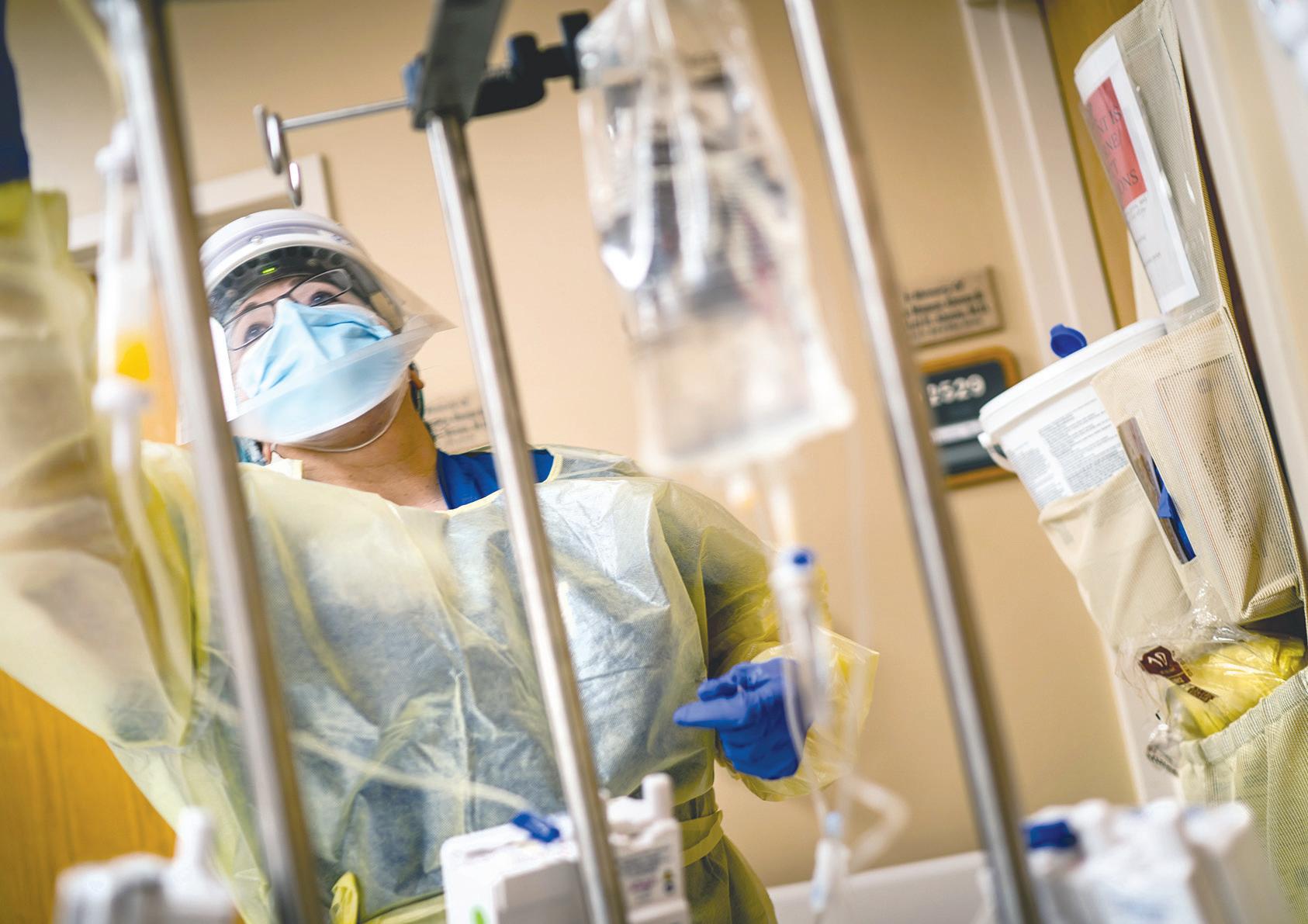
New treatment | Hospitals may soon be able to adminsiter a COVID-19 targeted nose spray that can be used within the first 12 hours of exposure.
ERIN SCHAFF / THE NEW YORK TIMES
BRANDON THIBODEAUX / THE NEW YORK TIMES