The Corne¬ Daily Sun

By ELI PALLRAND
Staff Writer
Following elections marred by low turnout, technological-failure-induced recount and complications regarding disqualification of candidates, the S.A. will hold it’s spring 2021 election from April 27-29 — with a new Elections Director at the helm.
Responding to a 16.85 percent undergraduate turnout in the fall, and frequent scandals, Patrick Mehler ‘23 is revamping voter turnout efforts, broadening candidate recruitment and diversifying the elections committee.
During the last election, the election directors were limited to promoting engagement through email blasts to organizations and word of mouth because of the hybrid semester. The lack of campaign slogans written in chalk around campus, in-person campaigning and the importance of social media made running for office even harder this year, S.A. president Cat Huang ‘21 said.
“People
roughly 1,600 people about voting in the election.
Voter turnout operations have also changed, with Mehler utilizing the resources of Cornell Votes and using college deans, professors, department heads and student organization leaders to encourage the people in their networks to vote.
On the physical side, posters and stickers have been put up everywhere from dining hall napkin holders to dorm TVs to COVID testing sites.
Mehler has also changed the makeup of the elections committee by removing restrictions on who could serve on the 10-member body, and adding a representative from each college and more underclassmen.
Patrick Mehler ’23
But in February, the S.A.tapped Mehler as its new elections director. Mehler is the co-founder of Cornell Votes, who spent the fall and summer registering and educating voters for the 2020 U.S. presidential election. He is also a relative outsider to the S.A., having never been a member — which is unheard of in recent years.
Mehler has had to deploy an array of new tactics because of physical distancing limitations on campus. He’s been recruiting candidates from spaces like the college of engineering, where national election voting data indicates that students typically don’t vote and working with campus leaders, like project team leads.
From project teams and class teaching assistants alone, Mehler said he’s contacted
The new committee has also clarified issues of candidate disqualification — if a challenge is launched before voting the candidate in question will be removed if the.However, if a challenge occurs after voting, then votes for the disqualified candidate are reallocated based on the preferential voting system as if the candidate had not been on the ballot in the first place.
With these reforms, Mehler said that he’s not fighting disengagement but the feeling that students aren’t informed enough on the candidates to participate.
“People might be frustrated with how specifically S.A. is acting but it’s rarely apathy. It’s usually either a lack of information, a lack of feeling informed enough to make a decision or just general confusion,” Mehler said.
According to Moriah Adeghe ‘21, former director of elections and executive vice president, existing candidate-created resources lack accessible information, making it difficult to engage voters.

create a platform that validates the hardships first-years face.
From homesickness, to imposter syndrome to deciding on a career path, incoming freshmen face a wave of challenges. WIth her new podcast “Dear Cornell Freshmen,” Anna Canny ’20 hopes to
Before it became a podcast, “Dear Cornell Freshmen” was a letter writing campaign started by a group of seniors in 2016. They would write letters to their freshmen year selves, reflecting on their
four years on the hill, recounting funny anecdotes and giving their younger self advice. These letters were a way for current freshmen to realize that the struggles they were facing were universal.
Canny was one of

By SARAH YOUNG Sun Staff Writer
Many students have to juggle a course schedule that fills requirements, caters to interests and avoids conflicts. A team of Cornell students have created a solution: CoursePlan. According to a statement shared with The Sun by CoursePlan team, which is a part of the Cornell Design Tech Initiative, the app wants to to give students the ability
“I think [CoursePlan] honestly is game changing for me.”
Althea Bata ’24
to concretely plan their college career and give them space to grow as their interests change. On top of providing students with a tool that can sort and schedule classes based on distribution requirements, major requirements and minor requirements, CoursePlan also offers individual course information and reviews from past-students. These features, according to
ANUSHYA ALANDUR ’23 Business
CATHERINE ST. HILAIRE ’22 Associate
PRANAV KENGERI ’24
ODEYA ROSENBAND ’22
JYOTHSNA BOLLEDULA ’23
TAMARA KAMIS ’22


PODCAST Continued from page 1
the freshmen that found comfort in these letters.
“I had a really really tough freshman year and was not very happy. I felt very disconnected and was really doubting being at Cornell and finding a place to belong,” she said. “Reading some of those letters myself was really helpful. Freshman year did get better, and I kind of moved on from it.”
After a one year pause, the campaign was revived by Canny’s friend and housemate, Annie Fu ’20, who had also found the letters helpful during her freshman year. Canny joined the campaign as an editor last spring because she wanted to carry on the legacy that supported her early in her college experience.
nate with her audience in a way that the letters couldn’t.
“There’s something about the human voice, especially in times where you really don’t want to be alone that can bring you into another person’s perspective fully,” she said.
Canny believes that as a graduating senior, nostalgia can tone down some of the challenges faced over the past four years. By allowing seniors to really reflect and remember the struggles they faced, she hopes to showcase to freshmen that college is a series of highs and lows.
“It’s not necessarily the best continuous four years of your life. There are ups and downs and I think having to slow down and remember that is valuable.”
“It’s not necessarily the best continuous four years of your life. There are ups and downs and I think having to slow down and remember that is valuable,” she said.
Annie Canny ’20
The idea of a podcast arose from Canny wanting to delve into the world of audio journalism after studying environmental science.
“I wanted to use my senior spring to do something independent, something that would give me a lot of editing experience, a lot of interview experience, a lot of storytelling experience,” Canny said.
The podcast has already launched and has released two episodes. It will continue to release one episode per week, focusing on topics including friendship, identity, mental health and failure. Moving forward, Canny plans to work on a website that collects letters, photos and audio samples.
Canny hopes the audio format will reso -
Canny is unsure what will come of the podcast after she graduates but she hopes someone will continue with the project. Even if the podcast is not continued next year, she believes the collection she launches at the end of the semester will resonate with freshmen for years to come.
“It’s a really worthwhile project for me to be curating this content now because a lot of it stands the test of time. A lot of the fears that freshmen had 10 years ago are similar to the fears the freshmen have now,” Canny said. “So I think a lot of this content will be almost like a time capsule slash a hub of resources for students.”
Nooroo Umar can be reached at numar@cornellsun.com.

By ANTHONY CHEN Sun Staff Writer
Following the increase in nation-wide violent attacks on the Asian community, the University plans to host an “interactive teach-in” on anti-Asian racism and bias on May 7 from noon to 2 p.m.
The teach-in was announced in an April 15 statement to the Cornell community from Prof. Wendy Wolford, global development, vice provost for international affairs, and Prof. Avery August Ph.D. ’94, immunology, vice provost for academic affairs and presidential advisor on diversity and equity.
“Racism in any form, from seemingly benign assumptions to the violent attacks that have occurred across the country, adds to the unequal burdens some shoulder and runs counter to who we are,” the statement read. “It is on each of us to ensure that Asian and AAPI members of our community feel the sense of belonging that we seek for all.”
“We believe that empathy can develop through sharing stories from varied voices.”
Prof. Wendy Wolford
The teachin comes on the heels of demands from students and faculty members about how the University can better support the AAPI community and combat antiAsian racism.
The University is hosting the teach-in to show solidarity with Cornell’s Asian American and Pacific Islander communities and express their commitment to address racism in all forms, Wolford wrote in an email to The Sun.
“We believe that empathy can develop through sharing stories from varied voices,” Wolford wrote.
The teach-in will include presentations from a variety of students, staff and faculty on the history of different Asian communities in the United States and at Cornell, focusing on the history of racism and discrimination against these communities. Attendees can also expect breakout room sessions to further discuss

these topics with other audience members.
“Participants will be encouraged to talk about their experiences at Cornell and explore different mechanisms for making the university a more inclusive space,” Wolford said.
Acknowledging the importance of a diverse audience for this teach-in, Wolford said the University is working with students, staff and faculty to draw in as many people as possible.
The statement also linked anti-racism resources created by the Asian American Studies Program and recent
“Most people who don’t know much about the S.A. aren’t gonna take the time to read through forty candidates’ platform points and try to make a decision based on that,” Adeghe said.
Currently, the data driving these efforts isn’t from previous S.A. elections, but from the NSLVE report, an ongoing research project by the Institute for Democracy and Higher Education at Tufts University, which tracks details of campus voting in national elections, such as which majors, demographics and home states vote the most.
Adeghe and Huangboth agreed that collecting anonymous demographic data could improve elections.
Regardless of the year’s challenges, there’s been more interest. In fall 2020, nine out of 26 seats were contested and in spring 2021, 17 out of 26 seats are being contested.
“These groups have a lot of power. And this is your chance to start over with them.”
Considering the number of races and the power held by the University’s shared governance institutions, Mehler feels that this election is just too important to miss.
Patrick Mehler ’23
Mehler targeted outreach to demographics that did not vote at high rates in the 2016 and 2018 national elections, like the College of Engineering. According to Mehler, more specific anonymous data on S.A. elections would make voter turnout efforts more effective because they would be more specific.
“These groups have a lot of power. And this is your chance to start over with them,” Mehler said. “There’s a lot of turnover happening in these elections, a lot of seniors are graduating, a lot of students are not returning to these assemblies and there’s a lot of new voices coming into the field. This is your chance to get in the voices that you want to hear.”
Ei Pallrand
calls from Asian American faculty and students demanding institutional change from the University regarding anti-Asian racism.
“The only way to address racism is together: it is not up to one group to shoulder this alone, so, whether or not you feel that racism impacts you, we hope that you will join us in this reflection and commitment,” the statement read.
Further information on the teach-in and event registration will be announced closer to the event.
Anthony Chen can be reached at achen@cornellsun.com.
Student team rolls out new app as pre-enroll approaches
the CoursePlan team, make the app useful to all students at Cornell, regardless of year, school or major — even if their major or minor is not yet on the app.
Behind CoursePlan is a team of 13 students who have been working on the project for the past four semesters. While the app has been launched, the work of the team has not ended as they work to add more majors and minors.
“We have 20 to 30 majors,” said Will Spencer ’22, “But
“It’s seriously a must-have for incoming students; I wish I had this when I was coming to Cornell.”
Ehi Esemuze’23
we’re adding 10 to 15 this week alone because we’ve had such a demand to add more.”
reviews and class descriptions. It’s seriously a must-have for incoming students, I wish I
“It’s great to have such a user-friendly, beautifully designed site where I can visualize everything.”
Helen Yang’23
Theresa Cho ’22, the app’s Technical Product Manager, said that the way that information about different requirements for the different colleges and departments is presented in a scattered and inconsistent manner— which makes programming the requirements difficult.
Since its launch earlier this month, the app has been tried out by over 1,000 Cornell students.
“I think [CoursePlan] honestly is game changing for me,” said Althea Bata ‘24, who was among the app’s first users.
Ehi Esemuze ‘23, another student who uses the app, described the app as “[a] literal dream come true.”
“Everything corresponds beautifully and you can customize the colors, see course
Chang said that they hope to add most of the requested majors in time for pre-enroll, which starts on May 10. However, he said that this process would not be a simple one because much of the information is hard to come by and must be researched manually by the team members.
had this when I was coming to Cornell,” Esemuze said.
Another user, Helen Yang ’23, said the app completely altered their scheduling experience at Cornell.
“Before, I had been juggling a mix of paper checklists and spreadsheets and I had like 5 different windows open when picking classes, which was stressful and tedious,” Yang said.
CoursePlan, however, has alleviated much of the stress that has gone into planning her courses.
“It’s great to have such a user-friendly, beautifully designed site where I can visualize everything and even make sure I’m meeting my requirements.”
Sarah Young can be reached at syoung@cornellsun.com.

By ALLY MARK
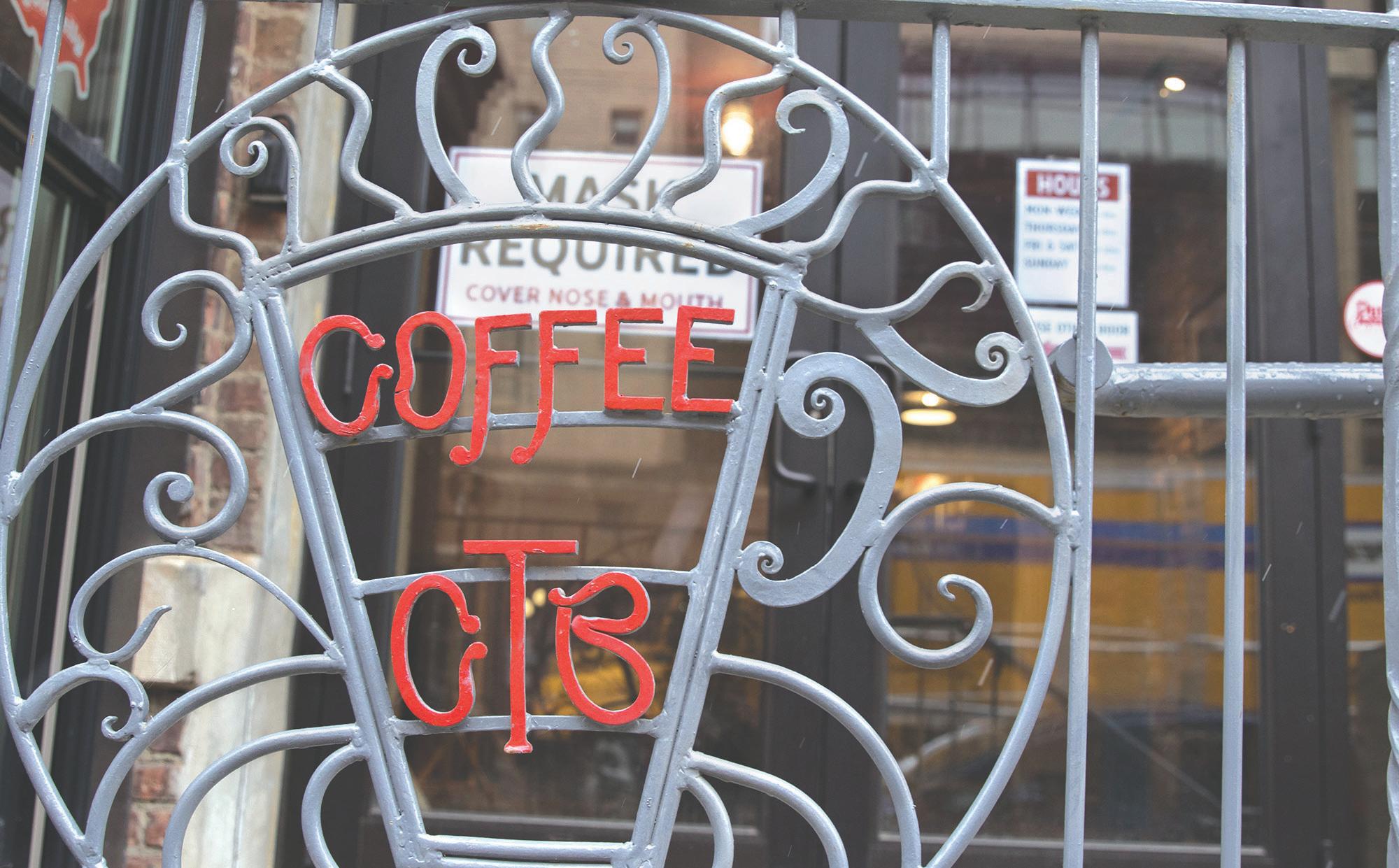
Let the stars decide your CTB order this week.
To April 19
The Southwest Breakfast Wrap has a little bit of everything with a spicy kick to pair with an Aries’ spunkiness. Aries are not afraid of a challenge and can take on this monstrous burrito filled with scrambled eggs, black beans, green peppers, jalapenos, salsa and pepper jack without hesitation. Easily bored, they opt for the seasonal lemonade to keep things fresh and new.
To May 20
Tauruses fall in love with the soothing aromas of this CTB order. The Stewart Parker provides a turkey and cheese combo on a buttery croissant that makes Tauruses feel at home. This simple order neglects out-of-the-ordinary ingredients that would scare a Taurus away; the addition of a hot tea provides a few minutes of much needed relaxation before returning to their studies. A Taurus would take their order away from the crowds on the CTB patio and to the slope for a calming scenic overlook.
To June 20
These social butterflies practically live at CTB and can be found bouncing from table to table. Geminis love to try something new with each visit and should order the Hawaiian Pizza Bagel next. The unlikely but perfect pairing of pineapple, ham and mozzarella will be something that they talk about for weeks. The rotating seasonal sugar cookies always catch a Gemini’s eye. Even though the pizza bagel might be enough for a quick lunch between classes, they will never pass up a cookie covered in rainbow sprinkles.
June 21
To July 22
Cancers are often hard to read. With this classic, nondescript order, Cancers fall under the radar. A Cancer will order the Zabs once, love it, and never order anything else. They like to create safe spaces and find comfort in the reliable turkey, avocado, chipotle aioli and mozzarella combo. On a day when a Cancer is feeling wild, they may add a fruit cup to their order, or perhaps get a pump of vanilla syrup in their iced coffee.
Leo: July 23
To August 22
Leos radiate creativity. They love the build-your-own-bowl option where the combinations are endless. They never order the same thing twice and love to tell their
friends how quirky their bowl is today. You can also catch a Leo with a vibrant smoothie. Once again, they change it up with a custom smoothie, but make sure to have ice cream as the base because they are young at heart. Leos love to be the center of attention and will gladly try to convince you that their order is superior.
August 23
To September 22
Virgos have very high standards. Nothing exceeds expectations like CTB’s twist on the classic bagel and lox. The 6 Mile Creek has lox, avocado, tomato, capers, onions and aioli dressing on sourdough bread that is bound to impress even the pickiest of eaters. Virgos also love the attention to detail in the array of toppings that sit cleanly on the crispy bread. The addition of an oat milk latte is a must. Virgos need a quick fix before their afternoon classes and a strong shot of espresso in oat milk fills the caffeine void.
Libra: September 23 To October 22
Libras find it exceptionally difficult to make decisions. The large menu at CTB often overwhelms our Libra friends. If you are a Libra and reading this, you’re welcome for making your next CTB run much smoother. Libras also love balance. With the healthy hummus, spinach, tomato, cucumber and parsley garlic dressing from Jonah’s Jive, plus a sweet and tasty donut for dessert, Libras will feel at peace with their meal.
October 23
To November 21
The BBQ Jack and a black coffee will definitely satisfy the power hungry Scorpios. Roast beef, BBQ
sauce and gooey, melted pepper jack is the perfect combination to make a Scorpio feel mighty. Ambitious in every aspect of life, Scorpios need a black coffee to get them through their intense day of trying to accomplish just about everything. Black coffee is the only option for a Scorpio or they risk looking weak by adding cream or sugar — or even worse, ordering a latte.
November 22
To December 21
The go-with-the-flow personality of a Sagittarius pairs perfectly with the California Sunrise on a Long Island bagel. Sagittarians don’t care too much about looks and will laugh it off when their hefty sandwich falls apart in their hands. The classic egg, avocado, onion and pepper jack combo will have Sagittarians’ ordering the California Sunrise over and over again. Their spontaneous and fun energy calls for a spunky drink to satisfy their taste buds. Try the Triphammer Falls green tea lemonade that’s a unique mix of grapefruit juice and thyme during your next trip to CTB.
December 22
To January 19
The old soul in a young body. The Tuscan Verde embodies the Capricorn perfectly. With chicken breast, pesto, spinach, tomato and provolone on focaccia, this sandwich will please the grounded Capricorn. There’s nothing too fancy or trendy in this sandwich that would make a Capricorn uneasy. The ambitious side of a Capricorn will love to indulge in a
January 20 To February 18
Aquarians use their time at CTB to relax and recharge. They might have a book in hand while they enjoy their Beach Tree iced coconut chai tea latte. The calm personality of an Aquarius pairs well with the Mona Lisa. Roasted turkey, brie and raspberry jalapeno jam hit the spot for any Aquarian. Aquarians’ never forget to scour the bakery case as they check out. They love their freedom and indulge in the daily selection of pastries.
Pisces: February 19 To March 21
The Sweet Rachel perfectly embodies the gentle personality of a Pisces. The Sweet Rachel is composed of turkey, honey mustard, red onion and Muenster cheese that sit elegantly between two pieces of dark pumpernickel bread. Pisces know no boundaries and can be seen asking the CTB baristas questions that are definitely too personal. A pink smoothie complements a Pisces’ romantic outlook on life and balances out the tang of the honey mustard.
Ally Mark is a freshman in the College of Human Ecology. She can be reached at alm348@cornell.edu.


Editorial
ON THE EVE OF THE SECOND BATCH of Wellness Days, Cornell students are begging for more.
With just two days off to make a four-day weekend, this break comes as a slap in the face. We are 13 months into a pandemic — sitting behind a screen and calling it school, convincing ourselves that we’re fine. But as a community, we have carved out no substantial space for the tremendous amount of pain students, faculty and staff are feeling.
In a normal semester, Cornell would carve out seven full days off. Now, as students manage stress from all facets of their lives, the University has reduced those seven days down to just four. We’ve endured, as the University put it, “converging stressors” of “xenophobia, health disparities, racial injustice, political upheaval and economic downturn,” but we are supposed to keep trudging. Even at our breaking point, these Wellness Days are functionally just a break from logging onto Zoom classes — but little else.
Cornell has gutted breaks to keep students from traveling and spreading COVID-19. The Behavioral Compact already prohibits students from traveling without University approval and states that those who travel regardless could lose access to on-campus housing and in-person classes.
Mandatory surveillance testing currently keeps many students from leaving campus for long stretches of time — missing a test means losing access to campus Wi-Fi, classes and course materials. (And while these consequences have not appeared to make a significant difference in the number of tests administered, they have added stress for students.)
But students are still traveling. Unless a student misses a surveillance test, Cornell has no real way to limit this travel, as the travel policy allows only for “extenuating circumstances,” leading many to travel without permission.
According to one data analysis, there is no clear indication that schools that have cut spring breaks have lower levels of COVID-19 transmission. But these levels of COVID-19 risk also ignore other metrics of wellbeing.
Without breaks and without significant accommodations, students cannot be safe by any meaning of the word. * * * * * * * * *
Many students have circulated and lamented the same list of University resources in our inboxes. Counseling and Psychological Services appointments dry up quickly and can take over two weeks to get the 25-minute time with a therapist. Students who previously leaned on peer counseling lost that option, too, when the University found that its current insurance policy does not cover it. Instead, some students are leaving campus to get help from home in an attempt to make up for insufficient professional help in Ithaca.
Beyond these strained resources, the University shifted the responsibility to professors to fill the gaps. In an April 12 email to faculty, administrators wrote: “We urge you to respond with as much compassion and flexibility as is humanly possible.”
Many faculty have taken this to heart, canceling assignments, rearranging syllabi and opening spaces for students to vent. They have held conversations at the beginning of class, letting students unload the pain of that morning, of that week and of the past year.
But professors are not equipped to be this sole support, nor are they equipped to give students the kind of breaks they need. For those who have extended empathy to students, thank you. It has made a world of difference.
Still, this is not the norm. Some professors have denied requests for extensions — as the University did not guarantee them — and some have reduced ongoing tragedies to bullet points on lecture slides, with students taking to Twitter as the space that will listen.
Cornell is asking professors to talk to students, support students emotionally, change their lesson plans and respond to all our concerns — without a break themselves. Faculty watch students flounder and chip away at the assignments they can, but are unable to give students a week off. Some ask if it’s better to keep offering structure or if the structure is suffocating. The rest of the onus lies on students. From resident advisers to campus leaders, students are holding each other up — writing each other emails to
send to professors asking for extensions and accommodations, and canceling club meetings in an attempt to give their peers a break.
The University has carried out one substantial institutional change: a delayed drop deadline, announced April 13. But this policy that could have been in place from the start.
Instead, it is now a last resort in the 10th week of the semester, a policy change that hit students’ inboxes with cautions of dropping below the 12-credit minimum — reminding students that meeting this minimum affects academic standing, financial aid, immigration status and athletic compliance.
The administration has also encouraged students to ask for accommodations. But this means students, already stretched thin, must advocate for themselves without a promise of compassion or flexibility.
Our situation has not changed dramatically since last spring, when campus erupted into debates about grading modes, and Cornell ultimately implemented S/U options for all classes, including major or minor requirements. As students and professors have dragged through online courses and classes for more than a year, the University has not accommodated the ongoing difficulties.
Cornell, you have asked students and faculty to bend over backward to adjust their lives to “protect the community” from the pandemic. We have incorporated surveillance testing, Daily Checks and isolation into our routines, among our readings and problem sets. But you have blamed students for outbreaks, while offering few opportunities to socialize or spaces to be people.
Two weeks ago, reporters tried to contact a large batch of administrators, and their emails all returned “out of office” messages. Cornell recognizes the weight of this year and the need for breaks. Why doesn’t that extend to us — your professors, your graduate students, your staff, your undergraduates?
“Students are exhausted, lonely, and overwhelmed,” the University wrote to faculty. “They need to be able to pause so they can process their emotions and grieve.”
University emails, student life Instagram pages and residence halls posters tell students to, to take a walk, to meditate, to spend time in nature. But these short-term “de-stressers” cannot scratch the surface of the institutional issues Cornell faces.
Cornell is not alone in this widespread mental health crisis on college campuses — one that long predates the pandemic and has only been exacerbated by it.
Princeton University students also saw a shortened spring break — and their mental health services saw a drastic increase, including a 60 percent increase in hospitalizations compared to the previous year, according to The Daily Princetonian.
But in response to this increase and ongoing student pleas, Dean of the College Jill Dolan recommended “shaving off pieces of the last two weeks of assignments,” making certain inessential readings optional, clarifying final work expectations early and “providing opportunities for other kinds of final work or even individualized plans with students who are in very real difficulty.”
Those changes are not beyond Cornell’s reach. The University could implement limits on how many final components are offered or create “slip days,” as the Student Assembly advocated for on April 15.
If nothing else, the University should make accommodation options clearer to students and to professors looking to offer what Dolan called “compassionate approaches.” Give power to professors who will always have a clearer grasp on student needs and academic wellbeing.
These accommodations should be the standard, not the exception. Cornell calls this year “unprecedented,” but its policies do not acknowledge the effects on its community.
Tragedy across the nation and at home on campus weighs on all of us, and we cannot be expected to turn on the camera for another Zoom call and trudge along. In many ways, it’s too little too late from our administrators. But we need Cornell to do better now.
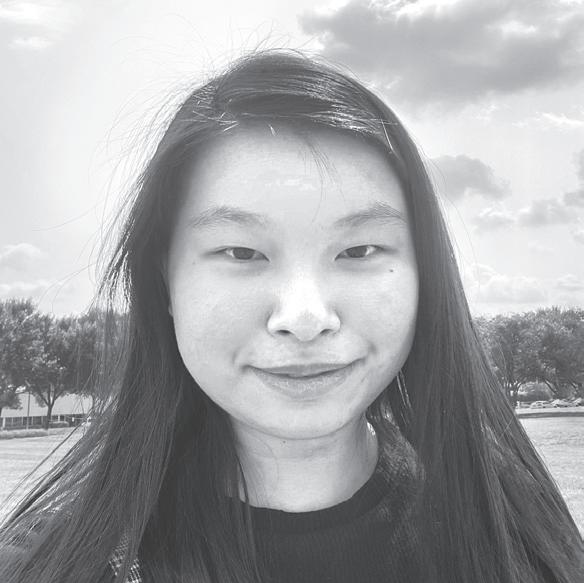
Katherine Yao
Katherine Yao is a sophomore in the College of Arts and Sciences. She can be reached at kyao@cornellsun.com. Her column, Hello Katie, runs every other Wednesday this semester.other Tuesday this semester.
In the fall of 2019, I spent my orientation attending as many events as I could pack into my schedule, exchanging chatter and contact information with anyone and everyone I met, and walking over 20,000 steps each day before collapsing, exhausted but giddy, into my bed.
Te Class of 2020, on the other hand, saw their classmates for the frst time as little squares on a computer screen. Students on campus were greeted not by President Pollack’s Schoellkopf Field speech, but by a quarantine period before being allowed to venture out onto the school grounds. Tose students studying at home know even less about the atmosphere of the Cornell campus, about the frst late-night foray into Bear Necessities and those initial awkward dorm room conversations.
Teir college frsts have been disrupted in so many other ways as well. All classes have been modifed to accommodate the new online format. I don’t care how much you love your major –– it’s hard to feel passionate about anything after you’ve been staring at a computer screen for six hours in a row, fve days a week. Clubfest and club meetings were also moved online, and nearly all Cornell and Ithaca traditions, such as AppleFest or Homecoming weekend, were put on hold. Sacrifcing enjoyment for public health was obviously necessary to keep Cornell open this school year, but it doesn’t make the transition to college any easier.
If Cornell opens up to in-person instruction this fall, Cornell should make it a priority to acclimate the Class of 2024 to the real Cornell experience and make up for some of the experiences that the pandemic snatched away. In addition to letting these students participate in orientation activities for the Class of 2025, they should also have access to exclusive orientation events, tours, social gatherings and advising sessions. Students who stayed remote the entire 2020-2021 school year especially deserve the time to connect with their peers in-person through these events. Just like every Cornellian before them has, the Class of 2024 should get the opportunity to receive in-person guidance with upperclassmen and faculty during those frst few weeks. Tey should be able to attend orientation seminars on subjects like conducting research and study abroad. Learning the ins and outs of Cornell is hard enough during a normal semester, but having to do so for the frst time during the coronavirus crisis posed difculties that would have been unimaginable before.
Coming back to campus as Cornell reverts to its pre-pandemic state will pose new, completely diferent challenges. Most current freshmen had a high school senior year cut short, missing out on quintessential experiences such as graduation and prom. Now, these students have essentially lost out on a year of meeting friends, cultivating relationships with professors and making the most of the resources that come with being a Cornell student. Last semester, I wrote about the sophomore slump and dealing with the burnout that comes from feeling like you need to start fguring your life out but not knowing where to start. I can only imagine how hard this period will be after spending freshman year in a state of pandemic-induced limbo. Our current freshmen are in the unenviable position of starting their Cornell journeys through a computer screen, and these students deserve more than to be shunted aside for the incoming batch of freshmen. Next year, more than ever, the University needs to step up and fnd ways to make these new sophomores feel supported as they start asking themselves questions about what they want to get out of college. Te Class of 2024 still has three more years at Cornell — let’s not waste any more time and start making them count.

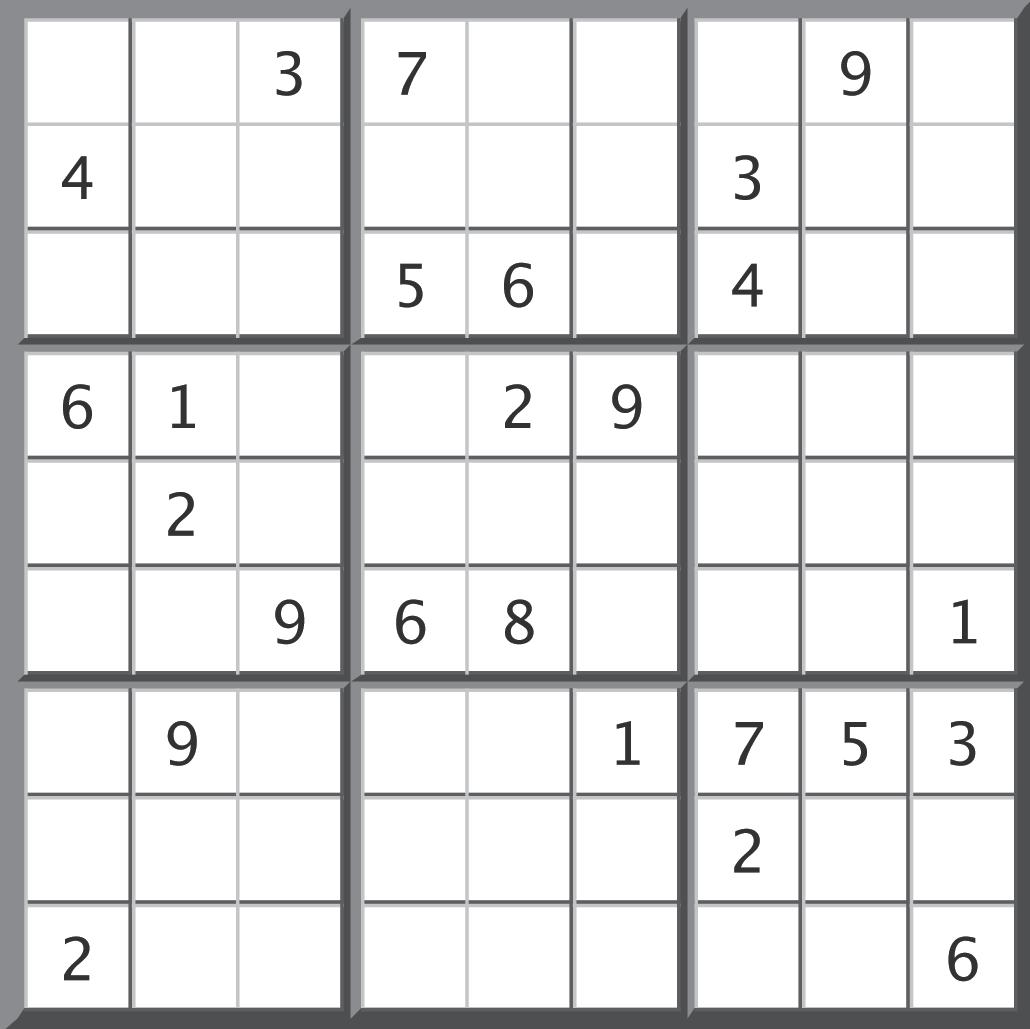
Fill in the empty cells, one number in each, so that each column, row, and region contains the numbers 1-9 exactly once. Each number in the solution therefore occurs only once in each of the three “directions,” hence the “single numbers” implied by the puzzle’s name. (Rules from wikipedia.org/wiki/ Sudoku)


MEN’S LACROSSE
By WILLIAM BODENMAN Sun Assistant Sports Editor
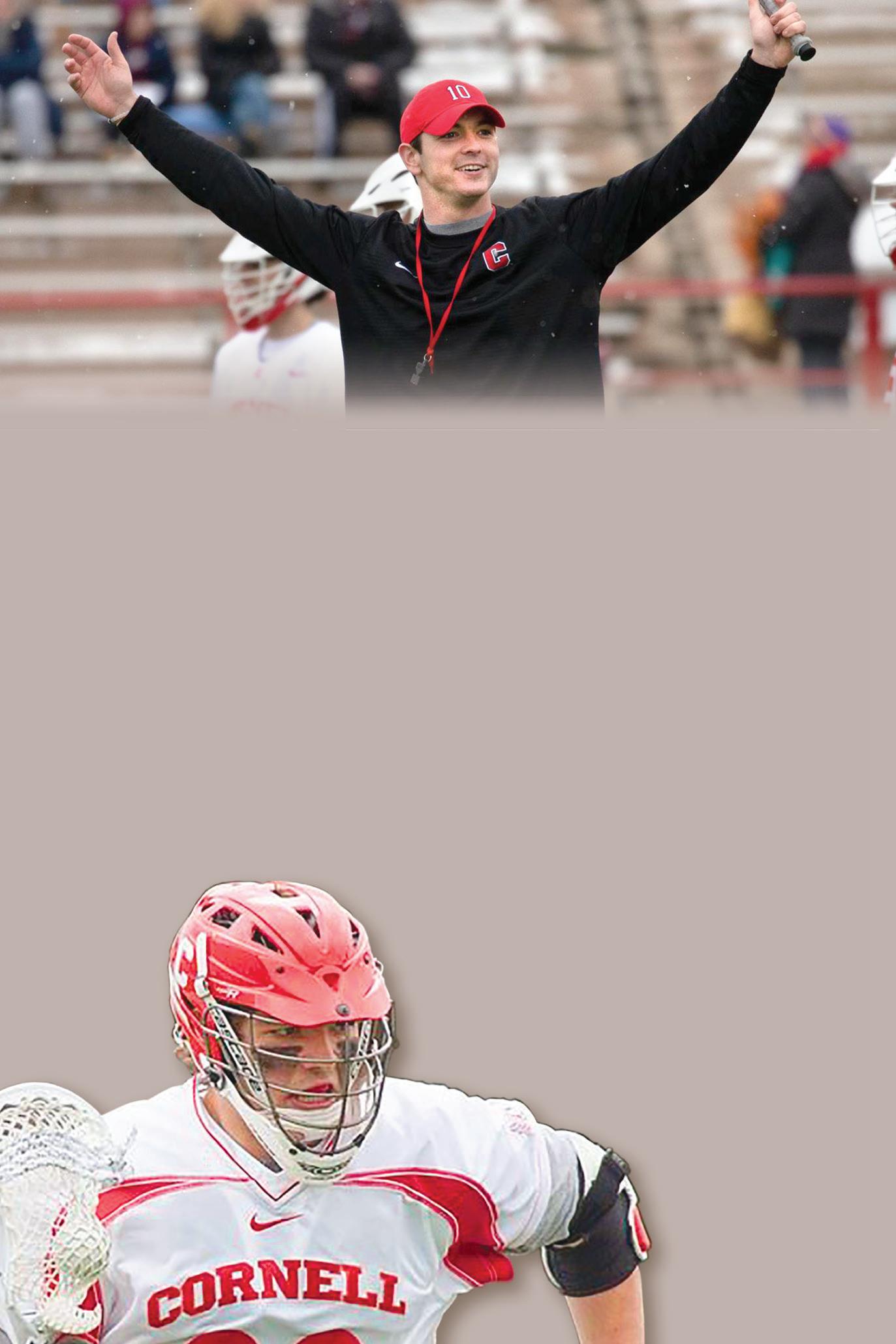
Since taking over as the Richard M. Moran Head Coach of Men’s Lacrosse after the abrupt departure of former head coach Peter Milliman in April 2020, Connor Buczek ’15 has faced circumstances unlike any other as a first-year head coach.
Buczek’s former roles as a student athlete and assistant coach for the Red had a major impact in his decision to accept the mantle of head coach.
“This is a place that’s meant so much to me and I look forward to hopefully giving back to these guys
Student to teacher |
Before becoming Men’s Lacrosse’s newest head coach, Connor Buczek
’15 was a three-time All-Ivy League and three-time AllAmerican midfielder for the
for years to come,” Buczek said.
As a midfielder for the Red from 2012-2015, Buczek earned three subsequent nominations to the First-Team All-Ivy and All-American squads, which recognize the best collegiate players in the country, and earned the Ivy League Player of the Year award in 2014. Prior to taking over as head coach, Buczek served as a volunteer assistant coach from 20152017 and as the assistant coach from 2017-2020.
However, Buczek has been unable to showcase his abilities as the head coach on the field because of the Ivy League’s cancellation of the 2021 spring sports season, which has posed a new set of problems for the coaching staff.
As a result of Ivy League rules preventing in-person team practices, Buczek and the coaching staff have had to work much harder at keeping the team connected.
This task has been especially important, as the pandemic and other stressors have negatively impacted the mental health of student athletes.
“Our goal as a staff was to make sure that we were here for these guys first and foremost as people,” Buczek said. “It all starts with making sure that
we’re looking out for the well-being of our student athletes and making sure that they’re doing the right things and taking care of one another.”
Buczek noted that the lack of regular games and practices has been a challenge for maintaining morale and facilitating team communication .
“You kind of live for those Saturdays in the spring and facing greatness on the field and all the challenges and hurdles that come with that,” Buczek said.
This lack of in-person events is especially difficult for current freshman and sophomore players who haven’t had an opportunity to play at a collegiate level, which has presented the team with an experience gap among its players.
“It’ll just take some situational awareness and gameplay to get us back up to where we want to be,” Buczek said.
In the absence of regular play, Buczek remarked that the team has evaluated all parts of the program to rethink how to influence big picture strategy, individual player development and character development.
Beyond his coaching responsibilities, Buczek also plays midfield for the Cannons Lacrosse Club in the professional Premier Lacrosse League. Buczek is utilizing the time spent on the field to inform his perspective while coaching and creating strategies for the team.
“I’m around smart people who are introducing new ideas, talking about systems and thinking about things in a way that I don’t,” said Buczek. “Being able to play allows me to constantly have those conversations and be around those people that are questioning how you think about the game and adding to your repertoire.”
Though he expects players and the coaching staff to make mistakes, his goal for the team is to perform to their best.
“That’s really what our goal is, to show up and be the best version of ourselves every day, and when we fall short to be honest with ourselves and improve from there.”
William Bodenman can be reached at web89@cornell.edu.