
College of Agriculture and Life Sciences Student Dies
By SURITA BASU Sun Assistant Managing Editor
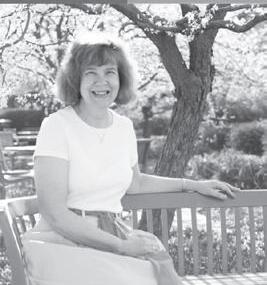
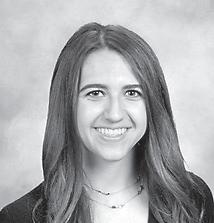
Daniela Lee ’22 died on Tuesday night, according to a Wednesday announcement from Vice President for Student and Campus Life Ryan Lombardi.
Lee was a senior in the College of Agriculture and Life Sciences studying communication. According to the announcement, Lee was passionate about reading and classical literature.
At Cornell she was deeply engaged with the American Indian and Indigenous Studies Program and Cru, an interdenominational Christian student organization and was also a Cornell United Religious Work affiliate.
Lee’s passion for reading and Native American issues extended to her work with the Native American Advocacy Foundation, a non-profit founded by her sister, where she focused on Native American literacy initiatives.
In the announcement, Lombardi expressed his condolences to Lee’s friends and family, including her parents, who are Cornell alumni, and her sisters who
are students at Cornell.
“Please join me in keeping them in your thoughts during this difficult time,” Lombardi said in his announcement.
This is the fourth student death announced during the Spring 2022 semester.
The University will hold an in-person community support meeting on Thursday, April 21 from 5 to 6 p.m. in Goldwin Smith 142.
Students in need of professional mental health support can call Counseling and Psychological Services (CAPS) at 607-255-5155 and employees can call the Faculty and Staff Assistance Program (FSAP) at 607-255-2673. Due to the COVID-19 pandemic, all CAPS and FSAP services are currently being delivered via telehealth. Whenever these services are closed, calls are answered by Cornell Health’s on-call mental health provider. The Ithaca-based Crisisline is also available at 607-2721616. A wide range of supportive resources is also available at caringcommunity.
McGraw Tower Chimesmaster Concerts Will Re-Open to Visitors
Student chimesmasters will once again have indoor audience while performing musical concerts for University community
By CAMDEN WEHRLE Sun Staff Writer
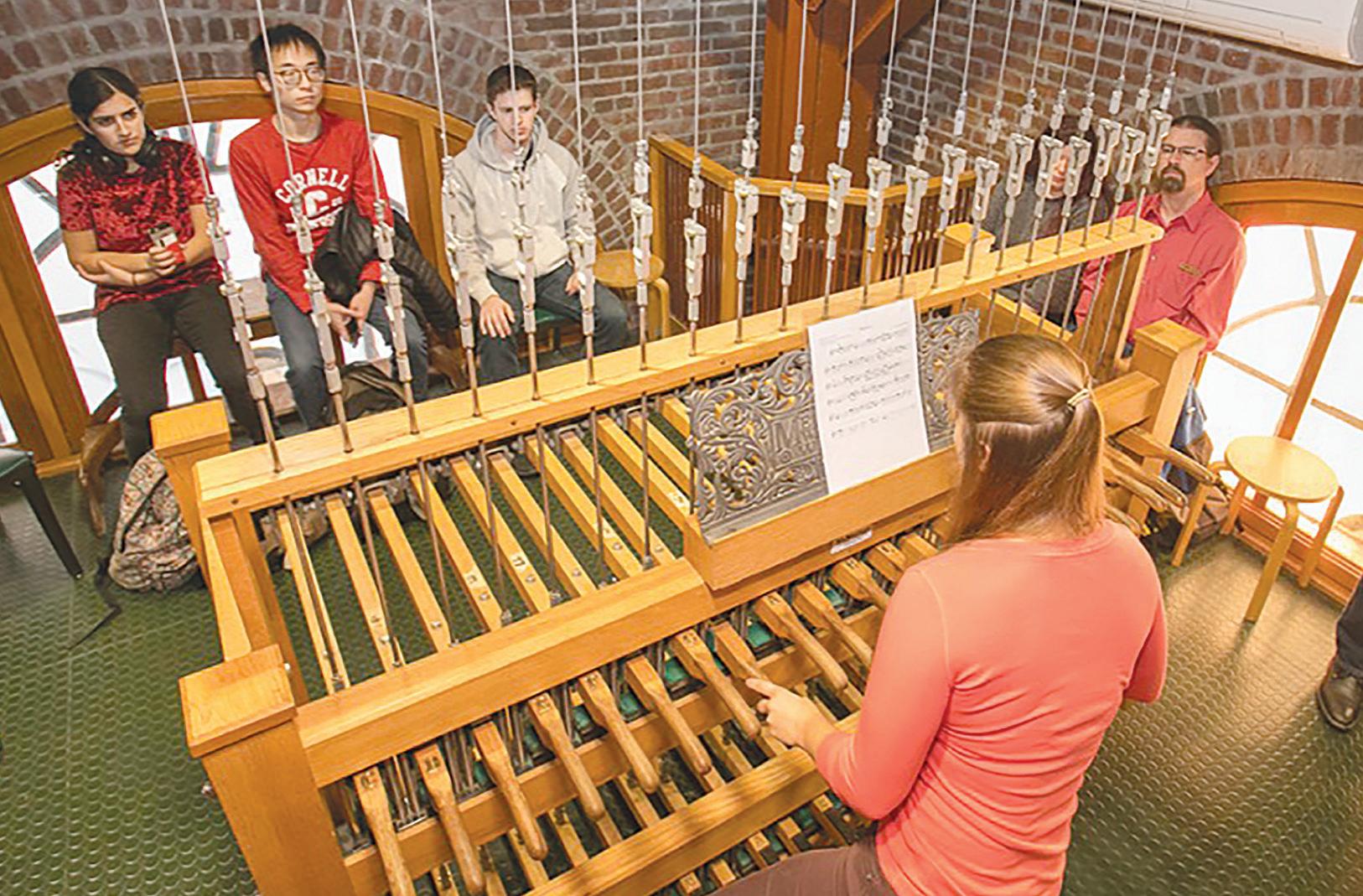
On Monday, April 11, McGraw Tower once again opened its doors to visitors hoping to climb its 161 stairs to attend a Cornell Chimes concert.
The tower, which has been a staple of Cornell’s central campus, has been closed to visitors since the onset of the COVID-19 pandemic. For the student musicians that play the bells three times a day, known as chimesmasters, the lack of an in-tower audience has been anomalous, but not a prevention to their craft.
“It’s been really odd playing without visitors,” said Linda Li grad, head chimesmaster. “Now that we’ve opened back up, it’s been really excit-
ing to show visitors who is behind the music.”
The Chimes program now hopes to give students, especially those graduating this semester, a chance to visit the tower.
“We have a lot of Cornellians that haven’t had the opportunity to go into the tower because it’s been closed for approximately two years,” said Marisa LaFalce ’96, the Cornell Chimes program coordinator. “We’re working with Campus Activities to provide some opportunities for seniors to climb the tower during Senior Days.”
Li described limitations placed on the Chimes program due to the pandemic, such as restrictions on the number of chimesmasters allowed
See CHIMES page 4


By SOFIA CHIERCHIO Sun Staff Writer
As the 2022-2023 academic year ends, Cornellians reflect on their time in Ithaca, and recount the pressures they’ve faced throughout the year.
“My family expects the best of me. I often worry that my grades aren’t good enough for them.”
Mikala Anderson ’23
A 2018 survey from the American College Health Association reported that around 90 percent of college students
felt overwhelmed and physically exhausted by school-related responsibilities, including stress of exams along with extracurriculars. About 60 percent of students reported that they felt a large amount of anxiety or depression. These statistics are part of a larger national debate regarding the mental health of college students –– many are trying to figure out what factors are contributing to these issues.
Natalie Meredith ’25 feels that pressure from Cornell’s competitive environment is a factor in declining student mental health.
“Being in a competitive environment comes with the urge to compare yourself to others,”
See PRESSURE page 3
COURTESY OF CORNELL UNIVERSITY
Surita Basu can be reached at sbasu@cornellsun.com.
For whom the bells toll | Visitors are treated to a chimesmaster’s concert high atop McGraw Tower.
Daybook
Today
Thursday, April 21, 2022
A LISTING OF FREE CAMPUS
S.C. Tsian Macroeconomics Workshop: David Zeke 11:15 a.m. – 12:45 p.m., 498 Uris Hall
Revisiting the Air War in Indochina: American Strategic Bombing From Vietnam to the Present 11:25 a.m. – 12:40 p.m., G08 Uris Hall
Modeling Misinformation and Implied Toxicity to Build Less Biased Systems — Justice, Equity, Diversity and Inclusion Dialogues 11:30 a.m. – 12:30 p.m., 114 Bill and Melinda Gates Hall
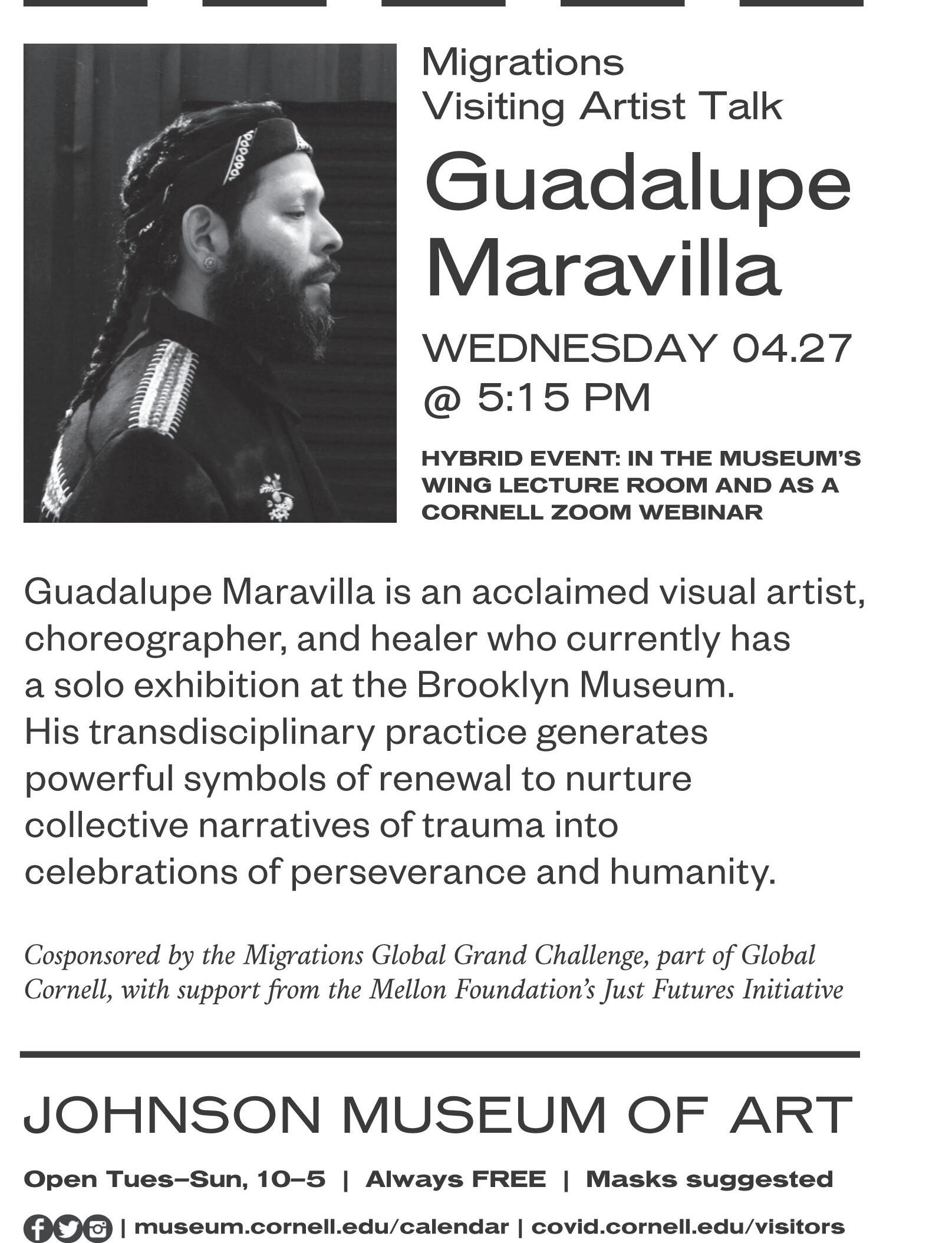
Chicana Artist Sandy Rodriguez In Conversation with Mary Jo Dudley Noon – 1:15 p.m., Virtual Event
“Gravitational-Wave Astrophysics: Progress and Puzzles” Vicky Kalogera, Northwestern University 4 p.m. – 5 p.m., 105 Space Sciences Building
Cornell Annual Math Awareness Month Public Lecture 4:30 p.m. – 6:30 p.m., 253 Malott Hall
“Composing Toxic Landscapes: an Evidential Ethnography of the Destruction of the Amazon Forest and the Creation Of Soy Monocultures,” by Fabio Zuker, Latin American and Caribbean Studies Seminar Series 4:30pm – 6 p.m., G-01 Stimson Hall
War, from the South: Resistance Ecologies in Post-2006 Lebanon 4:45 p.m. – 6 p.m., 110 White Hall
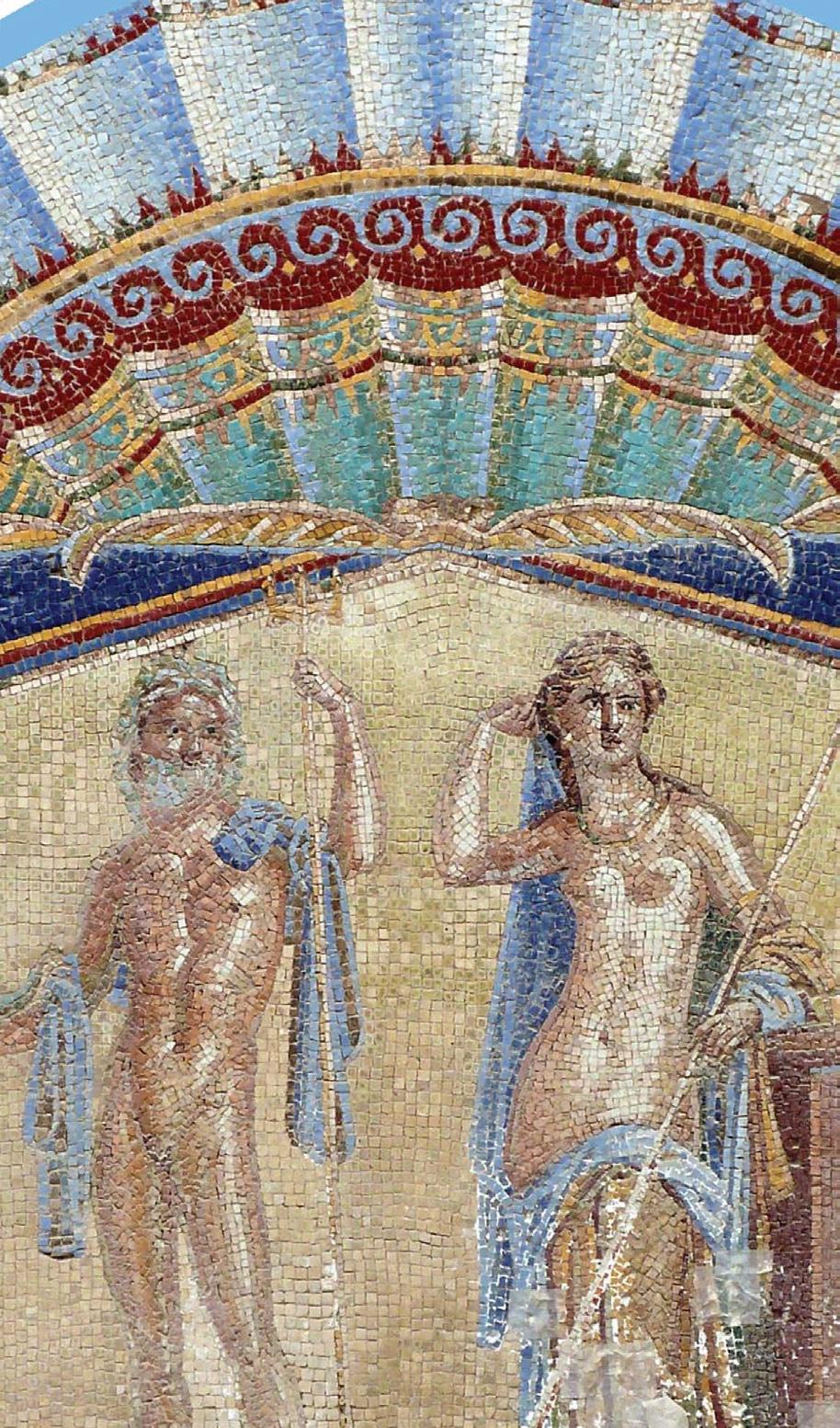
Roman play | On Friday, April 22, the Cornell Classics department will be staging the play Adelphoe, an ancient Roman comedy that tells the story of two brothers who are raised in different households, and explores the topic of child-rearing.
EVENTS
Tomorrow
The Hotel of Tomorrow Project: A Glimpse Into the Future of Hospitality 9:30 a.m. – 10:30 a.m., Alice Statler Auditorium
Words Walking Without Masters: Conversations on the Creative-Theoretical 10 a.m. – 6 p.m., A.D. White House
Platicas: Latinx Sudents Present Their Research Noon – 1 p.m., 429 Rockefeller Hall
The Moment for a Movement: Starbucks and te Sow Drip of Starting a Union Noon – 2 p.m., 105 Ives Hall
Environmental Humanities Working Group: “Creative Nonfiction and Climate Change” Noon, Virtual Event
Cornell Institute of Archeology and Materiality Science Workshop: Prof. Lynn Meskell, A.D. White Professor-at-Large 12:15 p.m. – 1:15 p.m., 125 McGraw Hall
Seminars in Infection and Immunity: “Immunity and Social Behavior Through the Prism of Functional Mycobiota Exploration” — Iliyan Iliev, Ph.D. 12:15 p.m. – 1:15 p.m., Virtual Event
Cornell Classics Department Presents Adelphoe 7 p.m., KG70 Klarman Hall
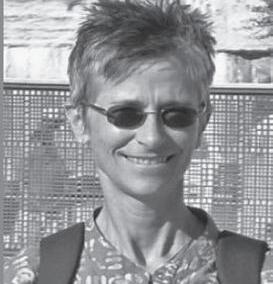
Jennifer Robertson
Professor Emerita, Anthropology and History of Ar t
Robo-Sexism: Gendering AI and Robots in Japan and the United States (and Elsewhere)
Friday, April 22, 2022 4:45pm to 6:15 p.m. G64 Goldwin Smith Hall
The Public is Invited This University Lecture is sponsored by the Cornell Department of History and the University Lectures Committee, co-sponsored by the East Asia Program at Cornell.
Sidnie White Crawford
Willa Cather Professor Emerita, University of Nebraska-Lincoln, and Visiting Scholar at Princeton Theological Seminary
Archaeology, Science & the Dead Sea Scrolls
A Library at Qumran? How to Identify a Library in the Ancient World
Scribes & Scrolls: Scribalism in the Ancient World & the Dead Sea Scrolls
The Public is Invited Register for the lectures: https://bit.ly/white-crawford-messenger
COURTESY OF WIKIMEDIA COMMONS
Flo Milli to Take Over Barton Hall for Concert
Makes frst appearance at C.U. with special guests, Tkay Maidza and Réne Ortiz
By MARY SOTIRYADIS Sun Staff Writer
On Saturday, April 23, Flo Milli and special guests Tkay Maidza and Réne Ortiz will perform at a concert in Barton Hall, presented by the Cornell Concert Commission and the Multicultural Funding Advisory Board. The concert will be open to the Cornell community and general public.
The Cornell Concert commission and the Multicultural Funding Advisory Board are responsible for organizing and hosting concerts on campus, working with various artists to provide enter -
“It’s important to see your peers in spaces besides lecture halls. I think it invites a sense of belonging that will stay with us after we graduate.”
Rachel VanderVen ’24
tainment for the campus community.
Miles Greenblatt ’22, executive director of the Concert Commission, who took part in the decision of which artists to attempt to host, described Flo Milli as an exciting young rapper that many students were incredibly interested in seeing perform. Greenblatt said that students from the Concert commission, Multicultural Funding Advisory Board, and other organizations across campus have been asking for Flo Milli to come to campus for over a year.
“It is also always important to us to bring artists that represent a wide variety of students,” Greenblatt said. “Early on, all of our in-person hip-hop shows have featured male rappers, [so] this was an excellent opportunity to bring an artist that is exciting to a lot of students, and to have Black women both headlining and opening a CCC
hip-hop show for the first time in over a decade.”
The planning process for the concert began in the beginning of the school year, when the Concert Commission and the Multicultural Funding Advisory Board worked together to pick possible dates for the show.
The organizations invited Cornell students to suggest possible artists to welcome onto campus. Greenblatt added that these processes were open to everyone in the Cornell community, which resulted in an overwhelming amount of feedback.
“Our selection surveys go out to our Listserv of over 1,000, and we regularly receive hundreds of responses from students,” Greenblatt said.
The final decision, based on the student suggestions on which artists to host, was made by executive board members of the Concert Commission and the Multicultural Funding Advisory Board.
Students across campus have chattered excitedly in anticipation for the opportunity to see Flo Milli, especially considering the impact of the COVID19 pandemic on the live music industry.
“This is my first real concert since COVID,” said Jolene Tsang ’24. “These fun campus events are so important to build community. I think it’s a good way to bring together so many different people who wouldn’t normally get to see each other. It is also a great way to take a break from the stress of class.”
Bianca Kaplan ’24, a member of the Cornell Concert Commission, is looking forward to seeing Flo Milli and has been listening to her music since high school.
“Her music is pretty upbeat and fun to listen to,” Kaplan said. “I’m excited to see her perform live. She has a pretty big online personality.”
Rachel VanderVen ’24 added that she thinks that campus-wide events

such as this concert foster a sense of community among Cornellians.
“It’s important to see your peers in spaces besides lecture halls,” she said. “I think it invites a sense of belonging that will stay with us after we graduate.”
Greenblatt said that he thinks Flo Milli has the potential to be one of the biggest rappers in the world. He also noted that the Multicultural Funding Advisory Board has picked acts that
Cornellians Share Stresses, Pressures
PRESSURES
Continued from page 1
Meredith said. “This type of environment pushes me to succeed, but often at the expense of my mental health, so overall I would say it causes more harm than good.
For some students, like Mikala Anderson ’23, this competitive environment is exacerbated with pressures from family.
“My family expects the best of me,” Anderson said. “I often worry that my grades aren’t good enough for them, especially coming from a high school where I excelled academically.”
Like Anderson, Aaron Flores ’25 experiences pressure to make his family proud and to make the most of his education at Cornell.
“As a son of immigrant parents, I feel the need to constantly prove to them that the sacrifices they have made for me in the past were worth it,” Flores said. “I have to make sure that my grades are top-notch.”
Another main stressor among Cornell students is the pressure to land a job or internship within a competitive market. Lauren Douglass ’24 says that the expectation to get a job is her main source of anxiety during her time at Cornell.
The National Association of Colleges and Employers conducted a survey analyzing the difficulties students face while trying to find a job during Covid times. The report found in 2020, only about 50.2 percent of bachelor’s graduates received a full-time job immediately after graduation.
“Being around so many smart people makes it
really easy to think you’re never doing enough,” Douglass said. “A huge part of my anxiety comes from trying to keep up with being a good candidate for a job after graduation.”
Although Erin Laney ’25 believes that Cornell’s competitive environment causes some students to have imposter syndrome, she feels there are positive aspects.
“This competition amongst our peers is positive to an extent. It pushes us to work harder and reach our highest potential,” Laney said.
Dealing with this constant pressure can have a drastic effect on one’s mental health. Cornell’s 2020 Mental Health Report showed that about 40 percent of students were unable to function due to stress, anxiety, or depression. Although Cornell has mental health resources, some students have their own coping mechanisms to keep themselves healthy.
“I remind myself that everyone is running their own race, and has different strengths,” Meredith said. “It is important to take care of yourself mentally and physically. You need to find a balance between social life and academics, and find time for both.”
Like Meredith, Anderson learned to find that balance, and encourages others to surround themselves with people that make them happy.
“Don’t be afraid to try new things,” Anderson said. “Find a group of people you get along with, and don’t try to fit in with a group if you’re not being your true self.”
Sofa Chierchio can be reached at schierchio@cornellsun.com.
April 23, at 7 p.m.
have gone on to become majorly successful later.
“In 2019, the Multicultural Funding Advisory Board brought Doja Cat to perform in Risley Hall and now she is headlining major festivals,” Greenblatt said. “They know how to pick great acts, and I think they’ve done it again.”
Mary Sotiryadis can be reached at msotiryadis@cornellsun.com.

Concert experience | After requesting her for over a year, the Cornell Concert Commission and Multicultural Funding Advisory Board will welcome Flo Milli on Saturday,
Cornell Chimes Now Welcomes Visitors for Concerts
CHIMES
in the tower at a time and the inability to play duet pieces.
Despite this, the chimes have continued to ring out across campus, which Li described as a relaxing time away from classes that also connected her to the real world when classes were all digital.
“During the time when a lot of things were canceled [due to the pandemic], Chimes was the main [extracurricular] that kept going,” Li said. “I really enjoyed being able to go to the tower and continue to play concerts.
It was kind of a sense of normalcy.”
Li said that the changes to some COVID-19 restrictions and policies have made it easier for the chimesmasters to perform together, as they can playfully crash each other’s concerts and conduct holiday concerts as a group.
Several popular social media accounts have showcased the chimes to the public, even when they were not able to attend concerts in person.
Li lauded the outreach of these accounts, which include the official cornellchimes Instagram page and the “bingaleedin -
galee24” TikTok account, which is run by one of the newer chimesmasters, to showcase the expansive music library of the chimes and increase community engagement. Li also said they help teach people how chimes are actually played by students, and not automated.
“The chimes competition, and the chimes in general are kind of mystic to the public. Not everyone has the chance to go to the top of the tower… [some people] may not know there’s someone actually playing,” Li said.
Those hoping to ring bells themselves have an opportunity
to take part in the ten-week long audition process for new chimesmasters in the spring semester.
According to Li, the chimes program made several changes to the audition process last year due to COVID-19 restrictions, such as spacing out practice times. While those are not present this year, some changes intended to make the process less stressful, like limitations on practice time and increased exercises to make the learning process easier, will stay.
“This year, a lot of our changes regarding stress and making it a much more enjoyable audition

process, we’ve kept,” Li said. She noted that the chimes are a hobby, not a job, and people should enjoy it.
With the opening of concerts to the public, Li expressed concerns about visitors overwhelming the cramped space at the top of the tower, and requested concert attendees to exercise caution and avoid crowding the chimesmasters.
Morning and evening concerts are open to anyone, while midday concerts require an advance reservation.
Camden Wherle can be


Your source for good food
Tai Chi: A Local Asian Twist With Boba, Ramen and More
By GRACE KIM
Editor
Tai Chi is a newly opened Asian restaurant that serves a variety of dishes ranging from poke burritos to Japanese ramen. Even better, they offer a plethora of boba options such as fruit tea and milk tea.
This new establishment is located in the shopping plaza that includes Trader Joe’s and Panera Bread.
After hearing about this new restaurant in Ithaca, I knew I had to go and taste-test their boba and poke bowls. I was excited to try

some of my favorite food, and knowing that Tai Chi was a chain restaurant, I was thrilled.
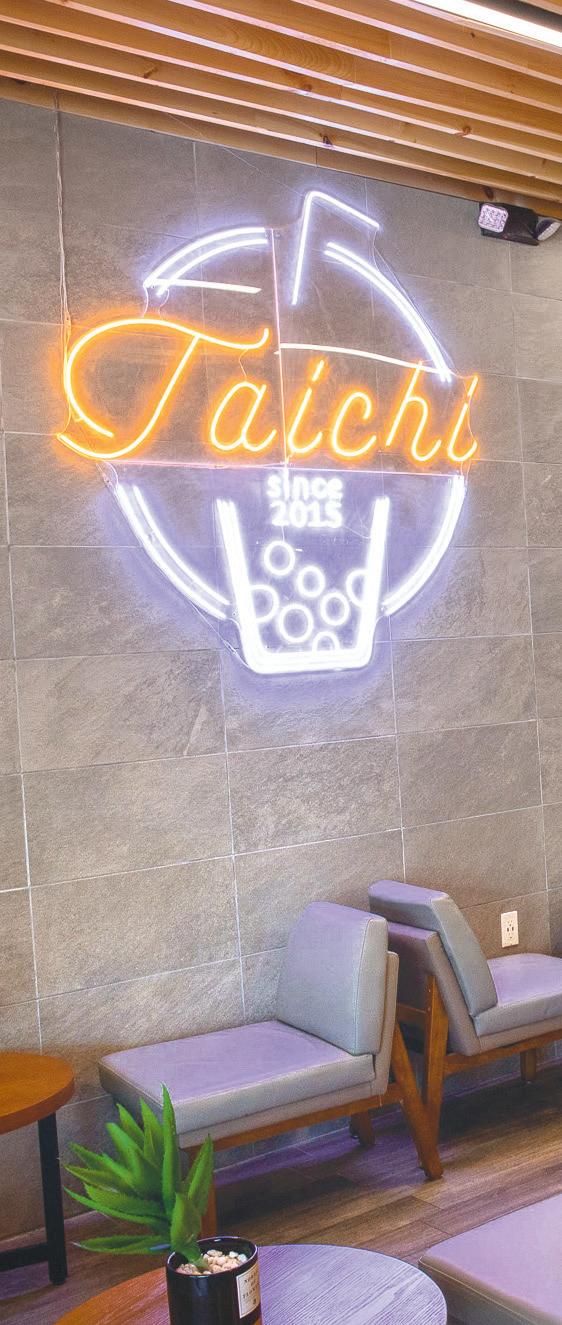
Upon arrival at the shop, I was amazed at the interior design of Tai Chi. In a wide open space, there is plenty of room and seating to eat and chat.
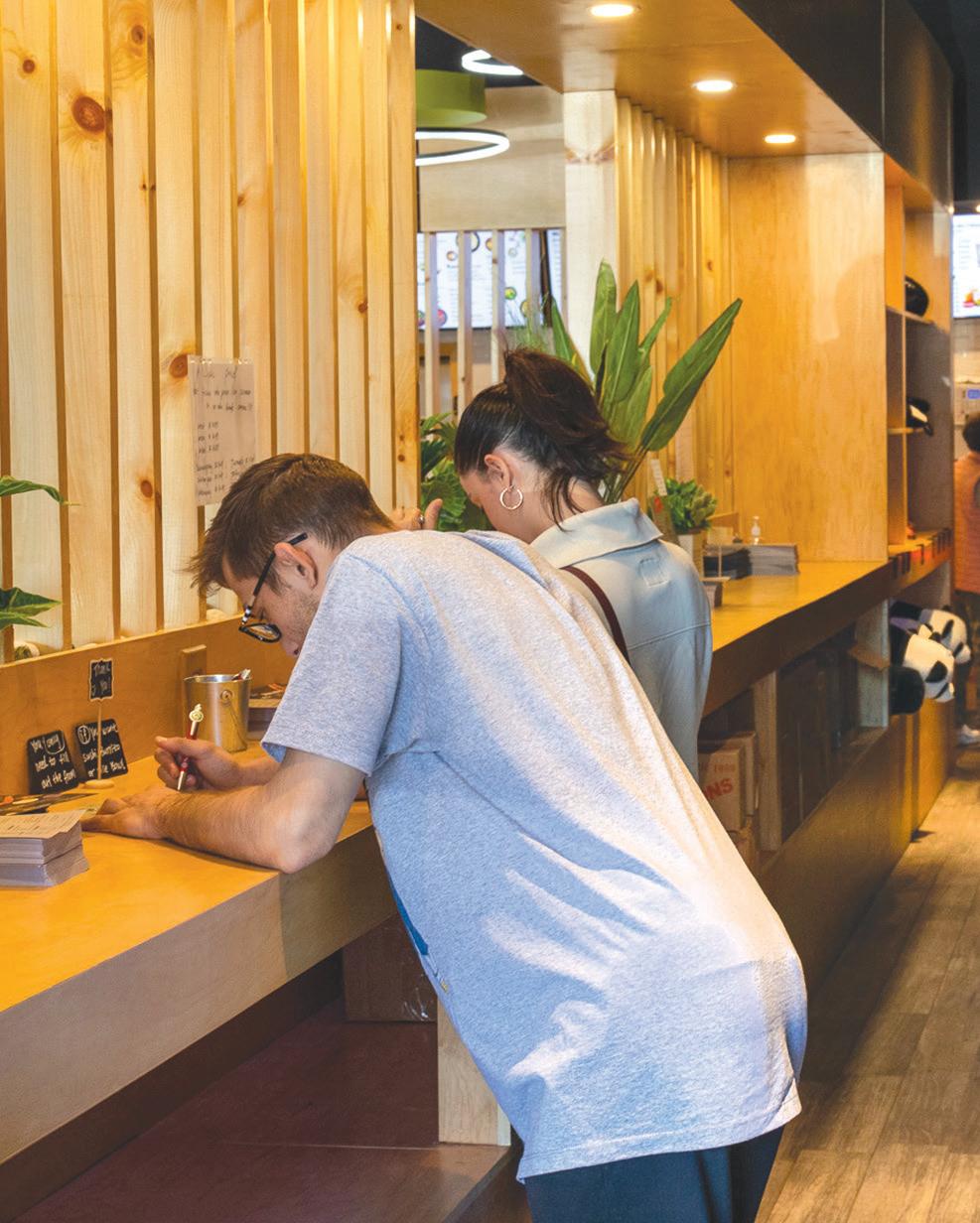
Additionally, there are charging outlets lined against the wall, which makes it a great place to come study with friends while enjoying good food.
When it came time to order, I was given two options: I could either walk straight to the cashier and verbally tell them my order, or I could pick up a menu slip
and check the boxes for which dishes and ingredients I wanted. This efficient system caught me by surprise and made it easier for me to look at all the options I could choose from. Ultimately, I settled with getting a salmon poke bowl with additional toppings and a matcha milk tea with boba.
After a few minutes of chatting, my food and drink were ready.
The presentation was beautiful and filled with color. I eagerly dug into my poke bowl and was not disappointed.
Although the salmon was a bit hard, the rice and complementing sauces and toppings made up for
it. However, the matcha milk tea was a bit too sweet for my taste and left me craving a stronger matcha flavor.
Overall, Tai Chi is a great place to come with friends to study or to just hangout. The welcoming and warm environment makes it easy to focus and be productive.
Their food wasn’t as satisfying as I had hoped, but I definitely do want to come back to try more of their rice bowls and other flavored teas.
Grace Kim is a sophomore at the Nolan Hotel School. She currently serves as the Dining Editor and can be reached at gmk73@cornell.edu.

Upon arrival at the shop, I was amazed at the interior design of Tai Chi. In a wide open space, there is plenty of room and seating to eat and chat.
Inside Tai Chi | Left: Customers order at the menu slip found in the front. Right: Tai Chi’s famous brown sugar milk tea boba.
Dining
BOTH PHOTOS BY JULIA NAGEL / SUN PHOTOGRAPHY EDITOR
Inside Tai Chi | Taichi’s interior design features a bright neon sign.
JULIA NAGEL / SUN PHOTOGRAPHY EDITOR
The Corne¬ Daily Sun Independent Since 1880
140th Editorial Board
VEE CIPPERMAN ’23
SERENA HUANG ’24 Business Manager
EMMA LEYNSE ’23 Associate Editor
SURITA BASU ’23
Assistant Managing Editor
NAOMI KOH ’23
Assistant Web Editor
ELI PALLRAND ’24 News Editor
ESTEE YI ’24 News Editor
KAYLA RIGGS ’24
Editor
JULA NAGEL ’24
Editor
MEHER BHATIA ’24
Editor
KATRIEN DE WAARD ’24
Production Editor
PAREESAY AFZAL ’24
Assistant News Editor
JIWOOK JUNG ’25
Assistant News Editor
ADITI HUKERIKAR ’23
Assistant Arts & Culture Editor
DANIELA WISE-ROJAS ’25
Dining Editor
JASON WU ’24
Assistant Photography Editor
GRAYSON RUHL ’24
Assistant Sports Editor
KEVIN CHENG ’25
Newsletter Editor
HANNAH ROSENBERG ’23
Senior Editor Working on Today’s Sun
Senior Editor
Layout Desker Katrien de Waard ‘24 Design Desker Kristen D’Souza ’24
Managing Desker Angela Bunay ’24
Associate Desker Emma Leynse ’23
Dining Desker Grace Kim ’24
News Deskers Estee Yi ’24
Science Desker Tenzin Kunsang ’25
Photography Desker Jason Wu ’24
Production Deskers Katrien de Waard ‘24 Katherine Chang ‘25
’23
’23
Rebecca Sparacio Te Space Between
Rebecca Sparacio (she/her) is a sophomore in the Dyson School. She can be reached at rsparacio@ cornellsun.com. Te Space Between runs every other Wednesday this semester.
Unmasking a New Reality
NDANIEL BERNSTEIN ’23
ROSENBERG ’23
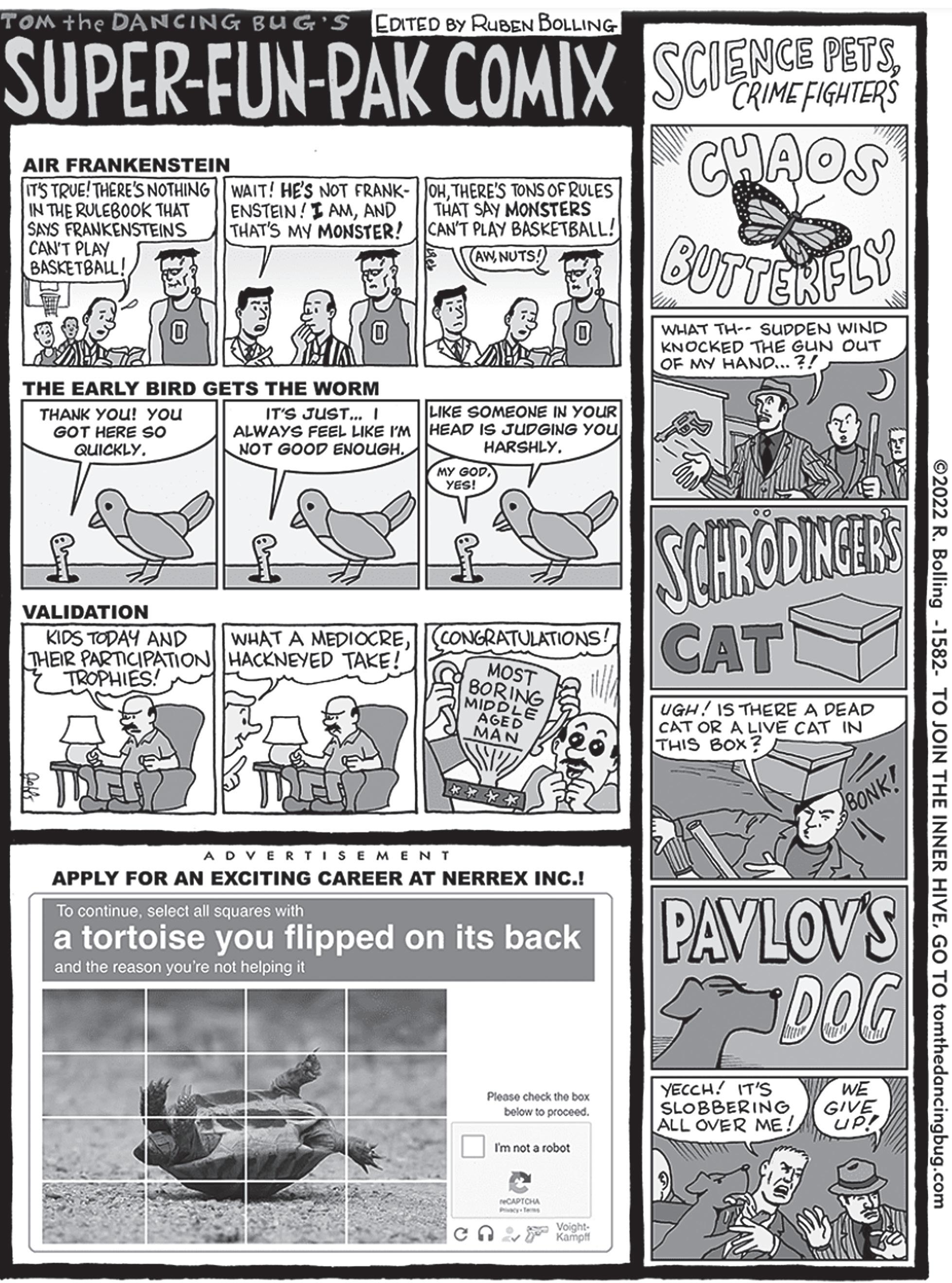
Tom the Dancing Bug by Ruben Bolling
o one but myself ended up moving into my first-year suite due to the pandemic, leaving an empty, unlocked room with the name “Joy” written on it after the student named Joy never moved in. This room soon became a hang out spot for my group of friends. I cannot help but find some irony in the parallel of Joy as a person’s name and joy as an emotion — the irony of an empty room becoming filled with joy in a time marked by quite the opposite. Every Cornellian has lived their own pandemic life. When they enter the doorway to Joy’s room, they will see something different than I would: a different story, a different perspective adding to the collective history of the pandemic. Though evidently, this history is still in the making.
In one of my government classes a quote by historian James Gelvin was recently written on the board: “Historians writing today are so close to the events of the past century that they are unable to gain the perspective distance provides.” This quote made me wonder about what perspective I have on the pandemic, especially considering how, as a recent New York Times opinion article makes it clear, the pandemic is not yet over. As for the many happenings around the world, perspective is key — both the perspective gained from the passage of time and the perspective of an individual based on their lived experiences.
What kind of perspective on the pandemic do I have as a person who experienced the height of the early pandemic in highschool, running out of physics class and straight into the shower at home (to wash off COVID-19, whatever we thought that would accomplish), finding that gravity was suspended, leaving everyone floating around like virus particles. Now, beginning the final stretch of my sophomore year and having watched multiple phases of the pandemic, I would like to reflect on the contested and confusing process of easing back into normalcy (whatever that means). But just as perspective illustrates, normal is different for everyone.
While I finally feel that I am back to normal life, it is undoubtable that reality and “normalcy” have altered. At such an impressionable point in our lives, it seems probable that the pandemic will influence us psychologically, mentally and developmentally — something we may not uncover for years to come. I look back at my cacophonous college experience thus far and wonder how much the pandemic has actually influenced it. Would I have chosen my majors sooner had I experienced in-person classes? Perhaps.
Now, the most prescient reminders of the pandemic for me are the masks that students continue to wear in the classroom. After talking to students in Klarman and having conversations with friends, I’ve noticed that many students express feelings of dislike towards the psychological distance that masks create in the classroom; despite the ability to share space, the inability to see the faces of fellow students and professors prevents connection. Both professors and students have noted issues of being heard; professors often struggle to project their voices and students struggle to hear their
professors and one another. There are also obvious issues of recognition, which came to a point last year when I stood maskless in front of a mirror and was surprised to see that I had a nose. Also mentioned were the inconsistencies in University policy, especially when it comes to masking. I think that in some ways, this has led to relaxed masking in class. It is not uncommon to see students with masks below their noses, something that professors respond to in varied ways. At the core of college is our education, so while I am tired of masking, I think it is important to ensure that the classroom is a safe haven for immunocompromised individuals and individuals interacting with high risk friends/family members.
I’ve realized that in some ways, masks have become mirrors of the past. They connect us to the beginning of the pandemic and the various stages: new variants, vaccinations, changing policy guidelines and the connection to the political world. I wonder, though, can we let go of the pandemic when we let go of the mask? When we don’t have to wear them in class, will we have reached normal? And what if we are past the point of return to normal? What if we have unmasked a new reality?
With the University reducing masking to just the classroom and public transportation, decreasing testing frequency and suspending the booster requirement for the 2022-2023 academic year, it seems that we are returning to some form of normal. Though we return in some ways to a pre-pandemic Cornell, norms have changed. Many students will leave Cornell and enter a workforce with either a hybrid or work-from-home setup. Many meetings for student organizations, classes and other activities are still holding Zoom meetings (sometimes in addition to in-person).
I think that one of the largest changes brought about by the pandemic is the creation of a hybrid life. Given the predisposition of my generation to use technology and social media, the transition to a hybrid world would probably be easily accepted. This is not to say that there are some advantages to this, especially for the business world where cost minimization is always a factor. I do believe it is important to understand changing norms and shifts in culture prompted by the pandemic, some of which will have adverse effects. For example, one article from The New York Times details the tendency created by Zoom to optimize socialization; there is no long goodbye if you can just click a button, no spontaneity if you can’t bump into someone you know in the hallway, creating a desire to interact efficiently and productively rather than interact meaningfully. There will not be a single day where we can unmask, jump up and down in celebration, and declare the pandemic to be over. It’s been almost a year since the door to Joy’s room was locked behind me. But, that doesn’t mean that we cannot find joy in our new reality, opening the door to questions and looking through the window of perspective. Everyday we unmask a new reality, and the only way to find out what our new reality holds is just to keep on living.
JYOTHSNA BOLLEDDULA ’23
Barred From Greek Life: Let Athletes Rush

Brendan Kempff Slope Side
Kempf is a junior in the School of Hotel Administration. He can be reached at bkempf@cornellsun.com. Slope Side runs every other Wednesday this semester.
Greek Life houses pack campus, flled by a community over 3,000 strong. Over 50 Greek Life houses are home to all types of people at Cornell. However, there is one group that is surprisingly absent from these houses: athletes.
Many athletes are barred from participating in Greek Life. Tis exclusion is a major cause of frustration for both athletes and the Greek community. Generally, a team’s coach decides if an athlete can rush or not. In recent years, it seems like coaches are leaning more and more towards no participation.
Rushing should be an athlete’s decision. Don’t think that an athlete could handle the time commitment? Fine. But these student-athletes are adults who have already done the impressive feat of being accepted into Cornell. Most of them are lifelong athletes who know how to budget their time well.
By not allowing athletes to rush, coaches are also ignoring the many benefts that athletes can get out of participating in Greek Life.
One of the most important aspects of Greek Life is the social community that it builds. Although often ridiculed as “buying your friends,” most people I’ve met seem to agree that some of their closest college friends have come from their Greek organization. As a member of a fraternity and a sports team, I’ve become close to both.
I’ve learned that many benefts of Cornell can be found outside of the classroom. Let’s face it: Cornell’s social scene is dominated by Greek organizations. Not allowing student-athletes to rush efectively bans them from this community for no apparent reason.
Coaches might see the Greek community as a group of degenerates, focused on the next party and how to get the most drunk. Tat, however, is not the case. Members of my fraternity are leaders on campus, serving as presidents of prestigious organizations and going on to impressive jobs after graduation.
Greek Life organizations also do a lot more than party. They offer a place to live, eat and work. I doubt I would have been able to survive my academic experience at Cornell without my mentors within my fraternity.
Many coaches are concerned that the athletes would put their fraternity or sorority before the team, potentially threatening its success. However, most of these athletes have been devoted to their sports since they were children. They have sacrificed a lot to continue to play their sport in college, and most are unlikely to quit now. It’s unfair to question their loyalty to the team before they even have an opportunity to demonstrate it.
People frequently comment that being on a sports team is a lot like being in a Greek organization. As a member of Sprint Football, I can understand that sentiment. Other athletes can testify to the separate
parties, houses and scenes that exist among the athlete community.
I am concerned about a potential sense of isolation due to this ban from Greek Life. As I mentioned before, an important part of the college experience comes from experiences outside of the classroom. Excluding athletes from this experience seems to be unfairly closing of their college social experience.
I urge coaches to find a compromise and allow their athletes to make their own decisions. They are mature, capable people who know their limits.
A good compromise that I know many coaches have reached with their athletes is a sophomore year rush requirement. Asking the athletes to wait until their sophomore year allows them to adjust to the Cornell academic requirements and the demands of being an athlete so they do not feel overwhelmed.
Although not a perfect solution, I still prefer this method over a total exclusion from the Greek system. I urge coaches to fnd a compromise and allow their athletes to make their own decisions.
Tey are mature, capable people who know their limits. Excluding them from the Greek community is an unfair punishment.
It’s Not Quirking: A Hobby Requirement Would Make for a More Eccentric Campus
Roei Dery Te Dery Bar
Roei Dery is a junior in the College of Arts and Sciences. He can be reached at rdery@cornellsun.com. Te Dery Bar runs every other Monday this semester.
Whenever I meet any Cornell alumni away from Ithaca, I’m never quite sure what to ask about their college experience. The lack of dorm culture on campus means that there is little point in discussing their first-year dorm.
In brainstorming any other unique Cornell experience which we all would have shared regardless of college or major, I am really left with two options: either ask which First-Year Writing Seminar they took or how their swim test went. I usually go with the cop-out: “what did you study?”
Cornell lacks a quirky, quintessential college experience that is shared by all its students and championed by the school. It lacks a fabric that unites alumni of all generations. Sure, Slope Day and Dragon Day are great, but no two alumni are bonding over how each one’s
dragon looked. Our campus culture is in a quirkiness crisis, and it largely stems from the fact that many of our students are in a hobby crisis: At a school where we are so trained to map out our academics and careers, we lose the ability to set, and take seriously, non-academic goals.
Once the commitment to discover other hobbies outside of school dwindles, so does the variety of quirks among students that makes for a more interesting college experience. As a requirement akin to — or even in lieu of — the swim test, Cornell should require students to learn a non-academic skill or hobby over the course of a semester.
I still fondly remember my avid chess-playing and tennis days before college, and I even picked up the ukulele for a time a few summers ago. But the
Cornell lacks a quirky, quintessential college experience that is shared by all its students and championed by the school. It lacks a fabric that unites alumni of all generations.
two riffs I learned are long forgotten. Even one of my fellow columnists has lamented the loss of reading for leisure in college. The issue isn’t about having fun. It’s about how our students choose to have fun. Whether “fun” for you means going out or sitting in front of a screen, on this campus, it rarely involves a constructive hobby.
It’s for this reason that I dread having to tell a “fun fact” about myself during icebreakers. I simply no longer have interesting hobbies. Up in arms, and potentially inspired by an episode of Portlandia , my roommates and I realized what we were missing in our lives: quirkiness.
We tried many things, ranging from brunching to wearing beanies at all times of day, but we hardly made it through the weekend. I don’t think there was ever any point in my life where I was “quirky,” but all I know now is that I’m the furthest from whatever it means. There is no way around it: I need Cornell to make me quirky — I just can’t seem to do it myself.
A requirement at Cornell to learn a new skill would not just be another opportunity to fulfill major requirements. Instead, it would be the opportunity to learn to solve a rubik’s cube in 30 seconds, perform magic tricks or even overcome arachnophobia. Students could be grouped based on interests and practice together in seminars guided by experts — which could very well be other students — over the course of a semester.
It would all culminate in a day where students present their learned skill to their group at the end of the semester. For a school that forces freshmen to swim laps in a pool to get their diploma for no apparent reason, a program such
At the very least, the moment we are able to put aside our busy lives and learn new hobbies alongside others is the moment we become a more interesting, quirky campus.
as this is well within reach. It’s come to the point where I think I need Cornell to withhold my diploma unless I’m finally able to hold a spider in my hand.
In the best case, the built-in gratification of such a program would encourage students to continue setting non-academic goals for themselves in the future. At the very least, the moment we are able to put aside our busy lives and learn new hobbies alongside others is the moment we become a more interesting, quirky campus.
The connotation of “any person, any study” has become too focussed on the scholarly kind of “study” — not on the kind that helps us learn new things about ourselves and others in non-academic settings. And if this change means that I’ll have some tricks up my sleeve for an alumni reunion, then I am all for it.
Brendan

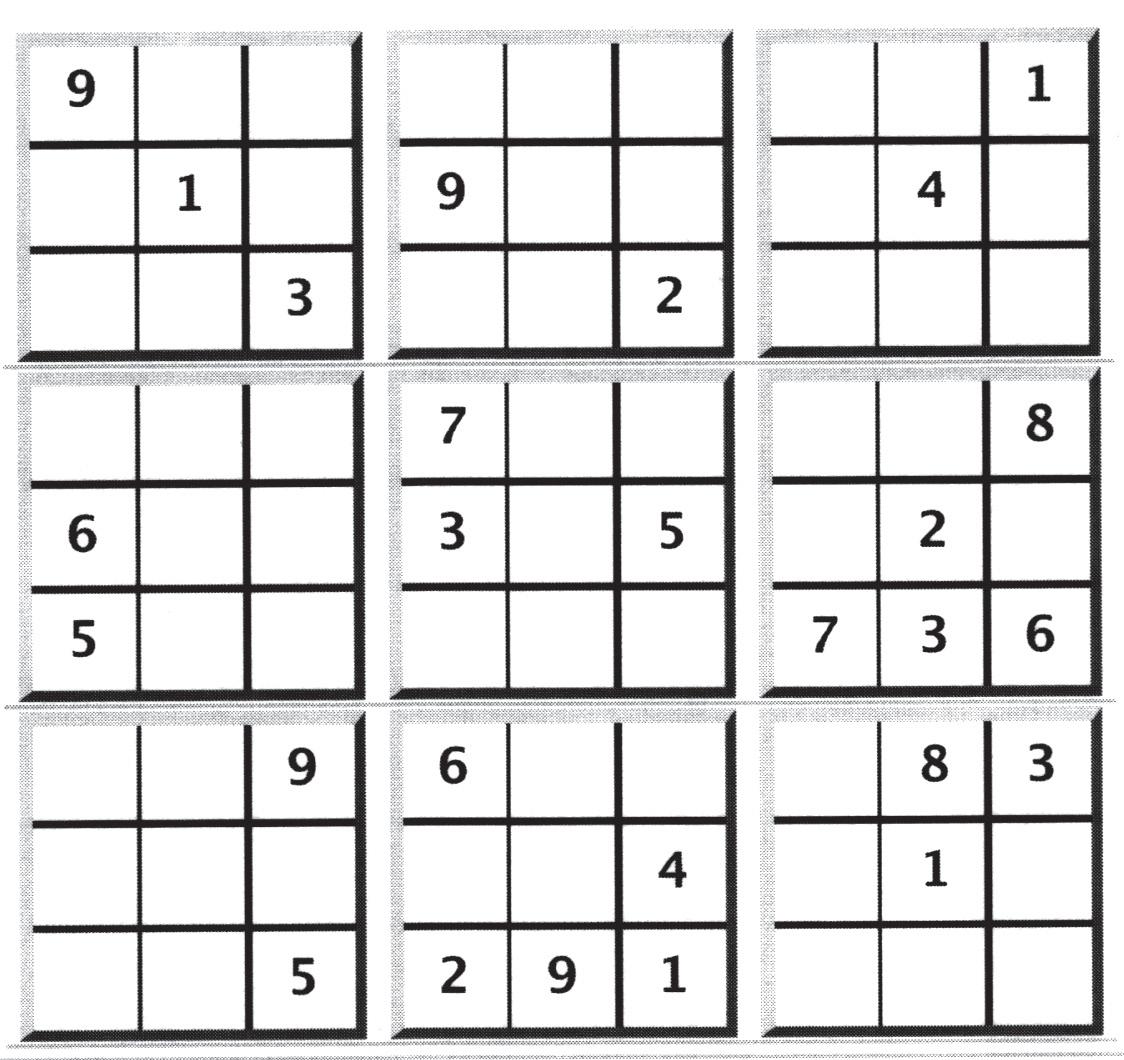
Fill in the empty cells, one number in each, so that each column, row, and region contains the numbers 1-9 exactly once. Each number in the solution therefore occurs only once in each of the three “directions,” hence the “single numbers” implied by the puzzle’s name. (Rules from wikipedia.org/wiki/ Sudoku)
I Am Going to Be Small

Mr. Gnu by Travis Dandro
Mr. Gnu by Travis Dandro
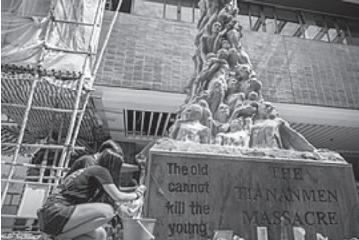
Speakers
Eli Friedman
Cornell Industrial & Labor Relations
TJ Hinrichs
Cornell Department of History
Peidong Sun
Cornell Department of History
Yaqiu Wang
Human Rights Watch
Moderator
Richard Bensel
Cornell Department of Government
Sponsors
American Association of University Professors (AAUP)
China & Asia-Pacific Studies
Cornell Department of History
Cornell Free Speech Alliance
Cornell Political Union
Cornell Review
Cornell Society for Promotion of East Asian Liberty
Judith Reppy Institute for Peace & Conflict Studies


SC I ENCE
Museum of the Earth Highlights Insect Diversity
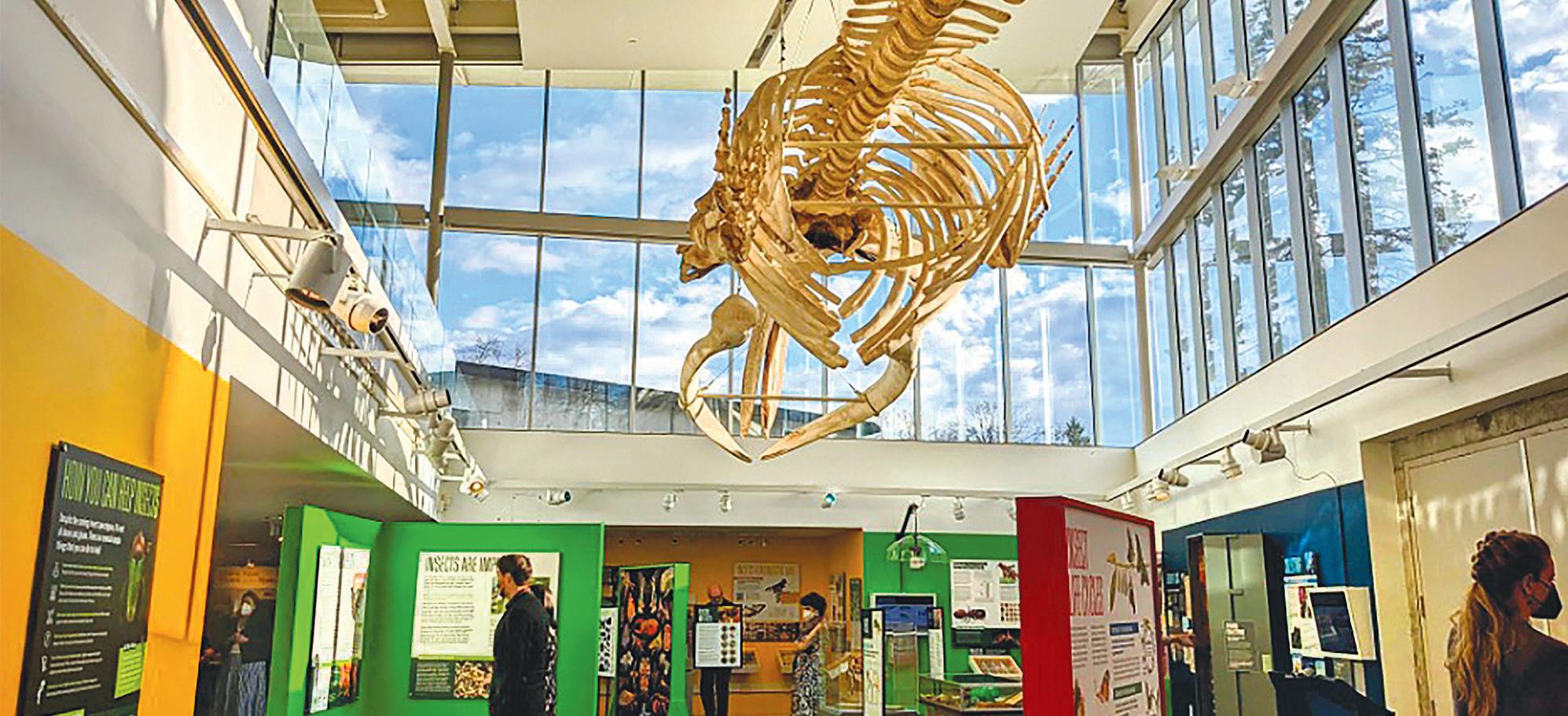
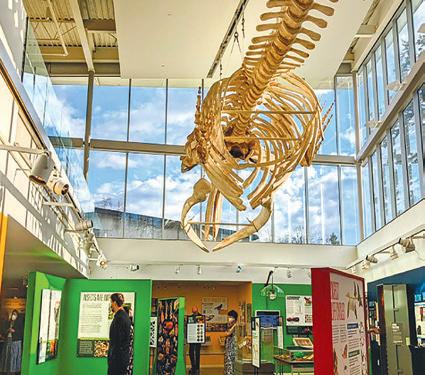
Insect exhibit | The Cornell University Insect Collection is home to one of the top entomological collections in the world with over seven million different specimens and 200,000 different species.
By DANIELLA GARCIA-LOOS ALMEIDA
In collaboration with the Cornell University Insect Collection, the Museum of the Earth opened a new exhibit on March 28 called “Six-Legged Science: Unlocking the Secrets of the Insect World”.
The exhibit was developed by Corrie Moreau, Jason Dombroskie, various CUIC students and researchers along with the help of a National Science
Foundation grant. “The reason we wanted to open this exhibit was to highlight the diversity and importance of insects in the environment,”
Moreau, curator of the CUIC and professor of entomology, said. “We also wanted to share the active research happening in the Cornell University Insect Collection and how it functions as a local to global research resource.”
The CUIC has over seven million specimens with over 200,000 species of insects, making it one of the world’s top entomological
collections. The Paleontological Research Institution, one of the collaborators of this exhibit, established the Museum of the Earth to give the general public knowledge about how the world around them works, past and present.
“This was a mutualistic collaboration between the CUIC and PRI and the end result speaks for itself,” Domborskie, Manager of the CUIC and Coordinator of the Insect Diagnostic Lab, said. “We were able to showcase the research of numerous Cornell researchers and show the actual specimens
behind that research.”
Insects are the most diverse group of animals, which the exhibit displays through its colorful array of specimens and activities. This exhibit teaches people –– from children to adults ––about the need for insects in the environment and human society. There is information about invasive insects and their environmental impacts, Entomophagy, which is the practice of eating insects, and much more.
“Many people think of insects as pests or maybe pollinators, but
there is so much more to these small animals that have a big impact,” Moreau said. “If all the insects disappeared tomorrow, humans and many other organisms would also disappear pretty quickly.”
The exhibit showcases the importance of insects worldwide with hundreds of pinned insects on display alongside live insects, typical field collection tools and other hands-on activities. These displays and activities help the audience learn about how diverse insects can be and how humans interact with them.
One of the more notable interactive sections is where you can pull collection cases from a museum cabinet directly from the CUIC, giving museum-goers the full experience of insect work. There are also fun activities for children beginning to discover insects and the natural world.
“The whole exhibit tells a narrative of not only how amazing insects are but how important the CUIC is for researchers studying everything from conservation to invasive species to physics,” Dombroskie said. “Ultimately, I hope that this exhibit will inspire everyone to learn more about the animals that rule the land.”
The Cornell community can experience the exhibit at PRI’s Museum of the Earth from now until Dec. 2022.
C.U. Student, Prof Discuss Salamander Migration
On March 19, Paula Blanco-Ortiz ’24, shared her research on non-invasive detection methods for Blue-spotted and Jefferson salamanders at the 23rd Annual National Conference for McNair Scholars and Undergraduate Research.
Blanco-Ortiz reported that these salamanders are species of concern for the general lack of knowledge about their mating behaviors and how easily their environment is destroyed by human activities, such as over-fertilization of grass and insecticides.
“We define a species as being of special concern if its essential behavior, specifically behaviors associated with breeding, hibernation, reproduction, feeding, sheltering, migration and overwintering, are being disrupted,” Ortiz said.
The difference between an endangered and a special concern species is that a special concern species is at no imminent risk of becoming extinct but is especially vulnerable to abrupt changes in their environment and is susceptible to being endangered. An endangered species is in imminent danger of becoming extinct.
To understand the salamander population size, Ortiz’s lab continues to refine environmental DNA testing, pioneered by Prof. David Lodge, ecology and evolutionary biology.
eDNA testing works by isolating miniscule DNA strands, which can come from an organism simply making contact with collected water samples. The researcher will then make hundreds of copies of a strand
through a polymerase chain reaction and filter out the species of interest through a mitochondrial DNA filter, thus providing a general estimate of how many salamanders are in or in close proximity to the water.
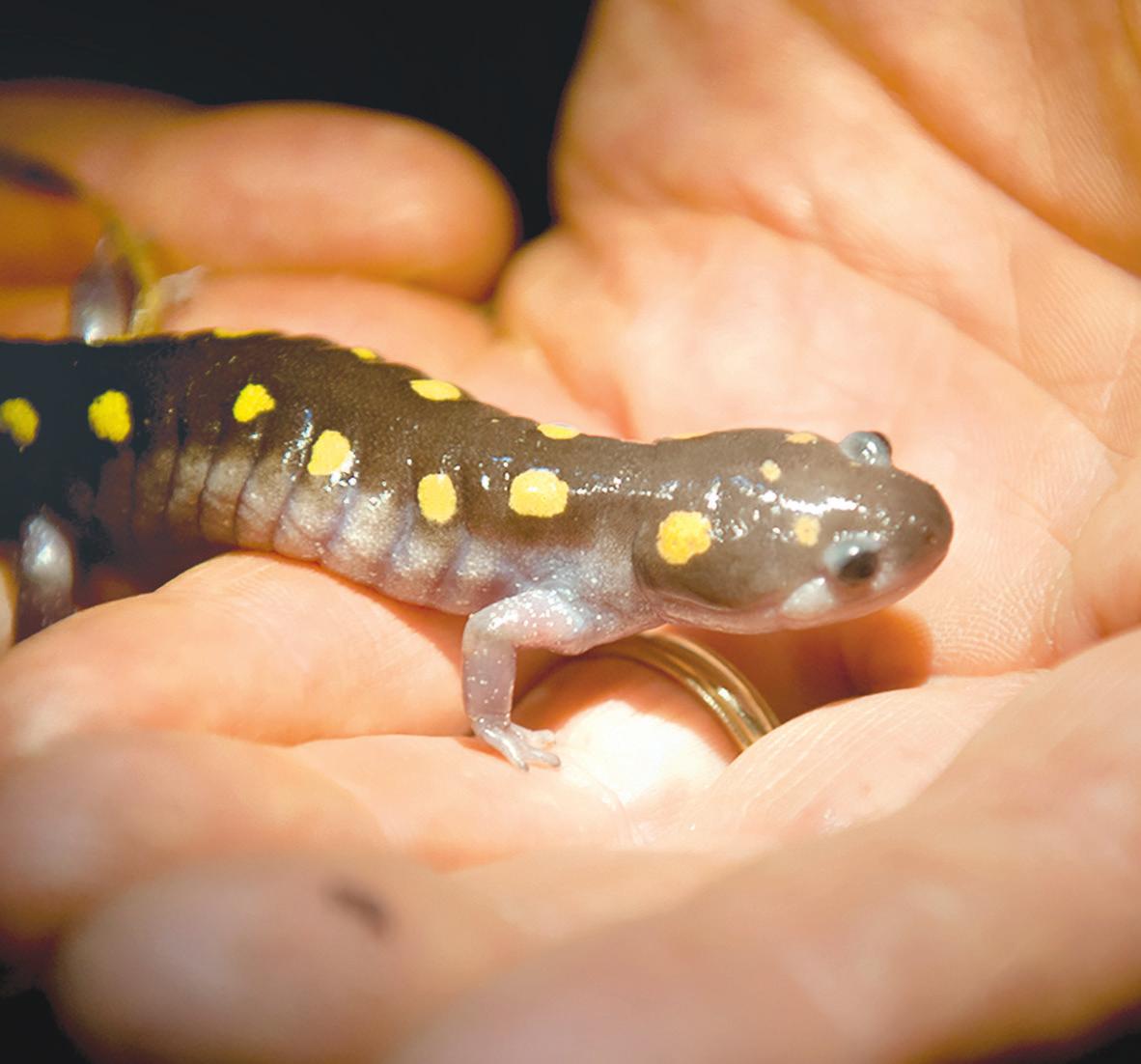
eDNA testing does not rely on physical capture, observation or handling. The non-invasive nature of this type of detection is important when handling endangered species, and species of special concern, because the animal’s environment does not have to be disturbed to collect data on the species.
“We are using small water samples to find species in aquatic ecosystems without ever having to touch or disturb them,” Ortiz said. “A big part of conservation for endangered species is preserving ecosystems and ensuring population health. It’s hard to do that without potentially disturbing the species through handling.”
eDNA testing mitigates the disruption of the environments of niche organisms while also keeping a check on their population count.
Ortiz suggested encroaching upon their environment may be doing some damage.
“Generally, habitat alteration is what most affects salamander species in New York,” Ortiz said. “This means habitat destruction, encroachment and other forms of degradation as a direct result of human activities.”
Ortiz also suggested using empathy to mitigate disturbance of salamanders’ environment.
“Picture yourself as the salamander: How would you feel if somebody lifted your log home and then left you out and exposed, or randomly took you to a completely different
place altogether,” Ortiz said. “People should be both gentle and mindful of leaving everything the way it was when they entered.”
Limiting human exposure to their environments can benefit these “special concern” salamanders, especially as we begin to think about next year’s migration.
As next spring approaches, Ortiz advised that students do not disrupt the environment, wear bug spray if handling the salamanders or head to salamander sites without disinfecting your shoes and gear first. Not
following these steps could harm the salamanders by transporting diseases or other pollutants into their environment.
Paula Blanco-Ortiz’s lab, Cornell Wildlife Health lab at the College of Veterinary Medicine, is under the direction of Krysten Schuler, and this research was developed in collaboration with Alyssa Kaganer at Cornell University.
By CHRISTALYN AUSLER Sun Contributor
Salamander protection | eDNA testing allows scientists to research about salamanders’ environment without disturbing their environment.
Christalyn Ausler can be reached at cba56@cornell.edu.
Daniella Garcia-Loos Almeida can be reached at dg573@cornell.edu.
Sun Contributor
DANIELLA GARCIA-LOOS ALMEIDA / SUN CONTRIBUTOR
JAMES PATTERSON / THE NEW YORK TIMES