
First-Year Student Remembered as ‘Engineer-Poet’
Friends, teachers recall his warmth, unwavering enthusiasm
By MADELINE ROSENBERG and MEGHANA SRIVASTAVA Sun Managing Editor and Sun Compet Manager
Shawn West ’24, a firstyear student studying computer science who hoped to someday teach a computer to understand love, was announced dead by the University April 10. He was 18.
As the Cornell community reels from the first-year’s death, West’s former classmates, teachers and friends remember him for his empathy, kindness and intellectual curiosity.
Harry Feder, West’s former high school adviser at the Beacon School in Brooklyn, remembered him as an “engineer poet” — a student with a “brilliant logical mind” with the habits of a tinkerer and of a humanist.
West explored his interests in computers and technology in his College of Arts and Sciences computer science courses, in his free time spent developing video games and refurbishing vintage game consoles and even in Cornell’s Skateboarding Club — where West was passionate about the intersection between technology and skateboarding, said Maia Zhang ’21, the club’s president.
“Shawn was the best of us — a kind, generous, empathetic and inquisitive soul,” Feder wrote in a statement to the Beacon School community after West’s death. “Shawn was a humanist — someone who sought to bend and master technology but understood deeply that living fully necessitated being open, curious and questioning.”
West, who came to Cornell from Brooklyn, New York, lived in Ujamaa Residential College, a multi-year residential community for Black Cornellians. The Cornell Black Alumni Association is current-
ly collecting donations to support students living in Ujamaa, including through sending food and flowers to the community.
Also involved with the Office of Spirituality and Meaning-Making and Zen Meditation at Cornell, West was embedded in a range of disciplines, from computer science to poetry.
Prof. Charlie Green, literatures in English, who taught West’s fall semester firstyear writing seminar on poetry, described West as
See WEST page 3
Students in need of professional mental health support can call Counseling and Psychological Services (CAPS) at 607-2555155 and employees can call the Faculty and Staff Assistance Program (FSAP) at 607-255-2673. Due to the COVID-19 pandemic, all CAPS and FSAP services are currently being delivered via telehealth. Whenever these services are closed, calls are answered by Cornell Health’s on-call mental health provider. The Ithaca-based Crisisline is also available at 607-2721616. A wide range of supportive resources is also available at caringcommunity.cornell.edu.
Bee Club Buzzes On With In-Person Events
Student beekeepers continue work
By KELSEY XU Sun Staff Writer
During an era of COVID-19 restrictions, Cornell’s Bee Club remains in bees-ness with in-person beekeeping and educational events.
Catherine Crosier ‘22, one of the Bee Club’s co-presidents, says that the club’s purpose is to educate more people about bees in both a classroom setting and through hands-on activities — promoting responsible, fun beekeeping.
The club holds biweekly meetings to discuss bees, their
environmental impact and beekeeping.
One aspect of the club that couldn’t move virtually was beekeeping, and the club’s executive board hoped to provide its members with a hands-on learning opportunity to maintain involvement.
The Bee Club successfully planned several hive inspections and honey extraction events, limiting the meetings to 10 people, per University COVID guidelines.
“There were two e-board

Survey to Guide CUPD Reform
By ANGELA BUNAY Sun Assistant News Editor
Underrepresented groups on campus feel a disappropriate sense of dissatisfaction with the Cornell University Police Department, according to the Public Safety Advisory Survey. The Office of Institutional Research and Planning distributed a report of the findings on Wednesday.
President Martha Pollack created the PSAC in response to the Black Lives Matter movement last summer, as well as the campus campaign #DoBetterCornell, which called for the disarmament of the CUPD. The PSAC includes students, staff and faculty members who advise the CUPD on issues of public safety.
which will be sent to President Pollack by May 25.
Approximately 35,000 members of the Cornell community, including campus faculty, staff and students, responded to the survey. 22 percent responded anonymously, and only 17 percent of the Cornell student body responded. 38 percent of respondents were staff members, 14 percent were faculty members and 48 percent were students, according to the PSAC survey website.
One in three survey respondents said they felt ‘uneasy’ or ‘frightened and anxious’ by armed campus police officers.
The Public Safety Advisory Committee conducted the survey between Feb. 8 and Feb. 21. Its purpose is to inform PSAC in developing recommendations for improvements and changes to the CUPD,

The survey resulted in four main takeaways. Firstly, most members of the Cornell community do not regularly interact with the CUPD and are unaware of fundamental CUPD policies including whether they carry a gun.
Secondly, underrepresented groups on campus –particularly Black and Latinx students – are much less likely than their white peers to feel satisfied with the CUPD.
Thirdly, one in three survey respondents said

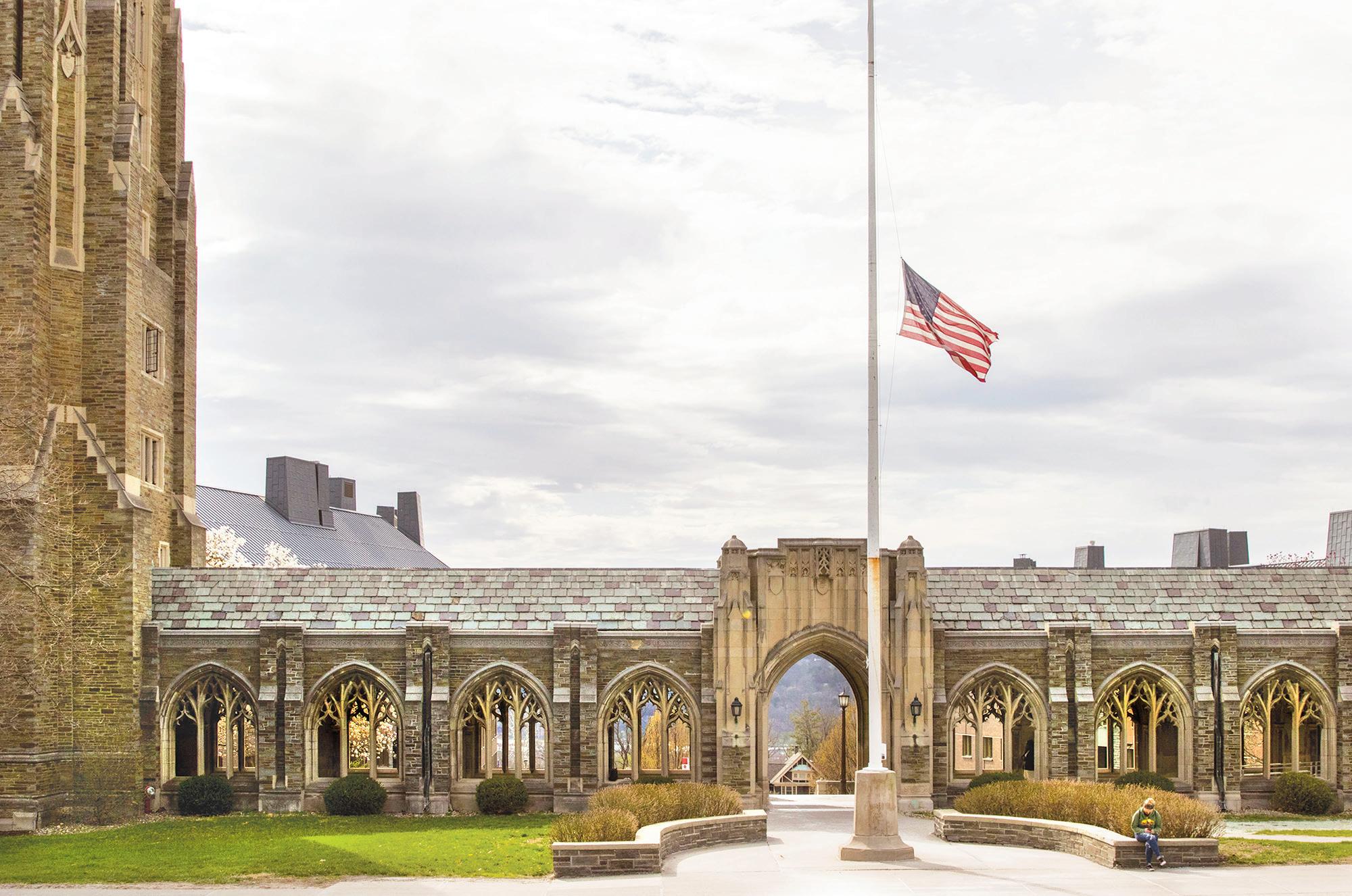
Remembrance | The Baker flag flew at half mast on Friday and Saturday.
HANNAH ROSENBERG / SUN PHOTOGRAPHY EDITOR



Working on today’s sun
Club Hosts In-Person Beekeeping Events
BEES Continued from page 1
members per shift to monitor everything with the hive inspection, and we swapped every half hour so new members got to take a look at the bees,” said Alexandra Michael ’23, the club’s social media chair. Currently, hive inspections take place in two shifts with seven members each. During an inspection, students check on the health of bees by searching for abnormal egg growth, smells and signs of disease, among other risk indicators.
Similarly, the honey extractions took place in four shifts so that more members had the opportunity to get involved. The club also live streamed extractions to include all community members who couldn’t participate in person, according to Michael. Bee Club works primarily from the Dyce Lab for Honey Bee Studies. Students took turns making native bee hives outdoors and conducting honey extractions inside the lab, which consist of members putting frames in centrifuges to extract the honey and then bottling it.
Afterwards, participants are able to keep some of the honey they extract in a contactless pick up.
Crosier attributed the club’s liveliness this year
to its members’ enthusiasm for beekeeping despite socially-distant events.
“Even though we haven’t been able to be in-person, the energy in the club is as strong as ever, if not stronger,” Crosier said.
As club meetings moved online, attendance rose, according to Crosier. Zoom removed the hurdle of getting to a physical meeting site and made it easier for new members to check out the club.
Although the board was nervous coming into the new semester, Crosier is thankful for the participation of new members and her peers.
“I’m really grateful for the work my co-office has done and the energy that new students have brought. It’s been so encouraging to see people stoked about Bee Club.”
The Bee Club is in the process of building a new shed for beekeeping. Crosier hopes that the club will be able to gather in-person next semester to paint both the shed and new hive boxes in an fun-filled organization night. She also hopes that the club will be able to do weekly hive inspections in the following semester.
Kelsey Xu can be reached at kxu@cornellsun.com.
Pandemic Complicates Study Abroad Plans
By MAYANKA DHINGRA Sun Contributor
In a normal year, Cornell students seek immersive study abroad programs all over the world. However, following the Office of Global Learning’s semester announcements that study abroad programs would be suspended for fall 2020 and then spring 2021, student plans to learn elsewhere still face massive disruptions.
Students across the University have seen their programs cancelled, forcing them to scramble for new academic plans and reevaluate the worth of studying abroad.
As a chemical engineering major, Christine Lambert ’23 can only choose from two study abroad programs –– and she had to shift from visiting Greece, from which she could travel Europe, and England, where she could gain more cosmopolitan experience without dangerous travel.
“Between being sent home early last year and missing out on my freshmen spring plus an extended Thanksgiving break last semester, the biggest turn off for me is less time on campus,” Lambert said.
Anthony Sheehi ’22, an information science and Asain studies double major, has been trying to study abroad since the fall of 2019.
After being accepted into the CET Osaka program last spring, Sheehi had already completed all post-acceptance procedures, including submitting housing preferences and writing essays to be placed in classes. When the program was cancelled for the fall 2020 semester, Sheehi scrambled to pre-enroll and find housing in Ithaca to allow him to
return to campus.
When the Office of Global Learning released an approved program list for the Fall of 2021, Sheehi was disheartened to see that the CET program was not included. With his scholarships nullified, he began a new application process for a different language intensive study abroad program in Kyoto — the Consortium for Japanese Studies.
Lambert also had to shift her sights to a different study abroad program because of schedule changes. The summer program that originally piqued her interest was similar to an internship with hands-on work, but the program available to her next spring is an exchange with a Spanish university. She will have to spend a month in Spain before the program to improve her language skills.
As prospective study abroad students consider their options moving forward, COVID-19 risk is not the primary concern.
Laura Holland ’22 is fully vaccinated, and she hopes to experience life in the pandemic outside of the US. Though she originally planned to study at the American School in Greece, she has shifted her sights to Queen-Mary University in England in order to experience London without having to travel Europe.
Neha Blair ’23 may not be able to live with a host family, even if she can study abroad in Paris next spring.
Students like Blair worry that they won’t attain a key study abroad experience: staying with a family in the country they visit. While living with a host family wouldn’t be the determining factor for Blair in choosing to study abroad, she believes that a homestay would greatly affect her experiences.
Campus Remembers First-Year
WEST
Continued from page 1
“very friendly, engaging and just really, really sharp.”
In a seminar of 17 students, Green remembered West’s friendly smile, contagious warmth and unwavering enthusiasm throughout the semester, even over Zoom. When given an extra-credit assignment to recite a poem, West memorized two poems with an ear for sound and rhythm, Green said.
“Very impressively, toward the end of the semester, he chose to recite two poems from memory, which no other student tried,” Green said. “I was very impressed with his memory and the courage to take that risk.”
Several of West’s childhood friends remembered his intellect, but more than that, they remembered his kindness and ability to connect and empathize with those around him.
“If you were his best friend, or you barely knew him at all, he would treat you like his best friend, and I think that’s something not a lot of people do that I really admired about him,” said Elias Gerstein, a high school friend, who called West a caring and compassionate leader.
Cornell students who knew West remembered him for the same warmth. Carl Chen ’24, who had played video games with West, called him one of the kindest people he met at Cornell — a friend who would go out of his way to say hello.
“Whenever I saw him on campus I would say hi and we would talk a little bit. He was one of the friendliest guys I’ve ever met at Cornell. He was always down to talk,” Chen said. “With most people if I see them around, I’ll just say hi. Not many other people had taken time out of their day.”
This kindness was inherent for West, as his childhood friends remembered him for being unapologetically himself. As an avid wearer of brightly colored Gatorade Jordan 1 sneakers, West’s hobbies ranged from rebuilding old computer hardware to immersing himself in Japanese pop culture and anime music.
According to Ryutaro Takatsu, another high school friend, West was honest and expressive about his passions. Takatsu recalled days when the two would learn anime music in their high school’s music studios during lunch.
“He was always being himself around everyone,” Takatsu said.
Dante Danelian, who knew West since
middle school, said West’s ability to give advice and connect with those around him was unmatched. Danelian recalled West’s ability to listen and care for anyone, describing him as the most emotionally intelligent person he has ever met.
“I’d give anything just to talk to him, because he would be the person I’d turn to right now,” Danelian said. “To not have him here for this loss, it’s been a double blow to me. His presence, even if he didn’t say much, put people at ease and made people comfortable.”
While West offered help, he was “anything but arrogant,” Feder wrote, describing him as a gentle and sweet student who revealed an earnestness that “I wish I could bottle and distribute.”
“He was vulnerable (as we all are) and not afraid to show it,” Feder wrote. “Friends, classmates and teachers universally attest to his integrity, his helpfulness, his penchant for providing extra effort, and his deep insight.”
As a budding computer programmer who wanted to teach computers to better understand human emotions, West had big goals for the future, from studying abroad in Japan to researching how computers can embrace human qualities, according to his friends.
“He spoke about his future, and about life in general, as a plan,” said Alejandro Ingkavet, who knew Shawn throughout high school. “He had big plans. Everything was planned, he was excited about life and the future.”
Ingkavet is now creating a digital photo and video album for West’s close friends, several of whom are college first-years, to remember him through sharing pictures and videos while studying across the country. In the past few days, Ingkavet found himself rewatching a video of West giving their class’s high school graduation closing speech, lingering on West’s call for his peers to be more vulnerable and to look beyond self-interest.
“We must cast aside our feelings of importance and genuinely care for other people, not just ourselves and our loved ones,” West said in his June 2020 graduation speech.
“Let us take heed of our tendency to distance ourselves from other stories. Instead, let us truly invest in them and become genuinely interested in the narratives of other peoples’ lives,” West told his graduating class. “This empathy will lead to our harmony.”
Madeline Rosenberg can be reached at mrosenberg@cornellsun.com.
Meghana Srivastava can be reached at msrivastava@cornellsun.com.
Sheehi’s program has axed homestay because of the pandemic, though it would normally be an essential part of his program. He expressed his disappointment, but he also acknowledged the safety concerns involved in staying with a family and travelling around Japan.
The ability to travel poses a concern for Lambert, as well. “I don’t want to go and just take classes because I can do that at Cornell,” she said. “A huge part of studying abroad is experiencing the culture and being able to go places you wouldn’t otherwise.”
Recognizing the safety risks, however, Lambert chose to attend a study abroad program in England instead of Greece. She believes that placing herself inside a cosmopolitan area will allow her to gain experiences without traveling across Europe.
Course planning is also a factor for students like Blair and Sheehi as they craft new plans to study abroad.
Blair will have to plan her courses in Hotel Administration carefully to be able to use her free credits abroad. She plans to conduct a culinary or hotel-related internship while she studies abroad in order to stay on track.
Despite limitations on studying abroad, Sheehi remains optimistic.
“After not being able to go last fall I have adopted the mindset where I can’t expect it to happen,” he said, “but it would be great if it does.”
Mayanka Dhingra can be reached at md753@cornell.edu.
Survey Shows CUPD Opinions
PSAC
Continued from page 1
armed police officers, including CUPD representatives – a more prevalent sentiment among students of color.
The survey also asked students about their own experiences with the CUPD. 26 percent of the respondents reported having an interaction with the CUPD since January 2019.
According to the survey summary report, 89 percent of respondents “agreed” or “strongly agreed” that they were treated professionally and with respect, while 84 percent of respondents “agreed” or “strongly agreed” that they came away from their interaction with a positive impression of the CUPD.
72 percent of all respondents stated they were overall satisfied with the CUPD.
However, students of color and LGBTQ+ participants disagreed — 20 percent of Black students said they are dissatisfied with the CUPD, 15 percent of all LGBTQ+ respondents expressed dissatisfaction.
Many respondents noted that a priority of the CUPD should be to increase diversity and to retain more officers of color despite the difficulty of doing so in central New York, according to the survey report.
“CUPD officers make me feel uncomfortable anytime I see them following me or staring at me as a Black student,” said one anonymous student in the report.
43 percent of respondents said the presence of armed CUPD officers makes them feel safe and protected, while 22 percent said they felt uneasy with the presence and eight percent said they felt frightened and anxious by the presence of armed CUPD officers. 28 percent said it has little or no effect on their feeling of safety and security.
“Given the infrequency of situations where they would need to use weapons of any kind, the open carrying of weapons is very intimidating to me as a person of color,” wrote an anonymous student in the report.
However, the report also stated that the respondents lack an understanding of the CUPD’s firearms policy — that all sworn in officers may carry a firearm. 29 percent said they did not know whether the officers carried firearms or not.
The report also discussed the current policy of CUPD officers responding to
personal safety check requests.
42 percent of respondents did not know who conducts the personal safety checks. 85 percent of respondents said they believe the personal safety checks should be conducted by a mental health professional and 40 percent believe that CUPD should only be called by the mental health professional if needed –only seven percent believe the current policy of armed CUPD officers responding to the checks is the best practice.
“I believe that no CUPD officers should be armed, except maybe for tasers. Funding mental health support services is more important than a police presence on campus,” one Cornell student wrote on the vision of the future of public safety. “I don’t know how much funding currently goes to CUPD, but I would like to see proportionally less funding going to police, especially regarding responses to student mental health crises.”
Many of the open-text responses indicated support for moving toward a model where trained professionals are the primary points of contact during these checks.
The survey further conveyed that respondents support a change in the “militarized-looking” CUPD and prefer uniforms that are lighter-colored as well as having officers travel on foot or by bike on campus. Some respondents indicated a want for officers to share more about themselves and their backgrounds to foster a greater human connection to the people they serve.
Following the recording of the survey results, the PSAC conducted 11 focus groups to gain additional feedback from the respondents. A virtual forum is planned for early May to garner further input from respondents and inform the recommendations the committee will make.
“We are still collecting data from the focus groups, so we don’t have any recommendations yet,” said Joanne DeStefano, Cornell’s executive vice president and chief financial officer, who oversees the PSAC, in a University statement. “But I can tell you, the focus will be on when do we need armed officers and are there activities that do not need a law enforcement officer. I’m very hopeful for some productive recommendations in May.”
Angela Bunay can be reached at abunay@cornellsun.com.
Dining Guide
By MELANIE METZ Sun Staff Writer

HComposting at Cornell: C+
ow often do you take out the trash? I was shocked to see a full trash bag by my door almost every other day for the past seven months at my six-person Collegetown house. Throughout many of those months, I lamented as I threw away carrot tops, apple cores and slimy spinach into the trash bag instead of a compost bin. At home, my mom has tended to a compost heap for as long as I can remember, so I’ve grown up with the luxury of a small trash can and a thriving garden. But without a backyard and someone to turn over the compost, it takes a lot more effort to compost food scraps and anything marked “compostable” than I’m used to.
My distaste of my personal waste led me to look into the sustainability of on-campus eateries. Since the start of the COVID-19 pandemic, nearly every eatery at Cornell has turned to takeout and throw-away containers. The International Solid Waste Association estimates the consumption of single-use plastics in America may have grown 250 to 300 percent since the start of the pandemic.
I have been pleasantly surprised, but hard-pressed, to find any items on campus marked with the recycle symbol or with “compostable” stamped on the bottom. Even when something indicates it can be placed somewhere other than the trash, there are certain guidelines. Tompkins County does single stream recycling, which has very clear guidelines on its website about which items they accept. They also collect food scraps at various “Drop Spots” around Ithaca for processing by Cayuga Compost. Many plastic containers which are marked compostable are made of corn starch, but are still plastic-based and cannot break down. Most Cornell students and Ithaca residents do not know the rules and may not stop to think before tossing an empty takeout box in the trash.
This problem of plastic waste existed long before the pandemic, but this public health crisis has made Cornell Dining’s sustainability proposals all the more difficult to implement. The dining halls had the reusable green plastic containers, but that program could not be extended to cafés because they don’t have the facilities to wash and return them.
So, what can be done to balance the need for “germ-free” single-use containers with Cornell’s efforts towards a more sustainable campus?
In COMM 3210: Communication and the Environment, we were assigned a group project to propose a more sustainable solution to a problem within the Cornell community. My group decided to explore the possibility of implementing universally compostable containers in Cornell’s dining facilities. In our preliminary research, we spoke with officials from all

across campus and within Ithaca. We learned that the roadblocks to using compostable containers include cost, access to suppliers and most of all, consumer behavior.
Cornell Dining and other eateries on campus (including Terrace, Macs, Manndibles, Fork and Gavel, and Temple of Zeus) have tried using compostable containers, and the results have been disappointing. They can’t use compostable plastic because Cayuga Compost does not accept it. Manndibles had to stop using Greenware and Innoware because those products don’t break down at local facili-
The consumers would be the danger to the system.
ties. Biodegradable and photodegradable containers are not compostable, so anything with those labels are also ruled out.
Cornell Dining’s supplier for non-foods is Hill & Markes, as they have been awarded the multiyear bid multiple times for the lowest cost of goods and highest quality of service, according to Matthew
Johnson, an administrative manager for Student and Campus life. Jana English, a manager at Mac’s and Terrace, said that a limited number of suppliers come to Ithaca, narrowing the sustainable options available. The cafés in Statler Hotel have increased spending 20 percent since 2019, English said, because of the higher demand for plastic and non-reusable goods and their rising prices; the cost of compostable goods would likely be even higher. And the charges for trash, recycling and compost pickup all differ, with Statler cafes paying per ton and per hour for compost, per container for recycling and per ton for trash. There are also fees based on fuel prices and demand for recyclable materials which are charged to the cafes each month. If there was success with compostable containers on campus, the initial fees would still be more expensive than for plastic containers.
Even if Cornell eateries could source a truly compostable product which Ithaca compost centers could take, the consumers would be the danger to the system. When a compost, recycling and trash bin are nearby, people often throw their boxes in whatever receptacle is closest to them. At Mac’s, they found that once the trash was full, the compost bin would get contaminated by trash and only three percent of their compost bins were even accepted. Once Mac’s changed the configuration and ratio of bins, 95 percent of their compost was accepted. About five years ago, Cornell Dining attempted to use compostable containers, but it failed due to contamination. Most students are unaware of what foods and products belong in the compost bin: all food scraps — excluding meat, fish and dairy products
— and acceptable compostable products.
On the whole, Cornell students and staff care about sustainability and have the capacity to shift their behavior. There are “green” initiatives across campus, such as Statler’s pho bowl made of sugar cane and an incoming order of compostable boxed waters, Zeus’ compostable cups and lids and Libe Cafe’s compostable straws. The dining halls are great at composting food scraps in the food preparation process, and continue to have the reusable container program that began in 2018.
If Cornell eateries offered Cayuga Compost acceptable reusable containers all throughout campus (post-COVID),and if Cornell better educated students and staff on what belongs in the compost bin, we would generate a lot less waste. There are many roadblocks to a more sustainable future in the Cornell dining facilities, but awareness of the problem and potential solutions is an important first step in change.
Melanie Metz is a junior in the College of Human Ecology. She can be reached at mmetz@cornellsun.com.

JOANNA MOON / SUN GRAPHICS DESIGNER
Feeling the Burn (Out)
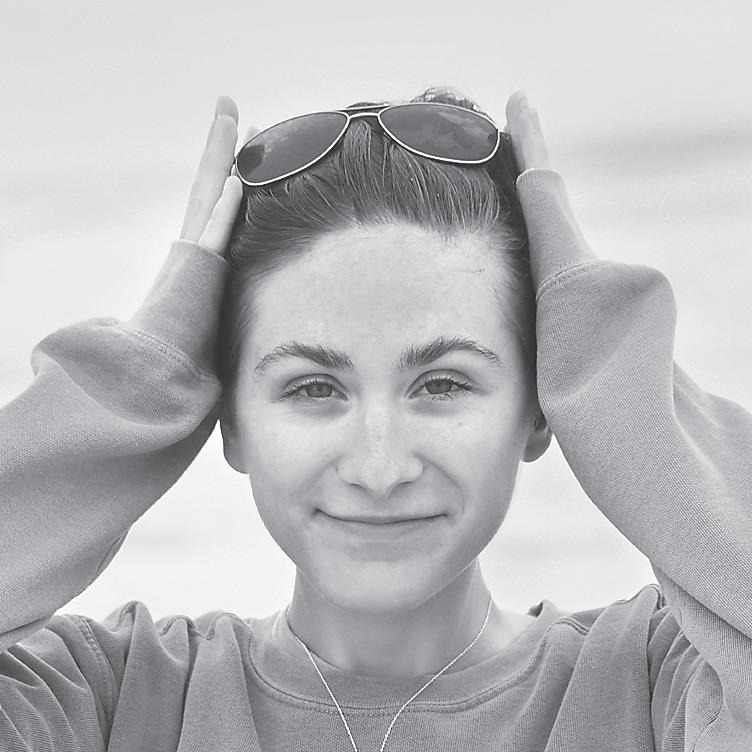
Emma Smith Emmpathy
Emma Smith is a junior in the College of Agriculture and Life Sciences. She can be reached at esmith@cornellsun.com. Emmpathy appears every other Friday this semester.
Iam burnt out. Te feeling in the pit of my stomach is the same as when I’m on a long run and my body is giving up despite being only halfway through. I have class and work and, not gonna lie, the global pandemic isn’t making things any easier.
I get a sense that some of this is just me, as other students have said that this semester feels better than last semester. However, I believe there are some elements contributing to this burnout that aren’t unique to me. One friend put into words a feeling that I hadn’t been able to articulate: We may have adjusted somewhat to the day-to-day of the pandemic and Zoom University, but it’s debatable how conducive those adjustments are to a successful (and mentally stable) semester.
We all know that going to campus to do work usually helps with productivity, but I must confess that I’ve gotten quite used to not leaving my apartment. It has all the snacks I want, cats and doesn’t require me to worry about the person sitting at my table wiping it down with disinfectant.
Having been at Cornell a few years, I had a system in place for studying, doing homework and seeing friends that had started to fall into place. I had gotten somewhat adjusted to Cornell University, and Zoom
University pushed me right back to what, at times, feels like square one. My system was upended and even though I’ve more or less gotten used to breakout rooms and hybrid classes, I’m still far from functioning optimally. More than anything though, I need a break. Truth be told, I spent my wellness days catching up with work and I don’t see myself spending the next set of wellness days any differently. Katherine Yao can sympathize.
Most of us have been advised at some point or another not to work in our beds because then our brains start associating that location with work. But some days I feel like my whole apartment is my bed. My entire living space has become my work space and I do the vast majority of my work within its walls. “Coming home at the end of the day” doesn’t really exist but I also sometimes feel too stressed in external spaces, so there’s far less of a sense of rest wherever I go. The more amorphous nature of online classes and the lessening of a “I need to be at this place at this time” mindset that results from Zoom University also makes it harder to find a time that feels like a break. It seems like every hour of the day is a reasonable time to catch up on that lecture recording or submit that Canvas discussion. The result? Mental and physical
More than anything though, I need a break. Truth be told, I spent my wellness days catching up with work and I don’t see myself spending the next set of wellness days any differently.
burnout. A friend of mine quite literally found themselves at the hospital for what they were told was stress
My entire living space has become my work space ... it seems like every hour of the day is a reasonable time to catch up on that lecture recording or submit that Canvas discussion. The result? Mental and physical burnout.
related stomach pain.
Keeping in mind students who are fully online, the pang of missing campus is also hitting extra hard as the one-year anniversary of campus’s March shutdown comes and goes. “I left as a sophomore and I’m returning as a senior and that really messes with my head,” Chibuikem Iwuagwu ’22 said.
But despite a full year and then some having passed, we’re still in a pandemic. Mriganka Nerkar ’22 summed things up pretty well:“ I think professors are thinking we’re used to this whole pandemic/Zoom thing that they just keep piling more assignments on, and upon that there’s no chance to really relax and take a mental break.” This sentiment was echoed by Iwuagwu, who said: “I know what I’m doing now, but professors are a lot less forgiving even though things aren’t normal yet . . . it’s a sucky middle ground.”
I don’t feel entirely left behind by the administration. After a class did poorly on a prelim one of my professors is looking into changing how the class functions a little to address what might be lacking. My academic advisor reached out to see how the semester was going and if I needed anything. However, the thing I need is something they can’t give me, or at least have decided they won’t give me. More than anything I need a BREAK and the scary part is . . . a break isn’t really coming.
My First Time At the Ithaca Farmers Market

Anuli Ononye Womansplaining
Anuli Ononye is a junior in the College of Arts and Sciences. She can be reached at aononye@cornellsun.com. Womansplaining runs every other Wednesday this semester.
Iwent to the Ithaca Farmers Market for the frst time this week. I’m a junior. Te farmers market is 1.3 miles from our campus — I know because I just looked it up‚ and in three years I never had “the time” to go. Spoiler alert: I loved the market. My friends and I dressed up in cute farmers market clothes, ordered iced cofees and banana bread, and sat out on the dock watching Ithaca College’s rowing team do drills. It felt good to rest, soak up the sun and to be surrounded by friends. My on-campus mom and best friend,
Liel Sterling ’21, just moved back to campus and since coming back has forced me to do a lot of things that I don’t normally do. If you know me at all, you know that I’m a workaholic. I live on a schedule. I wake up at 5 a.m., I’m in too many clubs and I take too many credits. I like living a fast-paced life, which makes it a relief to have people who slow me down.
Since being on campus, Liel has
Since being on campus, Liel has asked me daily about “what I’ve done for myself,” ... the truth is, most days, I don’t do anything for myself.
asked me daily about “what I’ve done for myself.” And if I haven’t done some-
thing for myself that day, she’s in her car at Baker Flagpole to get me. Te truth is, most days I don’t do anything for myself. I do schoolwork hoping that a graduate school will pick me, participate in service work and extracurriculars to support the people around me and am the go-to friend for everyone else. I’m a big sister to my brother, the perfect daughter to my parents and at the end of all that I am exhausted more often than not.
Even if I’m just sitting on the foor in Liel’s apartment, it feels good to have someone to crack jokes with and to make me matcha lattes. Sometimes it’s worth staying up a little later or waking up at 4 a.m. to take a spontaneous late-night walk through Collegetown, tan on the slope, listen to music in the Arts Quad, get food at Pronto or visit the farmers market. Tis year has been a work year. With life online and limited opportunities to see people in person, I have added more to my plate than I’ve taken of
As Liel and my other senior friends start to pick out their graduation dresses (thanks to their in-person graduation announcement!), choosing grad schools, signing job contracts and creating their last Ithaca memories, I’m reminded that my time here is temporary and that I spend way too much time in libraries, on Zoom calls and writing essays.
So, where does that put me? The truth is that it puts me right back where
I started. I am the girl who sits in the library, wakes up at five in the morning
With life online and limited opportunities to see people in person, I have added more to my plate than I’ve taken off ... so, where does that put me?
to prepare for meetings and who skips out on lunches to prepare for a thesis that isn’t due for over a year. Some people are just like that. I’m like that. But, I encourage every person who never takes time for themselves to go to the Ithaca Farmers Market. I also highly recommend getting yourself a Liel Sterling.

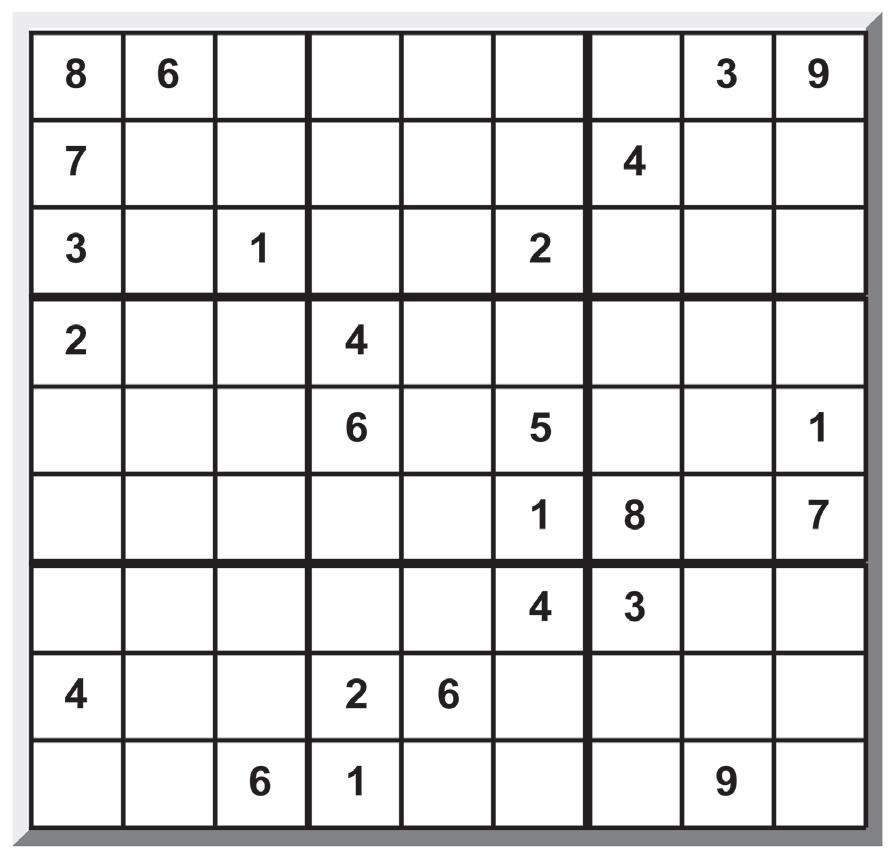
Fill in the empty cells, one number in each, so that each column, row, and region contains the numbers 1-9 exactly once. Each number in the solution therefore occurs only once in each of the three “directions,” hence the “single numbers” implied by the puzzle’s name. (Rules from wikipedia.org/wiki/ Sudoku)
Faster Than Light by Alicia Wang ’21




by Priya Malla ’21
Mr. Gnu by Travis Dandro
Mr. Gnu by Travis Dandro
Sports

Pivotal piece | Backed by outstanding play in net by Galajda (seen in action here and at bottom left), Cornell earned a 23-2-4 record and a No. 1 ranking last year.
Star Goaltender Matt Galajda Will Transfer to Notre Dame
By LUKE PICHINI Sun Sports Editor
With the COVID-19 pandemic wiping out the 2020 postseason for Cornell men’s hockey along with the entire 2020-21 season, many of the team’s seniors may not skate for the Red ever again, including goaltender Matt Galajda.
According to an announcement by Notre Dame, Galajda will be joining the Fighting Irish next season for his final year of eligibility. Though the Ivy League granted a one-time waiver for seniors to play as graduate students next season, Galajda ultimately opted to play for a different squad in his last season of collegiate hockey.
Galajda departs from Cornell as one of the most talented goaltenders in program history. He made an immediate impact upon joining the team, claiming the starting role and racking up 21 victories — the most nationally for a freshman that year.
He was particularly stout in net, only yielding a 1.51 goals against average and a .939 save percentage — the third-lowest mark in the country. He led the country with nine shutouts that year, including three consecutive shutouts that blanked opponents for over 227 minutes.
Bolstered by Galajda’s strong play, the Red achieved the No. 1 ranking midway through the 2017-18 season and hoped to carry that success into the postseason. But a loss to Princeton in the ECAC semifinals and a defeat at the hands of Boston University in the NCAA Tournament prevented Cornell from achieving postseason success.
During his sophomore year, Galajda struggled with injuries but still maintained top-notch play. In 27 games, Galajda posted a .921 save percentage and ranked fifth in the nation with a 1.85 goals against average. Galajda’s season came to an unfortunate end in the ECAC Championship when he was trapped
under his own net and injured as a result.
Despite the adversity in 2018-19, Galajda bounced back in a major way the following year. Prior to the COVID-19 pandemic cutting the season short, the Red occupied the top spot in the USCHO.com standings for a solid portion of 2020, much of which can be attributed to Galajda’s presence in the net.
In a return to his freshman-year form, Galajda ranked second in the country with a 1.56 goals against average. The goaltender specifically excelled in even-strength situations — or 5-on-5 hockey — only yielding 24 even-strength goals over the course of 29 games. He also notched five shutouts and was lights out in February, leading the Red to a 9-0 record while posting a 1.34 goals against average and concluded with three shutouts during the final month of play.
During his tenure with the Red, Galajda accumulated a number of accolades. He was named Ivy League Player of the Year twice and was a two-time finalist for the Mike Richter Award, an honor bestowed upon the top goaltender in the country. He was also a consistent presence on the All-ECAC and All-Ivy League teams.
Whichever goaltenders steps into the starting role will have large shoes to fill. Aside from Galajda, there are only two other goaltenders listed on Cornell’s roster — senior Austin McGrath and junior Nate McDonald.
McGrath made 13 appearances as a sophomore, including two contests in the NCAA Tournament. He was named an AllIvy League first teamer for posting a .925 save percentage against Ivy opponents. McGrath has demonstrated an ability to fill Galajda’s stead, but his return next season remains up in the air as seniors mull whether or not to play as graduate student-athletes. Meanwhile, McDonald has not appeared in any regular-season games yet as a third-stringer. Though Cornell has not announced its recruiting class yet, the Red figures to bring in several new netminders to compete for the starting role.
Luke Pichini can be reached at lpichini@cornellsun.com.