The Corne¬ Daily Sun


By MARYAM ZAFAR Sun Senior Writer
After more than a day of search, Shawn West ’24 was found unresponsive in a dorm room on Friday afternoon.
The first-year’s death was shared in a Saturday email to campus; he was last seen Tuesday morning in Ujamaa Residential College, the North Campus program house where he lived. The University did not share whether the cause of West’s death is known.
West was reported missing by a parent in New York City on Wednesday afternoon, according to a Thursday campus-wide statement from Ryan Lombardi, Vice President for Student and Campus Life.
“I
West, an 18-year-old student in the College of Arts and Sciences, studied computer science. On campus, he was a resident in Ujamaa, a multi-year residential community for Black Cornellians. West hailed from Brooklyn, New York, and graduated from the Beacon School, according to his profile. West had been a Code Next fellow at Google before attending Cornell.
Lombardi shared.
After he was reported missing Wednesday afternoon, the Cornell University Police Department searched the area with the Tompkins County Sheriff’s Office, the Ithaca Fire Department and Cornell Botanic Gardens staff, according to CUPD Chief David Honan.
“On behalf of the Cornell community, I extend my deepest and heartfelt condolences to Shawn’s parents and family, including his sister who is a Cornell alumna, as well as his friends and peers. Please keep them in your thoughts during this difficult time,” Lombardi wrote.
extend my deepest and heartfelt condolences to Shawn’s parents and family, including his sister who is a Cornell alumna.” Ryan Lombardi
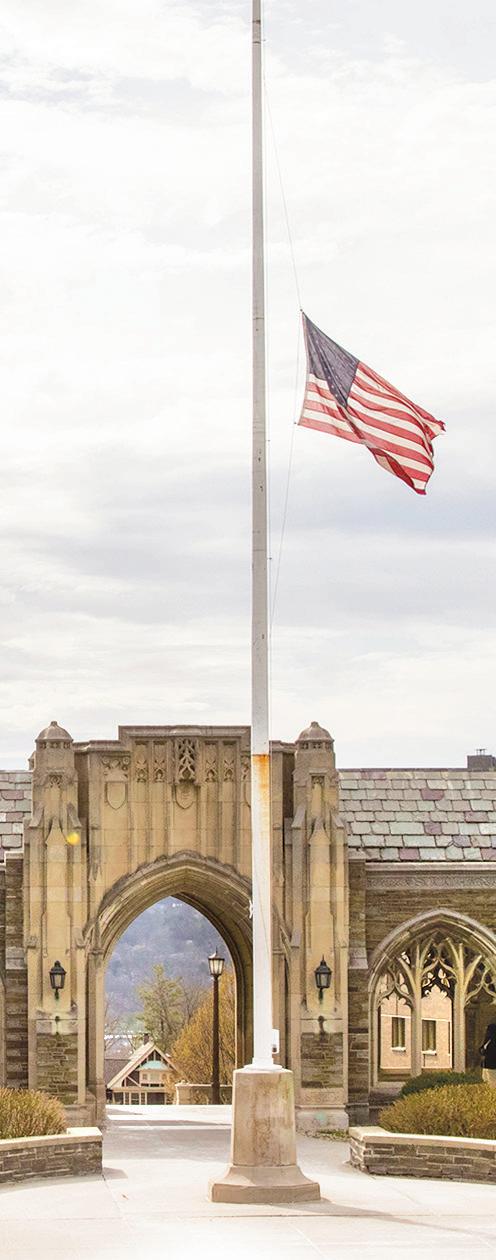
The Baker Flagpole flew at half-staff on Friday and Saturday, after West was announced missing on Thursday. Residents in Ujamaa were informed of his death earlier on Friday afternoon, according to multiple students present. Students gathered physically together, and also had an option to gather virtually for support, Lombardi said.
“He was a promising young computer coder, who enjoyed developing video games, refurbishing vintage game consoles and was interested in the human impacts of technology and the relationships between users and devices,” Lombardi wrote in a Saturday statement. “He also enjoyed photography and composing poetry on an old Royal typewriter.”
“[We] provided support in person and virtually to try to make sure those that were closest to Shawn had the support they needed in the moment of learning of his passing,” Lombardi told The Sun. The University delayed a public announcement of the student death at the request of West’s family.
This is the fourth unexpected student death in the past school year. At the end of the fall semester, chemistry and chemical biology Ph.D. student Wai Hang (Will) Lee died unexpectedly; in December, environment and sustainability student KAR Robison ’22 died unexpectedly. Health care policy student Matthew Crovella ’23 died unexpect- Campus mourns | The Baker Flagpole flag flies at half-staff last weekend in honor of West ’24.
West was involved in several clubs on campus, including the Office of Spirituality and Meaning-Making, the Skateboarding Club and Zen Meditation at Cornell,
By FAITH FISHER Sun Staff Writer
REACH Medical has lived up to its name in the COVID19 vaccine rollout, reaching underserved populations in Tompkins County to administer vaccines.
Working in tandem, REACH Medical and the Tompkins County Health Department have led the effort to bring vaccines to unhoused people in the county and other transient populations. With the additional support of community outreach organizations over the past eight weeks, they have vaccinated over 120 vulnerable Ithacans.
TCHD provides REACH
with vaccines, and the nonprofit creates a sign-up list for vaccines administered on a first-come, first-serve basis at pop-up clinics across the county — in collaboration with other organizations like St. John’s Community Services and Lehman Alternative Community School.
St. John’s Community Services, the main shelter contracted through the Department of Social Services in Tompkins County, is at the center of this community effort. A hub for Ithaca’s unhoused populations, the shelter provides advocacy and support services for people to attain a better quality of life
See REACH page 2
See WEST page 3
By SARAH YOUNG Sun Staff Writer
In a pre-pandemic semester, the most familiar sights of spring were cherry blossoms blooming and backwards-walking students leading hordes of prospective students eager to get a taste of Cornell campus life.
While the cherry blossoms are in full bloom, the University has temporarily placed tours on hold in order to limit the number of outsiders present on campus and keep the student body safe. Recently, however, students have observed groups of high schoolers and parents taking part in
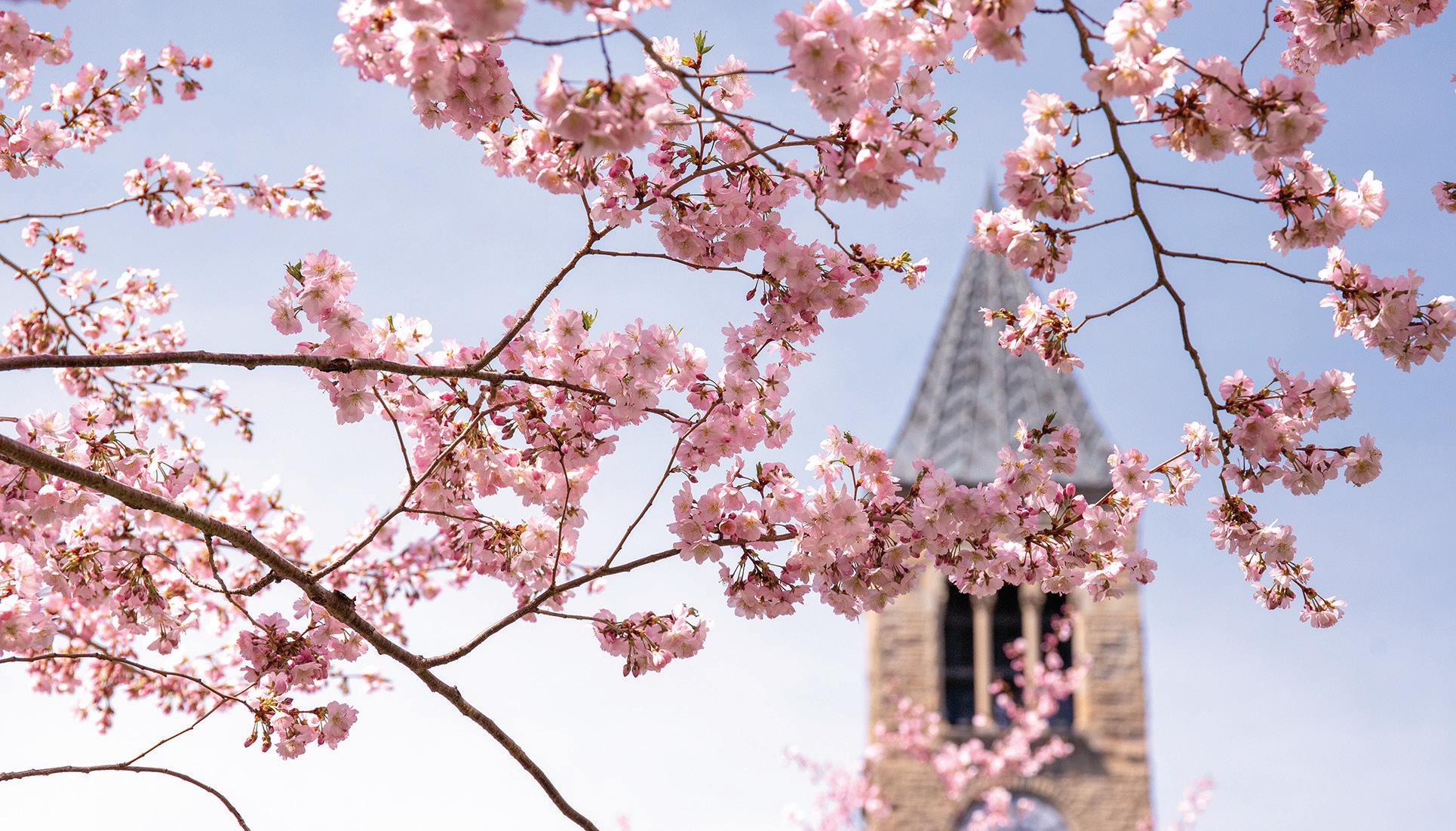
Cherry blossoms | As the campus blooms, visitors congregate.
personal campus visits unaffiliated with the Cornell touring service. Rebekah Rendino ’23 described a personal
encounter with an unapproved tour group on campus. “I remember just random people coming to campus without
Tuesday, April 13, 2021
Repair and Reparations: IES Migration Series 10:30 a.m. - 12:10 p.m., Virtual Event
Behavioral Economics Workshop: Marta Serra-Garcia 11:15 a.m. - 12:45 p.m., Virtual Event
Using Disease Ecology to Address Integrated Pest Management Challenges 11:20 a.m., Virtual Event
Women, Religious Education and the Transmission Of Islamic Knowledge in Kenya, by Hassan Juma Ndzovu Noon, Virtual Event
Grounding and Centering Care with Meditation & Gentle Movement Noon - 12:45 p.m., Virtual Event
Removing the “Man-Can’t” Myth With Care.com Noon - 1 p.m., Virtual Event
“Wild Relatives” Panel Discussion Noon - 1 p.m., Virtual Event
A Fresh Focus on the U.S. / Mexico Border: Protection of Unaccompanied Children Grounded in Systemic Reforms 12:15 - 1:15 p.m., Virtual Event
Engineering the Interface Between Polymer Materials And Microorganisms 1:30 - 2:30 p.m., Virtual Event
Infodemic vs. Pandemic Featuring Amelia Griner Safi 4 p.m., Virtual Event
On Horror and Politics in Brazilian Cinema: A Conversation With Film Director Marco Dutra 4:30 p.m., Virtual Event
Research & Justice: Stretching the Contours Of Asian American Politics With Diane Wong 6:30 - 7:30 p.m., Virtual Event
Odysseys: Valzhyna Mort & Raul Palma 7 - 8 p.m., Virtual Event
Life After Cornell Part 2 7:30 - 8:30 p.m., Virtual Event
Repair and Reparations 10:30 - 12:10 p.m., Virtual Event
Fruit & Vegetable Markets: COVID-19 Impacts and Beyond Noon - 1 p.m., Virtual Event
Food Entrepreneurs in Africa: Scaling Resilient Agriculture Businesses 12:25 - 1:15 p.m., Virtual Event
The Enduring Significance of Ethno-Racial Inequalities in Poverty in the U.S. 1:15 - 2:30 p.m., Virtual Event
After Geoengineering: Climate Tragedy, Repair and Restoration 3 - 4:30 p.m., Virtual Event
Finding Inclusive Employers 4:30 - 5:45 p.m., Virtual Event
Pet Behavior and the Pandemic 6 - 7 p.m., Virtual Event
Continued from page 1
and foster a stronger community.
Because of pandemic distancing regulations, the 20-bed shelter currently houses just 10 people. To accommodate the rest of the unhoused population in the county, SJCS has teamed up with local hotels in the area to provide additional shelter. Despite these diffused locations, REACH has made their services readily available and accessible, according to SJCS program director Roy Murdough.
“REACH has really been a terrific partner for us,” Murdough said. “This is a population that has always not been easy to reach, simply because they are homeless.”
Because REACH travels to set up temporary vaccine clinics, temperature management for the doses posed an early problem. The recommended temperature for storing Moderna vaccines up to 30 days before they are used is between 36 and 46 degrees.
“We did a bunch of trial runs with coolers, and I bought what feels like about 100 different kinds of ice packs,” said REACH practice manager Samantha Stevenson. “We placed a bunch of barriers in between the cooler and the ice packs and the portable temperature monitor. Figuring it out was a little bit challenging, but we have that down pretty good now.”
accessible as possible for underserved and hard to reach populations, who are especially vulnerable. It has also worked to vaccinate the staff in these shared housing spaces.
“As we continue our initiative, we still have people that kind of trickle into the shelter each week and sign-up to be vaccinated,” Stevenson said. “St. John’s holds a forever growing sign-up sheet, and we’re just going to keep answering the demand as best as we can.”
According to Frank Kruppa, Tompkins County Public Health Director, the health department prioritizes the single dose Johnson and Johnson vaccine for the unhoused population. Stevenson said that because it is hard to keep track of the individuals they vaccinate, the single dose Johnson and Johnson vaccine would facilitate the vaccination process better.
Before April 2, all of the vaccines administered were the two dose Moderna injections. Out of all of the Moderna vaccines they administered, only two people missed the second dose.
“This is a population that has always not been easy to reach.”
Roy Murdough
Although the one dose vaccine option will make the vaccination process smoother, other challenges remain. A deep mistrust of vaccines still exists among Ithaca’s unhoused population; REACH has prioritized vaccine education to alleviate some concerns, according to Stevenson.
The amount of people considered “homeless” in Ithaca varies depending on the season. In the colder months, the New York State law Code Blue mandates the provision of shelter for anyone in need when the temperature drops below 32 degrees.
REACH aims to vaccinate both the Department of Social Services approved and the Code Blue unhoused populations. Accordingly, the team brings its vaccine clinics to SJCS, the Econo Lodge, a cost-friendly hotel in Ithaca, and the tented encampment in Ithaca known as “the Jungle.”
The Jungle is a collection of tents situated on state-owned land near downtown Ithaca, a community in which many Tompkins County homeless individuals live. The population of the Jungle fluctuates, but last year the pandemic prompted a major increase in the number of people living in the Jungle from about a dozen to approximately 60 individuals.
Even though REACH has vaccinated a majority of the unhoused and transient population to date, it will continue its efforts to make the vaccine as
“We’ve also taken on a big initiative to educate people on what the vaccine is, the ingredients in it and talking about our own vaccination experiences,” Stevenson said. And St. John’s has aided in this educational effort by providing education resources around the center.
“We are always letting people know that the vaccines are available, and we don’t really encourage people to do it, but we encourage them to make an informed decision,” Murdough said.
SJCS and REACH had worked with each other to assist vulnerable Ithacans in the past, specifically tackling the opioid crisis that affects many unhoused individuals. Murdough attributes the success of the current vaccine rollout to these prior inter-organizational partnerships.
“This kind of collaboration existed before COVID,” Murdough said, “but it has only increased since, and it’s been a really great partnership.”
Faith Fisher can be reached at fsher@cornellsun.com.
By SOFIA RUBINSON Sun Staff Writer
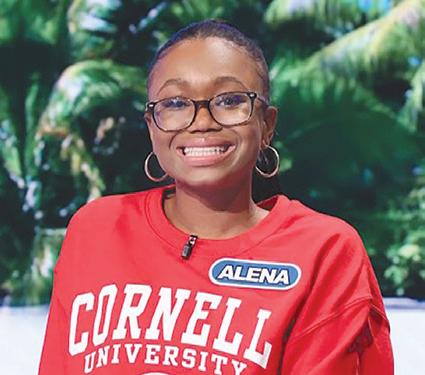
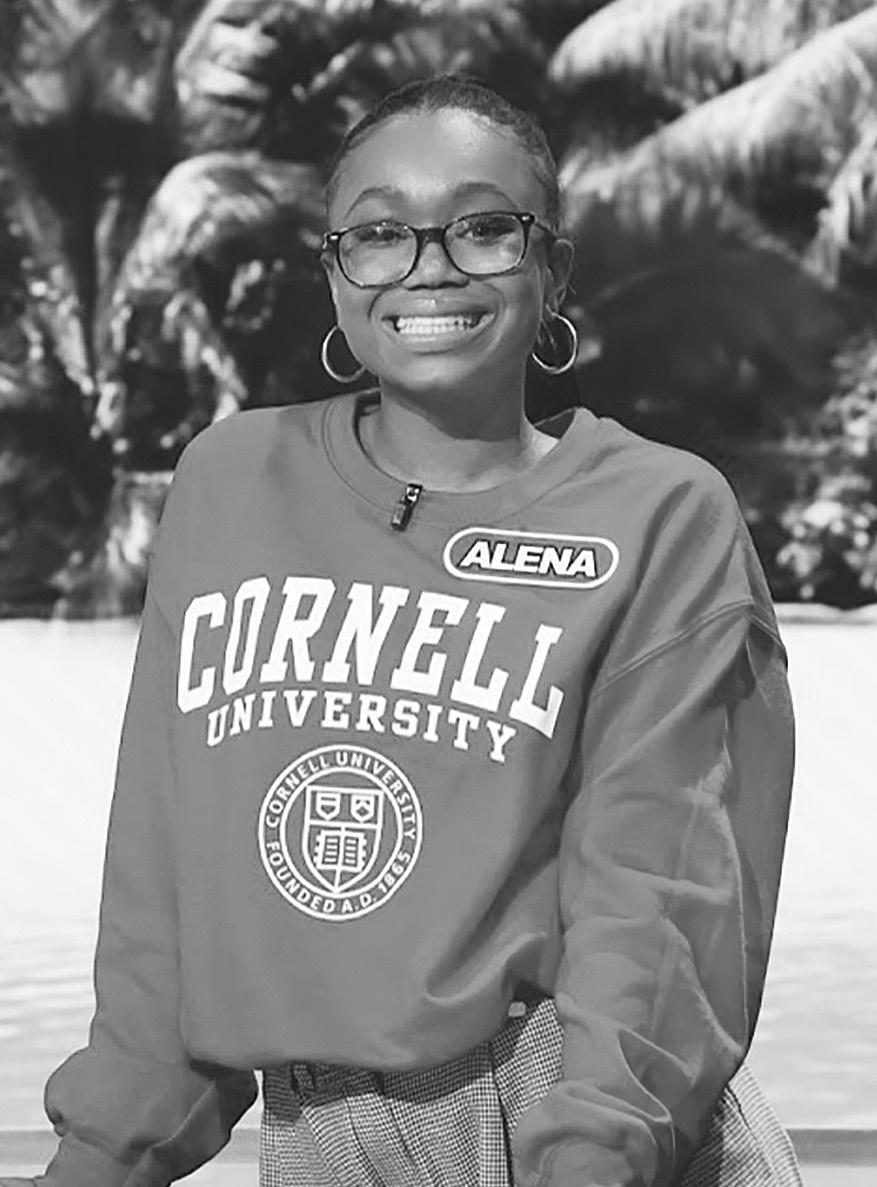
On April 16, Alena Reed ’22 will take to the small screen as a contestant on the long-running American game show, Wheel of Fortune
Facing off against students from the University of Southern California and California State University, Fullerton, Reed will compete on the last night of a two-week college special edition. Her episode will air at 7:30 p.m.
Reed, a fiber science and apparel design student in the College of Human Ecology, transferred to Cornell in the fall of 2019. She is the founder of Yellow of the Sun, a boutique working to develop comfortable clothing that brightens people’s days.
Attending Cornell from her home in California, Reed looked for something exciting to do while continuing virtual school. Fortunately, Wheel of Fortune films at Sony Studios, just a 30-minute drive from her home.
“Being at home and doing online classes has not been the ideal situation,” Reed said, “so it meant everything to me to have the opportunity to do something so crazy and so cool that not a lot of people have the chance to do.”
Her friend Raheel Yanful ’21 similarly expressed his shock that one of his close friends will be on national television, but said he could not be more excited that Reed has this opportunity.
Reed grew up watching game shows with her mother, often playing the games from home alongside the contestants. Her mother always encouraged her to compete, so when she saw the open application this semester, she readily applied.
And she will not approach the game show unprepared — Reed spent many long hours practicing for her TV debut. She downloaded the Wheel of Fortune app on her phone, binge-watched prior episodes and practiced shouting out letters in her mirror to ensure she would be loud enough for the show.
Reed expressed that she couldn’t be involved in Wheel of Fortune at a more perfect time.
If she wins, she plans to use the money to pay off her student loans. Wheel of Fortune awards an average of $46,000 to $50,000 in cash and prizes per episode. But winning isn’t Reed’s main goal — she primarily wants to have fun.
Among her Cornell supporters excited to cheer her on from Ithaca is Sydney Gates ’22, who said Reed was deserving of this opportunity.
“I can definitely see her being there on Wheel of Fortune. I feel like she has the personality for it, and she will definitely liven it up,” Gates said. “She’s so nice and always has a smile on her face.”
Even though Yanful called himself more reserved than Reed, he recalled meeting her for the first time: “She was a very outgoing person, and that made me feel very comfortable.”
Those close to Reed will be sure to turn in on Friday. “I don’t even watch TV,” Yanful said. “But I’ll have to find a way to watch this.”
Sofa Rubinson can be reached at srubinson@cornellsun.com.
Cornell has paused ofcial college tours, but visitors aren’t rare
Continued from page 1
guidelines prohibit campus visitors from entering any campus facility, but there are no rules prohibiting them from walking around the campus, as long as they remain outside and follow masking and distancing guidelines.
In an April 7 University email, Cornell encouraged newly admitted students to go to its Virtual Visit page or sign up for an online campus tour with a student guide on Cornell’s campus.
In the email, executive director of undergraduate admissions Shawn Felton wrote, “Should you choose to come to campus on your own,
that groups over ten people are not allowed on campus.
College tours can play a crucial role in the decision-making process for prospective students trying to decide where they would like to spend the next four years.
not opposed to it.
“I believe if families are coming to campus, staying outdoors and abiding by social distancing guide-
“Maybe there’s a system that the University could set up to track, contact trace and approve on-campus visitations.”
But classic programs like Cornell Days, in-person campus tours and student hosting have been suspended due to COVID19. Some students believe that these are crucial parts of the college decision process and should be better accommodated by the University — even though some students, including many international students and low income students for example, have not easily accessed this option.
“When appropriate health measures are followed, outdoor visits to campus and the surrounding area can be done safely.”
Shawn Felton
please know that you will need to abide by Cornell’s Travel and Visitor Policy.” He also reminded students
“Maybe there’s a system that the University could set up to track, contact trace and approve on campus visitation,” suggested Theo Bloch ’23.
While some students expressed concern about the presence of touring groups on campus, others are
Theo Bloch ’23
lines put in place by Cornell, there is no problem with the unofficial tours,” said Macy Berryman ’23, even though she has never seen any groups on campus. “As long as they wear a mask, I think it’s okay, and I haven’t seen huge groups,” agreed Jessie Partridge ’23.
At least until May 3 when admitted students have to commit, current Cornellians can expect to see excited high schoolers roaming around campus in their self-led tours.
“When appropriate health measures are followed, outdoor visits to campus and the surrounding area can be done safely,” Felton wrote.
Sarah Young can be reached at syoung@cornellsun.com.
WEST
Continued from page 1
edly of a medical episode in late January. Expanded support will be available on Saturday and Sunday for grieving students, and Lombardi noted academic accommodations should be accessible to those who ask.
Community meetings will be held virtually Saturday and Sunday, and a spiritual support space will be held online on Sunday as well.
Madeline Rosenberg ’23 contributed reporting. Students in need of professional mental health support can call Counseling and
Psychological Services (CAPS) at 607-2555155 and employees can call the Faculty and Staff Assistance Program (FSAP) at 607255-2673. Due to the COVID-19 pandemic, all CAPS and FSAP services are currently being delivered via telehealth. Whenever these services are closed, calls are answered by Cornell Health’s on-call mental health provider. The Ithaca-based Crisisline is also available at 607272-1616. A wide range of supportive resources is also available at caringcommunity.cornell.edu.
Maryam Zafar can be reached at mzafar@cornellsun.com.
Since Netflix started offering video streaming in 2007, turning to streaming services to watch films has become increasingly common amongst viewers. With the wide variety of films offered and the convenience of staying at home, streaming platforms have an understandable appeal. When the pandemic forced everyone inside, many became even more reliant on streaming; sometimes watching an entire season of a television show in one sitting was the only way to cope with the stress caused by the pandemic’s danger and uncertainty. While streaming platforms have usually hosted television shows and films previously released in theaters, theater closures due to COVID-19 have resulted in new films being released directly onto streaming platforms, finding a way to reach audiences even with the challenges of the pandemic.
Despite the widespread movie theater shutdowns beginning in March 2020, Universal Pictures still found a way for audiences to watch their newest film. In April 2020, Trolls World Tour was the first movie to be released directly to streaming, earning almost $100 million without being shown in theaters. Although, to be fair, with most of the world facing heavy restrictions due to the growing prevalence of the coronavirus pandemic, viewers essentially had no options for watching the new film aside from paying to stream it.
Now, over a year after the first lockdown, many movie theaters have started to reopen, prompting more companies to give their films theatrical releases once more. Still, while some viewers are eager to return to theaters, others still aren’t comfortable doing so. As a result, simultaneous releases of movies to both theaters and streaming platforms have emerged as a seemingly perfect solution. Viewers can watch new films in theaters if they want the theater experience and feel safe leaving their homes, while those who feel safer staying at home can stream new films there. Wonder Woman 1984 and
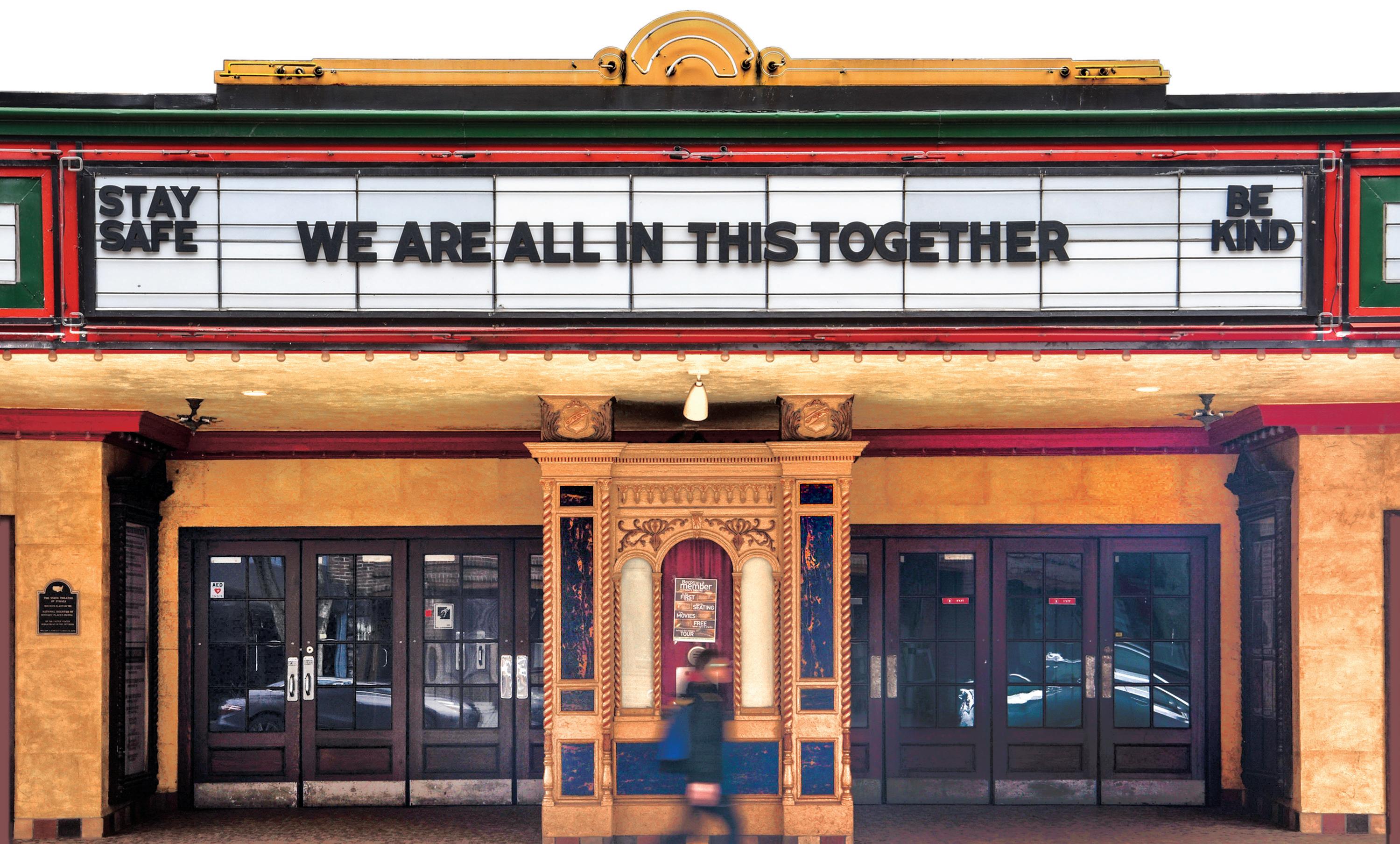
Raya and the Last Dragon have already been released in this manner, with In the Heights and Black Widow releasing later this year.
The growing popularity of this type of film release raises the question of whether or not this will continue into the future. HBO has already announced that all its films in 2021 will be released to HBO Max, simultaneous to their in-theater releases. But, in the post-pandemic era, will viewers still want the dual-release model to be available? It does have its merits: You can see the latest film from the comfort of your own home, with no need to get dressed or pay for overpriced theater snacks. Besides, streaming previously released films and television shows is already a regular occurance in our lives, so why not continue consuming new films this way too?
In reality, the performance of films released simultaneously indicates that this model hasn’t gained popularity amongst viewers. Wonder Woman 1984 grossed around $165 million worldwide from its
dual-release, which clearly falls short of its predecessor’s box office earnings of over $820 million. And although Raya and the Last Dragon earned over $80 million within a month of its release, these numbers were following the reopening of theaters in many big cities like New York City and Los Angeles. Not to mention, Disney+ didn’t see a significant increase in subscribers following this film’s release, implying that the availability of streaming the film didn’t prompt many viewers to turn to streaming. Both these films’ box office numbers show that viewers aren’t drawn by the prospect of watching new films at home. If dual-release hasn’t attracted large numbers of viewers during the pandemic, when safety is the main factor in keeping people at home, my prediction is that it won’t last very long when that’s no longer an issue.
Besides, after a year of constantly streaming during quarantine, how many people will actually want to keep watching new films
at home when the option of going back to theaters becomes safer and more widely available? The movie theater experience has drawn viewers for years, and will continue to do so after the pandemic subsides. Also, compared to the average movie ticket price of $9.16 in 2019, the $30 premiere access price for new films on Disney+ and $14.99 monthly subscription price for HBO Max likely won’t garner a significant level of demand.
Dual-releases may have become the norm out of necessity during the pandemic. But this model is not destined to last through the post-pandemic era. With more theaters reopening and broader vaccination eligibility, more viewers will emerge from their homes and return to movie theaters to watch new films, leaving the dual-release forgotten in the pandemic era.
Aditi Hukerikar is a sophomore in the College of Arts and Sciences. She can be reached at adh247@cornell.edu.
If you have ventured onto the internet in the last few months, you have probably heard the song “Drivers License” by Olivia Rodrigo. The “major teenage milestone” themed breakup ballad was first released in early
January, and quickly evolved into a major pop culture phenomenon. “Drivers License” has broken several Spotify records, set the background music for countless TikToks and established the 18-year-old Rodrigo as perhaps the biggest breakout artist of the year.
Following the success of “Drivers License” must have
been a nerve-wracking task.
However, on March 29, Rodrigo announced the release of her second single, titled “Deja Vu.”
“Deja Vu” is more than a worthy successor to Rodrigo’s first hit: the single deepens her credentials as a songwriter and proves that she is an artist here to stay.

“Deja Vu” continues Rodrigo’s collaboration with producer Daniel Nigro, who has worked with indie-pop darlings such as Conan Grey, Carly Rae Jepson and Sky Ferreria.
Sonically, “Deja Vu” combines a twinkling, nursery rhyme melody with an almost psychedelic guitar riff that breaks in after the first chorus. The production
sounds incredibly fresh, with just enough detail to highlight Rodrigo’s voice and songwriting without detracting from it.
In the song, Rodrigo directs her attention towards an ex-boyfriend who is repeating all the patterns of their relationship with another girl. He takes them to the same places and plays her the same Billy Joel songs, leaving Rodrigo to exclaim “I know you get Deja Vu!” Just like “Drivers License,” “Deja Vu” benefits from its clever premise but thematically, it showcases a different perspective on the “typical” teenage breakup. While “Drivers License” was pleading and heartbroken, on “Deja Vu,” Rodrigo sounds weary and annoyed. Rodrigo does not channel her irritation towards the new girlfriend, nor does she want her boyfriend back. Instead, “Deja Vu’’ is pure, cathartic pettiness — the perfect type to sing along to when you are experiencing
romantic drama.
“Deja Vu” is not perfect. As with “Drivers License,” some of its lyrics read a bit juvenile (I am not sure “watching reruns of Glee” was a phrase I needed to ever hear in a song). However, its charms vastly outnumber its faults. It would be impossible for “Deja Vu” to emulate the commercial success of its predecessor, but I am definitely rooting for it to do well — and I believe that it will. It has the tools for success: an established but still exciting artist, TikTok clout and a music video with a fresh, summer-y aesthetic. As for the next step in Olivia Rodrigo’s career, the songwriter has announced her debut album — which currently has the working title *O*R — will be released on May 21. I am unabashedly looking forward to it.
Ayesha Chari is a freshman in the College of Arts and Sciences. She can be reached at asc294@cornell.edu.
139th Editorial Board
KATHRYN STAMM ’22 Editor in Chief
ANUSHYA ALANDUR ’23
Business Manager
CATHERINE ST. HILAIRE ’22
Associate Editor
PRANAV KENGERI ’24
Advertising Manager
ODEYA ROSENBAND ’22
Opinion Editor
JYOTHSNA BOLLEDULA ’24
News Editor
TAMARA KAMIS ’22
News Editor
WENDY WANG ’24
Arts & Entertainment Editor
KRISTEN D’SOUZA ’24
Design Editor
HANNAH ROSENBERG ’23
OMSALAMA AYOUB ’22 Science
PUJA OAK ’24 Layout
ANNIE WU ’22
MIHIKA BADJATE ’23
ANGELA BUNAY ’24
Assistant
JOHN COLIE ’23
Assistant
AMELIA CLUTE ’22
Assistant Dining Editor
WILLIAM BODENMAN ’23
Assistant Sports Editor
AARON SNYDER ’23
Assistant Sports Editor
MEGHANA SRIVASTAVA ’23 Compet Manager
MADELINE ROSENBERG ’23
Editor NAOMI KOH ’23
OZA ’22
HEO ’24
OLIVIA CIPPERMAN ’23
NOOREJEHAN UMAR ’23
YOON ’23
BENJAMIN VELANI ’22
PICHINI ’22
TYAGI ’22
MENDOZA ’24
ARANDA ’23
’23
RIGGS ’24
LEYNSE ’23
’24
’24
ABAYEVA ’24
’22
Andrew Lorenzen is a junior in the College of Arts and Sciences. He can be reached at alorenzen@cornellsun.com. When We’re Sixty Four runs every other Tuesday this semester.
Congratulations, you’ve finally made it! After four years filled with studying, grinding on applications and cursing whoever invented the Common App, you’ve been accepted to Cornell! There’s just one thing though—you’ve been accepted as a First Year Spring Admit or FYSA (because higher education loves acronyms). Unsure what that means? Here’s the rundown from a FYSA three years into his Cornell experience on what to expect as a spring admit and some words of wisdom before you start.
So, what even is a FYSA?
As a FYSA, you’re like any other Cornell first-year —you’re just starting in the spring rather than the fall. You’ll have orientation with all the other FYSAs and move-in shortly before school starts in January. There can sometimes be a lingering feeling that you haven’t fully made it into Cornell. You wonder why you couldn’t have been accepted to start in the fall as you originally planned. If you’re like me and also got into Cornell off the waitlist, the imposter syndrome hits even harder.
That’s why it’s important to reiterate that you are a full member of the Cornell community. You’ve really made it, I promise. You’re not below anybody else. You’re just starting at a different time. Within a semester of attending Cornell, I forgot who was a FYSA and who wasn’t. What feels like a big distinction at first will fade over time. You’re just as brilliant, talented and generally cool as all the other awesome people on this campus. You’ll have to trust me on that one.
Socially ... What’s the vibe? Am I not going to make friends?
This is the key question that tends to be top of mind for most FYSAs. If I’m arriving a semester late from everyone else, won’t everybody already have their friend groups? Am I going to be alone through four years of college? The short answer: No. I’m not here to say that being a FYSA doesn’t have social challenges. The reality is that, to some extent, you are going to be playing a bit of catch-up. Yet, from my experience, I know that you will make plenty of friends for a few reasons.
Firstly, you’re going to be grouped with a bunch of other FYSAs in the same situation. You’ll likely hang out together for your first few weeks on campus. And because you’re all in the same boat, friendships will be fast forming. Some of the people you meet in your FYSA class will become your closest friends. Others will be your classic O-week friends, you’ll hang out with them and be super close for a little bit but eventually lose contact as you find your own groups on campus. That’s normal and part of making new friends.
Secondly, you’re still going to meet plenty of other freshmen. Most people don’t find their close college friends during their first semester on campus. And regardless of year, people at Cornell are always open to meeting new people. If you want to make some
new friends, you can strike up conversations in your classes, your extracurricular organizations and serendipitous 1 a.m.meetings while waiting for food at Nasties.
For someone who is more introverted, that might still sound a little intimidating since it entails, well, talking to people you don’t know. I empathize, as someone who is also more introverted. The good news is that there are a lot of introverted people on this campus who still need friends. It’s a healthy challenge to push yourself out of your comfort zone a little. Most of all though, if you’re very stressed about this— join clubs. I cannot emphasize this enough. Join them and you’ll meet people with mutual passions. That’s how I found most of my closest friends.
Thirdly, Cornell has a thriving transfer community. There are a lot more people in your situation than you may first realize. Beyond your ragtag group of fellow FYSAs, you’re also going to meet a bunch of people who may have just transferred in from other colleges and will also be eager to make new friends.
The larger takeaway here is that you’re not alone. Everybody worries about this type of thing, and as long as you put yourself out there and be yourself, you will find your people eventually. Make sure to give it time. There were moments during that first semester where I felt like I’d never find my own little group, but I did. It’s just something which takes patience. You’ll get there.
What am I supposed to do during the fall before I start?
My personal hot take is that having a semester off before you start college is lowkey the best thing that can happen to you. Seriously. After working as hard as you possibly could for four years and suffering through Zoom fatigue this past year, you’re probably a little burnt out. You now have some time to do...literally anything you want.
A lot of FYSAs decided to spend a semester at another college before they started at Cornell. This allowed them to keep pace with the rest of their class starting in the fall, so they could graduate with them in the spring four years down the road. It also gave them a great chance to make some new friends and try out the college experience a little before going to their final destination school. If you go this route, reach out to Cornell about what courses will be accepted for transfer credit. You don’t want to take a bunch of classes only for none of them to count. If it’s important to you to graduate with the rest of your class, this definitely will be a strong option, but keep in mind, you still can do that without taking classes during your fall semester. I’m a double major who didn’t take any classes during that semester, and I’m still on track to graduate in the spring of ’22. It can be done.
To continue reading this column, please visit cornellsun.com
Jonna Chen is a sophomore in the College of Engineering. She can be reached at jc2627@cornell.edu. jonna.write() runs every other Monday this semester.
It was my sophomore year of high school. Worries about college applications had just barely come in and the hormone infuxes were running high. Back then, I was still able to wake up at six in the morning and eat three meals a day, and my heftiest anxiety was about if my video submission to run for junior ofcer of Science National Honor Society would make the cut. Te day after I had submitted it and let it slip to someone that I was in the running, a peer asked me if I was smart enough to run.
I was stunned, but felt three main emotions. First, disbelief in her ability to ask me that out loud. Second, the urge to show her my report cards and pre-ACT score. And third, doubt. Maybe it was true, I was nothing compared to the “AP Chemistry and AP Calculus BC in sophomore year” gods.
Outwardly, I went with my third reaction and laughed of her comment. But this small doubt still paid its rent in the back of my mind.
Tis feeling was easily batted down throughout all of high school, but consistently festered its way towards its peak in my freshman year of college. I was being brushed of in math discussion, forced into classrooms full of students who learned their frst programming language in middle school and fed backhanded compliments about how my wits enabled me to overlook working hard.
What was once a small doubt became a serious string of thoughts and mental breakdowns where my self-guilt felt commonplace — How did I get here? I don’t deserve to be here.
At the time, I couldn’t exactly put how I was feeling into words — until I realized that it was so common among individuals that it had its own name: imposter syndrome.
Fast forward to more than a year later, and the degree to which these feelings overtook my brain seem foreign to me now. Troughout freshman year, I had participated in extensive discussions within clubs (shoutout to Women in Computing at Cornell) and rant sessions with friends that allowed me to connect with others over this topic. Tere’s also a mental strengthening and change of mindset that often occurs during your frst year of college. I wouldn’t say that I’ve completely overcome imposter syndrome just yet, but I’ve at least been able to make sense of it and understand where the initial doubts stemmed from. I call this Imposter Syndrome 101.
For those of you who are unfamiliar with this phenomenon or haven’t made the phrase-to-feeling connection yet, imposter syndrome is when one doubts their own abilities despite having the experience to back them up. It leads to high-achieving students feeling like frauds in their place on campus, and often afects women and underrepresented minorities harder.
Whether the onset of imposter syndrome was the product of a slow manifestation or a sudden infux of doubts, they are all attributed to you being in a place of discomfort. It’s tough to understand or even justify the path that led you to where you are, or why you’re able to step foot on this campus alongside everyone else.
Tese thoughts are harmful and result in a painful cycle. First handedly, I’ve seen too much self-rejection before an application is even touched. Cornell students will psych themselves out before even applying for a club or internship because they themselves believe that they do not deserve it. Te importance of supporting another student in their endeavors is underestimated — a lot of people just need a single push from that one supporter. Imposter syndrome can’t be whisked away by the click of a button or a skim through of a column. I came to realize that it’s also not binary — it’s a spectrum. Te presence of the nagging thoughts constantly fuctuates, similar to how one’s mood is never consistent. All that counts is that your overall trend and center is hopefully improving.
For anyone struggling with coming to terms with your accomplishments and your place on this campus, curb the self-rejection frst. No matter how crude, don’t do clubs and internships the favor of fltering out candidates for them. If you have a mild interest in any role or organization, throw your resume at them and see what happens. Even if you get rejected, you have still gained experience. Although it’s hard to see, these incidents will always be a win-win situation.
Second: talk about it. By discussing these feelings and issues with others, you will realize that they are more
I’ve
seen too much self-rejection before an application is even touched. Cornell students will psych themselves out before even applying for a club or internship because they themselves believe that they do not deserve it.
common than you thought. Get to the root of the issue so it doesn’t feel foreign anymore. Being able to relate over these experiences with friends or organizations give leeway for you to refect on why you feel a certain way. Instead of letting the guilt build up inside, having a personal cheerleader (or several) to bat away at the doubts comes in handy. If you’re not able to hype yourself up just yet, a couple of friends can do the trick for you for the time being.
You don’t need to get to a point where you wake up everyday absolutely sure of how much you deserve to be in the place that you are. But as long as you’re able to remind yourself of that fact every once in a while and curb the fuctuation a little bit, that’s all one can ask for in a consistent struggle.
Roei Dery
Te Dery Bar
Roei Dery is a sophomore in the College of Arts and Sciences. He can be reached at rdery@cornellsun.com. Te Dery Bar runs every other Monday this semester.
It was easy to think, at least when looking past the masks, that our campus wasn’t in a pandemic this past week. From the groups of students lounging on the Arts Quad to the bustling Collegetown streets, it feels as if this is the closest it’s been to “normal” since the start of COVID. And through the lively campus ambience, one seemingly minor observation stuck with me. As I took a seat on a bench before the Arts Quad, I couldn’t help but notice someone running past me listening to music without earbuds. AC/DC, a friend beside me pointed out. As he jogged onwards, run-
ning in-sync with the beat, I wondered why my knee-jerk response was, “Why not use earbuds?”
My aversion to publicly playing music does not solely stem from a desire to be respectful of others in my surroundings. After all, the few seconds where a song is in earshot while passing someone by is hardly intrusive at all. Tere seems to have developed an unwritten expectation among students of the AirPods generation that under most circumstances, music should be consumed using headphones in public.
Especially now when social gatherings are greatly limited, I can’t help but wonder if the compulsion to use headphones only reinforces our campus’ antisocial behavior during a pandemic. President Pollack’s 2019 message to “take of your headphones” appears to have worn of; it has become natural to pop in headphones and enclose ourselves in a sensory bubble as we commute. Wired into newer, noise-cancelling AirPods, Bose or Beats, the added insulation from external sound only makes the auditory bubbles in which we enclose ourselves thicker to penetrate — to the point where it takes waving your hand in front of a friend’s face to attract their attention.
Earlier this semester, in American Studies 1312: History of Rock Music, I learned that personal headphones were first endorsed by The Beatles in
the 1960s, when music was becoming a more private experience. Since then, this technology has fostered an added sense of individuality among listeners. Studying in a group now means that
I’ve spoken to others who, like me, sometimes take one earbud out midsong to ensure that no music is leaking.
each individual can explore their own tastes without having to accommodate others. However, having full autonomy in our music choices has also given way to potentially harmful social impacts.
Te idea that I can be safe from judgment because I’m using headphones has, in part, convinced me of the statement’s converse: without earbuds, I risk being judged by others. I’ve spoken to others who, like me, sometimes take one earbud
out midsong to ensure that no music is leaking. Tis is not to say that this is a ubiquitous sentiment, but at least for many of us, the assurance in relying on a protective sound bubble has made us somewhat self-conscious about our music tastes in the eyes, or rather ears, of others. Tis concern, coupled with that of wanting to accommodate others in public, has established that listening to music should be a private experience unless in a social environment conducive to public streaming.
However, over the past several weeks, I’ve understood how misleading the concern over not wearing earbuds truly is: I now associate these spring days — where students listen to music outside on speakers — with a more jovial, social atmosphere. Walking by and joining groups of people playing music aloud contributes to a sense of togetherness that can’t be achieved with earbuds. Indeed, the ways in which we each consume our music does have an impact on our campus environment as a whole. And though there is certainly a time for headphones, there should be more times when we ask each other about our music tastes, offer to share a playlist and most of all, disconnect our headphones altogether if we’re in the mood. Maybe when I start that ever-elusive jogging routine “next Monday,” I, too, will leave my headphones at home.

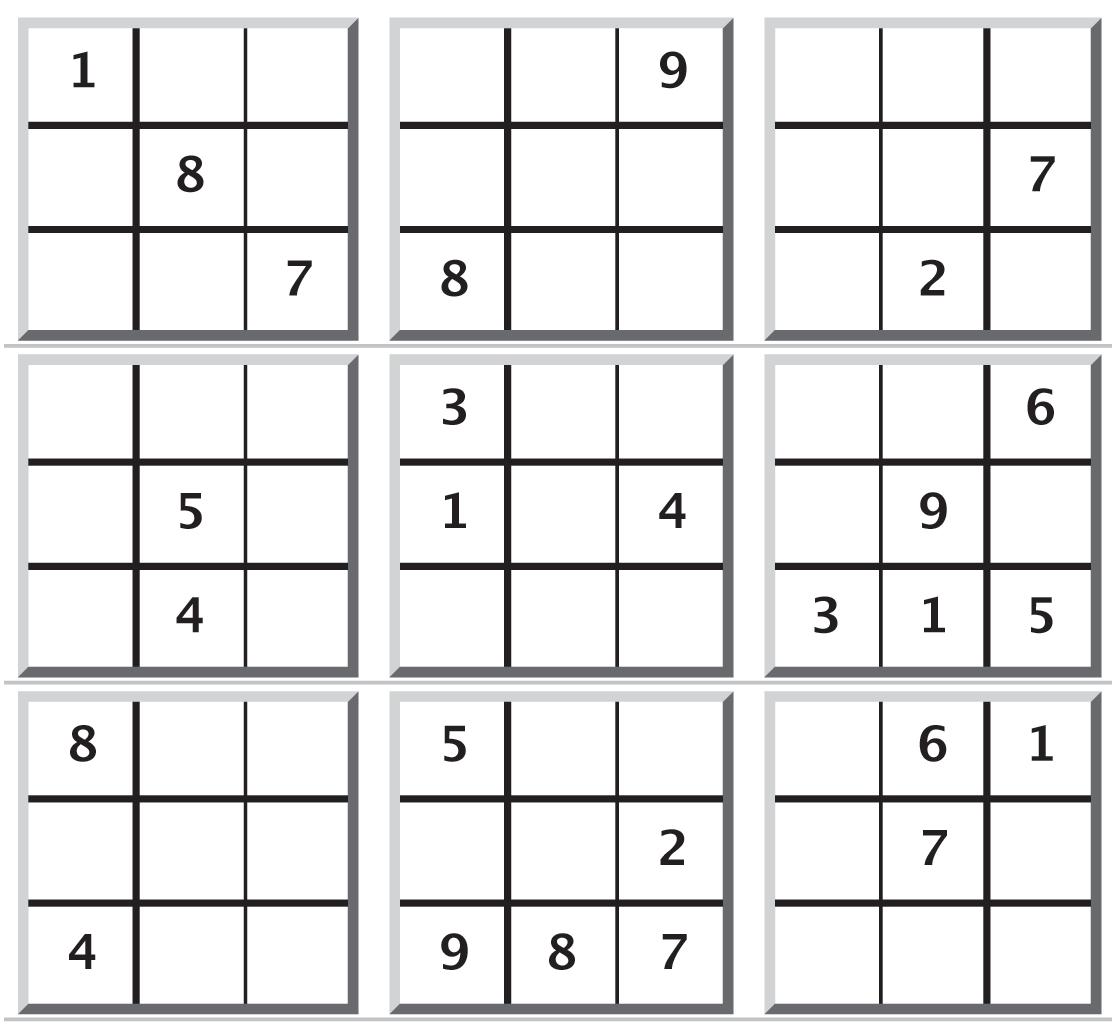
Fill in the empty cells, one number in each, so that each column, row, and region contains the numbers 1-9 exactly once. Each number in the solution therefore occurs only once in each of the three “directions,” hence the “single numbers” implied by the puzzle’s name. (Rules from wikipedia.org/wiki/ Sudoku)


By JOHN CAPWELL Sun Contributor
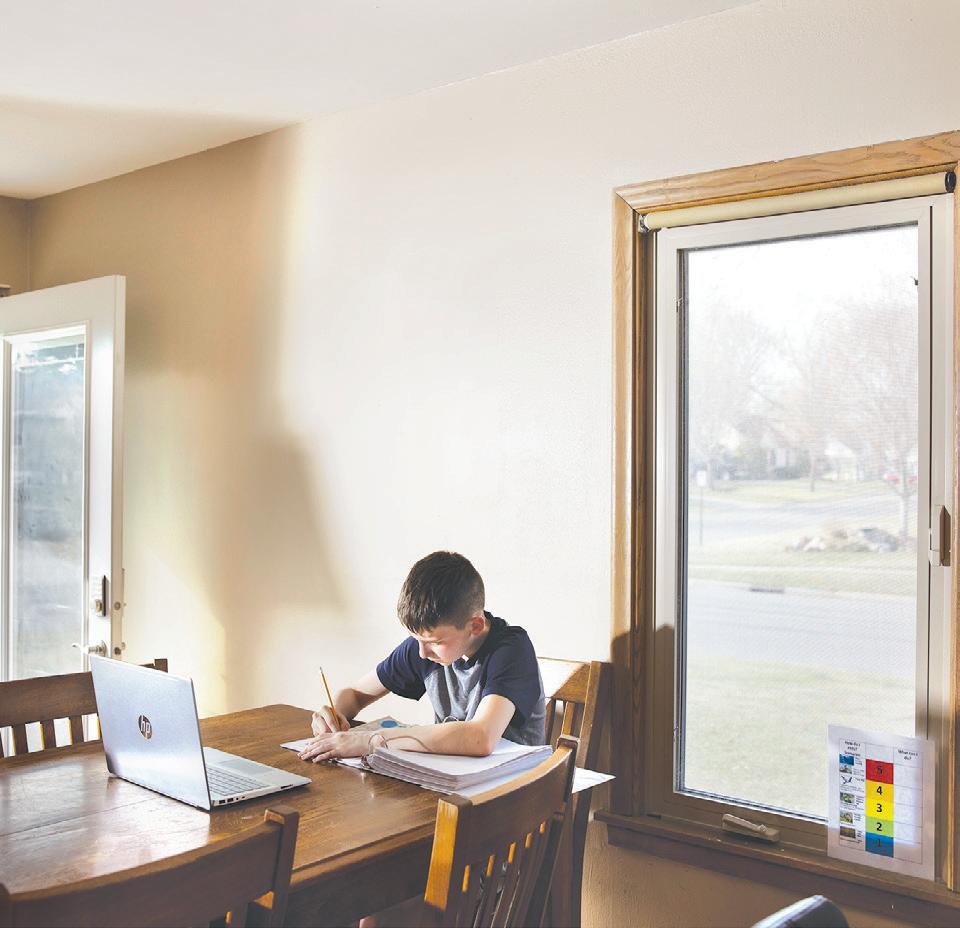
As vaccine rollout accelerates around the country, students and educators alike have high hopes for the return of in-person instruction. Even so, many are concerned about the impact of pandemic isolation on their children’s learning, and data suggests these concerns may be well-founded.
Although some parents have found that remote learning is a good fit for their children due to convenience or health issues, remote learning has hurt many students’ learning, emotional health and social development.
According to Prof. Tamar Kushnir, human development and cognitive science, children go through major developmental milestones as they develop identity, independence and language and social skills all right at the age when they would be starting school.
The isolation of the pandemic has hindered children’s progress through these developmental stages in addition to complicating students’ day-to-day learning of reading, writing and math, according to Kushnir.
Kushnir said that while there is not yet published research on the impact of isolation on children’s learning and social skills, early indications show that virtual learning is not as effective as the environment of in-person education.
“The best way for children to learn is in the real world, learning from play and learning from social interaction.” Kushnir said. “Sitting in front of a screen is not a way to make children learn and keep their attention, and children have lost a lot of ground in their learning.”
Kushnir was more concerned about the impact on social development than any hindrance in language development. She said that while studies cannot be generalized for everyone, as long as parents are spending time talking and reading to their children, children will develop language perfectly normally.
“Socialization requires peer interaction, and that is what [children] are missing,” Kushnir said. “Maybe their language gains will be the same, but social development [may be] falling behind for a while.”
Lower-income families can often face a higher barrier to academic resources due to social isolation, further exacerbating the socioeconomic gap in childhood education.
Prof. Gary Evans, human development and environmental analysis, said that this gap is partially due to the
opportunities children have outside of school, particularly during the summer months when students are not in school.
“At the end of the school year there is still a gap, but it is a lot smaller, and then in the fall, the gap is a lot bigger.” Evans said.
With greater access to summer camps, enrichment activities and sports, higher-income families are able to continue their children’s education over the summer with opportunities that are inaccessible for many lower-income families, according to Evans.
Evans said this divide could be even worse following the pandemic, because families with means had far more resources to cope with the setbacks of virtual instruction. “Now you’ve got the bottom falling and the top increasing — and the gap gets bigger.” Evans said.
Despite these challenges, Kushnir and Evans agreed that pandemic isolation would likely not hurt most students academically in the long run.
“There is absolutely no reason to push kids at age six to read, write, master math — there is no research that says it makes them more successful.” Kushnir said. “For the average child, they will catch up, if the system will support them as they go.”
Kushnir said that it is more important to focus on being compassionate, and helping reduce stress for children by making sure they feel loved and supported rather than focusing on lost academic progress.
While Evans said that distanced learning likely wouldn’t create learning disabilities, he said that isolation could make education more difficult for children with pre-existing learning disabilities because of a lack of access to specialized instruction and assistance.
“If you already had some of these disabilities, [isolation] would make it more difficult to catch up, so to speak, or learn optimal strategies to navigate.” Evans said.
Evans also pointed out that while many are feeling lonely due to not having enough contact with other people, families in crowded conditions face the opposite struggle.
“When you don’t have enough space, when you are forced to interact with people more than you want to … it can lead to [children] socially withdrawing,” Evans said. “Ironically, even though there are more people around, you actually are more isolated.”
This social withdrawal is dangerous in the long run
because it might lead to difficulties accessing social support and developing or maintaining mechanisms to cope with stress later on in life, Evans said.
Problems like this are not easy to solve, but Evans said that the most important thing is for parents and caregivers to support their children as best they can in this troubled time.
“I think one of the [important] things is just, to the extent [caregivers] are able to, being responsive, letting the child know that when they are feeling something or something is upsetting, that someone is there to respond to them,” Evans said.
Evans added that physical activity and getting outside are important ways to cope with stress.
Kushnir emphasized that this is not a time to trivialize the massive changes children have gone through as a result of the pandemic.
“If ever there was a time ... not to blame yourself, this is the time” Kushnir said. “This isn’t going to be forever. I would tell a child the same thing ... We can find good things in the meantime and eventually this will pass.”
John Capwell can be reached at jcc462@cornell.edu.
By MILENA BIMPONG Sun Senior Staff Writer
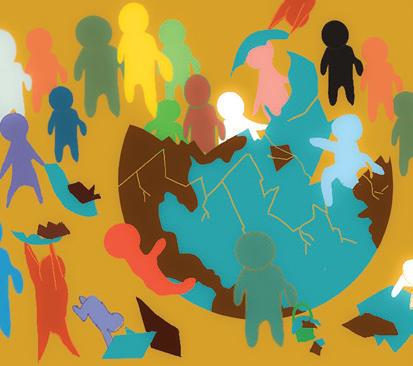
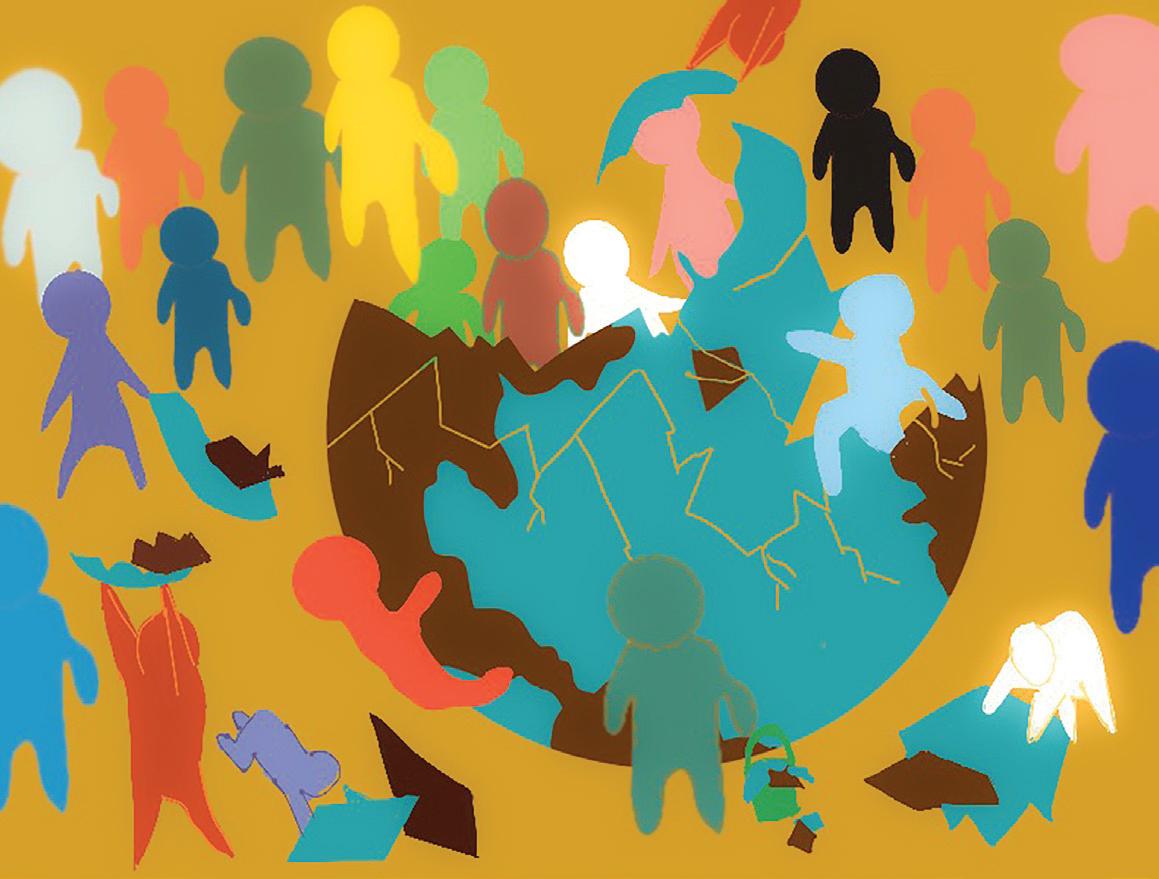
With the world’s population projected to reach 9.8 billion by 2050 and 11.2 billion by 2100, the question remains of whether the earth will have enough resources to support its inhabitants.
Currently, inequities surrounding access to resources are mainly the result of unequal distribution rather than global scarcity. While that may change as the population
grows, these issues of distribution are already contributing to a climate refugee crisis, environmental degradation and food scarcity in some regions of the world.
Although the global population is still growing, it’s not growing as quickly as it once did. Prof. Emeritus David L. Brown, global development, said that even though the global population is increasing, it’s growing at a diminishing rate.
According to Brown, this
diminishing rate can be attributed to a lower fertility rate, which is the average number of children a woman has. A few contributors to this shift have been women obtaining higher levels of education, more career opportunities and wider availability of contraceptives.
Even as the global population continues to rise, the primary issue lies in the inequitable distribution — rather than volume — of earth’s resources, according to Brown. Since higher-income countries use disproportionate amounts of food, clean water and other natural resources, this leaves developing countries with food scarcities.
“The size of the population and its composition does not automatically have impacts on well-being,” Brown said. “It’s the way in which society mediates that [and how federal governments] accommodate changes in population size.”
This unequal distribution of dwindling environmental resources needed for survival — such as farmable land, clean air and drinking water — has the potential to exacerbate the overuse of environmental resources, further compounding competition for limited resources in areas bearing the brunt of inequitable distribution.
According to Prof. Amanda Rodewald, natural resources, envi-
ronmental degradation will make poverty, disease and environmental disasters more prevalent, thus reducing access to crucial environmental resources.
“As growing human populations use more resources, the quality and quantity of environmental resources usually decline,” Rodewald said.
“At the same time, competition for those resources increases, which can promote conflict, unrest, and displacement – all of which can further erode environmental resources.”
This cyclical depletion of environmental resources has contributed to a climate refugee crisis — in 2018, the World Bank predicted that Latin America, sub-Saharan Africa and Southeast Asia will generate 143 million more climate refugees by 2050.
“When the environment can no longer provide sufficient goods and services, entire populations are forced to move. Each year there are 25 million environmental refugees, with numbers certain to rise due to climate change,” Rodewald said.
Prof. Amelia Greiner Safi, population medicine and diagnostic sciences, added that the overuse of resources such as land, wildlife, water, and forests contributes to deforestation, less water for crops and livestock and pollution, all of
which pose a threat to a healthy environment.
“This happens everywhere, but the intensity and consequence may be worse in overpopulated areas, especially those without developed water and sanitation,” Greiner Safi, said.
Rodewald said the complex connections between climate change, natural resource distribution and reproductive rates also plays a role in population growth. Since insufficient resources can cause poor health and living conditions, these factors could actually decrease reproductive rates by causing stress within families.
“There are huge physical, social and psychological impacts on mothers, [and] child health is threatened if there aren’t enough resources,” Greiner Safi said.
On the other hand, since poor health and living conditions limit women’s access to education, Rodewald said that this factor would promote reproductive rates, further complicating the delicate interplay between climate change and population growth. How climate change will ultimately impact the population growth is still uncertain.