The Corne¬ Daily Sun


Osai
By TAMARA KAMIS Sun Staff Writer
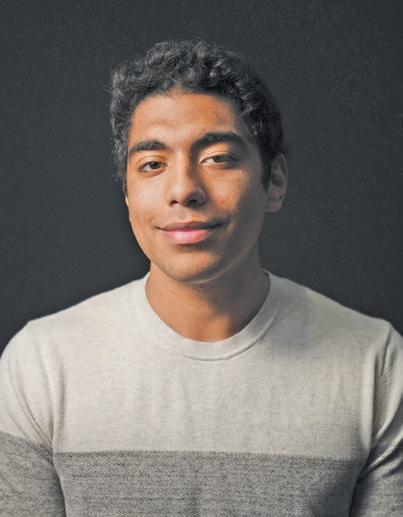
After months of hearings, Osai Egharevba ’21 pled guilty to one charge of unlawful imprisonment in a hearing on Friday morning in an online Ithaca City Court hearing.
Egharevba will complete one year of interim probation, and in the meantime, sentencing is adjourned. The other three charges that he faced — including one count of third degree sex abuse — have been dropped. Three orders of protection against Egharevba were also renewed.
In a previous Nov. 20 hearing, Ithaca City Court Judge Seth Peacock explained the context of the charges, which included multiple incidents of alleged physical and verbal harassment from January 2020 to November 2020, including touching someone’s breast without permission. After being arrested on Nov. 17, Egharevba was released with the promise to appear in court later. In a previous hearing on Dec. 10, Egharevba pled not guilty to all charges.
Egharevba was advised of his rights that he would give up by taking the plea deal, including the right to have a trial by jury, the right to challenge the prosecution’s evidence, the right to present evidence in his own defense and the right to remain silent. In addition, the judge informed him that this plea deal was the same as being convicted in a trial.
After Egharevba waived these rights, Judge Peacock
entered Egharevba’s guilty plea into the record.
“Do you admit that on Oct. 23, 2020, at about 12 p.m., at University Avenue in the City of Ithaca in Tompkins County, that you stood in front of [name redacted] and blocked her from proceeding, and grabbing her right hand and not letting her go, and that caused her to become alarmed and scared? Do you admit that?” Peacock asked. Egharevba pled guilty.
Egharevba will complete one year of interim probation; in the meantime, sentencing is adjourned.
One of the women who pressed charges in this case, who asked to remain anonymous out of concern for her privacy, said she was disappointed that many of the charges were dropped.
“The fact that only one of them was addressed and then the rest got dropped — he pleaded guilty to one and then the rest were kind of just ignored — is not really the answer I wanted,” the woman told The Sun.
She hoped ultimately that Egharbeva would change his behavior in the future and not reoffend.
“I want him to stop hurting other people on accident or on purpose because it’s not OK,” she said.
While she was not one of the people who pressed charges in this case, Leina Peterson ’22, who had filed a Title IX complaint against Egharevba last year, wanted
By JOHN YOON Sun Staff Writer
A second location of Ithaca Beer Co. will be the first to occupy the new Student Agencies Building that will open next fall, settling into the Collegetown corner that previously held the classic Collegetown Bagels.
to be a witness if the case went to trial. In emails to an instructor from last year that Peterson provided to The Sun, Peterson alleged that Egharevba had harassed her on multiple occasions.
Peterson had hoped that the case would proceed to a trial so that Egharevba could hear the impact of his actions directly from the survivors.
“I honestly hoped that he would get to hear the victims speaking about the kind of harm that he’s caused,” Peterson told The Sun. “I feel like anyone, upon hearing the type of damage that they caused, they would feel some sort of guilt, some sort of remorse. They’d want to change at least to some extent.”
Cornell University, the University Title IX Office and the Cornell University Police Department declined to comment, stating that they have no information to share at this time. Egharevba, his defense attorney Patrick Cummings and Tompkins County assistant district attorney Heidi Paulino did not respond to a request for comment by the time of publication.
Members of the Cornell community may consult with the Victim Advocate by calling 607-255-1212, and with Cornell Health by calling 607-255-5155. Employees may call the Faculty Staff Assistance Program (FSAP) at 607255-2673. An Ithaca-based Crisisline is available at 607272-1616. The Tompkins County-based Advocacy Center is available at 607-277-5000. For additional resources, visit health.cornell.edu/services/victim-advocacy.
Tamara Kamis can be reached at tkamis@cornellsun.com.
By FAITH FISHER Sun Staff Writer
“[The patio] is really one of the prime reasons we wanted that corner, because we really value the outdoors,” said Mari Mitchell ’98 M.A. ’01, co-owner and co-founder of Ithaca Beer Co. “[It’s
At its new location, Ithaca Beer Co. will open for sit-down dining for lunch and dinner. Half of the seating will be outdoors, which will be a smaller version of the beer garden at their current location, its design drawing inspiration from pubs and beer halls.

In just 36 hours, participants in the 2021 Digital Ag Hackathon illustrated some of the ways an industry as ancient as agriculture can still benefit from modern, data-driven technological advancements.
From March 5 to March 7, over 200 students from the top five agriculture schools in the world participated in a series of workshops and networking events before competing for over $8,000 in prizes to help turn their innovative proposals into reality.
According to Prof. Steven Wolf, natural resources and environment, and Hackathon faculty chair, digital agriculture refers to a focus on data in the agricultural and food sectors.
“Agriculture and food are very old industries, and they are, up to this point, not particularly data
dense,” Wolf said. “Digital agriculture can create complementary resources that can be combined with human, experiential and locally based knowledge.”
The event was hosted by the
“My experience was fantastic. This hackathon literally changed my life.” Shiang-Wan Chin grad
Cornell Institute for Digital Agriculture, with the support of Microsoft, Cargill and other corporate sponsors. In addition to Cornell, student and faculty guests hailed from Wageningen University in the Netherlands, University of São Paulo in Brazil,
Continued from page 1
a place] where you can go outside and kind of watch the world go by and have a drink, take a break for a moment.”
The Ithaca Beer Co. flagship location is just south of Buttermilk Falls and includes both a brewery and a farmto-table restaurant called the Taproom, which uses 60 percent of its produce from their on-site farm. The brewery offers a variety of different beer flavors, from Flower Power to Cascazilla, along with root beer and ginger beer.
Ithaca Beer Co.’s farm brewery license, required for any business to operate a brewery in New York State, now makes it easier to open additional locations.
According to Mari Mitchell, many factors motivated the co-owners to open this new location. With a location in Collegetown, the Mitchells can be even more accessible to students and closer to their son, who attends Cornell.
While the Mitchells have long dreamed of this opportunity, they said they are also nervous because of the pandemic and because many restaurants have, in general, struggled to stay open in the area.
The pandemic rattled Ithaca’s restaurant industry, with virus restrictions and limited indoor dining. Most restaurants have been forced to adapt, introducing Plexiglass screens, heated outdoor seating and extended takeout options.
“It’s certainly a nerve-wracking time to be doing something like this, but we were figuring that at some point … COVID will pass and get us back to some level of normalcy,” Dan Mitchell said. “I believe that the restaurant industry will come back, and when it does, we’ll be in a good spot and we’ll be able to take off from there.”
Ithaca Beer Co.’s management said they realize the risk of
the virus may linger in the fall. The new location will include booths and will install colorful Plexiglas.
Student Agencies, a student-run corporation that owns the Student Agencies Building, first began demolition last June, and only had 14 months to reopen for the August opening date — demolishing the Chacona Block building once home to Collegetown Bagels. If Student Agencies misses this opening date, they will have lost the ability to pre-lease the 64 residential apartments for the upcoming fall semester.
“The pandemic only made [our schedule] more challenging, but the great news is I think through hard work and good luck, we are on schedule and on budget for an August opening,” said Kyle Karnes ’91, the CEO of Student Agencies.
When Student Agencies first announced its plans to renovate this building back in 2017, the company faced push back from students and community members. Many wanted to designate the building as a historical landmark. It was only through a 6-5 vote, with Mayor Svante Myrick ’09 breaking the tie, did the city vote against designation.
Karnes said that the building itself is important to Student Agencies and remains an iconiccorner for the community. For students reminiscing about the old CTB location, the Mitchells ask that the Cornell community give their new restaurant a chance.
“It’s the right location for Ithaca Beer to be and we kind of feel like it will bring a lot of excitement to that corner,” Mari Mitchell said. “I think it’s going to encourage a lot of outdoor eating with Collegetown Bagels across the street and just liven up that whole area, which will be really beneficial.”
John Yoon can be reached johnyoon@cornellsun.com.
Working on Today’s Sun
Ad Layout Mei Ou ’22
Production Deskers Sarah Skinner ’21 Dana Chan ’21
Design Desker Niko Nguyen ’22 Kristin D’Souza ’24 Puja Oak ’24
Editors in Training
Editor in Chief Kathryn Stamm ’22
Managing Editor Madeline Rosenberg ’23
Associate Editor Benajmin Velani ’22
Opinion Editor Christian Baran ’22
Arts Editor John Colie ’23 Wendy Wang ’24
News Editor Tamara Kamis ’22 Andreas Psahos ’24 Surita Basu ’23
Science Editor Omsalama Ayoub ’22
Photography Editor Benjamin Parker ’22
Over 30 teams compete at 2021 Digital Ag Hackathon
HACKATHON Continued from page 1
China Agricultural University and the University of California, Davis.
Over 30 teams pitched their ideas to the judges, who ranged from affiliated professors to professionals and experts from the USDA, Microsoft, Infosys and Dairy One.
The judges assessed the students’ pitches across four categories: Novelty, Grand Societal Challenges, Market Readiness and Data. The winner for each category won $1,500, with one team taking home the overall prize of $2,000.
PicturePerfectFruit and Unstuck Truck both took home the awards in the “Market Readiness” category. PicturePerfectFruit pitched a smart device to be used in grocery stores that predicts when produce will be perfectly ripe for consumption. Unstuck Truck optimizes tractor lending in Brazilian cane sugar farms.
Move it, Move It!” team, composed of Cornellians Whitman Barrett MPS ’21, Mina Barakatain MPS ’21, Lily Lin ’17 MPS ’21, Zenas Lim MPS ’21, as well as Riske van Vliet of Wageningen and Christopher Prajogo of UC Davis. The team created a model for developing countries to tackle food spoilage during transport.
The virtual event allowed more students outside of Ithaca to attend than ever before. While last year each university brought five to 10 students to the in-person event, this year, over 20 students from each attended.
“Our team came from all different backgrounds, and I'm grateful for how we came together to brainstorm and create a solution to such an important problem,” said Yvonne Chan ’21 who worked on the Agfrica team.
“My favorite part of the event was working on the project all night and making 1 a.m. jokes with strangers that became lifelong friends literaly overnight.”
Shiang-Wan Chin grad
The data award went to Sprout, an app that helps those living in food deserts begin gardening.
Agfrica, another project that uses technology to address locust infestation in Africa, won the “Grand Societal Challenge” prize. The innovation has the potential to recuperate $2.5 billion in crop damage, and alleviate the environmental and human costs of locust swarms.
In the “Novelty” category, ScrApp took home the title. The team created an app that allows farmers who need feed for their animals to participate in a bidding system for food waste.
The overall winner was awarded to the “I Like to
Despite the 36-hour timeframe, students who participated in the event developed lasting friendships.
“My favorite part of the event was working on the project all night and making 1 a.m. jokes with strangers that became lifelong friends literally overnight,” said ShiangWan Chin, a Ph.D. candidate in systems engineering and member of team Agfrica.
As a past winner of the “Grand Societal Challenge” prize, Chin’s experience at previous Digital Ag hackathons inspired him to pursue a Ph.D. in computer and systems engineering with a focus in digital agriculture. This year’s event only confirmed his decision.
“My experience was fantastic,” Chin said. “This hackathon literally changed my life.”
Faith Fisher can be reached at fsher@cornellsun.com.

To donate, go to h ttps: //tinyu rl com /Su nGiving, or click onth e “Su pport Th e Su n” bu tton onth e cornellsu ncom h ome page.

By MILENA BIMPONG and SURITA BASU Sun Staff Writers
Aaron Stehura ’09 and Nagin Cox ’86 stretched the bounds of all that they learned on the Hill through the Perseverance Landing — a historical leap that will allow scientists to better understand Mars through its geologic record.
The purpose of the robotic missions to Mars are similar to those that explored the Earth’s moon, according to NASA. The objective of Perseverance is to shape national space policy to prepare for sending humans to Mars by 2030.
According to Stehura, the rover will be traveling around Mars for one Martian year — equivalent to 687 Earth days — to inspect its surroundings, take pictures and collect rock samples. Geologists and astrobiologists on the perseverance team will then analyze these rock samples, which allow researchers to study the environment on the planet’s surface and its ability to support life.
moving forward. Her team’s focus now is on exploration, as they are responsible for assessing the health and safety of the rover during landing and every day on Mars.
“We are the first of a three-part mission where we collect samples that will be brought back to Earth,” Cox explained. “None of that would happen unless we landed successfully.”
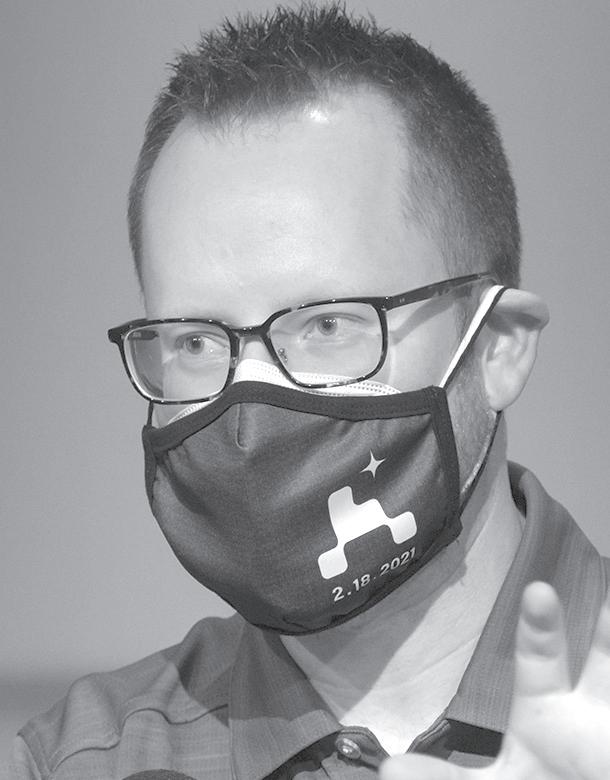
pull a team together to work towards the type of common goals and to solve the types of challenging problems that we have to solve at [Jet Propulsion Laboratory] everyday,”
Stehura told The Sun.
The past eight years have culminated to “seven minutes of terror” for Stehura and Cox, who have worked on Perseverance since 2013.
“We refer to the landing as the seven minutes of terror because it takes about seven minutes for the spacecraft to get from the top of the atmosphere, down to safety on the ground on Mars,” said Stehura, the entry, descent and landing lead of NASA’s Jet Propulsion Laboratory.
In just these seven minutes, the Perseverance team saw their hard work come to fruition.
Having been in the control room for four out of five U.S. rover landings, Cox is a space exploration veteran. Still, she said that during each landing, a palpable sigh erupts over the control room.
“It is just as nail-biting and epic every time ... my heart was in my throat,” Cox told The Sun. “When you see us all jumping up and down when things were so joyous and happy, we were very relieved.”
Cox, chief of engineering operations at NASA, said that the landing was only the beginning of the mission
The Jet Propulsion Laboratory, where both Cox and Stehura work, develops the technologies used in the Perseverance, such as the cameras on the rover and its overall design.
Cox has dreamed of working at NASA since she was 14. She credits the documen tary series A Personal Voyage
which featured the late professor Carl Sagan discussing discoveries on the universe and its makeup, for leading her toward Cornell.
“On Sunday night, at the end of every Cosmos show it would say ‘Carl Sagan, Cornell University,’” Cox recalled. “So I decided that I wanted to go to Cornell University.”
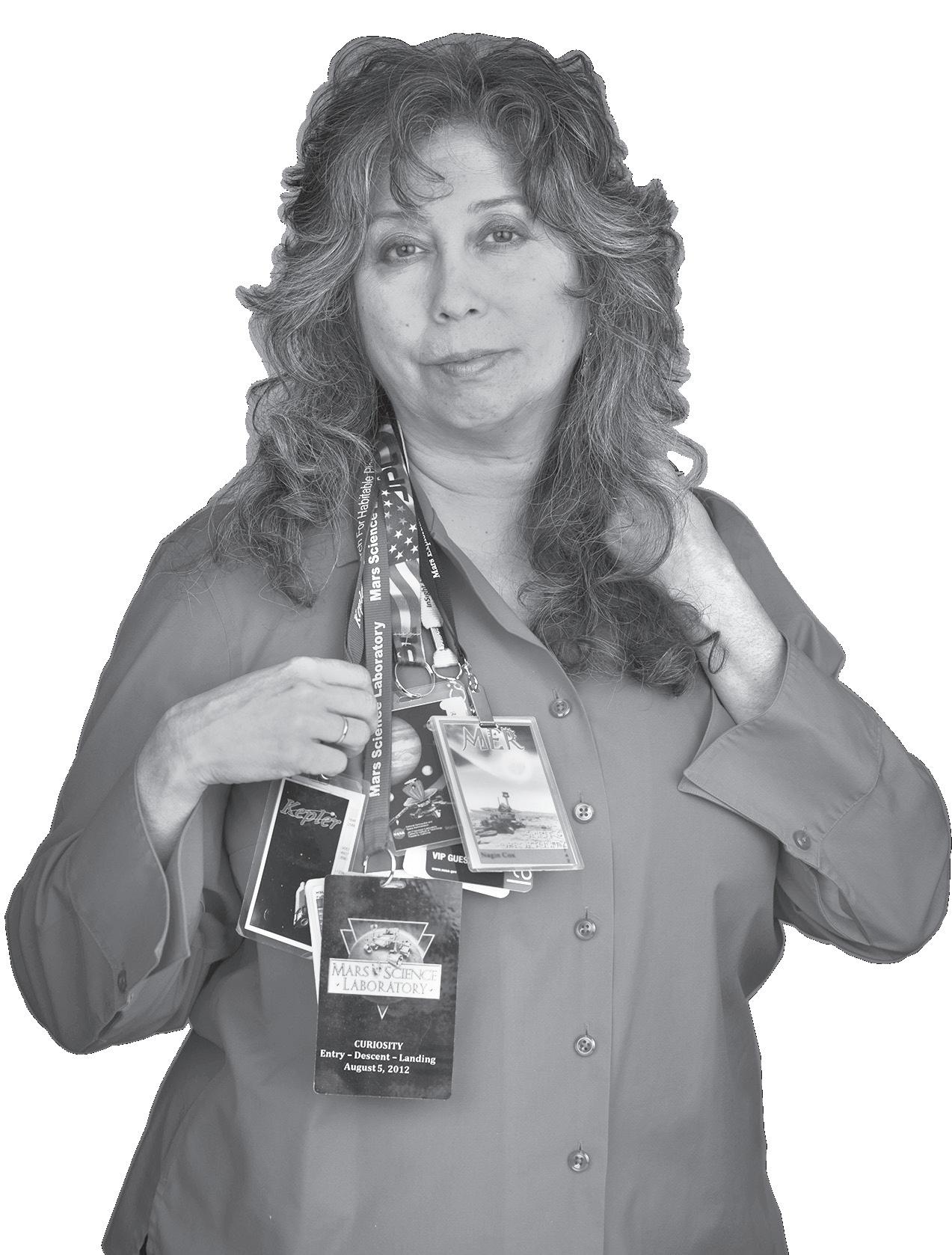
Cox attended Cornell with an Air Force ROTC scholarship. After graduating with a B.S. in operations research and industrial engineering and a B.A. in psychology, she spent six years in active duty for the Air Force before joining NASA’s Jet
“I’m proud of the fact that I have degrees from two different colleges,” Cox said. “Sometimes I’m not quite sure which of my Cornell degrees I need more, the engineering or the psychology. Because these things are always about a team.”
Since graduating, Cox has remained heavily involved with both the Cornell alumni network and the President’s Council of Cornell Women. She credits Cornell both for kicking off her career and for continuing to contribute to NASA missions with future engineers and scientists.
“Once a Cornellian, always a Cornellian,” Cox said. “It’s still part of how I define myself.”
Milena Bimpong can be reached at mbimpong@cornellsun.com.
Surita Basu can be reached at sbasu@cornellsun.com.
— to Cornellians.
By FEIFI HU Sun Staff Writer
2007 Endeavor shuttle souvenirs from his decades-long career in space that highlighted the lessons he learned aboard
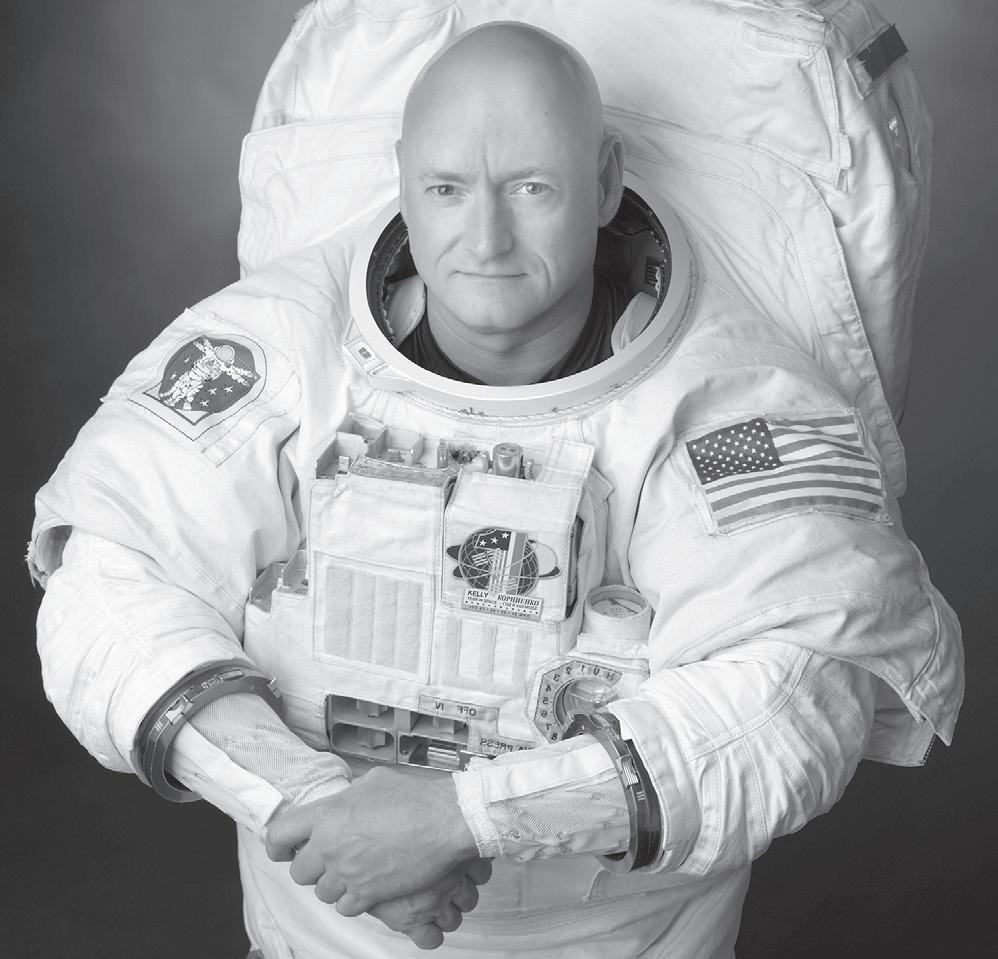
The tiles — which protected the outside of the 172,000 pound spacecraft from thousands of degrees of heat during reentry of the Earth — were found faulty by the astronauts aboard during a routine check. And while the minor chips on the tiles caused no further damage, this discovery was a test of faith for the astronaut.
“Failure’s a part of life,” Kelly said in the Q&A session hosted by the Cornell University Program Board. “They help us see what we’re really, really capable of doing.”
Kelly underscored the importance of compartmentalizing his thoughts and emotions during his various space exploration missions.
“Know what you have control over and focus on that and avoid anything else,” Kelly said. The lesson was particularly important during
launches, as the shuttle would reach speeds of 17,500 miles per hour in under nine minutes.
Before becoming an astronaut, Kelly served as an aviator for the U.S. Navy, where he learned aircraft flight and landing skills that prepared him for his work at NASA. He has completed more than 250 landings on aircraft carriers to date.
Kelly’s career as an astronaut began with the 1999 Hubble mission, which was followed by his Endeavour mission in 2007. Kelly also traveled to the International Space Station on multiple expeditions.
In 2012, Kelly was chosen to be part of the year-long mission to the International Space Station. The Soyuz TMA-16M launched in 2015, with Kelly and Russian cosmonaut Mikhail Kornienko aboard — a mission that studied how prolonged time in space affects the human body.
Kelly spoke about pacing himself during the year-long space mission on the International Space Station and following a schedule that structured weekends differently than weekdays. When he returned to Earth, Kelly underwent various tests administered by NASA to gauge how his body had changed.
The results of the trip became part of NASA’s Twins Study, in which researchers
compared the differences between Kelly and his twin Mark, who was also an astronaut but did not take part in the year-long mission in space. One surprising discovery resulting from the study was that telomeres, the caps of human chromosomes, grow longer in space.
But Kelly’s many missions also took a toll on his physical health. Returning to Earth after a year in space, Kelly said his ankles swelled when he stood up after sitting, and he got hives and rashes when his skin grazed against anything.
While research underlying the causes of these skin sensitivities is preliminary, longer space missions are helping biologists understand the function of skin barrier and its role in fluid retention that reflect the common sensitivities astronauts experience when they return to Earth.
Regardless of the sacrifices, Kelly advocates for the importance and the relevance of space exploration.
“It’s who we are … We’re explorers,” Kelly said. “We develop technologies that we wouldn’t otherwise have when we try to do really challenging things.”
Feifei Hu can be reached at
NINA POFCHER SUN CONTRIBUTOR
Should we really be buying clothes online if there are all these unknown variables such as fit, texture, compatibility and condition? Is the disconnect with the actual item perpetuating irresponsible or unconscious shopping? Do you truly need more new clothes, despite how cheap they are?
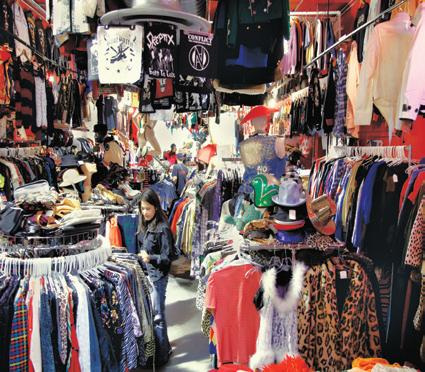
Cornell Thrift is the answer to all of these questions. It is the perfect club to supplement fashion needs without overspending or buying new. Each year in Willard Straight, Cornell Thrift holds a pop-up thrift shop with a wide selection of free garments. The intent is not to distribute these garments to any ready owner, but to provide a way for students to sustainably obtain necessary garments.
However, due to COVID, this in-person event has been revamped on the website, Next Best. Next Best was started for Cornellians to buy and sell secondhand clothing. Rather than going to an in-person thrift store, students can simply take a picture of their garment and put it on the site. The site reads, “With no shipping costs and a 0% commission fee, we are tackling the 92 million tons of textile waste one item at a time.” You can browse the website, hold any item for up to five days and then arrange a time to meet with the seller and pick-up the garment. The mission of this platform was not to make a profit, but to promote sustainable fashion. While students come to college with a wardrobe, they learn, over time, what they truly need based on the weather, how much they are walking to class, etc. Moving pieces from one student’s closet to another, rather than buying new, not only avoids waste, but also supports fellow classmates.
Currently, there are 61 items featured on the website, ranging from turtlenecks to winter coats to shorts. The prices are very generous, with most items around $1 to $2, some even free of charge. Some are even from Tommy Hilfiger, Madewell and more — high quality items for such a small price. In order to reduce the time investment of finding the perfect piece, you can hover over the picture of the garment, where a little description is given like “GAP White dress in excellent condition.” By enabling people to refine their searches
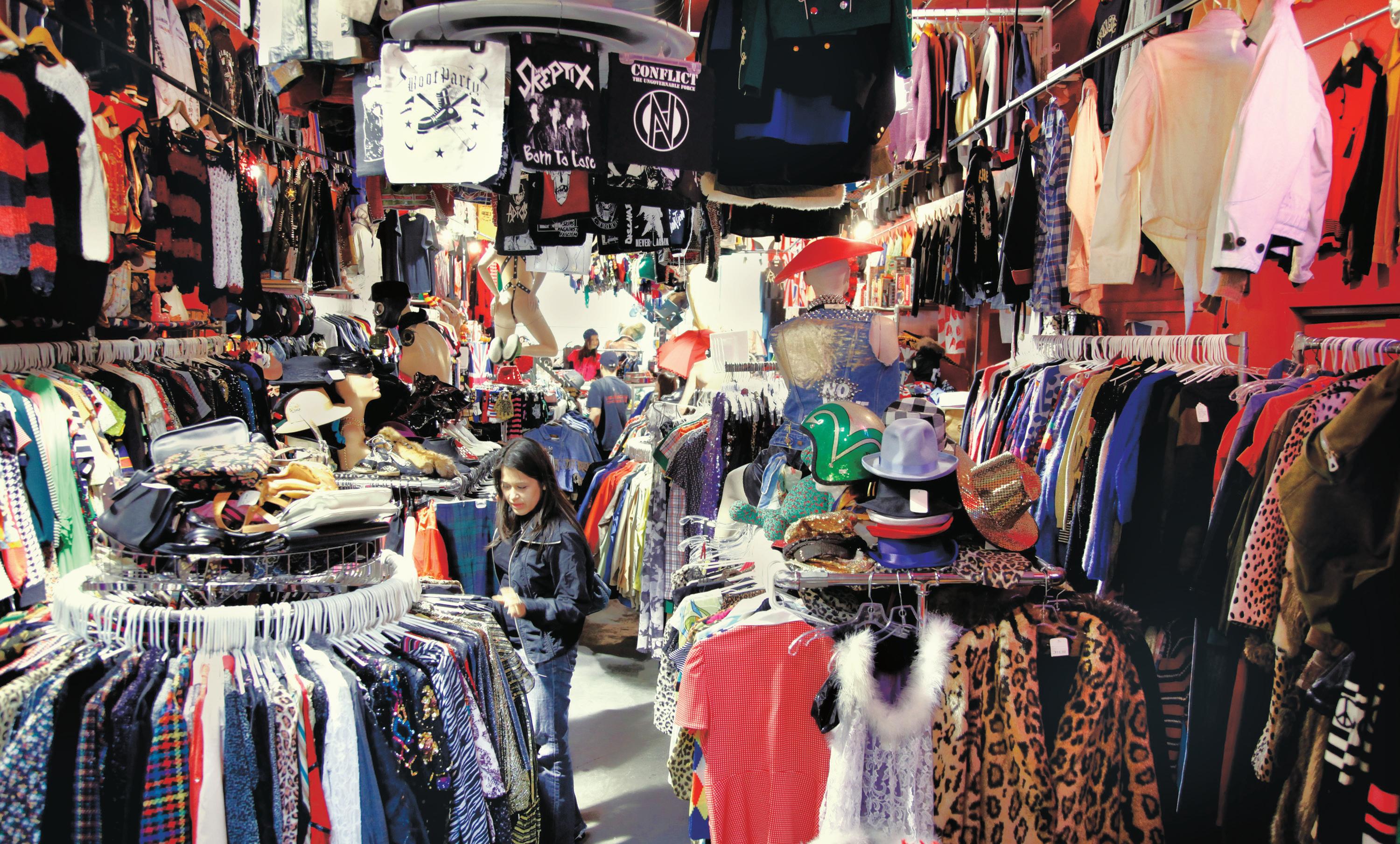
via users and styles on the app, people on Instagram have called it “iconic” and “a steal.”
To promote on their Instagram, the club posts informative graphics that give insights into the harsh environmental effects of fast fashion: “fast fashion isn’t free. Someone, somewhere else is paying.” They also post outfit pictures of people in their thrifted garments.
While the club has readily adapted to COVID, their expansion into the new digital age of thrifting begs the question: Does online thrifting change the true nature of thrifting by making it more of a commercialized, leisure act?
One point of in-store thrifting is that it is a thoughtful and interactive experience. You walk into the store and your senses light up. Instead of scrolling on a website, you can feel the object’s texture, try it on and hold it up to other items to see if they match. Almost like panning for gold, you commit to looking through every item of clothing in hopes of finding “the one.”
Internet access is a commodity that not everyone has, and the whole point of thrift stores is that they are accessible. If people don’t have money to spend on clothes,
they might not have money to spend on internet access or phone data. The accessibility of online alternatives has catapulted thrifting into a commercialized market and has shifted the true in-house nature of it into any other streamlined shopping experience.
In the past few years, there has been a significant rise in the popularity of online thrift platforms like Depop, Poshmark, Thred Up and Rent the Runway. However, a lot of users aren’t actually promoting the sustainable nature of thrift shopping, but are instead using it as an opportunity to generate profit. The fact that people can curate their page to have a certain aesthetic or price point changes the original point of thrifting from a cheap alternative to shopping, to a way of becoming an “independent small business owner.” In this sense, it shifts the goal of buying secondhand from sustainability to profit.
Sometimes, these individuals buy a bunch of items in bulk just to resell them at higher margins. They get labeled as “vintage,” when they were actually from a year ago or less. Additionally, they might purchase oversized pieces — shirts that are three times their size or pants that are
overly baggy — either for the “aesthetic” or to upcycle into things that are more form-fitting and stylish. In most thrift stores, there is an unequal distribution of sizes: Items tend to range from XS-L rather than including larger and plus-size bodies. When a person buys a garment that is clearly too big, just for the look, they are taking away from the people who go to thrift stores to buy pieces that fit their bodies of that size. Moreover, name brands like Forever 21 tend to attract smaller bodies, so people that are of a larger size may not be able to find pieces that fit them at cheap name brand stores, making thrift stores the more probable option.
Cornell Thrift is different because the pieces are coming from a college student’s closet and being sent to another student’s closet, creating an almost circular business model. However, their shift still reflects a broader change in how thrifting has become streamlined and a luxury for those either with time to go thrifting or the resources to browse online.
Nina Pofcher is a freshman in the College of Human Ecology. She can be reached at nlp47@cornell.edu.

JOYBEER DATTA GUPTA ’21
Business Manager
KRYSTAL YANG ’21
Advertising Manager
CHRISTINA BULKELEY ’21
PALLAVI KENKARE ’21
EMMA ROSENBAUM ’22
SEAN O’CONNELL ’21
AMBER KRISCH ’20
ROCHELLE LI ’20
Assistant Business Manager
OLIVIA WEINBERG ’22
LUKE PICHINI ’22
HANNAH ROSENBERG ’23
DUBOW ’21
WANG ’21
MONKOVIC ’22
LEE ’21
AMANDA CRONIN ’21
Gabrielle Gonzalez ’21
Samantha Stern ’21
Catherine Chmiel ’22
Connor Greene ’22
Esat Braveboy ’22
Faith Fisher ’22
Hannah Kim ’22
Milo Gringlas ’22
AJ Stella ’21
Aminah Taariq ’21
Canaan Delgado ’21
Darren Chang ’21
Elijah Fox ’21
Jessica Lussier ’21
Ramya Yandava ’21
Shriya Perati ’21
Ashley Ramynke ’22
Cecilia Lu ’22
Mike Seitz ’21
Raphy Gendler ’21
Faith Fisher ’22
Fei Fei Hu ’21
Natalie Monticello ’21
Livia Caligor ’21
Ella Schwartz ’23
Brianna Johnson ’21
Katie Zhang ’21
Ruth Park ’21
Amelia Clute ’22
Isha Vaish ’22
JOHNATHAN STIMPSON ’21
Managing Editor
JASON HUANG ’21
Web Editor
NIKO NGUYEN ’22
Design Editor
EMMA PLOWE ’23
Arts & Entertainment Editor
BENJAMIN VELANI ’22
Dining Editor
CAROLINE JOHNSON ’22
News Editor
JOHN COLIE ’23
Blogs Editor
MEGHANA SRIVASTAVA ’23
Assistant News Editor
CATALINA PEÑÉÑORY ’22
Assistant News Editor
BRIAN LU ’23
Assistant Arts & Entertainment Editor
BEN PARKER ’22
Assistant Photography Editor
LEI ANNE RABEJE ’22
Layout Editor
ANNABEL LI ’22
Assistant Money & Business Editor
RAPHY GENDLER ’21
Senior Editor
JEREMY MARKUS ’21
Senior Editor
NICOLE ZHU ’20
Senior Editor
SARAH SKINNER ’21
Senior Editor
News Board
Asha Patt ’23
Shin ’22
Duane ’22 Stephanie Tom ’22 Tal Dotan ’22
Tamara Kamis ’22
Ainav Rabinowitz ’23
Amaya Aranda ’23 Anthony Chen ’23
Kristi Lim ’21
Lucero Contreras ’21
Lei Lei Wu ’21
Michaela Bettez ’21
Paris Ghazi ’21
Stephen Yang ’22
Tyler Brown ’22
Amaya Aranda ’23
Ashley Ramynke ’23
Justin Suzzan ’22 Ken Choi ’22
Sydney Oraskovich ’21
Tamara Kamis ’22
Katriana Galloway ’23
Dylan McIntyre ’24
Jack Waxman ’22
Melanie Metz ’22
Meridien Mach ’22
Peter Kaplinsky ’22
Rae Specht ’22
Mihika Badjate ’23 Noor-e-jehan Umar ’23
Sarika Kannan ’23
Simran Surtani ’23
Opinion Board
Robyn Bardmesser ’21
Alecia Wilk ’22
Andrew Lorenzen ’22
Christian Baran ’22
Emma Smith ’22
Arts Board
Charlotte Mandy ’23
Christina Ochoa ’23
Emma Leynse ’23
John Colie ’23
Sports Board
Mitch Hoy ’22
William Bodenman ’22
Milena Bimpong ’22 Omsalama Ayoub ’22
PETER BUONANNO ’21
MEGHNA MAHARISHI ’22
BORIS TSANG ’21
Editor
OZA ’22
HALE ’21
KATHRYN STAMM ’22
FANG ’21
MADELINE ROSENBERG ’23
EMILY DAWSON ’21
DANIEL MORAN ’21
’22
’22
’20
CHENG ’21
GIUFURTA ’21
GHAZI ’21
Blogs Board Current
Harry Ducrepin ’24
Dining Board
Sofa Siciliani ’22
Brooke Jafe ’23
Gabe Schifer ’23
Julia Lescht ’23
Sarah Austin ’23
Sofa Loayza ’23 Surita Basu ’23 Sydney Browne ’23 Andreas Psahos ’24 Angela Bunay ’24 Charlie Mollin ’24 Eli Pallrand ’24
Matthew Samilow ’22
Nicholas Nguyen ’22
Odeya Rosenband ’22
Brendan Kempf ’23
Daniel Bernstein ’23
Julia Haberfeld ’23
Kayla Bouazouni ’23
Maddy Remington ’23
Megan Pontin ’23
Monica Kim ’23
Aaron Snyder ’23
Srishti Tyagi ’22
Julia Nagel ’24
Jyothsna Bolleddula ’24
Katherine Esterl ’24
Kayla Riggs ’24
Olivia Cipperman ’24
Sasha Abeyeva ’24
Spencer Nachman ’24
Jonna Chen ’23
Joshua Dov Epstein’23
Katherine Yao ’23
Roei Dery ’23
Wendy Wang ’24
Mira Driskell ’23
Isabelle Pappas ’24
Katie Lee ’24
Wendy Wang ’24
Alyson Wong ’23
Liam Monahan ’24
David Dayan ’24
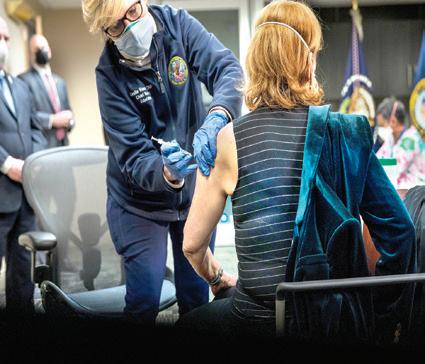
AS NEW YORK STATE’S VACCINATION PROGRAM ramps up, many Cornellians are now eligible to receive their first dose under the criteria for Phase 1B. However, despite their eligibility, many students are facing obstacles in traveling to vaccination sites in Syracuse and Binghamton. If Cornell truly wants to encourage health and safety, it needs a better plan to help its community receive vaccinations. Now, as dining workers, residential advisers and in-person instructors are eligible, the University should assist at-risk individuals by offering scheduling, transportation and informational assistance.
“I felt completely alone in trying to arrange my appointment to begin with,” said Selin Cebel ’21, a student manager at Green Dragon Café. “Being an international student, I didn’t know how to find my way in scheduling this sort of thing.”
Cebel, who traveled to Syracuse for the vaccination last week, had to rent a car in order to receive her first dose. “Taking a public bus right now isn’t the best thing to do, especially when you’re going to get the vaccine, and so I had to rent a car from Central Ithaca,” she added. “But this was a big consideration, because I had to completely finance this myself, and I knew that both renting a car and taking a bus would be expensive.”
Students aren’t the only ones who feel abandoned. Prof. Allison Chatrchyan, earth and atmospheric sciences, described how, other than sending an email confirming her eligibility, the University did not offer any help in her vaccination process.
“I wish that Cornell could have worked with New York State or Tompkins County to set up an immunization clinic for in-person instructors,” she said. While Tompkins County recently opened a vaccination registry, it remains challenging to get an appointment. Luckily, after “sitting at [the] computer for hours and hitting the refresh button,” Chatrchyan was able to get an appointment at a site in Binghamton. Over an hour outside of Ithaca, she said the commute would not have been possible without a car.
If you’re eligible, you should get vaccinated. It’s important, not only for your own health and well-being, but for that of those around you. It’s also an essential step toward achieving herd immunity, which is especially critical for those who can’t receive the vaccination due to compromised immune systems or inaccessibility. Although Cornell isn’t requiring its employees and students to get vaccinated, it recognizes that the vaccination is “key to the resolution of this global pandemic.” Now, it is the University’s obligation to put its words into action and meaningfully help its community receive the medical treatment it’s eligible for.
Isabelle Pappas ’24
Sanjana Kaicker ’23
Andrea Serrano ’24
Clare Della Valle ’24
Grace Kim ’24
Lauren Auburt ’24
Nick Hoge ’24
Sadie Groberg ’24
Suzanna Moustafa ’24
Yvie Cai ’24
Alongside the logistical issues, institutional medical racism and a history of abuse further complicate the path toward a vaccinated population. Not only are Black Americans more likely to live in vaccine deserts, they are also experiencing higher rates of hospitalization and deaths due to COVID-19. In order to create a more equitable future, Cornell must account for the valid concerns of the Black community as it works to fight the pandemic’s racial disparities. This includes improving access to information, resources and vaccines.
“I think a lot of people don’t realize that Black individuals, such as myself, have genuine questions about the information that is being released from the medical community,” said Kayla Bouazouni ’22, a student manager at Rose Dining Hall. “We have historically experienced mistreatment and discrimination from the healthcare system, and I hope that the Cornell community acknowledges that there are real people with real concerns.”
Vaccines will not end the pandemic alone. But they’re a critical piece of the puzzle. As we approach the one-year mark since Cornellians were abruptly sent home from campus, we must do our best to protect and preserve this campus and the larger Ithaca community. That includes a more comprehensive and thoughtful vaccination plan.

Daniel Bernstein is a sophomore in the College of Arts and Sciences. He can be reached at dbernstein@cornellsun.com. Feel the Bern runs every other Monday this semester.
It’s a simple message, but an old and important one.
And as we begin our middle-of-the-week weekend — a phenomenon really only relevant to our current moment in time — we celebrate the theme of “wellness.” What better way is there to work on our own wellness but by trying something new?
At Cornell, we often fnd ourselves stuck in the same ruts: promising to catch up on work, having the same worries, falling into the same habits and fnishing the weekend in the same place we started. With the pressures of classes, jobs and extracurriculars, it can be difcult to try new things.
Tis is especially true now. Because of the pandemic, it feels harder than ever to meet new people, make new connections or do things outside your comfort zone — or, at the very least, outside of what we’re used to.
However, these two days in the middle of the week are an opportunity. They give the ever-so-valuable gift of time.
I’m not going to tell you not to spend any parts of these days catching up on old work or doing whatever you’ve been putting of for a couple weeks. I’ll certainly be doing that at some point or another, and I can’t criticize you if you do the same. But I also know that work won’t be the only part, nor the defning part of your wellness days. Tere will undoubtedly be fun nights with close friends, maybe with drinks or games or whatever else you employ to entertain yourselves. Tis is good and necessary.
But I recommend that in addition to (or even in supplement of) your regularly scheduled activities, you
But I recommend that ... you do something you’ve never done before. Break the barrier of trying new things that can often feel so rigid, especially during a pandemic.
do something you’ve never done before. Or, at least, something diferent. Break the barrier of trying new things that can often feel so rigid, especially during a pandemic.
In fact, take a second to think about the last time you did something that doesn’t ft into your normal routine. Have you eaten a certain kind of food that you wouldn’t usually? Have you visited any new places or hung out with anybody you didn’t know before? Have you picked up any new hobbies?
I know for me, it’s been hard to remember the last
time I tried anything new. I feel like I never leave my house or see people other than my closest circles. I miss the excitement of meeting new people face-to-face and I miss the thrill of spontaneous adventure. It won’t be perfect, but given the increased freedom these next two days, I’ll try to recreate some of those feelings.
I’m going rock climbing. One of my friends and I have been talking about doing it for a little while now. It’s something that I did a couple of times when I was a kid at camp, but as a college student it still feels new.
Perhaps for you it’s also an activity like that — maybe you will go hiking or skiing or bird watching. But the new activity you take up could also be as simple as watching a movie you wouldn’t otherwise consider watching. Or driving to a park or local place to which you’ve never been. Or seeing a friend who you haven’t spoken to in a while. It doesn’t have to be brand new, either. Te idea is just to change up your routine.
I think shaking things up during free time is an important part of caring for our own wellness. A little change can help you get out of a rut you might otherwise be stuck in, break out of bad habits and have you quicker on your feet. A study from Harvard Health showed that picking up new activities can help your thinking skills. A new experience can also help with overcoming fears and embracing creativity. Tere are real, proven benefts that come along with trying something new.
Tere’s something to relish about embracing uncertainty. I don’t mean a scary uncertainty either, or really anything daunting for that matter. Te simple question of, “Will I like rock climbing?” is uncertain, and I’m excited to fnd out the answer. I like to think, though, that with the right attitude, whether I enjoy the act of climbing or not won’t matter — I’m already anticipating the refreshing, long-lost feeling of trying something new, and I know that that will be good enough. Get your work done if you have to and spend time with your friends if that’s what you’re used to. But branch out and try something new, too. It will help your wellness on these wellness days.

Michaela Bettez Bet on It
Michaela Bettez is a senior in the College of Engineering. She can be reached at mbettez@cornellsun.com. Bet on It runs every other Monday this semester.
An acquaintance was once someone who you could run into as you rush through Ho Plaza on your way to class and chat, or attempt to catch up with over the roar of a frat party’s Spotify playlist. Maybe they were even a friend of a friend, or an ally when you frantically needed help on your problem set the night it was due. Without these relatively inconsequential interactions, Cornell’s campus is no longer a community of interconnections, but a set of isolated bubbles. An unfortunate, but not unexpected consequence of the COVID-19 pandemic lasting as long as it has is the death of an entire class of friends.
Te loss of the acquaintance is just another symptom of the loss of the campus space and sense of community we’ve experienced over the last year. While study spaces remain open and some classes proceed with hybrid instruction, students who choose to return to Ithaca see a campus that’s just a shell of its previous vibrance. Under the threat of disease and strict regulations, the far fewer students who still frequent campus are solemn and somber, hunched over their work. Places that used to have a constant hum of chatter, like Dufeld or the second foor
of Mann Library, are now nearly silent.
A part of this loss is from the disconnect of emotion from other students you see around campus. While you used to be able to just smile at an acquaintance, masks make it physically impossible. Another factor is not being able to recognize people easily — the only way I can identify somebody now is by squinting at their face for an uncomfortably long time, which I generally try to avoid. How can you greet someone you can’t even recognize when they walk past you?
Without being able to sit within six feet of classmates, or likely even be in the same room as them during class, it’s nearly impossible to fnd new study partners. If I fnd myself in a class without friends, I can usually at least try to befriend someone sitting near me. But for the past two semesters, I’ve pretty much resigned myself to fguring out a class alone if I don’t know anyone going in — an issue assuredly worse for frst years who entered college alone.
On one hand, the introvert in me is almost relieved not to have to risk even the slightest bit of awkwardness in uncharted social waters. Prior to lockdown, I felt a constant pressure to know everyone, do everything, and have more friends than I could feasibly keep track of. Keeping only to close friends has given me a surprising amount of comfort. Instead of feeling guilty for not living my college experience to its fullest on a Friday night without plans, I can relish a quiet night of cleaning my apartment and watching whatever television I want.
But it comes at the cost of knowing that as a
An unfortunate, but not unexpected consequence of the COVID-19 pandemic lasting as long as it has is the death of an entire class of friends.
Although it might be too late for me, I fervently hope that the next generation of Cornellians is able to find their acquaintances, for all the awkward silences in conversations and uncomfortable wondering if you’re close enough to stop and chat.
second-semester senior, there are likely no more connections and friendships for me to make here at Cornell. I’m here to take my classes, play Pictionary with my friends on a Friday night and maybe meet a few lab partners along the way.
Because at the end of the day, we’re worse of for our inability to make new connections. All friendships begin as strangers — I wonder who I could’ve begun a lifelong friendship with if quarantine had never happened. And while it’s true I probably could’ve tried harder to maintain connections, it’s brutally difcult to build something from almost nothing online. College is about shared experiences — the same city, similar classes and some mediocre dining food around a table in RPCC. But these days, we have little left to share other than the same Zoom screen. Although it might be too late for me, I fervently hope that the next generation of Cornellians is able to fnd their acquaintances, for all the awkward silences in conversations and uncomfortable wondering if you’re close enough to stop and chat. It’s there that we fnd the most meaningful friendships, unique perspectives and unexpectedly fun times.

Fill in the empty cells, one number in each, so that each column, row, and region contains the numbers 1-9 exactly once. Each number in the solution therefore occurs only once in each of the three “directions,” hence the “single numbers” implied by the puzzle’s name. (Rules from wikipedia.org/wiki/ Sudoku)