The Corne¬ Daily Sun
Synthesized Robert Moog, Ph.D. ’64, inventor of the synthesizer, was celebrated in a three day-long exhibit.
3


Page 12 Sports

Synthesized Robert Moog, Ph.D. ’64, inventor of the synthesizer, was celebrated in a three day-long exhibit.
3
Page 12 Sports
By JOHNATHAN STIMPSON, MEGHNA MAHARISHI and KATHRYN STAMM Sun Managing Editor, Sun Assistant Managing Editor, and Sun News Editor
Three days after Cornell unfurled more stringent travel and event restrictions, the COVID-19 outbreak caused West Coast campuses to cancel in-person classes. On the opposite coast, the governor of New York declared a state of emergency amid a climbing number of cases.
As recently as three weeks ago, the coronavirus was contained mostly to China, with policies focused on limiting international travel to East Asia.
“I
don’t know what’s going to happen in the future, and that’s scary.” Habeeb Jimoh
At the time, Tompkins County health officials maintained that the risk of infection in Ithaca remained “low.”
Now, the Tompkins County Health Department has a person under investigation for
COVID-19, the health department announced in a March 8 press release. The patient is currently in isolation as they undergo testing for the virus.
In February, the Centers for Disease Control tested two Cornell students who showed symptoms similar to COVID-19 — the students tested negative. As of Saturday afternoon, 42 people have been quarantined in Tompkins County; six were released after showing no symptoms and 36 are still under quarantine.
The Tompkins County Health Department did not respond to a request for comment by the time of publication.
In a sign of the virus’ continuing strength, Columbia University announced Sunday night that it would cancel classes for at least two days after a person on campus was quarantined under suspicion of coronavirus exposure. That individual has not yet tested positive for COVID-19.
By MIHIKA BADJATE Sun Staff Writer
While confirmed American cases of the novel coronavirus have reached upwards of 500 and the worldwide count now exceeds 100,000, Cornell has yet to report a case of COVID-19. Even so, the virus has significantly impacted the Cornell community in other ways, interrupting students’ plans to visit home, putting a hold on educational travel and spreading anxiety about
the potential effects of an outbreak on campus.
On Thursday, Cornell released a slew of new measures aimed at preventing the transfer of the virus on campus, prohibiting large group events that draw people from outside Ithaca, as well as banning all international travel associated with the University.
This policy has so far affected at least dozens of students who were registered for Cornell- spon-
By MEGHANA SRIVASTAVA Sun Staff Writer
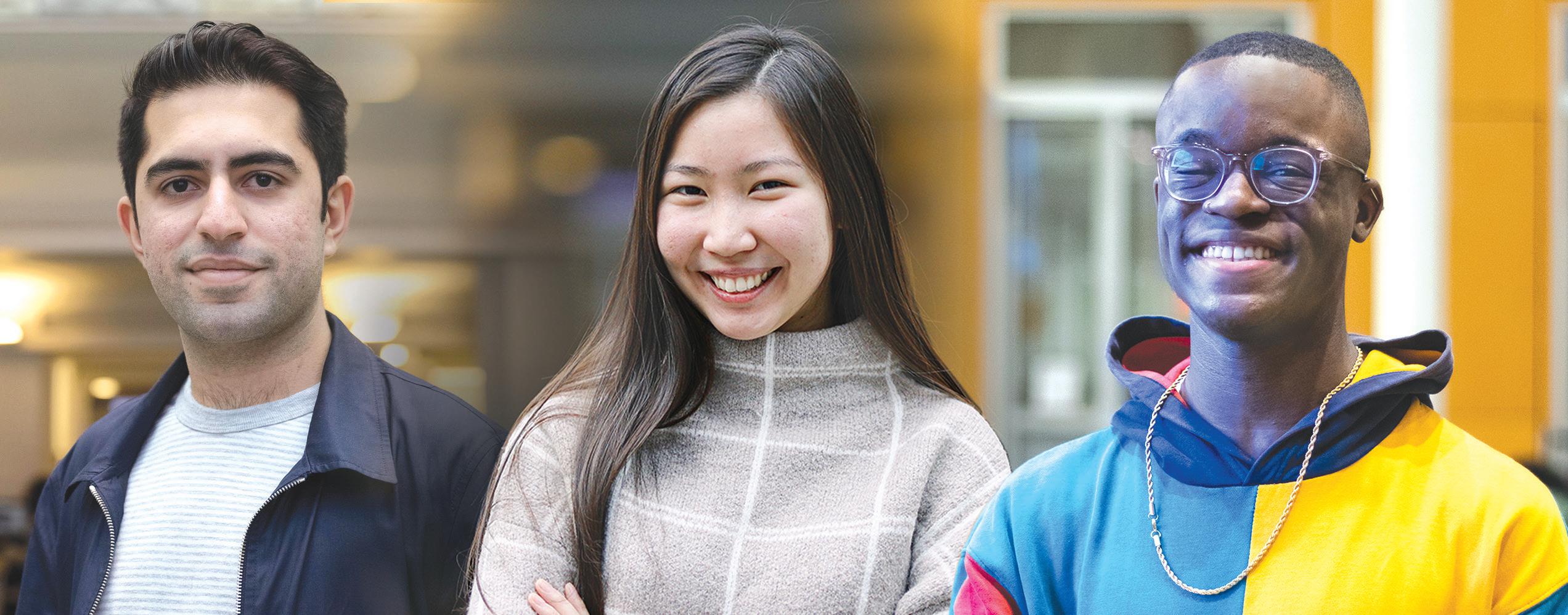
As another round of elections for the Student Assembly begins, three
candidates are vying for the position of S.A. President: Dillon Anadkat ’21, Uchenna Chukwukere ’21 and Catherine Huang ’21.
Although the Student
Assembly is an elected body that is meant to represent undergraduates by making proposals to the University, all three candidates agree that there is
increasingly a disconnect between the body and its constituents.
“I go to my friends and I say to my friends, you know, ‘I want to run for
president of the Student Assembly,” Anadkat said in an interview with The Sun. “And so often the responses were, ‘What the hell’s the Student Assembly?’ And that really shouldn't be the case.”
Anadkat is an international student in the College of Arts and Sciences studying government. He described himself as “an outsider and a fresh face,” given that he has not previously held a position on the assembly.
Huang currently serves as executive vice president, while Chukwukere is an undesignated voting representative at-large and appropriations committee member.
“One of the biggest
issues is that S.A. members are not holding themselves accountable, not reaching out to their constituencies, and [there is a] lack of cultural sensitivity,” Chukwekere said. As a solution to some of these issues, Chukwekere proposed implementing Intergroup Dialogue Project training for S.A. representatives. Huang highlighted similar issues, proposing to create a feedback form for students to more easily reach out to their representatives, as well as ensuring that representatives regularly meet with their constituents.
Tomorrow
Empowerment Month Series: Planning and Making Change Round Table 11:30 a.m. - 1 p.m., 102 Mann Library
Bringing Human Rights Home: Addressing Sexual Assault in the U.S. Military 12:15 - 1:15 p.m., G85 Myron Taylor Hall
Cornell Speech and Debate Society Presents: Unions, Inequality and Work Public Debate 1 - 3 p.m., 423 King-Shaw Hall
Prof. Suzanne Staggs of Princeton University With “The Cosmic Microwave Background in the 21st Century” 4 - 5 p.m., Schwartz Auditorium, Rockefeller Hall
‘Luminous People’: New Approaches to Thinking About Buddhism and Queerness 4:30 - 6:00 p.m., 374 Rockefeller Hall
CCCI: Governing the Airpocalypse-Insights From China’s ‘War on Smog’ 4:30 - 6 p.m., G64 Goldwin Smith Hall
Designs of Destruction: Allied Bombs And European Monuments During World War II 4:30 p.m., G22 Goldwin Smith Hall
Info Session: Fulbright U.S. Student Program For Undergraduates 4:30 - 6 p.m., G08 Uris Hall
LASSP & AEP Seminar: Vlad Pribiag, University of Minnesota 12:20 p.m., 700 Clark Hall
“Impact of Applied Breeding Technologies On a Hybrid Maize Breeding Program in the Post Genomics Era” With Milena Ouzunova 12:20 p.m., G08 Uris Hall
Stop, Drop, Create: Drop-In Hours 3 - 4 p.m., mannUfactory Makerspace
Applied Physics Grad Society Coffee Hour 3:30 - 4:30 p.m., 243 Clark Hall
Microeconomic Theory Workshop: Bart Lipman 4 - 5:30 p.m., 498 Uris Hall
Intro to Podcasting: Pre-Production 4:30 - 6 p.m., mannUfactory Makerspace
Professional Directions: Screenwriter Guinevere Turner 4:30 - 5:30 p.m., Schwartz Center for Performing Arts
Astronomer’s Milieu: Mount Hamilton and the Experimental Cinema of Charles and Ray Eames 4:30 p.m., G22 Goldwin Smith Hall
Literature, Culture and Orthodoxy 6 - 7 p.m., Edward’s Room, Anabel Taylor Hall
By OLIVIA CIPPERMAN
Sun Contributor
Excited voices and rays of sunlight filled Klarman Hall on Sunday afternoon as Smart is Strong’s third International Women’s Day Conference began.
Vice President of SiS Sneha Sharma ’21 called the crowd into an auditorium to hear from four women, who presented on their diverse careers in an effort to encourage personal initiative and community building.
“These people, we kind of see them as trailblazers,” Emily Zhou ’20, SiS co-president, told the Sun, explaining how the organization’s slate of speakers were a perfect fit for this year’s theme of promoting activism.
Elena Gupta ’19, founder of SiS, works as a social justice advocate in Ithaca, keeping with her organization’s community-building mission. At the conference, she spoke on “do-it-yourself advocacy,” encouraging Cornell students — particularly women — to “be the change” by using personal talents, communities and resources to achieve their goals.
The nonprofit targets high-risk areas for human trafficking, seeking to provide victims of forced labor with educational opportunities and safe employment. In 2009, the organization began outreach programs in Cambodia, and in 2012, branched out to India.
Caitlin Stanton ’20 — who founded Cornell’s first engineering sorority on campus, Alpha Omega Epsilon, in 2017 — spoke on the role of fostering community in expanding the number of women who work in STEM-related professions.
“It’s very impactful not only to educate yourself, but to have role models you can identify with,” Stanton said.
The final speaker, Stephanie Lim ’21, who won the title of Miss World Korea in 2019, discussed the changing roles of beauty pageants, describing them as evolving into more socially progressive and productive events.
“Cornellians are uniquely equipped in society to enact change.”
Elena Gupta ’19
“Helping other people or progressing social change is involved in developing a purpose,” Gupta said. In her presentation, she explained the importance of activism in building better communities and finding self-fulfillment.
According to Gupta, advocacy, by her definition, stems from dissatisfaction with the world’s problems and gratitude for one’s own privileges.
“Cornellians are uniquely equipped in society to enact change,” Gupta said, encouraging Cornellians to utilize their social capital for the greater good.
The second speaker, Maria Blackburn, works as a manager for the New York City-based Nomi Network, a non-profit that seeks to create economic opportunities for survivors of human trafficking.
“Our [Nomi Network’s] vision is a world without slavery where every woman can know her full potential,” Blackburn said. “I’ve met so many wonderful women who are being empowered by these programs, and it really inspires me.”
By ANTHONY CHEN Sun Contributor
The electric sound of a synthesizer reverberates in the music of The Beatles and the Rolling Stones thanks to the innovations of Grammyaward winning Robert Moog Ph.D. ’64.
Last week, the University held a series of panels, concerts and exhibits celebrating the late Moog, whose role in inventing the synthesizer reshaped decades of song-making.
Prof. Trevor Pinch, science and technology studies, kicked off the celebration of Moog’s life who died in 2005 moderating a March 5 panel that highlighted the inventor’s impact on modern music.
Moog’s dissertation for his Ph.D. — the ultrasonic absorption of sodium chloride — had nothing to do with his invention of the synthesizer. Outside of his study of engineering physics, Moog gained an early interest for building electronic instruments.
“He started taking piano lessons when he was four years old,” Moog-Koussa said. “He had a long and pretty arduous training.”
“The definition of beauty has changed over time,” Lim said. “Diversity is now more accepted, and even celebrated.”
Like the other speakers, she highlighted the importance of community in her industry: “Being able to support one another is beauty,” Lim said.
Sharma called the annual conference a “celebration” and a source of inspiration for local communities.
“This time, it's more about kind of taking on actionable solutions to make an actual change in your community,” Sharma said. “I placed a big emphasis on picking speakers who are diverse and can bring something different to the panel.”
Zhou agreed with Sharma’s sentiment, similarly regarding the conference as a valuable way to bring awareness to current gender inequalities.
“There is progress to be made, and that stigma still exists in a lot of sectors that we are personally in,” Zhou said, referencing a STEM field that is still disproportionately dominated by men.
But most importantly, SiS hopes to encourage women to apply the messages of the conference in their own lives.
“Go from here celebrating women not just today, but every single day,” Blackburn said.
Olivia Cipperman can be reached at oic2@cornell.edu.

S.A. Continued from page 1
All three candidates have platforms focused on accountability and accessibility, and plan to address a wide range of campus issues.
Anadkat’s platform ranges from involving Greek Life leaders more closely in developing reforms to fostering more inclusive policies for international students.
“I always will say that you can only achieve comprehensive Greek Life reform if the University sits down with leaders [of Greek Life] to achieve this.” Anadkat said. “The current reforms do miss the mark.”
Anadkat also proposed pushing for more mental health counselors, a review of the University endowment, and improving communication between student athletes and professors to ease academic conflicts.
Chukwekere, on the other hand, supports President Martha E. Pollack’s recent reforms, which impose stricter rules on event registration and the serving of alcohol. Believing that it would make the handling of cases more consistent, he also proposed bringing Greek Life violations under the purview of the Office of the Judicial Administrator rather than the Office of Sorority and Fraternity Life.
If elected, Chukwekere said he will prioritize reforming Greek Life and reducing the number of sexual assault incidents on campus. His campaign website also outlines plans to create more gender-neutral bathrooms, continue to push for fossil fuel divestment, reduce student health and contribution fees and eliminate Cornell’s need-aware financial aid policy for international students.
Citing his previous experience on the S.A. and relationships with Vice President Ryan Lombardi and Pollack, Chukwekere said that he is well-positioned to enact this slate of reforms.
“I've had the special opportunity of being able to work with a lot of administrators and making very solid relationships with them,” Chukwekere said. “They know me as a person. They trust me. They understand what I'm about.”
As a transfer student, Huang said she joined the S.A. in the fall of 2018 after seeing so many of her fellow transfers struggle to secure on-campus housing, forcing them to turn to expensive, off-campus alternatives. She also works as a mediator in the Office of the Judicial Administrator, meaning that she works closely with the J.A. to hear and resolve students’ cases.
“He was very unassuming, and you knew he was a genius and he didn’t come off as one.”
David Borden
At the event, Moog’s daughter, Michelle MoogKoussa, executive director of the Robert Moog Foundation, and David Borden, former director of the Cornell Digital Music Program, recalled Moog as a humble figure dedicated to his passion for music.
“As a person, he was very unassuming, and you knew he was a genius and he didn't come off as one,” Borden said.
As an undergraduate, Moog founded the R.A. Moog Company for electronic instrument design. Moog then worked with composers Herbet Deutsch and Wendy Carlos to develop the well-known “Moog synthesizer.”
While first associated with avant-garde, psychedelic music, the success of Carlo’s album brought the synthesizer into the mainstream, later becoming widely adopted by the pop and hip-hop genres.
“He was very humble and the fame seemed to make him uncomfortable. He didn’t like things that were
exclusive,” Moug-Koussa said. “To him, the recognition was not important, it was the work that was important.”
Despite the synthesizer’s success, his company faced financial difficulties, and in 1971, bankruptcy forced Moog to sell the firm. Despite the setback, he started to create custom-made electronic tools for musicians.
“My dad’s passion was not manufacturing thousands of the same synthesizer,” Moog-Koussa said. “My dad’s passion was doing oneoffs, it was problem solving, it was solving one challenge after the other.”
Moog also ran a personal studio in his Trumansburg, New York factory, where he held three-week seminars so musicians could try out different electrical instruments. He got to see firsthand how the musicians were using the gear and received feedback
from the musicians.
“He was kind of piecing together an existence, carving out a new place for himself,” Moog-Koussa said.
During the three-day celebration, the University held concerts featuring music using the Moog synthesizer at Sage Chapel, Klarman Hall and The Haunt.
“He had a great sense of humor, and you never got the feeling that he was trying to sell you something,” Borden said. “He was this great, very generous person.”
The Hirshland Exhibition Gallery in the Carl A. Kroch Library will hold an exhibition from March 6th to October 16th featuring Moog’s archival work donated by his family. The exhibit is home to instrument prototypes, photographs, audio recordings and personal letters traversing Moog’s lifelong career.
Anthony Chen can be reached at ac2826@cornell.edu.
These experiences have informed much of Huang’s platform, which focuses on issues such as improving housing accessibility, financial support and reforming Cornell’s judicial system.
“I think it's unfortunate that our judicial system at Cornell is as punitive as it is,” Huang said. “I think it's unnecessarily litigious and unfairly punitive at times. I've learned how to bring a perspective of student advocacy into these mediations, while maintaining neutrality between the OJA and the student who gets caught up in these things.”
Huang’s website details a number of other proposals, including pushing for Cornell to be carbon-neutral by 2035, modifying the requirement that all West Campus residents must purchase a meal plan, adjusting housing pricing to reflect amenity differences across dorms and increasing the transparency of S.A. actions.
Like Chukwekere, Huang believes her previous S.A. experience is key to her candidacy, saying that she can navigate the “bureaucratic hoops [one has] to jump through” while maintaining connections with the students she hopes to represent.
All three candidates’ bios are available on the S.A.’s website. The candidates will participate in a debate on March 9 in G64 Goldwin Smith Hall at 7 p.m.
Meghana Srivastava can be reached at msrivastava@cornellsun.com.

By EMILY PARK Sun Contributor
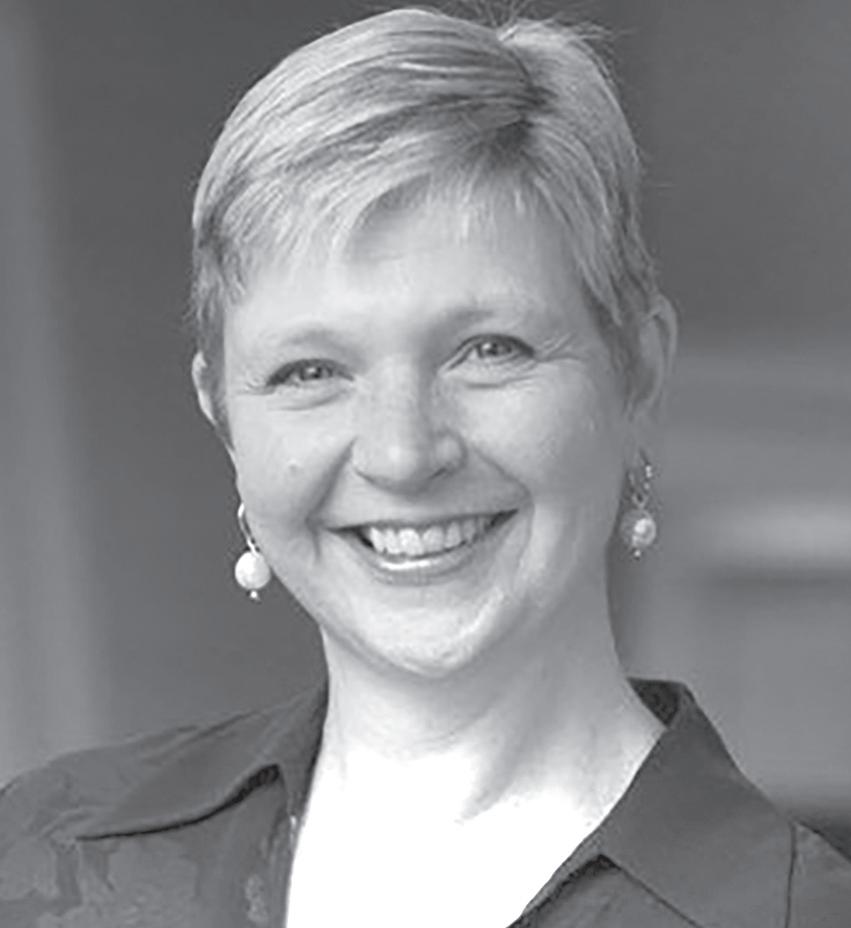
What do loud music and uncomfortable chairs have in common? Prof. Stephani Robson ’88, hotel administration — a Cornell graduate and current senior lecturer in the School of Hotel Administration — described them as “just a few tricks of the [restaurant] trade.”
One of those tricks rests on the notion of “less control means less comfort,” according to Robson. She recommended that eateries create an environment where customers feel comfortable, a feeling that comes from creating a sense of “perceived control” over their surroundings.
For example, placing tables against the wall creates an enclosed area, which fosters a sense of control and protection. But, not every restaurant’s goal is to prolong customer stay. If owners desire to get customers out of a space quickly, Robson recommended playing loud music or purchasing metal chairs.
school, she studied exactly that: environmental psychology — the interplay between individuals and their surroundings.
“I spent a lot of time measuring the space between tables with rulers,” said Robson, who recognized that her research’s very hands-on approach to academia was atypical. “You don’t have to do something really rarified and niche … I just found a new way of looking at very common problems.”
This mechanism of increasing or reducing the turnover of customers operates on intuitive logic, and this rationale has been exercised by restaurant managers throughout history. “People had been using environmental psychology in restaurant design, but they didn’t [explicitly] talk about it,” Robson said.
Because of how subconsciously managers make these decisions—where to place a table, how high a booth should be — the study of restaurant configuration and consumer behavior may not be the most obvious topic for a Ph.D. But, during Robson’s time in graduate
Although Robson has published over 30 articles and research papers on the subject, the universality of her subject material frequently leads to skepticism from peers and audiences: “Almost everyone has eaten in restaurants and has an opinion about what makes a good dining experience. People say, ‘How did you get a Ph.D. in this?’”
However, during her time as a student, designer, and lecturer, Robson grew to realize the importance of the intersections between her area of study and business.
“Business really is psychology,” she said. “Think about it: business is about transactions between people. You must understand people to do business.”
To students who are considering careers in hotel or restaurant management, Robson encouraged maintaining an open mindset.
“Students are rewarded too often for finding the right answer. In most subjects and in real life, there is no right answer...make connections among different disciplines, cultures, and your own experience,” Robson said. “The way that you think makes you unique and useful in business. If you can be useful, you have a competitive advantage.”
Emily Park can be reached at eep64@cornell.edu.
COVID-19
Continued from page 1
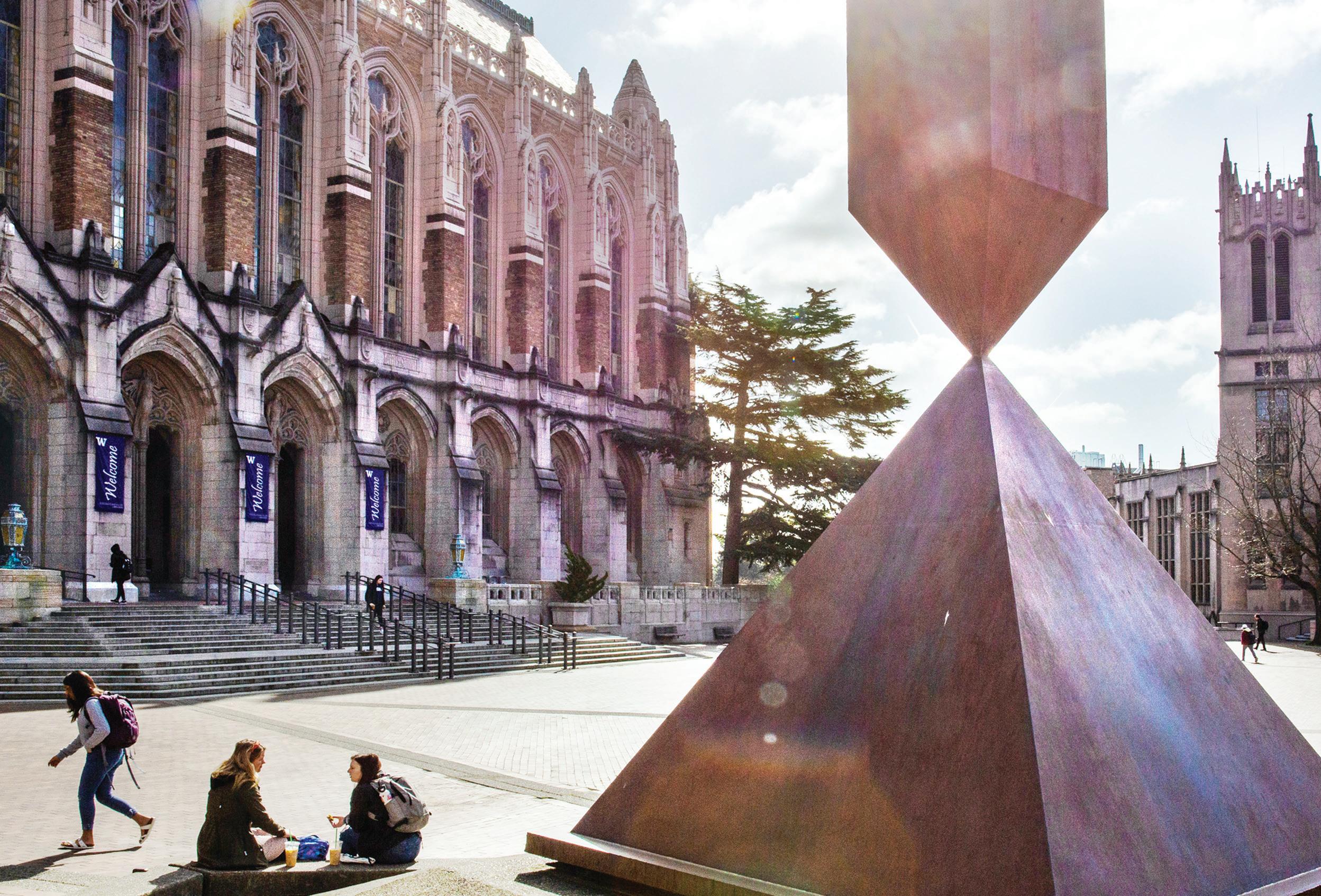
Before that, Stanford University and the University of Washington were the first colleges to close their classroom doors due to the novel coronavirus outbreak, announcing on Saturday afternoon that they would cancel all in-person classes for the last two weeks of their winter quarter. Both schools have one confirmed case on campus.
As of Saturday evening, Washington State has tallied 108 COVID-19 cases and 16 deaths; California follows with 88 cases. The two states account for half of the country’s 387 total cases.
The universities’ drastic measures left students — who normally would be preoccupied with finals at this time — with a new type of apprehension.
“I don’t know how to feel about it, because I don’t know what’s going to happen in the future, and that’s scary,” Habeeb Jimoh, a sophomore at Stanford, told The Sun. With plans to study abroad in Spain next quarter canceled, Jimoh called the outbreak “the biggest wrench ever in my life.”
The sudden shift to online teaching left professors scrambling to finish their courses before March 13, many of whom turned to Zoom to offer video options for lectures and office hours.
Ritik Shah, a sophomore at U.W., said that one computer science class completely canceled its final, planning to base student grades on the midterm instead. Other classes opted to weigh finals less in the total grade, making them open-note and collaborative.
The lack of consistency is in part due to the different nature of each class, but also can be attributed to the delay in U.W.’s announcement.
To read the rest of this article please visit cornellsun.
Johnathan Stimpson can be reached at jstimpson@cornellsun.com. Meghna Maharishi can be reached at mmaharishi@cornellsun.com. Kathryn Stamm can be reached at kstamm@cornellsun.
LACROSSE VETERAN
Continued from page 12
‘Hogs.’
Hughes was deployed to Marjah in Helmand Province, Afghanistan — the same region that saw Operation Moshtarak. Commonly called the Battle of Marjah, the 2010 operation saw heavy combat, ending with 61 International Security Assistance Force casualties. The Taliban suffered approximately 120 casualties within the first five days of the operation.
After returning from Afghanistan, Hughes attended Scout Sniper School, officially becoming a Hog. As a Hog, Hughes deployed two more times, once more to Afghanistan and another as a detachment with Marine Recon.
When the end of Hughes’ enlistment came, he was ready to move on from the military, having completed four deployments in six years of service.
“I got out because at a certain point, particularly in the Marine Corps, you pick up Staff NCO [non-commissioned officer] and you’re looking at riding a desk job” Hughes explained. “I loved my job, but I didn’t want to do a desk job.”
Hughes ultimately separated from the military to go back to school.
“I had done so poorly in high school,” he said. “It was a wrong I wanted to right. I knew I could do it, I just hadn’t focused.”
Hughes, who had then been out of school for six years, returned to square one, enrolling at Moorpark College near his native Thousand Oaks.
“I was at community college for three years — I spent a year of it just doing high school classes, just trying to catch up again,” he said. “It ended up being really good. I ended up really sinking my teeth into it.”
Hughes noted that his military experience was his greatest asset when returning to school.
“You come back after the military and you have a different focus,” Hughes said. “[You have] a different maturity, a bit of a drive that you didn’t have in high school.”
While he excelled in school, Hughes started to get antsy from the slower pace of civilian life.
“I’ve always needed something competitive,” he said. Eventually, he found that lacrosse was able to fill the void left from the military.
“I picked up lacrosse again because of a friend I played in high school with,” he said. “[He] convinced me to go out and play lacrosse again at this pick-up game in L.A.”
Falling “in love with it again,” Hughes instantly reconnected with the sport. “It gave me a reason to work out, I enjoyed it, it was competitive, it gave me something to work on every day,” he said.
Hughes eventually started to think about transferring to a four-year college, citing a friend at Columbia as motivation for looking into selective universities. When applying to transfer, Cornell was at the top of his list.
“I’ve never been so excited in my life, ” he said, smiling. “It was that redemption feeling.”
Hughes had been coaching the Westlake High School lacrosse team in Westlake Village, California, when some of the players caught wind of his acceptance to Cornell.
“One kid went and did a bunch of homework on it and found out I still had [NCAA] eligibility,” Hughes said.
The NCAA’s Five Year Rule states that a student athlete’s eligibility clock starts one year after high school graduation. The rule, however, allows an exception for students that choose to serve in the military, freezing the eligibility clock during service. This was Hughes’ shot at a collegiate lacrosse career.
With the possibility there for Hughes, the high school players he coached would frequently try to convince him to try out for Cornell’s team.
“I hope [my experience] can motivate other military vets to give themselves a shot.”
Hunter Hughes
“I was applying to schools that didn’t require an SAT or ACT … I think a lot of us [veterans] did,” Hughes said, referring to Cornell’s policy of not requiring standardized test scores from transfer applicants.
While many schools are shifting away from standardized test scores, it remains one of the biggest barriers for veterans interested in not only selective schools but also college in general.
“It’s a test that is testing me on high school knowledge … I did well, but there were so many little things that I was missing,” he said. “It’s such an arbitrary barrier.”
Hughes still remembers the moment he found out he was accepted to Cornell.
“They started bugging me,” he said. “They’re like, you should try out for Cornell.”
He decided to make his players a deal.
“I told them ‘Look, I will try out if you guys give me everything you got every single day,’” he said. “But you have to give me everything.”
The team had struggled the year prior, finishing under .500.
“We ended that season 13-6,” he said with a smile. “It’s like, all right, well you upheld your end of the bargain, and they did, they showed up every single day and worked hard.”
Hughes then began preparing for Cornell tryouts. He spent the summer training and conditioning up to three times a day. By the time he arrived on campus, he had been contacting the coaching staff regularly to ensure he could get a chance at a tryout. He finally got his chance at the end of October.
Once he got to tryouts, the outlook was
not promising, with historical precedent not on his side.
“The seniors of last year’s [team] told me they had never seen anyone walk on,” he said.
Hughes was also not the only player trying out. The conditioning test gave Hughes an edge — four other people trying out failed the test and were cut. Now with less competition, Hughes still had to go out and earn his spot on the team.
He continued to put everything on the line, impressing coaching staff enough to be brought on board after the two-week tryout.
Hughes has found his place on the team as a face-off specialist, something he had no prior experience in before playing for the Red.
Now in his second and final season with the team, Hughes is starting to grow sentimental about his time with the Red.
“Its a great group of guys … They’re younger but they’re pretty damn mature, in a lot of ways,” he said. “Its been good, man.”
After graduating high school, those that go directly into the service spend at least four years away from academia while completing their service. Attending an Ivy League university can seem like a tall order after that hiatus.
And, on top of re-integrating academically and socially, the additional responsibility of playing sports at such institutions can seem next to impossible. Although their numbers have grown steadily in recent years, military veterans in the Ivy League are a rarity.
While Hughes remains the lone student athlete among the 42 undergraduate student veterans at Cornell, he expressed hope that his story might provide hope to veterans thinking about participating in collegiate athletics.
“I hope [my experience] can motivate other military vets to give themselves a shot,” Hughes said.
Mitch Hoy can be reached at mah429@cornell.edu.
CECILIA LU SUN CONTRIBUTOR
Tjaden’s dimly lit Experimental Gallery on the week of March 2 was empty on one half and filled on the other with knitted mushrooms — soft, sculptural forms entangled with colorful mesh fabrics lining the floor. A projector on one side of the space presented a blue and pink grid of hexagons onto a trove-filled couch of even more mushrooms. As viewers walked through and interacted with the fungal forms, the projected pattern landed on them instead of the walls and in some sense, viewers physically became part of the installation.
Each mushroom was created on a knitting machine by Vivian Lin ’20 in collaboration with the Carnegie Mellon Textiles Lab. As she notes, “each mushroom was designed using a visual knitting interface” that generates forms from 3-D models but was “handstuffed, stitched, and dyed.” Clearly delineated is the machine’s role from Lin’s, and their relationship becomes almost like a negotiation: you made that, but I, this.
Lin’s exhibition opens a larger conversation reflected in the movings of the art world on the tensions between man-made versus machine-made. We live in an era where the value of creation — or, more simply, making — is murky. A conceptually-driven past (and present, I’d argue), driven by artists Sol Lewitt, John Baldessari and artists of much of the latter half of the 20th century, collides with a rise and revival in “craft”* forms of making.
It may seem contradictory to simultaneously uphold these disparate ways of creating, but what’s clear about Lin’s exhibition is it leads us to wonder if value is found in why something was made, how it was made,

OTboth or neither.
What we generally categorize as craft art — weaving, ceramics, sewing and the like — often bears merit in the sheer hours it took to make, representing a transferral of energy and spirit from the creator into the created.** As Lin explains it, “labor intensive work has currency of its own already,” so what happens when a machine is the one responsible for these hours, weeks, years of making?
Her resolution: “With using a machine, you have to consider what greater idea to give it.” With an army of knitted mushrooms, her role is to figure out how to use these building blocks to combine, display, and engage beyond each individual form. Her designed assemblage, if you will, does just this. A fantastical dream world is constructed, creating an alternate-reality within just one room — this is the power of art, regardless of how it was made.
* Craft in quotes because the phrase “craft forms of making” shouldn’t exist in the way it does. We give painting its own category, sculpture its own category, photography its own category, and yet “craft” is meant to encompass how many mediums and materials?
“Craft” holds a heavy history, because historically, domestic, functional, feminine forms of making are conflated with being lesser. In reality, I believe this is all part of the ploy to keep “fine” in “fine arts,” whereby some artists and/or institutions feel the need to create distinctions in art to elevate and preserve themselves.
** I wonder if the pure labor of “craft art” is the reason it gets overshadowed as an art form. Instead of seeing the labor as a means to an end, we get trapped in the process of making, either in awe or haughty distaste.
Cicilia Lu is a sophomore in the College of Architecture, Art and Planning. She can be reached at zcl5@cornell.edu.
n March 7, or the morning of International Women’s Day in China, Disney released a Chinese version of “Reflection” from the live action Mulan, sung by the lead actress Yifei Liu. The song is intended for the end credits of the movie, which is set to be released in the U.S. in two weeks. The Chinese lyrics of “Reflection” are all about following one’s heart in pursuit of love and freedom. The studio posted the music video on their official Weibo account, accompanied by a message celebrating the courage, strength and individuality of incredible women around the world.
It was a nice tribute to the occasion, and I was beyond excited about finally having Mulan sing a song in Chinese. Just an hour later, though, Marvel Studios’ Weibo account followed suit with a video message from Scarlett Johansson and Florence Pugh — the leads of the upcoming Black Widow. The two talked about feeling honored to be among the ranks of strong MCU women, and how they look forward to “another ten years of kickass women.” At this, I started to sober up.

Many have criticized Marvel for taking ten whole years after her cinematic cameo to finally make a Black Widow movie. In fact, without the success of DC’s Wonder Woman, it might have taken even longer for them to realize that female superhero standalone films can in fact be profitable, and maybe Captain Marvel wouldn’t have happened. However, once it did happen, they tried to make Carol Danvers not just the solution to every problem in the movies, but also the ulti-
mate solution to Marvel’s problem with female representation, too. It started with the trailer editing of Captain Marvel, which highlighted the “her” in the word “hero.” It ended with Carol leading all the female Avengers into battle in Endgame, which paralleled the scene where Natasha and Okoye come to Wanda’s rescue in Infinity War.
I’m not going to lie and say I didn’t cheer when I first saw that scene on opening night, but I also started to feel uneasy when it became one of the biggest talking points in the promotion after. On social media, behind the scenes photos and selfies from the actresses’ lunch that day went viral. And while I don’t doubt it was a beautiful memory for everyone involved, the studio was also certainly playing it up as one of the movie’s greatest achievements in representation instead of what it really is — a token female empowerment moment.
With a reiteration of the line “she’s not alone,” it was the studio’s way of being self-satisfied: “Look at how many female superheroes we have now! There are enough of them to fight together!” It is borderline pandering to Hollywood’s political correctness mindset, especially when they purposefully put a shot of this scene the Oscars campaign posters.
I didn’t take this realization too seriously at first, though. Sure, it didn’t fix the industry’s issues with strong female characters, but it was a nice sentiment after all. And it certainly didn’t do any harm, right?
That was until, on a whim, I decided to run some text analysis code on Avengers

movie scripts. I was particularly interested in how much female Avengers talk versus male Avengers, and the results were staggering: None of the four movies made it past 20% for women. And while Endgame in fact had the highest percentage, it was only a small 2% increase from the first movie. Infinity War, which actually had the highest number of female characters present throughout, somehow did even worse. Yet those two “kickass women” scenes tricked me into believing that women, overall, now have a much greater presence and impact in the MCU, almost equal to that of the men — which may be true by headcount, but certainly isn’t by how much they get to speak. The male characters are still driving the conflict and story development, while the female characters are silenced in a way that’s not even easily perceivable anymore.
So therein lies the issue with tokenism and using female representation for marketing. While on one hand it’s certainly an indication that the market for female representation is driving capital, and Hollywood is, in fact, trying harder, they’re only willing to try as hard as it takes to get a passing grade. Emphasizing representation in promotion is basically cheating for that passing grade, and makes us believe they’re doing better than they actually are. Marketable feminism may not necessarily be disingenuous, but it can certainly mask deeper issues and cre-
ate an illusion of equality and equity while making it difficult for people to notice and criticize. That is not to discount the merits of visibility, especially in big franchises, but stopping at visibility is dangerous. It should only be the first step. If the material of the movie is female-centric, and its promotion boasts women empowerment, does the story actually live up to that expectation? How many women are actually on the creative and executive teams? Are they being paid as much as their male counterparts? Are they considered equally and evaluated fairly for major awards and film festivals? It’s highly probable that the answer to one or more of these questions is no, yet the marketing tactic might prevent us from remembering to ask these questions in the first place instead of simply assuming based on what’s on the surface.
With their respective female-led creative teams, Mulan and Black Widow may very well turn out to live up to their marketing, which is the most ideal scenario. However, until most productions manage to do so, be cautious of marketable feminism, and keep fighting the good fight.
Andrea Yang is a senior in the College of Arts and Sciences. She can be reached at ayang@cornellsun.com. Five Minutes ’Til Places runs alternate Mondays this semester.
Assistant arts editor Daniel Moran ’21 sat down with Cornell Fashion Collective President Katie Williams ’20 to learn about her experience as a designer and organizer of CFC’s March 14 show.
This interview has been lightly edited for clarity.
ARTS: What is the theme of your collection?
KATIE WILLIAMS ’20: The title of my collection is Home Bound. I am minoring in history and I am focusing on American History. I’m drawing inspiration from America in the 1950s — that decade is one of the most interesting times to me as a historian because we look back at that decade with nostalgia and rose colored lenses. On one hand, it was very economically prosperous but for a lot of people, the American Dream wasn’t accessible. I’m showing the duality — the prosperous times of the 1950s while also looking at women in the 50s and how they were trapped in these suburban housewife roles, and it was really hard for them to get out of those roles because the war had just ended; you have a nice home, you have a garage, you have a car, your kids are going to a nice public school — what is there to complain about?
That’s why my collection is called Home Bound — it’s looking at the positivity and negativity of women’s roles in the 1950s. Through that, I’m using the symbols of ribbons and bows, which are very feminine, to tie the collection together. While they’re typically feminine symbols, in my collection they’re there to take over the body and restrict movement as the girl walks, and distort the figure.
like Grand Budapest Hotel. From there, I really wanted to focus on silk taftas, which was a new fabric in the 1950s and it holds really great drape. I also started collecting a lot of gingham and plaids, which work really well with my collection. When you think of the grid, it is very restrictive and very uniform.
ARTS: Is there something specific in the collection you want to highlight?
K.W.: The bows are what unifies the collection. I’ve also been making accessories, because in the 1950s they would wear matching gloves and matching hats, so I’ve been trying to tie that in. I’ve also been working on a leather garter belt that serves as an apron, which restricts her stomach yet has a delicate waste pattern that transforms into the apron.
ARTS: What music are you choosing for your collection?
K.W.: I want to create an experience and transport people

ARTS: What types of pieces are you focusing on within your collection?
K.W.: I tend to make large pieces with draped silhouettes, so in that sense the silhouettes are very 1950s. If you look at Dior shows or Balenciaga – it’s very draped – and something I really work with as a designer is gravity-defying silhouettes and pieces. A lot of the things I’ve been using are either structured in a way that they stand on their own or they move away from the body and have people say “How do they even stand up?”
ion related until I came to college. I was more of a fine arts person in high school, so I took sculpture, painting, photography, that sort of thing – and then my mom told me to find a major that I can get a sustainable job in. I researched different career paths and then I stumbled upon fashion, and I thought that it was business focused but still ties back to creativity.
ARTS: Does your background in sculpture have an influence on how you design
I feel like is important to have early on because this isn’t just a fun hobby — a lot of people’s careers are put into this. But everyone’s done an amazing job in getting things done on time. Starting right away was really important — we start planning the next show about two weeks after the previous show finishes
ARTS: What aspect of the show do you think is particularly difficult that you think outside viewers may not pick up on?
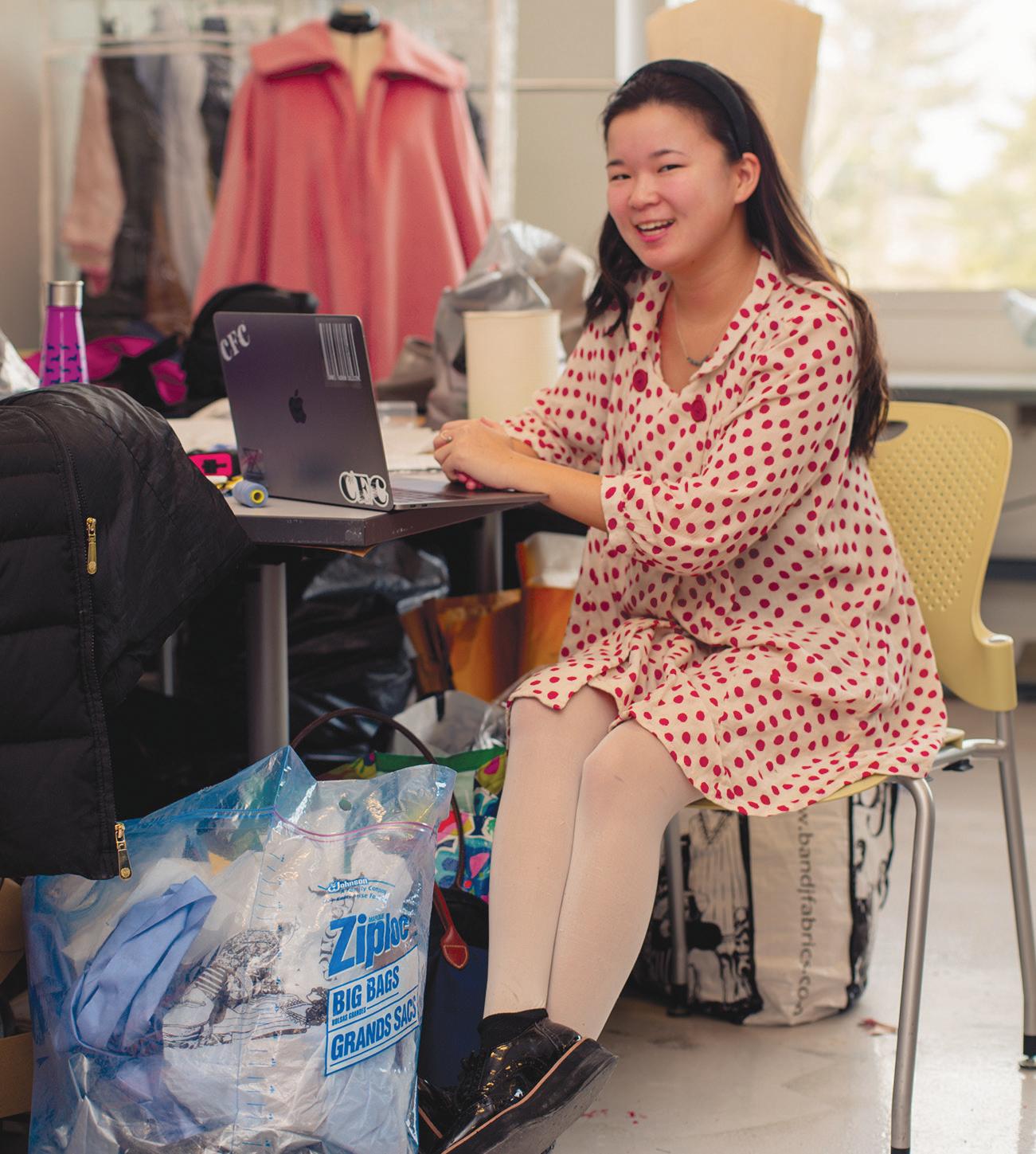
K.W.: I think when people are in Barton Hall on Saturday night they’ll feel a certain energy that you’ll never feel anywhere else. You have 180 CFC members who spent a year putting this show on, who are all talented and from different backgrounds, ranging from the designers to PR, lighting or photography. One of the most important things people might not realize is that every single detail that went into the show and the whole space has been curated entirely by CFC.
A RTS : What was it like coordinating all the different designers?



ARTS: Where were you looking for inspiration?
K.W.: I actually am a research assistant in the Cornell Fashion and Textile Collection, so they have a ton of archived clothing from any period and any culture. I was pulling pieces from the 1950s, they had some really cool Balenciaga and Dior pieces.
ARTS: How did you go about choosing your fabrics?
K.W.: I started out with a very Wes Anderson vintage or retro color palette,
back to the 1950s, so the intro video I curated is on a screen of old fashioned TVs. And then there’s a video reel as if it were someone changing the channel. Then it’s going to cut out and a radio is going to start playing different 50s songs like “Mr Sandman” and “Be My Baby.” It sounds spooky, which is what I wanted to get. Even though all their voices sound super cheerful, the lyrics have weird undertones.
ARTS: What got you into fashion? Was there a specific moment you knew you wanted to be a designer?
K.W.: I never really did anything fash-
now?
K.W.: I think with how I go about my process of designing, I’m a very big draper, so I usually go and get yards of fabric and pin and move it on the form and see how shapes are formed. So I think it really does have a major influence with how I go about designing things.
ARTS: What was the first step in planning the CFC show?
K.W.: The first step was meeting with the newly elected executive board, making sure that everyone was on the same page and were aware of what they were committing to. That was a conversation
K.W.: I think with any designer, when you look at their process from initial sketch to final garment, it’s really special. When you’re working with 65 designers, there’s a lot of creative energy you have to manage — but it’s fun and very rewarding. We’re not here to tell people what to design, we’re here to help them get their ideas on the runway. It’s more about being there as a support system for them, not necessarily directing them. ARTS: What are you most excited or worried about with the show?
K.W.: I think what I’m most worried about — which I hope doesn’t happen, because the show is going to happen no matter what at this point — is: Will every single member of the organization feel proud of what they’ve done that night? I think that’s also what I’m most looking forward to — to interact with each member of CFC and see the excitement on all their faces. I hope everyone is able to share that.
The 36th annual Cornell Fashion Collective runway show will take place on Saturday, March 14 at 7 p.m. Tickets are $10 for students and can be purchased at events.cornell.edu.
Daniel Moran is a junior in the College of Human Ecology. He currently serves as the assistant arts editor on The Sun’s board. He can be reached at dmoran@cornellsun.com.
JOYBEER DATTA GUPTA ’21
Business Manager
PETER BUONANNO ’21
Associate Editor
MEGHNA MAHARISHI ’22
Assistant Managing Editor
CHRISTINA BULKELEY ’21
Sports Editor
BORIS TSANG ’21
Photography Editor
CAROLINE JOHNSON ’22
News Editor
ALEX HALE ’21
News Editor
ARI DUBOW ’21
City Editor
EMMA ROSENBAUM ’22
Science Editor
BENJAMIN VELANI ’22
Dining Editor
JOHN MONKOVIC ’22
Multimedia Editor
MIKE FANG ’21
App Editor
OLIVIA WEINBERG ’22
Assistant News Editor
MADELINE ROSENBERG ’23
Assistant News Editor
LUKE PICHINI ’22
Assistant Sports Editor
HANNAH ROSENBERG ’23
Assistant Photography Editor
BRIAN LU ’23
Assistant Arts & Entertainment Editor
ANNABEL LI ’21
Assistant Money & Business Editor
LEI ANNE RABEJE ’22
Layout Editor
JOHN COLIE ’23
Blogs Editor
MARYAM ZAFAR ’21
JOHNATHAN STIMPSON ’21
KRYSTAL YANG ’21
HUANG ’21
NGUYEN ’22
KENKARE ’21
O’CONNELL ’21
STAMM ’22
OZA ’22
’23
LEE ’21
CHENG ’21
PEÑEÑORY ’22
MEGHANA SRIVASTAVA ’23
DAWSON ’21
’22
’21
’22
WANG ’21
KRISCH ’21
SUN ’20
Ad Layout Krystal Yang ’21 Production Deskers Dana Chan ’21 Sarah Skinner ’21
Deskers Caroline Johnson ’22 Olivia Weinberg ’22
Deskers Girisha Aurora ’20
Desker Hannah Rosenberg ’23
Desker Emma Plowe ’23
Desker
Bulkeley ’22 Money & Business Deskers Maia Lee ’21 Annabel Li 21
To the Editor:
Climate Justice Cornell, a campus organization agitating for Cornell University to divest its endowment from energy companies, recently hosted socially responsible investing specialist Katelyn Kriesel to discuss the economics argument for fossil fuel divestment. As a skeptic of politically-motivated divestment campaigns, I was curious to hear the financial case for why endowments should liquidate any holdings they have in energy companies.
Historically, the primary obstacle to endowments adopting an anti-fossil fuel stance is the pesky phrase “fiduciary duty.” In a nutshell, fiduciary duty obliges trustees to act in the best interest of the trust beneficiaries, which in this case means maximizing the risk adjusted return of Cornell’s endowment. Adopting the stance advocated by CJC would entail a blanket mandate to eschew the energy sector, which could trigger legal action since one could argue, with some justification, that a categorical sector ban may not align with beneficiaries’ interests.
Realizing this, divestment advocates take a different tack by building a so-called “financial case” for the university to divest. As Ms. Kriesel outlined, the energy sector has underperformed the S&P 500 index in the past several years. (For the sake of argument, we will ignore the half a dozen errors in her methodology which used three prominent energy companies as a proxy for sector performance, the S&P 500 as a benchmark and disregarded dividends and risk.) On the basis of this information, she argues, universities should divest because energy companies have performed poorly in the past. However, her logic is deeply flawed. Making investment decisions based on long term past price moves, sometimes called “technical analysis,” has been soundly disproven by research and in any case would not limit the endowment to non-energy stocks.
demand won’t peak until at least 2025, and, despite growing adoption of electric vehicles, transportation, power generation, manufacturing and petroleum-derived plastics, will continue to drive fossil fuel demand for the foreseeable future.
To circumvent this hurdle, divestment advocates contend that conventional quantitative financial metrics fail to capture the whole picture. Instead, investors should chart a course by examining traditional quantitative as well as qualitative “environmental, social, governance” factors. They aren’t the first to advance this idea; it has gained widespread traction in the past few years as investors have turned a spotlight on all manner of corporate practices which fall under the ESG umbrella. According to Ms. Kriesel’s analysis, not only can you feel better about your investments,
Until they come up with a strategy backed by sound data and economic theory, Cornell and other institutions should continue to reject calls to divest from energy companies.
in a twist of financial karma your investments perform better too.
Anyone with a basic familiarity with financial theory will also recognize that this argument is tantamount to telling the endowment, “sell anything that has done poorly, buy anything that has done well.” Unfortunately, buying high and selling low is not a recipe for generating outsize returns. Financial markets exhibit both long run cyclicality and mean-reversion, and numerous academic studies have shown that the opposite strategy — selling things that have gone up, buying things that have gone down — outperforms in a diversified, long term portfolio. The argument is also intellectually dishonest; if energy stocks rebound, I doubt we will hear many CJC members clamoring for Cornell to start buying.
Unfortunately, the reality is more complicated. Aside from obvious challenges ESG investing poses from a portfolio management standpoint (e.g. how do you quantify environmental policies, or board diversity, or governance standards, or wages, etc. and aggregate them into a useful — and statistically sound — metric?) it is not even clear that ESG investing outperforms, as Ms. Kriesel claims. From an intuitive level, artificially limiting the assets portfolios can invest in reduces optionality and thus potentially constrains returns. And, in fact, research bears this out. A recent Wall Street Journal analysis of ESG performance across more than 200 ESG funds found that on average they underperformed the S&P 500 in both the short and medium term.
California’s public pension system, Calpers’s, experience with divestment is illustrative. In 2000, the retirement system decided to divest from tobacco companies on the grounds that these firms represented negative social influences. It has since forsworn other politically unpopular sectors such as weapons manufacturers. Two decades later the tobacco industry is still with us, and these well-intentioned restrictions came at a cost; pension consultant Wilshire Associates estimated that Calpers’s ban on tobacco stocks has lost the endowment around $3.6 billion. At a time when U.S. pensions face record projected shortfalls, adding social restrictions on investment mandates will have a tangible impact on the future wellbeing of our public servants.
Climate radicals will need a better case than this if they expect sophisticated trustees with contractual fiduciary obligations to adopt their plan.
There is one scenario where it would be rational to sell underperforming securities. Ms. Kriesel described this as cutting your losses. But there’s an implicit assumption — cutting your losses is only rational if you can reasonably expect that the asset will continue to lose value. Maybe energy stocks will continue to underperform; maybe they will eventually go to zero. But how do you make this case to an endowment, run by professional money managers? Clearly, the market has some confidence in the energy sector; New York State’s employee pension system alone owns nearly $1 billion of Exxon stock. And perhaps with good reason: Most analysts estimate that oil
Ms. Kriesel brushed off New York State Comptroller Thomas DiNapoli when, in a recent meeting, he asked whether she drives a gasoline powered car (she does). But he had a point. Reaping the benefits of energy companies like affordable, reliable transportation, but denying the benefits of investing in those same companies to teachers and firefighters — materially affecting their retirement security — is the definition of hypocrisy. Climate radicals will need a better case than this if they expect sophisticated trustees with contractual fiduciary obligations to adopt their plan. Until they come up with a strategy backed by sound data and economic theory, Cornell and other institutions should continue to reject calls to divest from energy companies.
Picture this — a panoramic shot of a quad glimmering under the early fall-semester sun. You could be at any college campus in America or, more likely, suspended in a place that doesn’t actually exist except as an amalgamation of the essence of college campuses nationwide. You see people: walking, frisbeeing, speaking different languages, laughing, lounging and lugging kegs. You continue to snake through the bubbling crowd and you start to get bombarded. You hear calls from table-ers, flyers are pushed into your abdomen, you are entangled in a flock of demonstrators; you’ve been caught in the ever-present and unignorable politics that has long been a token of collegiate life.
It’s a prevalent theme in our media and undeniable in on-campus experiences across the states, but it’s worth asking — is all this clamor, this passion, this civic performance we understand as so central to the American university really politics at all?
More frequently than we realize, the stuff we confidently name and engage in as politics is something quite different, something political scientist Eitan Hersh has coined as political hobbyism, which he analogizes
More frequently than we realize, the stuff we confidently name and engage in as politics is something quite different, something political scientist Eitan Hersh has coined as political hobbyism.
is “to public affairs what watching SportsCenter is to playing football.” And you don’t need to look far to get a clear picture of this phenomenon. Many of Cornell’s most notable political student organizations are simply hobbyist groups with rigorous audition processes. Take Cornell Political Union, for example, a well-respected, well-recognized and well-attended student organization whose self-professed mission is to “provide [their] members and the general public unique opportunities to discuss today’s most pressing political and social issues … help members grow professionally by connecting them to exciting leadership, engagement and work opportunities.” CPU has a strong membership and an impressive
agenda, but this agenda is narrowly centered around repeated, cyclical discourse between its cherry-picked members and the decorated speakers they occasionally invite to campus.
Now, this is not to say that the kind of platform CPU and similar organizations create isn’t important — It is. Educating and fostering civil debate on the intense politics of today can be a difficult mission and they execute it well. However, talking about politics isn’t doing politics. There’s no community or constituent organizing, no outreach, no attempt at change or action within or outside the university. The goal of these “political” organizations gets lost in the echo-chamber of self-gratifying synopses of podcasts, CNN clips and Washington Post articles that make up the diet of a ravenous political hobbyist.
This problem, though, isn’t specific to Cornell and its student organizations. It’s not even an issue confined to college campuses. It speaks to a larger trend of the lack of advocacy in the presence of privilege, which is the real danger of hobbyism:
“White people reported spending more time reading, talking, and thinking about politics than black people and Latinos did, but black people and Latinos were twice as likely as white respondents to say that at least some of the time they dedicate to politics is spent volunteering in organizations. Likewise, those who were college-educated reported that they spend more time on politics than other Americans do—but less than 2 percent of that time involves volunteering in political organizations. The rest is spent mostly on news consumption (41 percent of the time), discussion and debate (26 percent), and contemplating politics alone (21 percent).”
The disconnect here is that in political hobbyism, attachment to politics exists as a form of self-expression rather than an earnest and desperate acquisition of power for a people, which is supposed to be the function of politics. Hobbyists don’t have material needs; instead, they have laments. Their knowledge is relevant. It’s beyond impressive. It’s palpable — you can see it bursting out of the corners of their closed mouths even when they’re allowing you time for a rebuttal before they go back to playing devil’s advocate. But, it’s not useful. Because no matter how intelligent, up-to-date and well-versed they are regarding contemporary politics, there’s an overwhelming unaffectedness, a detachment that eclipses the motivation for real, effective, grassroots action.
I also don’t mean to imply that politically aware hobbyists don’t actually care about politics, or don’t
take them seriously. Seriousness has little to do with hobbyism. In fact, hobbyists are deeply emotionally connected to their politics — nowadays, perhaps tragically and maddeningly so. The issue is that this emotionality marks the end of their connection. Rage, sorrow or triumph don’t have consequences if not paired with action, and hobbyists fail in this aspect.
Of course, our campus and the United States are not
Status quo, as turbulent and unsettling as it is, is not enough to make these people do something because they don’t have enough to lose. It highlights clearly the very crucial difference between ideology and praxis.
devoid of real political action, or of students and staff with devotion and an intrinsic obligation to this kind of work. Great political work happens here. Student organizations like the Ithaca Tenants’ Union and the Peoples’ Organizing Collective mobilize students to create change on and around campus for people who need it. It’s just concerning that these groups remain much smaller, and operate with less support, than our numerous hobbyist groups: CPU has double the Facebook following of People’s Organizing Collective, and well over three times the following of Ithaca Tenants’ Union. Maybe this just serves to exemplify a truth that we all know deep down, but try to ignore — that the status quo, as turbulent and unsettling as it is, is not enough to make these people do something because they don’t have enough to lose. It highlights clearly the very crucial difference between ideology and praxis. Hobbyists create and perfect standards of oration that drown out the earnest, urgent needs of those whose existence is inseparable from the oppression that hobbyists’ polysyllabic buzzwords signify. But ultimately, with no active effort to create change comes no relief to the issues they swear to fight for.
Alecia Wilk is a sophomore in the College of Arts and Sciences. She can be reached at awilk@cornellsun.com. Girl, Uninterrupted runs every other Friday this semester.
Don’t Forget Your Headphones;
Apair of headphones, earbuds or — dare I say it — AirPods fall into the same level of necessity as backpacks when it comes to college student essentials. There’s nothing quite like the drop in my stomach when I realize that I left my headphones in my dorm, doomed to a day without music to get
Listening to happy or upbeat music can reduce stress, motivate people to workout harder and improve one’s mood. In a society where media is everywhere, it can be hard to consume all of it mindfully.
me through my walks across campus and those awkward interactions I’d rather avoid by jamming out to Frank Ocean. Headphones even got an honorable mention in Martha Pollack’s New Student Convocation last semester for their widespread use around campus.
The science regarding music and mental health isn’t fully conclusive, but there is some
evidence linking music with positive health outcomes. Anecdotally, I know what I’m listening to deeply impacts (and is impacted by) my mental health. It’s been suggested that sad music provides a source of empathy and connection for people, helping them feel that someone understands what they’re going through, be it heartbreak or other kinds of loss. However, “Some ways of coping with negative emotion, such as rumination, which means continually thinking over negative things, are linked to poor mental health” and listening to majorly sad or aggressive music can lead to “expression of negative feelings” that even show up on fMRI scans.
On the flip side, listening to happy or upbeat music can reduce stress, motivate people to workout harder and improve one’s mood.
While I always like some science to back me up, I’ve also personally found that on days when I’m already feeling off, listening to sad or
“angsty” music sure doesn’t help me get out of that state. In a society where media is everywhere, it can be hard to consume all of it mindfully, but focusing on what music I’ve been listening to has been worth the extra effort. Making playlists to cultivate a feeling I want, including but not limited to “pretend you aren’t freaking out while studying,” has become somewhat of a hobby and a fun way to explore new music. It’s also interesting and enjoyable to explore what music makes you happy. For example, I know someone who is made happier by listening to “You
Are My Sunshine” because of positive memories associated with it. “Step by Step”
Making playlists to cultivate a feeling I want has become somewhat of a hobby and a fun way to explore new music. It’s also enjoyable to explore what music makes you happy.
There is some evidence linking music with positive health outcomes. I know what I’m listening to deeply impacts my mental health.
by Whitney Houston makes me think of my mom playing music in our kitchen and Ray Charles reminds me of car rides with my dad and sister. For all the hate it gets, “Yummy” reminds me of a friend who unapologetically loves Justin Beiber.
Let’s end on a high note: Check out this playlist! (Feel free to email me suggestions and I’ll add to it.) And above all: Don’t forget your headphones!
Emma Smith is a sophomore in the College of Agriculture and Life Sciences. She can be reached at esmith@cornellsun.com. Emmpathy appears every other Friday this semester.
in the empty cells, one number in each, so that each column, row, and region contains the numbers 1-9 exactly once. Each number in the solution therefore occurs only once in each of the three “directions,” hence the “single numbers” implied by the puzzle’s name. (Rules from wikipedia.org/wiki/ Sudoku)




26 A PA R TMENT FOR R ENT
120 Oak Avenue
Just steps to Cornell Campus
10 bedroom house & 1 and 2 bedroom apartment 607-277-1234 office@ithacastudentapartments.com Ithacastudentapartments.com
>>SPECIAL PRICING<< Collegetown Apartments Furnished 1-3 Bedrooms PARKING, LAUNDRY, UTILITIES! (607) 273-7368 www.WestShoreApts.com
109 Sage Place
3 Bedroom Apartments
Access to Shuttle to Campus Access to Free Fitness Center Novarr-Mackesey Property Management office@ithacastudentapartments.com 607-277-1234
Houses, Apts, Parking 1 to 9 Bedroom
Collegetown - College Ave, Linden Ave, Dryden Rd, Bryant Ave, Cook St. 607-330-2442 info@urbanithaca.com www.urbanithaca.com
Catherine & Eddy St. 1 & 2 bedroom Furnished, heat included Laundry in building Parking available for fee 607-277-1234 office@ithacastudentapartments.com
2020-2021
Studio 1, 3, 8 & 11 BR Apts. Great Locations in Collegetown. 607-227-2535
Collegetown Crossing
College Ave's Newest Location 307 College Ave. Now Leasing for 2020-2021
Completely New Modern Studios, 2 & 4 Bedroom Apartments. Fully furnished, heat & hot water included. Reception area at 307 College Ave. www.urbanithaca.com 607-330-2442 info@urbanithaca.com
Now Renting
2-10 Bedroom Houses/ Apartments for 20-21. All Locations. Call today or visit our website: Certified Properties of TC Inc certifiedpropertiesinc.com 607-273-1669
*Brand New*
Full Term & Semester Leases
Studio, 1 & 2 Bedrooms College Townhouse 121-125 College Ave. CollegeTownhouseIthaca.com Leasing@inteprop.com 607-379-6023
APTS/HOUSES
COLLEGETOWN
BEST LOCATION/BEST PRICING 607-272-3389 avramisrentals@aol.com
27 H OUSE FOR R ENT
20-21 College Ave.
5 BR House
Furnished. Laundry. Parking. Call 607-273-8576
SPRING BREAK
Continued from page 1
-sored educational trips during spring break, which begins on March 28.
Otse Attah ’23 was frustrated at the cancellation of this year’s Galapagos Curriculum –– a program affiliated with the Cornell Lab of Ornithology that takes students on a trip to the Galapagos and Easter Island for an intensive study in biology, writing and scientific illustration.
“It was shocking. I feel retrospectively that I should have seen it coming, given the fact that things are slowly but surely boiling down to a crisis over this,” Attah said. “My first reaction was –– I’d hope, understandably –– kind of angry.”
Meghna Shroff ’23 was planning to spend the break in Cancun, Mexico with nine friends, but had to cancel due to the spread of the virus internationally. Now, her backup plan to attend the Washington D.C.’s cherry blossom festival is also in jeopardy.
“We think that it might be unsafe to leave Ithaca. New York state is not safe anymore, either. And D.C. isn't safe because it is so populated and will experience heavy tourism during the cherry blossom season,” Shroff said. “So that got can-
celed as well. As of now we have no plans [for the break].”
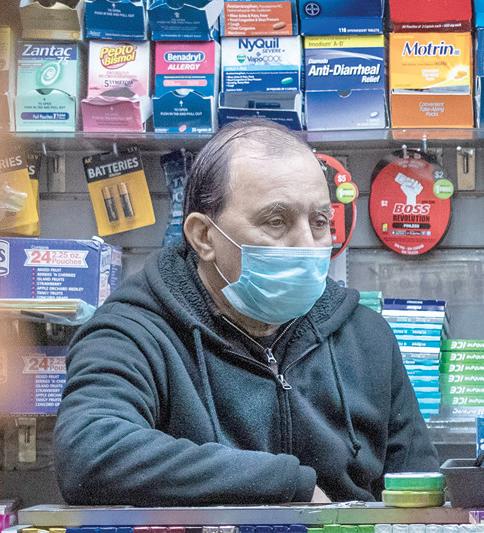
With the number of new cases growing rapidly each day, Cornellians have expressed feelings of apprehension. According to some students, the knowledge that the virus originated in China has, in some cases, resulted in xenophobia and outright racism towards Chinese and Chinese-American students.
“Chinese people often wear face masks just to protect ourselves and against the virus being spread, but [I’ve heard that] in the Western World, if you’re wearing face masks, it means you’re sick,” Qiming Sun, a second year graduate student, told the Sun. “That's why some Asians who wear face masks have been discriminated against, even [assaulted].”
The University now requires students returning from high risk countries to self-quarantine for fourteen days. There are currently 36 people in Tompkins County under quarantine for possible exposure to coronavirus, but no cases have been confirmed as of Sunday night.
“Right now, in Ithaca we’re really isolated, so we’re much safer, but when there are events that take place on campus and people either leave or come in from other cities – that is really scary,”
Shroff said.
While Cornell has placed restrictions on travel and limited the number of visitors allowed on campus, it is unclear when –– or if –– the University will eventually follow the lead of universities on the West Coast, where the virus has gained a stronger foothold.
On Saturday afternoon, the University of Washington and Stanford University have moved all in-person classes and exams for the remainder of their quarter to an online format, with the hopes of limiting gatherings that can facilitate coronavirus’ spread.
While cancelled trips and other restrictions have led to frustration, students have nevertheless largely recognized the need for precautions in a time of deep uncertainty.
“Especially for [travel to] places that already have confirmed cases, I feel like it's more responsible both to you and your friends to try to be cautious,” Selene Xu ‘23, a student who had to cancel a trip to Spain, said. “Because it’s not only yourself – it's about the Cornell community.”
Meghana Srivastava can be reached at msrivastava@cornellsun.com.
WOMEN’S HOCKEY
Continued from page 12
the power play), Cornell took over briefly, outshooting Princeton, 7-1, over a five-minute stretch. But Cornell couldn’t break its scoring drought, which dated back to the 2:49 mark of the first period.
Browning, whose 12 shutouts this year set a single-season program record, stood tall in net to preserve the two-goal lead: Princeton’s Maggie Connors skated alone behind Cornell’s blue line. With only Browning to beat, Connors attempted to sneak the puck past the goaltender’s left side, but Browning covered it up for a key denial.
Just seconds later, however, Princeton converted on a chance, putting the Tigers at a one-goal deficit. After senior defenseman Jaime Bourbonnais blocked Carly Bullock’s shot but failed to clear, Bullock corralled the loose puck and put it past Browning to knot the game at two apiece.
In overtime, it took the Tigers
just 58 seconds to secure the upset victory, beating the nation’s top team on its home ice for the first time all season.
“Right now they can absorb it, but this is the only season that we’ve ever had where we’ve gone undefeated in [conference play during] the regular season and they should be really proud of that,” Derraugh said of his postgame message to the team. “It’s the championship game so obviously it’s the biggest game of the season, but it is, I guess, still just one game, and their consistency and their effort throughout, they should be really proud of.”
Cornell will look to rebound in the first round of the NCAA Tournament next weekend, when the Red will host Mercyhurst at Lynah Rink. The quarterfinal is slated for 2 p.m. on Saturday, March 16.
Luke Pichini and Raphy Gendler can be reached at lpichini@cornellsun.com and rgendler@cornellsun.com.
By LUKE PICHINI and RAPHY GENDLER Sun Assistant Sports Editor and Sun Staff Writer
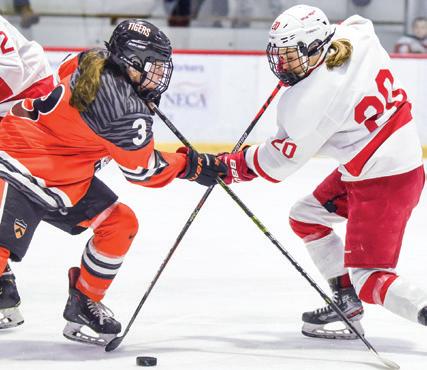
For the second time in as many seasons, Cornell women’s hockey saw its dreams of ending its ECAC title drought come crashing down in the conference championship game on home ice. This year, it was No. 6 Princeton hoisting the championship trophy at Lynah Rink.
The Red’s 3-2 overtime loss to Princeton marked the first Cornell loss at Lynah this season and snapped a 22-game unbeaten streak.
Mariah Keopple’s goal just 58 seconds into the extra period gave the Tigers an automatic bid to the NCAA Tournament and left Cornell awaiting its tournament placement. The eight-team field, released at 9 p.m. Sunday, still had Cornell as the No. 1 seed. The Red will host Mercyhurst next weekend.
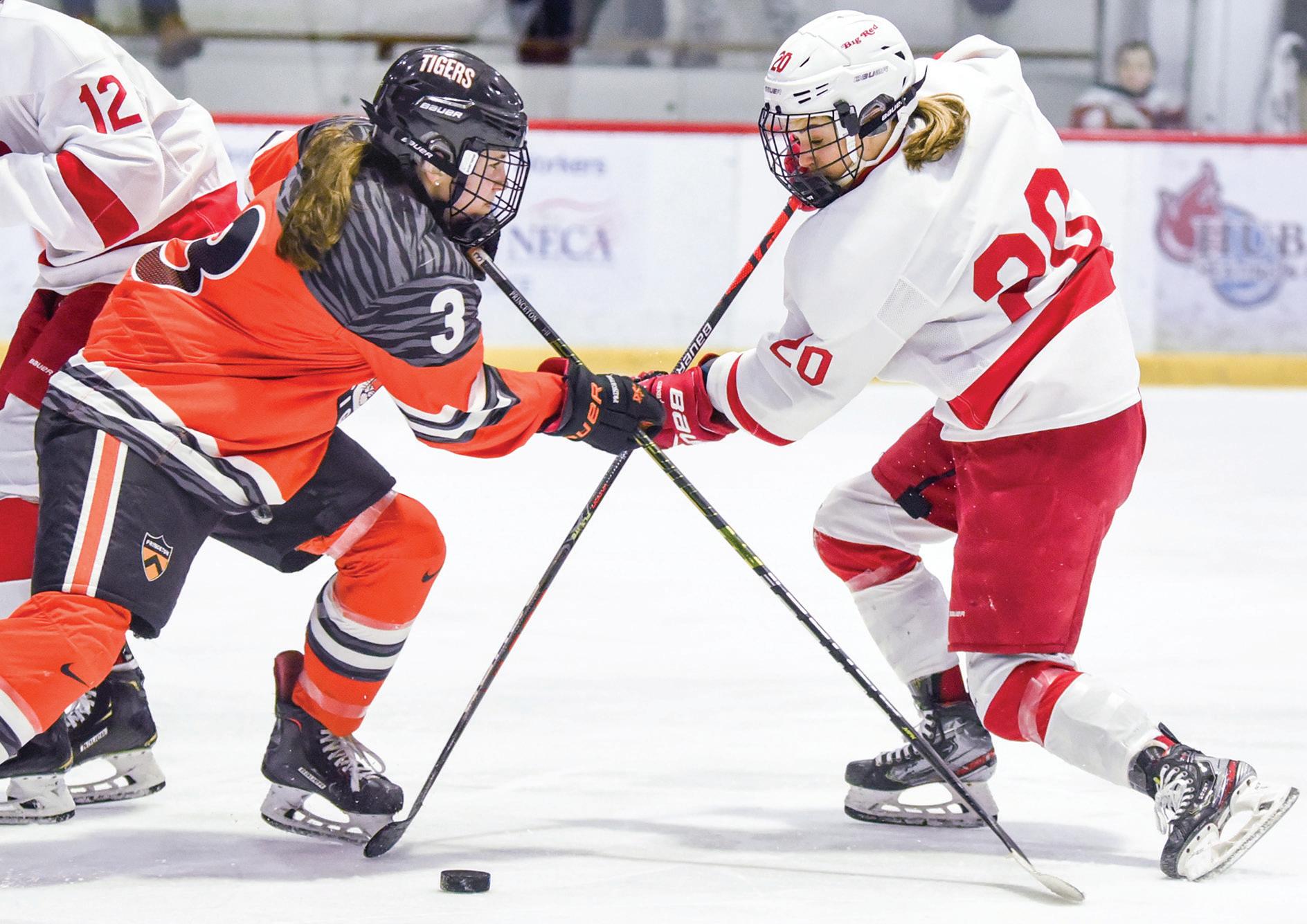
was Cornell’s first home defeat all season.
After a scoreless third period, Keopple rifled a shot early in overtime that deflected off a skater in front of the net and past an unsuspecting Cornell junior goaltender Lindsay Browning, earning Princeton a walk-off victory. It was the Tigers’ first-ever league title — Cornell’s ECAC championship drought is now at six years.
After scoring two goals in the first three minutes of the opening period on Sunday, Cornell — the top seed in the ECAC playoffs — looked like it was well on its way to locking up its first ECAC title since 2014.
PRINCETON @ CORNELL


But the Tigers had other plans: Princeton responded with two goals of its own in the second period to tie the game, sending a championship weekend game between the Ivy League rivals to overtime for the second time is as many seasons — avenging last sea -
By MITCH HOY Sun Contributor
Today, Hunter Hughes is a senior faceoff specialist for No. 7 men’s lacrosse — but not too long ago, he was a sniper in the United States Marine Corps.
The 29-year-old, who walked onto the men’s lacrosse team his junior year, faced a long journey before he found himself taking faceoffs for the Red. Growing up in Thousand Oaks, California, Hughes had considered joining the military throughout high school, but never saw himself actually following through.
and a half after completing training, Hughes and his unit deployed to Iraq. It was during this 2009 deployment that Hughes found his calling as a scout sniper.
“I was sitting in this post absolutely melting in this metal box,” Hughes said. “And I look out the back of my post and sitting on a little makeshift helipad were four dudes. They all have long hair, Oakley shades on, just silkies and boots on, either tanning or clean pressing a 225 lbs dumbbell. They’re all yoked.”
“Nineteen-year-old me is like, ‘how do I do that instead of doing this?’ I came to find out that it was the Marine sniper team.”
Hunter Hughes
“I was always interested in it, but never saw myself actually doing it,” he said.
But after speaking with a Marine recruiter, he took the dive and enlisted as a Marine Recon candidate.
In a stroke of bad luck, just before shipping for bootcamp, Hughes broke his foot and was forced to give up his Recon contract to train for general infantry instead. A month
“I’m like, ‘who are those guys?’ 19-yearold me is like, ‘how do I do that instead of doing this?’ I came to find out that it was the Marine sniper team,” he continued.
Hughes was somewhat familiar with Marine scout snipers before his time in the service.
“I had read the books and stuff in high school, I knew [about famed Marine Corps sniper] Carlos Hathcock and those guys,” he said.
son’s double-overtime ECAC semifinal loss to Cornell.
We haven’t quite been as sharp as we had been early on in the season and unfortunately in the championship game it cost us,” said head coach Doug Derraugh ’91, whose team will hope to do what it did last season: advance to the Frozen Four despite a loss in the league title game.
The Red came out of the gates firing: Just 1:26 into the game, senior forward and captain Kristin O’Neill beat Princeton netminder Stephanie Neatby to give the hosts an early 1-0 lead. It was O’Neill’s 25th goal of the season and sixth of the playoffs.
Less than a minute and a half later, sophomore forward Gillis Frechette got in on the action, doubling the Red’s lead to 2-0.
After taking two penalties, Cornell successfully survived 1:37 of 5-on-3 shorthanded hockey to preserve its twogoal lead. The Red allowed the Tigers just a single shot during the two-skater advantage.
While the Red dominated puck possession for the first half of the frame, Princeton’s offense began to gain its footing during the second half of the period before finding its groove early in the second frame.
The Tigers’ momentum from the opening period manifested in a goal by Sarah Fillier under four minutes into the middle period, cutting Cornell’s lead in half. The goal was Fillier’s 22nd of the season.
The standout sophomore was named the league tournament’s most outstanding player. After fruitless power-play opportunities for both teams (both teams went 0-for-4 on
See WOMEN’S HOCKEY page 11

Competitive spirit | After leaving the military, Hunter
felt that there was a void in his life. He realized that playing lacrosse provided the competition he craved.
After returning from Iraq, Hughes jumped at the opportunity to try out as a scout sniper candidate when his battalion began recruiting for them.
“They hold an indoc[trination], for us it was like a two-week ‘hell week’ process,” he said.
“Hell Week” refers to the period that is used by highly demanding combat roles to weed out weak candidates. Hughes explained that during the two weeks of training, the candidates were pushed to their mental and physical limits, all while running on very little sleep.
60 candidates started the indoctrination process, with 30 candidates proceeding to
the next “field week” phase. That next stage included more in-depth technical training as a sniper with even less sleep, ultimately ending with six selectees, including Hughes, out of the group of 30.
Shortly after completing Scout Sniper indoctrination, Hughes deployed again, this time to Afghanistan.
“I went to Afghanistan as a Pig, as part of a sniper team” Hughes said. “Pig” refers to a newly selected scout sniper candidate that has yet to complete Scout Sniper School, undergoing training by senior members called
See LACROSSE VETERAN page 5