
Opinion
The Corne¬ Daily Sun
Onboard and Upward
After eight hours of deliberation, Te Sun elected its 137th editorial board on Saturday. | Page 8
Superlative Hip-Hop Vince Staples performed an excellent show at the State Teatre Friday night, according to our reviewer. | Page 7

Chaplain Faces Sexual Abuse Allegation
By MARYAM ZAFAR and ROCHELLE LI Sun News Editors
Cornell University temporarily revoked all chaplain privileges for Reverend Carsten Martensen following an allegation against him of sexual abuse of a minor in the 1970s. Martensen has worked in campus ministries for Cornell University and Ithaca College since 2007, and served as chaplain at both institutions.
“Any allegation of abuse is troubling. Our thoughts are with our faith community.”
McMullin and Lombardi
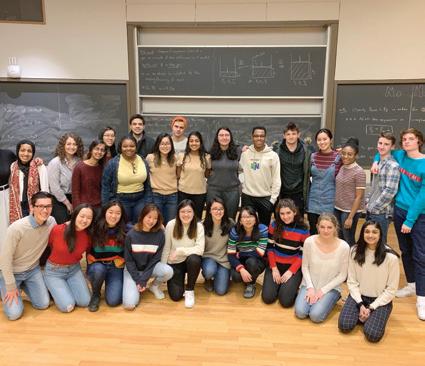
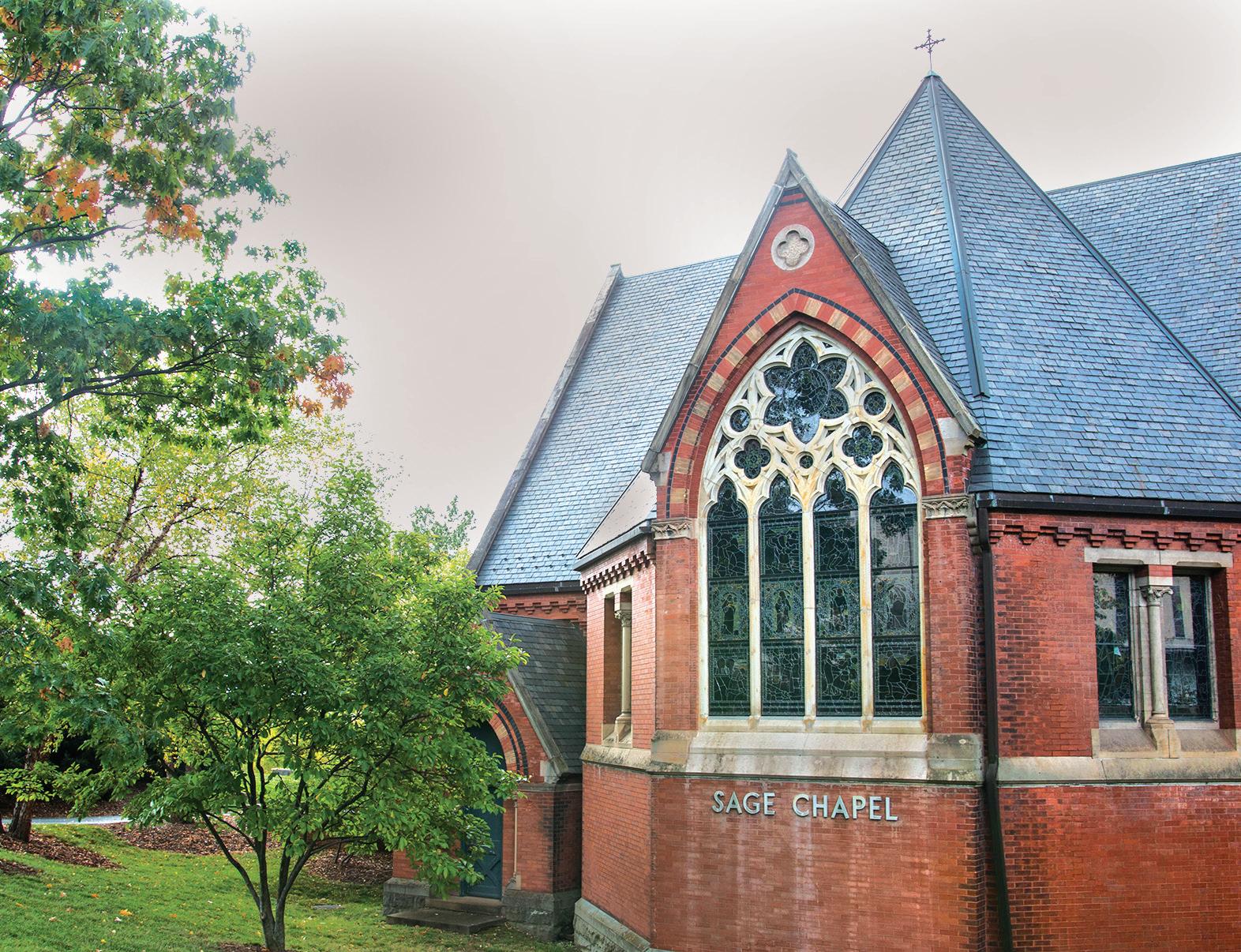
Before noon on Sunday, Father Daniel McMullin told attendees of the 10:30 a.m. Mass about an allegation against a Jesuit priest, who he then named as Martensen. Over 100 churchgoers in Sage Hall listened to the sermon, including undergraduate and graduate students as well as other local attendees.
The USA Northeast Province of the Jesuits received an allegation
against Martensen — former director and chaplain of Cornell Catholic — of sexual abuse of a minor, according to a press release from the Roman Catholic Diocese of Rochester shared by Alice Soewito ’21, president of the Cornell Catholic. Community leadership team The allegation dates back to the 1970s, the Diocese said.
Martensen has “stepped down” from all current assignments, the Diocese said. Martensen did not respond to requests for comment
Over 400 Students Donate Meal Swipes in Pilot Program
By AMINA KILPATRICK Sun News Editor
The meal swipe program saw more than 400 students donating meals during the program’s first two weeks.
Meal swipe donation tables were set up at eateries operated by Cornell Dining. Students had the opportunity to donate “bonus” meals they have on their meal plan, which range from 4 to 8 depending on the specific plan. Students are unable to donate meals from their regular meal plan because they are designated for individual use, according to Shakima M. Clency, director of first-generation and low-income student support.
“Bonus” meal swipes are typ-
ically used for guest meal swipes. This program was launched on Feb. 4 and is a part of a nationwide organization, Swipe Out Hunger, that operates on college campuses. The leading aspect of the organization is for colleges to host “Swipe Drives” to recycle unused meal swipes and give them to students in need.
According to Cornell Dining, 1 in 3 college students is food insecure. A university survey indicated that 20 percent of the student body “skipping a meal due to financial constraints.”
Clency spearheaded this initiative in partnership with Cornell Dining.
“We can now provide tempo-
See SWIPES page 5

by publication time.
“Any allegation of abuse is troubling. Our thoughts are with our faith community and all who are impacted by this news,” wrote McLullin and Ryan Lombardi, vice president for student and campus life, in an email to the Cornell community. The University was informed of the allegation on Saturday, according to University spokesman John Carberry.
Sports
RPI and ECAC quarterfinals, advancing to championship weekend. | Page 12

Lab Secures $68.9 Million
By JOHNATHAN STIMPSON Sun News Editor
New York’s grape industry won’t be going sour anytime soon, thanks to $68.9 million in funding secured to construct a new state-of-the-art research laboratory at Cornell’s Grape Genetic Research Unit.
The group plans “to reduce losses to crop yield and quality that result from diseases, pests, and abiotic stress and improve grape and grape product quality and utilization,” according to its website.
The Research Unit has long been located at Cornell’s Geneva, New York, AgriTech campus, a rural offshoot of
the University’s College of Agricultural and Life Sciences that was founded over 100 years ago, according to the institution’s website.
The nearly $70 million dollar sum will go to constructing a new laboratory at the same site.
For the thousands of vineyards that line Cornell’s Finger Lakes hinterlands, grape-growing is no small business: The industry is estimated to generate over $4.8 billion in economic benefits for the Upstate New York region each year, according to the New York


Pollack Signs Open Letter to Jef Bezos
By MARYAM ZAFAR Sun News Editor
“Dear Mr. Bezos,” began an open letter signed by President Martha Pollack imploring CEO Jeff Bezos to reconsider Queens, New York for the site of Amazon’s second headquarters.
The letter — full of implorations that call New York City “dynamic” and “diverse” — is signed by around 80 business, government and local leaders. Pollack is one of a handful of signatories hailing from higher education, including a dean of Columbia University, the president of New York University and the president of LaGuardia College.
Occupying a full-page advertisement in the main section of The New York Times, the authors
claimed that a “clear majority” of New Yorkers supported the tech giant’s once-prospective home in Long Island City in Queens. The ad was paid for by the Partnership for New York City, a select group of the “city’s business leadership and its largest private sector employers,” according to its site.
Online book-buying site gone big, Amazon announced on Nov. 13 that it had chosen New York City to house its second headquarters a five-minute ferry ride away from the Cornell Tech campus on Roosevelt Island.
“Although I have no insights into the Amazon board, it seems like it’s very likely that Cornell
investment | Researchers in Cornell’s Grape Genetic Research Unit hope to increase vineyard yield.
Somber Sage | Father Daniel McMullin
Swipes soar | Students donated their “bonus” meal swipes as part of an initiative that looks to reduce the effects of food insecurity.
Amity towards Amazon | President Pollack (inset) has signed an open letter asking Jeff Bezos to reconsider locating in Long Island City. Above, a crowd demonstrates against Amazon outside N.Y.C. City Hall on Jan. 30.
HIROKO MASUIKE / THE NEW YORK TIMES
Daybook
Monday, March 4, 2019
A LISTING OF FREE CAMPUS EVENTS
society | Several
Today
Designing Effective Presentations
3 - 4 p.m., 106G Olin
Career Readiness Workshop: Recognizing Your Transferable Skills
5 - 6 p.m., Tatkon Center for First Year Students
Free Yoga
12:20 p.m., 413 Art Gallery, Willard Straight Hall
National Lawyers Guild Monthly Meeting: Mass Incarceration and the War on Drugs
5:30 - 6:30 p.m., 184 Myron Taylor Hall
Monday Night Seminar: New Perspectives From the Birds of Paradise Project
7:30 - 9 p.m., Auditorium, Cornell Lab of Ornithology Makerspace
9 p.m., G34 Carl Becker House
Tomorrow
Behavioral Economics Workshop: Ori Heffetz 11:40 a.m. - 1:10 p.m., 141 Sage Hall
Lunch & Learn With Irene Li ’15, Forbes 30 Under 30 12:15 p.m. - 1:15 p.m., 116 Warren Hall
Mandarin Chinese Conversation Hour
4:30 - 5:30 p.m., G27 Stimson Hall
Public Issues Forum: From Hope to Hate, The Rise of Conservative Subjectivity in Brazil by Rosana Pinheiro
4:30 - 6 p.m., Seminar Room 201 A.D. White House
Cornell Women’s Lacrosse vs. Colgate University 5 p.m., Schoellkopf Field
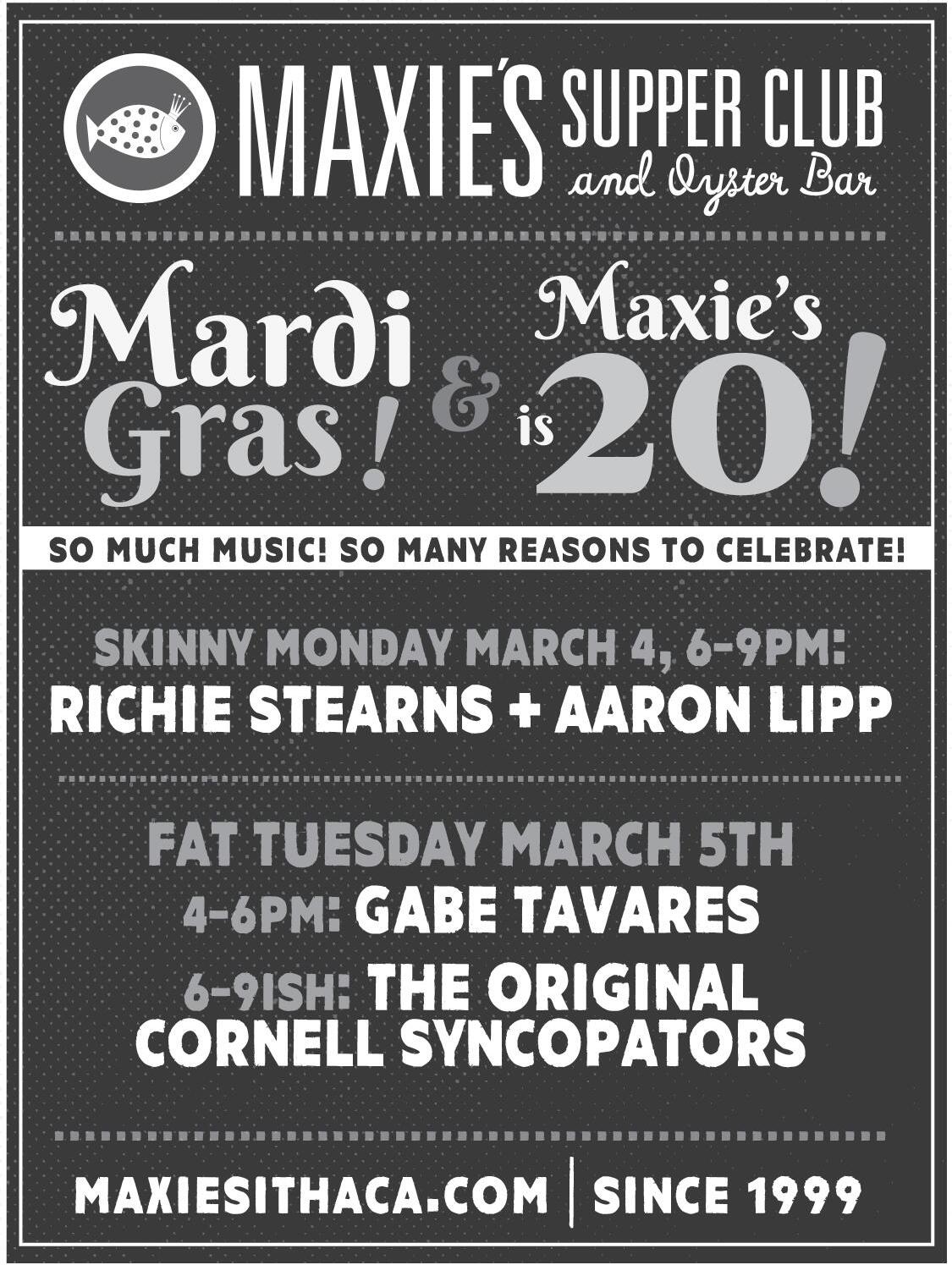
Cornell Syncopators: Mardi Gras 4 - 5 p.m., 105 Space Sciences Building
Massage Night for First Years 8 - 10 p.m., Tatkon Center
Let’s Meditate 8:30 p.m., TV Lounge, Carl Becker House

OF
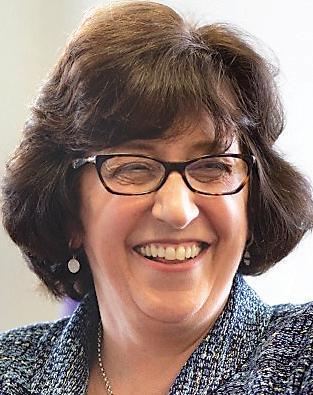
Recipe for success | Award-winning, Boston-based restauranteur Irene Li’ 15 will meet with students Tuesday Mar. 6 to discuss best business practices over lunch.
COURTESY
CORNELL UNIVERSITY
With Help of Cornellians, New Youth Homeless Housing Opens
By VALE LEWIS Sun Staff Writer
Amici House — a permanent housing option for homeless people between the ages of 18 and 25 — opened to the Tompkins County homeless population on Feb. 15 and already has 35 residents for its 23 rooms.
The building is run by Tompkins Community Action, an organization whose mission is to “sustain and improve economic opportunity and social justice for families and individuals impacted directly or indirectly by poverty,” according to the organization’s website.
The initial process of planning Amici House began about five years ago, TCAction executive director Lee Dillon estimated. However, the project was officially proposed to the Tompkins County Legislature in June 2016 and approved by the Planning and Development Board in January 2017.
Dillon said the the first few weeks of occupancy have been going “great” and that many of the residents already know each other “because they’ve all been on the streets together.”
Though Dillon did not know the exact number of resi-
dents currently living in Amici House, she said that all four three-person rooms and 19 two-person rooms are occupied and that the maximum capacity would be 50 residents if all the rooms were full, though some are not.
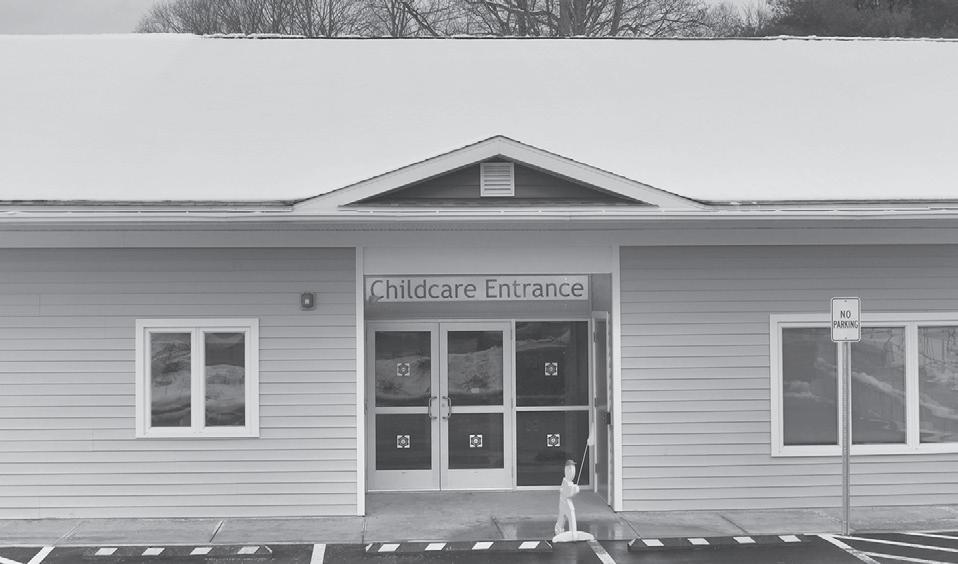
TCAction helps residents with goal-planning, education, employment and childcare while they live in Amici House. The adjacent childcare center — built as part of the same project — will run the Head Start program, a U.S. Department of Health and Human Services initiative dedicated to supporting low-income families.
“We felt that young people will have children and, considering their homelessness, probably don’t have a lot of support from their family and raising their children,” Dillon said. “So we felt that [Head Start] would be very advantageous for the young people at Amici House.”
Through the Head Start program, TCAction provides health screenings, immunizations, education about children’s development and childcare for low-income families. The childcare center, which opened on Sept. 5, is open to the public, though residents of Amici House have priority for open spots, Dillon said.
Several Cornell students and professors have also been

Free Printing to Roll Out Tis Summer
By AMINA KILPATRICK Sun News Editor
Printing at Cornell will undergo significant changes including free printing allocations and reduced costs that will be implemented next fall, the Student Assembly announced on Friday.
Jaewon Sim ’21, vice president of internal relations on the S.A., spearheaded the effort to reform the printing system at Cornell. Sim and Elisabeth Crotty ’20 co-chaired a task force on Net-Print system reform in February 2018, tasked with investigating the printing system at Cornell.
The biggest changes to the system will be free printing allocations for all students, reduced printing costs and the centralization of all printers on campus under Cornell Information Technologies.
The exact allocated value of free printing and the new prices will be announced in March according to the S.A.’s statement.
While there is no wide-scale free printing at Cornell available to all students, limited free printing is offered in some buildings such as the Office of Diversity and Academic Initiatives, the Student Development Diversity Initiatives building and in the Asian American Studies Resource Center.
Sim announced his intent to update the system during his campaign for S.A. freshman representative in fall 2017, although he acknowledged other S.A. members and candidates have had the same idea.
The changes seek to increase the accessibility of printing at Cornell, in terms of both cost and location.
The ad-hoc committee was created after a fall 2017 S.A. survey was conducted to gauge students’ thoughts regarding the current printing system.
The current cost of printing at Cornell is $0.09 per page for black-and-white printing and $0.25 per page for color printing. The survey found that four of the eight Ivy League schools offer free printing credits, while five Ivies charge less than Cornell for printing a double-sided, black and white document.
Additionally — since there is no reduced price for double-sided printing — Cornell is the most expensive among the elite schools that do not offer free printing credits to print one double-sided page, cashing in at $0.18 per sheet.
The report also found that 94 percent of Cornell students believe that printing is expensive and that most students would not purchase their own printer if printing was more accessible and cheaper.
According to Sim, the process of revamping the system was very long because of the decentralized nature of printing at Cornell. Although printers are run under one Net-Print system, they are not all administered by one centralized body, with each of the colleges and schools organizing and managing their own printers independently.
“For example, if you went to print at Goldwin Smith, those printers would be owned by Arts and Sciences, not CIT, as opposed to what people think,”
he said.
The decentralized nature of the printing system has resulted in increased operating costs for smaller schools and departments, often making the task of lowering the price of printing cost-prohibitive, Sim argued.
Case in point: one college previously lowered the cost of printing for their printers, but it created an unsustainable increase in usage for those specific printers, Sim said. As a result, changes in printing price have to be coordinated between the different I.T. departments.
“A lot of people went to go print at the printer because that was way cheaper than all the other printers around the campus,” Sim said. “That was a huge issue for them because, as I mentioned, they had to use their own personnel to refill the paper.”
“Basically they were losing money and their personnel was going crazy refilling the paper and the toner, and the printers were breaking down,” he continued.
The new printing system will now be centrally run by CIT instead of individual printers managed by different departments. This will allow for printing prices to be reduced because of what Sim termed “economies of scale,” which would reduce the burden of maintenance and repair costs on smaller departments.
However, since the current printers being used at Cornell cannot be centralized, new printers will have to be purchased to accommodate the change. According to Sim, the back-end network for the printers is different than the front end system Net-Print users see. In order to centralize the departments and reduce the costs, new printers and a new system will need to be used.
There are currently over 180 net-print printers on campus. What the university will do with the old printers is up to what will be put in the CIT charter for the printing system changes, according to Sim. He said he wants to find a “sustainable way” to dispose of the old printers if necessary.
“But also if repurposing is possible, we are going to aim to repurpose them as much as possible so they don’t actually go to waste,” Sim said. “Those were actually some of the concerns we brought up because it would be very irresponsible from the university side of things to just throw them away because we don’t need them, we wouldn’t want to do that.”
Additionally, as a result of this process, Sim introduced a resolution to the S.A. on Thursday to create a permanent I.T. committee. The main purpose of the resolution is to keep the relationships the taskforce has made with I.T. officials at Cornell and create a centralized source for I.T. related problems and questions to be addressed.
The new printers will be implemented on a rolling basis according to Sim beginning this summer. The completion date of the project is to be determined.
involved
Of-Campus Housing Website Revamped
By MEGHAN FLANIGEN Sun Staff Writer
Recent updates have been made both to Cornell’s Off-Campus Housing listing site and safety program site in order to make the search for off-campus housing safer and more user-friendly.
Updates now explicitly show a rental property’s Certificate of Compliance expiration date on the Cornell listing site. The new safety program site provides information on the safety features of any property in the City of Ithaca.
Given the overwhelming and often hasty process of searching for a place to live, assurances of safety can be very helpful for students in narrowing down the housing search and minimizing future problems students may face in the future when renting.
To provide such assurances, the Office of Off-Campus Housing and its Living Manager, Denise Thompson, set out to update its existing online off-campus housing resources with the goal of making the housing process safer, more informative and accessible to students.
“It can bring serious peace of mind to know that a certain place is safe through the database,” Shilpa Sadhasivam ’20 said. “Especially if it could check for safety items you might not notice right away if you are seeing an apartment during a showing or on your own.”
The Cornell-designed site features an interactive map and the the ability to sort and search for rental properties by price, bedroom, pet-friendliness, date available and location.
Thompson and the Office of OffCampus Housing were also inspired to create and develop a safety program site, in addition to the listing site.
Students can now also use the recently-created safety program site to check if any rental property in the City of Ithaca has a COC, as well as inquire about a property’s other safety features.
On the inspiration for creating the site, Thompson said that “safety has always been a primary concern” and that Vice President for Student and Campus Life Ryan Lombardi and her office had worked to update the listing site, which allowed the creation of the new system.
To develop the safety program site, Thompson first met with Mike Niechwiadowicz, director of Code Enforcement in the City of Ithaca Building Division.
“The purpose of these meetings with the building commissioner was
to work together with the City of Ithaca and to collectively discuss what is important for and to identify categories of safety,” Thompson shared.
Once the safety categories were identified, Thompson met with Tony Salerno, IT Project Manager of the Off-Campus living safety program, and Salerno’s team in order to bring the project to life.
From there, information is available regarding the property’s fire protection, notification systems, emergency egress, applicable code, fire extinguishers, fire separations, resistant construction type, and property use. Expiration dates for all of these categories are available as well.
Thompson said that the advantage of utilizing the newly-created safety program site is its greater depth of information that it provides to users.
“When you look at the City of Ithaca site, you can see basic information that they display about Ithaca properties,” Thompson added, “But our site gives you so much more. We take information from the city database and make it user-friendly, to provide more in depth information when it comes to safety features about a property. We really wanted to give students accessible, factual data about properties.”
Samantha Moruzzi ’20 said that the updates would be “really helpful” and would allow her to “feel more confident going forward with an apartment search.”
Thompson explained that Cornell safety program site works with the City of Ithaca department site and that the information is linked from the latter to the former. The system is now automated and loads information about properties’ COC’s as new information from the city becomes available.
And the reach of the safety program site is wide: “as the safety program site is open to the public, it could be immensely useful not only for students,” Thompson noted, “but also for staff, community members, and landlords.”
Thompson says Off-Campus Housing is open to expanding the program, especially into municipalities outside the current scope, such as Cayuga Heights and the Town of Ithaca.
with TCAction. Jane Powers Ph.D. ’85 and a group of undergraduate students conduct the Independent Living Survey every four years in order to collect data about the homeless youth in Ithaca.
Safe haven | Called the ‘Amici House,’ Tompkins County’s latest homeless housing shelters 35 residents.
VALE LEWIS / SUN STAFF WRITER
Fresh prints | At up to $0.18 per page, Cornell’s printing fees are among the highest in the Ivy League. But on Friday, the Student Assembly announced a plan that will see free printing allocations and reduced costs arrive for students, begining in the summer.

Senior Lecturer Ed Intemann Dies
Schwartz Center resident lighting director ‘lit the world’
By OLIVIA WEINBERG Sun Staff Writer
E.D. Intemann, M.F.A. ’84, senior lecturer in the performing and media arts department and resident lighting designer at the Schwartz Center for the Performing Arts for over 20 years, died on Feb. 21. He was 60 years old.
Intemann died suddenly at Upstate University Hospital in Syracuse, surrounded by family and friends. His is survived by his partner, Ellen Chase, his two sons and his two sisters.
Rather than flowers, a scholarship fund is being set up in Intermann’s memory for lighting design students, according to Bangs Funeral Home.
Intemann designed more than 60 shows for Cornell including Metamorphoses , The Grapes of Wrath , Hamlet , Antigone and Amadeus , according the Cornell Chronicle, a University-run publication. His work in the department of performing and media arts also included teaching writing seminars, production labs and a lighting design studio.
He joined the PMA department — then called theatre, film and dance — in 1995 and wore many hats over the next decades. In addition to his teaching and design work, he advised undergraduates and student organizations and supervised graduate research.
“Ed Intemann was deeply committed to his lighting design students,” interim department chair Sabine Haenni told The Chronicle.
His accolades include a Syracuse Area Live Theatre Award nomination for his lighting design on a world-premierE production of What Happens Next at the Cherry Artspace in Ithaca.
“Day in and day out, he let us take his brilliance for granted ... Year after year, he helped me to see what I wanted and to bring it to life.”
Jumay Chu
Ed worked in dance as well as theater productions, co-directing the 2017 dance performance, Captured Spaces and serving as artistic director and lighting designer for the 2005 dance performance Reflections in an Eye of Titanium . He also did design work for Ithaca’s Kitchen Theatre and Hangar Theatre.
“Ed lit the world for us,” Jumay Chu, senior lecturer in dance, told the Chronicle. “Day in and

day out, he let us take his brilliance for granted. His art was a form of teaching. Year after year, he helped me to see what I wanted and to bring it to life.”
A Denver University alumnus, Intemann graduated magna cum laude in 1981 with a B.A. in theatre, according to his website. He then received an M.F.A. in design from Cornell, where he was a member of Phi Beta Kappa, a collegiate honors society. During his time at Cornell, Ed designed scenery, lighting and costumes for campus and Hangar Theatre shows.
Prior to returning to Cornell in 1995, Intemann taught at Frostburg State University in Maryland and the University of South Carolina.
“Everyone who has moved through our department has a story like mine, as do hundreds of artists across the country – directors, actors, choreographers, dancers, musicians and other lighting designers,” Chu said. “At my best, I shall always be working by Ed’s lights.”
Olivia Weinberg can be reached at oweinberg@cornellsun.com

INTEMANN M.F.A. ’84
C.U. Chaplain Faces Allegation of Abuse
MARTENSEN
Continued from page 1
The news of the allegation stunned students across campus.
“I was at a rest stop on the drive home from a visit to Boston when I received the news of Father Martensen’s accusation,” Josh Popp ’19 said. “I certainly experienced a sense of dread and profound disappointment reading that first line, to realize that this global tragedy has come to hit close to our Cornell community.”
Over the last two years, more than 1,260 claims of sexual abuse by clergy members have been resolved and over $228 million was paid in compensation under reconciliations program adopted by New York’s eight Catholic dioceses, the Democrat and Chronicle reported.
“I have been a member of the Cornell Catholic community since my first year, and I’ve shaken Fr. Martensen’s hand week after week going into and out of mass,” Popp said.
The Province “has temporarily suspended Father Martensen from all current assignments and public ministry pending completion of an investigation,” McLullin and Lombardi wrote.
The University did not specify a timeline for the suspension or the process for a dismissal or reinstatement.
“Father Martensen is not an employee of Cornell University, so the investigation is being led by the Jesuits USA Northeast Province,” Carberry wrote in an email to The Sun. Martensen worked under an “affiliated” chaplaincy with the Cornell Catholic Community.
“I respected Fr. Martensen, and I cannot deny the positive effect he had on my Cornell experience,” Popp said. “But sexual abuse is absolutely, unequivocally disqualifying for the priesthood, a role that earns the respect of people from all walks of life around the world.”
The Province will conduct an investigation and the religious organization’s “independent Review Board” will issue a recommendation, according to the Diocese. The Sun could not reach the Province for comment by publication time.
Popp also expressed that change must go beyond “thoughts and prayers,” and that he would be following up on this incident in his personal and religious life by
talking to peers and praying.
Martensen’s previous work spanned across many campuses and cities over the last four decades. He worked at Northern Illinois University and then Newman Catholic Student Center as a campus minister in the 1970s and spent eleven years as a chaplain at Fordham Preparatory School, followed by stints at Saint Peter’s College, Saint Anthony Church and Notre Dame.
“The Catholic communities plan to provide a space for conversation after each Mass for individuals who need support or have concerns or questions,” McLullin and Lombardi wrote, also advising impacted students to use campus resources.
Ithaca College also organized a response, sharing a list of spaces this week in which students can reflect and pray on “the painful news” in a statement by Hierald Osorto, director of the office of religious and spiritual life at I.C., where Martensen concurrently worked.
In its press release, the Diocese of Rochester noted that it did not receive an allegation against Martensen during his tenure in the Diocese.
Osorto noted this, but wrote that the existing allegation was “nonetheless deeply troubling.”
“To our knowledge the allegation dates from the 1970s and does not correlate with Cornell, past or present,” Carberry said.
More transparency is necessary in the process, Popp said.
“I think the first step is building a dialogue that believes and respects the victim, and ensures that anyone else who has been put in the same situation is able to share their story without fear of harm,” Popp said. “I also want to investigate the way the Church handles these accusations and understand the treatment faced by someone who is accused, what these investigations look like, and what happens after the investigation is complete.”
If you or someone you know is a victim of sexual or domestic violence, The Advocacy Center in Tompkins County is available 24 hours a day, 7 days a week at 607-277-5000 to offer free and confidential support. For Cornell resources, visit caringcommunity.cornell.edu.
Maryam Zafar can be reached at mzafar@cornellsun.com. Rochelle Li can be reached at rli@cornellsun.com.
Pollack Urges Bezos to Reconsider Retreat
POLLACK
Continued from page 1
is one of the reasons that [New York City] is such an attractive site,” President Martha E. Pollack told The Sun the day after the company’s announcement.
Cornell Tech’s Roosevelt Island campus is located less than 2,000 feet from the ditched headquarters site in Long Island City. Amazon’s initial announcement selecting Long Island City raised concerns of potential gentrification, The New York Times reported.
The founding dean and vice provost of Cornell Tech, Daniel Huttenlocher, sits on Amazon’s board of directors, though Huttenlocher recused himself from Amazon’s headquarters search, according to Pollack. Huttenlocher will split from Cornell Tech for the Massachusetts Institute of Technology’s new College of Computing in August, The Sun previously reported.
“We know the public debate that followed the announcement of the Long Island City project was rough and not very welcoming. Opinions are strong in New York — sometimes strident,” the letter read. “We consider it part of the New York charm!”
The scratched prospective deal — called “vulture, monopolistic capitalism at its worst” by New York City Council Speaker Corey Johnson (D-N.Y.) in a January hearing — sparked the ire of some local
protestors and politicians from the moment it was announced.
Other politicians struck a different tune.
Governor Andrew Cuomo and New York City Mayor Bill de Blasio would front the dealmaking process, according to the letter, which delegated Cuomo with the task of the “project’s state approval” and de Blasio with managing “workforce development, public education and infrastructure investments” so that the project will benefit local residents and businesses.
The University is already familiar with working with Amazon — the two partner in Cornell Tech’s Product Studio, which pairs students with a company to respond to the challenges the company posed with new products or strategies.
When the company announced its reversal, it said in a statement that there were “a number of state and local politicians [who] who made it clear that they oppose our presence and will not work with us.”
Cuomo, according to The New York Times, has made several phone calls to Bezos recently.
Amazon has not made any public announcements regarding the open letter, or any prospective departure from its previous decision.
Maryam Zafar can be reached at mzafar@cornellsun.com.
400 Meal Swipes Donated in New Initiative
SWIPES
Continued from page 1
rary support for individual students needing assistance, but we have not collected enough bonus meals to provide long-term support, which was our goal to help the students with the greatest need,” she told The Sun in an email.
According to Clency, as of Feb. 19, 60 students had “expressed interest” in the program, although use of Swipe Out Hunger is confidential. Donations to the program are also confidential and
there currently is not a system to donate swipes to a specific individual, Clency said. Those wishing to provide a meal to someone can still use the current bonus meal swipe system.
“In general, the intent is for this program to be confidential on both ends,” she said. “People who need help don’t need to identify themselves publicly, and people donating a bonus swipe won’t be identified to the recipients.”
The future of the program is still unclear; however, its status will be reevaluated, according to Clency.
C.U. Lands $68.9M Grape Lab
GRAPES
Continued from page 1
Wine and Grape Foundation.
While AgriTech already had the largest concentration of grape researchers of any institution in the northeast, the massive U.S. Department of Agriculture-funded project is poised to put the University at “the epicenter of grape research,” Jan Nyrop, associate dean of CALS said in a press release.
“Cornell AgriTech, in partnership with the USDA-ARS, will now lead New York state and the world in grape research as the result of the new facility,” Nyrop said. “While our researchers have always had an important role in the wine and grape industries, the new facility will increase our overall impact, thanks to support from Sen. Schumer.”
The project was largely shepherded by Sen. Chuck Schumer (D-NY), who has long been a staunch backer of New York state’s burgeoning wine and grape industry. Funding for the facility was secured in a passage of a recent appropriations bill, and will be provided by the USDA’s Agricultural Research Service, which spends over $1.2 billion on food science research annually.
“I want to thank Sen. Schumer for his persistence over many years to see this lab built,” said President Martha E. Pollack, as reported in the Chronicle, a University-run publication. “He championed this project from the start, always looked for ways around obstacles, and never missed an opportunity to advocate strongly for its completion.”
The facility will focus on accelerating the “genetic improvement of grapevines” and “collaborative work connecting cutting-edge genetic research to grow the sustainability and the competitiveness” of the United States’ nearly $7 billion grape industry, Gan-Yuan Zhong, the research leader for the Grape Genetics Research Unit said in a press release.
“This new facility will provide much needed infrastructure for the USDA-ARS Grape Genetics Research Unit to pursue our world-class research that addresses the U.S. grape industry’s need to maintain its competitive edge,” Zhong said.
Johnathan Stimpson can be reached at jstimpson@cornellsun.com.
Youth Housing Launched
AMICI
Continued from page 3
Powers’ team collaborates with The Learning Web, an Ithaca organization focused on youth education, to “gather data to look at the extent of the homeless population in Ithaca,” she said.
The team working on the ILS trains homeless youth to be researchers in the study and to survey the experiences of their peers — other homeless youth in Ithaca. Powers believes this method is a more accurate way of recording youth homelessness than counting the number of people at shelters or other services.
“Methods to count the homeless often underestimate the youth population because they use this point-in-time count methodology,” she said. “Youth are often not connected to services which are designed to serve them because they don’t trust them.”
Dillon said the ILS illustrated the “community need” for homeless youth housing and was instrumental in providing the data needed to gain support for the $7.5 million project, which received most of its funding from New York State grants.
“We are still planning to evaluate the pilot program after this semester and consider any changes at that time,” Clency said. “Based on the supply and demand, one thing we’re considering is allowing students to donate more than one bonus meal swipe each semester.”
Donations for the program are ongoing and students can still donate their bonus meal swipes by emailing Cornell Dining.
Amina Kilpatrick can be reached at akilpatrick@cornellsun.com.
“My fundraising is grant writing. I used all [Powers’] data to get the money to build this … And the funder said ‘This is some of the best demonstrated needs section that I’ve ever seen’ so I have to give Jane and her group credit ... for their good work on this,” Dillon said.
The ILS is one part of the Continuum of Care, a coalition of organizations in the area that are dedicated to ending homelessness in Tompkins County.
The CoC uses the Coordinated Assessment system that compiles a list of Tompkins County’s homeless population, which different organizations use to provide support. TCAction used this list to
fill vacancies in Amici House and their other supportive housing programs.
“The idea is to serve the most vulnerable household first … I think we could probably fill another building like this instantly, which is sort of sad, but true,” Dillon said.
Amici House provides permanent housing, but Dillon said she estimates residents will move on after about 18 to 24 months.
“The idea is to get on your feet, get healthy, go to school, get a job, get on with your life now that you’ve got some housing. We believe housing is essential for anybody to move forward in their lives,” she said.
TCAction is working on building an emergency shelter for young homeless people in Ithaca, who often do not go to the existing emergency shelters, according to both Powers and Dillon.
“Most young people do not want to go to shelters for a whole variety of reasons. It’s rules, filth, lack of privacy, creepy people, bunk beds on top of each other, things get stolen,” Powers said.
TCAction is working on this new project with Powers and Prof. Gary Evans, design and environmental analysis, and a group of his undergraduate students.
For this project, Powers will conduct focus groups and interviews with homeless youths in Ithaca to “get their ideas on what would be desirable features for … someplace they would go,” she said. Evans and his students will then design the shelter based on that data.
Dillon said she hopes that construction for this space — which is connected to Amici House — will begin in the fall, and take about six months to complete.
Vale Lewis can be reached at vlewis@cornellsun.com.

ARTS & ENTERTAINMENT
Te Dangers of Binaries
We often find ourselves unwittingly navigating spaces and situations defined by binaries — binaries of power, binaries of us and them, binaries of convenience. Beyond the racism, misinformation and bigotry that this sort of paradigm fosters, it also has a way of shaping our vocabularies: how we verbalize hurt, trauma and passed-down rage. It’s easier to say, “Ugh, white men” when being trampled in a sweaty mosh pit at a hip-hop concert than to unpack racial undercurrents and misogyny. It’s easier to say, “Problematic” when a professor distills an entire culture and the history of its people into a flippant statement than to sort through institutionalized erasure and personal experience.
On Saturday evening, Alok Vaid-Menon, a gender non-conforming artist, performed in Klarman Auditorium, where they explored the deconstruction of such binaries through vulnerability and self love. In their performance, they used a combination of poetry, comedy and art in order to poke fun at and examine identity and systems of oppression. Menon, known for their fashion and poetry, uses their performance to interrogate the intersections of race, gender and queerness through storytelling and their own personal experiences as a transfeminine artist.

Interspersed between absurdist monologues they delivered a scathing, tongue-in-cheek critique on neocolonialism and white feminism, demanding self-awareness and accountability in the midst of entertainment.
In their performance, Menon imagines a future society that is more inclusive, inviting the audience to participate in this vision. Menon paints the possibility of an inclusivity built on vulnerability and most importantly, a shared vulnerability. Through this performance, they created a space that prompted questions on what a community looks like when we acknowledge our own vulnerability and reliance on each other. Questions like: How can we better understand the pain of others through our own? How can we better listen? When are we going to acknowledge that everyone at Cornell has irritable bowel syndrome? We are able to better draw connections between ourselves and others by first finding areas of sameness, touchpoints to build
foundations for better discourse.
This approach, one of emotional processing and intelligence, can be seen as a softness rooted in femininity and queer culture. In the zine, “Radical Softness as a Boundless Form of Resistance,” the artist Be Oakley defines radical softness through the context of their identity as a white, non-binary queer person, citing it as “an internal feeling that drives how we carry ourselves in the world. This softness is the tenderness of our identities that gives us strength in our willingness to survive. This softness is the result of the beauty of our friendships, support systems or chosen families. This softness — which one can express unapologetically — is a source of strength that can never be taken away from us, even in death.”
During this performance, Menon invited the audience to sit with their loneliness and to embrace the confusion that comes with being a young person that has to navigate both virtual and in-person social networks. At an Ivy League university like Cornell, an institution rooted in values like success and indomitable drive, it’s easy to forget oneself. It is not uncommon to see students, skilled in task completion and time management, compartmentalize their own emotions. However it is these emotions, as well as the messiness and confusion that comes with them, that makes us human and allows us to better understand one another and to also become better. It is best said in a scene from the film Call Me By Your Name, my favorite Ryuichi Sakamoto-soundtracked tutorial on how to properly eat a soft boiled egg, “if there is pain, nurse it, and if there is a flame, don’t snuff it out, don’t be brutal with it. Withdrawal can be a terrible thing when it keeps us awake at night, and watching others forget us sooner than we’d want to be forgotten is no better. We rip out so much of ourselves to be cured of things faster than we should that we go bankrupt by the age of 30 and have less to offer each time we start with someone new. But to feel nothing so as not to feel anything — what a waste!”
Isabel Ling is a senior in the College of Art, Architecture and Planning. She can be reached at igl3@cornell.edu. Linguistics runs alternate Mondays this semester.


Vince Staples, Jpegma f a Peform At the State T eatre
While the concert may be too recent for me to say this, Vince Staples may have played the most impressive hip hop live show I have ever attended. The entirety of his show, from the first opening act until the moment the house lights came on, was precisely designed and poignantly performed. As for Staples himself, he is a gifted emcee and capable actor. Staples powerfully communicates his own memories and lived experiences through his music, but he also has a gift for adopting personas in his rhymes.
Pasadena, Calif. rapper Katori Walker took the stage first. Walker, although his music was largely unknown by the crowd, managed to captivate the audience through songs about gang violence and advocacy for peace.
Jpegmafia — or as the crowd called him, Peggy — followed Katori Walker, whose set was short but, nevertheless, impactful. Entering the stage, Peggy was clearly a little out of it. But he quickly reassured the audience that he was alright, and that he “took a bunch of edibles” right before entering the stage. Peggy deejayed for himself, simply playing his songs off Spotify in the background. Rarely have I seen the energy he brought to the audience matched. Peggy’s performance of his critically acclaimed “Baby I’m Bleeding” stood out as the most exciting moment of the entire concert. It didn’t take long into the song before I took an elbow to the face and cut my eye; but hey, every good concert leaves a few scars.
Staples, finally emerged a few hours into the night, opening his set with the opening track from his recent album FM!, “Feels Like Summer.” He performed a majority the songs off of this album. For songs off of FM! and Summertime ’06, the set was composed of several cracked TV screens displaying a combination of pornagraphy and live views of the audience and Staples himself. During performances of songs from his second album Big Fish Theory, the ambience shifted quite a bit as Staples adopted a crooner persona. The standout moment of the set was clearly his performance of “745.”
The final 15 minutes of his set were not performed by Staples. Instead, he yielded the stage to his late collaborator Mac Miller. In a loving tribute to Miller’s life and musical legacy, his NPR Tiny Desk concert was projected onto the screen. The video closed with the text “Rest in Peace Mac Miller.” The tribute was incredibly moving and left several audience members in tears.
The production value of the show was incredible, and the tech crews behind the Staples’ tour deserve much of the credit as to why this show was so memorable. The supporting acts shone through on their own, yet they didn’t overshadow Staples. However, if there’s one thing that is certain, it is that Staples is a talented storyteller and master showman. His music and performance left a mark on concert goers, and it is certain that DSP Shows should bring more artists like Staples to Ithaca.
Peter Buonanno is a sophomore in the College of Arts and Sciences. He currently serves as the assistant arts editor on Te Sun’s editorial board. He can be reached at pbuonanno@cornellsun.com.
Linguistics
BY PETER BUONANNO ARTS ENTERTAINMENT EDITOR
The Corne¬ Daily Sun
Independent Since 1880 137th Editorial Board
ANU SUBRAMANIAM ’20
Grosse Pointe Woods, Mich.
Editor in Chief
DAHLIA WILSON ’19
Washington, D.C.
Business Manager
PARIS GHAZI ’21
Cambridge, Mass.
Associate Editor
NATALIE FUNG ’20
Santa Clarita, Calif.
Web Editor
SABRINA XIE ’21
Farmington, Conn. Design Editor
AMBER KRISCH ’21
Brewster, N.Y. Blogs Editor
SHRIYA PERATI ’21
Cupertino, Calif. Science Editor
AMINA KILPATRICK ’21
Syracuse, N.Y. News Editor
JOHNATHAN STIMPSON ’21
Darien, Conn. News Editor
KATIE ZHANG ’21
Herndon, Va. Dining Editor
PETER BUONANNO ’21
Charlotte, N.C.
Arts and Entertainment Editor
AMANDA CRONIN ’21
Chappaqua, N.Y.
Assistant News Editor
NICOLE ZHU ’21
Princeton, N.J.
Assistant News Editor
CHRISTINA BULKELEY ’21
Boston, Mass.
Assistant Sports Editor
JING JIANG ’21
Qingdao, China
Assistant Photography Editor
JEREMY MARKUS ’22
Rochester, N.Y.
Assistant Arts and Entertainment Editor
LEI LEI WU ’21
West Windsor, N.J. Layout Editor
LEANN McDOWALL ’21
Pocomoke City, Md. Newsletter Editor
From the Editor
SARAH SKINNER ’21
Te Outer Banks, N.C.
Managing Editor
MEREDITH LIU ’20
Shanghai, China
Assistant Managing Editor
RAPHY GENDLER ’21
Minneapolis, Minn.
Sports Editor
BORIS TSANG ’21
Plano, Texas
Photography Editor
NOAH HARRELSON ’21
Mobile, Ala.
Blogs Editor
SOPHIE REYNOLDS ’20
Oakland, Calif.
Science Editor
ROCHELLE LI ’21
West Windsor, N.J. News Editor
MARYAM ZAFAR ’21
Rochester, N.Y. News Editor
EMMA WANG ’20
Changchun, China
Multimedia Editor
ANYI CHENG ’21
Palo Alto, Calif.
Assistant News Editor
SHIVANI SANGHANI ’20
Philadelphia, Penn.
Assistant News Editor
MILES HENSHAW ’20
Briarclif, N.Y.
Assistant Sports Editor
BEN PARKER ’22
New York, N.Y.
Assistant Photography Editor
DANIEL MORAN ’21
Matthews, N.C.
Assistant Arts and Entertainment Editor
ALICIA WANG ’21
Fayetteville, N.C.
Graphics and Sketch Editor
DANA CHAN ’21
Bethpage, N.Y.
Production Editor
RYAN RICHARDSON ’21
Pomona, N.Y.
Snapchat Editor
It’s Always Sunny in Ithaca
THIS PAST SATURDAY, The Sun took on the hefty task of electing its newest editorial board, the 137th. As a board, we are excited to take off where the 136th left off and are inspired to forge our own paths. It is such a privilege for us to continue the 139-year legacy that is The Sun and the thousands of individuals who have supported our institution.
Last year’s board took The Sun mobile with the launch of its app. It was accompanied by continued growth from our web and design teams and we saw a greater push for graphics, sketches and interactivity with our audience. Our sports and arts teams tackled podcasts to take us to a whole new medium.
Our digital mentality has allowed us to break stories, live-tweet hockey games and give a timely update of what’s happening in the Cornell community. It provides multiple new interfaces for us to interact with our audience and to cover a more topics. Last year’s board left a strong legacy, and each board presents a brand new opportunity for editors to let their creativity shine.
While The Sun is not exempt from the obstacles the journalism industry faces, have no fear, we are continuing to work hard — if not harder — to bring you quality content in a timely manner. We will work around the clock to continue engaging with our audience, especially as our digital interface continues to grow and makes us more accessible.
Providing our audience with the depth of coverage you want to see will remain a priority for us and is a constant goal our new board is excited to strive for. We thank you for your support as we continue to navigate the challenging waters of journalism. We are proud of our past and purely excited to work on our future, filled with opportunities to deliver strong and accurate content.
And so it goes . . .
The 137th editorial board is about to embark on a yearlong journey and we are so excited to share it with you.
— Anu Subramaniam
Te Cornell Daily Sun Welcomes Its 137th Editorial Board
Six boxes of donuts, ten extra large cheese pizzas and a couple of gallons of coffee into Saturday, The Sun elected its 137th editorial board. But throughout the last six weeks, editors in training learned about more than just adhering to the official diet of our newspaper: the nitty-gritty of Sun Style — for many, a tragic break from the Oxford comma — and working with writers, designers, photographers and technological geniuses to make sure Cornellians and Ithacans have a copy of The Sun in their hands.
Taking The Sun into another year of exploring its print and digital presence as editor in chief is Anu Subramaniam ’20, who will step from her news editor shoes into another pair of athleisure kicks that will take the paper to greater distances — perhaps even greater than the distance she drove from the office once to buy cheese. We’re excited to see what a gouda job you will do, Anu.
Business manager Dahlia Wilson ’19 recently dyed her hair black, so you know she also means business.
Long gone are the days of reporting on Apple Fest for managing editor Sarah Skinner ’21, who surfed her way from The Outer Banks, N.C. to Ithaca, and then from assistant news editor to now the overseer of the news, sports and science departments. Joining her ranks as assistant managing editor is Marvel enthusiast Meredith Liu ’20, who the entire board agrees is herself a marvel. Meredith, you’re our superhero.
Associate editor Paris Ghazi ’21 didn’t know that shifting from the news department to the editorial side of The Sun meant that she had to be witty.
It’s no secret that a bunch of writers don’t know much about how the internet actually works, but web editor Natalie Fung ’20 will help The Sun not only reach a larger readership but enter uncharted project opportunities.
The office is excited to accommodate another year of Raphy Gendler ’21’s G-rated jokes (is being wholesome a requirement for all Minnesotans?). Joining him in the sports department are Boston sports aficionado Christina Bulkeley ’21 and Miles Henshaw ’20
Sabrina Xie ’21, who believes that her 30 minute meditation is a remedy to not sleeping and eating, will hopefully find the time to catch a few z’s, write and design during her next year as design editor.
One time at an editorial board meeting last semester, photography editor Boris Tsang ’21 wore a leather jacket and no one has forgotten how benevolent he is since. Helping him bring life to our pages as assistant photography editors are Jing Jiang ’21 and Ben Parker ’22. This year, we hope we learn to love ourselves as much as Ben Parker loves Ben Parker.
We’re also thrilled to see blogs editor
Amber Krisch ’21’s creative energy extend from organic chemistry memes to the blogs department. Also working with her to revamp Sunspots is blogs editor Noah Harrelson ’21. Noah, no one with an orange beanie could disappoint us.
Science editors Shriya Perati ’21 and Sophie Reynolds ’20 both hail from California. Even though their home state is often on fire, they like to provide excellent content on polar vortexes for our pages.
Shaping the news scene of The Sun for the next year are four news editors. You can be 100 percent sure that Rochelle Li ’21 will bring her analytical skills in everyday decision making to her editing and her reporting. The effortly effortless Amina Kilpatrick ’21 will continue to glow in yellow and in this position. Maryam Zafar ’21, who frequently falls on ice and on stable ground, will only keep elevating the the coverage of this publication. And to ILRie Johnathan Stimpson ’21’s parents: though you see unions as a dying trade, we hope you know your son will help keep journalism a thriving one. Joining them in the news department are assistant news editors Nicole “I’m from Princeton, N.J. not Montgomery” Zhu ’21, Amanda “I read The New York Times before you could read” Cronin ’21, Anyi “I probably go to more concerts than you” Cheng ’21, and Shivani “I have more minors than you” Sanghani ’20
Multimedia editor Emma Wang ’20 is ready to wow our audience with her documentary skills. And you may know Snapchat editor Ryan Richardson ’21 from The Sun’s Snapchat Discover videos, but we also know him for his infectious laugh.
Arts editor Peter Buonanno ’21 gets a body modification for every semester that he works for The Sun. What will it be this time, Pete — a piercing, tattoo or a new hair-do? When he’s not looking for love, Jeremy Markus ’22 will be collaborating with “Sk8r boy” Daniel Moran ’21 as assistant arts editors.
We’re so grateful that layout editor Lei Lei Wu ’21 brought her InDesign skills from her time as editor in chief of her high school paper to The Sun, and hope that between our dumb questions about how to make headlines larger and move a text box, she gets around to her physics homework. Dana Chan ’21 will be taking over the exclusively-nocturnal role of production editor. And how could we forget our graphics editor Alicia Wang ’21, who the entire office wishes they could be best friends with.
LeAnn McDowall ’21 will be serving as the first-ever, long-time necessary newsletter editor. News editors, you owe your 30 extra minutes of sleep each night to LeAnn. And if you’re wondering whether you should go vegetarian at Cornell, look for no other resource than dining editor Katie Zhang ’21
Anna P. Kambhampaty
Was I Supposed to Become an Adult After All of Tis?
Istill draw on napkins while waiting for food at restaurants. I doodle all over my class notes to the point of illegibility. I run and jump around at parties to a bubbly extreme. I go to thrift shops and try on faux fur coats layered on top of each other. I eat Toblerone bars as if my metabolism hasn’t changed since I was 15. Four years of undergrad has done nothing to me. Absurdly late nights in libraries, countless networking sessions at the Statler Hotel, the daily “So what do you plan on doing after you graduate?” question . . . somehow, none of these things have made my wide-eyed practice of going about everyday life disappear.
Isn’t every lived moment novel? Each time we experience something, we come to it with a new set of eyes.
The beauty that the mind of a child holds is the ability to find great excitement in everyday actions and objects. Children have so many unlived experiences that most things they come across are new to them, and therefore, feel novel and exciting. But even when we are older, every time we do something, no matter how trite, we do it with some level of new lived experience. Theoretically, we have a new lens or background for it. Between brushing your teeth in the morning and brushing your teeth at night, a whole day goes by filled with lived moments that make you an altered person by the second time you brush your teeth that day. And then there’s a whole Identity of Indiscernibles Principle. First articulated by Wilhelm Gottfried Leibniz, the axiom states that “no two distinct things exactly resemble each other.” I extrapolate this to lived experiences, arguing that no two actions done at two separate points in time can be the same; brushing your teeth now is very different from brushing your teeth in 20 hours, 20 minutes, or 20 seconds. So isn’t every lived moment novel? Each
The non-emergency national emergency that President Trump declared on Feb. 15 was a thinly veiled ploy to get funding for his border wall, despite lacking congressional approval.
But to hold Trump’s expansive use of emergency powers as exceptional would be ahistorical. Presidents from Nixon to Truman have utilized emergency powers for their own agendas, and a litany of political theorists like Giorgio Agamben think these states of exception are inherent and inevitable to democratic societies. But we must resist this move towards unchecked executive authority.
We cannot simply wait on Congress or judicial review to resurrect proper checks and balances. Instead, we have to understand emergencies as quotidian instances of power over citizens by an uncontrolled president.
Both the constitutional basis and Congressionally delegated justification for emergency powers are murky. This isn’t a problem that’s restricted to emergency powers either: In my Jan. 20 column, I explored the odd boundaries of trade power as an “intermestic” issue — a problem that spans both domestic and international arenas. Emergency powers, too, aren’t well-defined and exist in this intermestic category. Worse yet, actions to restrict asinine uses of emergency powers have even less legal precedent.
What we do know is that emergency powers are broad and the other two branches of the federal government are loath to check the executive. The National Emergencies Act of 1976 was supposed to force the president to disclose details about the nature of emergency declara-
time we experience something, we come to it with a new set of eyes. Heraclitus summed this dually-faceted idea up in 544 B.C. better than I can: “No man ever steps in the same river twice, for it’s not the same river and he’s not the same man.” Why act like this isn’t the case when it just dulls the finite moments of experience we get to live?
Ossify is a really frightening word that means to cease developing, to be stagnant or rigid. I first came across it when reading about Olivia Laing’s newest work, Crudo. “It’s about the longing to escape our ossified selves — to become, if only for a moment or within the pages of a novel, someone wilder and more radically free,” Katie Kitamura wrote for The New York Times Book Review. The process of ossification brings a halt in our minds’ progression by thinking “well this is as X as I’ll ever be, it’s over now.” Adulthood brings this. Being a senior in college seems to bring this as well.
For a while, I feared my mind’s inevitable ossification. When I looked at the course roster for the last time to pick courses for my final semester, I hit a wall. I had finished most of my requirements, so everything I was choosing was an elective. I looked at writing courses, art courses, history courses, computer science courses… I found myself haunted by the voices in my head that were telling me “What’s the point? This is your last semester. Your time for growth is over now.” Would taking another writing course really make me a better writer at this point? Was it even feasible to develop a new hobby or interest this late? What would it lead to? I saw less and less a point in any sort of academic exploration. But I wonder if ossification truly is inevitable or if it’s a choice. Maybe, holding a youthful spirit can serve as the antidote to ossification. Maybe that’s what can allow us to continue growing or stay curious — viewing every moment as the new experience it really is. There are a number of speculated reasons as to why children and younger people are better at learning foreign languages than adults, including the fact that the information is less complex to digest for them because of a lack of cognizance of grammatical rules, children’s
Darren Chang | Swamp Snorkeling
brain chemistry is built to absorb information so they can even do it subconsciously, and they are less self-conscious of making mistakes or sounding silly. So I can’t help but ask — can’t we adults adopt these behaviours ourselves? Why leave these habits at childhood, especially if they can help us become better learners? Maybe self-consciousness and high levels of stringency are optional aspects of the engrained adult demeanor that
I wonder if ossification truly is inevitable or if it’s a choice. Holding a youthful spirit can serve as the antidote to ossification.
lead to ossification.
The point of this column was simply to muse — Was college supposed to make me a person who rids themselves of the juvenile habits of still thinking I can make a positive impact on the world, never holding back from picking up new interests, and laughing out loud at the silliest of jokes? Was I meant to get more cynical about the world? Lose my faith in the arts? My preliminary answer is no, what’s the point in that? I’ll continue to do all these childlike things and live out what Holden Caulfield was fearful of losing from his youth (yes, I think referencing The Catcher in the Rye as a 21-yearold is in itself a childish act that I’m refusing to let go of). I’ll see just how far my delusion and stubborn refusal to grow bored or become ossified take me. Get back to me in 20 years if you want to see the result of this experiment. In other words, we’ll see then if I eventually learn how to pay my taxes and hold a job or am just living in my parent’s basement scraping together funds for more Toblerone bars.
Anna P. Kambhampaty is a senior in the College of Agriculture and Life Sciences. She can be reached at akambhampaty@cornellsun.com. This Imagined Life runs every other Monday this semester.
A Permanent Emergency
tions, limiting baseless declarations. The NEA required that the president update the public about the emergency expenditures in addition to renewing the emergency each year.
Even in light of the NEA, 31 national emergencies are in effect, including a declaration against Iran that President Carter signed into law in 1979. For any national “emergency” to span such a long amount of time clearly circumvents the NEA and proves that some statutory changes must be made.
We cannot wait on Congress or judicial review to resurrect proper checks and balances. We have to understand emergencies as quotidian instances of power over citizens by an uncontrolled president.
In the judicial sphere, deference to the executive on questions of national security has been nearly absolute after Youngstown Sheet & Tube Company v. Sawyer, in which the Supreme Court ruled against President Truman’s power to take control of steel mills during the Korean War. That was in 1952. Which means for the past six decades, courts have agreed with executive interpretations of statutes. So when the Court ruled that the president should have exclusive power over foreign affairs in Zivotofsky v.
Kerry in 2015, we only edged closer to literally unfettered executive authority over foreign policy — or any foreign policy decisions that implicate domestic policy.
The effects of all this sound vague and uncertain. And it is vague — because presidential flexibility and power haven’t been contested frequently or in detail. Many of these powers are unresolved or discussed in secret. But historical precedents for unchecked executive power clue us into just how far presidential powers might extend: FDR’s placed JapaneseAmericans in internment camps, Lincoln suspended habeas corpus so arrests couldn’t be processed in court and Bush increased the surveillance state dramatically after the Sept. 11 terrorist attacks.
Elizabeth Goiten’s recent article in The Atlantic magazine paints a horror story of what a state crackdown through national emergency declarations might look like in the age of Trump. Perhaps Trump tweets about an Iranian cyber operation. On that basis, war hawk and national security advisor John Bolton begins advocating an invasion of Iran. A declaration of war would then vest in the president the ability to control the internet (through the Communications Act of 1934) and crack down on protestors who take to Twitter or the streets (through the power to mobilize the National Guard).
Goiten presents a fear-mongering doomsday scenario, and she acknowledges the improbability of it later in the article. But her basic point still stands: The executive’s powers could mean a permanent emergency state. Even the threat of imposing such powers goes against the checks and balances of our democratic system, especially when legal reviews are
circumvented or outdated statutes rarely challenged.
To hold Trump as exceptional would be a mistake. He is merely a symptom of unchecked executive power. We should instead recognize our need for civil liberties as students. Whether we or our friends fear an increased police state, an empowered ICE or an NSA with eyes
But by and large, the statutory delegations and justifications for these emergency powers are not only outdated but also dangerous for our rights and civil liberties.
everywhere, we should draw a line in the sand.
We should publicly advocate for serious restrictions on executive power, especially to establish national emergencies. There are certainly times when presidential flexibility is necessary — for example, responding to a military attack or managing a natural disaster. But by and large, the statutory delegations and justifications for these emergency powers are not only outdated but also dangerous for our rights and civil liberties. We must pressure Congress to review executive authority before it’s actually too late and tanks are rolling down Tower Road.
Darren Chang is a sophomore in the College of Arts and Sciences. He can be reached at dchang@cornellsun.com. Swamp Snorkeling runs every other Monday this semester.
Fill in the empty cells, one number in each, so that each column, row, and region contains the numbers 1-9 exactly once. Each number in the solution therefore occurs only once in each of the three “directions,” hence the “single numbers” implied by the puzzle’s name. (Rules from wikipedia.org/wiki/ Sudoku)






26 A PA R TMENT FOR R ENT
2 & 3 BEDROOMS
109 SAGE PLACE
Available NOW & 2019/2020 Shuttle Bus Access to Campus Access to Free Fitness Center Novarr- Mackesey Property Management office@ithacastudentapartments.com ithacastudentapartments.com 607-277-1234
Collegetown
Collegetown
Collegetown Court:
Collegetown Terrace Apartments INSPIRED LIVING TAILORED TO YOUR SUCCESS 24-Hour Fitness Center Shuttle Bus Service to Campus Study Rooms w/ Expansive Views Apartments Available NOW, Spring 2019 & 2019/2020 Novarr- Mackesey Property Management collegetownterraceithaca.com office@ithacastudentapartments.com 607-277-1234
27 H OUSE FOR R ENT
9 Bedroom House For Up to 10 People 521 E. State St. Walk to Cornell. Must see. $5950/month. Furnished. Free parking. Available 6/1/2019. 607-379-9168
Linden Ave. 5 Bedroom House Available June 2019. $900 per bedroom. Parking included. 607-327-2927
607-272-3000
office at: 119 Dryden Road www.ithacarenting.com
WESTBOURNE APARTMENTS
Houses, Apts, Parking 1 to 9 Bedroom
Collegetown - College Ave, Linden Ave, Dryden Rd, Bryant Ave, Cook St. 607-330-2442 info@urbanithaca.com www.urbanithaca.com
We have availability for the 2019-2020 school year beginning June 1st at Hudson heights apartments. The studio apartments come with: heat, water, and electricity included. There are garbages houses and coin-operated laundry facilities on site. Prices start at $740/month for

Icers Clinch Spot in Semis
W. HOCKEY
Continued from page 12
“Because we have that fire and we know we can beat them.”
The hockey next weekend at Lynah will be high-flying, as all final four teams inhabit the top10 national rankings.
“It’ll be fast-paced, they’ve got a great young team and they have a lot of players that can skate really well,” Derraugh added of Princeton. “They’ve got really good goaltending, they’ve got D’s like us that are contributing on the offensive side but are also solid defensively, and that’s why they are one of the top teams in the country and one of the top teams in our league. It’ll certainly be a big test for us.”
Before the excitement of once again hosting ECAC championships could come, Cornell had to avoid a collapse and upset at the hands of RPI.
Aftering being turned aside by Selander seemingly every second of Saturday’s game two loss, Cornell needed just 9:45 to break the ice on Sunday’s matinee. Driving into the RPI zone, junior defenseman Jamie Bourbonnais obliged to senior forward Lenkra Serdar, hollering in the slot, who wristed it past Selander’s to put the Red on the board.
“Lenka, I heard her screaming for it, so I didn’t really have to do much for that — just fed it right over to her and she took a beautiful shot blocker side,” Bourbonnais said. “Scoring on [Selander] early gave us a lot of
confidence especially after not scoring on her yesterday.”
Cornell would add another first-period goal, this time after a chaotic sequence in front of the net last found the stick of freshman forward Gillis Frechette and got past Selander. For Frechette, who added a second goal in the third period to make it 5-1, Saturday continued her late-season breakout. After seeing 25 games pass her by without a goal, the freshman now has five in her last seven games.
“You can’t get down, you can’t be thinking about the period before or the plays before.”
Doug Derraugh ’91
“I was getting frustrated at the beginning of the season,” Frechette said. “Everyone kept saying it’s going to come and the floodgates are going to open. Felt that’s kind of happened and I’m starting to get more confident with the puck and feeling like I belong out there more.”
“Gillis is a real skilled player and certainly has a ton of potential,” Derraugh said. “She’s starting to come into her own, [and it] couldn’t be better timing.”
And like it did all weekend, the Red utterly dominated play and pinned RPI deep in its own zone. But with that commitment to offense came a few defen -
sive lapses on fumbled pucks and blue-line interceptions.
But senior goalie Marlene Boissonnault came through on each of the few Engineer rushes and opportunities until the 12:46 point of the second period. With senior forward and captain Kristin O’Neill in the penalty box for a cross check, a stuff attempt by RPI forward Jaimie Grigsby deflected above Boissonnault’s shoulder and just trickled over the goal line.
O’Neill needed just 60 seconds to repent for her time in the sin bin and ensure no Engineer comeback bid would ruin her team’s chances at hosting the semifinals. Exactly one minute after the captain exited the box, a spin-o-rama effort in the slot blazed by Selander to re-establish Cornell’s two-goal lead.
“That was such a straight fire in her heart after that [RPI] goal went in,” Bourbonnais said of O’Neill.
It was O’Neill’s first of two goals on the afternoon, and she was joined by Frechette in scoring once again in the third period to deepen RPI’s hole — a gap further extended by freshman forward Bella Kang’s first career goal with 3:34 left to play in the game.
“I don’t think we’ve ever been that excited to score a goal,” Bourbonnais said after Kang was swarmed on her way to the bench.
“In such a big game, too,” Derraugh added.
Zachary Silver can be reached at zsilver@cornellsun.com.



Cornell Advances to Championship Weekend
Cornell women’s hockey was frustrated — and downright puzzled. It knew just how tall a task Rensselaer goaltender Lovisa Selander — the all-time NCAA leader in saves — could be, but just a weekend removed from an 8-2 trouncing of Selander and the Engineers, the Red had just two goals to show for 117 shots throughout the first two games of the ECAC quarterfinals.
Sunday’s 6-1 win in do-or-die game three of the ECAC quarterfinals didn’t even feature much of a change in approach from the first two games: Cornell dominated each period,
sent an exorbitant 61 shots on net — a 17125 edge in the series — and got the answers from its own goaltending the few times it was called upon.
But unlike Friday’s overtime win and Saturday’s 2-0 loss, the seal was finally broken and the goals finally came — in a big way.
“RPI has an amazing goalie, give her complete credit for that. She’s incredible,” said Cornell junior defenseman Jaime Bourbonnais. “But building off of that we didn’t play poorly yesterday or anything, it wasn’t like we got badly outplayed. … Just taking that into this game and knowing that we have scored on her in the past and finding a way to push deep, and we managed to get it done.”
“For our players recognizing you can’t get frustrated, you can’t get down, you can’t be thinking about the period before or the plays before and just looking to find ways to get it done,” added head coach Doug Derraugh ’91. “You have to find a different way in the playoffs sometimes; it’s a different style of hockey.”
Now victorious in a hard-fought ECAC quarterfinal series — and able to avoid what could have been a brutal hit to the Red’s PairWise ranking — regular-season champions Cornell will have until Saturday before it plays with the luxury of hosting ECAC championships for the first time since 2013 season, when it downed St. Lawrence and Harvard to
win the crown.
And a year removed from a heart-breaking, last-second loss in the ECAC semifinals to Colgate, the No. 1-seeded Red will take on No. 4 Princeton — the only ECAC team it failed to beat all season — in the early semifinal on March 9 while No. 2 Colgate and No. 3 Clarkson will later battle it out for the other spot in the title game.
“Going off our last game against them, we kind of all were like, ‘I hope we see them again, we want to see them again,’” Frechette said of Princeton’s 5-0 January shellacking of the Red at Lynah.
Last-Second Clarkson Goal Forces C.U. to Settle for Share of Cleary Cup
ond straight Cleary Cup for the first time since the 2002-03 season. “We didn’t win it.”
Yale in New Haven on Saturday, the Bobcats climbed back to tie Cornell atop the conference.
POTSDAM, N.Y. — In a game that mirrored the 2018-19 Cornell men’s hockey season — wild, inconsistent and perplexing — the Red fell just short of clinching sole possession of the ECAC regular season championship.
While a 2-2 tie with Clarkson on Saturday means Cornell shares the Cleary Cup with No. 5 Quinnipiac, it’s a tie that feels like a loss for the Red. And earning a share of the regular season title is a disappointment given that the team controlled its own destiny heading into the final day of the regular season.
“We clinched a share of it?” shrugged head coach Mike Schafer ’86, unaware and unimpressed that his team technically had won a sec-
“We should’ve won it,” said freshman forward Michael Regush, who scored his 11th goal of the season in the second period to give Cornell a 2-1 lead. “At the end of the day we were 40 seconds away from having it outright ... so we feel like we kind of let it slip away through our fingers.”
With Cornell leading 2-1 and its opponent’s net empty just 42.5 seconds away from the Red’s first sweep in the North Country since 2005, Clarkson forward Josh Dunne knotted things up with an extra-attacker goal after the puck bounced off a pair of Cornell bodies and onto his stick, with an open net in his crosshairs. With a scoreless overtime period awarding each team a single point, along with Quinnipiac trouncing
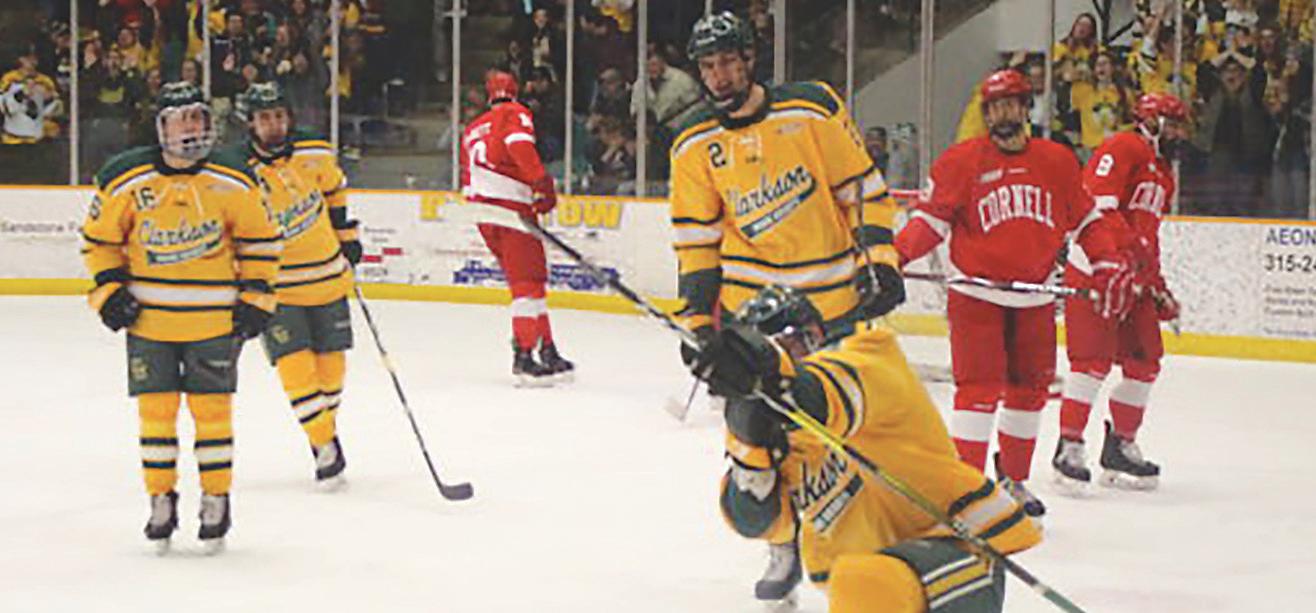
With the results, Quinnipiac earns the No. 1 seed due to its advantage against Cornell — one win and one tie — in the head-tohead tiebreaker.
Dunne’s game-tying goal came after a series shots blocked by Cornell led to a frenzy in front of sophomore goaltender Matt Galajda, who made 31 saves on the night.
“The guys up top are supposed to be blocking shots. The guys underneath aren’t, [and] we didn’t pick guys up,” Schafer said, adding that the winning goal resembled a drill Cornell often runs in practice. “The puck came down, hit someone and landed right on their kid’s stick.”
Now the No. 2 seed in the ECAC playoffs, the Red will have some time to breathe before it hosts a to-be-determined opponent in the league quarterfinals on the weekend of March 15. By that point, the Red should be fully healthy — save for sophomore defenseman Cody Haiskanen — as breakout freshman forward Max Andreev is slated to make his return from a broken collarbone.
A day removed from the end of Cornell’s streak of 41 straight killed penalties, Clarkson forward Devin Brosseau scored on a Golden Knights power play to open the scoring about halfway into the first period.
In an opening frame by Clarkson, Galajda kept the Red in the game until it was able to earn a lead in the second. Clarkson outshot Cornell 14-3 in the first period and 33-12 overall.
“Matty was great, he kept us in it,” said senior defenseman and alternate captain Matt Nuttle. “We


probably should’ve been down 2- or 3-0 at the end of the first period.”
If Cornell had anything left to prove in the 2018-19 season, it was its ability to play from behind — the Red scored first in all but five games this season entering Saturday’s game, and entered the season finale 1-3-1 in games in which its opponent notched the opening tally.
The regular season’s final game, however, bucked that trend for a moment. Senior forward and captain Mitch Vanderlaan opened Cornell’s scoring 5:19 into the second period with a power-play tap-in on a feed from junior defenseman Yanni Kaldis.
Just 2:02 later, Regush’s goal followed a fortuitous sequence in which the puck bounced into the air and found the freshman’s stick in the
slot. The tally gave Cornell a lead that didn’t evaporate until the final minute of regulation, when the Red had its second straight first-place finish slip from its grasp.
After a weekend during which Regush continued his offensive production for Cornell — the rookie had two goals in Friday’s win at St. Lawrence — Schafer was left to wonder why his other go-to skaters didn’t step up with a league championship on the line.
“Mike Regush, that’s what you want to see out of our top guys,” Schafer said. “He brought his game to another level and I didn’t think that our best players this weekend brought their game to another level.”
“We’ll go back and talk to individual guys wondering why in such a big game — for the league championship — that we came out and played that way,” Schafer added.
After a first-round playoff bye, Cornell will host a best-of-three conference quarterfinal series the following weekend with a third straight trip to ECAC championship weekend at Lake Placid on the line.
“We’re definitely not satisfied,” Nuttle said, later adding of the upcoming playoffs: “An effort like tonight won’t get the job done.”
ZACHARY SILVER / SUN SENIOR WRITER
By ZACHARY SILVER Sun Senior Writer
By RAPHY GENDLER and ZACHARY SILVER Sun Sports Editor and Sun Sunior Writer
From behind | Cornell surrendered the game’s first goal for just the sixth time this season.
Top spot | As the No. 1 seed in the ECAC playoffs, Cornell earned the right to host the league semifinals next weekend. The Red is two home wins away from a title.
BORIS TSANG / SUN PHOTOGRAPHY EDITOR