The Corne¬ Daily Sun

By ATTICUS JOHNSON Sun News Editor
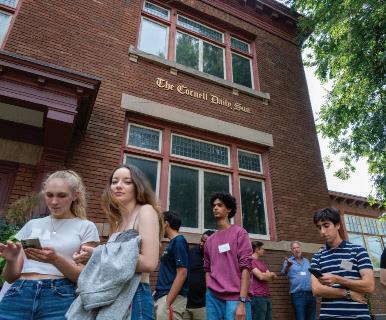
March 1 — The list, released on Friday, lists cuts to the Senior Service College Fellowships specifically, and did not mention other partnerships between Cornell and the Pentagon.
Senior Service College Fellowships provide funding for high-level military officials to study national security policy and strategy in an academic setting, according to The United States Army War College’s website.
Potential “new partnerships” intended to replace previous partnerships with Ivy League and other elite universities announced by the Pentagon include conservative institutions such as Liberty University and Hillsdale College, as well as public universities like the University of North Carolina, Arizona State University and the University of Michigan.
When reached for comment, a Pentagon spokesperson referred The Sun to its statement on Senior Service College Fellowships, which stated the policy change “will not impact any Service members or [DOD] civilians currently enrolled in the affected programs.”
Secretary of Defense Pete Hegseth ordered the cancellation of military attendance at Ivy League and other elite
universities, starting in the 2026-2027 academic year, in a video released Friday afternoon on X, formerly Twitter.
Hegseth said the change would affect “Princeton, Columbia, MIT, Brown, Yale, and many others.” Though Cornell was not explicitly mentioned, Cornell was on a preliminary list of institutions at risk of losing military tuition assistance eligibility, according to information originally reported by CNN earlier this month.
Hegseth previously canceled all professional military education, certificate programs and fellowships with Harvard on Feb 6.
In the Friday video, Hegseth said that he made the decision because the American military has “been poisoned from within by a class of so-called ‘elite universities,’ who have abused their privilege and access to this department and utterly betrayed their purpose.”
“Cornell University has proudly educated active-duty military and veterans since its founding and is the only Ivy League institution designated a Purple Heart University for supporting veterans injured in combat,” a University spokesperson wrote to The Sun.
By JOSHUA COHEN Sun Contributor
March 3 — The Cornell University Police Department currently has a contract to operate seven different Flock Safety AI cameras on Cornell’s campus; these cameras have been operating on campus since October 2024, according to a University spokesperson.
The Sun spoke to students who have raised concerns that Flock camera data collected on students and faculty could be leaked to immigration enforcement agencies.
The cameras, which can be used to track license plate data for police investigations, according to Flock’s website, are all located at major entry points to central campus.
Avery Morris ’28 and Ian Palansky ’28, co-leads of the criminal justice committee for Cornell’s American Civil Liberties Union chapter, highlighted Flock’s cameras as a risk to Tompkins County and Cornell students.
“[The Flock cameras are] really a big threat at Cornell because we have a lot of people on visas, we have a lot of protesting and a lot of civil disobedience going on here,” Morris said. “We’ve also seen our presidential administration targeting our university, which nationally and federally, is where [Immigrations and Customs Enforcement] is looking for people.”
An “ICE Out” protest took place on
campus in early February to condemn federal immigration agencies and urge the University to sever institutional ties with ICE and U.S. Customs and Border Patrol, amid Cornell’s advertisement of recruitment CBP through Cornell Career Services. The protest joined broad national demonstrations against mass ICE deportations and militarization.
Flock wrote that it does not directly partner with ICE and that all of its data is owned by its customers, according to its website.
“ICE does not have direct access to Flock cameras, systems, or data, unless the agencies that control their data expressly and deliberately allow it,” Flock’s website reads.
However, investigations from 404 Media have found that ICE has been working with local law enforcement agencies to access their Flock databases upon request.
In a statement to The Sun, a University Spokesperson stated that CUPD owns all the data in Flock’s database and can be accessed for up to 30 days before being automatically deleted.
Palansky expressed doubt that the data would not be used by Flock cameras to target students and faculty. Because the University is “politically targeted,” Palansky said, “it seems almost naive” to assume that the administration will never use Flock cameras.
See FLOCK page 10
Te University spent the highest-ever amount on lobbying in 2025, ranking third among Ivy League universities.
By ANANT SRINIVASAN Sun Senior Writer
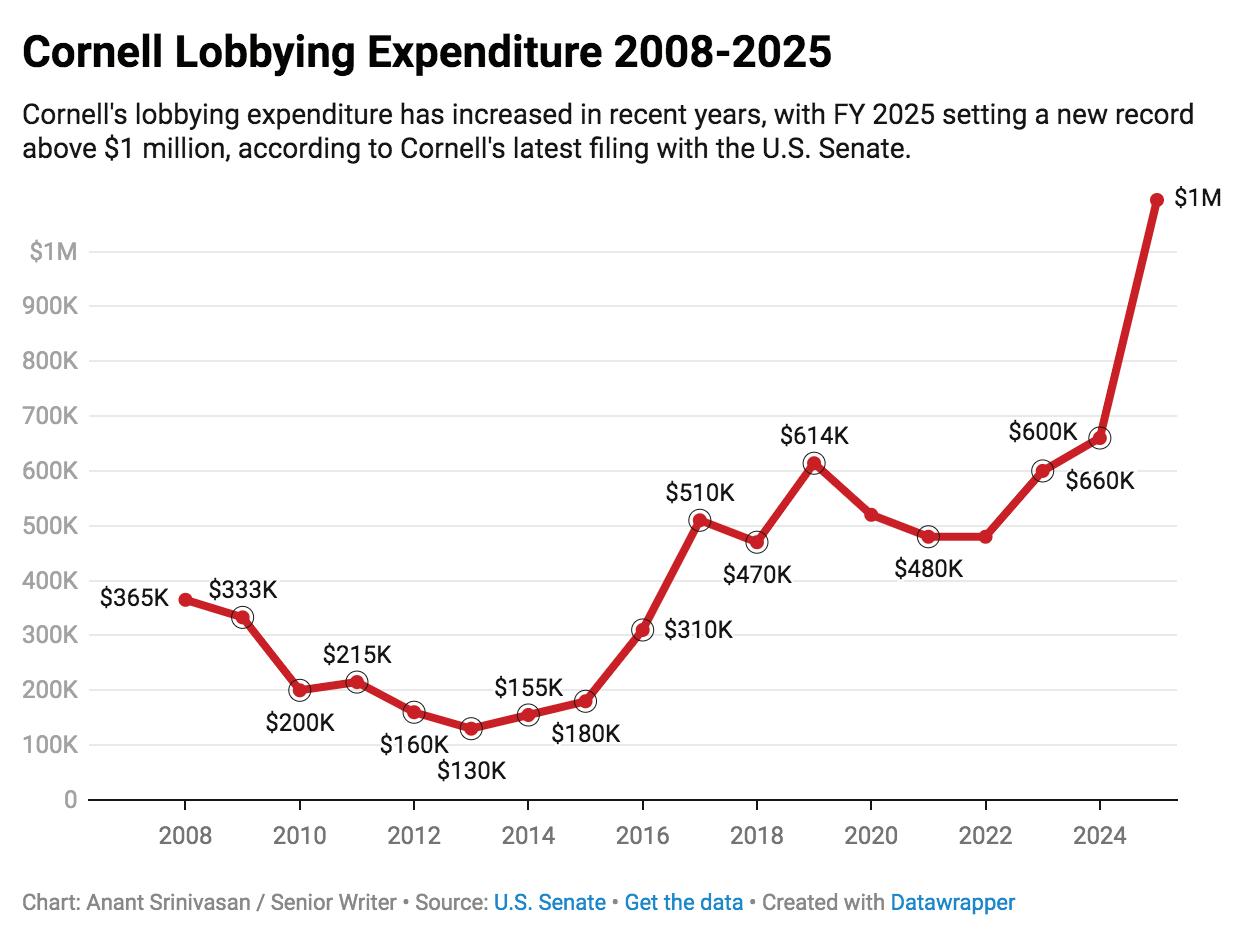
March 1 — Cornell reported $180,000 in federal lobbying expenditures for the fourth quarter of 2025, according to its latest filing with the U.S. Senate, bringing its year-to-date total to $1,094,000.
The fourth-quarter filing caps off the University’s most expensive lobbying year yet, a 66% increase from the previous record high of $660,000 in 2024. Throughout 2025, Cornell reported spending of $230,000 in the first quarter, $444,000 in the second quarter and $240,000 in the third quarter.
Cornell’s newest report shows extensive lobbying for land-grant agriculture programs and competitive research grants at the National Science Foundation and Department of Energy. The University has also continued its support for NASA, National Oceanic and Atmospheric Administration and National Institute of Standards and Technology programs.
The University’s fourth-quarter report also highlights, for the first time, investment in technologies “including artificial intelligence, quantum computing and robotics,” reflecting growing federal interest in frontier research.
In addition to advocating for new funding, the filing indicates the University’s interest in protecting existing funding. Cornell lobbied lawmakers regarding “cancelled and/or frozen programs and grants” for the University as well as continued spending of already appropriated funds, according to the filing.
In a statement to The Sun, a University spokesperson wrote that administrators “expanded engagement with policymakers and federal agencies to restore research funding and prevent regulatory changes that would harm [Cornell’s] educational programs.”
graduates to temporarily work in the U.S. for up to a year after completing their degrees.
The filing mentions support for the Deferred Action for Childhood Arrivals program, and “legal status and protections for undocumented students in the Dream and Promise Act” while pushing for high skill immigration reform.
The University also lobbied on policies affecting international students. The filing shows that Cornell raised concerns about proposed restrictions on student visas and employment pathways such as Optional Practical Training, which allows international
The filings come amid increased visa scrutiny and enforcement under President Donald Trump’s administration which has raised uncertainty for international students at Cornell and across the country.
According to the National Science Foundation’s Higher Education Research and Development Survey, federal funding supported more than $64 billion in research spending in 2024 across all universities, making up about 55% of total academic research spending.
The filing data shows increased federal engagement across higher education as universities navigate an unusually volatile policy environment.
The University of Pennsylvania, Yale University and Columbia University all joined Cornell in crossing the seven-figure threshold. Penn led the Ivy League with a total of $1.32 million, including a mammoth $510,000 expenditure in quarter four.
“Cornell increased its federal lobbying expenditure in response to unprecedented pressure on higher education from the federal government,” the University spokesperson wrote in an email statement to The Sun.
Today
Sensory, Made Practical: Lessons Learned Building DraughtLab 5 - 6 p.m., The Conference Center, Room 148
Eating Well Trivia Pop-Up 5 - 7 p.m., Okenshields
Trivia Night 7 - 9 p.m., Ithaca Beer Company
Zacahary Costello, Saxophone 7 p.m., Hockett Family Recital Hall
Free Tea and Honey Pairing Noon - 4 p.m., Honeybee Embassy/Bright Raven Farm & Apiary
Midday Music: Student Perspectives on Kiskeya (CU Music) 12:30 - 1:30 p.m., Lincoln Hall, B20
Come Juggle!
6 - 7:30 p.m., Physical Sciences Building, Patio
Free Zumba 6:30 - 7:15 p.m., Noyes Community Recreation Center, Multipurpose Room
Free Tango Lesson and Practica
7 - 10 p.m., Physical Sciences Building, Atrium
Karaoke on Thursday’s at Tavern on the Commons 10 p.m. - 1 a.m., 130 East Seneca St.
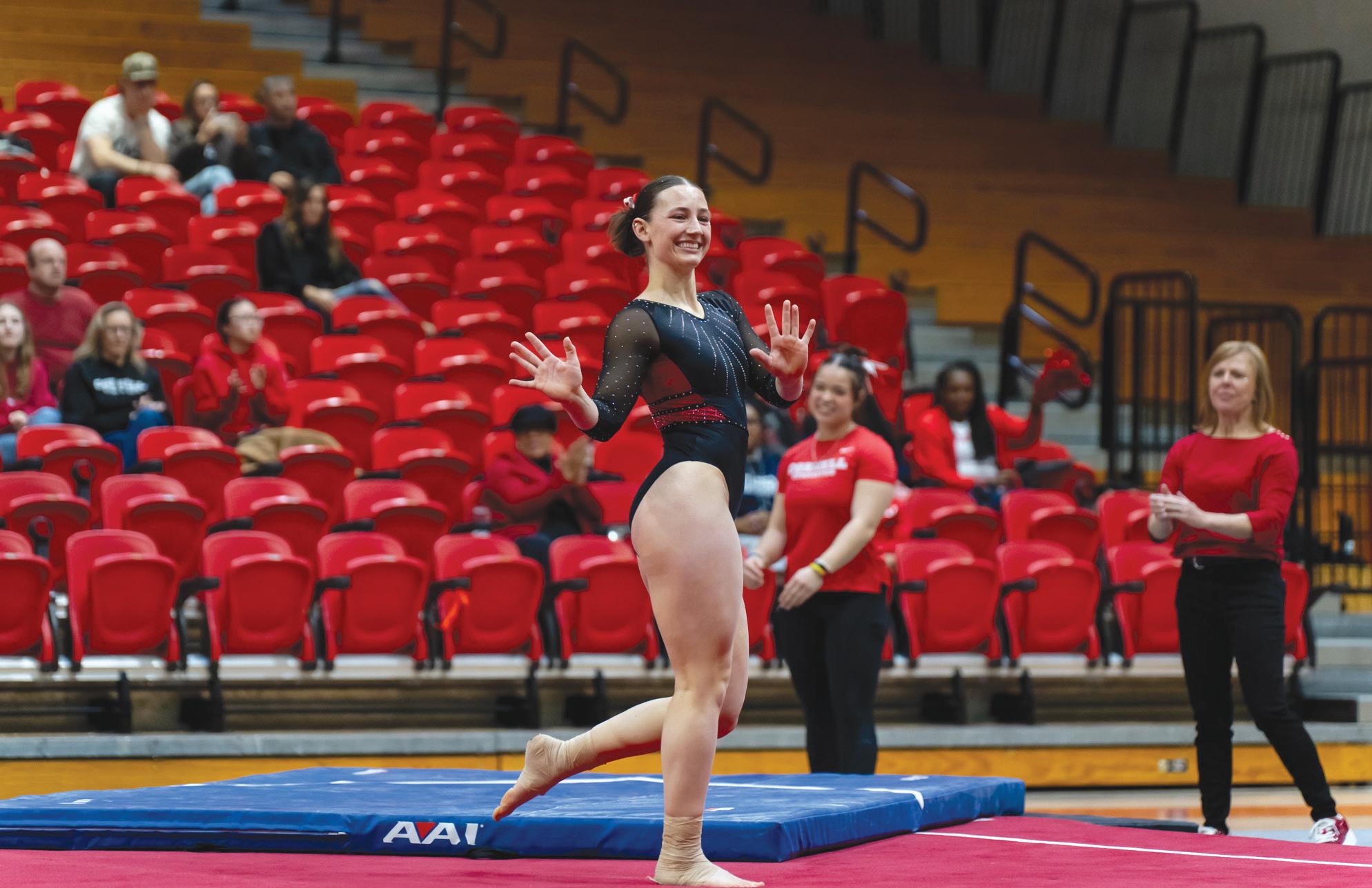
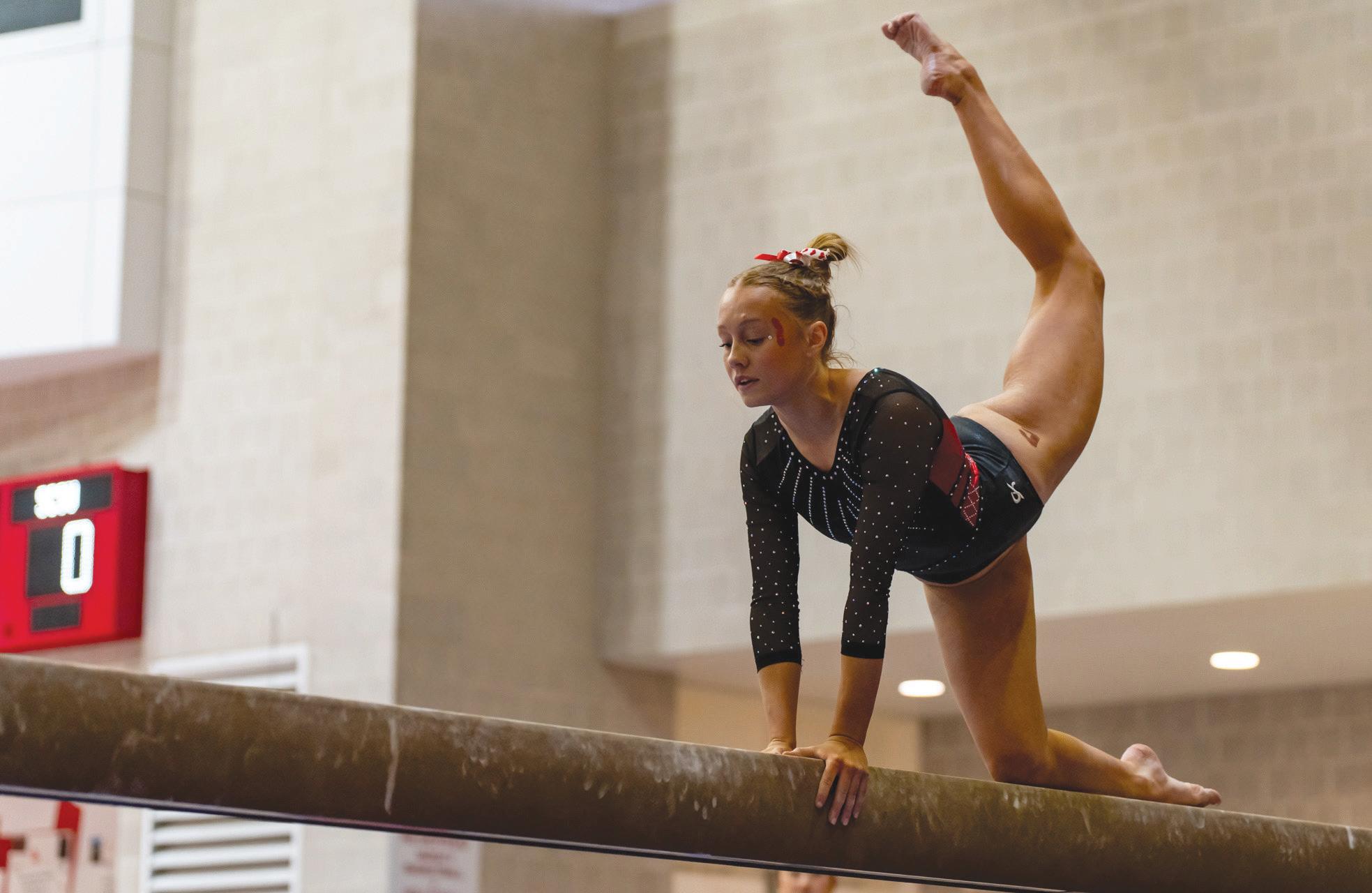
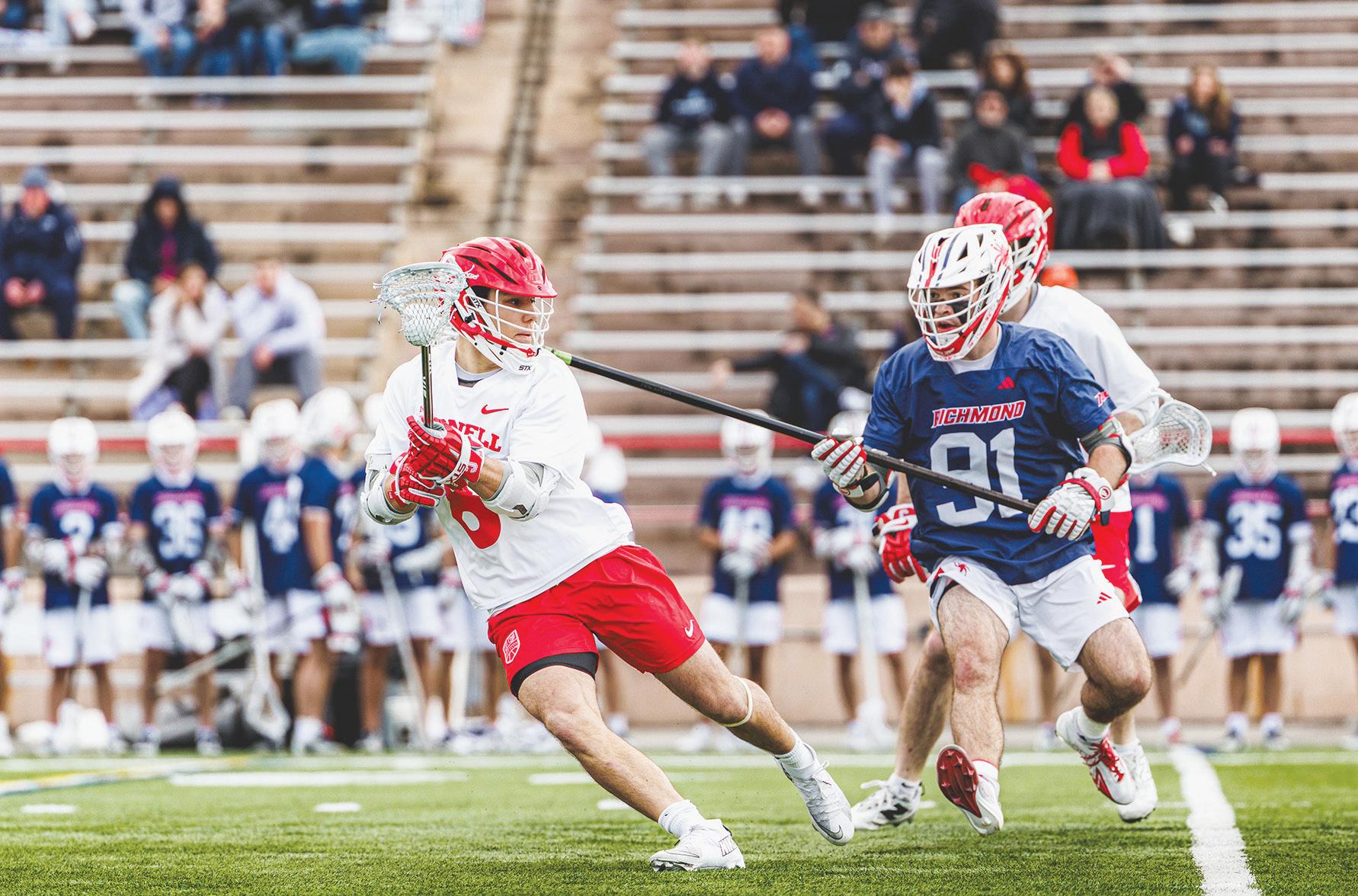
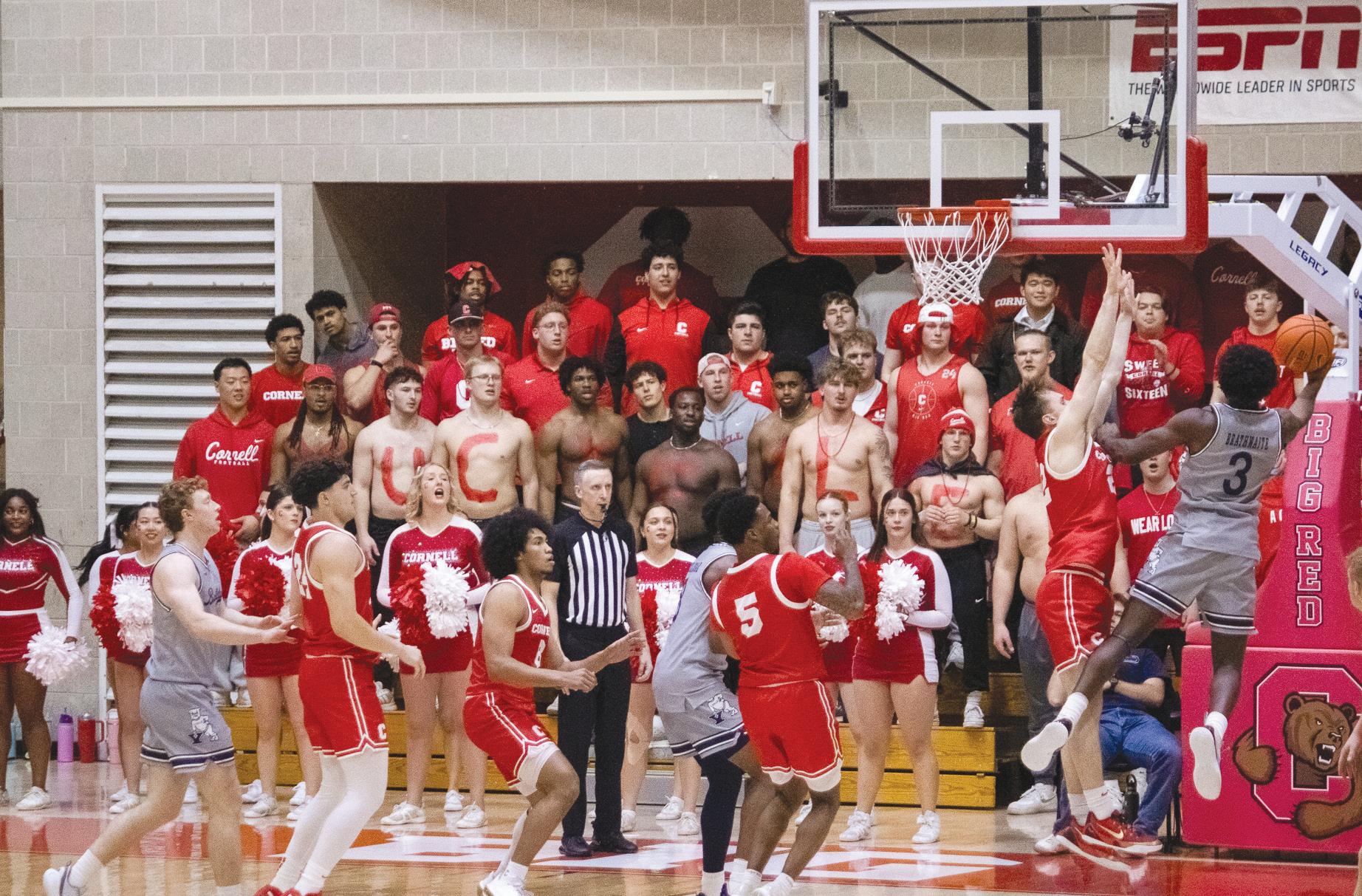
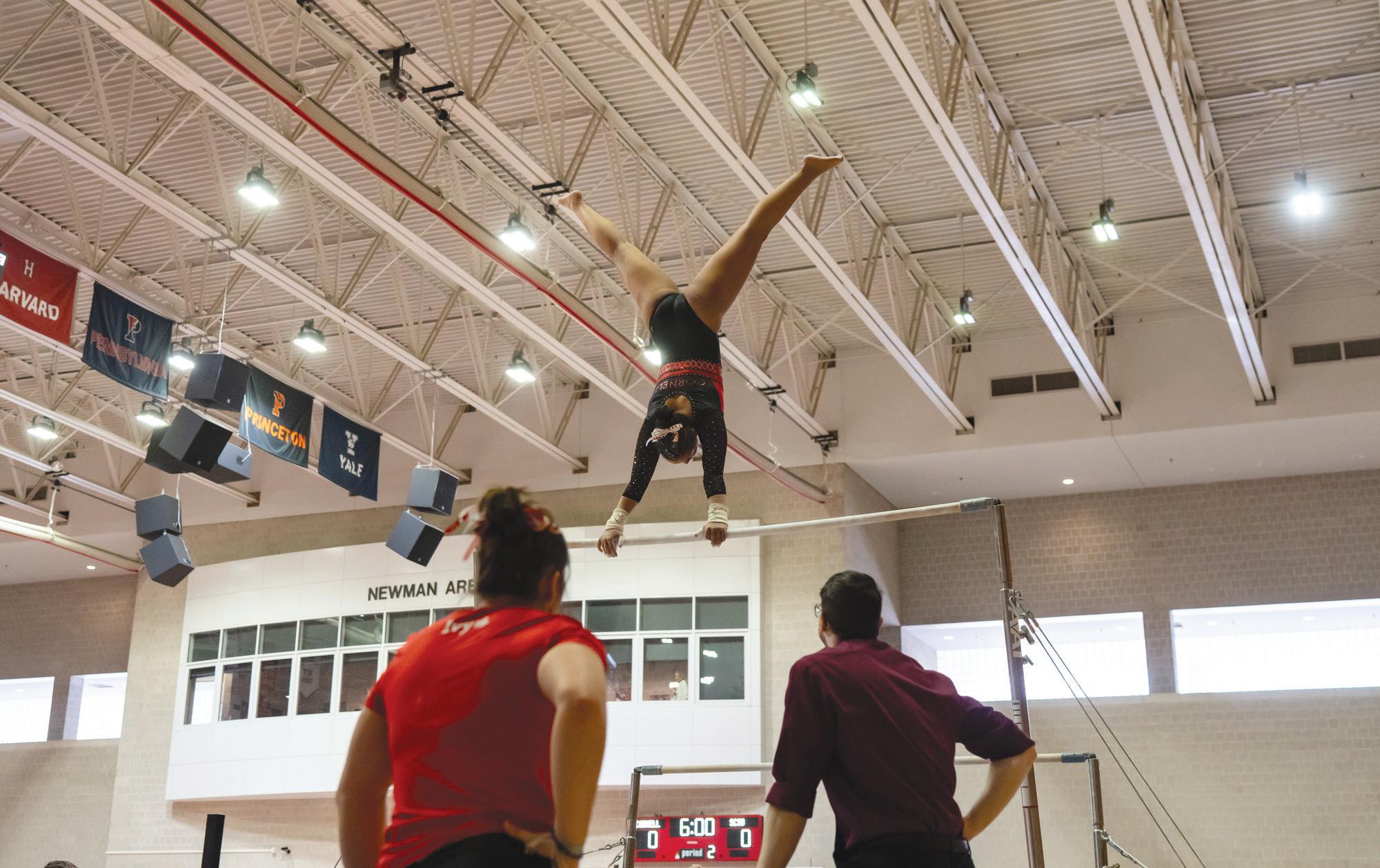
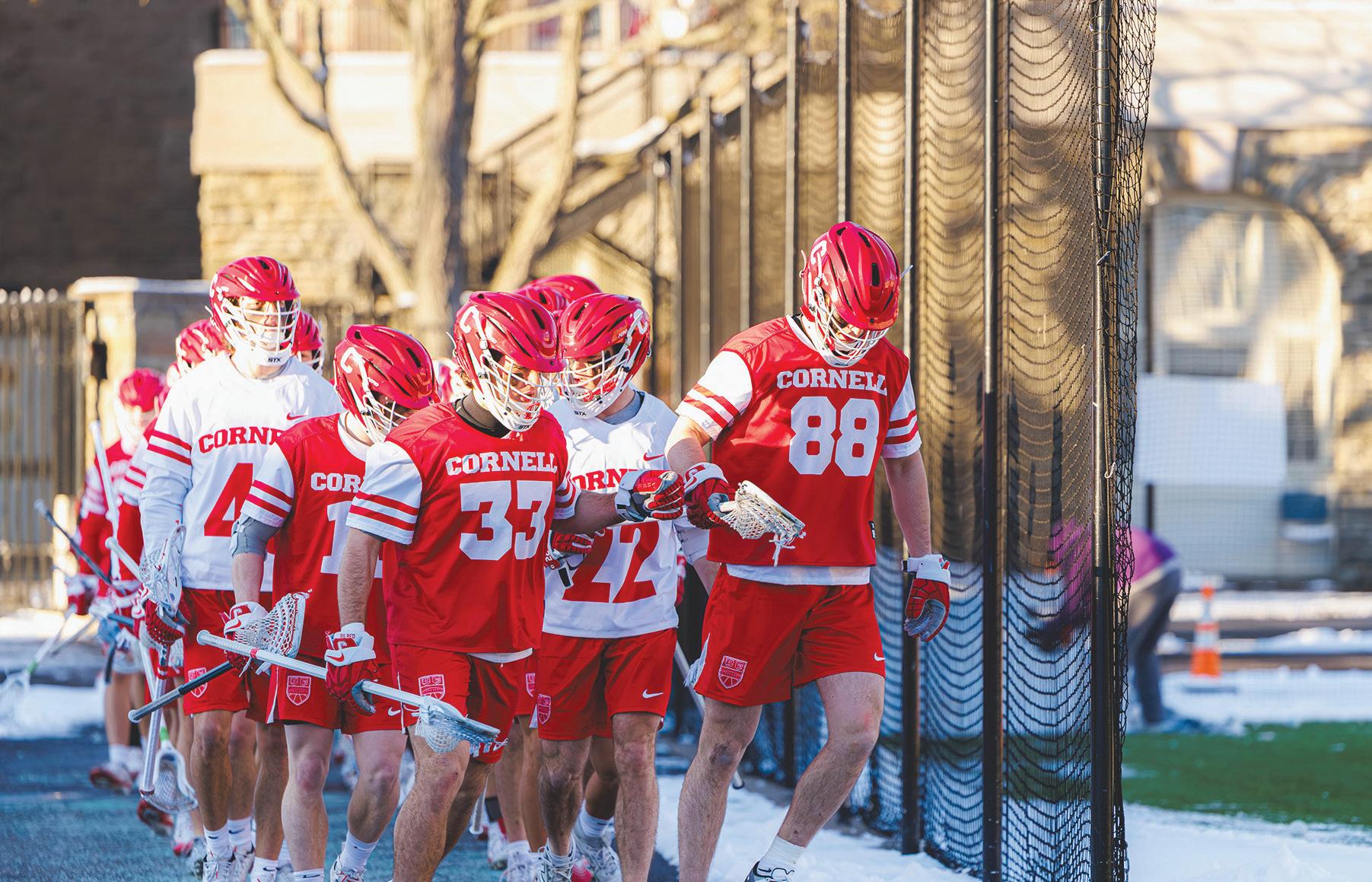
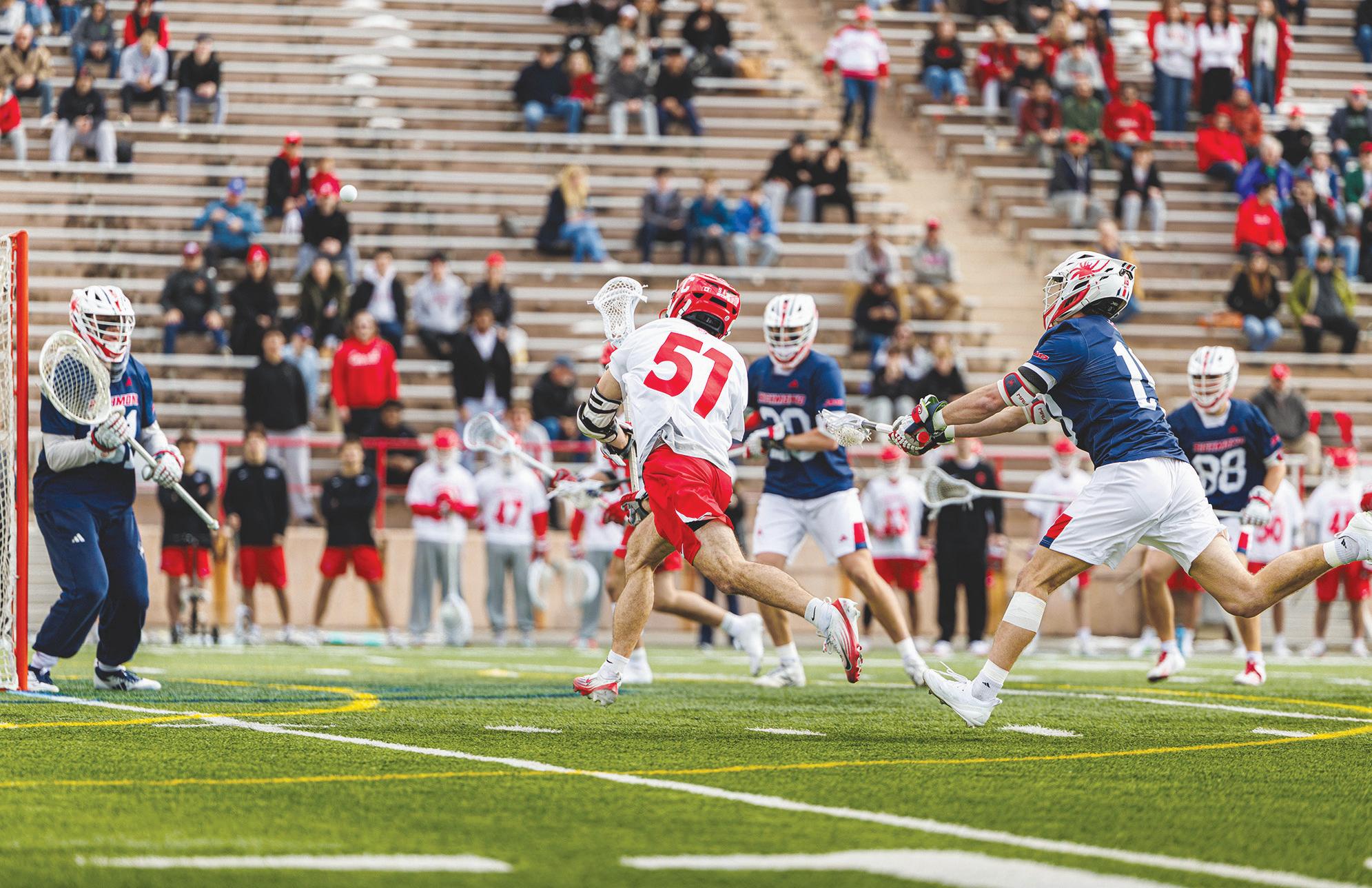
Sun photographers captured the energy and action across campus in a sports-packed week of basketball, lacrosse and gymnastics.
By SUN PHOTOGRAPHY DEPARTMENT

By ZEINAB FARAJ Sun Senior Writer
Feb. 27— Cornell will launch a part-time, fully online Bachelor of Professional Studies degree program in August 2027, according to the Cornell Chronicle. The degree program will focus on business fundamentals, economics and finance, marketing, data analytics, global development and social equity.
The program will be offered by the School of Continuing Education in collaboration with eCornell, with applications opening in January 2027. The program will provide a “career-focused pathway” and opportunity for “working professionals and adults” with some college experience but no degree to earn an undergraduate degree from the University, according to the Chronicle.
Faculty across Cornell’s schools will teach the program’s courses, which will primarily be asynchronous, with some “optional live sessions” for stu-
dents to network or collaborate.
President Michael Kotlikoff told the Chronicle that the University’s commitment to accessibility drives the mission of the program.
“The online Bachelor of Professional Studies program will expand access to a Cornell education in entirely new ways, bringing a Cornell undergraduate degree within reach for working adults in many different life circumstances,” Kotlikoff told the Chronicle.
The University is also building “a pipeline of eligible students” by connecting with community colleges across New York state and collaborating with the Cornell Prison Education Program to offer the degree to incarcerated adults at three correctional facilities in the region. Community college students, alumni and Cornell employees are also encouraged to apply to the program.
The first BPS major, organizations, markets and society, will “integrate business, economics, policy and social
sciences,” according to the Chronicle.
Donna Haeger, BPS academic director, a professor of practice in the Cornell S.C. Johnson College of Business, will teach “Spreadsheet Modeling,” a course in which students will learn to build, analyze and interpret data.
The BPS program plans to expand by adding additional majors aligned with emerging workforce needs and fields.
Students who enter the program can start in the fall or spring semester and are expected to finish their studies within five years. Students will have access to academic advising, career services and networking opportunities with faculty, other students and Cornell alumni throughout the program.
The program is designed as a “forward-looking approach to education” and a way to increase accessibility to nontraditional students, Haeger told the Chronicle.
Need-based financial aid will be
available to students who qualify, with preliminary tuition set at $925 per credit hour. The program will not support student visas due to the program’s part-time and online nature, and international students are encouraged to reach out to the program to “determine eligibility,” according to the Chronicle.
Students will graduate with a “curated digital portfolio and complete a community-engaged capstone project bridging theory and practice.”
“By offering this new degree design to nontraditional learners, students whose lives do not allow them to move to Ithaca will still have the opportunity to earn a Cornell degree,” Haeger told the Chronicle. “In this way, Cornell is extending its impact while continuing to foster lifelong learning and deliver high-quality, inclusive and industry-relevant education.”
Zeinab Faraj can be reached at zfaraj@cornellsun.com



By ATTICUS JOHNSON Sun News Editor
Editor’s Note: This article contains details about sexual assault.
Bilguun Enkhbayar ’27, a 22-yearold former Cornell student, was sentenced on Wednesday to eight years in prison for first-degree rape and eight years for second-degree burglary, according to Tompkins County Court records obtained by The Sun.
The sentences will run concurrently, meaning Enkhbayar will serve a maximum of eight years in prison.
Enkhbayar was found guilty in November of breaking into a female student’s dormitory room with “the intent to commit a crime therein and engaging in vaginal sexual contact with another person who was incapable of consent,” according to an November press release by District Attorney Matthew Van Houten.
Rape in the first degree, the most serious classification of rape in New York state, carries a maximum sentence of 25 years and a minimum of five.
Prosecutors recommended a sentence of 15 years for Enkhbayar’s rape charge,
and 10 years for the burglary charge, because of “the significant and immeasurable trauma to the victim and the defendant’s lack of remorse or acceptance of responsibility for his actions,” according to an email statement sent to The Sun by Van Houten.
The former student was also sentenced to 10 years of post-release supervision, a component required by The Sentencing Reform Act of 1998, which means Enkhbayar will need to commit no new crimes and meet court-imposed responsibilities during the 10 years.
Specifically, Enkhbayar was found guilty of rape in the first-degree and burglary in the second-degree after a weeklong jury trial that culminated on Nov. 24. Enkhbayar was arrested in September 2024 after a grand jury indicted him.
Enkhbayar, a Mongolian international student, attended the prestigious preparatory school Tomujin Alternative School and took two gap years before attending Cornell with a $328,000 scholarship.
Enkhbayar’s attorney did not immediately respond to a request for comment.
Atticus Johnson can be reached at ajohnson@cornellsun.com.
By CORAL PLATT Sun News Editor
Prof. Emeritus Biodun Jeyifo, literatures in English, died on Feb. 11 in Lagos, Nigeria at the age of 80.
Jeyifo taught in the College of Arts and Sciences from 1989 to 2006. His research spanned across several disciplines, including African drama and theater, African and Caribbean ‘Anglophone’ literatures, Marxist theory, colonial and postcolonial studies and African and Afro-American critical thought.
Jeyifo’s books, studies and research have gained recognition worldwide. His study of the Yoruba Popular Traveling Theatre in Nigeria “is viewed by many as seminal in the study of African drama,” according to his CAS biography.
His biography also states that he is renowned for his research studying the works of Nobel laureate, writer and playwright Wole Soyinka. Throughout his career, Jeyifo published a series of essays and three books analyzing Soyinka’s works.
“BJ [Jeyifo] was a brilliant scholar and a generous colleague who, more than any other figure in the history of the department, showed what it would mean to take seriously ‘the task of decolonialization,’” said Prof. Emeritus Paul Sawyer, Literatures in English, in an interview with The Cornell Chronicle. “He was a fierce critic of British imperialism who grew up loving English literature; he believed that human progress came about only by embracing complexity and difference.”
After having studied English at the University of Ibadan in Nigeria, Jeyifo
received both a M.A. and Ph.D from New York University.
In addition to teaching at Cornell, Jeyifo served as a professor at the University of Ibadan, the University of Ife in Nigeria, Oberlin College and Harvard University.
Fellow Cornell Prof. Emeritus Satya P. Mohanty, literatures in English, commented on Jeyifo’s impact on him, both through his academics and his character.
“To me, BJ was a rare friend who embodied some of the best old-world values, namely courage, integrity and a fierce commitment to social justice,” Mohanty said in an interview with The Cornell Chronicle. “In these times when ethno-nationalisms of all kinds are becoming the norm, he was a genuine internationalist.”
Jeyifo is survived by his brother Olu and his children, Okunola, Lekan and Ayoka.
Individuals can have a diverse range of feelings, needs and reactions when facing loss. This information about Grief and Loss may be helpful to you or a friend. The Ithaca-based crisisline can be reached at 607-272-1616, and the 988 Suicide & Crisis Lifeline is available throughout the U.S. Additional support resources are listed at mentalhealth.cornell.edu.
Students in need of professional support can email Student Support and Advocacy Services at studentsupport@cornell.edu or call Counseling and Psychological Services at 607-255-5155. Employees can call the Faculty and Staff Assistance Program at 607-255-2673.
Coral Platt can be reached at cplatt@cornellsun.com.
Continued from page 1
“In addition to a robust ROTC program, Cornell has long enrolled senior military officers in graduate business, law, and engineering programs. We remain committed to educating senior military officers, who are valued members of our campus community,” the spokesperson wrote.
Hegseth, who attended Princeton as an undergraduate and Harvard for his master’s in public policy, added that Ivy League universities have “gorged themselves on a trust fund of American taxpayer dollars only to become factories of anti-American sentiment and military disdain,” while teaching curriculum that “seeks to hollow out their warrior ethos and replace it with a creed of globalist submission.”
This order follows Hegseth’s move to bar the use of military tuition assistance for graduate programs at dozens of top universities. A preliminary list compiled by the U.S. Army classified Cornell as being at “moderate to high risk” of losing eligibility due to alleged “bias” against the military.
Military tuition assistance provides service members up to $4,500 a year to help cover the costs of graduate-level education. Then, the Tuition Assistance TopUp program works to bridge the gap. It covers the remaining tuition costs that exceed $4,500 at more expensive universities. More than 230,000 service members utilize the assistance provided by these programs. Atticus Johnson can be reached at ajohnson@cornellsun.com.
Independent Since 1880
144th Editorial Board
SOPHIA DASSER ’28
New York, N.Y.
Editor in Chief
SOPHIA ROMANOV IMBER ’28
Miami, Fla.
Associate Editor
RAYEN ZHOU ’29
New York, N.Y. Opinion Editor
ZARA CHEEK ’28
Baltimore, Md. Opinion Editor
JADE DUBUCHE ’27
Bronx, N.Y.
Multimedia Editor
BENJAMIN LEYNSE ’27
Leonia, N.J.
Multimedia Editor
SOPHIA TORRES LUGO ’26
Redwood City, Calif.
Business Manager
KENDALL MURPHY ’28
Bethesda, Md.
Advertising Manager
VICTORIA WROBLEWSKI ’28
Commack, N.Y.
Human Resources Manager
MELISSA MOON ’28
Los Angeles, Calif.
Arts & Culture Editor
JAMES PALM ’27
New York, N.Y.
Assistant Arts & Culture Editor
MATTHEW RENTEZELAS ’28
Cherry Hill, N.J.
Assistant Arts & Culture Editor
HAZEL TJADEN ’28
Dobbs Ferry, N.Y.
Assistant Arts & Culture Editor
MARC STAIANO ’27
Long Island, N.Y.
Assistant Arts & Culture Editor
KATELYN HALVERSON ’28
Long Island, N.Y. Lifestyle Editor
AVA BETNAR ’29
Wilkes Barre, Pa. Assistant Lifestyle Editor
SANIKA SARAF ’28 St. Louis, Mo. Assistant Lifestyle Editor
KATHERINE ISTOMIN ’29
Long Island, N.Y. Social Media Editor
JOIE JEAN-PAUL ’29
Long Island, N.Y.
Assistant Social Media Editor
ASHLIN KWONG ’28
Chicago, Ill. Graphics Editor
TAVAN BHATIA ’27
Westport, Conn. Games Editor
HUNTER PETMECKY ’28
Los Angeles, Calif. Layout Editor
Letter From the Editor
VARSHA BHARGAVA ’27
Basking Ridge, N.J.
Managing Editor
KATE TURK ’27
Gulf Breeze, Fla.
Assistant Managing Editor
CORAL PLATT ’29
Portland, Ore. News Editor
ATTICUS JOHNSON ’28
Cary, N.C. News Editor
MARY CAITLIN CRONIN ’28
New York, N.Y. News Editor
EVERETT CHAMBALA ’27
Tully, N.Y. Assistant News Editor
SHUBHA GAUTAM ’28
New York, N.Y. Assistant News Editor
GISELLE REDMOND ’28
Columbia, Mo. Assistant News Editor
ANGELINA TANG ’28
Bufalo, N.Y.
Science & Technology Editor
TANIA HAO ’28
Ithaca, N.Y.
Science & Technology Editor
SIMRAN LABORE ’27
St. Louis, Mo.
Weather & Climate Editor
MATTHEW LEONARD ’28
Queens, N.Y.
Sports Editor
GRACE REUBEN ’28
Charleston, S.C. Sports Editor
JANE HAVILAND ’28
Barnegat, N.J. Features Editor
NATHAN ELLISON ’28
Jericho, Vt. Photography Editor
NATHAN BO ’28
Los Angeles, Calif.
Assistant Photography Editor
ADELAIDE CHOW ’29
New York, N.Y.
Assistant Photography Editor
MIA SOFIA ORENGO ’28
Los Angeles, Calif. Video Editor
SMRITHE RAJESH ’29
Richmond, Va.
Newsletter Editor
AMELIA GARCIA ’27
Williamsburg, Va.
Data Editor
RENA GEULA ’28
Great Neck, N.Y
Layout Editor
Saturday, in the second-foor ballroom of the brick-and-mortar heart of our downtown Ithaca ofce, Te Sun gathered to elect its 144th Editorial Board. Hours and hours of deliberation ensued as the next generation of editors, for a paper that has remained unwaveringly independent since 1880, were elected by their peers.
In the transition of power, it is often easy to focus on the roles we begin to occupy: the editors, the writers, the photographers. But the most vital role in our community is the one you occupy. Te Sun is indeed a vehicle of power, but it is one held accountable by you, our readers.
It is tempting to describe Te Sun as a watchdog. Tat is part of our role. We are a check on the positions of power within our community: on assemblies, on administrators, on council members. When decisions are made, you can count on Te Sun to be there. When words begin to obscure more than they reveal, you can count on Te Sun to clarify them. When power operates within the shadowy corners of our campus, you can count on Te Sun to shed light.
But we know that accountability alone is not enough.
Te greater threat facing our University is not simply hostility to the press, for the check of power will always remain an irritant to those in its spotlight. Rather, the much quieter, much more dangerous threat is the dimming — the apathy, the slow erosion of rigor and intellectual curiosity that should light a fame in every single one of us, for it certainly blazes bright within Te Sun. It’s the very idea that passion is embarrassing, that depth is tedious, that precision is optional so long as a take is quick and loud. Te big threat is not censorship, not hostility,
Thereis one simple truth at 139 W State St.: Life revolves around The Sun. On Saturday, Sun staffers gathered to elect its 144th Editorial Board. Light filtered through the dance hall’s window panes to shine on discussions of ambitions and new beginnings. The silence following our speeches settled into the walls, floorboards and the yellowed pages of past issues. You read the stories and check the news, but it’s time to meet the editors. Please join us in welcoming the members of our 144th Editorial Board!
Cue Bobby Hebb’s “Sunny”! Leading our 144th Editorial Board with strength and style is Editor-in-Chief Sophia Dasser ’28. She loves spotting Oxford commas, and I love spotting her in the Temple of Zeus. With her iced Americano (and a tad of honey), a copy of The Sun and a coveted Zeus table, Sophia will take us to new heights. Call me biased, but our objective side is lucky to have managing editor Varsha Bhargava ’27 Her passion, bread-and-butter and frequent pastime is color-coded spreadsheets (thank goodness one of us likes them). In case Varsha needs a waterskiing buddy, she always has assistant managing editor Kate Turk ’27. Kate is single-handedly influencing our office with her Cherry Cola Celsius fascination. Objective is objectively in amazing hands.
Need a little ‘rah-rah’ in subjective? We got you covered. Our associate editor read former associate editor Kurt Vonnegut’s SlaughterhouseFive for the bit and is looking forward to Breakfast of Champions. I mean, who does that? Well, me. Sophia Romanov Imber ’28 will lead the subjective powerhouse. Opinion editors Zara Cheek ’28 and Rayen Zhou ’29 are always on it. Zara loves her postcards of artwork from the museum gift shop and is beating me at LinkedIn Games. Rayen can recite the alphabet backwards as fast as he can forward. Zara and I will let you know how that goes once we order our coffee (no scones).
It’s President Business over here at The Sun. Business manager Sophia Torres Lugo ’26 balances our books with so much grace that she’s learning how to figure skate. Over from the Nolan School of Hotel Administration, we have advertising manager Kendall Murphy ’28 keeping us in the green. On the green, he loves playing soccer, and you can also catch Human Resource Manager Victoria Wroblewski ’28 playing tennis. I guess business is seriously in motion.
Now, let’s get newsworthy. Our news editors always belong on the front page, above the fold (bylines, people, bylines). My boy Atticus Johnson ’28 is everywhere. He loves a good 99-cent Arizona Iced Tea. We got some more outdoorsy editors: Bing-bong! Coral Platt ’29 enjoys hiking, skiing and especially rock climbing. Don’t worry, she has a love-hate relationship with desking at 2 a.m. Mary Caitlin (MC) Cronin
but surrender to the darkness of mediocrity that dims us. Te Sun burns to resist that dimming.
To report with Te Sun is to fght against the gravity of the easy answer and the fattening of discourse.
To report with Te Sun is to enjoy the slow, to ‘embrace the suck,’ to sit through meetings that run too long, to read through documents that are dense, often deliberately so, to talk to people who disagree with each other — and often with us.
But the reward for that tedium is beautiful. Te reward is respect, accountability and, most importantly, representation. When reporting is done well, it afrms the terms on which our shared life on campus is organized. It reminds us that our administrators’ authority is not self-justifying, that our student leaders possess positions out of trust, not title, that our institutions belong to the people who inhabit them, that they belong to us.
Te Sun is no narrator, nor is it frictionless afrmation, nor is it outrage on demand. Te Sun is an archive. Te Sun is our community’s record of itself.
We have seen how easily that record can be tampered with or erased: since January 2025, the federal government has removed over 8,000 web pages across multiple agencies from the Department of Justice to the Centers for Disease Control and Prevention, as if history — as if truth — has become a fragile, fckle thing. When archives are not held in the hands of the people, they become negotiable, and even
’28 always hypes up the room with her energy, cortado and “4 Raws” by EsDeeKid. Not to fret, our news editors are sufficiently assisted. Did you miss Sun Trivia Night? I got one for you: Who’s on the soundboard? It’s Giselle Redmond ’28. That’s MC’s favorite memory and mine too. Next step is to attend Giselle’s Callbaxx A Cappella concert! Keeping us in the outdoors activity scene is Everett Chambala ’27 He recently went to Greek Peak with Kate and Coral (do we all get an invite next time?). In case we want to switch up the energy drinks, Shubha Gautam ’28 worked as a bobarista for a total of one month!
Life revolves around The Sun, but Arts & Culture revolves around Melissa Moon ’28 Melissa is multi-talented: She’s an artist (once made a painting for Melissa McCarthy), can juggle (?) and she loves Oxford commas (womp womp). If you stumble into an Arts pitch meeting, you’ll find a drawing of each editor, featuring looksmaxxing duo James Palm ’27 and Matthew Rentezelas ’28 — courtesy of Melissa. See, I told you she’s multi-talented! James is ready for our next Arts rager with his pizza-making skills and pilot’s license (free trip?). Matt is a self-taught bass/electric guitar player. On the note of the musically-inclined, Hazel Tjaden ’28 (no relation to Olive Tjaden Hall!) has played the cello since she was three. Marc Staiano ’27 is our resident published author. All in all, RSVP to Arts Rager ASAP.
Features editor Jane Haviland ’28 met Kevin Jonas at her summer job five years ago! I’d like to feature her current obsession right now: Game of Thrones
The Sun has some great (life)style. Lifestyle editor Katelyn Halverson ’28 is currently watching Gilmore Girls, probably with her iced cinnamon vanilla latte and maybe with her siblings (she’s a triplet!). Jane, Katelyn, which show do I start with? Maybe The Office, since assistant lifestyle editor Ava Betnar ’29 is from Scranton! Oh, and you’ll love assistant lifestyle editor Sanika Saraf ’28’s dog: His name is Karl Barx! These words don’t perfectly picture my excitement, but the photo team can. Photography editor Nathan Ellison ’28 always captures the beauty of our campus, and now he’s getting into black and white film photography. Of course, Nathan is assisted by the best! A photo says a million words for Nathan Bo ’28, who walked 30 miles in one day (why do we have so many outdoorsy people?). Adelaide Chow ’29 can juggle — please, not the camera — and her favorite memory is getting Tacos CDMX with Nathan squared!
To continue reading, please visit www.cornellsun. com.
worse, they become contingent on whoever happens to be in power.
But when these records are removed, when voices are silenced, Te Sun rises as it transforms into the people’s archive and the future’s textbook. We write not to fnd a story, but to document how that story should be understood by history. We write the future’s reactions, its beliefs, its warnings.
Whether it is our multimedia teams capturing our community through lenses and sketchbooks, our news writers typing furiously into the late hours at Te Temple of Zeus as they uncover the truth we all deserve to know, our opinion columnists digging into the corners of Cornell where nuance lives and require articulation, our science writers translating the research shaping our world into language that belongs to all of us, our sports writers humanizing the points on the scoreboard or our lifestyle and arts writers acting as the diaries of our student body, we capture the zeitgeist of our era before it evaporates.
So we will be bold. We will be bright. And we will be yours.
Our readers have the most vital part to play in building this record. Contact us with tips to ensure that we are covering the stories that matter. Email us corrections if we get it wrong. Join the conversation by submitting letters to the editor and guest columns. And never forget: the 144th Editorial Board answers to nobody but you, and we intend to keep that promise every day we rise.
And so long as Te Sun continues to rise, we will refuse to be dimmed.
Saved By Te Bel
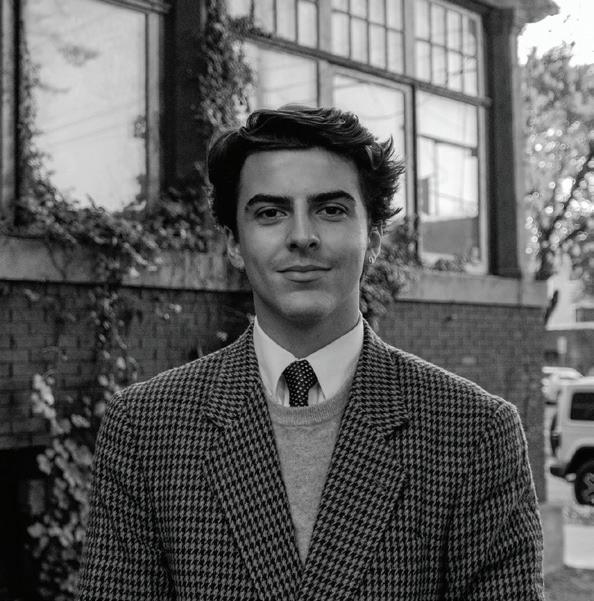
Adrian Belmonte '28 is an Opinion Columnist studying Government in the College of Arts & Sciences. Hailing from D.C. and Spain, his fortnightly column Saved By Te Bel has a voice as cosmopolitan as it is candid. Belmonte takes on politics and media with clarity and a touch of wit. He can be reached at abelmonte@cornellsun.com.
The rise in extremist rhetoric facing U.S. politics today shouldn’t come as a shock to anyone. We saw during Donald Trump’s frst term, the general exacerbation of harmful speech displayed for the world to see. It's how he garnered attention, how Trump won the vote.
How that speech is employed, by whom and what its efects are, is what should interest us the most. As George Orwell warned, “political language is designed to make lies sound truthful and murder respectable, and to give an appearance of solidity to pure wind.”
Te majority of the GOP has rallied behind one candidate and one message for the past eight years. Successive branches of political speech have festered in the media to compliment the rising demand for increasingly radical ideas.
Figures like Nick Fuentes, Candace Owens and Andrew Tate provided the aggrieved consumer, sick of the ‘wokeness’ in the media, with these outlets of radicalized speech. It is here that we have fallen victim to a certain kind of rhetorical price discrimination. Take Apple, the smartphone company, and look at its recent fagship line up. Te iPhone 17 Pro
Professor Rick Geddes is a member of the Committee on the Future of the American University and teaches in the Jeb E. Brooks School of Public Policy. He can be reached at rrg24@cornell.edu.
American higher education today is challenged on so many fronts that I fnd it challenging to keep up. Bipartisan erosion of trust in higher education is widespread and declining. Federal support for basic research conducted by large U.S. universities, largely unwavering since World War II, now seems unreliable. University teaching and research are viewed by many as hopelessly biased and partisan, which further fosters distrust.
College students seem more focused on getting credentials than on gaining rigorous training across the disciplines that will enrich their entire lives, and universities are facing a demographic clif in college-age students; the number of 18-year-olds already peaked in 2025 and is now entering a steep and sustained decline.
Onto this dismal stage is cast the omnipresent specter of artifcial intelligence. Whether real or imagined, many believe that AI will upend large swaths of the knowledge worker economy that are (or were) major employers of the college-educated.
One might be tempted to concede defeat and wait for U.S. higher education’s inevitable decline. Fortunately, I see opportunities on the horizon which, if seized vigorously, will allow universities to not only adapt to these challenges but to return to their roots and emerge stronger — and more valuable to society — than ever.
Many students entering college are misreading the job market that will be relevant four years hence. Like the rest of us, employers are trying to predict the volatile efects of AI on the workplace. Te rough consensus that has emerged is that, instead of hiring based on skill with current technology, employers will seek graduates who possess a range of longer-lasting, human-centered qualities.
Such abilities include ‘soft skills’ like constructive and productive disagreement, efective communication, active teamwork, empathy, persuasive use of humor and team building, among others. Universities
Max — sold at its highest storage capacity — retails for $1,999 before tax. Te iPhone 17 sits at $799. More than a 150% markup, in which the latter seems more fnancially digestible when placed side by side to the former. Tis is what economists call price discrimination.
Corporations will market and price a lineup of similar products with the same fundamental functions at staggeringly diferent prices. Te variety of prices makes the consumer attracted to the most cost-beneftted product.
Te base iPhone 17, hailed by tech reviewers as the best option, was the most sold of the lineup. I’ve fallen victim to this ploy several times and walked away considerably poorer and felt utterly content with my decision. Tat feeling of earned satisfaction, like your iPhone and its pricing, is manufactured.
Tis is what political speech looks like in today's landscape. You have profanous, aggravating and insulting speech about African Americans from commentator Nick Fuentes that, in contrast, civilizes Donald Trump’s speech toward migrants. Te way Trump speaks to women of the press is mellow in comparison to Andrew Tate’s conduct toward his female co-podcasters.
Trump sells the ‘mass-market’ version of speech that sounds normal or acceptable in comparison to fgures like Fuentes, who sell the ‘premium’ version of speech that says the heinous parts out loud. Both versions stem from prejudice and self-glorifcation — same product, diferent packaging.
Te efect is that extremist ideas get normalized before people realize what they’ve bought into. Hence, what you’re really consuming is a movement for white Christian nationalism, deeply embedded in racial superiority that is strategically veiled within Trump’s messaging. As others do the dirty work for him — spreading a racist creed — Trump sits as the benefciary of MAGA’s rhetorical dividends.
So, Trump needs to maintain his perfectly priced position. He must continue to package and sell the product of mediocre civility in a world of loud
brutality. In doing so, he condones and incentivizes the radicalization of speech, a political strategy to overwhelm the system and maintain his agenda protected.
Tis manipulated political capital is precious in the theatre of MAGA rhetoric. Te media pushes MAGA’s message through difering ranges of severity. By these varying degrees of extremism (fundamentally disseminating the same product), they defect responsibility from Trump if things go awry. Te second Trump crosses this line of civility, like posting a video of the Obamas depicted as apes — in which he becomes too overtly similar to his extremist counterparts — people no longer buy the product. In a panic, the video is quickly taken down.
MAGA preaches their gospel to a naive consumer, eager to buy into a campaign that resembles the dark, extremist videos they watch under their covers at night. Yet, in front of the world, a smile and an oscar-winning performance of civility is displayed to civilize the message and the voter who consumes it. You don’t feel wrong, you can't be terrible, you aren’t falling on the wrong side of history if the message is promoted and supported by a sitting president — the city upon a hill of pure garbage.
Victor Kempler, a philologist who analyzed everyday Nazi speech observed, “Words can be like tiny doses of arsenic: they are swallowed unnoticed, appear to have no efect, and then after a little time the toxic reaction sets in after all.”
It is as such that MAGA speech becomes so pervasive, seeping a distorted reality into the mind of American morality and those willing to listen. A reality in which the shock threshold is lowered and hate foods in.
As a people we can only take so much of this rhetoric. But, before we are fatigued by its blatant hate, we’re sold a shiner, newer, ‘better priced’ idea of civility. Te most dangerous political speech in America right now is not the kind that announces itself as extreme. It’s the kind that teaches the audience to stop noticing when the price keeps going up.
should focus on helping students develop judgment and insights that are uniquely human. Tat will not only improve their lives but will ensure their productivity at work for years to come, despite rapid and ongoing technological change.
Tere is also a longstanding concern about the deterioration of community in the U.S. Many commentators argue that there has been a serious weakening of social capital in recent decades, with more Americans disconnected from civic and community life. Few would argue that technological, economic or political forces have helped build community over the past 20 years.
U.S. universities are being called upon to help build better citizens, which is unsurprising given the country’s sharpening political divisions. Tat doesn’t mean producing automatons that passively take direction and think in tandem, but rather molding confdent, critical thinkers who can vigorously participate in a feisty democracy. It means training students who can weigh theory and evidence on an issue, and separate intellectual wheat from chaf, while possessing enough self-confdence to reach solid conclusions and defend those conclusions through reasoned debate. Tis also suggests that reforms should include a reinvigorated civics curriculum and a renewed focus on citizenship.
U.S. universities are uniquely positioned to help improve matters. We not only have access to some of America’s brightest, energetic young people during their intellectually formative years, but can also boast a range of academic disciplines that are highly relevant in addressing society’s most pressing challenges. Despite today’s advanced technology, societies throughout history have faced similar pressures, and some of humanity’s best thinkers have ofered solutions.
Given this situation, study of the humanities — literature, philosophy, history, religion, languages and particularly the classics — has renewed import. I believe classes in those subjects should be part of a core human-centered requirement, with an eye
toward reinforcing soft skills, such as citizenship and building robust communities. Perhaps paradoxically, those skills are likely to be even more important in an AI-enabled future.
Changes should be made to admissions criteria. Rather than the dart-board approach to activities pursued by many high school students at the urging of their parents, universities should be transparent about what admissions criteria count and why. Having a clear language requirement, such as Greek or Latin (or both and starting at the youngest age possible), would not only serve students throughout their entire lives but would also support a human-centered education. It would also facilitate a deeper understanding of America’s system of government, whose Founding Fathers found inspiration in the political philosophies of Ancient Greece and the Roman Republic.
Finally, greater emphasis should be placed on co-curricular activities, such as undergraduate research, humanities-focused student organizations, study-abroad programs, debate teams and other academic clubs. When done properly, such activities can foster leadership, critical thinking, teamwork, communication and other skills rather than just providing a job market signal. In my view, universities should scale and support such programs, ofering academic credit where appropriate.
All these changes will require the heavy lift of restoring trust in higher education to have any discernable efect. I believe that the reforms needed to restore trust should be applied to the disciplines named above frst and with alacrity. Cornell’s Committee on the Future of the American University welcomes your ideas and suggestions as we chart a path forward.
Many of these reforms would return U.S. higher education to a more traditional role. It may be diffcult for large research universities to maintain the quality of their unrivalled STEM education in the face of these new demands. Yet to my mind, with proper leadership and support, we are more than up to the task.
By KITTY ZHANG Sun Staff Writer
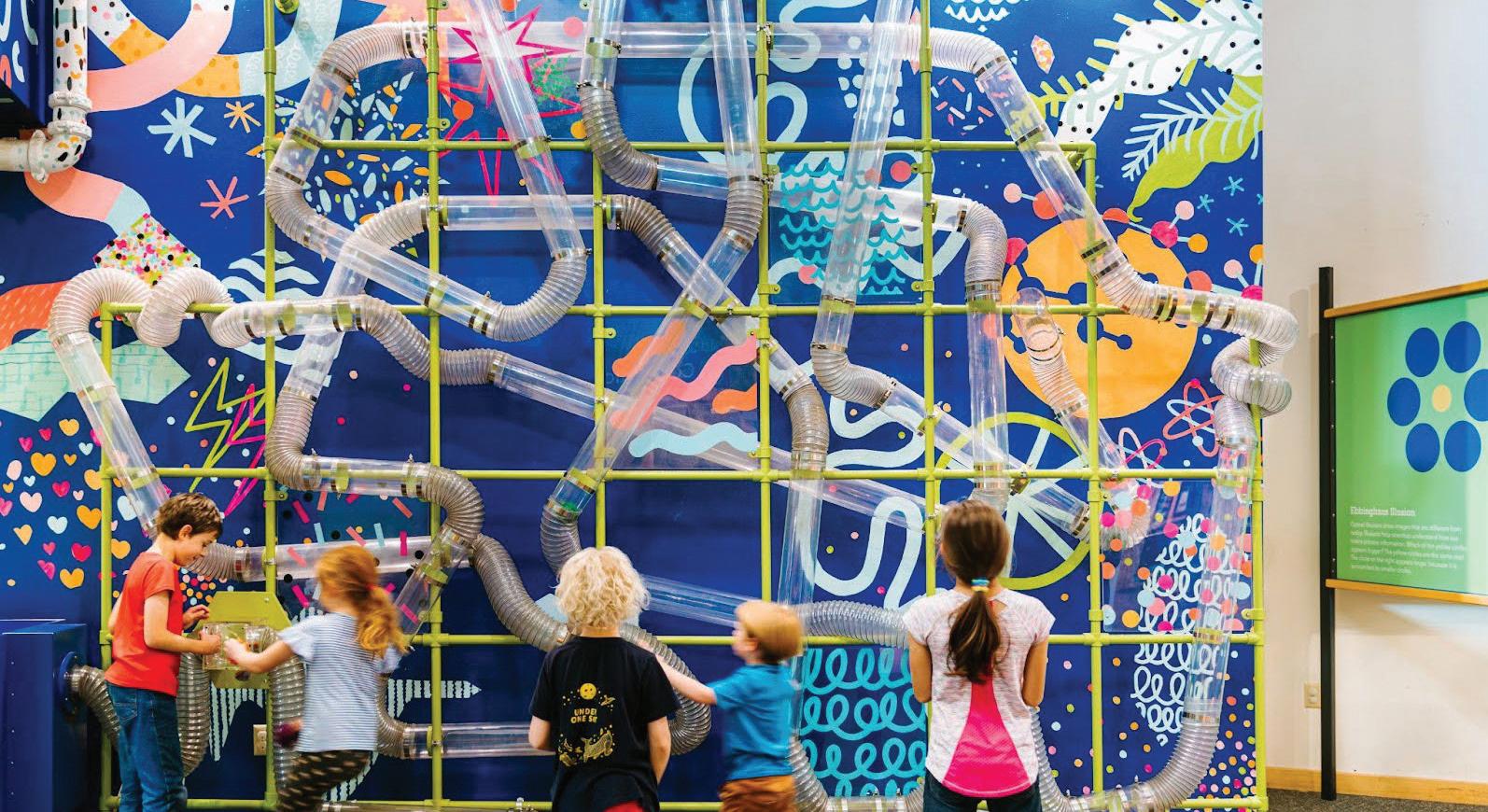
Inside the Sciencenter, the expected signals of modern life are strangely absent. There are no screens plastered to hands or no silent lines of passive observers. Instead, the air is filled with the clink and clank of a two-story kinetic ball machine and bursts of surprise and laughter. Hands reach — not for phones — but for rubber ducks, pipes and, if the visitor is brave enough, the soft, smooth scales of a rainbow boa.
Here, learning emerges not through instruction, but through interaction.
Sierra Coathup, the Sciencenter’s volunteer program manager, recalls a moment she witnessed recently in the Saltonstall Animal Room, a vivarium housing amphibians, reptiles and fish from diverse bioclimates around the world.
“I overheard a child tell their parents, ‘See, I told you it was real!’” Coathup said, recounting how she watched the child race toward the axolotl tank. “And the mom went, ‘Okay, you’re so right.’ It was funny to watch them learn together — but this time, the kid was the teacher.”
Moments like this are carefully constructed. For decades, the Sciencenter has designed its exhibition to follow its founding mission, to “cultivate an engaged communi-
ty of curious, collaborative, critical thinkers,” according to its website.
Spaces that allow curiosity to unfold through hands-on exploration are becoming increasingly rare. As students move through formal education, science often shifts from exploration to memorization.
“Until the end of middle school, science is, on average, everybody’s favorite subject,” said Prof. Chris Schaffer, biomedical engineering.
Curiosity is a natural human trait, Schaffer explained, but traditional secondary school classrooms often stifle that spark, reframing science as a collection of static facts to be memorized.
“It was funny to watch them learn together — but this time, the kid was the teacher.”
Sierra Coathup
For Schaffer, this loss of interest underscores the importance of interactive environments that sustain curiosity through active exploration.
When asked about why the Sciencenter’s approach is salient and effective, Schaffer responded with, “It really is an exploratory process for discovery that keeps them [the visitors] engaged in sci-
ence.”
Long-term research supports his point. A 33-year study that followed a national sample of Generation X individuals from middle school to their 40s found that early life experiences, particularly hands-on activities such as science laboratory work, had a powerful influence in shaping participants’ lifelong interests and engagement with science.
Creating those moments requires far more than putting colorful exhibits on the floor. At the Sciencenter, curiosity is “engineered” through years of audience research, prototyping and repeated testing.
While an exhibit might only grasp a visitor’s attention for a few
seconds, it represents the culmination of a meticulous five-year cycle of evaluating, surveying, prototyping and refining. This rigorous process is visible in the development of Bridges to Bioengineering, a collaborative project involving faculty and students from Cornell’s Meinig School of Biomedical Engineering, including Schaffer, and the spectRUM Discovery Area in Missoula, Montana.
To continue reading this article, please visit www.cornellsun.com.
By LEAH CHANG Sun Staff Writer
Crossing between the spheres of science and politics, former United States Congressman Rush Holt brought his breadth of experience to a talk and panel discussion in Goldwin Smith Hall on Thursday. Holt reflected on how the current state of science in the U.S. came to be and outlined possibilities for where it can head in the future.
The event followed smaller chats Holt had with students at Alice Cook House and Hans Bethe House earlier in the week. Part of the Sevin Seminar on American Political Values series, the talk was sponsored by the
Cornell Brooks School of Public Policy’s Center on Global Democracy, the West Campus House System, the Committee on the Future of the American University and the Carl Sagan Institute.
Building on his background as a physicist, teacher and researcher, Holt worked in the Nuclear and Scientific Division Office of Strategic Forces for the U.S. Department of State from 1987 to 1989, and became the assistant director of the Princeton Plasma Physics Laboratory from 1989 to 1997 before being elected to Congress.
After his time representing New Jersey’s 12th Congressional District

from 1999 to 2015, he led the American Association for the Advancement of Science as the CEO-Emeritus until he retired in 2019.
A diverse group of Cornell professors joined Holt as panelists, asking questions and using their expertise to offer potential solutions to improving connections with the public. This included Vice Provost for Engagement and Land-Grant Affairs Prof. Katherine McComas, communication, Prof. Lisa Kaltenegger, astrophysics, the director of the Carl Sagan Institute and Prof. Christine Smart, plant science, the Goichman family director of AgriTech, an interdisciplinary hub at the forefront of innovation in food and agriculture industries through research, education, and leading outreach efforts for New York State and beyond.
The panel discussion emphasized creating close relationships between experts and the public through shared values, distinguishing between political and scientific issues and embracing humility to be a trusted resource in the community.
“We have to do the hard work of being on the ground and forming relationships… [scientists] haven’t worked closely enough with the people to understand [their] challenges,” McComas said.
Throughout the talk, Holt highlighted the gap between scientific experts and general audiences, recognizing how essential strong communication methods are in promoting a thriving society.
“Science and democracy reinforce each other,” Holt said.
Holt recalled how at the end of World War II, American engineer and inventor Vannevar Bush introduced the concept that “science is the proper concern of the government” and that research should culminate in outputs that can be delivered to citizens. This defined the American landscape for scientific enterprise in the following century, according to Holt.
“The real crisis of science is not in the funding [or] in the survival of research grants: it is that most people do not feel that science is for them.”
Rush Holt
Holt also invoked former Cornell astrophysicist and science communicator Carl Sagan in spotlighting that the process of science, rather than its mere products, is the path for reliable knowledge.
“You can seek the evidence, you can reduce the bias, you can seek verification of the claims, you can start the process and change minds,” Holt said.
To continue reading this article, please visit www.cornellsun.com.


By Jeanelle Wu
Jeanelle Wu is a sophomore in the Dyson School of Applied Economics and Management. She can be reached at jkw98@cornell.edu
Ithacais a cold, lonesome place. I may believe this because I’m from the sunny state of California, but regardless, that was the mindset I had traveling 3,000 miles from home to Cornell. Entering as a sophomore transfer student undoubtedly made things worse. I left my previous school just as I had gotten comfortable. Not to mention, making new friends seems to get more difficult with age. I can acknowledge that this was my decision to make, but the transition was more difficult that I imagined it would be. I didn’t know how to find my place here — all in all, I had a very rocky start.
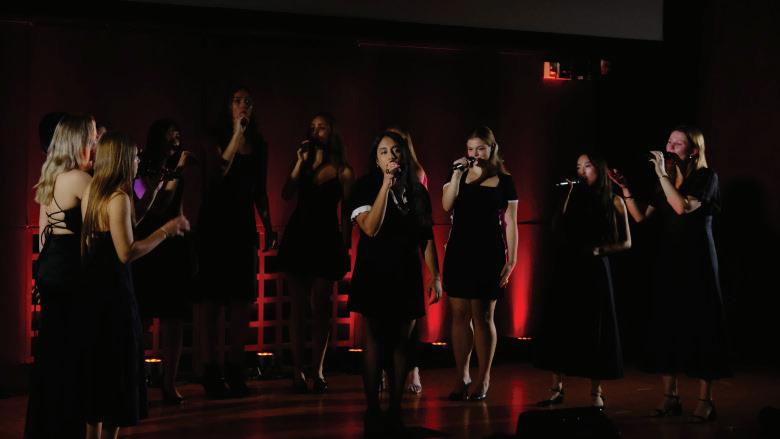
Anyways, you might be wondering if I planned on transferring back … The thought crossed my mind many times, so much so that I planned to, but I joined The Callbaxx — an a cappella group on campus — instead. Now I’m not going to tell you that joining an a cappella group will magically solve all your problems, but it definitely fixed most of mine. For those who have never watched Pitch Perfect, a cappella is singing without instrumental accompaniment. Also, go watch Pitch Perfect, because if I don’t end up convincing you to join an a cappella group, this movie just might.
Ihave always loved singing. Growing up I would sing everywhere I went: the car, in the kitchen and almost anywhere I could be loud without getting in trouble. Coming to college, I quickly realized that singing in public was not as widely received. It’s very difficult to sing freely in the shower when someone is in the shower right next to you. Also, if you have a roommate or a dorm with thin walls (so basically any dorm on campus), it may not be deemed socially acceptable to break out into song whenever you feel like it. Personally, I find these constraints suffocating, but with a cappella I now have a space to sing without judgement.
At the end of every semester, each a cappella group has a concert. All semester, we learn a setlist and practice in preparation for the concert. It is impossible to describe the feeling of having a semester’s worth of hard work pay off and getting to share something you love, like singing, with people you care about. Rehearsal is two hours a day, three times a week and in the weeks just before the concert, rehearsal hours can be up to 16 hours per week. Although it sounds like a lot, the time flies by when you are doing something you are passion-
ate about with others who are equally as passionate. Not only did this give me something to fill my time with, but it was a good distraction from academic stress and missing home. Suddenly, I went from feeling like I didn’t have anyone, to feeling privileged to have a supportive group of girls to surround myself with.
As cheesy as this sounds, the people are truly the best part. I am incredibly lucky to have joined a female a cappella group that grants me a group of supportive, unproblematic friends. It doesn’t matter where we come from or what we are studying; when we are together, the only thing that matters is that we like to sing. My favorite memories with these girls include watching musicals, going out for hibachi, doing Secret Santa and more. Especially in a time when I felt out of place at Cornell, it was reassuring to have an understanding that we were always there for each other. I know it is common for college to be an uncertain or lonely time in someone’s life. This can still be the case for me, but my a cappella group makes me feel less alone and gives me something to always be certain about.
Through the hours we spend singing together, learning choreography and hanging out at socials, we formed a connection and a sense of comfort with one another. I believe that this bond is so deep not just because we spend a lot of time together, but because we’ve learned to trust each other when singing. There is an incredible amount of team work required in making sure your voice does not stick out and that everyone blends together. Every part and every singer is vital to the group. We all sound different and can have unique voices, yet we come together and sound like one. There is a high level of trust that comes with that, because if one person is off, everyone can feel it. Since it is challenging to find people you can trust when you come to a new place, I am grateful that I was able to through a shared love for music.
A cappella has taught me confidence, trust and teamwork. But more notably, it has given me a safe space, a support system and something to look forward to every week. Don’t stop looking for that community that will let you be yourself and explore your passions publicly, and unconditionally. Perhaps that means auditioning for an a cappella group next semester. Just audition: you have nothing to lose and so much to gain.
By Melanie Delfosse
Melanie Defosse is a sophomore in the College of Human Ecology. She can be reached at md2262@cornell.edu.
There’sone freshman year piece of advice you’ve probably heard: explore off campus. But with bal- ancing classes, club recruitment and try- ing to form new friendships, finding places off campus can take low priority. It can be hard to know what there is to do in Ithaca –– though to figure that out, you just need to find what’s interesting to you. An easy way to do this is through clubs.
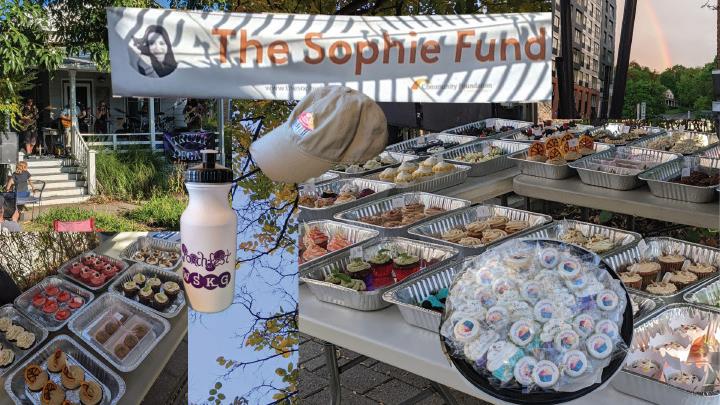
One of my first times going off campus was by volunteering with the Pre-wProfessional Association Toward Careers in Health , through which I volunteered at Ithaca’s annual cupcake competition my first fall semester. Not only did I get to try some delicious cup- cakes, but I also learned about various businesses and non-profits around Ithaca.
An easy place to find volunteering opportunities is (of course) ClubFest, where many of the clubs will promote or even require volunteering as a core pillar of membership. I reached out to Cornell’s PATCH and Cornell Hunger Relief Program to ask about volunteer- ing, and like a variety of non-profits, there are lots of clubs promoting all dif- ferent types of volunteering.
Lily Ehsan ’27, one of PATCH’s community service co-chairs, said that PATCH tries to make volunteering “sim- ple, flexible and engaging, inspir[ing] students to get involved out of genuine interest rather than obligation.” They offer many different opportunities from blood drives and writing letters to hos- pitals, to their sub-committees like the Science Kits and Giggle Buddies pro- grams. This allows students to “choose projects that reflect their personal pas- sions while addressing different commu- nity needs. For example, working with Loaves and Fishes connects students with food insecurity issues, while Science Kits lets members inspire curiosity in under- privileged students” according to Ehsan.
CHRP similarly emphasized volunteer- ing in Ithaca. As Shalini Ramakrishnan ’27, CHRP’s outreach chair, put it, “engaging with the Ithaca community is a meaningful part of being an active and informed community member.” She added that they prioritize partnerships with local hunger relief organizations who “are eager to have the help of stu- dents in addressing food insecurity.”
Both clubs also encourage group vol- unteering. Ramakrishnan said it’s “a fun way to make new friends while also helping the community,” and that any hurdles of transportation are “definitely worth it to get more students involved.”
Ehsan noted similar motivators like “build[ing] community among PATCH members while allowing us to accomplish more together,” and making “service feel fun and collaborative rather than like an individual task.”
As for how they volunteer, Olivia Kornstein ’26, CHRP’s president added that they focus on “local food pantries in Ithaca, such as Salvation Army and Loaves and Fishes … [and] food packing events on campus for community mem- bers who are experiencing food insecu- rity.” In addition, CHRP hosts the Big
Red Food Drive at the end of each school year, and also has G-Body meetings that focus on specific advocacy or volunteer efforts.
PATCH, being a broad pre-health club, has a variety of volunteer oppor- tunities. This benefits the Ithaca community and the student volunteers as well. Ehsan pointed out that “our goal with PATCH’s community service is to create a supportive environment where students can grow as leaders while mak- ing a positive impact beyond campus.” In addition, their sub-groups, which require an application and hold weekly meetings, “ensure the community receives focused and consistent support” and promote the formation of “long-lasting relationships with the people they work with” accord- ing to However,Ehsan.it’s also possible to volunteer without a club. While you’ll certainly see groups from Cornell and Ithaca College, volunteering independently or casually with friends is easy! Porchfest this year made volunteering super easy –– a quick Google Form with my availability was all I needed to sign up.
For me, these volunteering opportu- nities were so convenient and the orga- nizations worked with my schedule and time restrictions. If you find yourself with a busy schedule (like most Cornell students), this can be an accessible way to get more involved in the community in a way that works for you.
If you’re looking for ideas, any fun events you’ve gone to or heard about likely take volunteers — Ithaca has a variety of festivals throughout the year, and volunteers help run almost all of them. I like finding them from weekly dorm emails or posters, Visit Ithaca or even from my professors promoting events. As an added bonus for volunteering at these events, you’ll usually get some sort of benefit ranging from free t-shirts, water bottles or even a discount on food at the event.
Beyond these one-day events, many non-profit and charity organizations around Ithaca need volunteers. One of the most well-known is Loaves and Fishes, a community kitchen that gives out meals in Downtown Ithaca. Other local spots that you may have visited include the Alley Cat Cafe and Tompkins County Public Library, along with Finger Lakes ReUse, Sciencenter and Free Science Workshop. With all of these organiza- tions and volunteer opportunities, you can surely find something that aligns with your interests and schedule.
If you’re not already doing so, it can be I’ve enjoyed my experiences at com- munity events so far and they have only motivated me to volunteer more. Helping and getting involved with the local com- munity and meeting and spending time with other people has been a fulfilling aspect of my college experience. I hope this convinces you to give volunteering a try –– and if it doesn’t, maybe the free water bottle will. In either case, take the advice and make time to get off campus! Cornell is beautiful, but so is the rest of Ithaca — go see it, support it and give back to our community.
By VIVIENNE CIERSKI Sun Staff Writer
Cornell’s top administrators attended a University Assembly meeting on Tuesday, discussing the University’s handling of free expression, campus safety and long-term financial planning.
The UA. is composed of appointed and elected representatives from Cornell’s faculty, staff, undergraduate and graduate and professional student communities. It serves as a shared governance body that facilitates communication between the broader University community and the administration.
President Michael Kotlikoff framed the meeting as a part of Cornell’s commitment to a shared governance process. The meeting covered protest activity, the ongoing Student Code of Conduct Review, support for international students and the University’s “Resilient Cornell” financial initiative.
President Kotlikoff, Provost Kavita Bala and Vice President for University Relations Kyle Kimball attended the session, answering pre-submitted questions and responding to follow-ups from shared governance representatives.
Kotlikoff opened by emphasizing that such appearances are central to administrative accountability, stating, “I see these visits as a key part of our responsibility to collaborate in a respectful and productive manner.”
Responding to questions about
campus climate, Kotlikoff referenced the ongoing review of the Student Code of Conduct.
“We have a thoughtful process underway that will report out recommendations on the Student Campus Code,” Kotlikoff said. “Then we will have feedback from the assemblies and the campus on that report.”
During discussion of the code review, Kotlikoff also expressed concern about harassment directed at University officials. He cited “online harassment, targeting, misinformation and intimidation, both online and in person,” aimed at administrators and faculty who are working on the review.
This follows a December Student Assembly referendum opposing the University’s overhaul of the disciplinary process, which passed by wide margins.
In the vote, 93.5% and 91.7% of students who voted supported two ballot measures, which called for making Cornell’s judicial system independent of University administration and reinstating the campus-wide code of conduct, respectively.
Kotlikoff stressed that disagreement is appropriate but must remain respectful.
Expressing disagreement “is everyone’s right and firmly within the spirit of shared governance,” Kotlikoff said. “But shared governance and this university are built on a foundation of shared values
that demand we treat each other, whatever our differences, with dignity and respect.”
Kotlikoff also addressed the wave of demonstrations that have occurred this month — including two anti-Immigration Customs and Enforcement protests, the student demonstration at the Anduril career event and controversy surrounding a visit by an Israeli Defense Forces soldier on Feb. 2.
“I am most pleased that, unlike last year, campus protestors have observed the thoughtfully crafted expressive activity guidelines, and protests have occurred in a way that does not infringe on the rights of others,” he said.
Kotlikoff and Bala also discussed Resilient Cornell, which is focused on strategic cost reductions across the University, but were careful to distinguish the initiative from recent federal funding concerns, noting the University had already been planning financially prior to what he described as a “severe threat from the federal government on our funding.” He emphasized that the efforts are not solely a reaction to federal pressures.
U.A. members also pressed administrators about immigration concerns affecting international students on campus.
To continue reading this article, please visit cornellsun.com.
Vivienne Cierski can be reached at vcierski@cornellsun.com.

Continued from page 1
The Cornell administration first discussed increased surveillance in May 2025, when they increased their administrative control over centralized surveillance systems under Policy 8.1, 1.8.5.
During a meeting with Cornell Hillel parents in October 2024, Ryan Lombardi, vice president of student and campus life, explained that the implementation of surveillance cameras in new building renovation was used to identify pro-Palestinian protesters who engaged in vandalism.
CUPD has actively requested data from routers on campus to investigate and arrest crime suspects, specifically student activists, according to the Ithaca Voice.
For instance, In January 2025, CUPD officers were able to access data from routers on campus to pinpoint a student activist who had vandalized the A.D. White Statue with pro-Palestinian graffiti.
When asked how Flock camera data is currently being used by the police department, the University spokesperson pointed toward a recent University statement on emergency preparedness and emphasized the following excerpt from it: “We value an open, accessible Ithaca campus environment and must balance that culture with tools that enhance our public safety teams’ ability to respond quickly and effectively to protect the Cornell community during emergencies.”
In response to how the University administration could move forward to ensure ethical usage of Flock cameras, Palansky and Morris expressed hope that the University would acknowledge the risks that Flock posed on students and implement subsequent reforms.
Palansky ultimately hopes that the University voices concern toward Flock cameras as a risk to the privacy and security of students and Ithaca community members.
“I think that extra nudge towards that popular support would be quite helpful at this point,” Palansky said.
Morris stated that if the cameras are unable to be removed, the next best option would be to allow the student body to decide how the information on Flock cameras should be shared.
The surrounding Ithaca community protested the use of Flock cameras in the city in early February. On Feb. 4, hundreds of protesters gathered at Ithaca City Hall demanding that the city’s Flock safety cameras be turned off.
The rally, initiated by local activist group Flock Off Ithaca, called for the removal of Flock Safety cameras in Ithaca. The cameras were approved for funding by the Ithaca’s Common Council in 2023, allowing for 22 automatic license plate readers to be constructed across the city, which the Ithaca Police Department
currently operates. Ithaca’s sanctuary city status, first adopted in 2017 and renewed in February 2025, limits Ithaca Police Department officers’ cooperation with ICE and protects undocumented immigrants from being asked about their immigration status by city employees, excluding select circumstances. The order has since been updated in 2022 and 2023 to extend these protections to inquiries regarding abortion and gender-affirming care respectively.
In response to privacy and safety concerns, IPD published a Flock Safety Transparency Portal, which outlines Flock Safety’s purpose in capturing “objective evidence without compromising on individual privacy.” Additionally, IPD reports that facial recognition, gender and race are not detected by the cameras and that the cameras are prohibited from aiding in immigration enforcement.
Four members of the Tompkins County Legislature, including Amanda Champion (D-Ithaca), Michael Lane (D-Dryden), Veronica Pillar (D-Ithaca) and Shawna Black (D-Ithaca), opposed a New York State gun-involved violence elimination grant that would sponsor the continuation of Flock Safety cameras in October. In a statement to The Sun in November, Black wrote that “I did not support [funding] Flock cameras and I believe there are other ways for us to use the funding.”
Ithaca Mayor Robert Cantelmo told The Ithaca Times that he was “alarmed” by the stories about loopholes within the Flock system, and that he would like to hear from the Flock Safety administrators in the future on the implementation of new safety measures. However, several members of Flock Off Ithaca have expressed concern about the use of the data by external sources.
“Even if Tompkins County is not sharing data with ICE, we are publishing data that others might share with ICE,” Flock Off Ithaca member Eileen Driscoll wrote in a Facebook post on Feb. 3. Palansky argued that the police department is not sharing proper evidence behind their searches, as the IPD Flock Safety Transparency Portal only lists the number of vehicles they’ve detected in the last 30 days, but not how the cameras are specifically being used for police investigation.
“The [portal] has this section that says the recent success stories — it’s meant to say ‘here are all the ways that we’ve caught a criminal in your community in the last month’ but there’s nothing there,” Palansky said. “They’ve tracked me 130,000 times, and it does not help. I think that basically speaks for itself.”
Joshua Cohen can be reached at jmc746@cornell.edu.


By ELIZABETH CHOW Sun Contributor
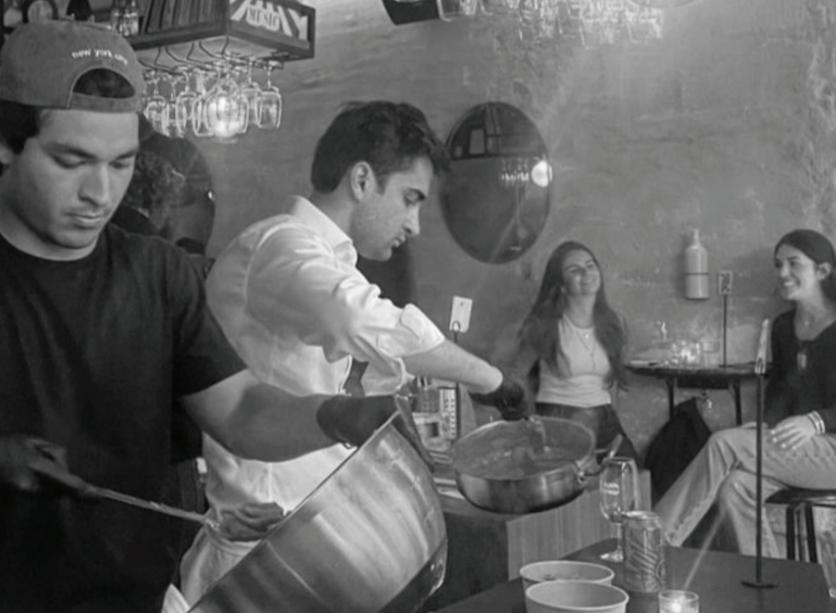
Feb. 26 — Loud chatter blends with the sound of champagne fizz as bottles are opened and glasses are filled. Steak sizzles in the background, filling the room with its rich aroma. This is not a restaurant. This is a typical dinner party hosted by Maximo Mander ’26 at his Collegetown apartment.
Mander’s dinners with different friends and guests, where he cooks and presents elaborate dishes, have joined his recipe videos on his Instagram and TikTok accounts, where he has amassed over 150,000 followers.
Mander’s most viral Instagram videos have gained millions of views.
One of his videos that shares a montage from a dinner party and features Mander preparing the dinner has amassed over 23 million views. Views on his how-to recipe videos have also reached the millions, with some boasting upwards of 7 million views.
After visiting Sardinia, an island off the coast of Italy, Mander wanted to replicate a Sardinian lobster dish at his apartment in Collegetown. This led to one of his first viral videos.
“I said to my friends, ‘You know what? Let’s film [the cooking process],’” he said. “And the video did really well.”
Travel has heavily influenced Mander’s cooking interests. Mander said his inspiration for cooking came from his experiences traveling across six continents.
“With every new culture comes a new type of food, and I was able to visit a lot of high-end, really good places with amazing food and amazing service,” Mander said.
In his sophomore summer, Mander worked at Arnolfo, a Michelin star restaurant in Tuscany, where he learned to make fresh pasta.
The pasta-making process is extremely particular, Mander explained. For instance, fresh pasta should be
cooked in two minutes — no more, no less — ensuring that the pasta maintains its starch and the sauce clings to the pasta, Mander said.
Learning to make pasta in Tuscany sparked Mander’s business idea, he said.
“‘What if I could [make pasta] in a fast, casual way, kind of like Shake Shack burgers?’” Mander had asked himself. “There’s not a place for pasta that does that in the U.S.”
In March 2025, Mander started Pronti Pasta, a pop-up, casual pasta catering business. Partnering with restaurants, bars and cafes in cities like New York City and Miami, Mander curates several pasta dishes with a variety of sauces.
He hosted the business’ first event at the Tres Leches bar in Collegetown early in March 2025, according to an Instagram post from the business’ account. During the event, he served homemade fresh rigatoni with two sauces and tiramisu.
“I have to spend like eight hours a night before [an event] cutting the pasta,” Mander said. “So it has to be 100% fresh, and then we pair it with pesto sauce, Comodoro sauce, Bolognese and truffle sauce.”
Currently, Mander only hosts dinner parties and pasta events, but he hopes to open a restaurant after he graduates from Cornell this spring, he said.
“I want to stop doing it monthly and [start] doing it like every day,” Mander said, adding that he wanted to “get a bar or a place in Miami that would allow me to do this for like three or four months to test it out and see how it goes.”
Mander’s social media presence, which comprises Cornell students, exchange students and more, contributed to his success, he said. He added that he hopes his online reach will help with his future restaurant goals.
“I did think that becoming a food influencer would be a good way for my restaurants to be packed,” Mander said.

However, Mander’s dinner parties began long before his social media fame. The parties have always served as casual gatherings for Mander and his friends.
At times, unfamiliar people ask to be invited to his dinners, he said, and he believes they are just trying to be a part of the experiences they observed through social media.
“The hardest thing about social media is there’s a bit of superficiality to it,” Mander said. “You lose that authenticity.”
Still, Mander believes that genuine interactions contribute to a meaningful shared experience, something he aims to curate at both his dinners and events.
“What people remember the most is the way you made them feel [at] the dinner party and the fact that you’re creating a memory,” Mander said.
By
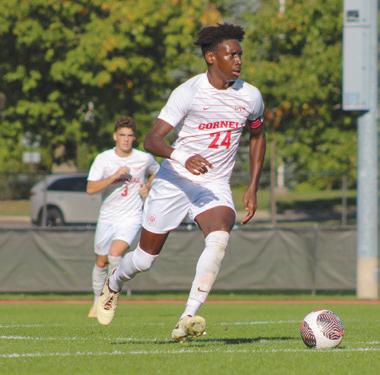
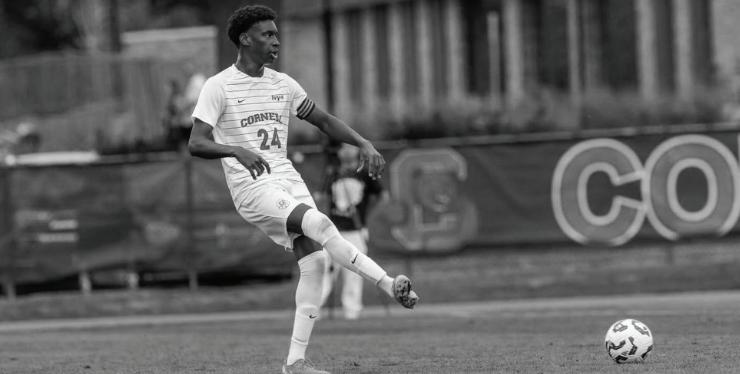
March 1 — Charlotte FC recently announced that it signed Andrew Johnson ’25 to a first-team contract. Johnson’s contract will see him signed for the entirety of the 2026 season, with a club option for future seasons.
Johnson was drafted 47th overall by Charlotte during the 2025 Major League Soccer SuperDraft ahead of his senior season with the Red. During the 2025 SuperDraft, Johnson was drafted alongside sophomore Alex Harris and senior Alioune Ka.
Johnson will be the fourth Red alum to play in the MLS, behind only David Mahoney ’05 and Emeka Eneli ’23 and Harris.
Before his time with the Red, Johnson played for the Philadelphia Union Academy, a youth developmental team for the Philadelphia Union of the MLS. After five years with the Union, Johnson made the choice to join MLS NEXT team, FC Delco Academy. MLS NEXT is the top-ranked amateur soccer platform in the United States.
Since beginning his soccer career at
Cornell, Johnson has been a staple of the Red’s backline, starting in 17 matches and being named an All-Ivy Honorable Mention his freshman year. Most recently during his senior year, as the Red’s defensive captain, he was a unanimous All-Ivy selection and led the team to one of the tenth best goal differentials in the country and the highest in the Ivy League.
After four years playing for the Red, Johnson acknowledged how his time at Cornell prepared him for the jump to the MLS.
“I am so grateful for the trust [the coaches] put in me, the amount of work they put in year in and year out,” Johnson said. “I am super grateful for my teammates as well, for how much they pushed me and how much they wanted me to succeed.”
The impact Johnson had on the pitch during his career at Cornell is undeniable. Multiple NCAA tournament runs demonstrate how successful Johnson’s time with the Red was.
Johnson highlighted the Red’s 2022 NCAA tournament victory over No. 6 Maryland as his favorite Red memory.
“It is definitely beating Maryland
in the tournament my freshman year,” Johnson said. “It felt like the entire school was there. … We went into that game just thinking some people are still doubting us, even though we’re higher-ranked than this team. So we really had a chip on our shoulder, and winning that game was one of the coolest experiences.”
In addition to playing for the Red, Johnson has also represented Saint Vincent and the Grenadines’ national team, already earning six caps for the team. While Johnson was born in the United States, most of his family is from Saint Vincent, including his parents. Johnson’s father, Elton Johnson, also represented the country on the international level.
His strong connection to Saint Vincent alongside the hiring of an experienced head coach, who previously coached in the MLS, bolstered Johnson’s interest in representing Saint Vincent on the national stage.
“I originally went for a camp and played a couple friendlies against Grenada,” Johnson said. “I did well in those and then just a few weeks later, there was the Gold Cup qualifying
match against Jamaica, which was probably the coolest experience of my life.”
Signing a professional contract to play in the MLS for Charlotte FC represented the achievement of a lifelong dream for Johnson, but he does not plan on slowing down anytime soon.
“I have a really good support system, they are reminding me this is a great achievement,” Johnson said. “Obviously, you do not want to get ahead of yourself, because it’s really only the beginning of hopefully a long career. If you get too caught up in the excitement, you can fall behind a little by taking your foot off the gas.”
Johnson’s focus will now be on the 2026 MLS season, which began on Feb. 1. Charlotte will be hoping to build on its success from last season, which saw the team finish fourth in the Eastern Conference but fall short in the playoffs. Johnson will have an entire season to carve out his place in the MLS, where he will have the opportunity to prove why he is one of the best football players on the planet.
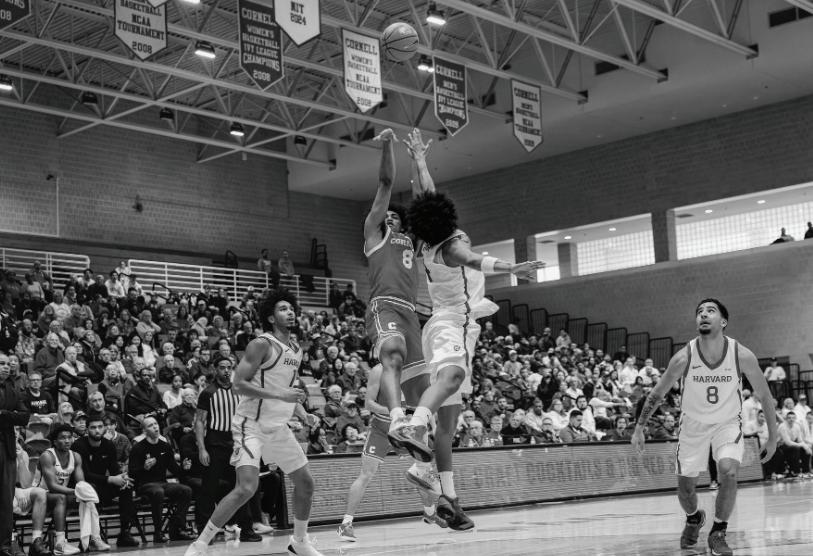
By AUSTIN CURTIS Sun Staff Writer
Feb. 27 — Two Ivy League programs. One family.
On Feb. 21 at Helen Newman Arena, the Hinton parents sat in the stands and applauded every good play — whether it came from Cornell or Harvard. On the court, their sons were doing what they’ve done since they were four and six years old, shooting on a Fisher-Price basketball hoop in their living room: competing.
Senior guard Adam Hinton and his younger brother Robert, a sophomore guard at Harvard, grew up in Studio City, California. Both starred at Harvard-Westlake School, where they were teammates for two seasons. The brothers are of Taiwanese-American descent and have represented Chinese Taipei’s national program together.
Now, instead of passing to each other, they’re guarding one another in Ivy League play.
“It’s definitely a dream come true,” Adam told The Sun. “We’re always going to be huge supporters of each other and see how we can help each other.”
For Robert, the reality still feels surreal.
“It’s just an awesome feeling knowing that something we dreamed about growing up, playing against each other in college, is really happening,” Robert wrote to the Sun.
Robert Hinton Sr. and Tsang Chen-Cho, the brothers’ parents, watched that dream take shape long before either son stepped on an Ivy League floor.
“Both stayed the course. Both dreamt of playing Ivy League basketball,” their parents wrote in a statement to the Sun. “Both knew how incredibly difficult it would be to play well in high school/AAU, get great grades, test high, get noticed, get recruited, get offered and get admitted to such world-renowned universities and basketball programs.”
The family’s Ivy roots run deeper still. Their father, Robert Sr., played quarterback at Princeton before attending Harvard Law School. Watching his sons choose different Ivy League schools has brought a different kind of rivalry into the household.
“I love it,” Robert Sr. wrote to The Sun. “Each has chosen their own path and I truly believe that each has found the perfect fit for their different personalities, chosen areas of study, styles of play and future goals. The best part is that I get to enjoy all of the Ivy League rivalries and jokes. At the end of the day, the Ancient Eight is one beautiful family and we are so proud that they are a part of it.”
The respect between the brothers shows in how they describe each other’s games. Adam called Robert’s mid-range game “elite.” Robert said that at times Adam is “unguardable.”
Still, respect doesn’t stop competition.
The brothers have faced off twice this season,
and the results have swung both ways.
In their first meeting Jan. 24 in Cambridge, Cornell (12-12, 5-6 Ivy) erased a 16-point deficit to beat Harvard (15-10, 8-3 Ivy) in an 86-79 affair. Adam scored a game-high 27 points, while Robert added a team-leading 19 for the Crimson.
Both brothers led their respective teams in scoring.
Nearly a month later in Ithaca, Harvard flipped the script. On Feb. 21, Robert got the upper hand on his brother, posting 16 points to Adam’s two, and the Crimson left with a 73–54 win.
“To be able to play each other at our respective Ivy League schools in Division I basketball, it’s just such a blessing, and I will never take the minutes I share on the court with my brother for granted,” Robert wrote to The Sun. “To be able to compete against my big brother and best friend, I just feel insanely lucky.”
The latest matchup in Ithaca marked the final scheduled meeting between the two squads this season. The brothers could face off one more time if both teams earn spots in Ivy Madness and meet again in the conference tournament.
For their parents, the wins and losses are secondary.
“Lots of wonderful, warm memories,” their parents wrote to The Sun. “Lots of cherished moments. Countless telling and retelling of stories to their future children, grandchildren and family. Oh, and lots of embellishments. They will be in their eighties and still trash talking to each other in rocking chairs.”
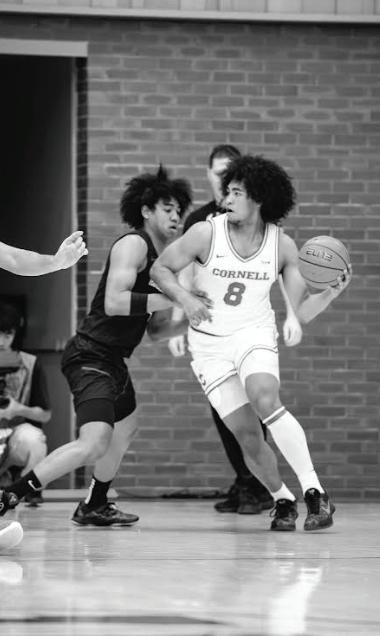
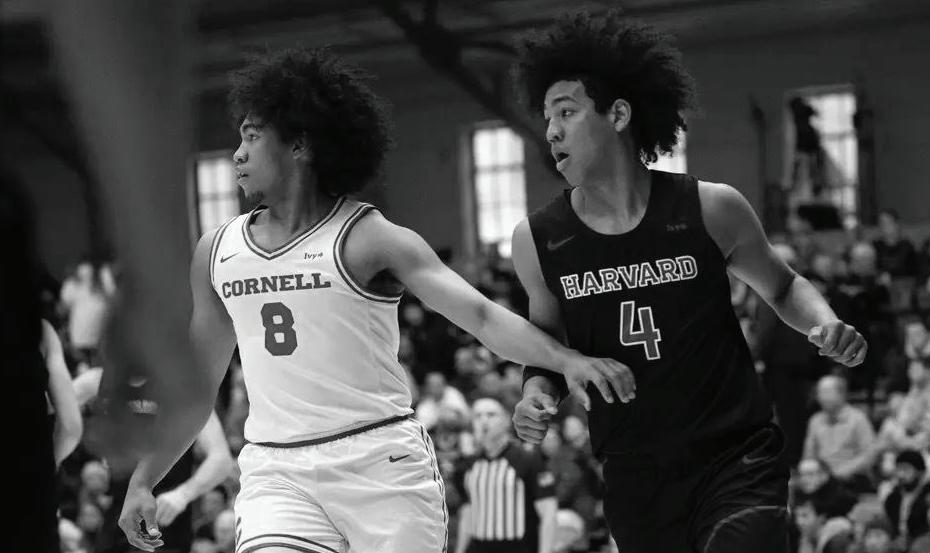
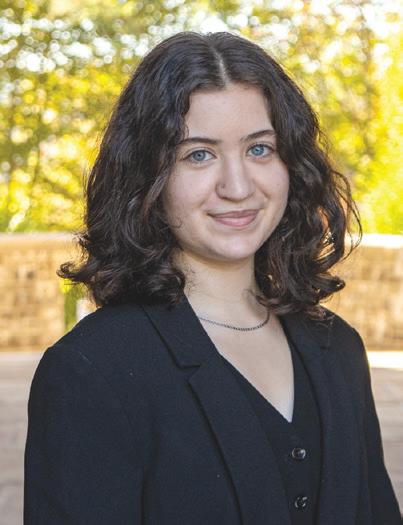

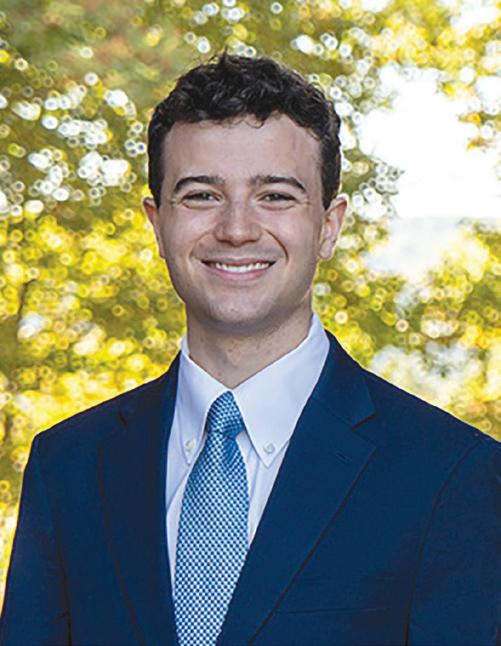
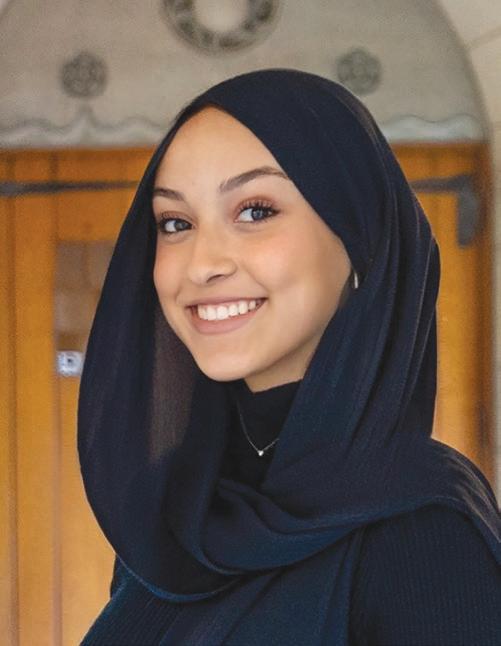
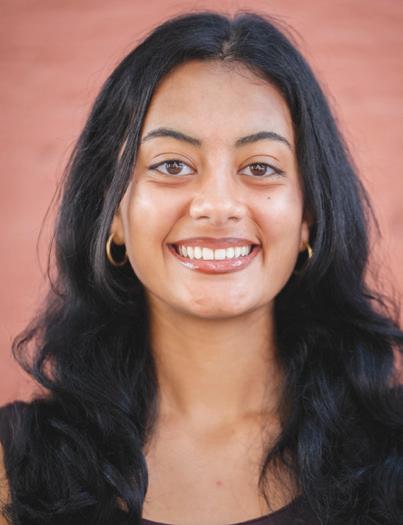
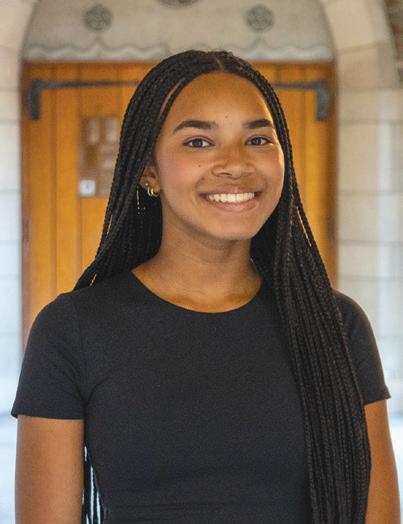
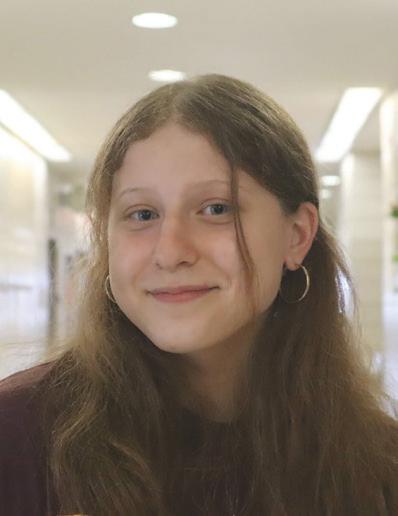
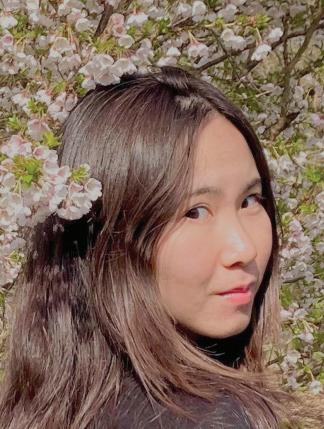
ALEX LIEW HR Manager
VERA SUN Business Manager
SOPHIA TORRES Advertising/Marketing Manager
CEREESE Q USBA News Editor
JEREMIAH JUNG Asst. News Editor
K AITLIN CHUNG Science Editor
ALLISON HECHT Newsletter Editor
SYDNEY LEVINTON Arts & Culture Editor
RENA GEULA Layout Editor
MATTHEW K ORNICZK Y Asst. Photography Editor
MATTHEW LEONARD Asst. Sports Editor
CHRISTOPHER WALK ER Games Editor
By MIKAYLA TETTEH-MARTEY Arts & Culture Writer
Once upon a time, film began in the theater. From marquee to end credits, the experience was confined to a single darkened room, where story and spectator met in silence. Lights down, trailers over, the studio logo flickering across the screen. In today’s media landscape, that moment can feel more like a midpoint than a beginning. Long before your ticket is scanned, you have likely already consumed hours of cast interviews, red carpet footage, behind-the-scenes clips and viral moments circulating on social media. The press tour is no longer just a marketing strategy; it is a performance in its own right. Increasingly, our impressions of a film, our expectations, attachments and even criticisms, are formed long before we ever step foot in the theater. What used to feel like anticipation now feels more like conditioning. We arrive not as blank slates, but as audiences already coached on how to watch.
Take Barbie, for example. Months before its official release, pink carpets stretched across global premieres as attendees embraced the Barbie aesthetic. Cast interviews flooded TikTok with conversations about feminism, identity and reinvention. Margot Robbie’s themed outfits were not just fashion statements. By recreating vintage Barbie doll looks, beautifully styled by Andrew Mukamal, she extended the world of Barbie beyond the screen and into everyday culture. By the time audiences arrived at the theater, they were not engaging with a standalone piece of art, but with a cultural
event already underway. The press tour did not simply promote the film; it amplified and reinforced its themes of femininity, irony and self-awareness.
Something similar unfolded with Dune: Part Two. Months before its premiere, interviews with Timothée Chalamet and Zendaya circulated widely, with fans clipping moments of their playful friendship and creative chemistry. Red carpet events became spectacles of their own, as attendees arrived in futuristic looks that functioned as visual world-building and echoed the film’s epic scale. Even viewers who knew little about the plot found themselves drawn into its atmosphere. Anticipation became tied not only to the narrative set on Arrakis, the vast desert planet where the story unfolds, but to the personalities bringing it to life. But unlike Barbie’s overt theatricality, Dune’s press tour worked more subtly. The chemistry clips, the laughter and the inside jokes all softened a film that is otherwise dense, political and austere. The epic felt intimate before we ever saw it. That shift matters. When a story rooted in prophecy and power is framed through charm and relatability, we enter not just ready for the spectacle, but ready to adore the people delivering it.
And then there’s Challengers, whose tour became a viral fashion spectacle. Zendaya’s looks, from tennis-ball-adorned Loewe heels in Rome to a neon tennis green Celia Kritharioti gown in Los Angeles, turned red carpets into an extension of the film’s narrative, emphasizing style, competition and spectacle. For example, at a London photocall, she wore a striped vest and matching
miniskirt from Vivienne Westwood’s Café Society collection, complete with a distinctive white feathered bustle on the back. These outfits added layers to the story’s world and shaped audience expectations before the film even premiered. But they did more than simply complement the film’s themes; they rehearsed them. By the time audiences entered the theatre, Zendaya had already performed the film’s tension and glamour in real life. The press tour felt less like promotion and more like an opening act, blurring the lines between performance and publicity.
What’s happening here is more than good marketing. It’s a carefully staged expansion of the story, one that can feel immersive and exciting, but also forces us to ask whether we’re being invited into art or into branding. Press tours now act as extensions of the film both before and after its release. They give audiences a framework for how to watch as well as a lens through which to interpret it afterward. When actors reveal the ‘real’ or ‘deeper’ meaning behind a scene, that interpretation lingers, whether positive or negative. When co-stars joke about certain moments or their on-screen chemistry, audiences take notice. Marketing materials that were once purely promotional are now part of the storytelling itself.
Soundtrack artists also play a crucial role in this expansion, and I, for one, am always quick to look up the soundtrack or related music after a film. During the Barbie press cycle, artists like Billie Eilish and Dua Lipa didn’t just contribute songs; they shaped the way audiences experienced the film. With both videos carefully directed, Dua
Lipa’s “Dance the Night” was more upbeat, highlighting fun and glamour, while Billie Eilish’s “What Was I Made For” reflected vulnerability and self-discovery. Together, they primed audiences to engage with Barbie on a deeper, more introspective level, rather than solely as a source of comedic entertainment.
In the age of Instagram Reels and 15-second TikToks, these fragments travel faster than traditional media ever could. A 30-second clip of an interview or behind-thescenes moment can rack up a million views in a matter of hours. A single line from an actor or actress can ignite controversy overnight. Audiences increasingly form parasocial bonds with casts, rooting for them on and off screen and even influencing how they interpret the story. This raises a compelling question: Has marketing become part of the narrative itself? If narrative is the world we build around characters and themes, then the answer is yes. Marketing now shapes expectations, sets the tone and even when viewers would have formed their own opinions from the film alone, post-film content can reshape, amplify or reinforce those impressions. Cinema once asked us to sit in the dark and decide for ourselves. Now it often arrives with commentary attached. The film no longer exists only on screen; it lives in every clip, outfit and interview that precedes it. By the time the lights dim, the narrative is already in motion.
Mikayla Tetteh-Martey is a member of the Class of 2027 in the College of Agriculture and Life Sciences.
By MELISSA MOON Arts & Culture Editor
As of late, I’ve been on a quest to become the most niche and artsy person I can be. A major part of that has been cultivating an esoteric and underground music taste. My criteria for niche songs? Artists with fewer than 200,000 monthly listeners on Spotify. Now, I’m aware that having hundreds of thousands of listeners means you’re not an underground artist, but this isn’t just a niche playlist, it’s also a performative one. I’m becoming one of those annoying music bros who shows you The Backseat Lovers and is shocked when you already know them because he was convinced he was the only one. With that disclaimer out of the way, here are my (not really) niche and (most definitely) performative picks, so now you can be cool (pretentious) too!
1. Borderline: “Tainted” Starting off strong with a band whose very members exemplify the vibe I’m going for here: Borderline. The first song of theirs I listened to was actually “When It’s Raining,” and I had a minor obsession with it (i.e., listened to it 34 times in one day). However, I think the vibes of “Tainted” are much more indie and chill, plus it’s their newest release, so I’m opting for this one.
2. Saint Blonde: “Coil”
I can imagine the worst man I know putting this on the CarPlay in his 2022 Toyota Camry and watching to see if I’m impressed by his music taste. It’s a very catchy song, so I might be. While I really try to be a fan of the soft, slow, just-a-man-with-a-squeaky-guitar type of music, I always end up gravitating toward something uptempo. I’m a failure in that regard.
3. FIGHTMASTER: “Bad Man”
Now here’s another song I had a major phase with in December. I’m pretty sure it was my top
song on Spotify for three weeks running. And with 61,911 monthly listeners, I can tell people I listen to FIGHTMASTER and get the blank stare of performative victory in return.
4. Kevin Burke: “Crave”
I’m a big fan of this one — introspective and melancholy with a driving beat. Kevin Burke has 15,647 monthly listeners on Spotify, making him the third most underground artist featured on this playlist.
5. Clem Turner: “Divine Loser”
This one is the kind of song that one indie guy puts on his Instagram notes when he wants someone to ask him if he’s doing okay. But also, Clem Turner has some really innovative lyrics (though admittedly emo) that the English major in me adores: “It’s balanced on my wrist / My pulse is populous / It grips my skeleton.” Doesn’t that just make you want to wear sunglasses inside and take photos on a thrifted digital camera?
6. Never Ending Fall: “Too Unrealistic”
All jokes aside, Never Ending Fall has quickly become one of my favorite bands. They came to me through the divine providence of Spotify’s Discover Weekly, and the entire American Disco album is truly wonderful. They deserve more than 216,796 monthly listeners, undoubtedly. If you listen to anyone off this playlist, let it be Never Ending Fall, and start with either this or “Bad Taste.”
7. Seeing Double: “Leah”
The harmonies in this song are actually divine. It’s perfect for a late night reading in public under a streetlamp with one wired earbud in.
8. HAFFWAY: “Whatever He’s On” HAFFWAY can do no wrong in my ears (instead of eyes, because it’s music! Get it? No? I’ll see myself out).
Also, nobody I’ve mentioned him to has known of him yet, which is a massive win.
9. Brother Bird: “sleep it off”
This song is aspirational for the playlist. An artist with 12,467 monthly listeners, a soft and sweet melody, ambiguous lyrics and simple instruments. I can feel my performative levels rising every time I listen.
10. The Tontons: “Golden”
Now this one is actually pretty underground. The Tontons have just 9,481 monthly listeners on Spotify, they don’t even have a bio and they haven’t released anything on Spotify since an EP in 2020. But it’s an amazing song, truly. Upbeat with sad lyrics, just how I like it. The listener count just means I get bragging rights for discovering it. Basically, I found the most niche artist, and everyone else can go home.
You can access the playlist at the QR code below.
‘Solar Flare’ is a weekly playlist column where Sun contributors spotlight a slice of musical taste with the campus community. It runs every Monday.

By JANE McNALLY Sun Senior Writer
The moment the whistle blew with 4:32 remaining, Lynah Rink was deafening.
Not with cheers, nor any type of applause, because No. 11 men’s hockey had not scored. Instead, boos were raining down as junior defenseman Hoyt Stanley entered the penalty box. It was hard to hear yourself think amid the clamor of a sold-out crowd in Ithaca.
In the crease for Cornell, though, it was quiet. Steady. While his teammates protested the official’s call or pushed and shoved the Clarkson skaters around them, senior goaltender Remington Keopple’s mind was blank — in a good way.
“There was a calmness to [Keopple] tonight,” said head coach Casey Jones ’90. “There was a sense. When that happens in your goal, he’s really calm, and when things are on him, I think you get a pretty confident group in front of him.”
Because Keopple — as well as the penalty-killers in front of him — was the reason Cornell was able to eke out a 2-1 win over Clarkson on Saturday. When Stanley was dealt a major penalty and game misconduct with less than five minutes remaining, Keopple and the kill stood tall to withstand a relentless Clarkson attack.
“He was in the zone,” Jones said. “You could see him picking pucks up through traffic. … He had a really good blocker save through traffic. That pad save certainly comes to mind as a game-changer.”
The save Jones referenced? No goaltender made a better stop. With just 55 seconds left, a shot fought through traffic, deflected and was denied by Keopple’s blocker while his weight was shifting in an entirely opposite direction.
It was just another day at the office for the senior.
“I was pretty calm,” Keopple said about the late penalty kill. “I don’t know if I caught it in the corner of my eye, but it’s just reflexes — I stuck my blocker out and got it, somehow. But I think that was a little bit of luck.”
If that was, in fact, luck, then Keopple had all the luck in the world on Saturday night. He was stellar in his final regular-season game as a Cornellian, making 20 saves on a night he and his fellow classmates will remember for the ages. All five seniors were honored in a postgame celebration.
Keopple’s shutout bid was ended in the third period, when Clarkson’s captain, Tristan Sarsland, converted on the power play to halve a 2-0 Cornell lead. He took a minute to
get back up on his feet after that one, as Clarkson swung the momentum in its favor with 9:57 left in the game.
“We put ourselves in those positions … they’re both penalties,” Jones said of both the penalty preceding Clarkson’s goal and Stanley’s five-minute major. “It’s a situation that — thank God — it didn’t cost us, because I thought we were working hard and [on] senior night, you want to send them out on a good note.”
Penalties were a theme on Saturday — much like they were in Cornell’s last time out against Clarkson (15-16-3, 9-10-3 ECAC) on Dec. 5, when it was whistled nine times. On Saturday, the Red picked up seven penalties, a number that will need to dwindle down if the Red wants to make a deep run in the postseason.
“The seniors are everything, right? We wanted to win for them especially.”
Freshman forward Caton Ryan
“We’ve got to stay disciplined in that type of environment where it’s chippy,” Jones said. “[With] stuff going on after the whistles, we got to be composed. From here on out, you can’t beat yourself. That’s the most important thing going forward. If someone beats us, someone beats us, but we can’t put ourselves in a position and beat ourselves.”
Clarkson converted on just one of its five power plays — Sarsland’s strike in the third period — despite a strong showing from Cornell’s kill. In all, the Red blocked 16 shots in the game as opposed to Clarkson’s five, and even fended off a Golden Knight two-man advantage.
“They had a lot of shots on the penalty kill, but not many got to the net,” Keopple said. “They were eating pucks left and right. So it made my job pretty easy.”
Cornell was whistled three times in the first period for infractions, including the Golden Knights’ two-man advantage late in the opening period. Hemmed in the defensive zone, Walsh made a couple of brilliant plays to break up passes and make clears to keep things scoreless heading into the first intermission.
“The five-on-three was huge,” Jones said. “I thought we blocked a lot of shots tonight, too. So we did a good job of limiting that.”
The teams combined for just eight shots in the second period, with Cornell mustering five of them. That didn’t include a disallowed goal from Fisher, who had what would’ve been his first goal donning a Cornell sweater wiped due to offsides 4:38 into the period.
But one of the Red’s five shots in period two came off the stick of freshman forward Caton Ryan on the power play, and it sailed past Soderwall to break the deadlock. A Clarkson skater had been nabbed for holding at 11:41 of the period before Ryan notched his 11th goal of the year 1:45 into the power play.
Things began to slip with penalties dealt left and right in the frame, but Cornell stayed the course.
“Good teams always find a way,” Ryan said. “We got a great job done tonight.”
Cornell built itself some breathing room when junior defenseman Hoyt Stanley — in a similar fashion to Fisher preceding his disallowed goal — cut to the net to stuff one home for the 2-0 lead 5:20 into the third period.
But then came survival mode. Cornell tried and tried, but Clarkson had an answer for almost everything. It was five minutes after Stanley’s tally that Sarsland got on the board, and Cornell desperately sought to hang on — namely, to win for its five fourth-years.
“The seniors are everything, right?” Ryan said. “We wanted to win for them especially.”
It was fitting that Keopple, a senior, stole the show down the stretch with his penalty-killing heroics to earn the narrow win for him and his classmates on senior night.
“[Keopple]’s worked hard all year,” Jones said. “When he’s played this year, he’s been really good. He showed again tonight.”
The victory sounds the end of Cornell’s regular season, concluding with 20 wins in 29 games. For a team with 12 freshmen and 14 new players, that’s a figure Jones will take.
“We’re pretty proud to get 20 wins in the regular season,” Jones said. “We’ve had ups and downs a little bit. We’ve had lessons that we’ve learned along the way. They’ve responded to everything so far. That’s playoff hockey, right there.”
The Red’s next task is the ECAC tournament, where it will look to defend its two consecutive Whitelaw Cups. Cornell, by finishing third in the conference, has secured an opening-round bye, and will return to action at Lynah Rink for the quarterfinal round on March 13 and 14.
Jane McNally can be reached at jmcnally@cornellsun.com.
By MATTHEW LEONARD Sun Sports Editor
Johnson will be the fourth former Red player to play in the MLS, behind only David Mahoney ’05, Emeka Eneli ’23 and Harris.
Before his time with the Red, Johnson played for the Philadelphia Union Academy, a youth developmental team for the Philadelphia Union of the MLS. After five years with the Union, Johnson made the choice to join MLS NEXT team, FC Delco Academy. MLS NEXT is the top-ranked amateur soccer platform in the United States.
Since beginning his soccer career at Cornell, Johnson has been a staple of the Red’s backline, starting in 17 matches and being named an All-Ivy Honorable Mention his freshman year. Most recently, during his senior year, as the Red’s defensive captain, he was a unanimous All-Ivy selection and led the team to one of the top ten best goal differentials in the country and the highest in the Ivy League.
Andrew Johnson ‘25 as captain of the Red’s defensive unit (photo courtesy of Andrew Johnson).
After four years playing for the Red, Johnson acknowledged how his time at Cornell prepared him for the jump to the MLS.
“I am so grateful for the trust [the coaches] put in me, the amount of work they put in year in and year out,” Johnson said. “I am super grateful for my teammates as well, for how much they pushed me and how much they wanted me to succeed.”
The impact Johnson had on the pitch during his career at Cornell is undeniable. Multiple NCAA tournament runs demonstrate how successful Johnson’s time with the Red was.
Johnson highlighted the Red’s 2022 NCAA tournament victory over No. 6 Maryland as his favorite Red memory.
“It is definitely beating Maryland in the tournament my freshman year,” Johnson said. “It felt like the entire school was there. … We went into that game just thinking some people are still doubti ng us, even though we’re higher-ranked than this team. So we really had a chip on our shoulder, and winning that game was one of the coolest experiences.”
In addition to playing for the Red, Johnson has also represented Saint Vincent and the Grenadines’ national team, already earning six caps for the team. While Johnson was born in the United States, most of his family is from Saint Vincent, including his parents. Johnson’s father, Elton Johnson, also represented the country on the international level.
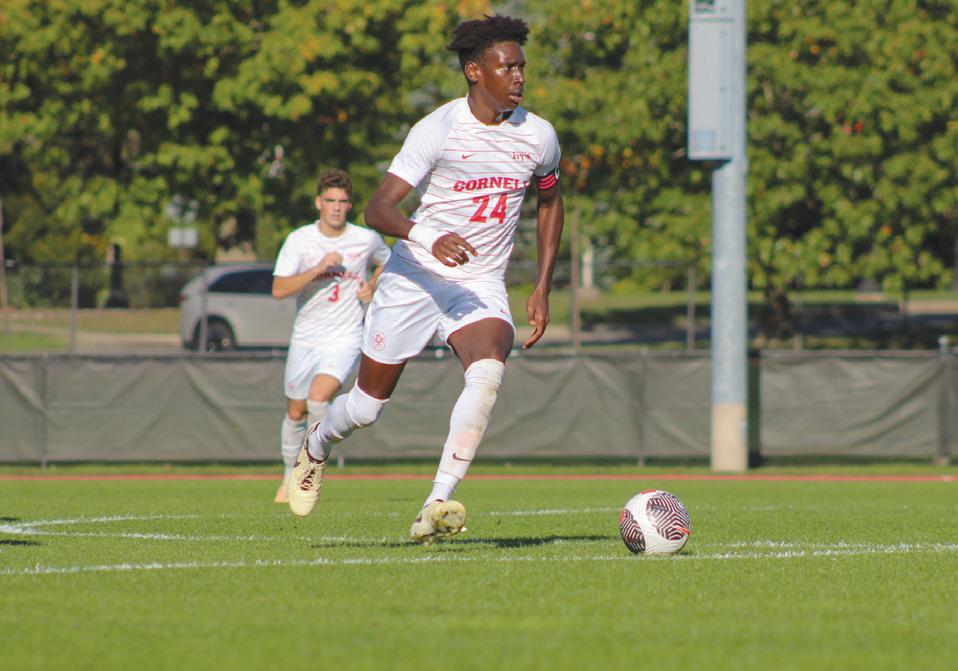
His strong connection to Saint Vincent, alongside the hiring of an experienced head coach who previously coached in the MLS, bolstered Johnson’s interest in representing Saint Vincent on the national stage.w
“I originally went for a camp and played a couple friendlies against Grenada,” Johnson said. “I did well in those and then just a few weeks later, there was the Gold Cup qualifying match against Jamaica, which was probably the coolest experience of my life.”
Signing a professional contract to play in the MLS for Charlotte FC represented the achievement of a lifelong dream for Johnson, but he does not plan on slowing down anytime soon.
Andrew Johnson ‘25 preparing for his MLS debut (photo courtesy of Andrew Johnson).
“I have a really good support system, they are reminding me this is a great achievement,” Johnson said. “Obviously, you do not want to get ahead of yourself, because it’s really only the beginning of hopefully a long career. If you get too caught up in the excitement, you can fall behind a little by taking your foot off the gas.”
Johnson’s focus will now be on the 2026 MLS season, which began on Feb. 1. Charlotte will be hoping to build on its success from last season, which saw the team finish fourth in the Eastern Conference but fall short in the playoffs.
Johnson will have an entire season to carve out his place in the MLS, where he will have the opportunity to prove why he is one of the best football players on the planet.
Matthew Leonard can be reached at mleonard@cornellsun.com.