The Corne¬ Daily Sun


By SURITA BASU and PAREESAY AFZAL Sun Assistant Managing Editor and Sun Assistant News Editor
“If we cannot discuss genocide at universities, where else are we supposed to discuss it?”
Guled Farah Mire grad
Following a March 10 event where a group of Chinese international students enrolled in Cornell’s Masters in Public Administration program walked out after their Uyghur classmate, Rizwangul NurMuhammad grad, spoke about her brother’s detention by the Chinese government, the Cornell Institute for Public Affairs community has continued to respond to the incident and its handling by the Brooks School administration.
Many of NurMuhammad’s fellow students expressed frustration regarding the administrative action that was taken following the walkout, noting the lack of support extended to NurMuhammad while students were publically urged by a
professor to reconcile with the protestors.
Carrie Spanton grad, a first year MPA student, attended the event, which featured a Q&A with Rep. Elissa Slotkin ’98 (D-MI). Spanton noted that not all of the protestors walked out quietly.
“Some of them were laughing and some of them were taunting,” Spanton said. “Many of them were saying things that were directed at [NurMuhammad]”
Spanton said that after the event concluded, Prof. Dan Lamb, policy analysis and management, stood up and urged the remaining MPA students to reach out to the students who had walked out and make them feel included.
“Nothing was mentioned about [Rizwangul] at all, and I thought that was a huge vacuum,” Spanton said.
NurMuhammad is a refugee and current citizen of New Zealand studying on a Fulbright scholarship at Cornell, and has been an outspoken advocate for Uyghur rights for years. Guled Farah Mire grad is a second-year MPA candidate, and like NurMuhammad, is a Fulbright scholar from New Zealand.
“[Rizwangul] is a prominent Uyghur advocate in that part
By ALLY FERTIG
With 329 active COVID-19 cases on campus — among the highest totals of active cases since December 2021 —- as of March 29, students are asking themselves who is getting still tested, will it stop, and why.
According to a March 23 University statement, the majority of current positives come from symptomatic individuals getting tested, but there are even more asymptomatic students on campus, and therefore more positives than those counted by the University.
The University attributed the unexpected rise in cases to a variety of factors, including reduced mask requirements on campus, increased social activities and the emergence of the BA.2 variant despite 92% of students and employees having
received a vaccine booster shot.
of the world,” Mire said. “She’s very widely known in New Zealand and Australia because of the work that she’s done…. [Cornell] knew about the vulnerability of having somebody like her on campus.”
Mire noted that educational institutions should be spaces that are conducive to discussions of human rights issues, which he believes the walkout and immediate administrative reaction failed to reflect.
“If we cannot discuss genocide at universities, where else are we supposed to discuss it?” Mire said.
Following the dissatisfaction expressed by students at the school’s initial response, the director of CIPA, Prof. Matthew Hall, policy analysis and management, sent another email to the CIPA community on March 17, which was obtained by the Sun.
“I was not at the event, but I have spent the days since watching and re-watching the video, and talking to many who attended,” Hall wrote in his email. “I now have a clearer understanding of the behavior exhibited by a small number
Some students who were experiencing COVID-19 symptoms reported choosing to get tested because of concerns over their academic performance.
“I ended up testing because I was feeling symptomatic and, while my symptoms were not extreme, I felt like I couldn’t effectively do my best work under those conditions,” said Ella Benjamin ’24, who tested positive for COVID-19 on March 22.
For Benjamin, testing positive for COVID-19 — as opposed to being sick with a different illness — was a benefit, allowing her to get more accommodating deadlines from her professors and miss class without losing credit for attendance or missing important lecture content since one of her professors offered her a Zoom
Staff Writer By KATHERINE ESTERL
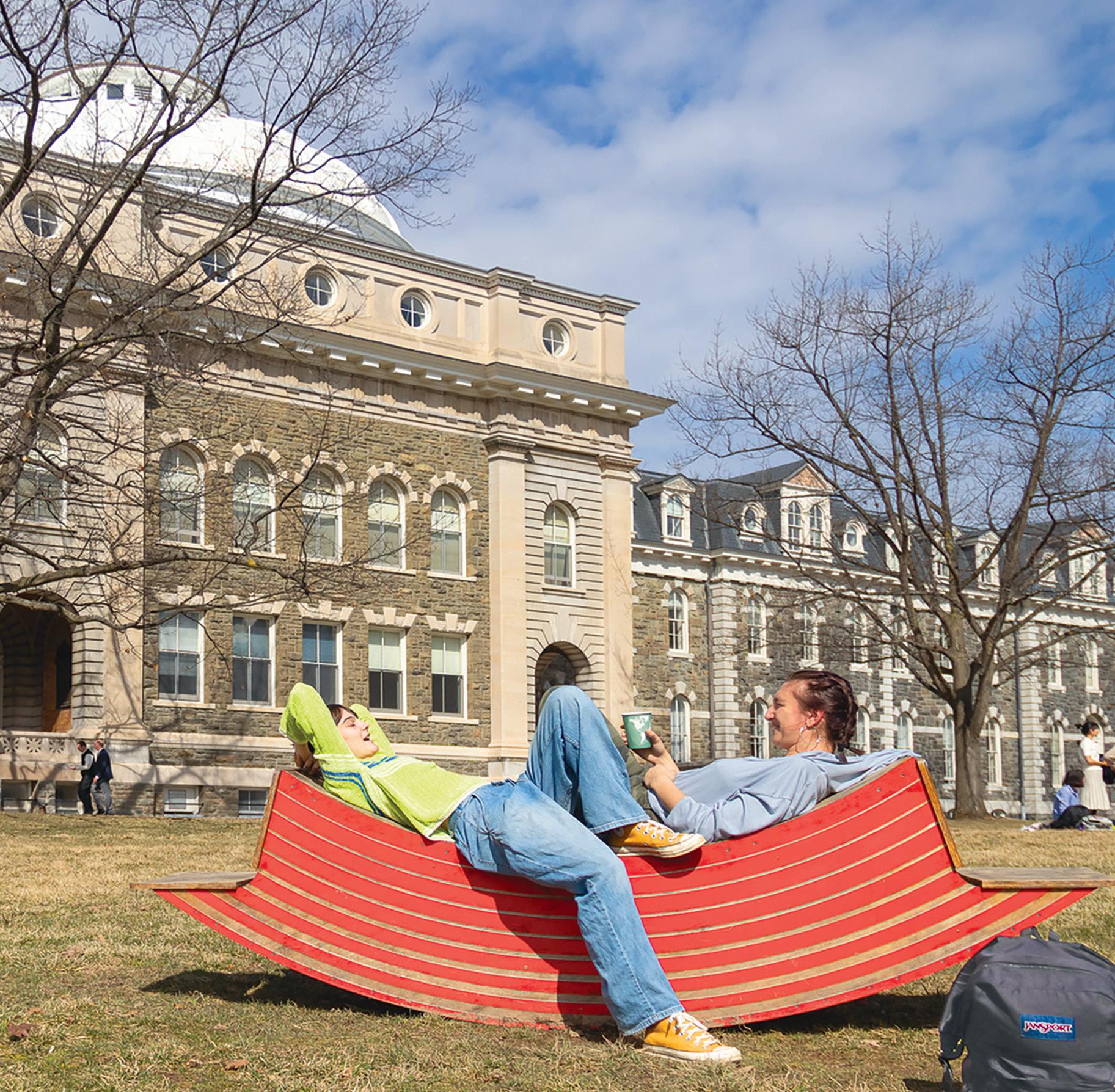
Nine students gathered on Friday, March 25 for a town hall supporting student workers.
Part of a campaign to raise minimum wage to $15 per hour for student workers, the People’s Organizing Collective Cornell hoped the meeting would give space to air grievances and connect with peers. After handing out 150 quarter cards and canvass-
ing from Ives Hall to Hollister Hall, the turnout reflected students’ hectic schedules –– and a need for more solidarity.
“Being a student worker, you’re always busy, you’re always tired, your schedule is always packed,” POCC Member José Pérez-Zetune ’24 said.
And some student workers worry what a campaign could mean for their own financial security.
“We’re so reliant on Cornell and these jobs, be it our own having
money, or be it work study,” said POCC member Annie Stetz ’23. “There’s a fear [that] if I talk out, I’ll lose that job –– and I need that money.”
Cornell adheres to the New York state minimum wage of $13.20 per hour –– up from $12.50 the year prior. The rise in the previous year’s minimum wage was part of the state’s plan to phase-in an eventual $15


By JULIETTE EGAN Sun Contributor
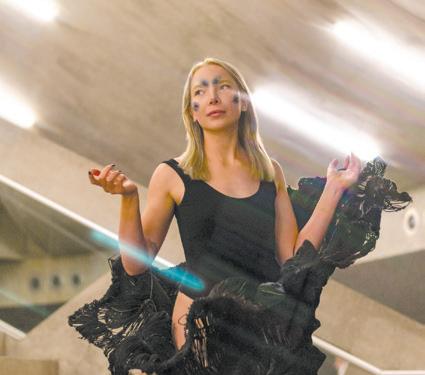
Last Saturday, the basement of Milstein Hall was a mess of mesh, measurements and models as the Cornell Fashion Collective hosted its first runway show since March 2019.
The show was in part practice for the full CFC Spring show, which will take place on the Arts Quad on April 30 under large clear tents that allow sunlight to shine on the runway. Designers displayed outfits that they had been working on since 2020, while models practiced their walks.
“Saturday was just… a chance to show off all these pieces that I wouldn’t have,” said Maisie McDonald ’23, head designer for CFC. McDonald added that she will showcase a more recent collection in the April 30 spring show.
McDonald is an upcycling designer, meaning that all of her materials are sourced second-hand.
“All of my designs aim to use waste in creative ways and grow awareness to the waste culture that fast fashion creates,” McDonald said. “But also, [they are all] super colorful, unconventional, and play with the standard of fashion being serious.”
COVID Continued from page 1
option.
“When I ended up testing positive, I felt relieved as I now was able to have a legitimate excuse to have more time on my work and focus on feeling better without overextending myself,” Benjamin said.
But for other students, previous testing mandates caused significant stress. Victoria Gong ’25 tested positive for COVID-19 during the December 2021 campus-wide case surge on the day of her last exam. She worried about how testing positive would affect her winter break plans, as well as how it could affect her upcoming summer plans as an international student from Shanghai.
“China is also very strict about quarantine if you've gotten COVID before, and I know of people who had their government enforced quarantine extended to the duration of a month because they tested positive six months ago,” Gong said.
Cornell’s transition back to a yellow alert level on March 23 — which came after the University ended surveillance testing for fully vaccinated individuals on Feb. 18 and relaxed mask requirements on March 11 — has worried some students, who wonder whether the current opt-in surveillance testing system will be replaced with mandatory testing as students return from spring break.
“I don’t think there’s an urgent need that testing be reinstated after spring break,” Ariel Schulsinger ’24 said. “Despite the minute spike we’ve had in cases over the past two weeks or so, I haven’t heard of people being severely ill while in quarantine.”
Currently, Cornell is offering any asymptomatic student or employee free antigen testing kits. The University’s COVID-19 response website also states that students are “strongly encouraged” to test before and after their spring break.
To continue reading this article, please visit cornellsun.com.
CFC Vice President of Design J.H. Yang ’22 said that the designs she chose for Saturday’s show were inspired by unrealistic social media presences that attempt to convey perfect lives. Yang’s work portrays the idea that many people want to be a reflection of who they are on their phones, and it comments on what it means to wear one’s social media presence. To do so, Yang experimented with the concept of mirror images. w
“I use this technique where I put paint on one side of the paper, and fold it in half… and it creates a very unexpected pattern and silhouette,” Yang said.
Senior designer Quinn Caroline Guthrie ’22 designed her “Let’s go to School” collection around the theme of high school.
“School is more than just classes, it’s really about the community that you create there,” Guthrie said. “That’s what’s most important about school — not the classes, but the environment.”
Although CFC shows have historically been held in Barton Hall, this year the collective’s venue for the spring show has changed. Due to COVID-19 requirements, the large-scale show is scheduled to be held outside. But moving out of Barton
Hall had been on CFC’s radar for some time.
“[Post-COVID CFC] is so different, and much more experimental with stage setup and design,” said Yang.
Instead of a small runway surrounded by bleachers, CFC has focused on finding stages that showcase designs to the entire audience. While previous CFC shows have taken place in Barton Hall, the Spring 2022 shows are in Milstein and outside on the Arts Quad.
“If you’re in the bleachers in Barton hall… you’re just going to be in a dark room looking at an out-of-focus figure for two hours straight,” CFC President Cardinal Robinson ’22 said.
Robinson said that the change was in part driven by a mid2010s push to make fashion shows reflect their space and physical context. Additionally, the longer runways allow the effort and talent that designers put into their work to be appreciated for more time and by more of the guests.
“When I was applying to become CFC president, that’s basically what I ran on,” Robinson said. “No one wants to go to a fashion show where they’re not actually seeing the clothes.”
Juliette Egan can be reached at jse74@cornell.edu.
of students, which appears to include laughter following the walkout that many interpreted as dismissive. This behavior is disappointing and inconsistent with CIPA’s values and principles.”
Hall then addressed the vulnerable position that NurMuhammad was put in, apologizing for both the incident on the March 10 event and the administrative response.
“I apologize for the hurt you have experienced and regret if my previous message did not reflect a full appreciation for the complicated dynamics that impact you so personally. No CIPA student should feel unsafe or unwelcome,” Hall wrote.
Hall also noted that his office has reached out to the students directly involved to offer assistance and university resources to support well-being.
The walkout has sparked concern among students. On March 22, the CIPA student body moved to conduct a vote to remove William Wang grad — the president of CIPA’s peerled governing body, the Cornell Public Affairs Society — from his position.
The day after the walkout, Wang had drafted a letter to Hall, which was signed by more than 80 Chinese students, claiming that NurMuhammad’s remarks had created a hostile environment. In a separate March 19 letter to the CIPA community that was obtained by the Sun,
Wang stated his decision to refuse to step down after the CPAS body requested his resignation, and that his previous communications — including his letter to Hall — were taken out of context by individuals who he claimed intended to politicize the discussion and escalate the situation.
“I urge [CPAS] to set aside our differences and do everything in its power to provide equal and sufficient representation for every single CIPA student — no more tokenism,” Wang wrote, referring to his argument that removing him from office would reduce representation for the Chinese and Asian community at CIPA.
Wang did not respond to a request for comment.
The removal process, according to Pedro Jose Fernandez grad, would require a two-thirds majority vote to change CPAS bylaws to allow the board to directly vote to remove Wang from his position as president.
Currently, six board members are in favor of the bylaw change, with one additional vote needed to proceed with the amendment.
In addition to
changing the bylaws and subsequently voting on Wang’s removal, Fernandez told the Sun that students have organized a signature campaign, which could remove Wang from office if the petition is signed by two-thirds of the CIPA student body.
According to Fernandez, students opposed to the backlash NurMuhammad has faced have also told CIPA administrators that they would walk out if Wang were to be given a speaking role at the CIPA graduation ceremony — something Wang would customarily be granted as the president of CPAS.
Surita Basu can be reached at sbasu@cornellsun.com. Pareesay Afzal can be reached at pafzal@cornellsun.com.
1880
140th Editorial Board
Working on Today’s Sun
Layout Mei Ou ’22
Design Deskers Kristen D’Souza ’24 Sahithi Jammulamadaka ’25
Associate Desker Emma Leynse ’23 Managing Desker Surita Basu ’23
Dining Desker Daniela Wise-Rojas ’25 News Deskers Eli Pallrand ‘24 Pareesay Afzal ’24
Science Desker Tenzin

minimum wage.
Some students make minimum wage to help cover rising tuition costs through the federal work study program. In 2019, 2,604 students participated in work study jobs. Some students like Kassidy Slaughter ’24 are saving to pay off loans.
“I have to work. It’s not an option,” POCC Member Slaughter said.
Slaughter worked as a teaching assistant for Information Science 4240: Designing Technology for Social Impact last semester. Hired for 10 hours a week, she found herself working overtime, planning activities and holding extra Zoom meetings.
Some students said they feel undercompensated.
“I realized I had to put so much more effort to really make sure the students were learning,” Slaughter said. At about $13 per hour, she said her efforts were not worth the pay.
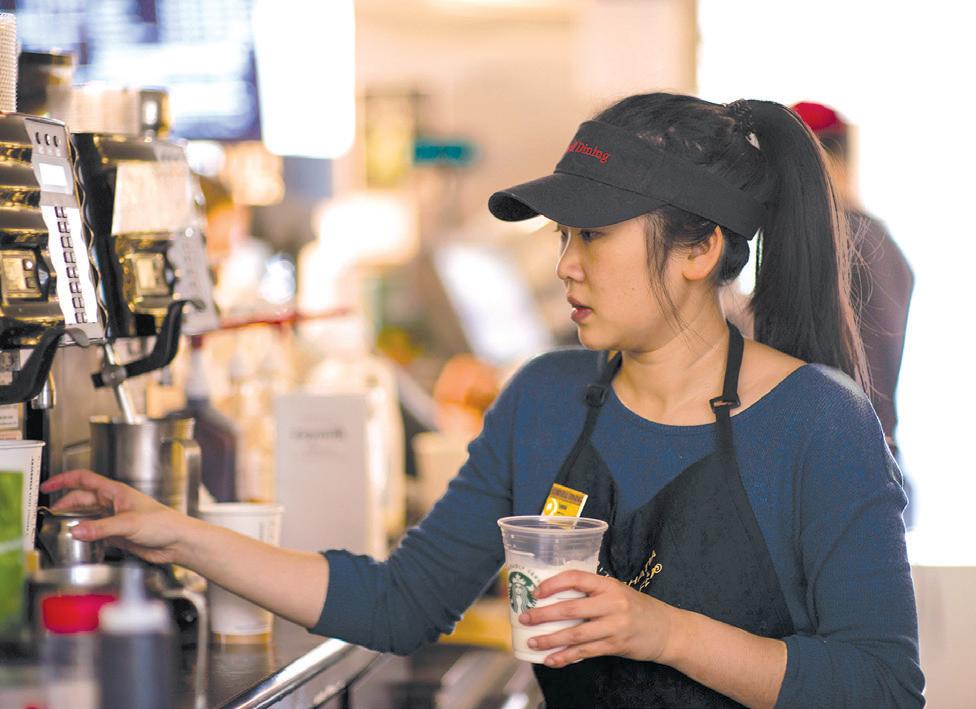
POCC Members Sam Ivey ’24 and José Pérez-Zetune ’24 both work for Cornell Dining. Both compare their wages to the price of food at Mac’s Cafe and Cook Dining Hall, respectively.
“My station is right next to the cashier, so I can hear people’s prices,” Ivey said. “That’s a lot. I get paid less than that an hour.”
Stetz spent five semesters and a summer making calls for Cornell’s Annual Fund, requesting donations from alumni. Stetz said that while she enjoyed the work, and it paid more than the $7.25 per hour jobs in her home state of Pennsylvania, she found certain aspects of the job to be uncomfortable.
“We’re raising Cornell millions of dollars, and we’re not making more than New York [State]’s minimum wage,” Stetz said.
Stetz followed a script, which noted that donations could support making Cornell accessible through scholarships. She said that this could feel like asking alumni to fund her own education.
She said she encountered harassment, including from one alum who said the College of Veterinary Medicine became a “glorified sorority” since admitting women. Stetz shifted this semester to do research in the School of Industrial and Labor Relations.
POCC, a local of United Students Against Sweatshops, wants to see student workers better organized, said the members.
“[They] are pretty isolated in their workplace and their shifts,” said Pérez-Zetune, who also raised concerns about the University’s attitude toward labor organizing. They pointed to Cornell’s violation of the National Labor Relations Act in 2017, when graduate students attempted to elect a union.
POCC is not currently pursuing a project to unionize student workers.
To

By JIMMY CAWLEY Sun Staff Writer
About a month ago, I was curious about what supplements Cornell students take when they workout. I investigated, finding that the average Cornellian may use pre-workout supplements now and then, but generally does not have a strict diet or supplemental regiment when working out.
This time, I wanted to dive a bit deeper into this topic. An intramural soccer champion may be a hell of an athlete, but there is a stark difference between the average Cornellian and a Cornell student athlete. I wanted to find out what goes on behind the scenes of D1 athletes. I was curious to see if there is a large difference between what workout supplements and diets student athletes have, and if it varies between sports.
I first interviewed Alyssa Harrington, the head Cornell Athletic nutritionist. Harrington made it clear that “supplements vary widely by sports…the most common supplements that Cornell athletes use are protein powders, creatine and electrolytes.”
Electrolytes are a bodily substance that is lost during exercise, and consuming electrolytes can hydrate your body after vigorous exercise. Electrolytes can be found in pre-workout, Gatorade or gels and easily consumable packs.
Harrington revealed that there is no secret substance that athletes are taking: they consume many of the same
supplements that non-athlete Cornellians take (pre-workout, creatine). “Prior to taking any supplements, a sports dietitian will review the athlete’s sport, athletic goals and nutritionist status. From there, we can make recommendations on which type of supplement would be best, if any, and how much the athlete should be taking.”
Harrington emphasized the importance of context to an athlete’s supplemental use.
The nutrition team at Cornell intensively manages every athlete’s goals and current health.
An equestrian team member won’t be eating the same meal as the offensive lineman on the football team, and they certainly won’t be taking the same substances.
I wanted to look further, so I interviewed two current student athletes at Cornell.
Amanda Petersen ’25 is on the Women’s Swim and Dive team at Cornell. “I prefer energy drinks like Celsius for performance at meets. I normally drink one 30 minutes before a meet,” she said.
The one time I had a Celsius energy drink was to keep me awake during a six hour drive after waking up at 3 a.m., so I could only imagine the energy boost effects it has for an athlete.
“We’re also supposed to eat a lot more than other people [non-athletes] such as a lot of carbs the night before and extra protein after a meet or practice,” Petersen noted.
Considering that I can swim for probably around 10 minutes before getting gassed, I can only imagine how stren-

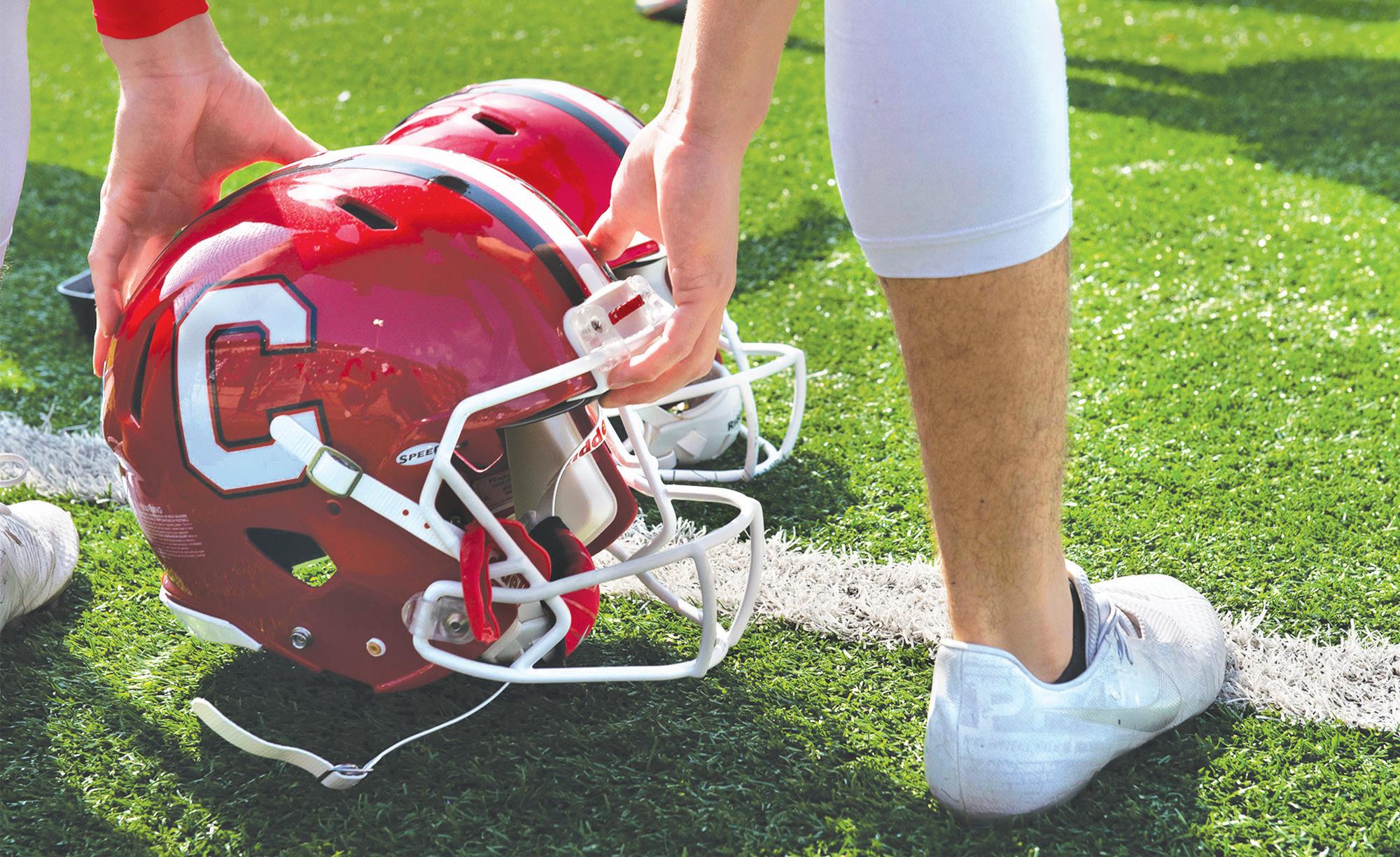
uous two hour practices are. It is no surprise that they have to have a ridiculously high caloric intake to maintain their muscle mass. I also inquired about creatine, as I have heard a lot about athletes utilizing this supplement.
“I don’t think anyone is on creatine. Creatine is used if you want to get big, but the objective in swimming isn’t that — it’s to be fast.”
This lack of usage was a surprise to me. I was under the impression after seeing Michael Phelps’ wingspan that being bigger was very helpful to swimming, but that doesn’t seem to be the case. This emphasized that professionals who manage these athletes’ routines use extreme precision when determining supplemental use.
“There is a sports nutritionist that you can choose to go to, but after being a swimmer for so long you really know what you need to put in your body to perform well,” said Petersen.
I was taken aback by this. Although it’s clear that athletes know their bodies very well, I would have thought that there would be extremely strict enforcement in terms of protein amounts and diets.
Petersen remarked, “After lifts, we get [the] Big Red Refuel, which is a special chocolate milk with extra protein and fat. It tastes very good and helps the recovery.”
As a non-athlete, I felt robbed of a special type of chocolate milk, but the trend seemed clear here. Caffeine is essential right before the race, but generally swimmers have to focus on keeping their caloric intake high and loading up on carbs and protein.
I wanted to get a different perspective, so I interviewed Michael O’Keefe ’25, a player on the Cornell Football team. “Before a workout I try to take a pre-workout and eat carbs. After a workout you want a
big meal and a good amount of protein.”
So far this seems consistent with the swim team: all athletes will try to maintain at least a stable caloric intake so that they don’t lose weight. They also know to eat carbs before working out and protein after. I asked O’Keefe to describe the creatine usage on the team.
Athletes at Cornell live busy lives. With balancing school and sports, it must feel like a nuisance to constantly worry about supplements and planning meals.
“I do take creatine as well. I take five grams of creatine a day. The trainers suggest the brand of creatine to take. Not everyone on the team takes creatine but it’s suggested and a lot of kids do it.”
Creatine, as noted previously, is a very efficient way to gain mass. It makes sense that in a sport like football, the entire team would be taking this substance, as virtually every position would like to be as big as possible.
O’Keefe expanded, saying
“At practice they have stations where you can go to fill up on protein with your shaker. You can get a scoop or two of protein and if you say you want to gain weight they can give you the high calorie protein. If you want to maintain weight and keep your muscle mass you can get the normal protein.”
This was very interesting. The athletes themselves are dictating the amount and type of protein they are receiving based on their personal goals. Obviously, there is a mentor giving general diet advice, but it appears that the athletes have a good amount of freedom. I questioned O’Keefe if the football team had access to the special milk as well.
“We also get milk after practice. It’s higher in fat or protein and it tastes like a chocolate milkshake.”
Athletes at Cornell live busy lives. With balancing school and sports, it must feel like a nuisance to constantly worry about supplements and planning meals. Although they have some supervision, these students are athletes for a reason. They know what they need to take to perform well, and they know what they have to eat to get to that maximum performance.
Nevertheless, besides the coveted chocolate milk, they are still taking many of the same substances that other Cornellians take.
Unless this chocolate milk has miraculous benefits (which may be very likely), there is no special secret or supplement athletes take to get to where they are.
This proves, with extremely hard work and knowing what your body needs, anyone has the ability to be like a student athlete.
Jimmy Cawley is a freshman in the College of Arts and Sciences. He can be reached at jdc354@cornell.edu.
Andrew V. Lorenzen
Some entries are serious, high-minded stuf — academic and professional breakthroughs that meant a lot to me. But most of them are the exact opposite. Tey’re random, half-forgotten memories with friends. Tey’re things that I fnd somewhat endearing and somewhat embarrassing. Little examples of personal growth, like tick marks on a wall chronicling a kid’s height over the years. Each list has its fair share of the mistakes and painful moments typical of the naivete endemic in young adults. I haven’t tried to sugarcoat these lists. Tey’re just for me, anyway.
I never really had much of a reason for writing them. I don’t normally journal — this column is about as close as I get — so the practice of writing these lists doesn’t come instinctually to me. Yet sometime after I fnished my freshman year at Cornell, I felt so in love with this place and all the people I’d met here that I wanted to ensure, somehow, that I’d remember it all. Or at least the most important parts. I fgured I’d probably read the lists someday twenty years down the road and remember my college years fondly.
present in your college years, all the prior versions of you that led to this one. It prevents you from giving yourself all of the credit that you deserve.
For me, these lists help ground me when I need it. Tey also help me expand my defnition of progress. As someone who, like many Cornellians, has a bit of a workaholic streak, it helps to force myself to see the college experience as more than an array of academic and professional accomplishments. Barely anything that I write about in my lists has to do with anything serious. It’s stupid stuf that I did with my friends. It’s a recipe that I taught myself. It’s something that, in hindsight, made me more of a fully formed human — one who, I hope, is getting a little bit better every year.
When We’re Sixty Four I figured I’d probably read the lists someday twenty years down the road and remember my college years fondly.
thaca has been rainy lately. It feels like everyone is sick — either with COVID-19 or that classic mid-semester cold. Te former is, of course, unrelated to the recent easing of masking and testing regulations on campus. And the latter is, naturally, unrelated to the inundation of prelims, essays and projects tumbling down from Canvas onto students during this time of the semester. We’ve reached the doldrums of spring at Cornell. Spring Break is just around the corner, and yet … there’s so much left to do between now and then.
As a second-semester senior, I often fnd myself refecting on my time in college these days. Lately, that’s entailed going through my old lists as a form of procrastinating on tackling actually pressing work. At the end of every year that I’ve been at Cornell, I’ve written down a list of experiences I had that year, of all the little moments that I don’t want to forget. Freshman year, sophomore year and junior year each have a handwritten list beginning with “Tis year, I …. ”
Tat part might be true, but I fnd myself returning to these lists often while still in my college years. During moments of frustration, moments of failure, I have lists that show me exactly how far I’ve come. In moments when I feel awkward, inhibited, I can look back and see the excitement of an even more awkward, more inhibited freshman version of myself when I excitedly wrote down literally all the friends that I’d made my freshman year. In moments when I feel stuck in the mud professionally, I can read my excitement at landing my frst real job. In moments when I feel listless, I have lists — lists that prove to me exactly how far I’ve come.
Te collegiate experience does a uniquely powerful job of grounding you in the present. You have assignments, exams upcoming. You have grades that will be logged at the end of the semester. You have an array of social and extracurricular commitments this week and next. Tere’s no time to look back because you’re operating full-throttle just to stay upright in the present. Some of that is good. It keeps you in the moment. But it also consistently prevents you from remembering all the moments that led up to the
I’m not trying to persuade you to keep an identical list for yourself. But I am trying to persuade you that when you reach that point of listlessness, that point of frustration, you should fnd your own way to remember your earlier college moments. When it’s 1 a.m., rain is pelting your window, your snifing is growing suspiciously frequent and your fve page essay due in a few hours only has your name written on it, you should take a moment and remember that you’re doing better than you think. You should remember that you’ve come farther than you realize. You should remember that there’s more to this than just the next assignment on your to-do list. In fact, there’s an entirely diferent list that is buried, somewhere, deep in your brain. And that list means much more.
Daniela Wise-Rojas (she/her) is a freshman in the College of Arts and Sciences. She can be reached at dwise-rojas@cornellsun.com. She currently serves as assistant dining editor on the 140th Editorial Board. Anything But MunDANIties runs every other Wednesday this semester.
Content warning: this article contains mention of homophobia and mental health conditions.
Being gay is not a choice. It never has been and never will be; hence, students in K-12 schools need to be educated on what it means to be LGBTQ+. However, it becomes almost a strenuous task to relay this sentiment to others when bills like “Don’t Say Gay” just passed in the Florida Senate, where “instruction on gender and sexuality would be constrained in all grades,” according to a New York Times Education Briefng analysis of the bill. People know that this will obviously impact those who live in Florida. What people aren’t discussing is the impact of the bill on its potential to harm Generation Z, regardless of what state someone is in.
First, I need to acknowledge that I’m writing this column from a position of privilege: I go to an Ivy League school, not to mention one that’s said to be ranked number one for LGBT+ studies. I was able to take a class last semester on AMST 2335: Making Public Queer History, where
I researched (with the Human Sexuality Archives) the intersection of HIV/AIDS in Latinx communities. New York is a very progressive state; upstate New York isn’t the most liberal, but Ithaca seems to share most of the same values as New York City, whose mayor just condemned the bill. Everything isn’t perfect, considering the demographics of Ivies lean primarily white and wealthy (like several LGBTQ+ students from each Ivy said so in a group interview), hence not the most “diverse” set of schools. I even wrote in an earlier column how I moved out of my frst fall semester dorm because of a homophobic suitemate I encountered.
With that being said, I’ve realized how much of a platform I have. I want people to understand that the “Don’t Say Gay” Bill can harm your average Cornell student living as a publicly-out queer student but has family in Florida they’re not out to yet. It’s scary to consider that they might go home to a place where even their younger sibling is taught that “being gay is so bad, we must not speak about it.”
Tere are endless hypothetical scenarios that come to mind. Tink about how this bill likley made national headlines, running across the TV screens of families who agree with it, saying it’s a huge “win” while their closeted child leaves to cry in the bathroom. Most people have heard of this bill by now, no matter if they’re from Florida or not. Simply mentioning the bill allows people who are homophobic to start to feel “comfortable” with their homophobia, setting a dangerous social norm that can impact any community.
For instance, the high school I attended prior to coming to Cornell, Dougherty Valley High, recently became the center of local controversy when senior Rhea Braganza wrote in a public Instagram post how “Dougherty’s Administration omitted the words ‘I’m not straight’ in the Senior Wildcat [performance]” because of its potential to be “ofensive” to the audience, not “family-friendly.” Te Administration
even compared such a performance to “masturbating on stage.” You never know what could be going through someone’s head, especially when they’re already conditioned to sufer in silence in an environment where being gay isn’t wildly accepted. It’s not really a stretch to consider that there might be a kid in a blue state, like California, who doesn’t necessarily feel unsafe at home but who doesn’t feel like they belong anywhere either. Maybe they came across a social media post about the gay panic defense, spiraled and decided that their life might not be worth living anymore if they can’t live freely. Te Trevor Project conducted its annual mental health survey in 2021. A simple “command/control + F” search of keywords like “suicide” shows it’s mentioned 37 times in their fndings. Te “Don’t Say Gay” bill will also prevent people from spreading resources related to LGBTQ+ mental health, a rather dangerous concept.
The day where “coming out” becomes obsolete is the day when “don’t say gay” can have a different meaning, one where no one will say “gay” in a derogatory manner.
Just like how you don’t get to choose if your body goes through puberty, you need to be educated about your body
from a young age. It’s why sex-ed classes exist (and unfortunately, these aren’t all created equal, that’s a topic for another column). Most sex-ed classes, at the bare minimum, teach how babies are made, what intercourse is and what a heterosexual relationship looks like.
When it comes to homosexual relationships (or any relationship other than heterosexual ones), most students are lucky if they get a glimpse of information. I got barely any, and I went to a public high school in the Bay Area. My heart breaks for those who don’t get any education on homosexual relationships, let alone on anything LGBTQ+-related.
Te bottom line is that there is a tremendous amount of uncertainty for LGBTQ+ youth/individuals in America, a kind of uncertainty that should be followed up with a guarantee of human rights. Instead, America responds with the constitutional uncertainty brought on by the vague language of the “Don’t Say Gay” bill.
As Vox emphasizes, the bill does not defne key terms like “age-appropriate” or “developmentally appropriate.” It doesn’t even defne the term “classroom instruction.” Vox posed a hypothetical example about a second-grade teacher mentioning she went out shopping “with her wife.”Based on the current language within the bill, it’s unclear whether this would be acceptable or not. Tis makes my stomach churn with anger. No straight person has ever needed to hide mention of their spouse for fear it would be illegal.
Who knows how many students in the incoming frst-year class at Cornell are leaving their hometown because they don’t feel safe? Maybe they once did feel safe but no longer do because of the environment a bill like “Don’t Say Gay” creates from a nationwide lens. Te day where “coming out” becomes obsolete is the day when “don’t say gay” can have a diferent meaning, one where no one will say “gay” in a derogatory manner.

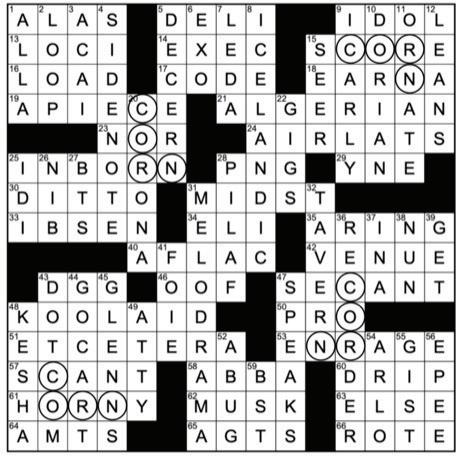
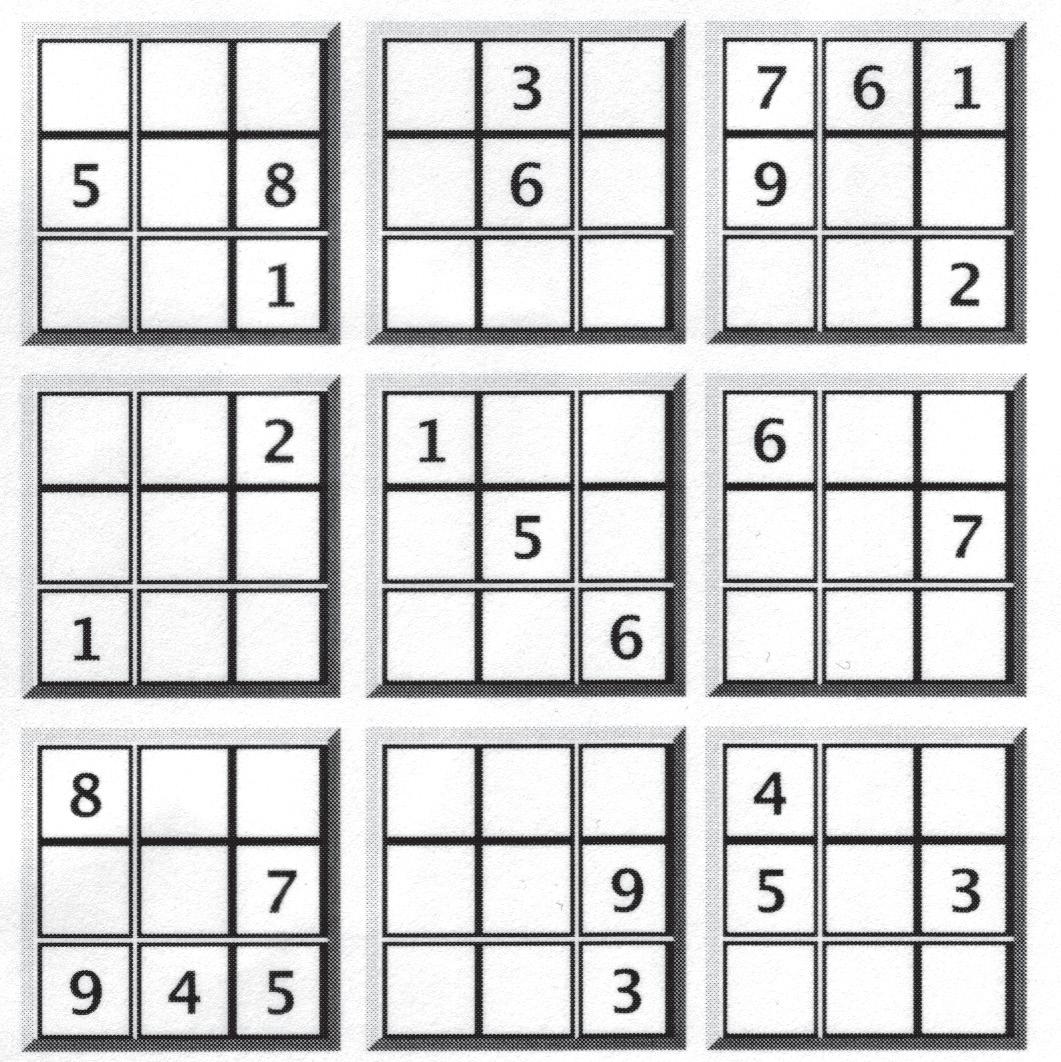
Fill in the empty cells, one number in each, so that each column, row, and region contains the numbers 1-9 exactly once. Each number in the solution therefore occurs only once in each of the three “directions,” hence the “single numbers” implied by the puzzle’s name. (Rules from wikipedia.org/wiki/ Sudoku)

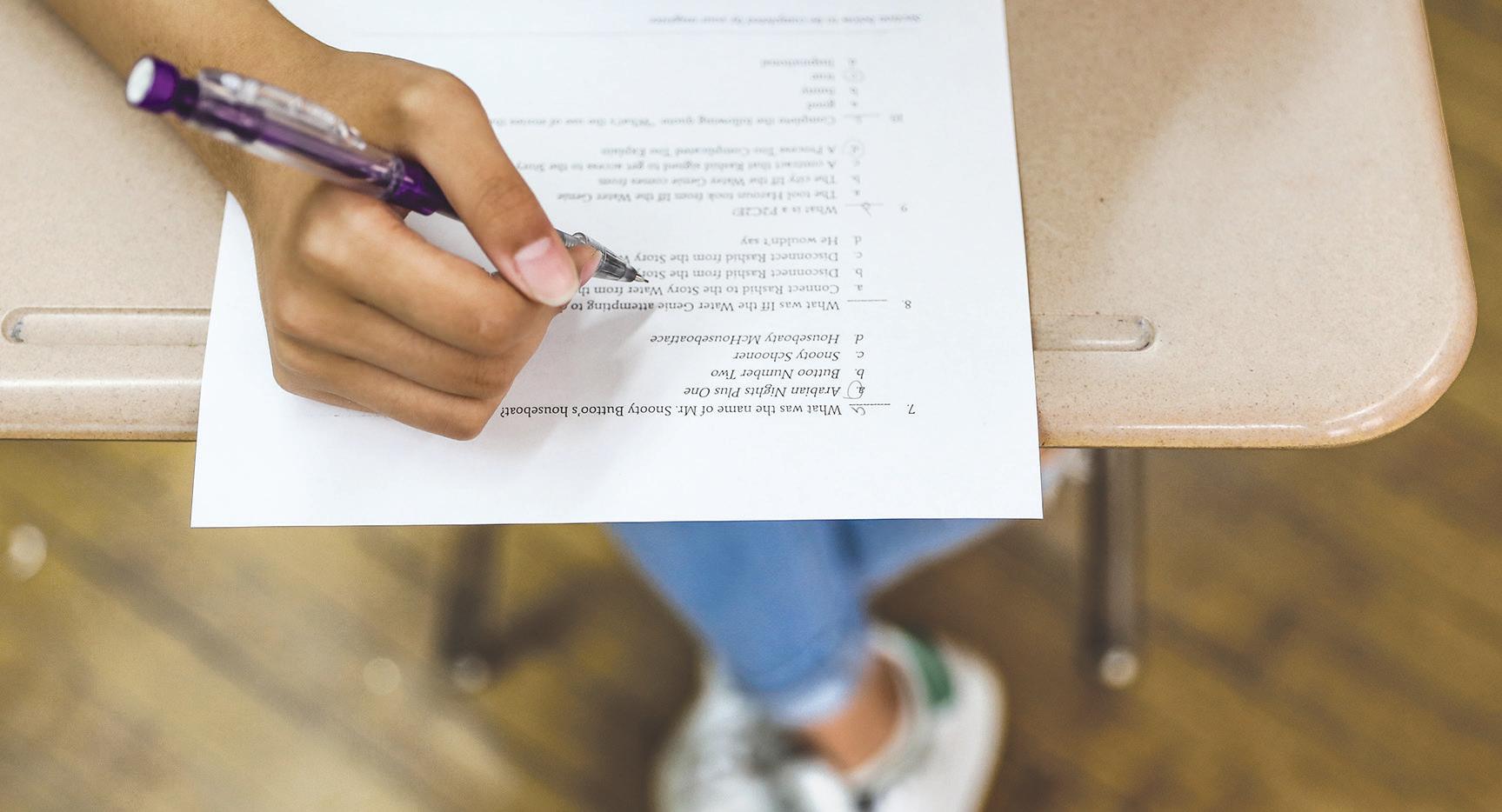
of their admissions requirements, which reopens the question of what purpose these test scores actually serve in this process.
dence that discrepancies in IQ and standardized test scores reflect an inherent difference in intelligence between different groups.
Prof. Robert Sternberg argues that SAT and ACT scores correlate very highly with IQ scores, and considers them to be essentially “IQ tests by another name.”
While there may be correlation between standardized tests and IQ, there are many other factors that influence intelligence and learning. Research has shown that standardized tests can be biased and can reinforce what is known as stereotype threat, as well as lead to differing rates of stress among different people.
Stereotype threat is when test-takers from traditionally marginalized groups actually score worse because of fears of reinforcing negative stereotypes about them. This illustrates how social factors can distort how a person performs on such tests, and thus does not accurately portray innate intelligence of a test taker.
notion of ‘intelligence’ as a test score,” Sternberg said.
Access to the internet, test-prep courses and financial resources can all play a part in limiting how well students perform on standardized tests, regardless of how intelligent they actually are.
Sternberg agreed that there is some modest correlation between SAT scores and educational outcomes but said that such results should be viewed with caution.
“They are good at predicting grades in college. Schools also usually like students who are easy to teach, and the prediction is better for those who are “socialized into” the tests—those who are prepared for them by virtue of their upbringing and education,” Sternberg said.
As the pandemic hit, colleges and universities, including Cornell, were forced to adapt their teaching and admissions process to the “new reality.” Many schools switched to fully online instruction in 2020, and also made one particular change to their admissions processes: requirements for standardized test scores.
While most colleges traditionally require SAT or ACT scores from applicants, many schools, including Cornell, waived this requirement as the pandemic started.
This only added to the large numbers of schools that already have phased out the SAT as part
The SAT test has been used as a major tool for college admissions since the mid-1930s.
While the acronym “SAT” originally stood for “Scholastic Aptitude Test.” “Aptitude” signified that it was meant to determine inherent ability and intelligence. The College Board officially dropped the acronym in 1997, making “SAT” the name of the tests in its own right.
The tests were originally derived from IQ tests,which have a history of being misused, and have been used as a tool for race science in just the past few years. There has never been any scientific evi-
These standardized tests were originally intended to demonstrate what is known in psychology as “general intelligence” or “g.”
The “g” is a measure of a person’s innate intelligence, made up of reasoning, memory, quantitative processing and more. When psychologists discuss intelligence, this ‘g-factor’ is usually what they mean.
Even as officials from the College Board, the company that makes the SATs, have argued that the tests can be updated to be more equitable and fall in line with what they claim to measure, some psychologists have been unimpressed.
The stress of the testing environment can also cause people to choke, as the stress causes them to have impaired focus, memory recall and overly heightened emotions, all of which can degrade performance.
Given these factors, many researchers, including Sternberg, argue that while test scores can correlate with grades in college, they are unable to predict other factors such as social skills and creativity which allow people to successfully cope with real-world problems.
“Standardized tests can provide a limited prediction of many outcomes: grades, future educational admissions, salary. However, they usually disadvantage people with backgrounds that did not socialize them into the upper-middle-class
He argued that standardized tests also give a limited view of intelligence and the questions they ask are often irrelevant to realworld scenarios.
“Because the tests are used to provide access to opportunities for those who score high, meaning that part of the correlation is an invention of our sociocultural system—we create the correlation,” Sternberg said.
Cornell, like many other institutions during the pandemic, has officially suspended the standardized testing requirement for prospective students until 2024, although a representative from the Cornell undergraduate admissions office declined to comment on whether or not this change will be permanent.
John Capwell can be reached at jcc462@cornell.edu.
By MILENA
Last month, six Cornell faculty members received the Simons Fellowship, which provides funding for a research leave. Three received the Theoretical Physics fellowship and three received the Mathematics fellowship.
This year, there were 10 recipients of the Theoretical Physics Fellowship and 38 recipients of the Mathematics Fellowship, coming from colleges and universities in the United States and Canada.
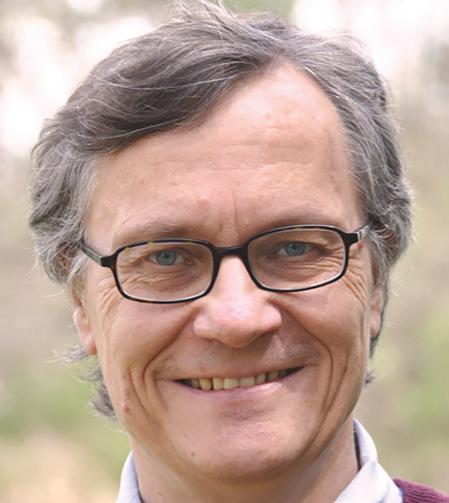
Prof. Csaba Csáki, physics, was one of the recipients of the Theoretical Physics fellowship. Csáki researches particle physics beyond the standard model, which describes electromagnetic, weak and strong interactions. The standard model describes how these interactions make up the basic building blocks of the universe.
“We have some really good reasons to believe that there may be other phenomena that are not going
to be described by the standard model. For example, dark matter is not described by the standard model,” Csáki said.
Csáki will spend his one year sabbatical with researchers from around the world.
“In the fall, I’m going to Israel for six weeks and in the spring, I’m going to Japan for six weeks. I have collaborators in both of those places,” Csáki said.
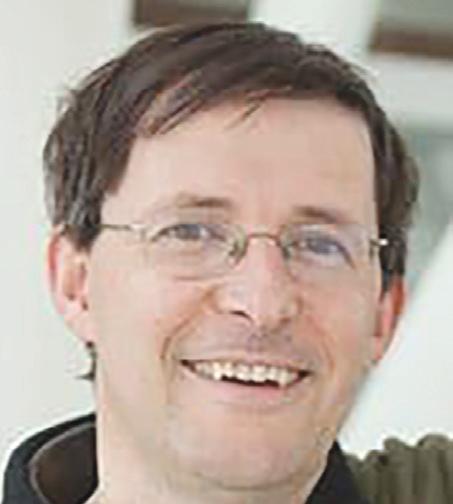
Prof. Eun-Ah Kim, physics, also received the Theoretical Physics fellowship. Kim’s prior research experience includes collaborating with the University’s computer science department to apply artificial intelligence tools to correlated quantum matter research.
Kim will conduct research at Harvard University during her sabbatical.
“Being free from dayto-day responsibilities and teaching will help me think more bold and creative thoughts. Spending a full year at Harvard will help me sprout and nurture new collaborations with colleagues
at Harvard and MIT, applying machine learning tools and data science approaches to quantum matter data,” Kim said.
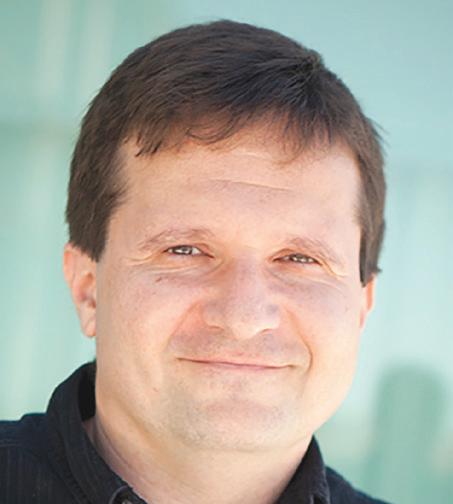
Prof. Michael Stillman, mathematics, was a recipient of the Mathematics fellowship. Stillman researches computational algebraic geometry. He hopes to incorporate his research about mathematics into real world applications, such as string theory and biology.
“The Simons will allow me an extra semester to go to the [other] top centers of research in these areas, where many other mathematicians have the same interest in structure. This is far more interesting math and structure than the basic math one learns up through calculus,” Stillman said.
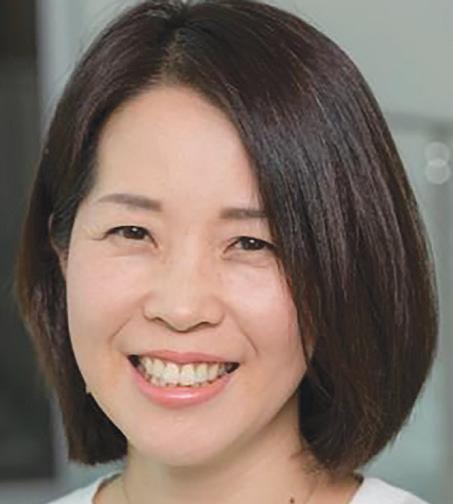
Prof. Alex Townsend, mathematics, was a recipient of the Mathematics Fellowship, as well. Townsend researches computational mathematics and numerical linear algebra.
Townsend will be traveling to Australia during his sabbatical where he will be exploring accurate methods
for solving differential equations.
“I’ve been developing, what we call, a spectral method—which is a very accurate method for solving differential equations—for a few years. One of the collaborators that I have in Australia also develops the same techniques,” Townsend said.
The other two Cornell faculty members who received the Simons Fellowship, Prof. Laurent Saloff Coste, mathematics, and Prof. Eanna Flanagan, physics, did not comment.
2022 was a remarkable year with six Cornell faculty members receiving the Simons Fellowship—there were no Cornell recipients in 2021, one in 2020, and two in 2019. Overall, the Simons Fellowship will give Cornell physics and mathematics faculty an opportunity to conduct innovative research with collaborators from other universities and around the world.
Milena Bimpong can be reached at mbimpong@cornellsun.com.