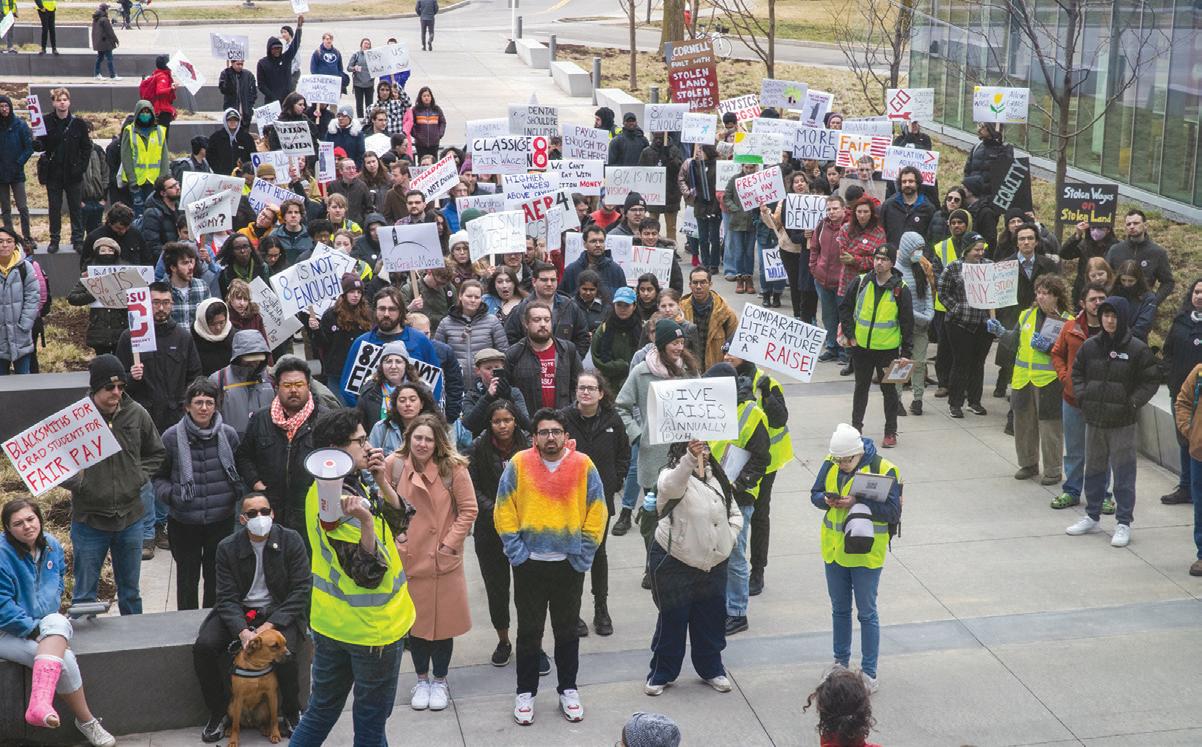
Cornell graduate students protested outside the College of Veterinary Medicine building on Friday to demand higher wages and other work benefits, following an announcement that the University would increase stipends for its doctoral students by eight percent.
Although this is the largest stipend increase since 2006, it falls short of the cumulative inflation of 45 percent over the same time period. The protest was timed to coincide with a University Board of Trustees event that was occurring inside the building.
Jessica Ness grad, a third-year Ph.D. student, voiced that graduate students are advocating for a raise that matches inflation.
“In Tompkins County, rents have gone up 12.4 percent in the last three years, and the 8 percent raise is the first significant raise in 17 years. So first and foremost, we want fair
pay,” Ness said. “Also, things that aren’t included in this raise are better access to transportation for graduate students, like bus passes covered by the University — subsidized parking passes would be great. And better access to health insurance like vision and dental included in our packages.”
Cornell Graduate Students United coordinated the demonstration that started as multiple marches from various points on campus such as the Arts Quad, Gates Hall and Kennedy Hall. These marches congregated outside of the Veterinary School, chanting slogans such as “Eight percent is not the way, grad workers deserve their pay” and “What do we want? Fair wages! When do we want them? Now!” Protesters carried signs with other slogans, including “12 Months Work = 12 Months Pay,” “More Money, Fewer Problems” and “I’d Rather Bargain Than Beg.”
'161 Things' Spans 24 Hours
Flirting with a professor, driving up and down Libe Slope and having sex in the stacks were among the daring challenges that over 60 participants faced in the “161athon,” a challenge to complete all the items on The Sun’s “161 Things Every Cornellian Should Do” list, which began at 8 a.m. on Friday and ended at 8 a.m. on Saturday.
The competition was established by Cornell Students for Outdoor Unsupervised Playtime — an independent, informal collective that facilitates outdoor adventures. SOUP has organized similar competitions in the past, from scavenger hunts to zombie tag on the Arts Quad and even a 24-hour game of capture the flag.
The “161 Things” list, on which the challenge was based, was first compiled by The Sun from a 2005 email survey to students. While the original list was framed as inspiration for Cornellians across their entire time on the Hill, SOUP
that she is always brainstorming extreme SOUP activities and that the 161athon felt like an exciting but accomplishable event. Robins noted her satisfaction seeing students across campus participating in what started out as just a few students with an idea.
But this growth was no accident. Coby Sontag ’24 recalls advertising through various online group chats and social media platforms.
“On Sidechat, I would make posts tearing down the idea. So people would upvote it and be like, ‘Oh, what's that?’” Sontag said.
Sontag noted that his reach wasn’t only digital — he also promoted the challenge at Saint Patrick’s Day parties, spreading the word to anyone who would listen.
Participants were split between 21 different teams, and the competition’s rules instituted a point system that offered bonus ‘synergy points’ for activities done by the entire team.
“We wanted to encourage people to do stuff together.” Sontag wrote in a statement to The Sun, explaining the point system.
Organizers modified the original list to make it feasible for a 24-hour competition. Organizer Isabel Dawson ’24 described having to decipher between the precise wording and the spirit of items on the original list. For instance, instead of challenge number 23 being to go to AppleFest, which occurs annually in the fall, competitors were challenged to eat an apple on the Commons.
Trustees Convene for Meeting
state government and other stakeholders.
Several committees from Cornell University’s Board of Trustees met from Thursday, March 23 to Friday, March 24 for their annual spring semester meetings in Ithaca.
On Thursday, the Committee on University Relations met in the Yale/Princeton Room in The Statler Hotel to discuss the relationship between Cornell University and New York State. Cornell’s Office of State Relations operates out of Albany and represents the University before the
Charlie Kruzansky, associate vice president of state relations, and Zo Nelson ’04, associate director of state relations, presented to the rest of the committee. Kruzansky first thanked the trustees for their work supporting a positive relationship between the University and both New York State and the State University of New York. According to Kruzansky, Cornell currently has the strongest relationship with the state and SUNY that he has seen in his 32 years of work in the field.
“We have a strong relationship with the state of New York, obviously going back to the founding of the Earth,” Kruzansky said. “We also have this financial and programmatic relationship with SUNY. … So we have these two relationships, both critically important.”
Kruzansky explained that the Executive Budget is $800 million greater than expected, this year, because of factors including the state’s receiving federal money due to the COVID-19 pandemic and a revitalized economy bringing in tax revenue.
Campaign wages on | As the Board of Trustees met on Friday, graduate students demanded employment benefits, such as pay for 12 months.
JULIA NAGEL / SUN PHOTOGRAPHY EDITOR
By ISKANDER KHAN Sun Contributor
JONATHAN MONG, GABRIELLA PACITTO and GABRIEL MUÑOZ Sun News Editors and Sun Assistant News Editor
By JULIA SENZON and GABRIELLA PACITTO Sun News Editors
JULIA NAGEL / SUN PHOTOGRAPHY EDITOR
CGSU Rallies at Vet School
Continued from page 1
The demonstration comes in the wake of increased unionization and labor movements among graduate students around the nation, historic strikes and increases on graduate student stipends at other universities like Princeton, which increased stipends for its graduate students by 25 percent last year.
Following the marches, graduate students delivered speeches in front of the Veterinary School, sharing anecdotes about their financial troubles and calling for action.
“In my second year, I was able to get the National Science Foundation Fellowship,” said Bea Rodrigues grad, a Ph.D student in communications, in her speech. “I said, ‘That’s cool, I can focus on my research and have guaranteed funding for three years — right?’”
Rodrigues said she was surprised to learn that summer funding for graduate students is less than the minimum amount her program offers undergraduates during the summer.
“In order to top off my summer salary, I will be working an hourly shift that my advisor kindly helped me [find] in order to guarantee that I received the minimum,” Rodrigues said. “Having to do extra work because I received
one of the most competitive fellowships in the country doesn’t seem fair.”
Other speakers reflected on how the increasing rent prices in Ithaca affects their daily lives. Elias Beltran grad explained how he cannot afford to rent a home in Ithaca for him and his family and has to look at other surrounding areas for affordable housing.
“We finally found a clean, affordable place in Newfields,” Beltran said. “Between my wife and I, [we] have an almost two-hour commute daily.”
Attendees shared their motivations to partake in the demonstration and stressed the importance of a higher increase on their stipend.
“It does not keep up with the rent increases or the inflation [of] groceries, any other extraneous cost that grad students have to bear,” said Adithya Rangamani grad. “The one thing we want to get across is just that the eight percent [raise] is not enough.”
Some representatives from CGSU, like Ness, also expressed that higher wages were not the only grievances they had regarding compensation and support from the University.
“One thing that we have been talking about with graduate workers is that this 8 percent raise does not encompass a lot of things that are really important to help grads
have better working conditions [and] be able to do the research they came here to do,” Ness said.
In an email to The Sun, Vice President of University Relations Joel Malina stated that the University supported students exercising their right to protest, but did not comment on any of the issues raised by CGSU.
“Cornell graduate students exercised their freedom of expression today in peacefully demonstrating outside a meeting of the University’s Board of Trustees,” Malina said. “Now, and always, we affirm students’ right to protest and speak out on matters important to them.”
Demonstrators remained hopeful that the University would address their demands following the protest.
“I hope Cornell does the right thing and the Board of Trustees do the right thing to pay us a fair and living wage,” Ness said.
Correction, March 25, 1:15 p.m.: A previous version of this article incorrectly stated that CGSU intended to organize a union in the future. The Sun regrets this error, and the article has been corrected.
Jonathan Mong can be reached at jmong@cornellsun.com. Gabriella Pacitto can be reached at gpacitto@cornellsun.com. Gabriel Muñoz can be reached at gmunoz@cornellsun.com.
Student Assembly Endorses Content Warnings for Classes
On Thursday, the Student Assembly passed Resolution 31: Mandating Content Warnings for Traumatic Content in the Classroom and debated Resolution 32, a proposal that amended election rules made in Resolution 29: Amendments to Election Rules for Spring 2023, which was passed in the previous meeting.
Resolution 31, presented by Claire Ting ’25, School of Industrial and Labor Relations representative, and Shelby Williams ’25, a College of Arts and Sciences representative, would require instructors to provide enough advance notice for students if they intend to show graphic or traumatic content that may trigger symptoms of post traumatic stress disorder in the classroom. Moreover, it would make sure that students can opt out of exposure to such content without being penalized.
According to Ting, the traumatic content refers to anything that might be graphic, violent or tends to incite traumatic memories for individuals that have been affected.
“The intention of this resolution is not to censor or restrict
academic freedom in any way, shape or form,” Ting said. “But rather to allow for more empathy and sensitivity for students who need it most in the classroom.”
Williams provided a personal anecdote as to why she was particularly invested in sponsoring this resolution.
“I was in a class in the fall… we were discussing moral outrage on social media platforms. This is a 9:40 a.m. class, and without warning, without previous indication, my professor showed a picture in our lecture slide of former police officer Derek Chauvin kneeling on George Floyd’s neck,” Williams said. “Now, I think we can all agree it’s all reprehensible to show a violent, graphic killing without warning as academic content.”
Jack Kalinski ’24, a College of Arts and Sciences representative, supported passing this resolution, noting the importance it has while questioning the timeline of when warnings would be put into place.
“I think it’s imperative to list it in the syllabus… I think that potentially having some type of warning on the actual blurb that appears on the website when you are enrolling in courses,” Williams said. “Many professors [can add to this by putting it on]
Producers Ferguson ’82, Kantor ’83 to Visit Cornell Campus, Discuss Work On Iconic Film Projects
By MARIAN CABALLO and ELIZABETH GARDNER Sun Assistant News Editor and Sun Contributor
Emmy-winning filmmakers Scott Ferguson ’82 and Michael Kantor ’83 will discuss their careers on Tuesday and Wednesday at Cornell Cinema’s “From the Big Red to the Red Carpet” event.
Ferguson is an executive producer of HBO’s “Succession,” having received numerous Emmy, Golden Globe and Critics Choice awards for his work on the hit show. The highly-anticipated first episode of the fourth season aired Sunday. Ferguson studied theater studies at Cornell and holds a M.F.A. in film producing from Columbia University. He previously worked on diverse projects, including award-winning films “The Normal Heart” and “Temple Grandin.”
Kantor serves as an executive producer on PBS’s award-winning biographical series “American Masters,” which recently spotlighted Anthony Fauci M.D. ’66 in its recent documentary “Dr. Tony Fauci.”
Having directed films including “Cornerstone,” “American Masters Quincy Jones: In the Pocket,” and “Broadway Musicals: A Jewish Legacy,” Kantor also studied theater studies at Cornell and received a M.F.A. in directing from the University of California San Diego.
what that career path looks like.”
According to Ryan, Cornell Cinema was previously in touch with the producers, who had expressed interest in coordinating an event for performing and media arts students.
“It’s helpful to hear from people who are further along in their career, reflecting back on what they did after they graduated and the kinds of choices they made to help them get to where they are,” Bunn said. “These are things that aren’t necessarily written down.”
After the conversation, there will be a “Red Carpet Reception” in the Willard Straight Hall Memorial Room, where attendees will have the opportunity to meet the producers, take photos and participate in film-related activities.
“I am excited — I’ve been a fan of ‘Succession’ since the first season, and I’m really looking forward to getting to meet the producers,” said Nicholas Maggard ’26.
On Wednesday at 5:30 p.m., Cornell Cinema will screen a sneakpeek from the fourth and final season of “Succession,” followed by a Q&A session with Ferguson and a Zoom visit from “Succession” star Matthew Macfadyen. Cornell Cinema will also screen “Dr. Tony Fauci” at 7:30 p.m., followed by a Q&A with Kantor and a Zoom visit from Fauci himself.
the campus calendar and what lecture is appearing that day.”
According to Ting, while the specific details still need to be worked out, even an advance notice via email from professors would be beneficial to students.
Karys Everett ’25, LGBTQIA+ liaison at-large, shared a similar story to Williams, explaining that on the first day of classes, a professor showed intense and violent images of African Americans being beaten and tortured by police, with no prior warning to students.
Everett asked about how students would be ensured that they would not be penalized for not missing the classes that would entail triggering content.
According to Williams, though this resolution is coming to the S.A. now, the implementation of these practices are more long-term.
“I think this is more of a statement at this moment, hoping to incite some action with greater susceptibility,” Williams said.
To continue reading this article, please visit www.cornellsun. com.
Marian Caballo can be reached at mcaballo@cornellsun.com. Elizabeth Gardner can be reached at eag239@cornell.edu.
“These two Cornell classmates — who have forged really incredible careers — are excited to both share some of the work they are producing, but also to talk with current Cornell students and share their wisdom,” said Molly Ryan, director of Cornell Cinema. “I think it’s inspiring [for students] to see people who started where you are.”
On Tuesday at 6 p.m., Prof. Austin Bunn, performing and media arts, will facilitate a discussion with Ferguson and Kantor at Willard Straight Hall, where they will be sharing stories and clips from their careers.
“I think it’s important for Cornell alums in film and TV to come back to share their stories with students,” Bunn said. “For many students at Cornell who are passionate about the arts, it’s really hard to understand
“From the Big Red to the Red Carpet” is part of Cornell’s Arts Unplugged series, which aims to expand the teaching and research of the College of Arts and Sciences, according to Ryan.
“Both ‘Succession’ and the ‘Dr. Tony Fauci’ documentary address inequities, divisions and social problems in the United States that have become increasingly visible over the past several years,” Ryan told The Sun. “I hope next week’s screenings and conversations open space to talk with our guest speakers about some of these issues, which are top of mind for many Cornell faculty and students and seem part of Cornell’s core mission ‘to do the greatest good.’”
Marian Caballo can be reached at mcaballo@cornellsun.com. Elizabeth Gardner can be reached at eag239@cornell.edu.
Success-ion story | Scott Ferguson ’82 and Michael Kantor ’83 will visit campus this week, speaking to students and providing a sneak peek at the documentary “Dr. Tony Fauci” and season 4 of “Succession.”
By MELANIE SCHWARTZ and GABRIELLA PACITTO Sun Contributor and Sun News Editor
Cornellians Complete 161 List
161 THINGS
Continued from page 1
However, ethical and legal boundaries also influenced list modifications. For example, item number 146 on the original list, to prank call the Cornell IT Service Desk, was modified to instead leave a compliment on the Service Desk line.
“Liability was our number one [concern] because not everything on the 161 things list is necessarily a good decision to do. However, this is not a list that we created. It’s a list that already exists,” said Meghan Flack ’23, both an organizer and a competitor.
Flack elaborated on the changes, citing safety concerns as another reason to modify the list.
“We definitely were thinking, how are we going to make sure that everyone is safe?” Flack said. “And how are we going to make sure that no one gets in more trouble than they want to?”
Robins said that SOUP posted
safety forms, disclaimers and notices in advance of the competition, instructing participants to stay firm with regard to the boundaries.
“Do not do anything you do not want to do for the sake of any list. Respect the boundaries of other participants,” stated a notice posted by Robins to the competition’s main GroupMe chat.
Cooper Couden ’26, a participant in the 161athon, first heard of the competition through a Seal and Serpent Society group chat and immediately began planning with his friends.
“We sat down at dinner [the same day I first heard of the challenge] and started planning, because we looked at the list, and were like, ‘Oh, that’s gonna be easy. That’ll be good. We can do that here. All these are in the same area’ … and over the last week and a half, we’ve probably put in a solid ten hours of just sitting there [working] on an Excel sheet.”
On the day of the competition,
Couden began by working his shift at the Cornell Lab of Ornithology. He ordered a pizza to the building, fulfilling item number 123 on the modified list, which is to order pizza to an academic building.
“Ethically, there’s definitely some things in there that were questionable to begin with,” Couden said. “Hooking up with your TA. Interesting one, I don’t think anybody got a chance to. … It [also] says drink with your RA or TA.”
However, this failed to stop Couden’s team from trying.
“We asked RAs a couple days before if they’d be willing [to drink with us,] and they said ‘Oh, hell no. Absolutely not. We would get fired immediately,’” Couden said.
Couden also separated legality from ethics when it came to items on the list.
To continue reading this article, please visit www.cornellsun.com.
Iskander Khan can be reached at ik275@cornell.edu.
Trustee Board Meets in Ithaca
“So the fight right now and all the details are mostly about the budget and about where that [extra] money goes,” Kruzansky said.
However, Kruzansky pointed out that the relative political unity among the state’s political leaders means that politicians generally want to work together to meet similar priorities and utilize the expanded budget in a helpful manner.
“Again they’re all Democrats,” Kruzansky said. “So they’re really not publicly fighting [for vastly different outcomes] as much as they would otherwise.”
Kruzansky also said that the debate over the budget has been
intensified by Governor Kathy Hochul’s push for policy changes within the budget, such as overriding certain zoning laws to increase housing construction.
Nelson then presented several of Cornell’s priorities, such as improving outreach and adding programs to the four legislator-funded colleges of the University.
Most notably, Nelson discussed proposed policies that would restrict preferencing for both early admission and legacy applicants across all New York State public and private universities.
Nelson noted that the universities that would be affected currently utilize early admission and legacy admissions in different ways. Kruzansky specifically described that certain struggling private insti-
tutions rely on legacy admissions as a way to sustain revenue.
However, he said that the proposal is currently more of a general policy statement than a deeply evaluated plan.
“[The general policy statement is that the preferred admission system is] not helping, this is perpetuating problems in [industries],” Kruzansky said. “[They] want to stop [this] from continuing.”
The Buildings and Properties Committee also met on Thursday, in The Statler Hotel’s Amphitheater.
To continue reading this article, please visit www.cornellsun.com.
Julia Senzon can be reached at jsenzon@cornellsun.com. Gabriella Pacitto can be reached at gpacitto@cornellsun.com.
A Cappella Groups Give Students Voice
rounding areas through Black gospel music.
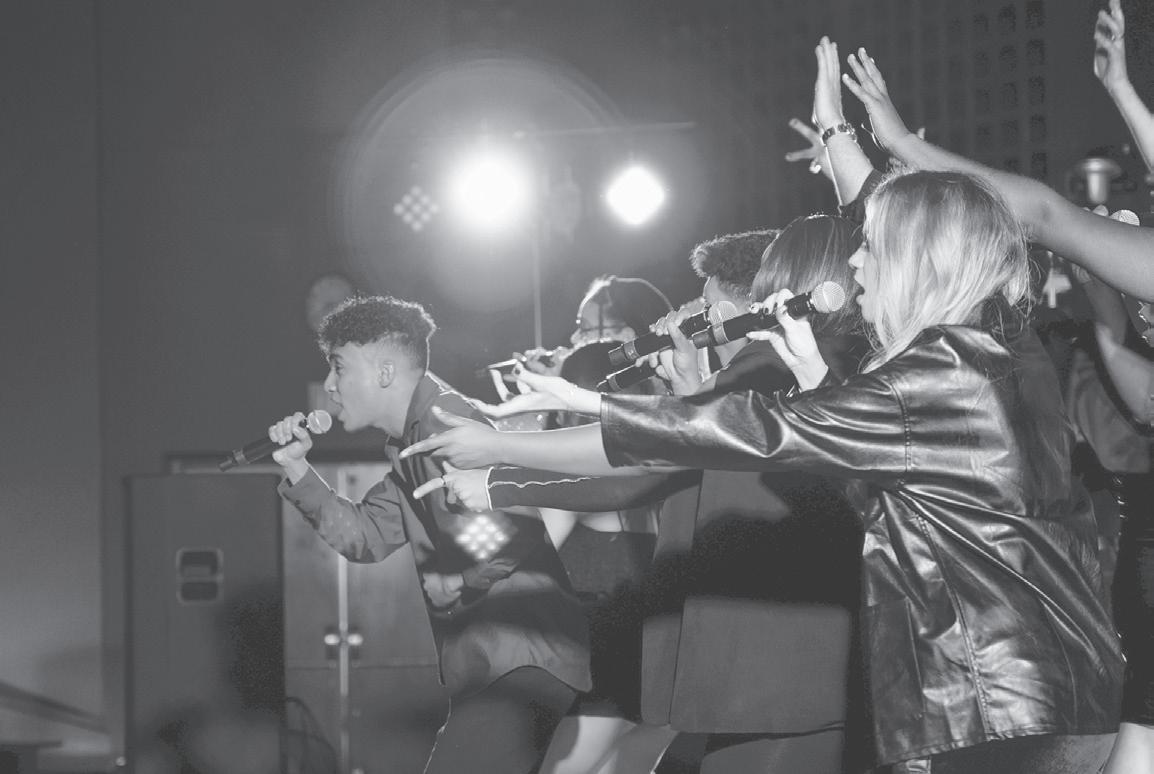
Cornell’s more than 10 a cappella groups represent a diverse range of music genres, cultural focuses and membership criteria. However, all of these groups provide singers with a space to build friendships and pursue musical passions.
A cappella music refers to singing performances that do not utilize instrumental accompaniment.
At Cornell, singing groups utilizing this art form fall under the A Cappella Advisory Council, an umbrella organization that provides funding and organizes logistics for all campus a cappella groups. On Sunday, the organization also hosted its annual A Cappella United, where attendees enjoyed performances from 12 a cappella groups in Call Auditorium.
Several a cappella groups concentrate on music relating to a specific culture. Baraka Kwa Wimbo — which means “blessing through song” in Swahili — was established in 1991 as an all-female, gospel ensemble. Their mission is to spiritually and culturally uplift the Cornell community and sur-
Baraka president Cynthia Agbemenu ’25 described that Baraka is unique among campus a cappella groups, because their overall purpose is to minister.
“We’re very niche — we’re all black women [and] we sing gospel music,” Agbemenu said. “What sets Baraka apart is that we put God first in what we do. … When we perform, we select songs that speak the gospel that is ministering the word of God to people’s hearts.”
Baraka’s musical director Alexia Carey ’23 noted that the group works to balance their historical background with modern musical elements.
“[When selecting music,] I think of sounds created for Baraka in the past while also trying to fit it in with what people are listening to these days,” Carey said. “I ask myself questions like, ‘What are people responding to these days?’”
Ivie Osagie ’26, a member of Baraka, decided to audition for the group after being inspired by one of their performances.
“Singing is something I’ve done my whole life. I’ve sung in church and school settings,” Osagie said. “[Baraka] had a pop-up performance in one of the dormitories, and I saw them sing, and I was really moved. So I auditioned and joined, and I’m thrilled I made that decision.”
Tarana, which is Cornell’s only South Asian a cappella group, similarly combines South Asian music with modern Western music.
For Lasya Ravulapati ’23, joining Tarana allowed her to find a community with individuals of similar cultural backgrounds.
“The school I transferred from was not very diverse, and I really wanted [a cultural experience] coming in [to Cornell],” Ravulapi said. “I also loved singing different languages and my mother tongues. I thought it’d be cool to really capitalize on diversity — specifically, Cornell’s big South Asian community.”
Tarana prides itself in the style of music the group utilizes. Divya Raina ’23, musical director of Tarana, mentioned how they mix music genres in their selections by arranging their own music.
“We choose our arrangements and make them all in-house,” Raina said.
To continue reading this article, please visit www.cornellsun.com.
By ERICA YIRENKYI Sun Contributor
High notes | A cappella groups sing without instrumentals — Cornell has over 10 acapella groups, which fall under the A Capella Advisory Council.
COURTESY OF JONATHAN KIM ‘24
Erica Yirenkyi can be reached at emy28@cornell.edu.
TRUSTEE
Continued from page 1
& & &
Locally Grown Dance Takes a Bold Leap
EMILY PUGH SUN CONTRIBUTOR
American modern dancer and choreographer Martha Graham once said that “great dancers are not great because of their technique, they are great because of their passion.” While watching the Performing and Media Arts Department’s recent production of Locally Grown Dance, I experienced the dancers’ visceral joy and passion for the work they were showcasing.
Held in the Schwartz Center for the Performing Arts’ Kiplinger Theater on March 9, 10 and 11, Locally Grown Dance featured a series of student dance performances choreographed and spatially organized by student, faculty and guest choreographers. These nine pieces were comprised of four longer performances, Ariadne’s Noose, Beautiful Monsters, Unraveling and CRICKET, that were interspersed with five shorter pieces or interludes. All of these works were supported by live and pre-recorded music, beautiful costumes, vivid lighting and scenic design. Although all of the performances were captivating to watch, some of the standouts of the night included Ariadne’s Noose, Beautiful Monsters, CRICKET and the interludes that introduced the audience to the atmosphere of the pieces following them. Starting off the production, Interlude No. 1 (Prelude) drew the audience into this bold world of dance. Dancer Annika Deutsch ’24 delivered a performance that contrasted flowy yet heavy movements.
The audience witnessed a person’s struggle to rise as emphasized by Deutsch’s shadow being cast onto a yellow screen behind her, looming over and almost swallowing her throughout the piece.
Following the first interlude, Ariadne’s Noose, the longest and most resource-intensive performance of the production, continued to build on the theme of struggle and the overwhelming feeling of being lost. Taking inspiration from the Greek myth of Ariadne, who helped guide her lover Theseus out of the Minotaur’s Labyrinth with a thread, the piece metaphorically represented the many mazes we face in our own lives. Guided by the thread of the soaring sopranos Sarah Lynch ’25 and Jenny Park ’23, the dancers portrayed the complicated reality of overcoming obstacles while still feeling lost - a relevant theme given the collective confusion and feelings of lostness precipitated by the pandemic.
The next performance piece, Interlude No. 2, showcased stronger group movement. Bathed in green light and wearing stunning chiffon costumes designed by artist Kumi Korf, dancers Annika Deutsch ’24, Charlotte Hee ’24 and Anna Rose Marion ’25 captivated the audience as they reached out to us and their fellow dancers, echoing each other with synchronized circular movements that, along with the verdant lighting and costumes, artistically portrayed the natural world.
Although short, this sharp and dynamic piece acted as the perfect introduction
to Beautiful Monsters, the second longer performance piece before intermission. Featuring unique video design by veteran dancer Olive Prince and Schwartz administrator Steven Blasberg, Beautiful Monsters saw smoke overwhelming the scrim and the dancers trying to find each other, pushing through the projected smog and fumes. Incorporating the circular, synchronized group movements of the prior interlude and supported by static, intense electronic music, Beautiful Monsters highlighted the erosion of nature and relationships in a seemingly dystopian world that, thanks to climate change, may not be so far from our own.
After intermission, the pieces took on a livelier, lighthearted tone, directly contrasting the increasing darkness of the prior performances. For instance, Interlude No. 4 featured a group of ten dancers twirling and running onstage to the upbeat score of Steven Reich’s “Drumming.” Wearing similarly vivid chiffon costumes as those seen earlier during Interlude No. 2, the dancers whirled across the stage like monarch butterflies, creating a tornado of colors in their flight. Besides creating an aesthetically pleasing piece, the interlude succeeded in lifting the spirits of the audience and adequately transitioning into the high-energy, group focused Unraveling and Interlude No. 5.
Ending the night, the performance culminated in another long piece, CRICKET Through dancer and choreographer Miles Yeung-Tieu’s choreography, danc-
ers Annika Currie ’25, Trent Edwards ’23, Colton Edwards ’23, Charlotte Hee ’24, Austin Johnson ’26 and Anna Rose Marion ’25 showcased the beauty of specific, minute movements amidst the complexity of larger ensemble choreography. Further supporting the choreography and highlighting the dancers’ talent, the set and lighting slowly faded throughout the piece, transitioning from a white backdrop with colorful lighting to a bare stage with minimal lighting. As more design elements were stripped, the audience was able to focus on the dancing as the performers were left with lots of empty space and, eventually, no music to inform their movements. Although striking and perhaps confusing for some audience members, the final image of the six dancers moving through space and embracing the rhythm of their breath and heartbeat demonstrated how dance is enough of a spectacle on its own. Sitting in the Kiplinger Theater and watching the beautiful, bold and abstract performances captured onstage in Locally Grown Dance, it became clear that the goal of dance is not to be understood or to give answers, but to be experienced. The united passion of the musicians, designers, choreographers and dancers created a work that was truly great.
Emily Pugh is a junior in the College of Arts and Sciences. She can be reached at eep65@cornell.edu.
Below Ocean Blvd and Into the Mind
JACKSON
FELDMAN
SUN CONTRIBUTOR
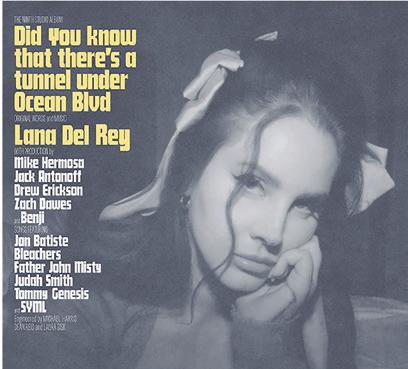
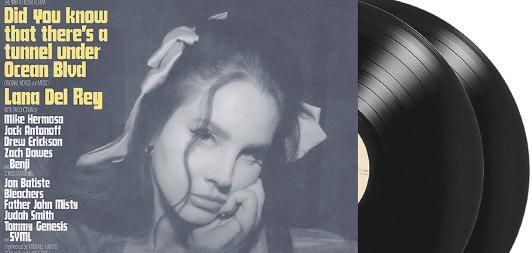
“When you’re good, it’s gold,” Lana Del Rey reminds us on the track “Margaret” from her ninth studio album Did You Know That There’s a Tunnel Under Ocean Blvd, released on Friday, March 24. The singer-songwriter Del Rey’s ability to convert singular, diaristic stories into beautiful folk-pop melodies — and some surprise hip-hop-influenced tracks harkening back to her Born to Die era — underwrites this proposition: When Lana is good, emotionally and spiritually, she’s gold.
Del Rey’s early albums, too, felt like a storybook, but one that was ultimately a deliberate creation. Listeners became accustomed to her tales of “facin’ time again at Rikers Island” in Born to Die (2012) and “dying by the hands of a foreign man” on Honeymoon (2015). Yet, since her critically acclaimed 2019 album Norman F*****g Rockwell , there has increasingly been a convergence between “Lana Del Rey” and Elizabeth (Lizzy) Grant, the real life New York-raised artist who caught fame at the dawn of the Instagram era.
Her latest release marks their long-awaited unification. She directly addresses her now
decade-long struggle of managing both the public’s and her own perception of herself on tracks such as “A&W” and “Grandfather Please Stand on the Shoulders of my Father While He’s Deep-Sea Fishing” (yes, that’s the full title). She frequently name-drops her brother and sister, and all the integral figures in her life, from
Light In,” a tender duet with folk rocker Father John Misty that’s perfect for belting out on a late-night ride. However, even with all this difficult soul searching, Lana finds time for fun. “A&W” opens with the tough acknowledgement that she “hasn’t seen her mother in a long, long time.” Yet, we sense a
cocoa puff” returns a hip-hopinspired Del Rey that has only occasionally resurfaced since her 2012 mainstream debut.
For those who have become disenchanted with the artist as she has increasingly oriented herself in an alternative folkpop direction in her post- NFR releases, the last three songs on this 78-minute record are sure
her father to her fortune-teller, find a place on Ocean Blvd. At points, it even feels like we’re present with Del Rey, eavesdropping on everyday galavants with her lover through Southern California. Moment by moment she describes, “[I] Pick you up at home, quarter to three / Ask you if you want somethin’ to eat” on “Let the
frank, daring version of Lana is approaching when she states plainly in the track’s initial chorus, “No, this is the experience of bein’ an American whore.” As this line ominously fades out, an electronic beat floods in, and the bass kicks up. The song’s distinct second part, peppered with playful, hypnotic chants of “Jimmy, Jimmy,
to alleviate some of this discontent. Rapper Tommy Genesis’s feature on “Pepper” delivers a summer-ready punch, and Del Rey peps up past single “Venice Bitch” with an electronic remix that concludes the album.
Although Del Rey’s work might have advanced further into a representation of her authentic reality, defiantly
unaffected by others’ desires to frame it differently, those entranced by her mystique of imperfect love and vice can be reassured that these themes have not gone away with her subversion of past (mis)representations. She’s still there with the men who are “actin’ pretty reckless / dancin’ like the young and restless” in “Candy Necklace” and beckoning her lover to the club in “A&W.” Yet, we now get the full picture: she’s also live-streaming her pastor’s sermon in “Judas Smith Interlude” and expressing her love for her niece in “The Grants.” Lana Del Rey, in all her glamor and fame, has always been the real person Lizzy Grant, and Lizzy Grant, as she penned her captivating narratives that put her in the spotlight of global fame (and critique), is Lana Del Rey.
“I just needed two seconds to be me,” she explains on the album’s track “Fingertips.” Did You Know That There’s a Tunnel Under Ocean Blvd is those two seconds. Now is your chance to unseal the tunnel’s hidden glory — and the tumult and joy that comes with being both Lizzy Grant and Lana Del Rey.
Jackson Feldman is a sophomore in the College of Architecture, Art & Planning. He can be reached at jef289@cornell.edu.
The Corne¬ Daily Sun
ANGELA BUNAY ’24
Editor in Chief
SOFIA RUBINSON ’24
SONG ’24
EICHER ’24
PACITTO ’24
Aurora Weirens Te Northern Light
Aurora Weirens is a sophomore in the College of Arts and Sciences. She can be reached at afw46@cornell.edu.Te Northern Light runs alternate Sundays this semester. 141st Editorial Board
REILLY ’25
HEGDE ’24
on Te Ground: Te
Situation
Women's Athletic Gear at Cornell
It all started with a pair of ill-fitting, droopy sweatpants. Saggy in the wrong places, tight in even worse places — they were unwearable. I gave them to a male friend. They fit him perfectly. My teammates and fellow athletes on other women’s varsity teams encountered similar grievances with these sweatpants, because they were not made for women. They were men’s pants. They simply wouldn’t stay on, and even if they did, they looked awful.
Keep Ithaca beautiful. Please recycle this paper.
SUBMIT A LETTER TO THE EDITOR OR GUEST COLUMN
Want to give your take on a campus issue?
The Sun thrives on your feedback. Continue the conversation by sending a letter to the editor or guest column to associate-editor@cornellsun.com.
Letters should be no longer than 250 words in length. Columns are 700-900 words.
Please include graduating year if applicable.
All voices welcome.
These notorious sweatpants were mass-issued by Cornell Athletics to their athletes earlier this school year. For background, the Cornell Athletics Department issues a multitude of assorted clothing items to their athletes prior to and throughout their seasons.
Don’t get me wrong, I’m not one to complain about free merch. As a student-athlete, getting to strut around campus in official gear is a serious perk of being on a sports team. During my first season on the women's crew team, I excitedly waddled to the Teagle gear pick-up and was… a bit disappointed. For a D1, Ivy League sports team, it was an underwhelming selection. A lot of it was just men’s clothes that weren't very flattering. I was issued the most hideous shorts I’ve ever worn in my life (men’sstyle baggy basketball shorts), part of our mandatory lifting uniform that we’ve only discontinued this academic year. We looked like a poorly-funded middle-school gym class. Although the shorts situation has improved, we still wear men’s-cut shirts to lift in.
across campus are seen in, although they are a fantastic message and symbol of unity, are all men’s sizes. It’s very common for men to be seen wearing them on campus, but I don’t think I’ve ever seen a woman wearing one. They’re just not that flattering for women to wear.
An additional point is that even if Cornell does order items in women’s sizes, they understock for women and overstock for men. I’m not sure why, but I’m familiar with the realities of the result. We are coached and taught to pick up our clothing promptly, before the women's sizes run out and there are only men’s sizes left. Why are the men not cautioned to hurry and get their merch, otherwise they’ll get stuck with women’s clothing? What if you saw the men's football team warming up, and half of them were wearing bootie shorts for women because they ordered a surplus of
is supposedly a progressive institution with a $9.8 billion endownment.
women’s sizes and could only outfit half the team in men’s sizes? This would be considered unacceptable.
I think it would be fair to say that Cornell would never mass-distribute women’s pants or any other women's clothing item to the male athletes here, nor rely on women’s size surpluses to outfit them. Nor would the men's team tolerate it. So why is it the default that women conform to this standard? It isn’t just about clothes, it’s about belonging and inclusivity. Cornell is supposedly a progressive institution with a $9.8 billion endowment. Why should any members of our D1 women’s varsity sports teams have to train and live in school athletic apparel made for men?
Normally I’d say, “So what? Who cares? There’s hardly a difference in shirts at that point.”
But in this situation, I care because it’s not fair. Why do we look like a bunch of middle schoolers while our men's teams are outfitted in flattering clothing and actually look like D1 athletes?
Earlier this semester, we got an email requesting us to fill in our sizes for next year's athletic gear. The email said, word for word, "We are ordering in men's sizes for everything.” That’s just how it is. Additionally, our Ivy League “8 Against Hate” shirts, the iconic outfit athletes
I’m confused. I know women’s athletic clothing exists. I know Cornell has the money to pay for it. It’s not a matter of money, it’s a matter of prioritizing. Why isn’t Cornell prioritizing equality in athletics, and do they ever plan on prioritizing it? What’s happening in the administration to make positive change? Cornell frequently has showy and highly publicized women empowerment events for their athletes, but I believe their resources would be better used for direct action, not glittery hogwash. Cornell needs to do better. Women athletes put in the work for Cornell, and Cornell needs to put in the work for them. Or at least give us pants that stay on.
Turtle Trouble
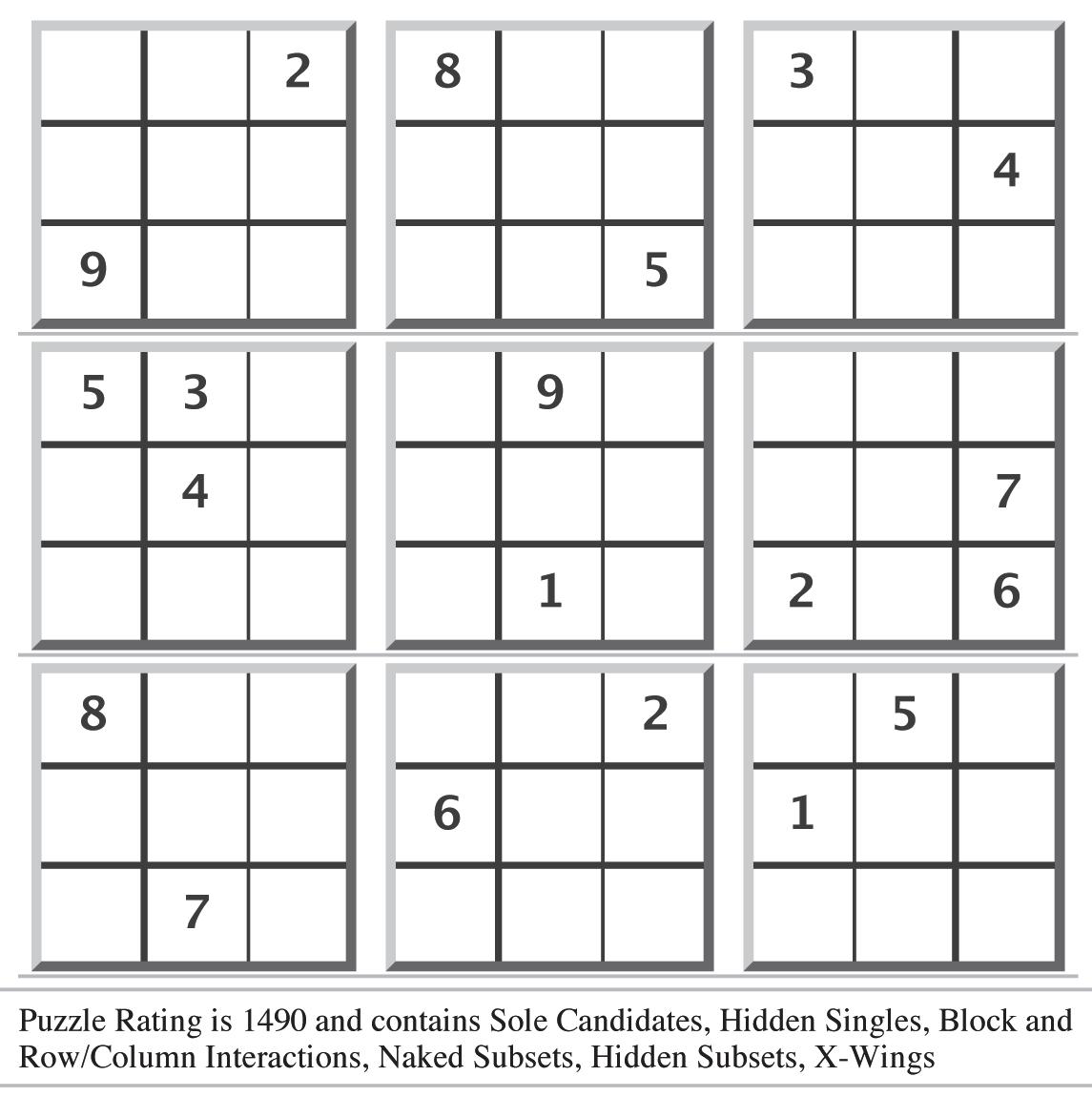
Fill in the empty cells, one number in each, so that each column, row, and region contains the numbers 1-9 exactly once. Each number in the solution therefore occurs only once in each of the three “directions,” hence the “single numbers” implied by the puzzle’s name. (Rules from wikipedia.org/wiki/ Sudoku)
Daddy
Men’s Hockey
Men’s Hockey Falls in Regional Final
Te Red’s season ended in a 2-1 loss to Boston University on Saturday
MANCHESTER, N.H. – Men’s hockey fell to Boston University, 2-1, on Saturday, ending its NCAA Tournament run in the quarterfinals.
With the loss, Cornell ended its season one game short of the Frozen Four. The team has lost six regional finals since its last Frozen Four appearance in 2003.
“As a coach, I’ve only been in the Frozen Four once and it stings not to get there,” said head coach Mike Schafer ’86.
The Terriers scored the first goal, and Cornell never generated enough pressure to mount a comeback. The Red only fired 14 shots, many of which B.U. goaltender Drew Commesso tracked without issue.
In a tight game, the Red was not able to overcome a few sloppy plays against a B.U. team with fluid-skating forwards and rock-solid defenders.
Cornell got off to a hot start in its regional semifinal on Thursday against Denver, but was more tentative on Saturday. The Terriers controlled the pace of the first few minutes and challenged sophomore goaltender Ian Shane early.
Notably, BU’s Quinn Hutson collected a Jack O’Leary turnover and got a partial breakaway before O’Leary hustled back to break it up. Shane also came up with a couple of saves on the ensuing offensive zone possession by the Terriers.
The Red extended its consecutive kill streak to 18 before Luke Tuch went off for roughing. Cornell came up empty on its first power play.
Unlike in its win against Denver two days ago, the Red was unable to get on the board quickly, and thus could not dictate play as it would with a lead. The teams went to their locker rooms after a scoreless first period.
“In hockey, it gets to that point in time, you know how important that
the offensive zone. Despite a few quality chances from the Terrier power play unit, Shane and the Red penalty kill successfully fended off its 19th straight kill.
Once again, the Terriers followed their power play with a penalty of their own, this time for having toomany-men on the ice. The Red generated more chances on its second power play of the game, but could not get the puck past Commesso.
The majority of the Red’s shots were
The Red started to apply more pressure midway through the period. A long shift resulted in a few good looks at the net, but Commesso made a series of saves to keep the game scoreless.
The second half of the period featured the game’s first special teams action. Each team took and killed a penalty. First, freshman forward Winter Wallace was called for tripping with just over four minutes left.
first goal is,” Schafer said. “We scored against Denver first and we were able to do some things differently.”
The Terriers’ pressure and fast-paced play finally paid off not long into the second frame, when Wilmer Skoog received a nifty pass from the far corner and one-timed it past Shane. The pass was the result of a Cornell turnover and blown coverage on Skoog.
Cornell’s penalty killers were put to the test once again when senior forward Zach Tupker went off for a crosscheck in
taken from the perimeter, allowing Commesso to see them all the way.
“We made a mistake, they capitalized on it,” Schafer said. “We had a good power play to try and make it 1-1.”
Commesso got a lucky break when a puck deflected off a stick in the lane and went past his helmet before hitting the crossbar and bouncing the other direction.
“You look back and wish you could’ve done things differently throughout the game, like bury that chance or not hit the post,” said senior defenseman Travis Mitchell.
Later in the period, puck luck was in the Red’s favor – a turnover at Cornell’s offensive blue line led to a breakaway by B.U.’s Quinn Hutson, who fired a shot that rang off the post.
The Red entered the second intermission down 1-0.
“You go in the third period, you got to try and stay the course,” Schafer said.
Cornell was much better at defending a lead than chasing a deficit this season. The Red went 19-0 when leading after two periods but entered Saturday 2-102 in games where it was tied or trailing heading into the third period. Before B.U.’s second period goal, the Red had not played from behind since Feb. 18.
“Cornell is a very good team when they have a lead, so I think it was important for us tonight to get that first goal and see if they will press a little
bit,” said B.U. head coach Jay Pandolfo. It took nearly half the period for either team to get a quality look in the third, as both forechecks prevented zone time on either end. However, it was the Terriers that eventually broke through when Ethan Philipps buried his own rebound to give B.U. a 2-0 lead. Cornell received a third power play opportunity not long after but was once again blanked and unable to generate much meaningful offense. The Red went scoreless on six power plays across its two NCAA Tournament games. From there, Cornell’s offense was shut down by the Terrier defense. The Red had difficulty getting passes through Terrier sticks and failed to generate chances in front of the net. Cornell only put three shots on target in the third period. The Terriers blocked 21 shots during the game.
Shane was pulled with just over two and a half minutes remaining in the game, giving the Red one final opportunity to eat at B.U.’s lead. Cornell was able to establish some zone time, but the Terriers complicated things by creating turnovers and firing attempts toward the empty net. Cornell made things interesting when freshman forward Dalton Bancroft flicked a puck toward the net and it bounced in off a
“These kids are what it’s all about. I’m so proud of them. COVID-19 canceled their season, they didn’t blink... First class integrity character, never quit. Proud coach.”
Head Coach Mike Schafer ’86
B.U. skate to bring Cornell within one with 28 seconds remaining. However, it was too little too late. Mitchell had a look at the net with just seconds remaining but shot it wide and Bancroft’s attempt on the rebound was blocked. The loss marks the end of the road for Cornell’s 2022-2023 campaign and the last time its seniors will don the carnelian and white.
“These kids are what it’s all about,” Schafer said of his seniors. “I’m so proud of them. COVID-19 canceled their season, they didn’t blink… First class integrity, character, never quit. Proud coach.”
Jane McNally can be reached at jmcnally@cornellsun.com. Aaron Snyder can be reached at asnyder@cornellsun.com
On to the offseason | The Red will have to wait to break its 20-year Frozen Four drought.
MATT DEWKETT / CORNELL ATHLETICS
By JANE McNALLY and AARON SNYDER Sun Staff Writers
A season to remember | Despite losing to Boston University, the Red reached the quarterfinals for the first time since 2019.