The Corne¬ Daily Sun


By OLIVIA WEINBERG
Sun Staff Writer
As alarms blared at 3:30 a.m. on Monday morning, bleary-eyed, pajama-clad students trudged through puddled carpets on their way out of Low Rise 6.
Monday’s sprinkler malfunction was the second time this semester that Low Rise 6 experienced flooding — the last time because of a burst pipe on Jan. 31. Once again, furniture was pushed back to make way for water vacuums and fans
in an effort to remove the pooling water from the carpet, now twice stained over.
“I was just eating cereal and then the ceiling decided to rain straight down onto me,” Johnathan Hsu ’22 said. “The water was brown and smelled like the color looked.”
Water soaked onto the floor, Hsu said, damaging his power strip and his chargers. Residents of the freshman dormitory were able to go back inside within 30 minutes of the alarm going off, amidst a smattering of
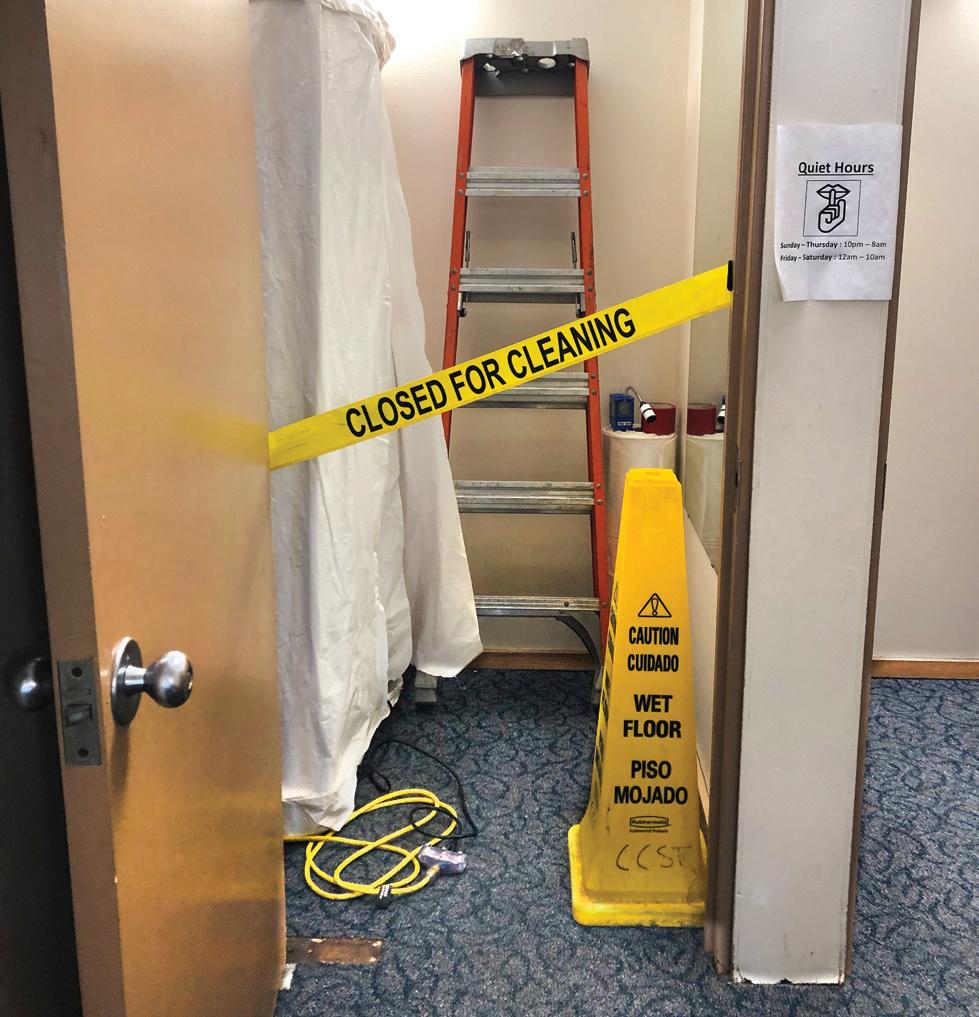
firefighters and facilities workers. In the process of cleaning the building following the sprinkler malfunction, one of the seven-person suites had to be closed for potential asbestos abatement, according to an email sent to residents from Residence Hall Director Mark Schneider. Schneider also told residents that “crumbs of material were knocked loose,” and, while it is not confirmed that this material is asbestos, federal regulations man-
By SOPHIE ARZUMANOV Sun Contributor
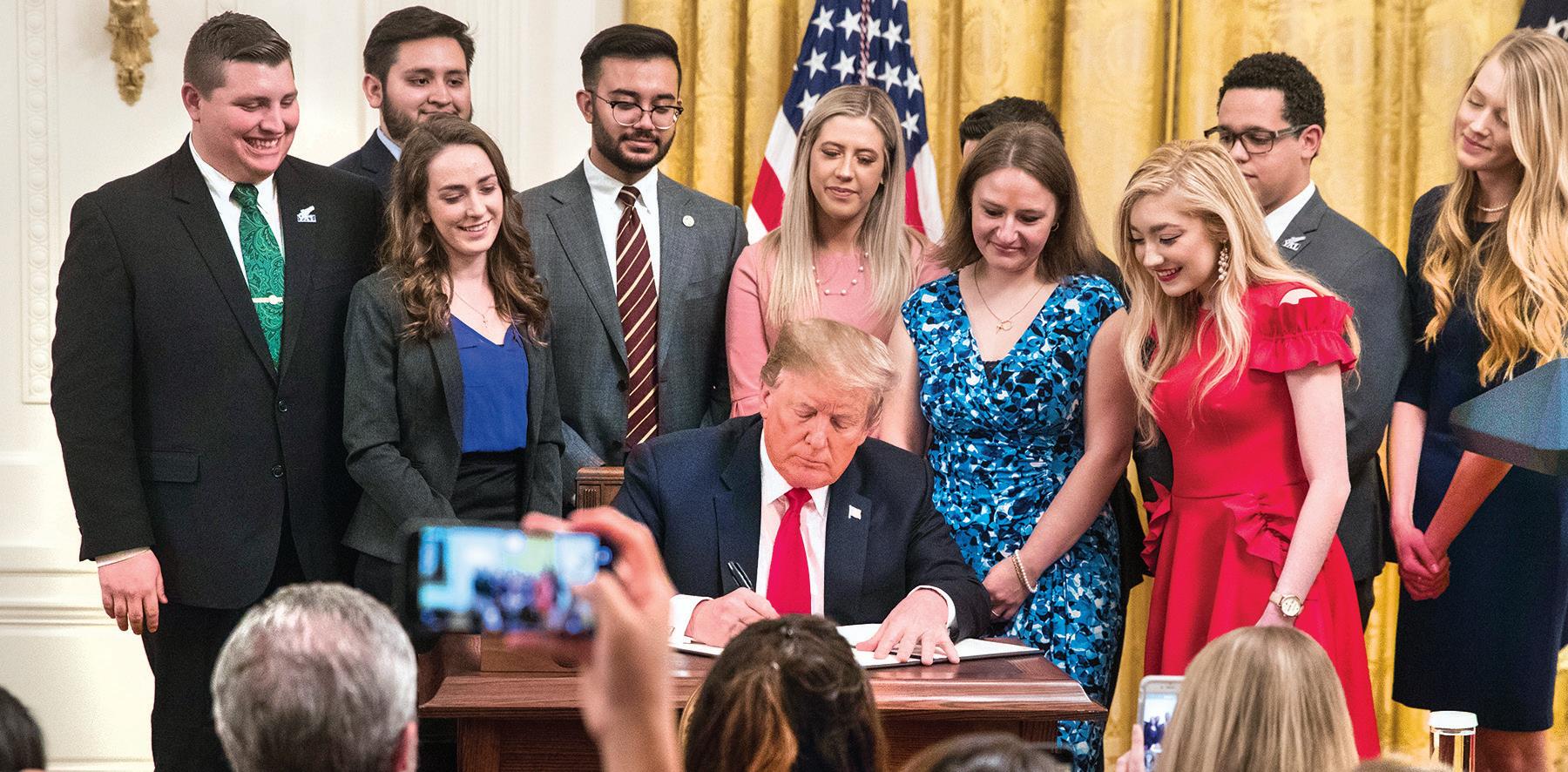
Last Thursday, President Trump signed an executive order stating that colleges and universities receiving federal research funding and education grants must uphold free speech and “avoid creating environments that stifle competing perspectives” or risk losing their funding.
Despite its land-grant colleges — which receive money from New York State — Cornell will likely operate as a private institution, avoiding susceptibility to the order while maintaining its own free speech standards, student leaders said.
The order, fully titled “Improving Free Inquiry, Transparency, and Accountability at Colleges and Universities,” states that its primary purpose is “to enhance the quality of postsecondary education by making it more affordable, more transparent, and more accountable.” The executive order has been criticized for being redundant with the First Amendment.
“My initial reaction was ‘why now?’ and ‘why is Trump reminding us of what we already know?’” Carson Sheinberg ’21 questioned. “I thought the order itself was
extremely vague in terms of what it actually stipulated.”
Trump was surrounded by more than one hundred conservative student activists from various schools during the orders’ signing on Thursday, according to the Washington Post. Much of the support for the executive order stems from rightwing individuals and groups that have been barred from speaking on college campuses, the Post reported.
Two years ago, former editor of Breitbart News Milo Yiannopolous’ speech at the University of California, Berkeley, was canceled hours before due to uproarious student protests, sparking a national discussion of free speech on college campuses.
In response, President Trump tweeted, “If U.C. Berkeley does not allow free speech and practices violence on innocent people with a different point of view - NO FEDERAL FUNDS?”
Conflicts regarding how to handle controversial speakers have also transpired on Cornell’s campus. In 2017, the Cornell Political Union invited Michael Johns Sr., the National Tea Party movement
Cornellians weigh in on the long-anticipated results
By ALEX HALE Sun Staff Writer
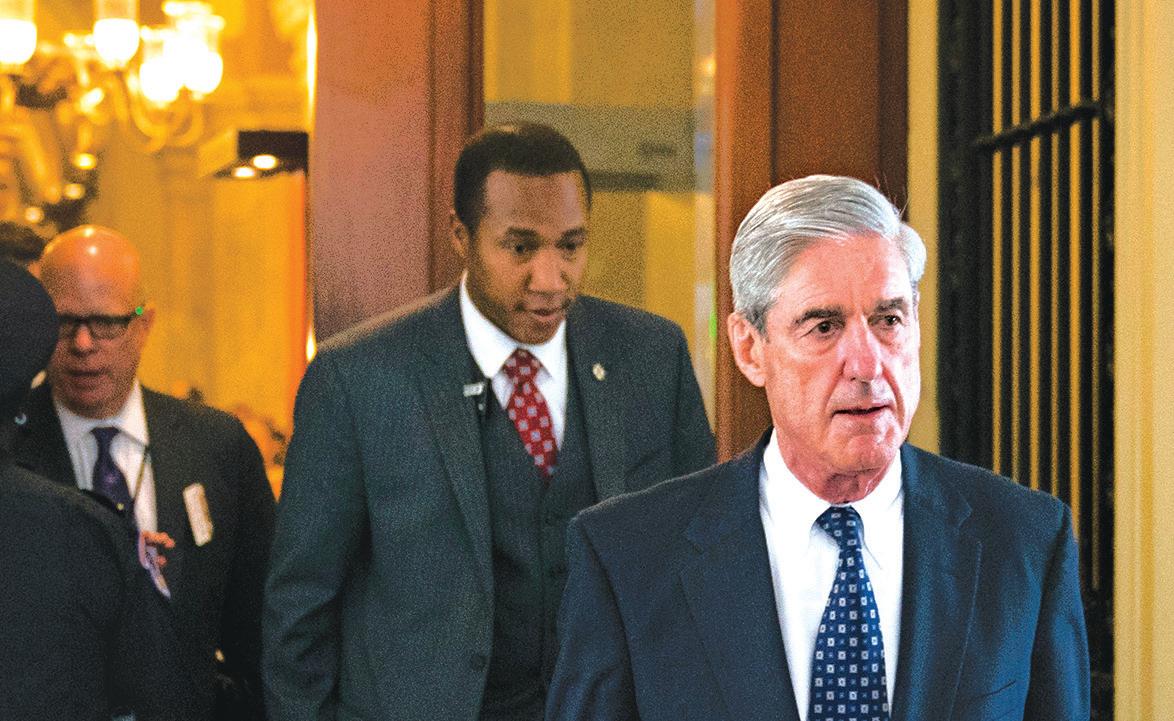
On Sunday, Attorney General William Barr released his summary of special counsel Robert S. Mueller III’s investigations into foreign influence during the 2016 presidential election. Reactions to the release varied amongst Cornell professors, alumni and student leaders.
Mueller's report, titled the “Report on the Investigation into Russian Interference in the 2016 Presidential Election,” was the
result of years of examining potential collusion between the Russian government and President Trump’s campaign team during the 2016 election. It concluded that there was no strong evidence that Trump’s team was involved in Russian hacking and attempts to sway the American vote through social media efforts.
Secondly, the report states that some of Trump’s public actions have been investigated for potential obstruction of justice charges. After investigation, the Special Counsel decided not to make a “traditional prosecutorial judgment” and did not rule Trump guilty or not guilty.
“While this report does not conclude that the President committed
“[T]he investigation did not establish that members of the Trump Campaign conspired or coordinated with the Russian government in its election interference activities,” the report states.
Tuesday, March 26, 2019
Separating Genes from Gene-like Sequences in Maize and Sorghum 12:20 p.m., 135 Emerson Hall
Fake News, Alternative Facts and Misinformation: Leaning to Critically Evaluate Media Sources 3:30 - 4:30 p.m., B05 Uris Library
Adelante Coffee Chat 4:30 p.m., 429 Rockefeller Hall
J.P Morgan Asset and Wealth Diversity Info Session 4:30 - 6 p.m., 401 Warren Hall
Women In Computing at Cornell: Springboard Your Personal Brand 5:30 - 7 p.m., Tatkon Center
Displacing Carvaggio: A Take on the Humanitarian Visual Culture Today 5 p.m., KG42 Klarman Hall
Olin and Uris Libraries Design Research Workshop 5 - 6 p.m., 106 Olin Library
A Tale of Two Peoples: Phoenicians and Jews in the Land Beyond the River 6 p.m., Kaufmann Auditorium, Goldwin Smith Hall
a Chats in the Stacks event.
Free Study Skills Peer Tutoring 7 p.m., Tatkon Center
John Haines-Eitzen Trio: C.U. Music 8 p.m., Barnes Hall Auditorium
Free Meditation and Tea 8:30 p.m., G27 Becker House
Migration as Decolonization 12:15 - 1:15 p.m., 182 Myron Taylor Hall
The Secret Ingredient of Effective Language Teaching 12:15 - 1:15 p.m., G25 Stimson Hall
Midday Music for the Organ 12:30 - 1:15 p.m., Anabel Taylor Hall
Transition of Son Preference: Evidence from South Korea 1:15 - 2:45 p.m., 102 Mann Library
ReGeneration Exhibit Opening 2 - 3:30 p.m., Jill Stuart Gallery, Human Ecology Building
Lisa Schonberg and Secret Drum Band 4:30 - 6 p.m., 233 Plant Science Building
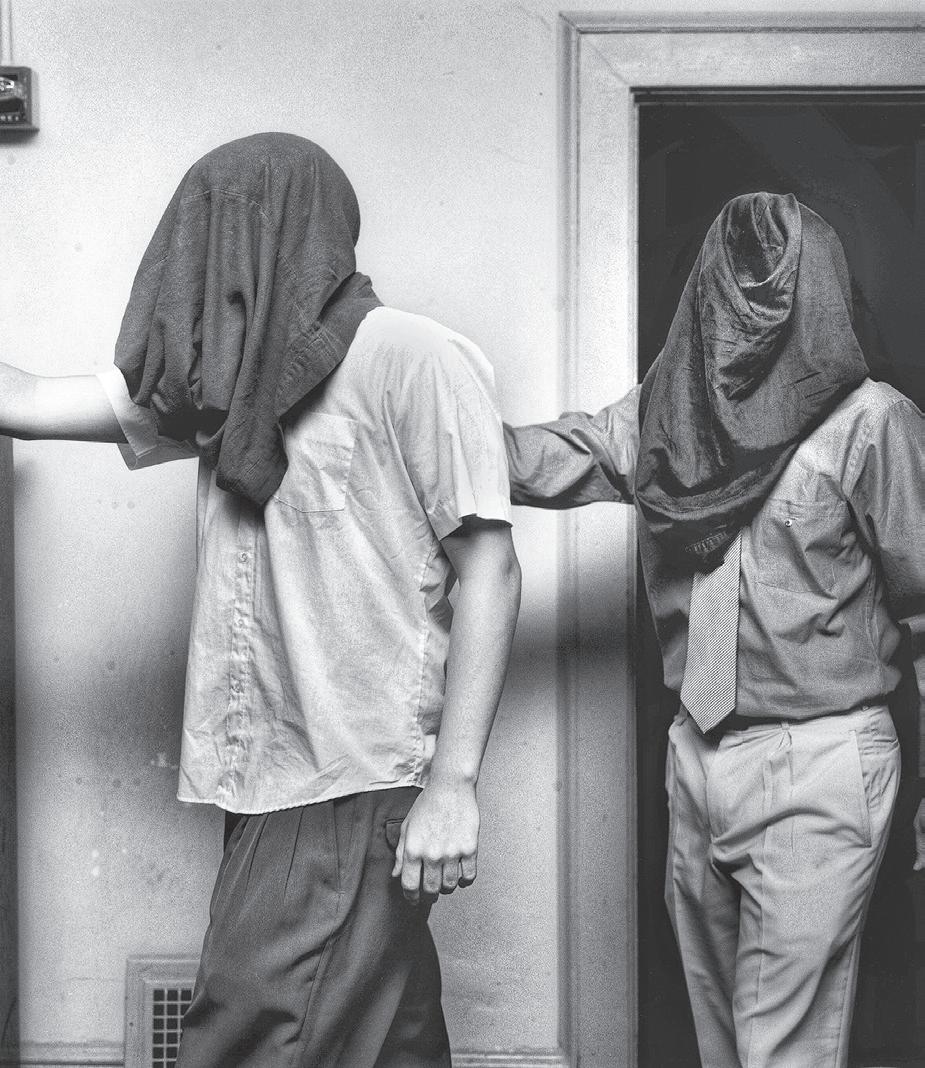
The American Fraternity: An Illustrated Ritual Manual 4:30 - 5:30 p.m., 106G Olin Library
Inside the Mossad: Facts and Fictions of Israel’s National Intelligence Agency 5:30 - 7 p.m., 132 Goldwin Smith Hall
Game Night
6 - 9 p.m., Memorial Room Williard Straight Hall
By KATHRYN STAMM Sun Contributor
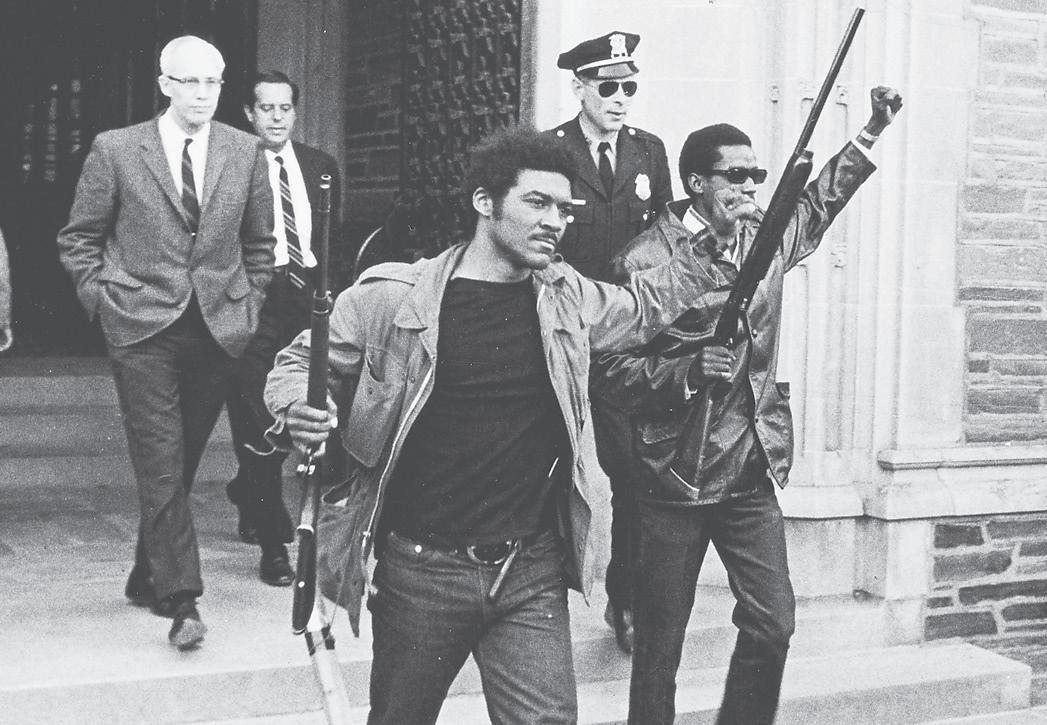
This April marks the 50th anniversary of the Willard Straight Hall occupation and the resulting founding of the Africana Studies and Research Center. A two-day symposium will commemorate the historic events on April 12 and 13.
The Willard Straight takeover on April 19, 1969, was largely a response to the University’s
“There has to be an understanding that there are some issues that persist and that there’s a long way to go.”
Prof. Riché Richardson
ill-preparedness to address the needs of an increased population of matriculated black students. That morning, approximately 100 black students entered Willard Straight Hall and evacuated the people inside. After holding the building for 35 hours, the students emerged to meet with administrators, who eventually signed a seven-point agreement.
The “takeover” brought about many changes, including the establishment of the ASRC, creation
of Ujamaa Residential College and the resignation of the President and many faculty.
The free symposium will bring together various voices to honor the legacy of Prof. Emeritus James Turner, African and African American Politics and Social Policy, and his role in the black student movement and the development of Africana studies at Cornell. Turner was also the founding director of ASRC.
The event will be centered on dialogue about Turner’s impact on students and activists, according to Prof. Riché Richardson, African-American literature, chair of the ASRC Programming Committee. It will also launch a year-long series of events to further commemorate 50 years of the ASRC.
The first day will focus on Turner’s scholarly impact, including faculty member tributes, a library presentation of videos and a panel of his former students.
The second day will center on his impact on activists. Events will include a panel of former faculty who will reflect on his institution-building model, a panel of Turner family members and a keynote address by Prof. John Bracey, Afro-American studies at the University of Massachusetts at Amherst.
In comparison to past commemorations of the
By TAMARA KAMIS Sun Contributor
“Crisisline, may I help you? What is happening for you today?”
These words begin each of the approximately 450 calls that the Suicide Prevention and Crisis Service Crisisline receives every month from people in the local Ithaca area looking for support and from people seeking advice as they support others.
SPCS was established in 1969 by Rev. Jack Lewis, director of Cornell United Religious Work, after several people died by suicide the previous year. The SPCS Crisisline, based in Tompkins County and serving 10 additional New York counties, is part of the National Suicide Lifeline system.
Crisisline in 2004, and joined the staff in 2006.
Corazón walked The Sun through a typical call. “We listen, and towards the end of the call, we help them come up with an after-call plan. If they are having thoughts of suicide, we come up with a safety plan with them. If they don’t have thoughts of suicide, we ask about what steps they are going to take after the call.”
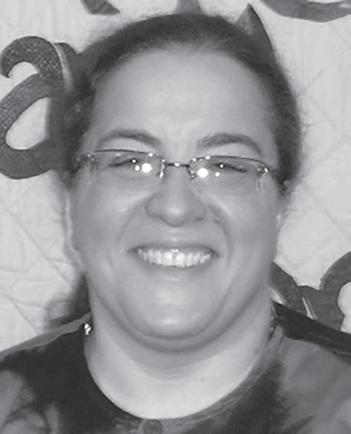
Corazón has five paid staff and six volunteers. Some of the volunteers are college students, including Cornell students. These students, like all Crisisline workers, receive 47 hours of training in preparation to handle calls.
After the Tompkins County Mental Health clinic closes for the day, the Crisisline takes calls from their clients through the night. All Crisisline workers are trained, supervised and supported by Micaela Corazón, the Crisisline director.
Corazón brings 40 years of public health work experience to her work as Crisisline director. She started volunteering in San Francisco in the 1980s, during the height of the HIV epidemic.
“I volunteered with an AIDS service agency to figure out a way to help my friends, who were in their 20s and 30s and were dying,” Corazón said in an interview with The Sun.
After moving to Ithaca in 2000 after 20 years in San Francisco, Corazón became the regional director for AIDS WORK of Tompkins County and the Southern Tier AIDS program. She started as a volunteer on the SPCS
“Some of the best college student volunteers had EARS training at Cornell, because they already have the basic tools of non-judgmental, active, empathic listen-
“Mental health care is a cultural milieu. If you are going to offer mental healthcare to everyone, it is not one size fits all.”
Micaela Corazón
ing,” Corazón said.
The Empathy, Assistance and Referral Service, or EARS, is Cornell’s free, anonymous peer counseling service. Volunteers go through up to 11 weeks of training in preparation to counsel fellow students.
As well as recruiting, training and mentoring volunteers, Corazón works with the social
Results show that people are more likely to emotionally respond to stories and percent-based statistics instead of hard numbers
By LUCAS REYES Sun Contributor
Trying to make someone care about political issues? A new Cornell study found that citing percentage figures — such as the 79 percent of Americans who report dissatisfaction with healthcare costs amidst jaw dropping increases in insurance premiums and insulin prices — alongside sympathetic stories are one’s best bet.
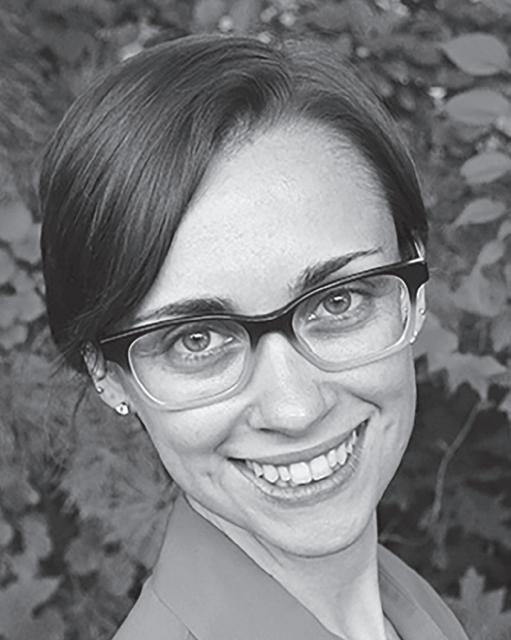
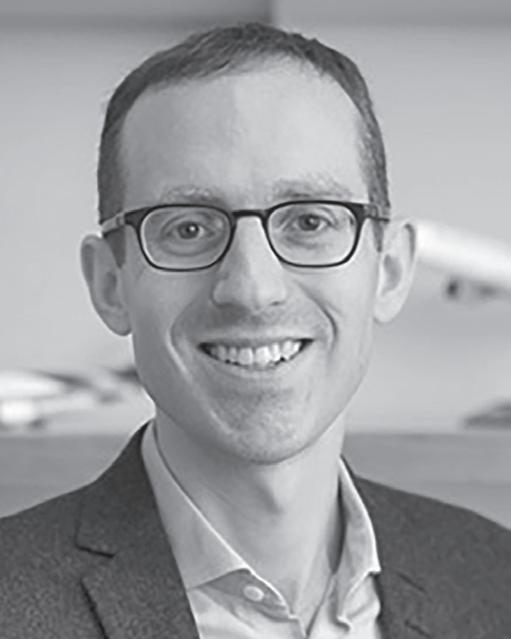
Prof. Adam Levine, government, and Stony Brook University Prof. Yanna Krupnikov published their study “Political Issues, Evidence, and Citizen Engagement: The Case of Unequal Access to Affordable Health Care” on Feb. 13 in the Journal of Politics.
Levine and Krupnikov investigated which types of political evidence most strongly influence participants, encouraging them
to take action. The researchers compared the use of percentages, raw numerical data and case studies framed with sympathetic individual stories against case studies that had more general examples, and measured how participants reacted to each type.
To do so, researchers conducted a series of field experiments in 2015, working with an unnamed Ithaca non-profit to conduct direct mail, email and surveys through Survey Sampling International. In total, over 8,000 people were sampled. The researchers measured engagement through survey criteria: personal concern, desire to prioritize a problem and donating money to a related cause.
In the email study, the researchers utilized different subject line headings including “Please help! 22.8 million uninsured still can’t afford insurance”
results found highest engagement with individualized, sympathetic case studies and percentage-based evidence.
and “Please help! 79% of the uninsured still can’t afford insurance.” They then analyzed how engagement responses differed between the usage of raw numbers and a percentage.
Across each type of survey the
“When you talk about the millions of children who are starving, or the millions of refugees who are seeking out a better life it fails to have this emotional connection that tends to then motivate people to pay more attention and to become engaged,” Levine told the Cornell Chronicle, a University-run publication.
The researchers chose questions on inequality in the healthcare system, a topic they considered unrelated to mainstream political discussion, to reduce potential interference in the study by individual political beliefs.
In the direct mail survey, donation levels had a statistically significant difference in engagement, meaning that there was a low probability the result would happen randomly when they included a specific anecdote. The researchers found that these individual case studies of struggles with the healthcare system resonated with respondents more than the scope of the issue.
Levine told the Chronicle that “the percentage-based evidence and the human interest evidence tended to drive engagement but talking about the overall magnitude of the problem didn’t.”
The study originally hoped to help understand what makes people care problems they may not encounter themselves, Levine told the Chronicle, as well as how to “pull at people’s heartstrings” to elicit positive responses.
Lucas Reyes can be reached at lar327@ornell.edu.
date the suite be closed until the sample is tested. Residents of the now-closed suite have accommodations arranged elsewhere while the abatement is taking place. According to Schneider’s email, the testing and possible abatement is expected to be finished tomorrow.
Cornell facilities management has
been addressing the issue of asbestos on campus for over a year, with zones of Rand and Balch Halls closed off to “authorized personnel only.” Tim Fitzpatrick, director of occupational health and safety at Cornell, previously told The Sun that abatement projects “occur on an ongoing basis.” “This isn’t the first time [flooding] has happened within this year, so
I think it would be good to get some professionals in to take a look at the plumbing and sprinkler systems in the building,” Low Rise 6 resident Charlie Panzarella ’22 told The Sun. Aaran Leviton ’20 contributed reporting to this article.
Olivia Weinberg can be reached at oweinberg@cornellsun.com.

MUELLER
Continued from page 1
a crime, it also does not exonerate him,” the Special Counsel said in the report.
Because the Special Counsel did not make a decision, Barr and Deputy Attorney General Rod Rosenstein were allowed to, and chose to, make it. They determined that the evidence “is not sufficient to establish that the President committed an obstruction-of-justice offense.”
“So far as we can tell, I think it’s a great victory for the rule of law,” Prof. Joseph Margulies, law, told The Sun. “It appeared as though the process was allowed to run its course. A very thorough investigation into the role of the President and his campaign [was conducted] and concluded that there was no evidence that warranted action. That’s what a thorough investigation is for.”
Leaders from both the Cornell Democrats and Cornell Republicans weighed in on the significance of the report.
“The Mueller report is good news for all Americans. It completely lifts the cloud that Vladimir Putin and America’s enemies tried to impose on this country through election meddling and other propaganda efforts,” Michael Johns Jr. ’20, president of the Cornell
Republicans, said in an email to The Sun. Johns is also an opinion columnist for The Sun.
“This is precisely the outcome I expected [from the report],” he continued. “[The report] was a wild conspiracy which has distorted American politics since 2016.”
Political Director for the Cornell Democrats Geneva Saupe ’21 had a different view.
“I think that it’s important to remember that we haven’t seen the actual Mueller report, only a summary of the report by a Trump political appointee. Because of that, I think it’s hard to tell yet what exactly will come out of the report, and how it will impact Trump’s legacy or current politics,” Saupe said.
Saupe reiterated that she would like to see the full report, and raised the concern that Trump provided written answers during the investigation rather than submitting to in-person questioning.
“We didn’t come to the same definitiveness about obstruction,” Marguiles said. “In that respect, the final judgment was made by the Attorney General, not by the Special Counsel. There are questions about the Attorney General’s independence, so that is troublesome.”
Margulies says that in order to make a determination on the
legitimacy of these concerns, the attorney general would have to release the full report for examination.
Ithaca Mayor Svante Myrick ’09 responded to the summary’s release with a tweet criticizing the American justice system.
“[Trump’s] a rich and powerful businessman. They don’t have the same justice system as the rest of us. I never expected he would face actual consequences for the crimes he committed in open public view,” Myrick tweeted.
Trump responded to the report’s release via Twitter, defending his innocence.
“No Collusion, No Obstruction, Complete and Total EXONERATION. KEEP AMERICA GREAT!” Trump tweeted.
As with the report, Trump’s tweet caused differing reactions from both sides of the political aisle.
“Trump’s tweet about exoneration is simply wrong,” said Saupe. “Six of his campaign associates are facing jail time, and there are investigations ongoing in New York, DC and other jurisdictions.”
Johns, when asked if Trump’s tweet was valid, said that “it certainly seems that way.”
Alex Hale can be reached at ahale@cornellsun.com.

Te DEADLINE to e-mail advertisements for Display and Classified Ads for the Monday, April 8 and Tuesday, April 9 issues of
is Tursday, March 28, at 3 p.m. Te Sun Business Office will close Tursday, March 28 at 5 p.m. and will reopen Monday, April 8 at 9 a.m.
Continued from page 1
co-founder and leader, to speak. The event was made private after CUPD asked the CPU to pay a $2,000 security fee, anticipating pushback and security concerns. The incident resulted in concerns and discussion about free speech at Cornell.
Michael Johns Jr. ’20, president of Cornell Republicans and son of Johns Sr., shared his reaction to Trump’s order. Johns is also a columnist at The Sun.
“My initial reaction was positive. Freedom of expression and open discourse is at risk on campuses throughout the country, and numerous speaking events and debates have been disrupted by forces attacking those values at Cornell just in the last few years,” he said.
“While this campus may not be legally bound by this declaration, Cornell should announce how it intends to protect free speech in light of the executive
order,” Johns continued.
Weston Barker ’21, who served on a subcommittee of President Pollack’s Presidential Task Force on Campus Climate that addressed free speech, told The Sun that it was unlikely that the order would have much impact on Cornell, citing its relatively non-restrictive code of conduct. Weston also said that Cornell would likely be considered a private institution and therefore not subject to the order.
“Free speech is an essential part of Cornell University’s commitment to the discovery of truth,” vice president for university relations Joel M. Malina said in a statement. “Cornell has and will uphold the principle of freedom of expression on our campuses, and we will continue to ensure that all voices can be heard and that the dignity of all individuals is protected.”
President Martha Pollack has previously declared her commitment to protecting free speech, and the Cornell Code of Conduct contains specific provisions
CRISIS
Continued from page 3
workers who manage the After Trauma programs, which focus on supporting communities after someone dies by suicide.
“I live and breathe the Crisisline, and feel honored to be able to do it.”
Micaela Corazón
SPCS also collaborates with the county’s mobile crisis team to ease the process of hospitalization in emergency cases. The team works with hospitals to support newly released patients and provide local schools mental health education.
As part of her work and lived experience, Corazón has seen many of the flaws in the mental health care system. She expressed a desire to see more cultural competency and diversity among mental health care workers.
“Mental health care is part of a cultural milieu. If you are going to offer mental healthcare to everyone, it is not one size fits all,” Corazón said.
Corazón also expressed frustration with the lack of integration of mental healthcare into general medical screening, limited insurance coverage for mental healthcare and other barriers to mental health care.
“People are dying in our country for not being able to pay for medicine or not being able to access medical and mental health care. That to me is abominable. It saddens me. I have been a mental healthcare and healthcare advocate all my life, and it really is like Sisyphus pushing that boulder up a hill,” she said.
Despite the frustration, Corazón said “I live and breathe the Crisisline, and I feel honored to be able to do it. I have no regrets.”
Students may consult with counselors from Counseling & Psychological Services (CAPS) by calling 607-255-5155. Employees may call the Faculty Staff Assistance Program at 607-255-2673. An Ithaca-based Crisisline is available at 607-272-1616. To access the National Crisis Text line, Text HELLO to 741741 any time. For additional resources, visit www.caringcommunity.cornell.edu/ get-help.
Tamara Kamis can be reached at tnk8@cornell.edu.
for free speech. Title Four, Article II of the code states that it is a violation “to disrupt or obstruct or attempt to disrupt or obstruct any speaker invited to appear on the campus by the University or a University-recognized organization.”
Last spring’s Subcommittee on the Regulation of Free Speech and Harassment worked to give President Pollack a set of recommendations — including “Harmonize the University’s Definitions of Harassment” and “Revise the Campus Code of Conduct to Make it Applicable to Student Conduct Only” — on policies concerning speech and harassment.
Sruthi Srinivasan ’21, another subcommittee member, doubted that the executive order “will have too much effect on the work that the subcommittee did last year.”
“Being a private institution, Cornell’s free speech policy is technically not bound by the First Amendment,” Srinivasan said. She noted that the executive order mentioned that the administration will
encourage diverse debate by ensuring “compliance with stated institutional policies regarding freedom of speech for private institutions.”
For Cornell, Srinivasan said that “it is necessary that members of the Cornell community adhere to the code that all Cornellians are already subject to.”
Barker also noted that the recommendations have not been made into policy yet, though they would not be “subject to scrutiny related to the order, so long as the University vows to uphold the policy it put into place.”
The order also discusses the “financial burden of higher education on students and their families,” and mentions goals to help students and families make more informed choices regarding financing education. It also makes the distinction that the federal funding at risk “[does] not include funding associated with Federal student aid programs.”
Continued from page 3
Willard Straight occupation, this event will be a “more specific, focused dialogue,” according to Richardson.
“We thought that it would be interesting and special to be able to honor Prof. Turner, because he’s given so much to help shape and energize the field of Africana studies,” Richardson said.
Richardson also addressed the significance of the takeover itself.
“Cornell was founded on a very inclusive model of ‘any person, any study’,” she said. “Over time, in some ways, it’s fallen short in its ideals. Willard
Straight put pressure on the institution to live up to those ideals in a better way.”
Richardson also expressed inspiration in the “new and revitalized” black student movement of this decade, including protests by football players at the University of Missouri and the challenges against Confederate statues on campuses.
“It’s not just history that we’re looking at when we think about Willard Straight, but I think that there has to be an understanding that there are some issues that persist and that there’s a long way to go,” she added.
According to Richardson, symposium events will ask par-
ticipants to engage in the history and think about the implications of the Willard Straight occupation, then and now.
“I hope that those who have been touched already by Professor Turner will be all the more energized and inspired to continue to do their best work,” Richardson said. “And I hope that those who are not familiar with his legacy will learn more about it, be challenged to dig deeper … and engage in Africana studies to take courses.”
The symposium will begin at 12:30 p.m. on April 12th, and events are free.
Kathryn Stamm can be reached at kls332@cornell.edu.

By GAYATRI SITARAMAN Sun Contributor
The first-ever sequencing of the human genome cost $2.7 billion. Today, the service 23andMe offers personal genome sequencing for less than $200. And for students enrolled in Cornell’s personal genomics class, it’s free.
Prof. Charles Aquadro, molecular biology and genetics, has been teaching Molecular Biology and Genetics 1290: Personal Genomics and Medicine: Why Should You Care About What’s in Your Genes for seven years now, following his hugely successful Cornell University Genetic Ancestry Project, a collaboration that traced the ancestry of over 200 Cornell undergraduates in the spring of 2011.
According to Aquadro, the goal of the course and the option to participate in ancestry genetic testing by 23andMe is to help demystify genetics and genetic science, especially for students not majoring in scientific fields.
“Anybody from any major can come on board with this … [my goal is] to empower people with something that is cutting-edge science but is at the same time something that really matters to them and their own lives,” Aquadro said.
As biotechnology rapidly advances, accessing genetic information is becoming easier, and according to Aquadro, genetics will soon play a major role in everybody’s lives.
“Some people are curious about ancestry testing, and are interested in learning something about their genetic ancestry,” Aquadro said. “The other component of it is that genetics is going to play a vastly larger role in everybody’s lives in regards to medicine.”
With the rise of personal genetics in the medical field in regards to preventative care, reproductive health and disease prediction, Aquadro said that there is both curiosity and mistrust among the public.
“What about privacy? What about the effect on my ability to get a job? What about insurance? ... Am I going to get discriminated against? Who sees my data?” Aquadro said, describing common questions in reference to genetic-specific care.
Despite these concerns, he firmly believes that the key to overcoming such challenges is to promote education about genetics and genetic data, especially among those

regulating the policy involved.
“They’re all largely people that aren’t scientists themselves. And so this presents a real problem, because we have people that don’t understand the science being in a position of making and regulating these kinds of things,” he said.
With the personal genetics class, Aquadro hopes to help create a scientifically literate community.
“Cornell undergraduates are a great place to focus an effort on reaching out to people ... If one can target students outside the sciences, they’re the ones that will be on the other side of these issues,” Aquadro said.
He believes part of the power of offering genetic testing to the course is the excitement it generates about learning and scientific education. By sharing with family and friends, he said, the students themselves become teachers of genetics.
However, not all of the students’ reactions to genetic testing are positive. Aquadro emphasized that genetics “means different things to different people,” and as such they respond to it “in different ways.”
“It’s really important to understand that some people think differently about this. That’s why we spend time in the discussion sections,” he said.
Aquadro believes that a sound understanding of one’s personal genetics is something that is important to everyone’s scientific as well as social education.
“I would love to see [BIOMG1290] be a course that is offered to every student coming in ... I want people to understand a little bit of the science but also understand why different people react differently to it,” Aquadro said.
According to Aquadro, a sound understanding of genetics can bring us closer together by showing students “how similar they are to so many other people that may seem, or look, different … they are genetically virtually identical.”
“Cornell requires every student to take a swim test,” Aquaro said. “Every student should understand something about their genetics.”
Gayatri Sitaraman can be reached at gs573@cornell.edu.
By NATALIE MONTICELLO Sun Contributor
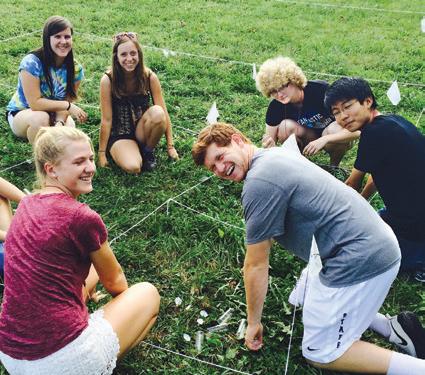
Of the many intriguing science classes at Cornell, Introductory Field Biology offers a unique experience for students to immerse themselves in ecology both in and out of the classroom.
Natural Resources 2100 is an outdoor field course exclusively for Environmental and Sustainability Science majors in the College of Agriculture and Life Sciences. During the course, students take brief field trips around Ithaca twice a week to learn about different aspects of environmental science such as ornithology, forestry, dendrochronology and lessons on invasive plants. Before each outdoor lab, students undertake a one-hour lecture session in which they learn about what they will see in nature that same week.
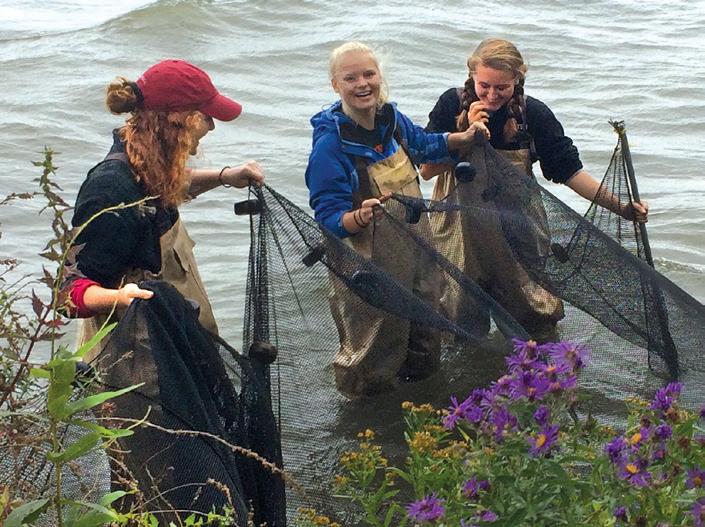
“One reason why [Field Bio] is special is that it brings together a lecture and an outside field portion,” co-instructor Marc Gobel, natural resources, said. “Talking about something interesting in lecture and then taking the time during lab to show students the actual objects of interest ––such as the field, the stream, the forest, and the meadow –– is what makes this course worthwhile.”
Gobel teaches the course with co-instructor Paul Rodewald of the Lab of Ornithology. According to many of their students, their passion, dedication and commitment to the course is another reason why Field Bio is so special.
“Ask any Field Bio student, past or present, and they’re bound to tell you that Paul and Marc truly make the class as great as it is. They go above and beyond to create impactful and memorable experiences for their students, and to expose them to as many tools and techniques as possible,” said Kathryn Cooke ’20, a course undergraduate teaching assistant and former Field Biology student.
The course does not follow the typical prelim and final schedule; instead, students have several species identification quizzes scattered throughout the course of the semester. For these exams, students often roam the Cornell Botanical Gardens, identifying different types of trees.
Students are also expected to memorize species of fish, mammals, birds and reptiles.
The course also has two required field
trips. One of them is a weekend camping trip to Arnot Forest, where students go on tree walks and learn about herpetology, stream ecology and birds.
Students also engage in interactive activities including handling snakes and reptiles, birdwatching and donning chest-high waders in search of stream insects.
The other field trip is a single-day expedition to Lake Oneida, a lake located near Syracuse. At Oneida, students take turns doing different hands-on activities related to aquatic fisheries. During that trip, students look at different types of zooplankton while out on the boat of Prof. Lars Rudstam, natural resources. The field trips are meant to engage and inspire students outside of the classroom through hands-on learning.
Additionally, throughout the semester, students conduct their own, student-designed research projects on an environmental science topic of interest ranging from leaf color morphology to forest ecology.
“[One of] my favorite parts about Field Bio is helping students connect with the research project. Students I have helped with their individual projects learn what it takes a ask a research question and design an experiment to answer it,” Wade Simmons ’12 grad said.
Since Field Bio is only offered to sophomore environmental and sustainability science majors, the course provides an opportunity for students within their year and major to connect with one another.
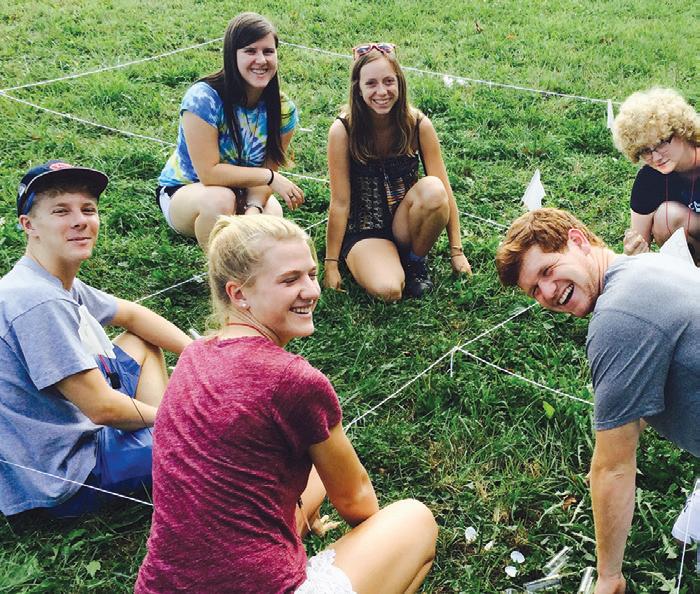
“The course is one of the few courses at Cornell, at least that I’ve encountered, which allows you to meet the majority of your graduating class within your major. There’s a lot of collaboration and group-learning that goes on in the course,” Cooke said.
Through these hands-on learning activities, collaboration is encouraged and gives students the opportunity to spend quality time together.
“I think the practical component to the course is what makes it very special, using really different parts of the brain, manipulating, and seeing the natural world in a greater context,” Simmons said.
Natalie
can be reached at ncm39@cornell.edu.
Anotification popped up on my phone on Thursday afternoon while I was trying not to do my homework. It was from GroupMe, telling me that I had been added to a chat by a friend, Tia Offner ’20, with whom I’ve spent many hours at our residence hall engaging in a sector of activities we like to call “good, wholesome fun.” Neither of us cares much for parties or nights out on the town, but we’re all about caustic humor, movie nights, DIY games of Family Feud and rounds of Settlers of Catan.
And what was the name of the chat? “Can we just watch shit movies.”
Quickly, the chat grew to 14 people and plans were devised. Names of bad movies were thrown around and people discussed the artistic merits of the 2005 CGI family comedy atrocity Hoodwinked.Sun Design Editor Sabrina Xie ’21, upon finding herself with dozens of notifications of messages like, “we are contractually obligated to watch The Room,” shot back “why am i in this group i only watch high quality cultural touchstone academy award winning FILMS.”
Yet, who was there, at 7 p.m. on Saturday when we settled into the TV room to watch Birdemic: Shock and Terror? Sabrina was, plus half a dozen of the other group chat members.
GroupMe, “Birdemic makes me feel tired,” and he’s totally right. When the movie finished before 9 p.m., I was wiped out physically, emotionally and cognitively. If movies are supposed to be passive, why did I feel like I had just been in a twohour-long academic debate, fight with a friend and boxing match all at the same time?
So, outside of the so-bad-it’s-good stuff, what sucks about Birdemic?
A murderous bird disease outbreak is perhaps the least compelling narrative strategy for catalyzing action on climate change, when there are effects of climate change what are far more real, human and scary; ones that aren’t so easily dismissed for their inanity.
There was excitement in the air and people buzzed about the apparent excellence of the film. About half of us hadn’t seen it before — but many had, with our bad-movie aficionado, group-chat creator and DVD provider having watched it a dozen times. I will admit, as I prepare to write several hundred words of critique, I missed probably about 60 percent of the dialogue in the film because everyone in the room was happy to talk over the subtitle-less film.
And while my reason for watching it was because it was bad, I quickly figured out that I didn’t really want to be watching Birdemic.I was happy to be sitting around yelling at a screen, but something about the experience just wasn’t up to par with films like the Sharknado series, The Bee Movie or even Reefer Madness: The Movie Musical.
I don’t regret the time spent with my friends making stupid jokes, but I think it would have been a better time if it were virtually any other movie. Afterward, Cal Poulin ’19 messaged in the
Katie Sims
Resident Bad
Media Critic
One reason that I think Birdemic was less fun is its long-windedness. The shots just keep going on and on. A harsher, or just better, editor could have made the film 20 minutes shorter without losing any of the plot. A better writer also wouldn’t have the exposition of the film take up half of the runtime when the characters are so flat and lifeless. All I wanted was to get to the birds. Another reason for my distaste of Birdemic may be that it just is reminiscent of all of my worst artistic endeavors. In middle school, I was sure I was going to make it big as a director and made all sorts of awful shorts with my friends. Although I do think we often surpassed Birdemic’s production value, a lot of our bad editing and stiff acting was similar.
Finally, I do think that Birdemic took itself just a little more seriously than a lot of its counterparts. The Bee Movie and the later Sharknado films, for example, poke a little bit of fun at their own premises. While they’re still peddling their agendas, it’s not quite as sincere, and the acknowledgment of their absurdity helps soften their impression.
I’m not mad that I watched Birdemic, but I don’t expect to be coming back to it often. Even when looking for a bad movie, sometimes I just want something better.
Katie Sims is a junior in the College of Agriculture and Life Sciences. She can be reached at ksims@cornellsun.com. Resident Bad Media Critic runs alternate Tuesdays this semester.
COURTESY OF DREAMWORKS


CORY KOEHLER SUN STAFF WRITER
A$AP Twelvvy, the grand opener of the night, slipped out in front of viewers to considerable applause. Plenty of people were still filing in and many front row audience members managed handshakes or dapped it up with the rapper. Throwing it back to the classics in his arsenal, Twelvvy belted out a charged “Xscape.” The growing crowd was still getting settled. But despite his down-to-earth performance style and approach to the audience, his seriousness and allure was established early. “Strapped,” Twelvvy’s smooth second selection, got people hopping and waving hands just before more aggressive songs like “Jay Reed,” “Child’s Play” and “Hop Out” jolted the crowd to life.
With “L.Y.B.B. (Resolution),” the bouncing vibe peaked and the audience was feeling A$AP Twelvvy’s music to its fullest potential. Those familiar with the chant sang along and those that weren’t eagerly learned. The song also marked the onset of a hazy smokescreen of marijuana in the venue.
After a short intermission, A$AP Ferg’s “Trap and a Dream” instrumental crept up on the audience. He popped onto the stage as the first of his booming bars played, and immediately his powerhouse opener had the still-teetering audience back on their feet. Ferg spent little time in getting into his own performance, throwing in committed dance moves and wrist flicks.
There was hardly any breathing room between each track. “Coach Cartier” had the crowd jumping, with the onslaught of trap-heavy hits “Mad Man,” “Mattress REMIX” and “One Night Savage” following. Ferg broke the seriousness up in between with a small break for a cake toss and crowd-integrated celebration of his DJ’s birthday.
A$AP Twelvvy came back out to tackle “Hella Hoes” together first in an amazing stomp-out, but a long moment of silence was called quickly after in the name of the late A$AP Yams. Breaking off from the only memorable seconds of silence in Barton Hall, the legendary “Yamborghini High” snapped on.
Ferg ran on “Run It Up,” dropping the instrumental portion of it entirely at one point to go acapella on the track. Even without the musical backing, Ferg seemed intent on satisfying the audience through his sheer presence. “Shabba,” yet another crowd pleaser, had a handful of mosh pits encircling the room. And high hands, ricocheting chests and foot stomps stayed plentiful in the following “New Level.”
Another break from Ferg’s set came in the chilled out “Hood Pope.” But the long-awaited fan favorite “Plain Jane,” came around for a strong finish. The immense energy flourished within the crowd once more as shoulders clashed on all sides. Moshes, fullsteps and the belligerently drunk came back to life until the end of the song. By the end of the night, it was clear that A$AP Ferg put in “Work” to take Barton Hall to a whole “New Level.”
Cory Koehler is a sophomore in the College or Arts and Sciences, He can be reached at ck594@cornell.edu.
137th Editorial Board
ANU SUBRAMANIAM ’20
Editor in Chief
DAHLIA WILSON ’19
Business Manager
PARIS GHAZI ’21
Associate Editor
NATALIE FUNG ’20
Web Editor
SABRINE XIE ’21
Design Editor
NOAH HARRELSON ’21
Blogs Editor
SARAH SKINNER ’21
Managing Editor
MEREDITH LIU ’20
Assistant Managing Editor
RAPHY GENDLER ’21
Sports Editor
BORIS TSANG ’21
Photography Editor
AMBER KRISCH ’21
Blogs Editor
Working on Today’s Sun
Ad Layout Jamie Lai ’20
Production Deskers Sabrina Xie ’21
Ben Mayer ’21
News Deskers Amanda Cronin ’21
Hunter Seitz ’20
Science Desker Sophie Reynolds ’20
Design Desker Lei Lei Wu ’21
Greta Reis ’21
Photography Desker Jing Jiang ’21
Sports Desker Christina Bulkeley ’21
Over the last few weeks, the debate surrounding Students for Justice in Palestine’s Boycott, Divestment and Sanctions campaign has only grown more heated. Cornell Hillel and its filial groups, in opposition to most every other minority organization on campus, have positioned themselves as the loudest proponents of the State of Israel and detractors of the divestment campaign on campus. Hillel’s position as the largest Jewish organization on campus has made it yet more difficult to hear the already marginalized voices of anti-Zionist Jews. Despite that — or rather, because of that — we, as Jewish students, feel it is our responsibility to challenge the narrative Hillel has been constructing and explain to the Cornell community why we support the divestment campaign.
We understand many of the positions our anti-divestment counterparts hold because we once held those very same positions ourselves. As children, we were told that a Jewish state could have saved the family we lost in the Holocaust, that the only reason anyone could have for being anti-Zionist is a deep-rooted prejudice against the Jewish people. We were told that, as Jews, the whole of Zion was our birthright, and that Arabs, if given the chance, would not hesitate to wage a war of extermination against the Jewish people in Israel.
This Zionist mythos, however, is exactly that — mythic. To pretend as though European Jews, without a state, were helpless in the face of the Nazi genocide is to erase the sacrifices of the countless Jews who fought and died in the Soviet and Polish armies, in antifascist partisan detachments and in ghetto uprisings. In the same vein, to think that the State of Israel, which enjoys a cordial relationship with the increasingly antisemitic government of Hungary and which has begun selling weapons to neo-Nazi battalions fighting in eastern Ukraine, has done anything to protect Jews around the world against antisemitism is equally unhistorical.
The State of Israel doesn’t just promote a deeply revisionist view of Jewish history, but a disturbing racial ideology as well. Why is it that American Jews have the opportunity to settle in Israel while Palestinian refugees around the world who were born on the land the State of Israel now occupies are not? Why is it that Ethiopian Jewish immigrants to Israel are so often brutalized by Israeli police and, in some cases, sterilized upon entry to the country, while European Jewish immigrants are not? Why is it that Israel, supposedly a nation inclusive of all Jews, forbids those in the diaspora who, like us, call for Palestinians to be treated with basic dignity, from entering the country wholesale?
In short, it is because Israel, as Prime Minister Benjamin Netanyahu recently said, “is not a state of all its citizens.” It is not a state for Israeli Palestinians, nor a state for nonwhite Jews, nor even a state for all white Jews: Israel empowers white Ashkenazim supportive of the Zionist project over all others. We therefore cannot do anything but voice our unequivocal opposition to the State of Israel as it exists now, and support measures to hold this so-called “Jewish state” accountable to the actual Jewish values if flagrantly spurns.
It is true that the situation in Israel is politically quite complicated. Morally, however, it is not. Any state that regularly raids schools, deliberately targets women and children with sniper fire at the border, and denies millions of their basic civil rights should be condemned. It’s deeply disappointing to us that so many Jewish groups on campus refuse to do so. We categorically reject the narrative that the divestment campaign is in any way threatening to Jews at Cornell because it is “too divisive” and stifles dialogue on Israel and Palestine; while dialogue is important, it is not a substitute for action. And when dealing with a humanitarian crisis as pressing as the one going on right now in Palestine, action on the part of everyone who cares about human dignity is direly needed.
Thus, of our fellow Jewish students on campus who consider themselves to be progressive but nonetheless harbor strong sympathies for the State of Israel, we ask that you seriously reflect on why we as a community tend to hold the opinions we hold about Palestine and Palestinians. Ask yourself why we support a state which regularly justifies the arbitrary killings of civilians and which actively makes life for Jews in the diaspora more dangerous; whether echoing Israel’s fascist-adjacent rhetoric about the need for settlements and the necessity of maintaining a Jewish majority in Israel is really compatible with who we, as American Jews, want to be.
Ultimately, one way or another, we all have to take some stance on this issue. And the only stance compatible with progressive values, anti-racism, and concern for human dignity is to stand with Palestine.
Max Greenberg is a freshman in the College of Arts and Sciences and can be reached at mg957@cornell.edu.
Ezra Stein is a junior in the College of Arts and Sciences and can be reached at ezs4@cornell.edu.
Julian Goldberg is a senior in the College of Engineering and can be reached at jg766@cornell.edu. Sophia Roshal is a freshman in the College of Arts and Sciences and can be reached at ssr95@cornell.edu.
By the time Tina was 14, she was navigating deals with brands and moving from small-scale promotions to sponsored posts on her Instagram and YouTube pages, which now boast more than 500,000 followers each. These days, brands send 17-year-old Tina (who asked that I only use her first name) so many makeup products that they practically flood her apartment. “I get sent a couple packages daily, so there’s a lot that I either give away or never even get to try out,” Tina said.
Tina is one of many influencers in an ever-expanding framework that links the social and commercial. Influencers — experts in their own niche arenas, from makeup and beauty to veganism — cultivate relationships with their audience, a unique feature that allows them to advertise with the perceived authenticity of recommendations exchanged between friends. “An influencer is someone who has effectively monetized their identity” Jia Tolentino said in the recent Hulu documentary, Fyre Fraud.
Glossier, a makeup and skincare compa ny known for its brilliantly trendy packaging, is one of many com panies with an advertising infra structure rooted in influencer net works. Glossier’s Rep program — which includes hundreds of young people who post about the prod ucts on Instagram and offer deals to followers who “shop with them” — masterfully taps into pre-existing social networks. The reps aren’t technical ly Glossier employees, but they can make a marginal commission on the sales they facili tate. And, of course, they are generously com pensated with free products. Nadine Fuller ’19 estimated that she’s been sent at least $1,000 in products during her time as a rep. Fuller became a rep after a Glossier employee sent her an Instagram direct message. She said her position as an ambassador is part of a larger strategy that helps to “humanize” the brand.
Her payment? Pricey organic snacks in the mail (she, too, asked me to not name the brand). These arrangements shed light on an infecting dynamic: the widespread presence of quiet deals — and promoters’ hesitance to name or even reveal them.
But as this thicket of influencer infrastructure grows more popular, thorny questions arise. Are influencers who act as marketing intermediaries subject to the same legal consequences as companies that engage in false advertising? Fresh on everyone’s mind is Fyre Festival, the disastrous music festival fraud scheme that arts columnist Isabel Ling ’19 wrote was “synonymous with the pitfalls of influencer culture and the internet as a whole.”
The festival was almost exclusively promoted by influencers, with Kendall Jenner reportedly paid $250,000 to post about it just once on her Instagram, which has 107 million followers. The festival’s organizer was recently sentenced to six years in prison, but what about the influencers who, intentionally or not, helped propagate his scheme? Is
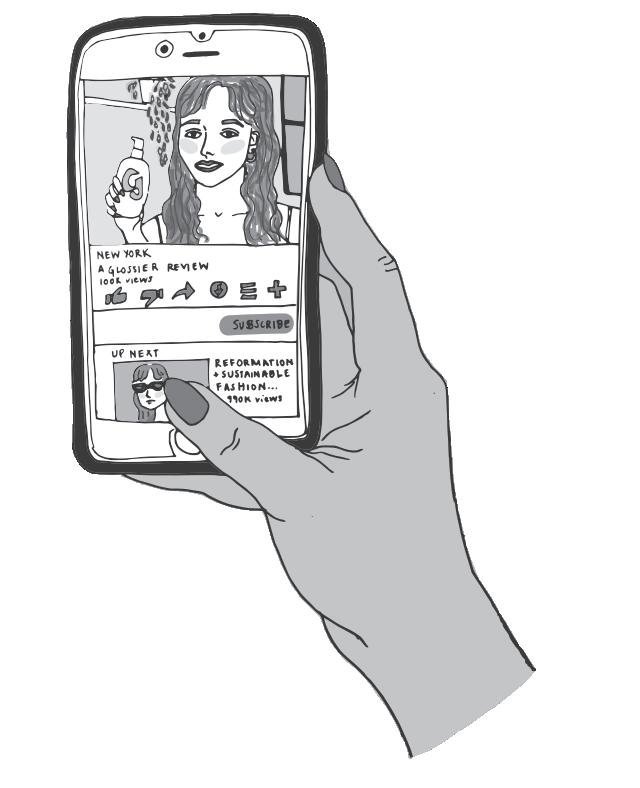
Three festival attendees recently filed a lawsuit accusing Jenner, the festival organizers and other influencers of “negligent fraud and misrepresentations” that encouraged people to buy tickets. The suit’s plaintiffs were partially motivated by Jenner’s failure to disclose that she had been paid for her promotion (a post that has since been deleted). When influencers are paid to promote, the Federal Trade Commission generally requires them to make that clear to their followers. This is why some influencers end posts on Instagram with “#ad” or “#sponsored” Elizabeth Couse ’19, whose sustainability-focused Instagram has more than 24,000 followers, told me that while she has been paid to promote products, she prefers arrangements in which companies send her products instead of paying her. “I think no matter how genuine you are, if you’re being paid to post something, it always seems a little sketchy,” Couse said.
“It’s weird because, to some degree, I know I’m being used by brands to generate content at a fraction of what it would cost them to hire an expert,” Fuller, who began promoting the brand as a sophomore, told me at Collegetown Bagels over the weekend. “Instead, they outsource it to random teenage girls like me, but the brilliance of the rep model is that we have such a handle on audience specificity.”
Part of what differentiates Glossier and other companies’ strategy from traditional advertising schemes is that influencers use their personal pages to promote products, invoking authenticity. Your makeup isn’t being marketed to you by some out-of-touch advertising executive, it’s being recommended to you by a girl in your econ class in posts so subtly brand-affiliated that it can be hard to tell if reps are working with the company or if they’re just really fond of the lip gloss.
Glossier was recently valued at $1.2 billion, leading some to speculate that the company is on the IPO path. But even as Glossier dabbles in more traditional marketing campaigns, its army of influencers allows it to maintain the vibe of a small start-up, coated casually in millennial pink.
I happened to reach out to one friend — a singer in New York City — to see if she could put me in contact with any influencers, only to find out that she dabbles in the industry herself. She said she had commented on some popular brands’ posts in exchange for Amazon gift cards (she asked that I not name the brands). Then, an old roommate told me she had just agreed to promote a brand a few times a month on Instagram.
Couse’s status as an influencer — a word she might be wary of using to describe herself — has brought her a range of opportunities. She’s stayed at eco-lodges in exchange for promoting them and traveled to London on a trip paid for by Lush Cosmetics for the company’s Spring Prize event. On any given day, she said, she receives dozens of emails asking her to promote granola bars, protein powders and other healthy lifestyle products.
But when an influencer’s inbox and mailbox are being inundated with promotions and packages, how do they choose what to post, and what to ignore?
Tina, of New York City, is not only promoting products, she’s also evaluating them, gauging their quality and worth and influencing which brands are beamed onto the screens of her followers. Even five years ago, it would be almost unimaginable for a young person with no formal credentials or traditional celebrity accolades to have such commercial sway.
Speaking with these ambassadors made me realize how ubiquitous influencers are on my social media feeds, and how disconcerting it is that I hadn’t known.
“I just think the whole thing is arbitrary and funny and weird” Fuller, the Cornell senior and Glossier rep, said as we wrapped up our interview. “But I mean, I’ll take the free stuff — I was going to take pictures of myself anyways.”
Jacqueline Groskaufmanis is a senior in the College of Arts and Sciences. She can be reached at jgroskaufmanis@cornellsun.com. The Dissent runs every other Monday this semester.
Irecently stumbled upon a journal entry from my freshman colloquium class, an introductory course required for all incoming ILR freshmen. As I read the following excerpt from the journal dated Sept. 12, 2016, I was shocked to realize that I continued to face the same concerns and thoughts I had nearly three years ago.
“At this point in time, I’m most concerned about what I would like to do with my life . . . I need to quickly select a path to focus my attention towards that goal, but I don’t exactly know what my goals are yet,” I wrote. “I still have many ques tions looming over my head, many of them unanswered, and many of them not exactly resolvable.”
Back then, I believed that such concerns would be resolved, or at least lessened, by the time I approached senior year. I had thought that most of these anxieties would be settled once I started college. Little did I know that such questions would only continue to pile up even further. The unfortunate reality is that we seem to be in an endless race as college students and beyond: searching for jobs, seeking superior career prospects, looking for a lifelong partner, raising children and so on. I was naïve enough to think that the most pivotal concerns would be resolved.

To the high school seniors who will be receiving decision letters within the next week or so, I want you to know that a university admission decision — whether acceptance, waitlist, or rejection — genuinely isn’t the end of your world. But who am I to say so, when I’m the one that was lucky enough to make it to Cornell and has studied here for the past three years, right?
Since being accepted to Cornell and pursuing my
studies in Ithaca, I have realized more and more that an acceptance or rejection to a particular university is not as pivotal as many perceive it to be. Yes, the immediate impact may be substantial, and yes, Cornell’s name value plays a big part in my life right now. Potential employers and family friends indicate their approval after hearing the name of the school I attend. However, whether I enable the Cornell brand to continue to impact the rest of my life is my choice.
Cornell is really what you make out of it. From those who have meticulously planned
There’s only so much Cornell can do for you, and not attending this school certainly does not limit your capabilities.
out their four years and taken steps to fulfill their hopes and dreams to those who have no idea about their prelim the next day, there is a wide range of personalities here. There’s only so much Cornell can do for you, and not attending this school certainly does not limit your capabilities.
I had many expectations upon coming to an Ivy League school. I expected all of my peers to be stellar in every imaginable skill, from public speaking to mathematics. Some students at Cornell truly are stars that seemingly have little to no flaws. Yet, the majority of students here in my experience have been far from per-
Ifect. As shocking as it may sound, Ivy League students, whether they go to Cornell or Harvard, are human beings who have just barely surpassed their teen years. And so am I — I’ve only just begun to make sense of my evolving identity. We continue to develop intellectually and are rarely the geniuses you might presume to exist in these reputable institutions.
I thought that I wouldn’t have as many worries as I did back in high school as I strived to do my best to get into a renowned university. I naively believed that engaging in all of those academic and extracurricular activities in high school would be enough. Yet here I am as a university student attempting to balance not just academics and extracurriculars, but also internship searches and other personal issues that I had never expected to face. Life truly is an endless marathon, and the college you attend certainly does not determine your destiny.
So please don’t let the admission decision determine the rest of your life. I hope you will find my advice to be helpful, but also please don’t forget that my perspective is that of just one of thousands of other Cornellians. Whether it is an acceptance or rejection, there’s only so much influence a university can have on your life when many other crucial factors shape who you are. The opportunities are endless here at Cornell and beyond. Explore the world to gain experiences in many directions and discover yourself. What matters most is your willpower rather than the place at which you choose to exercise it.
DongYeon (Margaret) Lee is a junior in the School of Industrial and Labor Relations. She can be reached at margaretlee@ cornellsun.com. Here, There, Everywhere appears alternate Tuesdays this semester.
spend most of Sunday on Twitter. It’s easy enough to convince myself that I’ll find a story idea there and that the column will pour out of it so quickly that it’ll make up for itself in time lost scrolling. Maybe it’s because the news tastes less bitter when I only see it in small parts, or maybe it’s because the targeted advertisements aren’t quite as terrifying, but it’s about the only social media I can bear lately. I’m definitely using the term “bear” loosely.
There are certain Sundays when, already
over. I was first directed to Harad’s account and the project when it was retweeted onto my timeline. Since then, my Sundays on Twitter — while still extraordinarily frustrating — are punctuated with photos of flowers from around the world. Just this week, I saw Pear Blossoms in Texas and Magnolias in France between tweets about the Mueller Investigation. These flowers are ultimately moments to breathe — moments of beauty.
I learned that the photos of flowers aren’t merely distractions from the news, but they interact with what is going on with the world as well.
sunken deep in the couch, I really don’t want to get online. For example, this Sunday a friend yelled, “No Collusion!” over their cell phone, and I knew instantly that Twitter was going to be terrible. Sometimes the news feels too heavy or even just aggravating to manage. We have all felt it — maybe more recently, maybe more frequently. But my Sundays are marked by something a little more special: The #FlowerReport.
Every Sunday, writer Alyssa Harad inundates the timelines of her almost 7,000 followers with photos of flowers, snapped and retweeted from around the world. There is something poetic about a garden popping up in the places we least expect them, like the Internet. Endorphins explode around my head like fireworks whenever there are flowers around. My roommate bought me a thick clump of Irish daffodils for my birthday. Weeks later, I can’t stand to put the droopy blooms in the trash can.
Writer Teju Cole was the original creator of the #FlowerReport, but I didn’t discover the hashtag until after Harad took
I spoke to Harad on the phone about how the #FlowerReport functions when splayed against the background of Twitter. I learned that, in many ways, the photos of flowers aren’t merely distractions from the news, but they interact with what is going on with the world as well.
After a terrorist attack in Lahore one Sunday, Harad wrestled with how to curate the flood of flower photos, knowing it wasn’t just business as usual.
“I’m sure if you’re a Twitter user you know that feeling of watching an event take over your timeline. And then it feels weird to be tweeting about anything else,” she said. “It feels disrespectful, it feels out of step. Especially if people are expressing shock and outrage and horror and grief.”
She was able to acknowledge the attacks without straying too far from the #FlowerReport. She found previous photos on Flickr of the park, eager to validate “the original value and worth of these places to the people who [were] local to the event,” and shared the images as part of her report. “I watched [people who had lived near that park] find that tweet and have that moment of recognition of that place that they remembered rather than the images that were on the news.”
Harad’s and the #FlowerReport’s com-
passion for people and place gives a depth to stories that far exceeds the character count. The natural world — so much bigger and older and wiser than us — provides perspective among the drudge and the tragedies alike. Flowers are enduring and so much stronger than they appear. Flowers heal. It is easy to understand how technology has quickly become the antonym of nature, but in a world increasingly digitized, should we fret about all the things that are at the opposite end of the spectrum as flowers?
New York Times technology reporter Nellie Bowles wrote an article called “Human Contact is Now a Luxury Good.” Technology, once reserved for only the richest, is becoming the cheapest option in healthcare, education and other labor markets. Bowles argues that the ability to “unplug” from the demands, information and services flung through our screens is increasingly a privilege. The co-pay on an iPhone app that allows me to talk to a doctor through my front-facing camera is much cheaper than a trip to urgent care.
While many of us worry that the proliferation of technology in our lives may be as equally rife with negative side effects as it is with positive ones, there doesn’t seem to be much we can do with the facts or fears regarding the influence of screens. They are here to stay, and they are becoming an issue of class. It still feels counterintuitive to argue that technology is becoming more accessible and affordable while human contact is becoming more exclusive. But like most situations, the case for the proliferation of technology offers logical opportunities to prove this argument, and improved health care is just one. Additionally, I remember a friend from high school telling me, “Oh, my parents couldn’t afford preschool. Sesame Street was my pre-school.”
When things like pre-school, with reallife students and real-life teachers, are inaccessible, some children are given opportunities to socialize and acclimate academically much earlier than others. Opting for technological services rather than human ones is becoming a clear class distinction. With rampant wealth inequality, the question is worth asking: Who in our society is actually given the time to stop and smell the flowers? Flowers, or nature in general, is a type of healthcare. It is an act of self-care in taking time to acknowledge beauty in the ugliest moments. Harad is both literally and thematically bringing the therapeutic nature of flowers to Twitter. She told me, “I’m a reader and I believe in the value of fiction and poetry and art as well as journalism and documentary, so I think these oblique ways, these more gentle ways of connecting, are sometimes really necessary because sometimes we can’t always face what’s happening straight on.”
By facilitating and curating the appearance of flowers en masse online, Harad is breathing life into our screen time.
As long as the #FlowerReport is online, every other terrible thing on Twitter feels a little more survivable.
#FlowerReport is about hope among horror, beauty in tragedy and the collective crossing the disparate. But it also provides the therapeutic properties of nature to the people who can’t unplug any time soon. #FlowerReport is a cheap vacation. As long as the #FlowerReport is online, every other terrible thing on Twitter feels a little more survivable.
Sarah Lieberman is a senior in the College of Arts and Sciences. She can be reached at slieberman@cornellsun.com. Blueberries for Sal runs every other Tuesday this semester.

Fill in the empty cells, one number in each, so that each column, row, and region contains the numbers 1-9 exactly once. Each number in the solution therefore occurs only once in each of the three “directions,” hence the “single numbers” implied by the puzzle’s name. (Rules from wikipedia.org/wiki/ Sudoku)



2019/2020 Shuttle Bus Access to Campus Access to Free Fitness Center Novarr- Mackesey Property Management office@ithacastudentapartments.com ithacastudentapartments.com 607-277-1234
WRESTLING
Continued from page 12
entering the weekend — toppled the No. 4 and No. 2 wrestlers to earn himself All-American status and the fourth-place trophy his first go-around at the national tournament.
“It’s easy to make it once, but to have the discipline for months to keep your weight at an unnaturally low level and to do it in a healthy manner … he was incredibly disciplined,” Koll said of Arujau.
Collegetown 1 & 3 Bedroom Apts. Available for Next School Year 2018-2019. 607-327-2927
NORTH CAMPUS Studio and 3 bedrooms Available 2019/2020 Novarr-Mackesey Property Management office@ithacastudentapartments.com ithacastudentapartments.com 607-277-1234
The Top of Collegetown Dryden Rd-Linden Ave 3 BR Apt & House 2019-2020 607-351-1115 ksteel202@yahoo.com
Houses, Apts, Parking 1 to 9 Bedroom
We have availability for the 2019-2020 school year beginning June 1st at Hudson heights apartments. The studio apartments come with: heat, water, and electricity included. There are garbages houses and coin-operated laundry facilities on site. Prices start at $740/month for a 12 month lease. If you have any questions or would like to schedule a tour contact us by phone 607-208-7660 or email: renting@ithacaLS.com
COOK ST. Furnished House for 5-7 persons, 10mo. Lease for 2019-2020 Text or call Tracy at TLC Property Mgmt Corp 607-379-2776
3 BEDROOM
Collegetown Terrace Apartments INSPIRED LIVING
TAILORED TO YOUR SUCCESS 24-Hour Fitness Center Shuttle Bus Service to Campus Study Rooms w/ Expansive Views
Apartments Available NOW, Spring 2019 & 2019/2020 Novarr- Mackesey Property Management collegetownterraceithaca.com office@ithacastudentapartments.com 607-277-1234
MUST SEE: 9 Bedroom House Walk to Cornell, Collegetown $5400 + utilities/month. 531 E. State St. 9/10 Bedrooms, 3 baths, 2 kitchens. Furnished, Free Laundry, Free Parking. Available 6/1/2019 607-379-9168 text/call
2019-2020 College Ave. 5 Bedroom House Furnished. Laundry. Internet. Parking. 607-273-8576
2019-2020 Upper Eddy St. 7 Bedroom House Furnished. Internet. Laundry. 607-273-8576
28 H OUSE FOR S ALE
5BR/3.5BA/$395,000-14850-&: 607-351-0782 LA.Helping-Clients-With Ithaca Real Estate Focus-YouTube

But perhaps no wrestler stole Koll’s eye more than senior Ben Honis (197). After being upset in his first match by Jake Jakobsen of Lehigh to fall out of the championship bracket, Honis needed four consecutive victories to finish an All-American in his final hurrah.
He did just that.
“After he lost the first day, he was inconsolable,” Koll said of Honis, who made the tough transition from heavyweight back down to 197 over the offseason. “So hard, and to have it ripped away because he makes one bad move against someone who’s kind of handled over the course of a career.
“[But] I was probably more pleased for Ben than any of the wrestlers this weekend,” Koll added.
Junior Chas Tucker (133), too,
was upset in the first round, and the game of matchups did not go in his favor all weekend, Koll said. He won his first consolation bout before being bounced out the ensuing match to go 1-2 once again in his second national appearance.
“If he gets the wrong matchups, he struggles,” Koll said. “A little bit of that for Chas was styles, and it was very unfortunate how that worked out.”
Junior Brandon Womack (174) won a hard-fought firstround matchup in overtime over Neal Richards of Virginia Military Institute, but he had to immediately meet a returning national champion and No. 1 seed Mark Hall of Penn State, who took the 8-3 decision. He won his first consolation match before falling and missing out on his second AllAmerican season.
Still, it was “probably as well as he’s wrestled all year long,” Koll said.
The lone Cornellian who didn’t take home a win on the weekend was senior Jeramy Sweany (285), an at-large selection to the championships who found himself ranked No. 23. But he fell in his first match and first consolation match to end his career 70-45 and a three-time NCAA qualifier.
Looking ahead
Even if there were a few matches or calls that Cornell would have liked to have seen go its way, the Red returns to Ithaca exuberant about the weekend it had down in Pittsburgh — especially considering how dismal things looked with No. 9’s Honis and Tucker falling the first day.
“It’s not by luck that we have this kind of success. Nobody quits the team and they all help each other, and they get better,” Koll said. “And I think that’s probably the difference between our team and a lot of others — is a consistency of the type of athlete we have in the room.”
And come Monday, some of those athletes will take a day to reset while others will be back at Friedman Wrestling Center, training under a reset countdown clock with its sights set for March 19-21, 2020 at Minneapolis’ U.S. Bank Stadium.
“Didn’t talk about this publicly because it doesn’t didn’t help him, but Jeramy’s had a lot of health issues all year long,” Koll said. “And hasn’t been able to get back to where he was last year. And I feel bad for him, but he had a great career for us. And he’ll do just fine in life.”
Zachary Silver can be reached at zsilver@cornellsun.com.
By
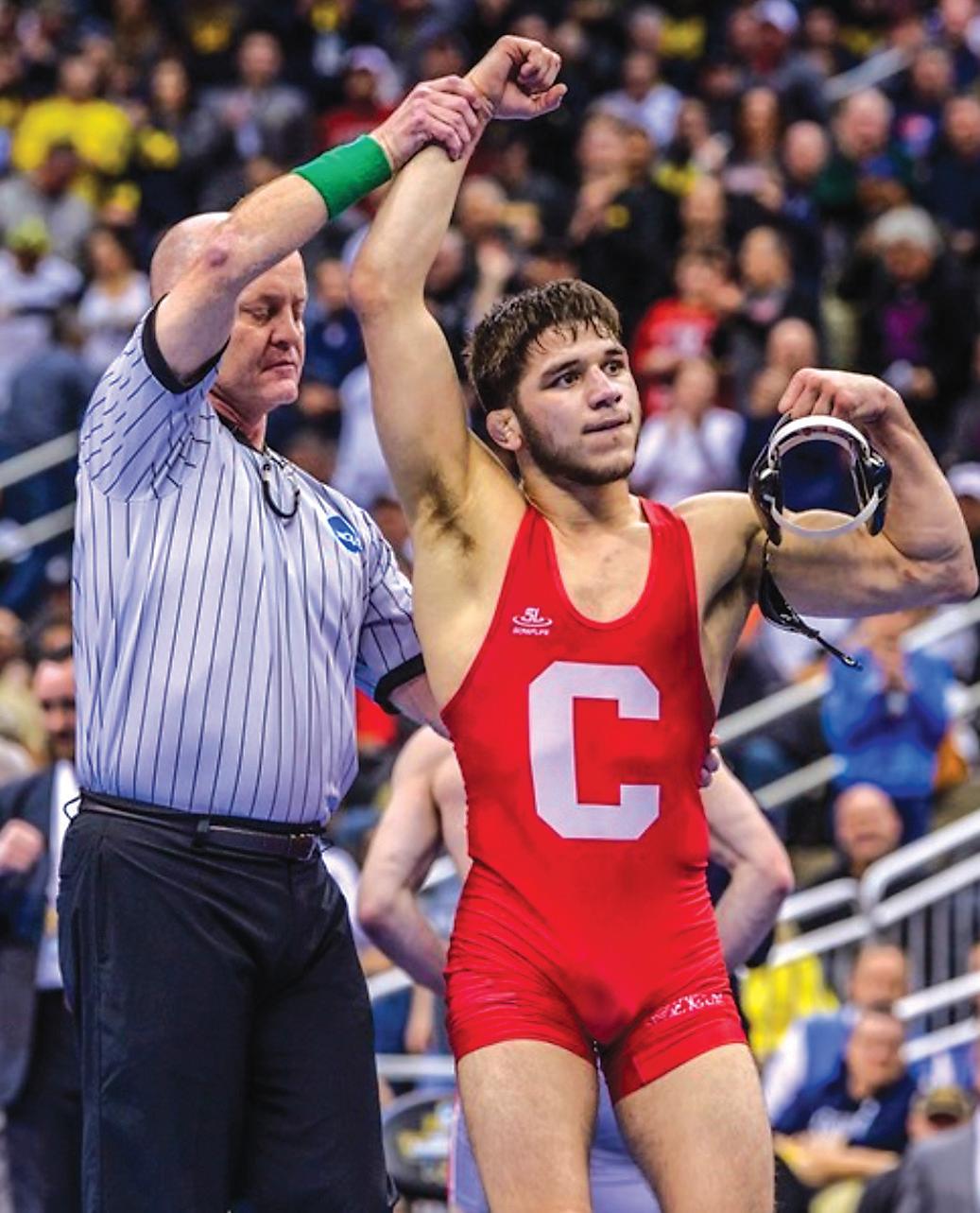
With 30 seconds left in the national championship bout at the 141-pound weight class, Cornell wrestling head coach Rob Koll felt something he almost never feels when sophomore Yianni Diakomihalis is on the mat: doubt.
“We never worry about Yianni because we know he’s always gonna win,” Koll said Sunday.
Down by one in Pittsburgh to Joey McKenna of Ohio State — a wrestler Diakomihalis smoothly sailed by when they last met in February — the coaches in Diakomihalis’ corner became uneasy even knowing Diakomihalis won his first national title last year on a four-point cradle with 20 seconds left.
“Thirty seconds left the match and I started saying, ‘Well, this is not normal,’” Koll recalled. “We gotta hurry up. When is Yianni going to pull out his bag of tricks?”
“And then he got down to about 15 seconds, and for the first time in his entire career I actually started to worry.”
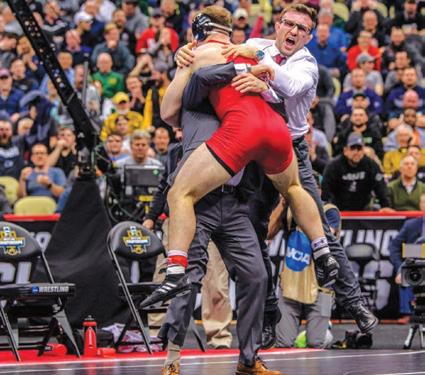
But Diakomihalis made lightning strike twice in two separate national finals, scoring a takedown with six seconds left in the third period before McKenna quickly escaped to send the match to overtime. And in sudden-death overtime, Diakomihalis showcased his second-to-none scrambling skills to secure McKenna’s left leg before sweeping the right to defend his title and cap off an undefeated sophomore campaign after undergoing ACL surgery in the
offseason.
“Don’t scare me like that!” teammate Vito Arujau yelled to his close friend in a video captured by FloWrestling when the two embraced after the victory.
But what’s scariest for competition: The head coach doesn’t even believe his premier wrestler performed at peak capacity this weekend, even though he fended off four soon-to-be All-Americans in his fivematch route to the title.
“I don’t even think now he was perfect. He’s finally getting back to where it needs to be,” Koll said. “His goal is not to win the National Championship. His goals are ultimately to win the World Championships.”
and coach Gabe Dean ’18 — a former nemesis of Martin’s — advising from the corner, Max re-solidified the Dean name in the 184 finals.
Dean would ultimately fall in the finals to Drew Foster of Northern Iowa — a wrestler he entered Saturday with a 3-1 record against — and Koll said he thought the gold medal moment might have been too much for his sophomore a night removed from the viral upset.
“They really worked on a plan ... to try to take him deep and steal it at the end. And it worked brilliantly.”
Rob Koll
“I thought he was going to win it, but I thought, maybe, he got a little bit `caught up in the moment,” Koll said of the title loss. “I’ve never seen Max get tired in his life. He looked off.”
marginally closer but still fell, 13-6.
“Like a college wrestler taking on a high schooler,” Koll recalled.
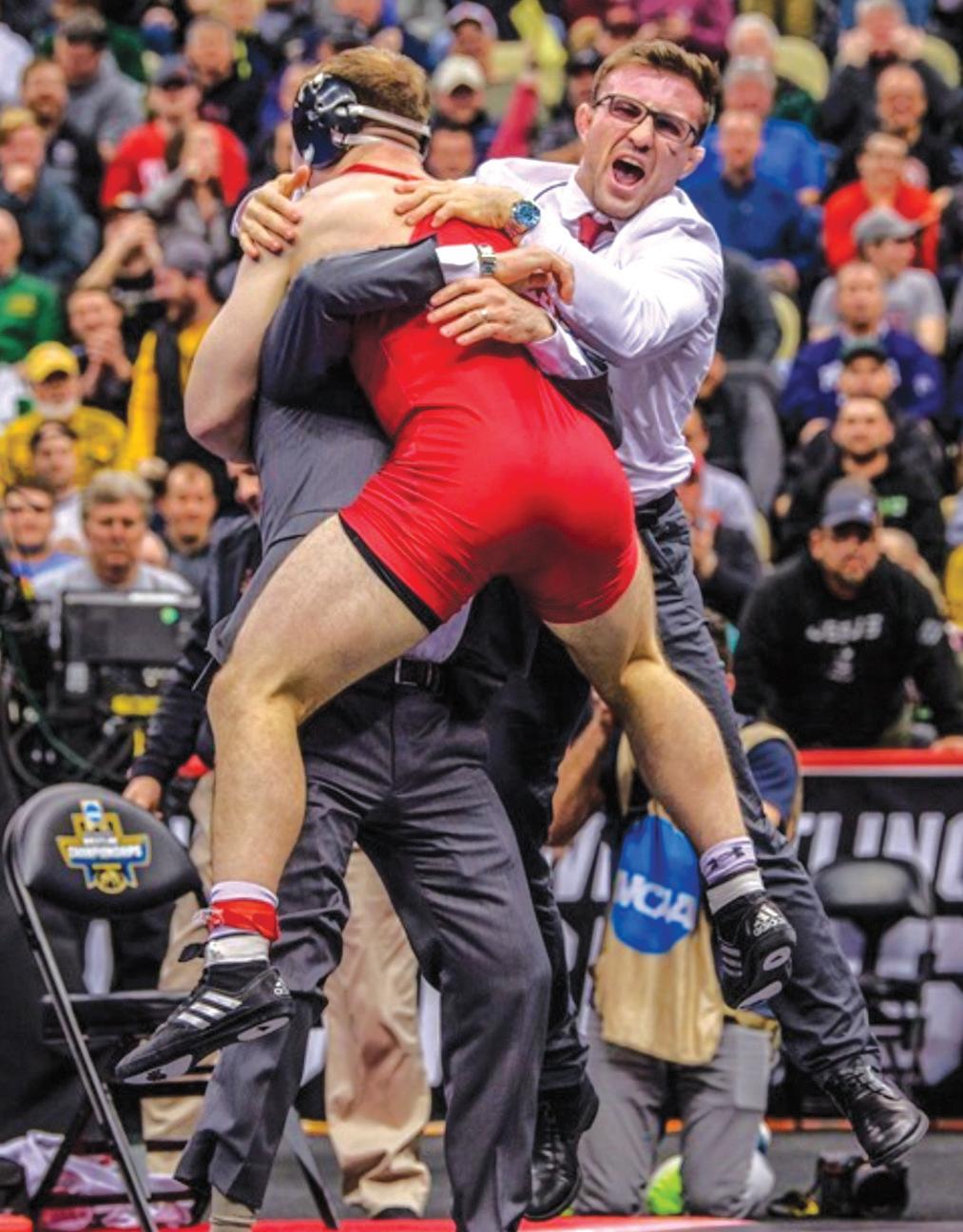
But on Friday, Dean changed the narrative, and he ran directly to the only person more excited about the win than him: Gabe.
“They really worked on a plan to slow the match down and to try to take him deep and steal it at the end,” Koll said of the Dean brothers conceptualizing a blueprint for the upset. “And it worked brilliantly.”
Now four of the last five finals at the 184-pound weight class have featured a Dean brother.
“Can’t say I wrestled to the best of my ability this weekend, but I’m proud that even when I wasn’t wrestling my best, the will to win that my coaches have trained into me won me those matches,” Diakomihalis wrote on Instagram.
Dean Pulls Off Upset of Tourney
While Diakomihalis brought home Cornell’s biggest trophy, it was another teammate that set the wrestling world on fire.
Sophomore Max Dean (184) upset undefeated and runaway favorite No. 1
Myles Martin of Ohio State in the semifinals, 5-4, thanks to a takedown with 12 seconds left in the match. With brother
Regardless, Dean had still pulled off “by far the biggest upset of that tournament,” Koll said, to make it there in the first place. There are few sure things in college wrestling, and the common adage is to not be surprised by anything the sport throws at you.
Even still.
“I would say it’s, arguably, the biggest upset that I’ve ever seen a Cornell wrestler accomplish,” Koll said.
What made it all the more impressive is the evolution Dean took against Martin from earlier bouts in the season. In the first meeting at the Cliff Keen Las Vegas Invitational, Martin took Dean to the mat eight different times for a 17-7 major decision. And in the second, Dean kept it
Both Diakomihalis and Dean represented Cornell in the championship bouts Saturday night, but a seventh-place team finish — which made it Cornell’s 12th year in a row inside the top 10 — would not have been possible without the help from the remaining five wrestlers.
The next-highest placer for Cornell was the freshman Arujau at 125 pounds. Entering the tournament with just one loss at 125 after moving down from 133 earlier in the year, there was just one thorn in the freshman’s side in Pittsburgh.
No. 1 ranked Sebastian Rivera of Northwestern got the best of Arujau twice in the tournament — once in the quarterfinals and once in the third-place consolation match. But before getting to the second meeting, Arujau — ranked No. 8