


By SOFIA CHIERCHIO Sun Contributor
Katie Meyer ’22 was the team captain and star goalkeeper for Stanford University’s women’s soccer team. She was an international relations major on the Dean’s List. On March 1, Meyer spoke with her parents on FaceTime, presenting “happy and upbeat.” A few hours after that call, Meyer was found dead in her dorm, having taken her own life.
Many attribute the mental health struggle among college students to an expectation of perfection forced upon them by campus culture. Gina Meyer, Meyer’s mother, said,
“There’s so much pressure I think on athletes, especially at that high level, trying to balance academics in a highly competitive environment. And there is anxiety and there is stress to be perfect, to be the best, to be number one.”
This tragedy has opened up a national conversation about mental health, specifically among college students. Suicide is the main cause of death among college students and Cornell’s recent history presents no exception to this statistic. In 2010, there were six student deaths attributed to suicide at Cornell.
According to Cornell’s 2020 Mental Health Review, within the past year, over forty percent of students were unable to function academically for at least a week due to
By SURITA BASU
On Wednesday, in CornellALERT email, the University announced that its Ithaca campuses are moving to yellow alert, noting that the recent rise in COVID-19 cases has surpassed the University’s expectations.
The move to yellow alert comes nearly 10 days after the University eased masking requirements for the majority of indoor, on-campus locations and nearly a month after the University lifted surveillance testing requirements for fully vaccinated individuals.
In a statement released to the Cornell community, Provost Michael Kotlikoff, Vice President for Student and Campus Life Ryan Lombardi and Vice President and Chief Human Resources Officer Mary Opperman cited that academic disruption and isolation housing requirements for infected students prompted the University to take action against the spike.
The statement continues recommending that members of the Cornell community take voluntary steps to contain the spread. These steps include wearing high-quality masks at events and parties, staying home if feeling
unwell and using supplemental and opt-in surveillance testing. The statement urges those who have recently traveled, attended a large gathering or may have been exposed to someone who tested positive for COVID-19 to schedule an asymptomatic test.
As of Mar. 22, the COVID-19 dashboard currently reports 151 new positive cases on Tuesday, Mar. 22 and 263 active cases overall.
Additionally, the statement said that the majority of positive cases that have been reported so far are from symptomatic testing,

depression, stress or anxiety.
Aleksa Dangeva ’24 attributes suicide rates at Cornell to the University’s poor mental health resources.
“Cornell has taken a downstream approach, such as installing nets under bridges, rather than focusing on reasons students commit suicide here,” Dangeva said. “It’s heartbreaking to see how many students fall victim to something Cornell could be doing more to prevent.”
Nicole Werner ’22 also sees the loss of students to suicide as heartbreaking and believes Cornell should take more action to prevent it.

By LILY PAN Sun Contributor
While many students rely on walking or the TCAT bus service as a means of navigating Ithaca, narrow sidewalks and long trips to grocery stores have incentivized many Cornellians to bring their own cars to campus. However, recent spikes in gas prices have inconvenienced many students with cars, making them reluctant to drive.
According to data from the New York State Energy Research and Development Authority, the average gas price in New York State has risen to
427.8 cents per gallon, which is a 51.1% increase from last year’s average price of 283.1 cents per gallon, and a significant increase from last month’s average of 369.2 cents per gallon.
The augmenting prices have created concerns for Cadigan Li ’23, who primarily uses her car for nighttime transportation and grocery shopping.
“Parking spaces around Ithaca campus can be limited, and they are expensive,” Li said. “This recently increased gas price has added another burden to my monthly budget. ”
Today
The War That Made the Roman Empire: Antony, Cleopatra, and Octavian at Actium 4 p.m., Martha van Rensselaer Hall
The Lanuage of Poetry in a Time of Crisis: A Poetry Reading and Conversation With Ilya Kaminsky 5 p.m., Klarman Hall G70, Rhodes-Rawlings Auditorium
Annette Richards, organ, “Bach and the later 18th Century”: C.U. Music 7 p.m., Anabel Taylor Hall
COMMConnections Series: Silicon Valley & the Field Of Communication With Kurt Abrahamson 7 p.m., Virtual Event
Spirited Away 9:30 p.m., Willard Straight Theater
Tomorrow
Sustainable Systems for Fashion: Biomimicry and the Future of Fabrics 10 a.m., Virtual Event
Professional Directions: A Talk with Director / Cinematographer Rand Rosenberg 12:30 p.m., Schwartz Center for Performing Arts, Film Forum
Cornell Softball vs. Columbia University 2 p.m., Niemand-Robison Softball Field
The Rentierisation of Food: Regimes of Property And the Making of Chile’s Gloalized Agriculture 3 p.m., Virtual Event
Cornell Comedy Weekend Presents: Patti Harrison & Ziwe 7 p.m., Alice Statler Auditorium
The Tragedy of Macbeth 9:15 p.m., Willard Straight Theater

MENTAL HEALTH
By RORY CONFINO-PINZON Sun Contributer
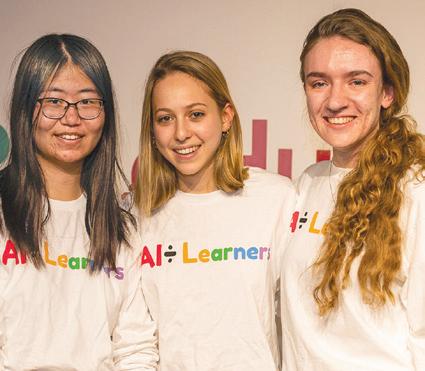
A team of Cornell students, part of the educational company called AI-Learners, are developing computer games to make math more accessible for students with disabilities and are now competing across the country to secure funding crucial to achieving their goal.
“It’s honestly great to have so many people, everyone contributing.”
Adele Smolansky ’23
AI-Learners develops electronic games for students with physical, cognitive and behavioral disabilities. Their website includes games that teach various math skills — such as addition, subtraction and shapes.
For their founder, Adele Smolansky ’23, the mission of AI-Learners is a personal one. Her younger sister, Lara, was born with Rett Syndrome, a neurological disorder. Smolansky wanted to create a tool to help her sister learn math. After speaking with Lara’s therapist, who suggested that a new electronic game would be helpful, Smolansky began learning to code.
Smolansky first attempted to create these games in high school but realized that she lacked the necessary coding experience. During the summer of 2020, at the start of the pandemic, she decided to collaborate with other Cornell students to revive the project.
Kylie Grinwald ’22 serves as the V.P. of Operations for AI-Learners. She became interested in joining the team after resonating with Smolansky’s goal.
“As a first-generation college student, any causes that relate to making learning accessible for a wider population of learners is very compelling to me,” she said.
To best tailor the website to the needs of families with students with disabilities, Smolansky and her team conducted trials with parents and educators while developing the product.
“We talked to them about what they liked and didn't like about these [other educational game] platforms,” Smolansky said. “Then, through that, we created some designs.”
The website utilizes several different functions to specifically assist students with disabilities. When a student is playing a game, they are unable to begin until the instructions have been read to them. Additionally, the games are intentionally slowed down to cater to students who learn best at different paces.
The team designed the website to have special color contrast, as well as different reinforcement icons on the screen, implementing these features based on feedback received during user testing.
The website also provides support for screen readers, an assistive technology that translates written information into forms accessible to people with visual impairments.
The team also aims to make the learning experience rewarding and engaging for their audience. When a student gets an answer correct, a jingle plays and a happy picture congratulates the student on getting the answer. The games also have video breaks, during which the students may watch a YouTube video and listen to songs.
The team said that, in the future, they hope
to expand their games to other subjects, such as English or science. However, their current goal is to focus on their first project before expanding.
“We really just want to make sure that we're focused first on reaching our short-term goal and making that one before expanding the audience,” Smolansky said.
After creating their initial product, the team then applied to Cornell’s eLab — a startup accelerator for students — where they took entrepreneurship classes, worked with mentors to further develop and research their project and prepared it for launch. After completing the program and incorporating AI-Learners as a legal entity, the team received $5,000 from eLab, marking their first round of funding.
The company, originally run by about six members, has now grown to a team of 20. They continue to use the eLab’s eHub space to work on AI-Learners, where they work in four teams: software development, game development, design and business. Each team has a project manager, but, despite this structure, Smolansky stressed the company’s non-hierarchical culture.
“Even though we do have different position titles for people, we found that [an inclusive team] just fosters collaboration a lot more,” she said. “It's honestly great to have so many people, everyone contributing.… I can point to what every single person on the team has done.”
Grinwald echoed this sentiment, talking positively about the different opportunities and experiences being a part of the AI-Learners team has afforded her.
“I have grown tremendously on both personal and professional levels, and expanded my areas of expertise from primarily human resources to a variety of business functions including marketing, finance, and operations,” she said.
“... any causes that relate to making learning accessible for a wider population of learners is very compelling to me.”
Kylie
Grinwald ’22
The team’s next step is to secure funding to hire full-time developers as they continue to build their product and cover various expenses. From the end of February to the beginning of March this year, AI-Learners was selected as a semi-finalist for both the TCU Values and Ventures Competition and the Draper Business Plan Competition. Several members of the AI-Learners team will be traveling to Texas over spring break to pitch their company in an attempt to to win over $40,000 and $100,000 in funding.
Beyond creating educational games, the team at AI-Learners hopes to use their products to conduct research on the acquisition of math skills among students with disabilities, information that can help to inform educators’ curriculum development.
“If you talk to educators or special education teachers that work with kids with disabilities, they'll say that all of their logic for how to teach kids is based on just anecdotal experience,” Smolansky said.
AI-Learners plans to release a beta version of their website this summer, with a subscription version to launch next year.
Rory Confno-Pinzon can be reached at rec292@cornell.edu.
ALERT Continued from page 1
indicating that there are even more asymptomatic cases within the community.
The statement urged students to get tested before and after spring break by picking up two antigen test kits from one of the COVID-19 testing sites on campus. Students should complete one test before the start of break on April 2 and
one at the end of break before they return to campus, uploading the results to their Daily Check.
The statement concluded by urging the Cornell community to keep each other safe.
“We are all ready for the pandemic to be over, but we must continue to confront the realities of COVID19 and the impacts that it has on our ability to support the campus community” the statement read.
Surita Basu can be reached at sbasu@cornellsun.com.
Continued from page 1
“Over the past 4 years, this school has witnessed a truly large amount of tragedy. It is not only extremely saddening as a student to lose a member of your community, but also very frustrating and disappointing to not see any real change on the end of the administration,” Werner said.
On the other hand, Sammy Phelps ’23 believes that the mental health issue at Cornell stems from the University’s academic rigor rather than lack of resources.
“I think the issue is not with resources, because they are available if you seek them out. My stress comes from a lack of empathy from some professors,” Phelps said. “I think it’s more of a constant battle in terms of what’s expected of us and how we constantly have to rise to an unrealistic higher standard.”
Like Phelps, Dangeva believes that the pressure to constantly be the best creates a stifling environment.
“With such high stress levels, Cornell should check in with students more often,” Dangeva said. “More breaks or wellness days could help students relax, and better prelim schedule planning could prevent students
from facing intense weekly workloads.”
The recent suicide at Stanford has students reflecting on steps that they can take to improve their mental health, such as focusing on maintaining a balanced life.
“Work out, hang out with your friends, you need to take time away from school. Sometimes at Cornell, it can feel like your whole world,” Paula Loudermilk ’25 said.
Like Loudermilk, Phelps concluded by emphasizing the need to take a break.
“In the Cornell bubble, it’s hard to realize that school is not the only thing that matters. You deserve to do things that make you happy. School should come second to your mental health,” Phelps said.
For those who are struggling mentally, there are resources available on campus to help. Counseling and Psychological Services (CAPS) at Cornell Health provides professional mental health care to aid during one’s time at Cornell. Available services include workshops, group or individual counseling, and 24/7 phone consultation.
Sofa Chierchio can be reached sc2339@cornell.edu.
GASOLINE
Continued from page 1
burden to my monthly budget.”
Some students have also modified their driving habits to cope with the price increases. One student, Joy Chen ’24, looked for gas-saving tips when driving after the surge in gasoline prices. She has since reduced the frequency of using air-conditioning in the car and the speed of stepping on the gas.
“I have always known those tips, but I didn’t feel necessary to actively remind myself of them until now,” said Chen.
As national average gas prices spike, many are searching for a reason for the surge citing President Biden’s Executive Order banning imported oil, gas, and coal from Russia to the United States as one major factor.
However, though this ban may
play a big factor in gas price increases, they have also been consistently impacted by the COVID-19 pandemic and seasonal price changes and it is uncertain how long the high prices will last. According to the U.S. Energy Information Administration, retail gasoline prices would historically escalate in the late spring through summer, as people tend to drive more during this period.
“Those red numbers outside of fuel stations are going up day by day,” said Tiffany Yuan ’25. “I wasn’t prepared for that.” Yuan indicated that she has intentionally avoided driving in recent weeks due to the unexpected increase in gasoline prices. “I am worried that the price might continue to climb for a while,” she said.
Lily Pan can be reached at jp2242@cornell.edu.
TBy DANIELA WISE-ROJAS Assistant Dining Editor
Content warning: this article contains content relating to eating disorders and relationships with food.
Walking through the dining hall, I contemplate what to eat; the pizza looks good, but I don’t think that’s healthy. Ice cream, obviously, is delicious, but then I ask, “am I just using this as a way to cope with my emotions?” I decide to

get a salad, wondering how some people around me just eat whatever and don’t gain weight. I wonder why I care so much about what I eat — it’s because I always have.
However, there’s a fine line between caring about what you eat in a way that’s helpful and paying attention to your intake in a way that’s obsessive. I doubt I’m the only Cornell (or even college) student who has struggled with this dilemma. Cornell students’ relationship with food can

become problematic because of a lack of education about eating disorders; every student comes from different backgrounds and parts of the world, each with a special diet.
Shifting to dining hall food and consuming new kinds of food at a different pace can interrupt one’s body’s “norm,” mentally and physically; some refer to this as the “freshman fifteen.” Furthermore, Cornell students are set back further by being overworked combined with social perceptions that elite institutions like Cornell are wealthy and predominantly white. Such leads to more stress on minority and middle-to-lower income students without the knowledge of healthy coping mechanisms, or at least knowledge of resources to help them.
At this point, “freshman fifteen” is a socially accepted term regarding college weight gain; Healthline wrote, “the ‘freshman 15’ is commonly used in America to describe the weight students tend to gain during their freshman year in college, which is believed to be around 15 pounds.”
students gain 15 lbs during their first year. The average weight gain is only 2.7 lbs, and around half of the students gained weight, 15 percent lost weight, and men gained more weight than did women.
So, no. The freshman fifteen isn’t real. Nevertheless, what might spark this belief is their finding that freshman weight gain is about “5.5 times greater than that experienced by the general population.” Any weight gain feels different; my heart dropped to the floor when I was at a doctor’s appointment at Cornell Health, seeing the numbers increase rapidly, stopping at a number higher than I last remembered.
Cornell students’ relationship with food can become problematic because of a lack of education about eating disorders.
An article from the Journal of American College health titled “The Freshman 15: Is it Real?” addresses that there is actually limited evidence proving that college
I was alarmed. I expected my doctor to be, too, but he wasn’t. He just looked at me, took notes, and looked confused when I asked him about it. He explained that weight and BMI are just a number that does not indicate your health — what mattered more was actually how I was eating and how I was feeling. He proceeded to offer if I wanted to follow up with a nutritionist. I did. She basically told me the same things but with more detail and fancier charts. Your body is simply not used to dining hall food, the occasional junk food,

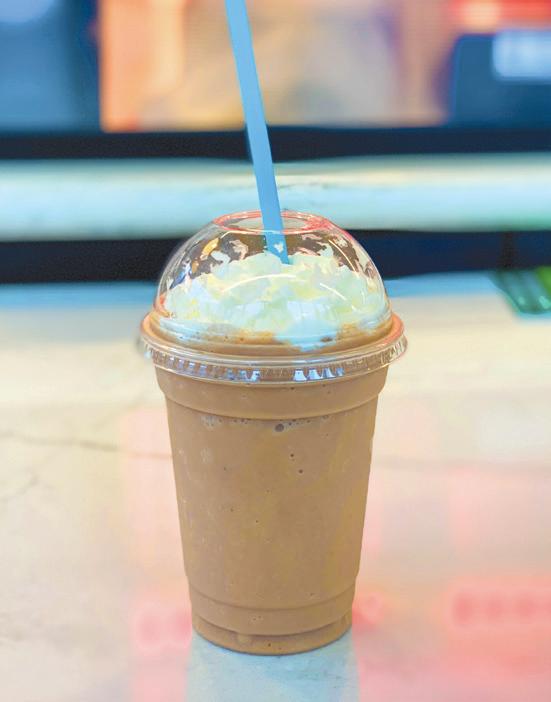
midnight snacks, and even more so, your body’s sleeping patterns and eating habits.
I felt a little idiotic when I explained how I eat and don’t know where to get the healthiest options sometimes, and she replied, “aim for balance and three meals a day!” It’s not that easy to do in practice. However, it is true. It’s all your body needs to be “healthy” along with exercise. There are ways to find “balance,” whether you’re eating at a dining hall on campus, somewhere in collegetown or ordering from a campus cafe. Hence, here are my recommendations for non-junk food that can be balanced depending on what you eat throughout the day.
Dining Halls: Morrison Dining and Risley Dining I hope that Morrison stays one of my favorites and won’t stop making fresh food after it’s been around for long enough. Morrison makes all its noodles, pasta, pizza and other similar dishes entirely from scratch. It’s one of the few places where I eat carbs and don’t feel heavy with regret afterward. There’s a large variety of options, including chia pudding at the fruit bar. Risley Dining, another one of my favorites, has some of the same options. What makes Risley unique is its commitment to gluten-free food. Some may argue that food without gluten doesn’t taste great, but Risley makes it taste pretty tasty. Furthermore, not consuming gluten does reduce inflammation in your digestive system, regardless of whether or not you’re allergic to gluten.
Campus Cafes: Crossings, Libe, Mann, Goldies, Temple of Zeus, Terrace, and Cafe Jennie
Obviously, all of these cafes on campus will have pastries and other not-so-healthy options. They are tasty but work better when eaten in moderation and balanced with proteins, veggies and carbs. Crossings and Libe have delightful fruit and yogurtbased smoothies.
To continue reading this article, please visit cornellsun.com.
Daniela Wise-Rojas ’25 is a freshman in the College of Arts and Sciences. She can be reached at dwise-rojas@cornellsun.com. She currently serves as Assistant Dining Editor on the 140th Editorial Board and her column Anything But MunDANIties runs every other Monday this semester.
140th Editorial Board
VEE CIPPERMAN ’23
Editor in Chief
SERENA HUANG ’24
Business Manager
EMMA LEYNSE ’23
Associate Editor
SURITA BASU ’23
Assistant Managing Editor
NAOMI KOH ’23
Assistant Web Editor
ELI PALLRAND ’24
News Editor
ESTEE YI ’24
News Editor
KAYLA RIGGS ’24
City Editor
JULA NAGEL ’24
Photography Editor
MEHER BHATIA ’23
Science Editor
KATRIEN DE WAARD ’24
Production Editor
PAREESAY AFZAL ’24
Assistant News Editor
JIWOOK JUNG ’25
Assistant News Editor
ADITI HUKERIKAR ’23
Assistant Arts & Culture Editor
DANIELA WISE-ROJAS ’25
Assistant Dining Editor
JASON WU ’24
Assistant Photography Editor
GRAYSON RUHL ’24
Assistant Sports Editor
KEVIN CHENG ’25
Newsletter Editor
HANNAH ROSENBERG ’23
Senior Editor
ANGELA BUNAY ’24 Managing Editor
DEVAN FLORES ’24
Web Editor
KATHERINE YAO ’23 Opinion Editor
ROMAN LAHAYE ’23
SOFIA RUBINSON ’24
COLIE ’23
& Culture Editor GRACE KIM ’24
AARON SNYDER ’23 Sports Editor
TENZIN KUNSANG ’25
ANDIE KIM ’24
AIMEE EICHER ’24
YOUNG ’24
HEGDE ’24
Assistant Arts & Culture Editor CLAIRE LI ’24
Assistant Photography Editor
GABRIELLA PACITTO ’24
Assistant Sports Editor
RUTH ABRAHAM ’24 Assistant Sports Editor
DANIEL BERNSTEIN ’23
MADELINE ROSENBERG ’23 Senior Editor
Working on Today’s Sun
Layout Desker Katrien de Waard ’24
Design Desker Kristen Dsouza ’24 associate Desker Emma Leynse ’23
Managing Desker Surita Basu ’23
Dining Desker Daniela Wise-Rojas ’25
News Deskers Estee Yi ’24 Sarah Young ’24
Science Desker Meher Bhatia ’24
Photography Desker Julia Nagel ’24
Production Desker Katherine Chang ’25
To the Editor:
I, like Noah, entered Cornell intending to pursue medicine. I stuck with it for about two years; to paraphrase J. Cole, the good news was that I came a long way, the bad news was I went the wrong way.
As a female Nigerian immigrant, I struggled when faced with the decision to drop the pre-med track. I also faced a very loud and invasive thought: “I’m not good enough.”
Society often coerces us into disingenuous performances, promising that the applause we’ll receive at the end will pacify our perpetual anxiety. And the thought of stepping offstage to face the unknown rather than playing pretend in the presence of what’s familiar — well, that can be scary.
But there are critical costs to wearing this costume. It diminishes the light we’ve been given to share with the world — a light that can liberate ourselves and others from fear, as was said by author Marianne Williamson.
Instead we believe in a lie — that our true self isn’t enough. It makes us trade in empathy for apathy and vulnerability for prideful exclusivity when dealing with others.
My mentor recently reminded me that a successful life requires faith and courage. By walking away from pre-med, I thought I’d lose out on everything that becoming a doctor would supposedly guarantee: family satisfaction, income and reputation. I couldn’t have been more wrong.
Stepping out in faith to pursue a career in public health has helped me receive these things and more, in the way I was meant to. Better yet, it revealed a greater purpose that was beyond me. It moved me beyond biomedicine toward addressing the systems and social determinants of health for marginalized communities through intentional partnership.
Cornell students: you are enough. Take courage and have faith as you move along your unique path at Cornell. Let your contributions to this world be rooted in meeting others in the present moment — in humility, empathy, curiosity, service and most importantly, love.
Adaeze Okorie ’20
Alecia Wilk (she/her) is a senior in the College of Arts and Sciences. She can be reached at awilk@ cornellsun.com. Girl, Uninterrupted runs every other Friday this semester.
Last Wednesday, about Cornell 700 students were sitting in front of screens at around the same time. We were taking the prelim for Hotel Administration 4300: Introduction to Wines. Time-slotted within the mosaic of countless other prelims last week, it was joke material.
The 135 question exam opened and closed in under two hours. And after, I felt a selfish comfort when my roommates looked as shaken by it as I was, but as we were debriefing, a difference dawned on me. Confidence aside, they had at least completed the exam. Or came close. My exam closed on me, cutting me off hardly more than halfway through it. I sunk under the weight of an invisible dunce cap, I was joke material.
Desperate for comic relief from elsewhere, our fingers reached for phones. My friend dove into the Cornell subreddit and scrolled right into a Cornell sociology professor’s rant-turned-post. She read a whirlwind of screenshots aloud to me, starting with an announcement in which the professor forewarns his students not to request extensions on an upcoming assignment — reprimanding the entitlement, shamelessness and disrespect he attributes to such requests. He instructs students not to put him “in the awkward position of having to tell [them] to take responsibility, grow up …. ” Listening, I had whiplash. Seconds prior, I had been aching over the fact that I might be in dire need of Student Disabilities Services accommodations for a test about a drink. And as my friend read out the professor’s admonitions, I was suddenly sick at the idea that I felt entitled to extra time with anything.
Needing assistance, and the shameful denial of any need for assistance, is an ebb and flow I am intimately familiar with by now. Immediately upon my acceptance to Cornell, I had an unbearable, inexplicable spidey-sense that a mistake had been made. It has since been confirmed, several times over. There are defects in my design that if I knew how to disclose, would have disqualified me from being here. For forever, I’ve been chalking up some serious complications to my own stupidity. Or slowness. It was when I came to college that I started wondering, and worrying, if my slew of shortcomings could be classified as something else. I still don’t have a definitive answer, just the dying hope that a diagnosis could’ve helped this all go differently. But accommodations lose all appeal when needing extra adjustments deems us deplorable in the eyes of our professors and society at large.
In a later correspondence to students, the same professor claims his announcement was an “exercise.” Likening his notice to a social experiment on white fragility, he asserts that reactions to his announcement only prove the privileged, entitled nature of students and extensions. This second address is longer and perhaps even more hostile than the first, and he
concludes it by imploring the students he jabs at condescendingly to take up their concerns with him. Even hearing the announcement from the safety of outside his listserv, I felt my stomach churn over the absence of good choices. There are times when the act of offering options is just to drape sheep’s wool over attitudes as aggressive as lions.
It has been noted both by former professors and current students that Cornell has practices meant to exclude people with mental illness. Admissions screen for their mention and stamp them out. Extensions of sympathy from the university are slights of hand, because between up-front honesty and handling things yourself, any move is a losing one. Students and faculty are made to feel irrational and non compliant for treating mental disorders or disturbances like something to hide, to wrap in shame, and tuck away and deal with alone. However, the more I know about administration’s attitudes regarding accommodations and those who require them, the more it is impossible to tell helping hands from headhunting. It is excruciating when mental illness turns you into someone incompatible with the demands of each new day. It’s worse when everything you do to manage is misunderstood as a dirty play in an entirely different game.
College has mostly been a solo contest of keeping my academic struggles as private as possible. I’ve bitten my tongue and tried to disappear completely before attempting to communicate because I thought it was better to be a failure with my dignity intact than become something worse — a burden who couldn’t accept defeat silently. My inbox has gone ignored because the dread of assignments and answers I couldn’t deliver on time ate me alive. I expected that admitting my difficulties would work against me. It is a strange cocktail of vindicating and pulverizing to know that they do indeed.
The unnerving post-prelim realization that I’m stuck on a different page than my peers was not unique to my wines class, though the shame was especially tannic that time. For a while after, every lighthearted dismissal of the test was laced with humiliation. In between laughs, I wondered, like I have a million times before, what was wrong with me. I don’t know how much more time I might have needed during the exam for my standards of poor performance to be on par with those of my classmates; all I know is how asking for it would reflect poorly on me.
To read that Reddit post about the professor railing against the shamelessness he sees in those seeking accommodations was to have my worst and most persistent fears as a student written into reality, I can’t imagine how it affected those in his classes. As troubling as it was to read, his attitudes are more at home in this environment than struggling students could ever be.
Patrick J. Mehler
Te Mehl-Man Delivers
Patrick J. Mehler (he/him) is a junior in the School of Industrial and Labor Relations. He can be reached at pmehler@cornellsun.com. Te Mehl-Man Delivers runs every other Tuesday this semester.
The “161 Tings Every Cornellian Should Do” may not be the most realistic, but here’s a new bucket list to complete before graduation.
Sitting outside of Ives Hall, I witnessed some of Cornell’s return to normalcy with a campus tour of prospective students walking by. Te inaccuracies of the tour aside (for which American Studies 2001: Te First American University is an excellent source of Cornell truths), I listened to the tour guide give a brief view into each college within the University.
After wrapping up the discussion of my home, the School of Industrial and Labor Relations, the tour guide stopped to ask her visitors: “Has anyone seen Te Ofce?” I put aside my own quarrels with Cornell’s reputation being tied to a fctional television show rather than our outstanding campus, alumni and more while I waited to hear the tour guide connect the television show with the
realities of being a Cornellian. Quoting directly from the show, the tour guide noted how one of the characters in Te Ofce says, “We’ll get together in Comstock Hall,” before pointing to Comstock directly across from Ives and Barton.
After thinking about how many buildings we have on campus, I couldn’t help but wonder why Comstock was the one chosen to be Cornell’s namesake building for Te Ofce. What about Uris Library or Goldwin Smith? What about the Statler or Warren Hall? Sage Chapel or Sage Hall could have been more recognizable as well. Cornell as a university may not have one building “home” but the colleges all do.
Each college at Cornell has its own homebase: Ives for ILR, Martha Van Rensselaer for Human Ecology, Goldwin Smith for Arts and Sciences. I even asked my roommates in the College of Agriculture and Life Sciences which building they considered to be their home, and while they did not agree on one building, they all agreed it certainly was not Comstock.
Cornell has over 600 buildings in total, with over 150 of those being academic buildings on the Ithaca Campus. But throughout our time at Cornell, most students have few reasons to explore the buildings beyond their majors, colleges and specifc electives. For example, an engineering student may never set foot in Bradfeld Hall on the Ag Quad or a Dyson student may never walk into Rand Hall, the location of the studios used by students in the College of Architecture, Art and Planning. With so many unique programs nestled into so many spaces across campus, I wish to provide a more PG and walking-friendly version of the “161 Tings Every Cornellian Should Do”: visit every academic building on campus.
I recently started this journey to see the inner walls of each space on campus, and it has been fascinating to see the diferent classrooms, hallways and lobbies that are commonplace for a few hundred students but a diferent world for thousands of others. I had eaten at Mattin’s Café in Dufeld Hall before but only recently saw an
engineer’s everyday life in Upson, Kimball, Turston, Bard and Hollister. I have walked through almost the entire Arts Quad’s array of buildings but have yet to explore the conglomeration of AAP libraries. Even while intentionally walking into buildings I have not yet been in, I still have dozens to go as I try to visit every building on campus.
Overall, there are two points to be made here: First, there are so many academic buildings on campus, yet we spend so much of our time in a select few. Opening our eyes to what other students see on their day-to-day makes us all understand what being a Cornellian is like for so many others.
Opening our eyes to what other students see on their day-today makes us all understand what being a Cornellian is like for so many others.
Second, Cornell does not have one building mascot. We may disagree on which one might be the magnum opus of Cornell buildings, but we can all certainly agree it is not Comstock.
But if we want to come to a consensus on which building is Cornell’s fagship, I encourage everyone to visit the dozens of buildings they have never seen or even heard of. I’ll be the frst to advocate for Cornell’s new fagship building — in my most unbiased and professional opinion: the McGraw Clocktower whose songs are heard by every Cornellian.

Giancarlo Valdetaro (he/him) is a senior in the College of Arts and Sciences. He can be reached at gvaldetaro@cornellsun.com. Boy (Not) From Ipanema runs every other Wednesday this semester.
Two weeks ago, I wrote about what I call “the driving mandate.” In response, I got an email from someone who agreed with my argument, but with one exception: my mention of a proposal for a combined high-speed and regional rail network throughout New York State. Tis person, after pointing out the mind-boggling fact that three-quarters of the distance between Ithaca’s Wegmans and Walmart is made up of parking lots, argued that focusing on improving the quality and increasing the frequency of intercity bus service would most efectively make the U.S. a walking, biking and transit-oriented country. Specifcally, they cited the high potential cost of construction and seemingly low ridership of a New York State high-speed rail network as reasons to prioritize enhancing buses instead. Although dramatically improving intercity bus travel is crucial as well, I want to outline why it is imperative that New York State begin constructing its own extensive rail network now, despite the costs or seemingly low ridership.
Tis is not a new debate in the transportation community, but it is an important
one, given that resources for transit are more constrained in the U.S. than in many other countries. Tis limitation becomes even more relevant considering the astronomical cost of most infrastructure projects in the United States — a reality of high-speed rail which Governor Hochul emphasized at her Brooks School event back in February.
Te most practical reason to invest in trains, not just buses, is simple: mode shift. By mode shift, I mean getting people to shift their mode of transportation away from cars and planes. Although buses can be, and already are, incredibly helpful to those who don’t have cars, they wouldn’t have the same ability as an extensive rail network would to get people to forgo cars and plans.
Trains are not only more comfortable than a bus but have a key additional advantage: speed. While a bus from Ithaca to New York City currently takes at least a little longer than the four hours or so needed to drive, the high-speed rail network proposed by transit researcher Alon Levy, for example, would fnish the trip in around three hours. Tis advantage would be even greater for cities like Syracuse and Bufalo, which would go from being bus rides of at least four and nearly eight hours respectively, to train trips of two and three hours. Whereas transit would have once taken longer than driving or fying, high-speed rail could allow it to take signifcantly less time.
Tis diference is especially important when it comes to air travel. Air travel is not only responsible for 2.4 percent of global emissions on its own — not including the other ways that it worsens the climate crisis — but is even more inequitable because it is only used by a tiny portion of the world’s population. Although a train will never replace intercontinental fights, it could conceivably replace the domestic and regional ones that are necessary if you don’t have a car, don’t want to pay for an exorbitant Amtrak ticket or need to travel more quickly than by bus. Making Boston to Syracuse, New York City to Montréal and Ithaca to Newark fights obsolete would make a signifcant dent in our needed car-
bon emissions — a developed rail network could do that in a way that buses will never be able to.
Beyond immediate mode shift, trains make more sense than buses when you consider that the population of the Great Lakes and interior Northeast won’t always be at its current level. Tis isn’t to say that the populations to be served aren’t already high-enough to justify high-speed rail: well over a million people live in metropolitan areas between Niagara Falls and Worcester, anchored by over twenty million people across Toronto, Boston, Montreal and New York City. Yet, the population of places like Bufalo, Syracuse, Toronto and Ithaca will likely explode as sea-level rise
I want to outline why it is imperative that New York State begin constructing its own extensive rail network now, despite the costs or seemingly low ridership.
and extreme weather events prompt people to migrate toward cooler climates and abundant fresh water. Although buses may seem to be more suitable for the number of passengers right now, trains will make more and more economic sense as already-occurring climate migration accelerates. Furthermore, building a rail network now will help ensure that this future growth doesn’t worsen the very climate crisis that caused it. Whereas population growth in
many Sun Belt cities has been sprawling and car-oriented — which helps to exacerbate a climate crisis that will eventually make these cities dangerous to live in — an active passenger train system could help focus development to accommodate new residents in the Great Lakes and interior northeast.
Tis would not only be broadly climate-friendly, but would help prevent degradation of forests and waterways that are so crucial to living in this area. Without such an investment, some may advocate for the expansion of already trafc-clogged roads like Route 13 between Ithaca and Cortland, inducing and creating anew the exact carbon-intensive demand that trains could diminish.
All of this said, establishing any rail service, much less building a completely new high-speed rail network, would be incredibly expensive. It’s also true that, for now, intercity buses have lower emissions than trains — even high-speed ones. However, rail is still the more sensible option. First, the difculties and cost overruns associated with transit construction in the U.S. can be mitigated by directly consulting foreign expertise. Second, buses have lower emissions in large part due to how the electricity that powers high-speed trains is generated — something that can be changed with the right amount of political will.
Even beyond these would-be obstacles, building rail is worth it because it will be transformative for people now, helping people go to doctors’ appointments that are only available in Syracuse, travel to or from Ithaca more easily, or visit loved ones in cities like Boston, NYC and D.C. Tis could all be done with trains, without having to spend four or more hours staring at asphalt, tires and metal boxes. Tere are needs not met, opportunities not taken, and connections forsaken because of the inadequacies of our current transportation system. Yes, improved intercity bus service is desperately needed. But our planet, our future and our present need and deserve more. Tat’s why we need a New York State high-speed and regional rail network.

Fill in the empty cells, one number in each, so that each column, row, and region contains the numbers 1-9 exactly once. Each number in the solution therefore occurs only once in each of the three “directions,” hence the “single numbers” implied by the puzzle’s name. (Rules from wikipedia.org/wiki/ Sudoku)





By MILENA BIMPONG and REGINA GALVAN RUMAYOR Sun Staff Writer and Sun Contributor
On Dec. 23, the New York State Senate passed new law backed by Cornell research establishing the Soil Health and Climate Resiliency Act, the Soil Health Program and the Climate Resilient Farming Initiative.
The new law will require all state agencies to work together in order to mitigate climate change and improve soil health and water quality. The law is meant to enhance the overall health of soil to improve farm productivity, reduce and mitigate the impact of farming on climate change.
The legislation is supported by
the Cornell Soil Health Program, which was established over 20 years ago and aims to provide local farmers with research oriented agricultural and farming practices that improve soil health, Wolfe explained.
Within the program is an Cornell-led initiative called New York Soil Health, which works to foster networking, outreach and research related to soil health. The program aims to guide farmers towards sustainable agriculture and regenerative farming — the restoring of organic matter in the soil to reduce climate change through agriculture.
A key aspect addressed by NYSH is increasing the amount of organic matter in the soil, which
has gradually declined due to extreme plowing and tillage. Such practices have been shown to leave soil bare, which as Wolfe explained, reduces soil fertility and crop resilience to extreme weather conditions. Through the NYSH, farmers have begun to notice that building up organic matter in the soil has allowed their crops to become more resilient to droughts and less prone to erosion, Wolfe said.
As the initiative will hopefully result in the growth of better crops, researchers are also looking for ways to efficiently plant these crops.
Prof. Matt Ryan, plant science, lead of the New York Soil Health initiative has conducted research on cover crops — a conservation
practice in which crops are planted for the benefits that they provide to the ecosystem.
Ryan has studied ways to use cover crops to reduce tillage — the preparation of land for growing crops. While soil tillage can be beneficial for controlling weeds and preparing seedbeds for planting, there are significant downsides to consider.
“Soil tillage is damaging to the structure of the soil,” Ryan said. “[But] it can also negatively impact different organisms that live in the soil that really regulate the processes that we’re interested in as farmers and as plant managers.”
Thanks to the program, farmers are beginning to do more fall and winter cropping and less plowing to help build up the organic matter in the soil which is composed of almost 60 percent carbon. By increasing the amount of organic matter, carbon dioxide can be stored in the soil rather than in the atmosphere, converging an initiative that improves the quality of soil and mitigates climate change, Wolfe explained.
While Cornell research played a major role in passing this bill, it’s also important to look into the legislative process.
Assemblymember Donna Lupardo (D-123rd District), introduced the original bill with former state senator Jen Metzger (D-4nd District), former Chair of the Senate Agriculture Committee.
“When I first became chair of the assembly Committee on Agriculture, I was invited up to Cornell and met with the professors behind the effort to develop
the New York soil health roadmap,” Lupardo said. “I met with the professors who were working on biochar and the pyrolysis lab, and they really opened my eyes to the innovative management needed for building healthy soils.”
While making revisions to the bill, the perspectives of various stakeholders were taken into consideration.
“We brought them to Albany, including people from Cornell, people from the Northeast Organic Farming Association and policy experts in other fields to discuss what should be part of a soil health and climate resiliency bill,” Lupardo said. “We based the bill primarily around their input.”
Lupardo saw how Cornell’s soil research had the potential to make a major impact on climate change mitigation not just in New York State, but also in the United States.
“What led Senator Metzger and I to file the bill was how I was inspired by the work being done at Cornell and other places around the state and around the country to develop innovative management practices to build healthy soil,” Lupardo said.
Such an initiative has been on the road for a very long time. Now legislation will further encourage farmers, researchers and policymakers to work together on the intersections of what is beneficial for both us humans, and the environment. “We are truly in the midst of a soil revolution,” Wolfe said.
Milena Bimpong can be reached at mbimpong@cornellsun.com. Regina Galvan Rumayor can be reached at rg623@cornell.edu.
these non-human species are used to manipulate the genome of these microbiomes.
Cornell Weill scientists have recently developed a pipeline which creates direct access to singular genes of the organisms within the gut microbiome, advancing the foundational understanding of diseases within the human body as these singular genes can be manipulated and their effects observed.
Amongst these researchers is Dr. David Artis, director of the Jill Roberts Institute for Research in Inflammatory Bowel Disease and Michael Kors Professor of Immunology, who is working to uncover the inner workings of the gut microbiome.
According to Artis, gut microbiota is not only influential in our physical health, but also in the science of medicine, reshaping how doctors think about modern medicine.
“In most [non-human species] you can transfer microbiota from one diseased animal to another and carry the disease over, microbiota carry disease,” Artis said. Typically
However, a recent breakthrough at Weill could potentially allow for specific genes to be targeted and observed at the single gene level.
Dr. Chun-Jun Guo, a researcher at the Jill Roberts Institute, and his team were behind this development. The pipeline allows bacteria and archaea within the gut microbiome to be studied at the single gene level. The gut microbiome genome is extremely complex, but with this pipeline, specific genes in the genome can be targeted and altered.
“This research could tell us a great deal of our relationship between our own genetics, our environment, our lifestyle, and how our microbiome shapes our diseases throughout our life,” Artis said.
Prof. Ilana Brito, biomedical engineering, is another researcher making strides in understanding this microbiome within the digestive tract, through the combination of engineering and biology.
“My lab focuses on the
human gut microbiome [and] trying to understand mechanisms that link the human gut microbiome to various diseases,” Brito said. “We also try to understand how antibiotic resistance may be harbored and spread by microbes we have in our guts.”
Unfortunately, little is known about why gut microbiota affects humans to the degree that it does, Brito explained. By looking at large cases of controlled cohorts of diseases and observing them, her team has found links between microbial proteins and health.
It was found that the gut microbiome in organisms with diseases are structurally different, and unhealthy gut microbiomes will typically result in an unhealthy host. These links are being researched throughout different labs, as Artis and his team have also looked into it.
“We understand that diseases such as asthma, allergy, cancer, inflammatory bowel disease, are associated with changes in the composition of the beneficial microbial communities that make up our microbiomes,” Artis said.

Progress in this field could lead to the development of more specialized and targeted treatments of illnesses such as neurocognitive and inflammatory diseases.
While developmental research on this conglomeration of microscopic organisms has become very prevalent in recent years, these are not new questions, according to Artis. The world of science has been circling this idea of a link
between gut microbiota and overall health for eons.
“2000-5000 years ago Hippocrates talked about the health in the gut without knowing what it was,” Artis said.
These microbiota have likely coevolved with humans, and along with their genome, which contains about 100 times more genes compared to a human’s, researchers are eager to dive into the uncertainties surrounding the gut microbiota.
The world of medicine is advancing. Developments such as genome mapping and the ability to target specific genes will reveal more about the link between gut microbiota and human health.
“We are still at the beginning part of that curve,” Brito said. “[T]here is still much more to come.”
Cristina Torres can be reached at ct538@cornell.edu.