The Corne¬ Daily Sun


By JOHN YOON Sun City Editor
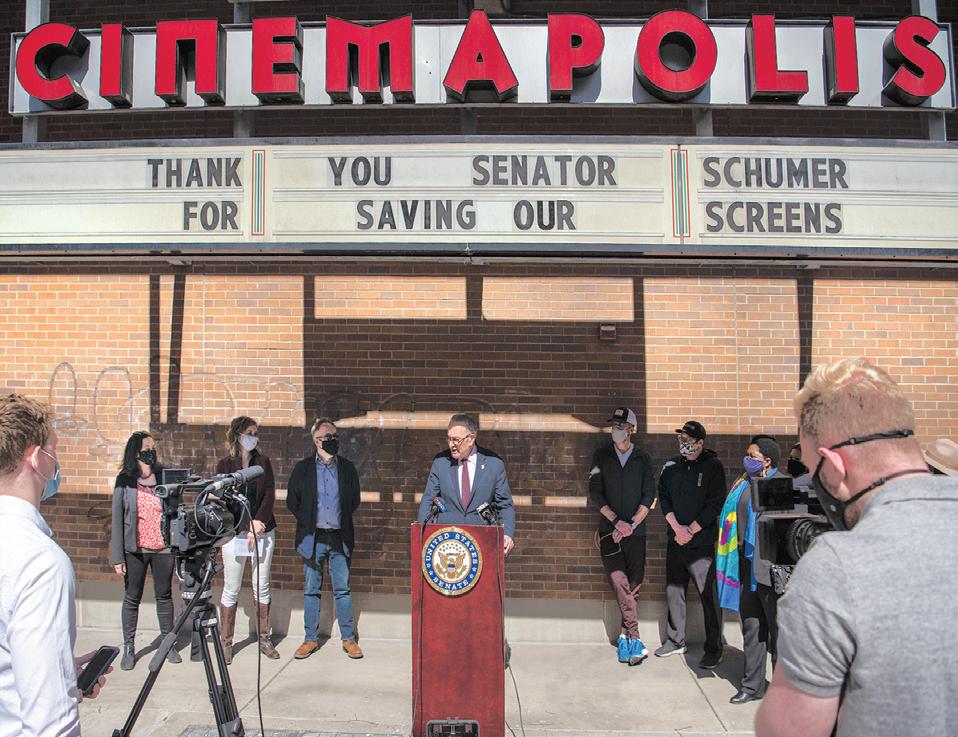
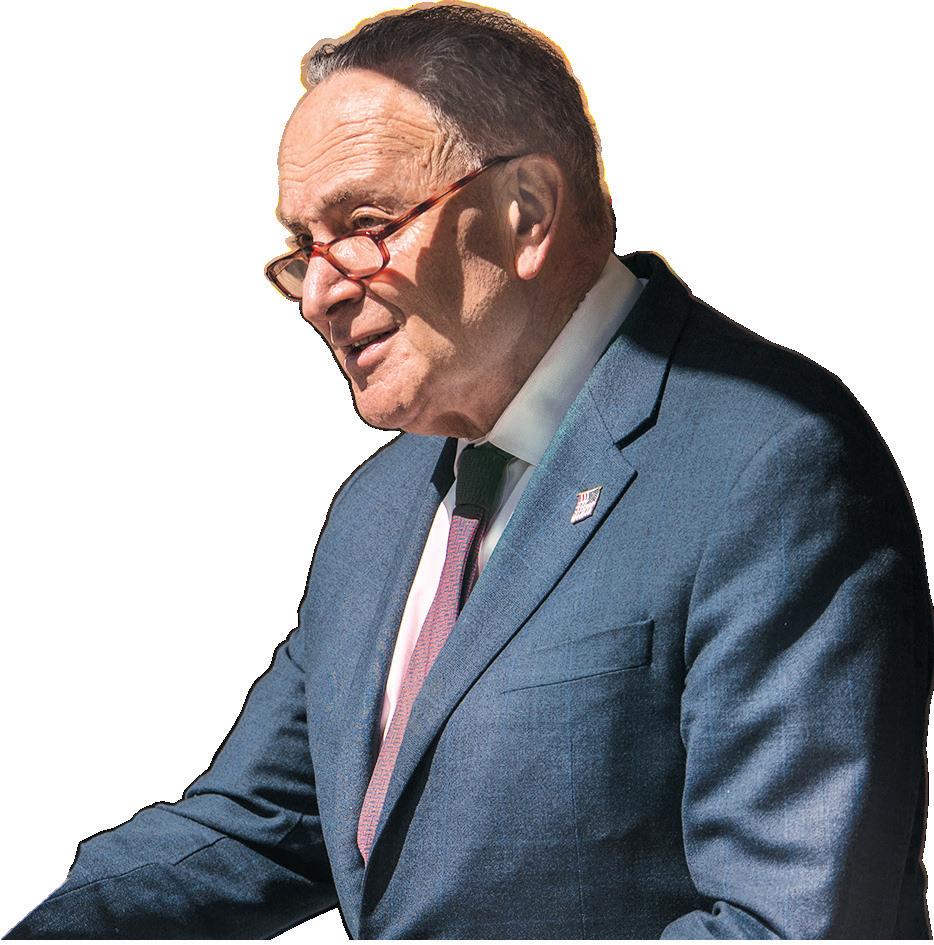
Standing in front of a handful of onlookers while wearing an “Ithaca is Gorges” mask Monday afternoon, Sen. Chuck Schumer (D-N.Y.) celebrated the passing of the massive COVID relief bill, the American Rescue Plan, that has hit Ithaca.
The American Rescue Plan, which aims to provide additional relief for individuals and small businesses that were affected by the pandemic, will provide $1,400 to thousands of Southern Tier residents. This act will distribute millions of dollars to some of the hardest hit
industries like independent movie theaters and restau rants.
The U.S. senate majority leader told reporters in front of Cinemapolis that the American Rescue Plan will cut the child poverty rate in half through three ways. It will make the child tax credit fully refund able and increase the credit amount to $3,000. It also strengthens the earned-income tax credit, a tax break for low to moderate income workers and families. Finally, it will provide eligible individuals with $1,400 stimulus checks.
Among those who spoke at the event was Latishia Abdellatif, an Ithaca resident, who discussed the relief the stimulus checks provided, after struggling to pay bills during the pandemic to keep her family afloat.
“Families like myself, I’ve waited by the TV for this bill to pass and kept checking my bank account until I got the money because I wanted to pay bills. I needed to pay bills,” Abdellatif said to The Sun. “I wanted to thank [Schumer] in person to let him know we do need the money and you did the right thing. I’m being rescued by this rescue plan.”
The plan will also support local governments — $17.02 million will go to the City of Ithaca. At the event, Mayor Svante Myrick ’09 thanked Schumer for funneling vital support to small businesses and assisting Ithaca when the city needed help.
The funds, which the city can use flexibly, will
Editor’s Note: This article describes instances of sexual misconduct.
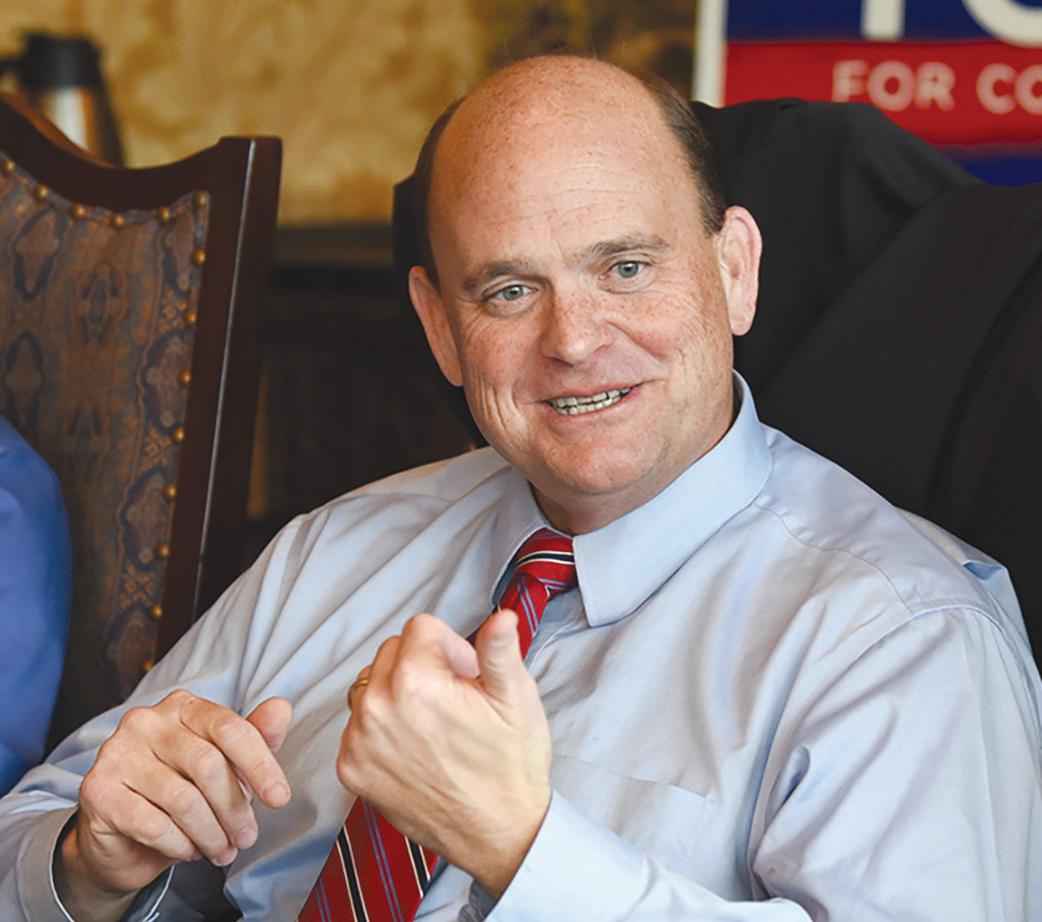
Rep. Tom Reed (R-N.Y.), representing Ithaca and the rest of New York’s 23rd Congressional District, announced Sunday night that he won’t seek re-election or run for governor in 2022 as he had originally considered, following allegations of sexual misconduct.
Nicolette Davis, a former Aflac insurance lobbyist, told The Washington Post that in 2017, she and other lobbyists met Reed at a Minneapolis Irish pub on her first networking trip as a 25-year-old junior lobbyist. Davis accused Reed, who was 45 years old at the time, of rubbing her back, unhooking the clasp of her bra from the outside of her blouse and rubbing her thigh.
but at that time, it didn’t matter that I had been working hard or that I had a master’s degree,” Davis told The Post. “All that mattered was that I was a warm female body.”
Davis texted Jessica Strieter Elting, an Aflac coworker, that evening saying, “A drunk congressman is rubbing my back,” The Post reported. Davis sought assistance from the person seated next to her and he removed Reed from the pub.
“She was really shaken by it,” Strieter Elting told The Post. “I felt horrible for her, being in that position while trying to do her job.”
On Friday, Reed’s campaign representative provided a statement to The Sun, saying: “This account of my actions is not accurate.”
But two days after The Post article was published, Reed released a statement on Twitter apologizing to Davis, adding that
“I had wanted to go on this trip so badly
help to make up for lost revenue during the pandemic, Myrick told The Sun Monday. Since this funding is larger than the city’s current deficits, it would help the city make new investments in infrastructure,
By FAITH FISHER Sun Staff Writer
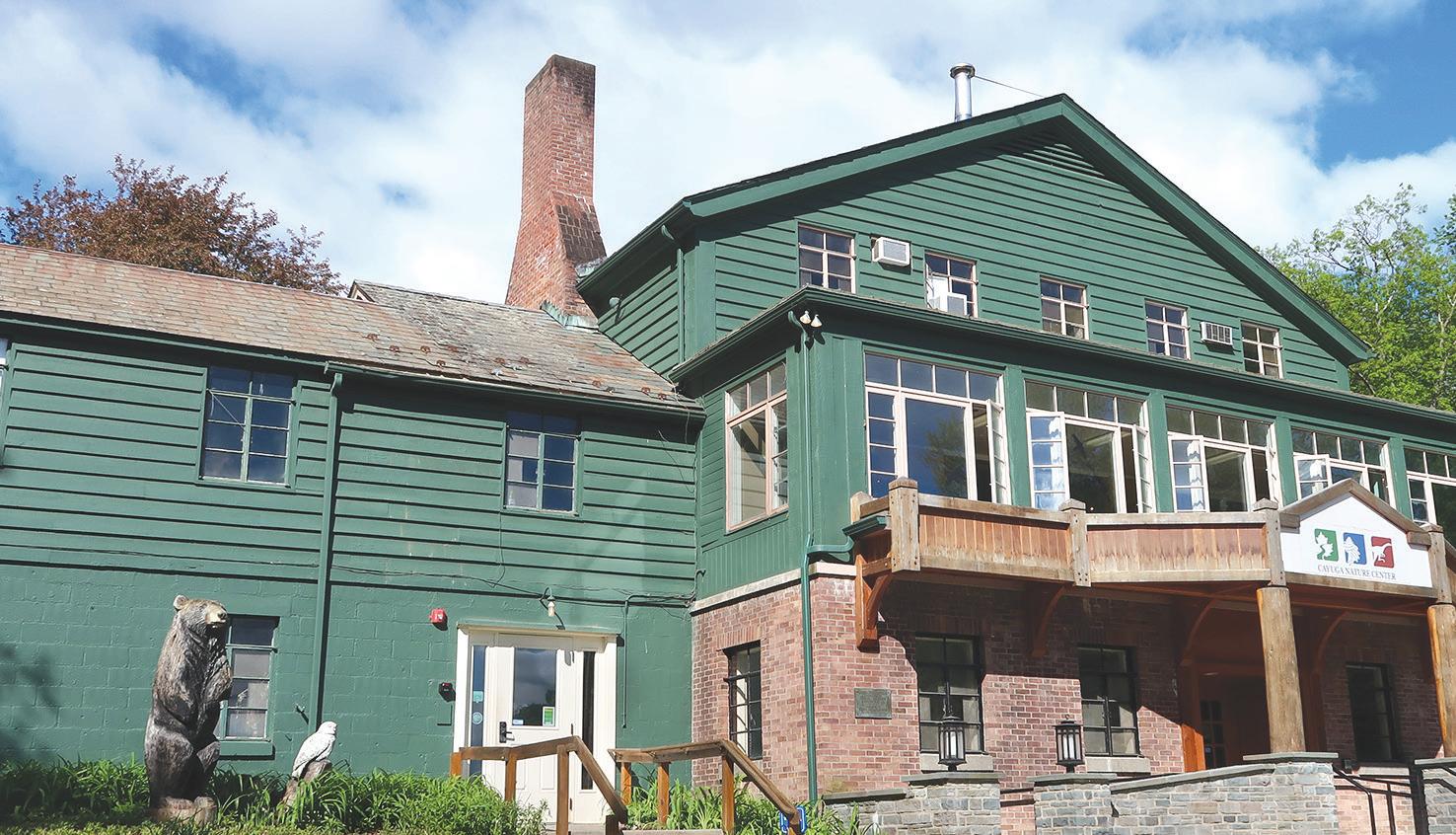
After a year-long hiatus, Ithaca’s Maple Week will be streaming live, offering a glimpse into the maple industry that goes beyond the maple syrup drizzled onto pancakes.
From March 22 to March 28, the Cayuga Nature Center and the Paleontological Research Institution will co-host a series of live and prerecorded virtual programs and activities to celebrate
tree. Throughout the week, participants can learn about tapping maple trees and even get a look into the process of making maple syrup. Previously called Maple Fest, the event used to draw hundreds of visitors to the Cayuga Nature Center for pancakes, animal encounters and maple sugaring tours. The pandemic canceled last year’s event, and rather than going another year without maple, event organizers made Maple Week virtual.
Tuesday, March 23, 2021
Today Tomorrow
ORIE Colloquium: Daniel Kuhn — A General Framework for Optimal Data-Driven Optimization
9 a.m., Virtual Event
A Mexican State of Mind: New York City and the New Borderlands of Culture, by Melissa Castillo Planas
9:40 a.m. - 11:10 a.m., Virtual Event
Designing for Healthy Sleep and Travel — A Research Perspective
10 a.m. - 11 a.m., Virtual Event
GET SET Workshop: Diversity Statement
11 a.m. - 12:15 p.m., Virtual Event
Econometrics Workshop: Arun Chandrasekhar
11:15 a.m. - 12:45 p.m., Virtual Event
“The River and The Wall” Panel Discussion
12 p.m. - 1:15 p.m., Virtual Event
Post-2020 Food and Beverage: Rebuilding an Embattled Industry
1 p.m. - Noon, Virtual Event
Flow Cyometry: New Insights for Multicolor Panel Design and Optimization
11 a.m. - 12:15 p.m., Virtual Event
Rough Work: The Floating World — History, Haiku, Global Modernism with Chris Bush 11:30 a.m. - 1 p.m., Virtual Event
After Carceral Feminism: Abolition as a Lived Practice 12 p.m., Virtual Event
Community Wellness Chat: Personalize Your Plate
12 p.m. - 1 p.m., Virtual Event
Hatfield Lecture 2021 With Microsoft CEO Satya Nadella
12:30 p.m. - 1 p.m., Virtual Event
Verdant Views: Trees and the Changing Climate With Cornell Botanic Gardens
2 p.m. - 3 p.m., Virtual Event
Professional Directions: A Conversation With Filmmaker Miguel Arteta
2:30 p.m., Virtual Event
Tursday, March 18, 2021

Southern Tier businesses, families to receive aid
SCHUMER
Continued from page 1
The funds, which the city can use flexibly, will help to make up for lost revenue during the pandemic, Myrick told The Sun Monday. Since this funding is larger than the city’s current deficits, it would help the city make new investments in infrastructure, like building new sidewalks or replacing parking garages, that could have positive ripple effects across the city.
“The effect that [stimulus checks and child tax credit] has on crime rates into the future and on sales tax receipts right now, is impossible to calculate,” Myrick said. “It’s really going to be an enormous benefit for the city.”
The plan will also provide an additional $19.82 million for Tompkins County. Leslyn McBean-Clairborne, chair of Tompkins County Legislature, stressed the importance of this bill for families. The plan will provide more than $227 million for Southern Tier K-12 schools. These flexible funds will help schools reopen for complete in-person instruction and provide further support for students that will need it. Most of the school districts in the county have a form of hybrid learning, with some students participating virtually and others in-person.
“For the county itself, getting $19 million, really would be the biggest help toward that economic recovery push that we need,” McBean-
Clairborne told The Sun. “For our families … there’s that beacon of hope for them.”
In addition to K-12 schools, colleges and universities will also receive $2.6 billion from the plan. Cornell is receiving $33 million, half of which must go to students in the form of financial aid awards.
Brett Bossard, the executive director of Cinemapolis, and R.J. Lavine, managing director of the Hangar Theatre, thanked Schumer for championing the arts.
The Save Our Stages provision gives $1.25 billion to independent live venues, performing arts organizations, cultural institutions and independent movie theaters. It gives venues access to both a Paycheck Protection Program loan and a Shuttered Venue Operators Grant, deducting the PPP loan from the grant amount. A PPP loan is designed to encourage businesses to keep their workers on payroll.
Bossard and Lavine said this bill will help prepare them to bounce back from the pandemic, while Cinemapolis is temporarily closed with the Hangar Theatre replacing their live programming with virtual ones.
“We need the arts to connect us as a community,” Lavine said. “We can’t take the arts for granted.”
John Yoon can be reached at johnyoon@cornellsun.com.
By DAVID B. DAYAN Sun Contributor
As climate change accelerates climate-related disasters worldwide, communities with stronger connections will be better prepared to weather the coming years.
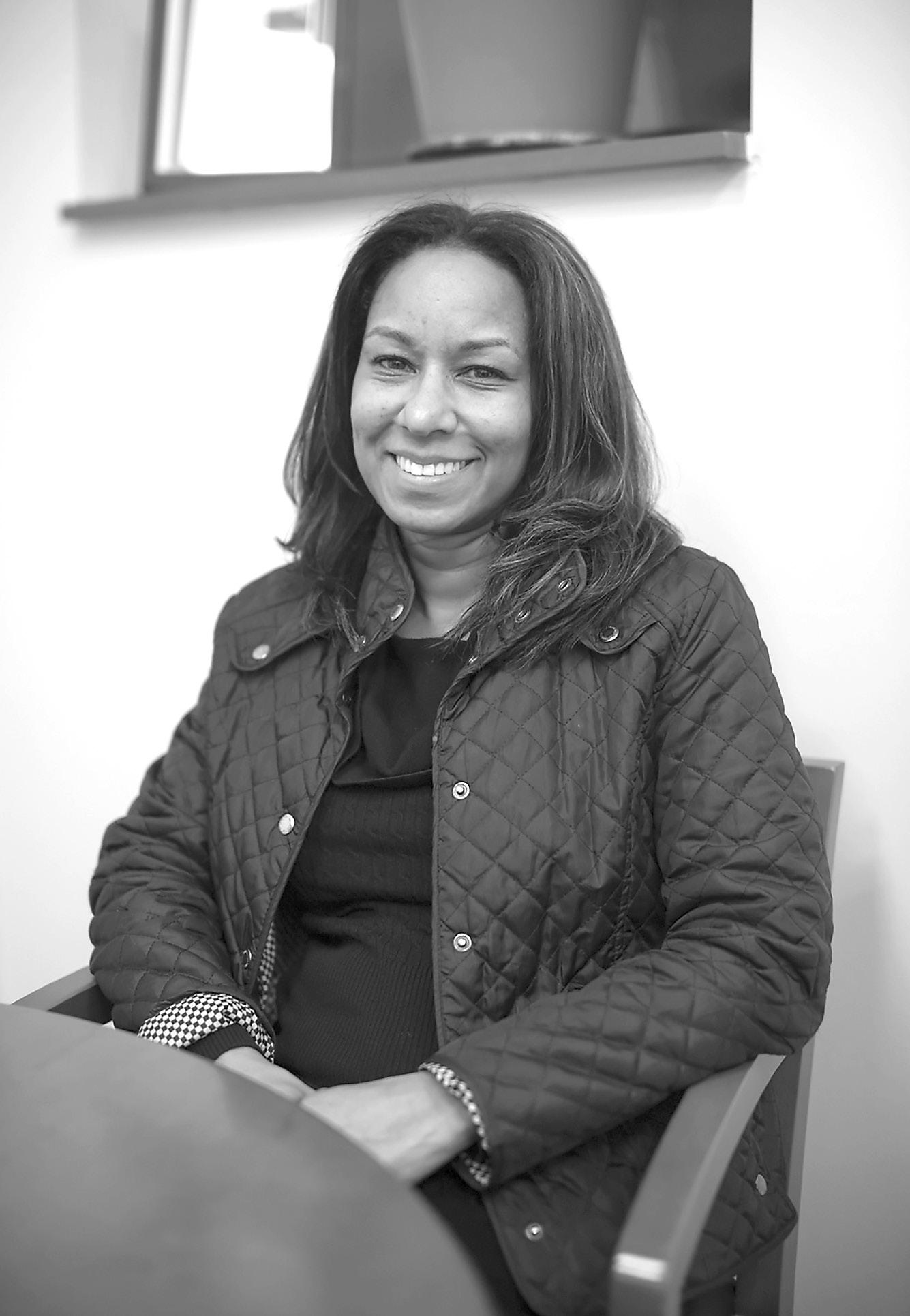
Prof. Shorna Allred, natural resources and environment, emphasized the importance of strengthening social ties as part of natural disaster preparedness in her March 15 seminar, “The Role of Social Capital in Community Resilience to Climate Change.”
As part of their weekly climate change challenges series, the Department of Biological and Environmental Engineering and the Cornell Atkinson Center for Sustainability featured Allred, where she is a faculty fellow.
Prof. Peter Hess, biological and environmental engineering, organizes the series to expose students and community members to scientific and social perspectives on challenges including changing food systems, unpredictable weather patterns and fragmented ecosystems.
In the Monday talk, Allred outlined her research on nearby Binghamton’s social approach to flood preparedness. According to Allred, other regions can learn from Binghamton’s example as they prepare for the future.
“River cities really have the river as a cultural resource [and] a natural resource,” Allred said. “And the question becomes: How do you live with water in these changing conditions, in this changing climate?”
Binghamton, located between two rivers, has experienced major flooding in recent years, particularly after tropical storms in 2006 and 2011. However, according to Allred, the rivers also serve an integral part of the city’s mission to replace the “rust” of its once-flourishing industrial sector with sustainable prosperity.
In collaboration with the College of Agriculture and Life Sciences program Rust2Green, Allred worked to investigate how community factors have shaped Binghamton’s responses to recent floods. Rust2Green conducts community-based research to address the needs of Binghamton, from fostering urban resilience to developing green infrastructure.
Allred and her team distributed surveys, conducted interviews and organized story circles with Binghamton residents. Allred highlighted a “culture of resilience,” describing the community’s ability to plan for and adapt to natural disasters like floods.
Allred said that a key element in building this resilience is “social capital” — social resources that facilitate cooperation toward damage reduction and community safety.
Social relationships facilitated the exchange of support
virtual, I think we can show even more behind the scenes views to participants.”
ter’s Instagram page for a series of live videos and prerecorded reels.
With over 2,000 maple sugarmakers in New York State, maple products are a major industry. New York boasts the largest resource of tappable maple trees in the country. In just the past five years, the state’s maple syrup production has increased by about 50 percent due to growing demand for the product.
Despite its pandemic era redesign, Maple Week maintains the original mission of the event, which is to both engage and educate its participants. In line with the event’s dedication to educational programming, the week will kick off with a Zoom discussion about maple and climate change.
Although participants will not have the same hands-on experiences that past Maple Fests offered — such as a look into the maple syrup making process — the event organizers hope to make the experience as fulfilling as possible.
“We’re going to be doing a lot of different events throughout the week to try to make people feel like they can still see the same processes and have the same experiences they would have had if it were in person,” said Maya Rodgers, marketing manager for the Paleontological Research Institution, an affiliate of the Cayuga Nature Center that aims to educate the community about the life and history of the earth. “With the event being
Rodgers also hopes that the virtual format will allow Maple Week events to reach a broader audience.
“The nice part about this being virtual this year is we might be able to reach people that normally couldn’t come to Ithaca,” Rodgers said. “We may even be able to reach people that aren’t even in New York State.”
The virus has shifted the format of Maple Week — but it has also affected the broader maple industry. According to Aaron Wightman, a maple expert and co-director of the Cornell Maple Program, the pandemic has had surprising impacts on New York’s maple industry. The Cornell Maple Program is geared toward improving the production and use of the local product by engaging producers, consumers and others with interests in maple.
According to Wightman, maple producers were originally concerned about decreasing profits due to the pandemic, but this fear turned out to be largely unfounded.
“As it turns out, sales have actually increased for most maple producers given [that] more people are eating at home and trying new recipes,” Wightman wrote in a press release.
In addition to the virtual programs launched through the event’s webpage, Maple Week will also be using the nature cen-
between close neighbors and near strangers during the floods. Residents provided one another with an “informal insurance” of resources that they couldn’t otherwise access, Allred said.
Between 2006 and 2011, Binghamton also developed relationships with the New York City Fire Department. When storms hit in 2011, these connections brought personnel, resources and expertise to the city, which improved the community’s flood response.
“You want to have trust and established relationships in place,” Allred said. “This gets back to that culture of resilience, of really having those relationships established well before an incident, versus trying to develop them in the moment.”
Allred added that innovative thinking can help communities establish resilience and also further environmental justice. Low-income communities are typically the most vulnerable to natural disasters, so investing in these neighborhoods can greatly improve community resilience.
“Building social capital is not only about strengthening the fabric of community but also recognizing and respecting the knowledge that the community has to contribute to determining their future,” Allred wrote in an email to The Sun. “To address climate change we need all hands on deck and social capital and environmental justice considerations are central to ensuring that no one is left behind.”
As the seminar closed, Allred emphasized that social infrastructure can be just as important as physical infrastructure in developing proactive approaches to climate change and natural disasters.
“Strengthening social capital and community capitals more broadly — such as social, human, political, cultural, financial, natural, and built — can improve resilience to an array of issues, including climate change. If communities are stronger, they are better able to withstand and adapt to changes,” Allred wrote in an email.
The Atkinson seminar runs every Monday from 2:45 to 4 p.m. The webinar link and an archive of seminars from the past six years can be found here.
David Dayan can be reached at dbd63@cornell.edu.
The nature center will give viewers live footage into the maple-making process, whether boiling the sap or filtering the syrup. One of the Instagram reels will even feature recipes for maple-inspired cocktails.
Beyond celebrating the maple tree, Maple Week 2021 also aims to respark public awareness about and interest in the Cayuga Nature Center. The center has been closed since the start of the pandemic.
“I’m really hoping that we can reach families and other individuals in Ithaca,” Rodgers said. “We’re really hoping to welcome people back this summer, and I’m hoping that this kind of gets the nature center back on people’s radar after being closed for so long.”
Even though this year’s virtual Maple Week will not include some of its most beloved traditions, such as the group pancake breakfast and in-person tours of the sugar bush, the community remains at the core of the event.
“I think it’s really cool that we’re able to provide this program,” Rodgers said. “Being able to offer something, even if we know it won’t be like normal, will help substitute some of that feeling of togetherness that I think we’re all kind of missing right now.”
while he is only now hearing of the matter, he will not dismiss her voice.
“In reflection, my personal depiction of this event is irrelevant,” Reed wrote in the statement. “Simply put, my behavior caused her pain, showed her disrespect and was unprofessional.”
Reed said in his statement that at the time of this incident, he was struggling with alcoholism and has since received treatment.
“This is in no way an excuse for anything I’ve done,” Reed wrote. “Consistent with my recovery, I publicly take ownership of my past actions, offer this amends and humbly apologize again to Ms. Davis, my wife and kids, loved ones, and to all of you.” Davis came forward with this allegation on Feb. 11, 10 days before Reed announced his consideration in running for governor in 2022 on Fox News. She told The Post her coming forward is not politically motivated, and she would have spoken even if Reed was a Democrat.
In a statement to The Post, Aflac said that they take these allegations seriously and value the safety, security and dignity of their employees.
“When this matter was reported to senior leadership and colleagues who were not present at the time, we immediately provided support and counsel for Nicolette,” Aflac said.
“Simply put, my behavior caused her pain, showed her disrespect and was unprofessional.”
Rep. Tom Reed
In his statement, Reed said he will not run for any elected office in 2022. As a result, he will neither run for reelection nor challenge Gov. Andrew Cuomo (D-N.Y.), who is facing his own slew of sexual misconduct allegations for which he is under investigation. Reed attributed his retirement from public service to the commitment he made back in 2010 to his constituents that he would only serve six terms.
“I am grateful for Congressman Reed’s reflection on his actions. I accept his apology,” Davis told The Post. “I hope that his words and actions will be an example for others who face similar allegations.”
you. I like to imagine that you and I are friends, and we’re sharing those headphones of yours while we take the bus down into Collegetown, or the Commons.
It was a bright, cold day in April, and the clocks were striking thirteen. The year is 1984. Surveillance cameras on every street corner, every intersection and every ATM, watch your every move.
Wait — that’s not quite right. Let me restart. The year is 2113. Surveillance cameras on every street corner, every intersection and every ATM, watch your every move. They see where you go, they know where you live. They know what you’ve done, they know who you are. And through these cameras, a supercomputer routinely performs a cymatic scan on your brain, converting your mesh of thoughts into a numerical value called a “crime coefficient.” The coefficient determines your capacity to commit a crime and those who exceed a certain value are imprisoned in “stress care” wards where they are heavily medicated. If the system concludes that they are beyond help, they are euthanized.
Wait. That’s not it either. Let me restart.
The day is today, and you’ve just listened to one of your many playlists on Spotify. (If you have Apple Music, stop reading, no one cares about you. YouTube music, you can stay.) The only person who knows why you chose that playlist is you. No one else. You felt a sudden urge, or you were craving a song since morning, so you tapped on your screen. And as the sound floods your ears through your headphones, you feel a sense of serenity as you’ve entered your own little world, where it’s just you and your music. But little do you know, I’m listening on the other end. That’s right, I know every song you’ve ever listened to, every mood you’ve ever been in. I keep it all on a tidy little calendar on my wall. I track your preferences and when I’m bored, I just listen to the music with
In fact, you don’t know me, but I’ve been your friend for a while now — ever since you played your first song on Spotify. I was there, even though you didn’t see me. Or when your playlist is on at the kickback, or when you’re studying in your room alone, I’m there for all of that. I’m closer to you than your best friend — closer than anyone else in this world. I know so much about you that if we met in real life, I think we really would be best friends.
You might think this is creepy, and I get it, but it’s not like that. I’m not a hacker, or an obsessive stalker, I’m just doing my job. “At Spotify we have a personal relationship with over 191 million people.” See? It’s my job to know you. And the best part of it all is that the “new research” from the accumulation of your data “is starting to reveal the streaming generation’s offline behaviors though their [your] streaming habits.” Because after all, “you are what you stream.” So, it’s not my fault for knowing so much about you. If you want to blame someone, blame yourself. After all, you’re the one revealing so much data — I’m just the messenger.
But it doesn’t just stop there. Soon, I’ll know much more about you. I’ll know what your voice sounds like, I’ll know when you’re with people and when you’re alone and I’ll know how you’re feeling. And if you’re worried that I might hear your conversations and know the things you say — well, that’s a secret I’ll keep to myself.
It’s not new that Spotify is extracting data points from the kinds of music that people listen to at different times of the day. But what is new, is that a few months ago Spotify was granted a patent by the U.S. government that allows it to monitor users’ speech for a wild new range of data collection.

Does that mean Spotify is listening to you right now? Does that mean you should stop using Spotify and switch to Apple Music? Does that mean you’ll have to download your songs and listen offline? I don’t know. Switching services seems like a hassle, and listening offline is fine, but then you can’t look up songs at the same time. If Spotify is listening right now, does that mean anything? After all, we’d only be one data point in the millions of people being monitored and studied. So, in the end, it’s the patterns that matter and not our specific personal information. Plus, all the other services are probably doing it anyway too.
And here’s the thing: even if you and I stop using Spotify to protest their surveillance schemes, it’s not going to matter. Spotify will keep doing it, sites will keep using cookies, and Instagram ads will continue to suggest things we’ve, coincidentally, just talked about out-loud.
So what can you do? Do you turn off cookies on your browser? Do you delete Instagram from your phone? Do you forswear technology and move into a log cabin in the Appalachian mountains? The truth is, I don’t know — but probably not. I mean if you want to, that’s cool, but do you?
Then what do you do? Well, reading this is a good start, but at the end of the day, the only answers you get come from you. Maybe you want to see what other apps and services are collecting your data, or maybe you want to do nothing. Both are valid responses. That said, it’s not an uphill battle. The E.U. has set a great example for new data privacy regulations and our government can as well, when it feels like it.
So if you care about this, keep caring. It does count.
Matthew Kassorla is a freshman in the College of Arts and Sciences. He can be reached at mk928@cornell.edu.
The 6 God is back, with a sequel to his 2018 extended play Scary Hours as another care package for his fans, ahead of the release of his sixth studio album Certified Lover Boy.
After dropping the smash hit “Laugh Now Cry Later” last August, the Toronto rapper suffered a knee injury that forced him to delay his album release date from January to later this year.
Scary Hours 2 marks his return to the forefront of popular music, with its three songs accomplishing the never-before-seen feat of debuting in the top three spots of the Billboard Hot 100.
Scary Hours 2 might not be as spooky as the name implies, but it’s a worthwhile listen nonetheless. The project is classic Drake — Instagram-caption lines, atmospheric production and a hard-hitting Rick Ross verse. It’s what one would expect from the rapper, sure to satisfy the fans looking for some new Drake in their lives.
The E.P. opens up with the confident “What’s Next,” which features Drake flowing over a simple, hazy beat cooked up by
Maneesh and Supah Mario. This is clearly the intended hit song of the project, with its earworm of a refrain and its theme of looking ahead to the future. Drake even predicts the song’s chart position in the lyrics, rapping, “I’m on the hot one hundo, numero uno / This one ain’t come with a bundle.” His verses are slick and braggadocious, asserting his dominance in the rap game. What stands out the most on this track is the overtly memorable hook: “Well, summer, all I did was

rest, ok? / And New Year’s, all I did was stretch, ok? / And Valentine’s Day I had sex, ok?” Drake appears fed up with people looking for the details of his private life, yet he still piques interest by hinting at things to come (“Let’s see what happens next, ok?”). He’s back, and he wants everyone to know it.
Next up is “Wants and Needs,” a Lil Baby-assisted jam with murky production from Cardo, Dez Wright, and 40. The song starts off with Drake’s trademark lazy flow, tossing out lines about money (“Proof is in the progress, money’s not a object”), girls (“The earrings are real, the petty is real, might charge my ex for a feature) and his Jewish heritage (“Yeah, I probably should go to Yeshiva, we went to Ibiza”). It’s nothing mind-blowing, but it’s a catchy verse that drops into a head-bobbing hook, the most melodic element on Scary Hours 2 Lil Baby’s verse is the highlight of the track. It’s fast, it’s hungry and it’s filled with quotable bars (“I’m not a G.O.A.T. but I fit the description”). The frantic delivery is a great change-up from the laid-back vibe established by Drake’s intro verse and hook, and Lil Baby’s lines pack a punch with how cold-blooded they are (“I’m droppin’ hit after hit, I’m just chil-
lin’ / But I’ll send a hit while I chill with my children”). This cut is a welcome addition to the duo’s quality list of collabs.
The last song on Scary Hours 2, “Lemon Pepper Freestyle,” might be the best listen on the project. The beat is beautiful — Boi-1da and Keanu Beats put soft piano around a Danish vocal sample, with a groovy drum pattern to boot. It’s reminiscent of earlier Drake confessionals, like “Weston Road Flows” or “Do Not Disturb,” which feature the introspective rapping that, for many fans, signifies Drake at his best.
Rick Ross sets the tone perfectly with his verse. None of the lines are exactly standout, but they’re so unmistakably Ross and have little endearing switch-ups in their delivery. The way he raps lines like “Big bank, sparkin’ weed without a lighter / On fire ‘cause I’m just a different writer” or “Big bucks, steppin’ outta big trucks / Steppin’ on my feet, it’ll get you fucked up” sounds like he’s just having fun on the mic, rhyming out a smooth one as a favor to a friend. Add references to his classic verse on “Devil In A New Dress” (“Spinnin’ vinyl, Teddy P, or is it Lionel?”) and to the great Tupac (“Makaveli, it’s all eyes on me”), and you have the
perfect primer for a long, personal Drake verse.
Drake’s addition to the track focuses on his fame and the status of his personal life. He mulls over his rise to celebrity (“...now I got it all / And bein’ honest, I don’t really wanna talk about it”), while making sure we know he still loves what he’s got (“How I’m so famous, gotta live where they hide the hills?”). But the most interesting part of his verse is his discussion of his parenting duties: about this new role, he raps, “...teacher-parent meetings, wives get googly-eyed / … / Askin’ if I know Beyonce and Nicki Minaj.” His bars are candid, as the fans get a look into the relaxing, almost mundane nature of Drake’s life as a father. He even adds a little humor to it in his reply to his fellow parents’ question: “Of course.”
Scary Hours 2 is not treading new ground. It’s a minor drop to tide the fans over before Certified Lover Boy, as the hype starts to build. Anyone who disliked Drake before probably won’t be converted by this extended play, but for the fans eagerly awaiting his album, it’s a solid offering from the 6 God.
Nihar Hegde is a freshman in the College of Arts and Sciences. He can be reached at nh336@cornell.edu.
ANUSHYA ALANDUR ’23 Business Manager
CATHERINE ST. HILAIRE ’22
Associate Editor
PRANAV KENGERI ’24
Advertising Manager
ODEYA ROSENBAND ’22 Opinion Editor
JYOTHSNA BOLLEDULA ’24 News Editor
TAMARA KAMIS ’22 News Editor
WENDY WANG ’24
Arts & Entertainment Editor
KRISTEN D’SOUZA ’24
Design Editor
HANNAH ROSENBERG ’23 Photography Editor
OSALAMA AYOUB ’22
PUJA OAK ’24 Layout Editor
ANNIE WU ’22 Production Editor
MIHIKA BADJATE ’23
ANGELA BUNAY ’24
’23
AMELIA CLUTE ’22
WILLIAM BODENMAN ’23 Assistant
AARON SNYDER ’23
MEGHANA SRIVASTAVA ’23 Compet
KATHRYN STAMM ’22
MADELINE ROSENBERG ’23
KOH ’23
OZA ’22
HEO ’24
OLIVIA CIPPERMAN ’23
NOOREJEHAN UMAR ’23
YOON ’23
VELANI ’22
PICHINI ’22
TYAGI ’22
MENDOZA ’24
ARANDA ’23
’23
RIGGS ’24
LEYNSE ’23
NAGEL ’24
’24
ABAYEVA ’24
’22
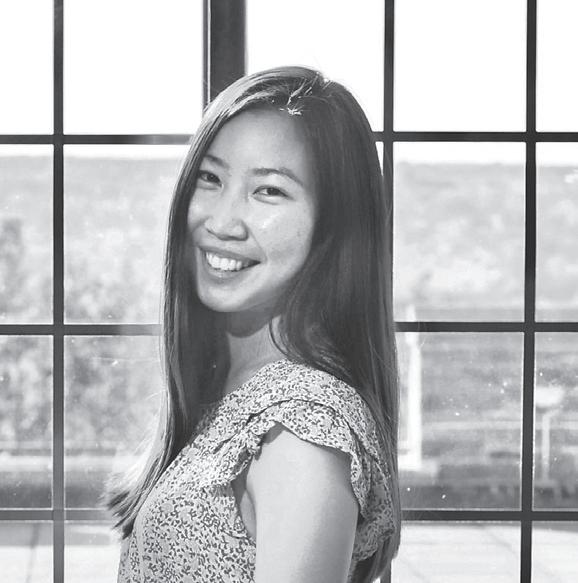
Catherine Huang is a senior in the School of Industrial and Labor Relations and currently serves as the President of the undergraduate Student Assembly.
It’s a strange thing to mourn strangers — six women I’ve never met and will never meet. For hours after I first read news of the shooting in Atlanta where a white man killed eight people, six of whom were Asian American women, my throat stiffened with a sadness I couldn’t swallow. I didn’t understand the very real grief I felt when I read their names: Delaina Ashley Yaun, Paul Andre Michels, Xiaojie Tan, Daoyou Feng, Julie Park and Hyeon Jeong Park.
I kept thinking their names were just another headline in a year long newspaper reel of attacks against Asian American elders and women. I told myself that it was a privilege to read of their deaths from a distance understanding that, as a Cornell student, I enjoy the insular privilege of a family background and an Ivy League education that separates me from older working-class Asian American women. There was a part of me that even felt like I didn’t have the right to mourn them, that it was overdramatic to feel real sadness over their deaths. After all, I didn’t know them. Not really.
In my mourning, I feel like I don’t even have the right to grieve. I am forced to justify and rejustify my grief to myself, depoliticize it, reclaim it.
To my Asian American friends, my peers: give yourself the air to grieve. Give yourself the time to radically empathize and mourn for our community. This grief is real. I know it’s real because, even though I’ve never met these women, I know them. We all know them.
By nature, our tongues know how to shape their names because they’re our names too, passed down by generations until they become generic, familiar identifiers of Asian heritage. Our peers and our professors who don’t come from marginalized backgrounds may never understand that those are the faces of our sisters, our mothers and our grandmothers. The elderly Asian man who died in Oakland, Calif. after being assaulted and robbed — he has my father’s face. The Asian woman who was called “Chinese Virus” and spat on three times while holding her baby in Queens, N.Y. — she has my mother’s face.
When I look at the photographs of the six women — and of the countless other Asian American women and elders who are victims of hate crimes and racist violence — I wish I could say this to them: “I know you. I see you. I see your face in mine and mine in yours. And I know it by heart.”
To Cornell, I have many things to say and too many to articulate in one Sun guest column. So, I’ll just say two things: Let students grieve, please. Create time and grace for us.
Professors, I’m talking to you. Do you know how many Asian American students populate your classes? How have you offered them support, kindness and empathy? The recommendations from the mental health review’s final report recommend that Cornell should “require that faculty and staff attend at least one mental health training opportunity every two years.”
To the members of the Executive
Accountability Committee: firstly, this recommendation should have been implemented as soon as the pandemic started and the deaths of George Floyd, Breonna Taylor, Ahmaud Arberry and many others that have left so many of our BIPOC students in mourning as well. Students are hurting because of the lack of impetus and real action on the administration’s part.
Secondly, one mental health training opportunity every two years is not enough. Faculty should be required to attend a mental health training opportunity at the beginning of every semester. Requiring faculty to attend more mental health training opportunities (just a few hours out their entire year!) would only serve as a benefit. Cornell, your reliance on policing is pathetic.
To my white peers at Cornell — especially white women — who believe the police keep us safe: Look at Sarah Everard whose death at the hands of a police officer in the U.K. is sparking global conversations about gender justice. She was white. She was a woman. A policeman killed her. Your privilege that benefits from policing at the expense of your BIPOC peers will go so far but it will not save you.
To my Asian American peers who believe that the police protect us: Look at Christian Hall. Christian was a 19 year old Chinese American boy, suffering from a mental health crisis. He was shot by the police 19 times. They killed him.
Look at Angelo Quinto. He was a Filipino American man, and a Navy veteran who sustained a head injury and needed mental health support. His mother hugged him on the floor until the police arrived and when the cops arrived, they killed him. One put a knee on his neck for 5 minutes, while another officer held his legs and Angelo suffocated to death.
Look at these faces. Don’t you dare turn away.
Is it starting to make sense to you? Are you starting to see what we see?
Meanwhile, pay attention to whom the police have managed to save and defend — not our Asian women but instead, the white man who gunned down eight people, and was still armed when the police found him. Even the police’s press conference pitied the killer. The killer’s justification was that he had a “sexual addiction,” and had to eliminate his “temptation” as a “form of vengeance” against these Asian women.
Even worse, Captain Baker of the Cherokee County Sheriff’s Office excused the actions of the Atlanta killer by saying that this murderer’s racist and sexist actions were a result of him “having a bad day” and that he had just been “fed up.”
There is a clear imbalance of priority in who the police “protect,” and it’s because these racist sentiments are not lost within the police departments themselves.
It’s of no surprise that the same Captain Baker was found to have repeatedly posted racist images concerning China and the coronavirus on his personal Facebook.
To continue reading this column, please visit cornellsun.com.

Brendan Kempf is a sophomore in the School of Hotel Administration. He can be reached at bkempf@cornellsun.com. Slope Side runs every other Monday this semester.
Iwent for a COVID test a few days ago at the former Phi Kappa Psi Fraternity house on West Campus. You catch glimpses, between the sterilized tools and their sanitized distributors, of a place that was once a home.
As we emerge from the pandemic, the house will need a new use again. So what should be done? How do we deal with a legacy space that’s seen a horrifc tragedy?
Here’s my proposal: use it for a noble pursuit, namely a veterans center. Or dedicate it to another higher purpose. As a member of the Greek community, I can also tell you what it should not be: a fraternity.
Since Cornell revoked Phi Kappa Psi’s recognition on campus, the home has been quiet. Late last semester a group of Cornell veterans began to advocate for a new house purpose. Tey proposed converting the space into a dry program house to serve their community.
Te plan received widespread support, including a large letter writing campaign. However, the school changed course and ofered another former fraternity to the organization. So what’s the next step for the house?
Tat’s a difcult question. And the University doesn’t know the answer either. When asked about the future of
the house, Cornell avoided an answer. Cornell’s Senior Director of Media Relations, John Carberry, only mentioned the additional power Cornell has with the house “It is important to note that this property is owned by the university, unlike some other fraternity and sorority houses that are privately owned and therefore would not be available for such repurposing.”
Tere are many fraternities that may be pining for a house like Phi Kappa Psi’s; however, the fraternity’s difcult history makes a replacement seem too fast. It would be better to put the building to a productive use for a community in need. Tis is a position that’s shared by the Phi Kappa Psi alumni board.
Board member and spokesperson, Joel Anker ’89, described the hope that “the house is used by a group of people as a community gathering space. We would like it to still be used as a veteran’s center to reach that community. Hopefully it can reach those underserved areas at Cornell. With everything that’s happened we don’t think a fraternity should go in at this time.”
How does the veteran community feel about the proposal? Reaching out to multiple members of the Cornell veteran community leadership yielded no responses. Using the house as a space in contrast to their new housing, however, might yield some advantages. One can imagine a group of like-minded individuals being able to use the extensive space in the house.
T ere are a lot of underserved communities at Cornell that need to be addressed. I propose a community center that deals with the economic inequality inherent at Cornell and empowers more individuals with a seat at the table. I believe that the sponsoring of nontraditional undergraduates, like veterans, is a frst step in that mission.
A group who may have better direction is the Student Assembly. According to Morgan Baker, a freshman representative for the S.A., the topic of a student veteran space was brought to the University Assembly foor. Te issue, however, has since been shelved since the veteran housing deal.
I urge student leaders like S.A. members to lead the charge of establishing a veteran’s center. It’s not often that a space like this becomes available and it would be a shame to lose the opportunity. Hearing the per-
spective of the Cornell community is important as the University moves forward with this decision.
Anker mentioned how nice it has been for the university to perform COVID testing in the space,
I propose a community center that deals with the economic inequality inherent at Cornell and empowers more individuals with a seat at the table. I believe that the sponsoring of nontraditional undergraduates, like veterans, is a first step in that mission.
but, hopefully sooner than later, this pandemic will be gone. Te house will need a new function, and it’s important that the community knows what it could have.
Although I’m a member of a fraternity on campus, I believe placing a new Greek organization in the space would be a mistake. Let’s work to change the house into something new. Tere are many ways we can help veterans or similar groups at Cornell. Rushing to fll it with another Greek house doesn’t do anything for them.
As I exited the COVID testing site a few days ago, I couldn’t help but notice the potential of the home. Tere are a lot of great and meaningful ways it could be used. Let’s create a legacy for a house that could build a stronger community here at Cornell.

A.J. Stella Stellin’ It Like It Is
A.J. Stella is a senior in the College of Arts and Sciences. He can be reached at astella@cornellsun.com. Stellin’ It Like It Is runs every other Friday this semester.
It’s the only possible explanation as to why I have not been able to celebrate the holy St. Patrick’s Day in any of my four years here. Te last two years have extenuating circumstances, obviously, but even this year we could still put back a Guinness with our roommates if Cornell gave us the time.
For the frst March ever, Ithaca is not facing Second Winter. Tanks to global warming and fossil fuel burning, the weather has picked up to the forties and ffties and shows no signs of slowing down. Parkas and scarves have been replaced by sundresses and bro-tanks (though we should have outgrown the latter after seventh grade). Despite this God-given luxury ahead of St. Patrick’s Day, Cornell won’t get on board.
As a proud Irish citizen and supporter of Michael D. Higgins (look him up he’s adorable), I take ofense at Cornell’s refusal to acknowledge the day of St. Patrick.
Year after year professors assign multiple papers and exams during the week of this holiday, forcing students to cram into libraries and study rooms rather than enjoy a day of from work.
Te administration has ensured this week coincides with the peak of prelims, even if this semester started late. Ithaca winters are hard enough, many Cornellians’ outlooks are dampened by the cold and the short days, as it gets dark by 5 p.m. Instead of gifting us a day to relax, Cornell throws more work our way than our friends at Brown see in any given semester.
Is this intentionally a crime against the Irish? No, of course not, but that won’t keep me from slander. I’m not above it.
As a proud Irish citizen and supporter of Michael D. Higgins (look him up he’s adorable), I take offense at Cornell’s refusal to acknowledge the day of St. Patrick.
Is it anti-Irish to prevent the fow of smooth Dublinian stout? Probably not, but something feels of when an Irishman is held back from the feeling of cold Guinness down the gullet.
Tis St. Patrick’s Day, instead, I’ll be found in study rooms prepping for my Finance prelim because I’ve already missed the maximum number of lectures and I have to take it for a grade since Dad wanted me to pursue a “practical” minor in Business; whenever I tell people I’m an English major it is always met with an “Oh, so you want to be a teacher?” but in reality I want to make movies and, at the end of the day, all I want is a draft Guinness. Have fun with that run-on, editors.
Each March I was barred from celebrating the patron saint of the country that will house my future sheep farm. St. Patrick incorporated Irish culture into Christian sermons to relate it to their lives, man who
chased all the snakes out of Ireland, so the folklore goes. In normal years, people celebrate in diferent ways –parades in New York, green rivers in Chicago, pub-made blood sausages in Dublin. I’ve knocked Collegetown Bagels in previous articles (as I should, their bagels share the same consistency as sandy rice). However, I want nothing more than to kick my feet up on a CTB outdoor table and enjoy the Guinness they’ve got on tap. Score one for a New Yorker’s nightmare breakfast.
Maybe I’m being too hard on our future alma mater; after all the Tuesday, Wednesday wellness days were quite revitalizing – 24 hours of no Zoom lectures, just the good old regular homework that doesn’t stop because it’s the middle of the week. Far above Cayuga’s waters, where we’ll all study indoors, I sing to you my alma mater, when I just want to drunkenly speak about Irish folklore! What has this article become? We’ll fnd out. Not much inspiration to keep the juices fowing, and if you’ve followed my column this long (cheers) are you really surprised? Are you not entertained?
Perhass the solution at hand, in this, the fnal year of college, is to forgo all work. Te essay due at midnight? Let’s hand it in next week, Te Crown is on. Prelim on Tursday? You know what Prof. Pizarro, Psychology 1101, always says – if you study drunk, you gotta take the exam drunk. Maybe it’s called situational learning (obviously it’s working)? But then again, maybe dreams don’t come true and I’ll have to head back to school for an MBA program for my masters in marketing.
Do Johnson admissions people read Te Sun?
Fill in the empty cells, one number in each, so that each column, row, and region contains the numbers 1-9 exactly once. Each number in the solution therefore occurs only once in each of the three “directions,” hence the “single numbers” implied by the puzzle’s name. (Rules from wikipedia.org/wiki/ Sudoku)


By OMSALAMA AYOUB and WILLIAM COX Sun Science Editor and Sun Contributor
Gender bias in academic settings directly shapes the sense of belonging that college women feel in STEM — a key factor that affects whether they will jump into related professional fields.
Women have long faced barriers to pursuing STEM as a career — as one measure, only 27 percent of all doctorates granted between 1920 and 1990 were awarded to women. Now, that number is slightly less than half — in 2019, about 45 percent of all doctorate recipients were women, according to the National Science Foundation. Despite strides in gender diversity in the sciences over the past century, research has demonstrated that increases in degrees granted to women don’t tell the whole story.
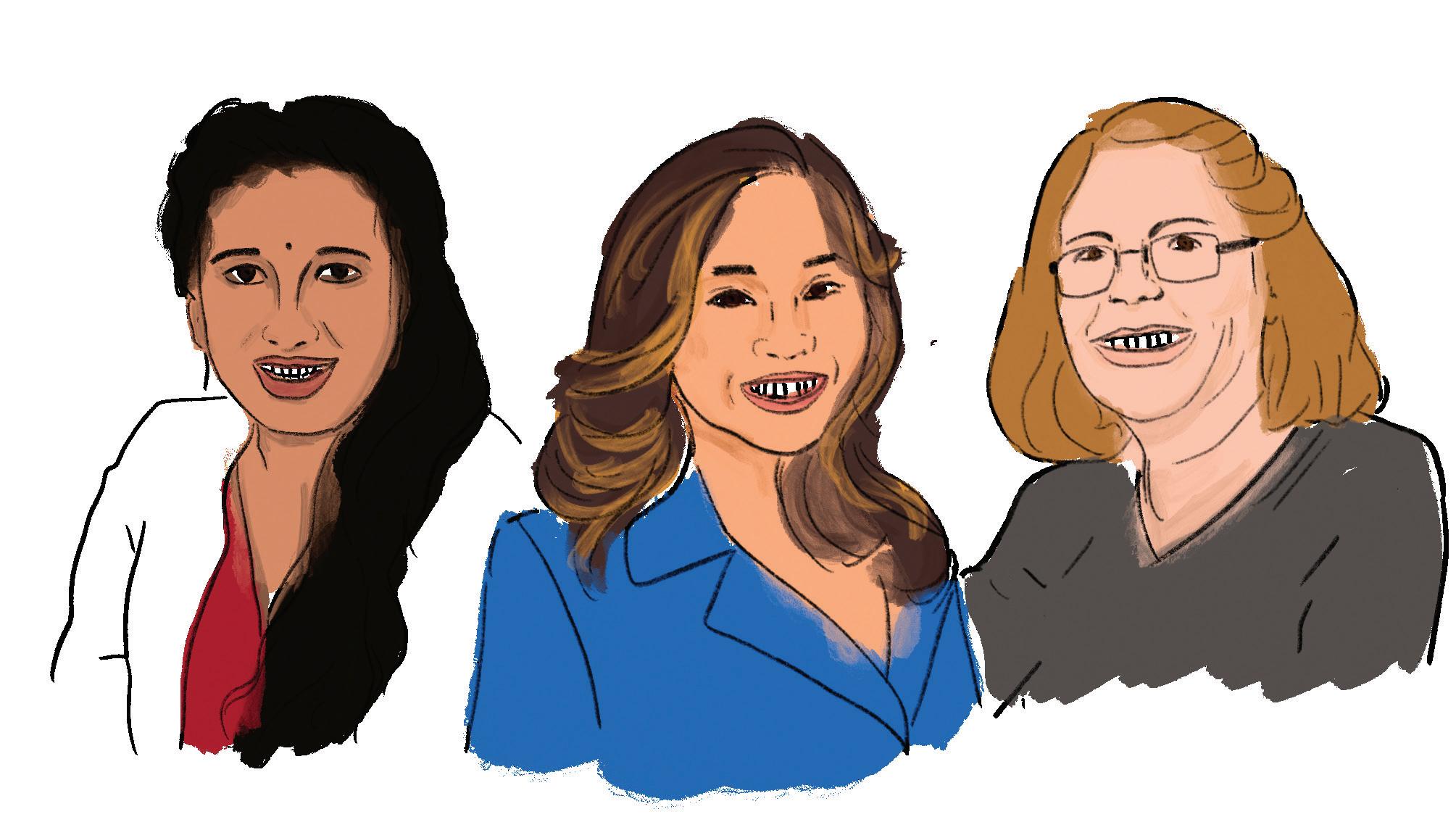
Here’s a look into the setbacks and successes that characterize the world of STEM through the eyes of trailblazing Cornell women.
Prof. Susan Brown, integrative plant science horticulture: ‘At the time I went through school, it was isolating’
“We’re seeing change, but at the time I went through school, [being a woman in STEM] was isolating,” said Prof. Susan Brown, integrative plant science horticulture, and former associate dean of the College of Agriculture and Life Sciences.
Early on in her time at Cornell, Brown said when she answered the phone in her own office, callers thought she was the secretary. When asked if Dr. Brown was in the office, she joked that she had wanted to say, “No, he’s not in.”
Although challenged with the prospect of working in a male-dominated field, Brown grew up intimately connected with the science of apple breeding that eventually became her lifelong research. She said that her father, who was a pigeon breeder, got her hooked on the concepts of inheritance early on, while her mother, a gardener, equally passed on a love of plants.
during her own journey — a role model to women around the world.
“Being surrounded in a primarily male-dominated field, you get used to the different status quo of how things are,” Mohan said. “To be heard over people, I had to become more direct, more succinct, louder … just to get on equal footing.”
Mohan’s love for space spans over three decades — when she was 9, Mohan recalled, she watched an episode of Star Trek that sparked her interest in space. However, while Mohan was always interested in science, she didn’t seriously consider a career in space research until her first physics class in high school.
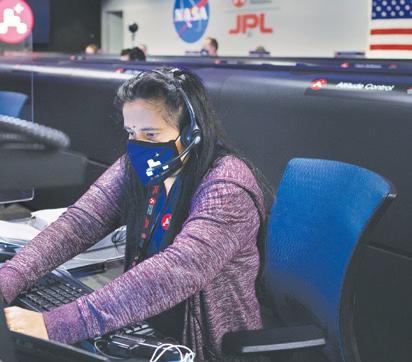
Mohan said her newfound passion for space launched her into studying mechanical and aerospace engineering at Cornell. She later earned her master’s degree and Ph.D. in aeronautics and astronautics at the Massachusetts Institute of Technology and joined NASA’s Jet Propulsion Laboratory, where she took on the role of guidance and controls operation lead for the Mars Perseverance mission.
For Mohan, her career trajectory was a dream come true.
“NASA’s awesome,” Mohan said. “It’s one of the few places where I felt at home with my geekiness for space.”
But along the way, Mohan said enduring stereotypes as a woman in engineering and rejection from coveted opportunities hindered her path. Mohan said her experiences as a Cornell undergraduate were essential to navigating these roadblocks and achieving
cre -
ating your own opportunities for the path that you want.”
While women like Mohan may be able to push through the challenges of standing out in male-dominated fields, the social pressures of male-dominant environments isolate some women.
The Elephant in the Valley — a 2015 survey of over 200 professional women who worked in Silicon Valley — broke down these pressures that perpetuate gender inequalities in STEM. Of the women surveyed, 66 percent reported feeling excluded from social and networking opportunities because of their gender.
According to Mohan, only 10 percent of the 2004 mechanical engineering class was female. Today, while women make up 50 percent of the undergraduate engineering students, the graduate engineering program is only 34.3 percent female.
The experiences of current undergraduate students like Kayleigh Furth ’22, who studies civil and environmental engineering, illuminate the obstacles that ultimately narrow the pool of engineering female professionals.
“If I am in a mostly male group, sometimes I feel like they don’t listen to anything I say,” Furth said. “There [are] slight things every once in a while that I notice. A colleague will say, ‘You know, I underestimated you at first. You’re smarter than I thought.’”
Furth’s experiences reflect those of the 84 percent of women from the Elephant in The Valley survey who said that when they asked questions while making group decisions, they were overlooked.
“There [are] slight things every once in a while that I notice. A colleague will say, ‘You know, I underestimated you at first. You’re smarter than I thought.’”
Kayleigh Furth ’22
“I love apple breeding because it is different every day,” Brown said. “Every genetics project is a puzzle with one piece missing. When you walk into an orchard of apples, everything’s different. You get to search for patterns.”
Brown’s research explores how better tasting apples can promote healthier eating, especially in children. Brown also said her apple varieties provide key insights into how glucose is broken down in the body, creating the potential for future medical breakthroughs in diabetes.
“There’s also really amazing chemical compounds in apples that are all natural, that are effective and aid glucose metabolism,” Brown said. “They’re being looked at for diabetes research.”
Dr. Swati Mohan ’04: ‘I had to become more direct, more succinct, louder’
As the voice of the NASA Mars Perseverance landing, Dr. Swati Mohan ’04 became what she said she lacked
success in STEM.
“I think [my undergraduate experience] allowed me to become more confident and have that backbone, [and say] ‘This is what I want. I know I want it for XYZ reasons. So I’m gonna go get it,’” Mohan said.
In the future, Mohan said she hopes that colleges will empower women to pursue their professional goals by offering enduring individualized support.
“Getting [women] into the workforce is the first step, but you have to also make [sure they have] the resources and the mentality such that they can stay throughout their career,” Mohan said.
Mohan encouraged women in STEM to create their own opportunities to bring their career goals to fruition, even in the face of gender inequalities.
“If you have the passion for it, and that capability, you can work to make it happen,” Mohan said. “But part of that requires thinking outside the box and
Still, Furth is not dissuaded by outside opinions and is passionate about her work. After graduating next year, Furth hopes to work at a company based in France called Glowy that produces biodegradable bulbs and more renewable energy.
“I got to design a cidery wastewater treatment that we actually got sent to the Department of Environmental Conservation and that was pretty cool,” Furth said. “I feel like I’m going to make a difference in the world ... I’m doing something for the betterment of people and the environment.”
Anabella Maria Galang ’23: ‘While different parts of our journeys as women in STEM are variable, a lot of it at its root are the same’
As founder of The Steminist Movement, Anabella Maria Galang ’23, biological sciences, is playing an active role in breaking the structures holding back women in STEM.
“I knew The Steminist Movement was going to be the mentorship program that I’ve always wanted to have, but never did,” Galang said. “While different parts of our journeys as women in STEM are variable, a lot of it at its root are the same.”
A national nonprofit, The Steminist Movement, is working to close the gender gap at a variety of levels along the STEM pipeline. Initiatives and outreach range all the way from free middle school workshops to college campus initiatives.
“I value the people who are involved with The Steminist Movement and their tremendous capacity to make a very intimate difference in the lives and in the mindsets of young girls,” Galang said.
For Women’s History Month, Galang’s organization held a two-part seminar series to tackle discussions about the challenges facing women in STEM today.
“To be heard over people, I had to become more direct, more succinct, louder … just to get on equal footing.”
Dr. Swati Mohan ’04
“I hoped that [through these talks] other people would have the same epiphany that I did,” Galang said. “That, we all have the little nagging voice in our head at the end of the day, wondering if we’re good enough to do what we’re doing. And it’s all about waking up the next morning and saying, ‘Yes, I am.’” Galang said the seminars aimed to tackle the wealth of history surrounding the experiences of women in STEM. At the March 17 seminar, the Steminist Movement at Cornell hosted Harvard Prof. Janet Browne, history of science, to speak about the social dynamics between men and women in STEM and the lasting influences Darwin has had on shaping those realities.
“In his evolutionary theory, Charles Darwin suggested that women were biologically inferior to men,” Browne said at the seminar on March 17. “He opened the door for a long history of prejudice and misinformation that in part continues today.”
Darwin’s claims, refuted by evidence, reflected his own lack of respect for women.
“Charles Darwin didn’t even realize or respect one of his female colleagues enough to know that she was a woman,” Galang said. “In one of his letters to her, he addressed her as sir.”
While social attitudes about respecting other people’s gender identities have shifted by large margins, a jarring 87 percent of the women in the Elephant in the Valley study claimed that they experienced demeaning commentary in their workplace because of their gender.
“Being a woman in genomics is interesting, because genetics is often tied in with big data, which is computer science based,” Galang said. “[Computer science] and machine learning just so happen to be male-dominated fields.”
Omsalama Ayoub can be reached at oayoub@cornellsun.com. William Cox can be reached at wc628@cornell.edu.