The Corne¬ Daily Sun

SAMMIE LAMBOURNE / SUN CONTRIBUTOR

SAMMIE LAMBOURNE / SUN CONTRIBUTOR
n the midst of a crowd on Ho Plaza, a woman hands out yellow roses from a bouquet, each individually tied with a blue bow around the stem. The woman, Maryna Lytvynova Mullerman, grad, a Ukrainian veterinary student, uses torn pieces from her navy-blue veterinary scrubs to make strips of fabric to mimic a ribbon. The colors of the rose and ribbon are a representation of the Ukrainian flag, a symbol of solidarity for those currently affected by the RussianUkrainian crisis. Students, faculty and other sympathizers joined together in support of Ukraine on Feb. 26 at Ho Plaza as the conflict continued to escalate in Europe. Attendees of the peaceful protest waved blue and yellow banners as the Ukrainian national anthem played. Some protesters offered poster supplies to create mes-
The protest comes after Russian military forces invaded Ukraine on Feb. 24, causing uproar and leaving an impression on the global scene. Supporters of Ukraine across the world have held protests, vigils

and religious movements in response to the attacks, calling for peace. The devastation that comes with war is difficult to bear alone, and those in Ithaca with ties to Ukraine are leading movements to find a sense of community.
While passing out her roses to protesters, Mullerman shared how she received overwhelming support from friends, family and peers while processing her initial reactions to the daily updates from home.
“Nobody could predict this; nobody could expect this,” Mullerman said. “Me and my fellow Ukrainian students are in complete, complete shock.” Mullerman was born and raised in Ukraine, only immigrating to the United States when she was 15 years old for schooling. Her family and friends remain in Ukraine, and her grandparents were unable to be evacuated.
By SOFIA CHIERCHIO Sun Contributor
prelim exams made relaxation difficult.
“It’s always nice to catch up, eat good food and be back at home again,” Laney said. “However, with homework due on Sunday and Monday and prelims next week, it made it really difficult to truly feel that this was a break.”
While Lauren Kwak
’25 was able to use February Break to visit her family, she similarly expressed that she could not escape her schoolwork.
“Being able to
just hang out and not do anything with [my family] was the best part of the break for me,” Kwak said.
“However, having homework building up always loomed over my head.”
Unlike Laney and Kwak, Rita Stachurski ’25 remained in Ithaca for February break and said that her choice not to travel allowed her to unwind and relax.
“I was able to sleep in every day without the stress of going to class and having other activities throughout the week,” Stachurski said.
All students, whether traveling with friends, vis-
iting family or remaining in Ithaca to catch up on work, reported enjoying their time off. However, student concerns regarding the over-break workload raised questions on whether the University should impose stricter regulations for instructors assigning work during University-sanctioned time off.
“The amount of work assigned confuses me,” said Chad Rubin ’25. “Why is it called a break when there are assignments due?”
Annie Stewart ’25 said
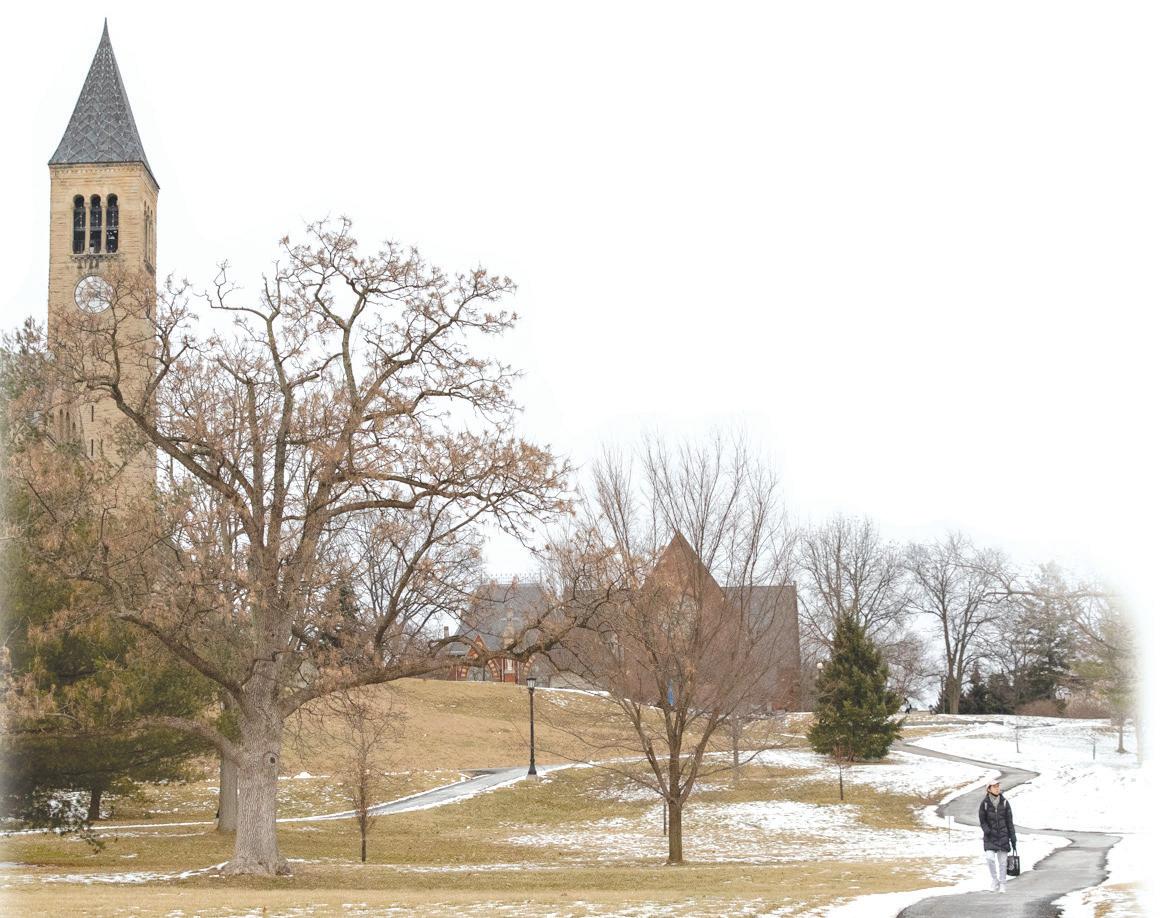
No real rest | A student walks down the empty Libe Slope as February Break comes to a close on March 1, bringing Cornellians back to reality.

About Making Gay History: A Lecture by Eric Marcus 9:40 a.m., Virtual Event
MBG Special Seminar: Jennifer Kong – Mechanisms of Morphogen Sensitivity Underlying a Wide Spectrum of Birth Defects 10 a.m., Biotechnology Building G10
Tackling Global Inequalities in Innovation And Entrepreneurship 12:25 p.m., Emerson Hall 135
How U.S. Trade Policy Affects Workers 2 p.m., Virtual Event
Dispatch from Ukraine: Human Rights and Conflict in the Eastern Regions 4 p.m., Virtual Event
“Reencounters: On the Korean War and Diasporic Memory Critique” with Crystal Mun-hye Baik 4:30 p.m., Virtual Event
Terror Capitalism: Producing the ‘Terrorist-Worker’ in Northwest China, by Darren Byler 4:45 p.m., Virtual Event
“Frog in the Mouth”: A Virtual Reading by Zahid Rafiq 10 a.m., Virtual Event
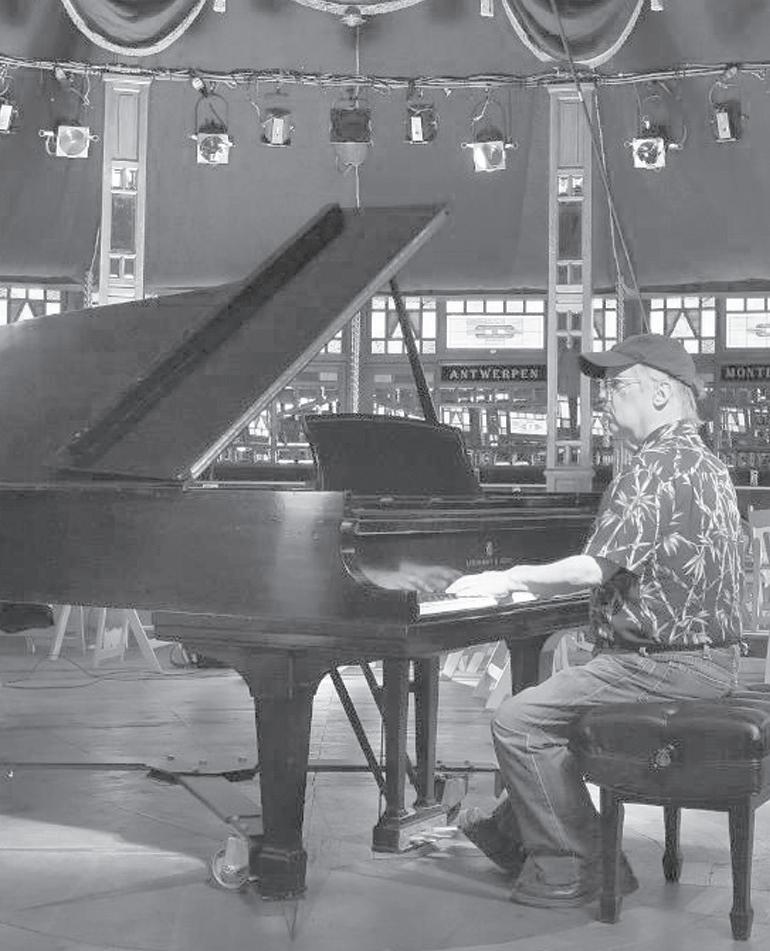
Midday Music: Extrovert Music by Intovert People, Thomas Feng, piano: C.U. Music 12:30 p.m., Lincoln Hall B20
Neurobiology and Behavior Seminar Speaker, Perry Gilbert Lectures: Cori Bargmann; Rockefeller University 12:30 p.m., Corson/Mudd Hall, Morison Room A106
Materials Science and Engineering Seminar Series 4 p.m., Kimball Hall B11
Musicology Colloquium: Glenda Goodman, “Insruments of Imperial Influence: Joseph Brant’s Barrel Organ and Sonic Territorialization at Grand River” 4:30 p.m., Lincoln Hall 124
The Making of Global China: A Conversation With Ching Kwan Lee 4:45 p.m., Virtual Event
“[There’ve been] bombs for the past three days non-stop. I just hope all of them are in bomb shelters,” Mullerman said. “My heart is still there, my home is still there. It is extremely hard to watch this and not be able to do much.”
Prof. Olena Vatamaniuk, soil and crop sciences, expressed disbelief that the conflict is occurring.
“We knew there were forces that were surrounding Ukraine, we knew it may happen, but we still didn’t believe it was possible in the 21st century,” Vatamaniuk said.
With a sense of urgency, Vatamaniuk further explained the significance of the event.
“What’s happening right now goes beyond Ukraine. It really touches Europe, it touches all parts of the world because it’s a fight for democracy,” Vatamaniuk said. “It’s an assault on democracy, people need to understand this. Which country would be next?”
One protester, Cassi Wattenburger, grad, said that prior to the conflict she was on a “news diet”and hadn’t been reading the news. That changed as soon as she heard about the invasion and had thought about her friends who might be affected.
“It became difficult for me to continue to read the news,” she said. “However, I came here to support my Ukrainian friend [Olenka Zavodna].”
Olga Zimina, a visiting scientist in biology, and Olenka Zavodna, grad, organized the protest on Ho Plaza. They urged Cornellians to support Ukraine and spread awareness about the conflict. They encouraged students to donate to humanitarian organizations and message their local government officials to push more sanctions on Russia.
“One of the reasons why we organized this protest is to show people at Cornell that we are here,” Zavodna said. “Ukrainians are here, and we will protest against the war. Hopefully, Cornell will follow our lead and give some sort of statement because it was disheartening not to see one.”
BREAK
Continued from page 1
she believes the University’s policies can be adjusted to help benefit the mental wellbeing of students.
“Not having homework due during the break would alleviate a lot of stress,” Stewart said. “Also, having prelims the week after break made it difficult to focus on anything other than studying.”
The University’s current policy regarding work over break strongly discourages instructors from posting assignments for completion over break periods, but it does not prohibit assignments entirely. This stance puts assigning work over break under the complete jurisdiction of course instructors, who abide by the University’s wishes to varying degrees.
“My hope is that the University lightens the workload a little during
breaks,” Stewart said. “I think this could really improve the mental health of students.”
Studies program in information sciences. “It’s very hard for me to transfer my study methods from online to in-person.”
For students who felt less able to learn and focus over Zoom, the transition to prelims only a few weeks after returning to campus has been especially stressful, and it has generated widespread calls to change prelim schedules.
“The first two weeks were online, so I barely learned anything during those two weeks,” said Linda Mahecha Rios ’24. “Putting off prelims at least another week [would be a good solution] because that was insane. I feel like I just started school and it’s like, ‘test.’ I’m not even caught up.”
Sofa Chierchio can be reached at sc2339@cornell.edu.
Along with Zavodna, Vatamaniuk expressed hopes that Cornell will make a statement soon in support of international students from the eastern European region.
“I am very appalled at Cornell,” Vatamaniuk said. “There was not a single word from the Cornell administration in support of Cornellians who are Ukrainians. I did write a letter, and they did not write back. We are getting letters from people around the world. We don’t need a political statement, just a statement of support. I can’t focus — my mind is with Ukraine.”
Zimina touched on Ukraine’s resilience as she looked back on the group in attendance. She reiterated that her people are peaceful but willing to fight for their freedom and independence.
“If Russia would stop fighting, there would be no war,” Zimina said. “If Ukraine were to stop fighting, there would be no Ukraine.”
Sammie Lambourne can be reached at sjl338@cornell.edu.
By JACK DONNELLAN Sun Contributor
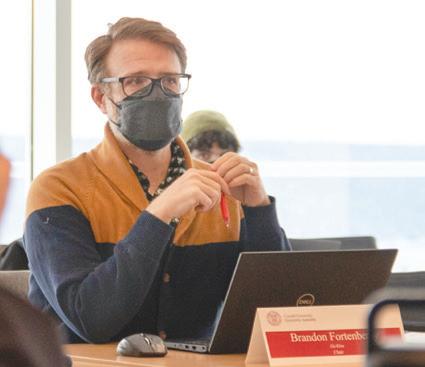
In its second in-person meeting of the semester, the University Assembly heard from President Martha Pollack, who addressed the body last Tuesday on issues ranging from University finances to wages to mental health. The assembly also heard a presentation from Prof. Ashleigh Newman ’06, an assistant clinical professor in the College of Veterinary Medicine, on recent proposals to construct new indoor swimming facilities.
Pollack discussed the University’s recent philanthropic efforts. She credited the generosity of Cornell alumni and friends, and the work of the University’s Alumni Affairs and Development staff, with the first six months of this year being the best in Cornell’s history in terms of philanthropy.
“We raised the highest amount of funding ever in Cornell’s history, 528 million dollars overall, which brings us up to a total of about three billion dollars towards our five billion dollar goal,” Pollack said. “This will help us address a range of important priorities, including … the goal of making undergraduate education more affordable.”
During her remarks, Pollack also discussed
student health and wellness. She mentioned that recreational facilities and other in-person wellness programs, like Student Hope, have returned to campus for the first time since the outbreak of the pandemic, also mentioning issues of access and affordability.
While Cornell’s fitness centers are currently restricted to those who pay membership fees, a new feature of the access fund offers access grants to those who can not afford memberships. Pollack also commented on the state of Cornell’s swimming pools in the wake of a recent Faculty Senate resolution calling for a new indoor swimming pool on campus. Pollack acknowledged the expensive maintenance challenges with the current pools, but she stated that the University is working on a “creative approach” to funding projects for their repair.
When discussing wages and increases for the next fiscal year, Pollack asserted that funding a natatorium would require diverting funds from other areas.
To continue reading this article, please visit cornellsun.com.
Jack Donnellan can be reached at jfd233@cornell.edu.

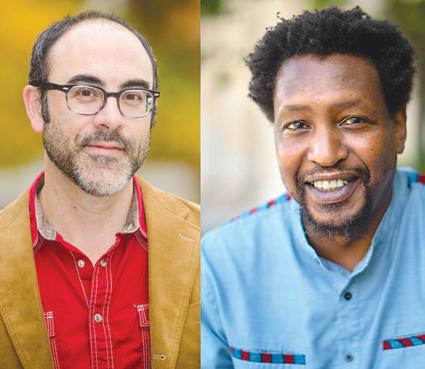
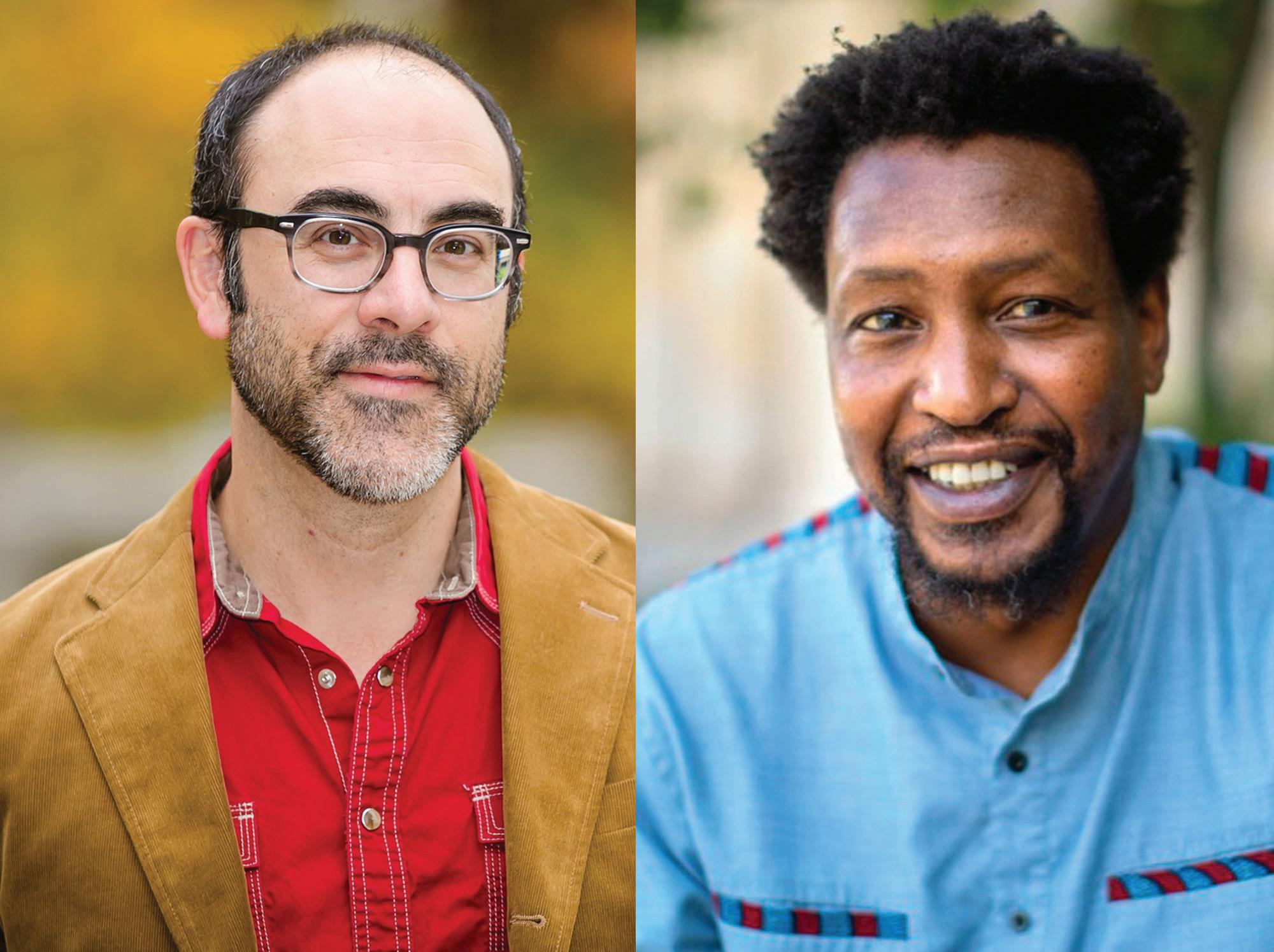
On Feb. 24, the Spring 2022 Barbara & David Zalaznick Reading Series kicked off with the Richard Cleaveland Memorial Reading, created in 2002 by friends and family of Richard Cleaveland ’74 to honor his memory. This semester’s Memorial Reading — the only one to include Cornell faculty — featured literatures in English Prof. J. Robert Lennon and Prof. Mukoma Wa Ngugi.
Lennon is the author of nine novels, including Familiar , Broken River and Subdivision , as well as the story collections Pieces for the Left Hand , See You in Paradise and Let Me Think He is also a musician and composer who helped found The Starry Mountain Sweetheart Band.
Ngugi wrote the novels Mrs. Shaw , Black Star Nairobi and Nairobi Heat and poetry collections Logotherapy and Hurling Words at Consciousness
Quoted by event moderator Prof. Helena María Viramontes, department of literatures in English, Ngugi said, “As an African and a Black person, I feel that I have a duty to love all the places I call home. Love need not always be pleasant — it can be demanding, defensive, angry and wrong. But it always wants to build, not destroy.”
I arrived at the event ahead of time, but I wasn’t as early as I’d hoped. I’ve been unable to attend many in-person speaker events at Cornell since I enrolled
in 2021, and I realized that I had no idea where the RhodesRawlings Auditorium was! As a result, I spent some time wandering the basement of Goldwin Smith before realizing that it was, in fact, right in the lobby of Klarman. Few people were in the auditorium when I arrived, but more trickled in during the next half-hour, including several students from one of Ngugi’s classes.
Viramontes started off by sharing Cleaveland’s story.
An English major at Cornell, Cleaveland often attended the then-weekly Temple of Zeus poetry readings and helped create the literary magazine Rainy Day , which is still active today. After his passing in 1999, friends and family established the Memorial Reading Series in his memory.
Lennon began by acknowledging the current crisis in
Ngugi remarked on the theme of divides between people, but also the interaction of music with these divides.
Ukraine, saying that his thoughts were with “writers and scholars in Ukraine” and expressing grat-
itude for being able to perform the reading. He read an excerpt from an in-progress novel titled Hard Girl , a crime thriller about twin, estranged con-artists who must unravel the mystery surrounding their missing mother. The passage described the experience of the protagonist, Jean, as she disembarks an airplane before selecting a stranger as a “mark” and stealing their car.
Throughout the passage, Lennon’s attention to detail and characterization shone through Jean’s people-watching and con techniques, such as her observation that deliberately-induced crying was more dependent on the “physical sensations” of joy or sadness rather than the emotions themselves.
I was impressed by his ability to immerse himself in the thoughts of a character who, by all accounts, seemed quite different from himself, as well as his highly expressive, humorous reading of the characters’ dialogue.
Before reading passages from his novel, Unbury Our Dead With Song , Ngugi shared some context. This included an explanation of Tizita, an Ethiopian musical genre that features prominently in the novel; he mentioned how he used to listen to Tizita on his commutes to and from Cornell. He also drew on his personal experiences in a bar with both Ethiopians and Eritreans at a time of war between the two countries.
Ngugi remarked on the theme of divides between people, but also the interaction of music with these divides. He mentioned that another war is occurring in Ethiopia today,
and from what I understand of his novel, it portrays music as a unique force for love and humanity even in the midst of conflict.
Unbury Our Dead With Song follows Kenyan journalist John Thandi Manfredi as he reports on a musical competition between four Ethiopian Tizita singers: the Diva, the Corporal, the Taliban Man and Miriam. I
An English major at Cornell, Cleaveland often attended the then-weekly Temple of Zeus poetry readings and helped create the literary magazine Rainy Day.
most enjoyed the scenes Ngugi read that featured themes of music as an expression of love, longing and memory.
One passage ended on this note: “If I forget those I loved, how can I remember who I am? ... What I fear is that I will forget this pain that carries my love.”
I was struck by Ngugi’s skill
at conveying these ideas of time and loss of identity through a conversation between Manfredi and the Corporal, where they discuss music as an “archive” for all of human feeling.
After the readings, there was a brief audience Q&A session. Since I hadn’t read either professor’s work, I deferred to my fellow audience members, who posed a variety of insightful questions.
One question that caught my interest dealt with the prominence of women in both professors’ novels. Ngugi expressed his desire to abstain from the “erasure” of women in history. He modeled the character of Miriam on his grandmother, who carried bullets and supplies to the resistance against British colonialism in Kenya.
Lennon said that his novel’s premise initially seemed like a “silly thriller plot,” but as he wrote, he realized the novel turned into a story about mothers and daughters. Further questions dealt with Ngugi’s thoughts on love, Tizita, his readers and issues of translation.
As an English major, this was the first in-person reading I’ve attended at Cornell and my first exposure to both professors’ works. It was certainly heartening to experience the talent of our own faculty. Although it was a hybrid event and the auditorium was sparsely seated, I’m excited for further events, including the rest of the Zalaznick Reading Series.
Amy Wang is a sophomore in the College of Arts and Sciences. She can be reached at amwang@cornellsun.com.
ANUSHYA ALANDUR ’23
Business Manager
CATHERINE ST. HILAIRE ’22
Associate Editor
PRANAV KENGERI ’24
Advertising Manager
ODEYA ROSENBAND ’22
Opinion Editor
JYOTHSNA BOLLEDULA ’24
News Editor
TAMARA KAMIS ’22
News Editor
CAMERON HAMIDI ’22
App Editor
KRISTEN D’SOUZA ’24
Design Editor
HANNAH ROSENBERG ’23
Photography Editor
OMSALAMA AYOUB ’22
Science Editor
PUJA OAK ’24
ANNIE WU ’22
MIHIKA BADJATE ’23
HUANG ’24
BUNAY ’24
COLIE ’23
’22
KATHRYN STAMM ’22 Editor in Chief
MADELINE ROSENBERG ’23 Managing Editor
NAOMI KOH ’23
Web Editor
ANIL OZA ’22
Assistant Managing Editor
YUBIN HEO ’24
Assistant Web Editor
VEE CIPPERMAN ’23
NOOREJEHAN UMAR ’23
E.D. PLOWE ’23
YOON ’23
Editor BENJAMIN VELANI ’22
Editor
PICHINI ’22
SRISHTI TYAGI ’22
MARIA MENDOZA ’24
ARANDA ’23
SURITA BASU ’23
KAYLA RIGGS ’24
’23
NAGEL ’24
’24
ABAYEVA ’24
ALPERS ’22
Rebecca Sparacio ‘24 is a sophomore in the Dyson School. She can be reached at rsparacio@cornellsun.com. Te Space Between runs every other Wednesday this semester.
This past week, my fellow peer and opinion columnist Brenner Beard wrote an article entitled “Any Person, Any Study … Any Club?” that comments on the ongoing debate about toxicity within clubs on campus. If you ask any student on campus if club culture is toxic, you will probably get a yes. I would like to further inquire about why this exclusivity persists and how we can change the narrative surrounding it.
Have an issue with our
Want to give your take on a
The Sun thrives on your feedback. Continue the conversation by sending a letter to the editor to opinion@cornellsun.com.
Letters should be no longer than 250 words in length.
Please include graduating year if applicable.
I attended ClubFest multiple times, both online and in person, and I’ve been through multiple recruitment processes. I’ve been rejected from multiple clubs, I’ve been accepted to multiple clubs and I’ve continuously questioned the process. I’ve been grilled on subjects I’ve had only a beginner’s level of knowledge about, and I know it doesn’t feel good. I’ve concluded that this process is complicated, and I understand through talking with my peers that some level of exclusivity is necessary. I do, however, believe that the club system can be reformed to improve student life. What is the point of a club? Is it to allow one to explore new passions? Is it to provide one with professional opportunities? Is it to guide one into a community? These questions are essential to understanding why ClubFest exists as it does right now. I’d argue that the point of a club is all of these things. Clubs serve three main purposes: to help people explore interests, to further their career and to make new friends. However, these three purposes come into conflict with each other, creating a hierarchy of clubs based on exclusivity, where more exclusive clubs with more intensive applications offer better opportunities and tighter communities. This exclusivity is what comes into question in Beard’s article, and I think it’s important that we question it in order to uncover why it exists. What are its implications? To what extent should clubs be exclusive?
In short: It’s complicated.
The world of clubs at Cornell is a world created by students. Students choose to create processes that mirror the college application process (in some ways), students choose to create processes that encourage competition (and even pit individuals against one another for a spot) and students choose to create processes that mirror those of large companies. There are some justified reasons for this, as it is impossible for clubs to function with an extremely large number of students. The small size of some of these clubs allows students to gain hands-on experience and knowledge from peers and real world clients. However, students should ask themselves the following questions: To what extent should clubs be created to mirror the real world? Are these processes conducive to learning? Do they afford students the proper opportunity to gain experience, knowledge and connections? Yes, exclusive clubs create many valuable opportunities for some students (not all). So what’s the issue?
Issues that past columnists have articu-
lated are as follows. Intensive applications hinder students from exploring new interests and passions, and they hurt student mental health. Past columnists suggest there is racial bias present in club recruiting processes and that some clubs champion exclusivity and elitism over equality and egalitarianism. Exclusive clubs can be elitist by selecting students with connections to the club and by favoring students who were privileged to have a wider range of opportunities before attending Cornell. This exclusivity can come at the cost of student mental health. The laborious club application processes and rigorous club assignments can stretch people thin. Additionally, exclusivity could lead to selfdoubt or imposter syndrome. Some clubs hypocritically state upfront that “one needs no prior knowledge to join” but expect students to have skills to debate cases and answer technical questions. It can be easy to second guess yourself if you’re rejected from an exclusive club in a situation like this. Students need to be allowed to “not know” — that’s the only way to learn. However, another point of view is that deep knowledge of a subject is important for certain business clubs or engineering project teams with real world clients. If one is rejected from a club on the first try, they have the ability to get into another club or to learn the skill and try again. This is why the club culture exists as we know it. Perhaps pre-professionalism (which is an important part of college) will always conflict with a student’s desire to spontaneously explore passions. This is why a wide range of clubs are offered to students with a wide range of interests. So one may ask: Does club culture conflict with Cornell’s motto “Any Person, Any Study?” Not entirely, but there are many ways that club culture can achieve this motto better.
Students have the flexibility to take a variety of classes and join clubs that are not exclusive. Students have access to advisors, professors and alumni that can offer guidance as well. However, the motto “Any Person, Any Study?” will always be in contention with the dualities of egalitarianism/ elitism and inclusivity/exclusivity. Looking specifically at Cornell clubs, this is evident. What’s most interesting about the club application process are the narratives that surround it which are sometimes troubling. Students forget that they are in control of the processes that they create. Students can choose to implement reforms such as an add/ drop process for clubs. Students can choose to accept a few more applicants into a new member class. Students can choose to record new member education sessions to democratize the inquisition of knowledge. Students can choose to support and empathize with one another throughout the process. If the competitive club application process persists, it can co-exist with student solidarity. It’s complicated, but the choice to make the process a little better is in your hands. Don’t forget that.

Lainie Eisner grad (she/her) is a Ph.D. student in the Meinig School of Biomedical Engineering. Guest Room runs periodically this semester. Comments may be sent to opinion@cornellsun.com.
At my recent intramural volleyball game, my team executed a fantastic last-ditch efort to get the ball over the net, turning what surely would have been a lost point into a successful play. We started to celebrate immediately, exchanging high-fves before the referee had even signaled that the point was ours. I’m sure you can imagine the confusion and disappointment on our faces when we found out that the other team had been awarded the point because three women (and no men) on our team had touched the ball before sending it over the net.
Cornell Intramural Sports continues to enforce antiquated gender-based rules that are exclusionary and just
plain unfair. In the case of this 6v6 Volleyball League, it is required that at least one man and one woman touch the ball during each possession where multiple hits are used to get the ball over the net — thus, my team lost the point on an otherwise legal play. Similarly, intramural Flag Football has a nearly half-page long list of written rules specifying various scenarios in which men and women may or may not run and pass the ball (failure to comply results in a fve yard “Illegal Male Advancement” penalty).
Regulations specifying that both men and women must touch the ball are exclusionary to gender-diverse athletes. Even worse, they rely on the referees to make quick assumptions about who is a man and who is a woman, which could surely lead to an athlete being misgendered. According to their website, the mission of Cornell Intramural Sports is “to establish fun and inviting playing environments for all skill levels.” However, by establishing a clear gender binary, I would hardly call this environment inviting to athletes who identify as anything other than a man or woman.
Cornell does ofer both Mix-Gender and Open (with genderless rules) intramural leagues for several sports, hypothetically allowing athletes to participate without having to conform to a “man” or “woman” identity for the sake of the rules. However, it is unacceptable that gender-diverse athletes may still feel restricted to a certain subset of leagues in the frst place. Athletes of all genders should feel like they belong in any multi-gender league, period.
In addition to the erasure of gender-diverse athletes, Cornell’s Mix-Gender intramural policies stem from outdated notions about gender and athletic ability. Tese policies, enforced across all sports, require that teams have an even number of men and women on the feld at all times. In many cases, much like 6v6 Volleyball and Flag Football, they also require that men and women alternate
making plays on the feld. I think we all know why these rules exist: Cornell Intramural Sports thinks that allowing men to play unchecked alongside other genders results in an unfair advantage for men. Te logic that follows is upsetting, but unsurprising: Cornell Intramural Sports thinks that men are better athletes than women. Scientifc evidence suggests otherwise, and in this pandemic-fueled age of policies “following the science,” Cornell would be wise to extend that thinking to this situation as well. Of course, sexism in sports is nothing new. Tis topic has recently garnered national attention with the success of Univeristy of Pennsylvania swimmer Lia Tomas, a transgender woman. Te Ivy League (and by proxy, Cornell) has vocally supported Tomas’s participation in intercollegiate sports. Although the stakes may be smaller when it comes to intramural sports, the message that harmful gender-based policies send is the same. Why can’t we extend the Ivy League’s inclusionary policies to our intramural athletes as well?
Besides all the other harmful implications of gender-based rules in intramural sports, they ultimately detract from the reason why students sign up for intramural sports in the frst place: to have fun. Instead of focusing on making good plays, we spend time on the court worrying about whether the “correct” genders have touched the ball. And when we don’t get it right, losing a point on an otherwise legal play is certainly more frustrating than fun. Ultimately, it seems that these needless gender-based policies threaten Cornell Intramural Sports’ mission of creating “fun and inviting playing environments for all skill levels.” So, Cornell, the ball is in your court when it comes to removing unnecessary gender-based rules from intramural sports — let’s just hope that your own discriminatory rules don’t lose you points.
Javed Jokhai ’24 is a sophomore in the College of Arts and Sciences. He can be reached at jjokhai@ cornellsun.com. J-Punk runs every other Tuesday this semester.
On Dec. 19th of 2021, former music Prof. Robert Isaacs published a personal essay on Salon titled “Where the Depressed Are Not Welcome.” Shockingly or not, depending on one’s life circumstances, the titular place Isaacs’ article referred to was Cornell. In the piece, Isaacs ruminates on instances in his twenty years of teaching music at Cornell where he both witnessed, and was himself subjected to, Cornell’s discrimination against mentally ill people.
Specifcally, Isaacs reveals that, as he learned during his time working for Cornell admissions, there is an of-the-books policy of not accepting applications that are honest about their struggles with mental unwellness — they are essentially disqualifed from further consideration by that factor alone.
“Te admissions department,” he writes, “had an informal policy of rejecting any applicant who mentioned depression or other mental illness in their essay.”
Isaacs goes on to state that the explicit reason he was given for the policy is that mentally ill students “pose a signifcant burden on … advising deans,” at which point he was told the issue was closed, as, “[w]e have discussed this many times in the department, and that’s our policy.”
Tere have, of course, been rumors of such discrimination against those with depression and other mental disorders in the college application process for a while now. When I was in high school, I remember sitting in a classroom listening to an admissions essay tutor warn us that mentioning any mental health issue would make the admissions committee deem us unft to handle a prestigious college. After my own admission to Cornell, I even remember repeating that very same advice to those I knew who were still applying to schools, as a just-in-case measure, without ever fully believing it to be true.
Having had my fears of very real, ongoing discrimination on campus confrmed, I wish I could say my previously instilled cyncism about the application process prevented disappointment. It did not. I was just as horrifed and appalled as I suspect many students were upon learning of this practice via Isaacs’ article. And although I was horrifed, I cannot say that I was surprised. Tis information sadly follows a logic common to many of Cornell’s practices, which additionally sheds light on Cornell’s handling of several crises in its recent history.
If there was a word second to “pandemic,” to describe the atmosphere of Cornell in 2021, it would be “crisis.” A student was found dead in every month of the spring 2021 semester, and a total of seven students passed in the fall semester, according to a count from student collective Do Better Cornell as of Nov. 18, 2021. On top of that, the fall semester saw a reported shooting threat following a bomb threat within a three-day span.
Troughout all these crises, the idea of being “the campus on the hill,” separate and safe from the dangers of the rest of the world, seemed to many students as a farce. It would appear as though Cornell doesn’t address the student deaths as a collective event that continuously impacts the student body morale; the numbers of lost students have not been made readily accessible to the public prior to Do Better Cornell’s statement, which only adds to the atmosphere of secrecy and fear. Troughout all these examples of anxiety-inducing events, there
has existed a surreal amount of dissonance between the Cornell administration’s attitudes, those of its faculty and those of its students.
With full knowledge that many students have been severely anxious, depressed and traumatized throughout the course of these past semesters (not the least of which from the COVID-19 pandemic itself), Cornell has practically conducted itself as though it were business as usual. Aside from the cancellation of exams scheduled for the same two-day period in which the bomb threat and shooting incident occurred, assignments and prelims due that week were, for many, not adjusted at all, despite the Cornell administration suggesting “fexibility” with students. Tis message was often missed or ignored as it traveled down to Cornell’s faculty, and otherwise lacked any judicial structure to either incentivize or require faculty to act with the well-being of their student body in mind.
In light of Cornell’s repeated mishandlings, the Do Better Cornell student activism collective reorganized to physically hand President Martha Pollack a list of demands, including a mental health break and structural changes to Cornell’s support system. Te response to Do Better Cornell from Pollack and the Cornell administration has been, in so many words, materially nothing. Tere were no steps taken to give tired and perpetually stressed students a break. Tere were no acknowledgements made that many students here were legitimately traumatized by the incident in a way that didn’t just go away with the next round of schoolwork.
When mental health does enter Cornell’s discourse, the University continues to rely on clearly and repeatedly insufcient resources (primarily Cornell Health’s Counseling & Psychology Services), which, despite their well-meaning faculty, severely sufer from bureaucratic sludge that makes acquiring services from therapists extremely difcult: Sessions are most often inordinately short, reserved for only the most at-risk or inconsistent to the point of being unhelpful.
Do Better Cornell and the Cornell student body have largely framed what
Cornell has done, or not done, as a failure. Even in this very article, I begin to characterize Cornell’s failure to materially address mental health as a “mishandling.” However, with the news of Cornell openly rejecting applicants with mental illness, it may be necessary to think somewhat less charitably in order to understand the overall logic of Cornell’s actions.
Cornell does not fail when it does not recognize mental illness as a serious concern. Every time a collection of students’ pleas for support falls on deaf ears, every time a student attempts to use Cornell’s mental health resources to no avail, Cornell did not fail. Cornell did not plan to help or acknowledge the mental health of the student body, since the literal process of which individuals are selected to become part of it is intended to suppress discussion of mental health concerns, and, to the extent possible through the medium of college essays, to preclude those who experience them from entering.
Cornell’s administration designed the student body to allow for the administration to live in a fantasy world where real world woes never intrude upon the wellbeing of the student population. Te only mistake on Cornell’s part was letting some students with mental health issues slip through the cracks. In the eyes of the Cornell administration, if you are mentally ill, the failure is not in failing to understand you and your needs; the failure is you being a Cornellian.
Te idea that many of us beloved students and esteemed faculty are anomalies as Cornellians is quite grim. However, this framing of Cornell as not clumsy, but rather structurally hostile towards our most vulnerable, is absolutely necessary. Tere is no getting around it: Cornell is engaging in discrimination. It must take responsibility, and continuing a discourse in which Cornell is characterized as “making mistakes” lets the institution continue to actively hurt our most vulnerable. I hope that one day, this article proves outdated, a piece written about a state of afairs that no longer exists. Until then, however, I urge Cornell to end its ongoing production of a campus where the depressed are unwelcome.

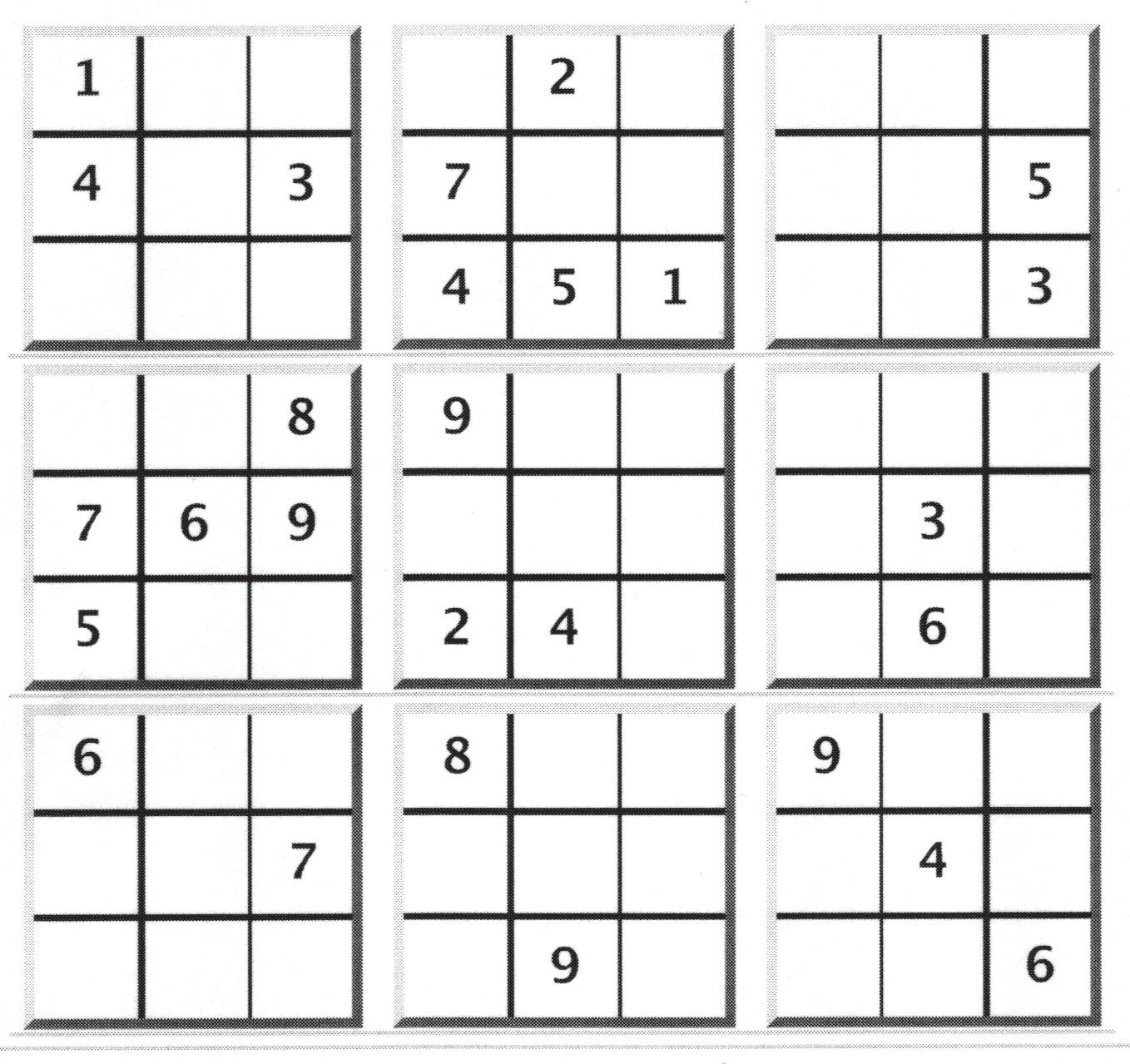
Fill in the empty cells, one number in each, so that each column, row, and region contains the numbers 1-9 exactly once. Each number in the solution therefore occurs only once in each of the three “directions,” hence the “single numbers” implied by the puzzle’s name. (Rules from wikipedia.org/wiki/ Sudoku)

HOCKEY
By KATRIEN DE WAARD and ANNA HOOPER Sun Sports Writers
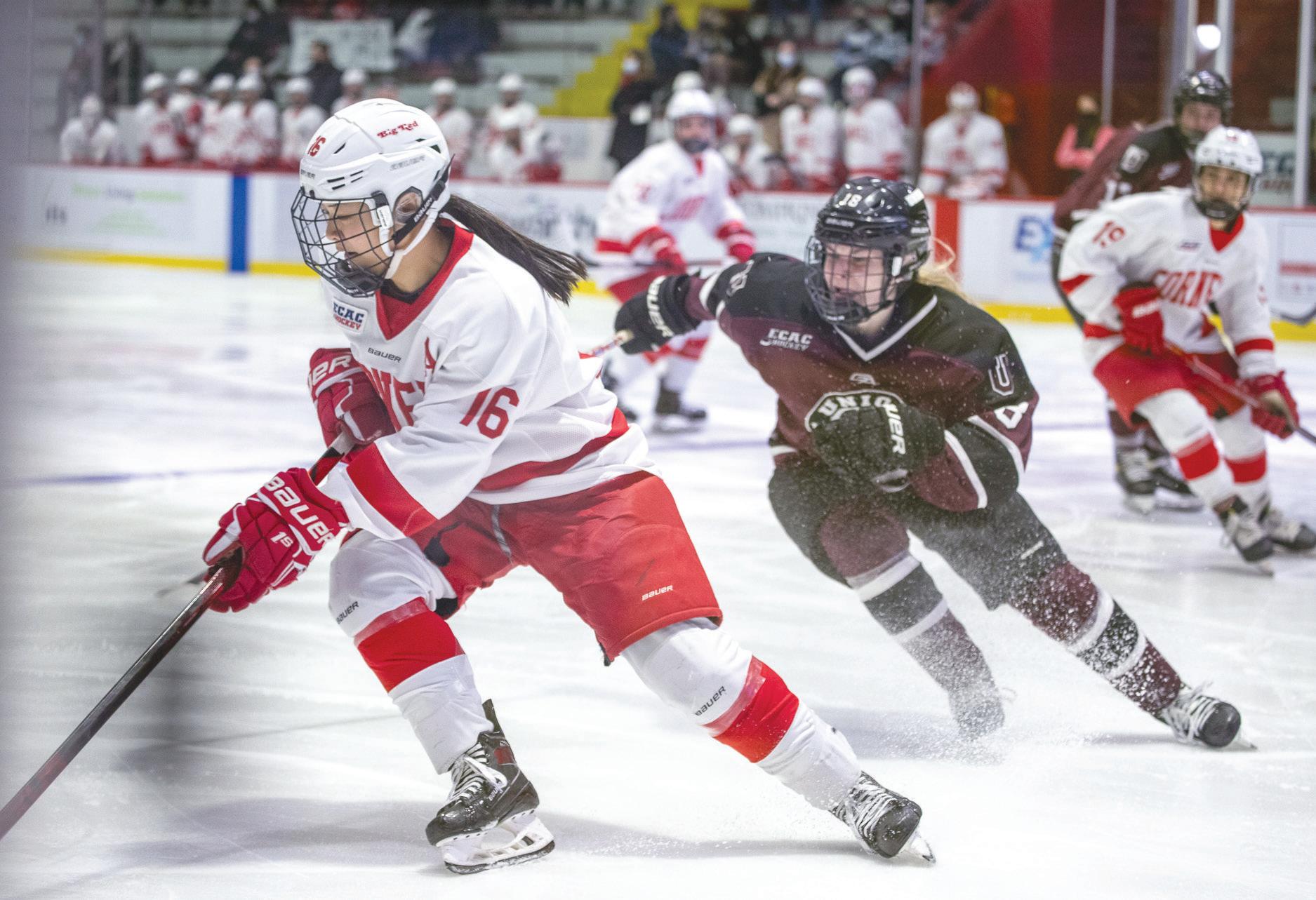
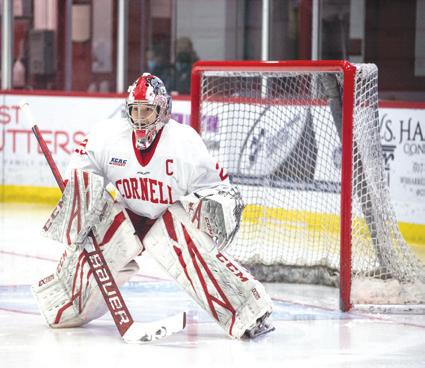
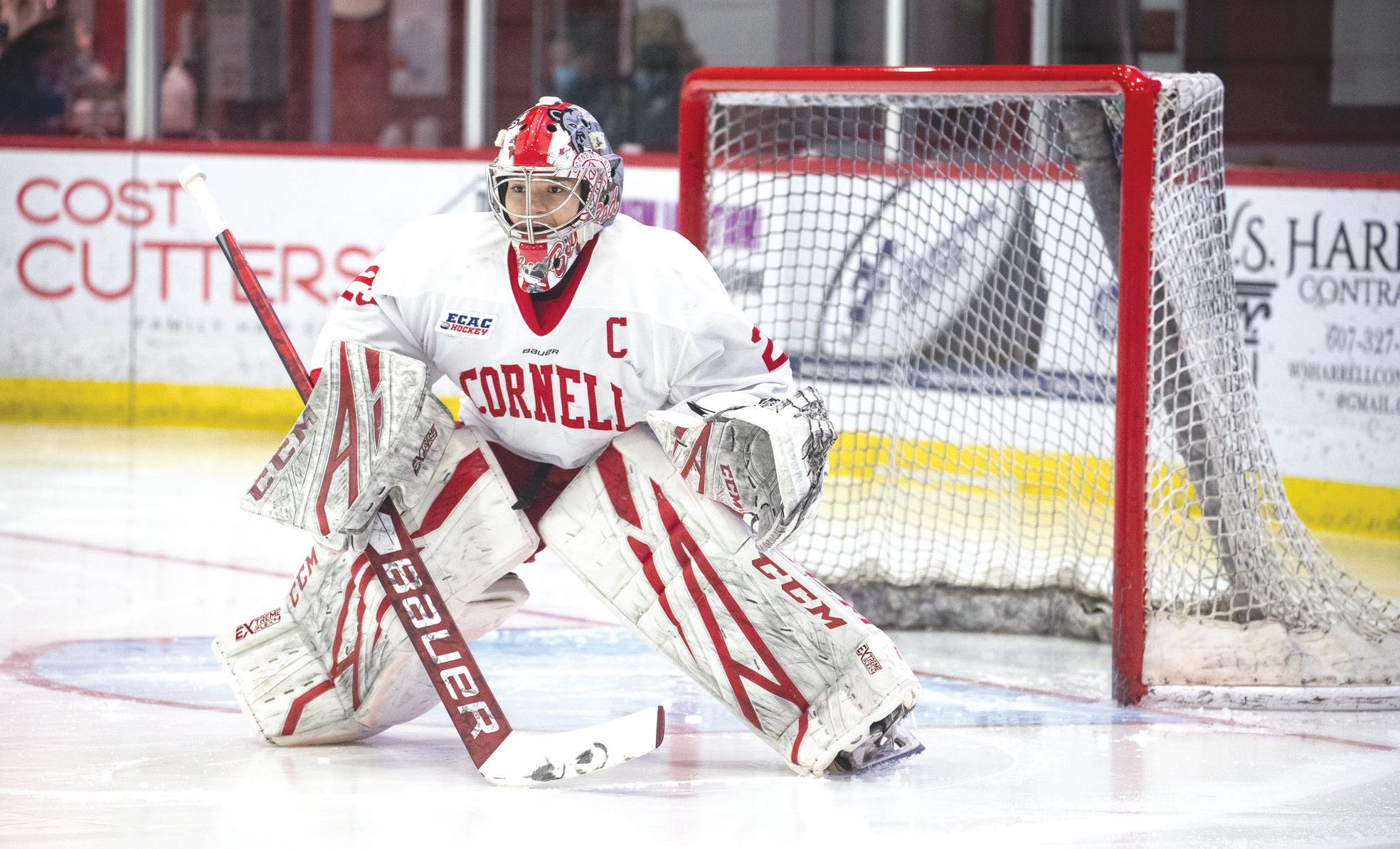
Cornell’s season ended without pomp and circumstance after two consecutive losses to Colgate University over the weekend. The Raiders (28-7-1, 16-5-1) ousted the Red (14-14-2, 12-8-2) from the ECAC Championship Quarterfinals round with a 1-0 (OT) win on Friday and 3-2 victory over the Red on Saturday, securing Colgate’s position in the ECAC Semifinals.
Earlier in the season, Cornell had fared well against Colgate, earning a 3-2 win on Feb. 6 after a hardfought battle. Later in the season, Cornell suffered a 2-3 loss against the Raiders on Feb. 15. During each game, the teams found themselves well-matched and constantly adjusting to the other’s strategies and strengths.


The Red took to the ice with vigor on Friday, determined to put up a battle against the Raiders. For three periods, the Red traded shots with Colgate, and each team effectively maintained a perfect penalty kill all game.
Cornell graduate goaltender Lindsay Browning made a total of 43 saves throughout the game, only allowing one puck to slide past her guard during the overtime period. With only nine seconds left in overtime, a Colgate forward managed to snatch up the loose puck in the Red’s defensive zone, shooting it into the back of the Cornell net.
The following day, Cornell sought redemption for the previous day’s loss. Just over seven minutes into the first period, sophomore forward Gabbie Rud managed to gain the Red’s first goal of the game after freshman forward Leah Macsween intercepted a Colgate pass.
Macsween sent the puck to sophomore forward Kaitlyn Jockims, who passed to Rud before the Colgate goalie had a chance to adjust. Rud drilled the puck into the Colgate net, raising the score 1-0.
Senior forward Athena Song netted the second point on a power play in the second period with another assist from Jockims. The Red looked strong with its two point lead, but Colgate demanded an equalizer. Within one minute, the Raiders scored twice, closing the gap that the Red had worked so hard to create early in the match.
A Cornell penalty denied the Red’s hopes for advancement near the beginning of the third period. The penalty kill team held off the Raiders for one minute and 54 seconds, but a lucky power play shot pushed Colgate ahead, 3-2.
The Red played until the last second, fighting for an equalizer that


never came. The Colgate goal ended a hard-fought season of growth and nipped the Red’s shot at another championship title.
The Red faced a season of adversity, from rebounding from last year’s canceled season to welcoming seven new freshmen to the ice. Throughout the season, the
team faced seemingly endless swings of highs and lows. However, the team ended as a strong, tight-knit unit with the determination to succeed and grow. Women’s ice hockey ended its 2021-2022 season with two ties, 14 losses and 14 overall wins, many of which it secured during the second half of the season.
The Red will continue to strive for greatness during the off season and will return to the ice in the 2022-2023 season.
Katrien de Waard can be reached at kdewaard@cornellsun.com and Anna Hooper can be reached at ajh323@cornell.edu..