TWO YEARS AF TER CAMPUS COVID-19 SHUTDOWN, CORNELLIANS LOOK BACK
on unanticipated hardships, empty campus
By ROMAN LAHAYE and ELI PALLRAND Sun News Editors
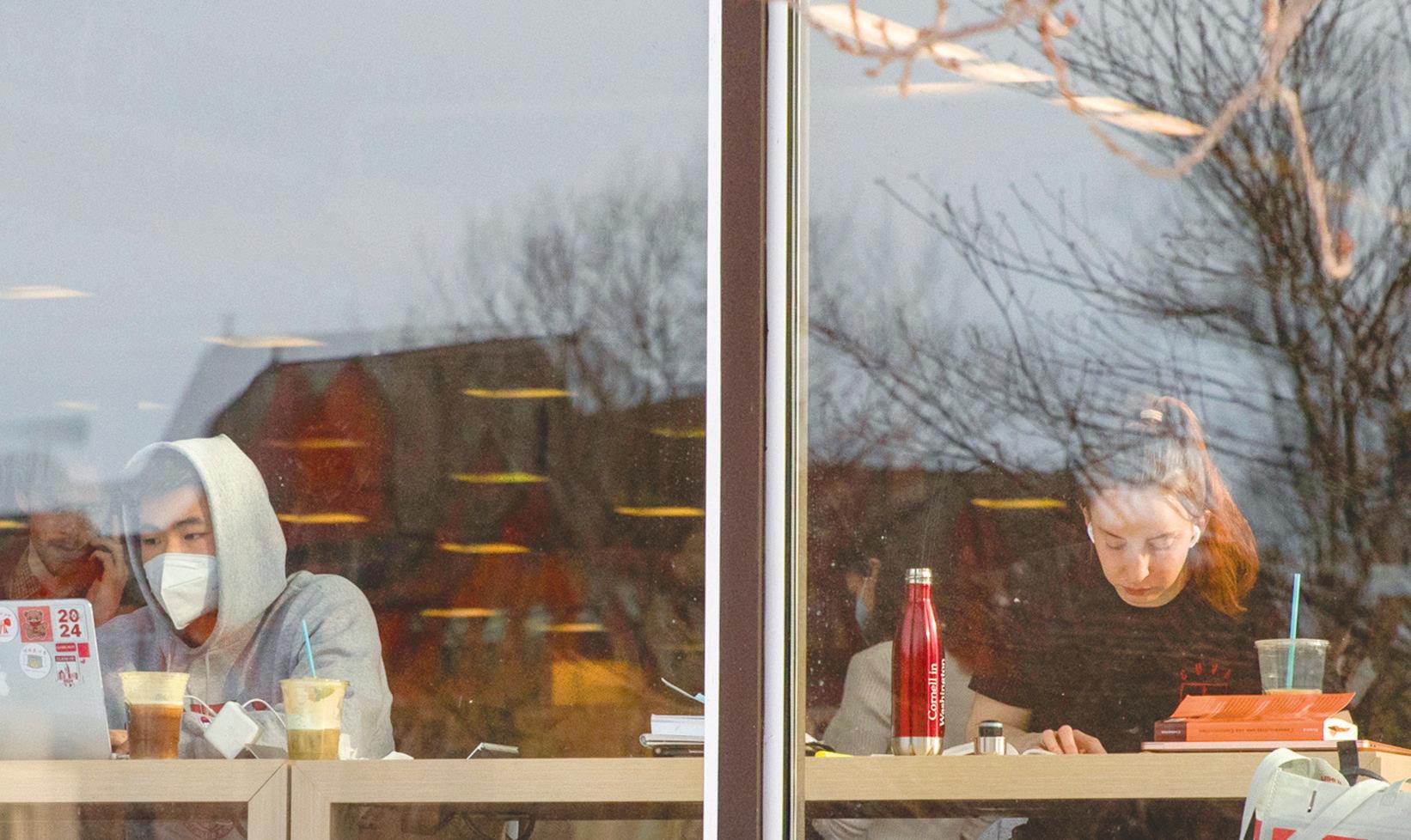
Two years later, a dwindling number of students on campus remember when the University shut down on March 13, 2020 as COVID-19 began to appear in the United States.
Perhaps relaxing in their dorms, enjoying the company of friends while they still could or studying for prelim they would have to take that night, students suddenly found their campus shut down, students being ordered off campus and courses suspended until April 6. Many learned of the move through the leaked image of an official University email that would follow shortly, and the news went viral. As COVID-19 took root in the United States, the University shut down as a preven-
AND UNMASKED
University Increases Tuition, Financial Aid
By ANGELA BUNAY Sun Managing Editor
On Tuesday afternoon, Cornell University announced that the Board of Trustees approved the 2022-2023 budget, which includes an increase in tuition rates for the upcoming academic year alongside increases in grant-based financial aid.
With the newest budget, the tuition rates will increase by between 3.6 and 3.9 percent depending on the college. As tuition rises steadily every year, the board has raised financial aid funding to compensate. Grant-based financial aid will increase by eight percent compared to the previous budget year, resulting in a $363 million investment in aid, a record for Cornell according to the University.
The University explained in their press release that the decision to increase financial aid funding was done as part of their “To Do the Greatest Good” campaign goal of increasing affordability at Cornell.
“The campaign seeks to increase the number of aid-eligible undergraduates by 1,000, reduce undergraduates’ average borrowing, and exempt those with limited financial resources from a summer work earnings requirement, allowing more students the freedom to pursue unpaid research or other pre-professional opportunities,” the University said in a press release.
According to the University, of the 14,743 full-time undergraduate students enrolled in Fall 2020, 54 percent of the student body receives need-based aid, and 48 percent
receive a Cornell grant, which does not need to be repaid by the recipient. The median Cornell grant in 2021 was $47,563.
“We continue to invest in financial aid as a key part of our foundational commitment to inclusion, and as an essential component of maintaining our academic excellence,”
President Martha Pollack said in a University press release.
Beginning in fall 2022 all first and second-year students will be required to live on campus and have meal plans. In the newly approved budget, the cost of housing and dining will increase by 3.9 percent during the 2022-23 academic year. This includes a 4.7 percent — or $464 — increase in the housing fee, bringing the fee to $10,426, and a 2.75 percent — or $178 — increase in dining fees, which will end up at $6,612.
Jonathan Burdick, vice provost for enrollment, said in the University’s Tuesday statement that the rise in Cornell grants will offset any increase in costs for most students with financial need.
The tuition cost for master’s degrees will increase between zero and nine percent, depending on the degree, with most rising by 3.6 percent.
The rise in tuition for law, veterinary and Masters in Business Administration degrees also varies, but tops out at 3.6 percent. Doctoral degree tuition will not face any tuition increases.
Uygher Student Question at CIPA Event Sparks Controversy
By SURITA BASU and PAREESAY AFZAL Sun Assistant Managing Editor and Sun Assistant News Editor
On Thursday, March 10, a group of Chinese international students enrolled in Cornell’s Masters in Public Administration program walked out of an event when their fellow classmate, Rizwangul NurMuhammad grad, a Uyghur woman, spoke about her brother’s detention by the Chinese government.
The event was part of the Cornell Institute for Public Affairs Colloquium program, which brings speakers to campus every week for conversations with MPA students. Last week featured Rep. Elissa Slotkin (D-Mich.). During a question and answer period, NurMuhammad asked Slotkin why the U.S. and international community has reacted to punish Russia for invading Ukraine without taking similar action on the Chinese government for its genocide of Uyghur people.
Axios reported that in her question, NurMuhammad said that her brother Mewlan had been arrested in 2017 when Chinese authorities began mass detentions of Uyghurs in Xinjiang.
According to attendees, the audience booed as NurMuhammad asked her question. The disruption was followed by a large group of Chinese students walking out of the lecture hall.
See CIPA page 3
HANNAH ROSENBERG / SUN SENIOR PHOTOGRAPHER
A LISTING OF FREE CAMPUS EVENTS
Today
S.C. Tsiang Macroeconomics Workshop:
Joachim Hubmer, University of Pennsylvania 11:15 a.m. – 12:45 p.m., 498 Uris Hall
Freeze! The Grassroots Movement to Halt the Arms Race And End the Cold War 11:25 a.m. – 12:40 p.m., G08 Uris Hall
Millenial Beauty Bias: The Implications of Retail Store Design in Black Beauty Supply Stores
Noon – 1 p.m., 1219 Martha Van Rensselaer Hall
Energy Engineering Seminar: Amy Marschilok, Stony Brook University
12:15 p.m. – 1:15 p.m., B11 Kimball Hall
Lessons from Democracies at Risk: A Global Perspective 12:30 p.m. – 1:45 p.m., Virtual Event
Astronomy and Space Sciences Colloquium Series: David Helfand, Columbia University
4 p.m. – 5 p.m., 105 Space Sciences Building
Faculty and Students of the War in Ukraine 4:30 p.m. – 6:30 p.m., Virtual Event
Local Ithaca Theatre Company Meet and Greet 4:30 p.m. – 6 p.m., Schwartz Cener for Performing Arts,Lobby
Wendy Rosenthal Gellman Lecture on Modern Literature
By Brent Hayes Edwards, Columbia University 5 p.m., G64 Goldwin Smith Hall
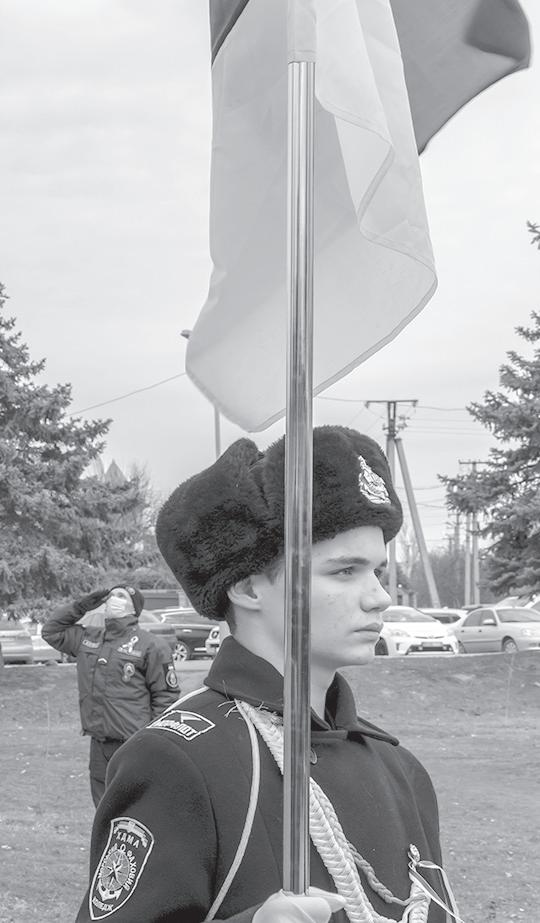
War in Ukraine | On Thursday, March 17, Cornell faculty, staff, students and scholars based in Ukraine will participate in a virtual forum discussing how the Russian invasion threatens lives and impacts the stability of the global economy.
Tomorrow
Carbon Nanotube E-Textiles for Wearable Applications 10 a.m. – 11 a.m., 201 Human Ecology Building
The Case of Cryptocurrency: How Digital Currencies Will Shape Emerging Markets 10 a.m. – 11:30 a.m., Virtual Event
Political Theory in the Archives Series: “The Early Foucault,” Stuart Elden, University of Warwick 11 a.m. – 12:45 p.m., Virtual Event
Seminars in Infection and Immunity: “Myeloid Cell Control of Tumor Specific Immunity,” Dr. Miriam Merad 12:15 p.m. – 1:15 p.m., Virtual Event
Jack Catlin Memorial Lecture: “Using New Technologies To Better Understand, Predict and Prevent Suicidal Behavior,” Matthew K. Nock, Harvard University 12:20 p.m., 115 Rockefeller Hall
Ezra’s Round Table, Systems Seminar: “Abstraction Barriers for Embodies Algorithms,” Prof. Nils Napp, Electrical and Computer Engineering 12:25 p.m., 253 Frank H. T. Rhodes Hall
Lyvia Rondríguez Del Valle: Contested Territories and Climate Change Adaptation in Puerto Rico: “The Case Of the Caño Martín Peña Community Land Trust” 12:25 p.m., Abby and Howard Milstein Auditorium
Coloring Night
7 p.m., Carl Becker House, Seminar Room
BRENDAN HOFFMAN / THE NEW YORK TIMES
Risley Residents Petition Against Murals Removal
By AIMEE EICHER Sun Assistant News Editor
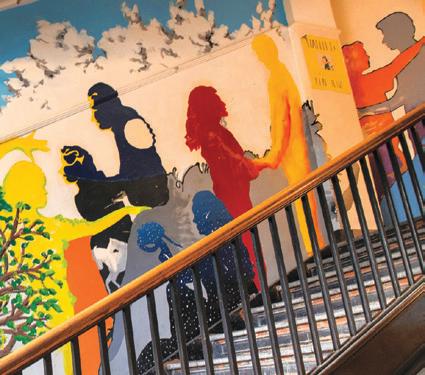
For over 50 years, the interior walls of Risley Residential College have been lined with colorful murals. For residents, visitors and alumni alike, the artwork is a key part of Risley’s history and character. However, after a decision by the University’s Housing and Residential Life, over 100 of these beloved paintings will soon be removed.
On March 11, Jessica Burley, residence hall director of Risley, wrote an email to the dorm’s residents — referred to within the community as Risley-ites — explaining that she had walked through the building with Tim Blair, executive director of Housing and Residential Life, who selected the murals to be repainted.
Selection criteria followed the new list of guidelines for murals in campus residence halls, which HRL compiled this semester. Reasons for mural destruction included damage to paintings, such as paint cracking or water damage, and lack of a rectangular border around the
artwork, which the new guidelines stated was necessary for Facilities staff to paint around them.
In the email, Burley provided a Google Form that students could fill out to request specific murals to be saved. For murals to be preserved, student volunteers must repair any damage and add borders to murals lacking them.
Past and present Risley-ites expressed resentment toward the new guidelines, arguing that they did not serve Risley’s artistic community.
“From my understanding, the guidelines put forth are meant to apply to all housing residential areas,” said Thomas Mitchell ’23, the chair of Kommittee, Risley’s student-run governing body. “I think it's difficult to then apply those to a dorm specific to the arts.”
April Townson ’20, a Risleyite for her sophomore through senior years, said she worried that the new policies would hinder many Risleyites’ artistry.
“There are so many murals in Risley… that those [guidelines] can’t even be applied to them, and so they would have to be painted
over,” Townson said. “I think that that really stifles a lot of the creativity that makes these spaces really special.”
Before beginning to paint a mural, students must propose their ideas at Kommittee and obtain permission from the RHD. For this reason, some Risleyites feel stifled by the additional guidelines.
“[They’re] taking away Risley’s ability to decide what murals are acceptable to go on its walls,” said Shivank Nayak ’21, who lived in Risley for their sophomore through senior years. “I think it robs students of the artistic agency that really helps them grow as artists and as people.”
Certain guidelines state that murals painted must be visually appealing, stating that, for example, poorly-drawn murals and murals with more than 50 percent dark colors are aesthetically unacceptable. Leo Almada-Makebish ’22, who lived in Risley during his first three years at Cornell, said that these new criteria seemed too subjective.
“Who will be the person to judge what reasons are good enough
Grad Student Question Leads
Continued from page 1
The next day, William Wang grad, president of the CIPA peerled governing organization called the Cornell Public Affairs Society, drafted a letter to Prof. Matthew Hall, policy analysis and management, which was signed by more than 80 Chinese students. The letter, which was obtained by The Sun, stated that the students left the event because they felt the atmosphere was hostile toward them.
The letter prompted a chain of emails between CIPA students and faculty, where students expressed support for either side.
On Tuesday, March 15, Rep. Slotkin responded to the events on Twitter, writing that the walk-
out “appeared to be a coordinated protest.” Slotkin continued by condemning the reaction that NurMuhammad has received.
“There’s no excuse for that behavior, and I expect Cornell to ensure that all students can express themselves free of intimidation or threats,” Slotkin wrote in her tweet.
On Sunday, a statement was shared to the Brooks School community from CIPA Director Hall and Brooks School Dean Colleen Barry.
“These events have spurred divisive discourse and engaged us in serious conversation related to how best to speak up in the face of genocide and human rights atrocities against the Uyghur people,” Barry and Hall wrote in their statement.
“At the same time, they remind us how harmful it is when conversation
to Walk Out
devolves into derogatory anti-Asian expression.”
The statement continues to say that the school has offered assistance to the students directly involved.
Cornell Muslim Education and Cultural Education, a community organization at Cornell, published an Instagram statement condemning the oppression of Uyghur Muslims in light of the incident, encouraging students to support NurMuhammad.
“We encourage the community to stand up against this genocide and support Rizwangul,” the statement said.
Surita Basu can be reached at sbasu@cornellsun.com.
Pareesay Afzal can be reached at pafzal@cornellsun.com.
Students Refect on Uncertain Days
Two years later, University mask requirements ease up
COVID-19
Continued from page 1
tative measure against the spread of the disease weeks earlier than it was scheduled to.
Checking their phones for information, texting their friends and family about the news, enjoying each other’s physical company while they could and spending remaining Big Red Bucks with abandon, many students were shocked and amazed as they scrambled to make travel and storage arrangements.
The University would eventually provide complementary storage, and make other accommodations to students dealing with the sudden change. Classes would resume online, with many students thousands of miles away, after three
weeks of no instruction including Spring break.
The shutdown was a time of panic, amplified by the newness and lack of understanding of the COVID-19 virus.
“At first it was super serious, people were scared to death, people were crying that they're immunocompromised, they're gonna die. Some of my friends were crying like crazy… families were getting sick and passing away,” said Lordina Amoako ’23. “Everybody was kind of shocked and went into a frenzy. Some people were getting drunk because they thought it was the end of the world… some people made rash decisions.”
For students new to campus — like Grace Fairchild ’22, a transfer student who was in her first semester at
the School of Industrial and Labor Relations when campus closed — the shutdown cut short what was meant to be the beginning of their Cornell experience.
“I was still really trying to figure out my place at Cornell, I was still trying to make friends and figure out different things I would be involved in,” Fairchild said. “And then it really just felt… like the rug was just pulled from underneath my feet.”
For seniors, the shut down often meant a lack of closure, and a disappointing end to their time at Cornell.
“There was a moment where everyone thought after spring break [the pandemic] could be over. And then there was a moment where everyone thought that after the summer, it will be over,”
to keep a painting?” Makebish said.
In addition to their dissatisfaction over the new guidelines, Risley-ites lamented the potential loss of a favorite aspect of living in the building.
“They are a very personal, colorful [and] whimsical feature of the building,” said Oliver Stern ’24, a Risley-ite since they started at Cornell last fall. “I think they really define its character and make it feel more like a home than a dorm.”
Nayak emphasized the connection that murals foster between past and present Risley-ites.
“This is a place with a history to it,” Nayak said. “This is a place where all kinds of people have come through and left something of themselves for other people.”
Other residents agreed that murals hold historical significance for the community. Makebish hopes to save a mural that Risleyites began to paint in March 2020, right after students learned that they would complete the remainder of the semester online.
“A lot of people who had been approved to paint murals were like, ‘Okay, let's just do it right now,’”
Makebish said. “It was a very special experience, and I feel like that holds a lot of significance, historically.”
In their efforts to save the murals slated for repainting, Risleyites have started a petition advocating for increased discussion with HRL and a revision of guidelines to better fit Risley’s identity as the Creative and Performing Arts program house. At the time of publication, the petition has more than 200 signatures from current students and alumni.
Elizabeth Klosky ’21, a Risleyite for four years, expressed confidence that current Risley-ites would persevere through the situation.
“Even if [the mural repainting] happens, Risley would still be Risley, and the people within and their constant outpouring of artistic expression would persevere throughout,” Klosky said. “Take heart in the knowledge that Risley’s walls and its people within will stand fast no matter the storm that comes, and fight the good fight.”
Corne¬ Daily Sun
Tomas De Las Casas ’20 said. “I never had [a] graduation event… I was invited back for my graduation ceremony like a year and a half later and I just didn't end up going because it was so behind me already [and] the pandemic was still going on.” The shutdown was especially disruptive to international students. Amoako, an international student from Kumasi, Ghana, was stuck on an abandoned campus.
To continue reading this article, please visit cornellsun.com.
Roman LaHaye can be reached at rlahaye@cornellsun.com.
Eli Pallrand can be reached at epallrand@ cornellsun.com.
CIPA
Dining Guide
Your source for good food
Professors’ Secret Snacks of Choice
By JIMMY CAWLEY Sun Staff Writer
We as humans end up thinking about food a lot during class. Perhaps you’re craving your favorite dining hall’s greasy, yet delicious cheese pizza that awaits you. Maybe you’re regretting the Okenshield’s taco as you anxiously eye the door. Or maybe you were proactive, as you secretly slip bites of a cookie, fruit or nuts into your mouth as you attempt to keep up with the lecture slides. But something I only recently started to ponder, and I speculate many Cornellians neglect, is what our professors choose to snack on. You rarely see teachers eating lunch, or even a snack while lecturing, but I know that professors have some essentials hidden in their drawer Perhaps a snack to nibble on while grading a particularly atrocious paper, or a meal to eat while doing research. I asked a few of my teaching assistants and professors to answer this looming question.
Charlotte Sas, a French graduate student from Paris, is a T.A. for my French class. Sas made it clear to me that there are two forms of snacking in her office.
“You have two types of snacks,” Sas said. “You have the healthy ones, carrots and hummus, and that’s the go to for a healthy snack.”
Right off the bat, Sas presented some delicious snacks that made my stomach growl.
“The other type of snack is the chocolate, lots and lots of chocolate, and it’s the worst type for you: milk chocolate,” Sas said.
We had a quiz in French that day, and so naturally I inquired about what type of snack Sas eats while grading.
“If you guys did brilliantly on the quiz, I will eat chocolate,” Sas said.
I was also intrigued about whether there was a distinction between what Sas eats in the office and at home.
“I have an office in Klarman Hall that I share with a lot of other T.A.s,” Sas said. “When I’m in the office I want to impress the other T.A.s, so I’ll eat the carrots. Chocolate is a secret snack that I only eat in the lounge or at my house.”
This was fascinating. There was a secret underground world of T.A.s where there perhaps existed a world of judgment based on what they ate in their office. I just had to find out more from my other professors.
I attended office hours for my economics class and sat down to talk with Prof. Jennifer Wissink, economics, about what types of snacks she keeps in her office. One of the first things I noticed when I stepped into her office was an overflowing basket of candy, which contained Skittles, M&Ms, Reese’s bars and Snickers. I ques-
tioned the placement of the basket, and Wissink explained, “I am known as the candy lady but COVID-19 has put a damper on it. When I have students in my office I don’t feel as if it is responsible anymore to have candy during office hours. But I tell students to take some and eat it outside or in the elevator.”
There was a secret underground world of T.A.s where there perhaps existed a world of judgment based on what they ate in their office.
Unlike my French T.A., Professor Wissink had an entire office to herself. I wondered if she went to the dining hall to eat amongst the students, or if she contained herself in her office.
“I eat lunch in my office all the time and I try to stay away from the more sugary food and eat healthy. I usually pack a yogurt, add-ins to the yogurt and then a Seltzer water,” Wissink said.
However, I still had a pressing question: do professors consume any food or beverages during lectures? Do they eat before? Or are their stomachs growling as
they teach us about supply and demand?
“During lectures I never consume any food,” Wissink said. “I don’t even bring a coffee cup. I sometimes bring water if I have a dry throat, but especially with COVID-19 I don’t like to take my mask off while I’m teaching. In my office I really like unsalted mixed nuts. They’re good for you but very high in calories,” Wissink then followed up, “They’re my go-to if I start to feel lazy in the afternoons: cashews are my favorite.” I was curious about the unsalted factor of the nuts.
What I am learning is that Cornell faculty seem to be very conscious about their health. I assume this is a development with maturity, as I often shamelessly gobble down four or five pieces of cake in one sitting. I needed one more viewpoint to solidify how professors ate.
Prof. Elisávet Makridis, English and poetry, takes her heritage into account when she is deciding what she wants to snack on.
“There’s a specific cookie that I keep in my drawer that I love called Ladokouloura,” Makridis said. Ladokouloura, a Greek style olive oil cookie, reflects Makridis’ Greek heritage. Again, I decided to pose the same question: “what do you eat when you’re reading through an abundance of student essays and you need a bit of an energy boost?”
“I like to make a piece of Bavarian bread cut in half, once half is almond butter and my
grandmother’s marmalade, and then the other half is tomato kalamata olives, as the savory side,” Makridis said. “It is very much a tie to my ancestors and my home. When I write I connect with them, and food is very much a part of that. It activates that connection, and it is special when you’re able to eat food you’re emotionally connected to when you’re doing work.”
Clearly, Makridis is conscious about her health while eating, but
it seems like connecting her heritage to her food, lifestyle and writing is most important.
We all know that Cornell professors are extremely intelligent. We know they can be scary sometimes. I bet you didn’t think you needed to know what they snacked on in private, hidden away from all of their students. Now you do.
Jimmy Cawley is a freshman in the College of Arts and Sciences. He can be reached at jdc354@cornell.edu.
One of the Greatest Men I Ever Knew
Andrew Lorenzen
When We’re Sixty Four
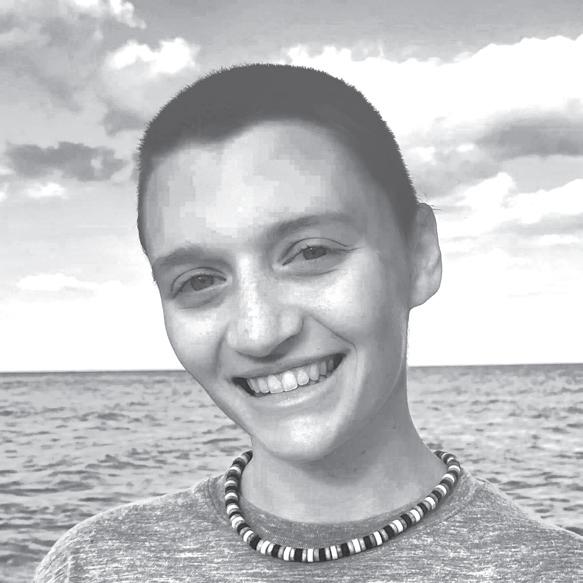
Andrew V. Lorenzen ‘22 (he/him) is a senior in the College of Arts and Sciences. He can be reached at alorenzen@cornellsun.com. When We’re Sixty Four runs every other Wednesday this semester.
It’s been three weeks since my grandfather passed away. It didn’t feel real when it happened, and it still doesn’t.
I keep waiting for it to sink in, to process somehow, yet the fact of his passing feels like an impossibility. Even now, struggling to write these words, it feels like a false statement to say that he’s passed. I’d like to attempt to explain why.
Te fact that my grandfather lived to the age of 93 is something that I can call nothing else but a miracle. He was born on a tiny German island in the North Sea, Insel Föhr, in the waning years of the Weimar Republic. As Nazism ascended in Germany, his father, my great-grandfather, wrote newspaper editorials defantly standing against Hitler and the Tird Reich. He later helped a Jewish family escape Germany during the war.
For his defance, my great-grandfather was drafted into what was known as a “heaven-bound” mission — defusing unexploded bombs. In recent years, we’ve learned that if Germany had won the war, the family would have been sent to a concentration camp. Tankfully, my great-grandfather survived, and the Allies prevailed.
As his father defused unexploded bombs in the frenzied fnal months of the war, my grandfather was drafted at the
age of 16. He was put in a tank headed to the Ardennes, in what we would later call the Battle of the Bulge. Yet as the battle was lost, his convoy was turned around. He ended his military service without seeing any action.
My grandfather was sent to Denmark as a prisoner of war. In a violation of the Geneva Conventions, he was among the thousands of German soldiers, many of them teenagers, who were made to defuse unexploded landmines. He was critically wounded twice in explosions, shrapnel tearing through his face and back. But he survived. And when he returned to his small island home, he fell in love.
My grandmother and her family were made refugees after being expelled from their home in Pomerania. Tey’d traveled across Germany, sufered the assaults of Soviet soldiers and lost nearly all of their possessions. When they arrived at the end of their brutal journey in the small town of Nieblum on Insel Föhr, they found a new home. Te man in charge of the refugee resettlement ofce was my great-grandfather. And when they went to thank him for all that he’d done for them, my grandfather and grandmother frst saw each other. Tat was the beginning of their love.
In 1956, shortly after my father was born, my grandfather immigrated to the United States in search of a better life for his family. Tis column, which began in 2020, was named When We’re 64 as a reference, not just to the Beatles song, but also to the 64 years that had passed since my grandfather arrived in America. I frst wanted to write a column because of my great-grandfather’s history of standing against tyranny through his newspaper writings. Like all things I do, my family’s fngerprints are all over my two years of work for Te Sun.
My grandfather saved enough money to send for the rest of the family, and they began a humble life in New York City. My grandmother worked as a superintendent in an apartment building. Tey lived in a basement apartment, their children playing with the coal used in the building’s furnace. Yet they worked their way up, opening up a series of successful, family-run delicatessens and climbing higher and higher in pursuit of their American Dream.
As their family grew larger, flled with grandchildren and great-grandchildren, they lent their strength, their wisdom, their love and their stories to each one of us. As a child, I remember thinking of my grandfather as almost like an old
tree. Tere was something immovable to him. He towered over everyone, not just in his imposing physical stature but also in his spirit. Tere was a steadiness to my grandfather, a resoluteness perfectly complemented by the constant motion of my inexhaustible grandmother, who would go to any measure to do the slightest service, the slightest act of kindness for anyone near her.
Te phrase “larger than life” comes to mind as I think of my grandparents, but the truth is that they were larger than death. For years, I waited for the passing of my grandmother to feel real. I waited for that sense of closure, of moving on. It never came. And now, three weeks after my grandfather has passed, I don’t expect to ever be able to fully grasp it because his stories, his memories, his very presence are so embedded within every part of my soul. He still feels alive to me. And I know he always will.
Some people defy death. Even after they pass, their loved ones still feel them everywhere around them. My grandmother and grandfather, my Omi and Opa, were among these rare individuals. Ask each and every one of their descendents, and they’ll tell you — they still carry their ideals, their grace, their deep, unwavering love with them every moment of their life.
As I write this column, I feel the love of language exuded by my grandmother as she wrote poetry about her love for her new home on Föhr. I feel awe for the capacity of stories to change the world because the stories imparted to me from my grandfather changed my world entirely. I feel, above all else, unbelievably grateful to have been blessed with my grandparents.Tey are the reason that the name Lorenzen has such meaning. It’s more than a family name. It’s a set of ideals, of beliefs. It’s a collection of stories that guide us through our entire lives. It’s an identity. And that identity continues to grow and deepen in new ways with each successive generation continuing in the journey begun 66 years ago as my Opa boarded a steamship to America.
In his later years, Opa would often end phone calls by saying “Ich bin zufrieden” — that he was at peace, content with his life. Yet what is perhaps most amazing is that the strength, the love that he gave to all of us, made us feel the same way. To have had such a person in your life, such a presence in your family, brings you peace as nothing else can.
You Must Raise Awareness of the Uyghur Genocide
Emma “ED” Plowe Guest Room
Emma “ED” Plowe is a junior in the College of Arts and Sciences. She can be reached at edp52@ cornell.edu. Comments can be sent to opinion@ cornellsun.com. Guest Rooms run periodically throughout the semester.
Content warning: Mention of graphic sexual abuse, torture and genocide.
This article is a plea to all faculty, staf and students: Read this whole article. Consider that passivity is complicity. While one humanitarian crisis explodes in Eastern Europe with media coverage and a rightful rally to aid, we must not forget the millions of people who are sufering at the hand of similar tyranny and are not receiving the same support as the Ukrainians in need.
Te Uyghurs are an ethnic minority whose religion undermines the complete power of the Chinese government. Te Chinese government, no longer able to deny the existence of massive facilities which detain around two million Uyghur, Kazahk and other ethnic minority people, claim that these facilities are for vocational and educational training. Accounts of torture and abuse in these facilities follow years of intentional cultural destruction. As a granddaughter of a Holocaust survivior — and as a human being — it is my duty to remind you of yours.
Tis article is a plea for you to learn. If you missed the talk on March 7, concentra-
tion camp survivor Tursunay Ziyawudun said that the March 8 holiday International Women’s Day is a “day of grief” for the Uyghur women. Her one story alone shows the enormous women’s and human rights violations occurring every day. Rizwangul NurMuhammed ’22, MPA student — afected by her own innocent brother’s arrest and disappearance in Xinjiang — translated every word for Ziyawudun, who spoke with a profound grief which required no translation to understand. When Ziyawudun pleaded for mercy from her torture, she was beat to the point of needing to go to the hospital. At the hospital, Ziyawudun saw men who had been tortured, with fngernails and fngers removed. Tere, she learned that policemen put metal machines on the men’s penises and gave them medicine to weaken their kidneys. Tey were told not to expect any outside help. Te Uyghurs were told that the world will be one big China.
“I want the sympathy and care for Uyghurs,” Ziyawudun said. “Tere is a danger to the whole world from the Chinese government. I will fght China until my last breath. We have been seeing how the Ukrainians are fghting for their own rights, the Uyghur must fght back.”
Right now, there is a mother being raped in a concentration camp. Tere is probably a room full of mothers and daughters and sisters, all being raped and beaten at the same time. How many have had to undergo forced sterilization? Tere is a student being beaten and tortured as I write. Tere is a former teacher being penetrated by a taser. I urge you to read and contemplate the cited articles for those who have been lost, for those whose bodily and religious autonomy are stolen every moment in the camps. Tere is a reason that women are being systematically raped and sterilized, their husbands and fathers killed and their organs harvested for the black market. Tis is a new era, too, of medical abuse.
Tis article is a plea to remember the victims who, if given a reason, are typically
arrested for traveling, teaching, studying and praying. Te following are some names to honor their passing or imprisonment. Te Xianjing Victims Database receives submissions from family, friends and coworkers of those detained. Tey have over 26,000 entries and have a paid staf made possible by this GoFundMe.
Te Xianjing Victims Database writes that “persistently spotlighting the particular individuals and stating precisely who they are is much more likely to protect those people than to do them harm.” I urge you to scroll through @uyghur_victims to see their names and faces.
In April 2017, 55 year-old Ayshem Elim was arrested for traveling to Egypt to see her grandchild. She is serving a 11 year sentence. (Ziyawudun was arrested for traveling to Kazakhstan.) 50 year-old Abdureshid Obul died in 2020 while serving an eight-year prison sentence for avoiding the forced abortion of his son. 59 year-old imam Qeyimahun Qari was imprisoned at 59, healthy, and his dead body was returned to his family two years later. 78 year-old grandmother Helchem Pazil from Korla city is enduring a 17-year prison sentence. 78 year-old Ehet Aman died in a death camp in 2019. He was a middle school principal and language teacher. Polat Ibrahim died 10 days after returning home from a concentration camp due to severe torture. After his body was returned to his family, they, too, were sent to camps.
Te Chinese government seeks to erase ethnicities which do not align with the ideal image of a Han majority. Tis is a Holocaust. Will you speak for the oppressed? Do you not care because the horror is so graphic? Or is it, white readers especially, because most of the Uyghur people do not look like you, as the Ukrainians do?
Tis article is a plea to realize why the Uyghurs stand almost alone.“Te Chinese government is deceiving the world,” said Ziyawudun in her talk. Te U.N. has heard her story. Te Chinese government is one of the largest contributors to the U.N. budget
— a development from 2018. “I haven’t gotten any practical or specifc help from the U.N.,” Ziyawudun said. Te Uyghur people are frustrated with the lack of international support. As long as the Chinese Community Party has its grip on the U.N., there will be little support from them. New research shows that the Uyghur people are surveilled and threatened by the Chinese government in 22 diferent countries. Tere is also a database for international repression of Uyghurs which China’s Global Times has since denounced.
“I call all of you who stand for justice to support us in any way possible to stand against China,” Ziyawudun said. She argued that the socio-political pressure from the U.S. may have impacted the government’s willingness to continue mass torture. Ziyawudun said there are many families who need to be reunited, which is a concrete place where foreigners can help. Children, similar to anti-Indigenous American and Canadian boarding schools of the previous century, are being sent away from their families to assimilate in the “Pomegranate Flower Plan.” We must condemn this.
Tis article is a plea to make a change. An article from Te Guardian expresses that even from Muslim-majority countries, there is little being done to prevent concentration camps from becoming full-blown death camps: “More than 70 nations have accepted development funds from China as part of its Belt and Road infrastructure initiative. Indebtedness creates silence.” We rely on China for tech equiptment, whose government controls the economy. Te concentration camps are more proftable than those my ancestors perished in.
Ultimately, this is a plea to Cornell University and our connected communities. Cornell, how can you justify having a program in Beijing? How can you justify not addressing the 40 Chinese Cornell students booing NurMuhammed? Her freedom of expression is at risk. I’m glad we have the Ukraine fag up in Klarman; now we must also recognize the Uyghur genocide.
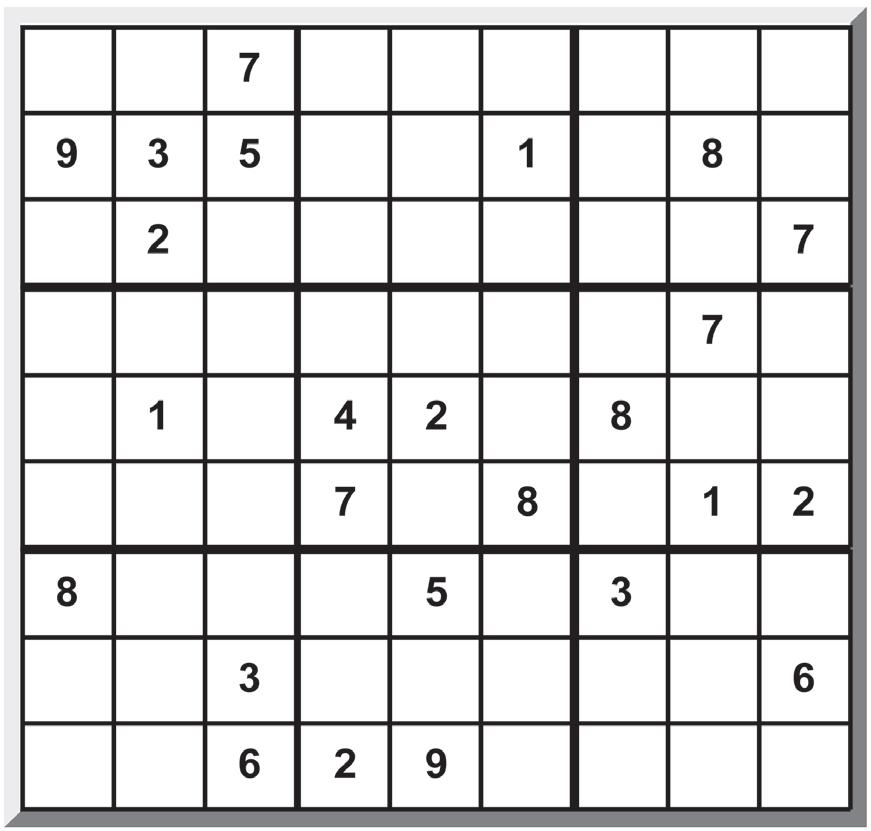
Fill in the empty cells, one number in each, so that each column, row, and region contains the numbers 1-9 exactly once. Each number in the solution therefore occurs only once in each of the three “directions,” hence the “single numbers” implied by the puzzle’s name. (Rules from wikipedia.org/wiki/ Sudoku)
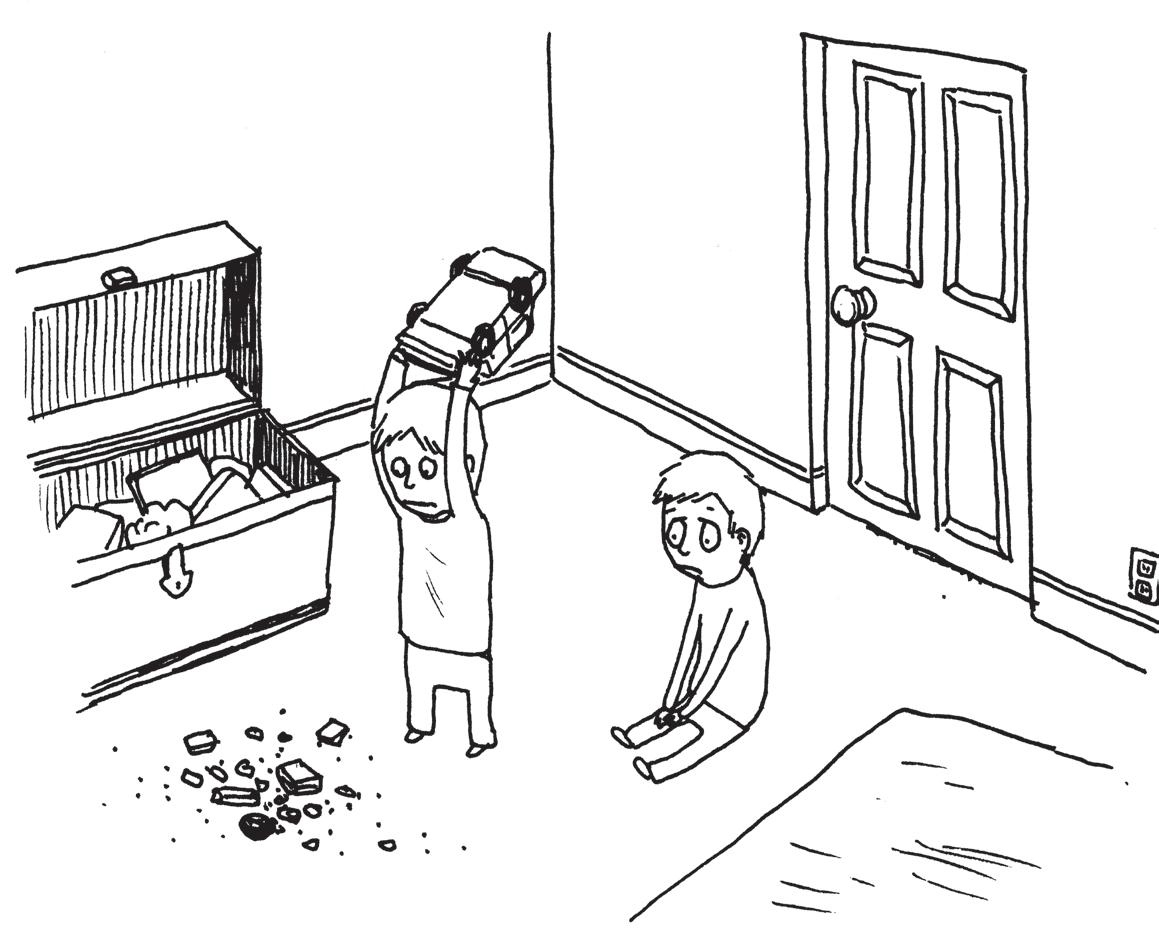
I Am Going to Be Small
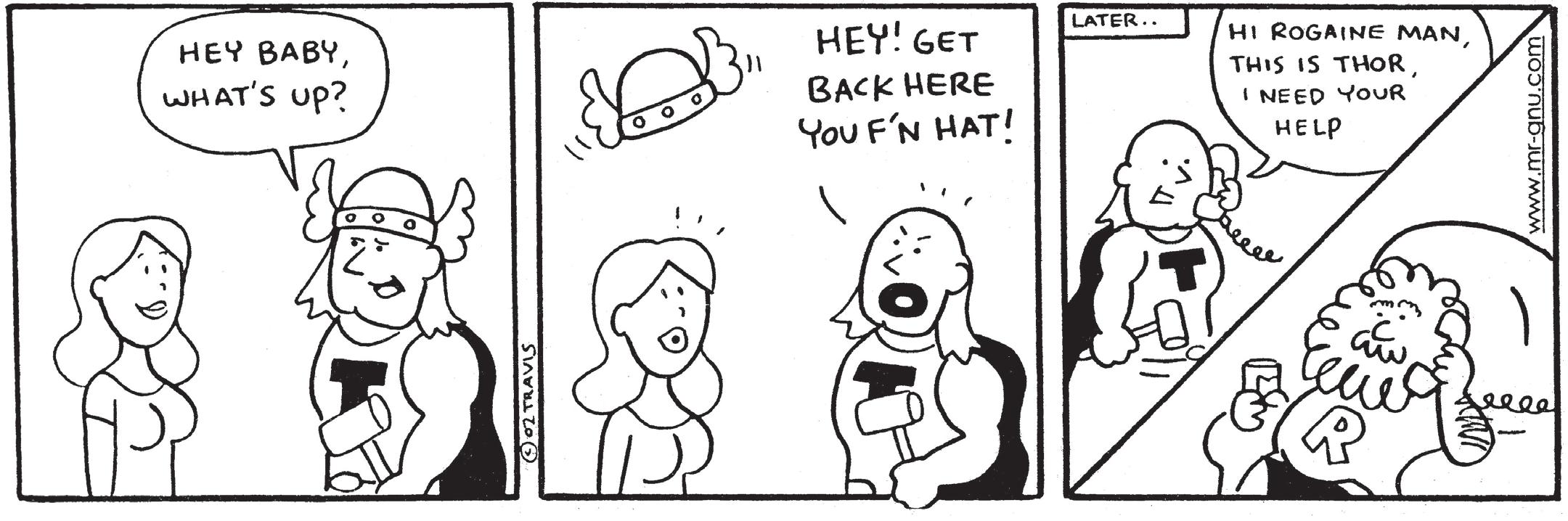
Mr. Gnu by Travis Dandro
Mr. Gnu by Travis Dandro
SC I ENCE
Using Religion to Lower Hypertension
By TENZIN KUNSANG Science Editor
On Jan. 1, Dr. Robert Peck and Dr. Jennifer Downs, associate professors of medicine in pediatrics at Weill Cornell, received funding from the National Institutes of Health to launch their research project, “Using Religious Leaders to Reduce Blood Pressure in Tanzania.”
Hypertension is a common condition when blood pressure is higher than normal.
Hypertension rates are increas-
ing throughout Africa, especially in sub-saharan countries like Tanzania. Because hypertension is a risk factor for cardiovascular disease, its prevalence poses a risk for the health and well being of many Tanzanians.
To combat this, Peck and Downs, the principal investigators of this project, are partnering with religious leaders to transmit public health messages.
Both principal investigators have experience working with this topic. Last year, Peck started an NIH-funded study that studies the relationship between
sleep, cardiovascular disease and human immunodeficiency virus in Tanzania. His research team will enroll their first participant this week.
Downs and her team have worked with Tanzanian doctors, religious educators and public health leaders to increase implementation of HIV-prevention measures, such as male circumcision and family planning education among women.
Together, they hope to address the disparities of awareness and treatment for hypertension in
rural Tanzanian communities by using religious leaders.
According to Peck, 50 percent of the country would call themselves Christian while the other half would call themselves Muslim. In addition, most of them are religiously observant, attending at least one religious meeting a week. Therefore, religious leaders are trusted sources within these communities.
“[Religious leaders] are also very eager to provide their community with public health messages that can increase the health and longevity of their own communities,” said Peck.
The research component of the project comprises three stages. The first includes developing a curriculum that addresses the needs of the community through diet and exercise recommendations and treatment of hypertension.
The second stage includes the clustered randomized trial where the team will test the efficacy of using religious leaders to lower blood pressure on a community level.
The third stage includes implementation of results.
During this phase, Peck and Downs will study the community impact of the intervention and how it can be improved.
The team will work with and train regional Mwanza Christian and Muslim religious leaders.
These regional religious leaders will then go out to villages and train local religious leaders about diet, exercise and healthy living to prevent and treat hypertension.
Religious leaders will also be equipped with blood pressure machines so that they can con-
The physicians hope their study will improve health in the country through a medical and religious perspective.
duct blood pressure screenings. To produce long term, effective results, groups of regional religious leaders and doctors will meet with local religious leaders every two months, said Downs. Downs adds that religious leaders will share their achievements and challenges during the process and receive refresher training on blood pressure measurements and control. The physicians hope their study will improve health in the country through a medical and religious perspective.
Tenzin Kunsang can be reached at tkunsang@cornellsun.com.
Salamander Migration Marks Beginning of Spring
By DANIELLA ALMEDIA Sun Contributor
Every March, just after the first warm rain, hundreds of salamanders begin to appear from their underground, subterranean habitats underneath logs and leaf litter, in search of water, signifying the arrival of spring.
In Tompkins County, two different types of salamanders migrate around this time –– the Ambystoma jeffersonianum and the Ambystoma maculatum
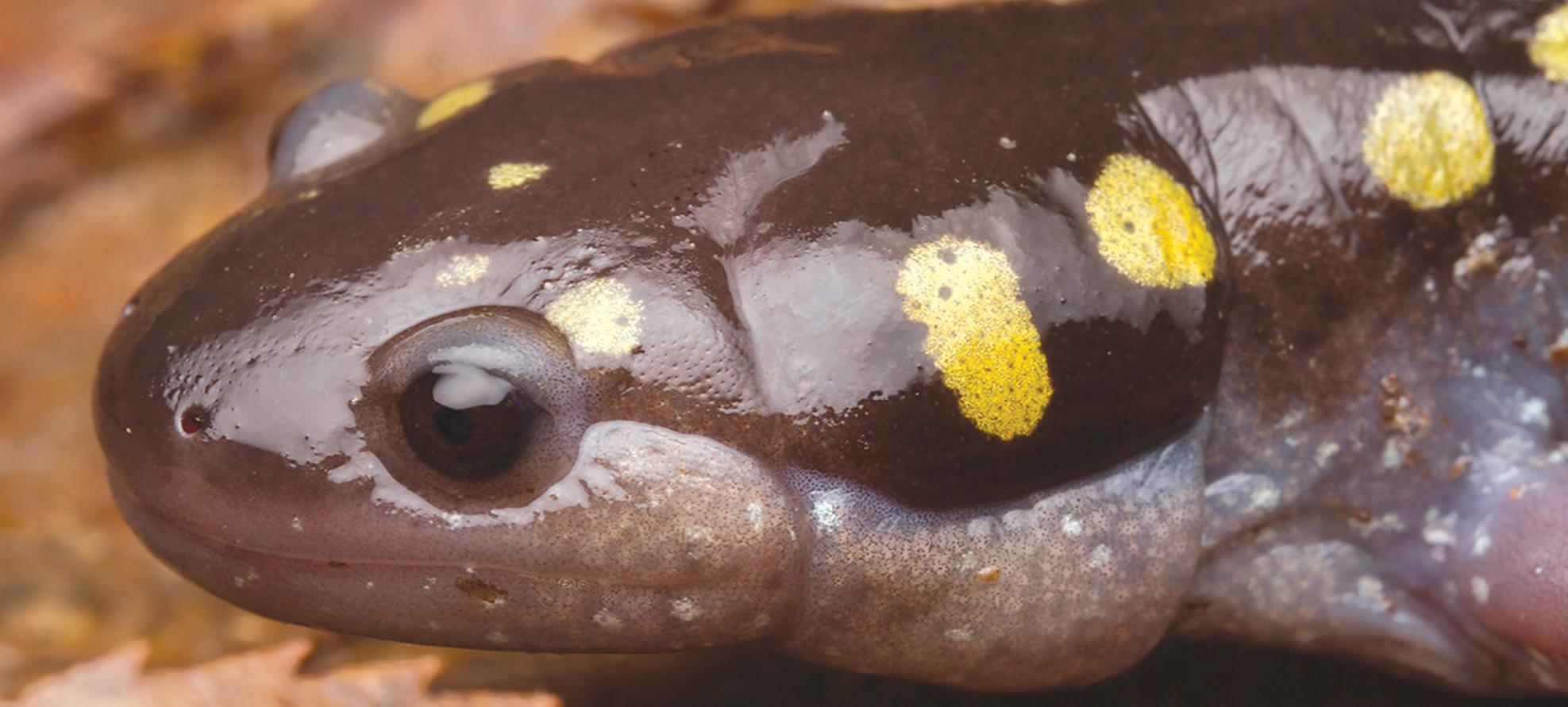
A. jeffersonianum, commonly known as Jefferson Salamanders, are dark-blue gray and can be found in early March. Ambystoma maculatum, commonly known as Spotted Salamanders, are chunky and dark gray with bright yellow spots and can be found starting in the middle of March.
The warmer weather and rain helps form temporary bodies of water, known as vernal pools. As the salamanders begin to leave their underground hibernation in nearby forests, they seek out these vernal pools in order
to mate and lay eggs. After laying eggs, adult salamanders will return underground until the following year.
Salamanders are important ecological indicators because they are sensitive to environmental fluctuations, such as runoff from pollutants. These species give ecologists an idea of the ecosystem’s health.
“One of the biggest problems salamanders face while migrating is traffic. Salamanders are still susceptible to climate change, pollution, and habitat destruction. Pushing for environmentally sound policies is important for salamanders and many other creatures,” said Nathan Laurenz ’22, treasurer of the Herpetological Society.
The Cornell University Museum of Vertebrates has data of when these events have occurred historically and can use this information to see how species’ ranges evolve over time.
“By using the power of natural history collections, we can look at how species ranges are changing. It’s a multifaceted approach to understanding the biolo-
gy of the organisms,” said Casey Dillman, curator of fishes and herpetology at the Cornell University Museum of Vertebrates.
The Cornell Herpetological Society goes out every year to document this event. Late at night, you can spot a hoard of students with headlamps and flashlights scouring the grounds of Bluegrass Lane near the golf courses.
“It’s really stunning to see all the salamanders and a great way to introduce people to the native amphibians
around Ithaca,” Laurenz said. Students are encouraged to come any spring night to see the spectacle.
“If you’ve never seen salamanders migrate, it’s quite a remarkable sight. They’re such beautiful organisms, and you don’t see them very often. But this is an easy time of year to actually get out and see them,” Dillman said. It is not recommended to handle salamanders when not needed, but if one needs to be moved out of harm’s way, their hands should be wet. Salamanders breathe
through their skin, so dry or oily hands can affect them negatively by removing the mucous layer on their skin.
“It’s never a good idea to handle wild animals unnecessarily, and I would advise against it unless directly assisting a road crossing. If you do handle them make sure to wash your hands before and after the encounter,” Laurenz said.
This week marks the start of warmer temperatures in Ithaca, followed by rain this weekend, a welcoming environment for salamanders.
Everyone should keep an eye out for shiny things crawling across roads –– they may be a salamander.
“They’re a really cool aspect of biodiversity and another indicator that spring is coming,” Dillman said.
Salamander migration season serves as an important reminder for the public to become involved and knowledgeable about ecological events happening in their community.
Daniella Almieda can be reached at dg573@cornell.edu.
Salamander zoom | Around mid to late March, salamanders leave their hibernation spots and migrate to wetlands.
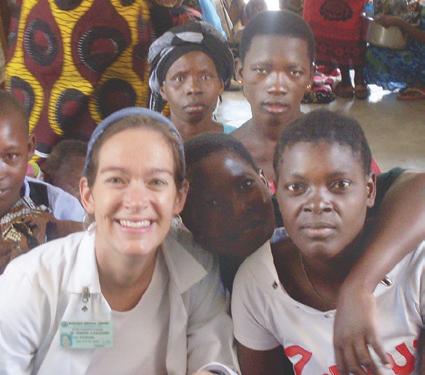
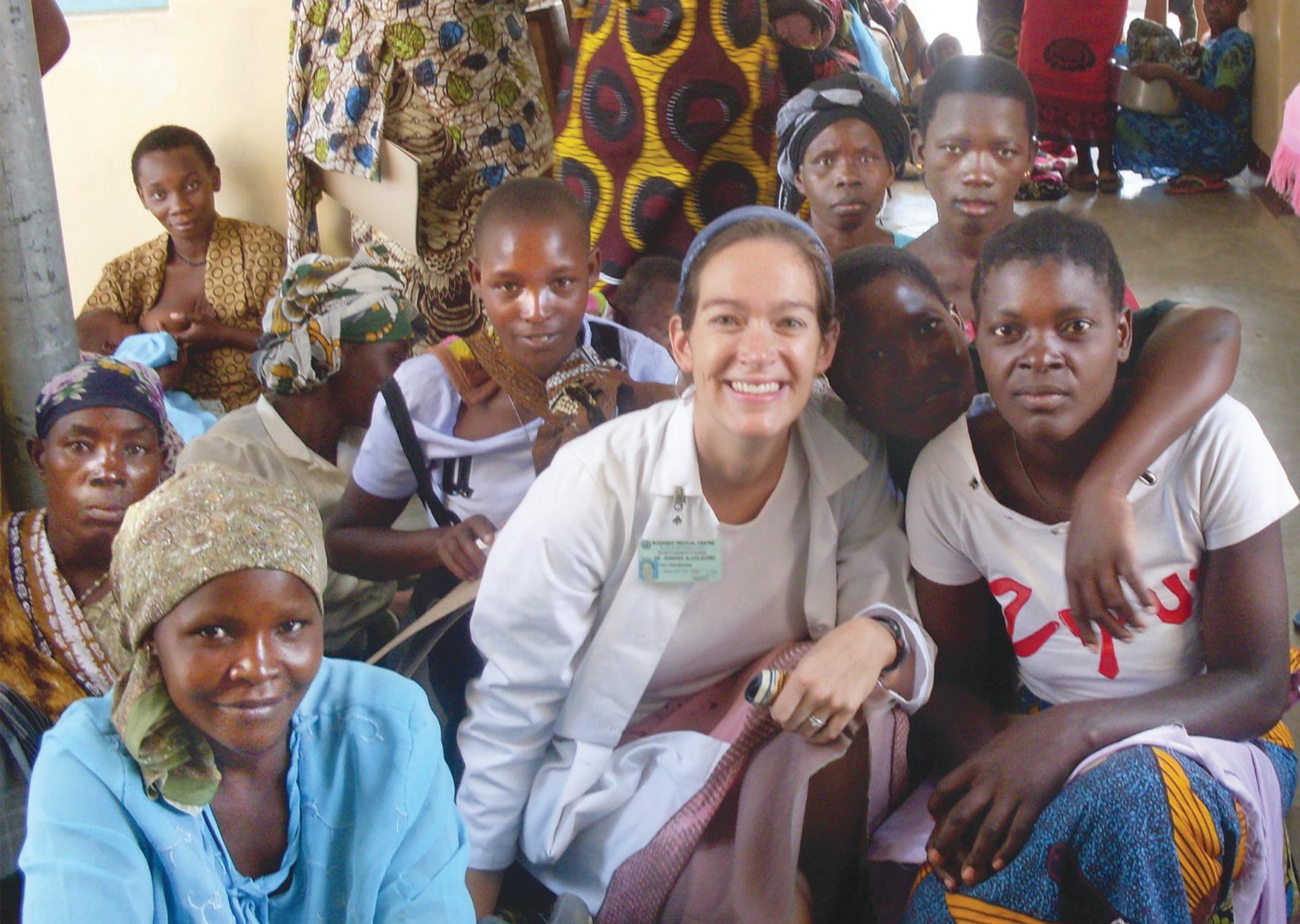
Tanzanian health | Dr. Jennifer Downs is seen in Tanzania on her project “Mucosal Immunity and Susceptibililty to HIV Infection in Urogenital Schistosomiasis” through the Department of Medicine’s Seed Grant.