The Corne¬ Daily Sun


By JOHN YOON Sun Staff Writer
Mayor Svante Myrick ’09 announced on Feb. 22 a proposal to end the current version of the Ithaca Police Department and to reimagine public safety — but the IPD said it had not been adequately informed before its release.
During last week’s Common Council Committee of the Whole and Reimagining Public Safety Collaborative meetings, Myrick apologized to the IPD for speaking to the magazine GQ before the IPD and to the members of the Common Council. IPD officers said they found out about the details of the proposal through the GQ article rather than from Myrick himself.
step of the process, including focus groups … as well as the community forums surveys that helped inform the proposals.”
Ithaca Police Chief Dennis Nayor said he played a role in collecting data on how many hours and the variety of training that officers received, answering questions about the proposal and providing some recommendations, such as stressing the need for mental health and wellness of officers.
“I would have liked to have been more involved with the recommendations that went forward.”
Dennis Nayor
“I want to reiterate my sincere apology for both speaking to the reporter [from GQ] before speaking to the Police Union about this recommendation and realizing ... the timing, the tone was inappropriate,” Myrick said in the Reimagining Public Safety meeting on Thursday.
Still, despite the lack of communication on the release, Myrick told The Sun that the police chief and the IPD played a large role in drafting the report.
“The police chief was a part of the process every step of the way,” Myrick told The Sun. “The members of the police department were invited to participate in every
But Nayor said he didn’t see the recommendations from the proposal until they were already finalized.
“I had recommendations, but none of those were that out there,” Nayor told The Sun. “I’m still trying to digest [the proposal] as we speak.” Nayor, speaking on behalf of the department, said the IPD feels police officers have become the catch-all for most of Ithaca’s problems. Although Nayor said he agrees with Myrick that the department must focus on mental health, addiction and homelessness, the proposal is too “extreme” in his eyes.
“I feel that the department has always been recognized as a very highly trained department and that has standards that are beyond what most departments are,” Nayor said. “That’s not the type of department that you would dissolve and start over. That’s the type of department that you add some things on.”
See POLICE page 3
By TAMARA KAMIS Sun Staff Writer
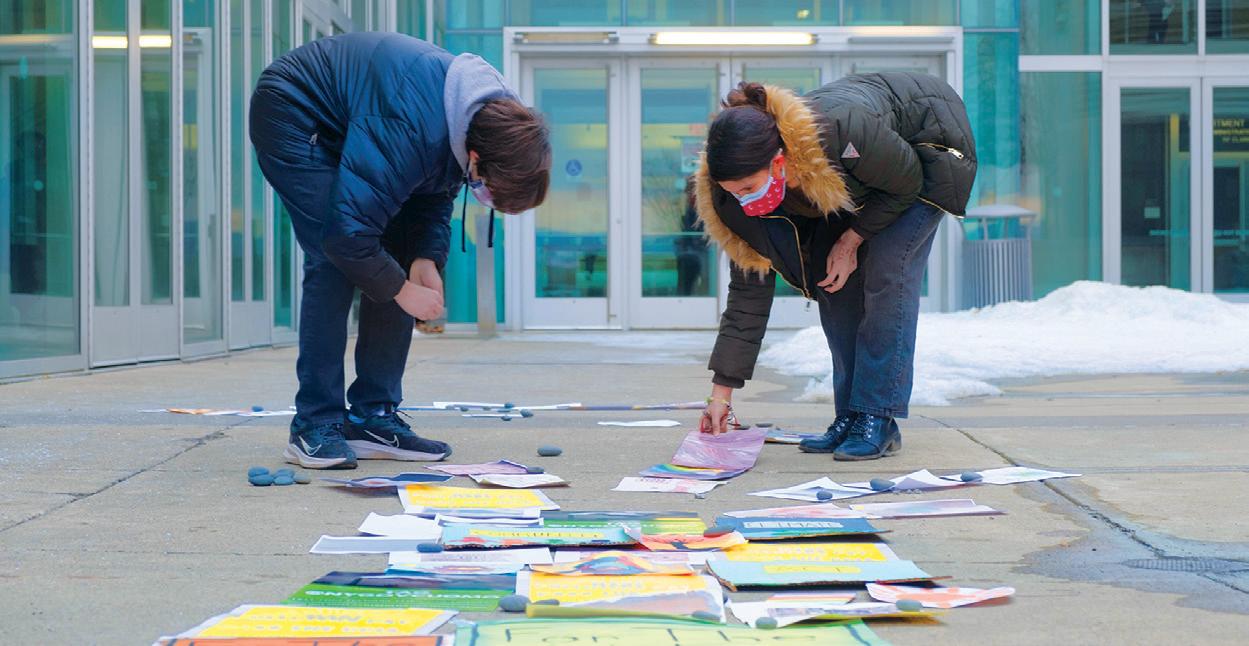
Those who walked up the steps next to the Physical Sciences Building early Wednesday evening were in for a surprise — CCIA, the acronym for the Climate and Community Investment Act, was spelled out across the ground using climate advocacy art and posters, a mosaic of independent art contributions.
Student climate activists said they hope this display will raise support for the CCIA, which will raise $15 billion each year by taxing corporate carbon dioxide emissions to create green jobs and sustainability projects, such as
community-owned solar power and electric vehicle infrastructure, according to NY Renews. The CCIA will also provide financial assistance to the lowest-earning 60 percent of New Yorkers to pay for energy utilities.
“[The CCIA] addresses economic racial and environmental disparities, and that’s exactly what we need,” said Eva Milstein-Touesnard ’22, who helped organize the display.
Activists Zasu Scott ’22 and Hannah Brodsky ’22 emphasized the importance of addressing the effects of climate change on marginalized communities. Milstein-Touesnard said she hopes that as people learn more about the CCIA, they will spread the word
to their friends and family about the bill and write letters to their representatives.
“Corporate greed cannot decide our future,” Scott said. “We have been divesting from working class neighborhoods for decades, and we need to put our money where our mouth is. We can’t just talk about climate justice, we need to do it.”
Scott is a member of Climate Justice Cornell, NY Renews and Sunrise Ithaca, while Brodsky is primarily involved with Climate Justice Cornell.
“One of the great aspects of the CCIA is it takes money from people who are causing pollution and is redirecting it to communities that are affected, to address the impacts of climate change,” Brodsky said.
Eight students, including some affiliated with Climate Justice Cornell, worked together to assemble the mosaic. Milstein-Touesnard collected rocks to keep the posters from blowing away in the February wind, while Eric Gu ’23 took photos of the mosaic with a drone.
While Gu is not involved in climate activist groups on campus, he said he believes climate change is an important issue and was glad to have

By OLIVIA CIPPERMAN Sun Staff Writer
Cornell AppDev, the project team behind Eatery and Ithaca Transit, will release its latest product this Friday — connecting Cornellians to student publications at the touch of a button.
The app, Volume, compiles campus content into one platform, hoping to engage new audiences and connect readers with creators.
Volume will initially feature content from nine organizations: Slope Media Group, Crème de Cornell, Guac Magazine, Big Red Sports Network, The Cornell Review, The Undergraduate Law and Society Review, Cornell Claritas, The Advocate and CU Nooz. The development team hopes to get more of Cornell’s publications onboard in the coming months.
development team, said the main goal is to connect campus publications with students. According to interview research conducted with testers before the app’s release, many Cornellians don’t keep up with publications or know they exist.
“It’s assisting publications and reaching wider audiences,” Mitiku said. “And to me, that is a pretty satisfying mission to work
“Seeing the value of student publications and creative content has been a huge thing for me.”
Tewodros Mitiku ’23
on.”
The concept is years in the making. In 2017, Slope Media Group looked to expand its written content beyond its website, but according to current president Kendall Lieberman ’22, the multimedia
Tewodros Mitiku ’23, the leader of the Volume
See APP page 3
Black
The police chief added that the officers he spoke to feel devalued and dejected because they first learned about this sweeping change from GQ rather from than the city. Nayor said some officers actively began to look for other places to work, including some neighboring counties that are eager to recruit officers from the IPD.

Activist

Nayor said he understands where his officers are coming from.
“I feel devalued also,” Nayor said. “I would have liked to have been more involved with the recommendations that went forward, so that I could be, being in the department, part of the evolution from here.”
Graham Kerslick (D-4th Ward), the Community Police Board Common Council Liaison, told The Sun that the Community Police Board also did not see the draft report until it was released. The Community Police Board conducts investigations based on complaints from citizens, forwarding findings and recommendations to the chief and citizens involved, and will have their role expanded in the proposal. Kerslick said he believed that several members of the board felt that they were left out of the process.
At last week’s Community Police Board meeting, members
expressed their frustrations about their lack of notice about the proposal.
“GQ, I didn’t even know what GQ was, General Quarters or Got Quota or something,” Bruce Beem-Miller, a member of the board, said at the meeting. “I was definitely not contacted as a member of a focus group. When I read the draft of this re-imagining, it was the first time I realized it was a lot more extensive than I had realized.”
Still, Kerslick said this process had been ongoing for many months, and there was a significant amount of time for members of the Ithaca community to add their recommendations and suggestions, referring to the Re-imagining Public Safety Collaborative meeting that started last August.
However, others in the meeting disagreed.
“Honestly Graham, it’s like walking into a room with 60 people that are talking at the same time,” Richard Onyejuruwa, member of the board, said. “Even the things that were held virtually were held in a webinar style, so it really wasn’t this kind of interactive process.”
Kerslick emphasized that groups that weren’t heard before, including marginalized communities, were at the forefront of their outreach effort as prompted by Gov. Andrew Cuomo’s (D-N.Y.) Executive Order 203. He added that the proposal had to be released eventually.
“We do have this rather short time frame to deliver the report to the state, otherwise we risk losing state funding, so that’s definitely important,” Kerslick said.
John
By SIMRAN SURTANI Sun Staff Writer
Forget a city that never sleeps — what about a library that never closes?
Located in the front yards of homes and downtown businesses, volunteer-run Little Free Libraries have turned neighbors into bookworms and established a familiar community presence on the streets of Ithaca.
While potentially mistaken for mailboxes or birdhouses, these public book-sharing boxes are planted across the country. Affiliated with the national nonprofit Little Free Libraries, these containers offer 24/7 access to books to facilitate a love of reading and sense of community.
Although much smaller than traditional libraries, Ithaca’s almost 20 Little Free Libraries carry a book for everyone.
David Smith, owner of the West Buffalo Street Little Free Library, has seen children’s books, adult novels, holiday-specific titles and even textbooks pass through his library.
Smith has a clear view of the book-exchange box from his office desk, which is located in front of his workplace, Tompkins Learning Partners — a downtown Ithaca orga-
nization that promotes literacy and teaches English as a second language and basic educational skills to adults.
Although the organization’s tutors and students often peek inside the library, most of the box’s traffic is from pedestrians walking downtown, Smith said.
“Older people, younger people, people who love books, people who are just curious … come by to take a look [inside the box],” Smith said.
While Smith’s library is primarily frequented by pedestrians, David Howarth, owner of the Pleasant Grove Road Little Free Library, has seen both foot and drive-up traffic visit his library.
“[The library] gets a fair number of people that seem to be on the older side who drive up, park, put a book in and take one out,” Howarth said. From what he has observed from the library box located in his front yard, visitors tend to be either younger than 30 or older adults.
A self-proclaimed book lover, Howarth found the process of opening a Little Free Library straightforward. He worked with his father to build the particle board container complete with roof shingles, and registered his library with the national organization, which added his location to a country-wide map of other Little Free Libraries.
Howarth often replenishes the library from the boxes of
books in his basement. He has noticed that children’s books seem to be flying off the library shelves and are often gone within 24 hours of being placed in the box.
Ithaca resident Naomi Sommers regularly visits the Blackstone Avenue Little Free Library near Northeast Elementary School with her children. While her family doesn’t always take a book out of the library, they have found children’s books, parenting books, cookbooks and adult novels when they do. The family has even left books in the library on occasion.
“For [my kids] it’s pretty magical and very inviting,” Sommers said.
Although she has yet to bump into anyone using the library at the same time as her family, she said she believes its presence brings the community together. While browsing the contents of the library, Sommers enjoys seeing what other members of the community have read.
“It helps give people a feeling that there’s a neighborhood,” Smith said. “Even if they’re just passing through, it gives people the idea that there’s a community where people care about things, and I think there’s not enough of that anymore.”
Simran Surtani can be reached at ssurtani@cornellsun.com.
By SURITA BASU Sun Staff Writer
On Tuesday, the Mario Einaudi Center for International Studies hosted Rahul Gandhi in conversation with Prof. Kaushik Basu, economics — exploring how governments can preserve democracy in the face of the pandemic, power vacuums and increasing partisanship.
Gandhi is a prominent member of the Lok Sabha, the lower house of India’s parliament, and previously served as president of the Indian National Congress party. He is the great-grandson of India’s first prime minister Jawaharlal Nehru, a position which his grandmother and father have also held.
The discussion was open to the Cornell community and was also livestreamed on Facebook. The virtual format has allowed the Cornell South Asia Program to broadcast its programming to a wider audience and for the event to be covered by multiple Indian media outlets.
“It’s not only people in Ithaca,” said Prof. Daniel Bass, anthropology, who works as manager of the South Asia Program. “We’ve also had people attending our events from all across South Asia as
well as Europe and Australia.”
The event was organized by the Einaudi Center’s South Asia Program and came about thanks to Basu. When Prof. Basu called to congratulate him for his Feb. 12 speaking engagement at the University of Chicago Institute of Politics, Gandhi unexpectedly offered to speak at Cornell.
“We immediately decided to take him up on his offer,” said Prof. Iftikhar Dadi, history of art and the current director of the South Asia Program. “It would give a chance for Cornellians to speak with a major leader in South Asia.”
As the former leader and prominent member of the Congress party — the opposition to the incumbent Bharatiya Janata Party — Gandhi’s presence at Cornell has generated significant attention from across the Indian political spectrum. Particularly since BJP Prime Minister Narendra Modi’s wins in 2014 and 2019, political tensions in the world’s largest democracy are at their highest in decades. However, Dadi emphasized that the event is primarily meant for students and faculty to learn and engage.
“This is not a political rally. It is a university setting,” Dadi said. “The university is a place for free and frank debate.”
Basu, who previously served as India’s
Chief Economic Advisor, posed questions to Gandhi on topics ranging from the ongoing farmer’s protest, economic development and foreign policy.
The conversation kicked off on the topic of democracy, one of the Einaudi Center’s research priorities. Basu questioned Gandhi on the state of democracy in India.
“Modern democracies function because there is an institutional balance in the country,” Gandhi said.
He expressed concerns that Indian institutions, including the judiciary, the bureaucracy and the election commission, were all being permeated by BJP ideology.
“If I don’t have [institutional] support I literally can’t do my job,” Gandhi said. “Frankly, I didn’t realize how profound this is until I’m actually faced with it.”
Professor Basu also questioned Gandhi on India’s relationship with the U.S and China.
“A superpower is rising. There’s just no question about that,” said Gandhi, referring to China. “And the hope is that the two superpowers do not collide.”
Gandhi also expressed a desire for the U.S. to play a larger role in Asia.
“I can see that there is a clear Chinese
publication struggled to carry out the idea on their own. As a University-owned organization at the time, they couldn’t afford to pay AppDev to do it, either.
Spring 2020 brought a new horizon, however, as Cornell AppDev refurbished the idea. Inspired by Slope Media’s initial concept and The Sun’s mobile app, the team took it through a full product ideation process and started production on Volume.
Mitiku’s pod researched 53 Cornell publications and contacted those that might work with the app. Mitiku emphasized that these organizations are the core of the app, and his team primarily seeks to promote their work.
“It was really important that we establish a good relationship with them early on, specifically to understand what their needs are,” Mitiku said.
They reached out to various publications, many of which responded enthusiastically. Slope Media’s contributors appreciated the opportu-
nity to showcase their work in an app, according to Lieberman.
Jonathan Harris ’21, co-editor in chief of the Cornell Undergraduate Law and Society Review, said he was optimistic for all that Volume could showcase.
“I think that the work that Volume is doing, to put it all in one place and promote all of the students’ work, is great,” he said.
According to Mitiku, the team planned to launch Volume in fall 2020, but technical issues prevented a full release. Instead, Cornell AppDev released an internal prototype for students to test. The team collected user feedback through surveys and interviews, which allowed it to complete the app for spring 2021.
Each onboarded publication has an RDF Site Summary Feed, which converts new files on their online platforms into an accessible format.
The Volume team parses each RSS feed to keep the app updated with new content.
Developers and publication managers cited several of Volume’s benefits, giving publications a broader platform to share their con-
tent and the potential for collaboration between publications.
“This definitely could kickstart a lot of different interactions that we might not regularly have,” Lieberman said. She expressed enthusiasm for potential content collaborations and a marketing platform more effective than Facebook, which Slope Media has previously relied on to engage their audiences.
“They really stress that they did not want the core functions of our organization to change just because we were partnering with them,” Harris said. However, Harris said he was open to adapting and potentially collaborating in the future.
Mitiku said he hopes that the Cornell community will respond well to Volume, alongside Cornell AppDev’s previous projects.
“Seeing the value of student publications and creative content has been a huge thing for me, which is why I’m so excited to develop the app and hopefully continue actualizing its mission,” Mitiku said.
vision. I don’t agree with elements of it, but it’s there,” he said. “The United States requires a global vision. We’re a friend of the United States, but I don’t see that vision.”
The discussion was followed by a Q&A session, where Gandhi was asked questions from Cornell students and faculty. Prof. Durba Ghosh, history, ended the session with a question going back to the first topic of institutions — specifically institutions of higher education, which she described as critical to sustaining democracy and which have recently come under attack in India.
“The whole [Indian] education system is being targeted,” Gandhi answered. “Absolutely, you need to reclaim this space. What is going on is essentially an attack on equality.”
Basu concluded the event by asking Gandhi about his vision for the Congress party, taking into account it’s losses in the last two general elections.
“Gather the resistance,” Gandhi replied. He expressed hope that the party could transform itself and work with opposing parties.
a chance to advocate for change.
Milstein-Touesnard, who is involved with Climate Justice Cornell, Sunrise Ithaca, NY Renews and Our Climate, coordinated the art display. While the display was originally planned for inside the Physical Sciences Building, the students decided to change course rather than disturb their studying peers.
“It’s not a protest. It’s more like a demonstration,” Milstein-Touesnard said. “The aim wasn’t to be super disruptive, because we’re not targeting the University. We’re targeting the state legislature.”
The Wednesday demonstration stands in contrast to previous semesters — at past Climate Justice Cornell events, when organizers were protesting University actions, activists have occupied buildings and blocked roads to advocate for fossil fuel divestment.
Students from a variety of groups, including Climate Justice Cornell and the Sunrise Movement’s Ithaca chapter, as well as local high school students and Ithaca artists, contributed art for the display. Some submitted their art online, while others gave their art to Milstein-Touesnard in person.
Milstein-Touesnard and other organizers said they wanted to make this art action as safe as possible as the virus remains a risk, while also allowing as many people as possible to participate. A small number of organizers put the display together, while others submitted pieces of art.
“We can’t take direct action in the same way as we could in non-COVID times,” Brodsky said. “Art is a really great way to show our energy, and to allow people who are remote to participate.”

By SADIE GROBERG Sun Staff Writer
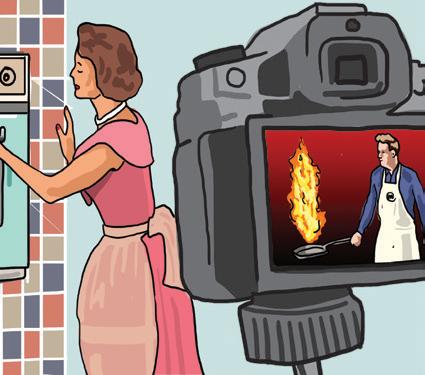
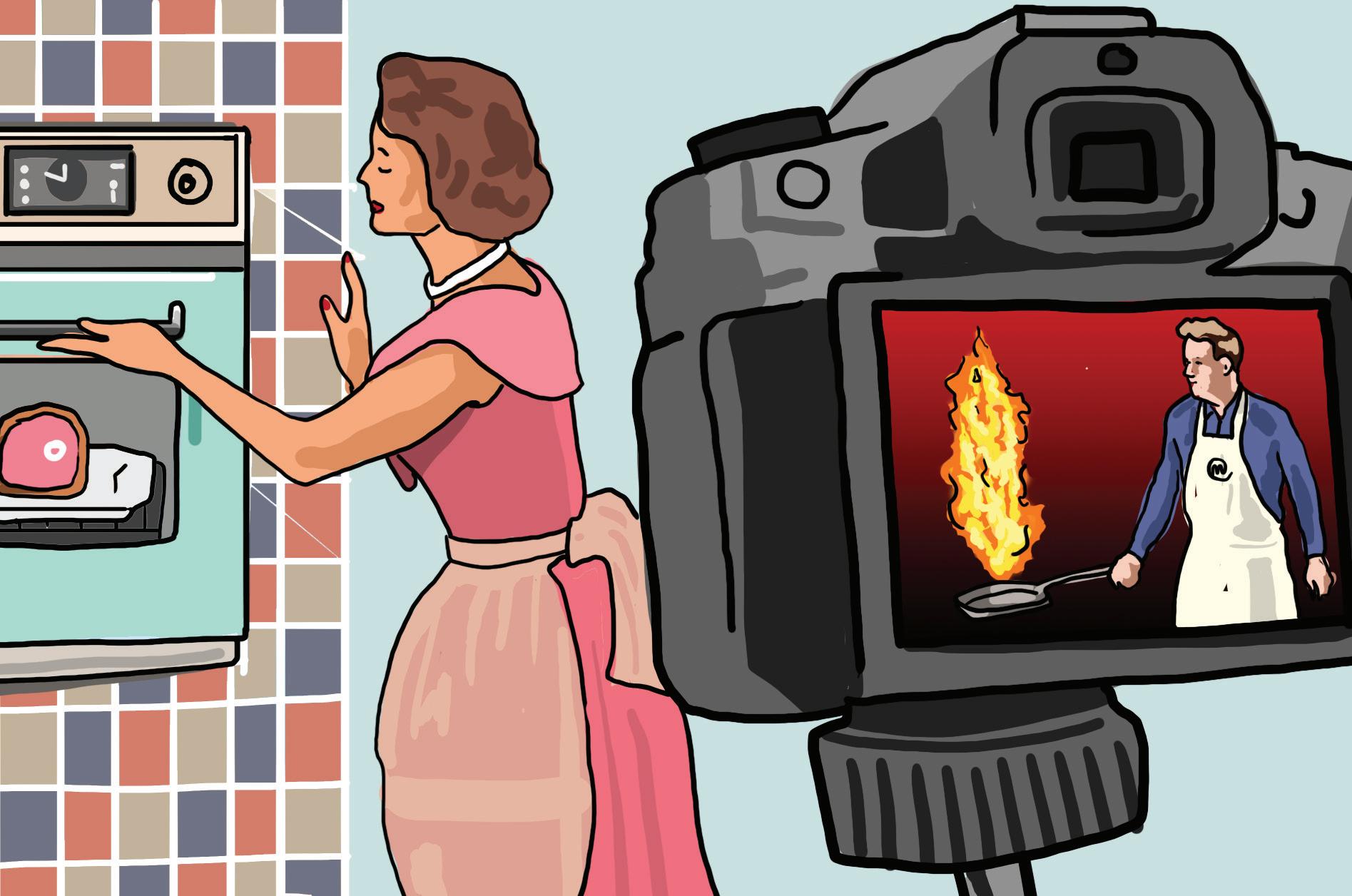
Picture a celebrity chef — someone you always saw on your television screen growing up. You might think of a competition show host or the head chef at your city’s fanciest restaurant. Do you have them in your mind? Ready? Are they a man?
Now think about your favorite meal growing up. Who made it for you? In the sitcoms you watch on TV and in your elementary school cafeteria, who does the cooking? Do you have them in mind? Ready? Are they a woman?
This month is Women’s History Month, and it’s time we talk about the gender disparities in the culinary industry.
Like most gender stereotypes, the image of hyperfemininity permeates our homes, our workplaces and our media. Increased gender equity might lead us to believe that these gendered prejudices aren’t relevant anymore. Nevertheless, the data says otherwise. In fact, a 2016 study shows that “domestic’’ women’s stereotypes are increasing. This is mainly because of feelings that men should avoid the roles around the house traditionally assigned to women, like cooking and cleaning. These shared mindsets tell us that even in 2021, the vast majority of heteronormative families expect the women to do the cooking. And that expectation holds true — in U.S. households with two parents and at least one child, 80 percent of mothers say they do the cooking and/or grocery shopping. Gendered stereo -
types are harmful enough, and the issue is only aggravated by the role reversal in the culinary world.
A 2014 study found that 95 percent of executive chefs (the ones running the kitchen) were men. The top five highest-paid celebrity chefs in the world are all men. Out of the top 20 highest-paid celebrity chefs, only three are women. All three of these women are white. Just like so many other professions, such as teaching and nursing, women make up the majority of the culinary workforce while men

fill the most elite spots. This concept, often called the “glass escalator theory,” refers to the way that men in women-dominated professions are accelerated to top career positions. The stereotypes around who should do the cooking work against women until it comes down to cutting a paycheck.
The media doesn’t fight our gendered perception of chefs, either. A 2020 study analyzed hundreds of images of chefs online and found that 75 percent of the people pictured were men. When women were featured, they were more likely to be portrayed in domestic settings. In her Eater article “The Chefs We Don’t See,” Meghan McCarron describes a “fetishization of male expertise and skill,” which prevents us from being satisfied with women at the forefront of the culinary industry. Popular competition cooking shows tend to cast dynamic chefs like Gordon Ramsay and Bobby Flay, whose intense approach to judging adds a layer of “legitimacy” that American audiences don’t find in women chefs. Networks and kitchens continually broadcast men as the face of the culinary profession, while women across the country are thanklessly pressured into cooking every meal for their families.
Throughout history, many women have broken through barriers to create change in the cooking world. Buwei Yang Chao, a Chinese doctorturned-chef, is widely credited for bringing Chinese food to America with her 1945 cookbook How to Cook and Eat in Chinese. Edna Lewis, also
known as the “Grande Dame of Southern cooking,” brought an appreciation of AfricanAmerican Southern cuisine to New York City, where she opened her East Side restaurant Café Nicholson in 1949.
In 1963, Julia Child’s series The French Chef became the first TV cooking show. In 2005,
restaurants with friends, food is often wrapped up in a million memories and feelings. It’s something to bond over and collaborate about, and it is the most common way to delve into different cultures. This makes the unequal culinary playing field even more frustrating. Anyone who is passionate
A 2014 study found that 95 percent of executive chefs ... were men.
Cristeta Comerford became the first woman and the first Asian White House executive chef. As late as 2020, Roshara Sanders became the first Black woman chef instructor at the Culinary Institute of America since its founding.
Beyond the restaurant world, women are responsible for many of the inventions that we use in our kitchens every day. This isn’t surprising either; throughout history, the workers in a given profession are the most likely to identify problems and come up with innovations to improve efficiency. From the dishwasher to the drip coffee machine, women have forever been improving the culinary industry from their own home kitchens.
Cooking is a personal experience for many of us. From our favorite childhood meals to our most special memories spent in
and talented enough to start a restaurant or write a cookbook should be able to because at the end of the day, cooking is for everyone.
In remembering the pressures that have historically been placed on young women to learn how to cook, it’s all the more heartbreaking to see so many women chefs held back from rising to the top. Further, the lack of diversity at the top is incongruous with the wide expanse of chefs of different races and ethnicities sharing their culture with others. Until the top chefs of the world look more like the millions of people cooking in their kitchens, the culinary world will not be as innovative or as bold as it has the potential to be.
Sadie Groberg is a frst-year in the College of Agriculture and Life Sciences. She can be reached at sgroberg@cornellsun.com.
MARYAM ZAFAR ’21
JOYBEER DATTA GUPTA ’21
BUONANNO ’21 Associate Editor
MEGHNA MAHARISHI ’22
Assistant Managing Editor
CHRISTINA BULKELEY ’21
Sports Editor
BORIS TSANG ’21
Photography Editor
CAROLINE JOHNSON ’22
News Editor
ALEX HALE ’21
News Editor
ARI DUBOW ’21 City
EMMA ROSENBAUM ’22
BENJAMIN VELANI ’22 Dining
JOHN MONKOVIC ’22 Multimedia Editor
MIKE FANG ’21
OLIVIA WEINBERG ’22
Assistant News Editor
MADELINE ROSENBERG ’23
Assistant News Editor
LUKE PICHINI ’22
Assistant Sports Editor
HANNAH ROSENBERG ’23
Assistant Photography Editor
BRIAN LU ’23
Assistant Arts & Entertainment Editor
ANNABEL LI ’22
Assistant Money & Business Editor
Editors in Training
Editor in Chief Caroline Johnson ’22
Managing Editor Madeline Rosenberg ’23
Associate Editor Benajmin Velani ’22
Opinion Editor Odeya Rosenband ’22
Sports Editor Luke Pichini ’22 Liam Monahan ’24
News Editor Andreas Psahos ’24
Noor-e-jehan Umar ’23
Onalee Duane ’22
Dining Editor Amelia Clute ’22
Photography Editor Lev Katreczko ’23
STIMPSON ’21
KRYSTAL YANG ’21
HUANG ’21
’21
Jeannie Yamazaki is a senior in the College of Agriculture and Life Sciences and a co-executive coordinator for EARS. Guest Room runs periodically throughout the semester. Comments can be sent to opinion@cornellsun.com.
E Is
’23
Last week, the University announced that Empathy, Assistance and Referral Service would no longer offer peer counseling, as this kind of service is not insured by the University. EARS, however, will still continue as an organization, though now without the peer counseling service that we are best known for.
Confusion, outrage, disappointment and dozens of questions like “Why?” and “How?” and “How do we fix it?” spread over Zoom calls, Facebook posts and even Reddit threads after the news broke. These responses are understandable. After all, how do you reconcile a peer counseling organization with no peer counseling? Or, as one Cornell Redditor put it, “Isn’t peer counseling the whole point of EARS?”
And to this Redditor and anyone else wondering, what I say is this: EARS is more than peer counseling. EARS, at its heart, is about empowerment, empathy and community. Our mission is to empower our peers to create a more empathetic community at Cornell. We provided peer counseling not just for the sake of having peer counseling or just because we liked to sit across from you on the blue EARS room couch asking, “What do you want to talk about today?” (Although I did love it, peer counseling changed my life.)
We do this work because we believe that everyone deserves to have a space at Cornell where they can be heard without judgement and with empathy ... EARS makes space for people to a bit more human and a bit less alone.
or anxiety. A sense of community is not the entire remedy to the systemic mental health issues we see on our campus. However, a sense of community is a key factor in mental wellbeing, as it can provide belonging, support and purpose. Whether or not we want to talk about it, Cornell is a place where we need community, where we need to have people we can lean on, just as others need to lean on us sometimes. That’s not changing any time soon. So our mission remains. EARS still has work to do to foster empathy and community, and we still have the hardearned skills and knowledge to do it. We will figure out how to do that without peer counseling. Our trainings and workshops for students, staff and faculty will continue, even as we find new ways to empower students in fostering empathy and community. That’s the commitment we’ve made to ourselves, to one another and to the Cornell community.
Which brings me to a complicated question. Is EARS just giving up on peer counseling?
In short, no.
We do this work because we believe that everyone deserves to have a space at Cornell where they can be heard without judgement and with empathy. In my three years with EARS, first as a trainee, then staff and now as a co-executive coordinator, I’ve seen — over and over again — how EARS makes space for people to be a bit more human (and messy, and kind and open) and a little less alone. EARS is an assurance that there are people here — people who you might not know, but who are in your classes and clubs and teams, and who you pass by every day — who want you to have someone you can lean on. EARS is an affirmation of caring for your community.
Two years ago, even before the strain of the pandemic, 42 percent of students were unable to function academically for at least a week due to depression, stress
As the University looks into academic policy, mental health infrastructure and other critical structural changes, it must also invest in students as key collaborators and agents of change. University backing of peer-to-peer support programs can encourage students “to create a culture of caring and protection on college campuses,” some experts say. This very same cultural change is the basis of Cornell’s Mental Health Review, whose final report asserts how critical a “campus wide, public health approach to student mental health” can be. Peer counseling is a powerful tool that can do exactly this.
If you want to see this investment in peer counseling — if you believe, like we do, that peer counseling still has a place at Cornell — then please show your support by signing our petition and sharing your opinion. Bringing back peer counseling will take time and community support. The Cornell community has leaned on EARS. Now EARS leans on you. Our mission persists. Our work continues. As long as there is a need for empathy and community on this campus, there is EARS.
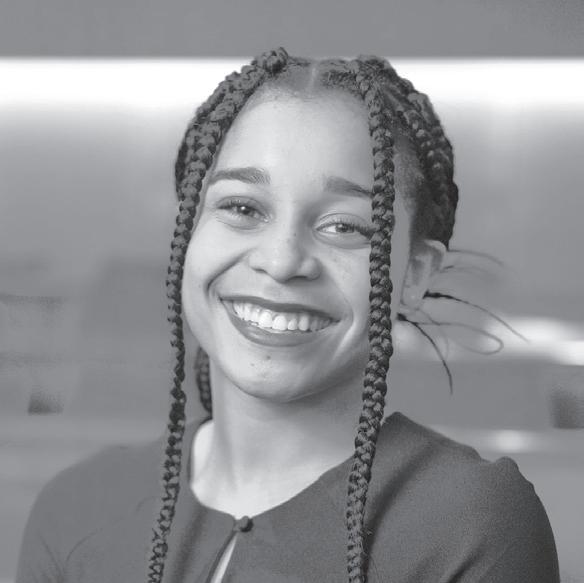
Anuli Ononye is a junior in the College of Arts and Sciences. She can be reached at ao44@cornell.edu. Womansplaining runs every other Wednesday this semester.
Iknow this is a week early, but considering that my column is titled “Womansplaining,” there is no way that I’d pass up on a chance to write a column about International Women’s Day, and, more broadly, Women’s History Month. Tis year’s United Nations’ theme for International Women’s Day is “Women in Leadership: Achieving an Equal Future in a COVID-19 World.” Tat is a long (and very important!) title, emphasizing the importance of elevating women into leadership positions amidst the COVID-19 pandemic. Tere is obviously no perfect feminist (contrary to my Instagram bio where I self proclaim myself the “professional feminist”) and no right way to advocate for women or gender justice. However, if you’re thinking about ways to be a gender advocate on campus this month, here are eight ways to be a “better” Cornell feminist.
Take a class in feminist, gender and sexuality studies.
If you’ve met me at any point in the last three years, you probably know my mantra: Every person should have to
take a feminist, gender and sexuality studies course on campus before they graduate. Troughout my FGSS career, I have studied Beyonce’s impact on feminism, marital rape laws, the Disney princesses, Nigerian feminist poets, Greek life on college campuses and infuencer culture. Every aspect of your life, past or present, has to do with gender. Take advantage of the amazing courses and professors — some of the best in the country by the way — dedicated to studying these issues. You will learn something.
Join a gender justice club on campus.
Tis is an easy one, considering that there are more gender justice organizations on this campus then anyone could count (and people have tried). Do your research and fnd a club that intersects with your interests. Tere are clubs dedicated to promoting women in STEM, ofering support groups for women and marginalized people, clubs dedicated to providing support for survivors on campus and many more. Here are a few of my favorites on campus: Te Women’s Leadership Initiative, Gender Justice Advocacy Center, She’s the First and Planned Parenthood Generation Action.
Keep the Cornell Health Hotlines and Talk-Lines card in your wallet.
I have had the Cornell Hotlines and Talk-Lines business card in my wallet for the past year. Te card has important hotlines and services provided by Cornell, including the Cornell Health phone number, the Ithaca Crisisline, the Tompkins County Advocacy Crisis Line and the TransLifeline. Te card also includes national text and chat services. Keep the card on you in case you or a friend ever needs it.
Stop taking advantage of the women in your campus organizations.
Tis is something you might not think you’re doing, but you probably are (regardless of your own gender or sexuality). Is there a woman in your organization who always ends up doing the behind-the-scenes work and never gets any recognition? Is there a woman in your organization who is a shoo-in for president, but no one thinks she’s a strong enough leader to actually be president? Are you tougher on women applicants during recruitment? As
someone involved in almost every club on campus (not really, but kind of really), almost every one has this issue. Take time to think about your implicit biases and how they play out in your extracurricular activities.
Stop calling Martha “Martha.”
It’s not that hard. Shameless plug, but read my article on all the reasons why you should refer to your female professors, lecturers and administrators on campus by their ofcial titles.
Attend an event at the Women’s Resource Center or LGBT Resource Center.
Te WRC and LGBT Resource Centers have great programming events targeted at gender justice on campus. Tey provide guest speakers, community circles and targeted programming to raise awareness about gender justice and provide support systems for community members on campus. Although we currently aren’t able to visit them in person (to grab candy, talk to staf and use their weighted blankets!), we are lucky to have them as a virtual resource this semester.
Take ConsentEd training seriously.
Take ConsentEd training seriously. Take ConsentEd training seriously. Take ConsentEd training seriously. I want to say this so many times that it sticks. When ConsentEd leads a workshop for your community on campus, listen to what they say and show the facilitators the respect that they need. I cannot tell you how bad a look it is to try to “get your way out of” ConsentEd training when their mission is to make campus a safer place for all of us.
Read a Book.
I’m not being sarcastic. Read a book, watch a documentary, listen to a podcast, attend a guest lecture. Te frst step to getting involved with gender justice and advocacy is to learn from the people who are doing the real work. Take some time this month to learn about feminism, fgure out what you’re passionate about and make an action plan to be better. For bonus points, use the week to learn about notable Cornell alumni who fought for gender justice including (but not limited to) Kimberlé Crenshaw ’81, Ruth Bader Ginsburg ’56, Pearl Buck M.A. ’25 and Toni Morrison M.A. ’55.
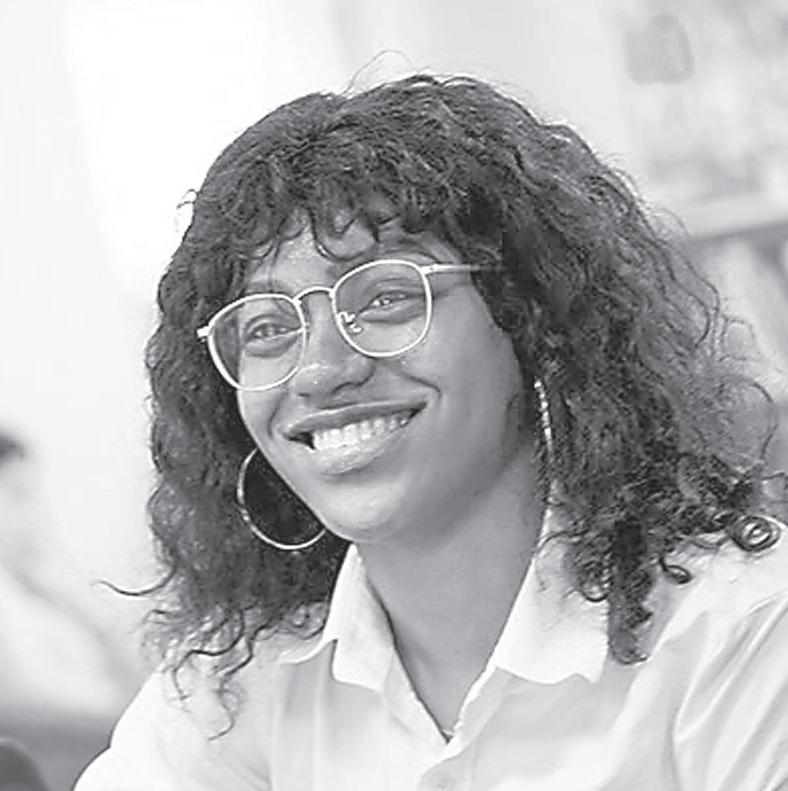
Aminah Taariq is a senior in the College of Agriculture and Life Sciences. She can be reached at ataariq@cornellsun.com. I Spy runs every other Tuesday this semester.
Freshman year me, waking up for an 8:40 a.m. physics class in single digit temperatures, would be envious of my online semester. Te thought of sitting shoulder-to-shoulder with classmates in hard seats, shoveling through backpack pockets for a pencil while snifes and coughs ripple across the room, seems like punishment compared to class from my bedroom. With online classes, missing a lecture is not a problem if they’re all recorded. You don’t have to guess someone’s name. No need to speak up if you can just type. Running between classes becomes opening a new tab. Yes, online school sounds great and all, but senior year me knows that the grass is always greener on the other side. As much as I loved my solitude and the option to turn of my video, I missed having a change of environment and being outdoors.
While building my spring schedule, I scoured through the roster for two classes I could take purely out of interest. I somehow managed to fnd two that did not confict, one online and the other in-person. Although I would have preferred that both classes were online, I fgured since I was in Ithaca, and this was my fnal
semester, I’d do something diferent. So, I enrolled in my frst in-person class since last March.
My health and safety were my top priorities. On Feb. 5, a COVID-19 cluster was identifed on Ithaca’s campus, and Cornell moved to alert level yellow. But, so much precaution has been put in place to protect students: Cornell’s health and safety guidelines govern face coverings, physical distancing, travel restrictions, limitations on in-person gatherings, compliance with the Daily Check and COVID-19 surveillance testing. With all this in mind, I decided to take an in-person information science course on cultural analytics.
I got to the classroom fve minutes early, double masked and chose a seat all the way in the back. It was weird being back in a classroom with people. Like when something looks right but feels very wrong. I snuck looks at my classmates, almost as if it was wrong for me to acknowledge their presence. If I had made eye contact with someone, I would not know what to do.
Te lecture began and while students were hesitant at frst, they quickly began to speak up. I paid close attention and even raised my hand to participate. But adjusting to in-person classes was less seamless than I thought. I had some shaky moments. After 30 minutes, my eyes started to wander. Tere was no option to turn of the camera, stretch and grab a glass of water. I had to focus on the lec-
I got to the classroom five minutes early, double masked and chose a seat all the way in the back. It was weird being back in a classroom with people. Like when something looks right but feels very wrong.
Being in the classroom is a great change of pace. I think it helps professors, students and T.A.s deal with everything going on.
ture. Luckily, the class was very engaging. Fifty minutes of information science few by rather quickly, and students shufed out of the class. I even stayed after class to talk to the professor like the olden days.
To be honest, in-person class really wasn’t that different from how I remembered it just less packed. My only struggle was to hear people speak through layers of cloth. Other students felt similarly. AAP major Ade Lawrence ’22 shared “it felt good to reassimilate,” when I asked him about what it was like to be around students again. “I feel more productive taking studio in-person. Being around students makes it easier for me to follow through with my work,” Lawrence said.
I also asked my T.A. Joshua Johnson ’21 how he felt about in-person classes. “Being in the classroom is a great change of pace. I think that it helps professors, students and T.A.s deal with everything going on. Classes feel very diferent and noticeably more vibrant in person.”
But there is some hesitation. “In person classes give a much needed change of setting than sitting at home all day being on Zoom,” said Raymond Liao ’21, “but there should be more done to ensure that students remain safe on campus. Te campus store shouldn’t be the only place to check IDs.”
In the time since schools have transitioned into in-person classes, a lot has been changed, created or removed in academia. So much efort has been made by both faculty, staf and students to maintain our education during a pandemic. Considering our reality, Cornell has pulled of an amazing feat. Even though we don’t know what is to come, we can still take things one step at a time, in-person or online.

Fill in the empty cells, one number in each, so that each column, row, and region contains the numbers 1-9 exactly once. Each number in the solution therefore occurs only once in each of the three “directions,” hence the “single numbers” implied by the puzzle’s name. (Rules from wikipedia.org/wiki/ Sudoku)




By LUKE PICHINI Sun Assistant Sports Editor
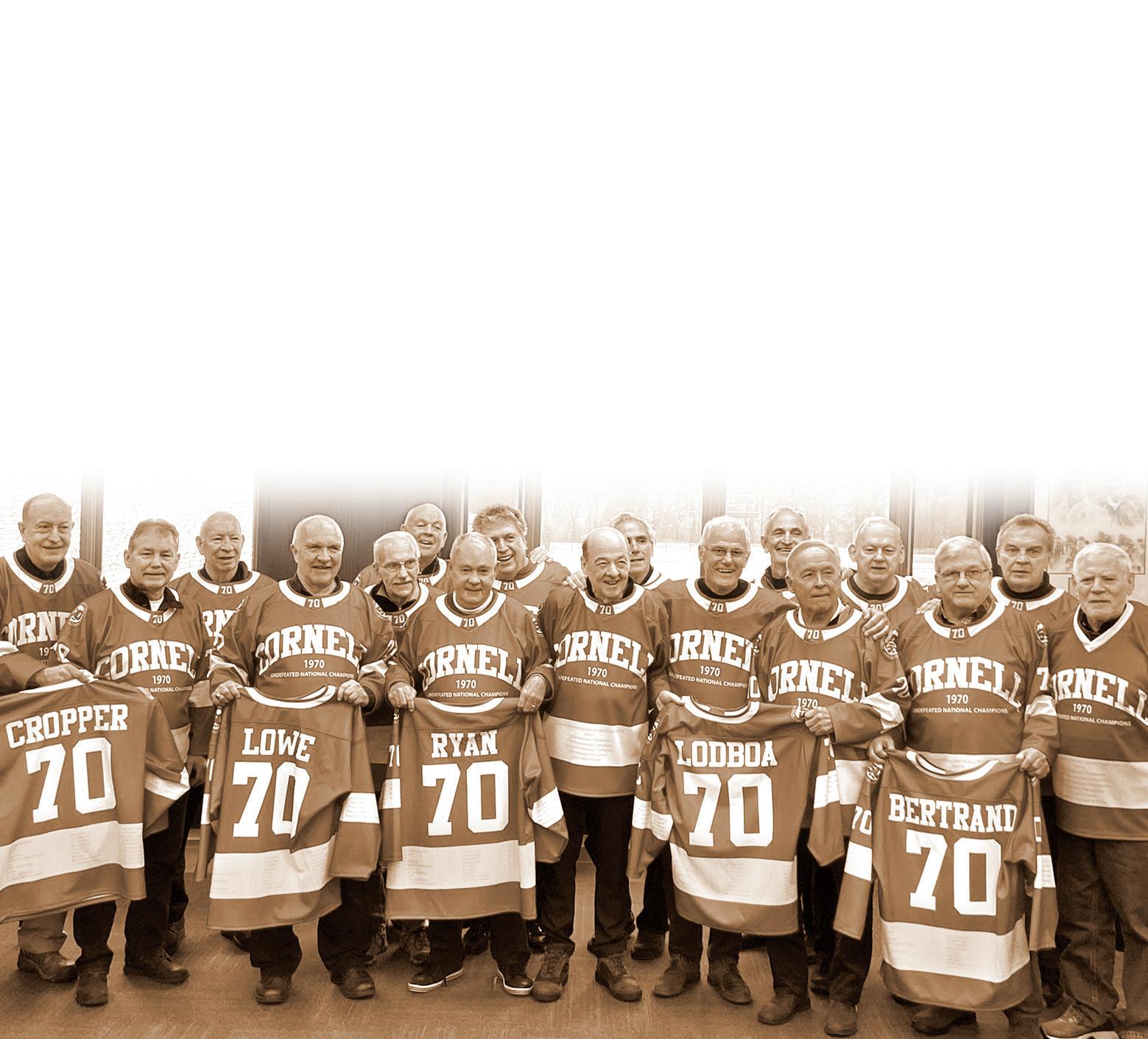
In one of the most outstanding efforts by an NCAA men’s hockey team, Cornell became the first — and so far, only — men’s hockey team to capture a national championship during the 1969-70 season without suffering a single loss or draw.
Cornell’s incredible 29-0-0 campaign began with an 8-2 stomping of Western Ontario, and from there, the Red continued to dominate, closing the first stretch of the season on a seven-game winning streak.
The lone scare came in a road matchup against Brown, when Cornell eked out a 5-4 overtime victory. Despite staring at a onegoal deficit in the third period, junior forward Brian McCutcheon came up with a power-play score to force an additional period of play.
The ensuing overtime period ended after a mere 34 seconds thanks to senior defenseman Dan Lodboa, who forced a Brown turnover and then found the back of the net. The Red’s victory in this contest became only one of five contests during the entire season that was decided by one goal.
Staying Hot
During the holiday season, Cornell continued its hot streak, picking up victories over familiar foes, including Rensselaer, St. Lawrence, Boston University and Colgate. In that slate, the Red outscored its opponents, 25-6, including a 9-0 blowout of Rensselaer.
As the Red entered the conference portion of the regular season, it only maintained its dominance. Aside from a 2-1 victory at Toronto, Cornell rarely endured close games. While its home show-
down against Dartmouth only ended in a 3-2 decision in favor of the Red and was certainly an exception, Cornell walloped that same opponent a week and a half later, shellacking the Green by a 14-0 margin.
In that 14-0 blowout, 17 different players tallied at least one point, with junior forward Bob Aitchison leading the way with five points, despite having entered the contest with only two goals on the season.
Though Cornell encountered tough challenges from several of its opponents over the course of the season, the team entered the ECAC Championship on an offensive roll, having scored a whopping 41 goals during the final four games of the regular season. That momentum carried over in the first round of the ECAC playoffs with a 6-1 beatdown of St. Lawrence. In the next round, though, the Red faced a much stiffer test in the form of the rival Crimson. In the span of just four minutes, Harvard’s attack came alive, beating junior netminder Brian Cropper three times to put the Crimson up 3-1, marking the first time all season the Red trailed by two goals.
Cornell buckled down, responding with four straight goals, but Harvard quickly scored two of its own to make it 5-5 in the final frame. But a penalty was called on the Crimson after its fifth goal, and sophomore forward Larry Fullan capitalized on the ensuing power play, giving the Red a 6-5 lead that it never relinquished.
Having claimed victory in the last three ECAC Championships, Cornell sought a fourth title, but it would have to first defeat Clarkson

to achieve that honor. Like its previous game against Harvard, the Red fought hard to grind out a victory.
In a back-and-forth contest between two exceptional goalies, Cropper and Clarkson’s Bruce Bullock, it was ultimately Cropper and the Red who prevailed. With the game tied at two apiece, senior forward John Hughes fired a shot past Bullock in the waning seconds of the third period, clinching the Red’s fourth straight ECAC title.
Final Hurdles
With a perfect regular season under its belt, Cornell only had two more opponents in its way of achieving national glory. In the first contest of the NCAA Tournament against Wisconsin,
the Red faced an initial deficit after the Badgers scored an early goal.
But in the final two frames, Cornell completely smothered the Badgers’ offense, only conceding four shots. Meanwhile, the Red finally broke through in the third period, notching two goals against Wisconsin goaltender Wayne Thomas to vault itself into the National Championship game.
Cornell’s final opponent was a familiar titan — Clarkson. The Golden Knights hoped to avenge their loss in the ECAC title game and spoil the Red’s perfect season in Lake Placid. In the early going, Clarkson appeared on track to do just that, scoring in the first 20 seconds of the national title game.
During the first two periods, the teams alternated leads before the Red pulled away in the last period. Buoyed by Lodboa’s three third-period goals, Cornell secured a 6-4 victory over Clarkson, clinching the program’s second national title while also etching its name in NCAA history by becoming the only undefeated national champion.
Unmatched
In the years since, Cornell has retained a strong program, especially under head coach Mike Schafer ’86. Still, it remains fairly unlikely that the Red — let alone any other NCAA men’s hockey squad — will be able to achieve the same heights of the 1969-70 Cornell team.