
Jewish Students Say Response to AntiSemitism Is Lacking
By YUICHIRO KAKUTANI
While Cornell responded to the three swastika signs were found on North Campus in November by strengthening security at Jewish events and holding support meetings, the Jewish students who found the signs expressed concern that the campus response was nevertheless lacking.
Ryan Lombardi, vice president of student and campus life, denounced the acts and promised to hold a “support gathering” in a public statement published hours after The Sun’s report was published.
The “support gathering” held on Thursday was attended by 13 individuals, roughly half of whom were administrators rather than students. One student participant told The Sun she was not aware of the incidents nor the support meeting until she accidentally walked into the Robert Purcell Community


Transfers Frustrated With Housing Shortage
In early July, Cornell informed incoming transfer student Eitan Wolf ’21 that he would be placed in a temporary quintuple in a converted study lounge in a North Campus dorm.
Weeks later, Wolf was assigned to a different but permanent housing: Schuyler House, a dorm that is nearly a mile away from Central Campus. He said that Schuyler has “come with its share of difficulties.”
housing, but does not guarantee housing for transfer students, according to Karen Brown, director of Campus Life Marketing and Communications.
This year, transfer students were not notified of whether Cornell would provide them with on-campus housing until June 22, which meant that some students had to find a place to live in Ithaca about two months before the semester started.
“You’re just so isolated. It’s the furthest thing from being on-campus, and it makes it difficult.”
“You’re just so isolated,” Wolf, who transferred from Oregon State University after his freshman year, told The Sun. “It’s the furthest thing from being on-campus, and so it makes it difficult just to get to and from school. It makes it difficult to participate in extracurriculars.”
Eitan Wolf ’21
Wolf is one of the transfer students who live either off-campus or in an on-campus residence that is far from central campus. Cornell guarantees freshmen on-campus
Cornell Research Associate on InSight Team Describes Awe of Mars Landing
By MARYAM ZAFAR Sun Staff Writer
“Everybody in the room was kind of on pins and needles,” said Don Banfield ’87, senior research associate, astronomy, describing a movie-like scene. Science team members who had worked on the InSight spacecraft for NASA sat and waited to hear whether the spacecraft had successfully landed last Monday. “And we’re sitting there
watching it, and it was maybe an hour before it was supposed to get to Mars,” Banfield continued. Sitting at the Jet Propulsion Laboratory in California, “we’re all kind of mentally calculating: ‘If I was sitting on a spacecraft, how big would Mars look like in my eyes if I was just looking forward?’”
For Banfield and the team, the stakes were high: the Interior Exploration using Seismic Investigations, Geodesy and Heat Transport (InSight)
mission was first proposed in 2009, and after a year and a half of proposal-writing, the project was selected from around 50 others. After further filtering and more years of work, the InSight project was finally selected to receive $425 million from NASA’s Discovery Program in 2012. As a co-investigator of InSight’s science team, Banfield monitors weather data like
The reason for the late notification, Brown explained, was because some transfers are admitted during “the summer months,” and they have up to 10 days after receiving their acceptance to apply for housing.
The University explained that it was unable to offer transfer students housing on-campus because the incoming class of transfers was “unusually large,” so there was an “overwhelming demand” for housing, according to a June 22 email sent to incoming transfers by Kristen M.E. Lomparco, associate director of the Office of Residential

Out of this world | Don Banfield ’87 is a co-investigator on InSight’s science team. The spacecraft landed succesfully on the surface of Mars (above) last Monday.
and PARIS GHAZI Sun News Editor and Sun Assistant News Editor
By ANNE SNABES Sun Assistant News Editor
Transfers tell tales | The number of transfers increased from 613 in fall 2017 to 645 in fall 2018, which led to 38 more transfer housing applications
HELEN LI / SUN GRAPHICS EDITOR
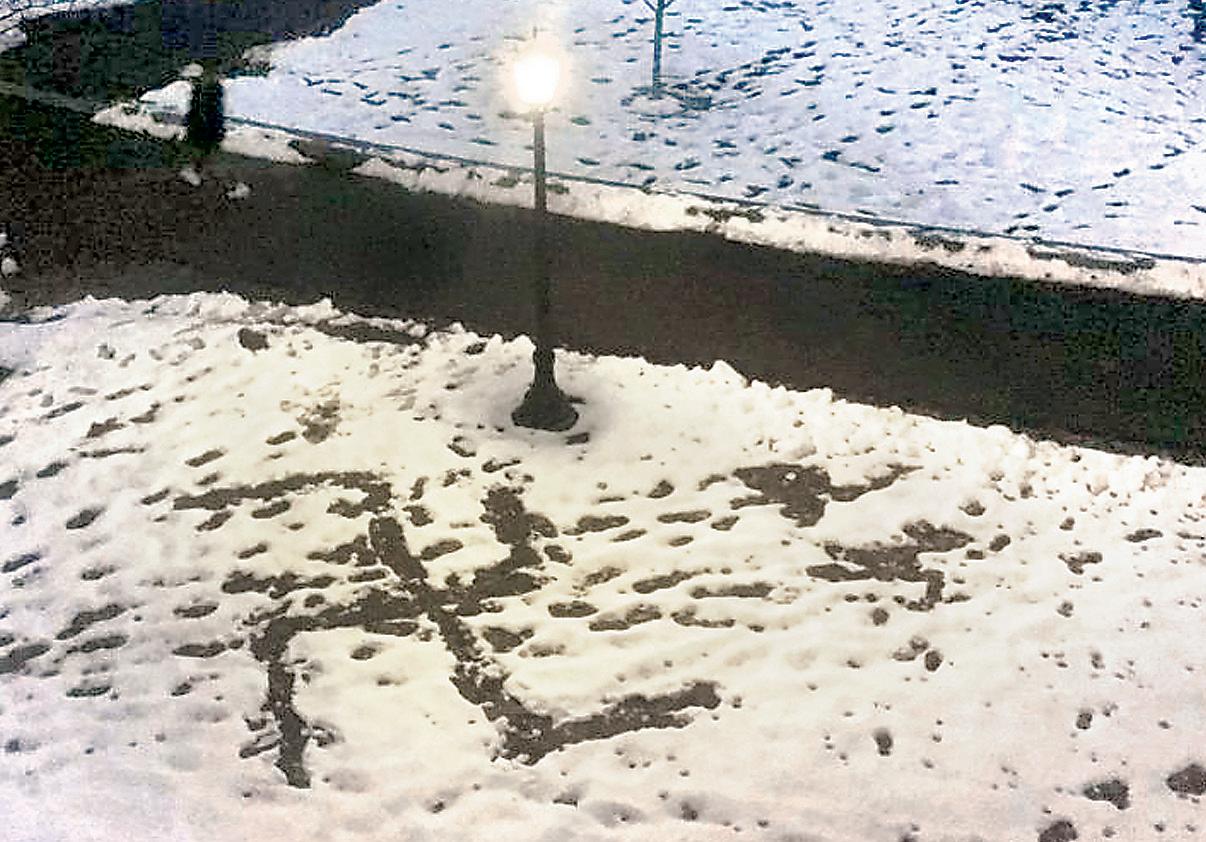
Swastikas | Students who spotted swastikas, including the one near Appel (above), express concern about the perceived lack of campus response.
PARIS GHAZI / SUN ASSISTANT NEWS EDITOR
Robotics Day
9 a.m. - 4 p.m., Duffield Hall
Behavioral Economics Workshop: Florian Zimmernann
11:40 a.m. - 1:10 p.m., Sage 141
Afterschool Language and Culture Program
2 - 3 p.m., Kennedy Hall, Engaged Cornell Living Room
Traveling Abroad: Preparations and Advice
3 - 4 p.m., G08 Uris Hall
Association of Veterans Happy Hour
5 - 6 p.m., Big Red Barn
Celebrate an Arabian Night
6:30 - 9 p.m., Africana Studies and Research Center
2018 Korean Song Contest
7 - 8:30 p.m., Goldwin Smith Hall, HEC Auditorium
Weekly Study Skills Tutoring
7 - 9 p.m., 3339 Tatkon Center
Christmas Movie Marathon
8 - 11 p.m., William T. Keeton House
International Contemporary Ensemble
8 p.m., Schwartz Center for Performing Arts
Tuesday, December 4, 2018

Cookie Decorating
9 a.m. - 1 p.m., 101 Warren Hall
Industrial Organization Workshop: Marika Cabral
11:40 a.m. - 1:10 p.m., 498 Uris Hall
Gingerbread Decoration 3 - 4 p.m., William T. Keeton House

GradSWE
Christmas Cookie Decorating 6 - 8 p.m., 128 Olin Hall
Distinguished Carl Sagan Lecture
7 - 8 p.m., Kennedy Hall, Call Auditorium
Jazz Ensemble
8 p.m., Barnes Hall Auditorium
Midnight Breakfast 11:59 p.m., William T. Keeton House
COURTESY OF CORNELL UNIVERSITY
Arabian night | Celebrate Arab culture with food, live performances, poetry, calligraphy and henna on Tuesday at the Africana Studies and Research Center.
Health Gala Raises $1,700 for Female Empowerment Initiative in Guatemala
By ANYI CHENG Sun Staff Writer
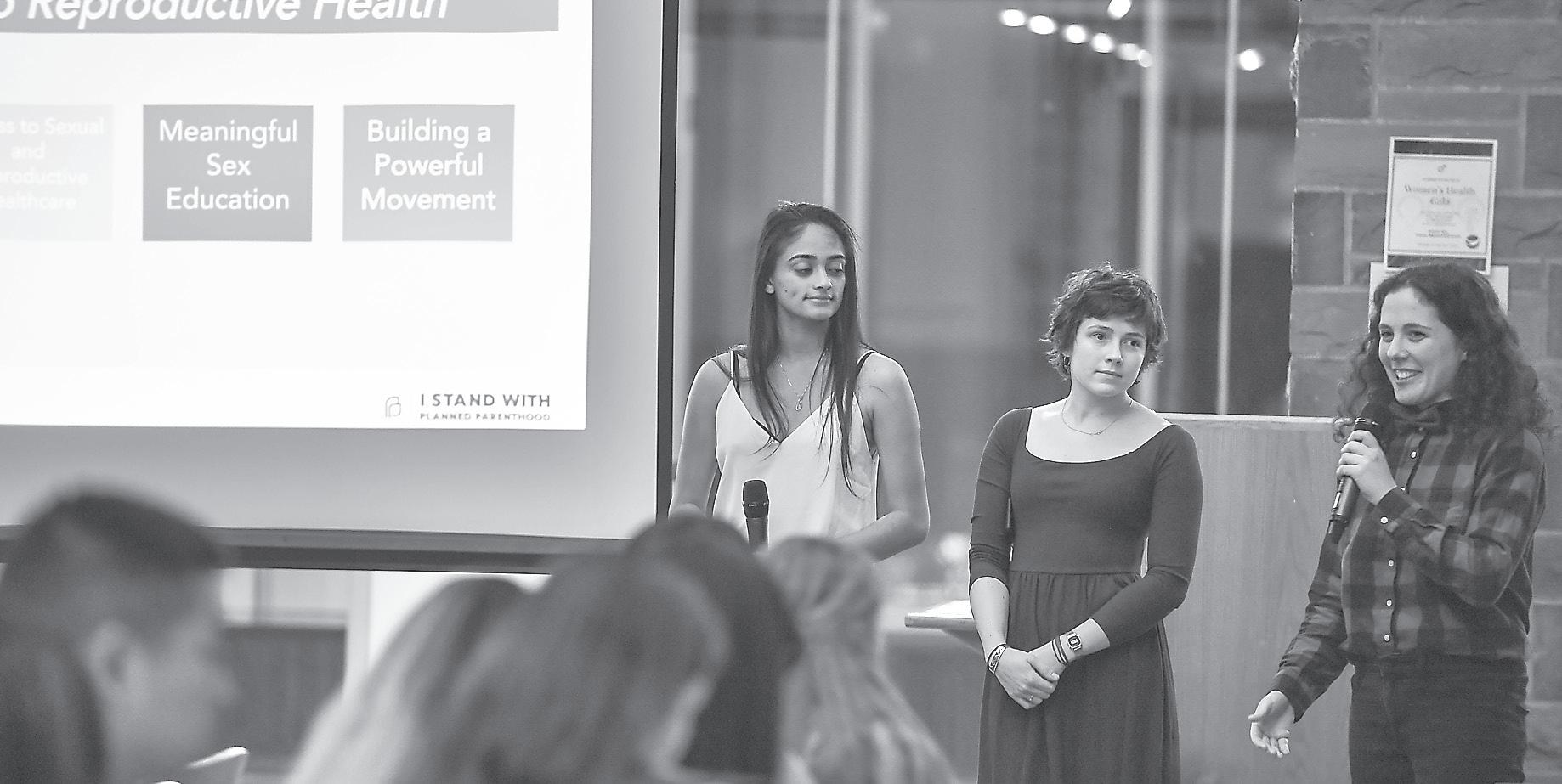
Students spent last Friday night mingling and enjoying dinner at GlobeMed’s annual fundraising gala focused on women’s health and reproductive justice.
According to GlobeMed’s co-president Dristi Talukder ’20, GlobeMed was successful in hosting its biggest fundraiser — the gala drew over 150 attendees and raised around $1,700 in ticket sales and donations.
“We’re really proud of how many people showed up,” Talukder told The Sun. “Last year, we sold around 100 tickets and we wanted to up it this year. We’re very proud of how hard everyone in this club has worked to get the word out there.”
In collaboration with other student organizations on campus, the gala’s organizers invited speakers from Planned Parenthood Generation Action and organized performances from a capella group The Callbaxx and Cornell Bhangra.
Proceeds from the gala will all go toward Cornell GlobeMed’s chosen partner organization, the Association Maya-Mam of Investigation and Development. Based in Comitancillo, San Marcos, Guatemala, AMMID focuses on sustainable economic development and improving living standards within their local community, according to their website.
In promoting women’s empowerment, for instance, AMMID helps local women create and commercialize their handcrafted goods with sustainable, strong business models.
Specifically, the donation will directly contribute to a water filtration project GlobeMed and AMMID have been collaborating on for the past several years. The money will allow AMMID to purchase and install more sustain-
year’s GlobalMed gala will go to the Association Maya-Mam of Investigtation and Development, which focuses on sustainable economic development. in Guatemala.
able clay water filters in Comitancillo.
Every year, GlobeMed at Cornell hosts multiple fundraisers to raise around $6,000 for the organization, according to Talukder.
“The concept gives women space for empowerment,” said Lakshmi Mahajan ’20, head of GlobeMed partnerships committee, at the gala. “They have more freedom and security as they don’t have to walk miles away for safe, clean drinking water. They can have it from their own backyard.”
This annual gala has served as GlobeMed’s biggest annual event for the last five years, with themes varying by year.
According to Talukder, last year’s theme focused on food insecurity. This year, the choice to focus on female empowerment came from GlobeMed’s recent partnership with the Women’s Opportunity Center in Ithaca, a nonprofit helping women find employment and prepare for careers.
One major goal of the night was to raise awareness about the importance of reproductive justice, Talukder said.
GlobeMed partnered with various campus organizations to table and speak about women’s health, includ-
ing Planned Parenthood Generation Action, a student group fighting for reproductive justice.
“It’s a lot more than just legality — it has to do with addressing all these interlocking forms of oppression with a holistic framework,” said Alanna Salwen ’19, president of Planned Parenthood Generation Action at Cornell. “That’s reproductive justice.”
GlobeMed’s collaboration with Planned Parenthood Generation Action is a direct reflection of the interrelated issues Salwen spoke about. The organization operates on the premise of systemic change, stressing the importance of addressing all angles of social justice problems.
“What makes our club so special is that we have a lot of communication with a really awesome organization that we all truly respect,” GlobeMed external co-president Giulia DiMarino ’19 told The Sun. “It allows joint action of a lot of different movements, just like the Planned Parenthood demonstration showed. Really, it’s hard to look at just one stream that goes into a problem.”
Anyi Cheng can be reached at acheng@cornellsun.com.
New App Shows ‘Busyness’ of Dining Locations
By SABRINA XIE Sun Contributor
Laps around the dining hall or cafe without finding a seat. Climbing up the library stairs only to see there is no peaceful place to set down your books and study. These are the problems that Cornell Design & Tech Initiative hopes to solve with their new app Density, which was launched on the Apple App Store on Monday.
“It’s the same way you would check the weather real quick before you go out,” said Kathy Wang grad, one of three designers of the app. “You don’t want to be caught going outside and being rained on the same way you don’t want to go to a place and find out there’s literally no seats for you and waste time.”
Andrew Xiao ’20, the app’s product manager, says it was partly inspired by the popular navigation app Waze, which displays user-submitted route details to help people to avoid traffic and other inconveniences.
“We want to do the same thing with traffic flow,” Xiao
told The Sun. “We track the traffic flow of certain campus facilities in real time and then we report it to our users, which allows them to avoid crowded places and find the best places to go at the best time.”
The app provides a simple interface for students to look at live and historical data for the “busyness” of dining locations on campus, using an algorithm that uses card swipes and historical data to approximate the traffic of each location. Coming up with the algorithm turned out to be “pretty hard” because of the variables involved.
“Knowing how many people were coming in and buying things wasn’t enough,” said Raymond Radi ’20, one of the app’s developers. “We didn’t know how many people actually sat down after they got something or how many would just come and sit. We’re trying to tell students how busy a place is and it’s hard to do that without knowing some other things than just transactions.”
According to Xiao, Cornell Design & Tech
Initiative has been “mulling over” the idea for a density-tracking app for two years, but actual development and user research only began two months ago.
“Our goal was to get the entire app out to the student body before finals since I think that’s one of the pain points of students,” Wang said. “That’s when you experience the most crowdedness at places and it’s the most valuable time. We definitely want to see how it does during finals.”
Due to the short development timeline, the group has yet to test the app outside of the project team. Radi pulled out the app in Libe to demonstrate to The Sun how it worked.
“If you wanted to just go to Libe like right, this is not really accurate, it’s pretty busy, but it tells you historical data for all the Fridays we’ve measured. For now, it thinks it’s not too busy in Libe. We’re still working on the algorithm,” he admitted.
Again inspired by Waze, the team hopes to improve the app’s accuracy through user feedback.
Transfer Students Frustrated by OfCampus Housing
Continued from page 1
and Events Services, which was obtained by The Sun.
“I think housing is ... one of the biggest if not the biggest issue for transfer students,” said Catherine Huang ’21, Student Assembly transfer representative.
The email also stated that the University had given as many transfers housing as was available at the time, and that they would do their “best” to offer the remaining students on-campus housing “if [they] are able based on availability over the next four weeks.” Lomparco also recommended that students “pursue off-campus housing options at this time.”
The number of transfer students enrolling at Cornell has increased from 613 in fall 2017 to 645 in fall 2018, which led to 38 more transfer housing applications being submitted this year, according to Brown.
Transfer student Lauren Jung ’21 said she was “very nervous” about living off-campus, because she felt “vulnerable” as a transfer student. She also has not enjoyed the distance and Ithaca’s terrain, as she has to walk uphill from her apartment to campus.
“We’ve created a feedback function that allows users to tell us if the reported data is accurate to what is going on as well as just general points that we can improve on,” Xiao said.
While in the current iteration of the app this feedback will only be used by the team to refine the algorithm, the team hopes to eventually relay the crowdsourced information back to its users.
Other potential future features include expanding to other facilities such as libraries and fitness facilities, and the team plans to spend next semester using the feedback to improve the product.
“It’s gonna be super helpful to get feedback,” Radi said. “If a lot of people download it and tell us what’s wrong and what’s good, that’ll help it become a lot better.”
Ultimately, the team hopes that the app will help guide student decisions and “just make people’s lives easier,” Wang said.
Sabrina Xie can be reached at sx235@cornell.edu.
Originally from Illinois, Jung said living off-campus has also affected her ability to socialize. She said going out is “hard” because all of her friends live on West Campus, and she has to walk there to join them.
Wolf, who lives in Schuyler House, shares the same concern. Because he lives far from campus, he only has a 7-meal-per-week meal plan, which sometimes prohibits him from being with his friends who eat on West. The commute isn’t helping him either: the TCAT stop outside Schuyler House is currently closed, so it “takes a lot longer to get to class,” he told The Sun.
“I think it just sort of places a huge burden,” he said. “People who have been at the school I think would do better at Schuyler — a situation where they know how to get around. But it was so, so, so hard having to learn how to navigate everything around
Cornell’s community, on top of housing and transportation and everything.”
Housing availability for transfers was impacted by both the “exceptionally high demand for housing” among first-year and transfer students this year and the demand for housing among returning students during General Room Selection in the spring, Brown said.
In the June 22 email to students that were not offered housing on-campus, Loparco said housing availability “could mean” being placed in a quintuple in a North Campus dorm. In the past, Cornell has placed students into dorm lounges converted into bedrooms.
However, Cornell was ultimately able to “arrange for traditional accommodations” for these students before they moved onto campus, so they did not end up living in the temporary rooms, Brown said. Some of the people that were not offered housing in June were later assigned permanent or temporary housing in July, she said.
Some students were ultimately placed in the West Campus residence halls, which are home to a large transfer community, or in other dorms, such as Schuyler House.
Gracie Lu ’21, a transfer student who lives in an apartment on College Ave., said that Cornell could “definitely do a better job” at finding housing arrangements for transfers off-campus.
She also suggested that the University tell the students who they would have lived with in a dorm, so they could potentially find an apartment with them, adding that finding roommates to live with off-campus was the most stressful part.
“Finding like two other girls or people that I would live compatibly with within a span of like three days is just not the best situation,” she said. “It was very, very quick, which I sort of regret, because I feel like you definitely have to talk to someone for maybe like a week before you’re like, ‘You know what, I’m going to live with you for a year.’”
Anne Snabes can be reached at asanbes@cornellsun.com
Women for women | All the proceeds from this
BEN PARKER / SUN STAFF PHOTOGRAPHER
C.U. Response to Swastika Disappoints
ANTI-SEMITISM
from page 1
Center auditorium.
The perceived lack of a larger campus reaction to the anti-Semitic incidents has frustrated some Jewish students. Amongst them is Avi Simon ’22, who found the third swastika sign etched into the snow near Mews Hall.
“Obviously there is a level of concern on the interpersonal level, but generally, I found it still challenging to galvanize people around this issue and kind of convince them that this is something that is worth objecting to [and] worth taking seriously,” Simon said in a Monday interview with The Sun.
Rabbi Ari. D. Weiss, executive director of Cornell Hillel, said that the University considers the safety of Jewish students “very seriously,” adding that CUPD now has an increased presence in “recognizably Jewish events” such as services and Friday dinner at 104 West — a Kosher dining hall. Furthermore, the campus police is training student leaders and Hillel staff on “emergency procedures,” and creating a “site-specific plan” for the Hillel office.
In addition to strengthening security, the Hillel director is also planning a series of campus outreach efforts, such as a “robust programmatic response” starting next semester to improve awareness about Jewish culture and the swastika signs.
“We believe that Hillel has a role in educating the campus community about the history of anti-Semitism and how anti-Semitism manifests today in 21st-century America,” Weiss said, elaborating on the topics Hillel expects to cover in its planned programming.
While Simon said he appreciated the response to the incidents by Hillel and the University, he also expressed disappointment at the relative indifference of the larger campus community.
“I feel like the people I have contacted within the institution has been more responsive and more supportive than the student body per se,” he said in a Monday interview.
Sasha Milton ’22 — the freshmen who found the first swastika sign in Clara Dickson Hall — echoed Simon’s sentiment, saying that he often felt “angry” at the campus response because he felt many people in his dorm treated it as “hot gossip” and viewed the hall meetings as a “waste of time.”
In addition to explaining the Residential Hall system’s response to the anti-Semitic incidents, Robert King, director of residential and new student programs, clarified the details surrounding
the three incidents to The Sun. Sasha Chanko ’19, former Hillel president, previously told The Sun that he learned about the appearance of swastika signs in Court-KayBauer Hall before the anti-Semitic symbol in Clara Dickson Hall. However, King confirmed to The Sun that, in reality, someone drew the Nazi symbol in Dickson Hall on Nov. 5 before another swastika appeared in CKB on Nov. 10.
The swastika in Dickson Hall appeared on a whiteboard on a student’s door and was spotted by Milton, the occupant a the room near the sign. Milton’s friend immediately erased the sketch, and Milton reported the incident to his R.A., who organized a floor meeting where students broke into groups for an activity to discuss their various “identities that you hold important to you,” according to the freshman.
Five days after an unknown vandal drew the swastika in Dickson Hall, residential staff in CKB on Nov. 10 found another swastika “smeared on the wall with the juice of an apple” in a common area, King confirmed to The Sun. King said the R.A. took pictures of the vandalized space and had the area cleaned. Nine days later, Simon found the swastika etched into the snow.
The Sun previously reported that R.A.s in Dickson Hall held floor meetings, but not in CKB. When The Sun inquired about the response of the affected dorms to the swastika signs, King told The Sun that Dickson Hall held two floor meetings — one of which was mandatory. However, King did not mention that CKB held similar floor meetings in the same email response.
In the wake of the three incidents, Simon cautiously speculated that campus anti-Semitism could be remedied if the University takes a more active role in educating students through programs like the mandatory intergroup dialogue program for incoming first-year students.
“Addressing [anti-Semitism] through like the colleges, the faculty, through what people are learning in their academic trajectories, maybe that will make an impact or at least people would hear it,” Simon said.
Meanwhile, Weiss felt that anti-Semitism can be combated on campus through patient education and cultural outreach.
“We are also doing a menorah lighting. ... on Wednesday on North Campus as a way of just spreading the light of Judaism,” he said.
Yuichiro Kakutani can be reached at ykakutani@cornellsun.com. Paris Ghazi can be reached at pghazi@cornellsun.com.
Cornell Research Associate On InSight Team Describes Awe of Mars Landing
After a 6-month journey, InSight begins exploring the interior of Mars
INSIGHT
Continued from page 1
Mars’ wind and temperature through the use of seismometers and other instruments attached to the spacecraft. Banfield also listens for “marsquakes,” as information on the quakes will help scientists learn more about the interior of the red planet, he explained.
himself for the worst: that the craft on which he had worked for the last eight or nine years wouldn’t land.
InSight, a 1,530-pound spacecraft armed with solar panels, cameras and seismometers, has been designed to spend one
“We’re all kind of mentally calculating: ‘If I was sitting on a spacecraft, how big would Mars look like in my eyes if I was just looking forward?’”
For Banfield, this wasn’t his first time on the edge of his seat. While still “fresh faced” and working on the Mars Polar Lander team in 1999, the Cornell alumnus experienced the suspense of attempting to land a spacecraft; however, that lander crashed into the planet’s surface.
The memory of this experi-
“You could kind of in your mind imagine, ‘okay now the spacecraft should be on the ground’ because it should be at zero by now.”
Don Banfield ’87
ence — one that left many on the team distressed and in tears — stayed with him during last week’s watch. Banfield steeled
Don Banfield ’87
Martian year and 40 Martian days — equivalent to about two Earth years — on Mars, according to a NASA press release. It bears the purpose of studying the interior of the Red Planet, and will spend several months carefully inserting a probe five meters into the surface to collect data.
When Banfield first started at Cornell, he considered studying high-energy physics. However, his own interests, combined with working with expert faculty at the time like Carl Sagan, resulted in his eventual involvement with other notable spacecrafts such as the Voyager mission.
The day of InSight’s landing was lively, according to Banfield. There were Mars Bars, and someone had labeled water bottles with the words “Mars water” — an “inside joke” referencing the never-ending search for liquid water on Mars. News reporters and broadcast vans sat outside the mockup of the InSight spacecraft, and even Bill Nye ’77 was there.
As the announcer called out the altitude of the spacecraft, Banfield was picturing how far InSight was from touching down.
“You could kind of in your mind imagine, ‘okay now the spacecraft should be on the ground’ because it should be at zero by now,” he said of waiting during the descent. After a dramatic delay, the announcement of the landing sent the room erupting in celebration.
But it was only the first image, which was transmitted by InSight 10 minutes after the spacecraft landed, that jolted Banfield to the reality: “We're on Mars. This is what it looks like.”
For him and his fellow scientists, the work has just begun. Banfield will spend the next few years plumbing the deep depths of the red planet, searching for information about how the solar system formed — billions of years before InSight touched down on the surface of Mars.
Maryam Zafar can be reached at mzafar@cornellsun.com.
JOHN McKIM MILLER ’20
Business Manager
KATIE SIMS ’20
Associate Editor
MEGAN ROCHE ’19
Projects Editor
MICHAEL LI ’20
Photography Editor
LEV AKABAS ’19
Arts and Entertainment Editor
BREANNE FLEER ’20 News Editor
YUICHIRO KAKUTANI ’19 News Editor
PARIS GHAZI ’21
Assistant News Editor
ANNE SNABES ’19
Assistant News Editor
JOHNATHAN STIMPSON ’21
Assistant Sports Editor
VIRI GARCIA ’20
Assistant Arts and Entertainment Editor
CATHERINE HORNG ’21
Assistant Dining Editor
HELEN HU ’21 Graphics Editor
JOSHUA GIRSKY ’19
ZACHARY SILVER ’19 Senior Editor
Drew Musto* ’19
Julia Curley ’19
Chance Maslof ’19
Aeyla Ehtasham ’19
Lauren Woods ’19
John Yoon * ’20
Stacey Blansky ’20
Penelope Campos ’20
Kyla Chasalow ’20
Shauna Cheatham ’20
Angela Chon ’20
Celine Choo ’20
Mollie Cramer ’20
Vivian Fan ’20
Pegah Moradi ’18
Priya Kankanhalli ’18
Faiza Ahmad ’19
Matthew Lam ’19
Pegah Moradi* ’18 Varun Belur* ’19
Varun Biddanda* ’19
Nick Swan ’19
Isabel Ling ’19
Ashley Davilla ’19
Jack Kantor* ’19
JACOB S. RUBASHKIN ’19
Editor in Chief
HEIDI MYUNG ’19
Advertising Manager
VARUN IYENGAR ’21
Web Editor
DYLAN MCDEVITT ’19
Sports Editor
JEREMIAH KIM ’19
Blogs Editor
JACQUELINE QUACH ’19
Dining Editor
SHRUTI JUNEJA ’20
News Editor
NICHOLAS BOGEL-BURROUGHS ’19
City Editor
SARAH SKINNER ’21
Assistant News Editor
JACK KANTOR ’19
Assistant Sports Editor
EDEM DZODZOMENYO ’20
Assistant Photography Editor
PETER BUONANNO ’21
Assistant Arts and Entertainment Editor
JULIAN ROBISON ’20
Layout Editor
ALICIA WANG ’21
Sketch Editor
KATHLEEN JOO ’19
Marketing Manager
MATTHEW McGOWEN ’19 Senior Editor
Meghan Flanigen ’20
Katherine Heaney ’20 Kevin Lam ’20
Marin Langlieb ’20 Gloria Lee ’20 Jai Malhotra ’20 Zain Mehdi ’20
Sabira Mehjabin ’20
Ronni Mok ’20
Samuel Nolan ’20
Alexis Oh ’20
Hunter Seitz ’20
Miguel Soto ’20 Toba Stern ’20
Jacqueline Groskaufmanis ’19
Jade Pinero ’19
Jason Jeong ’19
Paul Russell ’19
Isabelle Philippe ’19
Madeline Rutowski ’20 Olivia Bono ’20
Michelle Golderg ’20
Andrea Yang ’20 Nick Smith* ’20 Ruby Que* ’20
Charles Cotton* ’19 Joshua Zhu* ’20 Archer Biggs ’19 Gracie Todd ’19 Mary Barger ’19
Eleanor Bent* ’20
Sophie Reynolds* ’20
Vas Mathur* ’19
Emma Hoarty ’19
Omar Abdul-Rahim ’19
Emem-Esther Ikpot ’19
Business Board
GIRISHA ARORA ’20
Managing Editor
ALISHA GUPTA ’20
Assistant Managing Editor
EMMA WILLIAMS ’18
Design Editor
GRIFFIN SMITH-NICHOLS ’19 Blogs Editor
AMOL RAJESH ’20
ANU SUBRAMANIAM ’20
JUSTIN J. PARK ’19 Multimedia Editor
MEREDITH LIU ’20
Assistant News Editor
RAPHY GENDLER ’21
Assistant Sports Editor
BORIS TSANG ’21
Assistant Photography Editor
CHENAB KHAKH ’20
Assistant Science Editor
LIZ CANTLEBARY ’21
Snapchat Editor
DUSTIN LIU ’19
Human Resources Manager
KRYSTAL YANG ’21 Production Editor
ANNA DELWICHE ’19 Senior Editor
News Board
Winny Sun ’20
Hnin Ei Wai Lwin ’20
Jacob Wexler ’20
Kurlya Yan ’20
Emily Yang ’20
Karen Li ’20
Aaran Leviton ’20
Jinwook Lee ’21
Alex Hale ’21
Anyi Cheng ’21
Amanda Cronin ’21
Jill Crosby ’21
Dan Draytsel ’21
Xing Gao ’21
Opinion Board
Sarah Lieberman ’19 Dongyeon (Margaret) Lee ’20 Giancarlo Valdetaro ’20
Arts Board
Nicole Yan ’20
Juliette Rolnick* ’20
Noah Tomas ’20
Ariadna Lubinus ’20
Rachel Mattessich ’20 Zach Lee* ’20
Victoria Horrocks ’20
Sports Board
Smita Nalluri ’19 Tim Morales ’19 Alex Hale ’20 Aman Gupta ’20
Karen Zaklama ’21
Alexia Ge ’21
Shawn Hikosaka ’21
Amina Kilpatrick ’21
Vale Lewis ’21
Rochelle Li ’21
Helen Liang ’21
Victoria Moore ’21
Avraham Spraragen ’21
Samantha Stern ’21
Xinyu Tang ’21
Louise Xie ’21
Lucy Xu ’21
Maryam Zafar ’21
Lucas Reyes ’21
Kelly Song ’20
Michael Johns ’20
Sarah Park ’20
William Wang ’20
Alexia Kim ’21
Katie Sims ’20
Daniel Moran ’21
Michael Chang ’21
Rebecca Reuning ’21
Grant Muller ’21
James Robertson ’21
Aaron Stella ’21
Bennett Gross ’20 Zora Hahn ’20 Christina Bulkeley ’21
Xinyu (Louise) Tang ’21
Jefrey Li ’21
Sabrina Xie ’21
Nicole Zhu ’21
Puneet Velidi ’22
Jolie Wei ’22
Olivia Weinberg ’22
Rachel Liu ’22
Emma Cordover ’22
Michael Overmeer ’22
Tomas Engquist ’22
Gayatri Somaiya ’22
Emma Rosenbaum ’22
Magdalena Smith ’22
Aminah Taariq ’21 Darren Chang ’21 Ethan Wu ’21 Christian Baran ’22
Ramya Yandava ’21 Adam Kanwal ’21 Jonvi Rollins ’21
Jessica Lussier ’21
Maggie Gaus ’22
Jeremy Markus ’22
Miles Henshaw ’21 Faith Fisher ’22 Robert Li ’22
From the Editor
Board of Directors
TODAY IS THE FINAL DAY OF PRINT publication this semester for The Cornell Daily Sun. Though we will continue to publish occasional stories online over the next month and half, the good folks at 139 W State Street have begun to shift their focus away from hard-hitting journalism and toward — God willing — passing their finals. But fear not, reader. On January 21, The Sun will rise once more from its winter slumber, replenished by latkes, Christmas hams, and various other winter foods of choice, and ready to shine its light on Ithaca again.
This semester, The Sun proved again the need for quality, independent journalism on college campuses. Just yesterday, the City of Ithaca announced it is exploring the creation of a commission to “holistically assess long-standing issues of housing affordability and quality” in Collegetown. The decision comes on the heels of Sun reporting on a particularly meshugganah housing situation involving two Cornell students and their decaying house. Earlier in the year, the Arts and Sciences Faculty rejected misguided curriculum changes and cited a Sun editorial in the process. I could go on, but as you can see, we’ve got a lot to fit on this page.
We also continued our steady march into the future with the launch of our iPhone app. Entirely student-designed and developed, the app makes it easier than ever to get all the Cornell news you need. The world and the journalism industry may be changing, but we’re changing with it — we might have been born during the Rutherford B. Hayes administration, but we’ve still got a few tricks up our sleeve. I’m proud of the progress we’ve made, and excited for new developments to come.
This is the last issue of The Sun that will be made by the editors of the 136th Editorial Board. Starting January 21, and continuing for the following six weeks, The Sun will be in the hands the 137th editorial compets, a group of wide-eyed candidates for our 35 or so leadership positions. During these six weeks, they’ll be trained in the intricate arts of the nation’s oldest continuously independent college daily. They may even get three or four hours of sleep a night while they’re at it.
So goodbye, for now, and good luck on your finals. Don’t worry — like Hunter Rawlings III, we’ll be back before you know it.
Christian Ong ’20 Alex Zarska ’20
Photography Board Science Board
Lily Croskey-Englert ’19 Alice Song ’19
Aubrey Akers ’19 Anant Sriram ’19
Gabriel Ares ’19 Monika Bandi ’19
Stephanie McBath ’19 Yvette Ndlovu ’19
Emma DiGiovanni ’21
Shriya Perati ’21
Jose Covarrubias ’19
Nandita Mohan ’20 Yisu Zheng ’21
Lexi Quarles ’21
Jefrey Ho ’20
Amber Krisch ’21
Noah Harrelson ’21
Dining Board
Emma Freiman ’19
Chelsea Leeds ’19 Spencer Sigalow ’19 Murali Saravanan ’20
Augusta Gordon ’21
Elijah Fox ’21
Catherine Cai ’21 Tamara Kamis ’22
Jing Jiang ’21
Yuhang (Chelsea) Wang ’21
Ben Parker ’22 Haonan Peng ’22
Olivia Faulhaber ’21
Sam Khatchadourian ’21 Alisha Kewalramani ’22
Piper Torpey ’21 Katie Zhang ’21 Meridien Mach ’22
* Denotes Senior Staf
Tucker Hwang ’22 Javier Saladich Nebot grad
Harry Dang ’22 Michelle Yang ’22 Daniel Ra grad
Felisha
—J.S.K.R.
An End-of-Semester Poem
Year ’18 is over at last
And, boy, did it go oh so fast
This whole semester
Our grades, they did fester
For The Sun — may it remain steadfast
It’s time for us all to go ’way
To celebrate each holiday
Though it’s getting quite near
First: exams, crises, fear
Soon: have fun, get some rest, love each day
You are drowning in work — so are we
The work seems so endless, but don’t plea
Just sit down and study
Call up your best buddy
And think about how soon you’ll be free
When we finish our final exams
We’ll look ’round and say “damn”
We’ll cherish the thought
It was not all for naught
As far from Cornell we each scram
Ethan Wu | Discourse and Discord
Te Questions Afrmative Action Conceals
In high school, I found that most discussions of affirmative action came in the form of a snide remark. During the standardized-testing days, it went like, “If only I were black, then I wouldn’t have to worry about this test.” And later, as acceptances and rejections drew smiles and tears, the remark bobbed back up: “Makes sense why he didn’t get into [elite school]. It’s so hard to get in if you’re Asian.”
There is a vital, sometimes frustrating, debate to be had on affirmative action. The common story on race-based admissions appeals to the passions. Surely, any just admissions system will ensure marginalized groups — disempowered by centuries of compounding disadvantage — get a fair shake. But since college admissions slots compose a fixed pie, surely it is unfair to boost one racial group at the expense of another. Whichever way you swing, someone is getting unfairly treated. Righteous outrage abounds.
Yet this discourse is limiting. Though affirmative action is an important debate, it is but one of many. My conversations with two education professionals, including one at Cornell, reveal three big questions that too often go unasked about race in admissions.
athletes, math geeks and artists is an essential component of the admissions process. Consistent with Cornell’s “holistic” admissions philosophy, race is considered, but only as one of many attributes, according to the official. It is up to highly skilled educational professionals, the official said, to weigh the balance of who gains entry into the University’s hallowed halls — perhaps more an art than a science.
The common story on race-based admissions appeals to the passions.
First, what should elite universities value in selecting applicants? Should they place a stiff emphasis on “hard” measures like GPAs and test scores, using “soft” elements like essays only in edge cases? Or should they attempt to construct a class, engineering the right brew of personalities and proclivities? In other words, should elite universities be meritocracies first or communities first?
On this question, I spoke with a Cornell admissions official, who asked not to be named. The official indicated Cornell establishes several competing priorities to ensure diversity in each incoming class. Having the right balance of
In a recent conversation with an education professional at Cornell, I noted the role of competing priorities in shaping the makeup of each incoming class. Finding the “right” balance of athletes, math geeks and artists is an essential component of the admissions process. Further, and consistent with Cornell’s holistic admissions philosophy, race is considered, but only as one of many attributes. It is up to skilled educational professionals, I was told, to weigh the balance of who gains entry into the University’s hallowed halls — perhaps more an art than a science. My conversation about Cornell admissions underscores the need to debate what elite universities ought to value. Assume, for sake of argument, that universities place a high value on an applicant’s interpersonal skills. So, if it were true that Asian applicants are on average less personable than other applicants (which may well be untrue), an Asian penalty would thus emerge in the aggregate numbers. Is this an acceptable reality? If not, how should universities adjust their admissions priorities? Whatever one might believe, it bears discussing.
I also spoke with Jill Yoshikawa, a partner at Creative Marbles Consultancy, an educational consulting firm for which I used to work. Yoshikawa posed yet another question often left unspoken in the contentious debates over race in admissions: “What is the purpose of going to college? Is it job training? Is it self-actualization? And what would be the right
Nima Rezaei Homami | Guest Room
Dangers of Cornell Students Leading Islamophobic Panels
On Nov. 27, a group that calls itself “Ithaca Coalition for Unity and Cooperation in the Middle-East” held a movie screening at the Cinemapolis located in the heart of downtown Ithaca. The cost of admission was free, but what wasn’t free was the hour of my life wasted giving this group a chance only to be fed unadulterated Islamophobic bigotry. This group claims to have an interest in promoting peace in the Middle East yet a glance at their facebook page and website reveals that most of their events and posts are singularly focused on Palestine. More specifically, on delegitimizing the Palestinian struggle for self-determination and extolling the virtues of the State of Israel (which has been alienated by the majority of the international community for repeated violations of Palestinian rights). In keeping with its history of smearing Palestinian solidarity activism, ICUCME chose to screen, “Crossing the Line 2: The New Face of Antisemitism in College Campuses”, a movie produced by a company whose founder and CEO, Raphael Shore, has also produced such classics as “The Third Jihad: Radical Islam’s Vision For America” and “Obsession: Radical Islam’s War Against the West” (if you’re a white supremacist these films are must-have’s). “Crossing the Line 2” claims to be dedicated to exposing the growing anti-Semitism on college campuses. While a laudable goal, it became immediately apparent in the first few seconds of this film that that wasn’t its true motivation. Not even a minute in, the film begins by showing a group of Muslims yelling “Allahu Akbar” and Muslim women in hijab holding a Palestinian flag alongside a man holding a flag with the shahada, Islamic declaration of faith, inscribed on it. Beginning any film with images of angry Muslims on American streets yelling the most misunderstood Islamic expression in the West, bearing headbands and flags with Arabic writing on them, it becomes immediately apparent who this film is trying to cater to. Richard Spencer would be proud. Going along with the “Creeping Islamization of America” theme this film mostly features brown or visibly Muslim Palestinian solidarity activists with no references whatsoever to the actual Nazis that have been descending on college campuses (see: Charlottesville). It includes a digitally edited scene of a Muslim American imam who appears to be calling for an Islamic State in Palestine (when from the full context of his speech he was calling for a bi-national Palestinian State with Jews and Muslims
living alongside each other). Several more scenes of crowds of Muslims yelling Islamic slogans are used, again without context. This anti-Muslim tirade of a film ends with a picture of smiling IDF soldiers, armed, in military uniform as the credits roll onto the screen. No doubt this helped to assuage the fears of the by-now-terrified audience members that there are white men with guns who are willing to control their Muslim problem for them, or “mow the lawn” as Naftali Bennett, leader of Israel’s ruling coalition would put it.
One of the very worrying things about this group’s presence in our Ithaca community is that it has enlisted support from Cornell students. At the event Tuesday, 2 of the 3 people on the panel for the discussion portion of the event were current Cornell students. No opportunity for discussion of the Islamophobia inherent within this film was offered. Instead, the discussion immediately jumped to how anti-Semitism is a recurring problem within Palestinian solidarity spaces on college campuses, including apparently at Cornell. As a member of such spaces, I agree that there’s always room for learning more about anti-Semitism on our end and we do actively work towards educating ourselves on the clear-cut separation between Zionism and Judaism. However, while we have committed a lot of time to talking about anti-Semitism through our events and meetings, there remains little-to-no introspection among the pro-Israel community at Cornell and elsewhere about the rampant, unchecked Islamophobia within their ranks.
It’s unfair for us, as Palestinian solidarity activists, many of whom do come from Muslim backgrounds, to have to constantly be on the defensive of exaggerated charges of anti-Semitism while our accusers actively perpetuate Islamophobia. For all the pro-Israel community likes to talk about double standards they seem pretty willing to ignore it when it’s Muslims in the cross-fire. In the future, I hope students at Cornell with its very active pro-Israel community will consider carefully the kinds of events they choose to support or cosponsor, because their actions don’t just reflect on them. Muslims of the Cornell community, and the Ithaca community more broadly, deserve better. We shouldn’t have to walk into a public movie screening with hope and leave feeling disgusted, hurt, and angry.
Nima Rezaei Homami is a graduate student. Guest Room runs periodically. Comments may be sent to opinion@cornellsun.com.
places for [students] to do that?”
Even within Cornell, our colleges serve different purposes. Arts and Sciences embodies the liberal-arts tradition, whereas the Hotel School is a pre-professional program. As such, maybe it’s right for the Hotel School to lean toward spiffy grades and test scores — which would likely mean admitting more Asians — even as Arts and Sciences assigns such measures less import.
Lastly, what societal role should an elite university play? The question is straightforward on its face. Here’s Yoshikawa again: “[Universities] have a three-part mission. Job training, [to foster] economic development. They have a knowledge-generating function, the research function. That’s what draws a lot of academics to the university. But they also have a teaching function, and that’s the undergraduate institution.” Universities decide how to balance resources between these three functions. That balance, in turn, informs the school’s admissions priorities.
For example, Caltech, boasting the highest percentage of graduates who pursue PhDs, has elected to drill down on the research function. The university also does not consider race in its admissions process. But MIT, a similarly research-oriented university, does. Which of these admissions policies best suits the social function each university sets out to fulfill?
Debates become charged when an underlying set of values is in conflict. Friends and foes of affirmative action alike operate on separate moral planes, though it is rarely acknowledged. Earnest moral arguments are the best way to air such differences. Otherwise, the contest becomes one of raw power and not of ideas. And contests of power have a way of embittering the losers. In these fractious times, that is the last thing we need.
Ethan Wu is a sophomore in the College of Arts and Sciences. Discourse and Discord runs every other Tuesday this semester. He can be reached at ewu@cornellsun.com.
Ethan Ritz | Guest Room Ph.D.s Take Mental Health Toll
What does a Cornell PhD take? The answer depends on who you ask and why you’re asking. We could say it takes passing three exams: Qualifying, A, and B. We could say it takes three journal papers, or four dissertation chapters. We could say it takes hard work and determination, a good project, a good advisor, a few years of funding and a lot of luck. And, to be sure, it takes all these things.
My PhD has also taken people I care about from me. People who began their PhD programs as intelligent, driven, kind and as capable of contribution to their communities as anyone I could hope to work with; people I consider myself proud and lucky to have met. People whom the University mental health support network failed.
Immediately upon arrival, grads are not only required to prove to advisors and the graduate school that they’re worth funding; they’re also tasked with building a support network from the ground up. This is not a level playing field for students who deviate from the “traditional” Cornell academic mold (young, straight, white, cisgender men with U.S. citizenships and full bank accounts), the tasks of finding and building these networks, and of gaining the confidence of an advisor who can support them, are difficult and dire. On top of all of this, the onus of finding workable therapy is often placed by Cornell Health upon grads with little energy or bandwidth to do so, and even when secured, involves long wait times and few alternatives if the therapist is a poor match. For many grads, a mental health leave of absence is presented as the only path forward. Nearly two thirds of grads do not return within four years, the maximum length of a health leave. This is more than a striking number: among them are my friends — people I care about — who I don’t get to see anymore.
The truth is that the everyday functions of this University — the teaching, grading, research, and writing — would not be possible without the skilled work of highly trained grads. Providing adequate mental health care for the graduate employees that do this work is in the best interest of the undergraduates we train and the academic fields to which we contribute. But moreover, it’s our right to demand fair treatment and care for ourselves and our coworkers, on our terms.
This Wednesday I am proud to be taking part in a raIly with other grads through Cornell Graduate Students United to voice that demand directly to President Martha Pollack and Provost Michael Kotlikoff. We have been talking to graduate students all over campus the last month about a mental health petition that demands Cornell do more for our mental health and over 750 grads have signed in support (If you haven’t yet signed, please join with us). At noon we will be marching together to deliver this petition directly to the President and Provost. Regardless of how they respond Wednesday, I believe these demands are only a starting point — the bare minimum we deserve — and it will require not just a rally and petition to acquire them, but also a sustained and concerted organizing effort from all grads, in ways both large and small. Let’s start that work together. I hope to see you there.
Ethan Ritz is a PhD candidate in mechanical engineering. Guest Room runs periodically this semester. Comments may be sent to opinion@cornellsun.com.



FAMOUS!!

Hot Truc k Pizza Subs Available 24 Hours/ Seven Days a Week!
Hot Truc k Pizza Subs Available 24 Hours/ Seven Days a Week!

The original patented Hot Truck recipes—The PMP, The SUI, The CSC,and more... Made fresh to order! The Tradition continues... The original patented Hot Truck recipes—The PMP, The SUI, The CSC,and more... Made fresh to order! The Tradition continues...




Almost ever ything in the Store! DECE MBER 5TH and 6TH


SC I ENCE
Spotlight on Anthony Poon: Improving High School Graduation Rates in Cameroon
By TAMARA KAMIS Sun Contributer
Cameroon, like much of sub-saharan Africa, is facing the prospect of educating and employing an unprecedentedly large generation of young people. According to the CIA World Factbook, 42 percent of the Cameroonian population is 14 years old or younger. Anthony Poon, a Cornell Ph.D. student studying information science, is working on test preparation technology ini-
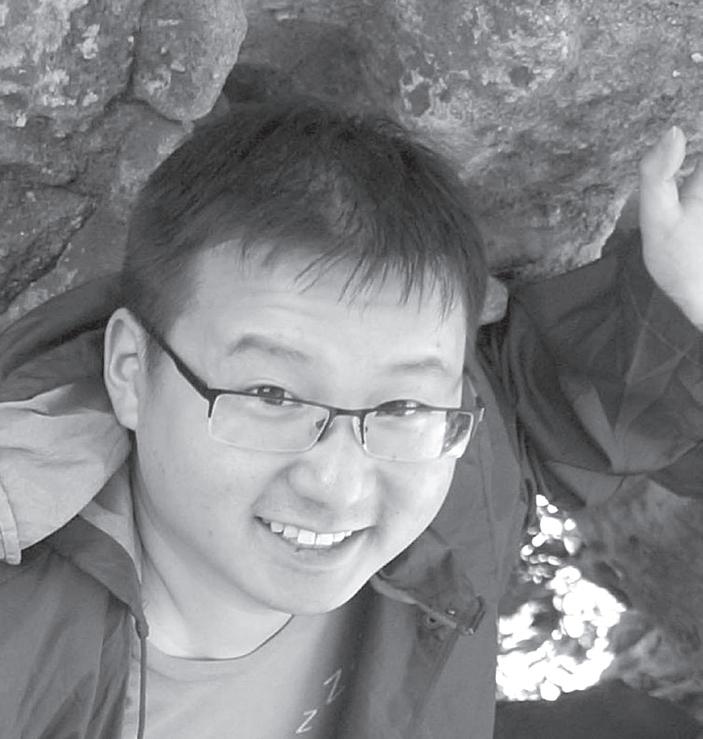
tiatives to improve high school graduation rates in Cameroon.
“The baccalaureate exam is super critical to getting professional jobs and higher education,” Poon said, referring to the
Cameroonian equivalent of a high school graduation exam.
Poon said he wanted to give students regular messages to motivate them to study during their unstructured study month between the end of high school and before the baccalaureate exam.
Practice multiple choice questions for the exam were sent a few times a week to students from the three schools participating in the initial pilot program. The goal of this system was to provide “study materials, a constant, regular reminder, and feedback on their scores,” Poon said.
Seven Cameroonian teachers, selected by the Cameroon Ministry of Secondary Education, volunteered to write the questions and were paid for their time, said Poon. Students could receive messages through SMS and Whatsapp platforms. With 80 percent of Cameroonians owning cell phones, the mobile platforms are an accessible, ubiquitous technology option.
Alongside collecting quantitative data about usage for his test preparation technology, Poon also conducted focus groups and surveys to gather qualitative data.
Poon worked with the Projet D’investissement En Capital Humain foundation, an NGO dedicated to supporting youth as they transition from school to work, according to their website. The PICHNET foundation partners with the Cameroon Ministry of Higher Education and Ministry of Youth Affairs. With a focus on education, it conducts surveys and inter-
ventions.
“We are surveying high school students as they graduate, looking at their aspirations and the social and risky behaviors that they engage in, and what they feel their future can be,” Poon said. The survey also included questions about technology usage that Poon developed.
Besides his test preparation program, other interventions have included vocational training and a summer program providing life planning, leadership training and technology training.
Despite potential security challenges, according to Poon, he is planning to continue his work in the capital region of Yaoundé.
Once the research from the pilot program is published, the data will be presented to stakeholders in the process, including the Ministry of Secondary Education. A larger scale intervention is planned to include 40 to 50 schools, up from the three which are currently participating. During this larger scale intervention, changes will effect the data collection process and will incorporate students’ feedback on the function of the quizzes. The quiz will be run over a longer period of time, starting during the school year to allow for teacher support.
Tamara Kamis can be reached at tnk8@cornell.edu.
Cornell iGEM: Furthering Synthetic Biology Research
By SHRIYA PERATI Sun Staff Writer
Biological engineering is a up-and-coming area of research with broad applications ranging from protein engineering to prosthetics. And here at Cornell, a group of students are working — and competing — to develop biological engineering solutions to solve a diverse set of scientific challenges.
Cornell’s branch of the International Genetically Engineered Machine is a multidisciplinary undergraduate research project team comprised of more than 40 students from four colleges at Cornell. The Cornell iGEM team, supervised by Prof. Jan Lammerding, biomedical engineering, builds projects that solve real-world problems with a heavy emphasis on synthetic biology — a branch of biological engineering that aims at the redesign of biological systems that do not already exist in the natural world.
Members of Cornell iGEM compete against hundreds of other iGEM teams from around the globe each year in the iGEM Giant Jamboree, an international synthetic biology competition held in Boston. At this October’s competition, Cornell iGEM’s project “Oscillate” involved developing a band-pass filter to aid in frequency-based signal response.
band, thus mirroring an electronic band-pass.
“This was the first time the team explored a topic that aimed to further the foundation of synthetic biology rather than build a product for a more specific synthetic biology problem,” Gopal said. Their project earned the team a bronze medal classification at the Giant Jamboree.
Although biological band-pass filters have been built before, Gopal said that none truly mimic an electronic bandpass in that they all rely on amplitude-based inputs and thus only provide a simplified binary response. She said that Cornell iGEM’s system serves as a true filter and produces a quantifiable output that oscillates in time when fed an oscillatory temperature signal.
coli and solve real-world problems,” said Amy Zhong ’20, lead of the wiki and design subteam. The wiki and design subteam codes and designs the competition website, which factors into the scores awarded at the Giant Jamboree.
Zhong explained that the policy and practices subteam examines the impact of the project through community engagement and collaborations, while business creates marketing plans for the project and finds ways to generate funding for the team.
“Product development applies design thinking and various engineering disciplines to build user-centered applications related to the foundational idea of our project,” Zhong continued.
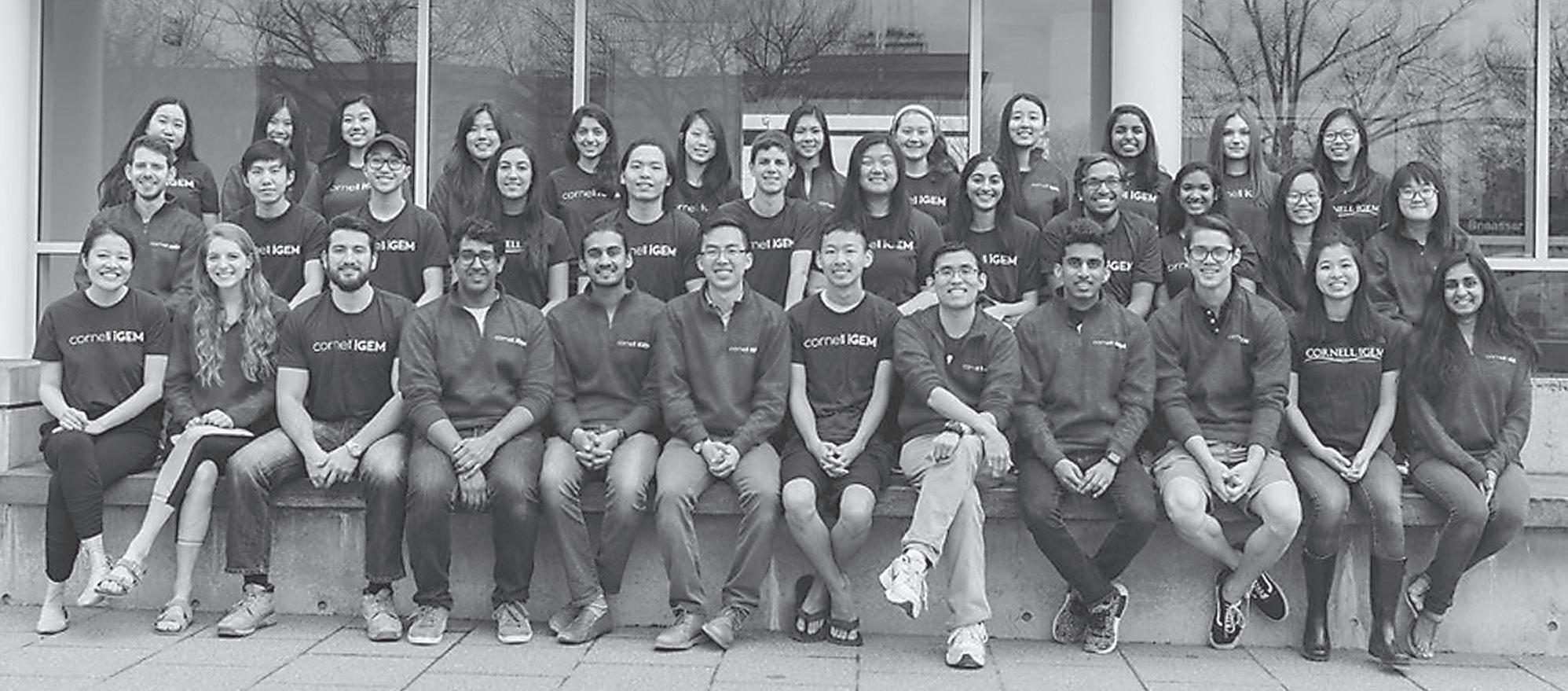
“Our team worked to create a novel biological system to respond to oscillatory signals and filter those signals,” said Saachi Gopal ’20, business lead for Cornell iGEM.
According to the team’s website, regulating frequency response can be challenging as most biological systems are not equipped to handle frequency-based signals. In addition, frequency-based signals tend to be noisy and lack fine resolution.
Cornell’s iGEM team sought to combat these challenges by developing a novel band-pass filter, which selects only for signals of an intermediate frequency that fall within an allowable “band” — and removes signals that fall outside of this
“We built a robust model that not only models the system effectively using new methods and a proof-based approach, but is also a modular tool available for synthetic biologists to use in the future,” Gopal said.
Cornell iGEM meets as a team once per week and is broken down into five subteams, each of which is responsible for different components of the project. The five subteams include wet lab, policy and practices, product development, wiki and design, product development and business.
“Wet Lab is at the heart of the synthetic biology component for our projects, utilizing standard techniques in molecular biology and chemistry to clone DNA segments into E.
The group has competed in the Jamboree several times before, and has won several gold medal classifications in addition to this year’s bronze.
In 2015, iGEM’s project was “fishPHARM,” which won awards for best supporting entrepreneurship, best environmental project and best applied design.
“FishPHARM is a novel drug delivery system and probiotic treatment for bacterial coldwater disease,” Zhong said. The fishPHARM project included an app that monitored nutrient concentration in fish hatcheries.
In 2017, Cornell iGEM worked on a project called “Oxyponics,” which was awarded Best Supporting Entrepreneurship at the 2017 Jamboree.
“Oxyponics is a biologically integrated hardware system that uses oxidative stress to boost hydroponic crop yields,” Zhong said, referring to the method of agriculture that substitutes soil with water and nutrients.
Cornell iGEM is still in the process of brainstorming project ideas for their 2019 project and will be recruiting new team members this month.
Shriya Perati can be reached at sperati@cornellsun.com
POON, GRAD
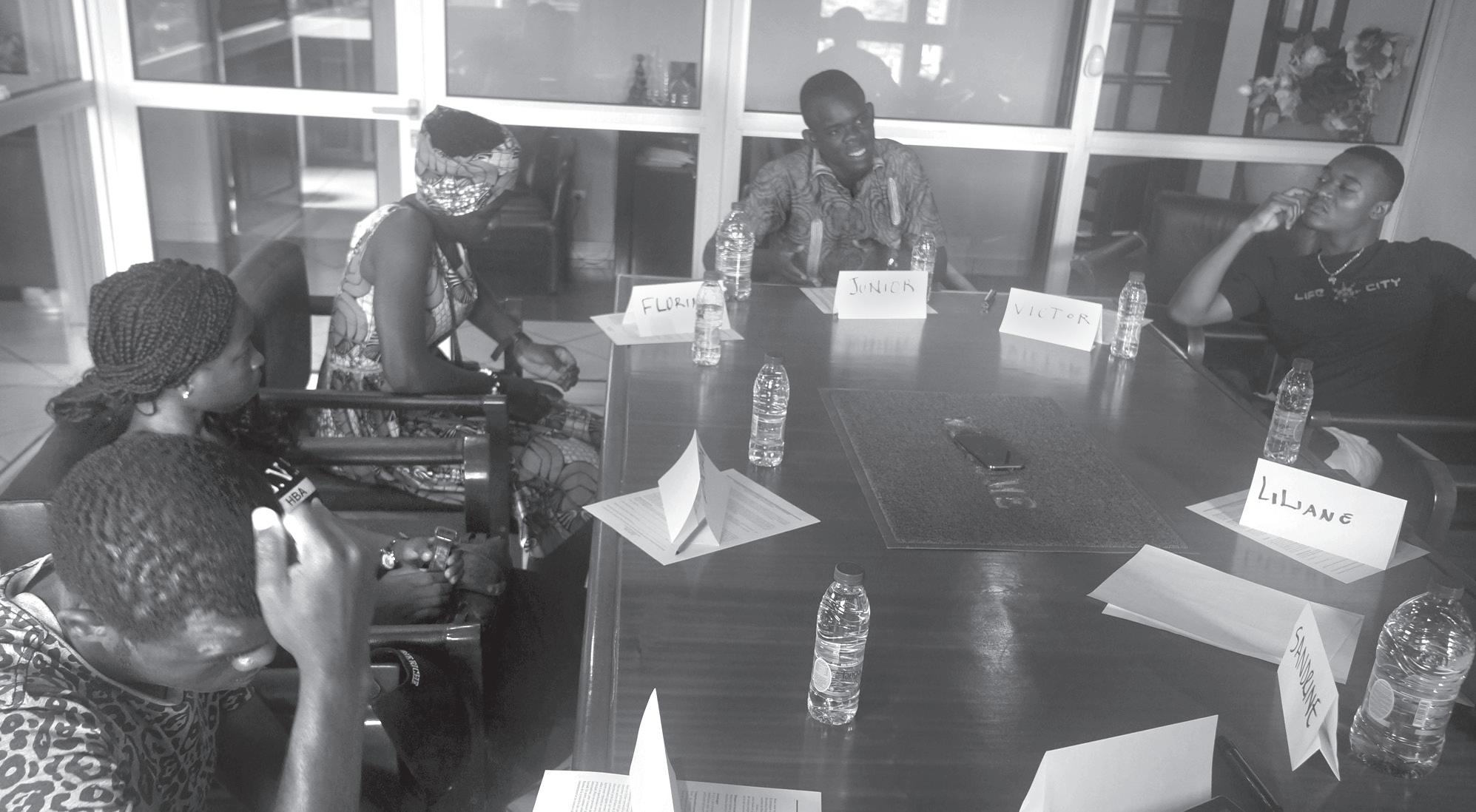
Test preparation | A focus group in Yaoundé, Cameroon in the office of a local affiliate.
COURTESY OF ANTHONY POON
Synthetic gems | Current members of 2018 Cornell iGEM team gather in front of Weill Hall
COURTESY OF SAACHI GOPAL’20
ARTS& ENTERTAINMENT
The Sun’s Top 10 Movies of 2018

Black Panther
Groundbreaking. That word alone could be used to describe the phenomenon that is Marvel Studios’ Black Panther. The film broke record numbers across box offices around the world.
Primarily notable for its exemplary, mostly black, cast, the film was also praised for its set designs, costumes, special effects and soundtrack while its cultural significance knows no limit and has drawn praises from the likes of President Barack Obama. A film that advances African and African-American representation along with political issues very relevant in our world today, Black Panther is revolutionary and will remain so for years to come.
The mind-bending acid trip that director Alex Garland vomited into our eyeholes is truly a fantastic movie to experience. Based on Jeff VanderMeer’s Southern Reach trilogy, the film provides haunting scenes containing mutated animals and disturbing, graphic imagery, as well as the self-discovery of its characters. Even if you don’t appreciate the delivery, Annihilation deals with topics of insecurity and mortality to which all audience members can relate.
— Jeremy Markus
Incredibles 2 … geez, where to start? How on earth could Pixar try and follow up one of the most beloved animated movies of all time 14 years after its release? Make a truly great film that’s grown up with its audience while at the same time offering fairly cutting commentary on the very genre the first movie helped usher to the forefront of American cinema, that’s how! I’m not sure Incredibles 2 entirely lives up to the original after several repeat viewings, but the fact I even consider it close certainly warrants giving it a spot in our best of the year.
— Nick Smith
4
— Isabelle Philippe 1
Infnity War
I rewatched Infinity War on a plane this summer, planning only to skim through a few key moments. I ended up absorbing the whole two hours and 40 minutes again. Besides the scenes in which Wanda calls Vision “Viz” in an indeterminate accent, the entire movie is golden: every single time that Thor calls Rocket “Rabbit,” all the other fun pairings of characters we’d never thought would share the screen together and, of course, that ending , which was the first time that a superhero movie has genuinely surprised me in quite some time.
— Lev Akabas
Fallout , and the Mission Impossible franchise as a whole, is so, so much more than a guilty pleasure, despite what I believe to be the common perception. I think the series’ sixth installment wasn’t just the year’s best action film, but among the genre’s greatest of all time. Fallout serves as an antithesis to the increasingly cluttered and homogeneous action category, combining breathtaking practical stunt work with a compelling and somewhat surprisingly sturdy plot. Its 148-minute run-time absolutely flies by, and it kept me on the edge of my seat from start to finish even on a second viewing.
— Nick Smith
8
First Reformed is one of those films that is bigger than oneself — this haunting drama lingers in the unchartered territory of subconsciousness and raises hard questions about our very own existence. Paul Schrader certainly owes a number of debts to French director Robert Bresson, but his protagonist (a struggling pastor, whom Ethan Hawke impeccably portrays) deals with a fear that’s deeply rooted in the contemporary, when the world in which we live is falling apart in multiple senses.
— Ruby Que
Deadpool 2 holds nothing back; it is raunchy, powerful and everything in between. For the entirety of the movie, Deadpool (Ryan Reynolds) fights to regain love and family, leaving a murderous and hilarious wreck in his wake. During the end credits, Deadpool corrects all of those mistakes and renders the entire plot pointless. Could this be considered a mocking of the next Avengers movie? Absolutely. Regardless, for Marvel fans and moviegoers alike, Reynolds’s antics as Deadpool are sure to entertain.
— Peter Buonanno
9
Sorry to Bother You
Sorry to Bother You chronicles the tale of Cassius Green as he takes advantage of a telemarketing industry, using his “white voice” to get ahead, propelling his rise to the top but threatening to lose himself in the process. While most science fiction and fantasy stories are absent of the dual institutions of privilege and oppression existing in our society, this film uses those real world elements to create a striking piece of social commentary.
— Jonvi Rollins
In a passionate return to form, director Spike Lee ends BlacKkKlansman with footage from 2017 to pose a question about how far we’ve really come since the true events of the film, in which Ron Stallworth, an African-American cop in Colorado, attempts to infiltrate the Ku Klux Klan. Lee’s synthesis of different eras in United States history brilliantly shows that there is nothing particularly “timely” about the themes of his movie, which is an inspired reminder of our country’s enduring and persistent racism. BlacKkKlansman isn’t subtle, but it is also suitable for a 2018 political climate that doesn’t exactly call for subtlety.
—
Lev Akabas
10
A Quiet Place
A Quiet Place is a non-stop thrill ride with no excess fat. The movie drops us right into the action with one of the most intense opening sequences of the year, signaling the danger in store for our characters, and it essentially ends right at the climax, with one of the year’s most memorable closing shots. A horror movie in which the characters die if they make too much noise, A Quiet Place transcends its gimmick with flawless acting, detailed sound design and a heartfelt story. heartfelt story.
Lev Akabas
Holiday Season



The

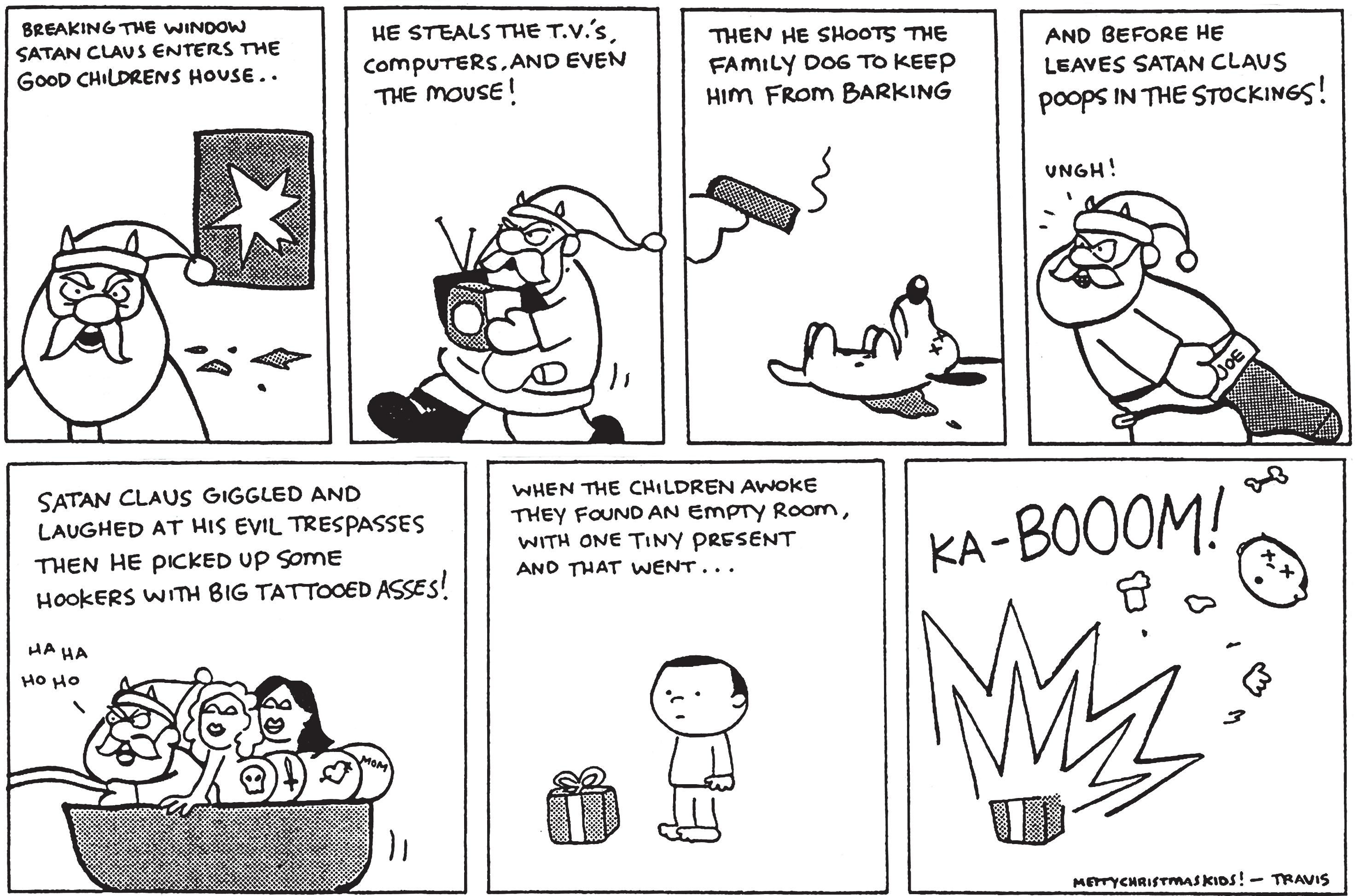
Mr. Gnu featuring Satan Claus by Travis Dandro
Mr. Gnu featuring the Abominable Snowmonster by Travis Dandro
Mr. Gnu featuring Santa Claws by Travis Dandro
Mr. Gnu featuring Jimmy the Rebellious Teenage Elf by Travis Dandro
Pogo by Walt Kelly
12 A UTOMOBILES
AUDI/VW (used) 7 Days Sales - 38 Years *Good/Bad Credit!! Service 315-789-2200 SelectEuroCars.com
23 PARKING
26 A PA R TMENT FOR R ENT
2 & 3 BEDROOMS
109 SAGE PLACE
Available NOW, Spring 2019 & 2019/2020 Shuttle Bus Access to Campus Access to Free Fitness Center Novarr- Mackesey Property Management office@ithacastudentapartments.com ithacastudentapartments.com
607-277-1234
Ithaca Renting Company
Apartments, Houses, Parking Central Collegetown Superb Panoramic Views Modern Elevator Buildings
Collegetown Plaza: Fitness Room, fantastic Cayuga Lake Views Studio, 1, 2, 3, 4, 5, 6 BRs Parking
Collegetown Center: Concierge Service, quiet building, Fitness Room Studio, 1, 2 BRs Parking
25
R
OOMS FO R R ENT
Property Management 607-277-1234 office@ithacastudentapartments.com collegetownterraceithaca.com
26 A PA R TMENT FOR R ENT
Collegetown Court: Super convenient, exceptional value Fitness room Studio, 1, 3, 4, 5 BRs Other Collegetown Locations: Apartments and Houses Dryden Road, Eddy Street, Buffalo Street 2, 3, 4, 6, 8, 10, 14 BRs Parking
Rent Smart. Live Well. 607-272-3000 Visit our office at: 119 Dryden Road www.ithacarenting.com
WESTBOURNE APARTMENTS Studios and 3-5 bedroom apartments available! 1. Walk to classes and Center Campus amenities in minutes 2. Units with dishwashers, fireplaces, and two bathrooms available. 3. On-Site Laundry 4. Free high-speed Roadrunner Internet and Cable 5. On-site parking 6. Furnished with TVs 7. Very competitive pricing Call us (607)257-0313 for details or to schedule a tour!
Houses, Apts, Parking 1 to 9 Bedroom
Collegetown - College Ave, Linden Ave, Dryden Rd, Bryant Ave, Cook St. 607-330-2442 info@urbanithaca.com www.urbanithaca.com
COLLEGE AVENUE 1 BEDROOMS 607-272-3389 avramisrentals@aol.com
DRYDEN SOUTH CollegeTowns Best Address Now renting for 2019 Visit DrydenSouth.com for details Email
Nicest Apts. in Collegetown Located on Eddy St. 4 Bedrooms Fully furnished. Spacious living areas with large bedrooms & closets. Hardwood flors, spectacular views, eat-in kitchens with additional sun rooms. Laundry & parking. 607-339-1137 bgm900@gmail.com
*****************************
RENT NOW, GET THE BEST www.MatoulasHouses.com
Apartments & Houses In Collegetown LINDEN AVE & E. SENECA ST 3 BEDROOM APARTMENTS ALL FURNISHED EMAIL: MatoulasHouses@Gmail.com PHONE: (607) 339-9644 FIRST-COME, FIRST-SERVED *****************************
312 College Ave
Collegetown’s Best Address Now leasing for 2018-19. Superior Studio, 1, 2, 3 Bedroom Apartments. Fitness facility, theater, and meeting space. Free high-speed internet. Exclusive resident parking. Overnight concierge. Package delivery. 312collegeave.com 607-273-9777
Collegetown Terrace Apartments INSPIRED LIVING TAILORED TO YOUR SUCCESS 24-Hour Fitness Center Shuttle Bus Service to Campus Study Rooms w/ Expansive Views
Apartments Available NOW, Spring 2019 & 2019/2020 Novarr- Mackesey Property Management collegetownterraceithaca.com office@ithacastudentapartments.com 607-277-1234
Campus Hill Apts. We are not near the campus, We are ON WEST CAMPUS. 1-4 bedroom apartments available! Features include: 1. Brick fireplaces and balconies 2. Brand New On-Site Laundry 5. Free high-speed
Very competitive pricing Call us (607)257-0313 for details or to schedule a tour!
>>AFFORDABLE, QUALITY LIVING<< Special Deals for you! Furnished 1-6 Bedrooms Collegetown Apartments PARKING, LAUNDRY, UTILITIES! (607) 273-7368 www.IthacaApartmentRental.com
We have availability for the 2019-2020 school year beginning June 1st at Hudson heights apartments. The studio apartments come with: heat, water, and electricity included. There are garbages houses and coin-operated laundry facilities on site. Prices start at $750/month for a 12 month lease. If you have any questions or would like to schedule a tour contact us by phone 607-208-7660 or email: renting@ithacaLS.com
201 WYCKOFF AVE 6 Bedroom House Novarr-Mackesey

Memorable Fall Semester Moments
NOW & Spring 2019 Novarr-Mackesey Property Management office@ithacastudentapartments.com ithacastudentapartments.com 607-277-1234
ITHACA-APARTMENTS.COM Lock in 2018 Rate Today Rent at any of out 7 communities Call 607-257-3311
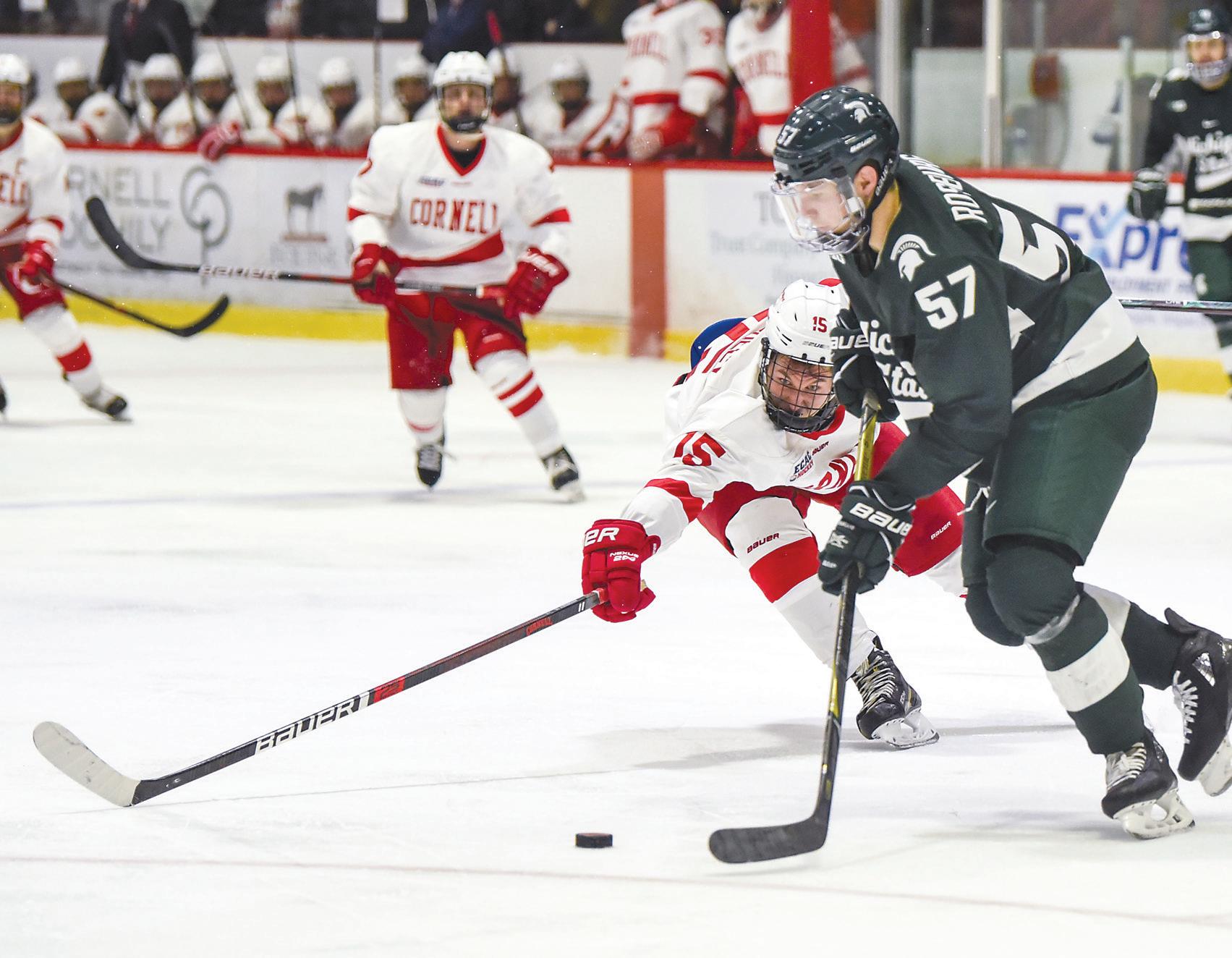
Slow start | Freshman center Max Andreev makes a play on a Spartan player during Michigan State’s sweep of Cornell to start the season.
BORIS TSANG / SUN ASSISTANT PHOTOGRAPHY EDITOR
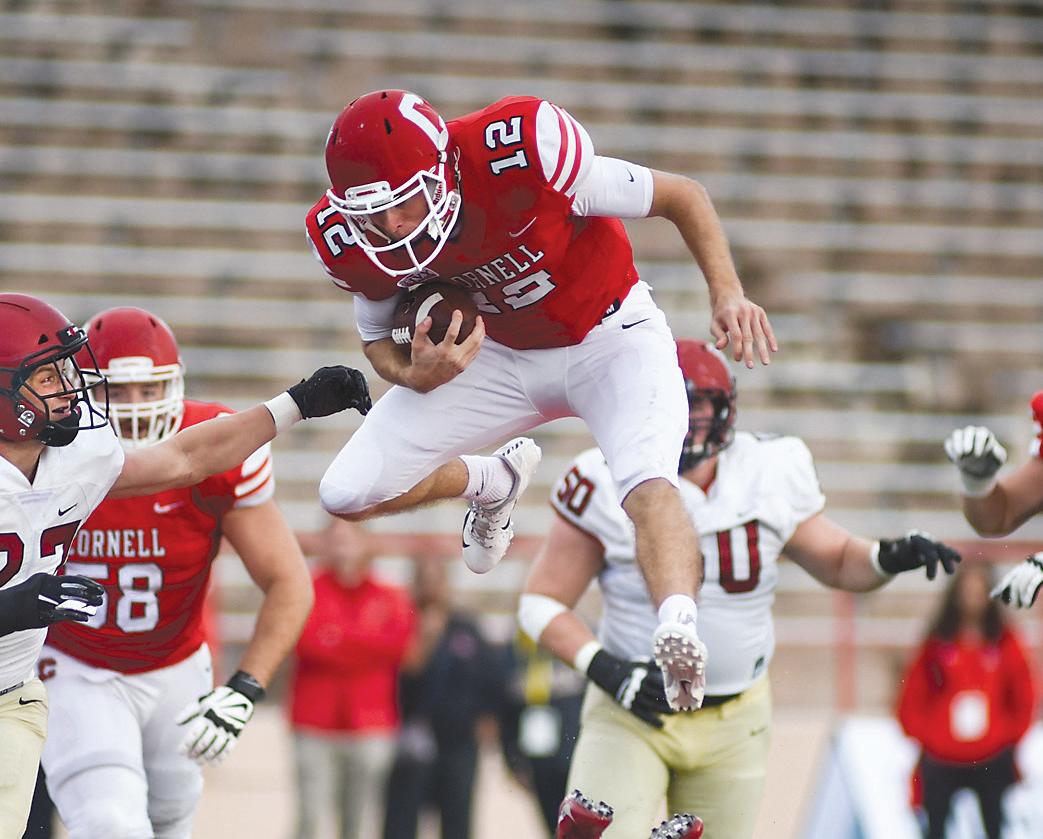
Upset | Junior run-first quarterback Mike Cantanese leaps over a Harvard defender in the Red’s victory over the Crimson at Schoellkopf.
BORIS TSANG / SUN ASSISTANT PHOTOGRAPHY EDITOR
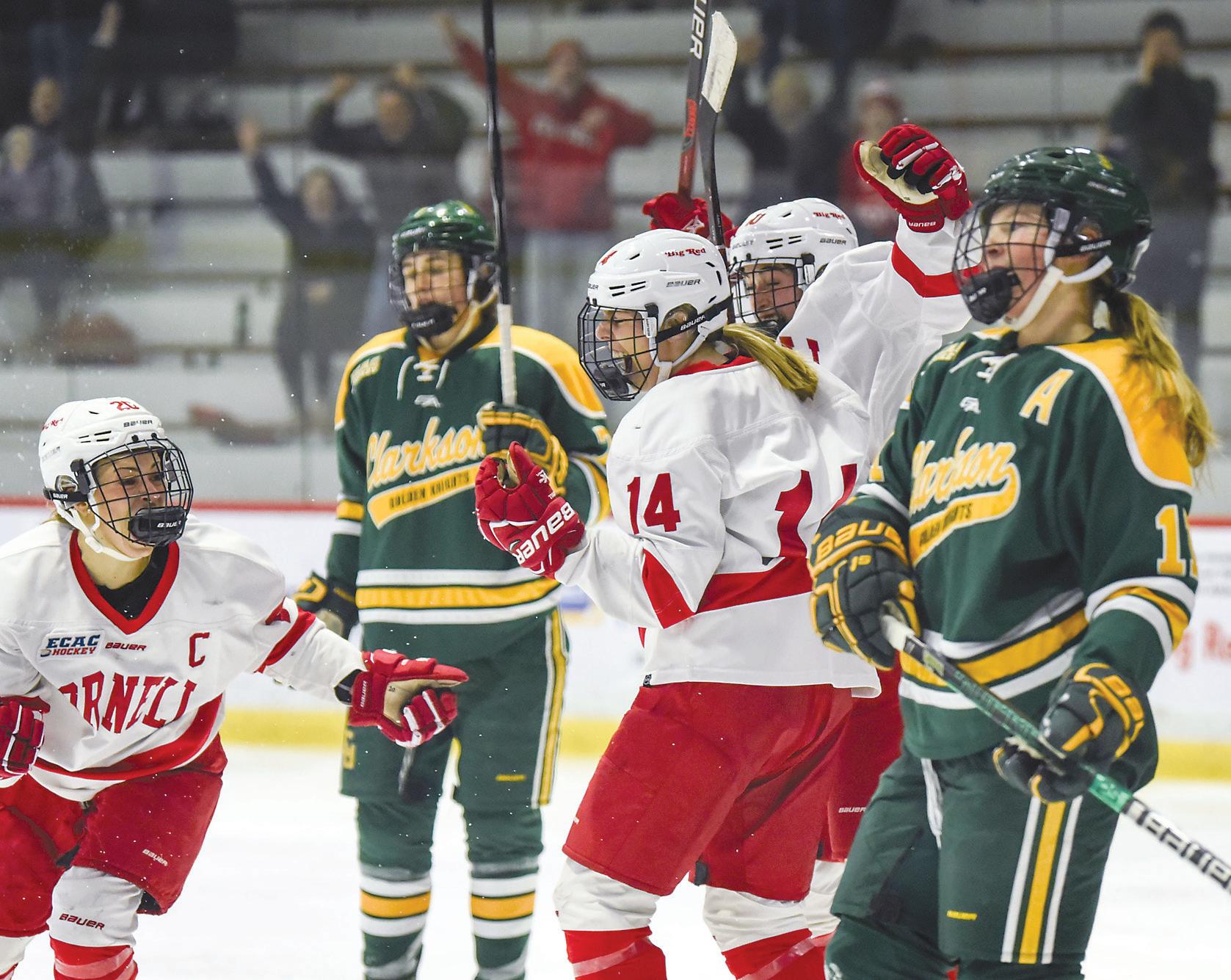
Sweet victory | Juniors Kristin O’Neill and Jamie Bourbonnais celebrate during Cornell’s win over defending national champions Clarkson.
BORIS TSANG / SUN ASSISTANT PHOTOGRAPHY EDITOR
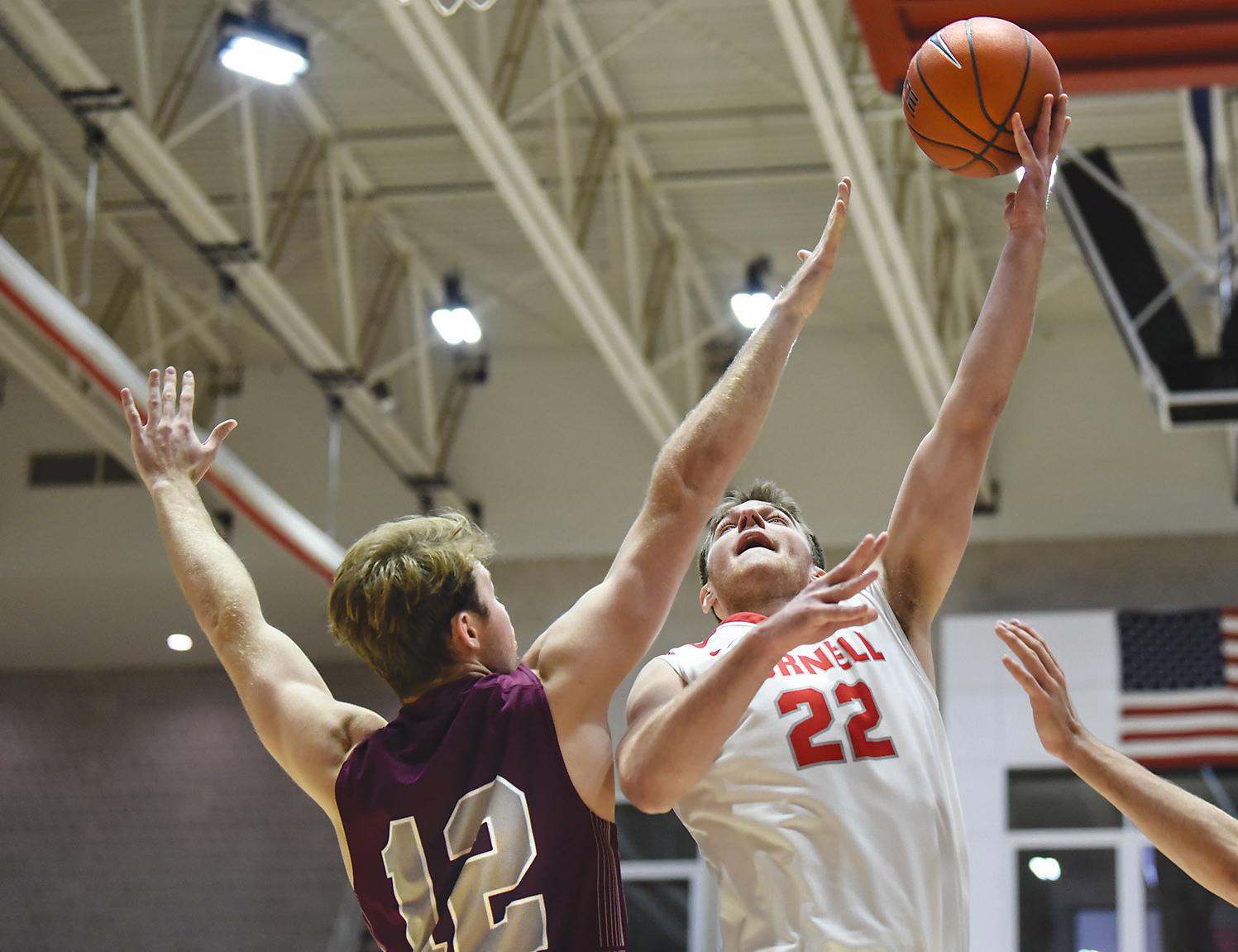
To the hoop | Junior forward Josh Warren elevates for a layup in Cornell’s early-season loss to Colagate at home.
BORIS TSANG / SUN ASSISTANT PHOTOGRAPHY EDITOR
MEN’S HOCKEY
C.U. Fans Turn Out at Harvard In Annual Cambridge Tradition
By ZACHARY SILVER Sun Senior Editor
CAMBRIDGE, Mass. — Fans
filled the stands for pregame lineup announcements with newspapers held high. After highlights showed on the jumbotron of last week’s game at Madison Square Garden — a 4-1 win for the home team — boos poured down. The Big Red Pep Band played, and seemingly everyone knew how to clap along.
The only thing missing was the fish.
The scoresheet might have said Saturday’s 2-1 win for Cornell men’s hockey over Harvard took place in front of a sold out crowd in Cambridge, but it certain-
ly didn’t favor the home team.
As they do every year, traveling Cornell fans and the strong alumni base in the Boston area combined to make their presence felt in a vengeance-driven win at “Lynah East” — the moniker Cornell fans have given Harvard’s BrightLandry Hockey Center.
“They pretty much have a home crowd wherever we play them,” said Harvard forward Michael Floodstrand.
For an injury-riddled Cornell team that, after a 3-2 loss to Dartmouth Saturday, faced the possibility of entering the mid-season break under .500, the road crowd support couldn’t have come at a better time.
“We knew the combination of beating them at Madison Square Garden last week and them losing last night, that we would get a hungry, determined Cornell team,” said Harvard head coach Ted Donato.
“It was incredible,” sophomore goalie Austin McGrath, who notched his first career win on Saturday, said of Lynah East. “The crowd really brings a lot of energy, and they kind of keep you going throughout the game. When things are tough they bring you back up a bit.”
A community of Cornell hockey fans — some current students making the trip, some alumni, some parents, some just fans of
Cornell — mark one day a year to fill Bright-Landry with carnelian and white.
The community that makes up Lynah East changes by the year. But there are some members that make sure nothing gets in the way of Cornell-Harvard by the coast.
Pat Boldrighini M. Eng ’10 and Joerg Werner Ph.D. ’16 are two such members. The duo which met in grad school in Ithaca became enamored with the rabidity of the Lynah Faithful on East Hill. Since their time in Ithaca, the Boston-based friends have made it an event to go to Lynah East each season.
“It’s probably my favorite away rink to play at,” Cornell senior defenseman and alternate captain Matt Nuttle said of Bright-Landry last Tuesday. “As a team it’s always an exciting game, being a rivalry game. … Lynah East, it’s awesome when we get to see the support on the road.”
“They pretty much have a home crowd wherever we play them.”
Harvard’s Michael Floodstrand
It’s not quite up to par with the Lynah they know and love, but it’s close, they said.
“When I came two years ago, I was told it was all going to be Cornell fans,” Werner laughed. “There’s no Harvard fans.”
“I was surprised how much more passionate the Cornell fans are than the Harvard fans,” Boldrighini said.
And the Red loves playing in front of a Cornell-biased crowd just as much as the crowd enjoys seeing a Cornell team in Boston.
Boldrighini and Werner might not be there for the third installment of CornellHarvard in the 2018-19 season, which is set for Jan. 18 in Ithaca. Regardless, they know if the support they see in Boston is even a fraction of what goes on in Ithaca, the team will be in good hands.
And Harvard, meanwhile, is looking forward to exacting its own revenge in front of an even more raucous Cornell fan base.
“We didn’t really talk about it much, but all of us knew it,,” Floodstrand said of the Harvard seniors playing their last home Cornell game. “But it’s nice to know we have them at their home rink in January.”
Zachary Silver can be reached at zsilver@cornellsun.com.
Red Improves in Early Games, Looks to Future
By ROBERT LI Sun Staff Writer
Entering the 2018-2019 Season the Cornell men’s and women’s squash teams have a lot to look forward to.
With the men’s team coming off a 6-15 season marked by inconsistency and a 10-9 showing by the women’s team that ultimately lost momentum nearing the home stretch of the season, the teams will look to both veteran leadership and new young talent to take the next step.
The story of the men’s team this season will no doubt be following the addition of the new 2018 freshman class composed of Charles Culhane, Alex Dworetzky, Nicholas Göth Errington, Nikhil Arjunan Iyer, Thomas Mocorrea and Henry Robbins, as the men (currently ranked 16th overall) attempt to make another push toward the top of the national rankings.
For the women, the incoming recruiting class of freshmen Steph Tan, Tory Huchro and Lily Zelov will be an instrumental part of the team’s rebuilding efforts. With five seniors graduating this past summer, the team has now lost four of its top five players, and heads into a rebuilding period currently seeded eighth in the country. Despite four losses for the program this past weekend,
with the men falling 5-4 to No. 11 Virginia and 7-2 to No. 5 Columbia, as well as the women losing 6-3 in two close encounters with No. 13 Virginia and No. 7 Columbia, head coach David Palmer remains optimistic about the remainder of the season.
“I feel like the team is in a much better position this year to challenge and move up the rankings,” Palmer said of the men. “We can take comfort with the fact that we came very close to challenge very good teams. Two of our players lost 11-9 in the fifth, and overall I’m proud of the effort that both teams put in this weekend”.
Indeed, the men led the match, 4-3, before losing two close contests, 11-9, in the fifth to Virginia. With little rest the next day against Columbia, the Red again put up a good fight, ultimately falling in a lopsided contest to the Lions. Despite the loss, Palmer commended the team’s effort, praising freshman No. 2 Charles Culhane for his 11-8, 11-6, 11-5 win over Virginia’s No. 2 Toby Hansford.
With a smattering of recruits scheduled to arrive in the coming year, the women’s early struggles, while expected, have also been surprisingly encouraging.
“The girls have stepped up,” Palmer said. “It was a little bit frustrating because we had chances to close out the
match [against Virginia] but we were ultimately unable to. Similarly with Columbia on Sunday, we had our chances early but we were unable to keep up the momentum through the contest.”
Praising the effort from the freshmen like Lily Zelov, who, at the No. 2 position, stepped up to beat Virginia’s Caroline Baldwin, 11-7, 12-10, 11-7, Palmer remained positive about his young team.
“Lily has shown really good potential as a freshman so far, and she’s had a really great start,” Palmer said.
Despite the losses, Palmer was also quick to mention the positive outlook for the women’s program.
“I have one big international recruit coming in from Malaysia in the spring,” he said. “She will no doubt be one of the strongest players in college squash, and she will certainly improve our team”
For the remainder of the season, the men will look to push closer into the top 10 in the nation, targeting the 10-12 range. Entering a rebuilding phase, the women’s team will attempt to replicate its top-8 national finish while still grooming its younger players to succeed in the future.
Robert Li can be reached at robertli@cornellsun.com.
SQUASH
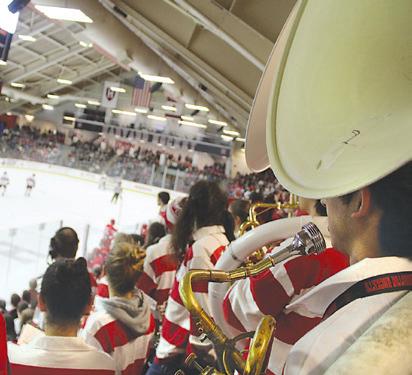
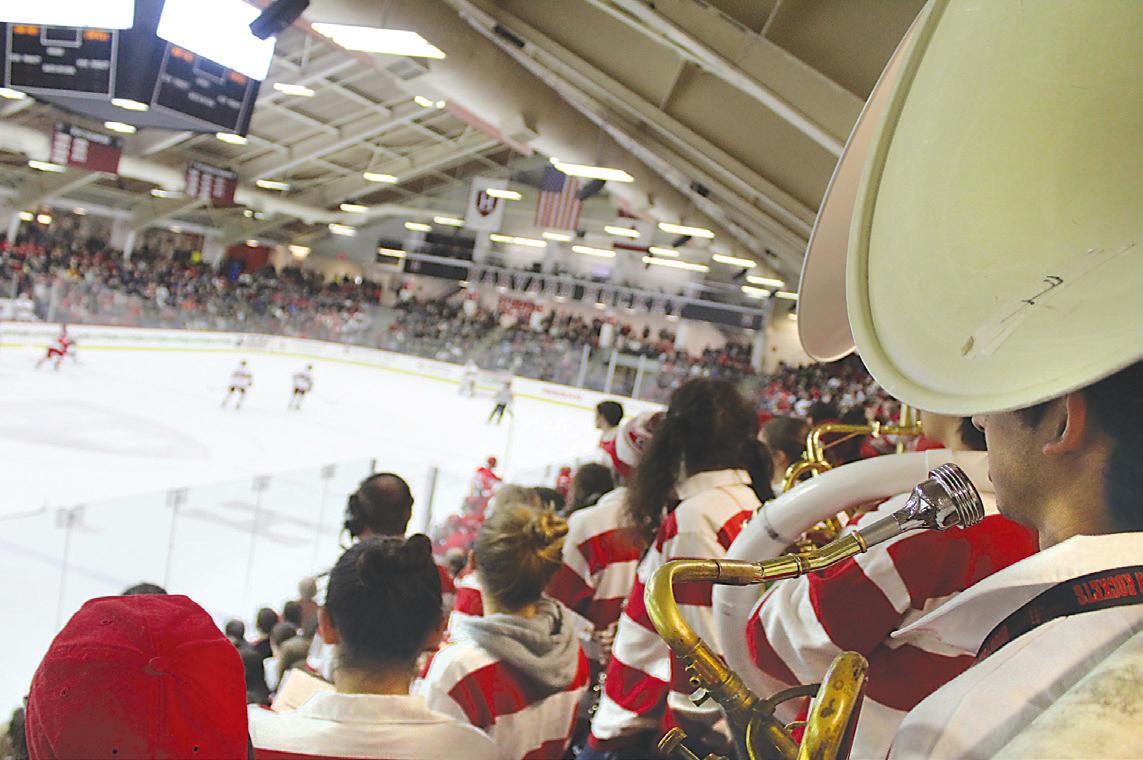
Lynah East | The Big Red Pep Band plays the tunes fans are used to at Lynah Rink as a Cornell-biased crowed descended upon Cambridge, Massachusetts.
ZACHARY SILVER / SUN SENIOR EDITOR
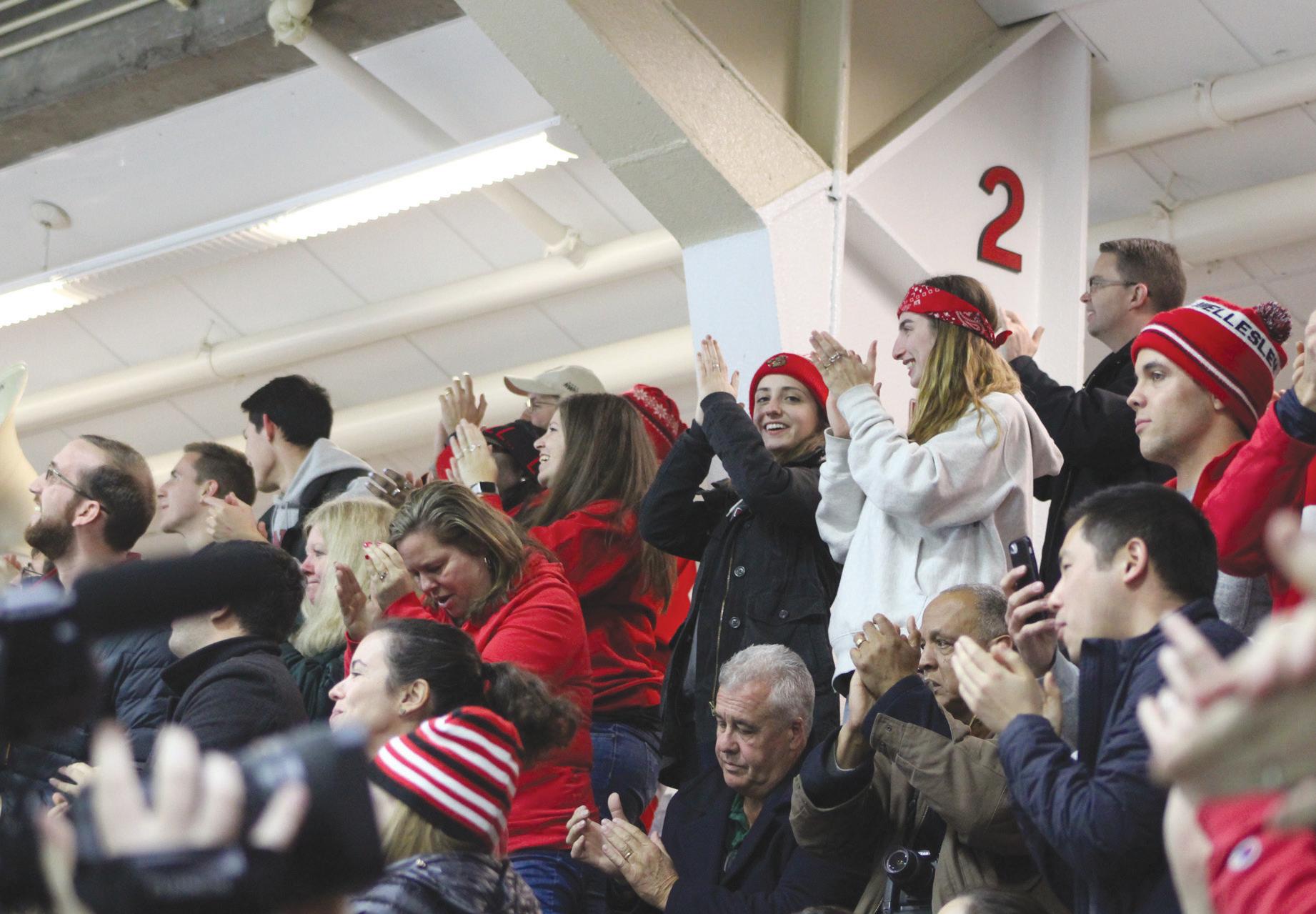
Home away from home | Cornell men’s hockey fans descended upon Cambridge on Saturday, repeating an annual tradition in which the Red enjoys a friendly crowd at Harvard’s Bright-Landry Hockey Center.
ZACHARY SILVER / SUN SENIOR EDITOR