The Corne¬ Daily Sun
undeveloped land. Now, increased construction threatens views of the


undeveloped land. Now, increased construction threatens views of the
By JOHN YOON Sun Senior Writer
On a lucky Friday night, you might be able to see Jupiter’s bands, and even some of its moons, through the telescope at Fuertes Observatory. But such a clear view of the night sky might soon be harder to get from Cornell.
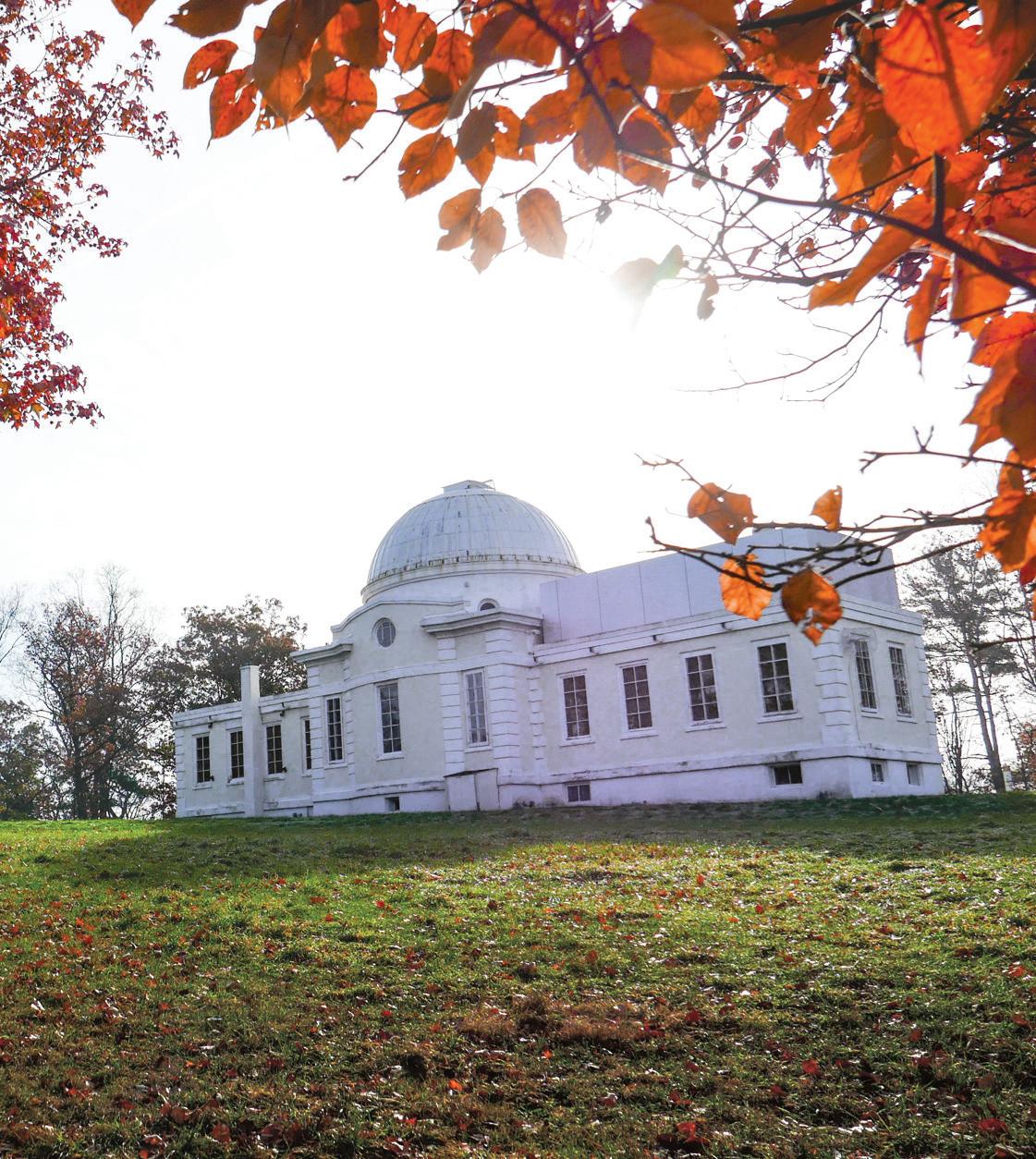
Construction plans for the new residential halls on North Campus, slated to begin in 2019 once approved, are concerning Cornell astronomers about light pollution at Fuertes Observatory — home to a 96-year-old refractor, the Irving Porter Church Telescope, into which visitors can gaze on clear nights during the Cornell Astronomical Society’s weekly open house nights.
“Undoubtedly the new buildings will contribute to the light pollution,” said Prof. Phil Nicholson, astronomy,
By MATTHEW McGOWEN Sun Senior Editor
The Ithaca Common Council voted 9-1 Wednesday night to approve the $76,419,721 2019 City budget, increasing spending on infrastructure and gleaning more revenue from Cornell and other major commercial property owners through stormwater fees.
The Council spent the past several weeks taking input from city departments and the public to iron out the final budget, but ultimately did not grant funding requests from the police and fire departments for additional officers.
Under the new budget, property taxes will see a 44 cent decrease per $1,000 of assessed value, down to $10.60 from $11.04 in 2018. The loss will be offset by a 2.91 percent increase in the
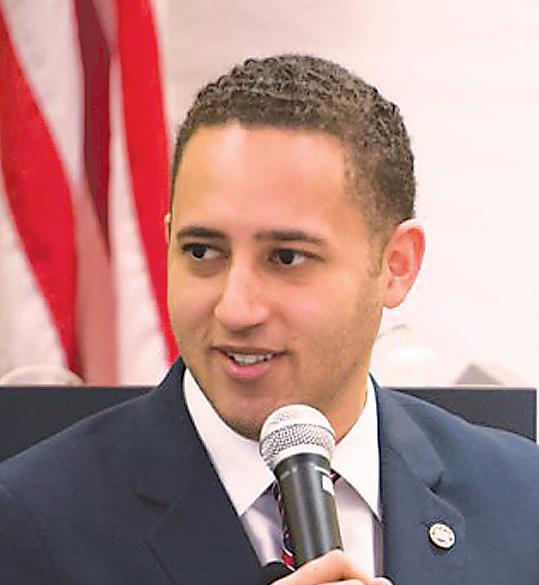
overall tax levy, according to The Ithaca Voice. The budget includes approximately $1 million for the Department of Public Works for a new water and sewer crew and the seven-person street repair crew touted by Mayor Svante Myrick ’09, according to The Voice.
During the budget process, Myrick issued the latest iteration of the frequent criticism that Cornell does not pay enough to the city, The Sun previously reported.
“Ithaca would be a better place to live if Harvard were here instead of Cornell … the streets would be better paved, we’d have more police officers and the taxes would be lower,”
Myrick said in an interview with The Sun after an October budget meeting with the fire and police
See BUDGET

who advises the Cornell Astronomical Society. “There will be more lighting out there from windows and external lighting. It certainly won’t get better.”
Plans for the North Campus Residential Expansion project have been under community review since the project’s application report was released in July. Preserving dark skies is one concern among others that have since been raised about the project — and designers are working with the Cornell Astronomical Society to mitigate the light effects as much as they can.
A row of trees already can be seen planted on the north side of Fuertes Observatory. The trees are fast-growing to mitigate lighting from adjacent buildings, according to Chris Davenport, project manager at Cornell Facilities
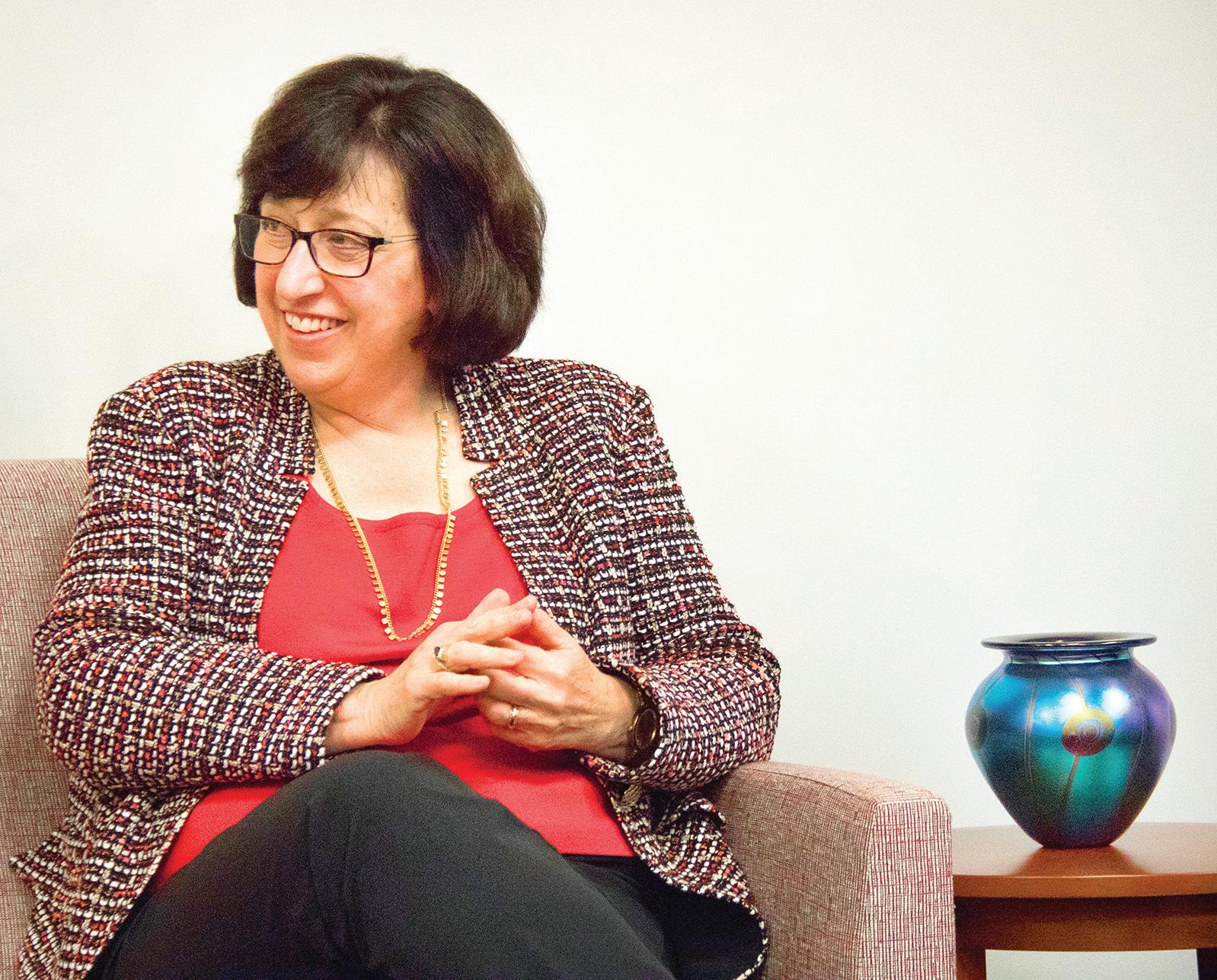
By GIRISHA ARORA Sun Managing Editor
As the early sunset on Monday evening signaled the onset of the upcoming winter, President Martha E. Pollack sat down with The Sun for her semesterly chat in her Day Hall office to discuss issues that ranged from Greek life to mental health on campus to the possibility of a football match between Cornell and No.1 ranked Alabama.
Pollack confirmed that her second year on campus has been “great,” and she said she believes that some of the things that came out of the “tumults” of the first year have helped shaped the policies and decisions of this year.
One of the major decisions taken by Pollack last semester was to implement reforms to the Greek system — the first set of comprehensive reforms since then-Presi-
dent David Skorton challenged the Cornell community to “end pledging as we know it” six years ago.
One of the reforms effective immediately was the ban on all hard alcohol (more than 30 percent alcohol by volume) from all residential chapter houses. There have been no investigations or checks to find if Greek organizations are complying with the rule, but Pollack believes it is still in “early stages” and the policy allows a certain level of accountability.
“I know there is skepticism about whether we can have 100 percent compliance, but … to me it’s a little bit like speed limits,” Pollack said. “You don’t get a 100 percent compliance with speed limits, but it still sets an expectation, and when there is a violation, there is a policy you can turn to.”
Tuesday, November 13, 2018
Econometrics Workshop: Lixiong Li
11:40 a.m. - 1:10 p.m., 498 Uris Hall
Talk With Dr. Temple Grandin
Noon - 1 p.m., Lecture Halls 4 and 5, College of Veterinary Medicine
Joanna Dreby - Everyday Illegal: When Policies Undermine Immigrant Families 1:25 - 2:40 p.m., KG70, Klarman Hall
International Coffee Hour And Open House for All Students
3:30 - 5:30 p.m., 276 Caldwell Hall
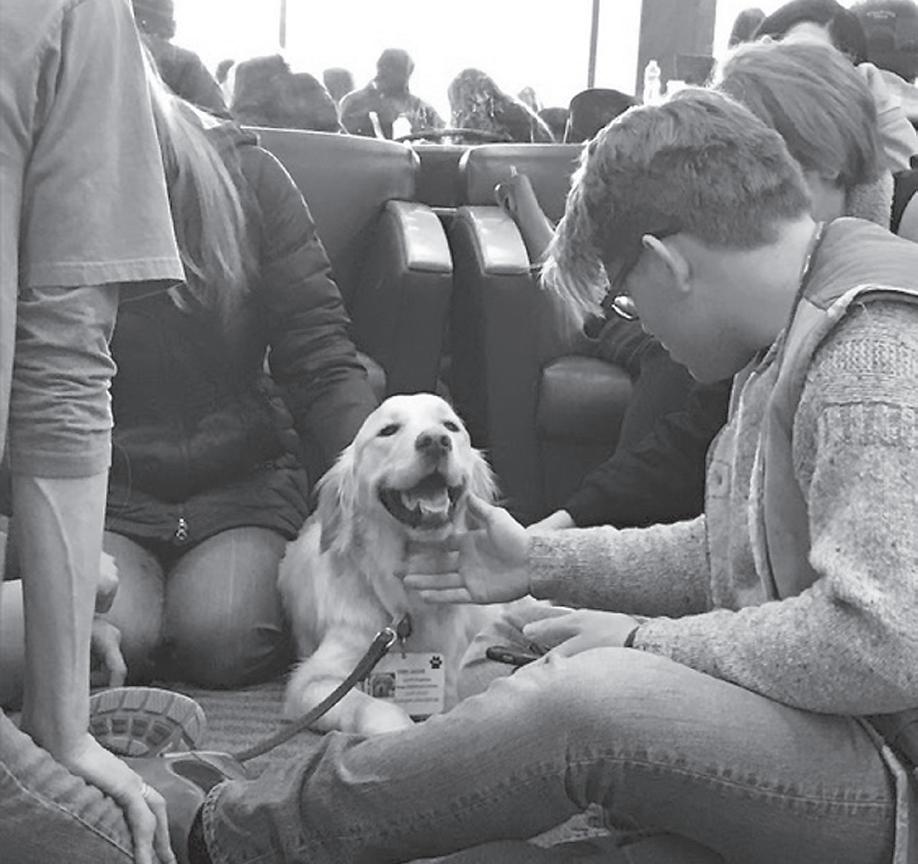
Cornell Companions Visit
4 - 8 p.m., Olin Library, Olin Lobby
The 2018 David J. BenDaniel Ethics Lecture: Dan Hesse, MBA ‘77
4:45 - 5:45 p.m., Statler Auditorium
“It Happens Here”: A Discussion of the Commercial Sexual Exploitation of Children
5 - 6:15 p.m., 201 Rockefeller Hall
Comparative Literature Fall Colloquium
5 p.m., 258 Goldwin Smith Hall
Fall Forum
5 - 7:30 p.m., Clark Atrium, PSB 120
Preparing Your Horse for Winter: Cornell Equine Seminar Series
7 - 8 p.m., 146 Morrison Hall
Green Book
9:30 - 11:30 p.m., Willard Straight Theatre
The Question of Palestine after Trump: Law, Jerusalem, and the Rights of Palestinian Refugees 12:15 - 1:15 p.m., 290 Myron Taylor Hall
Study Abroad Risk Management Keynote and Open House for All Faculty and Staff
4:45 p.m., 100 Caldwell Hall
Very Young Girls
5 p.m., 300 Kennedy Hall
California 1L Summer Internship Panel
6:30 - 7:30 p.m., 186 Myron Taylor Hall
Climates of Change Information Session
7 - 9 p.m., Schwartz Performing Arts Center, Black Box Theatre
By MATTHEW McGOWEN Sun Senior Editor
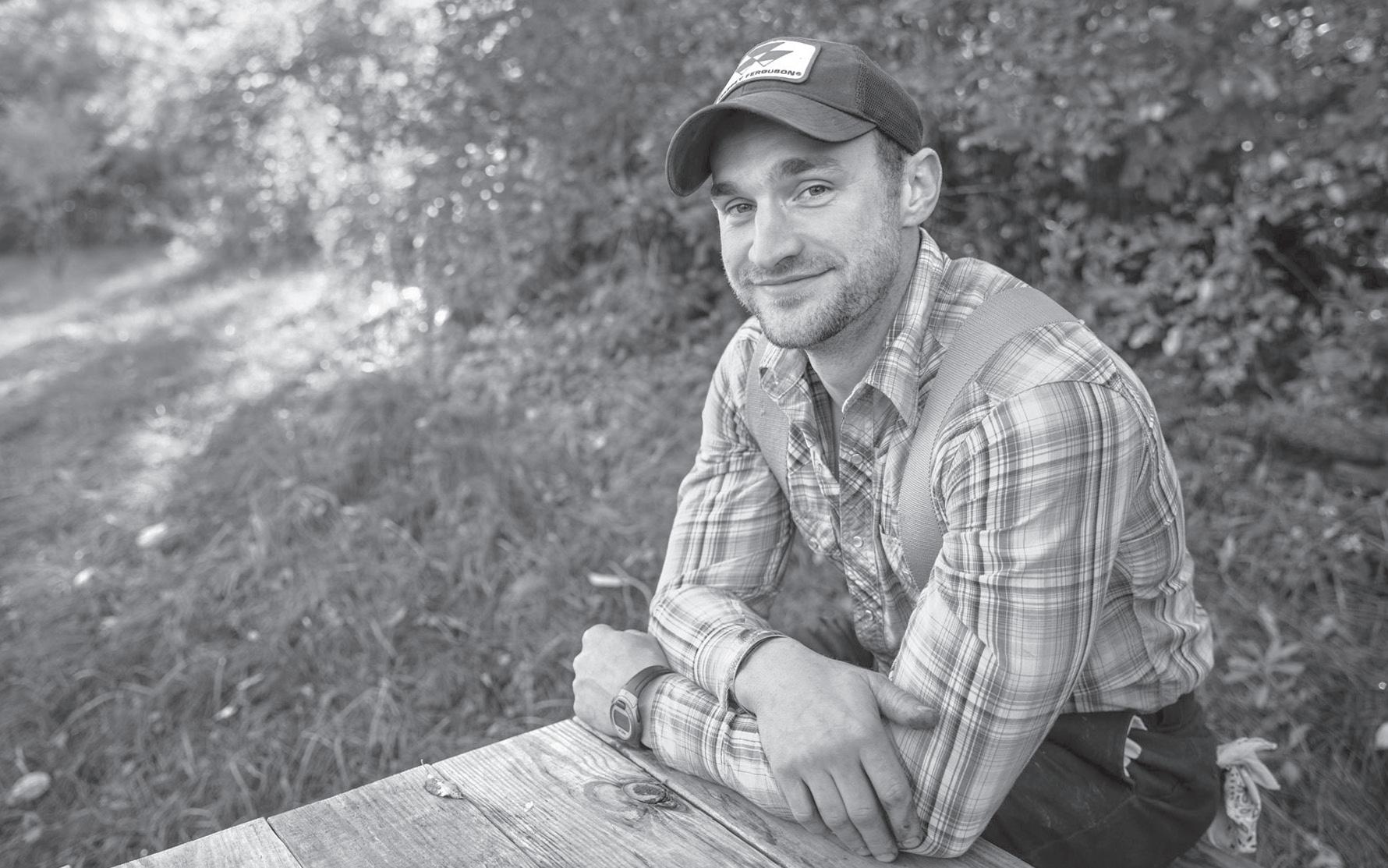
For the past three years, Cornell’s Farm Ops Program has armed veterans across New York State with knowledge and resources to become successful farmers and re-adjust to civilian life.
Farm Ops began in 2015 under the Cornell Small Farms Program and has since grown to include over 1,000 members across the state, according to a University press release. The program provides veterans with scholarships and classes for veterans looking to learn everything from maple syrup tapping to mushroom cultivation to beekeeping.
Shaun Bluethenthal ’18, farmer veteran program associate, traded in his combat boots for carrot roots after a tour in Iraq with the U.S. Marine Corps. In 2015, Bluethenthal came to Cornell to get his degree in agricultural science and joined the Farm Ops shortly after graduating.
Now, Bluethenthal helps run the program to help veterans adjust back into civilian life and learn valuable skills of the trade. According to Bluethenthal, the programs provide an education that helps veterans avoid many of the pitfalls new farmers face.
“It’s so valuable for them to be able to reach programs like this for resources and information so they don’t make these mistakes, and there’s a lot of them that they’re going to make,” Bluethenthal told The Sun in an interview.
Farm Ops Project Coordinator Dean Koyanagi has run the program since its inception shortly after the Agricultural Act of 2014, which added veterans as a special focus group along with socially disadvantaged minorities and women.
“We’ve got Vietnam era veterans who physically shouldn’t be out there farming ... to the 24-year-old veteran who’s had this plan all their life.”
Dean Koyangi
Like those the program seeks to help, Koyanagi is a veteran and a farmer. In 1987-91, he did anti-terrorism work in the Marines, and now owns Tree Gate Farm near Ithaca.
Koyanagi said that even after the Farm Bill passed, it was unclear how to accomplish the goals it set. The Veterans Administration had no means of direct support, but Koyanagi said that veterans are equipped with many skills to be successful farmers.
“There are certain things that veterans bring to farming, you always hear ‘we work hard, we can stay up late,’ well
great, that’s a cliché but it really is that you have the discipline and follow-through to push through when things are hard, and that’s farming,” Koyanagi told The Sun.
Veterans might have an extensive military skill set, but no amount of target practice will help when it comes to finding tractor repair or where to buy hay for livestock. Farm Ops connects participants with Cooperative Extension Offices available in every county to fill knowledge gaps and provide ongoing support.
Koyanagi said that Cornell has “one of the best extensions in the country.” Direct support from experts in the field has already helped farmers across the state, according to a University press release.
Koyanagi emphasized that Bluethenthal and other young farmers generally take a different route to farming than his own generation, and Farm Ops works to support a diverse range of experience levels and commercial scale.
“The trajectories are all over the map. We’ve got Vietnam era veterans who physically shouldn’t be out there farming who want to start a beehive or maple syrup, to the 24-yearold veteran who’s had this plan all their life, who grew up on a farm, so it’s totally different,” Koyanagi said.
When former Marine Corps Cpl. Walter Palmer had trouble diagnosing strange symptoms in his lamb, Italy, he turned to CCE for help. With a quick consultation and a vitamin E and selenium shot from Jonathan Barter, a farming mentor provided by Farm Ops, Italy made a full recovery.
Former Staff Sgt. Logan Yarbrough’s accounting consultation — set up through Farm Ops — helped him make his goat farm in Brooktondale a profitable operation, according to a University press release.
Cornell Farm Ops collaborates with the National Center for Appropriate Technology’s Armed to Farm program, which gives veteran farmers intensive weeklong on-site farm training.
“Having veteran-focused events, there’s this bond with veterans that will talk to each other more openly, so that brings that veteran into that community of other farmers so they’ll support them so they’ll be more successful,” Koyanagi said.
By
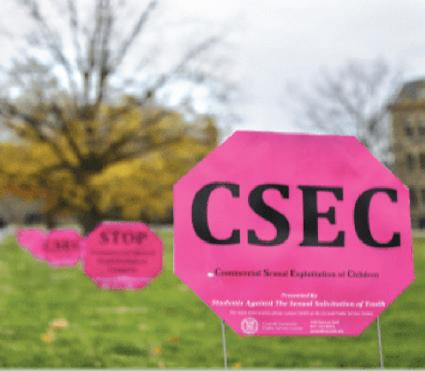
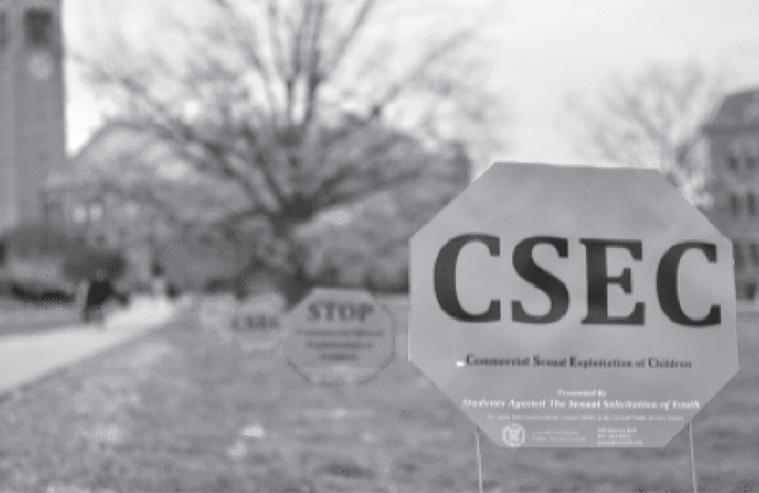
As a part of the ninth Commercial Sexual Exploitation of Children Awareness Week, Prof. Dr. Vivian Pender, psychiatry, Weill Cornell Medical College will give a presentation on Tuesday about the intersection between health care and the commercial exploitation of children.
The CSEC Awareness Week is organized by Students Against the Sexual Solicitation of Youth, a student group that aims to educate Cornell students about the issue of commercial sexual exploitation of children within the United States through workshops, discussions and movie screenings, according to the group’s website. The talk is also sponsored by the Public Service Center.
SASSY invited Pender to the University to expand the reach of awareness about exploitation within New York State and possible solu-
tions to address it, according to Zara Schreiber ’21, SASSY’s public relations chair.
“Our goal in doing this is to have more people involved in learning about this issue that is not talked enough [about] in our society, so that once they go off after this week, they can [continue] to internalize it,” Schreiber said.
According to the Facebook event page, Pender is the founder of the nonprofit organization Healthcare Against Trafficking and the chair of the NGO Committee on Mental Health.
“She has unique firsthand perspectives on the different aspects of how CESC intersects with health care and what health providers can do to help,” Schreiber said.
The president of SASSY, Darshna Anigol ’19, told The Sun that she became interested in the issue of the commercial sexual exploitation of youth after going on a service learning trip with Girls Educational and Mentoring Services, a nonprofit organization that “provides services to commercially sexually exploited and domestically trafficked girls and young women,” according to the group’s website.
There, she learned that the average age of entry into commercial sexual exploitation is about 12-14 years.
“These girls are around my age. Because of different circumstances in lives that are totally out of their control, we are in two [different] positions,” Anigol said. “I have to do my part in addressing this issue.”
Schreiber said she developed a passion for the issue for a similar reason. She had been
a part of GEMS since her freshman year of high school. After coming to Cornell and finding out about “all the incredible things that SASSY” does, she felt motivated to join the group.
Schreiber said she is “very excited” about the upcoming talk and encourages “people from all career paths to come.”
“A lot of Cornell students are very active and have a strong voice … I think this event is going to be something that would be really enriching for them to learn more about,” Schreiber said.
“It’s not just a niche topic. It’s something that really is applicable to everyone.”
Zara Schreiber ’21
“To help fix the issue … they first need to learn about it and hear about it,” she added. “It is not just a niche topic. It’s something that is really applicable to everyone.”
According to Schreiber, the Commercial Sexual Exploitation of Children Awareness Week will also involve “A World for Girls” photo campaign, where the community will share “what kind of world they want to foster for girls,” and the streaming of the documentary Very Young Girls.
Pender’s discussion will be held from 56:15 p.m. on Tuesday in 201 Rockefeller Hall.
OBSERVATORY Continued from page 1
and Campus Services.
To minimize spillover from outdoor lighting, the report also includes plans only to use sharp cutoff light fixtures, which are designed with black hoods to prevent light from radiating upwards except what bounces off the ground.
Some modifications to existing buildings on North Campus are also underway, including a plan to relocate the outdoor lighting on the roof of Mary Donlon Hall, which has caused issues with night sky viewing, Davenport said.
Davenport said the shades in Appel Commons will also be closed at night. Built less than 500 feet away from Fuertes Observatory, Appel Commons had one of the worst effects in the observatory’s history, because the light fixtures were in direct line of sight from the telescope, according to members of the Cornell Astronomical Society.
This isn’t the first time that concerns about light pollution have been raised at Fuertes Observatory, which was founded in 1917 on a land that was virtually undeveloped at the time.
Several construction projects on North Campus have previously been decided without the input of the Cornell Astronomical Society, leaving them with no option but to accept rising light levels, according to Nicholson.
While planners in the North Campus Residential Expansion project are now working with the observatory, members of the Cornell Astronomical Society previously said they were concerned that the report from July did not adequately address concerns about the new residential halls’ effects on dark skies.
“It didn’t look like there was very much attention being paid realistically to what bothered us,” Nicholson said.
Nicholson said the report on the light impacts of the new residential halls mentioned the artificial lighting that was visible from Fuertes
Observatory, but not their overall effect on the sky.
The report cited findings from a light analysis completed in 2001, which showed “significant existing ambient light levels on the west side of the observatory reaching it from a variety of sources in the City and Town.” It also stated that “the greater contributor of ambient light in the primary south-facing stargazing direction was determined to be lighting at the Sackett Foot Bridge location near Beebe Lake.”
The light analysis did not include quantitative measurements of the light pollution, which Riley Jacob ’21, vice president of the Cornell Astronomical Society, said can be measured using an inexpensive tool — the sky quality meter — that reads the surface brightness of the sky.
What the report misses, Nicholson said, is the fact that even light fixtures that are not visible from the observatory scatter off the haze in the atmosphere, making viewing of “deep sky” objects difficult.
While you could still see the moon and the planets, with increased ambient light pollution, some objects — like the Saturn’s rings — would fade away into the background of the scattered light.
The report also appeared to make an implicit assumption that the observatory only looks into the southern sky, Nicholson said.
However, Nicholson and the Cornell Astronomical Society said they were relieved that planners of North Campus Residential Expansion project were listening to their concerns and that they have since been in contact with them.
“We’re much happier now that they’ll continue to talk to us and seek out our opinion on things that will affect the light and the observatory,” said Karen Perez ’19, president of the society.
POLLACK Continued from page 1
The online scorecard — which seeks to keep a record of every chapter’s judicial history — is also “near finalization” and will be rolled out in the next few weeks. Overall, Pollack believes the reforms to Greek life have been “on track,” and she has received a higher level of support, even from national organizations, than she had expected.
Another concern that Pollack has tried to address is mental health on campus. She said that the number of Counseling and Psychiatry Services counselors has increased from 33 to 40 over the last three years, and over a “longer period” the number of staff providing support for students with disabilities has doubled.
“We’ve really been trying a number of things and yet the demand here and around the country continues to rise,” she said.
A review that looks at mental wellness more broadly, rather than just mental health response services, will take place throughout the course of the spring semester, Pollack added.
When questioned about how the academic pressure at Cornell influences the mental health of students, Pollack said that it is important to find a path that preserves the academic rigor that people come to Cornell for while balancing it with the stresses that arise.
“Cornell is a tough university. On the other hand, what I hear from alumni, including young alumni, is that they really appreciate the training they have had here, and when they get out in the real world they are extremely well prepared to deal with tough jobs,” she said.
When Pollack was questioned about how realistic carbon neutrality by 2035 was for the Ithaca campus, she said the $500 million dollar plan hinged on the success of earth source heating.
“I think right now our bets are on earth source heating. The experts we had who looked at this before I got here said that’s our only bet and we are in a cold, dark region,” she said.
Vice President for University Relations Joel M. Malina added that efforts are underway to try to identify a “Plan B,” but that currently there isn’t one.
departments.
Cornell held an estimated 59 percent of the county’s untaxed property in 2015, substantially reducing the tax revenue available to the city, according to the Democrat & Chronicle.
President Martha E. Pollack contested the idea that Cornell doesn’t pay its fair share in an interview with The Sun on Monday.
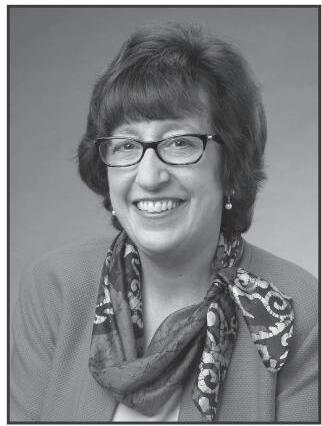
“I think it’s very important to take a holistic look at the way we contribute to the city. In addition to our payment in lieu of taxes, we have a number of buildings that are on the tax roll,” she said. Cornell is the third largest property tax payer in the county, according to Pollack.
Pollack cited other contributions as well, including money given to the public school system and nearly $4 million per year towards the TCAT bus system.
“I just think it’s unfair to look at one narrow number,” she continued.
Joel M. Malina, vice president for University relations, said that the mayor has said the “same line” in previous years in an interview with The Sun. “For some reason, this year, it got a bit more attention,” he said.
“The mayor has a constituency… there’s a political need to cater to those constituent needs,” Malina continued.
One lever the city used to glean more revenue from the University through the budget was an increase in stormwater fees, which act as a tax on impervious surfaces that cause runoff.
Until this year, all property owners paid $48 annually per Equivalent Resident Unit — a measure of impervious surface area — but in 2019 rates will increase to $57 annually for residential lots and
Continued from page 1 Matthew
$87 per unit area for non-residential lots, according to The Voice.
Alderperson Ducson Nguyen (D-2nd Ward) noted that the stormwater fee increases, which apply to taxed and untaxed property, could wrest lost revenue from the University.
“I like the fee because it’s a way of extracting value from Cornell, which otherwise doesn’t pay taxes to the city but benefits from our stormwater management infrastructure,” Nguyen said, according to The Ithaca Journal.
Cynthia Brock (D-1st Ward), the only council member to vote against the budget, hung her reservations on stormwater fees, and noted that the fee restructuring would especially hit commercial properties in her ward, according to The Ithaca Voice.
“I’m probably the strongest advocate for stormwater work among the group of us ... which is why I want to ensure that stormwater funds go to stormwater work not just under this council, but for a future council in five or 10 years,” Brock said.
An additional $5,000 to the Community Outreach Worker program was the only other item added to the budget the night of the vote, bringing the city’s total contribution to the program to $45,000, according to The Voice. The program funds a non-police peace officer to assist citizens in distress and de-escalate conflicts. Other sources of revenue include a 75 cent increase in fees for trash tags — required for each bag or bin placed on the curb — and a 94 cent per cubic foot combined increase for storm and water fees, according to The Voice.
136th Editorial Board
JACOB S. KARASIK RUBASHKIN ’19 Editor in Chief
JOHN McKIM MILLER ’20
Business Manager
KATIE SIMS ’20
Associate Editor
VARUN IYENGAR ’21
Web Editor
GIRISHA ARORA ’20
Managing Editor
HEIDI MYUNG ’19
Advertising Manager
ALISHA GUPTA ’20
Assistant Managing Editor
Working on Today’s Sun
Ad Layout Karen Jiang ’21
Design Deskers Megan Roche ’19
Krystal Yang ’21
Greta Reis ’21
Ben Mayer ’21
News Deskers BreAnne Fleer ’19
Sarah Skinner ’20
Night Desker Amina Kilpatrick ’21
Sports Desker Jonathan Harris ’21
Arts Desker Lev Akabas ’19
Science Desker Chenab Khakh ’20
Photography Desker Boris Tsang ’20
Production Deskers Krystal Yang ’21
Dana Chan ’21
Sabrina Xie ’21
Editorial

MICHAEL LINHORST / SUN FILE PHOTO
“What We Hope Shall Remain Their Enduring Memorial” | At the base of Libe Slope, inside a beautiful but little-known Lyon Hall tower World War I Memorial Shrine, winged figures on a wall mural honor those Cornell “students, former students and teachers” who perished during World War I.
SUNDAY, NOVEMBER 11, 2018, marked the hundredth anniversary of the armistice that ended the First World War. The calamity that broke open the 20th century took the lives of millions of people worldwide and hundreds of thousands of Americans, including 264 Cornellians. Two Sun editors also paid the ultimate price in service of their country: editor in chief Lt. Leslie Herbert Groser 1913 and associate editor Lt. Edward Foreman Graham 1914.
World War I ended 100 years ago, and every day there are fewer and fewer survivors of that generation from whom we can learn. Soon, there will be no one left who remembers firsthand the horrors that descended upon Europe, no one who recalls how a century’s worth of nationalism, militarization and colonialism boiled over into an armageddon of global proportions.
It is good to celebrate Veterans’ Day and to commemorate the armistice. It is even better to remember every day the toll that war takes on nations, their citizens and their defenders. It can be far too easy to forget the sacrifice and the damage that war entails, and to circumscribe our remembrance to a few days a year is to do a disservice to our veterans, their families, all people affected by war and the nation as a whole.
Cornell supplied the war effort with 4,598 commissioned officers, more than any other institution, including the US Military Academy at West Point. The University hosted an entire aviation school for the Army. Just a century ago, Cornell was pouring everything it had into the war effort.
And yet, aside from a few studious members of the HIST 2005: First American University course, few likely know about Cornell’s history with the war. The same goes for Cornell’s efforts during the Second World War, which were even more extensive and led to lasting changes in the University’s academic and social organization.
When we forget about war’s costs as a nation, we are far more likely to tolerate its invocation and repeated use. In Afghanistan, America has been at war for 17 years — the longest war in our history — and yet we hear less and less about it every day. Indeed, across the globe, Americans are fighting wars; some are public, and many are hidden from us.
So take a moment this week to remember the people who sacrificed everything. Remember Lieutenants Groser and Graham, and all those who served or died alongside them in WWI, but also remember all those before and since. Think about those still serving today, and reflect on how we should do good by them today and every day after.
Alittle over two years since coming to Cornell, I have grown accustomed to living in the United States and find myself having adopted several minute but quintessentially American traits. I now use slang or shorthand like “legit” or “lmk” without thinking about it, engage in small talk with waiters, and walk around in the rain without an umbrella. These were all strikingly different aspects of American language and culture despite my ten-plus years of being educated in international schools that follow the American curriculum.
Although I wouldn’t consider myself American, I have adjusted to living in the U.S. and do my part living here as a non-citizen. Academically and culturally, I provide an alternate perspective for my peers who have never travelled outside of the country. Economically, I carry out my role as a consumer of American goods and services and as a student employee working on campus and paying taxes accordingly. On most days, I feel no different from my American peers living and studying here with me. But every now and then I am reminded of my place here at Cornell and in American society.
the potential for immigrants to augment the American economy and culture, when what we need is immigration reform not reduction.
I understand and agree with the need to retain integrity in the immigration process and protect a nation’s borders. The legal system which serves as the backbone of our society should be upheld through honoring established immigration laws. Disregarding such laws neglects the effort of law-abiding citizens who obtained proper immigration status through existing legal measures. Nevertheless, it is no question that current immigration policies call for reform due to its inability to promptly maximize the tremendous value that immigrants bring to American
This nation of immigrants could not have been built without the myriad of people coming from all over the world.
society.
The disparity is most striking upon my arrival at JFK International Airport after returning from home over break. As I wait somewhere between 30 minutes to 3 hours to pass through immigration, I remember my specific position as a non-citizen regardless of how many documents I have to prove my legal status.
With the Cornell University International Students and Scholars Office’s rebranding under the name of the Office of Global Services earlier this academic year, I was once again reminded of why I was selected for admission to Cornell and to receive education in the United States. I am temporarily here to enrich the experience of my American peers and foster a diverse learning environment.
Like myself, many immigrants and nonimmigrants living, working, studying in this country have their own distinct experience and reasons for being here. Citizen or noncitizen, temporary or permanent, we bring unique backgrounds to contribute to the economy and continue to develop the values and beliefs that mold American culture. Migrants always
Migrants always have and will serve as the cornerstone of the United States of America.
Immigration has a mostly net positive effect on the wages of U.S.-born workers. Unauthorized immigrants account for approximately five percent of the workforce, with this number quintupling in the field of agriculture. Refugees are integral to the recovery of cities struggling from population cuts and economic setbacks. I personally witnessed the value of refugees and immigrants while working at an economic development organization in Buffalo. These people who have fled their home country in search of better economic and educational opportunities in the U.S. are ready to take on any available opportunity. They live, work, shape communities and even open up their own businesses to realize their American dream while revitalizing the city. The cost-benefit analyses conducted by immigration policymakers are often shortsighted in that they do not consider soft skills and attributes such as work ethic or the full long-term socioeconomic benefits that immigrants bring to make this country what it is.

have and will serve as the cornerstone of the United States of America.
Yet measures to limit immigration to the U.S. have been on the rise. In the last couple of months alone, President Trump announced his intentions to cap refugees admitted for resettlement to 30,000 in 2019, cease birthright citizenship and limit the means through which one can seek asylum. Such policies undermine
Amidst complex immigration policy debates, let us not forget that the United States of America was founded on stolen land. Apart from indigenous Native Americans, the various ethnic groups that currently inhabit the country all migrated from elsewhere. This nation of immigrants could not have been built without the myriad of people coming from all over the world to make it the superpower that it is. Most importantly, we cannot ignore the vast micro and macro-level socioeconomic contributions made by immigrants — former and incoming.
DongYeon (Margaret) Lee is a junior in the School of Industrial and Labor Relations. Here, There and Everywhere appears alternate Tuesdays this semester. She can be reached at margaretlee@cornellsun.com.
Not even my centennial replay of “thank u, next” had the power to distract me from what was transpiring outside my headphones. The conversation — or interrogation, judging by its tone — went something like this:
“You got the job! So, Wren must have pulled for you.”
“Uh, yeah, I mean, I saw her briefly.”
“Right. That’s crazy. How did you even—that’s crazy. Was it easy then? What did they ask you?”
“I got along with the interviewers. I guess; it wasn’t too bad.”

“Oh, okay. Are they still accepting applications? Oh, congrats, by the way.”
“Thanks! I’m—”
“Yeah, corporate isn’t for me though. It just—yeah.”
I doubt that contextualizing this dialogue will offer any redemption, but let’s give it a try. Here, we observe Party A, new and justifiably excited recipient of a dream job offer, approached mid-assignment in Statler Lounge by Party B, likely chasing a similar offer but as of then unrewarded. Cue the rapid fire of questions from B to A, leaving A visibly drained, dejected and perhaps worst of all, with a lower sense of satisfaction than she might have begun with prior to the conversation.
Did we forget how to appreciate others?
Did we never learn?
Somewhere along the way, our lives became isolated journeys to narrowly defined end goals, with no regard for who nudged us there. Maybe there’s little to do besides resign ourselves to the competitive
culture here at Cornell, but it’s frightening that the behaviors to which we habituate here are the same ones that persist well beyond college.
Jarringly, the two parties in conversation seemed to me like dear friends, despite the palpable insensitivity characterizing the encounter. Hardly is anyone
Somewhere along the way, our lives became isolated journeys to narrowly defined end goals.
prepared to respond to insinuations about the coincidental nature of their successes — nor should they be. Suggesting that one’s contributions were minimal, that the task was uncomplicated, or that connections and luck — not personal effort — were responsible for an accomplishment is critical in the least productive, most harmful way.
So poisonous is this trend of egocentricity that those who practice it are emboldened.
I wish I could believe that it is obliviousness — maybe some of us are simply not aware that inserting ourselves into a friend’s story can quickly transition from relatable to reductive. I wish I could believe that dissecting a triumph is a tactic to motivate or a novel strategy for empowerment. But, sadly, the culprit is just old-fashioned self-interest. So poisonous is this trend of egocentricity that those who practice it are emboldened, and those who witness it are overcompensating. Each time, friends whose congratulatory words are merely afterthoughts distance themselves further from authenticity. Meanwhile, sustained expo-
Sarah
Fsure to this sort of undervaluing or indifference in close relationships carries lasting impacts for the subject. Many internalize the distastefulness of vanity. Some even hesitate to organize gatherings for their own birthdays — the most natural of celebrations — afraid that jovial events arranged to share high spirits with others is teetering too far into conceit.
I’ve experienced both: having to defend myself, almost apologetically, for an achievement, and conversely, gushing freely about good fortune that I truly am grateful for. It goes without saying, but one certainly leaves you feeling better than the other. I’ve had to make secrets of things that I would have loved to share, for fear of its effects on whomever I would have told. If I did decide to share, I’ve had to watch the clock and be sure to extract some positive news from my listener for the sake of balance.
The option to acknowledge ourselves should always be accessible — not taboo, not disputed.
Some enjoy their victories in solitude and some prefer to be vocal. Of course, a degree of consideration factored in for our audiences and their circumstances is always necessary, but whether of the former or latter variety, the option to acknowledge ourselves should always be accessible — not taboo, not disputed. Hopefully, the conversation I overheard was a minority sample. The things that make you happy are not meant to be quarantined or diluted. Especially in our ever-challenging world, with adversity at any junction, they’re meant to be celebrated.
or most of my Cornell career, being from Kansas has been not much more than a nuisance. Maybe, sometimes, I can squeeze a conversation piece out of it, but that’s about it. I was confused by this, and surprised by this, because I did and I do consider this a big — maybe the biggest — part of my identity. I don’t know if many people think of their home state in this way, but I do. I never had a very solid religious identity nor a very solid ethnic identity, but I grew up in Kansas, and that was something I couldn’t second guess or underplay.
our capital, Topeka, temporarily renamed itself “ToPikachu.” We also can’t forget one of the most awful religious zealots, Fred Phelps of the Westboro Baptist Church, who established himself in Kansas. Our biggest tourist attraction is the world’s biggest ball of twine. Twine The BTK killer also wreaked havoc on Kansas, as do tornadoes, and absurd, permit-free concealed carry laws, and the list,
When Kansas is in the news, it’s usually for something
that makes me want to cover my face in shame.
I am from Kansas, and I have two evolutionary biologists for parents (I practically was raised in a natural history museum) and my house was a quick twenty minutes by car from the notoriously bigoted Westboro Baptist Church. These are the things that are really, truly integral to how I became who I am.
At Cornell, anything outside the tristate area and California is novel, and most people tell me I’m the first person they’ve ever met from Kansas. “You’re not in Kansas anymore!” they say. And it’s true — I’m not, and for the most part, I’ve considered this to be a very, very good thing. When Kansas is in the news, it’s usually for something that makes me want to cover my face in shame. They made a real example out of Kansas, when our former Governor Sam Brownback drove our economy straight into the dirt. There was also that time
to my horror, goes on, and on, and on. Some days, I wish I was from anywhere else.
Do not give up on these states.
And then the midterm elections happened. I don’t remember when the Kansas state elections first hit national headlines. Maybe it was when Trump endorsed (at the time Secretary of State) Kris Kobach, who has invented some of the worst voter suppression laws in the nation. Maybe it was when this same Kobach drove a Jeep, mounted with a replica machine gun and an American flag around Shawnee and scared a bunch of school children. Maybe it was any number of things that he did or said, but what mattered was that he was getting attention. I was used to negative attention when it came to Kansas politics.
However, Laura Kelly rose above that talk. She was endorsed by every living former governor of Kansas (except for Brownback), and she won. A woman, and a Democrat, won the Governorship
in Kansas, a starkly red state. Not only that, but now Kansas is one of only a few states that have had more than two female governors. I know, that sounds pathetic — it is pathetic — but being at the top is still something, even if the top is really, really low.
Maybe the nation started paying attention to the Kansas election when they heard about Sharice Davids — a Native American women who is a member of the Ho-Chunk Nation, a lesbian, and a former MMA fighter with a law degree from Cornell. In her ads, she boxed and talked about what it meant to be a fighter when our rights are at risk. It resonated with people, and she was elected to congress. She won. There was racism along the way; GOP official Michael Kalny said, in a Facebook message that went viral, “your radical socialist kick boxing lesbian will be sent packing back to the reservation.” But she won. She made history by becoming Kansas’s first gay representative and first Native American representative. Everything about her amazes me. When I read an article about her, or watch a video about her, my whole body tingles with excitement for her and pride in my home state. For once, Kansas is in the news for a good thing; this is a great thing.
These races are hard, but this is something we have to do.

And the crux of this, this pride and enthusiasm and excitement that I had almost forgotten, is that it is a message that I want to pass onto you. When exciting candidates across the country lost their races, like Stacey Abrams, Beto O’Rourke and Andrew Gillum, I heard,
echoing from my peers, “Of course, it was Georgia,” or “Of course, Texas couldn’t pull through,” or “Classic Florida.” Words like this were everywhere. I can’t say I haven’t fallen victim to this same sentiment. Deep red states have continually disappointed progressive voters. However, the tides of the midterm election are far from being done turning. Andrew Gillum has rescinded his concession. Stacey Abrams’s campaign is filing a suit. We don’t know how Georgia or Florida voted, yet. But I beg of these excited voters, these enthused liberals, and these disappointed Democrats: do not give up on these states. Structural barriers have stood between citizens and voting since this country was founded. Voter suppression is ramThese races are close; clearly people want something new and something unexpected. There are organizers in places like Florida, and Georgia, and Texas, and Kansas, who have broken their backs over politics. They have fought and failed so many times so that one day they could win. One day, they could have a Laura Kelly or a Sharice Davids, and could feel a sense of excitement in their state politics that they thought was lost. Do not give up, do not stop voting, do not condescend to the people who did — the people who made calls and knocked on doors and tried to do something different. These races are hard, but this is something we have to do.
Igrew up in Wellesley, Massachusetts, the same town where, in the summer of 1953, Sylvia Plath tunneled down into the crawl space of her white Colonial house on quiet, tree-lined Elmwood Road and tried to kill herself. As a teenage girl interested in writing, the legacy of Plath haunted me. A plaque in her memory hung outside the library of my high school, inscribed with a portrait of Plath and the quotation, “I write only because / There is a voice within me / That will not be still.”
Nevertheless, both Plath’s writing and life were — and still are — overshadowed by her own death. It is an aspect that simultaneously attracts and repels readers. Until the recent publication of the second volume of The Letters of Sylvia Plath, however, the only window we had into the torment of the last few months of Plath’s life were the sharp, brilliant, chilling poems of Ariel. Because this period has been endlessly picked apart by biographers, feminists and fans, it is immediately refreshing to hear it narrated in Plath’s own voice, in plain, unadorned language.

dom. During this period, Plath would wake every morning at 4:00 a.m. to write before her children were up.
In one letter to her former psychiatrist Ruth Beuscher, she writes, “We lived off my $2,000 nanny-grant-to-write-anovel all this year: as soon as the last payment stopped, Ted ‘got courage’ and left me. So, no second novel, no nanny, no money. And no Ted.” To quote that famous maxim of Virginia Woolf’s, “A woman must have money and a room of her own if she is to write fiction.” Or anything for that matter, it seems. Indeed, Plath’s last year demonstrates a tragic affirmation of the practical constraints on artistic creation, especially for women. In separating legally from Hughes, Plath found the law was often against her regarding finances. To her mother, she writes, “I threw everything of mine into our life without question, all my earnings, & now he is well-off, with great potential earning power, I shall be penalized for earning, or don’t earn, have to beg.” To Beuscher, “I am an unpaid nanny.”
These letters express the raw desperation and hardships of a woman dealing with the heartbreaking infidelity of her husband (British Poet Laureate Ted Hughes), raising two young children alone in a strange country and struggling to put food on the table, all the while striving for literary free-
While much has been made of separating art from artist, Plath’s last letters show just how intertwined the two are. In one letter, she writes, “I love my children, but want my own life,” while in “Ariel,” she describes the usual interruption to her daily morning writing sessions: “The child’s cry
/ Melts in the wall.” Just as the letters are concerned with the minutiae of childcare, bill-paying and snowstorms while showing Plath’s wonderful observational powers as a writer, her poems, too, take inspiration from the everyday: babies, “my wellingtons,” winter trees. As she sums up years earlier in a 1955 letter to her mother, “I could never be a narrow introvert writer, the way many are, for my writing depends so much on my life.”
However, these missives also suggest that people’s lives are hardly ever as simple as we want them to be, and that as much as we think we might know someone’s life from their work, this is rarely the case. In the 1970s, feminists took Plath up as a martyr for their cause, villainizing Hughes in the process. Feminists repeatedly chiseled out the name “Hughes” from Plath’s gravestone, and yet Plath herself wrote to Beuscher, “My marriage is the center of my being.”
Perhaps the real failure, then, lies with the society that acknowledges and treats the creativity of women, especially women with mental illnesses, differently than that of men, while subsequently romanticizing the struggles and tragedies they suffered. What I like most about these letters is how they strip away the myth of the scorned woman, the creative genius, and show her just as she was — a person, with fears and hopes and dreams and observations that are endearing not despite, but because of, their mundanity.
Ramya Yandava is a sophomore in the College of Arts and Sciences. She can be reached at ry86@cornell.edu. Ramy’s Rambles runs alternating Tuesdays this semester.
Substance use disorder depicted across all formats seems to carry the message “do drugs and you’ll die.” A beginning to an end, with a very clear narrative. Beautiful Boy portrays this matter that we all know to be harrowing slightly differently.
Based on the memoirs of father and son, David’s Sheff’s Beautiful Boy: A Father’s Journey Through His Son’s Addictions and Nic Sheff’s Tweak: Growing Up on Methamphetamines , Felix Van Groeningen’s Beautiful Boy recounts the journey of Nic’s battle with methamphetamine addiction. The beauty of the film lies exactly in this — its stark nature and raw illustration of drug dependency from the perspectives of both father and son. Early on, addiction becomes portrayed far from an individual trouble, but a familial disease that affects everyone in its path. For those who have suffered from addiction or have first handedly experienced its heart wrenching effects from a battle with a loved one, the film does an astounding job in realistically depicting the ongoing trials of use, sobriety, relapse and recovery. Its most dominant theme is perhaps this — drug addiction as an ongoing tribulation, damaging to the both the user and those around them.
The opening scene begins with David seeking help in understanding the effects of methamphetamines on his son and how to best help him. The film then retrogresses to a year prior, where Nic’s increasingly erratic behavior and absence become cause for his father’s concern and his soon admittance to rehab. Unlike many films, which follow a timeline of drug abuse, Beautiful Boy diverges from this norm with its time jumps, through which addiction is cap-
tured in various points of Nic’s adolescent life. Artistically enthralling, this non-sequential illustration of Nic’s reoccurring battle with methamphetamine addiction is illuminative of the ongoing struggle addiction poses. It is stated in the film that relapse is an ongoing part of recovery and plays a dominant role in regaining control of one’s life and addiction. We see just that through these vignettes of time.
Steve Carell’s and Timothée Chalamet’s portrayals of David and Nic Sheff, respectively, are among the film’s many strong suits. Their performances are deeply emotional and gripping, playing their due role in bringing to life this heartbreaking story. Beautifully reminiscent of the devotion and unequivocal love of a father for his hurting son, the chemistry between the two is natural and effortless. In particular, Chalamet, Hollywood’s new golden boy, in ranks with the likes of James Dean and Leonardo DiCaprio, is nothing short of brilliant, capturing the persistent pain of his character.
The 18-year is depicted as a talented writer, athlete and loving sibling who comes from a well-to-do family of established journalists and an artist — he seems to have the world within the palms of his hands. This is a major strength of the film — we never know why or how Nic first starts using substances, and by steering away from the stereotypical depiction of one who uses drugs, the film suggests that drug abuse has the potential to affect anyone.
Carell’s performance itself is emboldening and shows the unyielding love of a parent. Through Nic’s recurring placement in rehab and halfway homes to his experiences with sobriety, relapse, and the continued cycle, David stands by his side and endures his own emotional debilitation, coming to the conclusion he cannot save Nic, but

he cannot and will not give up on him. Through time jumps, we see him to grips with the reality of his son’s condition, this child whom he raised, and understanding that it is not solely Nic’s trouble, but his and his family’s as well.
The setting of San Francisco is present in Groeningen’s movie, from beautiful residences and ocean cliffed roads right down to its grittier nightlife, which still manages to encapsulate a tasteful flair. Though essential to capturing part of the essence of substance use, the artistic way that Beautiful Boy plays with time can sometimes diminish the powerful story on screen and thus, the film’s ability to fully resonate. Viewers might experience a detachment from the emotions of the characters in their attempt to simply understand what is going on. Though these shifts between relapse and sobriety are clearly needed to show the exhaustively repetitive nature of addiction, the artist’s lens through which this is depicted
could have been minimized. Addiction is far from romantic and should not be depicted as such.
Yet, perhaps it is this confusion about time that distinctly establishes Beautiful Boy as separate from other films about drug dependency. There is a similarity in journeys of those with substance use disorders that these nonlinear sequences bring to light. There is never a clear answer about how to go about addiction or when it ends. There is no resolving conclusion. Rather, the film extracts a beautifully raw and compelling illustration of the pain and emotionally toiling experiences that come and go repetitively with substance use disorder, even when they might have appeared to be over. This is the beauty of Groeningen’s direction and Luke Davies’s narrative, the beauty of Beautiful Boy
Isabelle Philippe is a senior in the College of Agriculture and Life Sciences. She can be reached at ip93@cornell.edu.
By EMMA DiGIOVANNI
Sun Contributor
Cornell’s Roper Center for Public Opinion Research is working to create a health opinion database in order to provide accessible information to professionals, media groups and the public about health and public opinion over time.
The project, which will take approximately three and a half years to complete, received its grant from the Robert Wood Johnson Foundation, a national health-related philanthropy, in early October. Prof. Peter Enns, government, executive director of the Roper Center and Carolyn Miller, the senior program officer in research-evaluation-learning at the Robert Wood Johnson Foundation, are leading the project.
According to Enns, the project will supplement the Roper Center’s current database, which offers information from more than 700,000 national surveys dating back to the 1930s, many of which are health-related.
“The database will bring additional health surveys into this collection and will enhance the findability and analysis tools on the health collection to allow users to locate data easily, look at results by demographic subgroups, track changes in results over time, and learn about the larger context for the question topics,” Enns said.
The database will consist of questions concerning health and determinants of health over time, providing public opin-
ion on topics such as health care costs, causes of cancer, beliefs about mental health treatment, perceptions about the affordable care act, discrimination in medical care and other health-related topics.
Enns explained that the database’s accommodation of past surveys will also supply a historical perspective that will help contextualize current health concepts and problems. Questions aimed at assessing the evolution of health opinion over time will focus on a wide range of topics, including those about Medicare, the stigmatization of disability, and the new polio vaccine.
“This database will be a resource for anyone interested in understanding and improving public health,” said Enns. “With nearly one in 10 employed Americans working in the health care sector, there is likely to be a high level of interest in understanding the issues this database addresses.”Additionally, the general public and people interested in health-related policy will be able to use the database to better understand public opinion surrounding health and healthcare.
The database will be unique in that it caters to a broad audience, including health professionals, policymakers, academics, and the American public. That feature of the project, however, also creates challenges for the researchers. Enns elaborated on this, saying that it will be difficult to create the database in a way that appropriately speaks to both healthcare professionals and non-professionals.
“Many research resources that are pri-

marily aimed at academics do not provide the context nor the plain language guidance necessary to make the information useful to a broader audience,” said Enns. “But we believe successfully bridging that gap will make this database uniquely important.”
Enns talked about how the database can be used to potentially drive healthcare-related policies and educate the general population.
“Understanding public attitudes, behaviors, and knowledge about health and health care is essential for health communications and policymaking,” Enns said. “Health issues affect everyone – this project is intended to make understanding the public’s views on health issues easier for all.”
By JAVIER SALADICH
When many think of academia, the first thing that often comes to mind is complicated research papers. But how do scientific discoveries at universities make their way to patents, startups and commercial success? At Cornell, the answer lies at the Center for Technology Licensing.
Patrick Govang, director of innovation partnerships at CTL, discussed its mission in an interview with The Sun.
“As the sole office responsible for protecting and managing Cornell intellectual property, CTL is uniquely positioned to help researchers to make a potential difference in people’s lives,” Govang said.
Besides managing intellectual property for Cornell’s Ithaca campus, CTL also manages intellectual property for Weill Cornell Medicine, Cornell Tech, and Cornell AgriTech in Geneva.
Securing commercial development deals for scientific discoveries is one of the main objectives of CTL.
“We hear from so many faculty that what they hope/ desire is for their research endeavor to ‘make a difference in people’s lives’ or have a positive ‘societal impact,’” Govang said. He explained that CTL gets involved when commercial development is required to achieve this type of impact.
Govang believes that with research and development being stalled at large corporations, the deployment of university research into the market has become ever more critical for society.
“Since 1980 there has been a documented decline in corporations conducting science-based research. To fill the void, universities, like Cornell, who specialize in basic scientific research have become a resource for innovation,” Govang said.
A major step in the path towards commercial development lies in securing intellectual property.
“For many discoveries to develop into products and ser-
vices, securing intellectual property rights is critical. As an obvious example, no new drug could make it into people’s medicine cabinets without [intellectual property] protection,” he said.
Govang discussed the different possible commercialization paths of innovations, which largely depend on the readiness of the research to be marketed.
When the idea is in the initial stage and “it is not clear enough to existing companies looking to leverage [the innovations],” startup companies are formed “to further develop the innovation for the market.”
According to Govang, when the idea is more developed or aligned with what the industry is seeking, innovations are typically licensed to those existing companies through licensing agreements entered into by the University on behalf of the researcher.
Data suggests that Cornell is doing well in the commercialization of technological innovation.
“Since 1990, we have helped to found 172 new ventures. Between 2012 to 2017, we have averaged 30 percent new licenses to new annual intellectual property disclosures, higher than the typical rate in the trade,” Govang said.
Hopeful about the future of university-driven innovation, Prof. David Putnam, biomedical engineering, drew attention to MIT and Stanford’s leadership in this area.
“After 1980, the Bayh-Dole Act allowed universities to own intellectual property from government-funded research. There are two universities who invested heavily in 1980s to patent technologies: MIT and Stanford, and everyone else is trying to catch up. Cornell is getting there, it will get there,” he said.
Reliant on the returns from this early investment, MIT and Stanford have been able to patent almost all discoveries.
“They don’t care if it’s marketable or not, they just don’t care. They do that because they have these royalty streams, paying for those patents. Other universities don’t have that, even Harvard doesn’t have that,” said Putnam, who was a former postdoctoral fellow at MIT.
According to the National Academy of Inventors and the Intellectual Property Owners Association, MIT had triple the number of granted utility patents as Cornell in 2017. However, in the same year Cornell was granted more utility patents than Princeton, Yale, Columbia, University of Chicago, Dartmouth and Duke.
Putnam points out that there is only “opportunity for growth” because Cornell, despite having fewer resources, “is now very good at patenting new ideas and new technologies.” As a result of this well-managed patent portfolio, “the patents that [CTL] are paying for now will pay dividends for the next 20 years” to be reinvested in innovation.
While patenting is key to fuel the university innovation cycle in the long-term, there are also other shorter-term situations that CTL is involved in.
“Many discoveries even if protected under patent rights by CTL will not be able to be licensed without further ‘de-risking’, and the CTL plays a critical role in this,” Govang said. After a discovery is protected, it is likely that the industry does not trust its market potential at first, so the CTL will find ways to commercially develop that idea by assisting researchers “tap into resources at Cornell and across the country to vet their desires and ideas for potentially starting-up a new venture”, and by helping them “with industry partnerships and collaborations.”
According to Govang, at Cornell, new startups account for approximately 20 percent of all new licensed inventions and 50 percent of exclusive licenses. This implies that licensing to existing companies is the preferred pathway for many researchers.
“Understanding how discoveries transition from the research bench into commercial applications is becoming increasingly important regardless whether the commercialization path is via a startup or directly to an established company,” Govang said.


Fill in the empty cells, one number in each, so that each column, row, and region contains the numbers 1-9 exactly once. Each number in the solution therefore occurs only once in each of the three “directions,” hence the “single numbers” implied by the puzzle’s name. (Rules from wikipedia.org/wiki/ Sudoku)



1, 2, 3, 4, 8 BEDROOMS FURNISHED VERY REASONABLY PRICED 607-272-3389 avramisrentals@aol.com
2 & 3 BEDROOMS 109 SAGE PLACE
Available NOW, Spring 2019 & 2019/2020 Shuttle Bus Access to Campus Access to Free Fitness Center Novarr- Mackesey Property Management office@ithacastudentapartments.com 607-277-1234
COLLEGE AVE. 1 Bedroom available In a 2 BR apartment For Male, Undergrad student. Available NOW & Spring 2019
4 Bedroom Apartment Available NOW & Spring 2019 Novarr-Mackesey Property Management office@ithacastudentapartments.com 607-277-1234
***************************** RENT NOW, GET THE BEST www.MatoulasHouses.com
Apartments & Houses In Collegetown LINDEN AVE & E. SENECA ST 1 & 3 BEDROOM APARTMENTS ALL FURNISHED EMAIL: MatoulasHouses@Gmail.com PHONE: (607) 339-9644 FIRST-COME, FIRST-SERVED
*****************************
312 College Ave
Collegetown’s Best Address Now leasing for 2018-19. Superior Studio, 1, 2, 3 Bedroom Apartments. Fitness facility, theater, and meeting space. Free high-speed internet. Exclusive resident parking. Overnight concierge. Package delivery. 312collegeave.com 607-273-9777
Collegetown Terrace Apartments INSPIRED LIVING TAILORED TO YOUR SUCCESS 24-Hour Fitness Center Shuttle Bus Service to Campus Study Rooms w/ Expansive Views
Apartments Available NOW, Spring 2019 & 2019/2020 Novarr- Mackesey Property Management collegetownterraceithaca.com office@ithacastudentapartments.com 607-277-1234
Campus Hill Apts. We are not near the campus, We are ON WEST CAMPUS. 1-4 bedroom apartments available!
Features include:
1. Brick fireplaces and balconies
2. Brand New On-Site Laundry 5. Free high-speed Internet
7. On-site parking
8. Furnished with TVs
9. Very competitive pricing Call us (607)257-0313 for details or to schedule a tour!
ITHACA-APARTMENTS.COM
DRYDEN SOUTH
CollegeTowns Best Address Now renting for 2019 Visit DrydenSouth.com for details Email Leasing@drydensouth.com
27 H OUSE FOR R ENT
201 WYCKOFF AVE
6 Bedroom House Novarr-Mackesey Property Management office@ithacastudentapartments.com 607-277-1234
COLLEGETOWN 6 BEDROOMS NEWLY RENOVATED 607-272-3389 avramisrentals@aol.com

Continued from page 4
Pollack also pointed out that looking beyond the campus action plan, Cornell has consistently ranked above its Ivy peers in sustainability rankings by The Princeton Review and has been given the “gold” rating by the AASHE Sustainability Tracking, Assessment & Rating System for seven years in a row.
The STARS system is a “transparent, self-reporting framework for colleges and universities to measure their sustainability performance,” according to its website. Each institution is judged across four categories — academics, engagement, operations and planning & administration — for a cumulative score out of 100. The minimum score required for colleges to receive a gold rating is 65.
Through the course of her first year, Pollack has also stressed the importance of “One Cornell,” as she believes that if Cornell combined the assets of one of the world’s greatest cities through the Cornell Tech campus in New York with the “magic” of a small town like Ithaca, it would be second to none.
Even with Amazon considering Queens as a possible location for its East coast headquarters, which the president believes became a more attractive option due to the presence of the Cornell Tech campus, Pollack is sure it will not lead to graduate students choosing to study in New York City instead of Ithaca.
“I’m not worried about people
choosing to go to Cornell Tech versus Cornell,” she said. “The Cornell Tech program is a very unusual special program. It’s built specifically for people who want to be involved with digital technologies. It’s rather different from the program here.”
As the interview drew to a close, The Sun brought up how the Ivy League is the only Football Championship Subdivision Division I conference in which there is no postseason play and whose champion must decline its automatic bid into the NCAA playoffs. The feeling among Ivy league head coaches like Cornell’s David Archer ’05 is that the annual push from the coaches to permit the champion to accept the bid is “dead on arrival” when it reaches the presidents’ desks.
Pollack said that she has never been presented with the proposition, but she was worried that it would mean Cornell would have to play against No.1 ranked Alabama. (A hypothetical change would have the Ivy champion competing with the FCS’ best, the likes of North Dakota State. Alabama, who competes in the Southeastern Conference, is the current No. 1 ranked team in the Football Bowl Subdivision.)
“I watch our Cornell team, and I think they’re great fun to watch, but then I think of Alabama and I’m worried what playing them will mean for our players’ mental health,” she quipped.
Girisha Arora can be reached at garora@cornellsun.com.
Houses, Apts, Parking 1 to 9 Bedroom
Collegetown - College Ave, Linden Ave, Dryden Rd, Bryant Ave, Cook St. 607-330-2442 info@urbanithaca.com www.urbanithaca.com
Nicest Apts. in Collegetown Located on Eddy St.
4 Bedrooms
Fully furnished. Spacious living areas with large bedrooms & closets. Hardwood flors, spectacular views, eat-in kitchens with additional sun rooms. Laundry & parking. 607-339-1137 bgm900@gmail.com
We have availability for the 2019-2020 school year beginning June 1st at Hudson heights apartments. The studio apartments come with: heat, water, and electricity included. There are garbages houses and coin-operated laundry facilities on site. Prices start at $750/month for a 12 month lease.
If you have any questions or would like to schedule a tour contact us by phone 607-208-7660 or email: renting@ithacaLS.com
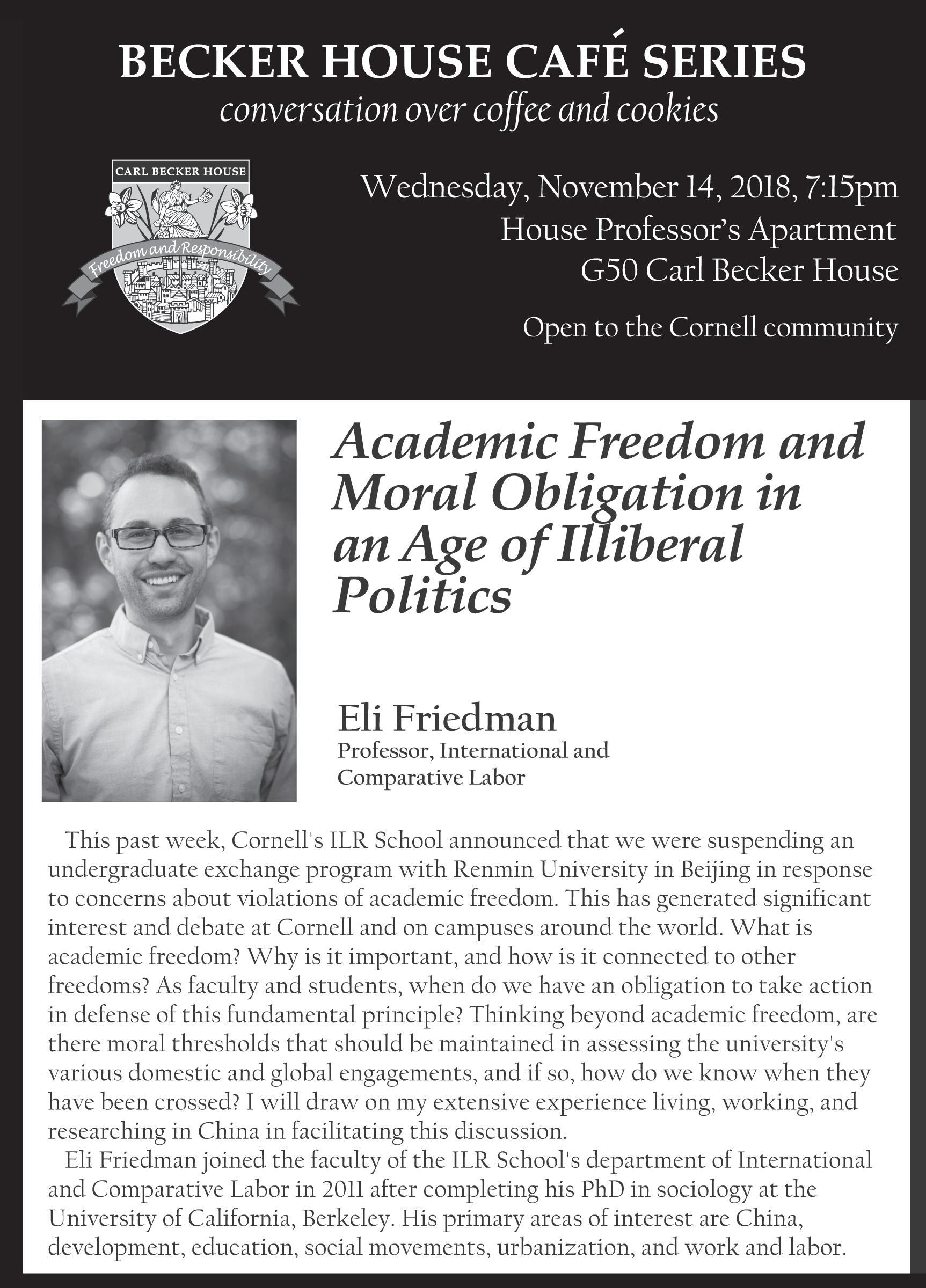
By MARY BARGER Sun Staff Writer
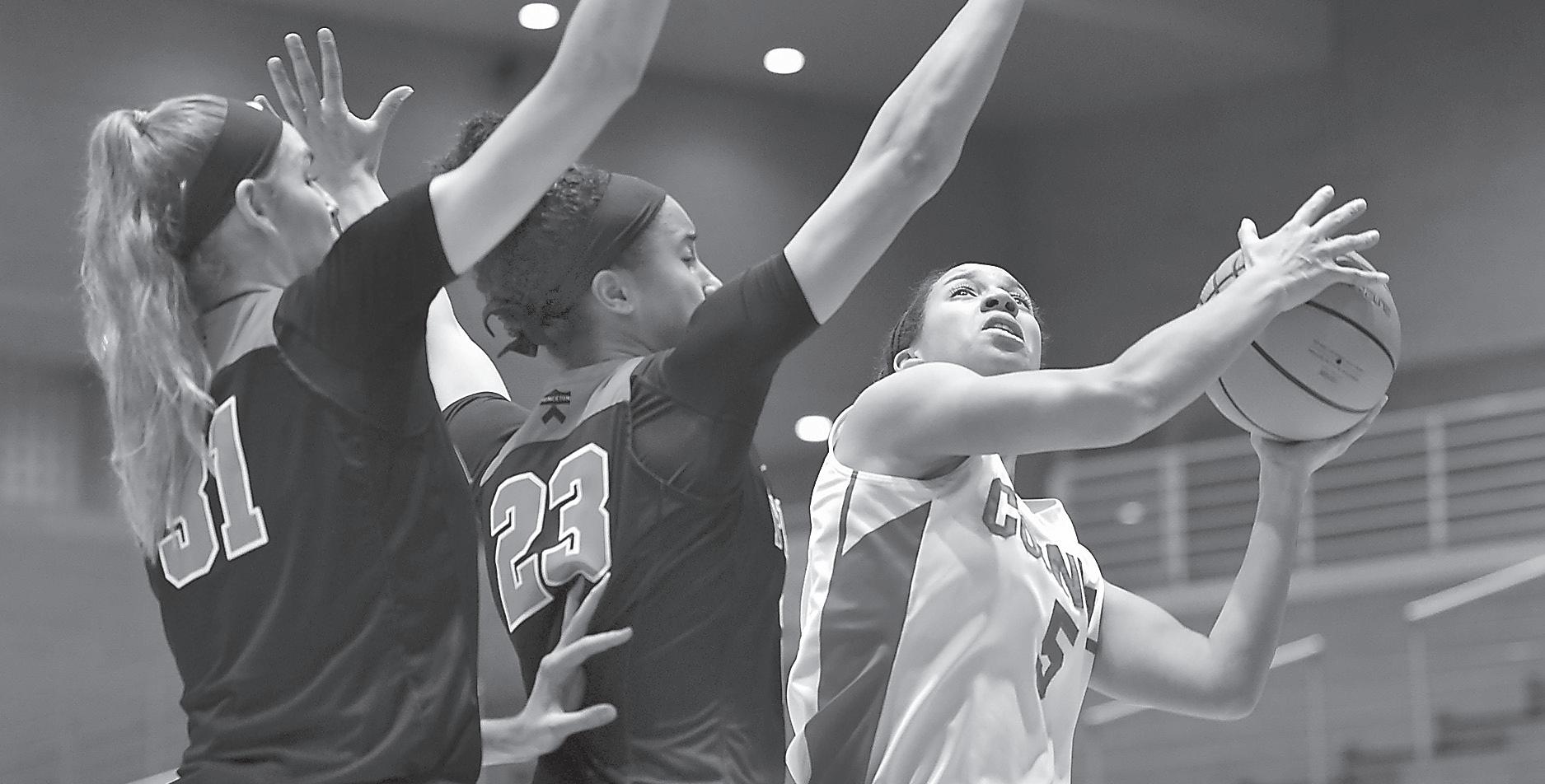
Cornell women’s basketball opened its 2018-19 season against Binghamton on Friday, coming away with a 72-61 loss in a back-and-forth contest.
“Although we did not come out with a win against Binghamton, the big takeaway from the game is that our team has great potential,” said junior guard Dylan Higgins. “We were all really pleased with our ability to push the pace of the game, score in transition and match the athleticism of a very talented team.”
The Red finished the first quarter ahead 13-7 and gained its largest lead — eight points — over the Bearcats early in the second quarter. Sophomore forward Halley Miklos and junior forward Laura Bagwell-
Katalinich, a transfer from Penn, led the way offensively for the Red. The forwards each turned in career-high 14-point performances.
“I think we started off really strong in the first quarter,” said Miklos, who also had nine rebounds. “The energy was there, and we were working well as a team. It was really exciting to see us come together like that. In the second half, we had more turnovers and some little mistakes that added up in the long run.”
Cornell shot a solid 43.9 percent from the floor, just shy of Binghamton’s 45.5 percent. The greatest gap in the teams’ performances came from long range: Binghamton converted on 60 percent of its three-point attempts to Cornell’s 4-for-18 mark, just 22.2 percent.
Junior guard Danielle Jorgensen was
3-for-8 to lead the Red in treys. The only other shot that Cornell hit from deep came from junior guard Samantha Widmann. Widmann and Jorgensen each scored nine points.
Widmann led the Red with five assists, and her defensive prowess was critical in holding off the Bearcats for much of the first half of the game. Not until late in the second quarter did Binghamton manage to tie the game, briefly taking a 33-31 lead before halftime.
Continuing to gain momentum, Binghamton launched a full-fledged comeback in the second half, headed by junior guard Kai Moon, who accounted for 22 of the team’s total points and went a perfect 15-of-15 on free throws.
Senior forward Rebecca Carmody likewise played a crucial role in the Bearcats’

comeback, scoring 14 total points and going 3-of-4 on threes. The team made 9-of15 three-pointers and went an impressive 23-of-26 from the foul line.
The Bearcats closed the third quarter with a seven-point lead and maintained the gap in a fast-paced fourth quarter which brought the final score to 72-61, leaving the Red with a loss in its season-opener.
“All of us have the skills and the attitude to succeed, it’s just a matter of playing our game for four straight quarters,” Miklos said. “But we’re ready to get back on the court [Monday] and fight for our first win of the season.”
The Red hosts Albany in its home opener at 7 p.m. Monday at Newman Arena.
Mary Barger can be reached at mbarger@cornellsun.com.
By MILES HENSHAW Sun Staff Writer
Cornell football’s seniors were handed a loss in their final game at Schoellkopf, a 35-24 defeat at the hands of Dartmouth. Not exactly a new revelation.
It was just one loss of many for a team that hasn’t had a winning season since 2005. But they fought hard, the same way they have for the last four years of losses.
Senior quarterback Dalton Banks wouldn’t let a mid-week pec strain keep him from his final game at Schoellkopf.
Cornerback D.J. Woullard caught a momentum-changing interception. Kicker Zach Mays sunk a career-long field goal. Defensive end Cyrus Nolan played in a cast after getting a screw in his hand on Monday. Wide receiver Lars Pedersen made a fantastic 31-yard catch and three-yard touchdown reception on his final home drive.
"I saw them [all] making plays,” head coach David Archer ’05 said of his seniors. “Zach with the field goal, Lars making the catch, Dalton running around, D.J. with the pick. I just saw those guys puking their guts out there. … These guys are resilient, and they’re going to be super successful.”
The senior effort might be best embodied by Nolan, who started the game despite having undergone surgery to repair a fractured hand on Monday. Nolan suited up and gave it his all with a fresh screw in his hand for a team with no shot at the Ivy League title, recording two tackles.
“I got surgery Monday. I’m going to play Saturday,” Nolan said on Tuesday. “That shows how bad we as a team want it.”
At a point in the game where it looked like the Green might run away with it, Woullard came up with a game-changing interception in the endzone, halting the Dartmouth charge into Red territory and bringing hope back to the Cornell sideline.
“I finished the play and that’s all I wanted — to be a big part of the game and have an impact for all my seniors,” Woullard
said. “I’m glad I came through with that because it set us up to be in the game.”
Woullard’s interception led to a career-long 43-yard field goal from Mays. The impact of the offensive line’s five seniors could be felt on the Red drive, as they provided ample push on a fourth and short. Later in the game the line picked up a blitz on touchdown from junior running back Harold Cole.
Banks shined, passing accurately throughout the game. He lead a long march downfield to end the first half, capped off by a 21-yard pass to junior running back Harold Coles. Banks also ran the ball well, picking up some key chunk yardage and first-downs.
Down 18 points with five minutes left, Banks and Pedersen made some memories. Pedersen, running vertically with his man on him tight, made a stunning one-handed catch down the sideline and followed it up with a touchdown reception a few plays later.
“It doesn’t matter to Dalton and me what the score is,” said Pedersen, who added he came to the field alone this morning to soak in what would be his final game. “We’re gonna go out run the plays that are called and play our game. … It was a perfect ball.”
“Lars is one of my best friends and it’s a great feeling that we could made some plays like that on our last drive ever here at Schoellkopf,” Banks said.
This year’s senior class is the last group of players to have suffered through one of Cornell’s 1-9 seasons. They feel that the culture around Cornell football has changed for the better.
“It’s been a grind,” Woullard said. “Guys care a lot more about the team and guys care about each other a lot more now. … I know for a fact we’re leaving this [program] in a better place.”
“For our seniors I’ll always remember their last game as them being them,” Archer said. “No matter how tough the circumstances got, they never stopped.”
Miles Henshawcan be reached at mhenshaw@cornellsun.com.
By JONATHAN HARRIS Sun Assistant Sports Editor
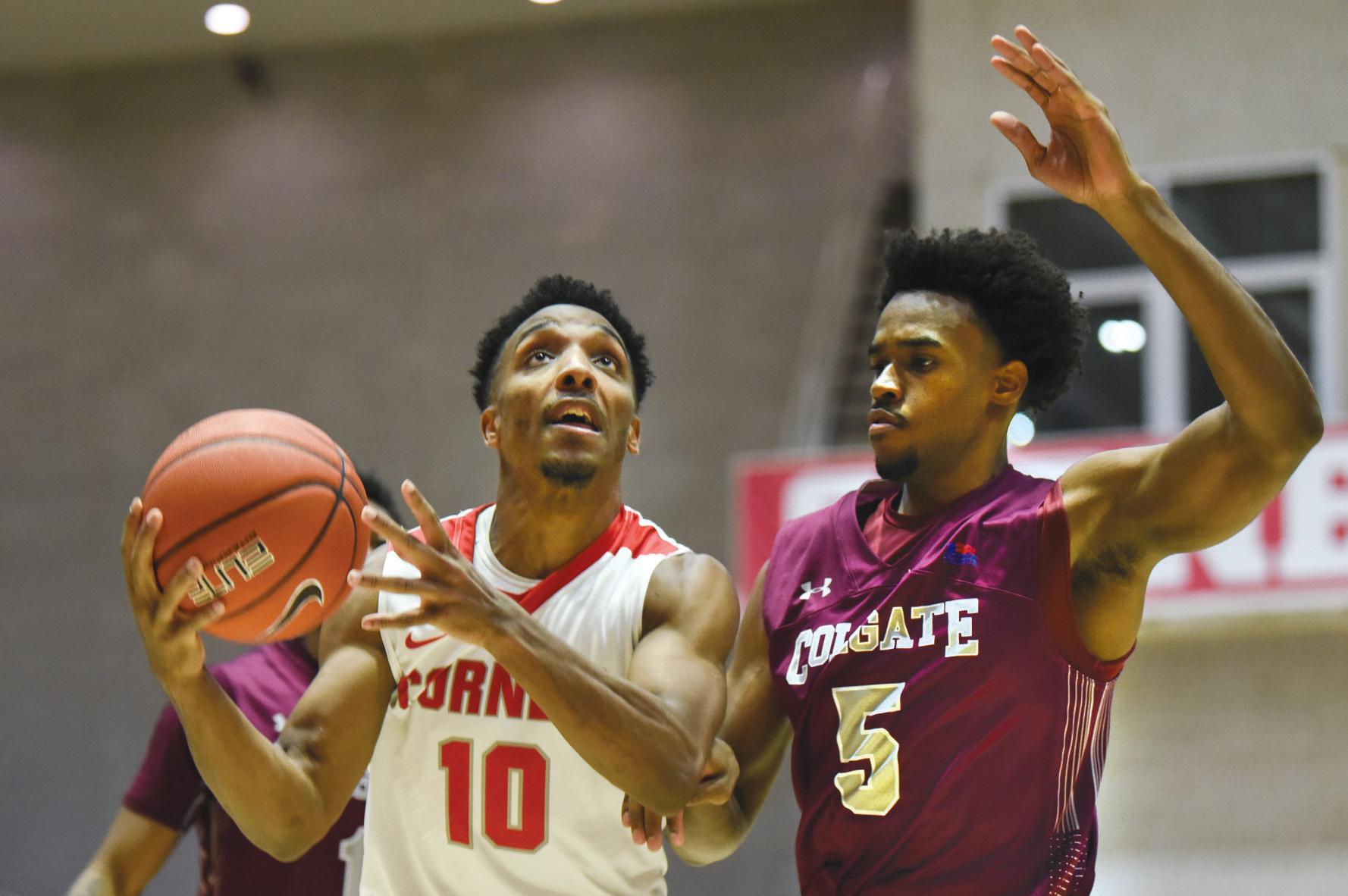
Lack of size doomed Cornell men’s basketball on Sunday in its first loss of the season.
It was a tough day for the Red (2-1) team as it fell to the Colgate, 73-57. After jumping out to a quick 10-3 lead early in the first half, the Red struggled with Raiders’ blend of size, speed and accurate shooting. Colgate took advantage of the Red’s lack of size, relinquishing the lead only once more during the game.
The Raiders methodically and frequently moved the ball to the low post where their big men scored at will. Of Colgate’s total 73 points, 54 came in the paint. By the end of the game, Colgate had outscored the Red by 20 points in the paint.
“We have to learn how to fight a little harder down there,” head coach Brian Earl said. “We did a good job for a good portion of the game and then we let our offensive troubles affect the defense. They’re really well coached and they get the ball in spots where their guys do really good things with it. Down the stretch it sort of fell apart; we weren’t fighting anymore.”
“We did a good job for a good portion of the game and then we let our offensive troubles affect the defense.”
Head Coach Brian Earl
It was an all-around hard night for the Red — especially offensively against Colgate’s 1-3-1 zone defense. Cornell finished the game shooting 39 percent from the field, just 41 percent from the free throw line and an abysmal 14 percent from three-point range. The Raiders shot nearly 10 percent better than the Red from both the charity stripe and from long range.
As per usual, senior guard Matt Morgan led the way for the Red on the offensive end with 12 points and 10 rebounds, although his shooting percentages hovered around the poor marks posted by the rest of the team. The next highest scorer for the Red was
junior forward Josh Warren, who scored 10 points. No other Cornell players eclipsed eight points.
“[Their 1-3-1] changes things,” Morgan said. “We’re so used to playing our offense, which is a man offense, and then they went 1-3-1 to switch up the look a little bit. They played good defense. We just have to be able to make a couple more plays and stay poised in those situations.”
The Red’s downfall in this game was eerily reminiscent of tough losses from last year. Early turnovers, missed free throws and a defense which struggled to defend the pick and roll plagued the Red during points last season, and seemed to sneak back in the loss to Colgate.
Although the Red struggled at points, they also competed for large portions of the game with a seasoned and mature Colgate team that was in the top half of the Patriot League last year. In spite of Morgan’s scoring troubles, many players seemed unafraid to take their chances on the offensive end which the Red have struggled with over the past three years.
Coming off its first loss of the season, the Red hosts Delaware at 7 p.m. Thursday.
Jonathan Harris can be reached at jharris@cornellsun.com.
By SMITA NALLURI Sun Staff Writer
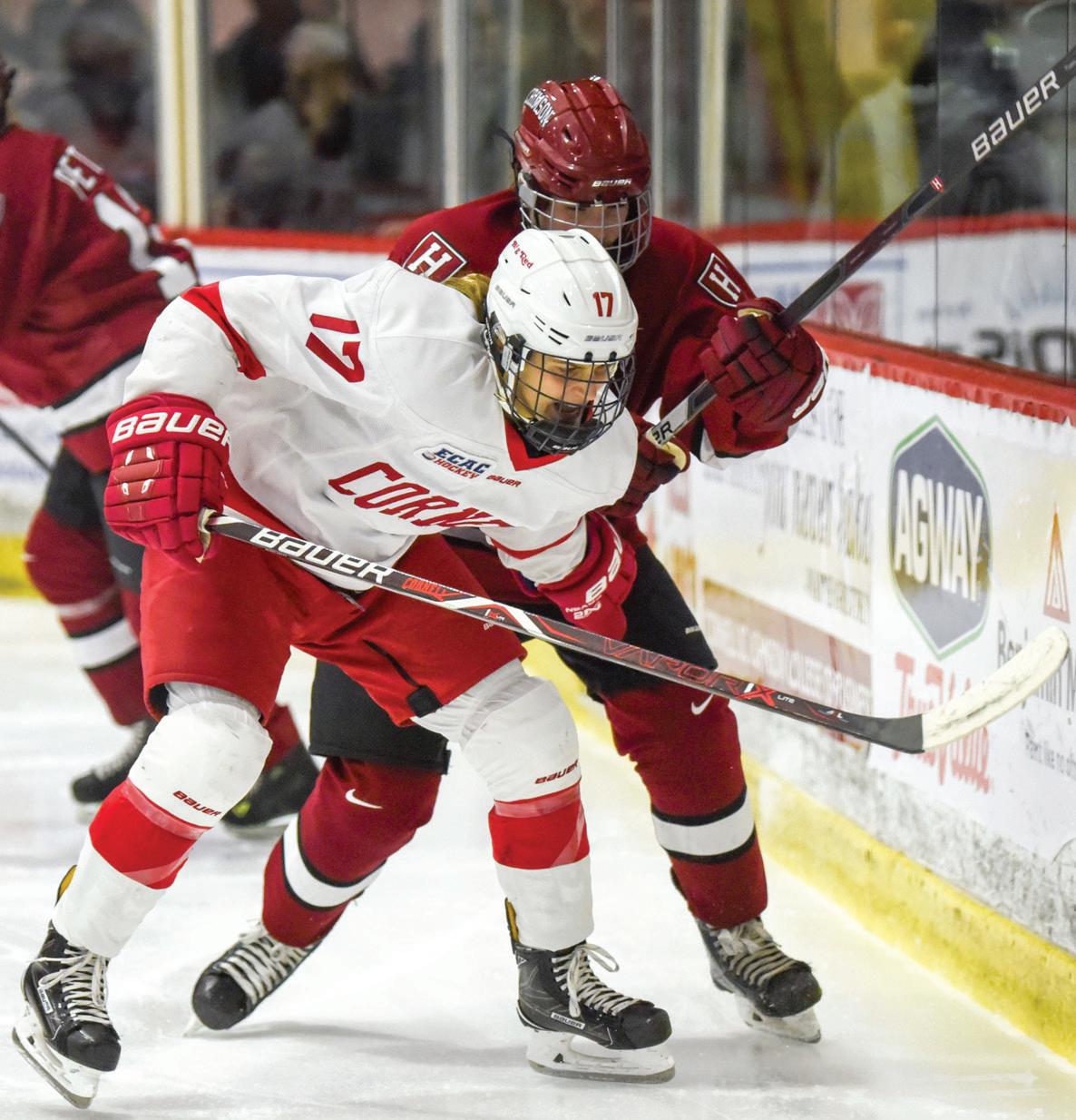
Despite building a three-goal cushion on Saturday, No. 7 Cornell women’s hockey — without its coach and captains — blew the big lead in an eventual tie. Sunday’s game was a tie of a different variety — a 0-0 defensive battle.
The Red skated away from Erie, Pennsylvania, with a pair of ties to add to its record as the Mercyhurst Lakers proved to be a tough nonconference foe.
No. 7 Cornell (4-1-2, 3-1 ECAC) drew 4-4 with Mercyhurst (6-6-2, 6-2-0 CHA) on Saturday. But in stark contrast to the proliferative scoring of the previous day, both teams held each other scoreless in Sunday’s decision.
With head coach Doug Derraugh ’91, co-captain juniors Kristin O’Neal and Micah Zandee-Hart and starting junior defender Jamie Bourbonnais playing for Team Canada in the Four Nations Cup this past weekend, the Red was missing some key figures for its series against the Lakers.
Nonetheless, many of the other players on the team, as well as assistant coaches Edith Racine and Dean Jackson, rose to the occasion.
One such player was sophomore forward Maddie Mills, who led the way for the Red on Saturday, scoring twice in the first period. Mills first scored shorthanded off of an assist from junior forward Paige Lewis. Mills then
struck again with Cornell on the power play.
Senior forward Pippy Gerace then notched her third goal of the season and the Red’s third goal of the game early in the second period.
Although the Red was up 3-0 at this point, the Lakers countered with four unanswered goals to storm to a 4-3 lead with less than eight minutes left in the third period. Staying calm under pressure, senior forward Lenka Serdar then scored the equalizer to earn the Red a point after its late collapse.
Sophomore goalie Lindsay Browning made her season debut for the Red on Saturday and recorded 27 saves.
The teams squared off again Sunday afternoon, but scoring efforts from both sides were thwarted, resulting in another draw.
Senior goaltender Marlene Boissonault was spectacular between the pipes, recording a career-high 30 saves en route to her second shutout of the season.
The Red’s defense was especially airtight in the added frame when a major penalty just a minute into overtime forced Cornell to play the rest of the period down a skater.
Cornell will stay on the road but return to conference play as it takes on Quinnipiac on Friday and Princeton on Saturday.