The Corne¬ Daily Sun


Amidst recent fnancial struggles, orchards to explore new options
By MADELINE ROSENBERG Sun Staff Writer
The Cornell Orchards Store — a beloved retail destination for SnapDragon apples and Cornell-produced maple syrup — closed on Friday, igniting a heated backlash from Ithaca and alumni communities.
The 68-year-old institution shuttered its doors after “struggling financially” for many years, the University said in a press release on Tuesday. While the orchard’s
bility of reopening the Orchards Store remains uncertain.
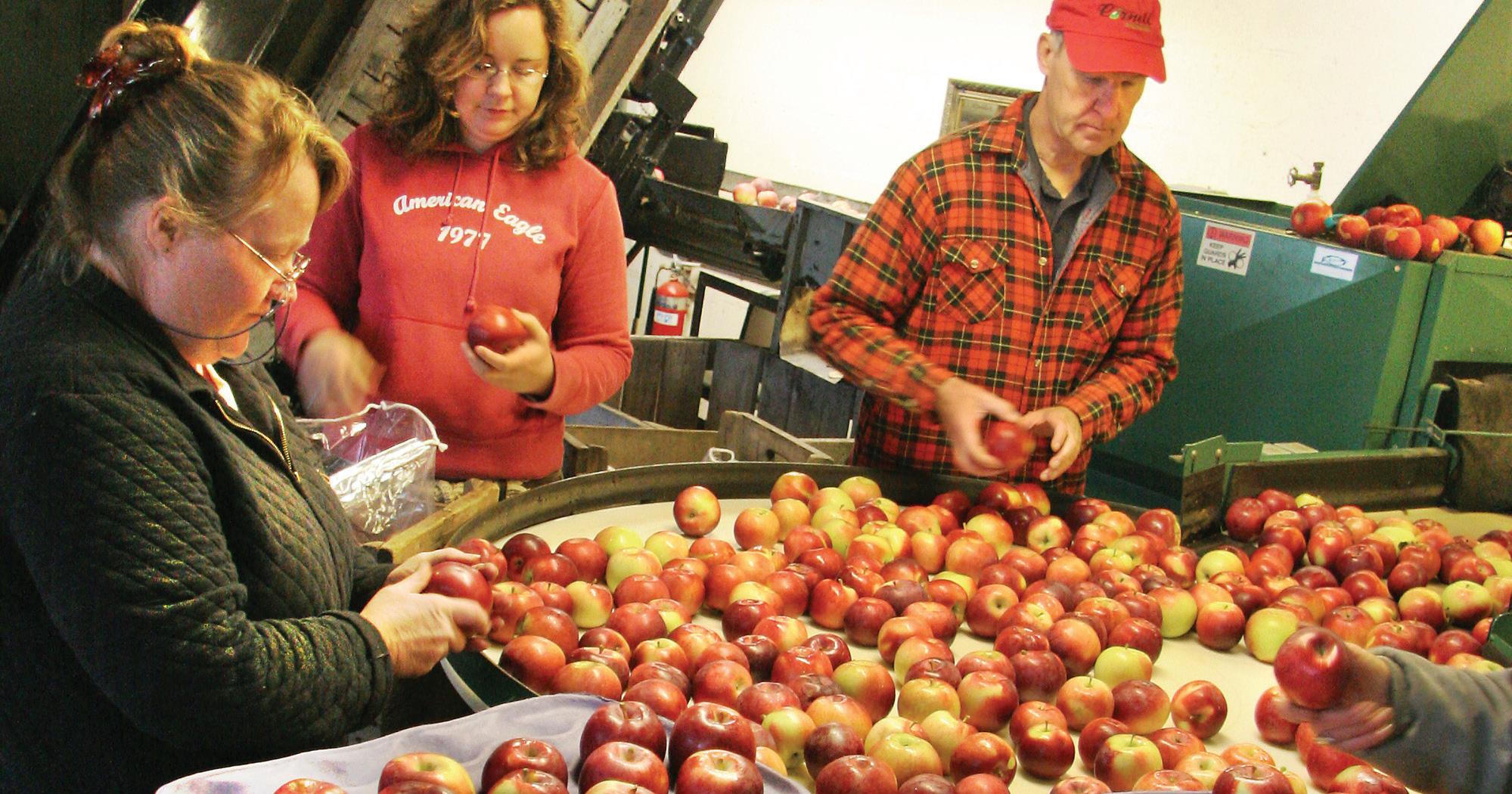
Bad apples | The Cornell Orchards Store — which has sold Cornell-grown apples and more for the past 68 years — is closing its doors following apparent financial issues. Above: Workers sort and package apples at the store on Thursday, October 11th, 2007.
Shock and lament over the store’s closing quickly turned into action for Simon Ingall, a visual resources collections coordinator for Cornell University Library. Within hours of the announcement, Ingall posted an online petition to preserve the retailer — calling the store an Ithaca staple that has served as an educational center, community gathering spot and distributor of locally sourced goods.
“This is a very integral part of the community in Ithaca and Cornell; it will be a real shame if Cornell closes it.”
Simon Ingall
administrators are exploring options for “limited seasonal retail apple sales” for the upcoming harvest season, the possi-
“This store’s future should not be dependent upon making a profit for the University,” Ingall told The Sun in an email. “This is a very integral part of the community in Ithaca and Cornell; it will be a real shame if Cornell closes it.”
By Friday afternoon, the petition
amassed more than 1,500 signatures from Ithacans, Cornell alumni and faculty. As of Sunday afternoon, it had over 2,400 supporters.
While the petition circulated online, others headed directly to social media to mourn the closing and criticize Cornell’s decision to indefinitely shut down the retail operation. The announcement generated comments on the Cornell Orchards Store Facebook page that spanned from “this is the saddest news I have heard in a long time” to “money is not everything.”
Antizzo ’85, who told The Sun he was “crushed” when he heard the news.
“Cornell products are a huge part of my life and a huge part of my memories.”
Glenn Antizzo ’85
One of these commenters was Glenn
By SARAH SKINNER Sun Managing Editor
A heightened security initiative will bring 24/7 surveillance to the West Campus Gothic system, with a security camera to be placed inside almost every entrance.
The facilities office is currently equipping 34 cameras in total across the nine historic halls, a part of an initiative that has been in the works for over a year, according to a statement to The Sun from Lisa Anderson, director of facilities for Student and Campus Life.
“Students and other members of the Cornell community are often surprised Cornell doesn’t have more surveillance cameras than it has,” Anderson’s statement read. With the new installation, all of the West Campus dorms will be monitored by security cameras.
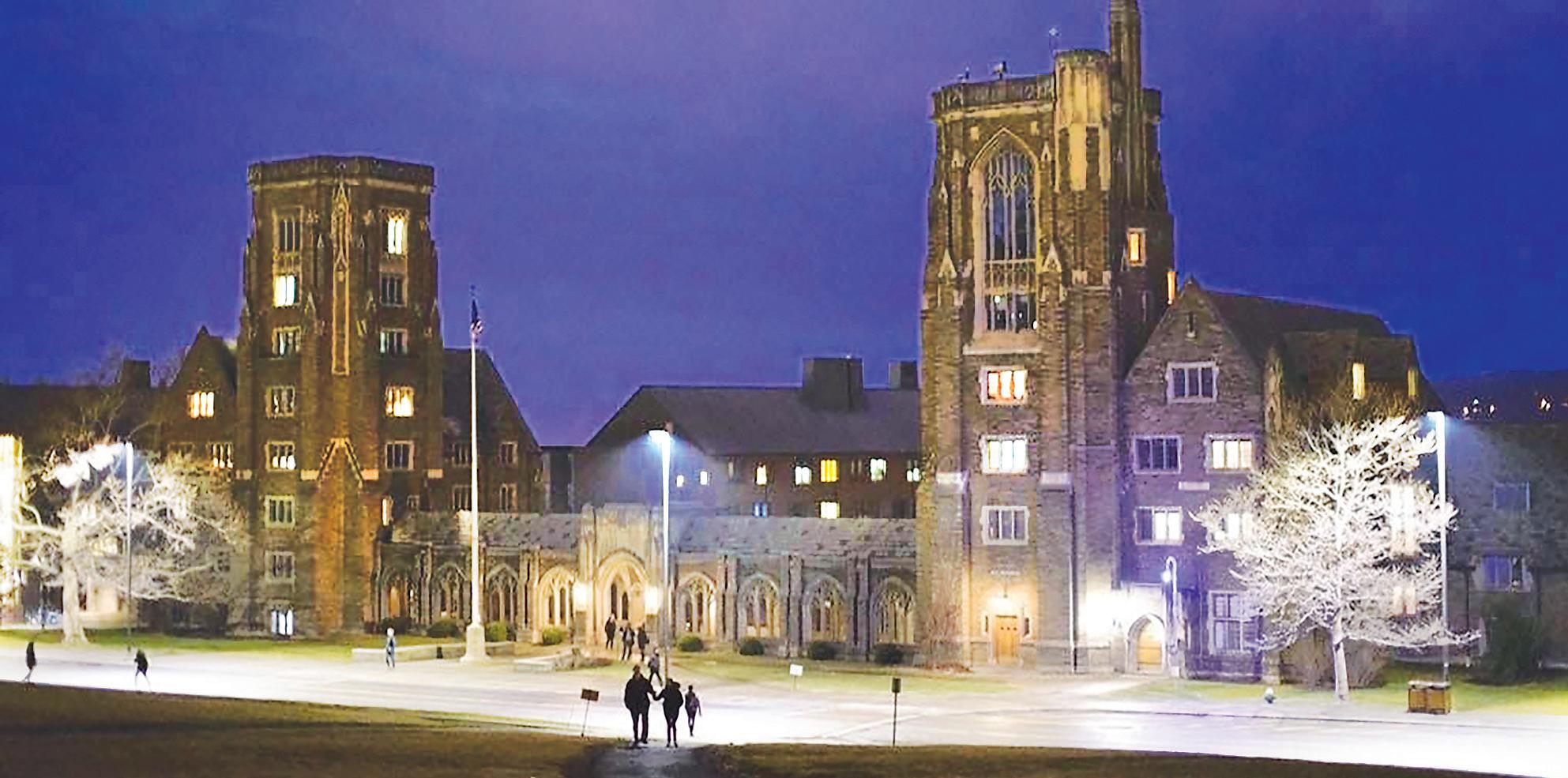
The new cameras are intended to help on-campus police and other “local law enforcement agencies” to investigate and cut down on crimes, Anderson continued.
She said that security systems are “increasingly common” on campuses as centrally-managed systems become more affordable for colleges and universities.
Almost all of the Gothics’ cameras will be installed and online by the end of February, Anderson wrote. Currently, all residence hall entrances are equipped with
Antizzo now lives in Jackson, Mississippi, but drives to Long Island, New York, for the holidays each year. He said he adds two extra days onto his annual trip to stop at the Cornell Orchards Store, purchasing eggnog and enough apple cider to sustain him until his next Ithaca visit.
“Cornell products are a huge part of my life and a huge part of my
By OLIVIA WEINBERG Sun Staff Writer
As the 49ers and the Chiefs face off in Super Bowl LIV, dining locations across town are buckling down in efforts to churn out hundreds — if not thousands — of wings, pizzas and game-day grub.
der system that assigns time slots to pickups. Manager Mike Moyer is well-versed in the hustle, having worked in food service through the past 15 Super Bowls. Moyer told The Sun
“It's all about preparation ... There is very little risk of running out [of chicken wings and pizza].”
Wings Over, Ithaca’s long-standing wings eatery, started preparation two weeks ago, ordering extra chicken and setting up an online pre-or-
Mike Moyer
that he expects Wings Over to sell between four and five thousand bonein wings, on top of half

We d., Fe b. 5 Gol dwin S mith 132
Thu r., Fe b. 6 McGraw Hall 165
5-6 p.m. each day



Monday, February 3, 2020
Chemical & Biomolecular Engineering Seminar Series: Phillip J. Milner 9 - 10 a.m., 255 Olin Hall
Graduate School Dean Search Town Hall 9 - 10 a.m., 148 Stocking Hall
Black Law Students Association General Body Meeting Noon - 1 p.m., Student Lounge Myron Taylor Hall
“Trade, War, Institutional Change and Economic Performance in the Plate Basin: Paraguay to the Present” by Mario Pastore 12:15 p.m., G-01 Stimson Hall
Ecology & Evolutionary Biology Seminar: Predicting Extinction in Terrestrial Animals Using Ecophysiology 12:20 - 1:30 p.m., A106 Morison Rom, Corson/Mudd Hall
Continuing Orality and the Environment in Contemporary Korean Poetry and P’ansori Performance 4:30 p.m., 374 Rockefeller Hall
How to Spend Your Pre-Med Summer 5 - 6 p.m., 3330 Tatkon Center
Mindfulness Mondays: Guided Meditation with Live Music 8 - 9 p.m., 3330 Tatkon Center
Study Abroad Fair 2020
11:30 a.m. - 2 p.m., Memorial Room, Williard Straight Hall
Multi-Component Superconductivity in Strontium Ruthenate is Revealed by Resonant Ultrasound Spectroscopy 12:20 p.m., 700 Clark Hall
Biomedical & Biological Sciences Signature Seminars 4 - 5 p.m., Lecture Hall 4 College of Veterinary Medicine at Cornell University
Butch Futurities: Lola Flash Queers Time and Race With Professor Karen Jaim 4:30 p.m., G22 Goldwin Smith Hall
Chats in the Stacks: Gustavo Flores-Macías on the Political Economy of Taxation in Latin America 4:30 - 5:30 p.m., 107 Olin Library
Info Session: Summer Africa Internships 4:30 - 6 p.m., 181 Goldwin Smith Hall
Milstein Program Information Session 5 - 6 p.m., 3331 Tatkon Center
By MEGHANA SRIVASTAVA Sun Staff Writer
When it was announced that the annual Wizarding Weekend would be canceled for 2020 and beyond, many were shocked. Yet for Wizarding Weekend founder Darlynne Overbaugh, the surprise closing was a couple years in
the making.
From legal issues to a lack of community support, the festival found itself mired in a myriad of issues, which ultimately led to the five-year-old festival’s indefinite hiatus.
“It’s kind of a symptom of the times we live in that, small events, especially volunteer-run events are suffering,”
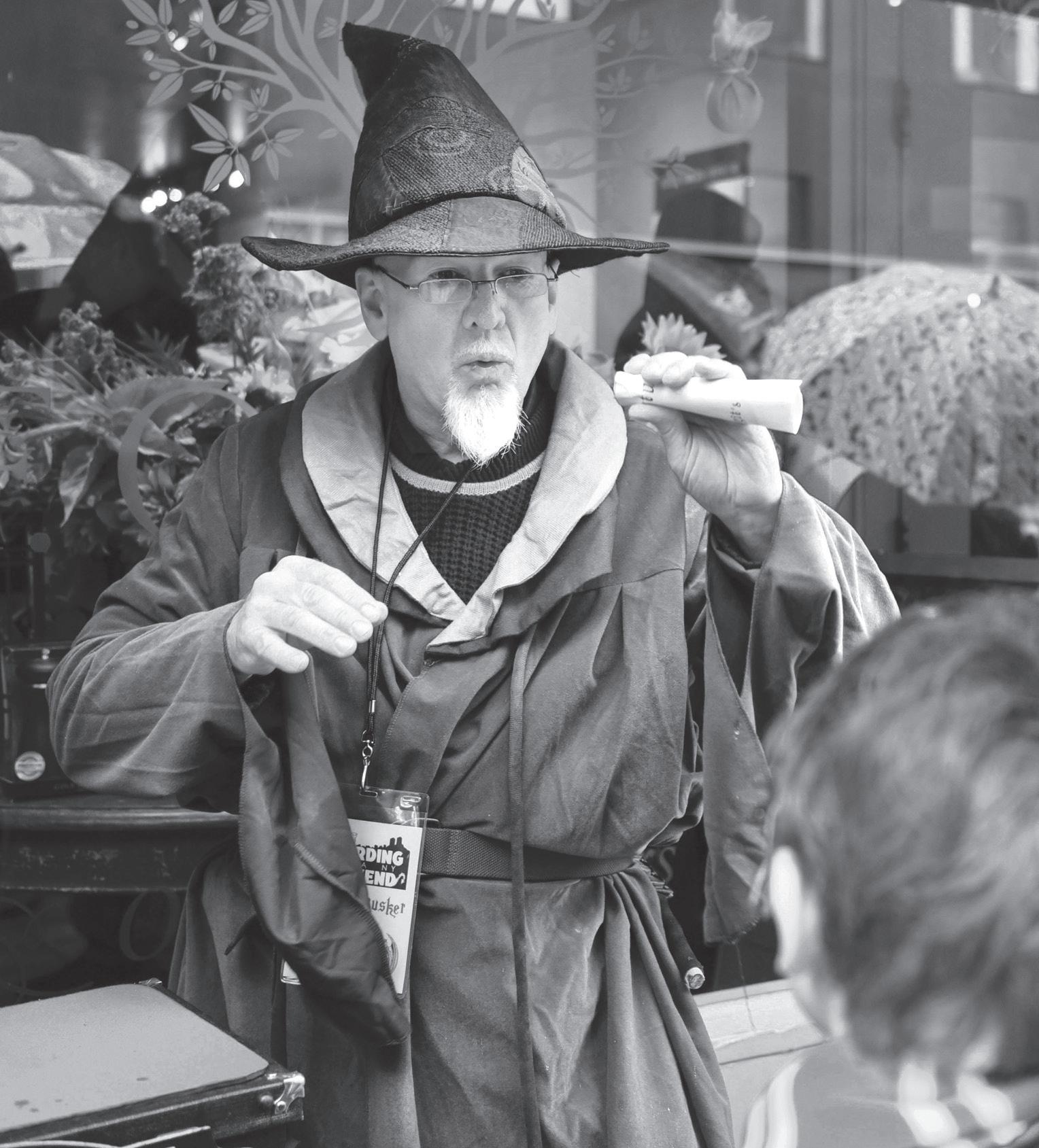
Overbaugh told The Sun. “Whether it’s a lack of time, expertise or finances, those are the things, and it’s not any one person’s fault. It’s just a symptom of being a volunteer run organization.”
In 2018, the festival began facing legal issues. Warner Bros. sent the organizers a “cease and desist” letter, prohibiting the festival from using anything in reference to Harry Potter.
Before Warner Bros. resorted to legal action, the event included several Harry Potter-themed aspects, such as a Sorting Hat demonstration and a Marauder’s Map, detailing the event. The festival had to shift its focus to more overarching themes of fantasy and magic — unaffiliated with any major movie franchise.
ical beings.
Cat Huang’s ’21 — a former Wizarding Weekend volunteer — favorite part of the event was to see the reactions of the kids who attended, who she saw were always excited to participate in the festivities.
“It’s very much a family event,”
“It’s kind of a symptom of the times we live in that, small events, especially volunteer-run events are suffering.”
Darlynne Overbaugh
But trouble with the media conglomerate was not the only reason that the festival was discontinued.
“[The decision] also stemm[ed] from the fact that we’re not getting enough community support,” Overbaugh told The Sun. “It actually takes around 200 volunteers to make the weekend happen. And as volunteers ourselves who organize it, we’re not able to dedicate enough time and resources to making sure that can continue.”
For the past few years, Cornellians and Ithacans enjoyed the event and the camaraderie it brought to town. Past events consisted of panels with celebrities from major fantasy movies and TV shows and live showings of animals like a red-tailed hawk and Barred Owl, which played into the festival’s mystical theme.
According to Overbaugh, the event attracted over 10,000 attendees in recent years, who partook in scavenger hunts, ate magical treats and roamed the Ithaca Commons dressed as their favorite mag-
Huang said. “They have these young kids and their parents come, and it’s a great way … to get everyone to bond with each other.”
However, Overbaugh could not find enough volunteer support to continue the event.
“Everybody wants to attend, right?” Overbaugh said. “No problem. The problem is that everybody wants to have fun and doesn’t want to commit to helping.”
Since she did not want to sacrifice the quality of the event, Overbaugh saw this as an opportune time to step back and reconsider the festival’s future. While the event is ending in its current form, the organizers are planning to discuss future possibilities.
“I want families and people who are fans of magic and fantasy to enjoy it,” Overbaugh said. “And if we’re just putting it together for the sake of doing it, that’s disrespectful to the people who have loved it for so long, and I’d rather take the time to make it better for them.”
Meghana Srivastava can be reached at msrivastava@cornellsun.com.
By ARI DUBOW Sun Staff Writer
Ithaca’s waterfront along the Cayuga Lake inlet has been a place of transition for centuries — once Cayuga Nation land, a trade hub in the days of the Erie Canal, and an industrial hub.
Now, City Harbor, a 158,000 square foot waterfront housing complex with public recreation amenities, is sending the area along the Cayuga inlet into yet another era.
According to Costa Lambrou, of Ithacabased Lambrou Real Estate, work on the site will begin in two to three months, after the project acquires final municipal approval.
tor of planning.
The majority of the waterfront area targeted for development is located within Ithaca’s second ward, extending a few blocks east toward downtown, according to the area maps used in the Waterfront Plan. This housing will be a part of the West End neighborhood, which is filled with restaurants, music venues and scenic views.
According to Lambrou, City Harbor will include 156 one and
Harbor purchased The Haunt, a live music venue which they intend to knock down, according to McGonigal.
“People aren’t too happy about that one,” he said.
McGonigal said that the waterfront area used to be a section of Ithaca where people often started small businesses. Now, he said, the drastically increasing rents have put an end to that reputation.
“It’s kind of a townie area – that whole vibe is becoming – for a lack of a better word – gentrified.”
George McGonigal
“Literally the day after they’re approved, we’ll begin construction,” Lambrou said.
The project is capitalizing on the City of Ithaca’s Waterfront Plan, passed in November 2019, which rezoned the area to allow for mixed-use real estate, larger developments and increasing lot coverage. The plan seeks to strengthen Ithaca’s role as a social and economic force in the broader Tompkins County area, provide more housing opportunities and reduce vehicle traffic within the city.
After the waterfront became an industrial hub and then a recreational area, “the one thing we were missing was housing and mixed use areas,” said Lisa Nicholas, Ithaca’s deputy direc-
two bedroom residential units, boating and golfing amenities, a promenade, additional parking for the Ithaca Farmers Market, parks and a medical center. The project is expected to create 75-100 full time jobs, Lambrou said.
But some, like Alderperson George McGonigal (D-2nd Ward), are apprehensive about the scale of the changes planned for the waterfront area.
“The West End historically is where you go for live music and cheaper entertainment than downtown,” McGonigal told The Sun. “It’s kind of a townie area, that whole vibe is becoming — for a lack of a better word — gentrified.”
The developers of City
“I think a lot of the development that’s being proposed and planned is supersized,” McGonigal said. “I think development on a smaller scale gives the opportunity for more local businesses to get involved, and will be on a more human scale that fits the West End and the waterfront much better.”
The City Harbor project will be the first major residential waterfront development in Ithaca, according to Heather McDaniel, president of Tompkins County Area Development. TCAD, a not-for-profit economic development organization, works to increase Ithaca’s tax base by incentiving development.
The developers of City Harbor — Morse Project Management, Bridges Cornell Heights, Lambrou Real Estate and Edger Enterprises — reached out to TCAD to help ease the financial transition.
For two decades, TCAD has helped several developments in
Ithaca phase into their property taxes, including The Hilton Garden Inn and Center Ithaca.
According to McDaniel, the recent developments in downtown Ithaca have boosted the city’s tax base by around $90 million in the past seven years.
When City Harbor begins paying property taxes, it will be at the tax rate of that land before development. Over the next seven years, City Harbor will pay $2.3 million, saving $4.7 million of what they would have paid in property taxes without the tax abatement, according to McDaniel.
McDaniel said that these abatements are more conservative than those given in other parts of New York state, where some industrial development agencies will abate all taxes for as much as a development’s first 15 years.
“We consider ourselves pretty good stewards of the public’s
tax dollars,” McDaniel told The Sun.
According to McDaniel, part of the necessity of tax abatements is that many of the amenities that City Harbor offers the public — such as the promenade, public parking and parks — will cost money to build, but will not generate revenue.
Lambrou said that City Harbor is largely motivated by the prospect of attracting new Ithacans.
“This project will be aimed at this baby boomer generation and returning alum[ni],” Lambrou said, adding that an increasing number of alumni are renting apartments in Ithaca years after attending Cornell.
“They kind of fall back in love with Ithaca — especially in the summer,” Lambrou said.
Ari Dubow can be reached at adubow@cornellsun.com.

By MAIA LEE Sun Staff Writer
“It’s now time for the networking session.” Immediately, your body freezes up, your palms start to sweat profusely and your eyes nervously dart back and forth between recruiters and fellow attendees. If this sounds like you during these sessions, you may have always wondered how you — an introvert — can shine in a room full of high-powered extroverts. The Sun sat down with Cornell’s Career Center and three Cornell students — Jen Maclaughlin, Assistant Dean and Director of Arts & Sciences Career Development; Leah Mozeshtam ’21; Saumya Sharma ’22; and Jeff Liu ’20 — to ask for their professional advice on how to best prepare as an introvert for the daunting arena of networking. Our interviewees shared their tips and tricks to successful networking, ranging from starting conversations with strangers, taking on leadership roles and planning a nice night to yourself afterwards.
The Sun: What are some of your best tips to sucessful networking?
Maclaughlin: My best advice is always look for an open door. Gauge people’s body language as they’re standing. If there’s a space and people are angled, that’s an open door. As a student and a professional, make sure that you are allowing other people to enter into the door and into the conversation.
Mozeshtam: Planning a nice alone night after a
networking session is really important because it allows you to have something to look forward to when you feel overwhelmed. One of the best ways to get better at networking is if you go to networking sessions of companies or firms that you don’t have the most stake in.
Sharma: One, make and hold eye contact. It may feel uncomfortable, but it makes the other person feel like you are listening. Two, talk to strangers. When you sit next to a stranger in class, force yourself to talk to them. A simple ice breaker is asking if the seat is open.
The Sun: Are there any resources on campus that you can participate in to improve your personal speaking, networking, and communication skills?
Maclaughlin: There are courses Cornell offers such as Communication 2010: Oral Communication and PMA 3815: Acting in Public: Performance in Everyday Life that have worked really well for students in the past. Any opportunity where you’re going to give a presentation is good, such as debates and pitch contests. In addition, find safe spaces on campus where you can have the opportunity to talk and do networking, that can be office hours with a professor or practice interviews with career centers across campus.
Mozeshtam: I am a part of Phi Gamma Nu, which was extremely helpful in giving me some tips and tools and also being able to watch upperclassmen and how they did it.
Sharma: If you are already in an organization, practice networking within the organization. Reach out to
ORCHARDS
Continued from page 1
memories,” said Antizzo, who currently has Cornell apple cider in his home freezer. “It makes me feel a connection to the University, and I think it does the same for a lot of other people, [who] are feeling the same loss that I am.”
Visiting the Orchards Store is a tradition for many other alumni, he said, who stop there when they visit the school with their families. Antizzo added that Cornell’s apple and dairy products put the University “on the map.”
“They’re losing an opportunity to connect with the public,” he said, adding that the store’s closing felt especially shocking considering the retailer’s 2018 move from operating seasonally to year-round.
Signatories similarly cited Cornell’s landgrant mission to connect with, educate and improve the lives of the public as a reason for signing. Other signatories reminisced about tasting experimental apple varieties and browsing the store as children.
Ingall wrote that the Orchards Store had recently expanded its community outreach, with its annual fall apple bake-off to benefit United Way of Tompkins County, a non-profit that supports community education, financial stability and health. Even though the
University said the orchards would maintain its outreach programs, Ingall expressed fear that the store’s closing would affect them.
But this is not the first time a Cornell retail operation has closed.
The animal science department used to run a retail meat store, selling beef, pork and lamb leftover from teaching and research activities. After more than 50 years, the retailer known as the “Cornell Meat Shop” closed in 1983 for financial reasons.
The meat shop’s closing put the jobs of two meat cutters on the line, while some community members urged the University to keep it open.
This time, Cornell is working to reassign the Orchards Store’s two full-time employees as well as seasonal workers to new roles on campus.
For those still looking to purchase Cornell’s famous apples, the orchards will continue to distribute them to wholesalers and conduct extensive horticulture research through the Cornell University Agricultural Experiment Station, the organization that operates the orchards and whose research projects advance state agriculture. Despite the close, the orchards plans to keep on producing 210 tons of apples each year.
Madeline Rosenberg can be reached at mrosenberg@cornellsun.com.
WINGS
Continued from page 1
ton of boneless wings. Since he planned in advance, Moyer said “there is very little risk of running out.”
“It's all about preparation,” Moyer said. With all hands on deck in the days leading up, Moyer estimated that Wings Over will be manned by at least 25 employees.
Throughout the day, as superfans rush in-and-out to grab their grub, the store will act as “a big revolving door.”
But other Collegetown eateries don’t ahave as much to worry about, citing a decline in game day orders. Abdul Darouene, a Campustown Pizza employee, told The Sun that he felt like students began flocking to on-campus dining locations in recent years. Still,
he expects to sell between 800 to 900 wings and around 150 pizzas. Regardless of how much restaurants anticipate selling, employees are hard at work with business running as usual.
Olivia Weinberg can be reached at oweinberg@cornellsun.com.
alumni, older members, etc. that are in something else that you are interested in.
Liu: Any organization that takes you outside of your comfort zone and commits you to public speaking is useful. A lot of times, it comes with leadership opportunities in clubs that you’re in. You’ll be forced to get better at networking and talking to people, regardless of what club it is.
The Sun: What are your go-to questions to ask a recruiter or representative when networking?
Maclaughlin: What are some skills or qualifications that you see in yourself but also within your team as a whole and how do you look for those skill sets in students? What distinguishes your firm from another firm? What’s a typical career trajectory at your firm? What did you do on campus that prepared you for your job and that leveraged you into that next level?
Mozeshtam: Can you tell me more about the culture? What do you work in? Ask about their trip; a joke about how awful Ithaca can be. Try to find some sort of common ground.
Sharma: Start by asking them how they’re doing. If they are a Cornell alumnus, talk to them about their experience. If they live in New York, ask them how they like the city and where they were originally from.
To read the rest of this interview, visit www.cornellsun.com.
Maia Lee can be reached at mlee@cornellsun.com.
SECURITY
Continued from page 1
resident-coded ID card scanner locks as a security precaution.
Last year’s annual security report recorded 14 cases of rape in residential facilities across campus in 2018, as well as 15 cases of fondling, 27 burglaries and three aggravated assaults. Nine cases of stalking in a residential facility were also reported to the Cornell University Police Department.
As part of the the central system, and adherent to Cornell policy, all footage captured is viewable by CUPD.
Mia Kirsch ’22, a Gothic resident, told The Sun that she didn’t really understand the need for the cameras, and that she was surprised by their installation.
“I feel like [the cameras] are in really inconvenient places,” she said, standing outside the side entrance to McFaddin. “When you open the door, it’s right in your face.”
Signs directing students with questions to their hall’s assistant dean were posted near the cameras — adhering to official policy — but residents have not received any official communication regarding the new eyes on the halls.
Cornell’s video surveillance policy also mandates that no camera trained on a residential area can capture views “greater than what is afforded by unaided, human vision.” Facilities took this policy into account during the planning process to ensure residents’ privacy, Anderson said.
The policy further states that no perma-
nent cameras may be installed in residence hallways or lounges without a warrant and that the footage must be managed by a trained operator. However, the footage may be accessed by outside parties such as law enforcement and the Office of the University Counsel, Cornell’s legal representation.
Caroline Chu ’22, a McFaddin resident, said that although the only first-hand security concern she has had while living in the Gothics was with faulty card readers, she liked the idea that the system could help catch a culprit in the case of crime or theft.
Baker Tower will have the highest number of cameras with nine, and there will be around three to five cameras in each of the other dorms. The nine-hall system is home to around 515 undergraduate residents.
The two models of $600 cameras — manufactured by Swedish company Axis — chosen to operate 24/7, capture footage with the same 1080p high-resolution as the iPhone 6. Both offer full-color video even in nighttime conditions and take between 30 to 50 frames per second, and one model offers 360-degree views.
Placement of the models varies based on light conditions and viewing angles, according to Anderson.
The Gothic installations are “phase 1” of plans to amp up on-campus surveillance, Anderson wrote, and other security installations are planned for the rest of the year.
Sarah Skinner can be reached at sskinner@cornellsun.com.

This article contains significant spoilers for the finale of The Good Place.
And so it ends, not with a supremely mind-boggling twist, nor with an all-out extravaganza of ethical erudition. Instead, arguably the greatest network sitcom of the past half-decade closes out its run with an hourlong parade of personal growth and exploration of meaningful relationships. For a series built on the basis of philosophical quandaries and human improvement, it feels naturally perfect.
The Good Place was never meant to last forever, ironically, given the developments of the final few episodes — we learn the real Good Place unendingly fulfills its inhabitants every desire, which eventually grows miserable. Creator Mike Schur’s story arc spanned just over 50 chapters, and as well thought out and designed as it may have been, it was executed even better. Very few shows can maintain a constant energy throughout its lifetime, and yet The Good Place never tires, never bores, never so much as delivers a skippable episode (I say this with all the love in my heart, but Parks and Recreation , my all-time favorite series, does have a few duds). Multimedia website The Ringer released a ranking of the first through penultimate episodes (the article was published prior to Thursday’s finale
airing) and although I could not disagree with the order, I could not truly agree with it either. The episodes do not stand on their own; together, they tell a complete story and it would be foolish to try and list any separately.

The episodes do not stand on their own; together they tell a complete story and it would be foolish to try and list any separately.
ITt’s become something of a norm to hate on Goop, Gwyneth Paltrow’s so-called “lifestyle brand,” which peddles items such as psychic vampire repellent spray, quartz crystal-infused water bottles and $95 sex pillows. Ever since the company started taking off, there have been countless parodies, memes and fun-poking opinion pieces made about it, all mocking the brand’s over-privileged tone-deafness and clear disregard for science.
Nevertheless, there’s still an attractive allure to Goop, something Netflix’s new six-episode docu-series The Goop Lab has wisely cashed in on. Like the Goop website, the show’s aesthetic is clean, cool and fun, representing in motion what Paltrow calls the “optimization of self.” And honestly, who doesn’t want to be optimized? I, for one, am all too familiar with the niggling sensation in the back of my mind that I could always be doing more, doing better — eating better, managing my time better, feeling better. Like the Radiohead song, I
I originally gravitated to the show due to its creative workaround of swear words (“motherforker”) but stayed because the plot and cast were so compelling. Led by the incomparable Kristen Bell (my personal celebrity crush) and veteran television star Ted Danson, the motley crew of an Arizona trashbag (Bell), anxiety-stricken ethics nerd (William Jackson Harper), literally the dumbest person alive dead (Manny Jacinto), British socialite (Jameela Jamil), demon (Danson) and not-a-robot (D’Arcy Carden) pace the audience through weekly philosophy lessons and other, more exciting adventures. Season four picks up at the onset of the gang’s desperate attempt to save humanity through a new experiment: a test of four freshly deceased humans to determine if people can truly improve after they die or deserve eternal damnation based on their actions
while alive.
As television shows progress, characters often become caricatures of themselves (again, I hate dragging Parks and Rec through the mud, but Ron “This is an excellent rectangle” Swanson could have been dialed back a bit). Schur and his ensemble of incredibly talented writers, however, deftly avoid this pitfall in The Good Place . Not even Jacinto’s Jason Mendoza — the most “smoothbrained” person in the world — seems too ridiculous by the series’ end. We witness personal growth and moral development in all the characters as they struggle with human quandaries. The characters evolve naturally, and so too do their interpersonal relationships, which
See FINALE page 7
could be “Fitter, happier / More productive.”
Gwyneth Paltrow knows this. Her response? “How can we milk the shit out of this?” Since its inception in 2008 as a newsletter, Goop has become a multimillion-dollar brand, capitalizing on the self-care and wellness movements that blossomed over the last decade.
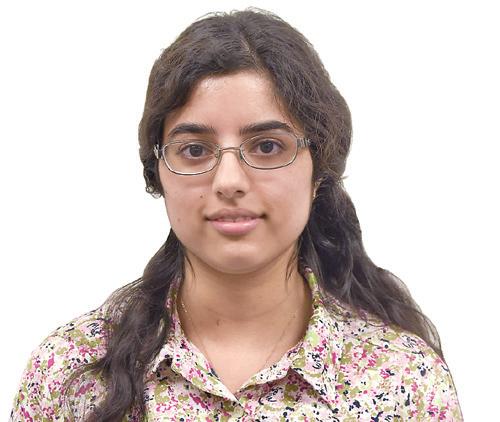
In the show, Gwyneth Paltrow and her loyal vassal — sorry, chief content officer — Elise Loehnen interview a variety of “experts” (excluding 90-year-old Betty Dodson, who might have been the only person in the whole show who knew what they were talking about). Then, a gaggle of Goop employees (“Goopers”) subject themselves to various treatments and experiences related to the episode’s topic. The first episode’s focus, psychedelics, seems interesting enough, but I’ve never seen shrooms look so boring before. The Goopers hop on a plane to Jamaica, drink some mushroom tea and sob for a bit on the floor, which is supposed to reaffirm why
taking psychedelic drugs is good for your trauma.
The second episode is not much better. In it, extreme athlete Wim Hof introduces his eponymous cold therapy, breathing and meditation methods, which supposedly allow him to withstand freezing temperatures. The Goopers take a rather unremarkable trip to Lake Tahoe to try them out. No mention of whether Hof’s brown-fat levels have anything to do with his cold tolerance or the fact that several people have died attempting his techniques.
The show goes on like this. Yet while the vampire facials and energy healing seem silly and farcical but ultimately harmless on the surface, these (mostly wealthy, white, female) faces point at something much darker lurking beneath. You can look younger, thinner, happier, healthier, they seem to say. But only if you buy these products.
Yes, taking care of your body and your mind is important, and there’s no reason why it shouldn’t be a priority. Still, once self-care becomes repackaged as a commodity, it begins to prey on people’s insecurities, especially the insecurities of young women (which is ironic, considering how much of the language of self-care is coded in feminism), and reaches the level of obsession. For example, orthorexia, though not formally recognized by the American
Psychological Association, is defined by physician Steven Bratman as “an eating disorder that involves an obsession with healthy eating and optimal nutrition.”
Moreover, in a society where many already feel isolated enough, self-optimization offers little comfort in the way of connection. Many of the problems the Goopers seek solutions for over the course of the series are systemic, though belied by the fact that they’re felt on a deeply personal level. Rising health-care costs, anxiety caused by a culture of achievement and a world that’s increasingly more threatening and uncertain and isolation as a consequence of technology and social media are just some of those problems.
Looking at Paltrow and her associates, you have to wonder, at what point does self-care become pure and simple self-centeredness? Seeing them rush around, darting from one pseudoscientific solution to the next, always in search of the next overpriced, under-researched alternative gizmo paints self-optimization as relentless, exhausting and ultimately unattainable. Instead of trying to be better, maybe we could all just be
Ramya Yandava is a junior in the College of Arts and Sciences. She can be reached at ryandava@cornellsun.com. Ramya’s Rambles runs alternate Thursdays this semester.
Continued from page 6
is really the essence of what the show explores. Michael (Danson) is a full-fledged fire squid demon in season one but ends the series on Earth, living out his life as a real human (named, of course, Michael Realman). In the series’ second episode, he laments the sweatiness of human bodies; in the finale, he marvels over Arizona’s dry heat. He has grown from wanting nothing more than to devise new ways of torturing humans to caring deeply about the friends he has made.
Not to be outdone, Bell’s emotional performance on the Artist’s Bridge in France is powerful and profoundly moving. Eleanor can’t bear to see Chidi leave the afterlife and merge with the universe, admitting that although she told herself that she wants to be alone, she’s happier with her friends. In that manner, her character growth is twofold: Eleanor no longer exists as a lone wolf without regard for those around her, and her acceptance of Chidi’s wish to exit is the ultimate expression of her newly developed unselfishness. Just 3.22 Jeremy Bearimies later — and if you don’t know what that is, you shouldn’t be reading this — she is ready to leave as well.
Humans are capable of improvement, but they need to be surrounded by people who can help them; friendship is the catalyst for moral amelioration.
Schur posits that humans are capable of improvement, but they need to be surrounded by people who can help them; in other words, friendship is the catalyst for moral amelioration. During the season three experiment where the four humans were back on Earth, they did not fully commit to being “good people” until they were united. The quartet collaborated 802 times across Michael’s “Good Place” reboots in season two and figured out his plan each of those 802 times. Simply put, the Soul Squad is better together than each member is, individually. Once everyone has left the afterlife, Eleanor sees no reason to stay either because her friends are ingrained in her very being: She tells Medium Place resident Mindy St. Claire, an embittered loner trapped in an unfulfilling existence, neither content nor fully miserable, that the two of them would be incredibly similar “if I never met my friends.” This fundamental tenet across Schur’s shows — the necessity of friendship — is indulged most heavily in The Good Place. Friends aren’t just people you can hang out with, but are essential in making you a better person.
One issue I have with the finale (besides it being the last episode of the series) is that even the Bad Place demons appear to become nicer. Glenn apologizes for getting goo on Tahani when he exploded eons prior and Shawn, a high-ranking demon, becomes more cordial and inviting, albeit still with a slightly sinister tone. Are we to believe that even demons can ascend in their morality simply by not torturing humans? Is an ethically prosperous existence determined simply by not doing bad? It seems like an oversight that even the worst beings in the universe are good by the series’ end. That being said, I must admit that I quite enjoyed the snide comments and penis flattening references so prevalent in the Bad Place.
Schur frequently reuses tropes across his various sitcoms (The Office, Brooklyn 99, Parks and Recreation, The Good Place), and this finale feels vaguely similar to Parks and Recreation’s. The episode doesn’t try to introduce anything new or open up any extra storylines/plot holes (looking at you, Lost) and instead neatly wraps up each of its characters’ arcs in cute, on-brand moments. Jason plays the perfect Madden game, Tahani becomes an architect (which kind of comes out of left field, but it’s fine) and Chidi makes a definitive and final decision to leave.
For four seasons, [show creator Mike] Schur considers what makes humans human: our flaws, imperfections and weird food preferences.
The finale, while more somber and intensely relationship-driven than most of the rest of the show, still feels like a satisfying conclusion. There is an EDM dance number and enough jokes to fit the “Comedy” billing on IMDb, but The Good Place was never simply about food puns and physical humor. For four seasons, Schur considers what makes humans human: our flaws, imperfections and weird food preferences. And it all culminates in a beautiful episode neatly wrapping up an entertaining and thoroughly thought-provoking experience.
Jeremy Markus is a sophomore in the College of Agriculture and Life Sciences. He currently serves as the assistant arts editor on Te Sun’s board. He can be reached at jmarkus@cornellsun.com.

Independent Since 1880
137th Editorial Board
ANU SUBRAMANIAM ’20 Editor in Chief
JOYBEER DATTA GUPTA ’21
Business Manager
PARIS GHAZI ’21
Associate Editor
MEREDITH LIU ’20
Assistant Managing Editor
RAPHY GENDLER ’21
Sports Editor
BORIS TSANG ’21
Photography Editor
SARAH SKINNER ’21
Managing Editor
KRYSTAL YANG ’21
Advertising Manager
NATALIE FUNG ’20
Web Editor
SABRINA XIE ’21
Design Editor
NOAH HARRELSON ’21
Blogs Editor
Working on Today’s Sun
Ad Layout Jenny Huang ’22
Design Deskers Lei Anne Rabeje ’20
Girisha Aurora ’20
Production Deskers Dana Chan ’21 Sabrina Xie ’21
Editor in Chief Amina Kilpatrick ’21
Managing Editor Johnathan Stimpson ’21
Meghna Maharishi ’20
Associate Editor Pallavi Kenkare ’21
Sports Editor Christina Bulkeley ’21
Photo Editor Hannah Rosenberg ’23
News Editor Kathryn Stamm ’22
Olivia Weinberg ’22
Arts Editor Jeremy Markus ’21
Money & Business editor Maia Lee ’21
Annabel Li ’22
Editorial
YOU ARE A SECOND SEMESTER SOPHOMORE OR JUNIOR (maybe even a freshman) here at Cornell. The classes you signed up for during pre-enroll are working out great. You have time for lunch everyday, you go to bed at a reasonable hour each night and maybe you are even enrolled in a few classes that are helping knock out those hefty graduation requirements early.
Then, on the second Friday of the semester, an email from the registrar pops up in your inbox. It reads like a more stern version of the following:
“Dear student,
To make room for a second semester senior who is struggling to meet their graduation requirements, we have decided to remove you from a class you love. We will not help you get into another course, and we will not explain the situation to the professor whose course you will end up in so that you won’t have to make up the work. So sorry for the inconvenience. Please drop this class in student center.”
Yes, students have really received emails like this over the past few days.
While it is understandable that Cornell has an obligation to accommodate students who are concerned about graduation, maybe the best solution is not shunting other students out of their classes two weeks into the semester. For goodness sakes, the add period ends on Tuesday. Instead of compromising other students’ graduation tracks, perhaps Cornell should be focusing on adding spots for seniors who need assistance in completing their requirements.
Recently there have been reports from students across colleges that they have been removed from courses that they had successfully pre-enrolled for in the fall to make room for students who are trying desperately to fulfill a distribution.
This issue can be linked directly to the size of Cornell’s student body, as overpopulation is becoming an issue across all departments. In Kennedy Hall’s Call Auditorium, classes are so beyond capacity that students are forced to sit on floors. During seminar style classes, students often sit in leftover chairs feet away from the discussion table, scrambling to contribute over the heads of their peers.
The large student body has only made enrollment more difficult. It has become noticeably harder — even in the short time that current students have been on campus — to build a schedule that fulfills requirements without making sacrifices.
Finally, many classes have caps and minimums for students of different years.
Although seniors pre-enroll first, they don’t have access to all spots in a given course. And it is impossible to expect that every student complete their graduation requirements early due to the maze of enrollment limitations.
Look no further than the College of Arts and Sciences website to see just how confusing Cornell’s graduation requirements can be. This is even more true for students of the humanities as their majors often have no clear-cut track for matriculation and primarily require classes that have limited seating — Goldwin Smith’s smallest classroom seats about 18 students.
“Any person, any study” implies that it is the responsibility of the University to empower students who want to learn. Forcing students out of classes when they only have a week left to find a replacement is not the solution.
The above editorial reflects the opinions of The Cornell Daily Sun. Editorials are penned collaboratively between the Editor in Chief, Associate Editor and Opinion Editor, in consultation with additional Sun editors and staffers. The Sun’s editorials are independent of its news coverage, other columnists and advertisers.
Michaela Bettez | Bet On It
At the beginning of the fall semester, I wrote an article about the gender ratio in the engineering school, and the ways that Cornell’s College of Engineering could better create a more inclusive environment towards women. I received a lot of supportive feedback on the article, but I was particularly struck by the backlash. The comment section of the Facebook post was filled with people who claimed that women, and as they inferred, people of color, were stealing valuable spots from white men who were more “deserving”; namely, they had better grades and more previous experience in engineering. They just couldn’t seem to comprehend why it’s genuinely necessary to have diversity in a field that literally shapes the world a vast majority of the population lives in. Even aside from the obvious ethical and moral necessity of student body diversity at a world-class university like Cornell, diversity is crucial for the future and success of the school.
Engineering is an inherently creative field. Perhaps not as obviously as the fine arts or music, it’s really the field of using experience and highly developed technical skills learned through years of grueling classes to solve some of the world’s most complex problems. In fewer words, it’s the practice of design under real-world considerations and constraints. There is never a single answer to an engineering question. The ability to solve such problems stems from knowledge and experience. Creativity and problem solving occur as a result of the intersection of life experience and learning, yes, but just as important is the
Even aside from the obvious ethical and moral necessity of student diversity at Cornell, diversity is crucial for the future and success of the school.
impact of our backgrounds and previous life experiences. A diverse set of engineers working on a solution are capable of seeing the world through the most varied lens possible, opening a world of possibility that can’t be accessed by a homogenous group of individuals from the same background, such as the groups of white men that still dominate the engineering workforce today.
You certainly can understand engineering as meant for those who have gotten A’s at prestigious private schools and amassed previous technical experience, a lens that individuals from certain backgrounds seem to monopolize. However, this notso-unique perspective fades in importance relative to recruiting individuals from all backgrounds who are capable of learning at the level demanded by the College of Engineering.
The most straightforward standpoint might be to consider the engineering sins of the past and present, when groups not represented by the homogenous group of engineers and designers suffer the consequences. Many devices have been designed solely with the male user in mind — sometimes even proving fatal to its female users. Crash test dummies used by car manufacturers to evaluate the safety of their cars are based on the build of the average man. Even when a “female” dummy is used, it’s just a scaled-
down version of the male dummy, entirely ignoring the significant anatomical differences between the sexes. When involved in a car crash, women are 17 percent more likely to die and 47 percent more likely to be seriously injured, even when controlling for crash intensity, use of a seatbelt, height and weight. Due to anatomical differences, women sit differently in cars than is considered the “standard seating position”, putting them at a far greater risk of injury.

In construction, almost every material and piece of equipment is unwieldy (at best) for its female workers. The standard size of a bag of cement is comfortable for the average man, but too heavy for the average woman to lift. Standard tools like the wrench are too large for female hands to comfortably grip, leading to more fatigue during the workday, and injuries over time. Personal protective equipment used by employees in a large variety of fields who work in hazardous conditions are designed based on the build and facial structure of the average white man. In 2016, a study conducted by a trade union organization found that 57 percent of women found their ability to perform their jobs impeded by their PPE. Protective equipment such as goggles or face masks were designed for the clean shaven, white male face and therefore do a poor job protecting the faces of women, men of color or even men with significant facial hair. Manufacturers and employers use PPE for women that are simply smaller versions of those made for men — a gross oversight clearly due to the prevalence of men within the engineering design field. Items such as fall-arrest harnesses are to be worn with straps around the chest, hips and thighs — in which women’s bodily proportions differ greatly from men’s. In such a case, a safe and uneventful fall for a man could prove devastatingly injurious or even fatal for a woman. Such issues are compounded even more for women who become pregnant and need to continue to work.
The examples go on and on; I could write ten articles about this topic. But here’s the short story: when engineers don’t represent you in their design of your everyday objects and devices, it can prove fatal. You could die, you could be fatally injured and at best you’ll be significantly hindered every step of the way.
Diversity comes in a great variety of forms; more than just gender and race, we must also consider income, nationality, sexual orientation and neurodiversity, just to name a few. The issues of the future are some of the most daunting ever faced, and to solve them we need the best — read diverse — set of engineers we can possibly get. And yes, I’m okay with a few white men with higher SAT scores not getting into the College of Engineering to ensure a better future for everyone.
Michaela Bettez is a junior in the College of Engineering. She can be reached at mbettez@cornellsun.com. Bet On It runs every other Monday of the semesster.
Warning: The following content contains sensitive material about suicide.
Iused to believe that empathy was the key to unity without understanding what it meant.
So in my sophomore spring I did Empathy, Assistance, and Referral Service training, the on-campus peer counseling system, and last week I attended the first meeting of Education 2610, also known as Intergroup Dialogue Project.
In EARS training and in IDP, we did active listening exercises in pairs. One person would talk for three minutes without the other responding. Then, the listener would reflect back what they’d heard in those three minutes. And after that was over, we switched places.
We reflected on how good it felt when someone actively listened to you. How it was relieving to speak without fear of being judged or questioned and to talk about emotions without feeling the need to defend them. I left EARS training each week feeling refreshed.
I went out in the world determined to be a better listener and a better friend. I’d try out the skills I learned in our sessions: I asked open-ended questions, made strong eye

So I listened intently to both the good and the bad in my friends’ lives. I was a shoulder to cry on at 3 a.m. I became engrossed in the details of a friend’s experiences abroad. I sat with another in the middle of Buffalo Street one night, trying to comfort them enough for them to come back home.
And though I sat through all sorts of conversations waiting for the time when it’d be my turn to discuss my feelings, that time never came. Unlike the active listening exercises in the classroom, we never switched places. Pretty soon, I knew so much more about my friends than they cared to know about me.
They’d FaceTime me to complain and get angry at me when I didn’t pick up. I was always expected to be there for them, but they felt no need to be there for me.
Gradually, I came to a sobering realization: If it feels so good to be heard, like we learned in IDP and EARS, why would anyone ever want to listen? Without the equal structure of the classroom, my friends would talk, cry, laugh and yell at me for as long as I would listen.
Still, foolhardily, I pressed on. I practiced the art of perspective-taking. I tried my best to look at everything from another’s viewpoint. I listened as they complained about their own lives and complained about the lives of everyone else. I heard them justify themselves and condemn others.
I’ve grown tired of listening to the same people complain about the same problems with no intention to address them.
contact and encouraged people to discuss their difficulties. And I thought that if I showed my empathy consistently enough, maybe someone would do the same for me.
And I guess I got so good at examining life from others’ perspectives that I began to lose sight of my own. I’d dedicated so much of my time to listening and understanding other points of view that I began to lose my own sense of right and wrong. I lost the principles by which I’d always tried to live my life.
And as long as I sat listening, no one asked me to rediscover those principles. It can be so addictive to have someone else understand you that you forget that others also want to be understood.
The longer I actively listened, the more lost I felt. Because empathy isn’t about critical thinking. It’s not about evaluating an argument, applying it your own life or testing out
Nile Jones | Rivers of Consciousness
your value systems. Empathy is simply about being present for someone else. And you can end up being present for someone else for so long that you’re no longer there for yourself.
Empathy is great in a world that exists in willing reciprocity. It’s great in a controlled, classroom setting where everyone has an equal opportunity to learn and practice it. But they didn’t teach me that outside of the classroom it would be so exhausting to be an active, empathetic listener. I’ve grown tired of listening to the same people complain about the same problems with no intention to address them. And I’m sick of those who want to be heard but don’t want to listen. Because I think I’m running out of empathy to give.
It can be so addictive to have someone else understand you that you forget that others also want to be understood.
One week in EARS training we went around the circle practicing how to ask someone if they were considering suicide. No one in my life asked me that question when I needed it. Now everyone just wonders how I came to be so indifferent.
Students may consult with counselors from Counseling & Psychological Services by calling 607-255-5155. Employees may call the Faculty Staff Assistance Program at 607-255-2673. An Ithaca-based Crisisline is available at 607-272-1616. For additional resources, visit caringcommunity.cornell.edu.
Colton Poore is a senior in the College of Arts and Sciences. He can be reached at cpoore@cornellsun.com. Help Me, I’m Poore runs every other Monday this semester.
Last Spring, a graduating senior from my former high school in Los Angeles reached out to me for advice. He was torn between two college choices: University of California, Los Angeles and Cornell. He told me that as a California resident, he most fears the difficult adjustment to Cornell’s frigid winters. When he asked me about my experience, I told him, truthfully, that I still have trouble with Ithaca’s cold weather and went on to discuss Cornell’s other pros and cons. He ended up picking UCLA.
This experience is in marked contrast to one I had with another prospective student, this time from Santa Cruz, California. I met her through the Arts and Sciences Ambassadors program, and constructed my answers to her questions differently, because I was formally representing Cornell. Like the first student, she expressed concern for Ithaca’s winters, asking if I had ever encountered seasonal depression or know anyone that has. I fibbed, responding “no” to both questions, although I have had bouts of seasonal depression and know plenty of people who also have.
I would feel horrible if I aggrwandized Cornell, sugarcoating its flaws for the sake of recruiting someone who may not even be a great fit.
My initial disappointment later turned into remorse. I began asking myself — did my honest answers completely sway him away from Cornell? Or did they confirm a predisposed belief of Cornell that he already had? And for the Santa Cruz student, did my dishonest answers help inform her decision? Were these lies inconsequential and ultimately useless?
I’ve recently reminisced on when I
I told him, truthfully, that I still have trouble with Ithaca’s cold weather, and went on to discuss Cornell’s other pros and cons. He ended up picking UCLA.
When the first student told me he chose UCLA, I was slightly disappointed, but now faced with a dilemma. I love Cornell and want every prospective student to matriculate here, regardless of Cornell’s flaws. But at the same time,
was in their shoes, an eager prospective student, maybe traveling from one college’s info session to another, asking my interviewers and alumni what they thought about their alma maters. Like the first student, I was torn between UCLA and Cornell at one point, but chose the latter because I wanted a different experience by living on the East Coast. I was very well aware of Cornell’s apparent “faults”; no Cornell alumnus I’ve talked to has failed to mention how cold its winters are.
But for some reason, I was never swayed by their opinions or recollec -
tions of their college experience. Cornell just always seemed right to me. I paid my enrollment deposit without even knowing my financial aid package, a generally risky move. And the first time I visited Cornell was the day I moved in; again, a reckless choice.
As a senior now, I hold no regret in my decision, and I know I made the right choice in picking Cornell — I love this place. From the Dairy Bar ice cream to the scenic gorges scattered throughout the town, I will always have a soft spot in my heart for Cornell and Ithaca. Cornell’s motto “any person, any study” is hardly a motto but rather an approach to life, and a reality. All Cornellians are passionate about something, whether that be their major, the people around them, the school they attend, or just learning and meeting people in general. There’s just too much love here to not partake in.
was truly a perfect fit at their college? And is there any college that is a perfect fit for a particular student? It is likely that if I had not chosen
My initial disappointment later turned into remorse. Did my honest answers completely sway him from Cornell?
Cornell, I would have had a similarly fulfilling experience at another university. Ultimately, regardless if I am dishonest or honest about the school, a perfect fit may not exist for the student I am talking to, so it doesn’t hurt to be honest.
At any rate, if I can’t convince you to become a student here, I’ll make sure
At any rate, if I can’t convince you to become a student here, I’ll make sure you know I love this place, despite its flaws.
However, while I believe Cornell is a good fit for me, it is not a perfect one. I’ve internally hated the cold winters on many more occasions than found comfort in them, and I have never appreciated the large introductory STEM class sizes.
But that’s okay. Cornell, like all other universities, has its pros and cons. And a student’s college experience, like many other life experiences, has its ups and downs. So is there any student that
you know I love this place, despite its flaws.
Nile Jones is a junior in the College of Arts and Sciences. He can be reached at nnj9@cornell.edu. Rivers of Consciousness runs every other Wednesday this semester.
Fill in the empty cells, one number in each, so that each column, row, and region contains the numbers 1-9 exactly once. Each number in the solution therefore occurs only once in each of the three “directions,” hence the “single numbers” implied by the puzzle’s name. (Rules from wikipedia.org/wiki/ Sudoku)

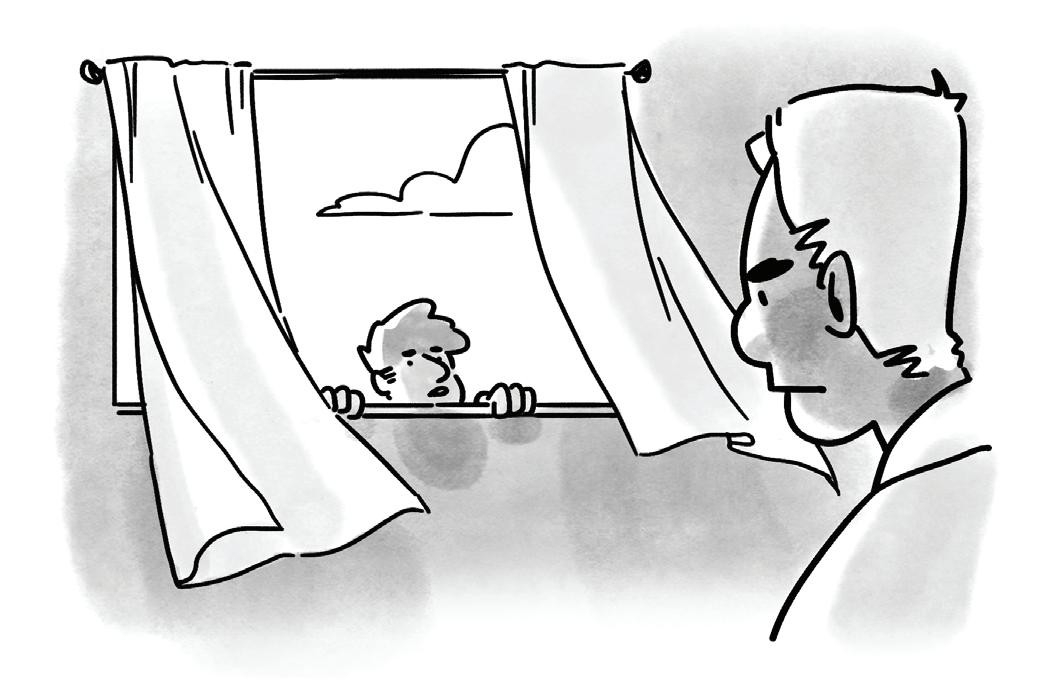
“Excuse me, do you have a minute to talk about our Lord and Savior, Martha Pollack?” — Michelle Robbins, ’21
To submit your caption for this week’s contest, visit sunspots.cornellsun.com.


26 A PA R TMENT FOR R ENT
2020-2021
Studio 1, 3, 8 & 11 BR Apts. Great Locations in Collegetown. 607-227-2535
Collegetown Crossing
College Ave's Newest Location 307 College Ave. Now Leasing for 2020-2021
Completely New Modern Studios, 2 & 4 Bedroom Apartments. Fully furnished, heat & hot water included. Reception area at 307 College Ave. www.urbanithaca.com 607-330-2442 info@urbanithaca.com
120 Oak Avenue
Just steps to Cornell Campus
10 bedroom house & 1 and 2 bedroom apartment
607-277-1234
office@ithacastudentapartments.com Ithacastudentapartments.com
>>MAKE ITHACA HOME<< Collegetown Apartments Furnished 1-3 Bedrooms PARKING, LAUNDRY, UTILITIES! (607) 273-7368 www.WestShortApts.com
Boldly Refined Living 312 College Avenue
Sophisticated studio, 1, 2, 3-bedroom apartments. Superior fitness facility, theater, and coworking space. Free high-speed internet. Exclusive resident parking. Package delivery/return. Overnight concierge. 607-273-9777 or 312collegeave.com
1, 2 & 5 Person Apts. Overlooking Cascadilla Gorge Architecturally designed. Decks, patio, fireplaces, Jacuzzis. Furnished, parking, internet. 607-592-7564
504 1/2 Thurston AveSTUDIO 607-277-1234
office@ithacastudentapartments.com Ithacastudentapartments.com
Catherine & Eddy St. 1 & 2 bedroom Furnished, heat included Laundry in building Parking available for fee 607-277-1234 office@ithacastudentapartments.com
26 A PA R TMENT FOR R ENT *****************************
1-3 Bedroom Apartments Quiet Fall Creek Location 5 Minutes to Busline 607-351-1267 joe@joegrealty.com *****************************
Houses, Apts, Parking 1 to 9 Bedroom Collegetown - College Ave, Linden Ave, Dryden Rd, Bryant Ave, Cook St. 607-330-2442 info@urbanithaca.com www.urbanithaca.com
Flexible Housing Solutions! Short Stay Accommodations “Brand New” Studio Apartments 238 Liden.com Leasing@inteprop.com
26 A PA R TMENT FOR R ENT
Now Renting 2-10 Bedroom Houses/ Apartments for 20-21. All Locations. Call today or visit our website: Certified Properties of TC Inc certifiedpropertiesinc.com 607-273-1669
109 Sage Place 2 & 3 Bedroom Apartments Access to Shuttle to Campus Access to Free Fitness Center Novarr-Mackesey Property Management office@ithacastudentapartments.com 607-277-1234
20-21 College Ave. 5 BR House Furnished. Laundry. Parking. Call 607-273-8576

MEN’S HOCKEY
Continued from page 12
to the penalty box.
“I don’t know what to make of the game tonight, there’s no rhyme or reason, hard to figure out with the penalty calls tonight,” Schafer said. “But it was a special teams game.”
Each of Princeton’s three goals came during five-on-four play — it was the first time since Feb. 2018 that three power-play goals were scored against Cornell. That was 60 games ago.
“I was pretty happy with our discipline tonight, but I don’t know — I’m trying to figure out where the [penalty] calls came from,” Schafer said.
Despite a scoreless period from the Red, Cornell still outshot Princeton by seven shots on goal in that second frame.
The third period started with a clean slate, Princeton having knotted the game at two. The fate of the tilt would all come down to the final 20 minutes.
It was the first time since Feb. 2018 that three power-play goals were scored against Cornell. That was 60 games ago.
The next goal would come again on the power play — but this time from Cornell junior forward Alex Green, who sent the puck in from the point to put Cornell back on top with 14:40 left in the period.
The Red wouldn’t have to wait much longer for its next goal, which came in the form of freshman forward Ben Tupker’s second goal of his collegiate career. It would be the last full-strength goal of the night for either team.
By the end of the night, Cornell would best Princeton in shots on goal, 36-15.
“We’ve killed off [penalties] in six or seven straight games ... we gave up three tonight.”
Mike Schafer
“So go figure.”
Cornell and Princeton traded turns getting another power-play goal each — first, Princeton came back within one goal to put the pressure on Cornell with eight minutes left in the tilt.
“We’ve killed off [penalties in] six or seven straight games without giving up one, we gave up three tonight,” Schafer said.
But Mullin would be back again, scoring his second goal on the man advantage of the night with less than a minute left in the game.
With 50 seconds left, the score was now 5-3 — where it would stay until the final buzzer sounded.
Cornell will return home Friday to face Colgate at 7 p.m.
Christina Bulkeley can be reached at cbulkeley@cornellsun.com.
WOMEN’S HOCKEY
Continued from page 12
this year with a 12-0-1 record.
“The biggest thing for us has been sticking together as a team,” Bourbonnais said after the game. “We’re doing really well this year. Doing things on our own in the playoffs isn’t going to fly so I think when we play as a team we’re unstoppable.”
Entering the last month of the season, the team will take on Harvard and Dartmouth next
week on Feb. 7 and 8 in two vital ECAC matchups.
Students may consult with counselors from Counseling & Psychological Services (CAPS) by calling 607-255-5155. Employees may call the Faculty Staff Assistance Program (FSAP) at 607-2552673. An Ithaca-based Crisisline is available at 607-272-1616. For additional resources, visit caringcommunity.cornell.edu.
Justin Suzzan can be reached at jsuzzan@cornellsun.com.


By JUSTIN SUZZAN Sun Staff Writer
No. 4 women’s hockey put another unbeaten weekend in the books at Lynah against ECAC foes St. Lawrence and Clarkson.
chance to high-five their favorite players when the skaters exit the ice.
Junior goaltender Lindsay Browning once again shone for the team, saving 21 out of the 22 shots she faced. Her shutout was going until the third period, when Clarkson rushed Cornell’s zone.
Deking around the Red’s defense, the Golden Knights’ Elizabeth Giguere took the puck and made a quick pass to Avery Mitchell, who beat Browning for the goal.
“The team so far has been great.” Browning said. “I haven’t been too busy — we’ve just been scoring a lot. It makes it a lot less stressful on the goalie.”
After the game ended in a tie, the Red turned its attention to St. Lawrence (11-11-6, 6-7-3 ECAC), in the team’s annual Do It For Daron game. DIFD is a mental health awareness organization in honor of Daron Richardson, a hockey player who died by suicide in 2010 at the age of 14. Daron was the sister of former women’s hockey player Morgan Richardson ’16.
The organization supports education and awareness about youth mental health. The Red showed its support by hanging purple hearts all around the boards for the afternoon game.

Halfway into the first period, the Red was given a power play thanks to a hooking penalty suffered by the Saints’ Anna Segedi. With Segedi watching from the box, the Red put in its first goal of the game from Bourbonnais after she forced her way into the crease and snuck the puck past the goalie. Senior forward Amy Curlew and junior forward Maddie Mills also recorded assists.


On Saturday, the Red squared off against St. Lawrence and came out on top, 3-2. Cornell swept the season series against the Saints, also having downed them in November by a score of 4-1. Back in November when the Red played Clarkson, the game ended in a 1-1 tie. It was the same result this time around as the teams were deadlocked through 60 minutes of regular play and five minutes of overtime at one goal each.
In Cornell’s second-to-last homestand of the regular season, the Lynah Faithful packed the stands of Cornell’s home ice. The Red’s success has drawn attention from the community, including children from surrounding local youth teams. The young fans eagerly awaited the
“It’s definitely been fun looking around the stands and seeing groups of youth hockey teams,” said sophomore forward Gillis Frechette. “Coach said before the game, so many dream of being in our seats right now. It’s so fun to realize that we’re where they aspire to be in a few years, so it’s really cool to know that we’re leaving that mark on them.”
Clarkson (18-4-5, 9-3-3 ECAC) came to play and was not intimidated by the large crowd. Cornell (19-1-3, 13-0-3 ECAC) jumped on the Golden Knights in the first period. Senior defenseman Jaime Bourbonnais, who is currently leading the team in points this season, caught Clarkson in between a line change.
Bourbonnais jumped on the opportunity, skating into the Golden Knights’ zone and finding junior forward Finley Frechette. From a wide angle, the junior took her shot and was able to sneak the puck through to put the Red up 1-0.
By CHRISTINA BULKELEY Sun Assistant Sports Editor
In a night decided by special teams — with a combined total of 15 penalties and six of the final eight goals scored on the man advantage — men’s hockey managed to pull off a victory over Princeton.
After letting up five goals to Quinnipiac and getting pulled in the third period, junior goaltender Matt Galajda returned to his post for the second night of the weekend. He exited the night with 12 saves on 15 shots.
Baker Award-nominated netminder.
Cornell got the scoring started early when sophomore forward Max Andreev jumped out to put the Red on top, 1-0, before the halfway mark of the first period. Andreev returned
when junior forward Tristan Mullin rebounded the puck by the Princeton net to widen the scoring deficit. It was his seventh goal of the season.
The Red killed two penalties in the first frame and exited it leading, 2-0. But the lead would soon be gone.
“I don’t know what to make of the game tonight, there’s no rhyme or reason ... But it was a special teams game.” Mike Schafer
“On the penalty kill, Matty’s gotta play better — and he knows that,” said head coach Mike Schafer ’86 of his Hobey
this weekend after suffering an injury two weeks ago in the first game of the series against Northern Michigan. 10:05 into the period, Cornell struck again during a period of five-on-three play,
The Tigers clawed back in on a power play of their own after Andreev got called for roughing following a scrum near the Princeton net. Princeton’s Mark Paolini was the first to strike for his team, halving Cornell’s lead. With 2:15 left in the period, Princeton’s Spencer Kersten found the back of the net, again on the power play after Andreev was again sent
A few moments later, senior forward Grace Graham doubled Cornell’s lead with an excellent wrist shot that beat the St. Lawrence goalie on the glove side. Gillis Frechette passed it ahead to senior forward Paige Lewis, who led Graham into the zone. Charging in on her forehand, she used the Saints’ defender as a screen and fired it around her for the goal.
After Julia Gosling scored for the Saints in the second frame, the Red scored its third of the game. The puck was cleared to Browning, who flicked the puck down the ice right to Lewis’ stick. Lewis then passed it to Gillis Frechette, who beat the goalie from on top of the crease after cutting inside to put Cornell ahead 3-1. It was Browning’s first career point — a rarity for a goaltender.
With time expiring in the third, St. Lawrence put in another goal. However, it was too little, too late — the Red came away with a 3-2 victory, further extending its unbeaten streak to 13. Cornell is also undefeated at home