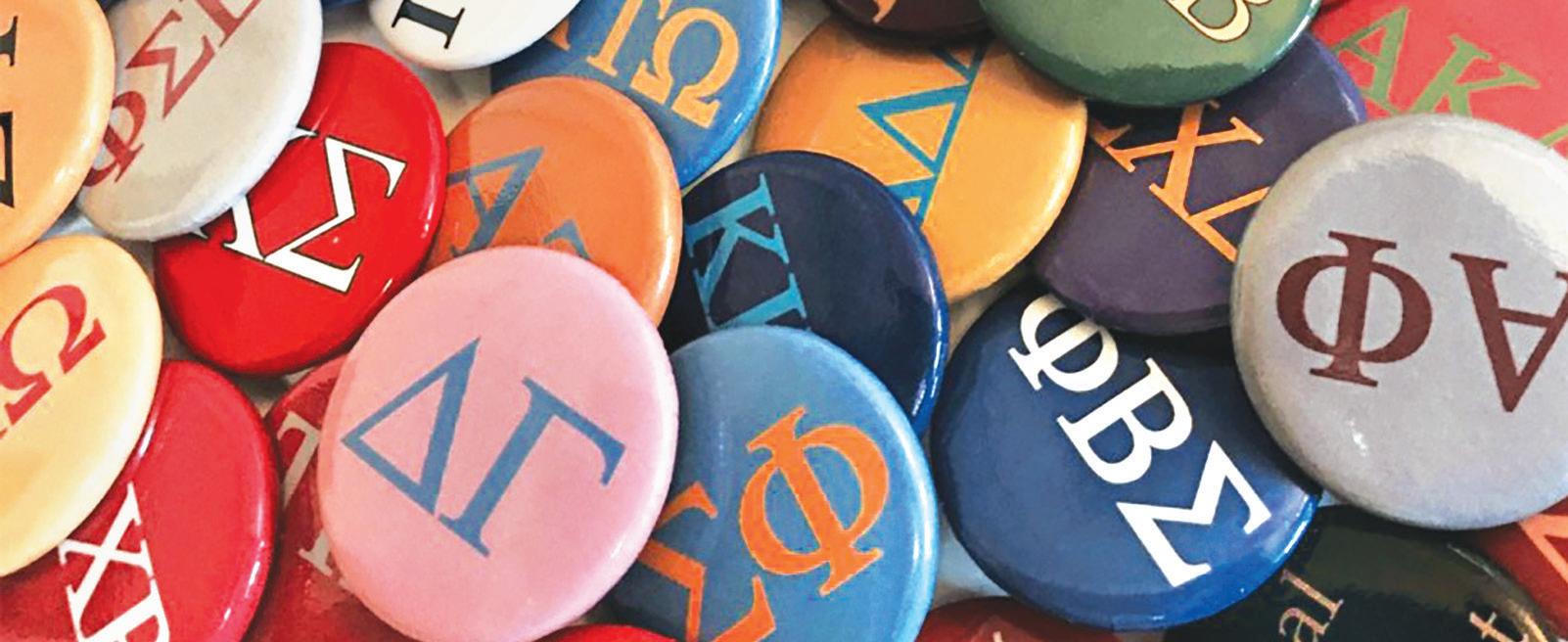
The spring 2019 recruitment period saw the lowest number of participants in four years for both the Interfraternity Council and the Panhellenic Council. But the retention rate for new members — the percentage of people who joined a Greek organization having attended rush week — also reached a fouryear high for fraternities and a two-year high for sororities.
This year, Greek life saw a 22 percent decline in fraternity rush participants — 556 this year, down from last year’s 717, according to data provided to The Sun by Kara Miller, director of fraternity and sorority life. Sororities also experienced a 16 percent
drop in rush participants — 645 people, down from last year’s 768.
As the number of participants declined, the percentage of people who ended up joining a Greek house rose. The retention rate for spring 2019 was 84 percent for fraternities and 74 percent for sororities, up from 67 and 73 percent, respectively, from the previous year.
Recent policies implemented by university administration could explain the decline in fraternity rush numbers, according to IFC Executive Vice President of Recruitment Nick Smith ’20, arts writer for The Sun.
“I think we talked a lot of [the decline] up to
See RUSH page 4
opportunity | A
By HUNTER SEITZ Sun Staff Writer
The most recent NASA mission to Mars, the InSight Lander — short for Interior Exploration using Seismic Investigations, Geodesy, and Heat Transport — will broadcast daily weather reports back to Earth for at least the next two years from the Elysium Planitia plain on the red planet.
However, the main mission of the lander is to map the interior of the planet using a wide array of techniques, primarily seismology.
“We don’t really know that much about the core of Mars. The
See MARS page 4
C.U. Prof Tapped for U.N. Role
Prof. Muna Ndulo to help combat sexual abuse within U.N.
By SHIVANI SANGHANI Sun Staff Writer
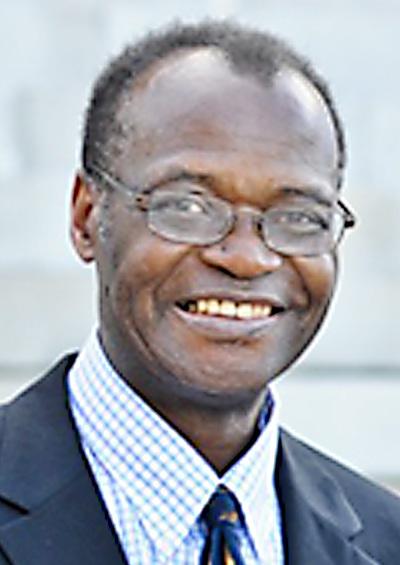
Facing a tide of sexual exploitation allegations levied against the organization’s peacekeepers, the United Nations SecretaryGeneral Antonio Guterres recently tapped Cornell Prof. Muna Ndulo to help stem the growing crisis, according to a Cornell Law School press release.
Ndulo — “an internationally recognized scholar in the fields of constitution making, governance and institution building,” according to his faculty bio — will join the United Nations Civil Society Advisory Board to advise Guterres on implementing measures to prevent sexual exploitation committed by U.N. peacekeepers and hold
“The most critical step is to make sure that home countries punish the perpetrators.”
Prof. Muna Ndulo
perpetrators accountable for their actions.
The United Nations has wrestled for many years with the issue of sexual exploitation and abuse among its soldiers, with 145
allegations of abuse by UN soldiers reported in 2016 alone.
Between April and June of 2018, the U.N. received 70 allegations of sexual exploitation and abuse across all of its operations, Farhan Haq, U.N. deputy spokesperson, previously announced.
In an effort to combat sexual exploitation and abuse, Guterres previously promised to establish a committee to tackle the record-high reports of sexual mistreatment across the globe. In his report to the Security Council on “Special Measures for Protection from Sexual Exploitation: A New Approach,” Guterres vowed to enable the U.N. to more closely interact with civil society, external experts and non-governmental organizations.
Ndulo said that during peacekeeping missions, foreign soldiers deployed by the U.N. often engage in sexual exploitation
PROF. NDULO
MERIDITH KOHUT / THE NEW YORK TIMES
Venezuelan protesters clash with military forces clinging to power. President Maduro recently sparked outcry after blocking foreign humanitarian aid over the weekend.
Another
Cornell researcher helped to launch the latest NASA mission to Mars, which beams daily weather reports to Earth.
Crisis in Venezuela
Daybook
Wednesday, February 27, 2019
A LISTING OF FREE CAMPUS EVENTS
COURTESY OF CORNELL UNIVERSITY
Biography feature | A talk today will discuss the late Olov Janse, Swedish-born archeologist, who emphasized connectedness between nations in the mid-1900s.
Today
Colonial and Post-Colonial Intresections of Archeology and Diplomacy: Olov Janse
Noon - 1 p.m., Kahin Center
What’s New in the U.N. 1.5 Climate Report 12:20 p.m., 135 Emerson Hall
Manager John McKim Miller ’20
Fake News, Alternative Facts, and Misinformation: Learning to Critically Evaluate Media Sources
3:30 - 4:30 p.m., Uris Classroom
What Schools Fail to Recognize: Creativity, Common Sense, Critical Thinking, and Wisdom Trump Knowledge and I.Q.
4 - 5 p.m., 160 Mann Library
Becker Cafe With Ben Ortiz, Cornell Hip Hop Collection Assistant Curator
7:15 p.m., G50 Carl Becker House
Tomorrow
Understanding Copyright: From Basics to Fair Use 9 a.m. - Noon, 160 Mann Library
Joint Microeconomics, Industrial Organization and Applied Microeconomics Workshop: Anton Badev 11:40 a.m. - 1:10 p.m., 498 Uris Hall
Introduction to Zotero Noon - 1 p.m., 106G Olin Library
Working the Tides: Pawangs, Fishers, and Scientists in the Straits f Melaka, 1870-1940 Noon - 1:30 p.m., 102 Mann Library
On the Frontlines of Peace: The Unlikely People Who Are Getting It Right 12:15 - 1:30 p.m., G08 Uris Hall
As Worlds Turn: Planetary Spin, Climate, and Life 4 - 5 p.m., 105 Space Sciences Building
Free Yoga
5 - 6 p.m., 413 Art Gallery, Willard Straight Hall
Procrastinate at the Straight 6 - 8 p.m., Willard Straight Hall
COURTESY OF CORNELL UNIVERSITY
Strait talk | Prof. Anthony Medrano, history, Harvard University, will discuss the impact of fishing villages on the economy and ecology of the Straits of Melaka.
Comedian Eric Andre to Speak
By HUNTER SEITZ Sun Staff Writer
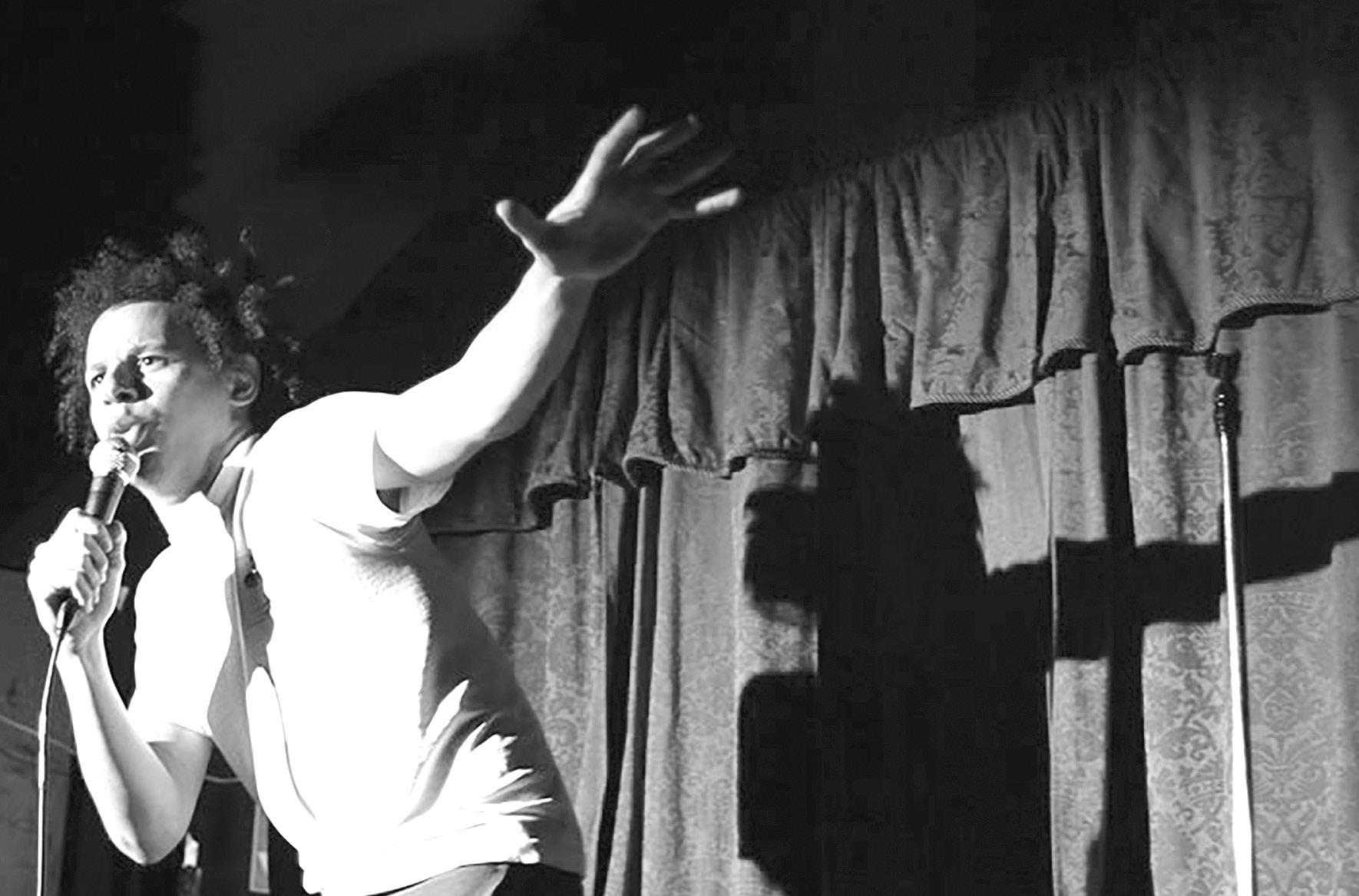
Eric Andre, comedian and actor famous for The Eric Andre Show , will be coming to campus on March 23rd, the Cornell University Program Board announced .
Andre is the creator and co-host of the show, where “he brings his own flair to what is otherwise a very organized and predictable late-night routine,” according to the event’s Facebook page.
of mainstream TV talk shows,” a Rolling Stone review wrote.
Andre’s unrelenting and constantly over the top humor puts some of his guests on ‘The Eric Andre Show’ into situations they never thought they would end up in.
“Unlike his counterparts, Jimmy Fallon or Conan O’Brien, Andre’s unrelenting and constantly over the top humor puts some of his guests on The Eric Andre Show into situations they never thought they would end up in,” the event description reads.
The show has run for four seasons since it first aired on May 20, 2012, and is currently the cable network Adult Swim’s top-rated program. Having featured a slew of famous guest stars such as Chris Rock, Jimmy Kimmel and Andy Samberg, Andre’s show has garnered praise for being “a sharp rebuke to the forced politeness and feigned enthusiasm
Andre also starred in three seasons of FXX’s Man Seeking Woman from 2015 to 2017, as well as CBS’ 2 Broke Girls where he played one of the main characters’ boyfriends. Andre has also lent his voice to the character of the hyena, Azizi, in Disney’s 2019 remake of The Lion King. Beyond acting, he also serves as the writer and executive producer for Adult Swim’s latenight comedy Mostly 4 Millenials.
The event will be held in Bailey Hall and is hosted by the CUPB. The event will start at 7 p.m. and is expected to run until about 9 p.m., according to the Facebook event page.
Tickets will go on sale March 1 for students, March 2 for the Cornell community, and March 8 for the general public. They can be purchased from the Cornell University Concert Ticket website. Balcony seats will cost $12 and floor seats $15 for members of the Cornell community.
Hunter Seitz can be reached at hseitz@cornellsun.com.
Award-Winning Poet Coming to C.U.
Claudia Rankine will deliver a live poetry reading
By WINNY SUN Sun Staff Writer
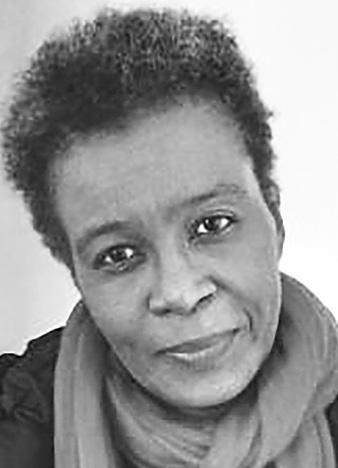
Claudia Rankine, an award-winning poet, author and the Frederick Iseman Professor of Poetry at Yale University, will perform a live reading of poetry on April 18 in Alice Statler Auditorium.
Rankine, who was born in Jamaica and immigrated to the United States in her youth, has built a storied career tackling issues of race and identity in contemporary America.
Rankine has written five collections of poetry, and is perhaps best known for Citizen: An American Lyric, a 2014 book which “uses poetry, essay, cultural criticism, and visual images, to explore what it means to be an American citizen in a ‘post-racial’ society,” according to her agency Blue Flower Arts.
Two-Tirds of Cornell P.E. Courses Have Required Fee
By ALEX HALE Sun Staff Writer
Cornell’s tuition costs $56,784 per year for out-of-state students and $38,114 for New York State residents at state contract colleges — such as the College of Agriculture and Life Sciences — according to the University’s most recent financial aid figures. But not included in the cost of attendance are fees for physical education classes, a graduation requirement for any undergraduate student.
Undergraduate students must complete two semesters worth of gym classes during their time at Cornell. Courses that fulfill this requirement range from sports like bowling to more adventurous choices, such as Physical Education 1134: Bahamas Scuba Dive Trip.
But while these classes seem fun, many of them come with a hefty price tag. On the lower end is $60 for PE 1420: Introduction to Meditation, while PE 1134: Caribbean Adventure costs $1,275. Cornell’s current most popular gym class, PE 1300: Introduction to Bowling, charges enrollees $125, according to Frederick Debruyn, associate director of Physical Education.
Of the 155 total gym courses currently offered to students, “about two-thirds” require a fee, Debruyn told The Sun.
Debruyn said that the price of activity fees are determined by “what is necessary to run the course.” The fee also goes directly to fund the course, such as payment for instructors.
“Most of our courses are taught by outside people. They are not instructors who are part of the department and [are not] paid as an instructor in the department,” Debruyn said.
If a student doesn’t complete a course, they can get a refund by withdrawing from the class before the deadline — which varies with each course — failing to pass “preliminary requirements” or missing a certain number of classes with a medical reason, according to Cornell Physical Education’s website.
Additional fees can include an up to $100 fee for non-students wishing to participate in a gym class, as well as a $50 fee if a student adds or drops a class after a specific deadline.
Fees are “pretty much fixed,” Debruyn said, who was unsure if there existed a formal policy for waiving fees for students who may not be able to afford them.
For the courses in the Cornell Outdoor Education program, students in need of P.E. credit may be able to waive their fee, according to the COE
“I feel that we provide enough free programs for those who actually need them. ”
Frederick Debruyn
website.
However, the P.E. department does provide a number of classes that are free of charge for those who can’t, or won’t, pay extra.
Badminton, basketball and volleyball classes do not charge fees, and all swimming classes — with the exception of scuba diving — are free for students. There is a $100 fee for “all make-up swim tests taken by sophomores, juniors or seniors except during the August orientation period,” according to the P.E. website.
“I feel that we provide enough free programs for those who actually need them,” Debruyn said.
When asked if certain gym classes fill more quickly because they are free, Debruyn responded that he does not believe that is the case.
“I would say that they fill pretty much the same as most programs,” he said, adding that most of the classes that fill up quickly are due to their limited size.
Alex Hale can be reached at ahale@cornellsun.com.
“Genius” Grant for “crafting critical texts for understanding American culture at the beginning of the 21st century in inventive, ever-evolving forms of poetic expression,” according to the grant’s website.
Rankine is also the founder of the Racial Imaginary Institute, an initiative that aims to discuss race across different mediums like lectures, art exhibitions and with different organizations and artists.
The reading is part of the Robert Chasen Memorial Poetry Reading, a biannual Cornell event where a distinguished poet is invited to perform a live poetry reading. This event is also the final installment in the 2019 Spring Barbara & David Zalaznick Creative Writing Reading Series, a program that provides funds to invite a number of high-profile writers to campus each semester.
courses to graduate.
Citizen: An American Lyric was the winner of the National Book Critics Circle Award for Poetry, and was heralded by NPR for examining “everyday encounters with racism in the second person, forcing the reader — regardless of identity — to engage a narrative haunted by the deaths of Michael Brown, Trayvon Martin, and Renisha McBride.”
In 2016, she received a MacArthur
The event is free to the public, but people wishing to attend must reserve their spot by picking up a free ticket from the Willard Straight Box Office. Tickets will be available starting March 1.
Winny Sun can be reached at wsun@cornellsun.com.
Showman | Eric Andre, co-host of The Eric Andre Show, will be coming to campus on March 23. The event will be in Bailey Hall and tickets go on sale starting March 1.
COURTESY OF MARYANN VENTRICE
Costly education | Two-thirds of Cornell’s P.E. classes have required fees in order to enroll, and Cornell students are required to take two semesters of P.E.
COURTESY OF KENNETH C. ZIRKEL
RANKINE
Rush Attendance Falls Amidst Greek Life Controversies
RUSH
Continued from page 1
it being the first year after the administration implemented a number of new rules,” Smith told The Sun in an interview. “They were certainly well-warranted but this was the first year in which to be an eligible potential new member you had to attend training sessions in the fall.”
Individuals interested in spring rush for fraternities had to attend two mandatory informational meetings — a general meeting and an intervene training seminar on sexual assault — which were held sporadically from October
through early December. Smith said that such meetings were necessary, given recent hazing incidents in the Greek community, which led to the university revoking its official recognition of both the Sigma Nu fraternity and the Delta Phi fraternity.
“In my opinion … it’s good we’re sending the message to potential new members that if they want to be a part of our community, they should be active bystanders in situations involving alcohol or potential sexual assault,” said Maya Cutforth ’20, Panhellenic Council president.
However, Smith expressed
concerns that requiring individuals to attend mandatory meetings so soon in the semester might have deterred many from deciding to return for rush week.
“We are … trying to get that back to a place in which we can still have the training sessions — they are certainly very important and necessary — but do them in a way that’s not forcing the decision to join Greek life so early into the year,” Smith said. “What we are afraid of is that having those training sessions so early will give people a month to decide if they want to join the Greek system.”
Cutforth, on the other hand, said that there could perhaps be other reasons that dissuaded individuals from joining Greek life.
“It could be a number of factors: more hazing stories nationally, people putting Greek life under a different lens, these could all have affected it,” Cutforth told The Sun. “I don’t think there is a singular answer for any of this. [PHC] does surveys for why people decided to drop out of recruitment and we got varied answers.”
Both Smith and Cutforth noted that there had been a
make-up training session during the start of rush week for individuals who had missed the sessions in the fall.
However, the make-up meeting had not been widely advertised as leadership did not want too many people to rely on having the extra session as a fallback for participating in regular training, Cutforth said.
“In terms of resources, it’s really hard to keep on doing the same training over and over again,” she said.
Many individuals who decide to come for rush week aren’t entirely set on joining the Greek system, Smith said, noting that he himself was not sure if Greek life was for him when he first joined.
“In general, it’s a fairly objective thing to say that the sentiment around Greek life right now is not in a good spot,” he said. “Saying Greek life is doing badly because PR is bad makes it sound as though we are not deserving of some of that bad PR.”
Cutforth expressed similar sentiments, stating that, “nationally, Greek life is facing different challenges, and I think that’s reasonable — people are con-
cerned about hazing and diversity efforts.”
She mentioned how incidents such as members of the Zeta Psi fraternity chanting “build a wall” near the Latino Living Center and “underground” members of the Psi Upsilon fraternity allegedly assaulting a student due to his race contributed to people shying away from Greek life.
Despite these incidents, Smith remains hopeful for the future of the Greek community and mentioned upcoming changes that would further improve on those issues.
“We’re changing the way we do [the] President’s Council, we’re having more meetings with the IFC [executive board] and new member educators to try and work out problems with stuff that a chapter might not consider hazing but that as the IFC we know Cornell would,” he said.
Cutforth said that PHC changes are also in the works, which will be proposed sometime in March.
Hunter Seitz can be reached at hseitz@cornellsun.com.
Latest NASA Lander Reports Mars Weather Cornell
research scientist
helped launch latest mission to Red Planet
MARS
Continued from page 1
goal is to understand the interior structure of Mars and heat flow coming out of Mars … to understand how terrestrial planets like Earth, Mars and Venus form,” Don Banfield ’87, principal research scientist, Cornell Center for Astrophysics and Planetary Science, told The Sun.
Banfield is a co-investigator and science lead for the Auxiliary Payload Sensor Suite, one of the core data-gathering instruments of the Mars lander.
The lander first left Earth on May 5, 2018, from Vandenberg Air Force Base in California, and touched down seven months later on Nov. 26. But despite having been on the planet since late November, the lander hadn’t started transmitting data until recently, according to Banfield.
“We basically spent the first two months, almost three months, just putting the instruments on the ground,” Banfield said.
The team had to survey the surrounding area to make sure it was clear of any rocks or debris, and then slowly place the various instruments.
“We’re hoping to hear ‘Mars’-quakes or perhaps even meteorite impacts that will shake Mars and the shaking will let us do tomography — mapping by use of ultrasound or x-rays — on the interior structure of Mars,” Banfield said.
According the Banfield, the lander is measuring the weather on Mars because it can create seismic interference for InSight’s seismometer, and by taking measurements on atmospheric conditions, it will allow the team to filter out this “background noise” to make more accurate measurements.
InSight contains a highly-advanced weather station, with a pair of wind sensors, air temperature
sensors, and even a pressure sensor that is 20 times faster and more sensitive that previous missions to Mars, according to Banfield.
While completing its main mission of mapping the interior of Mars, the lander is also transmitting the weather reports back to Earth, where they are displayed on the website for the mission. The reports include temperature highs and lows, wind speeds and direction and atmospheric pressure.
The website will be updated as long as the InSight mission continues. Currently, the mission is planned to last for slightly over two Earth years — or almost one Mars year — from its launch date.
“The instruments were designed and the noise levels estimated that we would expect we would have enough ‘Mars’-quakes in one Mars year to be able to address the questions we wanted to answer,” Banfield said.
There is also a secondary reason why the mission is only set to last for one Martian year.
According to Banfield, Mars experiences a “dust season” once a Martian year, and the storms could potentially damage or disable the lander, just as they did with the NASA rover Opportunity.
“We expect there may be more bad dust storms coming, and so InSight might not survive next [Mars] year’s dust storms,” Banfield explained.
However, should the lander survive beyond one Martian year, Banfield says that the team plans to ask NASA for continued funding to keep the mission going.
Until the mission’s eventual end, the weather reports can be found on the lander’s mission website.
Hunter Seitz can be reached at hseitz@cornellsun.com.
Cornell Tech Founding Dean to Depart for MIT in August
By MARYAM ZAFAR
Sun Staff Writer
Founding dean Daniel Huttenlocher will depart Cornell Tech, stepping down from the fledgling college just one week after tech giant Amazon announced it was ditching its plans for a New York City headquarters.
Huttenlocher, who will depart Aug. 1, served as Cornell Tech’s founding dean since 2012. The Massachusetts Institute of Technology graduate will return to his alma mater to assume the position of inaugural dean of the new MIT Stephen A. Schwarzman College of Computing, an initiative announced last October.
Working for Cornell University since 1988, Huttenlocher was appointed to Amazon’s board of directors in September 2016. Huttenlocher has served on the board since, a time during which Amazon announced — and then retracted — plans to house its second headquarters in New York City.
As vice provost of Cornell Tech, Huttenlocher recused himself from Amazon’s headquarters search, President Martha Pollack told The Sun. One of the company’s ten directors, he currently sits on the Leadership Development and Compensation Committee.
“Although I have no insights into the Amazon board, it seems like it’s very likely that Cornell Tech is one of the reasons that [New York City] is such an attractive site,” Pollack told The Sun the day after the company’s November announcement that it planned to construct in New York City.
Huttenlocher also sits on the board of Corning Incorporated, alongside fellow Amazon board member and chair of Corning, Wendell Weeks.
In August, Huttenlocher will leave Roosevelt Island for Boston, to head the new College of Computing, which MIT President L. Rafael Reif called “an ambitious experiment.” MIT said it searched for “educational creativity” and “industry experience” for its founding dean — traits presumably found in soon-to-be-former founding dean of Cornell Tech, Huttenlocher.
This week MIT is hosting a three-day celebratory event in Cambridge for the new college; Huttenlocher was not scheduled to speak.
A spokesperson for Cornell Tech declined to comment on Huttenlocher’s departure. The spokesperson also declined to comment on any potential search process for a new dean.
“Dan has done a remarkable job situating Cornell Tech for future growth, and we are in a tremendous position to attract the next visionary leader of Cornell Tech,” Pollack said in a University press release Thursday. “We congratulate Dan on this exciting new opportunity at his alma mater.”
Huttenlocher’s contributions include chairing the 1998 task force that created Cornell’s interdisciplinary Faculty of Computing and Information Science.
Maggie Haberman Event Rescheduled
Pulitzer Prize
winning journalist Maggie Haberman left Cornellians in an eager wait when her Nov. 28 talk was postponed due to a change in President Donald Trump’s travel schedule. The wait for the current New York Times Chief White House Correspondent and CNN political analyst will be over on March 11, when she will make her way to campus.
According to its Facebook event page, Cornell Hillel invited Haberman to campus, where she will speak about her “remarkably informed perspective on President Trump,” and “examine his influence on key issues affecting all Americans and his battles with the American press.”
Cornell Hillel’s advisor, Rabbi Ari Weiss, was notified on Nov. 15 that Haberman would no longer be able to accommodate the scheduled date, as “her job requires her to travel with President Trump,” he previously told the Sun.
worked at The New York Post, The New York Daily News and Politico. She joined The New York Times in 2015, where her work on the team that conducted the 2018 coverage of “Donald Trump’s advisers and their connections to Russia” earned her a Pulitzer Prize.
Haberman was a finalist for the Mirror Awards for the 2014 profile “What Is Hillary Clinton Afraid Of?” which she co-wrote with reporter Glenn Thrush when the two were at Politico. According to the event page, Haberman also won the Aldo Beckman Award from the White House Correspondents’ Association.
Hillel invited the New York City native to campus because they felt that “Maggie … has a compelling Jewish story and she does significant and important work and would be able to provide insightful commentary about politics to the Cornell community,” Weiss said.
Cornell Hillel invited Haberman to campus, where she will speak about her “remarkably informed persepective on President Trump.”
The event was rescheduled for this semester because Haberman’s availability last year coincided with the study week during final exam period in December.
According to her New York Times biography, before holding her current positions, Haberman
Earlier in 2018, Haberman was featured in a documentary about The New York Times titled The Fourth Estate. According to IMDb, the documentary, filmed by Oscar-nominated filmmaker Liz Garbus, takes “a look at how The New York Times covered President Trump’s controversial first year in office.”
The event will take place at 5:30 p.m. on Monday, March 11 in Statler Auditorium. The talk will be followed by a question-and-answer session. Free tickets are available from Feb. 27-March 1 and from March 4-8 at Willard Straight Hall.
Anu Subramaniam can be reached at asubramaniam@cornellsun.com.
C.U. Law Professor to Advise U.N.
and abuse of local civilians.
“The most critical step is to make sure that the home countries punish the perpetrators,” Ndulo told The Sun. “So we have to develop ways in which we ensure that we get feedback on whether or not these soldiers are actually being punished.”
Often the sexual exploitation and affairs between U.N. soldiers and civilians resulted in the birth of a child. After the soldiers return to their home countries, these children are then left in areas of conflict without their
In 2016, Huttenlocher said he’d “be lucky if I’m alive when [Cornell Tech is] completely built out,” in an update at the Tompkins County Chamber of Commerce. At the meeting, Huttenlocher projected that the Roosevelt Island campus would be fully populated by the “mid- to late-2040s.”
More than a year and a half later, Huttenlocher noted that the population of the Cornell Tech campus was small, outnumbered by nearly any individual science or engineering department at the Ithaca campus.
“We are trying to punch way, way, way above our weight,” he said in December 2017, three months after Cornell Tech officially moved into New York. “We’re focused on digital technology and societal economic impact, with a focus on that impact in New York, [and] regionally and nationally as well.”
In an email last Thursday to students, staff and faculty, Huttenlocher said, “When I take a step back to look at what we are creating together at Cornell Tech I am simply amazed.”
The MIT college is scheduled to open in September. The University has not announced a search for a new dean for Cornell Tech.
fathers, according to Ndulo. In response to such exploitation, Ndulo said he hopes to help implement two major measures: to ensure the punishment of the perpetrators and help mothers and children identify and contact the men who fathered them.
“That’s the only way that you can discourage sexual abuse in missions,” Ndulo said. “We need to make sure there is no impunity — that there will be consequences.”
Ndulo also hopes that his work on the Civil Society Advisory Board will help foster international coordination in the prosecution of accused soldiers,
who often commit crimes in a different jurisdiction than their home country.
For example, when “the victim is in Haiti, but the soldier is in France,” a system for greater legal cooperation is needed to hold soldiers accountable, according to Ndulo.
“I think we have a responsibility as an international community to protect civilians in conflict situations,” Ndulo said. “I think it’s important that the UN, upholding such high values, is seen to take this issue very seriously.” UNITED NATIONS Continued
Shivani Sanghani can be reached at ssanghani@cornellsun.com.
Maryam Zafar can be reached at mzafar@cornellsun.com.
DEAN HUTTENLOCHER
HABERMAN
By ANU SUBRAMANIAM Sun Staff Writer
ARTS & ENTERTAINMENT
Take Me Home, West Virginia
Peeling out of Wheeling, West Virginia, with four wheels toward Ithaca, I asked my friend if she would read aloud a few poems about West Virginia. After a few too-short days of creeping up windy mountain roads and happy-crying when a view of a valley opened up before us, I hoped that poetry might have the words to synthesize and encapsulate the beauty that the four of us had felt over those few days.
First up from the Google search was “West Virginia” by Aaron Kittle, a romantic ode in charming lyric about the grace and power of nature. It evoked God-fearing sublimity and praised the plentitude of forested landscapes. We loved it; it reinforced every roadside stop and detour up a mountain we made, and confirmed to us that we did, in fact, see the real West Virginia. Maybe, in just those 60 hours in the state, we had been able to comprehend its essence.
Then came “An Ode to West Virginia,” which is posted on MyPoeticSide.com, by AppalachianHellFire. It begins: “The forgotten place / Where I am from, / Where my family lives, / Where I will never forget, / And you, an outsider, will never know.”
The poem is a brutal critique of our whole weekend: a dreamy college road trip with the amorphous and regrettably naïve goal of “seeing West Virginia,” playing “Take Me Home, Country Roads” over the car speakers and holding piles of visitor center brochures. The poem doesn’t have the neat form or the elegance of Kittle’s poem, but it’s fierce and cogent, powerfully correcting what they thought the musicians, artists and vacationers were missing.
need a reminder that it exists apart from our visiting perspectives, that the visitor’s center doesn’t include event listings for too-early funerals because of cancer or lung disease or opioid overdoses, and that no visit or poem or song will every fully convey what it is like to pin your life to a place. We sat with the heaviness of discomfort for several minutes, and then cautiously tried to discuss.
In Seneca Rocks, West Virginia we found ourselves talking to the owner of the general store, Joe, about the area: The farms, the conservation efforts, the natural beauty. When he found out that the three of us were studying environmental and sustainability sciences, he brought up that he thought people making environmental policy were too disconnected from the people whom they would be regulating. “That young lady from New York — Cortez? — she doesn’t know what it’s like here.” He said the Green New Deal is simply infeasible and that people with political power would not properly incorporate local knowledge into their policies. Regardless of the specifics of these policies, the fact of the matter is there remains a strong perceived — and to some extent, real — disparity between the perspectives of people who are planning sustainable transitions and those whose livelihoods would be most acutely transitioned.
“An Ode to West Virginia,” was more than I bargained for, but I was glad to hear it. When we’re visiting a place most of us
I didn’t say this, being too self-scrutinizing and afraid of tokenizing our new co-conversationalist, but one of the reasons why I wanted to see the state was to challenge my preconceptions, to build empathy and dialogue, to talk about natural resources with people who were more focused on employing people working in mines than on decarbonizing
the energy grid. I left West Virginia with more questions than answers, as well as a reminder that empathy and understanding are herculean tasks. And maybe that’s where the poetry comes in. And not just poetry, but films and paintings and short stories and novels. Songs, posters, sculptures, tapestries, plays, musicals, photographs. Works that speak to the heart and soul of the people and the issues. More than scenic overlooks or even the conversation with Joe in that general store, AppalachianHellFire’s work was consequential. It overcame its lack of poetic sophistication by sheer emotional force and
complete earnestness.
I hope that, as the transmission of information over the internet continues to shrink the world, that there is more room for artists like AppalachianHellFire, and more art like “An Ode to West Virginia.” It is too easy to silence these voices before they are heard, but their art offers us so much.
Katie Sims is a junior in the College of Agriculture and Life Sciences. She can be reached at ksims@cornellsun.com. Resident Bad Media Critic runs alternate Tuesdays this semester.
Oscars Recap: No Host and One Big Surprise
BY NICK SMITH Sun Staff Writer
On Sunday Night, the 91st Academy Awards, despite preshow waffling on whether to present certain categories off-air or to institute a “Best Popular Picture” category, plugged along without a host for the first time since 1989. Following would-be presenter Kevin Hart’s step out of the spotlight after myriad homophobic tweets from 2009 and 2010 surfaced, the Academy instead opted to place a carousel of movie stars, comedians and other celebrities at the helm. They did just fine for the most part, carrying the ceremony to a 202-minute runtime, which, while thankfully bring down from last year’s four-hour marathon, was still longer than the organization’s announced future intent of a sub-three-hour show.
Anyway, the “minor” categories went more or less as expected. Vice took home the hardware for Makeup and Hairstyling, beating
out Mary Queen of Scots. Damien Chazelle’s First Man overcame an impressive crowd to snag Visual Effects while losing each of the other three awards for which it was nominated. Free Solo, the story of Alex Honnold’s historic climb of Yosemite’s El Capitan, won Best Documentary Feature and Period. End of Sentence., a story about Indian women fighting the taboos surrounding menstruation in their country, picked up Documentary Short.
Pixar’s Bao , released alongside Incredibles 2, got the award for Animated Short Film while Skin grabbed its live-action counterpart. Although Netflix’s Roma lost out on Best Picture, it brought home Cinematography and Best Foreign Language Film, only further cementing the streaming platform’s place among the critical big boys.
Despite being nominated in six categories, BlacKkKlansman came away with only Best Adapted Screenplay, much to Samuel L. Jackson’s delight, while Green Book won Original Screenplay.
To round out those categories for which our staff did not publish predictions, Black Panther won big with Original Score, Costume Design and Production Design while Bohemian Rhapsody grabbed Film Editing, Sound Mixing and Sound Editing.
As it did at the Globes, and as we predicted, Spider-Man: Into the Spider-Verse fended off Incredibles 2, Ralph Breaks the Internet and Wes Anderson’s Isle of Dogs for Best Animated Feature Film. Contrary to our pick, however, Lady Gaga and Bradley Cooper’s “Shallow” (from A Star is Born) outmatched “All the Stars,” written by Kendrick Lamar and SZA, for Black Panther. Regina King and Mahershala Ali, our picks and start-to-finish favorites, nabbed the hardware for Best Supporting Actress and Actor for their roles in If Beale Street Could Talk and Green Book, respectively.
In what was a historically diverse race for Best Director, Mexican filmmaker Alfonso Cuarón, despite a late surge from the Greek Yorgos Lanthimos (The
Favourite ), accepted the award from countryman Guillermo del Toro for Roma, also trumping the Polish Pawel Pawlikowsko (Cold War) as well as Spike Lee (Klansman ) and Adam McKay (Vice).
Olivia Colman, in a surprise to many (which, considering her speech, apparently included herself), beat out our favorite Yalitza Aparicio and Vegas’ favorite Glenn Close for her leading role in The Favourite, overcoming what could’ve been a split vote, as Colman saw two other actresses from her film nominated in the Supporting category.
Again, as with the Globes but contrary to our prediction, Rami Malek took home the award for Best Actor in a Leading Role for his depiction of Freddie Mercury in Bohemian Rhapsody, beating out Bradley Cooper’s Jackson Maine and Christian Bale’s Dick Cheney.
To this point, though our staff’s picks were four for seven, I personally had no real qualms with how the night was going.
I would’ve liked to see A Quiet Place win Sound Editing and personally might’ve given Cooper the nod for Actor, but I felt strongly about neither. That brings us to Best Picture, the crown jewel of the night and, supposedly, the best film released in 2018. And they gave it to Green Book
To say it mildly, Green Book’s win came out of left field for me. Despite the film’s inherent Oscar-ness in being essentially (and reductively) a reverse Driving Miss Daisy, its ensnarement in a series of political controversies left many doubting it could come out of what was a fairly solid group. To Spike Lee, who was more than a little visibly agitated at the result, and many others, this win put a sour cap on what was otherwise a ceremony indicating that the Academy had taken a couple steps in a better, more inclusive direction.
Nick Smith is a junior in the College of Arts and Sciences. He can be reached at nsmith@cornellsun.com.
Katie Sims
Resident Bad Media Critic
COURTESY OF KATIE SIMS / SUN STAFF PHOTOGRAPHER
What if the Oscars Had A Best Scene Category?
I’ve been writing this annual column since my freshman year, and I’ve learned a number of things during that time. First, you should probably visit some midwest states at some point if you’re running for president. Second, the Academy will never get most of major Oscars categories right, so stop expecting them to. Third, that being said, it’s really hard to know in the moment which movies from a particular year will have staying power (although not that hard @The Academy).
So in one sense this article is futile, since there is a 100 percent chance I will read it back in a couple of years kicking myself for not realizing that a certain scene would make its way into the pop culture canon. But in another sense I feel obligated. Winning Best Picture Sunday night was an enjoyable movie about racism, the making of which and the controversy around which were actually way more educational about racism than the movie itself. Winning the most golden statues was a wildly entertaining Queen biopic that was so unfaithful to reality that it couldn’t even correctly depict the year that “Fat Bottomed Girls” came out. Tied for the second-most Oscar wins was one of the top six movies in the Marvel Cinematic Universe.
To sum up, the actual Oscars didn’t get the job done, so I’m here one last time to go through the best scenes of the year in cinema. But first, some honorable mentions. Many of the best moments from The Favourite were just that — moments — as opposed to full scenes (Emma Stone hitting herself with a book, Olivia Colman spontaneously fake-fainting in court and the anachronistic dance, to name a few that make me laugh just thinking about them). It was difficult to isolate just one scene from Eighth Grade, Black Panther or First Man, so three more great films were left on the chopping block. Leave No Trace’s ending had me bawling, but mostly due to the quality of the character development throughout the film. Vice’s mid-movie credits were genius and original, but not really a “scene.” One clip from The Death of Stalin contains perhaps the funniest instances of both physical and verbal comedy in a movie chock-full of them, but it wasn’t funnier than the scenes that made the cut.
impressive combat raccoon. Jack Jack just keeps whipping out new powers until he’s basically Doctor Manhattan, and the raccoon somehow comes out of it alive! That’s a major win for the raccoon.
A Quiet Place - Baby Delivery
A Quiet Place is a non-stop thrill ride that begins with one of the most intense opening sequences of the year and rarely lets up after that. This scene preys on more elemental fears than just monsters by introducing the fear of birthing a child, as Emily Blunt’s character has to silently go through labor. The premise of the situation is a little ridiculous (yeah, let’s have a baby during an apocalypse caused by aliens with super-sensitive hearing, that definitely won’t get us killed), but Blunt’s acting sells the scene and the way that the tension is released at the end of it is clever and satisfying.
Private Life - Ending
I was going to slot a devastating, gut-wrenchingly realistic scene at a hospital from Roma in this spot. Instead, I am going to call attention to a different Netflix film that has received far too little of it. Private Life’s closing shot is not only filled with emotion in its own right, but it also calls back to things we know about the characters’ history from earlier in the movie to make the single concluding image filled with both hope and worry for their future.
It is an image that I will call to mind whenever I hear about a couple struggling with fertility issues — an all-too-rarely touched upon subject.
Avengers: Infinity War - Snap
ally forget that Spiderman: Far From Home already has a release date and a trailer.
If Beale Street Could TalkWoodworking Scene
I’m probably singling out a minor sequence that you may not even remember from an overall terrific film, but in an interview, director Barry Jenkins said that this scene meant the most to him of any in the whole film. It is an overwhelmingly beautiful audiovisual experience. Fonny making art is intercut with shots of him in prison, which we know tragically happens chronologically later in the story. Jenkins slowly swings the camera around Fonny as he works and smokes, which creates a hazy cloud around him through which the sunlight is filtered before it hits him and his block of wood. Jenkins said he wanted Fonny’s work to have a “heightened quality to it” to contrast “the lowest of lows, in prison.” Well, he certainly succeeded.
A Star is Born - “Shallow” Performance
even better than its predecessor, and there’s no better example of that than introducing several new superheroes to form a team that was previewed in the trailer and is wellknown from the comics, only to kill all of them off in the first 60 seconds of their first mission, each in a sillier way than the last.
Mission: Impossible — Fallout - Paris Chase
Major spoilers ahead. Here are the nominees:
Incredibles 2 - Jack Jack vs. Raccoon
To start us off, everyone’s favorite Incredibles character fights the world’s most
The Doctor Strange vs. Thanos sequence is as visually cool as fights get, and nothing makes me smile in this movie than Thor calling Rocket “rabbit,” but the snap and its aftermath are what the entire world was talking about for weeks after Infinity War — it’s one of the first genuinely shocking comic book movie moments in years. The scene itself is handled perfectly to produce maximum impact, with no buildup, no melodramatic music, and performances by Robert Downey Jr and Tom Holland so good that, as Spiderman turns to dust, you actu-
The first time Bradley Cooper and Lady Gaga take the stage together is a magical moment, made all the more special due to the fact that everyone had seen snippets of it in the trailer and was practically waiting the whole first 45 minutes of the movie for it. The enormous payoff felt by the viewer mirrors that of Ally, who’s waited her whole life for the chance to perform an original song of hers at a concert like this. The fact that the song itself is catchy as all hell as well as a meme-generating machine doesn’t hurt either.
Spiderman: Into the SpiderverseSuit-up
Things this scene has going against it: The audio flashback to a line that was delivered, like, two minutes ago in the movie presented as if it were from an hour ago and the breaking up a dope and hype sequence for five unnecessary seconds of Aunt May explaining that she made the web shooters herself. Things this scene has going for it: Everything else, the gorgeous animation, the way Daniel Pemberton’s original score fits perfectly over the song “What’s Up Danger,” the revealing of Miles’s black and red suit for the first time and, oh, I don’t know, just the most jaw-dropping shot in all of movies from 2018.
Deadpool 2 - X Force
It’s a little macabre, no doubt, but kudos to this movie for making me shit my pants laughing at a bunch of people dying. I thought Deadpool 2 embraced the spoof
Most people probably came out of this movie remembering either the skydiving practical stunt or the bathroom fight during which Henry Cavill reloads his biceps. But I’m a sucker for chase scenes, so I’m going to nominate the entire Paris scene — like all 30 minutes of it — because it’s such brilliant sustained action, continually throwing our characters into new scenarios just when you think the adrenaline rush is over. My favorite part of the sequence is director Christopher McQuarrie’s masterful, five-minute, nearly dialogue-less setup to introduce us to the new location and the stakes. If you’ve ever wondered what the Mission Impossible theme and the Bane theme from The Dark Knight Rises would sound like together, here’s your answer. Taking time to build suspense for a great action scene is what makes a movie like this nearly two and a half hours long, but it’s also what makes it epic.
The Winner: Annihilation - Lighthouse Scene
The Mission: Impossible franchise almost won its third Best Scene Oscar, but instead it’s going to lose to a dance-off between Natalie Portman and an alien. This is where Annihilation lost a lot of viewers, but for me, it’s when I knew I was watching a sci-fi masterpiece. While the bear scene earlier in the film had me holding my breath for unhealthy lengths of time, this scene had my mouth wide open for even longer stretches. Something about the way everything comes together — the creepy musical cue, the harsh lighting and the perfectly synchronous movements of Lena and her doppelgänger alien — is hypnotizing, even oddly disturbing. The images and sounds that entered my brain during my trip to the theater a year ago still haven’t left, and probably never will. More than anything, though, this scene — and the whole movie, for that matter — just goes for it, which is exactly what the science fiction genre can, and should, do.
Lev Akabas is a senior in the College of Arts and Sciences. He can be reached at la286@cornell.edu.
Lev Akabas
Guest Room
COURTESY OF MARVEL STUDIOS
COURTESY OF PIXAR ANIMATION STUDIOS
The Corne¬ Daily Sun
Independent Since 1880
136th Editorial Board
JACOB S. KARASIK RUBASHKIN ’19 Editor in Chief
JOHN McKIM MILLER ’20
Business Manager
KATIE SIMS ’20
Associate Editor
VARUN IYENGAR ’21
Web Editor
GIRISHA ARORA ’20
Editor HEIDI MYUNG ’19 Advertising Manager
ALISHA GUPTA ’20
Working on Today’s Sun
Ad Layout Jamie Lai ’20
Design Desker Lei Lei Wu ’21 Megan Roche ’19
Night Desker Nicole Zhu ’21
Production Deskers Sabrina Xie ’21 Ben Mayer ’21
Editors in Training
Editor in Chief Anu Subramaniam ’20
Managing Editor Meredith Liu ’20 Sarah Skinner ’21
SURELY, CORNELL’S EVENT MANAGEMENT PLANNING TEAM wants to get it right this time. After last semester’s fiery blowback, EMPT recently announced that a “new, innovative” event security fee system was forthcoming. The announcement — a passing reference tucked away deep in the umpteenth line of a campus-wide bulletin — revealed no new plan, nor did it evince any new understanding of why the event security fee is so loathed.
We’ve got no doubt that EMPT has a wonderfully meticulous plan to charge student organizations for security, replete with venue size breakdowns and clever classification schemes for what constitutes a “controversy.” Better would be to scrap it all. The event security fee is in fundamental tension with the University’s commitment to free expression. It deserves to be nixed.
Readers will recall the saga of Michael Johns, Sr. (whose son writes a column for The Sun). Johns, leader of the small-government Tea Party movement, was invited to speak by the Cornell Political Union. Just a month after President Donald Trump’s inauguration, passions were running high. As The Sun reported at the time, CUPD, fearing rowdy protesters, obliged CPU to either pay $2,000 in security fees, cancel the event or take it private. To the chagrin of protesters, CPU took the event private, letting Johns lecture in a closed Rockefeller classroom.
Though we heartily disagree with Johns’ misguided argument — which included the claim Barack Obama left the economy worse off “by every metric,” one that might’ve landed Johns an F in ECON 1120 — we just as heartily uphold his right to express it. A legitimate, SAFC-funded student organization invited him to speak publicly. Protesters cannot be the reason he doesn’t do so.
That is what made CUPD’s security fee ultimatum so troubling. Given CPU could not plausibly pay the $2,000 fee, their options were to cancel or ban outsiders. Either way stifles speech.
The Michael Johns brouhaha is the security fee’s unfairness writ large. Cornell, in its Campus Code of Conduct, calls freedom of speech a “paramount value” on which the University has an “essential dependence.” It goes on, stating firmly, “To curb speech on the grounds that an invited speaker is noxious, that a cause is evil or that such ideas will offend some listeners is therefore inconsistent with a university’s purpose.”
Yet by maintaining the event security fee, the University hands any and all agitators a potent tool to curb speech on precisely those grounds — or any grounds at all.
Committed protesters need only threaten on social media to stir up trouble. That, in turn, raises EMPT’s assessment of security risk for a given event. The cost of security is then passed along to the event’s organizers via the security fee. In effect, the security fee acts as what Michael Johns, Jr. ’20 aptly called a “heckler’s tax.” That tax was certainly high for Johns’ Cornell Republicans when they paid $5,000 to bring Rick Santorum to campus.
Even for less controversial events, like a speaking gig with DNC Vice Chair Michael Blake the Cornell Democrats put on last year, the security fee can smother speech. In a bout of EMPT incompetence, the Dems tell us they got hit with a surprise $660 security fee — which they lacked the funds to cover. The Dems very well could’ve been forced to pull the event.
Luckily, they were able to negotiate the price down to $200, which was covered by revenue from apparel sales. But that shouldn’t be necessary. If an event has been approved by EMPT, its security should be covered, too. The University’s enduring commitment to free expression means taking on such security costs — so that even the riskiest views may be aired, and disputed, safely. As we’ve previously written, “The fear of protest or the specter of overwhelming fees should not inhibit open discussion.”
When President Martha Pollack first came into office in May 2017, she told The Sun, “We need to be a University that’s known as standing for free speech. Period. Full stop.” Now, Cornell has a unique chance to heed her advice — and ditch the event security fee entirely.
Letter to the Editor
To uphold Palestinian human rights, Cornell must divest from Israel
To the Editor:
Not a day passes without Israel escalating its assault on the Palestinian people. The 2018 Nation State Law has drawn mass outrage from Palestinians and ethno-religious minorities such as the Druze and Coptic Christians and Israeli Jews. Despite the law’s virtual confirmation of Israel as a racialized apartheid state, the United States has been steadfast in their support for the occupying regime.
Since Israel’s origin, the state has dispossessed countless Palestinians through violent means, starting with the 1948 al-Nakba (“The Catastrophe”) in which nearly a million indigenous Palestinians were forcibly expelled from their homes or otherwise murdered by Zionist militias. The U.S. shares a common history with Israel as a fellow settler-colonial project rooted in genocide, making the countries’ current close relationship unsurprising.
Any Cornell student opposed to imperialism and international oppression cannot ignore Cornell’s active role in perpetuating this colonial tradition. From the start, Cornell’s campus was built on land stolen from the Cayuga people, and to this day the university continues to work closely with companies and institutions that facilitate the dispossession of the Palestinian people.
If we claim to be an institution that is a “bastion of intellectualism” founded on progressive and egalitarian values, we must critically evaluate our actions as a university and individuals. How are we, as conscious members of this University, holding our administration accountable for their ties to an oppressive, occupying state? In the context of the Palestine question, we are nowhere near upholding our founding values. We have an obligation to answer Palestinian civil societies’ call for Boycott, Divestment and Sanctions against the state of Israel.
This movement is a global campaign fighting to end international ties with the State of Israel until it meets its obligations under international law. These obligations include three distinct requests. First, Israel’s complete withdrawal from all occupied Palestinian territory. Second, the removal of the separation barrier (apartheid wall) in the West Bank. And third, allowing all Palestinian refugees their right to return.
The BDS movement was inspired by the 20th century movement to end South African apartheid. Anti-apartheid activists called on the international community to divest its economic, cultural and academic ties from South Africa until the end of the legal disenfranchisement of the indigenous black South African population. While the divestment movement swept across our nation, Cornell never divested from South African apartheid, holding tens of millions of dollars in stock in South African companies in the years leading up to the end of the apartheid regime. Thirty years later, history is repeating itself now when Cornell fails to stand up against another apartheid regime.
We call upon Cornell’s administration to divest its endowment pool from companies complicit in the morally reprehensible human rights violations in Palestine. As stakeholders of this University, our responsibility is to ensure that our actions align with our values, and our values do not include supporting the ethnic cleansing and military subjugation of the Palestinian people. We hope that those in power — our administration and Board of Trustees — fulfill their responsibility of holding our university to basic ethical standards.
Our campaign has taken hold with communities across campus, which underscores the unifying belief and support that we hold in the basic human rights for the people of Palestine.
Cornell Students for Justice in Palestine’s divestment campaign is officially endorsed by:
Black Students United Cornell Asian Pacific Student Union
South Asian Council
La Asociación Latina
Native American and Indigenous Students At Cornell
Islamic Alliance for Justice
Cornell Collective for Justice in Palestine
Climate Justice Cornell
The People’s Organizing Collective, USAS Local #3 Muslim Educational and Cultural Association
Men of Color Council
Amnesty International at Cornell University
Cornell Welcomes Refugees
Queer Political Action Committee
Cornell DREAM Team
MOSAIC
Womxn of Color Coalition
MEChA De Cornell
Arab Student Association
Cornell Young Democratic Socialists
Asian Pacific Americans for Action
SUBMIT LETTERS TO THE EDITOR AND GUEST COLUMNS TO OPINION@CORNELLSUN.COM. GUEST COLUMNS SHOULD BE 500-600 WORDS ON CORNELL-SPECIFIC ISSUES. LETTERS SHOULD BE 200-300 WORDS AND RESPOND TO SUN COVERAGE.
Malikul S. Muhamad ’20
After the CALC Afair, Going Steady With Our Alma Mater
About two weeks ago, I had the opportunity to attend the 2019 Cornell Alumni Leadership Conference as a Class of 2021 Class Councils representative, alongside around 100 other current Cornell student leaders. Generations of alumni also came to the event to engage in networking and small group discussions with students.
I was also present for Paul Blanchard’s ’52 acceptance speech for the William “Bill” Vanneman ’31 Outstanding Class Leader Award. When Blanchard referred to the Hall of Fame pitcher Satchel Paige as a “Negro” and said “now they call them Blacks,” my jaw dropped, followed by stifled laughter. This was the same reaction I had to his earlier comment about surveying female students on the Arts Quad. I received uncomfortable glances from the alumni at my table, and a knowing glance from a friend sitting next to me who is also a minority. Is it bad to say that as a Black female I was more surprised by the University’s speedy and sensitive
Is it bad to say that as a Black female I was more surprised by the University’s speedy and sensitive response than the comment itself?
response than the comment itself?
First off, I would like to applaud Cornell Alumni Affairs for their response to the incident — which included convening a small breakout session right after the award ceremony and early the next morning, as well as initiating a task force that aims to assist with dialogue between students and alumni. They allowed students and alumni to voice what steps should be taken following the incident, and to share ideas on how to prevent it from happening again.
Second, I would like to acknowledge the intergener-
ational gap between the students and alumni who come together for conferences like these. The reason I was not as shocked by Blanchard’s comment is that I am aware that he comes from a different time than I do. It was about a decade after he had even graduated Cornell that the term began to be looked down upon. I also don’t believe the comment was made out of malice. I do, however, believe that this type of comment needed to be addressed. After experiencing the racial tension that occurred on campus last school year — the attack in collegetown, the “build a wall” comments outside of the Latino Living Center, etc. — it is evident that prejudice exists regardless of what decade someone is born into. By tackling displays of racial insensitivity, like where dated verbiage was continuously used by an educated individual, Cornell graciously demonstrated the fact that discrimination is not tolerated in our community. Every class admitted into Cornell will be increasingly diverse, and since alumni are still a part of the Cornell community and experience, they should be held to the same standard as students who are still on campus when it comes to cultural sensitivity.
One of the most important takeaways from CALC for me was the important role alumni play for universities, especially one as prestigious as Cornell. Networking with alumni, and hearing about their academic and professional journey, is a very valuable tool for a students experience — we need more exposure to alumni. The alumni who come back year after year are volunteering their time because they want to continue building Cornell.
After the conference, I felt the disconnect between current and former students even more. I appreciated CAA’s Strategic Framework to enhance student-alumni dialogue. Challenges like unfacilitated professional networking to a lack of engagement from young alumni were discussed in the small group sessions. From what I deduced, there also needs to be a huge improvement in streamlining communication. We need to make it easier
Faiza Ahmad | Te Fifth Column
Ifor alumni to understand what is happening on campus in order to increase willingness to donate. We need to better engage with alumni who do not live in major cities. We need to better validate alumni contributions. We need to create new efforts in community engagement and marketing to help build Cornell’s reputation. We should also facilitate peer alumni networking. One idea I am working to materialize with the Senior Days committee is a post-senior orientation in which alumni come back to campus to network and share information with the students who about to graduate the next week. These
We need to better validate alumni contributions. We need to create new efforts in community engagement and marketing to help build Cornell’s reputation.
are just some of my proposals to help further the process. I want to thank all of the Cornellians I spoke to at CALC. Alumni could be key players in elevating the experience of current students and in elevating the prestige of Cornell University. More consideration should be given to determining what exact initiatives should be implemented to improve the alumni experience. In the meantime, simply signing up for platforms like CUeLinks can assist the process. Just because alumni walked across the stage and received their diploma, it doesn’t mean they have to “break up” with Cornell. Even if the level of engagement differs depending on the individual, every Cornellian should at least be going steady with their alma mater.
Aminah Taariq is a sophomore in the College of Agriculture and Life Sciences. She can be reached at ataariq@cornellsun.com. I Spy runs every other Wednesday this semester.
To All Te Mentors I’ve Had Before
f I’m being completely honest, I hated Cornell when I first started attending. It was nothing personal, it was mainly just a combination of homesickness, intimidation and the infamous adjustment period. Unfortunately, my so-called adjustment period felt more like a chronic state and lasted much, much longer than I anticipated. When I look back at my time here — something that I tend to do a lot these days as it’s my last semester — I realize that the primary reason I got through it, and eventually began to love Cornell, was because of the mentors I’ve had along the way.
In my freshman year, against this background of inner turmoil and a sense of not fitting in, I was simultaneously trying to orient myself onto the pre-med track. I remember making an appointment with a career counselor, hoping to get at least one domain of my college career sorted out. I told the counselor that I wanted to go to medical
When I look back, I realize that the primary reason I got through Cornell, and eventually began to love it, was because of the mentors I’ve had along the way.
school, and I asked her how I should get involved with shadowing physicians and volunteering at hospitals. When I finished my rambling barrage of questions, she took a deep breath and said, “I’m not sure if a medical career is the best option for you.” I was taken aback. I hadn’t even finished my first semester
yet, so it couldn’t possibly be because of my grades. I was taking the necessary pre-med prerequisites, and while I didn’t have any clinical experience yet, it was only my first semester. Confused, I asked
After a long pause, she responded, “I just don’t know if patients would be comfortable with you treating them.”
Gesturing to my headscarf, she said, “It’s very unfortunate, but it’s the time we’re living in.”
her why she thought I shouldn’t pursue a career in health care. After a long pause, she responded, “I just don’t know if patients would be comfortable with you treating them.” Gesturing to my headscarf, she said, “It’s very unfortunate, but it’s the time we’re living in.”
In that moment, I felt a surge of emotions: disbelief, anger, but most notably, fear. I was shocked by her words, and upset that she had said them so matter-of-factly. But more than anything, I was terrified there was a chance she could be right. Could it really be possible that all the plans I had for my future could come crashing down within merely one semester of attending college? I didn’t have the answers, but after leaving the counselor’s office, those questions swirled around in my mind endlessly.
Then, in my sophomore year I took an English course titled “Body as Text,” in which we regularly discussed the representation of bodies and identities. I started going to office hours to talk
more with my professor about some of the topics we discussed. During one of these talks, I recounted how my own experience and perception of my identity made me apprehensive about medical school and unenthusiastic about taking any initiative. She listened sincerely, and reassured me that as a queer, Jewish woman herself, she could relate to my position. She then told me something that I have carried with me ever since. She told me that I lived on an intersection of identities: I was a woman of color, a hijab-wearing Muslim and a college student who wanted a career in health care. “You will always have to bear the load of those identities, no matter what you do,” she said. “You exist at the meeting point of those identities. You have to learn to use them to your advantage. Use them to propel you.”
ty with which I had surrounded myself and reminded me that my experiences are what I make of them. I began to seek out opportunities where my perspective would be valued and gradually became comfortable living outside my comfort zone. I volunteered at Cayuga Medical Center, where my coordinator taught me how to enter and leave a patient’s room with confidence, even when I was mortified of judgment. I trained to become a rape crisis line counselor, where the training leader encouraged me to lead discussions about intersectionality and cultural differences.
Now, as a senior, I spend a lot of time walking through campus gazing off into the distance with an air of melancholy and reflecting on my bittersweet years at Cornell (not really, but that’s how it plays out in my mind). I owe so much to the lecture halls that have known my
I owe so much to the lecture halls that have known my stresses, the libraries that have known my ambitions and the bathrooms that have known my tears.
Her words gave me an immense amount of clarity. My identity was not something I could erase, regardless of where I went to school or what career path I chose. Rather, it was something I had to learn to embrace and incorporate into my goals. Any negativity or pushback that I received was just something I would have to overcome. And I could overcome it.
From that point onwards, I had many mentors like that English professor who helped break down the walls of insecuri-
stresses, the libraries that have known my ambitions and the bathrooms that have known my tears. However, I owe the very most to the mentors who have coached me through all of those things, and have gotten me here today. To them, I say thank you.
Faiza Ahmad is a senior in the College of Arts and Sciences. She can be reached at fahmad@ cornellsun.com. The Fifth Column runs every other Wednesday this semester.
Fill in the empty cells, one number in each, so that each column, row, and region contains the numbers 1-9 exactly once. Each number in the solution therefore occurs only once in each of the three “directions,” hence the “single numbers” implied by the puzzle’s name. (Rules from wikipedia.org/wiki/ Sudoku)
26 A PA R TMENT FOR R ENT
2 & 3 BEDROOMS
109 SAGE PLACE
Available NOW, Spring 2019 & 2019/2020
Shuttle Bus Access to Campus Access to Free Fitness Center Novarr- Mackesey Property Management office@ithacastudentapartments.com ithacastudentapartments.com
607-277-1234
Ithaca Renting Company Apartments, Houses, Parking Central Collegetown Superb Panoramic Views Modern Elevator Buildings
1. Walk to classes and Center Campus amenities in minutes
2. Units with dishwashers, fireplaces, and two bathrooms available.
3. On-Site Laundry
4. Free high-speed Roadrunner Internet and Cable
5. On-site parking
6. Furnished with TVs
7. Very competitive pricing Call us (607)257-0313 for details or to schedule a tour!
Houses, Apts, Parking 1 to 9 Bedroom
Collegetown - College Ave, Linden Ave, Dryden Rd, Bryant Ave, Cook St. 607-330-2442 info@urbanithaca.com www.urbanithaca.com
Nicest Apts. in Collegetown Located on Eddy St.
4 Bedrooms
Fully furnished. Spacious living areas with large bedrooms & closets. Hardwood flors, spectacular views, eat-in kitchens with additional sun rooms. Laundry & parking. 607-339-1137 bgm900@gmail.com
COLLEGE AVE.
1 Bedroom available In a 2 BR apartment For Male, Undergrad student. Available NOW & Spring 2019
4 Bedroom Apartment Available NOW & Spring 2019 Novarr-Mackesey Property Management office@ithacastudentapartments.com ithacastudentapartments.com 607-277-1234
26 A PA R TMENT FOR R ENT
Collegetown Terrace Apartments INSPIRED LIVING TAILORED TO YOUR SUCCESS 24-Hour Fitness Center Shuttle Bus Service to Campus Study Rooms w/ Expansive Views
Apartments Available NOW, Spring 2019 & 2019/2020 Novarr- Mackesey Property Management collegetownterraceithaca.com office@ithacastudentapartments.com 607-277-1234
We have availability for the 2019-2020 school year beginning June 1st at Hudson heights apartments. The studio apartments come with: heat, water, and electricity included. There are garbages houses and coin-operated laundry facilities on site. Prices start at $740/month for a 12 month lease. If you have any questions or would like to schedule a tour contact us by phone 607-208-7660 or email: renting@ithacaLS.com
1 BR Apartment in Private Home in Cayuga Heights. Furnished, internet, water, included. Private entrance, off-road parking Ideal for grad student or postdoc 607-255-6139
COOK ST. Furnished House for 5-7 persons, 10mo. Lease for 2019-2020 Text or call Tracy at TLC Property Mgmt Corp 607-379-2776
27 H OUSE FOR R ENT
9 Bedroom House For Up to 10 People 521 E. State St. Walk to Cornell. Must see. $5950/month. Furnished. Free parking. Available 6/1/2019. 607-379-9168 cornellsun.com
Linden Ave.
5 Bedroom House Available June 2019. $900 per bedroom. Parking included. 607-327-2927
Men’s Laxers Improve to 2-0
By DYLAN McDEVITT Sun Sports Editor
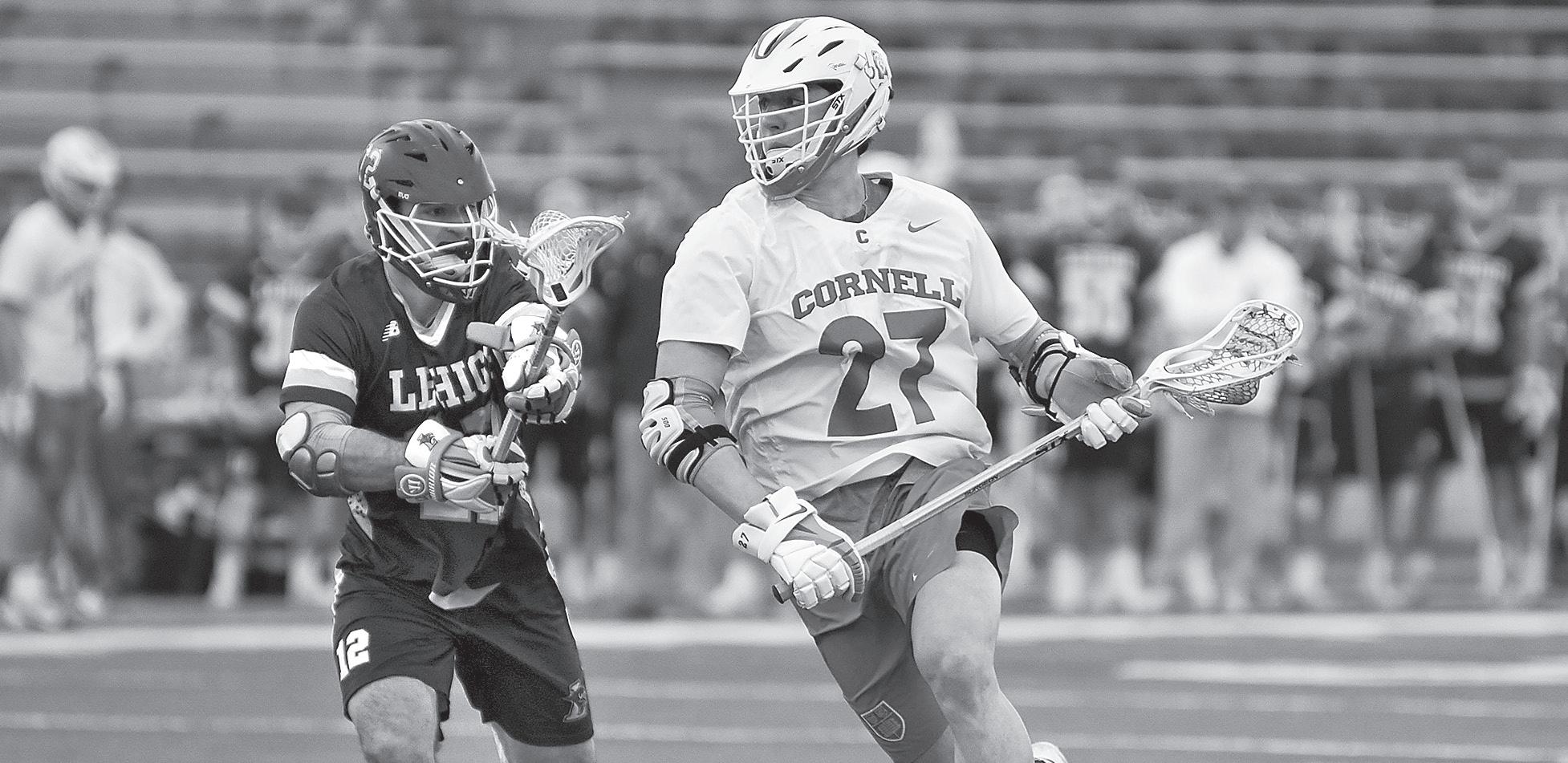
It wasn’t exactly pretty, but ugly or not, Cornell men’s lacrosse battled back on Sunday afternoon to win its home opener over Lehigh, 14-9, and improve to 2-0.
“Tough start, but not entirely surprising consider how good I think [Lehigh] is, how hard they typically play,” said head coach Peter Milliman. “But guys responded, the most important thing we did was settle down defensively ... and really build a victory.”
The Mountain Hawks (1-3) opened up a 5-0 lead over Cornell (2-0) in the first quarter as the Red struggled to win faceoffs and control the ball in the offensive zone. As a result, Lehigh scorers fired shot after shot and a string of consecutive possessions in the early going of what looked like a blowout loss for Cornell.
But a couple of goals in the first quarter, followed by a few more in the second set Cornell up to be down only 6-5 at halftime after such a disastrous start.
“The vibes in the locker room were pretty positive [at halftime],” said junior attack Jeff Teat. “Even though we were down, we never really felt like we were losing. … We felt pretty in control.”
From there, Cornell outscored Lehigh 9-3 in the second half and 7-0 in the fourth quarter alone to surge back and blow by the visitors on a crisp February afternoon at Schoellkopf Field.
“We had to play a little bit tougher on ball, so we weren’t in a position to just give up easy shots like we did early on in the game,” Milliman said. “We needed to fight a little bit better for ground balls. … We were losing faceoffs and that was getting us maybe more mentally than anything else.”
Sophomore FOGO Paul Rasimowicz missed the game with an undisclosed injury, and Cornell was just 9-for-27 on faceoffs in his absence. Junior long-stick midfielder Brandon Salvatore took the plurality of Cornell faceoffs, winning four of 12, while sophomore FOGO Luca Tria won four of his 10 faceoffs. Milliman said Rasimowicz is day-to-day going forward.
Lehigh won the ground-ball battle, 31-24, while both teams were near-perfect on the clear, with Lehigh successful on 19 of 20 tries and Cornell successful on 22 of 23. Each squad scored a man-up goal.
Teat led the way offensively with four goals and two assists, while senior attack Clarke Petterson and sophomore attack John Piatelli each added five total points including four and three goals, respectively.
“We were staying composed, we weren’t settling for bad shots,” Teat said. “We were getting what we wanted, it wasn’t necessarily forced or anything, but we took our chances when we needed to.”
Junior goaltender Caelahn Bullen made 15 total saves in backstopping his team to victory. It was Bullen’s seventh consecutive victory.
“I was a little bit shaky in the beginning,” Bullen said. “But I felt relaxed, felt comfortable, saw the ball and each shot got better and better.”
“We got piled up on early, but I wouldn’t really put any of that on [Bullen],” Milliman said. “He’s been as consistent as anybody we’ve had on our team, and so I was just excited to see him get a good victory today because he earned it.”
Cornell will return to action next weekend when it welcomes Albany to Schoellkopf at 3 p.m. Saturday.
Dylan McDevitt can be reached at dmcdevitt@cornellsun.com.
The Engineers substituted Kira Bombay for Selander, who proved unable to hamper the Red’s offensive prowess. With 10 minutes left in the second period, senior forward Diana Buckley pulled Bombay to the left side of the goal and sent a quick pass to junior forward Grace Graham, who was positioned right in front of the net. Graham slid the puck past Bombay to make it 6-1.
Senior forward Lenka Serdar increased the score to 7-1 with the last tally of the second period. Freshman forward Sam Burke stole the puck from the Engineers in the offensive zone and sent it to Serdar, who brought it toward the net. She blasted the Red’s seventh goal of the night past Bombay.
Freshman forward Gillis Frechette found the puck in front of the net and buried the final Cornell goal of the day.
The Engineers did manage to secure one more tally: Jaimie Grigsby redirected a rebounded shot past senior goaltender Marléne Boissonnault, but the goal proved too little, too late. As for the Red, eight different players
added a goal to the scoreboard, demonstrating the depth of the team, Derraugh said.
“One thing we have been talking about all year long is the importance of having a balanced attack and balanced scoring, especially if want to have success,” he said. “We asked players to step into some roles, and they have done a nice job in the last couple weeks.”
The Red sustained its winning energy in the following day’s game against Union.
The game started slowly and remained at a standstill for over 39 minutes. The Red blasted 44 shots at the goal, but goaltender Amelia Murray turned them all aside before Cornell found any scoring touch.
Union clinched the first goal of the game as Katie Sonntag sent a shot from a tough angle into the goal, placing the Dutchwomen ahead by one.
“We weren’t able to capitalize on some early chances. They got the first goal against us so we just tried to stay patient and stick to the plan,” Derraugh said. “We were able to get a couple of goals later in the game and that ended up being the difference. Union played tough defensively and made
it difficult for us to get opportunities to score.”
Quick to respond, Graham directed the puck into the goal in the 39th minute of the game. Buckley sent a shot towards the goal, and Graham was positioned at the net to tip it past Murray to close the scoring gap.
Just 40 seconds into the third period, Gerace added the insurance — and ultimately game-winning — goal. Gerace gained control of the puck following a denied shot from Serdar and fired it into the goal. The Red went up 2-1 and was staved off further scoring to cap off the win and secure the ECAC title.
Despite the closer 2-1 win, Cornell outshot Union by a remarkable 62-13 margin on Saturday.
Now solidified as the paragon of the ECAC, the Red will host RPI at Lynah Rink for the first round of the league tournament in a best-of-three series. Games one and two will be held at 6 p.m. Friday and 3 p.m Saturday, respectively. If the teams split results, the third game will be held at 3 p.m. Sunday.
Faith Fisher can be reached at fsher@cornellsun.com.
W. HOCKEY
Strong start | Cornell started its season with wins over Hobart and Lehigh.
BORIS TSANG / SUN ASSISTANT PHOTOGRAPHY EDITOR
Icers Clinch ECAC Regular Season Title
By FAITH FISHER Sun Staff Writer
A pair of wins this weekend secured the ECAC regular season title for Cornell women’s hockey — the program’s first since the 2012-13 season.
On Friday, Cornell defeated RPI in a blowout victory, 8-2, and the Red earned a 2-1 win the following day against Union which ultimately locked up the title. Cornell, which finishes the regular season with 36 league points, held off Princeton, Clarkson and Colgate on the last day of action after all tied for second at 33 points.
As the top seed heading into playoffs, the Red will face off on its home ice against eighth-seeded RPI in the ECAC quarterfinals this weekend. If Cornell wins the best-of-three series, it will host the conference semifinals the following weekend.
“We are excited about this accomplishment. The group has worked hard all year,” said head coach Doug Derraugh ’91. “For the regular season title you have to be consistent over the year to earn it, and this year especially — with the ECAC having a number of teams in the top 10 and being so tight throughout — it is a testament to our consistency.”
The title-clinching weekend got off to a quick start when the Red found its way onto the scoreboard just 14 seconds into the game Friday against the Engineers. After gaining possession from the faceoff, a series of skillful passes and dodges landed the puck on junior forward Kristin O’Neill’s stick, who buried the puck in the back of the net for her first goal of the weekend.
“The last time we were on the road, our first periods were not very good and we knew we needed to come out with better starts,” Derraugh said. “So it was really important that we came out with the first goal and got ourselves on the right foot.”
Later in the opening stanza, the Engineers gained the offensive edge. Off a faceoff in the Red’s defensive zone, RPI forward Aimee Raithby blasted a shot toward the Red’s goal. The puck, initially deflected, managed to trickle into the net
and close the scoring gap.
But just minutes later, the Red regained its offensive momentum and answered the opposition with another post-faceoff goal. Once O’Neill secured possession, sophomore forward Maddie Mills took control of the puck who sent a quick pass to junior blueliner Micah Zandee-Hart. With the Engineers collapsing on the slot, she skated towards the goal mount and sniped a top-shelf goal to give the Red the 2-1 lead.
Senior forward Pippy Gerace added another insurance goal with 1:52 remaining in the opening period. Sophomore defender Kendra Nealy sent a pass toward Gerace, who netted the puck before the offensive domination on the Red’s
part continued into the second period.
Six minutes into the middle frame, junior forward Amy Curlew struggled to gain possession of a pass from O’Neill, which landed just ahead of her. As she — and the puck — trudged toward the net, Curlew poked her stick at the puck, just barely sliding it past RPI goaltender Lovisa Selander.
The second goal of the period came off the stick of junior blueliner Jaime Bourbonnais, whose initial shot was denied by an opposing defender. She found her way back to the puck at the goal line and lifted another shot into the top shelf, widening the advantage to 5-1.
Senior Night Win Over Union Gives Red Control of 1st Place
By DYLAN McDEVITT Sun Sports Editor
A night removed from dropping a heartbreaker at home, Cornell men’s hockey used an emotional Senior Night to fuel a huge 3-1 bounce-back win over Union and reclaim its spot atop the ECAC standings.
“It was a good rebound from last night,” said head coach Mike Schafer ’86. “I thought we came
out and started the game well. It was a much different game tonight.”
Cornell jumped out to an early lead on a power-play goal from freshman forward Michael Regush. The goal was Regush’s eighth of the season and fifth power-play tally. Later in the first period, a defensive lapse on the power play caused the Red to cough up a shorthanded goal, but that would be all for the
Dutchmen on the scoreboard.
It was a special teams battle from start to finish — not unusual for a game between Cornell and Union. In the previous nine meetings between the teams, both sides had averaged higher than 30 percent on the power play. But Saturday was a slightly different story, with the Red’s penalty kill posting a stellar 4-for-4 mark on the night, bringing the team’s total kill streak to 39.
“We haven’t had a special teams game like that in a long time,” Schafer said. “Our penalty kill was outstanding. Blocked shots, and when we needed it [sophomore goaltender Matt Galajda] was there for us.”
Galajda had an outstanding night of his own, letting up just one goal and stopping the other 30 shots he faced. Union outshot the Red, 31-20.
In the second period, two seniors and captains connected for what proved to be the game-winning goal in their last regular season home game at Lynah Rink. Defenseman Alec McCrea wound up for a shot from the point, and forward Mitch Vanderlaan had his stick well-placed to tip it in past Union netminder Darion Hanson. Sophomore forward Morgan Barron rounded out the scoring with an empty-net goal late in the third.
“We had talked about keeping our sticks loose in front of the net and having good net presence throughout the game,” Vanderlaan said. “[McCrea] made a great shot, finding a lane and getting down to the net. … It’ll be a good memory to have.”
out at opening puck drop, with Nuttle filling the void at left wing in an emotional gesture.
This preceded each senior taking one final lap after the game’s end to the raucous cheer of the Lynah Faithful.
The three other seniors — defensemen Matt Nuttle and Brendan Smith and forward Beau Starrett — also took center stage on senior night Saturday. Schafer elected to put all five seniors
“[The seniors], all five of them, have great character,” Schafer said. “They love hockey; they love coming to the rink; they got big smiles on their faces all the time; and they like to win. And they’re fully committed to everything: academically, athletics, their teammates and our program.”
With No. 5 Quinnipiac having lost to No. 13 Clarkson Saturday, Cornell returns to its previous spot atop the ECAC standings after being knocked to second on Friday. With two games left on the schedule, the Red could finish as high as first and as low as fifth in the conference. If Cornell wins out, however, it will clinch a second consecutive Cleary Cup as ECAC regular season champions.
The Red will travel to North Country to take on St. Lawrence and Clarkson next weekend in an effort to secure a playoff bye and the No. 1 overall seed.
Cornell will secure a firstround bye unless it goes 0-2 next weekend and Yale gets two wins. WOMEN’S HOCKEY