The Corne¬ Daily Sun




Complaints of poor food quality, overcrowding, long lines challenge dining workers, students
By OLIVIA CIPPERMAN and MAYA RADER Sun Staff Writers
As Cornell Dining expands menu selections and updates safety protocols for the new semester, diners and employees alike have found problems with the process —
“There’s more work on us ... It can be at times stressful.”
Kataryna Restrepo ’21
including worker shortages, long lines and potentially unsafe food.
On Dec. 15, Cornell Dining announced its plans to offer more meal options each night, including ethnically diverse cuisines. Addressing student criticisms, dining halls reintroduced specialty stations and
event-specific meals and expanded its satellite meal program from last fall.
As the dining experience changes for students, the nature of working at a dining hall has changed. When the eateries were selfserve, workers spent their time performing tasks like refilling trays, setting up machines and cutting desserts. Now, most of the work involves serving customers.
Emily Lasher ’21, a student supervisor at Robert Purcell Community Center, found it difficult for workers to uphold COVID19 safety guidelines while serving a rush of people.
“You want the workers to be able to maintain the six feet, but you also want them to be serving quickly, so it’s definitely a challenge,” Lasher said.
Becker House Dining Room worker Kataryna Restrepo ’21 explained that the number of student diners has increased since last semester, putting a greater strain on the dining workers — especially with the recent absence of reservations to spread out mealtime rushes.
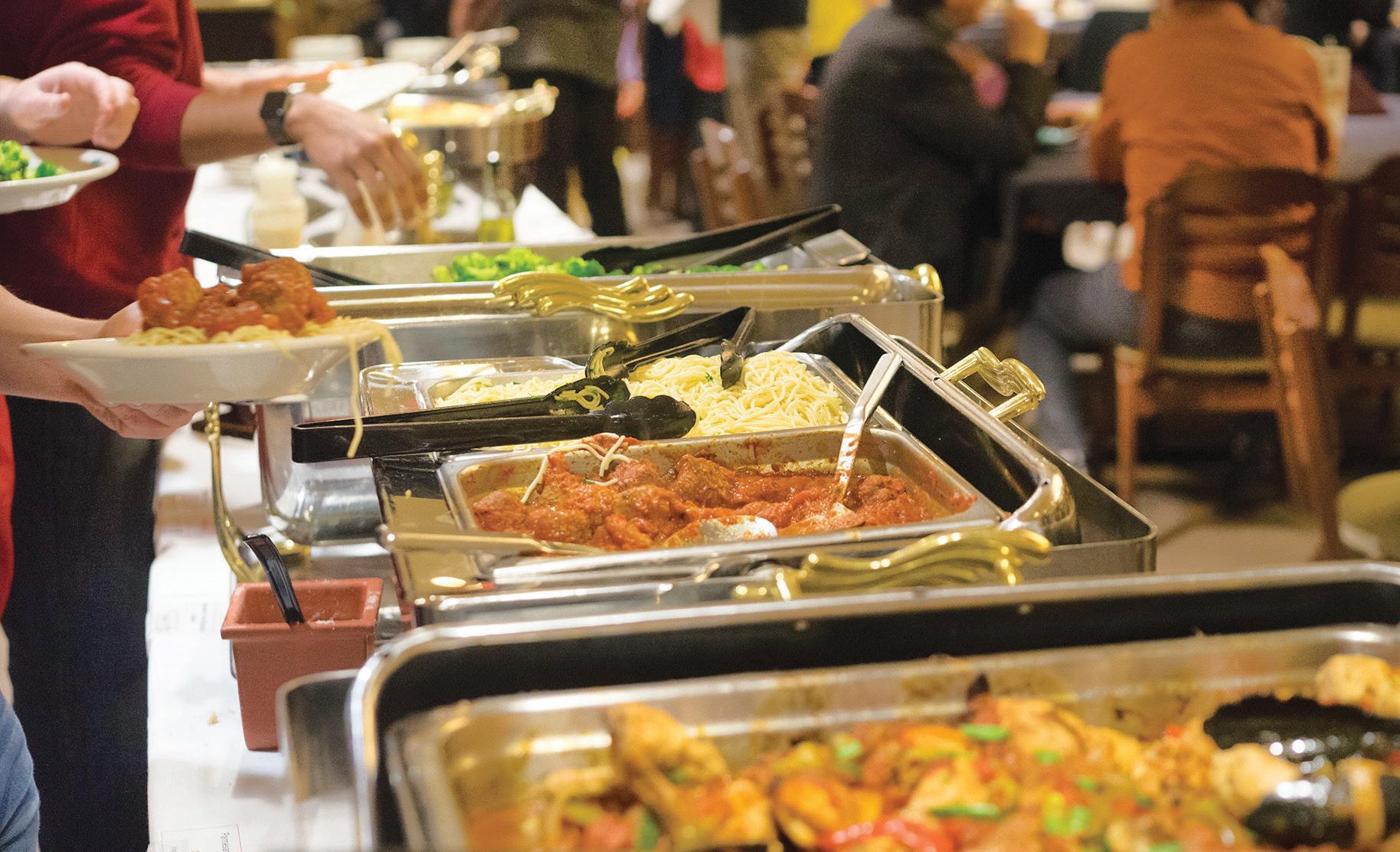
“There’s more work on us, and we have the same staff numbers,” Restrepo said. “It can be at times stressful, making sure that everyone gets in and out as soon as they can to limit interaction.”
In an effort to simplify the process for customers and staff, Cornell Dining announced the removal of the reservation system for take-out dining in mid-February, according to Karen Brown, senior director of campus life marketing and communications.
On the diners’ end, many students have expressed feelings of disappointment about this semester’s food quality, long lines and small portions. Some have even taken to
By
As vaccine time slots rapidly disappear, newly eligible Tompkins County seniors are rushing to sign up for appointments, plagued by the long lines and technological difficulties that mirror the state’s vaccine distribution rollout.
While Tompkins County showed promising efficiency in its early stages of vaccine distribution, efforts have
Initially prioritizing those over 75 for vaccine distribution, new federal guidelines announced Jan. 12 expanded eligibility to individuals 65 and over, resulting in an increased demand for the already-scarce vaccine doses.
Caroline Cox, an Ithaca resident who lives in Fall Creek, was able to get her vaccine on Jan. 11, before the eligibility list broadened.
“I think our experience is probably different from the majority of people,”
mother lives in a family-type home for adults with eight other senior citizens, was less fortunate with scheduling. She expressed anxiety over the new guidelines that expanded the eligibility pool, as it meant more people would be competing for these elusive shots.
“When I heard that they were opening up the eligibility to people 65 and over, I really started panicking,” Hochman said. “She’s 99, she’s living in a home with eight, and I was very, very worried for her catching the virus.”
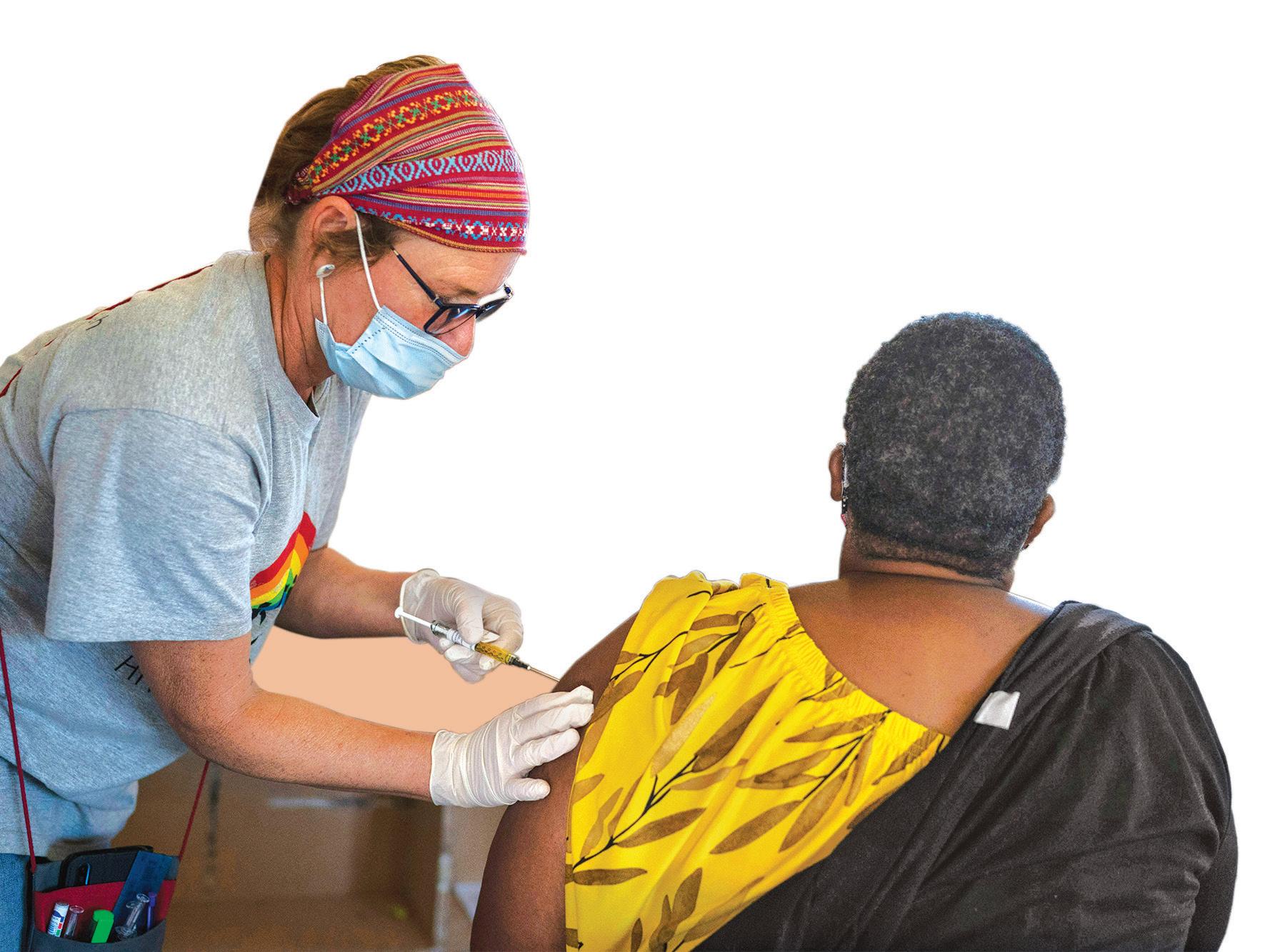
explained that navigating it can be even more difficult for elders with limited computer experience.
Alice Moore, a local real estate agent who wasn’t able to get a vaccine appointment until Jan. 21., described the experience as a “part-time job.”
“We were so fortunate. My joke is I should have bought a ... lotto card.”
Caroline Cox
According to Hochman, the search didn’t become any easier as availability narrowed and she had to rely on her friends’ help to widen her search.
Technical difficulties and crashing websites impeded Hochman’s ability to schedule a vaccination for her mother –– even when she was finally able to access the registration site, an appointment wasn’t available.
Frank Horowitz ’89 has been helping seniors sign up for appointments with a team of around eight other members. He said that Hochman’s experience with appointments isn’t uncommon.
“[The New York State] website is horrendous,” Horowitz said. He
“At one point we called to make an appointment, and they wanted this information,” Moore said. “By the time I made the calls and got the information, the appointments had been filled.”
While applicants found the search process arduous, the vaccination process at the pharmacy went smoothly. According to Cox, vaccinators at the Ithaca Mall were efficient and kept the process short, only requiring patients to stay behind 15 to 30 minutes to see if the patient had a reaction to the vaccine.
After receiving the vaccine, senior Ithacans described feeling a great sense of relief after grappling with the personal toll of the pandemic for the past year.
“I woke up and I realized the rigidity in my neck and my back had eased enormously,” Cox said. “This worry has been starting to be lifted.”
John Yoon can be reached at johnyoon@cornellsun.com.
DINING HALL
Continued from page 1
Twitter and Instagram to voice their unease.
According to Restrepo, an Instagram page called “cornellfoodtrash” –– an account that posts ill-prepared Cornell Dining food –– has gained momentum, with over 400 followers to date.
Flora Rose House Dining Room worker Faith Taylor ’24 expressed her disappointment with North Campus dining, citing long lines and messy dining halls, though she appreciated the West Campus offerings this semester. She saw the social media backlash as a sign that Cornell Dining must improve.
“It just shouldn’t be like this,” Taylor said, “There should never be rumors going around about food poisoning. There shouldn’t be students getting raw food, and they shouldn’t be like ‘I need a whole Instagram page dedicated to how bad the food is.’”
In addition to continuous problems, students and workers noted an alleged food poisoning incident in early February.
“It was one night that was recent where they were supposed to have Caribbean food, and then the next day,
apparently, a lot of people had gotten sick or were throwing up,” said Randi Hinds ’24, an employee at North Star Dining Hall.
According to Hinds, the affected students dined at the Robert Purcell Marketplace Eatery. She heard several cases of illness through personal friends. Her resident adviser checked in with Hinds’ floor after hearing similar reports from other North Campus RAs.
However, Restrepo said she doubts the veracity of these claims. “There was no proof it was food poisoning, and I know that in each dining hall, we have to temp our food,” she said. “As soon as it comes out of the oven or stove, we have to do internal temperature to make sure it’s fully cooked.”
and unclean, saying that they bear the burden as the main two dining halls on North Campus. She has received food which she claimed was undercooked. Like Hinds, she heard reports of food poisoning from friends and North Campus RAs.
“I truthfully and honestly feel as though they don’t care at all what they’re serving to students”
Faith Taylor ’24
University spokesperson Abby Butler said Cornell had no information to confirm a food poisoning incident.
But Taylor expressed skepticism toward North Campus dining halls.
“I truthfully and honestly feel as though they just don’t care at all what they’re serving the students,” she said. Taylor described RPCC and Appel as overcrowded


Let’s Meditate With Cornell Wellness 9 - 9:30 a.m, Virtual Event
Cambodia’s Angkor Temples as a Military Prize: The World War II Experience 12:30 p.m, Virtual Event
Restrepo, along with the other workers, said that Cornell Dining should address student concerns and make operational changes. However, she called for civility from students in the process.
Lasher said that, while students may be dissatisfied with dining halls this year, they shouldn’t blame the student workers. She recognized the need for Cornell Dining to upgrade, but also acknowledged the struggles of work during the pandemic.
“We recognize that the food may not be as good as it has been in years past because of the pandemic, but that’s something that folks should be more understanding of rather than resort to going online,” Restrepo said.
Olivia Cipperman can be reached at ocipperman@cornellsun.com. Maya Rader can be reached at mrader@cornellsun.com.
Black in STEM Wikipedia Edit-a-thon 4 - 6 p.m, Virtual Event
2020 Vision, A Black Walden Pond and Other Musings 6 - 7:30 p.m, Virtual Event
Materials Science and Engineering Seminar Series 4 p.m, Virtual Event
Doc Watchers: Chef’s Table 8 p.m, Virtual Event

By MEGHANA SRIVASTAVA Assistant News Editor
Cornell is not the only academic institution in Ithaca that has successfully opened its doors this year: The Ithaca City School District has opened all 12 of its schools for hybrid learning, keeping COVID-19 cases low and even piloting its own surveillance testing program.
According to the New York State Department of Health, the district has found 108 positive COVID tests since Sept. 1, a mere one percent of the 8,840 tests administered. Classes have been offered in-person since Oct. 5, with middle schools and the high school operating under a rotating cohort system and elementary schools offering in-person instruction to families who opt-in.
Hybrid learning still poses challenges to educators, but the system was able to reopen in a relatively safe manner, partly because of its surveillance testing program — which aims to test 20 percent of the school every two weeks — in conjunction with COVID-proof spaces, according to Kari Burke, the district’s director of health and wellness. Beginning Jan. 4, the program involves rapid antigen testing at every school on a weekly or twice-weekly basis, depending on the school’s schedule.
Burke said the cohort system allows for smaller class sizes, which are essential in reducing virus transmission. Still, quarantine procedures can become complicated if there is a positive case among secondary school students or teachers.
“Those shifts have occurred not because there is any evidence of transmission in school settings, but largely due to the number of persons who are quarantined,” Burke said. “It’s much harder to effectively cohort at the secondary level when you have students moving between classes during the school day.”
Schools in the district have shut down for short periods of time during the school year. Despite these hiccups, Burke said the district was able to increase in-person capacity overall in 2021 through hiring new teachers and identifying spaces that could have higher in-person capacities.
Susan Eschbach, principal of Beverly Martin Elementary, has been heavily involved in supervising her school’s testing program. In eight weeks of screening, no tests have yielded positive results, she said. Every Monday, the school tests 20 to 25 people. According to Eschbach, the process has
become routine.
“Just like kids are not afraid of fire drills or lockdowns anymore because it’s just the standard procedure for safety, they don’t get dramatic about [the tests] — they just do them,” she said.
Eschbach has also supervised the school’s combination of online and in-person teaching, which has posed unique challenges with elementary school-aged children.
“You put a kid on a device who’s five or seven years old, you might get their attention for 15 minutes,” Eschbach said. “So how much of their school day can they actually participate in?”
kids can handle,” Eschbach said. “What they can do, what they can navigate, what they can be prepared for, who can figure it out and who can’t.”
Jonathan Fleischmann, the orchestra director and music theory teacher at IHS, has faced a slightly different challenge: tailoring a music class to both in-person and virtual musicians. The hands-on nature of his classes informed his decision to teach in-person since October.
“Just like kids are not afraid of fire drills or lockdowns anymore because it’s just the standard procedure for safety, they don’t get dramatic about [the tests].”
Susan Eschbach
Although students at the elementary school level could choose a return to in-person learning, space and social distancing limitations have restricted the number of spots. Eschbach recently opened two new classes to accommodate 21 more students.
On the other hand, Ithaca High School students are split into two cohorts, with the Gold Cohort attending in-person on Mondays and Tuesdays and the Red Cohort attending in-person on Thursdays and Fridays. Wednesdays are an asynchronous day with no scheduled classes, intended for students to catch up on work or meet with teachers during office hours. Students also have the option to remain completely remote.
Suzanne Nussbaum, the Latin teacher at IHS, has altered her teaching style to fit both in-person and online learners.
She said she is lucky to have students who are motivated and interested in the subject, but her colleagues have not always had the same experience — some have students on their rosters who hardly ever log onto Zoom meetings.
“I’m blessed with a number of students who are just working as hard as they can on their own … those students have taken it upon themselves to try to keep mastering this stuff in the real way,” Nussbaum said. She recognized the burden of continued, individual work without in-person teacher support.
Eschbach said she’s faced similar concerns with elementary school students.
“There’s a lot of difference between what families and
“For orchestra, it’s really, really hard to do it when you’re not in a room with instruments nearby,” Fleischmann said.
Fleischmann has also received the first dose of the COVID-19 vaccine. Teachers are a part of Phase 1b and became eligible for vaccination in New York State Jan. 11. They can sign up for vaccinations using district scheduling links. However, many appointments require long waiting times or travel distances.
“I’m signed up for the first dose of the vaccine several weeks from now. My adult son was kind enough to keep checking the website and he signed me and my husband up,” Nussbaum said. “It hasn’t seemed easy to get those appointments, so I’m grateful that our son was persistent and kept checking the website for us.”
Fleischmann appreciated the teacher’s union and the district for communicating clearly about vaccine availability. He said going to school doesn’t make him feel more at risk than other day-to-day activities.
Beyond health concerns and the variability of students’ circumstances, teachers have also been concerned with the long-term impacts of reduced retention and social development. “Educating the youth, I think, should be a higher priority than we have made it,” Nussbaum said.
Eschbach has an optimistic perspective about the issue of retention.
“I just think that we need to not go down the tragedy road of lost learning — we have an entire nation of lost learners, if that’s how you’re going to look at it,” Eschbach said. “But instead look at, how do we speed kids up to fill in some gaps that matter the most?”
Meghana Srivastava can be reached at msrivastava@cornellsun.com.
By
From poker and magic to global market analysis, nature art and agri-food venture capitalism, new clubs are filling a wide range of niches and engaging students in a myriad of interests during a semester where personal interaction is limited.
Despite the circumstances, many students have risen to the challenge and gone through the process of creating new clubs.
According to the Campus Activities Office, COVID-19 hasn’t impacted the number of new organizations this year. Forty-two new organizations have started the registration process so far this semester, and about half have completed the process.
Sarah Belhasan ’23, president of Global Marketing Analysts Cornell, said the virtual format has posed recruitment challenges for many campus organizations — especially for those that are new.
“We did realize that it may be a little bit more difficult to gain traction and just get the club out there without having a physical [ClubFest] where you can engage with people,” Belhasan said.
In addition to participating in virtual ClubFest earlier this month, Belhasan and the other e-board members have created a website, asked professors to share information about the club, advertised in group chats and utilized CampusGroups to spread the word.
David Frank ’24, president of the Cornell Magic Society, also said there are drawbacks to online recruitment.
However, Frank said that social media platforms like Instagram, the Cornell Reddit page and Facebook groups have all helped generate interest.

And though some activities simply aren’t possible because of COVID-19 — like putting on informal magic shows around campus — the virtual format makes it simpler for high-profile guest speakers to attend meetings.
“There are definitely going to be some hurdles to jump over with regards to COVID, but I have seen it work in the past with Zoom magic clubs that I’m a part of elsewhere,” Frank said. “So I don’t think that’s going to be too much of an issue.”
Poker Association of Cornell president and co-founder Ryan Leung ’23 expressed excitement about the events his club has planned for the semester, like Zoom poker workshops and virtual games. Going forward, he mentioned the possibility of hosting charity tournaments or events with other universities.
Leung hopes that people attending the events see them as a way to meet new people
and be social, something that has been particularly challenging with social distancing regulations.
“Ultimately, poker is a very social game,” Leung said. “So if there’s one thing that I hope for members of our club to get, it’s that they’ll find a new group of friends and have good experiences and make good memories through our club.”
Leung also wants the club to be accessible to everyone and inclusive of students from all backgrounds — especially because poker is typically dominated by white male players, particularly on the professional level.
Spizella co-editor Jalen Winstanley ’22 also emphasized community-building in his organization.
“[Spizella is] an interesting amalgamation of different types of Cornellians and their different types of art,” Winstanley said. “It’s important to note the collabora-
tive nature of it, and the non-hierarchical nature of it as well.”
He said Spizella, an online publication featuring nature art by Cornellians, has fostered a sense of connection through the artistic expression of peoples’ relationships with the natural world.
Winstanley said that in the project’s early stages, publishing online allows editors to aggregate content together easily. However, the team hopes to switch to print issues sometime in the future.
“Hopefully the trajectory of this project will match the trajectory of school returning in person, and returning to more physical learning,” Winstanley said. “As we get out of COVID we’ll start printing, and it’ll assume a different form.”
One club in particular — Grub Ventures — is working to connect Cornell students, not only with each other, but also with the greater Ithaca Community.
Grub Ventures CEO Deshelley Teo ’22 said the club aims to target food insecurity in Ithaca’s homeless population.
“I think a big part of it is knowing that as Cornell students we have a responsibility to be more connected to the Ithaca community make a positive contribution,” Teo said.
Teo said taking the risk to create the club has been more than worthwhile, and the organization is excited that so many students are interested in exploring the intersection of food, business and social impact.
“I think just seeing the amount of people that were coffee chatting [with] us and that were interested,” Teo said, “makes all of us really glad that we put in the effort to create the club.”


By SARAH AUSTIN Sun Staff Writer
I’ve always loved the phrase “old soul”; it brings to mind an image of a very whimsical creature — one untouched by the mundanities of life. It tends not to describe an early bedtime, insomnia or creaky joints. Unfortunately, the only reason someone would ever refer to me as an “old soul” is if they were referring to my 10 p.m. bedtime.
This is why I’m completely baffled as to why I thought it was a good idea to start baking a Moosewood recipe at 11 p.m. At 11:30 p.m., as I awaited my Blueberry Cobbler’s exit from the oven, I fought to keep my eyes open in an effort to not burn my house down.
As I progress through this Moosewood journey, it is becoming harder and harder to choose a recipe every
week. Because I prefer baking to cooking, I’ve been disproportionately relying on the Moosewood Restaurant Book of Desserts for my weekly “experiment.” Sadly, I’m a college student on a budget and don’t have the funds (nor the justification) to pay for an ingredient that I’ll only use once. Like, what is imitation butter and why can’t I just use real butter? And some of these recipes are just so labor intensive that I don’t have the time or patience to actually make them. While combing through the cookie and bar section in the hopes that I somehow missed a super fast and simple recipe the previous 400 times I looked, I decided that I would make a fruit cobbler. After eating two dozen cookies on my own within the past week, I deluded myself into thinking that if I make a dessert with fruit (and a lot of sugar), it’s basically

healthy.
The ingredient list was simple enough: blueberries, preserves (which I didn’t have so I just skipped them), lemon juice, lemon zest (which I also skipped), flour, sugar, baking powder and more lemon juice. I guess now would be as good of a time as any to let you know that I didn’t really stick to the recipe. I was just so fed up with looking for a recipe that I didn’t care that I was missing half of the ingredients (and added a couple extra, oops) so I figured I could fake my way through the recipe. This recipe (if you have all of the ingredients) is basically idiot-proof, which is a bold statement on my part considering I’ve been documenting all of my idiotic moves in the kitchen for the past couple of months.
The first step involved mixing the blueberries with the preserves (or extra sugar in my
to get it in the oven. It probably would’ve taken me four minutes if I didn’t decide to experiment. In my mind, a cobbler and a crisp are the same thing, so when the recipe didn’t call for any cinnamon or oats, I was sure that this was some kind of mistake. I should obviously just go ahead and add them into the topping batter at my leisure. As it turns out, a cobbler and a crisp are not the same thing; I had created a new type of dessert: a crispler (patent pending).
I, surprisingly, managed to stay awake for the entire 40 minutes it took for my crispler to bake (and the 15 minute cooling period).
As it turns out, a cobbler and a crisp are not the same thing; I had created a new type of dessert: a crispler (patent pending).
case), sugar, lemon zest and lemon juice. You spread the fruit mixture on the bottom of a pan and then make the topping, which was made out of flour, butter, sugar, egg, baking powder, milk and lemon peel (which I just substituted for even more lemon juice). It took me all of five minutes
However, I was now stuck with Blueberry Crispler and morning was fast approaching.
As I waited, it dawned on me that I probably shouldn’t have taken creative liberties, considering the astronomical price of blueberries and the fact that I now have no more fruit in my apartment. However, I was now stuck with a Blueberry Crispler and morning was fast-approaching. In deference to my exhaustion, the taste-test would have to wait.
I was very excited to try my crispler. What if I had just revolutionized dessert? I have graced the world with the best part of both a cobbler and a crisp, nicely packaged into a single eight by eight aluminum tin. But before the actual taste-
test was to commence, I had to reheat it. Since I’m new to the whole cooked-fruit-in-dessert side of baking, does anyone actually eat cold cooked fruit or does everyone eat it warm?
Now I’m sure you’re all on the edges of your seats (bold of me to assume there are multiple of you), waiting to hear about my brand new invention. I can safely say that the dessert industry is … better off without this one — at least until I can tweak some things. The beauty of a cobbler is that it’s more of a wet topping that gets baked into a cake-y texture, and the beauty of a crisp is that it’s more dry, getting baked into a crunchy top-layer. This was somewhere in-between. Don’t get me wrong, I definitely ate half of it as I sat here writing this, but it was more of an “I’m staring at a screen and mindlessly eating” type of thing, instead of a “wow this is delicious I can’t stop eating” type of thing.
However, three very short days later, the entire crispler was gone with the pan practically licked clean. To answer my own question, people will happily eat cold cooked fruit at midnight. By that time of day (night?), it doesn’t really matter what something tastes like, but just how quickly you can shovel it into your mouth … at least it was sorta healthy.
Sarah Austin is a sophomore in the Cornell School of Hotel Administration. She can be reached at sarahaustin@cornellsun.com.
MARYAM ZAFAR ’21
JOYBEER DATTA GUPTA ’21 Business Manager
PETER BUONANNO ’21
Associate Editor
MEGHNA MAHARISHI ’22
Assistant Managing Editor
CHRISTINA BULKELEY ’21
Sports Editor
BORIS TSANG ’21
Photography Editor
CAROLINE JOHNSON ’22
News Editor
ALEX HALE ’21
News Editor
ARI DUBOW ’21
EMMA ROSENBAUM ’22 Science
BENJAMIN VELANI ’22
JOHN MONKOVIC ’22
Multimedia Editor
MIKE FANG ’21
OLIVIA WEINBERG ’22
Assistant News Editor
MADELINE ROSENBERG ’23
Assistant News Editor
LUKE PICHINI ’22
Assistant Sports Editor
HANNAH ROSENBERG ’23
Assistant Photography Editor
BRIAN LU ’23
Assistant Arts & Entertainment Editor
ANNABEL LI ’22
Assistant Money & Business Editor
Working on Today’s Sun
Ad Layout Puja Oak ’24
’21
KRYSTAL YANG ’21
HUANG ’21
NGUYEN ’22
PALLAVI KENKARE ’21
’21
’23
’21
’21
’22
’23
BMEGHANA
Production Deskers Camilla Bacolod ’21 Sabrina Xie ’21 Design Desker Niko Nguyen ’22 Giovanni Moreira ’23
Editors in Training
Editor in Chief Meghna Maharishi ’22
Managing Editor Anil Oza ’22
Associate Editor Benajmin Velani ’22
Opinion Editor Odeya Rosenband ’22
Sports Editor Aaron Snyder ’23 Will Bodenman ’23
News Editor Mihika Badjate ’23 Olivia Cipperman ’23
Kayla Riggs ’24
Dining Editor Sarah Austin ’23
Photography Editor Benjamin Parker ’22
’22
’21

Katherine Yao is a sophomore in the College of Arts and Sciences. She can be reached at kyao@cornellsun.com. Hello Katie runs every other Wednesday this semester.
ack in ye olden days, I spent my afternoons maxing out the book limit at my local library and my evenings traveling to Oz or Narnia for hours at a time. The table by my bed perpetually labored under a precarious stack of novels that always seemed to grow higher. But soon enough, that library card spent more and more time inside some drawer or another before I eventually misplaced it. My nightstand heaved a sigh of relief as the pile of books dwindled to nothing.
Somewhere between sixthgrade’s The Giver (which I enjoyed) and twelfth-grade’s Hamlet (which I skimmed before the exam), I put down leisure reading for good. There was no more time for such things, I reasoned. You could say that I felt … booked solid.

stress because of the pandemic. However, research indicates that reading for pleasure can alleviate some of the toll that the pandemic has taken. Studies in the past have also shown that reading has the same effect in lowering heart-rate and blood-pressure that yoga and humor have. Dr. Robin Bright from the University of Lethbridge has found that in addition to decreasing anxiety and stress, reading can also increase our sense of empathy.
I’ve heard far too many of my peers lament about where their childhoods spent devouring pages ... had gone.
It’s not just me. I’ve heard far too many of my peers lament about where their childhoods spent devouring pages of Lemony Snicket and Neal Shusterman had gone. According to a 2018 American Time Use Survey, pleasure reading in the U.S. has declined 30 percent since 2004. A 2019 Yale library statistic showed a 64 percent decrease in the number of books checked out over the past 10 years, and other universities have reported similar findings. Even as teachers and librarians continue to tout the benefits of reading, we all choose to ignore their advice.
For me — and I’m sure others can relate — the rise of digital media could explain away some of these habit changes. Let’s face it, after a long day of classes and work, the last thing anyone wants to do is expend brain power reading, of all things. The mindless ease of watching YouTube seems to far outweigh the commitment of engaging with a story. If not for the pandemic, I probably would have been happy enough to stay on the digital media path.
Taking the time to read for pleasure during this next year of uncertainty could improve aspects of your life that you might not have expected.
Social media, by contrast, has the opposite effect. Increased social media engagement during the pandemic has been linked to higher levels of distress due to increased exposure to stressors. In addition, while using technology at night might sound like a nice wind-down activity, it actually impacts sleep by suppressing melatonin production. It has been shown that those who read before bed sleep on average over an hour more than non-readers. So, setting up a habit to read for a bit at night, even if only for a few minutes, can set you up for a better nights’ sleep and a better start to the next day. As a bonus, I guarantee that the instant gratification of scrolling on Instagram doesn’t hold a candle to the reward of sticking with and finishing a book. Making time for reading in your life doesn’t need to be some monumental chore. Audiobooks have now become a constant staple in my life. If you’re like me and don’t have an Audible account, it’s so easy to access your local library through apps like Libby or OverDrive. If you don’t have a physical book on hand, you most likely have your phone. Those fifteen-minute intervals between classes or time spent in the dining hall lines make for prime audiobook listening time.
Sometime last April, I grew tired of the COVID updates lighting up my phone and pulled out my tattered copies of Percy Jackson to seek comfort in a childhood favorite. Over the next few months, I repopulated that nightstand with nearly-forgotten classics and newfound gems.
It’s no secret that the coronavirus crisis has wreaked havoc on mental health worldwide. In the U.S., three out of four college students between the ages of 18 and 24 have reported increased
Goodreads is also an underrated resource that I recently discovered since it’s a social media platform for book nerds. You can connect with other readers over shared literary interests and even set a yearly reading goal to strive towards.
Literature has long since been a part of human society that provides an outlet for creativity, education and a healthy form of escapism. Taking the time to read for pleasure during this next year of uncertainty could improve aspects of your life that you might not have expected. Whether you read for a few minutes or a few hours each day, your well-being –– and your reading goal –– will thank you.

efore enrolling at Cornell, I had a dire fear of hexapod invertebrates. At the sight of a butterfly landing on my arm, I would recoil in disgust. The thought of a ladybug brushing against my thigh made me toss and turn all night. One time on the kindergarten playground, I actually did get ants in my pants, and the very episode sent me into a psychotic spiral alongside throbbing booty bites. Bees were the worst of Bee Movie, and I left the theater in hysterics. Yet for some godforsaken reason, the first class I enrolled in as a freshman was “Honeybees and Humans.” This class coerced me into appreciating the insect world. It grew beyond a simple appreciation and became something I couldn’t get enough of. It didn’t help that the first friend I made during O-Week was Bug Boy, the feral creature fiendishly dancing at the Arts Quad silent disco. He took me on bug hunts with his fellow entomology majors. You could spot them across campus carrying their nets like a posse of Animal characters. It was so dorky that I had to infiltrate their way of life. I have a passion for people with passions; fools unapologetically obsessed with a very specific niche. Be it waterfowl, 15th Century Arabic calligraphy, mazes, non-edible uses of cheese or the art of boomerang throwing, I try to understand the seemingly random interests people are willing to dedicate their lives to. This time it was bugs.
Through my adventures with Bug Boy, I have discovered something about insects that everyone should be obsessed with: How they fuck. The realization happened when I walked in on an entomology major intensely studying slides of moth vaginas. Humans think they have a monopoly on sexual degeneracy, but we have been beaten out by our creepy-crawly companions. The fauna of our planet does not follow prudish 1950s lifestyles like we imagine them. Eating ass is missionary position compared to the fruit fly Drosophila bifurca shooting
sperm cells 20 times the size of its body. It has such a long tail to fill the female to the brim, so she can’t mate with any other sexy suitors. Imagine dropping a load and having it consist of one single swimmer who could easily take you down in Mortal Kombat. If you were a Mormon cricket, your splooge would be 27 percent of your weight, so a 200-pound person would bust out a 54-pound nut. To say the least, it would be a little more difficult to jack off into a sock.
Insects can also contort themselves into positions the Kama Sutra could never fathom. Flies must rotate on their penis, sometimes even a full 360 degrees, to keep fucking. It’s the ultimate pole dance. Then there are stick insects who boink nonstop for months. They’re allowed to do this in the wild because to predators, it looks like two sticks making love and not a vulnerable snack waiting to be eaten mid-orgasm. Besides stamina, these kinky crawlers also possess mastery over the orgy with their stick threesomes.
While the crazy world of critter coitus may seem alluring at first glance, there is a more barbaric boundary to bug busting. There’s blunt-trauma coitus and cannibalism. Since female bed bugs don’t have vaginas, the males developed a spear-cock to stab her body. Bean beetles were blessed with vaginahood, but the male’s penises are still full of gnarly spikes that are understandably harmful to have sex with. Then, of course, there are the female cannibals like the praying mantis, who devour their mates as a statement of the strangeness of evolution, or perhaps as an act of radical feminism.
Unlike most of my columns, this is not advice. I do not condone taking tantric tips from bugs, but I would be impressed if you had a spare penis like an earwig in case your first one broke off. Perhaps it would be noteworthy if you spent 79 days interlocked in forest floor intercourse like a stick insect, but those 79 days could be used for something more productive like finding the origin of mysterious mushroom circles near your house or composing a klezmer rock opera.
What we can appreciate by studying kinky crawlies is how user friendly our genitals are by comparison. If evolution took a small turn down a more chaotic road, perhaps our jiggly bits would also be horrific hardware of reproduction. By studying insects, we should be thankful we don’t cannibalize every Tinder hookup or need to do aerial gymnastics in order to stay in the hole. Biology has been more or less kind to the way we fornicate.


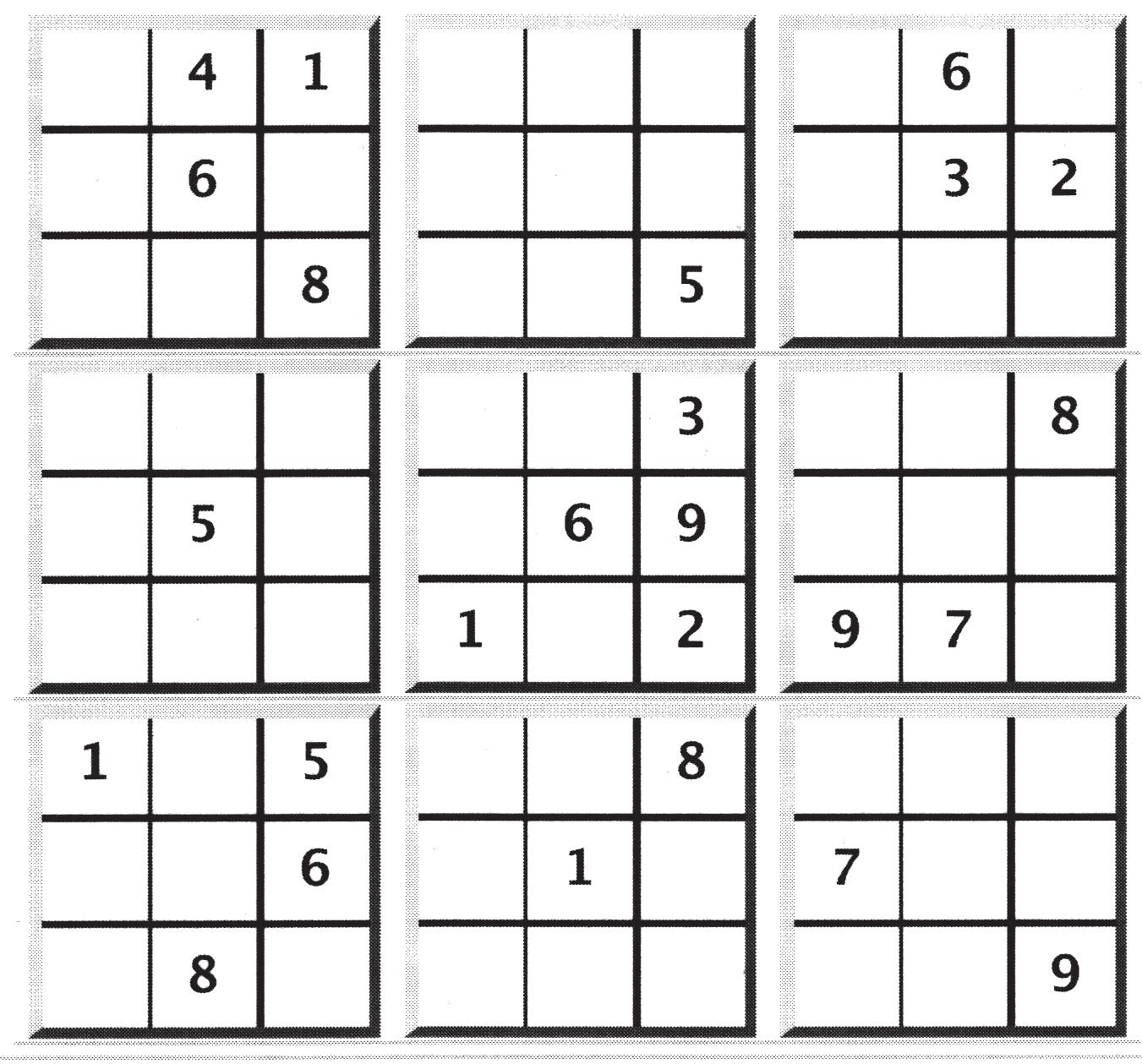
Fill in the empty cells, one number in each, so that each column, row, and region contains the numbers 1-9 exactly once. Each number in the solution therefore occurs only once in each of the three “directions,” hence the “single numbers” implied by the puzzle’s name. (Rules from wikipedia.org/wiki/ Sudoku)





By WILL BODENMAN
Sun Staff Writer
Ten years ago, the 2010-11 Cornell men’s tennis team shattered records by winning the Ivy League and ECAC Indoor titles, while posting the most wins in program history. Although sports are still on hold, this season marks the decennial celebration of a team that reinvigorated the Red for a decade.
The success of the season was primarily dictated by the leadership of successful collegiate coach Tony Bresky and a stacked core of five seniors.
2010-11 was the Red’s first and only season under the helm of head coach Tony Bresky, who was formerly the ITA National Assistant Coach of the Year at longtime ACC frontrunner University of Virginia. Bresky left Cornell to become the head coach for Wake Forest University, leading the program to its first NCAA Championship in 2018.
Just as critical to the Red’s success was the leadership of the 2010-11 senior class, headlined by four players selected to the All-Ivy roster, an honor granted to the best players in the Ivy League.
in 2008, earned second-team All-Ivy honors in 2010-11 after a solid season playing No. 1 and No. 2 doubles with teammate Andy Gauthier. During the season, the duo posted a 3-4 conference and 15-10 overall record.
The star-studded roster dominated the Ivy League, notching close victories over Harvard, Dartmouth, Brown, Yale and Princeton in addition to convincing wins over Columbia and the University of Pennsylvania.
That season Cornell claimed its first outright Ivy League title after a perfect 7-0 slate of Ivy League play and a conference-best 26-4 regular season dual match record. The season also featured the Red’s first-ever NCAA tournament appearance.
Beyond Ivy League play, the Red showcased its strength with victories over reputable NCAA programs — including Virginia Commonwealth University, Old Dominion and Furman. Cornell only conceded regular season losses to four schools.
The success of the season was primarily dictated by the leadership of successful collegiate coach Tony Bresky and a stacked core of five seniors
In a dramatic 4-3 win over Binghamton University, Cornell claimed its first ECAC Indoor Championship in program history on Feb. 19, 2011. Senior Evan Bernstein fought back from a set down to win a threeset match-clinching victory at the No. 4 singles spot.
success — the other primary doubles team, consisting of Bernstein and Jaklitsch, throttled Ivy League opponents for a perfect 7-0 record in conference play and a 16-7 regular season dual match record. Both seniors were selected to the First-Team All-Ivy doubles roster.
In a dramatic 4-3 win over Binghamton University, Cornell claimed its first ECAC Indoor Championship in program history.
To round out the lineup, freshmen Zhongming Chen and Venkat Iyer competed at singles spots for the team and freshman Evan McElwain competed in both singles and doubles, boasting a 24-8 doubles and 10-2 singles record in dual match play.
Following Bresky’s departure in 2011, head coach Silviu Tanasoiu has continued to guide the Red to successful seasons that have echoed the feats of the notable 2010-11 campaign.
At the top singles positions, seniors Jonathan Jaklitsch and Andy Gauthier both held winning records and earned first-team All-Ivy singles honors. Additionally, seniors Jeremy Feldman, Evan Bernstein and Jonathan Jaklitsch were selected for All-Ivy doubles honors.
Feldman, Cornell’s first Ivy League Rookie of the Year
The team also embarked on its first-ever NCAA Tournament trip, losing to the ITA 24th ranked University of Louisville in a 4-0 defeat. During the match, the Red exhibited a strong showing that featured two three-set singles matches and an eventual tiebreaker.
Other members of the team carried on their senior’s
Tanasoiu led the program to an additional Ivy League title in 2016-17, which also represented the Red’s first at-large NCAA tournament berth and a program-best ITA 26th team ranking, holding a 22-4 record.
Most recently, during the 2019-20 season, Cornell once again claimed the ECAC Indoor Championship with a stellar 4-1 victory over rival Harvard.
Will Bodenman can be reached at wbodenman@cornellsun.com.