
City Proposes Reimagined Public Saftey
By JYOTHSNA BOLLEDDULA Sun Staff Writer
Mayor Svante Myrick ’09 announced his proposal to end the current version of Ithaca Police Department and to reimagine public safety, responding to
city to consider policing alternatives — Myrick’s Monday proposal was the latest of their reforms.
The main part of the proposal is to reimagine community and public safety — shifting responsibility away from armed police officers to public safety workers, to reduce the need for armed officers in day-to-day civilian calls.

IPD | Svante Myrick ’09 proposes to overhaul Ithaca policing.
In the past, Ithaca Police Chief Dennis Nayor has explained that onethird of the department’s time is spent on “service calls” — which never lead to arrest. For a department that was already strained with eight position vacancies up until November 2020, spending time on these calls means there are fewer resources to dedicate to crime and increased risk of armed officers mishandling situations to be deesca-
relationships between local law enforcement and Black and Brown communities by creating this new department from the ground up, city officials explained at their Monday press conference.
This proposal is the latest in Ithaca’s steps toward systemic change — the “most ambitious yet.”
In addition to months of weekly rallies for Black lives and consistent chants to defund IPD, the department has had its own share of controversies in the past few years, ranging from derogatory statements caught on body camera and petitions to remove the deputy chief to allegations of workplace bias by a terminated officer.
“Those calls, as well as a majority of patrol activity, can and should be handled by unarmed Community Solution Workers well trained in de-escalation and service delivery,” Myrick wrote in the proposal introduction. “This will allow our new Public Safety Workers to focus on preventing, interrupting and solving serious crime.”
Instead of a police chief, all community solution and public safety workers would report to a civilian director of public safety. This director would head the proposed Department of Community Solutions and Public Safety, effectively replacing the 63-officer, $12.5 million a year police department. Under the proposal, all current officers would have to re-apply for a position with the new department.
The new department hopes to heal fractured
Pulitzer Winner Returns to the Hill
Molly
By CONNOR GREENE Sun Staff Writer
’09 named second A&S Distinguished Visiting Journalist
alumna will once again immerse herself in the community where she first started reporting: on the Hill.
The announcement contrasts the long-standing position of some city officials, many of whom just a few months ago stressed the need for keeping the IPD. The city fought for months with activists over the 2021 budget and how much, if at all, to cut IPD’s current budget. Activists proposed an 80 percent cut, to $2.5 million in September 2020.
In a town hall on Dec. 11, 2020, Myrick agreed that the city should consider ways to fund social services, but at the time affirmed that they were not going to cut the Ithaca Police Department by 80 percent — one of the main calls of protesters.
But on Monday, Myrick explained why he decided to release the proposal — which will not cut the budget, but instead reallocate it — emphasizing the partnerships between the city and Tompkins County, as well as the research that went into crafting the recommendations.
“It charts a very clear path forward,” Myrick said. “It is clear, from the focus groups, from the surveys, from the

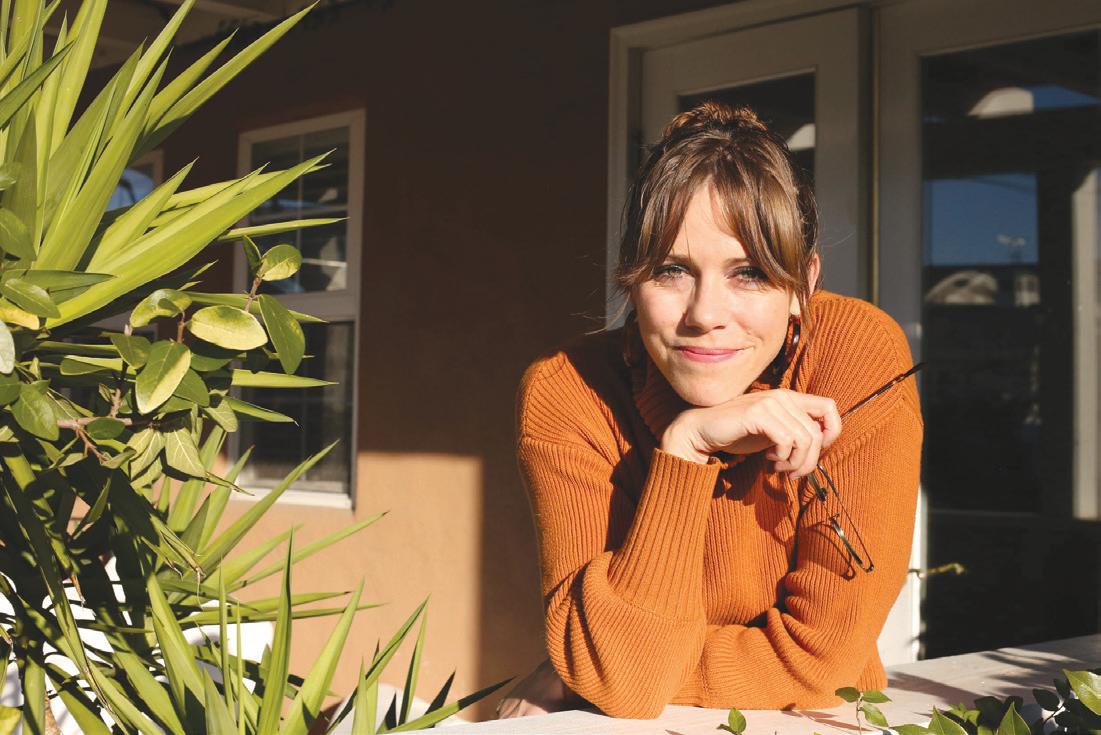
Returning to her alma mater just over a decade after graduating, Pulitzer Prize-winning journalist Molly O’Toole ’09 will be the next Zubrow Distinguished Visiting Journalist Fellow for the College of Arts and Sciences.
An immigration and security reporter at The Los Angeles Times, O’Toole received the first Pulitzer Prize in audio journalism for her reporting in refugee campus on the Mexican side of the border. Now, the
As a fellow, O’Toole will teach an American studies class this fall titled “The American Dream: Journalism, Politics and Identity in U.S. Immigration Policy.” The alumna will also host career talks with students and collaborate with Cornell faculty researching immigation.
She follows fellow Cornell and Sun alumnus Marc Lacey ’87, who was the inaugural visiting journalist fellow beginning in spring 2020. Lacey, an assistant managing editor for The New York Times, returned to campus for a week in the spring to talk about the state of the news and media and other national issues — attending panels, discussions across campus and visiting several classes.
The Zubrow Fellows program is intended to connect students, faculty and alumni to the media through moderating events, panel discussions, guest presentations and engaging with organizations on campus.
“I want to talk to The Sun and students across campus who are interested in journalism,” O’Toole told The Sun. “I want to give as much wisdom as I can and have people learn from all

Campus Case Numbers
By JYOTHSNA BOLLEDDULA Sun Staff Writer
Following weeks of fluctuating case numbers, Cornell has returned to COVID-19 alert level green.
The return to the “new normal” level comes more than two weeks after a cluster tied to Greek life pushed campus into the yellow alert. The University recorded 14 new positive cases on campus last week, continuing the decrease of average new cases rate that started after Feb. 8. This decline in cases mirrors Tompkins County Health Department data, which shows both declining daily active case
and daily new positive case rates after a large spike in January and a smaller spike around Feb. 8. Feb. 22 saw just seven new positive cases in the county, compared to a Jan. 20 spike of 62 positives.
Because of the state guidelines, the two-week on-campus positivity rate is just 11 cases — as it includes only students taking in-person classes and faculty and staff approved to be on campus. As of Monday, quarantine and isolation capacity is 67 percent available, according to Cornell’s COVID-19 Dashboard. The green alert will expand
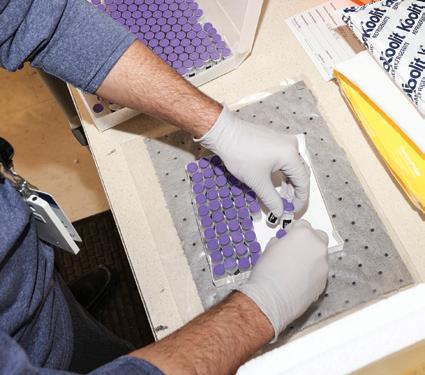
Going green | After an intial spike, cases stabilize on campus.
LEV KATRECZO / SUN STAFF PHOTOGRAPHER
live | Molly O’Toole ’09 is the next Distinguished Visiting Journalist.
O’Toole

Local Small Businesses Await Biden Stimulus
By BRENDAN KLEIN and ANNABEL LI Sun Contributor and Sun Assistant Money and Business Editor
The Watershed, a bar on West State Street, was closed for three months, struggling to meet staffing costs during the lockdown period. The Ithaca grocer Greenstar worried about even keeping its doors open.
Since the beginning of the COVID-19 pandemic, Ithaca businesses have suffered from lockdowns — just like ones nationwide. Local favorites John Thomas Steakhouse and Ten Forward Café both folded permanently just months after university students returned home.
In the past year, businesses found support through crucial federal aid, which extended paycheck protection, rent relief and small business loans. With a new administration and falling COVID-19 cases, some Ithaca businesses are looking forward to Biden-era policies that they hope will bring support on their way to a full reopening. As Ithacans wait for Biden’s $1.9 trillion dollar stimulus proposal to pass the Senate, questions remain as to how the money will be allocated, and
whether Biden can successfully use it as leverage for his policy goals, which include raising the federal minimum wage to $15 an hour.
Although some business groups have argued that such a raise would slow economic recovery, it is unlikely to make a difference for businesses in Ithaca because wages are, on average, already high — the mean hourly wage for service and food preparation workers is $15.46 in Ithaca.
For this reason, potential increases in minimum wage aren’t likely to increase labor costs in the Ithaca community, said Jen Tavares, the president of the Tompkins County Chamber of Commerce.
“Hospitality has been so negatively affected by the pandemic I think the last thing [businesses] are worried about is wage increases,” said Chuck Schwerin, managing director at Ithaca Area Economic Development, a nonprofit that supports businesses.
To continue reading this article, please visit cornellsun.com.
Brendan Klein can be reached at bck49@cornell.edu. Annabel Li can be reached at annabelli@cornellsun.com.


Texas Storm Leaves Remote Cornell Students Struggling
Statewide power outages and frozen pipes in wake of snow bring remote learning hurdles
By ROMAN LaHAYE and JOHN YOON Sun Staff Writers
As Texas reels from the devastating winter storm that has so far left more than 30,000 people in the south with failing electrical and water infrastructure, Cornell students studying remotely are struggling to tune into Zoom classes and their assignments in the aftermath.
As temperatures dropped last week, many power plant generators froze and went offline, decreasing the supply of energy production as demand rose — causing widespread blackouts throughout the state. Water pipes have burst because of the extreme cold, leaving more than 14 million people without running water.
The storm affected cities throughout Texas and much of the South, including Austin, where Zach McConnell ’21 has been taking classes online.
McConnell's apartment was connected to the electrical grid of a nearby hospital, which meant he had access to power but no running water due to a leaking pipe. But he said his sister wasn’t so lucky — without water or electricity, she and her husband moved in with McConnell.
“She has been stuck in the apartment for the last two days without any electricity at all [or any] water,” McConnell said. “Their rooms got down to 45 degrees and they’ve just been trying to cuddle together for heat.”
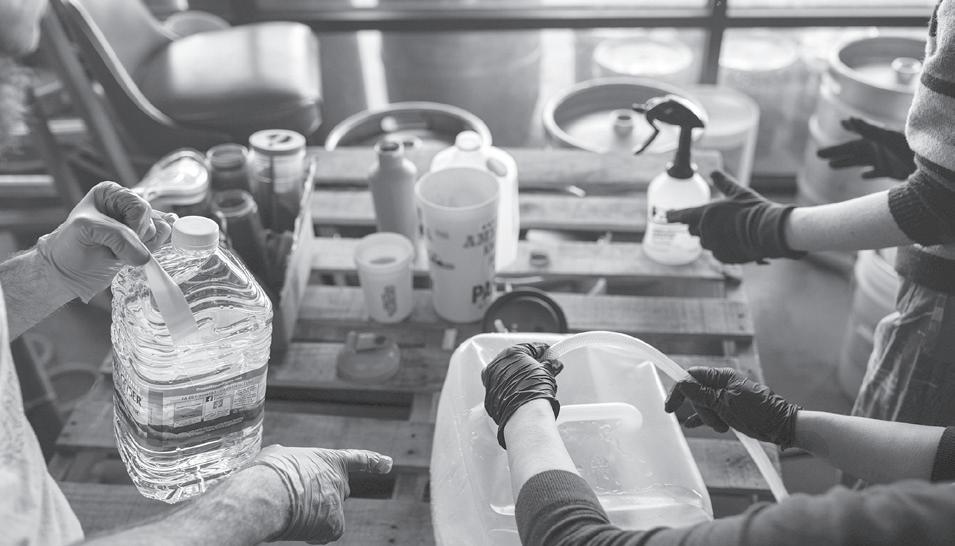
The McConnells have to collect snow from outside to fulfill basic needs: used for hand-washing as the virus remains a lingering threat, taking showers and flushing toilets. Austin’s lack of cold-weather infrastructure has made it even more difficult to drive and gather supplies. McConnell hopes that once the streets are cleared, he can get a larger canister of water so that they can stop relying on snow.

Elita Gao ’22 similarly lost power on both Tuesday and Wednesday mornings, forcing her to miss two days of classes. She relied on cellular data to contact her professors and explain her situation. Luckily, Gao and her family were well-provisioned for the coming days, as they had stockpiled groceries to prepare for the storm.
Not all areas have been affected equally. Gao said she is doing her best to conserve power, printing out readings and avoiding TV.
“When it first started snowing we all went outside and we were making snowmen and were really excited,” said Liz Espinoza ’23. “But then we realized that the snow didn’t
Alumna to Bring U.S. Immigration Reporting Experience to New Class
FELLOW
Continued from page 1
the mistakes I’ve made and also have really practical conversations about how to get a job, how to turn this passion into a life.”
O’Toole will draw from her experience as a journalist, but also from her time at Cornell, where she studied English while running track and writing for The Sun. She later attended New York University to earn a dual master’s degree in journalism and international relations.
In her course, O’Toole said she hopes to foster a pre-professional approach to the humanities that combines a traditional academic study of policy and migration with real world work and interaction.
a way that did justice to the people who are taking the risk to do this with me.”
For the protection and anonymity of these whistleblowers, This American Life used voice actors to replace those who agreed to speak about their lives in refugee camps. O’Toole remarked on the incredible ability of these actors to capture the integral emotional component of audio journalism in their recitations.
“You can think like a journalist in whatever field you are in.”
In a deeply polarized country, divisions laid bare through ongoing national issues such as those explored in the podcast, O’Toole said, “To have the opportunity to teach this course right now, I just feel so lucky.”
Molly O’Toole ’09
“We’ll be looking at how journalists have contributed to the policy and politics of immigration in the U.S. by how they’ve covered immigrant waves in the 20th and 21st centuries,” O’Toole said. “I also want to help make students comfortable creating their own journalism, and in confronting policy makers themselves.”
The course material is grounded in O’Toole’s professional focus covering immigration and security in the U.S. This work won O’Toole the first-ever audio reporting Pulitzer Prize in 2020 for her extensive reporting on the Trump administration’s Migrant Protection Protocols, informally coined the “Remain in Mexico” policy.
O’Toole’s Pulitzer-winning work on “The Out Crowd,” an episode of the podcast This American Life, worked with asylum-seeking refugees. She developed relationships with refugees for months to chronicle their experiences in camps on the Mexican side of the border — through their fear of speaking against the humanitarian atrocities of a government that has displaced thousands of asylum seekers waiting across the border in Mexico.
“The biggest challenge was maintaining anonymity for whistleblowers in a way that allowed [us] to do investigative reporting in an audio context while still maintaining that protection and that trust,” O’Toole said. “I had to trust it was going to come together in
O’Toole also hopes that her class can provide a new look at these national issues, but also fill in the gap of vocational and practical experience she sees in higher education — in addition to spotlighting the humanities in a STEM-dominated environment like Cornell.
She said the journalistic skill set has a home in the humanities, including in her class. But the questioning and writing skills in journalism applies to myriad professional contexts, O’Toole said.
“A lot of what students do in an academic setting is what I do as a journalist. I educate myself, I research, I find the people who know the most about that topic and I ask them questions. That is journalism,” O’Toole said. “You can think like a journalist in whatever field you’re in.”
O’Toole started her journalism career as a writer and news editor for The Sun, where she covered everything from financial aid during the 2008 recession to the Ithaca Gun Factory — experiences that have since shaped her reporting.
O’Toole excitedly anticipates her return to the place that was foundational in her journey to becoming a Pulitzer Prize-winning journalist: “I’m so excited. I’m such a geek. I feel like I get to go back to college,” she said. “It really is a dream to me.”
Connor Greene can be reached at cgreene@cornellsun.com.
melt, and when we saw that we weren’t equipped.”
For Espinoza, the storm made her already unreliable internet connection worse, and added a new set of challenges to her studies. Like the McConnells, she and her family had to collect snow from the outside for multiple days. They have since regained power and water.
“It’s hard to concentrate on my work because a lot of my family members and a lot of people in our state are struggling,” Espinoza said. “We’re hoping that it doesn’t last too long or if it does we’ll get through it.”
Roman LaHaye can be reached at rlahaye@cornellsun.com. John Yoon can be reached at johnyoon@cornellsun.com.
Mayor Details Revamped IPD
POLICE
Continued from page 1
data from call types itself, everything is pointing in the same direction: that we need a new form of safety and equity.”
Last summer, Myrick and Chief of Police Dennis Nayor released IPD’s use of force policy, responding to over yearlong demands for this act of transparency. They were made public in June, after the country erupted into protests in the aftermath of the police killings of Black Americans, including George Floyd.
This proposal is the latest in Ithaca’s steps toward systematic change — which GQ called the “most ambitious effort yet to reform policing.”
Town officials developed the initiative in a partnership with the Center for Policing Equity, a national nonprofit that partners with local law enforcement agencies to address police reform.
National experts including Dr. Tracie Keesee, co-founder of the CPE, were involved in developing Ithaca’s proposal since the beginning stages.
As these recommendations are car-
ried out in the Ithaca community, both Myrick and Keesee emphasized the need for transparency and continued community input on the proposal.
“This report is not a period or an exclamation mark but more like a semicolon toward a continued process, where we can continue to come up with even more recommendations,” Myrick said at the Monday press conference.
But the written proposal isn’t the end of the road after years of calls in Ithaca for police reform. The recommendations will soon be sent to the Tompkins County Legislature and Common Council, where they will face approval by the city’s governing body.
“The real work will begin once this is approved and moves onto the community,” Keesee said. “This proposal was not designed to sit on the shelf, but to move both the city and the county forward.”
Olivia Cipperman ’23 contributed to reporting.
Jyosthna Bolleddula can be reached at jbolleddula@cornellsun.com.
University Returns to ‘New Normal’
ALERT
Continued from page 1
in-person activities, Ryan Lombardi, vice president for student and campus life, wrote in a Monday morning email. Lombardi also explained that the University hopes to continue to ease restrictions in the “near future,” if virus prevalence remains low on campus.
Beginning Tuesday, fitness centers will open again for students, alongside Helen Newman Pool and Bowling, Lindseth Climbing Center, Barton Hall, Lynah Rink and Reis Tennis Center. But intramural sports group
activities, club sports and student organization programs will remain virtual.
The email added that varsity athletes can begin sport-specific activity, conditioning and weight training as designated by their coaches and Cornell Athletics. But resuming these activities is bittersweet, as the Ivy League officially canceled spring sports on Feb. 18.
Even as cases stabilized on campus from the initial spike, Lombardi urged the Cornell community to continue following public health guidelines, including face covering and physical distancing.
“While these changes allow for increased activity and community, they do still require us to remain dedicated and committed to preserving the health of our campus as we make these modifications,” Lombardi wrote. “In-person connections are an important part of our individual and collective well-being, and our diligence in engaging responsibly will ensure that we can benefit from these connections for the remainder of the semester.”
Jyosthna Bolleddula can be reached at jbolleddula@cornellsun.com
Water shortages | Uncharacteristic winter storms forced Texans to boil water after widespread waterline breaks.
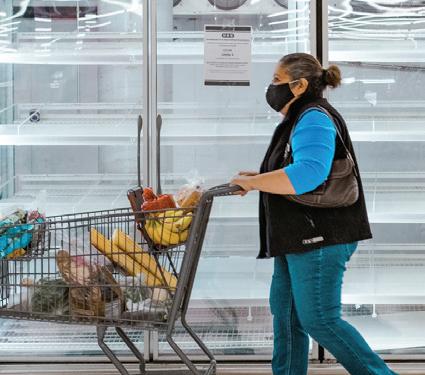
Empty shelves | Texas shoppers faced barren stores as a result of mass power outages during winter storms in mid-February.
CHRISTOPHER LEE / THE NEW YORK TIMES
ARTS & ENTERTAINMENT
Frock Consciousness
Vain trifles as they seem, clothes have, they say, more important offices than merely to keep us warm,” begin the show notes of Kim Jones’s recent haute couture debut at Fendi, quoting from Virginia Woolf’s Orlando . Yet clothes did not even seem to keep Woolf warm. Warm, I mean, psychologically.
“The looking-glass shame has lasted all my life,” she writes in her memoir, A Sketch of the Past . Clothes were a source of fascination for her, but they also garnered a sidelong, disapproving glance. In her posthumously published diary, she oscillates between a desire to become more fashionable (“I hate being badly dressed…”) and a distaste for the vanities and vulgarities of the sartorial (“…but I hate buying clothes.”).
As a young woman, Woolf sensed acutely the fact that clothes had “more important offices” — she herself was compelled by the “machine” of Victorian society to fulfill them. At 7:30 p.m., the women of the family would go upstairs to perform their daily ablutions. At 8:00 p.m., they would show up for dinner in evening dress. Woolf’s half-brother, George Duckworth, would be there, ready to inspect her like “a horse brought into the show ring.” While her late mother, Julia Stephen, had embodied Victorian ideals of virtue, beauty and domesticity, both in life, as prototypical “angel of the house,” and in art — modeling for the pre-Raphaelite painters and her aunt, the celebrated photographer Julia Margaret Cameron — Woolf (small wonder) came to associate clothing with conformity and shame.
So, too, does her character Mabel W aring in Woolf’s short story “The
New Dress.” Mabel is invited to a party at the home of the fashionable Clarissa Dalloway, but she spends the whole party consumed by her crushing anxiety and sense of inadequacy, of which her yellow dress is the sorry locus. More than a social marker of class, culture or gender, the dress becomes an extension of Mabel’s subjectivity, the most vulnerable part of her, as though it were the exposure of her raw flesh rather than a covering of cloth. One would like to offer her the helpful advice of Karl Lagerfeld: “Don’t get carried away — it’s only dresses.” But, obviously, we know it is much more than that. In the second, dreamlike section of To the Lighthouse , clothing becomes a signifier of loss, absence and dissolution. Everything changes here; Woolf turns the garment of the novel inside-out. With the Ramsay family gone, we get an image of “a pair of shoes, a shooting cap, some faded skirts and coats in wardrobes — those alone kept the human shape and in the empti -
ness indicated how once they were filled and animated.” It is as if Woolf is already drawing chalk outlines of her characters for us here, divorcing the humans from their shapes so that we won’t miss them too much.
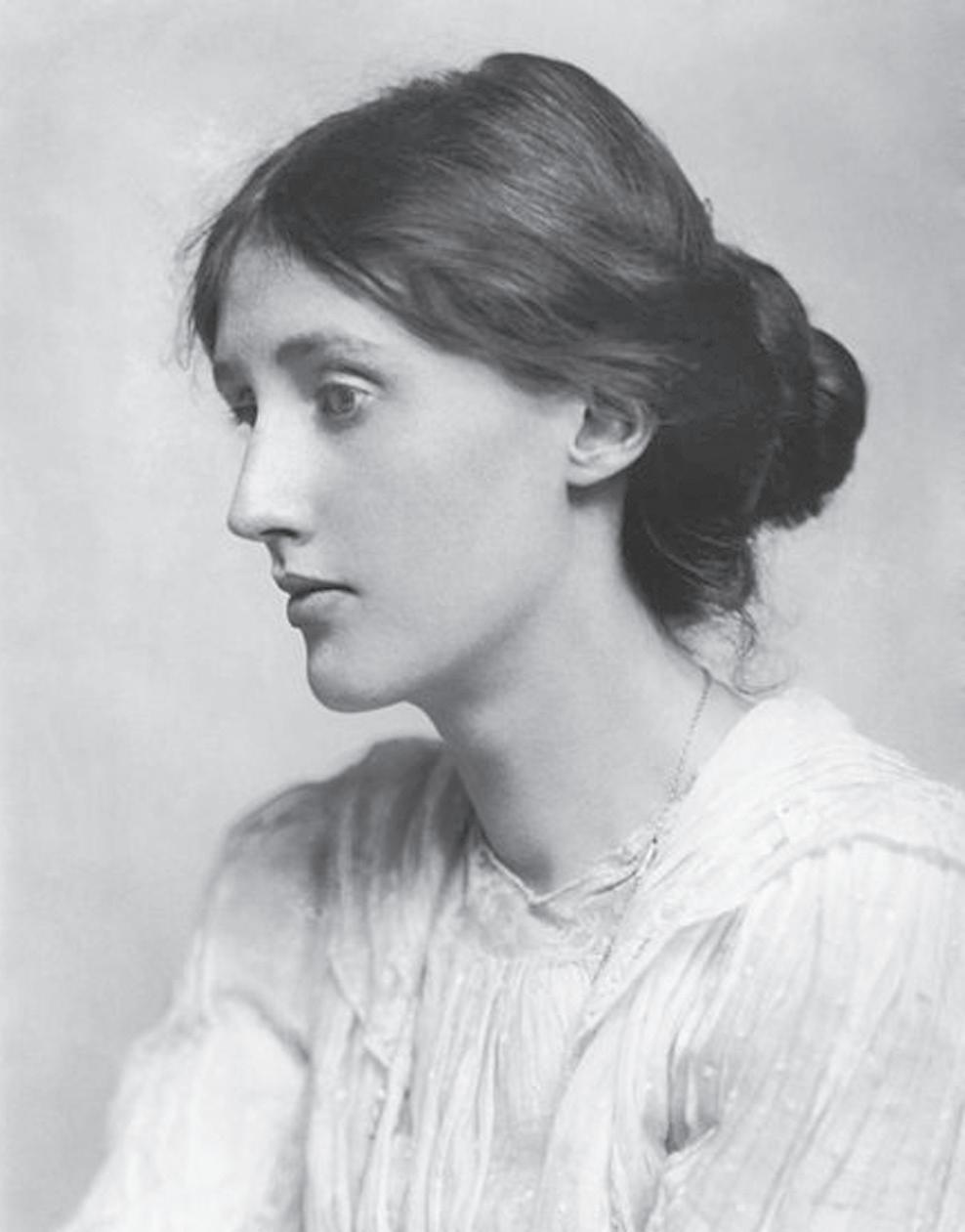

Yet if fashion meant death and distress, it also meant self-expression, mutability, intimacy and memory. In Orlando , clothing signals the liberating possibility of morphing oneself from one gender to another, of casting off restrictive and ill-fitting social conventions. In Mrs. Dalloway , Rezia Warren Smith’s sewing and hat-making create a “warm place,” a “pocket of still air” in which she and her husband Septimus can share a few blessed moments of happiness. Woolf’s own first memories of her mother revolve around aspects of her clothing — a white dressing gown, the beads on her dress. In May 1926, Woolf appeared in British Vogue wearing one of her mother’s Victorian dresses.
Like poet Charles Baudelaire, Woolf
saw fashion — with the cyclicality, impermanence and possibility of transformation it offered — as a metaphor for modernity. Elaborating on her desire to investigate the “frock consciousness,” she describes fashion as a place “where people secrete an envelope which connects them & protects them from others, like myself, who am outside the envelope, foreign bodies.” Here “fashion” takes on the function of a skin, precluding the entrance of “foreign bodies.”
But writing, too, “secrete[s] an envelope.” It connects some and protects from others. In “The New Dress,” Mabel, badly dressed, at least has the consolation of being well-read: around the unfashionable social circle of her all-consuming subjectivity, she secretes a membrane, selectively permeable to only a few favorite authors — Borrow, Scott, Shakespeare. Woolf knew that it was not we who wear the clothes, but the clothes that wear us. This is doubly true in the case of great clothes. When I read one of her novels, it is like putting on some fantastic new garment. I feel the fluidity and lightness of the words flow over me like silk, their rich histories and sound-associations weaving in and out of one another, embroidering and patterning the whole. I begin to move through the world differently. A barrier has formed invisibly between Self and World. That barrier is called Virginia Woolf.
I have reached the Park gates. I stand for a moment, “looking at the omnibuses in Piccadilly.”
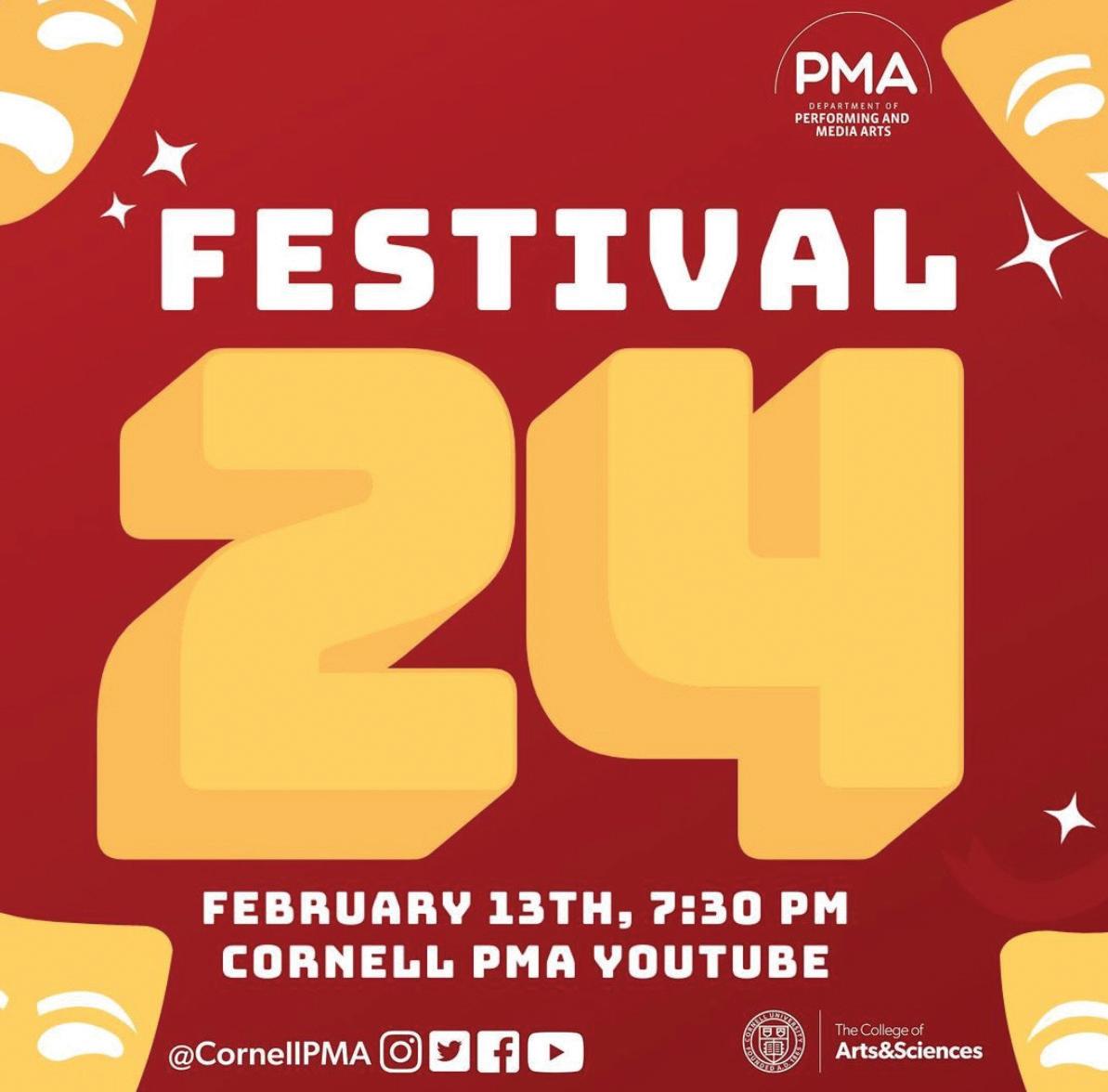
Festival 24: Virtual Teater in Twenty-Four Hours
Festival 24’s fourth Zoom performance during the pandemic looked a bit different, but it was no less entertaining. Festival 24 is part of the Performing and Media Arts Department’s semester tradition, written, directed and performed virtually this semester and last. Students have just 24 hours to write and produce a play.
The production streamed from Youtube at 7:30 p.m. on Saturday, Feb. 13, so that viewers could watch it from the comfort of their homes, and featured four plays — all centered on the theme “infatuation with a twist of perspective.”
“[The producers] try to keep the plays satirical since there isn’t much time to dive deep into drama,” said Melanie Goricanec ’23, the director of one of the plays, titled “Goal.” “[They] also know that the audience and actors may be new to theatre, and [they] don’t want to scare them away.”
First up was “Indeathinate Relationship,” written by Millie
Schwartz ’23 and directed by Samantha Noland ’21, which featured three friends in a Zoom call catching up on their personal relationships. One member of the trio, Christi, tricks her friends into thinking she is dating Casper the Friendly Ghost, but the plot twists at the very end, keeping the audience on edge for the entirety of the play. Eventually, Christi and her friend, Becca, profess their love for each other, and the audience is ultimately satisfied.
“Endings,” written by Audrey Rytting ’21 and directed by Adam Shulman ’22, was next up on the playbill. This showcased three teenagers, each one chatting about their various breakups and relationship problems. There’s something quite comforting about watching peers around your age sharing their own relationship conundrums, which almost always seem to be more disastrous than your own.
Third up was perhaps my favorite play in the entire production: “Recovery,” written by Gloria Oladipo ’22 and directed by third-year Ph.D. student Anna Evtushenko. “Recovery” was an especially satirical piece, featur-
ing an “R.A.” meeting with three individuals. Intuition suggests that “R.A.” stands for “Recoveries Anonymous”; however, we soon learn that it’s an acronym for “Racists Anonymous,” when one participant introduces herself: “Hi, I’m Linda, and I’m a racist.”
In this play, we are introduced to the woes of the white racist by two “R.A.” members, while the one Black participant, Meena, acts as a guest consultant listening to their racist confessions — as they hope to be absolved, or at least, recover. “Fucking white people,” mutters Meena as she rolls her eyes at the camera and concluds the scene.
Last, but certainly not least, was “Goal” written by Regina Lassiter ’21 and directed by Goricanec. “Goal” took place in a medieval setting, featuring prison inmates, two of whom are there for witchcraft and slander. There is a subtle mention of the bubonic plague, and the viewers, now over a year into our own pandemic, don’t miss the reference.
Taylor Bezos ’23, assistant producer of the festival and actress in “Goal,” noted that the “biggest challenge about performing on Zoom is the lack of physicali-
ty.” Bezos added that without being able to move around, “it becomes a challenge to fully immerse yourself in the play and in the character.” However, she explained that the online format allowed her to “feel like [she was] a part of something, while staying safe at home.” The production was able to
unite both sides of the stage, audience and performers alike, in connection over their love for theater and art. In a time of so much isolation, Festival 24 made us all feel a little less alone.
Isabelle Pappas is a freshman in the College of Arts and Sciences. She can be reached at ipappas@cornellsun.com.
Ramya Yandava is a senior in the College of Arts and Sciences. She can be reached at ryandava@ cornellsun.com. Ramya’s Rambles runs alternate Mondays this semester.
ISABELLE PAPPAS STAFF WRITER
COURTESY OF CORNELL PERFORMING AND MEDIA ARTS DEPARTMENT
COURTESY OF WIKIMEDIA COMMONS
Ramya Yandava
Ramya’s Rambles
The Corne¬ Daily Sun
Independent Since 1880
138th Editorial Board
MARYAM ZAFAR ’21
Editor in Chief
JOYBEER DATTA GUPTA ’21
Business Manager
PETER BUONANNO ’21
Associate Editor
MEGHNA MAHARISHI ’22
Assistant Managing Editor
CHRISTINA BULKELEY ’21
Sports Editor
BORIS TSANG ’21
Photography Editor
CAROLINE JOHNSON ’22
News Editor
ALEX HALE ’21
News Editor
JOHNATHAN STIMPSON ’21 Managing Editor
KRYSTAL YANG ’21
Advertising Manager
JASON HUANG ’21 Web Editor
NIKO NGUYEN ’22
Design Editor
PALLAVI KENKARE ’21 Opinion Editor
SEAN O’CONNELL ’21 News Editor
KATHRYN STAMM ’22 News Editor
Working on Today’s Sun
Ad Layout Mei Ou ’21
Production Deskers Annie Wu ’22
Ben Mayer ’21
Design Deskers Niko Nguyen ’22
Kristen D’Souza ’24
Puja Oak ’24
Editors in Training
Editor in Chief
Managing Editor
Kathryn Stamm ’22
Madeline Rosenberg ’23
Associate Editor Catherine St. Hilaire ’22
Opinion Editor Christian Baran ’22
Arts Editors Emma Leynse ’23
Isabelle Pappas ’24
News Editors Sasha Abayeva ’24
Tamara Kamis ’22
John Yoon ’23
Science Editor Omsalama Ayoub ’22
Photography Editor Hannah Rosenberg ’23
Editorial
Safe Socializing for Mental Health
NOW THAT CAMPUS HAS RETURNED TO ALERT LEVEL green, it might be tempting to forget what moved Cornell to yellow in the frst place. In a Feb. 5 email, President Martha Pollack attributed the pre-semester spike to a Collegetown party where several members of Greek life organizations were reportedly present and not following COVID-19 protocols. Te actions of these students not only violated the behavioral compact, but were also incredibly selfsh.
However, Greek life represents a microcosm, albeit a rather extreme one, of how the entire student body feels. After a year of isolating lockdowns, mental health is deteriorating — and one important contributor is a lack of in-person socializing. Tat said, members of Greek organizations are predominantly wealthy, white men, whose privilege is mirrored in the way that many have conducted themselves during this pandemic. Likely protected by wealth and good health insurance, many Greek students may feel less vulnerable to COVID-19 than their Black and Latinx peers. Privileged or not, grappling with declining mental health is a struggle many Cornellians share.
Taking action to improve the mental health of all students is more important now than it was before we were sent home last spring, when Cornell’s mental health review reported that over 40 percent of students were “unable to function academically for at least a week due to depression, stress or anxiety.” Not only is that statement incredulous for the percentage of students already battling mental health struggles, but also because of the severity of those struggles. Because so many of its students are so negatively afected by depression, stress and anxiety, Cornell’s administration must improve the situation.
Students need to be able to socialize safely, and if Cornell is able to make in-person classes happen this semester, then it should be more than capable of organizing in-person social programming. Binghamton University made an outdoor ice rink with a Starbucks truck available for students, staf and faculty to enjoy this spring; Cornell could host events like these that make the currently ofered Zoom “socializing” activities look lazy. Honestly, the last thing anyone wants to do after a long day of Zooming and online homework is hop on another Zoom call for recreation. Zoom fatigue is a real phenomenon, and Cornell needs to show it recognizes that.
Socializing allows students to take the time to decompress from their online lives. Te simple act of talking to someone’s masked-up face from at least six feet apart, preferably outside, can do an immense amount for their mental wellbeing. Not only that, but in-person events also serve to ground students in their community. Cornell needs to be more proactive moving forward when it comes to supporting the mental health of it’s students, especially during such isolating semesters.
Now that gyms and recreation facilities are opening back up, students will again be able to get some much needed in-person activity. We urge students to work diligently to keep COVID-19 from spreading amongst our community, so we don’t again move to a higher alert level, restricting everyone’s access to campus facilities — an outlet to get healthy and de-stress without which could setback any progress in improving mental health that was made in the interim.
Te above editorial refects the opinions of Te Cornell Daily Sun. Editorials are penned collaboratively between the Editor in Chief, Associate Editor and Opinion Editor, in consultation with additional Sun editors and stafers. Te Sun’s editorials are independent of its news coverage, other columnists and advertisers.
Letter to the Editor
Cornell, honor your commencment promise
To the Editor:
I am writing to respectfully urge Cornell to reconsider the recent changes to the Class of 2020’s commencement plan. On Feb. 17, President Martha Pollack announced that an in-person commencement, with family and friends, will not be safe by the proposed June date. I absolutely agree; the spread of the coronavirus precludes such gatherings — for now. However, the University’s solution, to wrap our commencement into the virtual reunion and have, “... a special, in-person alumni event for the Class of 2020 whenever we are again able to gather, without restrictions, in Ithaca” seems a rather glaring step back from the promise made to us last year.
“We are not yet able to announce a date or location, as that will very much be determined by the progression of the current public health crisis,” President Pollack said in March 2020. “But I can say with certainty that your celebration will occur. It will take place in Ithaca. All of our graduates and their families will be invited. And we will find creative ways for those who are unable to attend in person to be able to fully participate virtually.”
I do not doubt the difficulty of the decision the commencement planners and the administration faced when choosing to walk back from this statement. They are in an impossible situation, as are many of us who have been living with the impossible for over a year. But it seems breaking a promise so strongly made, so absolutely stated and so definitively defined would irreparably damage our class’s relationship with Cornell. We want to celebrate with our family and friends on The Hill — a place that has defined years of our young lives and is for many of us a home. The Class of 2020 has waited a year for this opportunity, and I believe many of us would choose to wait longer to be able to realize the full commencement experience.
Tom the Dancing Bug by Reuben Bolling

INFORMATION SESSIONS: TUESDAY, FEBRUARY 23 @ 5 P.M. & THURSDAY, FEBRUARY 25 @ 5. P.M. (SEE PAGE 2 FOR LINKS)
Matthew Ferraro ’20
Joshua Dov Epstein Heterodox
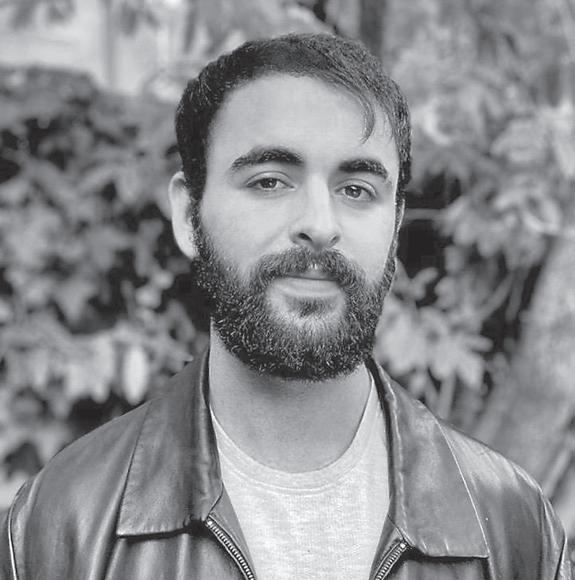
Joshua Dov Epstein is a sophomore in the College of Arts and Sciences, and can be reached at jde74@cornell.edu. His column, Heterodox, appears every other Tuesday this semester.
Ort is defned in the Oxford dictionary as, “a scrap or remainder of food from a meal.” You might not recognize the word as it doesn’t come up often in conversation — once we’re done with food, most of the time ort is headed for the garbage and rarely given a second thought.
With classes still largely online and dining halls empty this semester, many Cornellians will be responsible for their own meals, and accordingly, will be given more responsibility and fexibility over how they manage their ort. While there are cons to eating outside dining halls — for example, eating fewer meals with your friends — there’s one potential upside that could really help the environment: managing ort in a way that can reduce your carbon footprint. One of the best ways of being responsible about ort is cheap, easy and possible in virtually every living situationcomposting.
Composting is the process of recycling organic waste into an end product, aptly called “compost,” and works by decomposing organic material, like ort, within the presence of air. Te process is great for the environment because compost takes organic waste that
Sort Your Ort
would otherwise be sent to a landfll, repurposes it as fertilizer and introduces important organisms to the soil such as certain fungi and bacteria.
Te classic compost pile involves just food waste (excluding meat, dairy and processed foods), and can take as long as four weeks to a full year to decompose depending on whether you expedite the decomposition process by adding heat, more organic material such as fallen leaves or grass trimmings or decomposers such as fungi or worms, and how often you turn the pile to supply more air to the process. Essentially, all it takes for an optimum outdoor compost setup is an enclosed pile around three feet high, three feet wide and three feet deep, with regular maintenance.
For Cornellians living in dorms, in places where cold winters may inhibit the outdoor process, or in urban settings without access to space and soil, indoor composting is a solid option. Perhaps the easiest way to accomplish this is vermicomposting; composting with the assistance of worms. Worms provide a much appreciated service of expediting decomposition in indoor compost setups, and can be purchased online easily or found locally through most bait shops. Even Walmart has them! Te rest of the materials are general household items such as plastic bins, paper and a drill. In terms of setup, the Environmental Protection Agency actually has a thorough guide on how to vermicompost which makes the process easy. Generally, the total cost for all materials involved including worms costs around $50. If you already have a drill and bins, the price is less than $15.
expensive, alternatives.
One such method is buying and setting up a “tumbler,” an easily rotated barrel that speeds up the compost process through increasing airfow to aid the anaerobic process of decomposition. Te entire composting process takes place within the barrel, is set up rather easily and can be small and compact as tumbler barrels come in all kinds of shapes and sizes.
While there are cons to eating outside dining halls ... there’s one potential upside that could really help the environment: managing your ort in a way that can reduce your carbon footprint.
Another option is buying a piece of equipment usually referred to as an “electric composter,” which works by frst supplying artifcial heat to dry organic material, which then cools to produce an airy, mulch-like product. While all the previously mentioned forms of food recycling result in the fnal product of compost, using an electric composter doesn’t technically yield compost, as the end product of the process is a drier, less fertile substance. Tat being said, using an electric composter to recycle food scraps is still better than throwing away scraps to be sent to a landfll, as the end product can still nourish a garden and be repurposed.
In terms of costs, tumblers are usually between $50 and $300, while electric composters are generally more expensive with prices ranging between $150 and $600. The more expensive products usually have useful but not vital add-ons, such as built-in tech that minimizes odor. That being said, without add-ons, the food-recycling methods outlined above all have the benefit of being able to be done indoors, yearround.
Say you’re interested in getting involved in compost, but you don’t have access to an outdoor setting for a compost pile and/or the thought of housing and feeding a few dozen worms in your dorm is seriously of-putting. In that case, there are ample, albeit more
So, whether you’re cooking up food while taking courses from home, ordering in to your dorm or picking up something to eat later, all involve the extra step in deciding how food waste is disposed of — so consider taking up composting. It’s an easy way to make a big diference in reducing your carbon footprint.
Keep Your Virtual Celebration, and Give Me $20

You lied to us, President Martha Pollack. In an email you wrote to us on March 20, 2020, you promised us that we would have our commencement, and, in your own words, that: “It will be a joyous one! ... It will take place in Ithaca.”
And yet I awoke Wednesday morning to an email from Michelle J. Vaeth, associate vice president for alumni afairs, efectively crushing any hopes of the in-person commencement that had been promised to the accursed Class of 2020. (Seven hours later, presumably at the end of the workday, you deigned to tell us yourself).
In lieu of an in-person celebration, you offered — no, you told us — that we would instead have a virtual celebration as a part of the Cornell Reunion. If the past year has taught me anything, though, it’s that virtual celebration is an oxymoron. Haven’t we been subjected to enough virtual happy hours and
hangouts in the past year to learn that they just don’t work?
At best, the virtual celebration will be mediocre. More realistically, though, it will be deeply disappointing. For a whole year, our lives have been dwelling on a clifhanger. We’ve been resting on hopes that when we said goodbye to one another last March, that maybe it wouldn’t be forever. Tat maybe we’d get to see each other again in-person. I’d been storing the things I left behind in Ithaca for the past year, waiting on our promised in-person commencement so I could fnally get them back.
Now, it’s like we’re actors in a show that got canceled halfway through the fourth season. And the company executives that pulled our fnal episodes are ofering year-old, stale apologies and a pat on the back before shoving us out the door.
But I don’t want a pat on the back and I don’t want a year-late virtual commencement. I don’t want a celebrity to sit in their apartment and whisper sweet nothings to me about living an inspired life or changing the world. I don’t want President Pollack to tell me how sorry she feels. Maybe I could’ve used that a year ago. Maybe I would’ve enjoyed it even now, if only I could hear it while sitting with friends. But that can’t happen — so we’ve been told.
So, what I propose instead is to scrap the last-minute, rushed and doomed-to-fail “Virtual Celebration” that you’re handing us — the ending you’re trying to write for us — and give us part of those proceeds. And while you’re at it, maybe throw in some of the money that you didn’t spend in 2020. While I don’t know the budgets for these events, I imagine that they are sufficiently large enough to provide us with at least a pittance for our sorrows. And I, for one, would be willing to overlook the fact that we were blatantly lied to by President Pollack herself –– if only there were some financial compensation for the year I spent clinging to false promises.
Because personally, I’ve had more than my share of meaningless pity and sorrow over the past year to last
me for a while. I don’t need any more of it during a supposed virtual celebration. And I know that many of my peers could use some money rather than a vague speech about trying their best accompanied by a few hours trapped in a breakout room together. It’s a year too late to give us motivation.
And really, I’m not asking for much. Even with 20 bucks, I’d have enough to buy myself some ice
Because personally, I’ve had more than my share of meaningless pity and sorrow over the past year to last me for a while. I don’t need any more of it during a supposed virtual celebration.
cream and a cheap bottle of wine, spend a night feeling sorry for myself about how the world has passed me over and about how nothing will ever be the same, and then wake up in the morning and go back to work.
Or maybe I can add it to my savings so I can fnally get back to Ithaca to collect my things. Or maybe my friend can recover some of the costs of her hotel room she can no longer refund. Or maybe my friends can use the money to host our own celebration in the future. But at least we won’t have to sufer through another half-hearted Zoom call for a few hours and pretend that, at the end, we’re satisfed with the lack of closure we’ve been given.
Because, speaking only for myself, I’m certainly not.
Colton Poore ’20 is a recent Cornell graduate and fomer Sun columnist. Comments can be sent to opinion@cornellsun.com. Guest Room runs periodically throughout the semester.
Colton Poore Guest Room
Fill in the empty cells, one number in each, so that each column, row, and region contains the numbers 1-9 exactly once. Each number in the solution therefore occurs only once in each of the three “directions,” hence the “single numbers” implied by the puzzle’s name. (Rules from wikipedia.org/wiki/ Sudoku)



SC I ENCE
COVID-19 Symptoms Linger Long After Negative Test
By BROOKE GREENFIELD and TAMARA KAMIS
Sun Contributor and Sun Staff Writer
As Cornellians return to their demanding academics, some are also coping with the long-term effects of COVID-19 infection.
“The brain fog is real. It is so hard to sit and sift through [my] brain trying to force myself to pay attention or be present in the moment,” said Stella Linardi ’22, who tested positive for the coronavirus in September. “These days I miss things I wouldn’t have missed pre-COVID.”
Linardi, who finished the fall semester remotely from her home in California after contracting COVID-19 at Cornell, has experienced short-term memory difficulties and brain fog since she was first diagnosed with the virus.
This makes her part of a growing group of long-haulers — people coping with long-term COVID-19 symptoms. However, Linardi said she is hopeful that her brain fog and memory difficulties will ease, as some of her long-term symptoms already have.
In early February, Linardi’s sense of smell and taste returned, and aches began to fade. Her fatigue dissipated in the mid-
dle of February. After originally struggling to stand while infected with COVID-19, Linardi is back to running every day.
Linardi took one incomplete in the fall 2020 semester, but said she received help from her instructors and was able to finish the semester despite her symptoms. This spring, Linardi is again taking Cornell classes remotely in California.
To alleviate the brain fog, Linardi said she practices daily mindfulness, yoga and Tai-chi, among other practices that she has found are helping her rebuild focus. In the past, to relieve pain, Linardi did yoga and slept on her stomach to breathe more easily. Through holistic therapy, Linardi has coped with PTSD symptoms related to her traumatic experience of COVID-19.
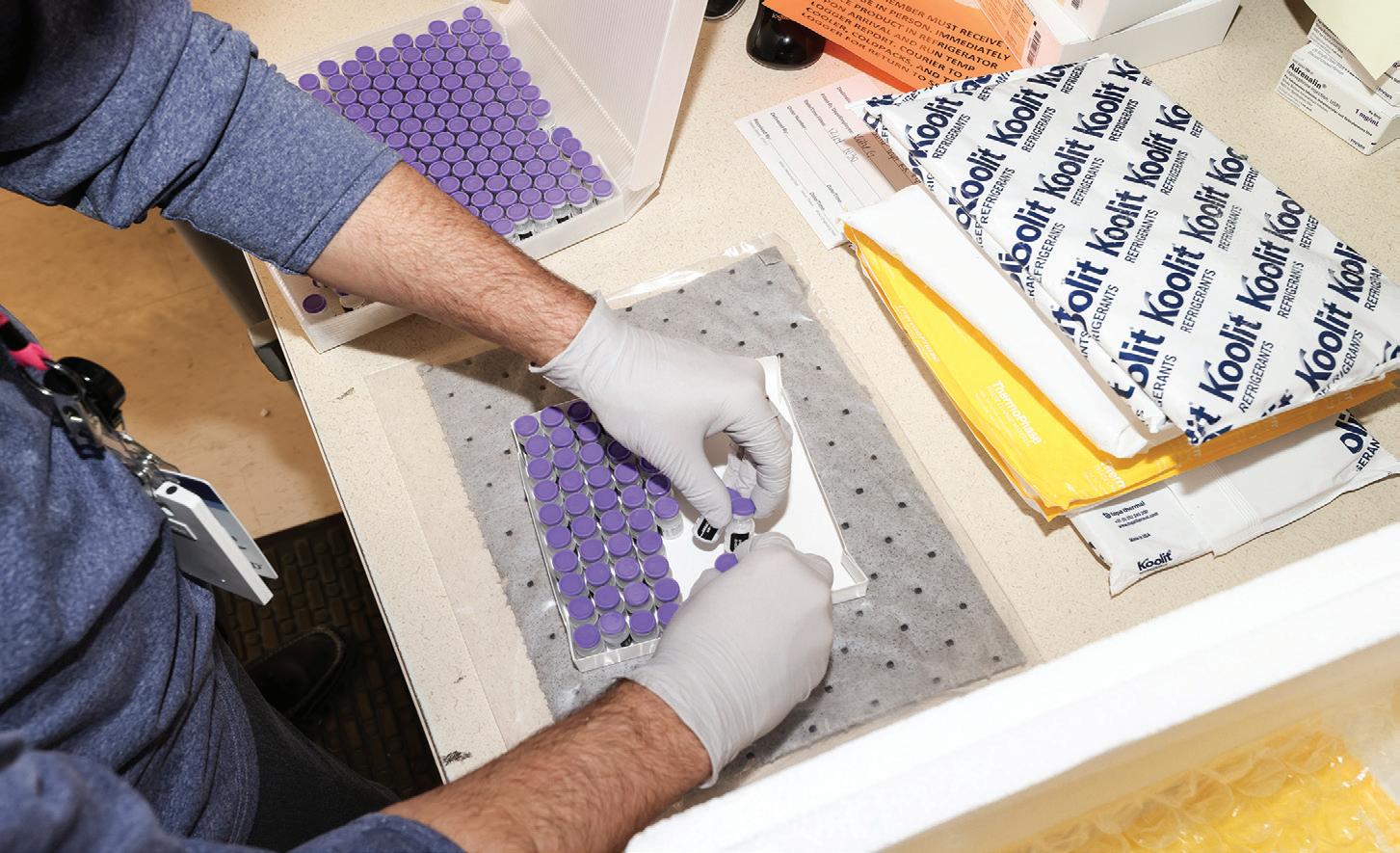
“The people who get severely infected with COVID-19 undergo long chronic hypoxia. This seems to have effects particularly in the brain,” said Prof. Luis Schang, microbiology and immunology.
Silent hypoxia is a condition resulting in low oxygen levels caused by the mismatch of the blood flow to the lungs to the air sacs in the lungs.
The damage caused by hypoxia occurs when the blood in the body has insufficient oxygen. As a result, those with hypoxia experience shortness of breath, headaches,
as well as disorientation and confusion.
Those infected experience symptoms for an average of one to two weeks. But scientists are still eager for more data on how long the response to the virus will last, and this leaves scientists worrying as to what may come, Schang said.
According to Schang, scientists must gather a large collection of clinical data on human subjects, but researchers still don’t have a complete picture of the set and length of virus symptoms. Physicians’
understanding of long-term symptoms and the virus continues to develop as individuals such as Linardi continue to battle infection.
“[Surviving] is an act of revolution in and of itself. I feel like I’m more than my pain and all the trauma I’ve gone through,” Linardi said.
Brooke Greenfeld can be reached at blg77@cornell.edu. Tamara Kamis can be reached at tkamis@cornellsun.com.
Engineers Adjust Spring Reopening Model Based on Fall Outcomes
By SRISHTI TYAGI Sun Staff Writer
Cornell has been both applauded and criticized for its fall plan to reopen campus that hinged on successfully implementing the work of University researchers and engineers.
To prepare for Cornell’s spring 2021 reopening, Prof. Peter Frazier, operations research and information engineering, and his team reviewed COVID19 transmission data from the fall to develop a supplemental testing program for employees and a stricter travel policy for students, as personal travel plans are now only approved in extenuating circumstances.
Frazier also said some groups of undergraduates, including athletes and members of Greek life, are now being tested three times per week, partially because of the more contagious COVID19 variants that Cornell has identified on campus.
Frazier cited faster-spreading variants, coupled with pandemic fatigue, vaccine hesitancy and
limited access to vaccines, as reasons to remain cautious about coronavirus transmission during the spring semester.
These concerns come as on-campus positive case numbers have stabilized following a cluster of cases tied to Greek life that pushed the University to a yellow alert level about two weeks ago.
Despite these concerns, Frazier remains “cautiously optimistic” that cases will remain stable on Cornell’s campus throughout the spring semester.
“Ultimately, we should be very hopeful. Things are getting better,” Frazier said. “Data can lead the way and help support good decision-making.”
Since the summer, the team of professors and students tasked with crafting Cornell’s reopening model reflected on how they used operations research and information engineering to minimize COVID-19 transmission to 351 total cases in the fall.
According to Prof. Mark Lewis, director of the School of Operations Research and Information Engineering, Cornell
administrators heavily relied on the large-scale simulation modeling and data analysis involved in operations research to determine whether in-person instruction would be possible at Cornell.
Frazier, who led the operations research team behind the reopening model, explained that college campuses across the nation struggled with extensive COVID-19 transmission, especially due to the large amount of social contact and high rate of asymptomatic COVID-19 infections among college students.
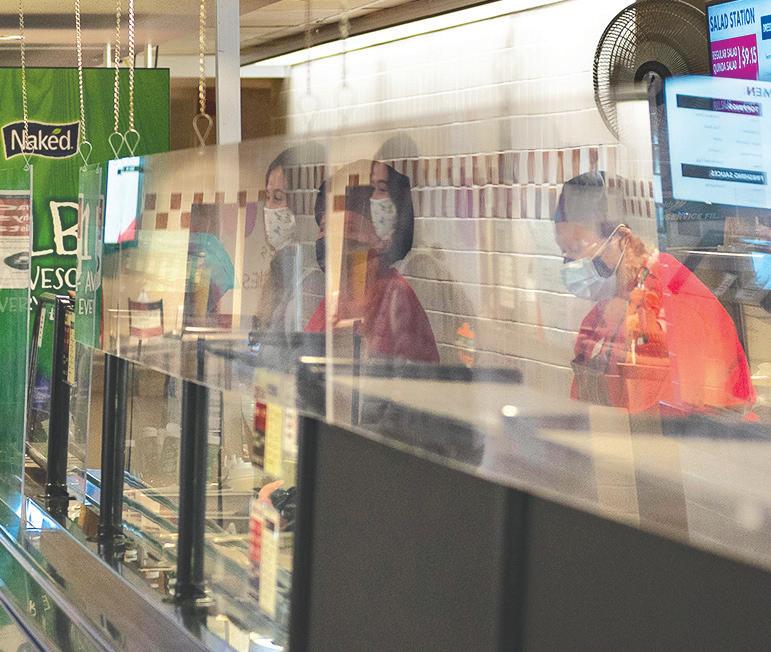
But according to Frazier, a robust system of asymptomatic surveillance testing set Cornell apart by keeping COVID-19 cases relatively low among students and staff.
“There were other universities that were deciding to remain open, but they didn’t give solid justification for doing that. It just seemed like they were ignoring the risk,” Frazier said. “So we thought that maybe because we have this testing program ... we could actually do this.”
Frazier added that the University greatly benefited from the veterinary school’s significant testing capacity, Cornell’s close collaboration with Cayuga Medical Center and students’ overall compliance to social distancing and mask-wearing.
However, Frazier recognized that there was a large degree of uncertainty in the model because of the lack of available data on COVID-19 transmission before the start of the fall term. After simulating several worst-case scenarios, Frazier said he and his team were pleasantly surprised that the reality was more optimistic than expected.
“The nature of exponential growth [of epidemics] makes it really, really hard to have an accurate prediction,” Frazier
said. “Fortunately, the goal of [our models] was not to have an accurate prediction — it was to [inform] decisions.”
Beyond a rigorous virus-testing protocol, many more engineering decisions shaped Cornell’s reopening plan — including reimagining classroom spaces to accommodate COVID safety precautions.
According to Prof. David Shmoys, operations research and information engineering, the team in charge of scheduling University classes faced a classroom capacity shortage, requiring a tool that could analyze the architecture of a room and assign seating locations for any classroom across campus.
This tool used graph optimization — a computer science technique that can model seats and the spaces between them — by analyzing University architecture drawings maximizing the number of students that could be seated in any given classroom.
The result, according to Shmoys, was a “happy ending.” The red stickers designating where masked students can sit during in-person lectures contributed to the lack of evidence of classroom transmission during the fall semester.
Prof. Oktay Gunluk, operations research and information programming, added that the team’s modeling approaches were slightly too conservative, overestimating the degree of on-campus COVID-19 transmission. However, Gunluk expressed relief that they were prepared to deal with a higher virus prevalence than Cornell actually encountered.
“In reality, we did over-engineer the whole approach,” Gunluk said. “The models and solution techniques we built were
like building a Concorde airplane, but at the end we realized we only had to fly 10 miles.”
Although COVID-19 transmission was contained during the fall, the full picture was far from rosy.
Anders Wikum ’21, an undergraduate on the operations research team, said that certain changes made to reduce infection — like cutting out breaks — took a substantial toll on students’ mental health.
“A lot of these changes were necessary, but they weren’t exactly conducive to a learning environment that is relaxing,” Wikum said.
But Wikum is now hopeful that Cornell would prioritize mental health looking to the future, and felt reassured by emails from administrators conveying their commitment to addressing students’ concerns.
Ultimately, Frazier reflected that the operations research behind Cornell’s reopening model helped reduce COVID19 transmission because Cornell’s top administrators were receptive to the model. As science researchers themselves, President Martha Pollack and Provost Michael Kotlikoff analyzed the evidence presented to them, lending credibility to their decision to reopen Cornell.
“They really understand the work, and so that helps them to trust it,” Frazier said. “Because they’re scientists, they have experience making decisions based on evidence ... so those are important factors in allowing our work to have had impact.”
Srishti Tyagi can be reached at styagi@cornellsun.com.
TIM GRUBER / THE NEW YORK TIMES