The Corne¬ Daily Sun


On Thursday, Feb. 17, a New York State trooper filed a lawsuit against former Gov. Andrew Cuomo for sexual harassment, also accusing Cuomo’s former top aide Melissa DeRosa ’04 MPA ’09 of helping to cover-up the incidents.
The publicly anonymous woman, referred to as “Trooper 1” in the suit, alleges that Cuomo groped her against her will while she was in the former governor’s Personal Service Unit.
“As Trooper 1 went ahead of the Governor to hold a door open for him, the Governor placed the palm of his hand on her belly button and slid it across her waist to her right hip, where her gun was holstered,” Trooper 1’s lawyers wrote in the lawsuit.
Cuomo resigned in August, following Attorney General Letitia James’ investigation of sexual misconduct allegations made
against him. The attorney general investigation also included the claims made by Trooper 1, however, she is the first of the 11 women involved in the investigation to sue the former governor. This is also the first lawsuit to also include DeRosa as a defendant.
The lawsuit names DeRosa for allegedly covering up the governor’s acts by misleading a reporter at The Albany Times Union in 2020 when the reporter inquired about Trooper 1’s transfer to the former governor’s personal security unit, although she did not have the proper qualifications.
“We are only aware of this case from Twitter, but according to the trooper’s own testimony, Melissa’s [DeRosa] only interaction with her was to say ‘hello and goodbye.’ It is not a viable case anywhere in America and is beyond frivolous,” Paul Schectman, an attorney for DeRosa said to CBS News.
The New York State Police is also named as a defendant in the lawsuit, though the case does not specifically state how they

played a role in the actions alleged. The suit does accuse all three defendants of discrimination and retaliation.
“The governor did not act alone,” the suit states. “He was enabled by the machinery of the state.”
This litigation comes two weeks after the Oswego County District Attorney dropped the criminal charges against Cuomo, citing insufficient legal grounds. The Albany, Westchester and Nassau County, New York district attorneys also reached similar conclusions on the sex-crime cases in their jurisdictions.
Despite the accumulating accusations, Cuomo continues to deny the claims of sexual misconduct. Rich Azzopardi, a spokes-
person for Cuomo, noted in a statement to The New York Times that the various district attorneys had chosen not to progress with criminal proceedings. The New York Times also stated that Azzopardi failed to disclose that the same district attorneys characterized the allegations as deeply troubling and credible.
“[The trooper] made the decision to proceed with this lawsuit anonymously with the hope that she can vindicate her legal rights without further victim shaming,” said Valdi Licul, a lawyer representing the trooper, in a statement to CBS News.
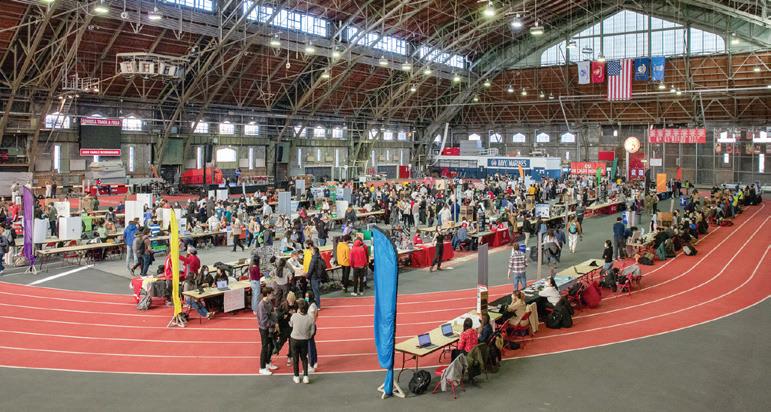
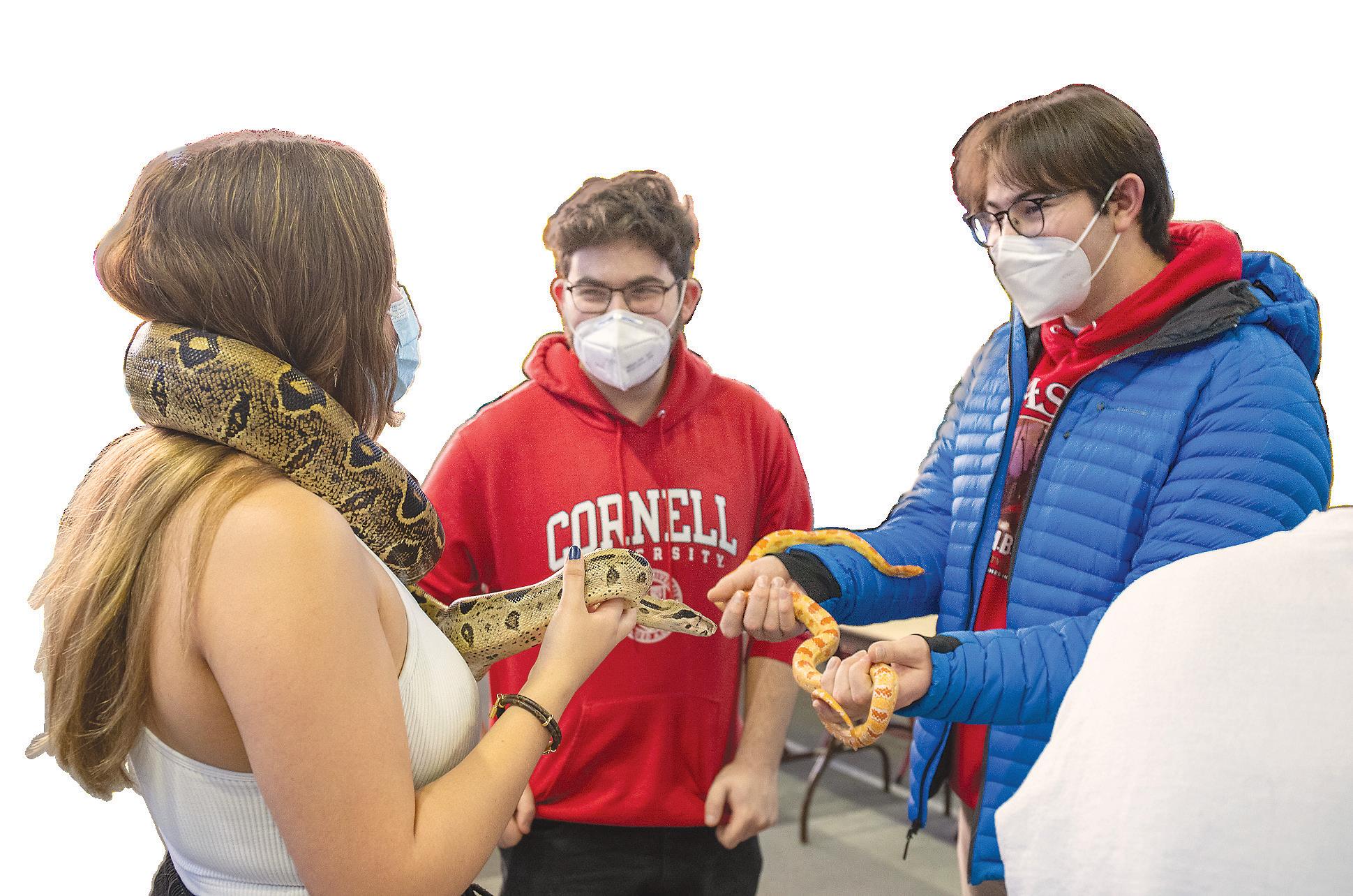
On Feb. 20, students once again flocked to Barton Hall to participate in this semester’s ClubFest, an opportunity to mingle and explore Cornell’s student clubs and organizations.
The event, now in its 18th year, featured around 400 clubs that advertised to students in person, collecting contact information, handing out quarter-cards, chatting at booths and for some organizations, giving ten-minute performances to showcase their groups to prospective members.
This spring’s ClubFest was the second in-person event since it moved online in fall 2020 due to the COVID-19 pandemic and the first in its traditional location, Barton Hall. Last semester’s in-person ClubFest took place on the Arts Quad to allow for greater capacity and a more open environment.
“As the Student Union Board, we believe it’s our responsibility to make extracurricular cultural and social opportunities accessible to everyone,” said Ansel Asch ’23, who serves as the one of the board’s co-presidents.
When ClubFest was held online, club leaders had two weeks to showcase their organizations and to document recruitment digitally. However, they
missed out on opportunities to share stickers and souvenirs, show off performances or otherwise speak to students face-to-face as they would have wandered organically around booths.
This semester, ClubFest was held over two time slots due to table limitations related to COVID protocols.
One club in attendance was Cornell Grub Ventures, a venture capital club focusing on activism-minded investments in food and agriculture.
“It was refreshing meeting students face to face, sharing about our organization and getting a sense of who’s interested about the club – the genuine enthusiasm some students had for our specific intersection of business, food and social impact felt energizing,” said the club’s chief executive officer, Deschelly Teo ’23.
This semester’s ClubFest also included a variety of performanc-
es, which served as entertainment for participants and as an opportunity for dance and performance clubs to reach out to possible recruits. Maya Hardi ’23, Vice President of K-pop dance troupe E.Motion, performed with her organization this weekend.
Hardi, who discovered E.Motion at ClubFest during her first year at Cornell, expressed appreciation for the platform the event gives to help her troupe attract new members.
“I feel like once they see us per forming dance on stage and are like, ‘Whoa, other peo ple who are like me, regular students at Cornell, they’re doing all this dance stuff. Maybe I could do that too,’” Hardi said.
When scheduling performances, setting up booths, and managing
hundreds of clubs, any event at the scale of ClubFest is bound to pose a number of logistical challenges such as performance cancellations, no-show clubs and the ever-changing restrictions necessitated by the pandemic.
Aryaa Pai ’22, also co-president of the Student Union Board, is responsible for booking performances and handling other organizational logistics around ClubFest. For Pai, planning such a large-scale event does not come without stress.
Despite this, Asch always finds a successful ClubFest to be a rewarding experience.
“Just seeing all of those people promote their organizations, seeing people joining those organizations and knowing that you are part of the game is my favorite part,” Asch said.
“We definitely do get nervous because it’s such a huge event,” brings them together. There is no other event on campus which allows students to see what clubs there are.”
Roman LaHaye can be reached at rlahaye@cornellsun.com. Jiwon Estee Yi can be reached at jyi@cornellsun.com.

By KAYLA RIGGS Sun Assistant News Editor
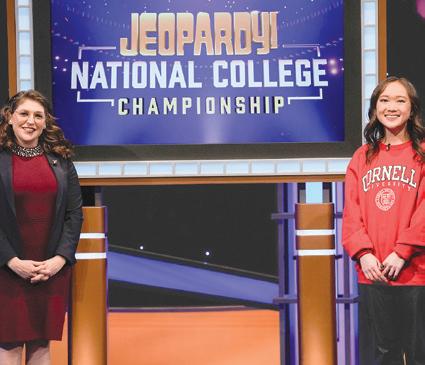
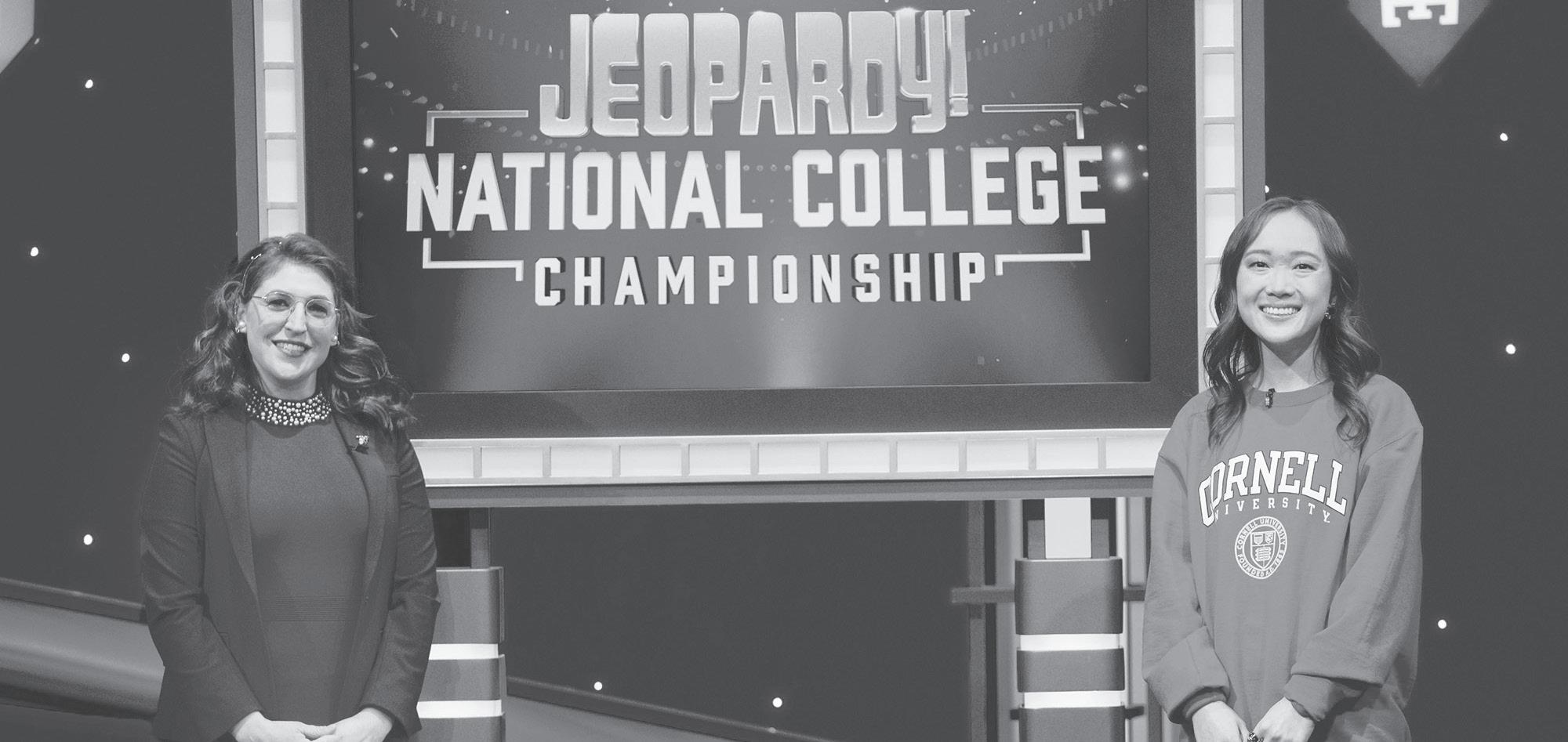
Let’s make it a true daily double! Cornellians Andres Quijano ’22 and Catherine Zhang ’22 competed in the annual Jeopardy! National College Championship on Feb. 8, answering questions pertaining to everything from kitchen appliances to global geography.
The series, currently hosted by Big Bang Theory actress Mayim Bialik, dubbed Quijano and Zhang among “36 of America’s sharpest undergrads.” Other colleges represented in the series include Caltech, Brown, Harvard, Yale and Stanford.
“The best way I can think of to describe the experience overall is just surreal,” Zhang said.
Zhang, who graduated from Cornell in December with a degree in computer science and sociology, grew up watching Jeopardy! with her family in her hometown Pennington, New Jersey.
Her childhood background combined with her love for reading and trivia made Zhang the perfect contestant when an online college Jeopardy! test was released in the fall of 2020. After submitting the assessment and undergoing a few rounds of Zoom interviews, Zhang was selected to represent Cornell.
“It’s always been a dream to be on the show — I just never thought it could actually happen,” Zhang said.
Hailing from San Juan, Puerto Rico, Quijano, a government major, almost missed out on his opportunity to join the show after taking the online test.
“Last summer I decided to check my junk inbox, and I stumbled on an invitation for a Zoom interview! At first, I thought it was a fake email, but upon further examination I realized that it was real,” Quijano said. “Throughout the entire process, I was incredibly excited and incredulous.”
Finding out about his appearance on the famed show in late October, Quijano began preparing by watching daily episodes and reruns of Jeopardy!, though noting that there is no “foolproof way” to practice given the show’s immeasurably wide range of topics.
When the day of the show arrived, both Cornellians expressed feeling a sense of nervousness — but also excitement –– as the taping began. When asked about the hardest part about being on the show, Zhang replied with two words: buzzer speed.
“Everyone that makes it on the show knows the majority of the answers on the board,” Zhang said, “so the real differentiator is often getting the timing of the buzzer exactly right.”
Upon graduation, Zhang plans to live in New York, working as a full-time product manager at Schmidt Futures, a tech nonprofit founded by the former Google CEO Eric Schmidt and his wife Wendy Schmidt.
Quijano plans on taking a gap year after graduation to explore his interest in politics and eventually attend law school. Now returning to a snowy campus to finish his final semester at Cornell, Quijano looks back at his experience on Jeopardy! fondly.
“Being on Jeopardy! was one of the most thrilling experiences I’ve ever had,” Quijano said. “I am forever grateful to have had the honor to participate in my favorite TV show.”
The Jeopardy! National College Championships, which air on ABC and stream on Hulu, will conclude Tuesday. The champion is awarded a $250,000 prize, the runner-up will take home $100,000 and the third-place winner will leave with $50,000.
Kayla Riggs can be reached at kriggs@cornellsun.com.
Second Circuit afrms previous decision
By JIWOOK JUNG Sun Staff Writer
In a Feb. 15 verdict, the Second Circuit affirmed a Jan. 19, 2021 district court decision to dismiss former University employee Denise Payne’s disability bias lawsuit against the University.
Payne was originally hired by Cornell in Nov. 2013 as an administrative assistant in the Office of Research, Integrity and Assurance. In June 2016, Payne was diagnosed with breast cancer and was terminated by the University in Jan. 2018.
In Jan. 2019, Payne decided to sue the University under four main complaints: subjecting her to disparate treatment, subjecting her to a hostile work environment, failing to accommodate her disability by refusing to provide her with reasonable accommodations and retaliating against her after she complained of disability discrimination.
despite Payne’s years of experience.
Both Payne and the University agreed with the court that between her start date on Sept. 19, 2016, and Jan. 12, 2017, Payne worked only seven days; she missed 69 out of a possible 76 workdays.
The court ultimately ruled that Payne’s lawsuit lacked sufficient merit, ruling that “Cornell had legitimate, nondiscriminatory reasons for its actions [to terminate Payne].”
The Judges wrote in their decision that Payne’s allegation lacked substantive merit and that Cornell did not use discriminatory practicies to terminate Payne.
“Cornell had legitimate, nondiscriminatory reasons for its actions.”
The Second Circuit
“Payne’s layoff was reviewed and approved at multiple administrative levels and the search committees who decided not to rehire Payne felt other candidates were better qualified,” the court wrote. “Payne failed to establish a genuine dispute of material fact as to whether Cornell retaliated against her for her protected activity.”
In her lawsuit, Payne detailed how she faced resistance from her supervisors when she requested accommodations for her disability. Payne claimed she felt forced to use her vacation days for the days she would miss work for her chemotherapy treatments.
Payne’s lawsuit also alleged that the University underpaid her because of her disabilities

According to Law 360, Stephen Bergstein, an attorney who represented Payne in this lawsuit, said that the Second Circuit’s decision was “very disappointing.” Bergstein also said that Payne will not be appealing this decision to the United States Supreme Court.
Jiwook Jung can be reached at jjung@cornellsun.com.
BRIAN LU ARTS STAFF
Finally, a fresh and original take on the classic and slightly stale zombie genre — is how I would describe the 2016 Korean film Train to Busan All of Us Are Dead, on the other hand, feels like a fanfiction piece created by a young adult writer dipping their toes in the zombie scene for the first time. Filled with awkward lines, ridiculous writing to further the plot and an incredibly out-of-place setup for season two, this show fails in every aspect where Train to Busan had surprised us six years ago. Despite its somewhat popular reception, it is undoubtedly just the latest addition to the list of lackluster Korean zombie shows.
The premise of the show is rather touching compared to most origins of a zombie virus: After his son, Lee Cheong-san, is repeatedly bullied to the brink of suicide, a genius scientist turned highschool teacher Lee Byeong-chan creates a virus from mutated mice hormones as a last-ditch attempt to end his son’s abuse. Predictably, the virus backfires, zombifying Cheongsan rather than saving him. Byeong-chan stealthily captures his son and quarantines him in their home while desperately trying to find a cure. Some time later, an unsuspecting student stumbles upon the mutated mice while cleaning the science
lab at Byeong-chan’s school and gets bitten in the process. Once again, Byeongchan is quick to capture the student, chaining her up in the storage room of the lab; this time, however, she escapes and ends up infecting the rest of Korea.
The Netflix show follows a group of trapped high schoolers from Byeong-chan’s school, with the main protagonists being Lee Cheongsan, Nam On-jo and Lee Su-hyeok. Together, they struggle to survive in the infested school, scrounging for food and water while waiting for help from the government.

All of Us Are Dead weaves the storylines of multiple characters well, maintaining the suspense that keeps thriller fans at the edge of their seats. Yet, what had seemed initially promising is hindered by a stereotypical, cringey teenage love triangle that cropped up at the worst of times, like a filler episode right at the crescendo of a story. Even worse — as if a young adult love triangle amidst zombies wasn’t bad enough — an unkillable villain is shoehorned in and given the blandest personality out of
all the characters. Small inconsistencies will also annoy viewers who enjoy continuity; some people turn into zombies very quickly, while others seem to take forever. Furthermore, as yet another source of agitation, zombies are supposed to be very fast in this show, but certain zombies move slowly for dramatic effect.
And while most zombie films and shows seem to express some sort of commentary on social issues or ethical dilemmas, All of Us Are Dead ends unceremoniously with no clear direction or message. Instead,
it dedicates its finale to a confusing and utterly nonsensical setup for a prospective season two, leaving viewers scratching their heads at an unexciting cliffhanger. It certainly does the job for a quick twelve-episode thrill, but with no nuance and depth to the story overall, All of Us Are Dead misses out on all the potential greatness that would otherwise place it at the top of the zombie apocalypse genre.
Brian Lu is a junior in the College of Arts and Sciences. He can be reached at blu@cornellsun.com.
God, grant me the serenity to accept the things I cannot change, the courage to change the things I can and the wisdom to know the difference.
Hello deadbeat readers of the world. I typically would never use the word wise to describe my behavior thus far, but I think I’m getting close with a specific issue. I’ve told myself so many times that I want to read more, only to glare at whichever tome sits on my nightstand — withering away, collecting dust with every moment — and I nearly shout out loud, “Don’t look at me like that, you jerk.”
Something tells me I’m not the only person my age with such a deeply toxic relationship with reading. Research shows that reading can lower stress levels and blood pressure, increase your empathetic instincts and all that good stuff. But that hasn’t made me pick up a book so far, so what’s the difference?
On top of it all, I’m an English major — and the worst kind. The kind that corrects your grammar, quotes Shakespeare and makes stupid jokes about Mr. Darcy. Most of my friends think that after a long day of toiling over critical theory, I curl up and say, “Ah, I’m going to re-read Ulysses for fun tonight.” Let’s not kid
ourselves. I am a big old phony, and a good one at that. In reality, I turn on The Sopranos until I drift into a deep, unliterary slumber.
In recent months, I think I’ve cracked it. I can actually read without it feeling like I have to
Elif Batuman), loathable and pretentious protagonists (like High Fidelity by Nick Hornby) or nosy characters (like Celine by Peter Heller) scratch a selfish itch. I can be somewhat self-aware when I set my mind to it.
of Gates Hall and pretend I fit in with all the Cornellians with Python homework and flashy Nikes.
3. Don’t you dare buy the books on Amazon! I really shouldn’t have to say more, but I always do. Sometimes the act

conduct some Pavlovian experiment on myself every time I open my book. In the spirit of dumb old Valentine’s Day, I will share some of my tips to fall back in love with reading.
1. Find a book that is a romanticized version of the life you’re actually living. For me, books about forlorn college students (such as The Idiot by
2. Bring your chosen book to your favorite spot on campus. In the middle of the day, when you’re waiting for notes from the random acquaintance you’ve coerced into solving your problem set, give yourself five minutes in your favorite study spot as a moment free from work. Let it be a reward! I like to sit on the second floor
of going to an independently owned bookstore is enough to get you excited about reading. There are so many in Ithaca, for used and new options.
4. Keep your book in your little hipster tote bag. Aside from the fact that you get to be the sexy person who pulls a book out of a tote bag in a public space, it’s an easy way to
fill your free time with reading. Waiting for a TCAT bus? Read. Waiting for the dude at Willard Straight to say, “Salutations!” to you before your mandatory surveillance test? Read. Waiting for your oat macchiato at Green Dragon? Read. Also, take me out to dinner while you’re at it.
5. Ask the funniest person you know for a recommendation. Sometimes the smartest person you know can’t give you anything you’ll actually look forward to reading. So ask someone who makes you truly laugh. Recently, friends have recommended Nobody Asked for This , The White Boy Shuffle and Catch-22
6. Read whatever you want. Let me say it again: read whatever you want. If you don’t want to read an Oxford Edition, don’t! There are going to be so many times you have to read something for an old tenured white guy (sorry, Cornell, love you). But, do it for you when you can. Bonus points if it’s slutty.
If you get anything from what I just wrote, kindly please stop hating yourself for not reading. Nobody thinks you’re illiterate, except maybe your mom, who has not seen you reading since you picked up Captain Underpants
Greta Gooding is a senior in the College of Arts and Sciences. She can be reached at ggooding@cornellsun.com.
Since 1880
139th Editorial Board
KATHRYN STAMM ’22
Editor in Chief
ANUSHYA ALANDUR ’23
Business Manager
CATHERINE ST. HILAIRE ’22
Associate Editor
PRANAV KENGERI ’24
Advertising Manager
ODEYA ROSENBAND ’22
Opinion Editor
JYOTHSNA BOLLEDULA ’24
News Editor
TAMARA KAMIS ’22
News Editor
CAMERON HAMIDI ’22
App Editor
KRISTEN D’SOUZA ’24
Design Editor
HANNAH ROSENBERG ’23
Photography Editor
OMSALAMA AYOUB ’22 Science Editor
PUJA OAK ’24 Layout Editor
ANNIE WU ’22
MIHIKA BADJATE ’23 Assistant News Editor
SERENA HUANG ’24 Assistant Business Editor
ANGELA BUNAY ’24
Assistant News Editor
JOHN COLIE ’23
Assistant Arts & Culture Editor
AMELIA CLUTE ’22
Assistant Dining Editor
MADELINE ROSENBERG ’23 Managing Editor
NAOMI KOH ’23
Web Editor ANIL OZA ’22
YUBIN HEO ’24 Assistant Web Editor
VEE CIPPERMAN ’23 News Editor
NOOREJEHAN UMAR ’23 News
PLOWE ’23
’23
VELANI ’22
PICHINI ’22
TYAGI ’22
MENDOZA ’24
Editor AMAYA ARANDA ’23
Editor SURITA BASU ’23
RIGGS ’24
LEYNSE ’23
NAGEL ’24
Layout Tifany Lin ’24 Jacqueline Woo ’24
Deskers Puja Oak ’24
Desker Pico Ross ’22
Cipperman ’23
Editor Surita Basu ’23
John Colie ’23 Katie Yao ’23
Editors Nihar Hegde ’24 Aditi Hukerikar ’23 News Editors Roman LaHaye ’23 Estee Yi ’24
Jiwook Jung ’25 Sports Editor Aaron Snyder ’23 Gabriella Pacitto ’24 Photography Editor Claire Li ’24 Production Editor Katrien de Waard ’24

Brenner Beard ‘24 (he/him) is a sophomore in the College of Arts and Sciences. He can be reached at brennerbeard@cornellsun.com. Agree to Disagree runs every other Friday this semester.
When I tell people back home that I go to Cornell, I tend to get a lot of groans. They are groans that encapsulate an outsider’s perspective of expensive private schools like ours. “Cornell” and “Ivy League” are terms that, in the public eye, are entrenched in privilege, wealth and selectivity.
As much as I’d like to say the public’s presumptions about our school are wrong, the University has a lot of issues working against it which we need to address. More specifically, to fight this perception of rampant elitism on campus, we have to start with the toxic culture of Cornell’s clubs.
The low acceptance rates and peer-to-peer competition of a selective admissions process don’t stop at Cornell’s gates. Whether it be for business clubs like Cornell Hedge Fund, political groups like Pi Lambda Sigma, club sports teams or any of the 1600+ student organizations registered with the University, the atmosphere of acceptance and rejection will follow you here until the day you graduate.
Such a diversity of interests are waiting at students’ fingertips, but coveted memberships are guarded by tiers of applications and interviews. Our University is one of the few colleges I’ve heard of where the phrase “getting into” applies to clubs. Joining a typical student organization can look like this: one to three coffee chats, a resume drop, a professional or technical interview, a social round interview and a final round interview. All these stages, just for the privilege of membership.
Not to mention, in many cases, this process is followed by weeks of “new member education” — which, if we’re being honest, is nothing more than sanctioned hazing.
In response to the elitist clubs of Cornell, I’d like to pose a question: how do these rigorous selection processes fit with our founding ideal of “Any person, Any study?” Cornell is a university supposedly made for everyone, but its extracurricular community prides itself on exclusion. At what point are we sacrificing mutual opportunity for selectivity?
To answer, I’d say that point is reached when a club cuts a majority of applicants. It’s when an organization such as Kappa Alpha Pi markets itself as “Cornell’s only selective pre-law fraternity.” It’s when clubs like the Cornell Political Union, as part of the application process, necessitate in-person competition against other applicants. All these signs point to the fact that
many of Cornell’s clubs place a premium on rejection rather than on gifting opportunities.
The executive boards of these organizations might protest that they implement these strictures to attain the best and the brightest for their membership rolls. They may argue that it’s good practice for the corporate futures that await many of us.
Yet, as much as they want to believe it, their clubs are not Apple, Tesla, Raytheon or any other profit-minded corporation hiring unknown people from an endless pool of candidates. They represent student-run organizations at an inclusivity-minded institution of higher learning. Call me crazy, but I think our clubs can afford to take a chance and accept more of their peers in the interest of sharing opportunities.
Give me one good reason why a business society can only offer a handful of new member spots regardless of how talented the pool of applicants is. Will the organization cease to function if it takes on more members? Most certainly not — if anything, they’d be better funded with more due-paying members. But these clubs aren’t afraid of that; they’re afraid of cheapening the experience of membership. That’s the crux of the issue.
Somewhere between Ezra Cornell setting his famous “Any person, Any study” standard for Cornell and this year’s ClubFest, we’ve lost our way. We’re a school where all students are supposed to have the opportunity to pursue their interests and ambitions, yet we’re letting ambition get the best of us. Student organizations — communities for students to develop their interests — function like simulated Fortune 500 companies.
They arbitrarily reject students and drag out the application process in order to inflate the value of club membership. As long as our clubs operate in this manner, by neglecting opportunity in favor of selectivity, our school is much worthier of groans than it is of praise.
The good news is that we can change. If you sit on the executive board of a student organization, maybe it’s time to take a look in the mirror and review your club’s application process.
It’s as simple as dropping down from four interview rounds to one, or even just accepting more people. Like the organizations themselves, the power to prioritize acceptance and buck the elitist stereotype is in the hands of students. In other words, the choice is ours.
Anuli Ononye (she/her) is a senior in the College of Arts and Sciences. She can be reached at aononye@cornellsun.com. Womansplaining runs every other Monday this semester.
Ijust started another dating show. Well, it technically isn’t a new one. Like most Cornell students at least according to my Twitter feed for the last few days I have started binging the new season of Netfix’s Love Is Blind. Don’t worry, there aren’t any spoilers ahead! I have a love-to-hate relationship with dating shows. I love them because they’re sappy, and I’m a sucker for a good rom-com hence my rom-com column from last year. It’s fun to laugh at awkward dates, point out the character faws with the “difcult” contestants, argue about who’s just there for fame, root for the underdog and place bets on who will win the season.
I’ve watched almost every dating show that you can imagine: Te Bachelor, Te Bachelorette, Married at First Sight, Too Hot to Handle and Love Island (my personal favorite!). Te shows place people in impossible — often impossibly perfect — situations and ask them to fnd love. And each series has an unbearable twist: you can’t see the person you choose until you’re engaged, no physical intimacy on the island, one person enters the challenge without a partner, 30+ women fght for one man!
Although fun to watch, these scenarios never really create couples that last — RIP my favorites Luke Trotman and Siannise Fudge (Love Island U.K. Season 6), who had the best fairytale romance. Tese shows are simple entertainment, and the joy comes in criticizing other people’s lives. It’s knowing that you would never make that mistake, rooting for the character that you identify with (for me always the Black woman!), wishing that you could be as bold or as pretty as the people on your screen and romanticizing a love life that doesn’t exist in the real world.
And as someone who loves a good dating show, I’ve never watched one that isn’t a little bit problematic. Tey’re flled with microaggressions that I see every day in my own and my friends’ dating lives, scratching the surface of the messiness that is dating in the 21st century. Will that interracial couple actually work out amidst societal and familial pressures? How are they going to handle a long distance relationship after the show? How will they handle their socioeconomic disparities? Everyone who watches dating shows knows these microaggressions exist and we (I say we because I also do it!) have conditioned ourselves to pretend they don’t exist. When my mom and I watched the frst season of Love Is Blind at the start of the pandemic, we watched it from the TV in our gym
because my dad was so frustrated every time we turned it on meanwhile, we couldn’t get enough of it. We are watching this season from opposite sides of the country and calling constantly to debrief. Watching dating shows is a communal experience. You watch them with your family, your friends, your weekly viewing party, your Twitter and Instagram followers. Tese shows create a cult-like community culture in the same way that football games and Euphoria do.
Te frst dating show I really watched was Te Bachelor with my good friends from my high school youth group the irony! Every Monday night for weeks, 10 high school church friends gathered in one of our living rooms to watch Te Bachelor, Te Bachelorette or Bachelor in Paradise Tis summer I got back into Te Bachelor, living in an all-women’s hostel Tompson-Markward Hall during my summer internship in D.C. Every Monday night after the young women (each about 18 to 25 years old) came home from long days working on the hill, we crowded around the living room’s projector to watch the week’s latest episode. With both groups, I spent more time talking and laughing than actually listening to what was happening in the contestant’s lives. Te pleasure was in the experience good snacks, a run down of the episode with my friends after, a chance to catch up once a week, the opportunity to fll my head with near-nothings. Te appeal wasn’t necessarily the show itself.
So, if you haven’t watched a dating show yet, start now. And don’t do it alone. You might hate all of the contestants, think the show is incredibly unrealistic and cringe at the nudity and vulgar language. But there is something about watching them with your friends and experiencing dating culture as a community, one that is distinct to our generation.

Roei Dery ’23 (he/him) is a junior in the College of Arts and Sciences. He can be reached at rdery@ cornellsun.com. His column, Te Dery Bar, runs every other Monday this semester.
My commitment to the gym on campus has remained more or less the same across semesters. Over every break, I build a gym routine for the next semester, equipped with the hundred-plus dollar annual Cornell Fitness Center membership. Within two weeks, I’ll encourage my friends to join me at Teagle Hall.
As I sip my protein shake, I’ll respond “college is temporary, gym gains are forever” when they tell me they’re too busy with work. Most often, these “gym gains” only last another week; I hit peak fitness around week three, and it all goes downhill from there. At best, I return to the gym sporadically for the rest of the semester, carving time in between prelim waves. Otherwise, I don’t see the inside of a gym until the following break, when the cycle repeats.
A routine gym schedule and healthy
eating during those frst three weeks of the semester make schoolwork much more bearable and keep stress at a low. Not coincidentally, the harshest, most stressful part of the semester comes when the gym has been long-removed from my day-to-day.
Tough building another gym on North campus is helpful, Cornell leaves its students to their devices in the fght to make time for the gym. Te fact that Cornell charges for ftness centers communicates that they believe exercise is extra, not necessary, to combat mental health issues and support sustainable student lifestyles on campus.
Te Cornell Fitness Center membership fee has long stood as a monetary barrier for students to go to the gym at
The Cornell Fitness Center membership fee has long stood as a monetary barrier for students to go to the gym at Cornell.
Cornell. As others have voiced before me, campus gyms should be free to students here on campus, as they are at many other institutions. But I think this is only part of the solution. Equally important is to remove the notion that schoolwork is a reasonable excuse to avoid exercise altogether.
Tey say that if you can’t beat them, join them: So let’s integrate the gym into school. Or perhaps, school into the gym. Cornell should ofer academic credit for students who regularly exercise at campus ftness facilities throughout the semester.
Just one single-credit, S/U class would sufce – one that could be dropped any time. It doesn’t even have to count towards academic standing. O f ering a single academic credit is a tangible reward for gym-goers — an extra “gold star” on their transcript.
Tis is far from suggesting that academic credit should become a primary motivator for ftness. Rather, it’s just a small catalyst. It provides students who otherwise do not exercise due to school with a Catch-22: Tere is no excuse when working out becomes a version of schoolwork.
Tis ftness credit ofering should supplement, not replace, the current Physical Education course requirements at Cornell. Tough a P.E. course in weightlifting is still a suitable option for those seeking to pay for formal training, this alternative would ofer an opportunity to gain credit without having to commit to hours that may confict with student schedules.
Formal P.E. classes may also be intimidating to new gym-goers. Providing room for independent workouts and alternate ways to meet gym buddies through socials may further ease any jitters. Naturally, these reforms would require additional gym facilities and more college student-friendly hours. I shouldn’t have to walk from my room in Collegetown to Morrison Hall in sub-freezing temperatures if I want to work out past 7 p.m.
Perhaps the largest obstacle to such
a program is the difficulty determining a student’s performance at the gym as “satisfactory” over the course
Just one single credit, S/U class would suffice – one that could be dropped any time. It doesn’t even have to count towards academic standing.
of a semester. But let’s not bore ourselves with the practicalities of such an endeavor for now. Solutions are available, from implementing a system where students “scan into” the equipment they use to setting workout requirements for students on a case-bycase basis.
The bottom line is that if we concern ourselves too much with the possibility that some students will bumble about the facilities or believe that the occasional engineer will bring their problem set to the gym, we risk missing the essence of the initiative altogether. As long as we regularly exercise in some shape or form, even if only to escape the four walls of our rooms, we will have already made strides well worth a harmless credit.

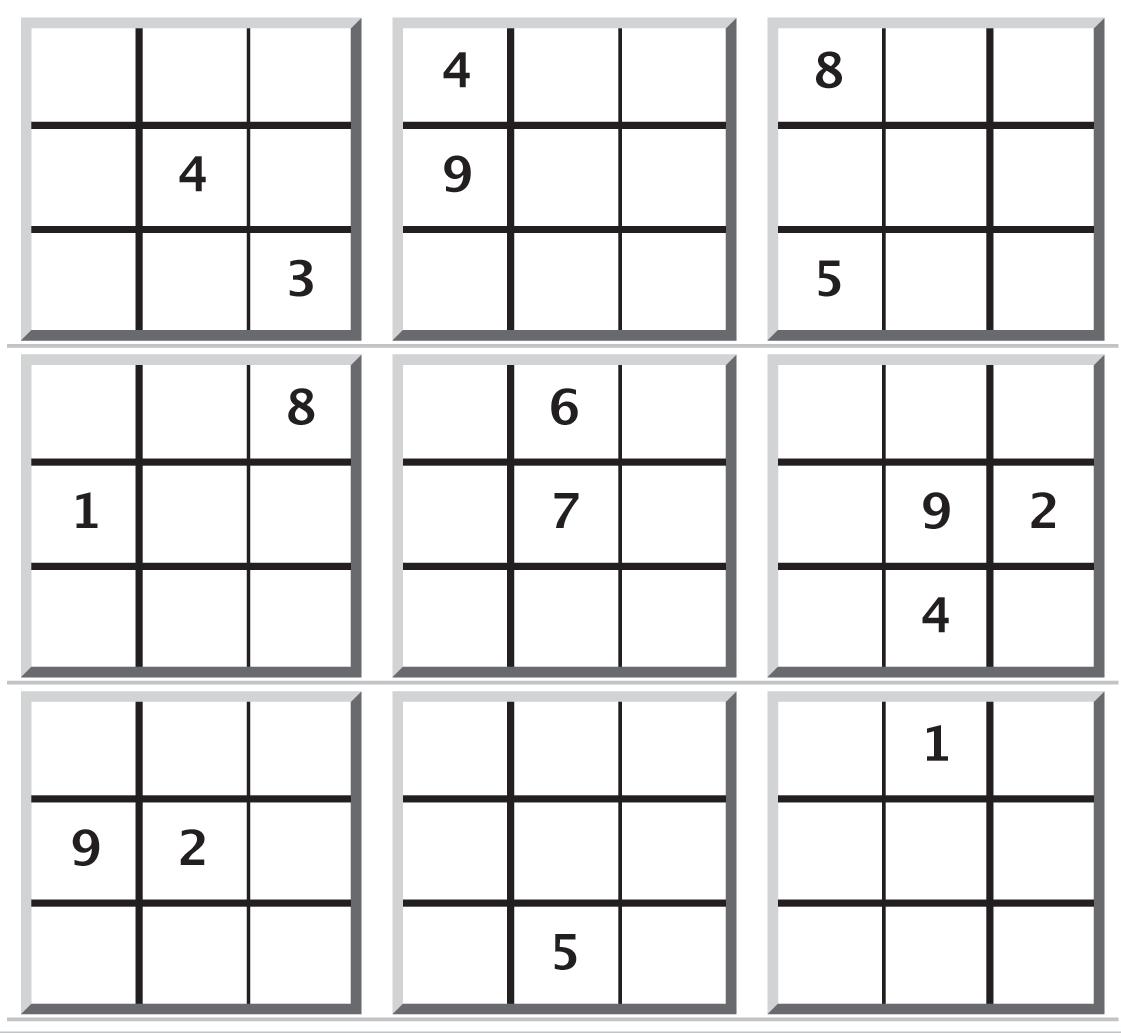
Fill in the empty cells, one number in each, so that each column, row, and region contains the numbers 1-9 exactly once. Each number in the solution therefore occurs only once in each of the three “directions,” hence the “single numbers” implied by the puzzle’s name. (Rules from wikipedia.org/wiki/ Sudoku)

By AARON SNYDER Sun Assistant Sports Editor
With a critical three points on the line and an emotional Senior Night ceremony looming, men’s hockey hosted Clarkson on Saturday. Entering the night just three points clear of Colgate and RPI for the final bye in the ECAC playoffs, the team’s emotions heading into senior night were overshadowed by the importance of the game.
“There’s obviously a bunch of excitement going into senior night, but we’re still focused on the fact that these games are essential,” senior defenseman Cody Haiskanen said.
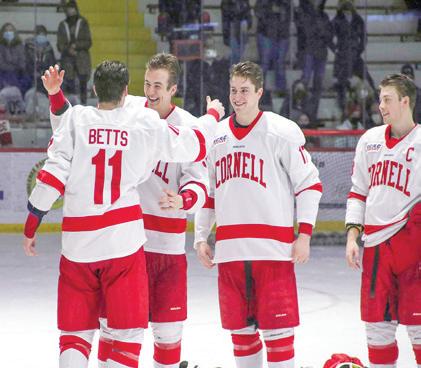
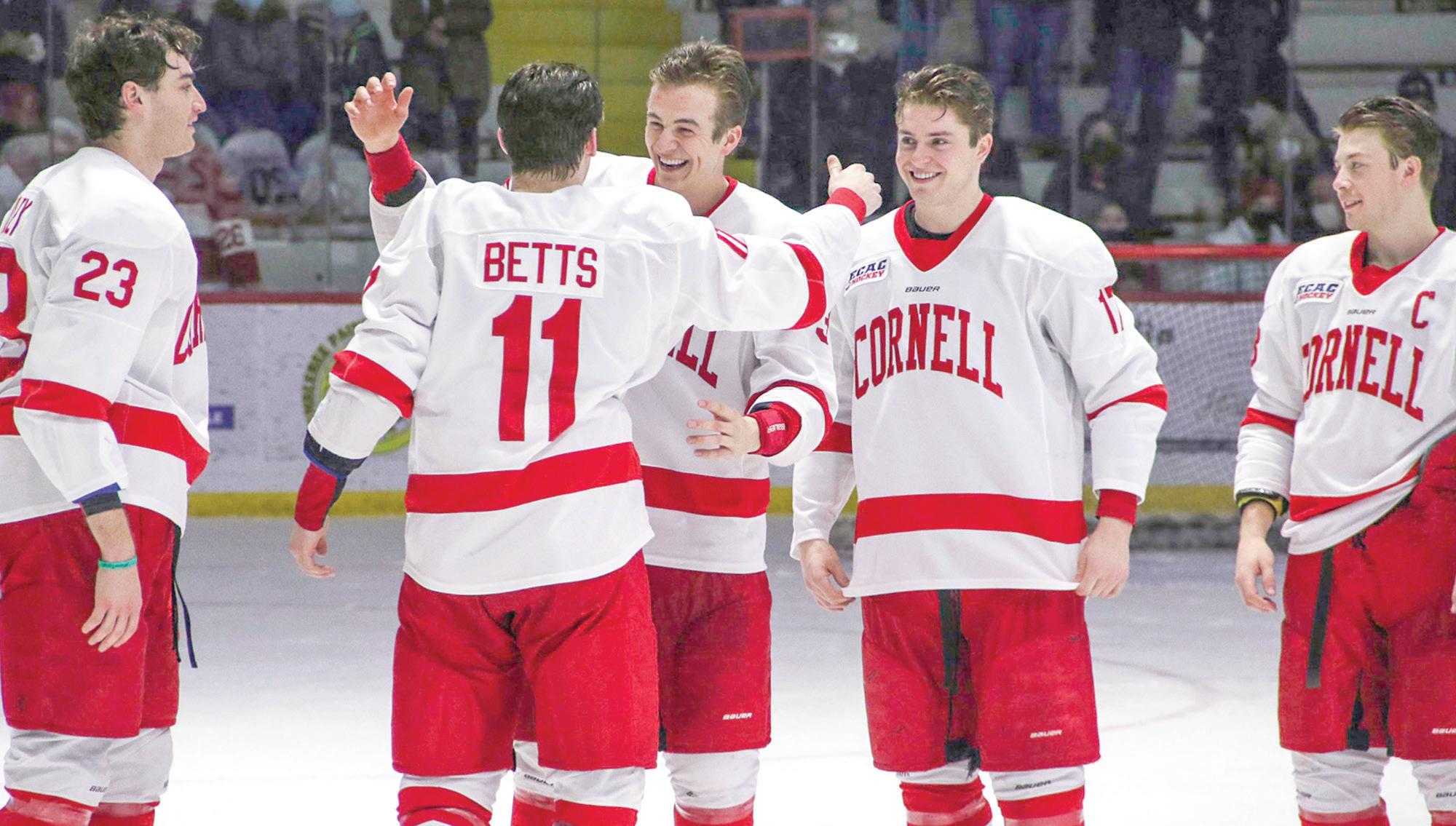
Two power play goals and two goals from senior Kyle Betts helped Cornell come away with an impressive 6-2 victory over Clarkson on Senior Night.
After a disappointing overtime loss on Friday night, the Red found itself in dire need of an energy boost and a win. Senior Night provided that boost, as the coaching staff elected to start three seniors who have not been everyday players, and the team seemed to rally around them.
Instead of going with the best lineup on paper, the coaching staff elected to start senior forwards Zach Bramwell and Liam Motley as well as senior goaltender Nate McDonald, all of whom have been in and out of the lineup this season. That decision, and the emotional circumstances of the night, gave Cornell the spark it needed.
“We want to win [Saturday] night,” Associate Head Coach Ben Syer said on Friday night. “We’ll be looking at all the possibilities here that give us the best chance. Obviously Senior Night’s a special night.”
starting on Senior Night. “Anytime I get the chance to put on the Cornell jersey … I just want to help the team win, and to get the nod on Senior Night with the rest of my class meant a lot to me.”
The second period got off to a slow start, with the Golden Knights taking the only shot of the first half of the period. Both teams suddenly came to life after the media timeout. Cornell scored its second power play goal of the night with seven and half minutes remaining after Psenicka set junior forward Matt Stienburg up to give Cornell a 2-0 lead.
Just over two minutes later, the Red extended its lead when junior forward Ben Berard redirected junior defenseman Sam Malinksi’s shot from the point into the net to put Cornell ahead, 3-0.
Penalties on Cornell gave the Golden Knights an opportunity to eat into the Red’s lead. With three minutes left, Berard was sent to the box for boarding. 54 seconds later, Haiskanen joined him, setting Clarkson up with a 5-on-3.
The Golden Knights quickly converted on the 5-on-3,
meaning that the Raiders remain three points back of the Red heading into the last weekend of the season.
Cornell will hope to build momentum off the revitalizing, feel-good win. After the game and the emotional Senior Night ceremony, there was a sense in the locker room that the team got it done for the seniors and that the night could propel the group into the last weekend of the season.
“That’s exactly what you’re going for. I’m proud of our group for battling back like they did and I can’t thank them enough for getting it done for us,” Haiskanen said. “We have to build off [tonight], it has to launch us into next week … The message in the locker room is ‘we ain’t done yet.’”
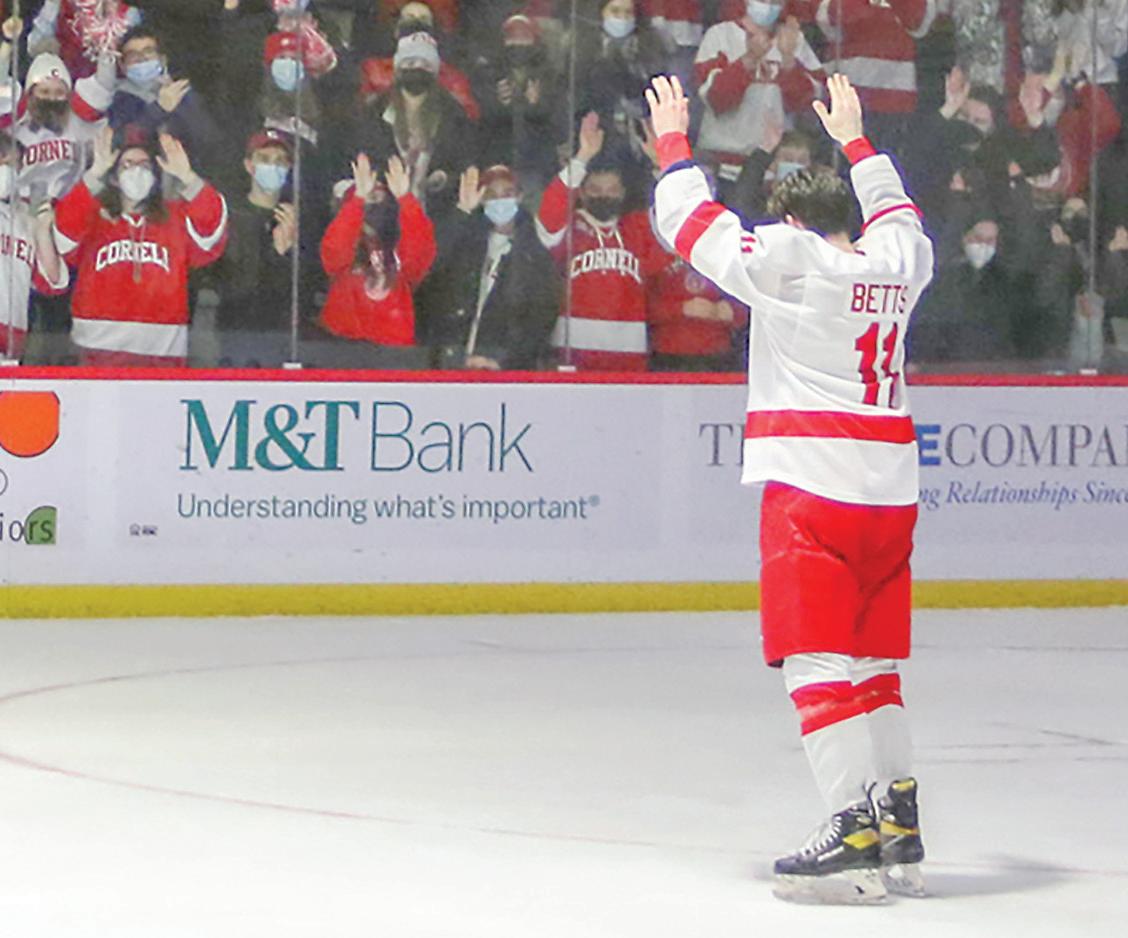
After the game, the team honored fifth-years Locke, Betts and Haiskanen as well as Bramwell, Motley and McDonald. Adding to the emotions of the night was Head Coach Mike Schafer ’86’s appearance on the ice for the postgame ceremony. Schafer has missed the last month and a half after contracting COVID in early January and receiving a cardiac stent.
Cornell got off to a strong start in front of a packed Lynah. The Red struggled on the power play on Friday night, but it converted on its first try on Saturday. With 10:51 left in the first, senior forward Liam Motley was tripped up entering the neutral zone, sending Cornell on the power play.
The Red scored just over a minute into the power play when freshman forward Ondrej Psenicka tipped a pass from senior forward Brenden Locke in from the crease. Psenicka’s 11th of the season gave Cornell a 1-0 lead 10 minutes into the game.
Two minutes after his tally, Psenicka was sent to the box for tripping. Cornell killed the penalty behind two saves from McDonald, who got off to a hot start. McDonald made a few nice saves down the stretch of the period to send Cornell to the locker room with a 1-0 lead.
“It meant the world to me,” McDonald said about
beating McDonald off a one-timer from the faceoff circle to get on the board. The goal freed Berard from the box, but Clarkson scored again on its 5-on-4 advantage, cutting Cornell’s lead to 3-2 with a minute left in the period.
“The same kind of thing happened in my first college game against Alaska, two quick goals in the second period,” McDonald said. “You just have to worry about the next shift. You can’t dwell on the previous shift because you’re going to get another shot, and that’s the one that matters most.”
Neither team scored in the first half of a back-and-forth third period, but it looked like Cornell took a two goal lead with just over nine minutes left. Clarkson’s Ethan Haider got his pad on a Cornell shot, but freshman forward Sullivan Mack appeared to push the puck in. The goal, which would’ve been Mack’s first, was waved off after a review.
Just over a minute later, Cornell scored for real. On his Senior Night, senior forward Kyle Betts scored his fourth goal in three games to give Cornell a 4-2 lead with eight minutes left in the third.
Clarkson pulled its goalie after a Cornell penalty with just over three minutes left, giving the Golden Knights a 6-on4. The last time the two teams met, McDonald was in net when Clarkson scored three extra-attacker goals to complete a miraculous comeback.
“You try not to think about it, but it might’ve been in the back of my head,” McDonald said. “It was kind of a redemption moment for me because that game really stuck with me for a while. To be put in the same scenario with the same team and stick it to them this time – it was a big moment.”
Unlike that night in Potsdam, Cornell iced the game behind two empty net goals. First, Psenicka’s shot from down the ice slid in with two minutes left. With 20 seconds left, Betts added another for good measure to close things out.
The goal secured a critical three points for Cornell on an emotional night. Colgate also won on Saturday night,


“Mentally, it’s been the hardest thing I’ve ever done in my life,” Schafer said. “Being away from the team for the last seven weeks – it’s difficult, because you want to help. You brought these kids here, and you want to be in the trenches with them.”
Schafer expressed doubts about his ability to get back behind the bench before the end of this season.
“Physically, I just can’t do it right now,” Schafer said. “I don’t know if I’ll be able to by the end of the year. Time’s kind of running out for me, but it was nice to be at the rink tonight.”
Schafer is still on the mend, but he went out of his way to be at Senior Night.
“My health, just like the athletes, has to be the first priority. You can’t be putting yourself at risk as an athlete and I have to follow that same example and not be stupid,” Schafer said. “It was probably a little stupid [coming] tonight, but it was well worth it.”
The timing of Schafer’s absence has conspicuously aligned with the team’s recent struggles. The team is 5-5-3 since Schafer left. Schafer was unsure of the impact his absence has had on the team, but he praised his assistant coaches for the job they’ve done.
“You never know until we really dig into it, but [Syer], Sean [Flanagan] and Shane [Talarico] have done a tremendous job prepping these guys and preparing them and the details are right on,” he said.
This was Schafer’s fifth year coaching Locke, Betts and Haiskanen.
“I was happy to be here for those guys. To see them sacrifice and come back for a fifth year, I was proud of them,” Schafer said. “Athletics teaches you that you’ve got to go all in because you never know what the final result is. Those guys did that, and I’m very, very grateful that they did.”
Schafer also sung the praises of McDonald, Bramwell and Motley.
“I think guys like [McDonald, Bramwell and Motley], they’ve been kind of in and out of the lineup over the years. It goes to show you how much of an impact those kids could have on our program,” Schafer said. “They’re just tremendous young men. Most guys in today’s age would just quit, or they’d transfer. These guys are a huge part of our program, and their teammates really appreciate them. You see the bond that they have in the locker room.”
McDonald teared up when discussing that bond, especially with Bramwell and Motley.
“They’re my brothers for life,” he said. “I’ve gone through everything with them, and they mean the world to me. I’m just really thankful for them.”