The Corne¬ Daily Sun


|
and faculty received a deluge of suspicious emails this

|
and faculty received a deluge of suspicious emails this
By ROCHELLE LI Sun Staff Writer
At first, the email appeared to be a reply to previous emails — opening the email revealed a blue box with instructions to “display trusted message.”
However, unsuspecting Cornellians who opened the email quickly found out that the email was not what it seemed.
In fact, the email was part of a University-wide phishing scheme that spread over a single weekend, affecting Cornell staff, faculty and students alike.
For some users, clicking on the link once was enough to compromise their account. For others, a fake login website appeared after opening the link, asking users to input their NetID and password.
Once opened, the phishing program then massemailed contacts that the compromised account had previously communicated with. The subject line changed with each message, cleverly disguised as a response to a previous email received by the user.
Yoorie Chang ’20 was one of the many students deceived by the email. Chang had received the initial email Sunday morning, but her account only began sending out the malicious emails that afternoon. Shortly afterwards, friends and professors who received emails from Chang’s account reached out to her in confusion.
“I was incredibly embarrassed. I had no idea what was going on,” Chang told The Sun. “My defenses were down. I didn’t even suspect it was a scam email.”
When Chang first saw the email, she assumed the request for her NetID and password was a security measure implemented by Cornell.
Sarah Kimball ’21 was suspicious of the fake email, but did not realize that simply clicking the link could allow the program to hack her account. Kimball first received these compromised emails Saturday, but only realized her account was hacked when she received automated out-of-office responses from some of the people the program emailed.
“I kept waiting throughout Saturday and Sunday to receive an email from Cornell IT, just regarding the hacking and warning us not to click on any emails,” Kimball told The Sun.
On Monday, Cornell Information Technologies


By NICHOLAS BOGEL-BURROUGHS Sun City Editor
A federal judge on Tuesday sentenced former Cornell student Maximilien R. Reynolds ’19 to two years in prison, concluding a case that began almost a year ago when a tip from a Walmart employee led to FBI agents busting through Reynolds’ Collegetown door.
The sentence followed Reynolds’ guilty plea in November, when he admitted that he had paid someone to
purchase a rifle for him and had illegally possessed the rifle, as well as a silencer and makeshift bomb. Reynolds, 21, could be released before December because he has already been imprisoned for about 11 months and can earn a reduction in his sentence for good behavior, his lawyer said. The raid of Reynolds’ apartment on Dryden Road in March 2018 uncovered a cache of weapons and protective gear, including the AR-15 rifle, 300 rounds
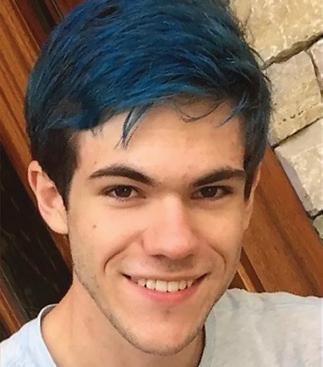
of ammunition, knives, a bulletproof vest, a gas mask, a flare gun, a hack saw and more. As part of the plea deal, Reynolds also admitted to owning a handgun that police divers found at the bottom of the Cayuga Inlet about a month after the raid.
Ithaca Police Chief Pete Tyler said after the discovery of weapons in Reynolds’ apartment that, “Collectively, all

By EMMA CORDOVER Sun Staff Writer
Pasta, potatoes, eggs and bread are just a few of the items that Wegmans chose to discount from Feb. 16 to March 2 in response to a shortage in national food stamp funding and lingering food insecurity after the government shutdown.
Among the discounted items at the chain, which has a location in Ithaca, include Wegmans brand iceberg lettuce, skinless chicken breasts, frozen vegetables and ready-to-serve soup.
Compared to alternatives like GreenStar Food Co-op — which is selling pasta for $1.40 more, eggs for 57 cents more, and pasta sauce for $2.20 more — Wegmans is currently a cheaper option.
During the longest gov-
ernment shutdown in national history, the Trump administration mandated states disperse food stamps intended for February by Jan. 20 to aid Supplemental Nutrition Assistance Program beneficiaries. New York State released SNAP funds by Jan. 17. Because food stamps were distributed several weeks ahead of schedule, there was concern over what would happen in February. The Center on Budget and Policy Priorities stated on its website that if states did not move up food stamp distribution for upcoming months, the “risk of a long period between SNAP benefits is a concern.”
The chairman of the grocery giant, Danny Wegman, addressed these con-

Operation Car Wash: Biggest Corruption Scandal in Latin America 12:15 - 1:15 p.m., G90 Myron Hall
Making Religious Peace: A Historical Perspective 12:15 - 1:30 p.m., G08 Uris Hall
An Energy Plan the Earth Can Live With 12:20 - 1:10 p.m., 165 Olin Hall
Midday Music at Lincoln 12:30 - 1:15 p.m., 101 Lincoln Hall
Jane Goodall Institute Videographers and Photographers Lecture on Chimpanzee 1:25 - 3:35 p.m., 125 Riley-Robb Hall
Our Costly Obsession: The Problem of Plastic Waste and What You Can Do to Help 1:30 - 2:30 p.m., Lecture Hall 5, College of Veterinary Medicine
Synthesis and Transformation of Inorganic Clusters 4 - 5 p.m., B11 Kimball Hall
Fears and Conflict Over Islamic Human Rights: A Clash of Cultures or a Clash with a Construct? 4:30 - 6 p.m., 404 Morrill Hall
Geeks Who Drink Pub Quiz 7 - 9 p.m., Moakley House

Garden Walk: Spruce Up Your Conifer Knowledge Noon - 1 p.m., Brian C. Nevin Welcome Center
Pseudoscience, Public Perception of Animals in Research Noon - 1 p.m., Classroom 7, College of Veterinary Medicine
Ironing Out the Issues: Elucidating Iron Homeostasis Regulatory Processes in Plants 12:20 p.m., 404 Plant Science Building

Display Advertising Deadlines: Thursday, February 21 at 3 p.m. for the Wednesday, February 27 issue and the Thursday, February 28 issue.
Classified Deadline: Thursday, February 21 at 2:30 p.m. for the Wednesday, February 27 issue.
The Sun’s Business Office will close at 5 p.m. on Thursday, February 21, and reopen Wednesday, February 27 at 9 a.m.
Corne¬ Daily Sun 139 W. State Street • Ithaca, NY 1485 0• 6 07-273-36 06
Tobias Armborst: of Blots, Blocs, Sheds and Props 12:20 p.m., Abby and Howard Milstein Auditorium
Rethinking Glyphosate: BEE Soil and Water Seminar 2:30 - 3:20 p.m., B15 Riley-Robb Hall
The Effects of Reference Price and Reference Price Uncertainty on Consumer Food Choice Behavior 2:30 - 4 p.m., 401 Warren Hall
A Unique Eunuch Document Of the Late Qianlong Reign 3:30 - 5:30 p.m., G08 Uris Hall


Having served as mayor of Ithaca since 2012, Svante Myrick is considering a run for a thirdterm re-election. Myrick has yet to officially declare candidacy. Instead, he posted on his social media pages, asking if Ithacans would support his running. In these posts, Myrick included his accomplishments while in office, such as rebuilding the Commons. The mayor told the Ithaca Times that he preferred the personal nature of mayorship, rather than larger scale positions such as U.S. Congress.
Ithaca Mayor Svante Myrick ‘09 “Gauging”
Re-election Run
Kim Nayyer, who spent the past four years as the Associate University Librarian at the University of Victoria in British Columbia, will join the Cornell community starting this May. Nayyer will serve as the Edward Cornell Law Librarian and associate dean for library services. In her current position, Nayyer heads the law library and teaches courses in legal research and writing. As director, Nayyer will be responsible for similar duties. Among the position’s responsibilities, the director manages operations and collaborates with
In its first 9-0 decision, the U.S. Supreme Court decided that the Eighth Amendment that bars “excessive fines” also limits the federal government’s ability to confiscate private property. This process, known as civil forfeiture, allows police to seize people’s property without first charging them for wrongdoing. In the case heard by the court, police took a small-time drug offender’s $42,000 car. Police claimed the car was used in drug dealing. Ruth Bader Ginsburg ’54, who wrote the majority opinion, wrote that excessive fines can be used “to retaliate against or chill the speech of political enemies.” This ruling will not stop all civil forfeitures. Rather, the ruling gives those who lost property the ability to fight back in court and argue that the forfeiture was excessive.

By MARYAM ZAFAR Sun Staff Writer
Two separate robberies plagued Tompkins County in the last week, one at a Tops gas station on Saturday and one at the Tompkins Trust Company on Wednesday. Both are located on Triphammer Road.
Two individuals were involved in the gas station robbery, police said, and one suspect was apprehended Wednesday and remains in custody. Police arrested a suspect for the Tompkins Trust robbery less than one hour after the incident.
On Tuesday, the Tompkins County Sherif’s Department posted surveillance video from the robbery on Facebook, soliciting help from the community to fnd the two individuals associated with Saturday’s armed robbery at the Tops Triphammer Road gas station.
Two hooded individuals entered the station’s vestibule on Saturday night, and one wielded a gun. Te two left the convenience store with cash, authorities said.
Te Sherif’s Department ap-
prehended one suspect Wednesday morning, but said they would not release the suspect’s name on account of age.
“I would like to applaud the hard work performed by our investigators on this case,” Sherif Derek Osborne said. One individual remains at large.
On Wednesday morning, the Sherif’s department responded to a reported bank robbery at Tompkins Trust Company in the Town of Lansing. Cash was stolen, and Osborne reported that the suspect — Maurice Marshall, 48 — was apprehended within an hour, “thanks to the prompt and coordinated response of our deputies and law enforcement partners.”
Marshall did not display a weapon, according to the police. Te Lansing man has been charged with second-degree robbery, a felony charge. Marshall’s arraignment is pending.
According to the police statement, the two incidents were not related.
Maryam Zafar can be reached at mzafar@cornellsun.com.
By SARAH SKINNER Assistant News Editor
How does society cope with growing exclusionary tendencies, if these tendencies have been present all along?
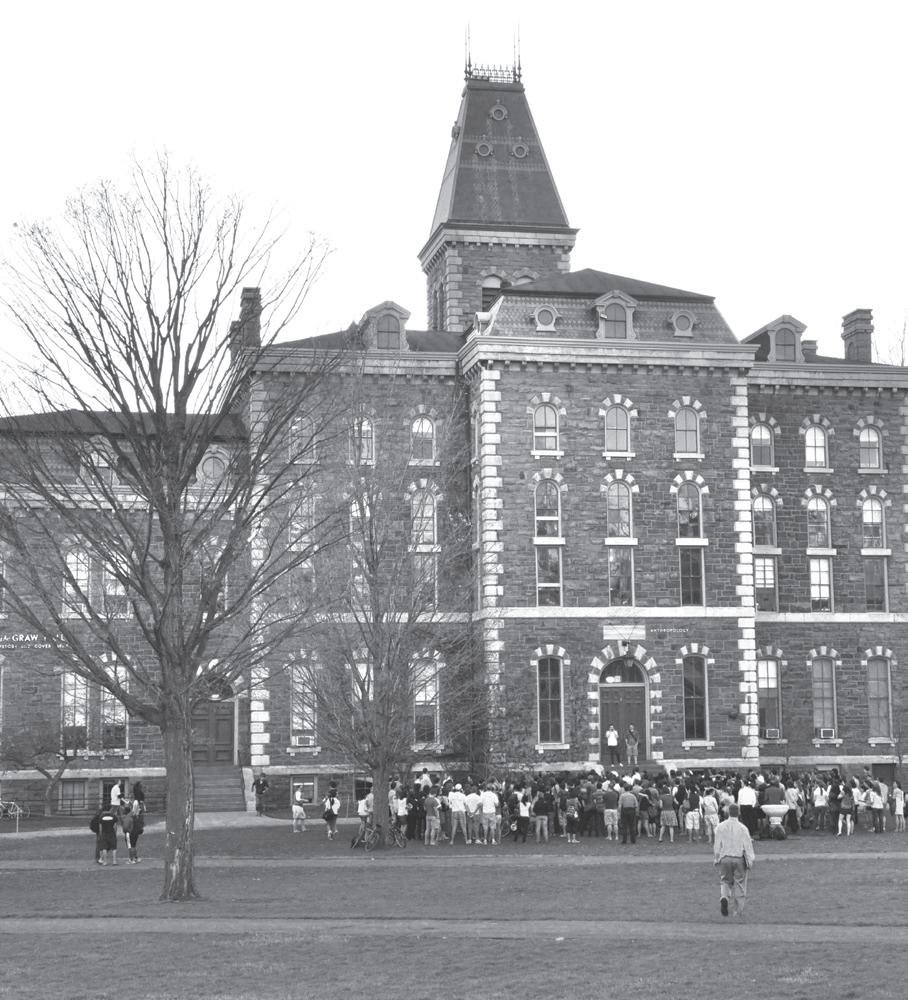
Tis was a question posed by Prof. Dorian Bell, literature and Jewish studies, University of California, Santa Cruz, to an auditorium in the A.D. White House on Wednesday night, during a lecture that examined the rise of viral populism and what it has in store for America and beyond.
“White racial resentment is changing what you think we know about racism,” Bell said, describing his forthcoming book Unfnished Business: Anti-Semitism and the Long Age of Empire Bell’s work looks at how racism, Anti-Semitism and Islamophobia coincide and difer in the modern age. He argues that a signifcant force behind growing trends of the two biases is that of capitalism, and the perceived threat to upper classes of an “other.”
By JOHNATHAN STIMPSON Sun Staff Writer
A team of Cornell researchers is collecting “thousands of stories of resistance” in the form of artifacts to shed light on part of America’s troubled past.
Te project, entitled “Freedom on the Move,” aims to compile by digitizing and transcribing “runaway ads” that were once widely published in newspapers by enslavers looking to recapture fugitive slaves, according to Prof. Edward Baptist, history, who helped to found the project in 2013.
“Te ads show an entire population demobilized,” Baptist told Te Sun. “But you also see the stories of people trying to get away. It’s quite inspiring, actually.”
Taken collectively, they amount to “incredibly unique information” — which, up to this point, has never existed in the form of a searchable database — that could be of signifcant value to genealogists, historians and academics, the project’s manager, Elena Golobordko, said.
Te advertisements’ ubiquity at the time — over 200,000 in total are thought to have been published, according to Baptist — combined with their strikingly detailed descriptions led researchers to conclude that forming a comprehensive database could ofer an unprecedented portal into the lives of American slaves.
Tey show “great resistance to slavery,” but at the same time, “do not understate the violence or oppression,” Baptist said.
As the database continues to grow, “Freedom on the Move” aims to collaborate with museums, libraries, historical organizations and schools to grow exposure to America’s century-long experience with slavery and the once untold stories of the thousands of victims who managed to, at least temporarily, escape it.
said. “Capitalists always encourage some to secure their relative privilege against perceived threats arriving from further down the socioeconomic ladder.”
Tese “threats” include people of lower income but most especially minority groups, Bell said.
“Industrialization turns those whose lives don’t have roots against ever more uprooted immigrants arriving from afar,” Bell said. “Any number of strangers, blacks, Latinos, the Irish, have played the ‘threatening role,’ crystallizing anxieties about downward mobility according to shifting local circumstances.”
Bell cautioned against these biases, characterizing them as a tactic that certain classes employ to hold onto power.
People turn towards racism and xenophobia, Bell said, because of the economic trends of recent years and fear of losing money or status. However, he said, decentralization of economic power from the West is happening “ir-
Te motivation for archiving fugitive ads was simple, according to software engineer Brandon Kowalski.
“Tere’s simply no other documents that exist for these individuals,” Kowalski said. “Due to the nature of people trying to fnd them, they are being very descriptive on their physical appearance, the nature of who they were.”
Enslavers looking to maximize chances of reclaiming lost slaves were incentivized to be as detailed as possible in their newspaper bulletins. Te ads published extensive information on the fugitives’ speech, birthplaces, personality, family members, clothing and background, according to Baptist.
Golobordodko noted that the researchers were “so enthralled with the possibilities” of the project that they decided to develop the project into something far more sophisticated than “just an excel spreadsheet” — instead, opting to create an open-source, interactive database that would allow online users to play the role of digital historian.
Te project’s stafers frst select the ads from a wide variety of sources, including libraries, submissions and other databases. After the documents are received, they are converted to a consistent format, uploaded into the repository and stripped of their metadata, Kowalski said.
Li ’21
— Compiled by Rochelle
“What’s going here distresses both for its familiarity and its novelty,” Bell
no point in sending out a mass email because then people think that’s spam too,” Mongan told The Sun.
posted a short warning on its “phish bowl” website page, attaching a screenshot of an example email. However, Cornell IT has not reached out to Cornellians about the hack.
In an email to students Monday afternoon about the scam emails, Joel Malina, vice president for university relations, asked Cornell students, staff and faculty to “delete the message and don’t click the link.” He also encouraged people to use twostep login to provide additional security beyond the baseline measures.
Cornell currently requires twostep login as a security measure to access some Cornell platforms, including Student Central, Faculty Central and Workday, according to Sean Mongan, IT service desk consultant. The program does not, however, cover email accounts, Google Drive, Canvas or Blackboard.
Cornell IT attempts to block fake emails when detected, according to Malina. But because of the speed that emails are sent, people may receive phishing emails before they’re caught.
After examining some of the fake emails, Mongan noticed that many of the malicious links no longer worked. One of the links led to a Cornell page that told users initial link was malicious; another link failed to load. Since the links change from email to email, it can be hard for Cornell IT Security to successfully cut the links, according to Mongan.
“We’ve had these before. There’s
“You can’t win.”
Cornell IT Security — which is independent of the IT service desk — directly handles digital security issues. The office refused The Sun’s several requests for comment. The University also did not respond to requests for more information besides what was said in Malina’s statement.
Malicious emails do not appear in the sent box of compromised accounts, so hacked users are unable to track the number of fake emails sent using their name and address.
The hack was not limited to just Cornell accounts: Kimball’s account, for instance, sent fake emails to internships she had applied to.
At the same time, students also aren’t the only ones falling for these emails. Some staff and faculty also had their accounts compromised, among which were Judicial Administrator Michelle Horvath and Prof. Shivaun Archer, engineering.
Students whose accounts were compromised were told by Cornell IT to reset their NetID passwords and security questions. When Kimball contacted Cornell IT, they recorded her name and NetID, instructed her to change her password and didn’t provide any further information about the hack.
“At least it was an easy fix and hopefully the end of it,” Kimball said.
Rochelle Li can be reached at rli@cornellsun.com.
Continued from page 1
of these items certainly suggest a specific recipe for large scale destruction,” and the timing of the arrest — about a month after a gunman killed 17 people at a high school in Parkland, Florida — stoked fears that Reynolds may have been planning a rampage himself. But Richard Southwick, an assistant U.S. attorney prosecuting the case, said Tuesday that investigators had not come across a motive after 11 months and searches of Reynolds’ computer and phone.
“There was nothing written down,” Southwick told The Sun.
Reynolds’ lawyer, Raymond Schlather J.D. ’76, has always maintained that the former student was motivated only by paranoia caused by a mental illness and never sought to harm anyone.
“I think the material that was provided to the court consistently made clear that there was no plan, there was no manifesto, there was no target, there were no threats,” Schlather said in an interview Tuesday afternoon. “It truly was a defensive reaction to the world beyond him fueled by his illness.”
Federal and local authorities raided Reynolds’ studio apartment in Collegetown Plaza after a Walmart employee in Ithaca told police that Reynolds had used a gift card to purchase large amounts of ammunition, knives and other gear. That led to what Tyler, the police chief, called the “alarming discovery” of weapons and gear at Reynolds’ apartment and a nearby storage unit.
Senior Judge Thomas J. McAvoy, of the U.S. District Court for the Northern District of New York in Albany, recommended that Reynolds be taken directly to a federal medical center in Devens, Massachusetts, run by the Bureau of Prisons to continue treatment. McAvoy also ordered that Reynolds be placed on supervised release for three years after his prison term ends.
Schlather said he had asked for Reynolds to be sentenced to the time he had already served, while prosecutors had asked for a sentence of about five and a half years. Southwick declined to confirm that figure because, like many documents in the case, the sentencing memoranda were filed under seal and are not available to the public.
Among the sealed docu-
ments, Schlather said, was a long letter that Reynolds wrote to the court in which he reflected on the past year and wrote about the importance of staying mentally fit.
“I think there is a commitment on his part, on his family’s part, and on all of those wonderful supporters around him — on everyone’s part — to do whatever’s necessary to keep him healthy,” Schlather said.
Reynolds had been a plant sciences major before being placed on forced academic leave at least two semesters before his arrest, The Sun reported last year. He had been taking classes at Tompkins Cortland Community College and helping with small tasks and landscaping at a Cornell professor’s home. Schlather said Reynolds wants to continue studying plant sciences.
“That’s his passion,” Schlather said. “I think you’ll find that he will go back to school and my guess is that he will be very successful.”
A Cornell spokesperson said the University did not have a comment on the sentencing.
Nicholas Bogel-Burroughs can be reached at nickbogel@gmail. com.
Continued from page 1
The chairman of the grocery giant, Danny Wegman, addressed these concerns in a statement about the discounts.
“One of our local United Way partners let us know there are people still dealing with the consequences of the recent government shutdown,” the statement reads.
“They asked if we could help. In particular, they called out the fact that February SNAP… benefits were paid in advance, and that this timing created a challenge in February for some recipients.”
Wegman said the choice to shrink prices was in alignment with their company values to “ensure a healthy and vibrant place for our employees and customers to live and work.”
dents for grocery shopping. “An added bonus [of the price reductions],” Claire Malkin ’19 noted, is that “Cornell students who are more food insecure and cannot afford to shop at Wegmans regularly likely benefit from the price drops.”
Cornell students without meal plans are at risk of food insecurity, some resorting to hunting for free food, as recently reported in a recent article by The New York Times.
“Cornell students who are more food insecure ... likely benefit from the price drops.”
Claire Malkin ’20
Jake Wilcox, an Ithaca Wegmans Service Team Leader, explained how the company chose which foods to discount. “I think [Wegmans administrators] just went with the most popular, necessity type items, the lower ticket items, too, that were really fast-selling,” Wilcox said.
These price cuts come following similar reductions at competitor chains Giant Food Stores and Weis Markets. However, their reductions are not in response to the government shutdown.
Wegmans is located close to campus and is frequented by stu-
“I think that the items chosen to be discounted are ones that could go into a staple diet both for college students and families on SNAP benefits,” Malkin said. “I think that the food items listed are much more applicable for families, but that students specifically looking for reduced prices could also benefit.”
Valerie Odonkor ’22 saw Wegmans’ decision as a nice way to help out the Tompkins County community. “There were some families who genuinely were just so concerned because they weren’t sure if they were going to be able to … put enough food on the table. Saving in little ways like this, that Wegmans has made possible, is one little way to help these families.”
Emma Cordover can be reached at esc78@cornell.edu.
LECTURE
Continued from page 3
power from the West is happening “irrespective of the migrant crisis.”
He directed attendees toward the “elephant graph” of inequality, which charts changes in income distribution worldwide from 1988 to 2008.
“The crassest of demagogues want to exploit economic anxiety in fairly little terms.”
Prof. Dorian Bell
Tis graph displays how the global elite have experienced extreme growth in wealth over the past decades, with the upper middle class largely stagnating and the global lower middle class increasing as well. Te poorest class has largely been left behind.
With these shifts, Bell said, arise situations in which declining middle-class wages have contributed to sentiments against minority groups, saying that those sufering from “capitalist miseries” have turned against immigrants as a scapegoat for their woes.
“Te crassest of demagogues want to exploit economic anxiety in fairly little terms,” he said.
“[Tey said that] migrants are coming to take your jobs.”
Because of this, he said, history is beginning to repeat itself.
“One efect could be to make the resulting variety of Islamophobia every bit as sociologically sticky as the modern conspiratorial Anti-Semitism that arose in the 19th century,” he said.
And these biases are continuing, Bell argued, because of recent increases in “viral populism” worldwide.
“What strikes one about the current populist surge is the extent to which it drives some of its local racial charge from solidarity networks spanning Europe and the Atlantic,” he said. “Tink of Nigel Farage, Brexit’s anti-immigrant architect, paying respects to Trump.”
One can possible accept that on an American scale, Bell said, people can accept that “a middle-class voter may have chosen Trump out of economic exasperation without sharing Trump’s racial animus toward non-white Americans.”
“But on a global scale, Trump’s conviction that good-paying, middle class jobs belong in America requires an exclusionary attitude toward those poor, non-white inhabitants of the global South,” he said.
Sarah Skinner can be reached at sskinner@cornellsun.com.
Goldwin Smith Professor of Economics co-authored and edited over 150 publications in applied mathematics and economic theory and taught for more than 40 years
By NICOLE ZHU Sun Staff Writer
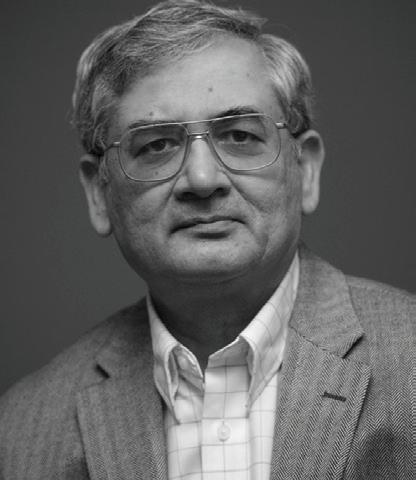
Renowned economics professor and pioneering economic theorist Tapan Mitra, who had been a faculty member in the Cornell economics department since 1981 and was named a Goldwin Smith Professor of Economics in 2007, passed away Feb. 3.
Mitra died peacefully in his sleep at his Ithaca home after a decade-long battle with cancer, according to his obituary.
“Tapan was one of the world’s finest mathematical economists,” Prof. Kaushik Basu, economics, said in a University press release.
“What many do not know, and what I discovered during my several years of research collaboration with him, was his mind of total clarity. This enabled him to do economics from scratch, in a way that even school kids could follow, all the way to plumb the intricacies of our economic world.”
Mitra was a leading scholar in
the field of economic theory and applied mathematics, co-authoring and editing over 150 publications, the Ithaca Journal reported. His primary research interests included economic dynamics and the efficiency and equity of inter-
temporal allocation of resources, as well as capital theory.
In 2016, the celebrated professor established annual prizes in the Department of Economics with an endowment of $100,000, hoping to encourage “Cornell students to pursue academic influence” and “have a positive influence in … the experience
of both current and future generations of students,” Mitra told the Cornell Chronicle — which is run by the University — at the time.
Mitra, who taught students for over 40 years, previously instructed ECON 3030: Intermediate Microeconomic Theory and ECON 6170: Intermediate Mathematical Economics.
Originally from India, Mitra studied at Presidency College, Calcutta University and Delhi University in India before receiving his Ph.D. at the University of Rochester. Prior to teaching at Cornell, Mitra also taught at the University of Illinois at Chicago and the State University of New York at Stonybrook, according to his C.V.
Mitra is survived by his brothers, Guatam, Shankar and Udayan, as well as many extended family members.
Nicole Zhu can be reached at nzhu@cornellsun.com.
RESISTANCE
Continued from page 3
Once processing is complete, the ads are then available for “crowdsourcing,” where users are invited to transcribe the images into readable text or proofread other individuals’ work. A moderator will eventually judge the transcription for accuracy and mark the ad as complete.
Te database now includes over 20,000 individual ads, and close to 2,000 of them have been at least partially transcribed — many through the crowdsourcing process, Kowalski said.
Since the crowd-driven project ofcially launched a week ago, participation has grown swiftly, the project’s IT director, Janet Heslop, said.
“We already have over 1,300 accounts already set up, mainly from people fnding us or hearing about us,” Heslop said Tuesday. “In the past three days, we’ve had over 300 more people sign up.”
Te team has already collaborated with the Ithaca History Center, and plans are underway to introduce the database to public schools as an engaging learning opportunity.
“We’re hoping to introduce this application to public schools and use it as an educational tool for students, who will also work on crowdsourcing,” Golobordoko said.
Te database, which is currently developing specialized educational features, would allow students to “deal with primary sources directly … and be more actively engaged in the learning process,” Baptist added.
can be reached at jstimpson@cornellsun.com.

Lagerfeld passes | Chanel announced Karl Lagerfeld’s death on Feb. 19 in Paris. In the above photo, Tom Ford and Lagerfeld attend the New York fashion awards in 2001. He

The Corne¬ Daily Sun Independent Since 1880
136th Editorial Board
JACOB S. KARASIK RUBASHKIN ’19 Editor in Chief
McKIM MILLER ’20
JOHN
Business
Manager
KATIE SIMS ’20
Associate Editor
VARUN IYENGAR ’21
Web Editor
Editors in Training
Editor in Chief Anu Subramaniam ’20
Managing Editor Maryam Zafar ’21
Sarah Skinner ’21
News Editor Amanda Cronin ’21
Alex Hale ’21
Photo Editor Benjamin Parker ’22
GIRISHA ARORA ’20 Managing Editor
HEIDI
MYUNG ’19 Advertising Manager
ALISHA GUPTA ’20
Assistant Managing Editor
Associate Editor Ethan Wu ’21
Dining
Editor Katie Zhang ’21
Lucy Spahr ’22
Sports Editor Miles Henshaw ’20
Arts Editor Peter Buonanno ’21
Working on Today’s Sun
Design Deskers Megan Roche ’19
Simon Chen ’21
Night Desker Rochelle Li ’21
Daniel Moran ’21
Ad Layout Dana Chan ’21
Production Deskers
Krystal Yang ’21 Zuobing Qian ’22
Somehow, three years after I’ve come to Cornell, I am more confused than ever about what a “community” means. This is not surprising — Cornell, in many ways, has always been a congregation of pieces to me: a campus too wide to grasp, with too many people to meet and too many opportunities to seize and miss at the same time. Going into junior year, these elements seemed to come to a stagnant halt. Being an upperclassman started feeling like I’d been part of the same clubs and organizations all my college life, yet I’d established my roots too deep to find an identity anywhere else.
I am more confused than ever about what a “community” means.
I decided to quit Cornell’s competitive ballroom dancing team at the beginning of this semester. Or at least, take a very long break from it. Anyone who knows me knows that ballroom and I were a two-in-one deal. All my late nights were spent at Helen Newman’s sweaty dance studio, and between partying or practicing, I would always choose to lug my dance shoes up the Slope. It was the first and only club I joined as a freshman, and I’d even spent a year being the president of the ballroom club, a recreational branch of the team. But the team just eventually lost its magic, as many things in college do — the simplicity of the sport became tainted with unnecessary drama, careless leadership and malicious competitiveness, and I decided I wanted to find a new community. It’s funny how often we complicate something that’s supposed to be simple.
But that’s the whole paradox of clubs, isn’t it — none of it’s really natural. It’s a bunch of people new to an area competing for limited slots, trying to fit into human-constructed social rings where they hope to make friends. From the minute you step foot on campus, you’re force-fed the idea that finding a community is a necessity, and it’s the only way to remain relevant on campus. Freshman year yields a hyperactive frenzy of trying to find your way to every quarter card and onto every listserv, with the eventual goal of making it on an e-board. And ClubFest becomes a BartonHall-cesspool of sweat and food samples, with too many Excel sign-up spreadsheets to write your NetID — only to drop most of the listserv emails a month later.
But now, as a junior, I find myself having the opposite problem as I did when I was a freshman: I’m simultaneously young enough in my college life to feel obligated to keep pursuing new organizations, and yet too old to join anything new, because everything else already has an established
community. I’ve heard countless times my junior and senior friends saying they wish they’d done more things at Cornell, like joining an a capella group or starting a painting club, but that they don’t feel encouraged to do so anymore. Walking around ClubFest, I realized it had turned from a room where the number of choices looked overwhelming into rows of tables where asking for a quarter card comes with the burdening question of, “How many semesters do you have left at Cornell?”

“As an upperclassman, I now have more questions than answers.” My senior friend told me this the other day, standing by my kitchen fridge. Under fluorescent lights, we both had prominent bags beneath our eyes. Junior year, for me at least, is a time when life indeed becomes a question. Things aren’t so bright and shiny and full of opportunity anymore, yet there is the urge to accomplish so much more with so little time. Leaving ballroom opened a gaping wound and exposed it to the world — I am still so, so young, and I still yearn to do so many new things, yet I don’t know how to proceed. We can rant all we want about the illusion of community, but how much does it actually come to matter over time? A lot.
It was beautiful to me when I asked a senior on the ballroom team why she decided to join this year, and she said she wanted to find a place to just dance and forget everything else. She was looking for a blank slate too, and when her old clubs started weighing her down, she turned to the simplicity of dance. It reminded me that the value of a club can be so fluid — what becomes tainted to one person can still be refreshing to another. Sitting in my friend’s apartment and listening to her, I remembered what it felt like to dance my first time as a freshman — uncomplicated and uncharted, just relishing in the pure joy of moving my body to music.
The illusion of community seems to be deep-set enough where tearing away my team will leave something permanent. But my time at Cornell still feels young enough for it to be worth trying something new. I’m hoping the fear that Cornell’s clubs are “too established” for a junior proves to be a myth. And I hope that, like my upperclassman friends, I too can find a place where I can just dance again, figuratively, and maybe realistically.
Kelly Song is a junior in the College of Arts and Sciences. The Songbird Sings runs every other Thursday this semester. She can be reached at ksong@cornellsun.com.
Robert C. Platt | Guest Room
“Inever threw an illegal pitch. The trouble is, once in a while I toss one that ain’t never been seen by this generation.”
— Leroy Robert “Satchel” Paige (1906-1982)
As a lifelong active Cornell alumnus who attended the Cornell Alumni Leadership Conference, I have been following The Sun’s coverage and op-ed pieces about Paul Blanchard, the alumnus who gave an acceptance speech that included a description of Satchel Paige as a Negro Baseball League pitcher. The Sun’s “Mind the Gap” editorial called for “preventative measures” to avoid a recurrence of an alumni event offending student guests. Sun columnists Laura DeMassa ’21 and Canaan Delgado ’21 called for “disrupting the structural manifestations of discrimination” within Cornell’s alumni organizations.
Cornell Alumni Affairs will convene a task force “of students, alumni and staff in response to the incident to ‘develop productive new ways for Cornell’s different generations to work together with even more mutual respect and understanding,’” The Sun reported. However, I think that this is a useless fig leaf.
When I was a freshman, orientation was centered on what it meant to be a Cornellian, and we learned the traditions and songs. Some local Cornell clubs held send-off parties to welcome us to the fold, even before travelling to Ithaca. Each student received a brochure titled, “Your Role as a Cornell Alumnus,” and our matriculation fee included a subscription to the Cornell Magazine for the year after we graduated. We felt welcomed and privileged to be a part of the Cornell family. In contrast, undergraduates have recently reported to me that their orientation included mandatory diversity training sessions that began by teaching that Cornell was built on land stolen from the American Indians. (Orientation seemingly did not mention that Ezra Cornell paid full value for the land when he bought it and that generous donations paid full price for the subsequent construction of the campus). The general message is that alumni are bigoted and should be mistrusted rather than entitled to gratitude and the benefit of the doubt.
When I was a student, the Cornell Alumni Association was a separate corporation that operated independently from the administration. The CAA officers were elected and published the Cornell Magazine. The lack of Day Hall control over the Cornell Magazine during the Willard Straight Hall Takeover led to the founding of the Cornell Chronicle as Day Hall’s house organ, which was viewed with skepticism. However, today most alumni groups are now a part of the University, and except for the Board of Trustees, alumni officers have little legal control. Back then, Cornell had five student trustees and one faculty trustee elected by the student body rather than just the one undergraduate-elected trustee we have today. Then and now, each graduating class elects its own officers, and they meet annually to elect the officers and executive board of the Cornell Association of Class Officers. I have had the honor of serving as a Class President for 10 years and V.P. for another five, as well as on
the CACO Executive Board. Other alumni groups (including fraternities, sororities and The Cornell Daily Sun Alumni Association) have a narrower focus and raise funds for those causes. These other alumni groups also elect their own officers. Alumni are all unpaid volunteers who are motivated by a desire to help build Cornell, to improve society and to receive recognition at events such as the ill-fated Friday night CACO awards dinner. Each alumnus builds his or her own reputation in a home community as well as with other alumni. Those reputations are based in part on the ability to donate or raise money, and in 2017-18, Cornell received $411 million in new gifts. In turn, alumni leaders are selected based on their reputations. Paul Blanchard repeatedly was selected to serve Cornell, and nobody would regard him as a bigot. Many CALC attendees were unhappy with the thoughtlessness that marred the celebration of his life-long service to Cornell with drama over his word choice.
While student sensibilities are formed on campus, each alumnus lives in his or her own community and picks up a sense of what is appropriate from that environment. Alumni volunteers and donors come from many communities, backgrounds and political viewpoints. So, each year CALC celebrates Cornell and Cornellians by accepting those diverse viewpoints without taking offense. The award acceptance speeches should not be subject to Day Hall censorship, and Alumni Affairs staff know that it would be useless to try.
Alumni leaders will be reluctant to give up a structure that generates $411 million a year just because it does not fit the social justice perspective of some current undergraduates.
DeMassa and Delgado suggest that if Cornell alumni fail to adopt the political correctness standards of today’s Cornell campus, then young alumni will not engage with Cornell. While that may be true for a portion of alumni in each class, there will be others who follow Paul Blanchard’s example and engage Cornell on a life-long basis. Most Cornell alumni seek to make friends and to “network” at alumni events without being deliberately offensive to disadvantaged groups. However, the goal is to have all Cornell alumni work together, as volunteers, without regard for race, religion or national origin. That is what I saw at CALC, and I also heard from many alumni who felt that the students overreacted to Blanchard’s acceptance speech. The minute that DeMassa and Delgado graduate, they will enter new communities and will face competition for their time and resources. They may fight for social justice on the local or national scale. Whether they also select Cornell to be a focus of their philanthropy remains to be seen, but overall the experience to date has shown that Cornell has had a robust and productive alumni body without imposing an arbitrary political correctness standard that is inconsistent with each alumnus’ home community. Cornell alumni leaders will be reluctant to give up a structure that generates $411 million a year just because it does not fit the social justice perspective of some current undergraduates.
Robert C. Platt ’73, J.D. ’76 is a former executive board member of the Cornell Association of Class Officers. Guest Room runs periodically. Comments may be sent to opinion@cornellsun.com.

Irecently learned about the Bechdel Test (ironically from a male friend, but so it goes). In essence, the test measures women’s representation in fiction and requires that two women talk to each other about anything other than a man. And that’s when I realized very few moments in my life would pass the Bechdel Test.
Anytime I’m talking to a female friend for more than a few minutes, the topic of boys typically comes up. Sometimes we’re ranting about a male professor. Other times we’re talking about a classmate of ours that loves to speak about women’s issues that do not concern him. But usually we’re talking about the cute guy in our government class or asking for updates on someone’s first date. And this isn’t necessarily bad, but it is sad that I can’t remember a time when romantic interests weren’t a main talking point. And why? It’s interesting. To this day,
The test measures women’s representation in fiction and requires that two women talk to each other about anything other than a man. And that’s when I realized very few moments in my life would pass the Bechdel Test. HELENHU/SUNGRAPHICSEDITOR
read, “I’m literally in [my love match’s] bed right NOW!” and a third, “Get this, I went to date night with your soulmate last week!”
Insert Pikachu baffled face meme here.
Both of my love matches have been inside (literally) some of my closest friends.
Both of my love matches have been inside (literally) some of my closest friends. I thought this was just an ironic twist of fate, but as the gossip chains expanded, I started to hear that my story was common. More than a few people matched with their friend/ enemy/TA’s ex-lovers.
Is Cornell really that small?
Or do we all just have a lot of sex?
As I started thinking about it, I figured that if you drew a line connecting everyone that has shagged at Cornell, we’d probably all be related in one big orgy-web. My Spit Sisters could probably fill a sorority house, or two.
I have a few such “sisters” where I know that she knows and she knows that I know, but we both know that we are going to both pretend that we don’t know until one of us dies.
er story. The game Spit Sisters play is far more complex. For me, some of my closest friends are my Spit Sisters, due to a small social circle and way too many Phi Apple Pi wine tours. Navigating these intra-friend group Spit Sister situations requires skill. These bonds are built on the joys of shared experience — “he came in like two minutes for you, too?” — and respecting boundaries, aka NEVER “husband exchanges” where actual feelings were felt. And the most important: discretion. I have a few such “sisters” where I know that she knows and she knows that I know, but we both know that we are going to both pretend that we don’t know until one of us dies. Never talk about your mutual phallic UNLESS you’ve had a fishbowl, and even then only jokingly, in the girl’s bathroom of the bar. Because everything is fair game between women in the bathroom of the bar.
Spit Sisters (n): two women who have had sexual relations with the same penis.
And then you’ve got Spit Brothers. In the modern-day fraternity context, two Spit Brothers who put their peas in the same pod are probably bros; no grudge between them, definitely no stories shared, but maybe a beer to christen the new bond. Tunnel Buddies.
Spit Sisters — well, that’s anoth -
my high school friends are fascinated with each other’s sex lives. On New Year’s Eve, the last time we saw each other, there was a lull in conversation, and someone suggested playing Never Have I Ever. Maybe I have a particular dislike toward the game from some kind of middle school trauma, but I still dread playing it. Not all of it’s bad. I appreciated learning that our previously straight-laced valedictorian let some rando go down on her at a frat party. But I also left that night knowing nothing about her new friends or what she’s involved in at school. As a result, I’m starting to define her, and my other friends, by their hook-up stories instead of letting the stories occupy a small part of their very busy lives.
And I don’t think it’s just me. I was having a Galentine’s dinner with a friend and asked for an update about her life. She told me she had “nothing going on” which was her way of saying that she has no love
life drama to share with me. So I told her that we were going to have a dinner that finally passed the Bechdel Test, and we made it through a whole 20 minutes (this is a half-happy, half-sad achievement) before I got a text from a guy I’m into and our conversation became about him instead.
This is in no way saying that we should stop talking about our love conundrums with our friends. I have a few lasting friend ships from home that started because of mutual crushes. Even now, someone telling me about a person they’re interested in lets me know that they trust me. But it’s weird because I don’t use that benchmark with my male friends. I don’t wait for them to tell me about girls or guys they like, and they usually don’t want to hear about the guys I like. And I actually have no idea if they talk about this stuff with each other.
I don’t have an overall conclusion about this. I enjoy telling my friends about my life, and part of my life includes random hookups and dates. Vice versa, I love hearing about my friends’ lives and want them to know they can share anything with me. I guess the most important part, as with any aspects of our lives, is to find balance. Just like I wouldn’t want to be defined by my friend drama or my
Without the profuse amount of “wife swapping” and “husband exchanging” that goes on here far above Cayuga’s waters, us girls have to band together, especially since our boyfriends have boned half the graduating class.
Dear all-knowing Cornell Business Analytics Survey: Next time can you make sure your algorithm accounts for Tunnel Buddies and Penis Partners? Much appreciated.
prelim schedule, I don’t want to be defined by my hook-ups. And even if my friends and I can’t pass the Bechdel Test, I’m determined for us to give importance to all of our stories and not just the ones that start with: “So about that guy from last night …”

By CHELSEA LEEDS Sun Staff Writer
s a vegetarian, and one that doesn’t eat dairy but does eat eggs, I feel that



Collegetown that are both flavorful and satisfying, so I end up cooking most of my meals. For many, cooking is seen as a hassle, but I have come to really enjoy it. I look forward to my trips to Wegmans, deciding what I want to make for the week as I browse the produce. I take it all home with the comfort of knowing that there are endless creations to be cooked up in my kitchen that I share with three friends on my floor.
By providing a two-day glimpse into my diet, I hope to inspire a little more cooking, recipe-testing or just the addition of a few extra veggies in your next meal.
Monday.

I typically start off the morning with a Lavva yogurt (strawberry, vanilla, blueberry or raspberry flavor) and Paleonola granola (original or maple pancake flavor) when I’m not working out. Today I opted for a strawberry Lavva yogurt with original-flavored Paleonola. Lavva is by far the best non-dairy yogurt I’ve had, and I highly recommend it. Most nondairy yogurts are thin, soupy, flavorless or oddly

flavored, but Lavva does it right with its all-natural sweeteners (no cane sugar here!) and slightly thick texture — not Greek-yogurt thick, but thicker than that of any other brandsI’ve tried. Breakfast is followed by a cup of coffee that has been splashed with some milk (oat, almond or cashew) and topped with a dash of ground cinnamon. Since I already grinded the beans the night before, I simply measure them out and pour them into my French press. I often take advantage of the freedom that comes with grinding my own beans by mixing up coffee brands from time to time. Brands that I always return to are Stumptown (especially their French roast)

and Forty Weight, which is local to Ithaca.
Most days I’ll cook myself lunch at home, but when I decide to spend the day on campus I head to Straight from the Market, which is in Willard Straight Hall, next to the staircase that leads you down to Okenshields. They have a rotating mix of hot entrees, as well as a few cold salads and accompaniments to choose from.
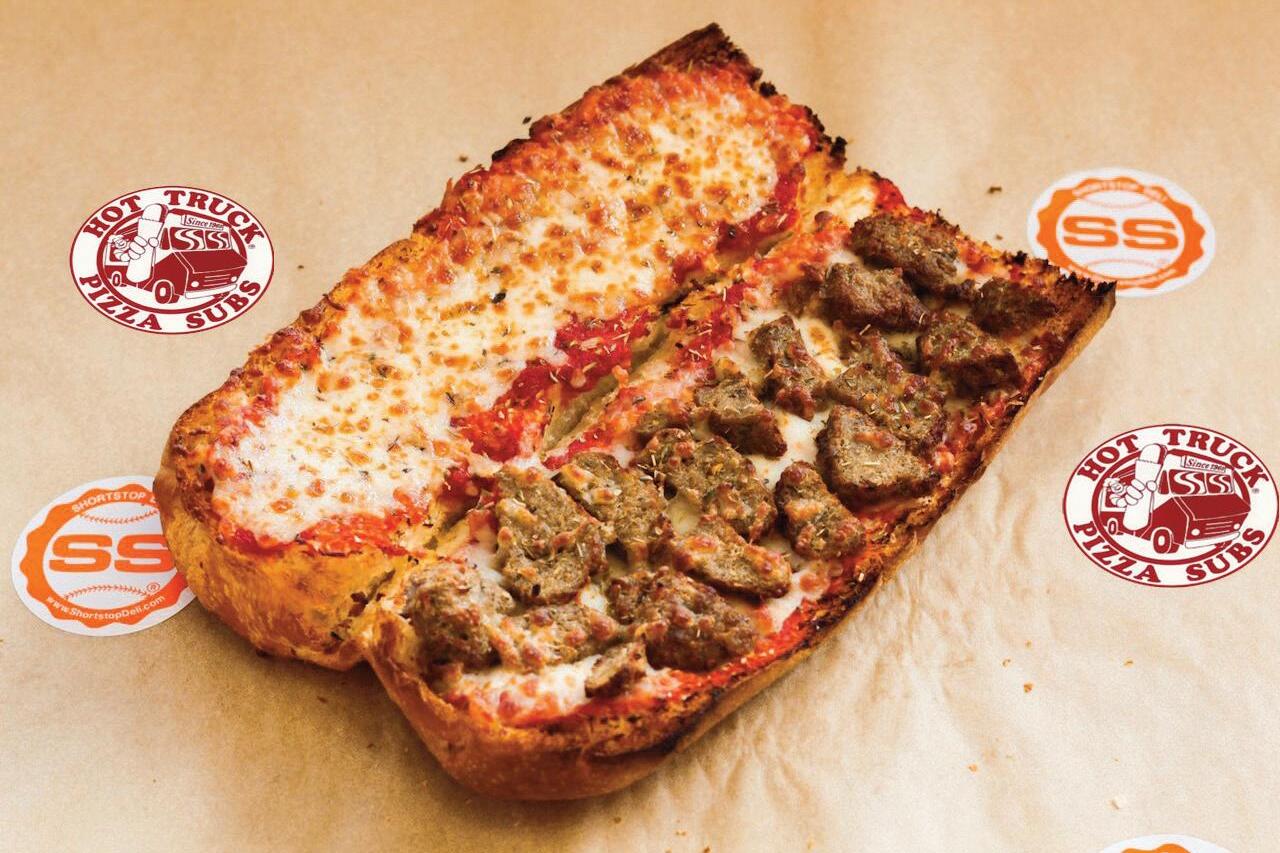

Today, I make a base for my plate with their arugula beet salad, which also has some pickled onions and radishes. I add a generous serving of one of their hot specials for the day: a variety of roasted root vegetables consisting of carrots, parsnips and beets. And to top it off, I add a scoop of their homemade hummus. No matter what I put on my plate, I always use their hummus. It’s thick, creamy and not too garlicky.
When I’m feeling extra lazy and maybe don’t have many ingredients in my refrigerator, I make a chickpea pancake, also known as socca. It takes around 20 minutes to make, depending on what you decide to top it off with. Today, I decide on caramelized onions, which I’ve been throwing onto most of my meals lately. The natural sweetness from the onions amazes me, and I love watching the onions caramelize in the pan over time. To balance the natural dryness of the pancake, I spread romesco sauce from Haven’s Kitchen onto it and place the
Tuesday.
I add a generous serving of one of their hot specials for the day: a variety of roasted root vegetables consisting of carrots, parsnips and beets. And to top it off, I add a scoop of their homemade hummus. No matter what I put on my plate, I always use their hummus. It’s thick, creamy and not too garlicky.
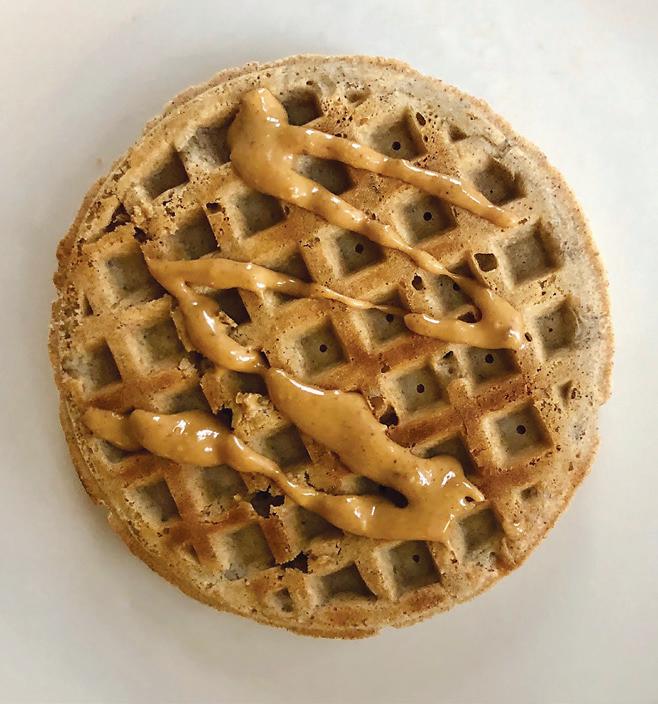
My day starts a little differently than usual because I just bought Birch Benders’ frozen toaster waffles to try. I’ve been waiting for them to end up in a store near me, and finally found them on Wegmans’ shelves on my latest trip. I throw a waffle in the toaster and then drizzle my favorite peanut butter on top: Smucker’s Natural Creamy, which Bon

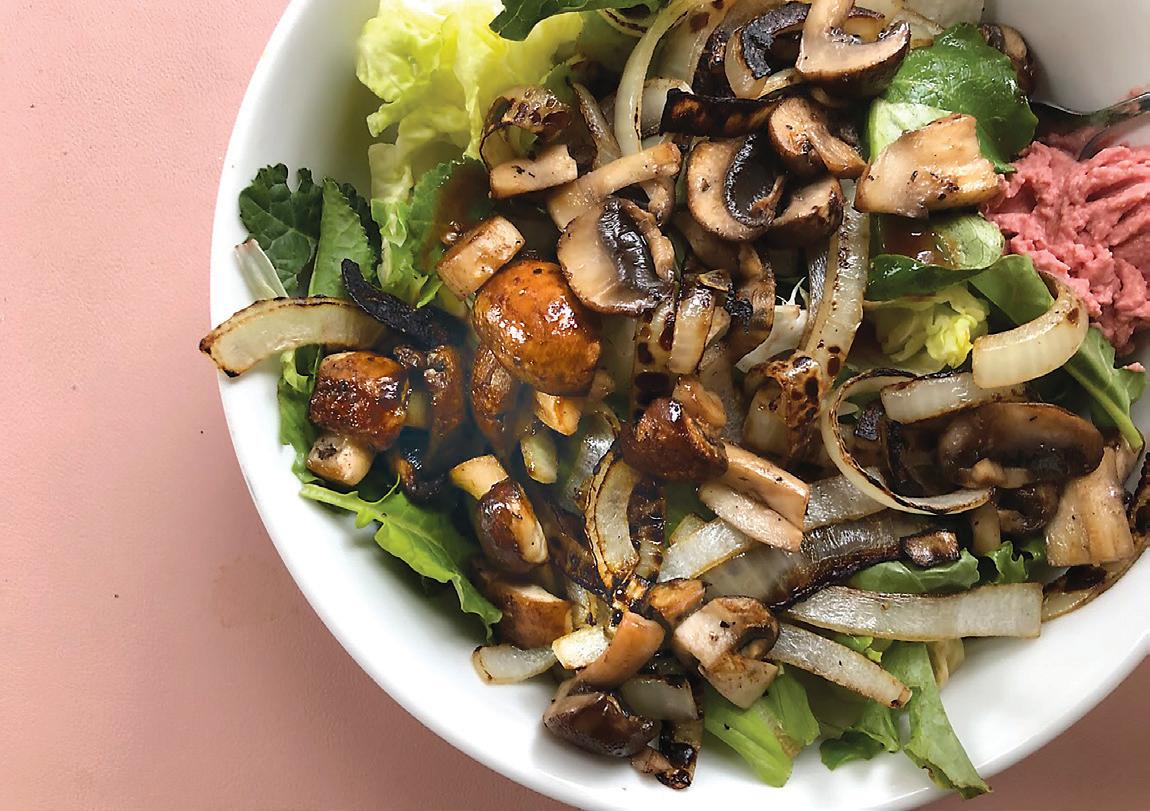
Appetit has also backed me up on. It’s creamy, perfectly salted and easy to stir given a little arm muscle. I follow with my typical cup of coffee made at home. After a quick yoga class I head back home to Collegetown. Lunch consists of some mixed greens, iceberg lettuce, sautéed
mushrooms, caramelized onions, Ithaca Cold-Crafted Lemon Beet hummus and Siete’s Traditional Hot Sauce to serve as the dressing after a few turns of freshly ground salt and pepper. I’m feeling full and satiated, ready to take on my one class of the day.
The days I spend more time than usual making my meals are my favorite. A sense of calm comes over me when I walk into the kitchen.
For dinner I decide to roast up cauliflower, mixing in Frank’s RedHot before they’re almost done and put them back in the oven until they crisp up and turn golden brown. I use up the rest of the iceberg lettuce in the refrigerator, which I bought especially for this dinner and pull off the leaves to create a bed for the cauliflower in the bowl. I pull each leaf out from under the cauli -

flower throughout the meal, wrapping up a few florets to create my own buffalo cauliflower wrap. What I cooked or put together over the course of these two days might sound time-consuming to some, but I promise none of these meals take too much effort. The days I spend more time than usual making my meals are my favorite. A sense of calm comes over me when I walk into the kitchen. Whether I’m stirring onions, watching them turn from opaque to translucent, checking on cauliflower in the oven or grinding up coffee beans for the next morning, each meal is all the more meaningful. While I know some might never opt to whip up their next meal, I hope that you’re able to walk away with a little more appreciation for the food on your plate.
Chelsea Leeds is a senior in the School of Hotel Administration. She can be reached at cl768@cornell.edu.
This weeks photo contest winner is Christabella Forest ’21.
When asked why she chose Mehak Indian Cuisine she said, “I like Mehak because the dishes smell of fragrant spices and of authentic flavor. This restaurant gives me a reason to love Indian dishes every single time I crave it.”
Send us your pics to be featured: email: food@cornellsun.com or Instagram: DM @cornellsundining.

Everybody knows what I’m talking about. You’re on YouTube, attempting to watch some dumb video, but before it starts, an advertisement for “truth,” the anti-tobacco campaign, plays. Within the past year or so, as brands like Juul have experienced astronomical boosts pertaining to popularity and market share in the world of electronic nicotine devices, many of truth’s advertisements have been directed at curbing the use of these products, particularly among young people. While truth’s overall aim to defend the health and physical dignity of potential smokers is noble, the tactics and illustrations that truth deploys in spreading these messages prove to be, at times, problematic.
There is one such anti-vaping ad that stands out to me. The video, lasting approximately thirty seconds, depicts two puppets, a man and woman, standing on the front porch of a house. Presumably, these two individuals have just returned from some sort of date, and the viewer gains access to the female puppet’s inner monologue. As she contemplates her male counterpart’s attractiveness, she decides that she wants to kiss him, but before they embrace, the man unleashes a long, colorful deluge of puppet vomit on her as she screams in distress, and, needless to say, the moment is over, ruined. After this sequence, letters appear over a bright orange background, proclaiming, “fact: vaping weakens your immune system.”
I think that tobacco use is an interesting topic of debate because, on one side of it, people often derive their own anti-smoking viewpoints from intensely emotional and personal convictions. It seems as though everyone knows someone or has a relative who died prematurely due to smoking-related diseases; indeed, these are the memories that fuel the existence and passion of an “anti-smoking” platform in the first place, one that shuns even a pragmatic view of nicotine use. I’d like to make it clear that in this article, I don’t intend to defend smoking or vaping. But I also don’t intend to castigate these practices, because such chastisement would merely echo the simplistic naivete of Reagan-era, zero-tolerance conceptions of substance use. It would also demonize nicotine users, who are certainly not the antagonists of this issue.
It seems as though truth branched off of a few other anti-tobacco campaigns around the late 1990s, in an era when the Master Settlement Agreement shed light on the severe malpractices of big tobacco companies as they sought to alter their products in order to make them more addictive. I remember
when truth commercials were specifically targeted at big tobacco companies, and it felt productive because these corporations were rightly conceived as the villains in this situation rather than individual users. It was rage against the machine, and it seemed like the machines were losing the fight.
But, let’s return to the aforementioned anti-vaping ad, which was published on YouTube in October 2018. What message could truth possibly be trying to convey with this video? What truth is conveying to us is that real men don’t vape, don’t use nicotine and are ultimately the ones who get to kiss their dates at the end of the night. In this light, truth’s video seems absurd. I wonder if it is exploiting the worst anxieties of toxic masculinity a morally sound way of protesting something.
Interestingly, I do think that tobacco use among young men is actually a bitter symptom of toxic masculinity. The first encounters I’ve ever had with people using nicotine in amounts that exceed moderation occurred around Cornell’s fraternity houses, where a culture of peer pressure seems to have surrounded the use of cigarettes, Juuls and other tobacco products. However, I see truth’s advertisement as merely existing on the opposite side of the same, hyper-masculine coin. With “be a man and vape” versus “be a man and don’t vape,” the real problem is the assertion of some masculine standard in the first place.
What would a better video look like? If truth wanted to tap in to the link between masculinity and nicotine use, it could have done so without portraying men only in relation to heteronormative courtship. It could follow Gillette’s lead, taking care of the men it depicts and illustrating nicotine abuse as being the addictive form of self-harm that it is. Or, if truth wants to address widespread nicotine use by college students, it could criticize the rampant pre-professional, high-stress culture of college and university campuses, a lifestyle that unfortunately lends itself quite well to substance abuse as a means of escaping the fray of such a bleak existence. It’s obvious that truth is attempting to appeal to young crowds, but I argue that protest art, or rather public campaigns that deploy art in protest of something, need to be held more accountable for their tactics, even if the ultimate aim is a positive one. Exploiting one social ill to quell another is no way to promulgate meaningful change.
Nick Swan is a senior in the College of Arts and Sciences. He can be reached at nswan@cornellsun.com. Swan’s Song runs alternating Tursdays this semester.

Well, it’s that time of year again. After a long few months of controversy the 91st Academy Awards will be held this Sunday at the Dolby Theater in Los Angeles. The controveries that the award show has faced this year include homophobic tweets surfacing from announced host Kevin Hart that forced him to step down from the role and nominated films and actors coming under scrutiny for problematic behaviors such as Viggo Mortensen’s use of the n-word during an interview about his performance in the Best Picture nominated Green Book.
With the Oscars still yet to announce a new replacement following Hart’s resignation, a lot about the ceremony remains a mystery. But this hasn’t stopped fans from speculating that Whoopie Goldberg will be the surprise host this Sunday, as she is the only previous host who will be presenting at the ceremony.
Regardless of the host situation, the 91st Academy Awards is sure to be an exciting one given the multiple nominations gathered by global phenomenon Black Panther and the controversial Green Book.
The Sun’s arts editors have gathered their predictions for the show.
* symbolizes our predicted winner
Best Picture:
A Star Is Born
BlackKklansman
Black Panther
Bohemian Rhapsody
Green Book
The Favourite
Roma*
Actor in a Leading Role:
Christian Bale | Vice*
Bradley Cooper | A Star is Born
Willem Dafoe | At Eternity’s Gate
Rami Malek | Bohemian Rhapsody
Viggo Mortensen | Green Book
Actor in a Supporting Role:
Mahershala Ali | Green Book*
Adam Driver | BlackKklansman
Sam Elliott | A Star is Born
Richard E. Grant | Can You Ever Forgive Me?
Sam Rockwell | Vice
Actress in a Leading Role:
Yalitza Aparicio | Roma*
Glenn Close | The Wife
Olivia Colman | The Favourite
Lady Gaga | A Star Is Born
Melissa Mccarthy | Can You Ever Forgive Me?
Actress in a Supporting Role:
Amy Adams | Vice
Marina De Tavira | Roma
Regina King | If Beale Street Could Talk*
Emma Stone | The Favourite
Rachel Weisz | The Favourite
Directing
Spike Lee | BlackKklansman
Pawel Pawlikowski | Cold War
Yorgos Lanthimos | The Favourite
Alfonso Cuarón | Roma*
Adam McKay | Vice
Music: “All the Stars” | Kendrick Lamar and SZA for Black Panther*
Animated Feature Film: Spider-Man: Into the Spider-Verse*
For full coverage, visit www.cornellsun.com on Friday.

Fill in the empty cells, one number in each, so that each column, row, and region contains the numbers 1-9 exactly once. Each number in the solution therefore occurs only once in each of the three “directions,” hence the “single numbers” implied by the puzzle’s name. (Rules from wikipedia.org/wiki/ Sudoku)





2 & 3 BEDROOMS
109 SAGE PLACE
Available NOW, Spring 2019 & 2019/2020 Shuttle Bus Access to Campus Access to Free Fitness Center Novarr- Mackesey Property Management office@ithacastudentapartments.com ithacastudentapartments.com 607-277-1234
Houses, Apts, Parking 1 to 9 Bedroom
Collegetown - College Ave, Linden Ave, Dryden Rd, Bryant Ave, Cook St. 607-330-2442 info@urbanithaca.com www.urbanithaca.com
Nicest Apts. in Collegetown Located on Eddy St. 4 Bedrooms
Fully furnished. Spacious living areas with large bedrooms & closets. Hardwood flors, spectacular views, eat-in kitchens with additional sun rooms. Laundry & parking. 607-339-1137 bgm900@gmail.com
COLLEGE AVE.
1 Bedroom available In a 2 BR apartment For Male, Undergrad student. Available NOW & Spring 2019
1 BR Apartment in Private Home in Cayuga Heights. Furnished, internet, water, included. Private entrance, off-road parking Ideal for grad student or postdoc 607-255-6139 COOK ST. Furnished House for 5-7 persons, 10mo. Lease for 2019-2020 Text or call Tracy at TLC Property Mgmt Corp 607-379-2776
Large 5 Bedroom Apartment 113 Stewart Ave. Available for 2019-2020 Sprawls over 2 floors, 2 full bathrooms, large open living room and kitchen. Lovely private back yard for summer get togethers. On bus route. Furnished with private parking and laundry room. 10 month lease. $790.00 per person. 3 and 2 Bedrooms Also Available. Contact Lisa 607-227-4167 snyder.lisa24@gmail.com 2019-2020 317 Upper Eddy St. 1, 2 & 3 BR Apartments Ten month lease. Furnished. Hardwood floors. 607-227-0924

9 Bedroom House For Up to 10 People 521 E. State St. Walk to Cornell. Must see. $5950/month. Furnished. Free parking. Available 6/1/2019. 607-379-9168





HOBART Continued from page 16
“If you have a team that rides well, and it takes you 10 seconds to get your bearings, you have to be moving up the field quickly,” Milliman said. “I think 10-man rides are going to be interesting to see.”
Notable matchups on the schedule this year include highly ranked out-of-conference opponents — some old and some new. Early in the season, Cornell will have the challenge of facing No. 2 Penn State in Charlotte, North Carolina. The Red defeated the Nittany Lions last season, also at a neutral site.
Shortly before the postseason, Cornell will have a pair of road matchups at No. 20 Syracuse and No. 6 Notre Dame in midApril. Cornell has won in the Carrier Dome
as recently as last year, where it defeated the Orange in the first round of the NCAA tournament.
Cornell has not faced Notre Dame since the 2010 NCAA semifinal, when the Fighting Irish came out on top. Just like the Red, Notre Dame qualified for the NCAA tournament last season and is primed for another strong campaign.
Until then, Cornell will look to start the season strong this weekend and pick up right where it left off last year. Time will tell if the squad is worthy of its No. 4 ranking.
Faceoff is at 5 p.m. on Friday in Geneva, New York.
Dylan McDevitt can be reached at dmcdevitt@cornellsun.com.
Jack Kantor can be reached at jkantor@cornellsun.com
MEN’S HOCKEY Continued from page 15
the first round of the playoffs on the road.
Despite last weekend’s road hiccup that squashed Cornell’s chances to simplify its path to a first-round bye, the Red has just two losses since winter break and only one in regulation. Cornell is 9-2-3 in 2019. The next two weekends will determine whether Cornell stays on a roll or if it instead limps into the playoffs.
Cornell’s seniors — Vanderlaan, Beau Starrett, Alec McCrea, Matt

Nuttle and Brendan Smith — will be honored after Saturday’s game.
“[The seniors are] obviously the backbone of our team, the big voices in the locker room,” Leahy, a freshman, said of the class of 2019. “All of them are really great leaders. We want to play for them this weekend and, hopefully, we get the job done.”
Puck drops against Rensselaer on Friday and Union on Saturday are set for 7 p.m. at Lynah.
Raphy Gendler can be reached at rgendler@cornellsun.com.
PREVIEW Continued from page 16
“I wouldn’t say [the mindset] has changed,” added senior midfielder and captain Jake McCulloch. “Last year, even though on the outside people didn’t give us much of a chance … It doesn’t really matter what we’re ranked in the preseason. We just want to be ranked No. 1 at the end.”
With all the improvements Cornell has made, it could be said that a repeat Ivy League championship is the bare minimum this year. Put another way, the clear goal is the one that has eluded the program for 42 years, but one that it has come close to achieving in many seasons since.
“Bringing home a national championship is the ultimate goal,” Milliman said.
The culture and brand of Cornell lacrosse is to always channel the focus inward, so even a larger profile as one of the nation’s most elite teams is not changing the team’s mindset to always play with a chip on its shoulder. In the process, a fourth national title for the program just may fall within reach.
“We’re still an underdog,” Milliman said. “It’s just the nature of who we are, to disregard the attention, the media, the scrutiny from the outside and just make sure that we figure out how we can play the best lacrosse and compete.”
“Very few people know what we do up here,” Millman said. “And that’s fine with us.”
Dylan McDevitt can be reached at dmcdevitt@cornellsun.com.
By RAPHY GENDLER Sun Assistant Sports Editor
With four games to play until the ECAC postseason, Cornell men’s hockey is in first place, primed for a much-needed first-round playoff bye. But four teams within three points of the Red means the margin of error is slim for a team in desperate need of a week of rest.
Cornell, in first place with 25 points, will host ninthplace Rensselaer on Friday before welcoming eighth-place No. 20 Union — which has struggled in conference play but hung in the national rankings due to some high-profile non-league wins — for Senior Night on Saturday.
Cornell’s 25 points barely outpace second-place No. 5 Quinnipiac’s 24, Yale’s 23 and No. 13 Clarkson and No. 17 Harvard’s 22. Currently tenth in the PairWise, Cornell has an 80 percent chance of making the NCAA Tournament, according to the latest simulation.
“We gotta get these guys some rest,” Cornell head coach Mike Schafer ’86 admitted Tuesday. “It’s quite evident throughout the course of the last few weeks there’s guys that are eating up a lot of minutes and there was no question in my mind that I thought our guys were tired on the weekend.”
Cornell missed a chance to make some breathing room atop the ECAC standings on the road last weekend, earning a tie at Brown, surrendering three goals in 53 seconds after leading 3-0 on Friday and then pulling — and reinserting — sophomore goaltender Matt Galajda in a 5-2 loss to Yale on Saturday.
“Losing the point [at Brown] was one thing, but just losing our legs and having to expend that much energy on Friday really took the wind out of our sails on Saturday,” Schafer said.



Senior forward and captain Mitch Vanderlaan, one of five soon-tobe graduates that will be honored at Lynah Rink on Saturday, is confident he and his teammates can handle

this tough portion of the grueling college hockey season.
“I wouldn’t say we’re getting tired out,” Vanderlaan said. “Every team, when you come down to this point in the year, you kind of taper off a bit because it is a bit of a long year. But we worked hard in the offseason to get ready for this, so I don’t think [being tired] is something we’re worried about.”
Looking ahead to its final regular-season games at Lynah and its final four regular season games, Cornell can all but lock up a first-round playoff bye if it gets three wins.
“Controlling our own destiny is something we can do right now; we don’t need to rely on other teams,” said freshman defenseman Joe Leahy, who has played increased minutes due to a slew of injury-related absences on the blue line, including one that just ended sophomore Cody Haiskanen’s season. “If we just play our game [and] worry about ourselves, we’ll be fine.”
Schafer, who surpassed his 800-game milestone as coach last weekend, doesn’t care about the standings. If his team starts to look ahead, Schafer said, “you get distracted.”
“I know we’re near the top, I don’t know who’s behind us,” he said. “It might seem ridiculous that a head coach
games are crucial.
wouldn’t know that, but I just don’t. I don’t know how close they are, I have no idea but I don’t care.”
The last time Cornell faced the Capital Region teams, it came out firing and dominated Union on the road, 4-0, before running into Owen Savory as the RPI goaltender made 40 saves and forced the Red to settle for a 1-1 tie.
Friday’s game is the first of two of Cornell’s final four that will come against teams in the ECAC’s bottom four as the Red travels to last-place St. Lawrence on March 1.
Its two remaining Saturday games, however, come against nationally-ranked squads: one — Clarkson — that could challenge Cornell for the regular season title and another — Union — whose NCAA tournament hopes likely hinge on its ability to make a run at a mid-tier seed in the ECAC playoffs.
It’s anybody’s guess which variety of the unpredictable Dutchmen will show up on Saturday night — Union beat No. 1 St. Cloud State in January, only to be outscored 11-4 in its next two games. But Union is 3-1-1 since its 4-0 loss to the Red and, depending on this weekend’s results, could either jump into the first-round bye conversation or fall to the bottom four and be forced to play
Head Coach Doug Derraugh WOMEN’S HOCKEY

By FAITH FISHER Sun Staff Writer
Cornell women’s hockey is rounding the season’s final corner and the playoffs are within sight. This weekend’s contests against Rensselaer and Union, the Red’s final regular season games, mark valuable opportunities to move up in playoff seeding.
Earlier in the season, the Red (183-6, 15-3-2 ECAC) notched a decisive 5-0 shutout win against RPI and a landslide 7-0 victory against Union. Fresh off two ECAC wins against Brown and Yale, Cornell is looking to exert its dominance over this weekend’s competitors once again.
“We
to make sure we have a better weekend on the road this time around.”
At the end of the regular season, the result of each game has crucial implications for the playoff picture. The teams ranked No. 5 to No. 8 in the ECAC are all within one point of each other, and just four points separate the top and fourth ranked teams. Cornell trails No. 1 Princeton by a single point and leads No. 3 Clarkson by two. The weekend could
nament appearance in three years after securing home-ice for first round play. Cornell also moved up two spots in the national rankings after this weekend, clinching the No. 4 spot. Despite this success, the Red realizes that it needs to continue to improve its game.
“There are a number of things we are looking to shore up defensively and offensively,” Derraugh said. “We feel that our defensive zone hasn’t been quite as sharp as it was earlier in the year. On the offensive side, we hope to create opportunities to score and finish on those chances.”
know that we were at home the last time, and we know that these teams are very tough in their own buildings.”
Even though Cornell handily swept Union (4-26-2, 2-17-1 ECAC) and RPI (13-14-5, 10-9-1 ECAC) earlier this month, the Red realizes that it cannot take any games for granted.
“We know that we were at home the last time, and we know that these teams are very tough in their own buildings,” said head coach Doug Derraugh ’91. “We did not play as well as we hoped last time we were on the road so we want
see a lot of movement in the standings.
“The games this weekend are important point-wise and for playoff positioning because there are four teams right now that are vying for the top spot in the league,” Derraugh said. “Every game can sway things one way or the other as far as playoffs go.”
Cornell has placed itself in a favorable position for its third ECAC tour-
“Defense and grit wins games,” said senior forward Lenka Serdar. “We have to continue to commit to playing a solid defensive game this weekend. We are focused on one game at a time.”
The Red is looking to finish off the regular season this weekend with a pair of wins before it’s off to the races in the ECAC tournament. These contests will take place this Friday at 6 p.m. and this Saturday at 3 p.m.
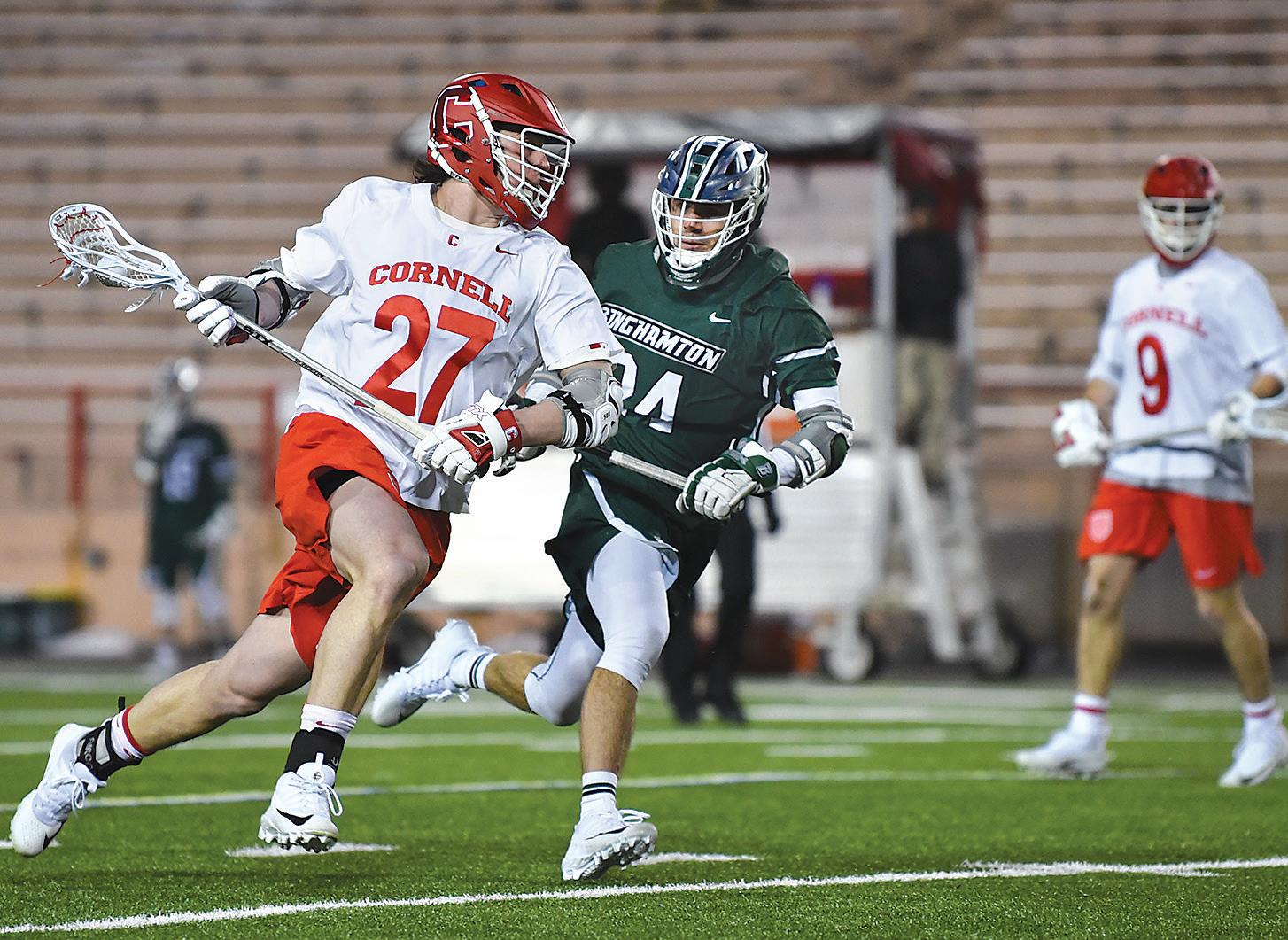
Reigning champs | After toppling Yale to claim the Ivy League Championship last year, the
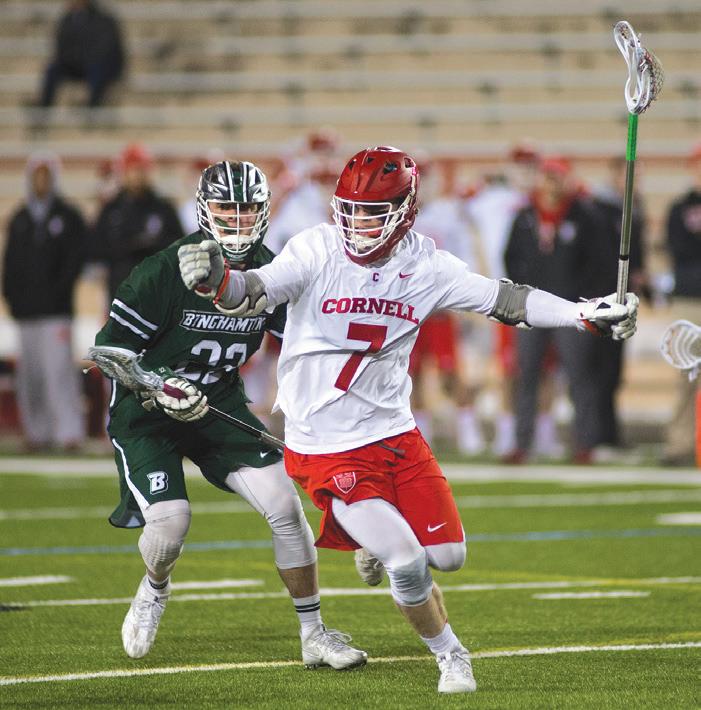
By DYLAN McDEVITT and JACK KANTOR Sun Sports Editor and Assistant Sports Editor
Coming off the heels of an expectation-surpassing 2018 campaign, Cornell men’s lacrosse is ready to begin its quest to defend its Ivy League championship and make even greater strides towards the program’s fourth national title.
The season opener features the 138th installment of the Cornell-Hobart rivalry — the oldest in collegiate lacrosse. The Red came out on top last year for its 86th win against the Statesmen, despite falling behind early.
“Against Hobart last year we started out pretty slow,” said senior captain Jake McCulloch. “Coming out more intense is something we need to focus on.”
Hobart has already had the opportunity to shake off the rust, having competed in two games already this season. In the two games they have played, the Statesmen have tallied 43 goals.
“Hobart was short-handed in a large way last year; they were missing some key pieces,” said head coach Peter Milliman. “They are definitely deeper, they are playing faster. They are very good in the middle of the field right now.”
Milliman’s squad also faced Lehigh — its second opponent of the weekend — last year.
“Lehigh may be short-handed, but they have a lot of seniors,” Milliman said. “They are very good. They are going to play physical. Nothing is going to be easy.”
The Red managed to defeat the Mountain Hawks on the road last year despite being outplayed at the faceoff circle, which occurred several times last season due to injuries and a lack of depth and experience.
“The biggest change between last year and this year [with faceoffs] is the depth at that position,” Milliman said. “I expect our guys to compete a bit more consistently.”


Junior FOGO (faceoff get off) Paul Rasimowicz, who missed a good chunk of last season and most of the playoffs, is healthy and ready to lead the faceoff
unit, Milliman said on Tuesday.
Though Rasimowicz will be the go-to guy, he will be joined in the faceoff platoon by sophomore Luca Tria and freshman Timmy Graham.
“Statistically, if you took the entire year out, we may not have looked like the best faceoff team in the country [last year],” Milliman said. “But we beat pretty much everybody after the third game of the season. … That lasted right up until playoffs.”
At goaltender, Cornell has just graduated fifth-year senior and 2018 team MVP Christian Knight, whose
“Against Hobart last year we started out pretty slow. Coming out more intense is something we need to focus on.”
Jake McCulloch
strong play in the cage at critical moments last season helped define Cornell’s postseason success.
Now, junior Caelahn Bullen is at the top of the depth chart, a slot he inherited in part because of his strong performance during Knight’s five-game absence last season. Joining Bullen is freshman Chayse Ierlan, a five-star recruit from Rochester, New York who missed a good chunk of 2018 fall ball with a broken thumb.
“Right now, Caelahn is solidified as our starting spot in goal,” Milliman said. “But Chayse is very good, he’s very talented, he works hard, he’s a great teammate. … He’s going to be pushing Caelahn I’m sure.”
Another adjustment the Red will have to make this season concerns some new rule changes, most notable of which is the addition of an 80-second clock — 20 seconds for clearing the ball and 60 seconds for shooting it. In the past, shot clocks were activated at a referee’s discretion and teams could avoid having a timer put on them by making it look like they were trying to score without shooting the ball.
“[The 60-second shot clock] puts everyone on an even playing field,” Milliman said. “You can’t deceptively run an offense that can earn you more time. … It’s not subjective based on the referees that you have or the defense that you’re running.”
On the clear, Cornell struggled at times last year, finishing 47th in the country at an .860 clearing rate. Now, the Red will have a bit more of a time crunch in executing clears than they are used to.
Ready to do more than defend Ivy League Crown, ‘underdog’ Red sets eyes on national title
By DYLAN McDEVITT Sun Sports Editor
One year ago this week, then-interim head coach of Cornell men’s lacrosse Peter Milliman sat at his new desk, ready to begin his fifth year with the program and his first as its head skipper. Unranked Cornell was picked to finish fifth in the Ivy League, and Milliman, beginning the season without the full-time head coach title, had one clear goal in mind.
“We want to bring the Ivy League championship back to East Hill,” he said in February 2018.
On Tuesday, Milliman sat in the same chair, now as the Richard M. Moran head coach of men’s lacrosse, eight months after leading his team to accomplishing its goal. Indeed, the Red’s six-goal victory in the conference title game over then-No. 1 and eventual national champion Yale sticks out in memory, as the underdog Cornell squad battled expectations all year long to come out on top in the Ancient Eight.
the year,” Milliman said. “But it didn’t surprise me by the middle of the season the team that we had become.”
In May, after the Red’s postseason run, Cornell announced that it would remove the interim tag from Milliman’s title and retain him as full-time head coach.
“In a general sense, every season is a failure if you don’t win the national championship.”
Head Coach Peter Milliman
“This is my sixth year at Cornell. I’m excited to be a part of this team,” Milliman said. “It’s a pretty special group of guys to be with, and I’m just hoping the guys find some success and have a great experience doing this.” All year long in 2018, the team was confident in itself, and the underdog mentality proved to be an asset as the Red rattled off win after win and upset after upset en route to what by all accounts was its most successful season in years — despite falling short in the national playoffs.
Despite the success and national attention, Cornell feels as if it’s being counted out once again.
“We’re still an underdog on almost everybody’s lineup,” Milliman told The Sun on Tuesday. “Everybody that writes about it that thinks we’re good probably at the same time says they don’t think we can make it to the Final Four.”
“If everybody puts you in their top four, but nobody puts you in the Final Four, do they really think you’re good enough? Or are they just doing it because it sounds right?”
In the 2018 NCAA tournament, the Red outlasted Syracuse at the Carrier Dome and ultimately knocked on the door of championship weekend before falling to Maryland in the quarterfinals.
“The opportunity for us to compete in the quarterfinals for a chance to get to the Final Four, I’m not sure I would’ve seen that in the fall, or in the beginning of
“In a general sense, every season is a failure if you don’t win the national championship, but it’s also a success in what you end up doing and the progress that you make,” Milliman said. “I felt pretty good about what we did last year.”
Now, Cornell is ranked in the top five nationally and received a pair of first-place votes in the Ivy League preseason poll — though the Bulldogs are favored once again.
But the Red’s approach has not changed, in part because beating Yale in resounding fashion on a big stage late last season has not convinced everyone that Cornell lacrosse is a force to be reckoned with.
Still, it’s hard to argue that a team ranked fourth in the country is not a legitimate favorite to win it all or at least get close, if only in the eyes of some.
“It might be more difficult to play the underdog card in every single game,” Milliman said. “But it’s something that, since I’ve been here, we’ve been doing.”