
Local Secondhand Trader K’s to Close in April
After 26 years on Ithaca Commons, store shuts its doors as owners retire
By ISABELLA WARREN
Sun Staff Writer
Opened in 1996 as Ithaca’s first curated secondhand store, Trader K’s owners Karen and Jay Sciarabba have decided to close their clothing shop after 26 years in business.
The Sciarabbas opened the store after taking inspiration from Buffalo Exchange, a secondhand trade store that Karen frequented during winter trips to Arizona. Karen wished to successfully replicate the affordable secondhand clothing model in Ithaca.
Throughout the COVID-19 pandemic and several extensions of the store, Trader K’s has kept its original business standards, curating high quality and inexpensive pieces. The store was located on the East end of the Ithaca Commons for its first 10 years before moving to 119 East State Street.
Jay Sciarabba expressed his frustration with the changing construction and parking projects in Ithaca Commons, such as the Green Street garage projects.
“Ithaca is growing too fast; it's hurting the businesses,” Sciarabba said. “It's tough for mom and pop businesses to make it as it is. Not being able to park or having too expensive parking is just another negative. It pushes people away.”
In recent months, Ithaca has seen an increase in new businesses such as Middle Eastern restaurant Lev Kitchen and the in-construction Kentucky Fried Chicken.
Sciarabba expressed appreciation for Trader K’s loyal customers and community sup-


port.
“We’ve had adults come in that we clothed as babies,” Sciarabba said. “Now they’re having their own kids. 26 years, we went from generation to generation.”
Jay Sciarabba also recalled donating clothing over the years to a variety of Cornell University and Ithaca College fashion shows and theater productions. Trader K’s has participated in Cornell freshman orientation events in the past centered around environmentally friendly clothing.
Cornell students shared their regret after hearing that Trader K’s would be closing. Julianna Castlegrant ’24 has visited Trader K’s four times since she began at Cornell.
“I like trying all thrift stores, so hearing that one closed is upsetting in general,” Castlegrant said. “I liked Trader K because it was one of the easier thrift stores to get to in Ithaca, especially for students like me who don’t have a car on campus yet. I’m sad to see it go.”
The Sciarabbas will retire from retail but will remain the landlords of several properties in downtown Ithaca, including Trader K’s former building.
Jay Sciarabba explained that Trader K’s is in a liquidation stage, holding 30 percent off sales and even private shopping parties for groups of 10 or more customers. All products must be sold before the store closes in April.
Prelim Season Arrives Abruptly
By ROMAN LAHAYE Sun Staff Writer
Prelim season is underway as students complete their fourth week of school, the second held in-person since the two-week virtual period. The University held the semester’s first classes virtually to scatter arrival times and give students who tested positive for COVID-19 the opportunity to quarantine without missing class.
To many, beginning classes online for two weeks had a negative effect on studying habits, and it has brought ongoing concerns from about the difficulties of online learning to the forefront.
“I wasn’t mentally present for any of the first two weeks. I was on the Zoom, but I wasn’t really there,” said Georgina Garcia ’24.
Other students voiced similar concerns that transitioning back to in-person classes has caused varying degrees of disorientation and unpreparedness.
“Since classes only started being in person last week, it only feels like the second week of school. It feels like
those two weeks of online classes almost didn't exist,” said Salma Hazimeh ’24. “Now that everything’s in person, things are catching up to me.”
The students reported that prelim season feels especially early this year, given a relatively shorter period of in-person instruction in which students would normally refamiliarize them-
“I wasn’t mentally present for any of the first two weeks. I was on Zoom, but I wasn’t really there.”
Georgina Garcia ’24
selves with campus living and learn course material.
Danielle Smith ’24 described her frustrations with the semester structure and the lack of transition back into in-person learning.
“It feels like there's not much material that we would even test on, and that material that we would test on, I didn't really take in much of it,” Smith said. Online learning also differs from
in-person learning in how tests are administered and how students prepare.
“I had never taken prelims in my first semester. This will be the first time I’m taking prelims, so I don’t know how it works,” said Teresa Chen, grad, a student in the Master of Professional Studies program in information sciences. “It’s very hard for me to transfer my study methods from online to in-person.”
For students who felt less able to learn and focus over Zoom, the transition to prelims only a few weeks after returning to campus has been especially stressful, and it has generated widespread calls to change prelim schedules.
“The first two weeks were online, so I barely learned anything during those two weeks,” said Linda Mahecha Rios ’24. “Putting off prelims at least another week [would be a good solution], because that was insane. I feel like I just started school and it’s like, ‘test.’ I’m not even caught up.”
Roman LaHaye can be reached at rlahaye@cornellsun.com.
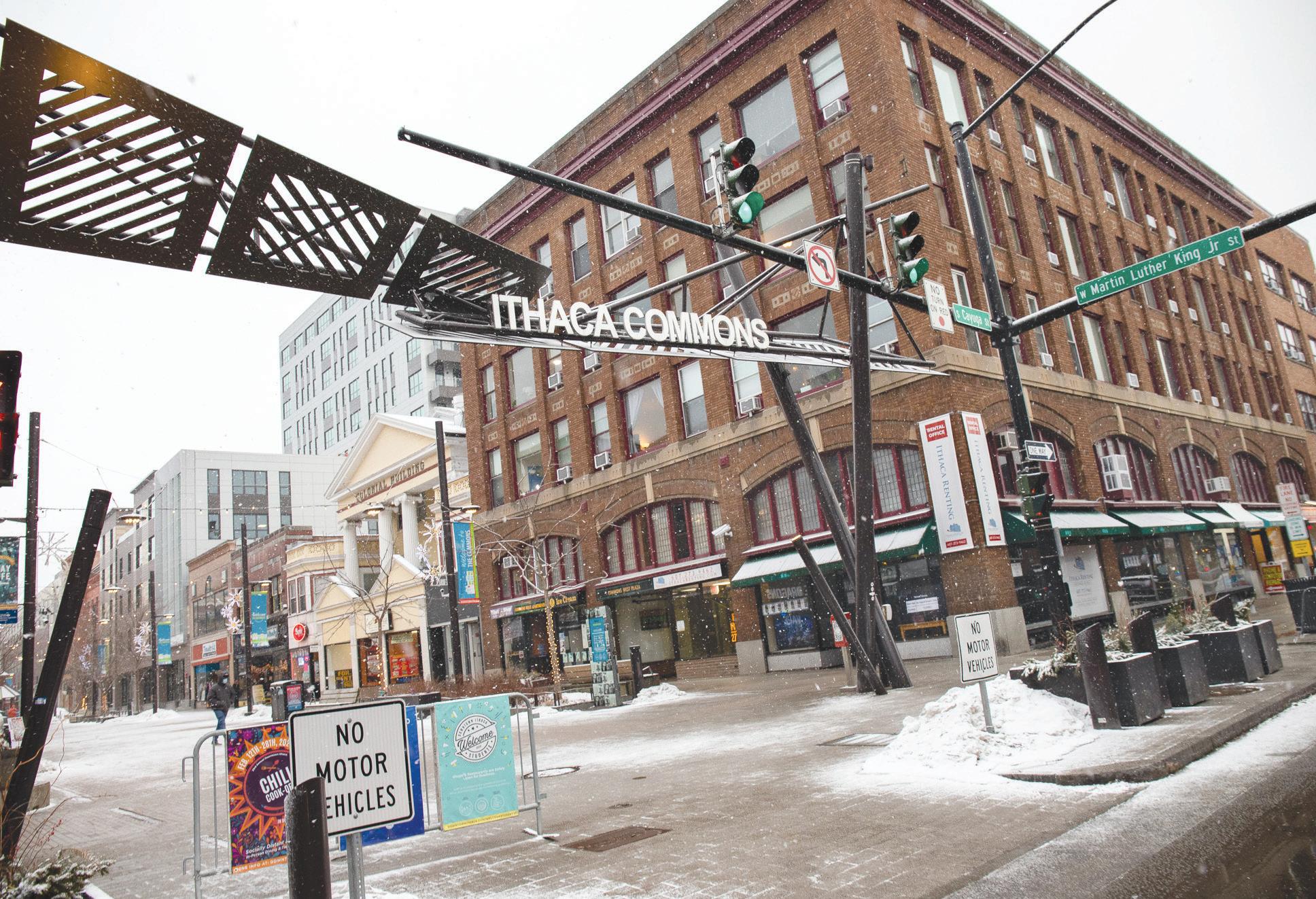
Local angle | The Ithaca Commons, which Trader K’s called home for the last 26 years, is seen on March 1, 2021. The secondhand store will be leaving the Commons sometime in April.
JULIA NAGEL / SUN ASSISTANT PHOTOGRAPHY EDITOR
Isabella Warren can be reached at iwarren@cornellsun.com.
Silent seating | As they prepare for the first round of prelims, Cornellians study on Wednesday in the tiered stacks of the A.D. White Reading Room.
JULIA NAGEL / SUN ASSISTANT PHOTOGRAPHY EDITOR



Cornell Research Receives Millions
Research project and start-up gets federal grant
By ANGELA BUNAY Sun Assistant News Editor
Two University researchers and one Cornell startup have been selected to receive over $7 million in funding from the United States Department of Energy Advanced Research Projects Agency-Energy.
On Feb. 16, Sen. Chuck Schumer (D-NY) announced the ARPA-E grants, which aim to fund projects that advance clean energy technologies. 68 projects were selected for funding across 22 states to take part in the ARPA-E Open 2021 program.
Prof. Khurram Afridi, electrical and computer engineering, leads the Field-Focused Load-Leveled Dynamic Wireless Charging System for Electric Vehicles project, which works to create a wireless charging system for electric vehicles. This project could drastically reduce the need for car batteries and advance the market for electric vehicles worldwide. Afridi’s project will receive $1.425 million from the ARPA-E grant.
Prof. Greeshma Gadikota, civil and environmental engineering, leads a research project aiming to advance a low-carbon environment with inherent utilization of waste concrete and carbon dioxide through integrated electrochemical, chemical and biological routes. Gadikota’s project will receive $2.5 million.
“The technology … would replace thermally intensive processes for producing construction materials with integrated electrochemical and chemical approaches that utilize carbon dioxide emissions and construction and demolition materials,” stated a University press release on Gadikota’s project.
The final University project funded by the federal grants is a startup created by Jason Salfi ’92, Prof. David Erickson, mechanical engineering and Prof. Tobias Hanrath, chemical and biomolecular engineering. Their project will use additive manufacturing systems to 3-D print ceramic components for innovative chemical reactors that can run on low-carbon electricity sources.
Lynden Archer, the Joseph Silbert Dean of Engineering, expressed gratitude for the project funding, saying that the projects demonstrate the innovation the University applies to the global challenge of
energy sourcing.
“We are grateful to Senator Schumer for his commitment to scientific research and his steadfast support of ARPA-E, which accelerates the technological advances necessary to address our world's most pressing problems,” Archer wrote in a University press release.
U.S. Secretary of Energy Jennifer Granholm described the need for funding these projects as the nation tackles the ongoing climate crisis.
“Universities, companies and our national labs are doubling down on advancing clean energy technology innovation and manufacturing in America to deliver critical energy solutions from renewables to fusion energy to tackle the climate crisis,” Granholm wrote in a press release from the U.S. Department of Energy.
In his announcement of the grants, Schumer explained how investing in environmental research at Cornell is critical to the advancement of clean energy solutions nationwide.
“From the push to decarbonize 100 percent of its building to the groundbreaking research being done at Cornell University, many are now recognizing what I have long known — Ithaca is paving the way to a greener and ‘gorges’ future,” Schumer said.
The University has been a leader in sustainability for years. In 2020, after eight years of maintaining a gold rating from the Sustainability Tracking, Assessment and Rating System — an organization that ranks universities based on their sustainability performances — the University was recognized as a platinum rated institution for its sustainability efforts. Cornell is the only Ivy League institution to receive a platinum rating, the organization’s highest rating category, from STARS.
The University was also one of the first 50 campuses in the nation and the first Ivy League to commit to carbon neutrality.
Climate change matters have long resonated with the Cornell community, with students making various efforts to combat climate change and encourage the University to divest from the use of fossil fuels.
Angela Bunay can be reached at abunay@cornellsun. com.
GPSA Discusses Period Products, Assembly History
By ELI PALLRAND Sun Staff Writer
At Monday’s meeting of the Graduate and Professional Student Assembly, members heard presentations from Office of the Assemblies director Gina Giambatista on the history of shared University governance bodies and from Graduate and Professional Student-Elected Trustee Liz Davis-Frost, grad on the campaign for free period products at Cornell.
Beginning in 1981 with the creation of the Employee and Student Assemblies and eventually including the GPSA after its creation in 1993, the shared governance system uses assemblies to allow groups across the University to participate in University decision-making and discuss campus issues.
According to Giambatista’s presentation, prior to 1955, the University faculty had decided all academic and non-academic policies. The Board of Trustees then transferred control over non-academic policy to Cornell’s President, who delegated some of that authority to the assemblies as occurs in the current shared governance system.
Shared governance has often been reactive to campus events — including a 2017 protest at the U.A. by Black Students United at Cornell over an attack against a Black Cornellian in Collegetown — and arose in response to his-
toric campus turmoil. Giambatista said that the system was created in part due to the Willard Straight Hall Takeover and other campus actions led by the Students for a Democratic Society in 1969.
University to Host Freedom On the Move History Webinar

By SURITA BASU Sun Assistant News Editor
In an event open to the Cornell community and sponsored by Cornell’s Migrations initiative, Prof. Ed Baptist, history, will deliver a presentation on the Cornell-based Freedom on the Move project next Monday, Feb. 21.
The FOTM project is a database documenting the lives of fugitives from American slavery through newspaper ads placed by slave owners in the 18th and 19th centuries. The database draws on crowdsourced data to document the experience of individuals and populations from slavery to freedom and beyond. It enables scholars from multiple disciplines to study the migration trajectories.
The FOTM project is based out of Cornell’s Institute for Social and Economic Research and was co-founded by Baptist. Its team spans several institutions, including the Ohio State University, University of Kentucky and University of Alabama. According to their website, the project boasts 13,167 contributors and 37,548 crowdsourced actions.
Baptist studies the history of the United States in the 1800s, particularly the enslavement of Black Americans in the South. The conversation will be moderated by Prof. Eric Tagliacozzo, history, who is the current co-chair of Cornell’s Migrations initiative.
Lynda Kellam, University Senior Data Librarian, Brandon Kowalski, a University software engineer and member of the center for social services and the Cornell Institute for Social and Economic Research are also collaborators for the event.
The event will be held online as a webinar on Feb. 21 at 1 p.m. through eCornell.
The assemblies range in size and authority: While the Faculty Senate has 130 senators representing 2,824 constituents and oversees mostly academic matters, the Student Assembly has 30 members representing 14,743 constituents and primarily controls the funding of undergraduate organizations who receive money from the student activities fee.
The implementation of all decisions made by assemblies are contingent on approval from the President.
The GPSA also heard a presentation from Trustee Davis-Frost on free period products at Cornell.
The Free Period Product Initiative launched in fall 2020 with $30,000 of funding from
the SA Infrastructure Committee as a collaboration between the Women’s Resource Center, the Gender Justice Advocacy Coalition and the Building Care and Facilities department to provide free period products — including tampons and pads — in bathrooms across campus.
A second round of purchasing in April 2021 allowed the campaign to introduce liners and other period products, but a lack of longterm funding for the project has led Davis-Frost back to the assemblies. She aims to secure more funding and move away from the current source of funds, which relies on the undergraduate student activity fee.
For many, access to period products is key to their quality of life on university campuses. Davis-Frost cited Columbia University Master of Public Health candidate Francis Rojina, who said that her education suffered because her family was too poor to afford period products. In the future, Davis-Frost said she hopes to expand the campaign and make it more sustainable. Goals include securing short-term funding for another round of product purchases, and also creating an educational campaign and a diverse campus working group to oversee the project.
Surita Basu can be reached at sbasu@cornellsun.com.
MICHAEL SUGUITAN / SUN STAFF PHOTOGRAPHER GPSA members are seen at work in a 2021 file photo.
Eli Pallrand can be reached at epallrand@cornellsun.com.
COURTESY OF CORNELL UNIVERSIY
Prof. Ed Baptist, history, will virtually present on the experience of fugitive slaves for the Freedom on the Move project on Monday, Feb. 21 at 1 p.m.
What Cornellians Eat Before the Gym

By JIMMY CAWLEY Sun Staff Writer
Disclaimer: Consult a doctor before taking any workout supplements.
t’s no secret that Cornellians love to exercise. Whether it’s the 45-minute line to use the gym or the crazy people running up the slope at 3 a.m. in the 10 degree weather, it’s clear that a majority of Cornellians work out. I frequently see people walking around with different drinks, and talking about different types of workout supplements, so I wanted to explore what Cornellians take when they hit the trails or gym. What to eat before and during your workout is a heavily debated topic with no clear answer. With a quick Google search, you can see that pre-workout, protein shakes and simply eating healthy are viable options towards maximizing your exercise. However, I wanted to hear what Cornellians actually did, and I gathered insights into their own experiences.
Westar Zong ’24 began working out in the middle of the
pandemic when gyms started to reopen.
“The gym was a great stress reliever and a fun activity to do with friends,” said Zong. When he began working out, he would take pre-workout before each lift, which he doesn’t recommend.
Pre-workout is a powder full of caffeine, amino acids and artificial sweeteners that one pours into water and drinks 15-30 minutes before working out. Zong said, “Pre-workout gave me a brief boost of energy and intense itchiness, which allows you to lift harder.”
The itchiness, which is caused by an ingredient called beta-alanine, usually occurs in specific spots in the body such as the shoulders and arms. However, this varies from person to person. Besides the itchiness, this seems like a win-win, right? You are able to drink a nice concoction before working out, and you enjoy an added boost of energy. However, Zong experienced downsides shortly after starting to take pre-workout.
“When I was ‘sober’ (lifting

without pre-workout) I would feel less energetic. I could feel my body beginning to have a dependence on this substance,” he said.
Similar to caffeine addicts, pre-workout users often begin to feel a decrease in productivity and energy levels when they don’t take pre-workout before every session. Pre-workout contains around 300 mg of caffeine per serving, which equates to about three cups of coffee.
Matthew Chung ’25 reported a different experience. When he felt tired from a long day and was preparing to work out, he wanted the “added energy boost” that pre-workout provides.
When asked about a possible dependence, Chung said, “I don’t feel like I have a dependence, and I have good workouts without it.”
Much like coffee, users could find a useful middle ground where pre-workout provides a much-needed energy boost without downsides.
Jimmy Cawley is a freshman in the College of Arts and Sciences. He can be reached at jdc354@cornell.edu.
The Corne¬ Daily Sun
139th Editorial Board
KATHRYN STAMM ’22
Editor in Chief
ANUSHYA ALANDUR ’23
Business Manager
CATHERINE ST. HILAIRE ’22
Associate Editor
PRANAV KENGERI ’24
Advertising Manager
ODEYA ROSENBAND ’22
Opinion Editor
JYOTHSNA BOLLEDULA ’24
News Editor
TAMARA KAMIS ’22
News Editor
CAMERON HAMIDI ’22
App Editor
KRISTEN D’SOUZA ’24
Design Editor
HANNAH ROSENBERG ’23
Photography Editor
OMSALAMA AYOUB ’22
Science Editor
PUJA OAK ’24
Layout Editor
ANNIE WU ’22 Production Editor
MIHIKA BADJATE ’23
Assistant News Editor
SERENA HUANG ’24
Assistant Business Editor
ANGELA BUNAY ’24
’23
AMELIA CLUTE ’22
MADELINE ROSENBERG ’23
Managing Editor
NAOMI KOH ’23
ANIL OZA ’22
Assistant Managing Editor
YUBIN HEO ’24
Assistant Web Editor
VEE CIPPERMAN ’23
NOOREJEHAN UMAR ’23
PLOWE ’23
YOON ’23
BENJAMIN VELANI ’22
Editor LUKE PICHINI ’22
Editor SRISHTI TYAGI ’22
MARIA MENDOZA ’24
ARANDA ’23
BASU ’23
RIGGS ’24
LEYNSE ’23 Assistant Arts & Culture Editor
JULIA NAGEL ’24 Assistant Photography Editor
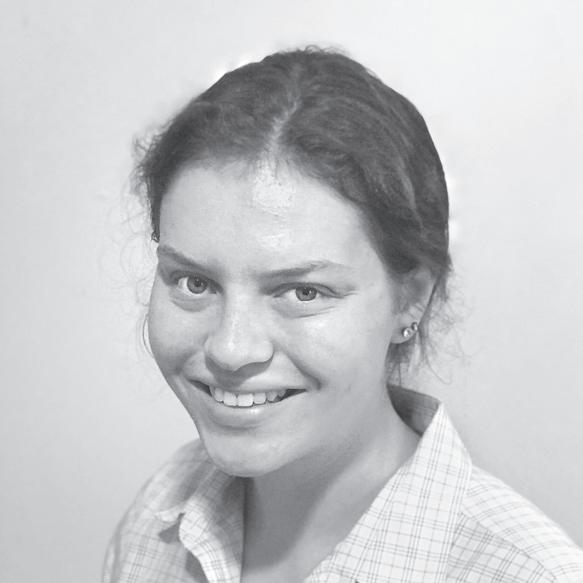
Lorelei Meidenbauer
Hot-takes and Handshakes
Lorelei Meidenbauer (she/her) is a senior in the College of Agriculture and Life Sciences. She can be reached at lmeidenbauer@cornellsun.com. Hot-takes and Handshakes runs every other Tuesday this semester.
All Teams
Deserve Support
Cornell hockey games are full of packed, cheering crowds every weekend, chanting alongside the band. Well, the men’s hockey games are. I went to a women’s hockey game for the first time on Friday, and I was shocked at the quiet. The pep band played as loud as ever, but the crowd was maybe a third of the size that it typically is for the men’s games. The same sport, same location, same cheers. Why had so many fewer people turned up?
It’s not the cost of tickets – men’s hockey games typically cost around $15 for students, while the women’s game cost me only around $5. Many other sports are free to attend. Nor is this an attribution to the skill level of the team; our women’s hockey team is consistently one of the best in the country, as is the men’s.
That same afternoon, members of the wrestling team were in Trillium dining hall promoting their senior day meet against Binghamton, which occurred this past weekend. It was a whole spectacle: One of them was running around in a red morph suit trying to convince students to attend.
SUBMIT YOUR LETTER TO THE EDITOR
Have an issue with our news coverage?
Want to give your take on a campus issue?
The Sun thrives on your feedback. Continue the conversation by sending a letter to the editor to opinion@cornellsun.com.
Letters should be no longer than 250 words in length.
Please include graduating year if applicable.
There’s a lack of recognition from the general student body of the dedication behind Cornell’s student-athletes. For most Cornellians, sports are something to get engaged with when it’s convenient, particularly those with strong legacies and traditions, such as men’s hockey. But for all student-athletes, regardless of the team, sports are an integral part of our college experience, and all teams deserve to be supported by the student body as such.
To preface, I myself was a varsity athlete here for three years on the rowing team. I know all too well that being a Division I athlete is certainly not easy. In addition to 20 hours of structured practice, you often have to attend team and coaches meetings, additional workouts, physical therapy and health appointments. You also have to prioritize eating and sleeping well, which can prove really hard for any Cornell student. Time is by far the most limiting factor in this equation, and athletes are forced to choose what they prioritize, making sacrifices that other students simply don’t have to make.
I’ll never forget a moment during my sophomore year when I went to get a resume critique from the Engineering Career Center. The upperclassman peer advisor read through the page and asked me directly, “So, what do you do on campus?”
“I’m on the rowing team,” I answered.
“Anything else?”
The moment may seem innocuous, but when it happened, I immediately felt inadequate. When you’re a student-athlete, it’s virtually impossible to do anything else. Most clubs meet during the academic dead period between 5 and 7 p.m., but that’s when we have practice. Rowing is a year round sport, with races in both the fall and spring semesters. I was, howev-
er, able to join a project team thanks to COVID taking racing away for the fall of 2020. I worked on the team for a grand total of one semester — and even then, the demands of balancing practice with the necessary time and effort of the club proved challenging.
The question implied that being a student-athlete on campus isn’t “enough” on its own; I had to do more to feel accepted by my peers.
The general Cornell attitude is that student-athletes should be treated just as any student would be. On the surface, this statement makes sense, yet our peers are often the least supportive of any additional needs that student-athletes have. I’ve been told by several naive peers that student-athletes think they’re better than the rest of the student body; this idea is a pervasive one that exists across campus. In my experience, this couldn’t be further from the truth.
At many other schools, athletes get great benefits: lots of gear, early access to class signups, even separate dining halls. That’s not the case at Cornell. Being a student-athlete here earns no special privileges; the gear is usually old and reused, and the Ivy League doesn’t provide any kind of scholarships for athletics. More often than not, being an athlete is an academic hindrance. We have to navigate exams and assignments around race schedules, coordinating with our professors and coaches in an effort to survive the semester.
Particularly when COVID first impacted student life on campus, it was almost taboo to admit to being an athlete. Teams were often blamed for outbreaks on campus — sometimes rightfully so, but, as with any group, generalizations often do more harm than good. Many student-athletes live together in large houses; my house was even listed on an anonymous Instagram page, which called us out for hosting a “party.”In reality, that gathering was composed only of members of our household. In fact, we had been isolated for weeks, with no outsiders allowed inside. It was incredibly frustrating to be doing everything right, yet still get blamed by fellow students.
Last summer, I ultimately made the decision to prioritize my medical needs and retire from the sport. It definitely wasn’t an easy choice to make, though I found a strong silver lining. Quitting gave me the time and energy I needed to pursue so many amazing opportunities, such as writing for The Sun. Most athletes make these sacrifices quietly, often without even realizing the extent of what they’re missing. It’s only in hindsight that I fully see the opportunity cost of being a fulltime athlete, and yet it’s a tradeoff I would absolutely make again in a heartbeat.
Being a Cornell student-athlete is challenging, and all of the athletic teams here deserve our support and respect.
Privilege Can’t Solve Sexism in Healthcare
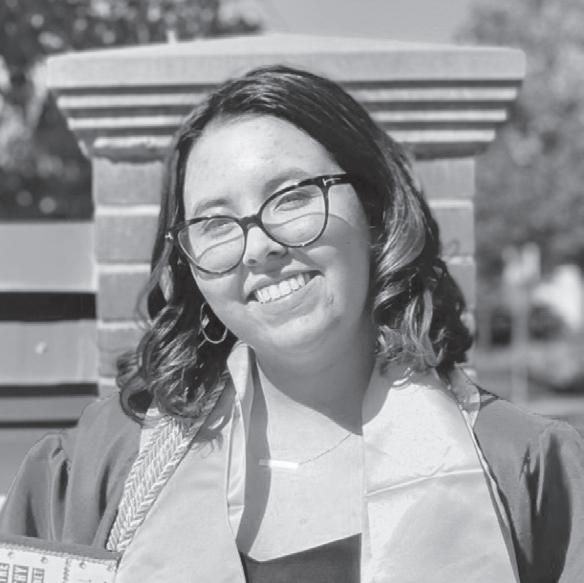
Daniela Wise-Rojas Anything But MunDANIties
Daniela Wise-Rojas ’25 (she/her) is a freshman in the College of Arts and Sciences. She can be reached at dwise-rojas@cornellsun.com. Anything But MunDANIties runs every other Monday this semester.
Iremember getting my acceptance letter, naturally assuming that since Cornell is a wealthy school (specifcally, a $10 billion endowment), I wouldn’t have to worry about having access to healthcare. I assumed that even if appointments were booked, there would be no frustration on the part of the student. I had the sad realization that such an assumption was near impossible and utopic — even more so when someone considers the roles that gender plays. Because women are disposable in society, they are perceived as less worthy and tend to be gaslighted by men. “Ivy privilege” does not solve the problem of sexism in healthcare in today’s society; as a matter of fact, it exacerbates holes in the system to cater more to the needs of men and protect capitalist institutions by prioritizing money and corporate greed.
In a weird, almost egotistical way, I assumed that any obstacles to healthcare would be overrun by my “Ivy privilege.” Tat’s essentially when I say, “I go to Cornell,” and people freak out. I’m automatically seen as a more respectable person (which isn’t right, because there are so many
other schools that are just as good with less prestige. Tat’s a topic for another possible column). In the same way that many professional spaces have racist/tone-deaf undertones (as I wrote about in my last column), the healthcare feld also has misogynistic undertones.
Sexism isn’t new to the medical feld. Te medical journal CMAJ published a chapter written by two University of Toronto doctors titled, “Sexism in medical care: ‘Nurse, can you get me another blanket?’” Many female physicians are mistaken for nurses based on sexism alone.
Te article states, “Examples of other patronizing, gender-stereotyping comments from patients include calling female doctors ‘honey’ or ‘sweetie,’ viewing young female physicians as inexperienced, asking intrusive personal questions and tacitly presuming men are physicians.”
Here’s my take: Tis view that women need to be more submissive and less qualifed also can go both ways. Let’s say you’re a grown human with a uterus, and you’re back on your period. You seem to be doing alright, until your cycle lasts for more than a month (along with other horrible symptoms). You will eventually come to the defeated realization that should you need to go see an OBGYN, but Cornell Health can’t help you. Teir only women’s health resources are for sexual health. I’m glad that these are ofered, but they don’t solve everyone’s problems.
I speak from personal experience: My period issues became out-of-control, and I didn’t know what to do. I needed to see a doctor that specializes in more than your average gyno. I called around the Ithaca area. Because Cornell’s surrounding area is more suburban or rural by nature, despite the proximity to an elite institution, there were still nearly no appointments until several months later. One ofce secretary said, “Well, we have a midwife. if that helps.” I went to urgent care that weekend and sobbed when I was told there was nothing that I could be prescribed to help me without seeing an OBGYN.
I was running into obstacle after obstacle while already physically weakened, only to be mentally impacted further by the harsh reality that I would have to advocate for myself in a feld where you are supposed to be heard and listened to. I have a naturally high pain tolerance, so I know that something is severely wrong when I can feel pain.
I hate that I have to act like I’m in the worst pain I’ve ever imagined to get support; otherwise, I’m simply a “hysterical” woman. I’ve always had problems like these; I probably have a chronic condition that I haven’t been able to get a diagnosis for. I’ll continue to advocate for myself, but not because I feel empowered. It’s because I don’t have a choice. I ended up driving 4.5 hours away for a medical appointment. I’m not saying Cornell isn’t great with medicine or doesn’t have access to the best resources. Te ironic part is that they do. Tere is a Weill Cornell ofce in New York City for pelvic pain and other related conditions. However, that’s not close to here. If I didn’t have my car and if I didn’t work, I would not be able to aford or tend to my healthcare expenses (at least, not easily).
Saying “I’m a student at Cornell” did nothing to help me. It only made me feel more defeated. It’s already hard enough to struggle with mental health at Cornell. Getting an appointment is a weeks-long endeavor, getting a psychiatrist is near impossible even with all the supporting documentation and sometimes I’m stuck with 8 a.m. therapy sessions because there are no other options. Mental health is also a place where you’re told to not act in certain ways to remain “sane.” Again, women are told, “Oh girl, you’re just acting crazy.”
I wish I was the only Cornell student with these experiences; however, I doubt it. I’m so tired of being told that both my physical and mental pain is invalid when I need help. Tis is probably a nearly universal experience; I saw an social media post at one point that said, “If men could get pregnant, there would be abortion clinics like they’re Starbucks locations.”
I paused, realizing that there is some truth to this. Women are also asked, “Oh if you do x, you might not be able to have a kid later on.” On one hand, sure, it’s a proactive question. But on the other hand, why guilt trip when men rarely get asked questions about their future kids? No one ever asks a man if they could be faking their pain. More often than not, women are faking that they are okay, physically and mentally. If you relate, I hope you know that you’re not alone. All you deserve is basic human decency and someone to listen to what’s wrong. Trust your instincts. Always.
Tere’s a Duck in the Road
that I had time to say hello as I walked back to my apartment. It was after several minutes of speaking, just as I emerged onto the College Ave bridge, that I uttered the phrase that has, as the kids say, been living rent free in my brain for a week now:
“Uh, Mom, there’s a duck in the middle of the road.”
Andrew V. Lorenzen is a senior in the College of Arts and Sciences. He can be reached at alorenzen@cornellsun.com. When We’re Sixty Four runs every other Wednesday this semester.
Tuesday, Feb. 8 … A day that will live in duckfamy.
It began as any other February day begins at Cornell — with the frigid Ithacan wind billowing and a sea of students trudging through muddy slush on their way to class. I was one of them. As we plodded along the sidewalk to class, hands shivering whilst scrolling absentmindedly through social media in a sleepy yet content boredom, we had little idea that day would be interrupted by a moment that would arrest us all in sheer fascination and perhaps even amazement.
Class that afternoon passed uneventfully. If we’d known what was to occur, maybe we would have been unable to focus. Maybe we would have rushed to the scene in eager anticipation. Maybe everything would have been diferent. But instead, as I packed up my laptop and meandered back toward Collegetown, my mind was mostly blank.
As I joined the stream of students hurrying down East Avenue, I dialed my mom and raised my phone to my ear, fguring
In the middle of the bridge was a resplendent duck. Black eyes lay enmeshed in dark green feathers. At its neck, these feathers turned white in a thin strip almost resembling a collar, then brown at the duck’s chest and fnally gray with just the slightest trace of navy blue on the duck’s tail. Te duck (who shall henceforth be known as Duckley) was objectively stunning. And he was, as the kids say, positively vibing in the middle of the road.
A small crowd had formed, observing him from the sidewalk with a mixture of amusement and concern. Duckley —
How many Cornell students did it take to protect a duck? We were about to find out.
seeming to have a rather shilly-shally opinion on his next destination — occasionally waddled over to the sidewalk, back to the center of the road, and then back to the sidewalk. Suddenly, a car approached just as Duckley returned to the street. Someone stepped out of the crowd and waved for the car to slow down. Te car took note of Duckley and dutifully avoided him.
Yet, there were more cars coming — more challenges for Duckley. Te crowd was increasingly growing worried for Duckley’s safety at such a narrow, busy
stretch of road. I abruptly informed my mother that I had to go — this moment demanded an all-hands-on-deck call to action. How many Cornell students did it take to protect a duck? We were about to fnd out. Te wind howled in our ears. Te tension rose in our chests. Duckley’s fate rested in the balance.
Te crowd had shifted. Several students had continued along their journeys, unable to interrupt their schedules for Duckley. Reinforcements had arrived. One student astutely noticed that Duckley had a tag on his leg and wondered if perhaps he was part of some experiment. Tey dialed CU Police and tried to get some help.
Te cars began to speed up. Several of us waved cars down, indicating from a distance that there was a hazard on the road ahead necessitating profound caution — a breathtaking hazard named Duckley. We took turns standing in the middle of the road, protecting Duckley, trying to shoo him towards the sidewalk. Yet Duckley — being of an obstinate and rambunctious mind — refused to be deterred from zig-zagging between the sidewalk and the street in a continuous loop.
I wondered if I could go to 7-Eleven and buy a loaf of bread. I could then tear the bread into smaller pieces and create a trail for Duckley to follow away from the bridge to a safer area. Yes, feeding ducks bread isn’t healthy, but desperate times called for desperate measures. Te student on the phone with Cornell Police seemed to be making a bit of headway, but there was not yet a resolution. What could we do to break the stasis? How could we end this crisis, the likes of which had not been seen at Cornell since its inception?
Yet, all at once, it simply ended. Duckley, fed up with our harassment, spread his wings and few away in the direction of campus. As he disappeared over the horizon, we were left to mutter remarks indicating that many of us, myself included, hadn’t realized that ducks could
actually fy that well, if at all.
It was as if a spell had worn of. I realized that I was late. I had to be working on something for class, probably. I muttered goodbye to my fellow Duckley support-
I urge you to find your Duckley, to bond with others as you protect him and to stare at the sky, oddly mesmerized, as he flies away.
ers and retreated back to my apartment, thoughts of Duckley gnawing at the back of my brain. In the midst of a busy day in a busy week in a busy month in a busy semester in a busy undergraduate career, the saga of Duckley had provided a momentary respite of whimsy and majesty. Cornell is a serious place for serious minds conducting serious study. Yet there are random, unplanned moments where, if you allow yourself, you can revel in the magic of something entirely unserious, something just wholesome and nice — like a bunch of random people guarding an adorable duck with their lives.
As the days remaining in my undergraduate career dwindle in my fnal semester at Cornell, it’s these completely spontaneous moments that have been the most memorable during my time here. I urge you to fnd your Duckley, to bond with others as you protect him and to stare at the sky, oddly mesmerized, as he fies away.

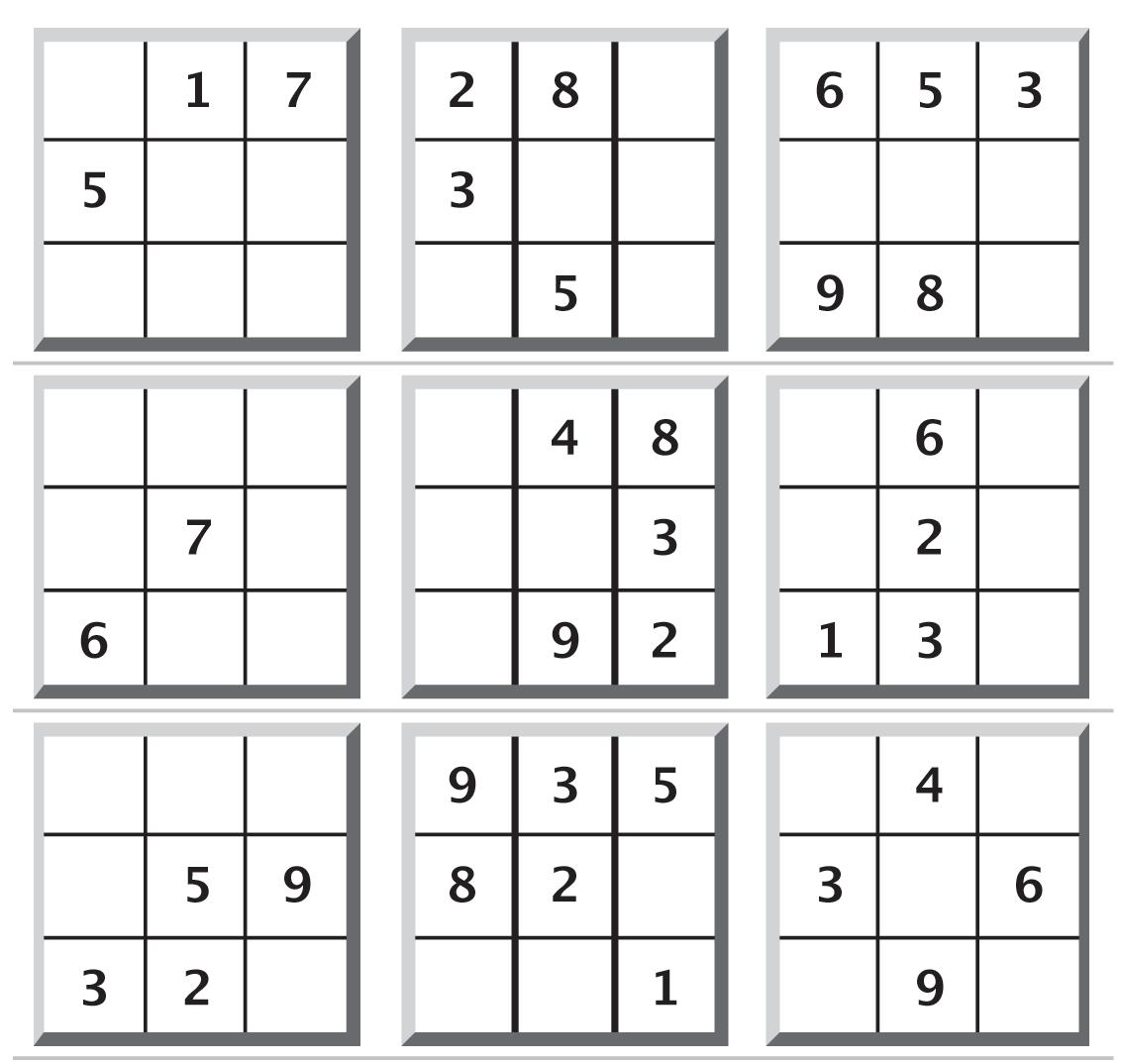
Fill in the empty cells, one number in each, so that each column, row, and region contains the numbers 1-9 exactly once. Each number in the solution therefore occurs only once in each of the three “directions,” hence the “single numbers” implied by the puzzle’s name. (Rules from wikipedia.org/wiki/ Sudoku)
I Am Going to Be Small
Mr. Gnu
SC I ENCE
C.U. Reseachers to Revolutionize Machine Learning
By ADITYA SYAM Sun Contributor
A Cornell research group led by Prof. Peter McMahon, applied and engineering physics,has successfully trained various physical systems to perform machine learning computations in the same way as a computer.
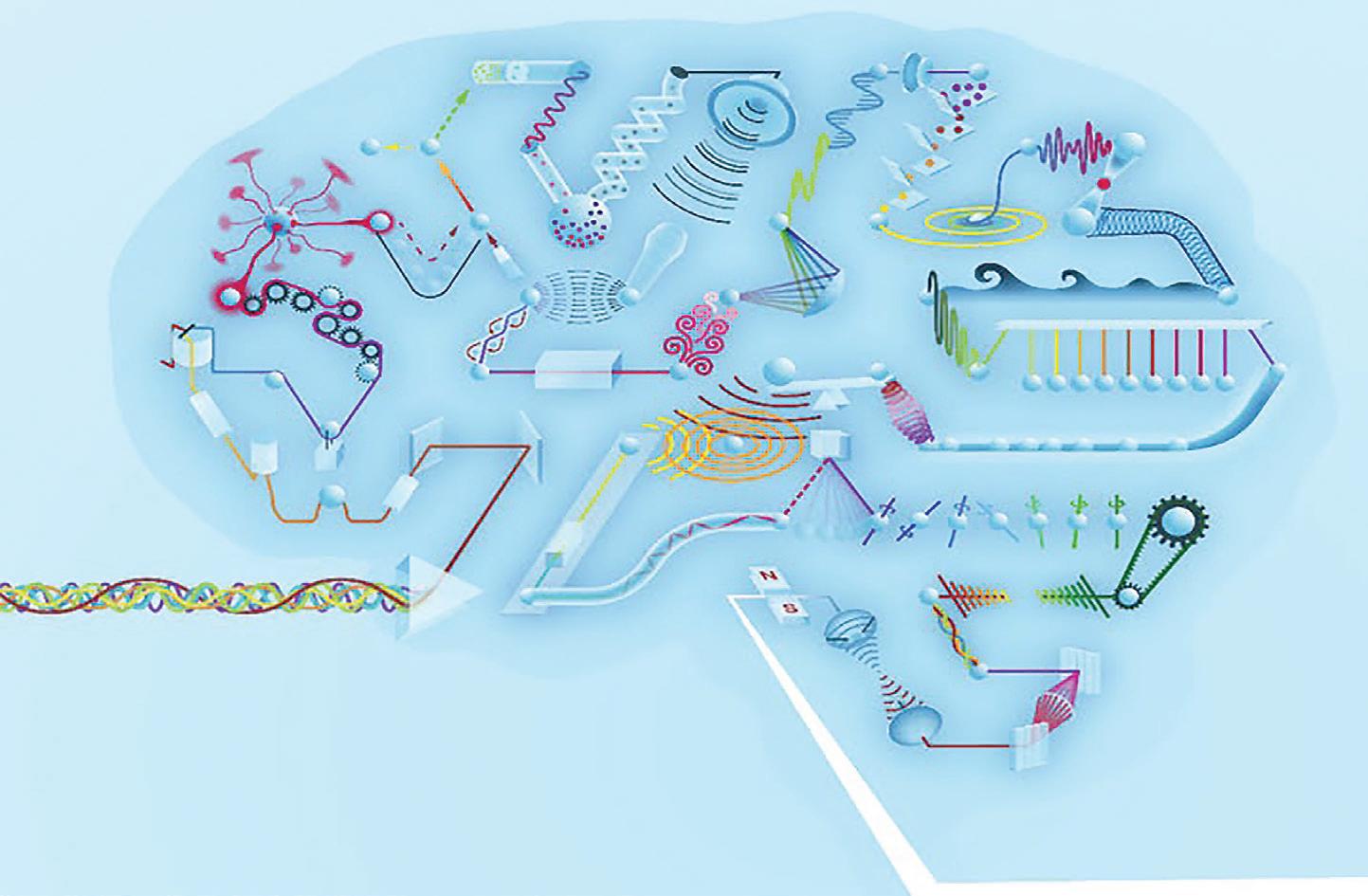
The researchers have achieved this by turning physical systems, such as an electrical circuit or a Bluetooth speaker, into a physical neural network — a series of algorithms similar to the human brain, allowing computers to recognize patterns in artificial intelligence.
Machine learning is at the forefront of scientific endeavors today. It is used for a host of real-life applications, from Siri to search optimization to Google translate. However, chip energy consumption constitutes a major issue in this field since the execution of neural networks, forming the
basis of machine learning, uses an immense amount of energy. This inefficiency severely limits the expansion of machine learning.
The research group has taken the first step towards solving this problem by focusing on the convergence of the physical sciences and computation.
The physical systems that McMahon and his team have trained — consisting of a simple electric circuit, a speaker and an optical network — have identified handwritten numbers and spoken vowel sounds with a high degree of accuracy and more efficiency than conventional computers.
According to the recent Nature.com paper, “Deep Physical Neural Networks Trained with Backpropagation,” conventional neural networks are usually built by applying layers of mathematical functions. This relates to a subset of machine learning known as deep learning, in which the algorithms are modeled on the human brain and
the networks are expected to learn in the same way as the brain.
“Deep learning is usually driven by mathematical operations. We decided to make a physical system do what we wanted it to do – more directly,” said co-author and postdoctoral researcher Tatsuhiro Onodera.
This novel approach results in a much faster and more energy-efficient method of executing machine learning operations, providing an alternative for the energy-intensive requirements of conventional neural networks.
It might seem as though this advantage of energy efficiency would be limited to small computations, which would not require a significant amount of energy to begin with. However, larger computations result in greater energy efficiency, according to Onodera.
The potential of these physical neural networks extends beyond saving energy. According to McMahon, larger and more complex physical systems would have the ability to operate with much bigger data sets and with greater accuracy.
Further, it is possible to connect a series of different physical systems together. For example, a speaker could be connected with an electrical circuit to obtain a more complex system with greater potential.
“As you make the system bigger, it is more intelligent,” Onodera said. “The range of things it can accomplish is more versatile.”
Most of these physical systems can perform all the functions necessary for machine learning computations by themselves in the same way as conventional systems. For example, when fed handwritten numbers for image classification, the physical networks can extract the spatial features and determine the number by itself in the same way as conventional neural networks.
The team also theorizes that many problems associated with the training of conventional networks — such as the unintended
decrease or increase of the loss calculation in the feedback process — would go away in the case of physical networks.
“If you look at each individual component [of the physical system], it might be doing something completely different,” said co-author and postdoctoral researcher Logan Wright. “It gets from Point A to Point B, but the trajectory is potentially completely different.”
Even if the physical systems undergo some form of wear and tear, which disrupts their computational abilities, they can always be retrained, thus nullifying the ill-effects of any physical damage.
Currently, the physical neural networks are only capable of a feed-forward process. This means they cannot train and retrain themselves in the same way as recurrent neural networks — which have a constant feedback mechanism and can update their parameters as required. Onodera, however, expressed optimism about training these systems to execute a recurrent feedback process.
Even though physical neural networks present a novel approach to machine learning, they could potentially change the face of the field in the future. Wright wrote that one key reason for this potential is that these systems replicate our brains more closely than other types.
Different types of physical systems are tuned to different kinds of operations and learning computation. It might, however, take a while for these physical networks to widely integrate into the machine learning ecosystem — largely driven by conventional neural networks.
“The brain evolved, [to the point] where the physics and the algorithms are all intertwined,” Wright said. “This is what we are moving closer to physical algorithms instead of just hardware or software.”
Aditya Syam can be reached at as2839@cornell. edu.
Students, Experts Discuss Mental Health as Prelims Approach
By BROOKE GREENFIELD Sun Contributor
The recent switch to in-person classes has excited many students for the semester ahead, but as the first week of prelims approaches, some have expressed apprehension about the start of exams due to the stress they faced last semester.
In November, occurrences of bomb threats and gunmen on campus were followed by finals week. Students, including Lindsey Feinstein ’24 and Amber Lao ’24, expressed that they feel built up pressure to finish their assignments and perform on their exams while many are still struggling with poor mental health.
For many, online classes were not an easy undertaking. Feinstein spoke on the stress that online finals this past semester gave her.
“This shift was very abrupt, and it was anxiety-inducing to shift gears into a different format of learning,” Feinstein said.
Feinstein said that students have felt a decline in their academic process due to external factors, such as the bomb threats and the gunmen announcement. Feinstein said the threats made her feel less safe on campus, which consequently disrupted her daily routine.
“The current exam period has
made me distracted, drained and most definitely tired with the academic pressure,” Feinstein said.
After just one week of in-person classes this spring semester, Feinstein has noticed a difference in her academic performance when approaching her schoolwork and studies.
“I am much more energized, focused and motivated having a fresh start to in-person classes before this upcoming period of exams,” Feinstein said.
She also noted, however, that she is particularly stressed and overwhelmed from making this shift back to in-person classes and immediately facing exams.
According to Catherine Thrasher-Caroll, mental health promotion program director at Cornell Health, some stress can be motivating, but too much leaves people feeling overwhelmed. She noted that prioritizing self-care –taking study breaks or practicing five minute stress busters such as deep breathing or meditation can make an impact on how students feel and how they perform academically.
Thrasher-Caroll also mentioned in her interview with The Sun that students can attend CAPS-led workshops or virtual guided meditation sessions provided by Cornell Health to manage their anxiety and
remain grounded.
“Many students still face stigma about seeking mental health care, and starting a formal process of seeking treatment can be intimidating,” Thrasher-Carrol said.
Other students, such as Lao, described how they encountered difficulty accessing Cornell’s mental health resources despite reaching out for support.
“Cornell mental health services are not always easily available, as appointments take a long time to schedule,” Lao said.
Several organizations on campus are working to address mental health problems directly, such as Cornell Minds Matter, a student-led mental health awareness and advocacy organization that provides students with mental health related resources ranging from professional health services to de-stressing events.
“Students at Cornell are tired all the time, and external factors such as last semester’s threatening events add extra stress and are anxiety-inducing,” said Leadora Kyin ’22, social media chair of CMM.
According to Kyin, some common elements that degrade student mental health include poor nutrition, lack of sleep, social pressure and academic burnout. Bianca Beckwith ’22, president of CMM, claimed that the
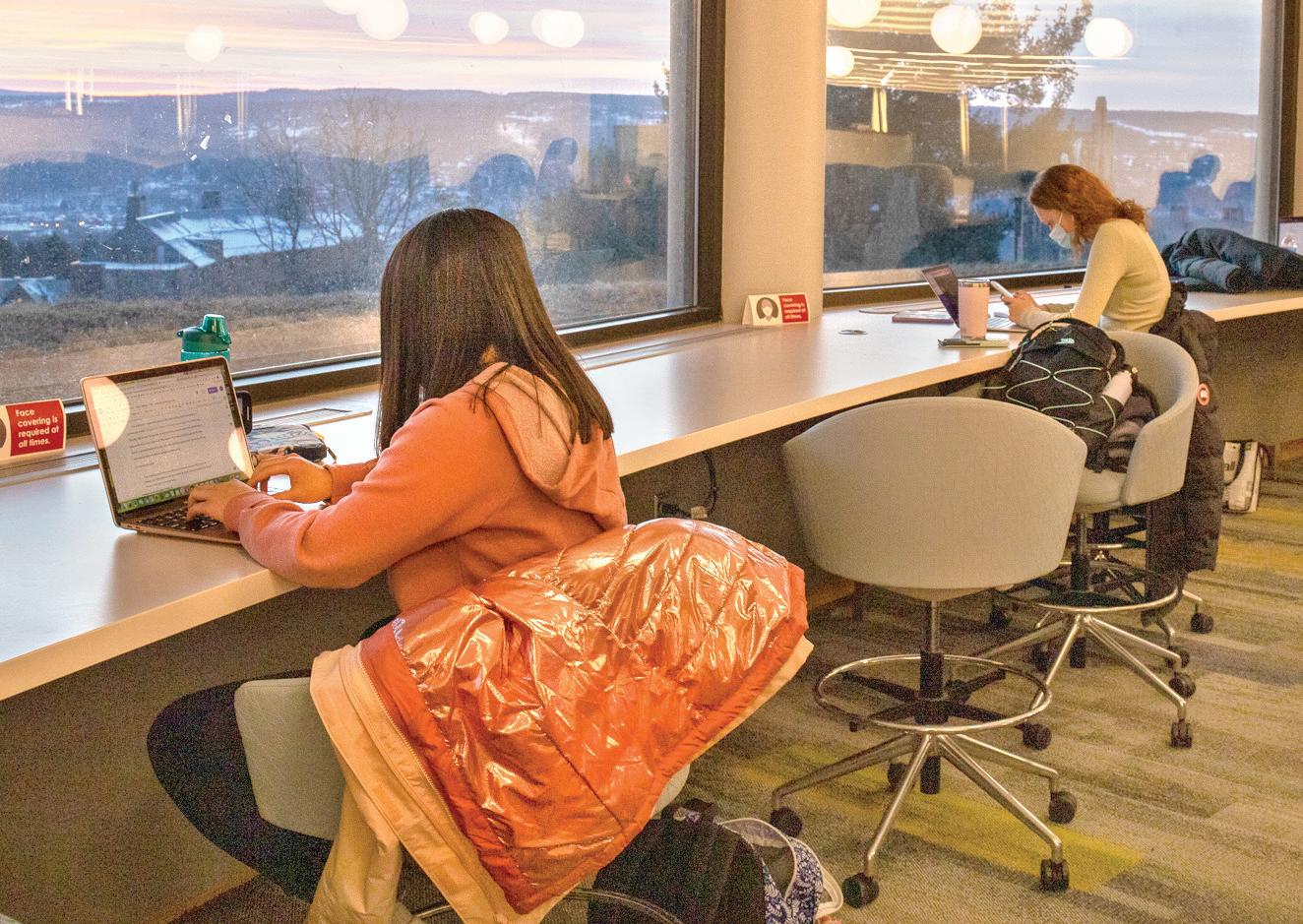
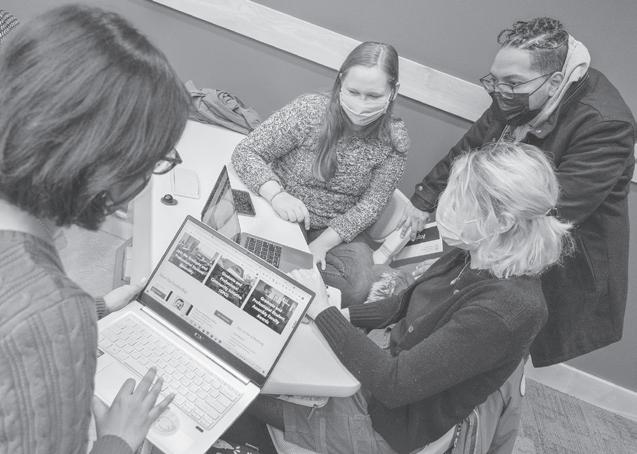
Exam season | Students in the Cocktail Lounge study and complete assignments as in-person classes resume with prelims just around the corner.
most salient stressor right now is the lack of a more empathetic response from upper level administration. She said that there is also an absence of accountability for inconsistent responses from professors.
“Students are uncomfortable and disappointed that they had to trudge through the end of classes with professors who are not valuing student wellbeing,” Beckwith said.
Beckwith expressed frustration with Cornell Health and their poor outreach to students who do
not want to face the stressors from struggling to find help on top of their already stressful academic lives.
“The most crucial thing, as students mention, is having an outlet to escape in such a stressful time,” Beckwith said. “Budgeting time in daily classes and study schedules for self-care is necessary to staying mentally healthy, especially during final exam week when stress levels are spiking.”
Brooke Greemfeld can be reached at blg77@ornell.edu.
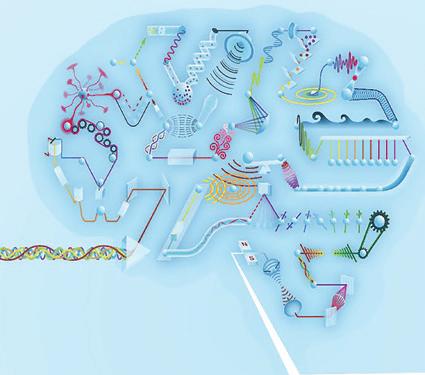
Artifical intelligence | Physical systems are being developed with algorithms similar to the human brain. They have begun performing machine learning computations by themselves.
COURTESY OF PHILLIP JORDAN
JULIA NAGEL / SUN ASSISTANT PHOTGRAPHY EDITOR