
Mice Found in Ganedago: Hall
Several students spot mice in new residential hall
By JIWOOK JUNG Sun Staff Writer
Ganedago: Residential Hall opened its doors in fall 2021 with a goal of providing undergraduate students a clean, sleek living space, modern aesthetic and collaborative environment. But as students return to their dorms this spring, some Ganedago: residents found that mice had made themselves at home in their rooms.
The infestation follows two reports of arson at the residence hall that occured in mid December over winter break, adding to the string of stressful events that Ganedago: residents have had to navigate.
When Finn Kennedy ’25 returned to Ithaca on Jan. 23, he expected to settle back into his room and prepare for the upcoming spring semester. What he did not expect, however, was a mouse in his room.
mind the appearance of the mice. According to Kennedy, he and his suitemates took the situation with humor.
“I thought he was cute,” Kennedy said. “My friends and I even named him Remy, the rat from the movie Ratatouille, and we left out a cookie for him.”
However, other students took the dorm’s mice sightings to be a more serious problem.
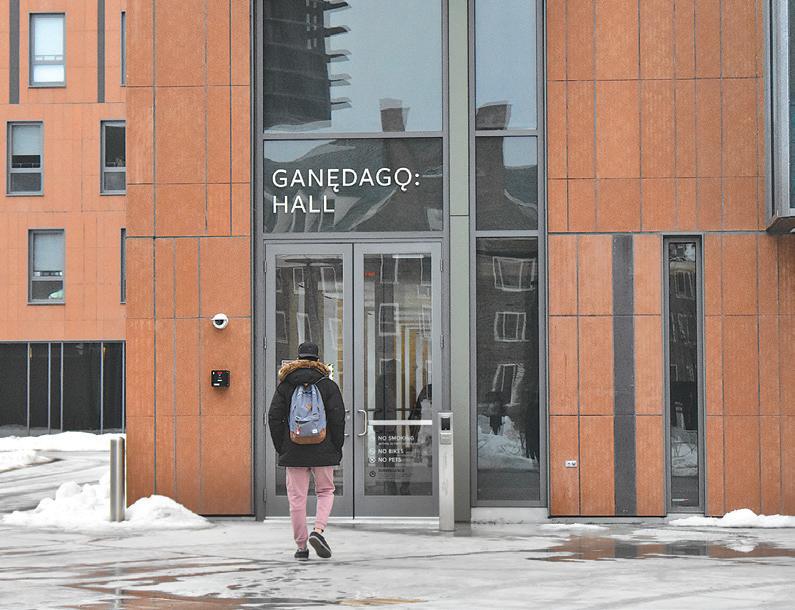
Role reversal | Students scurrying in the newly built Ganedago: following a rodent infestation.
“I was like ‘wait, what’s that noise coming from my trash can?’” Kennedy said. “I quickly turned on my flashlight, and I saw a mouse jump out of my trash can and fall on the floor.”
Some students, including Kennedy, did not
On Jan. 30, Ganedago: resident Camila Monter ’25, who has a rodent allergy, noticed something was wrong in her room.
“After moving in, I started sneezing and coughing a lot,” Monter said. “The next day, I saw a mouse running into my roommate’s closet. At that point, I realized that the mice were the cause of my allergic reaction.”
In an email to The Sun, Tim Blair, executive director of Housing and Residential Life, wrote that his department is taking action to address the infestation at Ganedago: including placing traps in the affected portions of the building’s first floor.
See MICE page 3
Alumni-Owned Restaurant to Come to Ithaca
By ALLY FERTIG Sun Staff Writer
Ithaca Commons will soon greet the newest addition to its restaurant scene: Lev Kitchen, a Middle Eastern-inspired restaurant committed to supporting the Ithaca community.
Founded by two alumni with Masters of Management in Hospitality degrees from the School of Hotel Administration, Lev Kitchen will open its doors to customers on State St. in Ithaca Commons.
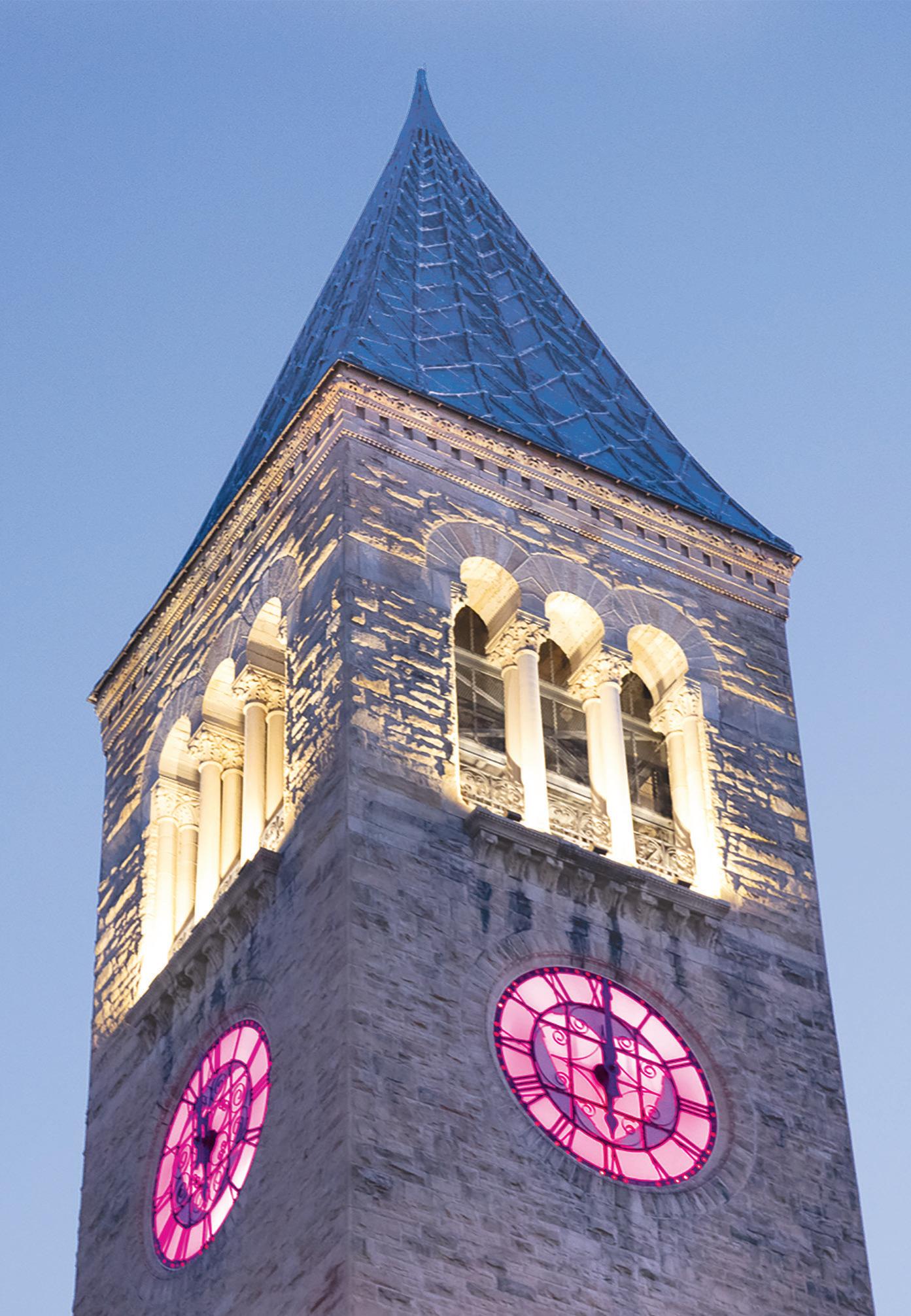
Through his work with Sanctuary Kitchen — a nonprofit in New Haven, Connecticut that works with refugees in the culinary industry — Benjamin Plotke ’19 learned about the cuisine of Levant, a region spanning the eastern shore of the Mediterranean sea and surrounding islands. Plotke and his wife Yen Wu ’19 said they hope to bring what they learned to the Ithaca food scene.
Plotke said his experience visiting the Machne Yahuda market in Jerusalem in 2016 helped inspire the restaurant’s grab-and-go style, replicating the atmosphere of a busy market. Malawach, a Yemenite Jewish flatbread, will appear in the restaurant’s breakfast and all-day dishes as main menu items.
Although he first imagined introducing Malawach to the United States after his
vivid experience at the market, Plotke only brought this idea to life after he started the Master of Management in Hospitality program in 2018. Through collaborative projects in his Marketing and Restaurant Development classes, he created a plan to open the restaurant.
After finishing his Master’s degree, Plotke delayed the development of this project, moving to Los Angeles to work on supply chain strategy at Everytable. He did not revisit the idea until the beginning of the COVID19 pandemic, when he and his wife began to scout restaurant locations.
“Cornell is an incredible resource for us as entrepreneurs,” Plotke said. He cited working with student groups like Big Red Microenterprise as well as the Cornell Law Clinic for legal assistance that he deemed “invaluable.”
After gauging locations as far-reaching as Santa Monica, they ultimately decided to bring their business back to Ithaca. Plotke expressed excitement at the resources that the Ithaca community and local universities have offered the restaurant.
According to Plotke, Lev Kitchen will focus on supporting the Ithaca community, sourcing ingredients locally and employing refugees and recent immigrants. The restaurant will highlight local proteins, produce and ciders on the menu. It also partners with Ithaca Welcomes
Refugees, Open Doors English and Catholic Charities, all of which are local organizations that support refugees.
Plotke emphasized the restaurant’s commitment to social sustainability, which he noted does not always receive as much attention as environmental sustainability.

“The growth of all our employees is a priority,” he said. “Providing them with real wages, paid training and paths to real opportunity is vital.”
The restaurant will align its menu with The EAT-Lancet Commission on Food, Planet, Health, a scientific review that provides healthy and environmentally sustainable dietary recommendations. Mediterranean cuisine’s inherent focus on grains, legumes, fish and dairy aligns closely with these guidelines.
“This makes it possible for us to achieve the goal of aligning the menu with EATLancet,” Plotke said. “If we were doing a wing or burger concept, there is no way we would be able to align the menu with Eat Lancet.”
Students interested in sustainability expressed enthusiasm at Lev Kitchen’s opening with hopes that the restaurant’s values would influence other Ithaca establishments.
“As an Environment and Sustainability major, I am hopeful that this initiative will set the tone for other restaurants looking to become more environmentally and socially sustainable,” said Samantha Rosenberg ’24. “I can’t wait to experience Lev Kitchen and everything it has to offer!”
Ally Fertig can be reached at afertig@cornellsun.com.

Levant | These Cornell alumni have settled upon the Ithaca Commons as the location for their new restaurant.
ALYVIA COVERT / THE ITHACA VOICE
AMANDA BURKART / SUN CONTRIBUTOR

In-Person C.U. Dining Returns for the Spring
Dining halls return to normal operations
By MAYA RADER Sun Staff Writer
For the virtual first two weeks of the spring semester, dining halls were limited to grab-and-go meals, a stark change from the in-person dining options present during the fall. Students were unable to take in the new interiors of Morrison Dining Hall or catch up with friends over a hot meal on West. However, in-person dining has resumed, and students look forward to some return to normalcy.
On Feb. 7, Cornell dining reinstated full capacity in-person dining for all dining rooms and cafes. Going forward, take-out meals remain an option, but food is primarily self-serve. Some eateries have set spaces aside for socially-distanced seating.
During shifts prior to the return of in-person dining, Brandon Wolf ’23, a student supervisor at Becker Dining Hall, overheard excitement and relief from students about the reopening.
“When everyone was coming in, they were saying, ‘Oh, my god, they’re getting ready for in-person dining – thank god!’” he said.
Wolf also noted that the switch to in-person seating hasn’t affected his shifts much.
“Now I’m seeing friends and groups start to meet back together, and it’s encouraging,” he said.
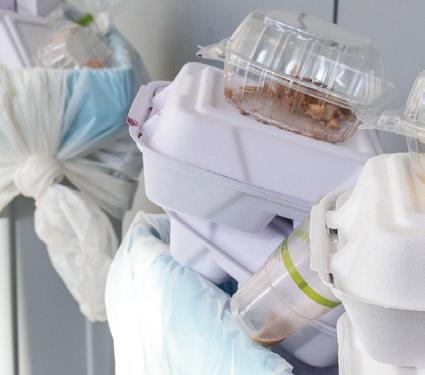
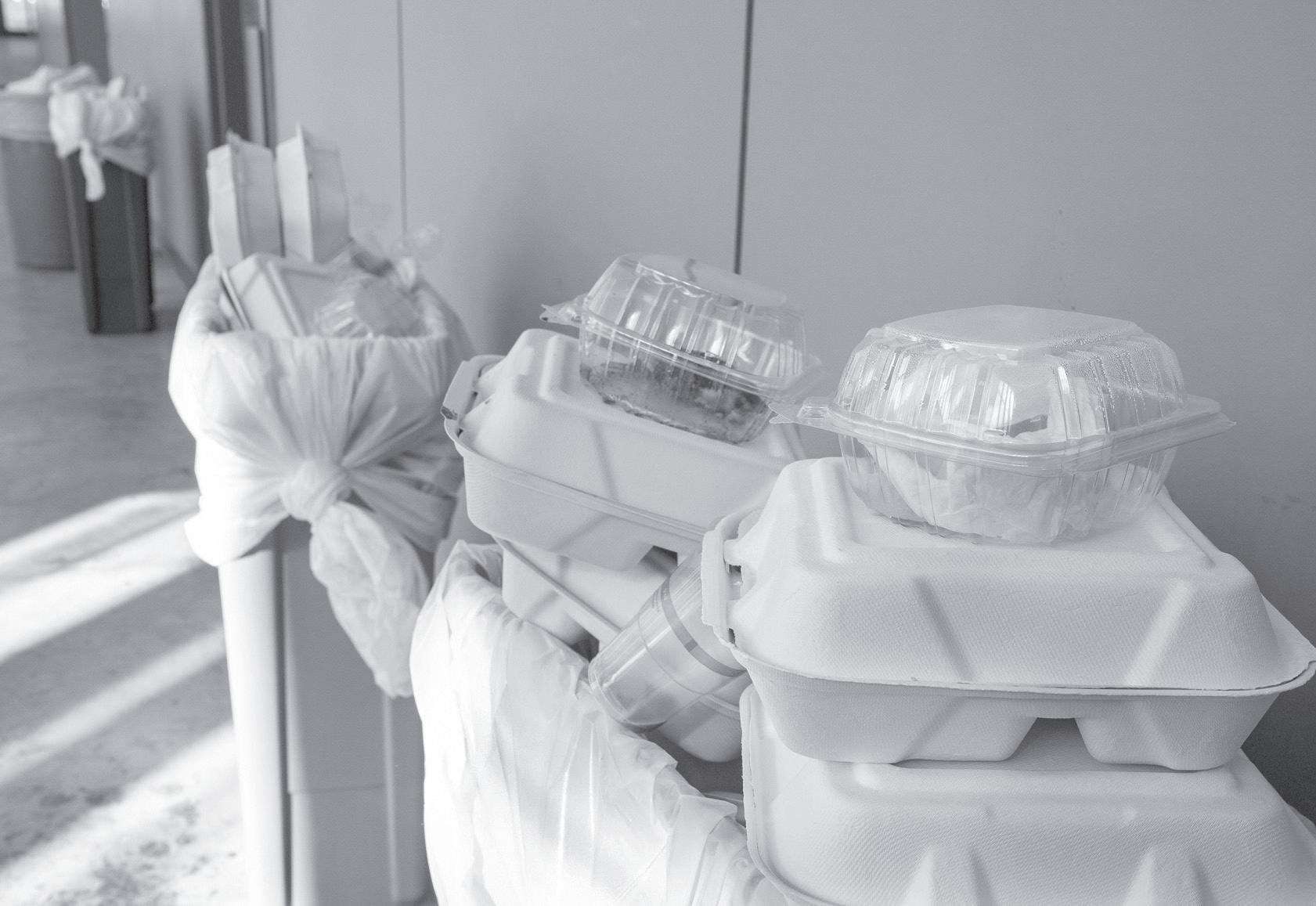
In-person dining also allows for less waste of both food and disposable containers and utensils.
“I am able to get seconds for things much more easily rather than just trying to guess all the amounts of food I want,” Claire Ceske ’23 said.
Ceske also noted that dining halls provide composting bins, while it’s difficult to compost leftovers at home from takeout.
While many students expressed enthusiasm about University dining halls’ return to normal operations, others voiced health and convenience concerns.
“When everyone was coming in, they were saying, ‘Oh, my god, they’re getting ready for in-person dining – thank god!’”
Brandon Wolf ’23
“The only difference is that it takes a little longer to close at night because we have to wash all the dishes and go clean the tables,” he said.
Some students, like Jack Shimkin ’23, have long awaited the chance to sit with their friends during meals.
Even with the practicality and ease of takeout, Shimkin stated that he missed the social engagement of in-person dining.
Beth Straight ’22 said she prefers takeout because she can do schoolwork as she eats and can avoid the social and pandemic-related pressures that come with eating in a crowded area.
With dining back in-person, Straight stated her wishes for stronger social distancing measures.
“When you go to the dining hall, people are still shoulder-to-shoulder with random strangers, so I think if they were a little more spread out and a little more cautious about sanitizing the areas, that would be better,” she said. She said that students should do more to make sure
their peers are comfortable, explaining that she’s seen some students encroach on others’ space.
Reusable containers remain available for students who want to continue to eat takeout. Straight noted that while dining halls are doing a good job of keeping the reusable containers stocked, they are often missing containers for items like soups or drinks. According to Wolf, dining halls have seen some container shortages due to supply chain issues.
As a vegetarian, the shortages pose problems for Straight when meatless options are limited to soups and sides with the assumption that soups are available for all. Straight explained that when containers are not available and she is doing takeout, she can’t access the food she can eat.
“I can’t take the stew so I can only take things like cauliflower and broccoli, which is not a meal,” she said.
Despite personal preference, she supports the reopening.
“I don’t think reopening was the worst idea,” Straight said. “I think we need a balance between normalcy and caution.”
Maya Rader can be reached at mrader@cornellsun.com.
Mice Infestation Sends Students Scurrying
According to Blair, the mouse infestation partially stems from issues of cleanliness and food management within the residence hall.
“This situation provided a clear reminder of how important it is for residents to take trash from their rooms to the provided dumpsters promptly and regularly, to keep any perishables in refrigerators and to keep non-perishable food in airtight storage
bins or other suitable containers,” Blair wrote.
The high volume of food in residence halls can be attributed to spring 2022 move-in policy changes that resulted in dining halls closing for the first two weeks of the semester. As a result,
many students resorted to eating in their dorm rooms.
Several students, including Monter, disagree that messy eating habits created the problem.
“I consider myself very neat and organized,” Monter said.
“My roommate and I would never leave food on the floor.”

Some Ganedago: residents also expressed frustration with the lack of solutions put forward by the University. According to Kennedy, the University could have acted much faster to accommodate the needs of the students who were disturbed by the mouse infestation.
“I think the University should have acted more swiftly instead of just telling the students to be cleaner,” Kennedy said. “Some of the students received appropriate measures [mice traps] against the mouse infestation more than two weeks after they raised the issue.”
“I think the University should have acted more swiftly instead of just telling the students to be cleaner.”
Finn Kennedy ’25
The mouse infestation at Ganedago: also resulted in high stress and financial strain on students who needed to find temporary housing until the issue was resolved.
“I had to try to find a place to stay while trying to manage the first week of classes … Everything from having to stay a night at the hotel and decontaminating my sheets and clothes were at my own expense,” Monter said. “It was taking a toll on me.”
Jiwook Jung can be reached at jjung@cornellsun.com.
Takeout trash | Students say goodbye to takeout containers as in-person dining resumes.
Grandmillennial and Return of Granny Chic
ASHLEY KOCA ARTS STAFF
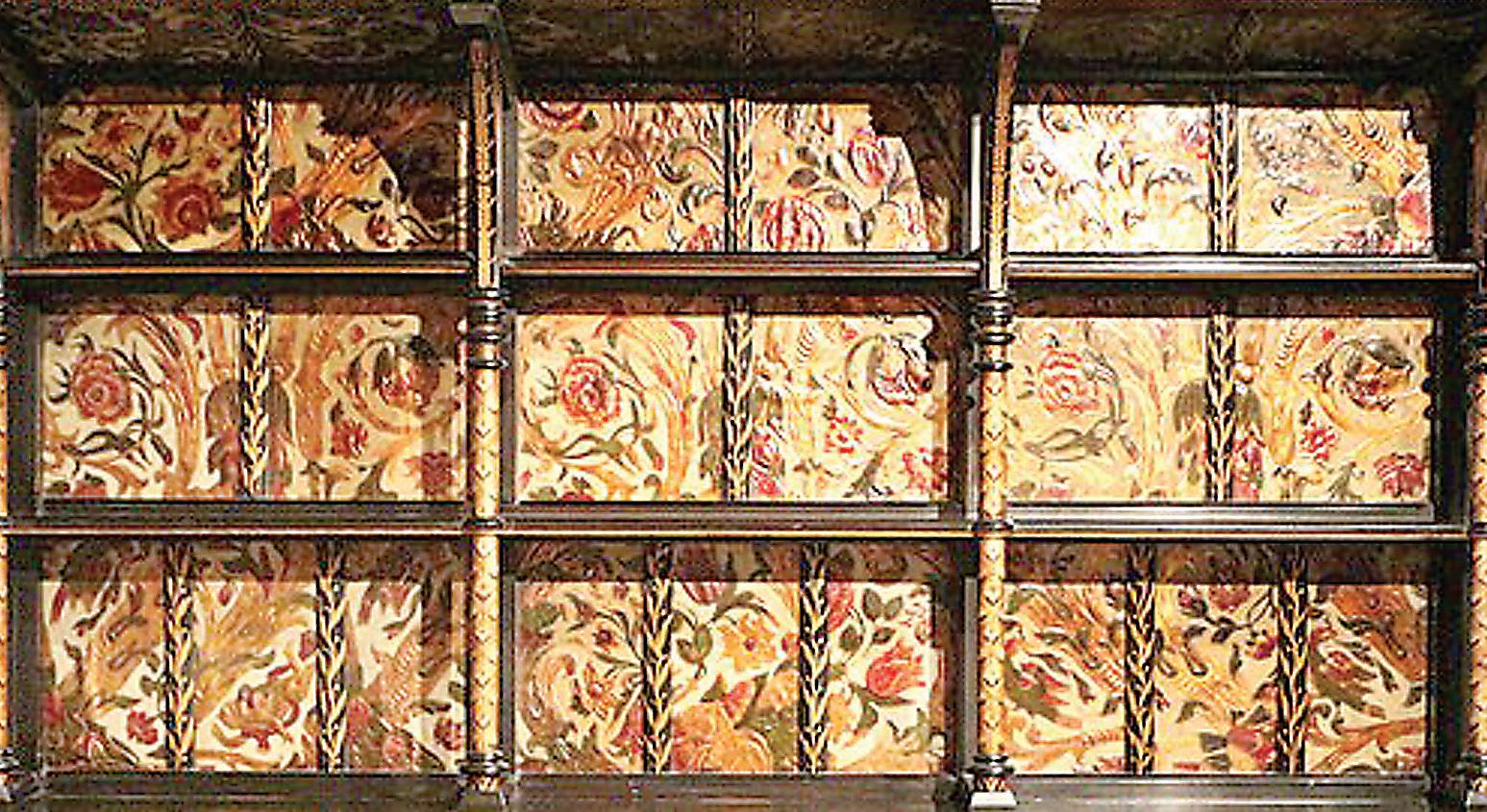
Over this past winter break, I took a trip to the Art Institute of Chicago and visited the museum’s newest exhibition, “Morris and Company: The Business of Beauty.” Seeing textile after textile depicting lush floral arrangements and pastoral landscapes, I recalled the decorations in my own grandmother’s home. And I began to wonder — after all of the microtrends fueled by the pandemic, are we due for a return to a more “traditional” decorative style that resonates with generations past?
Morris & Co. belongs to the old guard of the British Arts and Crafts movement, defining what we consider a “tradition-
al” mode of decoration. Founded by William Morris in 1861, the company was renowned for its textiles and wallpapers featuring dense vegetation and muted color schemes. Morris & Co. prides itself on its legacy and continued commitment to producing timeless designs for modern settings, regularly reusing Morris’ original patterns from the 19th Century.
This idea of timelessness has become popular on social media sites including TikTok, as content creators have begun to reconsider the rapid trend cycle that they perpetuated throughout the pandemic. A renewed interest in lasting quality and style has emerged, as creators emphasize the need to develop a “capsule wardrobe” filled with basics that will never go out of style. Now that the microtrends have come and gone, everything old is new once again. We have already begun to see this resurgence through the “grandmillennial” style (think chinoiserie and pattern mixing) that gained traction during the
summer of 2021. This decorative practice features the same aesthetics made popular by Morris & Co. — an affinity for the floral, the maximalist and the handmade textile. Beyond the living room, the grandmillennial style has expanded to the closet and become a fashion statement. Grounded by collars, frills and knits, outfits inspired by this aesthetic lean into their retro origins while still retaining a fresh quality about them.
At the beginning of the pandemic, there was a surge in the “alt” Tiktok subculture that incorporated brightly colored hair, wacky patterns and an overall sense of extremity in fashion. This fostered an equally extreme trend that fed into general overconsumption. With nowhere to go but the internet and nothing better to do than shop, people around the world devoured each fashion trend that made its way onto the “For You” page.
In response to this overconsumption, the grandmillenial style has emerged as an opposite trend advocating for thrifting and more sustainable practices. At its core, this style promotes not only the reuse of aesthetics, but also furniture. It is a trend that praises hand-me-downs, heirlooms and antiques. Derived from the same Arts and Crafts movement Morris and Co. was born from, the grandmillenial style shares the same anti-industrial anxieties in
response to an increasingly technological world — promoting craftsmanship and tradition instead of mindless production.
As life begins to settle down after the initial shock of the COVID-19, we seem to be gravitating to safer, more recognizable forms of decoration: those that remind us of the comfort of our grandparents’ houses from when we were children.
After a year of nothing but pajamas and sweatpants, opting for comfort has become the norm. Why should this be any different when it comes to nostalgia? Embodying timelessness and comfort, social media’s promotion of the grandmillennial aesthetic makes adopting the style of our mothers and grandmothers a little less “granny chic” and a bit more “classic” in the eyes of the internet.
Perhaps the greatest testament to the diffusion of grandmillennial style across social media platforms and popular culture is its exaltation in the “Morris and Company: The Business of Beauty” exhibition. A museum is the perfect place to showcase the revival of antiques, as it is truly the greatest temple to trends that have come and gone.
Ashley Koca is a freshman in the College of Arts and Sciences. She can be reached at akk59@cornell.edu.
CODA Film Review and Deeper Analysis
OLUOMA IROAJANMA ARTS STAFF
On Nov. 30th, I thankfully had the opportunity to see the film CODA, presented by the Cornell University Deaf Awareness Project and the Department of Linguistics, in Cornell Cinema. I found CODA to be an intriguing and insightful watch, as it made me analyze my own understanding, or lack thereof, of aspects of deaf culture.
Following the conclusion of the film, Cornell’s Children of Deaf Adults members held a panel where they discussed their views on the film and answered questions; below is a snippet of some of the topics that were explored. Phrasing is adjusted slightly for grammatical and brevity/length purposes, but nothing related to experiences shared was altered.
PANELISTS: Dawson Postl ’24 (dap283@cornell.edu), Janel Excell ’23 (jge42@cornell.edu), Susan Wardwell (interpreter@ signlanguage-solutions.com). Moderated by Prof. Brenda Schertz, linguistics (bs794@cornell.edu).
Question 1: What did you all think about the film? What’s your overall opinion? What did you like/not like about it?
JANEL: I overall felt like the movie was really good. Not everything was completely perfect in its portrayal; however, it
was nice to have that representation.
DAWSON: I agree. Some parts felt exaggerated and weren’t entirely accurate; some things were kind of spot on for past generations of CODAs, while others didn’t resonate. But it was nice to see that representation.
SUSAN: I related to the sibling jealousy dynamic. I felt like my sister had it all: the school for the deaf and attention from our parents. But my sister felt like because I was hearing, I had it all. The scene where Ruby’s mother talks about wanting Ruby to be deaf also resonates; my sister expressed that she wanted her son to be born deaf so that it would be easier to bond as well, so it was interesting to see that perspective play out in the movie.
does resonate with me because I come from an older generation than you all! For me, there weren’t a lot of options available. Deaf people were considered “deaf and dumb.” I had to be protective of my family and experience their pain and look out for them, because interpreters were not available the way they are today.
M O D ERATOR : Absolutely. And this is a movie that, it feels like, should have been made thirty years ago, in terms of the representation.
it was more personal and they didn’t really want to involve others, and I’d help them. I didn’t relate to Ruby’s mother not liking music; my parents really like music because they like hearing the vibrations of loud music. They also don’t care whenever I listen to music.

Question 2: What did you all think of Ruby?
JANEL: It would have been nice to have an actual CODA play the role, but the actress did a really good job regardless, and it’s good to have that portrayal.
DAWSON: In some ways, I couldn’t quite relate to Ruby, but I felt this was due to the writing of the movie, not the actress herself. My parents always emphasized to me that they didn’t expect me to be their interpreter forever.
S USAN : Ruby’s experience
Question 3: What are some examples of scenes from the movie that you all did not like?
JANEL: I did have a similar situation that Ruby had. Like when Ruby’s parents ask her to interpret for them on the phone because they don’t want to use the video phone since they do not want the interpreter to be in their business. Also, Ruby wanted to hang out with her friends instead. There were definitely times that happened to me and my parents would ask because
DAWSON: I agree. We’d have birthday parties and be really loud and my parents could hear the vibrations, but that was it. The courtroom scene really resonated with me. There were times when I did interpret difficult situations for my parents in dire circumstances. I remember when I was six and it was my first day of school, the bus driver was supposed to stop at my driveway, but instead I had to walk across the street. My mom was really mad about that, and I was with my eight and ten year old siblings, and while my mom was visibly angry, we had to kind of relay the situation to the bus driver for her.
Question 4: What did you all think of the scene where Ruby sings to her father? For me, that scene was a bit awkward.
SUSAN: For me, I did resonate with that moment. As a child, I loved to sing, and very often, there were times when — not so much my parents or
grandparents — but my sister would ask me to sing for her. She was able to touch my throat and feel the vibrations, and that was a very emotional moment in the movie for me. Because often it’s so hard to see the other person’s perspective. And the scene where Ruby’s parents were looking around to see the audience’s reaction to what she was singing and what was going on because they couldn’t hear, there were things like that that I thought were represented the right way, including when she’s singing to her father and he’s able to feel her voice. In my experience, I did my best to try and represent that to my parents, and they never quite got it. I loved how when she did the audition that she did sign for her parents, I really enjoyed that moment.
Question 5: So for some scenes like the doctor’s appointment, some of you said you had similar experiences. Is that scene accurate? In the movie, it was really funny, and it really showed that in deaf culture they talk about more taboo topics, whereas hearing culture is more on the reserved side. Do you think hearing culture is less open as a whole than deaf culture?
To catch their full interview, visit www.cornellsun.com soon!
Oluoma Iroajanma is a sophomore in the College of Arts and Sciences. She can be reached at oci3@cornell.edu.
COURTESY OF WIKIMEDIA COMMONS
COURTESY OF VENDÔME PICTURES
139th Editorial Board The Corne¬ Daily Sun Independent Since 1880
KATHRYN STAMM ’22 Editor in Chief
ANUSHYA ALANDUR ’23
Business Manager
CATHERINE ST. HILAIRE ’22
Associate Editor
PRANAV KENGERI ’24
Advertising Manager
ODEYA ROSENBAND ’22
Opinion Editor
JYOTHSNA BOLLEDULA ’24
News Editor
TAMARA KAMIS ’22
News Editor
CAMERON HAMIDI ’22
App Editor
KRISTEN D’SOUZA ’24
Design Editor
HANNAH ROSENBERG ’23
Photography Editor
OMSALAMA AYOUB ’22
Science Editor
PUJA OAK ’24
Layout Editor
ANNIE WU ’22 Production Editor
MIHIKA BADJATE ’23
Assistant News Editor
SERENA HUANG ’24
Assistant Business
MADELINE ROSENBERG ’23
Managing Editor
NAOMI KOH ’23
Web Editor
ANIL OZA ’22
Assistant Managing Editor
YUBIN HEO ’24
Assistant Web Editor
VEE CIPPERMAN ’23
NOOREJEHAN UMAR ’23
E.D. PLOWE ’23
YOON ’23 City Editor
BENJAMIN VELANI ’22
LUKE PICHINI ’22
SRISHTI TYAGI ’22
MENDOZA ’24
ARANDA ’23
BASU ’23
RIGGS ’24
LEYNSE ’23
NAGEL ’24

Noah Do
Noah’s Arc
Noah Do is a sophomore in the College of Human Ecology. He can be reached at ndo@cornellsun.com. Noah’s Arc runs every other Monday this semester.
Crazy Represented Asians
As Asian representation expands in the United States, from the decorated class commentary of Parasite, to the rising popularity of Asian-American music label 88rising, I want to take a critical look at what popular portrayals reveal about Asian-American-ness today. Modern depictions of Asian people in the media mostly aim to dismantle the “yellow peril” and “model minority” stereotypes that have defined Asian characters for so long – but how well do they succeed?
Historically, the “yellow peril” framework paints Asians as unassimilable foreigners whose presence in America spells doom for the whole country. We’ve seen yellow peril make something of a comeback in recent years due to the COVID-19 pandemic — as actor John Cho so eloquently stated, “Coronavirus reminds Asians-Americans … that our belonging is conditional.” On the flip side, Asian people that assimilate too well are deemed model minorities. White people use them as ammunition to blame other minorities for their race-centric problems, as if to say, “If they can do it, why can’t you?”
In 1922, a Japanese man named Takao Ozawa, who was ineligible for U.S. citizenship by naturalization, tried to convince the Supreme Court that he should be classified as a “free white person” on account of his American upbringing, language, religion and cultural practices. The courts decided that Japanese people could not be classified as Caucasians because duh, and they denied Ozawa citizenship. I can only imagine what that court case looked like:
“Your Honor, there’s one last piece of evidence I’d like to turn your attention to…”
A grin creeps onto Ozawa’s face as he slams his foot atop the courtroom desk to reveal the famed dual-strapped, chocolate-brown sandal: Birkenstocks. “Caucasian!” the judge bellows as he excitedly slams his gavel. “He’s Caucasian!”
So it seems that Asian-Americans just can’t win. Assimilate too well, and you risk associating with the ever-loathed model minority myth. Embrace your roots, and you’re a perpetual outsider whose place in America is always in question. For a way out of this trap, we turn to media representation and storytelling. One of the most wellknown examples of Asian representation in Hollywood is the acclaimed 2018 film Crazy Rich Asians. Now, as someone whose imagined romantic scenarios rarely consist of chiseled half-Asian men, I realize that I fall squarely outside of the target demographic for this movie. I won’t complain about the typical rom-com-isms of it all, because that would be an exhaustive list. The wedding scene did have me choked up, though.
What I want to focus on instead is the Crazy Rich Asians’ glamourization of Asianness. The movie glorifies extravagant wealth without a lick of satire or commentary on the characters’ excess beyond passing jokes. This glorification is specifically of Asian people — the movie functions as an idealized power fantasy for Asian-Americans to view their Asian heritages through the lens of obscene wealth and luxury. What the film lacks, however, is anything of real substance to say about Asian-ness in America.
This isn’t a problem inherent to the story
itself, because it doesn’t seem to have been written with the Asian-American experience in mind. Protagonist Rachel Chu’s alienation as a Chinese-American among Chinese people is mentioned throughout but never elaborated on further than the usual “you selfish Americans” typisms.
More revealing is how Asian-Americans have flocked to portrayals of Asians like those found in Crazy Rich Asians, when such stories bear only a passing resemblance to their own experiences — and never mind films like the To All the Boys I’ve Loved Before trilogy, where Asian-ness is used merely as an excuse to dress the main character up in a pretty hanbok and play Blackpink songs.
While Crazy Rich Asians’ portrayal of Asian people wasn’t exactly my cup of chá, my indoctrination into the MarvelDisney entertainment imperium points me to another popular Asian-led movie: last year’s Shang-Chi and the Legend of the Ten Rings, a landmark for Asian representation as a superhero film. Similarly to Crazy Rich Asians, Shang-Chi relishes in its Asian-ness; a good portion of the dialogue consists of English-subtitled Chinese, much of the costuming and set design is inspired by Chinese history and it employs the central theme of dynastic familial loyalty, which is about as Asian as it gets.
Again, though, these kinds of portrayals risk further alienating Asian-Americans. While it would be nice to suggest that we should consume authentic Asian cultures however we please without any regard for outside perceptions, we simply cannot remain that naïve given America’s history with Asian minstrelsy. Simu Liu, who plays the titular Shang-Chi, also worries that the film’s portrayal of Asian culture will “perpetuate [the narrative] that [Asian people] can only lead martial arts movies.”
In Asian-American Hollywood’s defense, I appreciate simply seeing more Asian faces on the big screen — narrative portrayals aside, the kinds of actors we see in movies should reflect the diversity that America is so blessed to have. But I also want to recognize that this inherent connection to Asian faces is fueled by the same tribalism that can unfortunately give rise to racial divisions. We want to be known for more than kung-fu and qipao dresses, but also revel in those same authentic cultural minutiae that are becoming less and less reflective of AsianAmericans’ actual upbringings. We don’t all need to be like Ozawa, but Asian-Americans should demand portrayals that address the nuances of not just being Asian, but also American.
Films like Minari and the underrated Always Be My Maybe, which stars the incomparable Randall Park (please watch — it’s on Netflix), will hopefully signal a shift toward stories that depict our unique histories and experiences, rather than escapism into tokenized Asian exoticisms. As much as I enjoy watching Crazy Rich Asians and Shang-Chi, I won’t pretend that they are faithful depictions of my Asian identity — that is, unless I have an obscenely wealthy family in Singapore or ancient Chinese warlord father that I somehow don’t know about. Until then, I’ll continue to look for stories that are willing to be as American as they are Asian.
An Ode to Winter

Vanessa Olguin Long Story Short
I’ve never experienced seasons before. In my life before Ithaca, I’ve tragically been subject to the horrid weather of southern California: constant sun and a low of 50 degrees in December. Such a wicked existence I’ve lived!
But in all seriousness — living in Ithaca was the frst time I experienced the changing tides of climate. Te humidity, wet sun and heat at the end of an Ithaca summer as I moved into Jameson Hall my freshman year was unlike the hot summers of Los Angeles. And as I began my year meeting new friends and swimming in gorges with hallmates, I experienced summer’s end with the excitement of an unfamiliar but fabled college beginning.

Niko Nguyen Fault Line
Niko Nguyen is a senior in the College of Agriculture and Life Sciences. He can be reached at nnguyen@cornellsun. com. Fault Line runs every other Friday this semester.
Ipicture an all-out rat race when I think of my life post-grad, one of Ratatouille-sized proportions. I see a stream of clamoring bodies, sacks of fur scampering over one another and tirelessly pushing forward.
It’s an image of vigorous, almost violent, efort — and all for a hunk of cheese dangling from a stick. It’s close enough to invite temptation, but it’s always hanging in the distant beyond. Just barely out of reach. It’s only a matter of time before I, too, jump into the madness and enter the rat race.
I spent a good chunk of my winter break tumbling down a LinkedIn rabbit hole. December and January watched me slosh through light masochism. I wasted hours sifting through old friends’ job announcements and early graduation posts, through their humble brags and not-so-humble fexes.
Te more I scrolled, the more I found myself in deep spirals of frustration, wondering how and why the rest of the world seemed to have unlimited stores of energy and talent and time. And wondering how I had fallen so pathetically far behind.
Ten, I witnessed the reluctant onset of Ithaca’s autumns, teeming with color. Te yellow, orange and red-hued leaves were unlike any scene I’d ever seen before. Fall was windy, orange, crisp, and I quickly found out that I actually do have a favorite season.
Ten the tides turned. I felt my frst frigid cold, and I thought I could manage with the wrong shoes. I met Ithaca Winter for the frst time, and I thought that I really wanted to go home. Disliking winter was a
common sentiment, shared by my peers all around me. Seeing friends, going out, staying up late at the library — all were made dreadful in the now-freezing weather. Sometimes, it was easier to just stay home and avoid a winter that had caught me ill-equipped to face it.
So now, stepping back into in person classes, waddling through the white snow turned brown slush — I meet Ithaca Winter for the last time.
Oh, Winter. I despise the slush and the icy sidewalks, and I really don’t like falling. I’m currently nursing a tender blue bruise on my knee from last week’s fall, the
Of to the
But during one of these LinkedIn benders, knee-deep in a bout of self-pity, a funny thing happened: I started to admire the audacity of the platform. I mean, LinkedIn’s really got nerve. Tese days, all other social networks hinge on some tightrope of contrived authenticity. Tere are endless paradoxes for how we should present ourselves online: Appear unattainable, but remain relatable. Ooze commercial appeal, but project authenticity. Impress efortlessly.
But LinkedIn is diferent. It rejects the balancing act: To be “good” at LinkedIn is to be confdent about displaying your efort and your desire to impress. Tere is no pretense of authenticity or humility. We’re allowed to lean into self-centered presentations, and we’re invited to share every accomplishment loudly and proudly.
On LinkedIn, we can be honest that our online social activities are actually personal self-marketing campaigns — and, in efect, LinkedIn also grants us permission to be candid about our careerist dispositions, our thirst for what society labels as “success.”
Tis particular efect of LinkedIn is notable because, too often, we devote time to trying to obscure how much we value the fruits of our labor under capitalism.
I’ve spent most of my college years pretending to be above the rat race, avoiding job applications and internships as if I can reject the pressure of capitalism through moral abstention. It’s been easy, actually, to develop a sense of moral superiority in college. Higher education supplies us with the space and privilege to analyze the world around us from a distance.
frst of the season. Winter can take its toll on us. Even as we’ve all scrambled back on campus together, winter has a tendency to feel isolating — especially for those of us who might not be used to this. Seasonal depression is real, and it makes a return this time of year. In the hustle and bustle of a return to in-person classes, our professors and our peers, even we, can forget that.
In the snowstorm last week, I took a walk at midnight with some friends. It was something about the heavy snowfall, our steps being the frst on the pristine white canvas and seeing the sleds down the slope at midnight, that refected a high-on-life feeling. I was reminded of how warm winters can be when you’re in community and with the people you love. I learned that I’ve been sleeping on the beauty of the biting cold and of Ithaca in the winter.
So now, I can’t help but stop and breathe in the frigid air, have fun hopping over a slushy sidewalk or just stop to take yet another picture of a cold sunset. So this is an ode to Ithaca Winter, which has always so gently and humbly slapped me in the face every January, reminding me to wear another layer and my boots, even if I thought today would be a sneakers-and-jeans type of day. I’m realizing there’s no better way to get through a cold winter without some warmth by your side and a refective appreciation of Ithaca’s beauty.
All this to say, I’m a sun-loving girl whose secret love is the snow. I don’t know how to shovel, and I have slipped several times on my front porch. But there’s a special kind of warm feeling that comes from taking in the Vitamin D rays on frosty afternoons that is unlike anything I’ve ever felt in the summer. I’ve learned not to take these seasons for granted, and I’m learning more and more to be grateful for the frigid snowy nights, friends who bake bread and my last time experiencing an Ithaca winter.
Rat Races!
while avoiding direct participation in them.
But the view from the ivory tower is always idyllic, up until the point when we have to plunge down and into the thicket of adult reality. I’ve fnally hit my last semester at Cornell. I suppose it should feel like an accomplishment, but really, it just feels frightening to stare down at a life where I’ll no longer be measuring time in semesters.
What will happen when I no longer have the privilege of college cloistering me away from the real world? Come May, idealism will hit reality, and four
But there’s a special kind of warm feeling that comes from taking in the Vitamin D rays on frosty afternoons that is unlike anything I’ve ever felt in the summer. It’s easy to Stockholm your psyche when you throw around empty buzzwords, but the facade buckles when we begin to see college for what it is: four years meant to maximize our value on the job market.
I am in a fortunate position as a Cornell student to worry little about dayto-day survival and earning livable wages. Instead, I’ve sat on the $2,000 benches at Zeus, far away from any real workplace. I’ve taken notes and learned about the systems that perpetuate inequality, all
years of shiny privilege may pave into what I’ve been afraid of for so long: losing my selfhood to turn the wheel of capitalism.
Or maybe, if I’m embracing the LinkedIn mentality and being candid about my tilt toward careerism, I might admit to myself that, all along, college
was never my escape from the rat race. It’s been my pathway toward it. I might admit that tearing up my California roots to endure four frigid years in Ithaca wasn’t a decision to “find myself” or “step out of my comfort zone” or “grow” — no, attending Cornell was a conscious submission to my ambitious cravings.
It’s easy to Stockholm your psyche when you throw around empty buzzwords, but the facade buckles when we begin to see college for what it is: four years meant to maximize our value on the job market.
We come to college because we desire a success measured in six-figure salaries and job promotions and raises, and because we long for the affordances attached to those things: personal freedom, social cachet and comfort. It’s why parents shovel tens of thousands of dollars toward college tuitions, why students accept massive loans as a fact of adult life, why mega-celebrities break laws in order to finagle their already-moneyed children through the gates of higher education.
I’ve got three more months left to bask in the glow of the Great College Experience. Whether or not I’ve stacked my resumé up with enough workable skills and experiences will be answered in due time.
I’ll likely waste more hours down the LinkedIn rabbit hole, polishing up my profle and loathing how much we’ve been encouraged to bend to our inner careerists.
But again, I suppose this is what I’ve been working toward all along.
I can hear the rumbling of rodent paws loud and clear now. A sea of rats anticipating May graduation.
And I can see my future self, too: throwing my body into the mob and clawing my way toward that glob of cheese.
It’s only a matter of time before I take my place in the rat race.
Vanessa Olguín is a senior in the College of Arts and Sciences. She can be reached at vjo6@cornell.edu. Long Story Short runs every other Friday this semester.

Fill in the empty cells, one number in each, so that each column, row, and region contains the numbers 1-9 exactly once. Each number in the solution therefore occurs only once in each of the three “directions,” hence the “single numbers” implied by the puzzle’s name. (Rules from wikipedia.org/wiki/ Sudoku)

I Am Going to Be Small

‘I feel so special and honored’
Karen Chen ’23 Wins Olympic Medal
After win, Chen credits time at Cornell for perspective, growth
By AARON SNYDER Sun Assistant Sports Editor
When Team USA took the silver medal in the figure skating team event at the Beijing Winter Olympics last week, Karen Chen ’23 won the 64th Olympic medal earned by a Cornellian.
News of the human development major’s Olympic success was received with excitement in Ithaca. The University, the College of Human Ecology and Rachel Dunifron, the dean of the College of Human Ecology, all congratulat ed Chen on her accom plishment.
“I’ve been seeing a lot of support from everyone at Cornell, and it’s been so amazing, and I feel so spe cial and hon ored,” Chen told the Sun.
Chen secured sil ver for the United States with a 131.52 point perfor mance in the free program, one day after struggling in the short pro gram.
After plac ing 11th in the women’s singles competition at the 2018 Winter Olympics, Chen said that her perfor mance in the team event in Beijing was a product of her growth and maturity between the two games.
“I feel like age and the experience of going through so many obstacles and over coming different things has really helped me be where I am today,” Chen said.
[skating and school], but I was struggling.”

Chen spent one of the four years between the two Olympics at Cornell. She credited that time with much of her growth.
“That year at Cornell gave me so much perspective in my life, both academically and athletically,” Chen said. “I think I grew the most in that one year at Cornell. Just being in that unfamiliar situation helped me grow as a person, and therefore as an athlete and a skater.”
Chen was homeschooled through high school, which allowed her to prioritize skating while she worked on school during her free time. When she got to Cornell, she found that schedule flipped.
“That year at Cornell gave me so much perspective in my life, both academically and athletically.”
Karen Chen ’23
“That shift, doing something I wasn’t familiar with, made me realize how much I love skating,” Chen said. “Gaining perspective from all the other students on campus, seeing that they had completely different passions – that was such an eye opening experience for me.”
When Chen arrived at Cornell, she stated that she started off torn between embracing life as a student and continuing to pursue her Olympic aspirations.
“My freshman year at Cornell was amazing,” Chen said. “In all that chaos of balancing my schedule, I realized that I love skating, and it’s only going to get harder as I get older, so now’s the time to chase that dream.”
During her freshman spring, which was abruptly interrupted by the onset of the pandemic, Chen realized she had to fully commit to either her academic or athletic career.
“I realized I love skating, and it’s only going to get harder as I get older, so now’s the time to chase that dream.”
Karen Chen ’23
“Skating season had finished and then COVID hit, so I was fully committed to school and my grades were so much better,” Chen said. “I knew that in order to succeed, I needed to prioritize one, even though that perfectionist in me wanted to do both. That helped me make the decision that I really wanted to go for my Olympic dream for these two years with everything I’ve got.”
While Chen’s performance in the team event helped Team USA win silver, she has not received her medal yet. The doping allegations surrounding the Russian Olympic Committee’s Kamila Valieva have delayed the medal ceremony.
“It was definitely disappointing to not have our medal ceremony,” Chen said. “At the same time, that’s something that I have no control over. Whatever happens, happens. I just need to focus on what I can control, and that’s my skating.”
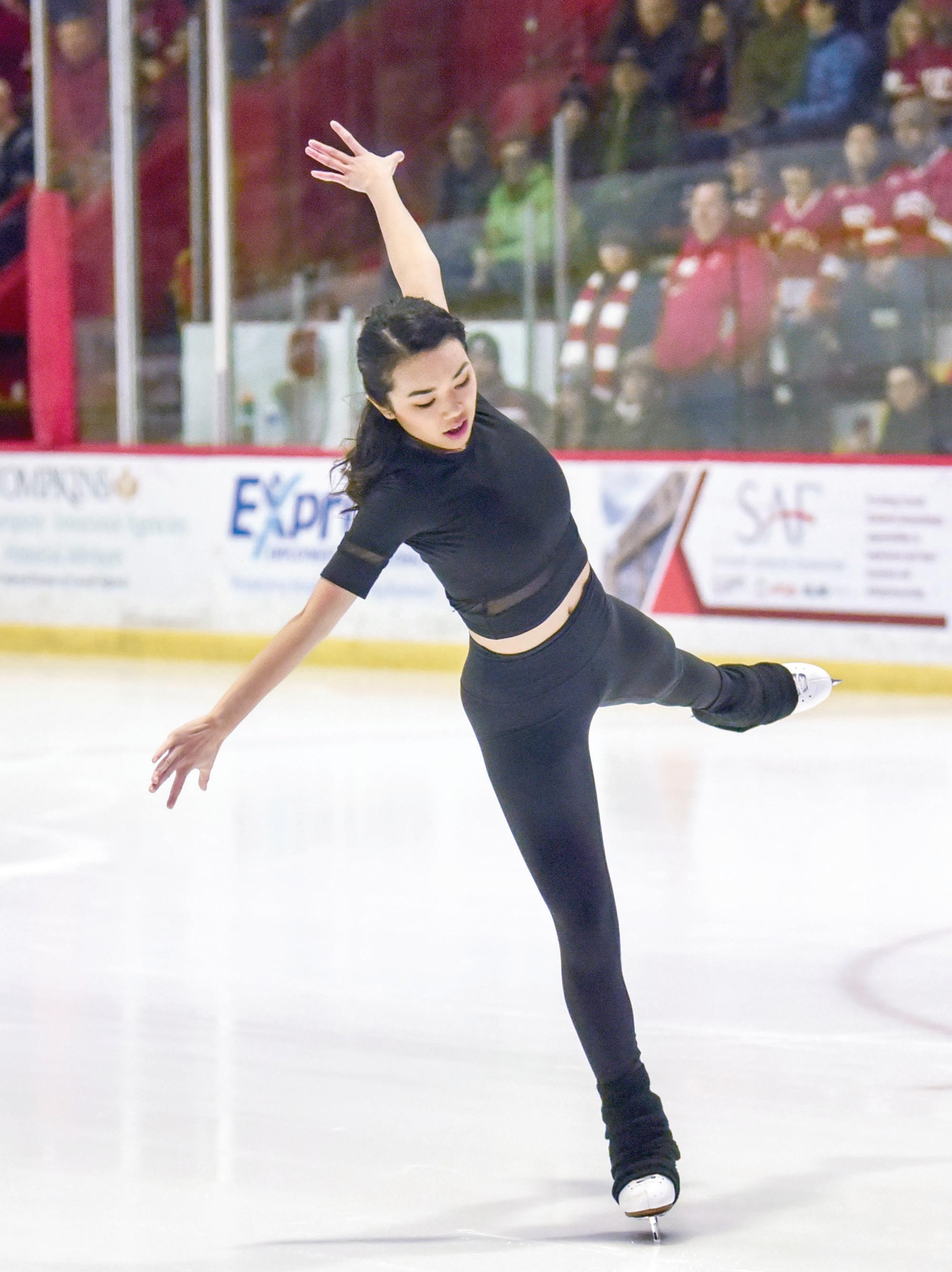
Lynah | Chen skates during the first intermission of a men’s hockey game in February 2020. Chen said she “would love to perform at more hockey games.”
After taking two years off to focus on skating, Chen plans to return to Cornell for
“I’m super excited about [coming back],” she said. “It will be such a change of pace from what I’ve been doing the past two years, but I’m really excited to embark on that journey. Chen said that she wants to keep skating when she gets back to Cornell. During her freshman year, Chen performed at Lynah during the intermission of a hockey game.
“I would love to perform at more hockey games once I’m back. If they ever want someone to do a little twirl or two on the ice, I’d love to do it, it’s so much fun,” Chen said. “Skating is a huge part of my identity, so it’s definitely something that I’m going to keep with me for the rest of my life.”
Chen is scheduled to begin competition in the individual event at 8:45 a.m. Eastern time on Tuesday morning. Her Olympic schedule concludes with the women’s free program, which begins at 5 a.m. on Thursday.
It was a difficult adjustment for Chen, who said she struggled to balance academics and skating when she arrived at Cornell.
“Fall semester was tough for me,” she said. “I expected myself to succeed in both
Silver | Chen’s performance in the figure skating team event helped Team USA secure a silver medal.
GABRIELA BHASKAR / THE NEW YORK TIMES
BORIS TSANG / SUN FILE PHOTO