The Corne¬ Daily Sun
Dorm Worries
RAs express health and safety concerns after fall semester strike.

and Sex

Dorm Worries
RAs express health and safety concerns after fall semester strike.
and Sex
By SARIKA KANNAN Sun Staff Writer
As many students complain of Zoom fatigue during Cornell’s third hybrid semester, international students have taken on the most hectic schedules, taking lectures and exams nocturnally.
“I essentially had to flip my schedule completely and become nocturnal.”
Divya Raina ’24
But the biggest obstacle international students currently face is navigating the time zone differences between their home countries and Ithaca.
Despite the University mandate that classes for international students be scheduled at any time between 8 a.m. and 10:30 p.m., these students have found themselves with nearly identical schedules to on-campus students.
“I essentially had to flip my sched-
ule completely and become nocturnal, which was not fun,” said Divya Raina ’24, a student from Dubai whose spring semester will be her first in-person semester.
Although some classes offered discussion sections at more accomodating times, many international students found those sections quickly filling up with students based in the U.S., according to Divya Damodaran ’23, who spent the fall semester at her hometown in India.

For this semester, many students living abroad hope professors will be more lenient about attending discussion sections, and that the University will implement higher enrollment caps
for online lectures and sections.
“We’re getting what we absolutely need, but we’re not getting nearly the same variety of choice that we had
before,” Damodaran said. International students expressed a
By AMAYA ARANDA Sun Staff Writer
Despite the limitations of online events, Cornell Black Students United is finding ways to create a sense of community to celebrate Black History Month.
Despite a successful run in hosting in-person events last year, BSU has pivoted to host a slew of online events this year to commemorate Black History Month.
Co-event coordinator Danielle Frye ’23 said this year’s theme is “All eyes are on you: supporting your Black peers and your Black businesses,” dedicating the month to supporting Black entrepreneurs and business owners on campus.
Last February, activities included traveling to the National Museum of African American History and Culture in Washington, D.C., hosting speakers such as criminal justice
activist Yusef Salaam, and discussing Black excellence in self, business, community and society.
Earlier this month, BSU kicked off Black History Month with a spoken word and music event that discussed the profound
Black influences in music and spoken word poetry; attendees experienced performances by DJs, rappers and other artists.
Co-chair Lassan Bagayoko ’22 says he is most excited about spotlighting Black recipes at this
week’s “History of Food” event. The program will feature cooking and learning from Black chefs in the Cornell community, including chefs from North Star Public House and will offer free prizes to those who attend.
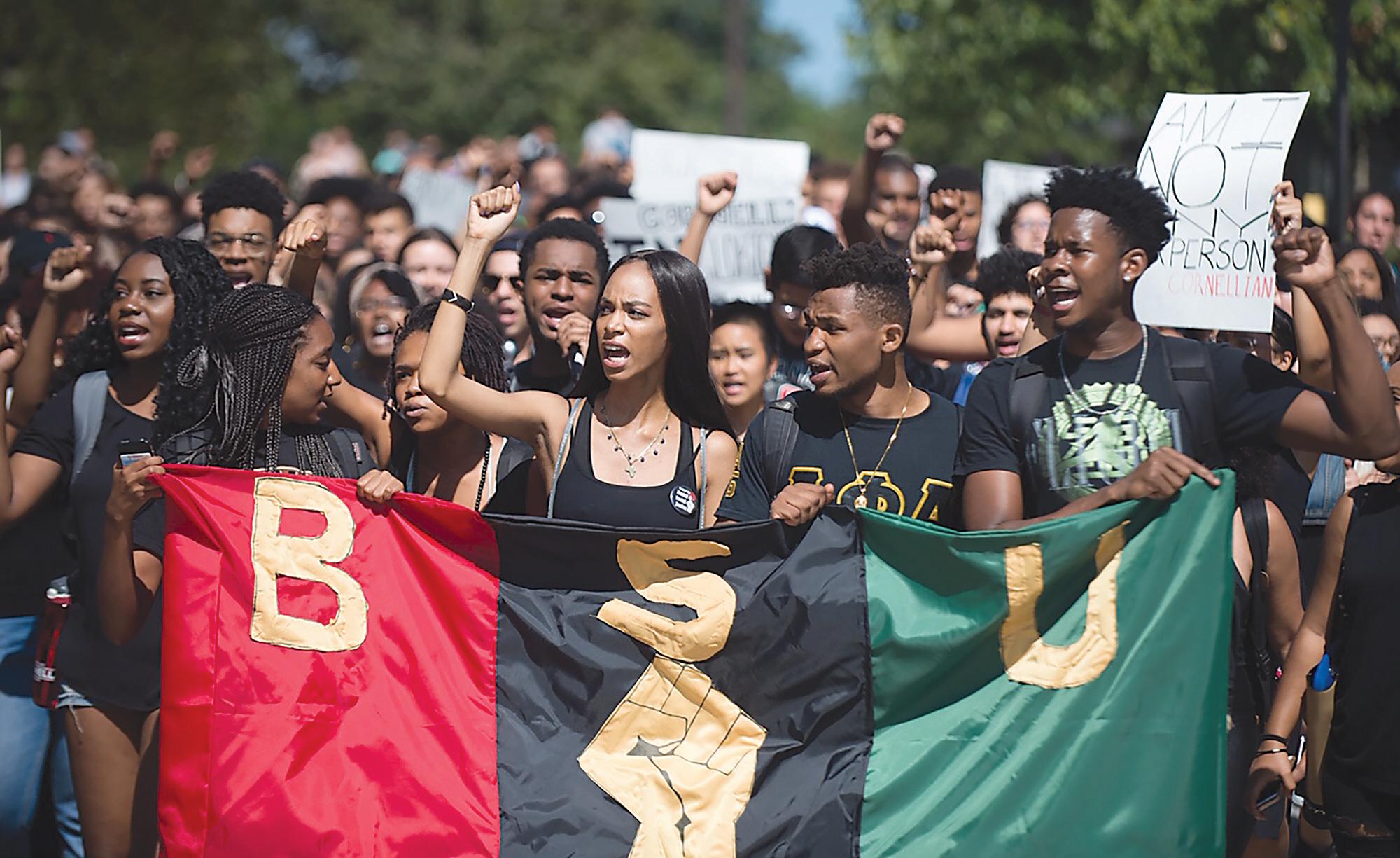
The events held in the two final weeks will focus on “Beauty, Health and Wellness” and “Clothing and Fashion,” respectively. These weeks will highlight the importance of exercise and mental health and will promote Black-owned fashion and accessory businesses.
BSU leaders said Black History should be celebrated all year long, but felt that this month is an opportunity to speak candidly and share the lived experiences of Black individuals. Bagayoko added that Black History Month serves as a time to reflect on how Black history has been instrumental in building the world as it is today.
“Black History is not just a month for us,” said BSU freshman coordinator Mar’Quon Frederick ’24. “It is American history, and we should consider it every single day of our lives.”
Amaya Aranda can be reached at aaranda@cornellsun.com.



Thursday, February 11, 2021
Conflict Resolution: Becoming a Mediator — The Business Plan 6 - 11 a.m., Virtual Event
Self-Guided Campus Walking Tour and Class of 2024 Photo Collage 8 a.m., Virtual Event
Let’s Meditate With Cornell Wellness 9 - 9:30 a.m., Virtual Event
Prospects for Immigration Reforms During the Biden Administration Noon, Virtual Event
Seeing Like a Philanthropist: From the Business of Benevolence to the Benevolence of Business Noon - 1:30 p.m., Virtual Event
Energy Engineering Seminar: David Hammer, Cornell University 12:25 - 1:15 p.m., Virtual Event
MBG Seminar: “Diversifying the Biomedical Research Workforce” 1 - 2 p.m., Virtual Event
World Economics Roundtable: Eliminating Deficits in the Understanding of Deficits 3 p.m., Virtual Event
“Controlling Excitons”— Chemistry Seminar 4 p.m., Virtual Event
CLC Speaker Series: Mark Aronoff 4:30 p.m., Virtual Event
Entrepreneur in Residence: Brandon Barton ’33 11:30 a.m. - 12:30 p.m., Virtual Event
Douglass Day National Transcribe-a-thon Noon - 2 p.m., Virtual Event
Seminars in Infection and Immunity: Dr. Benhur Lee 12:15 - 1:15 p.m., Virtual Event
Business Clubs Meet and Greet 3 - 4 p.m., Virtual Event
Galentine’s Day 3 - 4 p.m., Virtual Event
CAM Colloquium: Aaron Wagner (ECE, Cornell) — What Hockey Teams and Foraging Animals Can Teach Us About Feedback Communication 3:30 p.m., Virtual Event
Rose House: Film Friday 8 p.m., Virtual Event

desire for virtual lectures this semester to be more interactive, as many said they became easily distracted and experienced Zoom fatigue during the fall.
“I dreamed going to campus some days ago. I was so excited, I was almost going to cry.”
Grace Xia ’24
Raina said the fully virtual course load made her feel like she was taking courses on Coursera, a popular online course provider.
Nicolás Oriol Guerra ’21, an exchange student from Spain, suggested de-emphasizing exams, and instead focusing on collaborative work to allow students to bond and learn from each other.
“By increasing the amount of small projects or collaborative homework, which is what some [professors] did, you give students opportunities to interact with each other,” Guerra said.
Some students said they felt as if professors ineffectively enforced the new exam accommodations.
Some of these accommoda -
tions included offering exam time slots that were convenient for international students, but it was difficult to provide convenient time slots for students in all time zones. By the second round of prelims, Raina said she adapted her sleep schedule so she could take exams during the designated time slot for non-international students.
Many international students said that professors should open exams for a 24-hour period to give them greater flexibility.
But some students said they thought most faculty members and teaching assistants were largely accommodating, as many were generous with granting extensions for assignments and not penalizing them for turning in assignments late.
Grace Xia ’24, a first-year who has spent the past year at a Study Away site in China, hopes to come to campus for the first time in fall 2021.
“I dreamed of going to campus some days ago,” Xia said, “I was so excited, I was almost going to cry.”
Sarika Kannan can be reached at skannan@cornellsun.com.
By JYOTHSNA BOLLEDDULA Sun Staff Writer
Ithaca Police Department officer Christine Barksdale filed a federal lawsuit against the City of Ithaca on Feb. 4, citing a confidentiality violation when the city motioned to remove her as senior investigator in January 2020.
The lawsuit comes more than a year after an initial press release detailed Barksdale’s apparent neglect in investigating over 200 pending cases over the past decade, including a disproportionate number of cases related to sex offenses.
Though Barksdale remained unnamed at the time, her termination as senior investigator was soon made public through an Ithaca Voice article, causing what she saw as the City of Ithaca breaching its confidentiality policy. According to the lawsuit, the city has historically kept personnel matters private.
Many Ithaca residents decried Barksdale’s termination, citing her role as a mentor and community leader to many students as the first Black woman to serve in IPD. Last year, Ithaca College students filled a March 5 Common Council meeting to protest the proceedings.
Barksdale is seeking mon-

etary damages for “past and future pain and suffering” as well as punitive damages against Mayor Svante Myrick ’09, IPD Chief Dennis Nayor and Deputy IPD Chief John Jolly. Furthermore, the lawsuit mentioned an “award of attor-
Many Ithaca residents decried Barksdale’s termination, citing her role as a mentor.
ney fees” and an injunctive relief against the City of Ithaca.
The suit details the defamation and reputational damage that Barksdale faced as a result of the termination.
“Ms. Barksdale suffered a severe alteration of her status in
the community and has been the subject of negative publicity, ridicule, harassment, and embarrassment as a result of Defendant’s false, misleading and stigmatizing statement,” the suit read.
As the IPD continues to seek her termination, Barksdale currently remains employed by the police department. Barksdale is represented by Ithaca lawyer Ed Kopko, who represented her when the IPD first moved to terminate her in January 2020.
A date for the hearing has not been set yet. The case will be heard at the United States District Court for the Northern District of New York.
Jyothsna Bolleddula can be reached at jbolleddula@cornellsun.com.
By GIOVANNI MOREIRA Sun Contributor
As thousands of students were set to move into dorms in August, more than 50 residential advisers decided to go on strike, citing low pay and inadequate resources as their main sources of worry.
Even though the strike ended in less than 24 hours, RAs are still struggling to balance health concerns while striving to fulfill
Three days before the start of the spring semester, the University reported a cluster of at least 12 positive COVID-19 cases, forcing campus to shift to a yellow alert. As campus cases climb, RAs are growing increasingly concerned because they interact with dozens of students every day.
Kenny Wong ’23, an RA at North Campus’ Low Rise 6, said he now faces the immense difficulty of having
Cornell’s behavioral compact, while also trying to remain a welcoming face and resource for his residents.
Although Wong has only been back at work in Low Rise 6 for two weeks, he said he has already caught many of his residents partying.
“People are tired of being home, so they come back and they’re really excited to see their friends,” Wong said. “College students will be college students
their dorms — a constant point of tension for them.
“When I do rounds, I’ll be like ‘Hey, put on your mask,’ but then they just take it off three seconds later,” said Thomas Petluck ’23, an RA in Court-
“I tell my residents this all the time, ‘My life is in your hands.’”
Kenny Wong ’23

Kay-Bauer. “There is no set punishment for it.”
Petluck expressed worries about contracting COVID-19 from one of his 30 residents.
Petluck said he was interested in receiving a vaccine because of his constant exposure to residents.
“If teachers are getting the vaccine to sit there in person, then why don’t we get it?” Petluck
But Wong and Petluck said they have not received clear communication from the University on vaccinations.
Many RAs have also asked their residents to stay mindful of their community — Wong said he constantly tells his residents to stay safe and follow regulations.
“I tell my residents this all the time, ‘My life is in
your hands,’” Wong said. “If they get sick, I am sharing the space with them, then I’ll get sick.”
Even resident fellows in West Campus — many of whom expressed support for the August RA strike — face many of the same difficulties. Student Assembly president Cat Huang ’21, who has been a West Campus residential fellow for four semesters, said adapting to these new situations and external circumstances is simply a part of the job.
“We want our residents to feel at home, but at the same time that level of comfort and familiarity makes some people take these rules less seriously,” said Huang, a residential fellow of Baker Tower on West Campus.
But Huang added that she remains worried about her exposure to her residents. “We can’t control who they see, what they do and the fact that we’re living so closely and a lot of us share bathrooms with our residents,” she said.
Despite the many health concerns, Wong said he continues to diligently carry out his daily duties, keeping in mind that his work benefits the Cornell community.
“That’s the thing about being an RA, you always have to be there for your residents,” Wong said.
By AMELIA CLUTE Sun Staff Writer
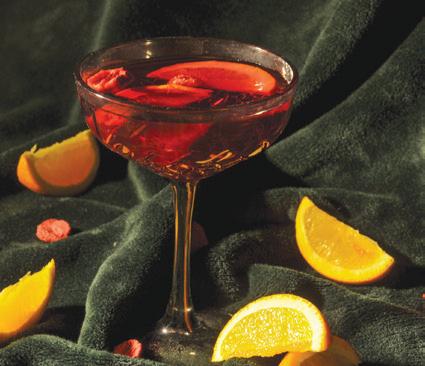
We’ve all been there — you’ve tried every love potion on the market (even your mother-in-law’s horrifying concoction of Mountain Dew and toad legs), and none seem to bring back the spark that you and your Valentine found back in 1252. Things were going great: You spent your days terrorizing the locals with blasphemous femininist ideology while your Valentine tended to the fields. Though your relationship was largely peaceful, you went through the occasional rough patch. Luckily, any lover’s spat could be quickly solved with a trip to Eros’ temple, where he graciously offered free couples counseling and a warm cup of spiced wine.
But those were the old days; ever since he started working at that TJ Maxx on 5th Avenue to pay his rent, Eros has simply had no time for any of his loyal customers anymore. What’s a gal got to do to spice up her relationship these days? Until not too long ago, these anxieties overwhelmed me just as I’m sure they now consume you. I was in your same shoes, you see: sad, lonely and trapped by both a crumbling relationship and a deadly pandemic! The Black Plague, COVID-19 ... a rose by any other name would smell as shitty. Though some things have changed since I was a youth — I’ve swapped my beak mask for an N-95 — one thing is for sure: The only thing scarier than a global pandemic is an abysmal love life.
After exhausting every reputable potions-master in Northern Africa to no avail, I thought for sure that my marriage was a goner.
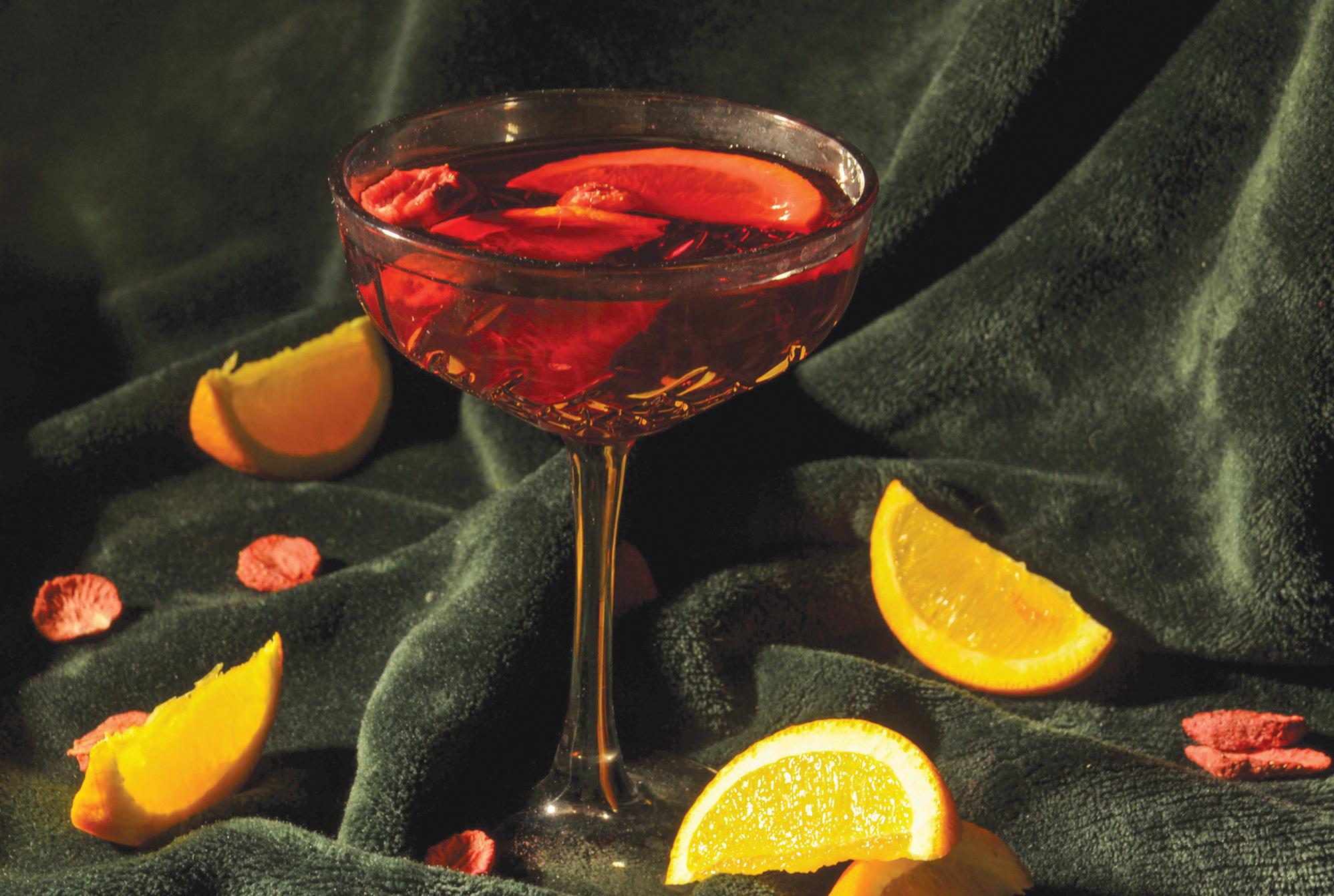
That is, until one fateful trip to Brazil forced me to swallow my pride and give mortal love potions a shot. You may have heard them called by their more scientifically palatable name: aphrodisiacs.
During my time in Brazil a couple hundred years back, I stumbled upon the catuaba plant, which locals told me would increase blood flow to the genitals. In an instant, my eyes were opened to the huge variety of aphrodisiacs

present in almost every human society. The Oxford English Dictionary describes aphrodisiacs simply as “[drugs or preparations] inducing sexual desire,” though certain aphrodisiacs are also said to increase sexual pleasure or even cure male impotence. While many aphrodisiacs produce similar results — a heightened sexual experience — the ways that they go about stimulating libido differ greatly depending on the substance.
Panax ginseng, for example, has aided suffering Chinese men throughout antiquity with its antioxidants that increase nitric oxide synthesis, an important part of maintaining an erection. If you’re looking to skip the Viagra, just hop on a quick flight to Africa; the Yohimbe evergreen tree of West Africa improves symptoms of erectile dysfunction by dilating blood vessels, thus increasing blood flow to the genitals. Other, more accessible aphrodisiacs in the Western world include strawberries, oysters, and chocolate. Though we lack much scientific evidence to back up claims that these three foods will drastically improve your sex life, they are not entirely without basis. The zinc content in oysters has been linked to higher testosterone production in men and women, a key contributor to a healthy sex drive.
It’s easy to understand why aphrodisiacs are so prevalent throughout the world. Hunger and sex are very naturally connected; they are primal instincts which societies must accept in order to propagate the commu-
nity and ensure continued survival. Humans are starving not just for food but for the comfort, connection and safety of a sexual relationship. The acts of eating and sex heavily rely upon themes of consumption, as both require welcoming a foreign thing — whether that be a food or another’s physical body — into ourselves. Through digestion, a food is broken down into nutrients which fuel our bodies and literally become part of us. You truly are what you eat.
Narratives around sexual relationships similarly center around the unification of two bodies.
Delicious food, like good sex, makes us feel like we’re doing something wrong in the most thrilling way.
Married couples “become one” upon consummating their marriage, or having sex for the first time as a married couple. There is even a case to be made about the shared prefix “con-” present in both “consume” and “consummate,” which is often added to indicate that multiple objects are coming together and uniting. Various mythologies centered around food can be interpreted
with sexual meaning; Adam and Eve’s tasting of the forbidden fruit represents, in some circles, more than just the knowledge of good and evil. Instead, it can symbolize the broader desire to indulge in illicit and taboo acts. Persephone feels this same tantalizing pull towards the pomegranate — uncoincidentally, also an aphrodisiac associated with fertility — during her time in the Underworld. In some versions of Persephone’s myth, the pomegranate seed’s taste is so divine that all who taste it must eventually return back to the Underworld or be consumed with longing. The fruits in these myths represent fulfillment and satisfaction, yet are accompanied by undertones of shame and guilt. Sound familiar?
Associating food with sex is an easy connection to make, considering their multitude of symbolic similarities. Delicious food, like good sex, makes us feel like we’re doing something wrong in the most thrilling way. “Guilty pleasures” refer both to chocolate cake and sexual fantasies, destined to never be spoken aloud for fear of social retribution. Yet despite this shame, nothing can draw our minds away from the desire we feel for an exciting encounter with a greasy burger or a tall, dark and handsome stranger. This Valentine’s Day, if you’re anything like me, you’ll give some of these mortal remedies a try. Who knows? You just might like what you discover.
Amelia Clute is a junior in the College of Arts and Sciences. She can be reached at aclute@cornellsun.com.
MARYAM ZAFAR ’21
in
JOYBEER DATTA GUPTA ’21 Business Manager
PETER BUONANNO ’21
Associate Editor
MEGHNA MAHARISHI ’22
Assistant Managing Editor
CHRISTINA BULKELEY ’21
Sports Editor
BORIS TSANG ’21
Photography Editor
CAROLINE JOHNSON ’22
News Editor
ALEX HALE ’21
News Editor
ARI DUBOW ’21 City
EMMA ROSENBAUM ’22
BENJAMIN VELANI ’22 Dining Editor
JOHN MONKOVIC ’22 Multimedia Editor
MIKE FANG ’21
OLIVIA WEINBERG ’22
Assistant News Editor
MADELINE ROSENBERG ’23
Assistant News Editor
LUKE PICHINI ’22
Assistant Sports Editor
HANNAH ROSENBERG ’23
Assistant Photography Editor
BRIAN LU ’23
Assistant Arts & Entertainment Editor
ANNABEL LI ’21
Assistant Money & Business Editor
JOHNATHAN STIMPSON ’21
KRYSTAL YANG ’21
HUANG ’21
NGUYEN ’22
PALLAVI KENKARE ’21
’21
’23
’21
’21
’22
’23
MEGHANA

Dr. Anne C. Jones ’04, D.O., MPH is the COVID-19 public health ofcer at Cornell University and medical director of Cornell Health. Comments can be sent to opinion@cornellsun.com.
I’22
’21
Editors in Training
Editor in Chief Meghna Maharishi ’22
Managing Editor Anil Oza ’22
Associate Editor Benajmin Velani ’22
Opinion Editor Odeya Rosenband ’22
Sports Editor Luke Pichini ’22
William Bodenman ’23
News Editor Milo Gringlas ’22
Noor-e-jehan Umar ’23
Jyothsna Bolleddula ’24
Dining Editor Amelia Clute ’22
Photography Editor Hannah Rosenberg ’23
am writing to ask for your help to prevent further spread of COVID19 at Cornell. As we embark on the first week of classes, we are experiencing a cluster and a surge in cases, many of which are attributable to gatherings in which public health procedures were not followed. It’s not just about wearing masks, physical distancing, and washing hands anymore. In the middle of a local surge in cases, we need to protect ourselves and each other in very specific ways.
Our primary goal is to deliver excellent clinical care, and protect the students on this campus from infection and severe disease. We need your full cooperation to do so.
First, your honesty with contact tracing is a crucial part of containing this surge. Testing ensures early identification of COVID, but once cases are identified, the public health process only works when we can quickly identify who may have been exposed, and immediately place them into quarantine. Accurate contact tracing depends on an open dialogue between the patient affected and the healthcare provider, and an understanding that the individuals involved will be honest and disclose their activities. As healthcare professionals, we at Cornell Health keep all individual’s medical information confidential and pass no judgement regarding information provided to us. Our primary goal is to deliver excellent clinical care, and protect the students on this campus from infection and severe disease. We need your full cooperation to do so.
It has been reported nationally that groups of people may socialize without following public health guidelines and then pressure members of these groups to be dishonest with contact tracers. Please do not let this practice compromise the safety of our community. It places individuals and groups at risk, and prevents our public health and medical experts from containing infection. What’s more, this practice borders on hazing culture and is not part of a caring community. Coercing classmates and
friends into defying contact tracing is unacceptable and I urge you to safeguard against it for yourselves and each other.
Second, in-person social gatherings are not safe at this time. With cases surging across campus, we must be mindful of our actions and help remind each other: do not gather in person for any parties, gatherings, hang-outs, or unapproved events of any kind. Keep in-person interactions with others to a few minutes at a time – remember, the criteria for being a “close contact” is interacting with another person for a cumulative time of at least 10 minutes in a 24-hour period. If you are living in a fraternity, sorority, or any group living arrangements (co-ops, large houses), avoid congregating in lounges, living rooms, or meeting spaces and wear your masks while inside your house as you walk through living spaces. If you are in on-campus housing, follow the expectations and procedures related to room occupancy, and avoid any interactions that are not required. Reach out for help if you need help with activating infection control practices where you live.
And finally, Cornell Health is rescheduling or cancelling non-urgent medical services, because we are all hands on deck for COVID right now. With so many COVID cases on campus, our central priority is to ensure that every student who needs care for a COVID-19 infection gets it, to prevent severe illness or worsening of disease, and to ensure that students get better. Starting this week, Cornell Health’s primary care medical services will be rescheduling and cancelling routine and preventive appointments (i.e., immunizations, well-person care, such as pap smears, sexual health, and other non-urgent or emergent care), and re-deploying staff to the pandemic effort. With almost 300 students in isolation and quarantine, our staff are spread across multiple hotels to ensure that students are being monitored and are kept safe. Please know that we are doing our best to prioritize and triage everyone’s needs.
Why is all of this important? It’s about keeping you, your friends and this whole community as safe as possible. Research has shown that young adults are more likely than any other age group to spread infection to others, and this means we all must stay vigilant to protect the most vulnerable among us. Think about wearing your mask not just for you, but for those in our community who have chronic illnesses and more likely to get
... Cornell Health’s primary care medical services will be rescheduling and cancelling routine and preventive appointments ... and re-deploying staff to the pandemic effort.
sick. If you get a call for contact tracing, report all of your contacts because you never know — one of them may have an underlying health condition that you aren’t aware of. We have pulled through many difficult experiences as a community and, with concerted and collective effort, we can do it again this time.

Michaela Bettez is a junior in the College of Engineering. She can be reached at mbettez@cornellsun.com. Bet on It runs every other Monday this semester.
It’s the end of the semester. You’ve completed your last final, submitted your last paper, and given your last presentation. There’s nothing left to do but wait for the grades to filter in. But as professors demand accountability and thoroughness in your final work, they fail to deliver the same on their end. For a large number of classes offered at Cornell, final exam, project, or presentation grades are simply never inputted for the student to see. What may be, at first glance, a lazy oversight by the professor as they work to submit final grades by the University’s deadline hides a more nefarious practice: stripping students of their ability to challenge and understand their own grades. The grades they labored over for months, sacrificing sleep, sanity, their work in other classes, and even meals on occasion. It is far from unreasonable for these students to see and understand what went into their final grade so in the case of a simple algebraic mistake or grading error, they can fight for the grade they deserve.
Many students are left with this question: Did they even grade my work? On the social media Reddit’s popular r/Cornell thread, user RideMinute6332 posted in January:
“ ...my prof posted our final grades (after the deadline at that) but never uploaded our final project and our other final assignment grades on Canvas… he’s ignored both my emails from 3 days ago & again today asking where these final project grades are, so it almost seems like he just took the overall grades we had without the final project grades on Canvas and used those as our final grades bc he couldn’t grade the final projects in time… it’s frustrating to see when something you worked hard on is just ignored due to a prof’s seeming negligence…
“I just feel kinda powerless as a student, bc my prof could ignore my emails as long as he wants since submitting an OLGAA grade change request would be an inconvenience for him & i know that my prof could also just make up any random number that fits to say was my final project grade and claim that he incorporated it into my final grade if i confront him more seriously about this, and i can’t do anything about it. [I know] some profs will just be unfair but i still wanna advocate for myself in some way and get the grade I deserve…”
What may be ... a lazy oversight by the professor as they work to submit final grades by the University’s deadline hides a more nefarious practice: stripping students of their ability to challenge and understand their own grades.
Without such a policy that preserves students rights to a fair grade and ways of keeping professors accountable for fairness, such practices will continue and generations of more students will be cheated out of their hard-earned grades. I would also like to add that I attempted to add a link above for how to submit an OLGAA (OnLine Grade Adjustment
Application) request through the registrar for students who may not know how — only to find that when I try to click on the registrar’s link it leads me to a page which bears only the words: “You do not have sufficient permissions to access this page. Contact your College Registrar with concerns.” What an excellent way to make it even harder, Cornell. Way to kick students while they’re down. Such practices have become commonplace in the University. In my own experience, about half of the classes I’ve taken at Cornell have never communicated either my final exam grades or the curving process they used to convert my raw score into a final grade. This includes Engineering General Chemistry, Multivariable Calculus for Engineers, Differential Equations for Engineers, and Linear Algebra for Engineers, and far, far more. Even now as a senior taking much smaller classes that are far easier to grade, a stunning three of the five classes I took this past fall submitted my final grades without telling me what my final exam or project grade was. This included one graduate level class that neglected to enter the grades for the last 10 assignments I submitted, including the final project grades that, according to the syllabus, comprised a stunning 50 percent of my grade. I still have no idea what made up more than half of my final grade. Another computer science senior reported that only one class out of five he took in the fall reported grades for all of his submitted assignments.
This practice is meant to stifle the ability of students to advocate for themselves for their own grades — by neglecting to enter the final graded assignments in lieu of submitting only a final grade, professors hope to create nearly insurmountably high barriers to rectify incorrect grades. They deliberately withhold information to even know an error has been made so that the vast majority are deterred from the process of fixing an incorrect grade, and those who suspect it are left with the Herculean task of both proving its incorrectness and changing a grade already in Student Center. Motivated by nothing but sheer laziness and negligence, many compound on this process, by refusing to answer emails concerning the issue, and aided by the inability of the University to even provide an easy process to even begin to address it. The University owes to its students a policy of accountability in its professors, in which students can report classes that fail to meet the bare minimum of transparency in their grading process.

Darren Chang is a senior in the College of Arts and Sciences. He can be reached at dchang@cornellsun.com. Swamp Snorkeling runs every other Tursday this semester.
GameStop’s trip to the moon was a short-lived and dangerous path — especially for the average college student who’s just starting to invest.
If you’ve been on the Reddit front page in the past few weeks (or as long as you haven’t been living under a rock), you’ve probably heard about the Wall Streets Bet subreddit (r/wallstreetbets) and the unpredictable price drama of GameStop stock. At frst, the interest in GameStop was loosely motivated by fundamentals. Ryan Cohen, the founder of the successful online pet food company Chewy, joined the board in early January and investors thought that he could perhaps turn around GameStop’s brick-and-mortar business model and transform it into an online machine.
Ten, Reddit caught on. Suddenly, buying GamesStop became the newest trend and a variety of stock market mechanisms only interesting to business frat bros and fnance Ph.D students came into play (if it wasn’t for this debacle, would anyone have heard of the gamma squeeze or the short squeeze?). For the faithful acolytes of Wall Street Bets, it was a “stick it to the man” moment when retail investors fnally got the better of big evil institutional investors like hedge funds and banks with more capital,
more manpower and more knowledge. In many ways, this episode mirrored the kind of political populism that yells power to the people without knowing the nitty-gritty details of the power. Only this time, it was in the stock market.
In truth, though, what happened was a lot more complex than that. Many hedge funds won, because they fgured out the Redditors’ game and only a few institutions — the infamous example of which is Melvin Capital — actually lost. Robinhood, the trading app used by most of the Redditors, probably also won, since they make money of of each transaction. On the other side of the retail-institutional divide, quite a few Redditors seemed to have lost, based on the vitriolic anger when the stock nosedived. Even now, the negativity on r/wallstreetbets is impressive.
Bloomberg writer Matt Levine’s “boredom markets hypothesis” might actually have some explanatory power in these situations marked by what seem to be irrational calculations: Retail investors are stuck at home because of the pandemic and have nothing better to do. So, they buy stocks for fun. For the same reason, I’m greeted every day by a friend who never forgets to create a meme that rifs on “TSLA go up” (and go up it does). It’s striking to me that anybody in this position thinks they can beat hedge funds that put literal billions into analyzing every microsecond of a stock’s movements. To think “Chad” could win from their phone with a few hundred dollars is either naïve or impressively obtuse.
While stock market gimmicks are cool on the outside, the reality is that they’re unsafe investment mechanisms for the average person, and especially unsafe for the average college student who’s trying to build up some savings.
It doesn’t take an investment banker or even a Dyson student to fgure it out. Te reason is that our risk aversion should be higher. After all, most of us have very little income, less disposable income and even less to throw into the market. Te downside risk of buying a highly volatile stock like GameStop is massive, especially for those who got in the game late and bought shares when the price was already rising. Getting caught in the free fall could have proven disastrous.
None of this goes for those who are sitting on thousands of dollars from their mommy or daddy or their trust fund, for whom the stock market is only a game. If you
can aford to lose money and buying GameStop is really just the frst part of the company’s name (a game), then by all means, go for it. It may not be smart, but it also doesn’t matter. You’ll only add fodder to the boredom markets hypothesis.
While stock market gimmicks are cool on the outside, the reality is that they’re ... especially unsafe for the average college student who’s trying to build up some savings.
Te fip side is the average college “investor,” who’s only starting an account for the frst time and just trying to save some income from a summer internship or a workstudy job. Te frst few months and years of any portfolio are important for building up capital and some market volatility could cancel out any gains. Or, in a worst case scenario, a portfolio overexposed to a single stock or could be wiped out.
I’m not giving any investment or legal advice. Tere are much more qualifed individuals and better forums for that. But, my opinion based on this newest market saga is that looking for investment safety as well as slow and steady returns is the way to go. Whether or not you believe stocks and investing in a capitalistic system are ethical, the rule that, “Tere is no such thing as a free lunch” holds true: Tere is no way to “get rich quick.” If it sounds too good to be true, it probably is. Te market’s penchant for wild swings will repeat itself as small groups of zealots fnd a new stock or new idea to fawn over.
Tis time, it was sold on Reddit and spread by word of mouth by a generation of people who didn’t know or care much about their money. Tis time, it took some money from a lot of people and a lot of money from a few people. Next time, who knows what contours the newest anti-institutional rage will take?
Fill in the empty cells, one number in each, so that each column, row, and region contains the numbers 1-9 exactly once. Each number in the solution therefore occurs only once in each of the three “directions,” hence the “single numbers” implied by the puzzle’s name. (Rules from wikipedia.org/wiki/ Sudoku)




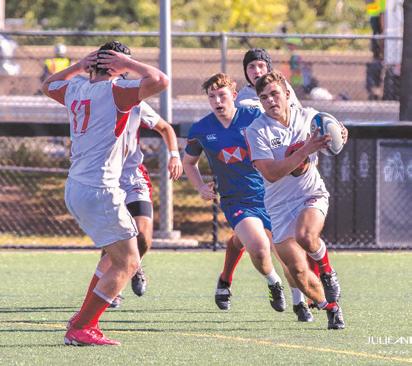
A Type I diabetic, Bogdan has still found success in wrestling, rugby
By LUKE PICHINI Sun Assistant Sports Editor
For Drew Bogdan, the path to Cornell rugby was not necessarily well-charted, but it was one that fit his background of showing grit and resilience.
Hailing from Albany, Bogdan was diagnosed with Type I diabetes when he was three years old.
“Your blood sugar is kind of like your temperature — your body has to keep it at a certain level.”
Drew Bogdan
Despite the diagnosis, Bogdan and his mother researched the condition in the following years to formulate a plan to manage his diabetes.
“Your blood sugar is kind of like your temperature — your body has to keep it at a certain level,” the sophomore said. “In order to lower your blood sugar, your body releases insulin, and in order to bring it up, your body releases glucose, which is food.”
Diabetics like Bogdan are unable to release insulin, so they cannot naturally lower their blood sugar. Bogdan receives his supply of insulin in the form of three-day disposable pumps, which he places on his right arm.
Whenever Bogdan needs to raise his blood sugar, he is well prepared to do so by consuming simple sugars. In college, Bogdan stores up to 96 juice pouches in his room as a quick tool to raise his blood sugar. When he was younger, Bogdan’s diabetes earned him brownie points with his peers.
“During kindergarten, I had bacon in my lunchbox everyday because it has zero carbs,” Bogdan said with a chuckle. “Sometimes, I would give people little bits because I could, they liked it, and it made me more popular.”
As Bogdan became more active, he began to incorporate a greater amount of carbohydrates into his diet to fuel his athletic endeavors, particularly wrestling.
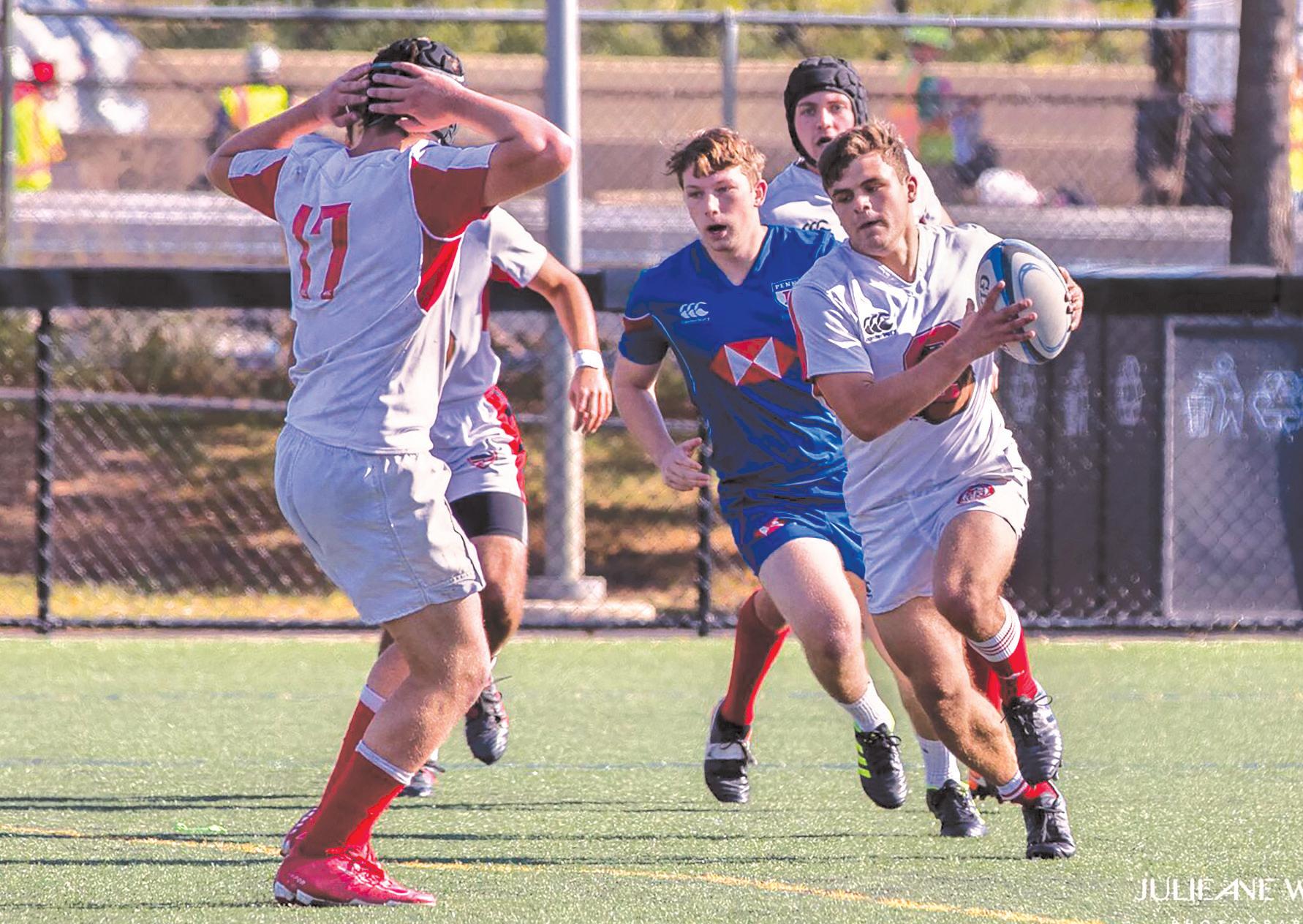
Having previously dabbled in swimming and baseball, Bogdan found his niche in wrestling starting in fifth grade. Bogdan developed his skills at the Titan Wrestling Club and began competing when he transferred to Albany Academy in seventh grade.
From seventh to 10th grade, Bogdan continued to sharpen his skills and improved from a 50 percent win rate to an 80 percent clip. A year later, he experienced a breakout season.
Named a captain, Bogdan experienced a noticeable leap in performance that coincided with the introduction of a new coach, Lenny Baker, who focused on
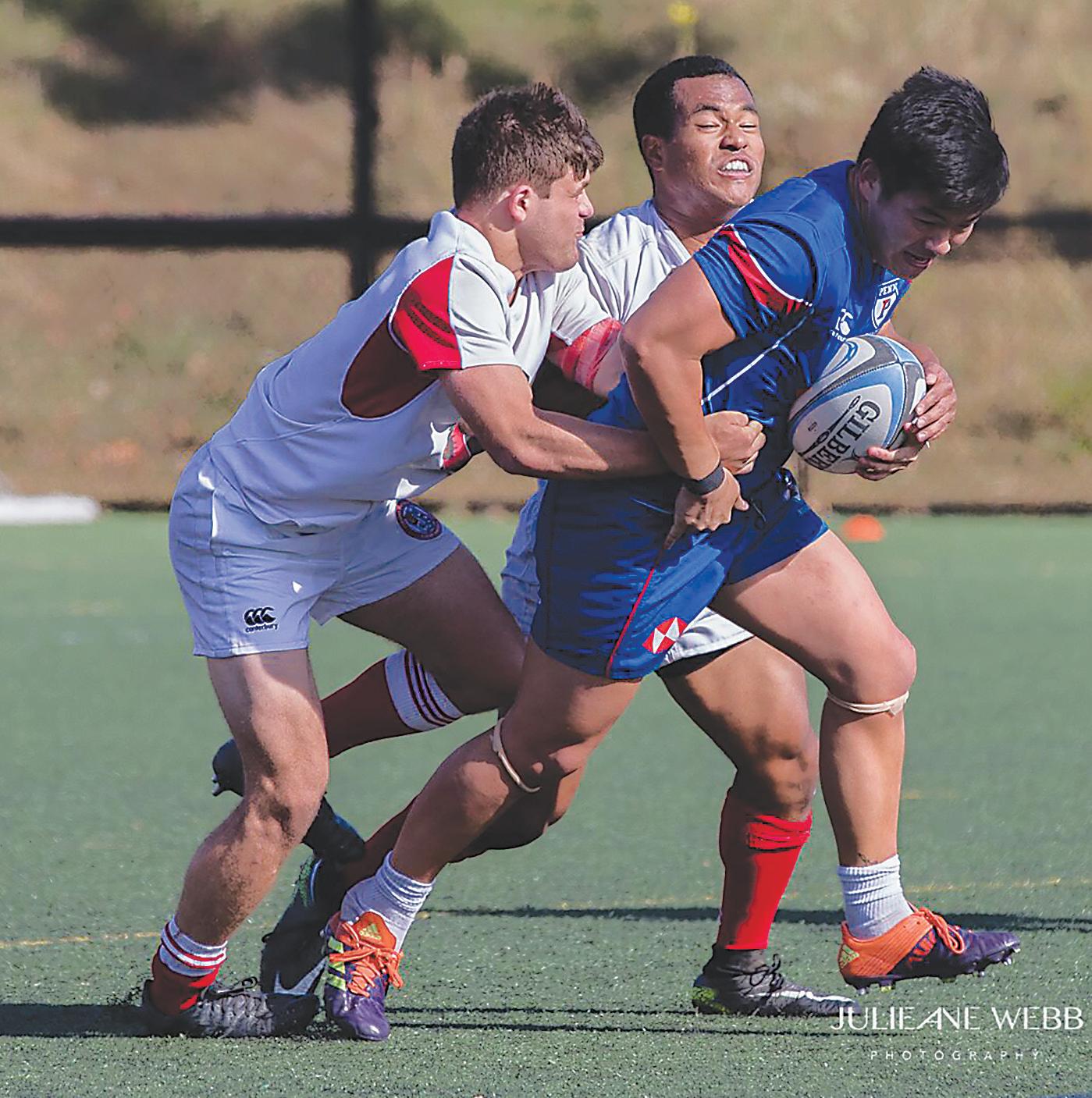
the development of his wrestlers. Under the tutelage of Baker, Bogdan netted his highest postseason finish in sectionals in his junior year and put the bow on his high school career, finishing in eighth place at states.
Bogdan tried his hand at wrestling at Cornell, joining the club wrestling team at the beginning of his freshman year. But he soon found that the college level was far more challenging than that of the high school mat.
“They kicked my ass,” Bogdan said. “I was nowhere near good enough to be in that room — they had worked all summer to be there, and I had bussed tables.”
Moreover, Bogdan’s new fellow wrestlers possessed a significant advantage over him, especially in their ability to easily cut weight, something that Bogdan could not easily perform as a diabetic. With the environment being so much more physical, Bogdan frequently saw his insulin pumps inadvertently ripped off in the midst of the wrestling.
“In college, everything was just moving so fast,” Bogdan said. “In high school, you’re smaller, and there’s less force. But here, [my pumps] would get knocked off almost every time. It wasn’t intentional, but when you’re wrestling, it’s rough, physical and violent.”
After a few weeks with the club team, Bogdan opted for a new opportunity — rugby. Rugby did not represent an entirely uncharted territory for Bogdan, who experimented with the sport during his senior year of high school.
The transition from wrestling to rugby proved to be rather
smooth for Bogdan. Both sports require a certain level of resilience and physicality — both of which Bogdan possessed.
“In rugby, you can see a lot of wrestlers,” Bogdan said. “We all know each other because we have all of the same wrestling ticks. They’ll get into more of a wrestling stance than a rugby stance and when they take someone down, they’ll always do a double leg.”
Managing his diabetes while playing rugby is more suitable for Bogdan than it was with wrestling. Whenever there is a pause in the contest, Bogdan can drink a juice box to regulate his blood sugar. And though rugby is very physical, the lack of padding combined with the rule that forbids tackling above the waist results in Bogdan taking less of a beatdown.
Unfortunately, the pandemic has halted in-person activities, including rugby. While the team still meets virtually, they have been unable to partake in any practices, though they are hopeful to start 7-on-7 practices later in the spring and potentially enter a tournament later in the semester.
In managing diabetes while excelling in wrestling, Bogdan had already developed a strong fortitude, which has only been further solidified with his participation in rugby.
“It’s now about how hard you can hit, it’s about how hard you can get hit,” Bogdan said. “What I like most about rugby is just the grit — yeah, you may have just leveled me, but I can get back up.”