
Sigma Alpha Epsilon Returns To Campus for Spring Semester
Fraternity was banned from campus in 2011 after a death
By CARLIN REYEN Sun Contributor
Feb. 25 marks the 11th anniversary of the tragic death of George Desdunes ’13 in a 2011 fraternity hazing incident that rocked Cornell’s campus and sparked national outrage. Now, eleven years later, Desdunes’ fraternity Sigma Alpha Epsilon is reopening its doors.
An investigation into Desdunes’ death found that the sophomore had been involved in a “reverse kidnapping” hazing ritual in which pledges tied up brothers of the fraternity with zip-ties and duct tape and gave them copious amounts of hard liquor until they vomited repeatedly.
According to the New York Times, after Desdunes passed out from alcohol consumption, brothers of the fraternity brought him back to the Sigma Alpha Epsilon house and left him on a couch in the library. Desdunes was found unresponsive the next morning by cleaning staff. Three freshmen pledges were later charged with misdemeanor hazing, and a fourth was charged with hazing and tampering with evidence.
After Desdunes’ death, the University revoked its recognition of Sigma Alpha Epsilon for at least five years, all brothers were forced to vacate the chapter house and the fraternity was fined $12,000 in state hazing penalties.
In 2018, prompted by Desdunes’ death
See FRATERNITY page 3


Valentine’s Day
By RACHEL KODYSH Sun Contributor
Cupid is getting a little bit of help this year from Perfect Match, an online survey dedicated to matching Cornell students with a romantic partner for Valentine’s Day. As of Feb. 9, there are 2,610 participants awaiting their results, which come out at 6 p.m. on Feb. 13.
Inspired by a similar but less sophisticated survey at his high school, Jamal Hashim ’22 created the site in 2019 during his freshman year. He said he didn’t expect the site to become a booming success, but he wanted to connect students with each other.
“A big goal is [for] people [to] just start talking to their matches and getting people to reach out,” Hashim said.
Thanks to student responses and the input of his team, Hashim said the site is improving every year. The Perfect Match team collects feedback after each year’s round and sends potential survey questions to students for evaluation before publishing the year’s survey. This year, Hashim is focusing on improving the matchmaking algorithm while preserving the site’s core features such as the survey format.
she said she is open to taking a match seriously if she likes who she gets.
After seeing it in her sorority group chat, Kristen Ikle ’24 also took the survey with her friends. Though she said she’s excited to see her results, she said she would not meet up with her matches.
Like Lidman and Ikle, Natalie Rosenberg ’24 filled out Perfect Match with her friends in hopes of finding someone with whom to meet up. Together, Rosenberg and her friends helped each other write their bios and answer questions like “How would your ideal wingperson describe you?”
Perfect Match has also become a social phenomenon with its own presence on campus as a dating option. Rosenberg said she took the survey because she saw others taking it and prefered it to using a dating app.
“A big goal is [for] people [to] just start talking to their matches and getting people to reach out.”
Jamal Hashim ’22
Hashim said that most of the complaints from last year’s survey were that people felt their matches were too similar. This year, the group is making an effort towards creating matches of different types of people.
Alice Lidman ’25 said she appreciates the possibility of meeting someone different from herself.
“I’m definitely more on the introverted side, and I always tell my friends that I would like my boyfriend to be more outgoing than me,” Lidman said.
When Lidman took the survey initially, she did it with her friends for fun without expecting to meet someone, but
U.A. Discusses Campus Security, Trash Cans
Hears presentations on police reform, sustainable trash receptacles
By JACK DONNELLAN Sun Contributor
On Tuesday, the University Assembly convened in person after conducting their first meeting of the semester virtually. The assembly heard from the Public Safety Advisory Committee regarding its plans for campus public safety reform, as well as from proponents of installing more sustainable trash cans on campus.
Representatives first heard from the co-chairs of the Public Safety Advisory Committee, which is composed of administrators, staff, students and faculty who advise campus police in accordance with New York State Education Law.
The Executive Vice President and Chief Financial Officer Joanne DeStefano and Vice President for Student and Campus Life Ryan Lombardi presented their updated plans for reforming the Ithaca
campus’ public safety protocols.
On July 16, 2020, President Martha Pollack outlined new initiatives to promote racial justice in the wake of national protests responding to the murder of George Floyd. Since then, PSAC has focused on evaluating the University’s security protocols in order to improve Cornellians’ sense of belonging on campus.
See ASSEMBLY page 3
Some people — such as Emma Cerrato ’24, who said she just got out of a relationship and isn’t currently looking for a new one — are only looking for friendship through the survey.
“I think literally the worst case scenario [is that] I just don’t interact with the person, and it was fun and harmless,” Cerrato said. “Best case scenario: I make a new friend.”
But friend-seekers like Cerrato are in the minority. A few years ago, Hashim created a website specifically for platonic connections called Fall Friendships, but it wasn’t a success.
Because some students take the survey just for fun while others are looking for a long-lasting connection, the algorithm of Perfect Match filters students according to their level of interest.
“If they’re just taking it for fun, they’ll get matched with
See MATCH page 3
study days
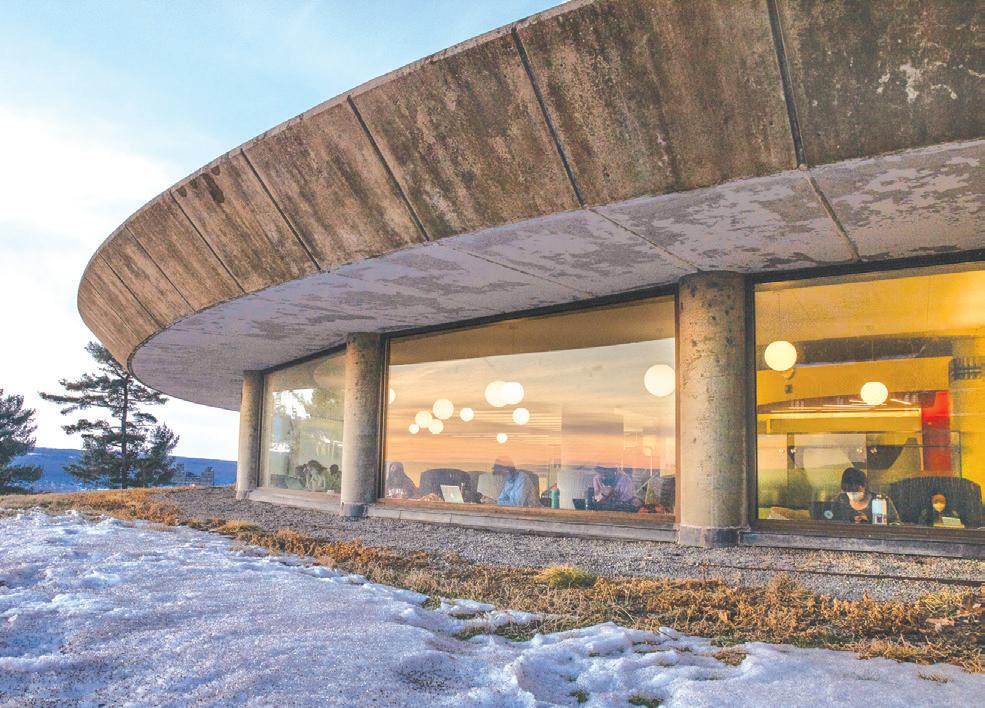
Students study in the Cocktail Lounge in Uris Library to avoid the cold as their first week of in-person classes for the spring continues.
JULIA NAGEL / SUN ASSISTANT PHOTOGRAPHY EDITOR
Developed by a Cornell student, Perfect Match uses a survey and site to connect students for Valentine’s Day.
AVA FASCIANO / SUN GRAPHIC DESIGNER
Snowy
COURTESY OF CORNELL UNIVERSITY
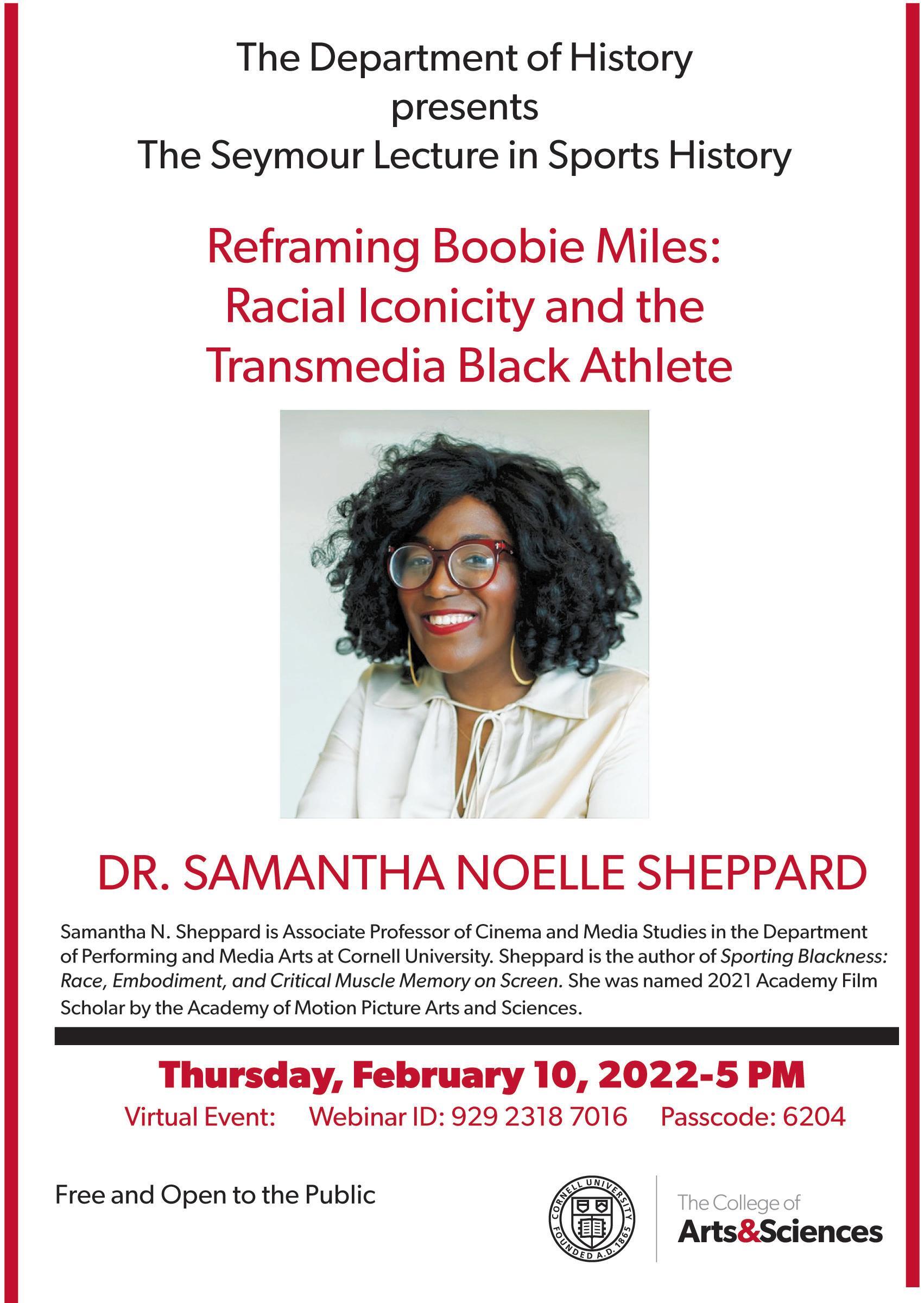
Sports history | Associate Professor Dr. Samantha N. Sheppard, performing and media arts, will present on how media has shaped the narrative of Black sports history.
Today
Seymour Lecture in Sports History: Samantha N. Sheppard 5 p.m., Virtual Event
Cornell Institute of Archaeology and Material Studies Workshop: Practice Job Talk: Brita Lorentzen 4:30 p.m., McGraw Hall 125
Thursday, February 10, 2022
Musicology Colloqium: Jamie Curie, “Arts of Fidelity in Queer Historical Time: Edward Said and the Image of Jean Genet” 4:30 p.m., Lincoln Hall 124
The Queer Nuyorican: Racialized Sexualities and Aesthetics in Loisada 4 p.m., Virtual Event
“Where are the Gay Black Panthers?: Black Queer Radicalism and the Black Panther Party” 1 p.m., Virtual Event
Multicultural Student Leadership and Empowerment Presents HealthyUS Series: Decoded Career Prep with Catalina Peña 7 p.m., Virtual Event
The Politics of Maps: Cartographic Constructions of Israel/Palestine 11:25 a.m.
Tomorrow
Virtual Event
Ignite Postdoc for Ventures — Info Session #1 Noon, Virtual Event
Department of Psychology Colloqium: Mina Cikara, “Causes and Consequences of Coalitional Cognition” 12:20 p.m., Virtual Event
Roundtable: Patrick Naeve, “The Battle of Beginnings: The Limits of Anagenesis, The Middle Ages And Modernity” 2:30 p.m., Virtual Event

OF
Medieval studies | Graduate student Patrick Naeve will present the concluding chapter of his dissertation, “The Battle of Beginnings: The limits of Anagenesis, the Middle Ages and Modernity.”
Cornell Men’s Squash Vs. Western University 6 p.m., Belquin Squash Courts
Chemung Farm Workshop 9:30 a.m., Virtual Event And Big Flats Community Center

COURTESY
CORNELL UNIVERSITY
Public Safety Discussed at University Assembly Meeting
“To be honest with you, the difficulty is finding anyone willing to make the time,” DeStefano said. “We do want undergraduate feedback and participation.”
PSAC’s efforts have included an April 2021 survey, focus groups and a community forum conducted in May 2021.
DeStefano reported that while the survey results indicated that only seven percent of the University community members expressed an overall dissatisfaction with the Cornell University Police Department, Black students were nearly three times more likely to express dissatisfaction compared to other student demographic groups.
On July 27, 2021, the PSAC issued a report to President Pollack recommending five primary reforms, which Pollack indicated that she supports, according to DeStefano. The recommendations included issuing an institutional public statement about the University’s commitment to enacting anti-racist public safety, the development of an alternative public safety and response model, the initiation of an educational campaign for public safety calls and the diversification of the public safety workforce on campus.
This semester, DeStefano said that the PSAC has held ten meetings and welcomed guests including Robert W. and Elizabeth C. Staley Dean of Students Marla Love, Cornell University EMS student leadership and the CUPD Crime Prevention Unit. They have also established a subcommittee to refine and develop the recommendations in the PSAC’s initial report.
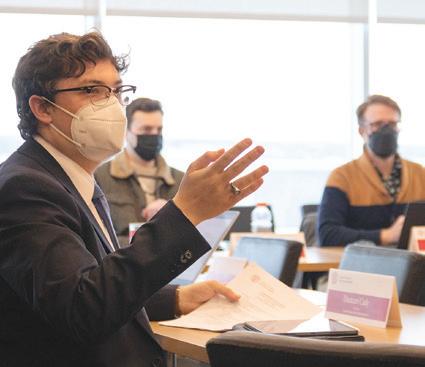
However, some students have expressed the opinion that the process has insufficient undergraduate input, concerns that are made more prominent by the lack of undergraduate students representation on the new PSAC subcommittee. U.A. representative Duncan Cady ’23 explained these concerns to DeStefano and Lombardi during the meeting.
DeStefano noted that the Student Assembly recently created a Public Health and Safety Committee, which aims to increase undergraduate involvement in the public safety reform process, but also said that student disengagement has been a problem.
Later, the U.A. discussed Resolution 3, a proposal to increase the number of sustainable waste receptacles on campus in order to increase recycling and protect the campus from littering.
Campus Committee on Infrastructure, Technology and the Environment chair Ian Alisoglu, grad, argued in favor of the resolution, which proposes that the University purchase “BigBelly” environmentally sustainable smart waste receptacles. This would bring Cornell’s campus up to standard with the Ithaca commons, as well as the campuses of peer institutions like Harvard University and Vanderbilt University.
However, Alisoglu said that the resolution faced stiff opposition from the Cornell University Campus Sustainability Office.
Purchasing new receptacles runs counter to their strategy for overall waste reduction, which is to decrease overall waste by making it slightly more difficult to dispose of it, Alisoglu said.
Richard Bensel, Vice Chair of Internal Operations of the University Assembly, questioned the sustainability office’s logic and argued that this strategy may not change people’s behavior.
Alisoglu said that the University lacks a complete ground map of where all its outdoor trash receptacles are located, but added that one of the proposed initiatives for Beyond Waste –– an institution-wide waste reduction campaign –– this spring is a mapping project to find where all trash receptacles are located.
Alisoglu also reiterated that BigBelly waste receptacles are already present off-campus in Ithaca, making Cornell just another institution to adopt an already-popular solution.
“If Cornell adopted the system as well, it would be us following the lead of the Ithaca community,” Alisoglu said.
Jack Donnellan can be reached at jfd233@cornell.edu.
Perfect Match Becomes Annual Matchmaking Tradition
enough exposure. Cerrato completed the survey, but she said she doesn’t know anyone else who did the same.
other people who are just taking it for fun, and the people who are really looking to reach out will get more matches suited to them and get more matches who are willing to connect,” Hashim said.
Perfect Match may be a new February tradition for some on campus, but Cerrato said that, compared to a similar matchmaking platform at the University of Michigan, she felt that Perfect Match doesn’t have
Hashim said that the site has seen less exposure in 2022 due to classes going online for the first two weeks of the spring semester.
“This year it’s been a little bit harder to market,” Hashim said. “Launch is usually when most of the hype is generated, and this year classes were on Zoom. No one was really on campus.”
Still, since its founding, Hashim said that Perfect
Match’s success rates have gone up.
“We’ve had a bunch of people who say that they have either started dating the person they were matched with or are still going on dates and talking with who they got matched with,” Hashim said.
Attracting students of all demographics, grades and majors, Perfect Match is becoming a small Cornell tradition after running for four consecutive years, with plans to continue.
Rachel Kodysh can be reached at rjk243@cornell.edu.
Fraternity Returns After Suspension for Hazing Death
FRATERNITY Continued from page 1
and other hazing-related issues, University President Martha Pollack also announced new anti-hazing policies for Greek life, including three-year suspensions for chapters involved in coerced alcohol or drug consumption, violence and sexual misconduct, as well as mandatory alcohol,
“I have supported Sigma Alpha Epsilon returning to campus for ten years. I feel very strongly...”
ity and fraternity community since the tragic loss of George,” said Kara Miller McCarty and Lee May, representatives from Cornell’s Office of Sorority and Fraternity Life.
The New York Alpha Organization of Sigma Alpha Epsilon has also been a sponsor of educational programs for fraternities and sororities, including an anti-hazing event in 2019.
growing experience for me.”
In a statement to the Sun, Johnny Sao, manager of communications and public relations for Sigma Alpha Epsilon’s national office, wrote that he hopes the chapter will make the campus better for members and non-members alike.
“[We are] enthusiastic about [Sigma Alpha Epsilon’s] upcoming return to Cornell with men who exemplify our… creed, The True Gentleman, and serve as leaders on campus,” Sao said. “The goal is to provide a meaningful, safe and beneficial experience for our members and the greater Cornell and Ithaca communities.”
probation for three years following its reinstatement. According to Cornell’s Sorority and Fraternity Life office, Sigma Alpha Epsilon will be allowed to return to its former residence, 122 McGraw Place, in the fall of 2023, provided that the fraternity has recruited enough members to occupy the house.
“It was necessary for Sigma
Alpha Epsilon to leave campus after George’s death,” McCarty and May said. “They have now completed an extended suspension away from campus. We are hopeful the chapter can return and create a strong culture that makes us all proud.”
James Glenn ’55 Carlin Reyen can be reached at cer238@cornell.edu.
drug and sexual misconduct training for all Greek orgnizations. Additionally, annual public scorecards now display hazing violations of Greek organizations at Cornell.
New guidelines as of fall 2021 require full-time live-in advisors in all fraternity and sorority chapter houses and ban hard alcohol in such houses.
“The councils (IFC, Panhellenic, and MGFC), the Office of Sorority and Fraternity Life, our dedicated alumni, and student leaders have done extensive work over the last decade to strengthen and increase hazing prevention efforts for the soror-
Now, with its five-year expulsion over, Sigma Alpha Epsilon has returned to active chapter status at Cornell and is recruiting this semester. McCarty and May said that the fraternity had applied for reinstatement twice in the last eleven years and was granted approval on its 2020 application for return in spring 2022.
According to James Glenn ’55, a Cornell alumni and Sigma Alpha Epsilon brother, a committee of alumni members, many of them brothers who graduated Cornell in the 1980s, was heavily involved in bringing Sigma Alpha Epsilon back to Cornell. They worked with Sigma Alpha Epsilon’s national office and the University administration to reinstate the fraternity.
“I have supported Sigma Alpha Epsilon returning to campus for ten years. I feel very strongly that I benefited tremendously from my fraternity experience at Cornell and I would like other people to have the same kind of benefits,” Glenn said. “Cornell and Sigma Alpha Epsilon were a tremendous
Nationally, the Sigma Alpha Epsilon organization is no stranger to controversy. In 2015, the fraternity’s chapter at the University of Oklahoma came under fire for an incident in which members sang a racist chant vowing that the organization would never accept Black members. An investigation into the matter found that members had learned the chant at a national leadership retreat sponsored by the national Sigma Alpha Epsilon organization.
Despite the controversy surrounding the 2011 hazing incident, Glenn said that he would not write off the members of Sigma Alpha Epsilon involved in Desdunes’ death.
“I feel that a brother is a brother for life,” Glenn said, “Not just a brother for four or five years.”
The chapter will remain on
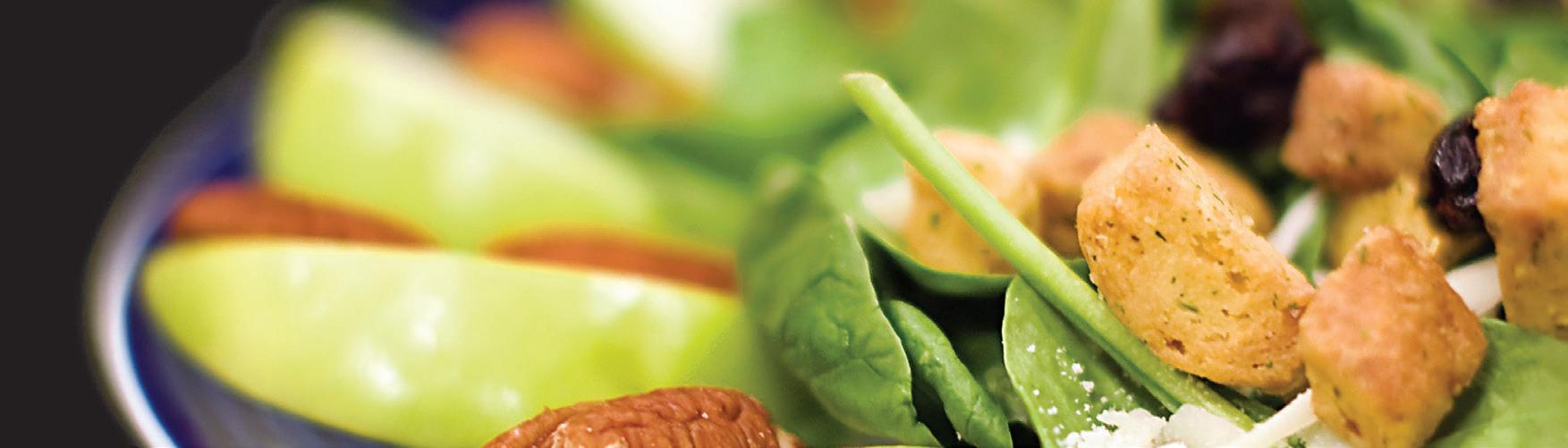
Your source for good food
America’s Lonely Tune, Tasted in Ithaca
By AYESHA CHOWDURY Sun Staff Writer
The components of a cuisine, from common spices to dietary staples to preparation styles, vary widely across the world. However, the biggest divide between different food cultures may arise not in the cooking, but what comes after. I learned the importance of dining style through two specific eating experiences, which began continents apart and ended up a mile from each other here in Ithaca.
One crisp autumn night, the brisk wind pushed my friends and I out into town to find something warm and fulfilling. We eventually spotted a little hole-in-thewall restaurant filled with steaming food and locals digging in, enjoying their eating experience together. My friends and I watched the spirited atmosphere bustle in front of us as we anxiously waited to join the feast. At last, we sat down at a table for four and received a single menu. We’d found De Tasty Hot Pot, a Chinese restaurant known for its signature delicacy: hot pot.
The hot pot is a unique Chinese cooking method that was first introduced to East Asia thousands of years ago when Mongolian horsemen cooked soups in their helmets over open fires and added various meats to the broth. Hot pot — completely foreign to me — was about to make its grand entrance to my palate.
We collectively decided to order a double-sided pot with small plates of cold ingredients: lamb, smoked crab, pickled cabbage, thin translucent rice noodles, tofu and bean sprouts. The table offered several different sauces, from creamy peanut sesame to sweet-and-sour and chili soy sauce. Fifteen minutes later, the waiter set our double-sided boiling pot onto the induction burner at the center of the table. Both sides contained a fragrant broth made of chicken and Virginia ham, one side mild and the other infused with a spicy red sate sauce.
Our server instructed us to submerge the ingredients into the hot pot, cooking them as thoroughly as we liked. My friends and I shared the ingredients around the

table, sitting shoulder to shoulder and cackling at our dire efforts to hold onto cabbage with chopsticks. Arms overlapped over the steaming pot as we reached for pieces of food, and eyes monitored bites of lamb. The savory aroma of simmering ingredients regaled our nostrils. The subtle chicken broth enhanced the natural brine of the meats, and the spicy sate sauce
washed over our taste buds like ambrosia. Glazing our warm food with our chosen sauces, we finally ate until we exhausted our tray.
With no music, television or flashy interior to see, I turned my attention onto the people and shared food in front of me. I connected this experience to my Bengali culture; back home, in my Bangladeshi household, eating is not only a nutritional necessity, but also an experience to reconnect the soul to its intrinsic appetite for company. Dinner time is a place to reconnect with my loved ones and slow down. Can you imagine eating hot pot alone? Or ordering a generous round of jasmine rice for one? Asian cuisine is often communal, fused through countries bound to a collectivist culture which values community over the individual.
During a separate night out, my friends and I found ourselves staring at the illuminated red and yellow rays from the neon Ithaca State Diner sign. We entered the diner to “Only the Lonely” by
Roy Orbison. In tune, a waitress sang the chorus, “Dum-dumdum-dumdy-doo-wah.” I was transported back home to Edina, Minnesota, where I would frequent a diner to exercise the late-curfew Friday nights that my permissive parents allowed. The same diner in upstate New York flashed before me: stainless steel countertops, porcelain tiles, leather booths, large windows and wall decor all helped preserve the retro look in 2022.
Seated next to our booth, a young couple shared a basket of onion rings. A few solo patrons — with only their newspapers for company — asked the cook for their usuals. Silently flipping through the predictable eight-page menu, we ordered ...
To continue reading this article, please visit cornellsun.com.
Ayesha Chowdhury is a junior in the ILR School. She can be reached at asc265@cornell.edu.

The Corne¬ Daily Sun
Since 1880
139th Editorial Board
KATHRYN STAMM ’22
Editor in Chief
ANUSHYA ALANDUR ’23
Business Manager
CATHERINE ST. HILAIRE ’22
Associate Editor
PRANAV KENGERI ’24
Advertising Manager
ODEYA ROSENBAND ’22
Opinion Editor
JYOTHSNA BOLLEDULA ’24
News Editor
TAMARA KAMIS ’22
News Editor
CAMERON HAMIDI ’22
KRISTEN D’SOUZA ’24 Design
HANNAH ROSENBERG ’23
OMSALAMA AYOUB ’22
PUJA OAK ’24 Layout Editor
ANNIE WU ’22
MIHIKA BADJATE ’23 Assistant
SERENA HUANG ’24 Assistant
ANGELA BUNAY ’24
Assistant
JOHN COLIE ’23 Assistant
AMELIA CLUTE ’22
MADELINE ROSENBERG ’23
Managing Editor
NAOMI KOH ’23
Web Editor
ANIL OZA ’22
YUBIN HEO ’24
VEE CIPPERMAN ’23
UMAR ’23
PLOWE ’23
YOON ’23 City Editor
BENJAMIN VELANI ’22
PICHINI ’22
TYAGI ’22
MENDOZA ’24
ARANDA ’23
BASU ’23
’24
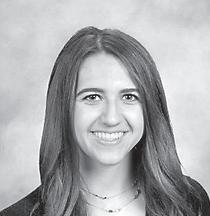
Rebecca Sparacio Te Space Between
Rebecca Sparacio is a sophomore in the Dyson School. She can be reached at rsparacio@cornellsun.com. Te Space Between runs every other Wednesday this semester.
Te Second First Day
All I can do is stare at my reflection, boxed within two pairs of bisecting parallel lines and four right angles; nothing feels right, and I’m paralyzed once again by my rectangular composition. By now, we all know what it feels like to stare into the pixelated abyss that is Zoom. Even the word “Zoom” seems to trail off into the distance, attempting to bridge our distant worlds, but lengthening the divide instead.
connection has manifested in the form of loneliness and poor mental health amongst the student body. It’s when you begin to wonder: Can you think outside the Zoom box, when you are stuck within one?
Vee Cipperman ’23
Angela Bunay ’24
Emma Leynse ’23 Katherine Yao ’23
Daniela Wise-Rojas ’25
Editors Eli Pallrand ’24 Sofa Robinson ’24 Kayla Riggs ’25 Science Editor Tenzin Kunsang ’25 William Cox ’24 Photography Editor Julia Nagel ’24
Claire Li ’24
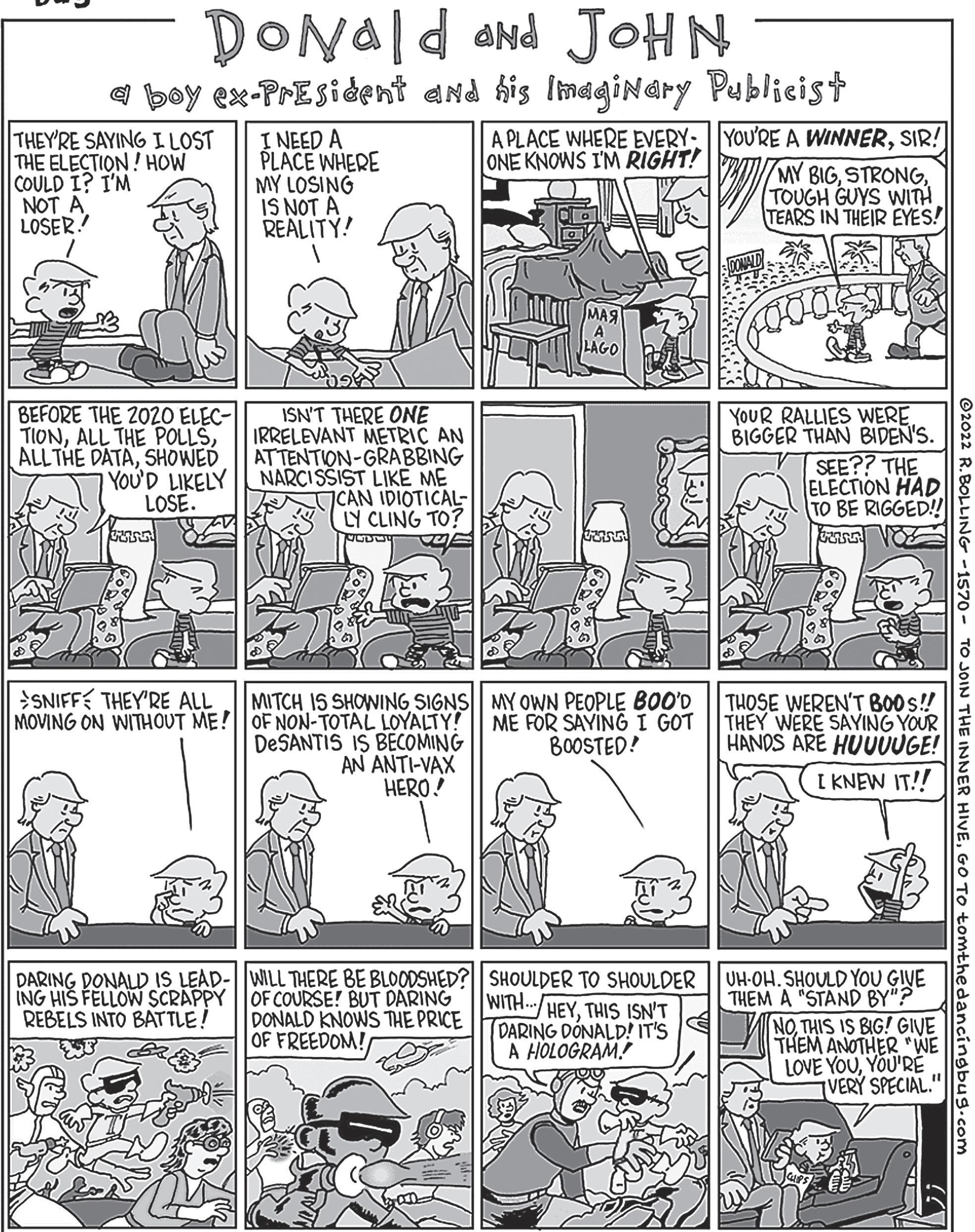
Tom the Dancing Bug by Ruben Bolling
Zoom creates a world of its own filled with Zoom “norms.” The silent breakout room. The impossibility of eye contact. Turning the camera on. Turning the camera off. Going from visible to invisible. “Can you hear me?” Muting. Unmuting. Wondering whether Zoom has “muted” college; the bustling lecture halls, dining halls and hallways, all silenced by a button on a screen. The blurred backgrounds. The blurring of ourselves into the background. The blurring of two years’ time into one long Q-tip COVID19 test. One long never-ending saga of precarity. The fear of illness, the immense loss and bouts of divisive politics blend into the background as well, but they cannot be scrubbed off with hand sanitizer.
These past two weeks have felt particularly upsetting for many students. Perhaps a better way to describe it is an overall sense of dread, hopelessness or lack of morale towards a pandemic which seems to never end. It feels like we are taking a step backward after our previous completely in-person semester, even though it ended with the emergence of the Omicron variant (which resulted in final exams being moved online).
Students are left with the painstaking uncertainty of whether this semester could have started in person with 97 percent of the student population vaccinated and 85 percent boosted. However, the pandemic college experience is trapped between two pairs of bisecting parallel lines; one set represents public health, while the other set represents the college experience.
Public health always comes first — and it should — but these two ideas have intersected to create a college experience that is continuously metamorphosing. As a result, I watched carpooling to vaccination sites become a weekend activity and shifting course modalities create new habits. I watched dorm buildings function as dining halls, lecture halls, gyms and places for friends to socialize.
It’s when what should have been or what could have been is locked inside the dining hall take-out containers which continue to pile up. I learned that having a steady Wi-Fi connection does not foster a deep connection to Cornell or to the people that you interact with on Zoom. This lack of
A reckoning with uncertainty continues to define our college experiences. I think part of this involves the debate about abolishing the Dean’s List and median grades from transcripts. Every current student at Cornell has watched the collapse of normal life and the unraveling of the college experience. It feels like grades attempt to quantify the unquantifiable at this moment more than any time before (though they always do). A letter on
I learned that having a steady Wi-Fi connection does not foster a deep connection to Cornell or to the people that you interact with on Zoom.
a transcript will never encompass the abnormal circumstances in which the grade was earned.
I don’t think the abolishment of the Dean’s List or median grades will necessarily improve student mental health, but it will serve to expose the shortcomings of grades in an unprecedented time. This goes to show that the pandemic has changed the way students think about their realities, and that Cornellians will continue to tackle the questions that arise. Some of the most pivotal being: How do we transition back to normal life? How do we search for lost time?
One caveat of this particular semester is a “second first day of school.” What I would really like is a second first year of school, but alas, that is impossible. For now, it’s time to turn screen sharing into shared spaces, time to break out of breakout rooms and time for the chat to become the chitchat characteristic of college. Although this depends on student compliance with mask mandates and the status of the ongoing pandemic. I hope that this turning point early in the semester will mark a permanent move into the third dimension, a farewell to my rectangular Zoom-box self and the embrace of learning how to think outside the Zoom box once again.
Protect Rush Week
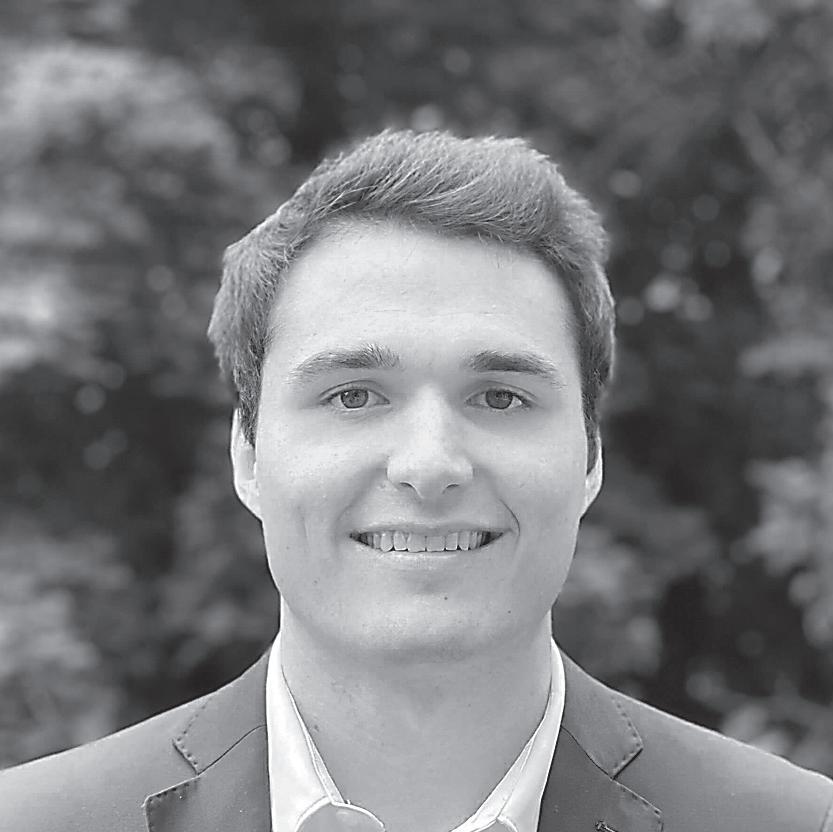
Brendan Kempff Slope Side
Brendan Kempf is a junior in the School of Hotel Administration. He can be reached at bkempf@cornellsun.com. Slope Side runs every other Wednesday this semester.
The air was electric. It was the dead of winter in 2020, and thousands of anxious underclassmen flled Ithaca a week ahead of their peers. Tese people left their likely more sunny homes to come to the snowy white campus for a decades-long rite of passage: rush week.
Rush week, an annual event for fraternity and sorority recruitment, is under threat. Tis will mark the second year with efectively no rush week. Instead — under the cloud of COVID-19 — rush week has been pushed from its early spot to the frst week of classes. Tis is a shift that needs a reversal.
The goal of moving the week seems clear enough. It would prove more difficult for students to rush while balancing school during that first week of
classes. There would be less time for exploration and less fun. Students would make fewer friends and connections.
I have argued in previous columns that polarization is a central problem of Greek Life. People often become insulated within their communities, and it’s difcult to look outside of your walls to empathize with other, struggling organizations. If rush week had not happened the way it did for the last few semesters, I guarantee that I would look at the Greek system in a diferent way. Te loss of a traditional rush week will likely only contribute to the deterioration of a system that’s already fghting many battles.
Rush week stands out in my college experience. It’s one of those rare times where you have free reign, without the weight of coursework or obligations to deter you. You’re given a chance to actually do what so many come to college for: explore.
During rush, I saw the inside of almost a dozen fraternity houses. I met so many people — some of which are now my best friends. I could feel a palpable excitement in the air (and smell the food on the tables, which doesn’t hurt). Based on what I’ve seen, sorority rush week is a little less of a free-for-all, but both fraternity and sorority rush is based on the same model.
My fraternity is the largest part of my college experience. Te reason, I’d argue, is largely because it’s so intimate. We eat together, live together and build deep connections.
Tis intimacy has died in the new system. It’s true that COVID-19 created many problems, but the solutions that the Cornell administration implemented were unsatisfactory. Zoom, for one, was a major point of contention. Te University tried to move rush online, where awkward breakout rooms were a poor replacement for real conversations. Both sides struggled to connect with each other through the coldness
of the computer screen. Te online part, thankfully, will likely go away when the pandemic does. But what about the changed timing of rush week? As it currently stands, rush week has taken place during school for two years.
The loss of a traditional rush week will likely only contribute to the deterioration of a system that’s already fighting many battles.
My concern is that this “temporary” move will become all too permanent. A cynic could see it as yet another strategy by the University to end Greek Life. Tere are many problems in the Greek system, many of which I’ve written about. And an outsider could see the week as full of debauchery. However, from my experience, it was anything but.
My rush week was completely dry. Despite a few small rumors, I saw no evidence of fraternities or sororities breaking any rules. What I did do during rush week, however, was make amazing friends. I met the brotherhood that was right for me while exploring many others in a welcoming environment.
Tis is why I ask the administration to reinstate rush week. Open the dorms a week early for a special Cornell tradition that has shaped my college experience.
In Defense of the Cornell Testing Program
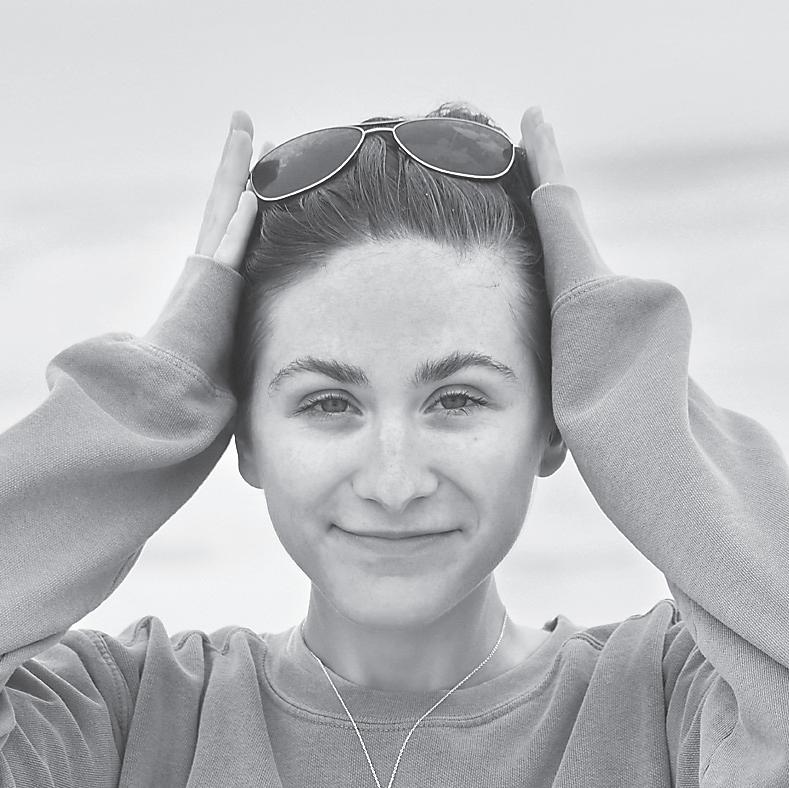
Emma Smith Emmpathy
Emma Smith (she/they) is a senior in the College of Agriculture and Life Sciences. Tey can be reached at esmith@cornellsun.com. Emmpathy appears every other Monday this semester.
In the haze of our two weeks of Zoom University, my only tethers to Cornell were my biweekly testing appointments and my shifts as a surveillance site worker. It makes sense, therefore, that that is where the majority of my thoughts center. Te surveillance testing program is ever-changing; it has gone through numerous iterations since it started in 2020 as vaccines have rolled out and new variants have surfaced.
When I read my fellow opinion columnist Matthew Samilow ’22’s article critiquing Cornell’s management of surveillance for the spring 2022 semester, I certainly resonated with his frustration over yet another semester of a modified, and in many ways lessened, college experience.
It’s hard for me to even believe we’re two weeks into the semester because of how much less I feel like a student over Zoom. It’s so easy for lectures to become background noise to laundry folding or for a lack of extracurricular activities to make you feel isolated from the rest of the student body.
However, Samilow and I difer on our feelings about the University’s actions to control COVID-19 on campus. I believe he fails to recognize — as this pandemic has taught us — that our own comfortability doesn’t always match the comfortability of others. I’m still nervous in the aftermath of the end of last semester. It didn’t feel like a turning point for me. It just felt like another chapter in this exhausting saga.
Even though there were no severe cases on campus last semester, Samilow neglects to recognize immunocompromised students and faculty or the responsibility students have to the larger Ithaca community.
I am one of the students to whom COVID-19 poses a greater risk: A fever greater than around 100°F could put me in the hospital, despite the fact that most people could manage at home. Beyond me, there are many people who are very sick, are experiencing long
Some of my fears smack of growing pains. In many ways, the goal is for the testing program to fade into nothingness.
COVID-19 and those who have unvaccinated children at home.
Cornell has to manage the wide range of comfortability students and staf have with the pandemic. Allowing two weeks to stagger a return and establish low positive case numbers, to me, is far
more responsible than throwing up our arms and letting herd immunity do its thing. Yes, it stinks a little, but the low positivity rate allows us to reduce testing to once weekly with confdence for the majority of students.
To suggest that Cornell is maintaining an archaic “apparatus” neglects the dynamic nature of the program, made evident by its pivot from the original announcement about the return of biweekly testing in response to new data. Te antigen kits were only a temporary measure for arrival testing. Tis is based on research, the current numbers and the vaccination and booster status of people on campus.
I admit some bias from my position as an on-and-of surveillance site worker. I know how tirelessly people work behind the scenes to monitor cases, distribute tests, troubleshoot technical difculties and more.
It hurts to read critiques of the program positioning it as more of a P.R. stunt or an attempt to keep up with other universities hurts.
We have all anticipated the end of the pandemic since it began, but — at least for me — pandemic living has changed the way I function.
Knowing the surveillance program is in place allows me to enter campus comfortably, eat my lunch in MVR or Klarman and ease any paranoia about sitting in a seat directly next to a classmate. I don’t know exactly what my fellow opinion writer means by “bold or unconventional actions,” but I’m happy with what others may consider “playing it safe.”
Some of my fears smack of growing pains. In many ways, the goal is for the testing program to fade into nothingness. As a senior like Samilow, I know what it was like to be at college before COVID-19, and I miss it too. I’d love to be able to stroll into a packed Cornell Cinema unmasked or stand shoulder
to shoulder with other Cornelians at a game in Lynah Rink.
But the testing program has allowed
Allowing two weeks to stagger a return and establish low positive case numbers, to me, is far more responsible than throwing up our arms and letting herd immunity do its thing.
me to live the closest to that “normal” as I can, and gives me the comfort to go about my day without being as afraid of contracting COVID-19. Because of the protocols in place, I am far less worried about contracting COVID-19 on campus than I was when I visited home for the holidays.
So no, I don’t feel betrayed by Cornell because of the protocols for Spring 2022. Tey are a negotiation between ever-emerging data and a spectrum of comfortability — between acknowledging real risk and the universal desire to live as close to normal as possible.
Te program hasn’t stayed stagnant since the start of hybrid instruction in Fall 2020 and it will continue to change. It’s hard to hit the sweet spot when balancing so many opinions and unknowns, but I’m satisfed with it for the most part. All I can say is be safe out there, kids. And check your Cayuga Med portals.

I Am Going to Be Small

SC I ENCE
Cornell AutoBoat: An Interdisciplinary Community
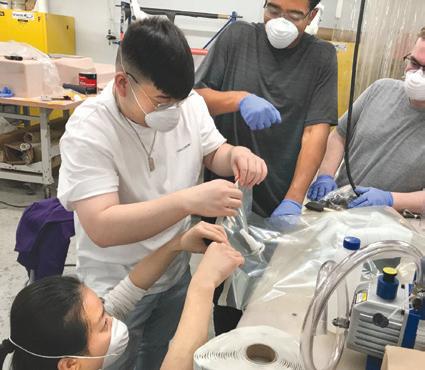
From building high-powered rockets to creating solutions for sustainability challenges, each project team pursues its own individual objective using a variety of specialties including computer science, mechanical engineering, electrical engineering and business operations.
In project teams, students have the opportunity to utilize their current skill set and knowledge while gaining new knowledge to contribute to their team’s goals.
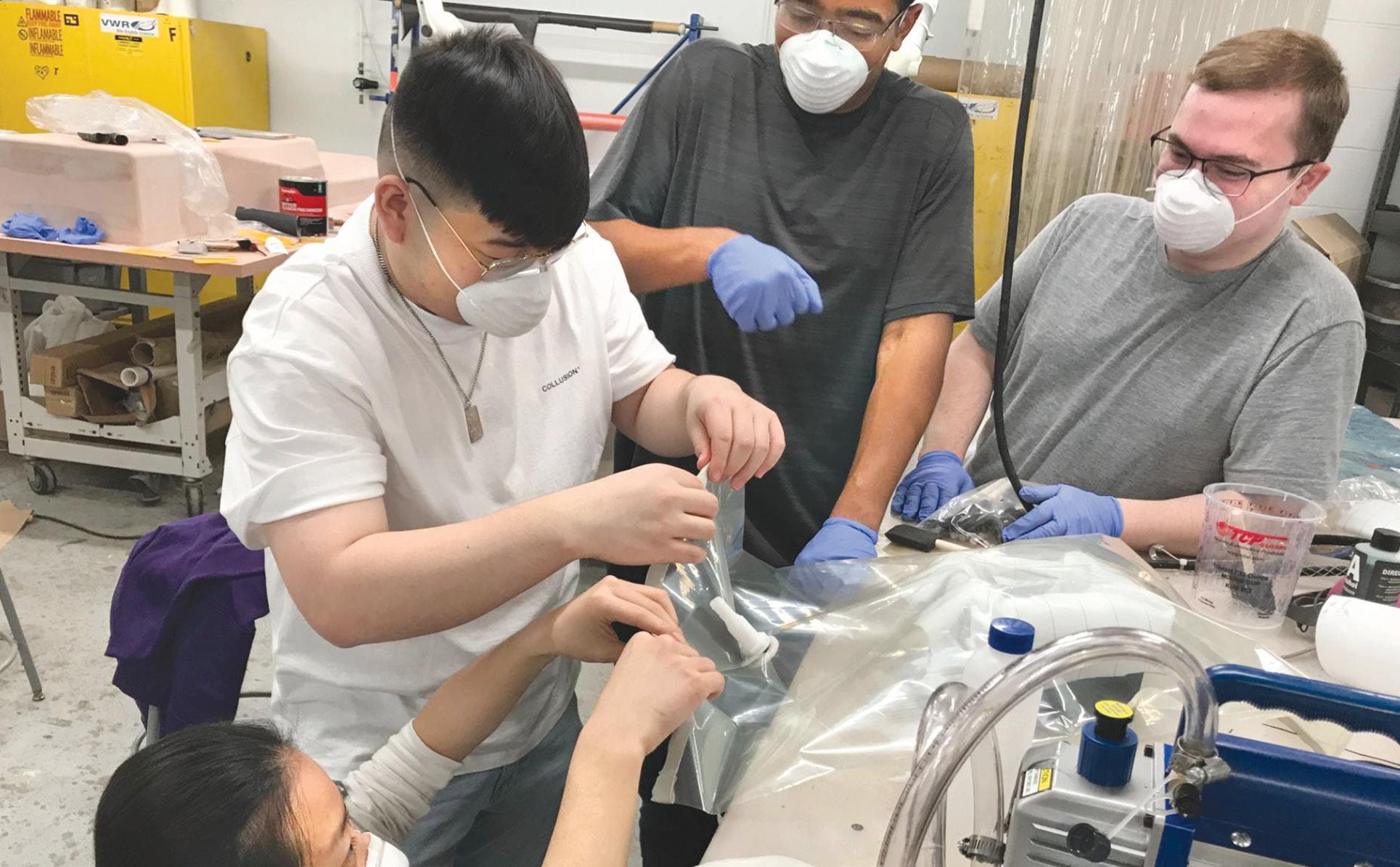
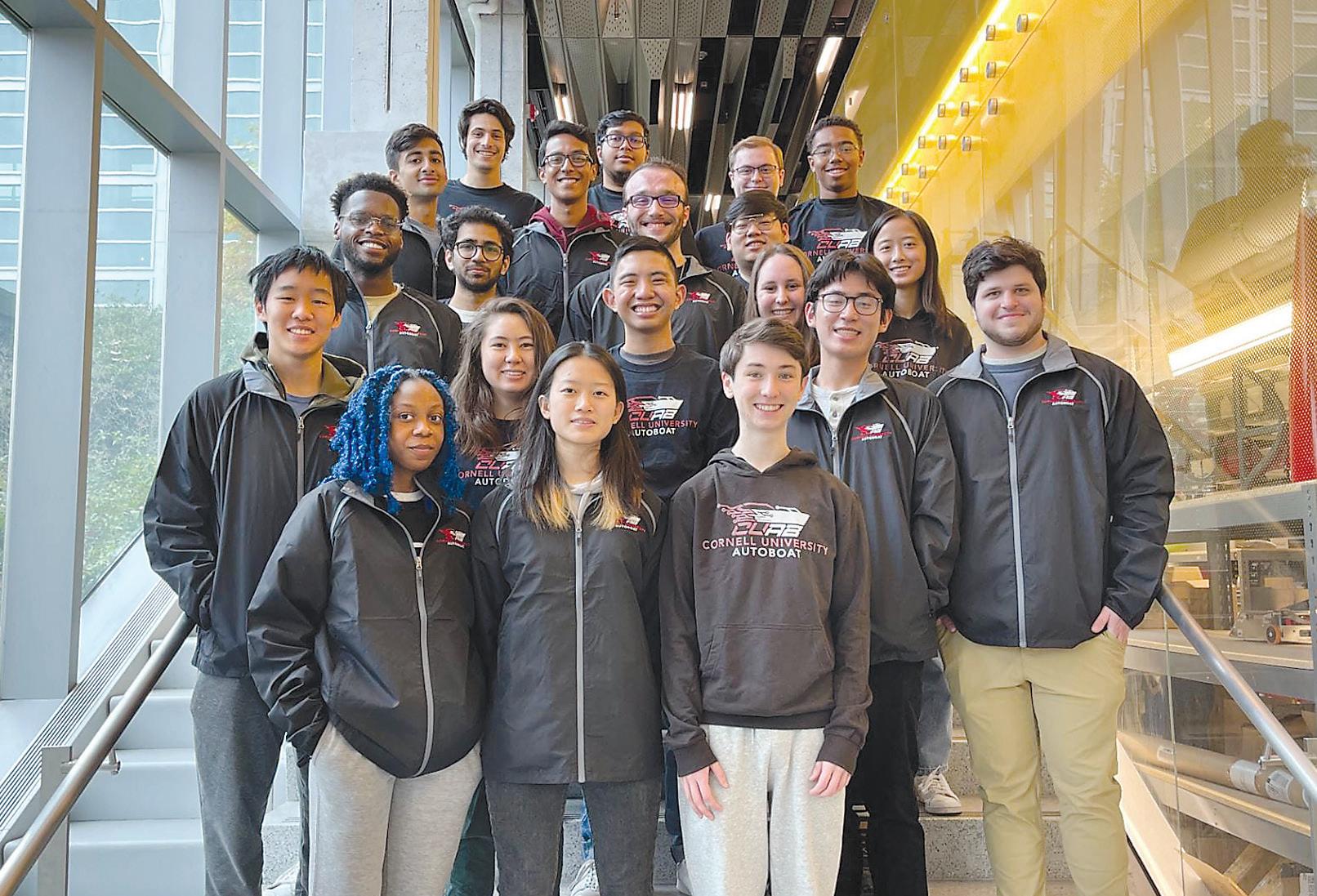
Cornell Autoboat, a small yet rapidly growing team that designs and manufactures autonomous surface vehicles, is one of the 31 project teams at the University. It comprises four essential troupes- electrical, mechanical, computer science, and business.
Every year, Cornell Autoboat competes in the annual international RoboBoat
Competition hosted by RoboNation. This summer, from June 20 to 25, the 15th Annual RoboBoat Competition will take place in Sarasota, Florida. At the competition, teams from all over the globe will design autonomous robotic boats to participate in a challenge course that includes coastal surveillance, port security and other maritime maneuverability.
Apart from competitions, Autoboat also holds various events throughout the school year, such as social events, fundraisers and outreach opportunities. Team leader Eric McNamara ’22 stated that giving back to the community is the project’s first priority.
“We hold outreach events at local schools and science centers to demonstrate our project and to inspire the next generation of engineers,” McNamara said. “This month, we will be attending a technical showcase hosted by Ithaca High School.”
Drake Schiller ’23, a current member of the business and computer science sub-
teams, explained that he has learned a variety of essential skills during his time on the team, from graphic design to manufacturing.
“[It’s] more than manageable,” Schiller said. “I’m still able to take all the classes I would have taken — had I not joined Autoboat — without having a lot of additional stress.”
From completing administrative duties to creating computer models, members of Autoboat have extensive options to venture beyond their current interests.
McNamara said that students hoping to join the team must show passion and enthusiasm for its project.
“We are solving problems that none of us have learned how to solve in the classroom,” McNamara said. “The most successful members are those not with the most experience, but those with the most passion and interest.”
The team’s website boasts about members who have achieved success beyond
“We are solving problems that none of us have learned to solve in the classroom.”
Autoboat, gaining placement at notable companies such as SpaceX and Apple.
The team is currently undergoing recruitment this month.
C.U. Students Witness COP26 Talks on Climate Change
By HUGO AMADOR Sun Contributor
In November 2021, a group of 45 Cornell undergraduates and graduate students had the opportunity to witness the annual global climate change negotiations at the 26th Conference of Parties, a summit where world leaders discussed environmental policy. For some present, it was a continuation of their commitment towards a cleaner future through global and local activism efforts.
The COP26 summit, held in Glasgow, Scotland, was marked by further agreements to reduce greenhouse gas emissions worldwide and tentative plans to scale down coal usage.
Earth and Atmospheric Sciences 4443: Global Climate Change Science and Policy typically travels to see the event in person, but COVID-19 related travel restrictions prevented the trip this year.
Alejandra Plaza Limón, grad, was one of the students who watched the negotiations virtually. Watching the negotiations in class, according to Limón, was meaningful due to her experience as a climate activist.
In 2019, Limón participated in the annual One Young World Summit as a representative of
Mexico, where she previously worked to promote clean energy.
While visiting the Mexican senate in 2018, Limón experienced the vulnerability felt by climate activists around the world.
“We feared individually naming ourselves,” Limón said. In light of recent reports about progressively worsening climate conditions by reputable figures such as NASA, ecoactivism has seen a steady rise. Unfortunately, violence against activists has also been growing.
According to a Global Witness report, 2020 was the most dangerous year for climate activists on record, with over 200 climate activists killed.
“Individual activists are definitely targets of violence,” Limón said.
“There is an unbearable level of corruption, of impunity, of violence.”
Even more disturbingly, these numbers could very well be an underestimate.
“It’s heartbreaking that people out there get villainized for the things they care for,” said Connor Tamor ’22, an environment and sustainability major. “It’s an issue that truly needs to be tackled globally, especially at the regional level.”
The violence has not deterred student activism, with many students and Ithaca community activists marching in support of sustainability legislation in Ithaca and across New York. The Climate and Community

Investment Act was a big catalyst in local activism, legislation that promosies to devote more resources to developing renewable energy sources.
“I’ve realized that [Cornell] is beautiful for letting us safely fight on such a high pedestal for the things we love,” Limón said. “But the reality of the world beyond is a crude awakening that it’s not like this.”
Additionally, the University is taking steps to make its Ithaca campus more sustainable, evidenced by its focus on the viability of geo heating.
Environmental activists both here at Cornell and around the world continue to question whether institutional leaders will take the proper steps to provide protection for activists.
“The grassroot movement has become very powerful,” Limón said, “but one that has turned dangerous in recent times. Cornell activists are unique in their position to protest without fear.”
can be reached at haa45@ornell.edu.
COP26 | Political leaders, activists and businesses from around the world gather at the annual November COP26 summit in Glasgow, Scotland.
Cornell AutoBoat | The Cornell Autoboat Project Team prepares for annual competition by building a robot that can navigate water-based obstacles and tasks.
COURTESY OF CORNELL AUTOBOAT
Hugo Amador
BY JULIA KIM Sun Contributor
KIERAN DODDS / THE NEW YORK TIMES
Julia Kim can be reached at jk2622@cornell.edu.
COURTESY OF CORNELL AUTOBOAT