The Corne¬ Daily Sun


By ARI DUBOW Sun Staff Writer
For the second time this semester, student groups will hold a strike for climate justice. Students will march at 11:30 a.m. this Friday on Ho Plaza in a display of frustration at what they see as the insufficient actions of leaders in the face of climate change.
As with the climate strike in September, students want to communicate the urgency of climate change, and are pushing for bolder actions on the part of leadership both at the University and around
local community members.
A more detailed list will be presented at the march, according to Lucy Contreras ’21, one of the organizers of the march. She also found speakers for this event, though would not say who the speakers would be.
Climate activism on college campuses made headlines last week when protesters at the Harvard-Yale football game stormed the field to demand divestment from fossil fuels, according to The New York Times.
Organizers also aimed to make this
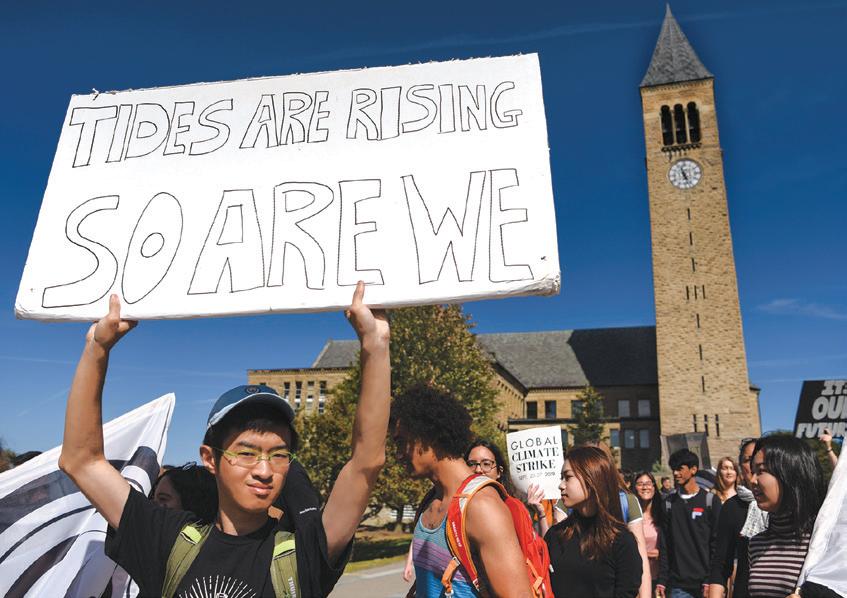
the world. But unlike the previous strike, this time the organizers have concrete demands for the University.
According to the event’s Facebook page, the first of the four demands asks that the University “tell the truth” by acknowledging their role in climate change and divest from fossil fuels.
Other demands include the decarbonization of the University’s energy sources, making veganism more accessible on campus and the creation of a “citizens assembly” who would participate in University-level decision-making, and comprised of faculty, non-academic staff and
upcoming strike more inclusive of other student groups, which was not as much of a priority at the last strike. According to Nadia Vitek ’22, a member of Climate Justice Cornell and one of the organizers of both strikes, the strike in September was primarily organized by CJC and Cornell Environmental Collaborative.
This time, the two groups were joined by Cornell Vegan Society, Cornell Students for Animal Rights, Extinction Rebellion Cornell, Anabel’s Grocery, Cornell Young Democratic Socialists and Cornell Students

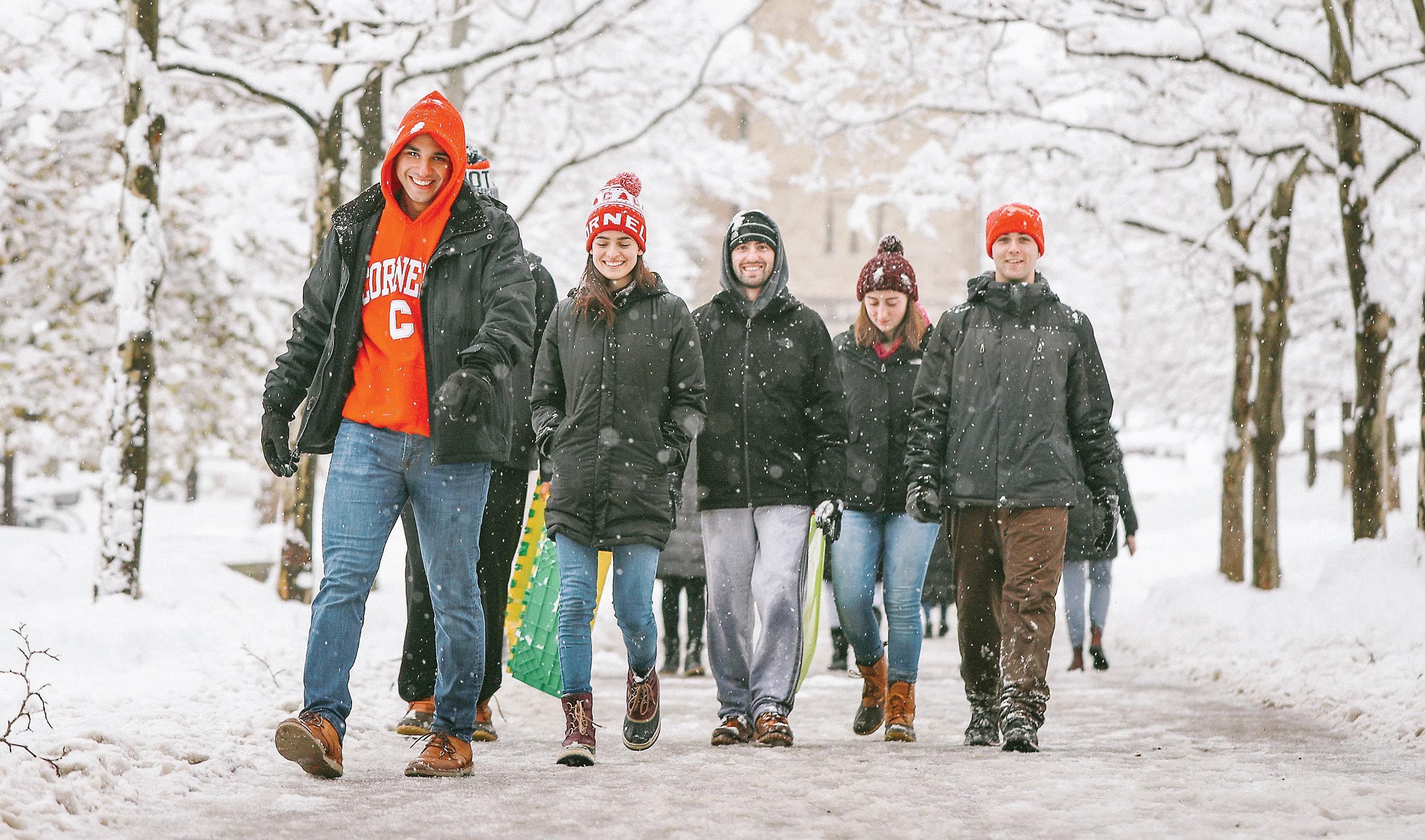
Cha cha slide | Morning, noon and night, students zipped down the slope on cardboard boxes, mattresses, and laundry baskets on Monday. Some even brought their skis and snowboards to try out the fresh powder.
By KATHRYN STAMM Sun Staff Writer
Amid a winter storm watch and a day off from classes, Cornellians received an extra-long Thanksgiving break with the first snow day of the school year.
The University cancelled all Monday classes on Sunday afternoon, announcing later that night that the whole Ithaca campus would be closed, The Sun previ-
See SNOW DAY page 4
By MEGHNA MAHARISHI Sun Staff Writer
As Thanksgiving break was nearing its end, Eva Zhang ’23 booked an OurBus trip to Ithaca departing from near her hometown in Connecticut.
But once OurBus canceled the majority of its trips because of the snowstorm, Zhang found herself on a CoachUSA Shortline bus, which skidded sideways into a patch of bushes on its way
See TRAVEL page 5

Tuesday, December 3, 2019
The Clean Air Act prevented more than 3 million premature deaths between 1970 and 1990.
Value of avoided deaths and illness: $22 trillion
The money saved was over 40 times the cost of implementing the Clean Air Act.*
*The Benefits and Costs of the Clean Air Act, 1970-1990
https://www.epa.gov/sites/production/files/2015-06/documents/contsetc.pdf

Biomedical and Biological Sciences Signature Seminars
4 - 5 p.m., Lecture Hall 5, College of Veterinary Medicine
Sophie Wahnich Lecture: Crisis, the Humanities and the French Revolution 4:30 - 6 p.m., Guerlac Room, A.D. White House
AVS Early Career Faculty Panel
5 - 6:30 p.m., Classroom 7, College of Veterinary Medicine
Cornell Economics Society: Social Connections in Politics 6 - 7 p.m., 132 Goldwin Smith Hall
Pakistan Trek 2020 Info Session 6 - 7 p.m., B-06 Sage Hall
Tomorrow
AASP Wednesday Lunch Series With Sital Kalantry Noon, 429 Rockefeller Hall
Migrations Initiative Seminar Series Noon - 1:30 p.m., G08 Uris Hall
Trevon Logan: Distinguished Professor of Economics at OSU 2 - 3:15 p.m., Mann Library
¿Que Pasa en Chile? Social Protest & Constitutional Change 4:30 p.m., G08 Uris Hall
Lecture: Coloring the Conservation Conversation 7:30 p.m., Alice Statler Auditorium, Statler Hall

By ERNEST LI Sun Staff Writer
Today, money speeds across the world online via Venmo and PayPal. Previously, old institutions like churches were left out of this technological advancement. The fact that these religious organizations are reliant on donation baskets and face-to-face contact make them ripe candidates for digital integration, according to alumnus Peter Cetale ’19. Religio, a church management startup co-founded by Cetale, aims to create modern solutions for churches.
First founded in 2017, Religio supplements the traditional donation baskets and in-person meetups of churches with online payment processing and communications technology.
“Currently, churches and nonprofits are failing to manage their members and communicate effectively to them,” Cetale told The Sun in a phone interview. “We give nonprofits a tool to better connect with and engage their donors online.”
Cetale was first inspired to innovate in the church and nonprofit space while volunteering at his hometown church. Initially, Cetale and his team focused on the idea of facilitating digital donations for churches.
“I started seeing a need when I was volunteering freshman year. The first company I created, before Religio, was a payment solutions processor, basically like a Paypal,” he said.
As Cetale and his team began their research, however, they realized that payment processing was just the tip of the iceberg. The central need for churches and

nonprofits was a better way to manage and communicate with their congregation members.
“We adjusted [the company] sophomore year and we have now one all-encompassing platform that is both mobile, web and management based,” said Cetale.
While Religio earns money through commissions on donations, the primary component of the revenue stream comprises of monthly subscription fees paid by its users. Much like how Netflix offers different prices based on the number of devices on the account, Religio offers different prices based
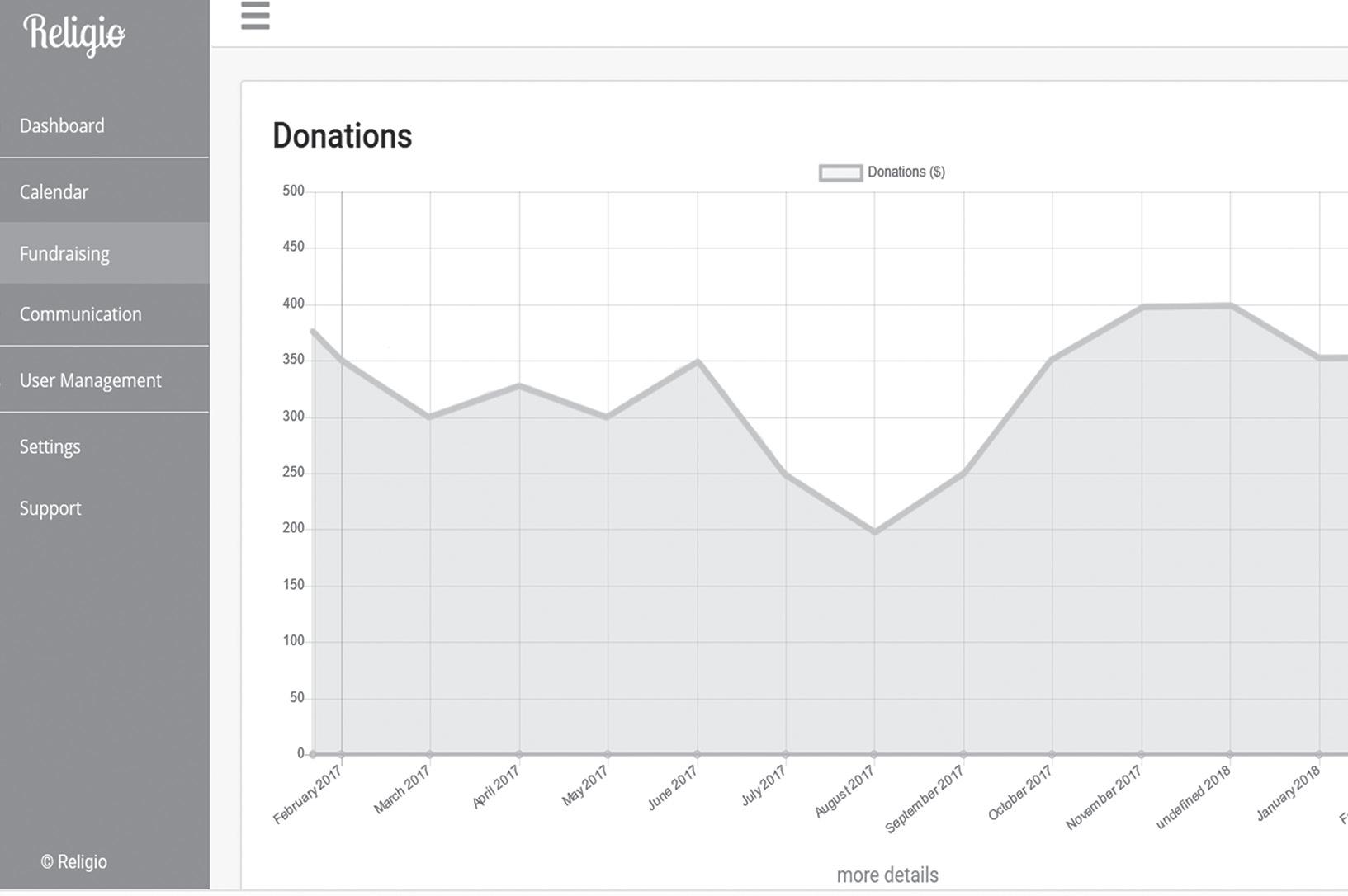
Keeping track | Previous iterations of Cetale’s startup provided an online payment system for church donations. However, his plan changed after consulting churches and non-profits.
on the services churches require. The prices range from $280 to $525 per month.
Although church management software may appear niche, the market size is anything but. According to The Guardian, US religion market revenues in 2016 were estimated to be around $378 billion.
Cetale attributed Cornell’s entrepreneurial opportunities for getting his ideas off the ground
“Each program at Cornell is a stepping stone,” Cetale said. “Blackstone [Launchpad] is the initial idea stage. Life Changing Labs is an incubator which goes more in depth on customer discovery. eLab is an accelerator that goes even further with the process of customer discovery and making the product.”
His main suggestion for improvement to the current entrepreneurial ecosystem would be for the University to give academic credit to students entrepreneurs, who often spend numerous hours working outside — similar to how students involved in research or project teams are offered credit.
“If you’re working on your own business 60 hours a week, in addition to school, it would be nice if you could receive academic credits,” Cetale said. “I think entrepreneurs learn so much from building their first startup; with guidance from teachers, it could really exemplify this process.”
For students looking to take coursework on entrepreneurship, Cetale suggested that students look into Cornell’s new entre-

preneurship minor. Housed under the SC Johnson School of Business, the minor is available to all undergraduate students.
For those looking to start their own business, Cetale was fond of the courses offered by eLab professors.
“The minor has a list of all the courses you could take related to all aspects of entrepreneurship,” he said. “A lot of the [courses taught by] eLab professors, like Ken Rother, Steven Gal and Tom Schryver, are usually the best. The eLab program does a great job of teaching you the basics of customer discovery, marketing, pricing, all of which are super important.”
While an undergraduate at Cornell, Cetale helped co-found the Cornell Entrepreneurship Club in 2016 — which he considered one of his most important accomplishments at Cornell.
“The main goal was for people to find other co-founders… We’ve helped pair people together on different ideas and I’m very proud about how we’ve helped people become connected,” he said.
Cetale advised would-be student entrepreneurs to not focus too much on the results, and instead concentrate on the “learning process.”
“Don’t worry about making mistakes. Everyone makes mistakes. You’re doing it for the first time.” Cetale said. “Most likely, your first startup won’t be a success, but you’ll learn so much and it will prepare you for leadership and innovation in life.”
Ernest Li can be reached at eli@cornellsun.com.
By MADELINE ROSENBERG Sun Staff Writer
When Mabel — a 16-year-old Chihuahua and longtime patient of Cornell Hospital for Animals — lay close to death while in transit back to the University for treatment in June, small-animal surgery resident Dr. Jared Baum carried out a house call, which extends outside of his expected role. He drove 90 minutes from campus at night to assist her.
Mabel ultimately survived, but it was a close call.
at the CUHA in 2016, but her difficulty in breathing escalated over this past summer. When Baum encouraged owners Chris and Mariesa Hughes to return Mabel to Cornell, her rapidly deteriorating condition lead them to stop at the nearest emergency veterinary
would have the automatic reaction when taking a phone call like that to immediately jump in the car and drive a few hours in the middle of the night,” Hayes said of Baum’s late-night interception.
Hayes said she and Baum acted less as rescuers, and more like “facilitators” who monitored Mabel as she was transported.
“We felt a duty of care to try and reach out to them when they were in distress in this situation in the middle of the night.”
Prof. Galina Hayes
“Because she was a pet we had been working with for a while … we felt a duty of care to try and reach out to them when they were in distress in this situation in the middle of the night,” Prof. Galina Hayes, clinical sciences, who accompanied Baum, told The Sun.
Mabel received a breathing tube
hospital in the Catskills. However, to the Hughes’ shock, Baum met them at the veterinary clinic, supplied with the equipment that allowed him to stabilize Mabel and transport her back to the University. “I work with a lot of wonderful clinicians here at the hospital, but very few of them, including myself,
Nonetheless, Mabel’s owners — who run a dog shelter themselves — were so grateful that they created a “Dr. Baum Compassion Award” to honor his efforts, a $2,500 gift that the Hughes will award annually to a CUHA employee who demonstrates “exemplary compassion.” Baum received the first award at a College of Veterinary Medicine award celebration over the summer.
“That’s just who [Baum] is,” Hayes said. “It wouldn’t really matter who called or the circumstances
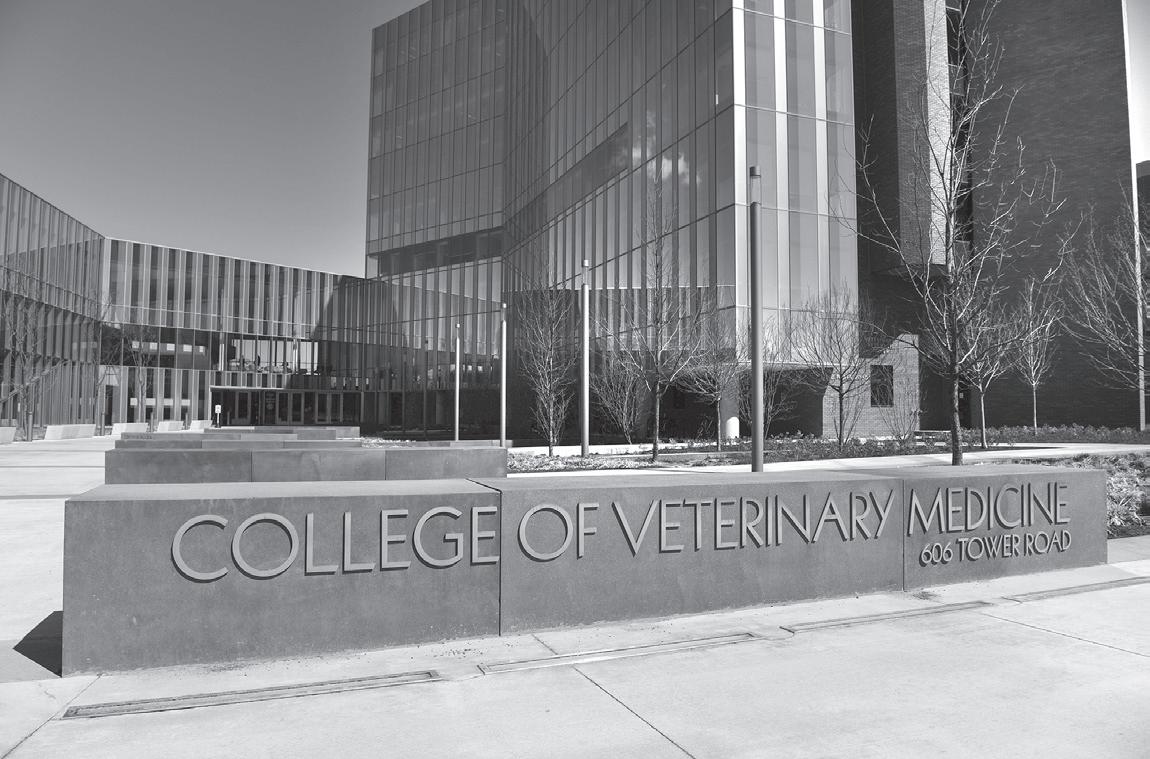
Night rescue | Despite Cornell’s policy of sending animal patients to outpatient clinics, Cornell vets performed a house call for Mabel.
in which they called. If he felt needed and called upon professionally, he would instantly be there.”
This is not the first time that Cornell veterinarians have made a dramatic life-saving call. In July 2019, a sizable sliver of wood that had impaled a horse was carefully extracted. Back in September, a black bear cub was rushed to the vet hospital emergency room when a collision with a car broke its foreleg.
Rosenberg can be reached at mrosenberg@cornellsun.com.
SNOW DAY Continued from page 1
ously reported.
While the snow day came as some students struggled to return to campus through bus reschedulings and flight delays, students already back on campus enjoyed their bonus free day.
Much like previous snow days, many students took advantage of the unexpected free time to mark off #5 of the 161 Things Every Cornellian Should Do: sled down Libe Slope during a snowstorm. Under the glow of the clock tower, students jumped on whatever material they could find: flattened cardboard boxes, laundry baskets, mattresses, even wet floor signs made their way down the slope.
In past decades, winters were full of “traying” — a tradition where students sled down the slope on dining hall trays, which Cornell Dining phased out in 2008 in sustainability efforts, The Sun previously reported.
Sledding down the slope has technically been banned since the 1970s, after a student became paralyzed during a sledding accident, officials from Cornell University Police Department told The Sun in a phone interview.
Nonetheless, the slope was covered
with bundled-up students all-day Monday as snow continued to fall.
Just under one foot of snow fell in Ithaca, according to Jack Sillin ’22, a member of Cornell’s American Meteorological Society. Sillin said the storm would be mostly past Ithaca by Tuesday, with the University opening back up.
John Sullivan ’20, a Sun columnist, started his snow day early, making the trek to the slope at 2 a.m. Monday morning. With an old Keurig box as a makeshift sled in tow, Sullivan joined around two dozen other Cornellians for late-night sledding, he said.
Though he is a senior who has seen two previous Cornell snow days, Sullivan said he hadn’t actually sled down the slope before.
“It was definitely one of the most fun things I’ve done at Cornell,” Sullivan said.
Freshmen and sophomores witnessed their first Cornell snow day, as the last snow day was in March 2018, The Sun previously reported.
For Cristie Huang ’22, who’s from Los Angeles, it was her first snow day ever. She celebrated with quintessential winter activities: more makeshift sledding and a snowball fight.
“I was really excited when they announced that we would have a snow
day,” Huang said. “It seemed like everyone came out and was on the slope and having a lot of fun.”
However, not everyone’s snow day was initially breezy. Jessie Yee ’20 tried to go sledding on the slope later Monday afternoon, but when she arrived, CUPD officers were preventing people from going down, she said.
CUPD rooted a sign declaring “No skiing, sledding or sliding,” at the top of the slope to remind students of the prohibition. They also strung caution tape to block entry to part of the slope near the Uris Library Cocktail Lounge.
Abandoned sleds and skis littered the slope as some students left for other winter activities, Yee said. However, many students disregarded the warnings and shortly resumed sledding on shallower parts of the hill. Witnesses reported at least one student getting carted off in an ambulance after taking hard falls off bumps on the hill.
For the rest of her snow day, Yee built a “snow bear,” drank hot chocolate and baked cookies — a “much needed unproductive day.”
Kathryn Stamm can be reached at kstamm@cornellsun.com.

By JOHN YOON Sun Staff Writer
Why aren’t more people of color incorporated into conservation efforts? And how did race influence one ornithologist’s love for his work? On Wednesday night, Prof. Joseph Drew Lanham, wildlife ecology, Clemson University, will discuss the role of diversity in the conversation about conservation.
Lanham is an ornithologist and prolific nature writer. The recipient of the Dan W. Lufkin Prize for Environmental Leadership, he is well-known in the field of conservation, serving on several conservation boards, such as the South Carolina Wildlife Federation and the American Birding Association.
Lanham has also authored numerous essays and poems on the subject, with works published in Orion, Audubon, Flycatcher, and Wilderness.
How did race influence one ornithologist’s love for his work?
Lanham’s memoir, The Home Place: Memoirs of a Colored Man’s Love Affair with Nature, which followed Lanham’s relationship with nature from childhood to adulthood, received the Reed Award, Southern Book Prize, and was a finalist for the John Burroughs Medal.
“With grace and a keen humanity, his book offers a ground-breaking addition to the dialogue about race, place, and the environment,” said Hippocampus Magazine.
In addition, Lanham is a Fellow of the Clemson University Institute for Parks and named a Brandewin Fellow in 2016 for his emphasis on Environmental Education.
He is currently an inaugural Fellow of the AudubonToyota Together Green initiative and a member of the advisory board of the North American Association of Environmental Education.
In his lecture on Wednesday, Lanham will talk about what his African American heritage means to him and his adoration for birds. As someone with multiple identities, he will also discuss how diversity and race will play an important role in the complicated mission of conservation.
This lecture will take place on Wednesday, December 4 at 7:30 pm in Statler Hall. Entry is free and open to the public.
John Yoon can be reached at johnyoon@cornellsun.com.
back to Cornell.
“Everyone was scared we were going to crash again,” Zhang told The Sun. “The drivers knew what they’re doing, but the weather was also really bad.”
Zhang was one of many students who took to social media to recount their troubles with traveling back to Ithaca on Sunday. The snowstorm, which started Sunday and continued into Monday, dropped nearly a foot of snow in Ithaca.
Many students felt pressed to return to campus before classes were scheduled to resume. While neighboring universities like Ithaca College and Binghamton University announced their Monday closure on Saturday, Cornell waited to announce class cancellation until Sunday noon. Thus, students ended up on trains, planes and automobiles trying to get back to campus in the middle of the storm.
Once the Shortline bus skidded, it blocked all traffic on the highway, Zhang said. In a Reddit post, Zhang added that state police had to intervene while Shortline arranged for a new bus to take over the rest of the trip. The bus had departed a little after 10:15 a.m. from Port Authority in Manhattan, but amid the snow, sleet and icy roads, it ultimately took nine hours for the bus to reach Cornell. This trip typically takes four to five hours.
In a statement to The Sun, John Carberry, a Cornell spokesperson, said that the University “closely monitors all major weather events.” Carberry added that the University’s Office of Emergency Management also received several briefings from the National Weather Service in the days leading up to the storm.
When students were driving back to campus on Sunday, many left in the morning
only to find out in the middle of their commute that they had extra time to return to Cornell. Brian Filipek ’21 left from Hastingson-Hudson, New York at 9 a.m. and reached Ithaca at around 4:30 p.m. — the trip took nearly eight hours.
“I tried to leave early to avoid most of the storm, but still ended up being caught in it,”
Filipek wrote in a message. “I thought I had classes until I was three hours out on the road.”
During his trip, Filipek recounted witnessing around five car crashes, and said the Shortline buses drove “like maniacs,” as he saw the buses driving at nearly 50 miles per hour on icy roads.
Filipek took to Cornell’s Facebook meme group to share his frustrations with the experience, claiming that a Shortline bus “almost
“I tried to leave early to avoid most of the storm, but still ended up being caught in it.”
Brian Filipek ’21
skidded” into his car.
Aris Agarwala ’21 left New Jersey at 10:30 a.m., but ended up returning home because of the poor road conditions and multiple accidents he had seen during his commute.
“I was pretty frustrated,” Agarwala said. “I was under the impression that we would still be having school and driving on the road, I was thinking to myself how unsafe it was.”
Agarwala said he saw four accidents in a row on highway I-80 — one car was in a ditch, two cars collided and one hit a guardrail.
“I was thinking, ‘that could be me,’” Agarwala said.
On Sunday, Port Authority also canceled all trips leaving from New York City to Ithaca. The University’s Campus to Campus bus was
still slated to leave from the New York City Cornell Club at 7 p.m. on Sunday — approximately when the snow began to accumulate. In a Reddit post, one student wrote, “My C2C bus from NYC just departed. Really hope I don’t die.”
Aidan Mahoney ’22 — who was also on the C2C — told The Sun that he felt as if he had to take the bus. Otherwise, he would not reach campus until Wednesday.
Some students also experienced flight delays, cancelations and were stranded in airports for hours.
While visiting a friend in Houston during break, Diya Chopra-Malik ’22 rushed to book an early flight once she heard of the storm. After taking a flight from Houston to Washington, D.C., Chopra-Malik tried to book two flights to Ithaca, but both flights got canceled because of the snow. Now, Chopra-Malik cannot return to campus until Tuesday.
“I think [the cancelation] should have been announced at least two days earlier,”
Chopra-Malik wrote in a message to The Sun. “[I] could have waited at my friend’s house till the weather got better.”
Megan Peterson ’21 arrived to the Minneapolis-St. Paul Airport on Sunday at 5 a.m. for a flight to Detroit. After Peterson landed in Detroit, all flights to upstate New York were canceled and she had to stay in Detroit overnight. Peterson managed to get the last seat on a flight to Ithaca on Monday, finally arriving to campus in the evening.
“I thought that it was handled very poorly,” Peterson wrote in a message to The Sun. “[B] y the time Cornell canceled, everyone was already on the road or at an airport trying to get back in unsafe conditions.”
Meghna Maharishi can be reached at mmaharishi@cornellsun.com.
Continued from page 1
for Bernie Sanders, said Vitek.
This strike also has a wider scope than the September even, according to Contreras.
“We are bringing animal agriculture to the forefront of the climate discussion,” said Contreras, whose involvement in issues of climate change has largely centered around vegan activism. “It is time to acknowledge the role that our food system has had in both creating and exacerbating climate change.”
This climate strike is part of a nationally coordinated strike, organized online on the StrikeWithUs platform. Student groups decided to participate in this strike around a week after the September strike, according to Vitek.
“This is not only a national but also an international movement,” Vitek said. “It’s super important that Cornell follows suit.”
Ari Dubow can be reached at adubow@cornellsun.com.

I’ve loved mystery since I was a kid.
When I was eight, I got a set of vintage Chinese comic books from my mom, among which were some of the most famous Sherlock Holmes stories, abridged and transformed into pictures. I distinctly remember reading the comic version of The Hound of the Baskervilles one night when I couldn’t sleep, only to end up terrified and even more awake — and maybe just a little bit in love with detective stories. My mom later introduced me to Agatha Christie novels and Alfred Hitchcock films, and I went on to discover Japanese detective fiction and American crime TV shows. In recent years, however, non-adapted detective stories have become nearly extinct in films. As much as I loved Sherlock, I didn’t realize that what I really wanted was to see original murder mysteries on the big screen.
So all this is to say that I’d been looking forward to Rian Johnson’s Knives Out since October of last year. The extended period of anticipation set my expectations sky-high, and as it turns out, the movie is everything that I’d hoped it would be, but also so much more. Beyond neatly executing a textbook example of the “whodunit” narrative structure, paying tribute to oldschool mysteries both in terms of writing and production, Knives Out is a carefully balanced blend of comedy and political satire, subverting and transcending the perceived limitations of its genre.

of films in recent years have exhibited a sort of ambition to have it all, but in my opinion, few have actually succeeded. I spent a long time trying to figure out what they got wrong that Johnson got right, and it took seeing the movie a second time to figure it out. The answer turned out to be deceptively simple: storytelling comes first.
The story at the center of Knives Out is the apparent suicide of Harlan Thrombey (Christopher Plummer), a world-renowned mystery writer, on the night of his 85th birthday. Not long after, private detective Benoit Blanc (Daniel Craig) was hired anonymously to investigate the case while the Thrombey family gathered for the memorial and more importantly, the will reading. Blanc soon finds out — as should surprise no one — that Harlan’s “suicide” was not so simple after all.
The relationship between the Thrombey family and Harlan’s nurse, Marta (Ana de Armas), is the focus of the movie’s political commentary. Marta is Hispanic, but the audience never manages to find out where her family is actually from since every member of

her dirty dishes even though she is not a housekeeper. Meg, the granddaughter mocked by her cousin as an “SJW” for her liberal views, is the only one who knows about Marta’s mom’s undocumented status, yet she betrays her to the whole family when they ask for blackmail material. And without actually spoiling too much, the murder itself, in the end, is as much about the inheritance as it is about racial and classist entitlement.
to run before you could walk. Whether it’s getting political for the sake of being “relevant,” attempting to add as much fanservice as possible or pursuing the shock value in some big moment and in the process losing sight on the very basis of a story, all are dangerous paths that, unfortunately, a lot of recent blockbusters have gone down. The end of the path may be a successful box office hit, but there definitely will not be a good film.
This is truly no easy feat, since a number
Cthe family references a different country. At one point, the family gets into a heated argument about undocumented immigrants, and Richard, who made an “immigrants: we get the job done” reference from Hamilton earlier in the movie, pulls Marta into the discussion as a stellar example of legal immigration, then proceeds to hand
None of these nuances are spelled out in neon letters — they’re instead made inseparable components of the story itself, existing not for the sake of giving the movie a “deeper meaning,” but rather to support the narrative and give characters dimension. On the flip side, while the “whodunit” plot itself isn’t overly complicated compared to some that I’ve read, it’s still tightly constructed, serving as a strong foundation upon which something more complex is built.
And that’s the real crux of it: Don’t try
The way we talk about “transcending genre” makes “genre” sound like a bad thing. At the end of the day, they are just stories, and any of them have the potential to be anything. The way to achieve depth and meaning, however, is not to shove in a half-formed political message. Simply tell the story well. The rest will follow.
Andrea Yang is a senior in the College of Arts & Sciences. She can be reached at ayang@ cornellsun.com. Five Minutes ‘Til Places runs alternate Mondays this semester.
ontent warning: this article contains a discussion of the practice of using trigger warnings and therefore cites topics that could be triggering.
“I would never put a trigger warning, ever, on any play I direct.”
Someone in my acting class did a solo performance piece about eating disorders, in which she played a victim of anorexia. She opened the piece with “this is inspired by a reading in my FWS” and proceeded to portray the character with a disturbingly lighthearted sense of humor. Among the nine audience members in the classroom, perhaps one or two let out a nervous laugh when she described compulsive eating habits such as “three bags of family chips within the past hour” as if it’s supposed to be a joke.
The humor started to feel really unsettling when the character started presenting more alarming signs of anorexia. The scene ended with her almost fainting while writing in her journal (a device the performer used to convey her inner monologue) that she only had a few more pounds to lose before Friday, when she
would have a date.
I found myself shivering (I couldn’t quite tell whether it was out of anger, sadness or frustration) when she got up and said “scene” with a sweet, content smile. Before I could gather the words, another woman in the class commented that she would expect a trigger warning prior to this kind of performance, which led us to the opening moment, when our professor stated that he

would never allow trigger warnings in his works. He explained that he would prefer the audience to come into the theatre
“clean,” and that providing a trigger warning may prompt unnecessary expectations and ruin the play. For example, he said, if
A Streetcar Named Desire were accompanied by a trigger warning of rape, people may be wondering
when the rape occurs and/or to whom the rape occurs throughout the play, therefore failing to fully experience the shock of the event.
What I couldn’t agree with and failed to convince him of is that providing a vague trigger warning message couldn’t affect the artistic merit of the piece in any significant way if the play itself is complex and interesting, but it could potentially save someone’s life.
the subject would have the choice to exit the theater before the play starts to avoid being triggered and subsequently retraumatized.
A brief detour: When I called Stanley a rapist, the second professor, who is usually quieter in class, jumped in and said, “He is not a rapist; he rapes once.”
“Art is agitation,” the quieter Professor claimed. Then, the main professor chimed in and said art exists to create discomfort and to initiate conversations.
in the middle of the play when the content becomes unbearable, the only difference being whether the latter could leave unharmed or not.
It is murky water, I understand, and sometimes it is hard to decide if the content is triggering, sometimes even including a trigger warning won’t protect all the audience members. But as creators we should include the message whenever and wherever we find applicable.
Had A Streetcar Named Desire contained a message that reads “this play contains depictions of sexual abuse,” the characters of Blanche and Stanley wouldn’t become any less captivating, seeing how they are flawed human beings who may not meet the stereotypical representations of the rapist and the victim. Whereas on the other hand, someone who may be triggered by
But what about the people that don’t want to talk? The people that aren’t ready yet, the people that don’t feel comfortable with whoever they are at the theater with, the people that come to the theater on a weekend night for entertainment? Can the artist just push them into talking? Isn’t that inconsiderate and disrespectful, harmful, even malicious? Art is agitation, and art should initiate conversations — but whoever is in the conversation should be a consensual participant. The trauma survivors who receive the trigger warning but decide to stay are perhaps the ones that are ready to share and to talk, whereas the ones that walk out after the trigger warning may walk out anyways
To continue reading this review, please visit www.cornellsun.com.
Students may consult with counselors from Counseling & Psychological Services (CAPS) by calling 607-255-5155. Employees may call the Faculty Staff Assistance Program (FSAP) at 607-255-2673. An Ithacabased Crisisline is available at 607-272-1616. For additional resources, visit caringcommunity. cornell.edu.
Ruby Que is a senior in the College of Arts and Sciences. She can be reached at rque@cornellsun.com. Escape runs alternate Tursdays this semester.

workings of the vaccine and its development, as well as what this landmark achievement means for the future of global health.
the Ebola virus itself.
Whittaker also said that the vaccine is a ring vaccine, which means that people usually won’t get it as an infant. “What’s happening here is that the vaccine is employed in primary and secondary contacts of Ebola-infected people. It’s more of a short-term way of preventing transmission,” Whittaker said.
Since vaccinating the entire West African population would be impractical, Whittaker said the vaccine would be reserved for healthcare workers and other people coming into direct contact with the virus.
“This vaccine gives very quick, robust immunity, and the virus itself is relatively slow in transmitting, so the two things together will allow this ring vaccination protocol to actually work,” Whittaker said.
Whittaker went on to explain that although the famous Ebola outbreak has long since ended, there will almost certainly be future outbreaks, and this vaccine will be very useful in managing them. “It will almost be a recurrent theme every few years, and it’s just a case of where it happens and how bad it’s going to be,” Whittaker said.
Researchers, healthcare providers and global health officials who worked hard to grapple with the devastating Ebola outbreak of West Africa between 2014 and 2016 can finally breathe a sigh of relief — the very first Ebola vaccine was finally approved in Europe.
Known as Ervebo, this Ebola vaccine is manufactured by the biopharmaceutical company Merck and was granted marketing authorization by the European Commission on November 11. Prof. Gary Whittaker, virology, shared his insight on the inner
Whittaker explained that the vaccine itself is actually a recombinant virus, based on the backbone of vesicular stomatitis virus originating from sheep and goats.
“[VSV] is very efficiently growing and relatively easy to make, [so] it’s engineered to express the glycoprotein of Ebola … it generates the immune response against the Ebola virus glycoprotein, which is equivalent to the surface protein of Ebola,” Whittaker said. Because the immune system generates antibodies against the Ebola surface proteins, it creates protection against
The approval of the vaccine in Europe is also a major step in establishing a stockpile of the vaccine by an alliance called Gavi. “Gavi will maintain a stockpile for the rapid deployment for whatever country needs it, so it’s not dependent on any one country to stockpile or purchase the vaccine — it’s a global NGO that can act immediately whenever the need arises,” Whittaker said.
However, the vaccine has its limitations. Whittaker explained that although the vaccine provides short-term protection from the Ebola virus, it’s not clear how long that
“What’s happening here is that the vaccine is employed in primary and secondary contacts of Ebola-infected people. It’s more of a short-term way of preventing transmission.”
Prof. Gary Whittaker
immunity lasts, and what exactly is necessary for long-term protection is unclear. Furthermore, the vaccine only protects against the Zaire species of Ebola. Although switching out the strain to create new vaccines for the other circulating strains would be relatively simple, each new vaccine would have to undergo the entire approval process. However, Whittaker is very optimistic about the global impact of the vaccine. “It sets up this real ability to come in and block the transmission really early to prevent recurrences that happen in West Africa with all the destruction that caused, and it can really protect the health care workers that go in,” Whittaker said.
“Thankfully a lot of prior work in developing these [vaccines] could be applied to the need in a relatively rapid fashion. It doesn’t seem very rapid, but for a vaccine, it’s actually pretty rapid for this to be out there and available,” Whittaker said.
Srishti Tyagi can be reached at st843@ cornell.edu.
By DEANA GONZALES Sun Staff Writer
Conversations about climate change were occurring around the world with former Vice President Al Gore’s Climate Reality Project. Over 1,600 lectures on the “24 Hours of Reality: Truth in Action” were presented in communities last week to have a personalized approach in having conversations about the Earth’s future.
Hosted at the Cornell Cooperative Extension, Thomas J. Hirasuna Ph.D. ’91, a volunteer climate leader for the Climate Reality Leadership Corps, presented the lecture for the Ithaca community. Personally trained by Al Gore and a trained engineer, Hirasuna hopes to spread climate change awareness and prompt the Ithaca community to take action.
Hirasuna notes that the average global temperature has been increasing to alarming records. According to him, 18 of the 19 hottest years have occurred since
2001. The hottest has been the last five years and this past July was the hottest month ever.
According to Hirasuna, the most vulnerable populations to heat are the “poor and homeless, the elderly, infants and children, those with pre-existing medical conditions like cardiac and respiratory conditions, the mentally-ill, and agricultural workers and those who work outside. It actually causes more deaths than a lot of the other extreme weather conditions combined.”
With the increase in average global temperature, more natural disasters are occurring such as hurricanes. “Warmer oceans lead to more intense hurricanes, hurricanes intensify much more rapidly, warmer air holds more moisture leading to heavier downpours, [and] storm surges increase due to sea-level rise,” Hirasuna said.
“[Hurricane Harvey] intensified in a short amount of time. It went from a tropical depression to Category
4 hurricane just in 2 days. [...] Hurricane Maria intensified from a category 1 to category 5 in less than 18 hours,” Hirasuna said.
Another consequence is the increase of fire incidents in even unexpected locations, such as Alaska. Longer and warmer seasons can also disrupt the ecosystems, making it easier for infectious diseases to spread.
Hirasuna provides some potential solutions for combating climate change such as switching to renewable energy. “In 2018, renewables provided more power to Germany in energy than coal. [...] More than twothirds of the global population live in countries where solar and wind are the cheapest sources of renewable generation,” Hirasuna said.
Renewable energy development can provide more employment opportunities where, “on the employment front, globally, 11 million people worked directly or indirectly for the renewable energy sector. Solar energy jobs have grown six times
faster in the overall economy in the last five years.”
If you don’t know where to get started in becoming more energy-efficient, Hirasuna suggests Ithacans to start with Get Your GreenBack Tompkins. For a more global perspective, people can look at Project Drawdown which is “a study [that] looked at all sorts of existing solutions and their effect on reducing carbon, what it costs, and what the cost-benefit would be,” Hirasuna said. People can also choose to buy offsets, which are, “run by groups that will put projects together and they’ll use the money that people put in to fund projects that are relieving the problems, and there are many of these organizations that are working on this. [...] Locally, we have a Finger Lakes Climate Fund,” Hirasuna said. He also warns Ithacans that because there are potential scams that exist, people should make sure an organization is legitimate before purchasing offsets.
Climate action | Over 1,600 lectures on the “24 Hours of Reality: Truth in Action” were presented in communities.
While it is important for people to reduce their own carbon footprint, it is even more important for them to vote. “For the type of legislative speed and power [we need,] we have to get governments to do this because despite individuals’ efforts, governments set overall policy and it’s the only way to get things to move at the speed we need,” Hirasuna said.
On September 20, Hirasuna attended the Ithaca Global Climate strike
in the Commons that was organized by the Sunrise Movement Ithaca. “Their youth has inspired me, it was mainly students in the organization, and they also helped craft the Green New Deal in Ithaca. They have some goals that they are working towards and a lot of these are in common with Climate Reality as well,” Hirasuna said.
Deana Gonzales can be reached at dgonzales@cornellsun.com
Independent Since 1880
137th Editorial Board
ANU SUBRAMANIAM ’20 Editor in Chief
JOYBEER DATTA GUPTA ’21
Business Manager
PARIS GHAZI ’21 Associate Editor
MEREDITH LIU ’20
Assistant Managing Editor
RAPHY GENDLER ’21
Sports Editor
BORIS TSANG ’21
Photography Editor
AMBER KRISCH ’21
Blogs Editor
SOPHIE REYNOLDS ’20 Science Editor
AMANDA H. CRONIN ’21
News
JOHNATHAN STIMPSON ’21
PETER BUONANNO ’21
ANYI CHENG ’21
HUNTER SEITZ ’20
CHRISTINA BULKELEY ’21
BEN PARKER ’22 Assistant Photography Editor
JEREMY MARKUS ’22 Assistant Arts & Entertainment Editor
ALICIA WANG ’21
DANA CHAN ’21
RYAN RICHARDSON ’21 Snapchat Editor
GIRISHA ARORA ’20
SARAH SKINNER ’21 Managing Editor
KRYSTAL YANG ’21 Advertising Manager
NATALIE FUNG ’20 Web Editor
SABRINA XIE ’21 Design Editor
NOAH HARRELSON ’21 Blogs Editor
SHRIYA PERATI ’21
KATIE ZHANG ’21
AMINA KILPATRICK ’21
MARYAM ZAFAR ’21
ETHAN WU ’21
Editor
SHIVANI SANGHANI ’20 Assistant
NICOLE ZHU ’21
PICHINI ’22
JIANG ’21
MORAN ’21
LEI WU ’21
WANG ’20
’21
FLEER ’20
Working on Today’s Sun
Ad Layout Krystal Yang ’21
Production Desker Sabrina Xie ’21
News Deskers Nicole Zhu ’21 Amanda Cronin ’21
Design Deskers Lei Anne Rabeje ’22 Xiangyi Zhao ’22
Photography Desker Ben Parker ’22
Sports Desker Luke Pichini ’22
Arts Desker Peter Buonanno ’21
Science Desker Shriya Perati ’21
by Reuben Bolling

As lectures come to a close and finals creep around the corner, many of us are preparing excitedly for what is likely our last social event of the semester: formal. Amidst the quest to find a sickening dress and killer shoes, I remind myself that there is yet another item left on my checklist: the quest to find a date. Formal, for me, is yet another opportunity to stress endlessly about my lack of a love life.
A friend of mine recently relayed to me a piece of advice she had once offered: If you’re not using formal to scheme your crush, you’re doing it wrong. Seeing as I’ve brought a friend to every social event in the last two years, I guess I’ve been doing it wrong. My sorority makes a point of emphasizing that there is no pressure to bring someone special, but somehow I’ve built the pressure from within.
was told by the guy she was set up with that he doesn’t “usually go that dark.” “Worst-case scenario, they make for a funny story,” a friend told me in encouraging me to get set-up.
But some of the horror stories I’ve heard sound less comical and more scarring. A guy Instagram DMed my friend two days before a date night to tell her he decided to take someone else, but she could still “swing by” if she wanted to. I’ve heard countless stories of dates getting ditched for someone else or, worse, accidentally puking on dates by the end
I struggled to brainstorm a list of potential suitors. I could ask that one guy who asked me for a pencil in lecture, I told myself. Or maybe that one guy I had a group project with two semesters ago?
While I always have fun dancing the night away with a pal, I still feel this overwhelming feeling that I, too, should have “schemed” a date. I glance over at the couples sharing public displays of affection on the dancefloor, and begin to feel like everyone around me is capable of something I’m not.
But the alternatives to going with a friend don’t seem great to me either.
I could struggle to brainstorm a list of potential suitors. Deciding whether I should ask that one guy who asked me for a pencil in lecture the other day or the one I had a group project with two semesters ago, and to even consider just how many retweets it would take for a D-list celebrity accompany me. Through a pro-con analysis on my shortlist of formal prospects, I’d inevitably conclude that it would be far too awkward to take the kid I had a one-off conversation with freshman year during O-week. There was no crush in particular to scheme.
of the night.
What always keeps me from agreeing to the arrangement is my personal worstcase scenario, which also seems to be the most likely scenario: I’m stuck with a stranger making far from stimulating conversation for two hours or so on end.
The cycle starts again, as I once again choose the familiarity and comfort of
My sorority makes a point of emphasizing that there is no pressure to bring someone special, but somehow I’ve built the pressure from within.
going with a good friend.
I could then enlist the help of my friends and opt for the ever-so-frightening set-up, the path most taken by Cornellians. Most everyone I know has gone to an event with an absolute stranger
But some of the horror stories I’ve heard sound less comical and more scarring. I’ve heard countless stories of dates getting ditched for someone else or, worse, accidentally puking on dates.
at one point or another. A set-up is the best way to go with a date, without the fear of being rejected by someone you actually know.
I’d then have to sift through messages from friends, asking “what about him?” accompanied by an unflattering photo of the potential date. It’d a process just as superficial as any dating app, but with the assurance from my friend that he’s “super nice!” I would be left to wonder if the “he” at hand would even be interested in going with me, because unlike a match on Tinder, mutual attraction was not guaranteed. I think back to hearing of people who had been overtly rejected by dates — one instance in particular: A black girl
But this year, I took time to better understand why I worry so incessantly about something as trivial as a sorority formal. I’ve realized that my desire to go with a “real date” was less for the possibility of romance and more to resolve some personal vendetta I’ve created. I never got asked to a middle school dance or any of four homecomings or my senior prom. While back then, I secretly hoped that whichever crush I had at the time would ask me out, my fantasies never came to fruition. In middle school and high school, this was normal: I certainly wasn’t the only one riding solo. But as formal season approaches, I find myself back in the shoes of the high school version of myself, except now it seemed that everyone had a date and instead of hoping for a crush to ask me, I was now expected to do the asking.
There’s nothing wrong with wanting to go with a date because you want to have a good time and maybe meet someone new. But if you’re anything like me and the inclination to have a date is more so to prove to the world that you can pull, then you’re probably better off going with a friend. It won’t feel as much like a performance — or worse, an obligation. Amelia Zohore is a junior in the College of Agriculture and Life Sciences. She can be reached at az288@cornell.edu. And What About It? runs every other Tuesday this semester.
On Sunday, just minutes after leaving my house, I saw a gray Nissan SUV laying on its back in an icy ditch. Between mile markers 406 and 407 on 190-W, it had skidded 40 feet off the side of the highway, finally coming to a halt down in the ditch. I was scared, not just for them, but for myself and my parents. And so began my treacherous journey back to university.
On Sunday, I received a notification that my bus from the Buffalo airport to Ithaca’s Green Street would not be running due to dangerous roads. At this time, Cornell had yet to cancel classes: thus, my parents and I decided to travel through the warnings and set out in hopes of making it back to Ithaca safely.
About halfway through our drive, we finally received an email from Cornell: “All on-campus classes will be canceled tomorrow.” Although I appreciated the cancellation of classes, to have waited that long for us to be notified is unacceptable. Schools such as Ithaca College, SUNY Binghamton and Utica College had all notified their students the day prior. This gave their students and staff ample time to plan out their travels and the oppor-
Cornell and transparency must be oxymorons: Over my almost two and a half years at Cornell, I have encountered more transparency issues I never thought I would have to.
tunity to avoid making forced last-minute plans.
At this point in our voyage, it was unreasonable to turn around since we had traveled so far already — onwards, we went. After five and a half hours of
witnessing accidents alongside the road — upwards of 10 — and incessantly stalking the Weather Channel application, we finally made it to Cornell.
I understand that there would be some reluctance to cancel classes, especially with upcoming final examinations. However, aside from that, what I do not understand is why it took so long, why students on federal work-study needed to come in and why Tuesday classes have not also been canceled. Maybe I am asking for too much, but I guess all I ask for is that Cornell is transparent about its decisions.
Cornell and transparency must be oxymorons: Over my almost two and a half years at Cornell, I have encountered more transparency issues than I ever imagined possible.
Let’s start with our favorite venue: the financial aid office at Day Hall. The number of hours I have spent there is worth a 12-credit class. Whether it be that an anonymous bursar charge accumulated on my account or the fact that financial aid took months to put together my package for no particular reason, I would find myself at their desk at least four times a week (including phone calls). One day, I found myself sitting with a counselor because I needed to take out loans after a sudden change in my account. I was offered two loans: one from the University and one from the federal government. The University loan became the center of attention at the meeting — it must be no coincidence that it also had the largest interest rate, among other cons. Why was I offered this instead of the other loan? Were they trying to help me, or was I being taken advantage of for my lack of knowledge?
Take another example: Cornell emphasizes the importance of physical education to the point where we are required to complete at least two exercise-filled classes over our time here. But if it was that important to the school, then why are we charged over $150 for a gym membership for gyms that, quite frankly, aren’t that nice? Collin, an attendee of University at Buffalo, states that he truly “admires” the institution for allowing students to have the healthy to exercise freely without
any financial burden. Their facilities are much nicer and come equipped with a substantially larger amount of equipment than ours. With an endowment of $7 billion, I’m sure you could spare your students a free gym membership.
One more example, just for good measure: I have lived on West Campus for the past year and a half, and every single semester I have had to go to the emergency room for mislabeling of foods. Having a severe tree nut allergy has been a nightmare, especially at an institution where only one dining hall, at the other end of campus, is allergen-friendly. At the other dining halls, eating the same fried chicken nuggets every day isn’t doing my body well, and given the issues that I have had with allergies, cooking my own food would certainly be the best option. Not only can I not have a meal plan, but any president on West is forced to purchase the bulky $3,047 Unlimited Plan. Are you for real right now? If I ate all three meals every single day during the academic year, the average cost per meal would be about $10. Homemade meals can be made with half that cost. Cornell should have learned years ago that after an undergraduate survey, 22% of their student population either skipped or didn’t have enough meals — at least occasionally because of their financial hardships. Why hasn’t this changed?
Cornell authority, I ask that you step forth from the black silhouette. You are not the first college to penny-pinch their students, but you can be the first to make an Ivy League education more manageable. I ask that you give reason to decisions after many of us busted our butts day in and out for years to apply to your institution. Let us know why we have to pay such a large sum of money when other private institutions in the U.S. charge a median of $15,000. There needs to be changes made on our campus, and many of them start with genuine consideration for students and faculty. Cornell, what more do you want?
Canaan Delgado is a junior in the College of Agriculture and Life Sciences. He can be reached at cdelgado@cornellsun.com. No Church in the Wild appears every other Tuesday this semester.
In the pilot of Victorious, the titular character, Tori, is thrust onto stage at a showcase for a performing arts high school she does not attend by a guidance counselor who does not know her and has literally no incentive to do so. As the spotlight hits Tori, she looks fearful and timid, although she’s probably pissed because all she was trying to do was support her comedically untalented sister, Trina. And she would have never come had she known that Trina would be unable to perform and despite flatout refusing to sing in Trina’s place and
nearly a decade since the premiere, with all the sagacity post-middle school life has granted me, this is a bunch of bullshit.
What were Dan Schneider and the good people at Nickelodeon trying to teach me? That I should take absolutely no initiative in pursuing my dreams?
trying to run away, she would be physically restrained and forced on stage by a guidance counselor who, based on his judgment in their brief encounter, should not be giving guidance to anyone.
But once she hears the opening chords to the theme song of the series, her pure talent is awakened. Somehow, despite never showing any interest or desire in singing, the girl who tried to run off stage only moments ago knows all the lyrics and hits every note in her rousing and perfectly choreographed performance of “Make It Shine.” And watching this
This month we have been graced with the gift of four seasons of Victorious on Netflix. For the uninitiated, this nearly impeccable show follows Tori, a teenage girl who is thrust, literally, into the strange and incredible world of a performing arts high school, Hollywood Arts. My middle school self loved watching Tori and her ensemble of talented friends embark on wild, adolescent adventures. But after this deeply unsatisfying opening to the show, I, naturally, had to watch the entire series to see if it was as good as I had remembered (update: it was). Admittedly, a few of the storylines sound like they were crafted by throwing word magnets at a refrigerator and seeing what sticks, particularly the one where Tori’s friends escape from imprisonment on a fictional island run by a military coup using only the powers of Michael Jackson. But to me, nothing was more ridiculous than this moment in the pilot.
As Tori belted out “Make It Shine,” a song about overcoming fear to realize one’s dreams, the irony was not lost on me. This performance resulted in her invitation to attend Hollywood Arts, the entire basis for the show. But instead of making it shine, Tori took absolutely no initiative to make it happen. She actually actively fought against it. This female protagonist just happened upon everything she wanted after vigorous physical
duress of some man with incredibly questionable judgment.
I couldn’t help but think about what imprint this left on my 13-year-old self. Not that I should be heeding the advice of alleged sexual harasser Dan Schneider, but what were the good people at Nickelodeon trying to teach me? That I should take absolutely no initiative in pursuing my dreams? That my deepest desires will only be realized once someone picks me out in a crowd? That my calling will just one day be awakened?
I started thinking about all the female-centered shows I loved so much growing up. A trend began to emerge: Disney- and Nickelodeon-curated tropes of girls who are seemingly unaware of their immense talents and just happen upon vast success after the approval, encouragement or permission of an often male character, who somehow sees something inside them that they don’t.
Carly only decides to start iCarly after tech-savvy Freddie posts a video of an unknowing Carly messing around with her best friend Sam. Miley only becomes Hannah Montana after the encouragement of her famous pop star father. True Jackson only becomes Vice President of a fashion line after being noticed on the street by a fashion designer.
We see girls who aren’t allowed to want things for themselves, to be ambitious. In fact, the ambitious girls often get antagonized or ridiculed. Sharpay is vilified for knowing what she wants and going after it (albeit also for being a little morally bankrupt). Trina becomes a walking punchline for wanting success and believing in herself, without the skills
to back it up, while the four boys in Big Time Rush who are terrible at dancing, singing and cooperating audition at a talent search and, at once, become stars.
And I understand that these are just shows and they’re supposed to be somewhat fantastic, because we don’t need a screen to experience a girl struggle for years despite endless setbacks in pursuit of her aspirations: we could just live that. Perhaps I loved these stories so much because I wanted to be in them. These are extensions of the fairy tales I was told growing up about being seen and being saved. And there is something so comforting about the idea that we don’t have to believe in our own dreams for them to be realized.
Or maybe the writers just wanted to accurately reflect our world where women don’t feel as entitled to positions of power, where we feel we must be invited to sit at the table, run for a position or apply to a job. But in the years since my Disney days, I’ve learned better from the real-life women who inspire me — the finance snake who grew up homeless and decided to pursue a seat of power historically occupied by men, the child of immigrants who doesn’t need permission to decide to become the first doctor in her family, the girl who decided to pursue a college degree to own a hotel in a country where girls are often uneducated. Because if we don’t believe in ourselves, how can we expect anyone else to? It’s time we start teaching our young girls the same.
Sarah Park is a senior in the School of Industrial and Labor Relations. She can be reached at sarahpark@ cornellsun.com or likely somewhere in Libe Cafe. Spark Notes runs every other Monday this semester.
Fill in the empty cells, one number in each, so that each column, row, and region contains the numbers 1-9 exactly once. Each number in the solution therefore occurs only once in each of the three “directions,” hence the “single numbers” implied by the puzzle’s name. (Rules from wikipedia.org/wiki/ Sudoku)


On Campus by Elizabeth Klosky ’21


We have availability for the 2020-2021 school year beginning June 1st at Hudson heights apartments. The studios include electric, heat, water, garbage and parking. There is coin-operated laundry facilities on site. Prices start at $750 / month for a 12 month lease. If you have any questions or would like to schedule a tour contact us by phone 607-280-7660 or email: renting@ithacaLS.com
COLLEGETOWN TERRACE APARTMENTS
Leasing for 2020/2021
Spring 2020 Semester leases available Heat, hot water and Wi Fi State of Art Fitness Center Shuttle Bus Service to campus Washer & Dryer in Apartments collegetownterraceithaca.com office@ithacastudentapartments.com (607) 277-1234
AVAILABLE 2020-2021
1, 2, 4 Bedroom Apts. and 7 person House 10 & 12 month leases Cook/Blair Street Call or Text Christopher George RE 607-279-5520
Collegetown Crossing
College Ave's Newest Location 307 College Ave. Now Leasing for 2020-2021
Completely New Modern Studios, 2 & 4 Bedroom Apartments. Fully furnished, heat & hot water included. Reception area at 307 College Ave. www.urbanithaca.com 607-330-2442 info@urbanithaca.com
120 Oak Avenue
Just steps to Cornell Campus 10 bedroom house & 1 and 2 bedroom apartment 607-277-1234 office@ithacastudentapartments.com Ithacastudentapartments.com
1, 2 & 5 Person Apts.
Overlooking Cascadilla Gorge Architecturally designed. Decks, patio, fireplaces, Jacuzzis. Furnished, parking, internet. Utilities included. 607-592-7564
Now Renting 2-10 Bedroom Houses/ Apartments for 20-21. All Locations. Call today or visit our website: Certified Properties of TC Inc certifiedpropertiesinc.com 607-273-1669
Catherine & Eddy St. 1 & 2 bedroom Furnished, heat included Laundry in building Parking available for fee 607-277-1234 office@ithacastudentapartments.com
109 Sage Place 2 & 3 Bedroom Apartments Access to Shuttle to Campus Access to Free Fitness Center Novarr-Mackesey Property Management office@ithacastudentapartments.com 607-277-1234
504 1/2 Thurston AveSTUDIO 607-277-1234 office@ithacastudentapartments.com Ithacastudentapartments.com
20-21 College Ave. 5 BR House Furnished. Laundry. Parking. Call 607-273-8576
Spring 2020 Upper Eddy St. 7 BR house Furnished. Laundry. Call 607-273-8576
8-9 BEDROOM HOUSE FOR 2020-2021
133 Blair St Corner of Cook and Blair just off of College Ave. Huge rooms, great porch, free laundry, furniture, 4 bathrooms, 3 kitchens. Great storage closets, parking for 3-4 cars. Contact Nick at 607-256-3778 or nick@lambrourealestate.com
Fighting through |
Two former coaches left the program, but the team has excelled in their absence with a 9-2 record.
By ALYSON WONG Sun Staff Writer
winning streak to 8 , improves to 9-2
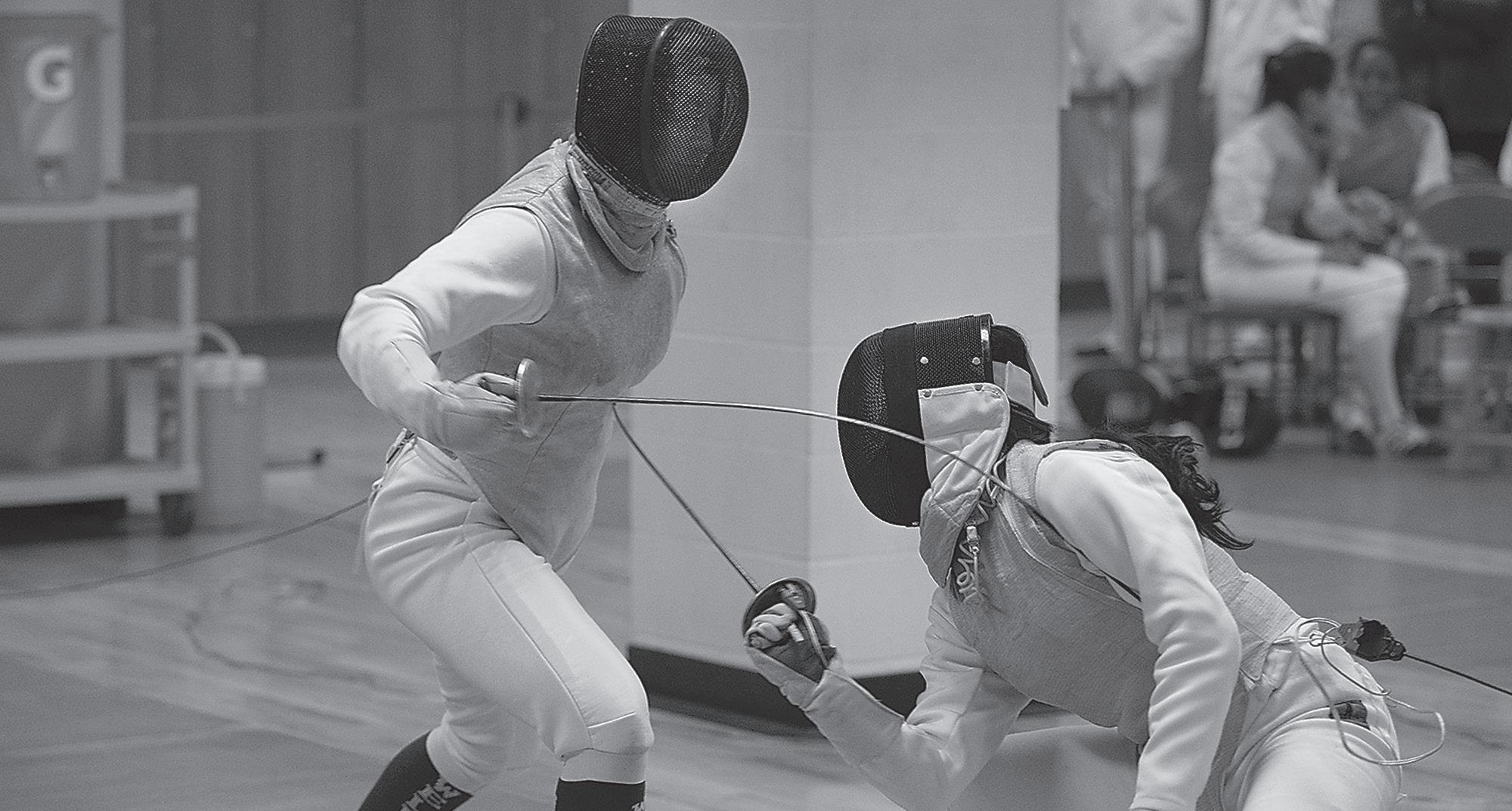
This past Sunday, Cornell fencing dominated its opponents at the Brandeis Fencing Invitational, sweeping all five teams it faced. The team now sports an eight-match winning streak and an impressive 9-2 overall record.
The Red came away with a 22-5 win over Brandeis in round one, defeated Wellesley, 19-8, in round two, and continued on to beat MIT, 22-5, in round three, Boston College, 18-9, in round four and Incarnate Word, 23-4, in the fifth round.
The Red’s dominant sweep was led by the foil squad, who went 37-8 against all five teams. The Epee squad went 32-13, and the Saber squad went 35-10.
The team saw many of its underclassmen members succeed, as junior Marissa Viqueira (9-2) and freshman Gabrielle Hill (9-3) led the team in individual victories with nine wins each. Freshman Madeleine Nishimura (8-1) and freshman Ying Cao (8-0) both finished with eight wins, while freshman Emily Gao (7-3), sophomore Megan Eno (7-2), sophomore Yoanna Efimova (7-2), junior Marigot Fackenthal (7-2) and sophomore Esther Bentolila (7-1) all finished with seven wins. Fifteen of the team’s 19 members who competed finished with individual records above .500.
“Nothing has come easy for us — we started off the season with both our head coach and assistant coach leaving for other schools, spent over a month running daily unofficial practices and scrambling to keep up morale, adjusted to a whole new coaching style mere weeks before our first competition” said Fackenthal, a co-captain.
Fackenthal was referencing the departure of former head coach Daria Schneider, who left for the same role at Harvard. Former assistant coach Omar Elgeziry was named head coach at Air Force earlier this year.
But under new head coach Ariana Klinkov and her staff, the Red has improved upon its standing from last season. At the end of 2018, Cornell was only 5-8 and lost seven of its first eight meets.
“I’m so proud of this team’s ability to push through hardship and come out stronger. We showed strong fencing at Brandeis, and we’re very excited to continue bolstering Cornell fencing’s reputation in the coming meets,” Fackenthal said.
The Brandeis Invitational marks the team’s last competition of the semester. Cornell will return to action on Jan. 18 at the Philadelphia Invitational.
Alyson Wong can be reached at awong@cornellsun.com.
Suit fled after Gloria Abrams was struck by a lacrosse ball
By LUKE PICHINI Sun Assistant Sports Editor
Cornell lacrosse head coach
Peter Milliman, along with the University, were named as defen-
dants in a negligence lawsuit filed after a woman was hit by a lacrosse ball.
Gloria and Brian Abrams — residents of Orange County, California — visited Cornell on Aug. 19, 2017. Court documents show that while standing in the parking lot adjacent to Schoellkopf Field — where the lacrosse team practices — Gloria Abrams was hit by a lacrosse ball. The Abrams have filed suit two years after the incident.
It is unclear why Brian and Gloria Abrams were visiting the University at the time. In a phone call with The Sun, Andrew Siegel — the attorney representing Brian and Gloria Abrams — stated that the Abrams have a child attending Cornell.
Outside of that, Siegel could not clarify any additional details, saying that “this is of a too personal nature for the family.”
The suit, filed on Nov. 14 in the Supreme Court of the State of New York, alleges that Milliman and the University committed negligence because they failed to “erect the proper safety nets, barricades, and/or other devices to prevent lacrosse balls from leaving the subject playing field.”
At the time of this event, Milliman was serving as the head coach of the lacrosse team in an interim capacity. Milliman guided
the team to a 13-5 record during the 2018 season that featured a victory in the Ivy League Tournament as well as an appearance in the NCAA Tournament quarterfinals. He was promoted to full-time status in May 2018.
Last season, the Red finished with a 10-5 record, and its season ended in the first round of the Ivy League Tournament at the hands of Yale.
As a result of this incident, Gloria Abrams “was caused to sustain serious injuries and to have suffered pain, shock and mental anguish.” The suit continued, saying these injuries and effects “will be permanent” and will render Abrams “unable to perform normal activities and duties and has sustained a resultant loss therefrom.” The suit does not describe the exact injuries or where the lacrosse ball struck Gloria Abrams. A second cause of action on behalf of Brian Abrams stated that the accident has deprived him of “the services, societies, companionship and consortium of his said spouse.” The suit states that these damages exceed the jurisdictional limits of all lower courts.
University officials did not comment on the suit, citing the active status of the litigation.
Luke Pichini can be reached at lpichini@cornellsun.com.
By FAITH FISHER Sun Staff Writer
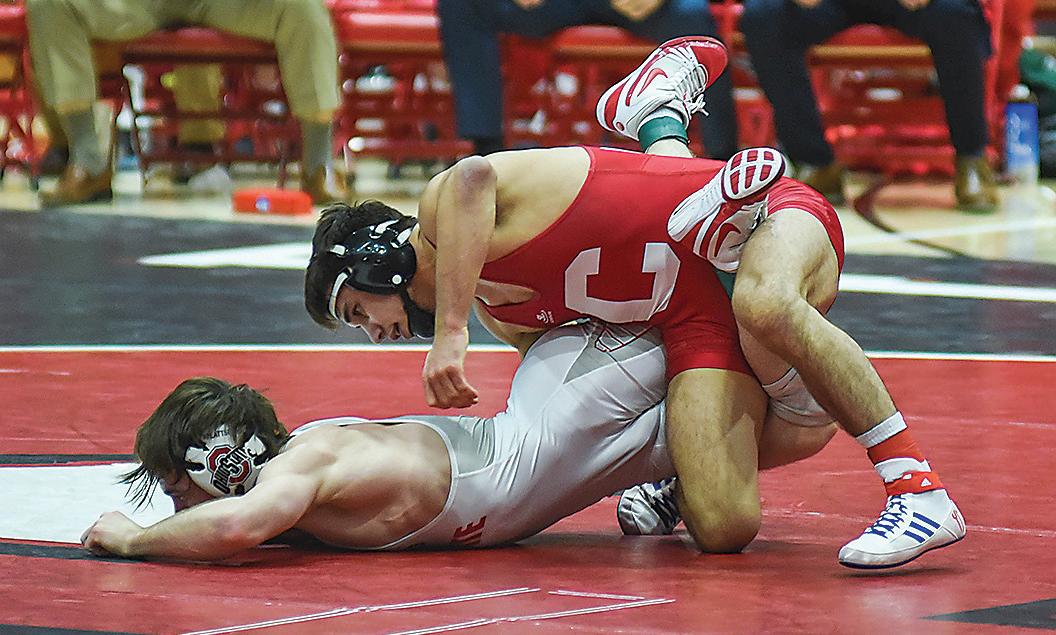
For the second week in a row, Cornell wrestling has been forced to grapple with an unfamiliar result — losing. In its second dual of the season against Ohio State, the Red dropped a 23-9 decision to the Buckeyes.
Following a loss against North Carolina State last weekend, the Red clinched 11 first-place victories at the Cornell Open. But the Buckeyes — much like the Wolfpack — proved to be much fiercer competition at this dual.
The No. 8 Buckeyes (3-1) have always presented the No. 17 Red (0-2) with a challenge. Last year, Ohio State dealt Cornell one of its three losses last season, a 25-9 setback at Newman Arena. This year, the Buckeyes boast two of the nation’s top wrestlers in their respective weight classes — Luke Pletcher and Killin Moore.
“They are one of the top teams in the country,” head coach Robert Koll said. “Ohio State, I think is a little underrated to be honest. They are a perennial contender, and this year it is no different.”
Despite a strong performance from senior Noah Baughman against Luke Pletcher, the No. 1 wrestler in the 141-pound weight class, his ultimate loss sent the Red into a scoring deficit to start the day. Baughman clinched a takedown against his opponent, just the second takedown Pletcher has allowed all season.
Yet, this offensive achievement by Baughman was not enough to secure the match. With the score at 6-5 in the third period, Pletcher managed to find another
“Ohio State, I think is a little underrated to be honest. They are a perennial contender, and this year is no different.”
Robert Koll
takedown opportunity, sending the score to 8-5. An escape by Baughman added a point to the overall tally, but to no avail. His fight ended with an 8-6 loss.
The Red dug a deeper deficit for itself in the sec-
ond match of the day. To start the third period, the Buckeyes’ Sammy Sasso had achieved a 9-3 lead against junior Hunter Richard in the 149-pound competition. Although Richard fired a series of shots and a third-period takedown, his comeback performance proved too little too late — he could only close the scoring gap to 12-9.
The Red found its first victory of the day in the 157pound bout, during which freshman Colton Yapoujian collected his first career dual victory as he defeated Elijah Cleary. A third-period escape by Yapoujian tied the score at 1-1. A stalling call against his opponent gave the Red freshman a 2-1 advantage, and a late escape sent him to a 3-1 victory.
The momentum from the first win of the day could not be carried into the 165-pound competition, in which senior Milik Dawkins faltered in a 12-4 contest. Four first-period takedowns by the Buckeyes’ Ethan Smith sealed the fate of the match.
Senior Brendan Womack surrendered a devastating loss in a closely contested 6-5 match. After OSU’s Caleb Romero clinched a late lead with a go-behind, the Red’s 174-pounder found himself without enough time to close the scoring gap.
After being injured for the 2018-2019 season, No. 4 Ben Darmstadt clinched his first dual victory of the year. The sophomore earned the 5-0 win through riding time and near-fall points.
In the 197-pound bout, freshman Jonathan Loew suffered a loss against the Buckeyes’ top-ranked Kollin Moore. Although Loew opened up scoring, he could not sustain a lead and lost in a decisive 18-6 contest.
In a close contest in the 285-pound weight class, the Red’s Brendan Furman surrendered a 4-3 loss to his opponent, Gary Traub. Furman started the match strong with an early first-period takedown, but the lead soon wavered as Traub gained momentum. His momentum carried into the third period, where his takedown against Furman capped another win for the Buckeyes.
The 125-pound round resulted in another loss for the Red. Sophomore Don LaJoie trailed Ohio State’s Malik Heinselman for the entire match. A late reversal by the Buckeye made it 8-4 to further benefit the opposition’s overall winning tally.
Senior Chas Tucker demonstrated his experience in
his 12-5 win against Dylan Koontz in the 133-pound weight class. No. 6 Tucker clinched five takedowns during the match to pick up the victory.
Despite three winning performances, several close decisions that did not go in the Red’s favor resulted in the team’s second straight loss. Although the losses are painful for the Red, the team is wrestling against some of the nation’s best competition, and it can use these experiences to progress and learn.
“Even though we lost, I thought the guys wrestled a lot better this week,” Koll said. “It’s tough starting out the season with a brutal schedule — N.C. State and then Ohio State. It was a better performance today, but certainly not where we want to be by the end of the year.”
This weekend’s dual presents the Red with a prelude to the stiff competition it will face next weekend in the Cliff Keen Invitational tournament in Las Vegas.
“They are going to have the opportunity to speed up their growth in Vegas against this top-notch competition.”
Robert Koll
The team will compete with some of the nation’s top wrestlers.
“We are going to see some of the top guys in the country,” Koll said. “This will be a whole other world of wrestling. We have some young guys learning on the fly, so hopefully we speed it up a little bit this weekend. They are going to have the opportunity to speed up their growth in Vegas against this top-notch competition.”
The season is still early, and the team is embracing the opportunities for growth that each competition presents. The team will take a pause on dual competition as it heads to the Cliff Keen Invitational in Las Vegas next weekend. The Red will later pick up dual competition against Lehigh in January.
Faith Fisher can be reached at fsher@cornellsun.com.