The Corne¬ Daily Sun

By KATHRYN STAMM Sun Staff Writer
On Sept. 30, 2014, Elizabeth Garrett became Cornell’s first female president, nearly 150 years after the University’s founding.
After an eight-month-long search that examined around 200 candidates, Garrett was deemed the “clear winner.” The 19-person search committee unanimously appointed her the University’s 13th president. She succeeded President David J. Skorton, after he took a position as secretary of the Smithsonian Institute.
Several of Garrett’s decisions sparked controversy throughout her tenure, including her reversal of President Emeritus David Skorton’s 2035 carbon neutrality goal and her decision to form the College of Business.
In February 2016, Garrett announced she was undergoing an “aggressive treatment program” at Weill Cornell Medicine following a colon cancer

diagnosis. She died at age 52 on Mar. 6, 2016, just nine months after assuming office in July 2015.
On Mar. 17, 2016, the University held a memo rial for Garrett, remembering her optimism and perseverance.
“Beth was an extraordinarily passionate, cou rageous and can-do leader who devoted her life to scholarship and public service,” said Board of Trustees Chair Robert Harrison ’76 at the memorial service. “She was a remarkable role model and friend to so many.”
Before Cornell, Garrett was the provost and senior vice president for academic affairs at the University of California, where she had worked since 2003. Garrett had also previously served on a nine-member bipartisan Tax Reform Panel, appoint ed by President George W. Bush in 2005. She also taught at the University of Chicago as a law professor, clerked for Justice Thurgood Marshall on the U.S. Supreme Court and worked as legislative director for Sen. David L. Boren (D-Okla.).

14, 2017
REPORTED ON JAN. 19, 2012 & SEPT. 14, 2017




By KATHRYN STAMM Sun Staff Writer

On Sept. 16, Cornell announced that Weill Cornell Medicine would provide debtfree schooling for all students qualifying for financial aid. The program went into effect as of this academic year: students in Weill’s Class of
2023, all currently enrolled medical students and all future classes will have their loans replaced by scholarships.
The sticker price for Cornell medical school tuition is currently $58,760. According to the Association of American Medical Colleges, the average medical school debt amounted to $190,000 in 2018, higher than most professional peers.


By STEPHANIE TOM Sun Staff Writer
On Dec. 19, 2011, Cornell Tech was officially founded after The University won a competi- tion for a new campus to be built in New York City. The school was created as a result of both a pub- lic-private partnership and one between Cornell and the Technion Israel Institute of Technology, which is represented on the campus by the Joan & Irwin Jacobs Technion-Cornell Institute.
From 2012 to 2017, the campus was temporari- ly located at Google’s New York City building while the permanent campus was under construction on Roosevelt Island. The first completed phase of the offi- cial campus was unveiled and opened on Sept. 14, 2017, initially welcoming 30 fac- ulty members and 300 stu- dents, while the final campus buildout is expected to be completed by 2043.
Weill Cornell drew nationwide praise for the announcement, which followed on the heels of New York University’s Aug. 2018 decision to provide tuition-free medical school.
Current and prospective students voiced their excitement over the promise of a more accessible opportunity for their futures, especially with the prospect that other medical
Since then, the cam- pus has become a hub for groundbreaking research and entrepreneurship as well as home to over 2,000 gradu- ate students and hundreds of faculty and staff. The cam- pus itself is also looking to be a model of the balance between sustainability and modernity, located on 12 acres of public land in the middle of the East River, and located squarely in the midst of New York City, opposite from the United Nations building.
Cornell Tech’s main focuses include collaboration between academics and businesses, with the campus serving as an incubator for student startups, as well as interdisciplinary studies. Since 2014, Cornell Tech has birthed 38 startups, 98 percent of which are now based in New York City,. Along with the hundreds to come, they are projected to generate $23 billion in economic activity over the next 35 years.

schools might follow the lead.
“When I heard this announcement, I was shocked, I was overjoyed,” said Sarita Ballakur, a Cornell medical student in the class of 2021.
“I can’t believe the loans I took out a month ago won’t stay with me.” Cornell officials lauded the development as a landmark step, with Weill Cornell Dean

By ALEC GIUFURTA and ALIYAH KILPATRICK Sun Staff Writers
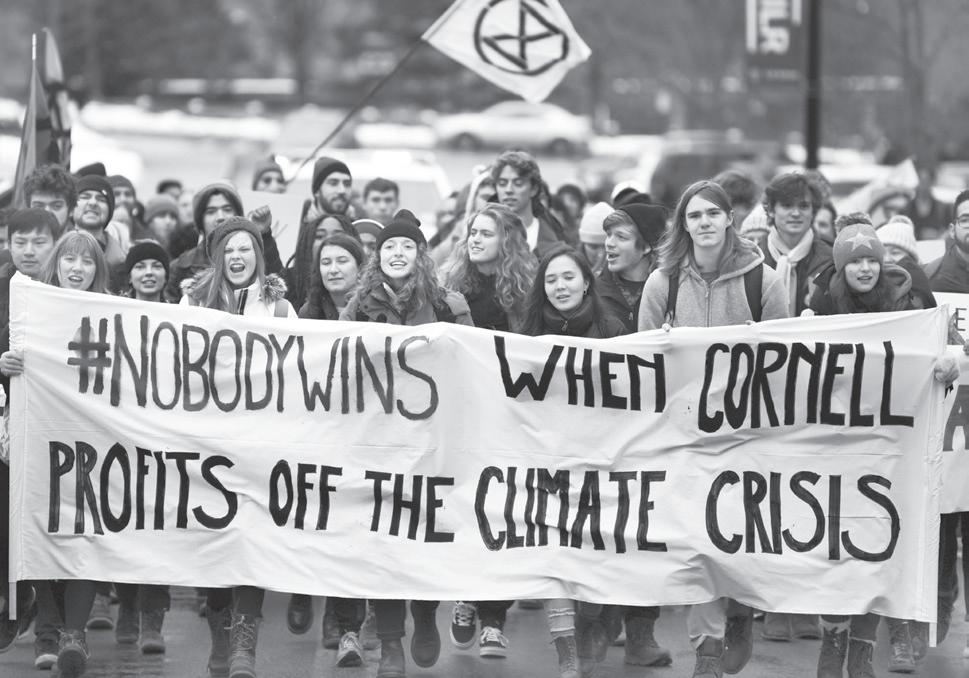
Responding to national events or fighting for change on campus, Cornellians have fos tered a strong culture of activism in Ithaca over the past decade.
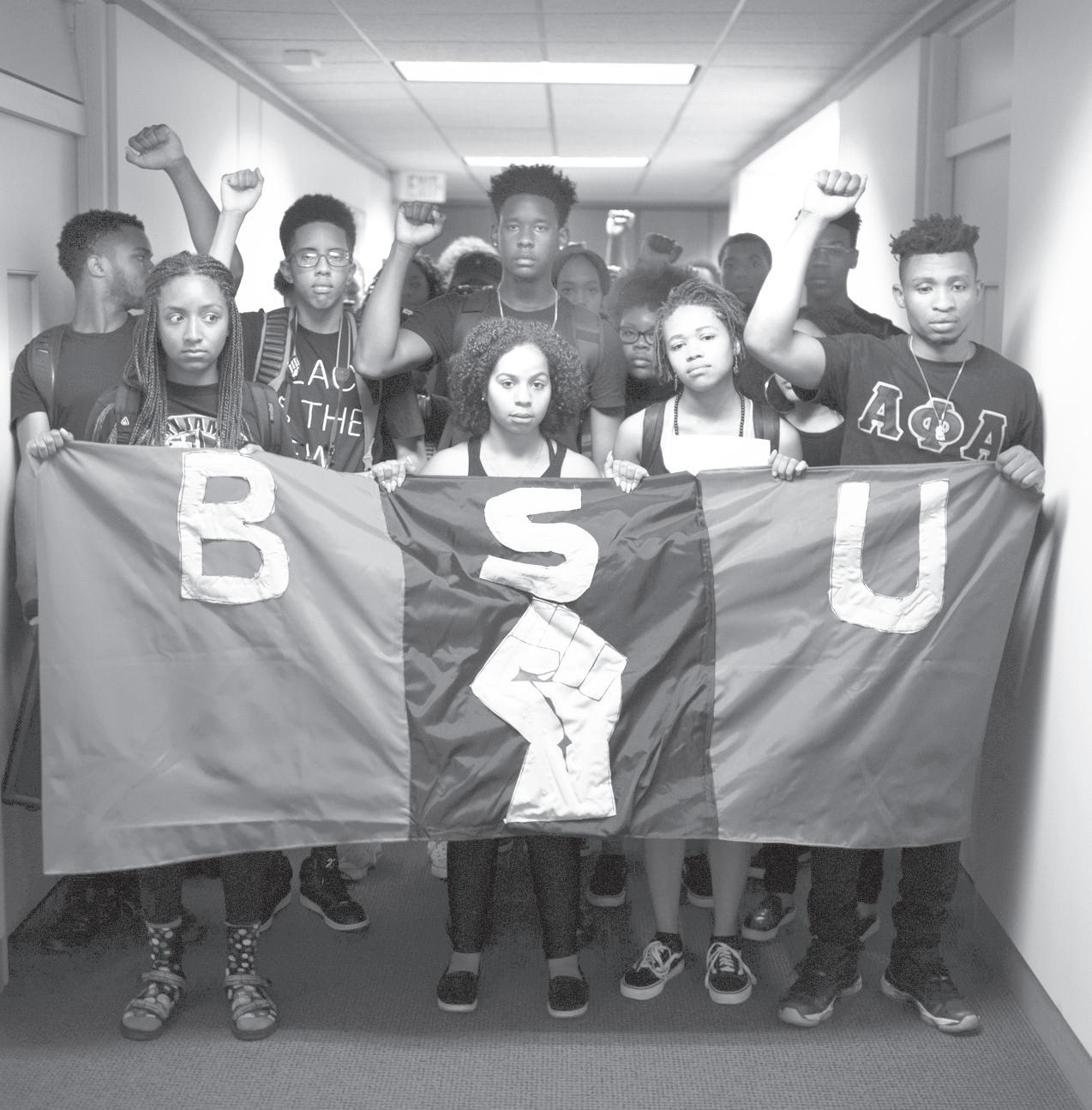
Throughout the years, Black Students United has led a number of protests in response to racism and racial acts on campus.
In 2015, members of BSU stood on tables at Trillium to denounce racial discrimination at Cornell. The protestors shouted their demands, and afterwards saw concrete change –– The Cornell Plantation was renamed to the Cornell Botanical Garden.
After a black student was assaulted in Collegetown in an altercation involving racial slurs, black students led by BSU took over Willard Straight Hall in 2017, near ly 50 years after the Willard Straight Hall takeover, to demand change. They occupied the building for several hours after delivering a list of demands to President Martha Pollack. Changes, such as hiring more mental health officials of color, are still being implemented today.
dent organizing a protest.
In 2017, members of Cornell’s marching band stood in solidarity with Colin Kaepernick by kneeling during the national anthem. Kaepernick knelt to protest racial injustice and police brutality. After witnessing band member Kyra Butler ’20 take a knee during a game against Yale, the other members of the band wanted to ensure that she was not alone in her protests.
In 2010, Cornell’s move to fold the Africana Studies and Research Center into the College of Arts and Sciences was strongly rebuked by ASRC faculty and students: Prof. N’Dri T. Assié-Lumumba, Africana studies, called it “institutional racism.” Prof. Carol Boyce Davies, Africana studies, called out then-Provost Kent Fuchs’s decision: “They claim they want to build Africana but they want to blow it up first.”
Student protest has also brought varying responses from University Administration. Protests in 2015 against raising the CU Health Fee saw the university dispatching a Cornell Police investigator to confront a stu-
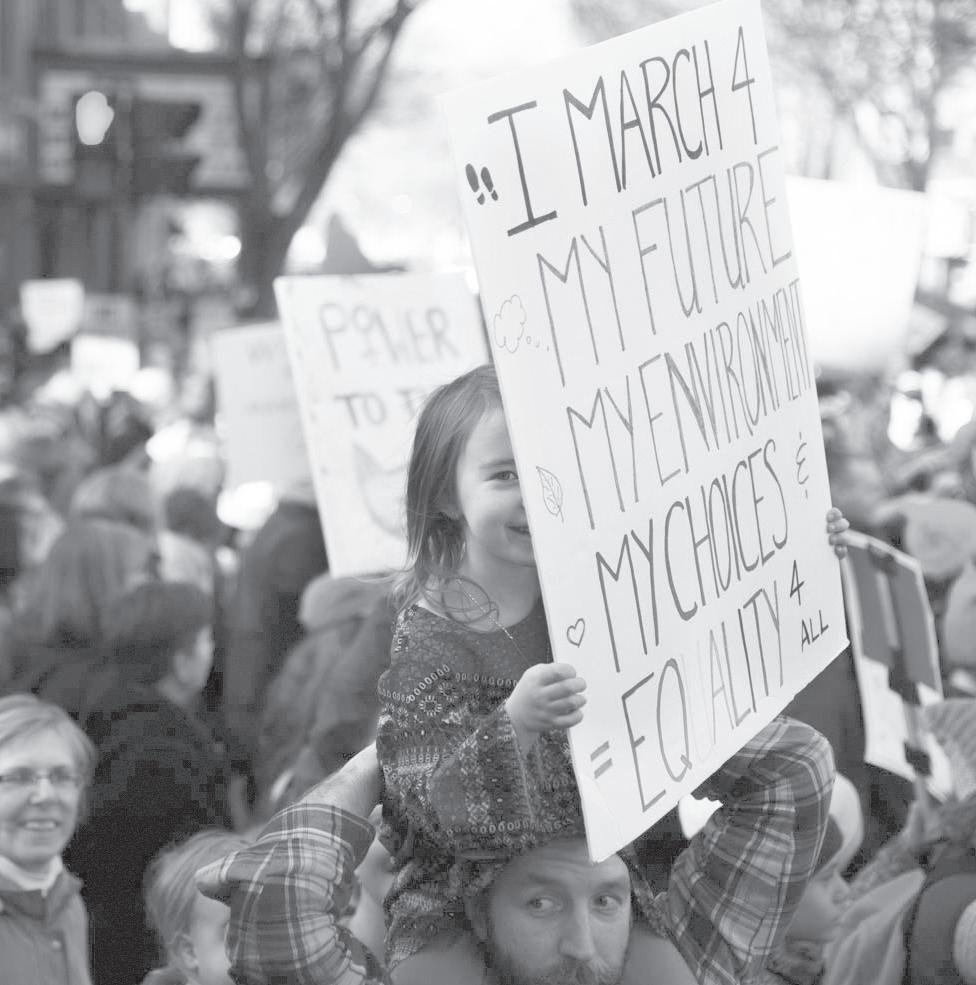
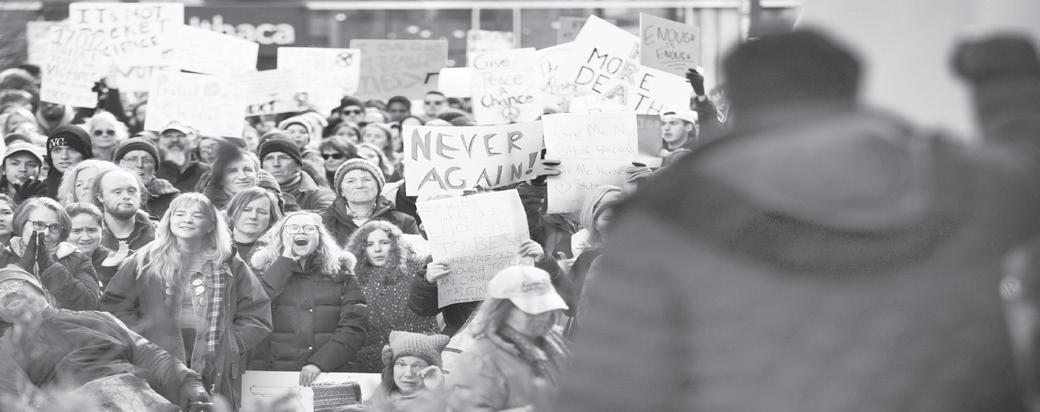
Speaking out | In the photo above, members of Black Students United advocate for better treatment of black students on campus following a racialized assault. In the photo to the right, people gather at a protest during the 2017 Women’s March the day after President Trump’s inaugura tion.
Hashtagged #FightTheFee, student protestors were voicing opposition to the universities’ potential implementation of a $350 health care fee for all students not enrolled in the Cornell health plan. Cornell Police Investigator Justin Baum threatened Daniel Marshall ’15 with arrest unless he complied with the investigation, the Ithaca Times reported. In Feb. 2015, students occupied Day Hall before storming then President David Skorton’s office, The Sun reported.
Moments of protests on campus and around the city throughout the decade have often represented national movements.
One day after the Inauguration of President Donald Trump, over 8,000 people descended into the Ithaca Commons for the Women’s March on Ithaca, the local installment of a day of Women’s Marches in most major US cities. As the Sun reported, the peaceful protests were the largest the city has seen in recent memory.
Likewise, in 2019, Global Climate Marches found their way to Cornell’s campus on Sept. 20, when hundreds of Cornellians mobilized to voice the con-
members of the Ithaca community marched through Day Hall and then down into the Commons to promote free speech and political activism on campus.
In 2013, three hundred people gathered outside City Hall after a white Ithaca Police Officer drew his gun on two teenagers of color fleeing a crime scene. The protestors demanded that IPD protects the youth of the city. In 2016, Ithaca residents outside City Hall protested a potential expansion of a ban on gorge swimming.
Also in 2013, Native American Students at Cornell organized a rally in Ho Plaza in opposition to Canadian law Omnibus Bill C-45, which would allow for the sale of Indigenous lands.
cerns of a generation –– or, as one sign stated: “tides are rising so are we.”
Another prominent demonstration this decade coincided with national protests over Arizona Senate Bill 1070 in 2010. MECHNA organized a mock Immigration and Customs Enforcement raid. The group stormed a lecture hall while asking students at random to present immigration papers.
Protests on the Ithaca Commons have also marked the decade: In 2011, protestors rallied on the commons to demand a $12.78 per hour “living wage.” In 2013, on International Workers Day, students and
Guest speakers — often right-of-center politicians — have inspired strong student push back as well. In 2018, former Vice President Dick Cheney was met with professor and student protest upon arriving to campus for a talk sponsored by the Cornell Republicans. Prof. Russell Rickford, history, called Cheney — who served under President George W. Bush — a “war criminal” during the protest rally.
In 2016, Trump’s election brought sharp rebuke from students on campus. Hundreds of Cornellians walked out of class the Friday after the election, covering campus. Traffic on Tower Road and East Ave was temporarily stopped, and Prof. Bruce Monger excused students from class to attend the protest.
In 2017, Pro-Palestine protesters hosted a die-in at a celebration of Israel Independence Day. In the spring of 2019, protests demanding that Cornell divest from some Israeli companies swept across campus, with the Student Assembly narrowly rejecting a resolution to ask the University to do so.
These are only a selection of this decade’s activism on campus — despite most students’ short tenure in Ithaca, Cornellians continued to keep making their voices heard.
Alec Giufurta and Aliyah Kilpatrick can be reached at agiufurta@cornellsun.com and aliyahkilpatrick@cornellsun.com
By AMINA KILPATRICK and MEGHNA MAHARISHI Sun News Editor and Sun Staff Writer
Over the years, as campus has changed, The Cornell Daily Sun has changed with it. The Sun has experienced the highs and lows on campus, from reporting the deaths
of our fellow community members to highlighlighting the extraordinary work Cornellians do, our journalists have covered it all. As the field of journalism has changed, we have adjusted to match the pace and speed of the new decade. The most notable change during this decade was the reduction of print from
five days a week to three days a week. While this move was prompted by financial considerations, it has also helped The Sun move to be a digital-first publication, delivering news to our readers 24/7. Four former managing editors of the Sun shared their experience managing the paper as well as their largest initiatives and
challenges during that time. They shared changes in The Sun stemming from overall financial changes to shifting cultures in journalism.
Amina Kilpatrick and Meghna Maharishi can be reached at akilpatrick@cornellsun.com and mmaharishi@cornellsun. com
“If I remember correctly, we were the first board not to receive any compensation for our time. It used to be monetary payment, it was still pennies, but I think by the time we got there that had been phased out. I was lucky to be able to find a successful career in journalism but for a lot of people, the lack of pay at the college level sort of reduced opportunities and made it harder to get involved.”
“When I competed for managing editor, there was a big focus on multimedia and trying to build our video team, making sure that as many articles as possible had videos or slideshows to create a relationship with our readers that couldn’t really exist when you’re only writing articles and taking pictures.”
— Tyler Alicea Managing Editor 132nd Board
— Jeff Stein, Managing Editor 130th Board
“More broadly, I guess the financial situation of newspapers has continued to decline ... local newspapers everywhere are still hurting and closing down.”
— Michael Linhorst, Managing Editor 128th Board
“During my time on The Sun, I saw students take more and more responsibility for our financial situation. We, like many other local newspapers, were (are) struggling with declining ad sales. During my time many students came up with ideas for new revenue streams and ways to cut costs.”
— Josh Girsky, Managing Editor 135th Board
By MADELINE ROSENBERG Sun Staff Writer
Olin Library Renovations
Cornell’s largest library ushered in a new decade by updating its antiquated fire safety system, which posed a risk to Olin’s thousands of daily visitors and books. Construction that installed sprinklers and fire dampers began in June 2010 and lasted for more than a year, temporarily making handfuls of floors inaccessible at a time.
Bringing the then-49-year-old library in compliance with fire safety codes came at a cost: This project displaced library staff and services, and closed off frequently used study spaces. However, the implemented systems remain vital to protecting the people and collections it houses.
Olin Library’s terrace now faces ongoing renovations that are addressing safety and accessibility concerns, and are replacing the roofing and guardrails, The Sun reported in September. The spot known for its musical rocks closed for construction in August 2019 and is expected to reopen in spring 2020.
Uris Library: Cocktail Lounge
Students looking for a place to pull an all-nighter found alternative study spaces last January when the Cocktail Lounge closed for a semester-long overhaul.
The University upgraded this 24-hour study zone for the first time in 17 years to meet Americans with Disabilities Act requirements and to “improve the interior furniture and finishes,” Jon Ladley, the library facilities planning coordinator, said at the time of the space’s reopening in August.
The new seating that dots the remodeled Cocktail Lounge arrived after the library
administration tested out different furniture styles and gathered student feedback in February 2018. Now, the lounge’s upgraded seating, bathrooms, light fixtures and new south-facing entrance offers a more flexible spot for a casual or late-night study session.
The Fine Arts Library
Collections of academic art and architecture found a new home at the beginning of the decade when the Fine Arts Library moved from the Sibley Hall dome to the third floor of Rand Hall.
Librarians transported more than 78,000 books to the new Rand Hall library because the former location posed structural and environmental concerns, The Sun reported in September 2010.
Martha Walker, an architecture librarian, said at the time of the transition process that Sibley was poorly suited for “a research library or for any library,” the floor unable to support the library’s expanding collections and without temperature controls needed to preserve aging books.
The University further remodeled the Rand Hall Fine Arts Library during the recent 18-month-long overhaul, the modernized space now suspending more than 100,000 books from floating stacks. The new, light-filled Mui Ho Fine Arts Library intends to create a space for collaborative study and to connect students with the library's print and digital resources.
As students churn out papers and prepare for finals, the library administration continues to wrestle with how to adapt Olin and Uris libraries to 21st century needs and standards.
A Cornell University Library taskforce is conducting a pre-renovation feasibility study to explore how these spaces — originally built to house closed book stacks and allow students to request printed materials from the circulation desk — can support technology-induced changes in research, teaching and learning, The Sun reported in November. The University also plans to tackle maintenance issues present in the aging libraries.
The study and anticipated renovations come out of the Olin and Uris Libraries Space Improvement Projects, an ongoing effort to improve the two libraries to better serve the Cornell community.
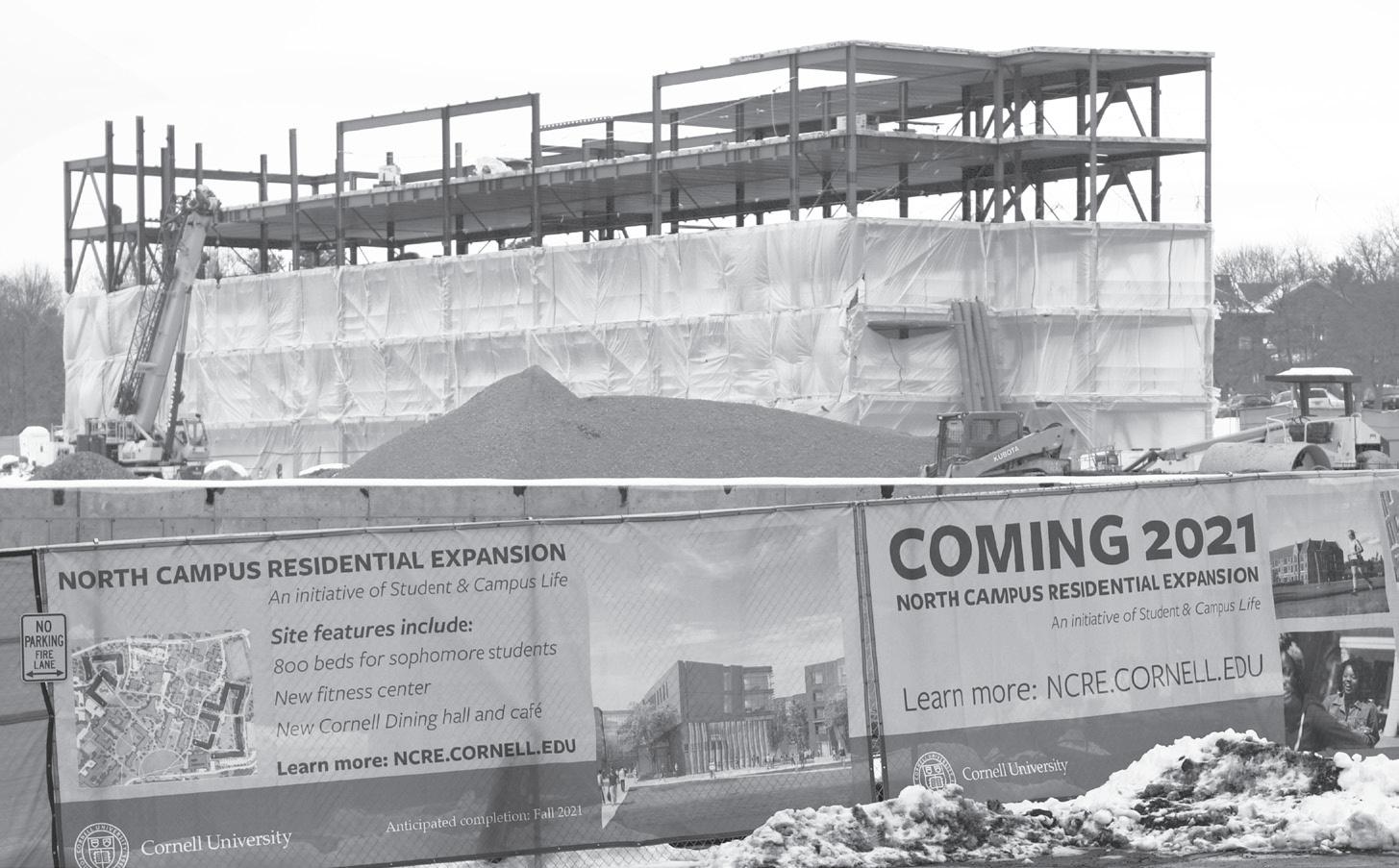
The ongoing North Campus Residential Expansion project plans to mitigate an on-campus housing shortage and support expected increases in undergraduate enrollment — but at a cost.
The housing project has turned Appel Fields — a former practice space for club sports teams — into a construction zone, home to materializing dormitories. In March, The Sun reported that club teams are scrambling to find alternative practice locations, as spaces designated for varsity sports and intramurals remained mostly inaccessible to them.
Rosenberg can be reached at mrosenberg@cornellsun.com.
By LIN AI Sun Staff Writer
2011: Milstein Hall at Cornell’s College of Architecture, Art and Planning opened in October of 2011 marked by a twelvefoot-high transparent glass facade. In addition, it provides a connection between the existing Sibley Hall and Rand Hall.
2014: Bill & Melinda Gates Hall, a gleaming and futuristic building housing the Department of Computing and Information Science, opened in January of that year, endowing the CIS students and faculty with streams of light and a panoramic view of Hoy Field during baseball season.
2011 - 2019: MVR (Martha Van Rensselaer Hall) entered a prolonged program of complete upgrade since 2011 and finally entered the final phase of construction in August 2018. According to the official website of the College of Human Ecology, the changes aimed to improve “quality, productivity, and overall experience” by the new innovative designs and spaces.
2012: The Teaching Dairy Barn at the College of Veterinary Science was built in 2012 in order to incorporate instructional elements into a traditional NY state dairy barn. In addition to providing extra learning spaces, it also reduces energy consumption and optimizes the comfort of its occupants - the cows.
2011 - 2015: Warren Hall, a Beaux
shifted
Arts style building on the Ag Quad, was reborn in April 2015 after five years of complete renovations that equipped its classrooms with cutting-edge information technologies.
2010 - 2015: Stocking Hall, home to the CALS Department of Food Science, completed its renovation in 2015. It was refitted with modern life safety systems with ADA-accessible facilities throughout the complex and wifi in communal areas. The state-of-the art reconstruction raised the profile of the food science department
2014: Rehabilitation of the historic Fernow Hall on the Ag Quad was completed in 2014, adding an adjoining contemporary space that contains a series of sustainable initiatives, including a green roof and a rain garden.
2016: Klarman Hall, a blocklike glass showpiece located on the Arts Quad, was completed in 2016 and gave a new home to the Department of Comparative Literature, the Department of Romance Studies and the College of Arts and Sciences’ Academic Advising and Admissions office.
2016: Liberty Hyde Bailey Conservatory Greenhouse at 236 Tower Road was reopened in 2016, featuring modern equipment designed for saving energy and facilitating plant growth. It was designed to continue its mission of education and outreach.
2017: Upson Hall was regeared with
modern facilities and brand new spaces to meet the rising demands of the engineering college in 2017. Labs and instruction areas were redesigned so as to be near each other, fostering interdisciplinary collaboration.
2017: Cornell Health, formerly Gannett Health Services, was rebranded after two years of construction and opened on its entrance on Ho Plaza in April. It reemerged with fully renovated health facilities that aim to fulfill the
needs of a growing number of the student body.
2011-2019: McGraw Hall, the second oldest building on campus built in 1872, entered a major preservation project in April 2011 that is designed to prevent further deterioration of the building. The project will continue in coming years.
Lin Ai can be reached at linai@cornellsun.com.


As part of the school strike for climate movement led in part by Swedish activist Greta Thunberg, millions worldwide participated in protests in September in the largest climate-related demonstrations in history. Activists called for policy action on climate change in the days leading up to and following the United Nations Climate Summit.

Following a shooting at Marjory Stoneman Douglas High School in Parkland, Florida, that left 17 dead, thousands of student activists marched in Washington, D.C., and around the country on March 24, 2018, calling for gun violence prevention policy. Leadership by students like Emma Gonzalez and David Hogg was believed at the time to be a possible tipping point for gun legislation.
Businessman Donald Trump rode a wave of rural, working-class frustration to an improbable victory in the 2016 election, declaring at his January 2017 inauguration that the forgotten men and women who he championed would be “forgotten no longer.” Trump’s promises to build a wall on the United States’ southern border and campaign calls to force American Muslims onto a registry led to widespread opposition such as the Women’s March in 2017.
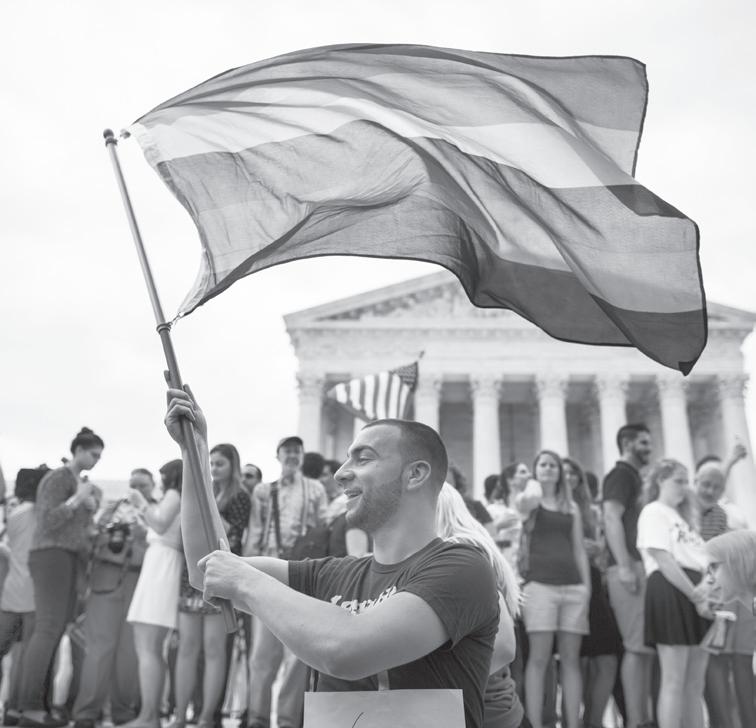
The U.S. Supreme Court ruled on June 26, 2015 that the fundamental right to marry is guaranteed to same-sex couples by the equal protection and due process clauses of the 14th Amendment. The 5-4 ruling in Obergefell v. Hodges held that all 50 states must perform and recognize same-sex marriages the same way they recognize different-sex marriages. ZACH GIBSON / THE NEW YORK TIMES
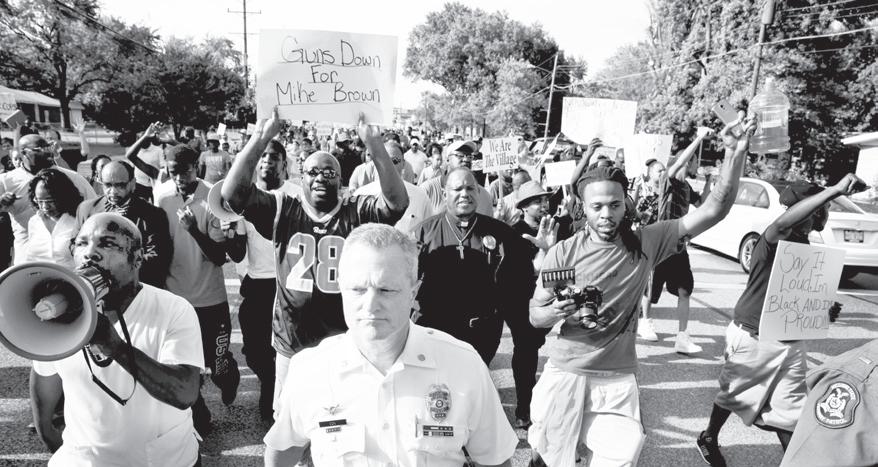

After Michael Brown, a black man, was killed by police officer Darren Wilson in Ferguson, Missouri, in August of 2014, protests and unrest in Ferguson and nationwide prompted conversations about the relationship between law enforcement and black communities, and racism in the United States more broadly.

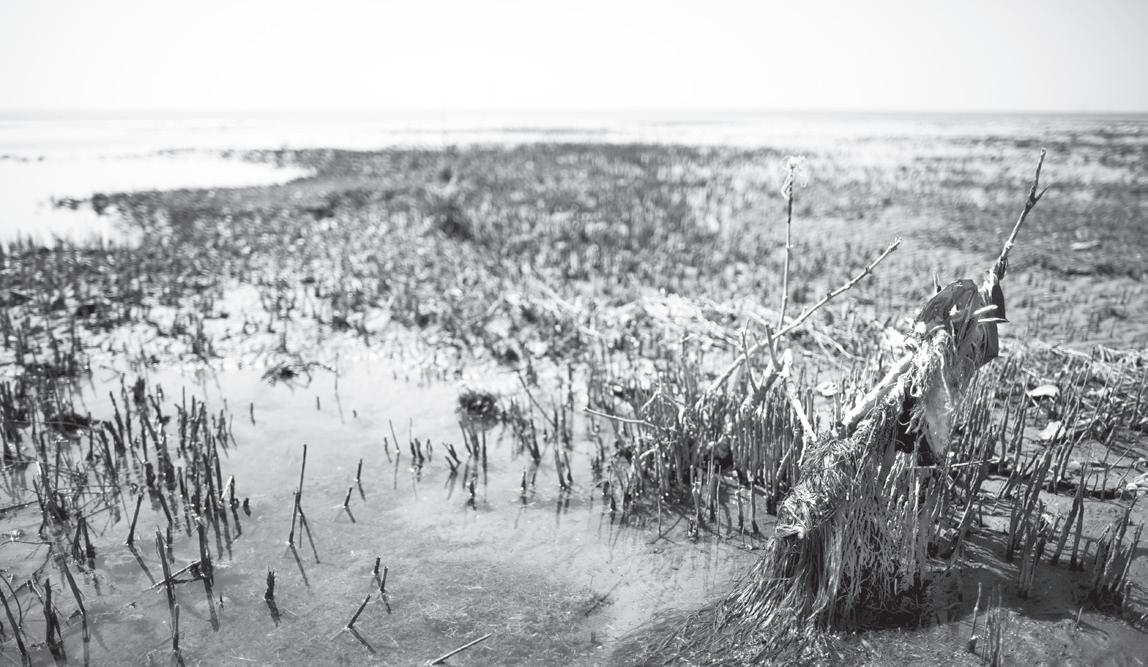
The Deepwater Horizon spill, more commonly known as the BP spill after oil company British Petroleum, poured into the Gulf of Mexico on April 20. Regarded as one of the biggest preventable environmental disasters, nearly 4.9 million barrels of oil flooded into the waters. The U.S. government prosecuted BP, fining the company $18.7 billion for gross negligence.
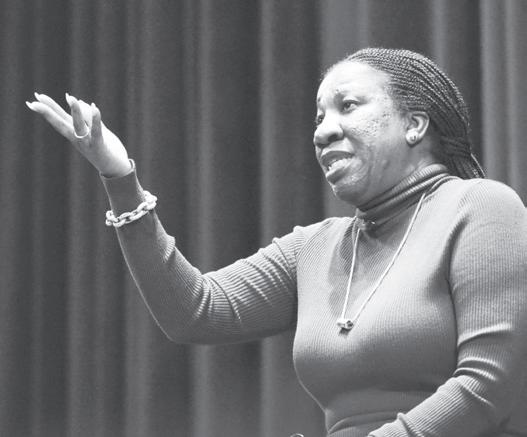
Following several allegations of sexual abuse against Harvey Weinstein, the #MeToo movement emerged on social media as women described their experiences with sexual harassment and assault. The #MeToo movement led to widespread discussion of sexual assault, especially in Hollywood, and led to the uncovering of misconduct by many high-profile male celebrities. In photo above, #MeToo founder Tarana Burke speaks at Cornell.

CIA employee Edward Snowden leaked classified documents from the NSA, unveiling a number of global surveillance exercises that were being conducted by the NSA. The U.S. government charged Snowden, whose actions provoked conversations centered around privacy and safety, for violating the Espionage Act and revoked his passport.
On May 1, 2011, President Barack Obama announced in a televised address that American forces had found and killed Osama Bin Laden, the leader of the terrorist group Al-Qaeda, in a compound near Islamabad, Pakistan. The White House prefaced the announcement around two hours earlier, leading to spontaneous crowds around the White House, Times Square and the Pentagon.

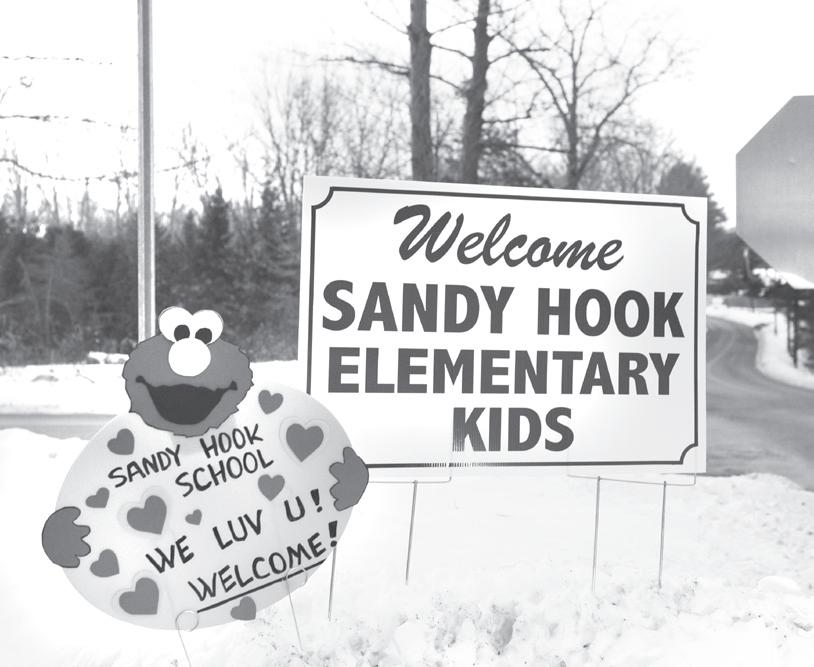

On December 4, 2012, a gunman shot and killed 26 people, including 20 children between the ages of six and seven. The Newtown, Connecticut, shooting shook the country, prompting a national conversation about gun safety. The building was ultimately demolished, and a new school building was rebuilt on the site. The shooting remains the fourth-deadliest mass shooting in United States history.
Independent Since 1880 137th Editorial Board
SARAH SKINNER ’21
JOYBEER DATTA GUPTA ’21
Business Manager
KRYSTAL YANG ’21
Advertising Manager
RAPHY GENDLER ’21 Sports Editor
NOAH HARRELSON ’21
SOPHIE REYNOLDS ’20
AMINA KILPATRICK ’21
PETER BUONANNO ’21
Arts & Entertainment Editor
SHIVANI SANGHANI ’20
Assistant News Editor
CHRISTINA BULKELEY ’21
JING JIANG ’21
Assistant Photography Editor
ALICIA WANG ’21
EMMA WANG ’20
GIRISHA ARORA ’20
Web Board
Managing Editor
MEREDITH LIU ’20
Assistant Managing Editor
SABRINA XIE ’21
Design Editor
AMBER KRISCH ’21
Blogs Editor
KATIE ZHANG ’21
Dining Editor
JOHNATHAN STIMPSON ’21 News Editor
ETHAN WU ’21
Opinion Editor
HUNTER SEITZ ’20
Assistant News Editor
LUKE PICHINI ’22
Assistant Sports Editor
JEREMY MARKUS ’22
Assistant Arts and Entertainment Editor
LEI LEI WU ’21
Layout Editor
Snapchat Editor
BREANNE FLEER ’20
Senior Editor
SHRUTI JUNEJA ’20 Senior Editor ANU SUBRAMANIAM ’20 Editor in Chiwef
Dena Behar ’20
Stacey Blansky ’20*
Penelope Campos ’20
Mollie Cramer ’20
Katherine Heaney ’20*
Marin Langlieb ’20
Emily Yang ’20*
Sophie Arzumanov ’21
Jill Crosby ’21
Colton Poore ’20
DongYeon (Margaret) Lee ’20
Edem Dzodzomenyo ’20 John Sullivan Baker ’20
Olivia Bono ’20
Carolyn Hale ’20
Zach Lee ’20 *
Rachel Mattessich ’20
Ruby Que ’20 *
Katie Sims ’20 *
Nick Smith ’20 *
Bennett Gross ’20
Zora Hahn ’20
Caroline Chang ’20
Chenab Khakh ’20
Gayatri Sitaraman ’20
Catherine Cai ’21
Ari Dubow ’21 Vivian Fan ’21 Alec Giufurta ’21
Gabrielle Gonzalez ’21
Alex Hale ’21
Shawn Hikosaka ’21
Caroline Johnson ’21
Justine Kim ’21 Vale Lewis ’21
Michael Johns ’20 Sarah Park ’20 Weifang Yang ’20 William Wang ’20 AJ Stella ’21
Nick Boozang ’21
Cory Koehler ’21 * Jeremiah Lacon ’21
Anna Grace Lee ’21
Bill Miksic ’21
James Robertson ’21 * Ramya Yandava ’21 *
RYAN RICHARDSON ’21
AMOL RAJESH ’20
Senior Editor
News Board
Angela Li ’21
Jefrey Li ’21
Gracie Lu ’21
Sean O’Connell ’21
Samantha Stern ’21
Xinyu Tang ’21
Winny Sun ’21
Catherine Chmiel ’22
Tamara Kamis ’22
Opinion Board
Amelia Zohore ’21
Darren Chang ’21
Elijah Fox ’21 Giancarlo Valdetaro ’21 Krisi Lim ’21
Arts Board
Andrea Yang ’21 * Sarah Bastos ’22 *
Richard Beezley ’22
Tyler Brown ’22
Jean Cambareri ’22
Greta Gooding ’22
Erin Hockenberry ’22
Sports Board
Faith Fisher ’22
Emily Dawson ’21 Ken Choi ’22
Deana Gonzales ’21
Natalie Monticello ’21
Sydney Oraskovich ’21
Michael Wenye Li ’20 * Ashley He ’20 Nandita Mohan ’20 Yisu Zheng ’21
Nicole Rovine ’20
Livia Caligor ’21
Murali Saravanan ’20
Elijah Fox ’21
Gussie Gordon ’21
Ruth Park ’21
PARIS GHAZI ’21 Associate Editor
NATALIE FUNG ’20 Web Editor
BORIS TSANG ’21
Photography Editor
SHRIYA PERATI ’21 Science Editor
AMANDA H. CRONIN ’21 News Editor
MARYAM ZAFAR ’21 City Editor
ANYI CHENG ’21
Assistant News Editor
NICOLE ZHU ’21
Assistant News Editor
BEN PARKER ’22
Assistant Photography Editor
DANIEL MORAN ’21
Assistant Arts and Entertainment Editor
DANA CHAN ’21 Production Editor
LEANN MCDOWALL ’21 Newsletter Editor
ALISHA GUPTA ’20
KATIE SIMS ’20
Hannah Kim ’22
Meghna Maharishi ’22
Callie McQuilkin ’22
Cata Peñeñory ’22
Gayatri Somaiya ’22
Kathryn Stamm ’22
Stephanie Tom ’22
Olivia Weinberg ’22
Cait Wyman ’22
Lucero Contreras ’21
Michaela Bettez ’21
Pallavi Kenkare ’21
Lin Ai ’23
Louis Chuang ’23
Aliyah Kilpatrick ’23
Virginia Lo ’23
Megan Pontin ’23
Madeline Rosenberg ’23
Ayana Smith ’23
Meghana Srivastava ’23
John Yoon ’23
Employees & Contractors Sun Business Office Amy Wilson, Ofce Manager Sun Production S. K. List Sun Delivery Robert Armstrong ’75 Sun Alumni Asso John Schroeder ’74, Alumni Advisor; Linda Holzbaur, Contractor Teo
Newsletter Board
Adam Wang ’22
Aditya Ramachandrababu ’22
Canann Delgado ’21
Christian Baran ’22 Nicholas Nguyen ’22 Sidney Malia Waite ’22 Roei Dery ’23
Ariadna Lubinus ’22
Nkemdirim Obodo ’22
Odeya Rosenband ’22
Stephanie Tan ’22
John Wooton ’22
Stephen Yang ’22
Kayla Bouazounia ’23
Sophie Levine ’22 Mike Seitz ’22 Justin Suzzan ’22
Photography Board Science Board
Michelle Zhiqing Yang ’22
Aliva Das ’22
Emma Rosenbaum ’22
Milena Bimpong ’22
’22
’23
John Colie ’23
Brian Lu ’23
Emma Plowe ’23
’22
’23
Srishti Tyagi ’22
Tamara Kamis ’23
Tucker Hwang ’22
Blogs Board Current Cornell Sun & Sun Alumni
Lily Xie ’21 Kelly Lomboy ’22 Emily Weiser ’22 Ella
Dining Board
Meridien Mach ’22
Catherine Ryberg ’21
Peter Kaplinsky ’22
Dominic Law ’22
Rae Specht ’22
Business Board Reflections From the Editor
Sarah Austin ’23

Isha Vaish ’22
Melanie Metz ’22
Jeremy Scheck ’22
Sofa Siciliani ’22
Benjamin Velani ’22
Jack Waxman ’22
Grace Yang ’22
Sanjana Kaicker ’23
Julia Lescht ’23
Jordan Roth ’23
When an editor first suggested doing an issue recapping this decade, I panicked about the fact that I have lived through another ten years (maybe a slight overreaction since I am only 20). After a few moments of experiencing an early quarter-life crisis, I took the opportunity to reflect on how much I have personally changed (no more braces for one thing) and how both Cornell and The Sun have developed over the last ten years. While the early 2010s did a number on me and left me with the memory of every word to “Baby” and a love for leggings, my most transformative year has been this past one as editor in chief of The Sun. In one year, I watched Cornell and The Sun tackle new challenges and face situations that 10 years ago were not on our minds.
The Sun has an iPhone app and a newsletter. We live tweet hockey games and break news in minutes. Slack, email, Twitter, Facebook, text and just our phones make us on call 24/7. This past year, we watched and covered Cornell as it raised its tuition (again), cracked down on Greek Life and started to address mental health needs on
campus. We unearthed a racist yearbook, covered the reported mishandling of softball injuries and mourned the death of a student. When a Cornell alumnus was caught up in the college admissions scandal, we generated content so you could follow along. We commemorated the 50th anniversary of the Willard Straight Hall Takeover alongside the University and we welcomed the Loving House to campus. We documented this campus’s battles with BDS, fossil fuel divestment and climate change. We are digitizing our projects and exploring new ways to make graphics.
Ten years ago, I was careful not to trip over my Uggs so my SillyBandz would stay in their careful arrangement all the way up my arm. But 10 years ago, The Sun’s editors worked hard so that what the reporters and editors do today could be possible. The campus has seen a rapid change as our acceptance rate has dropped and our admitted classes reach greater levels of diversity. One year has made such a difference to The Sun and Cornell, and another decade holds endless possibilities.

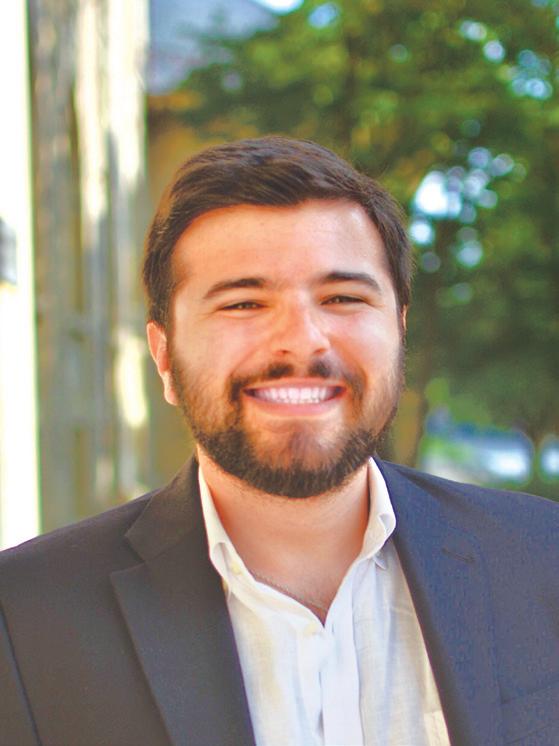
Cornell in 2018 was an institution in motion. Tere was a new president — the ffh in four years. Tat long-fermenting downstate expansion project, Cornell Tech, was fnally sprouting to life on Roosevelt Island. And an unpredictable administration in Washington was constantly sending shockwaves through Day Hall and the student body.
Te Sun, too, was in motion. A century of domination by print newspapers had come to a close a few years too early, so those of us taking over were constantly searching for a way to keep Te Sun alive, while so many papers faltered. Not a day went by without some extended discussion — at noon, midnight, over lunch, cofee or occasionally Four Loko — on how to improve and reimagine Te Sun. A lot of our ideas didn’t work, and that’s okay, because Te Sun is a place for students to learn. But many of them took hold, and we never stopped looking for new ways to keep Te Sun shining: an app, increased social media presence, born-digital projects. Tere was always something cooking down at 139 W. State Street.
While navigating through uncertain times, we still managed to provide the integral journalism on which Te Sun has always staked its name. When the FBI burst down the doors of a Collegetown apartment, we were there frst. When a meme derailed the closest Student Assembly presidential election in history, we provided the non-stop coverage that kept Cornellians informed. When a committee tried to gut the Arts’ College language requirement, it was our editorials that became a rallying cry for the faculty opposition; when Te New Yorker waded into the national conversation on teen vaping, it was a Sun column the magazine cited. And when a renowned Cornell professor was brought down by scandal, we went scoop for scoop against national media outlets.
Tis coming decade, the paper has the potential to achieve even greater heights. In the 1920s, Te Sun produced a man named E.B. White. In the 2020s, I think it’s going to top that.
Ialways marveled at how ardently Sun alums recalled their experiences down at the Downtown ofce, even those who graduated decades ago. I am barely out of college, but I now understand how those years as Sunnies stick with us well afer graduation.
Te Cornell Daily Sun has taught me grit, instilled in me curiosity and given me unwavering hope like no other experience. No matter how difcult times were, I would always fnd solace in the fact that Te Sun allowed me to gain a very real sense of the world through an unfltered lens.
When a student shared internal documents by Cornell’s Admission and Financial Aid Working Group with Te Sun, the events that ensued demonstrated how institutions can unforgivingly react out of self interest more than we would like to believe. When the future of CTB was frst called into question through a landmark petition, it revealed a ferce confict between the desire for change and fear of losing what bound us together as a community. When Te Sun itself faced a blurry future due to radical shifs from print to digital mediums of consumption, it taught us to abandon the practice of holding on only for the sake of tradition. I can cite countless examples when my time at Te Sun gifed me with invaluable observations and lessons that I continue to apply in multiple aspects of my life.
I am grateful for those who encouraged me to embark on that journey. It defnitely was not all smooth sailing, but it is an experience I can cherish and learn from for many years. To those who may face uncertainty or doubt at the moment, I am confdent you will eventually feel the same way.
“I know the skills I learned and the friends I made through the opportunities The Sun provided me with last a lifetime, and I wouldn’t trade those for anything.”
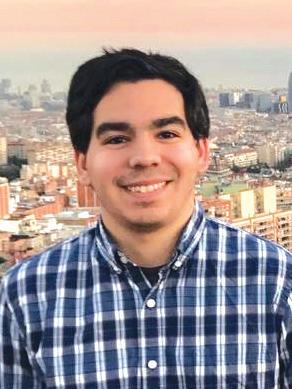
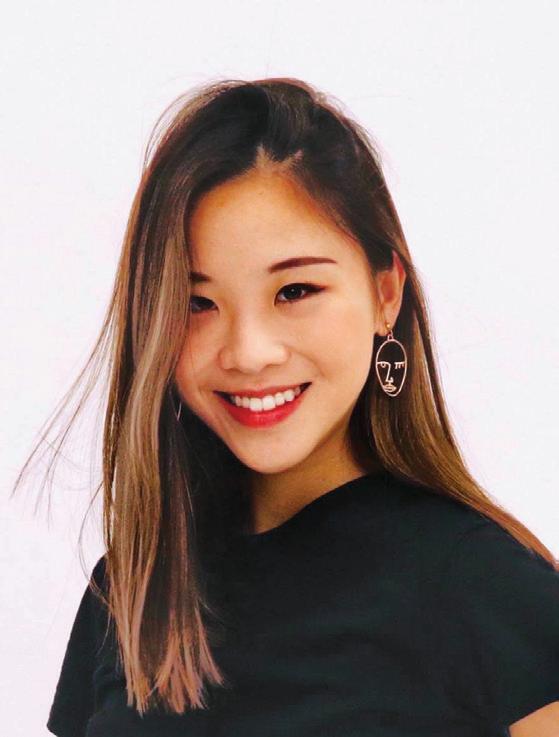
F“I would always find solace in the fact that The Sun allowed me to gain a very real sense of the world through an unfiltered lens.”
Finding where I belonged challenged me during my frst semesters at Cornell. While my coursework interested me and I became friendly with my peers, I had not found my home on Te Hill. I knew many before and afer me had and would feel this way, and afer some time, I assumed this was how things worked here.
Tankfully, there was Te Sun: a place where I could test my abilities and fnd people who thought like me and people who thought nothing like me. I poured my heart into the publication, where I covered captivating fgures across Ithaca and attempted to bring interest to mundane topics like how the city’s parking requirements afected development in Collegetown.
My experience at Te Sun wasn’t perfect. I made numerous mistakes both as a writer and an editor. I let down many of my professors by spending more time Downtown than working on essays and problem sets I couldn’t be bothered to worry about. But in the end, I found where I belonged. I know the skills I learned and the friends I made through the opportunities Te Sun provided me will last a lifetime, and I wouldn’t trade those for anything.
Te last decade has been transformational for Cornell and its students, and we should celebrate the University’s achievements. But we should also shed light on the challenges facing it and situations when it doesn’t live up to its ideals. Fortunately for everyone, we still have Te Sun to tell those stories.
ive years ago. It seems like a lifetime to many, but for us, it was so important as reporters and editors covering it for Te Sun. It was flled with late nights at the ofce at 139 W.State Street, reporting from meetings, games, concerts and at campus events, creating the beginning of what would become Te Sun’s new website and understanding our role as reporters in a changing University.
As the sports editor, I covered wrestler Kyle Dake ’13 making NCAA history with his fourth title, Atticus DeProspo ’15 challenging acceptance in sports by starting a chapter of Athlete Ally and so many other great stories from the athletes that competed for the Big Red, including stepping in to write the 10 Questions sports column. We were on the sidelines of history, and it was really fun.
As the editor in chief, during our tenure, President David Skorton announced his retirement, which was flled with questions as to what was next and who was to helm the University. Te tech campus bid was won and our new Roosevelt Island campus opened during our time there, which included a trip to New York City and a Cornell Daily Sun tour. Socially, Greek life worked to fnd its place in an ever-challenging climate and Collegetown began to shif, including Rullof ’s closing and then reopening, along with tougher events to cover, like the devastating fre at the Chapter House.
As I sit in a newsroom now, these memories seem far away, but the mark that the writer and editors at Te Sun lef — and still continue to leave — is still so important to the University and for every student journalist who works for it.
By KATIE ZHANG Sun Dining Editor
Collegetown has always been a central social hub for Cornellians. The bright storefront signs blinking at all times of day and the constant activity from partygoers on the weekends makes it conducive to creating some of the best late night memories in Ithaca. Yet, from lazy weekend brunch spots to nightlife all along College Avenue and Dryden Road, Collegetown has seen its fair share of change through the decade. Restaurants and bars are constantly closing and opening; the skyline and structure of Collegetown never stays the same two years in a row. However, no matter how many places come and go, the old names are places alumni will
The skyline and structure of Collegetown never stays the same two years in a row.
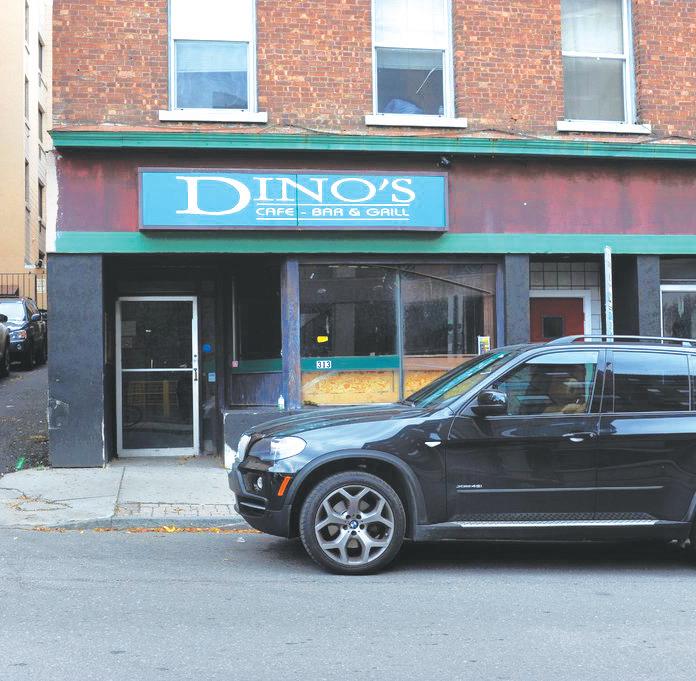
dents looking to relax and let loose on the weekends. According to Sun coverage in 2011, Dino’s closed its doors on 313 College Ave. because they were not able to renew their license with Lambrou. On the last Saturday and Sunday before closing, “the bar held “LIQUIDation parties,” according to one sign in its window, and tried to sell as much of its remaining inventory as possible,” wrote The Sun. Since Dino’s closing, 313 College Ave. has yet to be claimed and still remains empty to this day.
9. Johnny O’s (2011)
always remember as a crucial part of their Cornell experience. Here are the top ten Collegetown destinations we lost this past decade, still full of the memories and friendships made that will continue to live on for a lifetime.
10. Dino’s (2011)
A beloved bar spot for many a Cornellian, Dino’s was frequented by stu-
Another late-night spot in Collegetown, Johnny O’s was often mentioned hand in hand with Dino’s as one of the other popular bars to hang out at. “Dino’s and “JO’s” were popular havens for Cornell students’ late night revelry,” The Sun reported in 2011. The bar’s closing was due to the owner, John O’Leary, both failing to renew JO’s liquor license and not communicating with the site’s landlord on renewing the lease. There were plans to open a frozen yogurt shop — Yogurt Crazy — at Johnny O’s old location at 408 College Ave., but the succeeding shop’s success was short-lived, evident by D.P. Dough (previously Calio’s) which now occupies that space.
8. Royal Palm Tavern (The Palms) (2012)
Royal Palm Tavern, or better known among students as The Palms, was “one of the most venerated and well-known bars in Collegetown,” wrote The Sun. Its closing during February of the spring semester that year was prompted by a “change in student’s drinking habits,” where students started spending less time physically in the
bars, and only came in at “Palms o’clock,” the half hour before closing. After nearly 71 years in business, Joe Leonardo, who took over the business from his father and uncles during the ’80s, could no longer support running the bar on “less than three hours of business a week” during the weekends, and was forced to close. During its last couple days in business, the Palms was full of current students, alumni and locals coming back to revisit the spot one last time. “The Palms is a classic dive bar that we have very fond memories of,” Ross Stefano ’77 wrote in an email to The Sun. “Almost as though it was the family room of an old home that you have since left behind.” Any old remains of The Royal Palm Tavern are no longer visible, having been replaced by the Breazzano Family Center for Business Education, part of the Johnson Business School, in 2017.
7. Stella’s (2015)
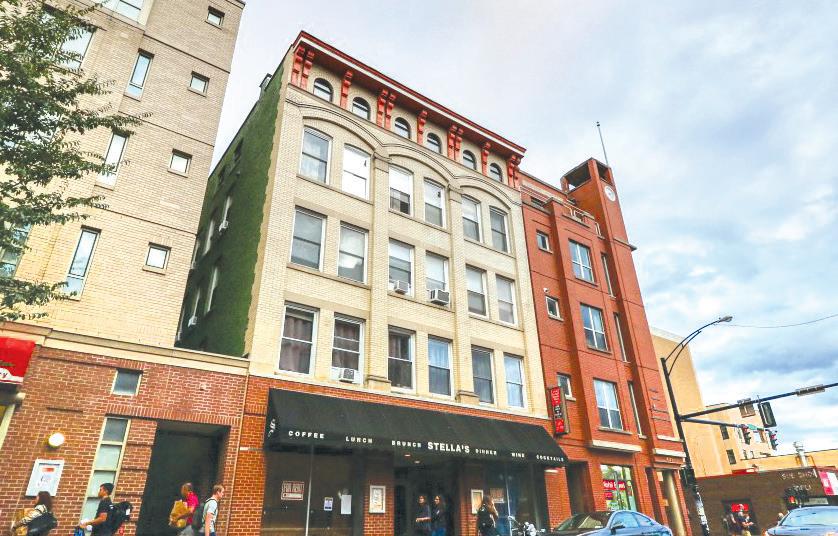
A popular brunch destination right at 403 College Ave., Stella’s is still visible today with its distinctive overhang advertising “Coffee Lunch Brunch Dinner Wine and Cocktails,” though the door remains boarded and windows empty since its closing in 2015. The sudden close of Stella’s in June shocked many, as it was such a fixture in the Collegetown scene for nearly 20 years. According to the Ithaca Voice, neither City Hall nor Stella’s own employees knew what the situation was, as “the staff was not given two weeks notice and were also surprised and flummoxed by the establishment’s closure.” Repeated attempts to contact Stella’s man-
“The Palms is a classic dive bar that we have very fond memories of. Almost as though it was the family room of an old home that you have since left behind.”
— Ross Stefano ’77
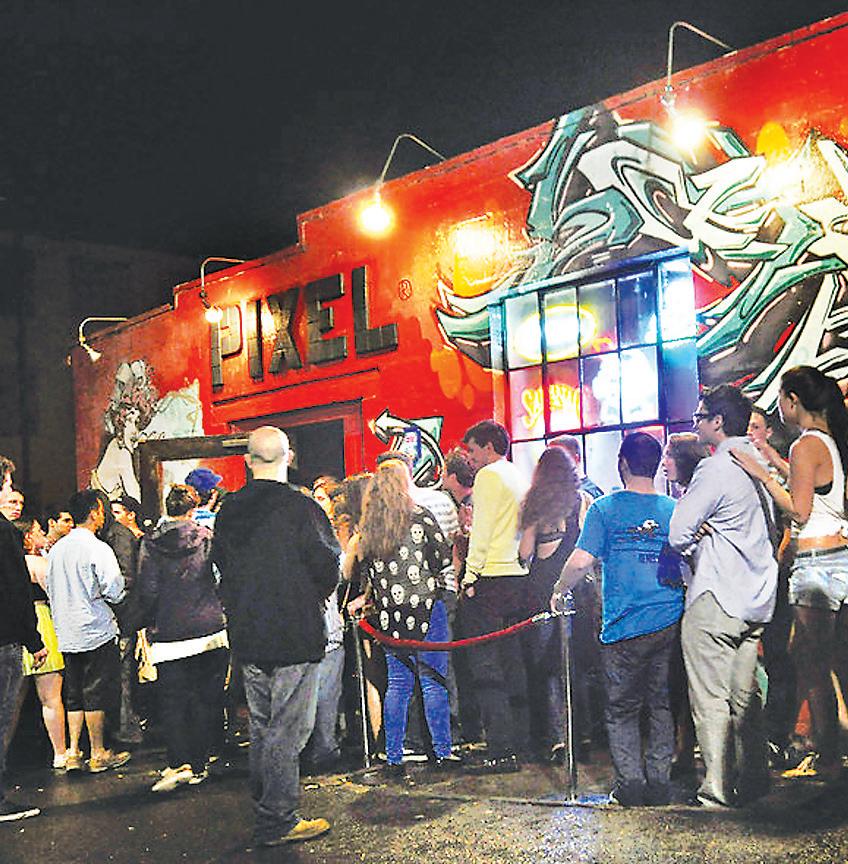
the best clubs in Ithaca,” Pixel Lounge offered “twist on darts and pool with a full arcade of old-school games like Miss Pac Man and Street Fighter and a constant stream of movies on projection.” Come nighttime, various DJs played hip hop and electronic mixes to a dancing, vibing crowd. Pixel Lounge stood out from the rest of the night scene in Collegetown and yet, without much coverage or fanfare, quietly closed its doors sometime in 2015. The Ithaca Journal reported that the building Pixel Lounge occupied was demolished alongside laundromat Club Sudz that summer in favor of a three-story residential building to house more students; now, the housing complex is what can be seen on 327 Eddy Street instead.

5. Chapter House (2015)
One of the more dramatic endings to
36 years in business before owner Dave Pepin decided to close the establishment for good over winter break. Though not much was known about the decision to close, The Sun had previously reported that “Pepin had decided to put the bar up for sale in 2013 due to his desire to spend more time with family.”
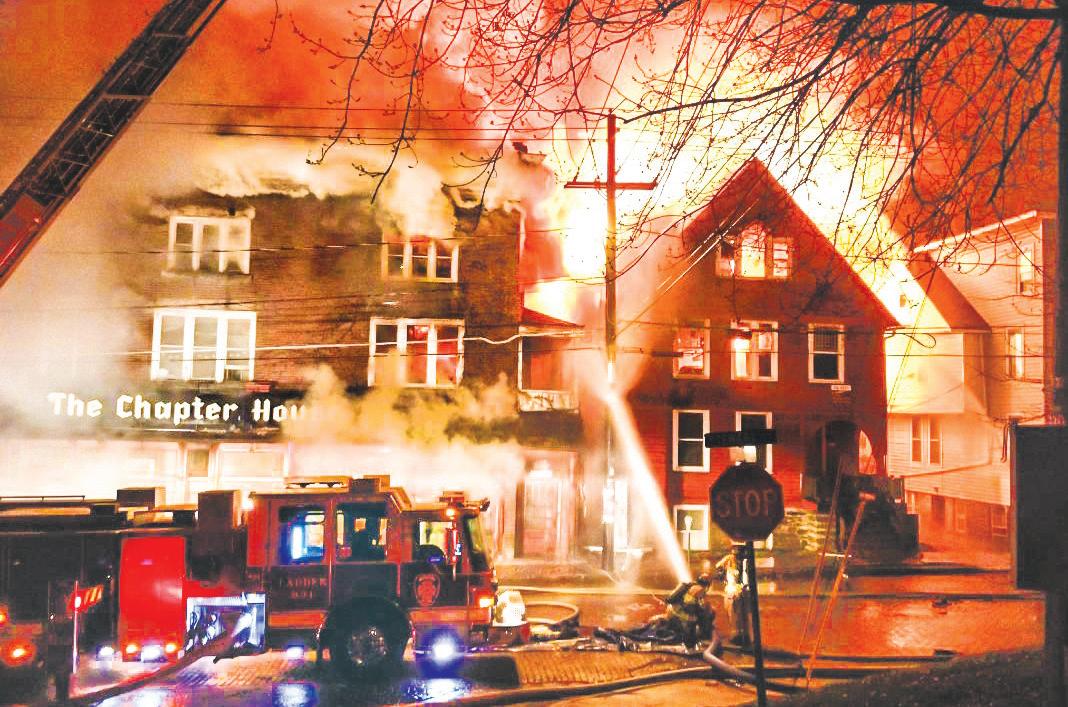
any of the establishments in Collegetown this decade, Chapter House burned down in an early morning fire in April 2015 along with the neighboring residential building, 400 Stewart Ave. The building, which was more than a century-old, had been the home to one of Collegetown’s quintessential pubs for the previous 50 years, a favorite particularly among graduate students. The Ithaca Journal notes that the establishment even brewed their own beer, Clement’s, which was listed in Beer Lover’s New York: The Empire State’s Best Breweries, Brewpubs & Beer Bars. The area that the Chapter House once occupied has since been rebuilt in 2016 as rental apartments with a first floor retail space advertised as “ideal for restaurant/bar,” but it has yet to be claimed by any business since.
However, it remained a place full of fond memories; several Cornell alumni brought the Stanley Cup in for Pepin once, who was a big Cornell Athletics fan. In 2016, a new bar Hideaway opened in Dunbar’s location “aim[ed] to revive Ithaca’s slowly fading nightlife.”
3. Collegetown Pizza (2018)
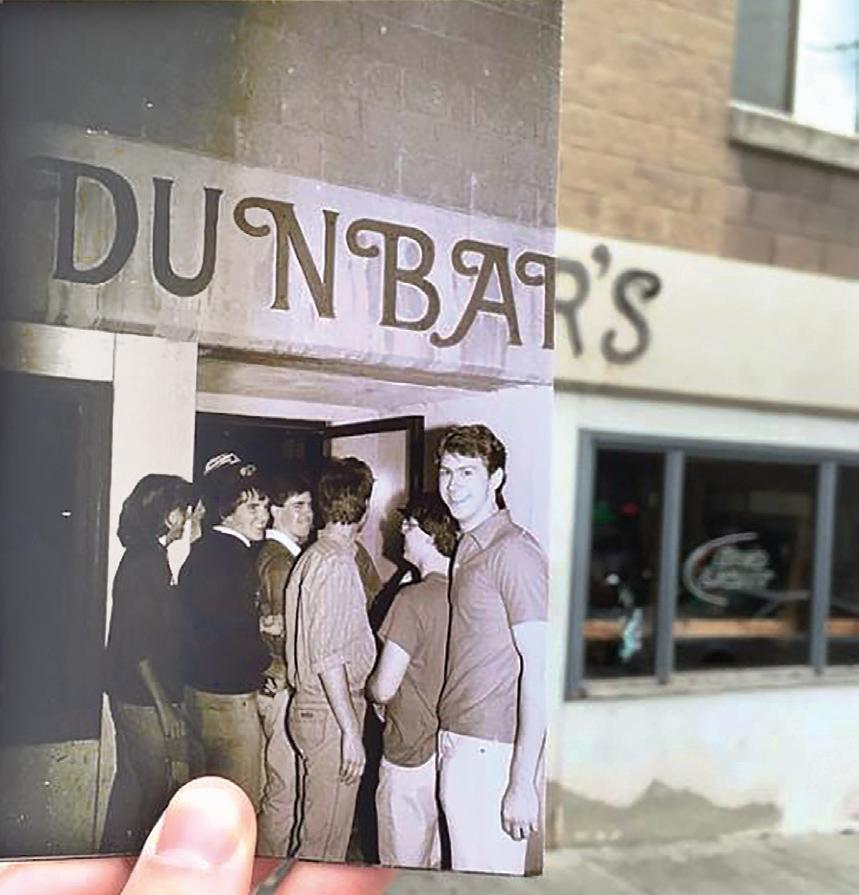
4. Dunbar’s (2015)
The last watering-hole to close in Collegetown this decade, Dunbar’s managed
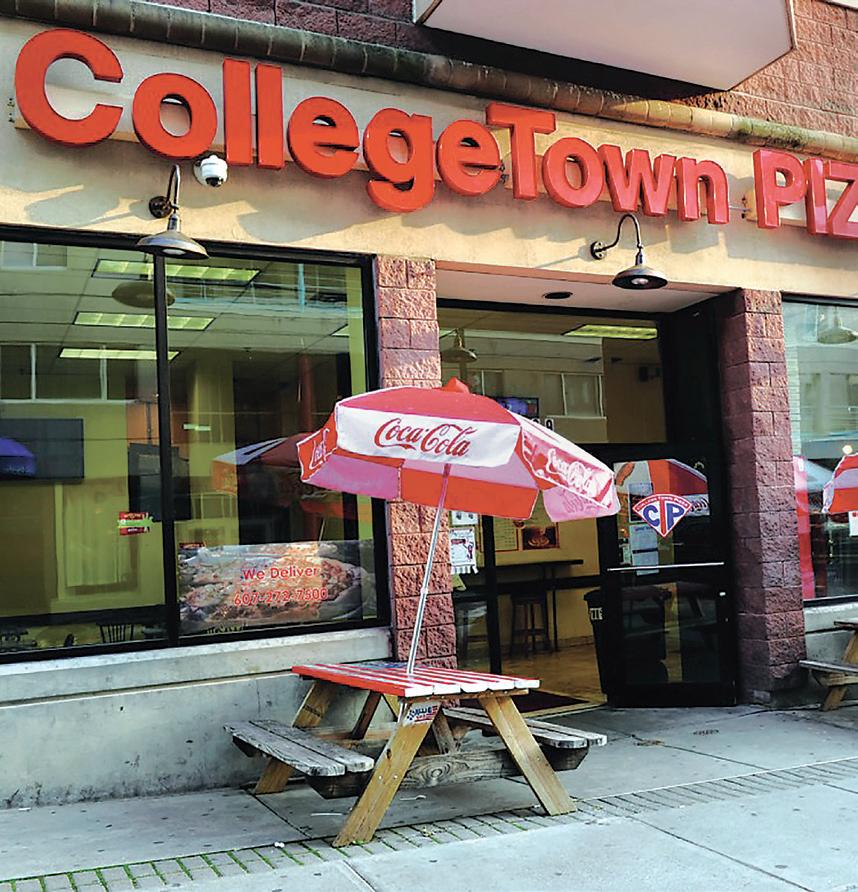
The original Collegetown Pizza was so wellknown it made Cornell’s 2012 list of “161 Things Every Cornellian Should Do.” It was known among students to have cheap and filling food options ideal after a night out partying, but in May of 2018, a Petition to Recover Possession of Real Property was found posted on Collegetown Pizza’s storefront, The Sun reported. The petition noted that CTP had “failed to pay over $13,000 in rent” since its initial opening. However, after a short vacancy, a new CTP — Campustown Pizzeria — replaced the former with new management and different menu items. In an unpublished dining article, a writer com-
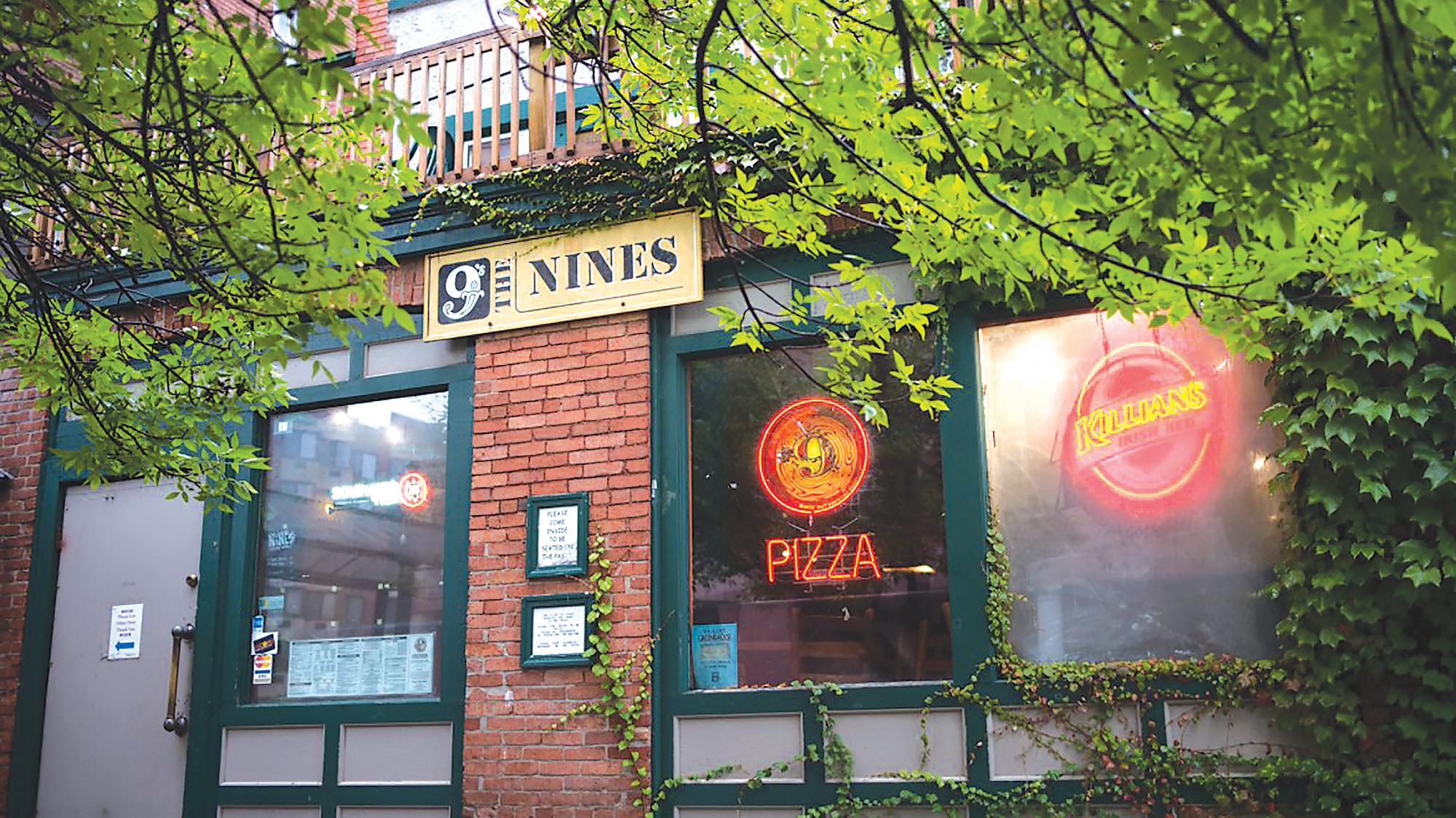
pared the new and old establishments to crushing disappointment. Although it shares the same name and location as the old CTP, the new one lacks in quality and taste — it just isn’t the same.
2. The Nines (2018)
A cherished spot for speciality (deep-dish) pizza lovers, artists and dancers alike, the Nines closed after nearly 40 years in business during the fall of 2018. It was the subject of contention on the Ithaca Common Council of whether or not 311 College Ave. should be designated as a local landmark in Collegetown, a decision that was ultimately decided against after a five-hour meeting on the manner. Co-owners Mark Kiel mann ’72 and Harold Schultz had “planned to close the Nines restaurant, banking on the money from the sale of the property as their retirement funds,” reported The Sun, but a designation as a local landmark would have made development on the land extremely complex and lengthy and they would have only gotten a fraction of the original cost. While this had been a decision quite some time in the coming, many were saddened by the official notice of closure as the Nines became a favorite hangout spot for many.
Every year since 2014, owner Samuel Schuepbach has opened Aladdin’s doors on Thanksgiving to serve complimentary meals to the community.
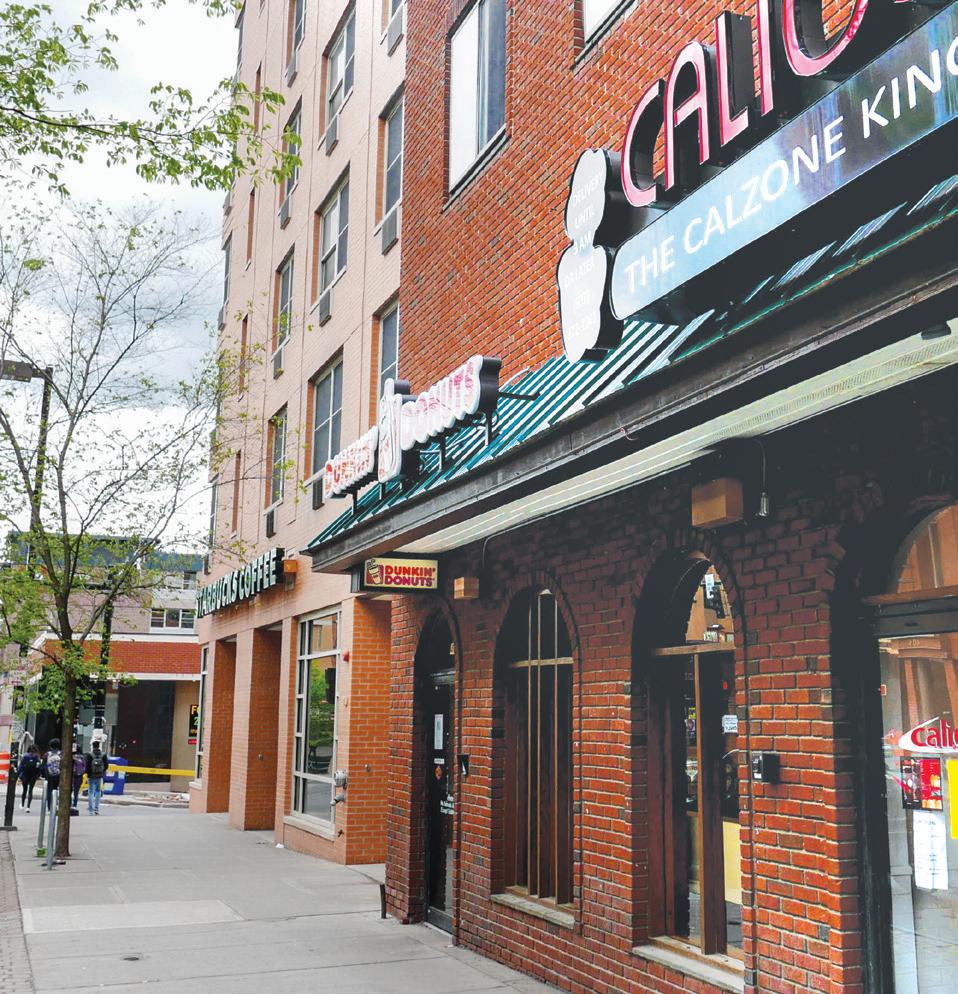
1. Aladdin’s Natural Eatery (2019) Last, and most certainly not least, the
most recent of Collegetown’s staples to close down after 30 years in business is none other than Aladdins, a Greek and Mediterranean restaurant well-known supporting various Ithaca events and the community as a whole. Every year since 2014, owner Samuel Schuepbach has opened Aladdin’s doors on Thanksgiving to serve complimentary meals to the community, feeding nearly 300 people and cooking up 20 or so turkeys. But, with the business in Collegetown changing drastically in recent years, closing Aladdin’s was a choice Schuepbach realized was necessary. The constant road closures and construction took a toll on business, and the slow summers didn’t help either. “There were many parking issues. Construction workers were in the garage and nobody could park. If people can’t park, they can’t come to eat,” Schuepbach told 14850. com. Yet, despite all the difficulties, Schuepbach stayed positive until the end, with the final notice on Aladdin’s door reading: “My sincere gratitude to all my employees current and past. Without them no small business can survive.”
By Sydney Oraskovich, Srishti Tyagi and Anil Oza
Having harbored science visionaries like Steve Squyres, Bill Nye and Carl Sagan, Cornell is teeming with scientific ingenuity. Within the past decade alone, research at Cornell has garnered global recognition in fields like medicine, space science and technology. Here, the Daily Sun has compiled a few of Cornell’s most innovative and successful research projects in the past 10 years.
AUGUST 1, 2011 Cornell Grad Lowell McAdam Named CEO of Verizon Wireless
After graduating with a bachelor’s degree in engineering from Cornell, McAdam joined Verizon in 2000 and was named CEO in 2011, which he carried out until 2018.
2014
DECEMBER 12,
First Annual Fairness, Accountability, and Transparency in Machine Learning Workshop
The non-profit organization , co-founded by Cornell P.hD. candidate Solon Barocas, was created to increase awareness for and reduce socio-economic bias implicit in machine learning algorithms.
2012 Cornell Grad Steven Sinofksy Ends Term as President of Windows Division at Microsoft
NOVEMBER 13,
After graduating from Cornell CALS, Sinofsky joined Microsoft as a software design engineer in 1989. He became President of the Windows Division in July 2009, and served for 3 years.
SPACE From leading Mars missions to searching for life on other planets, Cornell astronomers have experienced a golden age of achievements over the past decade.
The theoretical research behind the first detection of gravitational waves was led by Prof. Saul Teukolsky, astrophysics, using data from the Laser Interferometer Gravitational-Wave Observatory.
“This research was ongoing for over 20 years … physicists had predicted that these gravitational waves exist, but they had never actually been detected before,” Teukolsky said. “The astrophysical objects producing these waves are so distant that the waves become very weak by the time they reach Earth.”
However, Teukolsky explained that as the experiment became more and more sensitive, LIGO was finally successful in 2015 in detecting gravitational waves from the collision of two black holes that were orbiting each other.
Besides verifying the existence of gravitational waves, this detection served as a staggering confirmation of Einstein’s general theory of relativity.
“General relativity — the best theory of our understanding of gravity — had never been tested before with strong gravitational fields. But supercomputer calculations by the Cornell group showed that the signal agreed almost perfectly with what Einstein’s theory predicted for colliding black holes,” Teukolsky said.
With this decade of discovery behind him, Teukolsky is optimistic for the future of gravitational wave science at Cornell as research and experimentation with LIGO continues to expand.
“With gravitational wave detection, astronomers had already predicted the orbit of two black holes around each other, and we just didn’t know if nature would provide that for us. But it’s quite possible we might see some event that nobody has predicted — that’s what would be most exciting for me to see in the next 5 to 10 years,” he said.
Prof. Jonathan Lunine, astronomy, described Cornell’s contributions to research involving the Mars rovers, Spirit and Opportunity, as well as Cassini - the spacecraft that explored Saturn for 13 years.
“For the two Mars rovers, the science principal investigator was Steven Squyres,
SPRING 2010
Weill Cornell establishes the Center for Human Rights
Weill Cornell creates a student-run clinic that aims to provide medical evidence to support the narratives of asylum seekers in the US.
FEBRUARY 20, 2013
JANUARY 2014
SEPTEMBER 13, 2017
Cornell Tech Campus Opens
After winning a competition in 2010 among other universities to build a new research institute on New York City’s Roosevelt Island, Cornell Tech campus completes construction and opens its doors.
a Cornell astronomy professor,” Lunine said.
Lunine then explained that Cornell researchers contributed to the discovery of liquid methane lakes and seas on Titan, Saturn’s largest moon.
“The significance of this is that there is no other place in the solar system, that we know of, where there are large bodies of standing liquid, other than the Earth. There is no other place in the solar system to study how liquids are involved in the climate cycle of a planet — so when these were discovered, it gave us a chance to study another place where liquids on the surface play a role in climate,” Lunine said.
According to Lunine, Cornell researchers were involved in the development of software to detect and characterize these lakes and seas on Titan using radio signals produced by Cassini. Cornell also developed imaging technology to remove the smear from images taken by the spacecraft.
Another achievement made by Cornell researchers was the discovery and localization of Fast Radio Bursts in November 2012, specifically FRB 121102, by a group led by senior research associate Shami Chatterjee.
The founding of the Carl Sagan Institute served as another major milestone for Cornell astronomy. “The institute is a multidisciplinary center within which faculty from different departments can all work together in trying to understand how we can learn about whether planets around other stars are habitable, even whether they have life,” Lunine said.
“[The institute] produced a catalog of colors from different kinds of microorganisms and life forms on Earth, and those colors can actually be pretty diagnostic of whether there is life [on other planets], and what kind of life. It was the first thorough examination of that,” Lunine said. The CSI has also conducted theoretical research in interpreting spectra, and is now conducting simulations of lava worlds — a planet so close to a star that its surface is molten.
Looking to the future, Lunine stated that Cerro Chajnantor Atacama Telescopeprime, the Large Synoptic Survey Telescope, and two more missions - Mars 2020 and Europa Clipper - are projects that will mark the next decade of Cornell discovery and achievement in astronomy. •
Hepatitis C drug, Sofosbuvir (Sovaldi) is approved
A breakthrough drug for treating Hepatitis C, Sofosbuvir, is approved by the FDA. The drug is effective on several strains of Hepatitis C and is taken as an oral pill once a day, unlike previous treatments, which required injections.
Cornell Professor successfully 3D prints an artificial ear
Dr. Lawrence Bonassar, biomedical engineering, was able to successfully 3D print an ear that looks real and functions properly. Since then this field has grown and other organs have been 3D printed, including small intestines and hearts.
DECEMBER, 2016
JULY 2018
Weill Cornell researchers engineer molecules that enable more rapid editing of genes
Dr. Lukas Dow, assistant professor of biochemistry, leads a research group in engineering molecules known as base editors. These editors can attach to DNA and edit a single nucleotide base, which enables more precise changes to DNA.
MEDICINE
Weill Cornell and Cornell University begin collaboration on treating superbugs
Dr. Michael Satlin, assistant professor of medicine in Infectious Diseases, and Dr. Ilana Brito, assistant professor of biomedical engineering, are approved for a $500,000 grant from the Center of Disease Control and Prevention to study the development of genes that lead to antibiotic resistant bacteria. TECHNOLOGY
TECHNOLOGY In an age when computers and algorithms are deeply intertwined with human society, Cornell has remained at the forefront of technological innovation.
Ever since Cornell faculty member Prof. Frank Rosenblatt built the first neural network machine, Mark I Perceptron, in 1960, machine learning has blossomed into one of modern technology’s most promising fields. The neural network, a set of algorithms modeled after neurons in the brain, has since become the most popular aspect of the field.
“In computer science, the biggest change over the past decade has been the rise of statistical machine learning, and in particular ‘deep’ neural networks, for solving a range of tasks, from object classification in images to speech recognition to language translation,” said Prof. Greg Morrisett, Dean of Computing and Information Sciences, which houses the Computer Science, Information Science and Statistical Science departments.
According to Morrisett, when it comes to the number of Cornell students and faculty that have moved the field forward with their research, “the list goes on and on.”
In 2018, Prof. Cristian Danescu-Niculescu-Mizil and his team used machine learning to better understand and predict human social behavior, specifically when an online conversation might take a turn for the worst and lead to conflict. The team developed an algorithm that uses keywords and phrases to predict when a conversation might go awry. For instance, repeatedly using the word “you” in a conversation may be an accusive indicator as opposed to more civil “I” and “we.”
In June 2017, Prof. Kavita Bala and Prof. Noah Snavely used machine learning to analyze worldwide fashion trends from millions of Instagram photos. They published a paper on an algorithm that can be used to identify seasonal and location-based fashion trends from Instagram feeds around the world.
In 2016, Cornell Tech Prof. Serge Belongie his team collaborated with the Cornell Lab of Ornithology to create a program to help avid birders. The team developed and trained a machine learning algorithm to identify North American bird species that it sees in images, which is now available for birding enthusiasts in the Merlin Bird Photo ID mobile app.
Discovery and Localization of a Repeating Fast Radio Burst, FRB 121101
Led by Shami Chatterjee and James Cordes, a Cornell research group captured its first FRB using the Arecibo Observatory, and localized it to be over 3 billion light-years away, paving the way for further research and characterization of the high-energy source of the burst.
MEDICINE The past decade has seen advancements in medicine that were, at one point, considered pure science fiction. Research has led to the first genetically engineered human babies, the first 3D printed organs and new classes of antibiotics that combat superbugs. However, improvements in medicine do not always mean better healthcare for all. In the past 10 years, Cornell has taken a primary role in healthcare inequality activism, bridging the gaps between rapid scientific advancement and social justice.
One facet of this activism has been the student-run clinic, Weill Cornell Center for Human Rights. Founded at the turn of the decade, this clinic provides medical evaluations and medical affidavits to those seeking asylum in the US. Asylum seekers with an affidavit were found to be three times more likely to be granted asylum than those without one.
This service benefits more than just asylum seekers — it also trains the next generation of doctors how to properly treat patients from foreign nations as well share information on the nature of human rights violations.
While thousands of machine learning algorithms have been developed in the past decade to better everyday life, attention has increasingly been directed at the potential costs of using these tools.
“We are only now discovering some of the real risks and challenges that arise in data-driven decision making, whether computers are involved or not … Cornell faculty and students have discovered and highlighted the dangers of machine learning in many contexts,” Morrisett said.
In particular, machine learning algorithms contain social, gender and racial biases that can be difficult to weed out. “Prof. Jon Kleinberg, computer science, showed that it is impossible to get rid of bias in certain machine learning algorithms, particularly the ones used to predict whether people will commit a crime,” Morrisett said.
Other Cornell faculty have made an effort in the past decade to recognize and eliminate the discriminatory impact of machine learning. Thanks to co-founder and Cornell assistant prof. Solon Barocas, a Fairness, Accountability and Transparency in Machine Learning workshop is held annually in which computer science researchers can learn about how to reduce bias in machine learning.
Additionally, Cornell Ph.D. candidate Rediet Abebe grad co-founded a non-profit organization called Black in AI “that helps bring under-represented groups to AI research in part to avoid some of the challenges we get when people of color are under-represented in data sets used to train AI models,” Morrisett said.
Alongside extensive research in machine learning, Cornell completed construction of the Cornell Tech campus on NYC’s Roosevelt Island in 2010 to design and create a national hub for tech.
With this new campus, groundbreaking research and education can more easily be incorporated with entrepreneurship. So far, two of the campus’s startups, Trigger Finance and Uru, have been acquired by Circle Pay and Adobe, respectively.
With the new Cornell Tech campus and the thriving Cornell CIS department, computer science research at Cornell will undoubtedly remain at the head of it’s field in the coming decade. •
SEPTEMBER 14, 2015
After the first detection of gravitational waves by a collaboration of researchers from the Laser Interferometer Gravitational-Wave Observatory, Cornell researchers Saul Teukolsky and Larry Kidder matched years of theoretical research their group had conducted to data from LIGO, leading to a monumental confirmation of Einstein’s theory of relativity.
Unveiling of the Carl Sagan Institute: the Pale Blue Dot and Beyond
MAY 9, 2015
The Carl Sagan Institute was founded to promote collaborative, interdisciplinary research among the astrophysics, geology, biology, engineering, and Earth and atmospheric science departments at Cornell with the ambition of searching for evidence of life on other planets.
The students of Weill have pioneered this type of institution, aiding in the creation of over a dozen such medical-legal clinics. “The students have literally written a handbook on how these human rights clinics should run,” said Dr. Gunisha Kaur, ’04 M.D. ’10.
While the students of the WCCHR aid asylum seekers on an individual basis, there is also ongoing research on how to help displaced populations on a larger scale.
Kaur conducts research on refugees, migrants and immigrants in the US to better understand their unique medical circumstances. As part of her research, Kaur has investigated occurrences of chronic pain in torture survivors, mental health problems in children who are separated from their parents at the border and trafficking of young girls in refugee camps.
This research is taking place during a time in which the refugee crisis is worse than in the years following World War II . At the end of 2018 there were 70.8 million forcibly displaced individuals in the world, including 3.5 million asylum seekers.
With her work, Dr. Kaur aims to facilitate the
ethical integration of these populations into the United States. When presented with refugees, countries have two options: to accept refugees into the country and rehabilitate and care for them, or “turn them away or try to use trauma as a border control strategy, and that’s very risky,” Kaur said.
Not only does this present an ethical dilemma, but it complicates the equitable distribution of medical care, should these immigrants enter the US despite being initially turned away.
“With the number of forcibly displaced individuals doubling over the course of the past decade, this is an issue that has exploded... and appears to be an issue that will propagate into the future,” Kaur said.
Kaur also emphasized the degree to which dialogue on civil and gender rights has grown in recent years.
“I think the issue of refugees and migrants is now really entering the national consciousness, and I don’t think it’s going away any time soon. It’s going to become a bigger and bigger issue and people are going to see the interaction with their own lives, you can’t be isolated from this,” Kaur said. •
50 The Epic — Kamasi Washington
49. Vulnicura — Björk
48. Plowing Into The Field Of Love — Iceage
47. Contra — Vampire Weekend
46. El Mal Querer — Rosalía
45. Tranquility Base Hotel and Casino — Arctic Monkeys
44. Coexist — The xx
43. Because the Internet — Childish Gambino
42. Visions — Grimes
41. Sound and Color — Alabama Shakes
40. Saturation Trilogy — Brockhampton
39. Blood — Lianne La Havas
38. Currents — Tame Impala
37. 2014 Forest Hills Drive — J. Cole
36. In Colour — Jamie xx
35. House of Balloons — The Weeknd
34. Norman Fucking Rockwell! — Lana Del Rey
33. DS2 — Future
32. Hamilton — Original Broadway Cast of Hamilton
31. Channel Orange — Frank Ocean
30. Barter 6 — Young Thug
29. (II) — Crystal Castles
28. Take Care — Drake
27. Lemonade — Beyoncé
26. Settle — Disclosure
25. Rodeo — Travis Scott
24. Dirty Computer — Janelle Monae
23. LP 1 — FKA Twigs
22. Overgrown — James Blake
21. To Pimp a Butterfly — Kendrick Lamar
20. Cosmogramma — Flying Lotus
19. Beyoncé — Beyoncé
18. Masseduction — St. Vincent
17. Lonerism —Tame Impala
16. Born to Die — Lana Del Ray
15. Ctrl — SZA
14. Be the Cowboy — Mitski
13. Carrie & Lowell — Sufjan Stevens
12. Immunity — Clairo
11. Halycon Digest — Deerhunte
I don’t care what anyone says, Rihanna is the Queen of Pop, and ANTI proves it. I’m not gonna bother supporting my argument because if you disagree, there’s nothing I can do to help you. — Jeremy Markus ’22
For their fifth album, Arctic Monkeys reinvent rock-and-roll. They also manage to reinvent themselves — yet again — by introducing a more polished production, a greater depth of layering and a menacingly seductive, darker sound to their already impressive repertoire of musical tricks.
’21
Without the sweeping maximalist accoutrements of her earliest material, without Jon Brion’s production and without fear of sounding unhinged, crazy and deranged, Fiona Apple throws herself entirely into songs about heartbreak, lust but most of all disgust.
— Richard Beezley ’22
Perhaps the best part about this album is the double entendre in the title. Pure Heroine both establishes Lorde as a feminine champion and compares the album to a highly addictive drug. The cover art even evokes lines of heroin. Also, the music is pretty good.
— Jeremy Markus ’22
The melodramatic, paradoxical album title really says it all for this one, folks. Beach House’s fifth studio album — comprised of a simpler arrangement style and reverberating-esque style vocals — is a collection of songs that deserves a spot at the top of this list. This a timeless record, perfect for a car ride, a post-breakup crying session or an album to play at your wedding.
— Tyler Brown ’22
While it’s a window into the soulful internal world of black femininity, A Seat at the Table is also deeply personal. The album is filled with raw emotion illuminated by Solange’s ethereal voice. “Cranes in the Sky” dives into a profound struggle with sadness, while “Don’t Touch My Hair” is a celebration of black history, beauty and independence from the white gaze. If Beyoncé doesn’t do it for you, give the other Knowles sister a listen.
— Emma Plowe ’23
Remember the Adele album that everyone went crazy for and then it just wasn’t good? This is not that. This is the good Adele album. Chances are if you know an Adele song, it’s from this album. — Peter Buonanno ’21
My Beautiful Dark Twisted Fantasy is one of the greatest pieces of art ever. For those unaware, MBDTF solidified Kanye as the greatest musical mind of the 2010s. Every piece of this album is stunning, and if you haven’t heard it, you can’t say that you’re a true fan of music. One must look no further than “Runaway” to understand what makes this album so perfect. And despite Kanye’s problems, “let’s have a toast for the assholes” because MBDTF deserves every bit of acclaim. — Peter Buonanno ’21
This is as close to a perfect album as possible. There’s an absolutely incredible story told throughout the skits and lyrics, and his style makes it feel like he’s telling it directly to you. It’s very evident that he pored over every single word throughout this album, and tracks like “Backseat Freestyle” and “The Art of Peer Pressure” paint an incredibly vivid picture of Kendrick’s adolescence. There’s also standout track “m.A.A.d city,” which may be the most audacious, layered single of the decade.
— Daniel Moran ’21
Frank Ocean gifted Blonde to August of 2016. Since then, it has been widely hailed as one of the best albums of the modern age. When it arrived after months of teases and fake release dates, all of Reddit and Twitter acted like a sugar-crazed kid at a candy store. The hermit artist supported the album with a few shows, but soon returned to his reclusive ways. We are still awaiting its follow-up, but the fact that most Frank Ocean fans are still as loyal as a puppy who’s been fed French fries to the recluse is a testament to just how special Blonde is. “Self Control” is the obvious answer as to what song best represents this album, but the correct way to listen to this album is in its entirety.
— Peter Buonanno ’21





CLASSIFIED AD RATES
Ads are accepted at The Sun’s office at 139 W.
2020-2021
Studio 1, 3, 8 & 11 BR Apts. Great Locations in Collegetown. 607-227-2535
classifieds@cornellsun.com
AUDI/VW (used) 7 Days Sales - 39 Years *Good/Bad Credit!! Service 315-789-2200 SelectEuroCars.com
The Department of Statistics and Data Science wanted to know if any students would be interested in being a TA in Spring 2020 for ILRST 2100 Introductory Statistics
We expect to do interviews in person and over video starting December 16th, so if you would be interested in being a TA for this course or any additional courses please let me know by emailing me at allenward@cornell.edu
3 Bedroom Apartments North Campus 607-277-1234 office@ithacastudentapartments.com Ithacastudentapartments.com
Ithaca Renting Company
Apartments, Houses, Parking Central Collegetown
Studio & 1 BR Apartments Collegetown Plaza Collegetown Center Collegetown Court
Apartments & Houses for 5-14 people Collegetown Plaza Collegetown Court Aces Apartments Dryden Road
Rent Smart. Live Well. 607-272-3000 Visit our office at: 119 Dryden Road www.ithacarenting.com
Houses, Apts, Parking 1 to 9 Bedroom
Collegetown - College Ave, Linden Ave, Dryden Rd, Bryant Ave, Cook St. 607-330-2442 info@urbanithaca.com www.urbanithaca.com
We have availability for the 2020-2021 school year beginning June 1st at Hudson heights apartments. The studios include electric, heat, water, garbage and parking. There is coin-operated laundry facilities on site. Prices start at $750 / month for a 12 month lease. If you have any questions or would like to schedule a tour contact us by phone 607-280-7660 or email: renting@ithacaLS.com
COLLEGETOWN TERRACE APARTMENTS
Leasing for 2020/2021 Spring 2020 Semester leases available Heat, hot water and Wi Fi State of Art Fitness Center
Shuttle Bus Service to campus Washer & Dryer in Apartments collegetownterraceithaca.com office@ithacastudentapartments.com (607) 277-1234
AVAILABLE 2020-2021
1, 2, 4 Bedroom Apts. and 7 person House 10 & 12 month leases Cook/Blair Street Call or Text Christopher George RE 607-279-5520
Collegetown Crossing College Ave's Newest Location 307 College Ave. Now Leasing for 2020-2021 Completely New Modern Studios, 2 & 4 Bedroom Apartments. Fully furnished, heat & hot water included. Reception area at 307 College Ave. www.urbanithaca.com 607-330-2442 info@urbanithaca.com
120 Oak Avenue Just steps to Cornell Campus 10 bedroom house & 1 and 2 bedroom apartment 607-277-1234
office@ithacastudentapartments.com Ithacastudentapartments.com
1, 2 & 5 Person Apts. Overlooking Cascadilla Gorge
Architecturally designed. Decks, patio, fireplaces, Jacuzzis. Furnished, parking, internet. Utilities included. 607-592-7564
*SEMESTER LEASES*
Brand New Apartments 238 Linden Ave. 121-125 College Ave. Studio, 1 & 2 Bedrooms Contact Leasing@inteprop.com
Now Renting 2-10 Bedroom Houses/ Apartments for 20-21. All Locations. Call today or visit our website: Certified Properties of TC Inc certifiedpropertiesinc.com 607-273-1669
Catherine & Eddy St.
1 & 2 bedroom
Furnished, heat included Laundry in building Parking available for fee 607-277-1234 office@ithacastudentapartments.com
109 Sage Place
2 & 3 Bedroom Apartments
Access to Shuttle to Campus Access to Free Fitness Center Novarr-Mackesey Property Management office@ithacastudentapartments.com 607-277-1234
504 1/2 Thurston AveSTUDIO 607-277-1234 office@ithacastudentapartments.com Ithacastudentapartments.com
Boldly Refined Living 312 College Avenue
Sophisticated studio, 1, 2, 3-bedroom apartments. Superior fitness facility, theater, and coworking space. Free high-speed internet. Exclusive resident parking. Package delivery/return. Overnight concierge. 607-273-9777 or 312collegeave.com
ENT 20-21
College Ave. 5 BR House Furnished. Laundry. Parking. Call 607-273-8576
Spring 2020 Upper Eddy St. 7 BR house Furnished. Laundry. Call 607-273-8576
8-9 BEDROOM HOUSE FOR 2020-2021
133 Blair St Corner of Cook and Blair just off of College Ave. Huge rooms, great porch, free laundry, furniture, 4 bathrooms, 3 kitchens. Great storage closets, parking for 3-4 cars. Contact Nick at 607-256-3778 or nick@lambrourealestate.com
The Clean Air Act prevented more than 3 million premature deaths between 1970 and 1990.
Value of avoided deaths and illness: $22 trillion.
The money saved was over 40 times the cost of implementing the Clean Air Act.*
*The Benefits and Costs of the Clean Air Act, 1970-1990 https://www.epa.gov/sites/production/files/2015-06/documents/contsetc.pdf


Women’s Hockey Makes 1st Frozen Four
In Doug Derraugh’s ’91 fifth year as head coach, Cornell reached the NCAA Tournament and Frozen Four for the first time in program history, beating Harvard in the NCAA Quarterfinals and Mercyhurst in the national semifinals before losing to Minnesota-Duluth in triple overtime in the national championship game.
10
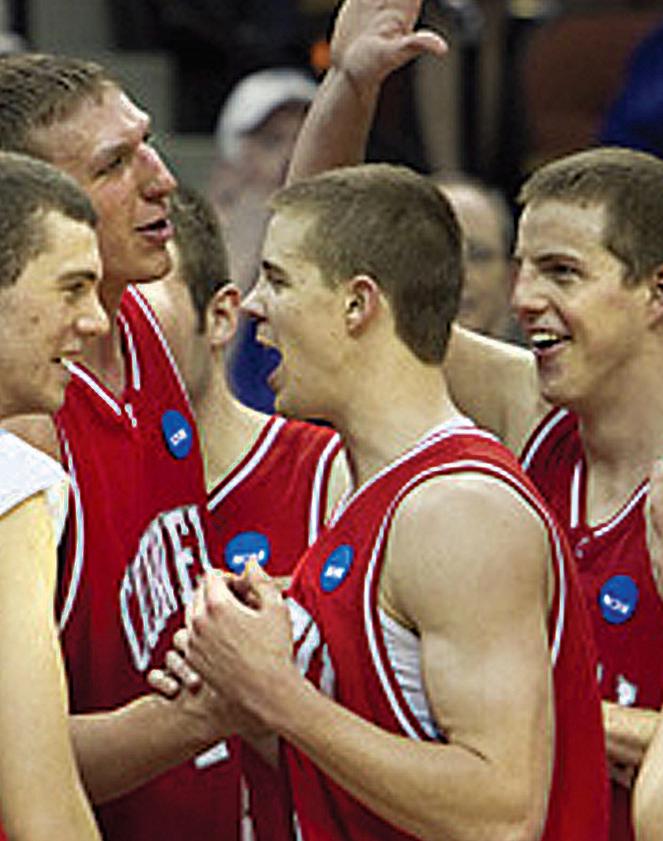
Men’s Basketball Makes Sweet 16 Run In head coach
Steve Donahue’s 10th season, the Red went 13-1 in conference play to secure a spot in the NCAA Tournament. There, Cornell upset the No. 5 seed and No. 4 seed in the East Region, Temple and Wisconsin, respectively, before bowing out to No. 1 Kentucky. Since this run, the Red has yet to make it back to the “Big Dance.”
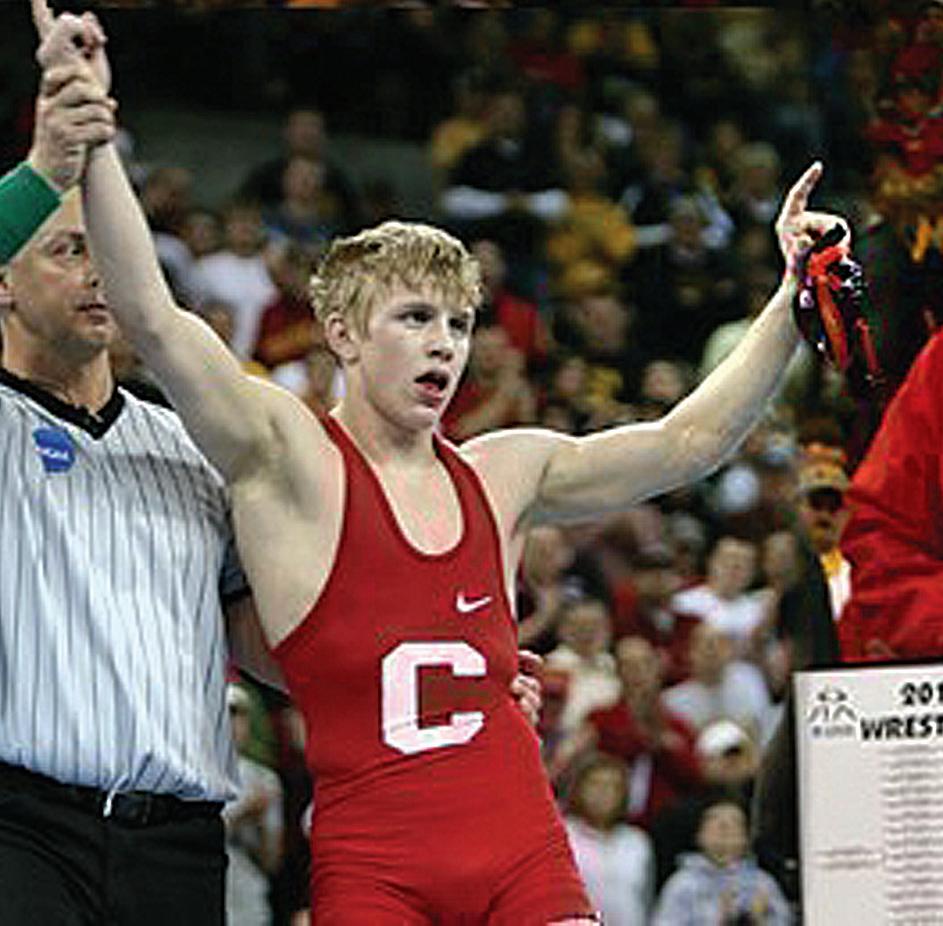
Kyle Dake Wins 4th Straight National Championship, Becomes 1st to Win 4 Titles in 4 Different Weight Classes
Kyle Dake ’13 was the third wrestler in history to win four consecutive NCAA titles. Since graduating in 2013, Dake has continued his wres tling career, most recent ly winning a gold medal at the 2019 World Wrestling Championships in Nur-Sultan, Kazakhstan, in September.
Currently the center for the Cleveland Browns, J.C. Tretter ’13, who recently signed a threeyear, $32.5 million contract exten sion, was the left tackle responsible for protecting the blind side of Jeff Mathews. Tretter was a unanimous first team All-Ivy League selection, becoming the first Cornell offensive lineman to earn All-Ivy first team honors since Kevin Boothe ’05 did so in 2005.
By RAPHY GENDLER, CHRISTINA BULKELEY and LUKE PICHINI Sun Sports Editor and Sun Assistant Sports Editors
From national championships to Cornellians going to the Olympics, a lot happens in 10 years in the world of Cornell sports. Here are a few headlines from the field, court and rink during the 2010s.
Raphy Gendler, Christina Bulkeley and Luke Pichini can be reached at sports@cornellsun.com.
Trudy Vande Berg Named Ivy League
Volleyball Coach of the Year
Quarterback Jeff Mathews ’14 Finishes Impressive Collegiate Career
Jeff Mathews finished his Cornell career as not only one of the best quarterbacks in Ivy League history, but he also made a name for himself on the national stage. The Camarillo, California native passed for over 11,000 yards and 72 touchdowns throughout his acclaimed career. Mathews, who set 47 school records and 18 Ivy League records, bounced around several NFL squads in 2014 before playing four seasons in the Canadian Football League, where he is currently a free agent.
Rachel Sorna ’14 Becomes 1st Cornellian Since 1992 to Finish in the Top 15 at the NCAA Women’s Cross Country Championships
In the last time the Red made an appearance at the national championships before this past season, Rachel Sorna finished 14th in a field of 253 competitors. With a time of 20:26.5, Sorna led Cornell to a 23rd-place finish out of 31 after the Red received an at-large bid to the championship meet. Sorna earned her second consecutive cross country All-American award with the effort.
Gabe Dean ’17
Repeats as Wrestling National Champion
In 2015, Gabe Dean started his year with two losses in one day — but after that, he never looked back and won every single remaining match to ultimately go 43-2 en route to his first national title. In 2016, he lost only one match and again took home the title in the 184 category. As a senior in 2017, Dean came in second place and was named an NCAA All-American for the fourth time. He finished his collegiate career with a 152-7 record and now works with the team as an assistant coach.
Krysten Mayers ’18 Becomes All-Time Leading Scorer for Field Hockey
With a game-winning overtime goal against Brown, Krysten Mayers took sole possession of first place in alltime goals and points scored by a Cornell player. She finished her career with 99 points and 42 goals. With a second-team All-Ivy selection in her senior year, Mayers became the eighth field hockey player in history to earn AllIvy honors each year of her time with the Red.
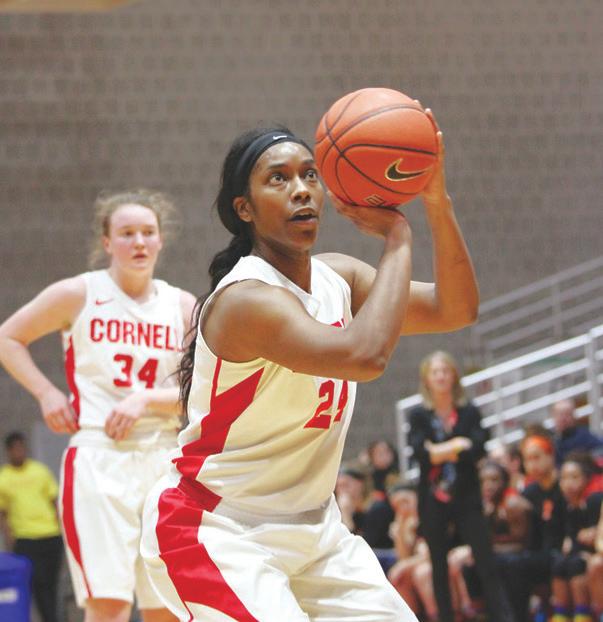
After the Red finished with a 12-12 overall record in 2016, Trudy Vande Berg guided the team to its best single-season turnaround since 2003. In 2017, Cornell added six more victories and posted a third-place finish in the Ivy League, its highest finish since 2006. Since then, the Red has maintained its standing in the upper echelon of the Ancient Eight, finishing in third in both 2018 and 2019.
Nia Marshall Graduates as Women’s Basketball’s All-Time Leading Scorer
After averaging double-digit scoring in all four years, Nia Marshall finished her collegiate career with the 1,685 career points, the most in program history. In addition to earning All-Ivy first-team selections twice, Marshall guided the Red to a fourth-place finish in the conference during her senior year.
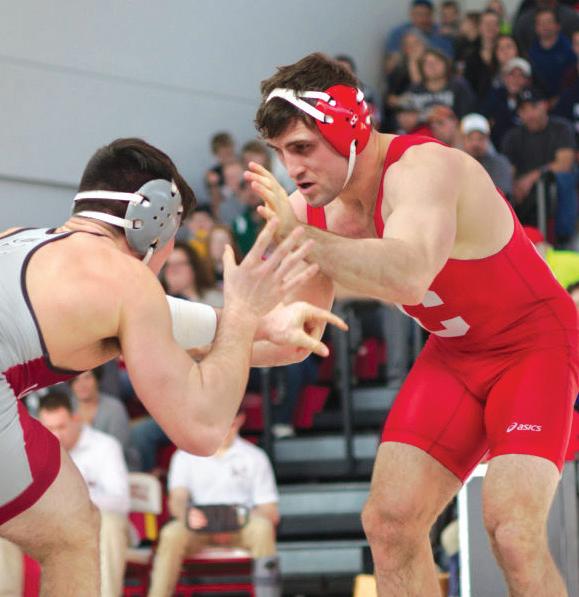
Men’s Lacrosse Beats Yale in Ivy Championship Game, Reaches NCAA Quarterfinals
As interim head coach, Peter Milliman led Cornell men’s lacrosse to an Ivy League cham pionship game victory over Yale and an appearance in the NCAA quarterfinals in 2018. After the season, Milliman shed his interim tag and became the team’s permanent coach. Thensophomore Jeff Teat posted his second straight 70-point season, was a unanimous All-Ivy selection and was a Tewaaraton Trophy nominee.
16
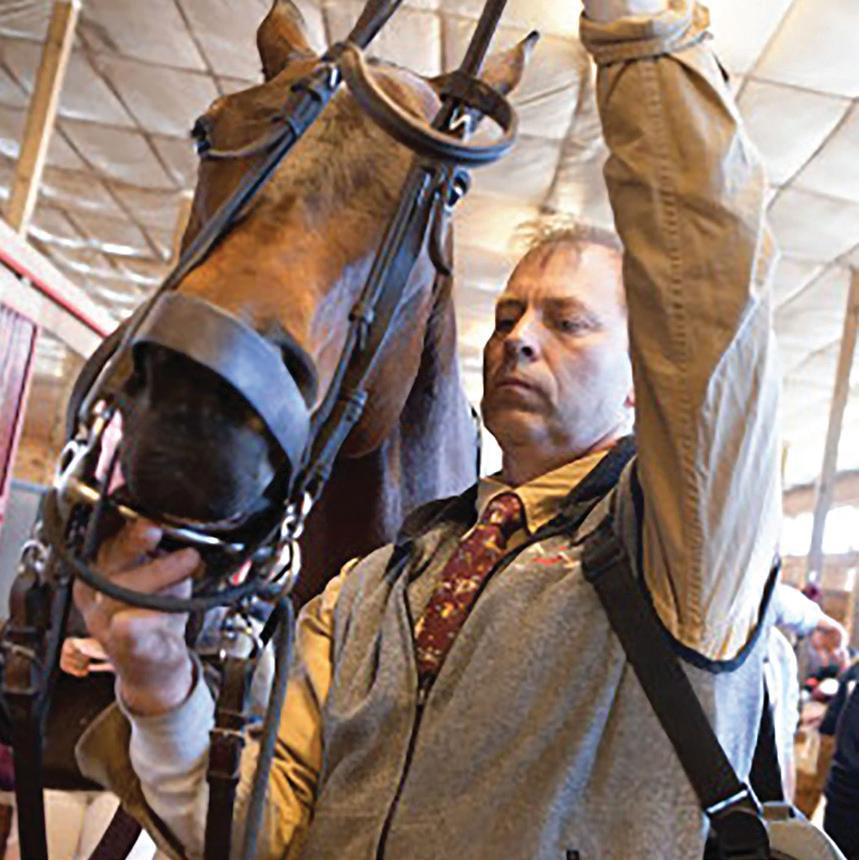
Polo Coach David Eldredge Steps Down After serving as Cornell’s polo coach for 33 years — winning 988 games and 15 national championships — David Eldredge ’81 retired in the fall of 2018 as the university reviewed allegations of “potential past misconduct.”
Women’s Hockey Reaches Frozen Four for 4th Time This Decade
In a season that saw a thrilling double-overtime victory in the ECAC semifinals followed by a championship game loss to Cornell’s nemesis, Clarkson, the Red used an overtime breakaway goal by then-freshman Gillis Frechette to beat Northeastern in the NCAA Tournament. Cornell lost to Minnesota in the national semifinals.
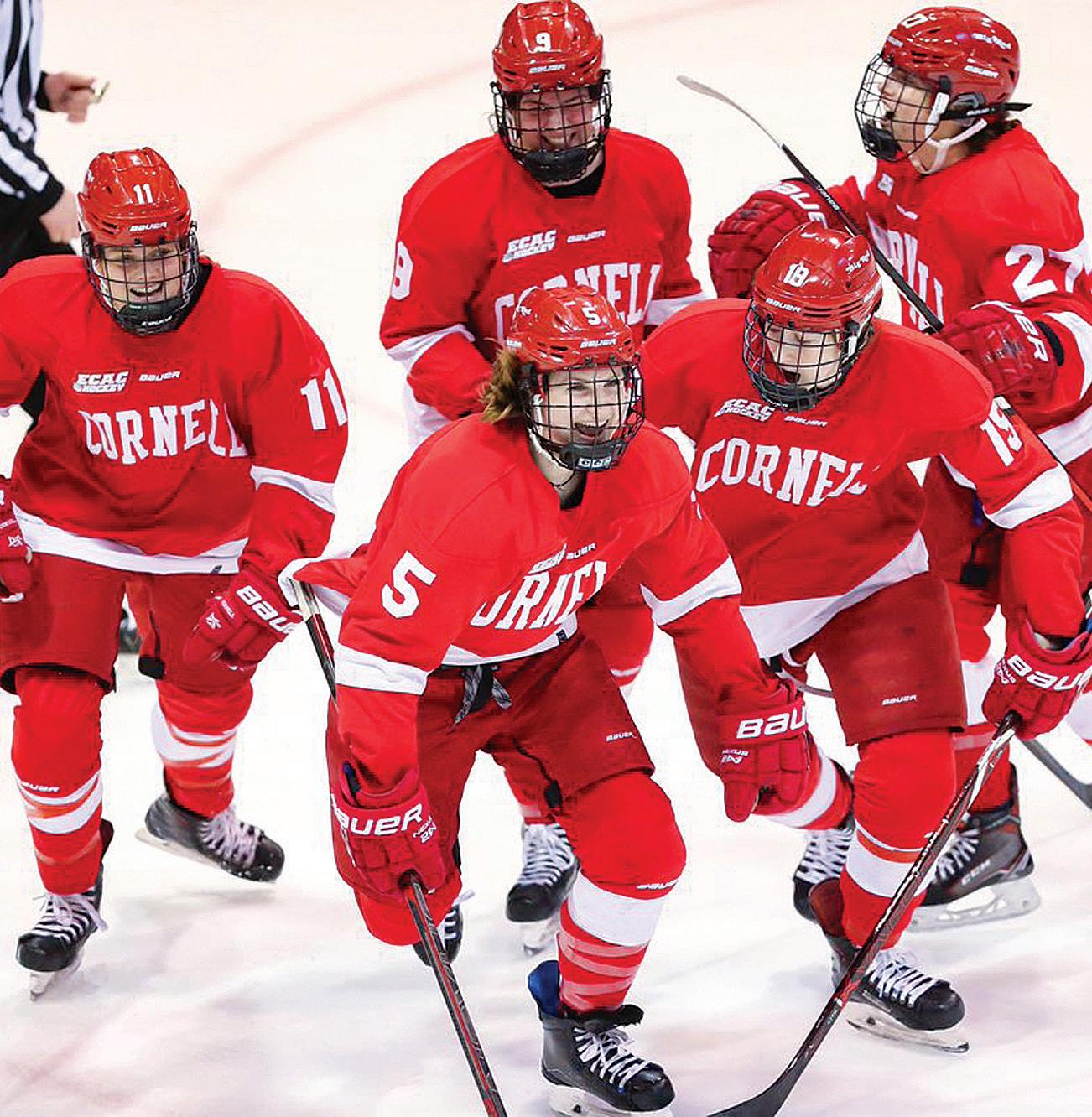
By RAPHY GENDLER, CHRISTINA BULKELEY and LUKE PICHINI Sun Sports Editor and Assistant Sports Editors
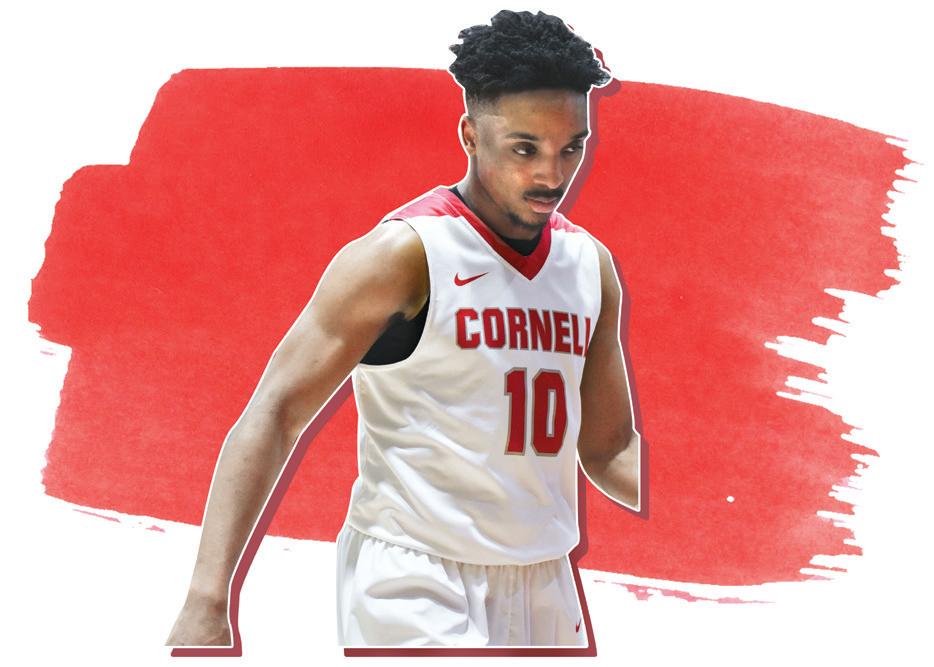
Matt Morgan ’19
• Led the Ivy League in scoring in four consecutive seasons
• Became the sixth Ivy League men’s basketball player to surpass 2,000 career points
• Four time All-Ivy selection: second team his freshman and sophomore years, first team his junior and senior years
• Graduated with career program records for points scored (2,333), scoring average (20.5 points per game), field goals made (743), field goals attempted (1,580) and free throws made (513)

Jeff Mathews ’14
• Set Ivy League passing record by more than 2,000 passing yards with 11,284 yards
• Set 47 school records and 18 conference records
• Two-time All-American
• Three-time All-Ivy selection, 2011 Bushnell Cup Winner (Ivy League Offensive Player of the Year)
• Finalist for William V. Campbell Trophy
Nia Marshall ’17
• Cornell women’s basketball’s all-time leading scorer with 1,685 points
• Only player in program history to record four 30-point games
• Two-time first team All-Ivy League selection
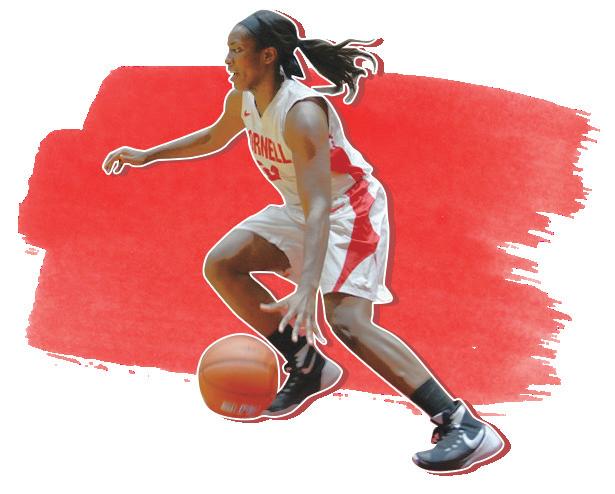
Krysten Mayers ’18
• Awarded All-Ivy honors all four years of collegiate career
• All-time leading points and goals scorer for Cornell field hockey
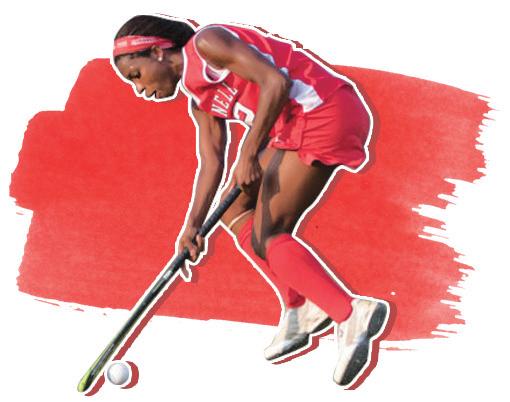
Lindsay Toppe ’15
• Served as team captain for two seasons
• First team All-Ivy selection in 2013, 2014 and 2015 (a unanimous selection in both 2014 and 2015)
• Scored 185 career points, third-most in program history

Kyle Dake ’13
• Two-time gold medalist in World Wrestling Championships
• Four-time national champion, each year in a different weight class
• The first wrestler to win four national championships without a redshirt season
• Four-time All-American

OFCOURTESY CORNELL ATHLETICS

WOMEN’S HOCKEY
Jillian Saulnier ’15
• Named a Patty Kazmaier Award Top-3 finalist in 2014
• Finished her career sixth all-time in pro gram history for points (195), eighth alltime in goals (80) and fourth all-time in assists (115)
• Two-time All-ECAC first team and twotime All-ECAC second team selection
OFCOURTESY CORNELL ATHLETICS


Brianne Jenner ’15
• Two-time Ivy League Player of the Year and ECAC Hockey Player of the Year (2013, 2015)
• Four-time All-Ivy Selection: First-team all four years
• Tallied 229 points on 93 goals and 136 assists, becoming only the fourth player in program history to amass at least 200 points
• Program-leader in assists, second in points, and fifth in goals
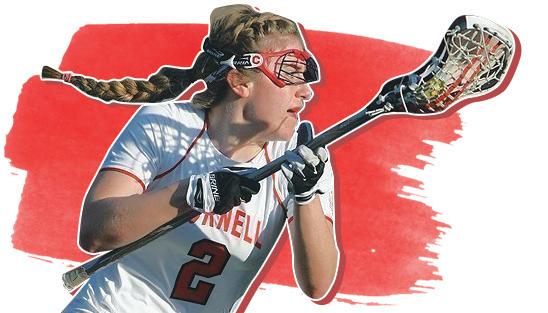
Joakim Ryan ’15
• Three-time All-Ivy honoree: first-team in 2014 and 2015 and second-team in 2013
• Anchored the nation’s leading penalty-kill unit (91.1 percent) his senior year
• Finished with 78 career points, the highest offensive output by a Cornell defenseman since 2003


Rudy Winkler ’17
• Competed for Team USA at the 2016 Summer Olympics in Rio de Janeiro, Brazil
• NCAA Division I outdoor champion in the hammer throw in 2017
• In 2017, named a first team All-American in both the hammer throw and weight throw
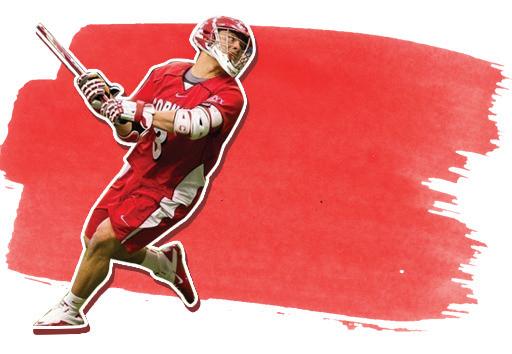
MEN’S LACROSSE
OFCOURTESY CORNELL ATHLETICS
Rob Pannell ’13
• Won the Tewaaraton Trophy in 2013
• Two-time first team All-American
• Graduated as the all-time NCAA Division I career points leader with 354 points
• Scored at least one point in all 72 career games
Raphy Gendler, Christina Bulkeley and Luke Pichini can be reached at sports@cornellsun.com.