60 Years of Service
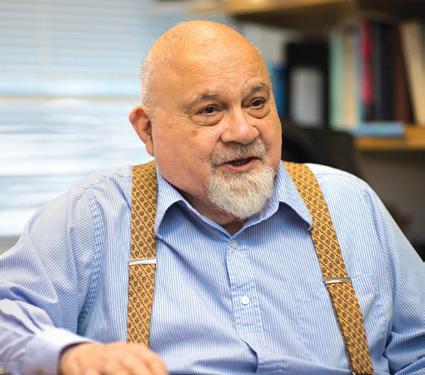
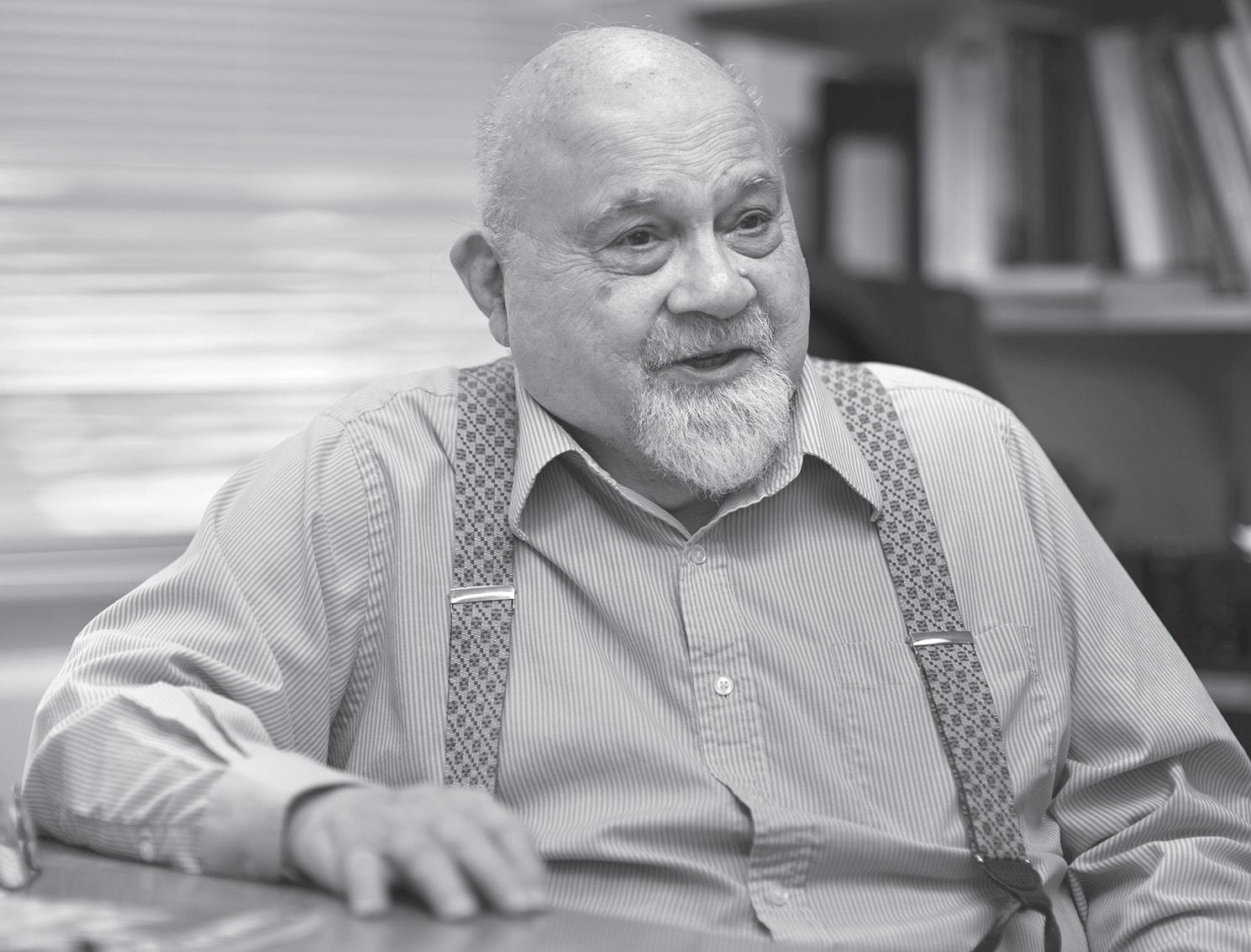
Prof. Anil Nerode has been teaching students for the past six decades.

60 Years of Service
Prof. Anil Nerode has been teaching students for the past six decades.
By TAMARA KAMIS Sun Staff Writer
As calls for fossil fuel divestment escalate, the protesters have moved from the sidewalks to the streets.
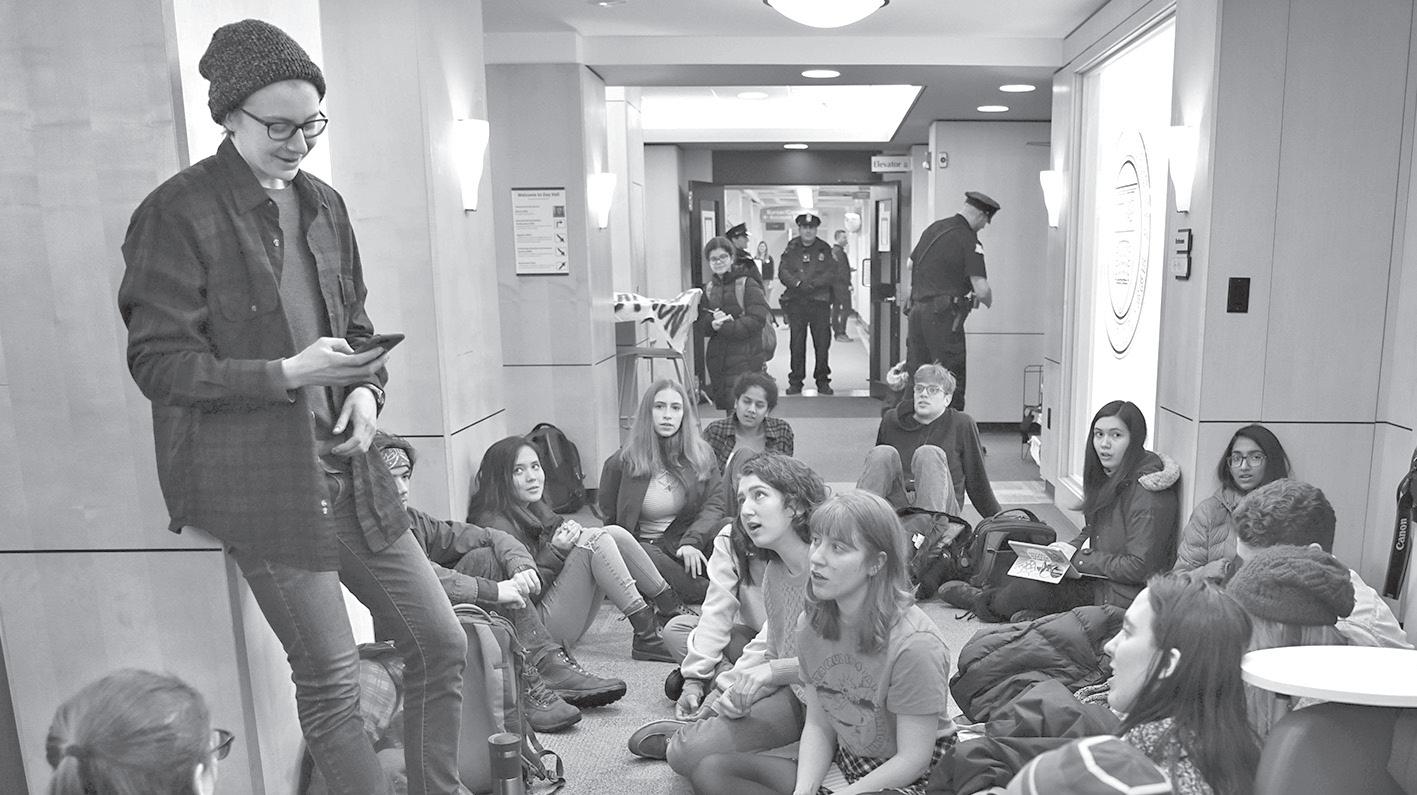
On Friday, a coalition of student activist groups flooded Ho Plaza. These groups included Climate Justice Cornell, the Young Democratic Socialists of America chapter at Cornell, the Vegan Society and the Ithaca chapter of the Extinction Rebellion. Organizers gave speeches and led chants, and then the crowd marched through the streets before returning to Day Hall to stage a sit-in.
“A non-profit university should not act like a corporation,” Nadia Vitek, an organizer for Climate Justice Cornell, told the crowd as she advocated for divestment from fossil fuels.
In Day Hall, four students delivered a letter from Climate Justice Cornell and a larger list of demands to President

Pollack’s receptionist. While the president did not receive the demands, 12 protestors waited outside Martha Pollack’s office until 5 p.m., and conversed with CUPD and Vice President of Student and Campus Life Ryan Lombardi. The groups are
By SHIVANI SANGHANI
For nearly 20 years, Cornell Hindu Students Council operated out of an eight-by-eight foot half-closet in Anabel Taylor Hall — a reality that underscored the difficulties it has faced since its founding in the early 2000s.
Currently, HSC is one of the only student religious organizations that shoulders the dual role of serving as both an entirely student-run organization and a provider of spiritual and religious care to Cornellians and Ithacans alike, according to Piragash Swargaloganathan ’19, who has helped spearhead HSC’s efforts to establish a chaplaincy.
For two and a half years, HSC has been enmeshed in prolonged efforts to establish a religious chaplaincy, a linchpin and
key service of almost all of Cornell’s major religious organizations. A paid chaplain would provide serve as a life advisor, providing spiritual and religious care as a staff member.
The current problem confronting Hindu students is securing funding for a chaplain.
Cornell has never funded any of its religious chaplaincies — a marker of Cornell’s founding as a nonsectarian university. Instead, “chaplaincies grew on their own [through] independent advancement work,” Reverend Daniel T. McMullin, former associate director of Cornell United Religious Work, told The Sun in an email.
“Each [chaplaincy] was invited to have a presence on the campus with the expectation of being available to advise and counsel
in the process of scheduling a meeting with President Pollack.
The CJC letter demands the divestment from all fossil fuel companies by Fossil Fuel Divestment Day — Feb. 13, 2020. If this demand goes unmet, the
See CLIMATE page 4

Hinduism | Hindu students are requesting that Cornell hire a Hindu Chaplain, after years of advocacy.
the entire student population even while offering their own denominational services,” McMullin said. “Each chaplaincy was expected to be funded by its own respective denomination. The university provided no financial assistance.”
HSC’s chaplaincy efforts come at the backdrop of a Student Assembly resolution
in spring 2017, when the S.A. called upon Cornell to hire its first Hindu and Muslim chaplains, The Sun previously reported.
Now, two years later, HSC remains one of the only religious student organizations without a chaplain — with Cornell Christian, Jewish and Muslim

By AMINA KILPATRICK Sun News Editor
Eleven members of the Student Assembly and its affiliated committees have organized to form the S.A’s first Black Caucus.
The organization, titled Cornell Student Assembly’s Black Caucus, was founded on Sunday with a mission to “continue the work of the Black students who organized the Willard Straight Hall Takeover of 1969, which resulted in the creation of the Cornell Student Assembly.”
According to a press release, which includes imagery of the Africana Studies and Research Center, Willard Straight Hall and Ujamaa Residential College, the founding of the caucus is related to treatment of black students on the S.A. and the role black students play in decision making on campus.
The caucus will work towards retention of black members on the S.A., treatment of black people, representation of black people and community building, Gavin Martin ’20, chair and speaker of the caucus and an S.A. representative, told The Sun.
By KATHYRN STAMM and SEAN O’CONNELL Sun Staff Writers
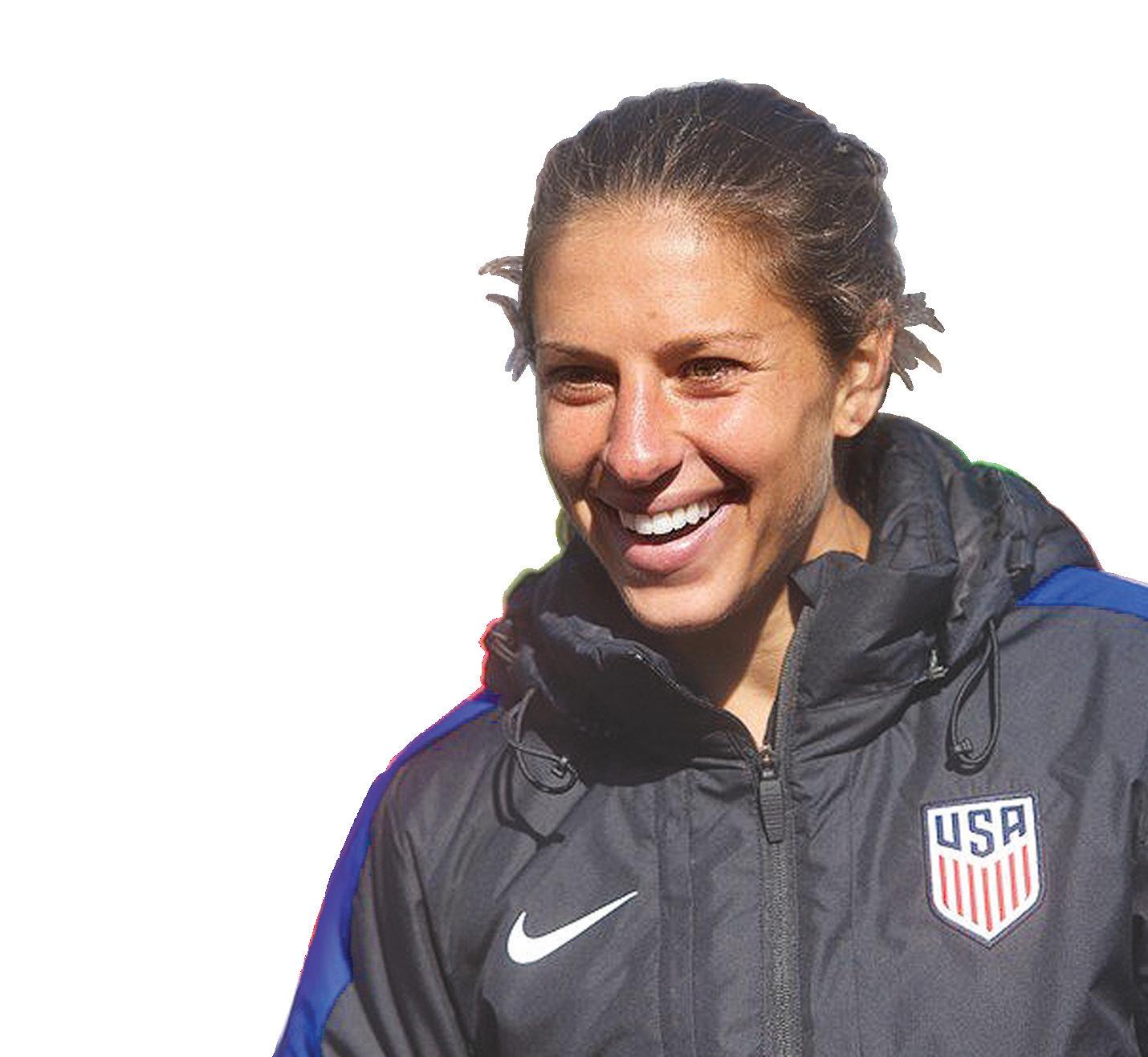
Two-time FIFA World Cup champion Carli Lloyd exchanged her number ten jersey and cleats for a sweater and jeans as she took to the stage at Cornell on Friday night.
During the Cornell University Program Board-sponsored talk with Prof. Lawrence Glickman, American studies, college and high school students, men and women, adults and children alike filled Bailey Hall. Over the course of an hour, Lloyd answered questions about falling in love with soccer, fac ing obstacles head-on and scoring champion ship-winning goals.
The New Jersey
native started playing soccer, among other sports, at age five, but found a passion for soccer over all the rest.
“I was obsessed with it,” Lloyd said of the sport that would become her career.
Despite loving the sport and having “clear natural talent,” Lloyd said she didn’t have anywhere near the fitness — both physical and mental — she does
cut for a tournament roster. Devastated, her first instinct was to quit the sport altogether. But instead, she met James Galantis, her current personal coach. When he asked about her end goal in their first meeting, she answered: “I want to play for the U.S. Women’s National Team.”
After, Lloyd made soccer her number one priority, and Galantis
See CAUCUS page 5 See SOCCER page 4
Biophysics Special Seminar
11 a.m. - 12 p.m., 416 Physical Sciences Building
Cornell Initiative for Digital Agriculture Seminar Series
11:30 a.m. - 1 p.m., 114 Gates Hall
Ecology & Evolutionary Biology Weekly Seminar Series 12:20 - 1:20 p.m., A106 Corson/Mudd Hall
Afro-Asia Digital D.J. Showcase 2:30 - 4:30 p.m., Kroch Library
Enslaved Histories: Value, Risk, and the Imagination of the Quantifiable Body in the Early Modern Iberian Atlantic
3:30 - 5 p.m., 701 Clark Hall
Hong Kong Teach-In and Discussion 4;30 - 6 p.m., G76 Goldwin Smith Hall
Feminist, Gender, and Sexuality Studies Graduate Student Colloquium Series
6 - 8 p.m., 132 Goldwin Smith Hall
Lessons and Carols: C.U. Music 7:30 p.m., Sage Chapel
Joint Behavioral Economics & Public Economics Workshop 11:40 a.m. - 1:10 p.m., 141 Sage Hall
Department of Natural Resources Fall Seminar 3:30 - 4:30 p.m., G24 Fernow Hall
American Sign Language Conversation Hour 4:45 - 5:45 p.m., G24A Stimson Hall
Yoga sponsored by Cornell Minds Matter And Cornell Fitness Centers 5 - 6:15 p.m., 413 Willard Straight Hall
2019 K-Pop Noraebang Contest 4:30 - 6 p.m., Guerlac Room, A.D. White House
Exploration of Rock Opera 7 - 8 p.m., 230 Anabel Taylor Hall

By MIA GLASS Sun Contributor
Cornell’s longest-serving professor, Prof. Anil Nerode, mathematics, first journeyed to Ithaca in 1959. Sixty years later, he shared his story of what drew him to Cornell and what inspired him to stay.
An ever-changing institution, Cornell saw the course of numerous historical events throughout Nerode’s time at the university — spanning an array of national-scale events, including the Vietnam protests and the Cold War to the Willard Straight Hall Takeover.
Nerode also witnessed the founding of a diverse range of majors, such as Asian American, Near Eastern and American Indian and Indigenous Studies, among others, all of which were instrumental in improving Cornell’s diversity, he told The Sun. Nerode also saw the founding of the Women’s Resource Center and Student Disability Services in addition to various additional cultural housing options.
While at Cornell, Nerode co-launched the Department of Computer Science in 1965. In the mathematics department, he served as its chair from 1982 to 1987 and has advised generations of Ph.D. students. He also served as the director of the Mathematical Science Institute.
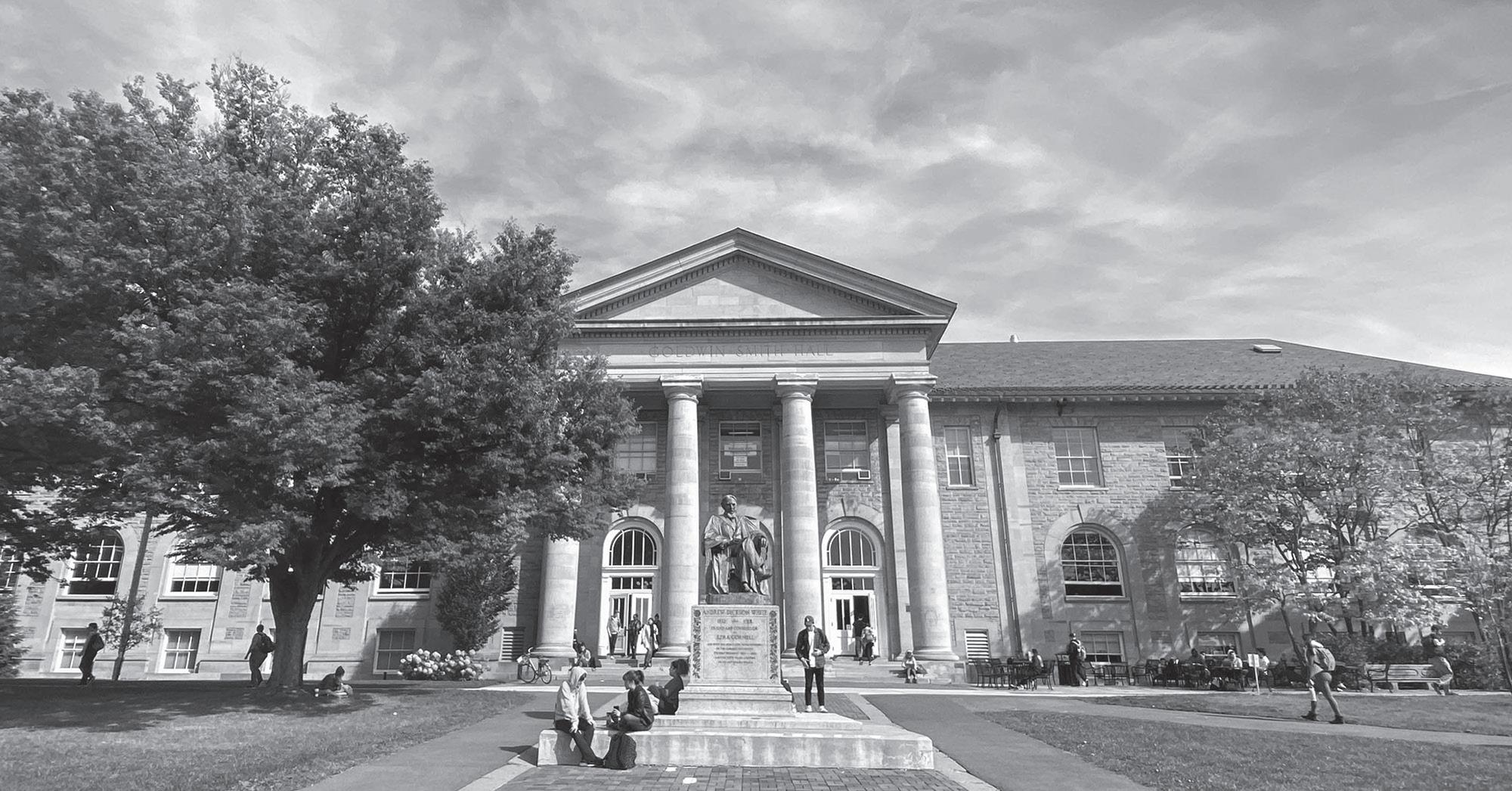
Throughout his 60-year tenure at Cornell, Nerode has borne witness to considerable changes in Cornell’s appearance and how it operates. “The buildings were more separated and it was extremely attractive to have all the empty space around the buildings,” he said.
Administratively, Nerode believes that Cornell has experienced the same changes that every other major university encounters. Nerode remarked on the increased support for students and government involvement in the form of research grants and regulations that arose during his tenure at Cornell.
The university, although still of substantial size back then, operated in a bottom-up manner, Nerode told The Sun.
“All the faculty in all departments met in the auditorium to decide the future of the university. It is now top-down, but that is also the case everywhere else,” Nerode said.
While reflecting on his time at Cornell, Nerode brings back stories from his youth, particularly the lasting influence of his family background.
Growing up in India, Nerode’s childhood completely contrasts with his stationery life now — he was always on the move, since his father was an itinerant yogi. Most yogis were not married and did not bring their families along on their travels, but Nerode’s father was an outlier. This gave Nerode the unique experience of attending around 50 grammar schools during his adolescence.
“I learned how to aquire new subjects because I had to walk into class and pick up everything that people had done before.”
Prof. Anil Nerode
“I learned how to acquire new subjects because I had to walk into class and pick up everything that the people had done before,” Nerode told The Sun.
Nerode’s high school experience in Albuquerque, New Mexico, was not only different from India, but also very distinct from high schools today. Nerode remarked that “there was no such thing as an academic advisor for people going to college.”
Any information about colleges was from the news. At the time, there was significant coverage on researchers at the University of Chicago working on the Manhattan Project. As a 14-year-old, Nerode wanted to become a physicist, so he headed off to the University of Chicago “with $17 in my pocket and a small suitcase.”
Soon, however, Nerode realized that physics was not for him.
“The professor got up for the first session and said look to your right, look to your left, one of you won’t be here next semester,” he said. “I found that to be the attitude of physicists towards students: to cut down the number of students as much as possible and deal only with the ones that they wanted to. I just did not find that a very humanistic thing.”
Nerode’s outstanding performance at Chicago led him to him receive his bachelor’s degree in 1948 at the mere age of 16 and his Ph.D. at 24.
In the summer of 1957, Nerode visited Cornell to meet with some of the world’s top scholars in mathematical logic. He gave lectures and met with famous researchers, the two most prominent ones being Kurt Gödel and Alfred Tarski. After spending time with Gödel at Princeton and going to Berkeley to study with Tarski, Nerode wondered where he would go the following year.
A miracle came in the form of an unsolicited letter from Cornell. When he visited in 1957, he dubbed it the most beautiful place he had ever seen: “I didn’t have any hesitation at all and no hesitations since then,” Nerode said.
Nerode’s own teaching style has also evolved since coming to Cornell. “I was educated at Chicago under the business of doing the cleanest, shortest expositions of absolutely everything,” said Nerode. Now, he has developed his own method: He teaches in historical order. Translating ancient theories into modern notation allows Nerode to show his students the origins of mathematics.
He has already taught generations of families. Some of his past students’ grandchildren have attended Cornell and Nerode is delighted to see the grandparents come back during graduation time.
Both his mother and his father taught until the age of 94, and Nerode may continue this tradition. “My life consists of teaching and research,” Nerode remarked.
Mia Glass can be reached at mtg74@cornell.edu.
By JUSTINE KIM
Staff Writer
During WWII, a colonel from Alaska asked Prof. Emeritus Walter J. Pauk to draft a brief guide on how to teach his soldiers to read and study effectively for their correspondence courses.
The guide soon evolved into Pauk’s 1962 best-selling book, How to Study in College, and attracted international acclaim for its revolutionary study technique: the Cornell Note-Taking System.
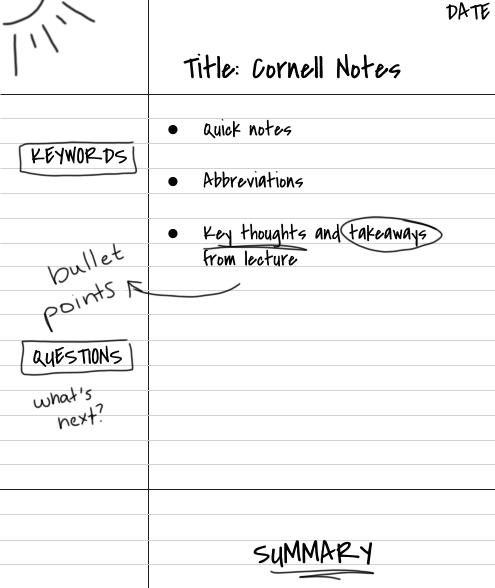
The Cornell Note-Taking System involves writing questions in the margin to summarize large chunks of information. The learning system relies on a revision technique called “recitation,” where students answer the questions, then without looking at their notes, recall what they’ve learnt.
“By relating newly learned conceptual material that is stored in the left brain, to a visualized object stored in the right brain, you can efficiently affect long-term memory,” Pauk said in a 1998 interview with the Journal of Developmental Education.
The Cornell Learning Center Strategy provides students with an online guide on how to use the Cornell Note-Taking System as well as resources on how to take more efficient notes. The Cornell Store also sells 9.5 x 6.5 inch notebooks with wider margins designed for the Cornell Note-Taking System. YouTube and other websites sport thousands of videos on how to use the system effectively, and it’s often part of the curriculum in high school classrooms.
However, the Cornell Note-Taking System may be redundant to students who rely more on applying information, rather than memorizing
|
their notes.
“I don’t study out of my notes; at least for Physics classes,” Alan Chen ’21, a tutor at the Learning Strategies Center, told The Sun. “Usually students who go to the Learning Center need help on [their] problem sets.”
Others like Kelly Riopelle ’20, enjoy the system.
“I personally find it really helpful, I use it a lot when I’m studying,” Riopelle told The Sun. “Quizzing yourself is the best way to retain infor-
By SEAN O’CONNELL Sun Staff Writer
As national debates and controversies have found their place at Cornell, Rep. Katherine Clark J.D. ’89 (D-MA), discussed her experience at Cornell, her role in the current impeachment hearings and the debate about allowing potentially contentious speakers on campus in an interview with The Sun. Born in Woodbridge, Connecticut, Clark attended St. Lawrence University in New York. She was admitted to Cornell Law School and graduated with a J.D. in 1989.
as an attorney, [learned] to write and evaluate legislation and look at the big issues of constitutionality,” Clark said.
After graduating law school in 1989, Clark travelled throughout the country, working as an attorney, a Federal court clerk and a prosecutor before moving to Melrose, Massachusetts, in 2001.
“I think that a legal degree is such an excellent background for a host of careers.”
Rep. Katherine Clark J.D. ’89
Clark said her time at the Cornell Law School was “a great mix, for me, of top law school and small class size.” She cited her involvement in the Legal Aid clinic and as a president of the Women’s Law Coalition as two of the drivers behind her interest in public service.
“I think that a legal degree is such an excellent background for a host of careers. I practiced
There, she began her foray into public service by running for the Melrose school council, spurred by an interest in women’s issues and early childhood education.
A victory in the 2007 special election for the seat of the 32nd Middlesex District in the Massachusetts State Legislature marked the beginning of Clark’s burgeoning political career and followed up with a close, but ultimately successful, bid for a seat on the Massachusetts State Senate in 2010.
Clark talked about her decision to run for state office, citing her interactions with local- and
SOCCER Continued from page 1
could go on and be the best in the world. Their partnership empowered Lloyd to grow significantly: She said she was talented but had no character or drive when Galantis first became her coach.
“At 99 percent effort, I’d be on the bench,” Lloyd said of her time training under him. “There was going to be no one in the world that was going to get me to the top.”
Part of this work has been learning how to face failures, something Lloyd prefers to tackle head-on.
motivation for signing onto a wage discrimination lawsuit against U.S. Soccer in March 2016. The now class-action lawsuit will be heard in court in May 2020.
“It’s not just about the money, it’s equal treatment,” Lloyd explained. “In 2015, we unfortunately had our whole entire World Cup on artificial turf. I don’t think I’ve ever seen [Lionel] Messi or [Cristiano] Ronaldo playing a World Cup of artificial turf.”
“There was going to be no one in the world that was going to get me to the top.”
Carli Lloyd
“Obstacles are part of life, they’re never going away,” Lloyd said. “But obstacles propel you forward, they propel you on to success — if you extract the lessons that come from them. I just roll my sleeves up and figure it out.”
One of her more prominent fights has called for equal pay between male and female athletes.
In 2016, Lloyd authored a New York Times essay calling for salary increases for the USWNT. In it, she explained her
“But we won anyway,” she added.
When the USWNT did win, they received bonuses of $75,000 — while their male counterparts would earn $390,000. Beyond that, the USWNT has to work “20 times harder,” taking on other opportunities like sponsorships and speaking engagements.
The fight, she said, is for the people in the stands and future generations.
Maddie Hoitink ’21, a defender on the Cornell women’s soccer team, spoke to Lloyd’s legacy for young female athletes.
“She’s just a really great role model for us, not just as a player but also as a person,” she told The Sun.
As she fights off the field for equal treatment, Lloyd has
America and the Vegan Society, the movement’s list of priorities has expanded.
protestors threaten to disrupt “business as usual” on the Cornell Ithaca campus until the Board of Trustees pledges to divest.
Protestors downstairs staged a sit-in of the Day Hall lobby until 4 p.m. Many protestors left to attend classes and prepare for finals, but some remained throughout the day.
Efforts to maintain a presence in the building were stymied by CUPD’s decision later in the afternoon to not allow protestors back into the building if they left to use the bathroom or get food.
Video calls connected the protestors who were stuck outside, those in the lobby and those outside the waiting room to Pollack’s office, while faculty and students with appointments in the building were escorted in and out by CUPD.
In the lobby of Day Hall, protestors sang movement songs, did group bonding exercises and worked on social media content for their groups. With three CUPD officers — present throughout the sit-in — looking on, protestors took turns reading from a Martin Luther King speech, “Remaining Awake through a Great Revolution.”
“The Cornell University Police were not notified of yesterday’s protest but still managed to redirect traffic in order to ensure participants’ safety when the protest unexpectedly moved into the streets,” Chief of Cornell University Police Dave Honan told The Sun in a statement.
“When the protestors entered Day Hall and interrupted the normal business operations of offices in that building, the Cornell University Police secured the building to maintain operations and then assisted students and staff needing access to the various offices and services in Day Hall,” Honan’s statement continued.
As Climate Justice Cornell has forged partnerships with other groups including the Young Democratic Socialists of
The larger list of demands includes not only divestment and decarbonization of the university’s resources, but also the expansion of plant-based protein options in Cornell Dining, a Citizen’s assembly to increase power sharing, and investment in and and orientation education about the the peoples of the Cayuga Nation.
“This protest is explicitly anti-capitalist. Eco-socialism or extinction,” Gregory Randazzo ’22 told The Sun.
Regardless of student sentiment about capitalism, students said that the unhappiness of environmentally minded alumni may not bode well for the university’s bottom line.
“I will not donate to the university until they divest,'’ Sheila Out ’72, an Ithaca resident and Cornell alumna who attended the rally, told The Sun.
As the rules currently stand, the process for implementing divestment will be complex. In 2016, the Cornell Chronicle reported on the new standard that the Cornell University Board of Trustees approved to guide its divestment decisions.
According to the Chronicle, the board’s current standard is that divestment will only occur when a company’s actions are “morally reprehensible” and divestment will have a real impact on the issue at hand without too many unintended consequences, or when the company contributes to a problem so serious it conflicts with the university’s goals and principles.
If divestment is not implemented, activists’ tactics may continue to escalate.
“We are choosing confrontation after fruitless attempts of working with the administration and a failed vote by the Board of Trustees,” CJC wrote in their letter to President Pollack.
also faced challenges and disappointments on the field, not knowing if her spot is guaranteed on the team and missing key shots.
Even still, Lloyd has seen unprecedented success: she was named FIFA Player of the Year in both 2015 and 2016, and she donned two Olympic gold medals for which she scored the final-winning goals in both.
When pushed to talk about about her historic game against Japan in the 2015 World Cup final, Lloyd insisted on talking about the games leading up to the final. She felt more pressure and didn’t seem to be performing — but Galantis just kept telling her to just be “a bit better than [she was] last game.”
By the end of the tournament, she said she had fallen into a “state of flow.” The final ended with a U.S. victory: a score of 5-2 with a Lloyd hat-trick, including one goal hit from half court.
“The three goals in 2015 — I could have had five,” Lloyd joked.
Kathryn Stamm can be reached at kstamm@cornellsun.com.
Sean O'Connel can be reached at soconnell@cornellsun.com.
CHAPLAIN Continued from page 1
chaplains, The Sun previously reported.
Now, two years later, HSC remains one of the only religious student organizations without a chaplain — with Cornell Christian, Jewish and Muslim religious groups boasting a total of 27 already established chaplains. Cornell Sikh and Jain students also do not have any chaplains.
The most recent addition to Chaplaincy was the addition of a Muslim chaplain in 2017. After 10 years of fundraising, the Cornell Muslim Educational and Cultural Association established a temporary Muslim chaplain — achieving what has so far eluded HSC.
Calling the process “mostly alumni-led,” former Interfaith Council President Nabiha Qudsi ’18 said that MECA succeeded in raising enough funds for a chaplaincy only by identifying past alumni through “word of mouth” and local community members who also helped pinpoint alumni.
When asked if the university foresees hiring a Hindu chaplain, Dean of Students Vijay Pendakur told The Sun that “the University has no plans to hire a Hindu chaplain at this time.”
Hindus account for a significant portion of Cornell’s student population — a 2017 New Student survey conducted by the Division of Planning and Budget showed that 3.9 percent of incoming freshmen surveyed identified as Hindu, the equivalent of approximately 500 to 600 Hindu students when extrapolated to the entire university. HSC also hosts widely attended events, with its largest, Holi, drawing almost 2,000 students every year.
In order to secure a chaplain, the University told HSC that it would have to raise over $1 million to fund the position — most of which would come in the form of alumni donations. Alumni donations are the mainstay of chaplaincy fundraising efforts, with most religious groups reliant on gifts to fund their chaplaincies.
HSC then asked the University, after meeting with additional administrators, for a list of previous alumni and possible donors.
But the university also refused to provide the list of alumni, Raje, Vejalla and Swargaloganathan told The Sun.
Many groups, among them Cornell Catholic and Cornell Hilel maintain extensive lists detailing their previous alumni, whereas HSC — as a relatively nascent group — does not retain such a list. According to former Interfaith Council President Nabiha Qudsi ’18, MECA was “shut out by the Alumni Affairs Office” when itsought possible alumni donors for a Muslim chaplaincy.
Some chaplaincy funds — among them, Cornell Catholic and Cornell Hillel — boast well over millions of dollars, whereas others have only hundreds of thousands of
dollars, according to Qudsi.
In the eyes of the students, they have faced pushback from the University in establishing their chaplain. After the passing of the S.A. resolution in in fall 2017, members of HSC and Cornell’s South Asian Council met with administrators including Dean of Students Vijay Pendakur in an attempt to spearhead preliminary chaplaincy efforts.
According to HSC board member Anuush Vejalla ’20, who was present at the initial meeting, Pendakur questioned the need for an HSC chaplain, asking if enough students would “even participate” in events involving a Hindu chaplain.
“He was pushing us towards the Asian and Asian American Center that already existed,” according to Vejalla and SAC board member Vegen Soopramanien ’20, who was also present at the meeting. “He was telling us that what we were coming up against was the bureaucracy, and really questioning the validity of even asking for a chaplain,” Vejalla said.
However, historically Cornell has not always acted as a secular institution. At the inauguration of the university, A.D. White said, “We will labor to make this a Christian institution — sectarian institution may it never be,” while Ezra Cornell said, “It shall be our aim and our constant effort to make true Christian men, without dwarfing or paring them down to fit the narrow gauge of any sect,” according to Prof. Corey Earle ’07, history.
A look at the early Board of Trustees proceedings, which include budget decisions, unveiled minor expenses to assist the student-run C.U. Christian Association, which eventually evolved into today’s CURW, Earle said. Barnes Hall was even built by the university for the purpose of supporting the CU Christian Association.
“Other chaplaincies were established at other times in history where support may have been more lax,” Raje told The Sun. “How can you expect students to advocate for ourselves if we still have to manage day to day religious life?”
“It’s the difference between equality and equity, in a sense,” Raje continued. “We need more support now than other groups might have had. I think getting involved is different than providing support or encouraging students to advocate for themselves.”
Among its peer institutions — including Harvard, Yale, Brown, Dartmouth, Princeton, Georgetown and the University of Southern California — Cornell is the only university without any type of affiliated Hindu chaplain, according to Swargaloganathan ’19. The University of Pennsylvania is the only other Ivy League institution without a Hindu chaplain.
Continued from page 1
The caucus is not an official body of the S.A. and will not seek out a process to become institutionalized within the charter of the S.A.
“Our existence as a collective does not require the validation of others and more specifically our non-black peers. The institutionalization we seek is exogenous from whatever formalized process the Student Assembly can possibly provide,” the founding statement reads.
S.A. President Joe Anderson ’20 said that he supports the caucus and recognizes the “historic” nature of the founding.
“Having the pleasure of personally knowing most members of the Caucus and their leadership I will stand with them and utilize any institutional privilege to make sure there is always a seat at the table for the Caucus,” Anderson told The Sun in an email.
The founding statement of the caucus also addressed the intersectionality of the identities of its members, saying that the members are either Black women, Black queer women, black and queer or black, femme and queer.
The leadership for the caucus also includes Uchenna Chukwukere ’21, vice chair, Selam Woldai ’23, deputy speaker, and Jenniviv Bansah ’22, whip, and Moriah Adeghe ’21, Nabila Okudo ’22, Debbie Nykaru ’20, Renelle Mensah ’21, Destiny Nwafor ’21, Olubanke Agunloye ’20 and Elyona Ihegihu ’23 as founding members.
Membership for the founding members was based on an application process. Martin said all black students affiliated with the assembly were invited to apply. Everyone who applied was selected and those not on the committee declined to apply.
In the future, there will be four types of membership in the caucus, including full-membership for active S.A. members, provisional membership for those interested in the S.A. and retroactive membership for past members of the S.A.
The fourth membership type is the guest membership. Starting in the spring, the caucus will open up the space semesterly for community members that “advocate for Black Rights and issues on campus.”
Martin said the caucus will focus membership for those that identify as black.
“We believe that black individuals most intimately understand what it means to be black and struggle in life, or have barriers in front of you because you are black,” Martin said. “It’s that lived experience that we really value.”
However, Martin recognizes the work that allies and non black people of color do to advocate black issues and is open to working with other groups through programming or as a guest of the caucus.
Amina Kilpatrick can be reached at akilpatrick@cornellsun.com.
NOTES
Continued from page 3
mation and the Cornell NoteTaking System helps me do that.”
Unfortunately “none of my friends use it,” Riopelle said. “It’s a dying art.”
“I have no idea what the Cornell Note-Taking System is,” Sam Rosenblum grad told The Sun.
Students who studied abroad reported that international universities did not introduce them to the note-taking method.
“My only exposure to it was my sophomore year of high school ... I’ve honestly never used it.”
Jack Tracey ’20
“They expect you to know how to take notes during high school,” said Esther Poon ’21, an exchange student from the Hong Kong University of Science and Technology.
Poon was more skeptical of the Cornell Note-Taking system.
“I wonder if people would change their personal habits to a specific note taking system,” Poon said. “Because students have relied on their own ways for all these years, it’s probably very difficult to change.”
Medina Keita ’20, who studied abroad in Paris, reported that learning in a foreign language required a new note-taking system that decon-
Continued from page 3
state-level politicians.
“I decided to tackle the issues around women and children that have always been priorities for me from the legislative side, instead of the advocacy side,” she said.
“I had never thought about running for political office,” added Clark, “but it is a great way to continue the conversation about how we can provide equality and justice.”
Clark was elected to represent Massachusetts’ 5th congressional district in 2013, and became the Vice Chair of the Democratic Caucus in 2018.
Her current legislative projects include the BE HEARD in the Workplace Act and the BABIES Act, legislation aimed at preventing workplace harassment and improving access to safe and adequate birth centers for women, respectively.
Clark came out in support of gender diversity on Capitol Hill, which touts a record-breaking 131 women in the 2019-2020 116th Congress.
“More women are running for political office and more women are becoming politically engaged,” Clark said. “We’re becoming a more representative Congress.”
The representative criticized Senate Majority Leader Mitch McConnell (R-KY) for his role in the political gridlock in Washington, calling the fact that a large majority of bills — 460 out of 542 at the time of writing — passed by the House of Representatives had not been subject to a vote — a “national scandal.”
“Mitch McConnell has become a whole-owned subsidiary of Donald Trump,” said Clark, adding, “he has abdicated his responsibility as the leader of the Senate.”
Clark has emerged as one of the leading voices in the push for impeachment, with her support dating back to July 2019, as reported by The Atlantic.
“The president’s actions are a betrayal of his oath of office,” said Clark. “His attack on the integrity of the 2020 election is a unifying event that has brought the caucus together,” she continued.
“The caucus is the most diverse that we’ve ever seen, but we can’t pat ourselves on the back and say ‘diversity is our strength,’” Clark said. “We have to
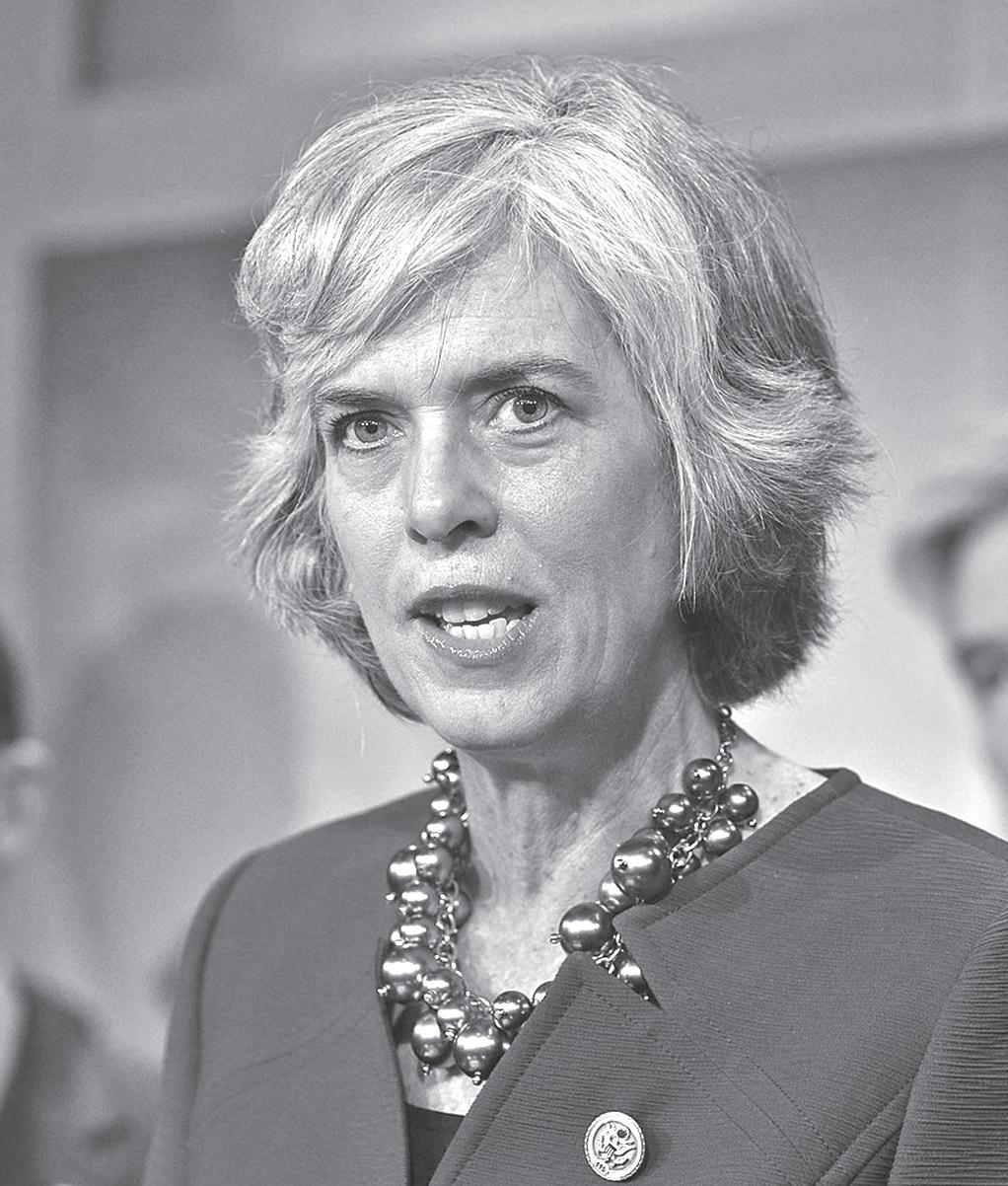
use it.”
As the first member of the Democratic leadership to back the impeachment inquiry, Clark said that she is vindicated by Speaker Nancy Pelosi’s announcement that articles of impeachment are being drafted.
The last topic broached was the issue of allowing divisive speakers on campus, taking into account the recent controversy over a talk by Former Gov. Scott Walker and last years’ protests over the invitation of Dick Cheney to campus.
“Is there a line to be drawn on hate speech?” said Clark, “Absolutely, but I don’t think we should be afraid of challenging ourselves and challenging our arguments by not allowing people on campus that even the majority of students don’t agree with,” she added.
Clark ended by saying, “I think it is always important that we are always challenging our worldview, looking at other perspectives. It can broaden your own perspective and sharpen your arguments.”
Sean O’Connell can be reached at soconnell@cornellsun.com.
structed “long, very jargony, hard to understand” lecture transcriptions.
“When I would take notes, it would be whatever fragments I could catch from what [the professors] were saying,” said Keita. “Then I would compare that to what the other students gave me.”
Most students who were interviewed by The Sun knew about the method, but had never utilized it personally.
“My only exposure to it was my sophomore year of high school — my chemistry teacher recommended that we use it,” said Jack Tracey ’20, a government major. “I’ve honestly never seen anyone using it.”
Tracey reported that taking notes prevented students from critically engaging in lectures because often, students were preoccupied with copying down the lecture slides or recording what the professor said verbatim in lieu of paying attention to class material.
Others were more open to using the Cornell Note-Taking System.
“There’s not a lot of promoting of the note-system,” said Jel Zhao ’20, Animal Science. Zhao reported that she would implement the note-taking techniques in her biology studies, if she knew about more resources that taught students how to use it.
“You want to take notes that helps you,” Chen said. “If this format helps you organize your thoughts better … then yes, it would be useful.”
Justine Kim can be reached at jkim@cornellsun.com.

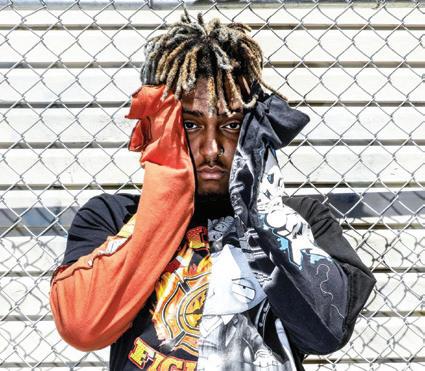
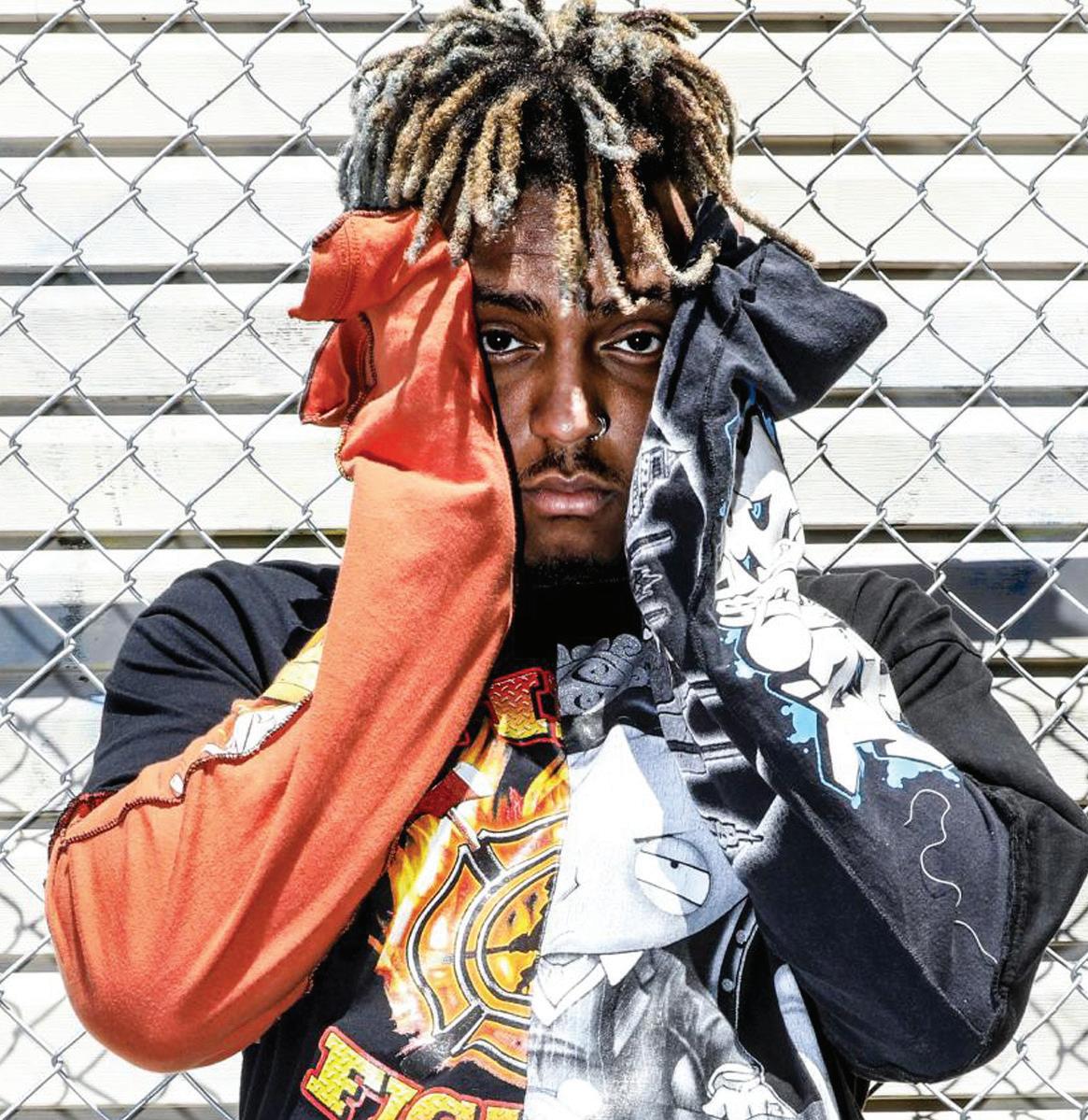
Trigger Warning: This article talks about drug and alcohol abuse and the tragic passing of Juice WRLD.
THIS MORNING, MANY CORNELL STUDENTS woke up to a notification on their phones announcing the death of the 21-year-old artist Juice WRLD, who suffered a seizure while walking through the ChicagoMidway Airport around 3 a.m. While the cause of his death is unclear at this time, there is speculation that it is drug-related.
While we by no means wish to, or intend to, slander the late “Lucid Dreams” artist by claiming that substance abuse was involved in his passing, an unfortunate and tragic trend has re-emerged in the music industry. Since arriving on this campus, the oldest of current Cornell undergrads have seen the deaths of XXXTentacion, Lil Peep, Mac Miller, Fredo Santana and now Juice WRLD. While not all of these artists died due to speculated overdoses, all of these artists wrote about drug use — particularly lean, Xanax and opioids — and, to an extent, depression.
Juice WRLD, out of all of the aforementioned artists, was the most open about his drug use, and his music reflected this. Nearly every one of his songs included a reference to Percocet, molly or lean. And he was revered by high schoolers. He was even nominated for a Kids’ Choice Award.
Like the younger kids, some Cornell students have idolized Juice WRLD and artists like him. Not for bad reasons either; his music speaks to feelings of isolation that many college-age people feel. After all, he’s the same age as a college student. And some Cornellians may have even used drugs in a similar manner to Juice WRLD and other artists like him. Even Juice WRLD himself was open about how his lean use first started because he loved Future’s music.
It is not uncommon on this campus to hear discussion about regular drug use from fellow students. In fact, it has become somewhat normalized. When some Cornellians attend house parties, they wouldn’t be shocked to see cocaine and Xanax use. And the music we listen to supports these behaviors. While the music itself is certainly not to blame for the pervasiveness of drug use in college and high school environments today, perhaps today’s youth look to musicians for guidance in life more so than past generations. Gen Z-ers have grown up in a time where traditional authority figures don’t hold the same sway anymore. And new forms of media can mimic relationships in ways unheard of before the 2000s. It is not alright that these young artists, who are looked up to by millions for inspiration and support, are dying in seemingly avoidable ways. The kids need help, but the people they look to for help are kids themselves.
According to the Substance Abuse and Mental Health Services Administration, on an average day 1.2 million full-time college students drank alcohol, nearly 800,000 used other illicit substances (such as heroin, hallucinogens, cocaine and inhalants). We by no means are advocating for more substance control in this country — in fact we believe the opposite — and we certainly do not wish to infringe on any first amendment rights in music, but these substance abuse numbers are too high.
The question of how to solve this problem is certainly complicated. But maybe a solution starts with a simple re-evaluation on the part of Cornellians, and today’s youth in general, as to how we view the people we look up to. Artists are complex people; often, they lead lives unlike the average person. Copying their every move may not be the best way to help yourself.
Students may consult with counselors from Counseling & Psychological Services (CAPS) by calling 607-2555155. Employees may call the Faculty Staff Assistance Program (FSAP) at 607-255-2673. An Ithaca-based Crisisline is available at 607-272-1616. For additional resources, visit caringcommunity.cornell.edu.
JOHN COLIE SUN STAFF WRITER
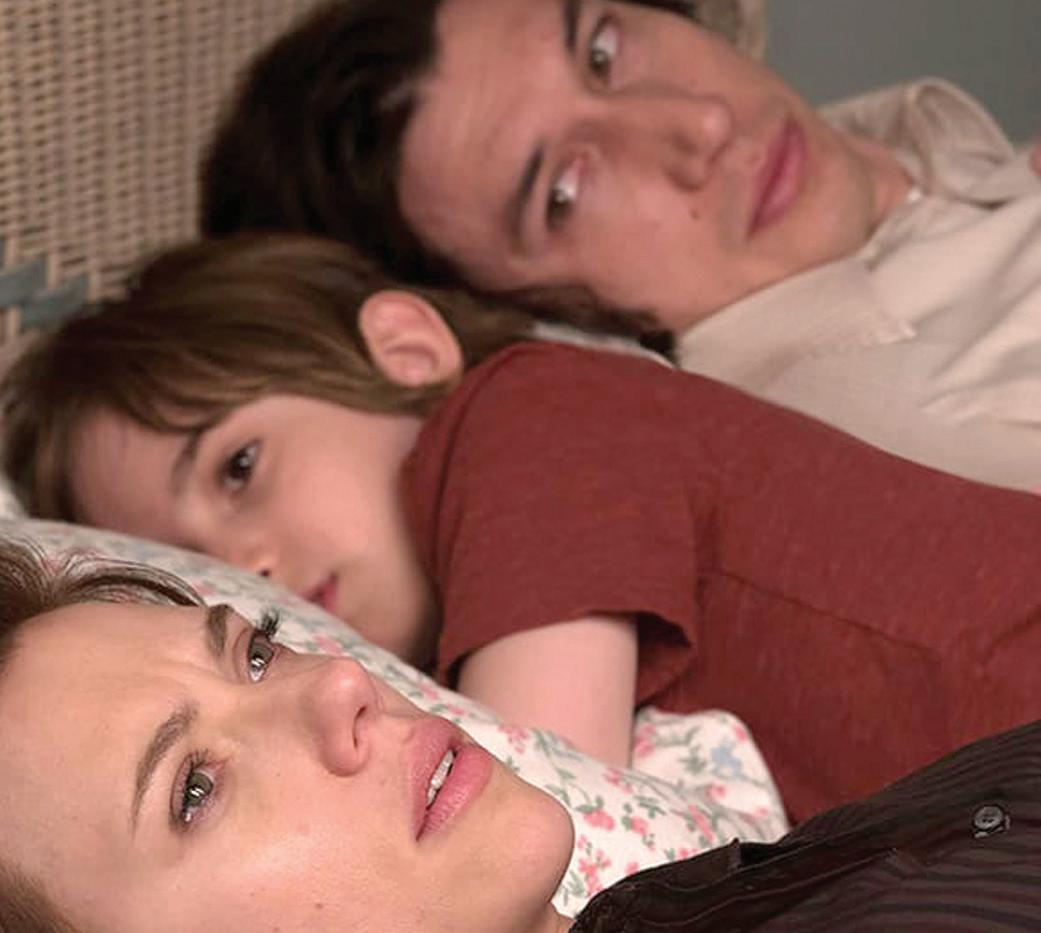
Marriage Story shows how love and a relationship between two people endures even after it has officially ended. Charlie and Nicole Barber learn this all too acutely as they initiate their own separation, a conflict at the center of Noah Baumbach’s new film Marriage Story. Charlie (Adam Driver) is a theatre director helming a company which is steadily growing in renown; Nicole (Scarlett Johansson) is an actress and one of the company’s stars. One recurring thought that Baumbach keeps returning to over the course of the film’s runtime is how, even with everyone else that becomes involved in the legal complications of the divorce itself, the actual act of moving forward from a marriage can only concern the two people getting divorced in the first place. “Eventually this will all be over,” says Bert Spitz (Alan Alda), Charlie’s first divorce lawyer. “Whether we win or lose, it’ll be the two of you having to figure this out together.” Consequentially, the film mostly regards both Charlie and Nicole with a sense of impartiality: two people caught in an unfortunate situation who must rely on each other once again to work it out. Both of them have valid reasons for being angry at each other and at the process of their divorce in general, so much so that it is impossible for the viewer to choose which one is more “correct.” “I was never alive for myself; I was only feeding his aliveness!” Nicole confesses to her divorce lawyer Nora Fanshaw (Laura Dern); meanwhile, Charlie insinuates that Nicole only likes complaining about the fact that she has no voice or independence rather than actually obtaining it. The lawyers who represent the two (Nora, Bert and Jay Marotta, played by Ray Liotta) do nothing to help matters, each portraying the other as negatively as possible to win their respective demands. The legal bickering finally explodes into Charlie and Nicole’s own discourse; in a nearly 10-minute scene (with some incredible acting from Driver and Johansson), Charlie and Nicole decide to friendly discuss their separation away from the vitriol of their lawyers, only to have it devolve into a frightening screaming match which manages to exhume every personal grievance the two harbor against each other. By the end of it, both of them are sobbing and holding each other, simply wanting to do what they think is best; both of them and neither of them can really be held accountable for what has happened at the same time, a conclusion the film reinforces with effortless mastery.
From start to finish, Baumbach’s direction and writing are almost flawless; the smoothness of the screenplay and its dialogue belie how harrowing the events depicted actually are, not only for the characters but also for the audience. One of Marriage Story’s greatest strengths is the relativity of its humor; the funniest lines take on a much darker aspect when they are put into context as Nicole and Charlie navigate through the cavalcade of lawyers and evaluators which surround them. This darker tone also manifests itself in the film’s cinematography, which is brilliantly expressive in and of itself ...
To continue reading this article, pleasee visit www.cornellsun.com.
John Colie is a freshman in the College of Arts and Sciences. He can be reached at jcolie@cornellsun.com.
As I was browsing the plethora of top 100 albums of the decade lists, an overarching trend I noticed is the revival and reinvention of electronic music. Yet with little to no effort to identify the often implicit traces of such a phenomenon, the great change in electronic music in this decade has largely been a missing narrative, overshadowed by the more apparent prominence of hip hop.
Electronic music serves as the backbone of music in this decade. I refer to electronic music not just in terms of electronica or EDM, but as music of different genres across the spectrum that incorporate some elements of electronic music into its creative process. You can hear traces of electronic music almost everywhere. Pull up any list of top albums regardless of the category and the criteria — even for a list of rock albums or a list of hip hop albums — it would be a rarity to find a record that has not used synths or drum machines in its production.
the digital divide being an ongoing global phenomenon, when everything goes digital, the prominence of electronic music may have in fact created a greater power imbalance.
With an increase in high-quality television being produced by cable and streaming providers, critics are calling this era the “(second) Golden Age of Television.” Shows released this millennium have revolutionized the types of characters that the public is drawn to. Our favorites tend to be protagonists in the traditional sense. But television characters became increasingly complex individuals that we love and hate. Even flawed characters like Tony Soprano and Don Draper have become iconic.
Although we were exposed to gritty characters that made us question our morality, more often than not, popular characters were upper-middle-class, white men. A disconnect was inevitable as the coming-of-age Gen Z is more socially conscious and diverse than past generations.
The golden age of television is changing to accommodate the maturation of Gen Z. Now, it is important to remember some things about this age group: They have never lived during peacetime; these are the post-9/11 kids. They are the ones who grew up with the onslaught of school shootings. They are the group with the highest levels of anxiety in the country. A sense of hopelessness pervades Generation Z, so it makes sense that the most popular shows evoke a sense of nostalgia about a time before they were born.
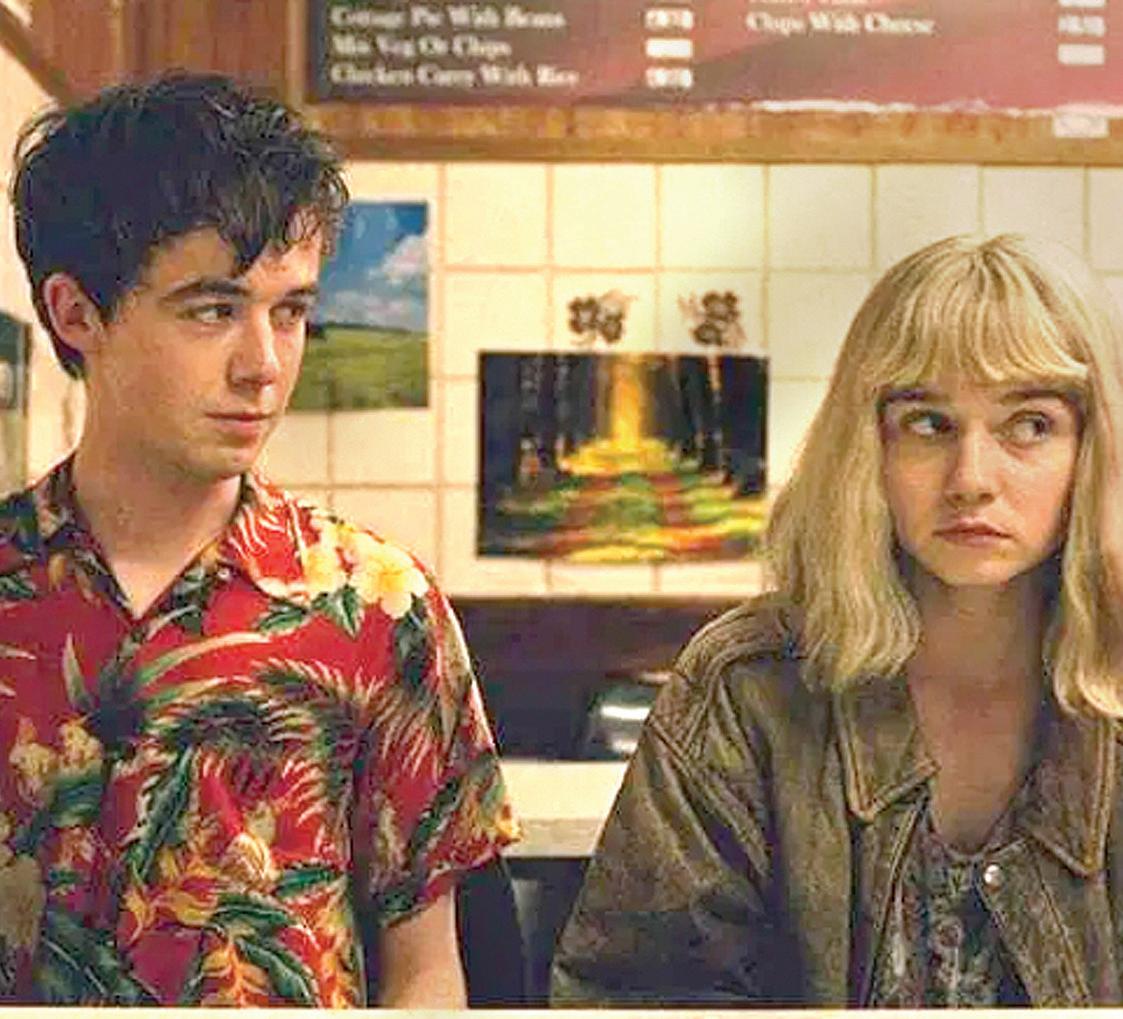
Shows like The End of F***ing World , Euphoria and The Chilling Adventures of Sabrina combine teenage angst with modern-day problems while projecting the aesthetics of previous decades. These series have been critically acclaimed, and there’s a reason for this. Humans are born nostalgic; we’re constantly glorifying the past, knowing there’s no way to go back. There’s even a word for this: saudade (from Portuguese).
These shows reflect the anguish of the current teenage experience. The End of the F***ing World , which released its second season on Nov. 5, is set in the modern-day, but its aesthetic appears to be lifted from the 70s. The show deals with 17-year old James who thinks he’s a psychopath and runs away from home on a glorified road trip with his girlfriend. At first, it seems to be a typical story of “teenage angst,” but a dramatic turn of violence plunges these two into a premature adulthood. The creators of the show juxtaposed these stylistic elements from decades past with modern-day problems, like widespread anxiety and depression, affecting today’s youth. This combination lets the viewers know that teenagers are different from their predecessors and are facing serious issues.
Most teens have been exposed to extreme violence in media for as long as they can remember, and many adults look to the past for a solution. But that will never work. Times are constantly changing and contemporary shows mock these misguided beliefs. The kids are not alright, but nostalgia makes it worse. Gen Z-ers are attracted to these hybrid shows because they prove to them that society believes we have to look at history in order to change the future, which may not always work depending on the circumstance.
Bastos is a sophomore in the College of Arts and Sciences. She can be reached at sbastos@cornellsun.com.
Rather than a genre of its own, electronic music represents a new way of thinking that leads the digital future of music. As electronic music gives artists ample agency to reimagine the possibilities of sound with no acoustic or instrumental constraints, it drives them to push the boundaries in radical ways. A notable trend in music in this decade is the restructuring of composition. Repetitive 4/4 beats with slow variation are no longer perceived as vulgar, and the obliteration of structure will no longer be immediately lumped into the realm of avant-garde and never be delineated. These are two extremes of electronic music that used to lie outside the comfort zone of many, yet the boundaries have been pushed to include both ends in the past decade.
In terms of listening experience, electronic music caters to two different needs in the streaming age. It is highly versatile across the physical and the virtual. Technological advancements are reshuffling the very notion of live music, offering refreshing new possibilities for electronic performance in the process. Live electronic music is now perceived as an art form in which the physical sense of being is inseparable from the immersive experience. The rise of electronic music festivals sheds light on the growing popularity of dancing to the bleeps and bloops of live music. D.J.s are now perceived more as performers than mediators, and twisting knobs and coding beats are considered no less impressive and entertaining than playing any other instruments. In the age of noise, when everyone is constantly numbed by sensory overload, live electronic music has established a long-form of musical experience that one can slowly immerse into hours of reverberating ecstasy.

The accessibility of the tools to produce electronic music has fostered a more egalitarian culture of music. This has led to the non-hierarchical, countercultural ideals of cultural participation being realized. The accessibility of electronic music gives agency to people who formerly would have not had access to music education and thus would be barred from entering the world of music. This decade sees the greatest and fastest penetration of music technology with the prevalence of digital audio workstations and virtual studio technologies. With such software readily accessible on one’s personal computer — oftentimes even for free — and with the radical refashioning of a user-friendly mode of production, electronic music has cultivated a universal medium that gives a voice to our tech-savvy generation.
This is strictly from a Western perspective. With
On the other hand, the contemporary playlist culture has helped bring back and reinvent the D.J. culture of the preceding decades. Everyone can be a D.J. at anytime at anywhere with their Spotify or Apple Music account. This new playlist culture has further annihilated time and space. With playlist being the modern unit of listening, the 2010s have brought back the significance of the human decisions of song choices, sequences and remixing, which is reminiscent of the heyday of early electronic music.
Yet this underlying prominence of electronic music is not without its negative cultural implication. As electronic music is often associated with the newfound idea of digital agency, it inadvertently speaks to the rhetoric of digital utopianism, which is precarious as it is too good to be true. Electronic music is fundamentally machine-mediated, and as such, despite the potentiality of accessibility, it will inevitably lead to some form of dehumanization and the alienation of humans in the creative process. To further probe into the impact of human-machine integration in music production requires us to more critically follow and critique the implicit trends in the following decade.
Stephen Yang is a senior in the College of Arts & Sciences. She can be reached at ayang@cornellsun.com. Five Minutes ‘Til Places runs alternate Mondays this semester.
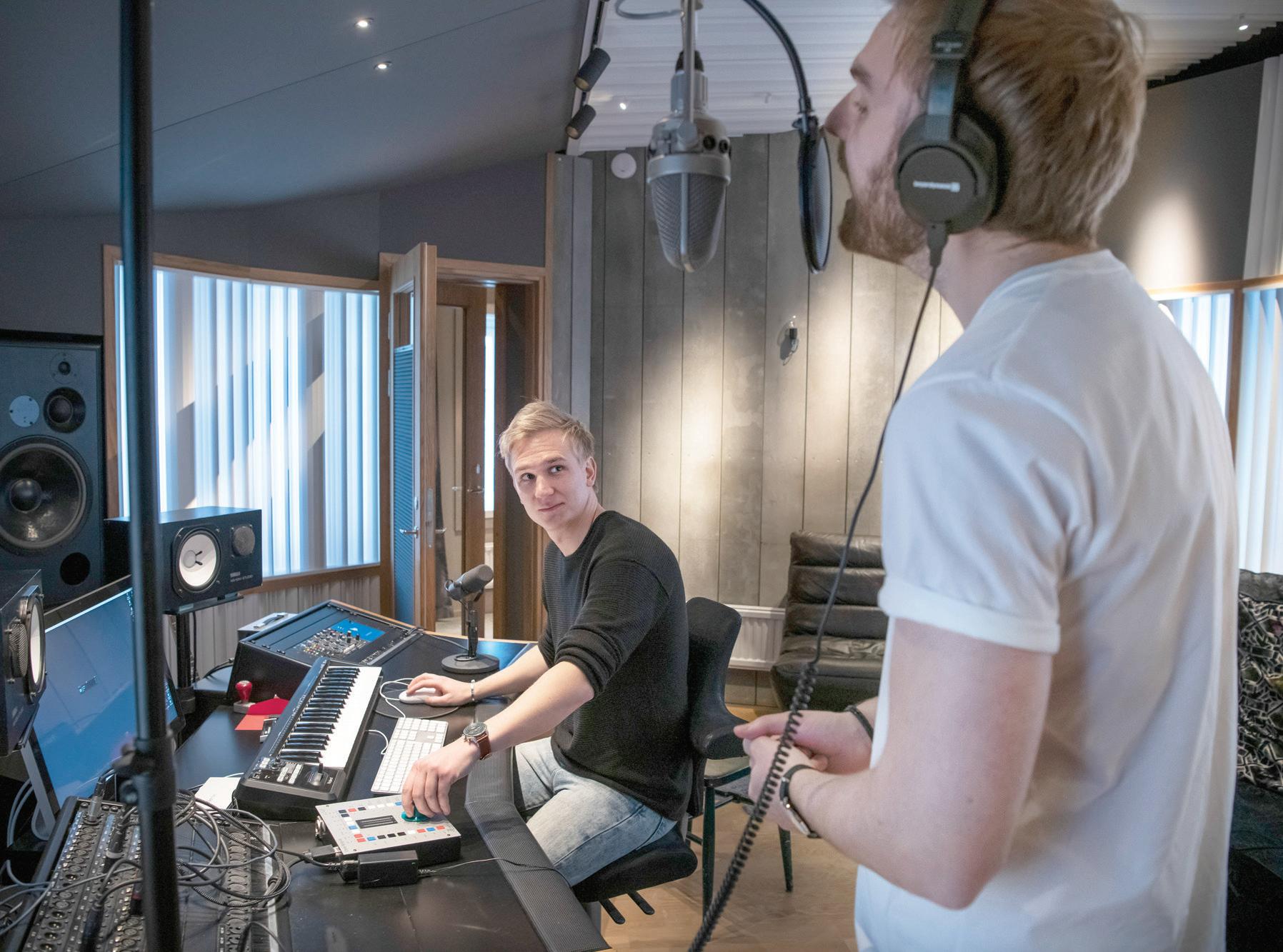
JOYBEER DATTA GUPTA ’21
Business Manager
PARIS GHAZI ’21
Associate Editor
MEREDITH LIU ’20
Assistant Managing Editor
RAPHY GENDLER ’21 Sports Editor
BORIS TSANG ’21
Photography Editor
AMBER KRISCH ’21
Blogs Editor
SOPHIE REYNOLDS ’20
Science Editor
AMANDA H. CRONIN ’21
News Editor
JOHNATHAN STIMPSON ’21
News Editor
PETER BUONANNO ’21 Arts & Entertainment Editor
ANYI CHENG ’21
Assistant News Editor
HUNTER SEITZ ’20 Assistant News Editor
CHRISTINA BULKELEY ’21
Assistant Sports Editor
BEN PARKER ’22
Assistant Photography Editor
JEREMY MARKUS ’22 Assistant Arts & Entertainment Editor
ALICIA WANG ’21
Graphics and Sketch Editor
DANA CHAN ’21 Production Editor
RYAN RICHARDSON ’21
Snapchat Editor
GIRISHA ARORA ’20 Senior Editor
SARAH SKINNER ’21 Managing Editor
KRYSTAL YANG ’21 Advertising Manager
NATALIE FUNG ’20 Web Editor
SABRINA XIE ’21 Design Editor
NOAH HARRELSON ’21 Blogs Editor
SHRIYA PERATI ’21
Science Editor
KATIE ZHANG ’21
Dining Editor
AMINA KILPATRICK ’21 News Editor
MARYAM ZAFAR ’21 City Editor
ETHAN WU ’21 Opinion Editor
SHIVANI SANGHANI ’20 Assistant News Editor
NICOLE ZHU ’21 Assistant News Editor
LUKE PICHINI ’22
Assistant Sports Editor
JING JIANG ’21
Assistant Photography Editor
DANIEL MORAN ’21
Assistant Arts & Entertainment Editor
LEI LEI WU ’21 Layout Editor
EMMA WANG ’20 Multimedia Editor
LEANN McDOWALL ’21 Newsletter Editor
BREANNE FLEER ’20 Senior Editor
Working on Today’s Sun
Ad Layout Girisha Arora ’20
Production Deskers Dana Chan ’21
Jenny Huang ’22
News Deskers Shivani Sanghani ’20
Amina Kilpatrick ’21
Design Desker Girisha Arora ’20 Xiangyi Zhao ’22
Photography Desker Jing Jiang ’21
Sports Desker Luke Pichini ’21
Arts Desker Peter Buonanno ’21
Growing up gay in Michigan, Missouri and Ohio, I got used to figuring things out on my own. Though I watched my peers follow all the same well-traveled paths as their friends and mentors, it didn’t occur to me that I deserved guidance as well. In hindsight, the impact of this lack became more clear to me. My immersion in heteronormative cultures meant growing up without many queer role models or friends. Without any frame of reference for my choices and goals, it’s unsurprising that I made so many pivotal decisions blindly.
No decision encapsulates this isolation more than my choice to rush at Cornell.
fraternity, many others won’t. Don’t underestimate your capacity to feel guilt for that. Throughout my time at Cornell, I’ve come to believe that respect in many Greek spaces is contingent on the ability to “pass” as cis and straight. It has often occurred to me how deeply this has divided me from other members of my community. Frequently, I’m struck with guilt.
This past summer, for example, I drove to Ithaca from NYC to celebrate the Fourth of July. As I hammocked in my friends’ fraternity house, I felt a familiar discomfort. Wasn’t I betraying the members of my community who’ve been excluded from that space since its conception? If a trans or gender non-conforming person walked up to that house for a party, would they be treated with respect? Would I be okay with what would be said about them, to their face and behind their back?
As a freshman, I was intrigued by the idea of joining the Greek community. But I had absolutely no idea what I was getting myself into.
As a freshman, I was intrigued by the idea of joining the Greek community. But I had absolutely no idea what I was getting myself into. Especially as fraternities purport to become more inclusive, it’s important that queer underclassmen don’t go into rush uninformed.
All experiences differ. After years of membership, however, I’ve gathered a fairly clear idea of homophobia’s role in the Greek system. Fundamentally, it’s baked into the structure and culture. Though not all Greeks are bigoted, exclusivity is a premise of the system’s design. As a result, bias often seems to go unchecked.
While setting up a party as my fraternity’s social chair, a brother called me a faggot to my face, over our basement bar. After I asked him not to use that slur, he responded, “Why not?” When I brought the incident to my fraternity’s executive board (of which I was a member), they shrugged.
I assume that most queer freshmen would like to avoid such distressing experiences. Which houses are “safe” and which aren’t? Short answer: It’s hard to tell. The makeup and character of each fraternity vary slightly every year. Generally speaking, though, it appears that queer people are more openly accepted by fraternities in the “lower” and “middle tier” and less openly accepted in the “upper tier.” There are exceptions to this rule; some houses are surprisingly accepting, others are surprisingly bigoted. Still, “prestige” tends to translate into heteronormativity. A simple Greekrank.com search will turn up the specifics.
The structures of Greek events are also essentially heteronormative. Though it’s not unprecedented for queer people to meet or hook up at a fraternity party, that’s not what they’re built for. The premise is often to attract straight women to straight men; be prepared to find yourself feeling a bit left out. Ironically, my tenure as social chair for my fraternity was one of the loneliest times of my life.
Greek chapter houses are built to reflect antiquated ideas about heterosexual relationships. The system is structured to ensure that parties and hook-ups happen in fraternity houses, where rules are few and far between. As you might infer, this structure disadvantages women, empowers men and creates situations ripe for abuse. This is evidenced by the overwhelmingly high rates of reported sexual misconduct on Cornell’s campus. Reported rates of sexual misconduct against LGBTQ+ individuals are disproportionately high, according to the 2019 Cornell Survey of Sexual Assault and Related Misconduct.
My intention is not to completely squash your interest in Greek life. There are valid reasons to want to join. Everybody wants
Aside from the social benefits of Greek membership, I found that it also helped me become more comfortable in heteronormative male spaces.
a group of people to hang out with. It goes without saying that parties can be fun. Despite all the caveats, I don’t regret choosing to join a fraternity.
That tendency in itself should tell you something. It’s not a coincidence that more “respected” houses tend to have fewer openly queer brothers. It’s not a coincidence that particularly accepting and diverse houses typically rank lower. Of course, it’s possible to join Greek life and pay no mind to rankings and prestige. Unfortunately, however, the system’s social organization revolves around them. Not everybody buys in, but everybody is affected.
To be fair, if you’re a tall, straight-passing, sociable gay man, it’s unlikely you’ll be categorically excluded from rush and social events. Frats might even love you; you’d probably get along well with girls and make them seem progressive. However, don’t necessarily expect that tolerance to translate into respect.
Though you might find acceptance in a
Aside from the social benefits of Greek membership, I found that it also helped me become more comfortable in heteronormative male spaces. Of course, not everybody is willing and able to assimilate. You could probably graduate from Cornell without ever wearing Patagonia or explaining Lizzo to a straight guy. In many ways, that’s desirable. It should be said, however, that the Greek system is a microcosm of the society we live in. I’ve found the value of that comfort to extend beyond Cornell’s campus and into the professional world.
I’m not trying to make your choice for you. I only advise that you think hard about what you’re getting yourself into, ask for help and information when you need it and don’t forget your community.
If you spend enough time on the engineering quad, you’ll eventually hear some variation of this: “I was going to do [insert some engineering major], but then I took the ENGRI for it and it was awful.” The Introduction to Engineering classes, or ENGRIs (pronounced by sounding out each letter), that all engineering freshmen are required to take to explore a major are good for one thing: elimination. They come from a well-meaning place from the engineering administrators, who are aware that the rigid scheduling locks us securely into our majors before we can get a good sense of what they’ll be like. They attempt to let us explore majors we’re considering more before we fully commit to the years-long process of knocking out our flowcharts of requirements one by one.
But the fact that we’re only supposed to take one of these classes can lead to some unfortunate consequences. It means that those fairly certain about their major, and those who like or feel neutral enough about their ENGRI, often end up choosing it because they’ve never known anything about the other majors. By junior and senior year, equipped with a deeper knowledge of the other majors they’ve
Those who found their ENGRI to be not for them are left to scramble to figure out what other majors they might want to affiliate with.
picked up from friends, research and projects, they’re left to wonder what could have happened if they had taken another path that they had never had the freedom to explore before it was too late. Those who found their ENGRI to be not for them are left to scramble to figure out what other majors
they might want to affiliate with as the timer runs out to decide, and without easily accessible resources to choose. Even worse, the lack of exposure to the other engineering majors offered by the college leaves most of our engineering to graduate with a narrow scope of knowledge of the vast engineering tools that can be used to solve the problems we’ll be tasked with in our futures. We graduate our seniors with an inability to understand even the most basic fundamentals of the multidisciplinary aspects of projects. For example, as an ECE major, I couldn’t tell you the first thing about Civil or Operations Research and Information Engineering.
few female engineers even consider the Engineering Physics major, leading it to have the worst gender ratio in the college.
We graduate our seniors with an inability to understand even the basics of the multidisciplinary aspects of projects.
Instead, we should have short, rotating seminars taught by either professors or upperclassmen students in a similar way peer advising classes are taught that run for roughly a week per major. They could include a lecture section for the first few classes, and culminate in a hands-on activity relevant to material they’ve learned, like a small Arduino project for ECE or a demonstration using superconducting materials for Materials Science and Engineering. This would allow students to explore each major in the college in a productive way that allows them to consider each major without their previous biases about it. It would also serve the purpose of giving students who might feel intimidated by the prospect of a notoriously difficult major like Chemical Engineering a sense of confidence that they could succeed in it. It would help to diversify the majors, as students can explore areas they might not have considered otherwise because they don’t feel as though they aren’t for them or it won’t interest them. Take for example the fact that
Logistically, about half of the engineering freshmen could enroll per semester, and be randomly placed in a group that they will rotate through major seminars with, attending three 50-minute lecture sections a week. The 12 engineering majors and 15 weeks per semester leaves three extra weeks at the end of the semester, where students could elect to attend a more involved three-week section at the end for a

major of their choosing with a more involved project, allowing more time to explore their top choice and ensure it’s right for them before they devote years to it. To address the fact that the ENGRI classes often offer a much-needed GPA boost to the grueling freshman year of engineering, the seminar could be graded easily on a small assignment each week.
The College of Engineering has a responsibility to its students to periodically analyze its academic programs to determine what works well, and what could use improvement. The least it can do for its eager freshman students is offer them the best resources and opportunities to find their true passion in its vast and diverse college, as independent as possible from the preconceptions and biases that continue to plague it.
Michaela Bettez is a junior in the College of Engineering. She can be reached at mbettez@cornellsun.com. Bet on It runs every other Friday this semester.
While America pretends that turkey is edible every Thanksgiving, my hometown friends and I unapologetically devour plates of delicious home-fried chicken. Last week, we perched ourselves on the familiar living room couch, cheered as we watched the Cowboys lose and grasped ketchup bottles in-hand: a refreshing tradition that started long before college. Back then, what I now revere as my hometown traditions were the standard.
So, by the time I visited home over this break, after planning my days and nights in advance, after hyping-up “the return” for weeks, it all seemed contrived, almost artificial — canned like
a time when I had no bigger or better things planned than to lay in the bed I now so desperately crave. That same August, when I received my first Sun issue in print and read Christian Baran ’22’s “No Place Like Home,” it was only natural that I could hardly relate to his longing for home. At the time, I was preoccupied with excitement and nervousness for leaving mine in the fall.
In those days, what I sought as “bigger and better things” were my ticket out of suburban boredom. Only now I realize how detached I was from Baran’s reality and how unaware I was of my fate.
Thanksgiving break’s fiveday window of home life tasted more bittersweet than the long days of the summer that preceded it.

the gravy we weren’t eating. I felt out of place at home for the first time.
After all, within a few days, we’d all be resuming our separate college lives as if we never left our dorms. Thanksgiving break’s five-day window of home life tasted more bittersweet than the long days of the summer that preceded it:
Four months later, I can no longer look at home in the eye; now, I put it on a pedestal from afar. When I visit, I force myself to cherish the same rooms and halls that I had only casually walked across a few
months before. I convince myself that attempts to relive memories with friends will fill in for gaps of months apart. But it’s no use. Moving to Cornell has condemned me to be a visitor in my own home. Each coming break is just as much a necessary change of pace as it is a teasing glimpse into memories that
can never be duplicated. Perhaps the extra school breaks I constantly fantasize about would only further blur the lines of what has become of my home — and if I fit into it anymore.
Back in high school, when the already graduated friends I looked up to would visit our alma mater’s locker-stricken halls, I perceived their gesture as a favor to us students. I admired their willingness to catch-up on our lives back home. I appreciated their curiosity to know what had and hadn’t changed while they were gone.
gold-mine. We all knew it would always feel too soon, but we neglected to dissect our excuse and pretended nothing had changed from last summer. So instead of facing the past and turning the page, we rolled fried wings in ketchup.
I revere the past from hundreds of
I can only hope one day, when I return to visit The Hill, I still rush with that same fear of change. Only then will I know Cornell has become home.
But soon enough, upon my return home, I now step into those shoes I once idolized. Last week, as I reconnected with friends still attending my high school, I found myself in need of them far more than they needed me — despite their frequent college application questions. I needed them to fill me in on any drama I missed. I needed them to assure me nothing much had changed in the clubs we had both joined. More than anything, visiting home is my ticket to a past I can’t revisit in any other way.
Nonetheless, this Thanksgiving break, my friends and I agreed it was too much, too soon to walk the now-sacred halls of our high school, to pace the classrooms where we first met and to visit the atrium where we ate our first few lunches from the cafeteria’s bagel
miles away, but with each break that returns me to the place and people that compose it, I close my eyes out of fear of what has permanently changed. To me, home is a time and place whose memories have earned the pedestal upon which they stand.
I can only hope that one day, when I return to visit The Hill, I still rush with that same fear of change. Only then will I know that Cornell has become home, whose memories I place on a pedestal far above Cayuga’s waters.
Roei Dery is a freshman in the College of Arts and Sciences. He can be reached at rdery@cornellsun.com. The Dery Bar runs every other Thursday this semester.
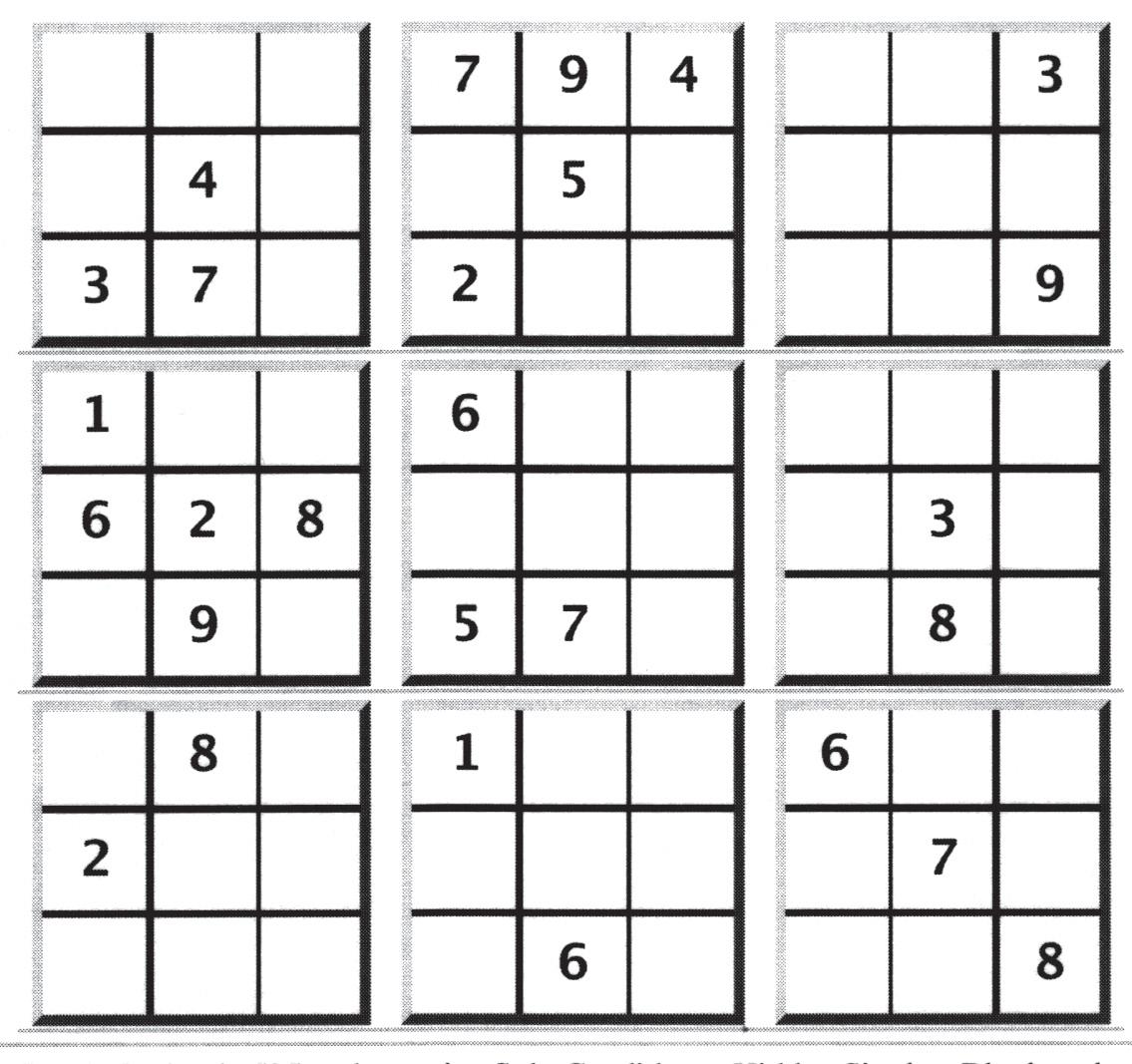
Fill in the empty cells, one number in each, so that each column, row, and region contains the numbers 1-9 exactly once. Each number in the solution therefore occurs only once in each of the three “directions,” hence the “single numbers” implied by the puzzle’s name. (Rules from wikipedia.org/wiki/ Sudoku)




We have availability for the 2020-2021 school year beginning June 1st at Hudson heights apartments. The studios include electric, heat, water, garbage and parking. There is coin-operated laundry facilities on site. Prices start at $750 / month for a 12 month lease. If you have any questions or would like to schedule a tour contact us by phone 607-280-7660 or email: renting@ithacaLS.com
COLLEGETOWN TERRACE APARTMENTS
Leasing for 2020/2021
Spring 2020 Semester leases
available Heat, hot water and Wi Fi State of Art Fitness Center
Shuttle Bus Service to campus
Washer & Dryer in Apartments collegetownterraceithaca.com
office@ithacastudentapartments.com (607) 277-1234
AVAILABLE 2020-2021
1, 2, 4 Bedroom Apts. and 7 person House
10 & 12 month leases Cook/Blair Street
Call or Text Christopher George RE 607-279-5520
Collegetown Crossing
College Ave's Newest Location 307 College Ave.
Now Leasing for 2020-2021
Completely New Modern Studios, 2 & 4 Bedroom Apartments. Fully furnished, heat & hot water included. Reception area at 307 College Ave. www.urbanithaca.com 607-330-2442 info@urbanithaca.com
120 Oak Avenue
Just steps to Cornell Campus 10 bedroom house & 1 and 2 bedroom apartment 607-277-1234
office@ithacastudentapartments.com Ithacastudentapartments.com
1, 2 & 5 Person Apts.
Overlooking Cascadilla Gorge
Architecturally designed. Decks, patio, fireplaces, Jacuzzis. Furnished, parking, internet. Utilities included. 607-592-7564
Now Renting 2-10 Bedroom Houses/ Apartments for 20-21. All Locations. Call today or visit our website: Certified Properties of TC Inc certifiedpropertiesinc.com 607-273-1669
Catherine & Eddy St.
1 & 2 bedroom
Furnished, heat included Laundry in building Parking available for fee 607-277-1234
office@ithacastudentapartments.com
109 Sage Place
2 & 3 Bedroom Apartments
Access to Shuttle to Campus Access to Free Fitness Center Novarr-Mackesey Property Management office@ithacastudentapartments.com 607-277-1234
504 1/2 Thurston AveSTUDIO 607-277-1234
office@ithacastudentapartments.com Ithacastudentapartments.com
20-21
College Ave. 5 BR House Furnished. Laundry. Parking. Call 607-273-8576
Spring 2020 Upper Eddy St. 7 BR house Furnished. Laundry. Call 607-273-8576
8-9 BEDROOM HOUSE FOR 2020-2021 133 Blair St Corner of Cook and Blair just off of College Ave. Huge rooms, great porch, free laundry, furniture, 4 bathrooms, 3 kitchens. Great storage closets, parking for 3-4 cars. Contact Nick at 607-256-3778 or nick@lambrourealestate.com 26 A PA R TMENT FOR R ENT
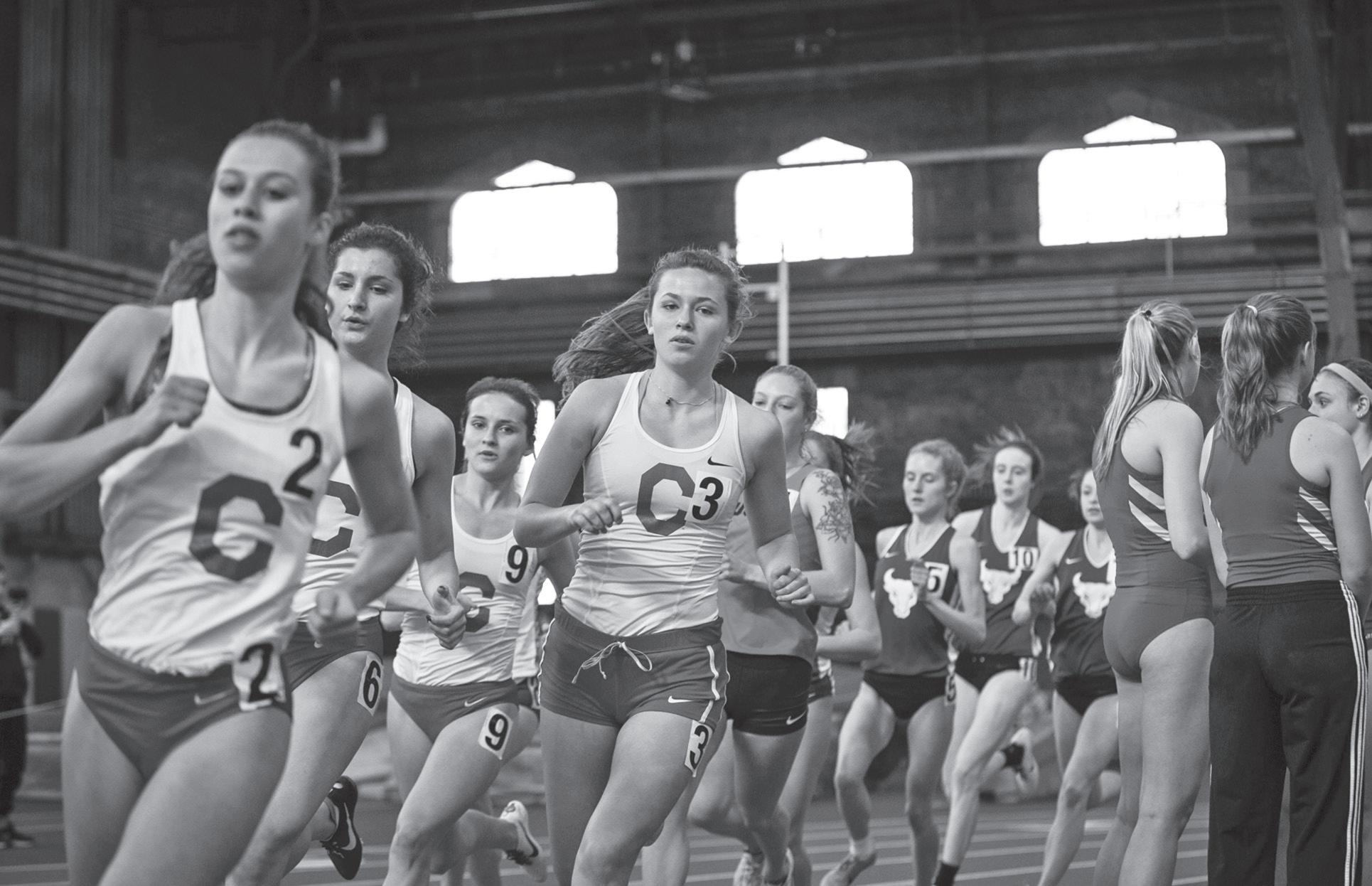
By ALYSON WONG Sun Staff Writer
The men’s and women’s track and field teams kicked off their indoor 2019-20 season this past Saturday by hosting the Greg Page Relays in Barton Hall. Both squads impressed in the season opener, with seven members from each team already auto-qualifying for the ECAC/IC4A Championships.
The women’s team came away with five first-place finishes and 15 top-three finishes. The distance medley relay team B (12:29.16), the 4x800m relay team A (9:52.86), and the 4x400 relay team B (3:52.62) all placed first in their races. Claire Kao for pole vault (3.65m) and Nikolia Kanaris for shot put (14.02m) also finished in first place in their respective events.
The men’s team ended the day with three first-place finishes and 13 top-three finishes. The 4x800m relay team A (7:58.04), 4x400m relay team A (3:23.89) and Zach Hawley (15.33m) for shot put all finished first in their respective events.
Many members from both teams also earned new personal records. On the women’s team, sophomore Angelica Arroyo (8.42), sophomore Leone Farquharson (7.84) and sophomore Kayleigh Furth (8.06) set new personal records in the 60m dash. Sophomore Beatrice Juskeviciute set a new personal record of 5.57m for long jump.
On the men’s side, sophomore Kuune Mini (6.84) set a new personal record in the 60m dash and tied for 10th in the Red’s all-time indoor track and field
records. Junior Sean Silas (7.22) also set a new personal record for the 60m dash. Sophomore Paris Howland set two new personal records, 7.10 in the 60m dash and 12.15m in shot put and Hawley (13.62m) earned a new personal record in weight throw.
Seven members from the women’s team auto-qualified for the ECAC/IC4A Championships by beating the standard marks needed for qualification. Kanaris qualified in shot put with a 14.02m throw, Farquharson qualified with a 5.70m long jump and Kao qualified with a 3.65m mark on the pole vault. The 4x400m relay team B of junior Skye Stewart, sophomore Elise Burdette, freshman Nia Robinson and sophomore Kayleigh Furth also qualified, finishing the race in 3:52.62.
Seven members from the men’s team also auto-qualified for the ECAC/IC4A Championships. Mini (6.84), senior James Norris (6.98), and freshman Jules Johnson (6.95) all qualified in the 60m dash. The 4x800m team A of freshman Mitchell Curl, sophomore Shane Johnson, freshman Robert Enck and junior Solomon Lawrence also qualified by finishing the race in 7:58.04.
The men’s and women’s track and field teams will return to action on Saturday Jan. 11 when they host the Southern Tier Collegiate Open at Barton Hall.
Alyson Wong can be reached at awong@cornellsun.com.
Red converts only three 3-pointers on 21 attempts, fails to knock down open looks in tight game
MEN’S BASKETBALL Continued from page 12
I can do to try to help us accomplish that.” Boeheim also collected eight rebounds in 30 minutes on the court. Boeheim kept the Red in the game late — he was very efficient in his scoring, going 13-of22 from the field, with most of those attempts coming within a few feet of the basket. Neither team led by more than seven points the entire game, as both sides shot the ball very poorly from beyond the arc. There were 20 lead changes and 14 ties throughout the contest, as each team led the game for nearly the same amount of time.
three-point range despite a plethora of open looks.
“This has never happened to me before,” said head coach Brian Earl. “On the spectrum of guys that I have coached and played with, these guys are not bad shooters. We shoot the ball very well in practice, but for some reason when we get into games it is an epic drought like I’ve never seen before. I don’t know if it is coaching or recruiting or something else, but honestly I don’t know.”
“We shoot the ball very well in practice, but for some reason when we get into games, it is an epic drought.”
Brian Earl
Cornell was just 2-of-11 from deep in the first half and converted just one 3-pointer on 10 attempts in the second half. Overall on the afternoon, it shot 14.3 percent from deep.
“We’ve had two one-point losses, one two-point loss, and now a three-point loss, so four 3-pointers made would be very helpful for us at this point in the season. But, this is sort of uncharted territory for me — I’ve never been a part of something quite like this before.”
Luckily for the Red, the Leopards were not much better in this department, shooting 33 percent from three.
While scoring was difficult for the Red, its defense was admirable. Cornell forced 14 turnovers and had nine steals. Additionally, junior guard Bryan Knapp held Lafayette’s Justin Jaworski, the leading scorer in the Patriot League this season, to just 10 points, none of which came after halftime.
“It was really a team effort on defense today, we switched when we had to, and as always we went hard on that side of the ball, which made it really difficult for [Jaworski] to score,” Knapp said.
three turnovers and came down with 10 offensive rebounds. But despite its stellar play across the board, it simply could not knock down shots, especially when it mat-
“As a Division I team, you can’t shoot 14 percent from three and expect to win any games.”
Brian Earl
tered most down the stretch.
Cornell will look to get back into the win column for the first time in over a month when it travels to Colgate Wednesday in its last action before the winter break. The Raiders have won three straight contests against the Red.
As has been the theme all season for the Red, the squad struggled mightily from
“As a Division-I basketball team, you can’t shoot 14 percent from three and expect to win any games,” Earl said.
Cornell also handled the ball very well and gave itself ample opportunities to score. The Red only committed
By RAPHY GENDLER Sun Sports Editor
It had to happen eventually: After an impressive 10-game tear to open the 2019-20 season, No. 2 Cornell men’s hockey’s historic winning streak is over.
Behind 39 saves from goaltender Adrian Clark, Dartmouth (4-3-1, 4-2-1 ECAC) beat Cornell (10-1, 7-1), 2-1, at Thompson Arena on Saturday night, ending the Red’s winning streak. The 10-game run had been the program’s best start to a season since its perfect 196970 national championship campaign. Cornell was the nation’s only remaining unbeaten team.


Cornell was forced to come from behind, something it hadn’t needed to do all season. But despite controlling play — outshooting the Green 40-17, peppering Clark with shots, crashing the net, hitting the post three times and earning five power play opportunities — the Red couldn’t avoid its first loss of the season.
Almost everything had gone right for Cornell through 10 games: The team has been almost perfectly healthy, dominated blue bloods Boston University and Harvard, picked up an elusive North Country sweep and consistently wore down opponents with four effective lines night in and night out.
But on Saturday, the Red finally ran into some bad luck, in the form of Clark and a handful of pucks — especially late — that just couldn’t find the back of the net.
“[Dartmouth] did the job with regards to special teams and we didn’t do the job with regards to scoring chances and just playing hard enough in order to win a hockey game on the road,” said head coach Mike Schafer ’86.
The Red dug itself into an early hole 2:20 into the first when Dartmouth’s Jeff Lusurdo rifled a puck past junior goaltender Matt Galajda right after the home team’s first power play of the game expired.
Thanks to junior forward and captain Morgan Barron’s goal with just 12 seconds left in the opening period, Cornell entered the first intermission tied. Barron’s tally was his seventh of the season and ended a four-game stretch without a goal for the Halifax, Nova Scotia native.
Less than a minute into the second period, Cornell fell behind again, as Matt Baker scored a sharp-angle goal to reestablish Dartmouth’s one-goal lead. The shot from near the goal line and close to the right corner showed just what kind of night it was for Cornell — the Green had just 17 shots on goal and limited scoring chances but was able to beat Galajda on two shots from outside prime scoring position.
“I don’t think we were as sharp as we’ve been collec-
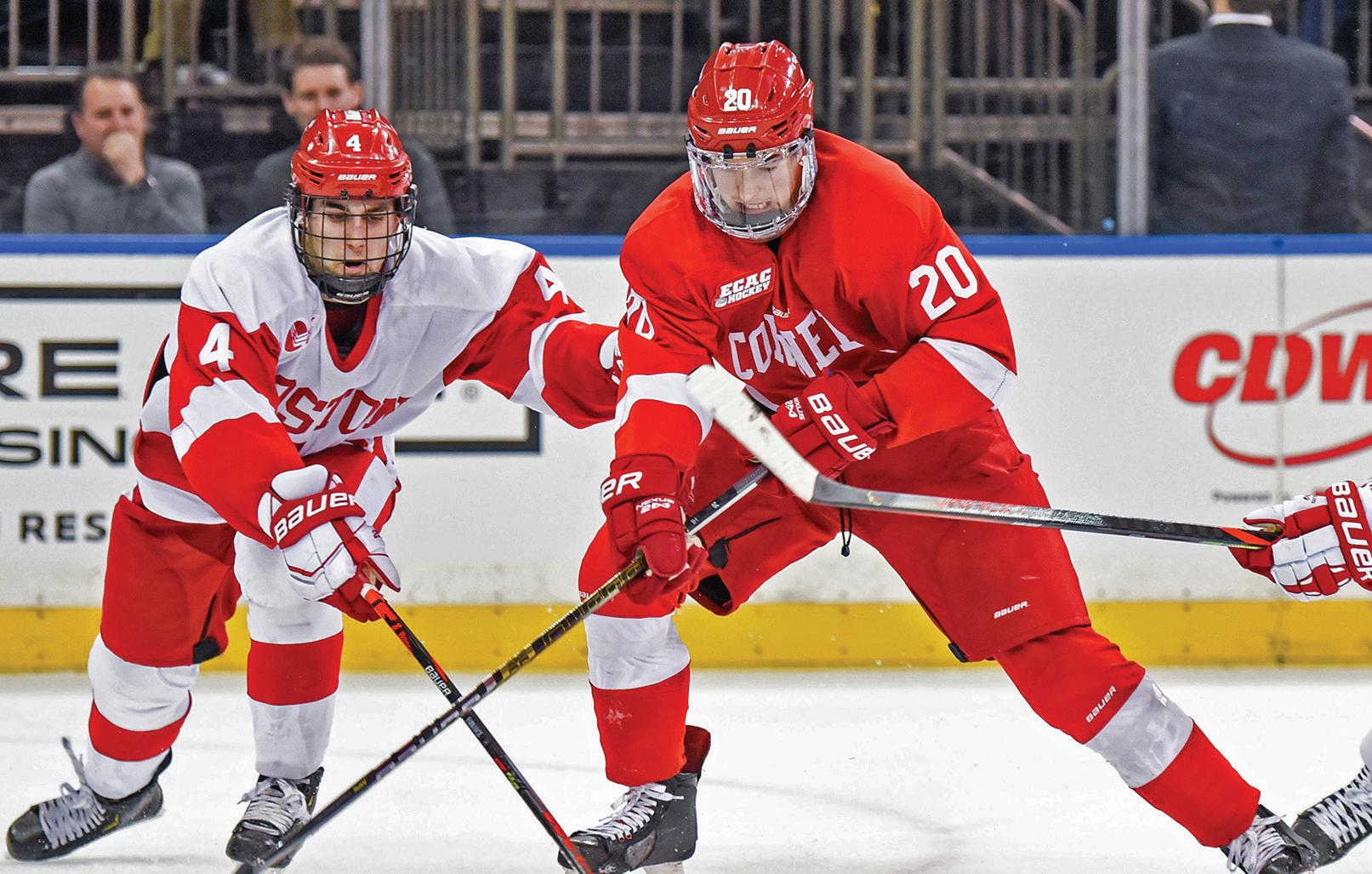
tively as a group,” Schafer said. “From net to our blueline to our forwards we [need] to play better. Maybe it’s a silver lining for us throughout the course of the year that we don’t go into Christmas break being undefeated … Guys are going to have to re-look and reevaluate how they played tonight and where we’re going forward.”
When it went behind by a goal early on — and again in the second period — Cornell found itself where it hadn’t been since its first game of the season. The Red hadn’t trailed in a game since Nov. 1 at Michigan State, when it fell behind 1-0 before emerging with a 3-2 win. Going into the game, Cornell had trailed for less than a single period all season, but the Red was behind for almost the entire 60 minutes on Saturday.
A Cornell team that was dominant in second periods through 10 games was outscored in the middle frame for the first time this season.
After Baker’s goal early in the second, Clark stood tall between the pipes the rest of the way to secure the win, making 39 saves. Cornell had chances galore throughout the game — including with an extra attacker in the game’s final minute — but couldn’t solve Clark to even up the score. Twenty-one of the Red’s 40 shots came in the final period.
The Red was 0-for-5 on the power play despite pestering Clark with several scoring chances. A couple odd-man rushes failed to produce quality shots. Senior forward and captain Jeff Malott’s shorthanded breakaway opportunity
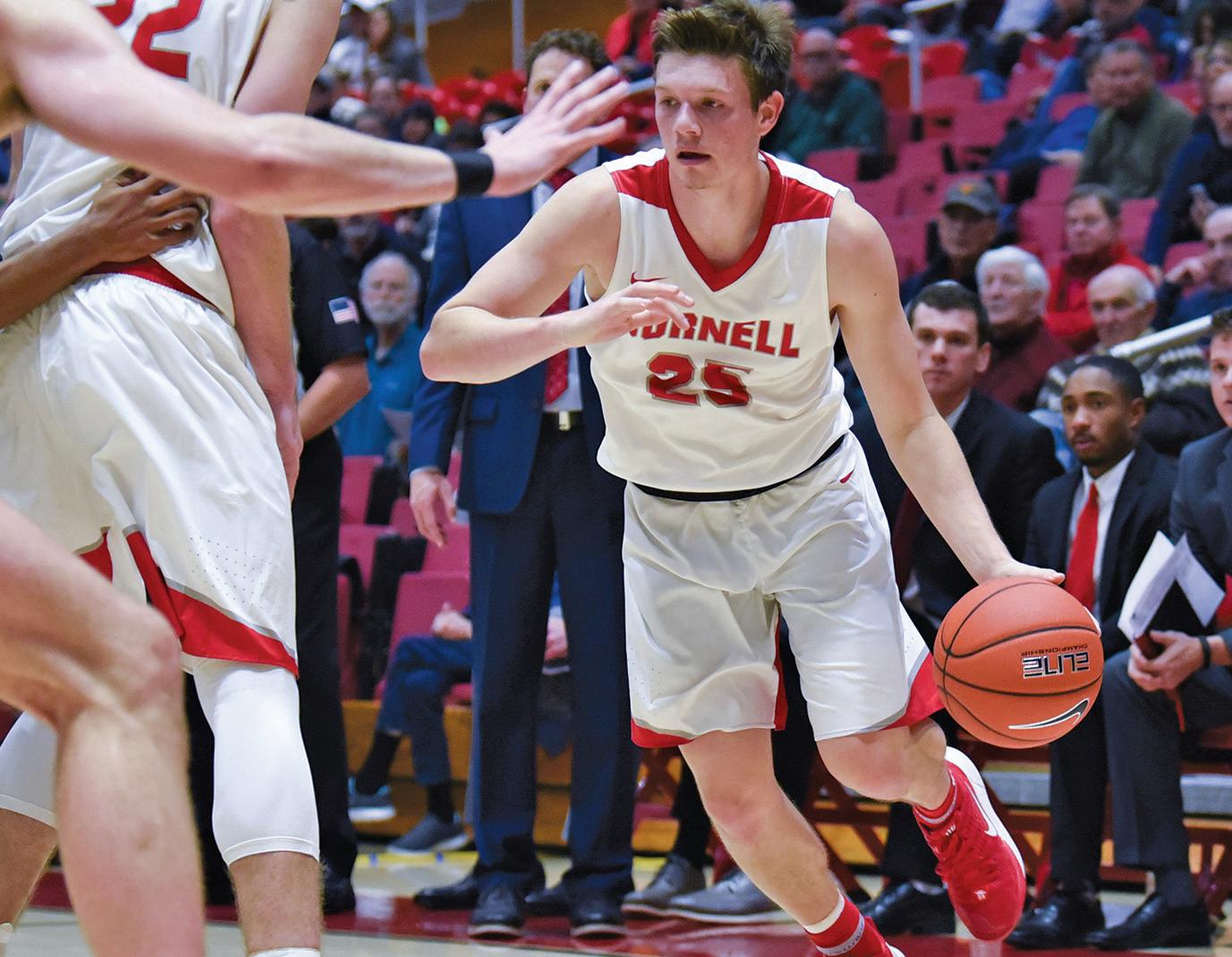
early in the first ended with a save by Clark. Cornell has gone four straight games without a power-play goal.
“Back-to-back nights we had great opportunities on
“Back-to-back nights we had great opportunities on the power play, but we gotta get in the back of the net.”
Mike Schafer ’86
the power play, but we gotta get in the back of the net,” Schafer said. “We hit a lot of goal posts tonight … missed breakaways, 3-on-1s where we didn’t even take a shot, but that’s just a symptom of not being prepared to get after it.”
Cornell is still alone in first place in the ECAC standings heading into final exams and winter break, clinging to a two-point lead over Clarkson and Harvard. The Red next takes the ice at the Fortress Invitational in Las Vegas during the first weekend of January.
Raphy Gendler can be reached at rgendler@cornellsun.com.
By BENNETT GROSS Sun Staff Writer
In yet another back-and-forth non-conference contest, Cornell men’s basketball came out on the wrong end of a one possession game. Lafayette entered Newman Arena and handed the Red its seventh consecutive loss.
“The second half is winning time, that is when you want to step up and try to help your team.”
Leopards senior Myles Cherry hit a 3-pointer from the top of the key with three seconds remaining in the game to clinch a 62-59 win for the visitors.
man Jordan Jones’s shot fell short, giving Lafayette (6-2) its fourth win this season against Ivy League opponents. Cornell was led by junior forward Jimmy Boeheim, who scored a season-high 27 points, 18 of which came in the second half.
Jimmy Boeheim
“The second half is winning time, that is when you want to step up and try to help your team as much as possible,” Boeheim said. “It is all about getting a win — we came up short today, which is tough, but all I want to do is win, and I do whatever
The Red (1-7) was able to get off a three-point attempt at the buzzer, but fresh-