
By VEE CIPPERMAN Sun News Editor
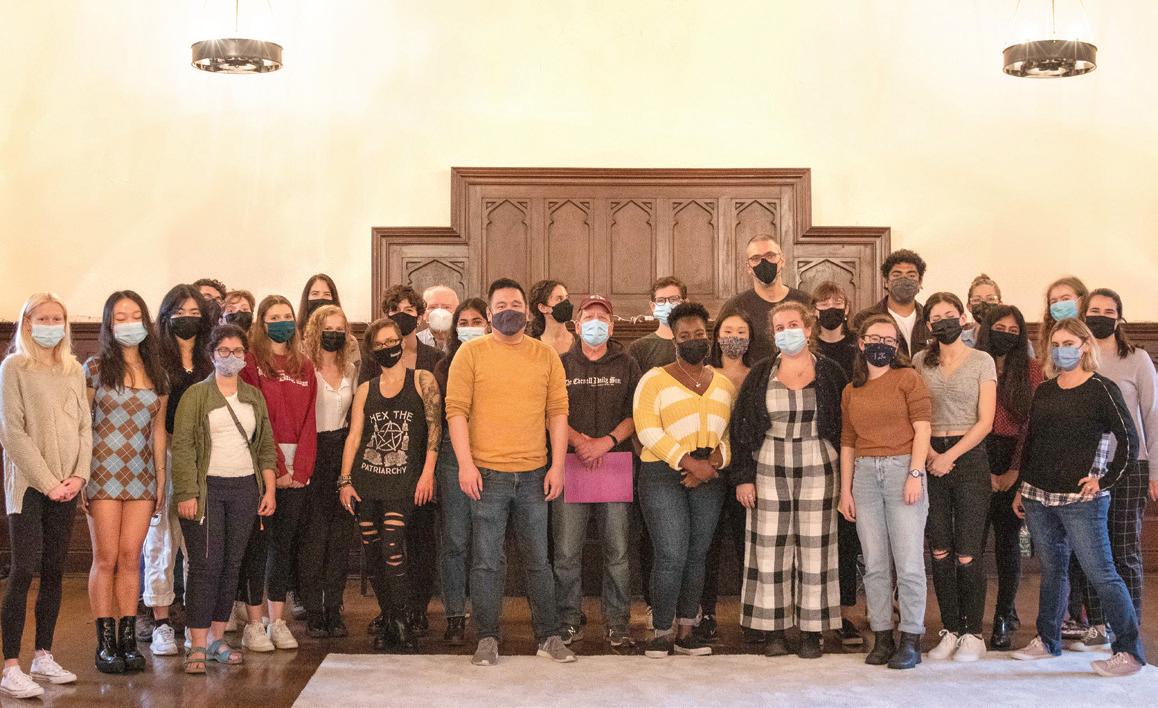
Fifty years after the Ivy League’s first women’s studies program was established at Cornell, the feminist, gender and sexuality studies program is celebrating its anniversary with a multidisciplinary event series. Centering collaboration, the program has partnered with alumni, students and professors in several departments to commemorate their progress and organize for their future.
“It
The FGSS program anniversary coincides with the 30-year anniversary of the LGBT studies program, founded in 1994. A yearlong series of events running through May 2022, including a roster of feminist and queer speakers across departments, is honoring the anniversary, alongside other events such as a theater history series and alumni events in New York City.
Prof. Jane Juffer, literatures in English and director of the FGSS program. “Those are two intertwined but distinct elements.”
Roberta Sklar and Sondra Segal. The next two centered artists in the 1990s and the present.
This weekend, FGSS hosted an alumni event at the Cornell Club in New York City, which included the launch of Millennial Feminism at Work: Bridging Theory and Practice, a collection of 17 essays by millennial feminists and including Cornell alumni, edited by Juffer.
was important for us from different generations, to think critically and reflect on what kinds of choices were made in the past.”
Ximena Sanchez ’23
This semester, both the FGSS and LGBT studies programs have hosted a variety of events exploring feminist and queer issues from different angles. The September event “Trans-Generational” united queer scholars of different academic levels, from current undergraduates to president of Amherst College Biddy Martin, to discuss changing definitions of gender studies over time.
According to Prof. Sara Warner, performing and media arts and director of LGBT studies, FGSS and LGBT faculty wanted to celebrate the two anniversaries simultaneously to examine the overlaps and distinctions between the two fields.
“We are a program that focuses on gender and sexuality,” said
“It was important for us, at different levels, from different generations, to think critically and reflect on what kinds of choices were made in the past,” said panelist and current FGSS minor Ximena Sanchez ’23. “How did we get here?”
Warner hosted a three-part event series this September through eCornell on feminist theater. The first event featured activists working in the 1960s, including It’s All Right to Be Woman Theatre founder Sue Perlgut and Women’s Experimental Theatre founders
According to Juffer, the purpose of the event was to connect with alumni in a centralized group, following successful FGSS career events for current majors hosted on Zoom last year. Next semester, the anniversary celebrations will continue with a book launch for Trans Historical: Gender Plurality
Before the Modern by Prof. Masha Raskolnikov, literatures in English, and events on immigration, refugees and detention through a feminist lens. Warner will teach LGBT 2290: Introduction to Lesbian, Gay, Bisexual and Transgender Studies, where students will create documentary theater pieces based on Cornell archive research.
“We’re going to orient the class around the anniversary and take a deep dive into the Cornell archives,” Warner said.
See ANNIVERSARY page 3
By MADELINE ROSENBERG and ANIL OZA Sun Managing Editor and Sun Assistant Managing Editor
On Monday, Tara Atluri ’24 was pronounced dead at Cayuga Medical Center after being found unresponsive in her apartment off campus that morning.
Atluri was a sophomore in the College of Agriculture and Life Sciences who had a “deep love for plants and nature,” CALS Dean Benjamin Houlton wrote to the CALS community, and Ryan Lombardi, vice president for student and campus life, later wrote in a University statement Monday evening.
“Tara was described by her faculty as a brilliant scientist adept at solving the most challenging problems in innovative ways,” Lombardi wrote.
Before coming to Cornell as a student in the fall of 2020, she had already participated in summer internships with the University Herbarium twice, according to Houlton’s email. Upon joining Cornell as a CALS undergraduate, where she was studying biological sciences, she started independent research in the Gandolfo and Specht Labs, working on 3D constructions of inflorescence branching, the email read.
This is the first death of a student reported during the fall 2021 semester, after four student deaths in the spring.
The University will host a support meeting for the Cornell community on Wednesday Dec. 8 from 12:15 p.m. to 1:15 p.m. in the International Lounge (414) in Willard Straight Hall.
Students in need of professional mental health support can call Counseling and Psychological Services (CAPS) at 607-255-5155 and employees can call the Faculty and Staff Assistance Program (FSAP) at 607-255-2673. Due to the COVID-19 pandemic, all CAPS and FSAP services are currently being delivered via telehealth. Whenever these services are closed, calls are answered by Cornell Health’s on-call mental health provider. The Ithacabased Crisisline is also available at 607-272-1616. A wide range of supportive resources is also available at caringcommunity. cornell.edu.
Madeline Rosenberg can be reached at mrosenberg@cornellsun. Anil Oza can be reached at aoza@cornellsun.com.
By ELI PALLRAND Sun Staff Writer
In its last meeting of the semester, the Student Assembly met for more than four hours in three separate back-to-back meetings as it ended its byline funding cycle with a lengthy debate over raising the student activities fee. The student activities fee is a mandatory fee that all students pay to fund student organizations. The fee amount is decided by the Student Assembly at the end of its two-year byline funding cycle, and approved by the University president. Currently, the annual student activities fee is
$309 per student per year. Byline funded organizations each get a fraction of the student activity fee, which they use to fund their projects or subsidiary campus organizations.
The byline funding cycle had already become controversial within the assembly multiple times this semester. The S.A. heard multiple appeals by byline organizations against the funding decisions given to them by the appropriations committee, cut an organization from byline funding altogether and replaced its vice president of finance midway through the funding cycle.



More Than Movement: Choreographing Identities on Global Stages 9:40 - 10:55 a.m., A.D. White House
The Recruitment and Appointment of Supreme Court Judges in Europe: A Comparative Perspective 11 a.m. - Noon, Virtual Event
Behavioral Economics Workshop: Kelly Shue 11:15 a.m. - 12:45 p.m., 141 Sage Hall
Econometrics Workshop: Liyang Sun 11:15 a.m. - 12:45 p.m., \ 217 Ives Hall
Twenty Years of War: Coalitions of War and Anti-War 3 p.m., Virtual Event
Portuguese Conversation Hour 3 - 4 p.m., G25 Stimson Hall
Thinking of a Career in Academic Publishing? 4:30 - 6 p.m., Virtual Event
Festival of Medieval Readings 5 p.m., Big Red Barn
Sharing Mary 6 - 7:30 p.m., G-14 Anabel Taylor Hall
Design Your Succession Plan Series 6:30 - 8 p.m., Virtual Event
Bjerken Piano Studio Recital 8 p.m., Barnes Hall
Advanced Soil Health Course From a Global Perspective 8 - 11:30 a.m., Virtual Event
Course Design Institute for Faculty and Instructors 9 a.m. - 3 p.m., ILR Conference Center
City and Regional Planning Graduate Information Session 10 a.m., Virtual Event
Employee Assembly Communications, Outreach And Recognition Committee Meeting 11 a.m. - Noon, Virtual Event
No Sleep, No Social Life, No Self-Care: The Cost of Caregiving and How You Can Lighten the Load Noon - 1 p.m., Virtual Event
Produce Safety Alliance Grower Training Course Noon - 5 p.m., Virtual Event
Spray Safe, Spray Well: An Introduction to Integrated Pest Management for Vegetable Growers Noon - 1 p.m., Virtual Event
No Purchase Necessary: Low to No Cost Plug Load Management Strategies 1 - 2 p.m., Virtual Event
Future Directions in the Study of Migration and Racial Justice: A Postdoctoral Symposium 4 - 5:30 p.m., G-08 Uris Hall
Former Speaker Newt Gingrich: An Historic Perspective 7 - 8 p.m., Virtual Event


of faculty, we do offer comprehensive health care, which very few universities do.”
A major purpose of the anniversary celebrations, according to Juffer, is to celebrate the evolution of FGSS and LGBT studies over time.
FGSS, originally called “Female Studies,” offered its first class in 1970 titled “The Evolution of the Female Personality: History and Prospects.” According to Juffer, it followed academic activism in the 60s and 70s to make room for marginalized groups within the University. Prof. Durba Ghosh, history, and former director of the FGSS program, noted that student activism prompted the establishment of the program at Cornell.
Going forward, Juffer and Warner emphasized the importance of multidisciplinary work for both programs. Warner noted that FGSS, LBGT studies and PMA all study representation and media, especially where they relate to feminist and queer rights. She said that they also explore justice and privilege in overlapping ways.
“It’s really important to celebrate queer joy and trans joy. We’ve made a lot of gains. ”
Prof. Sarah Warner
Over time, Juffer stated, FGSS has changed its title to highlight gender-based activism. The program was established in 1972 as the Program in Women’s Studies. In 2002, the program name was changed to Feminist, Gender and Sexuality Studies to reflect its inclusion of LGBT course offerings. It has grown to include six joint-appointed professors in literatures in English, Africana studies, anthropology and science and technologies studies. Approximately eight majors and 20 minors graduate from FGSS each year.
The LGBT program, according to Warner, similarly grew out of student activism and has continued to expand since its founding in 1994. The LGBT Resource Center was founded the same year.
“It grew out of the desire for people, in the wake of AIDS activism and everything that was going on in the 1990s, to think more critically about sexuality studies,” Warner said.
Ghosh highlighted the importance of expanding faculty diversity within the FGSS department. She explained how professors with multiple appointments help to integrate new ideas and disciplines into courses offered by the FGSS department, highlighting two new assistant professors Prof. Tao Leigh Goffe, FGSS and Africana studies, and Prof. Juno Salazar Parreñas, FGSS and science and technology studies.
Ghosh added that senior majors are encouraged to complete capstone projects incorporating knowledge from different disciplines, as many FGSS students are either double majors or pursuing an FGSS minor. Sanchez, an engineering student, said she appreciates the perspective that her FGSS minor offers her.
Juffer said expanding to other colleges through cross-listed courses could help FGSS progress from a program to a department, which would expand funding opportunities and allow FGSS to give professors tenure. Over the next year or two, she said, FGSS will be looking for an environmental studies and a transgender studies faculty member to be appointed within FGSS.
By MIA GLASS Sun Staff Writer
Ithaca’s homeless shelters and food providers anticipate a rise in demand as the harsh winter and pandemic-induced supply shortages approach. Organizations such as St. John’s Community Services, the Human Services Coalition of Tompkins County, and Loaves and Fishes are hard at work to provide shelter, food and other assistance to those in need.
St. John’s Community Services has been operating a homeless shelter in Ithaca since 2018. They work closely with the Tompkins County Department of Social Services and the Human Services Coalition of Tompkins County to sign the people up and approve them for shelter.
This formal approval system for obtaining shelter at St. John’s Community Services is only required during the warmer months. Once the weather hits below 32 degrees Fahrenheit, including wind chill, New York State has a Code Blue policy that mandates shelters to accept all those in need.
for people,” said Liddy Bargar, director of housing initiatives at Human Services Coalition of Tompkins County.
St. John’s Community Services only has 20 beds in their shelter, but also uses hotels in Tompkins County to shelter people. For the Code Blue participants during the winter, they also offer extra places to stay in local churches, such as the First Baptist Church of West Danby
“We in Tompkins County do a really good job at Code Blue policy.”
Liddy Bargar
and St. Paul’s United Methodist Church.
“Knowing that we provide a safe, warm place for people to get out of the elements, particularly in the winter, is very rewarding,” said Roy Murdough ’87 and New York State director of St. John’s Community Services.
“[Transgender and nonbinary] students are rightly pressing us for more curricular offerings that speak to them.”
Prof Durba Ghosh
Warner noted that LGBT activism became significant on Cornell’s campus in 1968 when students formed the second homophile movement in the country, following Columbia. Since the LGBT program’s founding, Warner said, Cornell has made strides for LGBTQ+ community members. The Loving House, a living project that began in the 1990s, opened in 2019. According to Warner, Cornell Health provides considerable resources for transgender students compared to other universities in the U.S.
“I think Cornell can be really proud of some of the policies and practices it has around transgender study,” she said. “Even if we lack a critical mass
Ghosh and Sanchez both shared their hope for FGSS to also expand transgender studies coursework. Sanchez stressed the importance of offering more specific classes on trans issues, rather than including them as a side note.
“I’ve been at Cornell for 15 years,” Ghosh said. “The biggest growing population of students are nonbinary or trans. Those students are rightly pressing us for more curricular offerings that speak to them.”
As the anniversary continues, Warner noted that the anniversary is both an opportunity for celebration and constructive examination.
“It’s really important to celebrate queer joy and trans joy,” Warner said. “We’ve made a lot of gains nationally and internationally, but we are definitely at a moment when people are trying to roll back those rights for women, for queers and for transgender people. We have to remain ever vigilant.”
Surita Basu ’23 contributed reporting.
Vee Cipperman can be reached at vcipperman@cornellsun.com.
Vice President of Finance
Valeria Valencia ’23 presented the new student activity fee — $310, a $1 increase from the last byline cycle.
S.A. bylaws prevent the assembly from adopting appropriations committee recommendations at the same meeting where they are introduced. To follow this rule and still finalize the fee, the student activities fee proposal was reintroduced at a second meeting that night.
But contentious debate ensued. Ultimately, the S.A. ended up meeting for another two hours, called a third meeting, dropped to less than two-thirds of total members in attendance and passed its byline funding just before 9 p.m. by the exact number of votes required.
Some representatives, includ-
ing Undesignated At-Large Representative Lucas Smith ’22, thought that discussion was needed before a vote on byline funding could pass.
“I think it would’ve been a really, really bad precedent for the assembly to have had no discussion, even if we had very little that we tangibly wanted to say,” Smith said.
Other representatives, like College of Arts and Sciences Representative Everest Yan ’22, said he felt more strongly about the process that creates the proposed student activities fee.
“Throughout this semester in our meetings we kind of passed along the byline reports noting that we might cut later, and raising a lot of allocations but [with] promises that we would lower the fee eventually,” Yan said. “Where did we go wrong? Where did we fail our constituents?”
Other members later argued
that arguments for cutting organizations’ funding were unfair because COVID-19 exposed organizations to significant pressures.
“There has been a general trend of people wanting to cut organizations funding,” said Arts and Sciences Representative Claudia León ’23. “I feel like it should have been approached with a lot more compassion because we’re coming out of a pandemic.”
Undesignated At-Large Representative Benjamin Luckow ’24 defended the proposed student activities fee as actually saving students money because, given inflation rates, $310 is a roughly $20 discount from what a fee of $309 meant to students two years ago.
To continue reading this story, please visit cornellsun.com.
In Ithaca, where temperatures are often below freezing, this effect has been prominent. The number of shelter-seekers go from an average of 70 to 80 per night in the summer months to nearly double that amount in the winter.
“We in Tompkins County do a really good job at Code Blue policy and do meet that need
St. John’s Community Services and the Human Services Coalition of Tompkins County also provide services for people in the outdoor homeless encampment located in southwest Ithaca, or what is known as “the Jungle.”
To continue reading this story, please visit cornellsun.com.
Mia Glass can be reached at mglass@cornellsun.com.
Editor in Chief Kathryn Stamm ’22
STAFF
MONTERO by Lil Nas X
I had high hopes for Lil Nas X’s debut album, and I have to say, it did not disappoint. Not only does he deliver some classic dance-able songs like “MONTERO (CALL ME BY
Out” and “Find Myself,” help audiences really connect with the despair and slivers of hope that a lot of people have felt in the past two years.
— Tom Sandford
’24
Donda by Kanye West
After the mess that was his 2019 Jesus Is King release, Kanye bounced

YOUR NAME),” but he showcases a variety of genres with his more introspective tracks like “SUN GOES DOWN,” exploring themes of identity and struggling under pressure. I was impressed with Lil Nas X’s range, all displaying a depth of emotions fit for any mood. He also has some unique features on the album, such as Elton John and Miley Cyrus. Lil Nas X really shines on MONTERO, moving listeners from dancing to crying, leaving me replaying it for months.
— Emma Leynse ’23
See What’s On the Inside by Asking Alexandria
The seventh studio album from the British rock group, Asking Alexandria, See What’s on the Inside was a contemplative look at the changing identities of a world that has been locked inside for almost a year. This is their first album with their new label and is a reminder of what made them so popular in the late 2000s and early 2010s. Notable singles include “Alone Again,” which grapples with similar themes as their 2017 hit “Alone in a Room.” Other hits include “Faded
back hard with Donda, a sprawling album that channels his new religious themes in a much more interesting manner than his previous work. From the epic “Heaven and Hell” to the introspective “Jesus Lord,” Kanye delivers something for everyone on this project, while giving it strong emotional weight with its connection to his mother. He’s shown he can still be a heavy hitter in the modern rap game, and I’m excited to see where he goes next.
— Nihar Hegde ’24
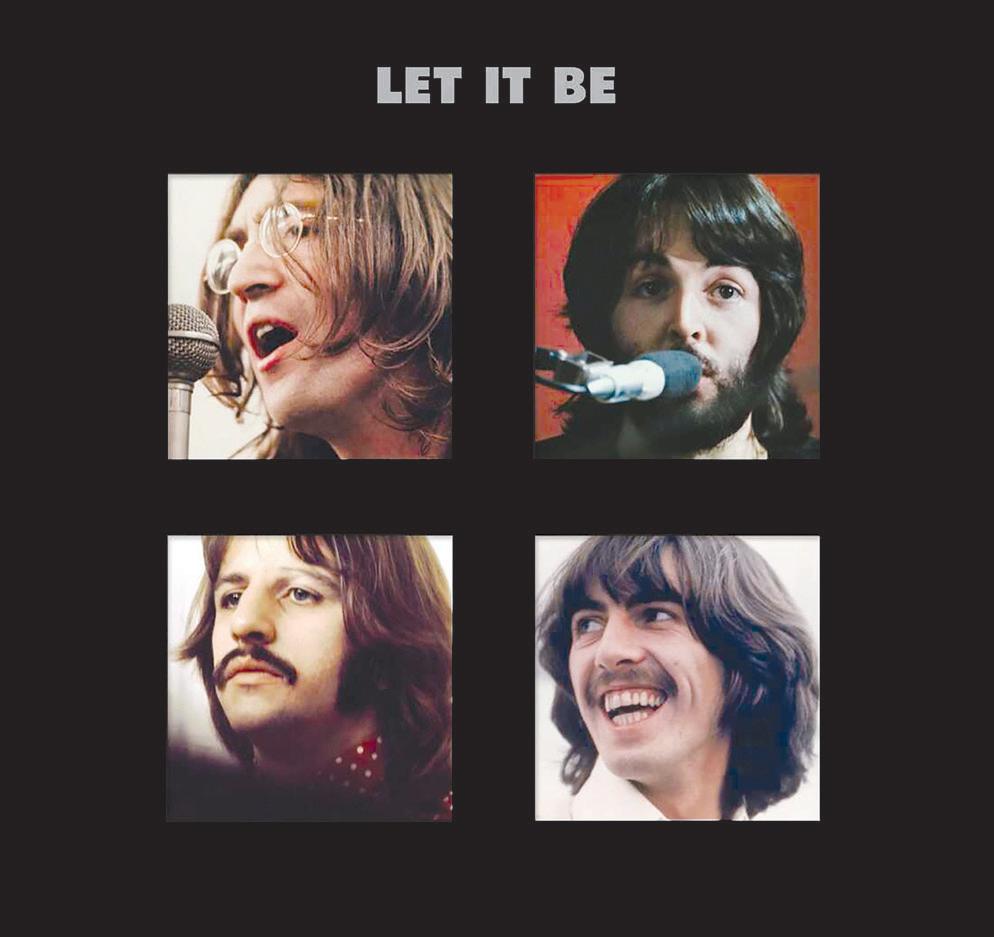
Let It Be: 50th Anniversary Edition by The Beatles Released in tandem with the Peter Jackson-helmed documentary The Beatles: Get Back, Let It Be: 50th Anniversary Edition contains a remixed version of the Beatles’ final released album, overseen by producer (and son of original Beatles producer George Martin) Giles Martin along with songs and sequences from the album sessions in January 1969. Early versions of songs such as “Get Back” and “Don’t Let Me Down” appear along with early versions of Beatles
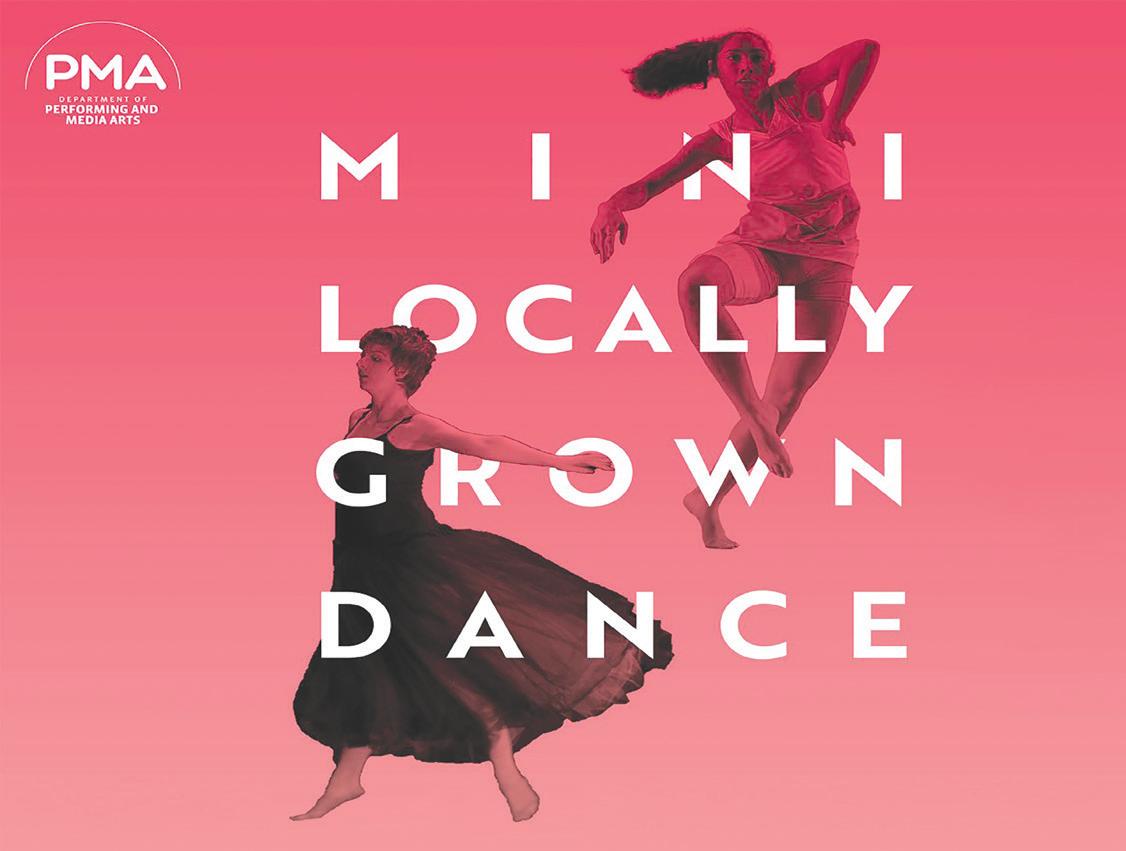
solo songs, including “All Things Must Pass” and “Gimme Some Truth.” Complementing the renewed interpretation of the tone and atmosphere of those sessions, the remixed album rings out with a crispness and vitality which cast a new and well-deserved light on what has traditionally been seen as an album marred by discord and acrimony.
— John Colie
’23
stirring background vocals. Clark’s sublime guitar skills continue to be a revelation, and Daddy’s Home only further solidifies her status as a modern rock legend.
— Violet Gooding ’25

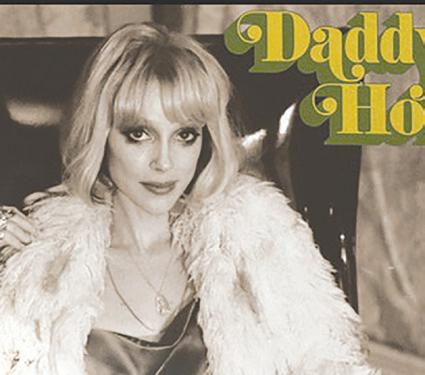
Daddy’s Home by St. Vincent Daddy’s Home, the sixth studio album from St. Vincent, is an homage to 1970s New York and a meditation on her father’s imprisonment. After 2017’s Masseduction, Annie Clark and her co-producer Jack Antonoff have turned away from glam rock to a more psychedelic and blues sound. The groove in “Down” and “Daddy’s Home” teems with blistering discontent and anger. In the latter, Clark explores the idea of reparenting, a process of fulfilling the needs not met in one’s own childhood and then becoming her own “daddy”. More subdued tracks like “…At the Holiday Party” and “Live in the Dream” are sonic gold mines, glistening with exquisite production, sitars, lap steels and
Call Me if You Get Lost by Tyler, the Creator I didn’t expect anything from this album because I always know that Tyler likes to switch up his style. However, I really liked that he didn’t try to make another IGOR, and he went back to his rap roots. Songs like “SIR BAUDELAIRE” and “LUMBERJACK” have these heavy boom-bap rap sounds that are reminiscent of 90s New York rappers like the Gravediggaz and Nas. In contrast “WUSYANAME” has a pop feel to it with a surprise feature from NBA Youngboy. “HOT WIND BLOWS” has a beautiful sample that makes you feel like you’re on a vacation in
Obviously is a sonic thrill ride. While the band is able to maintain their signature blend of 60s soul, vintage rock and R&B, their sound is cleaner on this record, though their songwriting is just as adventurous. With the addition of new keyboardist Akie Bermiss, the group is able to strike a new pristine balance as collaborators, with bassist Bridget Kearney, drummer Mike Calabrese and guitarist Mike “McDuck” Olson eagerly creating a classic landscape for Rachael Price’s jazzy vocals. While upbeat highlights “Hypotheticals” and “Same Old News” will likely garner the admiration of many listeners unfamiliar with the band, slower moments like “Nobody’s Stopping You Now” and “Anymore” are those in which their musicianship capabilities truly shine. In this album, the band has created a cohesive record that presents a listen unlike anything else out this year.
— P. J. Brown ’25
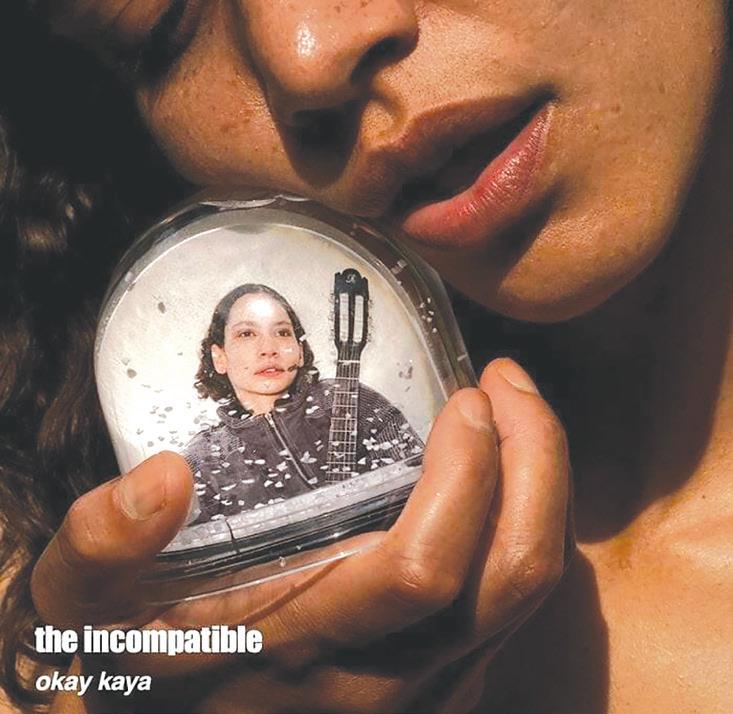
The Incompatible by Okay Kaya A hybrid release of covers and new songs, the newest album by indie Swedish siren singer and actor Okay Kaya is absolutely enthralling. The
Greece. “RISE” has a great message about being oneself and proving people wrong with your success. The album has deeply inspired me, and although I wouldn’t say it’s his best album, it’s a high contender.
— Adesuwa Carlton ’24
Obviously by Lake Street Dive
The latest effort from this genre-defying band from Boston finds them at their collaborative prime. Produced and engineered by Mike Elizondo,
Dance is inherently about connection, moving, breathing and feeling the physical weight of one’s fellow dancers. In the almost two years since the pandemic began, dancers and choreographers have had to continuously adapt to new restrictions and guidelines. Students in dance courses in Cornell’s Performance and Media Arts (PMA) department have experienced the whole gamut of these changes, adjusting to hybrid dance classes over Zoom, virtual concerts and performing in masks.
So with a sigh of relief and return to a new normal, PMA held its first live student dance performance in the Schwartz Center from Dec. 2-4. This Mini Locally Grown Dance exhibition featured four works which will
cover versions slow down her art pop hits “Psych Ward” and “Dance Like U” among others. Her raw voice and twisted poetry will gore your heart from your chest. In her new single “Book of Love,” Okay Kaya gives a waterfall of soothing melodies. The book of love is filled with “things we’re way too adult to know.” If you’re sad and sexy, you’ll listen to this album.
— E. D. Plowe ’23
be featured again in their fully-realized capacity at the end of the spring semester in the annual Locally Grown Dance show.
Mini Locally Grown Dance promised to “surprise and, in some ways, comfort both the performers and the audience.” Having not attended an in-person dance performance since pre-pandemic, I certainly found comfort and exhilaration in seeing bodies move on stage just a few feet away. The intimate setting of the Class of ’56 Dance Theatre, where the audience is seated on risers directly above the stage, was the perfect way to return to dance.
To see the sharp lines and muscles of the dancers and hear their breathing as the lights dim is to experience a snapshot of time existing solely for the dancers and audience.
To read the rest of this story, please visit cornellsun.com.
Eliza Salamon is a sophomore in the College of Arts and Sciences. She can be reached at ecs287@cornell.edu.
ANUSHYA ALANDUR ’23
Business Manager
PRANAV KENGERI ’24
Advertising Manager
ODEYA ROSENBAND ’22 Opinion Editor
VEE CIPPERMAN ’23 News Editor
CAMERON HAMIDI ’22 App Editor
JOHN YOON ’23
OMSALAMA AYOUB ’22
SRISHTI TYAGI ’22
MIHIKA BADJATE ’23
SURITA BASU ’23
JOHN COLIE ’23
Assistant
JULIA NAGEL ’24 Assistant
AARON SNYDER ’23 Assistant
NOAH ALPERS ’22
NIKO NGUYEN ’22
Milo Gringlas ’22
MADELINE ROSENBERG ’23
Managing Editor
NAOMI KOH ’22
Web Editor
YUBIN HEO ’24
Assistant Web Editor
TAMARA KAMIS ’22
News Editor
E.D. PLOWE ’23
Arts & Culture Editor
HANNAH ROSENBERG ’23
Photography Editor
LUKE PICHINI ’22
Sports Editor
ANNIE WU ’22
Production Editor
AMAYA ARANDA ’23
Multimedia Editor
ANGELA BUNAY ’24
Assistant News Editor
EMMA LEYNSE ’23
Assistant Arts & Entertainment Editor
WILLIAM BODEMAN ’23
Assistant Sports Editor
SASHA ABAYEVA ’24
Newsletter Editor
CONNOR GREENE ’22
Senior Editor
News Board
Egan ’23
’24
Katherine Yao ’22
Alecia Wilk ’22
Vanessa Olguin ’22
Niko Nguyen ’22
Andrew Lorenzen ’22
Tilda Wilson ’21
Stephen Yang ’22
Hunter Simmons ’22
Megan Pontin ’23
Charlee Mandy ’23
Aditi Hukerikar ’23
Alyson Wong ’23
Monica Kim ’23
Cooper Stepke ’23
Milena Bimpong ’22
Anirudh Sharma ’23
Margaret Chan ’22
Meridien Mach ’22
Olivia Smith ’22
Current Cornell
CATHERINE ST. HILAIRE ’22
Associate Editor
ANIL OZA ’22
Assistant Managing Editor
JYOTHSNA BOLLEDDULA ’24
News Editor
NOOREJEHAN UMAR ’23
News Editor
KRISTEN D’SOUZA ’24
Design Editor
BENJAMIN VELANI ’22
Dining Editor
PUJA OAK ’24
Layout Editor
MARIA MENDOZA ’24
Graphics Editor
SERENA HUANG ’24
Assistant Business Manager
KAYLA RIGGS ’24
Assistant News Editor
AMELIA CLUTE ’22
Assistant Dining Editor
LIAM MONAHAN ’24
Assistant Sports Editor
MEGHANA SRIVASTAVA ’23
Compet Manager
CAROLINE JOHNSON ’22
Senior Editor
BENJAMIN PARKER ’22 Senior Editor
AS THE SEMESTER COMES TO A CLOSE, The Cornell Daily Sun looks toward a brief hiatus through winter break to provide our editors, writers and staff a well-earned pause.
This semester has been unpredictable, difficult and draining, and I’ve watched this staff face every challenge with open arms and steady hands, telling the stories of the changes and current lives here on campus. They’ve worked through the usual stressors that come with working on a paper with the added insurmountable hurdles of the present moment.
Anuli Ononye ’22
Somil Aggarwal ’22
Emma Smith ’22
Matthew Samilow ’22
Nicholas Nguyen ’22
Mira Kudva Driskell ’23
Eliza Salamon ’24
Amy Wang ’24
Lily Kalish ’24
Dylan McIntyre ’24
Nihar Hegde ’24
Ally Knapp ’24
Mitch Hoy ’24
Logan Hanchett ’24
Jessica Dai ’23
Esterl ’24
Abayeva ’24
’24 Isabelle Goodrow ’24
Kelsey Xu ’24
Opinion Board
Daniel Bernstein ’22
Lorelei Meidenbauer '22
Giancarlo Valdetaro ’22
Christian Baran ’22 Roei Dery ’23
Arts Board
Ella Schwartz ’24
Matthew Kassorla ’24
Audrey Ahn ’24
Max Roitman ’24
Tom Sandford ’24
Isabella DiLizia ’25
Gabriella Pacitto ’24
Grayson Ruhl ’24
Kobi Rassnick ’24 Meher Bhatia ’24 William Cox ’24
Sarah Young ’24
Ally Fertig ’24
Estee Yi ’24
Sara Javkhlan ’24
Sofa Rubinson ’24
Mira Harris ’24
Peter Kaplinsky ’22
Sofa Siciliani ’22
Rae Specht ’22
Jack Waxman ’22
Dominic Law ’22
Melanie Metz ’22
Finley Williams ’25 Dylan Van Bramer ’25 Vidya Balaji ’25
Brendan Kempf ’23
Patrick J. Mehler '23 Noah Do '24
Javed Jokhai '24
Rebecca Sparacio ’24
Kacey Lee ’25
Rafaela Uzan ’25
Haley Qin ’25
Sophia Gottfried ’25
Violet Gooding ’25
Amira Olingou ’25
Bryan Vicente ’24
Ruth Abraham ’24
’25 Jiwook Jung ’25
Beard ’24
Wise-Rojas '25
So first, I say a humble thank you to my dearest co-workers and friends.
I am so proud of what we’ve done together and am grateful for the work you have put into this paper. It can be hard to recognize our impact, but I hope that this break allows you a second to look back.
Come January, our pages — both virtual and in print — will be in the hands of the 140th editorial compets, a group of candidates for our 35 or so leadership positions. During these first weeks of the semester, they’ll train in the work of the nation’s oldest continuously independent college daily and figure out how to keep our beloved newspaper running. It’s no easy feat, but I can’t wait to see what they’ll achieve and where they’ll take The Sun.
Thank you, readers, as always for your support. I hope you also take this break to find a bit of light, laughter and reprieve — we certainly all deserve it.
— K.S.
Oluoma Iroajanma ’25
Lena Takor ’25
Gillian Lee ’25
Ashley Koca ’25 PJ Brown ’25
Katrien de Waard ’24
Anna Hooper ’24
Capwell ’24 Brooke Greenfeld ’24 Tenzin
KATELYNN LE / SUN CONTRIBUTOR
Niko Nguyen is a senior in the College of Agriculture and Life Sciences. He can be reached at nnguyen@cornellsun.com. Fault Line runs every other Friday this semester.
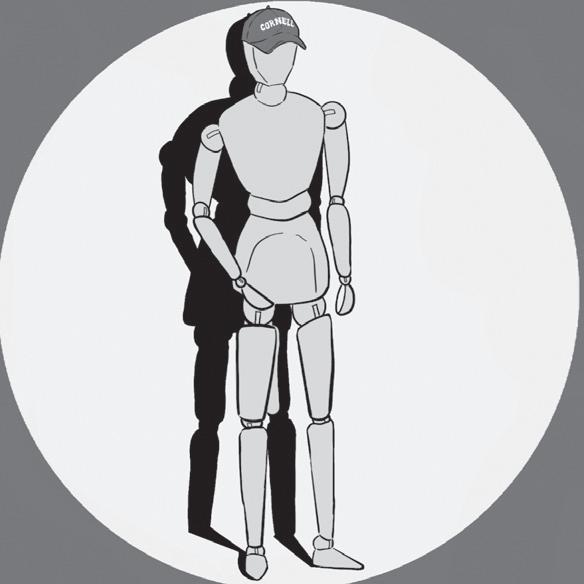
Aperfect version of me lies out there somewhere. His limbs are more outstretched than mine, landing his shiny head of hair at the 6’ mark. Where a shallow valley gapes between my eyes, a well-defned nose bridge juts out from his face. And he sorta looks like me, if only I could slap muscles onto my shoulders, pinch of the baby fat from my jawline and tighten my posture into a vertical pole.
But, of course, there’s a kicker: Tis guy lives deep in the trenches of my imagination. He’s not me, nor even an attainable picture of what I could look like. He’s taller, defned, chiseled. Softer where my features are too jagged, sharper where my features aren’t. And though I know I can’t edit my body the way that you can tweak a Bitmoji, I fnd my brain constantly using him as some fuzzy baseline for comparison every time I glance into a mirror.
Tese days, impossible what-if’s over my appearance infest my thoughts like ants swarming a picnic basket. Tey dig themselves into my head all day long. As I’m getting dressed in the morning. Before I step into lecture halls packed with classmates. Whenever I catch my refection in
the Four Seasons window on my walk up to campus.
And as I’ve spent more and more time mulling over my physical appearance these past few years, I’ve started to notice the toll that comes with owning and navigating a physical body in a college space.
I came to Cornell with an understanding and an acceptance that I’d struggle with Imposter Syndrome. To be thrust into an academic environment that breeds future senators and CEO’s? To have my intellect probed, weighed, dissected alongside my peers? Academic anxiety was a burden that I expected to carry into Cornell.
Less expected, though, were the ways in which I’d feel my body, my physical self, become a central subject of insecurity.
My frst week of college, I dove head- frst into the freshman party experience. I remember sober treks to Collegetown, annex-hopping down Eddy Street, clumsy hikes back up to North Campus. I remember my frst sip of KeystMne, the bass of mo Bamba, lapping up my frst dizzying O-Week experience. And somewhere along the way, I also remember learning the importance of a good “ratio.”
My frst week of college, I dove headfrst into the freshman party experience. I remember sober treks to Collegetown, annex-hopping down Eddy Street, clumsy hikes back up to North Campus. I remember my frst sip of Keystone, the bass of Mo Bamba, lapping up my frst dizzying O-Week experience. And somewhere along the way, I also remember learning the importance of a good “ratio.”
sews bodily objectifcation right into its social fabric. We’ve all heard the stories. Frat brothers referring to girls as “throats.” Te hookup tallies and the body count lists ranked by weight. And, it’s no secret that higher social access is granted to those who ft within the beauty standards in the Greek-life vacuum — a set of rigid parameters for what Cornell considers to be attractive. At this point, the blondifcation and bronzifcation of the sorority girl are long-running jokes. But, again, isn’t this just a product of a system that pushes individuals, particularly women, to aspire for narrow benchmarks of beauty? And what happens to those who don’t align with the cookie-cutter mold, who might lie outside of the expected skin color, sexuality, body size? When white heterosexuality governs beauty standards, minorities are left to consider whether their bodies even belong in the social hierarchy. Whether their bodies are desired. Whether their bodies are tokens or liabilities.
means having a friend group with a higher proportion of
ing a door, calculating and confguring the best formula
relation to the other bodies around us. Every time I went out freshman year, I stumbled into Collegetown with an acceptance that, for the night, my social identity would fatten into a single, faceless label. “Boy.”
A classic term in the Cornell handbook: A good ratio means having a friend group with a higher proportion of girls to guys. It’s key to breeching shitty annex parties. It means counting of your friends by gender before approaching a door, calculating and confguring the best formula for entry. And to some degree, it also demands us to start viewing ourselves as bodies. Bodies on a binary. Bodies in relation to the other bodies around us. Every time I went out freshman year, I stumbled into Collegetown with an acceptance that, for the night, my social identity would fatten into a single, faceless label. “Boy.”
It took me a while to consciously realize how my college years have shifted my attention toward my physical presentation. But, over the years, it’s wedged a gaping dissonance between my mind and my body. I’ve always believed that I have a pretty strong grasp on who I am: I’m a raging optimist, I enjoy crosswords and I prefer tequila over vodka (a recent revelation).
It was a striking lesson in my college cur- riculum, learning to see myself as a physical body detached from my interiority. But that’s just what college does to us. Te social systems here wash us over with messaging that we’re not much more than bodies to be obectifed and commodifed.
It was a striking lesson in my college curriculum, learning to see myself as a physical body detached from my interiority. But that’s just what college does to us. Te social systems here wash us over with messaging that we’re not much more than bodies to be objectifed and commodifed.
And we don’t have to look far to see where to point the blame. With a third of Cornell students in fraternities and sororities, and a college nightlife that heavily revolves around frat parties, Cornell’s social environment is one that follows the compass of Greek life. Which, evidently, is a system that
But, again, to the rest of the world’s eyes, we are worth how we appear. I’m Asian, I have black hair and I often wear green — this is how the world perceives me, not for my interiority. And no matter how hard we may try to tweak our appearances, our physical images don’t belong to us. Tey belong to the system that shufes us around as objects and commodities. Te system that appraises us, judges our social value, then doles out rewards only if we pass litmus tests of beauty.
Maybe the tides will turn after Cornell, when we graduate from the frat parties and the sloppy college nights. But so long as our bodies stand in for our social worth, I’ll be left doing as I’ve been trained to do. Standing in front of a mirror, picking apart my faws and praying for corrections, aspiring for some physical validation from a system that sees me as nothing more than just another body in a sea of thousands others.
Andrew V. Lorenzen is a senior in the College of Arts and Sciences. He can be reached at alorenzen@cornellsun.com. When We’re Sixty Four runs every other Wednesday this semester.
Ialmost didn’t apply to Cornell. Tis school has changed my life — providing me with the greatest opportunities, the dearest friends and best experiences of my life thus far. But, I did not originally want to go here. It was not on my list of colleges four years ago. I knew that it had a good reputation. I had one cousin who went here and loved it, but my aspirations were to enter the world of flm and theater. I wanted to write plays, screenplays and fction. And I knew from my research that the Cornell administration’s history of supporting such artistic pursuits was abysmal.
Tere was a strange dichotomy — Cornell had one of the greatest track records when it came to producing creative luminaries in flm and theater, yet the administration had one of the worst track records for supporting undergraduates in those felds. Cornell’s alumni list is a veritable who’s who of industry leaders. Tere’s Howard Hawks (’17) — one of the greatest flm directors of all time (Scarface, Te Big Sleep, Gentlemen
Prefer Blondes ). Tere’s Paula Vogel (’76, ‘16)— the Pulitzer Prize winning playwright of How I Learned to Drive Tere’s Sam Gold (’00) — Tony Award winning director of Fun Home Tere’s Telma Schoonmaker (’61) — the three time Academy Award winning flm editor of Raging Bull, Te Aviator and Te Departed. Even Superman graduated from Cornell! Christopher Reeve (’74) cut his teeth on Cornell stages.
But, when a high school applicant researches Cornell’s Performing and Media Arts Department, they frst fnd Cornell’s history of gutting their funding. Te major itself — encompassing flm, theater and dance — was created after the Cornell administration slashed the department’s budget by a million dollars. Cornell took the Department of Teatre, Film and Dance and cut its budget so severely that it could not survive anymore. When I researched Cornell in high school, that is what I found. And that is why I initially didn’t see myself applying.
Yet on the literal last possible day, I decided to throw together an application. I wrote my supplemental essay in screenplay format and submitted it just before the deadline, expecting little to come from it. But what came of it was the past four years of my life. And those four years of my life have been shaped indelibly for the better by the unbelievable talent, support and guidance of all those within the Performing and Media Arts Department. PMA’s faculty are preposterously brilliant and supportive of student work. Tey go above and beyond to nurture artistic endeavors at a school that tends to cast such endeavors aside. And the students who walk the halls of the Schwartz Center each and every day take the legacy of all those aforementioned alumni and run with it. Te Performing and Media Arts
Department represents the best of this University, and I am proud to be one small part of it.
Tat’s why it breaks my heart that over ten years after the budget cuts that created this department were instituted, the Cornell administration still does not take its commitment to performing arts seriously. Sitting on PMA’s Programming & Curriculum Committee, I see frsthand the fraught budgetary decisions that the department must make as a result of its insufcient funding.
Te yearly budget for PMA productions is 50 thousand dollars — a number that is less than the funding levels of some student organizations. Te average play production tends to run around 10 thousand dollars. Tis year, the department has fve incredibly talented student flmmakers making thesis flms, most of which need a budget of fve thousand dollars at least. Supporting thesis projects alone can take up half of that budget. Students and faculty are perpetually ready to step forward and create outstanding work, but the specter of limited funding lingers over everything. You can’t fund every project, but the frst thought when staging a PMA production should not consistently be “How on Earth will we get the money?!”
Te funding woes trickle down to every area of the department. As PMA tries to bring in more BIPOC guest artists, there is no funding to pay for their travel and housing. While Ithaca has a lovely arts scene, few BIPOC working artists in these felds can aford to pause their careers and move to Ithaca for a semester while paying two rents. And if they choose to commute to classes, they still will not receive funding to cover their expenses. It makes Cornell a less attractive destination and stifes eforts to bring in diverse voices to the department.
And that is all without mentioning how insufcient funding and continued cuts hurt staf retention. When the pandemic started, Cornell understandably faced the need to economize across the University. Yet, where was the frst place they immediately looked to cut? Te dance program, laying of two dance instructors. In a moment where it would be harder than ever for dancers to be able to continue to produce work, Cornell responded by getting rid of their professors. Te end-result of this dynamic is a Catch-22. Te Performing and Media Arts Department struggles to maintain a high profle on campus amidst insuffcient funding, leading to fewer majors and greater ease for the administration to cut their funding further. All the while, students who are deeply passionate about the department continue to work with faculty who continue to go above and beyond to support them while receiving scarce resources to do so. Tis happens while elsewhere in the University, brand new colleges are sprouting up. Yet, the department that leads all performing arts at a school with a proud history of producing luminaries in that feld consistently is underfunded. It’s unacceptable.
If the Cornell administration still believes in any person, any study, it should provide the performing arts with the funding it deserves. It should see not only Cornell’s proud history in these felds but also the ancillary benefts of honing the personal and creative skills of students across countless majors who dabble in acting, writing, dance and other artistic pursuits, enhancing their performance in their primary studies. Cornell should, simply put, value the Performing and Media Arts department for all it provides to this University. And to do that, it has to put its money where its mouth is.




By MILENA BIMPONG Sun Senior Staff Writer
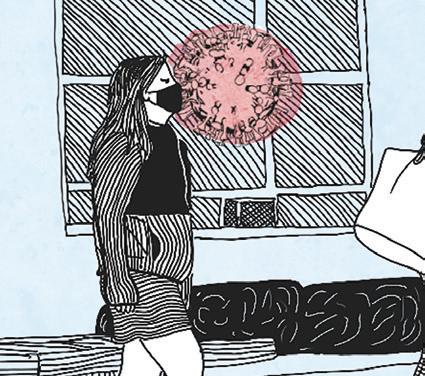
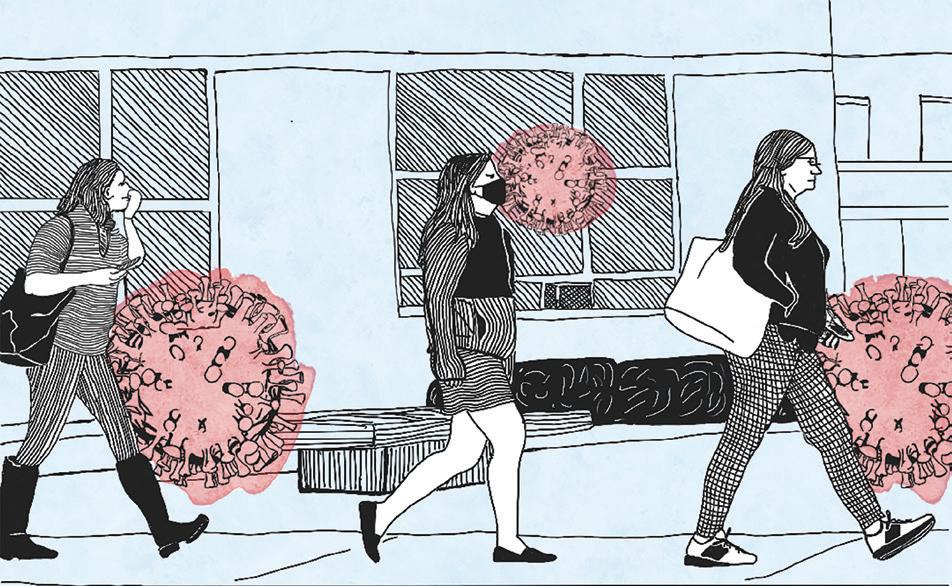
In the past year and a half, many students have changed their behavior around travel, events and other activities due to the COVID-19 pandemic — with a previous academic year that included COVID-19 testing, indoor masking and Zoom fatigue.
The Sun spoke to Prof. Laura Niemi, psychology, about the moral dilemmas that young people, particularly college students, face while making public health decisions during the pandemic.
According to Niemi, being aware that certain activities are risky but still wanting to participate is one moral dilemma for many people. Traveling is one example of this, especially since many students left Ithaca for fall break and Thanksgiving break this semester.
“People are managing their tight, close relationships as well as they can without feeling like they’re harming other people that they don’t know,” Niemi said.
Niemi added that a dilemma for college students is balancing the quality of their college experience with the shared effort of protecting others by reducing the spread of COVID-19. Throughout the pandemic, Cornell students have cited a lack of in-person socialization as a strain on mental health.
“It feels like we have to make a trade-off,” Niemi said. “You see students grappling with this, trying to figure out ‘How much does my behavior have to change?’”
According to Niemi, socializing with others plays a major role in decision making because building connections with peers is very important to adolescents.
Victoria Varlack ’22 said she and her roommates balance socializing with public health precautions by spending most of their time in a small circle.
Despite taking the necessary precautions, Varlack said that being a college student during the pandemic has been tough. She was a sophomore when the pandemic began and did not anticipate it lasting through the rest of her Cornell career.
“At the end of sophomore year, I kind of had hoped that the pandemic would end within a few months,” Varlack said.
Niemi explained how moral judgment plays a role in college students’ social nature.
“I think that people can feel ashamed, embarrassed or even compelled to lie when they’re diagnosed [with COVID-19],” Niemi said. “I think it’s a moral issue how we treat it and how we talk about it with students.”
However, Varlack said pointing fingers at those engaging in irresponsible behaviors likely isn’t an effective way to get individuals to change these behaviors. Experts also support the idea that public shaming is ineffective.
“I think it’s important to hold other people accountable, but I do think most of the time, this incites defensiveness from the person who’s doing something that might be wrong, and I don’t think that’s productive,” Varlack said.
The COVID-19 vaccine, which became available to the public this year, has also played a role in students’ behaviors. Last spring, Varlack said there was a significant shift in student behaviors, when people became much more comfortable with going back to “normal.” For example, large outdoor gatherings towards the end of last semester were quite frequent.
Moral judgments about behaviors during the COVID19 pandemic can also be attributed to politics. COVID19 has become a politically polarizing issue in the United States, especially due to mask mandates and vaccine debates.
Niemi found that differences in moral values, along with demographic factors such as political orientation, gender, education and income level, had a stronger influ-
ence on attitudes on people who contracted COVID-19 than on attitudes on people who have contracted other illnesses.
“That suggests that COVID-19 is a little unusual right now, where it’s not just our moral values that are informing how we behave and react to COVID-19 protection advice, but it’s also politics,” Niemi said.
With the University having an official Thanksgiving break for the first time since fall 2019, many students made plans to leave campus. However, for those who aim to be cautious about the pandemic, leaving campus wasn’t as simple as it was two years ago.
Erin Fox ’23 looked forward to going to her friend’s house in Buffalo, New York, this Thanksgiving but planned to take safety measures to minimize COVID-19 risk.
“I will pretty much exclusively be seeing her family during Thanksgiving,” Fox said before the break. “I’m going to get tested before and after I go, and I’ll probably wear a mask around my roommate until my test comes back negative.”
Fox said that while the vaccine and booster shots have given her a sense of normalcy, she still finds it important to still be careful, especially during winter break.
“Once I’m home [in San Diego for winter break], I will be seeing my friends and that’s probably it. I’m probably not going to be going to big venues,” Fox said. “I know some people are going to different countries over winter break, but personally, I’m not quite there yet.”
When it comes to taking COVID-19 safety measures while still enjoying the holidays, Fox said that transparency about vaccination status among family and friends is something that she finds important.
Despite the challenges of navigating our college experiences during a pandemic, students have been able to adapt.
“I’m happy that we’re able to adjust the way that we have been doing college so we can actually have in-person classes,” Varlack said. ”It’s definitely a big adjustment in trying to get the expectations in my mind to catch up with reality.”
Milena Bimpong can be reached at mbimpong@cornellsun.com.
By GRACE MAINES Sun Contributor
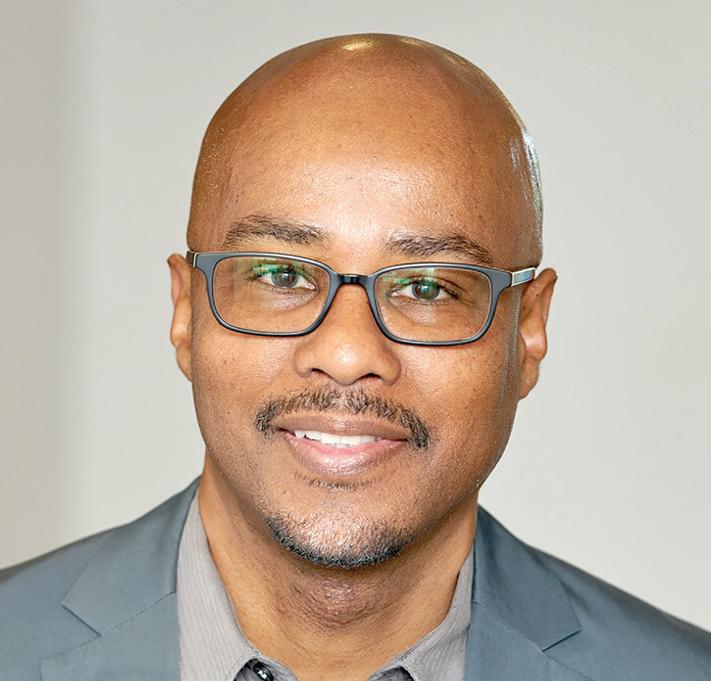
After a competitive application process, Cornell is one of seven institutions awarded $16 million as part of the inaugural Faculty Institutional Recruitment for Sustainable Transformation Grant by the National Institutes of Health. Vice Provost for Academic Affairs and Prof. Avery August, microbiology and immunology, received the grant to hire and support faculty who diversify biomedical and health researchers at Cornell.
The FIRST grant aims to build self-reinforcing scientific communities that are committed to diversity and inclusive excellence. A self-reinforcing community is similar to a positive feedback loop, as the grant intends to generate positive effects that will ideally create more forward movement for years.
August explained that the NIH intends for universities to use the grant to bring in diverse new faculty, start their research labs and develop faculty networks among those new and returning.
“The awarding of this grant to Cornell is extremely significant … grant reviewers, and the NIH, recognized our leading work around the issue of faculty diversity,” August said.
August plans for Cornell’s FIRST grant to build off of the University’s previous work and focus on the interdisciplinary hiring of faculty across six
colleges and 20 departments. One of the project’s key goals is to hire and retain 10 new assistant researchers across the next five years. This will increase the number of historically underrepresented faculty across the biological, biomedical and health sciences departments, as outlined in the proposal submitted by August.
“Our analysis of faculty hiring over the last 10 or so years suggests that we are able to retain faculty of color at similar rates as for majority faculty,” August said.
Still, the overall number of faculty of color at Cornell remains noticeably low. According to a National Center for Education Statistics survey, as of Nov. 1, 2020, Cornell had 1,059 tenured professors for the 2020-2021 school year. Just 228 were faculty of color, which includes Hispanic/Latino, American Indian or Alaska Native, Asian, Black or African American, Native Hawaiian or other Pacific Islander, two or more races and unknown race and ethnicity.
the hiring of new faculty. According to August, Cornell will establish an extensive mentoring and support network among both the new hires and the pre-existing faculty in departments where they are being appointed.
To sustain these initiatives, the awarded grant is over $16 million — a striking amount for a University with a roughly $10 billion endowment this year.
August said just 5 percent of the endowment is typically allotted for educational activities. External funding from grants such as FIRST are therefore necessary to support initiatives such as increasing the number of underrepresented faculty.
Cornell is the only member of the Ivy League to receive the NIH grant.
to fund 12 awards total within the next three years.
“There are certainly disparities in NIH funding by institutions, where better resourced institutions tend to be more successful in competing for NIH funding,” August said.
Cornell’s established structures and funds to support faculty make Cornell more appealing to the NIH, as it is more likely to be able to use these resources to successfully sustain diversity initiatives, even after funding runs out, according to August.
To hold Cornell accountable for making progress and accomplishing its goals, August said the NIH will oversee the grantees by conducting rigorous evaluations of the program activities.
The NIH FIRST program will fund a Coordination and Evaluation Center, which uses data metrics to analyze the effects of new faculty on institutional culture at all awarded institutions.
Each awardee will be responsible for collecting qualitative and quantitative data to share with the Coordination and Evaluation Center which will develop the final FIRST Data Sharing Plan.
“If even one of those faculty members is not retained, it’s a much more noticeable and significant loss,” August said.
However, the grant will not end with
The other awardees in the initial cohort are Drexel University, Florida State University, Icahn School of Medicine at Mount Sinai, San Diego State University, the University of Alabama at Birmingham and Tuskegee University. The NIH plans
The lessons uncovered by the seven institutions will then be compiled and assessed at the NIH center to share the findings with the biomedical research community at large.
Grace Maines can be reached at gkm44@cornell.edu.