Officials are turning to the public in their attempt to find out who dumped a “significant volume” of chemicals into the City of Ithaca’s sewer system
In a statement, officials said they believe that the individual responsible released the chemicals which they said might be cleaning solution, solvent or something else into a building drain or manhole cover on Nov 23 or Nov 24 Although the discharge did not likely affect the city’s water supply, it disrupted activity at the Ithaca Area Wastewater Treatment Facility, according to Dan Ramer, chief operator of the facility
The discharge likely did not affect the city’s water supply at all, according to Dan Ramer, the facility’s chief operator
y processes waste water from the City of Ithaca, Town of Ithaca and Town of Dr yden and recy-
Cayuga Lake Because of the
remove pollutants from waste water were not able to treat the water as effectively
Ultimately, Ramer said, the discharge probably did not cause significant damage to Cayuga Lake’s ecosystem The issue was more of a “short-term problem,” he said, adding that, on the other hand, “if we were discharging that quality of water every day, that would be a problem ”
The discharge could have been either a small quantity of very concentrated chemicals or a large quantity of very diluted chemicals, Ramer said The individual who released the chemicals could have unloaded anything from a “55-gallon drum to a tanker truck” into the
Bl o o m b e r g s a i d a t a De c e m b e r 2 0 1 0 p re s s c o nf e re n
“It was a monumental effort to move this vulnerable patient population.”
n e 2 0 1 0 Ne w Yo rk C i t y Ma yo r Mi c h a e l
By JESSE WEISSMAN Sun Staff Writer
v e r a l b o o k s a b o u t A m e r i c a n c o l o n i a l h i s t or y, a s we l l a s a n a c t i ve m e m b e r o f t h e c o m m u n i t y o f h i s t o r i c a l s c h o l a r s Hi s f r i e n d s , f a m i l y a n d c o ll e a g u e s re m e m b e re d h i m a s a d e d i c a t e d t e a c h e r w h o l e n t a h a n d t o a n yo n e i n n e e d Pro f Is a a c K r a m n i c k , g ove r n m e n t , s a i d K a m m e n w a s b e l ove d by h i s c o l l e a g u e s “ He w a s a g e n t
By EMMA COURT
By EMMA COURT Sun City Editor
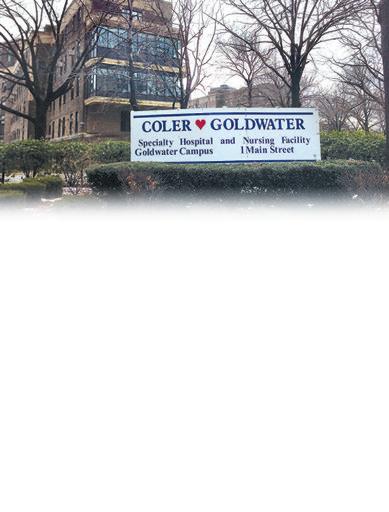
Roosevelt Island | Goldwater Hospital’s last patients moved out of the facility last month The Goldwater site on Roosevelt Island is the future location of the Cornell Tech campus
EMMA COURT / SUN CITY
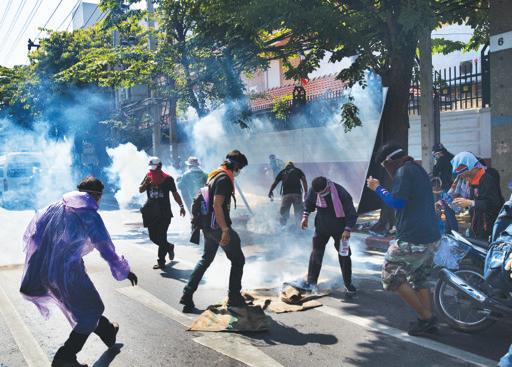
Unrest in Thailand
PUPIL POETRY
Ithaca College
In Car Accident
By AKANE OTANI Sun Managing Editor
c e n t e r m e d ia n , c a u s i n g t h e S U V t o ro l l ove r s e ve r a l t i m e s , a c c o rd i n g t o t h e A s s o c i a t e d Pre s s Mi c h a e l C l a rk , a j u n i o r a t It h a c a C o l l e g e , w a s p ro n o u n c e d d e a d a t t h e s c e n e T h re e o t h e r s t ud e n t s Ez r a C h a m b e r l a i n , a j u n i o r ; Me l a n i e Po n d , a j u n i o r ; a n d C h r i s t o p h e r Ro s e , a s o p h om o re we re t r a n s p o r t e d by e m e r g e n c y re s p o nd e r s t o A l b a n y Me d i c a l C e n t e r It h a c a C o l l e g e i s s u e d a s t a t e m e n t t o t h e c o mm u n i t y Mo n d a y o f f e r i n g i t s c o n d o l e n c e s “ We e x t e n d o u r d e e p e s t s y m p a t h i e s
Shina g awa ’05
Re ect s on Leadership
By MEI XIN LUO Sun Contributor
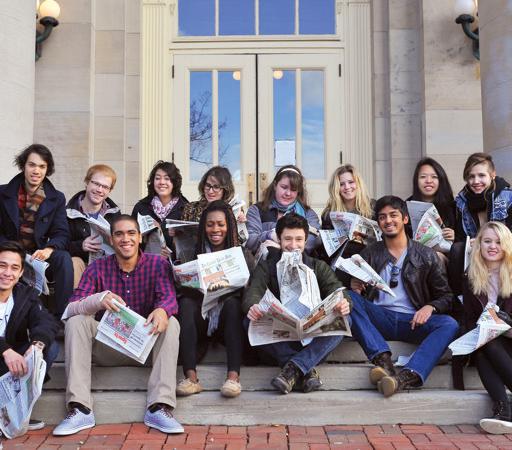
Tompkins County Legislator Nate Shinagawa ’05 M A ’09 spoke about the lessons he learned from his journey as a Cornell undergraduate to a congressional candidate to an audience of more than 150 people Monday
One lesson Shinagawa recalled was the need to act unconventionally to be successful Shinagawa pointed to his own experience as the underdog in his congressional race in 2012, when he had limited monetary funds as compared to his opponent, incumbent Rep Tom Reed (RN Y 23) Unlike Reed, Shinagawa could not afford to use conventional campaigning methods such as mass distribution of flyers and extensive television publicity, he said
To make up for limited funds, Shinagawa said he enlisted the help of volunteers and personally knocked on doors during the course of the campaign Using these methods, Shinagawa noted that he lost by only four percentage points, despite using less than half of the funds that Reed raised
“I took nothing for granted To us, this was our guerilla warfare style campaign,” Shinagawa said
He added that valuing every individual’s contribution was instrumental for success
“There are people throughout history, like Rosa Parks, who are single individuals that were able to make a tremendous differ-
C ity N ews
Appears in Watkins Glen To Express Support for
ence without being a person in power
We took up that kind of mentality as well,” he said “Because we had to fight that unconventional battle, the one thing we had to do was have more volunteers than anybody ”
Shinagawa said that although he speaks from his experience as a congressional candidate, the lessons he extracted can be applied to on-campus activism and other social campaigns
In particular, Shinagawa said he feels it is important to share personal experiences to inspire leaders to change and grow
“You have to tell your story, and help people tell theirs We can teach anybody how to be a leader by getting them to tell their story, ” Shinagawa said Rebecca Gallo Lazo ’15 said Shinagawa’s ideas resonated with her
“I thought it was really interesting that he brought in the aspect of a personal story because often times you don’t really think about how important a personal story is to career development,” she said Sarah Paez ’17 said she found the advice Shinagawa offered to be practical, especially for university students like herself
“He gave us advice on working on the bottom up, and that’s really important to keep in mind especially at a university because you have a lot of ideas and tend to get ahead of yourself I really like that facet of his lecture because he gave us a lot of really applicable life advice,” she said
Cornellian to congressional candidate | Tompkins County Legislator Nate Shinagawa ’05 M A ’09 speaks in Bailey Hall Monday about his experience running for Congress in 2012 RILEY YUAN / SUN STAFF PHOTOGRAPHER
Compiled by Dara Levy
t o k n ow K a m m e n “ Mi c h a e l K a m m e n w a s o n e o f m y c l o s e s t f r i e n d s o n t h e
C o r n e l l f a c u l t y, a c o l l e a g u e I g re a t l y a d m i re d a n d re s p e c t e d , a n i n s p i r i n g s c h o l a r a n d t e a c h e r [ a n d ] a m o d e l o f w h a t a p ro f e ss o r s h o u l d b e , ” R a w l i n g s s a i d “ He w a s c o m p l e t e l y d e d i c a t e d t o h i s d e p a r t m e n t , t o h i s p ro f e ss i o n a n d t o C o r n e l l , a n a l l - t o or a re c o m b i n a t i o n ” Me m b e r s o f K a m m e n ’ s f a m i -
l y a l s o n o t e d t h e l a t e s c h o l a r ’ s c o m m i t m e n t t o h e l p i n g o t h e r s “ My d a d w a s a re m a rk a b l y d e d i c a t e d m e n t o r t o s t u d e n t s a n d t o m e a n d m y b ro t h e r i t i s a g i f t I l ove d i n h i m , ” s a i d h i s s o n Pro f Da n K a m m e n , e n e r g y, Un i ve r s i t y o f C a l i f o r n i a a t Be rk e l e y K a m m e n , w h o w a s b o r n i n R o c h e s t e r, N Y , r e c e i v e d h i s
B A a t G e o r g e Wa s h i n g t o n
Un i ve r s i t y a n d h i s Ph D f ro m Ha r va rd Un i ve r s i t y He j o i n e d t h e C o r n e l l f a c u l t y i n 1 9 6 5 a n d
w o rk e d a t t h e Un i ve r s i t y u n t i l h e re t i re d i n 2 0 0 8 , a c c o rd i n g t o
h i s C o r n e l l f a c u l t y p a g e A p a r t f r o m b e i n g t h e Ne w t o n C Fa r r Pro f e s s o r o f A m e r i c a n Hi s t o r y a n d Cu l t u re , K a m m e n w r o t e n u m e r o u s b o o k s a b o u t h o w e v e n t s i n A m e r i c a ’ s c o l o n i a l h i s t o r y c o nt i n u e t o a f f e c t t h e c u l t u re o f t h e Un i t e d St a t e s t o d a y Hi s b o o k , Pe o p l e o f Pa ra d ox : A n In q u i r y C o n c e r n
Hundreds of Patients Moved From Hospital
On Roosevelt Island
Former Employee of Madof f Testi es
NEW YORK (AP) The modest office at 110 Wall Street didn’t look special, but it was the breeding ground of Bernard M a d o
scheme, says longtime employee Frank DiPascali
Madoff “would ver y loudly proclaim” that he had made a
Europe, DiPascali once told the FBI He later began to suspect the words were calculated to give the impression the business was “somehow backed up by his deals and investments overseas ” Whether Madoff ’ s inner circle actually believed that lie has become central to a trial of five
federal cour
in Manhattan DiPascali, the government
Monday He had star ted work-
1970s, and he began his testimony, which is expected to last f
h ow business was done then
Ill . Lawmakers Will Vote
On New Pension
SPRINGFIELD, Ill (AP)
Illinois lawmakers began putting the pieces in place Monday for a potentially historic vote to address the nation’s worst public-pension shortfall, as legislators scrambled to digest the complex deal and labor unions and other political heavyweights ratcheted up pressure for and against it
The House and Senate are expected to vote Tuesday on the years-in-the-making agreement
Legislative leaders say the proposa l , w h i c h e m e r g e d l a s t we e k , would save an estimated $160 billion over 30 years and fully fund the state ’ s five pension systems by 2044 through benefits cuts for workers and retirees
As of Monday evening the plan had the support of a clear
P roposal
majority of members on a pension conference committee enough to send the measure to the floors of both chambers But its passage
assured
Several lawmakers said they still were reviewing the 325-page piece of legislation, and a number of big questions remained for lawmakers to consider with little time
Republican state Rep Tom Cross of Oswego said he was waiting for more information on the possible impact of the monumental deal
“This is going to be the biggest vote most legislators make in their career, ” he said “You’ve got one shot at this and you want to do it right ”
still did legitimate business as bustling, busy and fun But t
t h e M a d o f f s m ov e d u p t o w n t o fancy new offices in a Third Avenue skyscraper known as the “lipstick building ” W h e n t h e s t o c k m a r k e t
crashed in 1987, DiPascali said Madoff asked him to fabricate some trade numbers He testified Monday that some of the employees on trial knew about it, because when trades were happening, you could hear them they were loud transactions
His were scratched out on paper, nothing more “If you want to make a trade you gotta pick up the phone,” he said
“Was it all fake?” asked Assistant U S Attorney Josh Zach “ Yes,” he replied
He served as a utility player in the firm, doing menial tasks like drilling holes and laying wire Prosecutors showed grainy old photos from the small messy office, with smiling employees with bushy moustaches standing near gigantic computers and typewriters
“Even though I got yelled at lot, I wandered into the trading room, ” he said Monday “It was v
t o know what was happening ”
DiPascali described the trading scene in the late 1970s and early 1980s when the firm
Part of DiPascali’s behindt h e - s c e n e s a c c o u n t w a s p reviewed last year in sections of FBI reports that were turned over to the defense The reports, based on initial inter views of DiPascali, at times appear to suppor t the contention that the defendants were unwitting dupes led astray by a devious boss
But the repor ts also suggest t h e f i v e h a d d o u b t s a b o u t Madoff and his investment wiza rd r y D i Pa s c a l i s a y s t w o became convinced it was all a scam and even confronted Madoff about it but ultimately did nothing to stop it
Defense attorneys have already attacked DiPascali’s credibility, calling him equal partners in crime with Madoff
“ The evidence will show DiPascali is a pathological liar, and the government ’ s case relies on you believing DiPascali,” Andrew Frisch said in opening statements “And now instead of Madoff, DiPascali’s bosses are the government lawyers at this table ” Madoff, 75, admitted that accounts he had told investors were wor th nearly $68 billion actually held only a few hundred million dollars He pleaded guilty to fraud charges and was sentenced to a 150-year prison term in Butner, N C DiPascali’s testimony represents a turnabout for him He kept Madoff ’ s secrets for decades until he agree d to cooperate with the FBI in early 2009 DiPascali, 57, who is out on bail but facing substantial prison time, carries his own baggage as the beneficiary of a bank account filled with investors’ money that amounted to a slush fund for Madoff ’ s family and top employees Authorities say he withdrew more than $5 million from the account between 2002 and 2008 to fund personal expenses, including the purchase of
new boat
Bongiorno, and JoAnn Cr upi, an account manager, of using
They say Daniel Bonventre, his director for operations, cooked the books to throw off regulators
SCINTILLATING SENIORS 20
ere exist at Cornell many persons of interest. Some of them occupy the pages of our fair newspaper on the regular, but they are hardly the only ones who merit widespread discussion. You’ve seen these Mysterious Seniors around campus. Perhaps you’ve awkwardly locked eyes with them on Ho Plaza, unaware of their subtle importance to campus culture. Below, you will find 25 Mysterious Seniors worthy of your attention. Maybe you’ve only seen them cramming in the library, killing it on the elliptical at the gym or making unfortunate mistakes at Collegetown’s finest drinking establishments, but these Seniors have carved themselves a place in Cornell lore and demand your utmost respect.
— Sam Bromer and Arielle Cruz, Sun Arts & Entertainment Editors
SPENCER WHALE — Pittsburgh, Pa. / eatre — e last student to declare the eatre major at Cornell, Spencer Whale has used theatre to bring art to the research-focused environment on campus. At Cornell, Whale is president of the Shakespeare troupe, he has directed over seven full-length plays at Cornell and in Ithaca featuring Broadway veterans and, at one point, 20 pounds of almonds on stage. Whale is currently developing a production of Shakespeare’s Titus Andronicus at the Schwartz Center, a project with roots back in his Freshman Writing Seminar, where he first read the tragedy.
ANDY JOHNSON — Ann Arbor, Mich. / Biology —
An avid birder since elementary school, Andy Johnson is a researcher in Cornell’s Lab of Ornithology. When he’s not on expeditions filming birds in coastal China, fending off polar bears in the Canadian arctic or recording birds in the Chilean Altiplano, Johnson enjoys filmmaking, photography and writing — which are also often inspired by his love of birds.
ANDREW S STRAUSS — Roanoke, Va. / Psychology and anthropology — Having hiked the second highest peak in Africa and undergone expeditions spanning 25 countries, Andrew Strauss brings his worldly experiences back to Cornell, where he teaches rock climbing for Cornell Outdoor Education and studies psychology and anthropology. Strauss may be spotted on campus beatboxing in the Absolute A Cappella group or walking around barefoot. After graduation, he plans to move to Southeast Asia and do research in cultural psychology.
LIZZIE BRROOKS — Newark, Del. / Psychology and film — Lizzie Brooks is committed to never being bored. At Cornell, she found a lot of ways to stay busy including starting the Centrally Isolated Film Festival and learning to tie a bow tie from Bill Nye. A film and psychology major, Brooks links the two by both making movies and researching the ways that people understand film. She does not enjoy long walks on the beach and prefers whiskey to piña coladas.
CH R I S C R U Z — Bay Shore, N.Y. / Industrial and Labor Relations — As a starter for the men’s baseball team since his freshman year, Chris Cruz’s successful baseball career at Cornell has set him up for opportunities to play professionally after graduation. Cruz hit a record-setting walk off home run in extra innings to give his team its first Ivy League title and send the baseball team to its first regional competition in over 30 years. At Cornell, Cruz rounded out his athletic career by winning the intramural bowling championship with other members of the baseball team.
TA LI A AN GEL ITTI — Montreal, Canada / Hotel Administration — is punk-loving, tattooed Canadian may not appear to fit the Hotelie mold at first glance, but her passion for sustainability in the food and beverage industry put her on track to an impactful career in restaurant management or concept development. When not interning in kitchens from Montreal to Switzerland, she can be found in her Cornell home at Watermargin, where she is currently president. In her spare time, Angelleti is dedicated to weightlifting — she can back-squat 200 pounds.
INGRID NUÑEZ — Kent, Conn. / Hotel Administration — As an active member of Greek life and Teaching Assistant in the Hotel School, Ingrid Nuñez’s battle with Stage 4 lung cancer over the past four years has not stopped her from making a mark on campus. She has raised over $100,000 for lung cancer through Jog For Jill 5-Ks in Ithaca. Over the summer, Nuñez worked in San Francisco with some of the West Coast’s greatest culinary talents, all while getting chemo every three weeks and blogging about her experience.
MAR IA NNE DORA DO New York, N.Y. / Fashion and Apparel Design — Having worked at New York Fashion Week and started her own women’s lingerie line — “Unfair Advantage” — it’s hard to believe that Marianne Dorado started at Cornell as a pre-med Biology major. When she’s not designing, Dorado is rush chair of her sorority and enjoys cooking — she even made anksgiving dinner for 40 people in her freshman dorm.
QU INN KELLY — Fayetteville, Ark. / Audio Production and Perception Design Growing up making his own wine and pesto, Quinn Kelly spent last summer working on a vineyard in Tuscany and then studying bicycle transportation policy in the Netherlands. e other students in his major know Kelly as the bike guy because of his various projects, including his senior thesis, which is on the social effects of bicycles. Kelly is also house manager of Watermargin Cooperative.
SOPHIE GRISWOLD — Needham, Mass. / Agriculture and Life Sciences — Passionate about making an impact in the field of sustainable agriculture, Sophie Griswold has become active in the Cornell and Ithaca community through innovative food campaigns and her work at Greenstar Cooperative. During her four years, Griswold has cooked meals comprised entirely of dumpstered food under the banner of “Food Not Bombs for Greek Anarchists” and founded Ithaca’s Food Not Bombs chapter, which helps feed children in need.
SADEV PARIKH Scholar — With his philosophy, history Sadev is something of a Renaissance seems more and more to promote Delta Chi fraternity, a resident
BRE TT H E NDERSON
A former Cornell own apparel brand, sponsors two professional surfers, run — the other two involve industries. When he’s not surfing ing in the mountains of Santa
LEA H MEY ERHOLTZ Administration — Commission and Design — where she has campaigned attain LEED certification less fascinating people. She Dylan concert, flooded Hollister Schwartz’s production of Adding
RYANN YOUNG from the Windy on campus”), Ryann tennis team. Over the course Ivy League schools and played may recognize Ryan from the
r row, f from l
ADEV PARIKH — Cedar Grove, N.J. / Government/Philosophy, College Scholar — With his broad and wide-ranging interests in government, philosophy, history and neuroscience — and a love of ping pong — something of a Renaissance man, which is rarely seen at a school that and more to promote specialization. He’s also a member of Cornell’s fraternity, a resident of Telluride and a huge fan of burritos.
RETT H E NDE RSO N — La Jolla, Calif. / College of Arts and Sciences former Cornell wrestler and avid surfer, Brett is the founder of his apparel brand, Dirty Surf & Skate. The brand, which currently professional surfers, is one of three start-ups Brett currently helps other two involve products targeted at the confectionary and trucking When he’s not surfing or starting-up, Brett enjoys off-the-grid campmountains of Santa Cruz.
EAH MEY ER HOLTZ — Coeur d’Alene, Idaho / Hotel Administration — As Productions Director of Cornell Concert Commission and a subteam leader of Cornell University Sustainable where she has campaigned for Cornell’s Roosevelt Island campus to certification — Leah has had the chance to interact with countfascinating people. She has also spent 30 hours setting up for last year’s Bob concert, flooded Hollister Hall (it was an accident) and acted in e production of Adding Machine last semester.
YANNN YOUNG — Chicago, Ill. / Hotel Administration— Hailing from the Windy City (she is the self-described “biggest White Sox fan on campus”), Ryann is a Hotelie and a two-year captain of the varsity Over the course of her career, she has won a match at each of the eight schools and played on the U.S. Open’s tennis courts three times. You recognize Ryan from the cover of your business computing textbook.
TEJAL THAKK AR — Rockville, Md. / eater for Social Change — When she’s not watching New Girl or listening to her favorite Bollywood hits, Tejal spends her time feeding the homeless or tanning on the beaches of Grenada, where she spent a semester abroad. Tejal also worked for a summer in Mumbai. After all of this travelling, she is relieved to have returned to Cornell’s Hotel School for her final year on the Hill.
LI LY M A New York N Y / Biology Hotel Administration Architecture, Lily started off at Cornell in the College of Engineering Now, as a senior, she plans on graduating as a pre-med Hotel student minoring in architecture and real estate Her ultimate goal however which way she decides to get there is to design sustainable hospitals that incorporate the value and quality that the hospitality industry demands Oh, and she created a non-profit startup called The Flour Child Bakery which focuses on donating to charities in critical need as well as nonprofit groups on Cornell campus that want to hold bake sales to raise money for their own causes
ALY SSA COR NELIU S— Buffalo, N.Y. / College of Veterinary Medicine — Veterinary medicine and research are two of Alyssa’s greatest passions. She is currently applying to veterinary schools across the nation and working on her honors thesis, researching the genetics behind a rare blood disorder in humans, Fanconi Anemia. Alyssa is the President of Guiding Eyes for the Blind at Cornell. It is rare to see her on campus without a puppy, especially her “adorable little man,” Trapper.
STEPHANIE ADDISON — Buffalo, N.Y. / College of Agriculture and Life Sciences — By her own admission, Stephanie marches to the beat of her own drum. As Cornell has confirmed for her, she also has an eye for fashion. She is the art director for read magazine, Cornell's first and only fashion and lifestyle magazine. She is also a burgeoning photographer — last year, her street style photography was published by Teen Vogue.
EBOLU TALESE AIREW ELE — Ithaca, N.Y. / Government and American Studies— Like her fellow scintillating seniors, Ebolutalese, known to her friends as “O.T.,” has made the most of her Cornell career. As a four-year member of the varsity track & field squad, O.T. proven a star competitor. She’s also a dancer in Shadows Dance Troupe, whose concert recently took place at Bailey Hall. Both on the field and on the stage, then, Airewele is a force to be reckoned with.
KAI KEANE — Ithaca, N.Y. / Anthropology and Education — As a member of musical duo e Mimis and CEO of Corpus Callosum with a double major in anthropology and education, Kai has found many interesting outlets for his wide-ranging interests, from animation and video production to graphic design and Japanese. During his four years, Kai worked on sustainable neighborhoods in Nicaragua and videography and branding for Cornell Tech.
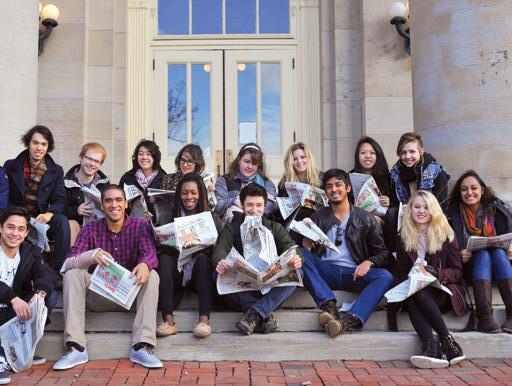
Bac k row, f from l left: Quinn Kelly, Kai Keane, Andy Johnson, Leah Meyerholtz, Sophie Griswold, Alyssa Cornelius, Lizzie Brooks, Lily Ma, Talia Angelitti
Bottom
left: Brett Henderson, Christopher Cruz, Ebolutalese Airewele, Andrew Strauss, Sadev Parikh, Stephanie Addison, Tejal akkar N Not p pictured: Marianne Dorado, Ingrid Nuñez, Ryann Young, Spencer Whale
Independent Since 1880
131ST EDITORIAL BOARD
REBECCA HARRIS ’14
HANK BAO 14
Manager
LIZ CAMUTI ’14
ANDY LEVINE ’14 Web
RACHEL ELLICOTT ’15
DAVID MARTEN 14
SHAILEE SHAH ’14
COURT ’15
FLAX ’15
BROMER 16
questions to op
All opinions and points of view welcome.
AKANE OTANI 14
AUSTIN KANG ’15
Sam Kuhn | Fault Lines
TCRUZ ’15
KIM 14
POTOLSKY 14
J O I N T H E O P I N I O N S E C T I O N Do you have unique and well-for med opinions? Do you like to write? Then lend your talents to The Sun! A pply for a bi-weekly opinion column for Spring 2014. A pplications can be found at cor
A s We S ay or A s We D o?
here is little denying that critics of American democracy have ample and fresh ammunition with which to challenge the “purity” of the United States’ democratic practice, if not its basic integrity The revelations generated by Wikileaks and Edward Snowden, to name just a couple of recent developments, have created justifiable domestic and international anger at the disjuncture between America’s preferred image as a liberal and transparent state and the apparently more insidious and opaque reality The disturbing expansion of secret federal surveillance programs via the decisions of publicly u n a c c o u n t a b l e F I S A c o u r t s , a n d t h e unabashed ferocity with which the government has sought to prosecute the citizens who leaked these troubling decisions, lead some to worry that America has become a national security state first and an open society democracy second Ot h e r re l a t i ve l y re c e n t e ve n t s i n
American domestic politics further call into question America’s democratic health: the repeal of the national Voting Rights Act and the passage of other measures which make voting more difficult for citizens in some states; the Citizens United Supreme Court decision equating corporations with persons and striking down limitations on their ability to pay for and influence political campaigns; the government shutdown, precipitated by legislative gridlock and dysfunction; even (and perhaps especially) the contested results of the 2000 presidential election But American foreign policy, despite such apparent disarray on the homefront, still grapples with the responsibility to promote the development of democracy abroad All of this begs the question: Do domestic practices which can be perceived as antithetical to “good” democracy undermine international perceptions of America’s qualifications as a democracy promoter in other nations?
To conclude that America’s political dysfunction and electoral unrepresentativeness have compromised its legitimacy as a democracy promoter abroad would not be unfair But it would be incorrect to declare that America’s well of credibility, as it pertains to international democracy promotion, has altogether run dry
Of course, the extent to which America has ever been perceived internationally as a qualified “active” promoter of democracy is a subject of much debate; it is probable that since the beginning, America has been more impressed with itself as a promoter of democracy than has the rest of the world
But America’s domestic foibles have been far less damaging to international perceptions of America’s democratic credibility than has America’s inconsistency in prom o t i n g d e m o c r a c y i n t e r n a t i o n a l l y
Strategic and material considerations have time and again been the clear motivations f o r o u r f o re i g n p o l i c y d e c i s i o n s T h e American government has been deeply selective in choosing where and when to inter vene on behalf of the democratic ideals we profess to uphold America’s decades of military and financial support to brutal and oppressive dictators across the Middle East have not been forgotten despite our recent support, measured as it was, for revolutions in Egypt, Tunisia and Libya The disjuncture between our public support for protest in the name of democracy and our much quieter tacit support for the suppression of the Bahraini opposition movement does not go unnoticed by other countries and determines our credibility to
promote democracy Interested readers should read Andrew Cockburn’s article “Secretary of Nothing” (available in the Olin periodicals section) for some surreal case studies demonstrating that much foreign policy is created with insufficient consideration of the domestic circumstances of other involved nations
As I previously mentioned, a distinction should be drawn between “active” democracy promotion, in which America is directly and materially involved in the development of a democratic state (i e Iraq), and promotion via soft power, where America’s popular cultural and economic influence serves as powerful advertisements for our political ideology Since the aftermath of World War II at least, credibility for the former has seldom existed in practice, even if American intervention in the name of democracy is still sometimes sought by states in transition But it is undoubtedly true, if difficult to concretely measure, that America still serves as a model for many countries due to our economic success and cultural resonance America is still widely perceived as a land of innovation, the biggest magnet for the world’s best and brightest minds looking for freedom and opportunity Though negative perceptions of the American governm
abroad may pervade in some parts of the world, many of America’s most vociferous critics would and do take up residence here, given the chance And given the opportunity to craft new democratic instit u t i o n s i n t h e i r ow n c o u n t r i e s , i t i s American models they consult, tinker with and sometimes ultimately subvert No democracy is a perfect model of compromise or productive administration Even the countries most consistently lauded as worthy of emulation, including the developed democracies of Western and Northern Europe, have recently faced the rise of far-right parties and increasingly alienating stances toward immigrants and minorities But even America’s political problems can be seen as enhancing our credibility as a democracy promoter from an experiential perspective America is an advanced democracy which has, so far, dealt with its own internal political problems peacefully, within a democratic framew o rk Ou r c o n t rove r s i e s c a n s e r ve t o remind potential adopters that democracy is hard work and requires careful maintenance and evolution
In a post-colonial, post 9/11 world, even America’s most sincere attempts to directly support the development of democratic institutions abroad are likely to backfire, to be seen (or cynically smeared) as self-interested propaganda tarring everyone it touches Going forward, it is by example that America can hope to promote democracy abroad Yegor Sobolev, leader of the o
t President Viktor F Yanukovich, described the December 1st demonstrations there thusly: “The general opinion was something closer to the American and European ideal that the real power should be citizens, not ministers, not presidents, not politicians ” For the time being, despite its domestic struggles, America still enjoys significant international credibility to promote democracy
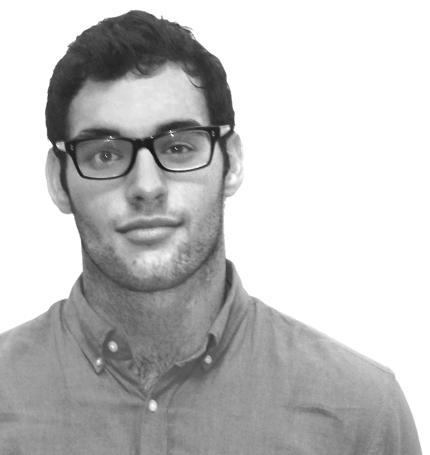
Sam Kuhn is a senior in the College of Arts and
John Alexander ’74 MBA ’76 &
Ross Gitlin ’15 | Trustee Viewpoint
Investing in a Sust ainable Campus
At the core of Cornell’s mission and its land grant status lies a commitment to addressing real and challenging problems, locally within New York State, as well as globally This is evident across the University, including the University’s efforts to address climate change In recent years, Cornell’s pace of investment in making our campus a “ greener place to live has increased dramatically We have been named the fifth “coolest” school in America by the Sierra Club Additionally, the Princeton Review has awarded the Big Red the highest score on its Green Honor Roll, a designation only 22 out of 832 colleges have received Our leadership among our peers stems from the vision and initiatives advanced by the University and its students over the past two decades
For example, the $58 5 million Lake Source Cooling (LSC) project, which was completed in 2000, is one of the most ambitious and innovative initiatives ever undertaken by an American university The LSC provides the University with a method of cooling that eliminates refrigeration equipment, saving Cornell over 20 million kilowatt-hours of energy per year – enough to continuously supply energy to 2500 homes in Tompkins County The project has heavily reduced Cornell’s reliance on fossil fuels Furthermore, in 2009, two years after President Skorton signed the American College and Presidents Climate Commitment, the University began implementing the Climate Action Plan (CAP), a set of 19 initiatives that aims to achieve net-zero emissions by 2050
Most recently, as part of ‘Moving Beyond Coal,’ the Ithaca
Most significantly, Cornell’s GRF has set a goal of raising one million dollars from within our Cornell Community by March 2014.
campus is now coal-free, having been replaced with natural gas produced by Cornell’s new co-generation plant (CHP) an $82 million addition to our heating infrastructure The CHP, which allows the campus to generate most of its electrical power using natural gas, also recycles the heat made in the process The CHP will have the capacity, moreover, to run on bio-fuel, if a plantbased fuel becomes feasible Presently, we generate 85 percent of our electricity needs efficiently, compared to 15 percent in the past CHP, along with an additional $46 million dollar series of efficiency improvement initiatives around campus, is just another transformative undertaking that will further cut costs, save energy and dramatically reduce our carbon footprint
Cornell’s students have played a significant role in promoting a greener campus as well Some of the notable student organizations include Lights off Cornell, Take Back the Tap, Big Red Bikes, the Sustainability Hub and Cornell University Sustainable Design Additionally, in the past year a group of energy-conscious students has formed Energy Corps at Cornell University (ECCU) ECCU is an action-oriented student organization assisting in the implementation of cost effective energy saving technology in University buildings Here, project leaders gain experience in energy consulting and management, while working to reduce the University’s carbon emissions Through ECCU, students have implemented five projects on campus, projected to save the University in excess of $150,000 over the next five years, while reducing our carbon dioxide emissions by over 970 tons
One initiative that ECCU has been working on is creating, in particular, a Green Revolving Fund (GRF) The Green Revolving Fund aims to increase research and educational opportunities related to sustainability, as well as providing the University with a regenerative investment vehicle for capturing utility savings substantially into the future Nationally, there are over 80 GRF’s operating in higher education institutions, with $111 million in capital committed to the funds currently in existence In creating Cornell’s GRF, the University becomes a part of the Billion Dollar Green Challenge, launched by the Sustainable Endowment Institute The Challenge strives to encourage universities, colleges, and other non-profits to invest a combined total of a billion dollars in revolving funds that seek to improve energy efficiency Further, in joining The Challenge, Cornell gains access to valuable tools that include project performance tracking and a searchable library of projects at our peer institutions, among other benefits
Most significantly, Cornell’s GRF has set a goal of raising one million dollars from within our Cornell Community by March 2014 And as trustees, we look forward to learning of the results, and encouraging further investment in this great, student-led initiative
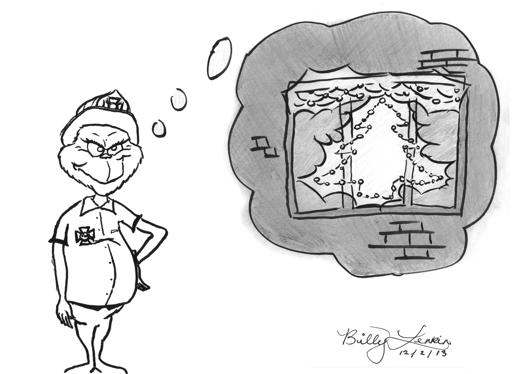
William Lenkin | The Fire Marshall’s Nightmare
Jacob Glick | Glickin’ It
Go C.U.: R ed Hot Hockey and The Enduring Cornell Identity
Asclose to the reality that looms like a storm-cloud over all of us on the Hill: Our time here is fleeting; our semesters, ephemeral; our chances to make “college memories,” finite If I can manage to burrow my way through the next
ow seem I will have completed two and a half of my four years at Cornell It’s this realization of my own “Cornell mortality” that has driven me to categorize events into a morbid sort of countdown: n ow, o n l y o n e C o r n e l l Thanksgiving left; come Januar y, only one Rush We e k l e f t ; b y Ma r c h , there will be only one more Spring Break The list balloons into a frightening segue to the often-
t i m e s - m e n a c i n g a d u l t world
This countdown is, in some senses, an unavoida
t begins as soon as we realize that each wave of prelims that we pray so fervently to overcome brings us closer to “the end ” In the crush of mundanities, i t i s e a s y t o l o s e t h e essence of the years that we are all too often told a r e o n e s w e o u g h t t o s a v o r I f t h i s t r a j e c t o r y toward premature graduation ferments too strongly in the mind of an undergraduate prone to philosophizing, it can per vert the Cornell experience into a Sisyphean bid to halt the for ward motion of time Viewing our four years at Cornell as an inexorable crawl towards the exit is no way to treat our pre-
cious college experience, but all too often we are goaded by our parents, our peers and by nostalgic alumni into doing just that Maybe we ’ re just looking at it wrong T h i s p a s t Sa t u rd a y, after gorging myself on the deliciously (and fortunately) rare hybridized cuisine o f T h a n k s g i v i k k a h , I t re k k e d t o Ma d i s o n Square Garden to watch Cornell Big Red face off a g a i n s t t h e B o s t o n University Terriers To say that the Garden had been transformed into “Lynah South” would not quite capture the spectacle of hundreds upon hundreds of red-clad fans from
We should instead be ask ourselves how many lie a and how, in the endless c of prelims, finals (and life capture at least a few moments of oneness
both Cornell and Boston that thronged the stadium The dutiful melodies of the Big Red Marching Band still swelled at all the right moments, and those same collegiate war chants re v e r b e r a t e d o u t w a rd through New York City’s greatest arena For a current patron of Lynah Rink happy to have rejoined the world of the living after a l o n g w e e k e n d o f t h e Walking Dead, my first experience at MSG Red Hot Hockey was a vastly f u l f i l l i n g o n e Bu t a s I looked out at the crowds c h a n t i n g “ Si e ve ! ” ( n e ve r mind the fact that we lost 3-2), I saw that there was something more Though there seemed t o b e a n a g e c u t o f f o f
about 24 in my particularl y r ow d y s e c t i o n ( G o d b l e s s t h a t u n s u s p e c t i n g u s h e r ) , t h e Ga rd e n w a s s w a r m i n g w i t h a l u m n i whose own freshmen orientations had taken place long before the Class of 2014 was out of daycare W h i l e r e c e n t a l u m n i r e v e r t e d q u i t e e a s i l y t o their undergraduate selves, there were cohorts of bona f i d e a d u l t s w h o a r r i ve d with their spouses, their children and their grandc h i l d r e n , t a k i n g a n evening off from lives that a re i n m a n y w a y s p rofoundly distant from our own Yet, they chanted the same chants, clapped to the same cadence, cheered a t t h e s a m e
m o m e n t s a n d , i n d e e d , wore the same sweaters
Their presence had none of the stilted awkwardness of a reunion weekend, nor a n y ov e r t Un i v e r s i t y attempts to compel philanthropy
There was a heartfelt sincerity in these alumni’s fidelity to Cornell they were, after all, there to enjoy it that we are too q u i c k t o c l a s s i f y a s a n exclusively undergraduate p h e n o m e n o n W h i l e we are right to squeeze ever y ounce of memor y out of our (typically) four years a s u n d e r g r a d u a t e s , w e must not dread our departure from the Hill as the end of all things Cornell The joy of the Red Hot Hockey game was its abil-
ity to ser ve as proof of the e n d u r i n g n a t u re o f o u r collegiate bonds; we are students for but a brief moment of time, but we are Cornellians for the rest of our lives It is altogether too daunting to view each end of each semester as another nail in the coffin of our college experience without realizing that this is an experience that c a n , i n s o m e w a y o r another, carr y us through the rest of our lives So much pleasure in life is t r a n s i t o r y, a n d i t i s a n u
thought experiment to reduce the relative permanence of a Cornell identit y i n t o t h e c o m p r e s s e d haze of a four-year undergraduate career The
you other wise So
trundle off to Olin and close the book on another semes-
26 A PARTMENT FOR R ENT 26 A PARTMENT FOR R ENT
26 A PARTMENT FOR R ENT
Readies for Las Vegas Invit ational
triumph in the match
“Our strengths as a team were going out there, creating action and scoring points We are well conditioned, and we weren ’ t afraid to dictate a high pace for both teams, ” Villalonga said
Freshman Gabe Dean, 184 pounds, attributed the Red’s success to the team ’ s leadership
“Our coaches and captains do a great job of keeping us focused on how to get better,” Dean said “[They] have done a great job ”
While there was much to be celebrated this weekend, Villalonga also notes that the team has some things to work on
“We need to work on bottom as a team We got ridden way too much in a couple matches and that is not acceptable by our standards ” Dean echoed Villalonga’s sentiment
“As a team, getting off bottom is something we could work on, ” he said
27 H OUSE FOR R ENT
According to Dean, the Red looks at this past weekend as a “ step towards its ultimate goal ”
The team hopes to continue to work hard and earn a victory this weekend at the Las Vegas Invitational in Nevada
where he nailed both shots
“It was evident in the [Western Michigan] game that we didn’t make it to the free throw line that much because we were able to make open threes,” senior forward Dwight Tarwater said “However, we do need to attack the basket to be more successful ”
The Red then headed to South Bend, Ind to take on a new addition to the ACC in Notre Dame
Still looking for its first win of the season, the Red once again hung with the Fighting Irish in the first half Five three-pointers by five different Cornell players left the Red trailing by only nine at the end of the first twenty minutes However, Notre Dame took control midway through the second half, after two free throws by Cherry cut the deficit to ten That was as close as the Red would come, as the Fighting Irish were able to muscle their way into the paint and hurt Cornell from the inside
“They really started making shots, and every shot they missed they were getting the rebound for We were letting them get in the paint and they were able to kick our for wide open threes,” Scelfo said “The first five or six possessions of the second half, both teams scored, but they hit a three on every one of those possessions and we hit a two, so that hurt us as well
” Notre Dame outrebounded the Red 41 to 27, the second time in two games Cornell was outrebounded by more than ten The Irish also grabbed eleven offensive boards, and was led by junior Pat Connaughton, who had a doubledouble with 18 points and 10 rebounds on the day
“We need to be tougher on the glass,” Tarwater said ‘There are no fundamentals to rebounding; you just have to want the ball more than the other guy We will definitely be working on blocking guys out and going to get the ball this week in practice ”
The Red will take a relatively short break this week with no midweek contests It will kick things back into gear Saturday in a home matchup with St Francis Now nine games into the season and with just give games left before the start of Ivy play, the Red has yet to find that elusive first win
According to Scelfo, the effort is there, and if that persists, the results should not be far behind
“A lot of people are doing everything they can do to win, but we just need to keep at it We know we need to get better, but we know we have the potential,” he said “Hopefully we’ll be able to get at it in practice this week and get that first win on Saturday ”
year ’ s Cavs team losing and getting blown out, for that matter most of their games? There is evidence to support the prospect that the team is tanking in hopes of drafting a Jabari Parker or Andrew Wiggins
caliber player First, and most obvious to a casual basketball fan, is the way the team plays Watch a full Cavs game The players move around in what seems like slow motion They may set a pick or two, and then nonchalantly settle for a one-on-one matchup
The rest of this column can be found at cornellsun com
Fasman can be
W R E S T L I N G R e d V i c t o r i o u s a t G ra p p l e a t t h e G a r d e n
C.U. takes down University of Illinois, University of Maryland
By ANNA FASMAN Sun Staff Writer
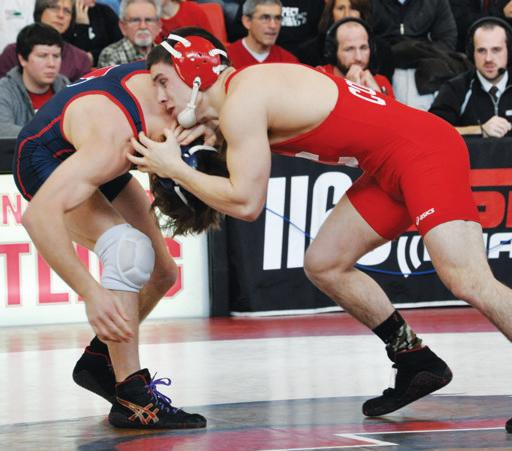
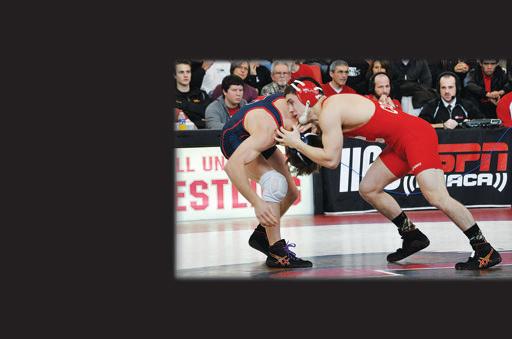
The Cornell men ’ s wrestling team competed Sunday in the Grapple at the Garden, a series of matches that took place at Madison Square Garden The Red took on the University of Maryland and the University of Illinois in two back-to-back duals, earning wins against both schools
The Red now holds a 3-0 record after winning both duals this weekend and posting a win against Binghamton the week before Additionally, Cornell was able to earn first place at the New York State Intercollegiate Championships that took place on Nov 24
In its first match, the Red came on top with a score of, 32-9 against the Terps In its all-time series against Maryland, Cornell now holds a 2-1 lead Overall, the Red won six matches to two, winning by major decision in two of those matches and decision in two others
Against the University of Illinois, Cornell won, 18-15, with each team winning five matches total While the overall score was very close, the Red was able to win four matches by decision with the fifth match ending in a fall
Senior Chris Villalonga, 149 pounds, and freshman Brian Realbuto, 157 pounds, were able to win back-toback matches and were the only two Cornell wrestlers to win in both matches of the dual Additionally, senior heavy weight Stryker Lane was able
The
to earn the deciding victory in his match against Illinois, allowing Cornell to earn its victory at the dual meet After two overtimes, Lane made an escape to gain the lead over his opponent that would ultimately lead him to an overall
Ballers Lo se to Bronc o s, Iri sh
By SCOTT CHIUSANO Sun Assistant Sports Editor
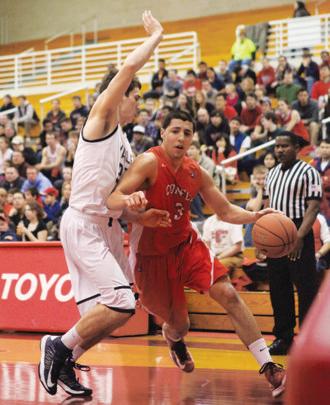
Two second half runs by Western Michigan and Notre Dame downed the men ’ s basketball team this weekend, as the Red took a Thanksgiving road trip out west to Michigan and Indiana
In Friday’s matchup against Western Michigan, the two teams traded buckets for much of the first half
The Red was able to keep pace with the Broncos in large part due to its efficient shooting from beyond
the arc The squad connected on 10 of its 25 triples in the half, with freshman Robert Hatter and sophomore Nolan Cressler combining for seven of them With 15 seconds left in the half, Cressler nailed a three that left the visitors trailing by two heading into the locker room
Though the Red continued to put up a flurry of threes after the break, the story of the second half was one of rebounding and play in the paint The Broncos went to the free throw line 28 times in the second half, compared to the Red’s just seven Western Michigan also crashed the boards every offensive possession, grabbing seven offensive rebounds in the half
“That game we were starting to hit our shots, we were shooting the ball well, but we just have to be more aggressive overall,” senior guard Dom Scelfo said “They pressured the glass a lot on us They had twelve offensive rebounds ”
Though the Red was able to stay in the game because of the long ball, the Broncos’ ability to connect on their free throws hurt the Red midway through the second half After a fast break layup by junior guard Devin Cherr y cut Western Michigan’s lead down to five with 1:40 to go, the home team went on an 8-0 run, all of those points coming off free throws The Red went stagnant on the offensive end during that run, turning the ball over once and giving up an offensive rebound that allowed Western Michigan’s Tucker Haymond to get to the line,
One
t e a m l i k e t
s o r Magic, but both look to have promising young tale n t t o b e e xc i t e d a b o u t O t h e r t e a m s h a v e b e e n included in the conversation as well However, there is one team that has been left out of the tanking dis-
aroused plenty of suspicion: the Cleveland Cavaliers
The Cavs are 5-12 as of today They have the fifth worst record in the league
the bottom of the
Ir ving and Andrew Bynum, Cleveland boats an
offense and
Team Is Tanking, B u t N o b o d y C a re s Those versed in NBA j a r g o n a r e f a m i l i a r with the latest addit i o n t o t h e v e r n a c u l a r : “tanking ” It is a concept that refers to a team with l ow e x p e c t a t i o n s l o s i n g games in order to receive as high of a draft pick as possible The NBA’s draft lotter y system makes it so the worst team does not necessarily receive the first pick, but that the worst team has the greatest chance to receive the pick in the lotter y The 2014 draft features the most highly anticipated c l a s s s i n c e 2 0 0 3 ( Ja m e s , Antony, Wade etc ), and the idea of tanking has been a major topic of discussion in the NBA world Earlier in t h e s e a s o n , o n e N B A G e n
a l M a n a g
e v e n a d m i t t e d t o t a n k i n g , though he did so anonymously, leaving a great deal of speculation as to which team was throwing the season Many believed it was a
Thanksgiving traveling | The men’s basketball team plays Michigan and Indiana over Thanksgiving Break
Double the trouble |
Cornell wrestling team takes down both the University of Illinois and the University of Mar yland at the Grapple at the Garden Sunday