The Corne¬ Daily Sun

University said this decrease is statistically significant.
Editor’s Note: This article contains discussion of sexual violence and harassment.
A University-conducted survey of sexual assault and related misconduct has found multiple statistically significant decreases in metrics related to sexual violence on campus. The University published the survey findings on Monday afternoon in an email to the Cornell community.
Cornell conducts a survey of campus sexual violence every two years, under Article 129-B of the New York State Education Law.
The percentage of surveyed students who have experienced nonconsensual sexual contact involving physical force, threats of physical force or incapacition since matriculating to Cornell has also declined from 13 percent in 2019 to 11 percent this year.
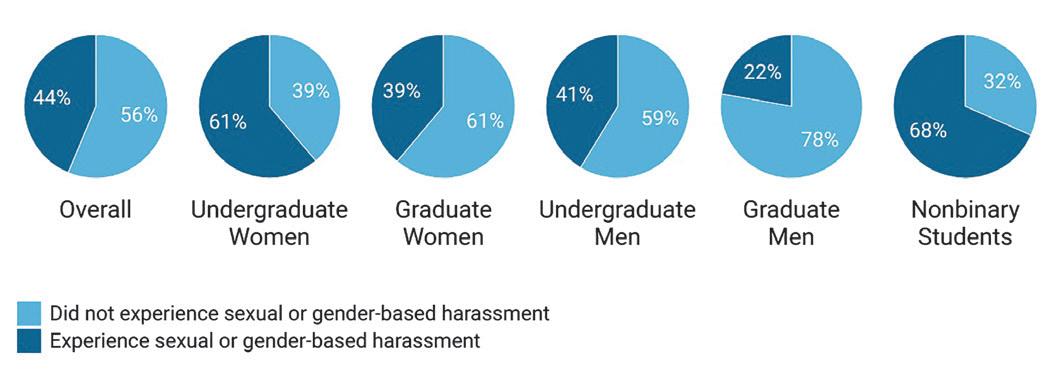
Percent of Cornell Students Who Experienced Sexual or Gender-Based Harassment
The University conducted the survey with a random sample of 6,000 undergraduate, graduate and professional students enrolled at the Ithaca, Weill Cornell Medicine and Cornell Tech campuses during the spring 2021 semester. It yielded a response rate of 38 percent, similar to the response rate of the past two surveys conducted in 2017 and 2019.
The survey found that the percentage of respondents who have experienced one or more forms of harassment, including being told sexual remarks, being told insulting or offensive comments relating to appearance, sexual actvities or gender, has dropped from 50 percent in 2019 to 44 percent this year. The
Consistent with the previous survey results and national data, the University statement on the 2021 data also says that groups including undergraduate women, LGBTQ+ students, gender nonconforming and nonbinary students and students with disabilities report experiences of harassment and assualt at significantly higher rates. These include harassment, stalking, domestic and dating violence and nonconsensual sexual contact.
Only 16 percent of respondents said they had contacted a University or community-based resource to talk about their nonconsensual sexual contact experience, which is about the same percentage reported in the 2019 survey. However, the majority of survey participants with these experiences talk to a friend, spouse, or romantic or sexual partner about their experiences.
“This demonstrates the important role we all can play in fostering a culture of caring on our campuses,” the statement read.
See REPORT page 3
By STEPHY CHEN Sun Contributor
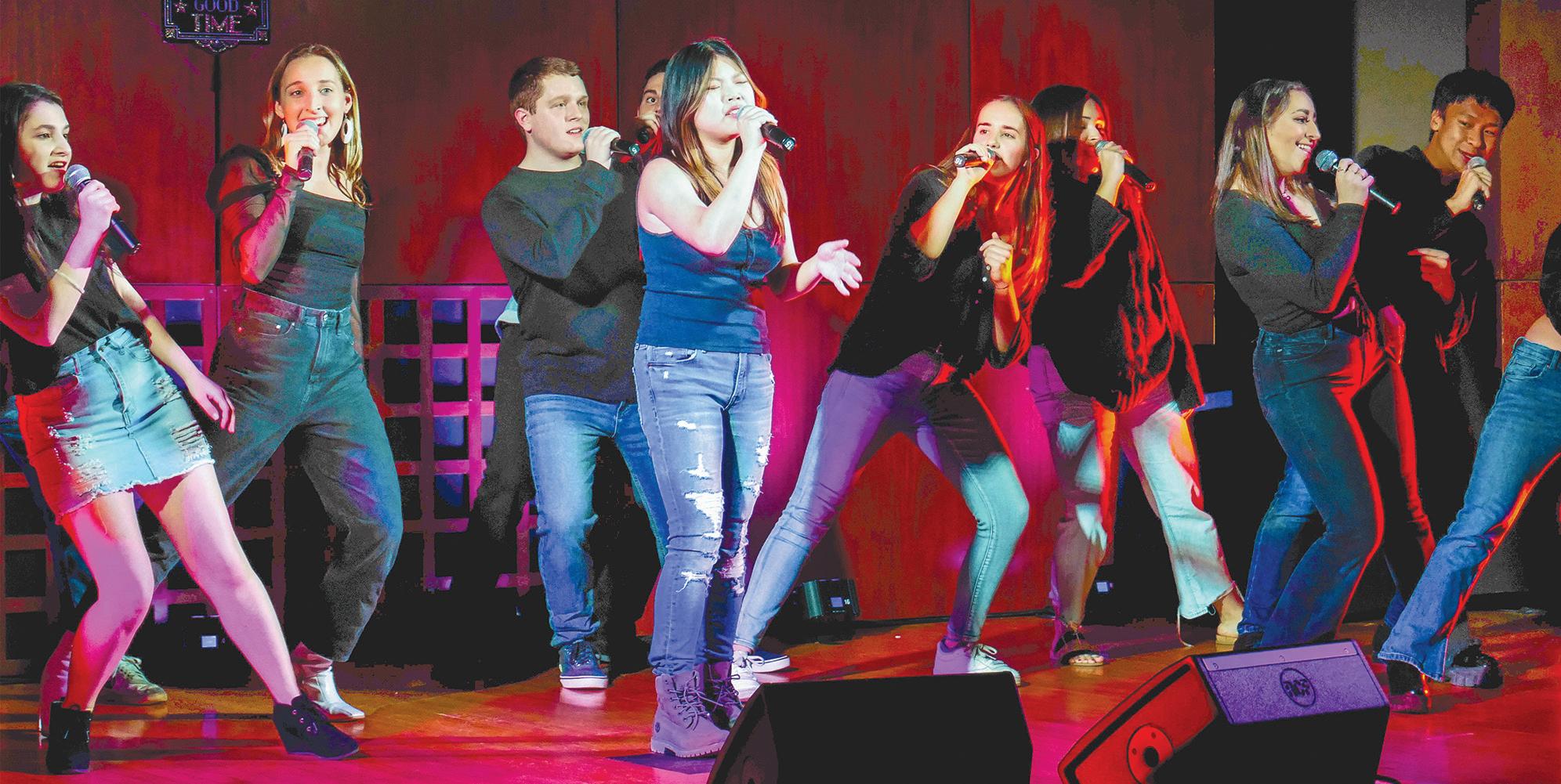
For the first time since fall 2019, Cornell’s auditoriums are filled with audience members enjoying the colorful spotlights and vibrant covers from a cappella groups — though not without regard for the health and safety of performers and audience members.
October and November were popular months for many a cappella groups to host their first in-person concerts again.
After Eight, the University Chorus’s a cappella subset, held its Witching Hour on Oct. 30, followed by the Glee Club’s The Hangovers’s Fall Tonic XLI on Nov. 6, Absolute A Cappella’s fall concert on Nov. 13 and The Chordials’ After Hours X on Nov. 20.
As the COVID-19 pandemic whisked students off campus in March 2020, a cappella groups had to adjust plans for their spring 2020 concerts — with some holding last-minute arch sings to honor their seniors.
During the last school year, The Hangovers and Chordials livestreamed
See A CAPPELLA page 3
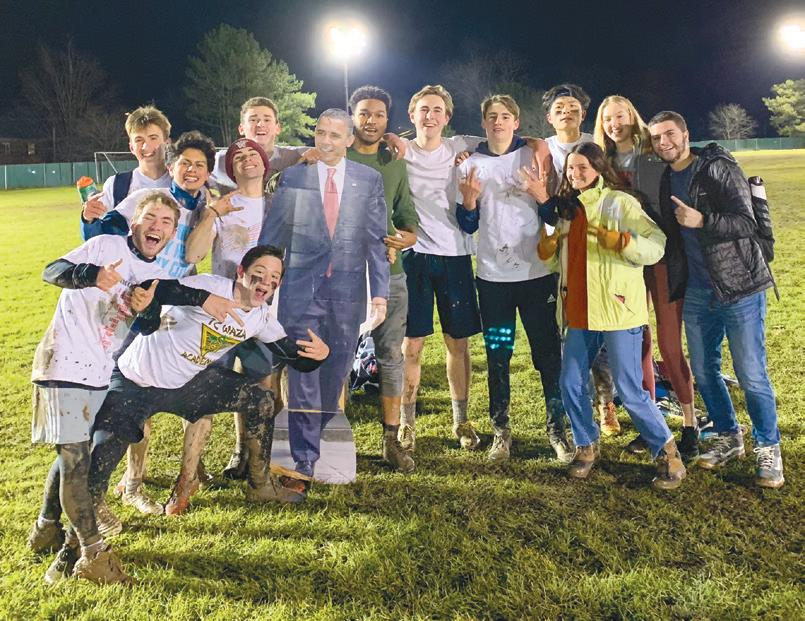
As the first snow flurries coat Cornell’s sports fields, students bid goodbye to the fall intramural sports season, voicing their appreciation for its social and mental health benefits. Cornell offers more than 30 intramural sports leagues, including leagues for soccer, basketball, flag football, volleyball, softball, golf and bowling. According to Scott Flickinger, director of intramural sports and Noyes Recreation Center, Assistant Football Coach Charles Van Patten Young established Cornell intramural sports in 1905.
Any Cornellian can form an intramural team during different registration periods by signing up through the Cornell intramural league website. Teams are required to fill the minimum number of players necessary for each sport and pay the required fee, which varies by sports.
According to Flickinger, 2,100 unique participants played at least one game during this fall season. The participants include graduate students, undergraduates, staff and faculty.
Outdoor soccer drew more than 1,000 participants this season, Flickinger wrote in an email to The Sun. But compared to the pre-pandemic numbers, the current intramural participation lags, according to Flickinger.
However, Flickinger said participation rates are starting to go back up, partly due to advertisement efforts and word of mouth, saying he hopes intramural sports will rebound to preCOVID activity numbers in the spring.
As students enter the last few weeks of the semester, many participants said their experience with intramural sports has alleviated stress and helped them manage their mental health.
Amitai Cammy ’25 plays for intramural soccer team Soulja Boy FC, the 2021 fall season champions. Cammy said participating in intramural sports was essential to managing his mental wellbeing throughout a stressful semester.
“Cornell workload can be demanding. I think sitting around in your room or a library all day looking at your computer screen will
See SEASON page 3


Today Tomorrow
Gatty Lecture Series: Sacred States and Subjects: Religion, Law and State-Building In Colonial Malaya
12:15 p.m., Kahin Center, 640 Stewart Ave
Institute for African Development Seminar: Student Presentations
2:40 - 4:35 p.m., G-08 Uris Hall
Quechua / Kichwa Conversation Hour
3:30 - 4:30 p.m., G25 Stimson Hall
Fashion and Cultural Studies 4 - 5 p.m., Virtual Event
Guest Lecture by Logan Kistler The Archaeological Science Group and Cornell Institute for Archaeology and Material Studies
4:30 - 6:30 p.m., Virtual Event Philosophy Talk 4:45 - 6 p.m., 156 Goldwin Smith Hall
Mini Locally Grown Dance
7:30 - 8:45 p.m., Schwartz Center for Performing Arts, Class of ’56 Dance Theatre
Festival of Lights Formal 8 p.m., Statler Hotel Ballroom
Nathan Mondry, Organ: C.U. Music 8 p.m., Anabel Taylor Hall
Writing, Procrastination and Resistance: How to Identify Your Writing Blocks and Move Through Them 10 a.m. - Noon, Virtual Event
Strange Parallels: Consecrated Chinese Buddhist Images in Context Noon - 1 p.m., Virtual Event
Yiddish Conversation Hour Noon - 1 p.m., Virtual Event
Confronting the Grand Challenge of Climate Change 12:30 - 1:30 p.m., T01 Human Ecology Building
Tech/Law Colloquium: Discredited Data
1:30 p.m., Virtual Event
Quantum Theory Seminar With Alex Avdoshkin 3 p.m., Virtual Event
Cornell Classical Chinese Colloquium: Nathan Vedal, University of Toronto 3:30 - 5:30 p.m., Virtual Event
Farsi Conversation Hour 3:30 - 4:30 p.m., G25 Stimson Hall
Cornell Games Club Weekly Meeting
7 - 11 p.m., 162 Goldwin Smith Hall

By RACHEL KODYSH Sun Contributor
As the daylight dims into nighttime, computer screens illuminate the unmasked faces in Klarman Hall. Students sit at their tables, focused on their work, many of them with an empty coffee cup standing next to their temporarily abandoned mask.
As of Nov. 30, Cornell is reporting 18 active student cases on campus, according to the COVID Tracking Dashboard. The University has been in the green alert level, labelling it the “new normal,” since Sep. 24 after record-high cases at the beginning of the semester.
Some students and faculty have observed a decrease in mask wearing amid this sustained plateau of cases. The Centers for Disease Control and Prevention currently encourages individuals to wear masks regardless of vaccination status in high-transmission indoor areas. Masking exponentially reduces the spread of COVID-19 and protects at-risk individuals, especially those who are unvaccinated.
Currently, Cornell’s mask policy requires vaccinated individuals to mask up in indoor spaces — 97 percent of the on-campus population is vaccinated. In specific areas including cubicles and single-occupancy study rooms, masks are not required.
“I think it’s more socially acceptable to not wear a mask at this point,” said Alice Lidman ’25.
Lidman said she’s noticed students have recently worn masks less often in places where they interact with their peers, such as in libraries. She said her friends follow these patterns — wearing masks in dining halls and classrooms but going maskless in informal and social spaces on campus, like common areas. Claudia Sodano ’24 said students tend to shed masks when they sit down at library tables, in some cases citing the distance between them as their reasoning.
Dorm room common spaces and hallways are also spaces where mask wearing has become much more relaxed. Unless RAs actively patrol and comment on students’ masking, Lidman said, few students mask
up inside their residence halls. But she said this shift doesn’t bother her.
“I feel like a decrease in mask wearing was always bound to happen, so I’m not too worried about it,” Lidman said.
However, Lidman voiced her concern about a potential spike in COVID cases after Thanksgiving break and the upcoming winter vacation.
Travel can lead to increased COVID-19 risks, and student travel over breaks has the potential to bring disease back to Cornell. In response, the University encouraged continuing preventative measures like masking and asked students returning from Thanksgiving break to receive a supplemental test.
However, some say they’re not concerned about the uneven masking in campus spaces. Kisa Jafri ’23 said she and her friends sometimes remove masks in common spaces if they agree with this arrangement.
“I think everybody’s at the same wavelength as I am,” Jafri said. “If we’re studying together, everyone is comfortable with not putting a mask on.”
Jafri said that she works to make her peers feel safe, offering to keep her mask on if they prefer it.
In settings like classrooms, which are regulated by faculty, students tend to obey the policy more closely than in informal social spaces.
“In those more formal settings where there is the presence of the administration or in a setting where you’re supposed to be professional or respectful, people usually wear their masks,” Ben Knepper ’24 said.
Industrial and labor relations instructor Matthew Fischer-Daly grad said students generally wear masks in class. He expressed concerns about incorrect mask wearing, since students sometimes wear masks on their mouth but not their nose.
“I would like to see people wear masks more consistently,” he said. “I do think it is a signal of respect to other people given the information we have been provided about the pandemic, that masks are one of the most important ways to ensure that our interactions with other people do not result in us transmitting the virus.”
Rachel Kodysh can be reached at rjk243@cornell.edu.
A CAPPELLA
Continued from page 1
pre-recorded virtual concerts on their respective YouTube channels, while other a cappella groups like Absolute A Cappella, a co-ed a cappella group, released music albums and covers on their social media platforms as a replacement for live performances.
Kaitlyn Yeh ’23, Absolute A Cappella President, said that the recent concert was a rewarding experience for both old and new members of the group.
“Despite joining the group the fall semester of my freshman year, I only got to experience one in-person concert before the pandemic began,” Yeh said. “A majority of our members had never experienced an in-person concert before, so it was definitely a huge undertaking and presented a learning curve that we were eager to tackle.”
Sam Schneider ’22, vocalist for The Hangovers, said holding an in-person concert with a live audience again was a fun, emotionally powerful experience.
“There’s just something about performing live and the energy from the audience that you feed off of, it makes the whole experience for both the performers and the audience much more exciting,” Schneider said.
For many groups, the transition to Zoom rehearsals in 2020 presented several challenges. Grace Dearden ’22, musical director for Absolute A Cappella, said directing a music group over a computer screen made organizing rehearsals and hearing members during them more challenging.
“There was no precedent on how to run virtual rehearsals,” Dearden said. “I had to learn how to give pointers over Zoom. Even when we started singing together outside with masks, it was hard to hear each other because of our surroundings.”
Last year, due to a smaller number of student auditions, some groups said the virtual audition process felt less vibrant, compared to the excitement of welcoming new members in previous years.
“Our audition process consisted of students sending in videos,” said Jeanette Wang ’23, business manager for The Chordials, a co-ed a cappella group. “Compared to this year, it was definitely more impersonal, as it was hard to give pointers and make a connection with the auditionees.”
To read the rest of this story, please visit www.cornellsun.com.
Stephy Chen can be reached at sc2548@cornell.edu.
SEASON
Continued from page 1
take a toll on your body,” Cammy said. “Your body needs that hour or two of physical exercise. Bringing people together outside of an academic or a work setting, intramural sports is a great way to relieve stress.”
Jackson Andrews ’25 is part of four intramural teams: a sand volleyball team, a basketball team and two soccer teams.
Andrews said joining the intramural sports program was easy,
REPORT Continued from page 1
The survey consisted of six sections, with two additional sections depending on how students responded to the initial six sections. All students who responded to the survey were asked questions about background information, knowledge of Cornell resources and policies, sexual and gender-based harassment, stalking, contact and perceptions of Cornell students’ behaviors.
Survey respondents who indicated that they had been in some type of partnered relationship while attending Cornell received questions about domestic and dating violence. Those who said they had experienced any incidents of nonconsensual sexual contact were then asked follow-up questions regarding the experience that had affected them the most.
It is unclear what impact the COVID-19 pandemic has made on the statistically significant decreases in survey respondents who report harassment and nonconsensual contact.
with no deadline to sign up to join an existing team and no skill level required to enter.
According to the participants, intramural sports also provide a competitive environment that pick-up games lack. Cammy said the competition makes playing sports much more fun for him.
“The stakes are high. If you win the league, you win a free T-shirt, and I am just all over free T-shirts,” Cammy said. “Having that competitive edge gives me something to play for, and I think that is what keeps people going.”
Many students also take part in the intramural sports community as referees and fans.
Nathan Francis ’25 works as a referee for soccer games held at Jessup Field. Francis said he enjoys working with other student referees, getting paid for watching sports he likes — $12.50 per game — and feeling appreciated by the community.
To read the rest of this story, please visit www.cornellsun.com.
Jiwook Jung can be reached at jjung@cornellsun.com.
The current framework of prevention efforts, which the survey acknowledges, emphasizes proactive bystander interventions and the creation of healthier social environments.
The University also offers resources, including Cornell Health’s Skorton Center for Health Initiatives and The Office of Institutional Equity and Title IX, which respond to sexual assault and related misconduct through education, coordinated victim support and enforcement of university policies. It also offers victim advocacy resources, emergency services, confidential support, healthcare and reporting options.
Members of the Cornell Community may consult with the Victim Advocate by calling 607255-1212, and with Cornell Health by calling 607-255-5155. Employees may call the Faculty Staff Assistance Program (FSAP) at 607-255-2673. An Ithaca-based Crisisline is available at 607-2721616. The Tompkins County-based Advocacy Center is available at 607277-5000. For additional resources, visit health.cornell.edu/services/victim-advocacy.
“Most courses were held remotely ... students were cautioned about socializing in person and being in close contact with others… and many activities were halted or shifted to remote-only, factors that may have contributed to the decrease in incidents of unwanted sexual harassment or contact,” the University wrote in the statement.
Angela Bunay can be reached at abunay@cornellsun.com.


By MELANIE METZ Sun Staff Writer
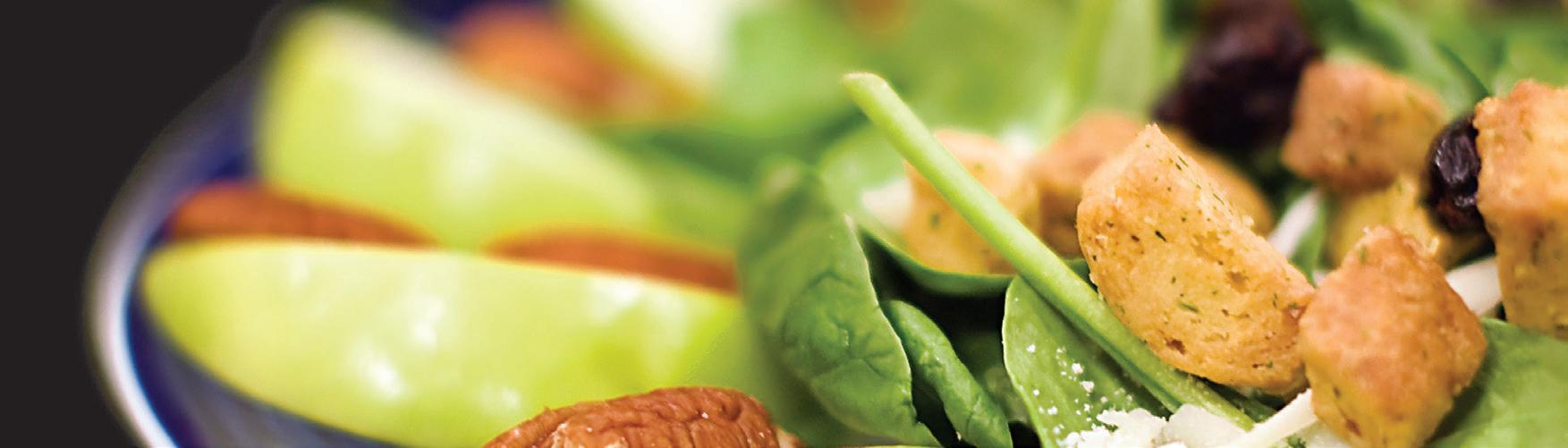
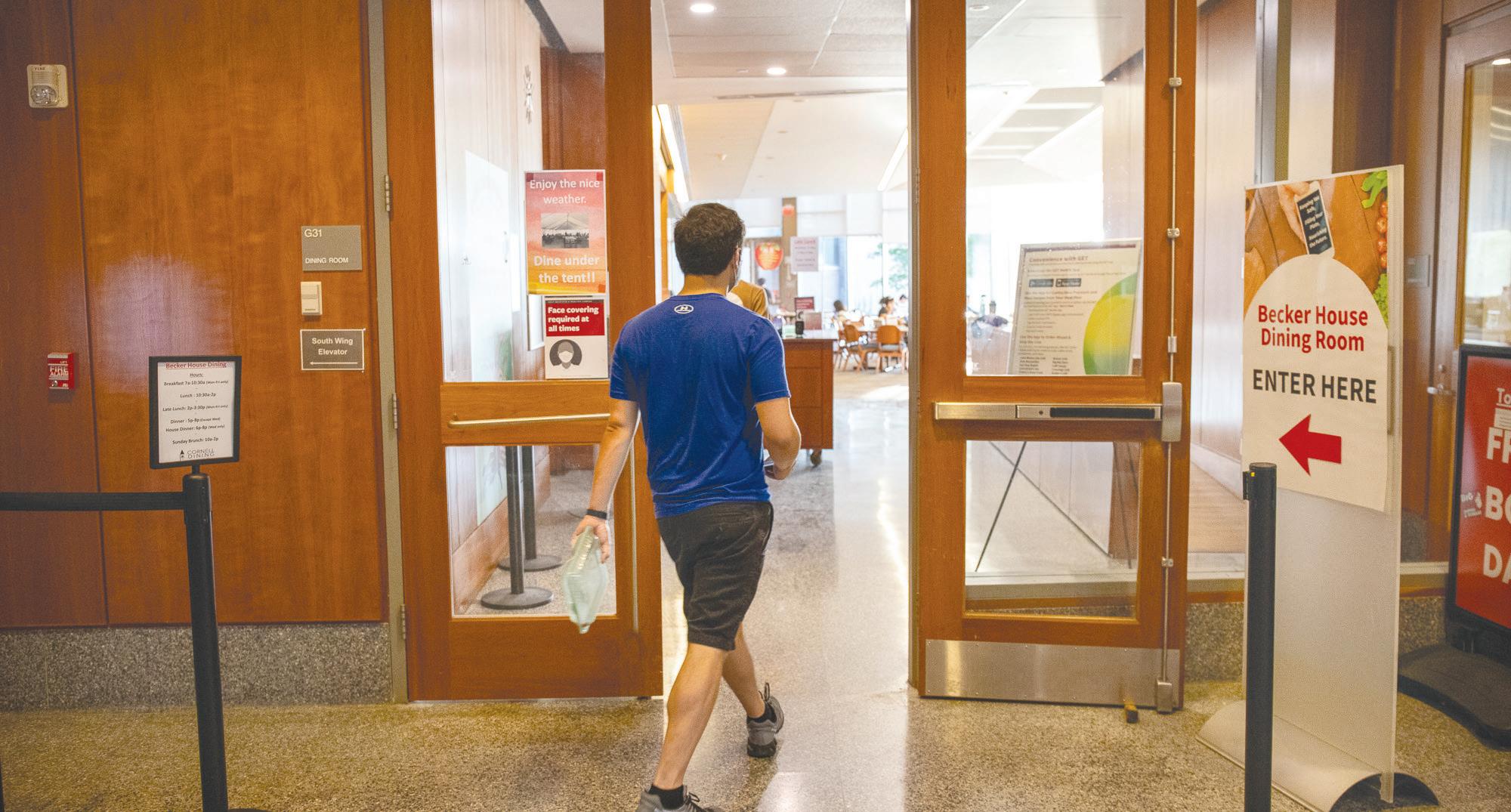
One of my favorite daily activities is checking the Eatery app to scope out the various dining hall menus. Somehow, there is nothing more exciting than investigating which dining hall has the best dinner choices that day. I always start the search with high hopes and then end up circling back to my go-to’s: Risley and Keeton. As a vegan, I have never had trouble finding delicious, satisfying and healthy food within Cornell Dining. However, sometimes it takes a keen eye and some good luck to get it.
Cornell Dining is consistently ranked in the Princeton Review’s top ten for best campus food and was rated the number
two most vegan-friendly food service program. They consistently offer a variety of foods
for all different dietary restrictions and label foods clearly — even water — so that there is no confusion. As I’ve aged, my dining hall preferences have changed. Freshman year, I stuck mostly to RPCC and Appel. Sophomore year, I was all about Risley, Keeton and using BRBs at Terrace. Junior year, I didn’t step foot in a dining hall. Now that I’m a senior, I have been dabbling in all the dining halls to make the most of the time I have left with Cornell Dining. In my adventures thus far, I’ve found that some dining halls are much more accommodating than others for different dietary restrictions. I surveyed a few friends and found that the dining hall with the best options for multiple dietary restrictions (pescatarian, vegetarian, vegan, gluten-free) was Risley, as expected. Risley has somewhat of a cult following. I have been to Risley at least 5 times in the last two weeks, and each time
I’m there, I see the same people. Their “hot traditional” station always has something vegetarian and the joint stir-fry and poke bowl station always has something vegan — of course, the entire place is gluten-free. Their salad bar has hummus and veggies, and they always offer their vegan plantain brownie which is amazing when warm. A few disappointments include their vegan grilled cheese consisting of barely toasted bread with barely melted shredded cheese and the loss of vegan waffles; I’ve spoken with Dining management and they said they are looking for a new waffle batter.
Recently, I’ve tried to branch out and try other dining halls for the purpose of this article. Keeton continues to be a consistently good option due to their grain salads, fun hummus
and rotating roasted vegetables.
If you ever see the sweet chili broccoli, run to Keeton. The quality and creativity of foods that Rose produces is unmatched. It doesn’t always have vegan options, but when it does, they are well worth it. And if you want to head up North, Appel has a new vegan Dole whip and so many stations that there is always an option for everyone.
There are times where none of the menus have sufficient vegan options, or when there
is a great roasted vegetable but no protein. Yet overall, the dining halls provide delectable and healthy food for vegan students.
My parting advice is to read the menus ahead of time, try to find the eatery that works best for you and feel free to reach out to the dining staff with questions. Cornell Dining is extremely accommodating and kind, and they want you to enjoy your food. Happy dining!

ANUSHYA ALANDUR ’23
Business Manager
CATHERINE ST. HILAIRE ’22
Associate Editor
PRANAV KENGERI ’24
Advertising Manager
ODEYA ROSENBAND ’22
Opinion Editor
JYOTHSNA BOLLEDULA ’24
News Editor
TAMARA KAMIS ’22
News Editor
CAMERON HAMIDI ’22
App Editor
KRISTEN D’SOUZA ’24
Design Editor
HANNAH ROSENBERG ’23
Photography Editor
OMSALAMA AYOUB ’22 Science Editor
PUJA OAK ’24 Layout Editor
ANNIE WU ’22
MIHIKA BADJATE ’23
Assistant News Editor
SERENA HUANG ’24
Assistant Business Editor
ANGELA BUNAY ’24
Assistant News Editor
JOHN COLIE ’23
Assistant Arts & Culture Editor
AMELIA CLUTE ’22
Assistant Dining Editor
WILLIAM BODENMAN ’23
Assistant Sports Editor
AARON SNYDER ’23
Assistant Sports Editor
MEGHANA SRIVASTAVA ’23
Compet Manager
KATHRYN STAMM ’22
MADELINE ROSENBERG ’23
Editor NAOMI KOH ’23
Editor ANIL OZA ’22
HEO ’24
VEE CIPPERMAN ’23
UMAR ’23
E.D. PLOWE ’23
YOON ’23
VELANI ’22
PICHINI ’22
TYAGI ’22
MENDOZA ’24
ARANDA ’23
’23
KAYLA RIGGS ’24
’23
’24
’24
ABAYEVA ’24
ALPERS ’22
Working on today’s sun ad layout Katherine Chang ’25
desker Odeya Rosenband ’22
desker Madeline Rosenberg ’23
deskers Vee Cipperman ’23
Mihika Badjate ’23
production deskers Katrien de Waard ’24 Dennis Quizhpi ’24
layout deskers Kristen D’Souza ’24
photo desker Julia Nagel ’24
dining desker Benjamin Velani ’22
sports desker Luke Pichini ’22

Roei Dery is a junior in the College of Arts and Sciences. He can be reached at rdery@cornellsun.com. His column, Te Dery Bar, runs every other Monday this semester.
“College is the last time you really feel young,” I overheard a dad tell his daughter on a campus tour as I waited for a hot chocolate at Libe Cafe. The drink was my weekly reward for working on a problem set for the past several days. You know, “young” people things. The contrarian in me wanted to approach this dad with my own opinions on the matter, but the opinion columnist in me prevailed, resolving to just write an article about it instead. So I just grabbed my cocoa and left.
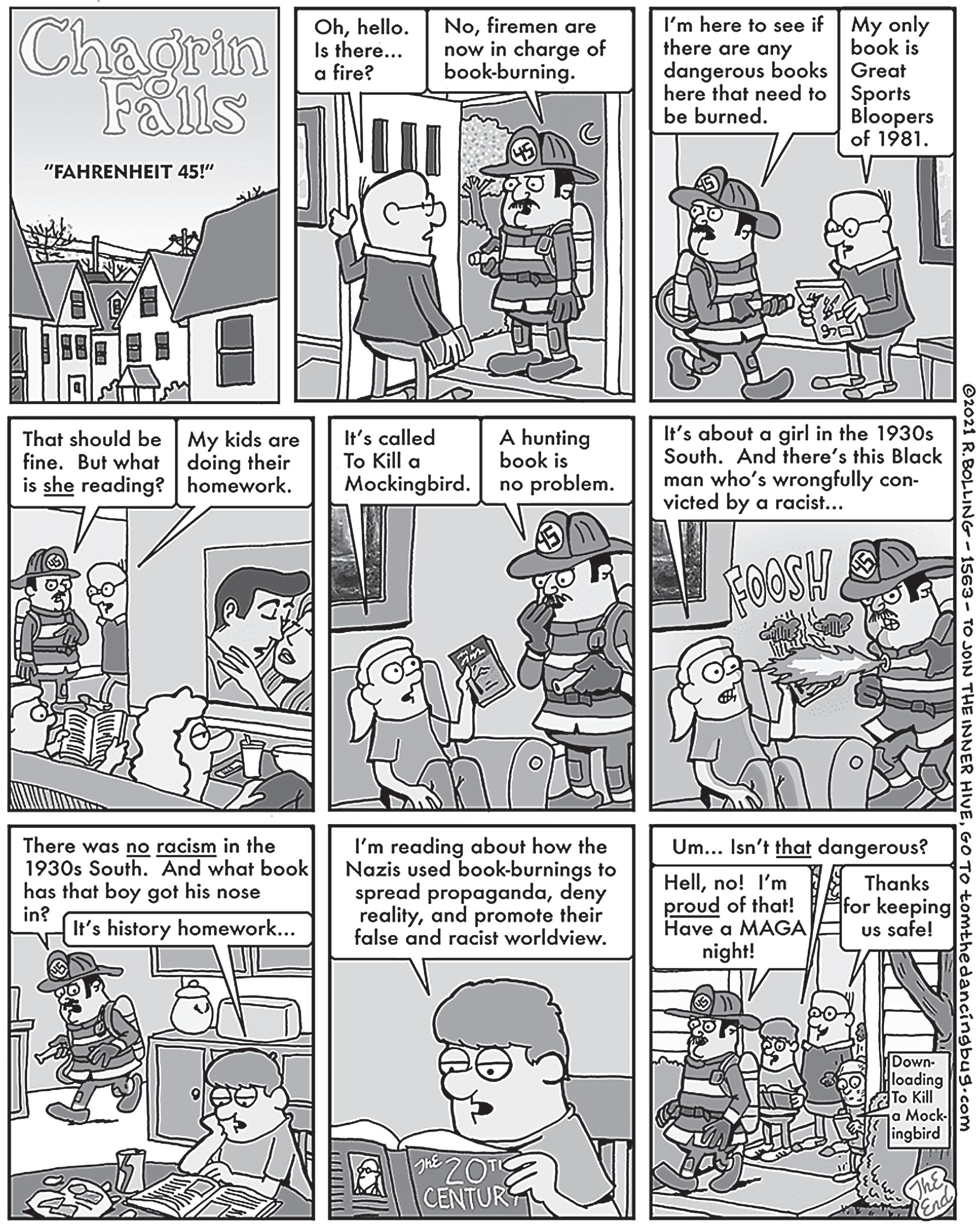
In my day-to-day life, the only activities that I still share with my youthful, 5th-grade self are catch and movie nights. In some sense, they’re what keep me “young.” But, the slow end to my youth had arrived much sooner than the end of college. Since the later years of grade school, I’ve been forced to set aside hobbies and other careless pastimes of old due to a larger and larger commitment towards academics and a future career. If I had to put a finger on it, it all started when they took away my recess break after 5th grade. I say, it’s not too late to bring it back.
entire slope replace a measly elementary school schoolyard, the possibilities are endless. It might even be time for Cornell to consider building a playground outside of Olin Library just to get us in the spirit.
The haters (who I bet were those same people spending their entire recess talking to the teacher) will tell you that we’re too old. To these readers I ask: Could it be that we were just too young for recess back then? In third grade, a 10 minute tutorial on how to add 28 and 37 justified a carefree hour outdoors. Our third grade selves failed to appreciate the notion of what was, frankly, an undeserved break. A decade later, this same generation of Cornell students are tasked with memorizing dozens of lectures and churning out essays left and right with hardly any time to catch our breath. Whenever we scroll through our phones or zone out to escape work, in a deeper sense, we’re just craving those games of Four Square that we grew up on — but were suddenly deprived of.
Do I have a job interview in 10 minutes? Possibly, but it’ll have to wait until the end of Sharks and Minnows.
Picture this: It’s 10:55 a.m., which means that the end of your third Tuesday lecture is only five minutes away. You’ve processed maybe 30% of the information thrown at you this morning. Maybe. All the content is scribbled down somewhere in your notebook anyway; you’ll get to it later, but definitely before your test on Friday (right?). “It’s going to be one of those weeks, huh?” you think to yourself. Your leg starts twitching. This time, though, it’s not from the stress.
It’s 10:57 a.m. now — only three more minutes until recess. What begins as a few backpack zippers closing has now devolved into mayhem. Students scramble towards the door to avoid being stuck in the back, doomed to wait 15 minutes before their first at-bat during kickball.
From somewhere in the back of the crowd, you hear a commanding yell: “Single file, everyone!” It’s your chemistry professor — you forgot he was chaperoning today. As your class peels out of Baker Lab, you see dozens of others migrating towards the Arts Quad: The daily 30 minute recess period for your year has begun.
Back in my recess heyday, 30 minutes was more than enough time to rise through the ranks from Jack to King in Four Square, join in on a game of tag and even stir up some drama by the playground. Now that several quads and an
The truth is that Cornellians need recess now more than ever. More often than not, the vast majority of mental breaks I take throughout the day end with a 3-minute period where I draft a new resolution to stop falling down Youtube rabbit holes. A regimented 30-minute school-wide break would be a good fix. It’d be a sacred time to put down our busy lives and solely dedicate ourselves to a game of hopscotch. Or Four Square. Or frisbee.
Bummed out because of an exam on Friday? Nope, but only because I’m “it” in tag for the second time in a row — even after I explicitly said “no tag backs.”
How’s my essay coming along? That doesn’t matter now — it’s the bottom of the ninth in kickball.
Do I have a job interview in 10 minutes? Possibly, but it’ll have to wait until the end of Sharks and Minnows.
For those of us whose minds spend too much time drifting off and worrying throughout the day, what better way to reallocate that stress by being thrown into playground drama. For others who are always on the lookout for the next quirky, Cornellian experience, what better way than to enjoy recess in college.
Now, imagine the dad who, just after telling his daughter that “college is the last time you really feel young,” is suddenly tapped on the shoulder. He turns around, only to see a student holding a large hot chocolate yelling “Tag, you’re it!” Looking back at his daughter to tell her “nevermind,” he begins his pursuit across the arts quad. After all, it was 11 a.m.: recess had begun.

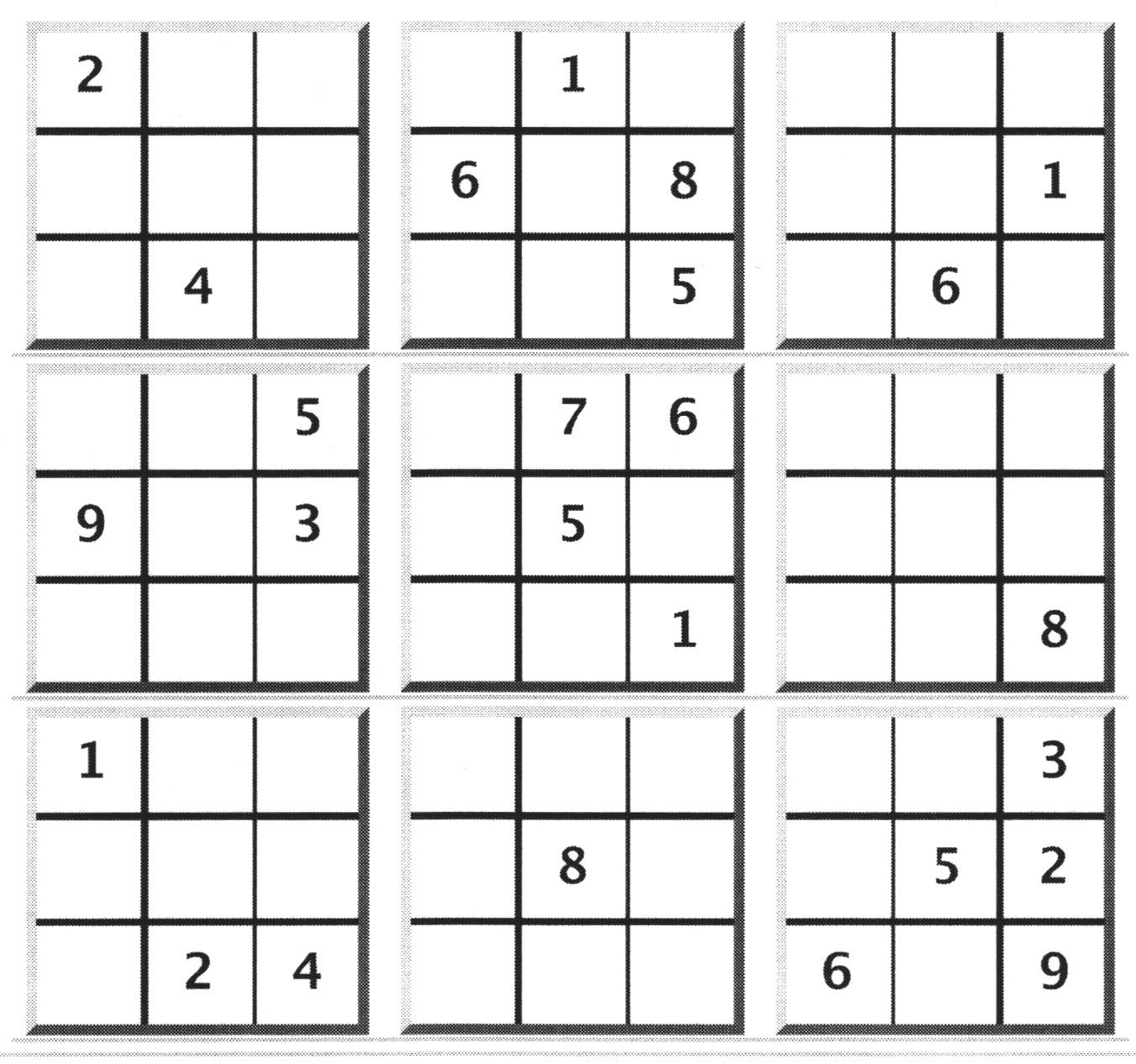
Fill in the empty cells, one number in each, so that each column, row, and region contains the numbers 1-9 exactly once. Each number in the solution therefore occurs only once in each of the three “directions,” hence the “single numbers” implied by the puzzle’s name. (Rules from wikipedia.org/wiki/ Sudoku)
C.U. continues impressive non-conference stretch, up 6-1 for frst time since 1967
By BRYAN VICENTE and LOGAN HANCHETT Sun Staff Writers
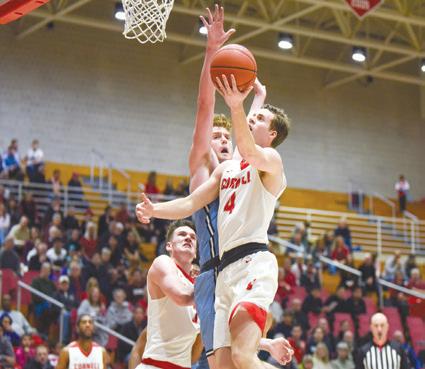
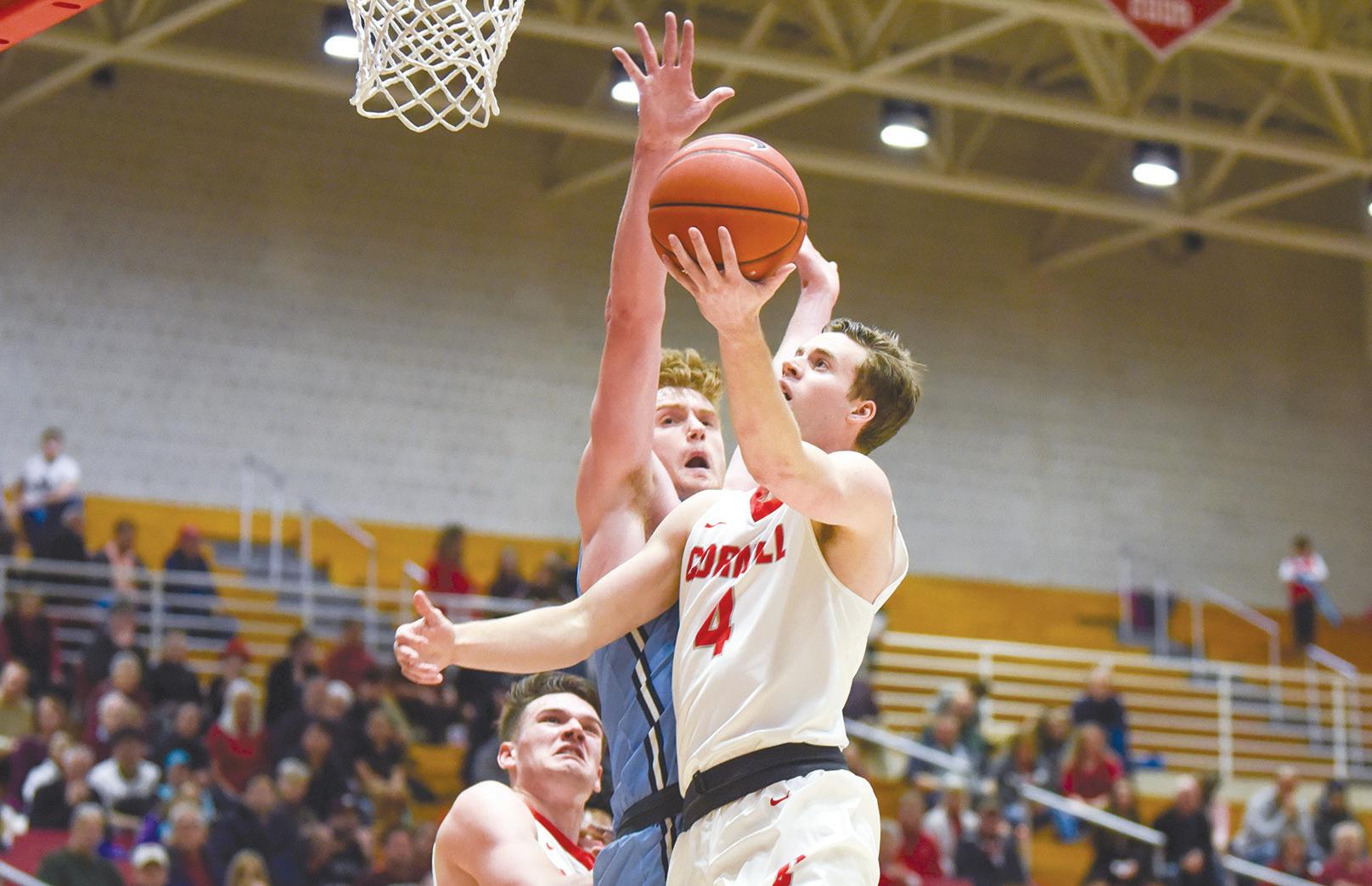
After two key wins against Saint Francis (Pa.) and Canisius College, the Cornell men’s basketball team is off to a 6-1 start for the first time since 1967.
The Red started off its Thanksgiving break by hosting St. Francis (2-3, 0-0 NEC) last Wednesday, looking to improve to 5-1 on the year. Against the Red Flash, Cornell had its most successful outing from beyond the arc, draining 16 3-pointers en route to a 93-80 victory.
Cornell was able to keep up its fast pace, scoring an impressive 28 points off of fastbreaks. Even more impressive was the Red’s ability to showcase its range in this game, including a few transition 3-pointers that mirrored modern NBA squads.
The Red shot 54.6 percent from the field and 45.7 percent from the 3-point line. Sophomore Keller Boothby led the team in threes made by converting five of his eight attempts. Freshman Nazir Williams posted a game-high 21 points, shooting 70 percent from the field. Boothby and Williams both came off the bench in this game and heavily contributed to Cornell’s season-high 61 bench points, outscoring their starters by 29 points.
“We’ve got to be prepared for the nights where we’re gonna miss, but it’s been nice to see them going in the last two games.”
Brian Earl
“Our staff does a great job of getting in with the guys and making sure they get extra shots up,” said Head Coach Brian Earl. “It’s a lot of hard work by the players too, because they’re the guys that make the shots. We’ve got to be prepared for the nights where we’re gonna miss, but it’s been nice to see them going in the last two games.”
Cornell’s multifaceted play also led to the team drawing more fouls in the second half as the Red Flash had more difficulty guarding the Red’s hot playmakers. The Red went to the free throw line 15 times in the second half and found 10 points from the charity stripe.
Williams was named Ivy Rookie of the Week on Nov. 29 after impactful performances off the bench against Penn State and St. Francis. The Nyack, New York, native shot 12-for-12 from the foul line and 62.5 percent from the field.
“He had a good week,” Earl said of Williams. “We’re a little bit on the young side, so a lot of young guys are contributing. He’s coming in and doing his job, and it’s good to see that when he’s called upon he’s able to give us everything he’s got.”
Following its fifth victory, the Red then traveled to Buffalo, New York, on Monday
night for a battle with Canisius (2-5, 0-0 MAAC). Senior forward Kobe Dickson scored 17, junior forward Jordan Jones added 14 and the Red shot 50 percent (11-of22) from 3-point range to secure an 89-75 win on the road.
Junior guard Greg Dolan laid in the first basket of the game, and Cornell led from start to finish as the team was scorching hot from the field. Dolan recorded 12 points and six rebounds, senior guard Sarju Patel tallied 13 points and sophomore forward Sean Hansen came off the bench to score 10. As a unit, the Red converted 61.8 percent (34-for-55) of its looks, marking the team’s best shooting performance of the season.
Cornell is developing an identity as a fast-paced team that can light up the scoreboard from long range and hold its own inside the paint. The Red averages 86.7 points per game (13th in NCAA) and is 26th in offensive possessions per game.
Meanwhile, free throw shooting has been a pitfall for the Red. Against Canisius, the Red only shot 10-of-17 from the line. On the season, Cornell is shooting 64 percent (96-of-150) from the charity stripe, 313th among D-1 teams. This could hamper the team late in close games moving forward, but so far, the Red has found ways to make up for points left at the foul line. In addition to reliable perimeter shooting, the Red scored 14 points on the fast break, added 46 points in the paint and out-rebounded the Golden Griffins, 37-31.
The Red is only one game away from matching its win total in 2019, its last season of competition. Cornell’s ability to play fast and willingness to take tough shots have played a critical role in its success so far.
Elsewhere in the Ivy League, Harvard (5-2), Princeton (5-2) and Dartmouth (3-1) appear to be the primary competition as the Red gears up to make a run for the conference crown. This Friday, Cornell will look to keep rolling in non-conference play against the Coppin State Eagles.
The Eagles (1-9, 0-0 MEAC) arrive in Ithaca after dropping three consecutive games by three points or fewer: 65-62 at Cleveland State, 76-75 at Canisius and 70-68 at East Carolina. Fans should prepare for a 3-point shootout as the visitors are second in the nation in three point attempts, though they’ve converted just 27.5 percent (75-of-273) from deep.
Three players average double-digits for the Eagles — point guard Jesse Zarzuela (13.3 points, 3.3 assists), forward Tyree Corbett (11.1 points, 6.0 rebounds) and forward Nendah Tarke (11.1 points, 6.2 rebounds). In the last meeting between the two teams on Nov. 23, 2019, Coppin State outlasted Cornell 68-66. The Red will attempt to avoid that same fate when it hosts the Eagles this Friday. Tip-off is set for 7 p.m. at Newman Arena.
Bryan Vicente and Logan Hanchett can be reached at bdv23@cornell.edu and lh554@cornell.edu.