The Corne¬ Daily Sun


By NICHOLAS BOGEL-BURROUGHS Sun City Editor
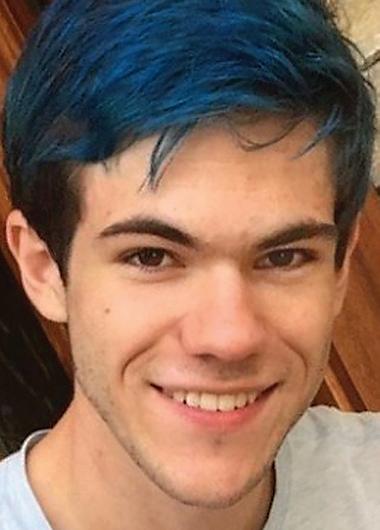
A former Cornell student has admitted to possessing an illegally modified rifle, a makeshift bomb and other weapons and tactical gear in his Collegetown apartment in the spring.
Maximilien R. Reynolds ’19 pleaded guilty Tuesday to two federal felony charges, admitting that he gave another student money last year to buy an AR-15-style rifle and that he possessed unregistered firearms. Prosecutors said each offense carries a maximum of 10 years in prison, three years of supervised release and a fine of up to $250,000.
Assistant U.S. Attorney Richard Southwick said Wednesday that Reynolds, who is 21, also admitted to possessing a .25 caliber semi-automatic pistol “with an obliterated serial number” that New York State Police divers found in the Cayuga Inlet in April.
Reynolds’ lawyer, Raymond Schlather J.D. ’76, said in a statement to The Sun on Wednesday that his client had “no plan, no target, no threats, no anger, and no intent to cause harm to himself or to anyone else.”
“At all times, due to his emerging mental illness, Mr. Reynolds was acting defensively and in protection of his family and self,” Schlather said. “Fortunately, Mr. Reynolds now is able to understand and to accept his responsibility. He, his family and his many sympathetic friends and


says grassroots movement will ‘continue to grow’ in next 2 years
a “blue wave.”
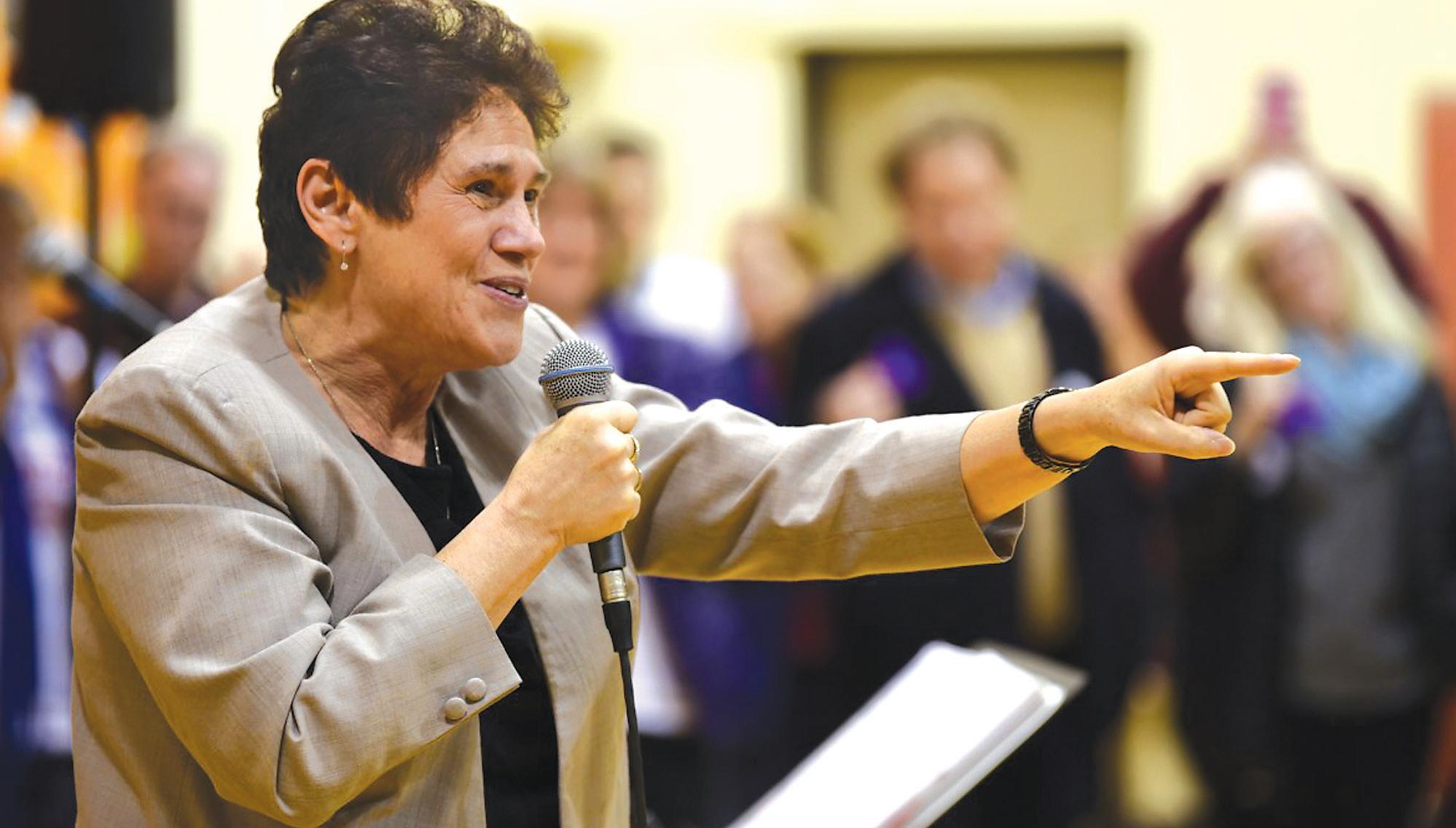
Just over a week after Tracy Mitrano J.D. ’95 lost her bid for congress, she announced that she will be running to represent New York’s 23rd district in 2020.
Mitrano lost last Tuesday’s race by a margin of nearly 10 percentage points, the smallest margin of loss since Nate Shinagawa’s ’05 campaign in 2012. Rep. Tom Reed (N.Y.23), who has represented the district for six years, soundly defeated the Cornell Law School alumna, securing his seat in congress for another two years.
While ballots are still being counted in other races around the country, Mitrano is looking ahead to 2020, saying in a campaign press release that her decision will “[build] on this name recognition, field program, and fundraising infrastructure.”
“I am deeply grateful to the hundreds of supporters who have urged me to run again.”
Tracy Mitrano J.D. ’95
Winning with a margin of 53.78 percent over Mitrano’s 43.99 percent, Reed’s campaign went against the national trend for House seats and rebuked claims of
New York’s 23rd district has historically aligned heavily Republican, aside from Tompkins county, which overwhelmingly voted for the former cybersecurity expert.
“The results of November 6th don’t change the facts,” Mitrano said, listing the policy initiatives that she emphasized during her campaign, including tax reform, tuition payment reform, infrastructure development and environmental conservation. “I am commit
By ROCHELLE LI Sun Staff Writer
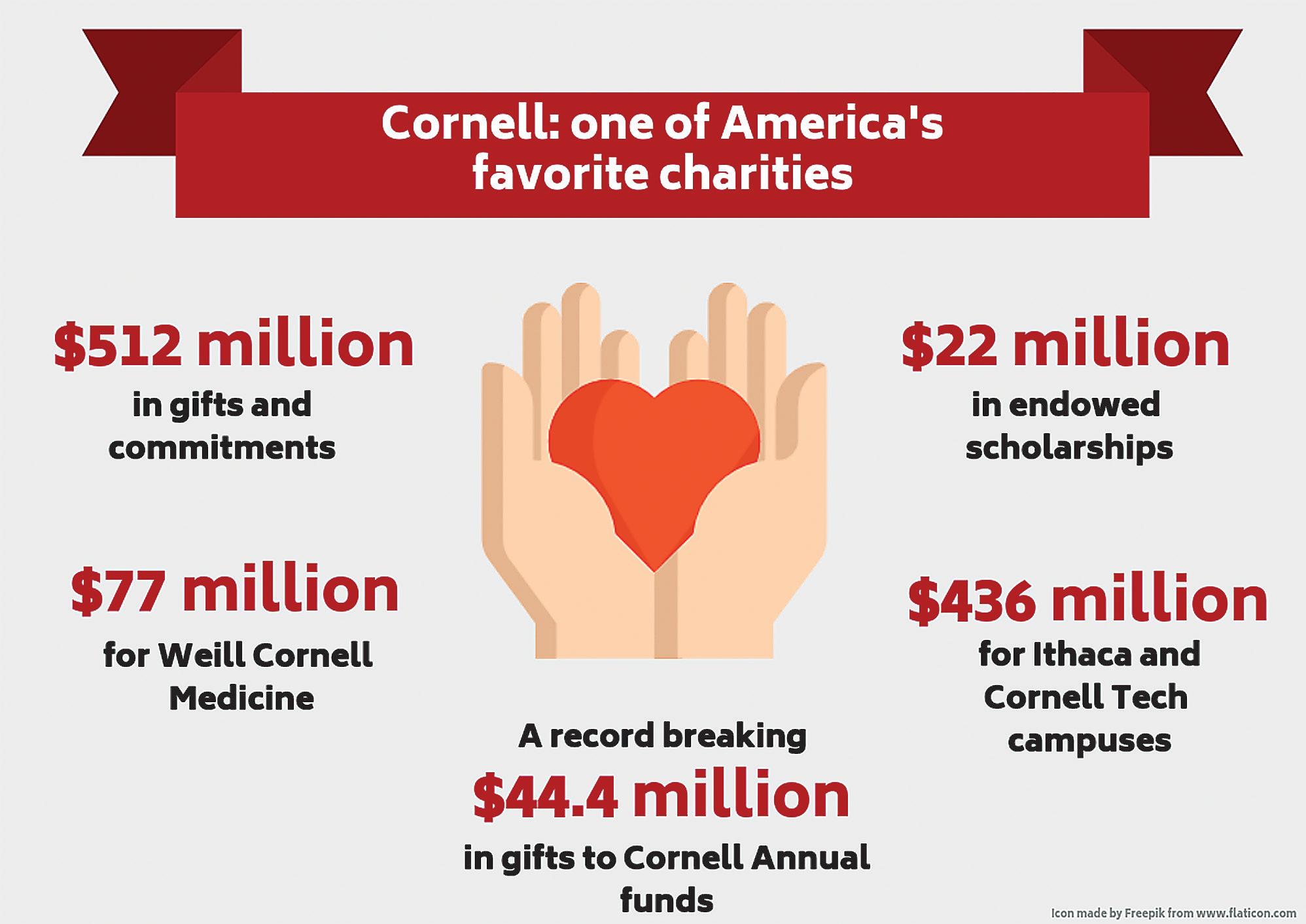
Cornell ranked ninth for most donations out of every non-profit in the United States in 2017, according to The Chronicle of Philanthropy. Within higher education, Cornell ranked third after Harvard and Stanford.
The University collected over $743 million in donations, compared to $1.28 billion to
Harvard, according to The Chronicle.
Cornell’s donation success is partially attributed to the University’s size, as it has the most students out of all the Ivy League schools and by extension the largest alumni base.
Cornell’s large donations are also due to a “culture of transformational gifts,” said Fred Van Sickle, vice president for alumni affairs and development, in an email to The Sun.
Donors are able to control where the money they give is allocated. The majority of the money is given for a specific purpose, such as for scholarships, fellowships and programs, while some donors allow unrestricted use of their donation, according to Van Sickle. The number of donors has increased over time. In the 2017-2018 school
DONATIONS page 17
Thursday, November 15, 2018
Its Mysterious Life: An Appreciation of Beetles
8 a.m. - 5 p.m., 1st Floor Mann Library
Godless Citizens in a Godly Republic 10:30 - 11:30 a.m., Auditorium, Boyce Thompson Institute
Firm and Worker Dynamics in an Aging Labor Market 11:40 a.m. - 1:10 p.m., 498 Uris Hall
Undercurrents: Southeast Asian Transnational and Diasporic Culture Noon, Kahin Center
Health Assessment, Medical Management, And Prerelease Conditioning of Translocated North American River Otters: A Retrospective Noon - 1 p.m., College of Veterinary Medicine
War, Women and Power 12:15 - 1:30 p.m., Uris Hall G-08
Role of the Power Industry on Sustainable Development 12:20 - 1:10 p.m., 203 Phillips Hall
CLASSE Seminar: Zeming Sun
1 - 2 p.m., 374 Wilson Lab
C-H & C-O Functionalization via Radical Chaperones
4 - 5 p.m., 119 Baker Lab

Did Scrubbing the Government Clean Up the Air? Polluter Responses to China’s Anticorruption Campaign 10:30 a.m. - Noon, B50 Warren Hall
Male Earnings, Marriagable Men and Non-Marital Fertility: Evidence from the Fracking Boom Noon - 1:15 p.m., 102 Mann Library
Hybrid Adaptive Optics for High-throughput, Deep and Volumetric Optical Coherence Microscopy 12:15 p.m., 233 Phillips Hall
Comparative Immunology to Dissect Immune Responses During Helminth Parasite Infection and Allergy 12:15 - 1:15 p.m., Lecture Hall 3 College of Vet. Med.
The Price of Politics as Usual 12:20 p.m., Abby and Howard Milstein Auditorium
Chlorophyll Fluorescence and Photosynthesis At the Landscape Scale 12:20 p.m., 404 Plant Science Building
Energy Is Entanglement 12:30 p.m., 401 Physical Sciences Building
Composers Forum: David Borden 1:30 p.m., 101 Lincoln Hall Tomorrow

By SAMANTHA STERN Sun Staff Writer
The People’s Organizing Collective hopes to create a “safe space” by hosting a “teach-in” discussion about the controversial student contribution fee on Thursday.
The event, co-hosted by Cornell’s First Generation Student Union, will allow “undergrads to ask questions, speak to their own experiences, and connect with students organizing against predatory financial aid policies,” according to the event’s Facebook Page titled “Any Person, Any Study-Any Tax Bracket?” The meeting will take place in Rockefeller 103 at 5 p.m.
“The intention behind this event is to facilitate a conversation between students and a number of admin on the effects of and purpose behind the student contribution,” Daniel Bromberg ’20 said in an email to The Sun. Bromberg is an officer and a founder of the People’s Organizing Collective.
Bromberg and other members of the People’s Organizing Collective campaign previously protested the fee when they delivered a letter and a petition to Interim Director of Financial Aid Colleen Wright on Oct. 17, The Sun previously reported. According to Bromberg, Wright is set to attend Thursday’s meeting.
According to the University’s undergraduate admissions page, the fee is meant to be paid for through a Summer Savings Expectation and a Student Contribution from Assets.
The SSE is a University-determined amount of savings from the previous summer’s job that is meant to be spent during the academic year. The
SCA represents a 25 percent contribution from assets held in the student’s name.
According to the admissions page, the “student contribution will not be billed directly to the student; rather, it is money that the student will need to purchase transportation to Cornell, textbooks and supplies, and personal items.” The University encourages students to plan to spend half of the total fee each semester.
Freshmen are required to pay $2,700 for the fee. As students get older, they are expected to contribute more. Seniors are required to pay $3,700.
At the meeting on Thursday, students will discuss “the administration’s stance on the student contribution, their reasonings behind its implementation, the negative repercussions of the student contribution, and what can be done to assuage such repercussions,” Bromberg said.
About 200 people have responded to the event on Facebook. The group expects about 50 students to attend.
Bromberg considers the fee “an unnecessary burden for an array of students,” and hopes to empower students through this meeting.
“We would like to facilitate a community for all students affected by this policy,” Bromberg said. “And we would like to raise awareness about this policy.”
The event’s Facebook page encourages students to submit their testimonials about the contribution fee prior to the event.

By RONNI MOK Sun Staff Writer
Howard Milstein ’51 was named a Trustee for Professional Golfers’ Association Reach this month. PGA Reach is the charitable arm of PGA that helps provide the general population with better access to the game of golf.
According to the PGA Reach website, “Trustees are an advisory group who assist with strategy, fundraising, and overall program support of the three core pillars for PGA REACH.”
Milstein was named trustee and he pledged $1 million to PGA Reach in honor of Jack Nicklaus — PGA Member and five time PGA Champion. Milstein is also a chairman of 8AM Golf, the publisher of GOLF Magazine and executive chairman of the Nicklaus Companies.
“Jack introduced Howard to PGA REACH several years ago, and since that time Howard worked with PGA REACH, met the Trustees and learned more about the great work PGA REACH was doing to help grow the game, impact youth, seed diversity and inclusion programs, and also help our veterans become part of our community,” said James Haggerty, media correspondent for 8AM Golf, in an email to The Sun.
According to PGA Reach, Milstein’s gift was designed to inspire others to contribute to PGA REACH, as well as convey his belief in golf and the mission of PGA REACH. “As he joined PGA REACH as a Trustee, Howard could think of no better way to honor the values and traditions of golf than through a donation in honor of his friend
By MIGUEL SOTO Sun Staff Writer
On what would have been Carl Sagan’s 84th birthday, Nov. 9, the Carl Sagan Institute released a “lost” recording of a lecture titled “The Age of Exploration” that was recently discovered by Linda Mikula, strategic communications manager for University Communications.
Carl Sagan was an astronomer who came to Cornell University in 1968 as the director of the Laboratory for Planetary Studies, and then became a full professor in 1971, according to the Encyclopedia Britannica.
weapons disarmament and religious skepticism made him “controversial” in “scientific, political, and religious circles.”
Sagan was the recipient of various awards, including the Pulitzer Prize and NASA Distinguished Public Service Medal, among others. Sagan died in 1996 in Seattle, Washington of pneumonia relating to his myelodysplasia, a bone marrow disease.

Sagan earned his bachelor’s and master’s degrees in physics in 1955 and 1956, respectively, both at the University of Chicago. He was a fellow at the University of California, Berkeley from 1960 to 1962 and until 1968, worked at Harvard University and the Smithsonian Astrophysical Observatory.
While at Cornell, Sagan helped choose the landing spot on Mars for the Viking probes and helped design the messages that were on-board the Pioneer and Voyager spacecrafts.
According to Encyclopedia Britannica, Sagan is best known for his role as a science spokesman and “popularizer of astronomy.” In 1980, Sagan gained prominence for his television series Cosmos which Ann Druyan, his wife, helped him write. He co-founded the nonprofit Planetary Society that same year.
In addition to his popularity arising from his science spokesmanship, Sagan’s views about extraterrestrial activity, nuclear
and partner, Jack Nicklaus,” Haggerty said in the email. “Jack not only rewrote the record book, but is also a model American, family man, and philanthropist.”
According to Haggerty, the donation will be going to the PGA Jr. League, a flagship youth program designed to bring family and friends together for golf experiences, and to other programs that “support veterans and seed diversity efforts throughout the sport.”
“I deeply believe in the game of golf and its positive impact on participants of all ages,” Milstein told PGA Reach. “Through this donation and my involvement as a PGA Reach Trustee, I hope to give back to a community, and a game, that has given me so much.”
In his lecture, Sagan explored humanity’s obsession with being at the center of the universe, a phenomenon he called “chauvinism.” He traces this obsession through the history of exploration in anthropological history.
Sagan underscored the presence of science since humanity’s earliest ancestors and the importance of observation in the livelihood of various civilizations to keep track of time, “This [early observation] is a reminder that we have been scientists since the beginning,” Sagan said in the lecture.
In their observations, human ancestors saw that everything in the sky revolved around the Earth. Sagan said that our ancestors concluded that they must be at the center of the universe.
“There’s a resonance here between the most obvious interpretation of absolutely straight forward observational facts that every person can verify for him or herself, a resonance between that and our emotional hopes and needs,” he said.
Each “nation” that would perform observations of the sky would come to this conclusion, he said.
Sagan proceeded to highlight

By RACHEL LIU Sun Staff Writer
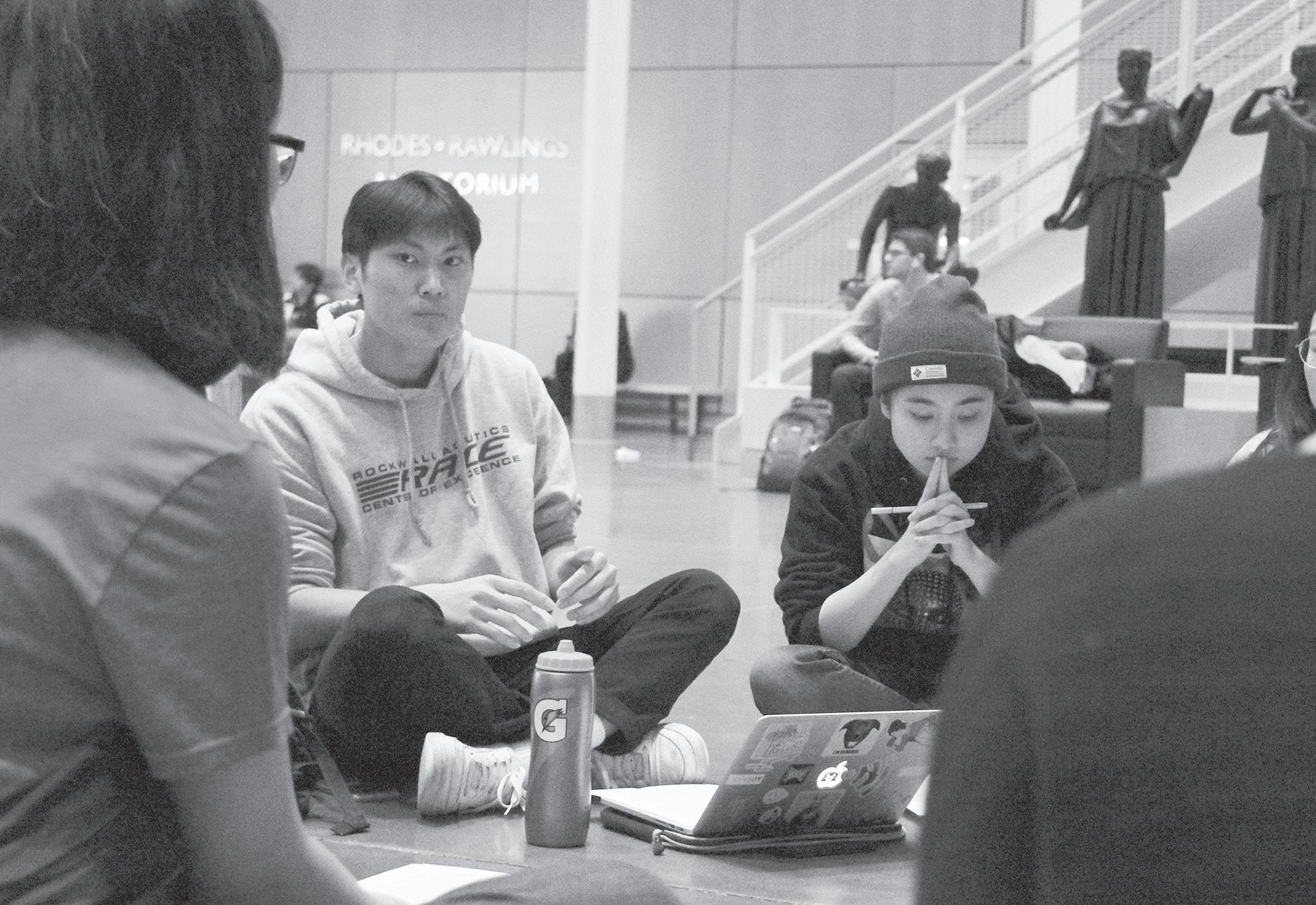
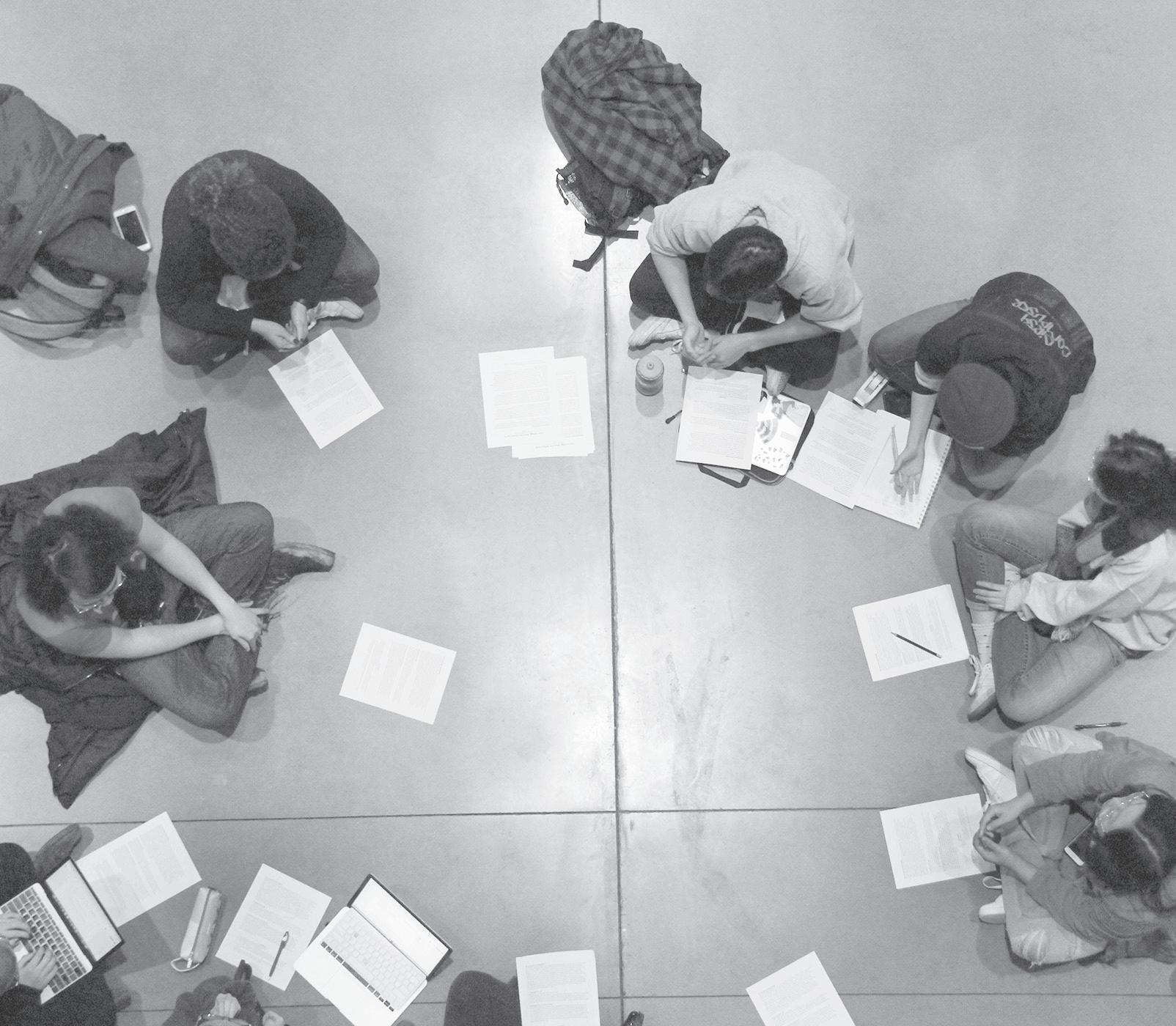
On Tuesday, Asian Pacific Americans for Action at Cornell University hosted a reading pop-up on author, social activist, philosopher and feminist Grace Lee Boggs in Klarman Hall.
During the reading event, APAA members read a few prepared excerpts and quotes from Boggs, highlighted why she was important and invited the audience to critically analyze the material by presenting a list of questions about the material being presented.
Boggs was an Asian-American activist who fought for civil rights, women’s rights and labor. According to Grace Lee Boggs Month, a website created by APAA, Boggs participated in the first March on Washington and contributed heavily to the Black Power and union movements.
Boggs championed the values of
Dr. Martin Luther King Jr. and agreed with the belief that change should come through peaceful protest rather than forceful action. In her autobiography Living for Change, Boggs writes that a movement starts when people “find hope for improving their daily lives in an action that they can take together.”
According to The New York Times, Boggs moved to Detroit in 1953, where she worked for economic and racial justice. She started food co-ops, created groups for the elderly and wrote columns for a local newspaper called The Michigan Citizen.
APAA member Jeremiah Kim ’19, who is a blogs editor for The Sun, described being inspired by the way Boggs instigated change by “digging in deep and taking responsibility when faced with human rights issues.”
“Boggs was effective because she started organizing the community and becoming a part of the community,” he said.
In contrast, other activists tended to rely on short-term movements fueled by emotional backlash to organize spontaneous protests against specific events.
APAA established Grace Lee Boggs month just last year and prior to that, the club had attempted to help students gain access to more relevant education by calling for the University to increase ethnic studies.
“Education should be used to not only train students for careers, but actually to make them more responsible people. We felt the latter was secondary in priority as compared to training students for careers, or sometimes entirely left out of the conversation,” Kim said.
Eunnuri Yi ’20, member of APAA, said when the organization sent a list of demands to a member of the administration, they didn’t receive the response they were hoping for. This setback inspired the students to take education into their own hands. This led to the establishment of Grace Lee Boggs month, in which APAA members hold public events to share impact and philosophies of the human rights activist.
“The whole time we were fighting for a more relevant education from the univer-
sity, it kind of just felt like we were never going to get it. So instead of struggling uselessly against that, we just decided to learn things on our own,” Yi told the Sun.
The idea of taking initiative to spread education falls in line with Boggs’ attitude toward learning. Kim said that club members felt inspired by Boggs because she continued to exercise her knowledge despite being rejected from academia, viewing education as a “continual process of growing beyond the traditional and conventional avenues of having to learn from a certain school or from a specific environment.”
This reading pop-up is just one of many events APAA has planned for Grace Lee Boggs Month. Earlier this month, the organization also hosted screenings of a documentary detailing her life and achievements. On Friday, APAA will be hosting Zinemaking, where attendees will make “a collective zine/coloring book on Grace’s ideas on education, learning, and the future.” Friday’s event will be the final occasion in the series of public events celebrating Boggs.
the presence of chauvinism in science.
“We have a weakness, and scientists are a creature of the culture in which they swim, in which they have grown up, and we [scientists] are also vulnerable to this siren song, which we can call chauvinism, egocentrism or anthropocentrism,” he said.
Sagan said we now have the mindset that we are at “the center of the intellectual cosmos,” pointing to the usual argument that human altruism, compassion, liking young, contemplating the consequences of our actions, art, music, tool making and tool use make humans unique.
Though humans have not found intelligent extraterrestrial life, Sagan said “all we have to do is keep an open mind.” He reminded the audience that “the earth is a very small stage in a great cosmic arena.”
“Think of the rivers of blood
spilled by all those generals and emperors, presidents and prime ministers, party leaders, so that in glory and triumph they could become the momentary masters of the corner of a dot,” Sagan said, which was followed by a roomful of laughs.
“In our obscurity, in all this vastness, there is no hint that there is anyone who will come and save us from ourselves — that will only happen if we do it,” Sagan said.
He concluded his lecture by saying that studying astronomy was a “humbling experience” and built character.
Pointing to a picture of Earth with a laser pointer taken by Voyager, Sagan said the “picture underscores our responsibility to deal more kindly with one another, and to preserve and cherish our pale blue dot, the only home we’ve ever known.” The full lecture is available on YouTube.

By XINYU TANG Sun Staff Writer
my mind a charity that deserves to be recognized for their efforts.”
Nearly Half a Foot of Snow
Predicted Thursday Evening
Campus could see as much as five inches of snow on Thursday, according to Cornell’s Weather forecasts for the Ithaca area. Up to an inch is expected to accumulate during the day, and up to five could arrive by the night’s end. Ithaca’s first snowfall came in light flurries that ended before noon on Saturday, The Sun previously reported. Wednesday and Thursday brought less than an inch, according to Northeast Regional Climate Center data, but that could be eclipsed by tomorrow evening. Wednesday’s low of 17 might have kicked off the official start of parka season for many, but Thursday’s predicted low of 29 might not provide enough cause to ditch the jackets quite yet.
The Harvard admissions trial, the latest development in a fouryear-old lawsuit brought by anti-affirmative action group Students for Fair Admissions against the Ivy league institution, will stretch well into 2019, the Harvard Crimson reported. The SFFA suit alleges that Harvard’s admissions officers systematically assign qualified Asian-Americans lower personal scores to deny them admissions. The high-profile trial kicked off in Boston on Oct.15 and was wrapped up on Nov. 5. However, Judge Allison D. Burroughs will hear an additional set of arguments from both Harvard and SFFA on Feb. 13. The trial has been closely watched nationwide for its far-reaching implications for the future of affirmative action.
The next set of filings for the case is expected on Dec. 19.
L.A.
The weather in Ithaca isn’t the only “Stormy” thing brewing. Michael Avenatti, who rose to national prominence an outspoken critic of Donald Trump and the lawyer of porn actress Stormy Daniels, was arrested on domestic violence charges in Los Angeles, according to The New York Times. Avenatti was reportedly released after about four hours after posting a $50,000 bail. Avenatti denied the charges against him and called the charges “completely bogus” and “fabricated and meant to do harm to my reputation,” The Times reported. Neither the victim’s identity nor their relation to Avenatti were reported by police, but Los Angeles Police Department spokesman Tony Im said that they had visible injuries.
— Compiled by Matthew McGowen ’19
The South Asian Council will provide a platform for students to dance to Bollywood music and raise money at the same time on Nov. 16.
The Bollywood Night: Dancing for a Cause will run from 8 p.m. to 1 a.m. at Loco Cantina. It is sponsored by Cornell Society for India and Cornell University Pakistani Students Association.
“I
Originally Bollywood Night at the Nines, Cornell University South Asian Council has hosted Bollywood Night annually to raise money for charities for five years. This year, SAC will be donating the money they raise to the Asian Pacific American Network of Oregon. APANO is a statewide organization that unites Asians and Pacific Islanders to achieve social justice through community organizing, political advocacy, leadership development and cultural work.
Parikh mentioned that the problems faced by South Asians become more serious nowadays with new reports and policies on immigration under the Trump administration, and she wants to “look into what I could do to help from New York.”
“Over the summer, a lot of policy and news coverage was about deporting undocumented folks and large influxes of migrants crossing the border,” Parikh said. “More than anything, there was the devastating news that Trump was keeping many [immigrants] detained in what were essentially internment camps for the children when families were separated.”
saw that APANO was the organization most involved in supporting the South Asians.”
Shivani Parikh
She said SAC hopes to raise $500. Parikh thinks that this event can “raise awareness about the issues pertaining to immigration” and also correct some false assumptions people have about the South Asian population “that immigration is only an issue that particularly affects Mexican and South Americans.
’18
Shivani Parikh ’18, President of the Cornell South Asian Council, said that they chose APANO this year because they noticed their efforts to help the 123 South Asians kept in an Oregon prison. They were impressed by “the pro-bono legal services they provide for the South Asian asylum seekers detained by ICE in Sheridan, Oregon,” Parikh said.
“I saw that APANO was the organization most involved in supporting the South Asians because they were being held in a facility in Sheridan,” Parikh said. “While there hasn’t been any coverage on their story recently, APANO has remained in the forefront of
Parikh gave an example of social problems faced by South Asians. She said the rise of Hindu nationalism in India is “the premise for fleeing for some of these migrants” and she hopes “to humanize those who are undocumented, especially those who are South Asian.”
Parikh believes that they can “draw attention to the work of and empathy for the various organizations supporting marginalized and precarious South Asians, whether domestically or abroad” through Bollywood Night and their donation to APANO.
By VALE LEWIS Sun Staff Writer
After spending twenty years in the technology industry, Leonid Volkov had a rude wake-up call to the reality of Russian politics when he was elected to city council as the only independent member — the other 34 officials were members of the United Russia Party — the party of President Vladimir Putin.
“That was my first and very overwhelming encounter with what was going on in Russia,” he said.
Volkov — chief of staff for Alexei Navalny, the leader of the Russian opposition — examined the current political climate of Russia and the future of the opposition movement in his home country at a lecture Tuesday in Olin Hall.
During his time on the city council of Yekaterinburg, a city east of the Ural Mountains, Volkov also started attending events and meetings for the opposition movement, which is where he first met Navalny. He then went on to work on both Navalny’s Moscow mayoral campaign in 2013 and his attempt to register to run against Putin in the 2018 Russian Presidential election, both of which eventually failed.
Volkov noted that Navalny is very different than former opposition leaders who focused on simply “saying something,” such as issuing statements condemning Putin’s actions. Instead, Navalny is focused on “doing something” like organizing mass protests and launching the Anti-Corruption Foundation, according to Volkov.
He said that he believes Navalny’s approach is “very new and promising.”
Volkov discussed how the opposition built Navalny’s campaign to register for the 2018 Presidential election from scratch, without help from mainstream media, which he called the “propaganda machine.”
During the Moscow 2013 campaign, 17,000 volunteers
working with Navalny’s campaign distributed over 22 million pieces of campaign literature across Russia, which spans 11 time zones, according to Volkov.
“Our main and only media during our campaign was our volunteers,” he said.
Both Volkov and Navalny spent over 90 days in jail during 2017, apprehended nearly every time they tried to organize a large protest or rally, even though it is “constitutionally illegal.”
Throughout the lecture, Volkov emphasized that he is “optimistic” about the future of Russian politics, especially because of the huge increase in public engagement within the opposition party during this election cycle.
He explained that Putin has “never faced so many difficulties” as he is facing now, with a low approval rating, many large protests and instability among the political elite.
Putin’s term will last until 2024, at which point he won’t be able to run again until 2030 because of the Russian law that prevents three consecutive presidential terms. Volkov explained that this creates the “succession issue” for the first time in Putin’s
rule.
Elites who rely on Putin for political power have already started to question how they will stay in power after Putin leaves office, according to Volkov. He said that before 2018, it was in these political elites’ best interests to support Putin in order to have six more years of the status quo, but Volkov believes that they have started to realize that supporting Putin is no longer in their best interests.
“This is how the system starts to fall apart,” he said.
Volkov went on to explain what he believes the opposition’s strategy should be as 2024 approaches. He outlined three potential scenarios for how the ruling party could lose power: Putin dies; some terrible, unpredictable event motivates the people to overthrow him; or the political elite decide “the costs of having Putin in power in the Kremlin are too high,” he said.
“We are not in control over the probability of the first or second scenarios … What we have to do is increase the probability of the third scenario – to increase the costs for the political elite to continue operating with Putin in power,” he said.
He proposed that the opposition should do this by increasing the political pressure on these elites by staging massive protests to “make the system as unstable as possible.”
In his “optimistic conclusion,” Volkov mentioned that though the original opposition movement was only about 1 million people two years ago, the movement now reaches about 4 million people via YouTube, mailing lists, podcasts and blogs. Volkov believes the larger reach of the movement is imperative for the opposition to take advantage of the weakness in the political system when Putin’s era comes to an end.
Volkov is spending the semester at Yale as a Greenberg World Fellow, speaking to students around the United States about his experiences in Russian politics and as a member of the opposition movement.
Though he said it was a difficult decision to come to America, he believes it is his “mission to reach out to as many audiences as possible” to explain the current Russian political climate.
Vale Lewis can be reached at vlewis@cornellsun.com.

136th Editorial Board
JACOB S. KARASIK RUBASHKIN ’19
Editor in Chief
JOHN McKIM MILLER ’20 Business Manager
KATIE SIMS ’20
Associate Editor
VARUN IYENGAR ’21
Web Editor
GIRISHA ARORA ’20 Managing Editor
HEIDI MYUNG ’19 Advertising Manager
ALISHA GUPTA ’20 Assistant Managing Editor
Working on Today’s Sun
Ad Layout Jamie Lai ’21
Design Deskers Emma Williams ’19
Lei Lei Wu ’21
Simon Chen ’21
News Deskers Anu Subranamiam ’20
Anne Snabes ’19
Night Desker Maryam Zafar ’21
Arts Desker Peter Buonanno ’21
Dining Desker Jacqueline Quach ’19
Photography Deskers Michael Li ’20
Jiang Jing ’21
Production Deskers Sarah Skinner ’21
Emma Williams ’19
Editorial
IN 2012, WHEN CORNELL TECH FIRST OPENED ITS DOORS at a temporary location housed in Google’s Chelsea office, they could not have thought it, not in their wildest dreams. In 2017, when Tech’s state-of-the-art campus on Roosevelt Island went online, they could not have imagined it. After all, Cornell Tech was then, and remains today a project largely in its infancy — the campus itself is not slated for completion until 2043. It’s still a work in progress.
And yet, in the largest windfall for Tech since it was greenlit by Hizzoner Mayor Bloomberg himself seven years ago, Amazon has elected to construct its much-heralded HQ2 within a stone’s throw of the Roosevelt Island campus. This move opens the door to exciting new academic and commercial possibilities for students and faculty at Tech, and will no doubt launch the nascent graduate school to the top of any potential applicant’s list (and more than a few rankings lists as well, we’d imagine).
Cornell Tech advertises itself as the place to be for entrepreneurially minded STEM student, and such close proximity to the world’s second-largest company — a tech one, at that — is an incalculable asset to the institution. There is ample reason to believe that Cornell Tech played a role in drawing Amazon to New York City — The New York Times notes that company executives toured the Roosevelt Island campus with city officials during the selection process — and we hope that both Amazon and Tech will develop a productive relationship once HQ2 actually comes to fruition. (It certainly won’t hurt that Cornell Tech Dean Daniel Huttenlocher currently sits on Amazon’s board of directors.)
Some words of caution for Cornell. Over the past year, Amazon has been the singular focus of a remarkable wooing campaign from states and cities all over the country. Governors and mayors have embarrassed themselves on an international stage attempting to seduce the Seattle behemoth to choose them, New York’s Andrew “Amazon” Cuomo not excluded. These cities have offered billions of dollars in incentives to Amazon. The New York figure stands at over $1.5 billion, and it’s far from clear that investments of such size are truly in the city’s best interest. Cornell must not similarly debase or short sell itself in any relationship with Amazon. The administration needs to remember that its function is to serve the students and faculty, not to chase stars. Amazon has much to offer Cornell Tech, but Cornell Tech has just as much to offer Amazon, and any future partnership must reflect that.
Furthermore, there is the growing question of HQ2’s effect on the existing Queens community. From The New York Times Editorial Board to Congresswoman-elect and progressive darling Alexandria Ocasio-Cortez (D-Queens), New York power players have expressed concern about the lack of community involvement in the decision, and the wisdom of such expenditure by the city when infrastructure is still lacking and longtime residents are increasingly being priced out of their homes.
When Cornell inaugurated the Roosevelt Island campus, we wrote that “Cornell Tech would do well to remember that technological advancement does not come without cost... Cornell Tech is obligated to account for such effects when introducing advancements.” We believe that sentiment to hold true in this case. Even as Cornell seizes on the opportunities offered by HQ2, it must remember the costs associated with HQ2’s introduction in the city and make efforts to mitigate them. To the extent that Cornell Tech can help extract concessions from Amazon while negotiating potential partnerships, it should. And they should also turn some of that entrepreneurial spirit to building up the Queens community that already exists across the river, not just the one that Jeff Bezos is going to build.
Letter to the Editor Te TPUSA debacle & Cornell’s firtations with the far-Right
To the editor:
After more than a week of local confusion regarding Turning Point USA, this dark money-funded activist group cancelled an Ithaca-area event meant to feature far-right personalities Charlie Kirk and Candace Owens. We feel the need to clarify a few things about what has recently transpired.
First, the university deemed TPUSA’s fascist provocaceutering “free speech,” legitimizing an alt-right event on campus that was solely cancelled for logistical and bureaucratic reasons. During initial negotiations, Cornell curiously
Every Thanksgiving before college, my mother and I used to prepare the dinner table together. She would bring out trays of ginger candies and sunflower seeds, and I would fill the teapot with Oolong. She didn’t believe in making turkey — our Asian family, like many others, has a mysterious aversion to white meat— so she would always prepare a roast duck. My sister and father would join us at the dinner table, and we would spoon pieces of duck on “bing,” piling on sliced cucumbers, scallions, black bean sauce, and oozes of Sriracha. It was never cold in California, but there was always the same warm glow inside.
My Thanksgiving dinners were always far from traditional; in fact, I used to complain why we couldn’t have one like a “normal” American family. I wanted the cranberry sauce, the pumpkin pie, the giant turkey with savory stuffing. Every year, I would push for a more Westernized dinner, suggesting any options that might cater to my Asian family’s palette — mashed potatoes? Gravy? Green bean casserole?
This year, I will be eating precisely those things — stacks of pumpkin pies, a turkey the size of my chest, and enough stuffing to fill six people. It will be my third year in a row eating those things. It will also be my third year drizzling cranberry sauce in a home that isn’t my own.
— we don’t eat traditional foods, and many of us don’t have giant families with us in the States. Instead, most of the time it’s just a few family members sitting at a table, trying to grasp what it means to be all-American. It was a holiday we didn’t take very seriously and rarely felt ourselves fitting into.
But now, I’ve been thinking, how many kids at Cornell feel the full heartache of Thanksgiving because they haven’t seen their families in a while? How many don’t have the financial ability to hop on an airplane for a weekend? Does Thanksgiving remind all of them, as it does for me, that I chose to travel far from my family? Now, Thanksgiving is no longer something we take for granted — it’s a stark reminder of what we don’t have anymore.
In my junior year of high school, I told my parents I wanted to end up in New York to pursue journalism, and that I would be applying for college here. I don’t
Year after year, I find myself trying to find the taste of duck in turkey again.
Instead, this Thanksgiving break I will visit my boyfriend’s family in New York City. Spending the holidays away from home has become a pattern since college — California is always too far to travel for just one weekend. Last year, I spent Thanksgiving baking macaroni and cheese with my friends in Boston. The year before, I had Friendsgiving in the city. Every year, I get to feast on everything I dreamed as a kid — clouds of mashed potatoes and glossy candied yams and baked pumpkin seeds. But year after year, I find myself trying to find the taste of duck in turkey again.
I wonder if all the students who came here from the West Coast or from other countries search for the same thing every Thanksgiving — a home to sit in, a dinner table to surround, a family to talk with through the night. I’ve never thought about how much Thanksgiving is rooted in family until there wasn’t one around anymore. I wonder if those students think back to their childhood, to the times they complained about the food, or threw a fit when they had to do the dishes afterward. I know I do, and I’d go back to all of it in a heartbeat.
Thanksgiving was always one of those less-important celebrations for us, and many of my Asian friends say the same
identified no problem with TPUSA’s “Professor Watchlist,” an online McCarthyist blacklist that counts several Cornell faculty among its “dangerous ultra-liberal academics.” When TPUSA relocated the event to an off-campus venue, Cornell allowed it to retain the name “Cornell Campus Clash” — insisting that no brand violations or reputational concerns were at stake in an alt-right provocation directly targeted at Cornell students. It washed its hands of any further responsibility for an event targeted towards students, displacing event security costs onto the City of Ithaca and its local taxpayer base.
Second, TPUSA should be ashamed of its cheap anti-intellectual attack tying the campus appearance cancellation to the political environment of “elitist Ivy League Neighborhoods,” a dishonest tactic meant to deflect criticism of TPUSA’s farright politics. Students with targeted identities resist the altright because its vision has no place for them, save for their
regret my decision, but I also didn’t know precisely what I was signing away — every Fall or Thanksgiving or Spring Break, I watch the other students take a bus home somewhere, where their mother will wait by the door and have a pile of warm clothes fresh from the laundry. Do they know their luck? Those are days when my heart aches, and I would do anything to be in a home again, to come home to mom and peel layers of scallions as we gossip about the neighbors.
This Thanksgiving, I am thankful for all my opportunities, for being able to come to the East Coast where I had always dreamed, to pursue what I always wanted. But I also extend my best wishes to the many other students who are far from home this holiday season. I hope there is a warm house waiting for you somewhere, even if not your own — we may not be with mom in the kitchen, but I know we’ll all be remembering our families this holiday season. And if you have any friends who are unable to travel home this year for Thanksgiving, try to be their family this year. Invite them over or spend the weekend before cooking at Cornell; anything to help them feel welcome. You’d be surprised how a small piece of home goes a long way.
Kelly Song is a junior in the College of Arts and Sciences. The Songbird Sings runs every other Thursday this semester. She can be reached at ksong@ cornellsun.com
literal extermination.
Finally, it’s critical that Cornell re-evaluate its understanding of speech on and off campus. President Pollack is a fierce advocate of a “both-sides” paradigm, once forcefully disagreeing with a graduate student who importantly stated that “there is a point where speech can inhibit speech.” The words and actions of powerful public figures — including the leader of this nearly $7 billion institution — have consequences. In light of the university’s alarming approach to the TPUSA debacle, we worry that its approach to matters of “free speech” could be devolving into tacit support for the malignant growth of right-wing extremism in the U.S. It is necessary for all of us to remain vigilant about future fascist encroachments on our campus and beyond.
Above the roaring waterfalls and placid slopes of Ithaca, Cornell University stands as a testament to American intellectual prowess, an Ivy League institution with over a century and a half of storied history and contributions to this country and the world at large. It represents the eternal mission of human learning, and the value of America at her best: it has produced great scientists, writers, and statesmen, contributed to advancements across every field of study, and endured as a pinnacle of international academia. But this university was not made great by its professors, or its patents, or its published works; Cornell’s success blossomed from its College of Arts and Sciences, appropriately the first school founded at Cornell. The rest of the campus was built — both literally and culturally — outward from that educational and moral center. This is the bedrock of a Cornell education, as significant and as firm as the concrete poured under our libraries and our dormitories.
A simple question: What should be the goal of a student at Cornell University? Obviously, different
Cornell ought to be a summons to engage with, grow from and fully experience that knowledge.
intellectual discomfort that is indispensable to the formation of real knowledge. A large part of this burden falls on students themselves. Cornellians who graduate without nurturing a genuine love for intellectual pursuit on its own merits have largely wasted their time at Cornell. It is lamentable that the university now has a culture in which such a narrowed experience is possible and even validated.
Efforts to alter or adulterate Cornell’s liberal arts roots would mistakenly diminish the value of a Cornell degree.

students will prioritize different pursuits, both academic and extracurricular, but the University itself offers clear direction. Above the staircase in the iconic Goldwin Smith Hall reads a quote from former Cornell president Hunter Rawlings: “Genuine education is not a commodity, it is the awakening of a human being.” This truism seems increasingly lost on modern Cornell — Cornell is a responsibility, not a privilege. It is not merely a place for students to live for five figures a year; it is a call to join a group of some 15,000 people all striving to become the best versions of themselves, in the same spirit of generations of Cornellians before them. Sadly, too few at Cornell today share this vision — one of constant but deliberate
Such a development should not be surprising given the gradual erosion of the College of Arts and Sciences, both in its size and its commitment to its values. The College’s student body is shrinking, not growing, as a portion of the university at large — a consequence of expanding vastly more narrow pre-professional programs across the university. This is not to say these institutions are misaligned with Cornell’s longstanding academic objectives, which date back to its 1865 founding. However, as they grow, Cornell slowly becomes less centered — academically, culturally and financially — around the College of Arts and Sciences. It would be a monstrous mistake for Cornell to prioritize these intriguing but non-core endeavors at the expense of a broad, liberal arts education on which the university was built.
Over the last year, the Arts and Sciences faculty, responding in part to the complaints of these students, have considered a misguided proposal to reduce the College’s language requirement, the latest in a litany of curriculum changes aimed at making the college’s requirements less “burdensome.”
Cornell is a responsibility, not a privilege.
To her credit, Prof. Stephanie Divo, Asian studies, pushed back against this proposal, appropriately arguing that “the requirement would have basically attracted a lot more students toward languages where they could fulfill the requirement more easily, or at least that would be the impression.” She is
For the first time in a long time, many Cornell students have something to look forward too. That one time of the year where we go home to fill our bellies and calm our minds. Although we must never forget the truth of this restorative holiday, and the genocide of a race of people whose graves we have built this country on, we shouldn’t hold back our joy to be reunited — even if it’s briefly — with friends and family. We hunker down to complete prelims and final assignments with our last drops of willpower, for on the last Thursday of November, we feast.
We pack up our things, bear whatever tiring form of transportation we choose, arrive at our homes, drop our bags and collapse on the floor. We reunite with our families and stay on our best behaviors hoping they will spoil us since we are finally home. We take long hot showers, play with our pets and fall asleep for 11 hours in a big comfy bed in a room that turned into storage. We get to see our friends in the flesh and unload all the drama that happened in the last few weeks that you couldn’t fit into your FaceTime calls. The day before
right, unfortunately, but she stopped short of the key argument: A true education, especially a liberal arts education, must be intellectually rigorous to be truly meaningful. Efforts to alter or adulterate Cornell’s liberal arts roots would mistakenly diminish the value of a Cornell degree, and would damage its distinguished culture for years to come. This is the choice confronting the university in 2018: either to submit to pressure to create a diluted and less rigorous Arts and Sciences curriculum, or to draw on its historic strength and recommit to its traditionally challenging foundations. The latter, of course, is the appropriate course of action.
The temptation to dilute academic standards must be rejected to preserve that uncompromisable ideal.
Shelby Foote once noted that “a university is just a group of buildings gathered around a library. The library is the university.” Cornell should take this a step further. This great and globally-recognized university is not simply a home for talented high school graduates to pay exorbitant tuition to lay claim to an unearned collection of knowledge. Cornell ought to be a summons to engage with, grow from and fully experience that knowledge. Shelby’s library is simply a conduit; the people, both the faculty and the students, are the university. Cornell, to its credit, has the great luxury of being able to draw on its distinguished 153year history of awakening human beings through education. The main criterion on which Cornell’s nearly unmatched brand is built is whether talented students leave the university as the world’s brightest and thus capable of being its most accomplished — and the temptation to dilute academic standards must be rejected to preserve that uncompromisable ideal.
Michael Johns, Jr. is a junior in the College of Arts and Sciences. Athwart History runs every other Wednesday this semester. He can be reached at mjohns@cornellsun.com.
Thanksgiving we help prepare the food or clean the house for hours while trying not to sneak bites. On the day of, we see distant relatives who give us awkward hugs and kisses and consistently ask us,
“How is Cornell?” to which you reply, “Great!”, knowing that you left your last prelim more happy that it was over than confident. After waiting extra long for a guest to arrive you finally fill your plate with food, and sit with your favorite cousins at the kids’ table (who actually wants to make it to the adult table?). As you chow down your family decides to share embarrassing memories or nostalgic stories, bringing up things you swore to suppress.
Soon enough you have finished your
We have to remember those of us on this campus, and in our community around Ithaca and back home may not be as fortunate as us to celebrate.
first… second… and third plate. We are then hit with a wave of fatigue and retreat to a comfy corner, but get whisked back
into the festivities to play board games and eat dessert. The adults are rowdy and are either getting along or going back and forth. We grab yet another cup to fill with sparkling cider — or wine if the adults don’t notice. We get pulled back and forth by relatives asking us questions about our grades, love lives or plans after graduation (none of which you know the answer to).
The day a fter we are forced to wake up early and clean up, and the few lucky ones who traveled to a relative’s home gets to sleep in. Throughout the weekend, we eat all of the leftovers: turkey with mashed potatoes again, turkey sandwich, turkey and pasta, turkey and something. Some of us will go shopping, some of us will continue sleeping and some of us will get bored. On the last day, we rush to pack-up our things, probably leaving with more than we came with. We get back on the plane, train, bus or cars, back to Ithaca and the friends we were probably in contact with the whole time. When you get back everyone has spent their Thanksgiving a little differ-
ent, sharing stories about their family or friends from back home, someone they visited, or from their time still on campus.
On this special holiday the one thing we have to remember is to be thankful for what we have. Our friends, family, school, health and more. We have to remember those of us on this campus, and in our community around Ithaca
With gratitude and thankfulness come giving, so I encourage you to do whatever you can to give back to your communities.
and back home may not be as fortunate as us to celebrate. With gratitude and thankfulness come giving, so I encourage you to do whatever you can to give back to your communities.
One opportunity is through Cornell Students for Hunger Relief’s Thanksgiving Turkey Drive. Thousands of Tompkins County residents are food insecure, and may find themselves without a turkey on Thanksgiving.
Aminah Taariq is a sophomore in the College of Agriculture and Life Sciences. I Spy runs every other Wednesday this semester. She can be reached at ataariq@cornellsun.com
There’s nothing like that rush, the warm feeling all over, the euphoria. I’m hooked on Oxytocin, the cuddling drug. The love hormone.
Oxytocin is the footy pajama, hearteye emoji, Beyonce’s “Drunk In Love” hormone. It’s a hormone of bonding — between lovers, between mothers and their babies, and even between humans and dogs. The bedroom, and the love that happens in the bedroom, is where my oxy magic happens. Science and my extensive cuddling session research can confirm that physical contact is the best way to get an oxytocin fix— cuddling, hugging, hand-holding and the classic: sex. After a session of cuddling or sex, my brain floods with oxytocin, and I feel calm and close. Oxytocin is the reason so many people are ride-or-die cuddlers, and understanding oxytocin helped me understand myself as a sexual being.
Here’s my little secret: Chest-to-chest contact. Chest-to-chest contact is like cuddle kush. It’s like taking a tequila shot of rainbows, puppies, and long weekends. Undoubtedly, chest-to-chest contact is my #1 guilty pleasure. I find myself pulling my lovers in for long hugs and curling up like a cat on their chest. One of the best ways to foster a dynamite bond with your partner is hella chest-to-chest.
Men don’t produce the same high levels of oxytocin as women do. But men tend to “mood match” their partners, so if their lady is feeling a rush of that good good, their oxytocin will spike. Hold a
Cliq-Hoe | Fire & Ice and Cherries in the Snow
man close to you, and he will take in some of your hormonal happy rush. Fun fact: In a study, men with elevated levels of the hormone sloshing around their brains stood farther away from attractive women. Oxytocin seems to be fidelity booster for guys who have boned and bonded with a woman.
Oxytocin seems perfect. It makes women zen, men loyal, and everyone oh so fulfilled.
Unfortunately, there’s a catch. Oxytocin isn’t always black and white; there are fifty shades of oxytocin grey. Post-sex cuddling does not come with warning labels and caution signs, so here I am, stepping in as the carrier of bad news, the grim reaper of cuddling gloom and doom.
In a healthy, stable relationship, bask ing in the afterglow of sex is not just fun, but also essential for cultivating love. Here’s the catch: women are more affected by oxytocin than men. A sex ual release of oxytocin may create mis placed and unwanted feelings of love and connection. Let’s face it, in our hook-up culture, we don’t want to hear wedding bells with everyone we bone. Yet oxytocin makes everything #com plicated. When spooning after a one night stand, ladies are more likely to feel like they had a #realcon nection, while men are more likely to just feel #blessed for boning a #hotchick #onetime. Mismatched feelings lead to
lived the life of two sophisticated, urban adults. They explained to me that while their connection as a couple was strong, their sexual desires had become monotonous. To them, the idea of sex without emotional connection at this point in their lives seemed distracting and unappealing, so they began searching for a perfect addition to their love lives: me.
Our second date was honestly the best dates of my life. T&J took me to their favorite art museum and an upscale steakhouse. There were no awkward silences or uncomfortable moments, and by the end of the night I had completely lost track of time and earned myself a new smile wrinkle. Unsure of what would happen next, I walked with them to the nearest subway stop, and they offered to walk me home. As we neared my apartment, we shared a delicious kiss that I savored for the rest of the night. Later that week, Tara and I had our own date since Jack was out of town. We went shopping and found ourselves naked in a dressing room. Her lips were soft, and her hands wandered my body with a touch both gentle and insatiable all at once. We bought some lingerie that Jack would like and kissed goodbye. Truthfully, I didn’t know how deep into this relationship I was until I realized that
disappointment and confusion; oxytocin is to blame. Being conscientious of your cuddling post-love-making can keep unwanted feelings in check.
There’s another much darker side to oxytocin. Oxytocin is related to emotional pain and is likely the reason why a
my heart skipped a beat everytime they texted me, and every minute with them made me crave their lips and fingers on my body. As we planned out our next date, I suggested their place, and within thirty minutes of their response, I was shaving and perfuming every inch of my body.
Upon arriving, I realized I was severely overdressed, as my hosts welcomed me into their home naked and fully ready to devour me. Tara unbuttoned my blouse while Jack slid off my skinny jeans, and within seconds, I found myself naked on his lap with my hands pulling on her hair and his lips sucking on my neck. Both of them devoured me with their lips, tongues and bodies, and the rest of the night was a true homage to sex and geometry. It’s been about a month now, and the novelty of it definitely hasn’t worn off. I wouldn’t go as far as to say that I’m in love, but there’s something beautiful about sharing feelings for more than one person at a time, together. And as for the sex… well, let’s just say, I get to be the center of attention every time and I absolutely love it. Who would’ve known that being a unicorn is as magical as it sounds?
Be warned of this two-headed monster. For me, oxytocin is my BFFL. Sex and cuddling make me happy happy happy. Understanding how oxytocin enslaves my brain is illuminating and refreshing.
Go get your fix.




By MERIDIEN MACH Sun Contributor
Tucked away in the right corner of the lobby, the Regent Lounge is the hidden gem of the Statler Hotel. Divided into three spaces, the lounge is more than just a place for those of us who are 21 and over — it’s worth considering when you want a night of comfort and sophisticated food.
My friend and I decided to sit in the part of the lounge with a bar and giant television that was showing a football game the night we visited. From Sundays to Thursdays, the lounge is open from 4 p.m. to 12 a.m., and on Fridays and Saturdays, the lounge is open from 2 p.m. to 12 a.m. These hours are the perfect time to take a break from or catch up with work. In front of me, businessmen were unwinding after a long day, and next to me, a student was multitasking by studying while eating a burger and fries (the only way I want to study from now on).
The menu at the Regent Lounge offers a variety of crafted cocktails and American pub-style food. In addition to cocktails, the menu has “mocktails,” non-alcoholic cocktails, for those of us under 21. With six different categories — lounge plates, sandwiches, soups and salads, house favorites and desserts — the
menu gives you a range of options, from just having a small snack like sweet potato fries to indulging in a three-course meal.
I opted for a three-course meal. For my appetizer, I order the grilled naan, which arrived at the same time as my Rosenkrans Farms steak frites. Unfortunately, the grilled naan was not grilled. However, it did not need to be given that it arrived toasted, warm and soft. It was accompanied by hummus, crispy chickpeas, tzatziki (yogurt and cucumber dip), marinated olives, cucumbers and carrots. Although the chickpeas’ lack of salt meant they tasted bland, the hummus was the perfect consistency and flavor-packed with garlic, and the tzatziki was tart and refreshing. This lounge plate makes for the perfect healthy snack after a long day of work or school.
and compensated for the nearly cold steak were the truffle fries, which I believe to be the Holy Grail of fries. Coated with Parmigiano-Reggiano cheese and infused with truffle oil, the fries were cooked to a golden crisp yet remained soft at the middle.
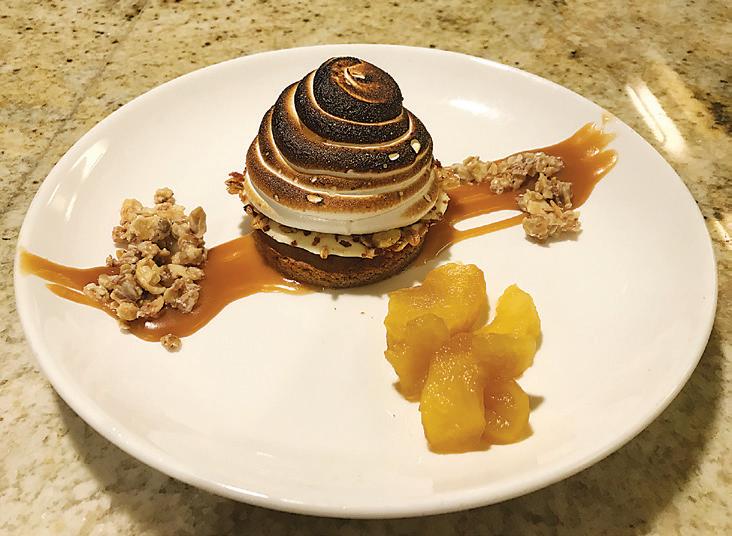
No meal is complete without dessert, so, of course, I ordered the Autumn Baked Ithaca, the Regent’s version of a Baked Alaska, a dessert that consists of layered cake and
At $22, the Rosenkrans Farms steak frites were one of the pricier dishes on the menu. While the skirt steak came in perfectly cooked, medium-rare, triangular cuts, it was not warm, which made the meat less aromatic. However, when I dipped my steak into the lemon-tarragon aioli with which it came, what resulted was a perfect blend of acidic and fatty flavors. What made the dish worth its price

ice cream topped with meringue. The Autumn Baked Ithaca is a spiced blondie covered with a layer of white chocolate and crunchy oats, which is then topped with Cornell Dairy’s Triple Caramel Bliss ice cream, on top of which is a final layer of browned meringue. As if that weren’t enough, the dessert is accompanied by nut granola, caramel and an apple compote.
Warm and gooey in the middle with a perfectly crisp exterior, the spiced blondie was my favorite part of this decadent dessert. The texture of the crunchy oats contrasted with the smooth layer of the white chocolate. The meringue was perfectly browned, giving it a toasted flavor (similar to that of s’mores) that counterbalanced its sweetness. The apple compote — apples cooked in a syrup of spices — was the perfect bite of fall with its warm cinnamon flavor. All of these textures and flavors resulted in a party for my taste buds. Because the Regent’s dessert menu is seasonal, this item may no longer be available as we enter the dreaded winter, so I suggest celebrating the end of prelim season by trying this as soon as you can.
Many of the employees at the Statler Hotel are students, most of whom attend the School of Hotel Administration. Their focus on guests is evident, as I found the service to be excellent, and the staff attentive and friendly. The Regent Lounge may be the most overlooked place to get food in the Statler Hotel. Whether you need a place to study alone, meet with coworkers or unwind from a stressful week, the Regent Lounge is the ideal place to do so while treat-
ing
Serves:
Vibe: a
Price: $$
Overall:






Two years ago, just after the election of President Trump in November 2016, I wrote a column for this paper in which I questioned what would become of art — and expression, more broadly — in the “era of Trump and pseudo-masculinity.” I enjoy reading this column two years later because I feel a bit of nostalgia in remembering the sophomoric (and sophomore) naivete that I exhibited in my writing at the time. I’m not exactly sure what I meant by “pseudo-masculinity.” If I wrote that column today, I think I would have used “pseudo-hypermasculinity,” or maybe even just “hypermasculinity,” because the pseudo prefix possesses a connotation that suggests the succeeding term is not real. Of course, I was referring to the toxic vitriol, the misogynistic, “locker room” banter that forms a part of Trump’s identity, especially in those weeks leading up to the election.

When I wrote that column, I seemed convinced that hypermasculinity as it pervaded the identities of men everywhere, but particularly in the United States, had eroded and almost ceased to exist. I viewed Trump’s election as a sort of resurgence of hypermasculinity, one that I lamented greatly. I worried that culture would move once again to a rejection of personal expression and relegate men and women back to opposing sides of some gender binary. Furthermore, I praised Barack Obama as one of the last bastions of hope for sensitivity as he represented and role modeled the American public.
Two years into a Trump presidency, things have generally gone as expected. Backed by a Republican majority in Congress — for the first two years — The President has signed a number of pieces of legislation that have been met with controversy and widespread protest. The President has failed to swing center, choosing instead to maintain the

Lil Peep
Come Over When You’re Sober, Pt. 2 Columbia Records



Noah Thomas

Lil Peep’s viral success came as a surprise to me. His look was inherently SoundCloud as Peep came equipped with face tattoos, bleached hair, piercings, and outlandish apparel, but his arrival on the scene marked a distinct departure from common sonic tropes of the drug-induced, hype-rap that we all know too well. Peep could infuse his influences from alternative, punk and emo music with synths and 808s
polarizing rhetoric that characterized his campaign. The president has appointed two white males to the Supreme Court, one of who’s affirmation process was marred by sexual assault allegations that I need not discuss here. I think that my personal approach to the political landscape of the past two years has largely been one of ignorance and dejection; if you don’t pay it any attention, if you try to live your life and express yourself to the fullest, then politics can’t really hurt you. Right?
As the sage senior who’s discovered the implications of postmodern identity formation, I no longer think that ignorance is an apt response to politics, just as it is not an apt response to misdoings in other modes of popular culture. None of us are fortunate enough to be able to wholly escape the effects of mainstream politics and so ultimately, we need to base some part of our lives in response to it — I suppose the very problem with mainstream anything is that, in the end, the images it promulgates are too ubiquitous to be evaded. Amending the simplistic assertions of my earlier column, hypermasculinity certainly never “left” and is rather some part of the broader heteronormativity that continues to dominate popular culture, college culture and political culture. President Obama exhibited more sensitivity than President Trump, but it’s important to remember that he still exhibited a harsh virility when talking about the wars he facilitated and the terrorists he had killed; this leads to my broader point, that we do not need to consider these politicians as representatives of us. However, the images that mainstream politics produce and that permeate newsfeeds everywhere do affect us and limit the ways in which we can conceive of our own identities and express ourselves, much in the same way that popular music and movies, for example, can influence us.
So, assuming that these cultural institutions influence our identities as we inevitably consume them on a daily basis, it is critical to challenge misrepresentation — including a lack of representation — in political culture just as we
in an accessible and comfortable way. This crossbreed between mid-2000s instrumentation alternative and hiphop production elements feels familiar, yet we’ve never really seen anything like it.
Lil Peep’s posthumous album, Come Over When You’re Sober, Pt. 2, features a series of tracks written right before his Fentanyl and Xanax overdose in November of 2017. His producer, Smokeasac, worked tirelessly to package the music as a complete project. Come Over When You’re Sober, Pt. 2 feels much like Peep’s debut album, Come Over When You’re Sober, Pt.1, but it is difficult to appreciate this project as a direct reflection of Lil Peep’s artistry, as there are so many tireless and unspoken components in crafting an album that Peep simply wasn’t present for. From the liner notes to the order of the songs, there are so many minute details that any artist spends time overthinking and reworking to guarantee that the project communicates the artist’s intent as best as possible. Lil Peep was present for none of the intricacies and details that truly make and album, well, an album, so I can’t help but see this record as more of a posthumous compilation of songs, and I’ll assess it as such.
Thematically, Come Over When You’re Sober Pt. 2 doesn’t reveal any stark diversions from Peep’s previous releases. His heartbreak, depression and rampant drug use are present in nearly every song. On the second track, “Runaway,” Peep’s vocals blare over deep sub-bass and overdriven guitars.

protest such things in other arenas. I suppose the unique thing about political culture is that, theoretically, we the people can directly control its composition by voting. The results of last week’s midterm elections are uplifting as a diverse group of individuals were elected; Rashida Tlaib and Ilhan Omar are the first two Muslim women to be elected to Congress, Jared Polis is the first openly gay man to be elected governor of a U.S. state, and Kyrsten Sinema is the first openly bisexual individual elected to the Senate (of course, the list goes on). These election results are important not simply because they show that non-heteronormative and Muslim individuals can be elected to fulfill government roles, but also because they show that non-heteronormative and Muslim individuals can exist. What we witnessed last week was the start of a productive dismantling of a restrictive mainstream as it takes form in American politics, and it is this sort of action that will award people more material with which to craft their identities and ultimately express themselves as individuals.
Nick Swan is a senior in the College of Arts and Sciences. He can be reached at nswan@cornellsun.com. Swan’s Song runs alternate Tursdays this semester.
RACHAEL STERNLICHT / SUN GRAPHIC DESIGNER
is some thing compelling about Peep’s reverb-drenched voice and existentially somber timbre. He owns the simplicity and sadness in a way that isn’t pretentious or cringe worthy.
Despite the fatalism in Peep’s lyrics and dissonant, guitar-driven production, there is an immutable pop-sensibility to Peep’s work. Especially on the bonus-track, “Sunlight On Your Skin” there is a doo-wop-esque melancholia embellished by Peep’s signature sadboy voice that pleads “Girl lets watch the rain as its falling down, sunlight on your skin when I’m not around, shit don’t feel the same when you’re not in town.” These lyrical admissions
short-lived existence. He died when he was only 21, but his tireless work-ethic and desire to express his millennial sadness that resonated with millions leaves a catalogue of music that far surpasses his years on this earth. Peep was unafraid to venture into his own darkness. Come Over When You’re Sober, Part 2 shows how special of an artist he was. We should be thankful not only to Smokeasac for compiling the album, but to the Peep estate for continuing to help Peep’s music be appreciated.
Noah Tomas is a junior in the College of Human Ecology. He can be reached at nbt22@cornell.edu.




DRYDEN SOUTH
CollegeTowns Best Address Now renting for 2019 Visit DrydenSouth.com for details Email Leasing@drydensouth.com
2 & 3 BEDROOMS
109 SAGE PLACE
Available NOW, Spring 2019 & 2019/2020 Shuttle Bus Access to Campus Access to Free Fitness Center Novarr- Mackesey Property Management office@ithacastudentapartments.com ithacastudentapartments.com 607-277-1234
COLLEGE AVE.
1 Bedroom available In a 2 BR apartment For Male, Undergrad student. Available NOW & Spring 2019
4 Bedroom Apartment Available NOW & Spring 2019 Novarr-Mackesey Property Management office@ithacastudentapartments.com ithacastudentapartments.com 607-277-1234
***************************** RENT NOW, GET THE BEST www.MatoulasHouses.com
Apartments & Houses In Collegetown LINDEN AVE & E. SENECA ST 3 BEDROOM APARTMENTS ALL FURNISHED EMAIL: MatoulasHouses@Gmail.com PHONE: (607) 339-9644 FIRST-COME, FIRST-SERVED
*****************************
312 College Ave
Collegetown’s Best Address Now leasing for 2018-19. Superior Studio, 1, 2, 3 Bedroom Apartments. Fitness facility, theater, and meeting space. Free high-speed internet. Exclusive resident parking. Overnight concierge. Package delivery. 312collegeave.com 607-273-9777
Collegetown Terrace Apartments INSPIRED LIVING TAILORED TO YOUR SUCCESS
24-Hour Fitness Center Shuttle Bus Service to Campus Study Rooms w/ Expansive Views
Apartments Available NOW, Spring 2019 & 2019/2020 Novarr- Mackesey Property Management collegetownterraceithaca.com office@ithacastudentapartments.com 607-277-1234
Campus Hill Apts. We are not near the campus, We are ON WEST CAMPUS. 1-4 bedroom apartments available!
Features include:
1. Brick fireplaces and balconies
2. Brand New On-Site Laundry
5. Free high-speed Internet
7. On-site parking
8. Furnished with TVs 9. Very competitive pricing Call us (607)257-0313 for details or to schedule a tour!
ITHACA-APARTMENTS.COM
Lock in 2018 Rate Today Rent at any of out 7 communities Call 607-257-3311
27 H OUSE FOR R ENT
Houses, Apts, Parking
1 to 9 Bedroom
Collegetown - College Ave, Linden Ave, Dryden Rd, Bryant Ave, Cook St. 607-330-2442 info@urbanithaca.com www.urbanithaca.com
Nicest Apts. in Collegetown
Located on Eddy St.
4 Bedrooms
Fully furnished. Spacious living areas with large bedrooms & closets. Hardwood flors, spectacular views, eat-in kitchens with additional sun rooms. Laundry & parking. 607-339-1137 bgm900@gmail.com
Brooklane Apartments Walk to campus New Modern Floors Off Street Parking Newly furnished unit Call 607-257-5444 www.brooklanecornell.com >>AFFORDABLE, QUALITY LIVING<< Special Deals for you! Furnished 1-6 Bedrooms Collegetown Apartments PARKING, LAUNDRY, UTILITIES! (607) 273-7368 www.IthacaApartmentRental.com
All Display Advertising for the Monday, Nov. 26 & Tuesday, Nov. 27 issues and Classified Advertising for the Monday, November 26 issue of The Corne¬ Daily Sun is due MONDAY, NOVEMBER 19 BY 2:30 P.M. The Sun Business Offce will close at 3 p.m. Monday, November 19 and will reopen Monday, November 26 at 9 a.m. The Cornell Daily Sun • 139 W. State St. Ithaca, New York • 607-273-3606
We have availability for the 2019-2020 school year beginning June 1st at Hudson heights apartments. The studio apartments come with: heat, water, and electricity included. There are garbages houses and coin-operated laundry facilities on site. Prices start at $750/month for a 12 month lease. If you have any questions or would like to schedule a tour contact us by phone 607-208-7660 or email: renting@ithacaLS.com
COLLEGETOWN 6 BEDROOMS Newly Remodeled PRICES SLASHED TO RENT 607-272-3389 avramisrentals@aol.com
201 WYCKOFF AVE
6 Bedroom House Novarr-Mackesey Property Management office@ithacastudentapartments.com ithacastudentapartments.com 607-277-1234
COLLEGETOWN
6 BEDROOMS NEWLY RENOVATED 607-272-3389 avramisrentals@aol.com









C-TOWN
Continued from page 1
supporters, look forward to appropriate treatment under Court supervision.”
In March, after Reynolds’ arrest, Schlather said Reynolds had been diagnosed with schizoaffective bipolar disorder with paranoid features and had “a huge paranoia of the world beyond him and protecting himself from that world.”
Southwick said Wednesday that prosecutors had not uncovered a motive for Reynolds’ possession of the weapons and gear.
“To date, we have not been able to determine what if any purpose he had in acquiring this stuff,” Southwick said in an interview. Southwick said that any time someone has “this kind of lethal weaponry” near a college campus or in a city, “it’s a dangerous situation.”
had been taped to its exterior that could act as shrapnel, which could inflict “injury or death,” making it a destructive device under federal law.
Reynolds had originally been charged with four federal felonies. He is currently in the custody of U.S. Marshals waiting for a sentencing hearing, which is scheduled to take place next March in Albany.
Police became aware of Reynolds’ cache in the spring after an Ithaca Walmart employee alerted authorities that Reynolds had used a gift card to buy ammunition, camping
“To date, we have not been able to determine what if any purpose he had in acquiring this stuff.”
Richard Southwick
gear, knives and other items the employee deemed suspicious.
MITRANO
Continued from page 1
ted to working for those causes and these people.”
“Though we didn’t cross the finish line this time around, we built a grassroots movement that will continue to grow over the next two years,” Mitrano continued.
Mitrano won Tompkins county, and collected more than 40 percent of the votes in Yates, Seneca, Schuyler, part of Ontario and Chemung counties.
Mitrano’s run, while acknowledged to be uphill in a district that almost wholly voted for President Donald Trump in the 2016 election, gained national attention when her campaign raised impressive funds, passing Reed by over $200,000 in the third quarter, according to the Federal Election Commission. The Cook Political Center then changed the district from “Solid” to “Likely” Republican.
ed Republican undertook a conciliatory tone last week.
“As we look at the national scene and see that as we go back to Washington, D.C., that there needs to be a bringing together of both sides, now that we have a divided government in the House and Senate,” Reed said after being elected, according to the Ithaca Journal.
Reed said that he will be retiring “the ‘Extreme Ithaca Liberal’ label,” which he assigned to his opponents in the previous three elections.
“I am deeply grateful to the hundreds of supporters who have urged me to run again, and I have always said I was in this fight for the long haul,” Mitrano said.
“Though we didn’t cross the finish line this time around, we built a grassroots movement that will continue to grow.”
Tracy Mitrano J.D. ’95
While Mitrano looks to gain Reed’s seat in the distant future, after the election, the re-elect-
According to the campaign press release, Mitrano will launch her 2020 campaign with a “Thank You Tour” for her supporters, followed by a “Listening Tour.”
“We can compete with whoever our opponent is in 2020,” Mitrano said.
Maryam Zafar can be reached at mzafar@cornellsun.com.
People who knew Reynolds told The Sun after the arrest that Reynolds was funny and kind, but had paranoid streaks that left him fearful he or his sister would be attacked. One Cornell professor said Reynolds had “good days and bad days,” and several people said they feared they had underestimated the extent of his mental illness.
A U.S. District Court judge wrote in an August ruling that Reynolds’ competency “has been restored” following treatment at a Bureau of Prisons medical center in Massachusetts.
Following the FBI’s arrest of Reynolds, who is from Rumson, New Jersey, investigators said they had found a cache of weapons and survival gear in his eighth-floor apartment on Dryden Road in Collegetown, which sits 500 feet from Cornell’s campus. Reynolds had been taking classes at TompkinsCortland Community College after Cornell placed him on academic leave at the end of the fall 2016 semester.
“What started as a tip from a citizen at a local business about some suspicious behavior led to an alarming discovery,” Ithaca Police Chief Pete Tyler said in March.
Investigators then spoke to Reynolds’ girlfriend, who had said that he had been manic, was not getting enough sleep and was no longer taking medications, an agent with the Bureau of Alcohol, Tobacco, Firearms and Explosives said in the spring.
Reynolds was taken to Cayuga Medical Center and given a psychiatric evaluation. He had previously been detained in June 2016 by Ithaca Police under a law that allows police to detain people who appear mentally ill and pose a danger to themselves and others.
The ATF agent said Reynolds, in November 2017, paid another student $1,000 to purchase a rifle for him and gave the man another $200 as a fee. That “straw purchase” is the basis of one of the two felonies to which Reynolds pleaded guilty. Prosecutors also said Reynolds had sawed off the end of the Savage MSR-15 rifle.
“What started as a tip from a citizen at a local business about some suspicious behavior led to an alarming discovery.”
Police Chief Pete Tyler
Prosecutors said Reynolds agreed this week to surrender 917 rounds of rifle ammunition, 135 rounds of 12-gauge shotgun ammunition, magazine clips, two bullet-proof vests, a homemade gun silencer, a laser sight, a gas mask, chemicals, a flare gun, ball bearings and more items that were seized from his Collegetown Plaza apartment and a storage unit in nearby Caroline.
Investigators previously said that in Reynolds’ apartment, they had found a 4-inch-long mortar firework designed to be shot in the air from a launch tube. They said shotgun pellets
Reynolds studied plant sciences in the College of Agriculture and Life Sciences and had lived in the apartment at 111 Dryden Road for about two years, a neighbor said in the spring.
A Cornell spokesperson said Wednesday that the University had no comment on Reynolds’ guilty plea.
Southwick praised the police agencies who worked on the case, which included the FBI, ATF, State Police, Ithaca Police Department and Cornell Police Department.
“It’s very fortunate that no one got hurt here … including the defendant,” Southwick said.
Nicholas Bogel-Burroughs can be reached at nbogelburroughs@cornellsun.com.
DONATIONS
Continued from page 1
year, the University raised $512 million with a record 79,000 donors. But at the same time, Cornell faces challenges in the percentage of alumni that do donate. This
difference, whether because of their singular or combined impact,” Van Sickle told The Sun.
To address these difficulties, Cornell has attempted to gain more donations from new alumni through easier online giving and communicating the impact donations have.
“We have to change with our alumni to meet them where they are and help them to help the university.”
Fred Van Sickle
percentage has always lagged compared to other Ivy League schools, according to Van Sickle.
“All of these gifts make a
“We have to change with our alumni — to meet them where they are and help them to help the university,” Van Sickle told The Sun.
Like most higher education institutions, Cornell receives many donations from wealthy
alumni who give large contributions. But some initiatives are targeted towards the larger alumni base. Giving Day is an annual event that promotes student and alumni donations. For Giving Day 2018, the University raised $7.8 million with twice as many student contributions compared to 2017.
“Our overall success is due to the variety of gifts we receive from alumni of all ages — from first year out college to those eighty years out — as well as parents of Cornellians and countless friends of the university,” Van Sickle said.
Rochelle Li can be reached at rli@cornellsun.com.
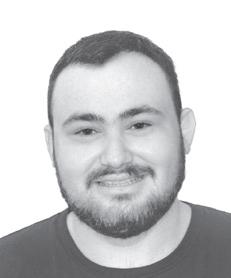
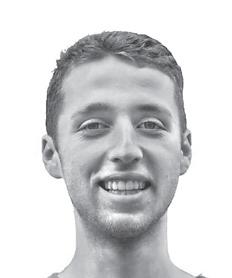


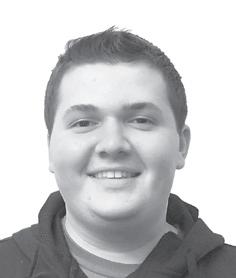
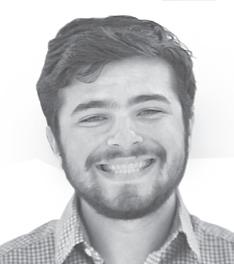
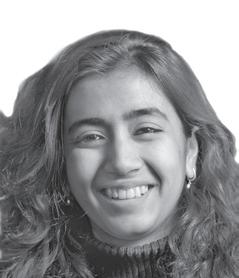




Despite being plagued with injuries, men’s hockey looks to avenge last season’s postseason loss to Princeton
HOCKEY Continued from page 20
few important pieces: junior forward Jeff Malott and sophomore defenseman Alex Green won’t suit up this weekend. Sophomore forward Brenden Locke and senior defenseman Brendan Smith are questionable.
“We are really excited for this weekend, to get back into ECAC play and build off the momentum.”
Head coach Mike Schafer ’86
The absence of key players, especially two of the top four skaters on the blue line, will mean increased responsibility for healthy top-six defensemen senior Alec McCrea, junior Yanni Kaldis, senior Matt Nuttle and sophomore Cody Haiskanen. Malott’s absence represents a missing piece on the Cornell forwards line generally tasked with
matching up with opponents’ top line — a job that will be especially crucial against standout Tiger forwards Max Véronneau and Ryan Kuffner.
“It’ll be bare bones as far as going into the weekend and that presents a challenge but it also presents an opportunity for those guys that might have not played as much up to this point,” Schafer said.
When it takes on Chase Priskie-led Quinnipiac (the defenseman leads the Bobcats with 11 points and four power play goals) and Princeton’s nation’s-best power play (42.1 percent through five games; 27.7 last season, both No. 1 in the country), Cornell will have a chance to reassert itself as a team not to be overlooked in conversations about the ECAC’s best. Four of the ECAC’s top-rated teams are within six spots of each other in the USCHO national poll: No. 12 Union and all three teams that will compete in Ithaca this weekend.
“The next five games right before [winter] break are huge,” McCrea said. “We are really excited for this weekend to get back into ECAC play and build off the
momentum from our first road wins of the season.”
Newly intense rivalries with Quinnipiac and Princeton are sure to be hotly contested. While Regush hasn’t experienced these conference rivalries, he expects his teammates to come out with an extra “jump.”
“It’s a rivalry that’s built over the last couple years, it’s gotten bigger so [there’s] some animosity between us,” Regush said of Cornell and Quinnipiac.
Schafer has said before that it is around Thanksgiving when he can identify his team’s identity. Is that the case this season, when the injury-afflicted Red takes on two nationally-ranked opponents before Turkey Day?
“It’s getting there,” Schafer said. “We faced that adversity at Northern Michigan … There’s so many more scenarios ... a lot of adversity we haven’t faced yet.”
Cornell hosts Quinnipiac on Friday and Princeton on Saturday, both at 7 p.m.
By FAITH FISHER Sun Staff Writer
With head coach Doug Derraugh’s return and its roster completely restored, women’s hockey will continue their hunt for victory this weekend as they travel to to take on two rival conference competitors, the Quinnipiac Bobcats (3-5-2) and the Princeton Tigers (4-2-2).
“The
most important thing for us is consistency, both in our efforts and our execution.”
For the past two weeks, Derraugh and three Cornell players competed with Team Canada in the Four Nations Cup, one of the most important international women’s hockey competitions. Even though Cornell (4-12) adapted somewhat well to the absences of their coach and fellow teammates — the team tied its last two games against Mercyhurst — the Red will have to make adjustments with the full squad back in action.
“The assistant coaches were pleased with how the team responded while our three players were gone and … I hope that the team that was here continues to respond in that fashion this weekend,” Derraugh said. “But it’s always tough when a team splits up and they come back together. You don’t have a whole lot of time to get everything clicking again.”
Last year, the Red experienced split results against their upcoming opponents. Against Quinnipiac, the Red matched one win with one loss, while in its five matchups with Princeton, Cornell defeated the Tigers three times and suffered two defeats.
Quinnipiac and Princeton continue remain fierce conference challengers in the 2018 season.
“Quinnipiac has always been very disciplined both in their systems and they don’t take a lot of penalties...they have a solid team from top to bottom.” Derraugh said. “They are really tough and they have some really skilled forwards who can score whenever they get the opportunity

WOMEN’S HOCKEY
Ice queens | Currently sporting a 4-1-2 record, Cornell hopes the return of three key players — who last week competed for Team Canada in the Four Nations Cup — will put the team over the edge as it confronts two tough rivals this weekend.
so we are going to have to limit their chances.”
Princeton currently stands atop ECAC standings, while Quinnipiac, in fourth place, just barely trails the thirdranked Cornell.
While the Red realizes that their upcoming games against such elite competition will be difficult, the team welcomes the challenge.
“The most important thing for us is consistency, both in our efforts and our execution,” Derraugh said. “I know there will be mistakes that are going to be made but I just want to see consistency in the effort all weekend.”
The Red will hit the ice against the Bobcats and the Tigers back-to-back away from the comfort of Lynah Rink on Nov. 16 at 6 p.m. and Nov. 17 at 3 p.m. Both games will be streamed live on ESPN+.
Faith Fisher can be reached at fsher@cornellsun.com.
bad,” said head coach Mike Schafer ’86.
It’s still November, and everyone around the team will say they’re not caught up with rankings. But No. 17 Cornell men’s hockey has a pair of hugely consequential early-season contests this weekend.
Two teams Cornell trails in the national rankings will visit Lynah Rink this weekend: No. 14 Quinnipiac and No. 15 Princeton, two squads likely to fight with Cornell atop the ECAC throughout conference play.
By RAPHY GENDLER Sun Assistant Sports Editor FOOTBALL


“We know [Quinnipiac and Princeton are] going to be very, very competitive and we’ll find something out about ourselves, good or

The games will be not only a pair of top-20 matchups but a pair of rematches from the 2018 postseason. Quinnipiac, off to a hot 7-2 start to the season, is likely to remember being swept in the ECAC quarterfinals — including a 9-1 game one shellacking — the last time they skated into Lynah Rink. The night after facing Quinnipiac, Cornell will hope to down the Tigers, who ended the Red’s hopes of an ECAC title in the conference semifinals in Lake Placid last March. “I think there is pressure against good teams, but I think there’s more excitement,” said freshman forward Michael Regush, who has scored a goal in three straight games.

Red redemption | Coming off four straight wins, men’s hockey hopes it can battle past a spate of injuries to down Princeton — a team that ended Cornell’s hopes of an ECAC title last season.
“It’s going to be a really good test for us. Obviously we were highly touted coming [into the season], we kind of fell a little flat starting and now we’ve rattled off four [wins] and it’s just a really good opportunity for us as a team playing some ECAC rivals.”
The Red will be shorthanded as it hosts the Bobcats and Tigers after an injury-riddled road trip to Northern Michigan where the Red earned its first
two nonconference wins of the season behind four total power-play goals.
“We still have some bad blood [with Princeton] from last year at the end of the year,” said senior defenseman and alternate captain Alec McCrea, a blueliner whose services will be needed during teammates’ absences.
Cornell enters the weekend missing a
By MILES HENSHAW Sun Staff Writer
Cornell football — a team with no chance at the Ivy title, no chance at getting over the .500 hump, and no shot at playoffs — has to find something to play for again this week.
And so this week’s motivation will be friendly faces on the road.
For the final game of a season — one that’s been a mixed bag at best — Red football (3-6, 2-4 Ivy) will head down to the Big Apple to take on Columbia in the Empire State Bowl. Although the Red were long ago eliminated from Ivy title contention, the team is looking forward to putting on a good show for the many Cornell alumni expected to be in attendance.
“We’re all disappointed with the results but we have one more

opportunity to play together as this team,” said head coach David Archer ’05. “Down there is probably, second to the homecoming game, the best Cornell crowd we’ll get all year. The alums come out awesome in the city and it’s a great atmosphere.”
“Bowl games are fun,” added junior cornerback David Jones. “Playing in New York City with so many alumni around, football alumni especially, we’re excited to go in there and give them a good game.”
Historically, Cornell has played Penn in the final week of the season, but because of this year’s Ivy league schedule shakeup, the Red will finish up at Wien Stadium on the northern tip of Manhattan.
Columbia (5-4, 2-4 Ivy) went 5-2 in the Ivy league last year, but has struggled this year, due in part to a stable of quarterbacks plagued by injury.
“[Columbia’s struggles show] the Ivy league is legit. You have to come to play every week. The champ from last year [Yale] is fighting for a winning record in the league this year. This is a way better league than when I played in it however many years ago,” Archer said.
Columbia’s quarterback situation presents both challenges and opportunities for the Cornell defense. The Red might have the advantage of facing an inexperienced passer, but will not have the benefit of good film on the player.
“They like to pass the ball a little bit so I’m excited for the opportunity to make some plays and get the win,” Jones said. “I’m excited to play a little more aggressive with a [backup QB] that might not have as much experience as the guy they would have in there.”
“They’ve had so many injuries at quarterback … you really don’t know what you’re gonna get,” Archer said, less optimistic.
Although the Red lost last week, they managed to put 24 points on the board against a top-ranked Dartmouth defense — a sign of life from an offense that has struggled all year against tough defenses.
“We just played Dartmouth, who has the best defense in the Ivy league, and put up the most points they’ve given up all year, so we’re pretty encouraged,” said junior wide receiver Dylan Otolski. “As an offense we think we can put up a lot of points.”
If nothing else, a win this week would mean a positive end for the seniors who faced defeat in their final home game last week.
“We’re excited for the opportunity to go get a win, especially for the seniors. It was tough last week,” Jones said. “We want to go off on a good note springboarding into the offseason and sending the seniors off with a win.”