
C.U. Delays Vaccine Mandate for Campus Faculty and Staf
Extends vaccination deadline to Jan. 18
By JYOTHSNA BOLLEDDULA Sun News Editor
The University has granted a one-month extension to faculty and staff to get vaccinated against the COVID-19 virus.
Before the extension, on-campus staff were expected to receive their vaccination by Dec. 8.
Employees now have until Jan. 18 to be fully vaccinated against COVID-19 or to get a University-approved medical or religious exemption. This applies to all employees on Cornell’s Ithaca, Geneva, New York City and other campuses.
The announcement comes after the federal government extended the deadline on its earlier vaccine mandate for all federal employees. Following pressure from labor unions to extend the deadline due to a labor shortage in multiple sectors, the federal government announced the extension on Nov. 4.
An initial executive order in September 2021 mandated the vaccine for all federal employees, and the University followed
See STAFF page 3



University Reports Increasing COVID Cases as Holidays Near
By MIHIKA BADJATE Sun Assistant News Editor
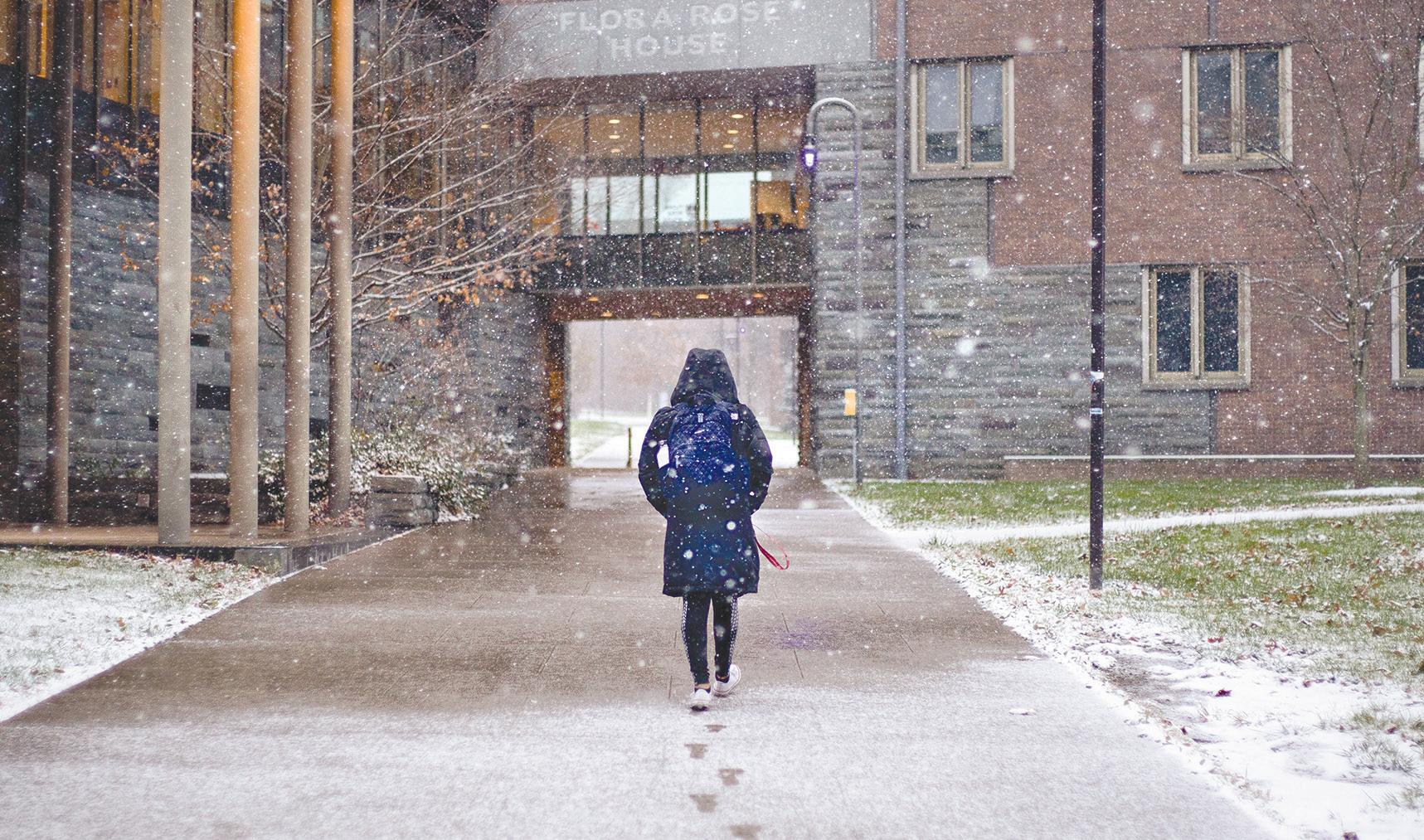
As the holiday season swings into gear and Ithaca witnesses its first snow flurries of the winter, Cornell COVID-19 cases have risen to 30 to 50 cases a week for the past three weeks.
The increase in case numbers is in line with rising cases across the country. The slight uptick in Ithaca cases also comes after New York State declared a state of emergency last Friday as a precautionary measure against high case counts and the threat of the newly discovered omicron variant.
As students settle back into Ithaca as they return from Thanksgiving break, according
Cornell reported almost 40 cases between Nov. 17 and Nov. 23, and over 50 in the seven-day period before that.
to the COVID-19 Tracking Dashboard, Cornell reported almost 40 cases between Nov. 17 and Nov. 23, and over 50 in the seven-day period before that. This marks an increase
from case counts just a month ago, when daily case counts were in the single digits.
Most of the new cases come from Cornell students and staff. From Nov. 17 to Nov. 23, 16 of the new positive cases were from students and 21 were from staff. Cornell has been on green alert level since Sept. 24, when it moved to yellow due to more than 400 cases reported at the beginning of the semester.
Tompkins County COVID cases have also risen since mid-October, with 259 new cases reported between Nov. 21 and Nov. 28. Total active cases
Pulitzer-Winners to Speak in Goldwin Smith Hall Lecture
Discussion will center around immigration journalism
By ANGELA BUNAY Sun Assistant News Editor
Award-winning immigration journalists Sonia Nazario and Nadja Drost will discuss the role immigration reporting plays in U.S. politics and policy in a conversation moderated by Molly O’Toole ’09, this semester’s Zubrow Distinguished Visiting Journalist Fellow.
The Wednesday conversation titled “Move: An Urgent Conversation with Award-winning Immigration Journalists and Authors” will have both journalists share their insights on the field of immigration journalism and how it has shaped the nation’s political landscape.
Both Nazario and Drost are distinguished journalists who have won numerous awards, including each receiving Pulitzer prizes for Feature Writing.
Nazario won the prize in 2003 for her six-part Los Angeles Times series “Enrique’s Journey,” which detailed the story of a 5-yearold Honduran boy’s arduous travel to the United States. Now, Nazario is a contributing opinion writer for The New York Times and is working on a new book.
Alongside the Pulitzer Prize, Nazario’s work on the series also earned her the George Polk Award for International Reporting, the Grand Prize of the Robert F. Kennedy Journalism

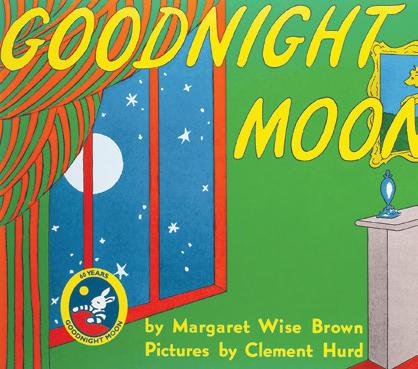
Goodnight Moon Megan Pontin ’23 discusses the power wielded by children’s
See COVID page 3
COURTESY OF CORNELL UNIVERSITY
Immigration issues | Journalists Sonia Nazario, left, and Nadja Drost, right, will speak at Cornell on Wednesday.
A student walks through one of the first snow flurries of the season on West Campus on Nov. 23.
KATRIEN DE WAARD / SUN STAFF PHOTOGRAPHER
Monday, November 29, 2021
A LISTING OF FREE CAMPUS EVENTS
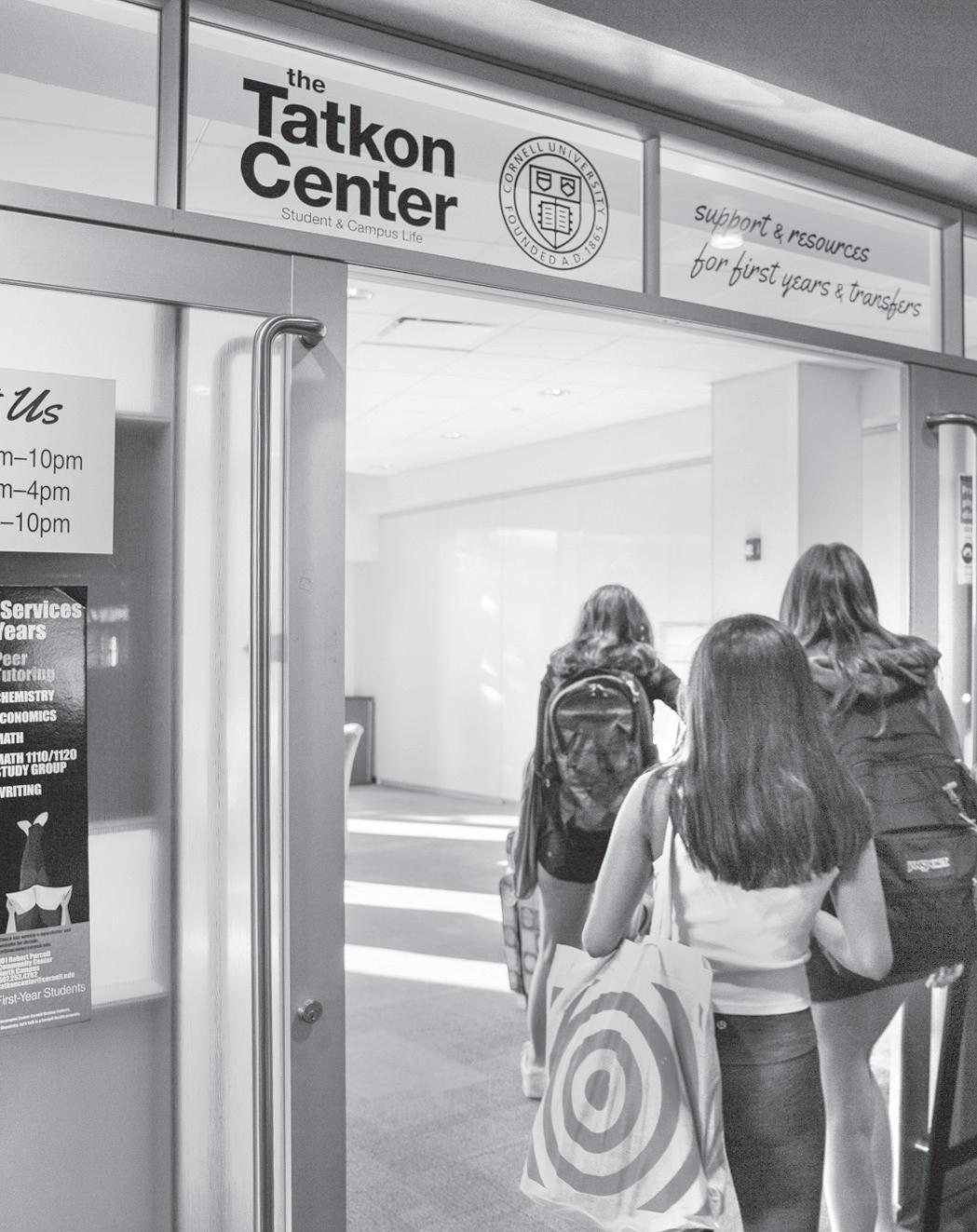
Tatkon Center | The Tatkon Center is collaborating with the Cornell Elderly Partnership, allowing students to drop by to write cards for older adults throughout November.
Today
Labor Economics Workshop: Daphné Skandalis 11:15 a.m. - 12:45 p.m., Virtual Event
Cornell Elderly Partnership: Make Senior Citizens Smile Noon - 10 p.m., Tatkon Center
Enabling Large-Scale Research Into Extremism, The Manosphere and Their Correlation Noon - 1 p.m., Virtual Event
In Search of an End to Human-Elephant Conflict, Rohan Munasinghe 12:15 p.m., G08 Uris Hall
Department of Physics Colloquium 4 - 5 p.m., Schwartz Auditorium, Rockefeller Hall
The Economic Motivations Behind U.S. Interventions and Foreign Policy In Haiti - Jean Eddy Saint Paul 4:30 - 5:45 p.m., Virtual Event
Tomorrow
Baker Institute Virtual Seminar Noon - 1 p.m., Virtual Event
Interrogating Cell Function by Flow Cytometry Noon, G01 Biotechnology Building
Portuguese Conversation Hour 3 p.m., Language Resource Center
Twenty Years of War: The Global War on Terror, Security Statecraft and Racial Justice 3 p.m., Virtual Event
Medieval Studies Program Fall Lecture Series: Women’s Humanity and Anger at the Center of Beowulf 4:30 - 6 p.m., Guerlac Room, A.D. White House

Environmental
In
event, CALS Fulbright Scholar Rohan Munasinghe will discuss solutions to human-elephant conflict.
Palestinian Literary Methodology And Matters of Belonging 4:45 p.m., G64 Goldwin Smith Hall
The A.R. Ammons Creative Writing Salon 7 - 8:30 p.m., 316 Lincoln Hall
Piano: Theodora Serbanescu-Martin 8 p.m., Barnes Hall
sunmailbox@cornellsun.com Business Manager Anushya Alandur ’23
www.cornellsun.com

Faculty and Staf Given Extra Month To Get Teir Shots
As federal mandate requires employee vaccination, Cornell staf are 93% vaccinated
Continued from page 1
suit, citing its involvement in multiple federal contracts.
“The university has numerous federal contracts that are covered by the provisions in the executive
Employees now have until Jan. 18 to be fully vaccinated or to get a University-approved exemption.
order, therefore the university requires employees to be fully vaccinated against COVID-19,” Cornell’s COVID-19 Response website reads.
Though the Centers for Disease Control and Prevention has also now expanded eligibility for the COVID booster dose to all individuals over the age of 18, to be taken six months after receiving their second dose, the University is not mandating a booster at this time. However, the University encourages all members of the Cornell community to consider receiving a booster once eligible.
As of Nov. 28, 97 percent of Cornell’s on-campus population is fully vaccinated. Out of this population, 100 percent of faculty, 99 percent of undergraduates and graduate students, and 93 percent of other employees are fully vaccinated.
Jyothsna Bolleddula can be reached at jbolleddula@cornellsun.com.
Top Journalists to Hold Discussion on Role of Immigration Reporting In United States Policy
Sonia Nazario and Nadja Drost will speak at Goldwin Smith on Wednesday STAFF
EVENT Continued from page 1
Award and the National Association of Hispanic Journalists Guillermo Martinez-Marquez Award for Overall Excellence.
Her series was published and expanded on as a novel three years later and went on to become a national bestseller.
The conversation will have both journalists share their insights on immigration journalism and how it has shaped the nation’s political landscape.
Drost, who is now a PBS NewsHour special correspondent for Latin America, earned her Pulitzer Prize in 2020 for her story titled “When Can We Really Rest?” which was published in The California Sunday Magazine. The story was a culmination of Drost’s five-day voyage into the Darién Gap, a treacherous stretch of rainforest and marshland between Colombia and Panama.
Drost also makes documentaries, and is currently in her sixth year of working on a documentary titled “Alias La Mona,” which is about Colombia’s 2016 peace deal with the Fuerzas Armadas Revolucionarias de Colombia, widely known as FARC.
The conversation will be held in the Hollis E. Cornell Auditorium in Goldwin Smith Hall at 5 p.m. on Wednesday, Dec. 1. It is free to the University community with a valid Cornell ID. The event will also be live streamed through eCornell.
Angela Bunay can be reached at abunay@cornellsun.com.
Cornell’s Rising Cases Mirror Increase Across the Country
Tompkins County registers hundreds of active cases in November
COVID Continued from page 1
in the county have hovered around 200 for the past few weeks, and 72 new cases were reported on Nov. 27 alone.
Meanwhile, the omicron variant, first identified in southern Africa, has caused global concern due to containing a number of mutations.
Though no known cases of the omicron variant have been reported in the United States as of Nov. 28, many countries have temporarily banned flights from South Africa, and countries including the United Kingdom and the Netherlands have reported cases associated with travel from the region.
In 2020, Cornell recorded a slight increase
Keep Ithaca beautiful. Please recycle this paper.
As students settle back into Ithaca, Cornell reported almost 40 cases between Nov. 17 and Nov. 23.
in COVID cases in November and December, despite most students returning home after Thanksgiving. It remains to be seen whether the influx of students who traveled off campus for the break, along with the increasingly cold weather, will drive up cases as Cornell heads toward the end of its first fully in-person semester since 2019.
Mihika Badjate can be reached at mbadjate@cornellsun.com.


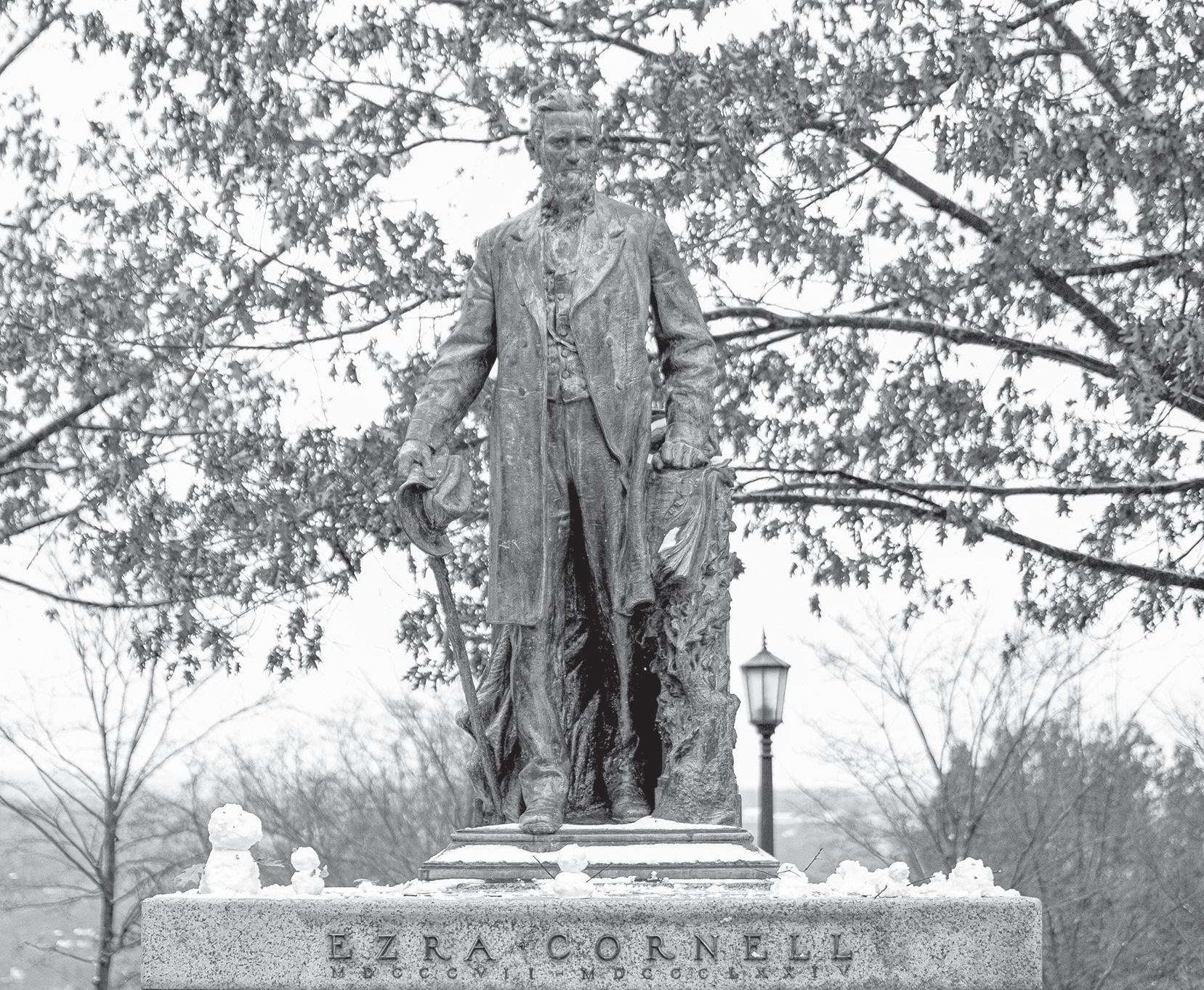
Small snow critters join Ezra on his pedestal. The Arts Quad was covered in a light powder during the final stretch of Thanksgiving Break.
ASHLEY RAMYNKE / SUN STAFF PHOTOGRAPHER
Anyone who has ever dabbled in the world of babysitting — perhaps as a high school endeavor to generate pocket cash or involuntarily by being born an older sibling — understands the inestimable power of a good children’s book. They contain the seemingly supernatural capacity to quell tears after a stubbed toe, lull an energetic little one to sleep and even distract from the threat of an imminent visit to the dentist or doctor.
Children’s stories appear to hold a leverage that is notably challenging to replicate among tales targeted towards adults. This

observation yields a crucial question: Are these stories so powerful because children are more easily swayed than their aged counterparts, or is there something in their simplicity that renders them so poignant?
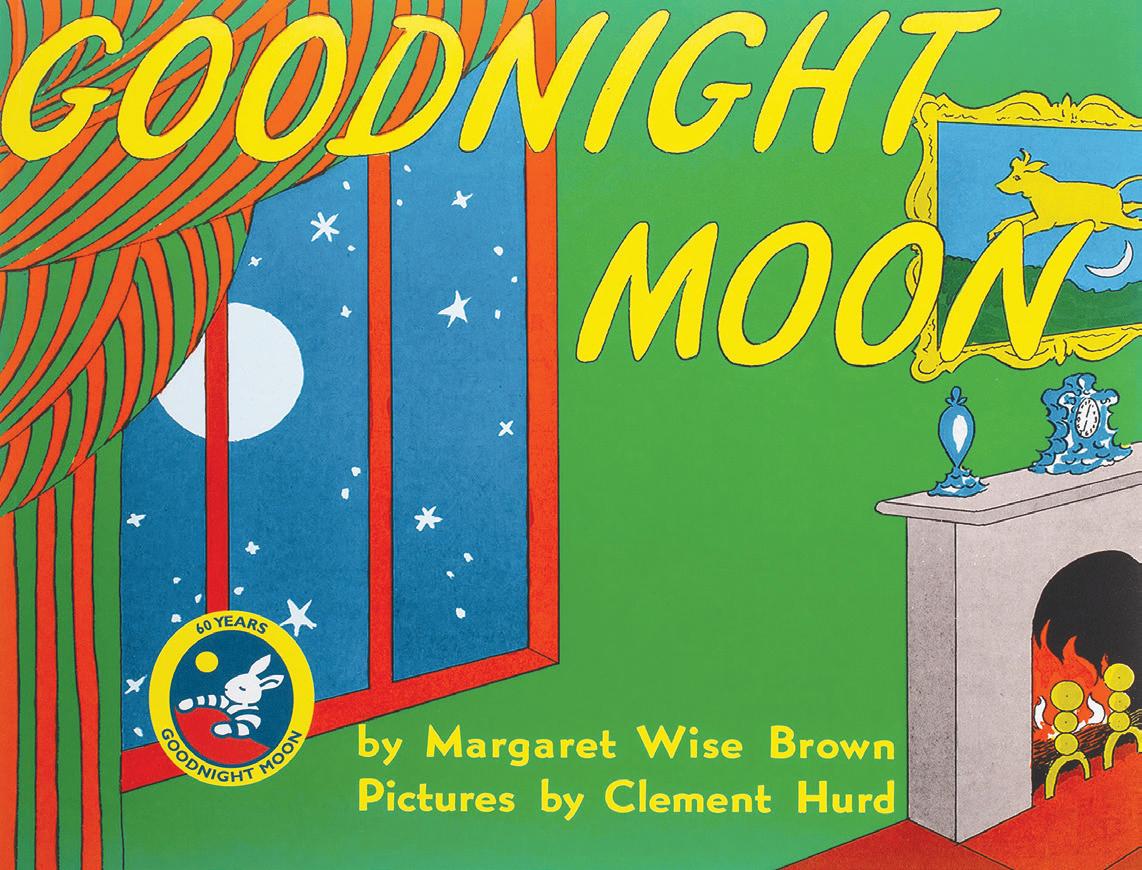
I’d be shocked if the correct answer was the former one. Reading Margaret Wise Brown’s Goodnight Moon, originally put to print in 1947, still conjures a sense of serenity within me that few books I’ve read in my (albeit short) adult life have done. What could be more peaceful and more innocent than the process of wishing goodnight to the very fixture
Goodnight Moon
of nighttime itself, without whom our night sky would remain stuck in a perpetual state of new moon?
Goodnight Moon, of course, is not alone in its place of honor among the pieces that have continuously and relentlessly soothed children across generations. Eric Carle’s The Very Hungry Caterpillar, published first in 1969, is another certifiable classic, recounting a story of metamorphosis and transformation that speaks directly to kids’ own fears about growing up and taking on new roles. I remember hearing this story an unidentifiable number of times in classrooms and at home throughout my youth, and his passing earlier this year felt to me like the loss of a true cultural icon.
Further favorites emerge as we look deeper into the twentieth century. Take Ludwig Bemelmans’ darling 1939 Madeline series, which follows the adventures of a particularly feisty young Parisian schoolgirl. Where the Wild Things Ar e has also become a staple in the lexicon of American children’s fiction, written in 1963 by Maurice Sendak. (A blockbuster animated film followed in 2009.)
Each of these four stories was crafted for a different century than the one we are living through now, a world in which childhood looked almost unrecognizable from its current form. While the
social and political contexts have changed drastically, the themes these books confront remain timeless — growing up, embarking on new adventures and exploring the bounds of one’s own imagination.
Similarly, the timeless illustrations that dot the pages of children’s stories create a hybrid linguistic-visual experience that is largely lost on adult literary creations. The words and phrases that run across the pages of children’s books are intentionally simple and oftentimes deliberately brief, and so the illustrations fill in the gaps to complete the mission initially undertaken by the written material.
Today, we have devised several means of praising this incredibly special confluence of words and pictures, with the Era Jack Keats Book Award, Caldecott Medal and Geisel Award representing some of the highest accolades one can achieve in this space.
While the advent of books made uniquely for children are by no means a development of the twentieth century, they were not always such an integral piece of youth. Prior to the 1700s, reading material for kids largely concentrated on religion, etiquette or education. It was none other than Enlightenment philosophe extraordinaire John Locke who helped transition away from this dull material, advocating for engaging and enjoyable learning opportunities for kids in his 1693 Some Thoughts Concerning Education.
Authors began to produce options that aligned more closely with Locke’s ideal in the eigh-
teenth century, including Mary Cooper and her Tommy Thumb’s Pretty Song Book in 1944 that gave us the blueprint for nursery rhymes like “London Bridge” and “Bah, Bah, Black Sheep.”
By the time the nineteenth century took root, these more captivating tales had evolved into full-fledged fantastical adventures, with Lewis Carroll’s Alice’s Adventures in Wonderland in 1865 as the most prominent example. The development of the Cold War in the mid-1900s induced a sharper focus on the quality of American educational material, and the quest to generate truly intriguing educational tools for children only escalated. Dr. Seuss, for example, practically ascended to literary stardom.
In our current moment, however, there are a plethora of options competing for children’s attention. Television shows full of firefighting dogs or talking dino-

saurs as well as iPads stacked with colorful games are just a few examples, yet the variety of these entertainment options will only continue to skyrocket as handheld devices continue to advance, and kids receive these handheld devices earlier and earlier. The old-fashioned children’s book, then, seems to occupy a rather precarious position. We would do well to continue emphasizing the value of these books, these tangible instruments for otherworldly investigation, as awe-inspiring tools. Beyond simply conveying the basic building blocks of grammar and language, they also facilitate the process of teaching youngsters how to be comfortable within their own imaginations. They create worlds that are entirely encapsulated between a front and back cover, a self-sustaining ecosystem of exploration that exists wholly in isolation. (The same cannot be said for online educational games, which achieve the first end, or children’s television programming, which achieves the second.)
What’s more, contemporary children’s books can also serve as primers that familiarize kids with the issues that shape our social landscape. Take National Youth Poet Laureate Amanda Gorman’s Change Sings , for example, which encourages tolerance in place of hatred and hope in lieu of pessimism. Kathleen Krull and Yuyi Morales’ Harvesting Hope tells of Cesar Chavez’s work to create equality for farmworkers in California, and Brave Girl by Michelle Markel and Melissa Sweet recounts the Shirtwaist Makers’ Strike of 1909.
In these ways, children’s books are so much more than mere means of making rowdy kids hit the pillow. They have the power to play a critical role in cultivating children’s passions and thus shaping who they will become, all the while offering a wisdom that has trickled down from a shared consciousness centuries old.
Megan Pontin is a junior in the School of Industrial Labor Relations. She can be reached at mpontin@cornellsun.com. Rewind runs alternate Mondays.
Rewind
Megan Pontin
Hi! It’s Duo!
I still remember the anxiety of keeping alive my streak. A “streak is the number of days in a row you have completed a lesson. Once you complete a lesson in the app or via web, your streak will increase by 1 day. You will receive your daily reward when you meet your Daily XP Goal.”
Although Duolingo is no longer as prominent as it was in our middle school years, the popular language app found different ways to remain relevant.
On Dec. 2, 2018, a Tumblr account named sceenshotsdespair posted the first of many infamous Duolingo memes. It was a screenshot of a Duolingo push notification that read, “Oops, that’s not correct. Run for your life.” Within four months, the post received over 114,000 notes. This led to a cultural phenomenon of ‘Duo the Evil Owl.’
On March 26, 2019, Duolingo posted the image of Duo the Owl entering a dark room with the text “Coming Soon” on their Twitter. To date, this post has
Tik Tok Marketing: A Fad or a Revolution?
received 2,400 retweets, 25,000 likes and 1,300 comments.
Through a study done by Ryplio (“The Only Through-the-Line Influencer Marketing Lead Seeding Platform”), the result of Duolingo’s social media popularity highly benefited the company. Duolingo’s social media results jumped from 27 to 10,862, while shares went from nonexistent to 6230.
Recently, Duolingo has hopped onto Tik Tok. NBC’s “How Duo the big green owl became a TikTok star” described Duolingo’s new advancement: “From twerking atop a conference table to a remix of Adele’s “Easy on Me” with rapper CupcakKe or calling singer Dua Lipa “mommy,” the stoic, yet adorable green owl has become fluent in a language some brands have failed to speak: social media.”
The use of TikTok as a marketing outlet for major companies (NBA, Fenty Beauty, Dunkin’, Chipotle, Gymshark etc) has been increasing. However, is “TikTok Marketing” a short-term technique or a long-term cultural influence?
The overall message Zaria Parvez, the social media manager behind Duolingo’s TikTok account, wants to convey is that
at the end of the day, learning a new language is supposed to be fun.
To explore whether or not TikTok marketing is considered a short-term strategy or a more meaningful, longterm cultural change, let’s begin with defining each. In the world of marketing, a short-term strategy is “a plan that can last for up to a year.” It is essentially a ‘calendar of events’; in this case, the marketing team at Duolingo plans a different TikTok that highlights a specific problem/topic for different days. “Campaigns that are part of this strategy produce a temporary boost in sales and traffic to a business. This is because the focus of the strategy is to bring in new customers; this is a crucial part of business, especially for start-up brands or rebranded designs.”
Long-term cultural changes can be defined as the “belief that culture can be passed from one person to another mean[ing] that cultures, although bounded, can change.” The top mechanisms of social and cultural change include discovery and invention.
We see a cultural shift when people discover a new understanding of a familiar subject/topic. The discovery is not
temporary, creating a permanent shift in operations or beliefs. Going back to TikTok marketing, data has found that TikTok is not “necessarily about belonging to an age demographic, but rather a mindset [...].” TikTok users choose to join in on the social culture and trends portrayed by the creators.
The combination of TikTok’s algorithm and the unknown depths of its creators’ future content creates a force that can elicit discovery and invention among a certain cultural phenomenon.
However, personally, I believe that these discoveries or inventions are all already present in our society; TikTok is simply a platform that gives these topics each a time to surface and shine.
Therefore, TikTok, as powerful and influential as it is, does not hold the power to create cultural change. In a world where ideas constantly develop and evolve, TikTok remains a catalyst along the journeys of each idea and phenomenon.
Haley Qin is a freshman in the College of Agriculture and Life Sciences. She can be reached at hq35@cornell.edu.
Snail Mail’s Valentine : An Intoxicating Ode to Heartbreak
Snail Mail’s 2018 album Lush is my most played album on Spotify, and ever since then, I partially dreaded the release of her sophomore album because I feared it couldn’t possibly live up to the gorgeously raw, melancholy indie-rock masterpiece of her debut. With Valentine, Snail Mail’s Lindsey Jordan gloriously proves me wrong.
On the jazzier track “Forever (Sailing)”,
Jordan croons, “Doesn’t obsession just become me?” and with a tight tracklist of ten songs, Valentine expertly chronicles the highs and lows of an all-encompassing love affair. While she experiments with synths and a more indie-pop sound on tracks like “Ben Franklin” and “Forever (Sailing),” the album still retains the Snail Mail signatures of melodramatic and enticing chord progressions with a candid edge. It’s a triumphant and honest addition to her catalog, and after several listens, I found myself reveling in more of Jordan’s intimate guitar
riffs and stirring vocals.
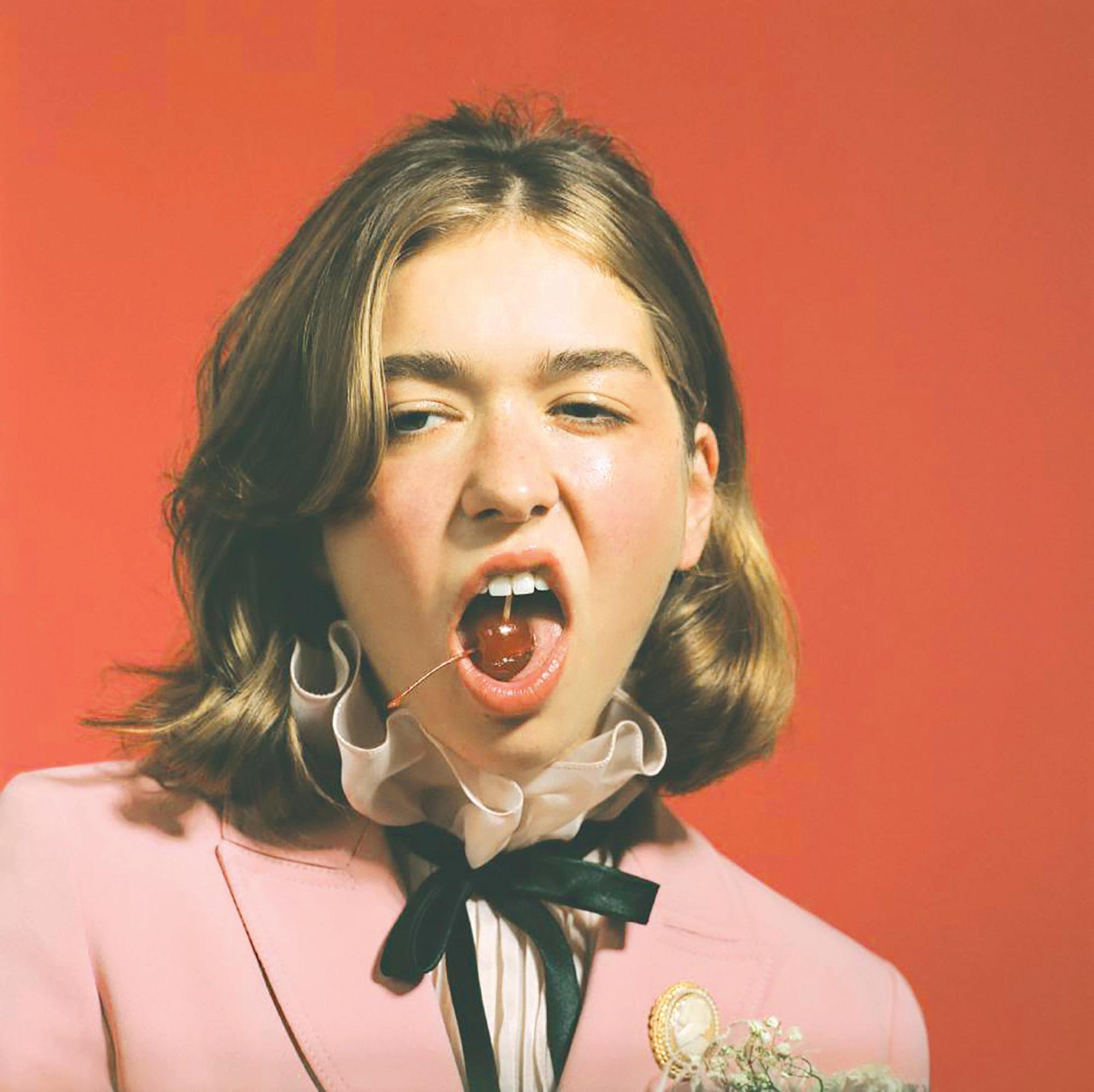
Jordan is a master at tension and release in her songwriting; in the title track and lead single, a droning synth explodes into a flurry of guitars as Jordan accuses, “So why’d you wanna erase me?” She is still the same heartbroken lover as on Lush, but with a more sharpened perspective on love and yearning. The album introduces newer textures (Lush was essentially a threepiece band) and a new producer, Brad Cook, whose collaborators include Indigo de Souza, Bon Iver and Waxahatchee, but Jordan can still write a guitar riff like no one else in the game. On the heartbreaking track “Mia,” wistful strings are set against an inquisitive guitar line drenched in reverb. It’s a lovely melodic and thematic parallel to “Anytime,” a vastly overlooked track on Lush mourning the loss of a relationship. You can hear Jordan’s voice quiver as she musters, “Lost love, so strange / And heaven’s not real, babe, but I wish that I could lay down next to you.” “C.et.al” and “Light Blue” also have notably intimate and creative compositions, which truly embody the album’s feelings of reckless devotion. Jordan’s bluntly honest lyricism is even more vulnerable on Valentine; in “Headlock” she ruminates, “Thought I’d see her when I died / Filled the bath up with warm water / nothing on the other side.” The track sweeps us into a rotating gyre, guitar ceaselessly looping as she describes lonely, lovesick nights and drunken thoughts of selfpity. It is heartbreaking, but also keenly self-aware; Jordan knows her musical caricature as always the lover and never the loved. Personally, I think that one of the elements which makes
Jordan’s music feel so fresh and multisided after so many listens is her vocal performance — she prioritizes expressing emotion over sounding ”good” technically.
In a recent interview with Pitchfork, Jordan notes that “I edit my lyrics over and over until I’m 100 percent sure that everything feels right. It’s perfectionism, in a pull-my-hair-out type of way. On this album, it was really important to me that certain lines hit in certain places in the song. All of the vocal deliveries are super intentional too. There’s certain parts that when you sing them soft, it hurts more, or things that when you sing them with projection or a little more rasp, it’s emotional in a different way. It’s theatrical as hell.”
This is especially relevant for one of my favorite tracks on the album, “Madonna”. The song is packed with rich religious iconography deifying her lover and is set against an exquisite guitar riff, breezy 808s and Jordan’s trademark whine. In a heavenly moment of catharsis, Jordan sings, “Divine intervention was too much work / I don’t need absolution, no, it just hurts.” Since Lush, her perspective on love has matured from pure romantic fantasy to realizing the flaws in her lovers, who she puts on a pedestal. She still retains a wonderfully cheeky tone in the song, as well as in “Automate”, with its endlessly quotable lines like “Dread life without you/but you in that green sweater / I could die if I had the guts.”
In her updated Spotify bio, Snail Mail is described as an artist who has “chosen to take her time” in the midst of so much mediocre, indistinguishable indie music. I wholeheartedly agree. Valentine firmly solidifies Jordan’s place as a masterful songwriter and indie-rock icon. It’s a powerful work of art, and an ode to the sensitive and lovesick that should become a modern classic.
Violet Gooding is a freshman in the College of Arts and Sciences. She can be reached at vbg22@cornell. edu.
TINA TYRELL / THE NEW YORK TIMES
HALEY QIN SUN STAFF WRITER
VIOLET GOODING SUN STAFF WRITER
The Corne¬ Daily Sun
Independent Since 1880
139th Editorial Board
KATHRYN STAMM ’22 Editor in Chief
ANUSHYA ALANDUR ’23
Business Manager
CATHERINE ST. HILAIRE ’22
Associate Editor
PRANAV KENGERI ’24
Advertising Manager
ODEYA ROSENBAND ’22
Opinion Editor
JYOTHSNA BOLLEDULA ’24
News Editor
TAMARA KAMIS ’22
News Editor
CAMERON HAMIDI ’22
App Editor
KRISTEN D’SOUZA ’24
Design Editor
HANNAH ROSENBERG ’23
Photography Editor
OMSALAMA AYOUB ’22
Science Editor
PUJA OAK ’24
Layout Editor
ANNIE WU ’22
Production Editor
MIHIKA BADJATE ’23
Assistant News Editor
SERENA HUANG ’24
Assistant Business Editor
ANGELA BUNAY ’24
Assistant News Editor
JOHN COLIE ’23
Assistant Arts & Culture Editor
AMELIA CLUTE ’22
Assistant Dining Editor
WILLIAM BODENMAN ’23
Assistant Sports Editor
AARON SNYDER ’23
Assistant Sports Editor
MEGHANA SRIVASTAVA ’23
Compet Manager
MADELINE ROSENBERG ’23
Editor NAOMI KOH ’23
Editor ANIL OZA ’22
Editor YUBIN HEO ’24
VEE CIPPERMAN ’23
NOOREJEHAN UMAR ’23
E.D. PLOWE ’23
YOON ’23
VELANI ’22
PICHINI ’22
TYAGI ’22
MENDOZA ’24
ARANDA ’23
Editor SURITA BASU ’23
Editor KAYLA RIGGS ’24
LEYNSE ’23
’24
’24
’24
ALPERS ’22
Katherine Yao
Hello Katie
Home for the Holidays
Ispent my four years of high school counting down the months until I could escape to college. I felt stifled by the same view of the maple tree and sidewalk outside my window every day. The unchanging drive to school, then sports practice, then my job, then home. The trails I spent all of middle and high school exploring until I could navigate them with my eyes closed. College would be a welcome change, I thought. The taste of faux-independence would be something different. Something new and exciting.
starting to realize that the trips to and from my hometown will likely be the norm from now on. It feels like I only just arrived home, yet I’m already folding my clothes and bedsheets into a suitcase in preparation for the trip back to Ithaca. Holidays will turn into small pockets of time to burrow inside feelings of nostalgia with friends and family before returning to school or work.
Bolleddula ’24
Mihika Badjate ’23
production deskers Annie Wu ’22
Anya English ’24
layout deskers Kristen D’Souza ’24
Puja Oak ’24 photo desker Julia Nagel ’24 Arts desker Emma Leynse ’23
sports desker Aaron Snyder ’23
Tom the Dancing Bug by Ruben Bolling
But perhaps the saying, “absence makes the heart grow fonder”, has some merit. After nearly four months back in Ithaca, I find myself grateful to come home to my suburban Ohio town for the Thanksgiving holiday. The act of “coming home for the holidays” implies that there was distance at some point, presumably for an extended period of time. This year, coming home serves as a stark reminder that soon, for the first time, I’ll consider my “primary address” to be the rented apartment in whatever city I’m working in and not the house I’ve lived in for 20 odd years of my life. The house whose address I’ve listed on every major form and application up until this point. Coming home now means coming to terms with growing up.
The pandemic delayed this reckoning with age, independence and moving away. After my brief entanglement with college campus freedom was snuffed out, I spent fall 2020 at home instead of at Cornell. I took prelims and attended club meetings while my childhood stuffed animals looked on curiously. I felt closed in by the pale green walls of my bedroom as 2020’s Thanksgiving break reverted to those of my grade school years in an anticlimactic fashion. A far cry from the packing and unpacking and repacking that has characterized this holiday break.
However, I’m
Holidays
will turn into small pockets of time to burrow inside feelings of nostalgia with friends and family before returning to school or work.
The time at home has become all the more precious with its scarcity. I’ve been able to view my hometown in a different light — wearing those nostalgia-colored glasses. Rather than feeling trapped by the familiar, I’m comforted by the trails near my old middle school and the ten-minute car ride to Costco. Maybe it’s because I’ve had to fend for myself these past several months, but I’ve missed my mom’s cooking to a ridiculous degree and barely mind the fuss over layering up before stepping outside in the chilly November air. I’ve never been a huge football fan, but for the first time in 21 years, I’m even feeling some major Ohio State pride (we don’t speak about Saturday’s loss).
This year, coming home serves as a stark reminder that soon, for the first time, I’ll consider my “primary address” to be the rented apartment in whatever city I’m working in and not the house I’ve lived in for 20 odd years of my life.
Life is made of transitions, and college is a period with some of the most rapid changes. My family and my childhood neighborhood serve as grounding forces to the dizzying changes that growing older entails. The sights and sounds that I’ve taken for granted throughout those teenage years are anchors I get to revisit each time I make the trek home. My 16-year old self would be reeling at this revelation, but routine doesn’t necessarily always equate to stagnation — sometimes it can symbolize stability and comfort. And I’m looking forward to the next time I can come home and traipse down memory lane, appreciating the familiar and getting ready for what’s to come.
Katherine Yao is a junior in the College of Arts and Sciences. She can be reached at kyao@cornellsun. com. Her column, Hello Katie, runs every other Monday this semester.

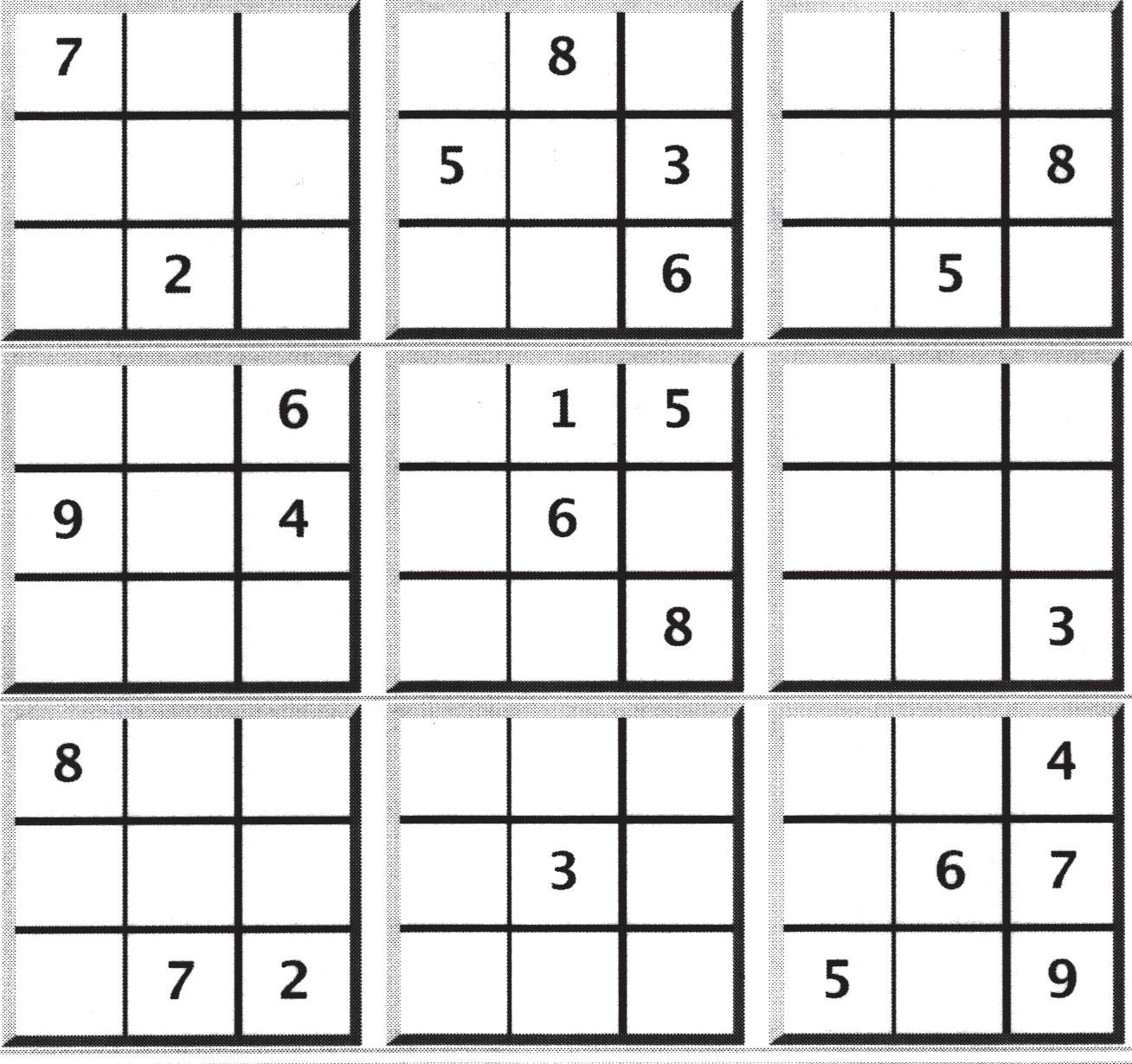
Fill in the empty cells, one number in each, so that each column, row, and region contains the numbers 1-9 exactly once. Each number in the solution therefore occurs only once in each of the three “directions,” hence the “single numbers” implied by the puzzle’s name. (Rules from wikipedia.org/wiki/ Sudoku)
I Am Going to Be Small
Dandro
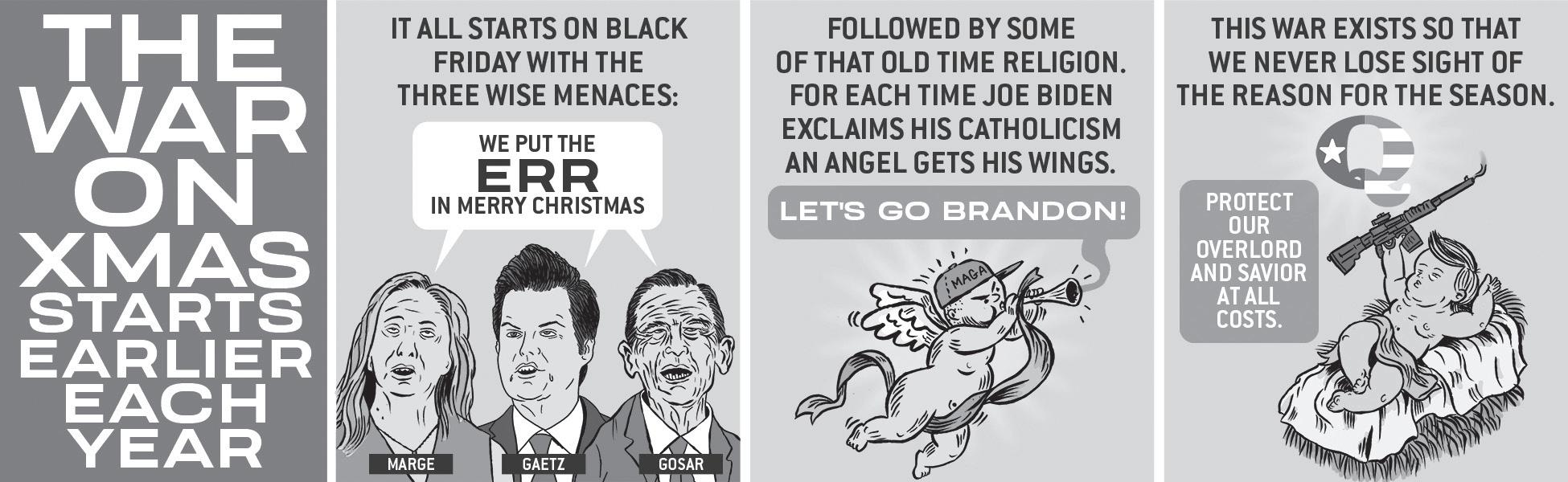

Mr. Gnu by Travis
No. 10 Cornell Defeats Rival B.U. at MSG
Six goals secure Red’s third consecutive Red Hot Hockey victory in New York City
By AARON SNYDER Sun Assistant Sports Editor
NEW YORK — No. 10 Cornell came to Red Hot Hockey in Madison Square Garden on Saturday night seeking to extend its current winning streak to six games and take home its third consecutive Kelley-Harkness Cup against rival Boston University.
The Red stayed hot, beating the Terriers by a score of 6-4.
The game was played in front of a packed Garden that was mostly cheering for the Red.
“I was so happy to see our alumni, that was emotional,” said Head Coach Mike Schafer ’86. “To get back in here and see the support that we have in New York City from our alumni … it’s just awesome.”
While the biennial Red Hot Hockey series was not disrupted by the pandemic, Cornell’s scheduled trip to Madison Square Garden, along with the entire season, was canceled last year.
“It hurt last year, not playing,” Schafer said. “This was outstanding to get back to some more normalcy. To come down here and treat our fans and for our fans to see how proud we are to play for Cornell, I think that's what makes our hockey program and our school a special thing.”
Ahead of the game, senior tri-captain Brenden Locke predicted that the Red’s skaters would have to deal with some jitters on their first few shifts. Schafer emphasized the need to stay focused and disciplined under the bright lights.
“It’s a great test,” Schafer said. “You walk into a big venue where there are a lot of distractions. How do you manage that ... and being in New York City. Are you following your pregame routine, getting your food, getting your rest? It’s a tremendous experience.”
After scoring only one goal in the first period across both its games last weekend, the Red started strong at the Garden.
Cornell struck first at the 13 minute mark, when junior defenseman Sebastian Dirven’s shot from the point was deflected in by freshman forward Kyler Kovich to put Cornell up, 1-0.
“The belief on the bench that we’re going to take care of things was there, which is really impressive for our younger guys that are going through all this stuff for the first time.”
The Red was quick to respond after falling behind. A minute after Boston’s pull ahead goal, the Red equalized. Sophomore forward Kyle Penney broke into the offensive zone and fed senior defenseman Cody Haiskanen across the ice. Haiskanen’s shot from the point was deflected by Boston’s goalie, Drew Commesso, but freshman forward Ondrej Psenicka poked in the rebound and knotted things up at 2 with five minutes left in the period.
With 1:38 left in the period, Cornell went on its first power play of the night. The Red used a designed play to convert just seconds into the man advantage. The Red won the faceoff, and two crisp passes set senior forward Max Andreev up in the circle. Andreev fired a rocket past Commesso to put Cornell ahead, 3-2.
“We try to run some faceoff plays,” Locke said. “Max was in the right spot and the right time, we kind of drew it up like that.”
The Red took its 3-2 lead into the intermission.
The first half of the middle frame was uneventful, except for a hitting from behind penalty against the Terriers with 13:25 left. The Red was unable to capitalize and was lucky to leave the man advantage with its lead intact after Boston’s shot on a shorthanded breakaway hit the pipe.

The goal was Kovich’s first career goal, continuing a recent trend of Cornell skaters scoring their first collegiate goals in the World’s Most Famous Arena. The feat was accomplished by Noah Bauld in 2016, Tristan Mullin in 2017 and Liam Motley in 2018.
The Terriers responded just past the halfway point of the period when Dylan Patterson cut to the net and wristed a shot past Cornell’s Joe Howe. Howe, a freshman, drew the start after missing both games last weekend due to injury. He finished with 26 saves on 30 shots.
“I thought he was a little shaky in the first,” Schafer said. “Then I thought he kind of settled in … It was good to see a young guy like that, on this big stage, settle down.”
Shortly after giving up its lead, Cornell was put on the penalty kill after a hooking call against junior forward Zach Tupker.

The box score will say that the Red killed the penalty, but Boston capitalized on its advantage by breaking into the neutral zone with an odd-man rush as the penalty was expiring. Tupker came out of the box, but he was behind the play and the Terriers fired a shot past Howe to take a 2-1 lead at the six-minute mark.
“Things just weren’t smooth as far as the whole game was concerned,” Schafer said.




Cornell extended its lead just past the halfway point of the period when senior forward Brenden Locke intercepted a pass in Cornell’s offensive zone, beat a man and fired a shot past Commesso to give the Red a 4-2 lead. The goal added to Locke’s strong record at Madison Square Garden. The tri-captain scored in Cornell’s 2019 win over the Terriers and added an assist in 2017.
“I just kind of got lucky, it was in the right spot,” Locke said. “I don’t think about it too much, I try to just treat it like any other game, but it’s obviously exciting playing at MSG.”
Cornell was sent on the penalty kill at the seven-minute mark after Andreev was sent to the box for hooking. The Red had no problem killing Andreev’s penalty but went back on the kill shortly after his penalty expired. A penalty against the Terriers 30 seconds into their man advantage sent the game to a stretch of four-on-four play, and Boston took advantage of the extra space.
With just under two minutes left in the period, a pass by Boston’s Domenick Fensore beat Howe and set Case McCarthy up with an open look at the net. McCarthy converted, cutting Cornell’s lead to 4-3.
Cornell got some breathing room early in the third period on a highlight reel goal by junior defenseman Sam Malinski. With just over 16 minutes left, Malinski rushed up the middle, deked three defenders and flipped in a backhander to put Cornell ahead, 5-3.

“That was pretty cool to be able to make a play like that,” Malinski said.
Boston had a few opportunities on power plays down the stretch of the third period, but was unable to convert.
With four and a half minutes left, Cornell took firm control of the game when junior forward Ben Berard redirected sophomore defenseman Tim Rego’s shot into the net.
Boston added a goal in the final minute, but it was too little too late. Cornell went on to close out the 6-4 victory and bring the Kelley-Harkness Cup back to Ithaca.




Bright lights | Six Red skaters scored in front of a packed Garden, including senior tri-captain Brenden Locke (28).
BEN PARKER / SUN SENIOR EDITOR