


Driver allegedly had cocaine in system at the time of October crash that killed Cornell alumna
By SARAH SKINNER Sun Assistant News Editor
Pennsylvania prosecutors on Monday charged a Big Red Bullet bus driver with 33 counts including vehicular homicide, saying the Bronx man had cocaine in his system when the bus crashed last month, killing a recent Cornell alumna.
Charles D. Dixon, 50, had told police that he “fell asleep at the wheel,” but prosecutors said in charges filed Monday that traces of cocaine were found in Dixon’s bloodstream when he was tested at a local hospital following the crash on Oct. 14.
See BUS page 4

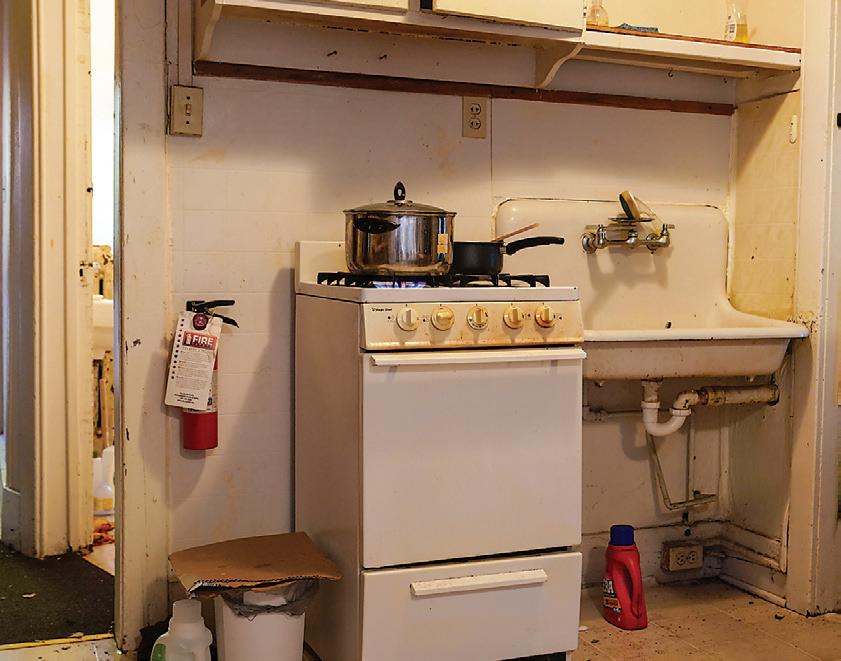
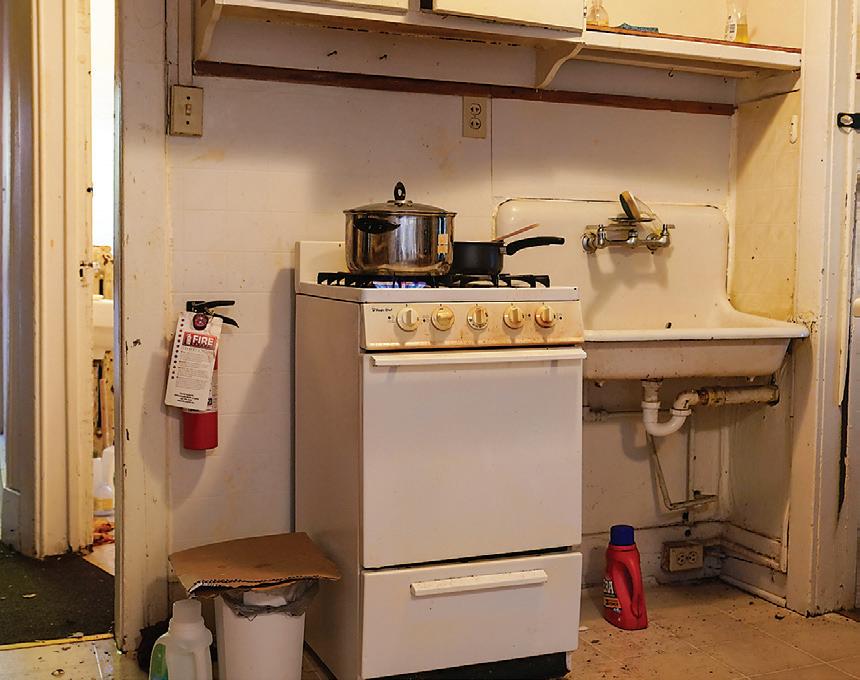
Water flooded out of the toilet in the bathroom of Shimon Shuchat ’19 and Mei Zheng ’18 on Sept. 24, collapsing a section of the ceiling in the apartment below them. The students had disabled all of the apartment’s carbon monoxide alarms and smoke detectors, and the gas oven was left on to heat the apartment while they slept.
The tenants’ months-long back-and-forth with landlords David and Barbara Lower would eventually lead to multiple housing inspections, a threat of a lawsuit from the city and withheld rent. The stress of the situation would cause Shuchat to abandon living in the house entirely, leaving many of his possessions and the food in the fridge behind.
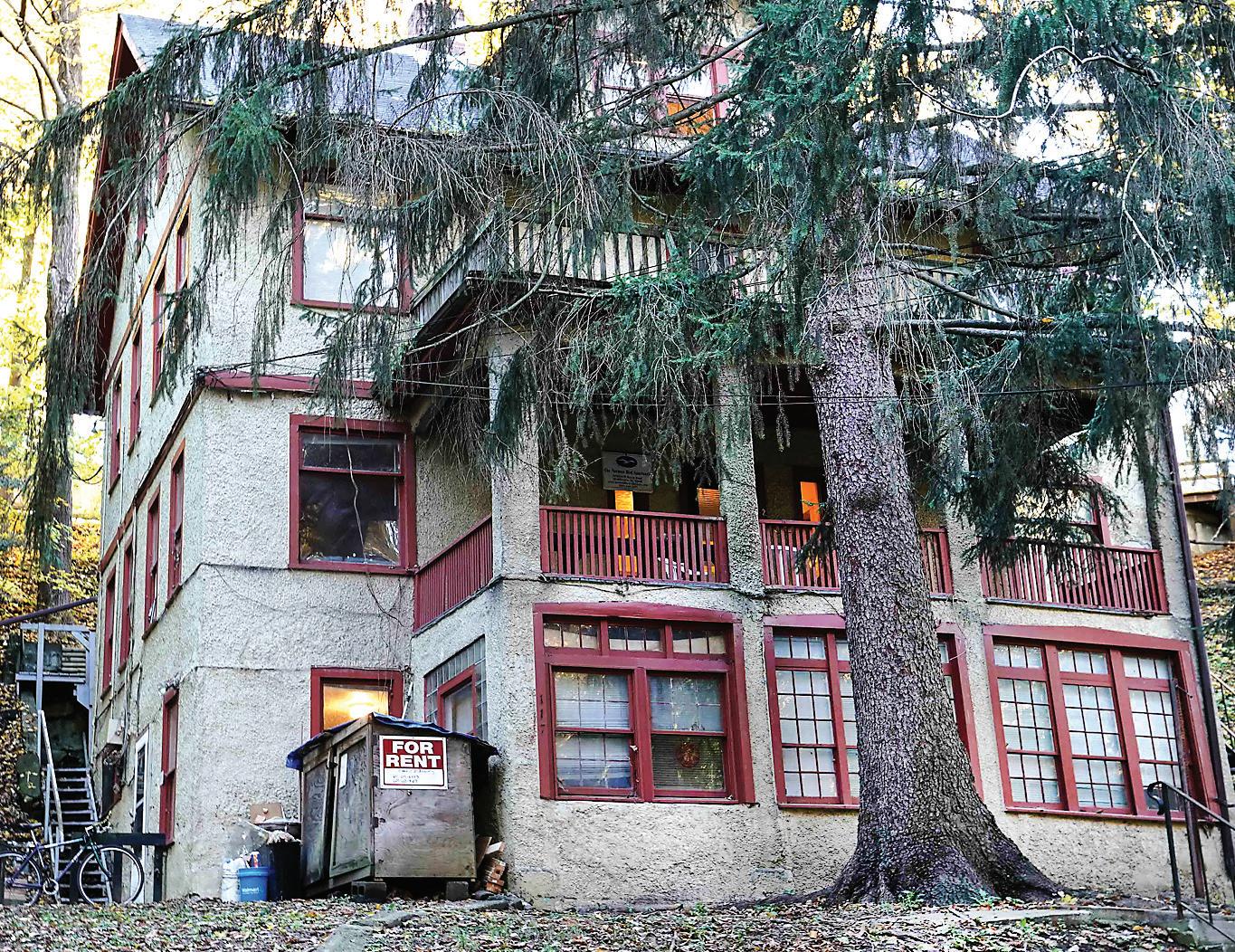
Like many off-campus living arrangements, 117 Thurston is a free-standing house divided into separate apartments. A
creaky wood staircase winds up the exterior to Zheng and Shuchat’s fourth floor apartment. The grade behind the building is so steep that a bridge from the hill provides a second entrance directly to their door. County records estimate the property at 103 years old.
Expired Certificate: A Missed Warning Sign
Shuchat said that it was only after signing the lease that he and Zheng discovered that the house on Thurston had no certificate of compliance, which is a legally required document for all dwellings according to the City Code.
Certificates of compliance are required to ensure that dwellings are regularly checked for adherence to all applicable housing laws. Single and two-family units must be inspected every five years, and buildings with multiple units or more
See HOUSE page 4
By ALEX HALE Sun Staff Writer
When Martin Rosenfeld was still a high school senior, his college application list included an Ivy League school in Ithaca. A few months later, he got into Cornell and decided to go there. But when he left for school in August of his freshman year, he headed for Iowa, not New York.
Rosenfeld intended to apply to Cornell University, as he did to schools like Vanderbilt and Brown. However, during the highly stressful process, he accidentally applied to Cornell College, which is in Mount Vernon, Iowa. He ended up going there and he has no regrets about it.
Coming from a military background, Rosenfeld went through the college application process at Vicenza American High School, an American military high school in Italy. Many of his classmates went to Brown and Penn, and with similar good grades, Rosenfeld was a worthy candidate for any school in the country — including Cornell University.
Rosenfeld had aimed for Cornell’s scenic location and academic prestige, but in the midst of the stress and technicalities, he made a life-altering mistake: he sent his SAT scores to Cornell College instead of Cornell University.
Realizing the mess-up, Rosenfeld decided to cut short his application to Cornell University and continue the accidental pursuit of the school he knew “absolutely nothing” about at the time.
Cornell College is a small, liberal arts school in Mount Vernon, Iowa. The school has an enrollment of about 1,000 undergrads. Although not as well-known as Cornell University, they proclaim themselves the original Cornell since they were founded 12 years before the University.
The Cornells are similar in some unappealing ways. Both are placed on steep hills and both have cold winters, although the College claims that they
See CORNELL page 3
Monday, November 26, 2018

|
Today
Cayuga Basin Bioblitz: A 24-Hour Race to Find What’s Living in Our Backyard 8 a.m. - 5 p.m., Mann Library
Public Economics Workshop: Florian Morath 11:40 a.m. - 1:10 p.m., 498 Uris Hall
Cultural Diversity in Ecological Cognition And Stewardship
Noon - 1 p.m., 423 ILR Conference Center
Branding Gods: Mediating Divinity in the Bazaars of Banaras 12:15 - 1:30 p.m., G08 Uris Hall
Science Studies Reading Group: Tien Dung Ha 12:15 - 1:15 p.m., 111 Morrill Hall
Jugatae 3:30 - 4:30 p.m., 2123 Comstock Hall
Determining Rental Rates on the Farm 6 - 8 p.m., CCE Saratoga County office
Finals Prep Workshop!
8 - 9 p.m., G34 Becker House Common Room
Tomorrow
LASSP and AEP SEMINAR - Endo Kussell 12:20 - 1:45 p.m., 700 Clark Hall
Entrepreneur in Residence Virtual Office HoursMarco Benvenuti MMH ’05 2 - 4 p.m., G80N Statler Hall
MAE Colloquium - Chris Hogan, Ph.D. ‘Understanding and Harnessing Drag Force outside the Continuum Limit’ 4 p.m., 203 Thurston Hall



Kaoutar Harchi, “Je n’ai qu’une langue, ce n’est pas la mienne” 4:30 p.m., Guerlac Room, A.D. White House
Professional Directions: Filmmaker Jesse Robinson 4:30 p.m., Schwartz Center for Performing Arts
There Will Be Blood 7 - 9:30 p.m., Cornell Cinema
Weekly Study Skills Tutoring 7 - 9 p.m., 3339 Tatkon Center







By ROCHELLE LI Sun Staff Writer
Cornell’s faculty handbook asks professors to refrain from assigning work to students over the break. “Framing assignments in such a way that necessitates academic work over Fall Break, Thanksgiving Break or Spring Break is strongly discouraged,” writes section 6.1.
then typically emails a reminder to that faculty member about the resolution. When the first version of the work-over-break resolution was proposed in 2011, faculty senators acknowledged intent behind the resolution, but debated the clarity of language in the proposal.
“We should stop calling them breaks if they are not breaks, if they are just long extended reading and working sessions.”
Prof. Shawkat Toorawa
But unfortunately, if students think they can finally catch up on sleep or bond with family, they might be disappointed as that clause lacks enforcement power, according to Dean of Faculty Charles Van Loan. Faculty in fact have “tremendous autonomy” in how they schedule their assignment due date, he said.
As a result of this autonomy, Van Loan said the best way to convince faculty to abide by the resolution is by telling them that “it’s really important and worthy of their consideration.”
“I have two basic messages to my colleagues with respect to the work-over-break issue. First, announce due dates early so that students can plan. Second, recognize that your syllabus may have been overstocked if you feel pressured into giving sudden work over an upcoming break. Try to be relaxed about dropping a topic or two,” Van Loan told The Sun.
Each semester, Van Loan receives three to four emails from students about assignments they felt violated the resolution. Van Loan
“It says ‘strongly discouraged,’ [so] I think will be inviting a lot of our colleagues to basically disregard this resolution, because I don’t understand it. I’m not required, so what?” said Prof. Wojciech Pawlowski, plant breeding and genetics, in a 2011 faculty senate meeting where this resolution was first discussed.
On the other hand, Prof. Shawkat Toorawa, near eastern studies, stopped assigning work over break even before the, recognizing the mental health issues students face.
“[Not assigning work over break] has played havoc with my syllabus, but that’s just life. And it seems to me it is entirely reasonable to expect students to take a break,” Toorawa said. “We should probably take a break. And we should stop calling them breaks if they are not breaks, if they are just long extended reading and working sessions.”
Amidst the debate, Van Loan says that school breaks should not be defined by whether or not someone needs to work. Rather, breaks are a time for a “change of pace” and faculty just need to clearly layout the syllabus in advance and pace the amount of material covered in the class, he said.
Students are also responsible for dividing up their work schedule in the way that suits them best, Van Loan said. Whether they finish their work before break or catch up on assignments during it, he says is up to the students.
Rochelle Li can be
reached at rli@cornellsun.com.
CORNELL
Continued from page 1
have more sunny days on average.
What greatly intrigued Rosenfeld about Cornell College, however, was its curriculum design — “the block plan.” At Cornell College, students take one course at a time and intensively study it for 18 class days – about three and a half weeks – and repeat it four times per semester.
“You’re only taking one class. You’re focusing on that. You don’t have to worry about a whole bunch of other (assignments or) exams that you’re taking (like in a typical semester system),” Rosenfeld said.
This “unique and innovative” approach to learning, as well as a significant financial aid package, convinced Rosenfeld to take a chance on the College. Foregoing his acceptance to Vanderbilt, Rosenfeld instead headed to Mount Vernon, a decision that has caused confusion amongst those around him.
Martin says that he faced multiple “outbursts” from his peers in high school about why he decided to go to “some small, liberal arts college that practically nobody has ever heard of.” His family, despite being supportive, also had a hard time wrapping their heads around this move.
But according to Rosenfeld, attending Cornell College was the best decision he ever made. Now a junior in college, Martin has loved his time in Iowa. He specifically cites the small size of the school, the closeness of the community, and the block plan as the key reasons why.
“I don’t regret it at all. My time at Cornell has been fantastic. I can’t imagine being as successful as I am here anywhere else.”
“I don’t regret it at all. My time at Cornell [College] has been fantastic. I can’t imagine being as successful as I am here anywhere else.”
Martin Rosenfeld
He is also thriving in school, boasting a high GPA in his study of biochemistry and molecular biology with minors in Psychology and Applied Statistics. Rosenfeld also said that he “rarely gets less than an A, and if I do it’s an A minus.”
His academic success in Mount Vernon has set Rosenfeld up well for the future. Currently, his end goal is to become a neurosurgeon and do research in the field. After graduating and finishing his pre-med track, Rosenfeld intends to pursue research experience — and possibly a Master’s degree — in neuroscience. He then hopes that this will set him up to be accepted into an MD-PhD program in neuro-molecular neuroscience at a “higher end” school, such as the Ivy League or equivalent schools.
Who knows? Maybe he’ll end up attending both Cornells.
Alex Hale can be reached at ahale@cornellsun.com.
By RONNI MOK Sun Staff Writer
Cornell’s LGBTQ+ student union and the Student Assembly are currently organizing a lobbying trip in late January to the New York State Senate in
Expression Non-Discrimination Act. First introduced in the assembly and the senate in 2003 but never voted on in the upper house, if passed, GENDA will add gender identity and gender expression as a protected class in human rights and hate crimes laws.
ing policy proposals by President Donald Trump that many saw will erode protection for gender minorities.
After Trump announced his policy proposal, the University’s Title IX coordinator Chantelle Cleary confirmed to The Sun
Despite the coordinator’s claim, however, the N.Y. state government has yet to implement the same protections offered to Cornellians by the University’s Title IX policy, which explicitly notes that “sexual assault and sexual harassment are forms of sex discrimination.”
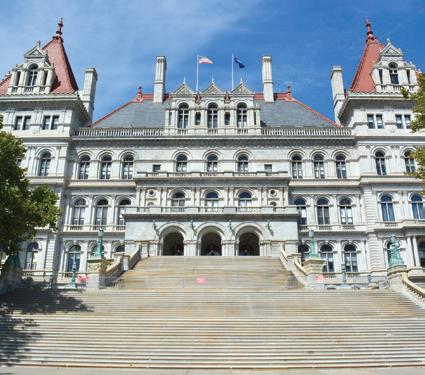
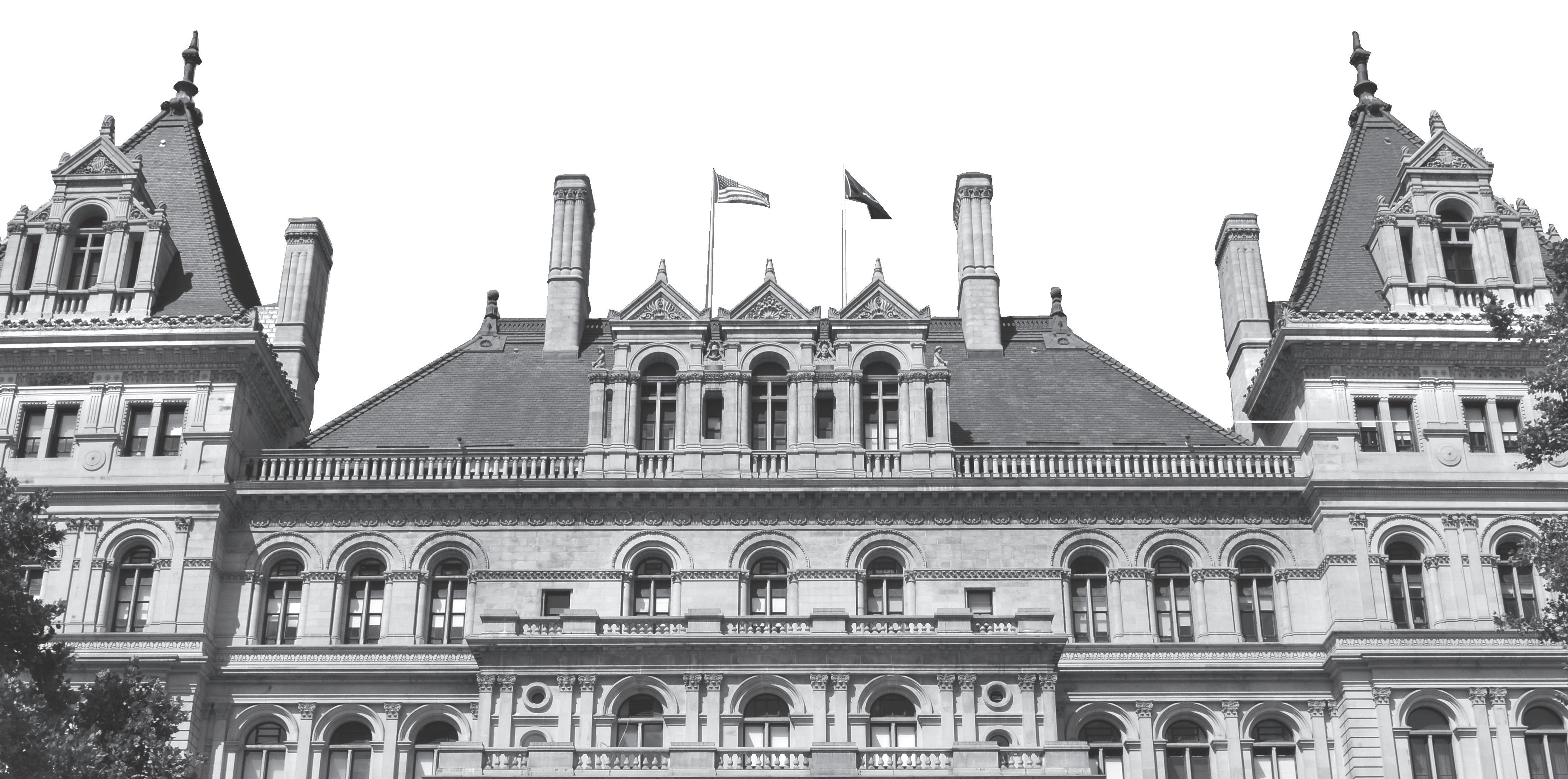
Lobbying for law | The New York State Capitol building in Albany, N.Y., where the students are heading to voice their support of GENDA.
Ronni Mok can be reached at rmok@cornellsun.com.
The second-degree felony charge of homicide by vehicle while under the influence of a controlled substance carries a maximum penalty of 10 years in prison. Dixon was also charged with homicide by vehicle, 12 counts of aggravated assault by vehicle, involuntary manslaughter and reckless endangerment, among other charges.
It was unclear on Tuesday night whether Dixon was in custody. A phone listed for Dixon, who does not have a lawyer listed in court documents, went directly to a message saying the owner was unreachable. A lawyer hired by Big Red Bullet, Nigel H. Greene in Philadelphia, declined to comment when reached by phone on Tuesday evening.
Rebecca Blanco M.B.A. ’17, of Vacaville, Calif., was killed when the bus — travelling from Ithaca to New York City on a Sunday night — swerved off the road and crashed into several trees near Scranton, Pennsylvania, just after 9 p.m. Blanco was a senior communications manager at Snowe, a household goods company in New York City.
Blanco texted a 911 operator 13 minutes before the crash saying she was worried about Dixon’s driving, according to documents filed in Lackawanna County District Court.
“I’m on a Big Red Bullet bus going from Ithaca to New York City,” she texted at 8:48 p.m., according to charging documents. “We are 10 mi outside of Scranton. I’m highly concerned that the bus driver is unable to drive. We’ve almost gotten into two accidents, veering off the road twice. Once entering the grassy divide. He’s swerving into other lanes and seems to have trouble staying awake.”
The 911 center operator contacted police and told Blanco they may want to call her.
“I’m in the front I’m not sure I can talk,” Blanco responded. Minutes later, police arrived at the scene of the crash on Interstate 380, where the bus had veered off the road, crumpling its front against a grove of trees. Blanco was pronounced dead at the scene of multiple traumatic injuries.
Trooper Bob Urban, a spokesperson for the Pennsylvania State Police, told The Sun last month that Blanco “happened to be in the spot” most affected when the bus hit several trees next to the highway.
A man named Ben also contacted 911 at 8:59 p.m. and said he saw a charter bus driving erratically on the highway, taking up two lanes and swerving onto the shoulder.
Dixon told police that he had fallen asleep several times during the trip and that the last thing he remembered before the wreck was a female passenger checking to see if he was all right.
Dixon had been driving for Big Red Bullet for about a
“I’m highly concerned that the bus driver is unable to drive. He’s swerving into other lanes and seems to have trouble staying awake.”
Rebecca Blanco M.B.A. ’17
month prior to the October crash. He told police after the crash that he would typically get a break between trips while driving the four- to five-hour route between Ithaca and New York City but that he didn’t always get to take a break on Sundays.
Several previous Big Red Bullet passengers told The Sun after the crash that their drivers had taken up to three trips a day and driven in excess of 12 hours without a break, even though both federal and state regulations prohibit bus drivers from driving for more than 10 hours in one day.
Police took Dixon to Moses Taylor Hospital after the crash, where his blood came back positive for benzoylecgonine — a compound formed as the body metabolizes cocaine — and trace amounts of cocaine.
After the crash, a motor carrier enforcement operator inspected the bus — a 2018 tour bus manufactured by Prevost — and found that a third of the bus’s service brakes were defective. A Pennsylvania State Police sergeant said in an
affidavit that the bus should have been placed out of service if more than a fifth of its brakes were defective.
Federal investigators told The Sun last month that they were looking into Big Red Bullet’s compliance with safety regulations.
There were 11 other passengers on the bus when it crashed, all of whom sustained at least minor injuries. These included broken neck bones, bruising, facial fractures, a broken jaw, a broken hand, broken fibulas and an amputated pinky toe.
All passengers were released from local hospitals within a day of the crash except one who remained in critical care for several more days before being released.
Julianna Debler M.B.A. ’19 J.D. ’19, a close friend of Blanco’s since their time together at Cornell, described Blanco as “the happiest and friendliest person you’d ever meet.”
Big Red Bullet is one of several private bus companies that takes students and Ithacans to and from New York City. It has no affiliation with Cornell University. Ali Nasser M.Eng ’10 M.B.A. ’15 founded the company in the fall of 2015.
Dixon’s case is currently awaiting a preliminary hearing. Below is the full list of charges filed against Dixon.
• Homicide by vehicle while driving under the influence (one count)
• Aggravated assault by vehicle while driving under the influence (one count)
• Homicide by vehicle (one count)
• Aggravated assault by vehicle (12 counts)
• Driving under the influence of alcohol or controlled substance (one count)
• Involuntary manslaughter (one count)
• Recklessly endangering another person (12 counts)
• Driving on roadways laned for traffic (one count)
• Careless driving (one count)
• Reckless driving (one count)
• Unlawful activities (one count)
Sarah Skinner can be reached at sskiner@cornellsun.com. HOUSE
than five unrelated individual occupants require inspections every three years, according to the city code. 117 Thurston contains four units, and an email from the Ithaca Building Department indicated that it’s certificate expired Nov. 18, 2015.
“What she did was she posted for a different apartment that she had a compliance certificate for. When I contacted her about that [home] she directed me to the other apartment,” Shuchat said, referring to the maneuver as a “bait and switch.” Emails obtained by The Sun corroborate this account, showing that Lower re-directed him to the Thurston property citing a lack of availability in the apartment Shuchat originally requested.
The Lowers own multiple properties in the Ithaca area, including at least two additional collegetown properties currently rented by Cornell students, houses on 62628 and 115 Stewart Ave.
After an inquiry about the house’s certificate of compliance, Barbara claimed that a certificate was “good to have” but “not required.” The Director of Code Enforcement for the City of Ithaca Mike Niechwiadowicz directly contradicted her: he told The Sun in an email that certificates are required for all dwellings.
Though Zheng and Shuchat did not know about the certificate’s expiration before moving in, they said it didn’t take long for issues to begin cropping up.
“The first problem we started to have was that the toilet was overflowing on a regular basis. At least once every five days,” Shuchat said, noting that the issue began in early August. The tenants also reported a period of about three days beginning Aug. 20 with no hot water.
In emails to the tenants, Barbara responded to their concerns about the toilet by asking whether they had plunged it or cleaned up the resulting overflows before offering
to send assistance. Barbara also repeatedly denied via emails that there were any issues with the hot water.
On Sept. 23, the toilet overflowed completely, inundating the bathroom and causing several ceiling tiles in the apartment below to fall down, disturbing residents living downstairs and prompting the two students to take action.
Zheng and Shuchat outlined their complaints about the plumbing, hot water and other issues in a three-page letter to Barbara and housing inspector Julie Daum on Sept. 27. The letter requested a housing inspection, which Daum performed the next day.
The inspection report confirmed that toilets had overflowed in three apartments, resulting in damage to ceilings. One section said “the carpet outside the bathroom remains wet presumably with sewage. Please clean, sanitize and dry floors/ceilings in all apartments and correct waste water drainage for the entire building immediately.”
In an interview a month after the first inspection, the Lowers maintained that the students’ actions — not the plumbing system — were to blame.
“We thought maybe we could change the toilet, that way they wouldn’t have the problem of too much stuff going down there or whatever, because obviously they didn’t know how to use the plunger,” Barbara said. “We did everything to appease them … and like I said it wasn’t the plumbing.”
‘Insufficient’ Heating in the Ithaca Cold As winter neared, heating in the apartment became of increasing concern to Shuchat and Zheng. A follow-up inspection on Oct. 29 confirmed that the apartment’s heat was “insufficient,” that multiple boilers were not working, and that the entire apartment was below the legally required minimum temperature, according to the inspection report.
In the preceding weeks, Shuchat and Zheng had resorted to heating their apartment with the gas oven in the kitchen between their rooms, disabling the smoke detectors and carbon monoxide alarms so
they wouldn’t go off while they slept.
“[Zheng] is literally sleeping in a room with the window closed with a gas oven on right near the room, very often on high heat at night without supervision … if heaven forbid I ever came home one night and closed the living room window by accident without thinking, you could predict very easily what’s gonna happen,” Shuchat said in a Oct. 30 interview with The Sun.
As with the plumbing issues, Barbara denied any systemic problems with the heating in a statement that contradicted both the building department’s findings and, at times, themselves.
“We went over there yesterday and the heaters were all working, it was just the one that was not working … It was fixed today but they were all working anyways,” Barbara said in an interview.
The inspector however did not consider the heat concern as, in her own words, “resolved:” the Oct. 29 inspection report noted that only one of the three boilers appeared to be functioning, and noted in an email to Zheng the day after the interview that the heating had not been resolved.
After Zheng sent pictures of thermometers measuring below the legal temperature minimum, Daum sent an email on Nov. 7 to the owners stating that the apartment was in violation of New York State and local code requirements, and said that the heat issues were “required to be repaired immediately.”
With the central heating for the apartment functioning poorly, the students relied on space heaters. Unfortunately, the apartment lacks the electrical output to support more than two heaters, and their added load on the electricity contributed to a power outage on Oct. 29, according to Barbara.
Shuchat and Zheng initially looked to the building department as a means of protection, but Shuchat came to see them in the same adversarial terms as their landlords.
“Right now we're at the point that we have no faith in the building department,” Shuchat said in an interview in late October. “We both sent them very choice worded emails telling them how what they’re doing is not adequate.”
It is unclear whether the building department can use more forceful measure than a written warning to compel the owners to resolve buildings issues. The Building Department did not respond to multiple requests for comments.
Fire Marshal Gillian Haines-Sharp warned Shuchat in an email that using the oven could cause carbon monoxide poisoning, and instructed him not to disable the CO alarms. Later, Daum told Shuchat that continued use of the oven “may be cause for criminal proceedings filed against the tenant for choosing to endanger fellow residents,” according to a Nov. 8 email obtained by The Sun.
Shuchat and Zheng faced severely limited options for recourse as the days grew colder and the heating remained unfixed. The earliest court date available in small claims court was Feb. 7, and a reinspection for a certificate of compliance was not scheduled until Dec. 5.
Zheng and Shuchat’s solution amounted to a rent hostage negotiation. “We have paid the rent. It is held at an account at Tompkins Trust. First the heat and bathroom drainage needs to be fixed,” Zheng told Barbara in an email.
After the building department threatened legal action for using the oven as heat source, Zheng stopped seeing Shuchat in the apartment. On Nov. 19 — 53 days after the initial complaint — Daum indicated that the heater had been fixed, but Shuchat did not return, according to Zheng.
Shuchat told The Sun that the threat of lawsuit from the building department and the stress of dealing with the situation had caused him to leave. He began sleeping in a library on campus, and was seeking off-campus housing for the next year.
“Filing complaints with IBD [Ithaca Building Department] was overall a gigantic mistake and waste of time. Living without proper sewage and heating is preferable to dealing with those clowns,” Shuchat said in an email. “At this point I consider IBD to be worse than the landlords.”
Matthew McGowen can be reached at mmcgowen@cornellsun.com.
JOHN McKIM MILLER ’20
Business Manager
KATIE SIMS ’20
Associate Editor
VARUN IYENGAR ’21
Web Editor
MEGAN ROCHE ’19
Projects Editor
EMMA WILLIAMS ’19
Design Editor
JEREMIAH KIM ’19
Blogs Editor
AMOL RAJESH ’20
Science Editor
BREANNE FLEER ’20
News Editor
YUICHIRO KAKUTANI ’19
News Editor
NICHOLAS BOGEL-BURROUGHS ’19
City Editor
LEV AKABAS ’19
Arts & Entertainment Editor
SARAH SKINNER ’21 Assistant
ANNE SNABES ’19 Assistant
JOHNATHAN STIMPSON ’21 Assistant
Working on Today’s Sun 136th Editorial Board
JACOB S. KARASIK RUBASHKIN ’19
GIRISHA ARORA ’20
HEIDI MYUNG ’19 Advertising
GUPTA ’20
DYLAN McDEVITT ’19
Editor
MICHAEL LI ’20
Editor
GRIFFIN SMITH-NICHOLS ’19
JACQUELINE QUACH ’19
SHRUTI JUNEJA ’20
ANU SUBRAMANIAM ’20
JUSTIN J. PARK ’19
PARIS GHAZI ’21
MEREDITH LIU ’20
JONATHAN HARRIS ’21
RAPHY GENDLER ’21
Ad Layout Emma Williams ’19
Design Deskers Megan Roche ’19
Jamie Lai ’20
News Deskers Yuichiro Kakutani ’19
Meredith Liu ’20
Sports Desker Raphy Gendler ’21
Arts Desker Viri Garcia ’20
Photography Desker Edem Dzodzomenyo ’20
Production Deskers Megan Roche ’19
Jamie Lai ’20
Sarah Park | S*Park Notes
When I was in elementary school, my mom tried to pack me Korean food for lunch. The ensuing judgemental glances and whispers about my “stinky food” in the cafeteria prompted me to march home and shut that down. From then on, I brought white lunches to school and ate Korean dinners at home.
Growing up Asian in a primarilywhite town, I was surrounded by people whose understanding of my culture was limited to math, tiger parents and Kim Jong-il. In order to fit in, I suppressed the parts of my identity that made me different and I never really gave it much thought until joining a Facebook group called Subtle Asian Traits.
It started in September by a group of Chinese School friends and has quickly gained traction, taking over the news feeds of nearly 750,000 members in mere months. Through memes, it validates the experiences of so many Asian-Americans who grew up without a sense of belonging. By normalizing the differences I’ve spent so long rejecting, it’s made me grapple with the ways I changed to fit into my environment.
In middle school, I always felt the need to hide that I was in math club and to justify playing violin in orchestra. I made Asian jokes to beat other people to the punch. In high school, I actively rejected my more Asian traits. I refused to be a soft-spoken Asian, quitting math competitions and, instead, joining debate and running for student council.
It’s hard being Asian in a white institution. I spent much my early life feeling like an outsider, but I’m certainly not alone in feeling this way.
Ihave never felt as young as I did last week, at 21, sitting behind my baba in a hospital room as a nurse explained some pre- and post-op procedures that he’d have to undergo. Baba kept repeating the same lines he had been for the past few days: I don’t have high blood pressure, I don’t have diabetes or high cholesterol, I exercise, I eat well. Why is this happening to me?
Everything the nurse said that day came with sporadic yet pregnant glances in my direction. Baba was genetically predisposed for these heart problems, so chances are I’ve inherited them too, just as I did his big eyes and perpetual nervousness. The subtext was deafening: Beware!
This whole thing has been like a long, convoluted dream that I just woke up from.
If it is, as Joan Didion famously wrote, easy to see the beginnings of things, and harder to see the ends, then it is nearly impossible to see anything that happens in between. I know exactly when college began for me, and I know exactly when it will end: in just a few weeks in a sparsely attended, probably smelly and poorly temperature-controlled graduation ceremony in Barton. (Yeah, I’ve seen the Instas from last year, and I’m not impressed!!)

Subtle Asian Traits has built a community by shining a light on shared lived experiences and helping us realize that we’re not alone. But the rapid rise of the group indicates just how much we’re dying for some representation. People yearn to see their own identity reflected in relatable ways, but Asians are often ignored entirely by mainstream culture. We grew up watching white actors play Asian characters. On the rare occasions we get any screen time, it’s often through a one-dimensional, cartoonish rendering riddled with stereotypes. Seldom do we get the opportunity to see or express the reality and complexity of our experiences.
The issues of representation stretch far beyond mainstream media. Despite being the fastest-growing minority group in America with a comfortable place in its economy, we have almost no stake in the national discourse. We have gone so long without real legal and political representation that claims of racialized discrimination are only ever considered in the context of Affirmative Action. We just want to be seen.
We’ll take representation where we can get it — even if it’s just on the screens of our Facebook newsfeeds. And on a platform that can often be so isolating, it’s just so rare and beautiful to find some belonging. As we try to forge an Asian-American identity in a country that still refuses to accept the complexity of our existence, at least we know we’re not alone.
Sarah Park is a junior in the School of Industrial and Labor Relations. S*Park Notes runs every other Monday this semester. She can be reached at spark@cornellsun.com.
You, too, will reckon with this someday. Sooner than you think.
When you’re deluded and in college (and the two are nearly always concurrent) you easily forget that not everyone is as young as you. And who could blame you? Real life exists so far away from the Hill. There’s not much in a foam party on a frat house lawn or the nightly tangle of exhausted bodies waiting on the grass outside Dos Amigos that screams mortality. There’s no hurry. We’re so young. Time is nothing.
That’s what’s incredible about the whole Cornell experiment: Put a bunch of predominantly privileged kids up in an incubator on a hill where time is distorted and youth is forever. College feels at once too long and too short. It’s endless when it’s August and you take a peek at the last page on the syllabus. It’s eternal when you’re in the burrito line at Terrace but you have to get to a 12:20 class. College could be no shorter than forever when you’re on page three of a ten-page paper at 1:57 a.m. and you accept defeat, packing up your things to make the famous, treacherous pilgrimage from Olin to Uris.
Yet all that time is compressed into a flash of light when you walk across Thurston Bridge and take an extra half-second to look — really look — at Triphammer Falls. College feels like a single fleeting moment when it’s midnight in the parking lot of Taco Bell and you and four friends are arguing over what to do with the crunch wraps that they gave you with meat by mistake. When you make the drive to the E.R. at Cayuga Med. It feels like the end of time once you print that ten-page essay. When the professor says, finally, “Thank you.” When the lecture hall applauds.
But everything in-between seems to be just flashes of youth, of memories and feelings that don’t fit together in any coherent timeline. This whole thing has been like a long, convoluted dream that I just woke up from. And what a bizarre, lovely, tumultuous dream Cornell has been. We are so young, after all. Time is nothing.
But the foam will eventually fizzle into a mid-day hangover and the taco truck will at some point run out of Chicki Minaj. Somewhere along the way things got serious, scary. At some point conversations on afternoon runs with a friend turned to advising each other on what to do to help friends who are struggling, who are suffering, who have gone through so much trauma. At some point I was sitting in my
And what a bizarre, lovely, tumultuous dream Cornell has been.
car, in the dark, with another friend who told me he was waiting to hear if his dad had cancer. At some point I realized Baba wouldn’t be there forever. I am so young, and everything is growing too big for me, too fast.
Has the world just kept going forward while I’ve been here screwing around? I am leaving Cornell before I had planned, but it seems like the right time. The fog is clearing and the sun has risen. The carnival rides are being packed up. I am at once terrified to wake up, and yet hyper-aware that I’ve already slept through all of my alarms.
No issue. I’m still young. It’s simply time to get up.
Pegah Moradi is a senior in the College of Arts and Sciences. All Jokes Aside runs every other Monday this semester. She can be reached at pmoradi@cornellsun.com.
After spending several hours in The Sun’s newsroom writing for the election special edition, I got home at 2:00 a.m. on election night only for both of my roommates to confirm that neither of them had voted, even after we had discussed it numerous times throughout the semester. Although not a scientific survey, when combined with the multiple people in my orchestra who told me both before and after the election that they either weren’t planning to or didn’t vote, I now better understand a scientific Harvard Institute of Politics survey in which only 40 percent, or two in five, people aged 18-29 years old said they were likely to vote.
I don’t solely blame my roommates or fellow orchestra members for not voting, though. Despite the best efforts of groups that did voter registration, chalked on Ho Plaza and arranged free rides to the polls for students, voting from college is a difficult process. Additionally, college is the first time that many students are eligible to cast a ballot, meaning that voting in any capacity is an unfamiliar act. In order to combat the democratic absenteeism that is youth voter turnout, there is one simple reform that can be undertaken: letting 16-year-olds vote in local elections.
In charge of performing roles that define everybody’s day-to-day life, such as emergency services, public transit, and public works (such as street pavement and signage) local governments affect kids especially directly. County judges can implement bail systems that create de-facto debtors’ prisons, preventing people who aren’t a danger to the public but can’t pay bail from being released prior to their trial, as in the case of Kalief Browder, a 16-yearold who spent three years at Rikers Island after being accused of stealing a backpack because his family couldn’t pay bail. He committed suicide three years after being finally released. A vestige of openly racist housing policies from the 20th century, local governments often need to approve affordable housing projects that would accept Section-8 vouchers, giving them the power to deny children a chance at upward economic mobility in a country where such mobility is increasingly linked to geography. In addition to the fact that 29 states still had smaller education budgets in 2015 than they did in 2008, education funding per student from local governments fell as well in 19 states during the same time period, negatively impacting the public education of millions of students. From judges, to city councils, to school boards, at least some people under 18 should have a say in who makes these decisions that affect them.
Beyond these direct impacts, there are also broader
benefits to our democracy in letting 16-year-olds vote. Not only does doing so increase the likelihood that the 16-year-olds themselves become habitual voters, but it also may increase the likelihood that their parents vote. In a nation where this year’s turnout of less than 50 percent is considered high for a midterm election, we could use all the help we can get in bringing people out to the polls.
I would be remiss if I didn’t mention the arguments against lowering the voting age for local elections by two years. Critics of the proposal claim that 16-year-olds aren’t competent, responsible or mature enough to vote, or that parents may try to utilize the familial power dynamics to exert undue influence on their children’s electoral choices. Furthermore, some wonder where we will stop if we lower the voting age below 18, as if doing so will lead to further reductions and an eventual abolition of the age requirement. However, I believe that all of these counterarguments actually illuminate even more reasons to let 16-year-olds vote.
partially enfranchise a group of voters that would give a little more weight to the future consequences of public policy than the current electorate?
At least some people under 18 should have a say in who makes these decisions that affect them.
Finally, the idea that we should be wary of where lowering the voting age could lead is a slippery-slope argument of the most pernicious kind, recently seen in the fear-mongering form of suggesting that legalizing gay-marriage will somehow lead to polygamy, incest and bestiality all being legalized as well. In a country with a conservative bias that prevented voting rights from being extended to all people
for nearly 200 years, and where the constitution has been amended only 17 times in the 227 years since the tenth amendment was ratified, change occurring too rapidly should be the least of our concerns.
Not only are explicit competency tests not required for the rest of the electorate, but arguments about intelligence, maturity or responsibility are some of the same ones used to not only argue that historically-disenfranchised groups like African-Americans and women shouldn’t be allowed to vote, but to justify introducing competency tests for African-Americans even after they were granted suffrage. Furthermore, when even consistent adult voters have a difficult time fully informing themselves about all of the people and issues on the ballot, why not first introduce a more limited set of choices for the first time that people vote, so that they can have an easier time researching and understanding both candidates’ positions and ballot issues? Before kids get a driver’s license, they get a learner’s permit; what would be so wrong with a democratic learner’s permit?
In regard to parental influence, the relative ease of ability in understanding local issues means that kids would rely less on their parents to be sources of information, and therefore lessen the chances of any worst-case-scenario manipulation. Furthermore, with parents already expected to vote with the best interests of their children in consideration, is it somehow different for kids to consider the interests of their parents when voting? Is it so bad to
Anna Kambhampaty | Guest Room
This is especially the case given that suffrage for 16-year-olds is not a novel, untested idea. Austria, Brazil, and Scotland are among the several nations that allow 16-year-olds to vote, and research on their voting habits in the first and last of these nations argues that they are just as engaged in politics as older members of the electorate. There are even four localities in the U.S. that have already taken this step. In Takoma Park, Greenbelt and Hyattsville, Maryland, 16-year-olds can vote in all local elections, while in Berkeley, California they can vote in school board elections.
This is perhaps the most appealing aspect of this type of electoral reform; just like those on the ballot this year in states such as Michigan, Colorado, Utah and Florida, extending the franchise to 16-year-olds is a reform that can be taken up by normal members of the electorate. Whether through a ballot initiative or lobbying local elected officials, changes of this sort are much easier on a local level than a national one.
Nearly half a century after the last significant expansion of the electorate, it’s once again time we extend the franchise to a new group of people. County by county, city by city, it’s time we let 16-year-olds vote (a little bit).
Giancarlo Valdetaro is a sophomore in the College of Arts and Sciences. Setting the Temperature runs every other Tuesday this semester. He can be reached at gvaldetaro@cornellsun.com
For the past two weeks or so, my economics professor has been using golf examples to explain a popular behavioral economic model to us. When a student raised their hand and asked, “Will questions like this be on the exam? What if we aren’t familiar with the rules of golf?” The professor responded, as any considerate and fair one would, that if he were to use golf on the exam, he’d properly cite the rules at the top of the page. The student contested, saying that people who are already familiar with the sport will still have an advantage. The professor assured the student not to worry, that he probably wouldn’t use a golf example on the exam and would use a concept we’d all surely be familiar with.
How is this fair at all? Even if the rules to the sport are explained in layman’s terms, there is a certain elitism that is exuded by the nature of using it as an example. It becomes a situational cue
There’s more to it than just explaining the rules and calling it fair.
I couldn’t help but become reminiscent of when the word “regatta” was on the SAT.
There’s more to it than just explaining the rules and calling it fair. Imagine yourself in a room full of people that are perceived to be more well-off and privileged than you. Then, imagine they all start talking about some ritzy pastime that is historically associated with upperclass, white men. Then, imagine you’re meant to understand this conversation and apply it in an exam for your 3000level economics course at the Ivy League institution known for grade deflation.
that ensues social identity threat — the fear of being seen as less capable because of one’s group. Social identity threat has been proven to impair working memory, learning and performance. Further, it can contribute to academic achievement gaps based on students’ race, gender, and social status.
In The World Is Flat, Thomas L. Friedman analyzes globalization and argues, metaphorically through the title and throughout the text, that “the playing field is being leveled,” that all competitors have equal opportunity. In the international best-selling book, Friedman discusses ten “flatteners” that he believes have leveled the field for competitors across the globe — the collapse of the Berlin Wall, Netscape, workflow software, uploading, outsourcing, offshoring, supply-chaining, insourcing, informing, wireless voice over IP and
file sharing. “Today, the most profound thing to me is the fact that a 14-year-old in Romania or Bangalore or the Soviet Union or Vietnam has all the information, all the tools, all the software easily available to apply knowledge however they want,” argues Marc Andreessen, creator of the first commercial internet browser.
In his essay “Do Artifacts Have Politics?”, Langdon Winner discusses the Moses Bridges built by Robert Moses on the Long Island Parkway, and how they were built purposefully too low, so that buses could not travel under them, inhibiting low-income residents from getting to Jones Beach. Jones Beach was a public beach, but was essentially privatized by this type of urban design and
Imagine all the innovation, creativity and breakthroughs we are suppressing by designing people out of education.
the implicit bias it imposed. Winner’s observations here can be generalized to the interweaving of political institutions into other technological devices. I am left wondering, what are the Moses Bridges built into our educations? While we go on preaching notions of “a flat world,” “any person, any study,” and
greater accessibility, we have to stop and ask ourselves, who are we making this world harder for? So long as our courses are designed by certain groups of people, they will cater to those types of people. So, what next? Greater diversity in higher education? Well, duh. But, I think we can also start with an increased cognizance toward these implicit biases on a micro-level. Think about how we are designing a world for a very particular group of people and how this makes it easier for those people to succeed and harder for everyone else to do so. Imagine all the innovation, creativity and breakthroughs we are suppressing by designing people out of education; all the great minds that are put down at an early stage, while we are telling ourselves that policies like affirmative action, technologies like free online courses and initiatives like Girls Who Code are making higher education more accessible. We all lose in a world designed for Chris.
Dolce and Gabbana is over. This was the message sent by the Chinese after a 24-hour social media whirlwind that resulted in public boycotts by Chinese celebrities, videos of Chinese fans and consumers burning D&G garments and ultimately, the cancellation of the brand’s Shanghai fashion show by the Shanghai Bureau of Cultural Affairs. All of this was in retaliation to Stefano Gabbana, designer and namesake of the Italian luxury fashion house, and his racist exchanges via Instagram in argument over blatantly racist advertisements for the D&G Shanghai fashion show.

The advertisements are best described as a corporate “ni hao” catcall: unsettling, racist and rooted in a lazy ignorance, featuring a Chinese model who embodies the archaic caricature of a submissive and silent East Asian woman, giggling as she struggles to eat Italian foods with chopsticks. The discomfort is furthered as the Chinese game show host voiceover, whose mispronunciation of Dolce and Gabbana is emphasized as an element of “kitsch,” expounds condescending rhetoric that in direct translation varies from “use those two little sticks to eat the pizza” to “that’s too big for you to handle.”
These advertisements resulted in an immediate outcry and an Instagram DM showdown between Instagram user Michaela Tronova and Stefano Gabbana himself, where it was made clear that Gabbana was a racist as he issued tired insults such as “dog-eater” and “China Ignorant Dirty Smelling Mafia.” The Instagram account Diet Prada (@diet_prada), renowned for calling out fashion copycats, publicized these exchanges, inciting an outrage that swept across social media platforms. What followed was what felt like a testament to the power of the Chinese, a power that Gabbana had underestimated, forcing D&G to abandon its show and issue a half-hearted video apology.
As I watched this moment unfold, I was exhilarated and in some ways, validated. This was the mobilization of internet vigilante justice against the same insults that every Chinese kid hears on the playground growing up, except the players
were now an Italian fashion house and 32 percent of its luxury goods consumer base. These callouts had real world effects, with e-Commerce provider Net-A-Porter removing all Dolce and Gabbana items from its website and other brand affiliates jumping ship and distancing themselves from the scandal. However, Gabbana’s racism points to a more troubling underlying truth — economic power does not mean racial equality.
China’s ability to dominate the current world economy has continued to fascinate and mystify the West, providing fodder for journal articles, thinkpieces and books since the implementation of the Open Door Policy in 1978. In the past few decades as the Chinese upper and upper middle class have grown in number and in wealth, Chinese consumers have turned towards luxury brands, consuming at a frenetic pace. These luxury brands, rooted in elitism and the trade of keeping people out, quickly recognized the opportunity for economic growth and have since embraced the Chinese consumer demographic.
However, this trend has continued to perpetuate what I call the Crazy Rich Asians trope, demonstrated by that scene in the movie where the fabled Young family is turned away from a London hotel because of the stereotypes associated with the color of their skin, and they “win” by buying the hotel in spite of racist concierges. While buying out every racist establishment is unrealistic for the majority of the Chinese population, this mentality can be found in the relentless pursuance of academic, cultural and economic prosperity so that if faced with such racism there is the power to use one’s undeniable success to define one’s own rules.
What does this power of definition mean for Chinese people? It means that museums across the U.S. are scrambling to institute Mandarin programming in order to appeal to the Chinese tourist, it means that China is quickly becoming the top film market, it also means that fashion houses, like Dolce & Gabbana, have begun creating collections directly marketed towards the Chinese market.
These trends, while exciting and empowering, are also hypocritical as evidenced by Stefano Gabbana’s words, and should be reevaluated. There is a sense of hollowness to this economic power, that while it has been able to garner recognition, it has failed to get
at the root of the embedded racism that continues to prevail. This is reflected in the scene from Crazy Rich Asians, which lauds this flipping of the socioeconomic power dynamic but never delves deeper into whether or not the racism that is held by the concierges is deconstructed. Inherently this propagates the idea that the Chinese are only valuable in their propensity to consume, and that without money, we are still less.
Despite all this, the Dolce & Gabbana debacle and its resulting consequences are a hopeful move in the right direction. The global unification of the Chinese community as well as the rallying by the rest of the fashion world have created some precedence against racism, at least in the fashion industry. This feeling is best captured by a statement made by Diet Prada, the Instagram account that most vehemently followed and reported on the Dolce & Gabbana scandal, “The takeaway is loud and clear: respect the consumers of the markets you want to profit from. You are not bestowing them a gift… you’re taking their money. See people as something more than just a line on the annual revenue reports.”
Isabel Ling is a senior in the College of Art, Architecture and Planning. She can be reached at ayang@cornellsun.com. Linguistics runs alternate Mondays this semester.

For the first time, Cirque du Soleil in Cinema brought their live show, KURIOUSCabinet of Curiosities, to moviegoers. The special, one-night-only cinematic experience plunged viewers into the fantastical world of the show in a far more intimate way than a live performance. However, this same proximity also lessened some the show’s overall impact.
Last summer, I went to see Cirque du Soleil’s Crystal, their first show to be set on ice. From 14 rows back, some of the details of each character were lost; their broad movements conveyed their emotions instead of their faces, and the costumes appeared distinct, but not as intricate as they must have been. In scope, KURIOS in cinema was far more detailed of a production, featuring steampunk-inspired costumes and sets, and the close eye of the camera captured it all, from the stylized makeup on the performers’ faces to the patterns on their costumes. In many instances, this proximity of the camera
to the performers was beneficial, particularly in some of the smaller scale acts, such as the yo-yo act and the hand puppetry, which focus on extremely small objects. But in the case of some of the larger acts, particularly when many performers were on stage at once, the inability of the camera to completely simulate a live audience experience hindered the understanding of the whole of the performance. Due to the camera’s focus on only a few of the performers at any given time, the actions of those outside the frame of the camera were lost and with them, a complete picture of the actual performance. However, the camera also revealed many details that a live audience member would be unable to see. Throughout the film, I was struck by the pure enthusiasm of the performers. They smiled at particularly loud reactions from the audience and winked into the camera. The minutiae of their expressions brought their characters to life just as much as their acrobatic skill. The design elements of the show were also more obvious. The costumes, sets and makeup were brought into extraordinary detail: the seams and rivets painted onto Mr. Microcosmos’s face, the
brightly-colored spots and frills that made up the contortionists’ bodysuits, and the intricately detailed floor of the stage. This level of detail, however, also led the camera to expose a bit of the practicality behind the magic of the show, revealing safety wires and marks that lessened the sense of danger in the acts, but this was largely a result of the camera’s ability to open new perspectives to the audience. Particularly striking was the shot in which the performer held the camera as he rose and fell on the trampoline. With this perspective, the audience could see and feel the performance in a visceral manner. The proximity and the fluidity with which the camera moved throughout the film also served to bring the audience onto the stage with the performers, creating a strong sense of intimacy between the viewer and the performers.
While the overall comprehension of the show was diminished by the camera’s limitations, the feelings it inspired in the audience were not. The sheer physicality of the acts was awe-inspiring, especially the rola bola, which stacked boards and balls atop each other while the performer balanced on the very top. This would be difficult enough to
do on a level surface; KURIOS took it a step further by situating the performer on a swing. The contortionists were incredibly discomforting and fascinating, twisting their bodies in ways that would seem to be impossible. Their identical costumes made it even harder to tell where one body ended and the other began, forming them into one organism. The comic act had the whole theater laughing and the aerialists were breathtaking in their speed, strength and defiance of gravity. Overall, the power of a Cirque du Soleil performance made it through the change in medium. Leaving the theater, I felt just as I had when I left the arena after watching Crystal: inspired. The world of KURIOS challenged itself, invented itself. The music and movements of the performers matched perfectly, pulling you into the rhythm of the world that exists at the fringes of the imagination and invention. Though not as completely immersive as a live performance, KURIOS in cinema still managed to cast a spell.
Jessica Lussier is a sophomore in the college of Arts and Sciences. She can be reached at jll335@cornell.edu.



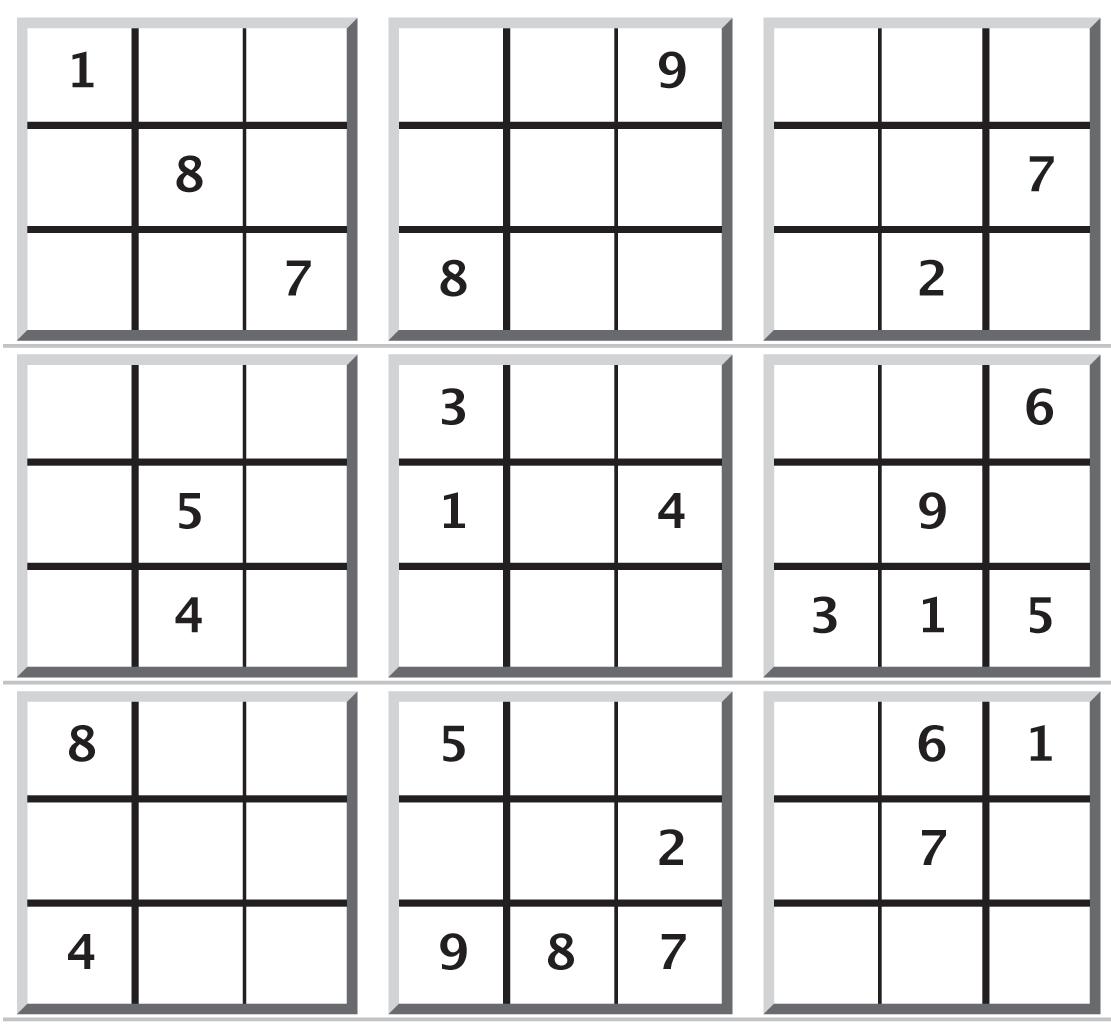
Fill in the empty cells, one number in each, so that each column, row, and region contains the numbers 1-9 exactly once. Each number in the solution therefore occurs only once in each of the three “directions,” hence the “single numbers” implied by the puzzle’s name. (Rules from wikipedia.org/wiki/ Sudoku)


2 & 3 BEDROOMS
109 SAGE PLACE
Available NOW, Spring 2019 & 2019/2020 Shuttle Bus Access to Campus Access to Free Fitness Center Novarr- Mackesey Property Management office@ithacastudentapartments.com ithacastudentapartments.com 607-277-1234
26 A PA R TMENT FOR R ENT
Houses, Apts, Parking 1 to 9 Bedroom
Collegetown - College Ave, Linden Ave, Dryden Rd, Bryant Ave, Cook St. 607-330-2442 info@urbanithaca.com www.urbanithaca.com
Nicest Apts. in Collegetown Located on Eddy St. 4 Bedrooms
Fully furnished. Spacious living areas with large bedrooms & closets. Hardwood flors, spectacular views, eat-in kitchens with additional sun rooms. Laundry & parking. 607-339-1137 bgm900@gmail.com
27 H OUSE FOR R ENT Brooklane Apartments Walk to campus
607-277-1234
RENT NOW, GET THE BEST www.MatoulasHouses.com
Apartments & Houses In Collegetown LINDEN AVE & E. SENECA ST 3 BEDROOM APARTMENTS ALL FURNISHED EMAIL: MatoulasHouses@Gmail.com PHONE: (607) 339-9644 FIRST-COME, FIRST-SERVED
312 College Ave
COLLEGETOWN 6 BEDROOMS Newly Remodeled PRICES SLASHED TO RENT
607-272-3389 avramisrentals@aol.com
201 WYCKOFF AVE
6 Bedroom House Novarr-Mackesey Property Management office@ithacastudentapartments.com ithacastudentapartments.com 607-277-1234

Ithaca is GORGES
Collegetown’s Best Address Now leasing for 2018-19. Superior Studio, 1, 2, 3 Bedroom Apartments. Fitness facility, theater, and meeting space. Free high-speed internet. Exclusive resident parking. Overnight concierge. Package delivery. 312collegeave.com 607-273-9777
Collegetown Terrace Apartments INSPIRED LIVING TAILORED TO YOUR SUCCESS 24-Hour Fitness Center Shuttle Bus Service to Campus Study Rooms w/ Expansive Views
Apartments Available NOW, Spring 2019 & 2019/2020 Novarr- Mackesey Property Management collegetownterraceithaca.com office@ithacastudentapartments.com 607-277-1234
Campus Hill Apts. We are not near the campus, We are ON WEST CAMPUS. 1-4 bedroom apartments available!
include:
fireplaces and balconies
Brand New On-Site Laundry
Free high-speed Internet
On-site parking
Furnished with TVs 9. Very competitive pricing Call us (607)257-0313 for details or to schedule a tour!
Lock in 2018 Rate Today Rent at any of out 7 communities Call 607-257-3311 >>AFFORDABLE, QUALITY LIVING<< Special Deals for you! Furnished 1-6 Bedrooms Collegetown Apartments PARKING, LAUNDRY, UTILITIES! (607) 273-7368 www.IthacaApartmentRental.com
We have availability for the 2019-2020 school year beginning June 1st at Hudson heights apartments. The studio apartments come with: heat, water, and electricity included. There are garbages houses and coin-operated laundry facilities on site. Prices start at $750/month for a 12 month lease. If you have any questions or would like to schedule a tour contact us by phone 607-208-7660 or email: renting@ithacaLS.com *****************************
INJURIES
Continued from page 12
for the lack of passion,” said Schafer, who added that Saturday’s loss was the least physical performance he’s ever had a team play against the rival Crimson. “Maybe it’s nerves. A lot of freshmen and sophomores out there, and maybe they didn’t handle this environment very well.”
Health, especially on the blue line, was an advantage for Cornell last season. The Red lost just 10 man-games to injury within its defense — that is, a combined 10 missed games by the entire starting defensive core — en route to a finish as the nation’s No. 1 defense.
“It’s not easy when [injuries happen], but every team goes through it.”
Senior Mitch Vanderlaan
This season, that number has already reached 12 — 10 of which have been Green and Smith.
This has meant increased minutes and wear on Cornell’s other defensive stalwarts on top of less-refined players being thrown into larger roles. On Harvard’s second goal Saturday, freshman Joe Leahy, playing in just his fourth collegiate game, found himself in a 2-on-1 situation and couldn’t make the already-daunting defensive play, going down to block the puck too early, giving the Crimson an open passing lane. On the third goal, Henry Bowlby blew past Cornell’s tired and out of position defense to give the Crimson an insurmountable two-goal lead.
“For us, it’s just keeping the game sim-
ple,” senior defenseman and alternate captain Alec McCrea said before last weekend’s Quinnipiac-Princeton series of playing through the injuries. “We’ve been very good about keeping our shifts short out there. … But the biggest thing is just simplicity within the process.”
But that simplicity is made more difficult when you hand four power plays to the nation’s top man-advantage group, as was the case Saturday against Harvard.
Injuries are nowhere near unique to Cornell and something no team would ever wish them upon itself nor its opponents. The Red will hope to benefit from the injury bug hitting early — get them out of the way early, then play as a cohesive, resurgent unit in the second half and peak later in the season rather than earlier, as was the case for Cornell last year.
Schafer said he’s hopeful at least one member of the injured quartet will return for next weekend’s trip to Dartmouth and rematch with Harvard. At the very least, all will return for the second half of the season, Schafer said.
“It’s not easy when that happens, but every team goes through it,” Vanderlaan said. “We’ve had some tough luck, but most teams will go through that at some point this year.”
But it has been and will be how Cornell responds to the adversity at the early onset that determines whether 60 minutes of play results in wins or losses.
“There’s not many teams that won’t go without getting into a little bit of injury trouble and having guys step up,” Vanderlaan said. “That’s how we have to deal with it — we have to have guys step up and take extra minutes and make good plays.”
Zachary Silver can be reached at zsilver@cornellsun.com.
M. HOCKEY
Continued from page 12
in an otherwise forgettable performance by Cornell. The rookie from Calgary chose quite a stage for his first collegiate goal, opening the scoring in a rivalry game at The Garden.
“Really special moment to get it here, especially, at Madison Square Garden,” Motley said. “Obviously it was unfortunate we didn’t really play our best game, but yeah, it felt really good.”
Saturday’s game was another in which the Red was without four of its key skaters: sophomore forward Brenden Locke, junior forward Jeff Malott, sophomore defenseman Alex Green and senior defenseman Brendan Smith. Those four players have all been starters and represent crucial pieces of Cornell’s offensive and defensive systems.
“Injuries are catching up to us,” Schafer said. “You have to face the facts here, too. We played three lines in the third period. Brenden Locke, Jeff Malott, Brendan Smith and Alex Green — they are a huge part of our team, but that doesn’t excuse the way we played. We have to go back to the drawing board. It was really disappointing to play that way in front of the crowd.”
The Red’s defensive effort fell victim to a couple of costly mistakes that eventually led to goals. In the second period, the Red was slow to get back on defense, which caused a 2-on-1 for Harvard and ultimately led to an easy
pass-and-tap goal for Henry Bowlby that gave the Crimson its first lead, one from which it never looked back thanks to a second goal by Bowlby and empty-netter by Adam Fox.
“Our strength of our team is traveling in packs, … three guys around the puck,” Schafer said. “Especially when the puck was turned over tonight; I think [Harvard] had maybe three 2-on-1s a few 3-on-2s in the game. And that’s just lack of backside pressure from our forwards, just kind of standing up and watching what’s going on rather than moving their feet.”
The loss is Cornell’s first ever in the four installments of The Frozen Apple, the biennial event at The Garden where Cornell plays a team that isn’t Boston University. It also ends a streak of four consecutive unbeaten games at the arena overall; Cornell last lost at MSG to B.U. in 2013.
Asked whether he could take any positives out of the loss, Schafer wasted no time or breath in sharing his feelings.
“No,” he said.
The rivalry game between the Red and Crimson will not have to wait long for a rematch, as the Red will travel to Cambridge next Saturday after facing Dartmouth in Hanover on Friday.
“We have two games before break that can’t come fast enough,” Schafer said of the Green and Harvard next on the docket.
Dylan McDevitt can be reached at dmcdevitt@cornellsun.com.

By DYLAN McDEVITT
NEW YORK — After nearly seven months of hype leading up to a big-time rivalry showdown at the world’s most famous arena, Cornell men’s hockey failed to meet expectations on Saturday as it fell at the hands of its archrival Harvard, 4-1.
From start to finish, Cornell was lacking the usual energy and physicality that is typical of games against its fiercest foe, and the overall low-energy effort was clearly reflected in the game’s final score.
“Disappointing. Really disappointing, how we played tonight,” said head coach Mike Schafer ’86.
“That’s the least physical I’ve ever seen a Cornell team play in a game against Harvard.
“No life on the bench.

… How could you be lifeless in this type of game?” Schafer said of his team in front of 14,132 at Madison Square Garden.
The first period of the non-conference contest was relatively even, and Cornell was able to break into a lead courtesy of freshman forward Liam Motley’s first career goal. But the Red proceeded
a 1-0 lead
to cough up its lead early in the second period and never regained it, in part due to the inability to capitalize on offense.
“We’ve got to bear down,” said senior forward and captain Mitch Vanderlaan, who had a gamehigh seven shots on net. “I must have had three or four grade-A chances myself, and I didn’t bury on a single one.”
By ZACHARY SILVER
NEW YORK — Cornell men’s hockey head coach Mike Schafer ’86 walked into the locker room in the bowels of Madison Square Garden after his team lost, 4-1, to Harvard and, as one would expect, didn’t see many smiling faces.

All told, Cornell’s offensive production was poor overall, Harvard’s dismal defensive numbers notwithstanding. Cornell repeatedly rattled shots directly into the chest or pads of Harvard goaltender Michael Lackey and often sent pucks out of the Harvard zone because no teammates were there to receive them.
“I think [Lackey] played well,” Vanderlaan said of the Harvard netminder, who sported a meager 3.23 goals against average entering Saturday. “I think we could’ve done some things differently. We didn’t necessarily have the best traffic all night. … We didn’t bear on our chances.”
Motley’s goal was perhaps the lone bright spot
Frozen

He saw a glimpse of a grin from freshman forward Liam Motley, but the rookie’s first collegiate goal was overshadowed by losing to the archrival Crimson. The coach saw senior forward Mitch Vanderlaan sport a furrowed brow after Harvard netminder Michael Lackey turned aside the Cornell captain’s game and season-high seven shots on goal.
But the starkest frowns he saw came from players who didn’t even see the ice in the loss.
“You could see it when you walk into the locker room,” Schafer said. “Probably the four most disappointed guys were the guys that couldn’t play tonight. It would have been a great opportunity for them.”
Cornell is still trudging along with four key nightly contributors all out with injury. With topfour defensemen sophomore Alex Green and senior Brendan Smith missing, Cornell has had to adapt without the stability of “probably our best two skating” blueliners, as Schafer said. In sophomore forward Brenden Locke, Cornell misses flexibility and faceoff-winning prowess, and in junior forward Jeff Malott, an experienced, physical presence.
“We had injuries last year, but we didn’t have them to this extent. … But there is no excuse